This week sees the release of Grand Theft Auto 6, the open-world crime 'em up that's been in development for at least eight years and has been waited on by fans for even longer. Naturally, over on PC we're still waiting for a port to be announced, let alone a release date to circle in our calendars. But, as happens whenever a new GTA is on the horizon, I think about Mafia: City of Lost Heaven.
Released less than a year after Grand Theft Auto 3, Mafia is perhaps a more prescient example of Rockstar's future than their own.
Ah, yes, Saturday. Traditionally a day for relaxing. Why is it then I'm packing, doing last-minute shopping, and going to a wedding all in the space of eight hours? Because, Julian, you are a fool who, as ever, has left everything far too late.
What about the team, though. I imagine they've managed their time much better.
Less than a month before he was scheduled to stand trial a third time, accused of a murder he has always sworn he did not commit, Richard Glossip on Thursday agreed to plead guilty to a lesser charge, a final step toward bringing his three-decade legal saga to an end.
Glossip, 63, was twice convicted and sentenced to death for the 1997 murder of his boss Barry Van Treese inside Room 102 of the rundown motel the Van Treese family owned on the outskirts of Oklahoma City. A 19-year-old maintenance man named Justin Sneed admitted to killing Van Treese, but he insisted Glossip put him up to it. Sneed, who is currently serving a life sentence, escaped the death penalty by becoming the star witness against Glossip.
During a brief hearing that was originally scheduled to address pretrial matters, Oklahoma County Court Judge Natalie Mai instead accepted a plea from Glossip to accessory after the fact and dismissed the murder charge against him. With members of Van Treese’s family looking on from their seats in the jury box, Glossip stood to answer a series of routine questions to confirm that his plea was voluntary. Mai did not ask any specific questions about the crime itself.
Under Oklahoma law in place at the time of the killing, the maximum punishment for accessory after the fact was 45 years. Taking into consideration the decades Glossip spent on death row and credits earned for good behavior, Glossip’s attorneys say he would have been eligible for full release in 2016 and should serve no more time behind bars. But defense lawyers did not reach an agreement with the state as to a proposed sentence. In a statement released after the hearing, Oklahoma Attorney General Gentner Drummond, who once expressed deep concerns about the state’s case against Glossip, made clear that his office will be seeking additional prison time.
Ultimately it will be up to Mai to decide if Glossip should be sentenced to time served or if any additional punishment is warranted.
The contours of Glossip’s plea are remarkably similar to a behind-the-scenes agreement made in 2023 between Drummond and Glossip’s lead attorney Don Knight. At the time, Drummond told Knight that if a court were to overturn Glossip’s conviction, he would resolve the case by accepting a plea to accessory after the fact in exchange for time served – and a promise that Glossip would not sue Oklahoma for anything related to his arrest and incarceration.
“We believe Rich has more than paid his debt to society.”
But after the U.S. Supreme Court overturned Glossip’s conviction in 2025, finding that it was rooted in false testimony and prosecutorial misconduct, Drummond, who by then was running for governor, did an abrupt about-face, announcing he would once again prosecute Glossip for first degree murder.
In the year and a half since then, it has become glaringly apparent that prosecutors from Drummond’s office are grossly ill-equipped to take Glossip’s case to trial. Since his original trial in 1998, the state has lost or destroyed evidence, numerous witnesses have died, and prosecutors have conceded that their own star witness — who has sought to recant his testimony multiple times — can’t actually be expected to remember what happened the night of the killing.
“For 30 years, Richard Glossip has maintained his innocence,” Knight said in a statement after the hearing. “After nearly executing him 9 times, the State of Oklahoma has now dismissed the murder charge against him. This morning, to finally put this matter to rest, Rich pleaded guilty to being an accessory after the fact. We believe Rich has more than paid his debt to society.”
Glossip had originally been charged as an accessory after the fact for initially failing to give police information about the killing. The night Van Treese was killed, Glossip said, Sneed woke him up around 4 a.m. by knocking on the wall of his apartment, which was adjacent to the motel’s office. Standing outside with a black eye, Sneed told Glossip he had chased off some drunks who had broken a window in one of the motel rooms. According to Glossip, he asked Sneed about his black eye, and Sneed flippantly replied, “I killed Barry.”
According to Glossip, it wasn’t until the next morning, when Van Treese was missing, that he realized Sneed might have been serious. Still, Glossip didn’t tell the cops right away; he said his girlfriend suggested waiting until they figured out what was going on.
But Sneed told police Glossip was the mastermind behind the plot to kill Van Treese, and, with no other evidence tying Glossip to the crime, Sneed’s statement became the basis of the state’s case. At Glossip’s 1998 trial, prosecutors said that he had taken advantage of the younger, more vulnerable Sneed, offering him money to kill their boss so that Glossip could take over the motel. “Glossip encouraged, aided and abetted and sent Mr. Sneed off to do his dirty work,” then-prosecutor Fern Smith told the jury.
But this story began falling apart not long after Glossip arrived on death row. A video of Sneed’s police interrogation cast serious doubt on the state’s version of events, revealing coercive questioning by Oklahoma City detectives who pressured Sneed into implicating Glossip.
Glossip’s defense failed to present the tape to the jury, which led an Oklahoma court to overturn Glossip’s first conviction based on ineffective assistance of counsel. Although a second jury convicted him and sent him to die in 2004, doubts over Glossip’s guilt continued to grow.
Glossip subsequently came close to execution many times and may well have been executed if Drummond hadn’t intervened upon taking office in 2023. He ordered an independent investigation into the case, which concluded that rampant prosecutorial misconduct had infected Glossip’s conviction. Drummond asked the Oklahoma Court of Criminal Appeals to overturn the case. When that failed, joined Glossip in asking the Supreme Court to intervene, arguing that Sneed – whom the state has described as its “indispensable witness” – had lied on the witness stand.
Drummond’s concessions about the flaws in the state’s case and his unprecedented advocacy on Glossip’s behalf made his announcement in June 2025 that he would seek to retry Glossip for murder all the more shocking. According to Glossip’s lawyers, the decision also betrayed the long-standing agreement with Drummond to resolve the case and set Glossip free.
After that, Drummond essentially washed his hands of the case to focus on his ultimately failed attempt to become Oklahoma’s next governor, handing off prosecutorial duties to other lawyers in his office. Prosecutors declared that they intended to use the same discredited evidence to try Glossip a third time and spent months fighting to keep him in jail. Despite those efforts, Mai ordered Glossip’s release.
With a December 2026 trial date looming, tensions between the two sides have ratcheted up. Glossip’s lawyers have complained about prosecutors failing to turn over evidence as required under the law. Prosecutors have tried to limit what the defense can present to jurors at trial regarding the history of the case – including asking Mai to bar any mention of Drummond’s previous advocacy on Glossip’s behalf.
Glossip’s sentencing hearing is scheduled for December 17.
Since his release, Glossip has “been living a peaceful and law-abiding life,” Knight said in his statement. “We look forward to an opportunity to show why returning him to custody would not serve the interests of justice, and to ending this nightmare for Rich and all concerned.”
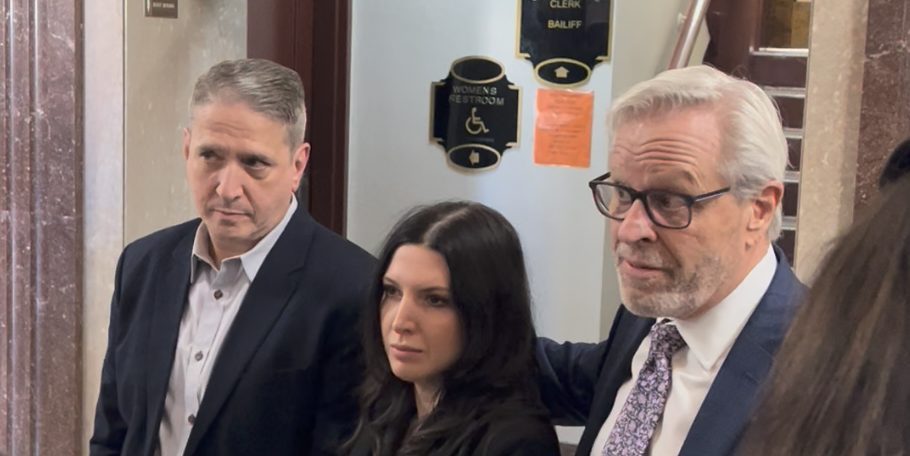
After the hearing, Glossip and his wife, Lea, stood with Knight to address reporters. Glossip thanked Knight and Lea for their support. “It was a hard day,” Lea told The Intercept, “but Richard and I are both people of faith.” She expressed that “today marks a meaningful step toward finally bringing this case to an end. We are both deeply grateful for the tireless efforts of his legal team.”
In the nearly 30 years since they opened their doors, Relic have been an enormously influential studio. Responsible for lauded RTS series Homeworld, Dawn of War, and Company of Heroes, they also dabbled in other genres with third-person shooter The Outfit and the original Warhammer 40,000: Space Marine. Yet, despite this history, in 2024, when Relic were negotiating their sale from Sega to UK investment firm Emona Capita, CEO Justin Dowdeswell knew the rights to Company of Heroes had to be part of the deal. "Without it we would have been a dead studio," he tells me.
Without naming names Dowdeswell points out that there are "numerous examples" of studios that weren't able to survive on their name alone. Not only did Relic need the ability to make more games in the series that they were known for, but they also needed the income from back catalogue sales a series like Company of Heroes provides.
The Company of Heroes 3's 3.0 update is huge. Touching virtually every part of the three-year-old RTS, the patch notes are longer than, well, my arm isn't a great measure of patch note length. Let's just say the headline features of overhauled VFX and audio don't really cover it. It also comes with new autumn and winter biomes, an updated grand strategy campaign, improvements to unit AI, and a whole host of other changes.
Talking to Relic ahead of the 3.0 update's launch I learned a little more about the scale of work that went on behind the scenes to make it happen, but also a little more about why Relic are still supporting the game three years after it was released and two years after separating from Sega.
Poema is my pride and joy. She was my first horse and she's a competition winner, but she's reached her potential. She'll never be a show jumper, and that's where the money and prestige are to be found. If I'm ever to grow my horse farm into a nationally renowned equestrian centre, I need the cash to expand and upgrade my facilities. Poema is a hoofstep on the path to that future, but she's not going to be able to take me all the way herself.
For all its hand-drawn aesthetics, Horses of Hoofprint Bay has hard realities like the limits of Poema's future bubbling under its surface. While the game's scripted narrative may be lacking, it's shockingly easy to fill in the gaps with drama worthy of a Jilly Cooper novel.
I don't know what Edwin's been feeding the Maw in my off week, but when I entered its chambers this morning it had left game releases everywhere. Ceiling, walls, floor, they all glisten with games of every size and genre. Even after I hosed away the ones largely made with the assistance of generative AI, the sifting sieves fitted across the drains held a bounty of interesting releases.
Let's get to it, then, before the Maw wakes up and realises I've nabbed all its spoils.
This is the last empty weekend before I go on holiday for a frankly indulgent three weeks. As such, it will likely be spent either remembering all the things my partner and I've not organised for the time we're away or racing to clear through the pile of things I've already remembered I've not organised for the holiday. Whatever the case, it shall not be restful.
Where am I going? Let's just say, I hope to return with some new pairs of glasses and a pair of trainers. If that doesn't give it away, I don't know what will.*
On November 3, our colleagues at the Software Freedom Law Center, India (SFLC.in) received notifications from X that the Delhi Police had issued takedown requests targeting 42 URLs. Among the accounts and posts targeted were those belonging to SFLC.in, the Internet Freedom Foundation (IFF), and X account @geoblockedindia, as well as posts documenting legal notices and instances of online censorship.
Takedown requests targeting SFLC.in and other digital rights groups threaten not only their work, but the public’s ability to know when and how online speech is being restricted.
The requests cite grounds including hate speech, alleged defamation of the Hindu nationalist organization Rashtriya Swayamsevak Sangh (RSS), and concerns relating to safety and security. But the context in which these requests have emerged is particularly troubling: they target organizations and individuals whose work involves documenting restrictions on online expression and making those restrictions visible to the public.
In other words, the organizations being targeted are among those trying to tell the public when and how its speech is being censored.
SFLC.in is one of India's most important digital rights organizations and promotes innovation and open access to knowledge by helping developers make great free and open-source software, protects privacy and civil liberties for Indians by educating and providing free legal advice, and helps policymakers make informed and just decisions about use of technology. In 2025, we recognized their work with an EFF Award for Defending Digital Freedoms.
IFF (the Internet Freedom Foundation) is another of EFF's close allies in India. Like EFF, IFF combines advocacy campaigns and strategic litigation to advance digital rights. They write frequently about internet shutdowns and have filed several lawsuits contesting them.
Among SFLC.in's initiatives is itsFree Speech Tracker, which documents instances of online censorship, content restrictions, and account takedowns in India. In a country where government orders to restrict online content are often opaque, this work is absolutely essential. Recent legal notices object to the tracker itself, as well as the organization’s documentation of restricted content and geo-blocked material. The allegations against SFLC.in include claims that it is "continuously opposing government directions" and publicly circulating information about restricted content, thereby undermining measures taken in the name of national security and public order.
But documenting government censorship is not the same as undermining public safety. Reporting that content has been restricted is not an endorsement of that content, nor does it constitute an attempt to circumvent the law. It is an exercise in transparency and accountability, and one that allows journalists, researchers, civil society organizations, and the public to understand how governments exercise their power over the information landscape.
Censorship thrives in the absence of transparency
The use of legal complaints and platform takedown mechanisms against organizations documenting censorship creates a particularly troubling dynamic. When those who monitor restrictions on expression are threatened with having their accounts or reporting removed, the result is a chilling effect that extends far beyond the immediate targets. Other organizations or journalists may think twice before documenting controversial takedowns or challenging government orders, and the public loses access to an independent record of decisions that affect its ability to speak and access information online.
There is also an important role here for platforms like X. Platforms must be transparent about the requests they receive, provide meaningful notice to affected users, and ensure that any restrictions are subject to appropriate scrutiny and avenues for appeal. When governments seek to restrict speech, platforms have a responsibility to avoid becoming opaque intermediaries through which censorship is quietly carried out.
These developments are part of a broader pattern of pressure on independent civil society organizations working to defend freedom of expression and access to information in India. Digital rights groups play an indispensable role in documenting the effects of government policies, identifying patterns of censorship, and challenging restrictions that undermine fundamental rights. Their ability to do so independently is not a peripheral concern; it is a cornerstone of a healthy democratic society.
The right to freedom of expression includes the right to scrutinize the exercise of government power. That includes the right to document censorship, question the reasons given for it, and make that information available to the public.
EFF stands in solidarity with SFLC.in, the Internet Freedom Foundation, @geoblockedindia, and all those working to document and challenge restrictions on online expression in India. We urge the authorities in India to respect the rights of digital rights organizations to conduct their work without intimidation or retaliation, and to ensure that any restrictions on online expression comply with international human rights standards.
On November 11, Lina Attalah, founder and editor-in-chief of the independent Egyptian news outlet Mada Masr, will face trial for the second time in just two weeks. This time, she faces charges of spreading false news, an accusation that has become one of the Egyptian government's most frequently used tools for prosecuting journalists.
The trial follows a conviction on October 27, when Attalah was found guilty of managing an unlicensed news website. The Mada Masr team had repeatedly applied for a license, but their attempts went unacknowledged. The proceedings took place in a single hearing, which Mada Masr states included serious violations of her right to a fair trial. She was sentenced to the maximum fine of 3 million Egyptian pounds (approximately 55,000 USD), forcibly removed from the courtroom, and held for seven hours until the fine was paid. The court also ordered Mada Masr's closure and the confiscation of all equipment belonging to the organization.
The current wave of repression has also targeted Matsada2sh, a fact-checking and open-source intelligence initiative. Its entire six-person newsroom was violently arrested, illegally detained, and interrogated under torture before being charged with terrorism-related offenses and spreading false news. The team remains in pretrial detention.
According to CPJ, at least 25 other journalists are currently incarcerated in Egypt.
Governments seeking to control the flow of information increasingly rely on a combination of legal harassment, financial pressure, criminal prosecution, and restrictions on the infrastructure that makes independent publishing possible. Egypt's media licensing regime is a particularly troubling example. Requiring news organizations to obtain government authorization to operate creates an obvious mechanism for restricting who gets to publish and whose voices are allowed to reach the public.
The charge of spreading false news is similarly dangerous. Governments around the world have increasingly invoked the language of misinformation to justify restrictions on speech, often without meaningful safeguards against political abuse, as we laid out in our recent submission to the United Nations Office of the High Commissioner for Human Rights. Governments should never be the arbiters of which reporting is permissible, particularly when that reporting concerns their own conduct.
Why Mada Masr matters
Founded in 2013, Mada Masr has spent more than a decade doing the kind of journalism that authoritarian governments find most threatening: documenting abuses, amplifying marginalized voices, and reporting on issues that powerful institutions would prefer remain hidden.
Its reporting has given torture survivors and the families of political prisoners a platform. It has opened space for debate about reproductive rights. It has brought frontline reporting from Sudan and Gaza, and stood alongside refugees facing xenophobic attacks and security crackdowns.
Emerging as a digital-first publication, in a media environment where traditional outlets were increasingly constrained, being purely digital allowed Mada Masr’s founders to build an independent publication outside the structures of legacy media.
Mada Masr has also consistently engaged with technology and advocated for a free and independent internet for the global majority. It has covered dozens of hot-button tech stories in recent years, from Egypt’s Cybercrime Bill and Israel’s use of AI weaponry in Gaza, to stories about the “privacy chaos” caused by biometrics to more personal essays about the importance of the internet and tech. In August, they launched an open call for proposals on original critical reporting on artificial intelligence.
Mada Masr may be thoroughly Egyptian, but it doesn’t belong just to Egypt. Its team has made into a publication that represents the kind of independent, local, grounded journalism that international audiences need, particularly at a time when international reporting on state repression is lacking. They built on-the-ground networks to center local voices in Sudan (publishing in both English and Arabic on the conflict) and Gaza out of a sense of cross-border responsibility and solidarity.
This is precisely why its potential closure should concern everyone who cares about a free press. The ability to publish independently, investigate powerful institutions, and to share information without government interference is fundamental to the exercise of free expression.
From solidarity to action
The international community has repeatedly expressed concern about restrictions on press and internet freedom in Egypt. More than 100 organizations have now joined statements of solidarity with Mada Masr, and with Matsada2sh.
These expressions of support matter, particularly when journalists are increasingly isolated and under threat—but solidarity must also translate into sustained political and institutional pressure.
The international governments and institutions that maintain relationships with Egypt—including those in the European Union, the United Kingdom, and the United States—should make clear that the prosecution of journalists and the forced closure of independent media outlets are unacceptable.
The cases against Lina Attalah, Mada Masr, and Matsada2sh must be dropped. The journalists who remain in detention must be released. And Egypt's licensing regime, with its profound chilling effects on access to information and independent knowledge production, must be brought to an end.
There is a particular urgency to defending independent media at a moment when governments are finding ever more ways to restrict the circulation of information. Whether through internet shutdowns, platform restrictions, surveillance, or the criminalization of reporting, the result is often the same: fewer opportunities for people to understand what is happening around them, to challenge official narratives, and to hold power accountable.
We cannot allow the closure of one of Egypt's most important independent newsrooms and the prosecution of its editor-in-chief to become another routine episode in the global erosion of press freedom. Nor should we wait until the last independent journalists have been silenced before recognizing what has been lost.
To learn more about Lina Attalah in her own reads, you can read our Speaking Freely interview from January 2026.
Sundays are for looking upon my DIY works and despairing. Strewn sawdust, spilled paint, and hunks of broken MDF litter my living room kingdom. When will it be over? When will I be free? When will I be able to reassemble my sofa, sit down with a cup of tea in hand, and admire my books, unpacked and arranged on perfectly fitted alcove bookshelves?
"Today?" I whisper hopefully in response to a paragraph of rhetorical questions. "Probably not," snaps back Reality. Especially if I don't get out of bed soon. Still, here in bed I can read the best writing about and not about games from the past week.
Like a tag team of oiled snakes that have entered a wrestling contest, theme is a difficult quality to pin down. A game can be well designed, but if it lacks a coherence between those mechanics and its appearance, narrative, and its framing, there is a dissonance that can be hard to ignore. I realise I've just stepped into an old argument by using the word 'dissonance', but Hocking was right, games that don't cohere can be jarring. A developer may desire that sensation of discomfort, but often it is accidental and unwanted.
(Much like opening an article with a simile about wrestling snakes when there is nothing connecting that image to a game about solitaire. It might be a good line, but it doesn't smoothly connect with the rest of the article to elevate its argument.)
Anyway, what does this all have to do with Forbidden Solitaire, a game in which you're delving deeper into a dungeon filled with horrors, progressing by clearing screens of cards? Well, it's an excellent example of how well-handled theming can raise a game into something more than its parts.
Pope Leo XIV is calling for concrete steps toward banning lethal autonomous weapons and warning that granting AI systems legal personhood could obscure human responsibility. In a thread on X, he says decisions affecting human life, freedom, and the use of force must remain under effective, informed human oversight. NERDS.xyz examines his demands for shared standards, independent oversight, and remedies for people harmed by AI.The pope describes machines as tools rather than people, warning that AI personhood could leave victims confronting a faceless entity. He argues that a reliable system serving people is more valuable than an exceptionally powerful one whose consequences cannot be adequately predicted or controlled. The accountability question extends beyond weapons: when an AI system causes harm, how do we ensure the people behind it remain answerable?
Alabama attorney Larry Grissett was checking Facebook in late September when he saw a news story about a man he represented in a murder trial more than 40 years ago. According to the article, a federal judge had just vacated the conviction of that client, Charles McCrory.
Grissett was stunned. He later summed up his reaction: “Vindication.”
McCrory was 26 years old when he was accused of brutally killing his wife in the small town of Andalusia. He insisted he was innocent — and Grissett believed him. There was no evidence connecting McCrory to the crime; prosecutors seized on a supposed bite mark found on his wife’s body, which a state expert claimed to match to McCrory’s teeth.
Grissett was never convinced by the so-called bite mark. At McCrory’s 1985 trial, he said, Grissett’s own dentist sat through the expert testimony and found it preposterous. “He says, ‘There’s no way that guy can say that,’ Grissett recalled. “I mean, anybody with common sense would know that.”
In a September 21 ruling describing the case against McCrory as “thin,” Trump-appointed Judge R. Austin Huffaker Jr., zeroed in on this junk forensic science. Not only would the alleged bite mark not be allowed into evidence today, Huffaker wrote, bite-mark analysis itself “is grossly unreliable and unsupported by relevant scientific bodies. It amounts to nothing more than rank speculation.”
Unless the state moves to retry him within the next six months, Huffaker concluded, McCrory must be released from prison.
The ruling was not only momentous for McCrory, who has insisted on his innocence for more than four decades, but it also marked a new victory in the long legal battle against junk forensics — and the discredited discipline of bite-mark analysis specifically.
“Everybody sees this was junk science. You don’t have to be a scientist to understand that.”
Yet more than a month after the decision, McCrory remains behind bars with no sense of when he might walk out. Although his lawyers asked the court to free him on bond pending the state’s decision to release or retry him, the Alabama attorney general’s office filed a motion last week asking Huffaker to reconsider his order overturning the conviction. The state’s appeals will likely drag out McCrory’s ordeal through the holidays and into next year.
In a statement, McCrory’s current legal team praised Huffaker’s “explicit acknowledgment that criminal convictions based on discredited bitemark evidence cannot stand.” Mark Loudon-Brown, senior attorney at the Southern Center for Human Rights, and Chris Fabricant, director of strategic litigation for the Innocence Project, said they are “grateful for the decision and look forward to continuing our fight to bring Mr. McCrory home.”
In 2022, The Intercept published a lengthy investigation into McCrory’s case, detailing the flaws in the state’s conviction. The case attracted additional media coverage, highlighting the problem of junk forensic science. Despite the glaring problems with the evidence against McCrory, Alabama courts have routinely rejected his appeals and in 2023, the state’s parole board denied McCrory release.
Julie Bond McCrory’s body was found inside her home in Andalusia on May 31, 1985. Her head was bashed in, and she’d been repeatedly stabbed in the chest. The couple’s son Chad, then 3 years old, was found unharmed in his bed. Police quickly pointed to McCrory as their only suspect: He and Julie were separated, and McCrory had been having an affair. At trial, the theory seemed to be that he’d savagely murdered Julie to be free from her.
The police investigation was cursory at best. Detectives found no physical evidence to connect McCrory to the bloody crime. Meanwhile, they ignored some evidence altogether, including two windows in Julie’s bedroom that were found open, but which investigators failed to dust for fingerprints. Police also failed to consider an alternate suspect, a man who worked at an excavating company bordering the McCrorys’ backyard and who, just weeks after Julie’s murder, committed a home invasion rape of another local woman. He was convicted and sent to prison for that crime.
Ultimately, the state latched onto a single piece of physical evidence against McCrory: a pair of small indentations on the back of Julie’s right arm, which prosecutors concluded was a bite mark made by McCrory’s teeth.
To sell this theory, the state employed famed forensic dentist Richard Souviron, a star prosecution witness in the recent and sensational trial of serial killer Ted Bundy. Although Souviron initially said he couldn’t definitively link the two marks on Julie’s arm to McCrory’s teeth, at trial he was unequivocal that they matched.
Skin, with its malleability, is a terrible medium for accurately recording any injury.
Bite-mark analysis is based on a two-pronged foundation. First, that the shape and arrangement of our teeth are unique, like DNA, and second, that skin is a suitable substrate for recording this uniqueness. As it turns out, there’s no science backing either assertion. In fact, research into the discipline has routinely found the opposite — that human dentition is not unique and that skin, with its malleability, is a terrible medium for accurately recording any injury. This makes bite-mark analysis a random and entirely speculative practice.
Still, after taking center stage at the Bundy trial, bite-mark analysis took off in the 1980s and ’90s and, despite not having any basis in actual science, made its way into courtrooms around the country, turning forensic dentists like Souviron into newsmaking, swashbuckling crime fighters.
In the years that followed, however, bite-mark analysis was increasingly called into question and ultimately exposed as junk science, a subjective pattern-matching practice that has led to dozens of wrongful convictions. At least four of those, including McCrory’s, are cases in which Souviron served as the prosecution’s expert.
In 2019, Souviron recanted his testimony in McCrory’s case, providing an affidavit to Fabricant and Loudon-Brown, who presented it at a 2021 evidentiary hearing in Andalusia. “As a forensic odontologist I no longer believe the individualized teeth marks comparison testimony I offered in his case was reliable or proper,” Souviron wrote. “I no longer believe, as I did at the time of trial, that there is a valid scientific basis for concluding that the injury found on the skin of the victim in this case, assuming that the injury is in fact teeth marks, could be ‘matched’ or otherwise connected to a specific individual, such as Mr. McCrory.”
Despite the fact that their key witness had disavowed the evidence they used to send McCrory to prison for life, prosecutors fought to preserve their conviction. At the 2021 hearing, they insisted that McCrory was guilty, based on the same evidence they presented at trial. They recast the supposed bite mark as “teeth marks,” implying that, while bite-mark analysis may be discredited, the study of “teeth marks” is a separate and valid discipline. Even if Souviron had not testified for the state, they argued, jurors could have looked at photos of the marks on Julie’s body and the dental molds taken from McCrory and decided for themselves that McCrory inflicted the wounds.
Covington County Circuit Court Judge Lex Short, who presided over the hearing, agreed with the prosecutor. So did the Alabama Court of Criminal Appeals, which upheld his ruling in favor of the state. But Huffaker did not.
Huffaker took exception to the notion that analyzing “teeth marks” is somehow separate from bite-mark analysis. It is clear, he wrote, “that bitemark identification is based on analysis of individual teeth markings.”
But “most importantly, the state court unreasonably determined that, even without Dr. Souviron’s expert testimony, a reasonable jury could compare the bitemark evidence with McCrory’s dentition themselves and find that it belonged to McCrory,” Huffaker wrote. “This finding blinks reality in light of the evidence presented by McCrory at the postconviction evidentiary hearing.” In a footnote, he added that “if an expert could not testify about bitemark identification because it is junk science, a jury should not have been allowed to consider it either.”
McCrory is not the only person who is still fighting for his freedom decades after being convicted based on discredited junk science. Last year, Chris Duncan was declared innocent nearly 30 years after being sent to Louisiana’s death row based on bogus bite-mark evidence. He was released one day before Thanksgiving. In his case, a video showed the state’s supposed bite-mark expert manufacturing the evidence that was used to convict Duncan.
As in McCrory’s case, Louisiana prosecutors have nevertheless continued to insist their case against Duncan is solid. And as in McCrory’s case, this has not gone over well with some judges. Earlier this year, Louisiana Supreme Court Chief Judge John Weimer wrote that bite-mark evidence “should be discarded and no longer have a place in the realm of forensic science.”
“Long ago, some who were thought to have the best and brightest minds of that time endorsed ‘trial by water’ as a means of determining a person’s guilt or innocence. We now look back at those practices as asinine and absurd, since those who fell victim to those practices often did not survive, regardless of whether they were found guilty or innocent,” Weimer wrote. “Thankfully, as scientific knowledge evolved, there was a realization that these practices had no basis whatsoever in logic, reason, or the search for truth, and the practices were discarded.”
As the holidays approach, McCrory’s family remains hopeful that he will soon walk out of prison. His son Chad, who is now in his 40s, has attended a dozen parole hearings with the hope of one day seeing his father released.
Grissett, McCrory’s former lawyer, reached out to Chad to share his hope that McCrory will finally come home. While memories have faded in the tight-knit community of Andalusia, many people remember McCrory’s case, he said.
“Everybody sees this was junk science,” Grissett said. “You don’t have to be a scientist to understand that.”
It’s “sad that it’s taken this long,” Grissett said. It haunts him that “somebody’s still out there who murdered this lady. And I’m afraid that they’re not gonna look into that.”
However, what the teaser also didn't reveal was that Undead Labs' ideas for the game were much larger in scope than the two survival games that came before. For several years they were trying to make State of Decay 3 into an MMO that captured the scale of a global zombie apocalypse.
When Edwin talked about Moon Sweepers yesterday he focused on the artisanal approach to space rock cleaning. Like the puritan he is, he wants to wipe away all the dust on the moon using a toothbrush. He says you should take pride in your work, stick one spacesuit-clad middle finger up to the machines and say 'Fuck off, robots. Let me show you my art!" as you get down on all fours and brush away moon dust.
I've been tricked. Deep within the fine print of the Health and Safety and Wild Eldritch Creature Control License Edwin convinced me to apply for is a stipulation that I alternate shifts of Maw care with him. I've unwittingly signed up to cleaning the beast's cage out once a fortnight, bringing you news of upcoming PC games while not hosing down the creature from a distance.
Well, as is my regulatory obligation, here are some of the PC games coming out this week that caught my eye while scrubbing out the the sluices.
After the Mississippi attorney general cleared a white cop for firing into a car and killing a Black toddler in a Walmart parking lot, video footage released by the Mississippi Department of Public Safety has revealed the fullest picture to date of what happened.
The videos, provided to The Intercept in response to a public records request, come on the heels of leaked footage that exposed how a needlessly aggressive and reckless police confrontation of two suspected shoplifters led to 1-year-old Kohen Wiley’s violent death in his mother’s arms.
While the newly released videos include redacted versions of the previously leaked footage — including body camera footage for some of the officers, as well as Walmart surveillance video — the new footage reveals for the first time the body camera video belonging to the Senatobia police officer who fired the shots that killed Kohen Wiley: Sgt. Hunter Foster.
While the state concluded that the shooting was “justified” based on a probe by the Mississippi Bureau of Investigation, the videos show how police escalated a non-life-threatening situation — one that could have ended with a mere shoplifting charge — by pursuing Kohen’s mother, Vel’lesiya Wiley, and the driver, Latoya Ferrell, after they ran from the store and tried to drive away.
Foster’s body camera footage makes clear that he positioned himself in front of the vehicle, aimed his gun at the car, and fired the fatal shot into the passenger side window after the car was moving past him and posed no threat.
This is consistent with the conclusions of Dr. Roger Mitchell, a forensic pathologist hired by Kohen Wiley’s family, who determined in June that the fatal bullet was most likely fired into the side window, entering his small body on his right side and exiting his left.
The report’s narrative is misleading: Its only description of the shooting is that one officer “discharged his firearm” after the car “sped toward the officers.” The report does not discuss the fact that the firing officer was beside the car when he first fired, which is clear in Foster’s body camera footage. The report also redacts Kohen Wiley’s cause of death.
An excerpt of the report on the police shooting of Kohen Wiley from the Mississippi Bureau of Investigation released on Oct. 22, 2026, through a public records request.Screenshot: The Intercept
Foster resigned from the Senatobia police department on Wednesday. Afterward, Foster’s lawyer told CNN, “The driver of the vehicle was attempting to kill those 5 officers, and Hunter Foster had no choice but to discharge his weapon.” (Neither Foster nor his lawyer responded to The Intercept’s requests for comment.)
Residents of Senatobia had called for months for the body camera footage and Walmart surveillance videos to be released. After the state attorney general announced that the police had been cleared, a spokesperson for the Mississippi Department of Public Safety, which houses the state’s Bureau of Investigations, told The Intercept that the videos would be released after the family had a chance to watch them.
Instead, as with the attorney general’s announcement, the family first saw the leaked videos on social media. By the time Kohen Wiley’s parents and grandparents met with state officials to view the videos on Thursday morning, most of the footage had been circulated online. At a press conference on Thursday afternoon, Kohen’s maternal grandmother, Veronica Roberson, called it “a slap in the face.”
Roberson said she’d been haunted by the word “justified” all week, slamming the idea that Foster fired the lethal shots because he feared for his life.
“You shot my grandbaby from the side of the car,” she said. “How are you in danger?”
“Get the Car!”
The incident began with what appeared to be a routine occurrence in retail outlets all over the country: a shoplifting allegation.
The earliest footage is from a Walmart security camera. An apparent Walmart employee dressed in a black hoodie is stationed by the store entrance when Wiley and Ferrell approach, carrying a child and a box of diapers. They pause at the door and appear to have a brief exchange with the Walmart employee before breaking into a run toward the parking lot.
In body camera footage, which begins moments later, the staffer in the hoodie appears in the doorway of a small security room, where other Walmart employees, three Senatobia police officers, and two Tate County sheriff’s deputies are gathered around a pair of computer monitors. According to the MBI report, the officers had been called to the store in response to a complaint that a man was sexually harassing customers.
The employee in the hoodie tells the cops and Walmart staffers that two people are running and gestures toward the store entrance.
Moments later, the five officers dash from the room and out into the parking lot, running toward a gray sedan. A sheriff’s deputy reaches the driver’s side door and puts his hand on the hood of the car while someone yells “stop.” The car backs up and starts to turn, but hits a parked SUV. Someone yells, “Stop the car!”
As the officers continue to run toward the car, it begins to move forward. At one point, two officers are directly in front of the vehicle, including Foster, the police sergeant identified as the shooter, who aims his gun at the front windshield.
The car starts to turn left, away from the three officers on the vehicle’s right side, and either narrowly misses or grazes Foster, who stumbles to the passenger side and aims his gun at the window. He then appears to fire three shots in rapid succession.
As the car pulls away, the officers continue their pursuit.
“Get the car! Get the car! Get the car!” one of them yells.
The gray sedan pauses briefly before taking off again.
The records released by state officials do not include any footage of what happened after the officers return to their vehicles. But the leaked footage, which was compiled into a nearly 7-minute long video, shows Foster pacing next to a police vehicle outside the nearby Highland Hills Medical Center an hour and 20 minutes after the shooting.
“I didn’t even see a fucking baby in her lap,” Foster says.
His colleague responds that nobody else did either: “All I saw was two females in the car.”
Reckless and Aggressive
As the leaked video began to circulate on social media on Tuesday, much of the attention focused on the moment the car moved toward Foster.
The Senatobia Police Department claimed from the start that the car drove toward officers and nearly hit one, suggesting the shots were fired in self-defense. Darkhorse Press, the independent Mississippi outlet that first published the leaked footage, even stated in a headline that the car “actually hit at least two officers.”
Among those who have repeated a version of this story is Republican Gov. Tate Reeves, who said the driver tried to “run over the policeman,” despite admitting that he had not actually watched the footage.
What the videos show is that the police officers themselves needlessly escalated a shoplifting incident into the scenario that they claim put them at risk. Almost immediately after being informed that two people were “running,” the five armed officers sprinted out to the parking lot, surrounded the car, and, at various points in the confrontation, drew their guns. They also positioned themselves in a way that cut off any escape route for the driver.
These are reckless, aggressive tactics in response to a minor shoplifting charge. They also violate best practices in policing.
Most departments today prohibit officers from standing in front of the possible escape route of a car when someone inside is suspected of only minor offenses. Many also require officers to get out of the way of a vehicle if it drives toward them. While most departments authorize a police officer to use deadly force if they “reasonably” believe it’s necessary to protect their or others’ lives, this generally does not excuse using lethal force if the “reasonable” fear arose from a cop’s own violation of department policy.
The police officers themselves needlessly escalated a shoplifting incident into the scenario that they claim put them at risk.
Policies and best practices, however, don’t establish the bounds of legal liability; they are related but separate. Under the landmark Supreme Court case Tennessee v. Garner, a police officer can use deadly force if he “has a good-faith belief that the suspect poses a significant threat of death or serious physical injury to the officer or others.” The law is less clear about criminal liability when an officer’s own illegal or ill-advised actions caused the circumstances that led him to fear for his safety.
Other examples of self-defense law hold people criminally liable if their own actions put them in harm’s way. In general, those cases indicate that a person can’t argue self-defense after killing someone if they instigated the altercation that led to the killing — even if it was reasonable to deploy lethal force when they did.
By that standard, if an officer puts themselves in the path of a moving vehicle, they shouldn’t be able to justify lethal force by claiming to fear for their life because the vehicle was about to hit them. The law, however, isn’t crystal clear on this, and there’s at least some indication that the current Supreme Court may adopt a more lenient standard for police officers.
Moving Vehicle
Most police departments prohibit officers from shooting into moving vehicles unless someone inside poses a direct threat to the safety of others unrelated to use of the vehicle itself — for instance, if the person is armed and shooting at people. The reason is simple: Killing the driver of a moving car does not stop the car and can therefore exacerbate threats to public safety.
Like many other departments, the Senatobia police department’s policy contains vague language warning officers that firing into moving vehicles is dangerous to bystanders and unlikely to stop a car; it reads more like guidance than prohibition. One portion of the policy, however, is much clearer: Officers “will not” discharge firearms into a fleeing vehicle — with “will not” underlined for emphasis.
It seems clear from the leaked footage that Ferrell, the driver, maneuvered the car in what appeared to be an attempt to flee rather than to kill or injure officers. The video shows her at first trying to reverse away from police. After striking the SUV, however, she then appears to try to drive around and then between the officers. She then strikes another car while trying to drive away.
The videos depict a driver showing far more awareness for the officers’ safety from behind the wheel than Foster showed for the occupants of the car — or the surrounding bystanders.
Foster’s actions aren’t consistent with any reasonable concept of self-defense. Footage shows that he fired at least three shots into the passenger side of the car. This was already apparent in the leaked body camera footage. It’s even clearer in the newly released video from Foster’s camera. By the time he fires the first of the three shots, he is clearly beside — not in front of — the car. By the time he fires the last shot, the car has passed him.
Even if Foster wanted to claim that he fired to disable the driver — and, again, his own department firmly prohibits shooting at a fleeing car — he fired through the passenger side window. He did so despite being told that there were two people inside, which means that whatever the driver was doing, he was also putting the other person at risk.
Ultimately, the videos depict a driver showing far more awareness for the officers’ safety from behind the wheel than Foster showed for the occupants of the car — or the surrounding bystanders.
Police policies should reflect how people behave in the real world, and people accused of stealing tend to flee. For armed officers to quickly escalate a shoplifting allegation puts everyone nearby at risk. Amid the frenzied response from the cops, Ferrell struck two other cars while attempting to escape. Anyone in or near those cars could have been injured or killed. Foster also fired his gun in a crowded parking lot. That, too, could have resulted in additional death or injury.
The police had other options. They could easily have written down the car’s license plate or obtained the plate number from the numerous surveillance tools at their disposal: their body camera footage, Walmart security footage, or one of the many Flock cameras nearby.
If they had to arrest the women, they could have done so later, at home and under less duress. They may not have caught Wiley or Ferrell red-handed with the alleged stolen goods, theoretically making a shoplifting prosecution more difficult. Creating an obstacle to prosecuting a shoplifting case, however, should be an easy tradeoff for not putting lives at risk.
Walmart’s Role
Finally, the leaked video footage raises important questions about Walmart’s role in Kohen Wiley’s death. The company has yet to publicly comment about the incident — and has not responded to repeated inquiries from The Intercept.
When the Walmart employee in the hoodie entered the room where officers were viewing security monitors, he told them that two people were fleeing the store. He did not say that one of them had a baby in her arms, even though surveillance footage showed Wiley carrying Kohen as she passed him. This would prove consequential, as Foster said in video footage that he had no idea there was a baby in the car.
Does Walmart policy require staff to tell police when a suspected shoplifter is accompanied by children? And how often does Walmart call on police for such minor crimes?
This isn’t the first time aggressive policing of shoplifting at a Walmart has resulted in the death of an unarmed person. Earlier this year, deputies shot suspected shoplifters in two separate incidents at Walmarts in Florida. When police tackled a fleeing shoplifter in Anchorage, Alaska, recently, he pulled a gun and shot two officers before they returned fire, killing him.
Even the best policing policies are useless if they aren’t enforced when officers violate them.
Walmart seems to have wavered over the years between aggressive crackdowns on suspected shoplifters and more lenient policies that factor in whether the suspect has been accused before, the necessity of the items they’re accused of stealing, and the value of the stolen goods.
Like many national retailers, the company’s policy when it comes to its own employees is to avoid confrontations with suspected shoplifters. A previous lawsuit revealed that the company’s stated policy as of 2010 was “PUT PEOPLE FIRST” (all caps in original) and prioritized “the physical well-being of suspects, customers and Walmart associates.”
That policy means little if the store simply outsources enforcement to police who take a far more aggressive approach. Walmart itself has also been criticized by police groups, who claim that cost-saving reductions in staff have made the store a more attractive target for shoplifting, which then leads to more calls to police.
And in Senatobia, the last high-profile incident of police violence before Kohen Wiley was killed took place in 2025 — at the same Walmart parking lot.
Even the best policing policies are useless if they aren’t enforced. And officers are rarely prosecuted, period. Foster’s resignation is at least some form of accountability, but the insistence from state officials that police did nothing wrong means there will be little to stop similar killings from happening again.
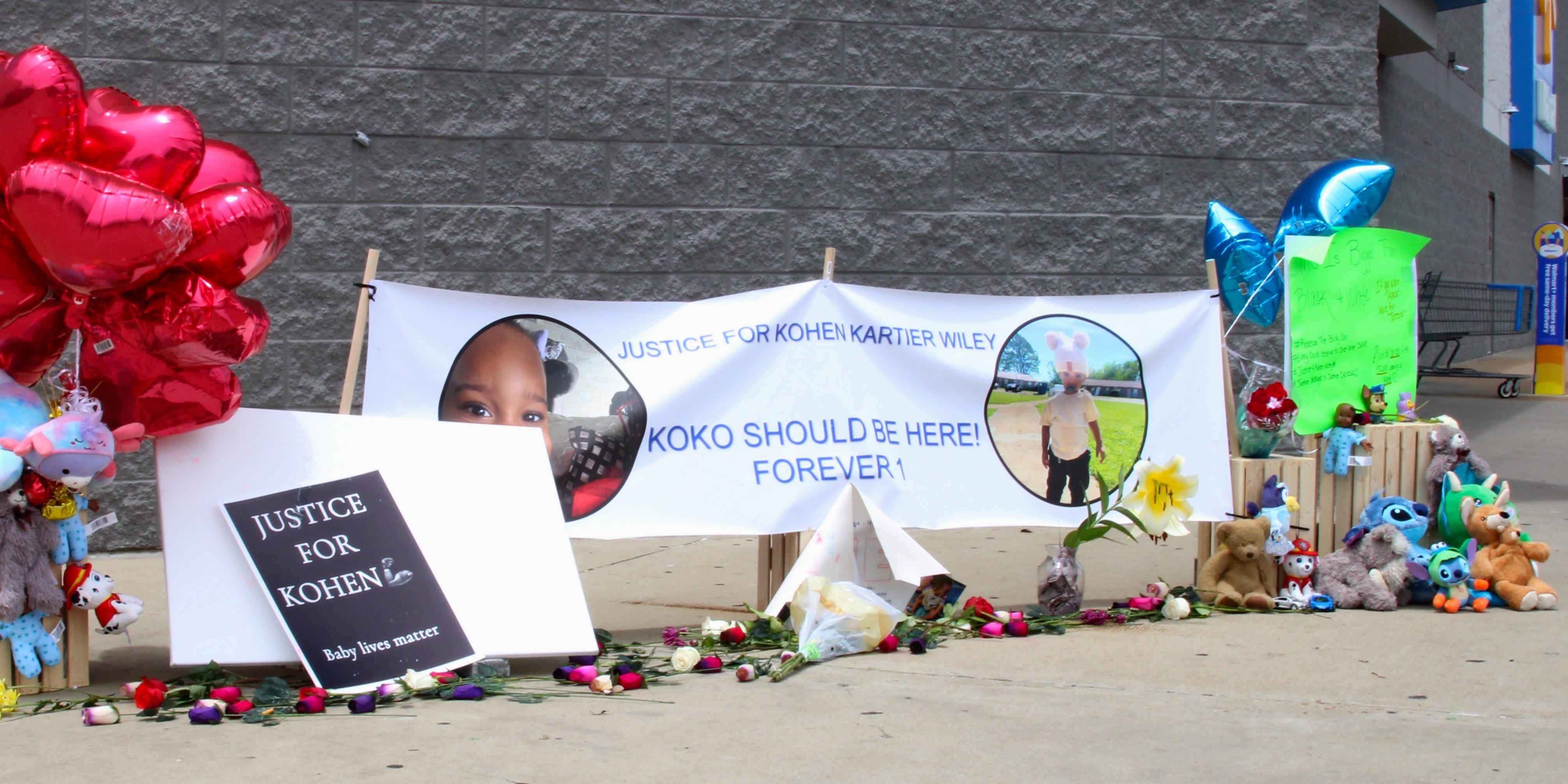
This week, residents of Senatobia returned to the Walmart for a vigil in honor of Kohen Wiley, in the same place where a makeshift shrine once stood. A community gathering has also been scheduled next weekend to mark what would have been his second birthday.
At the press conference Thursday, family and activists vowed to keep fighting for justice. As with so much police violence, however, the most pressing question isn’t whether Foster himself is punished. It’s whether we’re willing to tolerate more deaths like that of Kohen Wiley — whether Senatobia, Walmart, and the state of Mississippi will do anything to make clear that a 1-year-old’s life is more important than a pack of diapers.

 Login