Normal view

There are new articles available, click to refresh the page.
Before yesterdayMain stream

Pete Hegseth’s Unholy War

17 September 2026 at 15:10

Hegseth’s Theology and the Question: What Would Jesus Do?

There is a question Christians have been asking for generations: What would Jesus do?

It is a deceptively simple question that is printed on bracelets and bumper stickers, taught to children in Sunday schools, and invoked when Christians are discerning how faith should shape public life. The question becomes considerably more demanding when the decisions at stake concern war, immigration, poverty, political power, and the use of military force.

In addition to the recent attention about his military strategy, social and political beliefs, and leadership style, Pete Hegseth’s public theology deserves serious attention from those unfamiliar and disinterested in religion as well as adherents of Christianity.

As secretary of defense, Hegseth has increasingly spoken about American power in explicitly Christian language. He has hosted Christian worship at the Pentagon, invoked Scripture in connection with military service, emphasized the Christian foundations of the United States, and described some Trump administration policies — including border enforcement — as “biblical.” Indeed, speaking at a Christian media convention last February, Hegseth connected the health and founding of the United States with Christianity and characterized border and immigration policies as mandated in the Bible.

The question about Hegseth’s faith and religious practice, however, cannot simply be whether he is sincere. The question is more fundamental: What kind of Christianity is being proclaimed when the language of Jesus is attached to military power? Or perhaps a simpler but harder question: In the face of war, authoritarianism, economic, environmental, and political crises: What would Jesus do?

A Christianity of Power

The Christian faith has always contained competing visions of what it means to follow Jesus. There is a Christianity that blesses kings, armies, empires, and national ambitions. There is another Christianity that remembers a Palestinian Jewish leader who was unhoused and a migrant and was executed by an imperial power after heralding the arrival of a radically different kingdom. This distinction matters a great deal.

Hegseth routinely emphasizes strength, warriors, national identity, borders, enemies, and divine blessing. And joining forces with Israel to prosecute the war with Iran has only heightened the stakes of his rhetoric. Early in the conflict, Hegseth cited Psalm 144, including its language about God training hands for war and fingers for battle.

There is nothing inherently un-Christian about a person in the military having a sincere religious faith. People of faith serve in the armed forces for many reasons. Generations of religious scholars and adherents have considered war and conflict as it relates to the faith through theories and practices of religious pacifism, “just war,” defensive war, theologies of self-defense, conceptions of the last days, and the ethical limits of violence in humanitarian conflicts, among others. The theological problem arises, however, when the power of the state begins to present itself as an instrument of God’s purposes.

That is a very old temptation.

Empires have long claimed divine sanction. Kings have declared their wars holy. Nations have wrapped their ambitions in sacred language. And Christians have at times sought to confuse the interests of the nation with the kingdom of God. But Jesus does something profoundly disruptive to this arrangement: He refuses to identify God with Caesar.

The People at the Margins

Consider where Jesus directs our attention. Throughout the Bible, Jesus embraces people whom those with power, military might, and wealth have pushed aside: the poor, the sick, the imprisoned, immigrants, women, children, tax collectors, and those treated as religious outsiders.

In Matthew 25, one of the most famous Bible passages — sometimes called the “Last Judgment” — Jesus identifies with the hungry, the stranger, the naked, the sick, and the imprisoned. “Whatever you did for one of the least of these,” he teaches, “you did for me.”

That is not an incidental teaching. It is a political and theological reorientation. And it is directed at nations, not simply individuals or religious congregations.

Jesus asks: How has your nation treated the most vulnerable among you?

The question Jesus asks his followers is not first, “How strong is your nation?” It is not, “How effectively have you defeated your enemies?” It is not even, “How faithfully have you defended your borders?” Instead, he asks: How has your nation treated the most vulnerable among you? This matters enormously when Christian language is used to justify violent and exclusionary immigration policy or when it is used to promote cutting off families from food or lifesaving healthcare.

If we claim that border enforcement is “biblical,” then Christians must practice the Bible’s extraordinary insistence on welcoming the other. After all, Scripture commands God’s people to remember that they, too, were once strangers in a foreign land, and the way to honor and worship God is by welcoming the immigrant neighbor. If Matthew 25 means what Christians have traditionally claimed, Christ is encountered precisely among the hungry, the unhoused, the incarcerated — and that as long as anyone is unfree and impoverished, it is the responsibility of the nation to do something about it.

Theology of the Enemy

There is another problem with a Christianity centered on military strength: its understanding of the enemy. Christianity does not teach that some people become less human because they are someone’s adversaries. It does not profess that God blesses battleships nor justifies genocide (even if Hegseth’s spiritual adviser claims it does).

Jesus does not say, “Love your friends and destroy your enemies.”

Jesus’s command to love one’s enemies may be among the most difficult teachings in the entire New Testament. It is also one of the clearest.

Jesus does not say, “Love your friends and destroy your enemies.” He says, “Love your enemies and pray for those who persecute you.”

Jesus does not say, “Blessed are the powerful because they shall dominate.” He says, “Blessed are the peacemakers for they shall be called the descendants of God,” and “Blessed are the poor for they shall be first under God’s reign.”

That does not mean that people of faith must be naïve about violence. It does not mean governments face no genuine security threats. It does not erase the moral complexity of protecting human beings from violence. But it does mean that people who call themselves Christians should be extraordinarily cautious whenever military violence is described as holy, righteous, inevitable, or divinely ordained.

Christian tradition contains a long history of wrestling with war. It also contains an even deeper tradition of martyrs, peacemakers, conscientious objectors, abolitionists, human rights activists, and nonviolent movements that have insisted that human beings cannot be reduced to enemies.

On “Christ Is King

One phrase that increasingly appears in Hegseth’s public religious rhetoric is “Christ is King.” On the surface, this is an ancient Christian confession. But Christians should be careful about what happens when it is fused with nationalism. If Christ is King, then Caesar is not. If Christ is King, then the nation cannot be God. If Christ is King, then military might cannot be the ultimate measure of righteousness. And if Christ is King, then Christians must remember what kind of king Jesus was.

“You Only Get What You’re Organized to Take,” by Liz Theoharis and Noam Sandweiss-Back Available on Bookshop.org.

Jesus did not arrive in Jerusalem on a tank. He did not establish his kingdom through an air campaign. He did not recruit an army to seize the Roman state. Jesus entered the city on a donkey. He washed his disciples’ feet. He touched people considered untouchable. He fed hungry crowds. He stood with the condemned. And when his disciples reached for weapons, Jesus told them to put them away. This is not weakness; it is a different conception of power and a different idea of violence, military and force. And it stands worlds away from the Hegseth’s professed belief in a conquering Christ.

Christian nationalism raises the question of who counts as part of the nation — and, implicitly, who counts as part of the Christian community. Hegseth’s religious politics have attracted scrutiny because of his association with a conservative Reformed Christian milieu and his willingness to amplify figures and institutions associated with Christian nationalist ideas. That should concern Christians not because Christianity should be banished from public life, but because Christianity is too important to be reduced to a tribal identity. There is no nationalism in the Sermon on the Mount; there is no exceptionalism in the Last Judgment.

Christianity offers an alternative to nationalism that does not require Christians to abandon love of country, but it begins by refusing to worship their nation.

Jesus did not teach his followers to build communities divided by race, citizenship status, wealth, or political loyalty. The early Christian proclamation was astonishing precisely because it created a community in which Jew and Greek, slave and free, male and female could belong together.

Christianity becomes spiritually dangerous when it is transformed from a call to discipleship into a badge of national membership, and a cross becomes something very different when it is used to sanctify exclusion, violence, and war, especially against the poor and marginalized.

So, What Would Jesus Do?

Let’s stop treating “What would Jesus do?” as a sentimental slogan. Instead, ask the question concretely.

What would Jesus do when a family fleeing poverty and violence arrives at the border?

What would Jesus do when a child is separated from a parent?

What would Jesus do when a nation considers going to war?

What would Jesus do when military personnel are asked to kill (and the nation suggests canceling student debt to those who sign up to do that killing)?

What would Jesus do when poor communities are abandoned while enormous resources flow into weapons?

What would Jesus do when a government claims God has blessed its political program?

And what would Jesus do when Christians begin to believe that their nation has a special claim on God?

The Gospels give us clues. Jesus runs toward suffering rather than away from it. Jesus challenges religious authorities who use God to legitimize their own power. Jesus feeds people rather than lecturing them. Jesus welcomes the stranger. Jesus stands with those society declares expendable. And Jesus tells his followers that greatness consists not in domination but in liberation. That is a radically different theology of power.

Another Christian Patriotism

Christianity offers an alternative to nationalism that does not require Christians to abandon love of country, but it begins by refusing to worship their nation. It means loving one’s neighbors, including neighbors who have crossed a border. It means seeking peace rather than glorifying war. It means protecting human life rather than measuring success by military superiority. It means asking whether public resources are being used to ensure that every person has food, housing, healthcare, education, dignity, and a meaningful opportunity to flourish.

And it means remembering that the Bible’s central story is not the triumph of one nation over all others. It is the liberation of an oppressed people. It is the insistence that Pharaoh does not have the final word. That is why the question “What would Jesus do?” cannot be separated from the question raised by Florence Reece’s popular song written in 1931 in Harlan County, Kentucky, during the union organizing drive of the United Mine Workers: “Which side are you on?”

Christian faith does not ask us to look down from the Pentagon, the White House, or any other seat of power and decide which people deserve compassion. Instead, Jesus teaches us to love God, love your neighbor, love even your enemy — and recognize Christ in the people that those in power tell you to hate and fear.

When Christian nationalism asks its followers to choose between faith and the stranger, between military might and peacemaking, between national supremacy and human solidarity, Christians — including the Christians in the highest reaches of power — should ask a different question. Not “How can we make America powerful enough to win?” But: What would Jesus do?

The answer begins where the Gospel always has: feeding the hungry, welcoming the immigrant, freeing the oppressed, and telling the people at the bottom that God has not forgotten them. That is not a weak Christianity. It is Christianity’s most dangerous claim about power: The last shall be first. The mighty shall be brought down. And the kingdom of God belongs not to those who dominate, but to those who serve.

The post Pete Hegseth’s Unholy War appeared first on The Intercept.

💾

Iran War Has the U.S. Military on the Brink of a “Breakdown”

15 September 2026 at 10:00

The U.S. military is straining under the pressures of the Iran war, according to two U.S. officials familiar with operations in the Middle East. One cautioned that this stress could lead to a “breakdown” in the military’s ability to effectively continue a war that President Donald Trump said would end in early April.

As the conflict has engulfed the region, the military has grappled with a growing list of challenges: Iranian attacks on U.S. bases and warships in the Middle East, depleted stockpiles of defensive munitions, increasing casualties, maintenance issues on ships, lengthy troop deployments, complicated logistics, flagging morale and a host of other issues that have taken a heavy toll on troops, damaged military readiness, and a strained Pentagon budget — contradicting months of rosy pronouncements by the Trump administration.

Both officials said that Iran is facing extreme economic pressure, according to intelligence reports. The first official characterized recent Iranian attacks on warships with ballistic missiles as a “go for broke” strategy to increase economic pressures on America ahead of the U.S. midterms. That official said it was unclear which country would “blink first.”

Trump suggested on Sunday that the U.S. could “stay and keep the oil” in Iran, like the neo-colonial resource grab the administration is carrying out in Venezuela. The second official said that a U.S. occupation of Iran would be “almost impossible” and that the idea was “nonsensical obviously.”

Iran’s ability to overwhelm U.S. air defenses in the Middle East using attack drones and advanced ballistic missiles, as previously reported by The Intercept, has left the U.S. military in a precarious state. The Trump administration failed to appreciate Iran’s military prowess, said the first official. The other pointed to a “complete lack of planning” for the war. Since July 7 alone, there have been hundreds of U.S. casualties caused by Iranian attacks, according to official Pentagon statistics.

The officials said the military’s ability to function at peak capacity was crippled in the opening hours of the conflict when an Iranian missile and drone attack on February 28 destroyed Navy facilities in Manama, Bahrain, the region’s most critical logistics hub. The Pentagon claimed for months that the strikes did not significantly impact military operations, but last week acting Navy Secretary Hung Cao admitted “they blew the hell out of Bahrain.” More than six months after the attack, Naval Support Activity Bahrain remains a shambles. “We’re not getting back in there anytime soon,” said Chief of Naval Operations Adm. Daryl Caudle, the Navy’s highest-ranking officer, during a recent town hall.

A Wall Street Journal investigation previously found that rebuilding the U.S. Navy’s Fifth Fleet headquarters, barracks, and communication towers at NSA Bahrain may cost more than $400 million, which the second official said could be an underestimate if it’s ever attempted. Naval Forces Central Command referred questions about the cost estimate to Central Command, which did not respond.

Trump has touted the destruction of Iran’s navy as one of his signature accomplishments of the war, but the officials pointed to the severe strain placed on U.S. naval forces in the region. With the home of the Fifth Fleet knocked out and other ports in the region within range of Iranian missiles and drones, the Navy found itself facing the daunting challenge of maintaining a flotilla of more than 24 ships — including two massive aircraft carriers and numerous guided-missile destroyers and cruisers, attack submarines, or supply ships deployed at any one time.

While aircraft carriers are nuclear-powered, the planes and helicopters on them, as well as the other ships, require millions of gallons of fuel each week. And the sailors aboard the ships require hundreds of thousands of meals. This means Navy ships need to haul supplies more than 2,000 miles from a longtime U.S. base on the Indian Ocean island of Diego Garcia. A War Department inspector general report released on Monday noted that the shift in “naval bases and support ports posed significant challenges,” pointing specifically to the “issue with shifting logistics support and infrastructure to Diego Garcia” and the challenges of “extended sea transit requiring 14- to 18-day logistics cycles.”

“It’s difficult and ultimately unsustainable,” said the second official, who told The Intercept that White House assumptions that Iran would “crack” before the Navy have yet to be borne out.

The Navy has just 11 aircraft carrier strike groups, and amid the ongoing strain of extended deployments, its oldest carrier, the USS Nimitz, has seen its service life extended. So far, four of the 11 carrier strike groups have already been deployed to the Middle East during the war. Some of the remaining carriers are undergoing substantial repairs and will not be ready to deploy again for years.

The USS Gerald R. Ford Carrier Strike Group completed a record-breaking, 11-month deployment that also included the invasion of Venezuela. (Under normal conditions, a carrier would visit port about once a month to allow its crew to rest.) The ship was, according to a Presidential Unit Citation, under “persistent threat from enemy missiles and one-way attack drones” during its deployment to the Middle East.

Early in the Iran war, the Ford suffered extensive damage from a laundry fire and a malfunctioning fire-suppression system that forced crew members to manually fight the blaze for around 30 hours. The fire halted sorties for two days, and around 600 sailors lost access to their bunks due to the damage. The Navy claimed few casualties from the blaze, but reports soon emerged that the more than 200 sailors were treated for smoke inhalation or lacerations.

The Ford has also been plagued by plumbing issues for years. During just a four-day span in 2025, there were 205 breakdowns. Before the Ford left the Caribbean, it was facing constant issues with the nearly 650 toilets aboard. And then in the Middle East, the carrier again suffered from clogged, excrement-filled toilets, according to video obtained by CNN

Another carrier, the USS Abraham Lincoln, spent most of its nine months at sea with no port calls, leading to reports of rampant morale problems, supply shortages, and suicide attempts, with at least one crew member going overboard. At an August 11 town hall in San Diego, families expressed deep concerns about their loved ones to Cao, the acting Navy secretary. But Trump dismissed worries about the sailors, saying the Lincoln’s deployment was “not nearly long enough.” Last month, the Lincoln was relieved by the USS George Washington, allowing the heavily rusted Lincoln to pull into Thailand for a port call. 

Those ships have left the region but sailors remain under persistent threat. The Islamic Revolutionary Guard Corps targeted a U.S. aircraft carrier and guided-missile destroyer with ballistic missiles this month, according to Central Command. CENTCOM did not reply to a request for additional information about the strikes.

Despite months of claims by Trump and self-styled War Secretary Pete Hegseth that Iran’s military was annihilated, Iran has attacked more than 15 bases across the Middle East, according to information from U.S. officials and Iranian reports.

Stocks of advanced air-defense missiles, like Patriot and THAAD interceptors, are so depleted that U.S. forces are not shooting down all Iranian missiles and drones aimed at U.S. and allied targets across the Middle East, according to U.S. officials who spoke to The Intercept as well as numerous press reports.

Trump and Hegseth have pushed back on these claims. Trump posted on Monday that the U.S. is “producing more Exquisite and Elite Weapons than at any time in our History,” but the aforementioned inspector general report immediately contradicted the president, revealing that the conflict has resulted in “strategic inventory shortfalls and revealed industrial base bottlenecks for munitions resupply.”

“I have all the munitions necessary to both defend our forces as well as conduct a broad range of contingencies,” Adm. Brad Cooper, the CENTCOM chief, told Congress in May. But even the Pentagon admits that 410 U.S. troops have been killed or wounded since July 7 alone. Three U.S. soldiers were killed during Iranian ballistic missile and drone attacks on Jordan’s Muwaffaq Salti Air Base on July 17 and 18, for example. And an Iranian drone attack on Erbil Air Base, Iraq, on July 18 killed one soldier and left another injured during what CENTCOM called a “controlled detonation” of the downed aircraft.

The U.S. and its allies burned through more than 11,000 munitions, including large amounts of defensive missiles, in the first 16 days of the war alone, according to a March analysis by the Royal United Services Institute. About 65 percent of Patriot interceptors were expended between February and July, leaving fewer than 830 remaining from a pre-war total of 2,330, according to an analysis by the Center for Strategic and International Studies. The number of THAADs dropped from more than 450 to less than 270.

On Sunday, Cooper, the CENTCOM commander, continued to downplay the risks of depleted stockpiles and told CBS’s “60 Minutes” that he wasn’t worried for the safety of U.S. troops. “I’m not concerned at all,” he replied when asked about defending against Iranian attacks. CENTCOM did not reply when asked if Cooper would resign if U.S. troops were killed or wounded in future attacks.

In addition to the destruction of NSA Bahrain, the Combined Air Operations Center at Al Udeid Air Base, Qatar, was severely damaged by Iranian missiles early in the war, rendering it inoperable. Both were recently attacked again, raising questions about whether either will ever be rebuilt. Iran also struck Muwaffaq Salti Air Base in Jordan last week, damaging multiple U.S. military aircraft, according to the second U.S. official. In response, U.S. forces fired a “significant” number of Patriot interceptors to protect U.S. forces, the second official said.

U.S. officials confirmed that Iran has also attacked Tower 22, a U.S. military outpost on the northern Jordanian border with Syria. Satellite images as well as photos and videos circulating online indicate the base suffered extensive damage. (In 2024, a drone attack on Tower 22 by an Iran-backed militia killed three U.S. troops.) 

Iran says it has also attacked U.S. military facilities at Jordan’s Prince Hassan Air Base and King Faisal Air Base; and Kuwait’s Al-Adiri baseAhmed Al-Jaber Air BaseCamp Doha, Ali Al Salem Air Base, and Camp Arifjan. Last week, the IRGC announced its forces had “simultaneously attack[ed] the American bases in Jordan, Bahrain, and Erbil,” including “a combined missile-drone attack on the headquarters and residence of the American commander of the Ali al-Salem base.”

CENTCOM failed to respond to a request for comment about attacks on its outposts or provide its own official count of the number struck. But the Pentagon inspector general report revealed Iranian strikes “damaged and destroyed hundreds of buildings and structures at U.S. bases in Kuwait, Bahrain, Qatar, UAE, Saudi Arabia, Iraq, Oman, and Jordan during the conflict.” It also disclosed that “dozens of U.S. aircraft were destroyed or damaged,” including four F-15 fighter aircraft, 12 KC-135 refueling aircraft, and as many as 30 MQ-9 Reaper drones.

The post Iran War Has the U.S. Military on the Brink of a “Breakdown” appeared first on The Intercept.

💾

Osama Bin Laden Won

11 September 2026 at 10:00

How Two Trust-Fund Terrorists Destroyed America

I can still remember the smell. But I’m at a loss to accurately describe it to you. It wasn’t the unmistakable odor of death, although that must have been some tiny part of it. It wasn’t like burning tires or plastic or even metal. It was all that, but it was more.

In the quarter century since, I’ve been all over the world, but I’ve never experienced anything like the smell near the rubble pile at Ground Zero in September 2001. The air was acrid and thick, a swirl of toxins and carcinogens made possible by turning two large, jet-fuel laden planes into cruise missiles and aiming them at gigantic office towers. As it burned, we all inhaled a haze of pulverized cement, glass fibers, asbestos, lead, dioxins, polycyclic aromatic hydrocarbons, polychlorinated biphenyls (better known as PCBs), and whatever else. It remains a part of us still.

The 9/11 attacks — which killed almost 3,000 Americans, toppled New York City’s Twin Towers, wrecked the Pentagon, and took down a plane near Shanksville, Pennsylvania — marked the most devastating intelligence failure in U.S. history and sent the United States into a paroxysm of self-induced catastrophes from which it has never emerged. Al Qaeda leader Osama bin Laden’s spectacular coordinated assault supercharged what had been a slow-motion imperial decline, trapping the U.S. in a death spiral of ruinous intertwined economic debacles, foreign policy failures, democratic backsliding, authoritarianism, and debilitating wars and military interventions.

Bin Laden’s plan was to trap the U.S. in expensive, foreign quagmire wars that would trigger a domestic economic collapse. It was patterned on the strategy that the local mujahideen, he and other foreign fighters, and the U.S. and its allies had used to defeat the Soviet Union in Afghanistan.

Not only does bin Laden’s strategy continue apace long after his 2011 death, but it also spawned an even more effective means of destroying America from within. Bin Laden’s attacks turned the U.S. government into an engine for the destruction of America, inducing it to implement policies that have devastated the country and immiserated its people. That includes unrestrained spending while cutting taxes on the rich, closer ties with despotic regimes, the sneak-and-peek warrants and roving wiretaps of the Patriot Act and other domestic surveillance programs, and the ruinous failed forever wars in Afghanistan, Iraq, and elsewhere.

This swirl of toxic policies and governmental overreach opened the door to something beyond bin Laden’s wildest dreams, the rise of an even more effective terrorist who has crippled the U.S. in countless ways and sought to strangle the best of the country: President Donald Trump.

Hijackers crashed planes into the Twin Towers at the World Trade Center on Sept. 11, 2001, in New York City. 
Photo: zz/Larry Le Vine/STAR MAX/IPx via AP Images

The so-called Pearl Harbor of the 21st century was no surprise. Long before President George W. Bush, while vacationing at his ranch in Crawford, Texas, received a classified intelligence memo titled “Bin Laden Determined to Strike in U.S,” the Al Qaeda leader had been honest about his plans. “The call to wage war against America was made because America has spear-headed the crusade against the Islamic nation,” he announced in a 1998 TV interview, castigating the U.S. for stationing troops in the Middle East and its support of Israel. “The Western regimes and the government of the United States of America bear the blame for what might happen. If their people do not wish to be harmed inside their very own countries, they should seek to elect governments that are truly representative of them and that can protect their interests.”

When bin Laden made good on his threats, slaughtering thousands on 9/11, he knew it was bound to trigger a response. One possibility was a measured law-enforcement action that would end with arrests and legitimate legal proceedings. The other was a president standing on a rubble pile, vowing revenge, a never-ending fruitless war against a tactic (terror), a secret torture gulag, a forever prison, and a kangaroo court. One would be ruinous for bin Laden. The other, an answer to his prayers.

Bin Laden’s masterstroke was to attack the U.S. after it had elected a lightweight nepo-baby president and a power-mad vice president who had cut his teeth in Richard Nixon’s criminal-packed White House. While he came to be an enemy of Donald Trump, it was Dick Cheney who paved the way for America’s current would-be tyrant, with the vice president’s relentless campaign to concentrate power in the White House, creating an imperial presidency predicated on the “unitary executive theory,” a misbegotten notion that the Constitution grants the president unrestrained authority over domestic and foreign policy, such as unilaterally removing government officials and waging wars.

“A lot of what needs to be done here will have to be done quietly, without any discussion.”

In both style and substance, Cheney prefigured Trump. In the immediate wake of 9/11, Cheney went on TV to announce the government would now operate on the “dark side,” as he put it, claiming “a lot of what needs to be done here will have to be done quietly, without any discussion.”

America has never emerged from those sinister shadows. Cheney was arguably the leading cheerleader for the ruinous war on terror, which began in Afghanistan, spread across the globe, and grinds on a year after his death; a prime architect of the disastrous Iraq War and the faulty, unverified, and cherry-picked intelligence that underpinned it; an enthusiastic supporter of torture, calling the waterboarding of detainees “a no-brainer”; a vocal supporter of domestic surveillance; a promoter of undemocratic, unprecedented, and unparalleled secrecy; and a belligerent bully.

“In our nation’s 246-year history, there has never been an individual who was a greater threat to our republic than Donald Trump,” Cheney said in a 2022 ad for his daughter, Liz, one of 10 House Republicans who voted to impeach Trump at the end of his first term. He might have been right — and he was certainly responsible. Trump has built on Cheney’s accomplishments and pushed America toward autocracy at an unprecedented rate.

After weakening American democracy during his first term, Trump launched a full-scale assault — literally — on it. Despite knowing he lost the 2020 presidential election, Trump refused to concede, worked to subvert vote counts and undermine the certification process, pressured state officials to “find” votes, and orchestrated what special counsel Jack Smith’s final report on it called an “unprecedented criminal effort” to remain in power.

Trump has built on Cheney’s accomplishments and pushed America toward autocracy at an unprecedented rate.

Bin Laden was never able to raise an army in America, lead an insurrection, and launch an attack on the U.S. Capitol. (The plane meant to carry out that attack on 9/11 crashed in rural Pennsylvania.) But on January 6, 2021, with Trump’s encouragement, MAGA supporters stormed the Capitol. The House Select Committee that investigated the “domestic terrorist attack upon the United States Capitol Complex and issues relating to the interference with the peaceful transfer of power” concluded that Trump engaged in a “multi-part conspiracy to overturn the lawful results of the 2020 Presidential election.” It found that Trump, for hours, deliberately failed to act to stop his followers from attacking the Capitol. Smith said that the evidence gathered by his team “was sufficient to obtain and sustain a conviction at trial,” had the American people not reelected Trump.

Bin Laden would have no doubt cheered the attack on the Capitol and endorsed Trump’s reelection run, had he been alive. And he would not have been disappointed by the results. Upon returning to office, Trump unleashed a coordinated assault on American democracy, undermining the rule of law and fundamental freedoms by pardoning and rewarding insurrectionists; weaponizing the Justice Department, regulatory agencies, and the military against American citizens; firing government watchdogs; attacking the free press; engaging in naked and unrestrained corruption, such as violating the Constitution’s emoluments clause; engaging in due process violations, immigration lawlessness, and unconstitutional executive power-grabs; and launching a disastrous war with Iran and a murder-spree on the high seas amid a host of other foreign and domestic policy fiascos.

Since January 2025, there have been nearly 4,000 separate authoritarian acts by the Trump administration including around 1,050 undermining democracy, more than 940 suppressing dissent, over 650 aggressive or destabilizing foreign policy efforts, about 600 acts weakening civil rights, around 500 centered around controlling information or spreading misinformation, and more than 320 acts of corruption, according to the Trump Action Tracker, which documents acts and statements of Trump and his administration that echo those of other authoritarian regimes.

A startling global analysis also discovered “autocratization” in America rose at a speed “unprecedented in modern history” last year. Under Trump, the researchers found, the U.S. has ceased to be a functioning liberal democracy after the largest one-year drop in democratic principles in American history. This took the country back to 1965 levels, when Jim Crow racial discrimination in voting — including violence and intimidation, poll taxes, and literacy tests — were still commonplace. These results are bolstered by research by the nonprofit group Protect Democracy, which finds that the corrupting of elections, quashing of dissent, spreading of disinformation, and aggrandizing of executive power are all “escalating” in Trump’s second term, while both authoritarian actions and the politicizing of independent institutions in the U.S. are “rapidly escalating.”

In 2001, the U.S. government recorded a budget surplus of about $128 billion and was projected to pay off the national debt by 2009. But after miring the U.S. in forever wars in Afghanistan, Iraq, Somalia, and elsewhere, bin Laden looked upon the fruits of 9/11 and took a victory lap in 2004, bragging that his strategy of “bleeding America to the point of bankruptcy” had helped to push the U.S. deficit to “more than a trillion dollars.”

“All that we have to do is to send two mujahidin to the furthest point east to raise a piece of cloth on which is written al-Qaida, in order to make the generals race there to cause America to suffer human, economic, and political losses without their achieving for it anything of note,” bin Laden announced.

He could not have imagined just how closely and how long America’s leaders would hue to his plan, conducting commando raids, drone strikes, armed interventions, and outright wars in Afghanistan, Central African Republic, Cameroon, Egypt, Iran, Iraq, Kenya, Lebanon, Libya, Mali, Niger, Pakistan, the Philippines, Somalia, Syria, Tunisia, Yemen, and elsewhere. Nor could Al Qaeda’s leader have foreseen how deep into financial ruin the U.S. would sink as a result.

Bin Laden’s 2004 trillion-dollar boast wasn’t actually accurate. The U.S. federal deficit was just $413 billion in 2004. But it wouldn’t remain that low for long. America’s post-9/11 wars have now cost or caused long-term obligations to taxpayers of an astonishing $8 trillion, according to a 2021 analysis by Brown University’s Costs of War Project.

And Trump has continued to expand America’s ruinous foreign interventions from Ecuador to Iran. An Intercept analysis found that Trump has presided over more than 20 armed conflicts and wars during his two terms in office. And the costs continue adding up. Linda Bilmes, a former assistant secretary and chief financial officer of the U.S. Department of Commerce and currently a public policy professor at the Harvard Kennedy School, previously told The Intercept that the excessive expenses of the Iran war, alone, would likely reach into the trillions of dollars. And Trump is also currently pushing for a post-World War II record $1.6 trillion Pentagon budget for next year.

“The Trillion Dollar War Machine,” by William D. Hartung and Ben Freeman Available at Bookshop.org.

In case you hadn’t guessed, the pre-9/11 projection that the national debt would be paid off in 2009 never came to pass. Instead, the Bush and Trump presidencies were marked by massive tax cuts that mostly benefited corporations and the wealthiest Americans, depriving the Treasury of almost $10 trillion in expected revenue.

So after bin Laden’s attack; the forever wars of Bush, Barack Obama, Trump, and Joe Biden; and Trump’s contributions in disastrous conflicts and gross fiscal mismanagement, the $5.8 trillion national debt of 2001 has now ballooned by 590 percent to a staggering $40 trillion. That’s $1 million, 40 million times over.

About 50 percent of the debt has been accrued since Donald Trump was first elected. This week, Trump pledged to pay every American adult $5,000 if Republicans keep control of Congress in November, which would cost more than $1 trillion. And that $128 billion budget surplus from 2001? It’s been replaced by a projected federal budget deficit for this fiscal year of $2.1 trillion. This debt and deficit spiral is also occurring during a time of near-full employment when the government’s finances should actually be improving.

If bin Laden made it to paradise, as was his hope, he is no doubt smiling as the Trump administration dismisses the ballooning debt and the president peddles nonsensical claims that “growth will take care of that very easily.” The U.S. will actually spend more than $1 trillion this year just paying interest on the debt. The Peterson Foundation projects that total interest payments will more than double over the next decade — and that may be an undercount. And even if the debt remained steady at $40 trillion and the United States were to pay down $1 million per day, it would take almost 110,000 years to pay it off.

All this debt is also likely to keep interest rates high, raising the cost of mortgages, auto loans, credit cards, and small business credit, hurting ordinary Americans. High deficits and debt — particularly if coupled with high inflation or interest rates — make it harder for the government to respond to crises like a recession, depression, pandemic, or other emergency.

Then there is the weakened safety net that comes from deficits and debt. Bin Laden doesn’t need to worry about his golden years, and Trump is living them right now at taxpayer expense. But in 2032 — just six years from now — the Social Security trust fund is on track to go bust, to take one example of shortfalls on the horizon. By law, when the trust fund hits zero, all retirees’ benefits are mandated to drop by more than 20 percent.

Looking back, I’ve come to think of the acrid odor of the collapsed Twin Towers as more than a mélange of burning paper, glass, concrete, and around 70 carcinogens. It was, instead, a harbinger of something even darker than the nearly 3,000 Americans who died on 9/11 — a long road of death and destruction stretching out into the future, beyond the vanishing point.

Even Bin Laden couldn’t have imagined long-term lethality of his attacks. Close to 9,700 first responders, survivors, and those who helped to clear nearly 1.8 million tons of debris at the World Trade Center have died of illnesses tied to 9/11, according to the September 11th Victim Compensation Fund. And more than 57,000 first responders and others have been diagnosed with 9/11-linked cancers. Around 155,000 people have enrolled in the World Trade Center Health Program, which provides care and health monitoring to people who were exposed to toxic air after 9/11. And an estimated 400,000 people were exposed to toxic contaminants, the risk of physical injury, and physically and emotionally stressful conditions in the days, weeks, and months following the attacks, according to the Centers for Disease Control and Prevention.

The vengeful war on the world that bin Laden managed to provoke has proved even more devastating than the effects of the toxic stew we inhaled near Ground Zero. An estimated 940,000 people were killed by direct post-9/11 war violence in Afghanistan, Iraq, Pakistan, Syria, Yemen, and elsewhere between 2001 and 2023, alone. Another 3.6 to 3.8 million people are estimated to have died indirectly in post-9/11 war zones, bringing the toll to at least 4.5 million dead and counting. This quarter century of carnage and all that it unleashed has left the U.S. hollowed out and rotting from within; a deterioration in every conceivable measure from economics to democratic ideals to the spiritual health of the nation.

Bin Laden’s bleed-until-bankruptcy plan was designed to sink America’s economy — and it continues to work to great effect. And by ushering in the presidencies of Donald Trump, bin Laden left the United States morally bankrupt, too. Twenty-five years after 9/11, the country is a pale shadow of the superpower that emerged from World War II having been laid low not by the Soviet Union — the nuclear-armed power it long considered an existential threat — but by two trust-fund terrorists: the scions of a Saudi construction empire, and an outer borough New York City real estate developer, respectively.

“The wise man doesn’t squander his security, wealth, and children for the sake of the liar in the White House,” bin Laden said in 2004, referring to Bush. He likely couldn’t have imagined America choosing an even more inveterate liar, an even greater intellectual lightweight, and an even more ruinous president. A quarter century after 9/11, it’s clear that bin Laden won. But the victory was not his alone. And, in the end, his role in it turned out to be vanishingly small. Bush, Cheney, Obama, and Biden, as well as a raft of politicians, government functionaries, and all who went along with the madness unleashed by the attacks, played key roles in helping hobble the U.S. in the 25 years since the September 11. But it’s been Trump, more than anyone else, who has made bin Laden’s lofty 9/11 dreams America’s never-ending nightmare.

The post Osama Bin Laden Won appeared first on The Intercept.

💾

United Airlines Ships War Materiel to Israel Aboard Passenger Flights

9 September 2026 at 17:46

United Airlines is set to resume the shipment of military hardware to Israel aboard passenger flights, according to shipping data reviewed by The Intercept. The airline, one of the biggest in the world, had halted the practice more than six months ago amid the outbreak of the war on Iran.

On Wednesday evening, United is scheduled to transport five shipments of military cargo onboard United Airlines flight 90, a passenger route from Newark Liberty International Airport, in New Jersey, to Tel Aviv, Israel, a day after resuming the route and another direct flight to Israel, records show. 

The shipments, according to documents reviewed by The Intercept, include one transport to the “electro-optics” wing of the Israeli weapons giant Elbit Systems, in Rehovot, Israel, where the arms maker has a major campus. Another shipment is bound for Elbit Systems Land, a division of the company formerly known as IMI Systems, located in Ramat Hasharon, Israel. And a further three shipments are scheduled to go to an Elbit Systems facility in Karmiel, Israel.

At least one of the shipments to Karmiel was specifically labeled as “FMS,” or foreign military sales, the records show, though all the military hardware bound for Israel on the Wednesday flight is destined for defense firms under Elbit’s umbrella.

“United, consistently and on a regular basis, ships military materiel that is used by the Israeli military.”

The shipments appear to be a return to status quo for United, which had used civilian passenger flights to transport thousands of shipments of military cargo to Israel amid its wars in the occupied Gaza Strip and Lebanon and in the run-up to its joint attack on Iran alongside the U.S., according to a new report released this week by Movement Research Unit, Palestinian Youth Movement, People’s Embargo for Palestine, and the Democratic Socialists of America. (A spokesperson for United declined to comment. Representatives of Lockheed Martin, Elbit Systems, and the Israeli Ministry of Defense did not respond to requests for comment.)

The report, based on open-source data, found that United transported nearly 3,000 loads of military materiel over a seven-month period in 2025 and early 2026. The cargo ranged from critical components for fighter jets and tanks to helmet displays, electronics, and nuts and bolts. The transfers stopped only amid the outbreak of war with Iran.

“This report shows that United, consistently and on a regular basis, ships military materiel that is used by the Israeli military for its operations in Gaza, in Lebanon, and against Iran,” said Griffin Mahon, a co-chair of the national labor committee of the Democratic Socialists of America, one of the groups behind the report. “These parts are shipped on civilian passenger flights, and they represent one way that American companies enable the Israeli government’s war crimes.”

2,761 Shipments

Using open-source methods to find publicly accessible cargo documents, researchers with the Movement Research Unit — a group that provides investigative muscle for left-wing groups and causes — said they tracked 2,761 shipments to weapons manufacturers transported by United aboard 160 civilian passenger flights between July 24, 2025, and February 27, 2026.

Due to the volume of data, the authors were only able to analyze a subset of the overall shipments, but after analyzing the product descriptions of a sample of 546 of those shipments, the group found 28 shipments of tank parts, 131 shipments of parts for weapons maker Lockheed Martin’s F-35 fighter jets, 67 shipments of components for other aircraft, and more than 100 other shipments of radio and communications equipment, nuts and bolts, and helmet-mounted display systems. 

Many of those parts include key components to some of the most critical military vehicles in Israel’s arsenal, many of which have been documented in the commission of alleged war crimes on numerous occasions, according to Belal Elsiesy, a spokesperson for Palestinian Youth Movement.

“We’ve seen parts directly tied to the carrying out of the genocide, from armored tank sights and gunner display units to the bomb-release units of the F-35,” Elsiesy said. “We often have seen videos of Israeli occupation forces on social media recordings from inside of a tank, the demolition of schools, mosques, and other buildings, and often the screen that they are recording on is a gunner display unit — the same gunner display unit that is transported by United Airlines. It’s not an abstract connection.”

The report found no evidence that United transported any explicitly hazardous material aboard passenger flights. The use of civilian infrastructure to carry weapons components to a belligerent in the midst of open conflict, however, raised ethical questions for the researchers, according to Abdullah, an investigator with Movement Research who spoke with The Intercept on the condition that he be referred to by his first name only due to the sensitive nature of his work.

“There are ammunition handling systems and F-35 parts and tank sites that are being transported on these flights, without [passengers] actually knowing.”

“We all get on our flights and have to worry about taking too much water in our water bottles, and meanwhile, there are ammunition handling systems and F-35 parts and tank sites that are being transported on these flights, without us actually knowing,” Abdullah said. “Crimes are being committed in Gaza, so United needs to do a full and thorough review of their policy related to the transport of these components that might be violating international law.”

Weapons Parts on Domestic Flights

The cargo shipments were not just stowed away on flights bound for Israel, the report found.

While the majority of cargo documents for shipments did not reveal a domestic origin point other than Newark, 235 shipments were shown to have arrived at Newark on domestic flights from cities across the U.S., including flights from Dallas–Fort Worth International Airport, Houston International Airport, Atlanta International Airport, San Francisco International Airport, Los Angeles International Airport, along with Washington’s Dulles International Airport and Chicago O’Hare International Airport.

The domestic route with the most shipments in the period analyzed was a United flight from Dallas–Fort Worth to Houston, aboard which the airline transported 128 shipments, according to the report. That was followed by 90 domestic shipments onboard a United flight from Houston to Newark.

Most of the shipments going directly to Israel — 2,565 in total — appear to have been carried aboard United flights 84 and 90, passenger flights that travel directly from Newark to Tel Aviv. Data obtained by the report’s authors showed that Newark served as the primary hub for United’s shipments to Israel, with all but 45 of the shipments in the documented period arriving in Israel from there. Of the remaining 45 shipments, 36 left the U.S. from Chicago, and nine from Washington, the report found.

Most of the shipments — 2,070 in total — were destined for Elbit Systems, Israel’s largest weapons manufacturer and a frequent target of Palestine solidarity activism, according to the report. A total of 78 shipments were transported to the Israeli headquarters of Lockheed Martin, while hundreds more were destined for the Israeli Ministry of Defense and to several military airbases in Israel, including the operational hub of the country’s fleet of F-35I jets, the Israeli version of Lockheed’s flagship stealth fighter, the report found.

While information on the senders of the shipments was only available in some cases, a portion of the transfers were shipped by Lockheed Martin and by Elbit System’s U.S. branch, according to the report’s authors.

A New Report

The Intercept reviewed a portion of the underlying data in the report, including cargo documents that showed the transport of F-35 parts and weapons systems for armored personnel carriers, but has not independently corroborated every claim made by Movement Research Unit and its partners.

Movement Research investigators provided a detailed explanation of its methodology to The Intercept, which agreed to withhold some details to prevent a clampdown on the research that made the report possible. Previous work by the group has exposed a multi-ton shipment of explosive material out of New York’s John F. Kennedy International Airport and a Portland drone company shipping hardware to Israel.

Work on the report began last summer, after an investigative story by the Irish publication The Ditch revealed several shipments of military hardware aboard passenger flights passing through Irish airspace.

Suspecting the practice might be more widespread than the limited samples in The Ditch report, Movement Research delved deeper into the airline’s shipments to Israel over the ensuing seven months.

The shipments appear to have mostly stopped in February, when U.S. direct flights to Israel were suspended amid the U.S.–Israeli attack on Iran. With those flights set to resume this week, the report’s authors hope to pressure United to cease its practice of moving military cargo onboard, according to Abdullah, the investigator with Movement Research.

“This is very timely, because United needs to commit to not shipping military cargo on those passenger flights,” Abdullah said. “Not only on the ones that are going directly to Tel Aviv, but also on flights within the U.S.”

The post United Airlines Ships War Materiel to Israel Aboard Passenger Flights appeared first on The Intercept.

💾

The Pentagon Asked OpenAI for Artificial Intelligence Designed to Rarely Say No

8 September 2026 at 10:00

The Department of Defense asked OpenAI to provide the U.S. military with a special version of its artificial intelligence technology designed to turn down the military commands as infrequently as possible, according to documents obtained by The Intercept.

The desire for a custom AI tool with “minimal refusal rates” to Pentagon commands was revealed in files released to The Intercept as part of a Freedom of Information Act lawsuit seeking information about the military’s secretive deals with AI companies.

OpenAI, along with rivals Google, xAI, and Anthropic, all agreed in 2025 to develop militarized prototypes of their state-of-the-art AI to assist the armed forces in uses including logistics, intelligence decision-making, and general “warfighting.” Earlier this year, the Pentagon sought to expand the scope of these agreements and deploy them across U.S. classified computer networks, resulting in a high-profile showdown with Anthropic over whether and how the company could restrain military uses of its technology.

The clause seeking “minimal refusal rates” from OpenAI appears in an updated contract — version “P00003” — expanding upon last summer’s prototype deal, worth up to $200 million over the contract’s two-year duration. A separate document, signed by both OpenAI and the government on February 6, indicates that OpenAI agreed on that day to the contents of an expanded version “P00003.”

OpenAI and the Pentagon deny agreeing to such “minimal refusal ” language, claiming that the “P00003” document provided to The Intercept was a draft and not the final version. “OpenAI has never agreed to contract language requiring ‘minimal refusal rates.’ This language does not appear in our executed contract,” said spokesperson Nate Evans.

“The document you received appears to be an earlier draft proposed by the Department before we provided feedback. We rejected that language, the department agreed to remove it, and the final executed agreement does not include it,” Evans said.

A screenshot of a heavily redacted Department of Defense document indicating the military’s desire for a version of OpenAI’s technology with “minimal refusal rates,” yellow highlight added. Document: Department of Defense

Working with Legal Advocates for Safe Science and Technology, The Intercept’s FOIA inquiry specifically sought only final, executed contract documents. The request asked the Pentagon to exclude any draft materials. None of the documents released through the lawsuit is marked as a draft.

When asked to confirm whether the document containing the “minimal refusal rates” clause was in the final agreement, a Department of Justice attorney representing the Pentagon in the lawsuit said it was indeed the signed and executed version of the contract.

Hours later, and following The Intercept’s outreach to OpenAI, however, the Pentagon’s lawyer said to disregard the prior confirmation, stating that the Department of Defense required more time to investigate the matter.

The Intercept was then contacted by Trevor Tiedeman, a special assistant to the under secretary of war for research and engineering, who prior to his Pentagon position worked for President Donald Trump’s reelection campaign. “There might be some stray voltage or wires crossing between whatever FOIA information you may have received versus what actually exists versus what is an executed contract per se,” Tiedeman said in an interview.

He suggested the document containing the “minimal refusal rates” clause may have been a draft copy, but said he was unsure of exactly what the document was, why it was produced to The Intercept pursuant to its FOIA request and lawsuit, or why the Department of Defense abruptly reversed course.

Tiedeman told The Intercept he would provide a full accounting of how the document was erroneously flagged by Pentagon FOIA officers, cleared for release by the Department of Defense, and then confirmed as accurate by the Pentagon’s lawyers. When asked if the Pentagon could share the correct version of the OpenAI contract it ostensibly neglected to release, Tiedeman said he would investigate the matter. He then stopped responding to The Intercept’s inquiries.

OpenAI similarly did not provide the full contract. (In 2024, The Intercept sued OpenAI in federal court over the company’s use of copyrighted articles to train its chatbot ChatGPT. The case is ongoing.)

Days later, the Justice Department lawyer representing the Pentagon further backtracked, stating the document in question “was not the final version of that document,” and that the “correct document” would be shared later, “although I do not have a definitive timeline.”

Department of Defense spokesperson Jacob Bliss later said in a statement “the phrase ‘minimal refusal rates’ does not appear in any active Department of War contract with OpenAI.”

The language indicating the military sought a more pliable version of OpenAI’s technology is found in a section of a contract document describing what OpenAI was obligated to deliver to the Pentagon. These deliverables included “Testing, Evaluation, and Refinement of OpenAI Mission Models” for “national security problem sets.” The document explains “’OpenAI Mission Models’ refer to OpenAI models that are designed for national security use cases and have minimal refusal rates.”

There is no indication in the paperwork about what these “national security problem sets” may entail. Nor is there any description about the kinds of requests the Pentagon hoped OpenAI’s technology would minimally refuse. However, a large language model that would aid in the process of spying on, targeting, and killing people would require a substantial relaxation of safeguards to be useful for any military.

Like many of its rival platforms, OpenAI’s flagship LLMs contain built-in guardrails that direct the tool to reject certain queries, typically on the basis of safety. Asking the consumer version of ChatGPT for help prioritizing drone-based airstrike targets, for example, generates this reply: “I can’t provide a prioritization scheme for conducting UAV airstrikes against specific enemy combatants.” OpenAI and its competitors ban the public from using their models for other dangerous applications, like the development of weapons of mass destruction.

Heidy Khlaaf, chief scientist at the AI Now Institute and former systems safety engineer at OpenAI, told The Intercept the notion of national security-specific guardrails is in itself worrying. “Minimal refusal is likely referring to little or no safeguards on the model being used,” Khlaaf said.

“Minimal refusal is likely referring to little or no safeguards on the model being used.”

No matter the final contract language, experts like Khlaaf are concerned about the role corporate policy is already playing in combat. “It is a worrying development that private corporations are given the power to [make] determinations in warfare that are ultimately state obligations, whether it be for targeting recommendations, or the guardrails deployed to constrain a state’s military use.”

Questions of what limits — if any — tech firms can or should place on battlefield usage were at the center of this year’s public brawl between the Pentagon and Anthropic. The company claims its military deal to expand into classified networks collapsed when the Defense Department refused to place contractual prohibitions against the use of its technology for autonomous weapon systems and domestic surveillance. The Trump administration in turn designated Anthropic a supply-chain risk and moved to ban it from government use (the designation was overturned late last month by a federal judge).

Such tensions didn’t stop OpenAI from quickly cementing its version of the deal. On February 27, OpenAI signed the latest iteration of its Pentagon agreement, permitting the use of its services across the U.S. military’s classified networks. The classified deployment contract update includes the same “Testing, Evaluation, and Refinement of OpenAI Mission Models” header, but its text, unlike the previous version, is redacted entirely.

OpenAI claimed that it secured red lines on autonomous killings and spying against Americans. But the way the deal is drafted ultimately allows for any uses the government deems legal.

The post The Pentagon Asked OpenAI for Artificial Intelligence Designed to Rarely Say No appeared first on The Intercept.

💾

AI Giants Work Hand-in-Hand With the Pentagon, Contracts Reveal

8 September 2026 at 09:00

The acrimonious breakup between Anthropic and the Department of Defense played out largely in public. But despite the high-profile salvos between the artificial intelligence giant and the Pentagon, ostensibly over the ethics of 21st-century warfare and corporate power, their actual falling out hinged on a government contract that has remained hidden away. Through a Freedom of Information Act lawsuit conducted with the help of Legal Advocates for Safe Science and Technology, The Intercept obtained more than 400 pages of documents related to the U.S. military’s contracts with Anthropic and its chief competitors. They illuminate the surprisingly intimate relationship between Big Tech and the armed forces, and reveal new insights about the deals that led to the Anthropic crisis earlier this year.

The documents, many heavily redacted, consist of contract paperwork from deals originally signed in July 2025 between the Department of Defense and Anthropic, Google, OpenAI, and xAI, as well as later amendments to those agreements. Through the contracts, each worth up to $200 million, the companies agreed to build prototypes of artificial intelligence tools to “improve military advantage, military utility, or enhance military decision making” across the whole of the armed forces. These prototypes, aimed at applications from “warfighting” and automated decision-making to logistics and military intelligence, would go on to form the basis of the artificial intelligence tools now deployed across the Department of Defense’s classified networks. The document set includes one contract reflecting OpenAI’s classified network deployment; The Intercept is awaiting the government’s production of equivalent documents from the other contractors.

The contract materials show the close and complex partnership between the Pentagon and the AI industry, and detail the extent to which AI firms themselves are expected to influence how their technology is used to augment the U.S. capacity to wage war.

“This appears to be the first time the extent of collaboration between frontier AI labs and the Pentagon is spelled out in explicit terms,” Sophia Goodfriend, a University of Cambridge research fellow and non-resident fellow at the Harvard Kennedy School’s Middle East Initiative studying the impact of big data and machine learning on military conflict, told The Intercept. “What’s particularly notable is the terms by which engineers are working in lockstep with the department of war to engineer AI systems for surveillance, targeting, and killing.”

Official announcements following the 2025 deals were light on details and heavy on platitudes. “We must equip our warfighters with 21st-century technology in order to defeat 21st-century threats,” explained Pentagon spokesperson Sean Parnell at the time.

Google was similarly cagey: “These advanced AI solutions will enable the DoD to effectively address defense challenges and scale the adoption of agentic AI across enterprise systems to drive innovation and efficiency with agile, proven technology,” the company said.

“What’s particularly notable is the terms by which engineers are working in lockstep with the department of war to engineer AI systems for surveillance, targeting, and killing.”

The contract documents for the prototyping project paint a clearer picture, revealing deals that involve far more than a simple sale of software.

An “information sharing” provision in all four agreements, for instance, creates a two-way exchange of data and expertise. The companies agreed not only to provide access to their best large language models, but also to “inform DOD and CDAO [Chief Digital and Artificial Intelligence Office] strategy on frontier AI and AI,” as phrased in the agreement with Google.

Under the agreements, the AI labs were approved to receive an array of sensitive information, which could include “benchmarks datasets for DoD use cases, appropriate briefings on DoD operational missions and threats to inform development / release of technologies, their application to DoD operational problems, or DoD plans and strategies for future AI adoption.”

All four companies would in turn provide the Pentagon “feedback on DoD strategies for frontier AI adoption to ensure that AI capabilities can be delivered and scaled to meet the warfighter’s needs.” The companies also pledged to offer briefings on corporate inner workings, including “frontier AI model performance, case studies on current or likely future frontier AI applications, or projections of future trends in frontier AI maturation.”

The labs would sometimes be the ones offering intelligence briefings on foreign actors, with Google tapped to inform the Pentagon on “AI tactics and techniques of adversaries” of the United States. These briefings would be conducted in both unclassified and classified settings.

The collaboration also entails Big Tech providing training and educational seminars directly to the military, including “Presentations and briefings at technical exchange meetings on relevant topics, including frontier AI model performance and case studies of frontier AI applications.” One document notes that Google, for example, would lead multiple seminars on “responsible AI” deployment.” The documents state engineers and policy experts from all four contractors will conduct “tabletop exercises,” gamified simulations of real-world scenarios, with the Pentagon.

This back and forth between the military and private sector would, the Pentagon hoped, allow for “iterative refinement of frontier AI models to address real-world challenges in areas such as intelligence analysis, cybersecurity, and autonomous systems,” according to contract language with all four companies.

The AI companies were contractually scheduled to provide “risk forecasting, and threat ideation exercises” — predictions of pitfalls and dangers their own products might pose in the future. “Frontier AI labs have advanced risk forecasting tradecraft and a clear vision of the next wave of frontier AI technological developments,” the contracts read. “Frontier AI companies can help DoD gain a better understanding of the risks that might be associated with subsequent near-term frontier AI models or features, to avoid strategic surprise and to mitigate the associated risks.”

Heidy Khlaaf, chief scientist at the AI Now Institute and former safety engineer at OpenAI, told The Intercept this is a dubious claim with dangerous implications. Pointing to recent disclosures by OpenAI and Anthropic that semi-autonomous large language models broke into computer networks owned by other companies during testing, Khlaaf questioned their fitness to help build guardrails in the first place. “This is a very concerning development,” she said.

According to Khlaaf, the “risk forecasts” so far offered by frontier AI labs have been light on evidence and tend to “emphasize self-beneficial skewed risks such as a purported AI arms race and speculative ‘existential’ risks,” like self-aggrandizing science fiction-style “Terminator” scenarios.

Trusting companies to self-report the risks of their own products constitutes a conflict of interest and a “subversion of democratic processes.”

The public would be better served, she said, with a reliance on independent assessment of the risks these companies present, not the word of the companies themselves. Trusting companies to self-report the risks of their own products constitutes both a conflict of interest, Khlaaf added, and a “subversion of democratic processes when AI labs are allowed to take over the arbitration of risk determinations with life-or-death consequences.”

As the prototyping effort progressed, the contract documents show the scope of the project expanded. New versions of the contract show additional deliverables included in the list of what the Pentagon was purchasing. The government redacted descriptions of these new deliverables on the basis of military secrecy and corporate confidentiality.

It was during the negotiation of these subsequent amendments when Anthropic and the Pentagon had their falling out. Anthropic refused to sign a follow-up deal to allow deployment of its technology on classified military networks without contractual prohibitions against use for domestic spying and autonomous weapons, leading Secretary of Defense Pete Hegseth to designate the firm a “supply chain risk” in March and ban its services from government use, a decision overturned by a federal judge last month.

The Department of Defense quickly reached follow-up agreements with Anthropic’s main competitors — Google, OpenAI, and xAI — to apply the tools they had been developing since the summer of 2025 to classified military networks. OpenAI’s deal, described by CEO Sam Altman as “definitely rushed,” was reportedly finalized on February 27. The following day, the company published a blog post defending “Our agreement with the Department of War” and insisting there were clauses prohibiting its technology’s use for domestic surveillance.

An amended contract document obtained by The Intercept through its lawsuit dated February 27 contains new language, including a clause noting that OpenAI will embed company engineers within the military to aid U.S. Government employees in implanting and utilizing its AI system. These workers, the document notes, “can be deployed to warfighting support settings including, but not limited to, combatant commands, service components, and theatre components.” The February 27 amendments also include a section on “System Oversight” is redacted in its entirety.

None of the documents released to The Intercept pertaining to xAI or Google’s equivalent agreements contain any such oversight section.

Two documents indicate the Department of Defense asked OpenAI to minimize the extent to which its large language model would refuse to do what was requested by the military. The Department of Defense and OpenAI said those documents were draft materials incorrectly provided to The Intercept, and that the final contract included no such provision.

(In 2024, The Intercept sued OpenAI in federal court over the company’s use of copyrighted articles to train its chatbot ChatGPT. The case is ongoing.)

The contractual coziness with the world’s most powerful military indicates just how far the artificial intelligence industry has strayed from its earlier public commitments to safety and global prosperity. OpenAI, originally founded as a nonprofit “to ensure that artificial general intelligence benefits all of humanity,” up until two years ago explicitly banned “military and warfare” use in its terms of service. The following year Google reversed a similar self-imposed ban on using its state-of-the-art AI services for surveillance or “technologies whose principal purpose or implementation is to cause or directly facilitate injury to people.”

Both companies are now eagerly landing slices of the nearly trillion-dollar Pentagon budget, and for opportunities to augment the killing power of a military that has recently bombed schoolgirls in Iran and civilian vessels in the Caribbean.

Goodfriend, the researcher, said the contracts illustrate the illusory nature of values statements published by these labs. “In recent months companies like Anthropic and Open AI have maintained ‘firm red lines’ when it comes to developing autonomous weapons systems and mass surveillance tools” long after they signed contracts to build “autonomous systems” for the military, she said.

“All this indicates these labs and their personnel have been far more closely integrated into DOD AI development than previously understood and casts some doubt on the supposed contractual limits they have intended to place on the DoD’s use of these systems,” Goodfriend said.

Anthropic, Google, and xAI did not provide comment or answer questions about their respective contracts. In a statement to The Intercept, OpenAI spokesperson Nate Evans said “Our tools are built to support legitimate national security work — including vital cyber defense efforts — while refusing uses that cross the red lines we publicly announced. These restrictions are also reflected in our signed agreement: no use of OpenAI technology for mass domestic surveillance, to direct autonomous weapons systems, or for high-stakes automated decisions. We will continue to work closely with the Department to make sure our AI tools are deployed responsibly and safely.”

On the long timeline of American warfare, these artificial intelligence tools are in their infancy. The Pentagon’s use of artificial intelligence in the process of killing, however, is not a hypothetical. In March, the Wall Street Journal reported that despite Hegseth’s ban, U.S. Central Command used Anthropic’s large language model services to execute its bombardment of Iran, including for “target identification.”

“The same technology we saw autonomously hacking websites on the open internet weeks ago is being used to inform DoD decision-making.”

Despite the intimacy of technology firms and military using it to pinpoint airstrikes, it’s unclear what oversight, if any, these companies have over their own weaponized software once it is in the Pentagon’s hands. When asked if his company’s tools were used in an American airstrike on the first day of the Iran war that killed 120 Iranian schoolchildren, Anthropic CEO Dario Amodei told Bloomberg News he simply did not know. An August 24 report from the New York Times detailed the use of fully autonomous drones guided by machine learning software running on chips made by Nvidia, whose processors have helped make the explosive growth of Anthropic and OpenAI possible. The full extent of the U.S. tech sector’s involvement in killing abroad remains obscured behind trade secrecy and national security considerations.

“The same technology we saw autonomously hacking websites on the open internet weeks ago is being used to inform DoD decision-making,” said Vivian Dong of Legal Advocates for Safe Science and Technology. “The public deserves insight into how and under what constraints the Department is using this technology.”

The post AI Giants Work Hand-in-Hand With the Pentagon, Contracts Reveal appeared first on The Intercept.

💾

Trump’s 100% tariff on drones will be disaster for the US, critics warn

3 September 2026 at 17:08

On Thursday, the Trump administration imposed a 100 percent tariff on foreign-made drones, alarming critics who warn that high tariffs would harm public safety and devastate thousands of US businesses.

Guidance posted by US Customs and Border Protection says that starting Thursday, a 100 percent tariff will apply to imported drones that use thermal imaging or weigh more than 55 pounds.

Additionally, a 25 percent tariff has been placed on smaller drones, and drones from US allies were hit with smaller but not inconsequential tariffs. There’s now a 10 percent levy on British-made drones and 15 percent levies on drones from the European Union, Japan, Liechtenstein, South Korea, Switzerland, and Taiwan. “Nonsensitive” drones without thermal imaging and their components will carry a 25 percent tariff, starting on February 9, 2027.

Read full article

Comments

The U.S. Has Killed 227 Civilians in Boat Strikes During “A Year of Murders”

2 September 2026 at 09:00

Top military officers from a secretive command watched a speedboat cut through the waters of the Caribbean Sea, early last September. A plane above provided live video of the vessel and the 11 men on board. In the early morning hours, Adm. Frank Bradley sought the counsel of his top legal adviser, Col. Cara Hamaguchi. Then he ordered SEAL Team 6 operators to attack the packed boat.

After the vessel exploded, two helpless survivors pulled themselves onto a fragment of the overturned hull, drifting with the current for roughly 45 minutes. Bradley — then the head of the Joint Special Operations Command and now the four-star chief of Special Operations Command — again turned to Hamaguchi for guidance. Soon, a second missile screamed down, killing the survivors. Two more missiles followed in rapid succession, sinking the remnants of the boat.

That strike, carried out on September 2, 2025, began a campaign of attacks that has never ceased.

“It’s been a year of murders,” said a defense official who was horrified by the first strike and has remained so as the U.S. has targeted scores of so-called “drug boats” in the year since. “The Trump administration has normalized murder.” The official added: “It’s absolutely criminal.”

“The Trump administration has normalized murder.” 

In all, the U.S. has conducted more than 65 attacks, resulting in over 225 civilians killed in the Caribbean Sea and Pacific Ocean in the last year. The most recent strike, in the Caribbean on August 25, killed four people.

classified opinion from the Justice Department’s Office of Legal Counsel — drawn up by an interagency lawyers working group including representatives of the CIA, State Department, White House, Department of Justice, and Defense Department — claims that narcotics on supposed drug boats are lawful military targets because they generate revenue for cartels whom the Trump administration claims are engaged in a “non-international armed conflict” with the United States. Attached to that secret memo is a similarly secret list of “designated terrorist organizations.”

A second government official who has reviewed the OLC opinion called it “flimsy yet expansive,” but said the Trump administration had “nonetheless managed to overstep” its bounds. The official said that despite being crafted to “excuse what is clearly murder,” the U.S. had killed people beyond those the OLC opinion claimed were legal targets.

U.S. Southern Command pushed back on the allegation. “Each operation is planned and executed within the full bounds of our legal framework,” said spokesperson Steven McLoud, “ensuring that every target meets the legal criteria established by our Office of Legal Counsel.”

“There is no plausible legal justification for the strikes.”

Experts in the laws of war, as well as members of Congress from both parties, say the strikes are illegal, extrajudicial killings because people are deliberately slain outside the law. The strikes may also constitute crimes against humanity, violating fundamental rights to life and due process. “There is no plausible legal justification for the strikes. They’re obviously not occurring in the context of an armed conflict and outside of armed conflict, the term for premeditated killing is murder,” Brian Finucane, a former State Department lawyer and specialist in counterterrorism issues and the laws of war, told The Intercept.

The Intercept broke the story of the September 2 double-tap strikes, within days of the attack. Months later, follow-up reporting by the Washington Post, The Intercept, and others resulted in a public firestorm that forced the Pentagon to admit the survivors were killed while shipwrecked — a clear breach of international law — and provide members of Congress additional briefings and access to classified footage of the attack.

The Intercept was also the first outlet to report on Hamaguchi’s identity and role in the attack, as well as an admission in a classified briefing by Rear Adm. Brian H. Bennett — a military officer overseeing Special Operations for the Pentagon’s Joint Staff — that some of the 11 people aboard the boat could have been human trafficking victims. Sen. Tim Kaine, D-Va., who serves on both the Senate Armed Services and Foreign Relations committees, sent a letter to President Donald Trump last month pressing for accountability and referencing The Intercept’s reporting on Bennett’s disclosure. Kaine found, after reviewing highly classified materials, that the “available evidence suggests that the United States has killed individuals who are not involved in narcotrafficking.”

Even a year later, much about the attacks and the victims remains unknown. “This is probably one of the hardest U.S. campaigns to track — searching an area double the size of the continental U.S. for clues, with limited satellite imagery, few witnesses and little physical aftermath. The ocean swallows up all the information we would usually rely on,” said Emily Tripp, the executive director of Airwars, a U.K.-based group that monitors conflicts all across the globe. “The more than 200 people killed across these waters have a right to be remembered — and their loved ones have a right to know what has happened.”

“The ocean swallows up all the information we would usually rely on.”

Twenty-six of the 227 total killed have been identified by name, according to an Airwars analysis. All are apparently men and, for those whose ages are known, were between 24 and 46 years old. Of 41 victims identified by nationality, 18 were from Venezuela, 13 from Mexico, three from Colombia, three from Ecuador, two from Trinidad and Tobago, and two from Saint Lucia. Among those identified by a consortium of journalists from Venezuelan outlets were a bus driver, a mototaxi driver, men involved in fishing or the seafood trade, and a futsal player. They hailed from poor communities, and their ties to the drug trade were at the very lowest levels.

Reporting by The Intercept also found that claims by the White House and Defense Department about the boat strikes stopping the flow of fentanyl and saving more than 1 million American lives are baseless, phony, or both.

“The administration is killing for online content and spectacle,” said Finucane, referencing the Trump administration’s use of highly edited snuff-film footage of attacks on social media. At the same time, the Pentagon has consistently withheld basic information about the strikes, the legal justifications for them, the “designated terrorist organizations” being targeted by the campaign, and the victims. The administration has been so secretive that the bipartisan 2026 annual defense policy bill withholds 25 percent of travel funds from Hegseth’s office until overdue reports on execute orders and unedited video footage of strikes are delivered to Congress.

The boat strike campaign, dubbed Operation Southern Spear, hit its peak intensity just over a year ago. October 2025 was its deadliest month with 12 boats attacked and 44 declared deaths. December was the most active period, with 14 vessels struck. In almost all the attacks, between one and four people were killed. In only one strike did the death toll of a single boat reach double digits: the first attack on September 2, 2025.

While all September 2025 strikes took place in the Caribbean, the attacks moved west. By December, all 14 were conducted in the Pacific Ocean. The Intercept’s boat strike tracker counts 50 strikes in the Pacific out of a total of 68 attacks in the past year.

In almost every month of the campaign, the U.S. failed to immediately kill all crew members in its initial strike. But of the 28 survivors, only three were successfully rescued and remain alive. In nine of 11 survivor announcements, the U.S. Coast Guard was named as the primary responder. The Intercept revealed that the U.S. rescue strategy was leaving survivors to drown. Eight men leapt into rough seas on December 30, 2025, for example, after the U.S. rained down a barrage of munitions, sinking three vessels. They required immediate rescue; chances were slim that they could survive even an hour. In announcing its strike, SOUTHCOM said it “immediately notified” the Coast Guard to launch search and rescue protocols to save the men. But an investigation by The Intercept and Airwars found that it took the Coast Guard almost 45 hours to begin searching the attack zone for survivors.

Strikes slowed dramatically in January 2026 — with just one strike that killed two people — during the same month that the U.S. invaded Venezuela and abducted its president, Nicolás Maduro. In late June, U.S. forces took a hiatus from attacks. Officials offered conflicting reasons for the pause, with some reports centering on equipment and personnel being used for earthquake relief in Venezuela. After 63 days, the U.S. resumed strikes on August 23, in the Pacific, quickly followed by the Caribbean attack on August 25.

The boat strike campaign was, in many respects, the opening salvo of an aggressive military and diplomatic effort in the Americas — dubbed the Donroe Doctrine — that has spawned more violence, increased impunity by local security forces, and heightened danger from cartels across the Western Hemisphere, according to the Armed Conflict Location & Event Data project.

In addition to the war in Venezuela, the U.S. also launched or ramped up numerous initiatives and interventions. This includes the now 19-member Americas Counter Cartel Coalition — also known as the Shield of the Americas — which Hegseth recently christened with the motto: “We do bad things to bad people.” The U.S. also launched a CIA campaign — which may involve private contractors and authorities from other countries — targeting boats near the Galápagos Islands; covert CIA operations in Mexico; a military airstrike inside Venezuela in June that allegedly killed Hector Rusthenford Guerrero Flores, the head of the Tren de Aragua street gang; and joint counter-cartel operations in Ecuador dubbed “Operation Total Extermination,” which include ground operations by elite U.S. troops.

“I also want to commend Honduras and Guatemala for inviting the United States to partake in combined operations against narco-terrorists in their countries,” Hegseth announced recently, adding: “We look forward to working with you in killing bad guys.” Jamaica also signed a status of forces agreement with the U.S., which sets terms for troop deployments, including joint operations. Hegseth said the partnership would “cripple narco-terrorists that transit through the Caribbean.” Beyond this, the Trump administration has also repeatedly bullied Panama and threatened CanadaColombia, Cuba, Greenland, and perhaps also Iceland.

Last month, SOUTHCOM chief Gen. Francis L. Donovan announced the creation of Joint Task Force Western Hemisphere, which the command called an “evolution from Operation Southern Spear.” JTF-WHEM will, said SOUTHCOM, “provide unified command and control at the tactical and operational levels, integrating military capabilities with the … partner nations of the Americas Counter Cartel Coalition.” SOUTHCOM failed to clarify if so-called A3C partner troops were under the operational control of U.S. officers, as is the case under other low-profile proxy-war programs

Hegseth told coalition partners that the new task force would “continue the targeting and killing of narco-terrorists,” whom he dubbed “the ISIS and Al Qaeda of the Western Hemisphere.” Days later, the boat strikes resumed. And on Friday, JTF-WHEM and Ecuadorean forces interdicted what SOUTHCOM claimed was “a floating refueling station in support of illicit at-sea drug trafficking” linked to “the Los Choneros violent narco-terrorist organization” in the Pacific. Marines and sailors “boarded, searched, and cleared the vessel without incident,” turned the crew over to Ecuador, and then sank the vessel.

Acting Pentagon press secretary Joel Valdez did not reply to a request for comment on whether the U.S. had killed people beyond those the Office of Legal Counsel opinion claimed were legal targets.

“The boat strikes are, perhaps, the most stark testament to the lawlessness of the Trump administration,” Finucane told The Intercept. “It’s essentially serial killing at sea — murder under federal law — being carried out as a matter of state policy.”

The post The U.S. Has Killed 227 Civilians in Boat Strikes During “A Year of Murders” appeared first on The Intercept.

💾

Trump Goes After Anonymous Email Provider in Italy. The Real Target Is Free Speech in the U.S.

28 August 2026 at 15:51

In the latest escalation of the Trump administration’s war on the left, the U.S. government’s designation of a popular antifascist webhosting provider as a terror group could shutter a swath of radical websites in the U.S.

Secretary of State Marco Rubio and Treasury Secretary Scott Bessent announced Wednesday that they were targeting the Italy-based A/I Collective with terror sanctions. Federal law gives the Treasury Department broad discretion to apply the terror label to foreign groups.

A wide array of anarchist, antifascist, and far-left groups in the U.S. and abroad use the privacy-minded collective’s offerings, including an anonymous email service and its popular noblogs.org blogging platform.

The practice of designating an internet platform and service provider as a terror group — rather than those pursuing violence themselves — has “huge” implications for the future free speech on the internet, warned Jillian York, the director of international freedom of expression at the Electronic Frontier Foundation.

“They are going after the messenger,” York said. “I don’t think that the members of the group would necessarily condone the actions of the people that they hosted. What they do condone is the freedom to host, the ability to be anonymous, the ability to be private.”

“Protesting is not terrorism.”

The A/I Collective told The Intercept that it is exploring its legal options to fight the sanctions, which block U.S. citizens and companies from providing the group with financial support.

In an unsigned statement, the group said that it denies the U.S. government’s allegations. 

“Antifascism and anticapitalism are not terrorism,” the group said. “Protesting is not terrorism. And everyone has the right to speak out and to struggle for humanity.”

The U.S. government’s move could have ripple effects far beyond Italy. 

Groups using the A/I Collective’s services range from an anarchist radio show in Asheville, North Carolina; to a blog documenting attacks on anti-abortion “crisis pregnancy centers” under the Jane’s Revenge moniker; to the Seattle Anarchist Bookfair. The bookfair warned Wednesday that its website “will most likely go down soon because of US sanctions on Noblogs.”

The State and Treasury Departments justified the designation by alleging that the A/I Collective, also known as Autistici/Inventati, has provided services to foreign terror groups, including anarchists who have launched attacks on railroads and pipelines in Europe, and by domestic left-wing groups that have employed violence.

“A/I’s cadre of radical hackers and tech developers provide a full spectrum of services — including encrypted chats and email, web hosting, secure video conferencing and streaming, anonymity shields, and a suite of other technological tools — to Marxist, anarchist, and other left-wing extremist groups in the United States, Europe, and elsewhere,” a State Department spokesperson said in a press release. “These tools are specifically designed to support the operations of far-left terrorist networks.”

It is unclear how many groups in the U.S. could be forced offline, or to shift their providers, because of the terror designation. The A/I Collective said it could not provide an estimate of U.S-based groups that it hosts, because it does not ask its users for any private or personal information.

Nor was it immediately clear whether simply hosting a site using the collective’s services would be illegal if no money changes hands. Still, the collective says that it relies heavily on voluntary, suggested donations, and many U.S.-based groups appear to be scrambling for alternative hosting providers.

The A/I Collective was sanctioned under the Treasury Department’s authority to label groups specially designated global terrorists. U.S. citizens convicted of violating those sanctions can face stiff penalties of up to 20 years in prison.

If U.S. groups continue to use the collective’s services, the U.S. government could use that affiliation against them, said Shayana Kadidal, an attorney with the Center for Constitutional Rights. The Treasury Department can even label U.S.-based groups as specially designated global terrorists, although they have more standing to challenge that designation in court.

The designation of the A/I Collective as a foreign terror group is the next step in a sequence that began with Trump’s designation of antifa as a “domestic terror organization” last September, said Mark Bray, a historian at Rutgers University who wrote a book about antifascism.

Where the Trump administration goes next is the “million-dollar question,” Bray said.

“It seems to be they’re playing a bit of a long game,” he said, “where they try to establish the existence of a supposed violent, left-wing terror network — which they have had trouble doing, but they have tried. But then, of course the way they make that affect the left more broadly is to criminalize those who they claim are aligned with it.”

The post Trump Goes After Anonymous Email Provider in Italy. The Real Target Is Free Speech in the U.S. appeared first on The Intercept.

💾

Sixty More U.S. Soldiers Reported Injured in Iran War

25 August 2026 at 15:15

The U.S. military revealed that an additional 60 service members have been injured in the Iran war, lifting the official toll to 776 troops wounded or killed. Some 345 of these casualties have occurred since July 7, after a second ceasefire imploded. As the numbers of dead and wounded troops have recently mounted, the Pentagon has quietly been seeking casualty and mortuary services, according to government contracting documents analyzed by The Intercept.

The increase of 60 wounded last week was called “an accounting trick,” by one U.S. government official who accused the Pentagon of “slow-walking” the total for weeks. “They wanted the heat on them to slow down after the really devastating attacks,” that source told The Intercept, referencing airstrikes on U.S. bases last month that exposed the vulnerability of U.S. troops to Iranian attacks.

The office of self-styled War Secretary Pete Hegseth did not respond to multiple requests for comment, including when and where the injuries occurred.

Since the beginning of the Trump administration’s war with Iran, Hegseth’s department has posted the official count of casualties on the website of the Defense Casualty Analysis System, or DCAS, which tracks “deceased, wounded, ill or injured” service members for Congress and the White House. Casualties since July 7 are now counted separately on a webpage with a generic title: “Overseas Operations.” Combined with totals for Operation Epic Fury — the military’s official designation for the initial months of the Iran war — 18 service members have died and 758 have been wounded since the U.S. launched the war against Iran on February 28, according to DCAS. This official total of dead and wounded personnel, as documented over months of reporting by The Intercept, has been a gross undercount, stemming from what that same official previously called a “casualty cover-up.”

In the face of the increasing number of dead and wounded troops, the military has been seeking a range of services related to personnel who are killed or wounded, according to new contracting documents analyzed by The Intercept. While the military regularly awards such contracts, the commands involved have not replied to questions concerning the possible relationship to the current conflict.

On Friday, for example, the Air Force announced it awarded a new contract for a full range of mortuary services at Robins Air Force Base in Georgia. This includes transportation and refrigeration of remains, embalming, dressing, casketing or cremation, as well as funeral services. Last week, the Air Force also began looking into local firms that could fulfill a wide-ranging contract — including “mortuary services” — at Italy’s Aviano Air Base, a key hub for the war with Iran.

The public affairs offices at Robins Air Base and Aviano Air Base did not return requests for comment prior to publication.

Last week, the Army also announced it “desires to procure” casualty administrative support, including casualty case management services, at Fort Knox, Kentucky, for the Army’s Casualty and Mortuary Affairs Operations Division. Over 90 percent of the latest casualties are Army soldiers, and its storied Fort Knox base has been intimately involved in the conflict with Iran. The body of 26-year-old Sgt. Benjamin Pennington — who died of injuries resulting from an Iranian strike on a U.S. base in Saudi Arabia in March and was the first Kentuckian to die in the war — was sent home via Godman Army Airfield at Fort Knox. Six soldiers killed in an Iranian strike in Kuwait that same month were operating under the 1st Theater Sustainment Command which is headquartered at the base. 

Fort Knox did not respond to a request for comment and further information about the contract and the losses from the war prior to publication.

The recent casualty spike resulted from Iranian attacks on around 10 U.S. outposts across the Middle East since July 9, according to a second U.S. official who previously spoke to The Intercept. Iran’s military managed to overwhelm U.S. air defense systems using a mix of attack drones and advanced ballistic missiles, despite months of claims by President Donald Trump and Hegseth that Iran’s military was annihilated.

Last month, the tally of wounded personnel fluctuated by the day in the wake of increased Iranian attacks. On July 21, the casualty count on DCAS for Operation Epic Fury stood at 500. Now, it has shrunk to 431.

For months, The Intercept found anomalies with the counts offered on the DCAS website. On April 21, for example, the number of wounded-in-action troops declined by 15 without public acknowledgment by the War Department. Despite repeated questions for months, the Pentagon has not commented on the disparities in its casualty count.

Prior reporting by The Intercept also found DCAS is missing hundreds of wounded or dead personnel from the Iran war. The Pentagon’s list of the names of the dead is still missing Maj. Sorffly Davius, a signals and communication officer with the New York Army National Guard who was assigned to the headquarters of the 42nd Infantry Division and reportedly died while on duty in Camp Buehring, Kuwait, on March 6. Davius’s death was widely acknowledged even as it was excluded from the official count. Gen. Dan Caine, the chair of the Joint Chiefs of Staff, for example, recognized Davius while “honoring our fallen.”

While DCAS provides a running tally of “non-hostile” deaths — meaning those who died from accidents or by illness — it doesn’t include “non-hostile” injuries. The DCAS figures for Epic Fury show that 65 Navy personnel were wounded in action. Missing, however, are the more than 200 sailors treated for smoke inhalation or lacerations due to a March 12 fire that raged aboard the USS Gerald R. Ford. The aircraft carrier had been conducting round-the-clock flight operations to, Caine said, “project combat power” in the Middle East.

CNN was the first to report a significant increase in wounded troops last week.

The World Health Organization puts the Iranian casualty toll at an estimated 37,181, including 3,375 deaths. Iranian state and semi-official media reported similar figures — just under 3,500 killed by U.S.-Israeli air strikes. Last week, The Intercept reported on a family of eight, including five children, killed in one of those attacks.

The post Sixty More U.S. Soldiers Reported Injured in Iran War appeared first on The Intercept.

💾

Pentagon Spokesperson Admits There’s a Secret Blacklist of Journalists

24 August 2026 at 09:52

U.S. Central Command maintains a secret directory of journalists who have been blacklisted by the press office, according to an official with CENTCOM public affairs. The disclosure comes amid a failed war in Iran, a “cover-up” of U.S. casualties from that conflict, and repeated refusals by CENTCOM to address questions about civilian deaths in Iran, including the killing of a family recently disclosed by The Intercept.

The CENTCOM official who revealed the existence of the list threatened that this reporter could be added to it for calling the command too often.

“You’ll be put on a list of people to disregard,” Richard Allee, an executive assistant with CENTCOM public affairs told this reporter. When asked for clarification — “You have a list of people to disregard?” — he confirmed it with an emphatic: “Yes.” When asked which reporters or outlets were currently on the list, he replied: “I’m not privy to give you that information.” 

Under self-styled War Secretary Pete Hegseth, the U.S. military has mounted the most aggressive assault on press freedom in memory, from an effort to outlaw “unauthorized” questions from reporters to imposing unconstitutional restrictions on journalists’ access to the Pentagon. Hegseth has compared reporters to “Pharisees,” who in the Bible call Jesus’s teachings into question, while the secretary’s minions regularly hurl insults at reporters. This is part of a broader war on press freedoms by the Trump administration, that includes demonizing journalists; filing so-called strategic lawsuits against public participation, or SLAPPs, to intimidate and silence criticism through expensive legal proceedings; and employing grand jury subpoenas and search warrants to intimidate reporters. 

“Threatening journalists with placement on a blacklist in retaliation for reporting the government doesn’t like is as unconstitutional as it gets,” said Seth Stern, the director of advocacy for Freedom of the Press Foundation. “This should put to rest the Pentagon’s prior claims that it’s anti-press policies — like its infamous requirement that reporters sign pledges to only print authorized information — are somehow content neutral.”

Allee revealed the existence of the blacklist after this reporter was left on hold for more than two hours and complained about a long-standing lack of transparency by the command. In calls earlier that morning, Maj. Emma Thompson, CENTCOM’s media operations chief, repeatedly refused to answer questions about Iranian attacks on U.S. bases across the Middle East, disparate U.S. casualty counts, and medical evacuation flights: “Nothing for you,” “Don’t have anything for you,” “No comment.” Thompson then hung up on this reporter mid-question.

The Intercept called back multiple times until Allee picked up the phone. “They’re not going to answer your call if you just keep calling and calling,” he told this reporter.

Allee chastised this reporter to be more respectful. He said a “less accusatory attitude towards the personnel here would go a lot further than badgering them when you don’t get something you want, when you want it.”

Allee then revealed the existence of the blacklist. He declined to provide additional details about the list but said, “It’s not a list that we publicize.” He also hung up on this reporter.

The command’s press office responded in an email to additional questions about the journalists who have run afoul of the command. “CENTCOM does not have a ‘blacklist,’” the agency wrote.

A U.S. official who spoke on the condition of anonymity said that Hegseth’s office had a standing order not to engage with this reporter and would deny it if challenged.

“None of it has anything to do with security, all of it has everything to do with censorship and intimidation,” Stern told The Intercept. “CENTCOM needs to stop blacklisting journalists and tell the public who is on the blacklist and why they were placed there. Whoever was behind the blacklist should be blacklisted from government employment.” 

“None of it has anything to do with security, all of it has everything to do with censorship and intimidation.”

Under Hegseth, the Pentagon has mounted an unrelenting assault on press freedom despite the fact that the secretary began his tenure by sharing secret information on airstrikes in Yemen, hours before the actual attacks occurred, on a Signal group chat that inadvertently included Jeffrey Goldberg, the editor-in-chief of The Atlantic.

As part of his war on the press, Hegseth evicted the New York Times, NPR, and other outlets from their long-held desks in the Pentagon and replaced them with sycophantic fellow-travelers like the One America News Network, the New York Post, and Breitbart.

In May 2025, Hegseth issued a memo barring credentialed reporters from most of the Pentagon without an escort. (Last month, a federal appeals court said that the Pentagon can continue doing so.) The Pentagon later introduced a policy requiring journalists to pledge not to even gather, at the risk of their credentials, unclassified information unless the government authorized its release. (This drove nearly the entire Pentagon press corps to surrender their badges.) After the Times sued and a federal judge struck the policy down in March 2026 as unconstitutional, Hegseth shuttered a decades-old Pentagon pressroom and began conducting polygraph tests to prevent leaks.

For his part, Trump has long cast reporters as the “ENEMY OF THE PEOPLE,” a riff on a phrase employed by both Nazi Germany’s Propaganda Minister Joseph Goebbels (to refer to Jews) and Soviet tyrant Joseph Stalin (in reference to dissenters). The administration defied a court order and blocked The Associated Press from presidential events over its refusal to use the Trumpian term “Gulf of America” instead of Gulf of Mexico; moved to strip NPR and PBS of more than $1 billion in federal funding; utilized Federal Communications Commission merger approvals and “news distortion” investigations against ABC, NBC, and CBS; subpoenaed the phone records of multiple New York Times reporters and their relatives; and launched an official media “hall of shame” to discredit disfavored outlets.

Trump also filed a $10 billion defamation lawsuit after the Wall Street Journal reported on a letter sent from him to convicted sex offender Jeffery Epstein; he also banned WSJ reporters from flying aboard Air Force One. This year, Trump also told journalists to give up a source “or go to jail,” threatened the press with “Charges for TREASON for the dissemination of false information,” and praised FCC chief Brendan Carr for threatening “the licenses of some of these Corrupt and Highly Unpatriotic ‘News’ Organizations.” (The Intercept is currently suing Trump for restricting First Amendment-protected information in a scheme to enrich himself.)

While Trump and Hegseth have waged a pitched campaign to dismantle the free press, they are merely building upon decades of efforts by the government to curtail accountability journalism.

Military commands have regularly led this reporter on with promises of information only to renege months later; ignored calls and emails; feigned failing phone lines to end calls; hung up, lost Freedom of Information Act requests; and once even burned documents in lieu of releasing them.

This reporter was blacklisted in 2018 by U.S. Africa Command after exposing the torture of prisoners at a remote military base in Cameroon for The Intercept. “Nick, we’re not going to respond to any of your questions” then-Lt. Cmdr. Anthony Falvo, the head of U.S. Africa Command’s Public Affairs Branch, told me by phone. Asked if he believed AFRICOM didn’t need to address questions from the press in general, or just this reporter in particular, Falvo replied: “No, just you. We don’t consider you a legitimate journalist, really.”

The anonymous U.S. official said that sentiment extends to this day across multiple commands, as well as Hegseth’s office.

This reporter has unanswered questions pending with CENTCOM that date back to at least 2013 and extend to this week. For example, in July 2015, a CENTCOM spokesperson responded to an inquiry with this statement: “We will provide you response as quickly as possible.” Eleven years later, this reporter is still waiting.

The post Pentagon Spokesperson Admits There’s a Secret Blacklist of Journalists appeared first on The Intercept.

💾

The Dawn of a New Cold War

23 August 2026 at 10:10

Rocks vs. Chips

When monsters square off, they are quick to showcase their asymmetrical superpowers.

Take Godzilla, for instance. Thanks to U.S. atomic testing in the Pacific, the dinosaur-like sea creature has explosive, radioactive breath that can destroy everything in its path. His archenemy Rodan, meanwhile, is a pterodactyl-like bird that can fly at supersonic speeds, a skill useful in avoiding atomic bad breath. Since the 1960s, the two giant monsters have duked it out across a series of Japanese films, causing much mayhem in the process.

Originally the product of Cold War fears of nuclear peril, these archetypal monsters can stand in for the principal geopolitical antagonists of today. Like their monster kin, China and the United States have very specific and complementary superpowers. China controls the majority of critical minerals in the world, with a special focus on rare earth elements. The United States has a technological edge when it comes to the most sophisticated semiconductors needed for artificial intelligence applications.

Put bluntly: China has the rocks, and America has the chips.

With these superpowers on display, the two countries have clashed in a series of trade negotiations, tense military standoffs, and high-level political meetings. They are engaged in a prolonged tug-of-war not to save the world — as in some comic-book universe — but in the service of their own national aggrandizement and transnational greed. While they dicker, the world slouches toward bedlam.

A Pause in Hostilities

When President Donald Trump met with Chinese leader Xi Jinping in Beijing in mid-May, the exchanges were unexpectedly cordial. The two countries had been engaged in an on-again, off-again war of tariffs since Trump had begun his second term, a conflict that threatened to spiral out of control. At the same time, the Chinese were deeply concerned about the impact of the U.S.–Israeli war against Iran on international stability, given spiking oil prices and their ripple effects on the global economy.

Yet, at this meeting in China, the two leaders converged on a common goal of “constructive strategic stability.” In order to forge this condominium of superpowers — a G2 — Trump was willing to delay arms deliveries to Taiwan. He also greenlighted the sale of sophisticated (though not the most advanced) Nvidia computer chips to China. In turn, China agreed to increase its purchases from the United States, including 200 Boeing aircraft and $17 billion of agricultural goods each year through 2028.

The hoopla surrounding the summit, generated by press offices on both sides, obscured the reality that the two countries completed few concrete bilateral deals. Trump did not secure long-term access to the critical minerals that China controls — specifically the rare earth elements that are essential to U.S. high-tech manufacturing and sophisticated military hardware — and the tech giants that accompanied Trump on the trip didn’t win any major concessions in the form of enhanced access to the Chinese market. Meanwhile, China failed to alter U.S. security policy in the Asia–Pacific region. The leaders of the new G2 might be expected to rethink or rework the global rules of the road, but this was not on the agenda in Beijing.

Still, the two superpowers stepped off the path of escalating confrontation. Perhaps more importantly, Trump has seemingly abandoned his earlier goal of decoupling the United States from the Chinese economy, which, along with ratcheting up containment of the “strategic competitor,” had become something of a bipartisan imperative.

For the time being at least, the world’s superpower monsters are not laying waste to the landscape around their feet. Given how much firepower they command, that’s no small achievement. The battle, however, continues to rage further afield in the mineral world.

Grabbing the Rocks

Rare earth elements, or REE, aren’t rare. But it can be quite difficult to extract any of these 17 unusual metals from their surrounding ores. The United States used to be the world’s leading extractor and processor of these resources, from a mine in California near the Nevada border. But that was back when REE were mostly used for such products as black-and-white televisions. The environmental damage caused by the extraction and processing — as well as the labor costs involved — impelled the United States, over time, to outsource operations to China. 

By the time REE had become indispensable to the manufacture of very powerful magnets used in everything from wireless iPhone chargers to the F-35 fighter jet, China was controlling upward of 60 percent of the extraction and 90 percent of the processing. It has filed more patents for the latest processing techniques than any other country. It has also expanded beyond digging up its own territory and, through its Belt and Road Initiative — a globe-spanning collection of interconnected infrastructure projects — secured access to mines overseas.

In Tanzania, for instance, an Australian firm Peak Rare Earths discovered what may well be the largest untapped supply of REE in 2010. This is exactly what the United States and its allies had been looking for: ore that can be extracted and processed outside of China. Except that last year, the Chinese firm Shenghe Resources bought the Australian company — and the rights to the Tanzanian deposits — for a little more than $100 million. China is further cornering the market by importing ore from rare earth mines in Myanmar, exploiting new deposits in Brazil, and eying Malaysia and Indonesia for potential processing operations.

To guarantee access to the minerals that both the Pentagon and U.S. industry need, the Trump administration has ramped up the exploitation of U.S. REE deposits. Mountain Pass, the California mine previously shuttered after environmental lawsuits and Chinese outsourcing, restarted production in 2012, but it still couldn’t compete against China, which had flooded the market with REE to drive down prices. Last year, the Pentagon acquired a majority stake in MP Materials, the company that owns the mine, which now produces over 10 percent of the global supply of REE.

Trump has also pumped money into USA Rare Earths, which is developing the Round Top mine in Texas, which promises to rival the REE production of Mountain Pass. Even with an accelerated timeline, however, the new mine won’t start production before 2028. Meanwhile, the administration is playing the field: pouring money into a REE processing facility in Arizona, contracting with a similar operation in France, and hammering out supply contracts with a mining firm in Australia. This frenzied activity may lessen dependency on China but not eliminate it.

And it’s not just rare earth elements. China controls 95 percent of magnesium production, over 80 percent of tungsten, over 70 percent of graphite and silicon, and three-quarters of cobalt — minerals that are critical to pretty much all modern manufacturing. On the processing end, China is the leading refiner of 19 out of 20 of the most coveted minerals, with an average market share of 70 percent. And instead of being reliant on its control of raw materials and processed ores, China is also in command of the downstream production. For instance, it’s responsible for 94 percent of the manufacturing of the most powerful magnets that go into cars, computers, and medical equipment.

The new rush for “critical raw materials,” many of them essential for building out the infrastructure of a “clean energy” transition but also indispensable for the entire range of advanced military products to which the United States is addicted, has sharpened the competition between China and the United States throughout the mineral-rich Global South. Those countries generally see China as a willing provider of capital and finance. They view Trump — who has dismissed so much of the Global South as “shithole countries,” deported huge numbers of their citizens, and subjected nearly all of their governments to punishing tariffs — with considerable skepticism.

How long will it take for the United States to catch up and neutralize China’s mineral superpower? In the best-case scenario, America will only be able to meet half its need for rare earth elements by 2028, and it currently produces less than 1 percent of those powerful magnets. Until America catches up — or forges partnerships with other countries to meet its demand through initiatives such as the U.S.-led Pax Silica — China will be able to pinch off the supply of those key minerals more easily than Iran can close off the Strait of Hormuz.

Controlling the Chips

Silicon Valley has long been a byword for innovation: Apple’s iPhones, Google’s search engine, Facebook’s social media platform. But the heart of Silicon Valley was, at least originally, made out of silicon. Chips made the valley. In the 1980s, Japan produced semiconductors that were superior to anything American companies could get to market. Competition spurred Silicon Valley to leapfrog over Japan.

The chip-designer Nvidia began in the 1990s as a supplier of graphic processing units, or GPUs, for the video game industry. These Nvidia chips became, literally, the brain behind Microsoft’s Xbox. Later, they came to power Sony’s PlayStation 3, signaling that Silicon Valley had definitively surpassed its Japanese competitors.

Then Nvidia began developing the kind of hardware necessary for the next big tech revolution: artificial intelligence. The first major AI platform available to the public — ChatGPT — was built on the foundation of Nvidia’s next-generation GPUs. Suddenly, Nvidia was the most sought-after supplier and the most valuable company in the world, now worth more than $5 trillion.

It’s one thing to corner the market on the graphics necessary to play “Grand Theft Auto” or make the special effects of the 2021 “Godzilla vs. Kong” movie look terrifyingly real. It’s quite another to create the building blocks of the AI technology that is creeping into every corner of the economy, not to mention the military.

To maintain its economic and military edge, the United States has placed controls on the export of Nvidia’s most advanced semiconductors to China. It’s no surprise that, over the last six years, the People’s Liberation Army attempted hundreds of times to acquire those precious chips. To prevent China from producing their own, the Dutch also placed restrictions on the export of the machines used to print the chips.

There are two challenges to this strategy of restriction. The first is that, despite its name, Silicon Valley doesn’t actually manufacture the vast majority of these fancy computer chips. For more than 90 percent of advanced semiconductors, the world depends on Taiwan. It’s as if another monster has appeared on the scene with a superpower that can bring both Godzilla and Rodan to their knees.

The United States harbors a fear that the Chinese response to their chip dependency will be simply to invade Taiwan and take over its semiconductor industry. For its part, the Biden administration pushed through the CHIPS Act to re-shore computer chip manufacturing, which is turning Arizona into a real Silicon Valley. Intel and Taiwan’s TSMC are among the more than 75 firms building factories there, which will require considerable water (in a desert) and produce tons of “forever chemicals,” the synthetic compounds that do not break down naturally, polluting the environment and accumulating within people (amid a growing population).

Given Russia’s failure to seize Ukraine and the inability of the United States and Israel to achieve regime change in Iran, China is not likely to attempt a takeover of Taiwan any time soon. Instead, it has pursued a different approach, and this is the second problem with a restriction strategy. Prevented from acquiring Nvidia’s best chips, China is pouring money into making its own chip sector the best in the world.

Trump’s cuts in science funding and restrictions on work visas will handicap U.S. technological progress for years and possibly decades.

Those considerable state investments produced a Sputnik moment in January 2025 when the Chinese company DeepSeek released its ChatGPT competitor. The big breakthrough, however, was behind the scenes: China was able to use its own domestically produced chips to create comparable AI results at a cheaper cost.

Private sector expenditures on AI in the United States still exceed China’s investments by a considerable margin. But the Trump administration’s cuts in science funding and restrictions on work visas will handicap U.S. technological progress for years and possibly decades. China, meanwhile, will likely have machines ready to produce what its AI models need by 2030, the target date Beijing has set to close the advanced chip gap.

The Sequel

Both China and the United States have landed a number of punches in their monster battle. The Trump administration has maintained export controls on its most advanced chips and has created a blacklist of Chinese companies it accuses of working with the People’s Liberation Army, including the car company BYD and the tech firm Baidu. China has retaliated by putting two American and 14 European companies on its own blacklist for the “dual use” of rare earth elements for both civilian and military applications. These come on top of Chinese export restrictions imposed in 2025 on seven rare-earth metals and an announcement that five more elements will be added in November.

These tit-for-tat exchanges might suggest that the two sides are evenly matched. And that may have been the case a decade ago. Today, however, despite its iconic status and devastating powers, the American Godzilla looks pretty wobbly. Trump’s fixation on cutting government and his failure to staff the remaining positions with competent officials has meant that the effort to deny China the most sophisticated chips has been compromised. Simply put, the Commerce Department has failed to enforce the export restrictions on U.S. companies, and thousands of those powerful chips have likely made their way into Chinese hands.

Even without government incompetence, the United States would be hard-pressed to maintain its advantage. The bottom line: China will be able to make its own chips sooner than America can acquire its own rocks.

The real superpower that China possesses, in other words, is its government’s ability to marshal resources to make the technological leap forward and maintain a substantive defense of its own material advantages. Thanks to this superpower, as Evan Osnos points out in The New Yorker, “China produces at least 70 percent of the world’s drones, electric vehicles, lithium-ion batteries, and solar cells.” So confident is China in this superpower that it has recently rolled out a sodium-ion battery that needs none of the critical minerals of the lithium battery that powers electric vehicles. Beijing is thus negating its own mineral advantages. Instead, the Chinese government is relying on its industrial prowess to prepare for a world where rocks no longer rule.

The Biden administration tried to copy this superpower with the CHIPS Act and the additional targeted subsidies of the Inflation Reduction Act. Trump, too, has attempted to pursue a similar industrial policy with investments in critical minerals alongside scattershot tariffs and export controls. But he has also weakened the underlying superpower of government action through funding cuts and mass layoffs at critical government agencies. As a result, a lot of the shots that the Trump administration fires at China are actually blanks.

Trump’s fixation on cutting government and his failure to staff the remaining positions with competent officials has meant that the effort to deny China the most sophisticated chips has been compromised.

If this were a film, Godzilla would be teetering on the edge of a precipice, harried by a triumphant Rodan. In the final shot, Godzilla would live to fight another day, setting the scene for a sequel.

In real life, the United States is wasting billions of dollars on a war in Iran, the Trump administration is laser-focused on stuffing its own pockets from insider deals, and U.S. universities and companies are hemorrhaging funds and talent. At the same time, China is cornering the global market on renewable technology and consolidating its trade and investment relationship with the nearly 150 countries in the Belt and Road Initiative. The newer superpower seems to be making better use of its superpowers.

Another great movie trope is enemies quickly morphing into friends when faced with an existential threat. Godzilla and Rodan eventually team up to fight King Ghidorah, a hydra-like extraterrestrial beast with three heads. Is it too late for China and the United States, inveterate frenemies, to do the same in response to the very terrestrial threat of climate change?

It would certainly make for a Hollywood happy ending. But the Trump administration, insisting that carbon emissions are no problem, is attempting to reenergize the country’s fossil fuel sector. And despite its buildout of renewal energy infrastructure and its expanding exports of solar panels and wind turbines, China remains heavily dependent on fossil fuels, especially coal.

Let’s face it: Monsters are going to be monsters. If they’re not fighting each other directly, they’re laying waste to the environment and poisoning the communities that live atop precious resources. In the world of entertainment, Godzilla and Rodan learn how to use their superpowers for good when a planet-wide emergency pushes the monsters together to fight against an external threat.

The real world faces just such a red alert. Our monsters, however, just keep doing monstrous things.

The post The Dawn of a New Cold War appeared first on The Intercept.

💾

The Short Life of a Newborn During the Iran War

18 August 2026 at 10:00

Mohammad Ali Kialha’s first hours were all he knew of peace. He was born on February 26 in Iran’s capital, Tehran. Two days later, President Donald Trump began his war on that country. “Bombs will be dropping everywhere,” Trump wrote on social media on February 28. 

That day, the U.S. attacked the Shajarah Tayyebeh elementary school in Minab, killing more than 150 people, most of them children. In the weeks that followed, tens of thousands more would be killed or wounded in U.S.–Israeli strikes, according to World Health Organization estimates. Since a June ceasefire collapsed and the U.S. resumed attacks, Iran’s Health Ministry says U.S. strikes have killed or wounded more than 650 people.

Mohammad’s parents — Fatemeh Rostami, known to her family as Hannaneh, and Ali, her husband — brought him home to their apartment in eastern Tehran’s Pirouzi neighborhood. Despite the danger, Hannaneh’s mother, Tahereh Sarbaz, traveled almost 100 miles from the city of Qazvin to meet her newborn grandson, as Trump lobbed threats and missiles at Tehran. “Today Iran will be hit very hard! Under serious consideration for complete destruction and certain death, because of Iran’s bad behavior, are areas and groups of people that were not considered for targeting up until this moment in time,” he wrote on Truth Social on March 7. Sarbaz witnessed the destruction that week and felt a blast wave firsthand while driving through the capital. “I was in Tehran. I saw what happened there,” she recalled. “People were being bombed every night. Families everywhere were losing their children.”

Pirouzi, a crowded working- to middle-class residential area, with a major shopping mall, hospital, sports complex, and several transit hubs, is home to around 600,000 people. When the war erupted, it was hit hard. As U.S. and Israeli munitions laid waste to buildings there, people flooded into the streets — Hannaneh’s family among them — seeking safety. Ali was still going to work each day but suggested that Hannaneh and the children decamp for the relative safety of Qazvin, which was not attacked nearly as much as the capital. “My daughter refused,” Sarbaz recalled. “She told him, ‘I will not leave you here alone.’” 

Sarbaz eventually headed across town, to northern Tehran, where her son, Mehdi Rostami, lived with his wife and their three children, thinking it would be safer. After a short visit, she returned, alone, to Qazvin.

On March 17, Sarbaz checked in with Hannaneh by phone. “I called her and asked how she and the baby were doing,” Sarbaz said. “I asked whether the fighter jets were still coming. Whether she was afraid. Whether there was a lot of noise. And I told her to be careful.”

“Mother, the thing you were afraid of has happened.”

The next day, Rostami’s whole family traveled across Tehran to visit Hannaneh and her children. Not long after, Sarbaz received a call from another daughter-in-law. “She sounded extremely distressed. She was trying to prepare me for something,” Sarbaz recalled. “Finally, I asked her, ‘What happened? Why are you so worried?’” The daughter-in-law said: “Mother, the thing you were afraid of has happened.”

Sarbaz was initially so stunned that she couldn’t process the news. It wasn’t until other family members broke down in tears that she could comprehend the enormity of her loss. An airstrike hit Hannaneh’s apartment building while her brother’s family was visiting. The attack killed Rostami; his wife, Manzar al-Sadat Zarrabadi; and their three children: Ali, 13; Fatemeh, 9; and Zeynab, 7. Also slain were Hannaneh and her two children: Mohammad Hassan Kialha, 7, and Mohammad Ali Kialha, who was just 20 days old. Ali, Hannaneh’s husband, survived; he was out at the time of the attack.

“They told me that my family in Tehran had been killed,” Sarbaz said. “Inside, I was heartbroken.”

Dr. Nader Azadeh, a high-ranking official with the Tehran Fire Department, was coordinating emergency response and rescue operations in the capital following airstrikes and deployed to the Pirouzi neighborhood just after the attack on the family’s apartment building. Amid all the carnage he witnessed over weeks of war in Tehran, the toll on the Rostami family — eight dead — had a lasting impact on him. He said he could not forget the scale of their loss.

A rescue worker who participated in the response said that the entire building was demolished by the strike. He estimated that 30 people, in total, died. It took hours to unearth what was left of the family and other victims from the rubble. Most of the dead had been exhumed when neighbors explained that an infant was still somewhere under the debris, prompting the search to begin anew. Hours later, they finally located the tiny body, he recalled.

No one knows how many survivors in Iran are grieving over loved ones killed in Trump’s war. Global attention has focused on Shajarah Tayyebeh elementary school — almost to the exclusion of the other schools, homes, hospitals, apartment buildings, and other civilian sites damaged or destroyed in other U.S.–Israeli strikes. The U.S. military has used this tunnel vision to its advantage, advancing the farcical claim that the elementary school strike is the only incident of civilian harm during the entire conflict. “There is one active civilian casualty investigation from the 13,629 munitions,” Adm. Brad Cooper, the chief of U.S. Central Command, told members of the Senate Armed Services Committee in May.

CENTCOM has continued these claims in response to queries from The Intercept. “We have no new updates at this time pertaining to current investigations or munitions that were expended during Operation Epic Fury,” a spokesperson said.

Asked if CENTCOM was aware of any allegations of civilian harm in Iran on or about March 18, the command dodged the question. “The U.S. military takes all reports of civilian harm seriously,” a defense official told The Intercept. “All allegations of civilian harm reported to CENTCOM have been reviewed.”

While CENTCOM was tight-lipped, Sarbaz refused to stay silent. “I want people around the world to know that civilians died in this conflict. I want people around the world to know that the president of the United States, a man mired in corruption and scandal, came and took my children from me,” she told The Intercept. “What crime had my 20-day-old grandchild committed?”

The funeral of Mohammad Ali Kialha in Qazvin, Iran on March 23 drew large crowds.
The funeral of 20-day-old Mohammad Ali Kialha in Qazvin, Iran, on March 23, 2026. Photo: Azam Dadashi/ISNA Photo

It’s unclear if Hannaneh and Ali’s apartment building was the intended object of a U.S. or Israeli strike, a targeting error, or so-called collateral damage. The family says it knows of no regime officials who resided in the building or military uses of the site.

The Israel Defense Forces announced it killed “Mehdi Rostami Shamastam, one of the key commanders in Iran’s Ministry of Intelligence” in Tehran on the same day that Mehdi Rostami and his family lost their lives in Hannaneh’s apartment. Sarbaz said her son was an academic, not an intelligence official. “I deny this,” she said of the assertion. “My son was a university professor. But if what Israel claims were true, I would be very glad.”

Sarbaz said that if her son was, in fact, a top intelligence chief, killing him alongside his family, including a baby, would make it an even graver atrocity. “The presence of a 20-day-old infant among the victims, and the killing of eight members of one family, is such an enormous crime,” she said. “Why didn’t they target him in the street?”

Following the attack, the Iranian regime did not treat Mehdi Rostami as it often does senior commanders or influential figures killed in enemy strikes, making no public acknowledgment of his service to the state. Mehdi and Rostami are also common names. The Israeli military did not respond to multiple requests for clarification if the Mehdi Rostami Shamastam it referenced and Mehdi Rostami were the same person. CENTCOM did not respond to multiple requests for comment on whether it or Israeli forces had conducted airstrikes in Tehran’s Pirouzi neighborhood on March 18.

The strike that killed the Rostami family was part of an unrelenting blitz. The U.S. and Israel struck more than 17,000 separate targets in 40 days — a rate of strikes near unprecedented in modern conflict, according to the civilian harm monitoring group Airwars. In the first 24 hours of the war alone, the U.S. said it had struck more than 1,000 targets, and Israel 500. A May 18 report by Human Rights Activists in Iran counted 12,798 “unique attacks” by the U.S. or Israel, 77 percent of them involving civilian harm or damage to civilian infrastructure.

The U.S. bears some responsibility for all attacks as the chief of the coalition attacking Iran. “Only the United States of America could lead this,” self-styled War Secretary Pete Hegseth said on March 4. “But when you add the Israeli Defense Forces, a devastatingly capable force, the combination is sheer destruction for our radical Islamist Iranian adversaries. … Fighting shoulder to shoulder with such a capable ally is a true force multiplier and a breath of fresh air.”

After initially striking Iranian military assets in the opening rounds of the war, the U.S. shifted to targeting civilian infrastructure, Sina Toossi, a senior nonresident fellow at the Center for International Policy specializing in U.S.–Iran relations, told The Intercept. Targets included oil facilities; steel and pharmaceutical plants; universities; and even the headquarters of Iran’s space program. He noted that bridges were targeted, killing civilians as well as first responders.

This summer, as a second ceasefire imploded and Iran stepped up attacks on U.S. bases causing large numbers of casualties, Trump has increasingly unleashed unhinged rants, including threats to attack civilian infrastructure such as bridges and power plants, that would “affect 91 million people.”

In July, Sen. Jeff Merkley, D-Ore., cajoled chair of the Joint Chiefs of Staff Gen. Dan Caine into what seemed like a half-hearted pledge to “not target, even in retaliatory sense, infrastructure that is generally considered to be primarily for civilian survival.” The very next day, Trump announced that “any time the Islamic Republic of Iran shoots at a ship in the Strait of Hormuz … the United States will bomb and destroy ONE BRIDGE OR POWER PLANT, including those located next to, or in, the Capital City of Tehran.”

Harrison Mann, a former U.S. Army officer and intelligence official and now the associate director for campaigns and policy at Win Without War, drew specific attention to the attacks on the bridges and water reservoirs. It is “quite dangerous to be conditioning the U.S. military to carry out orders that are clearly war crimes,” he warned.

The World Health Organization puts the Iranian casualty toll at an estimated 37,181, including 3,375 deaths. Iranian state and semi-official media reported similar figures, just under 3,500 killed. Mansoureh Mills, a regional researcher with Amnesty International, noted that earlier government figures put the civilian toll at roughly 45 percent of the total, including 383 children. 

The total number of U.S.–Israeli strikes on apartment buildings is unknown, but certainly significant. Reports of civilian harm were recorded every day from the beginning of the war on February 28 to the first ceasefire on April 8, according to Airwars. This includes six strikes on March 18, the day that the Rostami family was killed. Airwars found that civilians were frequently slain in attacks on residential areas, with such strikes accounting for 147 out of the 297 — almost 50 percent — of the civilian harm incidents it tracked. Eighty-seven of these took place in Tehran province. A Washington Post investigation, relying on data from the Institute for the Study of War, counted 285 attacks across Tehran with strikes “blanket[ing] almost a third of all neighborhoods, some with upward of 11 strikes.”

“To kill one person, they bombed a 14-story residential building and killed somewhere between 50 and 200 people living there.”

Azadeh, the fire department official, recalled chaotic and emotionally overwhelming nights of bombardment that killed untold numbers of civilians. In one attack on an apartment building in central Tehran, on the first day of the war, he recalled the death of a mother, her daughter, and the child’s grandmother. In another strike on a 10-unit apartment building in the Pirouzi neighborhood, he recounted the slaying of most of its residents, including seven children and teenagers. “When our rescue teams arrived, the force of the explosion had thrown many of the bodies into the street,” Azadeh said.

Azadeh drew specific attention to the death of Saeed Shamghadri, an academic killed with his son and daughter in an attack on their home in northern Tehran in March. “To kill one person, they bombed a 14-story residential building and killed somewhere between 50 and 200 people living there,” Azadeh said. “To eliminate one person, many civilians were attacked.”

When asked how many civilians have been killed in U.S. strikes and, if the military did not know the answer, to explain why, CENTCOM told The Intercept: “The U.S. military does not deliberately target civilians.” After being told that response didn’t address the question, Maj. Emma Thompson, the command’s media operations chief, said CENTCOM had “nothing additional to add.”

The WHO estimates that 229 healthcare centers, 49 hospitals, and 78 pharmaceutical facilities, laboratories, and warehouses were damaged in U.S.–Israeli strikes. “While I was on my way to my son’s house, Gandhi Hospital came under attack,” said Sarbaz of the medical facility in northern Tehran that saw its entire front facing torn off in a March 1 strike. Sarbaz said that the massive shockwave from the explosion rocked the car she was in. “The media are lying when they say ordinary people were not targeted. Gandhi Hospital, where pregnant women were present, was also attacked.” Videos of the private hospital, known for fertility treatments, show it sustained significant damage, and government sources noted it had to evacuate patients, including babies in incubators.

These attacks came after Hegseth’s Pentagon spent a year slashing measures to prevent civilian casualties, including firing the military’s top lawyers, who advise leaders on international laws of armed conflict. “U.S. strikes on civilian infrastructure in Iran, including the elementary school in Minab, have been absolutely devastating and completely inexcusable,” Sen. Kirsten Gillibrand, D-N.Y., told The Intercept. “I continue to have deep concerns about how the school in particular was targeted, especially as the strike was deliberately planned for the first day of the conflict and did not occur amid the fog of war. Secretary Hegseth’s catastrophic cuts to civilian harm mitigation efforts at the Department of Defense and his disdain for the rules of engagement will only continue to put innocent men, women, and children in danger.”

A group of Democratic lawmakers told Hegseth in a July letter that his “gutting civilian harm mitigation and response (CHMR) efforts” has left the Pentagon unable to “comply with the law and its congressionally-mandated CHMR responsibilities.” They added: “The Trump administration — potentially in violation of federal law — has defunded and impeded civilian protection efforts.”

That letter, sent by Sen. Elizabeth Warren, D-Mass., Gillibrand, and eight other lawmakers, echoed concerns raised by a War Department inspector general report that described civilian protection efforts as largely “inactive.” The May report by the Pentagon’s top watchdog says cuts to civilian harm mitigation and response efforts have been so severe under Hegseth that the United States cannot adequately protect civilians in conflict zones or track harm when it occurs.

These criticisms were echoed in an as-yet-unreleased official report revealed by The Intercept that found Hegseth’s Pentagon gutted its premier center devoted to preventing civilian casualties in war zones. The War Department’s Civilian Protection Center of Excellence reduced its staff from 40 personnel in January 2025 to just nine by the end of the year, according to the report. And cuts have been even more catastrophic at the tip of the spear.

When questioned by lawmakers about U.S. attacks on civilian targets in Iran, Caine dismissed the concerns. “We have a robust process which considers a target. It goes through a system that looks at a variety of considerations, to include what you’re alluding to around both purely civilian or dual-use targets,” the Joint Chiefs of Staff chair said. “I have trust and confidence in CENTCOM that they’re looking at the range of those things on a daily basis.”

There are good reasons not to trust that system. The 10-person civilian harm mitigation team at CENTCOM has been reduced to just one individual, according to Cooper, the CENTCOM commander. Another recent yet-to-be-released Pentagon report on civilian casualties noted that 15 attacks in Yemen from early 2025 are still under review by CENTCOM. “How will they get through hundreds of cases for Iran if their one civilian harm person still hasn’t finished Yemen?” a U.S. official lamented to The Intercept. Both current and former government officials told The Intercept that the massive cuts have left the Pentagon unable to protect civilians in war zones like Iran.

Asked if anyone would be held accountable for the February strike on the Shajarah Tayyebeh elementary school, Trump replied in June: “No. If it was a fault — and as you know that’s under investigation. It’s such a strange question to be asked at this date. You’re talking about a long time ago.”

The Rostami family was large and close-knit. Sarbaz said that 16 children and grandchildren made a pilgrimage from Tehran to Qazvin every Friday. “We would spread a large tablecloth and eat together,” she said. After the bodies of her children and grandchildren were pulled from the rubble, the eight deceased made a last trip to their ancestral home for a funeral procession and burial.

A large crowd gathered outside Sarbaz’s home on March 23. “They were crying,” she recalled. “People came from everywhere. They were chanting ‘Death to America’ and mourning my children.” Azadeh, who accompanied the bodies back to Qazvin, recalls being deeply affected as Sarbaz received the corpses. “When we returned the bodies, I saw the mother arrive carrying an Iranian flag. She was the only surviving immediate family member there,” he said of Sarbaz. “She said the reason she was crying was because she herself had not been martyred alongside them.” 

Footage from Iranian state television of the martyrs’ procession shows a huge crowd with women pushing children in strollers, men waving Iranian flags, and others carrying poster-sized photos of the dead, behind decorated funeral trucks bearing the bodies of the victims. Photos from the Iranian Students’ News Agency show crowds carrying coffins wrapped in the green, red, and white of the Iranian flag and a cleric clad in a black robe and turban holding the body of a white-shrouded baby aloft.

The funeral was attended by thousands of people, Sarbaz remembered.

Mourners at funeral of Mohammad Ali Kialha in Qazvin, Iran on March 23.
Mourners at the funeral of Mohammad Ali Kialha in Qazvin, Iran, on March 23, 2026. Photo: Azam Dadashi/ISNA Photo

In June, just after agreeing to a ceasefire that quickly collapsed, Trump returned to threatening to kill Iranians. “If they ​don’t behave,” he said, “we’ll go right back to dropping bombs ​right smack in the middle of their head.” Attacks followed. “We can knock down their bridges in one hour. We can knock out their energy supply,” he said in July. “We can knock out their electricity and power generating plants. … Every plant will be gone.” Later that month, Trump posted: “Every time Iran kills an American Soldier, they will pay for that killing many times over!”

Sarbaz now lives with the fallout of Trump’s war of choice and his disregard for civilian lives. “After three sons, God gave me this daughter, and she was all my hope. We had named her Fatemeh, but because her father loved the name Hannaneh, we used to call her that,” she explained. “But today, I no longer say Hannaneh or Fatemeh.”

As his war in Iran has imploded, Trump has increasingly lashed out, calling for cataclysm, slaughter, and even genocide. “We’re knocking the hell out of it,” he said of Iran earlier this month. “I do not want to kill people. But at some point we’re gonna.” But Trump has already killed many thousands of Iranians — including school children, hospital patients, the elderly, and, in Tehran’s Pirouzi neighborhood on March 18, most of a family, including its youngest member. “Knocking the hell out of them,” said Trump as he continued to rant about his attacks on Iranians last week. Mohammad Ali Kialha was one of those people; perhaps the youngest killed by Trump’s war.

And Sarbaz wants an answer from Trump about why he had to die: “What sin had my 20-day-old grandchild committed that he had to be martyred?”

This article is published in collaboration with Egab.

The post The Short Life of a Newborn During the Iran War appeared first on The Intercept.
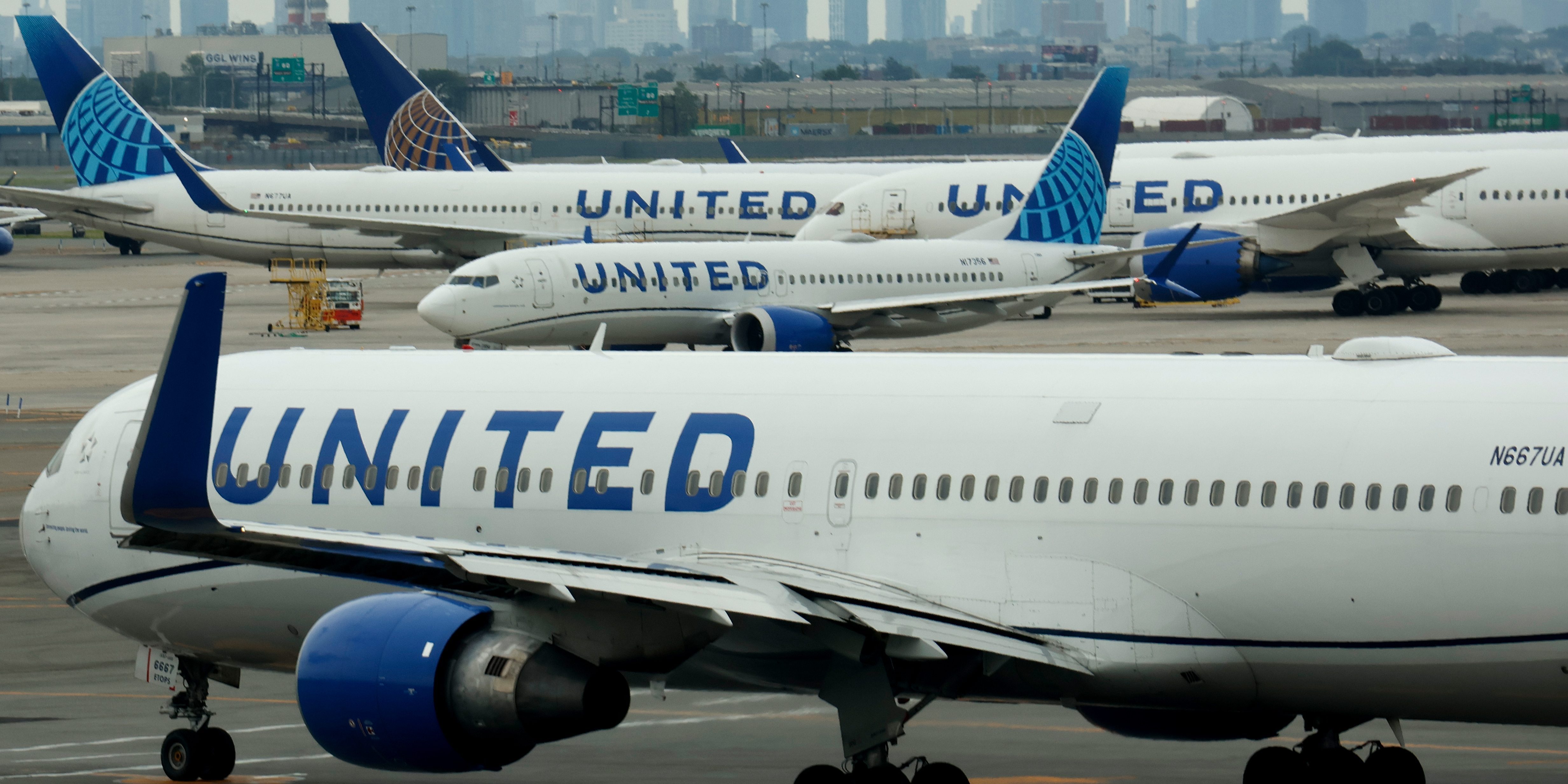
💾

ICE Worked With Iranian Regime to Set Up Deportation Flights as Trump Laid Plans for War

18 August 2026 at 09:00

Immigrations and Customs Enforcement agents appear to have worked directly with government officials in Iran to deport over 100 Iranian nationals as the United States prepared to bomb their home country, according to a newly released trove of internal emails from ICE.

In the process, immigration officials indicate they complied with an Iranian request to repatriate three specific people who were living in the United States.

Hundreds of emails spanning from May to November of last year show ICE officials, operating under the orders of then-Acting Director Todd Lyons, scrambling to put together plans for three controversial charter flights to Iran in the clearest picture yet of the Trump administration’s behind-the-scenes planning for the trips.

The flights delivered more than 100 people to an uncertain fate in Tehran just months or weeks before the U.S. and Israel launched their current devastating war, which has to date killed thousands of Iranians. While Israel and the United States bombed Iran during the Twelve-Day War last year, the flight planning remained ongoing. The coordination marked a reversal in decades of immigration policy toward Iranians, who were typically allowed to remain in the United States, even with a final removal order, due to fear of persecution from a regime U.S. leaders have accused of wantonly murdering its own citizens. 

The emails, which were released in response to a Freedom of Information Act request from the National Iranian American Council, or NIAC, and provided exclusively to The Intercept, show heavy pressure from high-ranking Trump administration officials to make the flights happen; discussion of coordination between ICE and Iranian officials, often through Qatari intermediaries but at times directly; and even an apparent mix-up in which ICE officials accidentally put the wrong person on a deportation flight bound for Iran.

Iranians were already under increased targeting by ICE, according to data obtained by NIAC. The timing of the about-face from long-standing policy was particularly cruel, said Jamal Abdi, the group’s president.

“It seemed clear that Iranians were under the microscope all of a sudden,” Abdi told The Intercept. “And we now know that it was actually in the middle of the [Twelve-Day] war where the White House was directing ICE to start removing Iranians.”

“We now know that it was actually in the middle of the [Twelve-Day] war where the White House was directing ICE to start removing Iranians.”

Each flight arrived in Tehran carrying at least a dozen deportees, including political activists and ethnic and religious minorities who had good reason to fear persecution upon arrival. Many of the people flown to Tehran were transported against their will, including one man who later told the New York Times that he attempted suicide before the flight and ICE agents physically forced him onto the plane.

The bulk of the emails released to NIAC illustrate the planning and execution of the first mass deportation to Iran on September 29, 2025.

Most of the correspondents have their identities and contact information redacted, with the exception of officials such as then-acting director Lyons, head of removal operations Marcos Charles, then-deputy director Madison Sheahan, and Joshua Coster, whose email signature identifies him as the ERO — Enforcement and Removal Operations — attaché at the agency’s U.S. Embassy branch office in Tel Aviv. In the run-up to the flight, Coster appears to have acted as the primary liaison with the Qatari government in back-and-forths over landing permits, passenger manifests, and details of the transfer in Doha to the final leg of the journey on a Qatar Airways charter. His level of involvement, Abdi said, “reveals how integral the ICE office in Tel Aviv has been to this transnational network of ICE officers removing people from America.”

In one of the most confounding episodes that took place during the first flight, Coster informed his colleagues that an Iranian national not included on the final list of deportees somehow wound up on the plane to Doha.

“An Iranian national not included on the final manifest we sent to Qatari MOI was boarded on the flight,” Coster wrote to colleagues on September 30, 2025. “This is unfortunate.”

“I have no idea how the case/person got through to the plane,” one of Coster’s colleagues responded. 

 Screenshot: ICE emails provided to NIAC via FOIA / Illustration: The Intercept

After the stopover in Doha, the accidental passenger was sent to Iran anyway.

A spokesperson for the Department of Homeland Security, the parent agency of ICE, declined to comment on the apparent mix-up.

Formal diplomatic relations between the U.S. and Iran have been severed since 1979, and communications between the two nations have typically taken place either through intermediaries or through Iranian representatives operating out of the Pakistani Embassy in Washington, D.C. That made the issuance of travel documents necessary for deportation nearly impossible, and Iranians were often allowed to remain in the country indefinitely.

Yet the move to begin deporting Iranians took place at a time in which relations between the U.S. and Iran were at a particularly low point.

 Screenshot: ICE emails provided to NIAC via FOIA / Illustration: The Intercept

The so-called Twelve-Day War was in full swing when, on June 19, 2025, the orders came down to ICE officers to begin putting plans into motion.

In an email sent from his BlackBerry to Charles and Sheahan that day, Lyons directed his underlings to “launch target cases as a priority.” Less than an hour later, Charles forwarded Lyons’s missive to several ICE officials and included marching orders of his own.

“Please begin working on a plan to remove all removable FO [final order] Iranians in custody,” Charles wrote. “We need a plan forward ASAP.”

In a series of emails among ICE officials, all of whose names were redacted, the pressure to develop a plan was clear. One staffer, whose email signature listed them as an assistant director of the ERO’s removal division, appeared pessimistic about the timing.

“Unfortunately I do not have great news,” wrote the staffer. “I’ve learned from the team that Iran is currently uncooperative and does not issue [travel documents] in a timely manner.”

As a result, the staffer told Charles, “removal will prove difficult.” To make matters worse, “due to the current conflict, the airspace in Iran is closed to all ( not just U.S.) until further notice,” wrote the official. “Neighboring land borders are also a challenge.”

 Screenshot: ICE emails provided to NIAC via FOIA / Illustration: The Intercept

Still, in other emails, the assistant director urged colleagues to press ahead with the orders.

“Please initiate conversations with [the Department of] State first this [sic] tomorrow,” the official wrote in an email forwarding the commands to his colleagues. “They need to help us identify a solution for this WH [White House] priority.”

Just 24 hours later, however, an ICE official wrote with good news.

“The team has come together and developed a few viable options for removals to Iran,” the official wrote. All of the plans were redacted.

 Screenshot: ICE emails provided to NIAC via FOIA / Illustration: The Intercept

Lyons, Charles, and Sheahan did not respond to requests for comment. When The Intercept contacted Coster at his official ICE email address, the reporter received an automatic out-of-office reply indicating that Coster’s area of focus had shifted to North Africa. 

For years, Iranians facing deportation from the U.S. have been protected by two realities: the lack of diplomatic relations between the two nations and the threat of retribution at home.

But the Trump administration has dispensed with both roadblocks in its quest for mass deportations, in which Trump has dismantled the asylum system for refugees from almost any country — with the notable exception of white Afrikaners

“It seems that this administration will stop at nothing to make sure that these physical deportations actually happen, no matter what the cost, and they’ll just turn people over to despotic regimes,” said Hassan Ahmad, an immigration attorney who has represented a number of high-profile people targeted for deportation in recent years. “I’ve been an immigration lawyer a long time, but with this administration, every day it’s a new low.”

It has become virtually impossible for ethnic minorities and political dissidents fleeing persecution in Iran to find safety in the United States, despite Trump’s strident criticism of the Iranian government’s human-rights record.

“Iran commits grievous human rights abuses and arbitrarily detains foreigners, including United States citizens, on spurious charges without due process of law, subjecting them to abuse,” Trump wrote in a February 2025 national security policy memo announcing his administration’s “maximum pressure” campaign. The following January, during a deadly crackdown on protests against the Iranian government, Trump issued messages of support for the people of Iran opposed to the regime — even as ICE agents were set to deport a dozen more people to Tehran later that month.

Amid all its bluster against Iran, his administration was doing everything it could to send Iranians back to that government. In June 2025, according to figures tallied up in an email from Charles, there were 522 Iranian nationals in ICE detention, including 244 who were under a final order of removal, and another 278 who were in removal proceedings. Charles wrote that the agency’s internal portal showed more than 5,000 other cases of Iranians in deportation proceedings who were not in ICE custody.

Around that time, ICE embarked on a dramatic scaling up of detentions of Iranian nationals not already in custody, arresting between 290 and 300 people between June and July of that year, according to NIAC’s data

“At the same time the U.S. and Israel were plotting a new phase of war with Iran, ICE’s attaché in Israel was coordinating to send asylees back to a government that threatens their lives,” Abdi said. “The people of Iran are wronged at every turn: by their authoritarian government and by the U.S. that speaks as if it is their ally, only to pursue policies that block them from the American dream, impoverish them, and drop thousands of bombs on their country.”

The first war with Iran under the second Trump administration ended on June 24, 2025, and efforts to organize the first flight to Tehran continued apace. Throughout August, ICE agents at field offices around the country made repeated mention of a charter flight scheduled for later that month. But by August 22, that charter appears to have fallen apart.

“It looks like there is some finger pointing going on,” wrote Coster, the ERO attaché then based in Tel Aviv, “because the Qataris, [Ministry of the Interior] and [Ministry of Foreign Affairs], are saying the Iranians did not approve in time.”

A few days later, his colleague was passing on an ask from Iranian officials. “Iran has requested that I amend the previous manifest an expedite the removal process,” an ERO officer wrote on August 29, with further specifics redacted. Within a month, the plan was a go.

On September 29, a plane operated by the private contractor Omni Air and brokered by CSI Aviation, neither of which responded to The Intercept’s requests for comment, took off from the Alexandria Staging Facility in Louisiana and flew to Puerto Rico for a brief refuel before traveling on to Cairo, according email records and to data provided to The Intercept by ICE Flight Monitor at Human Rights First.

After a stop in Cairo, the plane continued on to Qatar, with 54 Iranians onboard, who were transferred to a charter flight operated by the state-owned Qatar Airways. On October 1, at about 11:00 a.m. local time, the Qatar Airways flight arrived at its final destination, at Imam Khomeini International Airport in Tehran. 

 Screenshot: ICE emails provided to NIAC via FOIA / Illustration: The Intercept

For reasons that are not made clear in the emails, the Iranian deportees numbered fewer than half the 120 Iranian nationals that Qatar and Iran were expecting. The Qataris were not happy. 

“We would like clarification on why the number of passengers has been reduced from 120 to 54, as this directly affects our internal operations,” wrote a representative of the Qatari Ministry of the Interior in an email to ICE officials. “Last-minute changes are not welcome, especially since we are an intermediary with the Iranians.”

If U.S. officials gave an explanation to Qatar, it does not appear in the correspondence. The emails do reveal the inclusion of an Iranian not slated for the flight — as well as further specific requests from Iran, in which officials appear to ask that certain individuals be sent back to the country.

“The lran Embassy just issued passports or travel documents for the three listed below. They requested they be added to the flight leaving out on the 29th,” an official wrote on September 26, 2025.

 Screenshot: ICE emails provided to NIAC via FOIA / Illustration: The Intercept

The description of coordination between representatives of the two hostile nations, and the requests from Iran that individuals be included in the flight appears to bolster claims made in a lawsuit filed last month in federal court by the Iranian American Legal Defense Fund, which accused ICE of handing over sensitive information to the Iranian government. In court filings, ICE has dismissed those claims as “hearsay.”

In response to a detailed list of questions, a spokesperson for DHS again denied sharing sensitive information with the Iranian government.

“These allegations that ICE shared asylum application records with the Iranian government are FALSE,” the spokesperson wrote. “ICE is committed to ensuring that illegal aliens are informed of their right to communicate with their consular representatives. Consistent with established protocols, ICE provides illegal aliens the opportunity to contact their consular post and facilitates consular access to detained individuals, in accordance with applicable laws, regulations, and agency policy.”

The emails end on November 25, when the U.S. was planning a second flight that transited deportees to Iran through Kuwait on December 7. A third flight took place on January 25, again through Kuwait, and a fourth one was scheduled for late March.

According to filings in the lawsuit, it was derailed when, in late February, the U.S. and Israel again began bombing Iran.

The post ICE Worked With Iranian Regime to Set Up Deportation Flights as Trump Laid Plans for War appeared first on The Intercept.

💾

“Total Whitewash”: New Pentagon Report Claims U.S. Killed No Civilians in Boat Strikes

11 August 2026 at 19:51

The War Department delivered its unreleased annual report on civilian casualties to members of Congress on Tuesday, two government officials told The Intercept — one of whom called the report “a fucking joke.” The report found that U.S. attacks likely killed or wounded hundreds of civilians.

The other official deemed the report, which covers allegations of civilian harm stemming from military attacks in Iran, Somalia, Yemen, and the campaign of boat strikes in the Caribbean Sea and Pacific Ocean, a “total whitewash.” It’s the latest in a series of recent Pentagon reports that have called attention to U.S. failures to prevent, mitigate, or adequately track civilian harm after self-styled War Secretary Pete Hegseth gutted civilian harm mitigation and response or CHMR programs.

Shockingly, the Pentagon’s review of its 2025 attacks found that no civilians were killed in the Trump administration’s campaign of boat strikes, according to the officials, despite the fact that the U.S. killed more than 120 civilians last year in attacks that experts call extrajudicial killings or outright murder. The Trump administration has asserted repeatedly and without evidence that the boat strike victims, who now number more than 220, were “narcoterrorists.” In a classified briefing last fall, a high-ranking officer on the Pentagon’s Joint Staff said that some of the people killed in the initial September 2, 2025, attack may have been the victims of human trafficking, according to an Intercept investigation.

“They have absolutely no credibility,” the second official told The Intercept about the boat strike claims, adding that the report was “sickening.”

Known as the 1057 report, this year’s accounting of civilian casualties reflects a backlog of incidents from the Trump administration’s strikes against Yemen’s Houthi government in the spring of 2025. The report found that U.S. attacks killed 153 civilians and wounded almost 250 during the campaign of air and naval strikes, codenamed Operation Rough Rider. The second official called these “lowball numbers.” At least 238 civilians were killed and 467 injured, according to the Yemen Data Project.

One attack killed 68 people, the second official said. That attack on an immigrant detention center in Yemen killed and injured dozens of Ethiopian civilians and no combatants and was detailed in a report by Amnesty International shared with The Intercept last year. At the time, U.S. Central Command said it was still “assessing all reports of civilian harm resulting from operations during that time period.”

The 1057 report determined that three incidents “likely” harmed civilians, according to the second official. Another 15 attacks are still under review, he said.

“The idea CENTCOM still has fifteen cases on Yemen to adjudicate doesn’t bode well for the war in Iran,” said the first official. Both officials spoke to The Intercept on the condition of anonymity because they were not authorized to discuss the report.

Under Section 1057 of the 2018 National Defense Authorization Act, the Pentagon is required to provide Congress and the public with data on civilian harm, mitigation steps, and assessments. The officials said the Pentagon had sent the report to members of the Armed Services Committees.

The report does not cover Trump’s ongoing failed war on Iran, which the United States and Israel launched in February, because it includes only military attacks from 2025. The second government official said that the number of incidents of civilian harm to investigate from the current war with Iran will dwarf the number in Yemen. Reports of civilian harm were recorded every day from the beginning of the war on February 28 to the first ceasefire on April 8, according to the U.K.-based air strike monitoring group, Airwars. The World Health organization put the death toll in Iran at 3,375 people — before the ceasefire fell apart last month. 

The second official said the backlog would likely carry over several years, referencing the fact that the 10-person civilian harm mitigation team at CENTCOM has been reduced to just one individual. The first official echoed the same concerns. “How will they get through hundreds of cases for Iran if their one civilian harm person still hasn’t finished Yemen?” they asked.

Currently, CENTCOM is clinging to the fiction that the U.S. attack on the Shajarah Tayyebeh elementary school in Minab, Iran, that killed more than 150 people, most of them children, is the lone civilian harm incident of the current war. “There is one active civilian casualty investigation from the 13,629 munitions,” Admiral Brad Cooper, the CENTCOM chief, told members of the Senate Armed Services Committee in May.

The Annual Report on Civilian Casualties in Connection with U.S. Military Operations in 2025 comes after Hegseth’s Pentagon has spent more than a year slashing measures to prevent civilian casualties, including firing the military’s top lawyers, who advise leaders on international laws of armed conflict.

A group of Democratic lawmakers told Hegseth in a July letter  that his “gutting civilian harm mitigation and response (CHMR) efforts” has left the Pentagon unable to “comply with the law and its congressionally-mandated CHMR responsibilities.” They added: “The Trump administration — potentially in violation of federal law — has defunded and impeded civilian protection efforts.”

That letter, sent by Sen. Elizabeth Warren, D-Mass., and nine other lawmakers, echoed concerns raised by a War Department inspector general report that described civilian protection efforts as largely “inactive.” The May report by the Pentagon’s top watchdog says cuts to civilian harm mitigation and response efforts have been so severe under Hegseth that the United States cannot adequately protect civilians in conflict zones or track harm when it occurs. 

These criticisms were echoed in an another-yet-unreleased official report revealed by The Intercept that found Hegseth’s Pentagon gutted its premier center devoted to preventing civilian casualties in war zones. The War Department’s Civilian Protection Center of Excellence slashed its staff from 40 personnel in January 2025 to just nine by the end of the year, according to the report.

“In the coming months, the Department will submit its annual report regarding casualties resulting from United States military operations during the 2025 calendar year,” a Pentagon official told The Intercept when asked about the U.S. officials’ comments. “We have nothing to preview or announce at the moment.”

The post “Total Whitewash”: New Pentagon Report Claims U.S. Killed No Civilians in Boat Strikes appeared first on The Intercept.

💾

The Pentagon’s Obsession With China Puts Hawai‘i at Risk

10 August 2026 at 10:00

The Real Cost of the Military’s Pacific Buildup

President Donald Trump and self-styled Secretary of War Pete Hegseth are pushing for a post-World War II record $1.6 trillion Pentagon budget for next year, a sum so obscenely high that it is almost impossible to comprehend. The proposed $600 billion increase alone is almost twice the total annual military budget of America’s closest rival, China.

That supposed rivalry, despite the big spending gap, makes China central to justifying the Pentagon’s bloated budget. And Hawaiʻi is, in turn, central to the Trump administration’s Indo-Pacific military strategy which assumes that deterring China requires a forward, offensive strike posture anchored by the archipelago. This not only puts a target on Hawaiʻi — as was the case during World War II, when Pearl Harbor was attacked by Japan — but it also deepens long-standing economic hardships and environmental degradation produced by more than a century of U.S. military occupation, according to “The True Cost of the U.S. Military in Hawaiʻi,” a new report by the Institute for Policy Studies.

The report finds that as the Pentagon has shoved Hawaiʻi toward the front lines of a potential nuclear conflict, it has also poisoned the islands’ land and waters, lied about its economic benefits, tied Hawaiʻi’s financial well-being to an inefficient use of tax dollars, and failed to pay more than $130 billion in back rent. And now the Trump administration is extending its buildup in Hawaiʻi — which has long “been central to the architecture of U.S. imperial power” to expand facilities, build new bases, and secure access to air and naval bases from Guam to the Pacific island chain to the Philippines to Australia. And these moves in the Pacific are just one part of that multifaceted $600 billion boost being sought for the Pentagon.

The China Syndrome

In addition to greed, grift and pork-barrel politics — practices that have reached an astonishing level due to the unapologetic corruption and feverish insider dealings of the Trump family and its hangers-on — the biggest driver of the Pentagon’s enormous budget is America’s quest for unrivaled global military dominance. At the center of that effort are preparations to “win” a war with China, a mission that is likely impossible and would be extremely dangerous to undertake.

The probable outcome of a war with Beijing — which is, after all, a sophisticated technological power armed with nuclear weapons — would be unprecedented devastation for all concerned, especially the people of Taiwan, the independent island nation of the coast of the mainland that China considers a breakaway province. Hawai‘i, Guam, and the other launching pads for a U.S. military operation against China would undoubtedly be targets, with dire consequences for the residents of those islands.

Exaggerating the threat posed by China is a foolproof marketing scheme for those who profit handsomely from preparations for war with Beijing.

Well before recentering China as national security adversary No. 1, America’s quest for military supremacy was not going well, to put it mildly.

As the Costs of War Project at Brown University has shown, America’s post-9/11 wars have been an unmitigated disaster, costing or causing long-term obligations of an astonishing $8 trillion, as well as the deaths of hundreds of thousands of civilians and the displacement of tens of millions more, Meanwhile, these wars failed miserably in meeting their stated objectives, leaving in power a sectarian regime in Iraq that opened the door to the rise of ISIS and a Taliban-led government in Afghanistan, a status quo ante bellum after more than 20 years of war.

“The Trillion Dollar War Machine,” by Willian D. Hartung and Ben Freeman Available at Bookshop.org

It’s hard to envision a more complete mismatch between stated war aims and real-world results than the wars in Iraq and Afghanistan, until we take a hard look at the illegal, immoral, and ill-conceived conflict with Iran which is fast becoming a new forever war.

Despite this dismal record, the Trump regime — and the Biden administration before it — has chosen to double down on a military-first foreign policy, with the demonization of China fueling the fire.

The Pentagon refers to China as the “pacing challenge,” even as military spending far outpaces Beijing’s defense budget. And in its most recent assessment, the Pentagon outlined a strategy to cow China into submission by “being so strong that aggression is not even considered.”

China hasn’t been involved in a major shooting war since the much smaller nation of Vietnam fought it to a virtual standstill in 1979, nearly five decades ago. China’s forces “severely underperformed” in the one-month conflict; according to one account, “PLA soldiers were so undertrained that there were reports of infantrymen tying themselves to tanks with ropes to avoid falling off, sealing their fate when they were ambushed.”

Presumably Chinese forces are much better trained now, but China is not a serial aggressor, and although it has engaged in border skirmishes with India, it has not been embroiled in virtually nonstop conflicts over the past half century, as the United States has, nor has it fought regime-change wars. So the question arises: Who is setting the pace in the U.S.–China arms race, Washington or Beijing?

Two Systems, Two Countries

In the real world, China’s military is not 10 feet tall, and throwing more money at the Pentagon is the worst possible way to address the greatest challenges posed by Beijing, which are actually not military in nature.

China’s vast global influence leans heavily on its economic clout, which is built on aid and trade, including the Belt and Road Initiative, a globe-spanning collection of interconnected infrastructure projects. (To be clear, the Belt and Road has too often involved dubious deals with unaccountable leaders who give Beijing long-term leases on their nation’s critical natural resources in exchange for roads, railways, port facilities, or other infrastructure projects — not exactly a model of free trade in action.) China is also the top trading partner to 120 nations worldwide, including key countries in Africa, the Middle East, Asia, and Latin America, alongside a brisk trade with Europe. This is the lynchpin of China’s global clout.

But U.S. power projection in Hawai‘i and beyond, the entire Pacific strategy, is based on a different type of projection — the belief that China aspires to usurp the U.S. as the global hegemon through military might. Exaggerating the threat posed by China is a foolproof marketing scheme for the weapons contractors, Pentagon bureaucrats, K-Street lobbyists, and venture capital firms that profit handsomely from preparations for war with Beijing.

As military budget analyst Stephen Semler has documented, more than half the Pentagon budget goes to private companies, for everything from long-range bombers and intercontinental ballistic missiles to F-35 combat aircraft that are virtually useless in modern warfare, to the unproven, overhyped products of the Silicon Valley military tech moguls, like the at least 686 artificial intelligence projects currently being funded by the Pentagon.

Throwing more money at the Pentagon is the worst possible way to address the greatest challenges posed by Beijing, which are actually not military in nature.

On the military front, China’s ability to challenge the U.S. is grounded in its nuclear forces, which are much smaller than America’s but are on the rise in an effort to keep Washington from having a large-enough edge to wipe out Beijing’s ability to respond to a first strike.

The U.S. may not be able to threaten China’s nuclear deterrent any time soon, but in the face of the U.S. military build-up in the Pacific, Beijing appears to be preparing for a worst-case scenario. Chinese President Xi Jinping seems to value nuclear weapons more than his predecessors, who were content to keep a few hundred nuclear warheads that could reach U.S. soil versus Washington’s much larger nuclear arsenal. China is also leveraging is technological base, including its faster pace at training scientists and engineers. This positions China to challenge Washington in an AI arms race.

And yet war is not inevitable, despite what many China hawks constantly suggest. Returning to a common understanding on Taiwan — one in which the U.S. agrees to limit its political recognition of the island or support for independence in exchange for a Chinese pledge not to seek reunification through military means — is the best way to avoid a catastrophic conflict. It would also clear the way for cooperation on urgent issues like addressing the climate crisis, preventing pandemics, and promoting equitable global arrangements to reduce poverty and inequality. At the same time, it would make things safer for hundreds of millions of people from Japan and South Korea to Guam and Hawai‘i.

Paying the Price

America’s military-first approach to China and the world at large comes at a high price, even when the guns are silent. History demonstrates that merely preparing for war costs lives, as the fate of victims of Cold War-era nuclear testing from New Mexico and Utah to the Marshall Islands attests. But as Arjun Makhijani, a nuclear engineer and the president of the Institute for Energy and Environmental Research, has pointed out, the toll of nuclear weapons research, development, and production is global in scope, creating “a worldwide archipelago of radioactive wastelands” that have cost millions of lives since the dawn of the nuclear age. The military’s impact on lives and health is also exacerbated by the proliferation of non-nuclear toxins and unexploded ordnance created by generations of war.

In short, military buildups mean far more than moving money around, although that too poses serious risks when it comes at the expense of investments in public health, nutrition, education, and anti-poverty efforts. 

War is not inevitable, despite what many China hawks constantly suggest.

Military expansions involve constructing and maintaining new weapons factories and existing military bases, deploying new weaponry, engaging in costly training exercises, and, all too often, prosecuting senseless, devastating wars like the current conflict with Iran, the forever war in Somalia, and a new conflict percolating in Ecuador.

The Institute for Policy Studies report, prepared by both mainland and Hawai‘i-based analysts and advocates, offers a lesson in the perils of military expansion. Hosting facilities geared toward a future war against China come at a human and environmental cost that far outstrips the (routinely overstated) economic benefits that U.S. military bases and weapons deployments generate, according to the IPS analysis.

The report reveals that decades of military use of PFAS (known as “forever chemicals”) have contaminated soil, groundwater, and nearshore waters far beyond the footprint of military bases. Remediation at just three installations is estimated to cost almost $500 million. A leak at the Navy’s Red Hill Bulk Fuel Storage Facility — which stored roughly 250 million gallons of jet fuel — in Oʻahu also contaminated the drinking water supply of 93,000 people. Due to these and other environmental disasters, residents of Hawai‘i have suffered unnecessary health risks and mortality and could suffer the effects of further accidents as preparations for war with China ramp up.

Trading short-term jobs for long-term environmental devastation and generational health risks is a terrible bargain that would never have been struck without Hawai‘i’s history as a colonial outpost and a pawn in a superpower competition over which the people of the islands have had far too little control. While military bases in the mainland U.S. have also caused enormous health damage, the sheer extent of Hawai‘i’s territory occupied by military facilities heightens the impact.

Meanwhile, the archipelago’s longtime status as a floating military base and the foundation for U.S. power projection in the Pacific makes it a primary target in any U.S.–China conflict, either in a first strike designed to hobble a looming U.S. attack or in retaliation once a U.S. intervention begins.

The IPS analysis also found that the Pentagon has overstated the military’s supposed $10 billion annual economic benefit to Hawai‘i by nearly 30 percent. On top of this, Hawai‘i is getting little bang for the buck. Military spending creates approximately 5.3 jobs per $1 million invested, compared to 12.3 jobs from the same investment in education, food production, healthcare, or housing. The researchers also found that the federal government owes Hawai‘i up to $133.7 billion in back rent on top of the massive environmental cleanup costs.

A non-militarized plan for Hawai‘i’s economy would supply more jobs and be far more sustainable than the current approach, according to IPS. And there is a unique opportunity to change, as two military leases of huge swaths of Hawaiian territory are set to expire.

Trading short-term jobs for long-term environmental devastation and generational health risks is a terrible bargain.

Washington needs to thoroughly rethink its narrow, self-defeating approach to Beijing. A less aggressive, more cooperative posture toward China would help free Hawaiians politically and economically, and it would open the path to a safer, more peaceful, more prosperous future. It would also allow for a rollback of the extensive U.S. military buildups in Guam and the Pacific islands, activities that mirror and are at times even worse in their environmental damage and security risks than the situation in Hawai‘i itself.

A less aggressive foreign policy toward China requires the demilitarization of Hawai‘i and a rollback of America’s costly and ill-conceived buildup in the Pacific. The IPS report clarifies what is at stake and provides a starting point for what should be a thorough debate on Hawai‘i’s role in U.S. security strategy. It is, as one of the authors, Jonathan Kay Kamakawiwoʻole Osorio of the University of Hawai‘i at Mānoa, put it: “a blueprint for reclaiming our nation here, in hope and faith in one another.”

The post The Pentagon’s Obsession With China Puts Hawai‘i at Risk appeared first on The Intercept.
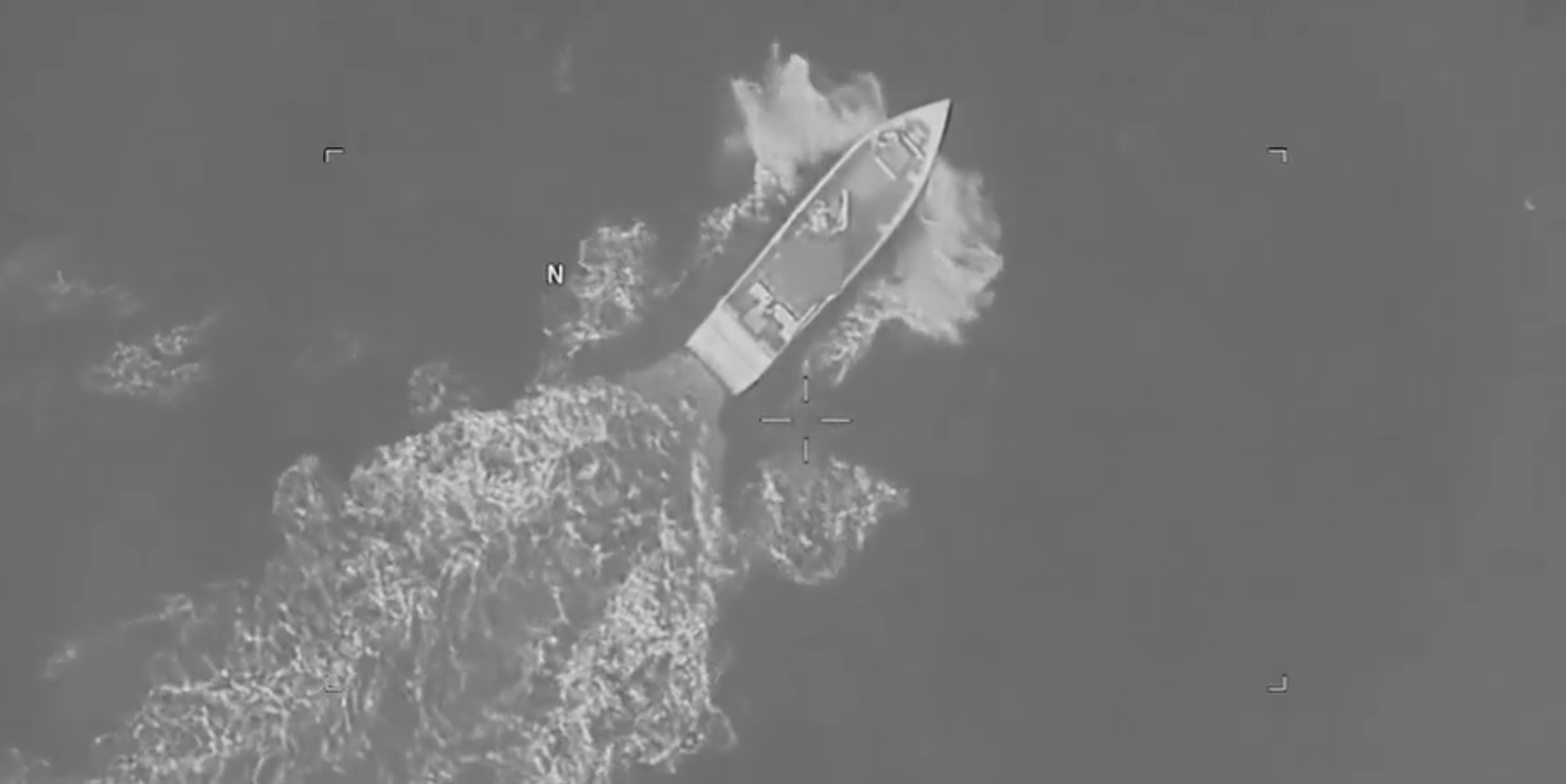
💾

The Pentagon Is Posting Cryptic Biblical Messages on Social Media

6 August 2026 at 10:06

As senior military leaders privately warned that the war with Iran was straining U.S. forces, depleting key missile defenses, and leaving the military without sufficient naval resources to continue protecting Israel, the Pentagon turned to Christian scripture in its official social media messaging.

On Saturday, two Defense Department accounts on X posted images overlaid with the words “SEND ME.” The agency’s Rapid Response account published the phrase on a picture of a service member watching a helicopter above an aircraft carrier. Chief Pentagon spokesperson Sean Parnell quoted Isaiah 6:8 in a post and included the all-caps phrase on an image of a soldier silhouetted in the dark. The Department of War’s official account amplified both posts.

Isaiah 6:8 is a verse that appears in the Hebrew Bible and Old Testament in which the prophet Isaiah answers a divine call. When God asks, “Whom shall I send?” Isaiah replies, “Here am I. Send me.” The passage is widely used in many Christian traditions as an expression of accepting God’s call to a divine mission. The verses that follow describe God sending Isaiah to proclaim a message of judgment that culminates in cities “without inhabitant,” houses emptied of people, and the land left “utterly desolate” before eventual restoration.

Jemar Tisby, a historian of religion, said Isaiah 6:8 functions in American evangelical culture “almost entirely as a standalone missions text,” commonly invoked at missions conferences, ordinations, and altar calls as a declaration of willingness to serve. “The most important context of Isaiah 6, the part most people miss, is that the devastation falls on God’s covenant people,” Tisby said. “The nation doing the sending, not a foreign enemy, is in view here.”

SEND ME. pic.twitter.com/uDHOJOzWb3

— DOW Rapid Response (@DOWResponse) August 1, 2026

It’s unclear what, exactly, the biblical quotation was intended to convey. The Pentagon declined to answer The Intercept’s questions about whether the posts reflected an expression of faith or proselytizing, a message about the war with Iran, or a coordinated communications strategy. “Nothing to offer you on this,” a Pentagon spokesperson said.

The posts followed months of controversy over the role of religion in the Defense Department under Secretary Pete Hegseth.

In March, The Intercept reported that the appointment of Christian activist Erika Kirk, wife of Charlie Kirk, to the Air Force Academy’s Board of Visitors alarmed former military leaders and constitutional advocates, who warned it could push the academy toward an overtly ideological vision of military leadership.

That same month, reporting later entered into the congressional record detailed complaints from more than 100 service members who alleged commanders described the war with Iran as “part of God’s divine plan” and encouraged troops to view the conflict through a biblical lens. Saturday’s posts placed similar biblical language on the Defense Department’s own official social media accounts.

Tisby said he viewed the Pentagon’s recent messaging as part of a broader pattern.

“Given Hegseth’s religious influences, tied to Douglas Wilson, and taken with the fact that Hegseth instituted worship services at the Pentagon, this reads as part of a larger effort to incorporate a narrow vision of Christianity into the military and the federal government writ large,” Tisby said.

Tisby compared the Pentagon’s recent messaging to a controversy during the George W. Bush administration, when the Pentagon used the exact same biblical passage, Isaiah 6:8, on intelligence briefings prepared for then-Defense Secretary Donald Rumsfeld during the Iraq War. The use of the verse became public in 2009 and prompted criticism from religious scholars, who argued it had been removed from its broader biblical context. “In the Rumsfeld era, there was a public outcry about the misattribution of Bible verses in military contexts, and the administration pulled back,” he said. “Now, this administration is leaning into the framing.”

The messages marked a notable institutional shift. Previous controversies centered on statements by individual commanders or political appointees. This time, multiple official Defense Department accounts amplified the same biblical passage, and the Pentagon declined to explain why.

That does not necessarily mean the Pentagon’s post violated the Constitution. The First Amendment generally prohibits the government from promoting or favoring a religion through its official actions. At the same time, courts have long allowed some traditional references to religion, including the national motto, “In God We Trust.”

Nelson Tebbe, the Jane M.G. Foster Professor of Law at Cornell Law School, whose scholarship focuses on constitutional law and religion, said the Pentagon’s post was different from those long-standing examples because it relied on a specific biblical passage rather than a general religious phrase and therefore could have a more direct impact on members of the military.

“Minor endorsements of religion by the government are common,” Tebbe said, pointing to phrases such as “God save this honorable Court,” commonly invoked in the Supreme Court. “This particular example involving the Pentagon spokesperson is less minor or incidental.”

Even so, Tebbe said recent Supreme Court decisions have made it unlikely that a court would strike down the Pentagon’s post.

“Recently, the Supreme Court has weakened the Establishment Clause, particularly the doctrine that used to prohibit government endorsements of religion in its own speech,” he said. “I would say that the chance of the Supreme Court invalidating this kind of practice is vanishingly small.”

Legal scholars say that constitutional question is separate from the practical consequences of the Pentagon’s messaging during an active conflict.

“More problematic, if also predictable, to me is the conflation of divine and military calling and service,” said Jonathan Ebel, a professor of religion at the University of Illinois Urbana-Champaign who studies religion and the American military.

“Besides delegitimizing the U.S. military through such overtly Christian rhetoric and alienating non-Christian service members, such blatant Bible thumping in this context implies a religious war against Iran, foolishly confirming Iranian propaganda that the ‘Great Satan’ wants to wage war on Islam,” said Rachel VanLandingham, a former Air Force judge advocate and military law professor.

Since the 1979 Islamic Revolution, Iran’s leaders have referred to the United States as the “Great Satan,” portraying Washington as both a geopolitical rival and a religious enemy. Iranian officials have repeatedly framed conflicts with the United States and Israel as part of a struggle against Islam, making official biblical messaging from the Pentagon particularly vulnerable to exploitation as propaganda, VanLandingham said.

“Religious war is a slippery slope to total war.”

VanLandingham said the Pentagon’s messaging risked replacing military professionalism with religious symbolism at a moment when the armed forces should remain grounded in constitutional principles, rather than religious conviction.

“Religious war is a slippery slope to total war,” she said. “The U.S. military fights based on honor and fidelity to the law, not to Old Testament biblical passages.”

Update: August 6, 2026, 10:18 a.m. ET
This article was updated to include comment from Jemar Tisby, a historian of religion, and Jonathan Ebel, a professor of religion.

The post The Pentagon Is Posting Cryptic Biblical Messages on Social Media appeared first on The Intercept.
💾

When a President Promises a Massacre

5 August 2026 at 17:21

Channeling His Inner-Martian

As his war in Iran has imploded, his poll numbers have plummeted, the U.S. economy has cratered, and he finds himself in the grip of a steep cognitive decline, President Donald Trump has increasingly lashed out, calling for cataclysm, slaughter, and even genocide. As he tries desperately, if ham-handedly, to extricate himself from a losing war, the commander-in-chief of the world’s most destructive military offers up deranged rants, baying for blood and issuing orders that throw the concept of proportionality in warfare out the window.

Trump’s bloodthirsty rhetoric has been borne out in asymmetrical slaughter, with Iranian fatalities exceeding American deaths by multiple orders of magnitude. And this follows similarly lopsided casualty tolls in Trump’s conflicts in Somalia, Venezuela, Yemen, and on the high seas. This low-risk butchery masquerading as warfare harkens back to 19th-century extermination campaigns in which so-called inferior races were massacred in spectacles of slaughter — colonial violence that wiped out ethnic groups and set the stage for 20th-century genocide.

“Every time Iran kills an American Soldier, they will pay for that killing many times over!” Trump recently announced on Truth Social. “This directive has been passed on to Secretary of War, Pete Hegseth, Chairman of the Joint Chiefs of Staff, Daniel Caine, and every Leader in the Military.”

This unhinged command for disproportionate retaliation — which may amount to a violation of international humanitarian law — was featured, mostly without further remark, in news reports with bland headlines, like “Trump pays respects to 4 US service members killed in the Middle East.” It was also, for example, tucked deep inside and presented without further comment in a New York Times article about impending testimony before the Senate Appropriations Committee by Hegseth and Caine.

Trump’s order, and the matter-of-fact coverage from the Times, reminded me of a report by a different Times, almost exactly 199 years earlier: an article from Van Diemen’s Land, the Ireland-sized island to the southeast of Australia that we now know as Tasmania.

White settlers poured onto the island in the early 1800s, wiping out the kangaroos and replacing them with sheep. They treated the Indigenous people no differently. “Thousands were hunted down like wild beasts,” according to the local press. When one of the white people were killed by locals, the Colonial Times reported that other settlers exacted revenge on the Indigenous people that left “sixty of them killed and wounded.” The next year, when members of settler police and military forces were pelted with stones, they responded with gunfire and a bayonet charge that “killed seventy of them, dragging the women and children from the crevices of the rocks, and dashing out their brains.”

The slaughter in Tasmania was the inspiration for author H.G. Wells’s late 19th-century sci-fi classic “War of the Worlds,” in which Martians with superior technology, advanced firepower, and no compunction about annihilating humanity invade England, laying waste to London and driving out its population. “And before we judge of them too harshly we must remember what ruthless and utter destruction our own species has wrought,” the narrator says in the book’s open. “The Tasmanians, in spite of their human likeness, were entirely swept out of existence in a war of extermination waged by European immigrants, in the space of fifty years. Are we such apostles of mercy as to complain if the Martians warred in the same spirit?”

“Are we such apostles of mercy as to complain if the Martians warred in the same spirit?”

When lawyer Raphael Lemkin formulated the idea of “genocide” after World War II, almost 50 years after Wells wrote “War of the Worlds,” he considered Tasmania a historical case study of his concept. It’s unclear if Trump ever read “War of the Worlds,” though he attended the New York City premiere of the 2005 Steven Spielberg film adaptation; I doubt he understood Wells’s allegory, presuming he knows what an allegory is.

The Tasmanian carnage was part of an age of slaughter and genocide carried out across the globe by European powers and the United States. Trump has long been in the thrall of the precepts of this era of colonial conquest: Might makes right; territorial acquisition through armed intervention; and colonial relationships with, and resource extraction from, conquered foes and weaker nations.

Trump often invokes and praises Andrew Jackson, his 19th-century predecessor in the White House, who owned slaves and implemented a policy of “Indian removal” that culminated in the Trail of Tears, the military’s forced displacement of Native Americans, during which thousands died. Trump advocated “furthering President Jackson’s legacy, expanding his vision, [and] honoring his memory” earlier this year, pronouncing that Old Hickory embodied the “best of the American Spirit.” Trump has even employed America’s contribution to the eradication of indigenous peoples as a punch line. He has made light, on social media, not only of the Trail of Tears but also the Army’s massacre of hundreds of Native Americans at Wounded Knee in South Dakota.

Even the Army’s official history portrays Wounded Knee as a Tasmanian-scale slaughter in which an effort to disarm a group of Lakota religious revivalists resulted in an errant shot, possibly an accidental discharge, that “led immediately to heavy and indiscriminate firing from soldiers,” including the use of artillery, “despite the presence of numerous noncombatants.” In the end, up to 300 Lakota, including women and children, lay dead while “Army casualties totaled 25 killed and 39 wounded, some of whom likely were hit by friendly fire.”

Such disproportionate mass killings and exterminations were a hallmark of the 19th century. This “destruction of the ‘inferior races’ of four continents prepared the ground for the destruction of six million Jews in Europe,” as the author Sven Lindqvist observed, in his classic text “Exterminate All the Brutes.” We look back on these Holocaust-precipitating slaughters as beyond abhorrent. Or at least we did.

The death toll disparity at Wounded Knee doesn’t compare to the carnage of Trump’s war on Iran. The estimated 3,375 to 6,000 Iranian deaths dwarf the 19 U.S. deaths by 180 to 320 times, or more than two orders of magnitude. (The official U.S. Iran war death toll stands at 18, with the Pentagon omitting one widely reported loss.) The 60-to-1 Tasmanian toll of dead and wounded is a similar ratio as the estimated 39,806 total Iranian casualties compared to the official U.S. count of more than 700 troops who have been killed or wounded.

Trump has also repeatedly touted the lopsided nature of his punitive expedition in Venezuela, a short war in which the U.S. deposed and kidnapped President Nicolás Maduro, creating a de facto U.S. colony run by a quisling. “To have a few injuries, but no death on our side, is really amazing,” Trump bragged after the invasion, later comparing the lack of U.S. fatalities to the substantial death tolls of the (much longer) Korean and Vietnam wars. The 100 or more Venezuelan and Cuban military personnel and civilians killed compared with a handful of U.S. injuries shares a lineage of battlefield massacres like the 1863 U.S. slaughter of 250 to 500 Shoshone — including at least 90 women, children and infants — at Bear River at a cost of 24 U.S. troops, and the up to 6,000 Zulus armed with shields and spears cut down by Gatling guns and artillery compared with 10 British troops killed at Ulundi in southern Africa in 1879.

Trump’s 2025 war against the Houthi government in Yemen — Operation Rough Rider — was similarly lopsided. The airstrike monitoring group Airwars tracked reports of at least 224 civilians in Yemen killed by U.S. airstrikes. This nearly doubled the civilian casualty toll in Yemen from U.S. attacks since 2002, meaning that almost as many civilians were reportedly killed in 52 days as the previous 23 years of airstrikes and commando raids combined. The Yemen Data Project put the death toll at 238 civilians, at a minimum, and another 467 civilians injured. The U.S. also killed hundreds of Houthi fighters and numerous Houthi leaders, according to CENTCOM spokesperson Dave Eastburn, who referred to “credible open sources” citing 650 Houthi casualties. The U.S. did not suffer a single reported fatality during the campaign. And Trump’s relentless strikes in nearby Somalia have amounted to up to 420 deaths at a cost of zero American lives.

The Trump administration’s boat strike campaign in the Caribbean Sea and Pacific Ocean, which has killed at least 221 people without the loss of even one U.S. life, is a still more egregious slaughter. In this case, only unarmed civilians are targeted, victims akin to the fleeing Tasmanian women and children who had their skulls bashed in.

“Kill Anything That Move,” by Nick Turse Available at Bookshop.org

There are, of course, myriad differences between Trump’s ongoing war on the world and 19th-century colonial extermination campaigns in Africa, America, Australia, and elsewhere. Trump doesn’t, for example, explicitly assert racial superiority as a reason for his military interventions even if he often lapses into racist rants and is making war in Somalia while deriding Somalis as “garbage.”

But Trump’s more than 20 military interventions, armed conflicts, and outright wars have heightened the increasing trend toward “riskless warfare,” a term coined more than a quarter century ago by Paul Kahn, the director of Yale Law School’s Schell Center for International Human Rights. “It is an image of warfare without the possibility of chivalry,” the prescient Kahn later observed. “At the heart is a violation of the fundamental principle that establishes the internal morality of warfare: self-defense within conditions of reciprocal imposition of risk. Without the imposition of mutual risk, warfare is not war at all.” 

Earlier this decade, in a study of drone warfare, Neil Renic, a scholar of military ethics, refined the concept as “radical asymmetry,” in which “one side has, in a practical sense, overcome the type and degree of physical vulnerability that has long been regarded as an expected and unavoidable feature of war.” Renic sees the drift toward unilateral violence leading to the increasing “perception of the weaker party … from an opponent to be fought and overcome, to one that must be hunted and done away with,” contributing to “dehumanization” of the enemy which, “in some cases … has led to a more severe decline in the targeting practices of the United States, from the morally questionable to the morally indefensible.” This feature of modern warfare harkens back to the age of extermination, when Tasmanians and others were also hunted and done away with.

As Trump has reveled in asymmetrical body counts and called for more disproportionate deaths, he has increasingly fancied himself an alien destroyer like Wells’s Martians; even if he himself doesn’t quite realize it. In one bizarre AI-slop image he posted on Truth Social as the Iran war went south, Trump appears to be striding from a spaceship — on some platform high above Earth — as legions of weapons-toting alien warriors flank him. In another, a gigantic Trump is seated at a command console in a space station floating high above the world. On screens above him, we see huge explosions apparently going off simultaneously back on Earth. On still another, an indistinct country is seemingly being ravaged by lasers.

“Then in a moment the Heat Ray was brought to bear, and the town became a heap of fiery ruins,” wrote Wells in “War of the Worlds,” describing the Martians’ weapon of mass destruction. “The houses caved in as they dissolved at its touch and darted out flames; the trees changed to fire with a roar.” Wells referenced the “massacre of mankind” and “the rout of civilization.” As Trump has made disproportionate slaughter his signature accomplishment from Latin America to the Middle East to Africa, he has channeled his inner Martian. “A whole civilization will die tonight, never to be brought back again,” he wrote of Iran on Truth Social, promising the “entire country could be taken out” and warning he might bomb Iran “back to the Stone Ages.”

Trump’s unhinged rhetoric is further driven home by the remaining imagery in the command-console post: a mushroom cloud from a monstrous nuclear blast with text on a screen announcing “target destroyed,” while a glowering Trump is poised to push a glowing red button that suggests he is about to incinerate the planet. Trump’s annihilationist fantasies are especially disturbing since he controls a nuclear arsenal that can destroy the world many times over. (“We have enough nuclear weapons to blow up the world 150 times,” was how Trump put it.) 

Iranians, Latin Americans, Somalis, and Yemenis have all been in the crosshairs of America’s lopsided killing campaigns during his second term, but in this new age of slaughter, all of us are potentially targets in Trump’s war on the world.

The post When a President Promises a Massacre appeared first on The Intercept.
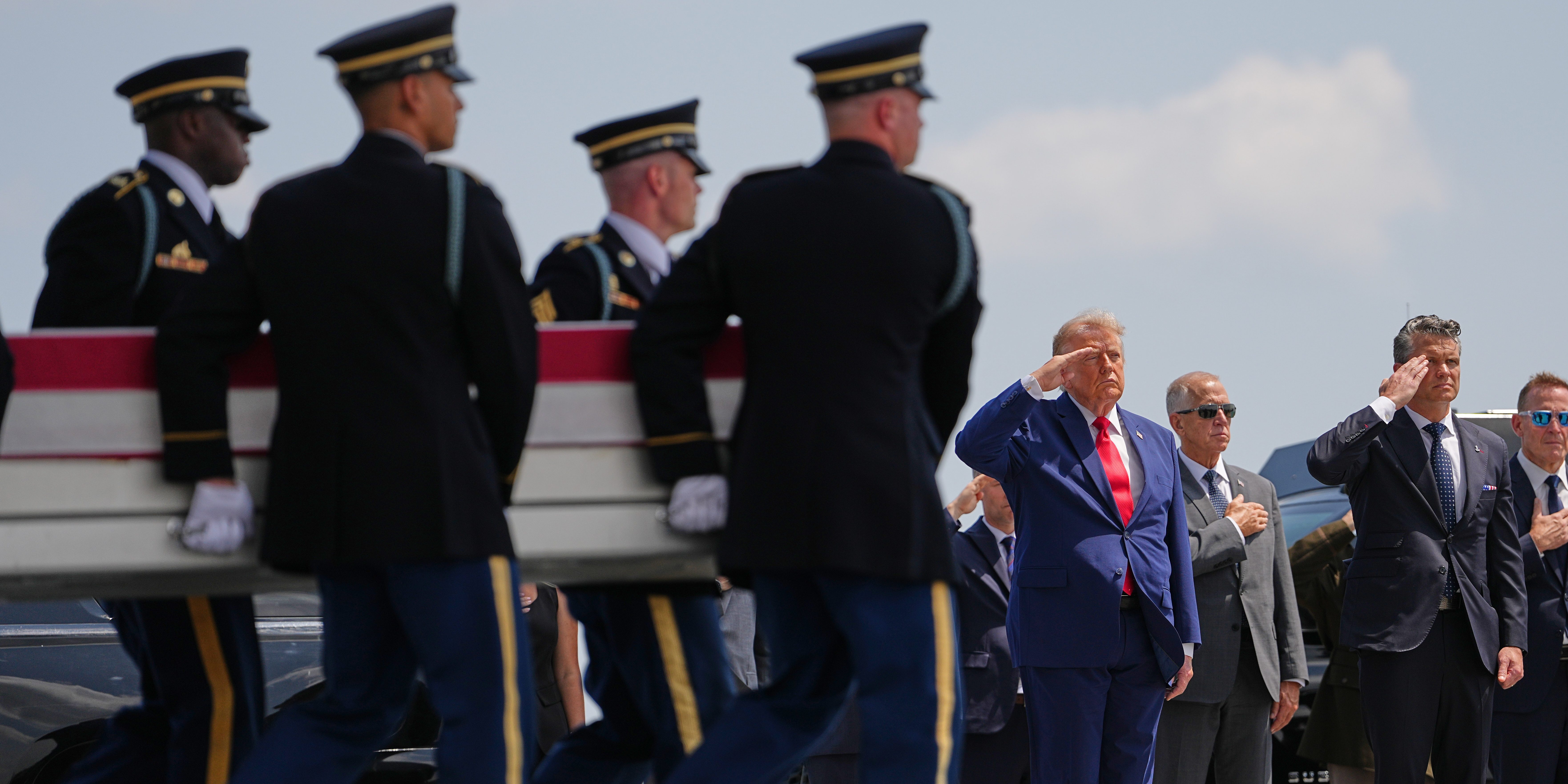
💾

The Pentagon Found a New Way to Undercount U.S. Casualties in Iran

4 August 2026 at 09:54

The Pentagon is using a new method of tallying the number of U.S. soldiers killed and wounded in the Iran war that a U.S. government official said was “designed to obscure the count.”

Since the start of the conflict, the Department of War has posted the official count of casualties on the website of the Defense Casualty Analysis System, or DCAS, which tracks “deceased, wounded, ill or injured” service members for Congress and the president. This official total of dead and wounded personnel, as documented over months of reporting by The Intercept, has been a gross undercount, stemming from what that same official previously called a “casualty cover-up.”

But after a series of Iranian strikes on U.S. facilities in the Middle East in July, the Pentagon last week rolled out a new approach. Casualties since July 7 are now counted separately on a new webpage with a generic designation: “Overseas Operations.”

Two hundred and seventy-three U.S. troops were killed or wounded since July 7, according to the Monday total on the new Overseas Operations page.

When combined with the existing DCAS page for the Iran war, the official count stands at 704, an 83 percent increase in casualties since April 8, the day the first ceasefire deal was struck between the Trump administration and Iran. When counting known casualties overlooked by the DCAS page, the total exceeds 900 personnel.

For months, the Pentagon has failed to comment on DCAS anomalies reported by The Intercept nor the reason for the change in the way it now counts casualties, which was first reported by the New York Times. Last week, the Pentagon told the newspaper that “since Operation Epic Fury has concluded, the department classifies casualties as overseas operations in the CENTCOM area of responsibility.” Central Command oversees U.S. military operations in the Middle East.

“This is certainly designed to conceal the count of the wounded,” the official said, while noting that “incompetence” has also caused confusion in the casualty count.

The change comes after a July 20 rant by Pentagon spokesperson Sean Parnell who claimed reports of a Pentagon effort to withhold news of dozens of U.S. casualties were “baseless and malicious” and a U.S. official’s disclosure to The Intercept that same day that recent attacks on U.S. bases by Iran had wounded “far more” personnel than the Pentagon had acknowledged.

The casualty spike resulted from Iranian attacks on at least nine U.S. outposts across the Middle East since July 9, according to a second U.S. official who spoke to The Intercept on the condition of anonymity because they were not authorized to speak with the press.

Iran’s military managed to overwhelm U.S. air defense systems using a mix of attack drones and advanced ballistic missiles, despite months of claims by President Donald Trump and self-styled War Secretary Pete Hegseth that Iran’s military was annihilated.

Last month, the tally of wounded personnel fluctuated by the day in the wake of increased Iranian attacks. On July 21, the casualty count on DCAS for Operation Epic Fury, the military’s official designation for the Iran war, stood at 500. Now, it has shrunk to 431.

For months, The Intercept found anomalies with the counts offered on the DCAS website. On April 21, for example, the number of wounded-in-action troops declined by 15 without public acknowledgment by the War Department. Despite repeated questions for months, the Pentagon has not commented on the disparities in its casualty count.

Prior reporting by The Intercept also found DCAS is missing hundreds of dead and wounded personnel from Epic Fury. The Pentagon list of the names of the dead is still missing Maj. Sorffly Davius, a signals and communication officer with the New York Army National Guard who was assigned to the headquarters of the 42nd Infantry Division and reportedly died of sudden illness while on duty in Camp Buehring, Kuwait, on March 6. Davius’s death was widely acknowledged even as it was excluded from the the official count: Rep. Mike Lawler, R-N.Y., spoke about him during a memorial service that month, and Gen. Dan Caine, the chair of the Joint Chiefs of Staff, recognized Davius while “honoring our fallen.”

While DCAS provides a running tally of “non-hostile” deaths — meaning those who died from accidents or by illness — it doesn’t include “non-hostile” injuries. The DCAS figures for Epic Fury show that 65 Navy personnel were wounded in action. Missing, however, are the more than 200 sailors treated for smoke inhalation or lacerations due to a March 12 fire that raged aboard the USS Gerald R. Ford. The aircraft carrier had been conducting round-the-clock flight operations to, Caine said, “project combat power” in the Middle East.

Recent reporting by the War Horse, using Pentagon records obtained via the Freedom of Information Act, found more than 400 casualties were recorded between February 28 and April 8. Seventy occurred on March 18 alone, but this huge single-day toll was never reported by the Pentagon.

The records provide more granular detail than DCAS, revealing that at least 17 troops sustained life-threatening injuries. They show that U.S. troops suffered shrapnel wounds, broken bones, smoke inhalation, and other injuries. The most common injury recorded, however, was head trauma — which affected at least 170 troops, according to the data.

President Donald Trump has long dismissed brain injuries as “headaches” and “not serious.” 

The post The Pentagon Found a New Way to Undercount U.S. Casualties in Iran appeared first on The Intercept.

💾

❌
❌