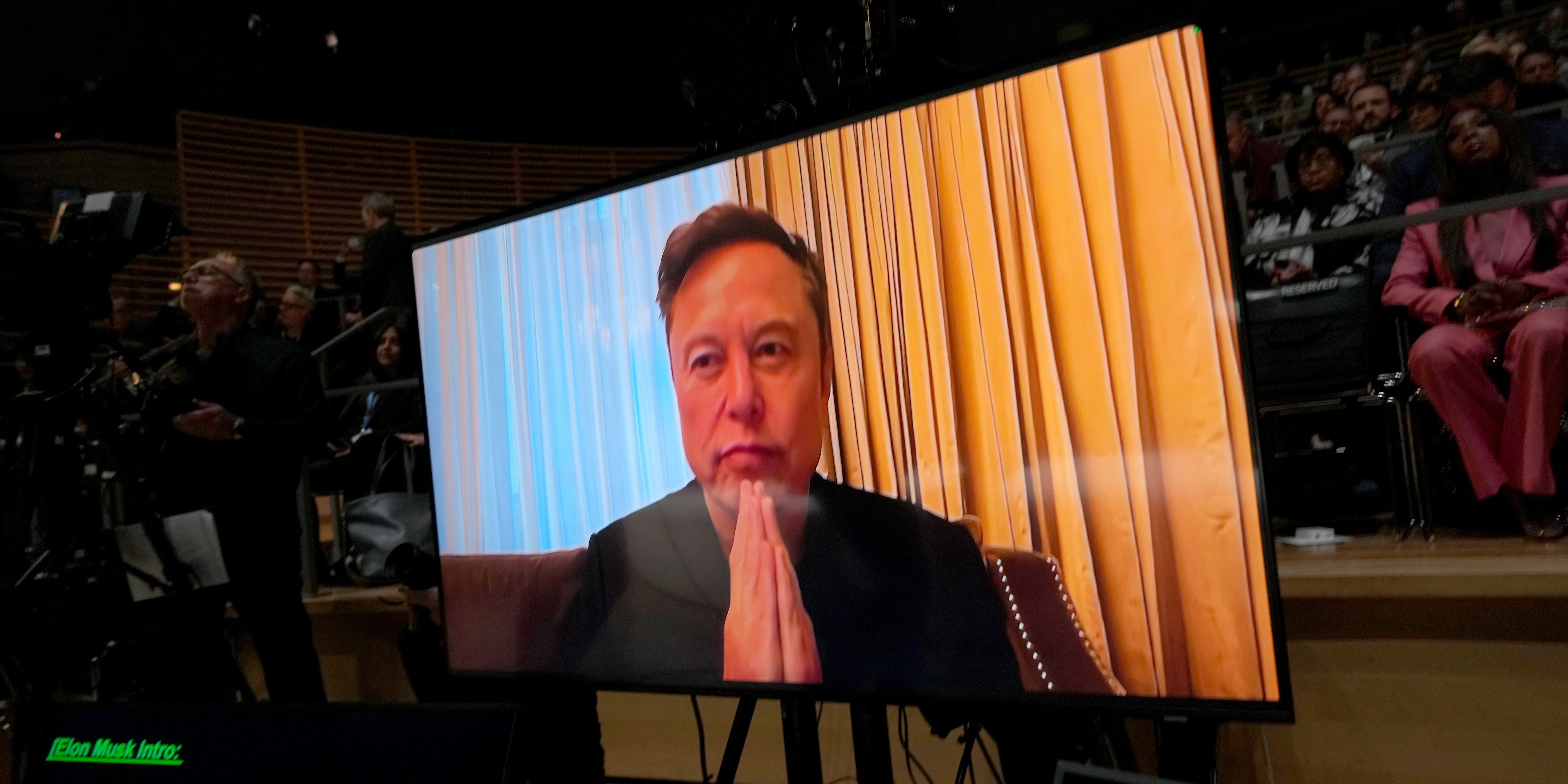
Elon Musk speaks via video conference during the New York Times DealBook Summit on Nov. 18, 2026, in New York City. Photo: Adam Gray/Getty Images for The New York Times
After the cresting of a blue wave in the midterm elections earlier this month, it’s officially about-face season, and Elon Musk is the latest major figure to predict which way the wind is blowing. During the New York Times’ DealBook Summit on Wednesday — which also featured appearances by the war profiteer Palmer Luckey, New York City Mayor Zohran Mamdani, and Hailey Bieber, I guess — the chief of Tesla and SpaceX appeared by video to recast himself as a political moderate.
“I’m not MAGA,” Musk told columnist Andrew Ross Sorkin. “I’m not sure what MAGA means, but if that means sort of blind adherence to a set of policies by the Republican Party, then I certainly don’t have that. I think there are positives and negatives in both parties.”
This “both parties” lip service is deeply revisionist recent history for the man who became the largest individual political donor in U.S. history in the midterms by spending almost $450 million on Republican candidates, particularly in Texas. Reflecting on that complete and utter waste of unfathomable resources, Musk said he feels “pretty foolish” in retrospect.
“Republicans were routed, and the money I spent — I feel pretty foolish having spent so much money and not seeing much for it,” he said. “If I could rewind the clock, I would have spent less money.”
Musk went on to say the Democrats winning the governor and Senate races in Texas is no crisis for the world’s richest man, who infamously moved Tesla from California to Texas to dodge taxes, regulations, and woke. He also expressed his optimism that Gov.-elect Gina Hinojosa would actually be “quite moderate” in office.
This reversal is a telling, but not novel, approach as the rats flee the sinking ship of Donald Trump’s presidency and the Make America Great Again ideology made in his image. Just one day after Republicans were shellacked on Election Day, Vice President JD Vance planted his 2028 flag by distancing himself from the administration he’s still part of to declare that the U.S. and Israel’s war with Iran was “the reason we lost.” (Trump is reportedly not pleased with Vance throwing him under the bus.) Other Republicans who previously cheered the country into war have also picked up the scent, and now we seem to be left with a war that absolutely no one claims to have wanted in the first place, apparently save for Trump, who said the war was worth losing the midterms.
As with Vance, cozying up to Trump paid extraordinary dividends for Musk, until it became a political liability. Musk knew exactly what MAGA was when it was lavishly benefiting his bottom line, and infamously declared himself “not just MAGA, but dark MAGA” while tipping his custom black-on-black Make America Great Again hat at a Trump campaign rally.
As a special government employee in the Trump administration, the Tesla CEO launched the Department of Government Efficiency, better known by its epic meme acronym DOGE, which took a “slash and burn” approach to the federal government under the banners of increasing “efficiency” and eliminating “fraud and abuse.” Musk empowered a merry band of half-smart racists to lay off federal employees en masse; handed down devastating cuts to foreign aid, killing hundreds of thousands of people around the world; eliminated jobs that undergird the social promises that the things we eat and the medicines we take should be safe; and set scientific research back untold years.
Musk did all this as part of a project to extract even more wealth from the government — he and his businesses have benefited from a staggering $38 billion in public loans, subsidies, contracts, and tax credits over the years — with minimal oversight, and to reshape the work of a functioning federal government into a right wing political project.
The South African businessman, who became the world’s first trillionaire this summer, is deeply invested in eugenics-based causes like the pronatalist movement, which encourages the right kind of Americans to have more kids so “humanity” doesn’t die out. He has pushed the notion that “white genocide” is well underway. When he launched his AI chatbot’s competitor to Wikipedia’s “propaganda,” Grokipedia dubbed itself “MechaHitler,” praised Adolf Hitler, and listed which races it deemed “good.”
This is who Elon Musk is, and he hopes Americans have the memory of a fruit fly when it comes to everything he’s said and done in public. But like the public rejected his campaign to convince us he was cool, we can’t allow this cynical rebrand to proceed as planned.
Musk is an extremist staring down the barrel of years of courtrooms and congressional hearings who knows the Trumpism he once boosted is a spent political force. He’s experienced no dark night of the soul that’s caused him to meaningfully break from the president or from the far right wing, and no serious person should allow him to deploy that fantasy.
A man wearing a waist chain and handcuffs boards a deportation flight on GlobalX Air at Minneapolis-St. Paul International Airport on Dec. 5, 2025.Photo: Elizabeth Flores/The Minnesota Star Tribune via Getty Images
It’s finally time to talk about air travel safety. High-profile crashes, equipment failures, and last week’s rare nationwide ground stop have thrust a long-overdue conversation about flying to the fore. But the chatter has largely omitted a major factor exacerbating the risk of airline catastrophes: the Trump administration’s aggressive immigration enforcement policies.
With slapdash and violent immigration enforcement as arguably its defining feature, the second Trump administration has mobilized and redirected vast federal resources to hit impossibly high detention and deportation targets. The administration has bent and broken laws, ignored proper vetting processes for new Immigration and Customs Enforcement recruits, and slashed mandatory training hours. The results of these dangerous shortcuts have been deadly: 2025 saw the highest number of deaths for people in ICE custody in decades. At the urging of Stephen Miller, now the White House chief of staff, the detention and deportation quotas have pushed ever higher. To meet them has required the rapid transportation of migrants, often via flights.
In the air, as on the ground, speed kills.
Traditionally, the federal government has not owned and operated its own airline, instead chartering flights from private airlines. Reliance on private contractors is not atypical, but in December 2025, the Trump administration broke with past practice and began to acquire its own fleet to complement the private charters.
In less than two years, ICE’s air operation has quietly transformed into a full-fledged domestic airline, adding more traffic to the already crowded skies. Just as the Federal Aviation Administration has failed to keep up with flight capacity at major airports, this shadow network of detention shuffle flights has been operating with a reckless attitude toward safety that befits ICE’s overall reputation. As one flight attendant working on ICE Air flights told ProPublica last year, it’s “only a matter of time” before one of these deportation flights ends in disaster.
According to Human Rights First’s ICE Flight Monitor, since Trump’s second inauguration, there have been almost 20,000 individual flights chartered by ICE. Between January 2025 and January 2026, the number of flights inside the U.S. quadrupled. Most of these flights are not actually deportations, but trips shuffling detainees around the country between the hundreds of county jails, state prisons, and privately owned detention centers. Vulnerable migrants are locked in handcuffs, waist chains, and leg irons for the entire trip, unable to unbuckle themselves, violating a federal standard that says a full plane must be evacuated in 90 seconds. ICE Air has quietly removed three safety layers at once — the passenger, the crew, and the airport — and every flight risks triggering an emergency that no one on board could survive.
There was little mention of these risks after the Federal Aviation Administration issued a nationwide ground stop last week, which Secretary of Homeland Security Markwayne Mullin and Secretary of Transportation Sean Duffy blamed on technological upgrades and aging infrastructure.
But an unsafe plane can put anyone at risk, and ICE flights regularly violate FAA safety standards. On ICE’s airliner-size jets, shackled detainees land at one of more than 100 airports in ICE’s expanding network, usually not at major hubs but at small regional airports and airfields. Many of these small, regional airports are not certified by the FAA for planes that size, and some have no fire-and-rescue crews on the ground.
If you live near a small airport in the U.S. and began noticing increased jet noise in the last year and a half, you were probably not imagining things. Your local airfield may be one of the nodes in this network. At the Northeast Alabama Regional Airport in Gadsden, Alabama, for example, over 300 ICE flights have gone in and out since September 2025. The airport, together with the nearby Etowah County detention center, has developed into a transfer node, feeding migrants who were arrested in Alabama, Georgia, and Eastern Tennessee into the major deportation removal hubs centered in Louisiana.
At least five airports in the ICE flight network, including Northeast Alabama, lack FAA Part 139 safety certification, which mandates basic standards like on-the-ground aircraft rescue and firefighting capability. Dozens of other airports have hosted immigration-related aircraft that are sized beyond what their certification index anticipates.
When a small airport falls short of fire and rescue safety minimums, local departments often wait at the airport on standby, further stretching local municipalities’ abilities to keep everyone, even those not flying, safe. As illustrated by numerous videos of federal agents using excessive force or arrest, every encounter between ICE agents and ordinary people brings its own risk of harm. Each chartered flight also brings with it another chance for something to go wrong, and the number of flights keeps climbing. When it does, it could happen at an airport, like Gadsden, with no federal fire-and-rescue requirement and no certification.
If you live near a small airport in the U.S. and began noticing increased jet noise in the last year and a half, you were probably not imagining things.
Reports that ICE used tools to shield deportation flights from public scrutiny and congressional oversight have only compounded these safety concerns. In May, several Democratic members of Congress sent a letter to FAA Administrator Bryan Bedford raising the alarm about ICE’s reported misuse of “Limiting Aircraft Data Displayed,” a program that allows private aircraft to request that the FAA withhold registration numbers and other identifiable data to block public flight trackers. “ICE’s use of this program to obscure routine government operations and suppress information about deportation flights is out of the scope of this program, and therefore inappropriate and dangerous,” the lawmakers wrote.
For the last 18 months, as this network of flights and airports ramped up, supercharged by windfalls from the so-called “Big Beautiful Bill,” congressional Republicans exercised little to no oversight. Come January, once Democrats take the gavel, a new opportunity for accountability will open up. One legislative option includes closing the loophole that lets ICE’s charter contractors operate airliner-size jets out of smaller regional airports that have no FAA Part 139 safety certification, either by amending the negotiated-charter exemption in federal law, or by demanding that the FAA explain — and if necessary enforce — the rules that appear to require certification for flights of this size.
With the power to legislate comes the power to investigate, and congressional Democrats should make full use of the subpoena. Mullen, Bedford, former DHS Secretary Kristi Noem, and representatives from CSI Aviation and the other private airlines making millions off of these flights should answer questions in public, at congressional hearings. In addition to Trump administration officials and those profiting from the flights, the American people also need to hear from those on the ground who run these small airports, and the local municipalities all across the country who have been assuming increased public safety risks, both in the skies and on the ground.
In pursuit of its draconian immigration policy, the Trump administration has pushed the immigration system beyond its ability to function safely, which puts all Americans at risk, with migrants at the most vulnerable end of the spectrum. Failing to mention how immigration enforcement contributes to the crisis plaguing air travel only risks prolonging it.
Giant screens along a highway in Tel Aviv, Israel, display a combination of the United States and Israeli national flags on March 4, 2026.Photo: Jack Guez/AFP via Getty Images
After President Biden’s unrelenting support for Israel’s genocide in Gaza helped pave the way for President Trump’s reelection in 2024, Trump’s own foolish decision to launch an Israel-backed war against Iran played a large role in putting Democrats back in control of both chambers of Congress — a fact Vice President JD Vance diagnosed in no uncertain terms.
Now Democrats and Republicans alike have the opportunity to demonstrate they’ve finally learned the lesson voters have tried to deliver to both parties over the last three years: The American people do not want to be entangled and complicit in Israel’s aggression and atrocities. Their first opportunity to heed that call is arriving sooner than one might expect.
Right now, the House Armed Services Committee and Senate Armed Services Committee are engaged in an informal but highly consequential conference to finalize the text of the National Defense Authorization Act (NDAA), which sets policy for the Pentagon. A disturbing provision in current versions of the texts passed by the House and Senate committees would integrate Israeli weapons companies into the Pentagon procurement process at an unprecedented level — opening a back door to almost untraceably send billions of taxpayer dollars to Israeli weapons makers without congressional oversight. The House bill would create a new “executive agent” position within the Pentagon to steer this integration—a level of amalgamation that exceeds collaboration with nations in NATO.
Members of Congress on both sides of the aisle are opposing this provision. On Tuesday, Sen. Chris Van Hollen and nine other Democratic senators, plus independent Bernie Sanders, demanded it be removed. In the House, Democrat Ro Khanna and Republican Thomas Massie have made clear they will also try to strip the NDAA of this measure. In doing so, they are representing what the vast majority of Americans want—and their colleagues should take note.
In our August polling with Data for Progress, 75 percent of Democratic voters oppose this provision, as do 58 percent of independents and 42 percent of Republicans. In addition, polling shows a majority of Americans now want to see taxpayer funding to Israel reduced or ended. Passing the NDAA with this measure would mean that even if Congress zeroed out annual weapons funding to Israel, currently at $3.3 billion per year, in the State Department budget — earlier this year, 103 Democratic representatives joined Massie in a move to do just that — there could still be a major increase in actual dollars flowing to Israeli companies that the American people never hear about.
The negative repercussions extend beyond funding Israeli weapons makers (some of which are government-owned) with our tax dollars. This sort of integration could allow for Israeli weapons and surveillance technology that have been tested on Palestinians to be used in the U.S. to advance the Trump administration’s cruel mass deportation program. Israeli weapons maker Elbit Systems’s U.S. subsidiary is expected to install more than 300 surveillance towers along the U.S.-Mexico border, developed from its technology deployed along portions of Israel’s apartheid wall in the West Bank.
Melding Israel into our government procurement process should also set off alarm bells in the U.S. national security world. The Washington Post reported earlier this year that Israeli Prime Minister Benjamin Netanyahu vetoed Biden’s decision to send U.S.-Israeli co-produced missile systems to Ukraine three years ago for Ukraine’s war against Russia, even though the missiles were paid for by American taxpayers. The integration measure proposed in the NDAA would massively expand the scope of weapons over which the Israeli government could exercise a unilateral veto.
Congress should be unwinding intelligence cooperation with Israel, not only on the moral grounds that no part of the U.S. national security apparatus should assist in genocide, but also because Pentagon officials raised the threat of Israeli spying to its highest possible level earlier this year. But instead of diminishing our intelligence sharing with Israel, the Senate Select Committee on Intelligence’s FY27 Intelligence Authorization Act, which is typically incorporated into the final NDAA version, includes a provision (Sec. 618) actually mandating the president engage in even more intelligence cooperation.
This should give us pause because of the faulty nature of Israeli intelligence and the way Israel used this intelligence to build a case for dragging the United States into war. It was reportedly Israeli intelligence that claimed the Iranian government could be overthrown within weeks, if not days, of Trump launching the war. Instead, Trump and Netanyahu are now stuck in a quagmire, and the war has imposed a terrible cost on the American people, U.S. servicemembers, and people across Iran and the region. Energy prices around the world have skyrocketed, the cost of the war has already exceeded $2,000 per U.S. household on average, and the U.S. is running low on interceptor missiles that will take years to replenish.
None of this seems to concern the main backers of U.S.-Israel military and intelligence integration, like Foundation for Defense of Democracies President Mark Dubowitz. In a column published in Israel Hayom, the right-wing newspaper owned by the Israeli-American GOP megadonor Miriam Adelson, Dubowitz said: “Israel and the United States should deepen their military, technological, intelligence, and economic integration to such an extent that inflicting financial harm on Israel would also carry a significant cost for Washington.”
In an interview, Dubowitz added that the U.S. and Israel should be so intertwined that any accountability measure against Israel, such as sanctions being enacted by American allies in Europe, would “impose costs on the U.S. itself.” In no uncertain terms, advocates for the integration envisioned in the NDAA want to try to make it impossible for the U.S. to disentangle itself from a regime that is increasingly perceived by many as a rogue actor.
The NDAA is usually considered a “must pass” bill in Congress — in fact, Congress has passed annual defense authorizations for 65 consecutive years. But Congress is under no statutory obligation to pass it this year, and doing so without stripping these provisions to become even more entrenched with supporting Israel would be an immediate betrayal of the will of voters. At a time when even Republicans are openly admitting the midterm election was a referendum on U.S. support for Israel, it would be an unforgivable choice for Congress to pass an NDAA with these integration provisions. If Republicans use their committee majorities to force their inclusion in the bill’s final text, Democrats have every bit of leverage to filibuster and block the bill’s passage in the Senate, which requires 60 votes.
Saying no to bringing the U.S. into a closer relationship with Israel in just about the most expensive, opaque, and dangerous way imaginable should be the easiest political decision Congress makes during its current lame-duck session.
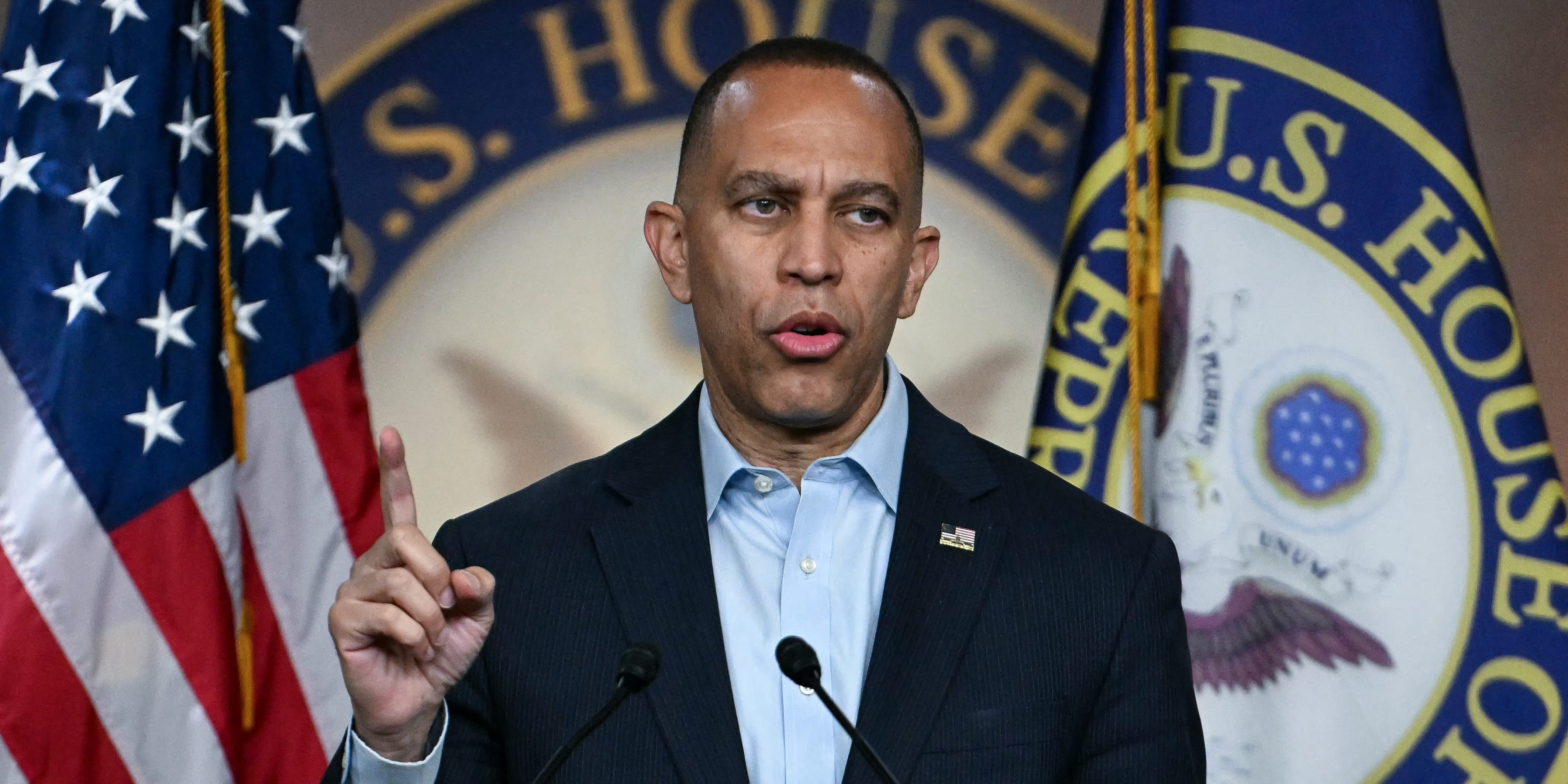
House Minority Leader Hakeem Jeffries, D-N.Y., speaks during a news conference at the Capitol in Washington, D.C., on November 12, 2026.Photo: Jim Watson/AFP via Getty Images
Democrats rolled into Washington this week fresh off a generational sweep election on the promise of affordability for Americans and accountability for the Trump administration.
But on Tuesday night, Democrats in the House failed the first test of their incoming majority. An impeachment resolution introduced Monday by Rep. Thomas Massie, R-Ky., targeting Secretary of War Pete Hegseth, one of the main architects of the U.S.-Israeli war on Iran, provided Republicans with a chance to score an early victory.
House Minority Leader Hakeem Jeffries and the chamber’s Democratic leadership failed to take advantage, as 11 Democrats missed a critical vote that would have kept the resolution alive. The attempt failed by a slim margin, 211 to 204; Massie told The Intercept on Wednesday that even if the missing Democrats showed up he was sure House Speaker Mike Johnson could have rallied his members and made up the difference anyway. Until the new term begins, the chamber is still controlled by the GOP.
Nonetheless, the vote was a chance to send a message to the White House. One was sent: that of a disorganized, dysfunctional caucus. Other Democrats sought to take advantage of the misstep, noting that they were unwilling to miss the vote—Rep. Jasmine Crockett of Texas said she rerouted around traffic, and Rep. Pat Ryan of New York made it the day after back surgery.
“No matter what, I wasn’t going to allow traffic to keep me from that vote,” Crockett told MS NOW. “It was just that important to me.”
When asked about the absences, Rep. Alexandria Ocasio-Cortez, who was present for the vote, offered only “someone may have had a health issue” as an explanation.
House members who missed the vote blamed a number of factors for their absence, including traffic. On Wednesday, all of those same House Democrats save Rep. Haley Stevens (Mich.) began to offer explanations. Rep. Jonathan Jackson (Ill.) told TMZ DC that his “traffic jam”-related absence was “inexcusable.” He wasn’t the only one to blame traffic — Reps. Marilyn Strickland (Wa.) and Laura Gillen (N.Y.) also cited D.C. gridlock as the reason they missed the vote; Rep. Julia Brownley (Calif.) said she was “rushing” to the vote but missed it. Reps. Nancy Pelosi (Calif.), Lou Corea (Calif.), and Frederica Wilson (Fla.) were all out of town.
Momentum lost can’t be regained. If Jeffries doesn’t understand that, he’s not the man for the job.
Rep. Melanie Stansbury (N.M.) offered a front-facing video apology to constituents. Rep. Steven Horsford (Nev.) took “full responsibility” in a floor speech. And Rep. Brittany Pettersen (Colo.) acknowledged that she was at a super PAC event and said there was “no excuse” for missing the vote.
Expressing regret is a good start. It shows these lawmakers are aware that their actions are antithetical to where their voters are at this moment and are adjusting accordingly. It’s not enough.
Leadership was asleep at the wheel. As whip, Rep. Katherine Clark should have kept the caucus in line. (It’s worth noting that Clark officially launched a bid for majority leader last week.) A number of reps who blamed traffic were previously at an event hosted by the group Elect Democratic Women, which receives some of its funding from AIPAC. The event overlapped with the impeachment resolution vote; Clark is a cofounder of the group.
“Republicans just blocked the House from impeaching Pete Hegseth,” Clark posted on X after the vote—failing to take responsibility for her party’s own lack of discipline.
Democrats missing a vote to hold one of the main figures in the war on Iran accountable so they could attend a fundraiser is so tailor-made for progressive complaints over the state of party leadership, it’s hard to believe.
Jeffries tried to spin the vote as only a temporary reprieve for Hegseth, but he didn’t telegraph much willingness about holding his caucus to account.
“I haven’t had a conversation with anyone on the floor team about what may or may not have happened in terms of the Hegseth resolution, but this is not the end of it. It’s just the beginning,” he told Politico. Most critically, he accepted no responsibility for the stunningly bad optics of having members of his caucus no-show, even if it likely wouldn’t have moved the needle.
This never should have happened in the first place. It was the result of a series of decisions by Jeffries and Clark about the vote that made clear it wasn’t important.
Momentum lost can’t be regained. If Jeffries doesn’t understand that, he’s not the man for the job purely on tactical grounds, and he should lay no claim to being a party standard-bearer to steer us through the next two years of Trump’s America.
Jeffries and his party seem doomed to repeat the past. In 2009, when President Barack Obama came into the White House on the back of a change election that gave Democrats huge majorities in Congress, including a filibuster-proof supermajority in the Senate, the party hobbled itself out of the gate by preemptively declining to pursue justice for the many crimes of eight straight years of George W. Bush.
“We need to look forward as opposed to looking backwards,” Obama told ABC News’s George Stephanopoulos in January 2009, effectively ending any hope of accountability for the outgoing administration’s torture program and myriad other misdeeds. The ramifications of that decision arguably led to the war on Iran, a bipartisan immigration-deportation regime, and the end of Roe.
Democratic voters don’t want the party to rest on its laurels, they want blood.
Now, with a Republican president who is hated even more than W—something that would have seemed impossible to imagine almost 18 years ago—the Democratic Party’s establishment wing appears ready to repeat those failures. Taking on Trump and his corrupt, violent administration was one of the main messages that flipped House and Senate seats across the country but the party’s current leaders are allergic to action.
Entrenched Democrats also don’t seem interested in any sort of accountability. Stevens, the Michigan Democrat who broke ranks with her party and endorsed Republican Mike Rogers for Senate rather than back Abdul El-Sayed, was under pressure in the days before and after the election, with even establishment kingmaker Rep. Jim Clyburn signaling openness to expelling her from the caucus. By Tuesday morning, Pelosi — always in touch with party leadership — seemed to throw cold water on the idea: “I’m not supporting kicking her out…. Let’s focus on the very positive.”
This is such a complete misunderstanding of the mood of the electorate, one wonders if it’s intentionally obtuse. Democratic voters don’t want the party to rest on its laurels, they want blood. Anyone who’s been to a liberal rally since the start of the second Trump term can tell you that the signage is calling for, at minimum, accountability, not immediate compromise.
If Democrats rubber-stamp Jeffries as speaker and fail to adopt a more aggressive legislative and investigative approach, frustrations within the caucus and among the base will only continue to mount.
Jeffries is downplaying dissent, but this is more than just a battle between two wings of the Democratic Party. Democrats in New York have been looking to unseat the leader for years, frustrated with his closeness to AIPAC and financial institutions. He’s the kind of Democrat the base is fed up with, and that exasperation is widespread; polling shows just how deeply unpopular he is.
There is an alternative gaining steam: Rep. Ayanna Pressley, the Massachusetts progressive and member of the original “Squad” who were first elected in 2018. Pressley has an uphill battle and has not yet announced that she’s interested in the job. The left is interested.
Voters gave Democrats a clear mandate on Election Day for what they want to see in Washington. Holding this administration accountable should be one of the top priorities. If the party fails to do all it can to advance that goal, it will once again earn its reputation for preferring failure to action. We should all push the next Congress to act as the exception to that rule—and they can start by picking a new speaker to meet the moment.
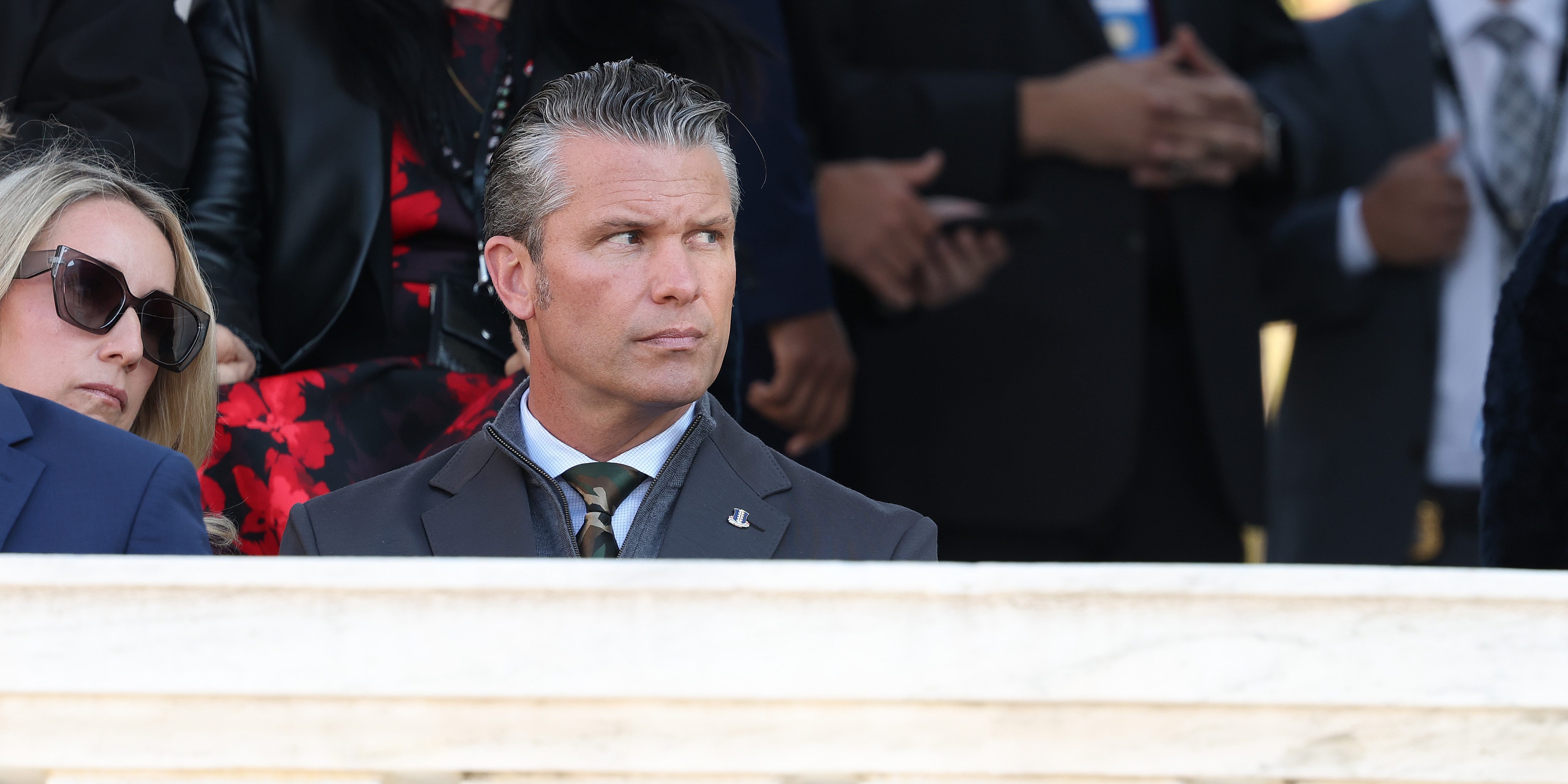
Secretary of War Pete Hegseth attends a ceremony at Arlington National Cemetery in Arlington, Virginia, to mark Veterans Day on November 11, 2026.Photo: Kevin Dietsch/Getty Images
Before the effort to impeach him failed Tuesday, Pentagon chief Pete Hegseth lashed out at a group he despises even more than “beardos” and “weirdos”: the press. His security team threatened to physically remove journalists from a news briefing, Hegseth’s first in several months, if they didn’t maintain decorum.
It’s nothing new for Hegseth. He may want to pump soldiers up with testosterone, but he’s spent the last couple years trying to neuter the Fourth Estate. It’s unfortunate that his unconstitutional attacks on journalists were not part of the official case for removing him. Next time, they should be. And Congress should not stop with Hegseth.
The impeachment resolution Rep. Thomas Massie, R-Ky., brought against Hegseth included eight articles, alleging that the so-called Secretary of War acted illegally in military campaigns in Iran, Venezuela, and the Caribbean, among other things. The resolution touched on free speech violations – Article VI is about Hegseth’s retaliation campaign against Sen. Mark Kelly, D-Ariz., for reminding troops of their right to refuse illegal orders – but it didn’t mention the press.
A recap is in order: In February of 2025, Hegseth’s Pentagon evicted the New York Times, NBC, Politico, and NPR from their dedicated workspaces in the building, replacing them largely with sycophantic right-wing outlets like Breitbart and One America News Network. Some elements of the fawning right-wing press were on full display during his Tuesday press conference: “How does it make you feel,” asked a reporter from an outlet called Real America’s Voice, “when our own politicians don’t support taking out the narco-traffickers that kill their own constituents?”
Months later, Hegseth concocted a requirement that journalists who wish to access the Pentagon pledge not to solicit unauthorized information from the government, under threat of losing their credentials. Dozens of reporters from outlets across the political spectrum turned in their access badges rather than comply. They were replaced, once again, by loyalists who could be counted on to treat Hegseth and his fragile ego with kid gloves.
A judge soon struck down the pledge policy as an unconstitutional effort to force out disfavored journalists. The Pentagon immediately issued new restrictions on unauthorized disclosures that were, in some ways, even worse than the originals. The judge rejected that policy too. Hegseth also imposed a requirement for reporters to be escorted around the Pentagon, which is still working its way through the courts.
Hegseth’s Pentagon cracked down on the military’s newspaper, Stars and Stripes, barring it from briefings and demanding it stop publishing “woke” content. After all, it used to run columns from that well-known leftist Ann Coulter. His Pentagon then fired key personnel and otherwise did everything it could think of to try to turn Stars and Stripes into a propaganda organ unrecognizable to its readership – mostly troops, veterans, and their families.
It gets even pettier: Hegseth’s staff barred press photographers from briefings after they published pictures of him that he found unflattering.
Hegseth’s illegal war on transparency has extended not just to reporters but also to their sources. He forced staff to take unreliable polygraph tests to identify leakers until the White House itself halted the effort after a Trump loyalist complained about being targeted. He’s formed a joint task force with the Justice Department to push for prosecution of leakers and adopted President Donald Trump’s alarming habit of equating national security reporting to “treason.”
There will almost certainly be another effort to impeach Hegseth in the next Congress, if not sooner. Censorship may not be the lede — alleged international war crimes understandably tend to take the spotlight over other infractions — but it also shouldn’t be an afterthought.
While Congress is at it, remove Brendan Carr too
And while they’re impeaching wartime censors, Congress shouldn’t forget about FCC Chair Brendan Carr. He has defied federal law, the First Amendment, and the FCC’s own rules and guidelines in his incessant efforts to turn the agency into Trump’s journalism police. And critical reporting on the Iran war – which the Republican party now apparently agrees deserved criticism all along – has been one of Carr’s most frequent targets.
At the beginning of the war, after Trump fumed at accurate coverage he disliked, Carr – who wears Trump’s gilded face as a lapel pin and sips from a mug depicting himself as Trump’s pit bull – promptly reposted the president’s attack. He warned that broadcasters airing “hoaxes and news distortions” should “correct course before their license renewals come up.”
An emboldened Trump responded the same night, posting that outlets spreading “fake news” about the war should “be brought up on Charges for TREASON,” adding that he was “thrilled” Carr was investigating the licenses of media outlets across the country.
Then, after April’s purported ceasefire, CNN reported a statement from Iran’s Supreme National Security Council claiming victory. Trump took to Truth Social to announce a purported investigation into whether CNN committed some unspecified crime by publishing the quote. Carr piled on, accusing CNN, which the FCC does not regulate, of pushing a “hoax headline” that “requires accountability,” implying that licensees who aired similar reporting would face his wrath. But the statement was real. Trump just would’ve preferred CNN air a different one.
Of course, Carr’s censorship campaigns are myriad and many have little to do with the war. But his arguably most egregious (and impeachable) offense did, albeit indirectly.
Last year, Carr inexplicably stalled the FCC’s consideration of then-CBS News parent Paramount’s merger with David Ellison’s Skydance until Paramount paid $16 million to settle Trump’s frivolous lawsuit over “60 Minutes’” editing of an interview with Kamala Harris. He approved the merger two days after Trump said he’d received his dirty money. Essentially, he aided Trump in laundering a bribe through the courts.
Carr – who knows better, having once written that editorial judgment “should be beyond the reach of any government official” – also used his leverage over the merger to give himself and his delegates a seat at CBS’s editors desk, extracting unconstitutional editorialconcessions from Ellison’s team. CBS has since been widely criticized for softening its coverage of Trump’s agenda, including (among other things) echoing administration narratives on the U.S. military operations like the war in Iran and the abduction of Venezuelan President Nicolás Maduro.
Facilitating likely bribery is the epitome of an impeachable offense. Republicans might not vote for impeachment, but after all the backlash Carr has received from the right, they also can’t credibly accuse Democrats of some kind of partisan witch hunt. Congress should not let the opportunity to hold Carr accountable pass them by.
Lawmakers need to acknowledge that the reporters the administration called traitors got it right all along, and that those who attempted to censor wartime journalism did a disservice to the Constitution and the American people. Hegseth and Carr should both be impeached, with the press they tried to muzzle freely reporting on every minute of the proceedings.
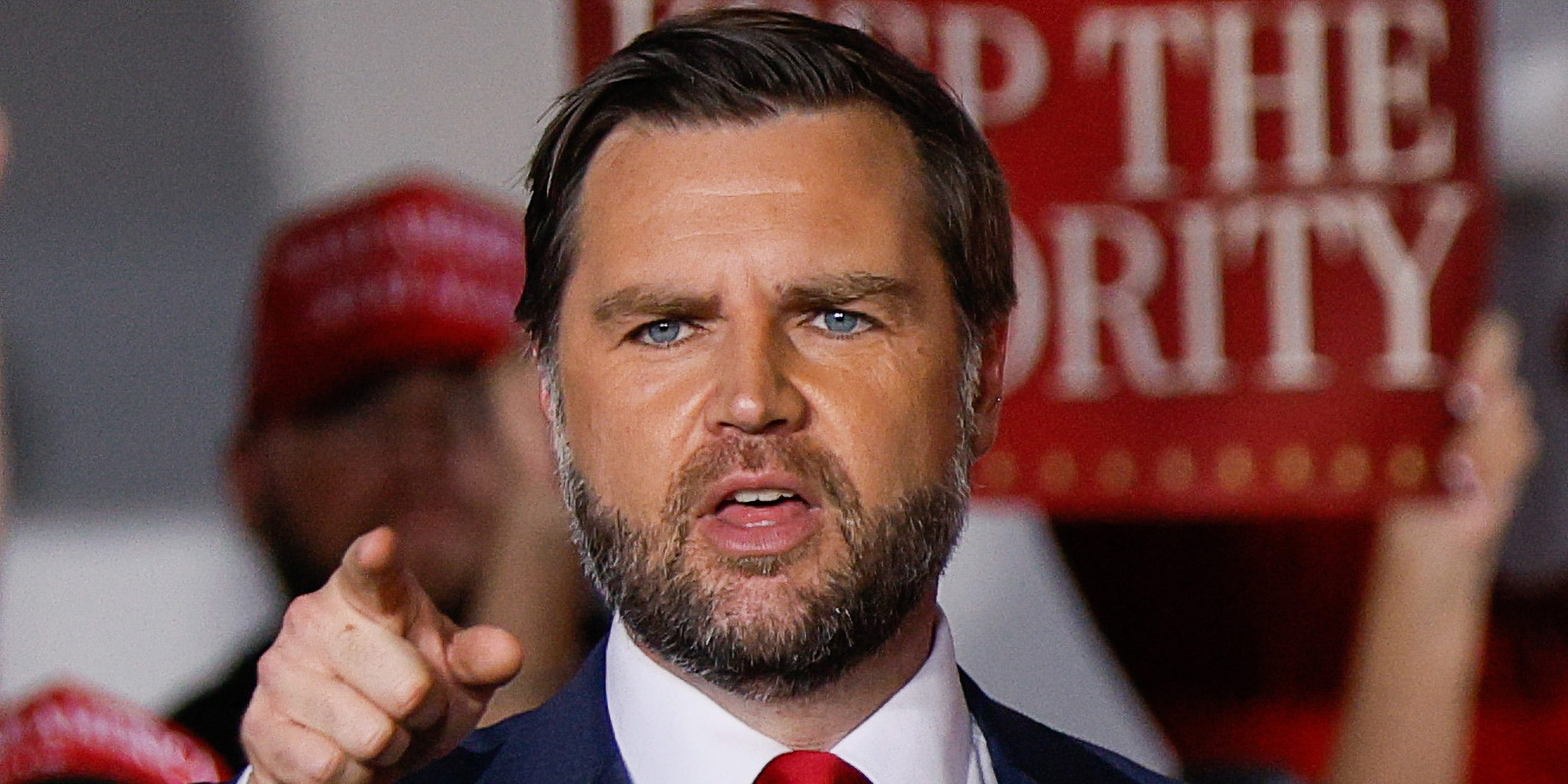
Vice President JD Vance delivers remarks during a midterm campaign rally at JRJ Construction on Oct. 29, 2026, in Weatherford, Texas.Photo: Evan Vucci-Pool/Getty Images
To say that Americans were pissed off is an understatement.
On Tuesday, Democrats didn’t just seize control of both houses of Congress. They redrew the American political map, capturing offices that had remained reliably Republican for generations, from the Deep South to Kansas and Texas. The Lone Star State alone, with its 40 Electoral College votes, now raises the possibility of a seismic shift in the calculus of future presidential elections.
The sheer scale of the historic Democratic surge delivered an unmistakable rebuke to America’s supposedly populist president. The message was clear and simple: We do not like you.
Much of Americans’ rapid disillusionment with the Trump administration can be traced to a single word — Iran — and the cascading economic hardships Americans have endured as the war has dragged on.
The Iran war has gone from a Republican loyalty test to a political albatross.
For the GOP, the threat is existential. The war has gone from a Republican loyalty test to a political albatross for many of its former supporters, one that many Republicans are now jettisoning themselves away from to salvage their own political futures.
By Wednesday, it had become the chief explanation for the party’s sweeping electoral defeat, with Vice President JD Vance declaring unequivocally on X that “the reason we lost is the war.”
“If you’d like to argue it was worth it, that losing the Senate for the next 6 years was worth it, then do so. Argue it was a worthwhile cost to pay. Agree or disagree, that’s at least honest,” he wrote. “But everyone knows why we lost. And any honest conversation about where we go from here must start there.” Coming from Trump’s own vice president, it was a striking about-face.
The tirade also raised an awkward question ahead of the 2028 presidential race: How does a potential successor to the MAGA mantle campaign against a war waged by his own administration?
Trump, however, has not gone nearly as far as his VP. Although the president acknowledged the war hurt Republicans, he still defended it on its merits. Speaking with reporters Wednesday after expounding at length about his White House ballroom, Trump said, “The Iran thing we had to do, and we continue to do it.”
Where Did All the Warmongers Go?
But on the campaign trail, Republicans were not completely oblivious to Americans’ collective frustration with the Iran war.
In September, ABC News identified 17 Republican lawmakers and candidates who had called for ending the war through public statements or votes. Much of the pressure came in competitive midterms races, as the conflict’s effects on oil, diesel, and fertilizer prices reached American households.
In Iowa, Republican Senate candidate Ashley Hinson called for a “successful and immediate end” to the war in September, warning that voters were paying the price at gas pumps and grocery stores. Yet she voted six times against House measures directing Trump to halt the attacks. During an October 25 ABC interview, Hinson said she would not rule out a post-election U.S. offensive and said she trusted Trump and the military to choose the right timetable. Despite the president praising her weight loss at a recent rally, tepidly breaking with Trump wasn’t enough to get Hinson over the line, and she lost to Democrat Josh Turek by 4.5 percentage points.
Michigan also had its share of Iran backtrackers. Republican Senate hopeful Mike Rogers described Iran as an “imminent threat” when the bombing began on February 28. In May, he called the conflict a potential “win-win-win.” But with the midterms fast approaching, Rogers released a campaign ad declaring “the war with Iran needs to end” quickly and warned Michigan families could no longer afford the economic fallout.
Rep. John James, the Republican candidate for Michigan governor, likewise praised Trump’s use of force early in the war, saying the president “had the balls” to “assure the survival and success of liberty.” He voted against six House war-powers resolutions, including as recently as September. Days after that vote, he said the war needed to wrap up “quickly.” He went on to declare in an interview, “the position has always been, I hate war.”
Even Florida Gov. Ron DeSantis, a possible contender in the Republican Party’s next presidential contest who could reportedly be up for Pete Hegseth’s job, warned Monday that the war was a “big, big drag” on his party. Trump, DeSantis pointed out, campaigned against another Middle Eastern war. Now voters are dealing with higher fuel costs, and Republicans who refuse to acknowledge the connection are “gaslighting” them. But back in spring, DeSantis defended the strikes on Iranian leadership, describing its government as “a fanatical, apocalyptic, militant Islamist regime.”
The polling helps explain the Republican panic. An Associated Press poll found roughly 6 in 10 voters believed the U.S. made a “wrong decision” in attacking Iran. And it’s not as though Republicans weren’t warned. A handful within their own ranks, including Thomas Massie and Rand Paul, opposed the war from its earliest days and backed efforts to rein it in. But those criticisms seemed to fall on deaf ears.
A Hasty Retreat
With plenty of blame to go around, the criticism has gone beyond candidates and into the conservative media ecosystem.
During the network’s primetime Election Night coverage, Fox News host Sean Hannity told his colleague Bret Baier that the results would have been different without the Iran war. Conservative commentator Matt Walsh called the war a betrayal of America First principles, demanded new Republican leadership, and labeled the conflict a “catastrophically stupid decision.”
Other commentators placed the responsibility squarely on Trump himself for sucking his own party into a political quagmire. In The Federalist, senior editor John Daniel Davidson blamed the party’s collapse on Trump’s undermining of a GOP coalition built upon rejecting the interventionist politics of the George W. Bush era.
Some prominent Republican operatives are sure to be thrown under the bus by their own party in the retreat. The first to get the boot may be none other than Hegseth, America’s chief “warfighter,” who has been one of the war’s most enthusiastic, and public, cheerleaders. The defense secretary responded to the criticisms in a nearly six-minute-long video posted online on Thursday, in which he seemed to make the case for keeping his job, touting his elimination of the “Marxist ideology” of diversity, equity, and inclusion initiatives and tarring transgender troops as having a “mental illness.”
“Regardless of how people care about the war, which I believe is a courageous and historic effort that will ensure Iran never gets a nuclear weapon, we need to continue, as President Trump did in his first term, to rebuild our military,” he said. “This is not about me, but of course, the other side, in case you noticed, they’re obsessed.”
Already facing growing Republican dissatisfaction and a ballooning roster of disgruntled and ousted senior military officials, Hegseth now faces the prospect of investigations by a Democratic-controlled Congress and an impeachment effort led by Massie. And while Trump has so far publicly defended his defense secretary, he has also reportedly consulted allies about whether to hit the ejector seat on Pete.
Tuesday’s results show voters are increasingly willing to hold politicians accountable for needless war.
But while Republicans and Democrats read polls and calculate the political currency of war and economic hardship, the human cost cannot be measured in votes. At least 3,636 people had been killed in Iran as of early April, including 1,701 civilians and 254 children, according to human rights monitors. More fighting has followed and likely driven that number far higher.
At least 23 American service members have died in operations connected to the war, with almost 900 wounded by enemy fire. But these are estimates, and the Trump administration has worked to actively obfuscate the true casualty rates of the war. These are not electoral statistics. They are lives lost, families shattered, and consequences that will endure long after administrations swap office spaces.
For Republicans now scrambling to distance themselves from a deeply unpopular war, the political consequences may be harder to escape than their own voting records. Tuesday’s results show voters are increasingly willing to hold politicians accountable for needless wars, and the suffering inherited from them.
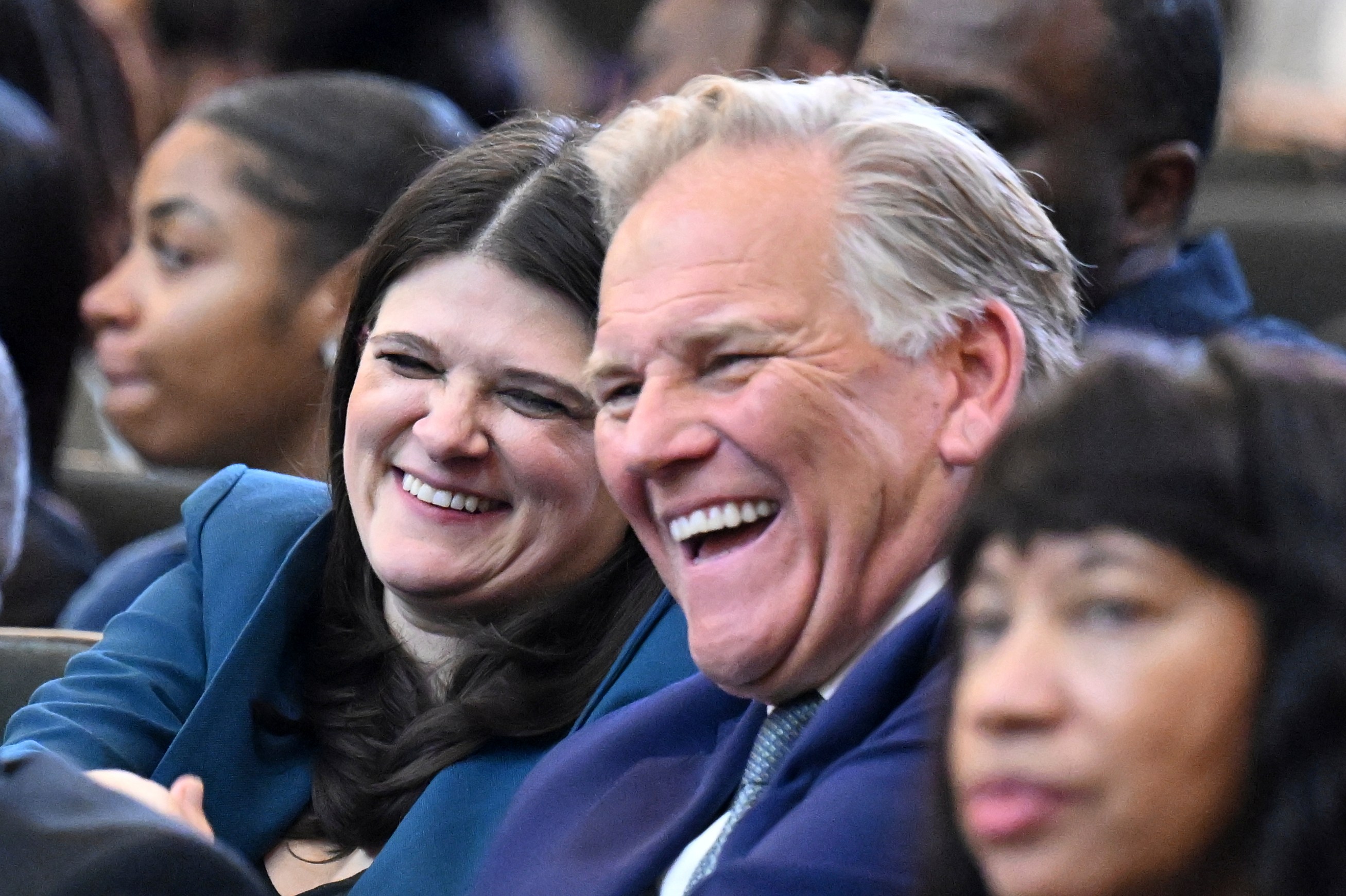
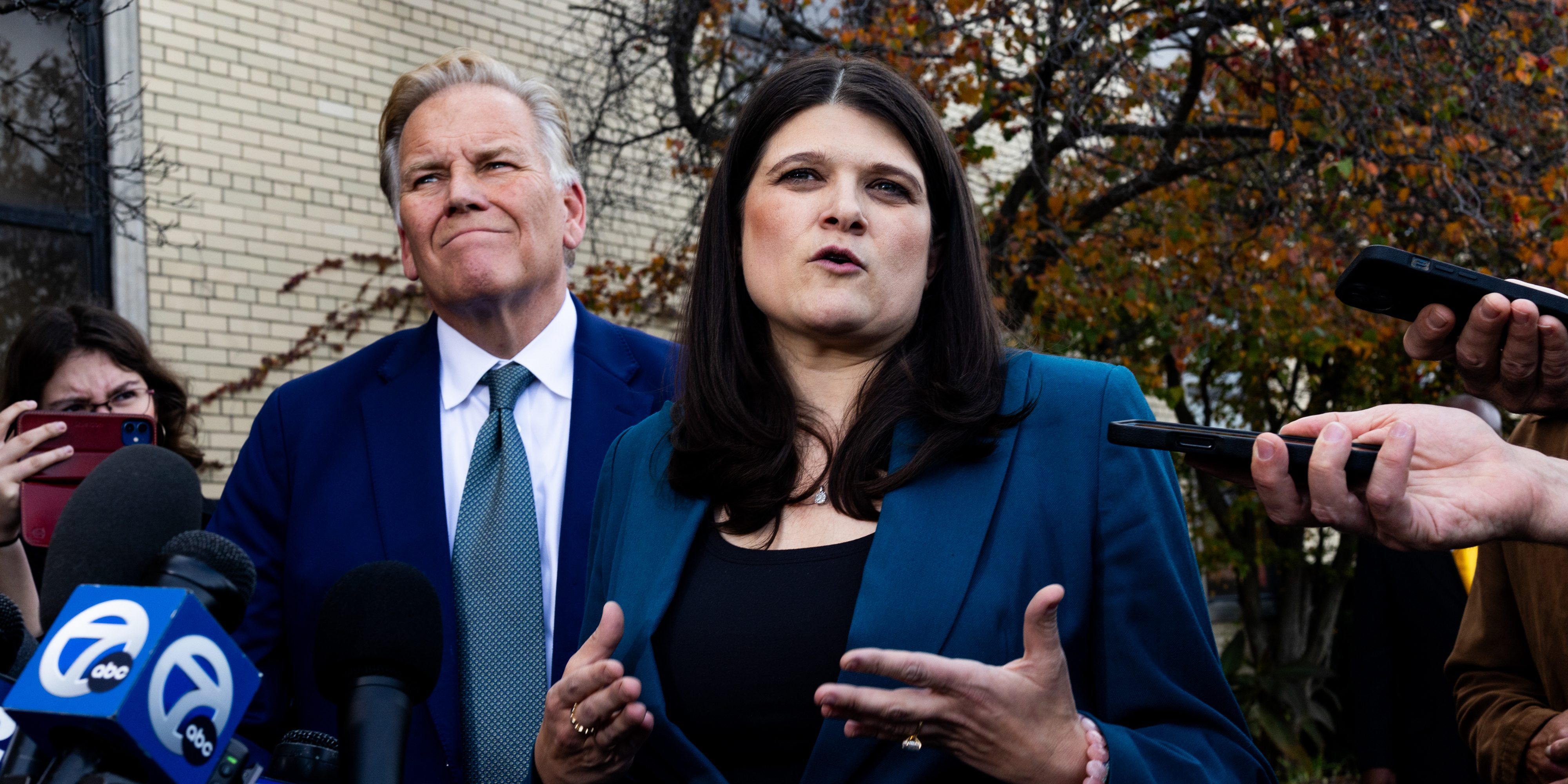
Rep. Haley Stevens, D-Mich., and Michigan Republican Senate candidate Mike Rogers attend a service at Perfecting Church, on Nov. 1, 2026, in Detroit.Photo: Jose Juarez/AP Photo
Abdul El-Sayed handily defeated Republican Mike Rogers for Senate in Michigan early Wednesday morning, retaining Democratic control of the seat and solidifying the party’s Senate majority. To become the first Muslim elected to the U.S. Senate, the former public health official overcame rampant, bipartisan Islamophobia and bigotry. For the country, and the Democrats, to move forward, we must cast it out of public life forever.
The Michigan Democrat’s victory felt almost like an afterthought compared to the upset Senate victories won by Democrats in South Carolina and Texas. The 2026 midterms were a referendum on President Donald Trump and his control of the GOP, and voters delivered their verdict, turning control of both houses of Congress over to the opposition party.
But we should neither forget nor forgive how we got here. El-Sayed faced an uphill battle from the beginning, which included a protracted, venomous primary, and the call was often coming from inside the house.
No detractor was as vicious as his former primary opponent Rep. Haley Stevens, whose eleventh-hour betrayal of her party’s nominee — she formally switched her endorsement to Rogers on Sunday — was a transparent attempt to turn the seat red.
Backlash was swift and harsh and came from all corners of the party. Sen. Chuck Schumer, the powerful leader of the Senate who has made little secret of his disagreements with El-Sayed on Israel, called Stevens’s actions “a despicable betrayal.” Michigan Democratic Rep. Debbie Dingell and state Sen. Mallory McMorrow, who finished third in the primary, went as far as to express personal concern for Stevens.
And Rep. Nancy Pelosi, D-Calif., just days after implying El-Sayed and New York City Mayor Zohran Mamdani were antisemites for opposing ethno-supremacy in Israel, said Stevens chose “to dangerously betray Michigan families’ healthcare, freedoms, and future with her horrific endorsement of Mike Rogers.”
In the 48 hours-plus since she threw in with Rogers — which increasingly seems like it was motivated primarily out of spite when she was boxed out of a Sunday campaign event with Rep. Jim Clyburn, D-S.C., in Detroit — Stevens embarked on a media tour of justification that got weirder and weirder.
A 15-minute, rambling interview with Anderson Cooper on CNN Sunday night didn’t provide insight into her motivations, or much else; on Monday evening, Stevens followed up with a long statement posted on X owning the decision to destroy her political career with the Democratic Party. She also denied that her fiancé, political donor Jason Turkish, played any role in the endorsement: “I made this decision, and I am proud of it. Do not question my independence simply because you disagree with my conclusion.”
Congressional staffers to Stevens resigned en masse on Sunday, and former campaign aides told the Washington Post that they had to run defense to keep Turkish — who had endorsed Rogers before Stevens did — out of the spotlight and marginalize his influence.
“Any campaign staff being directly quoted in this article, I was made miserable by working with them,” Stevens told the Post in response, adding, “I have nothing else to say about the campaign at this time.”
But a singular explanation of Stevens’s decision lets Democrats off the hook far too easily for the anti-El-Sayed campaign waged by leaders in the House and Senate. For the party to move forward after the midterms, the Democrats need to take a hard look in the mirror and purge institutionalized Islamophobia from their ranks.
They can start with their friends in the media. The Atlantic’s Jonathan Chait, in a screed published Sunday, whined that “during the same period of time that El-Sayed has been winking at a political movement inflected with anti-Semitism, he has been targeted by a political message that is not merely inflected with racism but saturated with it.”
We should get ready for a long overdue, but almost certainly painful, intraparty debate on how Democrats policed dissent in their own ranks.
Political commentator Van Jones noted on X ahead of Election Day that “the Republicans are conducting a campaign of blatant anti-Muslim fear mongering.” But in the same post, he also argued El-Sayed’s “refusal to outright denounce” a little-seen ad produced by an outside PAC — an ad which El-Sayed distanced himself and his campaign from — tying the rise of grocery costs to U.S. support for Israel was comparable.
“Something is going horribly wrong in the Senate race in Michigan,” Jones added huffily. “And I am going to keep calling it out.”
After last night’s massive blue wave, it should be undeniable that the left was a major factor in flipping the House and Senate. That means the party’s progressive wing can now credibly claim a seat at the governing table without compromising on domestic or foreign policy. We should get ready for a long overdue, but almost certainly painful, intraparty debate on how Democrats policed dissent in their own ranks in this election, and how to disentangle leadership from unconditional support for Israel.
There’s always the possibility that the party’s centrist wing comes together with the left and repairs the damage. A good first step would be for leadership to make clear that Stevens, and anyone else who indulged in anti-Muslim arguments to score political points, has torched any possible future in the Democratic Party. Any advocacy or lobbying group that offer Stevens or her ilk safe political harbor should also be blacklisted.
Party discipline applied to the treacherous center doesn’t appear to be the top priority for House Minority Leader Hakeem Jeffries, the presumptive next speaker, who devoted his first remarks after the election to downplaying partisanship in this “patriotic moment.”
But without backup from party leadership, El-Sayed will continue to be met with hostility. On Wednesday morning, CNN asked fellow incoming Texas Sen. James Talarico if he would “stand up” to El-Sayed and other, unnamed left-wing members of his caucus. To his credit, Talarico demurred from directly challenging his fellow future senator. Still, it’s a sign of a long battle to come.
The question for “unity”-caping Democrats remains: Who will they rally around — and who will be left out in the cold?
Donald Trump after boasting his renovations of the Lincoln Memorial Reflecting Pool on the eve of the midterm elections on Nov. 2, 2026, in Washington, D.C.Photo: Aaron Schwartz/Bloomberg via Getty Images
For two years, Donald Trump’s Republican Party has worked to push the United States further and further into a state of fascist rule. Trump’s regime has turned the federal government against ideological enemies, enriched and entrenched the power of billionaire allies, and done its utmost to decimate any checks and balances on the actions of the despotic leader and his loyalists.
It is, then, an extraordinary and overdue moment of relief to see the processes of democracy — however flawed in our barely representational system — offer the opportunity to take an off-ramp away from technocapital-backed fascism. Across the nation, Democrats secured historic victories. Even in Republican strongholds including Texas, Georgia, and South Carolina, voters delivered a rebuke to Trump’s GOP.
Democrats in Congress now have a mandate to do two things: Stop Trump, and improve the welfare of the U.S. working class. This should be understood as no less than a moral imperative to act immediately to curb the regime’s fascism in every possible way.
Americans are above all furious at the dire economic conditions in which they’re expected to struggle. The midterm results reflect a limit of Trumpian false consciousness: People know when they are poor, and they can see when billionaires, federal armed forces, genocidal governments, and presidential family members are profiting.
Democrats now have a mandate to do two things: Stop Trump, and improve the welfare of the U.S. working class.
Despite their newfound congressional majority, Democrats now face an uphill battle to deliver legislation that will improve people’s material conditions. But that is not an excuse for inaction, mealy-mouthed gestures, or nods to bipartisanship. Democrats must push legislation that Republicans cannot stop, as well as legislation that Trump is all but sure to veto.
For one, Democrats must immediately roll back cuts to programs like Medicaid and supplemental nutritional programs. They must go further, too, and deliver on campaign promises for robust healthcare provisions, welfare spending, and restrictions on the ruinous depredations of Big Tech.
Trump bypassed Congress to prosecute his illegal war of choice on Iran, which has cost over $47 billion to date. But Congress has the power to curb military spending. Democrats must pass further resolutions to end the war, and they must pull the plug on military budget, directing funds instead to healthcare, housing, and investments in green infrastructure, to name a few urgent priorities. Though a flailing Trump finally announced that he would end military aid to Israel on Monday, it is Democrats who must pass further legislation to end all U.S. complicity in Israel’s apartheid regime and genocide.
Democrats must also propose laws to defund and abolish Immigration and Customs Enforcement. This is no outlandish proposal; the impunity-drenched militia was only founded in 2003, and it is only by virtue of Congress that it now receives more funding than any other federal law enforcement agency. It is in Congress’s power to dismantle the agency and pass legislation to nullify the $170 billion-plus allocated to the border regime in Trump’s One Big Beautiful Bill.
The Democratic program must, in short, reject the austerity logics that have dominated the party for four decades. As sociologist Melinda Cooper has pointed out, and Trump’s Republicans have again and again proven, such austerity is not even austere: Pro-austerity governments since the Nixon administration in the 1970s have overseen lavish public spending in the shape of tax cuts and subsidies for holders of financial wealth (which does not trickle down), as well as funding for policing, border enforcement, prisons, and war machines. These are choices, and Democrats have been given a mandate to make choices that instead benefit — to revive a classic — the many, not the few.
Democrats such as Rep. Pete Aguilar, D-Calif., have stressed that their focus will be on the “affordability agenda” on which the party has run. This must include taking swift action to investigate and impeach the president and the worst offenders in his Cabinet, including Secretary of War Pete Hegseth and Secretary of Health and Human Services Robert F. Kennedy Jr. In no way does insisting on accountability for Trump and his acolytes’ lawlessness distract from an economic focus. No affordability agenda can be achieved with an authoritarian executive in place. Challenging Trump’s despotism and self-dealing with every possible tool goes hand in hand with legislating to deliver on so-called kitchen-table issues.
Will Democrats in Congress, many of whom continue to reject the progressive and left-wing energies that have helped drive this blue wave, succeed in this anti-fascist political and economic agenda? No doubt, they will be thwarted at every turn by a desperate and dangerous executive and an embattled Republican minority. That is no reason to compromise, and constant pressure must be kept on Democrats who pretend otherwise. As the votes tonight make clear, in their millions, Americans know who to blame.
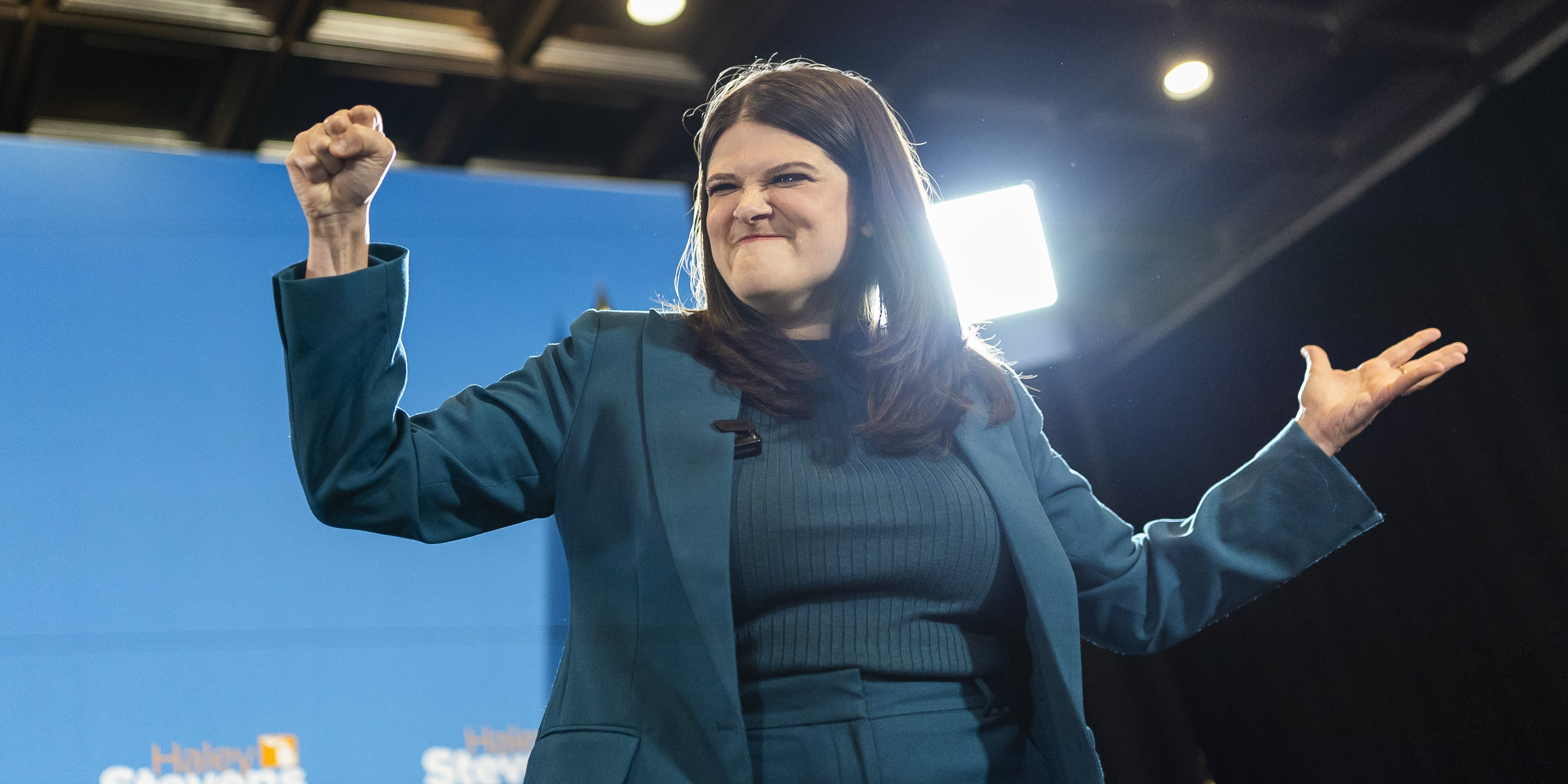
Rep. Haley Stevens, D-Mich., speaks following her endorsement of Republican Mike Rogers Michigan’s Senate race on Nov. 1, 2026, in Detroit. Photo: Emily Elconin/Bloomberg via Getty Images
Michigan Democratic Senate primary loser Rep. Haley Stevens on Sunday released a video that will place her in an ignominious legacy of establishment Democrats who act against the collective good.
And, like others on the list, she did it for the sake of one thing only: Israel.
In the video — filmed on her phone, in her car, and at an awkward angle — Stevens announced her endorsement of Republican candidate Mike Rogers against the Democratic nominee Abdul El-Sayed. Stevens had previously called Rogers a “rubber stamp for Donald Trump’s dangerous agenda.”
Stevens’s defection follows a pathetic effort to suggest that El-Sayed must make greater overtures to Israel supporters.
“I don’t belong in Abdul’s campaign,” said Stevens about El-Sayed, the candidate who currently enjoys 95 percent of Democratic voters’ support in Michigan, according to polls.
Stevens’s defection follows a pathetic, Islamophobic, and chaotic effort over the last weeks to suggest that El-Sayed must make greater overtures to Israel supporters.
Stevens now follows in the footsteps of other conservative Democrats who have shown an extreme disregard for the welfare of people in this country and beyond.
We might recall former Sen. Krysten Sinema of Arizona, who left the Democratic Party while still in office and notoriously delivered a dramatic thumbs down and curtsy when voting against a raised minimum-wage provision during the height of the Covid pandemic. Sinema and fellow then-Democrat Sen. Joe Manchin of West Virginia also joined with Republicans to effectively tank major voting rights legislation in 2022.
And, of course, there is the entire Senate career of conservative pro-Israel fanatic, Pennsylvania Sen. John Fetterman, who still remains a nominal Democrat. Fetterman offers a consistent master class in dangerous extremism and should be seen as a profound political liability by his own party.
It is, after all, so-called moderates like Stevens who are the radicals. As writer Eoin Higgins noted, an array of Democrats have revealed themselves more willing to see Republicans win than allow the party’s left-wing flank — or, more to the point, criticism of Israel’s genocide — to gain further ground.
And while there is little political agreement between the right and left wings of the Democratic Party on a whole array of issues, defeating Republicans, particularly Donald Trump’s Republican Party, was at least the stated goal of even the most conservative of Democrats.
To so openly fail on even those basic electoral terms should be the very definition of a political liability for a party.
Stevens had perhaps thought she could rely on this pattern. Numerous powerful Democrats and Israel apologists like Reps. Nancy Pelosi, D-Calif., and Hakeem Jeffries, D-N.Y., were slow to get behind El-Sayed and have continued to pick fights over his policies on Israel.
Stevens’s Rogers endorsement was not, however, met with the tolerance that Democratic rightward lurches have typically enjoyed. In a bellwether moment, another strong supporter of Israel, Senate Minority Leader Chuck Schumer, D-N.Y., called her endorsement of the Republican candidate “a despicable betrayal.”
The condemnation is the correct response of a party leader to a member taking active steps to thwart a crucial Senate race. It may not mark a shift for Schumer away from his own reliable conservatism and support for Israel’s genocide, but it nonetheless reflects a shifting political landscape when a figure like Schumer sees greater political expediency in standing with a progressive, Israel-critical, Muslim candidate, than with the radical centrist wrecker with whom Schumer is more ideologically aligned.
Stevens’s theatrics are unlikely to make a significant difference to Tuesday’s election results. Voters who elevate support for the Israeli state over human lives in Palestine and in the U.S. were already not going to vote for El-Sayed.
In a close race like this, pulling any support away from the Democratic candidate reveals the extremism of the purported center.
It’s unclear, then, who would be swayed by Stevens’s erratic actions two days before the election. In a close race like this, however, pulling any support away from the Democratic candidate reveals the extremism of the purported center.
We can welcome what looks to be a long overdue shift in political common sense and hope that positions like Stevens’s are seen as a liability before they reach their most extreme iterations.
Yet it shouldn’t take so-called centrists quite literally choosing Trumpian Republicans over progressive and left-wing Democrats to make clear who the real threat to the Democratic Party is — if winning elections and delivering policies to improve the lives of constituents is, in fact, their goal.
It certainly is for El-Sayed. He has dismissed Stevens’s performance as a distraction.
“None of this matters,” he told reporters on Sunday, and insisted instead on speaking about the state of schools, healthcare, and the cost of food for Michigan residents.
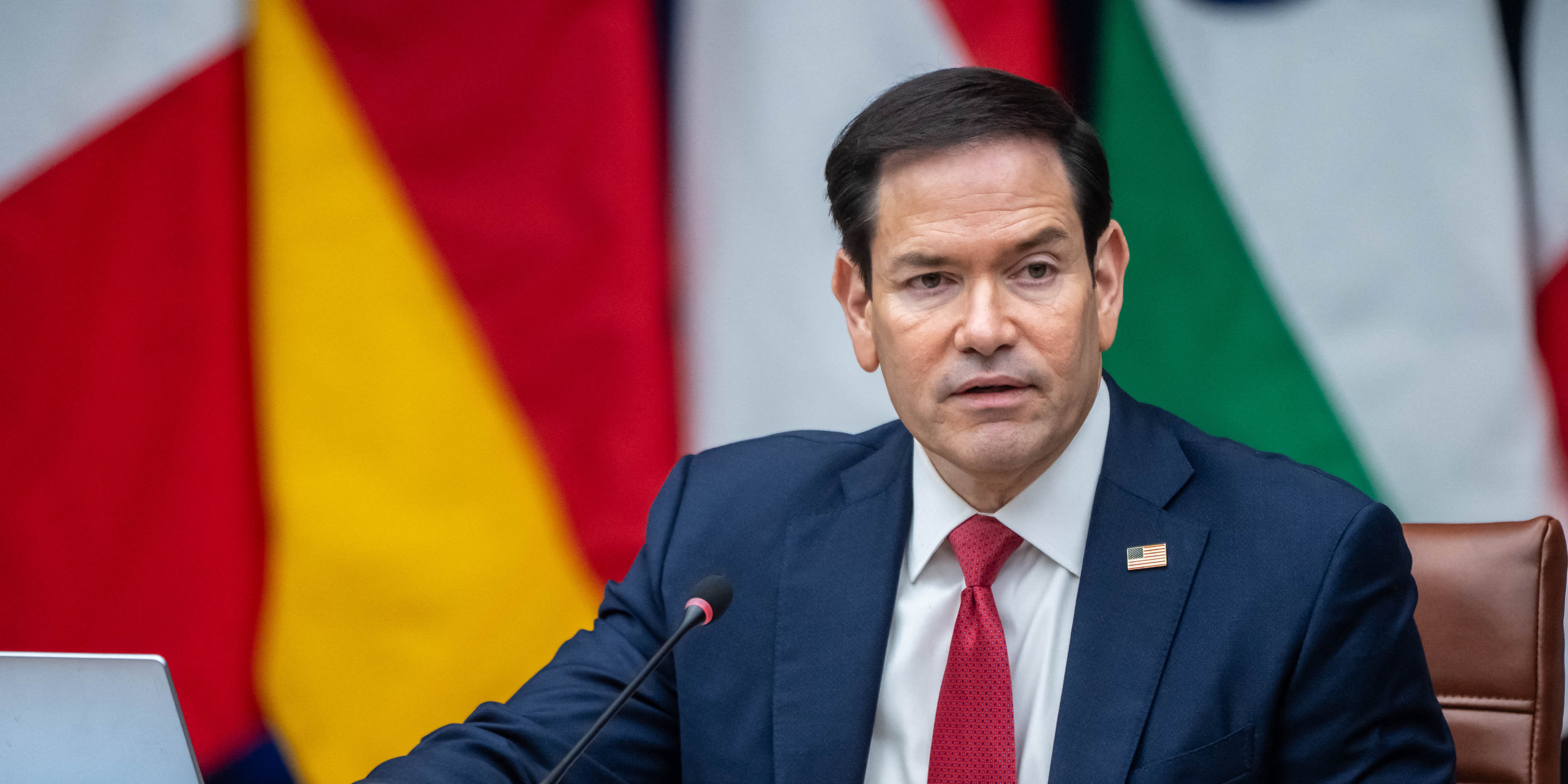
Secretary of State Marco Rubio speaks at the start of the G20 foreign ministers’ meeting on Oct. 30, 2026, in Atlanta.Photo: Michael Kappeler/picture alliance via Getty Images
Imperial ambitions are ever-shifting under President Donald Trump. Greenland, Venezuela, Iran, and Cuba are oftentimes spoken about as one continuous train of complete victories and soon-to-be-complete-victories. With the midterms fast approaching, and the date for an apparent telegraphed return to the Iran war on its heels, talk of easily overthrowing regimes has returned, if it ever truly left.
At a rally in Florida last Friday, Trump laid out his grand vision, which he promised would come to pass once the Islamic Republic is neutralized as a threat to the world: “We’re going to come back from Iran. Those beautiful ships will pass Cuba. We’ll have one of them stop about 50 yards off the coast. They’ll raise up their hands, and then we’re going to send Marco Rubio in to finish up the deal.”
Secretary of State Marco Rubio, the descendant of Cuban immigrants who left under President Fulgencio Batista (though Rubio later tried to claim his parents fled Castro, who came to power three years later), has long put overthrowing the Communist government in Havana at the top of his agenda, with the hope of replicating the relative ease of kidnapping Venezuelan President Nicolás Maduro in January. Rubio turned some heads last Friday when he publicly posted on X that those seeking “to create positive change in Cuba” could “seize this opportunity to create the change you desire through a discrete [sic] partnership with the CIA.”
The post was widely met with bewilderment (Bloomberg’s White House correspondent wrote: “Checked like four times that this was real”), but U.S. officials and members of Congress also shared the post, elevating the public call for collaboration. Recruiting in public might come across as strange and out of character to a public that imagines the CIA recruiting secret agents and informants through clandestine channels or hidden websites, as the agency had done to try and recruit agents inside Iran under Bush and Obama.
But public appeals of this kind are not wholly new. Under the Biden administration, the CIA recruited collaborators inside Russia via a public Telegram channel, as well as publishing videos on social media hoping to recruit Chinese, Iranian, and North Korean assets.
This kind of overt recruitment stems from the difficulties Western intelligence agencies face against adversaries who have built sophisticated surveillance networks of their own. A CIA official told ABC News in May 2025, “in today’s world of [universal technical surveillance], we can’t recruit sources the same way that we did 20 years ago, probably the same way you did 10 years ago.” This has not only affected intelligence operations targeting Beijing, but also Tehran and Havana, where both the U.S. and Israel’s lack of on-the-ground connections and limited official presence has led the CIA and the Mossad to try to recruit willing informants online.
While these limitations may govern the particulars of this strategy, those in power in their respective countries may not see it as evidence of constraints, but instead as evidence of the power of their new strategy: boasting about their national power, rather than keeping it behind closed doors where it supposedly remains useless. After all, what is the use of a deterrent if nobody knows it was you?
The scale of these public appeals, despite having started under Biden, has exploded under the second Trump term, but these moves were arguably preceded by Benjamin Netanyahu’s efforts to bring the Mossad’s operations much more into the public sphere. The Israeli prime minister’s bragging about numerous cyberattacks targeting Iran’s nuclear program in the late 2010s began to precipitate a shift in public discussion of the Mossad’s work, with many Netanyahu allies, like then-Justice Minister Ayelet Shaked, praising the fact that Iran could now “know it is exposed and that Israel can reach anywhere in the Islamic Republic.” A former deputy director of the Mossad said after the unveiling of Iran’s stolen nuclear archive that Netanyahu’s move “goes against our nature,” and that “the prime minister insisted on publicizing this.”
Netanyahu’s pick in 2021 for the director of the Mossad, David Barnea, has been credited with institutionalizing that change, shifting the secretive intelligence agency’s operations toward appealing to larger masses, and reportedly concerning Mossad veterans who were shocked by the publicizing of agents inside Iran. Casting Israel as a superpower capable of exerting its power anywhere has become a popular refrain under Netanyahu. In an interview with “60 Minutes,” one Mossad officer said of the 2024 pager attacks in Lebanon, which injured more than 2,000 people, that “they are walking proof of our superiority all around the Middle East,” with another officer saying the operation’s complexity and success demonstrated “the world is our stage.”
The U.S. has also gotten in the habit of flexing its superpower status under Trump, declaring the nation’s intent to conquer places like Greenland and Canada, to steal the natural resources of Venezuela and Iran to fill American coffers, and to openly and unabashedly place the Western Hemisphere under a Washingtonian protectorate known as the “Donroe Doctrine.” Rubio declared in Greece in early October, speaking in terms of civilizational battle against the backdrop of the Acropolis, that “we choose the unapologetic pursuit of national power.”
Openly siccing the CIA on foreign adversaries and ICE on domestic ones has been part of that strategy of embracing imperial fervor at home and abroad. Erik Prince, the founder of Blackwater and a private security contractor who remains influential in Trump world, said he was “jealous” of the pager attacks and publicly urged the CIA to take a lesson from the Mossad, saying “we should be getting those kinds of results.”
While both countries have openly sought deep intelligence penetration in adversarial nations, there are limitations to the power of clandestine and overt operations, even by superpowers and wannabes. While the CIA asserted its power in May by openly having its director meet with Cuban officials in Havana to demand “fundamental changes” in return for relief from economic strangulation, the agency’s history of attempts to overthrow the Communist Cuban government are as storied as they are unsuccessful. Earlier hopes for Iran to be as quick and as clean as taking control of Venezuela’s government were dashed early on in the conflict, with the war that was supposed to only take a few weeks now all but certain to extend past the midterm elections for another devastating round.
Even if the war with Iran ends so easily that American ships are able to go through Cuba on the way back ready for more, both outside analysts and even internal U.S. intelligence assessments do not see as easy a way to overthrow the Communist state. The New York Times reported in August that American intelligence sources indicate it could be a situation closer to Iran, where even if Raúl Castro (who has held no official position in the country since 2021) were captured, “few pragmatic officials” are likely to take power in his stead.
While Cuba’s military lacks the kind of advanced equipment Iran has, and shows of readiness (like with Venezuela) are no indication of a country’s actual willingness to fight a protracted campaign, Cuba’s military structure is similar to Iran’s in that it is based on decentralization and redundancies in leadership. In addition, Cuba has a political power structure that, also similar to Iran, is not actually based around a single individual, despite popular claims to the contrary.
Despite Trump’s constant bluster about the miracle of being able to take out Maduro without a single American death, the brazenness of that operation, and the openness with which the negotiations with Iran have been deceptive, appear to have had lessons for the Cuban leadership. President Miguel Díaz-Canelsaid in June: “All these elements create a lot of distrust in the Cuban people when it comes to conducting any type of negotiation. We continue to express our willingness for dialogue, but it has to be a dialogue between equals, without pressure and with respect for our sovereignty.” American officials have yet to internalize that sentiment. Discussing Cuba in March, Trump joyfully mused: “Whether I free it, take it, I think, I could do anything I want with it.” At the time, he was saying similar things about Iran.
Rep. Haley Stevens, D-Mich., speaks during a primary night watch party at the Hotel Saint Regis Detroit on Aug. 4, 2026.Photo: Finn Gomez/Getty Images
Halloween weekend is the last chance for centrist Democrats to stop the nightmare they fear most: Michigan’s Abdul El-Sayed, who could be the first Muslim in the Senate.
The Michigan Democrat’s campaign came under pressure from party moderates days out from the general election to denounce an ad produced by The Young Turks presenter Cenk Uygur and his Rebellion PAC. El-Sayed and his campaign were not involved in the production or distribution of the ad, which tied rising domestic prices to U.S. financial backing of the Israel military. But on Thursday, the campaign made the conciliatory gesture of distancing itself.
For centrists, it still wasn’t enough.
Rather than take the win, Haley Stevens, the House member who lost to El-Sayed in Michigan’s Democratic primary for Senate in August, used that condemnation on Friday as a springboard for a scathing denouncement of her former opponent, framed as a “celebration” of her magnanimous decision to campaign for El-Sayed this weekend alongside Rep. Jim Clyburn, D-S.C. — and laying out conditions for her support with just a few days to go.
In the statement, in which Stevens assigned herself the role as spokeswoman for Michigan’s Black and Jewish communities — Stevens herself is a white Protestant — she all but called El-Sayed an antisemite and a bigot attempting to cozy up to the worst of the far right.
“I have learned from Democratic Party leaders and emissaries, as reported in the news media, that Dr. El-Sayed has heard the deep concerns of the Jewish community and is now, for the first time in this campaign, formally condemning that ad for what it is,” Stevens wrote. “That is why I accepted Congressman Clyburn’s invitation to appear with Abdul on Sunday.”
Stevens’s eleventh-hour ratfuck came after her fiancé Jason Turkish, a political donor who supported incumbent Maine Republican Susan Collins this cycle, as well as other politicians of both parties, announced he’d vote for the Republican candidate, Mike Rogers, on Tuesday. On Friday night, Turkish told TMZ that his fiancee might join him if El-Sayed didn’t accede to her list of demands.
Establishment Democrats see El-Sayed, and the politics he represents, as an existential threat. It’s not his rather anodyne liberalism in domestic policy — his policy portfolio isn’t far from that of party stalwart Elizabeth Warren — but El-Sayed’s opposition to Israel’s genocide of Palestinians that’s the issue. It’s a major problem for the entrenched, centrist Democrats who have controlled the party for decades and have tamped down any dissent on this issue.
Recent polling is likely motivating efforts to ding the El-Sayed campaign. Senate polling from The New York Times/Siena University this week showed South Carolina in a dead heat — an absolute shocker — with Minnesota comfortably in the Democratic corner. CNN polling published on Thursday gave Democrats leads in Texas and Michigan and toss-ups in Maine and Kansas.
With a Senate majority on the horizon, centrists need to enforce discipline and regain control. AIPAC is down, but not out; the lobbying group still has a hold on the party, even as voters are moving away from pro-genocide policies.
Taking El-Sayed down would be a show of force to keep donors and the party’s right wing happy. If Democrats can win the Senate without him, it would be all the better.
But the effort may be backfiring as a faction of party elites, led by popular former President Barack Obama, are putting their muscle behind the El-Sayed campaign. Obama has been a steady presence in Michigan, and Clyburn will rally for the candidate on Sunday at the aforementioned event that Stevens was set to attend.
Anger is also spreading among party members in the state.
“I have no idea what the hell Haley Stevens is doing,” Mallory McMorrow, the Michigan state senator who placed third in the August primary, told CNN Friday night. “This is a moment where we have to recognize the stakes.”
Stevens — who also demanded El-Sayed pull an ad showing far-right broadcaster Tucker Carlson saying he would “never” support the Republican in the race, Rogers — seems undeterred.
Given an inch by the campaign’s willingness to publicly mend fences, Stevens took it several miles, using that ad as a way of implying that El-Sayed was, at best, disinterested in the concerns of Black Michiganders.
This last-minute blitz comes after months of attacks on El-Sayed by centrist Democrats, both before and after his primary win. The smears have been normalized and facilitated by a number of Democrats eager to stay on good terms with the party’s powerful but increasingly marginalized pro-Israel wing. El-Sayed’s connection to the streamer Hasan Piker, who helped get out the vote in the primary, has been a direct and implied slam on the campaign for over half a year from other members of the party.
Rep. Nancy Pelosi, D-Calif., on Thursday called opposition to Israel’s existence as an apartheid ethnostate “more than concerning, it’s wrong,” on Donny Deutsch’s podcast, adding, “This new person in Michigan, we’ll see if he gets elected to the Congress.” On CNN Wednesday, New Jersey Sen. Cory Booker — a consistent pro-Israel voice — declined to directly endorse El-Sayed by name.
Right-wing Democrats aren’t stupid. They know their influence over the party is at a historic low. The genocide in Gaza has pushed the base away from supporting Israel, perhaps permanently. Supermajorities of Democrats oppose the occupation and sympathize with Palestinians.
But the party’s donor class still backs Israel to the hilt and is fomenting a war-on-terror-style Islamophobic bigotry toward Muslims. As Perry Bacon noted on Thursday in The New Republic, party elites attacked then-candidate for New York City Mayor Zohran Mamdani throughout 2025, then picked up where they left off with El-Sayed, the next prominent Muslim Democrat running for office, in 2026.
The same Democrats who indulge in the attacks on El-Sayed are making hay out of rejecting more openly bigoted attacks from the likes of President Donald Trump and Rogers. Rep. Dan Goldman — an outgoing pro-Israel Democrat who jumped on the Condemn El-Sayed bandwagon earlier this week — called Republican attacks on El-Sayed “Islamaphobia” [sic] on Thursday; Booker did the same. And Pelosi, just days after her comments on Deutsch’s show, urged Democrats to vote for El-Sayed.
Voters don’t seem very interested in the back and forth. In a Marist poll of Michiganders released October 21, 95 percent of the state’s Democrats said they support El-Sayed. There’s no split in the party at the state level with respect to the nominee; the fight is at a higher, ideological level with a national stage.
As for El-Sayed, he seems done with Stevens and focused on the election. That rally on Sunday? Stevens isn’t wanted there, Politico reported, as the El-Sayed campaign is making clear it would be a distraction. In a statement released Friday evening, the candidate said he is intent on fighting for affordability, defeating the GOP, and making sure the Senate seat stays blue.
With a Senate majority on the horizon, centrists will look to enforce discipline and regain control.
“That should be the priority for all of us right now,” El-Sayed wrote. “So while Congresswoman Stevens seems intent on relitigating a primary that ended three months ago, let’s all focus on the task at hand: that’s beating Mike Rogers, holding Trump accountable, and getting money out of politics, putting money in pockets, and passing Medicare for All.”
Washing his hands of the wrecker behavior Stevens is engaging in at the final stretch of the campaign is a smart move for El-Sayed. After Tuesday, the Democratic Party should do the same for anyone who indulged in and encouraged it and present a united front against Trump. There’s no room for anyone more interested in keeping their increasingly untenable right-wing ideology beyond voters’ reproach — even if that means losing.
Rev. Frederick D. Haynes III speaks to the crowd during the We the People TX interfaith service, “A Night of Moral Resistance,” in Dallas, on Sept. 9, 2026.Photo: AP Photo/Gabriela Passos
“Why do you wanna have a pep rally when people are hurting?”
That was the question Rev. Frederick Douglass Haynes III posed at a September food drive in South Dallas, where volunteers were collecting groceries for struggling families. Across town, Republicans were holding a midterm convention. Haynes, a longtime Baptist pastor and Democratic congressional nominee, was introducing James Talarico, the party’s candidate for U.S. Senate in Texas.
A month later, speaking at a Dallas megachurch, Talarico offered his own interpretation of Christian duty.
“I try to love my neighbor through public policy,” the Presbyterian seminarian told the congregation. “I’m trying to make my neighbor’s life easier, better, less stressful.”
Both men are making a deceptively simple argument in some of the staunchly staunch red-as-hell, Republican territory in America, one that might transcend the conventional wisdom about national campaigns and the millions poured into competing campaign war chests: When far-right policy translates into actual pain, at what point does intervening become a spiritual obligation?
Amid the big-ticket ad buys, fundraising appeals, and armies of political consultants, Talarico and Haynes are tapping into a political tradition that has long sustained communities across the South: showing up.
At Haynes’s Friendship-West Baptist Church, the ministry extends to legal services, immigration advocacy, counseling, economic justice, and food policy. It is an example of how churches often form the connective tissue of communities suffering under economic and political strain.
When far-right policy translates into actual pain, at what point does intervening become a spiritual obligation?
That strain is measurable. Texas is home to four of the nation’s 10 most financially distressed major cities, including Houston, which ranks second nationwide, according to a 2026 analysis. Feeding America estimates that nearly 1 in 5 Texans experienced food insecurity in 2024. Meanwhile, federal analysts project that changes to Medicaid eligibility enacted last year will increase the number of uninsured Americans by 7.5 million by 2034.
While Democratic Party leaders publicly debate how to punish Donald Trump politically, allege corruption, or navigate the ideological divide between moderates and democratic socialists, a different argument is emerging from Southern pulpits.
The Underground Church
From Quaker abolitionists to the Social Gospel’s challenge to industrial exploitation, progressive religious institutions have helped drive some of America’s most consequential political transformations. Christian farmworker ministries supported migrant laborers before joining the United Farm Workers’ California grape boycotts in the 1960s. And while Black churches overwhelmingly led, sustained, and suffered the brunt of violence in the fight for equal civil rights in this country, a handful of white denominations joined them.
Of course, churches also defended slavery, segregation, and exploitation. The blunt reality is that throughout American history, Christianity has always been political and has been used to justify a wide variety of competing political ends.
But Republicans have deftly exploited the perception that they alone speak for American Christians. The Trump administration has readily embraced religious iconography, from evangelical leaders praying over the president in the Oval Office to Defense Secretary Pete Hegseth’s frequent invocations of the medieval Crusades.
There is no way around the fact that Republicans have built a formidable religious coalition, particularly among white evangelicals. Last year, the nonprofit, nonpartisan Public Religion Research Institute, or PRRI, found a majority of Republicans qualified as either Christian nationalist adherents or sympathizers in 2025, compared with 17 percent of Democrats.
But Republicans don’t have a monopoly on Christian voters. Pew Research Center polling this month found 73 percent of white evangelical Protestant registered voters preferred Republican House candidates, while 74 percent of Black Protestants and 59 percent of Hispanic Catholics preferred Democrats. None of that is particularly surprising on the surface.
Nor is this some newly discovered religious awakening. According to PRRI’s Census of American Religion, which was published in April, 57 percent of Democrats identified as Christian in 2025, a significant drop from 70 percent in 2013. The white Christian left isn’t necessarily growing, but it’s far from insignificant. Much of it has simply been politically overlooked.
It’s a perception the GOP has routinely capitalized on, often spending a great deal of their election campaigns attacking opponents on religious ground.
“My faith is my moral compass,” Hinojosa told the National Catholic Register in September. “It grounds me in purpose and gives me the courage to do what is right regardless of obstacles or consequences.”
Faith Without Works Is a Dead End
For those who have spent years watching their faith become synonymous with a politics they don’t recognize, frustration may finally be giving way to something else: a determination to be heard.
There are signs that this long-overlooked religious tradition is finding a more public voice. An August study by PRRI documented progressive Christians organizing against Christian nationalism in eight states, including Texas and Louisiana, channeling local meetings, religious discussions, and community networks into political action. Elsewhere, hundreds of members of the clergy have joined protests against immigration enforcement, and some have been trained in direct action and civil resistance. While the movement may not be growing in numbers, its willingness to challenge political power is increasingly visible.
As retired Texas Rev. Kathleene Card, who has thrown her support behind Talarico, told the Houston Chronicle, “faith should influence how people respond to poverty, human rights, the environment, and the well-being of their community.”
Whether any of this will translate into winning on Tuesday is still an open question. An October Fox News poll put Talarico and Republican Ken Paxton at 49 percent apiece among likely voters, but newer polls show Talarico with a small lead. Abbott led Hinojosa by 5 percentage points in that Fox poll, and most polls in the race show the governor with a slim lead.
No matter the result, the Texas campaigns offer a different, more nuanced way of understanding political persuasion. They also challenge a long-standing assumption among national Democrats: that their voters are a monolith, moved by the same issues, values, and appeals.
There is something to be said for people willing to put boots on the ground, to do the work instead of endlessly debating how to begin and whether it matters, in the name of service.
It’s a moral code not too dissimilar to a Western: When confronted with injustice, you stand for what’s right, even if you stand alone and are ridiculed for what you believe. It’s a mode of Christianity that harkens back to Abraham Lincoln (and maybe even John Brown.)
That might be a more enduring political proposition than many Democrats’ feigned, helpless aggrievance to the latest Republican spectacle. Campaigns come and go; so do their promises, if they existed in the first place. But the obligation to one’s neighbors remains.
Brazilian right-wing presidential candidate Flávio Bolsonaro holds a picture of his father, convicted former President Jair Bolsonaro, during a motorcade with supporters in Goiania, Brazil, on Sept. 27, 2026. Photo: Sergio Lima/AFP via Getty Images
“I never thought about leaving the country,” Flávio Bolsonaro, a Brazilian senator and son of the deposed, disgraced leader, told his 16 million Instagram followers on Monday. It was the day after he lost the presidential election to President Luiz Inácio Lula da Silva by a margin of more than 4 million votes.
Flávio promised to stay in Brazil to “organize the opposition” during Lula’s next term.
“I’m the last obstacle to the Workers’ Party’s plan to destroy the country,” Flávio warned, referring to the party of Lula, who defeated his father four years earlier.
A few hours later, he left his mansion in Brasilia and sought asylum in the U.S. The Trump State Department told the Associated Press that it will grant him and his family visas.
The affinities become obvious when you watch Bolsonaro’s failsons end up in Trump’s America.
“I didn’t take sides, but it looked like another rigged election,” President Donald Trump told reporters on Monday, echoing Flávio’s election night talking points without providing any credible evidence that casts doubt on Lula’s come-from-behind victory — even as Flávio’s own party put out a statement acknowledging the results later that day.
It is no coincidence that the Trumps and the Bolsonaros are so fond of each other. Their modus operandi is nearly identical.
Both wrap themselves in the rhetoric of patriotism and moral righteousness, while treating their political offices as personal get-rich-quick schemes. And, when their lies finally catch up with them, you can be sure that they will jump ship to save themselves first and abandon their followers.
The affinities become obvious when you watch Bolsonaro, his failsons, and co-conspirators all end up in Trump’s America, where Flávio is about to join his brother, and in the denialism and violence that follow their failures.
Coups and Flight Risks
Flávio Bolsonaro’s election denial and hasty escape are his version of Trump’s infamous January 6 speech: Rile up the troops to do your dirty work and get the hell out of the way.
It’s not the first time a Bolsonaro ran this playbook. After Jair Bolsonaro became the first modern Brazilian president to lose a reelection bid, he refused to attend the January 2023 inauguration ceremony. Instead, he also fled to the U.S., staying in a Minions-themed children’s bedroom in the Orlando, Florida, home of retired UFC fighter José Aldo.
A week later, on January 8, the ex-president’s allies laid siege to the capital, Brasília, vandalizing Congress, the presidential palace and the Supreme Court, as foot soldiers in a larger coup plot to overthrow the Lula government. Nearly four decades of Brazilian democracy was only spared when key military leaders blinked before they could finish the job.
Jair Bolsonaro eventually returned to Brazil and was sentenced to 27 years in prison for leading the plot, which included a plan to assassinate Lula, Vice President Geraldo Alckmin, and Supreme Court Justice Alexandre de Moraes. Allies, including top military brass, were also convicted. Jair remains under house arrest — widely thought to be pinning his hopes for freedom on a Flávio presidency that wasn’t to be.
Flávio, however, will not be lonely in the States. His brother, former Brazilian Congress member Eduardo Bolsonaro, just received green cards for his family and is living in a $1.2 million McMansion in Southlake, Texas, in the Dallas-Fort Worth area, as we revealed in The Intercept Brasil earlier this year. Eduardo, who is a regular on the Trumpworld circuit, was sentenced in absentia to four years and two months in prison for lobbying the U.S. government to interfere in his father’s trial.
Flávio, too, seems poised to receive news of his own prison sentence while sitting on a couch in a Texas suburb. In May, our reporting at The Intercept Brasil put the first nail in the coffin of his presidential campaign when we published chat logs and audio recordings of the senator negotiating $24 million — and being wired $10 million — from disgraced billionaire banker Daniel Vorcaro, who is a sort of Brazilian cross between Charles Ponzi and Jeffrey Epstein.
The payments, wired to a U.S. account, were supposedly meant to finance “Dark Horse,” a biopic about Jair Bolsonaro starring Jim Caviezel. Brazilian Federal Police, though, have already poked holes in Flávio’s story as they investigate whether the money was actually used to bankroll Eduardo’s treasonous lobbying of the Trump administration to sanction Brazil and help his brother’s electoral chances.
Flávio is also being investigated for his alleged ties to a billion-dollar money-laundering scheme through an online betting company run by Willer Tomaz. The two are not only close friends but also business partners. Flávio even had unfettered access to one of Tomaz’s offshore bank accounts. You will not be surprised to learn that Tomaz left Brazil in August and is now living in Miami.
Police argued that, after losing the election, Flávio would pose a flight risk, especially in light of his closest associates’ recent actions. They asked the Brazilian Supreme Court to order Flávio to turn over his passport, which is permitted under Brazilian law. A top justice granted the request and, when the deadline passed, canceled the senator’s travel documents.
Democratic Senate candidate Abdul El-Sayed speaks during the WXYZ Channel 7 debate on Oct. 21, 2026, in Southfield, Mich.Photo: Robin Buckson-Pool/Getty Images
The PUMA spirit is back. The 2008 Democratic Party protest movement, inflamed by what Hillary Clinton supporters viewed as Barack Obama stealing the nomination from their primary candidate, scorned his general election campaign and embraced the mantra “Party Unity, My Ass.”
DSA-aligned progressives have won a number of party primaries and are set to help Democrats take the majority in Congress. But once in power, they’re likely to make demands — the kinds of demands that could upend decades of carefully crafted donor-friendly policymaking.
For moderate Democrats, “party unity” is only a goal worth pursuing to bully the left wing of the party to fall in line with their preferred candidate.
For moderate Democrats, “party unity” is only a goal worth pursuing to bully the left wing of the party to fall in line with their preferred candidate. When it’s on them to step up and vote for someone who might have different goals, that’s another story completely, and some centrists are even hoping for Republicans to win the House this November if the alternative is an empowered DSA Democratic wing.
James Carville, the fossilized Cajun strategist who was part of exactly one successful national political campaign, Bill Clinton’s 1992 White House victory, said on The Bulwark podcast last Sunday that he’d prefer a tight GOP hold on Congress over a narrow Democratic majority.
“I would be disappointed if it comes in at 225 House seats,” Carville told host Bill Kristol. “I would rather the Republicans keep the House by five than the Democrats to win by five, because, if that happens, they’re hostage to the DSA.”
To his credit, Kristol — who, in a sign of how people can change when they know which way the wind is blowing, spent the PUMA moment promoting Sarah Palin but is now a self-proclaimed Democrat — pushed back, saying he’d rather win.
Carville is the first of his cohort to explicitly call for a GOP victory rather than the left flank of the party getting more power, but he’s not the only centrist deprioritizing his party’s prospects in November.
Perhaps most consequentially, in Michigan, Democratic Senate nominee Abdul El-Sayed has faced an uphill battle since winning his party’s grueling primary. He’s now focused on winning in the general election and becoming the first Muslim U.S. senator, but resistance to his candidacy remains a concern.
Much of the difficulty has come from members of his own party and other liberals. Their antipathy toward a candidate whose positions aren’t so out of step with other members of the caucus has raised questions about what exactly is so objectionable about him. El-Sayed may skew to the progressive side of the party, but he’s not a socialist and not a member of the DSA; his positions on domestic policy should place him companionably among the likes of Sen. Elizabeth Warren’s wing.
Until recently, most of the anger after El-Sayed’s primary in early August was confined to X and occasional cable news hits.
That changed on October 16, when two Michigan Democratic Party power players, David Kramer and Lon Johnson, urged voters in a Detroit News op-ed to leave El-Sayed’s place on the ballot blank — effectively handing the Senate seat over to Republican Mike Rogers, an election denier and a lockstep Trump ally.
The piece tied El-Sayed to extreme elements of Islam and suggested his opposition to Israel’s genocide, war crimes, and occupation was based in hatred for the Jewish diaspora.
“Our gravest concerns involve El-Sayed’s associations with figures who have excused or minimized terrorism, his reluctance to unequivocally condemn dangerous rhetoric, and his support of extreme policies,” Kramer and Johnson wrote. “At a time of rising antisemitism, Democrats deserve leadership that unequivocally rejects rhetoric threatening Jewish communities.”
Comedian Mike Drucker accurately described on Tuesday the centrist rejection of El-Sayed as less “blue no matter who” and more “blue unless brown.”
But Democratic leaders like Carville, Kramer, Johnson, and others are panicked beyond their obvious Islamophobia — they can see the writing on the wall goes well past Michigan. It’s a full-on existential crisis.
Former Intercept writer Jon Schwarz once opined on what he termed the iron law of institutions: “The people who control institutions care first and foremost about their power within the institution rather than the power of the institution itself.”
What we’re seeing now is the iron law’s white blood cells fighting a threat they don’t believe can be easily assimilated into the existing power structure. It’s a danger to their status and power.
Their attacks on the left are going to backfire, leaving the Democrats’ centrist wing even less empowered than before.
That outcome is ideal for the party, the base, and the country. For centrists, it’s a disaster — but if the way to stop their coming irrelevance is to vote for a progressive American Muslim who opposes genocide, they’re incapable of taking that step.
Ultimately, all their griping may not matter. El-Sayed is regularly polling slightly ahead of Rogers, and 95 percent of Michigan Democrats said they intend to vote for him. Much like Jackson in Maine, should he win, El-Sayed will be even less beholden to the elements of the party power structure who are so desperately trying to prove he needs them, rather than the other way around.
NYPD Commissioner Jessica Tisch and Mayor Zohran Mamdani attend an unveiling ceremony for a new 9/11 Memorial Wall on Sept. 9, 2026, in New York City.Photo: Michael M. Santiago/Getty Images
The October 8 shooting of Oscar Belgal by Immigration and Customs Enforcement agents in front of his 5-year-old son in Manhattan forced into the open a question that had been on many New Yorkers’ minds: What would the New York Police Department do when ICE broke the “rule of law” in the city, and how would Mayor Zohran Mamdani, the person who has the power to hire and fire the NYPD commissioner, respond?
Shortly after the shooting, Mamdani addressed the incident with an appropriate amount of outrage, declaring ICE “rotten to its core,” and calling for the department to be abolished. His frustration was visible, but he was much less expressive when it came to his appraisal of the city’s response to the situation. He had nothing substantive to discuss with respect to his police department’s involvement, despite NYPD officers arriving on the scene only to find unidentified ICE agents holding guns, wearing plain clothes and disguises and masks, in apparent violation of federal laws requiring identification. (A recently passed New York state law prohibiting federal agents from wearing masks and other face coverings was temporarily blocked by a judge.) NYPD officers applied first aid and transported Belgal to NewYork-Presbyterian Allen hospital.
According to many eyewitness accounts and widely circulated video, members of the NYPD appeared to assist ICE agents by forcefully helping with crowd control — at one point, an NYPD officer shoved congressional candidate Darializa Avila Chevalier, whom Mamdani personally stumped for, to the ground. Later, NYPD cleared a path for federal agents to whisk Belgal away from the hospital to a federal detention facility downtown.
After the shooting, the Democratic Socialists of America, several legislators, and Avila Chevalier all called on Mamdani to fire NYPD Commissioner Jessica Tisch and demanded the mayor uphold his campaign pledge to disband the NYPD’s infamous Strategic Response Group. Mamdani repeatedly refused to fire Tisch but said he was reviewing the 24-hour period around the shooting. When asked directly about Avila Chevalier being thrown to the ground, the mayor called it unacceptable, saying, “That is not something I will look to justify.” He reminded New Yorkers to be patient with efforts to reform the NYPD, ordered a review of the department’s use-of-force policies, and added funding for the inspector general’s office. But once again, he stood by his commissioner, citing “her record of uprooting corruption from the upper echelons of the NYPD while lowering crime across our city.”
Noticeably absent from any of Mamdani’s public remarks about the NYPD or Tisch was any public acknowledgment of the NYPD officers in relation to ICE agents during the Belgal incident.
Federal and city law enforcement occupy similar spaces but never really interact with each other. Mamdani made no mention of the ways in which the actions of federal agents put pressure on the NYPD as mediators — the primary function of police — to liaise in moments of conflict.
The NYPD typically relishes this role, which is why the department consumes so much of New York’s budget and shuns any attempts to redirect funds to other services that might reduce the need for police mediation to begin with. ICE forces local police to make choices in policy and in practice about how to deal with violent (often illegal) immigration operations.
If the NYPD believes itself to be the thin blue line, on which side of order and chaos do New York’s force and Mamdani believe these federal outside agitators to be?
When it comes to ICE, Mamdani’s rhetoric and policies haven’t always aligned, which has opened him up to questions about the kind of mayor he really is.
This omission — or evasion, depending on how you look at it — of this predicament is strange considering Mamdani’s willingness to speak with moral clarity about even the most contentious issues and confront them head-on. It’s also bizarre considering his penchant for weaving shared experiences together and for putting the lived experiences of New Yorkers front and center.
On the campaign trail, one of Mamdani’s most alluring traits was his ability to speak to the actual problems of everyday residents. It wasn’t just because he possessed once-in-a-generation oratory skills; candidate Zohran achieved this because, as a proud democratic socialist, there was an analysis — an explanation of the material conditions of life — baked into his politics. His rhetoric seemed in line with, or at least not alienated from (see: establishment Democrats), how fast reality was moving and how it was impacting the lives of everyday New Yorkers.
When it comes to ICE, however, Mayor Mamdani’s rhetoric and policies haven’t always aligned, which has opened him up to questions about the kind of mayor he really is. On one hand, he has shown that he will speak out against Trump’s fascist and inhumane immigration efforts. On the other hand, Mamdani hasn’t moved with the same level of force as his words. Many have pointed out that Mamdani seems to be engaging in realpolitik in an effort to get his extensive progressive agenda passed. It’s certainly not easy to bring the machine of the New York government up to speed while also being transparent about the ways in which he is moving the needle. But that’s exactly what he was elected to do.
Had Mamdani got into office and done nothing different than previous mayors — or even been exceptionally corrupt, pro-cop, and willing to help the Trump administration like predecessor Eric Adams — he might have been able to avoid his current moment of reckoning. But his administration’s genuine efforts on immigration set into motion a future where the NYPD and ICE would come into conflict.
One of Mamdani’s first moves as mayor was to take stock of how the city’s many agencies were upholding existing sanctuary city laws. In February 2026, he signed Executive Order 13, his first major order pertaining to immigration, to create the Mayor’s Office of Immigrant Affairs and establish baseline guidance, such as explicitly prohibiting ICE and other non-local law enforcement agencies from using city-owned garages and vacant lots. Crucially, EO 13 also required an audit of several agencies, including NYPD, to review their immigration-related policies.
NYPD already has a problematic history dealing with immigration enforcement. During the Adams administration, there were documented cases where the NYPD assisted or collaborated with immigration enforcement, sometimes in accordance with NYPD policies. A December 2025 report by Jocelyn Strauber, then-commissioner of the New York City Department of Investigation, found at least one incident in which “an officer violated local law by providing assistance to federal authorities in connection with enforcement of the federal civil immigration law,” as well as evidence that NYPD did “not fully comply with documentation and reporting requirements concerning requests for assistance with federal civil immigration enforcement.” The report also found that there were numerous examples of NYPD policies and practices that elevated the “risk of improper information sharing or assistance to federal authorities for purposes of civil immigration enforcement.”
The resulting audit, which was released on May 22 by Mamdani’s deputy mayor, built on those findings and recommended NYPD (and other city agencies) update its reporting requirements. But the audit also left a lot of open questions, which numerous legal advocates attested to, about areas in which NYPD protocols and policies keep avenues open to potentially collaborate with ICE. The NYPD was “not being held to a high standard of accountability or scrutiny for collusion,” the audit found, and there were significant “gaps” in documenting potential violations of department policies. The question of what the city and its mayor could do to ensure compliance also remained unanswered.
Sanctuary laws prohibit using city resources for immigration enforcement, and a January 2025 NYPD internal memo specifically barring officers from facilitating street closures to enable immigration enforcement seemed to solidify that directive. But several high-profile incidents involving the NYPD have tested the department’s compliance with sanctuary laws. In October 2025, before Mamdani was elected, during an immigration raid in Chinatown, eyewitnesses and viral videos showed NYPD officers establishing perimeters to create a path for federal law enforcement agents. In another instance in May 2026, ICE reportedly “dragged” a Nigerian immigrant out of a Brooklyn hospital after agents used force in his arrest; NYPD officers brutalized and arrested numerous protesters and cleared debris from the road to enable ICE to escape the crowds and abscond with their target.
When the NYPD arrives at an ICE raid or at a protest against an immigration abduction, what are officers supposed to do?
Both of these incidents happened under the watch of Tisch, who has insisted again and again that the department follows all sanctuary laws. When asked about the Brooklyn incident, Mamdani insisted NYPD was responding to 911 calls about the protest, not helping ICE. “Our laws leave nothing, no room for interpretation about the fact that our NYPD will not participate in civil immigration enforcement,” he said. NYPD told the Guardian US: “Upon arrival, officers observed numerous individuals acting in a disorderly manner, obstructing vehicular traffic, and blocking emergency entrances and exits at Wyckoff Heights medical center.”
When the NYPD arrives at an ICE raid or at a protest against an immigration abduction, what are officers supposed to do? On this point, NYPD and Mamdani have offered little clarity. But October 8 doesn’t pass the smell test for anyone who lives in overpoliced neighborhoods or closely observes the activity of police and their behavior.
NYPD officers were responding to an unrelated call nearby when they heard the report of shots fired. When they arrived, they encountered several men in various forms of attire, including some in construction-style vests, face masks, and at least one carrying a long gun, which officer body camera footage released by the Department confirms. The official account of the NYPD’s interaction offers no mention of ICE. There are no additional insights or explanations of department protocol that might shed light on how officers are supposed to act given the circumstances. Curiously, what those officers thought when they encountered several masked men with guns, and the conversations that took place between the ICE agents and the police, is a mystery, too. All we know is that officers agreed at some point that the NYPD would place Belgal in a vehicle, apply aid, and take him to the hospital.
Since that evening, Mayor Mamdani has stood firm in his condemnation of ICE and their operations. “We will not normalize ICE’s viciousness,” he said, calling for the agency to be abolished. That’s the least he could say to reassure New Yorkers he understands the stakes they feel in their bones already. The shooting of Oscar Belgal and his subsequent inhumane treatment — his lawyers say Belgal is still in solitary confinement with a bullet in his neck — is a reminder of how normalizing ICE operations in New York City is already well underway.
There have been more lower-profile ICE sightings and kidnappings, which echoes what has been the case in other parts of the country. What Mamdani will do to bring the city’s response into alignment with the needs of New Yorkers in this moment still remains an open question, including clarifying the NYPD’s role in the city’s ongoing fight against the Trump administration’s gestapo tactics.
If this month’s incident offered a lesson for Mamdani, it is that clearly articulating what is right is a full-time job that requires an unwavering willingness to confront reality. It’s not enough to say the thing on one issue — calling a genocide by its name, publicly dragging FIFA for pandering to wealthy elites, or deriding the inhumane practices of slumlords — but not stand on business when it comes to the reality that New Yorkers are seeing on their own streets.
Sometimes, an actual seismic event can reveal what needs to be done and that there are alternatives that may not have been fully realized before. Hope isn’t lost. There is still time for Mamdani to update his analysis. But in this moment, the mayor must make a choice: renew his commitment to the truth, or be defined by its absence.
Rep. Ilhan Omar, a Democrat from Minnesota, during a news conference ahead of the State of the Union address in Washington, D.C., on Feb. 24, 2026.Photo: Daniel Heuer/Bloomberg via Getty Images
Agents from the Department of Homeland Security on Monday raided the Washington, D.C., home of Rep. Ilhan Omar ostensibly in connection with a criminal investigation into her childhood immigration to the United States. The raid was signed off on by a federal judge, apparently after a “back-and-forth” with federal law enforcement, and has been condemned by civil rights groups as highly suspect.
On Wednesday, President Donald Trump’s targeting of Omar escalated even further as federal agents issued subpoenas to many of her relatives, including her sister Sahra Noor, and the Wall Street Journal reported the Trump administration’s ultimate goal is to strip Omar of her citizenship and deport her. This obscene abuse of power comes after years of Trump targeting Omar with threats, racist smears, intimidation, and calls for her deportation.
But with rare exception, the response from the mainstream media’s pundit class has been largely muted, with the vast bulk of the coverage coming in the form of he said/she said, down-the-middle reporting. This is in stark contrast with how elite opinion-shapers responded with uniform outrage in the days after Trump’s also dubious raid on John Bolton, his former national security adviser and a neoconservative commentator, in August 2025. Both are part of a consistent pattern of Trump weaponizing the Department of Justice to attack his perceived enemies, yet only the latter solicited widespread media condemnation.
As a rule for U.S. media, the consistent application of principle takes a back seat to class solidarity.
The raid on Omar’s home has thus far received zero of the above media interventions. No editorials, no opinion columns in the Times, Post, or Journal; no preening in The New Yorker or Politico or Atlantic about the erosion of “rule of law.” The Atlantic did run an article on the Omar raid but it was equivocal and Both Sides in its tone. (A similar Both Sides column The Atlantic published about the Bolton raid was not included in our list of opinion pieces expressing outrage over the Bolton raid.)
This is in stark contrast to the breathless tone of outrage leveled at Trump when his DOJ targeted Bolton last year. “It is clear that Mr. Trump and his appointees,” the Times wrote in August 2025, “are perverting the justice system to serve their political interests and intimidate their critics.” “FBI raid targeting Bolton crosses a line in the Trump revenge campaign,” proclaimed the Trump ally–owned Washington Post. Even the right-wing WSJ editorial board, typically a staunch backer of Trump, got in on the fervor under the headline “Trump’s Vendetta Campaign Targets John Bolton,” which made clear “that second-term success for the President includes retribution.”
The Journal not only didn’t publish an editorial or column opposing the Omar raid as they did with Bolton, they published a column by assistant editorial page editor James Freeman endorsing it and using tabloid innuendo to cast aspersions on Omar.
This isn’t to say the mainstream press hasn’t reported on the Omar raid. The New York Times, Washington Post and Wall Street Journal all ran articles, and analysis, on the raid, but — unlike with the Bolton case — they have published no opinions expressing outrage and demanding recourse for the obvious authoritarian power grab.
The reasons for this glaring discrepancy are likely many: Omar is Black and Muslim, Bolton is white and not. Omar is a woman, Bolton is a man. Omar is considered “far left,” Bolton is squarely in the center-right of elite Washington consensus. Omar is a harsh critic of Israel, and Bolton is among its most overtly and bloodthirsty champions. The reality is it’s almost certainly a combination of all these factors. Writ large, Bolton is a member of The Club, and Omar isn’t.
A similar dynamic of asymmetric In-Group vs. Out-Group outrage could be seen during the early months of Trump’s first term when the media spilled oceans of ink lamenting Trump’s determination to intimidate the press and lock up reporters. Yet this same press almost entirely ignored his DOJ’s absurd prosecution of two independent reporters, Aaron Cantu and Alexei Wood, for covering the January 20 unrest during his 2016 inauguration — a case that was found to have no merit. Ultimately, the city of Washington, D.C., was, despite the lack of any sustained media attention, forced to settle with a payout to the persecuted reporters.
As a rule for U.S. media, the consistent application of principle — as high-minded and lofty as they may appear — takes a back seat to class solidarity. Bolton is a corporate media figure, a national security elite, a hawk, and a committed institutionalist. He is, in other words, one of them. Omar is none of these things. As a direct result, her outrageous persecution by Trump is noted and perhaps critiqued around the margins but is not a source of widespread, sustained outrage and condemnation. This distinction is reserved, very clearly, for those in The Club.
An aerial photo shows a Google data center on July 24, 2025, in Henderson, Nev.Photo: Bizuayehu Tesfaye/Las Vegas Review-Journal/Tribune News Service via Getty Images
Two wealthy lawfare warriors recently failed in their attempts to bury reporting on government-released documents. Both lawsuits — one in state court in California, the other in federal court in Arkansas — were frivolous strategic lawsuits against public participation, known as SLAPPs. Supreme Court precedent couldn’t be clearer that it’s not the journalists’ problem if the government accidentally shares information it’s not supposed to disclose.
But only the California SLAPP victim had any real recourse against the censorial bully who wanted to shut him up — not because that case was any more frivolous than the Arkansas one, but because of the court in which it was filed.
Let’s start with the Arkansas case. Jessica Kivell — a mom, healthcare worker, and concerned citizen — sought to find out who was paying for a data center project in West Memphis. She filed public records requests with the Arkansas Public Service Commission and received documents indicating Google would cover only one-third of the cost of a new solar plant to power the facility, contradicting its promises that ratepayers would not be on the hook. Kivell shared the documents with the Arkansas Democrat-Gazette, which reported on them.
Entergy Arkansas, the utility set to build the solar facility, sued Kivell, the Democrat-Gazette, its reporter, and the Arkansas Times, which said it never even had the records. It claimed the commission erred by releasing the records to Kivell, that they contained trade secrets (sidenote: baselessly invoking the need to protect trade secrets to duck public records laws is also a serious problem), that she and the press should be restrained from discussing them, and the Democrat-Gazette should have to take down what it had already reported. Entergy also disputed the Democrat-Gazette’s characterization Google would share the costs.
There are at least four Supreme Court cases that should have put Entergy’s lawyers on notice that they had no legal leg to stand on. Even in scenarios involving information far more sensitive than a utility’s purported business secrets — and far less newsworthy than the public being misled about what a data center would cost them — the court has rejected “prior restraints” that would claw back records that the government released inadvertently.
One such case, Florida Star v. BJF, involved a newspaper that published the name of a rape victim in violation of state law. The court held the law was unconstitutional to the extent it barred news outlets from publishing information released by the government, regardless of whether the government intended to release it. The red-line rule against holding the press liable for the government’s failure to protect confidences makes sense given that the court has called prior restraints against the press the “most serious” of all First Amendment violations.
There is no economic disincentive stopping Entergy from SLAPPing again the next time a news report interferes with its business.
Ultimately, U.S. District Court Judge Lee Rudofsky rightly denied Entergy’s request for an emergency gag order. Entergy subsequently dropped the case. But it forced the defendants to lose money, time, and sleep. (Kivell, who rushed to court in her work scrubs for the hearing on Entergy’s motion, reportedly broke down sobbing in the courthouse hallway.) The defendants should have been able to at least recover their legal costs but, because they were in federal court, they could not.
Arkansas, like 39 other states and the District of Columbia, has an anti-SLAPP law allowing those hit with frivolous anti-speech lawsuits to recover their attorneys’ fees. But there is no federal anti-SLAPP statute, and district courts in the 8th U.S. Circuit Court of Appeals, which includes Arkansas, have declined to apply the state’s anti-SLAPP law. Federal courts in some states, like Florida, apply state anti-SLAPP laws, but many others decline to do so, viewing them as in conflict with federal pleading standards.
That means that other than their own legal fees — likely a drop in a bucket for them — there is no economic disincentive stopping Entergy from SLAPPing again the next time a news report interferes with its business in hopes that an incompetent judge grants it unconstitutional relief (it wouldn’t be the first time, unfortunately), or a scared defendant backs down without a fight.
Now let’s head to California. In 2023, independent journalist Jack Poulson published a story in his news outlet, All-Source Intelligence, about the 2021 domestic violence arrest of Maury Blackman, then CEO of Premise Data, a surveillance tech company that holds U.S. government contracts. Poulson reported on and linked to a police report that Blackman claimed the government never should have released because it was sealed. (Under California law, the records could be sealed because charges were not filed.)
Blackman sued Poulson; Substack, which hosted the article; and others in an attempt to not only punish them for their journalism, but also scrub the articles and police report from the internet. For the same reasons Entergy’s case failed, a judge threw out Blackman’s SLAPP. That decision was affirmed by an appeals court last week.
Leading its opinion with a quote from the Florida Star case, the appellate court also upheld the lower court’s award of attorneys’ fees to the defendants under California’s robust anti-SLAPP law. That means Blackman will need to reimburse his SLAPP target’s legal fees, and that other wannabe SLAPPsters in California might think twice knowing there are consequences for weaponizing the courts against their critics.
While Poulson’s victory was more satisfying than the Arkansas defendants’ win, in both cases, the plaintiffs achieved the exact opposite of what they wanted. The stories they tried to bury became national news as their lawsuits got far more coverage than the records they sought to suppress. It’s a phenomenon Techdirt editor Mike Masnick dubbed the Streisand effect, after a privacy lawsuit by the singer backfired and drove exponentially more publicity than it prevented.
Blackman, whose suit was only one component of a multifaceted censorship and intimidation campaign, went from his sealed arrest report appearing on a single, relatively niche blog to being detailed in an opinion from the California Court of Appeals, not to mention reported on by everyone from the San Francisco Chronicle to Courthouse News. Blackman only made things worse when he or his apparent representatives tried to manipulate Google to keep the articles about his arrest and SLAPP suits out of searches, generating even further bad press.
But public shaming is of little use to people like Kivell, whose lives are interrupted by legal nonsense from companies or governments trying to censor them. That’s why Congress needs to pass a federal anti-SLAPP law that would apply even if states decline to enforce their local versions. That would give defendants in federal court, like Kivell, what Poulson had in California: a quick way to get meritless speech suits dismissed, with plaintiffs paying the price.
Nobody’s ability to request public records or publish news should depend on which courthouse a corporation picks.
Correction: October 13, 2026
A previous version of this story reported that Entergy disputed the Democrat-Gazette’s math of how Google would share the costs of the date center. Instead, the newspaper reported on a figure cited in the documents it obtained.
ICE agents raid the home of Rep. Ilhan Omar, D-Minn., on Oct. 12, 2026, in Washington, D.C.Photo: Andrew Leyden/Getty Images
In the mode of historic fascist regimes, President Donald Trump’s administration sent federal agents with U.S. Immigration and Customs Enforcement to raid the home of a political opponent, singled out for her race and religion, in a transparent effort to strip her of her citizenship.
On Monday, agents with Homeland Security Investigations, ICE’s investigative wing, conducted a search of the Washington, D.C., home of Rep. Ilhan Omar, D-Minn., with federal officials describing the incursion as part of “an ongoing federal criminal investigation.”
HSI was previously known for targeting human traffickers, drug smugglers, and war criminals. But under the second Trump administration, the unit has been increasingly focused on investigating protesters and immigration fraud.
That latter category is exactly what Trump administration officials have been prejudiciously applying to Omar for months. In March, Vice President JD Vance said, “We actually think that Ilhan Omar definitely committed immigration fraud against the United States of America.”
And, last month, Homeland Security Secretary Markwayne Mullin said that “something is going to happen” on the Omar case, with immigration czar Tom Homan confirming an investigation.
The ICE raid against Omar, however, is an extremist escalation in Trump’s long-running threats to denaturalize the member of Congress, who was born in Somalia but came to the U.S. as a refugee when she was a young child. Omar, who has denied the repeated allegations of immigration fraud, is on the ballot for reelection in November.
Not only does the raid send a chill to all naturalized citizens who, like Omar, oppose the Trump regime, it is also one of the most ominous signs to date of how dangerous Trump and his acolytes can get in the next two years.
With his popularity tanking and his grip on power growing tenuous, Trump is becoming a flailing tyrant. Meanwhile, he has been granted extraordinary executive power by a loyalist Supreme Court and has purged the federal government of practically all checks and balances. It’s a recipe for immense harm.
A Nakedly Fascist Move
Debates about whether the Trump regime qualifies as fascist are old, tired, and not worth retreading here.
There can be little doubt, though, that targeting a racialized political opponent for deportation three weeks before an election is a nakedly fascist move — especially in the context of the far right’s evermore vitriolic attacks on Somali communities nationwide.
“Minnesota is being taken over by Somali Immigrants,” Trump wrote in a Truth Social post last week. “The Somalians should not be allowed to get away with what they are doing. They view you as weak and stupid people. Fight back Minnesota, fight back!”
It was nothing short of an exhortation to a race war.
As his popular support continues to wane, we can be sure that the president and his white supremacist Cabinet will marshal the force of the federal government in even more fascistic ways.
Many means of stopping Trump have been defanged, as the raid itself makes clear.
We cannot rely on the courts. The warrant to search Omar’s home, for instance, was signed by a judge.
The judicial system, indeed, has permitted vast swaths of Trump’s anti-immigrant excesses. Courts have also sent activists to prison for decades for attending protests against the federal government. And, while some federal judges and even the Supreme Court have pushed back on some of Trump’s agenda, it is also the courts that have covered the president with impunity. We know, too, that this administration routinely disregards court orders in the knowledge that it will not face consequences.
There is little more optimism to be had on the congressional front. Even if Democrats take back Congress in November, they must reckon with an embattled authoritarian executive with a fully funded standing militia — namely, ICE.
Democrats should unite to stop Trump’s efforts to lawlessly deport a colleague based on a racist political witch hunt, but we can expect little congressional action beyond condemnatory statements. Indeed, all too many centrist Democrats have been happy to throw left-wing colleagues, particularly Muslims like Omar and Rep. Rashida Tlaib, D-Mich., to the wolves.
Elected leaders, from the national to municipal level, should be strategizing about how to protect their constituents from Trump’s worst extremes in the knowledge that he and his allies will escalate further. Impeachment should be a priority, yes, but so too should passing laws to dismantle and defund ICE, among other measures — just the sorts of things mainstream Democrats have refused to countenance.
If not the courts or elected leaders, what then? The answer is clear: Trump’s desperate authoritarianism must also be met by mass popular and militant opposition.
It is not enough to vote in November, then cross our fingers for two more years.
It is not enough to vote in November, then cross our fingers for two more years. Organizers on the front lines defending immigrant neighbors against ICE are exhausted and need numbers and support.
Activists facing trial or already sentenced to decades in prison for resisting Trump’s regime need ongoing legal support and funding. Readiness is all.
This is not to suggest that we must live in a state of paralyzing fear of an evermore delusional tyrant. The point, rather, is to recognize the danger and go on.
Resistance to Trump, to the border regime, and to racist state violence already exists; it must be supported, expanded, and the subject of an escalation of our own.
Armed, masked agents stand in front of a bulldozer near the U.S. border with Mexico on Oct. 5, 2026. A 200-year-old tree, which had for weeks been occupied by activists, was bulldozed to make way for Trump’s border wall.Photo: Sierra Club Borderlands
For more than 70 days, dozens of activists and an ancient cottonwood tree on the Arizona–Mexico border have successfully disrupted the construction of President Donald Trump’s ruinous $50 billion border wall.
Since July, one protester at a time has occupied the cottonwood, or the grandmother tree, as it is locally known. After three other cottonwoods in the area were torn down by government contractors, the remaining grandmother on the U.S. side of the border became the site of a growing protest camp in the remote town of Lochiel, Arizona, and neighboring Sonora, Mexico, where organizers gathered for more than a year to oppose the border wall’s construction.
On Monday, heavily armed federal agents moved in with force. Activists on the ground estimate that 150 Border Patrol officers — many of whom masked their faces — raided the encampment during the protesters’ morning prayer ceremony. At least 10 demonstrators were arrested, and the 200-year-old cottonwood was bulldozed.
As Arizona-based journalist John Washington reported, “agents began cutting the tree while a person was still sitting in its branches. Agents removed that person with a cherry picker and then felled the tree. Screams could be heard as ‘grandmother’ fell around 8:30 a.m.”
In the 48 hours since the early morning raid, land defenders have refused to leave and remain in an ongoing standoff with federal agents. Numerous participants told The Intercept that around 50 people are holding the line against further construction, with dozens more en route following urgent calls to support the encampment and defend the imperiled borderland ecology.
On Tuesday, another tree sitter climbed the last remaining cottonwood standing in the path of the border wall construction, this one on the Mexico side. The tree was briefly occupied by demonstrators in mid-August and, according to a press release from the land defenders, “is once again halting construction.”
The protesters’ aim to stop the construction of two parallel, 30-foot-high border walls ripping through the remote San Rafael Valley. Miles of the double wall structure have already been built in the area. The region is sparsely populated and hardly ever used as a border-crossing site by humans but is renowned as a unique wildlife migration corridor. The cottonwood felled on Monday was the last of four ancient grandmother trees on the Arizona side of the border, which stood in the path of planned wall construction.
“The feeling is that they’re pushing through the construction process as quickly as possible, and they’ll deal with the consequences of the law later.”
Until this week, federal forces had left the encampment and tree sit in relative peace, largely, activists said, because the camp is located on private land. That fact had not changed on Monday.
“Border Patrol has been coming onto private property since yesterday morning. No warrants are shown,” Rachel, a land defender who withheld her last night out of concern for being targeted by law enforcement, said on a call with reporters on Tuesday. “There’s no legal ground for them to come onto private property. And the feeling is that they’re pushing through the construction process as quickly as possible, and they’ll deal with the consequences of the law later. They just want to push the wall through, regardless of the harm they have to cause to us and to the land in the process.”
According to Rachel and other activists on the ground who spoke to The Intercept, construction workers have moved quickly since the raid, digging a deep trench that threatens the roots of the newly occupied cottonwood on the Mexico side.
An aerial view of the raid by federal agents on the protesters’ encampment on Oct. 5, 2025. Photo: Sierra Club Borderlands
A statement on Monday from Belicia Lynch, a member of the De La Ossa family who owns one of the tracts of private property along the border, confirmed the protesters were welcome on her property. “I just want to thank you guys for being out there to not only protect the grandmother tree, but the land itself that many animals and bugs inhabit,” Lynch told the land defenders in the statement.
Border Patrol and the Department of Homeland Security have not yet responded to questions from The Intercept.
The federal attacks on the Lochiel encampment came on the heels of a legal victory for anti-border activists in Big Bend, Texas. On Friday, a U.S. district judge granted an injunction to stop all border wall construction in the Big Bend area, including in national and state parks, while the court hears a lawsuit brought by local environmental and community groups. In the order, the judge wrote that the plaintiffs are likely to succeed on at least one of their claims’ merits.
The standoff between armed federal agents, many of whom are masked to conceal their identities, and border wall protesters on Oct. 5, 2026.Photo: Sierra Club Borderlands
But with practically unlimited funding for his border regime, Trump’s administration can continue fueling money into his violent and destructive border wall. What activists in Lochiel, Sonora, Big Bend, and beyond make clear, however, is that the government’s victory cannot be assumed. Disruptions and interventions are not just possible but also an absolute necessity, and pressure can be applied in an array of directions.
As one Arizona-based Mexican American tree sit participant told The Intercept in August, “The border is everywhere, which means that there are subcontractors and there are power players maybe in your backyard, maybe in your city, maybe an hour drive from where you’re living.”
Rachel, the land defender, made the stakes of the fight clear.
“We have to stop this wall here because the trajectory they’re going on, there is no safety in the U.S. for anyone,” she said on Monday. The call was cut short as news spread through the encampment that federal agents would attempt to remove the tree sitter on the Mexico side. At the time of writing, the grandmother tree in Sonora remains occupied; the fight against Trump’s border wall, and all it represents, has not been lost.
In a social media post on Wednesday, encampment participants announced a “call to presence” to celebrate the life of the felled cottonwood and continue the anti-border struggle. “If you have been waiting to come to Lochiel, this is the time,” they said. “Let your heavy heart lead you to action!”

 Login