❌

Normal view

There are new articles available, click to refresh the page.
Today — 20 November 2026Main stream

After Democrats’ Midterm Romp, What’s Stopping Governors From Commuting Death Sentences?

19 November 2026 at 19:08

Grace Hanna was preparing to drive from Tallahassee to the Florida State Prison in Raiford when she got an email sharing momentous news from across the country: California Gov. Gavin Newsom had announced he would commute the sentences of everyone under a death sentence in his state, sparing the lives of 548 people — roughly a quarter of the nation’s death row population.

It was Thursday, November 5, just hours before Florida was scheduled to kill 63-year-old Jesse Guardado, the 19th person put to death in the state’s death chamber this year. Hanna was going to stand outside the prison for the execution night vigil, as she has done repeatedly since becoming executive director of Floridians for Alternatives to the Death Penalty.

News of the commutations capped off what Hanna called “a complicated week.” The “blue tsunami” that transformed the electoral map across the country just two days earlier stopped short of the Sunshine State, where gubernatorial candidate Byron Donalds, who supports the death penalty, narrowly beat a Democrat who backed a moratorium on executions. In a number of other active death penalty states, voters elected new governors and flipped legislatures, opening new pathways toward curbing the death penalty that seemed previously beyond reach. Even Texas, the death row capital of the country, was now about to be in the hands of a Democratic governor on record as opposing executions.

“It’s a hard night to be on death row in Florida right now,” Hanna later told vigil attendees after Guardado was declared dead at 6:13 p.m. The disconnect between Florida’s assembly-line executions and the week’s events made the prospect of progress seem painfully elusive.

Florida was not alone in this regard. Guardado’s execution was one of three carried out in the U.S. on November 5. Just after midnight, Indiana killed Jeffrey Weisheit at the state penitentiary in Michigan City, the fourth person put to death since the state resumed executions in December 2024. And within an hour of Guardado’s execution, Alabama killed Michael Taylor, with Republican Gov. Kay Ivey releasing a pointed statement aimed at Newsom. “California may let their criminals escape justice, but not Alabama,” she said. “Here, we enforce the law and always will.”

“My focus really that day was making sure that the world was aware that there were three executions going on.”

The executions were largely overlooked amid the frenzy of the midterms. Most Americans ignore the death penalty “except when something happens that’s big enough to get attention,” said Abe Bonowitz, head of Death Penalty Action. A veteran organizer who has helped steer successful legislative campaigns to abolish the death penalty in five different states, Bonowitz was driving back home from Indiana after leading a vigil during Weisheit’s execution when he got a text notification about Newsom’s commutations. “My focus really that day was making sure that the world was aware that there were three executions going on,” he said. The commutations cut through news coverage of the midterms in a way the executions had not.

The commutations also offered an important counternarrative to what has seemed like an American reembrace of capital punishment in the last several years. After a steady downward slide since a peak in 1999, when 98 people were put to death across the U.S., executions reached a historic low of 11 in 2021. In the following years, executions creeped back upward. Then the number of people put to death nearly doubled, jumping from 25 in 2024 to 47 in 2025. Although the total for 2026 will be lower, with 37 executions carried out so far, two more people are set to die tonight — and at least three additional executions are scheduled to be carried out before the end of the year.

The recent jump in executions can be largely traced to Florida, which accounts for more than half of the people put to death this year. Republican Gov. Ron DeSantis restarted executions in 2023, just before his failed presidential bid; Florida gives the governor far more power to set execution dates than other states. As death penalty lawyer Maria DeLiberato told me last year, “He just picks somebody, and then 30 days later they’re dead.”

DeSantis’s ongoing killing spree paints a distorted picture of the death penalty as a whole. Florida is an outlier, not an emblem, of the state of capital punishment, argues veteran attorney Robert Dunham, who has tracked death penalty trends for decades. In his view, Newsom’s commutations, coupled with the “seismic change in the political landscape in the midterm elections,” should empower other politicians to take more decisive actions that reflect this reality.

“The Trump administration and other vocal extremists have created this smokescreen suggesting that capital punishment is on the rise,” Dunham said. “Sometimes seismic explosions create more smoke, and sometimes they clear it away. And I think the elections may have cleared away that smokescreen.”

Indeed, last week a new Gallup poll found support for the death penalty below 50 percent, a drop from recent surveys. Conducted immediately after Tennessee’s botched lethal injection of Christa Pike — which was followed by backlash to Trump’s now-cancelled plans to livestream a military execution — the new poll was almost certainly shaped by the controversies. But such high-profile events can have lasting impacts. “Once something reaches the public consciousness, and it reaches it in a way that is so devastating, it’s hard to undo that,” Dunham said.

Viewed from afar, Newsom’s commutations seemed instantly emblematic of a new era, in which Democratic leaders might take bold actions that might have been previously unthinkable. While a campaign urging him to grant commutations had been underway for years, to critics, Newsom’s announcement was seen as plainly political — a maneuver designed to suit his presidential ambitions.

The idea that granting clemency to hundreds of people on death row might help, not hurt, a political campaign is itself a break from conventional wisdom, however. Since Bill Clinton famously witnessed the 1992 execution of Ricky Ray Rector in Arkansas while on the campaign trail, Democrats have either embraced capital punishment or run away from the issue. Although the party’s 2016 platform declared that “we will abolish the death penalty, which has proven to be a cruel and unusual form of punishment,” the Democrats’ 2024 platform eliminated any mention of capital punishment.

Until recently, the most significant mass commutation was carried out by a Republican: Illinois Gov. George Ryan, who in 2003 spared the lives of 167 people on death row and granted pardons to four. It would take more than two decades for anything remotely equivalent. In 2024, outgoing president Joe Biden commuted the sentences of 37 people on federal death row, leaving three people facing execution. Soon afterward, Democratic North Carolina Gov. Roy Cooper commuted 15 death sentences on his final day in office (a relative fraction of the state’s condemned population). And in Oregon in 2025, Democratic Gov. Kate Brown commuted the sentences of 17 people in the state.

The commutations by Cooper and Brown came out of states in which executions had not been carried out in many years. Likewise, Newsom’s actions were undoubtedly made easier by the fact that California has not executed anyone since 2006. Although the governor has a long history of opposing the death penalty — and imposed an official moratorium in 2019 — his actions certainly took electoral politics into account. “The governor has made no secret that he’s thinking about running for president,” said veteran activist Natasha Minsker, the head of the California Anti-Death Penalty Coalition, which spearheaded the campaign for commutations.

The result was both monumental — the single largest commutation in U.S. history — while also cementing the status quo. In a state where the death chamber itself was dismantled nearly eight years ago, even the term “death row” is a misnomer in California. Over the last few years, condemned men and women have been moved out of the housing units that once kept them separated from the rest of the prison population and into the general population.

Still, Newsom’s commutations are not yet a done deal. Under the state constitution, the governor cannot unilaterally grant clemency to people with multiple felony convictions. Two-thirds of the commutations must be approved by the state Supreme Court. Dueling press conferences over the past two weeks have featured victims’ family members speaking to both sides of the issue, while many of California’s elected district attorneys have decried the commutations.

But the reality is that many people — inside and outside California — are likely only vaguely aware of the significance of Newsom’s actions. “If you were to just ask the person on the street, they would say we don’t have the death penalty,” said Minsker. “I have had numerous legislators say to me, ‘But we don’t have the death penalty in California.’ Some of them even think Governor Newsom already got rid of it.”

The sense that capital punishment exists more in theory than in reality is prevalent in much of the rest of the country. While the death penalty remains the law of the land in 27 states, many have not carried out executions for years. Some of these include places with the largest death row populations. In Pennsylvania, for example, where the last execution took place in 1999, the Department of Corrections counts nearly 100 people still on death row.

In theory, a governor like Pennsylvania’s Josh Shapiro should be an ideal candidate to follow in Newsom’s footsteps. Shapiro, a Democrat who is also rumored to be considering a presidential run, extended a moratorium imposed by his predecessor and has repeatedly expressed opposition to the death penalty, including during his reelection race. But his powers are limited. Pennsylvania governors can only grant clemency with the unanimous support of the state’s five-member Board of Pardons, which includes a standing slot for the state attorney general. The current attorney general, who came into office in 2025, supports the death penalty. “So you have the chief prosecuting officer of the commonwealth holding veto power over commutations,” said Dunham. It is no coincidence that “there has never been a commutation of a death row prisoner’s sentence in the modern history of Pennsylvania’s death penalty.”

By contrast, in Ohio, where more than 100 people remain on death row, Republican Gov. Mike DeWine has made clear that he plans to commute at least some death sentences before leaving office. Once the state’s attorney general, DeWine took office in 2019, less than a year after the botched execution attempt of an elderly man named Alva Campbell — the second time Ohio tried and failed to set an IV to carry out lethal injection. In February 2019, DeWine stopped an execution after a federal judge expressed concerns over evidence that condemned people were being tortured to death as a result of the state’s lethal injection protocol. After that, DeWine repeatedly exercised his clemency power, granting temporary reprieves to every person with a scheduled execution date. This had kept executions on hold for the entirety of his eight years in office. In June, he announced that he no longer supports the death penalty at all.

DeWine has fairly wide latitude to grant commutations. While he can technically only act after a recommendation by state Parole Board, the board’s decisions are not binding. Earlier this week, DeWine confirmed that he’s in the process of carefully reviewing death penalty convictions, telling the Ohio Capital Journal that he might be willing to act in cases where condemned people have been unfairly blocked from relief in the courts. “The governor has additional authority to look at that and maybe see something else that is in there,” he said, “that maybe the jury legally couldn’t have looked at or the judge legally couldn’t have looked at.”

Until recently, a governor also enjoyed latitude to grant clemency in Kentucky, where, despite ongoing attempts by the attorney general to resume lethal injections, no one has been put to death since 2008. Local anti-death penalty activists have long planned to pressure Democratic Gov. Andy Beshear, another possible presidential candidate who is leaving office at the end of 2027, to commute the sentences of all 23 people on death row. But a new amendment passed as part of the midterm elections could complicate things.

The amendment was authored in response to a major scandal, after Beshear’s predecessor handed out more than 400 commutations and pardons before leaving office in 2019, including to relatives of campaign donors. Bipartisan backlash led to efforts to constrain executive clemency power; under the new amendment, Beshear is forbidden from granting commutations within 60 days of a gubernatorial election — or for 35 days afterward. The change sharply narrows the window for him to act. “It definitely gives us a sense of urgency,” the head of the Kentucky Coalition to Abolish the Death Penalty told Bolts last week.

Activist campaigns are also underway in states with smaller death penalty populations, like Kansas, which has not put anyone to death since 1965. “Kansas has not been plagued by crime despite conducting no executions over the past 61 years,” a former secretary of corrections wrote in an op-ed calling for Democratic Gov. Laura Kelly to commute the death sentences of all nine people on the state’s death row. Such an action “would simply acknowledge the reality we have lived with for decades.”

Campaigns for commutations are not limited to states the Democrats recently flipped. In Alabama, one of the country’s leading death penalty states, a new coalition is calling on outgoing Gov. Kay Ivey to grant clemency to people sentenced to death through judicial override, in which a trial judge disregards jurors’ vote for mercy to send someone to death row. Although it may seem like a long shot, Ivey herself signed legislation banning judicial override almost a decade ago — and this year she commuted the sentences of two men, sparing the life of Sonny Burton just days before he was set to die.

Still, the potential for change is perhaps even more compelling in a place like Georgia, where Democrat Keisha Lance Bottoms, a Black woman who has been critical of capital punishment, will now preside over an active death penalty state. Although Georgia’s pardon and parole board is uniquely powerful — one of a handful of state clemency boards with the sole authority to grant commutations — its five members are appointed to seven-year terms by the governor. As of now, the earliest vacancy will not be until the end of 2027, which means it will be a long time before Bottoms can choose new members who might be more inclined to show mercy to people facing execution.

“The death penalty cannot sustain itself the way it’s going right now.”

But there is no state where such a change could be more transformative than in Texas, long known as the belly of the beast of capital punishment. Gov.-elect Gina Hinojosa, a former civil rights attorney, has long said she is against the death penalty — a shattering change in itself. While Hinojosa can’t act unilaterally to grant commutations, she, too, can appoint members of the board of pardons and paroles, a body that until recently was little more than a rubber stamp for executions. Of the seven-member board, three people’s terms are set to expire in 2027, giving her the power to remake the body in a way that could turn the death penalty on its head.

For Reinaldo Dennes, who faces execution in Texas tonight, any such change will be too little too late, however. The same is true for Thomas Overton, who is set to die tonight in Florida. He will become the 20th person executed this year — a new record for the state.

Although Gov.-elect Donalds says he supports executions, abolitionists hope that he will, at the very least, slow down the pace set by DeSantis. Like people all over the country, Grace Hanna points out, Floridians are turning away from capital punishment more generally — and, as in all death penalty states, new death sentences are rare compared to what they used to be. “The reality is that juries in Florida are not sentencing people to death at nearly the rate that they were historically,” Hanna said. “The death penalty cannot sustain itself the way it’s going right now.”

The post After Democrats’ Midterm Romp, What’s Stopping Governors From Commuting Death Sentences? appeared first on The Intercept.

💾

ICE Spreads Misinformation About Securing Your iPhone. Here’s How to Really Do It.

A viral piece of misinformation about iPhone security made its way into official government communications after multiple regional branches of Homeland Security Investigations sent out memos containing false or misleading information, sources told The Intercept.

Staff in at least three regional offices of HSI, a division of U.S. Immigration and Customs Enforcement, told The Intercept they received memos within the past week warning of the iPhone’s “Live Listen” feature, which the memos erroneously described as enabling all iPhones to capture nearby audio, transcribe it, and transmit it to Apple.

The memos were handed down amid a broader swell of viral social media posts about the feature, which began to bubble up sometime last month, according to the fact-checking website Snopes.

“It feels very much like there are people in the U.S. government who are getting their security advice from TikTok rather than from actual professionals.”

A fourth memo, which was verified by an ICE spokesperson, appears to have broken containment this week when a screenshot of the memo, sent from the “chief intelligence officer” of Chicago’s HSI office began making the rounds on social media. The language in that memo was almost identical to the memos described by HSI officials who spoke with The Intercept on the condition of anonymity because they were not authorized to speak on the record.

“The recent Apple iOS 27 update automatically enables ‘Live Listening’ [sic] on Apple devices,” the Chicago memo read. “This means that all iPhones and iPads with this update, both personal and operational, are by default capturing conversations around them, transcribing them, and sending those transcriptions up to Apple for advertising purposes.”

That description gets several key facts wrong, according to Thorin Klosowski, a senior security and privacy activist at the Electronic Frontier Foundation. Klosowski said it conflates the Live Listen feature with commonly held fears of iPhones picking up ambient audio and using it to target users with advertising.

“It feels very much like there are people in the U.S. government who are getting their security advice from TikTok rather than from actual professionals,” Klosowski said. “It’s almost verbatim some of the memeified warnings that I’ve seen. You would hope that government organizations would be providing more concrete, useful, and correct security advice to the people in the government.”

A spokesperson for ICE acknowledged the message with incorrect information about a vulnerability.

“This notice was not accurate and was subsequently corrected,” the spokesperson said. “It was not a formal government cybersecurity advisory. Formal government cybersecurity advisories are disseminated by DHS’s Cybersecurity and Infrastructure Security Agency.”

Live Listen, an accessibility feature first introduced in 2014, enables iPhone users to stream audio from their phone’s microphone into hearing aids or headphones synched with the device. The “remote control” feature is newer, first introduced in iOS 26, and allows users to control the feature remotely from a nearby Apple device signed into the same iCloud account.

A spokesperson for Apple declined to directly address the memos or the social media furor around the Live Listen feature, but denied that Apple stores any data from Live Listen, which processes transcripts of captured audio directly on the iPhone.

Actually Securing Your Phone

Just because social media — and some government officials — are propagating fears about Apple audio surveillance doesn’t mean there isn’t anything to do to secure one’s phone.

Though it is a feature intended to help people with accessibility needs, the Live Listen feature can turn your iPhone into a listening device — and Apple provides instructions on how to use your iPhone as a remote microphone.

Bad actors, however, can only use your phone’s Live Listen feature to spy on you if they gain access to your phone or log into your Apple account to read transcripts. If the attackers were to manage any of those feats, the Live Listen feature would be the least of your worries — not a purported security flaw that has already been debunked.

While it’s certainly a good idea to disable the Live Listen feature if you’re not actively using it — as with any feature not in use — there are other practical measures that will likely have a much bigger impact on your phone’s security.

Clean Up Your Apps

One of the ways data can stolen off your phone is through rogue apps hoovering up your contacts and other information.

The first thing to do to minimize this is to go through your installed apps and remove anything that you don’t regularly use. That one time you downloaded a specific app to be able to fly on an airline you haven’t flown on in years? Get rid of it.

Get into the habit of removing one-time or limited-use apps as soon as you’re done with them.

A good rule of thumb is if you haven’t used an app in over a month, go ahead and uninstall it. You can always download it again.

In general, get into the habit of removing one-time or limited-use apps as soon as you’re done with them. If you used the Disney World app for maps and ordering food, for instance, you can delete the app as soon as you leave Florida.

Once you’ve narrowed the playing field to apps you actually regularly use, the next thing to do is to limit the permissions that your installed apps have. Your casual gaming apps do not need access to your contacts list, and your grocery store loyalty app doesn’t need access to your camera or microphone.

If you’re not sure about whether an app needs a particular permission to be able to function, the best approach is to disable all permissions and only enable them one by one if the app isn’t working.

Update Everything, Constantly

After you’ve pruned your in-use apps and locked down their permissions, the next step is to make sure you regularly keep them updated. Ideally, you should go into your App (iOS) or Play (Android) store0 at least once a week, and update all your apps regularly.

Speaking of updates, be sure you’re keeping your phone’s operating system up to date, too. Even if you have automatic updates enabled, it’s still beneficial to regularly go into your update settings and manually check.

Even when you’ve updated all of your apps and your OS, you’re not out of the woods quite yet. You also need to stay on top of hardware updates, and make sure your phone can run the latest security and app updates and isn’t vulnerable to any known hardware-based security threats.

These threats are real: In June, older iPhone models like the XS, XR, 11, and SE 2 were found to have a hardware vulnerability that’s not fixable by any measure other than upgrading to a new device.

Thwart Spyware

If you’re worried about sophisticated spyware — like one used by state actors or deep-pocketed corporations — both modern iOS and Android phones come with specialized security modes that you can enable to limit the chances that advanced malicious actors can sink their claws into your device.

On iPhones, you’ll want to turn on Lockdown Mode (by going to Settings > Privacy & Security > Lockdown Mode > Turn On Lockdown Mode), while on Androids, the roughly analogous mode is called Advanced Protection (go to Settings > Security & Privacy > Advanced Protection > Enable Device Protection > Turn On).

Security has traditionally been at loggerheads with usability, and this is the case here: Enabling these advanced security features does come with certain functionality trade-offs. You can’t, for example, use shared albums. It’s up to you to decide if your security concerns outweigh your need to, say, FaceTime with strangers.

Another quick way to thwart some spyware is to regularly turn off and restart your phone. The National Security Agency recommends that you do so at least weekly, but it can’t hurt to do it once a day. This simple trick works because malicious code often lingers in your phone’s ephemeral versus permanent memory, so it’s much harder for spyware and malware to survive a reboot. Rebooting your device would require the spyware to reinfect your device.

Phone security requires keeping your wits about you and constantly staying vigilant.

All of these tips will help you harden your phone against unwanted surveillance and malicious actors. You may also consider switching your phone over to a more hardened operating system such as GrapheneOS, which provides several added security functionality beyond those offered by Android or iOS.

Phone security, however, isn’t just about tweaking settings or running the right operating system; it requires keeping your wits about you and constantly staying vigilant. The best thing you can do is to not download shady apps or click on unknown links.

The post ICE Spreads Misinformation About Securing Your iPhone. Here’s How to Really Do It. appeared first on The Intercept.

💾

Everyone’s Talking About Air Travel. No One’s Talking About How ICE Flights Make It Less Safe.

19 November 2026 at 16:11
BLOOMINGTON, MN. - DECEMBER 5: A detainee boards a deportation flight on GlobalX Air at Minneapolis-St. Paul International Airport on Friday, December 5, 2025. About a dozen detainees were led out onto the snowy tarmac at Minneapolis-St. Paul International Airport on Friday. The group of mostly Hispanic men were shackled at the hands, waist and feet by authorities who emerged from white vans bearing the Department of Homeland Security logo. Each detainee ascended a staircase ramp to board an Airbus A321 airplane flown in by GlobalX Air — a charter carrier known to contract with ICE — which whisked them away to Omaha. United States Immigration and Customs Enforcement operation, Twin Cities. (Photo by Elizabeth Flores/The Minnesota Star Tribune via Getty Images)
A man wearing a waist chain and handcuffs boards a deportation flight on GlobalX Air at Minneapolis-St. Paul International Airport on Dec. 5, 2025. Photo: Elizabeth Flores/The Minnesota Star Tribune via Getty Images

It’s finally time to talk about air travel safety. High-profile crashes, equipment failures, and last week’s rare nationwide ground stop have thrust a long-overdue conversation about flying to the fore. But the chatter has largely omitted a major factor exacerbating the risk of airline catastrophes: the Trump administration’s aggressive immigration enforcement policies.

With slapdash and violent immigration enforcement as arguably its defining feature, the second Trump administration has mobilized and redirected vast federal resources to hit impossibly high detention and deportation targets. The administration has bent and broken laws, ignored proper vetting processes for new Immigration and Customs Enforcement recruits, and slashed mandatory training hours. The results of these dangerous shortcuts have been deadly: 2025 saw the highest number of deaths for people in ICE custody in decades. At the urging of Stephen Miller, now the White House chief of staff, the detention and deportation quotas have pushed ever higher. To meet them has required the rapid transportation of migrants, often via flights.

In the air, as on the ground, speed kills.

Traditionally, the federal government has not owned and operated its own airline, instead chartering flights from private airlines. Reliance on private contractors is not atypical, but in December 2025, the Trump administration broke with past practice and began to acquire its own fleet to complement the private charters.

ICE flights regularly violate FAA safety standards.

In less than two years, ICE’s air operation has quietly transformed into a full-fledged domestic airline, adding more traffic to the already crowded skies. Just as the Federal Aviation Administration has failed to keep up with flight capacity at major airports, this shadow network of detention shuffle flights has been operating with a reckless attitude toward safety that befits ICE’s overall reputation. As one flight attendant working on ICE Air flights told ProPublica last year, it’s “only a matter of time” before one of these deportation flights ends in disaster.

According to Human Rights First’s ICE Flight Monitor, since Trump’s second inauguration, there have been almost 20,000 individual flights chartered by ICE. Between January 2025 and January 2026, the number of flights inside the U.S. quadrupled. Most of these flights are not actually deportations, but trips shuffling detainees around the country between the hundreds of county jails, state prisons, and privately owned detention centers. Vulnerable migrants are locked in handcuffs, waist chains, and leg irons for the entire trip, unable to unbuckle themselves, violating a federal standard that says a full plane must be evacuated in 90 seconds. ICE Air has quietly removed three safety layers at once — the passenger, the crew, and the airport — and every flight risks triggering an emergency that no one on board could survive.

There was little mention of these risks after the Federal Aviation Administration issued a nationwide ground stop last week, which Secretary of Homeland Security Markwayne Mullin and Secretary of Transportation Sean Duffy blamed on technological upgrades and aging infrastructure.

But an unsafe plane can put anyone at risk, and ICE flights regularly violate FAA safety standards. On ICE’s airliner-size jets, shackled detainees land at one of more than 100 airports in ICE’s expanding network, usually not at major hubs but at small regional airports and airfields. Many of these small, regional airports are not certified by the FAA for planes that size, and some have no fire-and-rescue crews on the ground.

If you live near a small airport in the U.S. and began noticing increased jet noise in the last year and a half, you were probably not imagining things. Your local airfield may be one of the nodes in this network. At the Northeast Alabama Regional Airport in Gadsden, Alabama, for example, over 300 ICE flights have gone in and out since September 2025. The airport, together with the nearby Etowah County detention center, has developed into a transfer node, feeding migrants who were arrested in Alabama, Georgia, and Eastern Tennessee into the major deportation removal hubs centered in Louisiana.

At least five airports in the ICE flight network, including Northeast Alabama, lack FAA Part 139 safety certification, which mandates basic standards like on-the-ground aircraft rescue and firefighting capability. Dozens of other airports have hosted immigration-related aircraft that are sized beyond what their certification index anticipates.

When a small airport falls short of fire and rescue safety minimums, local departments often wait at the airport on standby, further stretching local municipalities’ abilities to keep everyone, even those not flying, safe. As illustrated by numerous videos of federal agents using excessive force or arrest, every encounter between ICE agents and ordinary people brings its own risk of harm. Each chartered flight also brings with it another chance for something to go wrong, and the number of flights keeps climbing. When it does, it could happen at an airport, like Gadsden, with no federal fire-and-rescue requirement and no certification.

If you live near a small airport in the U.S. and began noticing increased jet noise in the last year and a half, you were probably not imagining things.

Reports that ICE used tools to shield deportation flights from public scrutiny and congressional oversight have only compounded these safety concerns. In May, several Democratic members of Congress sent a letter to FAA Administrator Bryan Bedford raising the alarm about ICE’s reported misuse of “Limiting Aircraft Data Displayed,” a program that allows private aircraft to request that the FAA withhold registration numbers and other identifiable data to block public flight trackers. “ICE’s use of this program to obscure routine government operations and suppress information about deportation flights is out of the scope of this program, and therefore inappropriate and dangerous,” the lawmakers wrote.

For the last 18 months, as this network of flights and airports ramped up, supercharged by windfalls from the so-called “Big Beautiful Bill,” congressional Republicans exercised little to no oversight. Come January, once Democrats take the gavel, a new opportunity for accountability will open up. One legislative option includes closing the loophole that lets ICE’s charter contractors operate airliner-size jets out of smaller regional airports that have no FAA Part 139 safety certification, either by amending the negotiated-charter exemption in federal law, or by demanding that the FAA explain — and if necessary enforce — the rules that appear to require certification for flights of this size.

With the power to legislate comes the power to investigate, and congressional Democrats should make full use of the subpoena. Mullen, Bedford, former DHS Secretary Kristi Noem, and representatives from CSI Aviation and the other private airlines making millions off of these flights should answer questions in public, at congressional hearings. In addition to Trump administration officials and those profiting from the flights, the American people also need to hear from those on the ground who run these small airports, and the local municipalities all across the country who have been assuming increased public safety risks, both in the skies and on the ground.

In pursuit of its draconian immigration policy, the Trump administration has pushed the immigration system beyond its ability to function safely, which puts all Americans at risk, with migrants at the most vulnerable end of the spectrum. Failing to mention how immigration enforcement contributes to the crisis plaguing air travel only risks prolonging it. 

The post Everyone’s Talking About Air Travel. No One’s Talking About How ICE Flights Make It Less Safe. appeared first on The Intercept.

💾

LibreOffice launch a TikTok account to reach a younger audience

19 November 2026 at 16:11

TikTok addicts can now doomscroll videos about LibreOffice, which now has an official account on the platform. The Document Foundation’s Mike Saunders – a name familiar to former readers of the now-defunct magazine Linux Format – says the suite wants to “explore new places and ways” of reaching a younger audience. “At the […] LibreOffice Conference in Italy, we had a discussion about doing more short-form, vertical videos and setting up a TikTok channel”, he writes. Admittedly, when I think of TikTok it’s viral dance crazes, vacuous food reviews and shallow influencers shilling supplements and/or a fatal misunderstanding of medicine […]

You're reading LibreOffice launch a TikTok account to reach a younger audience, a blog post from OMG! Ubuntu. Do not reproduce elsewhere without permission.

Yesterday — 19 November 2026Main stream

Richard Tice claims he ‘had no idea’ Reform received £9m donation before lobbying Bank of England on crypto

Reform’s deputy leader Richard Tice has suggested it was pure coincidence that he lobbied the Bank of England about cryptocurrencies after his party received £9 million from crypto billionaire Christopher Harborne.

Last week, the i Paper revealed that Tice had sent letters to the Bank of England asking for “light touch” regulation on digital currencies.

Tice sent the correspondence last November, just four months after Reform received £9 million from Harborne, who has a 13% stake in stablecoin firm Tether. 

Speaking with LBC yesterday, presenter Tom Swarbrick asked Tice: “What inspired you to write to the Bank of England about crypto four months after Reform received a £9 million donation from a crypto billionaire?”.

Tice said he had been “negotiating” and “campaigning” to the Bank of England since early 2024. 

Swarbrick then asked: “And you asked them about stablecoin crypto before then?”.

The Reform deputy leader admitted that he hadn’t.

“No I didn’t actually,” Tice said, before adding: “Here’s the point though. I didn’t know about the donation.”

Tice claimed that Reform has “Chinese walls” between its fundraising team and Reform’s elected politicians, meaning they are unaware of what money the party has received.

Swarbrick pressed Tice on his claim, asking: “So you didn’t know, four months after a £9 million donation, you had no idea that Reform had received 9 million quid?”.

The Reform MP responded: “Correct… and that is a great thing because that shows the Chinese wall is working.”

The LBC presenter challenged Tice’s claim, stating: “There was no prior knowledge, so you just happen to write to the Bank of England about stablecoin.”

Tice claimed that Reform had been “very open that there was a whole range of areas where we need to deregulate and lots of people were talking about the issue of stablecoins”. 

“You had no idea Christopher Harborne had donated £9 million pounds?,” Swarbrick asked again. 

“Correct, zero,” Tice said, and then continued to talk about the so-called “Chinese wall” between the party’s fundraising team and politicians. 

“That’s the whole point about a Chinese wall between the fundraising team and those of us who are elected and who are essentially sort of working in Parliament and acting for our constituents,” Tice said. 

The timing of Tice’s letters to the Bank of England and his extraordinary claim he knew nothing about Harborne’s donation are likely to leave many unconvinced.

Olivia Barber is a reporter at Left Foot Forward

The post Richard Tice claims he ‘had no idea’ Reform received £9m donation before lobbying Bank of England on crypto appeared first on Left Foot Forward: Leading the UK's progressive debate.

Greg Abbott Tried to Destroy Muslim Group By Calling Them Terrorists. Texas Voters Balked.

18 November 2026 at 20:38

As Texas Republicans pursued their crusade against the Council on American-Islamic Relations, they ran into an unexpected obstacle: voters.

Republicans Gov. Greg Abbott and Attorney General Ken Paxton had carried out their crackdown on the largest Muslim civil rights group in the U.S., hoping to ban CAIR’s operations in the state and label it a terrorist organization. That agenda suffered a crippling blow in the midterm elections, when Democratic candidates beat Abbott and Paxton in stunning upsets — with both their current offices set to be led by Democrats.    

Gov.-elect Gina Hinojosa promised to reverse Abbott’s designation of CAIR as a foreign terrorist organization. She told the Washington Post last week, “We have to use public safety measures for public safety” — decrying Abbott’s designation as “nonsense.” Paxton, who lost a bid for an open U.S. Senate seat, dropped a lawsuit, filed in February, that would have banned CAIR from operating in Texas.

“Don’t underestimate the power of the vote to create the administration that creates and enforces these laws,” said Chelsea Glover, a lawyer with the Muslim Legal Fund of America, who is representing CAIR Texas in litigation challenging Abbott’s designation. “Lots of times we don’t think it’s possible but, as Texas has shown, anything is possible.”

The Muslim Legal Fund of America said the lawsuit is ongoing and will be until Abbott’s terror designation is formally withdrawn by Hinojosa.

CAIR’s suit was necessary, said Glover, but acknowledged that the ballot box can be a faster way to shut down bigotry than drawn out court cases.

CAIR welcomed Hinojosa’s promise to walk back Abbott’s proclamation, which CAIR called a “baseless, unconstitutional order.”

The proclamation classified CAIR and its Texas chapter, as well as the Muslim Brotherhood, as foreign terrorist groups; it also banned designated groups from buying or acquiring land in the state.

“When you get the right person in power, who is going to follow the Constitution, it’s like — poof, the designation is gone almost overnight,” said Imran Ghani, director of digital communications for CAIR Texas and operations director for the Houston branch.

Ghani said CAIR Texas noticed a chilling effect after Abbott’s proclamation last November. Some donors stopped giving money, and a few mosques became hesitant to platform CAIR. He said the organization quickly rebuilt trust and also won over new supporters who were invigorated by the state’s targeting of CAIR and wanted to help. 

“I tend to look at it rather positively,” Ghani said. “The designation gave CAIR more publicity than we have ever received.”

CAIR Texas officials pointed out that Republican candidates leaned heavily into fabricated fears about Muslims taking over Texas and enforcing sharia law.

“We had to send a strong message,” said Shaimaa Zayan, Austin director for CAIR Texas. “If we allow them to say all of that and stay home that would be a green light for them to continue harassing our community.”

CAIR Texas says the organization scaled up its engagement around the elections this year by showing up weekly to dozens of mosques in Houston, Austin, and Dallas, from August until early October, during Friday prayers, to encourage voter registration.

CAIR Action, the group’s political wing, reported historic turnout for Texas Muslims voting early in a general election—marking a 78.6 percent increase since 2018.

State-Level Bigotry

Republican candidates’ anti-Muslim rhetoric came alongside the state education board approving an anti-Islamic rewrite of Texas social studies lessons and exclusions on a voucher program for K-12 Islamic schools.

Islamophobia has also led to violence against Texas’s Muslim population in recent years. In 2024, the Justice Department sentenced a Dallas man to 37 years in prison after he killed one person and tried to kill four others during a mass shooting at a Muslim-owned business; the FBI said he intentionally targeted Muslims.

While designating terrorist organizations is normally a power reserved for the federal government, Texas and Florida have taken unprecedented actions to allow state officials to apply those labels.

CAIR and its Florida chapter suspended operations in Florida earlier this month after Gov. Ron DeSantis and four state officials designated the groups as domestic terror organizations under a new, unprecedented administrative process approved by the legislature this summer.

The American Civil Liberties Union and CAIR sued DeSantis, alleging free speech and due process violations. The civil rights groups also argued that the debilitating penalties associated with the designations effectively force targeted groups to shut down.

On Monday, DeSantis commented on X about news of Hinojosa’s promised reversal and said, “This would be a huge contrast with Florida, where CAIR has disbanded.”

“Elections have consequences,” said Shirin Sinnar, a law professor at Stanford University.

She pointed out that the different outcomes in Florida and Texas “show the power of electoral consequences on the same issue.”

“A Loaded Gun”

Sinnar cautioned that the federal government may have plans of its own to crack down on nonprofits.

The Wall Street Journal reported on November 6 that the Trump administration is considering an executive order that would list some nonprofits as being tied to terrorists, effectively shutting down their operations.

Sinnar said that while Texas may be backing off from the executive order and lawsuit against CAIR, there’s more work to be done at the state level.

“It’s a good moment for civil rights advocates and communities to push the legislature to repeal the laws that enabled these designations,” she said. “Otherwise, they’re a loaded gun available to be used in the future against CAIR or another disfavored target.”

Those laws include measures that created the category of Texas foreign terrorist organizations and authorized state and local officials, as well as private residents, the ability to bring civil suits against them without having to prove any personal injury. 

Youssef Chouhoud, a research scientist for the Texas-based nonprofit Yaqeen Institute for Islamic Research, which focuses on issues related to Muslims, said Republicans in the state will likely continue engaging in Islamophobic rhetoric and policies. Attacking the Muslim community was “very much a winning strategy” in the Republican primaries, he said.

Though 95 percent of Republican primary voters said they supported a ballot proposition asking if “Texas should prohibit sharia law,” critics pointed out that the state’s anti-Muslim hysteria has led to an overblown focus on Muslim religious law.

“It’s a badge of honor to be targeted by extremists in the government.”

Ghani, in Houston, had left a corporate job for more meaningful work and joined CAIR only about two months before Abbott’s terror designation. He took solace in his five daily prayers and hoped the past would become precedent.

“History has shown this is the path of many civil rights groups,” Ghani said of the persecution — and perseverance — of other civil rights groups like the NAACP in the 1950s and 60s, and the ACLU itself during the McCarthy era.

“It’s a badge of honor,” Ghani said, “to be targeted by extremists in the government.”

The post Greg Abbott Tried to Destroy Muslim Group By Calling Them Terrorists. Texas Voters Balked. appeared first on The Intercept.

💾

Before yesterdayMain stream

Victoria Derbyshire confronts Richard Tice over 3 key Brexit lies he told

Victoria Derbyshire has challenged Richard Tice over three key claims he made to persuade people to vote for Brexit that were “not true”.

The BBC Newsnight presenter reminded the Reform UK deputy leader of some of the things he said while campaigning for Britain to leave the EU in the 2016 referendum.

Derbyshire said: “You said Brexit would reverse unnecessary regulatory burdens and costs on businesses. Not true.”

Tice did not challenge Derbyshire’s point. 

She added: “You said leaving the single market would boost the UK economy. Not true.”

Tice interjected, and said it was true, because the UK economy is growing faster than France and Germany. 

“We’re not growing faster than Poland and others,” Derbyshire pointed out.

The UK’s annual GDP growth rate is around 1.9%, which puts it above Germany and France. However, the country is still growing far slower than countries such as Croatia, Poland and Cyprus. 

Tice responded: “I didn’t say we were, did I? If you’re going to quote me, then quote me correctly. We’re growing faster than France and Germany, I know it’s inconvenient for you and the BBC but that is the truth.”

Derbyshire said: “No, just giving some other facts as well.”

She then reminded Tice that he said prices would fall after Brexit. 

“Not true”, she said. 

“So why should voters trust what you say about Brexit now?,” Derbyshire asked.

Tice said “What we said is we would take back control, it is then up to the government of the day to take advantage of it.”

In a speech last night at the Lord Mayor’s banquet, Andy Burnham said “we have lost more than we have gained in the last 10 years”, due to Brexit.

Burnham also said that Brexit was what Russia wanted, as Putin knew it would cause disunity within NATO and a weaker Europe.

His comments come ahead of a crunch summit with EU leaders on Friday, where the Prime Minister is expected to negotiate a closer relationship with the EU.

Reform has said it would renege whatever deal Burnham negotiates. Burnham’s reset deal includes clauses to remove post-Brexit border checks on food and agriculture exports to cut bureaucracy for businesses and reduce trade friction.

The EU has said if a future prime minister pulls out of the deal, the UK would have to pay a multi-million pound “Farage fee”. 

Tice claimed that the reset deal would be “bad for Britain”, despite it reducing trade friction and said the concessions “are not worth it”.

“Reform would campaign to bring back bureaucracy for British business?,” Derbyshire asked Tice.

He said “far from it”, adding: “We need the freedoms to be able to get rid of the regulations”.

Asked by Derbyshire if Reform would refuse the pay the “Farage fee”, Tice said: “Of course, it’s ridiculous you can’t bind a future government.”

Derbyshire pointed out that “it’s a standard clause in an international treaty”.

“Forget it, we’ll just rip it up,” Tice responded. 

Olivia Barber is a reporter at Left Foot Forward

The post Victoria Derbyshire confronts Richard Tice over 3 key Brexit lies he told appeared first on Left Foot Forward: Leading the UK's progressive debate.

ICE Shot Pepper Spray Into a Car in a Traffic Stop, Then Broke a Detainee’s Collarbone

16 November 2026 at 21:15

Jose Rosito Roca Estrada and his friends were on their way to work in a van on June 27, when a car in front of them slammed on its brakes, forcing them to crash into it and ricochet backward on the busy highway.

Three more cars surrounded theirs, and an estimated 10 to 12 officers poured out. The agents screamed at the men to get out of the vehicle despite traffic whipping by, Roca Estrada and fellow passenger Elvis Manuel Mejia told The Intercept. The stalemate ended with the sound of shattering glass and an asphyxiating cloud of chemicals flooding the car.

According to a new federal lawsuit and photos from the scene shared with The Intercept, federal agents smashed the car’s back windows and “sprayed the occupants with pepper spray through the lowered side windows.”

Officers then dragged a scared and temporarily blinded Roca Estrada from the car. “I was afraid they might be robbing me,” 24-year-old Roca Estrada told The Intercept through a translator. “They did not identify themselves. I was worried they were kidnapping me because they were asking very personal questions.”

“They did not identify themselves. I was worried they were kidnapping me.”

The June attack is one of six stories described in a lawsuit brought by several groups — including the American Civil Liberties Union of Virginia, the Washington Lawyers Committee for Civil Rights and Urban Affairs, the Legal Aid Justice Center, and multiple law firms — alleging widespread “unlawful and dangerous” warrantless arrests by immigration officials in Virginia. 

On behalf of Roca Estrada and other plaintiffs, the groups are suing the Department of Homeland Security, DHS Secretary Markwayne Mullin, Immigration and Customs Enforcement, Acting Director of ICE David Venturella, and ICE D.C. Field Office Director Robert Guadian. They’re asking the court in the Eastern District of Virginia to force DHS to comply with congressional limits on warrantless immigration arrests and prohibit the agency from making immigration arrests without legally required individual assessments.

“They have a mandate from the Trump administration … to get creative and make arrests, however they see fit,” said Sophia Gregg, an immigrants’ rights attorney at the ACLU of Virginia. “The agents are ill-trained, and even when they do violate the law, there are no consequences.”

Roca Estrada said that the officers demanded to search his pockets, and when he declined, an agent threw him to the ground headfirst and dug his knees into his upper back. He remembered screaming as pain began to radiate through his collarbone. An X-ray reviewed by The Intercept would later confirm it was broken. 

According to Roca Estrada and the lawsuit, officers began to punch and hit him in the back, eventually twisting his arm to place him in handcuffs and into the vehicle. Roca Estrada said that nurses who examined him after the alleged assault told him that blood had filled his lungs, and the lawsuit notes he was diagnosed with a broken clavicle and a lung injury. At no point, the lawsuit alleges, did officers ask the necessary questions to determine whether Roca Estrada was deportable or whether he was a flight risk.

Immigration officers are only supposed to make warrantless immigration arrests if they have determined “probable cause” to believe a person is unlawfully present likely to escape before a warrant can be obtained. But in an effort to meet the Trump administration’s nationwide quota of 3,000 immigration arrests per day, the lawsuit alleges, the Department of Homeland Security has chosen to pursue an unlawful policy and practice of “arrest-first, investigate-later” — leaving a trail of traumatized victims who should have never been arrested in the first place.

In the first year of the Trump administration, immigration arrests drastically increased in Virginia. According to the lawsuit, in 2025, ICE made “970 arrests each month in Virginia and Washington, D.C. — nearly five times the average monthly arrest volume in 2024.”

Reached by The Intercept, a DHS spokesperson said that agency had “arrested Jose Rosito Roca Estrada, an illegal alien from Guatemala,” using Roca Estrada’s full name even though The Intercept had not provided it, but denied that its officers “fractured a detainee’s collarbone.” The spokesperson did not deny that officials had deployed chemical weapons, saying, “staff relied on their training to gain compliance.”

“Claims that agents did not properly identify themselves are FALSE. When our heroic law enforcement officers conduct operations, they clearly identify themselves as law enforcement,” wrote the spokesperson. “At NO time were any of the detainees thrown to the ground during the arrest. Allegations that our officers fractured a detainee’s collarbone during the arrest are FALSE.” 

Six weeks after Roca Estrada’s arrest, 18-year-old Britney Ramirez Corona was home caring for her 4-year-old sister in Norfolk, Virginia, when she found out ICE had detained her fiancé, his brother, and his brother-in-law. 

It was another traffic stop, and Ramirez Corona, a U.S. citizen and recent high school graduate, had to go pick up their abandoned car. There, according to the lawsuit, an ICE officer demanded her identification, refused to let her get her wallet, and accused her of lying about who owned the vehicle. They handcuffed and pinned her, the lawsuit alleges — leaving her little sister to cry and wander into a busy road.

Eventually, ICE allowed another sister, 15, to come pick up the 4-year-old, then took Ramirez Corona into custody. She sat in “handcuffs, ankle shackles and a waist chain” for hours, according to the lawsuit, until her 15-year-old sister was able to bring her birth certificate — showing she was a natural-born U.S. citizen.

The lawsuit argues that Ramirez Corona’s arrest exemplifies an out-of-control trend of warrantless and often nonsensical arrests. Stephen Miller, then homeland security adviser and now the White House chief of staff, directed agents to “just go out there and arrest,” and the department seems to have complied.

“More than half of all the people ICE arrested in July 2026 did not have a criminal record,” the plaintiffs note. “And more than 500 people detained by ICE since January 2025 are U.S. citizens — another likely undercount — like Ms. Ramirez Corona.”

The same month that Roca Estrada says that federal agents temporarily blinded him, broke his collarbone, and beat him until his lungs filled with blood, Congress approved another $72 billion in funding for Immigration and Customs Enforcement. Immigrant advocacy groups warned ahead of the funding vote that additional money for ICE and President Donald Trump’s brutal immigration crackdown would mean more people would suffer a fate like Roca Estrada’s — or worse. The next month, ICE agents fatally shot Lorenzo Salgado Araujo in Texas and Joan Sebastián Durán Guerrero in Maine, both in their cars. 

Physicians for Human Rights and the UC Berkeley Human Rights Center documented over 412 incidents of misuse of force by law enforcement agents at immigration protests from June 2025 to May 2026, including the use of chemical irritants like pepper balls and pepper spray — the same family of weapons Roca Estrada and Mejia suspect was set off in their car.

In ICE custody, 52 people have died during the first 500 days of the second Trump administration, according to Human Rights Watch, while use-of-force by guards remains largely unknown.

“We have received many more reports of violent use of force against people,” said Jeff Migliozzi, the communications director for Freedom for Immigrants, which runs the National Immigration Detention Hotline, referencing hotline numbers from June and July. “The overwhelming forces of intimidation and fear and retaliation, the M.O. of ICE has not changed. But certainly, as more people are detained, there’s more incidents [of violence].”

The DHS spokesperson claimed that Roca Estrada and everyone arrested along with him were offered medical care but declined, adding that “one of the detainees indicated that he had a prior shoulder injury.” 

Roca Estrada tells a very different story. 

He says he spent the next month tossed between detention centers in Virginia and West Virginia. Because he was not given a sling, Roca Estrada fashioned one for his broken collarbone out of bedsheets. He said he largely went without medical care despite agonizing pain that prevented him from laying down at night.

Roca Estrada said it got so bad he nearly fainted, at which point he was taken to a hospital.

“After medical personnel offered to document his injuries and consult a forensic physician, officers abruptly removed him from the hospital and returned him to detention,” the lawsuit alleges. “For weeks thereafter, Defendants failed to provide the promised follow-up care.”

According to the lawsuit, none of this should have happened because Roca Estrada never should have been detained in the first place.

The suit alleges that immigration officers never asked the 24-year-old “about his immigration history, whether he possessed lawful status, where he worked, how long he had lived in Virginia, whom he lived with, whether he had family or community ties in the United States, or similar questions to assess whether he was likely to escape before a warrant could be obtained.”

Other stories in the lawsuit follow a similar pattern. Catarina Rebeca Us Lopez, a 24-year-old woman from Guatemala, was detained in Centreville, Virginia, during a traffic stop around 6:00 a.m. with her husband. She alleges that masked officers blocked her car at a traffic light and forced her and her husband from the vehicle.

The officers falsely claimed that her husband had a deportation order, according to the lawsuit. But when her husband asked questions about the stop, Us Lopez alleges an agent pepper-sprayed him in the face and threatened to draw their weapons.

According to Us Lopez, officers did not “inquire about her immigration status, ask where she lived, inquire about her family, ask about her ties to the community, or otherwise conduct any individualized investigation concerning whether she was lawfully present in the United States or likely to escape before a warrant could be obtained.”

Instead, she claims that officers ignored her as she explained that she had work authorization and did not have a deportation order in place, and allegedly mocked her requests for answers and legal assistance.

For Roca Estrada, his physical injuries and trauma left him unable to work for a month. While he was detained, he also lost his apartment and had his personal belongings sent back to Guatemala without his consent, according to the lawsuit.

“The way that I was arrested … and the immense pain that I had to go through during this whole experience,” said Roca Estrada. “What happened to me was not just.”

The post ICE Shot Pepper Spray Into a Car in a Traffic Stop, Then Broke a Detainee’s Collarbone appeared first on The Intercept.

💾

Will Senate Religious Freedom Bill Actually Protect Land Sales for Israeli Settlements?

14 November 2026 at 10:00

A proposed “buffer zone” around religious facilities across the country — touted as protecting the right to worship — is alarming free-speech advocates who say the Trump administration could use it to crack down on protests.

The new bill, a national version of a controversial law passed in smaller jurisdictions, could hamper demonstrations against illegal sales of land in the West Bank to Jewish settlers that occur inside U.S. synagogues, the advocates say.

The bipartisan legislation could face another layer of opposition from a surprise corner, however, in the form of reproductive rights groups worried it would undermine an existing law that protects abortion clinics.

“Protecting religious freedom must not come at the expense of other Constitutional rights.”

Called the Right to Worship Act, the bill cosponsored by Sens. Ted Cruz, R-Texas, and Elissa Slotkin, D-Mich., will be the subject of a Tuesday hearing in the Senate Judiciary Committee.

The bill has drawn backing from Christian, Jewish, and minority religious leaders who say it could be used to prevent hate crimes. Major Muslim groups, however, have been notably absent from supporter lists.

That isn’t just because Cruz regularly demonizes Muslims. Muslim leaders also worry that while in theory the law would be used to promote religious freedom, in practice it would be used to punish non-violent, pro-Palestine protesters, said Dahlia Taha, the director of the First Amendment Center at the Muslim Public Affairs Council.

“Protecting religious freedom must not come at the expense of other Constitutional rights,” she said. “We believe that this can have very detrimental and long-term impacts. And under this administration, specifically, we’re concerned about those long-term implications.”

Slotkin and Cruz’s offices did not respond to requests for comment.

Land Sales as “Religious Services”?

Under the bill, the Department of Justice could seek civil fines or injunctions against anyone who engages in a “course of conduct” that disrupts religious services, or disrupts access to them, within 100 feet of a church, mosque, synagogue, or other religious facility. Worshippers and state attorneys general could also file lawsuits.

Numerous states have already passed similar legislation creating “buffer zones” around religious buildings. In New York City, Mayor Zohran Mamdani vetoed a buffer zone for protests near schools and colleges, while allowing another one for religious institutions to pass.

Supporters of the federal bill argue that it is needed to protect worshippers from harassment or worse.

“Attacks on synagogues, mosques, churches, and other houses of worship are unfortunately on the rise in Michigan, and across the country,” Slotkin said in an August press release. “No one should ever fear going to their house of worship. Period.”

The law’s authors tout it as a narrowly tailored guardrail, but critics say that the “course of conduct” subject to fines and lawsuits is so ill-defined that the Trump administration could use it to target peaceful protesters.

“There is no relationship between this legislation and the prevention of violent acts at synagogues, mosques, or churches.”

One of critics’ top fears is the “religious services” protected by the law could be defined to include real-estate pitches for land illegally seized from Palestinian people in the West Bank. In a press release, the Anti-Defamation League cited two West bank land-sale protests in New York City as examples of the need for the legislation, along with the March ramming attack on Temple Israel in West Bloomfield, Michigan.

When it comes to violent attacks, argued Eli Williams-Szenes, the director of advocacy and political affairs at the progressive Jewish group Bend the Arc, synagogues are better protected by an existing federal law called the Freedom of Access to Clinic Entrances Act. The FACE Act makes a federal crime out of force, threats, or physical obstruction near both religious institutions and abortion clinics.

“There is no relationship between this legislation and the prevention of violent acts at synagogues, mosques, or churches,” Williams-Szenes said of the new bill. “The idea that telling someone that if they wave a pamphlet 97 feet from the entrance to a synagogue, they’ll get a $10,000 fine would be the reason that someone didn’t try to drive a car into Temple Israel is crazy.”

Abortion Rights Angle

The Right to Worship Act faces long odds in the final weeks of the Republican-controlled Congress. Still, Williams-Szenes said he is concerned that even a hearing could set the stage for eventual passage.

Abortion rights groups are also worried. They fear that if the Right to Worship Act passes, Republicans will be inclined to repeal or weaken the FACE Act because of its protections for abortion clinics.

One of President Donald Trump’s first actions upon taking office last year was to pardon anti-abortion rights protesters convicted of blockading a clinic under the FACE Act.

“The Right to Worship Act is a wolf in sheep’s clothing,” Kelsey Ryland, a policy counsel at the National Abortion Federation, said in a statement. “The impact of this policy could become a backdoor FACE Act repeal, weakening enforcement against violent disruptors at abortion clinics.”

The post Will Senate Religious Freedom Bill Actually Protect Land Sales for Israeli Settlements? appeared first on The Intercept.

💾

Euro-Office, the ONLYOFFICE fork, now has a desktop app

13 November 2026 at 20:14

Euro-Office, the Nextcloud-backed fork of ONLYOFFICE, is now available to download and install on desktops as Nextcloud Office Desktop. Announced in March 2026, Euro-Office is a European-based alternative to Microsoft 365 and a fork of ONLYOFFICE. It’s currently something users can run and host (or pay someone to host) on a server, and then access via a web browser or mobile app. Much like ONLYOFFICE Docs. That’s no longer needed, Nextcloud Office Desktop is Euro-Office desktop client that installs and works like a traditional desktop office suite. You do not need to host a server or be online to use […]

You're reading Euro-Office, the ONLYOFFICE fork, now has a desktop app, a blog post from OMG! Ubuntu. Do not reproduce elsewhere without permission.

Trump Subpoenas Teachers Union for Info on Pro-Palestine Students

13 November 2026 at 09:00

The Trump administration quietly broadened its crackdown on campus pro-Palestine protests over the summer, moving to ensnare one of the largest unions in the country in a case revolving around alleged incidents of vandalism.

The national headquarters of the American Federation of Teachers, or AFT, received a grand jury subpoena in August as part of an ongoing federal investigation into protests at the University of Michigan. Twelve pro-Palestine activists have been charged with felonies in the case.

The subpoena against the AFT, which has not been previously reported and was obtained by The Intercept, shows the administration casting a wider net in its investigation into student protesters than was previously known.

“They’re using this language around conspiracy and trying to draw in all of these different organizations.”

The Graduate Employees’ Organization, or GEO, an AFT local at the university, also received a notice to provide information and testimony to a grand jury around the same time, according to a copy of the previously unreported subpoena obtained by The Intercept.

The effort to draw a powerful, liberal union into a case that revolves around spray-painting charges represents a dramatic escalation in Donald Trump’s war on the left.

“They’re using this language around conspiracy and trying to draw in all of these different organizations that are taking stances against fascism, against the government, and anything that’s counter to their ideology,” said Natalie Chen, who serves as GEO’s communications director. “This is perhaps another ‘in’ for them to broaden their attack

on labor.”

Subpoenas to Crush Dissent

As pro-Palestine protests swept campuses across the country in 2024 and widespread demonstration broke out against U.S. Immigration and Customs Enforcement this year, the Trump administration has sought to paint left-of-center protest, nonprofit work, and labor organizing as a nefarious far-left conspiracy, even labeling some activists and groups as terrorists.

Critics of the administration’s crackdown on Palestine solidarity and protests against ICE see moves like the ones against AFT and GEO as part of an effort to silence dissent.

“Historically, federal grand jury subpoenas have been used against social movements and political dissent to gather information, to isolate individuals, and of course to try and prosecute people,” said Xavier de Janon, executive director of the National Lawyers Guild. “What is different in politicized cases is the extent of people and places that get subpoenaed, which many people see clearly goes way beyond what they’re supposedly trying to prosecute.”

Activists at the University of Michigan said the effort to extract information about students from the union was an attempt to further target pro-Palestine protesters and their relationships with labor organizers.

“What is different in politicized cases is the extent of people and places that get subpoenaed.”

The grand jury subpoenas came as part of a case that has seen a dozen protesters become caught up in serious federal charges against the students, dubbed “the Michigan 12.” They allege that protesters committed illegal acts like vandalism as part of a pressure campaign seeking to push university officials to divest school holdings tied to the Israeli genocide in Palestine.

The subpoenas against the GEO and AFT were requested by federal prosecutor Margaret Smith with assistance from FBI agent Kara Phipps — two federal officials deeply enmeshed in the investigation into the Michigan 12. (The Department of Justice declined to comment for this story.)

GEO Under Fire

The subpoenas were issued as the GEO was already reeling after its president, Hiab Teshome, was charged with felony embezzlement by local prosecutors working in conjunction with the University of Michigan Police Department.

Authorities alleged that Teshome, who was a bargaining team member in the middle of intense contract negotiations between the union and the school, misused organizational funds to purchase laptops for a campus club.

In a statement, the GEO called the charges meritless and characterized them as an attempt to limit protected union activity. Teshome was later cleared of any wrongdoing by the university’s student government, and the charges against her were thrown out by a judge.

Federal prosecutors issued the subpoenas the same day the charges against Teshome were dismissed, leaving activists little time to regroup.

Although GEO is not mentioned in the federal indictment against protesters, the AFT chapter is a prominent member of the Tahrir coalition, a pro-Palestine student collective that is referenced repeatedly in federal filings and characterized by prosecutors as having ties with defendants.

Broad in Scope

The scope of the information requested of the unions by the federal government is broad. GEO and AFT are being compelled, according to the subpoenas, to surrender information including complete membership rolls, payroll records on officers, reimbursement policies, audit reports, and all transcribed minutes on membership and executive board meetings of the University of Michigan local since January 2023.

The American Federation of Teachers has more than 1.7 million members and more than 3,000 local chapters.

After receiving the subpoena, GEO immediately obtained attorneys and filed a motion to quash the order. The national office of the AFT, however, has not publicly acknowledged receiving the directive or stated whether it intends to comply. (AFT did not respond to requests for comment about the subpoenas, including whether the union would be complying.)

Teshome, the GEO president, believes that the subpoena against the AFT may be an attempt by the federal government to circumvent the local union and force the national organization to comply.

“GEO has taken the stance that we will do everything in our power to protect the data and the information of our membership,” Teshome said. “I think that this is a strategy that the federal government is using in order to try to actually receive the information that they are trying to get by usurping us as a local union and going instead to AFT national.”

Additionally, Teshome likened the GEO’s case to similar surveillance activities conducted by federal agents against trade unionists in Minnesota as part of the Trump White House’s National Security Presidential Memorandum-7, a presidential directive that attempts to criminalize leftist political organizations.

“All of the repression we are seeing across the country is the federal government’s attack on anyone who has political thought,” Teshome said. “Michigan is no different than all of these other cases in that we are one of the testing grounds for NSPM-7 and how much oppression can be applied through the federal government in order to demobilize and disorganize.”

The post Trump Subpoenas Teachers Union for Info on Pro-Palestine Students appeared first on The Intercept.

💾

Oklahoma Drops Murder Charge Against Richard Glossip, Avoiding Third Trial

12 November 2026 at 21:05

Less than a month before he was scheduled to stand trial a third time, accused of a murder he has always sworn he did not commit, Richard Glossip on Thursday agreed to plead guilty to a lesser charge, a final step toward bringing his three-decade legal saga to an end.

Glossip, 63, was twice convicted and sentenced to death for the 1997 murder of his boss Barry Van Treese inside Room 102 of the rundown motel the Van Treese family owned on the outskirts of Oklahoma City. A 19-year-old maintenance man named Justin Sneed admitted to killing Van Treese, but he insisted Glossip put him up to it. Sneed, who is currently serving a life sentence, escaped the death penalty by becoming the star witness against Glossip.

During a brief hearing that was originally scheduled to address pretrial matters, Oklahoma County Court Judge Natalie Mai instead accepted a plea from Glossip to accessory after the fact and dismissed the murder charge against him. With members of Van Treese’s family looking on from their seats in the jury box, Glossip stood to answer a series of routine questions to confirm that his plea was voluntary. Mai did not ask any specific questions about the crime itself.

Under Oklahoma law in place at the time of the killing, the maximum punishment for accessory after the fact was 45 years. Taking into consideration the decades Glossip spent on death row and credits earned for good behavior, Glossip’s attorneys say he would have been eligible for full release in 2016 and should serve no more time behind bars. But defense lawyers did not reach an agreement with the state as to a proposed sentence. In a statement released after the hearing, Oklahoma Attorney General Gentner Drummond, who once expressed deep concerns about the state’s case against Glossip, made clear that his office will be seeking additional prison time.

Ultimately it will be up to Mai to decide if Glossip should be sentenced to time served or if any additional punishment is warranted.

The contours of Glossip’s plea are remarkably similar to a behind-the-scenes agreement made in 2023 between Drummond and Glossip’s lead attorney Don Knight. At the time, Drummond told Knight that if a court were to overturn Glossip’s conviction, he would resolve the case by accepting a plea to accessory after the fact in exchange for time served – and a promise that Glossip would not sue Oklahoma for anything related to his arrest and incarceration.

“We believe Rich has more than paid his debt to society.”

But after the U.S. Supreme Court overturned Glossip’s conviction in 2025, finding that it was rooted in false testimony and prosecutorial misconduct, Drummond, who by then was running for governor, did an abrupt about-face, announcing he would once again prosecute Glossip for first degree murder.

In the year and a half since then, it has become glaringly apparent that prosecutors from Drummond’s office are grossly ill-equipped to take Glossip’s case to trial. Since his original trial in 1998, the state has lost or destroyed evidence, numerous witnesses have died, and prosecutors have conceded that their own star witness — who has sought to recant his testimony multiple times — can’t actually be expected to remember what happened the night of the killing.

“For 30 years, Richard Glossip has maintained his innocence,” Knight said in a statement after the hearing. “After nearly executing him 9 times, the State of Oklahoma has now dismissed the murder charge against him. This morning, to finally put this matter to rest, Rich pleaded guilty to being an accessory after the fact. We believe Rich has more than paid his debt to society.”

Glossip had originally been charged as an accessory after the fact for initially failing to give police information about the killing. The night Van Treese was killed, Glossip said, Sneed woke him up around 4 a.m. by knocking on the wall of his apartment, which was adjacent to the motel’s office. Standing outside with a black eye, Sneed told Glossip he had chased off some drunks who had broken a window in one of the motel rooms. According to Glossip, he asked Sneed about his black eye, and Sneed flippantly replied, “I killed Barry.”

According to Glossip, it wasn’t until the next morning, when Van Treese was missing, that he realized Sneed might have been serious. Still, Glossip didn’t tell the cops right away; he said his girlfriend suggested waiting until they figured out what was going on.

But Sneed told police Glossip was the mastermind behind the plot to kill Van Treese, and, with no other evidence tying Glossip to the crime, Sneed’s statement became the basis of the state’s case. At Glossip’s 1998 trial, prosecutors said that he had taken advantage of the younger, more vulnerable Sneed, offering him money to kill their boss so that Glossip could take over the motel. “Glossip encouraged, aided and abetted and sent Mr. Sneed off to do his dirty work,” then-prosecutor Fern Smith told the jury.

But this story began falling apart not long after Glossip arrived on death row. A video of Sneed’s police interrogation cast serious doubt on the state’s version of events, revealing coercive questioning by Oklahoma City detectives who pressured Sneed into implicating Glossip.

Glossip’s defense failed to present the tape to the jury, which led an Oklahoma court to overturn Glossip’s first conviction based on ineffective assistance of counsel. Although a second jury convicted him and sent him to die in 2004, doubts over Glossip’s guilt continued to grow.

Glossip subsequently came close to execution many times and may well have been executed if Drummond hadn’t intervened upon taking office in 2023. He ordered an independent investigation into the case, which concluded that rampant prosecutorial misconduct had infected Glossip’s conviction. Drummond asked the Oklahoma Court of Criminal Appeals to overturn the case. When that failed, joined Glossip in asking the Supreme Court to intervene, arguing that Sneed – whom the state has described as its “indispensable witness” – had lied on the witness stand.

Drummond’s concessions about the flaws in the state’s case and his unprecedented advocacy on Glossip’s behalf made his announcement in June 2025 that he would seek to retry Glossip for murder all the more shocking. According to Glossip’s lawyers, the decision also betrayed the long-standing agreement with Drummond to resolve the case and set Glossip free.

After that, Drummond essentially washed his hands of the case to focus on his ultimately failed attempt to become Oklahoma’s next governor, handing off prosecutorial duties to other lawyers in his office. Prosecutors declared that they intended to use the same discredited evidence to try Glossip a third time and spent months fighting to keep him in jail. Despite those efforts, Mai ordered Glossip’s release.

With a December 2026 trial date looming, tensions between the two sides have ratcheted up. Glossip’s lawyers have complained about prosecutors failing to turn over evidence as required under the law. Prosecutors have tried to limit what the defense can present to jurors at trial regarding the history of the case – including asking Mai to bar any mention of Drummond’s previous advocacy on Glossip’s behalf.

Glossip’s sentencing hearing is scheduled for December 17.

Since his release, Glossip has “been living a peaceful and law-abiding life,” Knight said in his statement. “We look forward to an opportunity to show why returning him to custody would not serve the interests of justice, and to ending this nightmare for Rich and all concerned.”

After the hearing, Glossip and his wife, Lea, stood with Knight to address reporters. Glossip thanked Knight and Lea for their support. “It was a hard day,” Lea told The Intercept, “but Richard and I are both people of faith.” She expressed that “today marks a meaningful step toward finally bringing this case to an end. We are both deeply grateful for the tireless efforts of his legal team.”

The post Oklahoma Drops Murder Charge Against Richard Glossip, Avoiding Third Trial appeared first on The Intercept.

💾

New Trump Rule Threatens Immigrant Families With Separation or Homelessness

12 November 2026 at 17:48

The Trump administration is preparing to kick nearly 80,000 people, about half of them children, off federal housing assistance over their family’s immigration status, threatening to drive thousands into homelessness. 

On Thursday, the Department of Housing and Urban Development published a final rule that’s on track to effectively bar families of mixed immigration status from receiving most federal housing assistance, which allow people to receive housing vouchers to reside in privately owned rental homes or in government-owned or -assisted public housing units.  

As it stands, undocumented immigrants and temporary non-residents in the United States already are barred from personally receiving most forms of federal housing assistance. But if some members of the family are eligible, the eligible members can receive prorated assistance to help cover their housing, and the non-eligible family member can live with them.

The new rule, which goes into effect in mid-December, would disqualify an entire family if one member is ineligible after a temporary grace period, forcing them to choose between separation and eviction. 

Families are “going to be faced with the impossible choice of deciding whether they want to split up so that some people can stay housed, or to stay together and risk homelessness and eviction,” said Marie Claire Tran-Leung, Evictions Initiative Project director at the National Housing Law Project. 

Children will bear a disproportionate burden, Tran-Leung said. Of the nearly 80,000 people who could be affected, according to estimates from Center on Budget and Policy Priorities, nearly 37,000 are children.

Of the nearly 80,000 people who could be affected, nearly 37,000 are children.

Many families have one parent who doesn’t qualify, one parent who’s a citizen or otherwise eligible immigrant — i.e. a permanent resident — and kids who hold U.S. citizenship. According to Tran-Leung, the typical mixed-status family in HUD housing is a family of four that fits that profile.

This rule is “going to tear families apart and take adults away from their children,” said Deborah Thrope, chief program officer at the National Housing Law Project.

Beyond potentially leaving tens of thousands of families and children homeless or separated, the change could cost the already beleaguered federal housing agency hundreds of millions of dollars, housing experts told The Intercept. This would likely worsen conditions across the board for the roughly 9 million people in federal housing, who would now be subject to onerous documentation requirements. 

“The impacts are not just limited to mixed-status families,” said Renee Williams, senior advisor for public policy at the National Low Income Housing Coalition. 

This rule is “going to tear families apart and take adults away from their children.”

Currently, both U.S. citizens and non-citizens are required to submit a declaration under penalty of perjury attesting that their citizenship or immigration status makes them eligible for housing assistance. Non-citizens under age 62 must submit a document that proves their immigration status. And additional documentation can be requested by local housing agencies or landlords. 

The rule change would upend the current system. U.S. citizens would have to go through the Systematic Alien Verification for Entitlements program, also known as SAVE, to verify their eligibility status.

“It’s a system that hasn’t been used to verify citizenship before but now is because of the work that DHS and DOGE did together on a very expedited timeline at the beginning of the Trump administration,” said Tran-Leung. “This causes a lot of concern for us about the very significant risks of residents who are citizens being caught up in verification issues and potentially losing their housing.”

If SAVE cannot verify someone’s eligibility, the new rule requires the person to provide documentation proving their status. The rule would give families 30 days to obtain evidence of immigration status, in addition to the initial 30-day grace period where families can receive pro-rated assistance before having to go through verification.

Tran-Leung and other experts worry that the new documentation requirements could make it harder for low-income tenants — particularly older immigrants over the age of 62, who were previously exempted from verification requirements — to access the program.

Older people, low-income people, and people who’ve experienced homelessness are far more likely to lack access to proof of citizenship such as a passport, valid photo ID, or birth certificate. That means an untold number of the millions of eligible people in federal housing programs could lose assistance just for lack of documentation. 

“For folks who may not have easy documentation accessible, who may not have access to a birth certificate, who may not have access to a passport, we’re really worried,” said Williams. 

The changes would also burden housing agencies financially by requiring their staff to review documents that were previously not required by federal law.

It is unclear just how expensive these additional administrative costs will be for HUD. But an analysis from HUD itself found that because mixed-status families receive assistance prorated, it would cost the federal government $300 million in additional funds to serve the same number of families as it does now.

For example, a family of four with one ineligible member currently receives 75% of a full household subsidy. A family of four that is not mixed status receives 100% of the subsidy, making it more expensive for the agency to house the non-mixed-status family even though the two families have the same number of people.

“At the same time, HUD is requesting fewer funds from Congress to end homelessness,” said Kayla Blackwell, senior housing policy analyst at the National Low Income Housing Coalition. President Donald Trump recently proposed cutting $3.8 billion from the agency’s affordable housing, homelessness, and community development programs.  

HUD Secretary Scott Turner has justified the rule by claiming that mixed-status families are “pushing aside hardworking U.S. citizens” for housing. But experts said the changes will make the system worse for everyone.

“This is scapegoating immigrant families, and HUD is doing less,” said Blackwell. 

For the families who either are forced out of the program or leave willingly due to fears around their status, the road ahead is difficult. The majority of mixed-status families live in California, Texas, and New York, where the cost of living can be incredibly high.

“It’s going to be really difficult, I think, for families to be able to stay in their communities and not be displaced if they lose their access to HUD assistance,” said Blackwell. 

The post New Trump Rule Threatens Immigrant Families With Separation or Homelessness appeared first on The Intercept.

💾

Scottish Web Folk 2026: UX team reflections

11 November 2026 at 10:24

With others from the Website and Communications team, Nick and Mel headed up to Dundee to attend the Scottish Web Folk conference. In this post, they share their reflections on the day.

Nick’s reflections 

This was my fourth trip to Dundee for the Scottish Web Folk conference and my third time presenting. Scottish Web Folk is a great chance to hear from people working in digital roles in higher education, and catch up with how people across the sector are approaching similar challenges. 

We presented about optimising content for AI summaries 

This year, Mel Batcharj, Katie Spearman and I presented about AI summaries, such as the ‘AI Overview’ that Google now presents at the top of a search results page. These summaries take information from our websites and repackage it for users, who in some cases no longer click through to the websites themselves. 

In our presentation, we talked about how to create content that is optimised for these summaries, and how we created a Content Improvement Club session to address this topic. 

We emphasised that much of the guidance for creating content optimised for search engines hasn’t completely changed in the age of AI. It’s still important to write clear, structured content that addresses user needs and presents people with the information they need to take their next step. It’s also still the case that following good  digital accessibility practices will help AI tools and search engines to process the information included in your content. 

Read Katie’s write-up of our  Content Improvement Club training session ‘Is your content AI ready?’ 

Speakers discussed the theme of ‘Human versus machine’ 

There were various talks looking at how we can use AI to support and inform our work with websites in higher education. 

In the panel discussion, Marta Krukowska (Web and Digital Manager at Bangor University) described her experiments with using AI tools to interview colleagues to gather information for course pages. If asked to describe their course, colleagues sometimes provided vague information. For example, they might talk about how the university provides access to “state-of-the-art facilities”. But the AI interviewer could push back and ask for the names of specific facilities, and what their availability means for students. This turned out to be a more efficient way to get the information needed to write marketing copy for a course. 

The panel also addressed questions of how prospective students are using AI tools to support their search for a university course. The discussion made me reflect on how difficult it can be to identify a starting point for a complex user journey like this. It’s easy to fall into the trap of thinking that a user journey is a linear process or a series of steps, but this frequently isn’t the case. When people are thinking about what they want to study and where they want to study it, there are typically a wide range of information sources feeding into that decision. The information is coming in from these disparate sources over a broad period of time. So it’s probably not accurate to say that the journey starts with an AI search, even if that forms part of the information environment that a prospective student is using. 

The Prospective Student Web team presented about their content playbook and how they’re appraising degree finder 

Two presentations I particularly enjoyed during the day were from our Edinburgh colleagues Lauren Tormey and Pete Watson. 

Lauren was presenting about how her team had put together a content playbook: a set of patterns that staff can follow when working with content. The playbook helps content designers to take a consistent approach when using page elements such as feature boxes, pull quotes and page summaries. It was interesting to hear Lauren’s account of how they found alignment within their team to produce the guidance in the playbook. I’d sat in one of the alignment sessions myself and liked how everyone had had a chance to put forward their views by editing the same page of content. In her talk, Lauren described how meeting up to discuss a piece of content helped to clarify shared standards and supported a more consistent approach to editorial work. 

Pete’s talk was about how he has been appraising the performance of Edinburgh’s degree finder. Pete used a scorecard similar to the one Lou Rosenfeld describes in his article ‘Stop redesigning and start tuning your site instead’. The scorecard lays out your most important audiences, and for each one, a prioritised list of their tasks and information needs. The final column on the scorecard is a grade for how easy it is to complete those tasks or find that information on your website. 

The challenge then was to find a robust way to give these grades. To do this, Pete created a set of marking criteria of the type you might see associated with educational assessments. With this in hand, he ran a series of usability tests to see how easily people could complete tasks on Degree Finder. The result was a table showing how effectively we’re supporting prospective students to complete their key tasks, and highlighting where further development effort is needed. 

Read Pete’s blog post about appraising the new postgraduate study website 

Thanks to the Dundee team for hosting the event 

As always, the day was brilliantly organised, with a wide range of interesting talks. We’re still learning about how AI is changing our use of digital tools, and this event was a good chance to reflect on how this is having an impact on those of us who work on websites in the higher education sector. 

Mel’s reflections 

This was my second time attending Scottish Web Folk in Dundee, but my first time presenting. I’d been looking forward to returning, as it’s always a welcoming room and a great opportunity to hear what others across the sector are working on. 

We took our AI research into a wider conversation 

Our session, ‘AI search summaries: a new lens on old content problems’, built on a Content Improvement Club training session we’d run recently. Preparing that training was the first time I’d really explored how AI relates to the content we produce, and it involved a lot of research. So it felt like a nice full-circle moment to bring some of that learning to Scottish Web Folk and share it as part of a wider discussion about AI. 

Our presentation focused on AI and content design, while some of the other sessions took a more technical angle. It was interesting (and reassuring!) to hear that our points resonated with others, particularly the idea that well-structured, maintained and accessible content matters for AI as well as for people. 

It was also a lovely surprise to find Claire Gregory from the University of Dundee in the room. Her UCISA talk, ‘Feeding the bot: making content work beyond the webpage’, had been a really useful source when preparing our training. 

Watch Claire Gregory’s talk: ‘Feeding the bot’ 

We also had questions about the training itself and how we get people involved. Our sessions have developed quite a bit over the past year, so it was nice to have a moment to reflect on that and chat about the process with a room of peers. 

Andrew Millar’s opening talk put AI in a wider context 

Beginning the day, Andrew Millar’s got us thinking about how we approach new technology. He took us through a timeline of major technological turning points, from the printing press to the web, and asked what became less scarce, what became more valuable and who lost out. With the printing press, for example, copying text became easier, but judgement and trust became more important. 

We’d actually considered using a timeline in our own presentation, so it was interesting to see a similar approach being used elsewhere. It felt like a useful way to tackle the AI elephant in the room, putting the changes we’re seeing into a wider context rather than treating AI as something entirely without precedent. 

A new acronym has really stuck with me from Andrew’s talk: GIGO, or ‘garbage in, garbage out’. It’s a simple idea, but an important one in the context of AI. If the information we’re putting out there isn’t good in the first place, we can’t expect the systems using it to produce reliable answers. Definitely relevant to what we were talking about! 

Andrew also talked about how, more than ever, we need to advocate for users who aren’t in the room. That really resonated with me. I don’t think the rise of AI search tools means we should start rewriting everything for bots. Rather, it’s another ‘audience’ to consider, while keeping our human audiences at the centre. The things we already think about as content designers (understanding user needs, using plain language and making content accessible) still matter.  

The morning panel discussed making university information work harder for prospective students 

The panel discussion was another highlight for me. I enjoyed the conversational format, which offered something a little different from listening to a series of presentations. 

A key part of the chat was around how prospective students’ questions go well beyond course details. They’re also thinking about the cost of living, student welfare and the practicalities of studying, including whether they’ll be able to work alongside their course. These priorities are changing, and universities need to be upfront about the answers rather than burying the lead. 

This is particularly important as AI search tools may draw on information from outside university websites, such as forums and online discussions. If universities don’t provide clear answers themselves, AI may turn to other sources that aren’t always accurate or complete. There’s an opportunity here for universities to answer people’s questions directly and reliably. 

I also enjoyed hearing about Marta Krukowska’s (Bangor University) example of using AI to introduce a bit of friction when gathering course information from colleagues. Rather than accepting vague descriptions, AI could push people to dig deeper and provide more specific answers. I liked this idea of using AI not simply to speed things up, but to challenge people to provide the useful detail that prospective students actually need. It was another example of finding a suitable use for AI that wasn’t about creating content. 

A day of shared learning 

Overall, it was a really good day and well worth the early start. The ‘Human vs machine’ theme could easily have made the day all about the latest AI tools and technologies. What I took away instead was how much of the conversation came back to the human side. 

Big thanks again to the Dundee team for hosting.

Arizona Town’s Probe on Sex Abuse Claims Could Block Prison Firm Building New ICE Camp

10 November 2026 at 18:02

This story was published in partnership with LOOKOUT News.

An official from Marana, Arizona, is seeking clarification from the private prison giant Management and Training Corporation about its handling of sexual abuse allegations at the former state prison in the town, following an investigation from LOOKOUT and The Intercept.

In an October 28 letter, reviewed by LOOKOUT and The Intercept, Marana Finance Director and License Inspector Yiannis Kalaitzidis asked MTC Senior Vice President Mary Calvin for a written explanation of what the town official called an “apparent inconsistency” between state records and the facility’s 2023 Prison Rape Elimination Act, or PREA, audit, a report required by the federal law.

MTC ran a former state prison in Marana, Arizona, and plans to reopen it as an ICE detention camp.

The request is part of the town’s review of MTC’s October 1 application for a business license to “Operate Marana Detention Facility.” The company ran a former Arizona state prison in Marana and plans to reopen it imminently as a U.S. Immigration and Customs Enforcement detention camp.

The letter cites a September 29 LOOKOUT and Intercept investigation about how state records reference three allegations of sexual misconduct at the prison in 2022 and 2023. 

PREA audits — which are required for jails, prisons, and detention centers at least once every three years — must record all allegations of sexual misconduct at detention facilities, whether they are substantiated or not. Certified in December 2023, MTC’s report for the Marana prison, however, recorded none. 

Kalaitzidis noted in his letter that the audit says the finding of zero incidents was verified by the warden, chief of security, PREA compliance manager, and internal investigator. He also wrote that, despite the apparent reviews by several company officials, the report “does not appear to be certified or signed by any MTC personnel.”

The letter says the town of Marana is requesting the explanation as part of an investigation into whether MTC “made a material false statement in conducting the business” of the state prison facility, which would be grounds for denial of a business license according to the town’s code.

“The Town of Marana is currently reviewing MTC’s business license application,” said Andrea De La Cruz, the assistant town manager, told LOOKOUT and The Intercept by email. “As part of our review process and due diligence, the Town has contacted MTC to request additional information. The application remains under review, and no final determination has been made at this time.”

MTC did not respond to multiple requests for comment.

Changing Political Context

Local residents and officials say the state, the federal government, and MTC left them out of meaningful discussions about reopening the prison as an ICE camp, LOOKOUT and The Intercept previously reported.

For now, a town business license is among the few levers local officials have.

In an October 2 letter from the local group Pima Resists ICE, or PRICE, to a Marana official who specialized in licensure, organizers cited not only the discrepancies between state investigations into sexual abuse and the PREA audit, but also alleged violations involving an escape from an MTC prison in Kingman, Arizona, in 2010, as well as abuses in a New Mexico immigration camp run by MTC as revealed in a 2017 DHS Office of Inspector General report.

The inquiry comes as Arizona’s political landscape is shifting. The midterm election gave Democrats control of both chambers of the state legislature as well as the governor’s office — a historic change in state power. Republicans will be in the minority at the state Capitol for the first time in 60 years.

That has Democratic lawmakers talking about taking on one of the most contentious laws in recent Arizona history. Following protests across the state, Democrats took up the cause of repealing a controversial 2010 anti-immigrant law known as Senate Bill 1070. In 2012, the U.S. Supreme Court struck down three of its provisions, leaving a requirement that police check the immigration status of people they stop under certain circumstances.

“I would absolutely love to see a repeal of SB1070,” state Sen. Analise Ortiz, a Democrat from Glendale, told LOOKOUT and The Intercept. “There are still parts of that law on the books that are enabling cities to collaborate with ICE to rip families apart, and that needs to stop.”

State Rep. Betty Villegas, D-Tucson, echoed Ortiz: “We already have bills aligned to focus on what other states have done to control ICE from coming into private property.”

Following the lead of neighboring New Mexico’s prohibition on local jurisdictions entering into contracts with ICE for immigrant detention camps, Villegas said Democrats in Arizona see an appetite for doing something similar in their own state.

“We do not want the Democrats to wait until things get bad to investigate conditions.”

Ortiz agreed, saying there is “likely an appetite” for something similar in Arizona, and that the Latino Caucus would address the issue.

Local nonprofits said lawmakers should also conduct a review of no-bid contracts like the one inked between the Department of Homeland Security, ICE’s parent agency, and MTC. 

“This was literally handed to them with no review and no public input,” said Caroline Isaacs, the executive director of Just Communities Arizona, a nonprofit working on criminal justice reform. “We do not want the Democrats to wait until things get bad to investigate conditions.”

“We want them to do this now, before people get hurt.”

The post Arizona Town’s Probe on Sex Abuse Claims Could Block Prison Firm Building New ICE Camp appeared first on The Intercept.
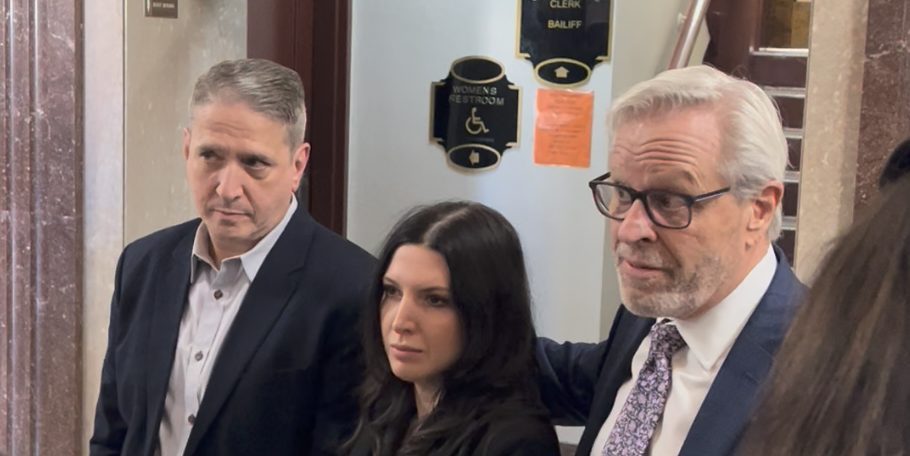
💾

How to create consistent content using the editorial style guide: What we covered in October’s Content Improvement Club

9 November 2026 at 10:14

We’ve been refreshing the editorial style guide to make it more useful for colleagues across the University. In October’s Content Improvement Club, we explored why consistency matters, what’s changing and how you can use the guide in your own work.

You can read more about the reasons behind the project in Nick Daniels earlier blog post:

Why we’re refreshing the editorial style guide

Using the editorial style guide to make consistent decisions

The editorial style guide helps us make consistent decisions about how we write and present information. It’s designed to help us create content that’s more accessible, readable and inclusive.

Editorial style guide

It covers a range of everyday editorial decisions, including:

  • when to capitalise something and when not to
  • how to spell words that have multiple possible spellings
  • how to explain abbreviations and acronyms

Exploring consistency through examples

In the session, we started by looking at some everyday editorial decisions to explore how the style guide can help us create consistent content.

How we write the University’s name

We looked at the different ways we might write the University’s name. It’s surprising how many variations we can come up with for something so familiar.

But using different versions can be confusing, particularly for people who don’t know the University as well as we do. A name is an important part of our identity, so we need a shared approach rather than everyone deciding what feels right.

Luckily, we don’t have to guess. The editorial style guide provides clear guidance (the correct wording is the University of Edinburgh).

University terminology style guide page

A slide with the question 'What are we called?' in the centre. A group of blue squares surrounds this, containing a variety of ways people have referred to the University of Edinburgh. These include 'UoE', 'Edinburgh Uni', 'Edinburgh University' and the correct version, 'The University of Edinburgh'.

How we write dates

We also looked at some of the smaller editorial decisions we make every day, using dates as an example. We showed four date formats in a poll and asked attendees which they would naturally use when writing University content.

Our options were:

  • A) 27/10/2026​
  • B) 27 October 2026​
  • C) 27th October 2026 ​
  • D) 27th Oct 2026  ​

Looking at the options, we discussed how it’s not that one format is universally right and all the others are wrong. Different formats can be appropriate in different contexts. For University content, though, we’ve agreed to use option B) 27 October 2026. Following the same convention helps us keep our content consistent, wherever it appears.

Dates and days editorial style guide page

Why consistency matters

Having looked at some practical examples, we asked attendees why they thought consistency was important when creating content. Using sticky notes, people shared their ideas. There was a lot of overlap between the reasons they identified and the ones we’d thought about beforehand.

One reason is brand reputation. We want people to recognise us as one University, wherever they come across our content. Using consistent terminology and conventions helps build that recognition and trust.

Consistency also supports readability and accessibility. Familiar, predictable formats make content easier to scan, understand and use.

It contributes to clarity and accuracy, too. Having an agreed approach helps avoid confusion and makes it easier for people to understand the information we’re sharing.

Finally, consistency helps create a joined-up user experience. Whether someone is visiting our website, reading an email or looking at social media, we want their experience of the University to feel connected.

Putting the style guide into practice

The session was a little different from some of our previous Content Improvement Clubs. Rather than spending most of the time presenting guidance, we wanted to give attendees the opportunity to explore the style guide for themselves.

We included two practical activities to help people get familiar with the guide.

Exploring the guide through example pages

We looked at two mocked-up webpages we’d created. Both contained deliberate editorial inconsistencies and mistakes. Attendees explored the guide for themselves, find the relevant sections and use the guidance to identify possible improvements.

They used sticky notes to highlight things they’d spotted and consider what they might change. This included things like flagging unexplained acronyms, link text that needed to be placed on a new line and incorrectly formatted bullet lists.

A page titled 'Tuition Fees and Loans for Students from Scotland' with eight sticky notes annotating issues with the content. These include comments like 'Use sentence case for page titles', 'Do not use all caps for emphasis' and 'Explain acronyms on first mention'.

The first example of a mocked-up page used in the session

A page titled 'Sports clubs' with 11 sticky notes annotating issues with the content. These include comments like 'Use -ise endings instead of -ize endings', 'Avoid ampersands' and 'Bullet list items do not end in punctuation'.

Second example of a mocked-up annotated page from the session

This gave everyone a chance to become more familiar with the guide and see how it can support everyday decisions when creating and editing content.

Where should you start with the style guide?

One thing we hear from colleagues is that there’s a lot to remember in the style guide. It can be difficult to keep every convention in mind when you’re busy creating and maintaining content.

Our advice was not to try to remember everything. Instead, we suggested starting with four priority areas:

  • Acronyms and abbreviations
  • Headings
  • Links
  • Dates and numbers

These are useful areas to focus on when reviewing your content. It’s also worth asking someone else to read it over. A fresh pair of eyes can often spot inconsistencies or things that you might have missed.

Reviewing our own content with other publishers

For our second activity, we used these four priority areas as a starting point. Attendees worked in breakout rooms to look at content from their own websites. People took turns sharing their screens and reviewing each other’s content.

The breakout rooms generated some interesting discussions about the practical challenges of applying editorial guidance. For example, we talked about using links within bullet lists and how much information to divide into separate headings and sections.

These decisions don’t always have a straightforward answer. The important thing is to think about what works best for the people using your content and use the guidance to help inform your decisions.

The activity also gave publishers a chance to get feedback from colleagues they might not usually work alongside and look at their content from a different perspective.

Experimenting with ELM to check content against the style guide

In the session, we also talked briefly about whether ELM (the University of Edinburgh’s AI innovation platform) could help publishers check their content against the editorial style guide.

We haven’t always had reliable results when using ELM for this purpose

As John Wilson explored in his February 2025 blog post, ELM can sometimes identify errors and correctly explain why they don’t follow our guidance, but it can also miss other errors or refer to guidance that doesn’t exist.

Testing ELM’s ability to return useful results and prompts about the editorial style guide

A text-based Markdown version of the style guide is what we’ve tested more recently

We’ve been experimenting with giving ELM the style guide as a text-based Markdown file. This means it can use the actual guidance to check a webpage against, rather than relying on its existing knowledge.

We tried this approach with the two mocked-up pages used in the session. ELM was able to identify the majority of the deliberate inconsistencies, although it still missed some issues, including an example relating to capitalising ‘University’ when referring to the University of Edinburgh.

It’s an interesting experiment, and one we’re continuing to explore. While tools like ELM may be able to help identify potential issues, they should not replace checking the guidance yourself and using your own editorial judgement.

We shared a couple of examples of what we’ve been working on in the guide

It’s been a big undertaking working through each section of the guide. We wanted to give attendees a flavour of the work by looking at a couple of examples.

Bringing University-specific terminology together

We’ve expanded the previous ‘Referring to the University’ page into a broader University terminology page. You can read more about the development of this page in our blog post:

Creating a new style guide page on University terminology

Restructuring the punctuation guidance

We’ve also restructured the punctuation guidance into separate pages.

Punctuation section of the editorial style guide

Previously, much of this guidance was grouped together using accordions. We wanted to move away from this format, which can make content less accessible and harder to navigate.

We’ve reviewed how the different topics are grouped, too. For example, colons and semicolons now sit together, making it easier to compare the two and understand when to use each.

Separating the guidance gives us more flexibility to provide the right level of explanation and include examples where they’re most useful, without simpler guidance getting lost among more detailed sections.

Keeping the guide up to date

We want the editorial style guide to remain a useful, living document rather than something we publish and leave untouched.

Alongside those mentioned in this blog post, some of the changes we’ve made to the guide have been much smaller tweaks or clarifications. We’ve been logging changes on the guide’s updates page, so if you’re interested in following how it continues to develop, you can see what’s changed there.

Updates page (editorial style guide)

How to hear about future Content Improvement Club sessions

We promote these sessions via our mailing list. If you’re interested, please sign up:

Join the UX and Content Design mailing list (University login required)

Suggest a topic for a future session

We’re keen to continue covering topics that colleagues across the University would find useful. It would be really helpful if you could let us know any ideas you have using this form:

Suggest a topic for Content Improvement Club (University login required)

Other training that we offer

More training is listed on the User Experience Service website:

Training | User Experience Service


Just do it for me? Balancing human and AI input in content improvement

6 November 2026 at 14:07

Working with student interns and contributing to the Drupal community, I’ve experimented with AI in various  tools designed to support content improvement. I reflect on what I’ve learned about peoples’ preferences for engaging with AI tools and consider wider design challenges for web content to support co-browsing.

Writing good quality, user-centred content has always been a challenge, and accordingly, a suite of tools evolved to address this; Hemingway, Grammarly and many more. With their ability to learn patterns and predict word sequences, the advent of LLMs provided a new direction for content improvement. Where previous tools had used fixed rules, algorithms and formulas to flag content problems and score sentences, LLMs changed the playing field as they were able to be prompted to rewrite and create text and to adapt words and sentences not only in line with fixed rules, but also aligned to different interpretations of style.

The UX Service’s content design course, Effective Digital Content, and our ongoing Content Improvement Club meet-ups are both designed to help staff publishing digital content for the University. It’s been encouraging to see a positive uptake for both training formats, however, we realise we can do more to help staff publish the best quality content they can, and to this end, for the past few years it’s been a privilege to support a series of interns in the UX Service to look at how we can innovate and apply AI to the persistent challenge of writing good quality, user-centred content.

Thinking beyond – embracing the spirit (or grasping the nettle, depending on how you look at it) of AI innovation, it’s sensible to note that, more broadly, the browsing landscape of the web is increasingly shifting to include AI agents as well as humans, giving cause to consider what using AI to design content to be consumed by AI might look like. That’s the subject of another blog post (or several).

For now, as I begin another phase of work with a new student in the role of AI and UX Innovation intern (Viktor Sharha), it felt timely to pull together what I’ve learned so far.

Designing, creating and editing content happens in various ways

When designing any user-centred assistive features, a good place to start is the current workflow or user journey people adopt to achieve the task in question. In other words, to look at the stages content editors currently go through to make sure their content is as good as it possibly can be.

One of my earliest research tasks when I joined the University was to usability test the Editorial Style Guide, to find out how publishers used it to keep their content consistent in EdWeb. This work gave me insight into the type of workflows publishers followed to get compliant content published. Some publishers worked in Microsoft Word, using the in-built spelling checker for typos, and cross-checking against a printed-out copy of the style guide for University-specific errors before pasting content into the EdWeb body text. Others went straight to EdWeb, checking their content line-by-line with a PDF version of the guide. Others relied on colleagues giving their work the once-over before pressing publish. Some used Grammarly and Hemingway, some didn’t.

Overall, there wasn’t a dominant content-publishing workflow, with unified friction points waiting to be alleviated through a standard user-centred design process. Instead, there were varied approaches, habits and ways of working which people had adapted over time to suit their specific circumstances and to address the areas they found difficult as individuals. Tools were used at different stages of the process, and to a greater or lesser extent depending on personal preferences.

Therefore, designing content improvement tools isn’t one-size-fits-all

It follows that, since people follow different pathways to create, design and edit content, tools to assist this process need to be developed in different ways to suit varied preferences. Since 2025, interns in the UX team have prototyped our own different content improvement tools to test with publishers, and we’ve also tested open-source tools that exist already, developed within the Drupal community. From our testing and research, we found pros, cons and nuances associated with different tools. The summary below pulls together detail of the tools and how they compared.

Tool 1: Drupal Editoria11y – no AI, flags errors in the editing interface

Editoria11y is a Drupal module built by John Jameson from Princeton University that automatically checks content inside the editorial interface. It was originally designed to catch accessibility issues, but it can be configured to check content against other rules too, such as institutional style guide conventions.

What it does and how it works: Editoria11y checks content as authors type, and also on previews and published pages. It includes an indicator bar to show how many issues are on the page and has inline markers to show where each issue is, as well as a dashboard summarising site-wide errors. When an issue is opened, a pop-up modal explains the problem and suggests a fix.

What worked well: In tests, publishers were able to make sense of the inline markers and understand how these related to the indicator bar for the whole page. They liked the tracked change visualisation in the pop-up modals, and were able to work through successive modals, accepting or ignoring the suggested changes.

What needed improvement:  Some publishers found the number of markers overwhelming, and since the pop-ups covered the text, it was difficult to judge each recommendation in context. In the pop-ups, some of the rule descriptions used formal grammatical terms (such as ‘ordinal suffixes’) which were unfamiliar to some publishers meaning they were confused about the problem to be fixed. Since rules were applied mechanically, there were instances where errors were missed, or where awkward fixes were suggested (such as swapping ‘1st floor’ for ‘1 floor’ due to straight removal of the ordinal suffix) – these degraded publishers’ trust in the tool.

Read more about what we found testing Drupal Editoria11y

Embedding the rules: What we learned UX testing a style guide helper tool built with Drupal Editori11y

Tool 2: ELM-powered content design chatbot – with conversational advice

This tool was developed by student Mostafa Ebid during a 2025 summer internship. It connected ELM, the University’s AI platform, to EdWeb2, so publishers could get help with their content by conversing with the University’s suite of LLMs without leaving the Drupal editing interface.

What it does and how it works: This tool sits in a chat sidebar next to the main Drupal editorial interface and offers three modes: Write Content, Design Content and Proofread. In response to a user prompt to improve content, it activates an orchestration of agents (each with specific tasks such as checking the style guide, structuring pages, profiling audiences) which read the page content and act on it accordingly, publishing the revised content in the chatbot window.

What worked well: In tests, publishers understood how the tool could be used as a writing partner, and were impressed with the way it restructured content with headings, bullet points and calls to action and hyperlinks.

What needed improvement: When faced with the empty chatbot interface, some publishers weren’t sure where to start, and they didn’t notice the three modes to work on content. Some were also unsure of the sources the chatbot was using for its revised content and skeptical that the revised content contained hallucinogenic content. They would have appreciated tracked changes to be able to pinpoint what had changed and found the long thin sidebar chat interface awkward to review the updated text. The chatbot was also limited to reviewing body text content, whereas publishers needed it to review content in other page components used in Drupal.

Read more about what we found developing and testing the ELM-powered content design chatbot:

Initial insights from UX testing our Drupal AI content assistant tool

Tool 3: QuillMark v1 and v2 – some AI, clusters errors with correction suggestions

QuillMark was an AI-enhanced tool which worked in Drupal to check content against the University’s Editorial Style Guide. Shlok Gupta built and tested two iterations of Quillmark during his 2026 summer placement as AI and UX Innovation Intern.

What it does and how it works: QuillMark sits in a side panel of the Drupal editorial interface and scans content on the page in two stages. The first stage uses code-based pattern matching (without AI) to catch straightforward errors. The second stage brings in AI to find deeper issues (such as passive instead of active voice) and to suggest fixes. Findings from both stages are displayed in the side panel – each finding describes the problem, links to the relevant rule in the style guide and offers an ‘Apply fix’ button (which can be reverted). Findings are grouped by category, and this panel also includes an indicator of the environmental impact and cost of the scan.

What worked well: In tests, publishers understood that the tool was there to help them correct content on the page, they liked the environmental and cost indicator, the suggested fixes and the links to the style guide reassured them that the tool was applying University-specific rules.

What needed improvement: Publishers reported feeling overwhelmed by the number of findings on a single page and they wanted a way to deal with related findings and fixes in bulk, to avoid going through them one-by-one. Related to this, they wanted

Read more about what we found developing and testing the QuillMark tool:

QuillMark, iterated. How user research helped us evolve an AI-enhanced Drupal style guide assistant

Tool 4: Drupal AI Content Review – full AI, with a plan provided to improve content

As part of the Drupal AI Initiative, I’ve contributed to shaping the self-explanatory Drupal AI Content Review module. This module plugs into a Drupal site, references content rules and good practice from context items in Drupal Context Control Center (within the same site) and uses the configured AI provider to review site content

What it does and how it works: The feature reads the page content and checks it against criteria set by the site owner, such as tone and voice guidelines, inclusive language rules and target readability levels. These rules are stored in the Drupal Context Control Center, along with examples of good and bad content. The review gives the page a score for each criterion and recommends fixes to improve it. Accepted recommendations become an improvement plan, which is applied in the editorial interface. Re-reviewing the page shows the updated scores, with the option to keep making improvements. Over time, the rules can be refined by adding more examples of good and bad content to the Context Control Center.

Read more about Drupal AI Content Review on Drupal.org

Read more about the Drupal Context Control Center on Drupal.org

View a demonstration of AI Content Review in a mocked-up university website as part of the Drupal AI demo on the Drupal Forge platform

What worked well:  In tests of this module within the AI demo, people liked seeing the red, amber and green indicators against page content for an easy visual highlighting areas to be worked on, and they liked being able to select a checklist of recommended improvements to apply to improve their content.

What needs improvement: The screens explaining the recommended improvements were difficult to scan read, and it was also difficult to compare the original text and the text with the recommended improvements side-by-side (despite colour shading to denote which was which). The stage where the recommendations were turned into an improvement plan felt like an unnecessary extra step, it would have been better to have implemented the recommendations directly. Also, it was presumed that implementing the plan would have corrected all errors resulting in a score of 100%, without the need for further work and re-review. Finally, it wasn’t immediately clear how to use the Drupal Context Control Center and the AI Content Review together.

When designing AI-enhanced tools, consider three AI design maxims

Taking on board variations in blending human effort and automated operations, there are three approaches to designing AI features and AI-assisted workflows worth considering. These are defined below, with ideas for how they may apply to content improvement.

1.      Human-in-the-loop

In this set-up, humans typically share the task-load with AI – actively working alongside an automated operator to supervise or influence actions, and to approve AI decisions before they happen (ensuring AI outputs are not released without the green-light from a person).

Human-in-the-loop tends to be adopted when:

  • there is a need for human judgement to get something correct
  • the consequences of an error could be high-profile or damaging
  • trust in an automated tool is still being built, and the boundaries of its capabilities are still being realised
  • the goal is for the system to facilitate shared learning between the person and the automation

For content improvement, human-in-the-loop is appropriate in these scenarios:

  • ensuring correctness of important factual data – for example, prices, dates, contact details, terms and conditions
  • checking the tone of sentences in line with inclusive language guidance
  • verifying accuracy of high-stakes published content such as legal information, policy wording or written instructional content
  • rewriting complex topics in plainer language
  • writing meta descriptions or page summaries to be accessed by search mechanisms
  • translating content into other languages

2.      Human-on-the-loop

These systems involve the AI or automator acting on its own, with the human reviewing and spot-checking at intervals, monitoring output quality over time, and intervening to correct failures periodically, where required.

Human-on-the-loop tends to be adopted when:

  • there is a high volume of low-risk tasks to be completed, which would be tedious for humans to do themselves
  • consequences of errors are minimal
  • there’s a need for tasks to be completed quickly, and including human-input at each task would be too time-consuming
  • consistency is required across tasks, and there’s a risk of human error introducing variability

For content improvement, human-on-the-loop is appropriate in these scenarios:

  • fixing straightforward style rule violations such as correcting spelling errors
  • categorising and tagging text content (for example, to facilitate its discovery in search)
  • scanning content for readability and accessibility, to flag or report areas to be addressed

3.      Human-out-of-the-loop

In this arrangement, the human sets up the AI to act autonomously, and leaves it to proceed, with no routine review.

Human-out-of-the-loop tends to be adopted when:

  • there are very low-risk, behind-the-scenes tasks to be completed where errors have little or no consequence and can be fully reversed

For content improvement, human-out-of-the-loop is appropriate in these scenarios:

  • autocorrecting typing errors
  • detecting content duplication
  • auto-optimising media content to defined parameters

Choice, pacing and transparency are constant design requirements

Testing four different tools has showed that options always need to be available, whatever balance of human and AI the tool includes. People approach AI differently based on preferences and past experiences. Some love nothing more than a good grappling of a sticky sentence, some just want an agent to do the work for them, and many sit somewhere in between, happy to have some AI help as long as they have the final say.

Alongside humans in, on and out of the loop, it’s important to remember the fourth option: human only, where people can choose to do their content unaided, using the methods they relied on before AI came along. AI shouldn’t be forced on anyone, so all tools need to come with a ‘no thanks to AI’ option.

AI is a fast-evolving and non-deterministic technology, so at any point in time it may work differently to the way it did before.  Responding to challenge from a design perspective, it’s important to factor in pacing. People need to be taken through how a tool works, and the options available. They need time and space to experiment and try it out, so they can learn for themselves how it can work for them. Pacing not only matters in the way tools are introduced, but also in the way their outputs are presented, to avoid the overwhelm that comes when AI does the heavy lifting all at once, and so people know what changed and how, and they have a way to accept, decline or edit what it produced.

If people don’t trust an AI tool, they won’t use it. Earning trust requires transparency, explainability, relatability and reliability – so AI tools need to be upfront about what they can and can’t do, with clear, intuitive interfaces and labels. Reliability will always be hard to promise given AI is probabilistic, so instead of accuracy guarantees which may fall short, a better approach is to design for experimentation, so people can find their feet and make their own judgements.

Designing for humans and AI together – metadata, markdown and MCPs

Looking at the broader digital landscape, the challenge widens from designing tools that help humans make content to designing websites with content ready for both humans and agents to use.

In co-browsing, people are increasingly arriving at a website with an agent alongside them, handing off some tasks while keeping control of others and wanting to see what their agent is doing. That means firstly deciding which tasks belong to humans and which one to AI, and secondly designing for each. Humans need intuitive interfaces. Agents need data they can read and act on without ambiguity:

  • metadata, such as schema markup that tells an agent what a page is about, who it’s for and how it connects to other content
  • markdown versions of pages and llms.txt files, which give agents clean, structured text without layout and navigation getting in the way
  • MCPs (Model Context Protocol servers), which let sites expose what they can do as well as what they say, from simple actions declared directly in HTML to more complex ones written in JavaScript – in preparation for use by the emerging WebMCP browser standard.

Labels matter for humans and agents alike, because words are becoming a currency that machines read as well as people. Alignment on terminology facilitates the creation of a single source of truth, to prevent the human experience from drifting from the agentic experience. On another level, humans need a way to consistently communicate with AI – to give AI the rules and instruct it and to train it with new insight. ‘Rosetta stone’ mechanisms like the Drupal Context Control Center will play an important part in designing for human and AI interaction and collaboration and I am excited to keep working and researching in this area to address these evolving design challenges.


❌
❌