On Monday, large trucks began circling the streets of Washington, DC, carrying billboards urging Congress to investigate the Trump administration’s ties with Nvidia’s disgraced CEO Jensen Huang.
“Jensen was in bed with a spy from China,” the billboards created by the Tech Oversight Project (TOP) alleged. “Trump was in bed with Jensen.” TOP is a nonprofit that describes itself as “dedicated to reining in Big Tech.”
Currently, Trump is supporting a campaign to bring back Huang as Nvidia’s CEO—despite many Republicans calling it a “horrible idea." Breaking his silence, Huang issued a statement Tuesday saying he would be “honored” to return, but the board said reinstatement is not under consideration as an internal investigation into US spying claims remains ongoing. Huang used the moment to say that his interests align with the US's, saying:
A humanoid robotics company backed and advised by President Donald Trump’s son, Eric Trump, has reportedly missed payroll and may be on the brink of collapse after a funding shortfall. The Silicon Valley startup, Foundation Future Industries, claims it is developing and testing robots for military roles on battlefields from Ukraine to Gaza.
Foundation failed to pay employees for the payroll period ending on October 30, anonymous sources told CNBC. The startup’s staff is especially angry because Foundation’s co-founder and CEO, Sankaet Pathak, supposedly borrowed $4.6 million in company funds to buy a luxury home overlooking San Francisco Bay about a year ago.
This comes as Pathak and Foundation’s leadership are still looking to raise funding to support a $3 billion valuation, based on their promise to develop a humanoid robot ready for combat duty and capable of wielding various weapons.
On the heels of the Nvidia scandal, the Trump administration is preparing to crack down on foreign data centers that are fueling China’s advancements in artificial intelligence by allowing remote access to otherwise restricted high-end chips necessary for AI training.
In a summary of the rule change, the Commerce Department said it was closing a loophole that previously allowed foreign rivals like China, Russia, and Iran to bypass export curbs on certain advanced computer chips by instead renting access to those chips from data centers in Indonesia, Malaysia, Singapore, Thailand, and Brazil.
US rivals could possibly use that access to train and run advanced AI models “capable of supporting military- and intelligence-related activities that could threaten US national security or foreign policy interests,” the Commerce Department said. Among threats, the US fears rivals could use advanced AI to develop "more effective weapons of mass destruction and advanced conventional weapons, coordinated cyber-espionage and targeted cyber-disruption, algorithmic theft, and weaponized disinformation.”
The Trump administration’s fight to stop suspected leaks of top-secret military information on LinkedIn can’t sweep in “a vast number of confidential sources” of random journalists “who have no conceivable relationship” to the Department of Justice’s investigation, an appeals court ruled Tuesday.
The order came after the DOJ asked LinkedIn to turn over 18 months of communications from targeted journalists who collectively published more than 1,000 articles on many different topics over that time period. The request was not limited to journalists involved in a controversial report from a news outlet that Trump said exposed confidential military information in a foreign country. (The outlet is not being named to protect national security secrets.) Instead, the DOJ cast a wide net, requesting extensive LinkedIn data on journalists who had any possible link to the journalists around the time the report was drafted.
The majority of journalists have LinkedIn accounts and publish their contact information to encourage sources to connect on the platform, LinkedIn argued. So allowing that government overreach went beyond harming targeted journalists and threatened to undermine a critical platform where journalists frequently connect with confidential sources, judges ruled. Even more concerning, the Trump administration secured a secrecy order barring LinkedIn from telling anyone about the sweeping request for a year. That left journalists unaware for far too long that their First Amendment rights had been compromised, judges ruled.
Nigel Farage dodged questions from the media at a press conference following his ‘friend’ Donald Trump’s humiliating defeat in the mid-term elections earlier this week.
Reform held a press conference yesterday to unveil its new armed forces spokesperson, Angus MacIntyre.
As first reported by The National, following the livestreamed announcement, Farage refused to take questions from journalists.
On Wednesday, Trump, who Farage previously said he was ‘proud’ to call a friend, emerged defeated from the US mid-term elections.
Farage opened the event with a speech focused on the need for greater spending on defence rather than on benefits, and what he described as the “relentless prosecution” of British military personnel.
The Reform leader made a brief reference to the Iran war, which has been cited as a major factor in Trump’s Republican Party losing control of the Senate and House of Representatives.
Farage said: “We can agree or disagree with the Iran war, that isn’t the point. The point is we and the Americans work hand in glove.
“The point is for all the dreams that Mr Burnham might have about European defence, without America we are defenceless.”
Farage and MacIntyre repeatedly referred to historical cases involving British soldiers during the Troubles in Northern Ireland, including the case of Soldier B as well as Bloody Sunday.
“Soldier B” refers to the former soldier accused of murdering 15-year-old Daniel Hegarty during a British Army operation in Londonderry in 1972.
MacIntyre also used his speech to rail against the prosecution of former service personnel, who he argued the government treats “as criminals”.
Following MacIntyre’s speech, Farage returned to the stage and enthusiastically praised MacIntyre.
“What a guy. Have I got the right guy?” he asked the audience.
Despite Farage having said earlier this week “I don’t go with the consensus that Trump’s going to get absolutely smashed”, there was no opportunity for journalists to quiz him about Trump’s massive losses.
Instead, Farage quickly wrapped up the event and left the stage without taking questions.
Once a fierce cheerleader for Donald Trump, even Nigel Farage is now trying to distance himself from the President, following the humiliating defeat the Republicans suffered in this week’s midterm elections.
The GOP lost control of both the House and Senate to the Democrats, in what was a repudiation of Trump and his MAGA movement, with the Democrats winning seats they hadn’t won in decades. James Talarico marked the first time a Democrat has won a US Senate seat in Texas since 1988.
In Kansas Adam Hamilton became the first Democrat to be elected to the US senate since 1932, while in Michigan Democrat Abdul El-Sayed defeated Republican Mike Rogers.
Farage initially predicted that the Republican party would ‘not get absolutely smashed’, only to be proven wrong.
Now he is desperately trying to distance himself from Trump, accusing the US president of breaking a key promise to American voters when it came to staying out of ‘foreign wars’.
The Reform leader blamed the humiliating results for the Republicans on the Iran war. More than seven months later, the conflict is continuing with fuel prices still high.
“One thing about Trump, he always kept his promises,” Farage told reporters. “Said to the American people, I will do this. He did it.
“But in this case, he said, no more foreign wars and here we are in month eight of a war with no sign of ending. And that, and the resulting fuel prices, in the end has done the damage.”
Vice President JD Vance also blamed the Iran war for the losses suffered by the Republicans.
An overwhelming majority of Brits see Donald Trump’s America as a serious threat to global peace, according to a new report, after his reckless actions over the last two years.
According to the British Social Attitudes survey, 74% of the general public seem wary of the US’s place on the world stage, with the report from the National Centre for Social Research, finding that the British public feel the same threat level about the US that they feel about Iran (75%) and Israel (78%).
The perceived threat level is still lower than Russia (89%) but significantly higher than the one Brits feel about China (62%).
It’s not surprising that so many view Trump as a threat to peace, given his erratic actions on the world stage which could worsen following the Republicans’ recent loss of both the House and Senate.
Trump has waged war against Iran as well as supported Putin against Ukraine.
A greater proportion of Brits (42%) now say that they believe the UK’s interests are served with a closer relationship with “western Europe” – compared to just 9% who feel a closer link with Trump is for the best.
It’s been a historic night for minorities in the US midterm elections, with a number of wins that saw the first Black female governor, the first openly gay male senator and the first female Native American governor, as well as the first Muslim elected to the senate, with all winning groundbreaking elections in what amounted to a major repudiation of Trump and his MAGA movement.
In the southern state of Georgia, Democrat Keisha Lance Bottoms won the race for governor, making her the first Black woman elected to the top office in any US state.
In Michigan, Abdul El-Sayed became the first Muslim U.S. Senator in American History, defeating Republican Mike Rogers, despite facing a horrific Islamophobic campaign from Trump and the Republicans.
Trump repeatedly attacked El-Sayed over his name, calling him Mohammed as well as a ‘jihadist’.
Democrat Chris Pappas became the first openly gay man elected to the Senate. Pappas won New Hampshire’s US Senate race on Tuesday, defeating Republican John Sununu’s bid to return to the chamber after two decades.
Deb Haaland, the former interior secretary under Joe Biden, has been elected governor of New Mexico and will become the first Native American woman to govern a US state.
Haaland, a Democrat, defeated her Republican opponent Gregg Hull, 60, a businessman and the longtime mayor of the city of Rio Rancho.
The Democratic Party has had a phenomenal set of results in the US midterm election. At the time of writing, results are still coming in. But it is clear now that the Democrats have taken control of both the Senate and the House of Representatives.
In the Senate, the Democrats gained at least seven seats from the Republicans. These include swing states like North Carolina, Iowa and Ohio. But, in a sensational night for the Democrats, they also took staunch Republican seats like Kansas, South Carolina and Texas. In Texas, the Democrats won their first Senate seat since 1988.
The Democrats also had a good night in the House of Representatives, winning a majority in the lower chamber. The party made big gains in Pennsylvania, Iowa and Wisconsin.
As you would no doubt expect, the US president Donald Trump hasn’t taken any of this well. His response has been utterly unhinged.
In a series of posts on Truth Social – the social media platform which Trump himself owns – Trump has given his reaction to the midterm results.
With the results coming in, Trump claimed that if he was on the ballot in the elections, the Republicans would have won a landslide, criticised his own party’s candidates and blamed Fox News for the Democratic victory. He also implied he would veto legislation passed by the now Democrat-controlled Congress.
In one post, Trump said: “I wasn’t on the Ballot and if I was, we would have won IN A LANDSLIDE! Thank you for your attention to this matter. President DONALD J. TRUMP”
In another, Trump criticised the Republican candidate in Texas – who was defeated in his bid to be re-elected as governor of Texas. He said: “If Greg Abbott, the Governor of Texas, hadn’t become a RINO in the last six months of his Political Life, he wouldn’t have lost. He went back to his original formula, and it wasn’t pretty! President DONALD J. TRUMP”
He later blamed the right-wing media outlet Fox News for the Republicans suffering an historic defeat in the midterms, saying: “FoxNews bears responsibility for these losses by constantly and consistently putting on the Dumocrat opposition, and worse. GOD BLESS AMERICA! President DONALD J. TRUMP”
And building on comments he had made earlier in the night in which he said he would use his presidential veto to block legislation coming out of Congress, Trump posted a photo of a ‘Make America Great Again’ style baseball cap which simply had the word ‘veto’ emblazoned on it.
All a very, very normal response to the voters giving their verdict on your record in office…
Chris Jarvis is head of strategy and development at Left Foot Forward
Billionaire Elon Musk was among the biggest losers of election night during the US mid terms, which saw a historic repudiation of President Trump and his MAGA movement.
The Democrats have regained control of both the Senate and the House, in what has been a crushing defeat for Trump and a blow to his authority.
In a historic night for the Democrats, James Talarico became the first Democrat to be sent by Texas to the US Senate since 1988, while in Michigan Democrat Abdul El-Sayed, the doctor and progressive insurgent, made history in winning the closely watched Senate race, defeating the Republican Mike Rogers and becoming the country’s first Muslim senator.
In Maine Susan Collins conceded to Democrat Troy Jackson, letting go of a Senate seat she had held for almost 30 years.
Among the biggest losers of all was Trump ally Elon Musk who had poured $446 million dollars-the most a non-candidate has ever spent on an election-only to see his preferred candidates lose.
His America PAC targeted 43 House and Senate races across the United States, blanketing voters with television commercials, digital ads, text messages and mailers.
Musk had spent the most money in Texas, where his America PAC spent more than $33 million on efforts to elect Attorney General Ken Paxton to the Senate over Democrat James Talarico.
Donald Trump’s big, rapid American AI buildout now faces a major slowdown as voters in yesterday’s elections overwhelmingly supported candidates and measures that favored increasing restrictions on AI and data centers nationwide.
One resource from a polling firm, called Redbud Consulting, tracked data center initiatives on the ballot and reported that out of 44 measures across 10 states seeking to restrict data centers, 38 passed so far. Those measures included dozens of moratoriums and bans. Analysts suggested those won’t impact data centers already under construction or approved through 2027, instead largely impacting future projects planned for 2028. Only one measure passed allowing a data center to proceed. But even that small win represented pushback on the AI industry—requiring data center developers in a North Dakota city to pay for independent reviews and hold public hearings when expanding or proposing projects.
In addition to increasing regulations on data centers, voters also backed anti-AI candidates, electing officials vowing crackdowns in key states building out the most data center capacity in the US.
Over the weekend, the No Kings Coalition said Meta declined to commit to taking steps to prevent automated systems from suspending one of Instagram's most prominent pro-democracy accounts if activity surged around the page during the midterm elections.
A demand for action came after Meta apologized for temporarily suspending the No Kings Instagram account and disabling access for four hours at the peak of an early voting push from the group. In a post on X, Meta’s Andy Stone said the account had been using a Claude AI tool in a way that made it appear to be a bot. But even though automated review detected the error within an hour, Stone acknowledged that additional hurdles kept admins locked out. State and federal lawmakers—as well as a coalition of 14 attorneys general—have asked Meta to further explain its actions.
In a letter to No Kings, Meta offered to arrange a meeting with a technical expert who could better explain the mistake. But No Kings rejected the response, saying it failed to address any of the group's ongoing concerns and requesting a meeting with Meta senior leadership instead. The group stressed that the issue goes beyond its Instagram account, saying that Americans who rely on Meta's platforms need assurance that voting content won’t be suppressed ahead of or on election day. Among eight questions, the coalition asked Meta to publicly disclose any communications with the Trump administration about the No Kings account or the historic early voting day event.
Robert Jenrick has endured a disastrous round of broadcast interviews in recent days, with the latest reminding him of his support for Donald Trump, whose actions in the Middle East have further fuelled economic and global instability, having a knock on effect on the UK.
Jenrick appeared on LBC, where he was reminded that he had previously endorsed Donald Trump for President, to which Jenrick replied: “I didn’t”.
Presenter Ben Kentish replied: “I would be voting for Donald Trump, if that’s not an endorsement what is?”
Kentish went on to add: “You endorsed a U.S. President who has made almost everybody in this country poorer.”
The war in Iran has sent energy prices soaring, a point made by Chancellor John Healey too during the budget last week as he reminded Tory leader Kemi Badenoch that she had tried to get the UK to join the war.
Kentish continued: “I’m just wondering that given he has caused such damage to our economy, whether you reject him”.
Jenrick didn’t reject his endorsement of Trump but claimed that he had always opposed the war in Iran.
Last week, he endured a humiliating interview from Lewis Goodall on LBC on Sunday when he refused to condemn an ally of Nigel Farage for calling Kemi Badenoch a “Nigerian scammer”.
On Monday October 26, the left woke up to the good news that Brazil’s president Luiz Inácio Lula da Silva, known as Lula, had defeated far-right challenger Flávio Bolsonaro by 4.4 million votes in a bitterly contested election, securing another term in office.
Lula’s victory follows a hard-fought campaign against Bolsonaro, who leads the right-wing populist movement built by his father, former president Jair Bolsonaro. The former president is serving a 27-year prison sentence for plotting a coup after losing Brazil’s 2022 election.
The result prompted congratulations from progressive politicians around the world, who see Lula’s win as vital, not only for Brazil but also for the wider struggle over the future of progressive politics.
“Congratulations to President Lula on a stunning, historic re-election. A political comeback that will be remembered for generations to come. This is a victory for the people, for the planet and for peace,” former Labour leader Jeremy Corbyn wrote on X.
Labour MP Richard Burgon also celebrated the result, describing it as “a brilliant victory for Lula” and a victory for social progress, environmental protection and everyone who believes in a better world.
He added the result shows that “Trump and the far-right can be stopped in their tracks.”
Spanish prime minister Pedro Sánchez declared a: “Great victory for Lula! What has happened in Brazil, will happen in Spain. The comeback of global progressivism has just begun.”
Sánchez’s socialist PSOE party congratulated Lula, writing that Brazil had chosen to continue moving forward and suggesting that Spain would follow a similar path on November 29.
Canadian prime minister Mark Carney highlighted the opportunity to deepen relations between Canada and Brazil, pointing to potential gains in trade, environmental protection and shared prosperity.
“Let us seize this opportunity to strengthen them further, together – to create new promising commercial prospects, protect the environment, and ensure greater prosperity for both our populations,” he wrote on X.
European Commission president Ursula von der Leyen and European Council president António Costa were also among those congratulating Lula, whose government has worked closely with Brussels to advance the EU-Mercosur trade agreement.
The deal, which was signed in January with the South American trading bloc comprising of Brazil, Argentina, Paraguay and Uruguay, has been viewed as an important step towards diversifying trade relations amid tensions over US president Donald Trump’s tariffs.
The EU had also been concerned that a victory for Bolsonaro could threaten the agreement. The Brazilian politician had criticised Mercosur’s constraints and called for Brazil to pursue independent trade agreements, including with the United States.
“Democracy and multilateralism have won in Brazil,” von der Leyen said.
US senator Bernie Sanders also congratulated Lula on his “extraordinary re-election victory,” praising the Brazilian president for standing up for workers and democracy and expressing confidence that he would continue doing so over the next four years.
While Lula’s victory prompted celebrations among progressives, the response from his opponents was hostile.
Flávio Bolsonaro refused to concede defeat and said he would seek to have the result annulled, describing it as “inexplicable.” His response echoed the refusal by Donald Trump and Jair Bolsonaro to accept their respective election defeats.
Trump’s son, Donald Trump Jr, also criticised the Brazilian vote, focusing on a two-hour extension to voting time.
“If a conservative government in Brazil did this, everyone in the mainstream press in America would lose their minds, but I guess they’re just choosing to be silent because it’s all for the cause,” he said.
Lula’s victory resonates far beyond Brazil, giving progressives around the world cause to celebrate while once again exposing the right’s troubling tendency to question election results when the voters’ verdict goes against them.
It’s been almost impossible to escape coverage of the court poceedings involving Russell Brand and allegations of rape. Amid the endless headlines, one detail has emerged: Brand and his wife pray together before he heads to court.
Once an anti-capitalist, anti-establishment comedian who urged people not to vote, Brand has reinvented himself as a Christian influencer, aligning himself with populist, conspiracy-theorists and right-wing circles.
His X account, followed by more than 10 million people, now features regular broadcasts about his faith, alongside videos of him baptising people in a river, in his underpants.
While Christianity is built around the possibility of redemption, Brand’s newfound faith sits within a broader trend that deserves scrutiny: the growing convergence of far-right politics, manosphere culture and traditional Christianity.
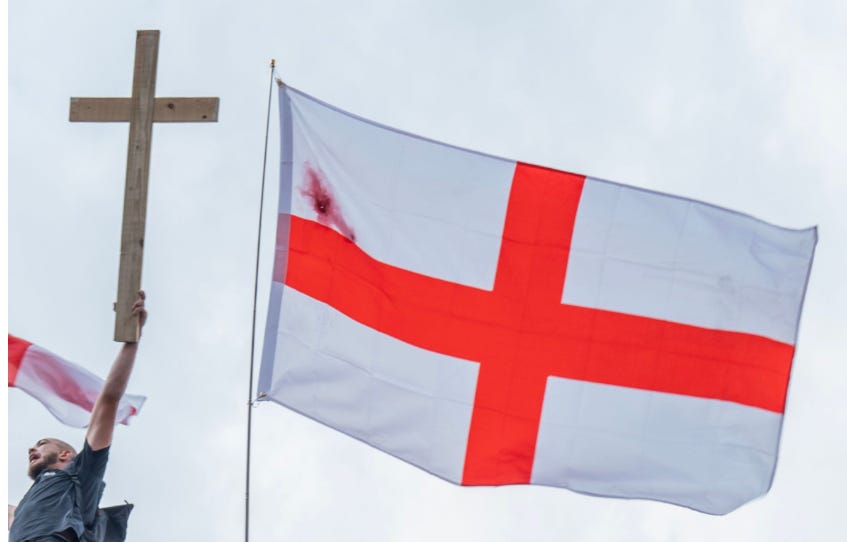
Tommy Robinson has also embraced Christian imagery and rhetoric, with his rallies featuring Bible verses and crosses amid a sea of St George’s flags. He has even proclaimed a revival of “masculine Christianity” will replace what he dismisses as the established church’s “weak drivel.”
When Dame Sarah Mullally was named the next Archbishop of Canterbury, Robinson pointed to an earlier statement she had made in support of Black Lives Matter, declaring that “masculine Christianity” was coming to replace such supposedly weak expressions of faith.
“Their churches will stay empty, a Christian revival will grow on the streets. Masculine Christianity [sic] is coming not this weak drivel,” he wrote.
Christianity as a weapon in the culture wars
Research suggests this political appropriation of Christianity, in which central teachings of compassion, humility and care for the vulnerable are being repurposed as a political weapon against immigrants, Muslims and those deemed insufficiently patriotic, has little to do with regular religious practice.
A recent report by the think tank Theos, Beyond ‘Christian nationalism’: Measuring attitudes to Christianity and Britishness today, identified a group it calls “identity integrationists,” accounting for 11 percent of respondents. They see Christianity as fundamental to British identity and believe its heritage must be defended against threatening outside influences.
Yet just 13 percent of this group regularly attended church. Its members were also strongly hostile to immigration and Islam, while only 19 percent agreed that Christian values required welcoming and supporting asylum seekers.
For many, Christianity, it seems, appears to function less as a faith to practise than an identity to defend.
One Tommy Robinson supporter told the BBC he didn’t necessarily believe in God but felt compelled to attend church because he feared Christianity was being replaced.
This is religion shaped less by spiritual conviction than by cultural anxiety: an attempt to reclaim a supposedly lost national identity, with Muslims and immigrants cast as threats.
And church leaders have pushed back. In September 2025, Church of England bishops joined other Christian leaders in condemning the “co-opting of the cross” at Robinson’s Unite the Kingdom rally to divide people and exclude others.
Their message was that the cross represents sacrifice for others, while Jesus called on people to love their neighbours. Former Archbishop of Canterbury Rowan Williams similarly urged people to recognise migrants as vulnerable human beings.
But conservative figures have challenged the Church’s authority to speak on these issues. Ceirion Dewar, a bishop in the traditionalist Confessing Anglican Church, led a prayer at Robinson’s rally, describing his participation as a Christian duty. He argued that people there sincerely believed Britain’s Christian foundations were being eroded.
From the clergy to the courtroom
The battle is not confined to rallies and online influencers. It’s playing out within the Church of England itself.
Project Spire, a £100 million initiative addressing the Church’s historical links to transatlantic slavery, has become a target for Conservative politicians and religious traditionalists.
Critics argued that spending the money was wrong when churches across the country were struggling to keep their doors open.
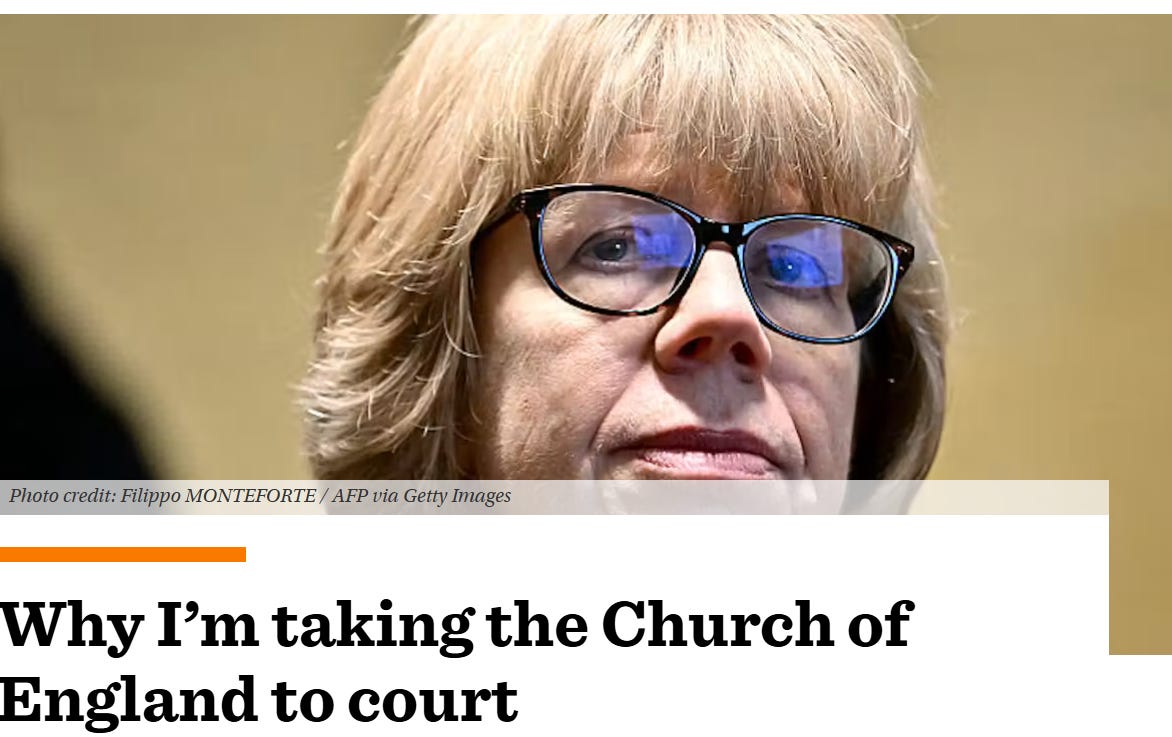
Jamie Franklin, a Church of England priest, went even further, taking legal action against the Church over the project. Writing in the right-wing magazine The Critic, he described it as legally, historically and morally dubious.
Thanks for reading Right-Wing Watch! Subscribe for free to receive new posts and support my work.
While the dispute might raise legitimate questions about how the Church should allocate its resources, it also illustrates how efforts to confront Britain’s historical injustices have become another front in the culture wars, with critics framing attempts at restitution as an attack on the institution itself.
Franklin’s claim to be defending the Church sits uneasily with his decision to take it to court. If the aim is to protect the institution, the question is whether this approach strengthens it or deepens its divisions.
A familiar right-wing playbook
Sadly, the fight over the Church of England fits a wider pattern. Institutions that embody aspects of Britain’s social and cultural life have repeatedly found themselves targeted by right-wing campaigns against so-called ‘wokeness.’
The National Trust has faced years of attacks from campaigners who object to its treatment of colonialism, slavery and Britain’s past. The NHS, meanwhile, remains a source of national pride, yet chronic underfunding under consecutive Tory governments has helped undermine public confidence and create opportunities for greater private-sector involvement.
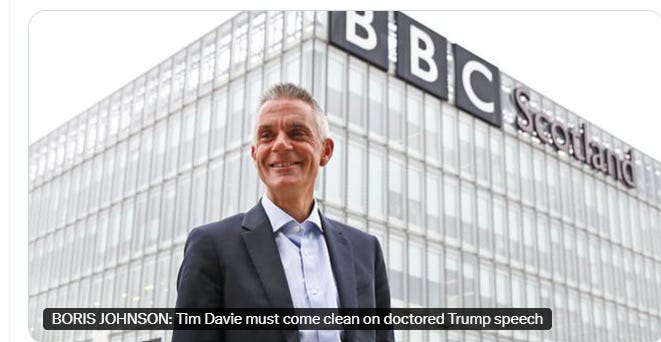
The BBC has also long been a target. In November 2025, following controversy over its clumsy editing of a Donald Trump speech, Boris Johnson demanded that director-general Tim Davie either explain the changes or resign, declaring he would not pay his licence fee. Within days, Davie and the corporation’s news chief, Deborah Turness, had announced their resignations.
The recurring pattern is notable; institutions are portrayed as corrupted by progressive values, their authority undermined, and their defenders cast as enemies of the nation.
The Church of England is now caught in the same struggle, with its commitment to confronting historical injustice and welcoming vulnerable people increasingly at odds with a political movement that claims Christianity as its own. It does seem though that the far right’s capacity to co-opt fundamental values as exclusively their own – see patriotism, free speech, democracy itself – is meeting real resistance from Christians and their churches.
A global struggle for Christianity – ‘Judeo-Christian’ values
This battle is not uniquely British.
Across Europe, far-right parties increasingly invoke ‘Judeo-Christian values’ not as a commitment to religious principles, but as a cultural identity marker, defining a supposedly shared European civilisation against an imagined Islamic threat.
Research by Dr Toby Greene, a lecturer at Bar-Ilan University, found widespread references to Europe’s ‘Judeo-Christian’ roots among radical-right parties. The Alternative for Germany (AfD), for example, declares it:
“Opposes Islamic practice which is directed against our liberal-democratic constitutional order, our laws, and the Judeo-Christian and humanist foundations of our culture.”
Greene identifies comparable rhetoric from Marine Le Pen in France and Nigel Farage. Italy’s Giorgia Meloni has similarly cultivated an image of herself as a Christian mother, using religious identity as a political badge rather than advocating a consistent commitment to Christian doctrine.
The Catholic Church has also faced fierce opposition from conservative and traditionalist factions over its direction.
Pope Francis, who led the Church from 2013 to 2025, angered right-wing critics through his outreach to LGBTQ+ Catholics, his support for blessings for same-sex couples and his emphasis on climate change and economic inequality.
His successor, Pope Leo XIV, has likewise attracted attacks from MAGA-aligned figures in the United States. Steve Bannon and Laura Loomer have criticised Leo over his support for migrants and opposition to nationalist rhetoric, branding him “anti-MAGA,” “pro-open borders” and a “globalist.”
Such hostility exposes the political fault line running through Christianity: between a faith that calls for solidarity across borders, and one increasingly harnessed to nationalism, exclusion and cultural grievance.
The question is not whether Christians should engage in politics, nor whether churches should be immune from criticism. It’s whether religious institutions can retain their moral independence when political movements seek to define faith on their own terms.
If the right truly wants to defend the Christian tradition, it might start by taking its central teachings on compassion, humility and care for the vulnerable seriously.
Gabrielle Pickard-Whitehead is author of Right-Wing Watch
Stockholm Syndrome provides a useful metaphor for the world’s infuriating relationship with Trump. It’s almost a relief to arrive at that moment when the abuser behaves so outrageously that even the victim has to concede he’s a ‘bastard’, that they’ve been manipulated all along with false flattery, comforting familiarity (the special relationship) and coercion (tariff threats), whilst coasting on the ‘good chaps’ delusion that ‘he just wouldn’t do that (would he?)’.
But he just has. Trump has just clarified that his true affinity lies, not with protecting Western democracy, but with Putin, the world’s leading strongman “criminal” and “thug”. ‘Melodramatists’ who, along with Mary Trump, spotted this years ago, feel grimly vindicated.
Hearing Zelensky quietly acknowledging Trump’s alignment with Putin is heartbreaking. It’s also a historic moment in which we are finally cut loose from ‘the big deception’.
Flouting the Graham Act, Trump has relaxed sanctions on Russia and forged a diesel deal. He has also authorised delays to Ukraine’s supplies of patriot missiles, and is planning joint nuclear-powered data centres with Russia. He has defined Zelensky as the aggressor and punished Ukraine by playing with the Starshield surveillance flip-switch. When it’s off, the Ukrainian military fly blind, with devastating consequences for Ukraine’s citizens.
Russia’s mission to undermine Europe is long-standing. But it now looks clear that the White House plans to join the venture to replace the European liberal, rules-based order with ethno-nationalist, Christo-fascist, white supremacism.
The midterms
In this context, the US midterm election is a two-act play (on 3 November and 3 January) representing the battle over liberal democracy. Trump has fallen from grace but still has numerous levers (including delaying election court cases and calling a state of emergency) to prevent a just result. And, since he has stuffed the Supreme Court with Republicans, we cannot be certain how the court will respond.
If Trump succeeds in barring elected Democrats from being seated on 3 January, his mission alignment with Putin will place Europe and other middle powers under new pressure and send a deep, corrosive chill through the Western rules-based order. Europe will want to hasten its independence from the US, and strengthen military and economic cooperation, internally, and with sympathetic nations like Canada. But European military self-sufficiency alone is predicted to take 25 years and cost $1tn.
Meanwhile, Russia could become a US proxy – an attack weapon against Europe which allows the US to maintain distance and continue fudging its NATO commitments. With US sanctions lifted, Russia is in a stronger position to attack countries beyond Ukraine. This aggression would unify Europe but also generate division around the crippling costs of defence in deeply cash-strapped countries.
Europe is already embattled. Far-right parties are poised to take France, Spain and key parts of Germany. The mission to undermine Europe is under way. If Trump steals the midterms, European pro-Russia countries, factions and parties wanting protection are likely to step up their collusion with Russia in challenging ‘the corrupt West’. So, Europe could become even more vulnerable to internal extreme right, fascist take-overs.
We hope, but can’t assume, that Europe will remain united against an emboldened Russia that’s bolstered by backdoor US funding and propaganda assistance. Nor is Trump’s Russia alignment a fanboy quirk. If in doubt, listen to presidential wannabies, JD Vance and Marco Rubio, delivering menacing ‘civilizational erasure’ attacks on Europe in recent speeches.
Trump stealing the midterms may quicken the spread of fascism in Europe and impede the wider existential fight to preserve democracy.
The perfect moment
Trump may have chosen this moment to abandon his thin veneer of loyalty to the rules-based order because his midterm polling is terrible. What better time to wrap oneself vicariously in the strength of a mafia strongman?
But it’s also a moment of unrest fomenting across Europe, that’s ripe for exploitation. Citizens of France, Spain, Albania, Italy, and Portugal are pushing back against neoliberalism’s broken promises (on housing, public services, living costs, and education). Feelings of anger and betrayal over governmental failure to deliver are spreading like summer wildfires, breeding riots and receptivity to the strongman solutions of fascism in equal measure.
The neoliberal ethos appears to be creaking under the weight of its own avarice, with the pernicious role of the super-wealthy becoming increasingly clear. Oligarchs, notably tech giants, are buying ideologies, governments and elections in order to block regulation and protect their assets against fair distributions of wealth. By aligning with fascist strongmen they seek to prevent democratic values from obstructing their financial interests. In this regard, Trump is just a predictable consequence, a sad puppet, of wider ideological forces.
Fascist noise and voting from experience
We cannot know how US events will unfold between 3 November 2026 and 3 January 2027. But this week’s remarkable election results from Serbia and Brazil give pause for thought. Against the odds, they followed Hungary’s earlier achievement and voted in progressive democratic leaders. Brazil’s election, for one, echoes America’s struggles – Lula’s win might have been considerably larger had his Trumpesque opponent, Flavio Bolsonaro, not meddled with the progressive vote (by, for example, halting buses to polling stations).
But there’s one pattern here that seems clear. On the one hand, European countries such Germany, Italy, France and Spain are courting extreme right parties because many of their citizens, especially the younger demographic, have no first-hand experience of fascism in living memory. They direct their hostilities instead to their incumbent leaders, the neoliberal ‘centrists’ (Macron, Merz, Sanchez, and the increasingly centrist Meloni) whose low growth, high public debt economies have crippled public trust.
By contrast, the citizens of Brazil, Serbia and Hungary have had recent experience of corrupt right-wing populist governments and extreme right dictatorships. They understand the painful consequences of falling for the remedies of these spin doctors. The US is on the same trajectory, with recognition gradually dawning over the midterms.
And yet citizens seem to have difficulty extrapolating from the experience of other countries to their own. The US is an insular nation. So, perhaps we wouldn’t expect it to look outwards to the uncomfortable parity between its own Republican administration and the governance of other countries? But why aren’t those European countries currently toying with fascism learning from the ruinous experiences of Hungary and Brazil?
The loud noise of propaganda and social discontent is difficult to escape. Also, fascism, as Melanie Klein notes, isn’t static; it’s a dynamic spiral which evolves to match the societies in which it occurs. Its latest iteration arrived by stealth because, contra the 1930s, modern societies disguise it better. We have algorithms instead of marching boots, bot propaganda farms instead of Nazi rallies, and predominantly right-wing press classified as ‘impartial’. Escaping the cunning of modern fascism is not straightforward.
A modern monster
Yet, each fascist phase, despite its changing historical face, has a shared feature. It is an expression of our ‘worst version of ourselves’. Matt D’Ancona
“We are a demon-haunted species, striving to embrace the better angels of our nature” (Matt D’Ancona).
Trump, as a ‘demonic worst version of ourselves’ may be US fascism’s undoing.
His recent abominations have tested even MAGA loyalty. Half-empty Trump rallies are testimony to the red lines being drawn against a leader who supported the live streaming of an execution, who shared a video, against the parents’ express wishes, of their mentally ill son being killed by a tiger, then mocked the event with his own AI version. America is finally stalling over a man who has violated the ‘America First’ ideal with flagrant expansionism and aggression (Venezuela, Greenland, Iran), who advocated “obliterating Iran”, who betrayed Ukraine, and who has littered the US with data centres and detention camps.
To be candid, these actions may have appalled US voters less if the price of oil was lower. Let’s just be grateful for the co-incidence of high oil prices and Trump’s moral travesties.
But Trump’s demonic extremism ultimately makes him a progressive asset. He has inadvertently fast-tracked the corruption and hollowness of neoliberalism and its failures. Symbolically, he’s an incarnation of ‘the thing in the raw’ – stripped of the ‘good chaps’ niceties, the pretend deference to the rules, and cod moral thinking, which together masked the system’s real incentives and successfully conned citizens into viewing it as the only and best way forward.
Now the world is seeing the bare-faced monster in all its glory. Trump has done us the favour of comprehensively removing the gloss – accelerating the truth by standing as a naked, ugly symbol of where unfettered neoliberalism ultimately leads – to world domination by an army of glitzy, shallow, dangerous, insane, uncontrolled menaces.
Like Francis Bacon’s ‘Pope’, he is screaming at us that change is now unavoidable if we want to survive.
Cliff-edge
America has repeated Klein’s nightmare spiral of fascism with ‘evil chaps’ now mocking their ‘good chaps’ theory of governance. Yet, despite the grip and creep of fascism, we have reasons for optimism – citizens can learn from experience, fascism can overreach and expose itself.
As we barrel towards the midterms, we are by-standers waiting to see if the outcome will strengthen or undermine Europe and the international rules-based order. We are also observing a momentous symbolic power struggle between progressive liberal values and their opponents.
If the Republicans fail to win the House and even the Senate, then in the run-up to the new legislative session on 3 January 2027, Trump’s backers will do their utmost to manoeuvre the Supreme Court towards a swamp of legal grey areas. At this point, the fate of US and European democracy will be down to the wire, potentially hanging on whether Republican Justices of the Court listen to the better angels of their nature, stand their ground, and resist huge pressure to make partisan verdicts. The world’s eyes will be on them.
Donald Trump apparently is so aligned with Nvidia CEO Jensen Huang—who has become the president’s key advisor on AI—that he ignored intelligence indicating that Huang was the target of a “Chinese spy plot,” and did so partly to protect Nvidia’s stock.
The New York Times spoke with people briefed on US intelligence agencies’ surveillance and granted them anonymity to discuss findings drawn from “classified intelligence.” According to sources, about a year ago, Trump was briefed that “Beijing was getting reports from someone with direct access” to Huang. That “someone” was Alice Huang, or Huang Le, a Chinese citizen and former top executive at a Singapore cloud company called Megaspeed.
According to sources, the US had already suspected that Alice Huang—who is not related to Jensen Huang—was helping China evade export controls to gain access to high-end Nvidia chips through Megaspeed. But it alarmed investigators to discover that she may have used her role at Megaspeed to gain direct access to Jensen Huang. It’s now believed she may have leveraged that closeness to feed China intel not only on one of America’s leading AI companies, but also to influence Trump’s thinking on AI. As Treasury Secretary Scott Bessent noted last month ahead of Trump’s AI talks with China President Xi Jinping, “the president is completely aligned with Jensen Huang, the CEO of Nvidia.”
From Donald Trump’s crypto empire to Nigel Farage’s £72m windfall, wealthy cryptocurrency backers are pouring money into right-wing politics, raising questions about whose interests politicians ultimately serve.
Reform UK’s £72m donation from cryptocurrency investors Christopher Harborne and Ben Delo in September was an enormous political story. It exceeded the total received by all UK political parties in 2025, while the pair have accounted for more than 80% of Reform’s funding since its founding in 2019.
But while the scale of the donation made headlines, its potential political significance is an even bigger story. The money is more than a spectacular boost to Reform’s finances. It shines a light on the growing influence of cryptocurrency interests in politics, and the increasingly close relationship between wealthy crypto investors and right-wing politicians.
The concern goes beyond the ability of the ultra-rich to bankroll political parties. It’s whether politicians who benefit from such extraordinary generosity will shape policy in ways that advance their donors’ financial interests. The real story is not simply how much money crypto can buy politicians, but what that money might buy in return.
Crypto’s political spending spree
As is so often the case with the latest developments on the right, America provides an indication of what could lie ahead in Britain.
Analysis of Federal Election Commission records by CNBC found 14 of the 20 biggest donors and donor groups in the 2026 US midterm election cycle had backed exclusively, or almost exclusively, Republican candidates and aligned organisations.
A new wave of political money is coming from cryptocurrency, artificial intelligence and online gambling executives and companies. Together, these interests have poured more than $377m into candidates, political action committees and industry-backed groups.
Super PACs, which are political organisations that can accept unlimited contributions from individuals, corporations and other permitted sources, can spend vast sums supporting or opposing candidates, provided they operate independently of the campaigns they seek to influence. Although they can’t donate directly to candidates or coordinate their spending with them, they offer wealthy interests a powerful means of shaping electoral outcomes.
The scale of this spending raises an obvious question: what do these donors expect in return?
We only have to look at Trump as a troubling case study. Trump’s crypto conversion
In 2021, Trump dismissed cryptocurrency as a “scam,” telling Fox News: “I like the currency of the United States.”
Fast-forward a few years and the picture looks very different. The President has embraced the industry, championed its expansion and rolled back regulatory constraints, while his family has established commercial interests in the sector.
In 2024, Trump formally announced his support for the family-linked cryptocurrency venture World Liberty Financial. Its website describes the business as “Inspired by Donald J Trump,” presenting it as part of a new era of finance.
Trump also turned cryptocurrency into a campaign issue. As the 2024 presidential election approached, his campaign announced that it would accept digital currency donations, declaring: “We proudly offer you a chance to contribute to the campaign with cryptocurrency.”
On Truth Social, he promised that all remaining Bitcoin should be “MADE IN THE USA,” claiming this would help America achieve energy dominance. For Trump, crypto was no longer a threat to the American financial system but an industry his administration should actively promote.
The financial stakes are enormous. Analysis published by Public Citizen shows cryptocurrency interests accounted for $274m of corporate political spending in the 2024 election cycle, representing 44 percent of the total covered by its analysis. That dwarfed the $28.25m in contributions cited for Koch-linked political organisations.
Trump’s family has also profited hugely from its crypto ventures. Deutsche Welle reported that Trump made more than $1bn from cryptocurrency sales in 2025.
This is where the relationship becomes particularly troubling. A president who can influence the rules governing an industry while his family benefits commercially from that same industry, presents an obvious conflict-of-interest concern.
As Peter Geoghegan, editor of Democracy for Sale, put it: “What Big Oil took decades to achieve, crypto has done in one election cycle: it’s bought the political process.”
Could Britain could be heading in the same direction? Farage’s crypto revolution
Reform is among a small number of British political organisations to have accepted cryptocurrency donations, alongside the far-right Homeland Party and the Other Party, which describes itself as a direct-democracy movement.
Byline Times reports that Reform uses the Polish company Radom Pay to process crypto donations and check donors’ eligibility. Byline’s report also raises questions about other parties’ arrangements. Advance, the short-lived party founded by former Reform deputy leader Ben Habib, also reportedly considered accepting Bitcoin and Ethereum. Habib said the party was wound up in July 2026 to avoid splitting the right and clear the way for Rupert Lowe’s Restore party.
For Reform, however, cryptocurrency is about more than a convenient way to collect donations. Farage has made the industry’s interests a clear part of his political agenda.
The Reform leader has insisted that Harborne expects nothing in return for the millions he has donated to the party and the separately reported £5m personal gift disclosed in April. But there is no need to assume an explicit bargain to recognise the potential for a conflict of interest when a politician receives such extraordinary financial backing from an industry stakeholder.
Farage has already signalled where he stands on one issue of direct relevance to crypto investors, that is the proposed digital pound, dubbed ‘Britcoin.’
In June, Farage reportedly urged Bank of England governor Andrew Bailey to abandon the plans. Speaking at the Zebu Live cryptocurrency conference in 2025, he told an audience of crypto enthusiasts that he would be “prepared to go to prison” to stop a central bank digital currency being introduced under a digital ID system.
Farage presents his opposition as a defence of personal freedom and privacy. But while such concerns may deserve consideration in any debate about digital money and state surveillance, the wider commercial implications also matter.
Harborne is a major shareholder in Tether, holding an estimated 12% stake in the company behind USDT, the world’s most widely traded stablecoin. Stablecoins are digital currencies designed to maintain a stable value, typically by being pegged to a conventional currency such as the US dollar.
Industry representatives have argued that a digital pound could threaten demand for privately issued stablecoins. A state-backed alternative could therefore have consequences for companies operating in this market, like Tether.
Tax breaks, Bitcoin reserves and lighter regulation
Speaking at a cryptocurrency conference in Las Vegas in 2025, Farage unveiled a draft Crypto Assets and Digital Finance Bill, promising a ‘crypto revolution,’ if Reform entered government.
His proposals included cutting capital gains tax on crypto assets to 10%, compared with the then maximum rate of 24%, and establishing a Bitcoin digital reserve at the Bank of England.
The announcement came a month after then chancellor Rachel Reeves published draft legislation to bring crypto asset firms within a regulatory framework similar to traditional finance.
While clear regulation can protect consumers without stifling innovation, it’s very different from offering tax cuts and other favourable policies to an industry whose wealthy participants have helped finance a political party.
Farage’s proposals would raise fundamental questions about who benefits from his vision of Britain’s financial future. A lower capital gains tax rate could deliver substantial savings to investors, while a state-backed Bitcoin reserve would expose public policy to a notoriously volatile asset.
Reform must explain how these measures serve the public interest and why their benefits justify the risks. The extraordinary financial support Reform has received from crypto investors makes those questions all the more pressing.
Could crypto undermine British democracy?
The more immediate problem with cryptocurrency donations is establishing who is really behind the money.
Digital wallets can facilitate rapid cross-border transactions, while the use of intermediaries and complex ownership structures can make it harder to establish the ultimate source of funds. Crypto transactions aren’t inherently anonymous, and many can be traced on public blockchains. But tracing a transaction is not necessarily the same as establishing the identity, eligibility or intentions of the person ultimately funding a political donation.
That creates risks in a system that restricts foreign donations and requires political funding to be transparent. Crypto donations could provide a route for ineligible foreign interests to influence British elections, particularly where checks are inadequate.
The government has moved to address these concerns. Before Parliament’s summer recess, ministers announced plans to amend the Representation of the People Bill to ban cryptocurrency donations and introduce an annual £100,000 cap on political donations from British citizens living overseas, alongside a corresponding limit on regulated transactions such as loans.
The measures are intended to protect UK democracy from foreign interference and financial influence. A ban would close one potential route for money of uncertain origin to enter politics, although effective enforcement and transparency would remain essential.
Electoral integrity requires more than preventing fraud. Voters must also trust that political parties cannot be financially captured by powerful private interests.
In America, Trump’s transformation from crypto sceptic to presidential champion has coincided with the expansion of his family’s commercial interests in the sector. In Britain, Farage is promising tax cuts, a Bitcoin reserve and a crypto-friendly economic revolution as his party receives extraordinary sums from cryptocurrency investors.
Crypto may promise a financial revolution. But if its richest investors can use their wealth to influence politics and secure favourable treatment, the rewards risk flowing to those who already have the most – at everyone else’s expense.
Gabrielle Pickard-Whitehead is author of Right-Wing Watch
Calley Means—a top ally to anti-vaccine Health Secretary Robert F. Kennedy Jr. and a co-author of the so-called "MAHA bible"—resigned from his role in the Trump administration Thursday, reportedly in frustration over delays to food policy changes sought by the Make America Healthy Again movement.
"I am resigning from the White House with tremendous respect for President Trump and Bobby Kennedy," Means wrote in a social media post this afternoon. "It was an honor to advocate for MAHA moms in the administration and steer policies like Dietary Guidelines reform, psychedelic reform, removing soda from SNAP, removing food dyes, GRAS reform, and overhauling government food procurement."
His post did not provide a reason for his departure. Means served as a senior advisor to Kennedy.

 Login