❌

Normal view

There are new articles available, click to refresh the page.
Before yesterdayMain stream

Republicans Are Desperate to Pretend They Never Supported the War With Iran

6 November 2026 at 21:24
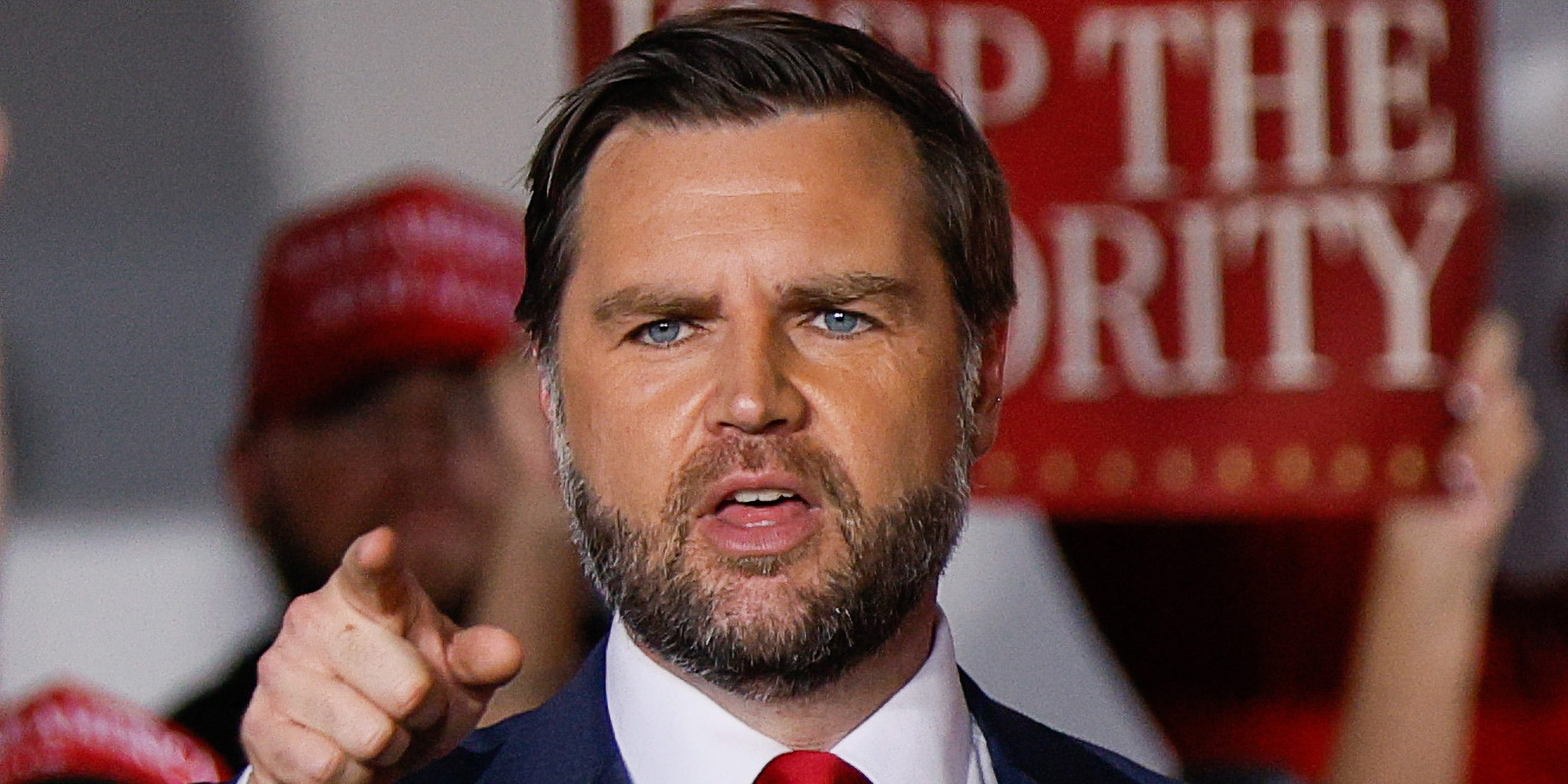
WEATHERFORD, TEXAS - OCTOBER 29: US Vice President JD Vance delivers remarks during a midterm campaign rally at JRJ Construction on October 29, 2026 in Weatherford, Texas. Vance is in Texas to campaign for Republican candidates ahead of the midterm elections. (Photo by Evan Vucci-Pool/Getty Images)
Vice President JD Vance delivers remarks during a midterm campaign rally at JRJ Construction on Oct. 29, 2026, in Weatherford, Texas. Photo: Evan Vucci-Pool/Getty Images

To say that Americans were pissed off is an understatement.

On Tuesday, Democrats didn’t just seize control of both houses of Congress. They redrew the American political map, capturing offices that had remained reliably Republican for generations, from the Deep South to Kansas and Texas. The Lone Star State alone, with its 40 Electoral College votes, now raises the possibility of a seismic shift in the calculus of future presidential elections.

The sheer scale of the historic Democratic surge⁠ delivered an unmistakable rebuke to America’s supposedly populist president. The message was clear and simple: We do not like you.

Much of Americans’ rapid disillusionment with the Trump administration can be traced to a single word — Iran — and the cascading economic hardships Americans have endured as the war has dragged on.

The Iran war has gone from a Republican loyalty test to a political albatross.

For the GOP, the threat is existential. The war has gone from a Republican loyalty test to a political albatross for many of its former supporters, one that many Republicans are now jettisoning themselves away from to salvage their own political futures. 

By Wednesday, it had become the chief explanation for the party’s sweeping electoral defeat, with Vice President JD Vance declaring unequivocally on X that “the reason we lost is the war.”

“If you’d like to argue it was worth it, that losing the Senate for the next 6 years was worth it, then do so. Argue it was a worthwhile cost to pay. Agree or disagree, that’s at least honest,” he wrote. “But everyone knows why we lost. And any honest conversation about where we go from here must start there.” Coming from Trump’s own vice president, it was a striking about-face.

The tirade also raised an awkward question ahead of the 2028 presidential race: How does a potential successor to the MAGA mantle campaign against a war waged by his own administration?

Trump, however, has not gone nearly as far as his VP. Although the president acknowledged the war hurt Republicans, he still defended it on its merits. Speaking with reporters Wednesday after expounding at length about his White House ballroom, Trump said, “The Iran thing we had to do, and we continue to do it.”

Where Did All the Warmongers Go?

But on the campaign trail, Republicans were not completely oblivious to Americans’ collective frustration with the Iran war. 

In September, ABC News identified 17 Republican lawmakers and candidates who had called for ending the war through public statements or votes. Much of the pressure came in competitive midterms races, as the conflict’s effects on oil, diesel, and fertilizer prices reached American households.

In Iowa, Republican Senate candidate Ashley Hinson called for a “successful and immediate end” to the war in September, warning that voters were paying the price at gas pumps and grocery stores. Yet she voted six times against House measures directing Trump to halt the attacks. During an October 25 ABC interview, Hinson said she would not rule out a post-election U.S. offensive and said she trusted Trump and the military to choose the right timetable. Despite the president praising her weight loss at a recent rally, tepidly breaking with Trump wasn’t enough to get Hinson over the line, and she lost to Democrat Josh Turek by 4.5 percentage points.

Michigan also had its share of Iran backtrackers. Republican Senate hopeful Mike Rogers described Iran as an “imminent threat” when the bombing began on February 28. In May, he called the conflict a potential “win-win-win.” But with the midterms fast approaching, Rogers released a campaign ad declaring “the war with Iran needs to end” quickly and warned Michigan families could no longer afford the economic fallout.

Rep. John James, the Republican candidate for Michigan governor, likewise praised Trump’s use of force early in the war, saying the president “had the balls” to “assure the survival and success of liberty.” He voted against six House war-powers resolutions, including as recently as September. Days after that vote, he said the war needed to wrap up “quickly.” He went on to declare in an interview, “the position has always been, I hate war.”

Both Rogers and James lost their races.

Even Florida Gov. Ron DeSantis, a possible contender in the Republican Party’s next presidential contest who could reportedly be up for Pete Hegseth’s job, warned Monday that the war was a “big, big drag” on his party. Trump, DeSantis pointed out, campaigned against another Middle Eastern war. Now voters are dealing with higher fuel costs, and Republicans who refuse to acknowledge the connection are “gaslighting” them. But back in spring, DeSantis defended the strikes on Iranian leadership, describing its government as “a fanatical, apocalyptic, militant Islamist regime.”

The polling helps explain the Republican panic. An Associated Press poll found roughly 6 in 10 voters believed the U.S. made a “wrong decision” in attacking Iran. And it’s not as though Republicans weren’t warned. A handful within their own ranks, including Thomas Massie and Rand Paul, opposed the war from its earliest days and backed efforts to rein it in. But those criticisms seemed to fall on deaf ears.

A Hasty Retreat 

With plenty of blame to go around, the criticism has gone beyond candidates and into the conservative media ecosystem. 

During the network’s primetime Election Night coverage, Fox News host Sean Hannity told his colleague Bret Baier that the results would have been different without the Iran war. Conservative commentator Matt Walsh called the war a betrayal of America First principles, demanded new Republican leadership, and labeled the conflict a “catastrophically stupid decision.”

Former Rep. Marjorie Taylor Greene called Trump breaking his promise not to start another foreign war his “biggest betrayal” and said “Americans are fed up with it.”

Other commentators placed the responsibility squarely on Trump himself for sucking his own party into a political quagmire. In The Federalist, senior editor John Daniel Davidson blamed the party’s collapse on Trump’s undermining of a GOP coalition built upon rejecting the interventionist politics of the George W. Bush era.

Some prominent Republican operatives are sure to be thrown under the bus by their own party in the retreat. The first to get the boot may be none other than Hegseth, America’s chief “warfighter,” who has been one of the war’s most enthusiastic, and public, cheerleaders. The defense secretary responded to the criticisms in a nearly six-minute-long video posted online on Thursday, in which he seemed to make the case for keeping his job, touting his elimination of the “Marxist ideology” of diversity, equity, and inclusion initiatives and tarring transgender troops as having a “mental illness.” 

“Regardless of how people care about the war, which I believe is a courageous and historic effort that will ensure Iran never gets a nuclear weapon, we need to continue, as President Trump did in his first term, to rebuild our military,” he said. “This is not about me, but of course, the other side, in case you noticed, they’re obsessed.”

Already facing growing Republican dissatisfaction and a ballooning roster of disgruntled and ousted senior military officials, Hegseth now faces the prospect of investigations by a Democratic-controlled Congress and an impeachment effort led by Massie. And while Trump has so far publicly defended his defense secretary, he has also reportedly consulted allies about whether to hit the ejector seat on Pete.

Tuesday’s results show voters are increasingly willing to hold politicians accountable for needless war.

But while Republicans and Democrats read polls and calculate the political currency of war and economic hardship, the human cost cannot be measured in votes. At least 3,636 people had been killed in Iran as of early April, including 1,701 civilians and 254 children, according to human rights monitors. More fighting has followed and likely driven that number far higher. 

At least 23 American service members have died in operations connected to the war, with almost 900 wounded by enemy fire. But these are estimates, and the Trump administration has worked to actively obfuscate the true casualty rates of the war. These are not electoral statistics. They are lives lost, families shattered, and consequences that will endure long after administrations swap office spaces.

For Republicans now scrambling to distance themselves from a deeply unpopular war, the political consequences may be harder to escape than their own voting records. Tuesday’s results show voters are increasingly willing to hold politicians accountable for needless wars, and the suffering inherited from them.

The post Republicans Are Desperate to Pretend They Never Supported the War With Iran appeared first on The Intercept.

💾

The Rise of the Christian Left in Texas

30 October 2026 at 16:55
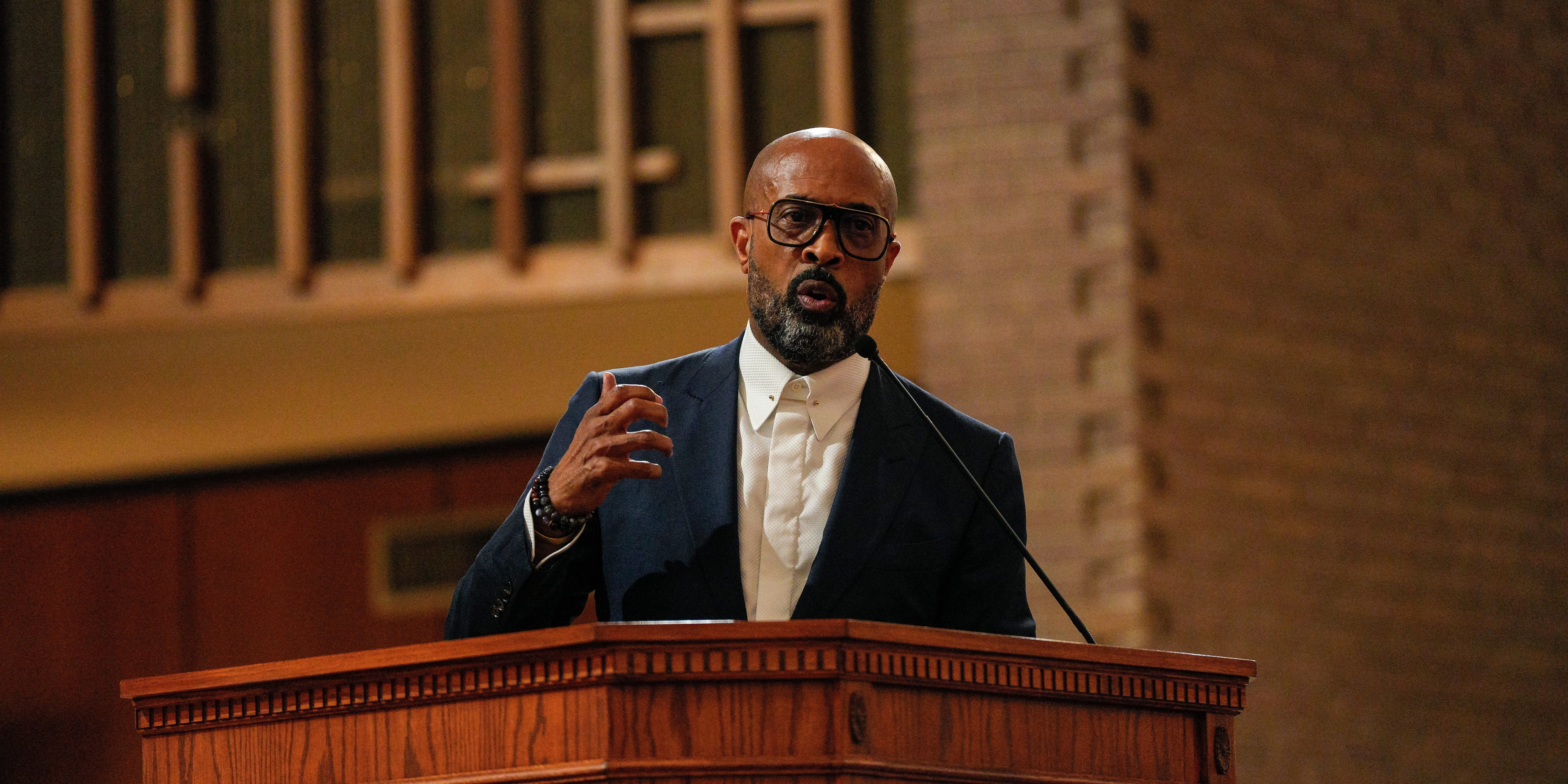
Rev. Frederick D. Haynes III speaks to the crowd during the We the People TX interfaith service, "A Night of Moral Resistance," in Dallas, Wednesday, Sept. 9, 2026. (AP Photo/Gabriela Passos)
Rev. Frederick D. Haynes III speaks to the crowd during the We the People TX interfaith service, “A Night of Moral Resistance,” in Dallas, on Sept. 9, 2026. Photo: AP Photo/Gabriela Passos

“Why do you wanna have a pep rally when people are hurting?”

That was the question Rev. Frederick Douglass Haynes III posed at a September food drive in South Dallas, where volunteers were collecting groceries for struggling families. Across town, Republicans were holding a midterm convention. Haynes, a longtime Baptist pastor and Democratic congressional nominee, was introducing James Talarico, the party’s candidate for U.S. Senate in Texas.

A month later, speaking at a Dallas megachurch, Talarico offered his own interpretation of Christian duty.

“I try to love my neighbor through public policy,” the Presbyterian seminarian told the congregation. “I’m trying to make my neighbor’s life easier, better, less stressful.”

Both men are making a deceptively simple argument in some of the staunchly staunch red-as-hell, Republican territory in America, one that might transcend the conventional wisdom about national campaigns and the millions poured into competing campaign war chests: When far-right policy translates into actual pain, at what point does intervening become a spiritual obligation?

Amid the big-ticket ad buys, fundraising appeals, and armies of political consultants, Talarico and Haynes are tapping into a political tradition that has long sustained communities across the South: showing up.

At Haynes’s Friendship-West Baptist Church, the ministry extends to legal services, immigration advocacy, counseling, economic justice, and food policy. It is an example of how churches often form the connective tissue of communities suffering under economic and political strain.

When far-right policy translates into actual pain, at what point does intervening become a spiritual obligation?

That strain is measurable. Texas is home to four of the nation’s 10 most financially distressed major cities, including Houston, which ranks second nationwide, according to a 2026 analysis. Feeding America estimates that nearly 1 in 5 Texans experienced food insecurity in 2024. Meanwhile, federal analysts project that changes to Medicaid eligibility enacted last year will increase the number of uninsured Americans by 7.5 million by 2034. 

While Democratic Party leaders publicly debate how to punish Donald Trump politically, allege corruption, or navigate the ideological divide between moderates and democratic socialists, a different argument is emerging from Southern pulpits.

The Underground Church

From Quaker abolitionists to the Social Gospel’s challenge to industrial exploitation, progressive religious institutions have helped drive some of America’s most consequential political transformations. Christian farmworker ministries supported migrant laborers before joining the United Farm Workers’ California grape boycotts in the 1960s. And while Black churches overwhelmingly led, sustained, and suffered the brunt of violence in the fight for equal civil rights in this country, a handful of white denominations joined them. 

Of course, churches also defended slavery, segregation, and exploitation. The blunt reality is that throughout American history, Christianity has always been political and has been used to justify a wide variety of competing political ends.

But Republicans have deftly exploited the perception that they alone speak for American Christians. The Trump administration has readily embraced religious iconography, from evangelical leaders praying over the president in the Oval Office to Defense Secretary Pete Hegseth’s frequent invocations of the medieval Crusades.

There is no way around the fact that Republicans have built a formidable religious coalition, particularly among white evangelicals. Last year, the nonprofit, nonpartisan Public Religion Research Institute, or PRRI, found a majority of Republicans qualified as either Christian nationalist adherents or sympathizers in 2025, compared with 17 percent of Democrats.

But Republicans don’t have a monopoly on Christian voters. Pew Research Center polling this month found 73 percent of white evangelical Protestant registered voters preferred Republican House candidates, while 74 percent of Black Protestants and 59 percent of Hispanic Catholics preferred Democrats. None of that is particularly surprising on the surface.

Nor is this some newly discovered religious awakening. According to PRRI’s Census of American Religion, which was published in April, 57 percent of Democrats identified as Christian in 2025, a significant drop from 70 percent in 2013. The white Christian left isn’t necessarily growing, but it’s far from insignificant. Much of it has simply been politically overlooked.

It’s a perception the GOP has routinely capitalized on, often spending a great deal of their election campaigns attacking opponents on religious ground. 

On Sunday, Texas Gov. Greg Abbott cravenly tarred his Democratic gubernatorial challenger, state Rep. Gina Hinojosa, as supporting “Sharia law,” citing an endorsement from a Muslim advocacy group’s political affiliate.

Perhaps ironically, Hinojosa is, and has been on the record, a Catholic — same as Abbott.

“My faith is my moral compass,” Hinojosa told the National Catholic Register in September. “It grounds me in purpose and gives me the courage to do what is right regardless of obstacles or consequences.”

Faith Without Works Is a Dead End

For those who have spent years watching their faith become synonymous with a politics they don’t recognize, frustration may finally be giving way to something else: a determination to be heard.

There are signs that this long-overlooked religious tradition is finding a more public voice. An August study by PRRI documented progressive Christians organizing against Christian nationalism in eight states, including Texas and Louisiana, channeling local meetings, religious discussions, and community networks into political action. Elsewhere, hundreds of members of the clergy have joined protests against immigration enforcement, and some have been trained in direct action and civil resistance. While the movement may not be growing in numbers, its willingness to challenge political power is increasingly visible.

As retired Texas Rev. Kathleene Card, who has thrown her support behind Talarico, told the Houston Chronicle, “faith should influence how people respond to poverty, human rights, the environment, and the well-being of their community.”

Whether any of this will translate into winning on Tuesday is still an open question. An October Fox News poll put Talarico and Republican Ken Paxton at 49 percent apiece among likely voters, but newer polls show Talarico with a small lead. Abbott led Hinojosa by 5 percentage points in that Fox poll, and most polls in the race show the governor with a slim lead. 

No matter the result, the Texas campaigns offer a different, more nuanced way of understanding political persuasion. They also challenge a long-standing assumption among national Democrats: that their voters are a monolith, moved by the same issues, values, and appeals. 

Across rural America and the South, voters may be growing weary of manufactured arguments and hypothetical doomsday prophecies, with research showing that political advertising, as it stands, has little effect on changing minds at all.

There is something to be said for people willing to put boots on the ground, to do the work instead of endlessly debating how to begin and whether it matters, in the name of service. 

It’s a moral code not too dissimilar to a Western: When confronted with injustice, you stand for what’s right, even if you stand alone and are ridiculed for what you believe. It’s a mode of Christianity that harkens back to Abraham Lincoln (and maybe even John Brown.)

That might be a more enduring political proposition than many Democrats’ feigned, helpless aggrievance to the latest Republican spectacle. Campaigns come and go; so do their promises, if they existed in the first place. But the obligation to one’s neighbors remains.

The post The Rise of the Christian Left in Texas appeared first on The Intercept.

💾

The New York Times Conveniently Forgets the Real Stakes of Attacks on Free Speech

16 September 2026 at 19:44
NEW YORK, UNITED STATES - AUGUST 10: Protesters holding banners and Palestinian flags march to Times Square after picketing The New York Times to demand justice for Palestinian journalist Anas Al-Sharif and all journalists killed in Gaza by Israel, on August 10, 2026, in New York City, United States. (Photo by Selcuk Acar/Anadolu via Getty Images)
Protesters picket the New York Times to demand justice for Palestinian journalist Anas Al-Sharif and other journalists killed in Gaza by Israel, on Aug. 10, 2026, in New York City.  Photo: Selcuk Acar/Anadolu via Getty Images

The New York Times recently published a sweeping accounting of President Donald Trump’s campaign against the American press: FBI agents arriving at reporters’ homes, subpoenas for journalists’ records, Pentagon access restrictions, regulatory pressure on television networks, numerous lawsuits against news organizations, and an increasingly politicized Federal Communications Commission.

“Almost 20 months into Mr. Trump’s second term, his long-running media clashes have grown into a sweeping campaign to control speech in America that stands out for applying so many levers, so fast, all at once,” Times reporters Maggie Haberman and Jim Rutenberg wrote. “Each time the president assails what has long been considered protected speech … he is eroding norms and undercutting the role of an independent press.”

All told, it is a damning inventory.

It is also difficult to read without noticing who occupies almost every frame: Us.

Reporters. Editors. Television hosts. Networks. Publishers. Their lawyers. And the access our industry has become so reliant upon. 

The Times is right about the threat. Trump has indeed weaponized government agencies and private litigation against news organizations in ways that seriously threaten the First Amendment, although judges have repeatedly rebuked parts of the administration’s legal strategy. But Trump’s attacks on free speech have extended well beyond the journalism, from ICE protesters in Los Angeles to faculty in solidarity with Palestine on college campuses. But somewhere along the way, the American press began conflating two things: press freedom, with the conditions under which the press had become accustomed.

Those are not the same thing.

Free speech was never free.

It was wrested loose. Sharpened and stretched, stifled and reborn, often on the backs of those who put the pain and personal safety of others ahead of their own.

Somewhere along the way, the American press began conflating two things: press freedom, with the conditions under which the press had become accustomed.

In 1892, a little more than two decades after the nation wrenched itself back together from war, Ida B. Wells challenged the lies white Memphis terrorists used to justify lynching Black men in her newspaper, the Memphis Free Speech and Headlight. In retribution, a mob ransacked her office and destroyed the paper’s printing equipment. Wells happened to be away. Threatened with death if she returned, she continued her investigation from the North. There was no White House Correspondents’ Dinner, no presidential press core podium to be invited to, no shining press awards. As a Black woman, she couldn’t even vote; in her isolation, her best job security was to carry a pistol. 

“It is with no pleasure I have dipped my hands in the corruption here exposed. Somebody must show that the Afro-American race is more sinned against than sinning, and it seems to have fallen upon me to do so,” she wrote in her book on the excruciating personal trade-off she made to pursue her work: perspective. Her fear, exhaustion, and isolation existed beside something larger: actual bodies, tangible violence, and lived injustice.

I will be candid: Melancholy abounds. I write this as a journalist who has grown depressed while slinking through the yearly industry conferences, newsrooms, and brown bag luncheons. There is a palpable dread to most discussions, with an acknowledgment that the world is less fair, less stable, and overwhelmingly more difficult.

We talk about everything. Except the necessity to win, and most importantly, for who.

Israeli airstrikes and other attacks are still killing and displacing Palestinians in Gaza, where the United Nations reported last month that medical shortages and restrictions on critical supplies continue to undermine an already devastated health system. In the West Bank, settler violence, backstopped by the Israeli military, is a daily and growing threat. Israel’s war on Gaza has now killed nearly 300 journalists — more news gatherers than in both world wars, Vietnam, Yugoslavia, and Afghanistan combined.

The Times in particular has done more than almost any other media outlet to launder the justification for this ongoing death and destruction, and to police the language we’re allowed to use when discussing it, which didn’t warrant any mention in its attacks-on-free-speech roundup.

In the U.S., ICE arrests reached nearly 51,000 in August alone as the Trump administration dramatically expanded immigration enforcement. Many of those being detained had no criminal record, while courts continue battling out the administration’s detention practices. A Department of Homeland Security watchdog reported on Monday that immigrants at Florida’s now-defunct “Alligator Alcatraz” prison were confined for more than an hour at a time in outdoor metal cages known as “calming areas” that were barely larger than a phone booth.

Government coercion and obfuscation is difficult; it doesn’t hold a candle to death, subjugation, and the powerlessness of victimization.

As Wells put it, I’ve had the displeasure of covering a national violence, I’ve also had the displeasure of living it. 

There is nothing in my day job that can match the pain, or permanence, of a loved one ripped from your household, the lifelong inequity of being racially outcast, or the haunting mental anguish those events leave behind as an inheritance. 

As a result, there is a vibrating dis-ease — something close to nausea — in listening to tales of journalists ground under the boot of power, only to hear complaints of our own injury grow so loud that it begins to obscure the suffering beyond us. Maybe that is part of the point of these attacks in the first place: Hurt us until our wounds become the horizon. Hurt us into forgetting those hurt more.

We need to fight even harder for truth, not because journalists are the principal victims of its erosion, but because the people paying a far higher price outside the newsroom’s walls are the reason we do this work at all.

Those starved in Gaza at the United States’ discretion. Those suffering and dying around the world after our medical aid is withdrawn. The millions of Americans living a crisis away from ruin because they were stripped of their healthcare.

We need to fight even harder for truth, not because journalists are the principal victims of its erosion, but because the people paying a far higher price outside the newsroom’s walls are the reason we do this work at all.

That discrepancy may also help explain why Americans increasingly roll their eyes when journalists describe threats to journalism as threats to democracy.

In 2025, Gallup found that only 28 percent of Americans trusted newspapers, television, and radio to report the news fully, accurately, and fairly — the lowest level ever measured. When Gallup began asking the question in the 1970s, the figure ranged between 68 and 72 percent. 

There are many reasons for that collapse, from deepening partisanship and a fragmented information ecosystem to the hollowing out of local news.

But I understand some of the suspicion.

I understand why nobody wants to invest in a product from an industry that refuses to admit it wants to win.

And by “win,” I mean something journalists have become strangely embarrassed to admit it we want: to make it harder to abuse human beings without anybody knowing.

There is nothing neutral about that mission.

And there never was. 

Perhaps the mistake comes from imagining freedom, and by proxy freedom of press, as a possession rather than a practice.

Perhaps the mistake comes from imagining freedom, and by proxy freedom of press, as a possession rather than a practice — a right handed down and intact, rather than a capacity that must be worked, tested, and fought for when the cost of exercising it rises.

In his 1951 book “The True Believer: Thoughts on the Nature of Mass Movements,” writer Eric Hoffer captured the appeal of fascism in five unsettling words, uttered by an ardent young Nazi: “to be free from freedom.” He used the quote to examine an uncomfortable possibility — that freedom may not be innate to the human mind, but something closer to muscle — strengthened under strain, grown through resistance, and, if left unused, atrophied.

Press freedom lives under the same rule. Its value is not measured by how easily journalists can exercise it, but by what survives when power becomes hostile.

Our charge is to comfort the afflicted and afflict the comfortable. Journalists’ own comfort was never part of the equation.

The post The New York Times Conveniently Forgets the Real Stakes of Attacks on Free Speech appeared first on The Intercept.

💾

Sophie Cunningham Is the Anti-Trans Right's New White Woman Mascot

9 August 2026 at 21:10
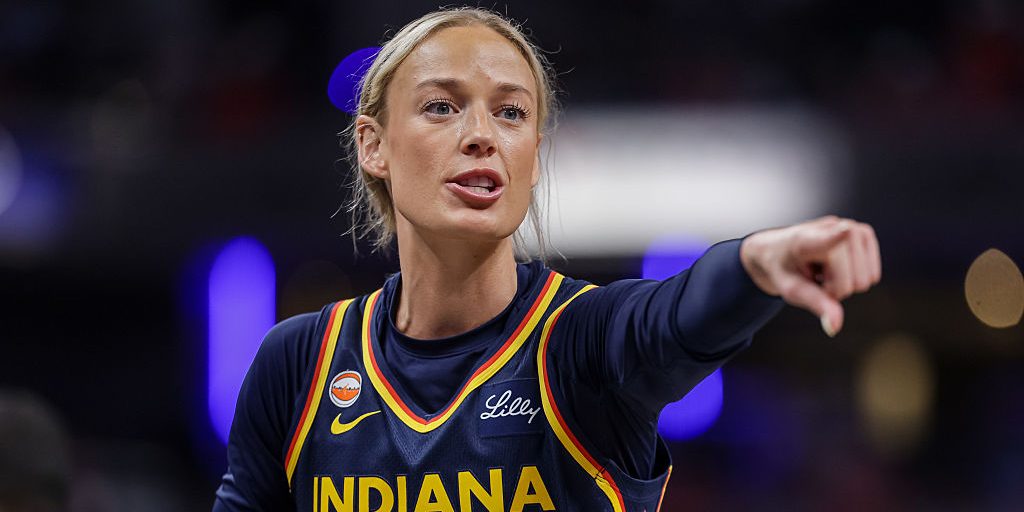
INDIANAPOLIS, INDIANA - JUNE 22: Sophie Cunningham #8 of the Indiana Fever points during the game against the Phoenix Mercury at Gainbridge Fieldhouse on June 22, 2026 in Indianapolis, Indiana. NOTE TO USER: User expressly acknowledges and agrees that, by downloading and or using this photograph, User is consenting to the terms and conditions of the Getty Images License Agreement. (Photo by Michael Hickey/Getty Images)
Sophie Cunningham of the Indiana Fever points during the game against the Phoenix Mercury at Gainbridge Fieldhouse on June 22, 2026 in Indianapolis, Indiana. Photo: Michael Hickey/Getty Images

In the ever-shifting theater of America’s culture wars, conservative media has found its newest gladiatorial conscript: Indiana Fever guard Sophie Cunningham.

It’s an unlikely promotion—and from backers who, until recently, probably couldn’t have named five WNBA players.

The reason for her esteem probably has little to do with her faultless three point precision. In an interview with ESPN, Cunningham declared she opposed transgender women—whom she referred to as “biological men”—competing in women’s sports, arguing the issue was about “protecting young girls.” Later, she cheekily doubled down on the statement, posting an outfit photo on Instagram with the caption: “I said what I said” with a saluting emoji.

That was enough.

Almost overnight, Cunningham became more than a WNBA player. She became one of conservatism’s newest culture-war combatants: blonde, white, conventionally attractive, and playing in a league overwhelmingly composed of players of color, and with one of the largest openly LGBTQ+ player populations in professional sports.

For generations, conservative movements have sought to anoint and weaponize cisgender white women as public-facing enforcers of social and racial hierarchy. 

Within days of Cunningham’s remarks, conservative media had found its new protagonist. 

Fox News host Riley Gaines, who herself rose to prominence as an anti-trans NCAA swimmer, called Cunningham “the first current high-level female athlete” willing to publicly oppose transgender participation in women’s sports, and praised her for speaking out from inside what Gaines called “the most woke league of all time.” The Daily Wire cast the now-famous finger-pointer—and on-court defender of Caitlyn Clark, another white player whose first season with the WNBA sparked racialized conversations that cast her Black opponents as too “aggressive”—as someone “now fighting for us.” Trump’s Department of Education joined in, posting a Grok AI-generated image of Cunningham wearing a crown with the caption: “Common sense prevails.”

Cunningham’s ascent into the right’s zeitgeist is by design. For generations, conservative movements have sought to anoint and weaponize cisgender white women as public-facing enforcers of social and racial hierarchy. 

While the specific rallying cry has changed throughout history, their use and ideological framing to the conservative movement has remained largely intact: They serve narratively as bulwarks against some grave impending demographic or social upset, which if allowed to come to fruition would be an assault on the current status quo of women at large. 

Ride of the Valkyries

American political history is thick with appeals to white womanhood as something endangered and therefore requiring protection, particularly against the encroaching civil rights gains of Black, brown, and LGBTQ+ communities. Since the Academy Award-winning Birth of a Nation, the idea that straight white women are in peril simply by living in proximity to minority groups has been repeatedly used to justify racial exclusion and stir up moral panic.

In the wake of Brown v. Board of Education, southern governments launched what’s now known as the “Massive Resistance,” a series of laws to prevent integration. The campaign mobilized a movement of white women to organize through schools, newspapers and civic groups in an effort they sold as defending white children, neighborhoods, and public education. It was largely these communities that performed the on-the-ground enforcement of segregation, going so far as to pluck out children suspected of being mixed-race from white schools. This changed the packaging of the politics of segregation: Rather than snarling racism, the message could be framed more politely as a threat to the sanctity of motherhood and child welfare.

By the 1970s, overt defenses of racial segregation had become politically untenable on the national stage. The conservative movement’s next great cultural fight shifted toward gender. As the sexual revolution, second-wave feminism, and the promise of the Equal Rights Amendment changed family structures and challenged traditional gender roles, conservatives increasingly looked to white women to make the case against the nation’s expanding vision of female equality.

In the impeccably dressed mother-of-six Phyllis Schlafly, the conservative movement found its most formidable duelist against progressive feminism. Through her “STOP ERA” campaign, Schlafly argued the Equal Rights Amendment wouldn’t liberate women—it would endanger them by exposing women to the military draft, undermining mothers’ custody rights, and destabilizing the American family. 

Her message was overwhelmingly effective; the Equal Rights Amendment was never ratified. As prominent legal scholar and feminist theorist Joan Williams put it, “the ERA was defeated when Schlafly turned it into a war among women over gender roles.” 

CHICAGO, IL - AUGUST 08: Caitlin Clark #22 of the Indiana Fever reacts to a technical foul call during the second half against the Chicago Sky on August 8, 2026 at the United Center in Chicago, Illinois. (Photo by Melissa Tamez/Icon Sportswire via Getty Images)
Caitlin Clark of the Indiana Fever reacts to a technical foul call during the second half against the Chicago Sky on August 8, 2026 at the United Center in Chicago, Illinois. Cunnningham has been characterized as Clark’s “enforcer.” Photo: Melissa Tamez/Icon Sportswire via Getty Images

For decades, conservative politics has repeatedly tapped into this vein, transforming cultural anxieties—over motherhood, children’s safety, crime, sexuality, and gender roles—into mass movements by placing cisgender white women front and center. 

At the turn of the late 70s, conservatives promoted Anita Bryant, a wholesome pop singer who warned that gay rights threatened America’s children. During the rise of evangelical moralism of the 1980s, the religious right elevated Patricia Pulling, the suburban Virginia mother whose campaign against Dungeons & Dragons helped ignite the Satanic Panic. From matronly children’s book authors to buxom blue jean models, the conservative avatar is exceedingly familiar: a woman whom white men are encouraged to protect and one whom other white women are encouraged to empathize with and emulate. 

The Girls We Don’t Protect 

In her research on anti-feminist women, sociologist Rebecca Klatch found “most…are white, middle-aged, housewives, married or widowed, new to politics, and oriented toward single issues.”

But by screaming to “remember straight white women,” the right aims to make us forget anyone who sits at the edges of that definition, those long underserved by America’s promise of a truly free and equitable land. It dehumanizes women of color even further in a league where all athletes still earn a fraction of the paychecks their male counterparts take home. It shuts down any future good-faith conversations on how to allow trans athletes to compete and the sheer danger to a trans community increasingly excluded from social participation. It also serves to drown out the voices of women who support trans athletes, and often becomes a political Rorschach test to attack civil rights far beyond who makes a starting line up. 

I don’t know if that’s what Cunningham signed up to represent, and quite frankly, I don’t know if she did either. She most recently told the press that she wants to “get back to basketball.” 

In a free-speaking democratic society, Cunningham, and every athlete, is entitled to be human: to hold opinions, and feelings, and have a political voice. She is not the first, nor will be the last, fair maiden to be cast as a sword-bearing champion for a conservative culture war. 

But if a movement’s cause is about truly protecting women, then perhaps the more revealing question to interrogate is which women it has deemed worthy of protection in the first place. Whose womanhood is treated as universal, whose safety becomes a national rallying cry, and whose voices—including those of Black women, queer women, and transgender women—are left at the margins. That hierarchy often tells us more about the movement behind it than the woman standing under the net.

The post Sophie Cunningham Is the Anti-Trans Right’s New White Woman Mascot appeared first on The Intercept.

💾

It’s Scary As Hell Being Black in America Right Now

19 July 2026 at 10:00
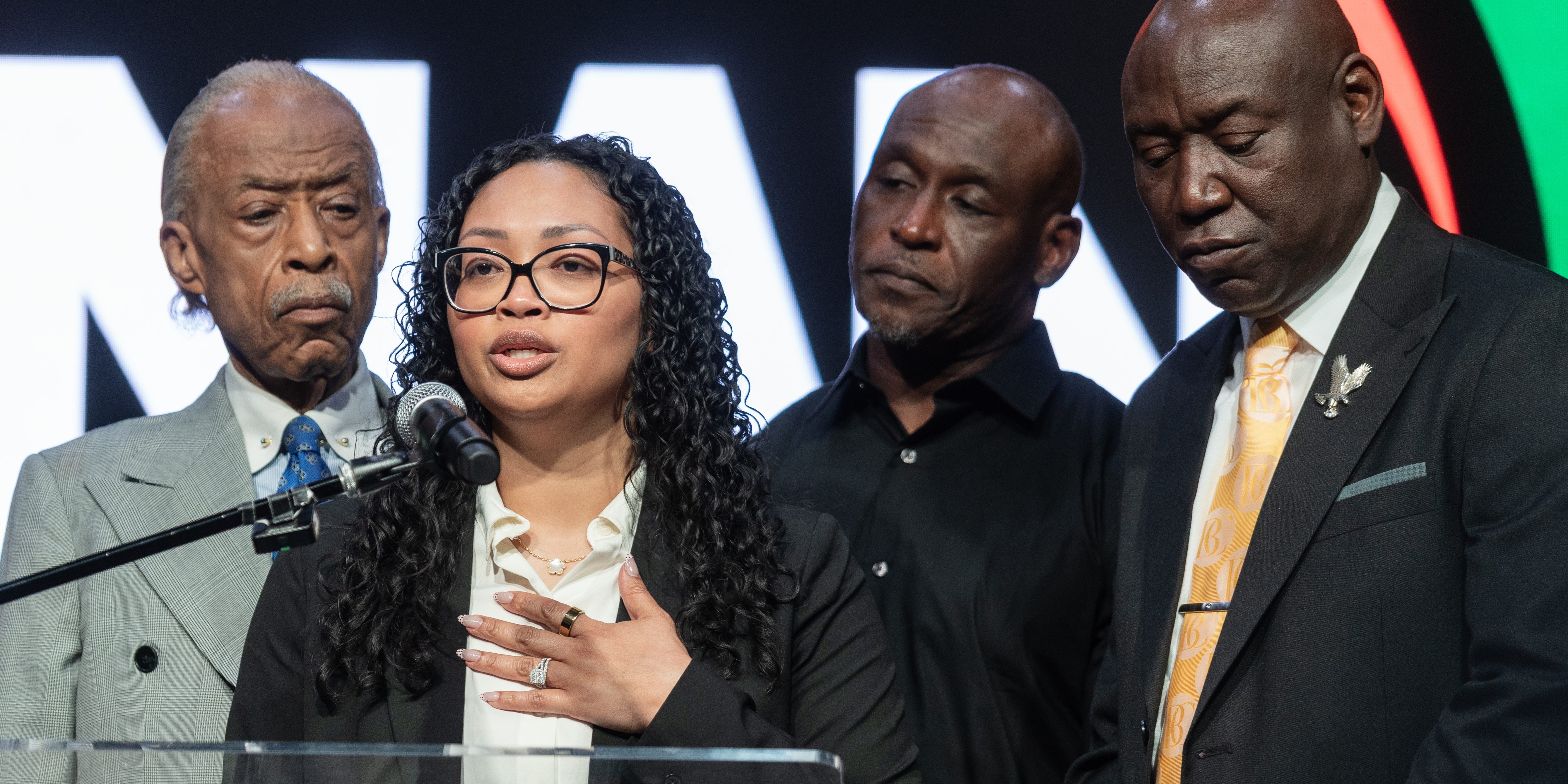
Nolan Wells mother Chrstine Wonsley held a press conference with their lawyer Ben Crump and Rev. Al Sharpton after their son's mysterious death over the 4th of July weekend off the coast of Mississippi. New York City, NY. July 10, 2026. (Photo by Steve Sanchez/Sipa USA).(Sipa via AP Images)
Nolan Wells’s mother Christine Wonsley held a press conference on July 10, 2026, in New York City after her son’s mysterious death over the Fourth of July off the coast of Mississippi. Photo: Steve Sanchez/Sipa USA via AP Images

There is a tangible heat to being Black in America this summer. 

Every morning starts the same. A jolt of coffee and nicotine as my thumbs scroll a daily intake of Black death and indignity. 

It mostly comes dosed in tears. Tears of Black moms and aunties, projected behind stone-faced fathers and grandpops trying to hold it together behind press podiums. 

This summer, it was Nolan Wells, an 18-year-old who disappeared during a trip to Mississippi’s Horn Island over the Fourth of July. Wells, who traveled to the island with a predominately white group of friends, was found dead in the water two days later. Authorities have not announced a final determination of what happened, but Wells’s family has challenged the official timeline and sought an independent autopsy. The investigation remains ongoing, which is to say that another Black family is waiting for answers in the indeterminate dark. In a state synonymous with deep-seated anti-Black racism, and the highest number of recorded lynchings, speculators and community members have begun to fear the worst.

It’s an expectation that has set the tone for living while Black in this new era. Where at any moment you, as Black person, can be erased for the most negligible of offenses, and if you’re not careful, be discarded into the void.

Before Nolan Wells, we watched in June as another Mississippi family laid their Black boy to rest. Kohen Wiley, who was just a year old, was shot and killed by Senatobia police officers, who fired into the vehicle where Wiley was sitting on his mother’s lap. After a friend of Wiley’s mother was accused of shoplifting a box of diapers at a Walmart, police opened fire on their car under the pretense that the vehicle was “oncoming” toward the officers. Civil rights attorney Ben Crump has said the officers were not in the car’s path, citing a photo from the scene. A month later, investigators have yet to release body camera footage of the incident or provide any new answers. No charges have been filed.

Black Americans had already borne witness to those familiar echoes. Earlier that month, a jury in South Carolina acquitted 61-year-old Rick Chow of a murder charge after he shot and killed Cyrus Carmack-Belton, 14, for the alleged offense of stealing bottled water. Video evidence of the 2023 incident shows the store owner chasing Carmack-Belton out of the shop after falsely accusing him of theft. Chow, who had twice before shot patrons he suspected of shoplifting, would go on to shoot the teenager in the back as he fled. 

Whether over a box of Pampers or a gulp of water, it is a startling reminder that for too many non-Black Americans, protecting even the most trivial property can take precedence over the sanctity of a Black life.

It’s an existential dread that has now turned into expectation, an anxiety meant for the mind to blunt the inevitable oncoming pattern of pain, disappointment, and injustice — in this case, being Black in America.

These deaths do not exist in isolation. They arrive amid a broader retreat from the institutions that, however imperfectly, once acknowledged Black Americans as a constituency deserving of protection and investment.

And the casualties of Black existence transcend more than just bodies. The Trump administration has waged full spectrum warfare on Black identity in every sense. 

Since Trump returned to office, Black workers have experienced rising unemployment, with Black men seeing some of the steepest job losses in recent memory, according to an analysis by the Economic Policy Institute.

This coincides with broader efforts by the Trump administration to dismantle federal diversity, equity, and inclusion initiatives, directing agencies to terminate DEI programs and contracts while encouraging similar rollbacks throughout the private sector. The administration has also sought to reshape how race is discussed across the federal government, from education and museums to civil rights enforcement. 

At the same time, the administration has continued to chip away at the legal architecture of voting rights, with years of court decisions making it more difficult to challenge racial gerrymandering and voting restrictions. The Supreme Court’s recent decision dismantling key Voting Rights Act protections has opened the door for states to erase Black-majority districts, which threatens to strip Black communities of congressional representation across the South. 

If there was anything novel to the current pulse of American white supremacy, it is that it doesn’t seek domination but to erase Blackness altogether.

Trump’s supporters have come out in droves to support this mission, from swarms of masked white supremacists descending on the U.S. Capitol in honor of our nation’s 250th birthday to the endless viral videos of white men brandishing guns at Black people doing anything from swimming at the pool to handing out flyers. 

It is no surprise that, under the constant reminder that the market value of Black life has plummeted, many Black Americans are succumbing to despair. Suicide rates among Black Americans — especially young Black men — have risen sharply over the past decade. Researchers point to a convergence of untreated depression, limited access to mental health care, economic instability, exposure to violence, and the cumulative weight of racialized stress.

None of those policies alone determine whether a police officer fires a gun, whether a jury reaches a particular verdict, or what pushes a broken down mind over the brink. But together they communicate something many Black Americans increasingly recognize: that America has further turned tail and ran away from its promise of an egalitarian society, or even the aspiration that it should be one. 

That departure has consequences well beyond Washington. It shapes who receives the public’s attention, which communities are viewed as worthy of investment, and whose fears are treated as matters of national concern. 

For Black Americans watching another summer marked by funerals, investigations, and courtroom disappointments, the sentiment is not simply that violence persists. It is that the country is becoming less interested in confronting why it persists at all. 

That is the understanding of it. But the feeling is something entirely different.

And that feeling is scary as hell.

The post It’s Scary As Hell Being Black in America Right Now appeared first on The Intercept.

💾

❌
❌