After rattling some observers by staying out of a slew of competitive congressional primaries in her home state this week, Rep. Alexandria Ocasio-Cortez, D-N.Y., endorsed a candidate in Tennessee on Thursday.
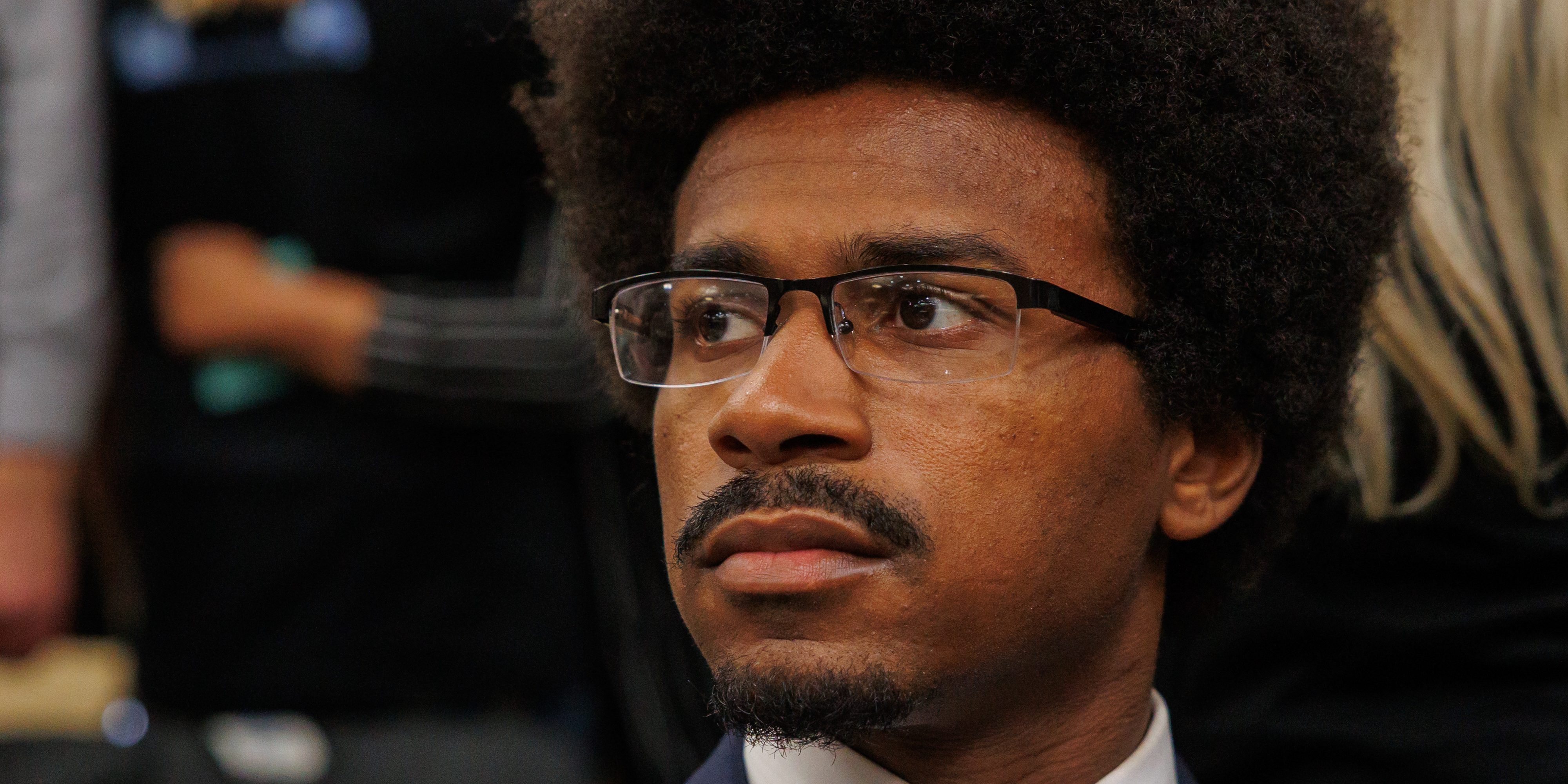
Ocasio-Cortez is backing Tennessee state Rep. Justin J. Pearson in the 9th Congressional District, which will be a tough win for Democrats after Republicans scrambled to gerrymander it earlier this year thanks to the Supreme Court’s gutting of a key portion of the Voting Rights Act. The district covering parts of Memphis and its suburbs is one of more than a dozen that Republicans have redrawn at President Donald Trump’s demand to ward off what many in the GOP see as the increasingly likely prospect that they lose both congressional chambers to Democrats in November.
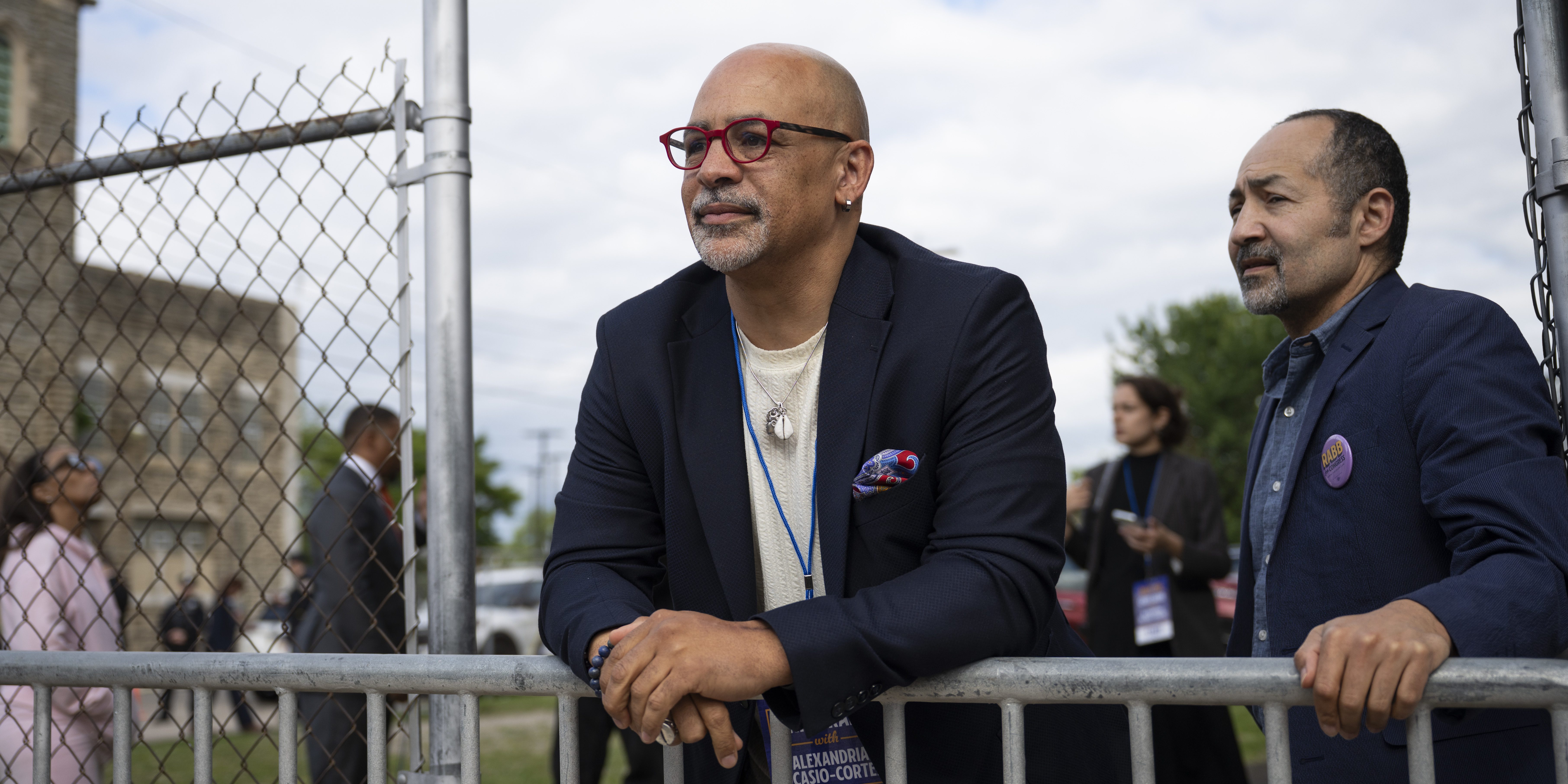
An endorsement from democratic socialist Ocasio-Cortez is a coveted stamp of approval for progressive insurgents looking to challenge incumbents or capture open congressional seats. She has endorsed several Democratic primary candidates running for open seats in other states this cycle including Chris Rabb, who won his primary in Pennsylvania; Analilia Mejia, who won in New Jersey; and Junaid Ahmed, who lost his primary in Illinois. But critics raised eyebrows at her decision to stay out of key congressional primaries in New York; she opted instead to endorse a slate of democratic socialist candidates in the state Assembly.
The endorsement is a major boost to Pearson, who is also backed by Justice Democrats, the progressive group that first backed Ocasio-Cortez in 2018 against longtime incumbent Rep. Joe Crowley, and Sen. Bernie Sanders, I-Vt. Pearson originally launched his campaign with the intention of ousting two-decade incumbent Rep. Steve Cohen, the last remaining Democrat in Tennessee’s congressional delegation. Cohen dropped out of the race in May after state lawmakers split up his district into three neighboring districts, saying it was “drawn to beat” him.
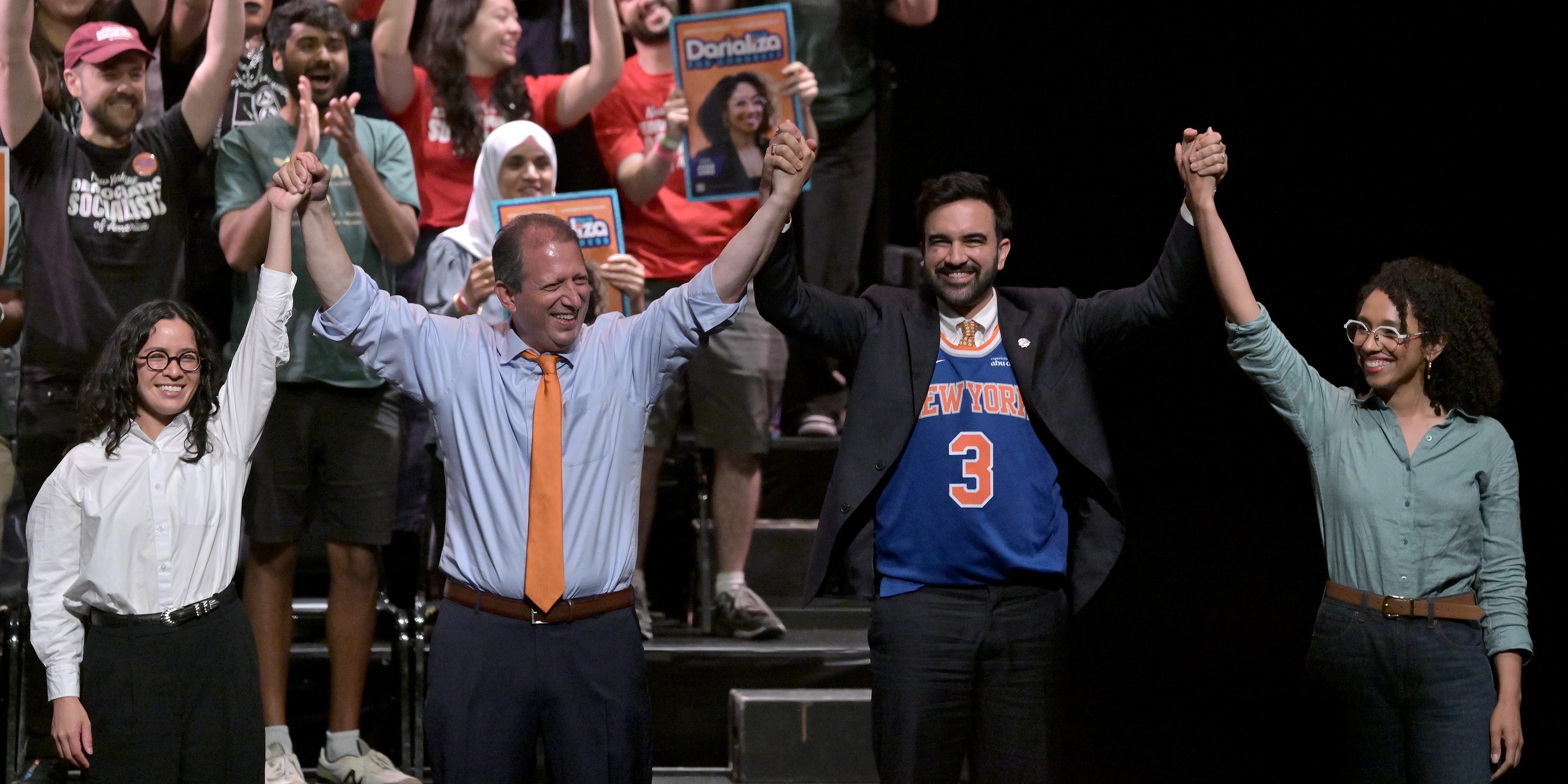
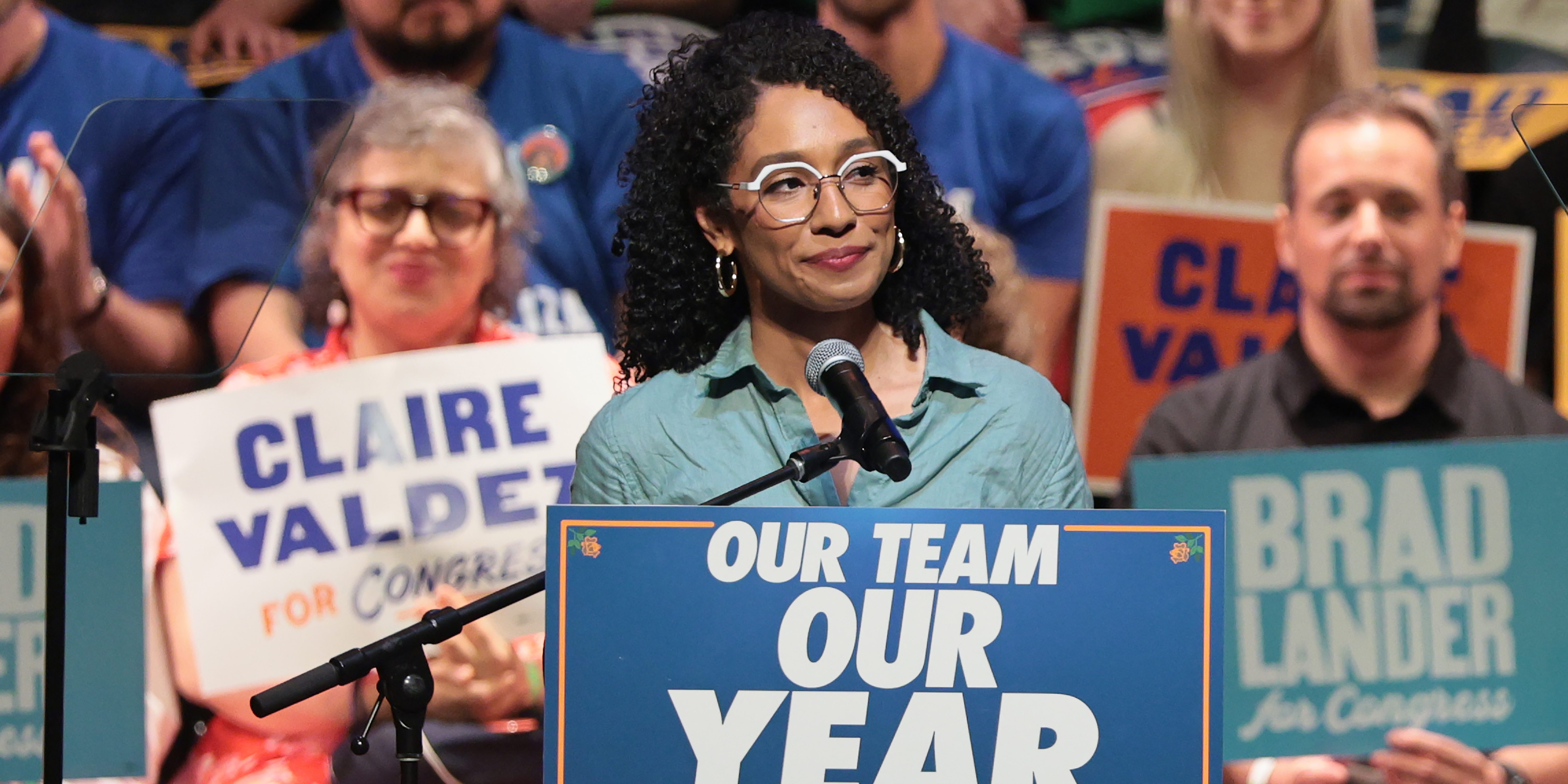
Observers theorized that Ocasio-Cortez’s absence from New York’s congressional primaries reflected a desire not to butt heads with Democratic Party leaders who endorsed against leftist challengers, potentially signaling her plans to run for higher office in a future cycle. Others argued that she stayed out to split her efforts with New York City Mayor Zohran Mamdani to maximize the left’s political currency in a cycle with historic outside spending against their candidates. Mamdani emerged as a kingmaker in Tuesday’s elections, backing three congressional candidates who won their primaries on Tuesday: socialists Clare Valdez and Darializa Avila Chevalier, and progressive Brad Lander, and several — but not all — of the New York City DSA’s endorsed candidates.
On Wednesday, Ocasio-Cortez said the left’s wins in New York’s House primaries were part of both “a moment” and “a movement” of voters demanding more from the Democratic Party after major losses in 2024.
Endorsing in the races would have pitted Ocasio-Cortez against her congressional colleagues whose support she might need in a run for higher office, including House Minority Leader Hakeem Jeffries, poised to become House speaker if the Democrats retake the chamber in November. She’s made most of her other endorsements this cycle in open seats with no incumbent, including Rabb, Mejia, Ahmed, Adelita Grijalva in Arizona, Adam Hamawy in New Jersey, and Sam Forstag in Montana. She endorsed Democratic candidate Randy Villegas against the incumbent Republican, Rep. David Valadao, in California. Her former chief of staff, Saikat Chakrabarti, said her decision not to endorse him likely contributed to his loss in an open California primary to replace retiring Rep. Nancy Pelosi, D-Calif., by fueling attacks from his opponents.
In New York City, Avila Chevalier and Lander ousted incumbents backed by Jeffries and Democratic leaders: Congressional Hispanic Caucus Chair Adriano Espaillat and Rep. Dan Goldman. Valdez won her primary in an open seat where retiring Rep. Nydia Velázquez had endorsed her preferred successor, Brooklyn Borough President Antonio Reynoso. Velázquez bemoaned Mamdani’s endorsement of Valdez against her pick in the months leading up to the race. And even after their candidates lost on Tuesday, Jeffries and other party leaders aired their disappointment in Mamdani’s decision to go against them.
But in Tennessee, Pearson emerged as the frontrunner when the incumbent dropped out. He’s hoping to tap into voters’ frustrations with both parties by campaigning on economic change for the working class — a message that boosted both Ocasio-Cortez and Sanders.
THree key primaries in New York City delivered whopping victories for an emboldened left led by Mayor Zohran Mamdani on Tuesday, as democratic socialists sought to define the future of the Democratic Party.
All three candidates Mamdani backed — democratic socialists Claire Valdez and Darializa Avila Chevalier, and his onetime mayoral competitor Brad Lander — won their races in the heat of a midterm cycle that could see Democrats take back the House of Representatives. One message from the results was clear: The left isn’t just having a moment — it’s dictating how Democrats play the game of electoral politics.
“A year ago, it was not the end of a political movement. It was the beginning,” Mamdani said at a victory party for Valdez and several down-ballot socialists who also won Tuesday. “Let’s hear it for a politics that will never forget working people. For a politics that is ready to write a new chapter in our party’s history. And for a politics that realizes the old politics that got us into this crisis is not gonna get out of this crisis.”
Several races played out as proxy wars between the Democratic Party establishment and progressive insurgents, or even between progressives and socialists, to prove who would do more to disrupt the status quo. In hotly contested primaries spanning four out of five NYC boroughs, candidates touted endorsements from Mamdani and Sen. Bernie Sanders, I-Vt., as well as their proximity to the most unconventional wings of the Democratic Party.
“Even when we are outspent, our agenda and operation bring out voters in a way the Democratic Party establishment no longer aspires to,” Gustavo Gordillo, co-chair of the New York City chapter of the Democratic Socialists of America, told The Intercept. “It is democratic socialists who are defining much of the political terrain in New York.”
“If you’re an establishment Democrat, that’s spent,” streamer Hasan Piker told local outlet Hell Gate. “We’re not giving another dime to Israel, hopefully an arms embargo, or at least pushing for one. We’re gonna make sure that we change the American trajectory.”
Avila Chevalier, a former organizer in the Columbia University encampments for Palestine, was considered a long-shot candidate when she launched her campaign against the powerful incumbent Rep. Adriano Espaillat in the 13th Congressional District. She won the tightest race of the three Tuesday night, saying in a statement: “We deserve leadership in Washington that will fight tooth and nail for every single one of us, and I can’t wait to get to work with our community to deliver on that promise.”
Lander, who is not a DSA member but represents the clearest bridge between socialists and progressives out of the three Mamdani-endorsed congressional candidates, was the first to sail to victory, defeating Rep. Dan Goldman, D-N.Y., less than 10 minutes after polls closed with roughly a third of votes counted in the 10th Congressional District. Goldman, an heir to the Levi Strauss fortune and a staunch supporter of Israel, had lagged in public polling for months, suggesting the energy on the ground was firmly against the incumbent.
“This campaign was born out of solidarity. Solidarity is not the same as unity. Unity means we already agree. Solidarity is a practice of building bridges, even when we don’t,” Lander said Tuesday. “When I launched this race, I said it wasn’t progressives versus moderates. It’s fighters versus folders.”
The momentum among progressives and the left in New York forced Democrats close to the party’s establishment to change the way they campaign. And the rise of the DSA chapter in New York following Mamdani’s upset win last year has also raised questions about how the progressive and socialist wings of the party will share power as they seek to expand their coalition beyond New York and across the country. Some critics condemned socialist darling Rep. Alexandria Ocasio-Cortez, who rose to fame eight years ago with her own insurgent campaign against an influential incumbent, for staying out of New York’s congressional primaries — while others theorized that the congresswoman and the mayor were dividing their political clout across competitive federal and state-level races.
The primaries also created an unusual lane for the progressive New York Working Families Party, which found itself siding with the establishment it has long fought by backing Brooklyn Borough President Antonio Reynoso, outgoing Rep. Nydia Velázquez’s handpicked successor, against DSA candidate Valdez.
Jasmine Gripper, co-state director for the New York Working Families Party, said the efforts to sow division with DSA or to separate WFP from the left’s rise erased its legacy — helping to defeat efforts to gut the party and fight conservative Democrats like former Gov. Andrew Cuomo; winning a $15 minimum wage; and expanding investments in pre-K and paid sick and family leave — and ignored that WFP was part of a much broader coalition that helped Mamdani beat Cuomo last year.
“The Working Families Party has been at the forefront of literally every major victory that has actually tangibly helped working families, and so to call us establishment is to not know our history and to not know the history of New York,” Gripper said.
She said WFP’s role moving forward was to work in tandem with DSA, not to compete with it.
“There was a point where there was no one to the left of the [Working Families] party, and if you were to the left of the party, you were crazy,” she said. “Now we’re in a moment where there’s a whole entity that’s to the left of the WFP, and that is OK.”
The democratic socialists’ growing power seems to have inspired fear among liberals and conservatives alike. Outside groups spent heavily ahead of Tuesday’s primary, widely seen as a test of where the Democratic Party stands after its 2024 failures and ahead of the November midterms, to ward off the possibility that democratic socialists would chart the party’s next chapter.
Special interests including the pro-Israel lobby and dark-money groupsspent a collective $8.4 millionin the three races against Mamdani’s endorsed candidates. In response, progressive groups made their biggest investments in recent history, with American Priorities, a new pro-Palestine super PAC, investing $2 million to back Mamdani’s picks and the progressive outfit Justice Democrats spending a combined $1.8 million backing Valdez and Chevalier. In total, progressive groups spent $1.3 million backing Valdez and $2.9 million backing Chevalier.
“This year we’ve continued to show that in New York, it is the democratic socialist movement that is leading a transformative agenda with popular support,” said Gordillo, the NYC DSA co-chair.
“Even when we are outspent, our agenda and operation bring out voters in a way the Democratic Party establishment no longer aspires to.”
Having more groups organized, resourced, and willing to fight the establishment makes the left stronger, WFP’s Gripper said.
“Not only are the establishment Dems looking over their back for one of us, they’re now looking over their back for two of us,” she said. “At the end of the day, we build more power in our unity than we do being divided.”
As she spoke to The Intercept, Gripper was on her way to meet two democratic socialists who won elections at the state level Tuesday night. State Sen. Jabari Brisport comfortably held onto his seat, while challenger Eon Huntley toppled an incumbent in the state Assembly. Both were endorsed by WFP and DSA.
“I think it’s naive for anyone to expect that 100 percent of the time we’ll all be on the same page,” Gripper said. “But that doesn’t mean we’re each other’s enemy either.”
Or, as Pennsylvania Sen. John Fetterman put it to CNN on Tuesday, “The dirtbag left is surging.”
Eleven months after unidentified Immigration and Customs Enforcement agents arrested Mahmoud Khalil from his home in Morningside Heights, he met with his congressional representative, Adriano Espaillat, D-N.Y., for the first time.
The February meeting was scheduled as Espaillat, a fifth-term incumbent, was trying to improve his relationship with Khalil while a challenger against himgained steam. Darializa Avila Chevalier, an organizer from the Columbia University student encampments and a friend of Khalil’s, was at the time considered a long-shot challenger for the 13th Congressional District seat. But she was on her way to outraising Espaillat that quarter, and outside groups that anticipated a tough race for the incumbent had already started pouring money to bolster his campaign.
Espaillat now faces an unexpectedly heated battle to keep his House seat in New York’s primary election on Tuesday. Avila Chevalier is campaigning on criticizing Espaillat’s close ties to the pro-Israel lobby and the American Israel Public Affairs Committee — whose super PAC gave $650,000 to a group backing Espaillat last month — and what she says was his reticence to go after ICE when the Trump administration first began targeting pro-Palestine students.
Outside groups have poured millions of dollars into the race — most of it, a reported almost $7 million, in support of Espaillat. Nearly $2 million has come in support of Avila Chevalier, most of it from the new pro-Palestine super PAC American Priorities and Justice Democrats PAC.
The race has aggravated an already strained relationship between progressive New York Democrats and an emboldened movement to their left, pitting the overwhelmingly popular democratic socialist Mayor Zohran Mamdani against leaders once considered progressive stalwarts and now finding themselves lumped in with the establishment. Mamdani has bucked the preferences of House Minority Leader Hakeem Jeffries — poised to become House speaker if the Democrats take the House in November — and retiring Rep. Nydia Velázquez, who endorsed Mamdani early in his mayoral primary campaign and helped guide progressive ideas into New York’s mainstream for more than 30 years in Congress. Espaillat, sworn in to the House in 2017, is the longest-serving incumbent Democrat in New York facing a serious challenger on Tuesday.
Avila Chevalier has pointed to Khalil’s detention as a key inspiration for her decision to run. On the campaign trail, she has slammed Espaillat for what she frames as a lacking response to the activist’s detention and targeting by the Trump administration for the better part of a year.
“Mahmoud’s case is really emblematic of a lot of what’s wrong with our system,” she told The Intercept. She pointed to Espaillat’s refusal to meet with Khalil’s wife, Noor Abdalla, as a continuation of his failure to address suppression of speech on Palestine in his district happening at Columbia and on the campuses of the City University of New York. “The fact that it was happening to a Palestinian man advocating for an end to the genocide of his people really highlights how all of this converges.”
In recent debates, Espaillat has responded to barbs from Avila Chevalier over his handling of the Khalil case by congratulating her for her work to assist his family and citing his meeting with Khalil and his attorneys in February. That month, when another Columbia student was detained on campus by ICE, Espaillat said the school needed to beef up its protections for students and described the Trump administration’s actions as “lawless,” calling on them to stop immediately.
Espaillat’s campaign did not provide comment for this story.
According to a member of his legal team present at the February meeting, the goal for Khalil was to use the meeting to allow the former organizer of the pro-Palestine encampment at Columbia University to vent his frustration that Espaillat had ignored multiple pleas to meet with Abdalla. A slew of progressive members from other districts, including Velázquez and Rep. Rashida Tlaib, D-Mich., had launched efforts to free Khalil and support family in the immediate aftermath of the arrest. Several visited him in detention in Louisiana. But when Khalil’s legal and advocacy team asked Espaillat to meet with Abdalla, they never heard back, according to two people with knowledge of the events who spoke to The Intercept.
“When one of Espaillat’s constituents was kidnapped from his home by Trump’s ICE, he failed to take any action to protect or stand up for Mahmoud Khalil and his safety,” said Amira Hassan, political director for PAL PAC, another pro-Palestine political action committee backing Avila Chevalier. PAL PAC is affiliated with the Institute for Middle East Understanding Policy Project, which has supported Khalil since his arrest.
“He did not meet with Mr. Mahmoud Khalil or his wife, Dr. Noor Abdalla, until after he was released from ICE detention,” Hassan said. “Why was it that he chose to abandon his constituents? Was it because he was more invested in serving the interests of his AIPAC donors who spearheaded the campaigns attacking students like Mahmoud Kahlil who were protesting Israel’s genocide in Gaza?”
Velázquez, Espaillat’s retiring colleague, was one of 14 House Democrats who signed a letter to former Secretary of Homeland Security Kristi Noem three days after Khalil’s arrest demanding his immediate release. She was joined by Tlaib; Ilhan Omar D-Minn.; Summer Lee, D-Pa.; and Ayanna Pressley, D-Mass. Another letter the same day included Velázquez and more than two dozen other New York state and city politicians, like Rep. Alexandria Ocasio-Cortez, Brooklyn Borough President Antonio Reynoso, then-New York City Comptroller Brad Lander, and State Assembly Member Claire Valdez.
But Velázquez has since sided with Espaillat in an effort to hold onto power in key New York congressional races. She was upset with Mamdani for endorsing Valdez, another democratic socialist, for the 7th Congressional District seat Velázquez is vacating over Reynoso, her handpicked successor.
The mayor further angered Velázquez and Espaillat when he endorsed Avila Chevalier, after he had reportedly promised Espaillat he would endorse him after the congressman backed the mayor in the general mayoral election. Espaillat had at first backed former Gov. Andrew Cuomo but switched his support to Mamdani after he won the Democratic mayoral primary last summer.
Espaillat has said Avila Chevalier’s campaign has misrepresented his record on ICE by saying he cooperated with the agency and voted to fund it. His campaign has touted his work to help immigrants build political power in New York and fight the Trump administration’s attacks on immigrant communities. He has conducted oversight visits at ICE facilities and supported detainees who held a hunger strike to protest inhumane conditions at a New Jersey detention center.
After a December visit to an ICE facility at Federal Plaza in New York with Rep. Dan Goldman — who is facing his own powerful challenger from the left in Brad Lander — Espaillat said President Donald Trump was creating a humanitarian crisis. “The White House’s unhinged expectations are forcing DHS officials to cut corners,” he said. “This is not how America should enforce its laws.”
While Avila Chevalier has called to abolish ICE, Espaillat, who was previously an undocumented immigrant and built his political career on helping to expand Latino power among Democrats in New York, has said ICE should be “dismantled” and voted against funding the agency in January. Espaillat previously co-sponsored a bill in 2018 to dissolve the agency and transfer its “critical functions” to other agencies, but he has also voted with most Democrats to fund ICE in appropriations bills over his time in Congress.
At the time of Khalil’s arrest, in response to questions from The Intercept, Espaillat said that he expected Trump’s Department of Justice “to work within the confines of the law and that due process is guaranteed to him and his family.”
During the February meeting, Espaillat offered to do whatever he could to help Khalil and his family. By that point, after Khalil had already been secretly moved to a detention facility in Louisiana and later released from ICE custody after three months, during which he missed the birth of his son, there was not much Espaillat’s office could do except press the Trump administration to drop the charges.
No help for Khalil materialized after the offer, according to one person present at the meeting. Abdalla, his wife, has since appeared in an ad for Avila Chevalier.
Also running on Tuesday are Oscar Romero, chief information officer of the NYC Civic Engagement Commission, and Theo Chino-Tavarez, a socialist and computer engineer. Espaillat is the top fundraiser, with $2.6 million so far. Avila Chevalier has raised just over $1.1 million, a haul that slowed after an eye-popping first quarter that made her the only primary challenger that quarter to outraise an incumbent in New York City.
“This election is much bigger than this primary, it is much bigger than this seat, it is much bigger than this political moment,” Avila Chevalier said. “This campaign needs to be a vehicle to engage people in their own politics, in their own government, and if we build this coalition right, people will be able to find their political home as a result.”
In the early hours of January 6, 2026, two 911 callers near Ypsilanti, Michigan, reported a white van driving erratically.
Within an hour, police had found a white van, crashed into it twice on purpose, and fired 27 shots at the driver while the vehicle lay on its side, burning. At least eightcops watched as 34-year old Navy veteran John Andrew Jenuwine bled out and died inside.
Of several inconsistencies in the police response, one stood out: The only physical description provided to the dispatcher was that “two Black guys” were driving the van, and a caller said they’d brandished a handgun at his wife. Jenuwine was white, driving alone, and unarmed.
That’s not what police told Jenuwine’s parents when they contacted them the following evening, 17 hours after killing their son.
“We were told that there was an exchange of gunfire, and that John was killed,” John’s father, Larry Jenuwine, told The Intercept. “Call it naïveté or whatever you want to call it, but our first thoughts were, ‘Oh my God, what did he do, why did he cause this?’”
On the phone with Larry and Kelly, John’s mother, a deputy with the Washtenaw County Sheriff’s Office claimed their recently deceased son had a gun. But Jenuwine, an industrial field engineer traveling to repair million-dollar lasers, just had his work equipment; no gun was ever found in his van. And the officers who caused two intentional collisions appear to have violated their own policies, which the department updated after the police killing of George Floyd — testing the limits of post-2020 police reforms.
“We were told that there was an exchange of gunfire, and that John was killed. Come to find out, he didn’t do anything to cause any of this.”
The Jenuwine family is now suing Washtenaw County and eight sheriff’s deputies who responded to the case for wrongful death; for violating John’s constitutional rights to protection under the law, and against unreasonable searches and seizures; and for gross negligence and willful misconduct, including improper use of deadly force. The suit seeks to hold the county responsible for what it calls the sheriff’s failures to train officers and enforce its policies.
“Come to find out, he didn’t do anything to cause any of this,” Larry said. “He was not the guy that they were supposed to be chasing.”
Less than 15 minutes elapsed between the time Washtenaw County Sheriff’s deputies incorrectly identified Jenuwine’s van and when they started shooting. Officers fired their first shots seconds after causing Jenuwine’s vehicle to flip on its side and catch fire.
Only seven out of the 27 shots fired hit Jenuwine. None of them alone was responsible for killing him, according to an independent autopsy obtained by Jenuwine’s family and described by their attorneys in a press conference last week, which found he bled out and died over time. While Jenuwine struggled and died, dashcam footage shared with The Intercept recorded officers outside discussing whether any of the shots had hit him.
After several minutes had passed, one officer said over the radio, “He’s kicking around inside the vehicle right now.” None of them called for emergency services.
According to the footage, an edited version of which was viewed by The Intercept, Jenuwine lay dying in the van for at least five minutes.
“The cruelty of it, I suppose, is what strikes me the most,” said Maura Battersby, one of the attorneys representing the family. “If aid had been rendered, he may have survived this.”
Of the four deputies attorneys said fired shots, two names have been publicly released: Jacob Gombos and Jonathan Early. Both received awards in 2024 for distinguished service; Gombos got the department’s Life Saving Award.
“If aid had been rendered, he may have survived this.”
The sheriff’s office placed Gombos, Earley, and the other deputies involved on paid administrative leave pending an investigation by Michigan State Police, which was completed last month and is now pending review by the Michigan attorney general. The state AG will decide whether to bring criminal charges against any of the officers in the case.
A spokesperson for the Michigan State Police confirmed that their investigation is closed and referred questions to the attorney general’s office, which did not respond to a request for comment. Spokespeople for the Washtenaw County Sheriff’s Office and the Ypsilanti Police Department did not respond to requests for comment.
One of the officers who shot at Jenuwine had received the department’s Life Saving Award.
The case has brought renewed scrutiny to the Washtenaw County Sheriff’s Office, which is currently facing dual lawsuits from whistleblowers who claimed the department hired unqualified officers and fired them in retaliation for reporting it. Both plaintiffs are former office staff who said they were fired after raising concerns that Sheriff Alyshia Dyer and other staff pushed them to hire candidates who had lied about their qualifications and in one case had an “extensive” criminal history. Another sheriff’s deputy resigned in March while under investigation for allegedly having a sexual relationship with a subordinate officer. Dyer herself was also independently investigated last year after a partially burned cannabis cigarette was found in her county-issued vehicle. (She denied it was hers, and an independent report could not determine whether the joint belonged to Dyer.)
“It seems like every day we hear something about the Washtenaw Sheriff’s department,” Kelly Jenuwine told The Intercept. “They are in the news constantly, and it’s not for a good reason.”
Jenuwine’s killing raises a new round of questions about the efficacy of police reform. In 2024, Michigan implemented new statewide guidelines restricting vehicle pursuits to “protect the lives of innocent bystanders.” Following the police killing of George Floyd in 2020, the Washtenaw County Sheriff’s office released a memo outlining how its policies aligned with a series of proposed reforms pushed by activists against police violence that grew out of 2014 protests in Ferguson, Missouri. And the sheriff’s office adopted a new use of force policy in 2022, which classifies intentional vehicle collisions — known as a “PIT” maneuver, a precision immobilization technique — as deadly force.
“That’s something you’re trained not to do,” said Todd Flood, the lead attorney on the Jenuwines’ case.
The new policy also guides officers to “seek voluntary compliance and operate with minimal reliance on the use of force,” using techniques in crisis intervention and “rapport-building communication,” and try to de-escalate, even after using force. It requires a mandatory medical evaluation when deadly force is applied, if an officer observes an injury, or if they believe one has occurred; and it ties the degree of appropriate force to how certain they are that the subject committed a crime. The policy states: “Sheriff’s Office employees shall never employ excessive force.”
Officers did not verbally engage with Jenuwine a single time, Battersby told The Intercept.
“I would have expected them to be calling out over the loudspeaker,” Battersby said. “There were many instances in which they were in close proximity to him, and it doesn’t appear that they did that.”
At a press conference after the shooting, the Washtenaw County Sheriff’s Office played a dashcam video that showed Jenuwine reversing his van and driving on the wrong side of the road. Before the sheriffs hit Jenuwine’s van in the first PIT maneuver, the dashcam video cuts ahead, with the video timestamp jumping forward 30 seconds.
The Jenuwines said what they describe as John’s “execution” changed the way they look at law enforcement after having considered themselves generally supportive of police. “I want the people that executed my son to never have the opportunity to work in law enforcement again,” said Kelly.
“They ran around with those guns like they were playing video games, guns held sideways,” Larry said, referring to the dashcam footage. “I’m still struggling with this and I anticipate that’s going to be a continuing struggle.”
Despite believing the vast majority of police were “good, honest, hard-working people,” he said, “I don’t believe these guys that were involved in this shooting were. And that’s the kind of people we need to get out of that system.”
“We want to make sure that the people involved in this, in John’s death, are held accountable,” Larry said. “We’re hoping that there will be criminal charges as well, but we can’t count on that.”
Jenuwine liked to spend his time outdoors fishing and hunting with his family, his parents told The Intercept. He was on his high school football team, spent six years in the Navy, and was a member of a Detroit motorcycle club. When he was growing up, he and Larry worked on cars and tractors together.
On what would have been Jenuwine’s 35th birthday last month, his parents said they spent the evening crying over a birthday cake.
“Those officers get to go home to their families every night,” Kelly said. “What Larry and I get, we get a box of ashes and a lock of my son’s hair.”
An outspoken progressive running for Congress in the Tennessee district at the center of Republicans’ efforts to sabotage voting rights and maintain control of the House earned the endorsement of Sen. Bernie Sanders on Tuesday.
Tennessee state Rep. Justin J. Pearson found himself the unexpected front-runner in the Democratic primary when two-decade incumbent Rep. Steve Cohen dropped out last month, after new gerrymandered maps throttled his chances of winning reelection. The redrawn 9th Congressional District and sudden shakeup mean that rather than running against the last Democrat representing Tennessee in the House, Pearson is facing a Republican machine bent on delivering an all-GOP delegation for President Donald Trump.
The new map hurts the chances for Pearson — or any Democrat — to win in November, but the candidate said he’s running on a platform focused on wealth, income inequality, and corporate overreach that aims to appeal across party lines. “You’ve got a number of disaffected Republican voters, you’ve got a number of distraught MAGA voters, and you’ve got fired-up Democrats, which is a perfect recipe for success for us,” Pearson told The Intercept. “Because our tent is big enough for everybody who is feeling that this status quo was rigged and broken against working-class folk, and want to see a future that is more just.”
It’s a message similar to the one that buoyed Sanders’s 2016 and 2020 presidential campaigns.
“As billionaires and Big Tech take more and more control over our lives and our government, we need leaders like Justin J. Pearson who have the experience and track record of standing up to the rich and power-hungry elites,” Sanders said in a statement.
Tennessee is one of several Republican-led states where officials rushed to protect Trump and the GOP’s chances of keeping power in what is expected to be a particularly difficult midterm cycle for Republicans mired in an unpopular war on Iran and an ever-increasing cost of living. After the U.S. Supreme Court ruled in April to gut a key provision of the Voting Rights Act, Trump said he spoke with Tennessee Republican Gov. Bill Lee, who called the next day for a special session to redraw the maps.
Using a practice known as “cracking,” the new map breaks the majority-Black district concentrated in and around Memphis across three red districts, diluting the power of Black voters in the area. Pearson said he believed the antidemocratic move, while detrimental to his chances, was unpopular with voters.
“A lot of people were really upset about the gerrymandered maps,” Pearson said. “I had about half a dozen Republicans who said they’re going to be voting in our campaign and I’d be the first Democrat they’d be voting for in their lifetimes.”
Pearson, who launched his campaign against Cohen in October with the backing of the progressive outfit Justice Democrats, received Sanders’s endorsement the day after getting one from the Working Families Party, and four days after he returned from a listening tour in rural and Republican counties in the newly drawn district. His campaign said more than 750 people attended the gatherings.
Attendees expressed frustration with being unable to afford housing, healthcare, and the things they need to live their daily lives, Pearson said. He said voters couldn’t afford “more of the same” when running against Cohen, and has now directed that message at his likely Republican opponent, state Sen. Brent Taylor.
“Both of them were millionaires, both of them benefited from a status quo that’s broken,” Pearson told The Intercept. “Both of them don’t like me.”
Also running in the August 6 Democratic primary are state Sen. London Lamar, who launched her campaign with Cohen’s endorsement after he dropped out, and Jim Torino, a former executive at a healthcare company focusing on people with disabilities and founder of a social welfare nonprofit. Perennial candidate M. LaTroy Alexandria-Williams filed to run but has not filed any reports with the Federal Election Commission.
Pearson is the top fundraiser in the Democratic primary race so far, with just under $2 million, according to the campaign. Most of that has come from contributions under $200, according to the FEC data; the campaign said its average donation is $31. Torino has raised $117,000, and Lamar has not yet had to file any reports with the FEC.
In addition to Sanders, Justice Democrats, and the Working Families Party, Pearson has backing from groups including MoveOn; Sunrise Movement; Indivisible; IMEU Policy Project and its Peace, Accountability, and Leadership PAC; as well as Reps. Summer Lee, D-Pa.; Ayanna Pressley, D-Mass.; Rashida Tlaib, D-Mich.; Delia Ramirez, D-Ill.; and Ro Khanna, D-Calif.
Pearson said he believes federal legislation is needed to force states to support working people and improve public safety.
“We need to put this ban on AI data centers, we need to increase the minimum wage nationally, because the states won’t do it,” Pearson said. “I’m in a state House, they refuse to do it. We need to have national gun safety laws passed, because states refuse to do it.”
In May, Pearson drew the ire of his Republican colleagues when he marched with protesters before the special session to redraw the state’s maps. Three years earlier, Republicans voted to expel him and another Black Democratic lawmaker after they and one other Democratic colleague led a protest against the legislature’s inaction on gun control after a deadly elementary school shooting in Nashville. Local officials reappointed Pearson and his colleague, state Rep. Justin Johnson, to the state House shortly after the vote.
Pearson, Cohen, two other Democratic congressional candidates, four registered voters, and the Tennessee Democratic Party filed a federal lawsuit challenging Tennessee’s maps last month, but they dropped it last week, citing a political environment hostile to their cause. Pearson said other cases before the federal courts had “a higher probability of success,” pointing to voting rights suits from the American Civil Liberties Union and the National Association for the Advancement of Colored People.
Still, he expressed hope for his long-shot campaign in Tennessee. He pointed to a stop on his listening tour in the city where the Ku Klux Klan was founded in 1865, and where Pearson, who is Black, welcomed 150 people at a rally — his largest crowd throughout the tour.
There is a “renewed vigor and enthusiasm because of what the Republicans have done — to show up in spite of them, in spite of what they’ve tried to do,” Pearson said. “I think that’s not something they probably calculated for when they did this racist redistricting.”
Chris Rabb won by nearly 15 points in a hotly contested four-way primary on Tuesday night, marking a triumph for progressives who sought to add the Pennsylvania state representative to their ranks in Congress.
The 3rd Congressional District race unfolded along key fault lines animating the Democratic Party, from the influence of special interest groups to Israel and its genocide in Gaza. It staked out a clear contest between the party’s progressive and moderate wings.
The split marked a contrast to the 7th Congressional District primary in the Lehigh Valley, where the left and the establishment united behind Bob Brooks, a firefighters’ union chief who sailed to victory Tuesday night.
Brooks will run in what’s expected to be a tight general election in November against freshman Republican Rep. Ryan Mackenzie. Rabb is all but guaranteed to win the deep blue seat being vacated by retiring Rep. Dwight Evans.
Rabb, who has been a vocal critic of U.S. military support for Israel, attracted endorsements from progressive members of Congress like Rashida Tlaib, D-Mich., and Alexandria Ocasio-Cortez, D-N.Y. One of his top opponents, state Sen. Sharif Street, earned the support of Sen. Cory Booker, D-N.J., while Dr. Ala Stanford, a pediatric surgeon, was backed by a pro-Israel super PAC. Also on the ballot was Shaun Griffith, an attorney who never broke through in the polls.
In a statement released Tuesday night, the Democratic Socialists of America celebrated Rabb, who recently joined the group’s Philadelphia chapter, and pointed to key political causes for the left in Congress.
“There is a new Democratic Socialist in Congress,” the group wrote on X. “We will be with Congressman Rabb every step of the way in the fight to abolish ICE, free Palestine and win Medicare for All.”
Rabb has collected endorsements from 10 members of Congress, the Philadelphia Inquirer, and progressive groups including the Pennsylvania Working Families Party, the Philadelphia chapter of DSA, Justice Democrats, and Jewish Voice for Peace Action.
“Chris Rabb is exactly what Democratic voters nationwide are demanding — progressive trailblazers who fight for their communities, not just when it’s politically convenient but when it’s morally necessary,” said Alexandra Rojas, executive director of Justice Democrats, in a statement. “While the party machine has spent decades failing to meet the needs of its voters, Rabb has taken the fight to corporate interests, billionaire CEOs, and Republican extremists his whole career.”
Pennsylvania Gov. Josh Shapiro, considered one of the Democratic Party’s moderate rising stars, waded into the race in its final weeks to try to stop a powerful Philadelphia union backing Street from inadvertently boosting Rabb’s campaign with attack ads against Stanford, Axios reported. Nevertheless, Stanford and Street appeared to split establishment-friendly support, trailing late Tuesday night with about 30 and 25 percent of the vote, respectively, to Rabb’s 44.
Union Boss to Compete for Key Swing Seat
In the Lehigh Valley, Brooks handily defeated his primary opponents in the 7th Congressional District, marking a win likely to be claimed by the left and center alike.
Brooks campaigned on affordability and fighting corruption, highlighting his union bona fides rather than aligning with a specific wing of the Democratic Party. By late Tuesday night he had secured more than double the support of any of his competitors: former federal prosecutor Ryan Crosswell; former Northampton County Executive Lamont McClure; and Carol Obando-Derstine, an engineer who previously worked for former Sen. Bob Casey, D-Pa., and former Gov. Tom Wolf.
On the campaign trail, the retired firefighter argued that the real divide in his district was between the working class and the billionaire class and their allies. “The whole system is rigged against us, and the only way we’re going to fix it is by sending people like us to Washington, D.C., to represent us,” Brooks said at a recent event.
Unlike in the 3rd District, progressives and more mainstream Democrats united behind Brooks. Shapiro, the governor, has been an outspoken surrogate for Brooks, who was also endorsed by Sen. Bernie Sanders and the Working Families Party.
In a statement celebrating Brooks’s win on Tuesday night, Sanders pointed to two other candidates with union backgrounds who prevailed in primaries this year.
Brooks’s win “follows the recent progressive victories of iron worker and union leader Brian Poindexter in OH, and union organizer Analilia Mejía in NJ,” Sanders wrote on X. “We’re making progress!”
“We deserve representatives who come from the working class and will stand up for the working class, and that’s what Bob has done for his entire life and career,” said Nick Gavio, mid-Atlantic communications director for the Working Families Party, in a statement announcing the party’s endorsement.
The Cook Political Report rates the general election for the 7th District a toss-up, and Brooks is expected to face a tight contest against Mackenzie, who narrowly flipped his Lehigh Valley seat from blue to red in 2024 and is widely considered to be one of the most vulnerable members of the House this cycle.
As of late Tuesday night, Brooks had nearly 42 percent of the vote, while Crosswell and McClure came just shy of 21 percent each, and Obando-Derstine received just over 17 percent.
Brooks benefited from critiques of his opponent, Crosswell, a former Republican who launched his campaign after quitting the Department of Justice in the early days of the Trump administration, when federal prosecutors were under pressure to drop corruption charges against then-New York City Mayor Eric Adams in return for Adams’s cooperation on immigration enforcement. Crosswell faced criticism for his previous role in prosecuting “many, many” immigration cases as an assistant U.S. attorney while running for district with one the largest, but politically diverse, Latino communities in the state.
“Trump has built his agenda on targeting our immigrant community. I’ve seen exactly what that means for families like mine,” Obando-Derstine, who was born in Colombia, wrote in a statement to The Intercept. “Anyone who chose to carry out those attacks against our community has no business being in office. We deserve leaders who stand with us when it matters, not just when it’s easy.”
Advertisements from a mysterious super PAC called “Lead Left” also became a backdrop to the race. The ads attacked both Brooks and Crosswell on their progressive credentials, and sought to curry left-leaning support for McClure. “Lamont McClure kicked ICE out of Northampton. He takes on Trump and wins,” says the narrator in one of the advertisements.
When leading California gubernatorial candidate Xavier Becerra was state attorney general, his office pushed the state Supreme Court to artificially inflate a Black man’s IQ in order to execute him.
Following the lead of his predecessor, former California Attorney General Kamala Harris, Becerra’s office was battling a defense that argued Robert Lewis, originally sentenced to death in 1991, was ineligible for execution because he was intellectually disabled. Lewis’s attorney, Robert Sanger, told The Intercept that while individual attorneys general can’t control everything their deputies do, he was disappointed with how Becerra’s office handled the case.
“I was kind of feeling like it would be a good time for the AG to say, ‘OK, we tried and he’s intellectually disabled. We got that determination made. Let’s just let it go,’” Sanger recalled. “Instead, it went all the way to oral arguments in front of the [state] Supreme Court.”
The effort failed: The Supreme Court of California overturned Lewis’s death sentence in 2018, and the state legislature overwhelmingly passed a measure banning the practice of adjusting IQ based on race in death penalty cases two years later.
Becerra is now polling first in the crowded race to replace term-limited Democratic California Gov. Gavin Newsom. His campaign had at first lagged behind his opponents, but then-Rep. Eric Swalwell was hit with explosive sexual assault allegations — which he denies — and dropped out, and Becerra surged to the front of the field. He’s just ahead of Trump-backed Republican candidate Steve Hilton, followed by Tom Steyer, the hedge-fund billionaire racking up endorsements from progressive groups including Our Revolution and praise from the California chapter of the Democratic Socialists of America.
In Lewis’s case, Becerra picked up where Harris left off; her office had been the first to ask the courts to artificially inflate Lewis’s IQ so the state could execute him.
“On the one hand, he’s part of a long line of Democratic attorney generals who have taken this approach of, ‘It’s not my problem,’ not accepting responsibility for what their criminal attorneys are doing in court,” said Natasha Minsker, who leads the California Anti-Death Penalty Coalition, which helped push the bill banning the practice of race-based IQ adjustments for people on death row. “On the other hand, it just demonstrates where their true priorities and values are.”
Becerra has not taken a clear public position on the death penalty in his gubernatorial campaign, but his critics have raised concerns about his pursuit of executions at a time when his party was moving in the opposite direction. He has said he has “serious reservations” about the death penalty and voted for a 2016 state ballot measure to abolish it in California, where the state hasn’t executed anyone since 2006. Still, two years after his vote, Becerra’s office argued to execute Lewis. Though Newsom imposed a moratorium on capital punishment in 2019, Becerra fought to uphold death penalty sentences during the Covid-19 pandemic. And though he oversaw law enforcement for four years in California, a state that has significantly cut its prison population in recent years and adopted other reforms under pressure from activists, Becerra’s criminal justice record has not played a large part in his gubernatorial campaign.
After serving as California attorney general, Becerra was named secretary of Health and Human Services during the Biden administration. His name recognition from that post, plus 24 years in Congress, have earned him endorsements from Democrats including Reps. Jim Clyburn, D-S.C., and Ted Lieu, D-Calif.; state and local elected officials; and several labor unions including SEIU California, California State Council of Laborers, and the United Nurses Associations of California.
Still, his former colleagues from his time leading HHS raised eyebrows as his campaign gathered speed after Swalwell’s exit, and some of Becerra’s critics have seized on his overseeing of migrant children as HHS secretary. Also looming behind his surge is a criminal trial involving his former political adviser and Newsom’s former chief of staff, Dana Williamson, who pleaded guilty on Thursday to three felonies in a corruption case involving scheme to steal money from Becerra’s campaign. In a statement last week after the plea, Becerra said; “As I said from day one, I was not involved, I did nothing wrong. And now the record confirms it. We can close the book on this.”
Becerra’s criminal justice record has received less scrutiny in the gubernatorial race, where Becerra is competing with Republican opponents stressing their own tough-on-crime bonafides.
Becerra’s campaign website outlines his priorities as fighting Donald Trump, building more affordable housing, lowering costs, building clean energy, improving California’s disaster preparedness, channeling AI “for human benefit,” and addressing homelessness. It does not have a specific page devoted to criminal justice.
“Democratic politicians want to take credit for the progressive things they did as attorney general, but they are not taking responsibility for the regressive positions that the office advanced under their leadership.”
In response to a questionnaire from the political arm of the California chapters of the American Civil Liberties Union, which declined to comment on Becerra’s record for this story, Becerra said he agrees with reforms like prioritizing prevention strategies over punitive sentencing and improving funding and staffing for public defender’s offices. He also said he would support banning facial recognition in police body cameras, more public access to police records, and having social service workers respond to homelessness and mental health crises instead of police.
“We see this repeatedly,” Minsker said. “Democratic politicians want to take credit for the progressive things they did as attorney general, but they are not taking responsibility for the regressive positions that the office advanced under their leadership.”
Becerra’s campaign did not respond to a request for comment.
While Becerra has not had to thoroughly address his criminal justice record yet on the campaign trail, the topic plagued his predecessor as attorney general, Kamala Harris, when she ran for president in 2020.
Harris, who served as California attorney general from 2011 to 2017 and San Francisco district attorney before that, faced myriad attacks from left and right that hampered her first presidential bid over her prosecutorial record while she campaigned as a reformer.
At the time, activists across the United States were animated by the police killings of George Floyd and Breonna Taylor, which set off a wave of protests and heightened scrutiny of so-called “tough on crime” politics. Six years later, the political winds have largely shifted.
Sanger, the attorney in the IQ death penalty case, said he felt that some of the attacks on Harris were unfair, because attorneys general “can’t go through and regulate every single thing that their deputies do in these very complex cases.” But, he added, he’s been generally dissatisfied with California’s last three top prosecutors.
“I have been disappointed in each one of those attorneys general in not taking a more active role with their deputy attorneys general, and with them not taking a position on the death penalty,” Sanger said.
As attorney general, Becerra also faced criticism for shielding police from measures designed to hold them accountable. Two major California newspaper editorial boards wrote scathing criticisms in 2019 saying Becerra sided with law enforcement “against public transparency” and had betrayed both “public trust and the law” by not complying with a state police transparency law.
At the time, Becerra threatened to charge journalists with crimes unless they destroyed a list of police officers convicted of crimes. Becerra took more than $300,000 in campaign funds from law enforcement unions in his run for attorney general. The political action committee for the California Correctional Peace Officers Association, a state prison guards’ union, gave $320,000 to a group backing Becerra and other candidates that cycle. News outlets raised questions about his ability to “police the police,” while owing much of his campaign support to their unions.
The prison guard’s union gave $25,000 in March to a group opposing Steyer. The group, “California is Not for Sale, No on Steyer for Governor 2026, a Coalition of Housing Advocates, Labor and Small Business,” is spending $24 million against Steyer and is backed by the state’s real estate and energy industries. Steyer is self-funding his campaign with more than $120 million. The CCPOA did not respond to a request for comment.
The prison guards’ union is one of many special interest groups that have played an outsized role in California politics, said James King, a formerly incarcerated prison reform advocate in Oakland. King, who is supporting Steyer, said the CCPOA was spending against Steyer because he is campaigning against those kinds of special interests. Plus, the union wants to preserve its budget, which has increased even as the state has shrunk its prison population in recent years, King said.
“It’s deeply ironic” that groups including the CCPOA “are funding an initiative called ‘California is Not for Sale,’” King said. “They have shown time and time again that they are only interested in advancing the status quo. And it’s clear that any candidate they are working to oppose and spending money to oppose, they must see as a threat to the status quo.”
Monterrosa’s sister, Michelle Monterrosa, told the San Francisco Standard last week that she won’t vote for Becerra in the gubernatorial election. “How can we trust someone who continues to put his own advancement before actually standing with the people?” Monterrosa said.
A recently released FBI file shines new light on the days immediately leading up to the arrest of then-Columbia University student and Palestinian rights activist Mahmoud Khalil.
On March 6 of last year, two days before unidentified officers from Immigration and Customs Enforcement abducted and arrested Khalil at his home, the FBI received an anonymous tip claiming that Khalil, listed incorrectly as a 22-year-old, had called for “violence on behalf of Hamas.”
According to the heavily redacted documents, as of March 19, 2025, the FBI had closed an investigation into the tip and determined that Khalil “does not warrant further FBI investigation.” But by then, ICE had already secretly taken Khalil, now 31, thousands of miles away to a detention center in Louisiana. Despite the FBI’s decision to close the tip, the Trump administration continued to paint Khalil as a “Hamas supporter” and a threat to national security.
It’s unclear if the FBI tip was directly related to Khalil’s ICE arrest, and the FBI did not respond to The Intercept’s question about whether the tip was shared with ICE. But Hamid Bendaas, a spokesperson at the Institute for Middle East Understanding, which has worked with Khalil since his arrest, said the timing reflects “a threat to us all.”
Though the FBI document says Khalil did not warrant further investigation, “that didn’t stop ICE from holding him in a detention center and separating him from his wife and newborn son for months,” Bendaas said.
The document comes to light as the Trump administration has fast-tracked Khalil’s deportation case, which Khalil’s legal team argues is a form of retaliation against his protected political speech in support of Palestine. Khalil’s team received the FBI document, which has not been previously reported, via a lawsuit over a public records request and shared it exclusively with The Intercept.
Khalil was the first of thousands of students the Trump administration targeted for deportation over First Amendment-protected speech in support of Palestine or criticizing Israel. The Trump administration exploited an obscure provision in immigration law to claim that Khalil and other students, including Mohsen Mahdawi and Rümeysa Öztürk, presented a threat to U.S. foreign policy interests. Secretary of State Marco Rubio, who ordered Khalil to be deported, has repeatedly claimed that he sympathized with terrorists, echoing claims from far-right doxing groups that had targeted Khalil in the months leading up to his arrest. Trump’s unprecedented crackdown came after years of similar attacks on pro-Palestine students that gained speed under former President Joe Biden.
“Under Trump’s rogue presidency being led by extremists and conspiracy theorists,” Bendaas said, “any of us can be kidnapped by federal agents in the middle of the night simply for speaking against U.S. support for Israel’s genocide, no matter what the facts or Constitution says.”
The Center for Constitutional Rights, part of Khalil’s legal team, submitted a request for public documents related to his arrest nearly a year ago, on May 29, 2025. After denials and delays, CCR filed a lawsuit on November 20 claiming that federal agencies, including the FBI, had improperly withheld the records. CCR said it has since received other documents from the Department of Justice and is expecting more from other agencies in the coming months.
“Despite the FBI closing its investigation with no findings to support the accusation, the Trump administration continued to label Mr. Khalil a supporter of Hamas in public comments,” said CCR staff attorney Samah Sisay. “This document further supports our argument that the Trump administration had no legitimate reason to target Mr. Khalil besides his free speech in support of Palestine.”
In a statement to The Intercept, an FBI spokesperson said, “We let documents obtained through the FOIA process speak for themselves and decline to comment further.”
Reacting to the FBI file, an attorney at Palestine Legal condemned the Trump administration’s approach but called it “representative of the tactics used more broadly against Palestine activists.”
“Revelations that false reports were made against Mahmoud prior to his government sanctioned kidnapping, and that the administration continued to make false claims that Mahmoud posed a danger, even though the FBI found these claims to be unsubstantiated, are highly representative of this administration’s broader approach of acting first and making up justifications later, with no regard for truth or the findings of the administration’s own experts,” said Zoha Khalili, a senior managing attorney at Palestine Legal. “Around the world, people who demand freedom, equality, liberation, and the basic necessities of life for Palestinians have been smeared, silenced, investigated, and even imprisoned for their advocacy.”
Khalil’s team also plans to appeal the Board of Immigration Appeals order rejecting Khalil’s appeal to terminate his deportation proceedings. He is still fighting a separate federal habeas corpus case and cannot be deported while the case proceeds.
Update: May 12, 2026, 4:06 p.m. ET This story has been updated with a comment from an attorney at Palestine Legal sent after publication.
The Federal Bureau of Investigation multiplied the number of employees assigned to immigration by a factor of 23 in the first nine months of the second Trump administration, The Intercept has found.
There were 279 FBI personnel working on “immigration-related matters” before Trump took office in January 2025, according to bureau records The Intercept obtained through a Freedom of Information Act request. By September, that number had ballooned to more than 6,500.
In total, 9,161 people at the FBI worked on immigration between Trump’s inauguration and September 7 of last year, out of a total of 38,000 FBI employees.
“That is a huge, huge number of people,” said Aaron Reichlin-Melnick, a senior fellow at the American Immigration Council who has testified before Congress on the cost of mass deportations. “This is just a somewhat shocking scale that we’re looking at.”
The flood of FBI personnel into immigration work came in the early days of the tenure of Director Kash Patel, who has shown a willingness to follow Trump’s orders without question or exception. According to David J. Bier, director of immigration studies at the Cato Institute, the redirection may have hampered the FBI’s ability to perform criminal investigative work.
“We’re talking about the FBI diverting people away from criminal investigations and ongoing criminal activity and into civil immigration enforcement.”
“That’s a striking diversion of resources away from public safety,” Bier said. “We’re talking about the FBI diverting people away from criminal investigations and ongoing criminal activity and into civil immigration enforcement. This is showing the extent to which the resources of the FBI were put at the disposal of Immigration and Customs Enforcement contrary to the intent of Congress, and the abuse of the funds that Congress grants the FBI to accomplish its mission.”
The documents The Intercept received did not make clear if the employees assigned to immigration were part of the FBI’s total workforce or its smaller subset of 13,700 special agents. In September, the Cato Institute published a disclosure from ICE reporting that 2,840 out of 13,700 FBI special agents — 1 in 5 — were being redirected to work on ICE enforcement and removal operations.
The FBI did not respond to follow-up questions about the rapid growth in the number of personnel diverted to immigration work or whether the number included only special agents or staff from other divisions of the agency. ICE did not respond to a request for comment.
The shift started as soon as he returned to office. By January 26, 2025, just six days after Trump’s second inauguration, the FBI had 1,390 employees working on immigration. In the first months of Trump’s second term, he ramped up arrests of immigrants around the country and authorized federal law enforcement at agencies that don’t work on immigration to help his administration carry out its deportation policies.
The FBI reassignments exploded the following month. As the Trump administration issued a directive to allow law enforcement to enter the homes of people it claimed were suspected gang members without a warrant, the number of FBI personnel working on immigration rose to 2,941.
September’s 6,500-employee number wasn’t even the peak. The number continued increasing throughout the spring and reached over 5,700 in May, when the administration set a new quota to arrest 3,000 people a day.
Another shocking detail, Bier said, was that the number of FBI agents being diverted to immigration work remained high even after Congress passed July’s One Big, Beautiful Bill Act, which directed an additional $170 billion in funding for immigration and border spending.
“They’re going ahead with using criminal law enforcement for mass deportation purposes.”
The law “infused tens of billions of dollars” for immigration enforcement,” Bier said, ” — “and yet there’s no let-up.”
“This is not about ‘ICE doesn’t have the money,’” Bier said. “ICE has the money, and they’re going ahead with using criminal law enforcement for mass deportation purposes.”
It’s not clear what the FBI’s “immigration-related” work entails, but the rapid expansion suggests FBI staff are working on issues unrelated to the FBI’s mandate, Reichlin-Melnick added.
“If you look at how quickly the scale of this ramped up and compare it to what we know was happening at the time, it’s very clear that a lot of this — probably the significant majority — was immigration enforcement,” Reichlin-Melnick said.
The number of FBI personnel working on immigration also raises national security concerns, Reichlin-Melnick added. The FBI had to reassign agents to work on counterterrorism, after previously diverting them to work on immigration, following the U.S. bombing of Iran last summer.
“The national security implications of this are likely significant. In September 2025, 6,500 FBI personnel were working at least an hour of their day on immigration-related matters,” Reichlin-Melnick said. “There is no situation in which the administration has made the security of the nation better by reassigning these agents.”
Bier agreed the diversion was potentially dangerous, pointing to the risks brought on by the current U.S. war on Iran.
“Anytime you’re involved in a war — and we certainly are — you should be careful about retaliation and monitoring those threats,” Bier said. “It makes little sense to divert people away from that during this time, especially.”
The Democratic Party’s pick for Maine senator suspended her candidacy on Thursday. Democratic Gov. Janet Mills, who entered the race as the establishment pick and assumed favorite, announced her campaign did not have the financial resources to continue.
Mills’s exit less than six weeks before the June primary clears the path for populist candidate Graham Platner, now the presumed nominee, to face off against incumbent Republican Sen. Susan Collins in the November general election after the party worked to subdue Platner’s campaign. The Democratic Party’s decision to wade into the primary at all had reignited a criticism that the Democratic establishment would stop at nothing to keep progressives out of Congress.
“The Democratic establishment — and especially calcified Senate leadership — is learning in real time that they are wildly out of touch with what Democratic primary voters want,” said Amanda Litman, co-founder of Run for Something, which recruits young progressive candidates for office. “The establishment simply doesn’t have the juice (or the trust) anymore.”
By the time Mills, 78, ended her campaign on Thursday, party leaders had changed their tune on Platner. Senate Minority Leader Chuck Schumer, who backed Mills early in the race, released a statement with New York Sen. Kirsten Gillibrand, the chair of Democratic Senatorial Campaign Committee, saying that Collins “has never been more vulnerable” and that they would work with Platner to beat her. The DSCC had financially backed Mills’s campaign, forming a joint fundraising committee with her in October. And they stuck by Mills even as her campaign appeared to languish.
Platner, once considered a long-shot candidate marred by controversy, has surged this year in fundraising and polling. In a statement in January, Gillibrand said she was “very optimistic” about Mills’s race. In February, when polling numbers came out showing Platner beating Mills with 64 percent support to her 26, Schumer remained in her corner.
The upset marks “a massive embarrassment for Chuck Schumer and DSCC operatives,” a Democratic strategist told The Intercept, speaking on the condition of anonymity for fear of professional reprisal. “This was their star recruit and she couldn’t even make it to the election. No longer can they be the gatekeepers.”
Platner has faced a slew of controversies since launching his campaign last year, including revelations that he had a Nazi tattoo and had posted a series of regrettable comments on Reddit. Those pitfalls led many of Platner’s critics to compare him to another populist Democratic darling who took a hard turn to the right after entering Congress: Sen. John Fetterman, D-Pa.
On Thursday, Fetterman made clear that he would not welcome the comparison. While other members of his party prepared to embrace Platner, Fetterman told reporters: “Democrats really, really like Platner in Maine, but the Republicans fucking love him. If Maine wants an asshole with a Nazi tattoo on his chest, they get him.”
In a statement on Thursday, Platner said he looked forward to working with Mills to defeat Collins in November. “This race has never been about me or about any one person. It’s about a movement of working Mainers who are fed up with being robbed by billionaires and the politicians they own, and who are taking back their power.”
The day before she dropped out of the race, The Associated Press published an article about Mills campaigning as an underdog in the race despite having the resume for the job. On Thursday, Mills’s campaign was over.
Our Revolution, the progressive group founded by Bernie Sanders as an outgrowth of his 2016 presidential campaign, is endorsing its first billionaire as the race for California governor tightens.
Tom Steyer, a hedge-fund billionaire and philanthropist, won the group’s endorsement on Monday. Our Revolution said its decision to back Steyer was driven in part by the shakeup over Rep. Eric Swalwell’s exit and fear that if progressives fail to consolidate around a candidate, they’ll hand the gubernatorial seat to a Republican.
“The worst thing that could happen is a Republican winning.”
“While yes, he is a billionaire, and that’s a real and important concern, it’s equally important to recognize how he’s used his wealth and power,” said Our Revolution Executive Director Joseph Geevarghese.
Steyer, he said, is the candidate most ideologically aligned with his group’s pledge to fight corporate power in politics — and the most likely to win.
“The worst thing that could happen is a Republican winning,” Geevarghese said. “Strategically, Steyer and his campaign is best positioned to make sure that does not happen.”
When California voters cast their ballots in the June 2 primary, the two leading candidates will advance to the general election — no matter their party affiliation. Since January, polling has shown two Republicans candidates — former Fox News host Steve Hilton and Riverside County Sheriff Chad Bianco — in the lead. President Donald Trump endorsed Hilton earlier this month.
Left-leaning voters remain split across a wide Democratic field, with Swalwell and Steyer as frontrunners until last week. Swalwell pulled ahead in some polls in March, before dropping out of the race and resigning from Congress last week amid a series of allegations of sexual assault and harassment.
Since Swalwell’s exit, Steyer has risen in polls, along with former Rep. Katie Porter, D-Calif. But with Republicans still leading, progressives are now grappling with how best to achieve their policy priorities in a pool of candidates from which a clear favorite has yet to emerge.
Geevarghese said that Steyer aggressively sought Our Revolution’s endorsement throughout the race. Porter also sought the endorsement, but hasn’t pulled ahead or demonstrated a clear path to victory, Geevarghese said.
Porter, a progressive who flipped a Republican seat in Orange County campaigning on fighting corporate power, faced backlash last year after videos surfaced of her yelling at a staffer during a television interview. While she has the longest progressive record in office of the Democratic candidates in the field, left voters haven’t necessarily been convinced by her campaign. Porter has been endorsed by Sen. Elizabeth Warren, D-Mass., former New York Rep. Mondaire Jones, Emily’s List, End Citizens United, and several California unions, but has hovered behind behind Hilton, Bianco, Swalwell, and Steyer in recent polling.
“We do have a concern about whether she would be the stronger candidate in the field to consolidate for progressives,” Geevarghese said. He added that even before the implosion of Swalwell’s campaign, Our Revolution would not have supported Swalwell.
After previously having coalesced around Swalwell, some allies of Gov. Gavin Newsom are now considering backing another more moderate Democrat, former Secretary of Health and Human Services Xavier Becerra. Becerra has also risen in polling since Swalwell’s exit.
Steyer has spent $120 million of his own money on ads for himself, more than any other campaign in the country this cycle, Politico reported. While he’s been mostly known in politics for his advocacy on climate change and a failed 2020 presidential bid that cost him more than $300 million, Steyer has leaned heavily into economic populism during his gubernatorial bid. He says he will support a wealth tax and has called for billionaires and corporations to pay more in taxes. He has also focused much of his criticism on Trump.
One policy shift since his failed presidential campaign is Steyer’s position on single-payer health care.
“In 2019, I didn’t think we needed single-payer health care,” Steyer said in a campaign video earlier this month. “Boy was I wrong, and boy was Bernie right. I’ve looked at the data. We don’t have a choice. For us to provide health care to everybody who needs it, we’ve got to go to single-payer. And there’s no other way.”
Geevarghese said Our Revolution, which counts the most members in California after New York, sees the race as an opportunity to elect someone who will both push back on Trump while advancing an aggressive progressive policy agenda at the state level. The group is also backing a Sanders 2020 campaign alum to run California’s insurance system, and working to pass a proposed state tax on billionaires via ballot measure. Steyer is the candidate most aligned with those priorities, Geevarghese said.
“He’s been a partner in the movement,” Geevarghese said. “Most billionaires have used their wealth and privilege to lock in the status quo. And Tom has done the opposite, right? He is actively using his position to upset the system.”
Steyer has given millions of dollars to philanthropic ventures over the years, including funding research on sustainable energy and launching a PAC to help elect candidates running on fighting climate change. Steyer has also faced criticism for benefiting from policies meant to help billionaires pay lower taxes and having an investment firm with money in the Cayman Islands, a known tax haven.
Our Revolution is Steyer’s first major endorsement from a national progressive group. He’s also been endorsed by the California Teachers Association, another progressive advocacy organization called Courage California, and four Democratic state assembly members.
“We stand a risk of giving California to the Republicans. And that would be the worst outcome possible,” Geevarghese said. “Democrats could do themselves in here and be their worst enemy.”
Sen. Bernie Sanders endorsed socialist New York State Assembly Member Claire Valdez on Thursday in a Democratic primary shaping up as a test of how factions of New York City’s progressive wing will work together under Mayor Zohran Mamdani.
The race to replace retiring Rep. Nydia Velázquez in New York’s 7th Congressional District has put major progressive organizations and figures at odds. Hoping to capitalize on growing national frustration with conservative Democrats and lingering momentum from Mamdani’s win in November, national progressives and their counterparts in New York are fighting to succeed Velázquez with an ally in Congress.
They just haven’t agreed on who it should be.
Sanders, the Vermont independent, is giving a boost to the socialist wing behind Valdez’s campaign, which includes Mamdani and the New York City chapter of the Democratic Socialists of America, the campaign shared with The Intercept.
“Claire Valdez is a union organizer who worked minimum-wage fast food jobs and understands firsthand how this economy fails working people,” Sanders said in a statement to The Intercept. “In my view, Congress needs more voices who come from America’s working class. Claire has the experience and vision we need to take on the oligarchy and fight for unions, Medicare for All, and affordable housing. I’m proud to endorse her campaign for Congress.”
Velázquez has endorsed Brooklyn Borough President Antonio Reynoso, Valdez’s main competitor. Reynoso also has backing from leading progressive officials and groups in New York City like Public Advocate Jumaane Williams and the New York Working Families Party.
Already facing losses this cycle in races where competing progressive candidates did not consolidate their support, national progressives like Sanders are picking sides in the battle to define the future of the electoral left under Mamdani.
Velázquez endorsed Reynoso shortly after Valdez launched her campaign in January standing alongside Mamdani and United Auto Workers President Shawn Fain. Some local observers saw Velázquez’s move as a rebuke of the mayor and a harbinger of a fight between factions of New York City’s left, endangering a relationship Mamdani and Velázquez had built since she became the first member of Congress to back his mayoral campaign.
Velázquez left little room to speculate on that question in comments she made to the New York Times in January, when she said Mamdani had opened up conflict between groups in his coalition by involving himself in primaries; that she was unfamiliar with Valdez, who is originally from Texas; and that she was skeptical of newcomers to the city who think they know who should represent New Yorkers in office.
In a statement to The Intercept, Valdez named Sanders as a key inspiration for her political beliefs and career.
“Three things made me a democratic socialist: shitty jobs, the labor movement, and Bernie Sanders’ runs for president,” Valdez said. “His political revolution changed my life — and showed millions of Americans what’s possible when working people organize. I’m grateful for this endorsement and ready to join the fight in Congress against the oligarchs and for economic democracy.”
On Wednesday, the Valdez campaign announced that it had raised $750,000 from 11,200 donors in the filing period that just ended, though the Federal Election Commission has not yet processed and verified the figures. Reynoso had raised just over $317,500 by the end of 2025, before Valdez launched her campaign, according to available FEC data. His campaign has not yet announced its most recent fundraising figures and did not immediately respond to a request for comment.
Valdez’s endorsements include PAL PAC, the new pro-Palestine group opposing the American Israel Public Affairs Committee; Justice Democrats; Leaders We Deserve PAC; Jewish Voice for Peace Action; attorney and political advocate Zephyr Teachout; Democratic New York state Sen. Jabari Brisport; and several members of the New York State Assembly.
Reynoso’s backers include Make the Road Action; New York Communities for Change; several powerful local unions including 32BJ SEIU and DC-37; Attorney General Letitia James; New York Democratic Reps. Jerry Nadler and Pat Ryan; and several New York City Council members.
Democratic voters in Illinois’ 9th Congressional District chose Evanston Mayor Daniel Biss as their nominee to replace retiring Rep. Jan Schakowsky Tuesday night, dealing a simultaneous defeat to progressives who rallied behind Palestinian American activist Kat Abughazaleh and pro-Israel interests that pushed to elect state Sen. Laura Fine.
Biss’s victory came amid mixed results for outside spending groups representing pro-Israel, artificial intelligence, and cryptocurrency interests — with crypto regulation supporter and state Rep. La Shawn Ford winning in the 7th Congressional District while the American Israel Public Affairs Committee’s favored candidates, Cook County Commissioner Donna Miller and former Rep. Melissa Bean, won in the 2nd and 8th. In the closely watched Senate race, Lt. Gov. Juliana Stratton received AIPAC’s congratulations for her win over Reps. Raja Krishnamoorthi and Robin Kelly.
With five open House seats and one open Senate seat heavily favored for Democrats, the Illinois primaries presented a test for the future of the party — and became a top target for outside groups that poured more than $50 million into races throughout the state. The infusion of outside cash included more than $35 million in spending from groups linked to the AIPAC and the cryptocurrency and AI industries.
Dozens of super PACs in Illinois sought to influence the competitive Democratic primaries, often while concealing both their donors and broader intentions. In the 9th District, AIPAC used groups with uncontroversial titles like “Elect Chicago Women” and “Chicago Progressive Partnership” to boost its pick, Fine, and pit progressive candidates against one another. The spending appeared to come up short Tuesday night, when Fine finished in third.
The groups’ competing ads at times inflamed and at times distracted from voter concerns over civil liberties, the economy, bipartisan fealty to corporations and wealthy donors, and now the unfolding war in Iran.
The Illinois primaries presented a test for AIPAC in particular, which with its affiliated groups spent more than $22 million in races in and around deep-blue Chicago while obscuring the pro-Israel lobby’s involvement amid growing criticism. In several races, AIPAC donors have funneled money to candidates where it did not officially endorse, including in the U.S. Senate race, The Intercept reported.
The crypto industry spent more than $13 million in Illinois races through the super PAC Fairshake, including close to $10 million against Lt. Gov. Juliana Stratton in the Senate race and more than $3 million in two races attacking candidates who have voted for consumer protection regulations on cryptocurrency. The AI industry poured in another $2.5 million into two House races.
Detailed results from the Senate race and the 2nd, 7th, 8th, and 9th districts are below.
Senate: After Laying Low, AIPAC Congratulates Stratton
Lt. Gov. Juliana Stratton defeated Reps. Raja Krishnamoorthi and Robin Kelly in the highly anticipated Democratic primary to replace retiring Sen. Dick Durbin. The often bitter race was defined by debates over dark money, establishment endorsements, and race and identity.
Stratton won just shy of 40 percent of the vote in the crowded 10-way race. While AIPAC publicly stayed out of the contest, suggesting that the group had become politically toxic with Democratic primary voters, reporting from The Intercept found that at least 27 AIPAC donors gave to Stratton’s campaign.
On Tuesday night, AIPAC publicly congratulated Stratton for her primary win over Kelly, writing on X that Kelly’s “most recent actions have undermined the U.S.-Israel alliance,” and that the group looks “forward to continuing our long-standing partnership” with Stratton.
Neither Stratton nor Krishnamoorthi have called Israel’s actions in Gaza a genocide or said they would push to condition aid to Israel, as Kelly repeatedly pointed out in her attempts to carve out a lane to their left.
Stratton’s victory does represent an early defeat for the crypto industry, which spent millions against her candidacy. The industry’s main PAC, Fairshake, spent nearly $10 million against Stratton, in a move that likely favored Krishnamoorthi. The Illinois congressman is known as a top fundraiser, with a massive $30 million war chest.
In addition to concerns over the influence of money in politics, the race was also plagued by questions over the role of establishment endorsements. Illinois Gov. JB Pritzker endorsed Stratton, his longtime running mate, and donated $5 million to Stratton’s super PAC, spurring controversy about the perception of establishment Democrats throwing around their political weight.
But Stratton’s most controversial endorsement of the cycle was an alleged posthumous endorsement from the late Rev. Jesse Jackson, whose family later said he did not come to a decision about the race before his death.
The fight for support from Black voters was already a highly contentious issue within the primary, with concerns that Kelly and Stratton, who are both Black, would split the Black electorate in Illinois. Kelly took offense to those comments, arguing at a recent campaign event that “no one talks” about spoilers “when two white men are running.”
Illinois has not sent a Republican to the Senate since the 1990s, and Stratton is expected to easily win her general election in November.
2nd District: AIPAC Beats AI PAC
Cook County Commissioner Donna Miller fended off a comeback attempt from former Rep. Jesse Jackson Jr. in a race that pitted AIPAC against the artificial intelligence industry.
Miller was backed heavily by a PAC affiliated with the pro-Israel group, while Jackson drew support from an AI PAC funded by tech leaders.
Jackson had the star power of his civil rights activist father’s name but was tarnished by a federal fraud conviction for misusing campaign funds over a decade ago during his previous stint as a U.S. representative.
AIPAC’s role in the race made headlines in February, when retiring U.S. Rep. Jan Schakowsky, vacating her 9th Congressional District seat, withdrew her endorsement of Miller over the group’s support for her.
Meanwhile, the progressive standardbearer in the race — state Sen. Robert Peters — was trailing far behind on Tuesday night, despite endorsements from Sens. Bernie Sanders and Elizabeth Warren.
7th District: AIPAC and Crypto Lose Despite Heavy Spending
State Rep. La Shawn Ford beat Chicago City Treasurer Melissa Conyears-Ervin the primary to succeed retiring longtime Rep. Danny Davis Tuesday night, despite the nearly $5 million AIPAC spent to boost her and nearly $2.5 million a crypto PAC spent against him.
Ford was the target of heavy spending from the cryptocurrency industry PAC Fairshake because of his support for state-level consumer protections. Ford told The Intercept earlier this month that the money spent against him underlined the need for campaign finance reform.
“We are a grassroots campaign that is struggling to get our message out and make sure that people know that our experience and our platform is out there,” he said. “We don’t have a budget to counter lies.”
The crowded race made polling difficult, and the heavily Democratic nature of the district, which stretches from Chicago’s Loop and South Side to leafy suburbs to the west, meant that several candidates were competing for the progressive lane.
AIPAC donors backed former real estate mogul Jason Friedman early in the race, but the pro-Israel group’s campaign arm later spent nearly $60,000 opposing him and $4.8 million boosting Conyears-Ervin, according to a tally by political consultant Frank Calabrese.
Ford and Conyears-Ervin both brought ethical baggage to the race: He successfully fought off a raft of federal bank fraud charges more than a decade ago, pleading to a single misdemeanor count, while she was forced to pay a $30,000 fine to settle two ethics cases, including one involving the firing of two whistleblowers who warned her not to use city resources to organize prayer events on Facebook, according to WTTW Chicago.
Anthony Driver, executive director of the Service Employees International Union Illinois State Council, drew heavy spending support from his union and an endorsement from the Congressional Progressive Caucus. He finished well behind the leading candidates.
8th District: Former Blue Dog Beats Would-Be Squad Member
Former U.S. Rep. Melissa Bean took a big step closer to a comeback Tuesday night by defeating Junaid Ahmed, a progressive backed by the group Justice Democrats.
Bean, a previous member of the moderate Blue Dog Coalition, drew a big assist from more than $4 million in spending from AIPAC-affiliated PACs, as well as spending from crypto and AI PACs.
Both candidates were vying to replace Krishnamoorthi.
9th District: Anti-AIPAC Candidates in Top Slots
Evanston Mayor Daniel Biss prevailed in a crowded Democratic primary race largely defined by outside spending from groups associated with AIPAC, which spent millions targeting Biss and Palestinian American activist and journalist Kat Abughazaleh, who came in second.
Biss, a former math professor who stressed his anti-war bonafides on the campaign trail, sought to define himself as the tested progressive favorite while Abughazaleh’s campaign gained steam.
Initially, AIPAC-affiliated groups focused their attacks on Biss, who is Jewish, because of his support for conditions on aid to Israel. The AIPAC-affiliated group Elect Chicago Women spent nearly $1.5 million to oppose Biss and over $4 million to boost state Sen. Laura Fine, who came in third. But as the race heated up, Abughazaleh, who drew a harder line on Israel, surged forward in the polls and became their central target.
In his victory speech Tuesday night, Biss said he had been pressured to move away from what he called a nuanced view on Israel and Palestine. He also took a direct swipe at AIPAC.
“This district understands nuance and wants someone who accepts the reality of competing, even contradictory-sounding priorities and values and realities,” Biss said. “Now, that point of view is not the point of view of AIPAC. AIPAC spent an unbelievable amount of money — over $7 million — to try to buy this seat, to support the idea that we can’t accept nuance.”
The district is deep blue, and Biss is expected to handily win his general election. He becomes the Democratic nominee on the heels of a scandal that broke in the final hours of the race, after his former student, Megan Wachspress, went public about a past relationship with Biss on Monday in a Bluesky post.
“If he’s going to get a national profile on the strength of a younger woman’s campaign,” wrote Wachspress, who is now a lecturer at Stanford Law School, referring to Abughazaleh, “I’m going to come out and say it: during his short-lived tenure as a math professor, Biss had an inappropriate romantic relationship with one of his undergraduate students. I was that student.”
Biss acknowledged the relationship on Tuesday, calling it “ill-advised.”
Though Abughazaleh earned key progressive endorsements, including from the group Justice Democrats and Reps. Ilhan Omar and Rashida Tlaib, Biss pulled Schakowsky’s support, as well as that of the Congressional Progressive Caucus and Sen. Elizabeth Warren.
The Chicago Progressive Partnership, another AIPAC-affiliated group, spent roughly $1.2 million in the latter half of the race to counter Abughazaleh. The former journalist also faced alleged “dark money” spending from the PAC Democracy Unmuted, which she claimed was paying influencers $1,500 to push negative rhetoric about her on social media.
AIPAC also spent money boosting Bushra Amiwala, a progressive Muslim activist, who was seen as a potential spoiler for Abughazaleh. When the race was called, Amiwala was in sixth place and had received just over 5 percent of the vote — a share larger than the difference between Biss, at just shy of 30 percent, and Abughazaleh, slightly under 26.
AIPAC, for its part, put a positive spin on the results Tuesday night.
“While disappointed that Laura Fine did not prevail, voters rejected two anti-Israel candidates in this race,” the group posted on X. “We were especially proud to help defeat Abughazaleh.”
In his victory speech, Biss said he would fight for self-determination and justice for everyone in the Middle East and beyond. “AIPAC found out the hard way: The 9th District is not for sale,” he said in his closing remarks.
Biss also thanked J Street, which was founded as a liberal counterweight to AIPAC, for wading into the race to back him. J Street’s President, Jeremy Ben-Ami, said in a statement that the group had bundled more than $200,000 for Biss’s campaign while an affiliated super PAC spent $150,000.
“AIPAC and its affiliates poured more than $7 million into a Democratic primary to stamp out opposition to Netanyahu’s policies — using shell PACs to obscure their involvement — and the voters rejected that effort,” Ben-Ami said. “Tonight’s results should send a clear message to candidates across the country: you do not have to fear AIPAC’s spending or intimidation.”
The leading pro-Israel lobbying group has kept quiet on the race for an open Senate seat in Illinois while pouring its largest investments this cycle into the state’s high-profile House primaries, leaving observers to wonder whether it would really sit out the Senate contest.
But for the top of the ticket in Tuesday’s Democratic primary, more than two dozen donors to the American Israel Public Affairs Committee are quietly backing Lt. Gov. Juliana Stratton, The Intercept has found.
At least 27 AIPAC donors have given to Stratton’s campaign to replace retiring Sen. Dick Durbin, D-Ill., according to an analysis of federal campaign data. A former AIPAC president, Lee Rosenberg, is on her finance committee.
While public opinion sours on AIPAC’s brand, the group is backing a multimillion-dollar ad campaign run through other committees with palatable names like “Elect Chicago Women” in at least four Democratic House primaries. Its donors, meanwhile, have been funneling money to its preferred Illinois House candidates. The group has kept an even lower profile in the Senate race, where it’s been less clear how, if at all, the pro-Israel lobby is engaging.
Neither of the top contenders for the safe Democratic seat have suggested they would champion the Palestinian cause if elected to the Senate. Both Stratton and Rep. Raja Krishnamoorthi, her leading opponent, have declined to call Israel’s destruction in Gaza a genocide or commit to stopping U.S. weapons transfers to Israel, and at least one of Stratton’s pro-Israel donors also gave to Krishnamoorthi’s campaign. AIPAC endorsed Krishnamoorthi, who has received more than $250,000 from the pro-Israel lobby during his decade in Congress, for his 2024 reelection.
Both are running to the right of Rep. Robin Kelly, a relatively progressive Illinois congresswoman currently in a distant third, but even she staked out a more critical position on Israel upon entering the race and has taken some pro-Israel money while in office, much of it from the centrist group J Street.
AIPAC donors have given more than $70,000 to Stratton’s campaign since August, according to filings with the Federal Election Commission — out of just over $4 million she’s raised in total. The 27 donors have collectively given just under $5 million to AIPAC, its super PAC United Democracy Project, and the group Democratic Majority for Israel, which has close ties to AIPAC. Only two of them live in Illinois.
Rosenberg, the former AIPAC president on Stratton’s finance committee, is a leading Democratic strategist in Illinois, longtime adviser to Gov. JB Pritzker, and former adviser to Barack Obama.
In response to questions from The Intercept, a Stratton campaign spokesperson said that AIPAC had not endorsed the lieutenant governor and was not spending in the Senate race. The spokesperson said Stratton has more than 28,000 individual donors and supports a two-state solution for peace between Israel and Palestine.
In the final days ahead of Tuesday’s primary, Stratton has begun to catch up in the polls to Krishnamoorthi, who has largely outperformed his Democratic opponents in fundraising and public opinion surveys. The two candidates’ allies and critics have pointed fingers over fundraising, accusing the other of drawing support from corporate donors.
Krishnamoorthi’s $30 million fundraising haul is supplied in part by a crypto PAC, donors to President Donald Trump, and Palantir’s chief technology officer, among others, the Chicago Tribune reported on Tuesday. Stratton, meanwhile, has said she’s not taking corporate PAC money and hit Krishnamoorthi’s campaign for accepting support from a “MAGA-backed crypto PAC,” but her opponents have also criticized her Senate campaign for still benefiting from corporate donors that fund PACs backing her.
Democrats in Illinois have criticized AIPAC’s efforts to elect pro-Israel Democrats in deep-blue seats in and around Chicago. Pritzker, one of Stratton’s top surrogates and funders (and her boss), is a former AIPAC donor who cut ties with the group and has since denounced it as a “pro-Trump organization” and “significantly MAGA-influenced.”
Pro-Israel spending “is a moral issue,” said former Rep. Marie Newman, an Illinois Democrat who was ousted from Congress in 2022 after pro-Israel groups spent against her. “AIPAC must be stopped if you believe in democracy.”
Stratton, who took a trip to Israel in 2019 to meet with an opposition leader, as Politico reported, has been critical of Israeli Prime Minister Benjamin Netanyahu and Israel’s destruction in Gaza. She has not said whether she would support legislation blocking U.S. weapons to Israel.
Criticizing Netanyahu is at odds with taking support from AIPAC and its donors, Newman said.
“AIPAC vigorously supports Netanyahu, a right-wing dictator, best friend to Trump and his authoritarian inhumane government,” Newman told The Intercept. “Israel’s right-wing government has dragged us into multiple unnecessary wars, helped ruin the US’ reputation in the world and is committing genocide.”
While Krishnamoorthi holds the advantage in polling and fundraising, it’s not clear who will win on Tuesday as dueling PACs fight it out in the final days of the race. Another group that has run ads in support of Krishnamoorthi recently launched ads backing Kelly in an apparent effort to peel votes away from Stratton. Kelly, who has raised $3 million, has struggled to keep pace in the polls with Krishnamoorthi and Stratton, and their backers have labeled her a spoiler.
Kelly’s campaign argues that she’s the most principled of the three candidates, particularly on Israel and Gaza.
“Robin pledged not to accept contributions from AIPAC after deciding to sign onto the Block the Bombs bill and meeting with doctors who volunteered on the front lines in Gaza,” her campaign spokesperson Joe Bowen told The Intercept. “She is the only candidate who has pledged not to take their money, the only candidate to support Block the Bombs and the only candidate to call the genocide in Gaza what it is.”
Kelly, who has hit both Krishnamoorthi and Stratton for stopping short of calling Israel’s destruction in Gaza a genocide, adopted that stance shortly before she launched her Senate campaign. Previously endorsed by J Street, she received $14,000 from AIPAC in 2025 and took an AIPAC trip to Israel in 2016. Kelly, now the only major candidate in the race to reject AIPAC support, has said the contributions were from individual donors who gave through AIPAC’s portal.
Midterm elections have kicked off against the backdrop of the U.S. and Israel’s intensifying war on Iran — and a progressive pro-Palestine group is spending $2 million on ads this cycle targeting Republicans over their support for Israel and backing Democrats who favor blocking weapons sales to the country.
The latest ad buy by the Institute for Middle East Understanding Policy Project is one of the largest investments by a pro-Palestine group so far in a cycle that’s seen progressives ramp up attacks on the pro-Israel lobby and its widespread support among members of Congress. Now, IMEU Policy Project hopes to take advantage of what it calls a growing vulnerability for Republicans while the consequences of their support for Israel have been laid bare in the form of President Donald Trump’s latest act of war on Iran.
The war has aggravated long-standing Republican fault lines on foreign policy and resurfaced questions about where the party that calls itself “America First” actually stands on embroiling the U.S. in fighting overseas. Those rifts were on full display this week, when Trump appeared to walk back comments from Secretary of State Marco Rubio blaming Israel for dragging the U.S. into the war.
“The perception that President Trump launched this war against Iran for Israel’s benefit is dividing his base and will benefit Democrats in 2026,” said IMEU Policy Project spokesperson Hamid Bendaas, “if Democrats choose to take advantage.”
So far, the party’s leadership has declined. Despite reportedly concluding in an internal autopsy that Kamala Harris lost voters over Gaza in the 2024 presidential election, Democrats have not incorporated those findings into their midterm strategy, Bendaas said. The party is on track to repeat those forced errors and whiff an opportunity to make significant gains in upcoming midterms if they continue to ignore the evidence around them, he added.
“Democrats made the costly mistake of ignoring the deep unpopularity of support for Israel — and its genocide of Palestinians in Gaza — among their own voters in 2024,” Bendaas said. “They could miss another opportunity if Democratic leadership and candidates in swing districts continue to take money from AIPAC and refuse to capitalize on one of their strongest attack lines against Republicans going into November.”
Democratic results in the midterms’ first round of primaries on Tuesday offered some evidence that voters are interested in changing the status quo on Israel. In Texas, Frederick Haynes III, a reverend who has been outspoken in calling for justice for Palestinians and labeling Israel an apartheid state, won a landslide victory to replace Rep. Jasmine Crockett when she vacates her seat. Crockett, who has largely followed the party line on Israel and Palestine, meanwhile lost the Senate primary to state Rep. James Talarico, who is not a known advocate for Palestine but who local organizers see as potentially more amenable to the cause. In North Carolina, Durham County Commissioner Nida Allam, who ran explicitly against pro-Israel interests, came within 1 percentage point of incumbent Democratic Rep. Valerie Foushee, who the pro-Israel lobby helped elect in 2022. (Their race was too close to call as of early Wednesday afternoon, and Allam plans to request a recount.)
Ahead of the 2024 presidential election, IMEU Policy Project relayed concerns to Harris’s campaign that Gaza would cost her votes. After the election, it was one of several groups that met with the Democratic National Committee over concerns about Israel policy. IMEU Policy Project had concluded the issue was a liability in its own polling — and in the meeting, the DNC acknowledged it had found the same.
In January, the group sent a letter to the Democratic Congressional Campaign Committee, obtained by The Intercept, warning the congressional Democrats’ campaign arm about the DNC’s findings and its own, and advising DCCC about the group’s plans to run ads against vulnerable Republicans. IMEU Policy Project sent the letter to DCCC prior to reporting from Axios that verified the DNC’s Gaza autopsy findings.
“We are confident in saying that internal DNC data corroborated our conclusion that Biden’s support for Israel cost Democrats votes in 2024, and have concerns that the DNC’s suppression of this report is motivated, at least in part, by their finding that support for Israel is an electoral liability for the party,” reads the letter. “We look forward to engaging with you to ensure that the pivotal lessons from the 2024 election are not repeated, and instead incorporated into the Democratic Party’s strategy in the months ahead and before the pivotal midterm general elections.” DCCC did not respond to the letter and did not immediately respond to a request for comment.
IMEU Policy Project launched its latest round of ads last week against Republicans in toss-up districts in Arizona and Iowa. The new ads target Reps. Juan Ciscomani and Marianette Miller-Meeks for voting to send billions of dollars to Israel while supporting cuts to health care.
“Israelis enjoy universal health care, while Americans go bankrupt from medical bills. Miller-Meeks’ reward? Giant campaign donations from AIPAC and the pro-Netanyahu lobby,” the ad says.
IMEU Policy Project spent $25,000 on its first round of ads in January targeting Rep. Mike Lawler, a Republican running in a tight reelection contest in New York, for voting to send billions of dollars to Israel while supporting cuts to Medicaid services at home.
Democrats have shown little sign that they’ll take the prospect of parting ways with the pro-Israel lobby seriously, even as they watch the U.S. and Israel unleash destruction in Iran. While several progressives have vocally opposed the war, the party has largely been caught flatfooted on Iran, with Democratic leaders reportedly slow-walking a vote on the Iran war powers resolution, opening the door for Trump to attack Iran before Congress reconvened on Monday. The Senate is expected to vote on an Iran war powers resolution on Wednesday, followed by a House vote on Thursday.
Several Democratic candidates running in midterm elections linked U.S. support for Israel to Trump’s war in Iran this week. Allam released the first ad of the cycle touching on Iran just ahead of Tuesday’s primary. “I have opposed these forever wars my entire career,” said the North Carolina candidate, “and I hope to earn your vote to be your proudly uncompromised pro-peace leader in Washington.” In Maine, Democratic Senate candidate Graham Platner said the war was “un-American” and being pushed by Israel and Saudi Arabia.
Some sitting members of Congress made the same connection. Sen. Ruben Gallego of Arizona and Rep. Joaquin Castro of Texas both criticized Rubio and the Trump administration for allowing Israel to endanger U.S. interests.
“Secretary Rubio’s remarks indicate that Israel put U.S. forces in harm’s way by insisting on attacking Iran. And the administration was complicit — joining their war instead of talking them down,” Castro wrote in a post on X Monday. “This is unacceptable of the President, and unacceptable of a country that calls itself our ally.”
“So Netanyahu now decides when we go to war?” Gallego wrote the same day. “So much for America First.”
Texas state Rep. James Talarico’s victory in a heated Democratic Senate primary on Tuesday offered a potential bright spot to the state’s progressive organizers — not necessarily because they prefer his policies, but because some see him as more malleable than his opponent, U.S. Rep. Jasmine Crockett.
The bitter race was framed as a referendum on the style of Democrat Texas voters want, with Talarico known for bridging divides and Crockett for inflaming them. While the avowed Christian Talarico drew praise from pundits for assailing billionaires and describing wealth redistribution as a righteous cause, more voters perceived him as the moderate in the race, according to a Texas Public Opinion Research poll. Organizers in Texas said they saw his openness as an opportunity to push him left, too.
Groups active in Palestinian rights work “feel like there’s movement and space to move Talarico,” said Cristina Tzintzún Ramirez, a labor organizer who ran against the Democratic Party’s pick in Texas’s Senate primary, even though currently “he’s not where they want him to be.”
As Talarico gears up for the November election against either incumbent Republican Sen. John Cornyn or Texas attorney general Ken Paxton, who are set to compete in a runoff in May, local progressive organizers are “very much going to push” him, Ramirez said. They’ll need to, she and other organizers pointed out — while Talarico and Crockett diverge in tone, local activists said that on key issues, including immigrants’ rights and accountability for Israel, they offered little difference in substance.
“Their policies on Gaza are pretty much the same,” said Azra Siddiqi, a community activist who met with both campaigns as part of a coalition of over a dozen Muslim organizing groups. Before the primary, she said her group couldn’t “really recommend one over the other.”
Voters were able to scrutinize Crockett’s federal record, which included voting to send weapons to Israel, whereas they couldn’t do the same with Talarico, a state legislator. Siddiqi said she came away from the meetings feeling like Talarico didn’t necessarily understand where her community was coming from on Gaza.
After the meetings, Siddiqi said, organizers were frustrated by what she described as Talarico’s refusal to call Israel’s destruction of Gaza a genocide pending an official international designation, or his attempt to delineate between his support for defensive weapons for Israel rather than offensive ones. Talarico has accused Israel of war crimes in Gaza and said the destruction was a “moral disaster” and one of many reasons Democrats lost the 2024 presidential election. He stopped short of describing Israel’s violence in Gaza as a genocide during a September interview with HuffPost. Siddiqi and other activists also pressed him on accepting campaign contributions in the Texas state house from a pro-casino PAC bankrolled by pro-Israel Republican megadonor Miriam Adelson.
Sameeha Rizvi, the Texas policy and advocacy coordinator for the Council on American-Islamic Relations Action, said refusing to describe the war as a genocide could turn away voters in Texas’ Muslim community. And while Rizvi, who also met with the coalition, has heard the sentiment that Palestine is an unwinnable issue in a red state, she pointed to growing voter frustration with Israel on both the left and right over the genocide in Gaza and the U.S. and Israel’s war in Iran, connecting that outrage to the economic issues that powered Talarico’s campaign.
“We can barely afford the cost of living, and health care is like inaccessible to half the population.”
“Ending the genocide and standing with the Palestinian people essentially does benefit this country, because we wouldn’t be sending billions of our taxpayer dollars over to a foreign entity for them to commit genocide. We look back at our state at home and we can barely afford the cost of living, and health care is like inaccessible to half the population,” Rizvi said.
In a mid-February email shared with The Intercept, organizers told Talarico they could not formally endorse him because he had not addressed their concerns on Israel and Gaza. They described being brushed off by the campaign and “feeling disregarded in this process.”
“I want to be candid,” wrote organizer Hatem Natsheh, “if Talarico wins the primary, success in the general election will require broad coalition support, including ours. We sincerely hope it will not be too late to rebuild communication and trust should the campaign wish to re-engage in a meaningful way.”
Several days later, Talarico’s campaign sent Natsheh a backgrounder saying he would support legislation to end offensive weapons to Israel, would push to make sure defensive weapons weren’t used to harm civilians, and would “not take campaign contributions from any PACs on any side of this conflict — because I want people to know that my position is driven by my values, not any outside influence.”
Organizers also requested a similar statement from Crockett’s campaign, Siddiqi said, but they did not hear back.
The Border to Minneapolis
Beyond Israel and Palestine, immigration policy may feel closer to home for many Texas voters. Texas border towns have long been the front line for the militarization of immigration enforcement, and local immigration activists told The Intercept they hope the Democratic nominee will be more aggressive in halting violence from federal immigration agents than their party leadership.
“If anybody has a standpoint that is not abolish ICE, then I think they can do more,” said Amerika Garcia Grewal, co-founder and co-director of Frontera Foundation, who said that applied to both Talarico and Crockett.
Garcia Grewal is based in the border city of Eagle Pass, which Gov. Greg Abbott has made ground zero for his immigration crackdown, known as Operation Lone Star. Since 2021, the Republican governor has constructed dangerous barriers along the Rio Grande to deter crossings, seized city property to house National Guard soldiers, and sent hundreds of troops and military vehicles to police the streets in what has been described as a military occupation of the city. Under the Biden administration, the city was touted by congressional Republicans as a success story of border security.
Now, Garcia Grewal sees the violence from federal agents who fatally shot Renee Good and Alex Pretti in Minneapolis as a continuation of a war on immigrants that has been raging in Texas for years. She criticized Texas Democrats who were quiet on defending Eagle Pass from Republican attacks as laying the groundwork for increased militarization of immigration enforcement elsewhere.
“What happened on the border didn’t stay on the border.”
“What happened on the border didn’t stay on the border,” Garcia Grewal said. “The rest of the country is waking up to what we’ve been experiencing here for years.” She pointed out that Immigration and Customs agents killed another American citizen, Ruben Ray Martinez, in the coastal Texas town of South Padre Island nearly a year ago — which went largely unnoticed and was not linked to ICE until last month.
Talarico has decried the killings of Americans by federal agents, calling for the prosecution of ICE agents who have broken laws, but has stopped short of saying he would abolish ICE. Instead, he has stuck closer to the route of party leadership, which emphasizes “reining in” ICE and Customs and Border Protection with reforms and more accountability around use of force. He has also advocated for at least partially defunding the agency’s budget in favor of social services, such as healthcare.
Aspects of Talarico’s border security policies would continue militarized immigration enforcement. Talarico has likened the border to a front porch that “should have a welcome mat out front and lock on the door.”
While the welcome mat is for refugees, asylum-seekers, or anyone who wants to contribute to the economy, according to his campaign platform, Talarico’s lock shows up in his calls for continued investment in border security. His policy says the border should keep out people “who mean to do us harm,” listing cartels and gang members, and that ports of entry should be modernized “to better detect threats before they come.”
“Democrats are missing the opportunity to really show the way and how to fix what’s going on with immigration,” said José Palma, the Houston-based coordinator of the National Temporary Protected Status Alliance. The party’s dominant strategies, he added, represent “a very, very low ask.”
For both Palma and Garcia Grewal, violent immigration enforcement is the product of a failed immigration system that has not offered people viable paths to citizenship. Even people with status through Deferred Action for Childhood Arrivals are being deported, Palma pointed out, and poor conditions persist at detention centers, where 32 people died in ICE custody last year. At least eight more have died in the agency’s hands this year so far.
Palma said he was frustrated with the Democrats’ long history of promising to fight for immigrants in campaigns but failing to deliver legislation once in power. He worried as a similar dynamic was playing out amid the outcry against ICE and called on Democrats like Talarico to lay out clear objectives to protect immigrant communities.
“The harassment and the abuse is something to denounce,” he said, “But at the same time, undocumented immigrants are getting detained in every other opportunity they have and they are getting deported. At the same time we need to highlight abuses, we have to talk about harm reduction, but also, what is the solution?”
In a celebratory speech on primary night, Talarico pledged to serve “a people-powered movement to take on this broken political system,” saying he ran “truly a campaign of, by, and for the people.” As he prepares to face a Republican in the months to come, Texans will have to determine which people his movement includes.
Sharif Street is something of an anomaly. A Democratic state senator running for Congress, he’s angling to replace retiring Rep. Dwight Evans in a deep-blue Philadelphia seat. He’s Black, Muslim, and relatively moderate. He would not necessarily be a vocal critic of Israel in the House.
Street is walking a fine line on Israel policy, articulating views that range from moderate to evasive. That has rankled some of Philadelphia’s progressive Muslim organizers, but it may well reflect an effort to appease the city’s diverse voting blocs. Philadelphia’s large Muslim and Jewish populations don’t fall neatly on either side of issues related to Israel and Gaza. If elected, Street would be the first Muslim congressman from Pennsylvania, but his supporters and detractors alike argue that they don’t want identity politics to overshadow substantive policy debates.
Many Muslim Philadelphians “may like Street personally,” said Yusuf Abdul Hameed, a supporter of the Philadelphia chapter of the Council on American-Islamic Relations, “but they’re upset because of his lack of courage to really condemn Israel for what clearly was a genocide.” Hameed counted himself among those who like Street, but he said he’s backing his opponent, Pennsylvania state Rep. Chris Rabb, a progressive who has carved out a lane on the left by being openly critical of Israel’s genocide in Gaza.
Their competition now stands to turn Philadelphia into a testing ground, where voters have a chance to signal how much Israel and Palestine still matter to them as the Trump administration’s barrage of constant scandals, crackdowns, and excesses dominates the midterms cycle.
Street doesn’t have Israel policies on his campaign website. His stance on the issue has largely come to light through public statements he made in his former role as chair of the Pennsylvania Democratic Party after the October 7, 2023, attacks and over the course of the campaign. His current vagueness has raised questions about whether he would accept campaign funding from the American Israel Public Affairs Committee or other factions of the pro-Israel lobby.
“I recognize that there won’t be peace for the state of Israel without peace for the Palestinian people, but there won’t be peace for the Palestinian people unless there’s peace for the state of Israel at some point,” Street told the Philadelphia Inquirer last month.
Street supporter Salima Suswell, an organizer in Philadelphia’s Black Muslim community, said Street had been a leader for Muslims in the city and in the district and also spoke out on Gaza. She said Street and other Black Muslim officials can face a greater pressure to choose sides between Israel and Gaza but that she was confident in Street’s ability to listen to and act on the needs of residents in the district.
“That said, the Black Muslim community stands in solidarity with our sisters and brothers in Gaza. I fully trust that Senator Street will be a force for good in Congress, and he will fight for our communities both domestically and abroad,” she said.
Home to one of the largest Muslim populations in the country, Philadelphia has a sizable community of Black residents who converted to Islam in the 1960s, during the rise of Malcolm X and the Nation of Islam. The city is also home to many Jewish voters, including younger ones who are more likely to be critical of Israel than the older generation, as well as moderate, pro-Israel Jewish Democrats who make up a large portion of the voting bloc.
The political complexities of Philadelphia’s religious electorate could make things difficult for AIPAC, which has been searching for ways to shape midterm races this cycle without drawing too much negative attention to itself.
AIPAC has not publicly endorsed in the 3rd Congressional District race. But Street was the beneficiary of a short-lived, secret fundraising page hosted by a little-known pro-Israel group — one that AIPAC has used to direct donors to at least one other candidate this cycle.
The fundraising page, hosted by the Pro-Israel Network, urged donors to contribute to Street’s campaign. The page was live until late last year, when it came to the attention of Philadelphia’s progressive circles and suddenly vanished. The Pro-Israel Network is not officially affiliated with AIPAC. But as AIPAC has adopted a quieter role in elections this cycle, the Pro-Israel Network is one of several proxies the more prominent group has used to highlight preferred candidates for its donors.
Street’s campaign said in a statement to The Intercept that they weren’t aware of the page until it was brought to their attention and that they didn’t seek the group’s endorsement or receive any campaign contributions through the page.
“Sharif is not seeking AIPAC’s endorsement, and we weren’t aware of the Pro-Israel Network page until folks showed it to us. We didn’t coordinate with that group and haven’t received any funding from it,” Street’s campaign spokesperson Anthony Campisi said.
Beth Miller, the political director for Jewish Voice for Peace Action, said she hopes the Street campaign will keep it that way.
“Pro-genocide groups like AIPAC are directly at odds with what Democratic voters want. The overwhelming majority of Democratic voters have made it clear that they want the U.S. to stop funding Israel’s atrocities against Palestinians,” Miller said. “No Democratic candidate should be taking a dollar — or any other kind of support — from groups that are so at odds with the party’s own base.”
According to Ahmet Selim Tekelioglu, the executive director of CAIR-Philadelphia, many in the Philadelphia community view the issue of Israel and Palestine as a window into broader debates, and they see reason to be wary of politicians who waver from moral stances.
“The Israel–Palestine issue is not only important as a foreign policy matter, but also as an issue that intersects with rights, with freedoms, with how we stand up for oppressed people in our own communities in the U.S.,” Tekelioglu said. He said Philadelphians “are now asking for more, and are coming closer to an accountability politics point of view.”
As a nonprofit, CAIR-Philadelphia cannot endorse a candidate, but Tekelioglu said he’s volunteering for Rabb in his personal capacity. The national political arm, CAIR Action, plans to endorse in the race but has not yet announced its pick.
Hameed, who has been a member of the Nation of Islam since the 1980s, said it would be nice to have a Muslim representative in Congress, but sharing race or religion with a candidate wasn’t enough to earn his vote. He criticized attempts to make excuses for Black Democrats who have taken support from AIPAC, like Reps. Hakeem Jeffries and Ritchie Torres of New York and Glenn Ivey of Maryland.
“These people support Israel, and they’re getting money from AIPAC, and they’re complicit with genocide,” Hameed said. “They would turn on them in a dime.”
During a candidate forum in December, Street was asked whether he would support legislation to block arms sales to Israel. He said peace and security relied on getting humanitarian aid into Gaza and rebuilding, but that his allotted response time wasn’t enough to answer the question or address such a complicated issue.
“If we’re gonna do this topic justice, talking about peace in the Middle East is not really a one-minute answer,” Street said. “Catchy soundbites sound good, but they don’t save lives.”
“Talking about peace in the Middle East is not really a one-minute answer.”
While several candidates criticized Israel’s destruction in Gaza, Rabb was the only one of the five candidates present to state specifically that he would support such legislation. During another forum in January, Rabb was also clear on his stance on the leading pro-Israel lobbying group, saying, “Fuck AIPAC.”
Street and Rabb are running in a crowded field of more than 10 candidates vying to replace Evans in the May 19 primary. Among them are state Rep. Morgan Cephas, Dr. David Oxman, Dr. Ala Stanford, climate adviser under former President Joe Biden Pablo McConnie-Saad, and real estate developer and nonprofit leader Isaiah Martin. Street is leading the pack in fundraising, with more than $700,000 raised so far. Oxman has raised $497,000 — including $175,000 he gave to his own campaign. Stanford has raised $467,000, and Rabb has raised $384,000, ahead of Cephas, who’s raised $241,000.
Muslims United PAC, a national political action committee that has endorsed candidates including Reps. Rashida Tlaib, Ilhan Omar, Alexandria Ocasio-Cortez, and Summer Lee, endorsed Rabb over Street, mainly because of Rabb’s explicit criticism of the genocide in Gaza. The group declined to comment on the race.
In a statement to The Intercept, Rabb said he couldn’t speculate on who was backing his opponents but that he would never take money from AIPAC. “I have not nor would I even consider meeting with AIPAC because I view them as a racist, extremist organization,” Rabb said.
“Israel and Gaza — and Palestine, more broadly — deserve the opportunity to engage in peaceful self-determination without U.S. military domination preempting that fundamental right. I support a permanent and immediate ceasefire including release of hostages, recognition that a genocide has occurred in Gaza, and oppose export or use of U.S. weapons in ways that violate U.S. or international law,” he said. Rabb is also running on rejecting corporate PAC money, fighting the influence of billionaires in politics, and abolishing Immigration and Customs Enforcement.
The Pro-Israel network funding page, a sign that the lobby has its eyes on the race, is a point of contention among critics who say AIPAC shouldn’t be getting involved in races at all, let alone one in a district which Democrats are largely to the group’s left on policy toward Israel and Gaza.
“AIPAC is a red line,” said Saleem Holbrook, executive director of Straight Ahead, an abolitionist activist group in Philadelphia. The group’s affiliated public interest law firm, the Abolitionist Law Center, advocates for criminal justice reform has worked with Street on state reform efforts in Pennsylvania and cannot endorse in the race due to its nonprofit status.
“There’s no way that our organization or many progressive organizations are going to back any candidate that takes AIPAC support,” Holbrook said. “Because when you look at AIPAC’s track record, all AIPAC has done has taken out Black progressive politicians or candidates that had the interest of the Black community in their heart.”
Suswell, the Street supporter, agreed that the race should be about policies that support the community, pointing to affordable housing, quality education, and public safety. “This should not be about identity politics,” she said. “This is about track record. Senator Street has an impeccable track record in his district and across the Muslim community.”
Progressive groups have been slowly endorsing Rabb, and two sources with knowledge of the race said it’s only a matter of time before they consolidate behind him. Rabb has been endorsed by Philadelphia’s chapter of Democratic Socialists of America, Sunrise Movement’s national and Philadelphia chapters, One PA, and Mt. Airy Democrats.
Both Street and Rabb are actively seeking the endorsement from the Working Families Party, which is planning to announce its pick in the next few weeks. So are CAIR Action and A New Policy.
While Street may not have the backing of leading progressive groups in Pennsylvania, he does have good relationships with their members. That dynamic is one reason progressive groups have taken their time to make endorsements in a race pitting their allies against one another, according to one source close to the race.
Street is endorsed by the Philadelphia Democratic Party, the Muslim League of Voters of the Delaware Valley, and several of Philadelphia’s powerful labor unions including Philadelphia’s powerful Building and Construction Trades Council, which encompasses several local shops. He’s also backed by former Pennsylvania Gov. Ed Rendell, Philadelphia Sheriff Rochelle Bilal, advocates for gun violence prevention and several prominent leaders for LGBTQ rights.
Street’s campaign pointed to his work advancing religious rights for Muslims in the district, helping to expand healthcare for Pennsylvanians, leading the fight to legalize recreational cannabis and reform the criminal justice system, and protect voting rights. “He’s going to bring that same drive to Washington, where he will be relentlessly focused on lowering costs, expanding health care access, reforming our criminal justice system, and holding Trump accountable,” said Campisi, his spokesperson.
Update: February 18, 2026, 11:54 a.m. ET
This story has been updated to note that as a nonprofit, the Abolitionist Law Center cannot endorse in the race.
Rep. Jasmine Crockett, a Democrat running for Senate in Texas, wants people to know she isn’t taking corporate PAC money — in her Senate campaign.
“In this Senate race I have not taken any corporate PAC money,” Crockett told the Texas journalist Tashara Parker last month. “People don’t know that because my report hasn’t come out yet. But they will.”
But according to her most recent campaign filings, Crockett has a loophole that lets her use corporate PAC money to help fuel her Senate run — by transferring it from her House campaign.
Crockett’s latest filings with the Federal Election Commission show that she transferred at least $26,500 in donations from corporate PACs — including those representing CVS, Home Depot, AT&T, and Wells Fargo — from her House campaign to her Senate campaign on December 19.
“It relies on technicality that you can say ‘I’m not accepting contributions to my Senate campaign from corporate PACs,’” said Brendan Glavin, director of insights at the government transparency group OpenSecrets. “But they can’t say that there’s no corporate money flowing through her Senate campaign, because it’s obviously not true.”
Throughout her time in office, Crockett’s stance on corporate PAC money has shifted. She was the beneficiary of millions of dollars in spending by cryptocurrency PACs in her 2022 congressional campaign, and she’s taken more than $315,000 from corporate PACs affiliated with the crypto, defense, insurance, pharmaceutical, and banking industries since 2023. She’s sworn off that cash while running against state Rep. James Talarico in Texas’s Democratic Senate primary, now less than three weeks away, in a cycle that’s being largely defined by battles over outside spending. Early voting in the race begins on Tuesday.
“As I understand it, it looks like Rep. Crockett didn’t have a hard and fast personal policy about rejecting corporate PAC money for her House campaigns. Now, as she runs for Senate, she’s drawing a different line,” said Michael Beckel, director of money in politics reform at Issue One, a nonprofit that works on campaign finance reform.
“Even if they’ve benefited from dark money or corporate PAC money in the past, lawmakers who stand up to a broken campaign finance system should be cheered,” Beckel said. “That said, if politicians say they are taking steps to fight the broken campaign finance system, voters want them to walk the walk.”
Crockett’s campaign did not provide a comment by time of publication.
Speaking to Parker, Crockett suggested that questions about her corporate PAC support that have been raised since she launched her Senate campaign were a distraction from the party’s goal to elect a Democratic senator from Texas. Crockett also criticized her opponent, Talarico, who has also said he’s rejecting corporate PAC money but whose last campaign was largely funded by a casino PAC bankrolled by Republican megadonor Miriam Adelson.
“If politicians say they are taking steps to fight the broken campaign finance system, voters want them to walk the walk.”
“At the end of the day, taking money on behalf of a corporation is taking money on behalf of a corporation, no matter whose name is on it,” Crockett said.
Both Crockett and Talarico also have super PACs working on their behalf.
Crockett’s House campaign received the corporate PAC contributions in question between March and November and cashed several of the checks months after they were received, four of them after she launched her Senate campaign on December 8. (FEC rules require committees to cash any checks within ten days of their receipt.) Crockett then transferred all of the corporate PAC contributions in question to her Senate campaign on December 19.
A spokesperson for the FEC said the agency could not comment on the activities of specific candidates.
It’s not unusual for some time to pass between when a campaign donor mails a check or makes an electronic transfer and when a committee marks that money as received, Glavin said. “But when we’re talking about months, that’s different.”
According to Beckel, “There are frequently disparities between when a corporate PAC reports issuing a check and when a candidate reports cashing it, but lengthy disparities raise questions.” He pointed to recent reporting indicating that Crockett has not named a campaign manager, and said “the delayed deposits of campaign contributions raise questions about who she has hired to do her campaign finance compliance.”
When she first ran for the Texas State House in 2020, Crockett campaigned hard against corporate PAC money. In a Twitter post four days before her Democratic primary that July, Crockett hit her opponent for being funded by corporate PACs and special interests, noting that she had taken zero dollars from either.
That was no longer true by the following month. Crockett’s state campaign started accepting corporate PAC money after she won her primary and advanced to the general election, where she ran unopposed. She took $11,500 from corporate PACs and companies throughout that campaign, including PACs for AT&T, Atmos Energy, Centene, and Comcast.
By the time she ran for Congress in 2022, Crockett was the beneficiary of the second largest amount spent by special interest groups on House candidates that cycle, Axios reported. The bulk of the funding came in the form of more than $2.7 million from two crypto PACs, including Sam Bankman-Fried’s now-defunct Protect Our Future PAC. Another Bankman-Fried–funded super PAC aligned with Democrats spent a little over $7,800 supporting Crockett. She also received just over $93,400 in support from PACs for the progressive groups Texas Organizing Project and the Working Families Party.
Since Crockett entered Congress in 2023, she’s taken more than $315,000 from corporate PACs. Among them are PACs for Comcast, Blackrock, DoorDash, JP Morgan, Goldman Sachs, Lockheed Martin, Boeing, Cigna, and Home Depot.
Crockett has said she wants people working at large corporations, many of which have offices in her district, like Goldman Sachs, to feel like they can support her campaign. Last year, she raised concerns that new House maps in Texas might cut large companies out of her district. “This means that I don’t have Southwest Airlines, or JSX Airlines, or Dallas Love Airport or Downtown or AT&T or Goldman Sachs,” she said, “and the list goes on, of amazing companies and corporations that I’m typically bringing in to make sure that we can talk about economic opportunities for the people that live in my district.”
She’s also said her receipt of corporate PAC money has never affected her vote on policy issues.
“No one’s ever questioned whether or not my record was tied to any money,” Crockett told Parker. “At the end of the day, I’ve always had relationships. Especially with me representing downtown, because I’ve got to look out for people and make sure they got jobs, make sure that I’m pushing them to the limit when I’m looking at their diversity or lack thereof.”
Several of the companies whose PACs have supported Crockett have been linked to Trump, including several which rolled back diversity policies under his administration, like Home Depot, Walmart, and Target. One of the crypto firms that contributed to Crockett’s congressional campaign gave $1 million to Trump’s 2025 inauguration committee.
In 2023, as Crockett sought a seat on the Financial Services Committee, her colleagues in the House raised concerns about having members on the committee who’d received support from the crypto industry. She’s also taken votes that benefit the companies in the crypto, banking, and defense industries after taking money from their PACs.
After taking money from crypto PACs and several executives at crypto firms, Crockett voted for both the GENIUS Act and the Financial Innovation and Technology for the 21st Century Act, both of which the majority of her party — including most of her fellow Texas Democrats — opposed. The crypto industry supported both bills, and President Donald Trump widely praised the GENIUS Act.
Crockett was joined by four other Texas Democrats, including Reps. Henry Cuellar and Marc Veasey, in voting to pass the GENIUS Act last year. Seven Texas Democrats voted against the measure, which also split the broader party, with 110 Democrats voting against it and 102 voting for it. (More than 200 Republicans voted in favor.) Critics have said that the measure would help Trump further enrich himself.
The year prior, Crockett broke with 133 Democrats to support the Financial Innovation and Technology for the 21st Century Act, joining the minority of 71 Democrats who voted for the measure along with 208 Republicans. She was again one of five Texas Democrats to support the bill, while seven opposed it.
Crockett has also taken votes that benefit her campaign supporters in the defense industry.
In January, she voted with the majority of Democrats for a national security appropriations bill that would send additional weapons to Israel. Fifty-seven Democrats voted against the measure.
Crockett has received more than $20,000 in contributions from corporate PACs representing weapons manufacturers supplying Israel with weapons it’s using to carry out the genocide in Gaza, including Lockheed Martin, General Dynamics, Boeing, and Raytheon.
Crockett’s campaign did not respond to questions about how she would approach policies related to cryptocurrency regulation or U.S. military support for Israel if elected to the Senate.
As the pro-Israel lobby seeks to shape a set of congressional races in Illinois, national progressive groups are pushing to elect a vocal advocate for Palestinian rights outside of Chicago.
The national progressive outfit Justice Democrats and the Peace, Accountability, and Leadership PAC, a new group that launched Wednesday to support candidates advocating for Palestine in the upcoming midterms, are endorsing activist Kat Abughazaleh for Congress in Illinois’s 9th District.
The endorsement comes as the American Israel Public Affairs Committee has made its biggest investment so far this cycle in electing pro-Israel Democrats in and around deep-blue Chicago, which is home to one of the nation’s largest populations of Palestinian residents.
Abughazaleh is one of over a dozen candidates running in the Democratic primary to replace retiring Rep. Jan Schakowsky. Also running are state Sen. Laura Fine, Evanston Mayor Daniel Biss, local school board member and activist Bushra Amiwala, former hostage negotiator and agent for the Federal Bureau of Investigation Phil Andrew, and state Rep. Hoan Huynh.
Schakowsky was a longtime recipient of support from J-Street, a moderate pro-Israel group, and AIPAC appears to view the race as an opportunity to replace her with a more hardline supporter of Israel. The pro-Israel lobby has already taken one opportunity to go after a centrist who strayed from its party line, when it ran attack ads against former New Jersey Democratic Rep. Tom Malinowski — a strategy that appeared to backfire and ultimately help get the progressive in the race elected.
Now, pro-Palestine groups see an opening in Chicago amid mounting public criticism of the pro-Israel lobby.
Both groups said the endorsement was a reflection of a historic level of public support for Palestinian human rights and cutting U.S. funding to Israel. Abughazaleh is the 12th candidate Justice Democrats has endorsed this cycle as it looks to more aggressively counter the pro-Israel lobby and come back from major losses in 2024.
Abughazaleh told The Intercept she’s running to hold Democrats to a higher standard.
“There’s been this idea of ‘vote blue no matter who’ for a long time that has gotten us to the moment that we’re in, because we haven’t held our party accountable,” she said. She added that she was the first candidate to launch her campaign in the race before Schakowsky announced her retirement.
“I didn’t wait in line or ask for permission,” Abughazaleh said. “I think a big part of that is because I felt a sense of urgency that many establishment politicians just don’t because they’re not facing the consequences that we are.”
“Kat has spent her career doing what so many voters are desperate to see the Democratic Party do right now: fight back against Republican extremism and fight for everyday people,” Justice Democrats spokesperson Usamah Andrabi said in a statement to The Intercept. “At a time when so many career politicians in the Party have to be convinced to condemn genocide, we are proud to support a first-time candidate with the moral clarity to oppose bottomless budgets for Israel’s ethnic cleansing, abolish ICE and fight for every person to afford the life they deserve.”
While AIPAC hasn’t officially endorsed in the race, its donors have made their pick clear. AIPAC donors have flooded Fine’s campaign and sent fundraising emails on her behalf. AIPAC is also reportedly behind just under half a million dollars in ads launched last week for Fine by the Super PAC Elect Chicago Women. Fine has distanced herself from AIPAC and said she isn’t seeking its support — despite fundraising with AIPAC’s board president.
Abughazaleh, a Palestinian American activist, has made her criticism of the genocide in Gaza and U.S. military support for Israel a central piece of her campaign. She’s also facing a federal indictment on felony conspiracy charges stemming from protest actions against Immigration and Customs Enforcement. She turned her congressional office into a mutual aid hub and is running on Medicare for All, fixing the affordable housing crisis, and fighting authoritarianism.
“AIPAC is so toxic that they have been doing everything they can to pretend that they are not in our race when they very clearly are,” Abughazaleh said. She said voters “understand the stakes, and they’re sick of their tax dollars being used to commit crimes against humanity.”
Abughazaleh said she’s the only one of the top three Democratic candidates — counting herself, Fine, and Biss — who’s never met with AIPAC. Biss previously met with local AIPAC representatives, but he said he did not share the group’s “hardline views” and had never sought their support.
Both Abughazaleh and Biss have been vocal in criticizing AIPAC’s efforts to boost their opponent, Fine. During a candidate forum last week, Biss directly criticized Fine’s support from AIPAC donors and said voters should be troubled by her support for unconditional U.S. military aid.
“That is deeply problematic,” Biss said. “That is a right-wing policy that is bad for Palestinians, Jews, Israelis, America, and the world.”
Meanwhile, United Democracy Project and AIPAC are spreading their resources around the state. UDP is also reportedly backing ads from a PAC that calls itself Affordable Chicago Now!, which is teaming up with Elect Chicago Women to back Fine, Melissa Bean in the 8th District, and Donna Miller in the 2nd District.
UDP is also planning to spend close to $3 million backing Chicago City Treasurer Melissa Conyears-Ervin in the 7th District and bought its first $500,000 in ads for her on Tuesday. The move by the pro-Israel lobby has raised talk about what AIPAC donors who originally backed another candidate, real estate mogul Jason Friedman, will do now.

 Login
Login