❌

Normal view

There are new articles available, click to refresh the page.
Before yesterdayThe Intercept

After Democrats’ Midterm Romp, What’s Stopping Governors From Commuting Death Sentences?

19 November 2026 at 19:08

Grace Hanna was preparing to drive from Tallahassee to the Florida State Prison in Raiford when she got an email sharing momentous news from across the country: California Gov. Gavin Newsom had announced he would commute the sentences of everyone under a death sentence in his state, sparing the lives of 548 people — roughly a quarter of the nation’s death row population.

It was Thursday, November 5, just hours before Florida was scheduled to kill 63-year-old Jesse Guardado, the 19th person put to death in the state’s death chamber this year. Hanna was going to stand outside the prison for the execution night vigil, as she has done repeatedly since becoming executive director of Floridians for Alternatives to the Death Penalty.

News of the commutations capped off what Hanna called “a complicated week.” The “blue tsunami” that transformed the electoral map across the country just two days earlier stopped short of the Sunshine State, where gubernatorial candidate Byron Donalds, who supports the death penalty, narrowly beat a Democrat who backed a moratorium on executions. In a number of other active death penalty states, voters elected new governors and flipped legislatures, opening new pathways toward curbing the death penalty that seemed previously beyond reach. Even Texas, the death row capital of the country, was now about to be in the hands of a Democratic governor on record as opposing executions.

“It’s a hard night to be on death row in Florida right now,” Hanna later told vigil attendees after Guardado was declared dead at 6:13 p.m. The disconnect between Florida’s assembly-line executions and the week’s events made the prospect of progress seem painfully elusive.

Florida was not alone in this regard. Guardado’s execution was one of three carried out in the U.S. on November 5. Just after midnight, Indiana killed Jeffrey Weisheit at the state penitentiary in Michigan City, the fourth person put to death since the state resumed executions in December 2024. And within an hour of Guardado’s execution, Alabama killed Michael Taylor, with Republican Gov. Kay Ivey releasing a pointed statement aimed at Newsom. “California may let their criminals escape justice, but not Alabama,” she said. “Here, we enforce the law and always will.”

“My focus really that day was making sure that the world was aware that there were three executions going on.”

The executions were largely overlooked amid the frenzy of the midterms. Most Americans ignore the death penalty “except when something happens that’s big enough to get attention,” said Abe Bonowitz, head of Death Penalty Action. A veteran organizer who has helped steer successful legislative campaigns to abolish the death penalty in five different states, Bonowitz was driving back home from Indiana after leading a vigil during Weisheit’s execution when he got a text notification about Newsom’s commutations. “My focus really that day was making sure that the world was aware that there were three executions going on,” he said. The commutations cut through news coverage of the midterms in a way the executions had not.

The commutations also offered an important counternarrative to what has seemed like an American reembrace of capital punishment in the last several years. After a steady downward slide since a peak in 1999, when 98 people were put to death across the U.S., executions reached a historic low of 11 in 2021. In the following years, executions creeped back upward. Then the number of people put to death nearly doubled, jumping from 25 in 2024 to 47 in 2025. Although the total for 2026 will be lower, with 37 executions carried out so far, two more people are set to die tonight — and at least three additional executions are scheduled to be carried out before the end of the year.

The recent jump in executions can be largely traced to Florida, which accounts for more than half of the people put to death this year. Republican Gov. Ron DeSantis restarted executions in 2023, just before his failed presidential bid; Florida gives the governor far more power to set execution dates than other states. As death penalty lawyer Maria DeLiberato told me last year, “He just picks somebody, and then 30 days later they’re dead.”

DeSantis’s ongoing killing spree paints a distorted picture of the death penalty as a whole. Florida is an outlier, not an emblem, of the state of capital punishment, argues veteran attorney Robert Dunham, who has tracked death penalty trends for decades. In his view, Newsom’s commutations, coupled with the “seismic change in the political landscape in the midterm elections,” should empower other politicians to take more decisive actions that reflect this reality.

“The Trump administration and other vocal extremists have created this smokescreen suggesting that capital punishment is on the rise,” Dunham said. “Sometimes seismic explosions create more smoke, and sometimes they clear it away. And I think the elections may have cleared away that smokescreen.”

Indeed, last week a new Gallup poll found support for the death penalty below 50 percent, a drop from recent surveys. Conducted immediately after Tennessee’s botched lethal injection of Christa Pike — which was followed by backlash to Trump’s now-cancelled plans to livestream a military execution — the new poll was almost certainly shaped by the controversies. But such high-profile events can have lasting impacts. “Once something reaches the public consciousness, and it reaches it in a way that is so devastating, it’s hard to undo that,” Dunham said.

Viewed from afar, Newsom’s commutations seemed instantly emblematic of a new era, in which Democratic leaders might take bold actions that might have been previously unthinkable. While a campaign urging him to grant commutations had been underway for years, to critics, Newsom’s announcement was seen as plainly political — a maneuver designed to suit his presidential ambitions.

The idea that granting clemency to hundreds of people on death row might help, not hurt, a political campaign is itself a break from conventional wisdom, however. Since Bill Clinton famously witnessed the 1992 execution of Ricky Ray Rector in Arkansas while on the campaign trail, Democrats have either embraced capital punishment or run away from the issue. Although the party’s 2016 platform declared that “we will abolish the death penalty, which has proven to be a cruel and unusual form of punishment,” the Democrats’ 2024 platform eliminated any mention of capital punishment.

Until recently, the most significant mass commutation was carried out by a Republican: Illinois Gov. George Ryan, who in 2003 spared the lives of 167 people on death row and granted pardons to four. It would take more than two decades for anything remotely equivalent. In 2024, outgoing president Joe Biden commuted the sentences of 37 people on federal death row, leaving three people facing execution. Soon afterward, Democratic North Carolina Gov. Roy Cooper commuted 15 death sentences on his final day in office (a relative fraction of the state’s condemned population). And in Oregon in 2025, Democratic Gov. Kate Brown commuted the sentences of 17 people in the state.

The commutations by Cooper and Brown came out of states in which executions had not been carried out in many years. Likewise, Newsom’s actions were undoubtedly made easier by the fact that California has not executed anyone since 2006. Although the governor has a long history of opposing the death penalty — and imposed an official moratorium in 2019 — his actions certainly took electoral politics into account. “The governor has made no secret that he’s thinking about running for president,” said veteran activist Natasha Minsker, the head of the California Anti-Death Penalty Coalition, which spearheaded the campaign for commutations.

The result was both monumental — the single largest commutation in U.S. history — while also cementing the status quo. In a state where the death chamber itself was dismantled nearly eight years ago, even the term “death row” is a misnomer in California. Over the last few years, condemned men and women have been moved out of the housing units that once kept them separated from the rest of the prison population and into the general population.

Still, Newsom’s commutations are not yet a done deal. Under the state constitution, the governor cannot unilaterally grant clemency to people with multiple felony convictions. Two-thirds of the commutations must be approved by the state Supreme Court. Dueling press conferences over the past two weeks have featured victims’ family members speaking to both sides of the issue, while many of California’s elected district attorneys have decried the commutations.

But the reality is that many people — inside and outside California — are likely only vaguely aware of the significance of Newsom’s actions. “If you were to just ask the person on the street, they would say we don’t have the death penalty,” said Minsker. “I have had numerous legislators say to me, ‘But we don’t have the death penalty in California.’ Some of them even think Governor Newsom already got rid of it.”

The sense that capital punishment exists more in theory than in reality is prevalent in much of the rest of the country. While the death penalty remains the law of the land in 27 states, many have not carried out executions for years. Some of these include places with the largest death row populations. In Pennsylvania, for example, where the last execution took place in 1999, the Department of Corrections counts nearly 100 people still on death row.

In theory, a governor like Pennsylvania’s Josh Shapiro should be an ideal candidate to follow in Newsom’s footsteps. Shapiro, a Democrat who is also rumored to be considering a presidential run, extended a moratorium imposed by his predecessor and has repeatedly expressed opposition to the death penalty, including during his reelection race. But his powers are limited. Pennsylvania governors can only grant clemency with the unanimous support of the state’s five-member Board of Pardons, which includes a standing slot for the state attorney general. The current attorney general, who came into office in 2025, supports the death penalty. “So you have the chief prosecuting officer of the commonwealth holding veto power over commutations,” said Dunham. It is no coincidence that “there has never been a commutation of a death row prisoner’s sentence in the modern history of Pennsylvania’s death penalty.”

By contrast, in Ohio, where more than 100 people remain on death row, Republican Gov. Mike DeWine has made clear that he plans to commute at least some death sentences before leaving office. Once the state’s attorney general, DeWine took office in 2019, less than a year after the botched execution attempt of an elderly man named Alva Campbell — the second time Ohio tried and failed to set an IV to carry out lethal injection. In February 2019, DeWine stopped an execution after a federal judge expressed concerns over evidence that condemned people were being tortured to death as a result of the state’s lethal injection protocol. After that, DeWine repeatedly exercised his clemency power, granting temporary reprieves to every person with a scheduled execution date. This had kept executions on hold for the entirety of his eight years in office. In June, he announced that he no longer supports the death penalty at all.

DeWine has fairly wide latitude to grant commutations. While he can technically only act after a recommendation by state Parole Board, the board’s decisions are not binding. Earlier this week, DeWine confirmed that he’s in the process of carefully reviewing death penalty convictions, telling the Ohio Capital Journal that he might be willing to act in cases where condemned people have been unfairly blocked from relief in the courts. “The governor has additional authority to look at that and maybe see something else that is in there,” he said, “that maybe the jury legally couldn’t have looked at or the judge legally couldn’t have looked at.”

Until recently, a governor also enjoyed latitude to grant clemency in Kentucky, where, despite ongoing attempts by the attorney general to resume lethal injections, no one has been put to death since 2008. Local anti-death penalty activists have long planned to pressure Democratic Gov. Andy Beshear, another possible presidential candidate who is leaving office at the end of 2027, to commute the sentences of all 23 people on death row. But a new amendment passed as part of the midterm elections could complicate things.

The amendment was authored in response to a major scandal, after Beshear’s predecessor handed out more than 400 commutations and pardons before leaving office in 2019, including to relatives of campaign donors. Bipartisan backlash led to efforts to constrain executive clemency power; under the new amendment, Beshear is forbidden from granting commutations within 60 days of a gubernatorial election — or for 35 days afterward. The change sharply narrows the window for him to act. “It definitely gives us a sense of urgency,” the head of the Kentucky Coalition to Abolish the Death Penalty told Bolts last week.

Activist campaigns are also underway in states with smaller death penalty populations, like Kansas, which has not put anyone to death since 1965. “Kansas has not been plagued by crime despite conducting no executions over the past 61 years,” a former secretary of corrections wrote in an op-ed calling for Democratic Gov. Laura Kelly to commute the death sentences of all nine people on the state’s death row. Such an action “would simply acknowledge the reality we have lived with for decades.”

Campaigns for commutations are not limited to states the Democrats recently flipped. In Alabama, one of the country’s leading death penalty states, a new coalition is calling on outgoing Gov. Kay Ivey to grant clemency to people sentenced to death through judicial override, in which a trial judge disregards jurors’ vote for mercy to send someone to death row. Although it may seem like a long shot, Ivey herself signed legislation banning judicial override almost a decade ago — and this year she commuted the sentences of two men, sparing the life of Sonny Burton just days before he was set to die.

Still, the potential for change is perhaps even more compelling in a place like Georgia, where Democrat Keisha Lance Bottoms, a Black woman who has been critical of capital punishment, will now preside over an active death penalty state. Although Georgia’s pardon and parole board is uniquely powerful — one of a handful of state clemency boards with the sole authority to grant commutations — its five members are appointed to seven-year terms by the governor. As of now, the earliest vacancy will not be until the end of 2027, which means it will be a long time before Bottoms can choose new members who might be more inclined to show mercy to people facing execution.

“The death penalty cannot sustain itself the way it’s going right now.”

But there is no state where such a change could be more transformative than in Texas, long known as the belly of the beast of capital punishment. Gov.-elect Gina Hinojosa, a former civil rights attorney, has long said she is against the death penalty — a shattering change in itself. While Hinojosa can’t act unilaterally to grant commutations, she, too, can appoint members of the board of pardons and paroles, a body that until recently was little more than a rubber stamp for executions. Of the seven-member board, three people’s terms are set to expire in 2027, giving her the power to remake the body in a way that could turn the death penalty on its head.

For Reinaldo Dennes, who faces execution in Texas tonight, any such change will be too little too late, however. The same is true for Thomas Overton, who is set to die tonight in Florida. He will become the 20th person executed this year — a new record for the state.

Although Gov.-elect Donalds says he supports executions, abolitionists hope that he will, at the very least, slow down the pace set by DeSantis. Like people all over the country, Grace Hanna points out, Floridians are turning away from capital punishment more generally — and, as in all death penalty states, new death sentences are rare compared to what they used to be. “The reality is that juries in Florida are not sentencing people to death at nearly the rate that they were historically,” Hanna said. “The death penalty cannot sustain itself the way it’s going right now.”

The post After Democrats’ Midterm Romp, What’s Stopping Governors From Commuting Death Sentences? appeared first on The Intercept.

💾

Oklahoma Drops Murder Charge Against Richard Glossip, Avoiding Third Trial

12 November 2026 at 21:05

Less than a month before he was scheduled to stand trial a third time, accused of a murder he has always sworn he did not commit, Richard Glossip on Thursday agreed to plead guilty to a lesser charge, a final step toward bringing his three-decade legal saga to an end.

Glossip, 63, was twice convicted and sentenced to death for the 1997 murder of his boss Barry Van Treese inside Room 102 of the rundown motel the Van Treese family owned on the outskirts of Oklahoma City. A 19-year-old maintenance man named Justin Sneed admitted to killing Van Treese, but he insisted Glossip put him up to it. Sneed, who is currently serving a life sentence, escaped the death penalty by becoming the star witness against Glossip.

During a brief hearing that was originally scheduled to address pretrial matters, Oklahoma County Court Judge Natalie Mai instead accepted a plea from Glossip to accessory after the fact and dismissed the murder charge against him. With members of Van Treese’s family looking on from their seats in the jury box, Glossip stood to answer a series of routine questions to confirm that his plea was voluntary. Mai did not ask any specific questions about the crime itself.

Under Oklahoma law in place at the time of the killing, the maximum punishment for accessory after the fact was 45 years. Taking into consideration the decades Glossip spent on death row and credits earned for good behavior, Glossip’s attorneys say he would have been eligible for full release in 2016 and should serve no more time behind bars. But defense lawyers did not reach an agreement with the state as to a proposed sentence. In a statement released after the hearing, Oklahoma Attorney General Gentner Drummond, who once expressed deep concerns about the state’s case against Glossip, made clear that his office will be seeking additional prison time.

Ultimately it will be up to Mai to decide if Glossip should be sentenced to time served or if any additional punishment is warranted.

The contours of Glossip’s plea are remarkably similar to a behind-the-scenes agreement made in 2023 between Drummond and Glossip’s lead attorney Don Knight. At the time, Drummond told Knight that if a court were to overturn Glossip’s conviction, he would resolve the case by accepting a plea to accessory after the fact in exchange for time served – and a promise that Glossip would not sue Oklahoma for anything related to his arrest and incarceration.

“We believe Rich has more than paid his debt to society.”

But after the U.S. Supreme Court overturned Glossip’s conviction in 2025, finding that it was rooted in false testimony and prosecutorial misconduct, Drummond, who by then was running for governor, did an abrupt about-face, announcing he would once again prosecute Glossip for first degree murder.

In the year and a half since then, it has become glaringly apparent that prosecutors from Drummond’s office are grossly ill-equipped to take Glossip’s case to trial. Since his original trial in 1998, the state has lost or destroyed evidence, numerous witnesses have died, and prosecutors have conceded that their own star witness — who has sought to recant his testimony multiple times — can’t actually be expected to remember what happened the night of the killing.

“For 30 years, Richard Glossip has maintained his innocence,” Knight said in a statement after the hearing. “After nearly executing him 9 times, the State of Oklahoma has now dismissed the murder charge against him. This morning, to finally put this matter to rest, Rich pleaded guilty to being an accessory after the fact. We believe Rich has more than paid his debt to society.”

Glossip had originally been charged as an accessory after the fact for initially failing to give police information about the killing. The night Van Treese was killed, Glossip said, Sneed woke him up around 4 a.m. by knocking on the wall of his apartment, which was adjacent to the motel’s office. Standing outside with a black eye, Sneed told Glossip he had chased off some drunks who had broken a window in one of the motel rooms. According to Glossip, he asked Sneed about his black eye, and Sneed flippantly replied, “I killed Barry.”

According to Glossip, it wasn’t until the next morning, when Van Treese was missing, that he realized Sneed might have been serious. Still, Glossip didn’t tell the cops right away; he said his girlfriend suggested waiting until they figured out what was going on.

But Sneed told police Glossip was the mastermind behind the plot to kill Van Treese, and, with no other evidence tying Glossip to the crime, Sneed’s statement became the basis of the state’s case. At Glossip’s 1998 trial, prosecutors said that he had taken advantage of the younger, more vulnerable Sneed, offering him money to kill their boss so that Glossip could take over the motel. “Glossip encouraged, aided and abetted and sent Mr. Sneed off to do his dirty work,” then-prosecutor Fern Smith told the jury.

But this story began falling apart not long after Glossip arrived on death row. A video of Sneed’s police interrogation cast serious doubt on the state’s version of events, revealing coercive questioning by Oklahoma City detectives who pressured Sneed into implicating Glossip.

Glossip’s defense failed to present the tape to the jury, which led an Oklahoma court to overturn Glossip’s first conviction based on ineffective assistance of counsel. Although a second jury convicted him and sent him to die in 2004, doubts over Glossip’s guilt continued to grow.

Glossip subsequently came close to execution many times and may well have been executed if Drummond hadn’t intervened upon taking office in 2023. He ordered an independent investigation into the case, which concluded that rampant prosecutorial misconduct had infected Glossip’s conviction. Drummond asked the Oklahoma Court of Criminal Appeals to overturn the case. When that failed, joined Glossip in asking the Supreme Court to intervene, arguing that Sneed – whom the state has described as its “indispensable witness” – had lied on the witness stand.

Drummond’s concessions about the flaws in the state’s case and his unprecedented advocacy on Glossip’s behalf made his announcement in June 2025 that he would seek to retry Glossip for murder all the more shocking. According to Glossip’s lawyers, the decision also betrayed the long-standing agreement with Drummond to resolve the case and set Glossip free.

After that, Drummond essentially washed his hands of the case to focus on his ultimately failed attempt to become Oklahoma’s next governor, handing off prosecutorial duties to other lawyers in his office. Prosecutors declared that they intended to use the same discredited evidence to try Glossip a third time and spent months fighting to keep him in jail. Despite those efforts, Mai ordered Glossip’s release.

With a December 2026 trial date looming, tensions between the two sides have ratcheted up. Glossip’s lawyers have complained about prosecutors failing to turn over evidence as required under the law. Prosecutors have tried to limit what the defense can present to jurors at trial regarding the history of the case – including asking Mai to bar any mention of Drummond’s previous advocacy on Glossip’s behalf.

Glossip’s sentencing hearing is scheduled for December 17.

Since his release, Glossip has “been living a peaceful and law-abiding life,” Knight said in his statement. “We look forward to an opportunity to show why returning him to custody would not serve the interests of justice, and to ending this nightmare for Rich and all concerned.”

After the hearing, Glossip and his wife, Lea, stood with Knight to address reporters. Glossip thanked Knight and Lea for their support. “It was a hard day,” Lea told The Intercept, “but Richard and I are both people of faith.” She expressed that “today marks a meaningful step toward finally bringing this case to an end. We are both deeply grateful for the tireless efforts of his legal team.”

The post Oklahoma Drops Murder Charge Against Richard Glossip, Avoiding Third Trial appeared first on The Intercept.

💾

Prosecutors Want to Keep a Man in Prison for His Wife’s Murder — Despite Judge Saying Their Evidence is Junk

28 October 2026 at 10:00

Alabama attorney Larry Grissett was checking Facebook in late September when he saw a news story about a man he represented in a murder trial more than 40 years ago. According to the article, a federal judge had just vacated the conviction of that client, Charles McCrory.

Grissett was stunned. He later summed up his reaction: “Vindication.”

McCrory was 26 years old when he was accused of brutally killing his wife in the small town of Andalusia. He insisted he was innocent — and Grissett believed him. There was no evidence connecting McCrory to the crime; prosecutors seized on a supposed bite mark found on his wife’s body, which a state expert claimed to match to McCrory’s teeth.

Grissett was never convinced by the so-called bite mark. At McCrory’s 1985 trial, he said, Grissett’s own dentist sat through the expert testimony and found it preposterous. “He says, ‘There’s no way that guy can say that,’ Grissett recalled. “I mean, anybody with common sense would know that.”

In a September 21 ruling describing the case against McCrory as “thin,” Trump-appointed Judge R. Austin Huffaker Jr., zeroed in on this junk forensic science. Not only would the alleged bite mark not be allowed into evidence today, Huffaker wrote, bite-mark analysis itself “is grossly unreliable and unsupported by relevant scientific bodies. It amounts to nothing more than rank speculation.”

Unless the state moves to retry him within the next six months, Huffaker concluded, McCrory must be released from prison.

The ruling was not only momentous for McCrory, who has insisted on his innocence for more than four decades, but it also marked a new victory in the long legal battle against junk forensics — and the discredited discipline of bite-mark analysis specifically.

“Everybody sees this was junk science. You don’t have to be a scientist to understand that.”

Yet more than a month after the decision, McCrory remains behind bars with no sense of when he might walk out. Although his lawyers asked the court to free him on bond pending the state’s decision to release or retry him, the Alabama attorney general’s office filed a motion last week asking Huffaker to reconsider his order overturning the conviction. The state’s appeals will likely drag out McCrory’s ordeal through the holidays and into next year.

In a statement, McCrory’s current legal team praised Huffaker’s “explicit acknowledgment that criminal convictions based on discredited bitemark evidence cannot stand.” Mark Loudon-Brown, senior attorney at the Southern Center for Human Rights, and Chris Fabricant, director of strategic litigation for the Innocence Project, said they are “grateful for the decision and look forward to continuing our fight to bring Mr. McCrory home.”

In 2022, The Intercept published a lengthy investigation into McCrory’s case, detailing the flaws in the state’s conviction. The case attracted additional media coverage, highlighting the problem of junk forensic science. Despite the glaring problems with the evidence against McCrory, Alabama courts have routinely rejected his appeals and in 2023, the state’s parole board denied McCrory release.

Julie Bond McCrory’s body was found inside her home in Andalusia on May 31, 1985. Her head was bashed in, and she’d been repeatedly stabbed in the chest. The couple’s son Chad, then 3 years old, was found unharmed in his bed. Police quickly pointed to McCrory as their only suspect: He and Julie were separated, and McCrory had been having an affair. At trial, the theory seemed to be that he’d savagely murdered Julie to be free from her.

The police investigation was cursory at best. Detectives found no physical evidence to connect McCrory to the bloody crime. Meanwhile, they ignored some evidence altogether, including two windows in Julie’s bedroom that were found open, but which investigators failed to dust for fingerprints. Police also failed to consider an alternate suspect, a man who worked at an excavating company bordering the McCrorys’ backyard and who, just weeks after Julie’s murder, committed a home invasion rape of another local woman. He was convicted and sent to prison for that crime. 

Ultimately, the state latched onto a single piece of physical evidence against McCrory: a pair of small indentations on the back of Julie’s right arm, which prosecutors concluded was a bite mark made by McCrory’s teeth.

To sell this theory, the state employed famed forensic dentist Richard Souviron, a star prosecution witness in the recent and sensational trial of serial killer Ted Bundy. Although Souviron initially said he couldn’t definitively link the two marks on Julie’s arm to McCrory’s teeth, at trial he was unequivocal that they matched.

Skin, with its malleability, is a terrible medium for accurately recording any injury.

Bite-mark analysis is based on a two-pronged foundation. First, that the shape and arrangement of our teeth are unique, like DNA, and second, that skin is a suitable substrate for recording this uniqueness. As it turns out, there’s no science backing either assertion. In fact, research into the discipline has routinely found the opposite — that human dentition is not unique and that skin, with its malleability, is a terrible medium for accurately recording any injury. This makes bite-mark analysis a random and entirely speculative practice.

Still, after taking center stage at the Bundy trial, bite-mark analysis took off in the 1980s and ’90s and, despite not having any basis in actual science, made its way into courtrooms around the country, turning forensic dentists like Souviron into newsmaking, swashbuckling crime fighters.

In the years that followed, however, bite-mark analysis was increasingly called into question and ultimately exposed as junk science, a subjective pattern-matching practice that has led to dozens of wrongful convictions. At least four of those, including McCrory’s, are cases in which Souviron served as the prosecution’s expert.

In 2019, Souviron recanted his testimony in McCrory’s case, providing an affidavit to Fabricant and Loudon-Brown, who presented it at a 2021 evidentiary hearing in Andalusia. “As a forensic odontologist I no longer believe the individualized teeth marks comparison testimony I offered in his case was reliable or proper,” Souviron wrote. “I no longer believe, as I did at the time of trial, that there is a valid scientific basis for concluding that the injury found on the skin of the victim in this case, assuming that the injury is in fact teeth marks, could be ‘matched’ or otherwise connected to a specific individual, such as Mr. McCrory.”

Despite the fact that their key witness had disavowed the evidence they used to send McCrory to prison for life, prosecutors fought to preserve their conviction. At the 2021 hearing, they insisted that McCrory was guilty, based on the same evidence they presented at trial. They recast the supposed bite mark as “teeth marks,” implying that, while bite-mark analysis may be discredited, the study of “teeth marks” is a separate and valid discipline. Even if Souviron had not testified for the state, they argued, jurors could have looked at photos of the marks on Julie’s body and the dental molds taken from McCrory and decided for themselves that McCrory inflicted the wounds.

Covington County Circuit Court Judge Lex Short, who presided over the hearing, agreed with the prosecutor. So did the Alabama Court of Criminal Appeals, which upheld his ruling in favor of the state. But Huffaker did not.

Huffaker took exception to the notion that analyzing “teeth marks” is somehow separate from bite-mark analysis. It is clear, he wrote, “that bitemark identification is based on analysis of individual teeth markings.”

But “most importantly, the state court unreasonably determined that, even without Dr. Souviron’s expert testimony, a reasonable jury could compare the bitemark evidence with McCrory’s dentition themselves and find that it belonged to McCrory,” Huffaker wrote. “This finding blinks reality in light of the evidence presented by McCrory at the postconviction evidentiary hearing.” In a footnote, he added that “if an expert could not testify about bitemark identification because it is junk science, a jury should not have been allowed to consider it either.”

McCrory is not the only person who is still fighting for his freedom decades after being convicted based on discredited junk science. Last year, Chris Duncan was declared innocent nearly 30 years after being sent to Louisiana’s death row based on bogus bite-mark evidence. He was released one day before Thanksgiving. In his case, a video showed the state’s supposed bite-mark expert manufacturing the evidence that was used to convict Duncan.

As in McCrory’s case, Louisiana prosecutors have nevertheless continued to insist their case against Duncan is solid. And as in McCrory’s case, this has not gone over well with some judges. Earlier this year, Louisiana Supreme Court Chief Judge John Weimer wrote that bite-mark evidence “should be discarded and no longer have a place in the realm of forensic science.”

“Long ago, some who were thought to have the best and brightest minds of that time endorsed ‘trial by water’ as a means of determining a person’s guilt or innocence. We now look back at those practices as asinine and absurd, since those who fell victim to those practices often did not survive, regardless of whether they were found guilty or innocent,” Weimer wrote. “Thankfully, as scientific knowledge evolved, there was a realization that these practices had no basis whatsoever in logic, reason, or the search for truth, and the practices were discarded.”

As the holidays approach, McCrory’s family remains hopeful that he will soon walk out of prison. His son Chad, who is now in his 40s, has attended a dozen parole hearings with the hope of one day seeing his father released.

Grissett, McCrory’s former lawyer, reached out to Chad to share his hope that McCrory will finally come home. While memories have faded in the tight-knit community of Andalusia, many people remember McCrory’s case, he said.

“Everybody sees this was junk science,” Grissett said. “You don’t have to be a scientist to understand that.”

It’s “sad that it’s taken this long,” Grissett said. It haunts him that “somebody’s still out there who murdered this lady. And I’m afraid that they’re not gonna look into that.”

The post Prosecutors Want to Keep a Man in Prison for His Wife’s Murder — Despite Judge Saying Their Evidence is Junk appeared first on The Intercept.
💾

Bodycam: Cop Was Not in Danger When He Fired Shots That Killed 1-Year-Old Kohen Wiley

23 October 2026 at 20:36

After the Mississippi attorney general cleared a white cop for firing into a car and killing a Black toddler in a Walmart parking lot, video footage released by the Mississippi Department of Public Safety has revealed the fullest picture to date of what happened.

The videos, provided to The Intercept in response to a public records request, come on the heels of leaked footage that exposed how a needlessly aggressive and reckless police confrontation of two suspected shoplifters led to 1-year-old Kohen Wiley’s violent death in his mother’s arms.

While the newly released videos include redacted versions of the previously leaked footage — including body camera footage for some of the officers, as well as Walmart surveillance video — the new footage reveals for the first time the body camera video belonging to the Senatobia police officer who fired the shots that killed Kohen Wiley: Sgt. Hunter Foster.

While the state concluded that the shooting was “justified” based on a probe by the Mississippi Bureau of Investigation, the videos show how police escalated a non-life-threatening situation — one that could have ended with a mere shoplifting charge — by pursuing Kohen’s mother, Vel’lesiya Wiley, and the driver, Latoya Ferrell, after they ran from the store and tried to drive away.

Foster’s body camera footage makes clear that he positioned himself in front of the vehicle, aimed his gun at the car, and fired the fatal shot into the passenger side window after the car was moving past him and posed no threat.

This is consistent with the conclusions of Dr. Roger Mitchell, a forensic pathologist hired by Kohen Wiley’s family, who determined in June that the fatal bullet was most likely fired into the side window, entering his small body on his right side and exiting his left.

The release also includes a 10-page, heavily redacted investigative report by the Mississippi Bureau of Investigation, which the state attorney general relied upon in concluding that the shooting was justified.

The report’s narrative is misleading: Its only description of the shooting is that one officer “discharged his firearm” after the car “sped toward the officers.” The report does not discuss the fact that the firing officer was beside the car when he first fired, which is clear in Foster’s body camera footage. The report also redacts Kohen Wiley’s cause of death.

An excerpt of the report on the police shooting of Kohen Wiley from the Mississippi Bureau of Investigation released on Oct. 22, 2026, through a public records request. Screenshot: The Intercept

Foster resigned from the Senatobia police department on Wednesday. Afterward, Foster’s lawyer told CNN, “The driver of the vehicle was attempting to kill those 5 officers, and Hunter Foster had no choice but to discharge his weapon.” (Neither Foster nor his lawyer responded to The Intercept’s requests for comment.)

Residents of Senatobia had called for months for the body camera footage and Walmart surveillance videos to be released. After the state attorney general announced that the police had been cleared, a spokesperson for the Mississippi Department of Public Safety, which houses the state’s Bureau of Investigations, told The Intercept that the videos would be released after the family had a chance to watch them.

Instead, as with the attorney general’s announcement, the family first saw the leaked videos on social media. By the time Kohen Wiley’s parents and grandparents met with state officials to view the videos on Thursday morning, most of the footage had been circulated online. At a press conference on Thursday afternoon, Kohen’s maternal grandmother, Veronica Roberson, called it “a slap in the face.”

Roberson said she’d been haunted by the word “justified” all week, slamming the idea that Foster fired the lethal shots because he feared for his life.

“You shot my grandbaby from the side of the car,” she said. “How are you in danger?”

“Get the Car!”

The incident began with what appeared to be a routine occurrence in retail outlets all over the country: a shoplifting allegation.

The earliest footage is from a Walmart security camera. An apparent Walmart employee dressed in a black hoodie is stationed by the store entrance when Wiley and Ferrell approach, carrying a child and a box of diapers. They pause at the door and appear to have a brief exchange with the Walmart employee before breaking into a run toward the parking lot.

In body camera footage, which begins moments later, the staffer in the hoodie appears in the doorway of a small security room, where other Walmart employees, three Senatobia police officers, and two Tate County sheriff’s deputies are gathered around a pair of computer monitors. According to the MBI report, the officers had been called to the store in response to a complaint that a man was sexually harassing customers.

The employee in the hoodie tells the cops and Walmart staffers that two people are running and gestures toward the store entrance.

Moments later, the five officers dash from the room and out into the parking lot, running toward a gray sedan. A sheriff’s deputy reaches the driver’s side door and puts his hand on the hood of the car while someone yells “stop.” The car backs up and starts to turn, but hits a parked SUV. Someone yells, “Stop the car!”

As the officers continue to run toward the car, it begins to move forward. At one point, two officers are directly in front of the vehicle, including Foster, the police sergeant identified as the shooter, who aims his gun at the front windshield.

The car starts to turn left, away from the three officers on the vehicle’s right side, and either narrowly misses or grazes Foster, who stumbles to the passenger side and aims his gun at the window. He then appears to fire three shots in rapid succession.

As the car pulls away, the officers continue their pursuit.

“Get the car! Get the car! Get the car!” one of them yells.

The gray sedan pauses briefly before taking off again.

The records released by state officials do not include any footage of what happened after the officers return to their vehicles. But the leaked footage, which was compiled into a nearly 7-minute long video, shows Foster pacing next to a police vehicle outside the nearby Highland Hills Medical Center an hour and 20 minutes after the shooting.

“I didn’t even see a fucking baby in her lap,” Foster says.

His colleague responds that nobody else did either: “All I saw was two females in the car.”

Reckless and Aggressive

As the leaked video began to circulate on social media on Tuesday, much of the attention focused on the moment the car moved toward Foster.

The Senatobia Police Department claimed from the start that the car drove toward officers and nearly hit one, suggesting the shots were fired in self-defense. Darkhorse Press, the independent Mississippi outlet that first published the leaked footage, even stated in a headline that the car “actually hit at least two officers.”

Among those who have repeated a version of this story is Republican Gov. Tate Reeves, who said the driver tried to “run over the policeman,” despite admitting that he had not actually watched the footage.

What the videos show is that the police officers themselves needlessly escalated a shoplifting incident into the scenario that they claim put them at risk. Almost immediately after being informed that two people were “running,” the five armed officers sprinted out to the parking lot, surrounded the car, and, at various points in the confrontation, drew their guns. They also positioned themselves in a way that cut off any escape route for the driver.

These are reckless, aggressive tactics in response to a minor shoplifting charge. They also violate best practices in policing.

Most departments today prohibit officers from standing in front of the possible escape route of a car when someone inside is suspected of only minor offenses. Many also require officers to get out of the way of a vehicle if it drives toward them. While most departments authorize a police officer to use deadly force if they “reasonably” believe it’s necessary to protect their or others’ lives, this generally does not excuse using lethal force if the “reasonable” fear arose from a cop’s own violation of department policy.

The police officers themselves needlessly escalated a shoplifting incident into the scenario that they claim put them at risk.

Policies and best practices, however, don’t establish the bounds of legal liability; they are related but separate. Under the landmark Supreme Court case Tennessee v. Garner, a police officer can use deadly force if he “has a good-faith belief that the suspect poses a significant threat of death or serious physical injury to the officer or others.” The law is less clear about criminal liability when an officer’s own illegal or ill-advised actions caused the circumstances that led him to fear for his safety.

Other examples of self-defense law hold people criminally liable if their own actions put them in harm’s way. In general, those cases indicate that a person can’t argue self-defense after killing someone if they instigated the altercation that led to the killing — even if it was reasonable to deploy lethal force when they did.

By that standard, if an officer puts themselves in the path of a moving vehicle, they shouldn’t be able to justify lethal force by claiming to fear for their life because the vehicle was about to hit them. The law, however, isn’t crystal clear on this, and there’s at least some indication that the current Supreme Court may adopt a more lenient standard for police officers.

Moving Vehicle

Most police departments prohibit officers from shooting into moving vehicles unless someone inside poses a direct threat to the safety of others unrelated to use of the vehicle itself — for instance, if the person is armed and shooting at people. The reason is simple: Killing the driver of a moving car does not stop the car and can therefore exacerbate threats to public safety.

Like many other departments, the Senatobia police department’s policy contains vague language warning officers that firing into moving vehicles is dangerous to bystanders and unlikely to stop a car; it reads more like guidance than prohibition. One portion of the policy, however, is much clearer: Officers “will not” discharge firearms into a fleeing vehicle — with “will not” underlined for emphasis.

It seems clear from the leaked footage that Ferrell, the driver, maneuvered the car in what appeared to be an attempt to flee rather than to kill or injure officers. The video shows her at first trying to reverse away from police. After striking the SUV, however, she then appears to try to drive around and then between the officers. She then strikes another car while trying to drive away.

The videos depict a driver showing far more awareness for the officers’ safety from behind the wheel than Foster showed for the occupants of the car — or the surrounding bystanders.

Foster’s actions aren’t consistent with any reasonable concept of self-defense. Footage shows that he fired at least three shots into the passenger side of the car. This was already apparent in the leaked body camera footage. It’s even clearer in the newly released video from Foster’s camera. By the time he fires the first of the three shots, he is clearly beside — not in front of — the car. By the time he fires the last shot, the car has passed him.

Even if Foster wanted to claim that he fired to disable the driver — and, again, his own department firmly prohibits shooting at a fleeing car — he fired through the passenger side window. He did so despite being told that there were two people inside, which means that whatever the driver was doing, he was also putting the other person at risk. 

Ultimately, the videos depict a driver showing far more awareness for the officers’ safety from behind the wheel than Foster showed for the occupants of the car — or the surrounding bystanders.

Police policies should reflect how people behave in the real world, and people accused of stealing tend to flee. For armed officers to quickly escalate a shoplifting allegation puts everyone nearby at risk. Amid the frenzied response from the cops, Ferrell struck two other cars while attempting to escape. Anyone in or near those cars could have been injured or killed. Foster also fired his gun in a crowded parking lot. That, too, could have resulted in additional death or injury.

The police had other options. They could easily have written down the car’s license plate or obtained the plate number from the numerous surveillance tools at their disposal: their body camera footage, Walmart security footage, or one of the many Flock cameras nearby.

If they had to arrest the women, they could have done so later, at home and under less duress. They may not have caught Wiley or Ferrell red-handed with the alleged stolen goods, theoretically making a shoplifting prosecution more difficult. Creating an obstacle to prosecuting a shoplifting case, however, should be an easy tradeoff for not putting lives at risk.

Walmart’s Role

Finally, the leaked video footage raises important questions about Walmart’s role in Kohen Wiley’s death. The company has yet to publicly comment about the incident — and has not responded to repeated inquiries from The Intercept.

When the Walmart employee in the hoodie entered the room where officers were viewing security monitors, he told them that two people were fleeing the store. He did not say that one of them had a baby in her arms, even though surveillance footage showed Wiley carrying Kohen as she passed him. This would prove consequential, as Foster said in video footage that he had no idea there was a baby in the car.

Does Walmart policy require staff to tell police when a suspected shoplifter is accompanied by children? And how often does Walmart call on police for such minor crimes?

This isn’t the first time aggressive policing of shoplifting at a Walmart has resulted in the death of an unarmed person. Earlier this year, deputies shot suspected shoplifters in two separate incidents at Walmarts in Florida. When police tackled a fleeing shoplifter in Anchorage, Alaska, recently, he pulled a gun and shot two officers before they returned fire, killing him.

Over the last 10 years, police have also shot suspected shoplifters at Walmarts in Miami; Decatur and San Antonio, Texas; Tempe, Arizona; Colorado Springs, Colorado; Chester, South Carolina; and Lake Forest, California. Most of the suspects were armed, but gunfire erupted only after police confronted them for shoplifting.

Even the best policing policies are useless if they aren’t enforced when officers violate them.

Walmart seems to have wavered over the years between aggressive crackdowns on suspected shoplifters and more lenient policies that factor in whether the suspect has been accused before, the necessity of the items they’re accused of stealing, and the value of the stolen goods.

Like many national retailers, the company’s policy when it comes to its own employees is to avoid confrontations with suspected shoplifters. A previous lawsuit revealed that the company’s stated policy as of 2010 was “PUT PEOPLE FIRST” (all caps in original) and prioritized “the physical well-being of suspects, customers and Walmart associates.”

That policy means little if the store simply outsources enforcement to police who take a far more aggressive approach. Walmart itself has also been criticized by police groups, who claim that cost-saving reductions in staff have made the store a more attractive target for shoplifting, which then leads to more calls to police.

And in Senatobia, the last high-profile incident of police violence before Kohen Wiley was killed took place in 2025 — at the same Walmart parking lot.

Even the best policing policies are useless if they aren’t enforced. And officers are rarely prosecuted, period. Foster’s resignation is at least some form of accountability, but the insistence from state officials that police did nothing wrong means there will be little to stop similar killings from happening again.

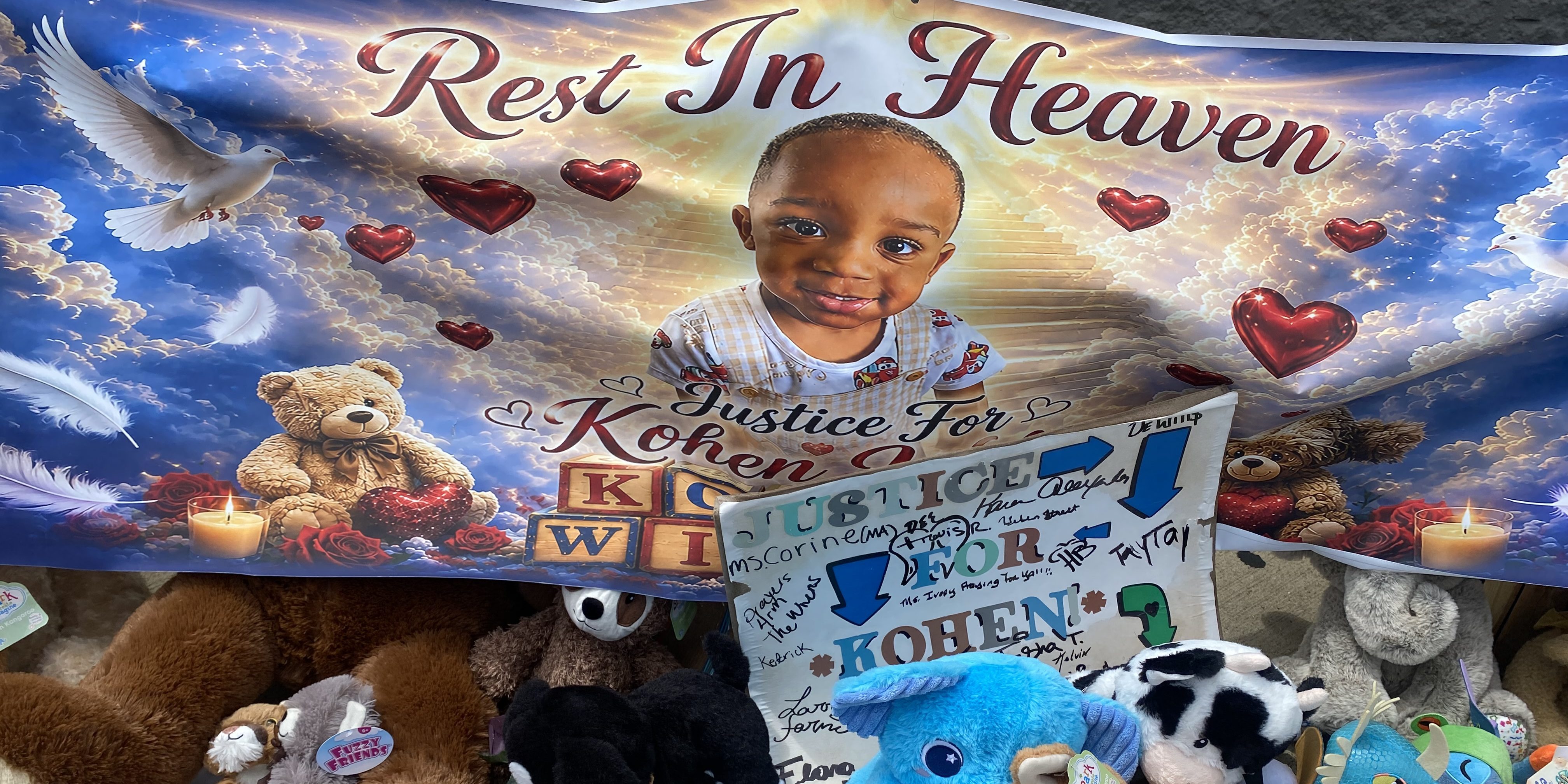
This week, residents of Senatobia returned to the Walmart for a vigil in honor of Kohen Wiley, in the same place where a makeshift shrine once stood. A community gathering has also been scheduled next weekend to mark what would have been his second birthday.

At the press conference Thursday, family and activists vowed to keep fighting for justice. As with so much police violence, however, the most pressing question isn’t whether Foster himself is punished. It’s whether we’re willing to tolerate more deaths like that of Kohen Wiley — whether Senatobia, Walmart, and the state of Mississippi will do anything to make clear that a 1-year-old’s life is more important than a pack of diapers.

The post Bodycam: Cop Was Not in Danger When He Fired Shots That Killed 1-Year-Old Kohen Wiley appeared first on The Intercept.
💾

💾

New body camera footage shows a Mississippi cop was not in danger when he fired the shots that killed 1-year-old Kohen Wiley.

Mamdani’s High-Wire Balancing Act Between ICE and NYPD Can’t Last

22 October 2026 at 17:45
NEW YORK, NEW YORK - SEPTEMBER 09: NYPD Commissioner Jessica Tisch and New York City Mayor Zohran Mamdani attend an unveiling ceremony for a new 9/11 Memorial Wall at One Police Plaza on September 09, 2026 in New York City. Mayor Mamdani joined NYPD Commissioner Jessica Tisch, family members of first responders, and other NYPD officers as they unveiled a new wall display that honors first responders who lost their lives during the September 11th World Trade Center terror attacks and since. (Photo by Michael M. Santiago/Getty Images)
NYPD Commissioner Jessica Tisch and Mayor Zohran Mamdani attend an unveiling ceremony for a new 9/11 Memorial Wall on Sept. 9, 2026, in New York City. Photo: Michael M. Santiago/Getty Images

The October 8 shooting of Oscar Belgal by Immigration and Customs Enforcement agents in front of his 5-year-old son in Manhattan forced into the open a question that had been on many New Yorkers’ minds: What would the New York Police Department do when ICE broke the “rule of law” in the city, and how would Mayor Zohran Mamdani, the person who has the power to hire and fire the NYPD commissioner, respond? 

Shortly after the shooting, Mamdani addressed the incident with an appropriate amount of outrage, declaring ICE “rotten to its core,” and calling for the department to be abolished. His frustration was visible, but he was much less expressive when it came to his appraisal of the city’s response to the situation. He had nothing substantive to discuss with respect to his police department’s involvement, despite NYPD officers arriving on the scene only to find unidentified ICE agents holding guns, wearing plain clothes and disguises and masks, in apparent violation of federal laws requiring identification. (A recently passed New York state law prohibiting federal agents from wearing masks and other face coverings was temporarily blocked by a judge.) NYPD officers applied first aid and transported Belgal to NewYork-Presbyterian Allen hospital.

According to many eyewitness accounts and widely circulated video, members of the NYPD appeared to assist ICE agents by forcefully helping with crowd control — at one point, an NYPD officer shoved congressional candidate Darializa Avila Chevalier, whom Mamdani personally stumped for, to the ground. Later, NYPD cleared a path for federal agents to whisk Belgal away from the hospital to a federal detention facility downtown. 

After the shooting, the Democratic Socialists of America, several legislators, and Avila Chevalier all called on Mamdani to fire NYPD Commissioner Jessica Tisch and demanded the mayor uphold his campaign pledge to disband the NYPD’s infamous Strategic Response Group. Mamdani repeatedly refused to fire Tisch but said he was reviewing the 24-hour period around the shooting. When asked directly about Avila Chevalier being thrown to the ground, the mayor called it unacceptable, saying, “That is not something I will look to justify.” He reminded New Yorkers to be patient with efforts to reform the NYPD, ordered a review of the department’s use-of-force policies, and added funding for the inspector general’s office. But once again, he stood by his commissioner, citing “her record of uprooting corruption from the upper echelons of the NYPD while lowering crime across our city.”

Noticeably absent from any of Mamdani’s public remarks about the NYPD or Tisch was any public acknowledgment of the NYPD officers in relation to ICE agents during the Belgal incident.

Federal and city law enforcement occupy similar spaces but never really interact with each other. Mamdani made no mention of the ways in which the actions of federal agents put pressure on the NYPD as mediators — the primary function of police — to liaise in moments of conflict.

The NYPD typically relishes this role, which is why the department consumes so much of New York’s budget and shuns any attempts to redirect funds to other services that might reduce the need for police mediation to begin with. ICE forces local police to make choices in policy and in practice about how to deal with violent (often illegal) immigration operations.

If the NYPD believes itself to be the thin blue line, on which side of order and chaos do New York’s force and Mamdani believe these federal outside agitators to be?

When it comes to ICE, Mamdani’s rhetoric and policies haven’t always aligned, which has opened him up to questions about the kind of mayor he really is.

This omission — or evasion, depending on how you look at it — of this predicament is strange considering Mamdani’s willingness to speak with moral clarity about even the most contentious issues and confront them head-on. It’s also bizarre considering his penchant for weaving shared experiences together and for putting the lived experiences of New Yorkers front and center.

On the campaign trail, one of Mamdani’s most alluring traits was his ability to speak to the actual problems of everyday residents. It wasn’t just because he possessed once-in-a-generation oratory skills; candidate Zohran achieved this because, as a proud democratic socialist, there was an analysis — an explanation of the material conditions of life — baked into his politics. His rhetoric seemed in line with, or at least not alienated from (see: establishment Democrats), how fast reality was moving and how it was impacting the lives of everyday New Yorkers.

When it comes to ICE, however, Mayor Mamdani’s rhetoric and policies haven’t always aligned, which has opened him up to questions about the kind of mayor he really is. On one hand, he has shown that he will speak out against Trump’s fascist and inhumane immigration efforts. On the other hand, Mamdani hasn’t moved with the same level of force as his words. Many have pointed out that Mamdani seems to be engaging in realpolitik in an effort to get his extensive progressive agenda passed. It’s certainly not easy to bring the machine of the New York government up to speed while also being transparent about the ways in which he is moving the needle. But that’s exactly what he was elected to do.

Had Mamdani got into office and done nothing different than previous mayors — or even been exceptionally corrupt, pro-cop, and willing to help the Trump administration like predecessor Eric Adams — he might have been able to avoid his current moment of reckoning. But his administration’s genuine efforts on immigration set into motion a future where the NYPD and ICE would come into conflict.

One of Mamdani’s first moves as mayor was to take stock of how the city’s many agencies were upholding existing sanctuary city laws. In February 2026, he signed Executive Order 13, his first major order pertaining to immigration, to create the Mayor’s Office of Immigrant Affairs and establish baseline guidance, such as explicitly prohibiting ICE and other non-local law enforcement agencies from using city-owned garages and vacant lots. Crucially, EO 13 also required an audit of several agencies, including NYPD, to review their immigration-related policies.

NYPD already has a problematic history dealing with immigration enforcement. During the Adams administration, there were documented cases where the NYPD assisted or collaborated with immigration enforcement, sometimes in accordance with NYPD policies. A December 2025 report by Jocelyn Strauber, then-commissioner of the New York City Department of Investigation, found at least one incident in which “an officer violated local law by providing assistance to federal authorities in connection with enforcement of the federal civil immigration law,” as well as evidence that NYPD did “not fully comply with documentation and reporting requirements concerning requests for assistance with federal civil immigration enforcement.” The report also found that there were numerous examples of NYPD policies and practices that elevated the “risk of improper information sharing or assistance to federal authorities for purposes of civil immigration enforcement.”

The resulting audit, which was released on May 22 by Mamdani’s deputy mayor, built on those findings and recommended NYPD (and other city agencies) update its reporting requirements. But the audit also left a lot of open questions, which numerous legal advocates attested to, about areas in which NYPD protocols and policies keep avenues open to potentially collaborate with ICE. The NYPD was “not being held to a high standard of accountability or scrutiny for collusion,” the audit found, and there were significant “gaps” in documenting potential violations of department policies. The question of what the city and its mayor could do to ensure compliance also remained unanswered.

Sanctuary laws prohibit using city resources for immigration enforcement, and a January 2025 NYPD internal memo specifically barring officers from facilitating street closures to enable immigration enforcement seemed to solidify that directive. But several high-profile incidents involving the NYPD have tested the department’s compliance with sanctuary laws. In October 2025, before Mamdani was elected, during an immigration raid in Chinatown, eyewitnesses and viral videos showed NYPD officers establishing perimeters to create a path for federal law enforcement agents. In another instance in May 2026, ICE reportedly “dragged” a Nigerian immigrant out of a Brooklyn hospital after agents used force in his arrest; NYPD officers brutalized and arrested numerous protesters and cleared debris from the road to enable ICE to escape the crowds and abscond with their target.

When the NYPD arrives at an ICE raid or at a protest against an immigration abduction, what are officers supposed to do?

Both of these incidents happened under the watch of Tisch, who has insisted again and again that the department follows all sanctuary laws. When asked about the Brooklyn incident, Mamdani insisted NYPD was responding to 911 calls about the protest, not helping ICE. “Our laws leave nothing, no room for interpretation about the fact that our NYPD will not participate in civil immigration enforcement,” he said. NYPD told the Guardian US: “Upon arrival, officers observed numerous individuals acting in a disorderly manner, obstructing vehicular traffic, and blocking emergency entrances and exits at Wyckoff Heights medical center.” 

When the NYPD arrives at an ICE raid or at a protest against an immigration abduction, what are officers supposed to do? On this point, NYPD and Mamdani have offered little clarity. But October 8 doesn’t pass the smell test for anyone who lives in overpoliced neighborhoods or closely observes the activity of police and their behavior.

NYPD officers were responding to an unrelated call nearby when they heard the report of shots fired. When they arrived, they encountered several men in various forms of attire, including some in construction-style vests, face masks, and at least one carrying a long gun, which officer body camera footage released by the Department confirms. The official account of the NYPD’s interaction offers no mention of ICE. There are no additional insights or explanations of department protocol that might shed light on how officers are supposed to act given the circumstances. Curiously, what those officers thought when they encountered several masked men with guns, and the conversations that took place between the ICE agents and the police, is a mystery, too. All we know is that officers agreed at some point that the NYPD would place Belgal in a vehicle, apply aid, and take him to the hospital. 

Since that evening, Mayor Mamdani has stood firm in his condemnation of ICE and their operations. “We will not normalize ICE’s viciousness,” he said, calling for the agency to be abolished. That’s the least he could say to reassure New Yorkers he understands the stakes they feel in their bones already. The shooting of Oscar Belgal and his subsequent inhumane treatment — his lawyers say Belgal is still in solitary confinement with a bullet in his neck — is a reminder of how normalizing ICE operations in New York City is already well underway. 

There have been more lower-profile ICE sightings and kidnappings, which echoes what has been the case in other parts of the country. What Mamdani will do to bring the city’s response into alignment with the needs of New Yorkers in this moment still remains an open question, including clarifying the NYPD’s role in the city’s ongoing fight against the Trump administration’s gestapo tactics.

If this month’s incident offered a lesson for Mamdani, it is that clearly articulating what is right is a full-time job that requires an unwavering willingness to confront reality. It’s not enough to say the thing on one issue — calling a genocide by its name, publicly dragging FIFA for pandering to wealthy elites, or deriding the inhumane practices of slumlords — but not stand on business when it comes to the reality that New Yorkers are seeing on their own streets. 

Sometimes, an actual seismic event can reveal what needs to be done and that there are alternatives that may not have been fully realized before. Hope isn’t lost. There is still time for Mamdani to update his analysis. But in this moment, the mayor must make a choice: renew his commitment to the truth, or be defined by its absence. 

The post Mamdani’s High-Wire Balancing Act Between ICE and NYPD Can’t Last appeared first on The Intercept.

💾

Kohen Wiley’s Family Says Investigators Didn’t Contact Them Before Concluding Cops Did No Wrong

20 October 2026 at 22:18

For months, the residents of Senatobia, Mississippi, have waited with a mix of dread and anticipation for state authorities to decide what, if anything, they plan to do about the killing of Kohen Wiley. Ever since the 1-year-old child was shot by a white police officer outside a local Walmart in June, organizers have held protests and press conferences outside the town’s city hall to call for accountability — or even a simple acknowledgment — for the loss of the Black toddler.

On Monday, Senatobia residents got their answer: Officials plan to do nothing. “In this incident, the Attorney General’s Office found the use of force was justified,” Republican Mississippi AG Lynn Fitch announced in a three-sentence news release posted on her official website.

The announcement was met with anguish and outrage from people inside and outside the state. The Mississippi Legislative Black Caucus demanded more information. “Kohen Wiley was a baby,” said state Rep. Kabir Karriem, who chairs the MLBC. “He posed no threat. He deserved protection, and he deserved a future. His family is owed more than a conclusion. … Announcing that a review is complete does not fulfill the responsibility to explain how a police encounter ended with a baby dead.”

The attorney general’s decision followed a probe into the case by the Mississippi Bureau of Investigation, which was “responsible for conducting a thorough and impartial investigation,” as Mississippi Department of Public Safety Press Secretary Alex Gibert wrote to The Intercept on Tuesday. The email said that the probe “remains open and active.” But in a subsequent phone call, Gibert said that the investigation “involving the officer is closed.”

Gibert reiterated what the agency has previously said: that body camera footage and other investigative materials will be made available through public records requests. But she added that nothing will be released until after officials meet with Wiley’s family. “We are meeting with the family later this week,” she said.

As recently as Monday, however, the family maintained they had received no communication from the state. Kohen’s grandmother, Veronica Roberson, told Mississippi Today that she found out about the attorney general’s decision on Facebook and that no one had reached out. The outlet also reported last month that, although the investigation was complete and on the attorney general’s desk as of mid-September, no one had interviewed Kohen’s mother, Vel’lesiya Wiley, who was holding her child in her lap when he was shot dead by police. This called into question whether the investigation is as “thorough” as authorities have claimed. Asked by The Intercept whether the MBI investigation sought to interview Wiley, Gibert said she could not comment.

The man who killed Baby Kohen, as the child is now known, was identified by the press as Senatobia Police Sgt. Hunter Foster, who fired his gun into the car where Wiley was riding in the passenger’s seat on June 14. The exact circumstances that led to the shooting remain murky. Police said that officers responded to a shoplifting call at the Walmart; a two-page incident log released to The Intercept via a public records request contained no information about the shooting but noted that the items allegedly stolen were baby clothes and a pack of Pampers.

In a video posted on social media shortly after her child was killed, Wiley said she got into the passenger’s seat of the Ford Fusion after the driver, Latoya Ferrell, was stopped on her way out of the store. Police accused the women of trying to flee; according to Wiley, when she saw officers approach with guns drawn, she said, “I raised my baby up” to warn that he was in the car. Then the police shot him. Ferrell was also struck and was hospitalized, but survived.

The Senatobia Police Department immediately claimed that the car drove toward police, almost hitting them — an account swiftly echoed by the Mississippi Bureau of Investigation. But to date, officials have released no evidence to support this account. Civil rights attorney Ben Crump, who took the family’s case, hired an outside pathologist to do an external examination of the child and to review visual evidence. In July, the medical examiner concluded, based on the appearance of the injuries and path of the fatal bullet, that the officer shot the baby from the side of the car, undermining the police’s version of events.

The announcement by the attorney general has renewed long-standing calls for video to be released. In a press conference held earlier this month, local activist Patrick Lumumba of the Senatobia Committee for Accountability and Transparency accused the state of tailoring its investigation to support a lie — that Wiley and Ferrell deliberately sought to strike Foster with the car.

“If video footage would prove that, they would have released it the next day,” he said.

Mississippi racial justice activist Patrick Lumumba, founder of the Senatobia Committee for Accountability and Transparency, addresses the police killing of one-year-old Kohen Wiley at a board of aldermen meeting in Senatobia, Miss. on July 7, 2026.
Mississippi racial justice activist Patrick Lumumba, founder of the Senatobia Committee for Accountability and Transparency, addresses the police killing of 1-year-old Kohen Wiley at a board of aldermen meeting in Senatobia, Miss., on July 7, 2026. Photo: Liliana Segura/The Intercept

The killing of Kohen Wiley drew national attention to Senatobia, a small city just south of Memphis, Tennessee. City leaders mostly refused to address the killing, save for a brief, scripted video released by Senatobia Mayor Greg Graves a few days after the shooting. By the time Kohen’s family laid him to rest in late June, the police narrative had prompted many inside and outside Senatobia to blame Kohen’s mother for his death, with rumors suggesting that, rather than charge the police officer, authorities would charge the mother and driver.

The child’s death followed years of warnings by Black residents over the police’s treatment of adults and children alike. Among the string of high-profile incidents was the jailing of a 10-year-old boy for public urination, as well as the violent arrest of two sisters, 13 and 14, outside a public housing complex. According to the girls and their mother, then-police chief Richard Chandler personally ordered one of the girls to “get your Black ass out of the road” before forcing her to the ground. And on Mother’s Day 2025 — in the same Walmart parking lot where Kohen Wiley would be shot dead — a female officer forced a woman out of her car in front of her young children for sitting in a handicapped parking space.

In the summer of 2025, the Senatobia Board of Aldermen dismissed Chandler, replacing him with interim police chief Harold Vanderford, a move aimed at restoring trust, as one alderman put it. But the killing of Kohen Wiley revealed that, in reality, nothing had changed.

Residents of Senatobia, including one former law enforcement officer, told The Intercept that the institutional culture brought by Chandler remained entrenched, with Senatobia officers showing disdain and disregard for the community. City records also showed that the chief had pushed the city to adopt new ordinances that would bring in revenue for the police department, while expanding punishments for misdemeanors like loitering.

At several board of alderman meetings over the summer, Lumumba and other activists reminded city leaders that they’d warned officials about the danger posed to Black residents by Senatobia police. At the same time, Mississippi Today revealed evidence that Foster had a history of racist remarks. Just days before he shot Kohen Wiley, Foster was accused of making racist comments to a Black colleague, who later left the police department. Foster is still on the force, on paid leave.

Then, in late August, Mississippi Today exposed racist text messages sent by Vanderford himself. The text messages dated back to the summer of 2025 and contained more than a dozen uses of the N-word. City leadership initially tried to sweep the scandal under the rug: Vanderford claimed that the messages were created by AI and, after a closed-door meeting, the mayor and members of Senatobia’s board of aldermen announced that Vanderford would stay on. But individual aldermen pushed back publicly. On September 1, Vanderford tried to resign, only for the board to announce that they had voted to fire him. Vanderford was replaced by a Black woman, Senatobia Police Lieutenant Angelica Maze.

In a statement accepting the appointment as interim chief on September 5, Maze did what the police department had previously failed to do: express “heartfelt condolences to Kohen Wiley’s family and to everyone in the community who has been affected by this tragic loss.”

In another statement on Monday, after the attorney general announced the use of force was justified, Maze acknowledged that the community “may have questions, concerns, and strong emotions, and we respect everyone’s right to express their views peacefully.”

With the body camera footage likely to be released within the next several days, a new round of waiting begins in Senatobia. In the meantime, the Senatobia Committee for Accountability and Transparency released a statement on social media.

“This was never just a news story for us. It was personal – many of us are residents of Senatobia and parents of vulnerable children. … We are also human beings who need time to grieve, reflect, and process everything that has transpired.”

The post Kohen Wiley’s Family Says Investigators Didn’t Contact Them Before Concluding Cops Did No Wrong appeared first on The Intercept.

💾

The Key Witness Against Richard Glossip Just Returned to Court. It Didn’t Go Well.

6 October 2026 at 11:00

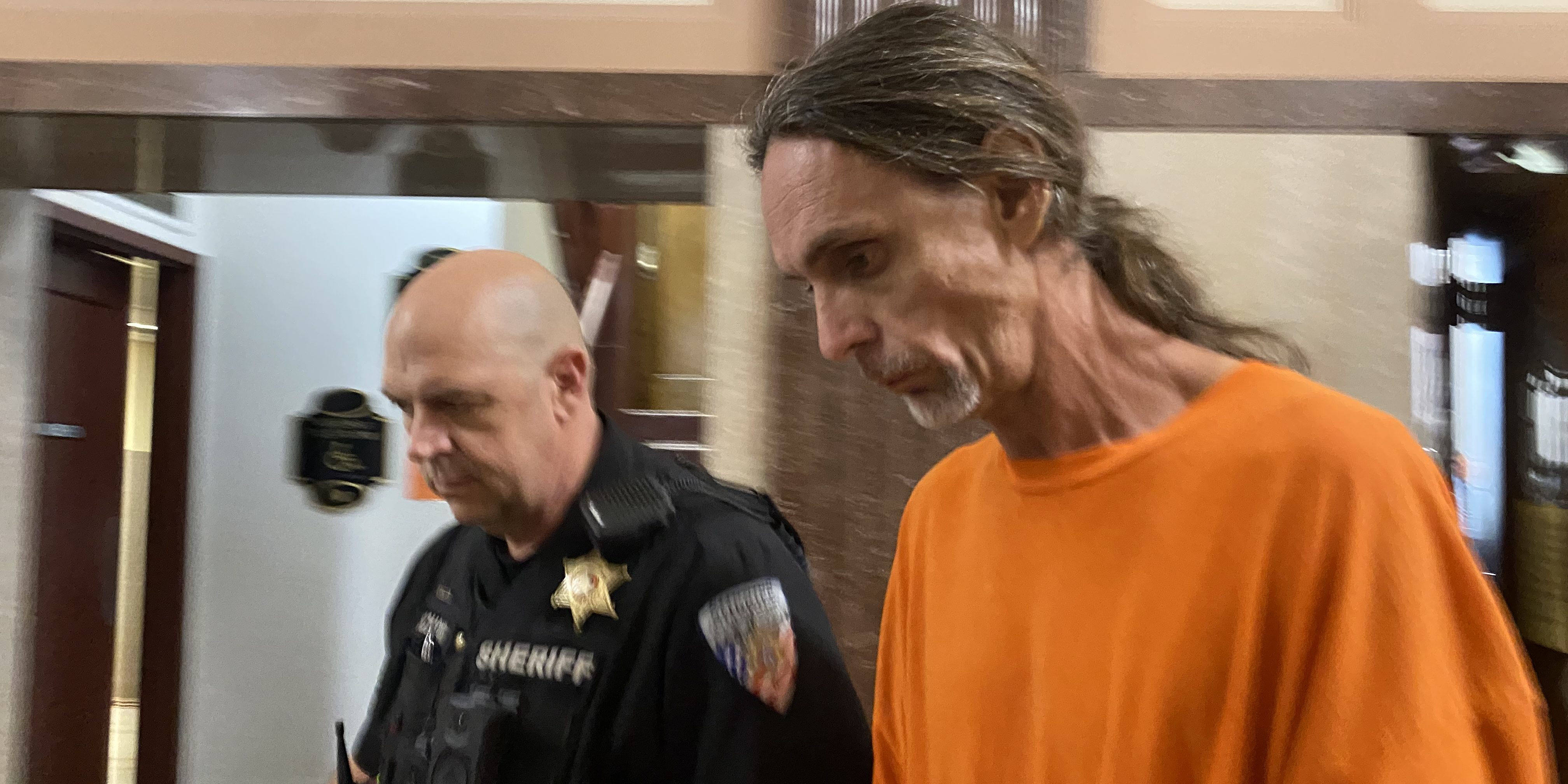
When the elevator doors opened, the reporters waiting in the hallway immediately crowded around the gaunt, orange-clad man who emerged, escorted by his public defender and a sheriff’s deputy. The three men made their way toward the seventh-floor courtroom of Oklahoma County District Court Judge Natalie Mai, as reporters shouted questions.

“Why did you kill Barry Van Treese?” one asked.

Justin Sneed, 49, didn’t answer, his handcuffs and waist chain clanging as he walked. With a short, graying goatee and long brown hair pulled back into a ponytail, Sneed maintained a hollow stare. Inside the courtroom, his lawyer directed him to a chair just in front of the jury box. Sneed sat, his hands clasped in front of him, and kept his gaze toward the floor. Directly across the room was Richard Glossip, the man nearly executed for killing their boss — a grisly murder that Sneed actually committed.

Sneed was 19 years old when he beat Van Treese to death at the Best Budget Inn, a rundown motel Van Treese owned on the outskirts of Oklahoma City. Sneed admitted to the January 1997 murder but swore Glossip put him up to it. Glossip insisted he was innocent and, apart from Sneed’s account, there was scant evidence connecting him to the crime. Still, in exchange for a life sentence, Sneed became the state’s star witness against Glossip, clinching his conviction and sending him to death row.

It would not take long for Sneed’s story to start falling apart. Glossip’s original conviction was overturned after a state court found that Glossip’s trial lawyers failed to present critical exculpatory evidence — a video of Sneed’s police interrogation that showed Oklahoma City detectives pressuring him into implicating Glossip. Nevertheless, in 2004, a second jury reconvicted Glossip and again sentenced him to death.

In 2025, the U.S. Supreme Court vacated Glossip’s conviction, concluding that it was rooted in false testimony and prosecutorial misconduct. The justices found that Sneed lied on the stand, dismantling the basis for the state’s case. “Besides Sneed, no other witness and no physical evidence established that Glossip orchestrated Van Treese’s murder,” Justice Sonia Sotomayor wrote for the majority. “Thus, the jury could convict Glossip only if it believed Sneed.”

Many expected Glossip’s saga to end there. Instead, Oklahoma announced it would retry Glossip for first-degree murder, once again relying on Sneed. “The evidence presented will be essentially the same as was presented in the first two trials,” prosecutor Jimmy Harmon told Mai earlier this year.

Glossip’s attorneys have strenuously objected to the state’s plan to use the same discredited evidence for a third time. They are also adamant that they should have a chance to put Sneed on the witness stand, so that Mai can assess his credibility before trial. It is this insistence that led Glossip and Sneed to sit face to face in court for the first time in decades.

Glossip, now 63, was released on bond in May. He sat at the defense table in a navy suit and crisp white shirt while the daylong hearing got underway. Mai had convened the September 30 proceeding to consider a flurry of defense motions, many of which centered on Sneed’s role in the case. Sneed had been subpoenaed in advance of the hearing, which attracted a gaggle of reporters to Mai’s courtroom. But it was unclear whether he would take the stand.

Much of the time was spent listening to lawyers on both sides argue over ongoing conflicts in the case. Glossip’s legal team has repeatedly clashed with prosecutors over the state’s obligation to disclose evidence before trial. The constant disagreements have threatened to derail Mai’s tight trial schedule; after initially setting Glossip’s trial for September, she has since pushed the trial date to December 7.

But that too seems vanishingly unlikely. As the hearing dragged on, the bigger question was whether a trial will happen at all.

It was exactly 11 years earlier, on September 30, 2015, that Glossip came perilously close to being put to death at the Oklahoma State Penitentiary, only for officials to realize at the eleventh hour that they had procured the wrong combination of drugs to carry out his lethal injection. In the decade that followed, Glossip’s defense attorney, Don Knight, reinvestigated the case and uncovered a trove of evidence previously withheld by the state. He also secured a host of new witnesses who came forward to say that, despite the state’s portrayal of Sneed as a hapless dolt who was entirely under Glossip’s control, Sneed was actually cunning, volatile, and entirely capable of murder on his own.

The revelations eventually prompted a bipartisan group of Oklahoma lawmakers to question Glossip’s conviction and seek an independent investigation into the case. In June 2022, the law firm Reed Smith LLP published the first in a series of exhaustive reports, unearthing even more evidence undermining prosecutors’ theory of the crime and revealing that the state had willfully destroyed key pieces of evidence before Glossip’s 2004 retrial. The following year, newly elected state Attorney General Gentner Drummond announced his own probe into the case. That investigation found myriad problems with Glossip’s prosecution, persuading Drummond that Glossip’s conviction and death sentence should not stand.

Drummond asked the Oklahoma Court of Criminal Appeals to vacate Glossip’s conviction but it refused, once again setting Glossip up for execution. The attorney general took unprecedented steps to spare Glossip’s life, ultimately joining Glossip’s efforts to get the case before the Supreme Court — and taking a victory lap after the justices finally ruled in Glossip’s favor in February 2025.

But just a few months after the high court ruling, Drummond did an abrupt about-face, announcing that he would retry Glossip for first-degree murder. The reversal coincided with Drummond’s campaign for governor, which ended in a primary defeat this past August. In the meantime, defense attorneys repeatedly reiterated Drummond’s own critiques of the case, emphasizing that, until recently, he vehemently criticized the same evidence his prosecutors plan to reuse.

Among these criticisms were key concessions Drummond made regarding misconduct by Connie Smothermon, the lead prosecutor at Glossip’s 2004 retrial. At the heart of the Supreme Court ruling was that Smothermon not only failed to disclose key notes about Sneed’s psychiatric history, but also failed to correct portions of Sneed’s testimony that she knew were false.

Richard Glossip, center, alongside defense attorney Don Knight and other members of his legal team, as seen from outside Oklahoma County District Judge Natalie Mai’s courtroom on Sept. 30, 2026. Photo: Liliana Segura/The Intercept

Drummond also conceded that Smothermon improperly sought to alter Sneed’s testimony before he took the stand at the retrial to make it fit the forensic evidence. At Glossip’s first trial, Sneed denied attacking Van Treese with a knife even though a knife was found at the scene — and despite the medical examiner’s findings that there were puncture wounds on Van Treese’s chest. Midway through Glossip’s second trial, Smothermon wrote a note to Sneed’s defense attorney, indicating that there were inconsistencies Sneed needed to clear up.

“Our biggest problem,” Smothermon wrote, “is still the knife.” When Sneed later took the stand, he testified that he did, in fact, stab Van Treese.

Glossip’s attorneys did not discover this note until 2022. In its ruling, the Supreme Court agreed with Drummond that Smothermon violated Glossip’s rights by trying to modify Sneed’s testimony mid-trial. Yet Drummond’s own prosecutors now argue that there’s no evidence that Smothermon’s mid-trial intervention “improperly influenced” Sneed’s testimony.

In early September, Glossip’s attorneys filed a motion urging Mai to put Sneed on the stand to clear this up. “No court has yet held an evidentiary hearing to determine the full scope of the … violation,” they wrote, “its effect on Sneed’s testimony, and what procedures may be necessary to prevent the jury from being deceived about what Sneed remembers versus what he was coached to say.”

In a surprisingly candid reply, Joshua Lockett, deputy chief of the Oklahoma attorney general’s criminal appeals unit, wrote that it is unreasonable to expect Sneed to be able to answer questions about the knife and his shifting trial testimony after all these years. “Any evidentiary hearing would be unable to disentangle the source of Sneed’s knowledge” — whether it came from Sneed’s memory about the night of the crime, or from what he “absorbed” from Smothermon’s mid-trial note, he wrote. “That sorting would have been difficult in 2004,” he wrote. “It is impossible in 2026.”

In other words, the state appeared to be conceding that its star witness cannot now reliably recount what happened the night he murdered Barry Van Treese.

Hanging over Wednesday’s proceeding was an uncomfortable reality that has dogged the state’s case for years: evidence that Sneed has repeatedly tried to take back his claim that Glossip coerced him into murdering Van Treese.

In October 2014, nearly a year before Glossip’s near-execution, Sneed’s adult daughter O’Ryan Justine Sneed sent a letter to the Oklahoma Board of Pardon and Parole, urging them to grant clemency to Glossip. “For a couple of years now, my father has been talking to me about recanting his original testimony,” she wrote. “I feel his conscious [sic] is getting to him.”

“Do I have the choice of re-canting my testimony at any time during my life, or anything like that.”

Among the most compelling pieces of evidence to emerge since then are two handwritten notes, penned years apart, in which Sneed indicated he wanted to retract his testimony. In 2003, a year before Glossip’s second trial, Sneed wrote to his public defender, Gina Walker, asking, “Do I have the choice of re-canting my testimony at any time during my life, or anything like that.” In 2007, he sent Walker another letter: “There are a lot of things right now that are eating at me,” he wrote. Things he needed “to clean up.” Walker, who has since died, discouraged him from coming forward.

Both of these notes came from Sneed’s public defender file. Ordinarily such communications would be shielded from release by attorney-client privilege, but in this case the public defender’s office provided the documents to investigators with Reed Smith. Glossip’s attorneys argued that there is reason to believe that there may be additional material in Sneed’s file that could cast further doubt on his story.

But whether the lawyers might be entitled to any of these records depends on a key question: Did Sneed consent to the disclosure of the records in the first place?

Over the state’s objections, Mai said she would allow Sneed to take the stand for the “limited purpose — and I do mean limited purpose” of asking Sneed whether he ever consented to his records being released. “I will allow for very limited questioning of Mr. Sneed as to that topic,” she said.

Sneed shuffled to a wooden chair next to the judge’s bench and sat awkwardly, his legs spread wide and his gaze still fixed on the ground.

In response to questions from one of Glossip’s defense attorneys, Sneed said he never consented to the release of materials from his public defender file. But he also said that he met with investigators with Reed Smith while accompanied by the head of the public defender office. Perhaps more perplexing, Sneed said he knew by then that his files had been released to investigators because he’d seen it broadcast “on the media, when it was on the television with the news reporters.” When the investigators tried to interview him, “I just didn’t answer their questions, didn’t try to go into details about anything,” Sneed said, “because I was actively upset about the fact that [the files] were released anyway without my consent.”

The testimony was confusing and brief, an unsatisfying turn on the stand that did nothing to answer any of the long-standing questions about the state’s star witness or how he would testify about the murder this time around.

As they have for months, lawyers with the attorney general’s office spent much of the day pushing back hard on the notion that Sneed should take the stand before trial to discuss the knife, his public defender file, or anything else. In court, Knight pointed out that prosecutors have met with Sneed repeatedly over the last year and a half, and yet have only turned over to the defense brief summaries of those conversations. Taken together, the state’s maneuvering suggests prosecutors are far less confident in their case against Glossip than they have previously claimed.

“For 29 years, this case had been marked by prosecutorial errors and misconduct.”

In a statement to The Intercept, Knight said he was struck by prosecutors’ efforts to keep Sneed from testifying. “For 29 years, this case had been marked by prosecutorial errors and misconduct,” he said. “And now they can’t even trust the testimony of the only witness that says Rich was involved in this murder. But they can’t hide him forever. We look forward to spending a couple of days with Mr. Sneed on the stand at trial.”

As Sneed was led out of the courtroom, reporters surrounded him again as he made his way to the elevators. “All these years later do you have any regrets?” one asked just before the doors closed. Sneed did not answer.

The post The Key Witness Against Richard Glossip Just Returned to Court. It Didn’t Go Well. appeared first on The Intercept.
💾

The “Satanic Panic” Made Her a True-Crime Obsession. The Truth Is More Haunting.

27 September 2026 at 11:00

Before she became infamous as one of the youngest American women ever sentenced to die, Christa Gail Pike was a North Carolina teenager who broke into a community center to steal some candy. At 5-foot-3, with thick auburn curls, she’d been in trouble at home and in school but not with the law. A juvenile court judge put Pike on probation, but she ran afoul of the rules. In the fall of 1991, when she was 15, Pike was sent to the Juvenile Evaluation Center in Swannanoa. She arrived just before Thanksgiving.

Nestled in the Blue Ridge mountains, just minutes away from Asheville, the center first opened in the 1960s as a “haven for troubled children,” in the words of the press. It was supposed to be an alternative to more severe “training schools,” but by the 1990s was skewed toward punishment. According to former staff, progress was measured in points, which were added or subtracted according to a child’s behavior. Infractions ranged from having “contraband” — including pencils or pens, which were allowable only in sanctioned study areas — to running away.

The system didn’t work for Pike. “She was not following the rules or she was doing something to sabotage herself,” one social worker would later testify at a hearing in Pike’s case. Although her violations weren’t generally serious, they did keep her stuck in place. Most kids stayed at the center for a few months; Pike stayed for well over a year.

It seemed possible that Pike might not actually want to go home. From the time she was a little girl, she’d been hurt and neglected by the adults who were supposed to protect her. Months before arriving in Swannanoa, Pike had been temporarily removed from her home by the state’s social services agency, which found that her mother’s live-in boyfriend was physically and sexually abusing her. Shortly afterward, Pike wrote a letter to her best friend saying she wanted to kill herself. Among a list of reasons, she wrote that she’d been raped by a different man, a neighbor who assaulted her when she was 11 years old.

Nevertheless, Pike stood out among her peers at the juvenile center. She was engaging and intelligent; she earned her GED and became a teacher’s assistant. “Christa was open and willing to grow,” one counselor would later write in a clemency letter on Pike’s behalf. “Though she had psychological struggles and resulting behavioral difficulties, I could see that Christa was a good child who was trying to find her place in the world. I never saw Christa act aggressively or violently. She was trying to figure out how to heal from her traumas.”

“She is so much more than the darkness which has followed her from childhood into adulthood.”

Pike finally left Swannanoa in March 1993. The following year, the counselor got a letter from her in the mail. “She shared that she would be visiting Asheville soon and invited me to meet up with her,” the counselor recalled in the clemency letter. But the visit never happened. In January 1995, Pike was arrested alongside two other teenagers while enrolled at a Jobs Corp program in Knoxville, Tennessee. At 18, she was charged with first-degree murder.

The crime seemed pulled from a horror movie — an act of savagery that would become imprinted in the public psyche. Nineteen-year-old Colleen Slemmer, one of Pike’s classmates, had been lured into a secluded corner of a city park, then beaten, bludgeoned, and slashed with a boxcutter. Her body was found naked from the waist up. On her chest, her attackers had carved a pentagram.

Pike admitted her guilt within days. In a tape-recorded statement to investigators, she sobbed that she had begun hitting Slemmer and just didn’t stop. “I literally thought I was going crazy cause I’d never seen myself act like that before in my life,” she said. Before long, witnesses came forward with disturbing new details. In the public’s eye, Pike transformed from an 18-year-old who committed a shocking act of violence into a woman driven by the devil himself.

Weeks after her 20th birthday, Pike was convicted and sentenced to die.

Pike had been on death row for nearly 30 years when Tennessee announced her execution date: September 30, 2026. In a lengthy clemency petition submitted earlier this month, Pike’s lawyers urged Gov. Bill Lee to spare her life. They told a story of Pike’s upbringing that her jury never heard, a childhood shaped by untreated mental illness and sexual abuse beginning when she was just two years old. They enclosed dozens of letters from people who have known Pike over the years, including in North Carolina.

“We in North Carolina — myself included — failed Christa.”

One of the letters came from the lawyer who represented Pike in her first juvenile delinquency hearing, not long before she was sent to Swannanoa. Now a retired tribal court judge, he was filled with regret. “In my view, this proceeding was the most pivotal event of Christa’s sad childhood,” he wrote. It set in motion everything that would follow. Rather than treating her like a vulnerable child in need of support, the juvenile system had compounded her trauma through more punishment, with devastating consequences.

“I regret to tell you, Governor, that we in North Carolina — myself included — failed Christa,” he wrote. He urged Lee to make up for his state’s mistakes. “She is so much more than the darkness which has followed her from childhood into adulthood.”

If Lee does not show mercy — and barring any last-minute intervention by the courts — Pike will be executed by lethal injection at Riverbend Maximum Security Institution on Wednesday at 10 a.m. She would be the 19th woman executed in the country in the modern death penalty era — and the first woman put to death in Tennessee in two centuries.

Pike, who turned 50 this year, has spent her entire adult life at the Tennessee Prison for Women in Nashville, nearly all of it in solitary confinement. Although there was one other woman living under a death sentence when Pike first arrived at the prison, her sentence was commuted and she was paroled in 2011.

One of Pike’s co-defendants was released long ago, while the other, her then-boyfriend, Tadaryl Shipp, remains eligible for parole. Shipp was 17 when he participated in Slemmer’s murder, which prevented prosecutors from seeking the death penalty under state law. In a letter asking Lee to grant clemency, Shipp’s trial lawyer wrote that he was surprised that Pike’s attorneys had not emphasized her boyfriend’s role at her 1996 trial. “When I represented Tadaryl in his 1997 trial,” he wrote, “the defense I presented was to shift as much blame as possible to Christa.”

Like many women condemned to die, Pike became an object of lurid fascination. In 1998, after Texas executed Karla Faye Tucker, interview requests poured in from talk shows, filmmakers, and journalists all over the world, according to the Knoxville News Sentinel, which compared the level of interest to that of the late Martin Luther King Jr. assassin James Earl Ray. Pike, the newspaper said, “has become a death-row celebrity, a child star of the true-crime beat.”

The article described Pike as a “savvy subject,” a kinder version of an accusation that has followed Pike from the start: that she reveled in her notoriety while showing no signs of remorse. For many people, including Slemmer’s mother, who plans to witness Pike’s execution, the image of an unrepentant killer basking in attention has remained fixed in time. So has the claim by the lead detective that Pike was filled with excitement by the murder. He told interviewers in the 2025 podcast series “Unrestorable” that Pike was “giddy” while recounting what she’d done. “This was the greatest thing that ever happened to her,” he said. “She was just happy as a lark.”

Audio of Pike interrogation’s does not match these descriptions — and numerous people who know Pike say that she has expressed remorse for years. One woman, who began visiting her 30 years ago, wrote in a clemency letter that Pike has matured into a compassionate person who cares for those around her. “She has told me repeatedly that she would trade places with Colleen Slemmer so that her mother … could have her daughter back,” she wrote.

Although the Tennessee Department of Correction routinely denies interviews with people under a death sentence, Pike addressed the matter through one of her attorneys for the 2025 podcast. The older she has gotten, she said, the more she has absorbed the magnitude of what she stole from Slemmer and her family. “She had a whole world of her own that I just jerked her out of. And there’s a big empty spot there, where she could be shining right now. And she’s not.”

Pike’s case may stand out for its brutality and sensationalism, but her background shares much in common with other people on death row, especially women, whose lives are frequently marked by sexual violence and trauma. One clinical psychologist describes the amount of abuse and neglect Pike experienced from the time she was a preschooler as “almost impossible to grasp.”

This history should have been key to Pike’s defense. But like many others condemned to die, she was also tried in an era in which attorneys assigned to capital cases were often not up to the task. Pike was represented by a pair of court-appointed lawyers who were inexperienced and overworked. Neither had ever handled a capital case — nor had her trial judge.

Perhaps most telling, her own lead attorney would end up being one of a slew of people who seemed eager to cash in on the case. Post-conviction records show that he asked Pike to sign an agreement giving him the rights to her story. “My thought was, I would write a book on Christa, the human side of Christa,” he later testified at a court hearing. “I thought to do that I would probably need to get some kind of release. It was one of those spur of the moment things. I drew it up, I took it over, she signed it. Nothing ever became of it.”

“Looking back,” he added, “it’s probably something I shouldn’t have done.”

There would be no shortage of people telling Pike’s story. Her crime has been described in countless articles, podcasts, and sensationalistic TV series with names like “Mean Girl Murders.” All of them include a disturbing and singular detail that has come to define the case: Slemmer’s body was found with a piece of her skull missing. It would be discovered in the pocket of a jacket belonging to Pike.

“When the piece of skull got out, that’s kind of the death knell for Christa,” a former Knoxville journalist who now creates true-crime coloring books told the “Unrestorable” podcast. “You’re not coming back from that.”

Screenshot
Christa Pike wipes away tears in a Knoxville, Tenn., courtroom during a 2008 post-conviction hearing challenging her death sentence. Photo: Courtesy of Christa Pike’s legal team

This ghoulish revelation fueled the belief that Pike was driven by satanic beliefs. The murder coincided with a societal fixation now known as the “satanic panic,” in which reports of devil-worshipping cults took hold across the country during the 1980s and ’90s, leading to false accusations and wrongful convictions. Fears were especially pronounced when it came to young people, who appeared to be “dabbling in the trappings of satanism,” as the AP reported in 1988, “whether serious or as a prank.” In most cases, there was nothing to back up the hysteria. But many saw Pike’s case as chilling proof that the crisis was real.

The lead investigator in Pike’s case, Knox County Police Detective Randy York, had attended a training on satanism and cults just before Slemmer was killed. In interviews, he has maintained that the pentagram was the key that unlocked the case; a woman called police to say that her daughter was in the Jobs Corp program and was worried about a satanic cult, which ultimately led York to Pike. But there was a more straightforward link: Slemmer was in the same residential program as her attackers. On the day of the murder, all four teenagers signed out at the same time. Only Slemmer failed to sign back in.

Regardless, it was Shipp, not Pike, who was interested in satanism. The teenager kept a satanic altar in his room. But as his lawyer would later write in his clemency letter for Pike, for all the focus on satanism, “that was never the motivation behind what happened.” By most accounts, Pike targeted Slemmer because she believed that she wanted to steal her boyfriend; Pike has said she did not plan to kill Slemmer, only to fight her. But there was no explaining such a senseless crime. “We were all just really screwed up kids,” Pike said on the “Unrestorable” podcast. “We were all going through things that no one understood.”

Pike’s lawyers have long argued that the media frenzy over the crime made it impossible to get a fair trial. Nearly every prospective juror had heard of the case. News cameras filmed the trial from beginning to end, which cast further scrutiny on Pike’s demeanor. Wearing modest floral dresses day after day, Pike was deemed to be inappropriately cheerful, enjoying the limelight of her case.

In his own letter asking for clemency, Pike’s lead trial attorney, William Talman, said that he, too, was unnerved by his client’s seeming contentment at the crowds in the courtroom. As he remembers it, she told him at one point that she was “happy,” which struck him as bizarre. When he asked her why, he wrote, she responded in a way that has haunted him ever since. “It was the first time in her life that she could remember so many members of her family being there for her.”

It’s possible that Pike would have been sentenced to death no matter what her lawyers did. But her legal team has long argued that Talman and his co-counsel failed their client in key ways. On the eve of the trial, prosecutors offered Pike a plea deal that would have sent her to prison for life. She declined. Pike has said that Talman assured her that a jury would never vote to execute a pretty young girl — an account he has denied. But he conceded in court testimony that he should have done a better job discussing the offer with her.

Case records show that Talman’s most devastating blunder was his mishandling of the sentencing trial — the single most critical part of any death penalty case. Today, capital defense attorneys are trained to prioritize mitigation, delving into a client’s early life to uncover any history of abuse, trauma, and mental illness — factors that can persuade jurors to spare a client’s life. Between Pike’s age at the time of the murder and her harrowing childhood, there was plenty to draw from. A clinical psychologist hired as Pike’s mitigation expert put together binders of information that Talman planned to use. But for reasons long in dispute, Talman decided at the last minute not to call her as a witness.

Christa Pike immediately after her sentence was read in a Knoxville, Tenn., courtroom in 1996. Courtesy of Christa Pike’s legal team

At a post-conviction hearing, Talman cited two reasons for his hasty decision. For one, he had discovered during the trial that the psychologist had previously been in a romantic relationship with the lead prosecutor. Although she would testify that it was long over by then, she admitted that she didn’t disclose it as early as she should have.

The other reason, according to Talman, was that the judge ordered him to hand over copies of his expert’s binders to the lead prosecutor, who flagged parts that might bolster their case for the death penalty. “He had about a million stickies, little sticky notes, in the report,” Talman said. He feared that the file would end up doing more harm than good.

In the end, that’s precisely what happened. Talman did not call the witness with the best chance of conveying Pike’s lifelong trauma, while the state pulled the most damaging details from the defense’s own file to use against his client. In his closing statement, the prosecutor described Pike as a “monster that we have to deal with.” It took the jury less than an hour and a half to sentence her to death.

Colleen Slemmer Would have turned 51 this month. Her mother, May Martinez, has often expressed indignation over the attention devoted to Pike. She feels it has eclipsed the memory of her daughter, a caring young woman who helped students with disabilities and loved working on computers with her stepdad. Martinez told the Nashville Banner that she hopes the execution will bring her peace — “and that Colleen can always be remembered as the sweet little girl that she was.”

Pike’s advocates emphasize that their calls for clemency should never be mistaken for a lack of compassion for her victim. As they stepped up their appeals to the governor last week, youth counselor Sarah Bailey joined a press conference in Nashville, where she said she knew what it was like to lose a loved one to homicide — someone murdered her own son. She also knew what it was like “to have adults decide who you are while you are still becoming a person.” Bailey was convicted of murder for a crime she committed at 16, a devastating mistake that for years defined her “entire identity.”

Finally, she knew Pike. When she got to prison as a frightened teenager, Pike helped her navigate the world around her. “She sent me stamps, she sent me commissary, and she sent me love,” Bailey said. “That said a lot about who she was, and that says a lot about who she has become.”

Bailey echoed what many have said about Pike in recent years. Some of the most urgent pleas for mercy have come from women whose voices are the least often heard. “I’d like to ask that you look past the fact that I am incarcerated when reading this,” one clemency letter reads. “I am an inmate; however, I am also a woman who understands the importance of seeing people as the human beings that we all are.”

“The Christa you will meet today is a far cry from the one who walked through the doors from the beginning,” the letter goes on. “For those of us who have found themselves housed near Christa she has offered hope when there should have only been despair. In a time of pain and struggle, Christa’s small voice rings out to let you know that you are not alone.”

The post The “Satanic Panic” Made Her a True-Crime Obsession. The Truth Is More Haunting. appeared first on The Intercept.
💾

A Lone Juror Hijacked Deliberations. This Time, a Man Faces Execution.

15 September 2026 at 18:48

More than a week after the Lindsay Clancy trial ended in a hung jury — with a lone holdout refusing to acquit the 36-year-old for killing her young children — the media has continued to probe how one man forced a mistrial in the triple-murder case. “I hope that guy can sleep well at night,” Clancy’s defense attorney told reporters. “Whatever his agenda was, he stole seven weeks of the life of these other jurors.”

Commentators have been strikingly sympathetic toward Clancy, showing compassion for her struggle with severe postpartum mental illness. Meanwhile, the unnamed juror, who is Black, has been widely criticized for allegedly violating his duty to follow the law. The press has dug into his own criminal history, from reports of domestic abuse, which were dismissed, to failure to pay rent.

The attention devoted to the Clancy trial — and the wave of anger over the juror’s intransigence — stands in sharp contrast with the silence over a different murder case, which is about to culminate in an execution.

At the Georgia death penalty trial of Stacey Humphreys, who was convicted of committing a double murder, a lone juror “appears to have singlehandedly changed the verdict from life without parole to death,” U.S. Supreme Court Justice Sonia Sotomayor wrote last year. The woman’s actions, she concluded, amounted to “extreme juror misconduct.” Yet the high court has refused to consider Humphreys’s case — and media attention on the upcoming execution has been virtually nonexistent.

“The whole legal commentariat weighed in on what happens when a juror didn’t follow the rules in the Clancy trial,” organizer Hannah Riley Fernandez, director of programming at the Center for Just Journalism, wrote on social media, “meanwhile GA is about to kill someone whose juror did the same & MUCH more.”

Humphreys was sentenced to die in 2007 for murdering two real estate agents, 21-year-old Lori Brown and 33-year-old Cyndi Williams, at a model home just outside Atlanta. Pretrial publicity led to a change of venue, and the jury was sequestered over the course of the monthlong trial. The local sheriff’s department escorted jurors between a Holiday Inn and the courthouse.

The story of what happened in the jury room is contained in years of legal filings and affidavits signed by investigators and jurors themselves. The jury foreperson was repeatedly interviewed by Humphreys’s defense team and testified in court. She described how the lone holdout, Linda Chancey, signaled her intentions even before the jury had voted to convict Humphreys, announcing “something along the lines of ‘he’s guilty and he deserves to die.’”

Most of the jurors were inclined to agree with Chancey at first. But at Humphreys’s sentencing trial, defense lawyers revealed their client’s harrowing upbringing. From the time he was a toddler, witnesses said, Humphreys had been brutally abused by his parents, leading to psychological problems that indelibly shaped the rest of his life. “This testimony was impactful to the jurors tasked with balancing Stacey’s terrible crime and the rage-filled, abusive household where he grew up,” lawyers later wrote in his clemency petition.

Juror affidavits described a sense of grief for family members on both sides. One said she’d been especially struck by the testimony of Humphreys’s older sister Dayna, who recalled how her brother “took most of the beatings for her.” Despite an initial internal vote in which several jurors favored a death sentence, they eventually agreed that he could be sufficiently punished without being executed. On the second day of deliberations, 11 jurors voted for life without parole. Only Chancey was opposed.

After hours of additional deliberation, the foreperson wrote a note to the trial judge saying that they were “unable to come to a unanimous decision on either death or life imprisonment without parole.” Under Georgia law, a judge faced with a non-unanimous decision is supposed to dismiss the jury and sentence a defendant to either life or life without parole. But Chancey insisted on editing the note, revising it to include the word “currently” in two separate places, which left the impression that jurors might eventually agree. Upon receiving the note, the trial judge directed jurors to keep deliberating.

After that, a member of the jury later said in an affidavit, Chancey “snapped.” Fellow jurors said she screamed and threw photos of the deceased victims at them, demanding to know whether they “want this to happen to someone you know.” Things got so contentious that the foreperson sent another note asking to be removed from the case due to Chancey’s “hostile” behavior. But the judge again directed them to keep working.

Chancey did not respond to The Intercept’s requests for comment.

Chancey also revealed something to her fellow jurors during deliberations that she had kept hidden from the court during voir dire. While she’d previously disclosed that she had been the victim of an attempted armed robbery of her home but that she’d escaped before the perpetrator was able to get inside, she later told fellow jurors that he assaulted her in her bed. Had Chancey revealed this during jury selection, lawyers have argued, she would almost certainly been struck from the panel.

Instead, Chancey was seated on the jury and hijacked the deliberations. According to other jurors, she said that they had to vote unanimously on a sentence or Humphreys might eventually walk free. Confusing instructions from the judge deepened this misimpression, according to the foreperson. Along with the rest, she ultimately capitulated and changed her vote to death. “I cried the entire time,” she said.

Humphreys, now 52, is scheduled to die by lethal injection on September 16 at 7 p.m. He is one of two people set to be executed this week, despite the fact that a majority of their trial jurors wished to show mercy. On September 17, Alabama plans to kill Jeffery Lee, whose jury voted 7 to 5 to sentence him to life without parole. At the time of Lee’s trial, Alabama judges had the power to override a jury’s decision. Despite the jury’s vote, Lee was sentenced to die.

Several national outlets have covered Lee’s plight. But Humphreys’s looming execution remains overlooked. One reason may be that the legal issues are technical and complex — a “procedural thicket,” as Sotomayor described it, that has prevented any court from addressing the disastrous deliberations at Humphreys’s trial.

In Georgia and other states, courts are not supposed to allow juror affidavits to undermine a verdict, with some narrow exceptions. Humphreys’s lawyers learned about Chancey’s behavior soon after the trial and obtained affidavits anyway, seeking to challenge the death sentence on direct appeal. But rather than argue that juror misconduct violated his right to a fair trial, they argued that the judge’s instruction to keep deliberating was coercive.

When state post-conviction lawyers later sought to argue that Chancey committed misconduct, Georgia courts ruled that it was too late: Because Humphreys had never sought to argue the claim, his attorneys were now barred from doing so. Similar procedural barriers then prevented Humphreys’s federal legal team from bringing the challenge into federal court.

Humphreys was scheduled to be executed last December, but was temporarily spared amid a separate legal fight over alleged conflicts of interest by members of Georgia’s Board of Pardons and Paroles. Among the five members with the power to decide whether Humphrey would live or die were two people involved in the trial. One had worked as a victims’ advocate; another was the former sheriff of the county where the trial took place.

An Atlanta judge agreed that the board member who had worked as a victims’ advocate had a conflict of interest but disagreed about the ex-sheriff. He ultimately concluded that the clemency board could simply move forward without the former. Humphreys’s lawyers describe this as both unprecedented in Georgia and unfair to their client. Humphreys “will not only be required to convince three out of four presiding Board members,” they argue, “he will be judged by the very Board members that only last December were adverse parties in his legal action.”

As Humphreys’s lawyers prepared for his clemency hearing, scheduled for the eve of his execution, his legal team pursued an array of last-minute avenues to save his life. Georgia law allows prisoners one chance to file an “extraordinary motion for a new trial,” which the defense team submitted to argue for a resentencing trial.

In advance of a hearing on the matter last week, the lawyers submitted an unusual collection of affidavits. The documents described Chancey’s controversial role on a public committee assembled in 2020 to handle a dispute over a local Confederate monument, which Chancey defended. With the Covid pandemic underway, meetings were public and held via Zoom; one former mayor of the city recalled receiving “numerous emails from concerned members of the community who were honestly shocked and horrified by her behavior.” A historian said in one affidavit that she was insulting toward him and others, questioning their qualifications and derailing attempts at civil debate. “Because of her,” he wrote, “the meetings devolved into a shouting match.”

At a hearing on September 10, a state lawyer slammed the affidavits as an attempt at “character assassination,” while a defense attorney said they showed a pattern of “failing to deliberate in good faith.” The judge said he would not consider the affidavits but commended the lawyers’ efforts on behalf of their client. He briefly addressed Humphreys, who was watching from the prison. “I hope you realize what wonderful people you have working for you,” the judge said. In a written order, he rejected the motion for a new sentencing trial.

If Humphreys is executed on Wednesday night, it will be the end of a long road that has proven traumatic for countless people — including the jury foreperson, who took the stand at last week’s hearing. The trial left her disillusioned with the justice system, she testified. She said she’d sought guidance from the trial judge to no avail and remained devastated by her own vote 20 years ago. “I felt I had failed in many, many ways.”

But a state lawyer argued that one should expect emotions to run high in a death penalty trial. “I hope people are fighting,” she said. “I mean, you can’t even get 12 people to agree on a pizza topping, but you’re talking about life or death here.”

“Sometimes,” she said, “you do have a very strong personality that can, you know, rule the day.”

The post A Lone Juror Hijacked Deliberations. This Time, a Man Faces Execution. appeared first on The Intercept.
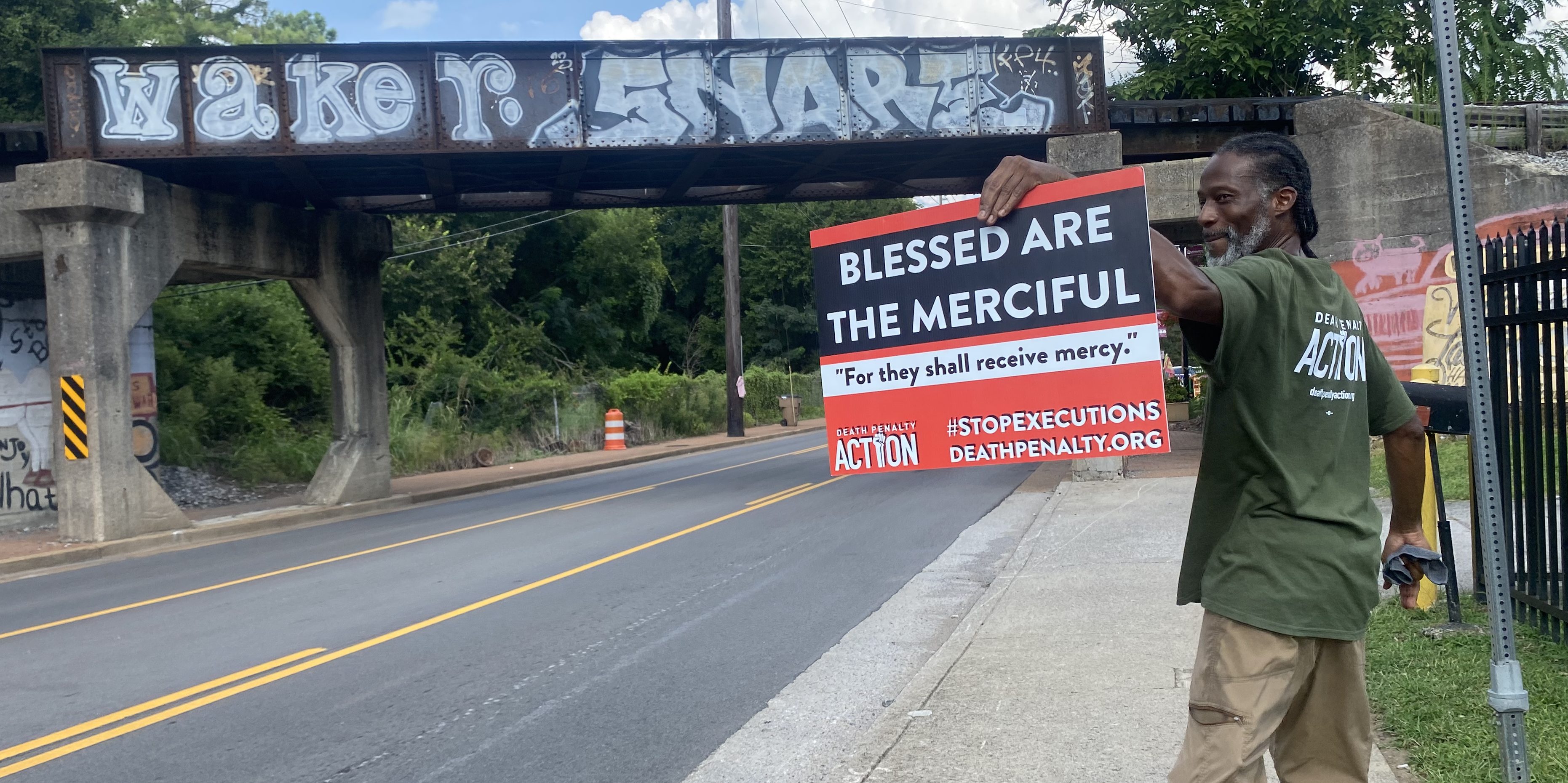
💾

A True-Crime Star’s Lurid Claims Sent a Man to Die. Her Key Witness Just Recanted.

6 September 2026 at 10:00

Twenty-four years after he provided crucial testimony that helped send a man to Texas’s death row, DNA expert William Watson has recanted his opinion and called out Harris County prosecutors — including an assistant district attorney turned true-crime TV star — for distorting his conclusions to win a conviction.  

In a new court filing seeking to overturn Jeffrey Prible’s 2002 conviction for the murder of a Houston family, Watson said he would never give the same testimony today. “Based on … changes in the field and my own increased experience and scientific knowledge, if I were asked to testify today, my answers to many of the questions asked by the State at trial would be different,” he wrote in a declaration filed on August 28. “Today I would provide more thorough and nuanced explanations.”

Watson also wrote that prosecutors “misrepresented” his testimony in both their opening and closing statements, and made “inflammatory” remarks that twisted both the science and his opinions.

Prible was accused of murdering his friends Steve Herrera and Nilda Tirado, who were found shot to death at their home in North Houston in 1999. A fire was started in an apparent attempt to cover up the crime; the couple’s three young children died from smoke inhalation. Prible had been hanging out at the couple’s home in the hours before they were killed, which made him an early suspect. But there was no evidence linking him to the scene — save for a DNA sample taken from semen collected from Tirado’s mouth. Prible had an explanation for this; as he told investigators at the time, he and Tirado had been having an affair behind Herrera’s back, and she had performed oral sex on him earlier that evening.

The case went cold until Harris County Assistant District Attorney Kelly Siegler took it over, reexamining the evidence and concluding that there was no innocent explanation for the presence of Prible’s DNA. Instead, Siegler decided, the semen was evidence of a brutal sexual assault that took place just seconds before Tirado was shot in the back of the head.

The theory was central to Prible’s conviction. “I would suggest to you what the evidence indicates is that the Defendant after killing Steve forced Nilda to orally copulate him at gunpoint and executed her as soon as he finished,” Siegler’s co-counsel, Vic Wisner, told the jury during the state’s closing argument. “As horrific as that sounds, that is the only logical conclusion that you can draw from that evidence.”

Siegler reiterated the claim to maximum effect: “She left this world with his penis in her mouth,” she told jurors in her closing, “hoping to God that her babies would survive the nightmare that is Jeff Prible.”

Prible was convicted and sentenced to death in October 2002; he maintains his innocence.

Prible’s case was at the heart of a three-part series published by The Intercept in 2023. The investigation explored how Siegler, who won 19 death sentences over the course of her nearly 22-year career in Houston, went on to become a true-crime celebrity in the decades after sending Prible to death row. The series also showed how her Oxygen Network true-crime reality shows — “Cold Justice,” now in its eighth season, and “Prosecuting Evil With Kelly Siegler,” starting its third season this fall — portray Siegler as a gifted crime-fighter and compassionate crusader for victims, even as she left a trail of questionable convictions in her wake.

In Prible’s case, as The Intercept’s reporting showed, Siegler built her prosecution not only on questionable claims about the DNA evidence, but also on the highly dubious account of a jailhouse informant who claimed that Prible confessed to him. This witness, it turned out, was part of a ring of snitches who cooperated with Siegler in exchange for assistance getting their own sentences reduced. During Prible’s federal appeals, multiple members of this snitch ring testified that informants offered Siegler false evidence against Prible — and one said that Siegler actually provided him with details about the case.

Jeffrey Prible, photographed on Aug. 6, 2026.

At best, Siegler was careless about scrutinizing the information they provided. At worst, as Prible’s lawyers argued to a federal district court, she actively conspired to win a conviction despite knowing the case wouldn’t otherwise hold up — framing an innocent man for murder.

In 2020, U.S. District Court Judge Keith Ellison overturned Prible’s conviction, finding that Siegler had withheld key information about her dealings with the informants from Prible’s defense. “Without question, the prosecution in this case engaged in a pattern of deceptive behavior and active concealment. And the evidence suppressed sufficiently serves to contravert the primary basis for Prible’s conviction,” Ellison wrote. “Siegler intentionally and knowingly withheld information,” he went on, and “was deceptive about her efforts to do so.”

“This new evidence shows that Prible is actually innocent.”

Texas appealed the ruling to the 5th U.S. Circuit Court of Appeals. Rather than considering the evidence that Siegler had violated Prible’s constitutional rights, the court instead reinstated Prible’s conviction based solely on procedural grounds. In the new state court filing, Prible’s legal team, led by Austin attorney Gretchen Scardino, reupped their previous allegations while also arguing to the Texas Court of Criminal Appeals that Watson’s recent recantation further undermines Prible’s conviction.

“This Court has not had the opportunity to review the trove of new evidence that came to light during the federal habeas proceedings, until now,” they wrote. “And even beyond that new evidence, there has been a significant development in Prible’s case.” Watson’s declaration cites “significant changes in the field of forensic biology, in the progression of the scientific methods used to analyze the evidence in Prible’s case, and in his own scientific knowledge,” they continued. “This new evidence shows that Prible is actually innocent.”

Watson first expressed misgivings about his trial testimony and the way it was weaponized in an interview with The Intercept in 2023. His answers were more definitive than they should have been, he said, and he certainly did not intend to endorse the state’s insistence that there was “no way in the world that semen wasn’t deposited either moments before or seconds after Nilda died.” “‘No way in the world’ is not something I would have said,” Watson told us.

The DNA from Tirado’s mouth was one of three samples collected after the murders. DNA matching Herrera, Tirado’s boyfriend, was also found on vaginal and anal swabs. At Prible’s 2002 trial, Watson testified he’d never before been able to extract a male DNA profile from an oral swab, and that his understanding was that sperm wouldn’t persist in the oral cavity absent Tirado’s murder. Siegler crudely emphasized these findings during her closing argument. To believe Prible’s claim that he and Tirado had engaged in consensual sex, she declared, jurors would have to believe that he had “some kind of magic semen … that somehow lives longer than any of y’all’s or any other man’s in this whole universe.” Moreover, “you’ve also got to believe that his semen is so tasty that she walked around savoring the flavor of it in her mouth for a couple hours. That’s the only way it’s going to end up still in her mouth after she’s dead.”

“These inflammatory remarks are not only scientifically baseless, but also highly inappropriate.”

In his new declaration, Watson took exception to Siegler’s closing. “I never testified to this, nor would I,” he wrote. “These inflammatory remarks are not only scientifically baseless, but also highly inappropriate.” Not only has his original understanding changed, Watson wrote, there is also no way to determine which of the three DNA samples was left first. In other words, while the state’s case was built on the assumption that Prible’s DNA was deposited last, in reality it was not scientifically possible to make such a claim.

Central to Prible’s new filing is a Texas law that explicitly offers defendants an opportunity to challenge their convictions based on new scientific evidence. “Although there was little available literature on the subject at the time, the scientific consensus today is that spermatozoa can survive in the oral cavity of a living person for up to fifteen hours — and even longer in a deceased person,” his legal team wrote. Their argument is supported by a new report from a second DNA expert, who explains that recent scientific advancements show that Watson’s testimony was, as Prible’s attorneys write, “wholly unsupportable.”

How the Harris County DA’s office responds to the new evidence remains to be seen. Kelly Siegler did not respond to a request for comment. In a statement, Assistant Federal Public Defender Nat Lombardo wrote, “Jeff Prible has spent nearly half his life on death row for a crime he did not commit. … This evidence supports Jeff’s account, from the very beginning, of what happened that night. Put simply: if Jeff were tried today, the State would have no case. We hope the DA and the courts do the right thing and give Jeff Prible his life back.”

Prible, who has been on death row for nearly 24 years and has seen dozens of his neighbors taken to the execution chamber, remains hopeful. “The way I see it, it is a true test of faith,” he wrote in a message to The Intercept. “I know in my heart of hearts my best days in this life are still yet to come!”

The post A True-Crime Star’s Lurid Claims Sent a Man to Die. Her Key Witness Just Recanted. appeared first on The Intercept.

💾

Israel Justified Its Wars by Calling Enemies “Crazy.” Now, the Warning Signs All Apply to Israel.

13 August 2026 at 09:57
TOPSHOT - Israel's Prime Minister Benjamin Netanyahu speaks during a joint press conference with the US Secretary of State at the Prime Minister's Office in Jerusalem on September 15, 2025. US Secretary of State Marco Rubio said Washington would provide "unwavering support" to Israel in the war in Gaza as he called for the eradication of Hamas during a visit to the US ally on September 15. (Photo by Nathan Howard / POOL / AFP) (Photo by NATHAN HOWARD/POOL/AFP via Getty Images)
Israeli Prime Minister Benjamin Netanyahu speaks during a press conference at the Prime Minister’s Office in Jerusalem on Sept. 15, 2025.  Photo: Nathan Howard/POOL/AFP via Getty Images

In July 2020, Aluf Benn, the editor of the Israeli newspaper Haaretz, interviewed a 92-year-old retired Hebrew University professor named Yehezkel Dror. Benn described him as the “doyen of public policy experts in Israel.” For his part, Dror fashioned himself after Herman Kahn, the American defense intellectual who made his name by “thinking the unthinkable” — how to fight a thermonuclear war. In 2005, Dror’s work on policy planning and strategic thinking won him the coveted Israel Prize.

Dror responded to Benn’s questions as a futurologist with knowledge of what is to come, gained by thinking rationally and ruthlessly about a world too complex for all but an elite class of geniuses. Complimenting Israeli leaders for expelling as many Palestinians from the country as they did in 1948, Dror insisted on the correctness of his plan for an Israeli attack on Iran and praised President Donald Trump’s 2020 Israeli-Palestinian peace plan — the so-called Deal of the Century. He also called for a world government run by modern philosopher kings, and in his 2020 book, “Steering Human Evolution,” he advocated settling a thousand fertile couples on Mars to ensure the human race would not become extinct.

Dror explained the tension in his thinking between rationalist universalism and a tribalist commitment to his own group, the Jews. Citing Zionism as the “core meaning of his life,” Dror emphasized the contribution he had made to “a total revolution in the history of the Jewish people, on the path from Holocaust to resurgence.” The primacy of this latter commitment is clearly apparent in his book “Crazy States: A Counterconventional Strategic Problem,” published in 1971.

The topic of “craziness” as a descriptor of states was a familiar one in the 1960s when discussing nuclear deterrence. Academics Thomas Schelling and Herman Kahn both explored how a state with a reputation for craziness could increase the credibility of otherwise unconvincing threats.

The thrust of Dror’s book was different. Dror imagined how states with powerful modern weapons might act in ways radically contrary to accepted norms or expected calculations. Normal states would need to act differently toward adversaries deemed “crazy” by shifting strategies from deterrence and self-defense to destruction and preemptive attack. The not-so-hidden subtext of the argument was to brand all of Israel’s adversaries as “crazy,” thereby establishing justification for using any and all means, including subversion, preventive war, and even annihilation, against them.

Dror went on to lay out the criterion for labeling states — Israel’s enemies — as “crazy.” Fifty years later, however, Dror’s account of craziness and the warning signs he suggested looking for apply more readily to Israel than to its Arab enemies.

“Crazy” Characteristics

Dror never defined precisely what he meant by “crazy,” preferring to list behaviors, practices, and beliefs associated with his image of craziness. His prototypical case, used repeatedly for illustration of his argument, was Nazi Germany. Dror began his book by offering the Third Reich to skeptical readers “as a striking and radical demonstration of the possibility of crazy states and their implications for the international order and the security of various countries.” The case study also made the point that nonstate movements or organizations, such as Hitler’s National Socialist Party, could be treated as crazy as well as states. This justified Dror’s inclusion of various Palestinian movements and groups affiliated with the Palestine Liberation Organization as “crazy” even though they weren’t states.

At the end of 1973, an Israeli military publishing house issued a Hebrew edition of Dror’s book with a new chapter, “The Question of ‘Crazy’ States and the State of Israel.” Written against the backdrop of the October 1973 Arab-Israeli War, known in Israel as the Yom Kippur War, Dror described virtually all Arab states and movements, whether Muslim or Palestinian, as either crazy, partially crazy, or liable to become crazy. According to Dror, the purpose of this chapter — which never appeared in English — was to shape Israeli military doctrine and strategies to deal with the craziness and potential for “extreme craziness” of Israel’s adversaries.

Dror emphasized that the kind of craziness he had in mind — so dangerous to the world community that no measures to disrupt or destroy it should be ruled out — requires an ability to think clearly, plan systematically, and act effectively. In doing so, he was carefully distinguishing irrationality from craziness. To be classified as crazy, a state or movement must not only have the means to project its power with devastating effect; it must also demonstrate a capacity for calculated action so that it can learn from mistakes and devise better and more successful techniques for achieving its (crazy) purposes.

Using Dror’s measures, we can ask whether Israel itself is crazy. If it is, then for Israel’s Lobby to be successful, U.S. policies toward Israel and the Middle East must themselves be crazy.

A useful list of the features Dror set forth to identify a crazy state appeared in a positive review of his book: aggressive pursuit of far-reaching goals harmful to others; radical and intense commitments to achieve those goals; and adoption of a morally superior posture even while grossly contradicting international norms, both ethical and legal.

Using these measures — goals, means, and public posture — we can ask whether Israel itself is crazy. If it is, then for Israel’s Lobby to be successful, U.S. policies toward Israel and the Middle East must themselves be crazy and therefore dangerous to American interests and to the world.

Hard-Right Turn

Israeli politics revolve around its party system. That system has undergone two fundamental transformations: from one-party dominance to an even rivalry between two parties and then a return to dominance by the former opposition party. For almost three decades, the social democratic Labor Party dominated Israeli elections, with the right-wing parties in opposition. While never securing a majority of seats, in the 1960s and 1970s, Labor’s parliamentary dominance was enough to relegate Menachem Begin’s right-wing Herut (Freedom) Party to the political wilderness.

As David Ben-Gurion, Israel’s first and until Netanyahu longest-serving prime minister, frequently declared, Labor would accept any party as a coalition partner except those occupying the extremes of the political spectrum: the communists and Herut. Begin, he once wrote, was “a Hitlerist type: a racist, willing to destroy all the Arabs for the sake of Greater Israel.”

After the June 1967 Arab-Israeli war, known as the Six Day War, the Labor Party favored withdrawal from occupied Palestinian territories in return for peace, though it avoided specifying what territories could be relinquished or under what circumstances. The party that Begin led in 1967 was Gahal, a combination of Herut and the Liberal Party. In 1973, it became the cornerstone of the Likud. Like Herut, Gahal and then Likud opposed territorial withdrawal from any part of the West Bank and Gaza. The right wingers rejected the principle of trading land for peace, favored settlement of Jews throughout the territories, and looked forward to their permanent absorption into the State of Israel.

The “earthquake,” Likud’s victory in the 1977 elections, temporarily ended single-party dominance in Israel. Subsequently, two rival blocs — one led by the Likud and the other by one or another version of the Labor Party — battled each other in seesaw fashion. But since the 2013 elections, the right-wing bloc, with the Likud forming the core of governing coalitions, has dominated Israeli politics.

The sharpness of Israel’s shift to the right is evident in the changing ideological complexion of members of its 120-seat parliament, the Knesset. Israeli parties have always differed on a variety of social and economic questions. But by far the two most important markers of a party’s location on the spectrum of Israeli politics are its position on Israel’s borders and the intensity of its commitment to an exclusivist Jewish mission for the state.

Border Wars

Before the 1967 war, the issue of the country’s borders was not particularly salient in Israeli politics. Occupation of the West Bank and Gaza Strip reopened the question of expanding the state’s boundaries, polarizing the political system, and triggering a sharp rise in both hawkish and dovish positions on these questions. After the Six-Day War, average left-wing representation in the Knesset increased by approximately two-thirds compared to what it was before 1967. Right-wing representation in the Knesset, however, tripled.

In the 2000s, the right-wing bloc’s representation has grown rapidly, while the left-wing bloc has shrunk drastically. Since the 2003 election, the first following the second Palestinian uprising, or Intifada, average representation of right-wing views has been twice that associated with the left. In the most recent elections, actual majorities of Knesset members have been affiliated with political programs advanced before 1967 only by a small and extreme minority. Meanwhile, the number of Knesset members espousing concessions capable of attracting even minimal Palestinian interest has dwindled.

Following the 2022 election, 63 members of the Knesset identified with what were originally seen as extreme far-right views on the nation’s borders, while only 14 supported a two-state solution. Of the latter, 10 were Arabs and only four were Jews.

Israeli public opinion has also shifted strongly toward the extreme right. Intensive polling done between 2022 and 2024 showed that four to five times as many Jewish Israelis identified themselves as “right-wing” than as “left-wing.” The rightward shift is more extreme than it seems from this data because what it means to be yemini, or right wing, has itself changed. Much more than in the past, it is associated with commitments to overt discrimination against Palestinian citizens, annexation measures that would exclude Palestinians from citizenship, use of extrajudicial punishment against Arabs, and preference for military action over negotiation for advancing Israeli interests in the region.

Along with the rightward extremization of the Jewish public has been an escalating propensity for Israeli leaders to aggressively pursue expansive goals. This hawkishness manifested as military actions, assassinations, and spectacular acts of sabotage — from the West Bank and Gaza to Lebanon, Syria, Iraq, Yemen, Qatar, and Iran — that have stunned the world.

Rise of a Madman

In the 1990s, Benjamin Netanyahu began his rise to power, not as a right-wing firebrand but as a silver-tongued defender of Israel against international criticism. He coupled strong right-wing views with opportunism and an aversion to making risky decisions. Having climbed the greasy pole to take control of the Likud Party in 1996, Netanyahu went on to become Israel’s longest-serving prime minister.

Following Hamas’s attack on Israel on October 7, 2023, however, Netanyahu’s modus operandi changed. Two of his most crucial judgments — that the Gaza Strip could be kept indefinitely in a state of economic immiseration and that Hamas would not mount a large-scale attack — pushed Israelis into one of the most severe shocks they ever experienced.

Fearing investigation of his failure to protect the country, Netanyahu transformed himself into the epitome of Israeli craziness.

The levels of violence he authorized against Palestinians in Gaza shocked the world. Netanyahu’s endorsement of transferring the entire population of Gaza out of Palestine; the bloody attacks he unleashed against Hezbollah and civilian neighborhoods in Lebanon; the wars he launched against Iran; and his attempt to assassinate Hamas negotiators in Qatar all reflect much more far-reaching goals for Israel than those of recognition, peace, and security, as one nation among others in a stable Middle East.

In this way, Netanyahu is not just following in the footsteps of predecessors, who were prepared to take risks for ambitious gains; instead, he has made the craziness that has occasionally marked Israeli policies into a dominant trait.

A 21st Century Sparta

Efraim Inbar is among Israel’s most influential national security analysts. The founder and director of the Jerusalem Institute for Strategic Studies, Inbar has reliably indexed the policy preferences of Likud governments, in general, and those led by Netanyahu in particular.

From year to year, problem to problem, threat to threat, Inbar’s recommendation has almost always been the same: reject available compromises, accept international isolation, and use preemptive war to inflict more pain and damage on adversaries than they are willing to tolerate.

“Fortunately,” he wrote in response to questions about Israel’s long-term goals, “Jewish history presents the Zionist movement another alternative: the Davidic option of building a Jewish commonwealth in the midst of an idolatrous world. The House of David ruled the Land of Israel for over four hundred years, playing a balance of power politics in our region.”

As if channeling Inbar’s thinking, Netanyahu gave a speech in September 2025 calling for Israel to expect and accept international isolation, adapt its economy toward autarchy, and see itself as a 21st century Sparta.

Netanyahu is not just following in the footsteps of predecessors; he has made the craziness that has occasionally marked Israeli policies into a dominant trait.

Israelis are familiar with the Jerusalem syndrome, a tendency for susceptible people visiting the country to experience delusional psychoses with religious or apocalyptic themes. It is also true that spectacular visions — of an unfolding, divinely guided, and Israel-centric redemption process; of the settlement in the West Bank as a crucial step in the bringing of the Messiah; and of Jewish rule over virtually the entire Fertile Crescent — have long animated the private thinking of the architects behind the vast settlement project in the occupied territories.

The Israeli Mainstream

What is striking is that such thinking has moved from the private worlds of dedicated activists, from the margins of respectable political discourse toward the center of Israeli politics. Ministers Itamar Ben-Gvir and Bezalel Smotrich both advocate for the rebuilding of the ancient Jewish Temple in the Old City of Jerusalem. Daniella Weiss, Ben-Gvir, and many others have called for the entire Gaza Strip to be emptied of Palestinians and resettled by Jews. What were, in the 1960s and 1970s, the outlandish ambitions of some marginal intellectuals, extreme rabbis, and retired generals are now the goals pursued by leading government ministers, senior security service officials, and settlement leaders.

Such grandiose ideas provide no guidelines for practical strategic thinking about Israel’s future or rationales for creative diplomacy. The result is that Israeli leaders focus on imminent security threats and diplomatic challenges, but neither entertain nor pursue longterm goals. That is to say: Those who govern Israel imagine no stable future that is both satisfying and possible enough to shape policy decisions and actions. The goal of Israel’s foreign and security policies therefore becomes simple if outlandish: to establish itself as the regional hegemon, possessing the only nuclear arsenal in the Middle East, equipped with sufficient conventional military power to operate throughout the region at minimal risk, and poised to crush any combination of opponents.

This region-shaping ambition was evident in Israel’s June 2025 attack on Iran. An Israeli military poster, in Farsi, of what Israel dubbed “Operation Rising Lion” featured a majestic lion on his hind legs next to a brightly shining sun, symbols of ancient Persia.

The idea of transforming the Islamic Republic of Iran, a Muslim-majority country of 93 million, into an ally and returning it to a non-Islamic imperial past was advanced in an Instagram post two weeks into the war by Sara Netanyahu, the prime minister’s influential wife. It depicted two lions leaning against each other and gazing into the future, one wrapped in the flag of Israel, the other in the flag of the Pahlavis, the last shahs of Iran.

Amid Israel’s bombardment of Iran in July 2025, before the U.S. joined the war, the grand scale of such ambitions — consistent with the unattainability of the goals crazy states set for themselves — became apparent during remarks Netanyahu made to an Israeli interviewer. “We are changing — and I said this on the second day of the [Gaza] war — I said that we’re changing the face of the Middle East,” Netanyahu said calmly. “And now I say to you and also to our viewers: We’re changing the face of the world. I have determined that we will achieve all our goals.”

Adapted from “Israel’s Lobby: America in the Grip of a Foreign Power” by Eli Clifton and Ian Lustick. Copyright 2026 by Eli Clifton and Ian Lustick. Reprinted by permission of One Signal Publishers, a division of Simon & Schuster, LLC.

The post Israel Justified Its Wars by Calling Enemies “Crazy.” Now, the Warning Signs All Apply to Israel. appeared first on The Intercept.

💾

Tennessee Plans Another Execution Despite Its Brutal Recent Mistakes

13 August 2026 at 00:09

In early August, on the one-year anniversary of his father’s death, Samson Childs invited his godfather out to eat at a Wingstop on Nashville’s south side, not far from where his dad grew up. Hanging out with his godfather was a way for Childs to feel close to his father, Byron Black, who died at 69. “We talked and we cried and he gave me good memories – just old stories of my dad, him growing up, and how they stuck together,” Childs said.

Black spent more than three decades on death row before he was killed by lethal injection on August 5, 2025, at Tennessee’s Riverbend Maximum Security Institution. He’d been convicted in 1989 for killing his girlfriend, Angela Clay, along with her two young daughters. Black insisted he did not commit the horrific murders, but was swiftly found guilty and sentenced to die.

Over the decades that followed, Black’s lawyers argued that his intellectual disability should have barred him from facing the death penalty. The DA’s office that convicted him even conceded that they were right, but the courts disagreed. By the time Tennessee prepared to kill him, Black had been diagnosed with dementia, kidney disease, and congestive heart failure.

“How would I feel knowing that this is my last day on earth?”

Defense attorneys argued that Black’s poor health put him at serious risk of a tortuous execution, raising specific concerns over his implanted heart defibrillator and pacemaker. Experts warned that the device could deliver painful shocks before he died. To their dismay, Black did suffer on the gurney – although not for the reasons they most feared. Prison staff struggled to insert an IV in Black’s arm, spilling blood on the floor. The drug that was supposed to kill him – a massive dose of the fast-acting barbiturate pentobarbital – did not work as intended. Media witnesses said they could hear Black moaning in pain.

Childs was not at the prison on the morning his father was killed. He was at home in Nashville after a sleepless night. “You know, I’m putting myself in his shoes,” he said. “How would I feel knowing that this is my last day on earth?” It wasn’t until he watched a local news segment that Childs learned things had not gone well. “It messed me up, I ain’t gonna lie,” he said. “I can’t imagine being there, viewing this, seeing this happen.”

Black’s execution reignited controversy over capital punishment in Tennessee, where advocates had warned against executing him with a new protocol that had not been subjected to legal review. The one-drug pentobarbital method had been introduced by the state following complications with its previous, three-drug formula, which was itself adopted despite ample warnings that it violated the 8th Amendment ban on cruel and unusual punishment. Nevertheless, Tennessee pressed forward – with disturbingly predictable results.

On May 21, just nine months after Black’s painful death, Tennessee attempted to kill 57-year-old Tony Carruthers, convicted in 1996 of a triple murder he swore he did not commit. As in Black’s case, prison staff tried clumsily to place the IV lines for lethal injection. But this time they never finished. Carruthers spent 40 minutes being poked and prodded, only for a physician to enter the chamber and attempt to place what is known as a central line in his chest. The descriptions of what followed were harrowing. As Carruthers’s attorney, Maria DeLiberato would later write, “I saw the process unraveling with my own eyes.”

“The executioners draped Mr. Carruthers in a blue surgical cloth with a hole for his face,” she wrote. “When the doctor prodded Mr. Carruthers’s chest with a scalpel or large needle, Mr. Carruthers cried out in pain. But the doctor continued to push into his chest. Mr. Carruthers started groaning… I told him that I was sorry. Mostly, I tried to hold his gaze and reassure him that we were still fighting for him.”

The ordeal ended only after the governor himself finally intervened, issuing an executive order putting off Carruthers’s execution for a year.

The temporary reprieve raised hopes that Republican Tennessee Gov. Bill Lee might put all executions on hold. Instead, the state soon announced it intended to proceed with the next one. Before long, officials at the Department of Correction were preparing to kill 66-year-old Anthony Darrell Hines. He is set to die on Thursday at 10 a.m. – one of three people scheduled to be put to death in the U.S. on the same day.

Protestors rallying against the death penalty hold hands in front of the Tennessee State Capitol in Nashville on Aug. 9, 2026.  Liliana Segura/The Intercept

It was Hines’s looming execution date that prompted Childs to speak publicly again about his own father’s death. This past weekend, he joined anti-death penalty activists for a protest known as the “March 4 Mercy.” On the Sunday before every execution, activists walk nine miles from the prison on the city’s west side, to the Tennessee State Capitol downtown. With temperatures in the 90s and the air thick with humidity, the marchers were drenched in sweat as they made their way across town. Walking at a steady pace, Childs held up a sign for passing cars that read “Justice Requires Mercy” and “Blessed Are the Merciful.”

Childs could not begin to comprehend what had happened to Carruthers. But he also couldn’t shake the mental torture of a looming execution over everybody involved. It must impact everyone, he said, including the people witnessing and carrying it out. “Some of those people probably never want to do that again.”

Tennessee’s persistence in carrying out lethal injection is part of a recent spike in executions in the U.S. In Oklahoma, at the same time as Hines is set to be put to death, executioners plan to kill 70-year-old Carlos Cuesta Rodriguez inside the state’s death chamber in McAlester. Then, at 6 p.m., Alabama intends to execute 41-year-old Jeremy Williams at Holman Penitentiary in Atmore.

The last time the country saw three executions scheduled for the same day was in 2018, when Alabama, Texas, and Florida were supposed to kill three different men. Only one execution moved forward that day; in Texas, the governor granted a rare clemency request. In Alabama, which intended to execute Doyle Hamm, a terminally ill man in his 60s, the lethal injection was suddenly stopped because of problems setting IV lines. It was the first in a series of botched executions that would make Alabama infamous for torturing people condemned to die.

Although Tennessee has made the most recent headlines following its disastrous attempt to kill Tony Carruthers, both Oklahoma and Alabama have long been known for their own ugly track records. It was Oklahoma, after all, where a medical examiner first invented the three-drug protocol that originally comprised lethal injection, later griping that he never intended for it to be managed so incompetently. After the state made international headlines for the harrowing 2014 execution of Clayton Lockett, famed death row prisoner Richard Glossip was nearly executed using the same method the following year – only to be spared at the last minute after officials realized they had procured the wrong drug. Glossip, who has insisted on his innocence for three decades, was released on bail earlier this year to await a new trial.

In Alabama, after officials were forced to call off Hamm’s execution, the state took three hours to place IV lines in the body of a man named Joe James, whose execution is believed to be the longest in U.S. history. The state’s ongoing inability to carry out lethal injection ultimately led to a cruel new invention for executions: death by nitrogen hypoxia. Earlier this year, a judge declared the method unconstitutional, prompting the state to revert back to lethal injection.

In many ways, the controversy looming over Hines’s scheduled execution is a variation on a very old story. Lethal injection may be cloaked in the veneer of a surgical procedure – the doctor who tried to help the state kill Carruthers referred to him as a “patient” – but, in reality, it has always been a crude human experiment, using the tools of medicine in order to kill. In Tennessee, concerns over potential pain and suffering during lethal injection have prompted some people facing execution to instead choose the electric chair.

But lethal injection remains the prevailing method – and lawyers have little recourse when it comes to fighting against it. Years of U.S. Supreme Court rulings have inoculated lethal injection against legal challenges, no matter how much evidence reveals it to be torture. As Justice Samuel Alito reasoned more than a decade ago in upholding Oklahoma’s three-drug protocol, preserving the death penalty is ultimately more important than devising a humane way to kill the condemned. “Because capital punishment is constitutional,” he wrote in 2015, “there must be a constitutional means of carrying it out.”

There is one way in which Tennessee’s current lethal injection controversy is different from what came before. Despite the state’s attempts to keep the identities of executioners secret, the doctor who tried to assist in the killing of Tony Carruthers was revealed earlier this year as Dr. Mark Fowler, whose medical background includes working in an emergency room as well as, more recently, according to a profile in the Guardian, “weight loss and aesthetic clinics.” Fowler also writes opinion columns “for his local newspaper, the Union City Daily Messenger, that are reproduced by the conservative blog the Patriot Post.”

Most alarming for those facing execution, Fowler also lacks the qualifications to do what the job entails, according to attorneys for Hines. Last year he admitted under oath that he had not placed a central line in 13 years and lacked the privilege to do so at a hospital. Yet the Department of Correction has refused to assure attorneys that they will not rely on him. The department “knows that Dr. Fowler can’t do the job the protocol requires him to do,” Hines’s lawyer said in press statement this week, “and we’ve seen what that means in practice: a torturous, failed procedure that leaves staff, witnesses, and the prisoner traumatized.”

Fowler has declined to speak with reporters and it remains unclear whether he will participate in Hines’s execution. Whether he does or not, Hines’s age and poor health puts him at heightened risk of pain and suffering as his execution approaches. In December he had the first of two strokes, according to his attorneys. “The prison initially called for an ambulance to transport him to an outside hospital for care,” the lawyers wrote in legal filings, but the corrections department’s medical contractor “inexplicably turned the ambulance away, determining that an in-house CT scan would suffice.”

Despite a scan eventually confirming the stroke, Hines was denied proper care, his lawyers said, and he “suffered another stroke in mid-January and collapsed, hitting his head. Since that time, he has been confined to the prison infirmary, where he remains paralyzed on the left side, has partial left-sided blindness, and has suffered severe muscle atrophy.”

Today, according to advocates who regularly visit people on death row, Hines remains isolated from the rest of the condemned population. As with Byron Black, whose shower chair had to be moved along with him to the “death watch” cell where he would spend his final hours last summer, prison staff recently had to devise ways to accommodate Hines’s hospital bed in the area near the execution chamber. When the time comes, he will be lifted from the bed and strapped to the gurney – a “grotesque spectacle,” in the words of his attorneys. 

Nevertheless, the governor, who is just months away from leaving office, remains unmoved. On Monday, he announced that he would not intervene to stop Hines’s execution.

Whatever happens in the death chamber, there are some signs that some of Tennessee’s staunch conservatives are starting to worry that the state is starting to look bad. In June, nine senate Republicans wrote to Lee, asking him to spare Hines, who they describe as “profoundly disabled,” and questioning whether the state is currently equipped to carry out executions. “Repeated failures of this kind do not advance justice,” they warned. “They obstruct it, prolong the suffering of victims’ families, and hand the opponents of capital punishment their most effective argument against a penalty Tennesseans have chosen to keер.”

The post Tennessee Plans Another Execution Despite Its Brutal Recent Mistakes appeared first on The Intercept.

💾

Black Residents Warned of Abusive Cops for Years. Then Police Shot and Killed a Toddler.

6 August 2026 at 09:00

Outside the Walmart in Senatobia, Mississippi, where police shot and killed 1-year-old Kohen Wiley, a shrine of stuffed animals sits between the garden center and the pharmacy. There are teddy bears, elephants, and kangaroos with babies in their pouches. There is a Bluey plush toy — Kohen’s favorite cartoon — along with matchbox cars, a green plastic tractor, and an array of artificial flowers.

A banner frames the display, featuring a celestial image of baby Kohen wearing gingham overalls. A handwritten sign reads, “Justice Delayed is Justice Denied.”

In the parking lot, a cop pulled a gun on a gray Ford Fusion on a Sunday afternoon and fired while Kohen’s mother held him in the passenger’s seat. A bullet struck the child on his right side, tearing through his small body and exiting his left. The driver, who was also hit, sped to a hospital, but it was too late. At 19 months old, Kohen was dead.

The killing sparked anguish and rage in Senatobia, a small city some 40 miles south of Memphis, Tennessee. At protests and press conferences, people demanded answers, while officials stayed mostly silent. It took several days for the mayor to deliver a scripted video statement that did not even include the child’s name.

The Mississippi Bureau of Investigation announced a probe into the case. Speaking before an agitated crowd, state Department of Public Safety Commissioner Sean Tindell said this could take months, refusing to say when — or even whether — his agency would provide further updates.

Until then, the official narrative would be a version of a familiar tale told by those who kill under color of law: On June 14, Senatobia police got a shoplifting call from Walmart over baby clothes and a pack of Pampers diapers. According to an MBI press release, officers tried to stop “two subjects and a juvenile child fleeing from the store.” The suspects “drove in the direction of the officers, almost striking one.” That’s when an officer fired.

Police offered nothing to back the story. A witness video captured mostly chaos as the car drove off, while a woman who asked not to be named told a local TV station she saw police chasing the car before hearing gunshots. Nevertheless, the police narrative took off. On Facebook pages like “Senatobia Happenings UNCENSORED,” commenters blamed Kohen’s mother for his death.

The accusations escalated after famed civil rights attorney Ben Crump took the family’s case, with critics accusing him of stoking racial grievances for profit. When Crump released a video of Kohen’s mother, Vel’lesiya Wiley, telling her side of the story — saying she “raised my baby up” to warn officers that Kohen was with her — a wave of racist vitriol followed. Some demanded to know why Kohen wasn’t in a car seat. Others said she’d used him as a “human shield.”

The comments were shockingly cruel. They also ignored what Black residents of Senatobia, which is about 40 percent Black, had long insisted: Police treated them with contempt and brutality.

A year earlier, at the same Walmart where Kohen was killed, a police officer forced a woman from her car in front of her children for parking in a handicapped spot — part of a string of violent incidents that made national news. In the summer of 2025, Senatobia’s board of aldermen finally voted to dismiss the police chief.

By then, the department had already hired the officer who would later be identified in the local press as involved in killing Kohen Wiley – a police sergeant who’d been previously sued for misconduct while working at two different law enforcement agencies. Just two days before Kohen was killed, a Black officer filed a complaint against him for making a racist remark.

To racial justice activist Patrick Lumumba, the decision to hire such a man was emblematic of the city’s disregard for Senatobia’s Black community. “You think they didn’t know about his past?” he asked. “But who was he gonna hurt? If he hurt anybody it wasn’t gonna be white people.”

On the last Saturday in June, as the family laid Kohen to rest, the Senatobia Walmart was relatively quiet. A police car was parked across the shopping plaza, where protesters had gathered the day before. At an empty restaurant where a TV played “Leave It to Beaver,” a young white employee said no one had come in all day, blaming the “rioters” for keeping customers away.

At the memorial site, a white woman retrieved a bouquet of dried flowers blown away by the wind. She defended the protests, adding that they had been peaceful. For all the speculation and rumor, she said, no one really knew what had happened. But nothing could justify shooting a 1-year-old boy.

“The whole thing is very, very sad,” she said. “No mother should have to bury her child.” She did not wish to share her name. “I don’t want to stir any trouble.”

A memorial for 1-year-old Kohen Wiley sits outside the Walmart in Senatobia, Miss., on July 7, 2026, facing the parking lot where he was fatally shot by police. Photo: Liliana Segura/The Intercept

“Outside Agitators”

Senatobia, the seat of Tate County, sits on the northern tip of the Mississippi Delta, a mostly rural region famous as the birthplace of the blues. Downtown, historical markers boast connections to Black musicians like pioneering country singer O.B. McClinton. “Being in the small contingent of African-American performers in country music was never a cinch,” his marker reads, “but McClinton often dealt with the subject good-naturedly in shows and songs.”

Easier to miss are the places that once saw violent attacks on the civil rights movement. Just north of town, on Highway 51, a marker commemorating the site where James Meredith was ambushed and shot during a solo march from Memphis to Jackson has been knocked from its post; it currently sits on the ground. After Dr. Martin Luther King Jr. resumed the 1966 march alongside other civil rights leaders, they passed through Senatobia, in the same spot where the Walmart now stands.

The activists were widely depicted as radical outsiders — “Hard Core Civil Rights Militants,” as one headline read. But the march included locals; many offered their homes to the visitors at great personal risk. “Most people would sleep in the backyard of people’s homes because they were scared they would bomb the home,” recalled independent publisher Gloria Zuurveen, a Senatobia native whose aunt hosted activists. “But she said, ‘No, y’all ain’t sleeping in my backyard. Come on in this house.’”

The claim that protesters were “outside agitators” was a common refrain — a persistent way to dismiss any movement. When local pastor Michael Cathey, Senatobia’s first Black alderman, led boycotts of its public schools and businesses in 1987 — part of a wave of similar actions across Mississippi — some suggested they’d been orchestrated by the NAACP. “I’d like to see local people solve local problems without outside assistance,” the mayor told reporters.

In reality, “the whole community took a stand,” Cathey recalled. “The school buses ran empty. Nobody went to the store.”

“The city government is hiding behind the Mississippi Bureau of Investigation.”

Cathey has been outspoken about the killing of Kohen Wiley. His congregation, the West Gilmore Church of Christ, hosted the viewing for the toddler in June. “The city government is hiding behind the Mississippi Bureau of Investigation,” Cathey said. Their excuse is that they must wait on the state. “But that’s not true. The city can speak to the matter. … They need to be working to make sure we have transparency. But it’s not happening.”

Cathey said that the case had attracted many activists from outside Senatobia, making the protests easier for officials to ignore. But a bigger problem, Cathey and others said, is the refusal of elected leaders to represent their constituents.

Cathey served as an alderman for over 30 years, leaving office in 2017. In the decade since Donald Trump’s rise, he said, local conservatives have increasingly modeled themselves after MAGA politicians, shedding any pretense of concern for Senatobia’s Black community. Unlike the civil rights era, in which the federal government forced states like Mississippi to expand hard-fought legal rights, Trump is doing the opposite: weaponizing his office to turn back the clock on equal rights.

“What we see Trump doing on a national level, we have that same attitude locally,” he said. “And I don’t see it just being a Mississippi problem. It’s a national problem.”

Law and Order

Not that long ago, the South seemed poised toward progress.

As protests spread across the country after the killing of George Floyd by a Minneapolis police officer in 2020, many declared it time to break from the past. Confederate monuments were toppled and, in some states, lawmakers passed criminal justice reforms to roll back the legacy of racial violence.

In Mississippi, lawmakers did what once seemed impossible: Vote to replace the state flag, eliminating its Confederate iconography. Senatobia Republican Trey Lamar pushed the effort, calling it “something I knew in my heart for a long time was the right thing to do.”

Such symbolic gestures, however, did not translate to systemic change. Before long, Mississippi politicians were disenfranchising Black residents in sweeping new ways. Lamar became the chief sponsor of legislation to create a new, state-controlled court system in the majority-Black capital city of Jackson, usurping the power of the city’s elected judges and handing it to white state lawmakers. The measure was about crime control, Lamar insisted. It had nothing to do with race.

But “law and order” has long been a code for racial politics. In Senatobia, which hosted a “Back the Blue and Trump” parade in the fall of 2020, the mayor and board of aldermen started making changes of their own. The city’s Black police chief, a 26-year department veteran, was replaced with a white man who had only recently joined the force.

The new chief, Richard Chandler, was given free rein to transform the department. Some moves seemed sensible enough. Senatobia police officers were paid as little as $13.75 per hour when Chandler arrived, and he successfully argued for better wages. But other decisions raised red flags. Despite the department’s small size — some 30 officers in a town of roughly 8,500 — Chandler formed a SWAT team and assigned a dozen officers to the unit. One was a 22-year-old recent recruit who described herself as “an adrenaline junkie,” as she told reporters. “I want to kick down doors and go in there and arrest the bad guy.”

“There was no consideration to how it affected the citizenry. It was just about making money.”

The stated goal was modernization; the city built a new police station, bought a fleet of new vehicles, and hired a grant writer to seek federal funds. Chandler also pushed aldermen to pass new ordinances aimed at increasing city revenue. Between 2021 to 2025, according to city meeting records, the board voted to add financial penalties to punish misdemeanor drug charges, loitering, and “nuisance level gatherings.”

The fines, ranging from $25 to $1,000, would inevitably target those who could least afford it. “There was no consideration to how it affected the citizenry,” said Cathey, who attended many of the meetings. “It was just about making money.”

It wasn’t long before a string of shocking incidents were caught on video. In February 2022, police violently arrested a man named Rodney Rucker, who was warming up his car outside a local motel before an early shift at McDonald’s. Body camera footage showed police accusing him of having white powder under his nose and, when he refused to leave his vehicle, smashing his window and breaking his phone. No drugs were found in the car.

In 2023, Senatobia police followed a teenager into the home of a local barber named Mark Lesure, ostensibly because the young man matched the description of a criminal suspect. Video showed Chandler choking Lesure before being accidentally tased by his own officer.

Senatobia police made national news that same year for jailing a 10-year-old boy for public urination, a move Chandler conceded was “an error in judgement.” But he defended the violent arrest of two sisters, 13 and 14, outside a public housing complex in 2024. According to the girls and their mother, Chandler personally ordered one of the girls to “get your Black ass out of the road” before forcing her to the ground.

Finally, on Mother’s Day 2025 — in the same Walmart parking lot where Kohen Wiley would be shot dead — a female officer dragged a Black mother out of her car in front of her frightened young children for sitting in a handicapped parking space.

By then many people in Senatobia were fed up — including some members of law enforcement. One retired police officer echoed what many said for years: Chandler drove out officers who lived in the community and brought in cops who would prey on the community. A number were hired after being dismissed from other departments. “They want people like that,” he said. “They can get them to do any kind of dirty work they want.”

In the summer of 2025, over angry objections by the mayor, Senatobia’s board of aldermen voted to remove Chandler. It was supposed to restore trust, one alderman said. But as Lumumba, who recently founded the Senatobia Committee for Accountability and Transparency, said, “We removed Chandler. But the culture remained.”

Kohen Wiley’s parents, Vel’lesiya Wiley and Daveon Williams, gather with activists led by Marquell Bridges of the Building Bridges Coalition at a park in Sardis, Miss., after burying their son on June 27, 2026. Photo: Liliana Segura/The Intercept

A History of Violence

City officials have not identified the man who shot Kohen Wiley. But it’s considered an open secret in Senatobia. A Memphis news station obtained records from the MBI that identified the officer who responded to the shoplifting call at Walmart: Senatobia Police Sgt. Hunter Foster, who has been on paid leave since mid-June.

Foster, now 33, was hired by the Senatobia Police Department in March 2025 and quickly promoted to sergeant. Two days before Kohen’s death, a fellow officer filed an internal complaint against him. According to Mississippi Today, Foster entered the booking room at the station, saw School Resource Officer Dexter Smith, and said, “‘Who is this Black motherfucker back there?’”

“The room went silent,” Smith wrote in his complaint. “I have never had any one-on-one conversation with Sergeant Foster, nor do we have any outside relationship to be on a level for him to speak to me in that manner.”

Smith quit a month after filing the complaint. In his resignation email, he cited a lack of “meaningful response or resolution,” according to Mississippi Today.

Before coming to Senatobia, Sgt. Hunter Foster had been named in two federal lawsuits.

Several red flags might have prevented Foster from being hired to begin with. Before coming to Senatobia, he’d been named in two federal lawsuits, both of which were dismissed under the doctrine of qualified immunity.

In 2022, he was accused of providing a false narrative following the arrest of two men outside a Waffle House in neighboring Southaven. In a police report, Foster accused a driver of “almost running over” another responding officer, a description unsupported by video evidence.

After moving to the DeSoto County Sheriff’s Department, Foster was sued for participating in the brutal assault of a 29-year-old Black woman during a traffic stop. According to the 2024 complaint, the deputies tased her, “pulled her hair, kicked her multiple times in her stomach and ribs, called her a prostitute, stomped on her face breaking her jaw in three places and knocked out multiple teeth.”

A use of force report cited injuries on the woman — including “abrasion, puncture, lacerations, (and) swelling” — and confirmed that she was taken to the hospital in an ambulance. In an affidavit, Foster said his “only involvement” was to pin her down in order to handcuff her, while providing no video footage to confirm his account. According to Foster, he tried to activate his body-worn camera only to later “realize it had never activated.”

Foster did not respond to messages from The Intercept.

Racial justice activist Patrick Lumumba speaks to reporters outside Senatobia City Hall following the board of aldermen meeting on July 7, 2026. Photo: Liliana Segura/The Intercept

“Y’all Gonna Kill Somebody”

On July 1, Ben Crump returned to Senatobia to release a report from D.C. Medical Examiner Roger Mitchell, who was brought onto the case to conduct an external examination of Kohen Wiley’s body and assess photos from the scene. A photo of the sedan showed the passenger’s side window shattered and a bullet hole in the windshield.

The findings undercut the claim that police had fired in self-defense. On Kohen’s right side, where the bullet entered, were small cuts known as “pseudo stippling,” an injury pattern commonly found on victims shot through glass. According to Mitchell, the markings suggested the bullet had been fired through tempered glass — like that found on a car’s passenger window — rather than through a windshield’s laminated glass.

But the only way to learn what really happened, Crump said, was to see the body camera footage and surveillance video that the MBI still had not released.

“If it was your 1-year-old baby, what would your response be?”

The following week a crowd filled a room inside Senatobia City Hall. Lumumba, the local activist, had been given time to speak at the bimonthly board of alderman meeting, along with two women from the Building Bridges Coalition. He gave the aldermen copies of Kohen’s obituary. “Kohen brought joy to everyone he met,” it read. “He loved playtime with his mom, playing with his toys, and cutting the grass with his toy lawnmower.”

Lumumba reminded the aldermen of the history of police violence in Senatobia. He and his neighbors had urged the city to act. “We told y’all, ‘Y’all gonna kill somebody,’” he said. Now, police had gone too far. “This ain’t going away.”

Shatoya House reminded the officials that protesters are not “the enemy.” Yet that’s how they’d been treated. Police had deployed tear gas on one demonstration outside Walmart. And on the day the commissioner of public safety came to town, snipers had watched from the rooftops.

House also felt compelled to respond to an accusation about the activists. Many critics seemed convinced they were bigoted against white people. “I am not racist,” House said. “If it was your 1-year-old baby, what would your response be?”

When the speakers were done, no one said anything. With a placid air, Mayor Greg Graves simply moved on to the next agenda item.

“We must not be good enough for them to talk back to us,” one woman said loudly. Only one alderman had addressed them directly — to confirm that Foster was still collecting a paycheck. “Do the rest of y’all care?”

“No, they don’t care,” another replied.

A white lieutenant interrupted with a warning. “All right, that’s it,” he snapped.

“Let the mayor run the city,” the woman snapped back. “You a police officer, bro.”

He gave her a hard stare and nodded. “Yes, ma’am, I am,” he said. “Yes, ma’am, I am.”

Neither Graves nor individual aldermen responded to emails from The Intercept. Senatobia Police Chief Harold Vanderford said any questions should go to the MBI. “I can’t say anything or do anything until they do what they’re gonna do,” he said. In an email, the MBI wrote, “This remains an open and ongoing investigation, no further comment will be made.”

Activists have continued to show up at city hall. At one recent meeting, Lumumba introduced Kohen’s mother and grandmother to the aldermen, who again had nothing to say. Outside the meeting on August 4, Lumumba passed out postcards urging people to join the cause. He was joined outside by community members wearing shirts that read, “Your baby is our baby.”

Elsewhere in town, others seem anxious for it all to go away. Last month, an anonymous woman posted in the Senatobia UNCENSORED group. Her family was moving to Senatobia but, based on what she’d seen on the page, she worried it was a mistake. “I’ve never seen so much drama and hatred,” she said. “Please tell me it’s a good place.”

Several people sought to reassure her. “I have rarely experienced any racism or hate,” one white woman wrote. The original poster thanked her. “This eases my heart.”

“You are so welcome,” the white woman replied. “I promise it’s peaceful here.”

“There will be some turmoil when the MBI releases their findings,” she added. “But it will be outside agitators. And it will be temporary.”

The post Black Residents Warned of Abusive Cops for Years. Then Police Shot and Killed a Toddler. appeared first on The Intercept.

💾

❌
❌