Normal view

There are new articles available, click to refresh the page.
Yesterday — 22 September 2026The Intercept

Immigration Roulette: Husband Granted Asylum, Wife Locked Up Awaiting Deportation

21 September 2026 at 19:36

An Iranian couple seeking refuge in the U.S. has been separated for nearly two years after separate immigration judges issued sharply diverging rulings on their nearly identical asylum applications.

Mohammadjamal Azizi and Hannaneh Alikaram requested asylum after arriving in the United States in late 2024, for fear of the persecution they would likely face as Christian converts in Iran, where they had twice been arrested due to their faith.

Since arriving in the U.S., they have faced sharply different versions of American justice, the result of a process advocates refer to bitterly as “immigration roulette”: Azizi — who goes by the name Liam — has been free for more than a year, after his asylum claim was granted, while Alikaram has suffered 21 months in detention, more than a year of that coming after her claim was rejected. 

Until recently, it is likely that Alikaram would not have spent nearly as much time in detention as she has. But amid the twin agendas of mass detention and mass deportation, the Trump administration has swept aside years of precedent by locking up people who would previously have been allowed to fight their cases from outside detention, while going after communities formerly protected from deportation due to the likelihood of persecution back home.

Iranians have found themselves the crosshairs. Last year, amid the so-called 12-Day War between the U.S.–Israel and Iran, senior officials with Immigration and Customs Enforcement launched a scheme to begin deportations to Iran, a plan that resulted in three planes full of Iranian deportees being sent back to Iran on charter flights.

Those flights were suspended earlier this year after the U.S. and Israel launched the ongoing war on Iran, but multiple Iranians with final orders of removal have been deported to countries where they have no ties, including Panama and the Central African Republic. With so-called third-country flights leaving every month or so, Azizi and his wife live in constant fear that Alikaram might be put on a plane to a country where she knows no one and from which she has little hope of escaping.

Leaving detention after seven months, Azizi headed to the Iranian American hub of Los Angeles, where he has spent the past year working any job he can find to raise money for legal bills and fighting for his wife’s release. By the logic of the U.S. immigration system, that should be a simple prospect: As the spouse of an asylee, Alikaram is eligible for a status known as derivative asylum, a process intended to ensure family unification and act as a backstop against situations like the one in which Azizi and Alikaram find themselves, according to Carmen Maria Rey Caldas, a former immigration judge fired by the Trump administration last year.

“This is your money and my money that are being wasted in detaining this woman who is unquestionably eligible for asylum.”

“The person gets to have derivative asylum because family unity is a central tenet of our immigration system,” said Rey Caldas. “This is your money and my money that are being wasted in detaining this woman who is unquestionably eligible for asylum as the spouse of an individual that has been granted asylum.”

The couple currently has a petition for derivative asylum before U.S. Citizenship and Immigration Services and have filed a petition for habeas corpus seeking to secure Alikaram’s release on the basis of prolonged detention. Amid the uncertainty, with no end in sight to his wife’s detention, Azizi said their separation — and his feeling of helplessness in the face of bureaucratic cruelty — weighs on him daily.

“Being separated from Hananneh is unbearable,” Azizi wrote in a statement to the court filed earlier this year. “Every night I go to sleep wondering if she is safe in detention. Every day I wake up with anxiety that she might be taken away from me and sent back to a country where she could be imprisoned, tortured, or even killed just because she sought freedom.”

Azizi and Alikaram married in 2018 and lived together in Isfahan, Iran, where both had gone to university. Azizi worked as a software engineer, while Alikaram ran a greenhouse business, cultivating plants and posting playful videos to YouTube in which she coached plant lovers on topics ranging from prepping plants for autumn to guarding against pests. In the videos, which include jokey, spliced-in clips from “Lord of the Rings” and Miyazaki films, Alikaram comes across as a happy young woman enamored with the natural world.

The couple found their way to Christianity first through friends, members of Isfahan’s sizable minority of Armenian Christians. Christians have lived in Iran for more than a millennium, and Iran’s constitution affords protections allowing ethnoreligious communities, most notably Armenians and Assyrians, to practice their faith and organize their families and communities accordingly.

But the situation is very different for converts like Azizi and Alikaram, who are considered by Iran’s theocratic government to be apostates, and are subject to harsh punishments — up to and including execution. As a result, converts must worship in secret, in an underground network of so-called home churches.

It was in these home churches that the couple began exploring Christianity and where, in January 2024, they were baptized into the Anglican church. But it was also in a home church where the two met with their first experience of state terror, Azizi and Alikaram told The Intercept in telephone interviews and related in court documents. On March 5, 2024, they were worshipping with a handful of others in a home church in Isfahan when members of the pro-government Basij militia burst in, having been informed of the gathering by neighbors. Alikaram and Azizi, along with others, were taken into custody. Alikaram was beaten so badly she passed out and had to be hospitalized.

On June 9, 2024, after relocating for their own safety to the capital of Tehran, Alikaram and Azizi were arrested again on charges of practicing a foreign religion and inviting others to practice Christianity. She was held for two days, and he for four. After that ordeal, they decided it was time to leave. They secured a visa to enter Brazil, and left Iran on November 3, 2024. Five days later, a court in Tehran issued warrants for their arrest, according to court documents.

Mohammadjamal Azizi and his wife Hannaneh Alikaram in Shiraz, Iran, in 2024.  Photo: Courtesy of Mohammadjamal “Liam” Azizi

Azizi and Alikaram entered the United States on December 26, 2024, after an arduous trip overland from Brazil that took them through more than half a dozen countries. En route, they traveled through the infamous Darién Gap and spent two days as captives of a criminal group in Tapachula, Mexico, an ordeal that ended only after paying thousands of dollars for their release. 

In Mexico, they registered for CBP One, the mobile app designed by the Biden administration as the only method by which potential asylees could file a claim. Due to the danger in Mexico, including threats from a smuggler, Alikaram and Azizi said smugglers forced them to join a group of migrants from India, Iran, and a number of African countries in crossing the border wall separating Tijuana and San Diego.

“They told us, ‘You have to cross the border, you cannot stay in Mexico,’” Azizi recalled the smugglers saying. “It was out of our hands.”

On the other side, they soon found themselves in the custody of the U.S. Border Patrol, who searched the migrants and separated the men from the women. 

“We told them we are married, we showed them our marriage certificate,” Azizi told The Intercept. “But they didn’t care. They separated us.”

In early January 2025, Alikaram was sent to Richwood Correctional Center in Monroe, Louisiana, while Azizi was sent to another facility in Louisiana before ending up at a detention center in Houston, Texas. 

They have been apart ever since.

Alikaram went before Judge Jennifer A. May for her asylum hearing on July 2, 2025. May, who was appointed in 2018 under the first Trump administration, appears to be in line with the policy objectives of the current administration. Between 2021 and the end of 2025, she denied asylum in 91.8 percent of the cases she heard, according to data from Transactional Records Access Clearinghouse, which collects data on immigration judges.

The hearing took place at a time in which judges were under ever greater pressure to deny claims, according to Rey Caldas, the former immigration judge, who was fired last year amid a purge of the immigration court system by the Trump administration.

“It was evident to me when I was on the bench, and it’s certainly evident to me now that they are exerting massive pressure so that judges deny all applications,” Rey Caldas said. 

“They are exerting massive pressure so that judges deny all applications.”

In the hearing, which was conducted over Webex, May drilled into Alikaram’s claim, asking for details about her baptism, whether or not she had owned a Bible, and her reasons for converting to Christianity. Alikaram, clearly nervous, stumbled over her words at times, and at others gave answers that clashed with evidence provided to court. Some details also appeared to get lost in translation. At one point, a reference by Alikaram to the Basij, the paramilitary arm of the Islamic Revolutionary Guard Corps, was transcribed as “a siege.” 

May did not find Alikaram to be credible. In her decision denying Alikaram’s asylum case, May focused mostly on what she described as inconsistencies in Alikaram’s testimony, including how long she’d been attending home churches and details of her arrest — inconsistencies that Alikaram and Azizi later blamed on her nerves while testifying. But May also tried to downplay the likelihood that Alikaram would face persecution if she returned to Iran.

“I find there is no independent evidence to show that the respondent would likely be tortured in Iran,” May wrote. “[T]his court is aware that Christians have been arrested and sent to jail for some period of time. But looking at the amount of people in Iran, the amount of people who are converts to Christianity, I cannot find that that percentage would be more than likely or not torture or persecution [sic] for this respondent.”

Six days later, Azizi who at the time was being held at a detention facility in Texas, went before Judge Nimmo Bhagat, fully expecting that his claim would be denied as well. To his shock, however, the judge approved his claim for asylum, and just two weeks later he was a free man.

“I was shocked,” Azizi said. “I thought if my wife couldn’t get asylum that I’d have no chance. But they gave me asylum.”

A spokesperson for the Executive Office of Immigration Review, the branch of the Justice Department that oversees immigration courts, declined to comment. Neither ICE nor USCIS responded to requests for comment.

In light of his wife’s asylum denial, Azizi’s successful claim was a godsend for them both. Despite May’s decision, Alikaram should now be eligible for derivative asylum, upon which her own claim and its denial has no bearing.

The couple filed for derivative asylum in December, after the Board of Immigration Appeals denied Alikaram’s appeal of May’s decision. USCIS issued a notice of receipt, and even scheduled an appointment in Jackson, Mississippi, for a biometrics appointment. But ICE failed to produce Alikaram for the appointment, and the derivative asylum process now appears to be languishing in limbo.

In April, Alikaram’s attorney, Emily Trostle, filed a petition for habeas corpus in an attempt to secure Alikaram’s release from detention. That case, too, has stalled, forcing Trostle to file a petition last week to expedite the process.

In detention, meanwhile, Alikaram is suffering from poor nutrition, failing eyesight, and severe anxiety and depression. 

“I can’t bear it anymore,” she told The Intercept in a telephone interview. “I know God has a plan for me, but sometimes now I say, ‘Just kill me so my husband and my family can move on with their lives.’”

The post Immigration Roulette: Husband Granted Asylum, Wife Locked Up Awaiting Deportation appeared first on The Intercept.

💾

Before yesterdayThe Intercept

United Airlines Ships War Materiel to Israel Aboard Passenger Flights

9 September 2026 at 17:46

United Airlines is set to resume the shipment of military hardware to Israel aboard passenger flights, according to shipping data reviewed by The Intercept. The airline, one of the biggest in the world, had halted the practice more than six months ago amid the outbreak of the war on Iran.

On Wednesday evening, United is scheduled to transport five shipments of military cargo onboard United Airlines flight 90, a passenger route from Newark Liberty International Airport, in New Jersey, to Tel Aviv, Israel, a day after resuming the route and another direct flight to Israel, records show. 

The shipments, according to documents reviewed by The Intercept, include one transport to the “electro-optics” wing of the Israeli weapons giant Elbit Systems, in Rehovot, Israel, where the arms maker has a major campus. Another shipment is bound for Elbit Systems Land, a division of the company formerly known as IMI Systems, located in Ramat Hasharon, Israel. And a further three shipments are scheduled to go to an Elbit Systems facility in Karmiel, Israel.

At least one of the shipments to Karmiel was specifically labeled as “FMS,” or foreign military sales, the records show, though all the military hardware bound for Israel on the Wednesday flight is destined for defense firms under Elbit’s umbrella.

“United, consistently and on a regular basis, ships military materiel that is used by the Israeli military.”

The shipments appear to be a return to status quo for United, which had used civilian passenger flights to transport thousands of shipments of military cargo to Israel amid its wars in the occupied Gaza Strip and Lebanon and in the run-up to its joint attack on Iran alongside the U.S., according to a new report released this week by Movement Research Unit, Palestinian Youth Movement, People’s Embargo for Palestine, and the Democratic Socialists of America. (A spokesperson for United declined to comment. Representatives of Lockheed Martin, Elbit Systems, and the Israeli Ministry of Defense did not respond to requests for comment.)

The report, based on open-source data, found that United transported nearly 3,000 loads of military materiel over a seven-month period in 2025 and early 2026. The cargo ranged from critical components for fighter jets and tanks to helmet displays, electronics, and nuts and bolts. The transfers stopped only amid the outbreak of war with Iran.

“This report shows that United, consistently and on a regular basis, ships military materiel that is used by the Israeli military for its operations in Gaza, in Lebanon, and against Iran,” said Griffin Mahon, a co-chair of the national labor committee of the Democratic Socialists of America, one of the groups behind the report. “These parts are shipped on civilian passenger flights, and they represent one way that American companies enable the Israeli government’s war crimes.”

2,761 Shipments

Using open-source methods to find publicly accessible cargo documents, researchers with the Movement Research Unit — a group that provides investigative muscle for left-wing groups and causes — said they tracked 2,761 shipments to weapons manufacturers transported by United aboard 160 civilian passenger flights between July 24, 2025, and February 27, 2026.

Due to the volume of data, the authors were only able to analyze a subset of the overall shipments, but after analyzing the product descriptions of a sample of 546 of those shipments, the group found 28 shipments of tank parts, 131 shipments of parts for weapons maker Lockheed Martin’s F-35 fighter jets, 67 shipments of components for other aircraft, and more than 100 other shipments of radio and communications equipment, nuts and bolts, and helmet-mounted display systems. 

Many of those parts include key components to some of the most critical military vehicles in Israel’s arsenal, many of which have been documented in the commission of alleged war crimes on numerous occasions, according to Belal Elsiesy, a spokesperson for Palestinian Youth Movement.

“We’ve seen parts directly tied to the carrying out of the genocide, from armored tank sights and gunner display units to the bomb-release units of the F-35,” Elsiesy said. “We often have seen videos of Israeli occupation forces on social media recordings from inside of a tank, the demolition of schools, mosques, and other buildings, and often the screen that they are recording on is a gunner display unit — the same gunner display unit that is transported by United Airlines. It’s not an abstract connection.”

The report found no evidence that United transported any explicitly hazardous material aboard passenger flights. The use of civilian infrastructure to carry weapons components to a belligerent in the midst of open conflict, however, raised ethical questions for the researchers, according to Abdullah, an investigator with Movement Research who spoke with The Intercept on the condition that he be referred to by his first name only due to the sensitive nature of his work.

“There are ammunition handling systems and F-35 parts and tank sites that are being transported on these flights, without [passengers] actually knowing.”

“We all get on our flights and have to worry about taking too much water in our water bottles, and meanwhile, there are ammunition handling systems and F-35 parts and tank sites that are being transported on these flights, without us actually knowing,” Abdullah said. “Crimes are being committed in Gaza, so United needs to do a full and thorough review of their policy related to the transport of these components that might be violating international law.”

Weapons Parts on Domestic Flights

The cargo shipments were not just stowed away on flights bound for Israel, the report found.

While the majority of cargo documents for shipments did not reveal a domestic origin point other than Newark, 235 shipments were shown to have arrived at Newark on domestic flights from cities across the U.S., including flights from Dallas–Fort Worth International Airport, Houston International Airport, Atlanta International Airport, San Francisco International Airport, Los Angeles International Airport, along with Washington’s Dulles International Airport and Chicago O’Hare International Airport.

The domestic route with the most shipments in the period analyzed was a United flight from Dallas–Fort Worth to Houston, aboard which the airline transported 128 shipments, according to the report. That was followed by 90 domestic shipments onboard a United flight from Houston to Newark.

Most of the shipments going directly to Israel — 2,565 in total — appear to have been carried aboard United flights 84 and 90, passenger flights that travel directly from Newark to Tel Aviv. Data obtained by the report’s authors showed that Newark served as the primary hub for United’s shipments to Israel, with all but 45 of the shipments in the documented period arriving in Israel from there. Of the remaining 45 shipments, 36 left the U.S. from Chicago, and nine from Washington, the report found.

Most of the shipments — 2,070 in total — were destined for Elbit Systems, Israel’s largest weapons manufacturer and a frequent target of Palestine solidarity activism, according to the report. A total of 78 shipments were transported to the Israeli headquarters of Lockheed Martin, while hundreds more were destined for the Israeli Ministry of Defense and to several military airbases in Israel, including the operational hub of the country’s fleet of F-35I jets, the Israeli version of Lockheed’s flagship stealth fighter, the report found.

While information on the senders of the shipments was only available in some cases, a portion of the transfers were shipped by Lockheed Martin and by Elbit System’s U.S. branch, according to the report’s authors.

A New Report

The Intercept reviewed a portion of the underlying data in the report, including cargo documents that showed the transport of F-35 parts and weapons systems for armored personnel carriers, but has not independently corroborated every claim made by Movement Research Unit and its partners.

Movement Research investigators provided a detailed explanation of its methodology to The Intercept, which agreed to withhold some details to prevent a clampdown on the research that made the report possible. Previous work by the group has exposed a multi-ton shipment of explosive material out of New York’s John F. Kennedy International Airport and a Portland drone company shipping hardware to Israel.

Work on the report began last summer, after an investigative story by the Irish publication The Ditch revealed several shipments of military hardware aboard passenger flights passing through Irish airspace.

Suspecting the practice might be more widespread than the limited samples in The Ditch report, Movement Research delved deeper into the airline’s shipments to Israel over the ensuing seven months.

The shipments appear to have mostly stopped in February, when U.S. direct flights to Israel were suspended amid the U.S.–Israeli attack on Iran. With those flights set to resume this week, the report’s authors hope to pressure United to cease its practice of moving military cargo onboard, according to Abdullah, the investigator with Movement Research.

“This is very timely, because United needs to commit to not shipping military cargo on those passenger flights,” Abdullah said. “Not only on the ones that are going directly to Tel Aviv, but also on flights within the U.S.”

The post United Airlines Ships War Materiel to Israel Aboard Passenger Flights appeared first on The Intercept.
💾

Trump Admin Tells Court: Let OpenAI Rip Off The Intercept’s Articles

2 September 2026 at 18:40

President Donald Trump’s Justice Department took the side of tech giant OpenAI in its court battle with The Intercept and other media companies over the company’s use of others’ creative work to train its artificial intelligence tools.

In a federal court filing in New York, the Justice Department argued that the U.S. has a vested interest in OpenAI having access to a vast array of intellectual property. The Trump administration warned that restricting OpenAI’s access to the data could hamper scientific progress and harm the country’s dominance in the race for artificial intelligence.

“The United States has a strong interest in continuing to develop a robust and competitive artificial intelligence industry that sets the standard for the practice and procedure of AI use globally,” said the filing, which was signed by associate attorneys general Stanley Woodward Jr. and Brett Shumate, along with the attorney general’s senior counsel Michael Weisbuch.

Matt Topic, the litigating attorney representing The Intercept in its lawsuit, warned that the Trump administration’s position was out of touch and a threat to the financial survival of media outlets.

“This is pretty reflective of the administration’s pro-AI policies, which are out of step with the public skepticism of AI and out of step with our long tradition in this country of protecting human expression,” said Topic. “If the administration’s position was accepted, it would result in an unprecedented, uncompensated transfer of IP rights from news organizations to tech companies.”

“If the administration’s position was accepted, it would result in an unprecedented, uncompensated transfer of IP rights from news organizations to tech companies.”

The Intercept originally filed its lawsuit against OpenAI and its partner Microsoft in February 2024, arguing that OpenAI’s use of work reported and written by its journalists constituted a breach of copyright law. In November 2024, the judge then presiding over the case dismissed all of The Intercept’s claims against Microsoft, but allowed its claim against OpenAI to proceed under the Digital Millennium Copyright Act.

The Intercept’s case was later consolidated under U.S. District Judge Sidney Stein alongside a number of other media plaintiffs, including the New York Times, Tribune Media Company, and Ziff Davis. 

OpenAI has argued that its practice of hoovering up staggering amounts of copyright-protected materials to feed its large language models — the underlying technology powering generative AI tools like ChatGPT — falls under the domain of “fair use,” a doctrine protecting the unlicensed use of copyrighted material under certain circumstances.

In its filing, the Justice Department supported OpenAI’s fair-use defense, accusing the Times and other plaintiffs of taking an overly narrow definition of the doctrine. OpenAI’s use of the material, the government argued, met the criteria for “transformative” use, one of the ways in which “fair use” comes into play.

“In this litigation, the New York Times seeks to narrow fair-use doctrine to exclude the training of OpenAI’s large language models (LLMs). That result would be inconsistent with basic copyright law principles and severely hamper ‘the Progress of Science and useful Arts,’” the filing says. “An erroneous fair use ruling would hamper competition in the market for LLMs, because only the largest technology companies might have the capital necessary to pay licensing fees.”

The filing is the latest move from the Trump administration to protect the interests of U.S.-based artificial intelligence companies amid an AI arms race with companies based in other countries, most notably China.

In December 2025, Trump signed an executive order aimed at creating a federal standard, applicable in all 50 states, to “ensure that the United States wins the AI race, as we must.”

Topic, The Intercept’s attorney, said this position — combined with the fact that the Justice Department has not been privy to any discovery in the case — shows that the Trump administration is operating from a fixed position in support of tech companies, rather than arguing the merits of the case.

“What they’re saying isn’t based on any understanding of actual facts,” Topic said. “It just reflects what Microsoft’s and OpenAI’s PR machines have been putting out into the public.”

The post Trump Admin Tells Court: Let OpenAI Rip Off The Intercept’s Articles appeared first on The Intercept.
💾

ICE Worked With Iranian Regime to Set Up Deportation Flights as Trump Laid Plans for War

18 August 2026 at 09:00

Immigrations and Customs Enforcement agents appear to have worked directly with government officials in Iran to deport over 100 Iranian nationals as the United States prepared to bomb their home country, according to a newly released trove of internal emails from ICE.

In the process, immigration officials indicate they complied with an Iranian request to repatriate three specific people who were living in the United States.

Hundreds of emails spanning from May to November of last year show ICE officials, operating under the orders of then-Acting Director Todd Lyons, scrambling to put together plans for three controversial charter flights to Iran in the clearest picture yet of the Trump administration’s behind-the-scenes planning for the trips.

The flights delivered more than 100 people to an uncertain fate in Tehran just months or weeks before the U.S. and Israel launched their current devastating war, which has to date killed thousands of Iranians. While Israel and the United States bombed Iran during the Twelve-Day War last year, the flight planning remained ongoing. The coordination marked a reversal in decades of immigration policy toward Iranians, who were typically allowed to remain in the United States, even with a final removal order, due to fear of persecution from a regime U.S. leaders have accused of wantonly murdering its own citizens. 

The emails, which were released in response to a Freedom of Information Act request from the National Iranian American Council, or NIAC, and provided exclusively to The Intercept, show heavy pressure from high-ranking Trump administration officials to make the flights happen; discussion of coordination between ICE and Iranian officials, often through Qatari intermediaries but at times directly; and even an apparent mix-up in which ICE officials accidentally put the wrong person on a deportation flight bound for Iran.

Iranians were already under increased targeting by ICE, according to data obtained by NIAC. The timing of the about-face from long-standing policy was particularly cruel, said Jamal Abdi, the group’s president.

“It seemed clear that Iranians were under the microscope all of a sudden,” Abdi told The Intercept. “And we now know that it was actually in the middle of the [Twelve-Day] war where the White House was directing ICE to start removing Iranians.”

“We now know that it was actually in the middle of the [Twelve-Day] war where the White House was directing ICE to start removing Iranians.”

Each flight arrived in Tehran carrying at least a dozen deportees, including political activists and ethnic and religious minorities who had good reason to fear persecution upon arrival. Many of the people flown to Tehran were transported against their will, including one man who later told the New York Times that he attempted suicide before the flight and ICE agents physically forced him onto the plane.

The bulk of the emails released to NIAC illustrate the planning and execution of the first mass deportation to Iran on September 29, 2025.

Most of the correspondents have their identities and contact information redacted, with the exception of officials such as then-acting director Lyons, head of removal operations Marcos Charles, then-deputy director Madison Sheahan, and Joshua Coster, whose email signature identifies him as the ERO — Enforcement and Removal Operations — attaché at the agency’s U.S. Embassy branch office in Tel Aviv. In the run-up to the flight, Coster appears to have acted as the primary liaison with the Qatari government in back-and-forths over landing permits, passenger manifests, and details of the transfer in Doha to the final leg of the journey on a Qatar Airways charter. His level of involvement, Abdi said, “reveals how integral the ICE office in Tel Aviv has been to this transnational network of ICE officers removing people from America.”

In one of the most confounding episodes that took place during the first flight, Coster informed his colleagues that an Iranian national not included on the final list of deportees somehow wound up on the plane to Doha.

“An Iranian national not included on the final manifest we sent to Qatari MOI was boarded on the flight,” Coster wrote to colleagues on September 30, 2025. “This is unfortunate.”

“I have no idea how the case/person got through to the plane,” one of Coster’s colleagues responded. 

 Screenshot: ICE emails provided to NIAC via FOIA / Illustration: The Intercept

After the stopover in Doha, the accidental passenger was sent to Iran anyway.

A spokesperson for the Department of Homeland Security, the parent agency of ICE, declined to comment on the apparent mix-up.

Formal diplomatic relations between the U.S. and Iran have been severed since 1979, and communications between the two nations have typically taken place either through intermediaries or through Iranian representatives operating out of the Pakistani Embassy in Washington, D.C. That made the issuance of travel documents necessary for deportation nearly impossible, and Iranians were often allowed to remain in the country indefinitely.

Yet the move to begin deporting Iranians took place at a time in which relations between the U.S. and Iran were at a particularly low point.

 Screenshot: ICE emails provided to NIAC via FOIA / Illustration: The Intercept

The so-called Twelve-Day War was in full swing when, on June 19, 2025, the orders came down to ICE officers to begin putting plans into motion.

In an email sent from his BlackBerry to Charles and Sheahan that day, Lyons directed his underlings to “launch target cases as a priority.” Less than an hour later, Charles forwarded Lyons’s missive to several ICE officials and included marching orders of his own.

“Please begin working on a plan to remove all removable FO [final order] Iranians in custody,” Charles wrote. “We need a plan forward ASAP.”

In a series of emails among ICE officials, all of whose names were redacted, the pressure to develop a plan was clear. One staffer, whose email signature listed them as an assistant director of the ERO’s removal division, appeared pessimistic about the timing.

“Unfortunately I do not have great news,” wrote the staffer. “I’ve learned from the team that Iran is currently uncooperative and does not issue [travel documents] in a timely manner.”

As a result, the staffer told Charles, “removal will prove difficult.” To make matters worse, “due to the current conflict, the airspace in Iran is closed to all ( not just U.S.) until further notice,” wrote the official. “Neighboring land borders are also a challenge.”

 Screenshot: ICE emails provided to NIAC via FOIA / Illustration: The Intercept

Still, in other emails, the assistant director urged colleagues to press ahead with the orders.

“Please initiate conversations with [the Department of] State first this [sic] tomorrow,” the official wrote in an email forwarding the commands to his colleagues. “They need to help us identify a solution for this WH [White House] priority.”

Just 24 hours later, however, an ICE official wrote with good news.

“The team has come together and developed a few viable options for removals to Iran,” the official wrote. All of the plans were redacted.

 Screenshot: ICE emails provided to NIAC via FOIA / Illustration: The Intercept

Lyons, Charles, and Sheahan did not respond to requests for comment. When The Intercept contacted Coster at his official ICE email address, the reporter received an automatic out-of-office reply indicating that Coster’s area of focus had shifted to North Africa. 

For years, Iranians facing deportation from the U.S. have been protected by two realities: the lack of diplomatic relations between the two nations and the threat of retribution at home.

But the Trump administration has dispensed with both roadblocks in its quest for mass deportations, in which Trump has dismantled the asylum system for refugees from almost any country — with the notable exception of white Afrikaners

“It seems that this administration will stop at nothing to make sure that these physical deportations actually happen, no matter what the cost, and they’ll just turn people over to despotic regimes,” said Hassan Ahmad, an immigration attorney who has represented a number of high-profile people targeted for deportation in recent years. “I’ve been an immigration lawyer a long time, but with this administration, every day it’s a new low.”

It has become virtually impossible for ethnic minorities and political dissidents fleeing persecution in Iran to find safety in the United States, despite Trump’s strident criticism of the Iranian government’s human-rights record.

“Iran commits grievous human rights abuses and arbitrarily detains foreigners, including United States citizens, on spurious charges without due process of law, subjecting them to abuse,” Trump wrote in a February 2025 national security policy memo announcing his administration’s “maximum pressure” campaign. The following January, during a deadly crackdown on protests against the Iranian government, Trump issued messages of support for the people of Iran opposed to the regime — even as ICE agents were set to deport a dozen more people to Tehran later that month.

Amid all its bluster against Iran, his administration was doing everything it could to send Iranians back to that government. In June 2025, according to figures tallied up in an email from Charles, there were 522 Iranian nationals in ICE detention, including 244 who were under a final order of removal, and another 278 who were in removal proceedings. Charles wrote that the agency’s internal portal showed more than 5,000 other cases of Iranians in deportation proceedings who were not in ICE custody.

Around that time, ICE embarked on a dramatic scaling up of detentions of Iranian nationals not already in custody, arresting between 290 and 300 people between June and July of that year, according to NIAC’s data

“At the same time the U.S. and Israel were plotting a new phase of war with Iran, ICE’s attaché in Israel was coordinating to send asylees back to a government that threatens their lives,” Abdi said. “The people of Iran are wronged at every turn: by their authoritarian government and by the U.S. that speaks as if it is their ally, only to pursue policies that block them from the American dream, impoverish them, and drop thousands of bombs on their country.”

The first war with Iran under the second Trump administration ended on June 24, 2025, and efforts to organize the first flight to Tehran continued apace. Throughout August, ICE agents at field offices around the country made repeated mention of a charter flight scheduled for later that month. But by August 22, that charter appears to have fallen apart.

“It looks like there is some finger pointing going on,” wrote Coster, the ERO attaché then based in Tel Aviv, “because the Qataris, [Ministry of the Interior] and [Ministry of Foreign Affairs], are saying the Iranians did not approve in time.”

A few days later, his colleague was passing on an ask from Iranian officials. “Iran has requested that I amend the previous manifest an expedite the removal process,” an ERO officer wrote on August 29, with further specifics redacted. Within a month, the plan was a go.

On September 29, a plane operated by the private contractor Omni Air and brokered by CSI Aviation, neither of which responded to The Intercept’s requests for comment, took off from the Alexandria Staging Facility in Louisiana and flew to Puerto Rico for a brief refuel before traveling on to Cairo, according email records and to data provided to The Intercept by ICE Flight Monitor at Human Rights First.

After a stop in Cairo, the plane continued on to Qatar, with 54 Iranians onboard, who were transferred to a charter flight operated by the state-owned Qatar Airways. On October 1, at about 11:00 a.m. local time, the Qatar Airways flight arrived at its final destination, at Imam Khomeini International Airport in Tehran. 

 Screenshot: ICE emails provided to NIAC via FOIA / Illustration: The Intercept

For reasons that are not made clear in the emails, the Iranian deportees numbered fewer than half the 120 Iranian nationals that Qatar and Iran were expecting. The Qataris were not happy. 

“We would like clarification on why the number of passengers has been reduced from 120 to 54, as this directly affects our internal operations,” wrote a representative of the Qatari Ministry of the Interior in an email to ICE officials. “Last-minute changes are not welcome, especially since we are an intermediary with the Iranians.”

If U.S. officials gave an explanation to Qatar, it does not appear in the correspondence. The emails do reveal the inclusion of an Iranian not slated for the flight — as well as further specific requests from Iran, in which officials appear to ask that certain individuals be sent back to the country.

“The lran Embassy just issued passports or travel documents for the three listed below. They requested they be added to the flight leaving out on the 29th,” an official wrote on September 26, 2025.

 Screenshot: ICE emails provided to NIAC via FOIA / Illustration: The Intercept

The description of coordination between representatives of the two hostile nations, and the requests from Iran that individuals be included in the flight appears to bolster claims made in a lawsuit filed last month in federal court by the Iranian American Legal Defense Fund, which accused ICE of handing over sensitive information to the Iranian government. In court filings, ICE has dismissed those claims as “hearsay.”

In response to a detailed list of questions, a spokesperson for DHS again denied sharing sensitive information with the Iranian government.

“These allegations that ICE shared asylum application records with the Iranian government are FALSE,” the spokesperson wrote. “ICE is committed to ensuring that illegal aliens are informed of their right to communicate with their consular representatives. Consistent with established protocols, ICE provides illegal aliens the opportunity to contact their consular post and facilitates consular access to detained individuals, in accordance with applicable laws, regulations, and agency policy.”

The emails end on November 25, when the U.S. was planning a second flight that transited deportees to Iran through Kuwait on December 7. A third flight took place on January 25, again through Kuwait, and a fourth one was scheduled for late March.

According to filings in the lawsuit, it was derailed when, in late February, the U.S. and Israel again began bombing Iran.

The post ICE Worked With Iranian Regime to Set Up Deportation Flights as Trump Laid Plans for War appeared first on The Intercept.

💾

The Intercept Sues Trump for Selling Premium Access to Truth Social Announcements

12 August 2026 at 14:48

The Intercept and the Freedom of the Press Foundation sued President Donald Trump and his staff Wednesday, challenging a Trump-owned media company’s plan to monetize the president’s social media posts.

The lawsuit is in response to a scheme announced last month by the parent company of Trump’s Truth Social platform to charge as much as $100,000 per month for early access to the president’s posts. 

By offering preferred access to presidential missives, the monetization plan, dubbed “Truth API,” would violate the First Amendment rights of journalists and other members of the public to equal access to official information, the lawsuit argues, while allowing Trump to trade his public statements for cold hard cash.

“Trump is trying to enrich himself by privatizing government information that he has no right to sell,” said Ben Muessig, editor-in-chief of The Intercept. “We won’t let it stand.”

The complaint filed in the Southern District of New York also asserts that the monetization scheme, which it described as an “out-and-out plan of extortion,” would violate the Fifth Amendment by charging “unreasonable sums” for equal access to government information and by undermining the right to equal protection under the law.

“This lawsuit seeks to vindicate the principle that the president of the United States cannot profit from the official government statements of the president,” said Nikhel Sus, Chief Counsel for Citizens for Responsibility and Ethics in Washington, which provided legal support for the lawsuit. “Every American is entitled to equal access to the president’s public statements. Individuals who pay $100,000 to the president’s personal company do not have any greater entitlement to those public statements.”

“Every American is entitled to equal access to the president’s public statements.”

Truth API is part of a broader effort to bring Trump Media & Technology Group into the black. Despite a steep up-front cost ranging from $60,000 to $100,000 per month, the company’s interim CEO Kevin McGurn has been explicit about the potential dividends awaiting customers willing to pay — and the potential gain for Trump and other shareholders.

“Truth API delivers a direct, licensed, real-time feed of the platform’s most market-moving Truths while advancing our strategy to monetize proprietary assets through a high-margin, recurring revenue stream,” McGurn said in a July 16 press release. “As adoption grows, we expect Truth API to become a meaningful, ongoing source of revenue for the company, creating lasting value for shareholders.”

No shareholder stands to benefit more than Trump, who holds the largest single stake in the company through a trust established when he retook the White House in January 2025. At the time, his 52.1 percent stake in the company was valued at $4 billion. The company’s stock has plunged in value since entering the market, causing the value of Trump’s stake to fall to around $1 billion, according to the complaint. 

In addition to the president, the lawsuit names as defendants Trump’s executive assistant Natalie Harp, White House Deputy Chief of Staff Daniel Scavino, the Executive Office of the President, and the White House Office. Representatives for the defendants and for Trump Media did not immediately respond to a request for comment.

Truth Social has its roots in the interregnum between the two Trump administrations, when Trump, an early adopter of X who used the platform extensively in his first term as president, was banned from his beloved app and other social media platforms in 2021 in the wake of the attempted insurrection on January 6. 

Weeks after the ban, he formed Trump Media & Technology Group and announced plans for a proprietary social media platform to be known as Truth Social. The platform, essentially a right-wing clone of X, launched in 2022, and Trump Media went public in 2024 via a merger with a special-purpose acquisition company, or SPAC, a process of entering the stock market that is typically subject to less scrutiny than a traditional initial public offering.

Shortly after acquiring Twitter and renaming it X, Elon Musk allowed Trump back onto the platform, and other social-media companies later followed suit. But Trump has continued to use Truth Social as his first and primary means of communication with the public. 

Still, despite enjoying the benefits of Trump’s universal name recognition and the potential for access-granting fringe benefits of investing in the company, Trump Media & Technology Group has been something of a financial loser. Just days after announcing Truth API, McGurn revealed in an earnings call on Monday that second-quarter losses had totaled $238 million.

Despite such dismal numbers, the potential return on investment for parties sinking money into the company goes beyond earnings by acting as a potential side-door for influence peddling and buying access, according to critics. Although his relationship with the administration has recently soured, few cases illustrate this more clearly than that of Justin Sun, a billionaire crypto kingpin who swiftly resolved an inquiry by the Securities and Exchange Commission after investing $30 million in the Trump family’s crypto venture, World Liberty Financial. Other major investors with a clear interest in gaining Trump’s favor have included an Emirati powerbroker and a failed businessman under investigation for money laundering.

“If you look back through the American presidency, there’s really no comparison for this kind of self-enrichment,” said Molly White, a researcher who has written critically of Trump’s crypto ventures and their various backers. “People have made quite a stink in the past about presidents selling books or family members of presidents peddling off of their connections, and that’s certainly true. But I mean, the scale here is just unprecedented.”

Critics of the president have raised similar concerns about Truth API. In a letter to the SEC last month, Sens. Adam Schiff, D-Calif., and Elizabeth Warren, D-Mass., pointed to numerous instances in which Trump had used Truth Social to hype individual stocks, including CitiGroup, Palantir, and Intel.

“The Trump Administration is the most corrupt in the nation’s history, and questions about inappropriate insider access to information about its policies and actions have raised questions on multiple occasions,” the senators wrote. “But even amid these clouds of corruption, Trump Media’s plan to disseminate market-moving information through the President’s own company, while charging insiders for access ahead of the public for the benefit of his company — and to the detriment of the investing public — represents a shocking abuse of the office of the President and the trust of the American public for his personal gain.”

The post The Intercept Sues Trump for Selling Premium Access to Truth Social Announcements appeared first on The Intercept.
💾

Rubio’s Paranoid Cuba Report Designed to “Justify a Military Attack on Cuba,” Says Democratic Rep.

26 July 2026 at 10:00

A report published this week by the State Department is the latest weapon employed by the Trump administration in its campaign for aggressive intervention in Cuba, according to members of Congress and experts on the beleaguered Caribbean island nation.

Despite Cuba being severely hobbled by in the throes of a humanitarian crisis engineered by U.S. sanctions and fuel blockades, the new report paints the country as a major threat.

The report appears to be the brainchild of Secretary of State Marco Rubio, a first-generation Cuban American who has made the overthrow of the Cuban government a top priority under the second Trump administration.

Published Monday without a listed author, the report says Cuba is the “capital of 21st century communism,” ideologically immovable, and a permanent enemy committed to the destruction not just of the U.S. but also of “Western civilization” through the spread of “Third Worldism.”

If that sounds like a throwback to the long-settled Cold War, that’s because it is — something critics of the report in Congress seized upon.

Whatever truths the report contains, they’re largely overshadowed by a feverish paranoia about the alleged reach of Cuban intelligence into American civil society, according to Rep. Mark Pocan, D-Wis., days after returning from a fact-finding trip to Cuba.

“It may be the stupidest, most fantastical, most biased thing I’ve ever read from a governmental agency,” Pocan said in a statement Tuesday. “This report focuses on the 1960s & 70s with no clear connection to today. Yet somehow, the State Department uses this report to say that this impoverished nation is responsible for everything from Black Lives Matter to Antifa, the anti-ICE protests and more.”

Rep. Delia Ramirez, D-Ill., who went on the fact-finding mission with Pocan, said the report was aimed at manufacturing consent for an invasion of the island — and to crack down on dissent at home.

“While criticizing the regime in Cuba, it instead attacks Americans’ constitutional rights to free speech and free assembly.”

“This report was intentionally designed to instill fear of the Cuban people and to justify a military attack on Cuba,” Ramirez told The Intercept. “It’s hypocrisy at its finest, because while criticizing the regime in Cuba, it instead attacks Americans’ constitutional rights to free speech and free assembly.”

In sketching a broad, anti-American conspiracy in nearly dozens of left-wing social movements, organizations, and educational institutions, the report also functions as a broadside on civil society in the U.S — and hardly for the first time.

“Cuba is not a new cudgel,” said Miriam Pensack, a historian at Princeton University specializing in Latin America and the Caribbean. “The Cuban revolution was a galvanizing event for the way that the United States thought about its national security, really until the end of the Cold War. And it still has an ideological utility, even as the country is limping along.”

Center of Global Conspiracy

Running 100 pages, the report lays out what its authors describe as a decadeslong effort by Cuba to foment revolutionary movements throughout the world and to build a latter-day “axis of evil” by allying with other governments opposed to U.S. interests, including the current-day governments of Iran, Russia, China, and North Korea.

“Even as it expands and revitalizes its network within the next generation of American left-wing activists, it has also forged new partnerships — or deepened and repurposed old ones — with other foreign governments and movements around the world,” the report warns. “The regime continues to act as a force multiplier for a much broader anti-American coalition, positioning itself as a staging ground for a wide range of foreign adversaries to conduct operations against the United States.”

Cuba, the authors allege, is “less a nation-state than an all-encompassing intelligence and subversion operation, focused around its existential revolution against the United States.”

The report goes on to list a slew of left-wing groups and individuals as accomplices, both witting and unwitting, of this intelligence operation, including the Democratic Socialists of America, Code Pink, Los Angeles Mayor Karen Bass, and leftwing streamer Hasan Piker.

In a section stretching nearly five full pages on the National Lawyers Guild, a long-standing right-wing bugaboo, the report’s authors describe the venerable progressive law association as “one of the most persistently relevant — and insidious — organizations in Cuba’s U.S. network.”

Posting to X for the first time since March, the organization quipped, “We have been called much worse, by much better.”

Academic Freedom at Home

The report took aim at universities in the U.S. for maintaining exchange programs and partnerships with Cuban universities, implying that such programs functioned as a feeding ground for Cuban agents looking to recruit spies and fellow travelers.

The report singled out Harvard University, pointing to trips by faculty to Cuba as recently as 2017.

The Cuban government “would probably argue that it was U.S. universities that were trying to penetrate Cuban institutions and to foment subversion there!”

If anything, however, the Cuban government has been wary of exchange programs with American schools, according to Alejandro de la Fuente, a professor of Latin American history and economics at Harvard who chairs the university’s Cuba Studies Program and took part in a trip to Cuba in 2017 that is mentioned in the report.

“They did their best to delimit those exchanges as much as possible because they understood that knowledge production requires freedom and a plurality of viewpoints — precisely what they do not allow,” de la Fuente told The Intercept in an email Wednesday. “Indeed, they would probably argue that it was U.S. universities that were trying to penetrate Cuban institutions and to foment subversion there!”

Born in Cuba, De la Fuente is hardly an apologist for the Cuban government, at whose feet he laid the blame for the country’s collapse. He acknowledged that Cuban intelligence may have targeted American students and academics in the past, but scoffed at the underlying thesis of the report that Cuba continues to pose a grave threat to the U.S.

“The ineptitude and corruption of the regime have destroyed the country’s economy and society, to the point that the very existence of the nation is in danger,” de la Fuente said. “Can a country like this pose a threat to the national security of the United States today? The answer, any reasonable observer would agree, is emphatically no.”

“War on the Cuban People”

Cuba has made no secret of its support for revolutionary movements throughout the 20th century. And it was a vital partner to left-wing governments in Latin America in the 21st century.

With Cuba today crippled by sanctions and fuel shortages, however, Ramirez, the member of Congress, said the report’s notion of the country as a central node in some threatening conspiracy was a “fiction.”

Accusations about Cuba’s extensive reach into protests against U.S. Immigration and Customs Enforcement, antifascist organizing, and Black Lives Matter don’t square with the reality of the severe crisis that has gripped Cuba. In early January, the Trump administration tightened its embargo of the country into a virtual blockade on all fuel arriving in Cuba.

Already weakened by internal tensions and by decades of economic sanctions imposed by the U.S., the island nation has in recent months been plunged into repeated, extended blackouts; its tourism-dependent economy has effectively collapsed; and its citizens face a daily question of where to find their next meal.

Her voice on the verge of tears as she described the humanitarian crisis she witnessed on the island, Ramirez forcefully rejected the notion that the U.S. has anything to fear from Cuba.

“Under no circumstances, at any moment during my trip, did I see anything to make me believe that Cuba poses an existential threat to the United States,” Ramirez said. “On the contrary, what I witnessed was a war on the Cuban people by the United States, and specifically by Donald Trump and Marco Rubio.”

The post Rubio’s Paranoid Cuba Report Designed to “Justify a Military Attack on Cuba,” Says Democratic Rep. appeared first on The Intercept.
💾

U.S. Website Gave False Approval to Green Card Applicants — Then Blamed Glitch and Took It Away

23 July 2026 at 20:28

When Jesse Miranda, a U.S. citizen, sponsored an application for a green card for his wife nearly a year ago, he understood the process would take time.

On Wednesday, when he saw someone posting on Reddit that they had received sudden approval for a loved one’s initial application for permanent residence, he wondered if he and his wife had gotten lucky.

Miranda quickly went to check the application status on the website of U.S. Citizenship and Immigration Services, the agency that oversees visas and naturalization.

“What kind of glitch causes these mass approvals?”

To his delight, the portal showed that their application had also been approved to move on to the next step in the process. Yet he had a nagging suspicion: Was this coming too soon? Wait times for approval of just the first step in the process can stretch more than two years, so could his wife’s application really be getting moved along so quickly?

When he called the agency’s helpline Thursday morning to confirm the approval, his suspicions proved correct. Miranda said the employee answering his call told him that his wife’s application status was unchanged.

And they weren’t the only people affected: According to Miranda, the employee acknowledged that USCIS was aware of a glitch affecting numerous applicants.

“It was heartbreaking,” Miranda told The Intercept of learning that their application status had not in fact changed. “I get that there’s technical stuff behind the scenes, but at the same time, what kind of glitch causes these mass approvals?”

The apparent glitch resulted in dozens or more applicants for green cards receiving false notices of approval for a key step in the process, according to multiple people who received the false approvals and accounts of similar approvals posted online. (USCIS did not immediately respond to a request for comment.)

In addition to Miranda, The Intercept spoke with two other green card applicants who received false notices of approval for the I-130 form, the first major hurdle in the process for obtaining a permanent residency visa for relatives of a U.S. citizen.

Dozens more people on Reddit and a user on an immigration-related Discord server reported experiencing the same false approval notices when they checked their application status on Wednesday and Thursday.

People began to report on immigration forums on Wednesday that they’d received approval the I-130 form, but elation turned to devastation as they came to understand the notices as an error.

On Thursday, the USCIS site appeared to be down for a time. When it came back up, accounts for applications of at least two of the people who spoke to The Intercept still showed their loved ones’ green cards as being “approved.”

Americans’ Loved Ones

The I-130 form is just the first step in applying for a green card for the spouse or relative of a U.S. citizen.

Wait times for the form’s approval range, on average, between 10 and 20 months. Often, however, they stretch out to two years or more. During that time, the applicant is unable to live or work in the U.S.

Approval, then, is the first sign that couples or families are one step closer to living their lives together in the U.S.

“This feeling of not having your partner here is already painful enough,” Miranda said. “It’s even more painful when you have that approval waved in your face, only to have your dreams crushed.”

Kate, an American citizen whose spouse and stepchild have applications pending, told The Intercept she saw an erroneous approval notice for her case on the USCIS website on Thursday after reading online posts about a flurry of approvals overnight.

Kate, who spoke with The Intercept on the condition that her surname and certain identifying details be withheld for fear of affecting her spouse’s immigration process, said she and her partner and stepchild had applied for the I-130 nearly a year ago and are living apart from one another as they await approval. 

“I don’t know how I’m going to tell him. He’s going to be devastated.”

She happened to be visiting her spouse’s country of origin, and they were thrilled to be able to celebrate the milestone of being one step closer to a green card together. When she got back from their celebratory lunch, however, she checked the site again and found that none of the usual signifiers of an approval were showing up, including an approval notice that would usually appear in the site’s documents tab.

She said she had not yet told her spouse that the approval appeared to be the result of a glitch.

“It’s just devastating,” she said. “I don’t know how I’m going to tell him. He’s going to be devastated.”

“Straight Up Unfair”

On a Reddit forum dedicated to the pain and suffering of the I-130 process — called “r/I130Suffering” — dozens of people reported similar experiences with the glitch, starting with sudden elation and ending more demoralized than ever.

And on Track My Visa, a Discord where applicants swap advice and gripes about the immigration process, numerous users reported the same. On Thursday, the moderators of the forum suspended a channel dedicated to celebrating approval notices lest people celebrate prematurely.

The glitch is just the latest frustration for Miranda, who said the process to bring his wife to the U.S. has been so fraught that it’s forced a reassessment of long-held political beliefs.

The son of Mexican immigrants who immigrated legally and ultimately received citizenship, Miranda said he had long considered himself a Republican and felt that tough immigration policy was necessary to ensure a fair shot to people immigrating legally.

Now, he said, seeing how difficult it is to immigrate legally, even as the spouse of a citizen, he’s wondering if he had it wrong.

“I always thought ‘they’re just going after illegals,’” he said. “But this is affecting legal immigration to the point where it’s almost stopped. You can have a million dollars and get a green card, but if you’re trying to process a loved one and you can’t — that’s just straight up unfair.”

The post U.S. Website Gave False Approval to Green Card Applicants — Then Blamed Glitch and Took It Away appeared first on The Intercept.

💾

Would-Be Platner Replacements in Maine Rally Around “Abolish ICE” (or Something Close)

16 July 2026 at 17:00

In the wake of a deadly shooting of a young father in southern Maine on Monday, the abbreviated race to replace Graham Platner on the Democratic Party ticket for the 2026 Senate race quickly became centered on immigration — and most of the serious contenders are on the same page.

At least five of the candidates to replace Platner have come out in favor of abolishing or “dismantling” U.S. Immigration and Customs Enforcement after federal agents gunned down Johan Sebastián Durán Guerrero in Biddeford, Maine.

The scramble to denounce ICE by would-be Democratic Senate nominees came days ahead of a scheduled debate on Thursday evening, where the hopefuls will face off to make the case for why they should take on incumbent Republican Sen. Susan Collins.

Panagioti Tsolkas, a spokesperson for the Maine Immigrants’ Rights Coalition, said he was “heartened” to see the outpouring of anger from candidates in the wake of the shooting, but cautioned that a sustained effort would be needed from Maine’s politicians.

“We want to see the state of Maine step up right now and take action on a full investigation and accountability in this killing,” Tsolkas said. “It’s gotta be more than lip service, and it has to be more than just showing up at the vigils when you have a chance to speak on stage.”

Durán Guerrero died early Monday morning after an ICE agent shot the 25-year-old during a traffic stop targeting another man, according to a spokesperson for the agency.

Durán Guerrero’s father told a news station in his native Colombia that his son was in the country legally, according to a report in the New York Times, and worked two jobs as a food delivery driver and cleaner at a veterinary clinic. Durán Guerrero leaves behind a wife and 3-year-old daughter.

The killing sparked furious protests across the state and turned immigration enforcement into a centerpiece issue of Maine political chatter and the crowded mini-race, which kicked off last week and is set to culminate in a nominating convention in Bangor, Maine, on July 25. 

Platner — who dropped out of the race last week after allegations emerged that he had sexually assaulted a former girlfriend, which he denies — had also called for ICE to be abolished. In his July 10 letter removing himself from the race, he signed off by saying, “F*ck ICE.”

The unusual circumstances of Platner’s self-ejection from the race — despite the popularity of the movement that won him the primary in June — has set a curious political mood in Maine. Candidates seeking to replace him are hewing to his message while differentiating themselves from his scandal-plagued personal brand. 

With just days left to make their pitch to Mainers, many of the candidates to replace Platner veered toward the nearest solidarity rally or anti-ICE protest as news of the killing filtered out of Biddeford.

The candidates calling for ICE to be abolished include Troy Jackson, a progressive from northern Maine who’s swept up a raft of endorsements from local politicians and labor groups despite an underwhelming showing in the recent gubernatorial primary; fellow gubernatorial also-ran Dr. Nirav Shah; social worker Paige Loud and former political operative and fundraiser Jordan Wood, both of whom ran in the Democratic primary for Maine’s 2nd Congressional District; and Dan Kleban, the founder of a beer company in Maine who threw his hat into the ring for the Senate race last week.

While most Democrats in Maine have been highly critical of ICE and President Donald Trump’s mass deportation agenda — especially in the wake of a surge of federal agents to the state in January — only Jackson and Loud appear to have called for the agency to be abolished prior to Monday’s shooting. With a majority of the candidates now declaring a full-throated commitment to scrapping ICE altogether, this week marked a sharp leftward shift in immigration discourse in Maine in the wake of Durán Guerrero’s killing.

Other candidates, while sharply criticizing ICE for the killing of Durán Guerrero, stopped short of calling for the agency to be abolished. Shenna Bellows, the current Maine secretary of state, spoke in Biddeford about having denied Border Patrol the use of undercover license plates in the state during the surge earlier this year. On X, she employed the slogan “ICE off our streets.”

The post Would-Be Platner Replacements in Maine Rally Around “Abolish ICE” (or Something Close) appeared first on The Intercept.
💾

Trump’s Sanctions Against the ICC Are Unconstitutional, Rights Groups Say

15 July 2026 at 10:00

Two pro-Palestine groups filed a lawsuit Wednesday that takes aim at U.S. sanctions against international human rights groups linked to efforts to hold Israel accountable for war crimes.

The lawsuit, filed in a New York federal court by Democracy for the Arab World Now, or DAWN, and Taxpayer Alliance Against Genocide, seeks to reverse sanctions brought under Executive Order 14203.

The order, which President Donald Trump made in February 2025, grants the administration power to issue penalties against any person or group seeking to bring a case against the U.S. or its allies — namely Israel — before the International Criminal Court.

The plaintiffs, both of whom coordinate with international NGOs in an effort to hold the U.S. and Israel accountable for war crimes, are seeking a declaration that the ICC sanctions are in violation of their First Amendment rights because they create obstacles to free association. The lawsuit also asks for an injunction barring the Trump administration from using sanctions to stymie free speech.

Trump’s assault on the ICC — most recently including a vow to “dismantle” the court — has focused mostly on efforts to hold Israel accountable for war crimes. In November 2024, the court issued arrest warrants for Israeli Prime Minister Benjamin Netanyahu, another Israeli official, and an official with the armed Palestinian group Hamas for activities during the time period of Israel’s genocide in Gaza.

The White House executive order came down shortly after the arrest warrants were issued.

The rights groups’ lawsuit specifically highlights sanctions against Francesca Albanese, the U.N. official tasked with probing human rights violations in the occupied Palestinian territories, and three Palestinian nongovernmental organizations. According to the plaintiffs, the sanctions impinge on their First Amendment rights by preventing them from engaging in protected speech activities with Albanese and the NGOs.

“The Trump administration is using the blunt instrument of economic sanctions not only to punish human rights defenders but to police the political expression of millions of Americans,” said Omar Shakir, the executive director of DAWN, which was founded by journalist Jamal Khashoggi before his assassination by the Saudi government. “The government is violating the constitutional rights of American citizens in order to shield officials of a foreign government who have committed a genocide.”

The defendants named in the suit are Trump, Secretary of State Marco Rubio, Treasury Secretary Scott Bessent, Acting Attorney General Todd Blanche, and Brad Smith, the director of the Treasury Department’s Office of Foreign Assets Control. (None of the American government officials immediately responded to requests for comment.)

Trump and his allies’ war on the international human rights community goes back years: In 2020, Trump issued sanctions against an ICC prosecutor after she called for an investigation into U.S. human rights abuses in Afghanistan.

Shortly after retaking the White House, Trump lifted Biden-era sanctions on Israeli settlers involved in violence against Palestinians and destruction of their property. Trump then issued Executive Order 14203, “Imposing Sanctions on the International Criminal Court,” which placed visa restrictions and financial penalties on individuals and groups seeking to help the ICC in any potential case against the U.S., Israel, or other allies.

Months later, the administration issued sanctions against Albanese, the U.N. special rapporteur. Albanese was briefly removed from the sanctions list in May after a federal judge ruled that the sanctions violated her rights, but the Office of Foreign Assets Control, which administers U.S. sanctions, added her to the list again days later, according to Al Jazeera.

The Albanese sanctions were followed in September 2025 with an edict sanctioning three NGOs: Al Haq, Al Mezan Center for Human Rights, and the Palestinian Centre for Human Rights.

In addition to penalizing Albanese and the NGOs, the sanctions bar any U.S. people or groups from engaging with them and make it a federal offense to receive or provide any “service” related to designated groups and people — an action the plaintiffs argue is in violation of their First Amendment rights.

The lawsuit comes at a moment of heightened attention to the sanctions against the ICC. Days before the lawsuit was filed, Rubio launched a broadside against the ICC in a Wall Street Journal opinion piece laying out a case for “dismantling” the court. Rubio specifically cited calls by DAWN for an investigation into potential war crimes in the U.S. bombing campaign against Iran.

“The ICC is backed and run by a powerful network of leftist nongovernment organizations, smug globalists, and hostile Third World governments united by their enmity toward the U.S.,” Rubio wrote. “Using all the tools at our government’s disposal, working beside every ally with whom we can make common cause, we will dismantle the ICC—brick by brick, if necessary.”

The timing of Rubio’s renewed attack on the ICC alongside the lawsuit appears to be a coincidence, but only serves to further underscore the stakes, according to Michael Schaeffer Omer-Man, a spokesperson for DAWN.

“The fact that he mentioned DAWN in his Wall Street Journal op-ed shows that the risk [of prosecution] to Americans is real,” Schaeffer Omer-Man told The Intercept. “But our primary goal is to get legal clarity that we can continue to have a working relationship with Francesca Albanese, and, equally if not more importantly, that we can resume working shoulder to shoulder with Palestinian civil society and human rights groups.”

The post Trump’s Sanctions Against the ICC Are Unconstitutional, Rights Groups Say appeared first on The Intercept.
💾

Graham Platner's Exit From Senate Race Leaves Maine Dems "Hobbled" in Scramble for New Nominee

8 July 2026 at 19:01

In group chats of progressive activists and political operatives concerned with the state of the Senate race in Maine Wednesday morning, a link to an anonymous Google Doc was making the rounds. It disavowed Graham Platner, the disgraced Democratic nominee whose campaign was throttled by a rape accusation on Monday, and called to replace him with Troy Jackson, a recent gubernatorial contender the document deemed “the one candidate who can hold Platner’s coalition together.”

Platner suspended his Senate campaign on Wednesday evening, and there is no clear alternative to his candidacy. His campaign’s swift downfall has presented Democrats and his primary supporters with several bad options: The party establishment could pick a candidate and inflame an already frustrated base that scoffed at its efforts to anoint Gov. Janet Mills as the nominee, or it could bend to Platner’s past demands and let him influence the selection of his successor.

In either case, a base already exhausted by months of Platner scandals is at risk of fracturing and failing to consolidate behind a potential replacement — and Democrats are at risk of once again losing a key seat they need to pick up for control of the Senate to Republican Sen. Susan Collins.

With so much blame and anger to go around, the fear of poisoning the selection process was on display in the anonymity of the Google Doc pushing Jackson, the Bernie Sanders-endorsed third-place candidate in Maine’s Democratic gubernatorial primary. Jackson, who has already been discussed in national progressive circles as a possible ideological successor to Platner, was first to file paperwork on Tuesday to take the candidate’s place. But the anonymous document, shared with The Intercept by a source who said its origin was unclear, was quick to distance him from Platner.

“In a state where Democrats have hemorrhaged rural support and where Collins has consistently overperformed, Platner has attempted to sell himself as the populist solution. Jackson doesn’t need to sell; his career tells the story,” it says, citing a claim from centrist writer Matthew Yglesias that Jackson is more genuine than Platner.

There are still Platner supporters — and one progressive political operative close to the Platner campaign, who spoke on condition of anonymity because he was not authorized by his employer to discuss the race publicly, said they were divided in their reactions to the rape allegation against their once-powerful candidate.

“There are some people who just immediately decided that they believed they believed his accuser and who feel very betrayed and are just like, ‘Fuck this guy, now we’re screwed,’” the operative said. “And then there are some people who don’t believe her, and there are some people who think that he can continue to run, and some people who think he should run as an independent.” 

Platner announced he was dropping out of the race in an 11-minute video posted on X Wednesday evening. In it, he claimed the rape and sexual assault accusations against him were false and drummed up by an establishment leading a plot against his rise as an outsider in politics.

“I think it’s really important to understand why this is happening in the timeline,” Platner said, asserting that past scandals that dogged his campaign had broken at key political junctures. “There is a reason that this is happening now. I only have until July 13th until I am officially the nominee. This was the last week to try to get me off of the ballot. And that’s why this is occurring.”

The Maine Democratic Party announced that it would hold a nominating convention to pick Platner’s replacement, though its exact shape and timeline remain unclear.

The party has publicly feuded with Platner’s campaign, releasing a statement and an unusual video post on Tuesday saying that the campaign had tried “to put their thumb on the scale of what this process looks like,” after people close to Platner’s campaign told reporters that he would only drop out if he could ensure that the new candidate shared his ideological and policy stances.

In a mass text sent out before Platner dropped out on Wednesday, his campaign manager Ben Chin claimed that the campaign had been told it would have no role in helping to select a new candidate and that the Democratic Senatorial Campaign Committee had sent staffers “to plan a potential nominating process behind closed doors.”

A DSCC spokesperson called the assertion “false” in a statement to The Intercept. “The Maine Democratic Party has made it clear that they are working to put forth an open process to select a nominee. Graham Platner — who was credibly accused of rape — needs to drop out immediately so that Maine Democrats can begin the process of fielding a new candidate and focus on defeating Susan Collins,” the spokesperson wrote.

Platner’s campaign did not immediately respond to The Intercept’s request for comment.

Other potential picks being floated to replace Platner include Jackson’s Democratic gubernatorial opponents Dr. Nirav Shah, the former director of the Maine Centers for Disease Control and Prevention who came in second in the final round of ranked-choice voting in the June primary, and Maine Secretary of State Shenna Bellows, who ranked fourth. 

A source familiar with the matter told The Intercept that outgoing Rep. Jared Golden, a Blue Dog Democrat who represents Maine’s Second Congressional District is not seeking reelection, had been getting calls about running, but on Tuesday night a spokesperson said he had removed his name from consideration.

The progressive political operative warned against the idea that a middle-of-the-road candidate like Golden would be the safest bet to replace Platner against Collins. A “generic Democrat,” the operative said, would find themselves up against a deceptively formidable incumbent, with little chance of mustering the energy that made Platner, for a time, such a threat to Collins.

“People always underestimate Susan Collins, and that’s why I think a lot of us in the progressive movement are saying that you have to give a reason for people to turn out, because turnout in the midterms is everything,” the operative said. “I think a lot of that’s coming from the national Democrats and national pundits who have no friggin’ clue about — I don’t know if I’d say popular — but about how entrenched she is in Maine politics.”

“People always underestimate Susan Collins. … You have to give a reason for people to turn out, because turnout in the midterms is everything.”

Shah said Tuesday that he had few details about what the state Democratic party plans to do. 

“This should be a process that is open, robust, and transparent, not something where the torch is handed from one person to another, because that will undermine faith in that nominee,” Shah told The Intercept. He said his campaign has not yet decided if he’ll file paperwork to enter the race, and that while he had received calls from hundreds of supporters urging him to jump in, he had not heard from any national Democrats.

Jackson, for his part, now has to toe the line between seizing the progressive mantle and being publicly tied to a candidate who lost massive public trust. In a statement Tuesday, he called the allegations against Platner “serious, credible, and deserving of full accountability,” and called on Platner to step down for the sake of the movement that supported him. Jackson did not address his own intention to run, but his spokesperson told The Intercept that he was the person to beat Collins.

“Working Mainers need someone who will take on the wealthy and powerful and give them a voice in D.C. It is clear that Troy Jackson is that person,” said Christine Kirby, the spokesperson. “Since the recent news broke, Troy has been flooded with calls to run for U.S. Senate. He is clearly the strongest option to take on Susan Collins and has consistently won in deep-red Northern Maine.”

The document making the case in Jackson’s favor emphasized his appeal among working-class voters, whom Platner had tried to cultivate but lagged with compared to Collins in recent polling.

Platner reiterated his commitment to working-class politics and repeated his assertion that his campaign represented people who’d been locked out of the halls of power in his departure announcement on Wednesday.

“We live in a political system that is not built for normal people. It is a system that is built structurally to make sure that movements like ours cannot flourish,” Platner said. “That if they begin to succeed, they can be crushed.”

In a statement released before Platner suspended his campaign on Wednesday, the Maine Democratic Party’s executive director Devon Murphy-Anderson sought to thread the needle between castigating Platner and courting his voters.

“While we may be frustrated with Graham Platner’s continued efforts to manipulate this process, we are so thankful for his supporters and all of their efforts to defeat Susan Collins,” Murphy-Anderson wrote. “They are a vital part of our Party and deserve to participate in an open process to select Platner’s replacement.”

A new candidate has to be submitted to the Maine secretary of state by July 27 to qualify for the ballot.

In Shah’s view, anyone picked by Platner would be dragged down by his baggage, while anyone picked by the state party might not have buy-in from the base that Platner helped activate.

“If there is a torch-passing or anointments,” Shah said, “whoever that nominee is will be hobbled out of the gate.” 

Update: July 8, 8:55 p.m. ET
This story has been updated with news that Graham Platner has suspended his Senate campaign.

The post Graham Platner’s Exit From Senate Race Leaves Maine Dems “Hobbled” in Scramble for New Nominee appeared first on The Intercept.
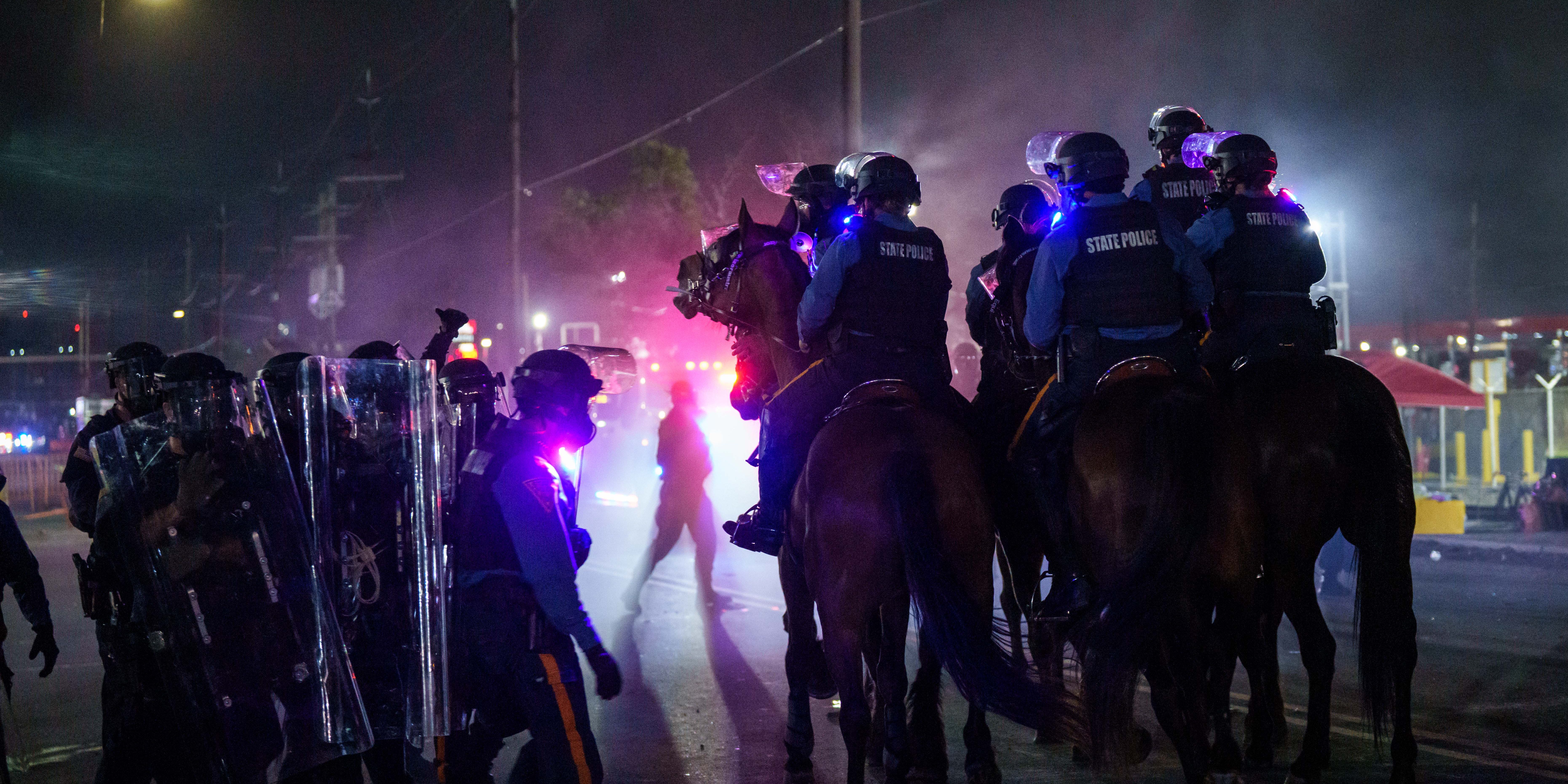
💾

ICE Flouting Federal Judge’s Order to Stop Arresting Immigrants at New York Courts

1 July 2026 at 17:03

Federal agents took three people into custody at immigration courts in New York City over the last week in what lawyers said appears to be the first grave violations of two orders by federal judges barring such arrests.

On Thursday, U.S. Immigration and Customs Enforcement agents arrested an Ecuadorian man at a court at 26 Federal Plaza and a man from the Dominican Republic at another court at 290 Broadway, both in Lower Manhattan. The arrests continued on Monday, when ICE agents detained a third man, originally from Guatemala, at 290 Broadway.

In legal filings challenging the detentions of the men taken Thursday, advocates with the nonprofit Make the Road New York accused ICE of not only violating their clients’ right to due process, but also of brazenly flouting a federal court order.

The judge’s order barred ICE from making arrests at Manhattan immigration courts in all but a narrow handful of exceptions, while a similar ruling issued on June 23 from a federal court in California applies nationwide.

By detaining the men at court on Thursday, ICE appears to be directly contravening the New York order without yet providing a justification, according to Rep. Dan Goldman, D-N.Y.

“ICE continues to flagrantly violate the law by arresting immigrants who are attending their mandatory court hearings, despite a court order mandating an end to courthouse arrests,” Goldman said in a statement to The Intercept, adding that his office was working to get the men released.

ICE appears to be acting outside the law, according to Murad Awawdeh, the head of the advocacy group New York Immigration Coalition.

“We’re witnessing ICE, yet again, operate in a lawless and rogue fashion and not following court orders.”

“We’re witnessing ICE, yet again, operate in a lawless and rogue fashion and not following court orders,” Awawdeh said. “We’re supposedly a nation under the rule of law, and our judicial branch has said that this agency must stop engaging in this lawless behavior, and they continue to do so.”

In its habeas corpus filings, lawyers from Make the Road demanded that the two men arrested Thursday be released and allowed to continue navigating the immigration process.

In a statement to The Intercept, a spokesperson for ICE denied that the agency had violated any court order. The spokesperson did not explain how the arrests fit into the exceptions to the ban on courthouse arrests put in place by the federal judge.

No Exceptions

From May 18 until last week, just two arrests had taken place at Manhattan immigration courts; in both cases, the detainees were swiftly released after lawyers and immigrant rights groups mobilized to invoke the federal judge’s order.

That has not been the case for the men arrested on Thursday and Monday. All three men have since been transferred to detention centers, according to ICE records.

The Dominican man arrested Thursday is currently being held at ICE’s Delaney Hall detention facility in Newark, New Jersey, while the Ecuadorian man arrested the same day is being held at the D. Ray James ICE Processing Center in Folkston, Georgia. The Guatemalan man arrested on Monday is being held at the Orange County Detention Facility in upstate New York. (The Intercept is withholding the detained men’s names because of the sensitive nature of their cases.)

The arrests appeared to end a brief period of calm at Manhattan immigration courts in the wake of the May 18 ruling by Judge Kevin Castel requiring ICE to revert to a policy put in place in 2021. The Biden-era policy allowed for courthouse arrests with prior authorization in only a handful of instances, including when a person might pose a threat to national security or to public safety — narrowly defined as cases in which agents are in direct pursuit of a subject or if it would not be possible to make the arrest in another location.

In their statement, the ICE spokesperson pointed to a conviction for trespassing on the part of the Dominican man and a 2025 conviction for disorderly conduct on the part of the Ecuadorian man.

One immigration lawyer said the courthouse arrests were part of a growing pattern of increased ICE detentions.

“For whatever reason, that order is essentially being disregarded, and we’ve seen a pretty significant uptick in detentions,” said Benjamin Remy, senior coordinating attorney at the immigration protection unit of the New York Legal Assistance Group.

In the year and a half since President Trump returned to office and unleashed the agency as part of his mass deportation agenda, ICE has repeatedly been found in violation of orders around the detention of immigrants. The alleged violations have been ramping up in recent months, according to advocates and court records.

“We’ve seen ICE have a fairly flexible and adaptive relationship when it comes to the truth and the facts,” Remy said, “and to complying with court orders and frankly to rule of law as a fundamental concept.”

An Impossible Bind

Beginning in May 2025 and continuing for almost exactly a year, ICE arrests at 26 Federal Plaza, 290 Broadway, and another immigration court at 201 Varick Street were commonplace, with hundreds of people swept up by masked ICE agents when they showed up for scheduled hearings. According to an analysis published last August by The City Reporter, a local news site, more than half of courthouse arrests nationwide were taking place in New York.

Like the overwhelming majority of people arrested in immigration courts over the past year, the men arrested over the past week were following demands made of them by the immigration system.

Both men arrested last week had fled home due to persecution, entered the U.S., and been detained before obtaining release as their cases proceeded, according to petitions filed on their behalf by Make the Road New York. When summoned to court, both showed up as instructed.

ICE has repeatedly defended the arrests as legitimate. Immigration advocates, however, have warned that it puts immigrants in an impossible bind, forcing them to decide between risking arrest by following the law and showing up to court, or losing any chance of lawfully remaining in the country by skipping a hearing.

“It is not uncommon for me to encounter folks walking into court in the morning already just sobbing,” Remy told The Intercept. “These arrests are discouraging the legal process. It’s discouraging people’s fundamental constitutional right to due process and to be able to have their day in court.”

The post ICE Flouting Federal Judge’s Order to Stop Arresting Immigrants at New York Courts appeared first on The Intercept.

💾

Cops Warn CEO Bodyguards That Luigi Mangione Fever Could Spark Class War

25 June 2026 at 17:38

A law enforcement intelligence hub in New Jersey fretted that the growing class divide in the U.S. could drive a wave of lone-wolf attacks on high-flying corporate executives, according to a report obtained by The Intercept.

The New Jersey Regional Operations and Intelligence Center, one of the so-called fusion centers that serve as intelligence clearinghouses for cops, warned in a bulletin earlier this year that disaffected Americans were increasingly blaming society’s ills on rich people and corporate bigwigs.

The report specifically cited the killing of UnitedHealthcare CEO Brian Thompson in December 2024 — allegedly by Luigi Mangione — as an expression of anti-fat-cat rhetoric. To the analysts at the New Jersey fusion center, Thompson’s killing hinted at a larger trend.

“Public discourse increasingly attributes the challenges faced by the middle and lower classes to the actions and influence of wealthy corporate executives,” the fusion center memo says.

By warning corporate security outfits of the danger posed by average Americans who blame their problems on the actions of corporate executives, the report effectively dedicates public resources to securing a private system that has made the few extremely wealthy at the expense of the many.

“The report seems to be putting forth the view that that is an extremist viewpoint, rather than something that the state has some responsibility in correcting.”

Michael German, a former FBI agent specializing in domestic terrorism and longtime critic of fusion centers, said that by warning CEOs of threats, the bulletin was effectively taking the side of the rich and powerful over ordinary people who are critical of inequality — a typical dynamic at fusion centers.

“The way it’s written, the report seems to be putting forth the view that that is an extremist viewpoint, rather than something that the state has some responsibility in correcting,” German said. “All the resources of the national network of fusion centers, which includes federal resources along with state and local resources, are devoted toward providing security information to private entities.”

Brian Thompson Murder

The “Quarterly Executive Threat Watch” bulletin warned corporate bodyguards to switch up the daily routines of execs, limit information on public engagements, and remove bosses’ personal information from the web. The report says bosses should “remain vigilant of lone offenders with personal grievances.”

“Following the fatal shooting of UnitedHealthcare CEO Brian Thompson and the current political climate, there is a heightened threat environment surrounding corporate executives,” the report says. “Online glorification of the murder of Brian Thompson and calls for violence are still apparent and further create a risk for a lone offender attack.”

A spokesperson for New Jersey’s Office of Homeland Security and Preparedness, the agency that oversees the fusion center, did not respond to a request for comment.

Days after Thompson’s killing in late 2024, Mangione was arrested and charged with the murder, allegedly motivated by injustices in the healthcare system. The then-26-year-old quickly became a cause célèbre for a wide array of supporters and a bête noire of right-wing figures, including those at the Trump administration, who branded him as a violent extremist.

Mangione’s legal team declined to comment on the fusion center report, but has in the past decried attempts to tie him to unrelated acts of violence.

The report went on to cite a list of seemingly disparate incidents to highlight a possible surge in threats to the wealthy, including a satirical Christmas wishlist that called for sabotaging CEOs; a handful of 4chan posts calling for violence against executives at Netflix and elsewhere; a “far-left forum” calling for a campaign against people tied to a mining project in Michigan; and an act of vandalism by pro-Palestine activists at the home of a New York Times executive.

Another incident that made the list was the federal case against the so-called Turtle Island Liberation Front, a group of left-wing activists arrested last year whose alleged bomb plot appears to have been largely driven by a member of their group who was a longtime paid FBI informant.

“The problem with a lot of these fusion center reports is that they take a handful of incidents, not necessarily related to one another, and use them to justify and amplify these threats without any kind of analysis,” said German. “Rather than actually looking at data, their performance is measured by the number of reports they produce.”

Fusion Centers

Fusion centers, which bring together state and federal law enforcement agencies to share intelligence on potential terror threats, rose to prominence in the wake of the 9/11 attacks. The centers operate under state authority, often with grants from federal agencies like the Department of Homeland Security.

While data on any terror plots actually foiled by fusion center operations is scant, they have been roundly criticized for compiling surveillance and data on protest movements, communities of color, student organizers, and, recently, critics of AI data centers.

New Jersey’s only fusion center, officially known as the New Jersey Regional Operations and Intelligence Center, has been criticized for operating outside the typical oversight to which most state agencies are subject.

A 2023 report by Rutgers Law School’s Center for Security, Race, and Rights warns of the potential for abuse in the New Jersey fusion center. The report cited the fusion center’s practice of drafting dossiers on “known troublemakers” and its reliance on so-called “intelligence-led policing,” a practice of surveilling and data collection that the American Civil Liberties Union has cited as a potential violation of the right to due process.

The Quarterly Executive Threat Watch, the bulletin that included the warning for CEOs, appears to be internally categorized as terrorism-related intelligence and was later disseminated by a U.S. Customs and Border Protection officer to recipients across the country. (CBP did not immediately respond to a request for comment.)

Then there is the issue of the center’s shadowy public-private partnership. The New Jersey fusion center does not make public which private agencies or organizations it partners with, or to whom it disseminates reports.

“It’s very ambiguous who is actually in charge and who is responsible.”

The January report drew heavily on the work of SITE Intelligence, a for-profit firm that has come in for criticism because of its labeling Islamic charities as terror fronts and mistakenly identifying video game footage as terror propaganda.

Like its counterparts across the country, the New Jersey fusion center feeds its reports into a national network of public and private agencies dedicated to the gathering and dissemination of information about potential threats — a practice that frequently crosses the line into surveillance of political speech, according to German and other critics of fusion centers.

“There is a lack of public accountability here,” German said. “Because they’re joint enterprises, it’s very ambiguous who is actually in charge and who is responsible for ensuring that the participants within these centers are acting in accordance with the law.”

The post Cops Warn CEO Bodyguards That Luigi Mangione Fever Could Spark Class War appeared first on The Intercept.

💾

The Left Is Unstoppable, According to Republicans

24 June 2026 at 22:46

Socialists and Republicans agree on one thing: The insurgent left flank of the Democratic Party is ascendant.

After primary election night in New York marked a high-water point for the left, a GOP prankster left a bouquet of flowers at the door of House Minority Leader Hakeem Jeffries, who was widely seen as one of the night’s biggest losers.

“Three losses in one night is tough,” said Mike Marinella, the spokesperson for the National Republican Congressional Committee, in a statement. “We wanted so-called ‘Leader’ Jeffries to know our thoughts are with him, his candidates, and whatever remains of his influence in the Democrat Party.”

He was referring to three House candidates with the backing of Mayor Zohran Mamdani — two of them card-carrying members of the Democratic Socialists of America — who notched victories against more established opponents.

In New York’s 7th Congressional District, state Assembly Member Claire Valdez handily beat Antonio Reynoso, a progressive backed by outgoing Rep. Nydia Velázquez; in NY-10, former City Comptroller Brad Lander swept away Rep. Dan Goldman; and in the closest and perhaps most surprising result of the night, former Columbia University pro-Palestine student organizer Darializa Avila Chevalier narrowly edged out Rep. Adriano Espaillat, a powerful figure in Manhattan Democratic circles and chair of the Democratic Party’s Congressional Hispanic Caucus.

In the wake of the stunning sweep, Republicans spent Tuesday evening and Wednesday morning gloating at the electoral headache they foresee the insurgent strain of left-wing populism causing for the Democratic Party. Or rubbing salt in the wounds of their enemies: President Donald Trump seemed giddy on Wednesday over the loss by Goldman, a centrist pro-Israel Democrat and an old foe from Trump’s first term who worked as lead counsel in his first impeachment inquiry.

“Weak and pathetic Congressman Dan Goldman just lost, BIG!” Trump wrote on social media. “I guess people didn’t like him illegally targeting President TRUMP. In any event, this jerk is finally GONE!”

Not everyone on the right was laughing, however. Christopher Rufo, the messaging wiz who helped build a comprehensive conservative rebuttal to 2020-era “wokeness,” took to X to mutter darkly about therising threat of socialism, a phenomenon he described as the left moving “from ‘woke’ to Third-Worldism.”

“Third-Worldism is a more serious threat to life, liberty, and property,” Rufo wrote.

Trump, too, took a moment to be serious and call the candidates “communists,” making an impassioned pledge: “America the Beautiful will NEVER be a Communist Country!!!” he wrote Wednesday.

The victories of all three left-wing congressional candidates appeared to confirm a staying power for Mamdani’s popularity and power six months into his term in office, with numerous commentators declaring him a kingmaker. But Republicans predicted his profile is just as high at a national level — and not in a way that some Democrats would like.

“Republicans need a national boogeyman,” said one GOP operative in the House. “I think it’s going to be very difficult for your mainstream Democrat in a toss-up district to separate themselves from Mamdani and those kinds of socialist insurgents who are running in these primaries. And our view is that they are just unelectable in a swing district where you’re trying to win voters in the middle.”

Corbin Trent, a former aide to Bernie Sanders and Alexandria Ocasio-Cortez, said he thought that GOP strategy was destined to backfire. 

“These ideas that [democratic socialists are] lifting up again are very divisive, but I think we’re misinterpreting who they’re divisive with,” Trent told The Intercept Wednesday. “They’re divisive with people that are going to D.C. dinners, they’re divisive to people at fundraisers, they’re divisive to people in Beltway, and they’re certainly divisive among the big donor class. But I think what [Republicans are] going to be surprised by is how they’re not divisive among the electorate, among the 80 percent of Americans that have been struggling to understand how it is they live in the richest nation in history — and yet they can barely scrape by.” 

In the attacks, Trent saw a potential for the class-based politics of affordability championed by the Democratic Socialists of America slate in New York, along with other insurgent primary winners like Maine Senate nominee Graham Platner, who was so successful in winning over supporters that his establishment-backed opponent stopped campaigning weeks before the primary.

That sense of hope did not appear to be shared by centrist Democrats, who in the wake of the political upset in New York appeared every bit as gloomy as the GOP was gloating. Sen. John Fetterman, D-Pa., took to Fox News Tuesday night to denounce the pro-Palestine bent of the DSA winners in New York, while Jeffries told Spectrum News NY1 that he was more focused on swing states than on his own backyard.

“We’re not in the business of winning Democratic primaries and state seats that are going to be blue regardless of who wins a primary,” he said. “In order for us to be able to take back control of the House of Representatives, we got to flip seats in tough areas.”

On Wednesday, when The Intercept sought comment from Jeffries, a reporter found him busy, standing shoulder to shoulder in the U.S. Capitol with Speaker of the House Mike Johnson, R-La., unveiling a giant congressional time capsule for the country’s 250th birthday.

The post The Left Is Unstoppable, According to Republicans appeared first on The Intercept.

💾

FBI Tried to Flip Anti-ICE Protesters Into Informants

20 June 2026 at 09:00

John Mark Rozendaal was just trying to play music.

On May 29, along with scores of others, Rozendaal responded to calls on social media to gather outside of Delaney Hall, the immigration detention facility in Newark, New Jersey.

The privately run U.S. Immigration and Customs Enforcement facility had, in recent weeks, become the site of daily protests, spurred by a detainee hunger strike against alleged ghastly conditions inside.

When Rozendaal went to Delaney Hall, he took his cello with him. 

“I consider music to be a de-escalatory thing to do,” he told The Intercept. “I sat down on the concrete barricade facing north and started to play.”

“The agent said, ‘We’re calling because you were arrested at Delaney Hall.’”

That night, however, the scene outside Delaney Hall quickly took a violent turn. New Jersey State Police and ICE agents issued a dispersal order and began to clear protesters from the area by force — with officers deploying chemical weapons and charging protesters on horseback. 

“As I played, I saw this wall of plastic riot shields and cops in tactical gear advancing,” Rozendaal recalled. “There were tear gas canisters flying overhead. I could see horses behind the riot shields, flash-bangs. So it was quite dramatic.”

Moments later, Rozendaal was arrested by the New Jersey State Police and, according to an arrest report viewed by The Intercept, charged with one count of obstructing law enforcement. The charge was minor — but a week later, things took a strange turn when Rozendaal received a call from the FBI. 

“The agent said, ‘We’re calling because you were arrested at Delaney Hall,’” Rozendaal told The Intercept. (The FBI declined to comment.)

In the following minutes, Rozendaal said the agents asked if he would be willing to provide the FBI with information on protesters that they described as “anybody planning to go to Delaney Hall with not the right intentions.”

“So, I mean, they were asking me to inform,” Rozendaal said.

Mainstay FBI Tactic

Rozendaal is not the only Delaney Hall protester to receive a call from the FBI.

In the weeks since arrests began stacking up at the protests — approximately 90 people have been arrested so far — at least half of those taken into custody have received calls from federal agents looking for information, according to Benjamin Van Meter, a deputy public defender with the Essex County Public Defender’s Office who represents a number of protesters facing charges.

Van Meter lodged a complaint with authorities over the matter, claiming the FBI contact with his clients violated their constitutional rights.

The phone number used to contact Rozendaal, according to call history logs reviewed by The Intercept, is registered to the FBI’s New York field office and is posted online as an anonymous tipline.

Rozendaal said he rejected the offer immediately and, when the agent attempted to question him further, invoked his right to remain silent, ending the conversation.

The FBI has a long track record of trying to turn protesters, political dissidents, and ethnic and religious minorities into informants. The strategy, which is still commonly used today, can serve agents by both collecting information while stoking distrust among members of political movements and religious communities, according to Amol Sinha, executive director of the American Civil Liberties Union’s New Jersey chapter.

“With every major protest movement in United States history, there have been attempts at infiltration.”

“With every major protest movement in United States history, there have been attempts at infiltration and attempts to disrupt them and to sow discord,” Sinha said. “The FBI has repeatedly been on the wrong side of history every time they’ve tried these tactics of infiltration.”

Sinha said it was important for anyone approached by federal agents to remember their right to remain silent and to ask for an attorney to be present for any questioning.

“Unless the FBI produces a warrant, you have the right to refuse entry, ” Sinha said. “You certainly have the right to stay silent and to demand a lawyer. You are not under any obligation to speak to them about anything — especially if they are charging you with a crime.”

The Rights of Our Clients

Samuel Becker, another protester facing local charges after an arrest outside Delaney Hall, told The Intercept he too got a visit from federal agents in the days following his arrest.

“The FBI would rather intimidate and punish the people protesting outside of Delaney Hall than investigate the physical, sexual, and psychological violence that ICE agents and their auxiliaries are inflicting on detainees across this country every day,” Becker said.

Van Meter, the public defender, wrote a letter to Robert Frazer, the U.S. attorney for the District of New Jersey, and two high-ranking FBI officials in New York and New Jersey, demanding that the FBI stop their attempts to question his clients without an attorney present. (The Department of Justice did not respond to a request for comment.)

“These attempts at contacting our clients at their homes and by phone violate their right to counsel and we ask that you immediately cease and desist from all attempts to question or interrogate our clients without their counsel present,” Van Meter wrote in the letter, dated June 9. “Any further efforts to question our clients are a continued violation of their constitutional right to counsel and our office remains ready to seek all available relief under both state and federal law.”

In a statement to The Intercept, Karen Paff, a spokesperson for the New Jersey Office of the Public Defender, said Van Meter and his colleagues were simply looking “to ensure that the rights of our clients are respected.”

“When law-enforcement officers seek to question individuals who are represented by counsel about matters within the scope of that representation, it is our responsibility to notify the appropriate agencies that counsel has been assigned and that any such communications must comply with the law,” Paff said. “This is not a new or case-specific practice. It is a routine part of our responsibility to clients in any matter where represented individuals may be approached for questioning.”

For Rozendaal, the intent of the FBI agents who sought him out seemed to go beyond just fishing for information.

“I think the real intent is to divide us, to make us scared to talk to each other, too scared to talk in general, scared to go to Delaney Hall,” Rozendaal said. “It won’t work.”

The post FBI Tried to Flip Anti-ICE Protesters Into Informants appeared first on The Intercept.

💾

Undercover Cops Infiltrated Delaney Hall ICE Protest to Spy and Make Arrest

18 June 2026 at 16:49

Detectives with the Newark Police Division of the city’s Department of Public Safety went undercover to infiltrate protests outside U.S. Immigration and Customs Enforcement’s Delaney Hall detention facility earlier this month, according to court records obtained by The Intercept.

At the June 3 protests outside the detention center sparked by a hunger strike inside, detectives in plainclothes worked alongside uniformed officers to arrest Samuel Becker, a protester alleged to have thrown items into a fire days earlier, according to a criminal complaint. 

The protests had taken place for nearly a month outside Delaney Hall, a privately run ICE facility located on an industrial corridor in Newark, New Jersey, where detainees and their families have complained of poor conditions and retaliation by staff.

“The use of plainclothes officers presents the concern of people constantly being surveilled when they are engaging in First Amendment-protected activity.”

The operation was strictly aimed at arresting Becker, 30, who is accused of dragging a tarp into a fire during a raucous protest several days earlier, according to the complaint filed in Newark Municipal Court by police officer Elddy Torres.

“A PLAN WAS DEVISED TO DEPLOY TWO UNDERCOVER NEWARK POLICE DETECTIVES TO MONITOR AND REPORT REAL TIME INFORMATION TO SURVEILLANCE UNITS,” Torres wrote, describing what happened after Becker was identified. “AS THE UNDERCOVER DETECTIVES REMAINED WITHIN THE CROWD, BECKER WAS OBSERVED COORDINATING PROTESTERS PAST THE BARRICADED PROTEST ZONE.”

Law enforcement presence at protests can have a chilling effect, said Amol Sinha, the executive director of the New Jersey chapter of the American Civil Liberties Union, who declined to discuss the specifics of the arrest, with which he was not familiar. The psychological effect of undercover officers — and the fear of undercovers — stands out as especially problematic.

“The use of plainclothes officers presents the concern of people constantly being surveilled when they are engaging in First Amendment-protected activity,” Sinha told The Intercept. “These are moments that should be celebrated as part of democracy and not viewed through the lens of suspicion.”

While the use of undercover officers at protests is not unusual, advocates said the tactic could raise questions about suppression of speech if the aim goes beyond keeping the peace, according to Aedan Neary, a defense attorney in Kearny, who is not involved in the case.

“The concern arises out of the question of, at what point do the actions of these undercover agents become a pressure tactic as opposed to a law enforcement tactic?” Neary told The Intercept. “Is this being used to ensure that things remain peaceful? Or is this more about gathering intelligence?”

ICE Role Unmentioned

The arrest and police report also raise thorny questions about cooperation between ICE and local authorities, which is prohibited for immigration matters by a New Jersey state law passed in March.

According to Becker and two eyewitnesses to the arrest, ICE agents led the ambush that led to Becker’s detention and initially took him into custody.

“An ICE agent chased and grabbed me and quickly handed me over to an NPD officer,” Becker told The Intercept in a written statement. “The NPD officer brought me back over to the other side of the street and sat me down on the side of the ICE minivan that led the ambush.”

“An ICE agent chased and grabbed me and quickly handed me over to an NPD officer.”

While Newark police and Becker’s accounts align on basic details — such as the time and location of the arrest behind Delaney Hall, where protesters had gone to monitor vehicle traffic in and out of the facility — the complaint by Torres, the officer, says the arrest was the work of Newark police with the support of Essex County Police, omitting ICE’s role.

“ONE OF THE NPD UNDERCOVER DETECTIVES ADVISED US THAT THE GROUP WAS PLANNING TO LIGHT THE DUMPSTER ON FIRE AND PUSH IT IN THE REAR FENCE EXIT. A PLAN WAS DEVISED TO INTERRUPT THE GROUPS CONDUCT AND DISPERSE THEM BEFORE THEY COULD HURT ANYONE OR CAUSE ANY DAMAGE,” said Torres’s complaint. “NUMEROUS NPD DETECTIVES AND ESSEX COUNTY SHERIFF’S OFFICE SWAT PERSONNEL RESPONDED TO THE AREA TO MOVE THE GROUP ALONG.”

At least one of the vehicles that arrived in the convoy to make the arrest, Becker told The Intercept, was driven by ICE agents, converging on the group at the rear of Delaney Hall.

According to Becker, his interaction with that initial ICE agent making the arrest indicated some degree of intelligence sharing between federal authorities and local police.

“As I was surrounded by ICE agents and the arresting officer, one of the ICE agents accused me of [setting a] fire a different night,” Becker told The Intercept in a statement. “The ICE agent’s words matched the language NPD used when it put out a statement about my arrest the next day.”

In a statement made in a Facebook post announcing Becker’s arrest, Newark Public Safety Director Emanuel Miranda said, “He was identified by Newark Police as the individual responsible for setting a dumpster fire during the weekend protest at Delaney Hall and also attempting to start a second fire there on Wednesday night.”

The two eyewitnesses, who asked for anonymity for fear of retribution, confirmed Becker’s account of the arrest in interviews with The Intercept.

No Sanctuary

While no law in New Jersey prohibits local police from cooperating with ICE on non-immigration matters, such collaboration has become a hot button for Newark Mayor Ras Baraka, who oversaw a zealous crackdown on protests outside the facility despite publicly opposing President Donald Trump’s deportation blitz.

The recent sanctuary law prohibits New Jersey police from assisting immigration agents in enforcement of federal immigration law, but leaves room for exceptions, including the enforcement of state criminal law.

The ACLU’s Sinha said that his organization had pushed for a broader version of the law that would have prohibited any collaboration between police and ICE.

“This is why we were advocating for an end to collaboration, period,” said Sinha. “We wanted to make sure that there was no instance of collaboration between immigration enforcement and law enforcement, and the fuller version of the law that did not ultimately make its way through the legislature would have prevented that sort of collaboration.”

Catherine Adams, a spokesperson for Miranda, the public safety director, told The Intercept, “To ensure that public safety is provided to peaceful protesters in accordance with their First Amendment rights, and for the safety of other members of the public, as well as the Officers at Delaney Hall, we deploy plainclothes officers, cameras, drones, etc., to identify those at the protest site who unlawfully damage property, start fires, or commit other crimes.”

Lifeline for ICE Operations

Demonstrations outside Delaney Hall were relatively small but attracted attention due to the ferocious responses from ICE agents and employees of GEO Group, the private prison firm that operates the jail.

Over the course of several weeks, ICE agents repeatedly charged protesters in an effort to clear them from the entrance to allow vehicles to move in and out of the facility, often deploying batons, pepper spray, and pepper balls against demonstrators, as well as taking some into custody.

Becker suffered an injury during a charge by ICE agents, when one agent swung a baton so hard that it fractured Becker’s shoulder, according to his account. On the night of his arrest, Becker’s arm was in a sling.

After initially keeping a wide berth from the clashes, state and local police operating under orders from Baraka and New Jersey Gov. Mikie Sherrill — both of whom are Democrats who have spoken out against ICE crackdowns — involved themselves in policing the protesters in late May. The scene immediately became even more volatile, with police firing tear-gas canisters, charging protesters on horseback, and kettling dozens of protesters for mass arrest. 

On May 31, Baraka instituted a curfew in the vicinity of Delaney Hall, and Newark police set up barricades to keep protesters more than half a mile away from the facility for several days. In the weeks since the curfew ended, protests have continued sporadically, but with less intensity or energy as in the initial weeks.

Baraka has repeatedly sought to minimize the city’s role in policing the protests, claiming he was trying to “bring down the temperature,” not bring an end to protests. That posture eventually shifted.

“It is not the responsibility of the Newark Police Division to secure a private facility,” Baraka said in a June 4 statement. “Our intention was never to protect Delaney Hall or HSI” — ICE’s Homeland Security Investigations division — “but to bring calm. It is a clear contradiction to the city’s position with GEO group to remain there.” 

For Becker and many other protesters, the presence of police from various agencies in New Jersey were a godsend to ICE and GEO Group — not to public safety.

“State and local police ramped up their repression of the protestors because ICE agents were having an increasingly difficult time carrying out their daily operations at Delaney Hall by themselves,” Becker said. “Without the ramped-up support of the state and local police, ICE and GEO would have continued to encounter growing difficulty suppressing the strike and operating the concentration camp.”

The post Undercover Cops Infiltrated Delaney Hall ICE Protest to Spy and Make Arrest appeared first on The Intercept.

💾

❌
❌