Normal view

There are new articles available, click to refresh the page.
Yesterday — 20 September 2026The Intercept

Decision on Charging Renee Good and Alex Pretti’s Killers Looms Over Minneapolis DA Race

19 September 2026 at 19:04

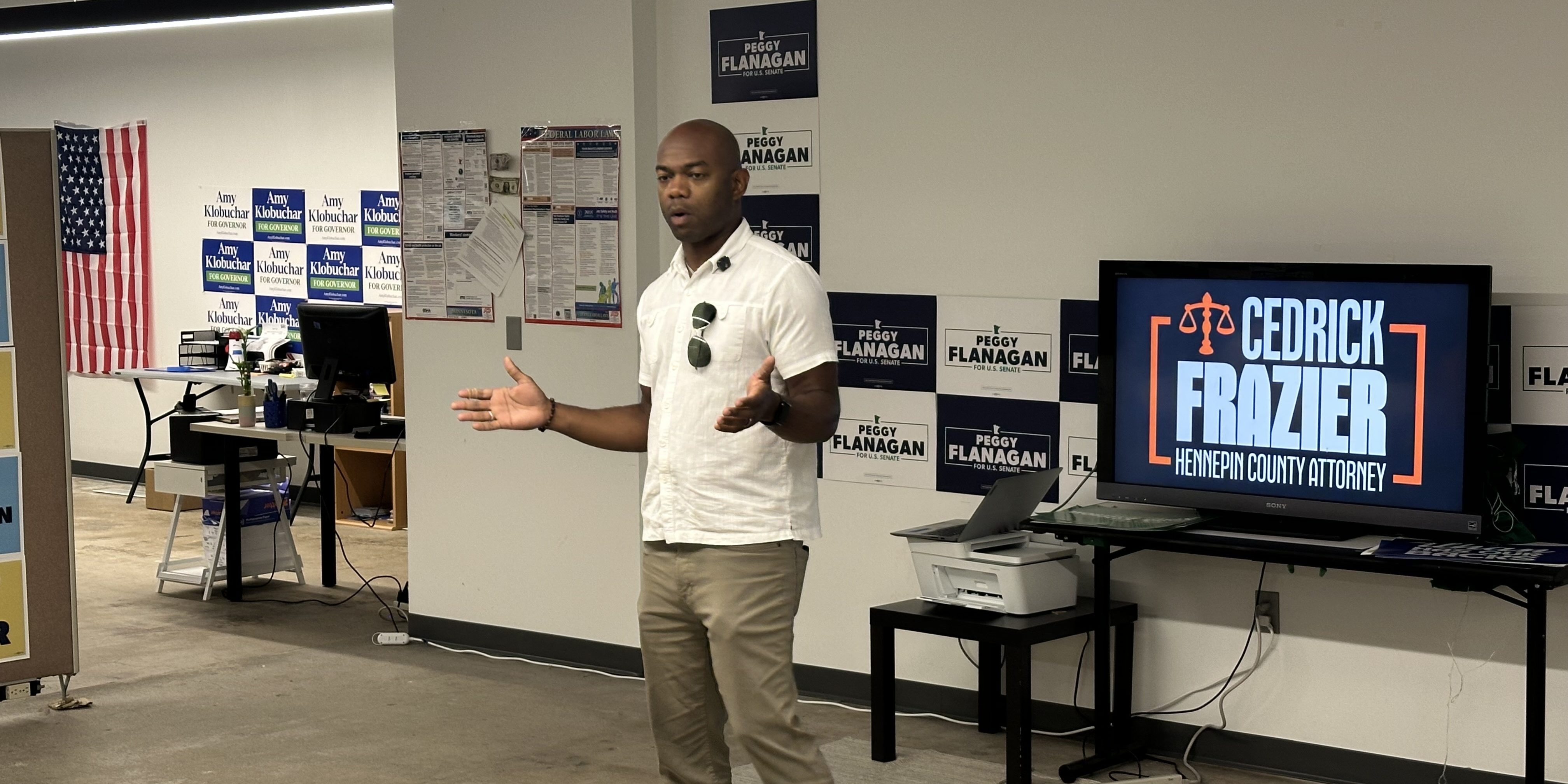
Cedrick Frazier’s blunt message for Minneapolis voters practically jumps off his yard signs: “PROSECUTE ICE. VOTE FRAZIER.”

The slogan reflects the city’s deep anger over the killing of two U.S. citizens by federal officers in January. It also reflects Frazier’s belief that the backlash gives him the edge in the race to serve as Minneapolis’s top prosecutor.

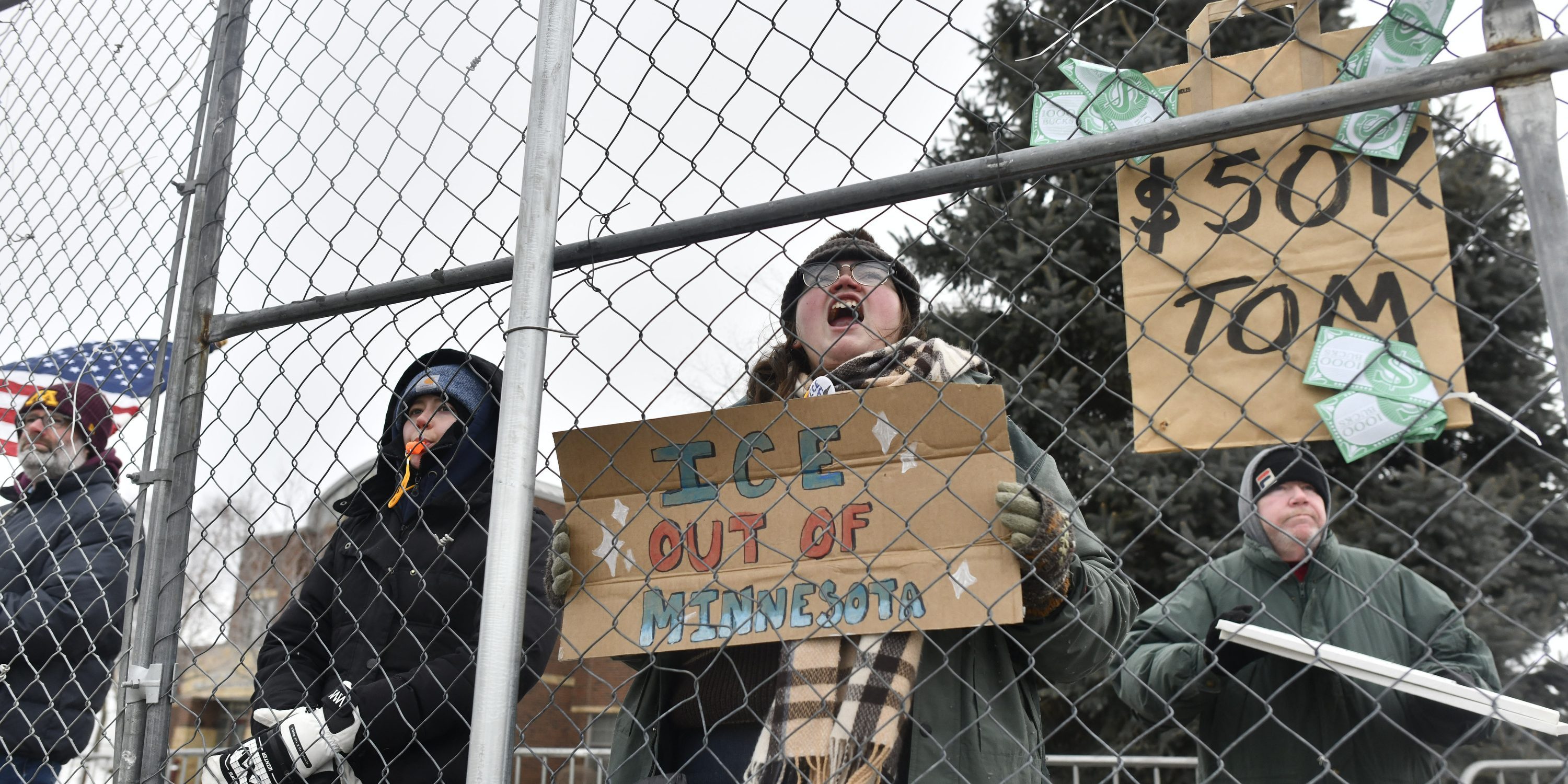
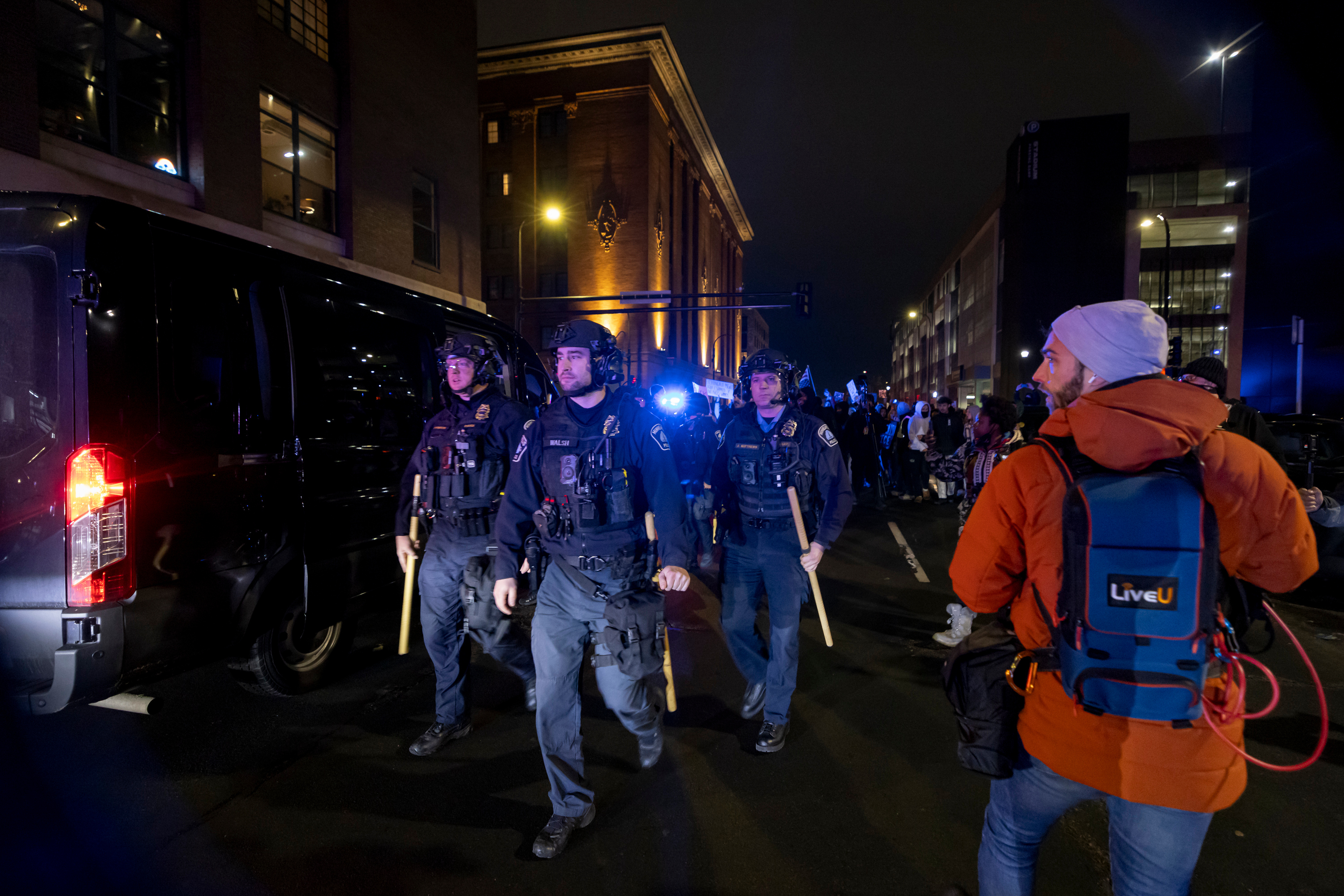
Frazier, a public defender turned state representative, is vying with former federal prosecutor Anders Folk in the race to become Hennepin County Attorney. The county, which includes Minneapolis, was beset by violence and chaos this winter amid a Trump administration immigration crackdown known as “Operation Metro Surge.”

Before the killings of Renee Nicole Good and Alex Pretti, the contest was shaping up as a referendum on so-called progressive prosecutions — fallout from a debate that began six years ago after George Floyd was murdered by former police officer Derek Chauvin.

Now it has morphed into something more. Either Frazier or his opponent will likely decide whether to prosecute the federal immigration agents who killed Good and Pretti. Those stakes give the race national implications, Hamline University political science professor David Schultz said.

“People are going to be looking at this race and asking: What does it tell us about holding law enforcement accountable?” he said. “If you hadn’t had Metro Surge, if you hadn’t had George Floyd, Derek Chauvin, it would be: Minneapolis is holding an election for county attorney — no big deal.”

Walking the Block

A county attorney in Minnesota has broad responsibilities that range from general counsel for local government to prosecuting crimes to pursuing child support cases.

Voters, however, only wanted to talk about one thing as Frazier canvassed the Longfellow neighborhood of Minneapolis earlier this month: U.S. Immigration and Customs Enforcement’s winter invasion. Without prompting, two voters in two blocks thanked him for his campaign promise to go after ICE.

The reminders of Minneapolis’s turbulent decade are everywhere in the city. A couple blocks away from a campaign field office, one building is still tagged with “#JUSTICE4GEORGE” graffiti. Within a short drive, the memorials for Good and Pretti are overflowing with flowers and handwritten tributes.

In an interview with The Intercept, Frazier was careful to say that he has not made any decisions about cases involving federal agents. Any explicit statement to that effect could be used to throw him off the case.

“But I don’t see it any different than saying we’re going to go after crime,” Frazier said. “We’re just making it very clear and very explicit that if you come here, regardless of what your title is, and if you violate the law here, there will be accountability for that.”

A native of the South Side of Chicago, Frazier moved to rural Minnesota for college and never left the state. He has three daughters and went from serving as a Hennepin County public defender to state representative for New Hope, a suburb of Minneapolis.

The 47-year-old built strong connections with the state affiliate of the Democratic Party and Minnesota’s powerful labor movement. His day job outside of his part-time legislative position is as an attorney for the state’s main teacher union.

If he is elected, Frazier will likely face crucial decisions about whether to file or continue pursuing charges in the Good and Pretti killers. The sitting county attorney, Mary Moriarty, began the investigation into those killings with the aid of state Attorney General Keith Ellison, but she could leave the ultimate charging decision up to her successor. Frazier says he has no confidence in parallel federal investigations.

“I have no trust whatsoever in a Donald Trump-led Department of Justice actually getting us any justice or accountability for what happened here,” he said.

“Tagged With Trump”

His opponent, Folk, brings a strikingly different resume and support base to the race.

A Minnesota native and 49-year-old first-time candidate who served in the U.S. Marine Corps, he worked his way up through the ranks at the U.S. attorney’s office in Minneapolis, where some of his most notable early cases focused on Somali American men accused of traveling to the Horn of Africa to fight for the designated terror group al-Shabaab.

After a stint at a national law firm, he returned to the U.S. attorney’s office in 2018 to serve as first assistant. He was briefly the interim top prosecutor after the resignation of the Trump-appointed U.S. attorney in 2021. During that stint, he signed Chauvin’s indictment on federal civil rights charges connected to the murder of George Floyd.

In 2022, he left public service and became a partner at the white-shoe law firm Jones Day, which has helped corporations fight union campaigns.

His blue-chip resume attracted support from wealthy campaign donors and Minneapolis Mayor Jacob Frey, who endorsed him early on.

Folk, whose campaign declined a request for an interview, leans on his prosecutorial experience to make the case that he is best suited to prosecute federal officers.

“These are cases we’ve never done here in Minnesota,” he said in an interview with Minnesota Public Radio last month. “These are going to be cases we’re doing for the first time in the history of this state. And I think it just really speaks to how critical it is to have that deep experience doing federal criminal prosecution work because that’s where these cases are all going to end up.”

While campaigning on his experience at the U.S. attorney’s office, however, his job as a federal prosecutor also presents a liability. Frazier routinely notes that Folk rejoined the office when Trump was president. That association has hurt Folk as much as anything else, said Schultz, the Hamline law and politics professor.

“He is tagged with Trump, he is tagged with the federal prosecutor’s office,” Schultz said.

“It’s guilt by association.”

Mary Moriarty’s Shadow

Frazier took 36 percent of the vote in the nonpartisan primary last month to Folk’s 23 percent. That lead makes him the “heavy” favorite but not the inevitable winner, Schultz said.

Folk’s supporters have bristled at the claims that he was a Trump lackey. In the run-off, Folk played up his connections to the Biden administration.

Yet Folk has played the guilt-by-association game, too, by tying Frazier to the current county attorney, Mary Moriarty.

Moriarty ran as an outspoken progressive when voters were outraged over her predecessor’s handling of Floyd’s murder. She promised to transform the office with a restorative approach and fresh reviews of past incidents of police brutality.

She followed through on those pledges but drew political flak for the way in which she went about it.

Former Democratic allies, including state Attorney General Keith Ellison, castigated her over her handling of a case where two teen boys were accused in the killing a young mother and she sought to prosecute them as juveniles. Democratic Gov. Tim Walz eventually took her off the case and handed it to Ellison, a move she called undemocratic.

With her political fortunes sinking, Moriarty decided not to run again last year, well before Operation Metro Surge began. During the election, Frazier’s critics have sought to cast him as her second coming.

Folk quickly name-checked Moriarty when he was asked about his differences with Frazier in a recent radio interview.

“Not unlike my differences with Mary Moriarty, I’m somebody who has stood up in court and prosecuted for the people of the state of Minnesota,” Folk said. “And Cedrick Frazier has never done that. He has never been a prosecutor and has no experience there.”

Frazier chooses his words carefully when he talks about Moriarty’s legacy. He has positioned himself as more progressive than Folk and promised to continue some priorities, such as the police accountability project. Yet he has sought to distance herself from Moriarty on other issues. Though Moriarty changed the office’s policies to avoid charging juveniles as adults, Frazier says he is open to the possibility of such charges.

“I don’t know why it’s fair for him to say I’m going to be Mary Moriarty 2.0, but we can’t truthfully, truthfully say and talk about the fact that you worked under Donald Trump and you’re a partner at Jones Day,” Frazier said.

The family of the woman slain by the two teens said they felt betrayed by Moriarty’s decision to charge them as juveniles instead of adults. Frazier said that he will be more skillful in talking to community members than Moriarty. He will bring the same approach to killings perpetrated by law enforcement officers, he said.

“I’m going to have use-of-force experts right there with me, helping to inform me when I make those decisions,” he said. “And I’ll be very clear: If the case can’t be charged, I will go out and I will have that tough conversation with the community.”

The post Decision on Charging Renee Good and Alex Pretti’s Killers Looms Over Minneapolis DA Race appeared first on The Intercept.

💾

Before yesterdayThe Intercept

Facing Outraged Residents, Flock Got Help From Group That Uses AI to Rally Public Support

17 September 2026 at 09:30

The debate over Flock cameras in Knoxville, Tennessee, had reached a fever pitch this July when a stay-at-home mom received a text message from a nonprofit group she had never heard of.

The group, Neighbors for Strong Communities, asked Ashley Smith to speak out in support of Flock’s controversial license-plate readers. The nonprofit even offered to use artificial intelligence to help her draft an email to public officials.

There was only one catch: Smith, a mother of four, said she noticed that she would only be supplied with text if she indicated she supported the Flock cameras.

Instead of offering support, Smith dashed off her own email — an outraged missive to her elected officials and a local blog outlining what she saw as an insidious PR campaign.

“If the interests beyond this surveillance technology will work this hard to deceive you to win a vote, what will they do with the database of our every movement?” she said. “A company that manipulates and manufactures fake neighbors is not a company that will honor our data policies, audit logs, or the privacy of the people of Knox County.”

“A company that manipulates and manufactures fake neighbors is not a company that will honor our data policies.”

The text message to Smith revealed little about the Flock campaign’s origins.

As it turns out, the campaign was the product of a “partnership” between Flock and a newly created nonprofit that has used similar tactics in support of the controversial proposed merger between Paramount Skydance and Warner Bros. Discovery. Opponents of the merger derided the nonprofit’s work there as corporate “astroturf” — the practice of drumming up fake grassroots support.

The combination of texts and AI-generated messages fell short of swaying public officials in Knoxville. Last month, the county commission became the latest municipal body to vote to cancel the Flock contract.

In both the Paramount and Flock cases, however, Neighbors for Strong Communities’s work has raised questions about what counts as truly grassroots organizing.

“One of the concerns of the people with the Flock cameras is: Can we trust you?” Smith told The Intercept. “And this sort of manipulation of people’s desires already shows that they are secretive, and they are not willing to share the honest information.”

Flock and Neighbors for Strong Communities did not respond to requests for comment. On its website, the nonprofit said it had a lead role in the pro-Flock campaign. “Flock Safety brought experience with public safety technology. Neighbors independently designed and managed the resident-engagement campaign, helping Knox County residents share their experiences directly with local decision-makers,” the organization said.

“I mean, there are no neighbors and there are no communities.”

There are, however, no signs of a genuine upswell in grassroots support for Flock, said Craig Aaron, the co-CEO of Free Press, a nonprofit advocacy organization that is critical of both the Paramount merger and Flock.

“This is very much an astroturf project. I mean, there are no neighbors and there are no communities,” he said. “What makes it astroturf is the fake grassroots nature of it.”

“You’re talking about literally one of the most unpopular technologies,” Aaron added, “that has people taking chainsaws to light poles because they don’t like being spied on.

“This Is So Shady”

Neighbors for Strong Communities’s text messages can look like they come from nearby.

The text Smith received about Flock cameras came from a Knoxville area code. In California, residents received text messages about the Paramount merger from a Los Angeles area code.

In both cases, residents were presented with a series of questions whose answers would, in at least some cases, be used by Neighbors for Strong Communities to draft AI-generated emails to public officials.

Despite the area codes it sent texts from, Neighbors for Strong Communities was incorporated in Washington, D.C., in June.

Although the group does not list a board or staff members on its website’s “About” page, its incorporation papers show that its directors include several political consultants, including at least one former registered lobbyist.

At least two directors at Neighbors for Strong Communities also helped found Influent, a company that uses AI to generate letters to elected officials. Text messages to Knoxville residents linked to a URL with the word “influent” in the address. Whether Influent has a business relationship with Flock is unknown. (Influent did not respond to a request for comment.)

The page on Neighbors for Strong Communities’s website dedicated to Knox County features an image of a man with six fingers — a rare condition that is also a hallmark of AI-generated imagery. The page says Flock’s supporters are “real people.”

An image of a man with six fingers seen on a page from Neighbors for Strong Communities about its work helping Flock generate a show of public support. Screenshot: The Intercept

Smith said she was confused to receive the text message from Neighbors for Strong Communities, which she had never heard of despite her long involvement in local politics. In its message to her, the group seemed to play up a local connection.

“Knox County Neighbors for Strong Communities is asking local residents to speak up in support of responsible license plate readers with strong privacy protections before the vote on Monday,” the text message said. “Answer 2 quick questions and we’ll help you generate a personalized message urging local leaders to support this practical public safety tool.”

She filled out the form from Neighbors for Strong Communities twice, at first indicating her opposition to license-plate reader cameras, she said. Only on the second attempt, when she pretended that she supported the cameras, was she given the draft of an email to her county commissioners. The draft did not indicate the use of AI or its connection to the nonprofit group.

“Answer 2 quick questions and we’ll help you generate a personalized message urging local leaders to support this practical public safety tool.”

The experience disturbed Smith, who felt certain that she would have heard of a grassroots group in Knoxville given her years of organizing in local conservative politics.

“This is so shady,” Smith remembered telling herself. “If you’re in opposition, they don’t let you send that to your commissioners. But if you’re in support, they’re sending that to all of the commissioners.”

Smith started digging — and she used artificial intelligence to help. Her searches turned up Neighbors for Strong Communities’s incorporation paperwork in Washington, D.C.

Knox shared her findings with her county commissioner Andy Fox and a popular Facebook page for local politics. She noted that the address the nonprofit provided was shared with an Italian restaurant in D.C. (The group has since updated its address, which it shares with a UPS store in Santa Monica, California.) When the Facebook page shared her findings, at least nine residents posted comments saying they had received text messages, too.

“Clearly a PR Campaign”

Neighbors for Strong Communities’s intervention came at a perilous moment for Flock.

The company had already reaped more than $2 million from the Knox County Sheriff’s Office, but county commissioners said they had never been asked to approve a contract.

Residents on the right and left were raising concerns about privacy protections and the camera network’s history of being used by rogue law enforcement officers to stalk former romantic partners.

The nonprofit’s outreach effort appears to have generated a flurry of emails to commissioners arguing that the cameras were needed to prevent crime. Former at-large Commissioner Larsen Jay shared eight emails that he received from constituents supporting the use of license-plate readers.

None of those emails were identical, but their language was similar enough to raise red flags for Jay, whose service on the commission wrapped up at the end of August.

The emails Jay shared with The Intercept appear to come from genuine residents of the Knoxville area. Two residents confirmed to The Intercept that they had sent emails in support of Flock, although one said she had since switched her position.

While several emails contained personalized details, Jay said he considered the pro-Flock emails to be “form letters” nonetheless. In face-to-face conversations, Jay said, opposition to Flock ran 99-to-1.

“It’s just clearly a PR campaign,” Jay said. “Don’t use my people. That’s how it felt when I started to realize what it was.”

“These Are Real People”

At some point after the pro-Flock campaign came to an end, Neighbors for Strong Communities posted a defense of its tactics on its website.

The group acknowledged that it used “technology” to help residents craft missives to county officials. It said, however, that all of those residents were asked to sign off on the AI-generated drafts.

“Technology played a role in this campaign, but it was never the point,” the group said on its website. “These are real people with real experiences. Whether someone ultimately agrees with every policy position or not, their voices deserve a place in the decisions shaping their community.”

It remains unclear how the group handled responses from residents who oppose the use of Flock’s cameras. The group said on its website that it “listened” to those responses but did not comment further when asked.

Flock’s partnership with Neighbors for Strong Communities largely flew under the radar until weeks later, when the nonprofit partnered with Paramount Skydance on its proposed merger. Critics of the merger noticed the group’s earlier work in Knoxville and began asking questions about why a nonprofit would work on such disparate campaigns.

Merger critics said the nonprofit’s work in California had all the hallmarks of a phony “astroturf” campaign, which is designed to generate the appearance of grassroots support.

The group drew more negative attention recently, when a merger critic discovered that its AI text generator flipped her criticism of the deal into support. The nonprofit’s spokesperson blamed “a recent system upgrade.”

In Knoxville, Neighbors for Strong Communities appears to have disclosed — at least after the fact — that it “partnered” with Flock on the pro-camera campaign. Still, the group has not disclosed the sources of its funding.

Thomas Lyon, a professor at the University of Michigan’s Ross School of Business who has studied corporate public relations, said that a campaign can still be classified as “astroturf” even if it generates letters or emails from ordinary citizens. In the pre-AI era, Lyon said, public relations firms running “astroturf” campaigns for corporations would sometimes call people and offer to draft them letters to public officials over the phone.

The company associated with two of Neighbors for Strong Communities’ directors, Influent, promises on its website that it has a different approach from other corporate influence campaigns.

“Generic astroturf form letters are destined for the trash bin,” the company says in promotion materials. “Every Influent letter, Tweet, phone call, and message is tailored to the individual — each one unique, reflecting the authentic voice of its sender.”

Neighbors for Strong Communities’s own website features similar language stressing the authenticity of supporters’ messages to public officials.

By that measure, at least, the nonprofit missed the mark, according to another county commissioner. Andy Fox — Ashley Smith’s representative on the commission — told The Intercept that he received dozens of “template” emails in support of Flock.

He said, “It doesn’t feel right to me.”

The post Facing Outraged Residents, Flock Got Help From Group That Uses AI to Rally Public Support appeared first on The Intercept.

💾

Crypto Darling Gillibrand’s 11th-Hour Flip-Flop Helps Block Trump Crypto Bill

15 September 2026 at 21:02

Hours before joining progressives to block a crypto bill that critics said was a handout to President Donald Trump, a top Senate Democrat was lobbying her colleagues to pass the legislation.

Sen. Kirsten Gillibrand, D-N.Y., a centrist who leads the Democratic Senatorial Campaign Committee, privately urged fellow Democrats to support advancing a crypto bill that would have created a regulatory framework for the industry, according to reporting in Politico.

Her pleas fell on deaf ears, however, as progressives including Sen. Elizabeth Warren, D-Mass., mounted a public campaign against the bill. The critics said the bill would allow President Donald Trump to add to the $1.4 billion in crypto profits he pocketed last year.

When it came time for the final vote, Gillibrand joined all Democrats in voting against a motion to advance the bill. Four Republicans also voted against the motion, which fell far short of the 60 votes needed to proceed to a full debate. The final tally was 49–50.

Gillibrand’s flip-flop reflected the bind that Trump has placed on moderate Democrats during his second term. Many of those centrists previously backed crypto-friendly regulations, but the historic scale of Trump’s profits on his meme coin and other crypto ventures has made them reluctant to publicly side with the industry.

“We deserve to know why she tried to get her colleagues to rubber-stamp this corrupt crypto deal.”

Gillibrand’s office did not immediately respond to a request for comment. In a statement, the progressive group Demand Progress criticized her for previously trying to rally support for the bill.

“While Sen. Gillibrand switched her support for the bill at the last minute, we deserve to know why she tried to get her colleagues to rubber-stamp this corrupt crypto deal, particularly at a time when she is claiming to oppose Trump’s corruption,” said the group’s corporate power policy adviser, Ella Fanger.

Gillibrand has long been one of the crypto industry’s most outspoken supporters in the Senate. Before the vote, an aide argued in a written statement that it would be best to proceed to debate on the Clarity Act, stating, “Senator Gillibrand would relish the chance to debate real ethics reforms on the floor — in full view of the public, seven weeks out from the midterms.”

Trump and Senate Republicans tried to win over the dozen or so Senate Democrats who have proven friendly to the crypto industry in the past with concessions they said would rein in the president’s crypto ventures.

In remarks on the Senate floor, one of the bill’s sponsors, Sen. Cynthia Lummis, R-Wy., highlighted Gillibrand’s role in negotiations over the text as evidence of its bipartisan backing. Lummis also argued that the White House had conceded virtually everything that Democrats had asked for when it came to ethics provisions over the course of months of negotiations.

“President Trump gave more than anyone in this town expected, twice. It is time for this body to take yes for an answer,” she said. “Take the win.”

Warren and others warned that the supposed concessions were shot through with loopholes.

“We need crypto regulation, but voting to proceed to this bill is a vote to bless Donald Trump’s corruption,” Warren said hours before the vote.

“We need crypto regulation, but voting to proceed to this bill is a vote to bless Donald Trump’s corruption.”

One key provision that Democrats had sought would allow state attorneys general to initiate enforcement actions against the president for ethics violations. However, staffers for Warren on the Senate Banking Committee said that the provision included in the latest version of the bill text was essentially a dead letter, because political officials directed by Trump could issue a legal opinion shutting down the enforcement action.

Another provision of the bill allowing Trump to put his crypto assets in a supposedly “blind” trust would not prevent him from favoring the industry to increase his own profits, minority staffers for the Senate Banking Committee said.

Trump’s self-dealing was not the only issue hanging over the legislation. The banking industry also flexed its political muscles on the Hill by arguing that the bill would enable crypto start-ups to steal deposits from small local lenders.

Tuesday’s vote could create a liability for Democrats heading into the midterms. Crypto industry super PACs have a massive war chest that they could use to target vulnerable Democrats — a tactic they deployed during the 2024 election.

Voters want to know that candidates are willing to defy well-funded industries, Warren argued, pointing to the growing number of candidates who bucked crypto during the primary season and won nonetheless.

“The crypto industry doesn’t want to just lobby Congress, they want to buy the Congress that will be favorable to them,” she said. “It is our job when we run for elected office to stand up and do what’s right.”

The post Crypto Darling Gillibrand’s 11th-Hour Flip-Flop Helps Block Trump Crypto Bill appeared first on The Intercept.

💾

FAA Investigates Drone Pilot Who Films Animal Abusers

8 September 2026 at 15:16

For years, animal rights groups and the agriculture industry have played a cat-and-mouse game over drone videos of conditions at major farms.

Angry farmhands faced off against activists who flew their drones overhead, with the operators secure in the knowledge that the Federal Aviation Administration allows licensed pilots to soar over farmland as long as they followed its rules and regulations.

Now, a new chapter has opened in these drone wars: The FAA has launched an investigation of an animal rights activist whose group’s videos of conditions at California cattle ranches sparked outrage, with the agency simultaneously proposing new rules that could prevent the pilots’ flyovers altogether.

The same company whose ranch is at the center of the allegations against the pilot is pushing for government restrictions on drone flights in the name of protecting the “national food supply chain.”

It is unclear whether the investigation represents a routine administrative step or the beginning of a broader crackdown, activists affiliated with the group Direct Action Everywhere said, but the group is watching closely.

“We know the industry lies about us, including saying our footage is edited,” Cassie King, a spokesperson for the group, told the Intercept. “What would be most concerning is if the FAA believes those lies at face value and tries to take licenses away from drone pilots who are operating safely to expose to the public what animals are suffering, and basically just to help the industry shut down that work in the public interest.”

The FAA does not comment on open investigations, a spokesperson said.

Drones Against Cruelty

The advent of drones gave animal rights groups a major leg up in their long-running campaign against big farms, which they allege routinely deploy abusive and cruel behavior against chickens, cows and calves, pigs, and other species bred for human consumption.

For years, diehard activists faced arrest and prosecution for sneaking onto farms with cameras to document conditions. Those same activists have gone legal in the drone era, since federal law largely allows licensed drone pilots to fly over farms and capture video of the conditions below.

The activists’ videos have already created major headaches for cattle farmers. In February, a Direct Action Everywhere pilot caught ranch hands in California’s Central Valley kicking young calves and pulling them with pliers. One of the workers involved was fired, according to the Los Angeles Times.

Now another Direct Action Everywhere pilot is facing turbulence. Joseph Allman received a letter in July notifying him that he was under investigation by the FAA. Allman says it is the first time the agency has opened an investigation into someone affiliated with Direct Action Everywhere.

Allman has been a licensed pilot since 2016 and previously operated a commercial drone business. In recent years, he has pivoted to activism, using his skills to fly drones over farms across California and providing instruction to prospective pilots for Direct Action Everywhere.

While Allman says he carefully follows FAA rules is in the air, he faces criminal charges — apparently unrelated to the federal investigation — for an incident that happened on the ground. Allman and other activists are accused of removing two baby goats they said needed medical attention from a farm during a May 2025 action at a Kings County, California, dairy farm.

The FAA investigation of Allman pertains to a different business, Grimmius Cattle Co. Allman says the only formal information he has received is that a complaint was filed against him on February 24 about a flight he conducted over the company’s East Ranch property in Strathmore, California.

The day before that complaint was made, Allman said, one of the company’s security workers confronted him as he flew a drone over the property. The worker accused him of flying the drone without having it in his line of sight, according to Allman, which would violate FAA regulations. Allman denies that allegation.

It is not clear who filed the complaint against Allman. Grimmius Cattle Co. did not respond to requests for comment from the Intercept.

Coming Crackdown?

Allman said he has great respect for the FAA. But he has grown concerned because the agency has not responded thus far to requests from him and his lawyer for further information about the claims against him, he said.

The mere opening of an investigation is not necessarily cause for alarm, according to Douglas Marshall, a law professor and aviation consultant who wrote a book on drone policy.

“It’s just a form letter,” he said. “They crank them out. It takes them all of 15 minutes to do it. It often just ends right there.”

Still the agency takes “blatant” violations of its rules and flight restrictions seriously, Marshall said. Because investigations can result in heavy fines and the possibly revocation of a license, he often advises pilots to seek help from a lawyer, which Allman has done.

Part of Allman’s fears stem from industry’s push for a broader crackdown on drone pilots, he said. The FAA is pursuing a new regulation that could prevent pilots from flying over agricultural facilities. When the agency put out a public request for comments on new rules for “fixed site facilities,” agricultural businesses responded by asking for strict restrictions.

One commenter was Grimmius Cattle Co. Its chief operating officer Austin Flores complained that an activist group had submitted more than 30 hours of footage of another farm to law enforcement agencies.

“This is the end goal of these surveillance campaigns: to generate enough material to file complaints, trigger investigations, and create regulatory and legal pressure against lawful agricultural operations,” Flores said in a written statement submitted on July 6. “The footage is a tool, and producers have no current airspace protection to prevent it from being gathered.”

Flores cast tighter regulations as key to protecting the “national food supply chain.”

“Without clear restrictions, agricultural operations are left in the same position as any other unprotected airspace, open to anyone, for any purpose,” he said. “We believe that is a food security vulnerability that this rulemaking has an opportunity to address, and we urge the FAA to treat it as such.”

Allman said a ban would be a major setback for animal rights groups.

“The drones usually capture some sort of cruelty, and that is so important,” he said. “The industry will just say it’s a one-off incident. The drones are showing that this is not one-off, and it’s systemic.”

The post FAA Investigates Drone Pilot Who Films Animal Abusers appeared first on The Intercept.

💾

Flock Donations to Local Politicians’ Groups Skyrocket as Protests Against AI Cameras Mount

4 September 2026 at 09:00

As fed-up activists target Flock, the AI-powered surveillance camera company is battling back with a massive increase in donations to associations for mayors and other local officials.

Since the beginning of 2025, Flock has given 700 percent more to the partisan groups representing mayors, attorneys general, and governors than in the previous three years. The giving has gone to Democratic and Republican groups alike.

Donating to those groups is a time-worn strategy for companies under scrutiny. The gifts can sometimes reap face time with elected officials. Two major Flock competitors in the license-plate reader industry, Axon and Motorola Solutions, have also donated widely.

One group that received money from Flock, the Democratic Mayors of America, defended its decision to accept $30,000. A spokesperson said reports of Flock misuse are “deeply unsettling,” while arguing that the donations gave Flock no influence over local mayors.

Since the beginning of 2025, Flock donated a quarter-million dollars to a bipartisan slate of groups.

Critics of money in politics have long raised concerns that such donations create, at a minimum, the appearance of a conflict of interest. A surveillance skeptic said the groups could face blowback.

“There’s a reputational risk for them accepting donations from Flock at this time,” said Torin Monahan, a professor of communication at the University of North Carolina at Chapel Hill.

Flock did not respond to a request for comment.

Over the past year, Flock has faced intense pushback from activists on the left and right over perceived civil liberties abuses. Flock was forced to admit that immigration officials had access to its data, despite earlier denials in the middle of the Trump administration’s immigration crackdown last year. Dozens of police officers have also been accused of abusing Flock’s database to track people, often former romantic partners.

Flock was founded in 2017, but it was only five years after that that it began doling out money to what are known as 527 groups, according to records compiled by the nonprofit news outlet ProPublica. The so-called 527 groups can raise unlimited funds directly from corporations and spend that money on key political races.

Flock’s giving began at a relatively meager rate: From 2022 to 2024, the company gave $20,000 to the Democratic Mayors Association and $10,000 to its Republican counterpart, the Community Leaders of America.

Its spending has skyrocketed since then. Since the beginning of 2025, the company donated a total of $240,000 to a longer list of groups that includes the Democratic and Republican Governors Associations and the Democratic and Republican Attorneys General Associations.

Flock’s pattern of donating to 527 groups was identified by a widely cited critic of the company, Jason Hunyar, who asked on his blog what the company was receiving in exchange for those donations.

Influence Investments

The donations came as Flock was hiring an army of lobbyists. It has spent more than $2 million on state and federal lobbying since the start of 2025, according to a recent report from the transparency group OpenSecrets.

The rise of that multi-pronged influence campaign coincided with intense pushback to the company’s practices. Several members of Congress have proposed either outright bans or stricter regulations on Flock and other license-plate readers.

Much of the activism against Flock thus far has come at the local level. Scores of cities and other local governments have rejected or canceled Flock contracts or deactivated the company’s cameras since the start of 2026, according to the advocacy group DeFlock.

The suspicion crosses party lines. In Knox County, Tennessee, Republican Mayor Glenn Jacobs — the former professional wrestler Kane — recently led a campaign to cancel the company’s contract there. In Arizona, Democratic Attorney General Kris Mayes announced that she was launching a review of Flock and other camera networks.

Flock is not the only license-plate reader company that has routed money to political groups. Motorola Solutions, which counts cameras as one product among many in its portfolio, has donated more than $986,000 since the start of 2023, according to public records.

Axon, which also hawks Tasers and body-worn cameras, has donated $225,000 to Democratic and Republican attorney general groups over the same period. (Motorola Solutions and Axon did not respond to requests for comment.)

Making Connections

Corporate donations to 527 groups long been controversial. Companies can use the groups to build connections with the same elected officials making decisions about whether to purchase their products and services.

More than a decade ago, the New York Times documented how corporations facing lawsuits used donations to the Republican and Democratic attorney general groups to cozy up to decision-makers.

On its website, the Democratic Mayors Association touts a program that connects mayors “with leaders from the private sector, organized labor, advocacy groups, and partner organizations to build relationships, share ideas, and take on the most pressing challenges facing America’s cities.”

That group defended its decision to accept donations from Flock.

“No donation made to the Democratic Mayors Association guarantees any form of influence over the mayors, no matter who the donor is,” said a spokesperson. “The reporting we’ve seen about police departments across the country misusing Flock cameras and the data is deeply unsettling, which is why mayors across the country have taken action to implement strict guardrails or ban them altogether. Ultimately, Democratic mayors have presided over a historic drop in crime and have proven they know how to keep their communities safe. Each mayor makes their own decisions about what is best for their cities, and we trust their judgement.”

The Democratic Governors Association also defended its donations from Flock and other corporations.

“The DGA does not take policy positions as an organization,” said a spokesperson for the group. “Every dollar sent to the DGA helps us elect more Democratic governors who make their own policy decisions about how to make life better in their states and stand up to Donald Trump.”

Other groups that have received money from one or more of three leading companies in the license-plate reader world — Axon, Flock, and Motorola Solutions — did not respond to requests for comment.

The post Flock Donations to Local Politicians’ Groups Skyrocket as Protests Against AI Cameras Mount appeared first on The Intercept.

💾

Trump Goes After Anonymous Email Provider in Italy. The Real Target Is Free Speech in the U.S.

28 August 2026 at 15:51

In the latest escalation of the Trump administration’s war on the left, the U.S. government’s designation of a popular antifascist webhosting provider as a terror group could shutter a swath of radical websites in the U.S.

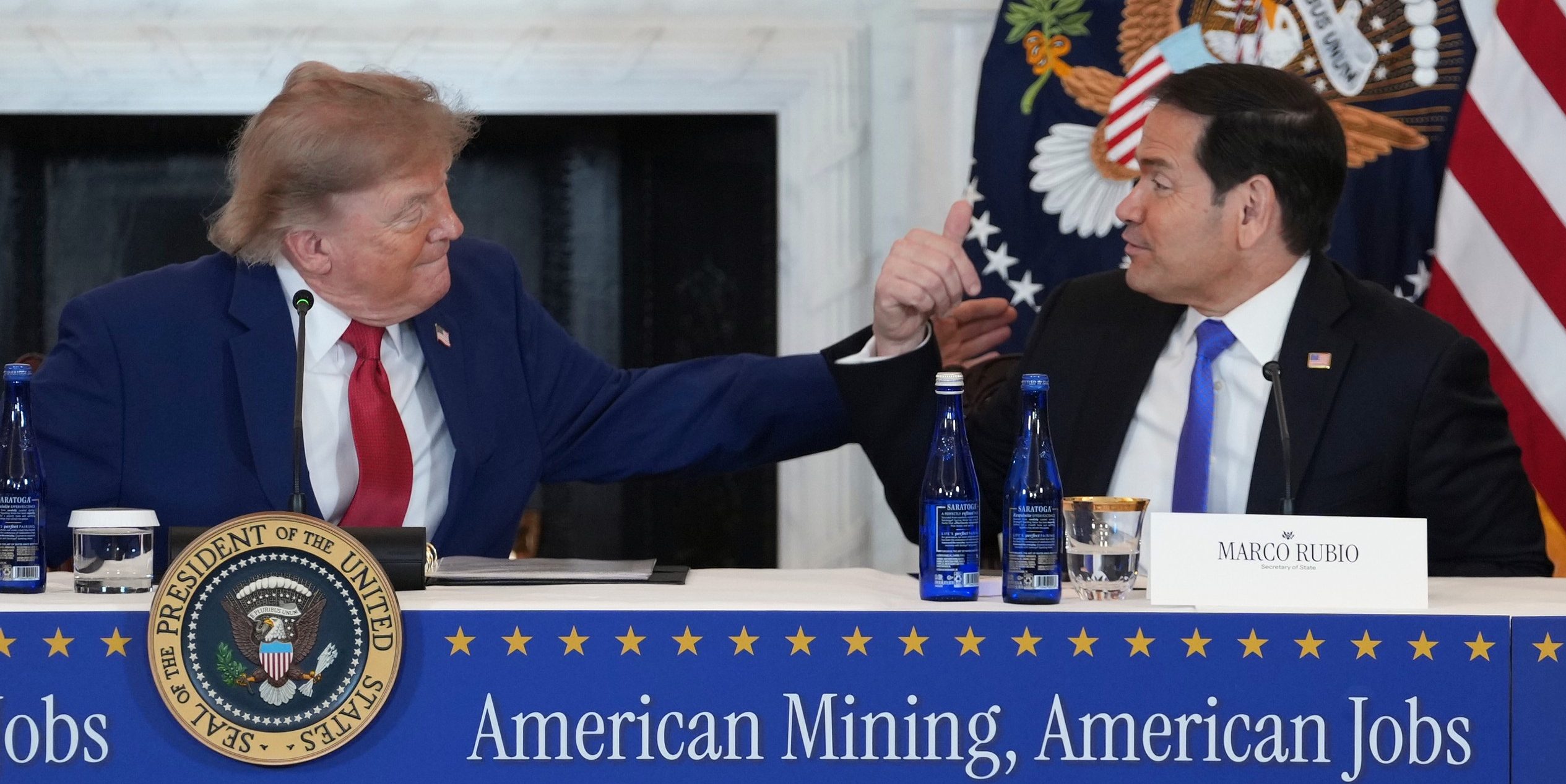
Secretary of State Marco Rubio and Treasury Secretary Scott Bessent announced Wednesday that they were targeting the Italy-based A/I Collective with terror sanctions. Federal law gives the Treasury Department broad discretion to apply the terror label to foreign groups.

A wide array of anarchist, antifascist, and far-left groups in the U.S. and abroad use the privacy-minded collective’s offerings, including an anonymous email service and its popular noblogs.org blogging platform.

The practice of designating an internet platform and service provider as a terror group — rather than those pursuing violence themselves — has “huge” implications for the future free speech on the internet, warned Jillian York, the director of international freedom of expression at the Electronic Frontier Foundation.

“They are going after the messenger,” York said. “I don’t think that the members of the group would necessarily condone the actions of the people that they hosted. What they do condone is the freedom to host, the ability to be anonymous, the ability to be private.”

“Protesting is not terrorism.”

The A/I Collective told The Intercept that it is exploring its legal options to fight the sanctions, which block U.S. citizens and companies from providing the group with financial support.

In an unsigned statement, the group said that it denies the U.S. government’s allegations. 

“Antifascism and anticapitalism are not terrorism,” the group said. “Protesting is not terrorism. And everyone has the right to speak out and to struggle for humanity.”

The U.S. government’s move could have ripple effects far beyond Italy. 

Groups using the A/I Collective’s services range from an anarchist radio show in Asheville, North Carolina; to a blog documenting attacks on anti-abortion “crisis pregnancy centers” under the Jane’s Revenge moniker; to the Seattle Anarchist Bookfair. The bookfair warned Wednesday that its website “will most likely go down soon because of US sanctions on Noblogs.”

The State and Treasury Departments justified the designation by alleging that the A/I Collective, also known as Autistici/Inventati, has provided services to foreign terror groups, including anarchists who have launched attacks on railroads and pipelines in Europe, and by domestic left-wing groups that have employed violence.

“A/I’s cadre of radical hackers and tech developers provide a full spectrum of services — including encrypted chats and email, web hosting, secure video conferencing and streaming, anonymity shields, and a suite of other technological tools — to Marxist, anarchist, and other left-wing extremist groups in the United States, Europe, and elsewhere,” a State Department spokesperson said in a press release. “These tools are specifically designed to support the operations of far-left terrorist networks.”

It is unclear how many groups in the U.S. could be forced offline, or to shift their providers, because of the terror designation. The A/I Collective said it could not provide an estimate of U.S-based groups that it hosts, because it does not ask its users for any private or personal information.

Nor was it immediately clear whether simply hosting a site using the collective’s services would be illegal if no money changes hands. Still, the collective says that it relies heavily on voluntary, suggested donations, and many U.S.-based groups appear to be scrambling for alternative hosting providers.

The A/I Collective was sanctioned under the Treasury Department’s authority to label groups specially designated global terrorists. U.S. citizens convicted of violating those sanctions can face stiff penalties of up to 20 years in prison.

If U.S. groups continue to use the collective’s services, the U.S. government could use that affiliation against them, said Shayana Kadidal, an attorney with the Center for Constitutional Rights. The Treasury Department can even label U.S.-based groups as specially designated global terrorists, although they have more standing to challenge that designation in court.

The designation of the A/I Collective as a foreign terror group is the next step in a sequence that began with Trump’s designation of antifa as a “domestic terror organization” last September, said Mark Bray, a historian at Rutgers University who wrote a book about antifascism.

Where the Trump administration goes next is the “million-dollar question,” Bray said.

“It seems to be they’re playing a bit of a long game,” he said, “where they try to establish the existence of a supposed violent, left-wing terror network — which they have had trouble doing, but they have tried. But then, of course the way they make that affect the left more broadly is to criminalize those who they claim are aligned with it.”

The post Trump Goes After Anonymous Email Provider in Italy. The Real Target Is Free Speech in the U.S. appeared first on The Intercept.

💾

Conservative Groups Side With Minneapolis Protesters Against Trump Crackdown

25 August 2026 at 20:10

A trio of conservative and libertarian-leaning groups have asked a federal judge to force the disclosure of confidential files about undercover agents from U.S. Immigration and Customs Enforcement infiltrating left-wing protest groups in Minneapolis.

The Cato Institute, the Foundation for Individual Rights and Expression, and the Society for the Rule of Law filed a friend-of-the-court brief on Tuesday arguing that the Trump administration illegally targeted protesters based on their ideology.

A wide-ranging ICE investigation in the Twin Cities resulted in the June indictment of the protesters, widely known as the Minneapolis 15, for allegedly using criminal methods to try to block the administration’s crackdown on immigrants.

The defendants were “members and associates” of Direct Action Minnesota, a protest group that used aggressive actions to disrupt the crackdown, according to the indictment.

Yet a court filing from the defense earlier this month revealed that ICE sent undercover agents to spy on a much broader array of groups, including mainstream organizations such as local labor unions and the youth-led Sunrise Movement.

The defendants filed a motion asking the judge overseeing the case to force the disclosure of even more files, alleging that they will show that the government illegally targeted left-wing protesters for their politics rather than their alleged crimes.

On Tuesday, the right and libertarian-leaning groups came to the left-wing protesters’ aid with the friend-of-the-court brief. The groups, which are represented by the legal nonprofit Protect Democracy, argue that the facts revealed so far support the defendants’ claims.

The groups pointed out that some of the government’s own files say the origins of the investigation into left-wing protesters lies in a memo that President Donald Trump issued after the assassination of right-wing activist Charlie Kirk.

Known as National Security Presidential Memorandum 7, or NSPM-7, the memo called for a crackdown on groups espousing “anti-Americanism, anti-capitalism, and anti-Christianity,” accusing the groups of terrorism and political violence.

“The limited public disclosures here confirm the investigation for this case originated under NSPM-7,” the groups said. “Those disclosures also indicate the investigation was part of a larger strategy to target those who espoused views opposed to immigration enforcement and engaged in associational activity disfavored by the government. NSPM-7 effectively uses the domestic terrorism label to justify criminal investigations into disfavored groups that would not otherwise be targeted.”

U.S. Magistrate Judge David Schultz is set to consider the defendants’ request to force the government to hand over more confidential files at a court hearing on Thursday.

Federal prosecutors filed a motion opposing the release of more files last week, arguing that they have already turned over more evidence than legally required and the defendants have not met the high legal burden of showing that they were the targets of selective prosecution.

Prosecutors argued that the actions of alleged members of Direct Action Minnesota, or DAMN, who are accused of blockading a federal building and tailing federal agents to their homes, were a far cry from the thousands of “peaceful” protesters who took to the streets earlier this year after the killings of Renee Nicole Good and Alex Pretti.

“In this case, the defendants actively conspired to shut down a federal facility and they were successful on at least two occasions,” prosecutors said. “In fact, DAMN members were openly hostile and critical of individuals who advocated for peaceful, nonviolent protests.”

The post Conservative Groups Side With Minneapolis Protesters Against Trump Crackdown appeared first on The Intercept.

💾

This Mysterious “Astroturf” Group Popped Up to Defend the Paramount Merger

21 August 2026 at 08:50

A state attorney general challenging the controversial mega-merger between Paramount Skydance and Warner Bros. Discovery is under attack from a newly created mystery nonprofit accused of being an “astroturf” front group.

The group sent text messages in recent days calling on Californians to pressure Democratic state Attorney General Rob Bonta in support of the merger, which he has sued to block in court.

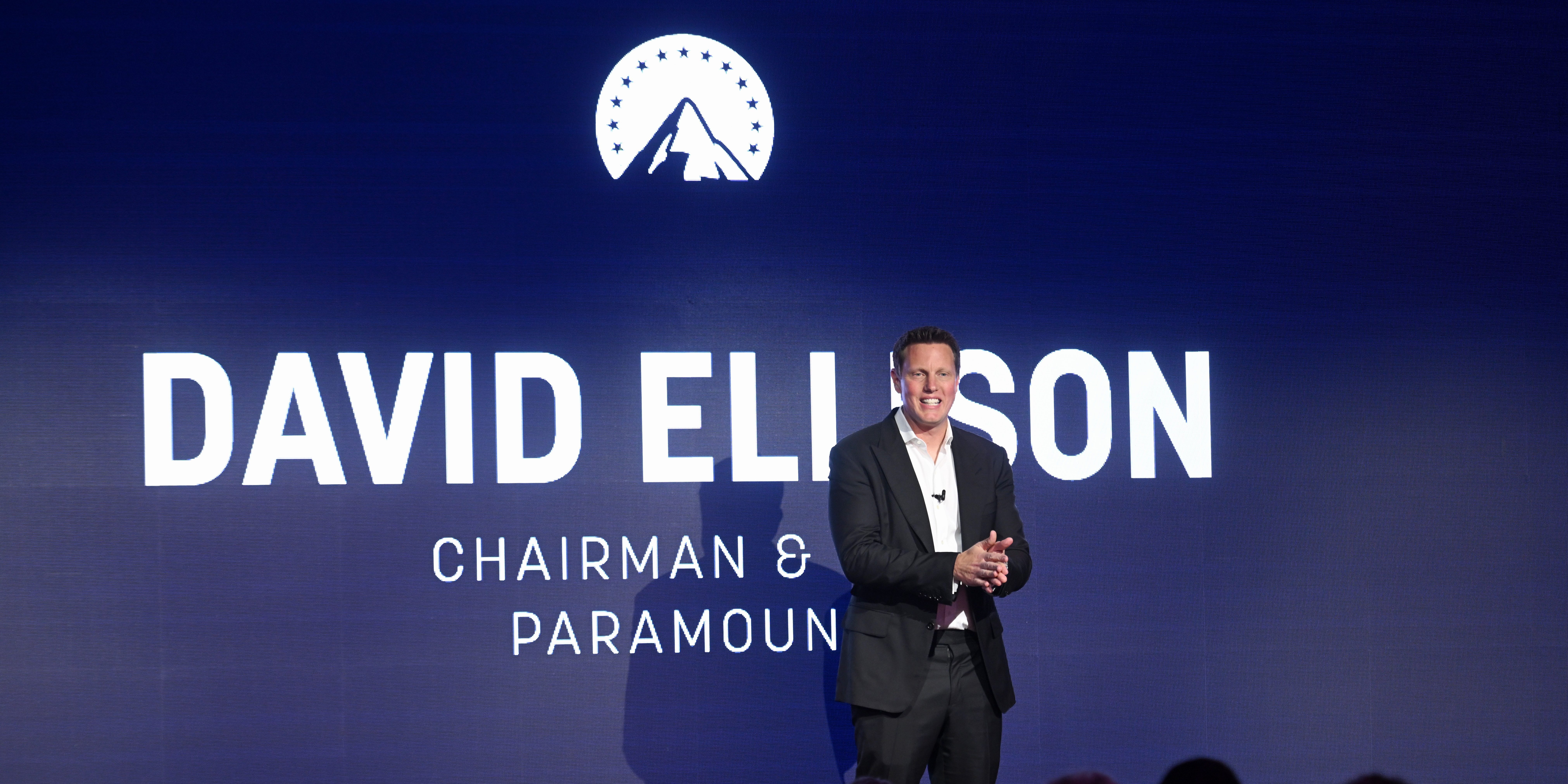
The text messages are the latest escalation of the increasingly bitter battle between Bonta and Paramount CEO David Ellison, who has threatened to move his movie studio to Texas or Tennessee, according to reports from multiple outlets, if a coalition of state attorneys general led by Bonta keeps fighting the merger.

The group behind the text campaign, Neighbors for Strong Communities, cited Ellison’s threat in messages encouraging support for the merger.

“The behavior we’re seeing is what powerful corporations do when they are losing control of the story.”

The group denied the allegations that it is mounting an “astroturf” campaign, but declined to reveal its donors. The lack of transparency led free-speech advocates to issue a scathing press release this week.

“The behavior we’re seeing is what powerful corporations do when they are losing control of the story,” Rashad Robinson, co-chair of the Committee for the First Amendment, said in a statement. “The more the public understands what’s at stake — fewer jobs, fewer stories told, and even more power in the hands of a few billionaires — the harder the deal becomes for Paramount to defend.”

A spokesperson for Neighbors for Strong Communities, Tanner Kelly, declined to disclose the group’s donors.

“We don’t disclose funders, but this campaign is operated independently of Paramount,” he said.

In a statement to The Intercept, Warner Bros. Discovery denied funding the text message campaign. Paramount Skydance did not respond to a request for comment.

Neighbors and Nemeses

Ellison’s merger plans have divided Hollywood unions, leading proponents and opponents to engage in a heated war of words over who speaks for the entertainment industry’s working class.

Into that fray jumped Neighbors for Strong Communities, which was incorporated in Washington in June, a little over three months after Paramount launched its takeover bid for Warner Bros. Discovery.

The national debate over the mega merger has focused on suspicions that Paramount CEO David Ellison might be willing to tilt coverage at Warner properties like CNN in favor of Donald Trump. Ellison, whose billionaire father is a close ally of Trump’s, has courted favor with the White House as the merger moves forward.

The debate over the Paramount merger in California, however, has often centered on jobs.

In text messages to Californians that went out earlier this week, Neighbors for Strong Communities asked recipients to send Bonta messages raising the concern that his opposition to the merger will cost the state thousands of jobs — because of Ellison’s reported threat to move Paramount to Texas.

Those messages and the group’s generic website offer little insight into Neighbors for Strong Communities’s origins. Its incorporation papers in Washington show that several listed directors have worked as political consultants.

In a statement to The Intercept, one of those directors, Tanner Kelly, described the group as a “community advocacy organization that helps everyday people participate in public decisions affecting their lives, livelihoods and futures.”

Bonta is months away from an election he is expected to win handily. Kelly said the group’s pressure campaign against Bonta is “not related” to the pending attorney general election, and Neighbors for Strong Communities has not filed campaign finance disclosures with the California Secretary of State.

Kelly pushed back on the idea that entertainment industry professionals are uniformly opposed to the merger by sending messages from actors who have spoken out in favor of it.

“To the claims this is AstroTurf, tell that to the hundreds of real people participating in our movement who have real concerns, real struggles, and real livelihoods on the line that just want to be heard,” said Kelly, who was registered as a lobbyist in California last year.

“Grassroots Opposition”?

Advocates who oppose the merger suspect there is something more at play, pointing to the circumstances of the group’s creation.

“The sender organization’s website is less than three months old. It discloses no founders, board members, staff, or funders, and the organization does not appear in ProPublica’s nonprofit database,” the Committee for the First Amendment, an anti-merger group co-founded by Jane Fonda, said in a press release earlier this week.

“The sender organization’s website is less than three months old.”

The Committee said that Neighbors for Strong Communities has the “classic hallmarks of a corporate-backed astroturf campaign designed to manufacture the appearance of grassroots opposition.”

The effort to make it seem like the merger has popular support will fail, predicted Jessica J. González, co-CEO of Free Press Action.

“These corporations know where the grassroots movement actually is: with the industry professionals fighting to block this merger,” she said. “This PR campaign is yet another face-off between the many and the money.”

The post This Mysterious “Astroturf” Group Popped Up to Defend the Paramount Merger appeared first on The Intercept.

💾

A Democratic Socialist Aims to Oust a Top AIPAC Beneficiary in Florida

17 August 2026 at 14:01

The conventional thinking for Democrats hoping to win in Florida is to be tough on Cuba, friendly to Israel, and careful to avoid appearing too liberal. It’s a tactic aimed at courting powerful voting blocs, and one that helped Rep. Jared Moskowitz take office in the land of sunny skies and low taxes.

This year, however, he’s facing a challenger attempting to flip that strategy on its head. A Democratic Socialists of America member, Oliver Larkin, is trying to win a primary against Moskowitz by running far to his left on both foreign and domestic policies.

The pair presents a striking contrast: Moskowitz has drawn heavy support from donors associated with the American Israel Public Affairs Committee and an artificial intelligence super PAC, while Larkin, a 34-year-old union organizer, calls himself an anti-Zionist and leans on small-dollar funders.

Polls of the race have produced vastly different results, with one commissioned by Larkin putting him within striking distance, while another from Moskowitz’s campaign showing the incumbent far ahead.

Susan McManus, a professor emeritus of political science at the University of South Florida, said in an email that the race will be a significant tell of the mood in the Democratic electorate.

“Of all the Florida congressional districts, this one will be the biggest test of how deep is the generational and ideological divide in the Florida Democratic Party, and to what extent the socialism label may splinter the Latino vote,” she said.

Theory of Change

That label is one that Larkin wears proudly, describing himself on his website as an active member of the Broward County Democratic Socialists of America. He supports Medicare for All while opposing the embargo on Cuba and weapons transfers to Israel.

In an interview with The Intercept ahead of Tuesday’s primary, Larkin said he rejected the Florida Democratic Party’s tendency to lean right to win Republican and independent votes. That strategy has not worked, Larkin said, pointing to Republican-turned-Democrat Charlie Crist’s big loss to Gov. Ron DeSantis in 2024.

Instead, Larkin argues that an openly leftist candidate can energize the Democratic base while winning over disaffected independents.

“I think another false choice that corporate Democrats make is that non-party affiliated or independent voters want to see candidates split the difference right down the middle. I don’t think that’s true,” he said. “They see the status quo politics as completely broken.”

Moskowitz’s campaign did not respond to an interview request. On his campaign website, however, he leans heavily on his bipartisan bona fides, noting that he served in DeSantis’s cabinet as emergency management director until his election to Congress in 2022.

That credential could help win over voters in a redrawn district spanning much of the coast near Fort Lauderdale that would have voted for President Donald Trump in the 2024 election. Moskowitz already represents about half of the new district’s voters in his current 23rd Congressional District.

The new 25th District also has one of the nation’s largest Jewish populations, making Moskowitz’s outspoken support for Israel particularly salient. Last week, pro-Israel activists in south Florida pressured multiple venues to cancel a joint rally that Larkin was to hold with Rep. Rashida Tlaib, one of the Democratic Party’s most outspoken critics of Israel.

Moskowitz has also accused Larkin — without offering any evidence — of running against him based on his religion, in a letter to the Sun Sentinel where he declined to participate in a joint interview with Larkin.

The South Florida newspaper called that charge “demonstrably untrue” and dinged Moskowitz for dodging opportunities to face off against his opponent.

“The Sun Sentinel has endorsed Moskowitz in all of his previous races. But in this case, his continued avoidance of Larkin shows a lack of respect for voters and can be viewed as an unwillingness to defend his own record,” the paper’s editorial board said.

Dollar Deficit

Larkin was born in Florida, but after his stint as a volunteer and staffer for Sen. Bernie Sanders, he worked for a consulting firm aligned with the Democratic Party in Washington, D.C. He returned to the Sunshine State in 2022. During his run for office this cycle, he has posted respectable fundraising numbers for a first-time candidate taking on an incumbent. In an August 13 press release, his campaign said he had raised over $1 million.

Still, that puts him far behind Moskowitz, who reported receipts of nearly $3 million during this election cycle in his most recent campaign finance report, with $1.8 million remaining on hand.

While some pro-Israel candidates have sought to avoid association with AIPAC this year, given the group’s increasingly toxic brand, Moskowitz has defended its donations to his campaign. His fundraising reports show that he has raised $953,000 from donors associated with AIPAC, according to the transparency website Open Secrets.

An artificial intelligence super PAC is also spending heavily on Moskowitz. The super PAC, Leading the Future, has spent more than $300,000 thus far.

“He doesn’t have a volunteer base, because nobody wants to volunteer for him.”

Larkin believes he can make up the divide in spending on advertising with old-fashioned door-knocking. His campaign boasts of having made more than 200,000 voter contacts — and he says there has been little evidence that Moskowitz’s campaign is attempting to match their ground game.

“He’s got ads on TV. He’s got mail. He has no ground game to speak of. I don’t believe he is even attempting to knock on doors,” Larkin said. “He doesn’t have a volunteer base, because nobody wants to volunteer for him.”

The post A Democratic Socialist Aims to Oust a Top AIPAC Beneficiary in Florida appeared first on The Intercept.

💾

Secret ICE Agent Tried to ‘Entice’ Minneapolis Activists Into Confrontational Tactics

15 August 2026 at 22:38

Organizers in Minneapolis long suspected they were being surveilled by the federal government during the height of the winter protests against Immigration and Customs Enforcement. It was not until a court filing on Thursday, however, that the youth-led Sunrise Movement and other groups learned the depths of infiltration.

The Sunrise Movement has long preached nonviolence even as it pursues aggressive tactics, such as making a racket outside of the hotels where ICE agents sleep.

But the group’s public commitment to peaceful protest did not spare it from a months-long, aggressive campaign of government snooping that included ICE agents attending its meetings and protests undercover, subpoenas of its financial records, and at least one apparent attempt to entice an organizer into backing more confrontational tactics.

Sunrise Movement Executive Director Aru Shiney-Ajay said in an interview Thursday that the government’s tactics are a sign that the Trump administration is losing the battle for public opinion.

“What this is meant to do is scare protesters and scare people away from joining protest groups,” she said. “It is very essential that we remember that actually what we are doing is incredibly normal, it is incredibly popular, and we cannot let ourselves be scared out of organizing.”

Operation Puppet Master

The revelations about the tactics ICE used against Sunrise, along with a wide variety of labor unions and protest groups, came in a court filing from a defense attorney for one of 15 Minnesota activists charged in June for trying to stop the federal government’s immigration crackdown in the Twin Cities.

Shortly after federal agents killed Alex Pretti on Jan. 24, ICE’s Homeland Security Investigations opened two investigations it called “Operation Puppet Master” and “Project Whipple Shield,” the latter a reference to the federal building that was the site of many ICE protests.

Supposedly, those probes would focus on a network supporting “violent opportunists and agitators.” In reality, the investigative reports that the federal government has turned over to defense attorneys show that undercover ICE agents secretly recorded at churches, libraries, and schools even when organizers stressed the importance of nonviolence.

In the case of Sunrise, undercover agents were already targeting the group before the killings of Pretti and Renee Good.

Sunrise is a national organization with a Twin Cities chapter. Long known for its aggressive climate advocacy, the youth-led group pivoted just before the start of the federal government’s crackdown on immigrants in Minnesota to fighting the Trump administration’s authoritarianism.

One of the group’s most famous early acts was occupying then-Rep. Nancy Pelosi’s office in support of the Green New Deal. It brought that same energy to the protests in Minneapolis, playing a key role in the nighttime noise protests targeting hotels in the Twin Cities that were allegedly hosting ICE agents. But it has always counseled its supporters to remain peaceful, Shiney-Ajay said.

“We are a strictly nonviolent movement. We make that very clear in almost every training we run, in all the meetings we run,” she said.

Yet almost as soon as Operation Metro Surge started, ICE agents were attending Sunrise trainings on the sly.

Undercover agents attended a “how to stop ICE” training that Sunrise hosted at a church on Dec. 13. By Dec. 22, an undercover agent had been added to the Signal group for planning one of Sunrise’s hotel protests. On Jan. 9, two undercover agents attended a noise demonstration outside a Hilton Hotel, noting that a member of the crowd set off fireworks at one point.

The killing of Pretti — and the ensuing nationwide backlash against ICE — appears to have done nothing to slow the investigation. One week after Pretti’s slaying, two undercover agents attended a Sunrise Movement Twin Cities training on “resistance skills” hosted at a public library.

The meeting included primers on de-escalation at protests, and the ICE agent noted that it was “made clear that the Sunrise Movement organization focused on ‘peaceful’ protests.”

That did not stop the undercover agent from making a private approach to one of the organizers, according to a report the agent produced. The agent told the organizer that he worked in construction and “could build items that might assist other groups with more ‘direct-action’ protests.” When the undercover agent declared that “going to jail did not bother him,” the organizer “acknowledged” the agent’s comments and took down his phone number, according to the report.

Kevin Riach, the attorney representing one of the defendants in the indictment targeting Minneapolis activists, said in a court filing this week that that report was one of several showing that ICE’s undercover agents “actively participated in organizing and directing the groups they were surveilling, at times working to entice people into discussing or committing crimes.”

By the start of March, the federal government had scaled down its immigration crackdown in Minneapolis — but it was continuing to investigate groups such as Sunrise.

On March 9, ICE sent a subpoena to the Federal Reserve Bank of New York for the nonprofit’s wire transactions dating back to Jan. 1, 2023, long before Trump was even elected to his second term. That same date, ICE also sent a subpoena to the Clearing House, a private wire transfer company, for years of financial records from Sunrise and several labor unions.

The Sunrise Movement was never given notice of those subpoenas or an opportunity to contest them, Shiney-Ajay said.

Training for This Moment

None of the activists who were eventually charged in a June 16 indictment were members of the Sunrise Movement, Shiney-Ajay said.

ICE declined to offer an explanation for why it investigated Sunrise and the other groups.

“HSI investigates individuals and organizations when there is just and legal cause to do so and within the scope of its legal authorities. To preserve the integrity of our work and protect law enforcement sensitivities, we do not comment on ongoing investigations, investigative tactics, or procedures,” an agency spokesperson said.

“It will likely make many Americans think twice before joining a protest, attending a meeting, donating to an advocacy organization, or speaking out at all.”

While it had never been confirmed that ICE was closely studying the Sunrise Movement before this week, Shiney-Ajay said it had long been treated as a possibility. The group was specifically concerned that federal agents might act as provocateurs at protests.

“We put a lot of work into training de-escalation and safety leads at all of our protests,” she said. “I certainly think that that was a worthwhile investment, reading these things now.”

She said it was “telling” that the investigation was led by the Department of Homeland Security rather than the FBI, which might be constrained by more “rules and regulations.”

The revelation of the widespread ICE probe has already sparked another backlash.

The Foundation for Individual Rights and Expression, which has received funding from conservative and libertarian donors, said it found the investigation disturbing.

“Some activists have violated federal law, and the government is entirely justified in investigating and prosecuting them. But criminal conduct by some members of a movement does not justify government surveillance and investigation of anyone who shares their broader political goals. That type of aggressive scrutiny chills protected speech and association. It will likely make many Americans think twice before joining a protest, attending a meeting, donating to an advocacy organization, or speaking out at all,” said Aaron Terr, the group’s director of public advocacy.

On Thursday, a coalition of dozens of Minnesota groups promised that that they would not be cowed.

“We know the truth, and we will not be intimidated,” the groups said. “When self-serving politicians are losing, they lie and attempt political repression, trying to silence the voices of those who bravely stand up to them. Minnesotans will not be intimidated or divided by sham accusations or investigations of some of the countless groups and community members who organized, acted, and stood up together to protect their neighbors during Operation Metro Surge.”

The post Secret ICE Agent Tried to ‘Entice’ Minneapolis Activists Into Confrontational Tactics appeared first on The Intercept.

💾

Rubio Is Trying to Keep Leftists Out of U.S. by Banning Supporters of “Economic Sabotage”

8 August 2026 at 10:06

Secretary of State Marco Rubio announced last month a policy banning visas for foreigners accused of links to “far-left terrorism.” The policy cited Donald Trump’s National Security Presidential Memorandum-7 as well as the law Rubio used to try to deport the pro-Palestine activist Mahmoud Khalil.

More than three weeks later, however, it’s not clear how Rubio and the State Department intend to use the policy. Their silence since the announcement has left some advocates wondering if the policy is really just a public-relations push by the Trump administration.

Existing law already allows the State Department to block terrorists from visiting the U.S. But tucked inside the policy is language about “economic sabotage” that advocates worry could empower a broad crackdown against people associated with the Boycott, Divestment, and Sanctions movement and campaigns to divest from fossil fuels.

“The message is to the public at large and particularly to anybody who would disagree with the government’s policies that they should tread carefully, lest they be considered a member or aligned with what the government considers to be a far-left terrorist group,” said Carrie DeCell, a senior staff attorney at the Knight First Amendment Institute.
“I think the vagueness is the point. It’s intended to send a broad chilling effect through the public and discourage dissent.”

Rubio’s Right-Wing Fever Dream

Rubio announced the policy at a July 16 gathering of foreign diplomats where he played up the threat of what he called “far-left terrorism,” which he said had been overlooked after the September 11, 2001, attacks.

“For far too long, however, our counterterrorism doctrine has had a blind spot — a blind spot when it comes to extremist violence from the political left. Even today, the very idea that far-left terrorism could be a serious threat is treated as a right-wing fever dream, or worse, as a dangerous fascist conspiracy,” Rubio said.

In a press release, Rubio said that State Department officials had been instructed to deny visas to “members of Far-Left Terrorist and other aligned groups who have supported or incited acts of terrorism; supported violent criminal activity; participated in economic sabotage; financed, recruited, or provided logistical support for violent or criminal actions committed by Far-Left Terrorist and other aligned groups; and/or facilitated the convergence of Far-Left Terrorist and other aligned networks for the purposes of violent action.”

The State Department has not elaborated further on how it decides whether a foreign national is a member of a “far-left” terror group or “aligned” groups. The department did not answer questions from The Intercept about its definitions for those terms.

“The worry is that this will be used who are already in this country, for example, foreign students.”

The policy raised major concerns, however, for Peter Margulies, a law professor at Roger Williams University.

Nothing in the policy appears to restrict it to foreign nationals residing abroad, Margulies said. He is concerned that the State Department could attempt to apply it to students living in the U.S. or to other people with legal status who are applying for different visas or renewals.

“The worry is that this will be used who are already in this country, for example, foreign students,” he said. “This gives the administration a hammer to go after these people, that I think is problematic under the First Amendment, and also exceeds the authority that Secretary Rubio has.”

Other parts of federal immigration law already give the government wide discretion to block people accused of links to terrorism, making it something of a puzzle why the government would need a new policy to block people accused more specifically of “far-left” terrorism.

Yet one provision of the policy appears to mark a shift from existing policy, Margulies said: a section singling out people accused of “economic sabotage.” That kind of language could be used to target people who have supported Palestinian calls for the boycott of Israel, or environmental activists protesting fossil fuel companies, he said.

“That’s a term broad enough to get a tank through, and so that would really be problematic under the First Amendment, because of course people in this country have a right to criticize corporations as well as government,” he said.

The Vagueness Is the Point

When Rubio announced a new policy last May targeting misinformation researchers for visa denials, the State Department followed up seven months later by announcing that it would block or deport five foreign nationals.

So far the State Department has not announced any visa denials under the latest policy. For an example of the type of people that Rubio considers to be supporters of far-left terrorism, DeCell pointed to a State Department report about Cuba’s influence network issued last month. That report named streamer Hasan Piker, Amazon Labor Union founder Christian Smalls, the National Lawyers Guild, and the Democratic Socialists of America.

Baher Azmy, the legal director at the Center for Constitutional Rights, said it was possible that the new visa restriction policy is simply another part of the multipronged effort to build up the threat of the left ahead of the midterms.

“This is coming at the same time they’re starting this once moribund terrorist court, they’re calling Amy Goodman a far-left enemy of the state,” he said. “It might be a midterm strategy, because it does seem to be coming all at once.”

DeCell’s group recently won an injunction blocking the State Department from implementing its visa restriction policy against misinformation researchers. She expects the State Department to eventually get around to announcing visa denials, as it did with them. “The justifications for their targeting likely would be made on X, if it follows the same path,” she said.

When it does, the latest restrictions could also be vulnerable to legal challenge. While the State Department has broad discretion to deny visas to foreigners, Margulies said, it is not unlimited, particularly for those living in the United States.

“Watch this space. They may have particular people in mind. Then we may see some developments very quickly how they intend to apply this,” he said.

The post Rubio Is Trying to Keep Leftists Out of U.S. by Banning Supporters of “Economic Sabotage” appeared first on The Intercept.

💾

Trump’s Crypto Corruption Puts Centrist Democrats in Bind

23 July 2026 at 18:56

The latest version of a sweeping crypto bill exposed a deep divide between progressives and moderate Senate Democrats: whether to accommodate the industry ahead of the fall midterms, or declare open war on it.

Seven Democrats issued a statement Wednesday night lamenting that they cannot vote for the latest draft of the bill, citing weak provisions aimed at tamping down Donald Trump’s crypto self-enrichment, among other issues. In a joint statement, they pledged to keep working with Republicans to “get this over the finish line.”

Other Democrats say they have had enough of crypto, however. The problems with the bill run much deeper than Trump’s corruption, Sen. Chris Murphy, D-Conn., said at a Wednesday speech, and it is time for Democrats to openly break with the industry and its $189 million in campaign funds.

“This bill is in front of the Senate because the industry paid for it,” Murphy said. “We should, in this election, make crypto’s purchase of our political process, AI’s purchase of our political process, a major campaign issue.”

“This bill is in front of the Senate because the industry paid for it.”

The two sides staked out their position as Republicans released a draft text of the far-reaching bill known as the Clarity Act, which would create an industry-friendly regulatory structure for cryptocurrencies.

Critics say there are many problems with the bill, including lax consumer protections and loopholes that would enable money laundering. Nothing in the monthslong fight over the legislation has generated as much controversy as Trump’s self-dealing, however.

Between the $TRUMP meme coin and other ventures, Trump profited at least $1.4 billion off crypto last year. Democrats have proposed requiring Trump to divest himself of his crypto ventures and put enforcement in the hands of Democratic state attorneys general.

Instead, Republicans issued a proposal, with Trump’s blessing, that would prevent him from issuing new meme coins and put enforcement in the hands of his own Department of Justice and would not be enforceable after he leaves office.

No matter what’s in the legislation, the bill is meaningless if it leaves enforcement to Trump’s own administration, said Mark Hays, the associate director for cryptocurrency and financial technology at Americans for Financial Reform and Demand Progress.

“I don’t think anybody who is following the DOJ seriously thinks they will do that,” he said. “That is just not how this administration works.”

Even Sen. Adam Schiff, a California Democrat who has often sided with crypto in the past, said he opposes the language in the bill addressing Trump. Schiff told reporters at the Capitol that that text gives the appearance it applies to Trump and his family without actually doing so.

“It’s a complete nonstarter,” he said.

The bill’s flaws led the seven mostly centrist Democrats to issue a statement hours after the release of the draft text saying that they could not vote for it in its current form.

“Key provisions including those addressing ethics for elected officials, consumer protection, illicit finance, conflicts of interest and market integrity must be strengthened. We have been working in good faith with our Republican colleagues for the past year and will continue doing so to get this over the finish line,” said the group, which included Sen. Angela Alsobrooks, D-Md., one of the top negotiators on the bill.

The time for Democrats and Republicans to reach a compromise is slipping fast, however. The Senate goes into recess on August 7, and few observers expect Congress to take the measure up again as the midterms approach.

Senate Majority Leader John Thune said that he hopes to put the measure to a vote before senators leave town.

Democrats are nervously eying the industry’s war chest if they are put on the record as opposing the Clarity Act. Companies including Coinbase, the largest publicly traded crypto company, have contributed $189 million into super PACs and candidate campaign funds to influence the midterms.

In the past, some of the spending has benefited Democrats such as Sen. Ruben Gallego, D-Ariz. Yet it may have also contributed to Democrats losing the Senate in 2024.

Murphy, in the Wednesday speech at the Center for American Progress, said it would be better to attack the industry than try to work with it.

“They are spending money in order to get a pro-crypto bill passed through the United States Senate and House of Representatives,” Murphy said. “And there are, I guess, two approaches that the Democratic Party could take. One approach is to just do what the crypto industry wants and then cross our fingers and hope they don’t spend money against us in the next election. Good luck with that strategy. The second approach is to make the industry’s brazen attempts to buy our political process a campaign issue.”

The post Trump’s Crypto Corruption Puts Centrist Democrats in Bind appeared first on The Intercept.

💾

William Lawrence Is Running in a Purple Michigan District — on His Pro-Palestine Credentials

22 July 2026 at 09:14

In key swing districts across the country, Democratic Party leaders have backed centrist candidates with carefully calibrated positions on charged issues such as artificial intelligence and the Israeli-Palestinian conflict.

William Lawrence is running a very different campaign.

In a purple congressional district in Michigan, Lawrence, a co-founder of the progressive Sunrise Movement, is calling for a moratorium on new data centers and labeling Israel’s war in Gaza a genocide.

The approach mirrors that of Michigan Democratic Senate candidate Abdul El-Sayed, who has endorsed Lawrence.

Both men are making strong showings in the polls, and now the centrists are fighting back. A shadowy group is running misleading ads that question Lawrence’s progressive bona fides.

“We have seen this in many cases in other elections this cycle — that corporate centrists are attacking progressives for not being progressive enough.”

The line of attack is telling, Lawrence told The Intercept.

“People are sick of the status quo,” he said. “We have seen this in many cases in other elections this cycle — that corporate centrists are attacking progressives for not being progressive enough. And it shows you what voters are hungry for is change.”

An unabashed progressive, Lawrence breaks the mold of the typical candidate to run for a seat like Michigan’s 7th Congressional District, which is centered around the state capital of Lansing and the college town of East Lansing.

The district was previously represented by centrist Democrat Elissa Slotkin, who now serves in the Senate, and is currently held by Republican first-term Rep. Tom Barrett.

The other two candidates running in Michigan’s August 4 primary hew closer to Slotkin’s mold. Bridget Brink is a former U.S. ambassador to Ukraine who quit in protest of President Donald Trump’s policies on the war with Russia, and Matt Maasdam is a former Navy SEAL who served as a military aide to President Barack Obama.

Unlike Lawrence, both declined to call Israel’s war on Gaza genocide at a debate.

Lawrence also comes from a starkly different background: While Brink and Maasdam traveled the corridors of power in Washington, Lawrence focused on building grassroots power, first through his role co-founding the youth-led Sunrise Movement, which backed the Green New Deal, and more recently helping found the Michigan Rent Is Too Damn High coalition.

Mutual Endorsements

On July 7, Lawrence and El-Sayed announced that they were endorsing each other. Like Lawrence, El-Sayed is running in the progressive lane in his primary while arguing that it will not hurt his electability in the general.

“We have a lot of people who want to back both of us,” Lawrence said. “Given that the two of us both prioritize having a very robust, grassroots campaign rather than just relying on tens of millions of dollars in dark money like our respective opponents, it is especially beneficial for us to be able to integrate our grassroots operations.”

Although no independent polls of the race have been released, Lawrence’s campaign commissioned one showing him leading the pack. Another commissioned by Brink’s campaign showed her ahead.

Now that Lawrence has demonstrated that he has a shot at winning, the attacks have begun.

The Congressional Black Caucus is targeting him over a podcast episode in which Lawrence remarked to a Black anti-war activist during a conversation on organizing that he was frustrated with the position of some older Black political leaders backing “capitalist, imperialist American power.”

Lawrence says his comments have been misrepresented while apologizing for his choice of words.

Meanwhile, a super PAC called the Crush MAGA PAC is targeting Lawrence, rather than the Republican holding the seat. The group has plowed more than $500,000 into a highly misleading ad that accuses Lawrence of investing in “Wall Street, big oil, and data centers” and campaigning against Democrats for supporting the 2024 Uncommitted movement, which sought to pressure party candidates over Israel’s war on Gaza.

The investments highlighted in the anti-Lawrence ad make up a small portion of the $11,000 Lawrence has invested in a mutual fund; the mutual fund, not Lawrence himself, chose them. And, for his part, Lawrence eventually supported Kamala Harris in the 2024 election.

The source of the ad campaign against Lawrence is unclear, but he has speculated that it may be powered by pro-Israel donors.

Crush MAGA PAC is affiliated with another group called the Save Democracy PAC, which has received money from the American Israel Public Affairs Committee’s super PAC, United Democracy Project. United Democracy Project, however, denied getting involved in the Michigan congressional race. (Neither Crush MAGA PAC nor Save Democracy PAC responded to requests for comment.)

If Lawrence succeeds in the primary, he will have to win in a general election in a purple district. He believes he can show that progressive candidates can win in split districts, pointing to the election and reelection of Congressional Progressive Caucus member Rep. Chris Deluzio in a swing district in Pennsylvania.

“He’s not throwing people under the bus, and he has joined the progressive caucus, and he has now turned that into a more comfortable district. He has been winning with healthy margins,” Lawrence said. “That is what I hope to be able to do as well.”

The post William Lawrence Is Running in a Purple Michigan District — on His Pro-Palestine Credentials appeared first on The Intercept.

💾

Intel Pick Jay Clayton Won’t Tell Congress Whether Trump Ordered Subpoenas of NYT Journalists

15 July 2026 at 17:47

At his confirmation hearing to serve as the nation’s top intelligence officer, Jay Clayton dodged questions about whether the White House ordered him to send subpoenas to New York Times journalists as part of an FBI investigation into alleged leaks of classified information.

Under questioning from Democratic senators, Clayton, who currently serves as the top federal prosecutor in the Southern District of New York, defended the process that resulted in FBI agents showing up to the reporters’ homes to hand-deliver subpoenas seeking the source of disclosures about security flaws in the Qatari-donated new Air Force One jet.

“I’m not going to get into the details. But what I can tell you is that we followed the procedures.”

Clayton declined to answer questions, however, on whether the White House or top officials at the Justice Department ordered him to send the subpoenas.

“I’m not going to get into the details,” Clayton said under questioning from Sen. Michael Bennet, D-Colo. “But what I can tell you is that we followed the procedures, and those procedures, for the reasons that I believe firmly and you believe — protecting the freedom of the press, being the least intrusive possible — require consultation.”

Clayton’s role in sending the subpoenas, which went out under his signature Friday shortly after FBI Director Kash Patel met with Trump, has emerged as a flashpoint in his nomination to replace Tulsi Gabbard as director of national intelligence.

A press freedom advocate said he found Clayton’s testimony about the subpoenas to be “totally disingenuous” because Trump’s own subpoena guidelines say the government must exhaust other means of getting evidence before going to journalists.

“Yet these subpoenas were issued less than two days after the story came out, and just hours after Patel’s reported White House meeting with Trump,” Trevor Timm, executive director of the Freedom of the Press Foundation, said in an email. “All evidence points to Trump ordering this action for retribution because he’s embarrassed about the plane debacle, not because of anything to do with ‘national security.’”

Housing czar and Trump loyalist Bill Pulte is currently serving as the intelligence chief on a temporary basis, and some centrist Democrats have argued that Clayton should be swiftly confirmed to shut off Pulte’s access to classified information.

For Democrats on the intelligence committee, however, Clayton’s role in the subpoena to New York Times journalists suggested that he may be just as eager as Gabbard and Pulte to use the powers of public office to appease the president.

Those concerns about the subpoenas dovetailed with worries about Clayton’s views on election fraud. Democratic senators repeatedly questioned Clayton on whether former President Joe Biden won the 2020 election, which has emerged as an important litmus test in light of Gabbard’s role in an ongoing administration effort to relitigate the president’s loss.

Clayton repeatedly confirmed the fact that Biden’s election was certified by Congress but declined to say whether he thought Biden actually won the race.

“Isn’t it humiliating to be unable to answer this question? To have to indulge the president’s delusions?” Sen. Jon Ossoff, D-Ga., said at one point. “Why can you not give it?”

On the subpoena issue, Clayton’s answers offered little new light on why the subpoenas were swiftly delivered to journalists. He repeatedly said that the subpoenas were the “least intrusive” means possible to discover the source of the New York Times’s reporting on the new Air Force One.

The reporting revealed that Trump was forced to use an older version of the presidential airplane on his return from a recent trip to Turkey because the new one lacked missile defense systems despite a pricey retrofit.

Administration officials reportedly asked the newspaper not to publish its report on the jet’s security flaws, but it went ahead. The Times and other outlets have reported that the White House ordered Patel, the FBI director, to oversee a probe into the leaks about the jets. Patel reportedly spent eight hours Friday at the White House overseeing the investigation.

Under Justice Department policies, investigators seeking to subpoena journalists must receive approval from the attorney general, in this case Acting Attorney General Todd Blanche, who had his own, separate confirmation hearing on Wednesday. The government must first have made “all reasonable attempts” to obtain the information from alternative sources.

Press freedom groups have questioned whether the Justice Department really did try to discover the source of the Air Force One leaks. They also raised alarm bells about the FBI sending agents to deliver the subpoenas by hand, rather than going through the newspaper’s lawyers.

“The subpoenas were issued so closely after a very long meeting at the White House. There seemed to be an unnecessary urgency.”

“The subpoenas were issued so closely after a very long meeting at the White House. There seemed to be an unnecessary urgency behind it,” said Sen. Kirsten Gillibrand, D-N.Y. “Delivering it to a private home seems quite aggressive.”

Clayton, in his response, seemed to suggest that the White House was worried that following a more typical, slow-moving process would have resulted in the destruction of evidence.

“How quickly you would do something following the process depends on those facts and circumstances of the investigation including the potential spoliation of information, and the timeliness of the threat. I think I’m going to leave it at that,” Clayton said. “But this was a judgment, and it should always be a judgment, that is made collectively, that’s the way I look at these things.”

The White House declined to answer a question from The Intercept about whether Trump ordered the subpoenas in a statement sent Tuesday.

“Jay Clayton is a highly qualified legal expert who also possesses a significant degree of national security experience,” said Davis Ingle, a White House spokesperson. “He will undoubtedly do an excellent job in leading the Office of the Director of National Intelligence under President Trump, and the White House looks forward to his swift confirmation.”

Update: July 15, 2026, 2:00 p.m. ET
The article was updated with a statement from the Freedom of the Press Foundation.

The post Intel Pick Jay Clayton Won’t Tell Congress Whether Trump Ordered Subpoenas of NYT Journalists appeared first on The Intercept.

💾

Trump’s Intel Pick Played Key Role in NYT Subpoenas — But Some Democrats Still On the Fence

14 July 2026 at 19:14

Progressive groups are demanding that Democrats on the Senate Select Committee on Intelligence oppose Jay Clayton’s nomination as director of national intelligence, pointing to his role in an attempt to intimidate the New York Times over critical reporting on the Trump administration.

Some key Democrats, however, have so far not committed to opposing President Donald Trump’s nominee for the nation’s top intelligence job.

Clayton, who serves as the top federal prosecutor in the Southern District of New York, signed the subpoenas sent Friday that targeted New York Times journalists for their reporting on serious security flaws in the Qatari-donated Air Force One jet.

“It seems Jay Clayton is up to his eyeballs in sending intimidation subpoenas to reporters.”

Two Democrats on the intelligence committee did not indicate whether the subpoenas were a dealbreaker for Clayton’s nomination, which is set to be the subject of a Wednesday hearing.

Sen. Mark Warner, D-Va., the vice chair of the committee, has not said whether he intends to vote in favor of Clayton’s nomination. He previously praised Clayton for having the “right temperament” when Trump tapped him, but has said he still wants to press the prosecutor about whether he will use the DNI post to pursue Trump’s 2020 election obsession.

Asked for comment about the subpoenas Tuesday, Warner said he anticipated that Clayton would be quizzed about the matter during his hearing.

“I think it’s important that we stand up for the independence of the press,” he said.

When asked by The Intercept whether the subpoenas were disqualifying for Clayton’s nomination, fellow intelligence committee member Sen. Mark Kelly, D-Ariz., said, “I’ve got questions about it.”

The cautious position staked out by the Democrats stood in sharp contrast to that of Sen. Ron Wyden, D-Ore., the committee’s longest serving member and a frequent skeptic of the intelligence agencies when it comes to civil liberties. In a social media post Sunday, Wyden noted that federal agents hand-delivered some of the subpoenas to the reporters who co-authored the article.

“It seems Jay Clayton is up to his eyeballs in sending intimidation subpoenas to reporters and armed thugs to their homes,” Wyden said. “This is not acceptable in a DNI.”

Dems Pushing for Clayton

The subpoenas came at an awkward moment for some Democrats in Congress aligned with the intelligence community. Those Democrats, including Connecticut Rep. Jim Himes, the ranking member of the House Permanent Select Committee on Intelligence, had hoped to swiftly confirm Clayton in order to cut short the temporary appointment of housing czar Bill Pulte as director of national intelligence.

Clayton was seen by Democrats such as Himes as an acceptable alternative to Pulte, who was handed the reins of the country’s intelligence apparatuses with a mandate from Trump to stoke baseless conspiracy theories about the 2020 election.

Some Democrats like Wyden, however, have noted that Clayton himself has also publicly indulged in election fraud conspiracy theories.

His role in the subpoenas should make him a non-starter for intelligence chief, a coalition of progressive groups including Indivisible and Reporters Without Borders said in a letter Monday.

“Members of Congress across the aisle have embraced Clayton as a more respectable option than Pulte and hope to see the nomination process quickly,” the groups said. “Measuring Clayton’s qualifications against Pulte’s rather than the demands of the office would be a detriment to national security.”

Caitlin Vogus, a senior adviser with Freedom of the Press Foundation, said intelligence committee members should grill Clayton over the subpoenas.

“Anyone who hides behind fabricated ‘national security’ claims to demand journalists expose confidential sources can’t be trusted to lead America’s intelligence agencies,” Vogus said in a statement to The Intercept. “Senators should demand to know whether Clayton issued these outrageous subpoenas at the explicit behest of the White House, and whether he’d use similar tactics as DNI against journalists and whistleblowers who expose intelligence failures or abuses.”

The post Trump’s Intel Pick Played Key Role in NYT Subpoenas — But Some Democrats Still On the Fence appeared first on The Intercept.

💾

Sen. Kirsten Gillibrand Wants to Save Crypto — But Trump Windfall Is a Political Obstacle

13 July 2026 at 09:15

Donald Trump is cleaning up on crypto, recently disclosing a $1.4 billion windfall. Yet cryptocurrencies like Bitcoin have, after a year of flying high in the wake of Trump’s election, plummeted.

The crypto industry is putting hopes for its revival in a long-awaited bill, under debate in the Senate, called the Clarity Act, which could open the doors to Wall Street investments.

But there is one thing ironically standing in its way: Trump’s giant crypto haul.

The naked self-enrichment has turned crypto into a prime example of presidential corruption.

The result is that even crypto’s most staunch Democratic allies will find it hard to back a crypto wishlist like the Clarity Act, which will need support from at least seven Senate Democrats to overcome a filibuster.

Take crypto stalwarts like centrist Sen. Kirsten Gillibrand, D-N.Y., the chair of the Democratic Senate Campaign Committee, who issued a statement demanding that any crypto bill include ethics provisions to stop Trump’s crypto profiteering.

With the industry poised to spend tens of millions more on the midterm elections, however, Gillibrand and other centrist Democrats may yet be tempted to sign off on window dressing instead of a crackdown, said crypto critics.

“Sen. Gillibrand and too many of her colleagues prioritize and spend enormous time pushing crypto’s special interest agenda, which is to get legitimized by the weakest possible law and regulated by the smallest, most underfunded, least capable, and most capture-able financial regulator,” Dennis Kelleher, the CEO of the nonprofit Better Markets, said in a statement last Monday. “That is presumably because the crypto industry has spent hundreds of millions of dollars in campaigns to buy friends and attempt to get crypto’s special interest agenda enacted.”

Gillibrand has dismissed those criticisms. In a statement of her own last week, she expressed her desire to both advance the bill and crack down on Trump.

“We cannot let self-dealing destroy an opportunity to strengthen consumer protections, crack down on illicit finance, and expand economic opportunity for the millions of Americans our financial system has left behind,” Gillibrand said. “The time to act is now — and that must include ethics reforms that prohibit members of Congress, the president, and their spouses from cashing in on their office.”

Declining Sector Hangs Hopes on Clarity Act

For crypto, the numbers are sobering. Bitcoin soared from roughly $60,000 just before Trump’s election to about twice that by October of last year. Since then, it and other digital assets have cratered. Bitcoin now trades back around $63,000 a token.

The market’s gyrations did not stop Trump and his family members from profiting handsomely off the $TRUMP meme coin and other ventures. His roughly $1.4 billion of crypto profits last year meant that he cleared more than the largest publicly traded company in the industry, Coinbase, according to crypto commentator Scott Melker. The White House has defended Trump’s crypto windfall as legal, a point even his critics concede is likely true.

Crypto’s fortunes now appear to hinge largely on whether Congress passes the Clarity Act, which is intended to create an overall regulatory framework for the industry.

“So much of crypto rides on sentiment.”

“If the bill passed, you would probably see a bump for the industry,” said Mark Hays, the associate director for cryptocurrency and financial technology at Americans for Financial Reform and Demand Progress. “So much of crypto rides on sentiment, and if the bill were passed and signed into law, you would likely see an increase in prices just based on that sentiment alone.”

One sign of how much of the industry is placing its bets on Congress came in a recent quarterly earnings call held by Coinbase. Analysts asked the company’s executives several times how the Clarity Act would affect their bottom line. The company’s executives said that it could mean that Wall Street, which has been reluctant to dive headlong into the industry, will finally start to spend on crypto.

Passing the law, Coinbase CEO Brian Armstrong said, would “just unlock a lot of institutional capital that’ll flow into the space broadly.”

That is one of the outcomes that crypto skeptics fear most. If crypto becomes integrated with the economy rather than a speculative sideshow, they say, it risks taking down the entire system in a crash.

Democrats Holding the Keys

The only thing standing between crypto and its top priority are Senate Democrats. The House of Representatives, where crypto needs only a bare majority, already overwhelmingly passed last year a version of the Clarity Act with Democratic support. In the Senate, however, there are enough Democrats to block passage of the law with a filibuster. The question is whether they will.

Crypto needs to win over seven Democrats to beat a filibuster, or eight if Sen. Mitch McConnell, R-Ky., remains absent due to illness.

Progressives such as Sen. Elizabeth Warren, D-Mass., have expressed broad concerns that the law could lead to the next financial crash. Centrists like Gillibrand, meanwhile, have voiced narrower concerns. One of their biggest hang-ups with the legislation, they say, is the question of whether it will rein in Trump’s crypto ventures.

Gillibrand occupies a powerful position in the party: She serves as the caucus’s top fundraiser as chair of the Democratic Senatorial Campaign Committee. And she has positioned herself as a leader in Clarity Act negotiations, despite not serving on the relevant committees.

Asked last month about the negotiations over the bill at the Aspen Ideas Festival — a cozy gathering of politicos and business executives in the Colorado mountain town — Gillibrand said she was working hard to overcome the ethics obstacle.

“We’re working hand in glove with Republicans,” Gillibrand said. “We’re negotiating with staff from the White House so that everyone is clear about what the bill is going to say, and we’re going to do our best to land that plane.”

Gillibrand’s public statements have repeatedly telegraphed her desire to see some version of the legislation passed. Gillibrand says it is urgent to get consumer protections on the books. Observers say the urgency may also be motivated by the industry’s massive campaign war chest.

Over one-third of the corporate money spent on this year’s elections so far has come from the crypto industry, according to a recent report from the nonprofit watchdog group Public Citizen. That amounts to $189 million, including $82 million routed through a single industry super PAC called Fairshake, which is backed by Coinbase.

Rick Claypool, the research director for Public Citizen’s president’s office, said that as chair of the DSCC, Gillibrand is keenly aware of crypto’s campaign spending potential.

“I’m sure it’s top of mind,” Claypool told The Intercept. “Part of the whole goal of the corporate crypto spending is to make sure that lawmakers in general, but also in particular those who are in fundraising, leadership positions, think of the industry before they think of voters.”

Other Democrats tipped as maybes on the bill include Sen. Angela Alsobrooks of Maryland and Ruben Gallego of Arizona, who last month nudged other Democrats on the banking committee to vote for a draft of the bill, along with a swath of the caucus’s more centrist members.

What Ethics?

It’s unclear what sort of ethics restrictions Republicans and Democrats have been working on behind closed doors.

The final text of the bill has yet to drop, despite a promise from Bitcoin evangelist Sen. Cynthia Lummis, R-Wy., that it would be released over the July 4 weekend. The industry’s deadlines for passing the law keep slipping. Its best chance may be to secure passage before the Senate leaves August 10 for an extended period of work in their home states.

Hays said senators should ignore the industry’s artificial deadlines. His group recently released a poll suggesting that most voters are concerned about the crypto industry’s influence in Washington.

“Yes, Democrats are looking over their shoulder, but I think they should be reading the room and saying, ‘Wait a second, is this really a priority?’” Hays said. “Or, is this the kind of pay-to-play politics that have gotten so many voters frustrated in the first place?”

Correction: July 13, 2026, 8:59 a.m. ET
An earlier version of this article stated that Donald Trump disclosed his $1.4 billion in income from crypto last week; it was disclosed on June 30.

The post Sen. Kirsten Gillibrand Wants to Save Crypto — But Trump Windfall Is a Political Obstacle appeared first on The Intercept.
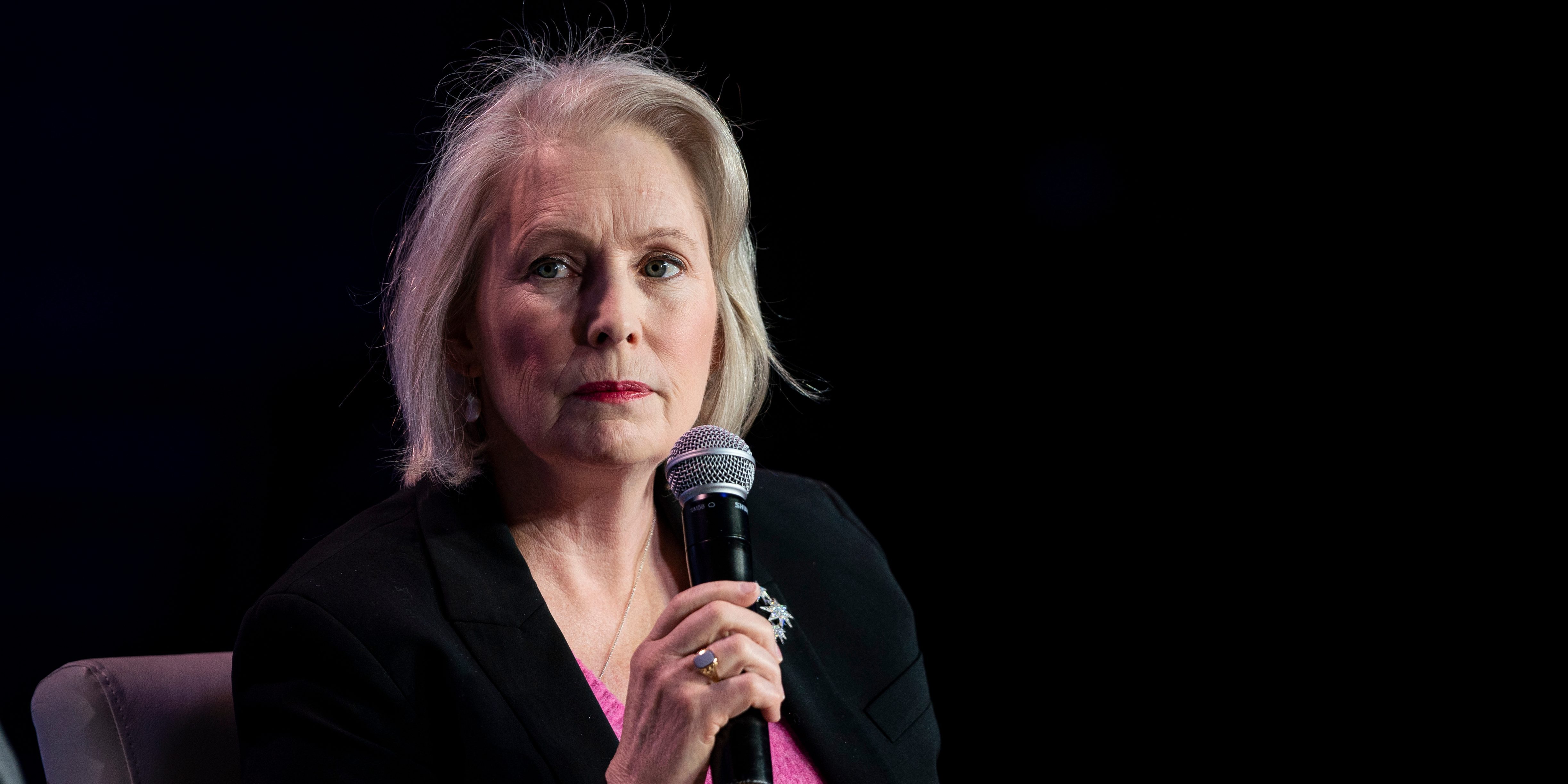
💾

How Local Cops Are Running With Trump's NSPM-7 Attacks on Antifa

7 July 2026 at 13:28

A month after Donald Trump issued an executive order purporting to designate antifa as a domestic terrorist group, an intelligence unit inside the Miami-Dade Sheriff’s Office in Florida sent out a confidential bulletin.

Trump’s announcement was widely criticized as a legally baseless attempt to criminalize his enemies on the left, but the Southeast Florida Fusion Center took it very seriously.

Citing sources that included right-wing social media accounts, the bulletin described antifa as a “decentralized autonomous network of cells” that “stand against capitalism and want to overthrow governments they feel are oppressive through violence and silence their opposition by any means necessary.”

“Antifa has been very active, their most prevalent presence during the George Floyd riots and recently during the anti-ICE protests,” it said, citing the 2020 national uprising against police brutality and the protests against U.S. Immigration and Customs Enforcement that followed Trump’s rise to power.

The Miami-Dade bulletin went on to describe the National Lawyers Guild — a left-leaning collective once villainized by Joseph McCarthy — as the “legal representative” of antifa. It also warned about the danger of zines as tools to “recruit new sympathizers” and of inflatable animal costumes as a “form of propaganda implemented by Antifa to soften their image.”

It was just one example of how, as the administration accelerates its crackdown on left-wing organizers, Trump’s push to paint antifa as a terror group has seeped into local law enforcement.

Previously unreported documents obtained by The Intercept show how local fusion centers are borrowing the tone and some of the language of Trump’s invectives against the left. They draw on his September 22 executive order designating antifa as terrorists and on prosecutions launched after a similar but more wide-reaching directive issued three days later, known as National Security Presidential Memorandum 7, or NSPM-7.

“The tone set by leadership is important,” Brendan McQuade, a University of Southern Maine professor who studies fusion centers and domestic surveillance, said of the documents obtained by The Intercept. “In the Trump administration the incentive structure is clear: Trump wants to mobilize the security apparatus against his perceived enemies, and in some sense the FBI and the Florida fusion center are both responding to that incentive structure.”

A White House spokesperson said the administration’s approach was part of a “new law enforcement strategy.”

“The President’s Memorandum is focused on investigating, disrupting, dismantling, and prosecuting individuals and entities engaged in organized political violence and domestic terrorism,” said White House spokesperson Abigail Jackson. “The Trump Administration will get to the bottom of this vast network inciting violence in American communities.”

The Florida Report

The Florida report was among a trove of scores of such documents obtained by The Intercept that were distributed through a national network of fusion centers.

Fusion centers were created after the September 11, 2001, attacks to facilitate information sharing about terror threats between federal and local law enforcement. Independent reviews, however, have found few tangible results after more than two decades in operation and countless dollars of federal funding for the centers. Critics say they have often been used to cast dissent as suspicious.

Many of the fusion center memos and bulletins focus on mundane topics of interest to local cops, such as the latest trends in ATM card “skimming.”

Others focus on foreign terror threats, such as the latest edition of “Inspire,” Al Qaeda in the Arabian Peninsula’s magazine.

Some of them, however, echo the Trump administration’s obsession with the left.

The Florida report, which is marked “for official use only,” stretches 28 pages. It starts off by defining antifa as terrorism and stating that the “goal of Antifa is the violent overthrow of the United States government.” (The Miami-Dade Sheriff’s Office, which houses the Southeast Florida Fusion Center, did not respond to a request for comment.)

Then it reproduces in full Trump’s executive order claiming to designate antifa as a “domestic terrorist organization” — a power he would not have even if antifa were a well-defined group rather than an ideology or movement.

Throughout, the Florida report leans heavily on right-wing sources, including the journalist-provocateur Andy Ngo, the Pizzagate conspiracy theorist Jack Posobiec, and an X account called Far Left Watch.

The report casts a wide variety of First Amendment-protected activities as antifa tactics, including using “profane language against law enforcement” and “doxing.” It warns that zines are used as “educational tools and offered as propaganda to recruit new sympathizers” — echoing an argument that federal prosecutors used against the defendants in the Prairieland ICE detention center protest case.

Police, the Florida report says, should also be on the lookout for inflatable animal costumes, in an apparent reference to the Portland Frog Brigade: “This is a form of propaganda implemented by Antifa to soften their image and change the narrative that they are a violent domestic terrorist organization.”

The document’s tone and reliance on partisan sources make it read “like opposition research,” McQuade said.

“This is not an intelligence bulletin about an organization,” he said. “This is like a target package that, to me, is encouraging police to go hunting for a very broad profile of not even just dissent but sometimes aesthetic markers of dissenting behavior.”

Target: Lawyers

The report devotes a full page to the National Lawyers Guild, the legal collective founded in 1937 as a colorblind alternative to the American Bar Association, which forbade Black members.

The group’s leftist sympathies have long drawn the ire of the right. In the 1940s and 1950s, it was infiltrated by J. Edgar Hoover’s FBI and mentioned in McCarthy’s infamous Senate hearings. More recently, the group has become an obsession for right-wing think tanks such as the Center for Security Policy and the Capital Research Center.

The Florida fusion center casts the National Lawyers Guild’s efforts to observe police on the streets and defend protesters in court in sinister terms, calling it antifa’s “legal representation.” That is laughable, said Xavier de Janon, director of mass defense for the National Lawyers Guild.

“I don’t know what that means, because antifa is not an organization,” he said, adding that if it were true, the group would proud to fight fascism. “But again, it’s false. It’s just not based on truth. There is no retainer agreement with antifa.”

And beyond that, he said, “NLG as an organization does not provide legal representation. Its members do.”

The report included a picture of National Lawyers Guild legal observers wearing their trademark lime-green hats, which de Janon interpreted as essentially a call to target them.

Pro-Palestine Groups

While the Florida report drew heavily from White House messaging, a different report from Texas relies on court filings from the Justice Department.

In December, the Dallas Regional Fusion Center produced an “intelligence brief” centering on the Turtle Island Liberation Front, a left-wing group accused of plotting coordinated bombing attacks in southern California.

The small group appears to have been thoroughly infiltrated by a paid informant and an FBI agent. The Dallas fusion center argued for even more surveillance, citing a “tangible and immediate threat from newly formed, violent extremist cells that require enhanced monitoring and inter-agency coordination.”

Corbin Rubinson, a spokesperson for the Dallas Police Department, which houses the fusion center, declined to comment on the report.

“These assessments are developed to support information sharing and situational awareness among our public safety partners, and we do not discuss their contents or how they are developed,” Rubinson said.

The Dallas document went on to name two groups that have no apparent connection to the Turtle Island Liberation Front: Direct Action Movement for Palestine Liberation and Unity of Fields. The only connection to the Turtle Island Liberation Front was that each group could be described as, in the words of the report, “another far-left, pro-Palestine, anti-Zionist extremist group.”

The bulletin acknowledged that none of the groups it singled out had a known presence in Dallas. Still, it urged police in the Dallas–Fort Worth area to “Monitor social media pages for extremist groups using ghost accounts and/or VPN” and to “Expand monitoring of encrypted messaging platforms for extremist activity.”

Anarchists in Minneapolis

The Miami and Dallas reports cribbed extensively from Trump’s executive order and Justice Department court filings, respectively. In January of this year, the FBI put out an alert more explicitly directed at local police.

Four days after federal officers shot and killed nurse Alex Pretti in Minneapolis, the FBI issued a “public safety awareness report” produced by its Office of Partner Engagement and Counterterrorism Division. The report, which was first made public last week by the news outlet Prism, was independently obtained by The Intercept.

The January 30 report was titled “Anarchist Violent Extremists Pose Persistent Public Safety Threat.” It ticked off recent instances of what the FBI saw as instances of anarchist violent extremism, or AVE, including the Prairieland ICE detention facility protest near Dallas and the Turtle Island Liberation Front. Then it swiveled to Minneapolis, which for weeks had been the scene of ordinary protesters confronting masked federal agents.

“Given recent criminal activity in Minneapolis, Minnesota, the FBI is concerned about the potential for AVE violence there,” the report said. “The FBI has seen indicators of this, to include an individual who self-identified as Antifa advocating on social media for violence against ICE in Minneapolis, telling people to ‘get your guns.’ The FBI investigates any reports of violence or the threat of violence by AVEs or other domestic violent extremist or criminal actors.”

The reference about a “self-identified” antifa member appears to be to Kyle Wagner, a Minneapolis man whose online videos featured prominently in the recent indictment of 15 anti-ICE protesters there.

The entire FBI report has a more professional tone than the Florida fusion center bulletin, McQuade said, but it rests on equally thin evidence.

“The FBI talks about two criminal cases, some social media monitoring, but they have claims that would not pass peer review — that anti-capitalist graffiti is an indicator of threat,” he said. “Then the little pull box they had in there about Minneapolis, where one tweet or social media post is interpreted to mean the whole city is ready for violence against federal agents. That just seems like bad analysis.”

Dissent as a Threat

It is not the first time that counterterrorism agencies have mobilized against the left on thin evidence.

Months before Trump supporters stormed the Capitol on January 6, 2021, The Intercept obtained hundreds of hacked law enforcement materials showing agencies obsessing over the threat from the left while ignoring the burgeoning right-wing, anti-government boogaloo movement. Adherents of the movement played a role in the assault on the Capitol.

In 2024, the American Civil Liberties Union filed a public records lawsuit against the Justice Department seeking internal documents about how Joint Terrorism Task Forces and fusion centers responded to protests.

Skeptics of domestic counterterrorism agencies say the overreach has spanned both Democratic and Republican White House administrations, but the documents the ACLU obtained from the first Trump administration share remarkable similarities with his second term.

The January 2026 bulletin from the FBI obtained by The Intercept includes a warning about “black bloc” clothing used to obscure demonstrators’ identities, securing financing through “lawful donations,” encrypted messaging apps, and anti-government graffiti.

The ACLU, meanwhile, obtained a July 2018, bulletin produced by the Department of Homeland Security and local fusion centers that warned about “potential indicators of violent activity by anarchist extremists at events and protests in the homeland.”

The “indicators” of a heightened threat in the bulletin include wearing black and red clothing, soliciting legal defense donations ahead of protests, wearing “Guy Fawkes” masks, and “use of public transportation” to mask license plate information.

The “indicators” of a heightened threat include wearing black and red clothing, wearing “Guy Fawkes” masks, and “use of public transportation.”

“Merely wearing certain colors and taking the bus to a protest should not be enough to justify heightened scrutiny from law enforcement,” Sara Robinson, an attorney with the ACLU’s National Security Project, said in an emailed statement. “Using overly broad and stigmatizing terms to describe people who may be engaged in First Amendment-protected activity opens the door to pretextual law enforcement investigations and aggressive policing based not on evidence of criminal activity, but on the exercise of free speech rights.”

She said, “The Trump administration is continuing to treat dissent as a threat.”

The post How Local Cops Are Running With Trump’s NSPM-7 Attacks on Antifa appeared first on The Intercept.

💾

Congressional Dems Shift to Overwhelmingly Oppose Involvement in Israel’s War on Lebanon

30 June 2026 at 20:02

Democratic Party leaders in the House reversed course and moved to back a resolution against U.S. involvement in Israel’s war on Lebanon on Tuesday, giving the bill overwhelming support from Democrats for the first time since Congress began seeking to address the conflict.

The resolution sponsored by Rep. Rashida Tlaib, D-Mich., failed 235–189, with near-universal opposition from Republicans.

The vote was another sign of changing attitudes among Democrats about Israel.

Still, the vote was another sign of changing attitudes among Democrats about Israel: 187 Democrats voted in favor of it, and only 22 voted against.

Tlaib’s resolution marked the second time she has forced the House to go on the record about the war on Lebanon, which Israel says is aimed at Hezbollah but has left a fifth of the country displaced and thousands dead.

Under the 1973 War Powers Act, any member of Congress can force a vote on U.S. involvement in hostilities. Critics of Israel suspect the U.S. military has supported Israel’s attacks on Lebanon through help with developing target lists or refueling military aircraft. (U.S. Central Command, which oversees military operations in the region, did not immediately respond to a request for comment.)

On June 4, Tlaib’s first attempt to pass a war powers resolution about Lebanon failed on a 324–92 vote.

House Democratic leaders opposed that earlier resolution because of what they said were drafting errors that might have inadvertently forced the U.S. to stop protecting its embassy in Beirut or providing aid to the Lebanese Armed Forces, the regular military of the Lebanese government.

The more recent version of the legislation gained the support of Democratic leaders by including explicit carveouts for those activities. While leadership did not officially whip the vote, the ranking member of the House Foreign Affairs Committee, Rep. Gregory Meeks, D-N.Y., who is close to Minority Leader Hakeem Jeffries, D-N.Y., spoke in support of the measure on Monday.

Speeches from Meeks and Tlaib, however, revealed a divide in what Democrats thought the measure might accomplish.

Meeks criticized the conduct of Hezbollah and Israel alike, adding that, to his knowledge, no U.S. forces were directly involved in combat in Lebanon. The resolution would prevent the Trump administration from joining in the war, he said.

Tlaib, meanwhile, cast the resolution as a way to cut off U.S. support for Israeli forces. She pointed to Israeli National Security Minister Itamar Ben-Gvir’s call “to burn all of Lebanon” as proof of the Israeli government’s intent there.

“I want to make this very, very clear: The United States is not a bystander to these war crimes,” Tlaib said. “It is an active participant. The United States is currently engaged in illegal and unauthorized hostilities supporting the Israeli invasion of Lebanon, in violation of the War Powers Act.

“The United States is not a bystander to these war crimes.”

“Without that support,” she added, “those jets cannot drop bombs to kill Lebanese children. Congress must reassert its constitutional authority and immediately vote to end all unauthorized U.S. participation in the destruction of Lebanon.”

Only two Republicans, Reps. Thomas Massie of Kentucky and Lauren Boebert of Colorado, voted in favor of the resolution. The Republican caucus was officially represented during the Monday floor debate by Rep. Brian Mast, R-Fla., the chair of the House Foreign Affairs Committee.

“This resolution only seeks to embolden Hezbollah. That is the only thing that it does,” Mast said. “There are no U.S. forces engaged in hostilities. Do we train Lebanese Armed Forces? Yes, we do. Do we provide intelligence? Yes, we do. But we don’t have forces engaged there.”

Ahead of the vote, Erik Sperling, the executive director of Just Foreign Policy, a group that is sharply critical of Israel, said he was pleased to see more Democrats backing Tlaib’s resolution.

“Democrats have been pretty unified about speaking out against the killing of innocents and all of the harm by the Iran war, but there has been less vocal outrage about the mass killing and occupation in Lebanon,” Sperling said. “This is just an important signal that Democrats are aware of the way the Lebanon war is a humanitarian crisis and is the key roadblock to ending this war and delivering the peace that Americans are demanding.”

The post Congressional Dems Shift to Overwhelmingly Oppose Involvement in Israel’s War on Lebanon appeared first on The Intercept.

💾

Prairieland Defendant Sentenced to 30 Years in Prison for Moving a Box of Antifascist Zines

23 June 2026 at 19:58

FORT WORTH, TEXASDaniel Sanchez Estrada wasn’t accused of attempted murder or material support of terrorism after a protest turned catastrophically wrong outside an ICE detention center in Alvarado, Texas. He was merely convicted of obstructing the investigation by moving a box full of antifascist zines after the protest. Giving him a long prison term would make a mockery of justice, his defense attorney, Christopher Weinbel, told U.S. District Judge Reed O’Connor on Tuesday.

“The punishment must fit the crimes — not the headlines, not the politics, not the fears that have been mongered about the case,” he said.

Instead, O’Connor gave Sanchez Estrada a 30-year term.

The lengthy sentence was among the eight harsh terms handed down by judges in two courtrooms in Fort Worth on Tuesday to activists who played roles at or after the July 4, 2025, protest at Prairieland Detention Center. Their sentences — longer than any of those received by members of the January 6, 2021 assault on the U.S. Capitol — capped a case that is widely regarded as the Trump administration’s first major victory in its crackdown on left-wing activism.

The defendants were convicted at trial in March. Prosecutors convinced a jury that the fact that the eight defendants present at the protest wore all black and used the Signal encrypted messaging app supported their material support of terrorism charges. Sanchez Estrada, who was not at the protest, was convicted of corruptly concealing a document or record and conspiracy to conceal documents.

Only one of the defendants, Benjamin Hanil Song, was accused of firing a gun at a police officer, who left the scene with an injury to his neck; Song was convicted of attempted murder. Still, federal guidelines calling for harsher sentences for all because of links to terrorism — which were applied by O’Connor, a George W. Bush appointee, and U.S. District Judge Mark Pittman, a Donald Trump appointee — meant that all the defendants faced long prison terms.

Their only hope ahead of the simultaneous twin hearings was that the two judges might break sharply with federal guidelines. Instead, O’Connor and Pittman chose to make an example of the defendants.

Several defendants said Tuesday that they never intended to hurt anyone. Their only hope was to show solidarity with the detainees by staging a noise demonstration with fireworks, they said.

“When I went to protest on the night of July 4, it seemed more like a party to me than anything else,” Autumn Hill told the court Tuesday. “We didn’t expect or want any violence or destruction of property to occur.”

Prosecutors, however, seized on the fact that the protesters arrived at the scene with guns and fireworks. O’Connor, the judge, said several times that the defendants had committed an “assault on democracy.”

“What happened here was not by any stretch of the imagination a protest,” he said during the sentencing of one defendant.

So it went repeatedly in the two courtrooms as the judges brushed aside the defendants’ assertions that they were attempting simply to show solidarity with the detainees inside the ICE facility. Song, the sole defendant convicted of attempted murder, received a 100-year prison sentence.

The other defendants’ arguments that they should be distinguished from Song because they never fired a gun won them little relief.

Sanchez Estrada’s wife, Maricela Rueda, received a 70-year sentence, longer than most of the other defendants because of her alleged role in a conspiracy to commit obstruction by asking Sanchez Estrada to move the zines after her arrest.

Hill, Savanna Batten, Zachary Evetts, Meagan Morris, and Elizabeth Soto all received 50-year sentences for their roles in protest at the Prairieland detention facility. A ninth defendant, Ines Soto, awaits a July sentencing.

The defendants’ relatives and supporters said at a press conference after the sentencing that they had harbored few illusions about their likely sentences. They have now placed their hopes on appeals.

The Prairieland case should be placed in the context of a larger crackdown on anti-government protesters, supporters said.

The Prairieland Detention Center in Alvarado, Texas, is shown, Monday, March 16, 2026.
The Prairieland Detention Center in Alvarado, Texas, seen on March 16, 2026.  Photo: Tony Gutierrez/AP

The protest that triggered the case came months before the September killing of conservative activist Charlie Kirk, which prompted President Donald Trump to issue an executive order purporting to designate antifa as a domestic terrorism group and a presidential memo dubbed NSPM-7 calling for a broader crackdown on the left. Following those directives, federal prosecutors upped the charges facing the Prairieland defendants. FBI Director Kash Patel also made clear the importance of the case to the Trump administration by posting about it on social media in October.

In a press release Tuesday, the Justice Department hailed the case as “the first sentencing of defendants affiliated with Antifa following President Donald J. Trump’s executive order designating the group as a Domestic Terrorist Organization in September 2025.”

“Today’s sentencings show the FBI remains committed to identifying, locating, and dismantling Antifa and its funding networks across the country,” Patel said in a statement.

More indictments against activists have followed since the issuing of NSPM-7, most recently the charges in Minnesota earlier this month against 15 people accused of trying to impede federal agents during the immigration crackdown there.

“It’s not just here in the north Texas area,” said Tamera Hutcherson, a local activist who served as a member of Batten’s defense team. “This is also now in other parts of our country, and it concerns me what this means for our free speech, as well as our right to protest. If we are to bring a medical kit to a protest, does that mean we are a criminal now? If we are to even just attend a noise demonstration, does that mean we are a criminal now, and we may not return home to our loved ones?”

“ If we are to bring a medical kit to a protest, does that mean we are a criminal now? ”

Justice Department prosecutors pushed back against the idea that the defendants had been convicted merely for expressing their First Amendment rights. What distinguished them from other protesters was their belief that they were justified in using violence to accomplish their goals, said Frank Gatto, an assistant U.S. attorney for the northern district of Texas.

“The very crux here is their firm belief that the use of violence is justified,” Gatto said during the sentencing of Evetts.

Although the case centered on the government’s claim that the defendants were affiliated with antifa, prosecutors offered little evidence of that at trial. Even Pittman, the judge who oversaw the trial, questioned whether he needed to mention antifa in his jury instructions.

Still, the movement of various anti-government and antifascist zines led directly to the conviction of Sanchez Estrada, whose case stood out from the others because he was not accused of attending the July 4 protest at the ICE detention center.

Weinbel, the public defender, said the zines that Sanchez Estrada moved were his own and protected by the First Amendment. None of it helped convict the other defendants at trial, Weinbel said.

“At the heart of this case is a simple truth: Mr. Sanchez moved a box,” Weinbel said. “He is not a murderer, he is not ISIS, he is not a foreign terrorist.”

“He is not a murderer, he is not ISIS, he is not a foreign terrorist.”

Sanchez Estrada said he still could not understand why he was convicted.

“I am a father, I am a husband, I am a teacher, a poet — I am many things, Your Honor, but I am not a terrorist,” he told the court.

O’Connor said he disagreed with the idea that moving the box of the zines was harmless. At the time of Sanchez Estrada’s actions, Song was still on the run from police.

“What was at stake at that time was a known terrorist was on the run for shooting a police officer during a terrorist attack,” he said.

The post Prairieland Defendant Sentenced to 30 Years in Prison for Moving a Box of Antifascist Zines appeared first on The Intercept.
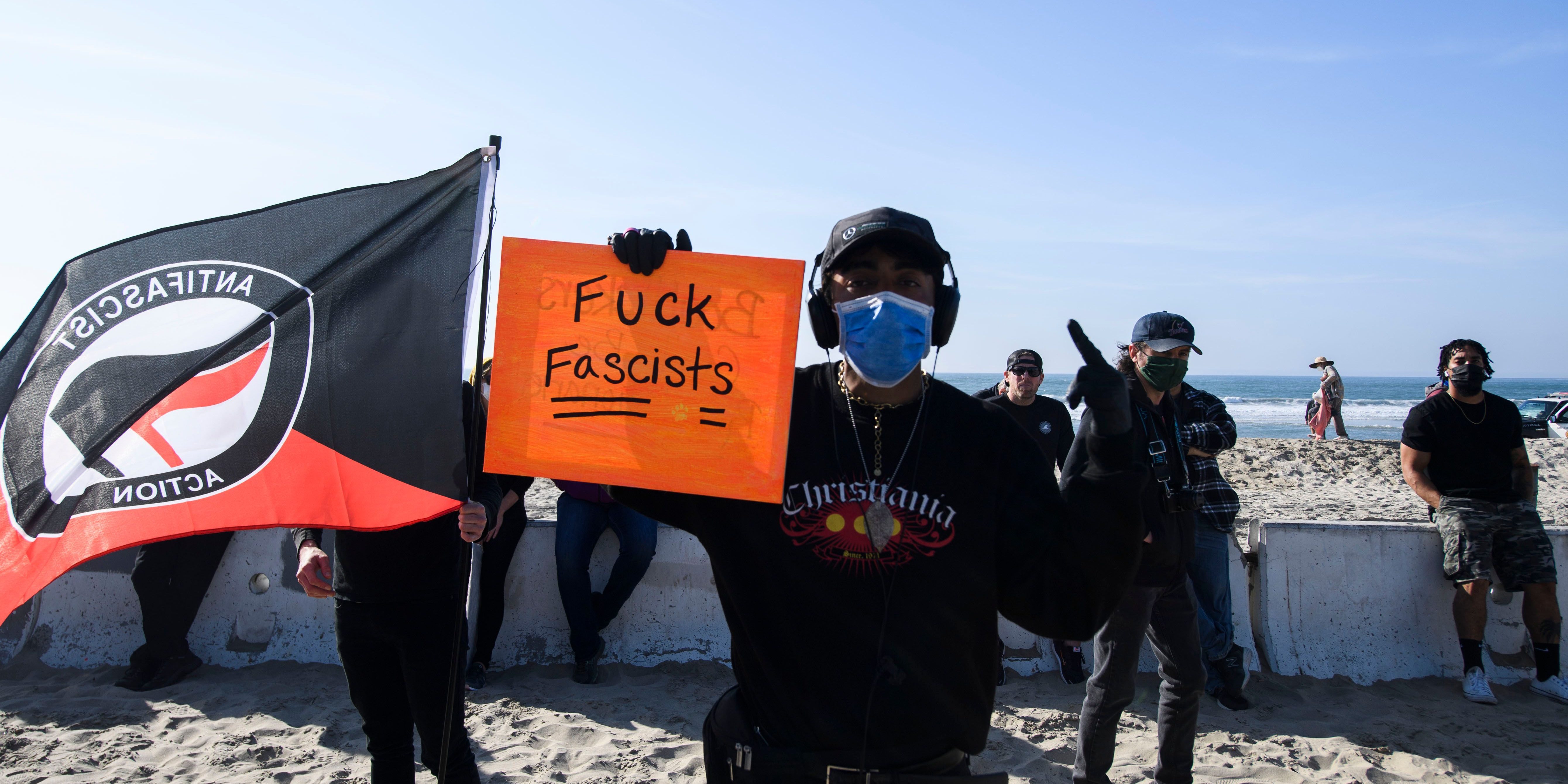
💾

❌
❌