Normal view

There are new articles available, click to refresh the page.
Before yesterdayThe Intercept

The New York Times Conveniently Forgets the Real Stakes of Attacks on Free Speech

16 September 2026 at 19:44
NEW YORK, UNITED STATES - AUGUST 10: Protesters holding banners and Palestinian flags march to Times Square after picketing The New York Times to demand justice for Palestinian journalist Anas Al-Sharif and all journalists killed in Gaza by Israel, on August 10, 2026, in New York City, United States. (Photo by Selcuk Acar/Anadolu via Getty Images)
Protesters picket the New York Times to demand justice for Palestinian journalist Anas Al-Sharif and other journalists killed in Gaza by Israel, on Aug. 10, 2026, in New York City.  Photo: Selcuk Acar/Anadolu via Getty Images

The New York Times recently published a sweeping accounting of President Donald Trump’s campaign against the American press: FBI agents arriving at reporters’ homes, subpoenas for journalists’ records, Pentagon access restrictions, regulatory pressure on television networks, numerous lawsuits against news organizations, and an increasingly politicized Federal Communications Commission.

“Almost 20 months into Mr. Trump’s second term, his long-running media clashes have grown into a sweeping campaign to control speech in America that stands out for applying so many levers, so fast, all at once,” Times reporters Maggie Haberman and Jim Rutenberg wrote. “Each time the president assails what has long been considered protected speech … he is eroding norms and undercutting the role of an independent press.”

All told, it is a damning inventory.

It is also difficult to read without noticing who occupies almost every frame: Us.

Reporters. Editors. Television hosts. Networks. Publishers. Their lawyers. And the access our industry has become so reliant upon. 

The Times is right about the threat. Trump has indeed weaponized government agencies and private litigation against news organizations in ways that seriously threaten the First Amendment, although judges have repeatedly rebuked parts of the administration’s legal strategy. But Trump’s attacks on free speech have extended well beyond the journalism, from ICE protesters in Los Angeles to faculty in solidarity with Palestine on college campuses. But somewhere along the way, the American press began conflating two things: press freedom, with the conditions under which the press had become accustomed.

Those are not the same thing.

Free speech was never free.

It was wrested loose. Sharpened and stretched, stifled and reborn, often on the backs of those who put the pain and personal safety of others ahead of their own.

Somewhere along the way, the American press began conflating two things: press freedom, with the conditions under which the press had become accustomed.

In 1892, a little more than two decades after the nation wrenched itself back together from war, Ida B. Wells challenged the lies white Memphis terrorists used to justify lynching Black men in her newspaper, the Memphis Free Speech and Headlight. In retribution, a mob ransacked her office and destroyed the paper’s printing equipment. Wells happened to be away. Threatened with death if she returned, she continued her investigation from the North. There was no White House Correspondents’ Dinner, no presidential press core podium to be invited to, no shining press awards. As a Black woman, she couldn’t even vote; in her isolation, her best job security was to carry a pistol

“It is with no pleasure I have dipped my hands in the corruption here exposed. Somebody must show that the Afro-American race is more sinned against than sinning, and it seems to have fallen upon me to do so,” she wrote in her book on the excruciating personal trade-off she made to pursue her work: perspective. Her fear, exhaustion, and isolation existed beside something larger: actual bodies, tangible violence, and lived injustice.

I will be candid: Melancholy abounds. I write this as a journalist who has grown depressed while slinking through the yearly industry conferences, newsrooms, and brown bag luncheons. There is a palpable dread to most discussions, with an acknowledgment that the world is less fair, less stable, and overwhelmingly more difficult.

We talk about everything. Except the necessity to win, and most importantly, for who.

Israeli airstrikes and other attacks are still killing and displacing Palestinians in Gaza, where the United Nations reported last month that medical shortages and restrictions on critical supplies continue to undermine an already devastated health system. In the West Bank, settler violence, backstopped by the Israeli military, is a daily and growing threat. Israel’s war on Gaza has now killed nearly 300 journalists — more news gatherers than in both world wars, Vietnam, Yugoslavia, and Afghanistan combined.

The Times in particular has done more than almost any other media outlet to launder the justification for this ongoing death and destruction, and to police the language we’re allowed to use when discussing it, which didn’t warrant any mention in its attacks-on-free-speech roundup.

In the U.S., ICE arrests reached nearly 51,000 in August alone as the Trump administration dramatically expanded immigration enforcement. Many of those being detained had no criminal record, while courts continue battling out the administration’s detention practices. A Department of Homeland Security watchdog reported on Monday that immigrants at Florida’s now-defunct “Alligator Alcatraz” prison were confined for more than an hour at a time in outdoor metal cages known as “calming areas” that were barely larger than a phone booth.

Government coercion and obfuscation is difficult; it doesn’t hold a candle to death, subjugation, and the powerlessness of victimization.

As Wells put it, I’ve had the displeasure of covering a national violence, I’ve also had the displeasure of living it

There is nothing in my day job that can match the pain, or permanence, of a loved one ripped from your household, the lifelong inequity of being racially outcast, or the haunting mental anguish those events leave behind as an inheritance. 

As a result, there is a vibrating dis-ease — something close to nausea — in listening to tales of journalists ground under the boot of power, only to hear complaints of our own injury grow so loud that it begins to obscure the suffering beyond us. Maybe that is part of the point of these attacks in the first place: Hurt us until our wounds become the horizon. Hurt us into forgetting those hurt more.

We need to fight even harder for truth, not because journalists are the principal victims of its erosion, but because the people paying a far higher price outside the newsroom’s walls are the reason we do this work at all.

Those starved in Gaza at the United States’ discretion. Those suffering and dying around the world after our medical aid is withdrawn. The millions of Americans living a crisis away from ruin because they were stripped of their healthcare.

We need to fight even harder for truth, not because journalists are the principal victims of its erosion, but because the people paying a far higher price outside the newsroom’s walls are the reason we do this work at all.

That discrepancy may also help explain why Americans increasingly roll their eyes when journalists describe threats to journalism as threats to democracy.

In 2025, Gallup found that only 28 percent of Americans trusted newspapers, television, and radio to report the news fully, accurately, and fairly — the lowest level ever measured. When Gallup began asking the question in the 1970s, the figure ranged between 68 and 72 percent. 

There are many reasons for that collapse, from deepening partisanship and a fragmented information ecosystem to the hollowing out of local news.

But I understand some of the suspicion.

I understand why nobody wants to invest in a product from an industry that refuses to admit it wants to win.

And by “win,” I mean something journalists have become strangely embarrassed to admit it we want: to make it harder to abuse human beings without anybody knowing.

There is nothing neutral about that mission.

And there never was. 

Perhaps the mistake comes from imagining freedom, and by proxy freedom of press, as a possession rather than a practice.

Perhaps the mistake comes from imagining freedom, and by proxy freedom of press, as a possession rather than a practice — a right handed down and intact, rather than a capacity that must be worked, tested, and fought for when the cost of exercising it rises.

In his 1951 book “The True Believer: Thoughts on the Nature of Mass Movements,” writer Eric Hoffer captured the appeal of fascism in five unsettling words, uttered by an ardent young Nazi: “to be free from freedom.” He used the quote to examine an uncomfortable possibility — that freedom may not be innate to the human mind, but something closer to muscle — strengthened under strain, grown through resistance, and, if left unused, atrophied.

Press freedom lives under the same rule. Its value is not measured by how easily journalists can exercise it, but by what survives when power becomes hostile.

Our charge is to comfort the afflicted and afflict the comfortable. Journalists’ own comfort was never part of the equation.

The post The New York Times Conveniently Forgets the Real Stakes of Attacks on Free Speech appeared first on The Intercept.

💾

Sophie Cunningham Is the Anti-Trans Right's New White Woman Mascot

9 August 2026 at 21:10
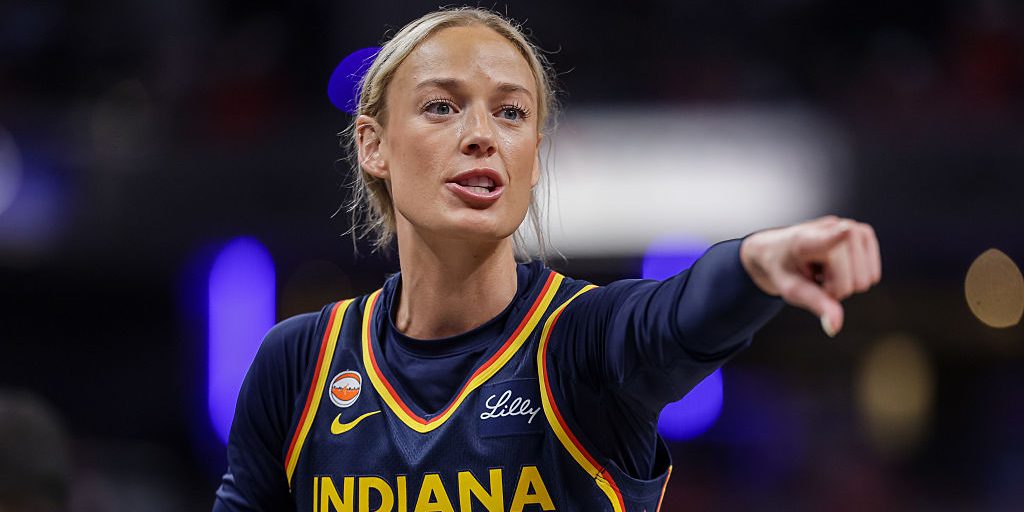
INDIANAPOLIS, INDIANA - JUNE 22: Sophie Cunningham #8 of the Indiana Fever points during the game against the Phoenix Mercury at Gainbridge Fieldhouse on June 22, 2026 in Indianapolis, Indiana. NOTE TO USER: User expressly acknowledges and agrees that, by downloading and or using this photograph, User is consenting to the terms and conditions of the Getty Images License Agreement. (Photo by Michael Hickey/Getty Images)
Sophie Cunningham of the Indiana Fever points during the game against the Phoenix Mercury at Gainbridge Fieldhouse on June 22, 2026 in Indianapolis, Indiana. Photo: Michael Hickey/Getty Images

In the ever-shifting theater of America’s culture wars, conservative media has found its newest gladiatorial conscript: Indiana Fever guard Sophie Cunningham.

It’s an unlikely promotion—and from backers who, until recently, probably couldn’t have named five WNBA players.

The reason for her esteem probably has little to do with her faultless three point precision. In an interview with ESPN, Cunningham declared she opposed transgender women—whom she referred to as “biological men”—competing in women’s sports, arguing the issue was about “protecting young girls.” Later, she cheekily doubled down on the statement, posting an outfit photo on Instagram with the caption: “I said what I said” with a saluting emoji.

That was enough.

Almost overnight, Cunningham became more than a WNBA player. She became one of conservatism’s newest culture-war combatants: blonde, white, conventionally attractive, and playing in a league overwhelmingly composed of players of color, and with one of the largest openly LGBTQ+ player populations in professional sports.

For generations, conservative movements have sought to anoint and weaponize cisgender white women as public-facing enforcers of social and racial hierarchy. 

Within days of Cunningham’s remarks, conservative media had found its new protagonist. 

Fox News host Riley Gaines, who herself rose to prominence as an anti-trans NCAA swimmer, called Cunningham “the first current high-level female athlete” willing to publicly oppose transgender participation in women’s sports, and praised her for speaking out from inside what Gaines called “the most woke league of all time.” The Daily Wire cast the now-famous finger-pointer—and on-court defender of Caitlyn Clark, another white player whose first season with the WNBA sparked racialized conversations that cast her Black opponents as too “aggressive”—as someone “now fighting for us.” Trump’s Department of Education joined in, posting a Grok AI-generated image of Cunningham wearing a crown with the caption: “Common sense prevails.”

Cunningham’s ascent into the right’s zeitgeist is by design. For generations, conservative movements have sought to anoint and weaponize cisgender white women as public-facing enforcers of social and racial hierarchy. 

While the specific rallying cry has changed throughout history, their use and ideological framing to the conservative movement has remained largely intact: They serve narratively as bulwarks against some grave impending demographic or social upset, which if allowed to come to fruition would be an assault on the current status quo of women at large. 

Ride of the Valkyries

American political history is thick with appeals to white womanhood as something endangered and therefore requiring protection, particularly against the encroaching civil rights gains of Black, brown, and LGBTQ+ communities. Since the Academy Award-winning Birth of a Nation, the idea that straight white women are in peril simply by living in proximity to minority groups has been repeatedly used to justify racial exclusion and stir up moral panic.

In the wake of Brown v. Board of Education, southern governments launched what’s now known as the “Massive Resistance,” a series of laws to prevent integration. The campaign mobilized a movement of white women to organize through schools, newspapers and civic groups in an effort they sold as defending white children, neighborhoods, and public education. It was largely these communities that performed the on-the-ground enforcement of segregation, going so far as to pluck out children suspected of being mixed-race from white schools. This changed the packaging of the politics of segregation: Rather than snarling racism, the message could be framed more politely as a threat to the sanctity of motherhood and child welfare.

By the 1970s, overt defenses of racial segregation had become politically untenable on the national stage. The conservative movement’s next great cultural fight shifted toward gender. As the sexual revolution, second-wave feminism, and the promise of the Equal Rights Amendment changed family structures and challenged traditional gender roles, conservatives increasingly looked to white women to make the case against the nation’s expanding vision of female equality.

In the impeccably dressed mother-of-six Phyllis Schlafly, the conservative movement found its most formidable duelist against progressive feminism. Through her “STOP ERA” campaign, Schlafly argued the Equal Rights Amendment wouldn’t liberate women—it would endanger them by exposing women to the military draft, undermining mothers’ custody rights, and destabilizing the American family. 

Her message was overwhelmingly effective; the Equal Rights Amendment was never ratified. As prominent legal scholar and feminist theorist Joan Williams put it, “the ERA was defeated when Schlafly turned it into a war among women over gender roles.” 

CHICAGO, IL - AUGUST 08: Caitlin Clark #22 of the Indiana Fever reacts to a technical foul call during the second half against the Chicago Sky on August 8, 2026 at the United Center in Chicago, Illinois. (Photo by Melissa Tamez/Icon Sportswire via Getty Images)
Caitlin Clark of the Indiana Fever reacts to a technical foul call during the second half against the Chicago Sky on August 8, 2026 at the United Center in Chicago, Illinois. Cunnningham has been characterized as Clark’s “enforcer.” Photo: Melissa Tamez/Icon Sportswire via Getty Images

For decades, conservative politics has repeatedly tapped into this vein, transforming cultural anxieties—over motherhood, children’s safety, crime, sexuality, and gender roles—into mass movements by placing cisgender white women front and center. 

At the turn of the late 70s, conservatives promoted Anita Bryant, a wholesome pop singer who warned that gay rights threatened America’s children. During the rise of evangelical moralism of the 1980s, the religious right elevated Patricia Pulling, the suburban Virginia mother whose campaign against Dungeons & Dragons helped ignite the Satanic Panic. From matronly children’s book authors to buxom blue jean models, the conservative avatar is exceedingly familiar: a woman whom white men are encouraged to protect and one whom other white women are encouraged to empathize with and emulate. 

The Girls We Don’t Protect 

In her research on anti-feminist women, sociologist Rebecca Klatch found “most…are white, middle-aged, housewives, married or widowed, new to politics, and oriented toward single issues.”

But by screaming to “remember straight white women,” the right aims to make us forget anyone who sits at the edges of that definition, those long underserved by America’s promise of a truly free and equitable land. It dehumanizes women of color even further in a league where all athletes still earn a fraction of the paychecks their male counterparts take home. It shuts down any future good-faith conversations on how to allow trans athletes to compete and the sheer danger to a trans community increasingly excluded from social participation. It also serves to drown out the voices of women who support trans athletes, and often becomes a political Rorschach test to attack civil rights far beyond who makes a starting line up

I don’t know if that’s what Cunningham signed up to represent, and quite frankly, I don’t know if she did either. She most recently told the press that she wants to “get back to basketball.” 

In a free-speaking democratic society, Cunningham, and every athlete, is entitled to be human: to hold opinions, and feelings, and have a political voice. She is not the first, nor will be the last, fair maiden to be cast as a sword-bearing champion for a conservative culture war. 

But if a movement’s cause is about truly protecting women, then perhaps the more revealing question to interrogate is which women it has deemed worthy of protection in the first place. Whose womanhood is treated as universal, whose safety becomes a national rallying cry, and whose voices—including those of Black women, queer women, and transgender women—are left at the margins. That hierarchy often tells us more about the movement behind it than the woman standing under the net.

The post Sophie Cunningham Is the Anti-Trans Right’s New White Woman Mascot appeared first on The Intercept.

💾

It’s Scary As Hell Being Black in America Right Now

19 July 2026 at 10:00
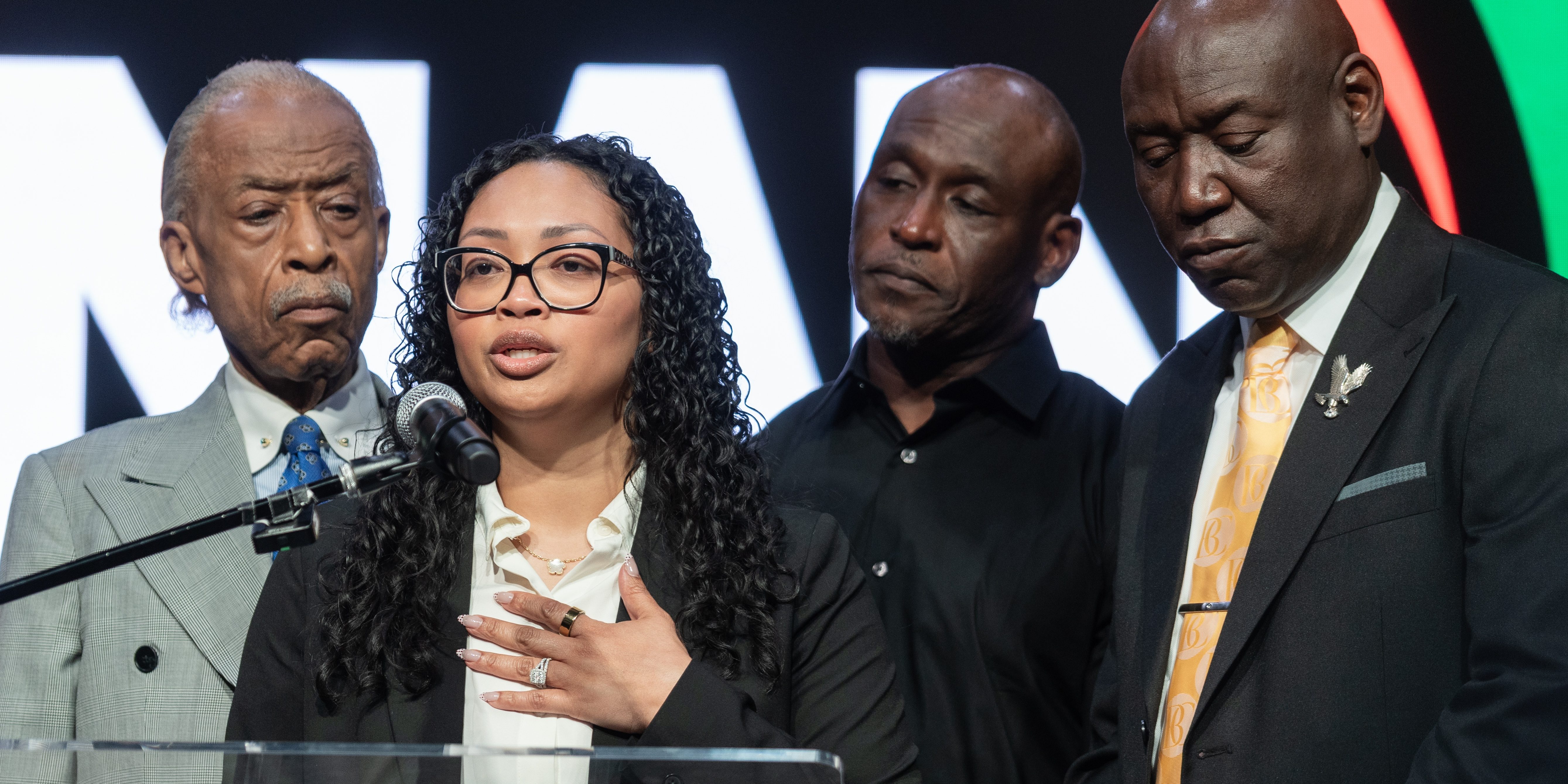
Nolan Wells mother Chrstine Wonsley held a press conference with their lawyer Ben Crump and Rev. Al Sharpton after their son's mysterious death over the 4th of July weekend off the coast of Mississippi. New York City, NY. July 10, 2026. (Photo by Steve Sanchez/Sipa USA).(Sipa via AP Images)
Nolan Wells’s mother Christine Wonsley held a press conference on July 10, 2026, in New York City after her son’s mysterious death over the Fourth of July off the coast of Mississippi. Photo: Steve Sanchez/Sipa USA via AP Images

There is a tangible heat to being Black in America this summer. 

Every morning starts the same. A jolt of coffee and nicotine as my thumbs scroll a daily intake of Black death and indignity. 

It mostly comes dosed in tears. Tears of Black moms and aunties, projected behind stone-faced fathers and grandpops trying to hold it together behind press podiums. 

This summer, it was Nolan Wells, an 18-year-old who disappeared during a trip to Mississippi’s Horn Island over the Fourth of July. Wells, who traveled to the island with a predominately white group of friends, was found dead in the water two days later. Authorities have not announced a final determination of what happened, but Wells’s family has challenged the official timeline and sought an independent autopsy. The investigation remains ongoing, which is to say that another Black family is waiting for answers in the indeterminate dark. In a state synonymous with deep-seated anti-Black racism, and the highest number of recorded lynchings, speculators and community members have begun to fear the worst.

It’s an expectation that has set the tone for living while Black in this new era. Where at any moment you, as Black person, can be erased for the most negligible of offenses, and if you’re not careful, be discarded into the void.

Before Nolan Wells, we watched in June as another Mississippi family laid their Black boy to rest. Kohen Wiley, who was just a year old, was shot and killed by Senatobia police officers, who fired into the vehicle where Wiley was sitting on his mother’s lap. After a friend of Wiley’s mother was accused of shoplifting a box of diapers at a Walmart, police opened fire on their car under the pretense that the vehicle was “oncoming” toward the officers. Civil rights attorney Ben Crump has said the officers were not in the car’s path, citing a photo from the scene. A month later, investigators have yet to release body camera footage of the incident or provide any new answers. No charges have been filed.

Black Americans had already borne witness to those familiar echoes. Earlier that month, a jury in South Carolina acquitted 61-year-old Rick Chow of a murder charge after he shot and killed Cyrus Carmack-Belton, 14, for the alleged offense of stealing bottled water. Video evidence of the 2023 incident shows the store owner chasing Carmack-Belton out of the shop after falsely accusing him of theft. Chow, who had twice before shot patrons he suspected of shoplifting, would go on to shoot the teenager in the back as he fled. 

Whether over a box of Pampers or a gulp of water, it is a startling reminder that for too many non-Black Americans, protecting even the most trivial property can take precedence over the sanctity of a Black life.

It’s an existential dread that has now turned into expectation, an anxiety meant for the mind to blunt the inevitable oncoming pattern of pain, disappointment, and injustice — in this case, being Black in America.

These deaths do not exist in isolation. They arrive amid a broader retreat from the institutions that, however imperfectly, once acknowledged Black Americans as a constituency deserving of protection and investment.

And the casualties of Black existence transcend more than just bodies. The Trump administration has waged full spectrum warfare on Black identity in every sense. 

Since Trump returned to office, Black workers have experienced rising unemployment, with Black men seeing some of the steepest job losses in recent memory, according to an analysis by the Economic Policy Institute.

This coincides with broader efforts by the Trump administration to dismantle federal diversity, equity, and inclusion initiatives, directing agencies to terminate DEI programs and contracts while encouraging similar rollbacks throughout the private sector. The administration has also sought to reshape how race is discussed across the federal government, from education and museums to civil rights enforcement. 

At the same time, the administration has continued to chip away at the legal architecture of voting rights, with years of court decisions making it more difficult to challenge racial gerrymandering and voting restrictions. The Supreme Court’s recent decision dismantling key Voting Rights Act protections has opened the door for states to erase Black-majority districts, which threatens to strip Black communities of congressional representation across the South. 

If there was anything novel to the current pulse of American white supremacy, it is that it doesn’t seek domination but to erase Blackness altogether.

Trump’s supporters have come out in droves to support this mission, from swarms of masked white supremacists descending on the U.S. Capitol in honor of our nation’s 250th birthday to the endless viral videos of white men brandishing guns at Black people doing anything from swimming at the pool to handing out flyers

It is no surprise that, under the constant reminder that the market value of Black life has plummeted, many Black Americans are succumbing to despair. Suicide rates among Black Americans — especially young Black men — have risen sharply over the past decade. Researchers point to a convergence of untreated depression, limited access to mental health care, economic instability, exposure to violence, and the cumulative weight of racialized stress.

None of those policies alone determine whether a police officer fires a gun, whether a jury reaches a particular verdict, or what pushes a broken down mind over the brink. But together they communicate something many Black Americans increasingly recognize: that America has further turned tail and ran away from its promise of an egalitarian society, or even the aspiration that it should be one. 

That departure has consequences well beyond Washington. It shapes who receives the public’s attention, which communities are viewed as worthy of investment, and whose fears are treated as matters of national concern. 

For Black Americans watching another summer marked by funerals, investigations, and courtroom disappointments, the sentiment is not simply that violence persists. It is that the country is becoming less interested in confronting why it persists at all

That is the understanding of it. But the feeling is something entirely different.

And that feeling is scary as hell.

The post It’s Scary As Hell Being Black in America Right Now appeared first on The Intercept.

💾

Chud the Builder Fantasized About “Race War.” Now He’s Charged With Attempted Murder.

19 June 2026 at 17:46
Dalton Eatherly, who goes by the moniker Chud the Builder, attends a hearing at the Montgomery County Courthouse, Thursday, May 21, 2026, in Clarksville, Tenn.
Dalton Eatherly, who goes by the moniker Chud the Builder, attends a hearing at the Montgomery County Courthouse on May 21, 2026, in Clarksville, Tenn. Photo: Adin Parks/AP Photo

The situation has only gotten worse for Dalton Eatherly, the race-baiting online pest better known as “Chud the Builder.” Earlier this spring, Eatherly was out on bond after being arrested in Nashville on theft, disorderly conduct, and resisting arrest charges after allegedly walking out of a restaurant on an almost $400 tab. Days later, prosecutors say he went on to do something far more serious: allegedly shooting and nearly killing a man outside the Montgomery County Courthouse in Clarksville, Tennessee. 

On Wednesday, a Davidson County judge revoked his bond after reviewing his conduct and new evidence surrounding the shooting.   

“It sounds premeditative, like he’s going to kill somebody,” one Montgomery County investigator said at the hearing, pointing to Eatherly’s videos and social media posts. 

There’s no mystery about what drives Eatherly, who livestreamed his violent, racist goals to thousands of supporters every step of the way. 

In an age where racist rhetoric can not only be mainstreamed but can also be monetized, Dalton Eatherly represents its newest and lowest violent common denominator. He’s part of a new wave of right-wing streamers who profit by coaxing donations to push out racist hate speech via social media.

NASHVILLE, TN - MAY 9: (EDITOR'S NOTE: This handout image was provided by a third-party organization and may not adhere to Getty Images' editorial policy.) In this handout photo provided by the Metropolitan Nashville Police Department, Dalton Eatherly poses for a police booking photo on May 9, 2026 in Nashville, Tennessee. Eatherly, referred to as 'Chud the Builder,' known for rage-bait videos, was arrested in Nashville and charged with theft of services, disorderly conduct, and resisting arrest.  (Photo by Metropolitan Nashville Police Department via Getty Images) FOR EDITORIAL USE ONLY
Dalton Eatherly poses for a police booking photo on May 9, 2026, in Nashville. Photo: Metropolitan Nashville Police Department via Getty Images

But Chud has taken the gambit even further than his counterparts. He’d carry out his antics in public, streaming himself hurling the N-word at minorities while armed with a pistol and pepper spray. His videos show him threatening to blow his targets’ “brains out,” often fantasizing that his escalation would end in violence, legal impunity, and the start of a race war. “Series finale is dead chimp on the pavement and you monkeys rioting when I walk free,” he wrote in a now-deleted X post on May 7. 

A week later, he’d be strapped to a gurney after allegedly shooting a Black man, as well as himself, during the courthouse altercation. 

Both men survived, but Eatherly now faces a torrent of charges, including attempted murder, aggravated assault, reckless endangerment with a deadly weapon, and employing a firearm during a dangerous felony. He also faces up to 60 years in prison

Eatherly’s online notoriety has also translated into real-world support. In the weeks since the shooting, supporters descended on Tennessee courtrooms, turning routine hearings into spectacles. At one appearance, Jake Lang, the Trump-pardoned January 6 rioter and far-right activist, was removed by bailiffs after disrupting the court proceedings. (He received a 10-day jail sentence for contempt, the maximum sentence under state law.)

Jake Lang is escorted out of a hearing at the Montgomery County Courthouse, Thursday, May 21, 2026, in Clarksville, Tenn. (AP Photo/Adin Parks)
Jake Lang is escorted out of a hearing at the Montgomery County Courthouse on May 21, 2026, in Clarksville, Tenn. Photo: Adin Parks/AP Photo

All this attention has done little to improve Eatherly’s legal position. A judge set Eatherly’s bond at $1 million in the Montgomery County shooting case. While supporters raised more than $300,000 for his defense, judges repeatedly rejected efforts to leverage that support into his release before his bail was revoked.

Part of Chud’s online appeal rests in how this new generation of white supremacists have morphed into online personalities to reach new followers. The far-right internet has spent the last decade learning how to refine the raw materials of extremism into entertainment. 

Trump institutionalized hate speech into a legit political currency, but the new brand of online white supremacy often eschews institutions or electoral politics completely. Instead of espousing militant insular doctrine, figures like Nick Fuentes have used social media to soften their appeal to a broad group of nihilistic young men

Young conservatives came of age during a period of collapsing institutional trust. Surveys from Gallup, Harvard, and Johns Hopkins have found young Americans increasingly distrust government, media, political parties, and other traditional institutions. For a segment of the online right, that disillusionment has curdled into political alienation — a belief that the system is not merely failing, but fundamentally incapable of delivering the future they were promised. Figures like Chud offer them convenient explanations for why those promises have been broken by pointing to anyone who isn’t a white American. 

The far-right internet has spent the last decade learning how to refine the raw materials of extremism into entertainment. 

They have also seized on this edgelord disillusionment for their own personal gain and notoriety. Envisioning an America that isn’t white or right fast enough. Often wrapping their rhetoric in a plausible deniability of shock content and prank. In this era, online racist rhetoric did not simply become more visible, it became more permissible, migrating from the internet’s fringe communities into mainstream political and social media culture.

Chud frequently targeted Black neighborhoods in his livestreaming, constantly hurling racial epithets and labeling his enemies “chimps” while framing these racist stunts as renegade expressions of “free speech.” In one video, he’d antagonized a pedestrian before pepper-spraying him and a crowd of onlookers.

In the initial Nashville incident, Chud livestreamed himself hurling racist insults at a restaurant before staff kicked him out. Police later arrested him for allegedly leaving without paying his sizable bill. 

Eatherly’s story is less remarkable than many would like to believe.

The internet is now littered with young men and women chasing some version of the same racist, rage baiting, and accelerationist fantasy. Chasing hate can now yield significant online clout and even revenue. Researchers who study online hate have found social media’s reward systems can reinforce and escalate extremist behavior, with an audience’s approval often encouraging users to produce more hateful content.

Federal prosecutors have spent the last several years prosecuting people who moved beyond posting. In September 2025, prosecutors charged organizers of “Terrorgram,” a white supremacist online group, with soliciting hate crimes and soliciting the murder of public officials. Authorities have subsequently linked recent racially motivated shooters in San Diego and Buffalo as adherents of the online extremist ecosphere

Fortunately, Chud the Builder was blunted before any stunt went too far off the rails. 

In this era, online racist rhetoric did not simply become more visible, it became more permissible, migrating from the internet’s fringe communities into mainstream political and social media culture.

Now, instead of broadcasting from a sidewalk, Eatherly sits in custody facing charges that could keep him behind bars for decades. He didn’t start the “race war” he framed as inevitable, and the legal immunity he joked about has yet to materialize. What remains is a criminal case and a growing pile of evidence documenting months of public provocation.

Eatherly’s days of online shock content may be over, at least for now, but there are hundreds, if not thousands, of others ready and willing to step up to fill the void. We exist in a social media-driven world that rewards the Chuds of the world, and where, at a moment’s notice, you too could be unwillingly cast as the subject of someone’s livestreamed hate stunt.

The result is a generation of online personalities chasing attention through violent escalation, with each trying to outdo the last for their chance at virality. Most will never pull a trigger. But as Eatherly’s case demonstrates, when your audience rewards and even craves confrontation, eventually someone will try to turn the fantasy into reality.

The post Chud the Builder Fantasized About “Race War.” Now He’s Charged With Attempted Murder. appeared first on The Intercept.

❌
❌