Normal view

There are new articles available, click to refresh the page.
Before yesterdayMain stream

The sights and sounds of Bhutan

By: Tim Urban
25 November 2025 at 17:15

Ever present in my mind is The List: the countries I still haven’t gone to that I most want to visit.

Ethiopia is on The List. So is Indonesia. And South Korea. And Madagascar. And Taiwan.

Early on, my wife and I pledged to visit two new countries every year, and we mostly pulled it off. Then came Covid, followed by two babies, and we fell off the wagon.

This year we remembered that we were gonna die at some point and decided it was time to get things going again. We dusted off The List, picked a country that’s been at the very top for years, tossed the kids to the grandparents for a week, and headed off to Bhutan.1

Bhutan, if you’re not familiar, is a tiny 800,000-person country squashed between two behemoths.

Bhutan was unified in the 17th century after millennia of existing as a collection of warring tribes. In the time since then, it has somehow avoided being annexed by China or India. Today, it is the world’s last Buddhist kingdom, and I can confirm that it is both very Buddhist and very kingdom-y. Temples are everywhere, and the people are highly superstitious—our tour guide seemed to constantly be remarking about good luck and bad luck, promising omens and inauspicious riverbends. (The temples are beautiful, but so are all the other buildings. All architecture in the country, from the airport to the shopping centers, has a uniform Bhutanese style.)

The king is universally beloved and, at least the way they tell it, an exemplary ruler. A typical story we heard: 50,000 people work in the country’s tourist industry, all of whom were suddenly out of work during Covid. So the king gave these families $120/month, enough to get by on until the industry came back. He paid this out of his own pocket, nearly to the point of personal bankruptcy.

(Of course, I was also told in North Korea that it was only by the grace and courage of their magnanimous leaders that the people were prosperous and free, unlike their unfortunate South Korean cousins suffering under American occupation. But the situations are wildly different and I am inclined to mostly believe what I heard in Bhutan.)

One more story to illustrate what a sweetie Bhutan is: The country has a strict policy against killing animals and never euthanizes stray dogs, so there are a lot of them. They mostly live off the detritus of restaurants and hotels. When everything shut down during Covid, the king told people to bring cooked food out to the dogs and even wrap them in blankets during the cold months.


Bhutan does things differently than other countries. Hellbent on preserving their traditional way of life, TV and internet were banned in the country until 1999, and if it weren’t for the cars, I might have been convinced I had taken a time machine back to the 1600s. Tourism is limited, only possible in the form of a guided tour, and immigrating to the country is near impossible. They are so diligent about conservation that Bhutan is the world’s one carbon-negative country—their vast forests absorb more CO2 than their populace emits.

In 1972, Bhutan’s king decided that Gross National Happiness was a more important metric than Gross Domestic Product, and their policies cater to this value.2 It’s why Bhutan is famous for supposedly being the world’s happiest country, which I had no way to verify, but the people were very kind and seemed pretty happy I guess?

Sadly, Bhutan’s way of life is threatened now as many of its young people have left to find opportunity elsewhere. The king is attempting to fix this with plans to construct Gelephu Mindfulness City, an economic hub which will center around innovation, while preserving Bhutanese tradition. It looks like it’ll be incredible, though I was told not to hold my breath as it will probably not be finished for 20 more years.

All of this is to say that Bhutan is a special place—remote, mysterious, and breathtakingly beautiful. Which is why it was always prominently on The List.

A trip to Bhutan is better shown than told, so I kept most of the details to this video:

_______

More posts from The List:
Siberia
Tokyo
Nigeria
Iraq
Greenland
North Korea
And The genie question

_______

If you like Wait But Why, sign up for our email list and we’ll send you new posts when they come out.

To support Wait But Why, visit our Patreon page. (During this book-writing phase, I’ve been doing mini-posts every Friday for patrons.)


  1. It is not quick to get from Austin to Bhutan. We had to get there by way of Chicago, Zurich, and Delhi.

  2. In 2011, the UN passed a resolution being like, “all of you other shitty countries should consider focusing on Gross National Happiness too.” Everyone appears to have ignored them.

The post The sights and sounds of Bhutan appeared first on Wait But Why.

Tales from Toddlerhood

By: Tim Urban
24 October 2025 at 12:36

Back in 2023, I wrote a post about having my first baby and all the things that confused me about doing so.

Earlier this year, it happened again. Just like that, I was back here:

On one hand, now time doesn’t exist at all.

On the other hand, the second child is…easier than the first.

But I’m not here to talk about the new baby, delightful and obese as she may be. Today, I report to you from the depths of toddler parenthood. I always thought two-year-olds were basically unconscious blobs with a cold, but it turns out they’re actual people you can get to know. Having now spent some time cohabitating with one, I’ve made the following discoveries:

1) You can be simultaneously completely obsessed with and dramatically bored by the same person.

Sometimes when I’m working in my office, my daughter will toddle in, run over to me, and give me a hug. It is by far the best part of my day. Her smile fills me with utter joy. Her little voice is sent straight from heaven. I feel the purest possible love for her.

It’s just that I also find her groundbreakingly boring. A five-minute hangout is one thing, but when I’m deep in an afternoon with her, it’s hard to come to any other conclusion than that I’ve spent my last three hours with a person whose IQ is 20.

toddler: The cow says moo! parent, lying on ground: It does.

2) Toddlers are dicks.

It’s well-known that toddlers transform into mid-20th-century totalitarian dictators at the drop of a hat.

But they’re dicks in less obvious ways too. The other day, my toddler was playing with Legos. I sat down next to her and asked her what she was building, and she said, “Daddy needs to work in his office?”—an unsubtle hint that I should leave her the fuck alone.

Or the times I cook a whole thing for her with care and love and she refuses to take a bite, making me feel cluey for myself.

Most recently, I made the mistake of telling her my age, and now she says “Daddy is 43” like 30 times a day, constantly filling me with existential dread.

dad: I love you.
toddler: I love mommy.

3) No one wants to see videos of someone else’s toddler.

Toddler parenthood is a reality distortion zone that makes it hard to remember that most people find your toddler breathtakingly uninteresting.1

showing a stranger a video of your kid: Aw so cute! (thought bubble: Oh my god it's not even halfway done.)

Friends who have kids the same age as yours are kind of in a cohort together, so parents of toddlers often end up with a whole throng of toddlers in their lives. Amongst my cohort I’ve both been an offender and frequent victim of toddler-video-showing. It’s part of the tax we all pay.2

I try to at least minimize the fallout from my end.

Three circles showing who I send toddler/baby photos and videos to: tiny circle labeled Friends, slightly bigger circle labeled Family, and huge circle labeled Wife

4) Someone else’s toddler can ruin your week.

5) Toddlers are geniuses who are also very dumb.

If I took my daughter to China for a year, and we just lived there with no language instruction, I’d come back knowing approximately six Mandarin words and she’d be fluent. It makes no sense to me that toddlers just learn a language by hearing the language, but somehow they do. They’re weird freak geniuses. But then she says stuff like “would you like a strawberry?” when she wants a strawberry, because when we say “you,” it refers to her, so she now thinks “you” is a synonym for her name, which is very unimpressive.

Likewise, the other day I read her a new book for the first time, and then the second time I read it to her, she stopped me in the middle to correct something I said. It turns out I had accidentally skipped a word, which she knew because she somehow memorized the whole book on the first read. But then we’ll pick up another book and she’ll stare at the page for a million years looking for where Curious George is “hiding” even though he’s obviously right the fuck there.

6) Toddlers have a highly inaccurate worldview.

We sometimes take our toddler to story time at the library, where the librarian reads a book to a bunch of kids. The first time we took her, she decided to take matters into her own hands and, mid-story, went and sat in the librarian’s lap. The issue is that she hadn’t quite figured out that the world does not exist entirely for her benefit.

It’s understandable. You’re born into the world and for the first few years, everyone you see smiles and waves at you, so you overestimate your importance. Only slowly do you learn what’s really happening.3

This is part of the broader phenomenon of a toddler not really having any idea what’s going on. They don’t know about death, or money, or history, or sex, or the Big Bang, or basically anything about reality. They just emerged out of nowhere and started being, which for some reason doesn’t strike them as weird or confusing.

(A good “do you have any idea what’s going on?” litmus test is: If you’re walking down the street and an elephant flies down from the sky, hovers ten feet above you and says hello in a silly cartoon voice before flying off, would you be like “OH MY GOD WHAT JUST HAPPENED” or would you shrug and be like “I guess that’s something that happens”? If the latter, you have no idea what’s going on. Most two-year-olds fail this test.)

7) Toddlers are both the funniest and least funny possible people.

My daughter is remarkably unfunny. Once when she dropped something, I said “kerplunk,” and she found it fucking hilarious. For the next ten minutes, she kept picking things up, dropping them, and saying “kerplunk,” hysterically laughing each time.

But unintentionally, she’s a comedic genius. When I was in her way recently, she said, “Can you get out of space?” which my wife and I now say to each other whenever we want the other to move. Another time, we had to rip a band-aid off her leg, after which she said, “I am so perfectly sad,” and now my wife and I say that anytime we’re unhappy about something.4

We’ve also discovered an amazing hack: you can just teach a toddler to say whatever you want. We taught her to say “mamma mia” whenever she falls over, which I highly recommend to other toddler parents.

8) Toddler parents have very strong opinions and everyone is very judgy.

Two parents silently judging each other. The parent of the toddler without cotton candy thinks: Imagine giving that to your kid. The parent of the toddler with cotton candy thinks: Imagine depriving your kid of that.

The problem is, for every strong opinion, there’s an equally strong opposite opinion.

pairings of competing parenting advice, like: Toddlers thrive on routine vs Follow their natural rhythms and cues, and Supervision vs Freedom.

I’ve taken to accepting that I’m messing up all kinds of things, and mainly just try to have fun with my little friend. To the extent that I have a strategy, it’s basically:

  • Spend lots of (phone-free) time with her
  • Show her that the world is a fun and fascinating place
  • Encourage her to reason from first principles
  • Don’t interrupt her when she’s focused or daydreaming; help her learn to be entertained by her own mind
  • Refrain from imposing lots of little rules, but where there are rules, be firm about them
  • Build problem-solving confidence, teaching her to become a person who says “I want to figure out the directions” instead of a person who says “let’s just ask someone”

Toddler parents can take solace in the fact that parenting probably matters less than we think it does. Rather than try to shape our little two-foot-tall companions, we should help guide them to become the best version of who they already are.

Anyway, gotta go. Time to read Squeak the Mouse Likes His House for the 57th time.

___________

More tales from fatherhood: 10 Thoughts from the Fourth Trimester

My favorite toddler books: Flotsam, Little Fur Family, The Giant Jam Sandwich, Little Owl’s Night

If you’d rather read about something other than my fat babies:

The Marriage Decision: Everything Forever or Nothing Ever Again

Taming the Mammoth: Why You Should Stop Caring What Other People Think

Why I’m Always Late

_______

If you like Wait But Why, sign up for our email list and we’ll send you new posts when they come out.

To support Wait But Why, visit our Patreon page.


  1. Toddler grandparents may be an exception, though they span a wide range, from “Please go away for a month and leave them with me” on one end, to “I will play with them for five minutes but only because it looks bad if I don’t” on the other. Those on the latter end are as bored by toddler videos as everyone else.

  2. There’s a range here. A short, high-quality video of a good friend’s toddler, sent by text (so you can watch on your own time and don’t have to react the whole time) is fine—nice even. A person you barely know showing you a long toddler video, in person, is a nightmare.

  3. Some have suggested that the common desire for fame is, in some subconscious sense, an attempt to recapture the long-lost feeling that the whole world knows and loves you.

  4. She actually said “Can I get out of space?” and “You are so perfectly sad” because, again, she is confused about pronouns.

The post Tales from Toddlerhood appeared first on Wait But Why.

The 2024 Trump-Biden Debate

By: Tim Urban
28 June 2024 at 12:46

DEBATE TRANSCRIPT:

Jake Tapper: Welcome to the CNN Presidential Debate. I’m Jake Tapper.

Dana Bash: And I’m Dana Bash. Let’s get started.

Tapper: We’ll begin with the economy. President Biden, since you took office, inflation has slowed but prices remain high. What do you say to voters who feel they are worse off under your presidency than they were under President Trump?

Biden: Look at what Mr. Trump left me when I became president. We had an economy in free fall. Everyone was unemployed. Thousands were dying of Covid, it was like a zombie apocalypse, and Trump was just drinking bleach. Then I came to office and put the pieces back together. We brought insulin shots down to 15 dollars. Senior citizens pay no more than 200 dollars a year for healthcare.

Tapper: Mr. Trump?

Trump: We had the greatest economy in the history of this world or any other world. There are some great fictional worlds out there, like the Emerald City, which by the way has a great economy, but not as good as ours. No economy had ever done as well as ours did when I was in office. Everybody was amazed by it. All the other countries said they wished I was their president. In Asia or Europe or Peru, go ask them and they’ll tell you how amazed they were by the job I did. Inflation is killing us.

Biden: A better economy than the Emerald City? I don’t know anyone who thinks that. My friend who I talked to the other day doesn’t think that. He said you were a worse president than Herbert Hoover, and that’s saying something because Herbert Hoover could give a rat’s ass who shows up at the local gooseberry growing contest. I don’t know what happened at last year’s contest but those are some good gooseberries. When Trump was president we were still killing people in Afghanistan. I’m the only president where no one has died anywhere in the world.

Tapper: Mr. Trump, you say you want to extend the tax cuts you put in place. With the U.S. facing trillion dollar deficits and record debt, why should top earners and corporations pay even less in taxes than they do now?

Trump: The tax cuts are why we had the greatest economy in human or animal history. I was just about to zero out the debt when Covid hit. So instead I made the vaccine, and it was a tremendous vaccine, and then he took over and did a very poor job. When I was president the whole world loved America and admired me. Now we’re a disgusting piss-covered Third World country.

Biden: I’m going to fix the tax system. We have a trillion thousandaires in this country—excuse me, a million trillionaires. Billionaires pay only $150 in taxes. I paid more than that when I worked at Padula’s ice cream stand when I was 15. I paid the taxes I owed. If billionaires paid their fair share we’d be able to wipe out the debt. We’d be able to pay for childcare, eldercare, healthcare. We’d be able to make every single solitary person eligible for what I’ve been able to do with, dealing with everything we have to do with everything that we have to be able to deal with.

Trump:

Tapper:

Bash:

Biden: The.

Trump:

Tapper:

Bash:

Biden: We finally beat Medicare.

Tapper: For fuck’s sake. Okay let’s talk about Roe v. Wade.

Trump: Everyone wanted to overturn Roe v. Wade, and I mean everyone. And I did that. These people are sick. They want to abort eight-month fetuses. Nine-month fetuses. Newborn babies. Older fatter babies. Boddlers. Toddlers. There’s no one these people won’t abort. President Biden tries to abort his political opponents. It’s a disaster.

Bash: President Biden?

Biden: It’s ridiculous to say everyone wanted to overturn Roe v. Wade. I didn’t. My friend didn’t. The women didn’t, including that one who was murdered by an immigrant. He went to the funeral. But here’s the deal. There’s a lot of women raped by their in-laws, by their spouses, by their brothers and sisters, by their children and grandmothers, it’s ridiculous, I saw this one video where the pool boy came into the house looking all sweaty and asked for a glass of water, and you know how that goes, you’ve seen the videos, and then they can do nothing about it and they try to arrest them when they cross state lines.

Tapper: President Biden, on the issue of border security, a record number of migrants have illegally crossed the southern border on your watch. Why should voters trust you to solve this crisis?

Biden: I hired more border patrol. I hired more asylum officers. This is why there are no more illegal immigrants. He put babies in cages. I’m going to continue until we get the total initiative relative to what we’re going to do with more border patrol and more asylum officers eating a salami on Wednesday.

Trump: I have no idea what the fuck he said at the end there and I don’t think he knows what he said either. Look, we had the safest border in the history of borders, and then he just opened them right up. He opened them to prisoners and lunatics and rapists and child molesters and terrorists and wildlings and white walkers. These are not good people. We had the safest border in history according to border patrol who, by the way, endorsed me for president, I won’t say that here but they endorsed me, I won’t talk about it but it was Brandon, Brandon from border patrol endorsed me, I won’t mention his name here but it was Brandon R. Knight who lives at 246 Longmeadow Drive in El Paso with his dogs, beautiful dogs by the way, it was the safest border and now we have the worst border in history. And these migrants are staying at the best hotels, great five-star hotels, while our veterans are on the street because he hates veterans.

Biden: Okay everything he just said is a lie. For example, I don’t hate veterans, I’d give my life for a veteran. I’d give a veteran a handjob in a Denny’s bathroom. We’ve done more for veterans than anyone in American history.

Bash: Let’s talk about Russia and Ukraine. Former President Trump, Vladimir Putin says he’ll only end the war if he gets to keep some of Ukraine and Ukraine stops trying to join NATO. Are Putin’s terms acceptable to you?

Trump: Our veterans can’t stand Biden. They think he’s the worst commander-in-chief that we’ve ever had. They wouldn’t take a handjob from him in a Denny’s bathroom even if they were desperate. If we had a real president, Putin never would have invaded Ukraine. And Hamas never would have attacked Israel. When I was president, Hamas liked Israel. You know those silly little caps Jews wear on their head? When I was president, Hamas wore those caps too. Out of respect for me. President Biden is like a Palestinian, and not one of the good ones either, he’s a bad one, he’s a weak Palestinian, he’s not even one of the scary Palestinians, he can’t even yell “Allahu Akbar” correctly and the other Palestinians can’t stand him, they can’t stand this guy.

Biden: I’ve never heard so much malarkey in my life. I’m a great Palestinian.

Bash: Former President Trump, would you support the creation of an independent Palestinian state to achieve peace in the region?

Trump: I make great deals. I made great deals as a kid. As a teenager. As an adult. As an old man. I made NATO put up biyyons and biyyons of dollars. I told them, if you don’t pay, I don’t play. And you know what happened? Biyyons and biyyons of dollars came flowing in the next day. But now we’re paying everyone’s bills again.

Tapper: Mr. Trump, I want to talk about January 6th. After you rallied your supporters that day, some of them stormed the Capitol. As president, you swore an oath to preserve, protect, and defend the Constitution. What do you say to voters who believe you violated that oath on January 6th and worry that you’ll do it again?

Trump: Let me tell you about January 6th. On January 6th, we had a secure border. On January 6th, we were energy independent. On January 6th, somewhere out there, a little boy had his first hamburger because we had made America great.

Tapper: Please answer the question.

Trump: I had nothing to do with anything that happened on On January 6th. Even Nancy Pelosi said that. She said, “President Trump had nothing to do with January 6th, it was all my fault.”

Biden: He’s a convicted felon.

Trump: His son is a convicted felon.

Biden: He had sex with a porn star in the other room while his wife was giving birth. He has the morals of an alley cat.

Alley cats: wtf

Trump: I didn’t have sex with a porn star in the other room while my wife was giving birth, she had sex with me.

Biden: He said fine people on both sides.

Trump: No I didn’t.

Biden: Yes you did. He said Hitler has done good things.

Trump: Only some.

Bash: President Biden, black Americans are struggling. What do you say to black Americans who are disappointed you haven’t made more progress?

Biden: I’ve helped black Americans in all kinds of ways. It’s inflation that’s hurting them, not me.

Trump: You caused the inflation.

Biden: I know you did but what did I do?

Bash: President Trump, will you do anything to slow the climate crisis?

Trump: The blacks love me. They made me an honorary black.

Bash:

Trump: When I was president, I had stopped climate change. I had the best environmental numbers in history.

Biden: I passed the most extensive climate change legislation in history. Blacks love me. I built labs in historically black colleges so they could do science like white colleges.

Trump: Illegals are destroying our country.

Biden: And by the way.

Biden:

Tapper: Mr. Trump, the average cost of childcare in this country has risen past $11,000/year per child. In your second term, what would you do to make childcare more affordable?

Trump: He’s the worst president in this history of this country.

Biden: He’s the worst president in this history of this country.

Trump: He’s the worst president in this history of this country.

Biden: He’s the worst president in this history of this country.

Tapper: Mr. Trump, the question was about childcare.

Trump: He’s the worst president in this history of this country.

Biden: He’s the worst president in this history of this country.

Tapper: Mr. Trump, what will you do to address the opioid crisis?

Trump: China.

Tapper: Mr. Trump, what will you do to address the opioid crisis?

Trump: Illegals are killing this country.

Tapper: Mr. Trump, what will you do to address the opioid crisis?

Trump: Democrats pay too much for hostages. I pay almost nothing.

Bash: K. President Biden, frankly you’re old as cock. How do you address concerns about this?

Biden: I used to be young. America is a great country.

Bash: Former President Trump, you’re also appallingly old. How do you address the same concerns?

Trump: I just won two club championships. To do that you have to be smart and you have to be able to hit the ball a long way. He couldn’t hit a ball 50 yards. I have the body and mind of a 23-year-old.

Biden: I’m a six handicap.

Trump: My tits you are.

Biden: I’m an eight handicap.

Trump: I’ve seen your swing.

Bash: Mr. Trump, will you pledge to accept the results of this election and say political violence of any form is unacceptable?

Trump: Of course political violence is unacceptable. I hated when Nancy Pelosi ushered in all those people to the Capitol on January 6th. I’m running because he’s the worst president in the history of this country.

Bash: Mr. Trump, will you pledge to accept the results of this election?

Trump: Putin never would have attacked Ukraine if I had been president.

Bash: Mr. Trump, will you pledge to accept the results of this election?

Trump: If the election is fair and free and I win of course I’ll accept the results.

Biden: Whiner.

Trump: Complainer.

Tapper: It is blessedly now time for the candidates to deliver their closing statements. Time for the big, lofty, heartfelt speech.

Biden: I didn’t raise taxes on most people. He instituted a 10% tariff, which is the same as raising taxes. He wants to make it so we can’t negotiate with big pharma companies. We got it down to $35 for insulin, which is $20 more than I said earlier in the debate, and a $2,000 cap for senior healthcare spending, which is ten times the figure I said earlier tonight. That’s huge progress in just a couple hours.

Trump: This guy sucks. All he does is let people pour in over the border. We’re living in a hellish rat’s nest. No one likes you. No one respects you. God I’m good. No one’s ever seen anything like it before. We live in a shit country. Because of you, I need to make America great again again.

Bash: Thank you I guess.

_______

More places to go:

Presidential debate transcripts from 2020 and 2016

My book about how our politics got to this state

The American Presidents: Washington to Lincoln

_______

If you like Wait But Why, sign up for our email list and we’ll send you new posts when they come out.

To support Wait But Why, visit our Patreon page.

The post The 2024 Trump-Biden Debate appeared first on Wait But Why.

All My Thoughts After 40 Hours in the Vision Pro

By: Tim Urban
9 February 2024 at 18:24

I’m writing this on a 30-foot screen on top of a 10,000-foot mountain in Hawaii, at a table in an Austin coffee shop where I’m pretty sure other people are taking photos of me to send to their friends so they can all call me a piece of shit. In the last week, life has gotten weird.

My journey to the Haleakalā shield volcano Austin coffee shop began more than 30 years ago, in 1990, when my parents brought me to something called a “virtual reality exhibit” at the Seaport World Trade Center in Boston. I stood on a little circular pedestal, and the guy handed me a plastic gun and put a big headset on me. Suddenly I was in some cartoon world, in a military uniform, holding a real gun. The person on the pedestal next to me was there, also a cartoon, also holding a gun. After some janky waving and shooting, they kicked me out for the next person in line.

I had recently read The Phantom Tollbooth, where a kid in the real world crosses a magic threshold and enters a cartoon world. This felt like that. I wanted more.

Then VR disappeared for 25 years. Throughout the ‘90s and 2000s, “virtual reality” was a forgotten dream—a cool concept that never made it. But in the mid-2010s, VR made an unexpected comeback. 20-year-old Palmer Luckey’s duct-taped headset prototype had impressed enough investors for Oculus to become a real company. In 2014, Facebook bought Oculus. Google and Sony got involved. It was all finally happening.

In 2016, I decided to write about the VR revolution. I went around Silicon Valley, interviewing people at Google and Facebook to get the full scoop on VR. I even sat down with Mark Zuckerberg.

I demoed everything. It was mind-blowing. VR was about to take over the world. And I was gonna be the one to tell everyone.

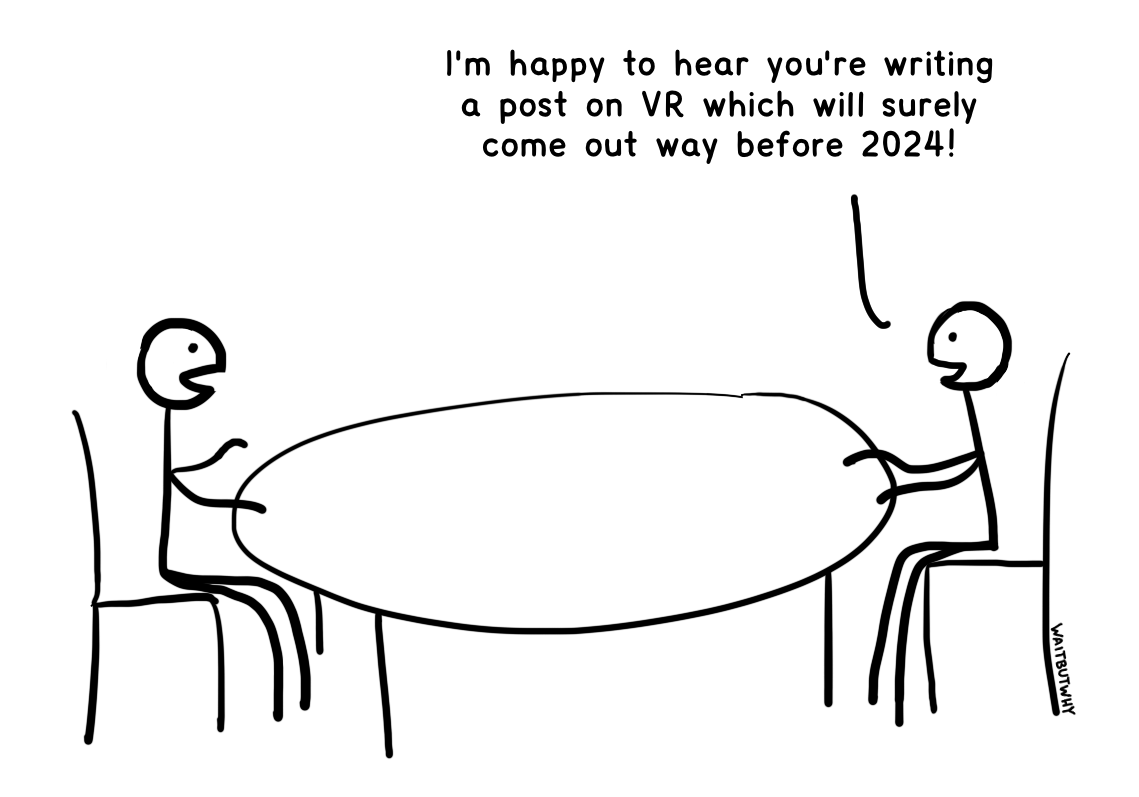
Then two things happened:

  1. VR didn’t take over the world.
  2. I didn’t write a VR post because I fell into a six-year book hole instead.

From the bottom of my book hole, I kept following the story. At Facebook’s 2016 developer conference, Zuckerberg had demoed a new bleeding-edge kind of “standalone, inside out” headset. Up until then, there were two ways to do VR: The first was with a cheap headset, maybe using your phone as a screen, that could do primitive head-movement tracking but had no way to see the environment around you. The second was with external sensors on the walls and a headset that attached to a high-powered PC with a cord. “Standalone” meant the new headset would have the computer inside, with no need for a cable. “Inside out” meant the headset could see the room around you, so you didn’t need external sensors. In 2016, this was just a prototype. Three years later, Facebook launched Oculus Quest.

In 2020, standing around during Covid with my dick in my hand like everyone else, I got myself a Quest 2. It was amazing. I loved it. It was my daily post-writing reward activity. I made 3D art. I swam with whales. I went on cartoon vacations. I exercised by slashing music. I beat Trover.

Then, for some reason, I stopped. I can’t really explain why. I really loved being in the Quest 2. I recently dusted it off to give friends a demo and they were floored, reminding me how great it is. It just didn’t hook me. Maybe it was the solo aspect. I don’t have friends who do VR so there’s no one else to play with. Maybe it’s the friction. It’s minor, but charging the headset, putting it on, and creating a boundary1 is still a lot more friction than picking up my phone. Maybe my delight relied more on novelty than I realized.

It’s not just me. VR blows everyone away when they try it, but it seems to have a hard time hooking people for the long run. After a major wave of hype in the mid-2010s, VR receded into the land of subcultures.

And the question is: Is there some fatal flaw to the concept of VR that will always prevent it from achieving mass adoption? Or are we some tipping point away from VR exploding into the stratosphere like the computer and smartphone?

Enter Apple

Everyone remembers where they were when they learned that JFK was shot, a man had landed on the moon, or airplanes had flown into the Twin Towers. I remember where I was when I saw Steve Jobs unveil the first iPhone.

I didn’t always like Apple. My family’s first computer was an Apple 2GS. But then, like many early Apple computer users, I became a PC person. I used an IBM ThinkPad in college and thought Apple people were annoying.

Then Steve Jobs came back to Apple and started Making Apple Great Again. My post-college music composing path forced me to get a 2004 PowerBook G4. After getting used to the interface (why the fuck is there no start button?), I realized that Macs were amazing, and I’ve been an annoying Apple person ever since. But it wasn’t until 2007 that I became a fanboy.

In the presentation, when Jobs did the world’s first “swipe to unlock,” the audience made an audible gasp. A minute later, he brought up a list of artists in the phone’s “iPod” app and asked, “Well, how do I scroll through my list of artists? I just take my finger and scroll.” Another audible gasp. It’s weird that something so normal today was jaw-dropping 17 years ago.

The feeling I had watching that presentation had happened before. I felt it when I was five years old and tried Nintendo for the first time at a friend’s house (I can make something on the TV move by clicking this button??). I felt it in the early ‘90s when my friend showed me how to send an email (You can type something on your computer, hit a button, and it shows up on mine??). I felt it the first time I test-drove a Tesla (Why is this car accelerating so futuristically?).

I’ve learned to see a lot of meaning in these holy shit moments. In most cases, they’ve been followed by an entirely new industry sweeping the world—like the smartphone, video game, internet, and electric car revolutions.

In June 2023, Apple announced the VR—sorry, spatial computingheadset that had been long rumored: the Vision Pro.

I watched the presentation, but it wasn’t quite like my experience in 2007. First, I had gotten excited about VR multiple times in the past and ended up disappointed. Second, unlike demoing an iPhone, watching a VR demo on a 2D screen just doesn’t show you what it’s actually like. Oh, also, it was $3,500. I happily shelled out $600 for the first iPhone. But $3,500? For a V1 product that will get way better (and cheaper) in the next few years? When I already have a Meta Quest? Nah. I might be a fanboy but I’m not a chump. It was the obvious grown-up decision to wait it out. Then I ordered one in the first minute after preorders started.

This Monday morning, I went to the Apple Store to put the Vision Pro on my chump face for the first time. The staff member guided me through a demo. And there it was: the holy shit moment.

But it was a holy shit moment with an asterisk. I had experienced full holy shit moments both in 1990 and in 2016 with VR, and these were the notable exceptions to the “holy shit moments are a surefire omen of an industry about to blow up” rule. Was this time different or would history repeat itself?

What I did know was that it was finally time to write a VR post. I wanted to post this week while everyone was hyped up about the Vision Pro. But I didn’t want to write about it before I had used it a lot, so I could experience not only the honeymoon phase but also what it was like to get thoroughly sick of it.

The plan was clear. I went home, told my wife that I would be deeply ignoring her and our baby for the week, and spent twelve hours a day in the headset for four straight days. I’m writing this on Thursday afternoon, having already logged over forty hours. Here are my thoughts.

Vision Pro, V1

There are three elements of any VR system: hardware, operating system, and applications. Let’s talk about each.

Hardware

Apple Vision Pro (AVP)1 is heavy—a decent amount heavier (650 grams) than Meta’s Quest 3 (515 grams). It comes with a fancy band that goes on easily and you tighten with a little knob. It’s awesome. For 12 minutes. Then it started killing my face. With 3,500 regrets, I switched to the other band it comes with, which includes a loop that goes over the top of your head, and thank god for that because it was way better—so good that I am shocked to say that even at the end of a full day wearing it, I didn’t feel a euphoric “ahhh” relief taking it off. At least right now, it seems only a little more uncomfortable than wearing over-ear headphones for long periods of time. This might not apply to everyone, but I have not felt nauseous once while wearing it.

That doesn’t mean there’s nothing that sucks about wearing it. The “field of view” isn’t great, meaning there are thick black walls where your peripheral vision is supposed to be, which is a bummer. I can’t imagine it’s great for your eyes. And there’s no way around the fact that you feel like an asshole when other people are in the room.

There’s an external battery pack that connects to the headset with a cord and typically lives in my pocket. The battery lasts about three hours, but you can plug in the battery to make it last forever, like a computer if the battery only lasted for three hours. (You’re often using it in conjunction with your computer, which makes it a non-issue because you can plug the battery into the computer.)

When you put the headset on, it does the AVP version of Face ID: scanning your irises. This is seamless and very futuristic. Then, you see exactly what you saw before putting the headset on. Lots of reviewers have marveled over AVP’s “pass-through” capabilities, and the second I put it on, I understood why. While it’s not perfect, it’s almost like you’re wearing a transparent snorkeling mask. The headset is in fact opaque—cameras on the outside transmit the world onto screens on the inside. But the screens are so good and the latency so low that it really seems transparent. Then there’s the much less successful attempt to make it look transparent from the outside as well, using cameras on the inside to broadcast your eyes onto the front of the headset. The goal is that if you’re talking to someone while wearing the headset, it feels to both people like you’re wearing a transparent snorkeling mask. But at least in V1, the eyes don’t show up nearly as well as advertised.

The internal screens save energy by doing something clever called “foveated rendering”—i.e. only putting the exact place you’re looking in perfect focus while making the rest of the view lower-res. This is what your actual eyes do, which is why your peripheral vision is blurry. If you watch this viewcast I made, you’ll see that most of it is blurry (the sharp part was where I happened to be looking while taking it)—but as the person in the headset, I only ever saw perfect sharpness.

The way Vision Pro does audio is also cool. There have always been two sound options for me while on my phone or computer: play from the speaker and everyone can hear it or put on headphones and no one can hear it. AVP speakers are somewhere in between. The speakers (which sound great) are small and right above your ears, and while people right next to you can hear what you’re hearing, people in the next room cannot. So in a coffee shop or on an airplane, you still need headphones, but I do a lot of my work in an office in our house with the door open, and it’s been nice to work both without headphones and without bothering anyone in the other room.

Operating System

This was the biggest holy shit of my holy shit moment. Apple is the king of simple intuitive interfaces. Part of what drew those gasps in 2007 was how natural the iPhone’s interface was. You scrolled down by pushing the page up, just like you would in real life. You zoomed by pinching with two fingers. It seemed like magic. AVP’s interface is gaspworthy for the same reason. The main gesture is what I’ve been calling the “eye pinch.”

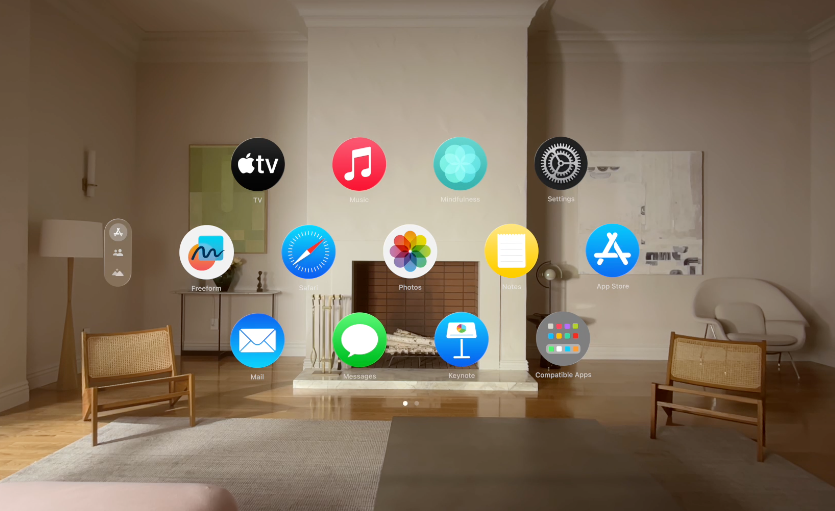
When you press the button at the top of the headset, your apps come up, floating in the room in front of you, looking as real as any other object in the room. They’re fixed in space. You can walk right up to them, and the detail is amazing.2

Vision Pro’s eye tracking is outrageously good. It knows precisely where you’re looking. So all you do to select an app is look at it and tap your thumb and index finger together. Your hand doesn’t need to move up to do this, just somewhere the headset can see it. Watching the ads, it seemed like this might be annoying to do, but it’s every bit as easy and intuitive as opening an app on a smartphone.

No matter what you’re doing, the eye pinch is the equivalent of touching a finger to a smartphone screen. To scroll, look anywhere in the window, pinch, and move your hand up. To move a window, look at the little bar below the window, pinch, and move it where you want to. To resize the window, look at the window’s corner, pinch, and resize.

As John Gruber put it in his review:

The fundamental interaction model in VisionOS feels like it will be copied by all future VR/AR headsets, in the same way that all desktop computers work like the Mac, and all phones and tablets now work like the iPhone. And when that happens, some will argue that of course they all work that way, because how else could they work? But personal computers didn’t have point-and-click GUIs before the Mac, and phones didn’t have “it’s all just a big touchscreen” interfaces before the iPhone. No other headset today has a “just look at a target, and tap your finger and thumb” interface today. I suspect in a few years they all will.

Then there’s the fact that everything you see in front of you is available desktop to work with. On my computer, I’m used to my applications being stacked, and I toggle between them. Or maybe I put a few vertical windows side by side. In AVP, I can put one eight-foot window in front of me, two more on either side of it, and a couple more above them in the sky. Then, if I get up to go to the other room, the windows all stay exactly where they are, waiting for me to come back. If I want to switch work spots, I just hold the headset button and the whole configuration jumps to the new location. This is all way cooler than I’m making it sound, so I made a video to show you how it works:

One thing you’ll notice in the video is that I routinely spin the digital crown on the headset to slide between being entirely in reality, partially in reality, and entirely in a virtual landscape. This is ridiculously fun to do. And it’s a general reminder that AR and VR2 being separate categories is a thing of the past. In the Vision Pro, the Quest 3, and any future headset, you can be 100% in the real world (when there’s nothing on the screen and it seems like you’re wearing a snorkeling mask), you can be mostly in the real world except there’s a virtual game board on your kitchen table or a little virtual butterfly fluttering around. You can be halfway between reality and virtual when, say, portals open up in the walls around you during a game. Or you can go full virtual.

Apps

There are many categories of spatial computing apps—productivity, entertainment, social, gaming, creative, fitness—and for most of them today, you’ll need a Meta Quest or some other non-Apple headset. There are a small handful of astounding apps for AVP, but they’re more a sampling of what’s possible than an actual app store.

The most “you can absolutely not do this anywhere but a VR headset” thing I did was their little taster menu of immersive entertainment. Entertainment on a headset runs on a spectrum of immersion. The least immersive is watching a normal movie on a massive screen in a virtual space like the moon or a giant theater. Those movies you missed that everyone says are best seen on the big screen—you can see those on a big screen now.

Next are movies that are framed in a normal rectangle, but they’re 3D looking—like when we used to wear those stupid paper glasses but much, much better. Sometimes, these surprise you when something comes out of the screen to fly through the air or stand on the floor between you and the screen. The AVR comes with one of these—“Encounter Dinosaurs”—and it’s delightful.

Finally, there’s full immersion, where the scene entirely surrounds you and you actually feel like you’re there. These are better described as “experiences” than “entertainment.” I saw rhinos up close in person last year. Then, this week, I did one of the Vision Pro experiences that’s an up-close hang with rhinos. These two experiences were very similar. Another experience lets you sit in on an Alicia Keys rehearsal where she sings some songs standing two feet away from you. You can watch her for a while, then look over at what the drummer or keyboardist is doing for a while—just like you would if you were actually there.

Photos and videos are also cool. When you take a panoramic photo, you sweep your phone around in a C-shaped arc—but on a flat phone screen, the result is a flat photo. In AVP, panos are C-shaped, like the photo you actually took. The C wraps around you, which I quickly learned brings the memory back way better than the flat version. You can also turn the headset into a camera and record photos and videos, both of which are immersive. When you later view them in the headset, they’re 3D, putting you right back into the actual scene.

Then there’s the infamous Vision Pro avatars. You get one of these by flipping the headset around and letting it take pictures of you from different angles. Then when you FaceTime someone, your avatar mimics whatever facial expressions you’re making. Here’s mine:

The first person I tested it out on was my wife, who immediately gasped in horror, saying I had “little uncanny valley snake eyes rolling around in my skull,” whatever the fuck that means.

The uncanny valley she’s upset about is this:3

The idea is that we like faces that are somewhat humanlike, and we like faces that are totally humanlike, but we hate faces that are almost-but-not-totally humanlike. Faces that fall just short of being human give us the collective willies.

Avatars used to suck. Then they got better. Now they’ve gotten so good they’ve plunged into the uncanny valley. This was always gonna happen at some point on the road to perfect avatars and that time is now.

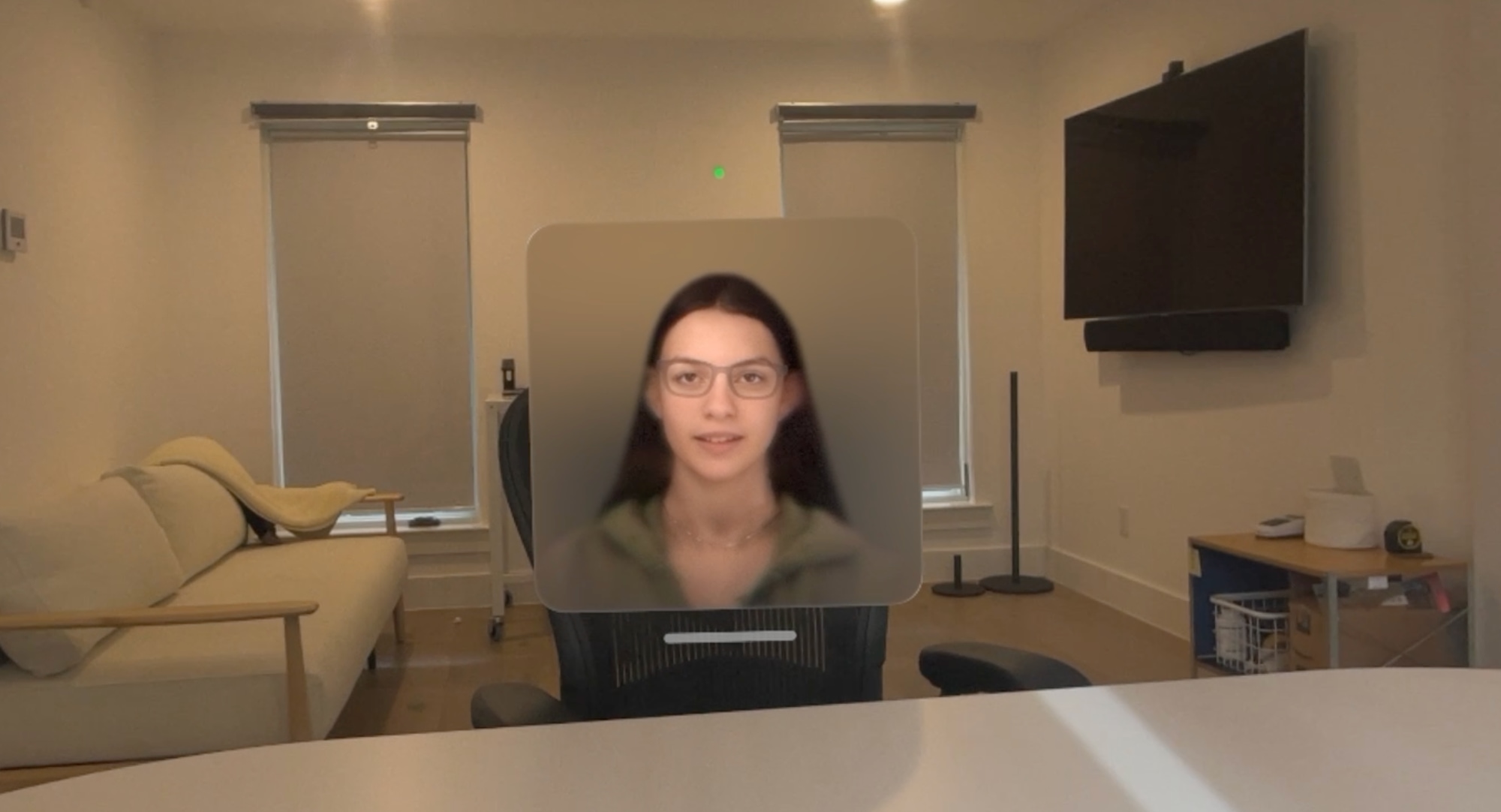
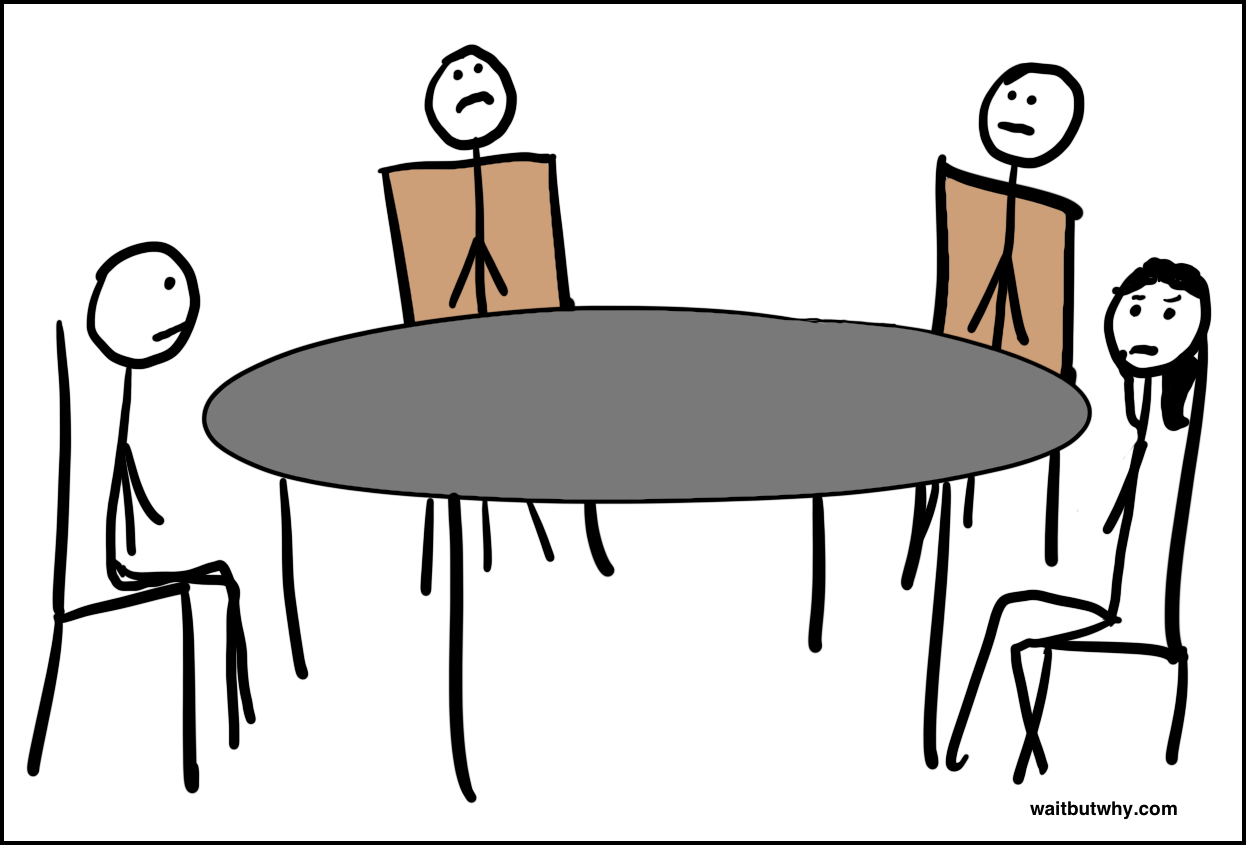
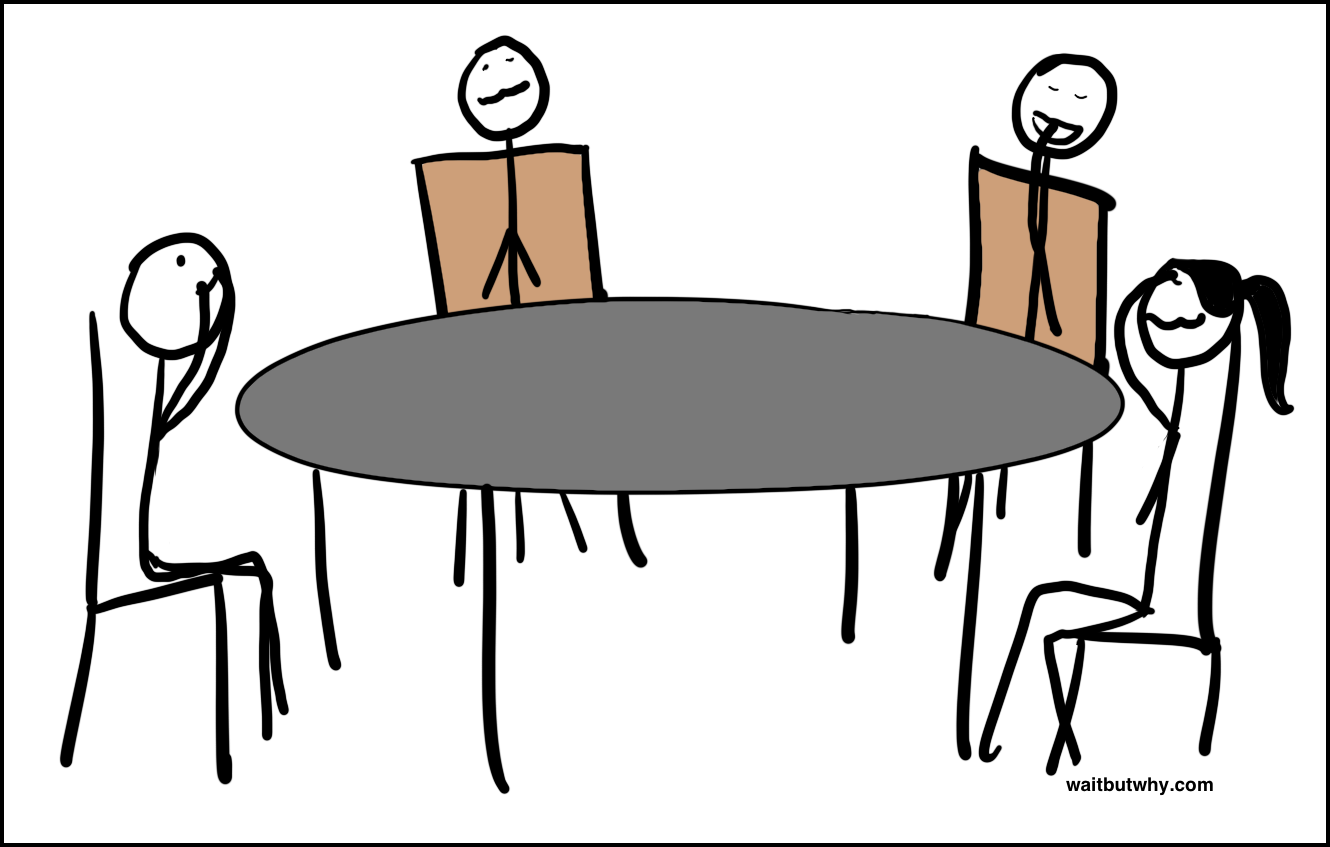
To test it out for myself, I FaceTimed my friend Jules Terpak, who also has a Vision Pro. First I put her across from me at this table while we sat around with each other’s uncanny valley faces for a few minutes.

One very cool thing is that when I moved her window to a different seat at the table, her voice shifted locations to that spot. We concluded that this activity was not actually an upgrade over FaceTime, but that if there were more than two people, it could feel like everyone was sitting around a table together, which would be better than talking to a group FaceTime or Zoom.

Then we shifted locations to Mount Hood.

This felt more like we were actually hanging out somewhere, which is an effect you can’t get on FaceTime.

When we started going into apps together, it felt even more like we were actually doing an activity together, in a way you normally can’t do without being in person.

It’s very crude right now, but it’s a primitive version of something we’ll probably all be doing constantly in the 2030s. It’s the next step in a centuries-long human mission to conquer long-distance. First there were letters, then phone calls, then mobile phones3 and video calls. The next step is VR hangouts.

By far the thing I spent the most time doing in the Vision Pro was exactly what I normally do, but the AVP version. When you’re sitting down in front of your computer while wearing the headset, you can open your computer screen as a giant virtual window (which you still control with your normal keyboard and trackpad). Whatever screen you’re used to working on is now much, much bigger. It’s also much more mobile. I don’t usually work on the couch because I prefer my big monitor over my laptop screen. This week, I spent a lot of time working on my couch on a 100-inch monitor. I don’t normally work lying flat in bed because the laptop screen isn’t directly above me. This week I did, putting the screen up on the ceiling. I did some work outside on the porch and some more under a tree. Sometimes I saw the room around me, only with a big screen floating in it. Other times, I went fully immersive, writing on a mountain top, a sand dune, or the moon. And as I mentioned at the beginning of the post, I’m currently using the AVP in a coffee shop, which is officially embarrassing.

For some odd reason, you can’t open multiple desktops (yet), but you can open some of the things on your desktop as their own apps in separate windows. There’s an AVP iMessage app, so I closed iMessage on my desktop and opened it in an adjacent window. I often remotely cowork with Alicia (WBW’s Manager of Lots of Things), putting her in a little window in the corner of my screen. Now, she’s in her own window. If I’m willing to bite the bullet and switch from Chrome to Safari, I can pull my research and web browsing off the desktop too. The end result is that a single small, immobile computer screen has been replaced with a giant mosaic of screens, for the small price of having a snorkeling mask on my face all day. It kind of feels like you stepped into your computer screen, into the beautiful wallpaper landscape, amongst the windows. Very surreal. I wrote this entire post in the headset and have found myself enjoying writing more—and being more focused—than normal.

My overall feelings

The best way I can describe how I feel about the Vision Pro is a strange combination of utterly thunderstruck and mildly underwhelmed.

The magical interface, the giant screens, the immersive experiences—they’re just unfathomably cool and awe-inspiring. It feels like a sneak peek at the 2030s.

But after a couple of days, I found myself thinking, “Is that…it?” I had done the small handful of immersive experiences, played some of the small selection of games, looked at a bunch of my panoramic photos, and tried avatar FaceTime—and at the moment, there’s just not that much else to do in the Vision Pro.

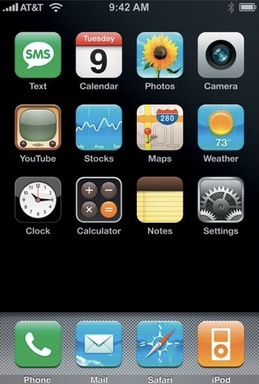
The first iPhone left me feeling the same combination of blown away and bored. The phone and I had a torrid honeymoon, but after the novelty of the interface wore off, all it had to offer was the same 16 practical apps.

There was no app store yet, it dropped calls constantly, and the cellular internet (which you couldn’t use while on a call) was painfully slow. The iPhone wasn’t a world-changing device yet. It was the seed from which a world-changing device would grow.

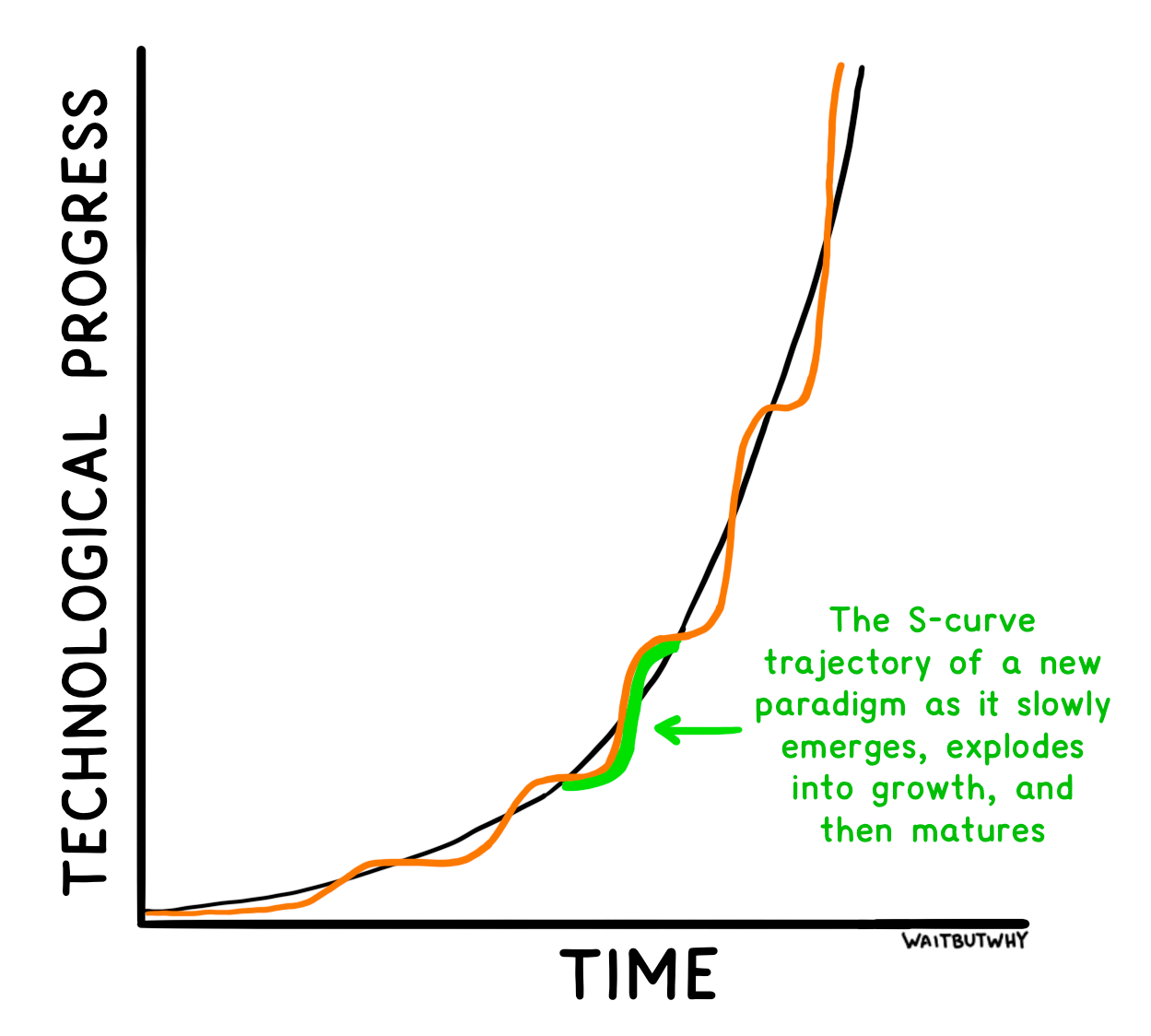
If you zoom out on a story of technology, you usually see a big exponential curve.

But if you look at the curve up close, you see that it’s wavy, made of S-curves.

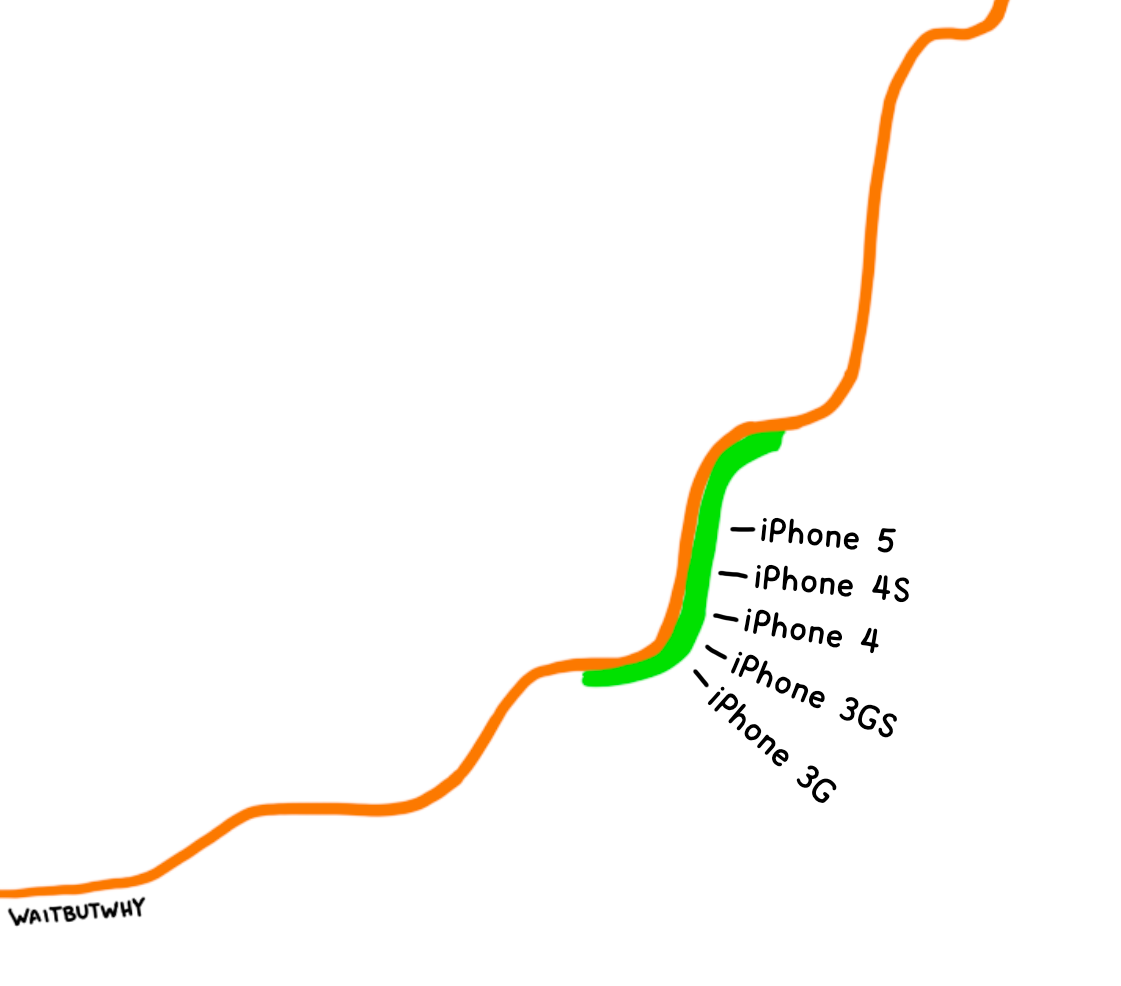
The first iPhone was such a big deal because it launched a new S. Investors had a new place to pour their money. Developers had a new place to pour their efforts. Creators had a new place to pour their talents. As millions of human hours worked on the collective human project, the next five years were a whirlwind of innovation and excitement. Apple’s keynotes became a must-watch for anyone interested in tech, as each jump between the iPhone 1 > 3G > 3GS > 4 > 4S > 5 was a major leap in hardware and software. It was the steep part of the S.

Then, the keynotes got boring. The changes were incremental. Apple stopped innovating and started refining. This coincided with Tim Cook taking over, but it isn’t his fault. The steep part of the S-curve doesn’t go on forever, and companies often reap the biggest rewards in the boring, top part of the S once the industry matures.

Maybe the reason VR has been slow to take off isn’t because there’s something fundamentally wrong with VR. Maybe it’s because, for the last decade, we’ve been working our way through the very early part of the VR S-curve—the slow part where foundational technology is researched and built. My Vision Pro is highly imperfect—overpriced, heavy, slightly glitchy, very limited, creepy-avatared—because that’s exactly what products are like at the bottom of the S. Consumer products aren’t ready for mass adoption during this stage. But it’s the breakthroughs made during these years that set the stage for the explosive exponential phase of the curve.

The lesson from past VR hype cycles is to temper expectations. The VR S-Curve explosion may be many years away or never come at all. But the lesson from past Apple launches is don’t bet against Apple, and Apple’s bet is that the Vision Pro could be a seed like the first iPhone—a platform for innovation that kicks a new S-curve into high gear.4

Vision Pro, V2 – V10

For someone to regularly use a piece of technology, the benefits have to outweigh the costs. Right now, the Vision Pro benefits are probably less than the costs.

I’ve already paid for mine, which removes one of the costs, and it’s still a question to what extent I’ll choose it over my computer in the long run. In that regard, the AVP might currently be more like those first cell phones you had to carry around with a briefcase than the first iPhone. Would you get a cell phone if the only way they came was attached a briefcase? Maybe, but it’s a close call.

For VR to achieve mass adoption, the good needs to be better and the bad needs to be less bad. It’s easy to imagine a pathway to both.

The operating system will get better each year. The two-finger pinch is currently the only gesture. More will be added. Eventually, there may be dozens of ways to make gestures with our fingers, each one a different command, like today’s keyboard shortcuts. When you spend ten minutes setting up an elaborate configuration of windows, you’ll be able to save (and share) it.

Avatars will go from uncanny valley to indistinguishable from your normal face. When you go into immersive environments, you can currently see only your hands. In the future, you’ll be able to identify other objects to remain visible (like a coffee mug). The environments around you will expand from the six current options to hundreds, including delightful fantasy worlds, and they’ll be interactive, allowing you to change things like the weather.

The hardware will get continually smaller and more comfortable. The resolution and frame rate will become as advanced as the latency. The battery will get way better. So will the look from the outside: to people in the room, the headset will come to look totally transparent. (My personal fantasy: The computer itself becomes detachable, allowing the headset to be a light, sleek, cool-looking visor. The computer and battery snap together into something the size of a smartphone. You’ll be able to snap it to the back of your visor if you don’t want the cord, but most people will prefer the weight to be somewhere other than their heads. The computer/battery rectangle will also have a screen and function as a smartphone for times when you want to do something with the visor off. The visor will fold neatly onto the rectangle to make the whole thing a single compact object.)

Finally, the amount of content, applications, and experiences will multiply by 1,000-fold, just like the apps in the app store did from 2008 to today. There will be a wide array of immersive games and entertainment. People will watch sports from one of many vantage points on the field, sideline, stands, or overhead—next to their friends, who will be able to look at each other and talk as well as if they were actually together in person. Pop stars will play in front of 50,000 people in person and 5 million people virtually. Fitness will become fun, interactive, and social. The best teachers and coaches will reach millions of people. Amazing AI teachers could reach billions. Distance will melt away, allowing people to spend high-quality time with their loved ones, no matter where they are. People who couldn’t dream of traveling the world today will get to enjoy vivid experiences anywhere on the globe. Of course, my silly 2024 imagination can’t scratch the surface any more than people in the briefcase phone days could have predicted Uber, TikTok, or Tinder.

Over time, the price will come down, with some companies making headsets dirt cheap the way they have for smartphones today. As the value proposition gets better and better, more people will have them, enhancing the social component and eradicating any stigma. Mass adoption seems like a very real future possibility.

I know what many of you are thinking: A world where everyone is in VR headsets (or visors, or glasses, or contact lenses) sounds dystopian and awful. And granted, this is coming from a guy who thought that world of glazed over people in moving chairs in Wall-E looked like a great place to live—but I’m excited.

K can I take this thing off my face now?

_______

What to read next:

A post about a technology even more intense than VR

A post about a different technology that’s also even more intense than VR

A post about a third technology that’s even more intense than VR

_______

If you like Wait But Why, sign up for our email list and we’ll send you new posts when they come out.

To support Wait But Why, visit our Patreon page.


  1. When you use the Quest 2 in a new setting, you have to manually show the headset the boundaries of the open space you’re going to be using. This isn’t needed in the more recent Quest 3, which automatically maps out the space.

  2. “Virtual Reality” has traditionally referred to totally immersive headset experiences. “Augmented Reality” is when you see the real world around you with virtual elements added in.

  3. We’re so used to mobile phones that we forget how insanely cool they are. I can pick up my rectangle and instantly contact you wherever you are on the planet.

  4. If this is what happens, unboxed first-generation Vision Pros will be auctioned for a ton of money in 2060. Just saying…


  1. Image source: Apple

  2. Image source: Apple

  3. Image source

The post All My Thoughts After 40 Hours in the Vision Pro appeared first on Wait But Why.

A Short History of My Last Six Years

By: Tim Urban
17 February 2023 at 16:46

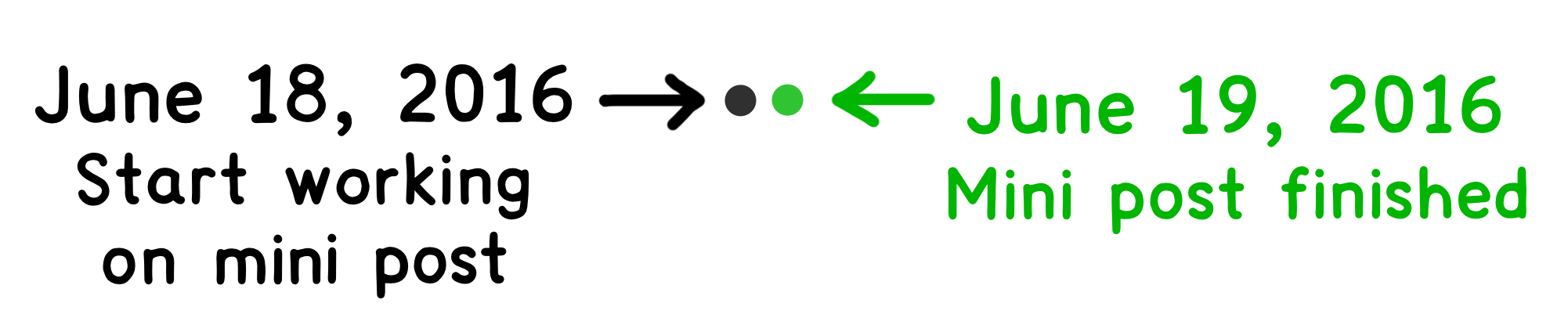
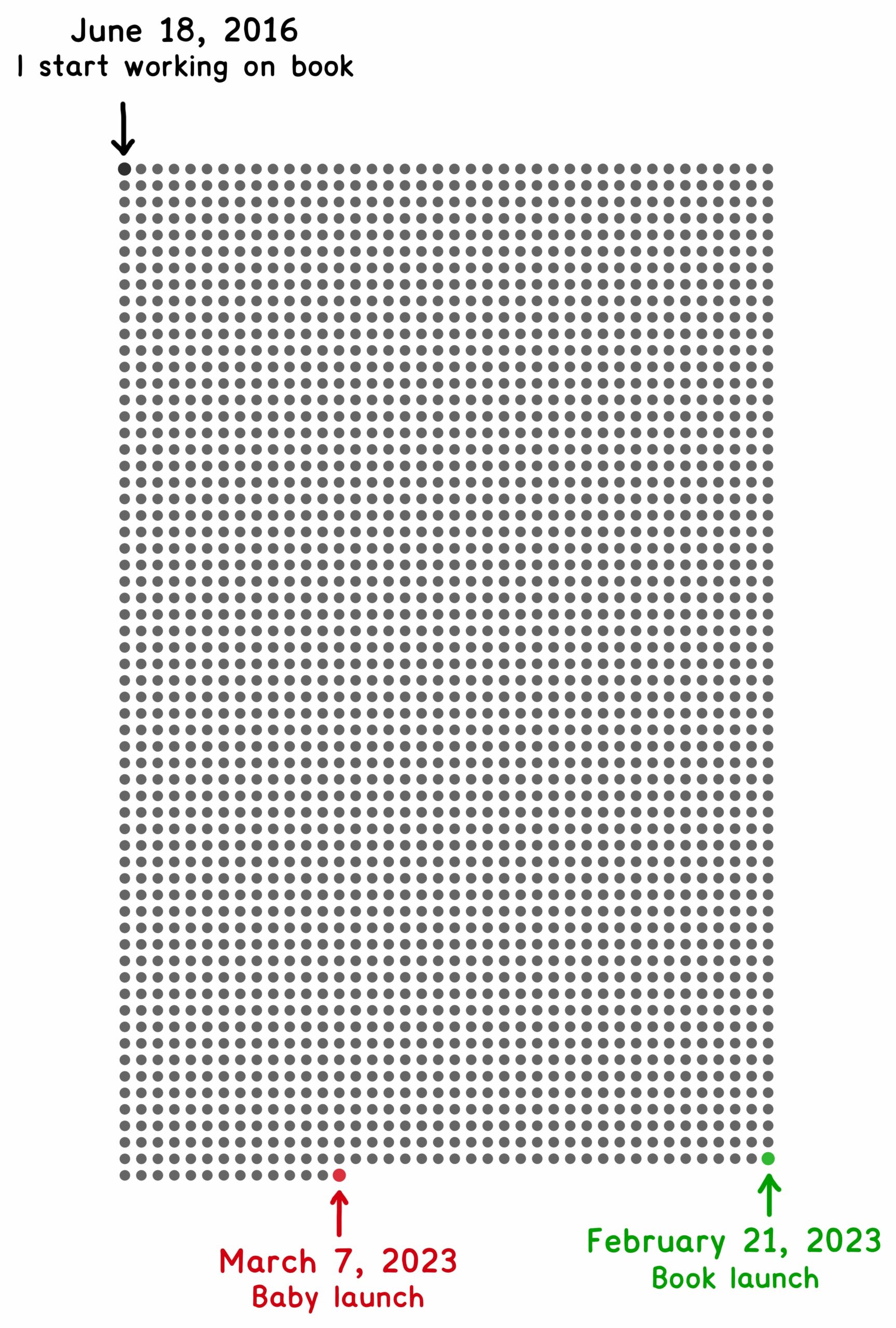
June 18, 2016. Obama was president, the Cavs were on their way to beating the Warriors in the NBA finals, Game of Thrones was still good, and I was 34 years old with my whole life ahead of me.

Wait But Why had been around for three years, a stretch during which I wrote about 100 blog posts on dozens of topics. On the afternoon of June 18, 2016, I was sitting on the couch engaging in a familiar ritual: looking through my list of future post ideas, trying to pick my next topic. And then I had a thought.

So many of the post ideas I was scanning through were about the future. Virtual reality. Artificial intelligence. Genetic engineering. Life extension. Multiplanetary expansion. But lately, it felt like there was a cloud hanging over all these topics.

My urge to write about the future comes from an excited optimism that’s fundamental to my personality. I believe at a deep level that the future is going to be an amazing, exhilarating ride, and nothing is more fun than learning about cutting edge developments that can offer clues into what magic might lie down the road.

But on June 18, 2016, I didn’t feel excitedly optimistic. There was a different feel to the world than there had been in my previous blogging years. Something seemed off about the society around me, like there had been a subtle, foreboding shift in the balance between reason and madness. It felt like we were losing our grip on something important.

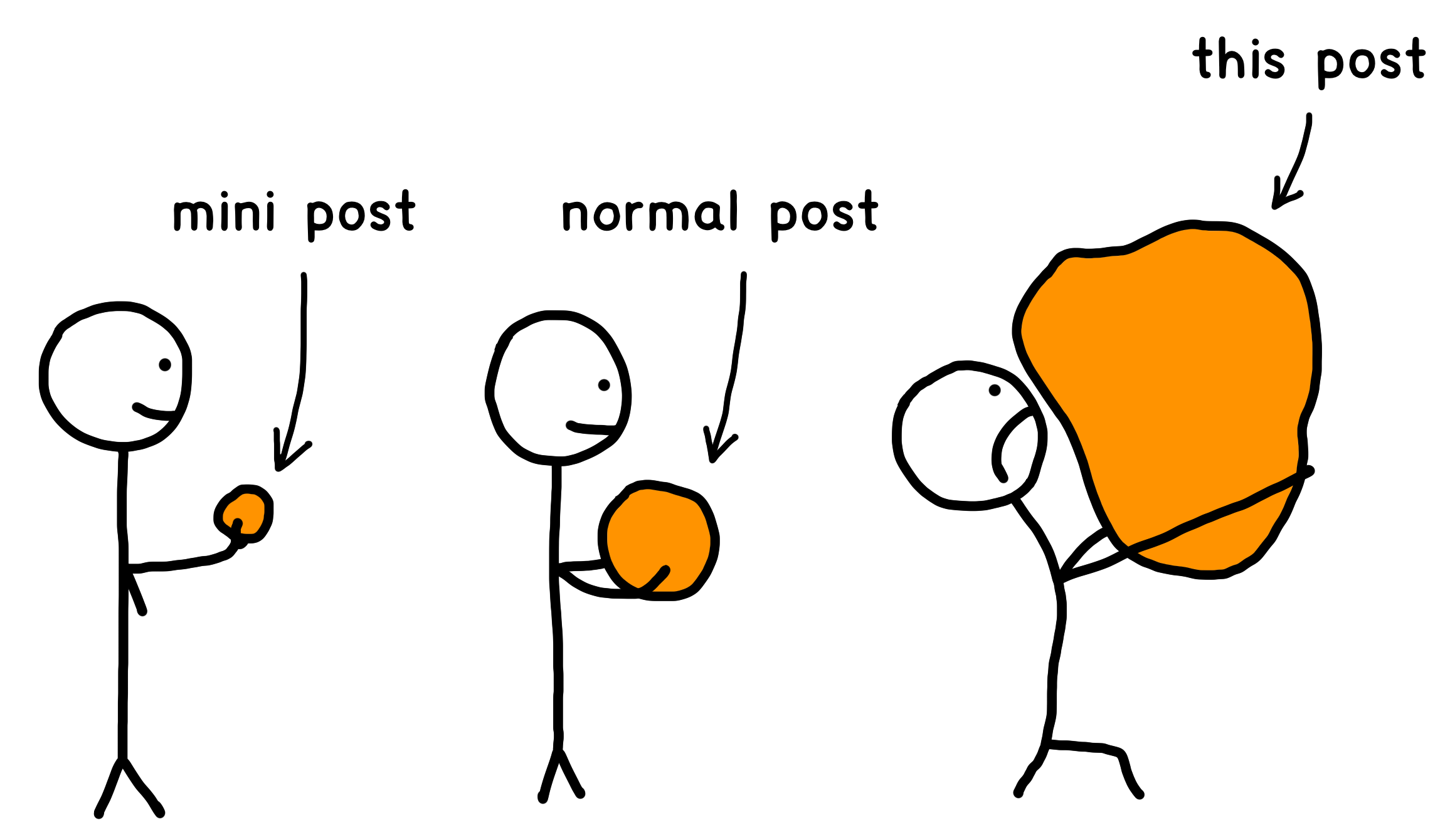
The fun thing about being a blogger is you can write about whatever the fuck you want. And a good compass for me had always been that if something was incessantly on my mind, it was probably a good post topic. So I decided to write what I call a “mini post.”

Wait But Why articles are long, and they go deep. I bathe in the topic for a little while, dread writing it for a little while, then finally pump it out, draw the drawings, give it a read, and post. A mini-post is much chiller—I just open WordPress and type what’s on my mind, and post it.

So I opened WordPress to write a little post about that cloud I felt hovering over my other post topics. I’d knock out a draft tonight, give it a read tomorrow, and publish it.

But nothing came out. I didn’t know where to start.

There were a bunch of bad trends: Tribalism was flaring up everywhere, mass shaming campaigns were roaring back into fashion, politicians were increasingly clown-like, public discourse had become a battle of one-dimensional narratives. But why was all of this happening now? Was the problem related to social media? To politics or current events? Was it some broader cultural or psychological phenomenon?

I also noticed that I wasn’t feeling the normal confidence I felt when I started a new post. Something about this topic felt scary. I never felt scared to write about anything before. This fear of writing about this topic seemed like it was an important part of the topic.

Nope. Not a mini-post. I needed the full week for this one.

But a funny thing happened that week. I didn’t write anything. Instead, I started jotting down notes and ideas in a Text Edit document called “society” that quickly became long and messy. I abandoned that document and opened up “society 2” to give myself a fresh start. Soon there was a Society folder with seven note documents.

I could have just stopped there. Too big a topic, too out of my wheelhouse, too icky, too scary. An outline for a virtual reality post was sitting right there in my Future Posts folder waiting for me.

But I’m really, really bad with the sunk cost fallacy. I had already put so much time and thought in, and I couldn’t handle all of it being for nothing.

And so began the next six years of my life.

I wish I could say that I actively decided to put everything else aside and write a giant opus on the problems with my society. But it didn’t happen like that. If you asked me at any point over the past six years when I was gonna be done with my society post—and plenty of people did—the answer was always, “I’m finally getting close.” And I believed it every time. I fully believed, every time, that this thing was almost done. The delusion of a madman.

And the problem with this particular delusion is that it’s a perfect way to ruin your life. If I believed I was working on a six-year project, I’d have worked the project into my normal life. I’d get into a rhythm that would allow for a work-life balance. But when you think you’re at most a couple months from finishing a big project, it makes sense to put everything else on hold for just a little bit more until the project is done. I wasn’t someone who never made fun plans or who worked on every vacation or who took a lot of Vyvanse—I was someone who did those things just for right now, because I’m in crunch time on a big project. For six years.

In May of 2017, I asked my girlfriend to marry me. We had been dating since 2011. She had seen the whole Wait But Why journey up close and had now been living with “I’m almost done with this big project” Tim for a year. We set our wedding date for October of 2018. Thank god by then I’d be out of this pit and working on all kinds of other fun projects.

But instead of the project wrapping up, it just got bigger.

The topic had led me down dozens of totally different rabbit holes, and everything I read seemed relevant to it. I don’t like telling a partial story. Like I had in other posts, I was determined to tell the full, full story. If I noticed something in my reading or on social media or in the news that seemed like an important piece of the puzzle, it had to be incorporated. If that fucked up the current outline, then the outline would have to adapt.

The problem is that the outlines became ridiculous. I couldn’t keep it all in my head at once, so I made sub-outlines, and sub-sub-outlines. The Society folder now looked like this:

As 2017 became 2018, I decided that the wedding would be the hard deadline that I needed. My girlfriend had spent way too much time with an “I’m almost done with this massive post on society” boyfriend. She would have a much more pleasant husband.

I’m still not sure how I turned into a crazy person. The way to proceed was obvious. I should pick a piece of this albatross, throw the rest away, and focus in on it. Do what I had done for years—suck it up, get serious, knock something out, and move on with my life.

But I’m a nightmare of a perfectionist and knew that the ultimate prize was to figure out how to not focus in but capture it all in a single, overarching story. It all was one big story, and I wanted to tell it.

Wedding day came and went.

People in my life were worried about me. They tried encouraging me, shaming me, setting deadlines for me, reminding me that one post really shouldn’t take multiple years. Nothing seemed to help.

Finally, in mid-2019, I hatched a plan that would once and for all end this thing. Rather than post a gargantuan blog post, I’d make it a series. This would break it into parts, which is less daunting. Plus, I had learned that the adrenaline of knowing that my readers were only days away from seeing what I was working on was a huge motivator that I had been sorely missing.

I called it The Story of Us and in August of 2019, the first chapter went up. The whole thing would be 12 chapters, I decided, and even though the chapters got longer as they went, and the time between them expanded, it was finally happening—I was publishing the damn thing. The end was near.

Then came Chapter 11. The first 10 chapters had introduced the core framework of the series and talked broadly about the big picture of what I thought our problem was. In Chapter 11, I was going to dip into more controversial territory, looking at the past few years of news stories through the lens of the framework we had developed.

It turns out I had a lot more to say about what was going on around me than I had anticipated. Soon, my draft of Chapter 11 was longer than the first ten chapters combined. I have problems.

Now it was the middle of 2020. Covid was in full swing. Thousands of people were marching by my apartment in protest. It was a seismic year for American society. Everything I was writing about was happening, and rapidly evolving, literally outside my window. What I had written months earlier suddenly seemed stale. Also, Chapter 11 was over 100,000 words. Death.

It started to dawn on me that I really needed to just turn this into a book. Between the mountains of feedback I had gotten from readers and friends on The Story of Us and the mountains of new thoughts I had about all the recent developments in the world, I knew that there was one way to really bring the project from hell home: open a blank Microsoft Word document and write a newer, better, complete story, and do it in a book format that people could read more easily than a web page. Somewhere, a fairy died.

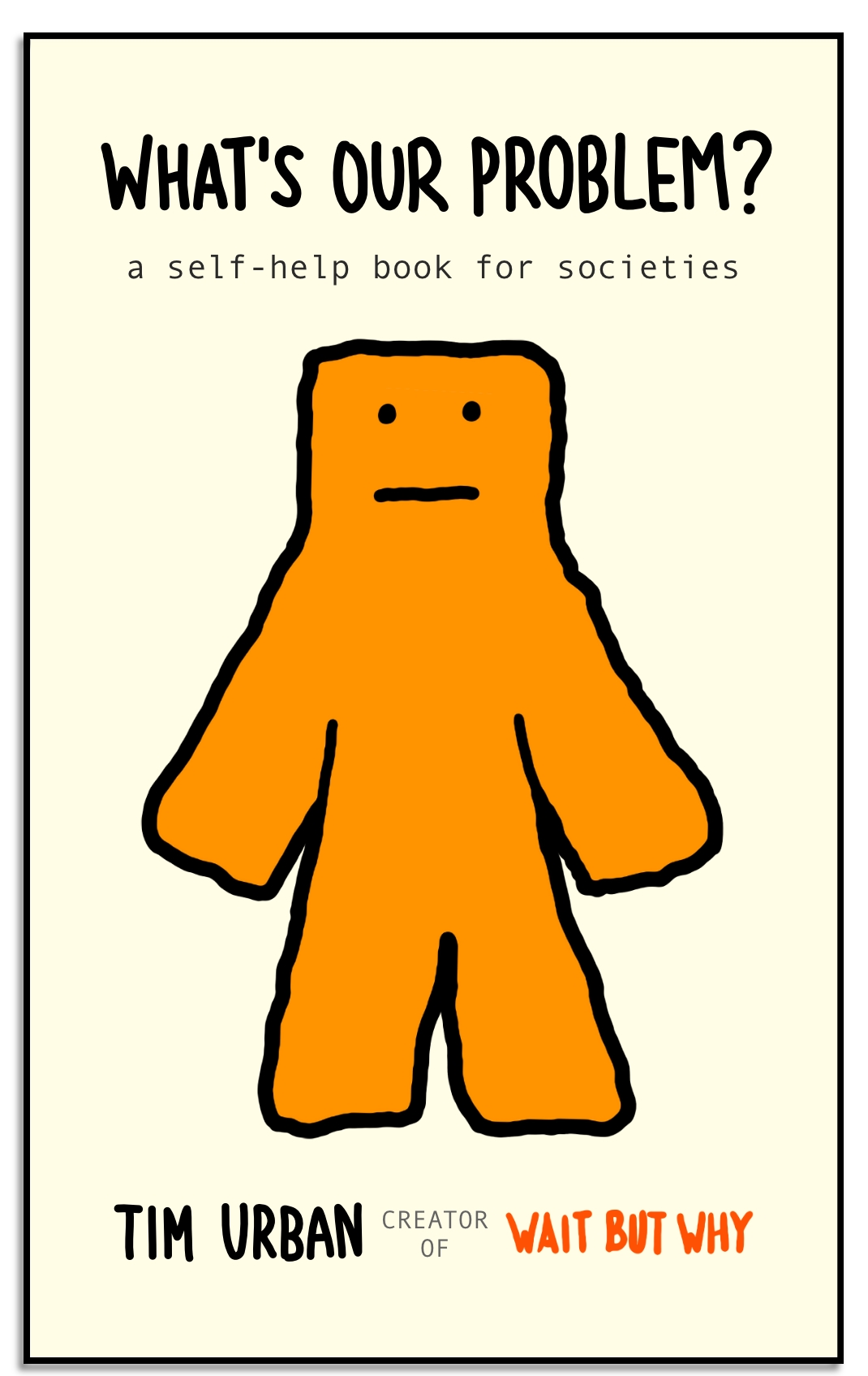
So I started writing the book. I’d call it the name it should have always been called: What’s Our Problem? I knew what I wanted to say. I just had to write it.

I finished V1 in December of 2021 and triumphantly tweeted about it.

Done! In a sense! It was 250,000 words, which is about 150,000 words too long. And missing most of the drawings. And I had a giant “ADD IN” document full of news stories which had happened in the year and a half since I started writing the book that would need to be incorporated.

It’s hard to cut writing. Perfectionism, sunk costs, etc. Procrastination abound. I would try to cut a section down, polish it off, and move on, but kept finding myself rewriting the section entirely. I was moving at a snail’s pace.

Then one day in June of 2022, my wife woke me up by handing me a positive pregnancy stick. It was a surreal, joyful moment. I’ve never been anyone’s dad before but always wanted to be. Then the thought hit me.

NOPE. 100% no. It could not happen. This baby could not enter a world where this project was still going on. Suddenly, an old friend entered the room.

The baby was due on March 7, 2023, so this book would be completely done by mid-February, period end of story.

V2 got finished (July 2022). Then V3 (September). Then V4 (December). Editors and fact-checkers and copy editors and ebook designers and audiobook engineers were hired. Alicia (Wait But Why’s Manager of Lots of Things, who had already put in thousands of hours helping with every element of the process), went into crazy crunch time mode. I sat in a booth for 45 hours reading the audiobook (January). The ebook was designed (February). The launch date was set.

It took 2,440 days, but my mini-post on society is done and coming out on Tuesday. Fuckin shit.

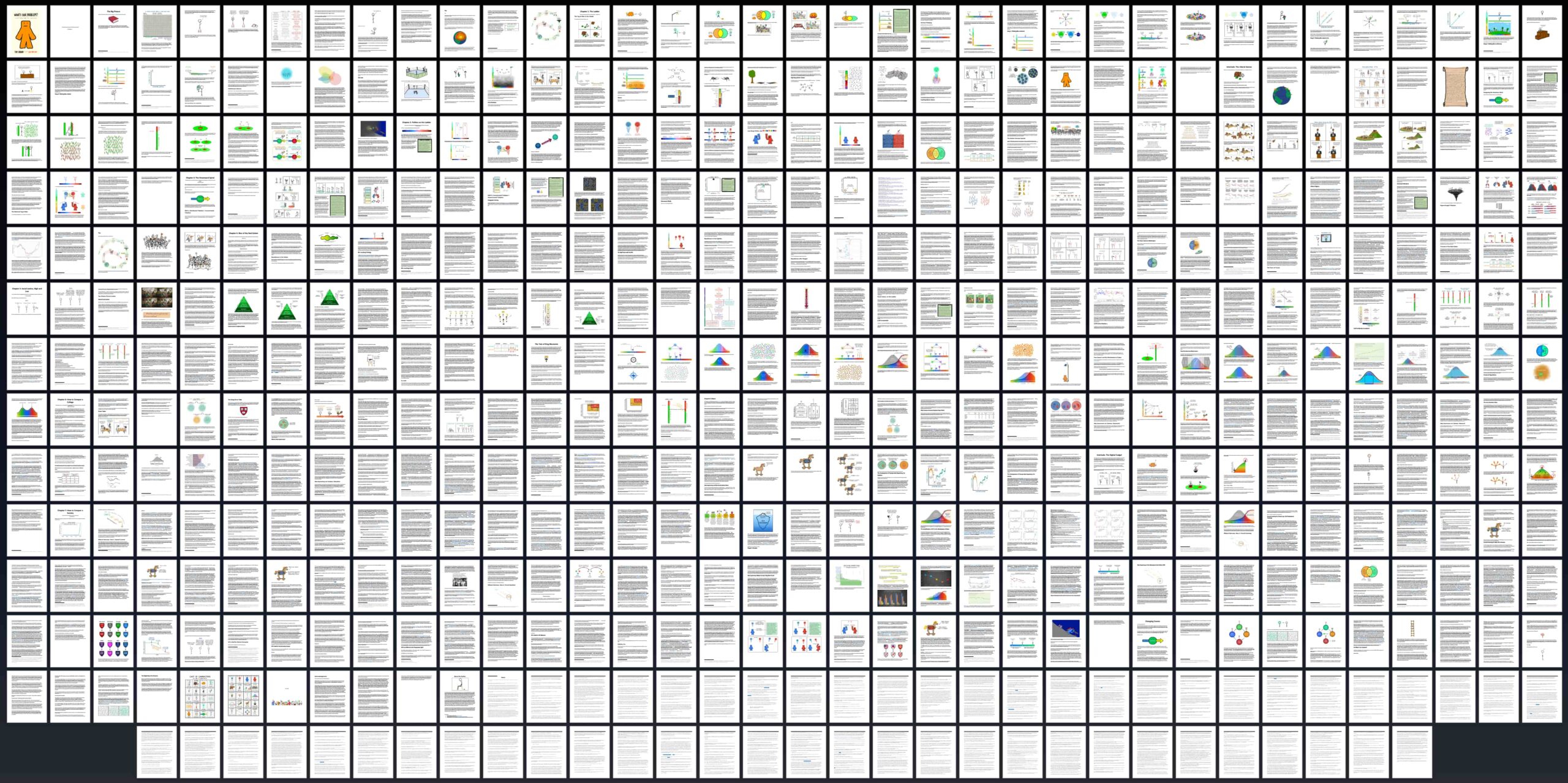
Here are the pages:

Some stats:

  • 121,000 words
  • 303 drawings
  • 11,081 documents in my Society folder
  • I’m 41
  • A condensed and re-written Story of Us makes up 25% of the book. The rest is all new.

This book is my best crack at explaining what I think is an existential risk to liberal societies and what I think we need to do to get to that awesome future I used to be so excited about. There are dozens of concepts in the book that serve as a kind of toolbox for understanding our societies, our group dynamics, and our own minds. I’m very proud of the final product and never want to have an experience like this again.

If you would like to take my last six years and put it into your brain, here are the different options (all available on Tuesday Feb 21):

Ebook: Available on most major platforms (you can also buy the EPUB directly). It looks best on color e-readers and tablets (especially on vertical scroll mode), but also fine on phones and black-and-white e-readers. The best ebook experience we’ve seen is Apple Books > iPad > sepia > vertical scroll. Available for preorder on Apple and Kindle – the rest are available on launch day, Feb 21.

Wait But Why: Without the limitations of the other formats, this is where the drawings can be displayed full-size, where footnotes can be interactive, etc. The downside here is that you can only read it on a tablet or phone, not an e-reader, and there’s no dark mode at the moment. Available here.

Click here to see how the book looks in different formats

Audiobook: Available on most major platforms (or you can buy the mp3 directly). Read painstakingly by me. I personally do most of my reading via audiobook, so I tried to make it the best possible experience. The obvious downside is that the book has 300+ visuals, so we made a webpage (and pdf) for audiobook listeners with the 46 most important drawings, numbered. When I get to that point in the reading, I say something like, “Go look at drawing number 24.” Available for preorder on Kobo and on other platforms (Audible, Apple, Spotify, and more) on launch day.

If you can’t afford it: I really want everyone who wants to read this book to be able to do so, so if you can’t afford to buy the book, email us at whatsourproblem@waitbutwhy.com and we’ll give you a code that lets you read it on WBW for free.

Print: There is not a print version, which I know will disappoint some people. There are a few reasons for this, but the biggest one is that printing this big full-color book would have delayed launch by many, many months, and fuck that. UPDATE (2024): The book is now available in print! The physical book is a very big, nice, pretty object, and the drawings look great. Available on Amazon, Barnes & Noble, and Bookshop.

Also, Idea Labs: A major theme in this book is how we can do better at having productive discussions about tough topics. So we’re planning to create virtual book clubs for anyone who is interested in discussing the book with other WBW readers. More on this soon, but if you’re interested in being part of a book club, enter your email address here.

So that’s the story with this book. Can’t wait to hear your thoughts. If you want to be notified on launch day and keep up with whatever else we work on in the future, make sure you’re on our email list.

___________

Another time I did something hard: Doing a TED Talk: The Full Story

The number of years this book took me: From 1,000,000 to Graham’s Number

If the news is making you scared about A) UFOs or B) AI

If you’d like to support Wait But Why, here’s our Patreon.

The post A Short History of My Last Six Years appeared first on Wait But Why.

Mailbag #2

By: Tim Urban
14 April 2021 at 12:41

Last month, I emailed readers announcing an upcoming mailbag post—the WBW post version of an AMA. 1,500 questions poured in—remarkably interesting, creative questions on a wide range of topics. I picked some for this round, and we’re keeping the rest in a database that I’ll go back to for future mailbags (mailbag@waitbutwhy.com is always open, so send questions anytime and we’ll add them to the list).

There’s a lot to cover, so let’s get going.

Question from my 7-year-old: How many germs would you have to put together to actually be able to see them? What would it look like?Kirsten, Zachary’s mum (Sydney, Australia)

You’re my kind of guy, Zachary. Let’s discuss.

There are a lot of germs out there. A smaller germ, like the virus that causes covid, is 120nm across. The smallest object we can see is about 0.1mm—about the width of a human hair. You’d have to line up about 800 coronaviruses to get to 0.1mm—but that would be a one-dimensional line way too thin to see. To actually see something, you’d have to give it some area and turn the 800-virus line into an 800 x 800 square. That clump of 640,000 viruses would be just big enough to see as a tiny speck.1 As for what it would look like, your guess is as good as mine Zachary.

I’m never good at stopping once I start on an exploration of size, and doing this answer got me googling all kinds of things.

Like how big all the bacteria in the human body would be if you clumped it all together. I had always heard the famous stat that there are 10 times as many bacteria in your body as human cells. It turns out that that’s been debunked. The real ratio is closer to 1:1, with both kinds of cells in the ballpark of 40 trillion in an adult human body.2

Anyway, the NIH estimates that all that bacteria adds up to only 0.3% of a human’s body mass. Zachary is 7, so let’s estimate his mass at 25 kg. That means the bacteria in his body adds up to 75 grams—about the weight of a plum. Assuming the density of Zachary’s bacteria is similar to the density of his body, that would make the bacteria ball about the size of a plum too.

This led me to the obvious next question: how big would all the bacteria on Earth be if you bunched them all together?3

Thankfully, University of Georgia microbiologist William Whitman has done the hard work of coming up with an estimate for the number of bacteria on Earth: 5 nonillion.

That’s 5,000,000,000,000,000,000,000,000,000,000.

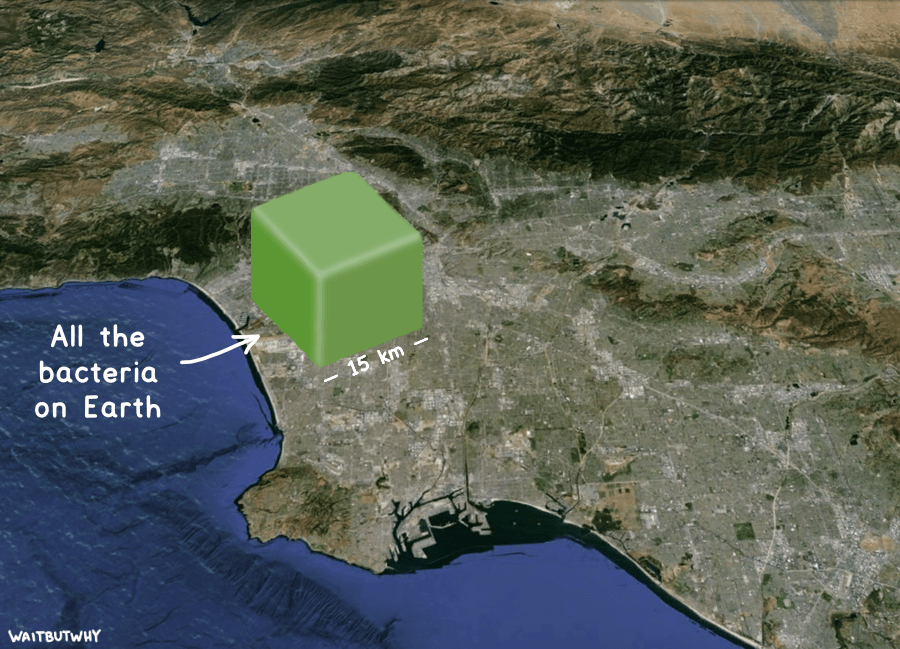
To couple that estimate with a wild estimate of our own, we can use the volume of an E. coli bacteria (.7µm3) and assume that’s somewhere around the average size of Earth bacteria. 5 nonillion x .7µm3 comes out to a cube with a base of about 15km (~9.5mi).

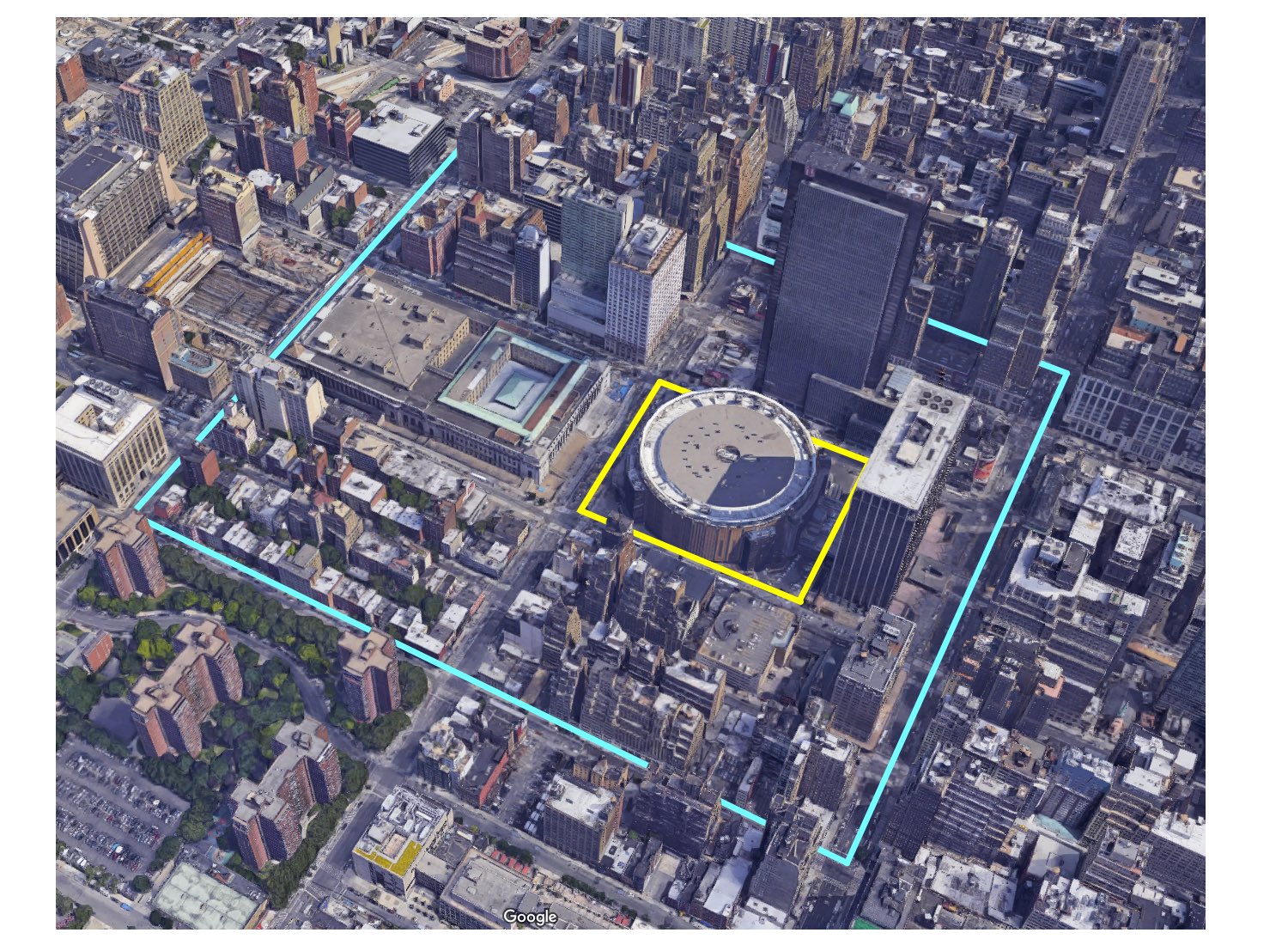
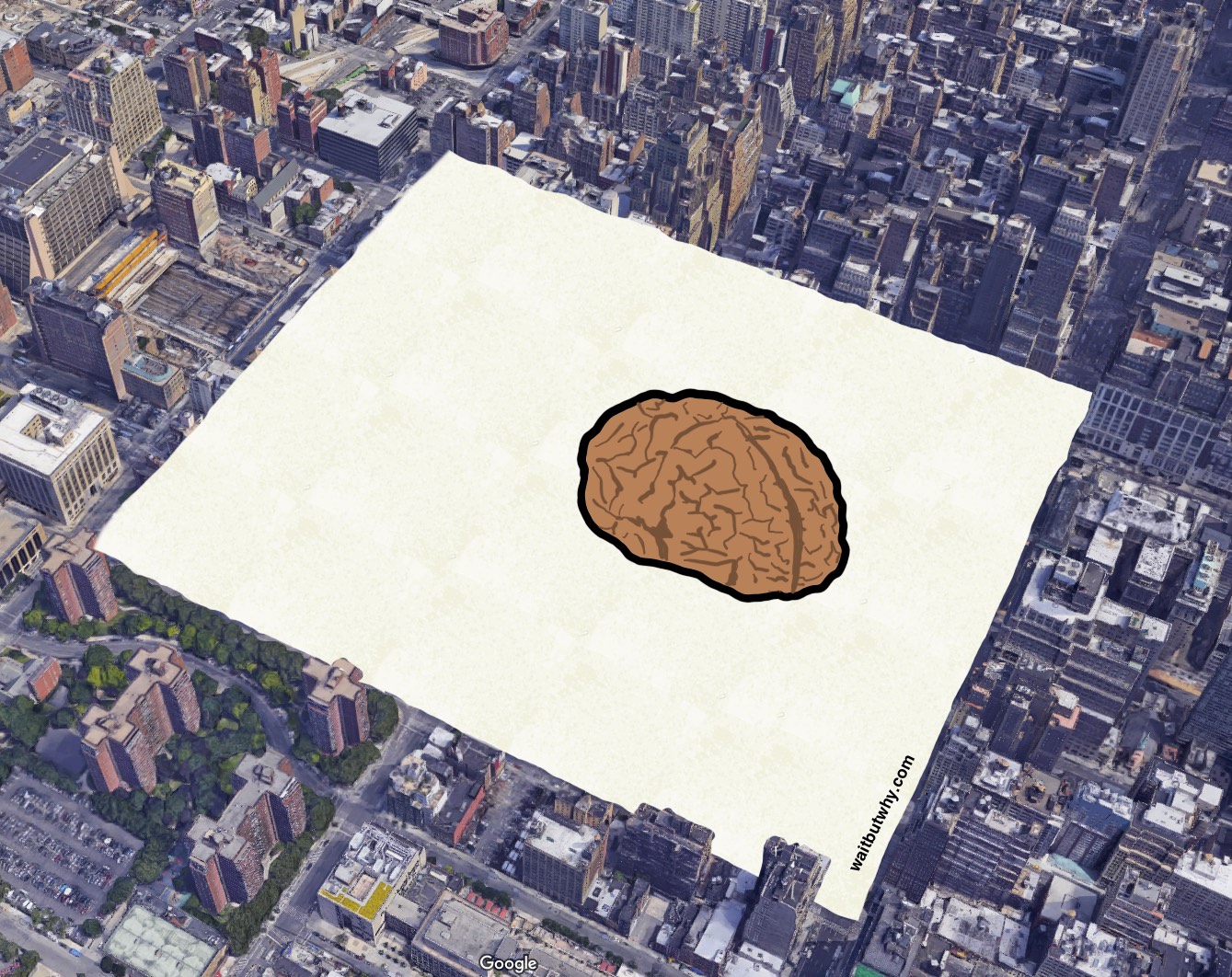
This massive cube of bacteria covers a large part of Los Angeles and rises higher than the cruising altitude of commercial airplanes. If you were on the ground, it would take a full day to walk around the cube, and it would be a bad experience because the whole day you’d be right next to a vile bacteria cube.

If we took a huge butter knife and smeared the cube out evenly on the Earth’s surface, it would cover the entire Earth with a layer of pure bacteria 7mm (1/4 inch) thick, and everything would be gross.

K let’s move on.

What do you think of scientists putting mini human brains in mice? Where do you think this kind of science could lead in the future? – Leah N. (Quincy, IL)

I have no idea what’s going on with this question but it’s now all I care about. I’m picturing a world with tiny field mice with human intelligence. They’d form tiny societies run by tiny iron-fisted mouse tyrants. They could have little academies and do research on mice-related things. They might organize a mouse Olympics that we could televise and bet on. Some people would befriend mice and some might even choose to get married to mice. I hope this is what you’re talking about Leah, and I refuse to look it up because I’m sure whatever you’re actually talking about will be a huge letdown.

Drugs: do you do them? What do you think of them? – Tom C. (Nottingham, UK)

Kind of what I think of cars. Cars can be incredibly useful, fun, and life-changing if you understand how cars work and know how to drive safely. If you don’t know anything about driving or you tend to drive recklessly, you’re probably not ready to use cars.

Why do we prefer to watch a film we haven’t watched before but we want to listen to songs that we have heard hundreds of times?Anastasia S. (Athens, Greece)

Many films are the most fun the first time because a part of our brains loses itself in the plot and actually experiences what the characters are experiencing, to an extent. Part of why that’s so fun is the uncertainty, which makes it like a real-life adventure. Once we know what’s going to happen, the experience is less exciting for the same reason an adventure would be less exciting if you already knew how everything was gonna play out.

A song works the opposite way. Not knowing where the song is going can be intellectually interesting, but what our brain really wants to do is mentally dance with the song, and it can’t do that if it doesn’t know the “steps.” That’s why a catchy song is only okay the first time but it can quickly become orgasmic after we hear it a few times and our brains get the hang of it. Once our brain memorizes a song, the song has a special pathway carved in our heads and it feels great to light that pathway up by hearing the song (and if we don’t give our brain the chance, it might just start lighting up the pathway itself, and the song gets “stuck in your head”).4

Back to films, the thing is, a film isn’t just a plot. It can also be a piece of art, which is why in some cases, we do like to watch films (or TV shows) repeatedly (I’ve seen The Shawshank Redemption, Back to the Future, Shutter Island, and The Office (UK) like 9 times each).

What age range do you currently think you’re most likely to die (disregarding cryonics)?

Multiple choice:

  1. 70–100
  2. 100–125
  3. 125–150
  4. 150–250
  5. 250+

– Sean M. (New Orleans, LA)

The pessimistic part of my brain says: A) 70–100. My grandparents lived to 84, 87, 91, and good old Nana is still going strong at 95.5 My lifestyle is not a big enough step above theirs, healthwise, to imagine that I’ll beat them out by very much. And sure, medicine is improving dramatically, but then I look at charts like this one (click for bigger view):1

As promising as that data is, we don’t seem to be getting too far with the 100+ thing. Even the most freak outliers don’t crack 120. The human body seems programmed to shut itself down somewhere around the century mark, if it hasn’t already. Clearly something other than the current type of healthcare advances will be needed to crack through the natural human lifespan ceiling—it’ll take some deeper recoding of the human genome.

But then the optimistic part of my brain imagines what it would be like to show George Washington around 2021 and watch him die of shock at how magical everything was, and it thinks about how the accelerating returns on progress mean that the world of 70- to 100-year-old me might be equally shocking to people today, and so it answers D) 150–250.

The pessimistic part of my brain, looking at reality, makes a sad face and pats the optimistic part of my brain on the head.

The optimistic part of my brain, remembering how bad humans are at intuitively understanding exponential growth, pats the pessimistic part of my brain on the head.

How do you fall asleep?Anastasia S. (Athens, Greece)

When I can’t fall asleep, it’s either because my mind is caught in an anxious loop of some kind or my phone is keeping me up. The surefire fix to the anxious loop issue is to distract my mind with something else.

But what that something else is is important. If I start texting or scrolling around social media or brainstorming / researching for work or playing an addictive iPhone game, that’ll just make me even less likely to sleep. Other activities, for whatever reason, seem to have the opposite effect and put me right to sleep. For me, what’s effective is reading in the dark on a Kindle on dark mode, listening to a podcast or audiobook,6 doing a crossword puzzle on my phone, or as a last resort, YouTube videos, which work for the same reason it’s so easy to fall asleep in front of the TV.

The problem with this is that most of these involve my phone, which also has all of those things that are great at keeping me up. Worse, when I wake up next to my phone, I inevitably start my day by getting sucked into inane phone stuff. This isn’t just a time-waster—the grown-up-ness with which I start my day usually sets the tone for the whole day. And the morning is often when some of the best insights pop up for me—if they have space to pop up. The phone kills that space.

So I came up with a little scheme. Which brings me to:

What is the best permanent lifestyle change you made in your life?Elmar S. (Munich, Germany)

I dug an old iPhone 6 out of my drawer (I had tried to trade it in but I botched something with the “activation lock” whatever the hell that is and Apple sent it back to me) and this became my bed phone. No SIM card, not signed into iCloud, no apps except Kindle, iBooks, Downcast (podcasts), NYT Crosswords, YouTube, and some practical ones (alarm, calendar, notes and voice recorder for those morning insights). Then I leave my real phone in a different room, as far away and inconveniently located as possible. This has been pretty groundbreaking for me. I find that I actually look forward to saying bye to my normal phone and transitioning to the bed phone stage of the night. Bed phone still has worlds of fun in it—just the healthy-for-night/morning kinds of fun.7

Do you have an inner monologue?Malaika D. (Groningen, The Netherlands)

I actually wanna talk about this. I kind of think I don’t have an inner monologue. I have certain moments when I’m actually talking to myself in my head, but I find that 90% of the time my head is up in the clouds (which is most of the time) I have a lot of thoughts going on but no specific words in my head. I can’t tell if that’s what everyone is like or if I’m weird. The reason I wonder about it is that when people explain why you should meditate, they say something like, “it’s important to quiet the constant ‘chatter’ in your head.” And I always wonder whether “chatter” is just the word they’re using for the constant stream of thoughts or if there is actually a voice to those thoughts in most people’s head but not mine. Someone tell me what’s up.

Anyway I get your bigger point, Malaika, and I’m with you, but I don’t have a good answer beyond something obvious like “try meditation!” So hopefully a commenter can tell us both how to fix ourselves.

What really makes you angry? Ingrid M.

  • When I’m late and a person in front of me is going really slowly at the cashier
  • When I’m late in an Uber and the driver makes a wrong turn
  • When I’m late at the airport with no margin for error and TSA decides it’s the perfect time to search my bag and there are two other bags that need to be searched in front of mine and no one is searching any of the bags because the woman who searches bags is doing something else
  • When I go to a Broadway show and look at the little slip of paper in the Playbill and the main character is replaced by an understudy
  • When anyone needs me to do something that involves printing something
  • Bluetooth connectivity difficulties
  • When I get a new bottle of liquid soap and I can’t get the nozzle to pop up and instead it just spins around infuriatingly
  • Any other kind of packaging that’s hard to open
  • When my packages get stolen from my shit-ass building lobby
  • When I’m sleeping somewhere either with no A/C or bad A/C and it’s like 78º all night and I sleep 2 hours
  • When some gem of a photo op presents itself with my dog or something on the street and my phone camera freezes on the blurred screen
  • When I finally select the flight I want on Kayak and I’m relieved I got a good price and I go to buy it and it takes me to the airline site where I fill everything out and click “purchase” and it comes back with a message that says “the flight you’ve selected is not available.”
  • When people disagree with me about politics and think they’re right
  • When I bought a tin of fancy salt and the fucking lid was impossible to get off and I finally got it to snap off and the salt went everywhere
  • When I go to a site and select a menu item and the site finishes loading and the page jumps up just as I click and I select the wrong item and then I press back and select again and the same thing happens
  • Obscure name clues in crossword puzzles
  • When my opponent opens up a huge spot in Words With Friends and my letters are awful
  • When I’m at a breakfast restaurant and ask for Tabasco Sauce and the waiter remembers to bring it 0 out of 100 times
  • When I’m watching something riveting on an airplane TV and the captain makes a long, drawn-out announcement
  • When my tortoise shits on the floor while I’m not in the room and then tramps through it and gets shit on every square inch of the apartment floor and 3 inches up every wall
  • How long it takes an iPhone to turn back on when you plug it back in after it dies 
  • When I’m watching a movie with someone and I’ve seen it and they haven’t and they talk or look at their phone during an important moment
  • Sandwiches or burgers with hard, thick bread
  • When I’m in the car with my sisters and they think it’s an okay thing to blast their inane songs
  • When an apartment building puts a sign up that says “Please keep noise down between 10pm and 7am” because no one cares about late-night people (early riser privilege!)
  • The 99-year-old technology at my mom’s house
  • Websites that won’t let you go back – you just keep hitting the “back” button and it keeps refreshing the current page
  • When I get delivery food that includes fries and instead of a little container of ketchup, they give me a bunch of tiny packets
  • When I ask someone for the address where I’m going and they tell me directions instead of just giving me the address to put in my phone
  • When I go on vacation with people who want to wake up early and fill the day with icky activities
  • Jeans with button flies

Are we bigger than we are small, or smaller than we are big?Jarhead (Toronto, Canada)

Biologically, we’re definitely bigger than we are small. A typical blue whale is about 15 times the length of a human and around 2,500 times the mass. A human compared to microbes is many orders of magnitude larger. We’re less big amongst mammals, but even there we’re bigger than we are small. A human is about 35 times the length of the smallest mammal—the adorable bumblebee bat—and 40,000 times more massive.

Moving beyond the realm of biology—if we consider ourselves in relation to well-understood objects, we might make our endpoints a proton (10-16m) and the sun (108m), in which case we’re much closer to the size of the sun than the size of a proton. Big again. But if we use the Milky Way (1020m) as our upper endpoint, then we become smaller than we are big.

Then there’s the whole range of size. According to my Universe in a Nutshell app (plug!), the smallest known unit of space, the Planck length (maybe our universe’s pixel size), is about 10-35m. The largest space we can see is the observable universe, which is around 1026m range. If those are our endpoints, the midpoint between them would be a bit smaller than the width of a human hair—making us bigger than we are small.

But the observable universe is probably only a tiny piece of the full universe, and then there’s the multiverse if that’s a thing. So the real upper endpoint is probably high enough, if it exists at all, to make us much smaller than we are big.

My takeaway here is that we’re extremely middling when it comes to size, which I guess isn’t the worst thing to be.

How do I get over a breakup if I’m still in love?Anon

There’s no way to make an excruciating loss not excruciating except time, and I’m sorry to hear about the excruciatingness you’re going through.

Maybe it’ll help to remember that everyone you know, everyone you see on the street, everyone who’s ever lived in every place and time, has probably been there too or will be there in the future—because excruciating loss is an unfortunate staple of the human experience.

It might also help to remember that the part of you that feels like this wound will never heal is almost definitely wrong, and being wrong about that is also a staple of the human experience. Make that part of you write a letter to yourself, expressing how it feels. It’ll be fun to read that letter later, when you’re totally in love with someone new.

When parking, if both options are available, do you pull into the spot or back in? – Brighid D. (Manchester, NH)

Pulling in forward is Present You living their best life and treating Future You like their assistant. Backing in is Present You acting like Future You’s assistant. Pulling forward out of a spot you previously backed into is a highly luxurious experience, but as a procrastinator type whose jam it is to fuck over Future Tim, a rare one for me.

What is the coolest magic trick that you’ve seen?Abhinav P. (Jaipur, Rajasthan, India)

Professional magic is by far the most underrated form of entertainment. Anytime I hear about a new magic show in NYC getting buzz, I buy tickets (magic over video can also be surprisingly great—check out this incredible show).

The most inexplicable trick I’ve seen was actually one where I happened to be the chosen subject from the audience. This guy (a “mentalist” not a magician whatever that means) had me go into my phone contacts and scroll and stop randomly somewhere and then remember where my finger was. It was on a friend named Lucy. He told me to put the phone away and concentrate on the name. He then told some fictional story and towards the end revealed that the main character’s name was Lucy. There was no way he could see the phone at any point, and having held it close to me, I’m almost sure no one behind me could see it either. Later in the night he correctly guessed my friend’s ATM PIN number. Nothing he did was okay. I’m upset just talking about this.

Why do you live in NYC?Yertle T. (New York, NY)

NYC is an extreme place. It’s great at being exceptional and it’s great at being awful. It’s a high-priced filth bucket with great weather 25% of the time. It’s supposedly this world-leading city and yet it’s often behind the innovation curve and feels less futuristic than many other cities. The restaurants are world-class but it can also sometimes be hard to find a fresh salad for lunch. I could go on.

But it’s also a place where within a 20-minute walk of my apartment I can find every cuisine in the world, every type of art, every kind of shop, and a million different cultural experiences (many in secret underground nooks). It feels like the entire world is crammed into this city.

Among US cities, it’s not #1 for tech (SF), entertainment (LA), politics (DC), medicine (Boston), or a handful of other major industries. But it’s at least top 5 in every industry. NYC has breadth like nowhere else I know (at least in the US). This is especially appealing to me since I like to dig into a lot of totally different areas with my writing.

On a me-specific level, it’s a place where a large portion of my friends and acquaintances live, and of those who don’t live here, a large portion come through the city at least once a year. Nowhere other than NYC would I be able to get this level of in-person contact with such a large percentage of people I care about. (It’s also a quick trip to Boston, where much of my family lives.)

Finally, I really like the historical aspect. 300 years of human ingenuity gives a place a lot of character (I know that sounds paltry to non-Americans but it’s a big deal here!). Every street has an epic story to it. It makes the city like a big history museum to explore, and I like knowing that I’ll never even scratch the surface.

The awful things about NYC suck. A lot. But for me at least, the good things make living here a clear net positive.

How are you? Just checking in.Jake E. (Kristiansand, Norway)

Besides the giant dark “I gotta finish this book” cloud hovering over my entire existence and preventing me from being present or content in any moment ever, great!

What is the silliest thing you have placed on top of your tortoise?Juan

For his 14th birthday, we threw a party for Winston and tied a string around his shell with a helium balloon attached. This was a great way to make sure no one stepped on him because the balloon was at eye level, like another guest at the party. Anyway he doesn’t like parties so he moseyed his way into some little private cove, thinking no one would know where he was, not realizing there was a very obvious balloon giving him away.

What should one do if a piece of media (book or movie or song) that holds some nostalgic value to you turns out to have been created by someone who’s a ‘bad’ human being?Anoushka D. (Delhi, India)

I think in most cases, we should feel fine loving the art we love, regardless of who the artist is, what they did, or what they believed. John Lennon was physically abusive in his early relationships. Picasso and Jackson Pollock were abusive husbands. Walt Disney wasn’t a fan of the Jews, nor is Cat Stevens. Ellen DeGeneres was a dick to her staff. Norman Mailer stabbed his wife. I could have listed 1,000 of these because artists are often messed up, unstable people who do or say bad things (and because most people secretly hold deep-down beliefs you would disapprove of if you knew about them). That a lot of great art emerges from troubled minds shouldn’t be a surprise or invalidate the art as great art to be enjoyed—at least not to me.

In many cases, we’re also talking about artists who lived in different times—times when your own ancestors who lived then almost certainly were doing or saying some things that would make them “bad people” by today’s standards.

For those who generally agree with me about this, there might still be exceptions. Maybe an important part of why you liked The Cosby Show was the belief that Bill Cosby really was a lot like Cliff Huxtable, and knowing what you know now, the show loses its charm. I just find those to be the rare exceptions, not the rule.

Finally, I would say there are two okay views to have here: 1) my view, that you can enjoy art by people you disapprove of, and 2) the opposite view, that not liking the artist ruins the art. What’s not an okay view is 3) “Art by a person I disapprove of should be banned so that no one is allowed to consume it, and any platform that doesn’t ban it should be punished.” There’s way too much #3 going on right now.

What countries were your absolute favorite travel experiences? Samantha K. (Singapore)

When I was 20, I took a solo backpacking trip to Thailand and China and became infatuated with traveling. Since then (covid notwithstanding), I’ve tried to visit at least two new places every year. Here are some of my favorite travel experiences and best recommendations (most can be done on a backpacker’s budget):

Taking a commuter boat for three days down the Amazon from Belem to Manaus (Northern Brazil), sleeping in a mess of hammocks and looking out at the little river communities along the way.

Riding the Trans-Siberian railway from Moscow to Krasnoyarsk, looking out the window, making friends with passengers, and seeing how the political views changed the further east we got (more on that trip here).

Driving around desolate parts of Utah national parks, and sleeping every night outside the car on the edge of a canyon and waking up to the best view ever.

Staying with a family who lives in a yurt on the edge of the alpine Lake Song-Kul in Kyrgyzstan, spending the day in silence tagging along with the non-English-speaking shepherd as he did his thing with the sheep up on the mountain, and watching their weekly horse race.

Driving around Southern Italy and stopping for lunch in small walled villages on the tops of hills and waving to window nonnas.

The Yangon New Year’s Water Festival in Myanmar. Good god. We got invited onto the back of a truck with a bunch of locals, and the truck proceeded to drive around the city for five hours while we got absolutely wrecked by power hoses.

Driving from Dubai to Southern UAE and camping out on the softest dunes ever.

Going to Gen Yamamoto’s bar in Tokyo for six of the fanciest little cocktails imaginable (he’s kind of the Jiro of cocktails) over two amazing hours.8 Also just the entire country of Japan in general.

Taking a boat two hours from a small Greenlandic town to a 46-person village and doing a stay with the town grandmother. More on that trip here.

How can I become a higher-rung thinker? Avery H. (Zeeland, MI)

(If you don’t know what “high-rung” means, check out chapters 7 and 8 of The Story of Us.)

To borrow a Paul Graham suggestion, keep your identity small. High-rung thinking isn’t some fancy thing. It’s just being self-aware about what you know and what you don’t know—about staying close to the humility sweet spot.

One of the biggest impediments to this is when you start to identify with certain beliefs, stances, or ideologies. Once that happens, your Primitive Mind enters the equation and will do whatever possible to keep you from changing your mind, which cripples your ability to learn. Keeping your identity small is hugely liberating, and a lot less stressful. When your identity is small, you have nothing to cling onto and you can just relax and explore. So start by doing a self-audit and figuring out which ideas you’ve come to hold sacred—we all do this, it’s human—and remind yourself that they’re just ideas, they’re not you.

What are your favorite podcasts? Laura B. (Amsterdam, The Netherlands)

Currently hooked on Dan Carlin’s Hardcore History. 100 people recommended it to me and I kept putting it off and finally listened to the 6-part WWI series and that was that for me. Went back to episode 1 and went through chronologically, currently up to episode 42 and loving every minute. History is so incredibly riveting if told by the right person, and Dan is the right person.

What is your favorite form of transportation? – Sidhi (San Francisco, CA)

Without question the hoverboard. A few years ago, I was walking in NY and some guy passed by with one and I accosted him and asked him what the fuck that incredibly fun-looking thing was. He told me he actually sells them and gave me his info. A few days later I was the weird guy rolling around NY like a futuristic nerd, having the time of my life. I got really good at it and impressed lots of strangers and everything was great. Then, after a few weeks, the battery, though appearing to be half full, suddenly died and I wiped out in the middle of the street mortifyingly. I carried the board home and charged it up and pretended like nothing had happened and kept riding around. Then a few days later the battery died again out of nowhere and I wiped out mortifyingly in the street again. Turns out I had bought a cheap Chinese-made knockoff without realizing it. Bummer.

I was gonna get a new one, this time online with some research and not from some shady fuck I met on the street—but right around that time, NY decided it didn’t know what a hoverboard was and didn’t know how to categorize it or whether it should need a license or whether they should go in the bike lane or sidewalk and just shrugged and banned them. Disappointing all around.

If I time machined to 2040, one of the things I’d hope to see would be lots of people traveling around on fun hands-free toys like that.

How do you feel about advertisements? Do they annoy you, or are you enticed about what they’re trying to sell to you? – Fred M. (Chicago, IL)

I love targeted ads, when the AI is good enough. The problem with targeted ads is normally they’re not really good at targeting, so they’re useless and annoying. But Instagram has gotten pretty good at it and now I own a gravity blanket, a moon pod, stretchy jeans, a great hoodie, and like 19 fidget toys and physics toys and other stupid things that make me happy. Buying dumb shit you like is a good thing to do because you’re supporting small businesses (this is the story I tell myself), and effective targeted ads connect supply and demand in an optimal, nuanced way. I hope down the road the targeting gets so good that ads will pop up and be like “your dad’s birthday is coming up, here are five great options for him that we know he wants—click your favorite and it’ll arrive to him, gift-wrapped, on his birthday!”

I know I’m supposed to feel the opposite way about all of this because it’s creepy and non-privacy-y, but I’m gonna be dead at some point for trillions of years so who cares if big companies are manipulating my simple psychology for profit, if it brings me joy?

If you were forced to live in a country outside of the top 50 for 5 years, which country would it be and why? Dom W. (New York, NY)

If you ask me when I’m feeling energetic and ambitious, I’d say Nigeria. After visiting there in 2014, I came away feeling excited. With over 200 million people, it’s the 6th-most populous nation, and Lagos is a massive metropolis bustling with energy—somewhere I wouldn’t get bored and where I could find lots of outlets for my own projects.

But Nigeria would also be a hectic choice, and a hard place to live at times, so if you ask me when I’m tired, it would probably seem a bit “much” for a five year stint. In that mood, I’d choose Laos. Never been, but it looks insanely beautiful and the food would make me happy.

What is the best piece of advice you have ever received? – Laura H. (New York, NY)

I met Chris Anderson, the head of TED, in 2015. He had read a few WBW posts and offered me the opportunity to give a TED Talk at the 2016 conference (which was six months away). Immediately full of both gratitude/excitement and dread/anxiety, I asked him if it might be better to wait a couple years until I had some more speaking experience. He paused thoughtfully for a few seconds before saying, “There’s no time like the present.” I took his advice. Since then, his voice saying those words has popped into my head again and again during hard decisions, and I’m yet to regret following them.

Great advice is sometimes great because it’s totally original or framed in an original way. But, as in my story, a well-known platitude, at the perfect moment, can also make a huge impact. What makes Chris’s advice so valuable to me wasn’t that it was something new—it was that the lesson I learned from taking the advice in that particular moment turned a cliché into a mantra.

What are your thoughts on TikTok?Annie (Ontario, California)

For a long time, TikTok was this impossibly annoying-seeming thing that wouldn’t go away. Then my friend Isabelle started posting pro-nuclear-energy videos on TikTok, so I finally got the app to watch them. Then I got sucked in.

The thing is, the TikTok algorithm is really good. It knows me better than I know myself. I don’t follow any accounts on TikTok, I just go to the “For You” tab and start scrolling down the video stream TikTok has prepared for me, and the curation quality is strong.

Sometimes there are people being funny. Sometimes there are people doing pranks. There’s George and Hector and this squirrel and this drunk chicken and the bees lady. And then there are the trolls. People trolling their boyfriends and girlfriends and husbands and wives and cats and dogs and babies and teachers and customers. And a lot of people trolling their parents. TikTok isn’t for everyone. But it is for me.

I’ve now created a fun activity, where I “favorite” the best videos during a scroll and at some point beam my phone up to the TV to show my wife the favorites. Highly recommend this activity.

Are you a tabletop gamer?Ryan M. (Odessa, TX)

Of the staples, I love Scrabble and have played like 1,000 games of Words With Friends (which has in turn fucked up my Scrabble game). I have periodic chess phases, though they never last long enough for me to become not bad (my chess.com rating peaked in the 900s during my last bout).

My sister is always upsettingly pushing new games on me, which I first resist and then become addicted to. Recently, she’s gotten me into Coup and Codenames (both delightful). I’ve dipped my toe into the Polytopia wormhole and am scared about the possibilities. Not a tabletop game, but a consistent winner with groups is what my friends and I call the Name Game (variations are called Celebrity or Fishbowl)—rules in this footnote.9

What supplements or multivitamins do you take?Stacey W. (Perth, Australia)

I usually take some kind of one-a-day multivitamin that I deep down believe does nothing but I take it just in case. And a spoonful of Metamucil every morning so I can be happy.

And then I like to experiment with work/productivity supplements. I’ve recently been trying a combination of gingko biloba and lion’s mane supplements. I’ve also been trying out Qualia Mind, made by Flow Genome Project, but just started so no verdict yet. Always open to suggestions, so let me know if you use anything that works well for you!

What’s a recent embarrassing and/or interesting rabbit hole you’ve found yourself going down semi-unintentionally?Jace L. (Tulare, CA)

I have a love-hate relationship with YouTube. Love the videos, hate myself. The problem is, YouTube spirals happen for me almost exclusively when I’m in the Dark Playground—that place you’re in when you should be working but you’re not working. Either someone sends me a YouTube link or I go there for genuine research purposes—and then the algorithm pulls me into the pit.

Some of these pits are at least productive, when I’m learning something about science or history. Others at least are high quality art or comedy or something else interesting.

But then there are the dark moments. When nothing good at all is happening. In order to answer Jace’s question, I decided to play a dangerous game: lifting off the hood of my YouTube history and seeing, staring me in the face, all the places I’ve been. Some of the more disturbing finds from the past few years (each spiral goes up chronologically, with the first video I watched at the bottom):

Here’s a typical run:

Also typical:

One day, I spent a lot of time with this man while he hurt himself:

This day started with string quartet covers before things got Jewy:

Sorry not sorry:

Who needs to work when you have Hitler!

Needed a drink at the end of this:

The Bushmen and the Pygmies are my friends and not yours:

Not sure what happened here:

No regrets:

Not proud of this:

Can’t explain this:

Not useful:

Possibly the strangest sequence I found:

Would you rather be 11 feet tall or nine inches tall?Alexander R. (Windhoek, Namibia)

Surprisingly hard one. 11 feet seems like the obvious answer. You’re a full “thing” everywhere you go and everyone would flip out, but then they’d get used to it and you could still have an almost normal life. You could still have an almost normal house. You could for sure play in the NBA. You could still have sex.

No one is fucking a nine-inch tall person. And you couldn’t go anywhere without everyone you’re about to see being fully prepped ahead of time for the situation. Your house would be a joke. That said, there would be benefits. You could sneak into anything and hide very easily. Like you could probably smuggle yourself on a plane to Russia without anyone noticing, sneak into the Kremlin, and listen in on the most secretive Putin meetings while hiding behind the curtains or somewhere. But then what?

So I guess my answer is that the nine-inch-tall option would be very fun for a while but then when you got bored of the perks, you’d be confronted with your life as a pencil person and would probably regret the choice. So I’d go with 11 feet tall.

Can you suggest methods for dealing with the crushing realization that people you used to have a lot of respect for don’t hold the principles/values you thought they did and therefore might no longer be worthy of your respect? Especially close people like parents, teachers, mentors, and religious leaders?JD I. (Charleston, SC)

I find this to be a pretty reliable graph:

The better I get to know people I’ve previously demonized, the more pleasantly surprised I am. The better I get to know people I’ve previously lionized, the more disappointed I become. This makes sense, because people are neither demons nor angels—they’re humans. The crushing realization you’re experiencing is probably less some awful truths you’re learning about people you admire and more a truth you’re seeing about humans in general. Even the people you look up to are fallible and flawed—but that doesn’t mean they can’t also be worthy of your love and respect.

With all that in mind, I’d consider three things:

First, take a hard look at ways you feel these people are disappointing you, and try asking whether your own judgments might be off. On more than one occasion, I’ve scoffed at those I once considered wise only to later realize that they weren’t all that wrong after all.

Second, think about all the ways a human can be good and wise, and you’ll be reminded of certain ways these people are still very much worthy of your admiration. Focusing on those areas can restore the respect you want to feel towards them.

Finally, where you do firmly believe you have something right that they don’t, remember that wisdom is a multi-generational collaboration. When mentorship works, it raises mentees to be wiser than the mentor—mentees who can then be even better mentors to the next generation. This is how the wisdom trend slopes continually upwards. If your mentors are forever wiser than you, they failed as mentors. So when you do feel wiser, it’s not a bad thing—it means it’s your turn to take the wisdom torch and try to bring it to the next level.

What are your most left-wing, and most right-wing, political positions?Hannah J. (London, UK)

At the moment I’m feeling progressive about the legalization of drugs and sex work (in both cases, the black markets that result from illegality seem to cause more harm than the thing itself), and conservative about wanting the government to be smaller (bigger government seems to correlate with both less competence and more corruption).

Do you plan to write updates for the AI and SpaceX posts? – Matt J. (Sartell, MN)

Yes and yes. SpaceX first.

What conspiracy theory do you think is most probably true?Maja (Ottawa, Canada)

One that I’ve been considering (only a hunch, no actual info) is that big alcohol companies (Anheuser-Busch, etc.) are the new big tobacco companies (Philip Morris, etc.). And instead of trying to suppress evidence that cigarettes are disastrous for your health, the big alcohol companies need to keep all the other fun drugs stigmatized and illegal—and with tens of billions of dollars at stake, they’ll spend billions of dollars to keep the status quo the way it is.

When I grew up, the rules were clear: if a party is a cool party, it has alcohol at it, and if you’re a cool person, you drink alcohol. If your party doesn’t have alcohol, it’s not a cool party, and if you don’t drink alcohol, you’re not a cool person. If you take a step back and think about it, that’s kinda weird. This one particular drug, of so many, has been deemed A) the socially acceptable, non-stigmatized one, and B) the definition of cool. Meanwhile, alcohol is just an alright drug—probably a below average one—while also being one of the most dangerous and harmful ones. It makes no sense—until you remember that cigarettes made no sense either…

What’s your best advice for someone moving to NYC?Tessa C. (Kansas City, MO; living in Dublin, Ireland; moving to New York, NY)

Get rid of your stuff (or store it somewhere) unless you really love it. Small apartments can be cozy and great if you don’t have too much stuff.

Do all the touristy things (Statue of Liberty, etc.) while you’re still in the honeymoon phase, because if you don’t, you’ll never do them.

Look up a list of the best pizza places in the city and go to one a month until you’ve tried them all. Lucali and Paulie Gee’s are my top recs.

Look up lists like this and actually do the things. Nowhere has more amazing secret spots than NYC.

Why the King of Spades? And are his eyes always looking up that way?Hector F. (San Antonio, TX)

When I was tossing around potential names for the site, “Miniature King” was in the running. At least to me it was, before it was promptly vetoed by my wife / then girlfriend. But in the process, I had become attached to the visual I had in mind—something with a very small, very tyrannical king who was outraged about being the non-consensual mascot of a random blog. So when it was time to design the eventual site, I stuck with the king as the mascot. He’s looking up because he’s rolling his eyes at the concept of being the WBW mascot and because he’s upset about the little men that are marching up onto his head, which is not a very dignified thing to be happening to a great tyrant king.

What’s a view/opinion you were holding for a long time but changed recently (let’s say in the last few years)?Mike L. (Singapore)

Religion being a generally bad thing overall. Obviously religion can be, and often is, a bad thing that does more harm than good. But what’s become more clear to me is that we’re a religious species, period, and while today’s prominent religions are certainly flawed, the political religions of history or today are often even worse.

It just doesn’t seem like we’re a species that’s ready for widespread atheism quite yet. Until things change, traditional religions are probably more helpful than they are harmful. Still thinking about this one.

How do you balance reading the news/staying up to date on current events with avoiding burnout and the feeling that everything is terrible all the time and nothing you do matters so why bother? – Fenway D. (Greensboro, NC)

A lot of what used to be news has morphed into propaganda, and there’s no shame in ignoring propaganda. The really big stuff will filter its way to you no matter what you do.

If you do want to keep up with the news, it also doesn’t have to happen directly, via the media. Listening regularly to a few good interview-style podcasts, for example, can be a great way to get a feel for the big issues going on in a more indirect way.

As far as feeling like nothing you do matters, I actually think that’s an intuitive but incorrect assumption. In a moment when so many people are afraid to express their real views in public, doing so can make a real difference.

You often mention being inspired and challenged by interesting conversations. How have you increased the proportion and/or frequency of these conversations in your life? – Andrew N. (London, UK)

One thing that can go a long way: see the people you really like talking to more frequently. This is about more than the obvious point that doing so literally increases the cumulative time you’ll talk to them: When you don’t see someone frequently enough, every time you do hang out ends up being a big catch-up, where both of you update the other on your lives. This doesn’t seem like a problem until you consider that the whole relationship now mostly consists of catching each other up (and reminiscing about old times because you’re not making any new times together). This isn’t actually hanging out. Hanging out means shooting the shit about whatever’s on your mind and exploring new topics together. If I haven’t seen someone in forever and then they’re in town for a week and I see them twice, it’s the second hangout, with the catch-up out of the way, where the more interesting conversation usually happens.10

Two friends and I started zoom-chatting every Friday during covid and it just turned into a thing that now happens once a week, and the conversations are great because they’re free of big-picture catch-up—they’re either about ongoing keeping up, or more often, just fun divergent conversation about third-party topics. If you have anyone you like talking to enough to do it a few times every month, try to make that happen.

Do you have some tips of where and/or how to meet people who tend to think more high-rung, both online and in real life? Or is it more about recognizing them scattered throughout our lives?Steven D. (Zavantem, Brussels, Belgium)

Where’s the entrance to the idea labs? I’m a teenager and right now I’m trying to accumulate knowledge and skills as much as I can. There are quite a few people who inspire me and they all seem to be in a network of other smart/amazing people. The question is – how do you find other people who want to grow and exchange knowledge?Mikhail I. (Moscow, Russia)

Three ideas:

1) Mine people you already know for hidden high-rung-ness. Sometimes two people get stuck in a dynamic where both feel like they have to agree with each other, which is kind of boring and stressful and makes it hard to dig deep and explore anything—but neither one actually prefers it to be this way. They’re just stuck in a social rut. In this case, all it might take is one person actually starting to say what they really think and being willing to break the “disagreement” ice, and the whole relationship can transform into something much more interesting and high rung. Of course, there are plenty of other times when an Echo Chamber dynamic is in place because one or both people very much want it to be that way, and an attempt by one party to snap out of that will go over badly (btw, this isn’t the end of the world—it just means that high-rung conversation won’t be a part of that relationship, you can still enjoy the rest of what it has to offer). If you do find that most of your existing relationships are stuck on the intellectual low rungs, you’ll want to supplement things with some new friendships that can better indulge your intellect. This is where the other two points come in.

2) Collect high-rungers you happen upon in the wild. Post-college-age people tend to be really bad at making new friends. But it doesn’t have to be this way. There will be moments—at work, at a dinner party, at some event—when you discover a super interesting-seeming person you really like talking to, and you wish you were friends with them. If you feel this way, there’s a decent chance they feel the same way about you. And if you can fight off your mammoth (who is irrationally horrified by the possibility you may put yourself out there and get rejected) and get in the habit of getting their phone number and sending a “great meeting you! would love to chat again sometime” text—and then if the response is positive, actually scheduling a coffee or lunch or drink (mammoth: “but what if they were just being polite!”), over time you’ll accumulate a whole new basket of high-rung brains to play with.11 It’s really easy to just not put yourself out there for new friendships as an adult, but those who do are usually rewarded.

3) Actively go out looking for high-rungers. This is the ickiest, most amorphous item, and I don’t have specific suggestions beyond: put yourself in high-rung environments whenever possible. That can mean the place you live, the place you work, the places you spend your free time, the forums you hang out in online, the events you go to. Speaking of which—

Do you plan to have another Wait But Hi?
– Fausto L. (Madrid, Spain)
– Mini (Perth, Australia)
– Sam W. (Raleigh, NC)
– Barbara P. (Budapest, Hungary)
– Kelvin J. (Turku, Finland)
– Chelsea I. (Perth, Australia)

Yes, definitely. Like everything Wait But Why, this has been on hold because of the Story of Us albatross, but the answer is yes. We consider “Wait But Hi” to be not a single event, or even a single type of event, but the “in-person” category of Wait But Why. The first Wait But Hi centered around a hypothesis that people who read WBW would probably like meeting other people who read WBW, and the event confirmed it. Alicia, Andrew, and I have had many brainstorms about other creative WBH formats, so stay tuned.

What animal would you shrink down to pocket size (or the size of a coke can) to keep as a pet?Tandice U. (New York, NY)

Elephant.

Most other animals already have a mini version (a small tiger or lion is basically a kitten, small alligator is a gecko, small buffalo is like half the weird little dogs I see on the street). But there’s nothing like a small elephant. Plus they’re usually so big so it’s extra funny. Plus they’re smart and have great personalities. And they live like 80 years. The ideal miniature pet.

Who is your favorite Tim?Tim (Auckland, New Zealand)

Tim Berners-Lee

Runner-up: Tim Duncan

If you had power to dictate what should be taught in schools—things that everyone had to master before they get to enter adulthood—what would you add to the curriculum?Audrey T. (Toronto, Canada)

General (should be part of many classes):

  • Independent, first-principles thinking
  • How to argue and debate productively
  • How to be an effective learner
  • Intellectual humility
  • Independent problem-solving skills, through practice

Subject-specific:

  • Basic math
  • Basic science, and more importantly, a lot of practice with the scientific method
  • Basic civics
  • Basic money management
  • Enough writing and speaking skills to be an effective communicator
  • Enough history to understand why fundamental liberal rights were invented and how precious they are
  • Older students should be able to go deeper in the areas they feel most drawn to or, if resources allow, take electives where they can learn a more specific skill
  • Indoctrination in the teacher’s particular political ideology
  • Oh wait definitely not that last one

I just started a new relationship. How do I not fuck it up and/or how do I make love stay? – Robert B. (Denver, CO)

A general suggestion: Have your mantra be “I’m gonna show them exactly who I really am and if it turns out they don’t like it, they’re not the right person for me anyway.” Takes all the pressure off.

A specific suggestion: Plan fun, creative, exciting “mystery dates” and refuse to tell them what the plan is until they get there. A mystery date can be any kind of experience or activity—just something outside the box.

Do you think, overall, covid accelerated progress of the human colossus or slowed down progress of the human colossus?Sean M. (New Orleans, LA)

Desperate times call for desperate measures and desperate measures have a knack for wildly accelerating progress and innovation. At least in the modern era, this phenomenon usually outweighs the destruction and lost time caused by desperate times. The classic example would be World War II, which is why we have the computer, the nuclear weapon, and the moon landing—or at least why we got those things as quickly as we did.

Covid certainly slowed down progress in some ways—but a ton of learning and innovation happened in the past year that may have set us way forward in some very important areas. The average person in 1945 knew that the war had advanced certain technologies, but few could have foreseen the amazing ways those advances would be applied in the decades to come. If something like mRNA technology has just taken a major leap forward, the people of 2050 might have covid to thank for some of their most groundbreaking biotech.

Are you optimistic about the future of the United States?Stephanie W. (Washington, D.C.)

All signs point to “no”. But American history is full of moments when all signs pointed to no. So yes?

What do you hope Gen Z does with the world?Anne Z. (Winnipeg, Manitoba, Canada)

Makes political tribalism a lame thing for lame old people.

If you were an omnipotent god for 24 hours, what would you do? After the 24 hours, you’d turn back into your regular self but still remember that day.Lena S. (Munich, Germany)

“Omnipotent god” is a very legit amount of power. Here’s what I’d do:

Restore the level of carbon in the carbon cycle to 1850 levels and invent some insanely powerful and efficient, cheap-to-make, totally safe nuclear fusion reactor that you could fuel with garbage like the Delorean in Back to the Future 2, and put instructions for how to make it online.

Randomly select a color from the Pantone deck and make all human skin that color.

Invent an easy, cheap way to make succulent lab-grown meat and put the instructions online.

Make the U.S. government a parliamentary system.

Learn the deal with the Fermi Paradox.

Learn the deal with dark matter.

Tribalism out. Teleportation in.

Tweak the human body so that Oreos and Chinese food are both perfect health food.

All couches are forever incredibly comfortable and like an L-couch except the long part of the L extends across the whole couch, so it’s like a king bed.

All internet is free and fast forever.

All human brains are on a mild dose of MDMA at all times.

Terraform Mars to Earth-like perfection with a snap of my omnipotent fingers. Make a few backup copies of Elon that activate one by one if he dies or gets bored. Incept the idea in Elon’s head that Tim Urban absolutely must be on the first voyage to Mars but not to do any icky work, just to blog about the experience.

Perfect anti-aging technology so everyone can revert their body to any age they prefer and stay there until they’re bored enough of living they’re ready to die. Put instructions for the technology I used to make Elon backups online so everyone can make backups of themselves in case they die in an accident. Use my omnipotence to ensure that all backups are in fact still “you.” All backups are constantly updated to mirror the main version, and only one can be activated one at a time.

All sentences in articles or tweets that are untrue automatically appear in red block letters.

My book is done and everyone agrees it’s just “a really good point.”

My dog is perfectly trained, no longer needs to eat or drink or pee or shit, bathes herself once a week, lives forever, and can be switched off when we go on vacation.

All my shrunk t-shirts are unshrunk and permanently unshrinkable.

There’s a Dan Carlin episode for everything that’s ever happened and Hamilton goes all the way through to today, instead of stopping in like 1802.

Rainbows are climbable and slidable. Clouds are jumpable.

All ocean and pool water is 95 degrees F. All hot tubs 104.

Paper straws are banned, plastic straws are back.

Tweak the human body so exercise makes you fat and depressed and stagnation makes you fit and happy.

Create a benevolent superintelligent AI that “just gets it.” This AI ensures that all future AI is friendly and that no one is too big of a dick. The AI is also in charge of making sure that none of my new rules or inventions backfires in unexpected ways.

Who is your dog?Tim Urban (New York, NY)

Glad you asked!

What are your thoughts on Elon’s controversial side?Ekin K. (Izmir, Turkey)

It emerges from the same quality that invents new things, challenges conventions, and changes the world: extreme originality, whether people like it or not. So I’m all for it.

How was Burning Man?Zenon S. (Columbus, MI)

Roughly 100X cooler and more fun than I had expected.

Why hasn’t anyone created something between a cat and a dog? What would it be called?Leo L. (London, UK)

How has writing Story of Us changed you personally?Ankit L. (Pune, India)

Writing the Story of Us—first as a series and now as a book—has totally reshaped the way I think. The core mental model in the book has become a lens I use constantly. I’ve also learned a lot about politics, history, psychology, and sociology that I didn’t know before. My goal with the book is to take the most important parts of both the framework and the things I’ve learned and package it in a way that can resonate with many different kinds of minds and actually stick. I want people who read the book to feel 20 years from now like it still impacts the way they think.

There were lots of mailbag questions about both the series and the book, but given that every month, as I get closer to the finish line, what the best plan is seems to shift, I’ll leave it at that big-picture point for now.

What’s your favorite thing that has come about because of something you’ve written?Laura D. (Hampshire, UK)

Several people have told me that they moved closer to their family after reading The Tail End. That’s a big deal!

I’ve been a Patreon for like 4 years now. But now that you will be releasing a book, will you still need my support? What are your plans for the future?Kyros J.(Barcelona, Spain)

Here’s how I think about Patreon, from our side:

Patreon is a means of creative freedom. Without Patreon, money would be a sizable part of our decision-making process. We’d have to take on sponsorships, sell products, and use paywalls, whether we felt good about it or not. Patreon allows us to do whatever we think actually makes sense for us and what we’re trying to do. It allows us to make a big list of potential projects and to prioritize them based on what we’re most excited about and what we think is the most important, not based on what will make the most money. Patreon means that we’ll do some projects that make money and others that won’t, and we don’t have to worry too much about which ones are which. It allows us to start a podcast without a sponsor and have the “we’ll get a sponsor if and when it feels right” attitude. It allows us to turn the Story of Us into a book, because it makes sense in this case, and to have turned down opportunities to make other post series into books, because it wasn’t something we felt made sense. It allows us to email readers about a product in our store only when we’re actually excited to tell them about that product. Having money as a secondary concern is an unbelievable creative luxury and one that makes Wait But Why a better place.

Here’s how I think about Patreon, from your side:

The independent internet creator is a pretty new kind of thing, and I think we’re all still figuring out the best ways for that to work, financially. Patreon gives regular readers three options:

1) I like this person’s work, and I’d like to pay something for it

2) I like this person’s work, and I’d like to pay something for it, but right now I can’t afford to

3) I like this person’s work, but it’s not something I want to pay for

The great thing about having a sizable audience is that if a small portion of our readers end up in Category 1, we’re covered. So far, that’s exactly what’s happened. Category 1 readers have combined to be an incredibly important support for us and provide that treasured creative freedom I talked about.

But that also means that we’re totally cool with Categories 2 and 3.

People in Category 2, who would like to support us but don’t have the budget to spare: not only is that okay, but please know that the last thing I want is for WBW support to be an uncomfortable or stressful expense in your life. I love the idea of WBW being free for people who are only able to consume free content at a given time in their lives.

People in Category 3, who simply prefer to put their dollars towards other causes, please continue doing so. This is the cool thing about the voluntary donation model—only some people have to do it for it to work perfectly. Category 1 has everyone else covered.

If you’ve been a Category 1 supporter of ours, huge hug, we love you, and we’re endlessly grateful. You should also never feel weird or guilty about stopping. Supporting us doesn’t have to mean supporting us forever. Once a Category 1er, always a Category 1er, no matter when you stop.

Finally, Patreon is only one way to support WBW. There’s also buying stuff we sell and, probably most important, sharing WBW with others.

As for the future of Wait But Why:

At the moment, it’s hard to imagine a time when I will want to be doing anything other than creating new things on this platform. My “future topics list” is longer than I could ever get through in one life, and as long as I’m curious, I’ll be working my way through it.

Within that broader picture, there are a ton of fun possibilities. We plan to expand the platform from just writing to writing, audio, and video. We want to keep trying new things and new collaborations (like the app we made with Kurzgesagt). We want to dig in deeper with the community with more in-person events. We’ve sketched out plans for a new, much better site.

It’s been a slow few years as I’ve worked on a single, big project, but my excitement and energy have never been higher. I hope I’m still making good things when I’m 80 and I hope you’re still here with me.

—————

If you like Wait But Why, sign up for our unannoying-I-promise email list and we’ll send you new posts when they come out.

To support Wait But Why, visit our Patreon page.

For my daily musings, follow WBW on Twitter and Instagram.

—————

Other places to go:

Mailbag #1

The Travel Series

The Procrastination Matrix


  1. Depending on how transparent viruses are, we might need to stack a bunch of these virus squares to make it opaque enough to see, which would raise the total number of viruses needed into the millions or even billions.

  2. The NIH does note that most of the human cells are red blood cells (a further rabbit hole reminded me that red blood cells look like delicious gummy candy), and they admit that red blood cells are kind of just “bags full of hemoglobin.” If you only count human cells with a nucleus, the ratio is 10 bacteria for every human cell.

  3. Zachary got more than he bargained for here.

  4. As a one-time budding film composer, it used to be stressful playing the score I had written for the director the first time. They had inevitably become attached to their stupid temp score (the existing film scores directors put into the film before handing it over to the composer to write the original music) and were hearing mine for the first time, so they’d predictably (infuriatingly!) not like it on the first listen. I’d play it for them a few times and the next day, they’d listen again and usually would suddenly like it. Film scoring is annoying.

  5. Every time I call her, Nana asks me when my book will be done, and her new thing is telling me now that I’ll be very regretful if she dies before she gets to put it on her coffee table—thanks Nana!

  6. If you sleep in a bed with someone else, you probably can’t just listen out loud to stuff without bothering them. A single AirPod solves the problem for me—and you can just take it out when you’re drifting off and that pauses the podcast (or video).

  7. A more austere version of this is just having books or a Kindle in the bedroom and phone elsewhere. But I like the variety the bed phone gives me.

  8. Email office@genyamamoto.jp to make a reservation, at least a month before you’ll be in Tokyo.

  9. Minimum four people, max 15 or even a little higher. Two teams, everyone writes down names on little slips of paper, folds them and puts them into a big communal bowl (one name on each slip), and each team also has their own empty bowl. You want about 40 names total, so if it’s a 2-on-2 game, everyone should put 10 names in the bowl each. If it’s 5-on-5, everyone should do four names. Names can be celebrities, friends of the people playing, or famous fictional characters—you can go a little obscure but you want at least half of the group to know each name. There are three rounds. In the first round, Person 1 on Team A starts – they have one minute – they pick a name out of the bowl and say whatever they want (other than stupid cheats like saying ‘the name rhymes with Ill Pinton!’ and no doing impressions or pointing at anything – just verbal description) – when one of their teammates successfully calls out the name, they put the piece of paper into their team’s bowl and pick the next name. After a minute their turn is up and the name in their hand goes back into the big bowl. Teams alternate and who the name-picker is on each team alternates with each turn. When all the names are out, Round 1 is over. Names in each team’s bowl are tallied up and the score is written down. Then all the names go back into the big bowl. Round 2 is the same as round 1 except the name-picker can only say one word now. No facial expressions or anything. One word and then they have to go blank and hope it’s enough for their team to get it. Round 3 is like the other 2 rounds except no words now – just silent acting. Usually that’s the end but if you wanna get weird, bonus round 4 is the same as round 3 except the name-picker now has a bed sheet over their entire head and body, like a kid in a ghost costume. The team with the highest cumulative score in the 3 (or 4) rounds wins. Only other rule is that if in round 1, the name-picker doesn’t know the name, they can’t pass, so they can try to get it using other tricks “first name is the same name as the first U.S. president, etc.” or they can challenge. When a player challenges, the timer stops, they say the name, and whoever knows who that person is raises their hand. If fewer than half the other players know the name, the name-picker counts the name as a point and it goes into their team’s bowl, the timer is started where it left off, and the turn continues. If half or more of the people know the name, the other team gets that name in their bowl and the player’s turn then continues. Those who don’t know the name need to learn it then because in future rounds there are no challenges.

  10. It’s always an option to just skip the big catch-up with friends you don’t see very often, but that’s not great either because it’s hard to be close when you don’t know what’s going on with someone.

  11. A less risky option if your mammoth is flipping out is to invite the person to a gathering you’re organizing.

The post Mailbag #2 appeared first on Wait But Why.

The Trump-Biden Debate

By: Tim Urban
30 September 2020 at 14:58

In case you missed it, here’s a transcript of the first Trump-Biden Debate:

Chris Wallace: Good evening. I’m Chris Wallace and I welcome you to what I predict will be a very bad personal experience for me. There will be six 15-minute segments, each on a different topic. At the beginning of each segment, both candidates will get two uninterrupted minutes to respond. The remainder of the segment will be open discussion. The audience has agreed not to be trashy. Both campaigns have signed off on these rules, so for sure nothing will go wrong. And with that, let’s welcome the candidates.

[CANDIDATES ENTER]

Wallace: Let’s start with the Supreme Court. President Trump, you nominated Amy Coney Barrett to succeed the late Ruth Bader Ginsburg on the court. You say the Constitution is clear about your obligation to nominate someone to the court. Vice President Biden, you’ve called this an abuse of power. To start, why don’t you both explain your positions.

Trump: Amy Coney Barrett is a perfect nominee. Conservatives love her. Liberals love her. Chris Wallace loves her.

Biden: Amy Barrett would repeal the Affordable Care Act. And besides, the new thing is that you have to wait until after the election to nominate someone.

Trump: Not sure what you’re talking about, because last I checked a presidential term is four years, not three. You want to instate Communist medicine.

Biden: I don’t want to instate Communist medicine. I want to expand Obamacare.

Trump: Your party wants to instate Communist medicine, and you’re scared of them.

Biden: I may be scared of them but I am the Democrat Party now, so even if I was and still am scared of them, I’m not anymore. They’ll do what I say now. And how about Covid? The president killed 200,000 people. Roe v. Wade.

Trump: You would have killed 2 million people by not banning China. Not Roe v. Wade.

Wallace: K let’s go back to healthcare for a minute. Mr. President, over the past four years you have promised to replace and repeal Obamacare, but you have never in these four years come up—

Trump: Yes I have.

Wallace: with a plan—

Trump: Of course I have.

Wallace: to—

Trump: Of course I have.

Wallace: replace—

Trump: I got rid of the individual mandate.

Wallace: Oba—

Trump: The individual mandate was a joke.

Wallace: macare.

Trump: The individual mandate was the worst part of Obamacare.

Wallace: I am the moder—

Trump: The individual mandate sucks dick.

Wallace: I AM THE MODERATOR of this debate and I would like to be treated as such. You have never come up with a plan to replace Obamacare. So what is the Trump healthcare plan?

Trump: I’m cutting drug prices. Insulin is like water.

Wallace: Uh huh. How about you Joe? Why do you want to end private insurance?

Biden: I don’t want to end private insurance.

Trump: You’re literally friends with Bernie Sanders.

Biden: No I’m not. I want to—

Trump: You’re a piece of shit Joe.

Biden: I want to make sure—

Trump: A sad little man.

Wallace: Stop picking on Joe, Mr. President.

Trump: You care deeply about Bernie Sanders. You like Communist medicine. Anyway I asked the doctors and they said Obamacare is a disaster.

Biden: He doesn’t have a plan.

Wallace: Changing gears, Joe some of your colleagues are talking about ending the filibuster and packing the court. What’s your stance on that?

Biden: My stance is that voting is good. Americans should vote. It’s easy. You just go to the polling place, you wait in line, and then you go into the booth, and you push the little switch down for the candidate you want to vote for. Sometimes it’s not a switch.

Trump: You gonna pack the court, Joe? Tell us about how you’re gonna pack the court, Joe. The radical Left is pulling your puppet strings Joe. You and I both know it Joe.

Biden: Shut up, man.

Wallace: This is going well. Okay next segment. Covid-19. There have been more than 7 million cases in the United States and more than 200,000 have died. The question is, why should people trust you more than your opponent to handle this public health crisis?

Biden: 40,000 people a day contracting Covid. 200,000 people dead. He has no plan. He knew in February. He lied. He panicked. He complimented China. He has no plan. He’s playing golf.

Trump: I saved lives. It’s China’s fault. You wanted to let Chinese people come here. Dr. Fauci and all the Democrat governors said, “President Trump did a phenomenal job.” And they’re not the only ones. All of the other people said it too. “President Trump did a phenomenal job,” they all said. I did a phenomenal job. The gowns, the masks, the ventilators, you don’t know how to make a ventilator, the vaccine is here, any week now. You could never have done the job I did because you’re a random old man. You couldn’t even do swine flu. Swine flu is a disaster.

Biden: He panicked. People died. And more people are gonna die unless he gets a lot smarter—

Trump: Did you just use the word smart? You lied about going to college at Delaware State. You were the worst student at Delaware State. You’re a dumb fuck Joe. I know it. Chris Wallace knows it don’t you Chris.

Wallace:

Trump:

Biden:

Wallace: Mr. President, you have begun to increasingly question the effectiveness of masks. Are you not in favor of masks?

Trump: Masks are tremendous. I have a mask right here in my pocket. I wear masks when needed. Masks have said I’ve done a phenomenal job. Joe wears masks even when it makes no sense. He wears them when he’s 200 feet away from me. He wears a mask when he’s sleeping.

Wallace: Mr. Vice President, is that true?

Biden: If you wanna open a business, you gotta have a plan.

Wallace: Sir, I was asking about masks.

Biden: Oh masks? Sure, you gotta have a mask.

Wallace: Alright next segment. The economy. Mr. Trump, you go first.

Trump: It’s a big dick economy.

Biden: No.

Wallace: Okay how about taxes. Mr. President, apparently you pay $750 a year in taxes. There’s a girl my daughter knows who’s 15 and she works in a movie theater on Sundays and sells the candy. And she pays more than $750 a year in taxes. So is this true, Mr. President? How much did you pay in taxes in 2016 and 2017?

Trump: Miyyons.

Wallace: Miyyons, sir?

Trump: Miyyons and Biyyons. I don’t pay taxes because the Obama administration said I didn’t have to.

Wallace: Joe, what’s your plan for taxes?

Biden: I’m gonna build this economy. I’m gonna make jobs. We’re gonna buy American. We’re gonna buy American ships. American steel. American buildings. We handed him a booming economy and he blew it.

Wallace: But did you actually hand him a booming economy and did he actually blow it?

Biden: Sure, whatever. He talks about the art of the deal. China has perfected the art of the steal.

Trump: China buttered your son’s belly.

Biden: China did no such thing.

Trump: And then, Joe? You know what happened after that? Your son went to Moscow. And you know what happened there Joe? Moscow buttered your son’s belly.

Biden: Nothing happened there.

Trump: Sure did Joe. The mayor of Moscow’s wife. She buttered his belly slick.

Biden: You wanna talk about families Trump? How about your family. With their grease and their shoes. It’s not about families. It’s about the American people. It’s about families.

Trump: Oh and how about Ukraine?

Wallace: You know what? Time to move on to—

Trump: Ukraine buttered the shit out of—

Wallace: Mr. President.

Trump: Ukraine buttered him up real good.

Wallace: Mr. President.

Trump: Shut your mouth Chris. What about Ukraine Joe?

Wallace: VAAAAAAAAAAAAHHHHH

Trump:

Wallace: Now I’m gonna say something and I want you to listen right to me, Mr. President. I have had it up to here with you. Any more misbehaving and I will put you in timeout.

Trump: And you know what else—

Wallace: I will put you right in timeout, Mr. President. And then you’ll be sorry. Now I want you to stop being a bad boy, is that clear?

Trump: How about him? He should get timeout too.

Wallace: Well frankly, Mr. President, you’ve been the badder boy.

Trump: He’s been plenty bad.

Wallace: For the next segment, we’ll be talking about race. Why should voters trust you to deal with the race issues facing this country? Mr. Vice President, we’ll start with you.

Biden: I’m all for race. It’s about equity. About equality. About equanimity. Equilibrium. Equinox. We need to fix the systemic equity of racism and fragility in this country. And this president has done none of that. He wants to fix the systemic equity of the Nazis.

Trump: The blacks love me. Everyone knows that the blacks love me. I have blacks come up to me on the street all the time and tell me they love me. Abraham Lincoln and Frederick Douglass and I have done more for the blacks than Joe could ever dream of. Joe won’t say law enforcement. Why won’t you say it Joe? Why are you such a puppet Joe? You’re the radical Left’s toy. You’re a yo-yo. The radical Left won’t let you say law enforcement because they bounce you like a yo-yo, Joe.

Wallace: I want to turn to the subject of protests. In many cities, things have turned violent. Portland, for instance, is a certifiable madhouse. Mr. Biden, have you ever called the mayor of Portland or the governor of Oregon and been like, “wtf?”

Biden: I don’t have their numbers. Otherwise I would have. Do you have their numbers Chris? If you do, text them to me. And besides, they’re taking care of things just fine.

Trump: Yeah Joe? They’re fine? They’re literally murdering people in the streets, which is a disaster, and no one in Portland cares.

Wallace: Mr. President do you like or not like white supremacists?

Trump: No of course not. I don’t not like, or don’t not not like any of the people.

Wallace:

Trump:

Wallace: Mr. President, what is your message to white supremacists?

Trump: Get your guns but don’t fire till I give the word. Anyway the Left is committing 99% of the violence right now.

Biden: Oh baloney. Antifa is an idea, not an organization. I heard it means anti-fascist, in which case heck, sign me up. And anyhow who hasn’t thrown urine at an old lady on a bad day? The Antifas are just like you and me.

Wallace: I’m having an awful time here. I’m really upset and I want to leave and I’m having a bad, bad time. For the next segment, let’s just go with “why should you be president over your opponent?”

Trump: There has never been a leader who has done more than I’ve done. And I don’t mean just U.S. presidents. Mandela. Attila the Hun. Caesar. King Tut. None of them did as much as I’ve done. I unified this country. For the first time in U.S. history, I ended division. I have the first 100% approval rating. And how about judges. I have 300 judges. I have judges up the ass, Chris. You know why? Because Obama and crazy Uncle Joe forgot to fill the seats. Who does that. No one does that. You forget your keys, sure I’ve forgotten my keys, I’m human, we all forget our keys, sometimes I leave my keys. But leaving judges is a disaster.

Biden: This man has made the country weaker, sicker, poorer, fatter, sloppier, and slipperier. When I was Vice President I went head-to-head with Putin, but Trump is Putin’s little puppy. His cuddle-bunny. His bushy-bushy-boo-boo.

Trump: At least Putin’s not my sugar daddy, like he is to your son.

Biden: K speaking of that, fuck off. Second, you talk about the military being losers—my son was in Iraq and he was no loser, he was a patriot.

Trump: Which son, the loser or the dead one?

Biden:

Wallace:

Trump: I don’t know the dead one, but if I recall, the loser got thrown out of the military, dishonorably discharged for having a nice time with his cocaine, only to then head off on his famous belly-buttering tour.

Biden: His belly is dry!

Wallace: Oh for fuck’s sake. Let’s move on to climate change. Mr. President, what do you believe about the science of climate change, and what is your plan to confront it?

Trump: I want clean water and air. As far as the California fires are concerned, the forest floors are full of dead trees and leaves.

Wallace: Okay but what do you believe about the science of climate change?

Trump: I want clean water and air. I’ve planted a biyyon trees. We’ve got to pick the leaves up in the forest in California. Every year I get the call. California’s burning again. Because again they didn’t pick up the fucking leaves. You know in Europe, they pick up leaves.

Wallace: Joe?

Biden: I want to get rid of fossil fuel plants and invest in renewable energy. I want to transition to electric cars and make green buildings and create millions of new jobs.

Trump: He’s talking about the Green New Deal. The 55 quadrillion dollar Green New Deal.

Biden: The Green New Deal is a plan that’ll pay for itself. It’ll work great.

Wallace: Do you support the Green New Deal?

Biden: Of course not. I’m talking about the Biden Plan. Who said anything about the Green New Deal?

Wallace: Mercifully, we’ve reached the final segment of my extremely awful night. Election integrity. How confident should we be that this will be a fair election?

Biden: There is no evidence that mail-in ballots are problematic. Trump is trying to convince people not to vote. Listen to me America. Get out there and vote. If I get enough votes, this whole thing is over and the bad man can’t hurt you. It doesn’t matter what he says, if I get enough votes he’s legit not in power anymore, how rad is that.

Wallace: Mr. President?

Trump: A squirrel’s ass, Chris. That’s where someone found a ballot the other day. A squirrel shit out a ballot in a park in Philadelphia and a man picked it up and guess what? It said Trump on the ballot. Big shocker there. This is what happens with mail-in ballots. They end up in a trash can in a river in the woods in the backcountry and then eventually the trash can gets caught up in an eddy, we both know how eddies work Chris, and it washes up on the bank, and then a squirrel gets into it and eats the ballots. Half the country’s ballots have already been found in eddies and in squirrels, and all of them were votes for me. Mail-in ballots are a fraud.

Wallace: One thing we all know for sure is that this election is going to be a shitshow. Will you accept the results of the shitshow and tell your supporters to accept the results peacefully?

Trump: If there’s no fraud, yes.

Wallace: Is there any foreseeable outcome where you lose and you don’t say it’s fraud?

Trump: No. I’ve already talked about the squirrels. If I lose, we’ll need to end the country.

Wallace: Biden?

Biden: The country can go on if I lose.

Wallace: And that concludes what will end up as a stain on my career even though it clearly wasn’t my fault. Thank you, and goodnight.

___________

If you like Wait But Why, sign up for our unannoying-I-promise email list and we’ll send you new posts when they come out.

To support Wait But Why, visit our Patreon page.

___________

More Places:

The Trump-Clinton Town Hall

The full deal with the first 16 presidents

Why you should stop caring what other people think

The post The Trump-Biden Debate appeared first on Wait But Why.

The Big and the Small

By: Tim Urban
22 September 2020 at 16:28

I have a surprise for you.

I’ll tell you about it in a minute. First, let’s have a little fun. Come with me.

I haven’t told anyone this before, but I actually live in the fun room. I just gave you a tour of my house, where I spend a large portion of my life thinking about the size of things.

I have visitors in the fun room from time to time, but after a few minutes, they’re usually pretty funned out and leave me to my crises. But one day, something unexpected happened.

It was 2013. Wait But Why was a few months old. And I got an email from someone named Philipp Dettmer. I was slightly unsettled by the pp and tt, but I decided to read what he had to say.

He explained that he lives in Germany where he makes animated educational videos about a lot of different things, kind of like Wait But Why but a different medium. I took a look at his YouTube page. It was named a random string of letters:

kurzgesagt

Apparently it means “In a Nutshell” in German, but I didn’t know that at the time and was very close to being done with Philipp Dettmer for good when I decided to watch one of the videos.

It was delightful.

I watched another. And another. And then it hit me.

Philipp—this random man in Germany—also lives in the fun room.

The next day, we were on the phone. There was a lot to talk about. We decided we had to do something together, and we settled on adapting one of my early posts into a kurzgesagt video.1

In the seven years since then, Philipp and I have become great friends, and I have not missed a kurzgesagt video since. Whenever Philipp and I get dinner, we head straight to the fun room to talk about the universe. And a few months ago, we decided to collaborate again. It was time to go public with the fun room.

At some point in our pasts, we had both become enamored with two fun room icons, Cary and Michael Huang, known on the internet as the Huang Twins. The twins do a lot of cool things, but it was their Scale of the Universe toy that we loved most.

Inspired by their work, we decided to go for it. We wanted to make the best size explorer we could imagine. We called it Universe in a Nutshell.

Of course, it took roughly 18 times longer than we thought it would. We brainstormed the interface for quite some time, and then Philipp, along with the incredible kurzgesagt team, dug into working on illustrations and animations, while I worked with the team on the written explainers.

Thousands of human hours later, the app is done. 250 objects, 30,000+ words of explanations and fun facts, just the right mood music, and what we think is a pretty great interface.

Here’s how it works:

The app is a giant wall. The wall is impossibly large—large enough to fit full-sized galaxies on it. The wall is also impossibly high-resolution—hi-res enough to contain sharp images of subatomic particles.

I know it seems weird that I’m talking about it as if it’s a real object, but I have a good reason: to get the full mind-blow effect, you have to realize what you’re looking at. You’re not moving forward and backward through a tunnel of objects—it just seems that way because your brain will refuse to accept the insanity of the actual sizes you’re seeing. By reminding yourself again and again that all of these objects are “painted” on the same 2D wall, you’ll hopefully experience some fun mind-bending moments.

The app looks like this:

And this:

And this:

And there are three ways to zoom:

You can tap any object for an explainer and fun facts. All of the facts you just read in the fun room are also in the app, along with a million other things. (The surprisingly-good-for-Wait-But-Why-illustrations from the fun room are the work of Kurzgesagt. Don’t think this is some new normal.)

Three more things:

1) The app is $3 in the US store, which, considering the fact that a magical infinite wall should really go for like $2.5 million, is a huge steal.

2) If you like the app, please give it a rating or review. For example, here’s my review:

3) This is V1 of the app. As we made the app, we had a constant side conversation going on about possibilities for V2, V3, and beyond. We’re launching today, but this is just the beginning. We want this app to be a brain playground that just keeps getting better and better. And here’s where you come in.

As you use the app, whenever you have an “I wish the app did X” or “It would be so cool if the app could do Y” thought, we want to hear it. As this is V1, we of course also want to know whenever you have a “This isn’t working right” or an “I think this fact is off” thought. In the app’s menu, you’ll see a “feedback” tab, where you can tap the feedback email address and let us know what you’re thinking.

Okay, here you go. Click the left app for iPhone/iPad, the right one for Android.

 
___________

Also: To commemorate the app launch, Kurzgesagt did their own fun room creation today—a delightful video about the sizes of stars.

___________

End things:

If you like Wait But Why, sign up for our unannoying-I-promise email list and we’ll send you new posts when they come out.

To support Wait But Why, visit our Patreon page.

___________

More trips to the fun room:

The Fermi Paradox

The SpaceX Post

The Quadrillion Sour Patch Kids Post

And a trip to the not-so-fun room


  1. Kurzgesagt did an updated version of the video in 2018.

The post The Big and the Small appeared first on Wait But Why.

You Won’t Believe My Morning

By: Tim Urban
25 March 2020 at 21:50

You won’t believe my morning.

I went out on my daily excursion to sit on the front step of my building for ten minutes holding my breath when people walked by. Normally, I spend the time diddling around my phone, but I forgot to bring my phone this morning, so I just looked around.

As I was taking in the emptiness of the street, a little glint caught my eye in a patch of dirt on the sidewalk. I bent over to look closer, and there was the glint again. It wasn’t a normal glint like from a shiny rock or a piece of metal—it was a little pinprick of flashing light.

Intrigued, I was now on all fours looking closer. And I saw the most surreal thing.

Tiny houses.

Like tiny houses. Each about a millimeter high, like ornately carved grains of sand.

I was either dreaming or looking at the coolest, cutest little art project ever.

As I examined the microscopic village, I noticed what looked like a scrawl of teeny letters on the dirt next to the houses. It said:

PUT YOUR THUMB ON THE OVAL

Now fully having the time of my life, I looked around for an oval. I searched for a few minutes with no luck until I saw, a bit outside the area where the houses were, a little strip of silver, maybe two millimeters long and a millimeter wide. Careful not to damage the houses, I put my thumb on it.

I won’t be able to accurately describe what happened next, but I’ll try my best. Imagine if the ground underneath you suddenly felt like a furiously spinning liquid whirlpool, combined with the feeling of freefalling, combined with your entire visual field turning into a blurry gray, combined with the worst nausea of your life.

And then, just as fast as it started, it all stopped. I cowered for a few seconds trying to catch my breath, and when I opened my eyes, I wasn’t in New York anymore.

I was on a pastoral ranch, surrounded by big log cabins and a bunch of people staring down at me as I looked up at them, still on all fours. One of the people said to me, “Are you okay?”

“I feel okay, but I’m having severe hallucinations.”

They all started cheering and hugging and high-fiving each other.

“Are you doctors?” I asked.

“He thinks he has the virus,” one of them said, and they all roared with laughter.

A woman shushed the crowd and said, “Okay, back to work everyone. I’ll give him the briefing.”

The others left, and the woman smiled at me. “I’m Layla.”

“Hi Layla. Do I have coronavirus?” I asked.

“You don’t have coronavirus,” she said. “You’re just tiny. We shrunk you to 1/10,000th of your normal size. You haven’t moved anywhere, you’ve just gotten much smaller.”

“Fuck,” I explained.

“Yeah, I imagine it’s a lot to take in,” she said. “Let me try to clear things up. There are different tiers of human life, not just the one you’re used to. Our tier is exactly 1/10,000th the size of yours. In yours, people are about 180 centimeters tall. Here, we’re about 0.18 millimeters tall. We’d say 180 micrometers tall, but I know in your world, micrometers don’t mean very much.”

I stared at her. “You’re telling me I’m 0.18 millimeters tall right now?”

“Correct,” she said. “About half the size of a dust mite, or a little taller than the width of a human hair up in your world. A person in your world with really good eyesight could barely see you, if they looked closely. And see that house over there?” She pointed to a large, three-story house. “In the scale you’re used to, that would be about 10 meters high. Here, it’s about the size of a cubic millimeter—the size of a grain of sand on the sidewalk. Some of our houses were actually carved from grains of sand.”

“Hold on.” I stopped her. “I’m very scared of bugs. I wrote a whole post about it once. Are there giant bugs here?”

“Yes and no. There are no bugs in our village because we lined the perimeter with a poison that kills any insects that come too close. But you wouldn’t want to walk too far away from the houses—about three centimeters from here, you’ll cross that barrier and run into things you won’t like.”

“How about flying bugs?” I asked diligently.

“Oh, I haven’t mentioned time yet. Okay so time here moves 100 times faster than it does up on your tier. Time scales up inversely with the square root of the size difference. So 1/10,000th of the size means 100X faster time. So when a flying insect starts to descend into the village, our defense crew has over a minute here to handle the situation. They fire a jet of air at the insect that deflects it away from us. Same deal for dogs. Every year or two, a dog will pee on us. The defense crew keeps track of every dog walking by. At 1/100th the speed of our world, we first see an approaching dog about ten minutes before it gets near us, and by the time a peeing dog is lifting its leg over us, we’ve had plenty of time to draw the tarps, which roll over the entire village and cover everything—the same tarps we use every time it rains or snows.”

“Good to know. But why am I here?”

“Right, I was about to get to that. After a heated debate in the village, we voted to bring someone from your world here, because we wanted to show you something. We’ve been trying to catch someone’s eye in your world for three of your weeks. That’s almost six years here. That’s why everyone was so excited to see you.”

“How did you catch my attention?”

“With that.” She pointed at a tube on the roof of one of the houses that looked like large telescope. “That’s a super-powered laser that we’ve been trying to shine in people’s eyes as they walked by on the sidewalk. But no one noticed. Until today. Way out on the horizon, we piled boulders into the shapes of letters that spelled out the instructions, and you were dicking around just hard enough that you actually bent down to read them. We’re thankful.”

“What was that oval in the instructions?”

“Look down.”

I was standing on a metallic oval about the size of a swimming pool.

“This is our trans-tier station. When you touched this with your thumb, it shrunk you down to our tier.

“Wait.” I looked up at her. “Do I live here now?”

She laughed. “Don’t worry. We’ll send you back to your world in a little bit. Now come with me.”

I walked with Layla towards the other side of the village. I looked around. Everyone was staring at me. Some people waved.

“What’s that?” I asked Layla, pointing up at what looked like a sheet of color stretching into the sky.

“That’s your apartment building. All you can see from here is the first brick. That band of light way up in the sky is the mortar between the first and second brick in the wall.”

We walked into a small building and entered a room with a long white table in the middle. Layla turned towards a wall on the side of the room, and suddenly the outline of a square formed in the wall. The square moved outwards into the room and rotated downwards until it was parallel to the floor. Layla pulled a tweezer-like tool from her pocket and carefully pinched what looked like nothing a few centimeters above the panel.

She walked over to me. “Open your palm.”

She put her tweezers into my hand and dropped something the size of a grain of sand. I raised up my palm to look at it. It was reddish and fuzzy.

“What is it?” I asked.

“SARS-CoV-2. What you’ve been calling ‘coronavirus.’”

I flung it across the room. “What the fuck.”

Layla laughed, touched the square, and the little object flew back across the room into its spot above the square.

“It can’t hurt you here. The viruses of your world are way too big to do any damage in our bodies.”

I stared at her, trying to process the situation. “How do you know about coronavirus? And how did you…get one?”

“Oh we know everything about your world. Your tier moves so slowly compared to ours that your technology is eons behind ours. Our tools have allowed us to watch your world since your prehistoric days. As for how we got a coronavirus particle, we didn’t get it—we made it.”

You made the coronavirus?”

“Well, with a little help. Follow me.”

Again I followed Layla, again dumbfounded, this time out of the building toward a fenced-in area outside. When we got close, a door in the fence opened and inside, we stood together on the edge of what looked like a barren circle of land.

Layla opened her hand. The little virus was sitting neatly on her palm. “SARS-CoV-2 is a standard sized Coronavirus—about 120 nanometers in diameter. 120 nanometers is ridiculously small in your world, but in ours, you can roll it around in your fingers.

“Cool…let me think about that for a minute.”

“Wait, I can explain this better. In your world, this is a perfect size analogy:

SARS-CoV-2 : grain of sand :: grain of sand : house

In both cases, the relationship is 1-to-10,000, which is also the relationship of our world to yours. In your world, your apartment building is huge, a grain of sand is tiny, and this coronavirus is unfathomably microscopic. In ours, the virus is tiny, a grain of your sand is huge enough to live in, and your apartment building is unfathomably large.”

“Makes sense.”

“Now, what’s a virus made of? Atoms. And atoms are about 0.1 nanometers in diameter—about 1/1,000th of the diameter of a SARS-CoV-2 particle. That’s small even for us. An atom is almost as small for us as a virus is for you. Constructing a virus requires incredibly complex engineering and tools that can interact with the quantum field. We can’t do it ourselves.”

“So how—”

“Look down.”

I looked at the ground.

She pulled me toward the center of the circle of land and then pulled me to an abrupt stop.

“Look closer.”

I bent over as far as I could and strained my eyes. No. Fucking. Way.

Another microscopic world.

“Is that…”

“Yup. That’s the tier below us. Give me your thumb.”

She carefully placed the virus particle onto the ground. Then she guided my hand to the ground, touching both of our thumbs to a little metallic spot.

Whirlpool. Falling. Gray. Nausea. Misery.

I eventually got a hold of my trembling and drooling and opened my eyes. In every direction, as far as I could see, stretched a hazy blue-ish / purple-ish plane. It also began to dawn on me that I wasn’t standing or sitting on anything—I was floating.

After about a minute of wondering what the hell was going on in my life, a patch of the sky darkened. The dark region became smaller and more defined until it condensed into Layla floating next to me.

“Please don’t leave me again,” I said.

“Sorry, my thumb hit the pad a split second later than yours did. Time moves 100 times faster here than up there, so you got to spend some reflective time here by yourself.”

“Okay where are we?”

“We’re outside your apartment building. Remember?”

“Righttt. So what size are we?”

“We went down the same jump you did when you transitioned from your world to ours—we shrunk to 1/10,000th of our previous size. So you’re now 18 nanometers tall. If you stood on the edge of a cross-section of a human hair, it would take you about two hours to walk across it.”

“Jesus.”

“Time here is now going by at 100X the speed of time in my world, which means it’s moving 10,000 times faster than the speed of time in yours. You could spend a year here and less than an hour would pass in your world.”

“Kind of like Inception?”

“Not really. Anyway, nothing down here works the way it does in our worlds. Like see how the ground is all eternal and purply?”

“Yeah.”

“That’s not really ground, and it’s not really purple. When you’re this small, there aren’t any solid objects in the sense you understand. And your eyes are too small now to perceive the visible light spectrum.”

“So what the hell?”

“I don’t really get it either. But the people who live here have incredibly advanced ways of manipulating the quantum field so we can feel like we’re intact humans, floating in place, seeing purple. They set it up this way because it’s something we can make sense of.”

“That’s nice of them. Where are they all anyway?”

“The thing is, they don’t like our world, and they really don’t like your world. They interact with us occasionally, when it’s necessary, but they’ll never allow you or anyone from your world to see them or know anything about how they live. This is actually the first time anyone from your world has been allowed down here, other than Andy Kaufman, who’s lived here since 1984.”

“Then why am I allowed to be here?”

“So I can show you this.”

Layla straightened her arm in front of her, with her palm facing outwards. Her palm lit up and when it did, a bizarre-looking giant object was revealed in front of us.

“This,” Layla said, “is SARS-CoV-2. Down here, it’s the size of a house.”

I looked up at the vast virus in front of me. It looked nothing like it had when it was a fuzzy grain of sand in my hand. It was transparent, like a massive, intricately structured, sphere-shaped jellyfish. There was a kind of furious movement within the transparency, but I couldn’t see anything specific moving. It was confusing.

Layla motioned for me to come close to the virus. She took my hand and placed my palm onto the virus’s almost invisible surface. It felt kind of like palming a grape bunch except instead of grapes it was tapioca balls like the ones in those bubble teas—if the tapioca balls were vibrating so vigorously that it felt a little like being mildly electroshocked, like when you put your finger in an electrical outlet. It was an unpleasant sensation, though not quite painful, and super weird and cool-feeling.

“Pull one off,” Layla said.

It took me a few tries to latch onto one of the atoms, because they’re “slippery” (quotes because there is no word for what it felt like, but “slippery” gets the general idea across), and when I finally got one and pulled, there was a lot of resistance. When I pulled it, it dragged the adjacent atoms along with it, and the harder I pulled, the more ferociously and unpleasantly it vibrated. Finally it snapped free. I looked at my fist—I had an atom.

Layla smiled. “Cool right?”

So cool. Can I keep it?”

“Sure good luck with that.”

I was so awe-struck by so many things, I had forgotten how intensely confused I was.

“Wait, so why did you make this?”

She turned towards me. “As I said, because of the way time moves—”

“Your world has been around a lot longer than ours.”

“Yes. And this world we’re in now has been around a lot longer than mine. They know much more about everything than we do, and they can do things we can’t even begin to understand. The stuff they can do is so over our heads they can’t even explain it to us. And we’re that far ahead of your world.

For a long time, as advanced as this world was, it relied on us to preserve our world for its own survival. It exists on a patch of dirt in our village. If our village were destroyed, they would be destroyed with it. But a while back, they worked out the technology for how to be location independent, which means they can move from wherever they are to any other place in the universe instantly.

We don’t have that technology yet. We tried to learn from them, but we couldn’t grasp the fundamental ideas well enough to develop it ourselves. So we’re stuck in our location.”

“In New York City?”

“Yup. We migrated here in the 1800s when we determined it would be a good place to interface with your world, should the need ever arise. We’re also not the only people in our world. There are lots of villages like ours in different parts of the Earth. Once we connected with you, the others stopped broadcasting their location. There’s no reason for more than one of us to be revealed to your world.

For most of time, Earth was a safe and stable home for our world. But over the last century, your world has been advancing exponentially in technology but remaining stagnant in wisdom. You’re rapidly gaining tremendous powers but still behaving like short-sighted primates. The voice of wisdom is there, but it’s being trampled over by political parties, religions, and nations too mired in blind conflict to lift their heads up and see the bigger picture.”

“It’s funny you say that Layla. I’m actually writing a whole thing about—”

“Oh I know. We did our research on everyone who lives in your vicinity so we’d know how to communicate with the person we brought to us if we caught someone’s attention. That’s why I’m speaking English and speaking in the odd way you do. Your little series is cute, even if it took us forever to read—but it will have limited effect. Your world is stubborn about growing up. And in the process of destroying yourselves, we believe you’ll destroy us as well.”

“So you’re trying to kill us off with a pandemic.”

“If we wanted to kill you off, you’d all be dead right now. It’s an option we hope we don’t have to use. We were once like you and we empathize with your struggle.

We created this coronavirus to fall into a certain sweet spot—not damaging enough to destroy your world, but bad enough to cause a long and scary global crisis. Short of an alien attack, it is the one thing that could make all humans in your world feel like they’re on the same team against a common enemy. The first and most crucial step on the road to a long-lasting species is the epiphany that you truly are a single team, alone in a dark and dangerous universe. We’re hoping the virus can help push you in that direction.”

“I feel like there was a better way to do this.”

“We probably could have thought a little harder about it.”

“Yeah cause it’s going pretty badly up there is the thing.”

“Totes. Anyway, we couldn’t make the virus on our own. It’s hard enough to make something that small and complex that involves atomic and subatomic construction, but we wanted the virus to be precisely as harmful as it is. We needed help. The tier below us is less vulnerable to your world than we are, but for reasons I’m not entirely sure about, they also believe living in a multi-tiered ecosystem may be important in the future—so they share our interests. They agreed to build the virus for us.”

“How did you manage to get the virus into our world?” I asked.

“It’s funny. You have to imagine it from our perspective. If you’re us, the world you’re planning to transform is a planet with nearly an AU diameter, full of 18-kilometer tall people—people so tall, your world’s airplanes could accidentally fly into their belly buttons. Now imagine you’re standing on that planet, smaller than one of their dust mites, pinching between your fingers something the size of a grain of sand on your scale. You find your way onto one of these giants’ football-field-size teeth, and you flick the grain of sand into his kilometer-wide chasm of a mouth. And that’s supposed to change the trajectory of their future. It seems impossible.

“And yet.”

“And yet. With some very clever maneuvers, we flicked our little particle into the mouth of an unlucky giant, and it did the trick. By the way, we were dying when you blamed it on a pangolin of all things.”

“He seemed guilty. I still don’t understand why you brought me down here.”

“We weren’t originally planning to reveal any of this backstory to your world. But after watching things unfold for the first few weeks, we don’t see enough of the effect we were hoping for. Maybe if your world learns that there are other worlds out there—worlds that did manage to triumph in the wisdom game—it’ll empower the wise voices to stand up with a bit more courage in this struggle and in even greater challenges that lie ahead. It’s a long shot, but these are desperate times.”

“I guess it’s worth a try. I’ll write a post explaining what I learned from you.”

“And tweet out the post and send it out to your email list and stuff?”

“Eh. Fine.”

“Ready to go back up to your life? Only 23 seconds have passed there since you shrunk down.”

“Yeah let’s do it.”

Layla and I moved ourselves on top of the big metal oval.

“I’m going to increase my size 10,000-fold and yours 100,000,000-fold, so you can go back home in one shot…which is a good thing because transporting up is even worse than transporting down.”

“Great…”

“Ready?”

“I have one more question.”

“Yes?”

“How many tiers are there?” I asked.

“No one knows for sure. The people on this atomic-level tier tell us they know of at least one tier below them, though they won’t tell us more than that. And no one seems to know about tiers above yours. Your world is thinking about that, with all your multiverse talk. We’re still working on that one too.”

“If you ever figure it out, will you let me know?”

“One thing at a time.”

We touched our thumbs to the metal.

___________

If you like Wait But Why, sign up for the email list and we’ll send you new posts right when they come out.

To support Wait But Why, visit our Patreon page.

More Posts:

As discussed, why bugs ruin everything.

Another time we transported ourselves.

And a puzzle for your quarantine.

The post You Won’t Believe My Morning appeared first on Wait But Why.

It’s 2020 and you’re in the future

By: Tim Urban
2 January 2020 at 00:17

It’s finally the 2020s. After 20 years of not being able to refer to the decade we’re in, we’re all finally free—in the clear for the next 80 years until 2100, at which point I assume AGI will have figured out what to call the two decades between 2100 and 2120.

We now live in the 20s! It’s exciting. “The twenties” is super legit-sounding, and it’s so old school. The 40s are old. The 30s even more so. But nothing is older school than the Roaring 20s.

We’re now in charge of making this a cool decade so when people 100 years from now are thinking about how incredibly old-timey the 2020s were, it’s old-timey in a cool appealing way and not a boring shitty way.

It’s also weird that to us, the 2020s sounds like such a rad futuristic decade—and that’s how the 1920s seemed to people 100 years ago today. They were all used to the 19-teens, and suddenly they were like, “whoa cool we’re in the twenties!” Then they got upset thinking about how much farther along in life their 1910 self thought they’d be by 1920.

In any case, it’s a perfect time for one of those “shit we’re old” posts.

So here are some New Years 2020 time facts:

When World War 2 started, the Civil War felt as far away to Americans as WW2 feels to us now.

Speaking of World War 2, the world wars were pretty close together. If World War 2 were starting today, World War 1 would feel about as far back to us as 9/11.

The Soviet Union break up is now as distant a memory as JFK’s assassination was when the Soviet Union broke up.

Moving on to more inane topics, there have been more Super Bowls since the 1993 Cowboys–Bills SB than before it.

And West Germany’s 1974 World Cup victory happened closer to the first World Cup in 1930 than to today.

The Wonder Years aired from 1988 and 1993 and depicted the years between 1968 and 1973. When I watched the show, it felt like it was set in a time long ago. If a new Wonder Years premiered today, it would cover the years between 2000 and 2005.

Also, remember when Jurassic Park, The Lion King, and Forrest Gump came out in theaters? Closer to the moon landing than today.

Y2K? Closer to the 70s than today.

Meanwhile, the O.J. Simpson trial is now half way between the 1960s and today. And closer to the Charles Manson trial.

As for you, if you’re 60 or older, you were born closer to the 1800s than today.

Today’s 35-year-olds were born closer to the 1940s than to today.

There are a lot of options for that kind of calculation, but those two seemed like the most depressing to me. Worth mentioning that my 94-year-old grandmother was born closer to the Andrew Jackson administration than to today.

If you were born in the 1980s like me, a kid today who’s the age you were in 1990 is a full 30-year generation younger than you. They’ll remember Obama’s presidency the way you remember Reagan’s. 9/11 to them is the moon landing for you. The 90s seem as ancient to them as the 60s seem to you. To you, the 70s are just a little before your time—that’s how they think of the 2000s. They see the 70s how you see the 40s. And the hippy 60s seems as old to them as the Great Depression seems to you.

But the weirdest thing about kids today: most of them will live to see the 2100s.

Sorry if this stressed you out. Happy New Year!

___________

If you like Wait But Why, sign up for the email list and we’ll send you new posts when they come out. Nothing annoying.

If you like timelines, you should probably head here next.

The post It’s 2020 and you’re in the future appeared first on Wait But Why.

How to Pick a Career (That Actually Fits You)

By: Tim Urban
12 April 2018 at 01:11

Hey readers! Quick note before we jump in:

This is a post about something I’ve been wanting to write about forever: careers. Society tells us a lot of things about what we should want in a career and what the possibilities are—which is weird because I’m pretty sure society knows very little about any of this. When it comes to careers, society is like your great uncle who traps you at holidays and goes on a 15-minute mostly incoherent unsolicited advice monologue, and you tune out almost the whole time because it’s super clear he has very little idea what he’s talking about and that everything he says is like 45 years outdated. Society is like that great uncle, and conventional wisdom is like his rant. Except in this case, instead of tuning it out, we pay rapt attention to every word, and then we make major career decisions based on what he says. Kind of a weird thing for us to do.

This post isn’t me giving you career advice really—it’s a framework that I think can help you make career decisions that actually reflect who you are, what you want, and what our rapidly changing career landscape looks like today. You’re not a pro at this, but you’re certainly more qualified to figure out what’s best for you than our collective un-self-aware great uncle. For those of you yet to start your career who aren’t sure what you want to do with their lives, or those of you currently in the middle of your career who aren’t sure you’re on the right path, I hope this post can help you press the reset button on your thought process and get some clarity.

– Tim

PDF: If you want to print this post or read it offline, the PDF is probably the way to go. You can buy it here.

_______

Your Life Path So Far

For most of us, childhood is kind of like a river, and we’re kind of like tadpoles.

We didn’t choose the river. We just woke up out of nowhere and found ourselves on some path set for us by our parents, by society, and by circumstances. We’re told the rules of the river and the way we should swim and what our goals should be. Our job isn’t to think about our path—it’s to succeed on the path we’ve been placed on, based on the way success has been defined for us.

For many of us—and I suspect for a large portion of Wait But Why readers—our childhood river then feeds into a pond, called college.1 We may have some say in which particular pond we landed in, but in the end, most college ponds aren’t really that different from one another.

In the pond, we have a bit more breathing room and some leeway to branch out into more specific interests. We start to ponder, looking out at the pond’s shores—out there where the real world starts and where we’ll be spending the rest of our lives. This usually brings some mixed feelings.

And then, 22 years after waking up in a rushing river, we’re kicked out of the pond and told by the world to go make something of our lives.

There are a few problems here. One is that at that moment, you’re kind of skill-less and knowledge-less and a lot of other things-less:

But before you can even address your general uselessness, there’s an even bigger issue—your pre-set path ended. Kids in school are kind of like employees of a company where someone else is the CEO. But no one is the CEO of your life in the real world, or of your career path—except you. And you’ve spent your whole life becoming a pro student, leaving you with zero experience as the CEO of anything. Up to now, you’ve only been in charge of the micro decisions—”How do I succeed at my job as a student?”—and now you’re suddenly holding the keys to the macro cockpit as well, tasked with answering stressful macro questions like “Who am I?” and “What are the important things in life?” and “What are my options for paths and which one should I choose and how do I even make a path?” When we leave school for the last time, the macro guidance we’ve become so accustomed to is suddenly whisked away from us, leaving us standing there holding our respective dicks, with no idea how to do this.

Then time happens. And we end up on a path. And that path becomes our life’s story.

At the end of our life, when we look back at how things went, we can see our life’s path in its entirety, from an aerial view.

When scientists study people on their deathbed and how they feel about their lives, they usually find that many of them feel some serious regrets. I think a lot of those regrets stem from the fact that most of us aren’t really taught about path-making in our childhoods, and most of us also don’t get much better at path-making as adults, which leaves many people looking back on a life path that didn’t really make sense, given who they are and the world they lived in.

So this is a post about path-making. Let’s take a 30-minute pre-deathbed pause to look down at the path we’re on, and ahead at where that path seems to be going, and make sure it makes sense.

The Cook and the Chef—Revisited

In the past, I’ve written about the critical distinction between “reasoning from first principles” and “reasoning by analogy”—or what I called being a “chef” vs. being a “cook.” Since writing the post, I notice this distinction everywhere, and I’ve thought about it roughly 2 million times in my own life.

The idea is that reasoning from first principles is reasoning like a scientist. You take core facts and observations and use them to puzzle together a conclusion, kind of like a chef playing around with raw ingredients to try to make them into something good. By doing this puzzling, a chef eventually writes a new recipe. The other kind of reasoning—reasoning by analogy—happens when you look at the way things are already done and you essentially copy it, with maybe a little personal tweak here and there—kind of like a cook following an already written recipe.

A pure verbatim recipe-copying cook and a pure independently inventive chef are the two extreme ends of what is, of course, a spectrum. But for any particular part of your life that involves reasoning and decision making, wherever you happen to be on the spectrum, your reasoning process can usually be boiled down to fundamentally chef-like or fundamentally cook-like. Creating vs. copying. Originality vs. conformity.

Being a chef takes a tremendous amount of time and energy—which makes sense, because you’re not trying to reinvent the wheel, you’re trying to invent it for the first time. Puzzling your way to a conclusion feels like navigating a mysterious forest while blindfolded and always involves a whole lot of failure, in the form of trial and error. Being a cook is far easier and more straightforward and less icky. In most situations, being a chef is a terrible waste of time, and comes with a high opportunity cost, since time on Earth is immensely scarce. Right now, I’m wearing J. Crew jeans and a plain t-shirt and a hoodie and Allbirds shoes, because I’m trying to conform. Throughout my life, I’ve looked around at people who seem kind of like me and I’ve bought a bunch of clothes that look like what they wear. And this makes sense—because clothes aren’t important to me, and they’re not how I choose to express my individuality. So in my case, fashion is a perfect part of life to use a reasoning shortcut and be a cook.2

But then there are those parts of life that are really really deeply important—like where you choose to live, or the kinds of friends you choose to make, or whether you want to get married and to whom, or whether you want to have kids and how you want to raise them, or how you set your lifestyle priorities.

Career-path-carving is definitely one of those really really deeply important things. Let’s spell out the obvious reasons why:

Time. For most of us, a career (including ancillary career time, like time spent commuting and thinking about your work) will eat up somewhere between 50,000 and 150,000 hours. At the moment, a long human life runs at about 750,000 hours. When you subtract childhood (~175,000 hours) and the portion of your adult life you’ll spend sleeping, eating, exercising, and otherwise taking care of the human pet you live in, along with errands and general life upkeep (~325,000 hours), you’re left with 250,000 “meaningful adult hours.”3 So a typical career will take up somewhere between 20% and 60% of your meaningful adult time—not something to be a cook about.

Quality of Life. Your career has a major effect on all the non-career hours as well. For those of us not already wealthy through past earnings, marriage, or inheritance, a career doubles as our means of support. The particulars of your career also often play a big role in determining where you live, how flexible your life is, the kinds of things you’re able to do in your free time, and sometimes even in who you end up marrying.

Impact. On top of your career being the way you spend much of your time and the means of support for the rest of your time, your career triples as your primary mode of impact-making. Every human life touches thousands of other lives in thousands of different ways, and all of those lives you alter then go on to touch thousands of lives of their own. We can’t test this, but I’m pretty sure that you can select any 80-year-old alive today, go back in time 80 years, find them as an infant, throw the infant in the trash, and then come back to the present day and find a countless number of things changed. All lives make a large impact on the world and on the future—but the kind of impact you end up making is largely within your control, depending on the values you live by and the places you direct your energy. Whatever shape your career path ends up taking, the world will be altered by it.

Identity. In our childhoods, people ask us about our career plans by asking us what we want to be when we grow up. When we grow up, we tell people about our careers by telling them what we are. We don’t say, “I practice law”—we say, “I am a lawyer.” This is probably an unhealthy way to think about careers, but the way many societies are right now, a person’s career quadruples as the person’s primary identity. Which is kind of a big thing.

So yeah—your career path isn’t like my shitty sweatshirt. It’s really really deeply important, putting it squarely in “Definitely absolutely make sure to be a chef about it” territory.

Your Career Map

Which brings us to you. I don’t know exactly what your deal is. But there’s a good chance you’re somewhere in one of the blue regions—

—which means your career path is a work in progress.4

Whether you’re yet to start your career or well into it, somewhere in the back of your mind (or maybe in the very front of it) is a “Career Plans” map.

We can group map holders into three broad categories—each of which is well-represented in the river, in the pond, standing on the shore, and at every stage of adult life.

One group of people will look at the map and see a big, stressful question mark.

These are people who feel indecisive about their career path. They’ve been told to follow their passion, but they don’t feel especially passionate about anything. They’ve been told to let their strengths guide them, but they’re not sure what they’re best at. They may have felt they had answers in the past, but they’ve changed and they’re no longer sure who they are or where they’re going.

Other people will see a nice clear arrow representing a direction they feel confident is right—but find their legs walking in a different direction. They’re living with one of the most common sources of human misery, a career path they know in their heart is wrong.

The lucky ones feel they know where they want to go and believe they’re marching in that direction.

But even these people should pause and ask themselves, “Who actually drew this arrow? Was it really me?” The answer can get confusing.

I’m pretty sure all of these people would benefit from a moment of career path reflection.

The Okay But Why Do You Think You Can Help Me With My Career Reflection You Draw Stick Figures for a Living Blue Box

Extremely fair question. One thing I always ask myself as I pick topics to write about is, “Am I qualified to write about this?” Here are the reasons I decided to take on this topic:

1) I have spent most of the last 20 years in a perpetual state of analyzing my own career path.

2) My path has taken a lot of turns—from wanting to be a movie star when I was 7 to wanting to be the president when I was 17 to wanting to write film scores when I was 22 to wanting to be an entrepreneur when I was 24 to wanting to write musicals when I was 29 to most recently wanting to be a writer-ish guy.

3) After being pretty all over the place about my career path for most of my life, I actually love my job now. That’s always subject to change, but being able to look at the decision-making processes that led me to confusing or frustrating places, side by side with the decisions that led me to a more fulfilling place, has offered me some wisdom on where people tend to go wrong.

4) On top of having my own story to look at, I’ve had a front-row seat for the stories of my dozen or so closest friends. My friends seem to share my career path obsessiveness, so between observing their paths and talking with them about those paths again and again along the way, I’ve broadened my views on the topic, which helps me to distinguish between the lessons that are my-life specific and those that are more universal.

5) Finally, this isn’t a post about which careers are better or worse than others or which career values are more or less meaningful—there are lots of social scientists and self-help authors out there with good data on that, and I’m not one of them. It’s instead a framework that I think can help a career-path reflector better see their own situation, and what really matters to them, clearly and honestly. This framework has worked really well for me, so I think it can probably be helpful for other people too.

Now that you’ve taken a fresh look at your Career Plans map, along with whatever arrow may or may not be on it, put it down and out of sight. We’ll come back to it at the end of the post. It’s time now for a deep dive—let’s think about this from scratch. From first principles.

___________

In the cook-chef post, I designed a simple framework for how a chef makes major career choices. At its core is a simple Venn diagram.

The first part of the diagram is the Want Box, which contains all the careers you find desirable.

The second part of the diagram is the Reality Box. The Reality Box is for the set of all careers that are realistic to potentially achieve—based on a comparison, in each case, between your level of potential in an area and the general difficulty of achieving success in that area.

The overlapping area contains your optimal career path choices—the set of arrows you should consider drawing on your Career Map. We can call it the Option Pool.

This is straightforward enough. But actually filling in these boxes accurately is way harder than it looks. For the diagram to work, it has to be as close to the truth as possible, and to get there, we have to lift up the hood of our subconscious and head down. Let’s start with the Want Box.

Deep Analysis, Part 1: Your Want Box

The hard thing about the Want Box is that you want a bunch of different things—or, rather, there are a bunch of different sides of you, and each of them wants—and fears—its own stuff. And since some motivations have conflicting interests with others, you cannot, by definition, have everything you want. Going for one thing you want means, by definition, not going for others, and sometimes, it’ll specifically mean going directly against others. The Want Box is a game of compromise.

The Yearning Octopus

To do a proper Want Box audit, you need to think about what you yearn for in a career and then unpack the shit out of it. Luckily, we have someone here who can help us. The Yearning Octopus.

We each have our own personal Yearning Octopus5 in our heads. The particulars of each person’s Yearning Octopus will vary, but people also aren’t all that different from each other, and I bet many of us feel very similar yearnings and fears (especially given that I find that Wait But Why readers tend to have a lot in common).

The first thing to think about is that there are totally distinct yearning worlds—each living on one tentacle. These tentacles often do not get along with each other.

It gets worse. Each tentacle is made up of a bunch of different individual yearnings and their accompanying fears—and these often massively conflict with each other too.

Let’s take a closer look at each tentacle to see what’s going on.

The Personal Yearnings tentacle is probably the hardest one to generalize here—it’s pretty particular to each of us. It’s a reflection of our specific personality and our values, and it bears the burden of probably the most complex and challenging human need: fulfillment. It’s also in the shit dealing with not only our current selves, but a bunch of our past selves too. The dreams of 7-year-old you and the idealized identity of 12-year-old you and the secret hopes of 17-year-old you and the evolving passions of your current self are all somewhere on the personal tentacle, each throwing their own little fit about getting what they want, and each fully ready to make you feel horrible about yourself with their disappointment and disgust if you fail them. On top of that, your fear of death sometimes emerges on the personal tentacle, all needy about you leaving your mark and achieving greatness and all that. The personal tentacle is why you don’t find very many billionaires content to spend the rest of their life sipping cocktails on the beach—it’s a highly needy tentacle.

And yet, the personal tentacle is also one that often ends up somewhat neglected. Because in many cases, it’s the ickiest set of yearnings to really go for; because the fears of this tentacle aren’t scary in an immediate way—they creep in out of the background over time; and because the personal tentacle is always at risk of getting bowled over early in your career by the powerful animal emotions of the other tentacles. This neglect can leave a person with major regrets later on once the dust settles. An unfulfilled Personal Yearnings tentacle is often the explanation, for example, behind a very successful, very unhappy person—who may believe they got successful in the wrong field.

The Social Yearnings tentacle is probably our most primitive, animal side, with its core drive stemming back to our tribal evolutionary past. On the tentacle are a number of odd creatures.

As we’ve discussed before on this blog, we all have a Social Survival Mammoth living in our heads who’s earth-shatteringly obsessed with what other people think of us. This means he craves acceptance and inclusion and being well-liked, while likewise being petrified of embarrassment, negative judgment, and disapproval. He really really really wants to be in the in-group and he really really really doesn’t want to be in the outgroup. He’s quite cute though.

Then there’s your ego, who’s a similar character but even more needy. Your ego doesn’t just want to be accepted; it wants to be admired, desired, and fawned upon—ideally, on a mass scale. More upsetting to it than being disliked is being ignored. It wants to be relevant and important and widely known.

There are other characters milling about as well. Somewhere else on the social tentacle is a little judge with a little gavel who gets very butthurt if it thinks people aren’t judging you fairly—if you’re not appropriately appreciated. It’s very important to the judge that people are aware of exactly how smart and talented you think you are. The judge is also big on holding grudges—which is the reason a lot of people are driven more than anything by a desire to show that person or those people who never believed in them.

Finally, some of us may find a loving little dog on our social tentacle who wants more than anything in the world to please its owner, and who just cannot bear the thought of disappointing them. The one problem with this adorable creature is that its owner isn’t you. It’s a person with so much psychological power over you that, if you’re not careful, you may dedicate your whole career to trying to please them and make them proud. (It’s probably a parent.)

The Lifestyle Yearnings tentacle mostly just wants Tuesday to be a good day. But like, a really pleasant, enjoyable day—with plenty of free time and self-care and relaxation and luxuries.

It’s also concerned with your life in the big picture being as great as possible—as far as your lifestyle tentacle is concerned, you should be able to do what you want to do in life, when and how you want to do it, with the people you like most. Life should be full of fun times and rich experiences, but it should also roll by smoothly, without too much hard work and as few bumps in the road as possible.

The issue is, even if you place a high priority on your lifestyle yearnings, it’s pretty difficult to keep the whole tentacle happy at the same time. The part of the tentacle that just wants to sit around and relax will hold you back from sweating to build the kind of career that offers long-term flexibility and the kind of wealth that can make life luxurious and cushy and full of toys. The part of the tentacle that only feels comfortable when the future feels predictable will reject the exact kinds of paths that may generate the long-term freedom another part of the tentacle longs for. The side of you that wants a stress-free life doesn’t get along very well with the side of you that thirsts to be hang gliding off a cliff in Namibia like Richard Branson.

The Moral Yearnings tentacle thinks the rest of the tentacles of your Yearning Octopus are a real pack of dicks—each one more self-involved and self-indulgent than the next. The parts of you on the moral tentacle look around and see a big world that needs so much fixing; they see billions of people no less worthy than you of a good life who just happened to be born into inferior circumstances; they see an uncertain future ahead that hangs in the balance between utopia and dystopia for life on Earth—a future we can actually push in the right direction if we could only get our other tentacles out of our way. While the other tentacles fantasize about what you would do with your life if you had a billion dollars in the bank, the moral tentacle fantasizes about the kind of impact you could make if you had a billion dollars to deploy.

Needless to say, the other tentacles of your Yearning Octopus find the moral tentacle to be insufferable. They also can’t begin to understand philanthropy for philanthropy’s sake—they think, “Other people aren’t me, so why would I spend my time and energy working to help them?”—but they can understand philanthropy for their own motive’s sake. While the moral and lifestyle tentacles tend to be in direct conflict, others may sometimes find common ground—the social tentacle can get very into philanthropy if it’ll happen to win you respect and admiration from a highly regarded social group, and some people’s personal tentacle may find the meaning or self-worth it so craves in a philanthropic endeavor.

That’s why, when you do something philanthropic—or anything altruistic, really—there are a few separate things going on in your head. The part of you determined to get proper public credit for the deed lives on your social tentacle; the part of you that thinks “God I’m a good person” lives on your personal tentacle; and the part of you that really loves seeing the person or group you helped be better off lives on your moral tentacle. Likewise, not doing anything for others can hurt you on multiple tentacles—the moral tentacle because it feels guilty and sad, the social tentacle because this may cause others to judge you as a selfish or greedy person, and the personal tentacle because it may lower your self-esteem.

Your Practical Yearnings tentacle thinks all of this is fine and great—but it would also like to point out that it’s March 31st and your rent is due tomorrow, and the funny thing about that is that it logged into your bank account and saw that the number of dollars in it is actually less than the number of dollars that your landlord will need from you sometime in the next 34 hours. And yeah it knows that you deposited that check on Thursday and that it’s supposed to clear tomorrow morning, but your practical tentacle also could have sworn that just last month, all the tentacles promised that they’d make some sacrifices in order to build up at least a little bank account cushion so that simply paying the rent wouldn’t have to be really fucking stressful every month. Your practical tentacle also can’t help but notice that your social tentacle offered to buy a round of drinks for all nine people you went to the bar with last Saturday so those people would think of you as a classy, generous person, and that your lifestyle tentacle chose to rent what sure seems like a pretty nice-ass apartment for someone now living check to check, and that the updates have gotten real quiet from your friend about that bagel delivery service he started six months ago that your moral tentacle happily invested $2,500 in to help it get off the ground, and oh also that meanwhile your personal tentacle has everyone sweating their dick off working at two comedy-writing internships simultaneously that somehow manage to bring in less money combined than you made dressing up as an Egyptian enchantress to wait tables at Jekyll & Hyde sophomore year of college.

At its basic level, your practical tentacle wants to make sure you can eat food and wear clothes and buy the medicine you need and not live outside. It doesn’t really care how these things happen—it just wants them to happen. But then everyone else on the octopus makes your practical tentacle’s life super hard by being fucky about things. Every time your income goes up, your lifestyle tentacle decides to raise the bar on what it wants and expects, leaving your practical tentacle continually in the shit trying to cover it all so you don’t have to run up your credit card debt. Your personal tentacle has all of these weird needs that take up a lot of time and more often than not aren’t exactly big money-makers. And while your practical tentacle would be totally down to just ask your rich uncle for money to help out, your social tentacle outlawed asking others for money because “it’s not a good look,” with your personal tentacle chiming in that “yeah, we’re better than that.”

So that’s the situation. You’ve got this Yearning Octopus in your head with five tentacles (or however many yours has), each with their own agenda, that often conflict with each other. Then there are the distinct individual yearnings on each tentacle, often in conflict amongst themselves. And if that weren’t enough, you sometimes have furious internal conflict inside a single yearning. Like when your desire to pursue your passion can’t figure out what it’s most passionate about.

Or when you want so badly to be respected, but then you remember that a career that wins the undying respect of one segment of society will always receive shrugs from other segments and even contemptuous eye rolls from other segments still.

Or when you decide to satisfy your urge to help others, before realizing that the part of you that wants to dedicate your life to helping to mitigate humanity’s greatest existential risks has palpable disdain for the part of you that would rather make a tangible positive impact on your local community—while the part of you that can’t stand the thought of the millions of today’s humans without access to clean water finds both of those other yearnings to be pretty cold and heartless.

So yeah, your Yearning Octopus is complicated. And no human in history has ever satisfied their entire octopus—that’s why you’ll never find it fully smiling. Human yearning is a game of choices and sacrifices and compromise.

Dissecting the Octopus

With that in mind, let’s return to your Want Box. When we think about our career goals and fears and hopes and dreams, our consciousness is just accessing the net output of the Yearning Octopus—which is usually made up of its loudest voices. Only by digging into our mind’s subconscious can we see what’s really going on.6

The cool thing is that we all have the ability to do that. The stuff in your subconscious is like stuff in the basement of a house. It’s not off-limits to us—it’s just in the basement. We can go look at it anytime—we just have to A) remember that the house has a basement, and B) actually spend the time and energy to go down there, even though going down there might suck.

So let’s head to the basement of your mind to look for the octopus. Unless you’re one of those people who’s really practiced at analyzing your subconscious, it might be dark in the basement, making it hard to see your octopus. The way to start turning the lights on is by identifying what your conscious mind currently knows about your yearnings and fears, and then unpacking it.

Like if there’s a certain career path that sounds fantastic to you, unpack that. Which tentacles in particular are yearning for that career—and which specific parts of those tentacles?

If you’re not currently working towards that career you supposedly yearn for, try to figure out why not. If you think it’s because you’re afraid of failing, unpack that. Fear of failure can emerge from any of the tentacles, so that’s not a specific enough analysis. You want to find the specific source of the fear. Is it a social tentacle fear of embarrassment, or of being judged by others as not that smart, or of appearing to be not that successful to your romantic interests? Is it a personal tentacle fear of damaging your own self-image—of confirming a suspicion about yourself that haunts you? Is it a lifestyle tentacle fear of having to downgrade your living situation, or of bringing stress and instability into a currently predictable life? Or maybe that fear of a living situation downgrade isn’t actually emerging from your lifestyle tentacle, but more so from your social tentacle—in other words, is it possible you’re indifferent about the apartment change itself but super concerned about the message a lifestyle downgrade sends to your friends and family? Or are there financial commitments you simply cannot back out of at the moment, and your practical tentacle is in a genuine panic about how you’ll make ends meet should this career switch take longer than expected to work out, or not work out at all? Or are a few of these combining together to generate your fear of making the leap?

Perhaps you don’t really think it’s fear of failure that’s stopping you, but something else. Maybe it’s a dread of the change in identity—both internally and externally—that inevitably accompanies a career move like this. Maybe it’s the heavy weight of inertia—an intense resistance to change—that seems to exist in and of itself and overpowers all of your other yearnings. In either case, you’d want to unpack the feeling and ask yourself exactly which tentacles are so opposed to an identity shift, or so driven by inertia.

Maybe you pine to be rich. You fantasize about a life where you make $1.2 million a year, and you feel a tremendous drive to make it happen. All five tentacles can feel a desire for wealth under certain circumstances, each for their own reasons. Unpack it.

As you unpack an inner drive to make money, maybe you discover that at its core, the drive is more for a sense of security than for vast wealth. That can be unpacked too. A yearning for security at its simplest is just your practical tentacle doing what your practical tentacle does. But maybe it’s not actually basic security you want as much as a guarantee of a certain level of fanciness demanded by your lifestyle or social tentacle. Or perhaps what you really want is a level of security so over-the-top secure it can no longer be called a security yearning—instead, it may be an impulse by the emotional well-being section of your lifestyle tentacle to alleviate a compulsive financial stress you were raised to forever feel, almost regardless of your actual financial situation.

The answers to all of these questions lie somewhere on the tentacles of your Yearning Octopus. And by asking questions like these and digging deep enough to identify the true roots of your various yearnings, you start to turn on the basement light and acquaint yourself with your octopus in all its complexity.

You’ll also come to understand which of your inner yearnings seem to speak the loudest in your mind and carry the most pull in your decision-making processes. Pretty quickly, a yearning hierarchy will begin to reveal itself. You’ll identify yearnings that speak loudly and get their way; yearnings that cry at the top of their lungs but get continually elbowed out of the way by higher-prioritized parts of the octopus; yearnings that seem resigned to their low-status positions in the hierarchy.

Searching for Imposters

We’re making good progress—but we’re just getting started. Once you have a reasonably clear picture of your Yearning Octopus, you can start doing the real work—work that takes place another level down in your subconscious, in the basement of the basement. Here, you can set up a little interrogation room and one by one, bring each yearning down into it for a cross-examination.

You’ll start by asking each yearning: how did you end up here, and why are you the way you are? Desires, beliefs, values, and fears don’t materialize out of nowhere. They’re either developed over time by our internal consciousness as observations and life experience pour in, or they’re implanted in us from the outside, by someone else. In other words, they’re the product of either you the chef or you the cook.

So the goal here in your creepy interrogation room is to tug on the faces of each of your yearnings to find out if it’s authentically you, or if it’s someone else disguised as you.

You can pull on a yearning’s face by playing the Why Game. You’ll ask your initial Why—Why is this something I want?—and get to some kind of Because. Then you’ll keep going. Why did that particular Because lead you to want what you now want? And when did that particular Because gain so much gravity with you? You’ll get to a deeper Because behind the Because. And if you continue with this, you’ll usually discover one of three things:

1) You’ll trace the Why back to its origin and reveal a long chain of authentic evolution that developed through deep independent thought. You’ll pull on their face and confirm that the skin is real.

2) You’ll trace the Why back to an original Because that someone else installed in you—I guess the only reason I actually have this value is because my mom kind of forced it on me—and you realize that you never really thought to consider whether you actually independently agree with it. You never stopped to ask yourself whether your own accumulated wisdom actually justifies the level of conviction you feel about that core belief. In a case like this, the yearning is revealed to be an imposter pretending to be an authentic yearning of yours. You pull on its face and it’s a mask that comes off, exposing the yearning’s original installer underneath.

3) You’ll trace the Why back and back and get kind of lost in a haze of “I guess I just know this because it’s true!” This could be an authentic you thing, or just another version of #2, in an instance where you can’t recall the moment this feeling was installed in you. Somewhere deep in you, you’ll have a hunch about which it is.

In a #1 scenario, you can be proud that you developed that part of you like a chef. It’s an authentic and hard-earned feeling or value.

In a #2 or maybe #3 scenario, you’ve discovered that you’ve been duped. You’ve let someone else sneak onto your Yearning Octopus while you weren’t looking. When it comes to that particular belief of yours, you’re a cook following someone else’s recipe—an obedient robot reciting desires and fears out of someone else’s brain.

There’s a chance you’re an unusually wise person whose examination reveals an octopus developed mostly by you and kept readily up to date. More likely, you’re like me and most of my friends—your interrogation room reveals some definite imposters, or at least a lot of ambiguity. Like, underneath one mask, you’ll find your mom.

You’ll pull off others to reveal the values and judgments of broader conventional wisdom, or the viewpoints of your more immediate community, or what’s considered cool by the dominant culture of your generation or the immediate culture within your closest group of friends.

Sometimes you’ll get to the end of a Why-Because pathway only to find the philosophy in a famous novel, or something a celebrity hero of yours once said in an interview, or a strong opinion one of your professors always repeated.

You might even find that some of your yearnings and fears were written by you…when you were seven years old. Like a childhood dream that was etched into the back of your consciousness as the thing you believe you really want, when you’re being truly honest.

The interrogation room probably won’t be that fun a time. But it’s time well spent—because you’re not your 7-year-old self, just like you’re not your parents or your friends or your generation or your society or your heroes or your past decisions or your recent circumstances. You’re Current-Age You—the only person, and the only version of yourself, who is actually qualified to want and not want the things you want and don’t want.

To be clear, this isn’t to say that it’s wrong to live by the words of a wise parent or a famous philosopher or friends you respect or the convictions of a younger you. Humble people are by definition influence-able—influences are an important and inevitable part of who each of us is. The key distinction is this:

Do you treat the words of your external influences as information, held and considered by an authentic inner you, that you’ve carefully decided to embrace? Or are your influences themselves actually in your brain, masquerading as inner you?

Do you want the same thing someone else you know wants because you heard them talk about it, you thought about it alongside your own life experience, and you eventually decided that, for now, you agree? Or because you heard someone talk about what they want or fear, and you thought, “I don’t know shit and that person does, so if they say X is true, I’m sure they’re right”—and then you etched those ideas into your mind, never again feeling the need to question them?

The former is what chefs do. The latter is what you do when you’re being an obedient robot. And a robot is what you become when at some point you get the idea in your head that someone else is more qualified to be you than you are.

The good news is that all humans make this mistake—and you can fix it. Just like your subconscious is right there for viewing if you want to view it—it’s also there for changing and updating and rewriting. It’s your head—you’re allowed to do with it what you want.

So it’s time for some evictions. Masked imposters have to go. Even mom and dad.

At the end of this, your octopus may look a little barren, leaving you feeling a little like you don’t know who you even are anymore. We usually think of this as a bad feeling, or even an existential crisis, but it actually means you’re doing better than most people.

The drop from naive over-confidence to wise, realistic humility never feels good, but pausing the roller coaster while it’s still on that first cliff and avoiding the pain—which turns out to be a lot of people’s move—isn’t a great strategy. Wisdom isn’t correlated with knowledge, it’s correlated with being in touch with reality—it’s not how far to the right you are on the graph, it’s how close you are to the orange line. Wisdom hurts at first, but it’s the only place where actual growth happens. The irony is that the cliff-pausers of the world like to make the wiser, braver valley-dwellers or continual-climbers feel bad about themselves—because they fundamentally don’t get how knowing yourself works. They haven’t reached that stage yet.

Getting to know your real self is super hard and never complete. But if you’ve tumbled off the cliff, you’ve gone through a key rite of passage and progress is now possible. As you climb up the orange line, you’ll slowly but surely begin to repopulate your Yearning Octopus with your real self.

At the moment, it probably won’t be obvious what those missing yearnings of yours are exactly—because they’re on an even deeper floor of your subconscious. They’re in the basement of the basement of the basement—in a place called Denial Prison.

Denial Prison

Our brain’s Denial Prison is a place most of us don’t even know is there—it’s where we put the parts of us we repress and deny.

The authentic yearnings of ours that we’re in touch with—i.e. those that proved to be authentic during interrogation—were easy parts of our true selves to find in our subconscious, lying in plain sight, right below the surface of our consciousness. Even our conscious mind knows these yearnings well, because they frequently make their way upstairs into our thoughts. These are the parts of us we have a healthy relationship with.

But then there are the parts of you that weren’t living on your octopus where they’re supposed to be—instead, you found an imposter in their place. These lost parts of you are often incredibly hard to access, because they’ve been living deep in your subconscious, on a floor so low it’s almost not there at all. Almost.

Some parts of us are banished down on basement #3 because they’re extraordinarily painful for us to acknowledge or think about. Sometimes new parts of us are born only to be immediately locked up in prison as part of a denial of our own evolution—i.e. out of stubbornness. But there are other times when a part of us is in Denial Prison because someone else locked it up down there. In the case of your yearnings, some of them will have been put there by whatever masked intruder had been taking its place. If dad has successfully convinced you that you care deeply about having a prestigious career, he probably has also convinced you that the part of you that, deep down, really wants to be a carpenter isn’t really you and isn’t what you really want. At some point during your childhood, he threw your passion for carpentry into a dark, dank Denial Prison cell.

So let’s gather your courage and head down to the basement of the basement of the basement of your mind and see what we find.

You may pass some unpleasant characters.

Leave them for another time—right now, search for locked-away career-related yearnings. Maybe you’ll find a repressed passion to teach. Or a desire to be famous that your particular tribe has shamed you out of. Or a deep love of long blocks of free, open leisure time that your hornier, greedier teenage self kicked downstairs in favor of a raging ambition.

There will be certain parts of your authentic self you won’t be able to uncover in Denial Prison—it’s pretty dark down there. But be patient—now that you’ve done your audit and cleared space for them on your octopus, they may begin to emerge.

Priority Rankings

The other part of our Yearning Octopus audit will address the hierarchy of your yearnings. Almost as important as the yearnings themselves is the priority they’re given. The hierarchy is easy to see because it’s revealed in your actions. You may like to think a desire to do something bold is high up on your hierarchy, but if you’re not currently working on something bold, it reveals that however important boldness is to you, something else—some source of fear or inertia in you—is currently being prioritized above it.

It’s important to remember that a ranking of yearnings is also a ranking of fears. The octopus contains anything that could make you want or not want to pursue a certain career, and the reverse side of each yearning is its accompanying fear of the opposite. The reverse side of your yearning to be admired is a fear of embarrassment. If you flip over your desire for self-actualization, you’ll see a fear of underachieving. The other half of your craving of self-esteem is a fear of feeling shame. If your actions don’t seem to match what you believe is the internal hierarchy of your yearnings, usually it’s because you’re forgetting to think about the role your fears are playing. What looks like a determined drive for success, for example, might actually be someone running away from a negative self-image or trying to escape feelings like envy or under-appreciation. If your actions seem beholden to yearnings that you don’t believe you actually care that much about, you’re probably not looking closely enough at your fears.

With both yearnings and fears in mind, think about what your internal hierarchy might look like, and return that same important question: “Who made this order? Was it really me?”

For example, we’re often told to “follow our passion”—this is society saying “put your passion yearnings at the top of your hierarchy.” That’s a very specific instruction. Maybe that’s the right thing for you, but it also very well might not be. It’s something you need to independently evaluate.

To get this right, let’s try to do a fresh ranking, from first principles, based on who we really are, how we’ve evolved over time, and what really matters to us most, right now.

This isn’t about which yearnings or fears have the loudest voices or which fears are most palpable—if it were, you’d be letting your impulses take the wheel of your life. The person doing the ranking is you—the little center of consciousness reading this post who can observe your octopus and look at it objectively. This involves another kind of compromise. On one side, you’ll try to tap into all the wisdom you’ve accumulated throughout your life and make active decisions about values—about what you really believe is important. On the other side, it’s about self-acceptance and self-compassion. Sometimes you’ll have strong undeniable yearnings that you’re not super proud of—whether you like it or not, those are part of you, and when you neglect them, they may cause a continual stink and make you miserable. Creating your yearning hierarchy is a give and take between what’s important and what’s you. It’s probably a good goal to give higher priority to your more noble qualities, but it’s okay to throw a bone to some of your not-so-noble sides as well—depending on where you decide to draw the line. There’s a wisdom to knowing when to accept your not-so-noble side and when to reject it entirely.

To get all of this in order, we want a good system. You can play around with what works for you—I like the idea of a shelf:

This divides things into five categories. The absolutely highest priority inner drives get to go in the extra special non-negotiable bowl. The NN bowl is for yearnings so important to you that you want to essentially guarantee that they’ll happen—at the expense of all other yearnings, if necessary. This is why so many of history’s legends were famously single-minded—they had a very intense NN bowl yearning and it led them to world fame, often at the expense of relationships, balance, and health. The bowl is small because it should be used very sparingly—if at all. Like maybe only one thing gets it. Or maybe two or three. Too many things in the NN bowl cancels out its power, making that the same as having nothing in the bowl at all.

Your group of top shelf yearnings is mostly what will drive your career choices—but top shelf placement should also be doled out sparingly (that’s why it’s not a very large shelf). Shelf placement is as much about de-prioritizing as it is about prioritizing. You’re not just choosing which parts of you are the most important to make you happy, you’re choosing which parts of you to intentionally leave wanting or even directly opposed. No matter what your hierarchy looks like, some yearnings will be left feeling very unhappy and some fears will feel like they’re being continually assaulted. This is inevitable.

That’s why most yearnings should be on the middle shelf, the bottom shelf, or the trash can. The middle shelf is good for those not-so-noble qualities in you that you decide to accept. They deserve some of your attention. And they’ll often demand it—core parts of you won’t go quietly into non-prioritization, and they sometimes can really ruin your life if they’re neglected.

Most of the rest will end up on the bottom shelf. Putting a part of you on the bottom shelf is telling it, “I know you want these things, but for now, I’ve decided other things are more important. I promise to revisit you a little later, after I’ve gotten some more information, and if I change my mind, you’ll get a shelf upgrade then.” The best way to think of the bottom shelf is this: the more yearnings you can convince to accept a bottom shelf rating, the better the chances your top shelf and NN bowl yearnings have of getting what they want. Likewise, the fewer yearnings you put on the top shelf, the more likely those on the top shelf will be to thrive. Your time and energy are severely limited, so this is a zero-sum compromise. The amateur mistake is to be too liberal with the NN bowl and top shelf and too sparing with the large bottom shelf.

Then there’s the trash can, for the drives and fears you flat-out reject—those parts of you that fundamentally violate the person your wisest self wants to be. A good amount of inner conflict emerges from people’s trash cans, and trash can control is a major component of integrity and inner strength. But like the rest of your hierarchy decisions, your criteria for what qualifies as trash should be derived from your own deep thought, not from what others tell you is and is not trash.

As you go through this difficult prioritizing process—inevitably, at times, against the screaming protests of unhappily deprioritized yearnings—remember that you’re the only wise one in the room. Yearnings and fears are impatient and bad at seeing the big picture. Even a seemingly high-minded yearning, like those on the moral tentacle, can’t understand the complete picture in the way you can. Many of the people who have done wonders to make the world better got there on a path that started with selfish motives like wealth or personal fulfillment—motives their moral tentacle probably hated at first. The octopus won’t be the wise adult in the room—that’s your job.

Finally, as we’ll discuss more later, this is not a permanent decision. It’s the opposite—it’s a rough draft written in light pencil. It’s a hypothesis that you’ll be able to test and then revise based on how actually living this hierarchy feels in practice.

Your Want Box is ready to go. Now let’s turn to your Reality Box.

Deep Analysis, Part 2: Your Reality Box

The Want Box deals with what you find desirable. The Reality Box deals with what’s possible.

But when we examined the Want Box, it became clear that it’s not necessarily based on what you actually want—it’s based on what you think you want—what you’re in the habit of wanting.

The Reality Box is the same deal. It doesn’t show you reality, it shows your best crack at what reality might be—your perception of reality.

The goal of self-reflection is to bring both of these boxes as close to accuracy as possible. We want our perceived yearnings to be a true reflection of our authentic inner selves, and we want our beliefs about what’s possible to come close to mirroring what’s actually possible. For our Want Box audit, we looked under the hood of the Want Box and found its settings—your yearnings and fears. When we open the hood of your Reality Box, we see a group of beliefs.

When it comes to your career possibilities, you’re dealing with two sets of beliefs: beliefs about the world and beliefs about your own potential. For a career option to qualify for your Reality Box, your potential in that career area has to measure up to the objective difficulty of achieving success in that area.

Us being us, we’re probably pretty bad at assessing either side of this comparison accurately.

I don’t know how you think about career path difficulty, but in my experience, people often see it like this:

There are traditional careers—stuff like medicine or law or teaching or a corporate ladder, etc.—and these careers have predictable, set paths. If you’re decently smart and work hard, you’ll end up in a successful, stable situation.

Then there are less traditional careers—the arts, entrepreneurship, non-profit work, politics, etc.—and these are wildcards. Success and stability are no guarantee, and to reach great heights, it’s either a lottery ticket game of luck, a genetic lottery game of innate talent, or some combination of the two.

These are perfectly reasonable assumptions—if you live in 1952. Your beliefs about the world of careers and about what it takes to succeed need just as thorough an unmasking as your yearnings did—and I suspect that behind most of them, you’ll find big, fat conventional wisdom. You might first pull off the mask of one of your beliefs and find your parents or your friends or your college career coach—but if you keep going and pull on their face, you’ll usually see that it’s also a mask, and conventional wisdom is there hiding behind it. A general conception, a common opinion, an oft-cited statistic7—none of which have actually been verified by you, but all of which are treated as gospel by society.

Today’s world goes through dramatic changes each decade, which usually leaves conventional wisdom wildly outdated. But we’re wired for a more ancient world where almost nothing ever changed, so we all reason like cooks and treat conventional wisdom as equivalent to truth.

These problems then extend to how we view our own potential. When you overrate the impact of innate talent on how people fare in their careers—and you also conflate talent and skill level—it won’t leave you feeling great about your chances at many paths. Because we better understand the trajectory of traditional careers, we’re less prone to do this with them. A first-year medical student sees an experienced surgeon at work and thinks, “I can get there one day—just need to do about 20 years of hard work.” But when a young artist or entrepreneur or software engineer looks at the equivalent of the experienced surgeon in their field, they’re more likely to think, “Wow look how talented they are—I’m nowhere near that good,” and get all hopeless. There’s also the other common notion, that people who thrive in non-traditional careers had some “big break” at some point, like hitting a lucky scratch card jackpot—and I don’t know many people who want to risk their careers on scratch cards.

These are only a few examples of the slew of delusions and misconceptions we tend to have about how great careers happen. So let’s brainstorm how it might actually work:

The Career Landscape

I have no idea, mostly. And I think most people have no idea. Things are just changing too quickly.

But that’s kind of the key point. If you can figure out how to get a reasonably accurate picture of the real career landscape out there, you have a massive edge over everyone else, most of whom will be using conventional wisdom as their instruction booklet.

First, there’s the broad landscape—the set of all the jobs someone could possibly have in today’s society. My current job description is: “Writer of 8,000-to-40,000-word articles about a bunch of different topics, with cursing and stick figures, on a remarkably sporadic schedule.” Think conventional wisdom has any job openings for me with that description? The landscape today is made up of thousands of options—some 40 years old, some made possible only three months ago because of the advent of some new technology—and the way things work today, if there’s an option you want that’s not already out there, you can probably create it for yourself. Pretty stressful, but also incredibly exciting.

Then, there’s each specific career path. A career path is like a game board. The conventional wisdom bookshelf contains instruction booklets for only a small fraction of today’s available game boards—and those that it does have usually tell you how that game was played in the past, even though the current game board has evolved significantly into something with new kinds of opportunities and different rules and loopholes. When you consider a career path today, to make an accurate assessment of what the path looks like and what kinds of strength-weakness profiles it favors, you have to understand what that career’s current game board looks like. Otherwise, it’s like trying to evaluate your chances of being a professional basketball player based on your height and strength without realizing that, say, basketball has evolved and is now played on oversize courts that contain 10 different 7-foot hoops, and the current game favors speed over height and strength.

This is promising news. There are likely dozens of awesome career paths that beautifully match your natural strengths, and it’s likely that most other people trying to succeed on those paths are playing with an outdated rulebook and strategy guide. If you simply understand what the game board really looks like and play by modern rules, you have a huge advantage.

Your Potential

And this brings us to you and your particular strengths. Not only do we assess our strengths based on the wrong game boards (like in our basketball example)—even when we have the right game board in mind, we’re often bad at identifying the real strengths that that game calls for.

When assessing your chances on a certain career path, the key question is:

With enough time, could you get good enough at this game to potentially reach whatever your definition of success is in that career?

I like to view this journey to “good enough at the game to succeed” as a distance. The distance starts with where you are now—point A—and ends with you reaching your definition of success, which we can draw with a star.

The length of the distance depends on where point A is (how far along you are at the current moment) and where the star is (how lofty your definition of success is).

So if you’re a college graduate who majored in computer science and your career goal is to be a middle-of-the-ladder engineer at Google, your distance might look like this:

But if you’ve never done any kind of computer science before, and your career goal is to be the top engineer at Google, you’ve got a much longer road ahead:

If your goal is to create the new Google, the road gets much, much longer.

At this point, conventional wisdom might emerge as a voice in your head and point out that simply getting good enough at a certain skill doesn’t actually guarantee success—you might reach the star on a career path and still find that you haven’t “made it” yet.

That’s mostly wrong, because it’s misunderstanding the star. The star isn’t about a particular skill level—e.g. coding ability or acting skills or business savvy—it’s about the entire game. In traditional careers, the games tend to be more straightforward—if you want to be a top surgeon, and you get incredibly good at surgery, you’ve probably hit your star and you’ll have your career. But the game boards in less traditional careers often involve many more factors. Reaching the “I want to be a famous actor” star doesn’t simply mean getting as good at acting as Morgan Freeman, it means getting as good at the entire actor game as most movie stars get by the time they break through. Acting ability is only one piece of that puzzle—you also need a knack for getting yourself in front of people with power, a shrewdness for personal branding, an insane amount of optimism, a ridiculous amount of hustle and persistence, etc. If you get good enough at that whole game—every component of it—your chances of becoming an A-list movie star are actually pretty high. That’s what hitting the star means.

But conventional wisdom doesn’t get how non-traditional careers work—it only thinks in terms of a narrow aspect of success: talent and hard work. When career paths have game boards with much more going on, conventional wisdom just throws its hands up and calls it “luck.” To conventional wisdom, becoming a movie star requires some talent, but mostly, hitting a rare scratch ticket jackpot.

So how do you figure out your chances of getting to any particular star? It’s all about a simple formula:

Distance = Speed x Time.

In our case, the more apt wording might be:

Progress = Pace x Persistence.

Your outlook on any career quest depends on A) the pace at which you’ll be able to improve at playing that career’s “game” and B) the amount of time you’re willing to persist in chasing that star. Let’s talk about both of these:

Pace

What makes someone slower or faster at improving at a career game? I’d say it comes down to three factors:

Your level of chefness. As we discussed earlier, chefs look at the world with fresh eyes and build conclusions based on what they observe and what they’ve experienced. Cooks arrive at conclusions by following someone else’s recipe—in the case of careers, the recipe is usually conventional wisdom. Careers are complex games that almost everyone starts off bad at—then the chefs improve rapidly through a continual loop…

…while cooks improve at a snail’s pace, because their strategy is just following a recipe which itself barely changes. What’s more, in a world where career games are constantly evolving and morphing, the chef’s tactics can evolve in real time and keep up. Meanwhile, the cook’s recipe just grows more and more outdated—a problem they remain oblivious to. This is why I’m pretty convinced that at least for less traditional careers, your level of chefness is the single most important factor in determining your pace of improvement.

Your work ethic. This one is obvious. Someone who works on their career 60 hours a week, 50 weeks a year, is going to move down the path almost four times faster than someone who works 20 hours a week, 40 weeks a year. Someone who chooses a balanced lifestyle will move slower than a single-minded workaholic. Someone with a propensity towards laziness or procrastination is going to lose a lot of ground to someone who’s good at putting in consistent work days. Someone who frequently breaks from work to daydream or pick up their phone is going to get less done in each work hour than someone who practices deep focus.

Your natural abilities. Talent does matter. Smarter, more talented people will improve at a game at a faster rate than less naturally gifted people. But intelligence and talent are only two types of natural ability that come into play here. Cleverness and savvy matter too, and those qualities don’t always correlate with raw intelligence. Depending on the type of career, social skills can be critically important as well. In many careers, likable (or subtly manipulative) people have a big advantage over less likable people—and those who enjoy socializing will put in more people hours over time, and build deeper relationships, than antisocial types.

Other things, like existing connections, existing resources, and existing skills matter, of course, but they’re not components of pace—they’re part of the location of point A.

Persistence

When I say persistence, I’m referring to long-term persistence (as opposed to day-to-day work ethic). Persistence is simpler than pace. The more years you’re willing to commit to chasing a star, the farther along the road towards the star you’ll get. A car going 30 mph that quits driving after 15 minutes gets a lot less far than a car that drives 10 mph for two hours.

And this is why persistence is so important. Someone who has decided they’re only willing to give a dream career a shot for three years before they’ll go for their fallback plan has essentially disqualified themselves from a chance at their dreams. It doesn’t matter how awesome you are—if you’ll give up after two or three years of not breaking through, you’re unlikely to succeed. A few years is just not enough time to traverse the typically long distances it takes to get to the raddest success stars, no matter how impressive your pace.

Your Real Strengths and Weaknesses

With our pace-times-persistence equation in mind, let’s revisit the concept of strengths and weaknesses. It’s not that “strengths and weaknesses” is a bad concept—it’s that we think about it all wrong. When we list our strengths, we tend to list our areas of existing skill more than anything else. Instead, strengths should be all about pace and persistence qualities. Originality or lack thereof should be a critical component of the discussion, making qualities like agility and humility (trademark chef traits) notable strengths, and qualities like stubbornness8 or intellectual laziness (classic cook traits) important weaknesses. The subtleties of work ethic, like a knack for deep focus or a propensity to procrastinate, should also be a major part of the discussion, as should natural abilities beyond talent, like savvy and likability. Qualities related to persistence, like resilience and determination and patience, should be thought of as promising strengths, while a social tentacle clamoring to appear successful as quickly as possible should be viewed as a bright red flag.

Most importantly, these items shouldn’t be discussed as a snapshot of where they are now, but rather in terms of your potential for improvement in each of them. If you handed 25-year-old Michael Jordan a basketball for the first time, he’d suck. But calling basketball a “weakness” of his would be getting it very wrong. Instead, you’d want to watch him practice over the next six weeks and evaluate the slope of his improvement. This lesson applies to specific skills—but most general pace and persistence qualities can also be worked on and improved if you focus on them.

Filling in the Reality Box

Your true Reality Box would literally include all career paths for which you think a highly improved version of yourself could, with an entire lifetime of effort, reach the minimum star you’d be comfortable defining as success. This would be an impossibly big list, only ruling out paths that are clearly far too long for you to traverse at your maximum possible pace on the path (like me chasing a career as an Olympic figure skater). But it’s still useful to pause for a minute and reflect on the vast extent of your full Reality Box—just acknowledging how many options are truly open to you can put you in the right mindset.9

So to be a bit more efficient, let’s worry about the parts of the Reality Box that might actually end up in your Option Pool (the middle of the Venn diagram where the Want and Reality Boxes overlap). To complete our Reality Box audit with that caveat, we need to evaluate:

1) The general landscape. Take our best crack at evaluating the world’s current career landscape—the full range of options available (or create-able).

2) Specific game boards. For any careers that sound remotely interesting, ponder what the deal might be with that career’s current game board—the parties involved, the way success seems to be happening for others recently, the most up-to-date rules of the game, the latest new loopholes that are being exploited, etc.

3) Starting point. For those paths, evaluate your starting point, based on your current skills, resources, and connections relevant to that field.

4) Success point. Think about end points and where on each line your star should be placed. Ask yourself what’s the minimum level of success you’d need to achieve in order to feel happy about having chosen that career path.

5) Your pace. Make an initial estimate for what your pace of improvement might be on these various game boards, based on your current pace-related strengths and how much you think you can improve at each of them (in other words, how much your speed might be able to accelerate).

6) Your level of persistence. Evaluate the amount of time you think you’ll be willing to put into each of these respective paths.

Now it’s just math. You take your game board and make it a line, you plot starting points and success stars that together generate the various distances in front of you, and for each, you multiply your pace by your level of persistence. If it seems like the product of your pace and persistence for a given career path might be able to measure up to the path’s total length, that career lands in your Reality Box. Of course, it’s impossible to get exact values for any of the above factors, but it’s good to at least know the equation you’re working with.

A from-first-principles Reality Box audit may bring some overly optimistic people down to Earth, but I suspect that for most, an audit will leave them feeling like they have a lot more options than they realized, empowering them to set their sights on a bolder direction.

A good Reality Box reflection warrants yet another Want Box reflection. Reframing a bunch of career paths in your mind will affect your level of yearning for some of them. One career may seem less appealing after reminding yourself that it will entail thousands of hours of networking or multiple decades of pre-success struggle. Another may seem less daunting after changing your mind about how much luck is actually involved. There will be other career paths you hadn’t considered wanting because you hadn’t considered them as real options, but some deep reflection has opened your mind to them.

This brings us to the end of our long, two-part deep dive. After a fairly exhausting box-auditing process, we can return to our Venn10 diagram.

Assuming some things have changed, you have a new Option Pool to look at—a new list of options on the table that seem both desirable to your high-priority rankings and possible to achieve. We’re ready now to return to where we were before we started our analysis: the present moment. With these options in front of us, we’re ready to lift our heads up out of analysis and look forward into the future.

Connecting the Dots into the Future

It’s time to bring back your Career Plans map that I made you put down at the beginning of the post—the one with the arrow or the question mark. If there had been a clear arrow on your map before your audit, check out your new Option Pool. Given everything you’ve reflected upon, does your current career plan still qualify to be there? If so, congrats—you’re ahead of most of us.

If not, well that’s shitty news, but it’s also good news. Remember, going from a false arrow to a question mark is always major progress in life.

And actually, a new question mark implies having made the key cliff jump on two roller coasters: getting to know yourself and getting to know the world. Major step in the right direction. Cross out the arrow and join the question mark crowd.

Now the question mark crowd has a tough choice. You gotta pick one of the arrows in the Option Pool.

It’s a tough choice—but it should be way less tough than it is. Here’s why:

Careers used to be kind of like a 40-year tunnel. You picked your tunnel, and once you were in, that was that. You worked in that profession for 40 years or so before the tunnel spit you out on the other side into your retirement.

The truth is, careers have probably never really functioned like 40-year-tunnels, they just seemed that way. At best, traditional careers of the past played out kind of like tunnels.

Today’s careers—especially the less traditional ones—are really really not like tunnels. But crusty old conventional wisdom has a lot of us still viewing things that way, which makes the already hard job of making big career path choices much harder.

When you think of your career as a tunnel, it causes an identity crisis in anyone who doesn’t feel sure of who exactly they are and who they’ll want to be decades from now—which is most sane people. It enhances the delusion that what we do for work is a synonym for who we are, making a question mark on your map seem like an existential disaster.

When you think of your career as a tunnel, the stakes to make the right choice seem so high that it explodes the feeling of tyranny of choice. For perfectionist types especially, this can be utterly paralyzing.

When you think of your career as a tunnel, you lose the courage to make a career switch, even when your soul is begging for it. It makes switching careers feel incredibly risky and embarrassing, and it suggests that someone who does so is a failure. It also makes all kinds of multi-faceted, vibrant, mid-career people feel like they’re too old to make a bold switch or start a whole new path afresh.

But conventional wisdom still tells many of us that careers are tunnels. As the icing on its shit cake—on top of helping us yearn for things we don’t actually want, deny yearnings that we feel deep down, fear things that aren’t dangerous, and believe things about the world and our potential that aren’t accurate—conventional wisdom tells us that careers are a tunnel to help us daunt the shit out of ourselves unnecessarily.

Today’s career landscape isn’t a lineup of tunnels, it’s a massive, impossibly complex, rapidly changing science laboratory. Today’s people aren’t synonymous with what they do—they’re impossibly complex, rapidly changing scientists. And today’s career isn’t a tunnel, or a box, or an identity label—it’s a long series of science experiments.

Steve Jobs compared life to connecting the dots, pointing out that while it’s easy to look at your past and see how the dots connected to lead you to where you are, it’s basically impossible in life to connect the dots forwards.

If you look at the biographies of your heroes, you’ll see that their paths look a lot more like a long series of connected dots than a straight and predictable tunnel. If you look at yourself and your friends, you’ll probably see the same trend—according to data, the median time a young person stays in a given job is only 3 years (older people spend a longer time on each dot, but not that much longer—10.4 years on average).

So seeing your career as a series of dots isn’t a mental trick to help you make decisions—it’s an accurate depiction of what’s actually happening. And seeing your career as a tunnel isn’t just unproductive—it’s delusional.

Likewise, you’re limited to focusing mainly on the next dot on your path—because it’s the only dot you can figure out. You don’t have to worry about dot #4 because you can’t anyway—you’re literally not qualified to do so.

By the time dot #4 rolls around, you will have learned stuff about yourself you don’t know now. You’ll also have changed from who you are now, and your Yearning Octopus will reflect those changes. You’ll know a lot more than you currently do about the career landscape and the specific game boards you’re interested in, and you’ll have become a much better game player. And of course, that landscape—and those game boards—will have themselves evolved.

The fantastic website 80,000 Hours (which exists to help young, talented people work through their career choices) has compiled a lot of data to back this up: data on the fact that you’ll change, that the world will change, and that you’ll only learn with time what you’re actually good at. Popular psychologist Dan Gilbert also eloquently describes just how bad we are at predicting what will make us happy in the future.

Pretending you can figure out what dot #2 or #4 or #8 should be now is laughable. Future dots are the worry of a future, wiser you living in a future world. So let’s focus on dot #1.

If we’re thinking of ourselves as scientists and of society as a science lab, we should think of your current freshly revised Want-Reality Venn Diagram as nothing more than an early, rough hypothesis. Dot #1 is your chance to test it out.

Hypothesis testing is intuitive in the dating world. If a friend were toiling over what kind of person she wants to marry but never went out with anyone, you’d tell her, “You can’t figure this out on your couch—you’ve gotta start going on dates, and that’ll teach you what you want in a partner.” If that friend then went on a solid first date and returned home to toil for hours about whether or not this new person was The One, you’d again have to correct her. You’d say, “There’s no way you can know that from just one date! You have to get some experience dating this person to learn what you need to learn to make that decision.”

We can all agree that this hypothetical friend is pretty nuts and is lacking a fundamental understanding of how you find a happy relationship. So let’s not be like her when it comes to picking our career. Dot #1 is a chill situation—it’s just a first date.

This is awesome news—because it makes it a lot less scary to draw an arrow on your map if it’s only an arrow to dot #1 of your future. The real cause of tyranny of choice is accurately seeing the sheer number of options you have in today’s world while delusionally seeing those careers as the 40-year tunnels of yesterday’s world. That’s a lethal combo. Reframing your next major career decision as a far lower-stakes choice makes the number of options exciting, not stressful.

And that’s all great in theory. But now comes the hard part.

Making Your Move

You’ve reflected and reflected and reflected and weighed and measured and predicted and considered. You’ve chosen a dot and drawn an arrow. And now you have to actually make the move.

We’re super bad at this. We’re frightened people. We don’t like icky things and making a bold, real-life step is icky. If there’s any ounce of procrastination susceptibility in us, here’s where it’ll show itself.

The Yearning Octopus can help. As we discussed earlier, your behavior at any given point simply displays the configuration of your octopus. If you’ve decided on a life step and you can’t quite take it, it’s because the parts of you that don’t want to make a move are ranked higher in your subconscious than the parts of you that do. Your conscious mind may have tried to assign lower shelf ratings to the parts of your octopus that lean towards inertia, but your yearnings have rebelled. You’re a CEO not in control of their staff.

To fix this problem, think like a kindergarten teacher. In your class, a faction of the 5-year-olds is rebelling against your wishes. What do you do?

Go talk to the 5-year-olds that are causing the trouble. They’re unpleasant, defiant simpletons, but they can still be reasoned with. Talk to them about why you’ve ranked them lower than others in the octopus hierarchy. Describe to them the insights you gained from your Reality Box reflection. Remind them about how connecting the dots works and about the chillness of dot #1. You’re the teacher—figure it out.

The older I get, the clearer it becomes that our internal battle as the kindergarten teachers of our mind is like 97% of life’s struggle. The world is easy—you’re difficult. If you find yourself continually not executing your plans in life and your promises to yourself, you’ve uncovered your new #1 priority—becoming a better kindergarten teacher. Until you do, your life will be run by a bunch of primitive, short-sighted 5-year-olds, and your whole shit will suck. Trust me, I know.

If your inner analysis does call for a career leap to a new dot, I hope that at some point, you’re able to make the jump.

After the Move

Jumping to a new dot is a liberating feeling, usually side by side with some substantial internal havoc.

First of all, for a while at least, you’ll probably suck at what you’re doing on your new dot. While your wise self will know that’s exactly how it should be, your less wise selves will go into full existential meltdown mode. All of the fears you so thoughtfully deprioritized in your octopus ranking will think someone is murdering them and they’ll start trying to call 911. The yearnings you did prioritize won’t be feeling much gratification yet, and they’ll wonder if they were wrong all along about what they thought they wanted. The yearnings you didn’t prioritize will get out the guitar and start singing love songs for the greener-seeming grass you deprived them of. It won’t be much fun.

Even if things do go well, you’ll be quickly reminded of the fact that the Yearning Octopus is a generally unhappy creature. Core pieces of the octopus will feel neglected or even assaulted, and every day that goes by, you’ll be bearing the opportunity cost of the paths you were considering but chose not to walk down—the versions of you in parallel universes where you made other choices. You’ll think about their hypothetical advancement in the world and worry about what you may have passed up.

As you get wiser, you’ll learn to view a largely unhappy octopus with acceptance. You’ll let it whine and get good at tuning it out, knowing that it’s whining in the exact way you planned for it to be.

The whining octopus is a reminder of why pure, elated happiness is never a reasonable goal. The times you feel pure happiness are temporary, drug-induced delusions—like the honeymoon phase of a new relationship or new job or the high following a long-awaited success. Those moments are the perfect golf shots of a mediocre golfer’s outing—they’re awesome, and you should enjoy the shit out of them—but they’re not the new normal, and they never will be.

A better goal is contentment: the satisfying feeling that you’re currently taking the best crack you can at a good life path; that what you’re working on might prove to be a piece of an eventual puzzle you can feel really proud of. Chasing happiness is an amateur move. Feeling contentment in those times when your choices and your circumstances have combined to pull it off, and knowing you have all that you could ever ask for, is for the wise.

People talk about being present in the moment, but there’s also the broader concept of macro-presence: feeling broadly present in your own life. If you’re on a career dot that, when you’re being really honest with yourself, feels right, you get to stop thinking and stop planning for a while and just dig in. You’ll come back to the big picture later—for now, you can put the macro picture aside, put your head down, and dedicate all of your energy to the present. For a while, you can just live.

These moments don’t always last that long, so sink your teeth in. Put everything you’ve got into the dot you’ve chosen. As far as you know, you might be Michael Jordan holding his first basketball, so start playing.

The Next Dot?

At some point, your good feelings about the macro picture may sour. And when they do, you’ll have to get back into analysis mode and figure out what, in particular, is causing the restlessness.

Sometimes, the macro mission won’t be the problem. It’ll be that the chef in you has decided that the mission itself calls for a strategic dot jump. In these cases, jumping dots isn’t a release of persistence but the stuff of persistence. This is the mission-enhancing type of dot jump.

Other times, you’ll feel a darker kind of restlessness—the suspicion that you may need to change up the macro mission. When this happens, you’ll have to figure out if that feeling is emerging from the wise parts of you or simply from your restless, deprioritized yearnings. A mission-changing dot jump may be in order, but depending on which parts of you are asking for it, it may also be the wrong move.

In these moments, it’s important to consider where you tend to be on this spectrum:

The people on the left side of this spectrum are jump-shy. The cement-footed. Their pitfall is staying way too long in the wrong things. The people on the right are jump-happy—the wing-footed—and they have the opposite pitfall: they’re quick quitters.11 (You should be especially wary of cement feet—psychologists believe that people at the end of their lives are most likely to regret living by inertia: a commonly voiced regret is “I wish I had quit earlier,” and the most common advice of the elderly is, “Don’t stay in a job you dislike.“)

This is why these internal frameworks are important. They give you the ability to analyze the source of your impulses. In our example, the question is whether your impulse to jump missions is the result of genuine evolution or quick-quitter bias. So think about your diagram. Is your restlessness just the expected incessant whining of an octopus still correctly configured? The weariness from a long trudge on what’s still the right path for you? Or have you learned new information about yourself or the world during the trudge that has corrected some off-base initial assumptions? Or maybe something is fundamentally evolving—some blue or yellow loop activity:

If you feel that things have genuinely changed, you may decide to zoom out even further and think about the big red loop, which deals with fundamentally changing your mission:

If a career is like connecting the dots, we should probably rank “getting wise about dot-jumping” pretty high on our to-do list. The best place to start is by looking at your own past. Studying your own past decisions, with the flashlight of hindsight and accumulated wisdom, is like an athlete studying game tape.

Looking at my own past, I can see a lot of dot jumps (or, while I was still in school, career plan adjustments), and some of them look pretty unwise in retrospect. But the clearer a picture I can see of my past bad decisions and the thought patterns and behavioral habits that built them, the less likely I’ll be to repeat them in the future.

Remembering that you’re kind of dumb is also a critical humbling exercise. The insecurity of humility doesn’t feel very good, and the burden of having to continually invent your own life map is never easy—but insecurity and difficulty are the feelings of driving your own ship. It’s when we feel too good that we run the risk of becoming overconfident, intellectually complacent, and set in our ways. It’s exactly when we think we have life all figured out that we end up losing our way.

___________

Over the course of your life, your good and bad decisions will collaborate to forge your unique life path. Often on this blog, I’ve written about how irrational our fears can be and how badly they can hold us back. But we should probably embrace the fear of end-of-life regret.

I’ve thankfully never been on anything that felt like a deathbed, but it seems like there’s something about the end of life that lets people see things with clear eyes. It seems like facing death makes all of those voices in your head who aren’t actually you melt away, leaving your little authentic self standing there all alone, in reflection. I think end-of-life regrets may simply be your authentic self thinking about the parts of your life you never got to live—the parts of you that someone else kicked down into your subconscious.

My own psyche seems to back this up—looking back on my path so far, the mistakes that bother me most are the ones that happened because someone else took the wheel of my head and overruled the quiet, insecure voice of my authentic self—the mistakes that I knew at the time, deep down, were wrong. My goal for the future isn’t to avoid mistakes, it’s for the mistakes I do make to be my own.

That’s why I went through such an excruciatingly rigorous analysis in this post. I think this is one of those few topics in life that’s worth it. Other voices will never stop fiercely trying to live your life for you—you owe it to that little insecure character in the very center of your consciousness to get this right.

_______

If you like Wait But Why, sign up for our email list and we’ll send you new posts when they come out.

To support Wait But Why, visit our Patreon page.

If you want to download this post for printing and offline sharing, you can buy it here.

___________

For help analyzing your situation:

Some paper to write on: Your octopus. Your priority shelf. Some path distances. Your career dot map.

For those who want to dig in even further: Alicia (WBW Manager of Lots of Things) has put together a more involved group of worksheets.

For further exploration:

The site 80,000 hours—dedicated to helping young, high-potential people make big career choices—is an awesome resource. The site is run by super smart, thoughtful, forward-thinking people, and can be digested in video or book format in addition to on their site.

I’ve been reading Seth Godin’s blog for years. Seth has a lot of wisdom in his head, and he doles it out in little bite-sized nuggets each morning on his blog (which I receive by email). A lot of Seth’s advice applies to career choices. Here’s an example (which I adapted into one of the cartoons in this post).

Eric Barker’s blog is full of actual data that can help with career choices, like this post on what makes a career fulfilling or this one on the importance of mentors.

___________

More Wait But Why human deep dives:

The Marriage Decision: Everything Forever or Nothing Ever Again

Why Procrastinators Procrastinate

And a post about getting wiser

And a few less self-reflect-y Wait But Why posts on:

Awkward social interactions

The history of everything

Colonizing Mars


  1. And other higher education.

  2. Also hoodies are cozy and Allbirds are like wearing socks all the time and jeans are magical pants you never have to actually wash unless you spill something colorful on them.

  3. Fun meals and exercise fall into this category.

  4. I personally hope my retirement is just as rich and vibrant as a career path, which means I’ll need to continue to reflect on my path in Retirement Orchard.

  5. You know he’s actually a Yearning Pentapus, I know he’s actually a Yearning Pentapus, and he knows he’s actually a Yearning Pentapus—but let’s just leave it alone.

  6. There are printouts at the bottom of the post if you’d like to work through your analysis on paper.

  7. Did you know that 9 out of 10 restaurants fail?!

  8. Stubbornness is a cook quality because it means being a cook to your previous self—i.e. treating your previous self’s opinions and methods and habits as your permanent recipe.

  9. Or totally paralyze you and ruin your happiness!

  10. John Venn really pulled something off here. A Venn diagram is the most obvious possible kind of diagram, and somehow, John Venn convinced everyone he invented it. And this is despite openly saying he didn’t invent it. Venn explains: “I began at once somewhat more steady work on the subjects and books which I should have to lecture on. I now first hit upon the diagrammatical device of representing propositions by inclusive and exclusive circles. Of course the device was not new then, but it was so obviously representative of the way in which any one, who approached the subject from the mathematical side, would attempt to visualize propositions, that it was forced upon me almost at once.”

  11. This spectrum, of course, is also highly relevant in relationships.

The post How to Pick a Career (That Actually Fits You) appeared first on Wait But Why.

Neuralink and the Brain’s Magical Future

By: Tim Urban
20 April 2017 at 20:22

Note: If you want to print this post or read it offline, the PDF is probably the way to go. You can buy it here.
And here’s a G-rated version of the post, appropriate for all ages.

_______________________

Last month, I got a phone call.

Okay maybe that’s not exactly how it happened, and maybe those weren’t his exact words. But after learning about the new company Elon Musk was starting, I’ve come to realize that that’s exactly what he’s trying to do.

When I wrote about Tesla and SpaceX, I learned that you can only fully wrap your head around certain companies by zooming both way, way in and way, way out. In, on the technical challenges facing the engineers, out on the existential challenges facing our species. In on a snapshot of the world right now, out on the big story of how we got to this moment and what our far future could look like.

Not only is Elon’s new venture—Neuralink—the same type of deal, but six weeks after first learning about the company, I’m convinced that it somehow manages to eclipse Tesla and SpaceX in both the boldness of its engineering undertaking and the grandeur of its mission. The other two companies aim to redefine what future humans will do—Neuralink wants to redefine what future humans will be.

The mind-bending bigness of Neuralink’s mission, combined with the labyrinth of impossible complexity that is the human brain, made this the hardest set of concepts yet to fully wrap my head around—but it also made it the most exhilarating when, with enough time spent zoomed on both ends, it all finally clicked. I feel like I took a time machine to the future, and I’m here to tell you that it’s even weirder than we expect.

But before I can bring you in the time machine to show you what I found, we need to get in our zoom machine—because as I learned the hard way, Elon’s wizard hat plans cannot be properly understood until your head’s in the right place.

So wipe your brain clean of what it thinks it knows about itself and its future, put on soft clothes, and let’s jump into the vortex.

___________

Contents

Part 1: The Human Colossus

Part 2: The Brain

Part 3: Brain-Machine Interfaces

Part 4: Neuralink’s Challenge

Part 5: The Wizard Era

Part 6: The Great Merger

Notes key: Type 1 are fun notes for fun facts, extra thoughts, or further explanation. Type 2 are boring notes for sources and citations.


Part 1: The Human Colossus

600 million years ago, no one really did anything, ever.

The problem is that no one had any nerves. Without nerves, you can’t move, or think, or process information of any kind. So you just had to kind of exist and wait there until you died.

But then came the jellyfish.

The jellyfish was the first animal to figure out that nerves were an obvious thing to make sure you had, and it had the world’s first nervous system—a nerve net.

The jellyfish’s nerve net allowed it to collect important information from the world around it—like where there were objects, predators, or food—and pass that information along, through a big game of telephone, to all parts of its body. Being able to receive and process information meant that the jellyfish could actually react to changes in its environment in order to increase the odds of life going well, rather than just floating aimlessly and hoping for the best.

A little later, a new animal came around who had an even cooler idea.

The flatworm figured out that you could get a lot more done if there was someone in the nervous system who was in charge of everything—a nervous system boss. The boss lived in the flatworm’s head and had a rule that all nerves in the body had to report any new information directly to him. So instead of arranging themselves in a net shape, the flatworm’s nervous system all revolved around a central highway of messenger nerves that would pass messages back and forth between the boss and everyone else:

The flatworm’s boss-highway system was the world’s first central nervous system, and the boss in the flatworm’s head was the world’s first brain.

The idea of a nervous system boss quickly caught on with others, and soon, there were thousands of species on Earth with brains.

As time passed and Earth’s animals started inventing intricate new body systems, the bosses got busier.

A little while later came the arrival of mammals. For the Millennials of the Animal Kingdom, life was complicated. Yes, their hearts needed to beat and their lungs needed to breathe, but mammals were about a lot more than survival functions—they were in touch with complex feelings like love, anger, and fear.

For the reptilian brain, which had only had to deal with reptiles and other simpler creatures so far, mammals were just…a lot. So a second boss developed in mammals to pair up with the reptilian brain and take care of all of these new needs—the world’s first limbic system.

Over the next 100 million years, the lives of mammals grew more and more complex, and one day, the two bosses noticed a new resident in the cockpit with them.

What appeared to be a random infant was actually the early version of the neocortex, and though he didn’t say much at first, as evolution gave rise to primates and then great apes and then early hominids, this new boss grew from a baby into a child and eventually into a teenager with his own idea of how things should be run.

The new boss’s ideas turned out to be really helpful, and he became the hominid’s go-to boss for things like tool-making, hunting strategy, and cooperation with other hominids.

Over the next few million years, the new boss grew older and wiser, and his ideas kept getting better. He figured out how to not be naked. He figured out how to control fire. He learned how to make a spear.

But his coolest trick was thinking. He turned each human’s head into a little world of its own, making humans the first animal that could think complex thoughts, reason through decisions, and make long-term plans.

And then, maybe about 100,000 years ago, he came up with a breakthrough.

The human brain had advanced to the point where it could understand that even though the sound “rock” was not itself a rock, it could be used as a symbol of a rock—it was a sound that referred to a rock. The early human had invented language.

Soon there were words for all kinds of things, and by 50,000 BC, humans were speaking in full, complex language with each other.

The neocortex had turned humans into magicians. Not only had he made the human head a wondrous internal ocean of complex thoughts, his latest breakthrough had found a way to translate those thoughts into a symbolic set of sounds and send them vibrating through the air into the heads of other humans, who could then decode the sounds and absorb the embedded idea into their own internal thought oceans. The human neocortex had been thinking about things for a long time—and he finally had someone to talk about it all with.

A neocortex party ensued. Neocortexes—fine—neocortices shared everything with each other—stories from their past, funny jokes they had thought of, opinions they had formed, plans for the future.

But most useful was sharing what they had learned. If one human learned through trial and error that a certain type of berry led to 48 hours of your life being run by diarrhea, they could use language to share the hard-earned lesson with the rest of their tribe, like photocopying the lesson and handing it to everyone else. Tribe members would then use language to pass along that lesson to their children, and their children would pass it to their own children. Rather than the same mistake being made again and again by many different people, one person’s “stay away from that berry” wisdom could travel through space and time to protect everyone else from having their bad experience.

The same thing would happen when one human figured out a new clever trick. One unusually-intelligent hunter particularly attuned to both star constellations and the annual migration patterns of wildebeest1 herds could share a system he devised that used the night sky to determine exactly how many days remained until the herd would return. Even though very few hunters would have been able to come up with that system on their own, through word-of-mouth, all future hunters in the tribe would now benefit from the ingenuity of one ancestor, with that one hunter’s crowning discovery serving as every future hunter’s starting point of knowledge.

And let’s say this knowledge advancement makes the hunting season more efficient, which gives tribe members more time to work on their weapons—which allows one extra-clever hunter a few generations later to discover a method for making lighter, denser spears that can be thrown more accurately. And just like that, every present and future hunter in the tribe hunts with a more effective spear.

Language allows the best epiphanies of the very smartest people, through the generations, to accumulate into a little collective tower of tribal knowledge—a “greatest hits” of their ancestors’ best “aha!” moments. Every new generation has this knowledge tower installed in their heads as their starting point in life, leading them to new, even better discoveries that build on what their ancestors learned, as the tribe’s knowledge continues to grow bigger and wiser. Language is the difference between this:

minimal tribal knowledge growth before language

And this:

The major trajectory upgrade happens for two reasons. Each generation can learn a lot more new things when they can talk to each other, compare notes, and combine their individual learnings (that’s why the blue bars are so much higher in the second graph). And each generation can successfully pass a higher percentage of their learnings on to the next generation, so knowledge sticks better through time.

Knowledge, when shared, becomes like a grand, collective, inter-generational collaboration. Hundreds of generations later, what started as a pro tip about a certain berry to avoid has become an intricate system of planting long rows of the stomach-friendly berry bushes and harvesting them annually. The initial stroke of genius about wildebeest migrations has turned into a system of goat domestication. The spear innovation, through hundreds of incremental tweaks over tens of thousands of years, has become the bow and arrow.

Language gives a group of humans a collective intelligence far greater than individual human intelligence and allows each human to benefit from the collective intelligence as if he came up with it all himself. We think of the bow and arrow as a primitive technology, but raise Einstein in the woods with no existing knowledge and tell him to come up with the best hunting device he can, and he won’t be nearly intelligent or skilled or knowledgeable enough to invent the bow and arrow. Only a collective human effort can pull that off.

Being able to speak to each other also allowed humans to form complex social structures which, along with advanced technologies like farming and animal domestication, led tribes over time to begin to settle into permanent locations and merge into organized super-tribes. When this happened, each tribe’s tower of accumulated knowledge could be shared with the larger super-tribe, forming a super-tower. Mass cooperation raised the quality of life for everyone, and by 10,000 BC, the first cities had formed.

According to Wikipedia, there’s something called Metcalfe’s law, which states that “the value of a telecommunications network is proportional to the square of the number of connected users of the system.” And they include this little chart of old telephones:1

But the same idea applies to people. Two people can have one conversation. Three people have four unique conversation groups (three different two-person conversations and a fourth conversation between all three as a group). Five people have 26. Twenty people have 1,048,555.

So not only did the members of a city benefit from a huge knowledge tower as a foundation, but Metcalfe’s law means that the number of conversation possibilities now skyrocketed to an unprecedented amount of variety. More conversations meant more ideas bumping up against each other, which led to many more discoveries clicking together, and the pace of innovation soared.

Humans soon mastered agriculture, which freed many people up to think about all kinds of other ideas, and it wasn’t long before they stumbled upon a new, giant breakthrough: writing.

Historians think humans first started writing things down about 5 – 6,000 years ago. Up until that point, the collective knowledge tower was stored only in a network of people’s memories and accessed only through livestream word-of-mouth communication. This system worked in small tribes, but with a vastly larger body of knowledge shared among a vastly larger group of people, memories alone would have had a hard time supporting it all, and most of it would have ended up lost.

If language let humans send a thought from one brain to another, writing let them stick a thought onto a physical object, like a stone, where it could live forever. When people began writing on thin sheets of parchment or paper, huge fields of knowledge that would take weeks to be conveyed by word of mouth could be compressed into a book or a scroll you could hold in your hand. The human collective knowledge tower now lived in physical form, neatly organized on the shelves of city libraries and universities.

These shelves became humanity’s grand instruction manual on everything. They guided humanity toward new inventions and discoveries, and those would in turn become new books on the shelves, as the grand instruction manual built upon itself. The manual taught us the intricacies of trade and currency, of shipbuilding and architecture, of medicine and astronomy. Each generation began life with a higher floor of knowledge and technology than the last, and progress continued to accelerate.

But painstakingly handwritten books were treated like treasures,2 and likely only accessible to the extreme elite (in the mid 15th century, there were only 30,000 books in all of Europe). And then came another breakthrough: the printing press.

In the 15th century, the beardy Johannes Gutenberg came up with a way to create multiple identical copies of the same book, much more quickly and cheaply than ever before. (Or, more accurately, when Gutenberg was born, humanity had already figured out the first 95% of how to invent the printing press, and Gutenberg, with that knowledge as his starting point, invented the last 5%.) (Oh, also, Gutenberg didn’t invent the printing press, the Chinese did a bunch of centuries earlier. Pretty reliable rule is that everything you think was invented somewhere other than China was probably actually invented in China.) Here’s how it worked:

It Turns Out Gutenberg Isn’t Actually Impressive Blue Box

To prepare to write this blue box, I found this video explaining how Gutenberg’s press worked and was surprised to find myself unimpressed. I always assumed Gutenberg had made some genius machine, but it turns out he just created a bunch of stamps of letters and punctuation and manually arranged them as the page of a book and then put ink on them and pressed a piece of paper onto the letters, and that was one book page. While he had the letters all set up for that page, he’d make a bunch of copies. Then he’d spend forever manually rearranging the stamps (this is the “movable type” part) into the next page, and then do a bunch of copies of that. His first project was 180 copies of the Bible,3 which took him and his employees two years.

Thats Gutenberg’s thing? A bunch of stamps? I feel like I could have come up with that pretty easily. Not really clear why it took humanity 5,000 years to go from figuring out how to write to creating a bunch of manual stamps. I guess it’s not that I’m unimpressed with Gutenberg—I’m neutral on Gutenberg, he’s fine—it’s that I’m unimpressed with everyone else.

Anyway, despite how disappointing Gutenberg’s press turned out to be, it was a huge leap forward for humanity’s ability to spread information. Over the coming centuries, printing technology rapidly improved, bringing the number of pages a machine could print in an hour from about 25 in Gutenberg’s time4 up 100-fold to 2,400 by the early 19th century.2

Mass-produced books allowed information to spread like wildfire, and with books being made increasingly affordable, no longer was education an elite privilege—millions now had access to books, and literacy rates shot upwards. One person’s thoughts could now reach millions of people. The era of mass communication had begun.

The avalanche of books allowed knowledge to transcend borders, as the world’s regional knowledge towers finally merged into one species-wide knowledge tower that stretched into the stratosphere.

The better we could communicate on a mass scale, the more our species began to function like a single organism, with humanity’s collective knowledge tower as its brain and each individual human brain like a nerve or a muscle fiber in its body. With the era of mass communication upon us, the collective human organism—the Human Colossus—rose into existence.

With the entire body of collective human knowledge in its brain, the Human Colossus began inventing things no human could have dreamed of inventing on their own—things that would have seemed like absurd science fiction to people only a few generations before.

It turned our ox-drawn carts into speedy locomotives and our horse-and-buggies into shiny metal cars. It turned our lanterns into lightbulbs and written letters into telephone calls and factory workers into industrial machines. It sent us soaring through the skies and out into space. It redefined the meaning of “mass communication” by giving us radio and TV, opening up a world where a thought in someone’s head could be beamed instantly into the brains of a billion people.

If an individual human’s core motivation is to pass its genes on, which keeps the species going, the forces of macroeconomics make the Human Colossus’s core motivation to create value, which means it tends to want to invent newer and better technology. Every time it does that, it becomes an even better inventor, which means it can invent new stuff even faster.

And around the middle of the 20th century, the Human Colossus began working on its most ambitious invention yet.

The Colossus had figured out a long time ago that the best way to create value was to invent value-creating machines. Machines were better than humans at doing many kinds of work, which generated a flood of new resources that could be put towards value creation. Perhaps even more importantly, machine labor freed up huge portions of human time and energy—i.e. huge portions of the Colossus itself—to focus on innovation. It had already outsourced the work of our arms to factory machines and the work of our legs to driving machines, and it had done so through the power of its brain—now what if, somehow, it could outsource the work of the brain itself to a machine?

The first digital computers sprung up in the 1940s.

One kind of brain labor computers could do was the work of information storage—they were remembering machines. But we already knew how to outsource our memories using books, just like we had been outsourcing our leg labor to horses long before cars provided a far better solution. Computers were simply a memory-outsourcing upgrade.

Information-processing was a different story—a type of brain labor we had never figured out how to outsource. The Human Colossus had always had to do all of its own computing. Computers changed that.

Factory machines allowed us to outsource a physical process—we put a material in, the machines physically processed it and spit out the results. Computers could do the same thing for information processing. A software program was like a factory machine for information processes.

These new information-storage/organizing/processing machines proved to be useful. Computers began to play a central role in the day-to-day operation of companies and governments. By the late 1980s, it was common for individual people to own their own personal brain assistant.

Then came another leap.

In the early 90s, we taught millions of isolated machine-brains how to communicate with one another. They formed a worldwide computer network, and a new giant was born—the Computer Colossus.

The Computer Colossus and the great network it formed were like popeye spinach for the Human Colossus.

If individual human brains are the nerves and muscle fibers of the Human Colossus, the internet gave the giant its first legit nervous system. Each of its nodes was now interconnected to all of its other nodes, and information could travel through the system with light speed. This made the Human Colossus a faster, more fluid thinker.

The internet gave billions of humans instant, free, easily-searchable access to the entire human knowledge tower (which by now stretched past the moon). This made the Human Colossus a smarter, faster learner.

And if individual computers had served as brain extensions for individual people, companies, or governments, the Computer Colossus was a brain extension for the entire Human Colossus itself.

With its first real nervous system, an upgraded brain, and a powerful new tool, the Human Colossus took inventing to a whole new level—and noticing how useful its new computer friend was, it focused a large portion of its efforts on advancing computer technology.

It figured out how to make computers faster and cheaper. It made internet faster and wireless. It made computing chips smaller and smaller until there was a powerful computer in everyone’s pocket.

Each innovation was like a new truckload of spinach for the Human Colossus.

But today, the Human Colossus has its eyes set on an even bigger idea than more spinach. Computers have been a game-changer, allowing humanity to outsource many of its brain-related tasks and better function as a single organism. But there’s one kind of brain labor computers still can’t quite do. Thinking.

Computers can compute and organize and run complex software—software that can even learn on its own. But they can’t think in the way humans can. The Human Colossus knows that everything it’s built has originated with its ability to reason creatively and independently—and it knows that the ultimate brain extension tool would be one that can really, actually, legitimately think. It has no idea what it will be like when the Computer Colossus can think for itself—when it one day opens its eyes and becomes a real colossus—but with its core goal to create value and push technology to its limits, the Human Colossus is determined to find out.

___________

We’ll come back here in a bit. First, we have some learning to do.

As we’ve discussed before, knowledge works like a tree. If you try to learn a branch or a leaf of a topic before you have a solid tree trunk foundation of understanding in your head, it won’t work. The branches and leaves will have nothing to stick to, so they’ll fall right out of your head.

We’ve established that Elon Musk wants to build a wizard hat for the brain, and understanding why he wants to do that is the key to understanding Neuralink—and to understanding what our future might actually be like.

But none of that will make much sense until we really get into the truly mind-blowing concept of what a wizard hat is, what it might be like to wear one, and how we get there from where we are today.

The foundation for that discussion is an understanding of what brain-machine interfaces are, how they work, and where the technology is today.

Finally, BMIs themselves are just a larger branch—not the tree’s trunk. In order to really understand BMIs and how they work, we need to understand the brain. Getting how the brain works is our tree trunk.

So we’ll start with the brain, which will prepare us to learn about BMIs, which will teach us about what it’ll take to build a wizard hat, and that’ll set things up for an insane discussion about the future—which will get our heads right where they need to be to wrap themselves around why Elon thinks a wizard hat is such a critical piece of our future. And by the time we reach the end, this whole thing should click into place.

Part 2: The Brain

This post was a nice reminder of why I like working with a brain that looks nice and cute like this:

Because the real brain is extremely uncute and upsetting-looking. People are gross.

But I’ve been living in a shimmery, oozy, blood-vessel-lined Google Images hell for the past month, and now you have to deal with it too. So just settle in.

We’ll start outside the head. One thing I will give to biology is that it’s sometimes very satisfying,5 and the brain has some satisfying things going on. The first of which is that there’s a real Russian doll situation going on with your head.

You have your hair, and under that is your scalp, and then you think your skull comes next—but it’s actually like 19 things and then your skull:3

Then below your skull,6 another whole bunch of things are going on before you get to the brain4:

Your brain has three membranes around it underneath the skull:

On the outside, there’s the dura mater (which means “hard mother” in Latin), a firm, rugged, waterproof layer. The dura is flush with the skull. I’ve heard it said that the brain has no pain sensory area, but the dura actually does—it’s about as sensitive as the skin on your face—and pressure on or contusions in the dura often account for people’s bad headaches.

Then below that there’s the arachnoid mater (“spider mother”), which is a layer of skin and then an open space with these stretchy-looking fibers. I always thought my brain was just floating aimlessly in my head in some kind of fluid, but actually, the only real space gap between the outside of the brain and the inner wall of the skull is this arachnoid business. Those fibers stabilize the brain in position so it can’t move too much, and they act as a shock absorber when your head bumps into something. This area is filled with spinal fluid, which keeps the brain mostly buoyant, since its density is similar to that of water.

Finally you have the pia mater (“soft mother”), a fine, delicate layer of skin that’s fused with the outside of the brain. You know how when you see a brain, it’s always covered with icky blood vessels? Those aren’t actually on the brain’s surface, they’re embedded in the pia. (For the non-squeamish, here’s a video of a professor peeling the pia off of a human brain.)

Here’s the full overview, using the head of what looks like probably a pig:

From the left you have the skin (the pink), then two scalp layers, then the skull, then the dura, arachnoid, and on the far right, just the brain covered by the pia.

Once we’ve stripped everything down, we’re left with this silly boy:5

This ridiculous-looking thing is the most complex known object in the universe—three pounds of what neuroengineer Tim Hanson calls “one of the most information-dense, structured, and self-structuring matter known.”6 All while operating on only 20 watts of power (an equivalently powerful computer runs on 24,000,000 watts).

It’s also what MIT professor Polina Anikeeva calls “soft pudding you could scoop with a spoon.” Brain surgeon Ben Rapoport described it to me more scientifically, as “somewhere between pudding and jello.” He explained that if you placed a brain on a table, gravity would make it lose its shape and flatten out a bit, kind of like a jellyfish. We often don’t think of the brain as so smooshy, because it’s normally suspended in water.

But this is what we all are. You look in the mirror and see your body and your face and you think that’s you—but that’s really just the machine you’re riding in. What you actually are is a zany-looking ball of jello. I hope that’s okay.

And given how weird that is, you can’t really blame Aristotle, or the ancient Egyptians, or many others, for assuming that the brain was somewhat-meaningless “cranial stuffing” (Aristotle believed the heart was the center of intelligence).7

Eventually, humans figured out the deal. But only kind of.

Professor Krishna Shenoy likens our understanding of the brain to humanity’s grasp on the world map in the early 1500s.

Another professor, Jeff Lichtman, is even harsher. He starts off his courses by asking his students the question, “If everything you need to know about the brain is a mile, how far have we walked in this mile?” He says students give answers like three-quarters of a mile, half a mile, a quarter of a mile, etc.—but that he believes the real answer is “about three inches.”8

A third professor, neuroscientist Moran Cerf, shared with me an old neuroscience saying that points out why trying to master the brain is a bit of a catch-22: “If the human brain were so simple that we could understand it, we would be so simple that we couldn’t.”

Maybe with the help of the great knowledge tower our species is building, we can get there at some point. For now, let’s go through what we do currently know about the jellyfish in our heads—starting with the big picture.

The brain, zoomed out

Let’s look at the major sections of the brain using a hemisphere cross section. So this is what the brain looks like in your head:

Now let’s take the brain out of the head and remove the left hemisphere, which gives us a good view of the inside.9

Neurologist Paul MacLean made a simple diagram that illustrates the basic idea we talked about earlier of the reptile brain coming first in evolution, then being built upon by mammals, and finally being built upon again to give us our brain trifecta.

Here’s how this essentially maps out on our real brain:

Let’s take a look at each section:

The Reptilian Brain: The Brain Stem (and Cerebellum)

This is the most ancient part of our brain:10

midbrain, pons, cerebellum, and medulla oblongata

That’s the section of our brain cross section above that the frog boss resides over. In fact, a frog’s entire brain is similar to this lower part of our brain. Here’s a real frog brain:11

When you understand the function of these parts, the fact that they’re ancient makes sense—everything these parts do, frogs and lizards can do. These are the major sections (click any of these spinning images to see a high-res version):

The medulla oblongata

The medulla oblongata really just wants you to not die. It does the thankless tasks of controlling involuntary things like your heart rate, breathing, and blood pressure, along with making you vomit when it thinks you’ve been poisoned.

The pons

The pons’s thing is that it does a little bit of this and a little bit of that. It deals with swallowing, bladder control, facial expressions, chewing, saliva, tears, and posture—really just whatever it’s in the mood for.

The midbrain

The midbrain is dealing with an even bigger identity crisis than the pons. You know a brain part is going through some shit when almost all its functions are already another brain part’s thing. In the case of the midbrain, it deals with vision, hearing, motor control, alertness, temperature control, and a bunch of other things that other people in the brain already do. The rest of the brain doesn’t seem very into the midbrain either, given that they created a ridiculously uneven “forebrain, midbrain, hindbrain” divide that intentionally isolates the midbrain all by itself while everyone else hangs out.12

One thing I’ll grant the pons and midbrain is that it’s the two of them that control your voluntary eye movement, which is a pretty legit job. So if right now you move your eyes around, that’s you doing something specifically with your pons and midbrain.7

The cerebellum

The odd-looking thing that looks like your brain’s scrotum is your cerebellum (Latin for “little brain”), which makes sure you stay a balanced, coordinated, and normal-moving person. Here’s that rad professor again showing you what a real cerebellum looks like.8

The Paleo-Mammalian Brain: The Limbic System

Above the brain stem is the limbic system—the part of the brain that makes humans so insane.13

limbic system diagram

The limbic system is a survival system. A decent rule of thumb is that whenever you’re doing something that your dog might also do—eating, drinking, having sex, fighting, hiding or running away from something scary—your limbic system is probably behind the wheel. Whether it feels like it or not, when you’re doing any of those things, you’re in primitive survival mode.

The limbic system is also where your emotions live, and in the end, emotions are also all about survival—they’re the more advanced mechanisms of survival, necessary for animals living in a complex social structure.

In other posts, when I refer to your Instant Gratification Monkey, your Social Survival Mammoth, and all your other animals—I’m usually referring to your limbic system. Anytime there’s an internal battle going on in your head, it’s likely that the limbic system’s role is urging you to do the thing you’ll later regret doing.

I’m pretty sure that gaining control over your limbic system is both the definition of maturity and the core human struggle. It’s not that we would be better off without our limbic systems—limbic systems are half of what makes us distinctly human, and most of the fun of life is related to emotions and/or fulfilling your animal needs—it’s just that your limbic system doesn’t get that you live in a civilization, and if you let it run your life too much, it’ll quickly ruin your life.

Anyway, let’s take a closer look at it. There are a lot of little parts of the limbic system, but we’ll keep it to the biggest celebrities:

The amygdala

The amygdala is kind of an emotional wreck of a brain structure. It deals with anxiety, sadness, and our responses to fear. There are two amygdalae, and oddly, the left one has been shown to be more balanced, sometimes producing happy feelings in addition to the usual angsty ones, while the right one is always in a bad mood.

The hippocampus

Your hippocampus (Greek for “seahorse” because it looks like one) is like a scratch board for memory. When rats start to memorize directions in a maze, the memory gets encoded in their hippocampus—quite literally. Different parts of the rat’s two hippocampi will fire during different parts of the maze, since each section of the maze is stored in its own section of the hippocampus. But if after learning one maze, the rat is given other tasks and is brought back to the original maze a year later, it will have a hard time remembering it, because the hippocampus scratch board has been mostly wiped of the memory so as to free itself up for new memories.

The condition in the movie Memento is a real thing—anterograde amnesia—and it’s caused by damage to the hippocampus. Alzheimer’s also starts in the hippocampus before working its way through many parts of the brain, which is why, of the slew of devastating effects of the disease, diminished memory happens first.

The thalamus

In its central position in the brain, the thalamus also serves as a sensory middleman that receives information from your sensory organs and sends them to your cortex for processing. When you’re sleeping, the thalamus goes to sleep with you, which means the sensory middleman is off duty. That’s why in a deep sleep, some sound or light or touch often will not wake you up. If you want to wake someone up who’s in a deep sleep, you have to be aggressive enough to wake their thalamus up.

The exception is your sense of smell, which is the one sense that bypasses the thalamus. That’s why smelling salts are used to wake up a passed-out person. While we’re here, cool fact: smell is the function of the olfactory bulb and is the most ancient of the senses. Unlike the other senses, smell is located deep in the limbic system, where it works closely with the hippocampus and amygdala—which is why smell is so closely tied to memory and emotion.

The Neo-Mammalian Brain: The Cortex

Finally, we arrive at the cortex. The cerebral cortex. The neocortex. The cerebrum. The pallium.

The most important part of the whole brain can’t figure out what its name is. Here’s what’s happening:

The What the Hell is it Actually Called Blue Box

The cerebrum is the whole big top/outside part of the brain but it also technically includes some of the internal parts too.

Cortex means “bark” in Latin and is the word used for the outer layer of many organs, not just the brain. The outside of the cerebellum is the cerebellar cortex. And the outside of the cerebrum is the cerebral cortex. Only mammals have cerebral cortices. The equivalent part of the brain in reptiles is called the pallium.

The neocortex is often used interchangeably with “cerebral cortex,” but it’s technically the outer layers of the cerebral cortex that are especially developed in more advanced mammals. The other parts are called the allocortex.

In the rest of this post, we’ll be mostly referring to the neocortex but we’ll just call it the cortex, since that’s the least annoying way to do it for everyone.

The cortex is in charge of basically everything—processing what you see, hear, and feel, along with language, movement, thinking, planning, and personality.

It’s divided into four lobes:14

It’s pretty unsatisfying to describe what they each do, because they each do so many things and there’s a lot of overlap, but to oversimplify:

The frontal lobe (click the words to see a gif) handles your personality, along with a lot of what we think of as “thinking”—reasoning, planning, and executive function. In particular, a lot of your thinking takes place in the front part of the frontal lobe, called the prefrontal cortex—the adult in your head. The prefrontal cortex is the other character in those internal battles that go on in your life. The rational decision-maker trying to get you to do your work. The authentic voice trying to get you to stop worrying so much what others think and just be yourself. The higher being who wishes you’d stop sweating the small stuff.

As if that’s not enough to worry about, the frontal lobe is also in charge of your body’s movement. The top strip of the frontal lobe is your primary motor cortex.15

Then there’s the parietal lobe which, among other things, controls your sense of touch, particularly in the primary somatosensory cortex, the strip right next to the primary motor cortex.16

The motor and somatosensory cortices are fun because they’re well-mapped. Neuroscientists know exactly which part of each strip connects to each part of your body. Which leads us to the creepiest diagram of this post: the homunculus.

The homunculus, created by pioneer neurosurgeon Wilder Penfield, visually displays how the motor and somatosensory cortices are mapped. The larger the body part in the diagram, the more of the cortex is dedicated to its movement or sense of touch. A couple interesting things about this:

First, it’s amazing that more of your brain is dedicated to the movement and feeling of your face and hands than to the rest of your body combined. This makes sense though—you need to make incredibly nuanced facial expressions and your hands need to be unbelievably dexterous, while the rest of your body—your shoulder, your knee, your back—can move and feel things much more crudely. This is why people can play the piano with their fingers but not with their toes.

Second, it’s interesting how the two cortices are basically dedicated to the same body parts, in the same proportions. I never really thought about the fact that the same parts of your body you need to have a lot of movement control over tend to also be the most sensitive to touch.

Finally, I came across this shit and I’ve been living with it ever since—so now you have to too. A 3-dimensional homunculus man.17

Moving on—

The temporal lobe is where a lot of your memory lives, and being right next to your ears, it’s also the home of your auditory cortex.

Last, at the back of your head is the occipital lobe, which houses your visual cortex and is almost entirely dedicated to vision.

Now for a long time, I thought these major lobes were chunks of the brain—like, segments of the whole 3D structure. But actually, the cortex is just the outer two millimeters of the brain—the thickness of a nickel—and the meat of the space underneath is mostly just wiring.

The Why Brains Are So Wrinkly Blue Box

As we’ve discussed, the evolution of our brain happened by building outwards, adding newer, fancier features on top of the existing model. But building outwards has its limits, because the need for humans to emerge into the world through someone’s vagina puts a cap on how big our heads could be.9

So evolution got innovative. Because the cortex is so thin, it scales by increasing its surface area. That means that by creating lots of folds (including both sides folding down into the gap between the two hemispheres), you can more than triple the area of the brain’s surface without increasing the volume too much. When the brain first develops in the womb, the cortex is smooth—the folds form mostly in the last two months of pregnancy:18

Cool explainer of how the folds form here.

If you could take the cortex off the brain, you’d end up with a 2mm-thick sheet with an area of 2,000-2,400cm2—about the size of a 48cm x 48cm (19in x 19in) square.10 A dinner napkin.

This napkin is where most of the action in your brain happens—it’s why you can think, move, feel, see, hear, remember, and speak and understand language. Best napkin ever.

And remember before when I said that you were a jello ball? Well the you you think of when you think of yourself—it’s really mainly your cortex. Which means you’re actually a napkin.

The magic of the folds in increasing the napkin’s size is clear when we put another brain on top of our stripped-off cortex:

So while it’s not perfect, modern science has a decent understanding of the big picture when it comes to the brain. We also have a decent understanding of the little picture. Let’s check it out:

The brain, zoomed in

Even though we figured out that the brain was the seat of our intelligence a long time ago, it wasn’t until pretty recently that science understood what the brain was made of. Scientists knew that the body was made of cells, but in the late 19th century, Italian physician Camillo Golgi figured out how to use a staining method to see what brain cells actually looked like. The result was surprising:

That wasn’t what a cell was supposed to look like. Without quite realizing it yet,11 Golgi had discovered the neuron.

Scientists realized that the neuron was the core unit in the vast communication network that makes up the brains and nervous systems of nearly all animals.

But it wasn’t until the 1950s that scientists worked out how neurons communicate with each other.

An axon, the long strand of a neuron that carries information, is normally microscopic in diameter—too small for scientists to test on until recently. But in the 1930s, English zoologist J. Z. Young discovered that the squid, randomly, could change everything for our understanding, because squids have an unusually huge axon in their bodies that could be experimented on. A couple decades later, using the squid’s giant axon, scientists Alan Hodgkin and Andrew Huxley definitively figured out how neurons send information: the action potential. Here’s how it works.

So there are a lot of different kinds of neurons—19

—but for simplicity, we’ll discuss the cliché textbook neuron—a pyramidal cell, like one you might find in your motor cortex. To make a neuron diagram, we can start with a guy:

And then if we just give him a few extra legs, some hair, take his arms off, and stretch him out—we have a neuron.

And let’s add in a few more neurons.

Rather than launch into the full, detailed explanation for how action potentials work—which involves a lot of unnecessary and uninteresting technical information you already dealt with in 9th-grade biology—I’ll link to this great Khan Academy explainer article for those who want the full story. We’ll go through the very basic ideas that are relevant for our purposes.

So our guy’s body stem—the neuron’s axon—has a negative “resting potential,” which means that when it’s at rest, its electrical charge is slightly negative. At all times, a bunch of people’s feet keep touching12 our guy’s hair—the neuron’s dendrites—whether he likes it or not. Their feet drop chemicals called neurotransmitters13 onto his hair—which pass through his head (the cell body, or soma) and, depending on the chemical, raise or lower the charge in his body a little bit. It’s a little unpleasant for our neuron guy, but not a huge deal—and nothing else happens.

But if enough chemicals touch his hair to raise his charge over a certain point—the neuron’s “threshold potential”—then it triggers an action potential, and our guy is electrocuted.

This is a binary situation—either nothing happens to our guy, or he’s fully electrocuted. He can’t be kind of electrocuted, or extra electrocuted—he’s either not electrocuted at all, or he’s fully electrocuted to the exact same degree every time.

When this happens, a pulse of electricity (in the form of a brief reversal of his body’s normal charge from negative to positive and then rapidly back down to his normal negative) zips down his body (the axon) and into his feet—the neuron’s axon terminals—which themselves touch a bunch of other people’s hair (the points of contact are called synapses). When the action potential reaches his feet, it causes them to release chemicals onto the people’s hair they’re touching, which may or may not cause those people to be electrocuted, just like he was.

This is usually how info moves through the nervous system—chemical information sent in the tiny gap between neurons triggers electrical information to pass through the neuron—but sometimes, in situations when the body needs to move a signal extra quickly, neuron-to-neuron connections can themselves be electric.

Action potentials move at between 1 and 100 meters/second. Part of the reason for this large range is that another type of cell in the nervous system—a Schwann cell—acts like a super nurturing grandmother and constantly wraps some types of axons in layers of fat blankets called myelin sheath. Like this (takes a second to start):20

On top of its protection and insulation benefits, the myelin sheath is a major factor in the pace of communication—action potentials travel much faster through axons when they’re covered in myelin sheath:1421

One nice example of the speed difference created by myelin: You know how when you stub your toe, your body gives you that one second of reflection time to think about what you just did and what you’re about to feel, before the pain actually kicks in? What’s happening is you feel both the sensation of your toe hitting against something and the sharp part of the pain right away, because sharp pain information is sent to the brain via types of axons that are myelinated. It takes a second or two for the dull pain to kick in because dull pain is sent via unmyelinated “C fibers”—at only around one meter/second.

Neural Networks

Neurons are similar to computer transistors in one way—they also transmit information in the binary language of 1’s (action potential firing) and 0’s (no action potential firing). But unlike computer transistors, the brain’s neurons are constantly changing.

You know how sometimes you learn a new skill and you get pretty good at it, and then the next day you try again and you suck again? That’s because what made you get good at the skill the day before was adjustments to the amount or concentration of the chemicals in the signaling between neurons. Repetition caused chemicals to adjust, which helped you improve, but the next day the chemicals were back to normal so the improvement went away.

But then if you keep practicing, you eventually get good at something in a lasting way. What’s happened is you’ve told the brain, “this isn’t just something I need in a one-off way,” and the brain’s neural network has responded by making structural changes to itself that last. Neurons have shifted shape and location and strengthened or weakened various connections in a way that has built a hard-wired set of pathways that know how to do that skill.

Neurons’ ability to alter themselves chemically, structurally, and even functionally, allow your brain’s neural network to optimize itself to the external world—a phenomenon called neuroplasticity. Babies’ brains are the most neuroplastic of all. When a baby is born, its brain has no idea if it needs to accommodate the life of a medieval warrior who will need to become incredibly adept at sword-fighting, a 17th-century musician who will need to develop fine-tuned muscle memory for playing the harpsichord, or a modern-day intellectual who will need to store and organize a tremendous amount of information and master a complex social fabric—but the baby’s brain is ready to shape itself to handle whatever life has in store for it.

Babies are the neuroplasticity superstars, but neuroplasticity remains throughout our whole lives, which is why humans can grow and change and learn new things. And it’s why we can form new habits and break old ones—your habits are reflective of the existing circuitry in your brain. If you want to change your habits, you need to exert a lot of willpower to override your brain’s neural pathways, but if you can keep it going long enough, your brain will eventually get the hint and alter those pathways, and the new behavior will stop requiring willpower. Your brain will have physically built the changes into a new habit.

Altogether, there are around 100 billion neurons in the brain that make up this unthinkably vast network—similar to the number of stars in the Milky Way and over 10 times the number of people in the world. Around 15 – 20 billion of those neurons are in the cortex, and the rest are in the animal parts of your brain (surprisingly, the random cerebellum has more than three times as many neurons as the cortex).

Let’s zoom back out and look at another cross section of the brain—this time cut not from front to back to show a single hemisphere, but from side to side:22

Brain material can be divided into what’s called gray matter and white matter. Gray matter actually looks darker in color and is made up of the cell bodies (somas) of the brain’s neurons and their thicket of dendrites and axons—along with a lot of other stuff. White matter is made up primarily of wiring—axons carrying information from somas to other somas or to destinations in the body. White matter is white because those axons are usually wrapped in myelin sheath, which is fatty white tissue.

There are two main regions of gray matter in the brain—the internal cluster of limbic system and brain stem parts we discussed above, and the nickel-thick layer of cortex around the outside. The big chunk of white matter in between is made up mostly of the axons of cortical neurons. The cortex is like a great command center, and it beams many of its orders out through the mass of axons making up the white matter beneath it.

The coolest illustration of this concept that I’ve come across15 is a beautiful set of artistic representations done by Dr. Greg A. Dunn and Dr. Brian Edwards. Check out the distinct difference between the structure of the outer layer of gray matter cortex and the white matter underneath it (click to view in high res):

Those cortical axons might be taking information to another part of the cortex, to the lower part of the brain, or through the spinal cord—the nervous system’s superhighway—and into the rest of the body.16

Let’s look at the whole nervous system:23

The nervous system is divided into two parts: the central nervous system—your brain and spinal cord—and the peripheral nervous system—made up of the neurons that radiate outwards from the spinal cord into the rest of the body.

Most types of neurons are interneurons—neurons that communicate with other neurons. When you think, it’s a bunch of interneurons talking to each other. Interneurons are mostly contained to the brain.

The two other kinds of neurons are sensory neurons and motor neurons—those are the neurons that head down into your spinal cord and make up the peripheral nervous system. These neurons can be up to a meter long.17 Here’s a typical structure of each type:24

Remember our two strips?25

These strips are where your peripheral nervous system originates. The axons of sensory neurons head down from the somatosensory cortex, through the brain’s white matter, and into the spinal cord (which is just a massive bundle of axons). From the spinal cord, they head out to all parts of your body. Each part of your skin is lined with nerves that originate in the somatosensory cortex. A nerve, by the way, is a few bundles of axons wrapped together in a little cord. Here’s a nerve up close:26

The nerve is the whole thing circled in purple, and those four big circles inside are bundles of many axons (here’s a helpful cartoony drawing).

So if a fly lands on your arm, here’s what happens:

The fly touches your skin and stimulates a bunch of sensory nerves. The axon terminals in the nerves have a little fit and start action potential-ing, sending the signal up to the brain to tell on the fly. The signals head into the spinal cord and up to the somas in the somatosensory cortex.18 The somatosensory cortex then taps the motor cortex on the shoulder and tells it that there’s a fly on your arm and that it needs to deal with it (lazy). The particular somas in your motor cortex that connect to the muscles in your arm then start action potential-ing, sending the signals back into the spinal cord and then out to the muscles of the arm. The axon terminals at the end of those neurons stimulate your arm muscles, which constrict to shake your arm to get the fly off (by now the fly has already thrown up on your arm), and the fly (whose nervous system now goes through its own whole thing) flies off.

Then your amygdala looks over and realizes there was a bug on you, and it tells your motor cortex to jump embarrassingly, and if it’s a spider instead of a fly, it also tells your vocal cords to yell out involuntarily and ruin your reputation.

So it seems so far like we do kind of actually understand the brain, right? But then why did that professor ask that question—If everything you need to know about the brain is a mile, how far have we walked in this mile?—and say the answer was three inches?

Well here’s the thing.

You know how we totally get how an individual computer sends an email and we totally understand the broad concepts of the internet, like how many people are on it and what the biggest sites are and what the major trends are—but all the stuff in the middle—the inner workings of the internet—are pretty confusing?

And you know how economists can tell you all about how an individual consumer functions and they can also tell you about the major concepts of macroeconomics and the overarching forces at play—but no one can really tell you all the ins and outs of how the economy works or predict what will happen with the economy next month or next year?

The brain is kind of like those things. We get the little picture—we know all about how a neuron fires. And we get the big picture—we know how many neurons are in the brain and what the major lobes and structures control and how much energy the whole system uses. But the stuff in between—all that middle stuff about how each part of the brain actually does its thing?

Yeah we don’t get that.

What really makes it clear how confounded we are is hearing a neuroscientist talk about the parts of the brain we understand best.

Like the visual cortex. We understand the visual cortex pretty well because it’s easy to map.

Research scientist Paul Merolla described it to me:

The visual cortex has very nice anatomical function and structure. When you look at it, you literally see a map of the world. So when something in your visual field is in a certain region of space, you’ll see a little patch in the cortex that represents that region of space, and it’ll light up. And as that thing moves over, there’s a topographic mapping where the neighboring cells will represent that. It’s almost like having Cartesian coordinates of the real world that will map to polar coordinates in the visual cortex. And you can literally trace from your retina, through your thalamus, to your visual cortex, and you’ll see an actual mapping from this point in space to this point in the visual cortex.

So far so good. But then he went on:

So that mapping is really useful if you want to interact with certain parts of the visual cortex, but there’s many regions of vision, and as you get deeper into the visual cortex, it becomes a little bit more nebulous, and this topographic representation starts to break down. … There’s all these levels of things going on in the brain, and visual perception is a great example of that. We look at the world, and there’s just this physical 3D world out there—like you look at a cup, and you just see a cup—but what your eyes are seeing is really just a bunch of pixels. And when you look in the visual cortex, you see that there are roughly 20-40 different maps. V1 is the first area, where it’s tracking little edges and colors and things like that. And there’s other areas looking at more complicated objects, and there’s all these different visual representations on the surface of your brain, that you can see. And somehow all of that information is being bound together in this information stream that’s being coded in a way that makes you believe you’re just seeing a simple object.

And the motor cortex, another one of the best-understood areas of the brain, might be even more difficult to understand on a granular level than the visual cortex. Because even though we know which general areas of the motor cortex map to which areas of the body, the individual neurons in these motor cortex areas aren’t topographically set up, and the specific way they work together to create movement in the body is anything but clear. Here’s Paul again:

The neural chatter in everyone’s arm movement part of the brain is a little bit different—it’s not like the neurons speak English and say “move”—it’s a pattern of electrical activity, and in everyone it’s a little bit different. … And you want to be able to seamlessly understand that it means “Move the arm this way” or “move the arm toward the target” or “move the arm to the left, move it up, grasp, grasp with a certain kind of force, reach with a certain speed,” and so on. We don’t think about these things when we move—it just happens seamlessly. So each brain has a unique code with which it talks to the muscles in the arm and hand.

The neuroplasticity that makes our brains so useful to us also makes them incredibly difficult to understand—because the way each of our brains works is based on how that brain has shaped itself, based on its particular environment and life experience.

And again, those are the areas of the brain we understand the best. “When it comes to more sophisticated computation, like language, memory, mathematics,” one expert told me, “we really don’t understand how the brain works.” He lamented that, for example, the concept of one’s mother is coded in a different way, and in different parts of the brain, for every person. And in the frontal lobe—you know, that part of the brain where you really live—”there’s no topography at all.”

But somehow, none of this is why building effective brain-computer interfaces is so hard, or so daunting. What makes BMIs so hard is that the engineering challenges are monumental. It’s physically working with the brain that makes BMIs among the hardest engineering endeavors in the world.

So with our brain background tree trunk built, we’re ready to head up to our first branch.

Part 3: Brain-Machine Interfaces

Let’s zip back in time for a second to 50,000 BC and kidnap someone and bring him back here to 2017.

This is Bok. Bok, we’re really thankful that you and your people invented language.

As a way to thank you, we want to show you all the amazing things we were able to build because of your invention.

Alright, first let’s take Bok on a plane, and into a submarine, and to the top of the Burj Khalifa. Now we’ll show him a telescope and a TV and an iPhone. And now we’ll let him play around on the internet for a while.

Okay that was fun. How’d it go, Bok?

Yeah we figured that you’d be pretty surprised. To wrap up, let’s show him how we communicate with each other.

Bok would be shocked to learn that despite all the magical powers humans have gained as a result of having learned to speak to each other, when it comes to actually speaking to each other, we’re no more magical than the people of his day. When two people are together and talking, they’re using 50,000-year-old technology.

Bok might also be surprised that in a world run by fancy machines, the people who made all the machines are walking around with the same biological bodies that Bok and his friends walk around with. How can that be?

This is why brain-machine interfaces—a subset of the broader field of neural engineering, which itself is a subset of biotechnology—are such a tantalizing new industry. We’ve conquered the world many times over with our technology, but when it comes to our brains—our most central tool—the tech world has for the most part been too daunted to dive in.

That’s why we still communicate using technology Bok invented, it’s why I’m typing this sentence at about a 20th of the speed that I’m thinking it, and it’s why brain-related ailments still leave so many lives badly impaired or lost altogether.

But 50,000 years after the brain’s great “aha!” moment, that may finally be about to change. The brain’s next great frontier may be itself.

___________

There are many kinds of potential brain-machine interface (sometimes called a brain-computer interface) that will serve many different functions. But everyone working on BMIs is grappling with either one or both of these two questions:

1) How do I get the right information out of the brain?

2) How do I send the right information into the brain?

The first is about capturing the brain’s output—it’s about recording what neurons are saying.

The second is about inputting information into the brain’s natural flow or altering that natural flow in some other way—it’s about stimulating neurons.

These two things are happening naturally in your brain all the time. Right now, your eyes are making a specific set of horizontal movements that allow you to read this sentence. That’s the brain’s neurons outputting information to a machine (your eyes) and the machine receiving the command and responding. And as your eyes move in just the right way, the photons from the screen are entering your retinas and stimulating neurons in the occipital lobe of your cortex in a way that allows the image of the words to enter your mind’s eye. That image then stimulates neurons in another part of your brain that allows you to process the information embedded in the image and absorb the sentence’s meaning.

Inputting and outputting information is what the brain’s neurons do. All the BMI industry wants to do is get in on the action.

At first, this seems like maybe not that difficult a task? The brain is just a jello ball, right? And the cortex—the part of the brain in which we want to do most of our recording and stimulating—is just a napkin, located conveniently right on the outside of the brain where it can be easily accessed. Inside the cortex are around 20 billion firing neurons—20 billion oozy little transistors that if we can just learn to work with, will give us an entirely new level of control over our life, our health, and the world. Can’t we figure that out? Neurons are small, but we know how to split an atom. A neuron’s diameter is about 100,000 times as large as an atom’s—if an atom were a marble, a neuron would be a kilometer across—so we should probably be able to handle the smallness. Right?

So what’s the issue here?

Well on one hand, there’s something to that line of thinking, in that because of those facts, this is an industry where immense progress can happen. We can do this.

But only when you understand what actually goes on in the brain do you realize why this is probably the hardest human endeavor in the world.

So before we talk about BMIs themselves, we need to take a closer look at what the people trying to make BMIs are dealing with here. I find that the best way to illustrate things is to scale the brain up by exactly 1,000X and look at what’s going on.

Remember our cortex-is-a-napkin demonstration earlier?

Well if we scale that up by 1,000X, the cortex napkin—which was about 48cm / 19in on each side—now has a side the length of six Manhattan street blocks (or two avenue blocks). It would take you about 25 minutes to walk around the perimeter. And the brain as a whole would now fit snugly inside a two block by two block square—just about the size of Madison Square Garden (this works in length and width, but the brain would be about double the height of MSG).

So let’s lay it out in the actual city. I’m sure the few hundred thousand people who live there will understand.

I chose 1,000X as our multiplier for a couple reasons. One is that we can all instantly convert the sizes in our heads. Every millimeter of the actual brain is now a meter. And in the much smaller world of neurons, every micron is now an easy-to-conceptualize millimeter. Secondly, it conveniently brings the cortex up to human size—its 2mm thickness is now two meters—the height of a tall (6’6”) man.

So we could walk up to 29th street, to the edge of our giant cortex napkin, and easily look at what was going on inside those two meters of thickness. For our demonstration, let’s pull out a cubic meter of our giant cortex to examine, which will show us what goes on in a typical cubic millimeter of real cortex.

What we’d see in that cubic meter would be a mess. Let’s empty it out and put it back together.

First, let’s put the somas19 in—the little bodies of all the neurons that live in that cube.

Somas range in size, but the neuroscientists I spoke with said that the somas of neurons in the cortex are often around 10 or 15µm in diameter (µm = micrometer, or micron: 1/1,000th of a millimeter). That means that if you laid out 7 or 10 of them in a line, that line would be about the diameter of a human hair (which is about 100µm). On our scale, that makes a soma 1 – 1.5cm in diameter. A marble.

The volume of the whole cortex is in the ballpark of 500,000 cubic millimeters, and in that space are about 20 billion somas. That means an average cubic millimeter of cortex contains about 40,000 neurons. So there are 40,000 marbles in our cubic meter box. If we divide our box into about 40,000 cubic spaces, each with a side of 3cm (or about a cubic inch), it means each of our soma marbles is at the center of its own little 3cm cube, with other somas about 3cm away from it in all directions.

With me so far? Can you visualize our meter cube with those 40,000 floating marbles in it?

Here’s a microscope image of the somas in an actual cortex, using techniques that block out the other stuff around them:27

Okay not too crazy so far. But the soma is only a tiny piece of each neuron. Radiating out from each of our marble-sized somas are twisty, branchy dendrites that in our scaled-up brain can stretch out for three or four meters in many different directions, and from the other end an axon that can be over 100 meters long (when heading out laterally to another part of the cortex) or as long as a kilometer (when heading down into the spinal cord and body). Each of them only about a millimeter thick, these cords turn the cortex into a dense tangle of electrical spaghetti.

And there’s a lot going on in that mash of spaghetti. Each neuron has synaptic connections to as many as 1,000—sometimes as high as 10,000—other neurons. With around 20 billion neurons in the cortex, that means there are over 20 trillion individual neural connections in the cortex (and as high as a quadrillion connections in the entire brain). In our cubic meter alone, there will be over 20 million synapses.

To further complicate things, not only are there many spaghetti strands coming out of each of the 40,000 marbles in our cube, but there are thousands of other spaghetti strings passing through our cube from other parts of the cortex. That means that if we were trying to record signals or stimulate neurons in this particular cubic area, we’d have a lot of difficulty, because in the mess of spaghetti, it would be very hard to figure out which spaghetti strings belonged to our soma marbles (and god forbid there are Purkinje cells in the mix).

And of course, there’s the whole neuroplasticity thing. The voltages of each neuron would be constantly changing, as many as hundreds of times per second. And the tens of millions of synapse connections in our cube would be regularly changing sizes, disappearing, and reappearing.

If only that were the end of it.

It turns out there are other cells in the brain called glial cells—cells that come in many different varieties and perform many different functions, like mopping up chemicals released into synapses, wrapping axons in myelin, and serving as the brain’s immune system. Here are some common types of glial cell:28

And how many glial cells are in the cortex? About the same number as there are neurons.20 So add about 40,000 of these wacky things into our cube.

Finally, there are the blood vessels. In every cubic millimeter of cortex, there’s a total of a meter of tiny blood vessels. On our scale, that means that in our cubic meter, there’s a kilometer of blood vessels. Here’s what the blood vessels in a space about that size look like:29

The Connectome Blue Box

There’s an amazing project going on right now in the neuroscience world called the Human Connectome Project (pronounced “connec-tome”) in which scientists are trying to create a complete detailed map of the entire human brain. Nothing close to this scale of brain mapping has ever been done.21

The project entails slicing a human brain into outrageously thin slices—around 30-nanometer-thick slices. That’s 1/33,000th of a millimeter (here’s a machine slicing up a mouse brain).

Anyway, in addition to producing some gorgeous images of the “ribbon” formations axons with similar functions often form inside white matter, like—

—the connectome project has helped people visualize just how packed the brain is with all this stuff. Here’s a breakdown of all the different things going on in one tiny snippet of mouse brain (and this doesn’t even include the blood vessels):30

(In the image, E is the complete brain snippet, and F–N show the separate components that make up E.)

So our meter box is a jam-packed, oozy, electrified mound of dense complexity—now let’s recall that in reality, everything in our box actually fits in a cubic millimeter.

And the brain-machine interface engineers need to figure out what the microscopic somas buried in that millimeter are saying, and other times, to stimulate just the right somas to get them to do what the engineers want. Good luck with that.

We’d have a super hard time doing that on our 1,000X brain. Our 1,000X brain that also happens to be a nice flat napkin. That’s not how it normally works—usually, the napkin is up on top of our Madison Square Garden brain and full of deep folds (on our scale, between five and 30 meters deep). In fact, less than a third of the cortex napkin is up on the surface of the brain—most is buried inside the folds.

Also, engineers are not operating on a bunch of brains in a lab. The brain is covered with all those Russian doll layers, including the skull—which at 1,000X would be around seven meters thick. And since most people don’t really want you opening up their skull for very long—and ideally not at all—you have to try to work with those tiny marbles as non-invasively as possible.

And this is all assuming you’re dealing with the cortex—but a lot of cool BMI ideas deal with the structures down below, which if you’re standing on top of our MSG brain, are buried 50 or 100 meters under the surface.

The 1,000X game also hammers home the sheer scope of the brain. Think about how much was going on in our cube—and now remember that that’s only one 500,000th of the cortex. If we broke our whole giant cortex into similar meter cubes and lined them up, they’d stretch 500km / 310mi—all the way to Boston and beyond. And if you made the trek—which would take over 100 hours of brisk walking—at any point you could pause and look at the cube you happened to be passing by and it would have all of this complexity inside of it. All of this is currently in your brain.

Part 3A: How Happy Are You That This Isn’t Your Problem

Totes.

Back to Part 3: Brain-Machine Interfaces

So how do scientists and engineers begin to manage this situation?

Well they do the best they can with the tools they currently have—tools used to record or stimulate neurons (we’ll focus on the recording side for the time being). Let’s take a look at the options:

BMI Tools

With the current work that’s being done, three broad criteria seem to stand out when evaluating a type of recording tool’s pros and cons:

1) Scale – how many neurons can be simultaneously recorded

2) Resolution – how detailed is the information the tool receives—there are two types of resolution, spatial (how closely your recordings come to telling you how individual neurons are firing) and temporal (how well you can determine when the activity you record happened)

3) Invasiveness – is surgery needed, and if so, how extensively

The long-term goal is to have all three of your cakes and eat them all. But for now, it’s always a question of “which one (or two) of these criteria are you willing to completely fail?” Going from one tool to another isn’t an overall upgrade or downgrade—it’s a tradeoff.

Let’s examine the types of tools currently being used:

fMRI

Scale: high (it shows you information across the whole brain)

Resolution: medium-low spatial, very low temporal

Invasiveness: non-invasive

fMRI isn’t typically used for BMIs, but it is a classic recording tool—it gives you information about what’s going on inside the brain.

fMRI uses MRI—magnetic resonance imaging—technology. MRIs, invented in the 1970s, were an evolution of the x-ray-based CAT scan. Instead of using x-rays, MRIs use magnetic fields (along with radio waves and other signals) to generate images of the body and brain. Like this:31

And this full set of cross sections, allowing you to see through an entire head.

Pretty amazing technology.

fMRI (“functional” MRI) uses similar technology to track changes in blood flow. Why? Because when areas of the brain become more active, they use more energy, so they need more oxygen—so blood flow increases to the area to deliver that oxygen. Blood flow indirectly indicates where activity is happening. Here’s what an fMRI scan might show:32

Of course, there’s always blood throughout the brain—what this image shows is where blood flow has increased (red/orange/yellow) and where it has decreased (blue). And because fMRI can scan through the whole brain, results are 3-dimensional:

fMRI has many medical uses, like informing doctors whether or not certain parts of the brain are functioning properly after a stroke, and fMRI has taught neuroscientists a ton about which regions of the brain are involved with which functions. Scans also have the benefit of providing info about what’s going on in the whole brain at any given time, and it’s safe and totally non-invasive.

The big drawback is resolution. fMRI scans have a literal resolution, like a computer screen has with pixels, except the pixels are three-dimensional, cubic volume pixels—or “voxels.”

fMRI voxels have gotten smaller as the technology has improved, bringing the spatial resolution up. Today’s fMRI voxels can be as small as a cubic millimeter. The brain has a volume of about 1,200,000mm3, so a high-resolution fMRI scan divides the brain into about one million little cubes. The problem is that on neuron scale, that’s still pretty huge (the same size as our scaled-up cubic meter above)—each voxel contains tens of thousands of neurons. So what the fMRI is showing you, at best, is the average blood flow drawn in by each group of 40,000 or so neurons.

The even bigger problem is temporal resolution. fMRI tracks blood flow, which is both imprecise and comes with a delay of about a second—an eternity in the world of neurons.

EEG

Scale: high

Resolution: very low spatial, medium-high temporal

Invasiveness: non-invasive

Dating back almost a century, EEG (electroencephalography) puts an array of electrodes on your head. You know, this whole thing:33

EEG is definitely technology that will look hilariously primitive to a 2050 person, but for now, it’s one of the only tools that can be used with BMIs that’s totally non-invasive. EEGs record electrical activity in different regions of the brain, displaying the findings like this:34

EEG graphs can uncover information about medical issues like epilepsy, track sleep patterns, or be used to determine something like the status of a dose of anesthesia.

And unlike fMRI, EEG has pretty good temporal resolution, getting electrical signals from the brain right as they happen—though the skull blurs the temporal accuracy considerably (bone is a bad conductor).

The major drawback is spatial resolution. EEG has none. Each electrode only records a broad average—a vector sum of the charges from millions or billions of neurons (and a blurred one because of the skull).

Imagine that the brain is a baseball stadium, its neurons are the members of the crowd, and the information we want is, instead of electrical activity, vocal cord activity. In that case, EEG would be like a group of microphones placed outside the stadium, against the stadium’s outer walls. You’d be able to hear when the crowd was cheering and maybe predict the type of thing they were cheering about. You’d be able to hear telltale signs that it was between innings and maybe whether or not it was a close game. You could probably detect when something abnormal happened. But that’s about it.

ECoG

Scale: high

Resolution: low spatial, high temporal

Invasiveness: kind of invasive

ECoG (electrocorticography) is a similar idea to EEG, also using surface electrodes—except they put them under the skull, on the surface of the brain.35

Ick. But effective—at least much more effective than EEG. Without the interference of the skull blurring things, ECoG picks up both higher spatial (about 1cm) and temporal resolution (5 milliseconds). ECoG electrodes can either be placed above or below the dura:36

Bringing back our stadium analogy, ECoG microphones are inside the stadium and a bit closer to the crowd. So the sound is much crisper than what EEG mics get from outside the stadium, and ECoG mics can better distinguish the sounds of individual sections of the crowd. But the improvement comes at a cost—it requires invasive surgery. In the scheme of invasive surgeries, though, it’s not so bad. As one neurosurgeon described to me, “You can slide stuff underneath the dura relatively non-invasively. You still have to make a hole in the head, but it’s relatively non-invasive.”

Local Field Potential

Scale: low

Resolution: medium-low spatial, high temporal

Invasiveness: very invasive

Okay here’s where we shift from surface electrode discs to microelectrodes—tiny needles surgeons stick into the brain.

Brain surgeon Ben Rapoport described to me how his father (a neurologist) used to make microelectrodes:

When my father was making electrodes, he’d make them by hand. He’d take a very fine wire—like a gold or platinum or iridium wire, that was 10-30 microns in diameter, and he’d insert that wire in a glass capillary tube that was maybe a millimeter in diameter. Then they’d take that piece of glass over a flame and rotate it until the glass became soft. They’d stretch out the capillary tube until it’s incredibly thin, and then take it out of the flame and break it. Now the capillary tube is flush with and pinching the wire. The glass is an insulator and the wire is a conductor. So what you end up with is a glass-insulated stiff electrode that is maybe a few 10s of microns at the tip.

Today, while some electrodes are still made by hand, newer techniques use silicon wafers and manufacturing technology borrowed from the integrated circuits industry.

The way local field potentials (LFP) work is simple—you take one of these super thin needles with an electrode tip and stick it one or two millimeters into the cortex. There it picks up the average of the electrical charges from all of the neurons within a certain radius of the electrode.

LFP gives you the not-that-bad spatial resolution of the fMRI combined with the instant temporal resolution of an ECoG. Kind of the best of all the worlds described above when it comes to resolution.

Unfortunately, it does badly on both other criteria.

Unlike fMRI, EEG, and ECoG, microelectrode LFP does not have scale—it only tells you what the little sphere surrounding it is doing. And it’s far more invasive, actually entering the brain.

In the baseball stadium, LFP is a single microphone hanging over a single section of seats, picking up a crisp feed of the sounds in that area, and maybe picking out an individual voice for a second here and there—but otherwise only getting the general vibe.

A more recent development is the multielectrode array, which is the same idea as the LFP except it’s about 100 LFPs all at once, in a single area of the cortex. A multielectrode array looks like this:37

A tiny 4mm x 4mm square with 100 tiny silicon electrodes on it. Here’s another image where you can see just how sharp the electrodes are—just a few microns across at the very tip:38

Single-Unit Recording

Scale: tiny

Resolution: super high

Invasiveness: very invasive

To record a broader LFP, the electrode tip is a bit rounded to give the electrode more surface area, and they turn the resistance down with the intent of allowing very faint signals from a wide range of locations to be picked up. The end result is the electrode picks up a chorus of activity from the local field.

Single-unit recording also uses a needle electrode, but they make the tip super sharp and crank up the resistance. This wipes out most of the noise and leaves the electrode picking up almost nothing—until it finds itself so close to a neuron (maybe 50µm away) that the signal from that neuron is strong enough to make it past the electrode’s high resistance wall. With distinct signals from one neuron and no background noise, this electrode can now voyeur in on the private life of a single neuron. Lowest possible scale, highest possible resolution.

By the way, you can listen to a neuron fire here (what you’re actually hearing is the electro-chemical firing of a neuron, converted to audio).

Some electrodes want to take the relationship to the next level and will go for a technique called the patch clamp, whereby it’ll get rid of its electrode tip, leaving just a tiny little tube called a glass pipette,22 and it’ll actually directly assault a neuron by sucking a “patch” of its membrane into the tube, allowing for even finer measurements:39

A patch clamp also has the benefit that, unlike all the other methods we’ve discussed, because it’s physically touching the neuron, it can not only record but stimulate the neuron,23 injecting current or holding voltage at a set level to do specific tests (other methods can stimulate neurons, but only entire groups together).

Finally, electrodes can fully defile the neuron and actually penetrate through the membrane, which is called sharp electrode recording. If the tip is sharp enough, this won’t destroy the cell—the membrane will actually seal around the electrode, making it very easy to stimulate the neuron or record the voltage difference between the inside and outside of the neuron. But this is a short-term technique—a punctured neuron won’t survive long.

In our stadium, a single unit recording is a one-directional microphone clipped to a single crowd member’s collar. A patch clamp or sharp recording is a mic in someone’s throat, registering the exact movement of their vocal cords. This is a great way to learn about that person’s experience at the game, but it also gives you no context, and you can’t really tell if the sounds and reactions of that person are representative of what’s going on in the game.

And that’s about what we’ve got, at least in common usage. These tools are simultaneously unbelievably advanced and what will seem like Stone Age technology to future humans, who won’t believe you had to choose either high-res or a wide field and that you actually had to open someone’s skull to get high-quality brain readouts or write-ins.

But given their limitations, these tools have taught us worlds about the brain and led to the creation of some amazing early BMIs. Here’s what’s already out there—

The BMIs we already have

In 1969, a researcher named Eberhard Fetz connected a single neuron in a monkey’s brain to a dial in front of the monkey’s face. The dial would move when the neuron was fired. When the monkey would think in a way that fired the neuron and the dial would move, he’d get a banana-flavored pellet. Over time, the monkey started getting better at the game because he wanted more delicious pellets. The monkey had learned to make the neuron fire and inadvertently became the subject of the first real brain-machine interface.

Progress was slow over the next few decades, but by the mid-90s, things had started to move, and it’s been quietly accelerating ever since.

Given that both our understanding of the brain and the electrode hardware we’ve built are pretty primitive, our efforts have typically focused on building straightforward interfaces to be used with the areas of the brain we understand the best, like the motor cortex and the visual cortex.

And given that human experimentation is only really possible for people who are trying to use BMIs to alleviate an impairment—and because that’s currently where the market demand is—our efforts have focused so far almost entirely on restoring lost function to people with disabilities.

The major BMI industries of the future that will give all humans magical superpowers and transform the world are in their fetal stage right now—and we should look at what’s being worked on as a set of clues about what the mind-boggling worlds of 2040 and 2060 and 2100 might be like.

Like, check this out:

That’s a computer built by Alan Turing in 1950 called the Pilot ACE. Truly cutting edge in its time.

Now check this out:

As you read through the examples below, I want you to think about this analogy—

Pilot ACE is to iPhone 7

as

Each BMI example below is to _____

—and try to imagine what the blank looks like. And we’ll come back to the blank later in the post.

Anyway, from everything I’ve read about and discussed with people in the field, there seem to be three major categories of brain-machine interface being heavily worked on right now:

Early BMI type #1: Using the motor cortex as a remote control

In case you forgot this from 9,000 words ago, the motor cortex is this guy:

All areas of the brain confuse us, but the motor cortex confuses us less than almost all the other areas. And most importantly, it’s well-mapped, meaning specific parts of it control specific parts of the body (remember the upsetting homunculus?).

Also importantly, it’s one of the major areas of the brain in charge of our output. When a human does something, the motor cortex is almost always the one pulling the strings (at least for the physical part of the doing). So the human brain doesn’t really have to learn to use the motor cortex as a remote control, because the brain already uses the motor cortex as its remote control.

Lift your hand up. Now put it down. See? Your hand is like a little toy drone, and your brain just picked up the motor cortex remote control and used it to make the drone fly up and then back down.

The goal of motor cortex-based BMIs is to tap into the motor cortex, and then when the remote control fires a command, to hear that command and then send it to some kind of machine that can respond to it the way, say, your hand would. A bundle of nerves is the middleman between your motor cortex and your hand. BMIs are the middleman between your motor cortex and a computer. Simple.

One barebones type of interface allows a human—often a person paralyzed from the neck down or someone who has had a limb amputated—to move a cursor on a screen with only their thoughts.

This begins with a 100-pin multielectrode array being implanted in the person’s motor cortex. The motor cortex in a paralyzed person usually works just fine—it’s just that the spinal cord, which had served as the middleman between the cortex and the body, stopped doing its job. So with the electrode array implanted, researchers have the person try to move their arm in different directions. Even though they can’t do that, the motor cortex still fires normally, as if they can.

When someone moves their arm, their motor cortex bursts into a flurry of activity—but each neuron is usually only interested in one type of movement. So one neuron might fire whenever the person moves their arm to the right—but it’s bored by other directions and is less active in those cases. That neuron alone, then, could tell a computer when the person wants to move their arm to the right and when they don’t. But that’s all. But with an electrode array, 100 single-unit electrodes each listen to a different neuron.24 So when they do testing, they’ll ask the person to try to move their arm to the right, and maybe 38 of the 100 electrodes detect their neuron firing. When the person tries to go left with their arm, maybe 41 others fire. After going through a bunch of different movements and directions and speeds, a computer takes the data from the electrodes and synthesizes it into a general understanding of which firing patterns correspond to which movement intentions on an X-Y axis.

Then when they link up that data to a computer screen, the person can use their mind, via “trying” to move the cursor, to really control the cursor. And this actually works. Through the work of motor-cortex-BMI pioneer company BrainGate, here’s a guy playing a video game using only his mind.

And if 100 neurons can tell you where they want to move a cursor, why couldn’t they tell you when they want to pick up a mug of coffee and take a sip? That’s what this quadriplegic woman did:

Another quadriplegic woman flew an F-35 fighter jet in a simulation, and a monkey recently used his mind to ride around in a wheelchair.

And why stop with arms? Brazilian BMI pioneer Miguel Nicolelis and his team built an entire exoskeleton that allowed a paralyzed man to make the opening kick of the World Cup.25

The Proprioception Blue Box

Moving these kinds of “neuroprosthetics” is all about the recording of neurons, but for these devices to be truly effective, this needs to not be a one-way street, but a loop that includes recording and stimulation pathways. We don’t really think about this, but a huge part of your ability to pick up an object is all of the incoming sensory information your hand’s skin and muscles send back in (called “proprioception”). In one video I saw, a woman with numbed fingers tried to light a match, and it was almost impossible for her to do it, despite having no other disabilities. And the beginning of this video shows the physical struggles of a man with a perfectly functional motor cortex but impaired proprioception. So for something like a bionic arm to really feel like an arm, and to really be useful, it needs to be able to send sensory information back in.

Stimulating neurons is even harder than recording them. As researcher Flip Sabes explained to me:

If I record a pattern of activity, it doesn’t mean I can readily recreate that pattern of activity by just playing it back. You can compare it to the planets in the Solar System. You can watch the planets move around and record their movements. But then if you jumble them all up and later want to recreate the original motion of one of the planets, you can’t just take that one planet and put it back into its orbit, because it’ll be influenced by all the other planets. Likewise, neurons aren’t just working in isolation—so there’s a fundamental irreversibility there. On top of that, with all of the axons and dendrites, it’s hard to just stimulate the neurons you want to—because when you try, you’ll hit a whole jumble of them.

Flip’s lab tries to deal with these challenges by getting the brain to help out. It turns out that if you reward a monkey with a succulent sip of orange juice when a single neuron fires, eventually the monkey will learn to make the neuron fire on demand. The neuron could then act as another kind of remote control. This means that normal motor cortex commands are only one possibility as a control mechanism. Likewise, until BMI technology gets good enough to perfect stimulation, you can use the brain’s neuroplasticity as a shortcut. If it’s too hard to make someone’s bionic fingertip touch something and send back information that feels just like the kind of sensation their own fingertip used to give them, the arm could instead send some other signal into the brain. At first, this would seem odd to the patient—but eventually the brain can learn to treat that signal as a new sense of touch. This concept is called “sensory substitution” and makes the brain a collaborator in BMI efforts.

In these developments are the seeds of other future breakthrough technologies—like brain-to-brain communication.

Nicolelis created an experiment where the motor cortex of one rat in Brazil was wired, via the internet, to the motor cortex of another rat in the US. The rat in Brazil was presented with two transparent boxes, each with a lever attached to it, and inside one of the boxes would be a treat. To attempt to get the treat, the rat would press the lever of the box that held the treat. Meanwhile, the rat in the US was in a similar cage with two similar boxes, except unlike the rat in Brazil, the boxes weren’t transparent and offered him no information about which of his two levers would yield a treat and which wouldn’t. The only info the US rat had were the signals his brain received from the Brazil rat’s motor cortex. The Brazil rat had the key knowledge—but the way the experiment worked, the rats only received treats when the US rat pressed the correct lever. If he pulled the wrong one, neither would. The amazing thing is that over time, the rats got better at this and began to work together, almost like a single nervous system—even though neither had any idea the other rat existed. The US rat’s success rate at choosing the correct lever with no information would have been 50%. With the signals coming from the Brazil rat’s brain, the success rate jumped to 64%. (Here’s a video of the rats doing their thing.)

This has even worked, crudely, in people. Two people, in separate buildings, worked together to play a video game. One could see the game, the other had the controller. Using simple EEG headsets, the player who could see the game would, without moving his hand, think about moving his hand to press the “shoot” button on a controller. Because their brains’ devices were communicating with each other, the player with the controller would then feel a twitch in his finger and press the shoot button.

Early BMI type #2: Artificial ears and eyes

There are a couple reasons giving sound to the deaf and sight to the blind is among the more manageable BMI categories.

The first is that like the motor cortex, the sensory cortices are parts of the brain we tend to understand pretty well, partly because they too tend to be well-mapped.

The second is that in many early applications, we don’t really need to deal with the brain—we can just deal with the place where ears and eyes connect to the brain, since that’s often where the impairment is based.

And while the motor cortex stuff was mostly about recording neurons to get information out of the brain, artificial senses go the other way—stimulation of neurons to send information in.

On the ears side of things, recent decades have seen the development of the groundbreaking cochlear implant.

The How Hearing Works Blue Box

When you think you’re “hearing” “sound,” here’s what’s actually happening:

What we think of as sound is actually patterns of vibrations in the air molecules around your head. When a guitar string or someone’s vocal cords or the wind or anything else makes a sound, it’s because it’s vibrating, which pushes nearby air molecules into a similar vibration and that pattern expands outward in a sphere, kind of like the surface of water expands outward in a circular ripple when something touches it.26

Your ear is a machine that converts those air vibrations into electrical impulses. Whenever air (or water, or any other medium whose molecules can vibrate) enters your ear, your ear translates the precise way it’s vibrating into an electrical code that it sends into the nerve endings that touch it. This causes those nerves to fire a pattern of action potentials that send the code into your auditory cortex for processing. Your brain receives the information, and we call the experience of receiving that particular type of information “hearing.”

Most people who are deaf or hard of hearing don’t have a nerve problem or an auditory cortex problem—they usually have an ear problem. Their brain is as ready as anyone else’s to turn electrical impulses into hearing—it’s just that their auditory cortex isn’t receiving any electrical impulses in the first place, because the machine that converts air vibrations into those impulses isn’t doing its job.

The ear has a lot of parts, but it’s the cochlea in particular that makes the key conversion. When vibrations enter the fluid in the cochlea, it causes thousands of tiny hairs lining the cochlea to vibrate, and the cells those hairs are attached to transform the mechanical energy of the vibrations into electrical signals that then excite the auditory nerve. Here’s what it all looks like:40

The cochlea also sorts the incoming sound by frequency. Here’s a cool chart that shows why lower sounds are processed at the end of the cochlea and high sounds are processed at the beginning (and also why there’s a minimum and maximum frequency on what the ear can hear):41

A cochlear implant is a little computer that has a microphone coming out of one end (which sits on the ear) and a wire coming out of the other that connects to an array of electrodes that line the cochlea.

So sound comes into the microphone (the little hook on top of the ear), and goes into the brown thing, which processes the sound to filter out the less useful frequencies. Then the brown thing transmits the information through the skin, through electrical induction, to the computer’s other component, which converts the info into electric impulses and sends them into the cochlea. The electrodes filter the impulses by frequency just like the cochlea and stimulate the auditory nerve just like the hairs on the cochlea do. This is what it looks like from the outside:

In other words, an artificial ear, performing the same sound-to-impulses-to-auditory-nerve function the ear does.

Check out what sound sounds like to someone with the implant.

Not great. Why? Because to send sound into the brain with the richness the ear hears with, you’d need 3,500 electrodes. Most cochlear implants have about 16.27 Crude.

But we’re in the Pilot ACE era—so of course it’s crude.

Still, today’s cochlear implant allows deaf people to hear speech and have conversations, which is a groundbreaking development.28

Many parents of deaf babies are now having a cochlear implant put in when the baby’s about one year old. Like this baby, whose reaction to hearing for the first time is cute.

There’s a similar revolution underway in the world of blindness, in the form of the retinal implant.

Blindness is often the result of a retinal disease. When this is the case, a retinal implant can perform a similar function for sight as a cochlear implant does for hearing (though less directly). It performs the normal duties of the eye and hands things off to nerves in the form of electrical impulses, just like the eye does.

A more complicated interface than the cochlear implant, the first retinal implant was approved by the FDA in 2011—the Argus II implant, made by Second Sight. The retinal implant looks like this:42

And it works like this:

The retinal implant has 60 sensors. The retina has around a million neurons. Crude. But seeing vague edges and shapes and patterns of light and dark sure beats seeing nothing at all. What’s encouraging is that you don’t need a million sensors to gain a reasonable amount of sight—simulations suggest that 600-1,000 electrodes would be enough for reading and facial recognition.

Early BMI type #3: Deep brain stimulation

Dating back to the late 1980s, deep brain stimulation is yet another crude tool that is also still pretty life-changing for a lot of people.

It’s also a type of category of BMI that doesn’t involve communication with the outside world—it’s about using brain-machine interfaces to treat or enhance yourself by altering something internally.

What happens here is one or two electrode wires, usually with four separate electrode sites, are inserted into the brain, often ending up somewhere in the limbic system. Then a little pacemaker computer is implanted in the upper chest and wired to the electrodes. Like this unpleasant man:43

The electrodes can then give a little zap when called for, which can do a variety of important things. Like:

  • Reduce the tremors of people with Parkinson’s Disease
  • Reduce the severity of seizures
  • Chill people with OCD out

It’s also experimentally (not yet FDA approved) been able to mitigate certain kinds of chronic pain like migraines or phantom limb pain, treat anxiety or depression or PTSD, or even be combined with muscle stimulation elsewhere in the body to restore and retrain circuits that were broken down from stroke or a neurological disease.

___________

This is the state of the early BMI industry, and it’s the moment when Elon Musk is stepping into it. For him, and for Neuralink, today’s BMI industry is Point A. We’ve spent the whole post so far in the past, building up to the present moment. Now it’s time to step into the future—to figure out what Point B is and how we’re going to get there.

Part 4: Neuralink’s Challenge

Having already written about two of Elon Musk’s companies—Tesla and SpaceX—I think I understand his formula. It looks like this:

And his initial thinking about a new company always starts on the right and works its way left.

He decides that some specific change in the world will increase the likelihood of humanity having the best possible future. He knows that large-scale world change happens quickest when the whole world—the Human Colossus—is working on it. And he knows that the Human Colossus will work toward a goal if (and only if) there’s an economic forcing function in place—if it’s a good business decision to spend resources innovating toward that goal.

Often, before a booming industry starts booming, it’s like a pile of logs—it has all the ingredients of a fire and it’s ready to go—but there’s no match. There’s some technological shortcoming that’s preventing the industry from taking off.

So when Elon builds a company, its core initial strategy is usually to create the match that will ignite the industry and get the Human Colossus working on the cause. This, in turn, Elon believes, will lead to developments that will change the world in the way that increases the likelihood of humanity having the best possible future. But you have to look at his companies from a zoomed-out perspective to see all of this. If you don’t, you’ll mistake what they do as their business for what they do—when in fact, what they do as their business is usually a mechanism to sustain the company while it innovates to try to make that critical match.

Back when I was working on the Tesla and SpaceX posts, I asked Elon why he went into engineering and not science, and he explained that when it comes to progress, “engineering is the limiting factor.” In other words, the progress of science, business, and industry are all at the whim of the progress of engineering. If you look at history, this makes sense—behind each of the greatest revolutions in human progress is an engineering breakthrough. A match.

So to understand an Elon Musk company, you need to think about the match he’s trying to create—along with three other variables:

I know what’s in these boxes with the other companies:


And when I started trying to figure out what Neuralink was all about, I knew those were the variables I needed to fill in. At the time, I had only had the chance to get a very vague idea of one of the variables—that the goal of the company was “to accelerate the advent of a whole-brain interface.” Or what I’ve come to think of as a wizard hat.

As I understood it, a whole-brain interface was what a brain-machine interface would be in an ideal world—a super-advanced concept where essentially all the neurons in your brain are able to communicate seamlessly with the outside world. It was a concept loosely based on the science fiction idea of a “neural lace,” described in Iain Banks’ Culture seriesa massless, volumeless, whole-brain interface that can be teleported into the brain.

I had a lot of questions.

Luckily, I was on my way to San Francisco, where I had plans to sit down with half of Neuralink’s founding team and be the dumbest person in the room.

The I’m Not Being Self-Deprecating I Really Was Definitely the Dumbest Person in the Room Just Look at This Shit Blue Box

The Neuralink team:

Paul Merolla, who spent the last seven years as the lead chip designer at IBM on their SyNAPSE program, where he led the development of the TrueNorth chip—one of the largest CMOS devices ever designed by transistor count nbd. Paul told me his field was called neuromorphic, where the goal is to design transistor circuits based on principles of brain architecture.

Vanessa Tolosa, Neuralink’s microfabrication expert and one of the world’s foremost researchers on biocompatible materials. Vanessa’s work involves designing biocompatible materials based on principles from the integrated circuits industry.

Max Hodak, who worked on the development of some groundbreaking BMI technology at Miguel Nicolelis’s lab at Duke while also commuting across the country twice a week in college to run Transcriptic, the “robotic cloud laboratory for the life sciences” he founded.

DJ Seo, who while at UC Berkeley in his mid-20s designed a cutting-edge new BMI concept called neural dust—tiny ultrasound sensors that could provide a new way to record brain activity.

Tim Hanson, whom a colleague described as “one of the best all-around engineers on the planet” and who self-taught himself enough about materials science and microfabrication methods to develop some of the core technology that’ll be used at Neuralink.

Flip Sabes, a leading researcher whose lab at UCSF has pioneered new ground in BMIs by combining “cortical physiology, computational and theoretical modeling, and human psychophysics and physiology.”

Tim Gardner, a leading researcher at BU, whose lab works on implanting BMIs in birds, in order to study “how complex songs are assembled from elementary neural units” and learn about “the relationships between patterns of neural activity on different time-scales.” Both Tim and Flip have left tenured positions to join the Neuralink team—pretty good testament to the promise they believe this company has.

And then there’s Elon, both as their CEO/Founder and a fellow team member. Elon being CEO makes this different from other recent things he’s started and puts Neuralink on the top tier for him, where only SpaceX and Tesla have lived. When it comes to neuroscience, Elon has the least technical knowledge on the team—but he also started SpaceX without very much technical knowledge and quickly became a certifiable rocket science expert by reading and by asking questions of the experts on the team. That’ll probably happen again here. (And for good reason—he pointed out: “Without a strong technical understanding, I think it’s hard to make the right decisions.”)

I asked Elon about how he brought this team together. He said that he met with literally over 1,000 people in order to assemble this group, and that part of the challenge was the large number of totally separate areas of expertise required when you’re working on technology that involves neuroscience, brain surgery, microscopic electronics, clinical trials, etc. Because it was such a cross-disciplinary area, he looked for cross-disciplinary experts. And you can see that in those bios—everyone brings their own unique crossover combination to a group that together has the rare ability to think as a single mega-expert. Elon also wanted to find people who were totally on board with the zoomed-out mission—who were more focused on industrial results than producing white papers. Not an easy group to assemble.

But there they were, sitting around the table looking at me, as it hit me 40 seconds in that I should have done a lot more research before coming here.

They took the hint and dumbed it down about four notches, and as the discussion went on, I started to wrap my head around things. Throughout the next few weeks, I met with each of the remaining Neuralink team members as well, each time playing the role of the dumbest person in the room. In these meetings, I focused on trying to form a comprehensive picture of the challenges at hand and what the road to a wizard hat might look like. I really wanted to understand these two boxes:

The first one was easy. The business side of Neuralink is a brain-machine interface development company. They want to create cutting-edge BMIs—what one of them referred to as “micron-sized devices.” Doing this will support the growth of the company while also providing a perfect vehicle for putting their innovations into practice (the same way SpaceX uses their launches both to sustain the company and experiment with their newest engineering developments).

As for what kind of interface they’re planning to work on first, here’s what Elon said:

We are aiming to bring something to market that helps with certain severe brain injuries (stroke, cancer lesion, congenital) in about four years.

The second box was a lot hazier. It seems obvious to us today that using steam engine technology to harness the power of fire was the thing that had to happen to ignite the Industrial Revolution. But if you talked to someone in 1760 about it, they would have had a lot less clarity—on exactly which hurdles they were trying to get past, what kinds of innovations would allow them to leap over those hurdles, or how long any of this would take. And that’s where we are here—trying to figure out what the match looks like that will ignite the neuro revolution and how to create it.

The starting place for a discussion about innovation is a discussion about hurdles—what are you even trying to innovate past? In Neuralink’s case, a whole lot of things. But given that, here too, engineering will likely prove to be the limiting factor, here are some seemingly large challenges that probably won’t end up being the major roadblock:

Public skepticism

Pew recently conducted a survey asking Americans about which future biotechnologies give them the shits the most. It turns out BMIs worry Americans even more than gene editing:44

Flip Sabes, one of Neuralink’s ground floor members, doesn’t get it.

To a scientist, to think about changing the fundamental nature of life—creating viruses, eugenics, etc.—it raises a specter that many biologists find quite worrisome, whereas the neuroscientists that I know, when they think about chips in the brain, it doesn’t seem that foreign, because we already have chips in the brain. We have deep brain stimulation to alleviate the symptoms of Parkinson’s Disease, we have early trials of chips to restore vision, we have the cochlear implant—so to us it doesn’t seem like that big of a stretch to put devices into a brain to read information out and to read information back in.

And after learning all about chips in the brain, I agree—and when Americans eventually learn about it, I think they’ll change their minds.

History supports this prediction. People were super timid about Lasik eye surgery when it first became a thing—20 years ago, 20,000 people a year had the procedure done. Then everyone got used to it and now 2,000,000 people a year get laser eye surgery. Similar story with pacemakers. And defibrillators. And organ transplants—which people at first considered a freakish Frankenstein-esque concept. Brain implants will probably be the same story.

Our non-understanding of the brain

You know, the whole “if understanding the brain is a mile, we’re currently three inches in” thing. Flip weighed in on this topic too:

If it were a prerequisite to understand the brain in order to interact with the brain in a substantive way, we’d have trouble. But it’s possible to decode all of those things in the brain without truly understanding the dynamics of the computation in the brain. Being able to read it out is an engineering problem. Being able to understand its origin and the organization of the neurons in fine detail in a way that would satisfy a neuroscientist to the core—that’s a separate problem. And we don’t need to solve all of those scientific problems in order to make progress.

If we can just use engineering to get neurons to talk to computers, we’ll have done our job, and machine learning can do much of the rest. Which then, ironically, will teach us about the brain. As Flip points out:

The flip side of saying, “We don’t need to understand the brain to make engineering progress,” is that making engineering progress will almost certainly advance our scientific knowledge—kind of like the way Alpha Go ended up teaching the world’s best players better strategies for the game. Then this scientific progress can lead to more engineering progress. The engineering and the science are gonna ratchet each other up here.

Angry giants

Tesla and SpaceX are both stepping on some very big toes (like the auto industry, the oil and gas industry, and the military-industrial complex). Big toes don’t like being stepped on, so they’ll usually do whatever they can to hinder the stepper’s progress. Luckily, Neuralink doesn’t really have this problem. There aren’t any massive industries that Neuralink is disrupting (at least not in the foreseeable future—an eventual neuro revolution would disrupt almost every industry).

Neuralink’s hurdles are technology hurdles—and there are many. But two challenges stand out as the largest—challenges that, if conquered, may be impactful enough to trigger all the other hurdles to fall and totally change the trajectory of our future.

Major Hurdle 1: Bandwidth

There have never been more than a couple hundred electrodes in a human brain at once. When it comes to vision, that equals a super low-res image. When it comes to motor, that limits the possibilities to simple commands with little control. When it comes to your thoughts, a few hundred electrodes won’t be enough to communicate more than the simplest spelled-out message.

We need higher bandwidth if this is gonna become a big thing. Way higher bandwidth.

The Neuralink team threw out the number “one million simultaneously recorded neurons” when talking about an interface that could really change the world. I’ve also heard 100,000 as a number that would allow for the creation of a wide range of incredibly useful BMIs with a variety of applications.

Early computers had a similar problem. Primitive transistors took up a lot of space and didn’t scale easily. Then in 1959 came the integrated circuit—the computer chip. Now there was a way to scale the number of transistors in a computer, and Moore’s Law—the concept that the number of transistors that can fit onto a computer chip doubles every 18 months—was born.

Until the 90s, electrodes for BMIs were all made by hand. Then we started figuring out how to manufacture those little 100-electrode multielectrode arrays using conventional semiconductor technologies. Neurosurgeon Ben Rapoport believes that “the move from hand manufacturing to Utah Array electrodes was the first hint that BMIs were entering a realm where Moore’s Law could become relevant.”

This is everything for the industry’s potential. Our maximum today is a couple hundred electrodes able to measure about 500 neurons at once—which is either super far from a million or really close, depending on the kind of growth pattern we’re in. If we add 500 more neurons to our maximum every 18 months, we’ll get to a million in the year 5017. If we double our total every 18 months, like we do with computer transistors, we’ll get to a million in the year 2034.

Currently, we seem to be somewhere in between. Ian Stevenson and Konrad Kording published a paper that looked at the maximum number of neurons that could be simultaneously recorded at various points throughout the last 50 years (in any animal), and put the results on this graph:45

Sometimes called Stevenson’s Law, this research suggests that the number of neurons we can simultaneously record seems to consistently double every 7.4 years. If that rate continues, it’ll take us till the end of this century to reach a million, and until 2225 to record every neuron in the brain and get our totally complete wizard hat.

Whatever the equivalent of the integrated circuit is for BMIs isn’t here yet, because 7.4 years is too big a number to start a revolution. The breakthrough here isn’t the device that can record a million neurons—it’s the paradigm shift that makes the future of that graph look more like Moore’s Law and less like Stevenson’s Law. Once that happens, a million neurons will follow.

Major Hurdle 2: Implantation

BMIs won’t sweep the world as long as you need to go in for skull-opening surgery to get involved.

This is a major topic at Neuralink. I think the word “non-invasive” or “non-invasively” came out of someone’s mouth like 42 times in my discussions with the team.

On top of being both a major barrier to entry and a major safety issue, invasive brain surgery is expensive and in limited supply. Elon talked about an eventual BMI implantation process that could be automated: “The machine to accomplish this would need to be something like Lasik, an automated process—because otherwise you just get constrained by the limited number of neural surgeons, and the costs are very high. You’d need a Lasik-like machine ultimately to be able to do this at scale.”

Making BMIs high-bandwidth alone would be a huge deal, as would developing a way to non-invasively implant devices. But doing both would start a revolution.

Other hurdles

Today’s BMI patients have a wire coming out of their head. In the future, that certainly won’t fly. Neuralink plans to work on devices that will be wireless. But that brings a lot of new challenges with it. You’ll now need your device to be able to send and receive a lot of data wirelessly. Which means the implant also has to take care of things like signal amplification, analog-to-digital conversion, and data compression on its own. Oh and it needs to be powered inductively.

Another big one—biocompatibility. Delicate electronics tend to not do well inside a jello ball. And the human body tends to not like having foreign objects in it. But the brain interfaces of the future are intended to last forever without any problems. This means that the device will likely need to be hermetically sealed and robust enough to survive decades of the oozing and shifting of the neurons around it. And the brain—which treats today’s devices like invaders and eventually covers them in scar tissue—will need to somehow be tricked into thinking the device is just a normal brain part doing its thing.29

Then there’s the space issue. Where exactly are you gonna put your device that can interface with a million neurons in a skull that’s already dealing with making space for 100 billion neurons? A million electrodes using today’s multielectrode arrays would be the size of a baseball. So further miniaturization is another dramatic innovation to add to the list.

There’s also the fact that today’s electrodes are mostly optimized for simple electrical recording or simple electrical stimulation. If we really want an effective brain interface, we’ll need something other than single-function, stiff electrodes—something with the mechanical complexity of neural circuits, that can both record and stimulate, and that can interact with neurons chemically and mechanically as well as electrically.

And just say all of this comes together perfectly—a high-bandwidth, long-lasting, biocompatible, bidirectional communicative, non-invasively-implanted device. Now we can speak back and forth with a million neurons at once! Except this little thing where we actually don’t know how to talk to neurons. It’s complicated enough to decode the static-like firings of 100 neurons, but all we’re really doing is learning what a set of specific firings corresponds to and matching them up to simple commands. That won’t work with millions of signals. It’s like how Google Translate essentially uses two dictionaries to swap words from one dictionary to another—which is very different than understanding language. We’ll need a pretty big leap in machine learning before a computer will be able to actually know a language, and we’ll need just as big a leap for machines to understand the language of the brain—because humans certainly won’t be learning to decipher the code of millions of simultaneously chattering neurons.

How easy does colonizing Mars seem right now.

But I bet the telephone and the car and the moon landing would have seemed like insurmountable technological challenges to people a few decades earlier. Just like I bet this—

—would have seemed utterly inconceivable to people at the time of this:

And yet, there it is in your pocket. If there’s one thing we should learn from the past, it’s that there will always be ubiquitous technology of the future that’s inconceivable to people of the past. We don’t know which technologies that seem positively impossible to us will turn out to be ubiquitous later in our lives—but there will be some. People always underestimate the Human Colossus.

If everyone you know in 40 years has electronics in their skull, it’ll be because a paradigm shift took place that caused a fundamental shift in this industry. That shift is what the Neuralink team will try to figure out. Other teams are working on it too, and some cool ideas are being developed:

Current BMI innovations

A team at the University of Illinois is developing an interface made of silk:46

Silk can be rolled up into a thin bundle and inserted into the brain relatively non-invasively. There, it would theoretically spread out around the brain and melt into the contours like shrink wrap. On the silk would be flexible silicon transistor arrays.

In his TEDx Talk, Hong Yeo demonstrated an electrode array printed on his skin, like a temporary tattoo, and researchers say this kind of technique could potentially be used on the brain:47

Another group is working on a kind of nano-scale, electrode-lined neural mesh so tiny it can be injected into the brain with a syringe:48

For scale—that red tube on the right is the tip of a syringe. Nature Magazine has a nice graphic illustrating the concept:

Other non-invasive techniques involve going in through veins and arteries. Elon mentioned this: “The least invasive way would be something that comes in like a heart stent like through a femoral artery and ultimately unfolds in the vascular system to interface with the neurons. Neurons use a lot of energy, so there’s basically a road network to every neuron.”

DARPA, the technology innovation arm of the US military,30 through their recently funded BRAIN program, is working on tiny, “closed-loop” neural implants that could replace medication.49

A second DARPA project aims to fit a million electrodes into a device the size of two nickels stacked.

Another idea being worked on is transcranial magnetic stimulation (TMS), in which a magnetic coil outside the head can create electrical pulses inside the brain.50

The pulses can stimulate targeted neuron areas, providing a type of deep brain stimulation that’s totally non-invasive.

One of Neuralink’s ground floor members, DJ Seo, led an effort to design an even cooler interface called “neural dust.” Neural dust refers to tiny, 100µm silicon sensors (about the same as the width of a hair) that would be sprinkled through the cortex. Right nearby, above the pia, would be a 3mm-sized device that could communicate with the dust sensors via ultrasound.

This is another example of the innovation benefits that come from an interdisciplinary team. DJ explained to me that “there are technologies that are not really thought about in this domain, but we can bring in some principles of their work.” He says that neural dust is inspired both by microchip technology and RFID (the thing that allows hotel key cards to communicate with the door lock without making physical contact) principles. And you can easily see the multi-field influence in how it works:51

Others are working on even more out-there ideas, like optogenetics (where you inject a virus that attaches to a brain cell, causing it to thereafter be stimulated by light) or even using carbon nanotubes—a million of which could be bundled together and sent to the brain via the bloodstream.

These people are all working on this arrow:

It’s a relatively small group right now, but when the breakthrough spark happens, that’ll quickly change. Developments will begin to happen rapidly. Brain interface bandwidth will get better and better as the procedures to implant them become simpler and cheaper. Public interest will pick up. And when public interest picks up, the Human Colossus notices an opportunity—and then the rate of development skyrockets. Just like the breakthroughs in computer hardware caused the software industry to explode, major industries will pop up working on cutting-edge machines and intelligent apps to be used in conjunction with brain interfaces, and you’ll tell some little kid in 2052 all about how when you grew up, no one could do any of the things she can do with her brain, and she’ll be bored.

I tried to get the Neuralink team to talk about 2052 with me. I wanted to know what life was going to be like once this all became a thing. I wanted to know what went in the [Pilot ACE : iPhone 7 :: Early BMIs : ____] blank. But it wasn’t easy—this was a team built specifically because of their focus on concrete results, not hype, and I was doing the equivalent of talking to people in the late 1700s who were feverishly trying to create a breakthrough steam engine and prodding them about when they thought there would be airplanes.

But I’d keep pulling teeth until they’d finally talk about their thoughts on the far future to get my hand off their tooth. I also focused a large portion of my talks with Elon on the far future possibilities and had other helpful discussions with Moran Cerf, a neuroscientist friend of mine who works on BMIs and thinks a lot about the long-term outlook. Finally, one reluctant-to-talk-about-his-predictions Neuralink team member told me that of course, he and his colleagues were dreamers—otherwise they wouldn’t be doing what they’re doing—and that many of them were inspired to get into this industry by science fiction. He recommended I talk to Ramez Naam, writer of the popular Nexus Trilogy, a series all about the future of BMIs, and also someone with a hard tech background that includes 19 software-related patents. So I had a chat with Ramez to round out the picture and ask him the 435 remaining questions I had about everything.

And I came out of all of it utterly blown away. I wrote once about how I think if you went back to 1750—a time when there was no electricity or motorized vehicles or telecommunication—and retrieved, say, George Washington, and brought him to today and showed him our world, he’d be so shocked by everything that he’d die. You’d have killed George Washington and messed everything up. Which got me thinking about the concept of how many years one would need to go into the future such that the ensuing shock from the level of progress would kill you. I called it a Die Progress Unit, or DPU.

Ever since the Human Colossus was born, our world has had a weird property to it—it gets more magical as time goes on. That’s why DPUs are a thing. And because advancement begets more rapid advancement, the trend is that as time passes, the DPUs get shorter. For George Washington, a DPU was a couple hundred years, which is outrageously short in the scheme of human history. But we now live in a time where things are moving so fast that we might experience one or even multiple DPUs in our lifetime. The amount that changed between 1750 and 2017 might happen again between now and another time when you’re still alive. This is a ridiculous time to be alive—it’s just hard for us to notice because we live life so zoomed in.

Anyway, I think about DPUs a lot and I always wonder what it would feel like to go forward in a time machine and experience what George would experience coming here. What kind of future could blow my mind so hard that it would kill me? We can talk about things like AI and gene editing—and I have no doubt that progress in those areas could make me die of shock—but it’s always, “Who knows what it’ll be like!” Never a descriptive picture.

I think I might finally have a descriptive picture of a piece of our shocking future. Let me paint it for you.

Part 5: The Wizard Era

The budding industry of brain-machine interfaces is the seed of a revolution that will change just about everything. But in many ways, the brain-interface future isn’t really a new thing that’s happening. If you take a step back, it looks more like the next big chapter in a trend that’s been going on for a long time. Language took forever to turn into writing, which then took forever to turn into printing, and that’s where things were when George Washington was around. Then came electricity and the pace picked up. Telephone. Radio. Television. Computers. And just like that, everyone’s homes became magical. Then phones became cordless. Then mobile. Computers went from being devices for work and games to windows into a digital world we all became a part of. Then phones and computers merged into an everything device that brought the magic out of our homes and put it into our hands. And on our wrists. We’re now in the early stages of a virtual and augmented reality revolution that will wrap the magic around our eyes and ears and bring our whole being into the digital world.

You don’t need to be a futurist to see where this is going.

Magic has worked its way from industrial facilities to our homes to our hands and soon it’ll be around our heads. And then it’ll take the next natural step. The magic is heading into our brains.

It will happen by way of a “whole-brain interface,” or what I’ve been calling a wizard hat—a brain interface so complete, so smooth, so biocompatible, and so high-bandwidth that it feels as much a part of you as your cortex and limbic system. A whole-brain interface would give your brain the ability to communicate wirelessly with the cloud, with computers, and with the brains of anyone with a similar interface in their head. This flow of information between your brain and the outside world would be so effortless, it would feel similar to the thinking that goes on in your head today. And though we’ve used the term brain-machine interface so far, I kind of think of a BMI as a specific brain interface to be used for a specific purpose, and the term doesn’t quite capture the everything-of-everything concept of the whole-brain interface. So I’ll call that a wizard hat instead.

Now, to fully absorb the implications of having a wizard hat installed in your head and what that would change about you, you’ll need to wrap your head around (no pun intended) two things:

1) The intensely mind-bending idea

2) The super ridiculously intensely mind-bending idea

We’ll tackle #1 in this section and save #2 for the last section after you’ve had time to absorb #1.

Elon calls the whole-brain interface and its many capabilities a “digital tertiary layer,” a term that has two levels of meaning that correspond to our two mind-bending ideas above.

The first meaning gets at the idea of physical brain parts. We discussed three layers of brain parts—the brain stem (run by the frog), the limbic system (run by the monkey), and the cortex (run by the rational thinker). We were being thorough, but for the rest of this post, we’re going to leave the frog out of the discussion, since he’s entirely functional and lives mostly behind the scenes.

When Elon refers to a “digital tertiary layer,” he’s considering our existing brain having two layers—our animal limbic system (which could be called our primary layer) and our advanced cortex (which could be called our secondary layer). The wizard hat interface, then, would be our tertiary layer—a new physical brain part to complement the other two.

If thinking about this concept is giving you the willies, Elon has news for you:

We already have a digital tertiary layer in a sense, in that you have your computer or your phone or your applications. You can ask a question via Google and get an answer instantly. You can access any book or any music. With a spreadsheet, you can do incredible calculations. If you had an Empire State building filled with people—even if they had calculators, let alone if they had to do it with a pencil and paper—one person with a laptop could outdo the Empire State Building filled with people with calculators. You can video chat with someone in freaking Timbuktu for free. This would’ve gotten you burnt for witchcraft in the old days. You can record as much video with sound as you want, take a zillion pictures, have them tagged with who they are and when it took place. You can broadcast communications through social media to millions of people simultaneously for free. These are incredible superpowers that the President of the United States didn’t have twenty years ago.

The thing that people, I think, don’t appreciate right now is that they are already a cyborg. You’re already a different creature than you would have been twenty years ago, or even ten years ago. You’re already a different creature. You can see this when they do surveys of like, “how long do you want to be away from your phone?” and—particularly if you’re a teenager or in your 20s—even a day hurts. If you leave your phone behind, it’s like missing limb syndrome. I think people—they’re already kind of merged with their phone and their laptop and their applications and everything.

This is a hard point to really absorb, because we don’t feel like cyborgs. We feel like humans who use devices to do things. But think about your digital self—you when you’re interacting with someone on the internet or over FaceTime or when you’re in a YouTube video. Digital you is fully you—as much as in-person you is you—right? The only difference is that you’re not there in person—you’re using magic powers to send yourself to somewhere far away, at light speed, through wires and satellites and electromagnetic waves. The difference is the medium.

Before language, there wasn’t a good way to get a thought from your brain into my brain. Then early humans invented the technology of language, transforming vocal cords and ears into the world’s first communication devices and air as the first communication medium. We use these devices every time we talk to each other in person. It goes:

Then we built upon that with another leap, inventing a second layer of devices, with its own medium, allowing us to talk long distance:

Or maybe:

In that sense, your phone is as much “you” as your vocal cords or your ears or your eyes. All of these things are simply tools to move thoughts from brain to brain—so who cares if the tool is held in your hand, your throat, or your eye sockets? The digital age has made us a dual entity—a physical creature who interacts with its physical environment using its biological parts and a digital creature whose digital devices—whose digital parts—allow it to interact with the digital world.

But because we don’t think of it like that, we’d consider someone with a phone in their head or throat a cyborg and someone else with a phone in their hand, pressed up against their head, not a cyborg. Elon’s point is that the thing that makes a cyborg a cyborg is their capabilities—not from which side of the skull those capabilities are generated.

We’re already a cyborg, we already have superpowers, and we already spend a huge part of our lives in the digital world. And when you think of it like that, you realize how obvious it is to want to upgrade the medium that connects us to that world. This is the change Elon believes is actually happening when the magic goes into our brains:

You’re already digitally superhuman. The thing that would change is the interface—having a high-bandwidth interface to your digital enhancements. The thing is that today, the interface all necks down to this tiny straw, which is, particularly in terms of output, it’s like poking things with your meat sticks, or using words—either speaking or tapping things with fingers. And in fact, output has gone backwards. It used to be, in your most frequent form, output would be ten-finger typing. Now, it’s like, two-thumb typing. That’s crazy slow communication. We should be able to improve that by many orders of magnitude with a direct neural interface.

In other words, putting our technology into our brains isn’t about whether it’s good or bad to become cyborgs. It’s that we are cyborgs and we will continue to be cyborgs—so it probably makes sense to upgrade ourselves from primitive, low-bandwidth cyborgs to modern, high-bandwidth cyborgs.

A whole-brain interface is that upgrade. It changes us from creatures whose primary and secondary layers live inside their heads and whose tertiary layer lives in their pocket, in their hand, or on their desk—

—to creatures whose three layers all live together.

Your life is full of devices, including the one you’re currently using to read this. A wizard hat makes your brain into the device, allowing your thoughts to go straight from your head into the digital world.

Which doesn’t only revolutionize human-computer communication.

Right now humans communicate with each other like this:

And that’s how it’s been ever since we could communicate. But in a wizard hat world, it would look more like this:

Elon always emphasizes bandwidth when he talks about Neuralink’s wizard hat goals. Interface bandwidth allows incoming images to be HD, incoming sound to be hi-fi, and motor movement commands to be tightly controlled—but it’s also a huge factor in communication. If information were a milkshake, bandwidth would be the width of the straw. Today, the bandwidth-of-communication graph looks something like this:

So computers can suck up the milkshake through a giant pipe, a human thinking would be using a large, pleasant-to-use straw, while language would be a frustratingly tiny coffee stirrer straw and typing (let alone texting) would be like trying to drink a milkshake through a syringe needle—you might be able to get a drop out once a minute.

Moran Cerf has gathered data on the actual bandwidth of different parts of the nervous system and on this graph, he compares them to equivalent bandwidths in the computer world:

You can see here on Moran’s graph that the disparity in bandwidth between the ways we communicate and our thinking (which is at 30 bits/second on this graph) is even starker than my graph above depicts.

But making our brains the device cuts out those tiny straws, turning all of these:

To this:

Which preserves all the meaning with none of the fuss—and changes the graph to this:

We’d still be using straws, but far bigger, more effective ones.

But it’s not just about the speed of communication. As Elon points out, it’s about the nuance and accuracy of communication as well:

There are a bunch of concepts in your head that then your brain has to try to compress into this incredibly low data rate called speech or typing. That’s what language is—your brain has executed a compression algorithm on thought, on concept transfer. And then it’s got to listen as well, and decompress what’s coming at it. And this is very lossy as well. So, then when you’re doing the decompression on those, trying to understand, you’re simultaneously trying to model the other person’s mind state to understand where they’re coming from, to recombine in your head what concepts they have in their head that they’re trying to communicate to you. … If you have two brain interfaces, you could actually do an uncompressed direct conceptual communication with another person.

This makes sense—nuance is like a high-resolution thought, which makes the file simply too big to transfer quickly through a coffee straw. The coffee straw gives you two bad options when it comes to nuance: take a lot of time saying a lot of words to really depict the nuanced thought or imagery you want to convey to me, or save time by using succinct language—but inevitably fail to transfer over the nuance. Compounding the effect is the fact that language itself is a low-resolution medium. A word is simply an approximation of a thought—buckets that a whole category of similar-but-distinct thoughts can all be shoved into. If I watch a horror movie and want to describe it to you in words, I’m stuck with a few simple low-res buckets—“scary” or “creepy” or “chilling” or “intense.” My actual impression of that movie is very specific and not exactly like any other movie I’ve seen—but the crude tools of language force my brain to “round to the nearest bucket” and choose the word that most closely resembles my actual impression, and that’s the information you’ll receive from me. You won’t receive the thought—you’ll receive the bucket—and now you’ll have to guess which of the many nuanced impressions that all approximate to that bucket is the most similar to my impression of the movie. You’ll decompress my description—“scary as shit”—into a high-res, nuanced thought that you associate with “scary as shit,” which will inevitably be based on your own experience watching other horror movies, and your own personality. The end result is that a lot has been lost in translation—which is exactly what you’d expect when you try to transfer a high-res file over a low-bandwidth medium, quickly, using low-res tools. That’s why Elon calls language data transfer “lossy.”

We do the best we can with these limitations—and over time, we’ve supplemented language with slightly higher-resolution formats like video to better convey nuanced imagery, or music to better convey nuanced emotion. But compared to the richness and uniqueness of the ideas in our heads, and the large-bandwidth straw our internal thoughts flow through, all human-to-human communication is very lossy.

Thinking about the phenomenon of communication as what it is—brains trying to share things with each other—you see the history of communication not as this:

As much as this:

Or it could be put this way:

It really may be that the second major era of communication—the 100,000-year Era of Indirect Communication—is in its very last moments. If we zoom out on the timeline, it’s possible the entire last 150 years, during which we’ve suddenly been rapidly improving our communication media, will look to far-future humans like one concept: the transition from Era 2 to Era 3. We might be living on the line that divides timeline sections.

And because indirect communication requires third-party body parts or digital parts, the end of Era 2 may be looked back upon as the era of physical devices. In an era where your brain is the device, there will be no need to carry anything around. You’ll have your body and, if you want, clothes—and that’s it.

When Elon thinks about wizard hats, this is usually the stuff he’s thinking about—communication bandwidth and resolution. And we’ll explore why in Part 6 of this post.

First, let’s dig into the mind-boggling concept of your brain becoming a device and talk about what a wizard hat world might be like.

___________

One thing to keep in mind as we think about all of this is that none of it will take you by surprise. You won’t go from having nothing in your brain to a digital tertiary layer in your head, just like people didn’t go from the Apple IIGS to using Tinder overnight. The Wizard Era will come gradually, and by the time the shift actually begins to happen, we’ll all be very used to the technology, and it’ll seem normal.

Supporting this point is the fact the staircase up to the Wizard Era has already started, and you haven’t even noticed. But there are thousands of people currently walking around with electrodes in their brain, like those with cochlear implants, retinal implants, and deep brain implants—all benefiting from early BMIs.

The next few steps on the staircase will continue to focus on restoring lost function in different parts of the body—the first people to have their lives transformed by digital brain technology will be the disabled. As specialized BMIs serve more and more forms of disability, the concept of brain implants will work its way in from the fringes and become something we’re all used to—just like no one blinks an eye when you say your friend just got Lasik surgery or your grandmother just got a pacemaker installed.

Elon talks about some types of people early BMIs could help:

The first use of the technology will be to repair brain injuries as a result of stroke or cutting out a cancer lesion, where somebody’s fundamentally lost a certain cognitive element. It could help with people who are quadriplegics or paraplegics by providing a neural shunt from the motor cortex down to where the muscles are activated. It can help with people who, as they get older, have memory problems and can’t remember the names of their kids, through memory enhancement, which could allow them to function well to a much later time in life—the medically advantageous elements of this for dealing with mental disablement of one kind or another, which of course happens to all of us when we get old enough, are very significant.

As someone who lost a grandfather to dementia five years before losing him to death, I’m excited to hear this.

And as interface bandwidth improves, disabilities that hinder millions today will start to drop like flies. The concepts of complete blindness and deafness—whether centered in the sensory organs or in the brain31—are already on the way out. And with enough time, perfect vision or hearing will be restorable.

Prosthetic limbs—and eventually sleek, full-body exoskeletons underneath your clothes—will work so well, providing both outgoing motor functions and an incoming sense of touch, that paralysis or amputations will only have a minor long-term effect on people’s lives.

In Alzheimer’s patients, memories themselves are often not lost—only the bridge to those memories. Advanced BMIs could help restore that bridge or serve as a new one.

While this is happening, BMIs will begin to emerge that people without disabilities want. The very early adopters will probably be pretty rich. But so were the early cell phone adopters.52

That’s Gordon Gekko, and that 1983, two-pound cell phone cost almost $9,000 in today’s dollars. And now over half of living humans own a mobile phone—all of them far less shitty than Gordon Gekko’s.

As mobile phones got cheaper, and better, they went from new and fancy and futuristic to ubiquitous. As we go down the same road with brain interfaces, things are going to get really cool.

Based on what I learned from my conversations with Elon, Ramez, and a dozen neuroscientists, let’s look at what the world might look like in a few decades. The timeline is uncertain, including the order in which the below developments may become a reality. And, of course, some of the below predictions are sure to be way off the mark, just as there will be other developments in this field that won’t be mentioned here because people today literally can’t imagine them yet.

But some version of a lot of this stuff probably will happen, at some point, and a lot of it could be in your lifetime.

Looking at all the predictions I heard, they seemed to fall into two broad categories: communication capabilities and internal enhancements.

The Wizard Era: Communication

Motor communication

“Communication” in this section can mean human-to-human or human-to-computer. Motor communication is all about human-to-computer—the whole “motor cortex as remote control” thing from earlier, but now the unbelievably rad version.

Like many future categories of brain interface possibility, motor communication will start with restoration applications for the disabled, and as those development efforts continually advance the possibilities, the technology will begin to be used to create augmentation applications for the non-disabled as well. The same technologies that will allow a quadriplegic to use their thoughts as a remote control to move a bionic limb can let anyone use their thoughts as a remote control…to move anything. Well not anything—I’m not talking about telekinesis—anything built to be used with a brain remote. But in the Wizard Era, lots of things will be built that way.

Your car (or whatever people use for transportation at that point) will pull up to your house and your mind will open the car door. You’ll walk up to the house and your mind will unlock and open the front door (all doors at that point will be built with sensors to receive motor cortex commands). You’ll think about wanting coffee and the coffee maker will get that going. As you head to the fridge the door will open and after getting what you need it’ll close as you walk away. When it’s time for bed, you’ll decide you want the heat turned down and the lights turned off, and those systems will feel you make that decision and adjust themselves.

None of this stuff will take any effort or thought—we’ll all get very good at it and it’ll feel as automatic and subconscious as moving your eyes to read this sentence does to you now.

People will play the piano with their thoughts. And do building construction. And steer vehicles. In fact, today, if you’re driving somewhere and something jumps out in the road in front of you, what neuroscientists know is that your brain sees it and begins to react well before your consciousness knows what’s going on or your arms move to steer out of the way. But when your brain is the one steering the car, you’ll have swerved out of the way before you even realize what happened.

Thought communication

This is what we discussed up above—but you have to resist the natural instinct to equate a thought conversation with a normal language conversation where you simply hear each other’s voices in your head. As we discussed, words are compressed approximations of uncompressed thoughts, so why would you ever bother with any of that, or deal with lossiness, if you didn’t have to? When you watch a movie, your head is buzzing with thoughts—but do you have a compressed spoken word dialogue going on in your head? Probably not—you’re just thinking. Thought conversations will be like that.

Elon says:

If I were to communicate a concept to you, you would essentially engage in consensual telepathy. You wouldn’t need to verbalize unless you want to add a little flair to the conversation or something (laughs), but the conversation would be conceptual interaction on a level that’s difficult to conceive of right now.

That’s the thing—it’s difficult to really understand what it would be like to think with someone. We’ve never been able to try. We communicate with ourselves through thought and with everyone else through symbolic representations of thought, and that’s all we can imagine.

Even weirder is the concept of a group thinking together. This is what a group brainstorm could look like in the Wizard Era.

And of course, they wouldn’t need to be in the same room. This group could have been in four different countries while this was happening—with no external devices in sight.

Ramez has written about the effect group thinking might have on the world:

That type of communication would have a huge impact on the pace of innovation, as scientists and engineers could work more fluidly together. And it’s just as likely to have a transformative effect on the public sphere, in the same way that email, blogs, and Twitter have successively changed public discourse.

The idea of collaboration today is supposed to be two or more brains working together to come up with things none of them could have on their own. And a lot of the time, it works pretty well—but when you consider the “lost in transmission” phenomenon that happens with language, you realize how much more effective group thinking would be.

I asked Elon a question that pops into everyone’s mind when they first hear about thought communication:

“So, um, will everyone be able to know what I’m thinking?”

He assured me they would not. “People won’t be able to read your thoughts—you would have to will it. If you don’t will it, it doesn’t happen. Just like if you don’t will your mouth to talk, it doesn’t talk.” Phew.

You can also think with a computer. Not just to issue a command, but to actually brainstorm something with a computer. You and a computer could strategize something together. You could compose a piece of music together. Ramez talked about using a computer as an imagination collaborator: “You could imagine something, and the computer, which can better forward predict or analyze physical models, could fill in constraints—and that allows you to get feedback.”

One concern that comes up when people hear about thought communication in particular is a potential loss of individuality. Would this make us one great hive mind with each individual brain as just another bee? Almost across the board, the experts I talked to believed it would be the opposite. We could act as one in a collaboration when it served us, but technology has thus far enhanced human individuality. Think of how much easier it is for people today to express their individuality and customize life to themselves than it was 50 or 100 or 500 years ago. There’s no reason to believe that trend won’t continue with more progress.

Multimedia communication

Similar to thought communication, but imagine how much easier it would be to describe a dream you had or a piece of music stuck in your head or a memory you’re thinking about if you could just beam the thing into someone’s head, like showing them on your computer screen. Or as Elon said, “I could think of a bouquet of flowers and have a very clear picture in my head of what that is. It would take a lot of words for you to even have an approximation of what that bouquet of flowers looks like.”

How much faster could a team of engineers or architects or designers plan out a new bridge or a new building or a new dress if they could beam the vision in their head onto a screen and others could adjust it with their minds, versus sketching things out—which not only takes far longer, but probably is inevitably lossy?

How many symphonies could Mozart have written if he had been able to think the music in his head onto the page? How many Mozarts are out there right now who never learned how to play instruments well enough to get their talent out?

I watched this delightful animated short movie the other day, and below the video the creator, Felix Colgrave, said the video took him two years. How much of that time was spent dreaming up the art versus painstakingly getting it from his head into the software? Maybe in a few decades, I’ll be able to watch animation streaming live out of Felix’s head.

Emotional communication

Emotions are the quintessential example of a concept that words are poorly-equipped to accurately describe. If ten people say, “I’m sad,” it actually means ten different things. In the Wizard Era, we’ll probably learn pretty quickly that the specific emotions people feel are as unique to people as their appearance or sense of humor.

This could work as communication—when one person communicates just what they’re feeling, the other person would be able to access the feeling in their own emotional centers. Obvious implications for a future of heightened empathy. But emotional communication could also be used for things like entertainment, where a movie, say, could also project out to the audience—directly into their limbic systems—certain feelings it wants the audience to feel as they watch. This is already what the film score does—another hack—and now it could be done directly.

Sensory communication

This one is intense.

Right now, the only two microphones that can act as inputs for the “speaker” in your head—your auditory cortex—are your two ears. The only two cameras that can be hooked up to the projector in your head—your visual cortex—are your two eyes. The only sensory surface that you can feel is your skin. The only thing that lets you experience taste is your tongue.

But in the same way we can currently hook an implant, for example, into someone’s cochlea—which connects a different mic to their auditory cortex—down the road we’ll be able to let sensory input information stream into your wizard hat wirelessly, from anywhere, and channel right into your sensory cortices the same way your bodily sensory organs do today. In the future, sensory organs will be only one set of inputs into your senses—and compared to what our senses will have access to, not a very exciting one.

Now what about output?

Currently, the only speaker your ear inputs can play out of is your auditory cortex. Only you can see what your eye cameras capture and only you can feel what touches your skin—because only you have access to the particular cortices those inputs are wired to. With a wizard hat, it would be a breeze for your brain to beam those input signals out of your head.

So you’ll have sensory input capabilities and sensory output capabilities—or both at the same time. This will open up all kinds of amazing possibilities.

Say you’re on a beautiful hike and you want to show your husband the view. No problem—just think out to him to request a brain connection. When he accepts, connect your retina feed to his visual cortex. Now his vision is filled with exactly what your eyes see, as if he’s there. He asks for the other senses to get the full picture, so you connect those too and now he hears the waterfall in the distance and feels the breeze and smells the trees and jumps when a bug lands on your arm. You two share the equivalent of a five-minute discussion about the scene—your favorite parts, which other places it reminds you of, etc. along with a shared story from his day—in a 30-second thought session. He says he has to get back to what he was working on, so he cuts off the sense connections except for vision, which he reduces to a little picture-in-picture window on the side of his visual field so he can check out more of the hike from time to time.

A surgeon could control a machine scalpel with her motor cortex instead of holding one in her hand, and she could receive sensory input from that scalpel so that it would feel like an 11th finger to her. So it would be as if one of her fingers was a scalpel and she could do the surgery without holding any tools, giving her much finer control over her incisions. An inexperienced surgeon performing a tough operation could bring a couple of her mentors into the scene as she operates to watch her work through her eyes and think instructions or advice to her. And if something goes really wrong, one of them could “take the wheel” and connect their motor cortex to her outputs to take control of her hands.

There would be no more need for screens of course—because you could just make a virtual screen appear in your visual cortex. Or jump into a VR movie with all your senses. Speaking of VR—Facebook, the maker of the Oculus Rift, is diving into this too. In an interview with Mark Zuckerberg about VR (for an upcoming post), the conversation at one point turned to BMIs. He said: “Touch gives you input and it’s a little bit of haptic feedback. Over the long term, it’s not clear that we won’t just like to have our hands in no controller, and maybe, instead of having buttons that we press, we would just think something.”

The ability to record sensory input means you can also record your memories, or share them—since a memory in the first place is just a not-so-accurate playback of previous sensory input. Or you could play them back as live experiences. In other words, that Black Mirror episode will probably actually happen.

An NBA player could send out a livestream invitation to his fans before a game, which would let them see and hear through his eyes and ears while he plays. Those who miss it could jump into the recording later.

You could save a great sex experience in the cloud to enjoy again later—or, if you’re not too private a person, you could send it over to a friend to experience. (Needless to say, the porn industry will thrive in the digital brain world.)

Right now, you can go on YouTube and watch a first-hand account of almost anything, for free. This would have blown George Washington’s mind—but in the Wizard Era, you’ll be able to actually experience almost anything for free. The days of fancy experiences being limited to rich people will be long over.

Another idea, via the imagination of Moran Cerf: Maybe player brain injuries will drive the NFL to alter the rules so that the players’ biological bodies stay on the sidelines, while they play the game with an artificial body whose motor cortex they control and whose eyes and ears they see and hear through. I like this idea and think it would be closer to the current NFL than it seems at first. In one way, you’ll still need to be a great athlete to play, since most of what makes a great athlete great is their motor cortex, their muscle memory, and their decision-making. But the other component of being a great athlete—the physical body itself—would now be artificial. The NFL could make all of the artificial playing bodies identical—this would be a cool way to see whose skills were actually best—or they could insist that artificial body matches in every way the biological body of the athlete, to mimic as closely as possible how the game would go if players used their biological bodies like in the old days. Either way, if this rule change happened, you can imagine how crazy it would seem to people that players used to have their actual, fragile brains on the field.

I could go on. The communication possibilities in a wizard hat world, especially when you combine them with each other, are endless—and damn fun to think about.

The Wizard Era: Internal Control

Communication—the flow of information into and out of your brain—is only one way your wizard hat will be able to serve you.

A whole-brain interface can stimulate any part of your brain in any way—it has to have this capability for the input half of all the communication examples above. But that capability also gives you a whole new level of control over your brain. Here are some ways people of the future might take advantage of that:

Win the battle in your head for both sides

Often, the battle in our heads between our prefrontal cortex and limbic system comes down to the fact that both parties are trying to do what’s best for us—it’s just that our limbic system is wrong about what’s best for us because it thinks we live in a tribe 50,000 years ago.

Your limbic system isn’t making you eat your ninth Starburst candy in a row because it’s a dick—it’s making you eat it because it thinks that A) any fruit that sweet and densely chewy must be super rich in calories and B) you might not find food again for the next four days so it’s a good idea to load up on a high-calorie food whenever the opportunity arises.

Meanwhile, your prefrontal cortex is just watching in horror like “WHY ARE WE DOING THIS.”

But Moran believes that a good brain interface could fix this problem:53

Consider eating a chocolate cake. While eating, we feed data to our cognitive apparatus. These data provide the enjoyment of the cake. The enjoyment isn’t in the cake, per se, but in our neural experience of it. Decoupling our sensory desire (the experience of cake) from the underlying survival purpose (nutrition) will soon be within our reach.

This concept of “sensory decoupling” would make so much sense if we could pull it off. You could get the enjoyment of eating like shit without actually putting shit in your body. Instead, Moran says, what would go in your body would be “nutrition inputs customized for each person based on genomes, microbiomes or other factors. Physical diets released from the tyranny of desire.”54

The same principle could apply to things like sex, drugs, alcohol, and other pleasures that get people into trouble, healthwise or otherwise.

Ramez Naam talks about how a brain interface could also help us win the discipline battle when it comes to time:55

We know that stimulating the right centers in the brain can induce sleep or alertness, hunger or satiation, ease or stimulation, as quick as the flip of a switch. Or, if you’re running code, on a schedule. (Siri: Put me to sleep until 7:30, high priority interruptions only. And let’s get hungry for lunch around noon. Turn down the sugar cravings, though.)

Take control of mood disorders

Ramez also emphasized that a great deal of scientific evidence suggests that moods and disorders are tied to what the chemicals in your brain are doing. Right now, we take drugs to alter those chemicals, and Ramez explains why direct neural stimulation is a far better option:56

Pharmaceuticals enter the brain and then spread out randomly, hitting whatever receptor they work on all across your brain. Neural interfaces, by contrast, can stimulate just one area at a time, can be tuned in real-time, and can carry information out about what’s happening.

Depression, anxiety, OCD, and other disorders may be easy to eradicate once we can take better control of what goes on in our brain.

Mess with your senses

Want to hear what a dog hears? That’s easy. The pitch range we can hear is limited by the dimensions of our cochlea—but pitches out of the ear’s range can be sent straight into our auditory nerve.32

Or maybe you want a new sense. You love bird watching and want to be able to sense when there’s a bird nearby. So you buy an infrared camera that can detect bird locations by their heat signals and you link it to your brain interface, which stimulates neurons in a certain way to alert you to the presence of a bird and tell you its location. I can’t describe what you’d experience when it alerts you, so I’ll just say words like “feel” or “see,” because I can only imagine the five senses we have. But in the future, there will be more words for new, useful types of senses.

You could also dim or shut off parts of a sense, like pain perhaps. Pain is the body’s way of telling us we need to address something, but in the future, we’ll elect to get that information in much less unpleasant formats.33

Increase your knowledge

There’s evidence from experiments with rats that it’s possible to boost how fast a brain can learn—sometimes by 2x or even 3x—just by priming certain neurons to prepare to make a long-term connection.

Your brain would also have access to all the knowledge in the world, at all times. I talked to Ramez about how accessing information in the cloud might work. We parsed it out into four layers of capability, each requiring a more advanced brain interface than the last:

Level 1: I want to know a fact. I call on the cloud for that info—like Googling something with my brain—and the answer, in text, appears in my mind’s eye. Basically what I do now except it all happens in my head.

Level 2: I want to know a fact. I call on the cloud for that info, and then a second later I just know it. No reading was involved—it was more like the way I’d recall something from memory.

Level 3: I just know the fact I want to know the second I want it. I don’t even know if it came from the cloud or if it was stored in my brain. I can essentially treat the whole cloud like my brain. I don’t know all the info—my brain could never fit it all—but any time I want to know something it downloads into my consciousness so seamlessly and quickly, it’s as if it were there all along.

Level 4: Beyond just knowing facts, I can deeply understand anything I want to, in a complex way. We discussed the example of Moby Dick. Could I download Moby Dick from the cloud into my memory and then suddenly have it be the same as if I had read the whole book? Where I’d have thoughts and opinions and I could cite passages and have discussions about the themes?

Ramez thinks all four of these are possible with enough time, but that the fourth in particular will take a very long time to happen, if ever.

So there are about 50 delightful potential things about putting a wizard hat on your brain. Now for the undelightful part.

The scary thing about wizard hats

As is always the case with the advent of new technologies, when the Wizard Era rolls around, the dicks of the world will do their best to ruin everything.

And this time, the stakes are extra high. Here are some things that could suck:

Trolls can have an even fielder day. The troll-type personalities of the world have been having a field day ever since the internet came out. They literally can’t believe their luck. But with brain interfaces, they’ll have an even fielder day. Being more connected to each other means a lot of good things—like empathy going up as a result of more exposure to all kinds of people—but it also means a lot of bad things. Just like the internet. Bad guys will have more opportunity to spread hate or build hateful coalitions. The internet has been a godsend for ISIS, and a brain-connected world would be an even more helpful recruiting tool.

Computers crash. And they have bugs. And normally that’s not the end of the world, because you can try restarting, and if it’s really being a piece of shit, you can just get a new computer. You can’t get a new head. There will have to be a way way higher number of precautions taken here.

Computers can be hacked. Except this time they have access to your thoughts, sensory input, and memories. Bad times.

Holy shit computers can be hacked. In the last item I was thinking about bad guys using hacking to steal information from my brain. But brain interfaces can also put information in. Meaning a clever hacker might be able to change your thoughts or your vote or your identity or make you want to do something terrible you normally wouldn’t ever consider. And you wouldn’t know it ever happened. You could feel strongly about voting for a candidate and a little part of you would wonder if someone manipulated your thoughts so you’d feel that way. The darkest possible scenario would be an ISIS-type organization actually influencing millions of people to join their cause by altering their thoughts. This is definitely the scariest paragraph in this post. Let’s get out of here.

Why the Wizard Era will be a good thing anyway even though there are a lot of dicks

Physics advancements allow bad guys to make nuclear bombs. Biological advancements allow bad guys to make bioweapons. The invention of cars and planes led to crashes that kill over a million people a year. The internet enabled the spread of fake news, made us vulnerable to cyberattack, made terrorist recruiting efforts easier, and allowed predators to flourish.

And yet—

Would people choose to reverse our understanding of science, go back to the days of riding horses across land and boats across the ocean, or get rid of the internet?

Probably not.

New technology also comes along with real dangers and it always does end up harming a lot of people. But it also always seems to help a lot more people than it harms. Advancing technology almost always proves to be a net positive.

People also love to hate the concept of new technology—because they worry it’s unhealthy and makes us less human. But those same people, if given the option, usually wouldn’t consider going back to George Washington’s time, when half of children died before the age of 5, when traveling to other parts of the world was impossible for almost everyone, when a far greater number of humanitarian atrocities were being committed than there are today, when women and ethnic minorities had far fewer rights across the world than they do today, when far more people were illiterate and far more people were living under the poverty line than there are today. They wouldn’t go back 250 years—a time right before the biggest explosion of technology in human history happened. Sounds like people who are immensely grateful for technology. And yet their opinion holds—our technology is ruining our lives, people in the old days were much wiser, our world’s going to shit, etc. I don’t think they’ve thought about it hard enough.

So when it comes to what will be a long list of dangers of the Wizard Era—they suck, and they’ll continue to suck as some of them play out into sickening atrocities and catastrophes. But a vastly larger group of good guys will wage war back, as they always do, and a giant “brain security” industry will be born. And I bet, if given the option, people in the Wizard Era wouldn’t for a second consider coming back to 2017.

___________

The Timeline

I always know when humanity doesn’t know what the hell is going on with something when all the experts are contradicting each other about it.34

The timeline for our road to the Wizard Era is one of those times—in large part because no one knows to what extent we’ll be able to make Stevenson’s Law look more like Moore’s Law.

My conversations yielded a wide range of opinions on the timeline. One neuroscientist predicted that I’d have a whole-brain interface in my lifetime. Mark Zuckerberg said: “I would be pretty disappointed if in 25 years we hadn’t made some progress towards thinking things to computers.” One prediction on the longer end came from Ramez Naam, who thought the time of people beginning to install BMIs for reasons other than disability might not come for 50 years and that mass adoption would take even longer.

“I hope I’m wrong,” he said. “I hope that Elon bends the curve on this.”

When I asked Elon about his timeline, he said:

I think we are about 8 to 10 years away from this being usable by people with no disability … It is important to note that this depends heavily on regulatory approval timing and how well our devices work on people with disabilities.

During another discussion, I had asked him about why he went into this branch of biotech and not into genetics. He responded:

Genetics is just too slow, that’s the problem. For a human to become an adult takes twenty years. We just don’t have that amount of time.

A lot of people working on this challenge have a lot of different motivations for doing so, but rarely did I talk to people who felt motivated by urgency.

Elon’s urgency to get us into the Wizard Era is the final piece of the Neuralink puzzle. Our last box to fill in:

With Elon’s companies, there’s always some “result of the goal” that’s his real reason for starting the company—the piece that ties the company’s goal into humanity’s better future. In the case of Neuralink, it’s a piece that takes a lot of tree climbing to understand. But with the view from all the way up here, we’ve got everything we need for our final stretch of the road.

Part 6: The Great Merger

Imagine an alien explorer is visiting a new star and finds three planets circling it, all with life on them. The first happens to be identical to the way Earth was in 10 million BC. The second happens to be identical to Earth in 50,000 BC. And the third happens to be identical to Earth in 2017 AD.

The alien is no expert on primitive biological life but circles around all three planets, peering down at each with his telescope. On the first, he sees lots of water and trees and mountains and some little signs of animal life. He makes out a herd of elephants on an African plain, a group of dolphins skipping along the ocean’s surface, and a few other scattered critters living out their Tuesday.

He moves on to the second planet and looks around. More critters, not too much different. He notices one new thing—occasional little points of flickering light dotting the land.

Bored, he moves on to the third planet. Whoa. He sees planes crawling around above the land, vast patches of gray land with towering buildings on them, ships of all kinds sprinkled across the seas, long railways stretching across continents, and he has to jerk his spaceship out of the way when a satellite soars by him.

When he heads home, he reports on what he found: “Two planets with primitive life and one planet with intelligent life.”

You can understand why that would be his conclusion—but he’d be wrong.

In fact, it’s the first planet that’s the odd one out. Both the second and third planets have intelligent life on them—equally intelligent life. So equal that you could kidnap a newborn baby from Planet 2 and swap it with a newborn on Planet 3 and both would grow up as normal people on the other’s planet, fitting in seamlessly. Same people.

And yet, how could that be?

The Human Colossus. That’s how.

Ever wonder why you’re so often unimpressed by humans and yet so blown away by the accomplishments of humanity?

It’s because humans are still, deep down, those people on Planet 2.

Plop a baby human into a group of chimps and ask them to raise him, Tarzan style, and the human as an adult will know how to run around the forest, climb trees, find food, and masturbate. That’s who each of us actually is.

Humanity, on the other hand, is a superintelligent, tremendously-knowledgeable, millennia-old Colossus, with 7.5 billion neurons. And that’s who built Planet 3.

The invention of language allowed each human brain to dump its knowledge onto a pile before its death, and the pile became a tower and grew taller and taller until one day, it became the brain of a great Colossus that built us a civilization. The Human Colossus has been inventing things ever since, getting continually better at it with time. Driven only by the desire to create value, the Colossus is now moving at an unprecedented pace—which is why we live in an unprecedented and completely anomalous time in history.

You know how I said we might be living literally on the line between two vast eras of communication?

Well the truth is, we seem to be on a lot of historic timeline boundaries. After 1,000 centuries of human life and 3.8 billion years of Earthly life, it seems like this century will be the one where Earth life makes the leap from the Single-Planetary Era to the Multi-Planetary Era. This century may be the one when an Earthly species finally manages to wrest the genetic code from the forces of evolution and learns to reprogram itself. People alive today could witness the moment when biotechnology finally frees the human lifespan from the will of nature and hands it over to the will of each individual.

The Human Colossus has reached an entirely new level of power—the kind of power that can overthrow 3.8-billion-year eras—positioning us on the verge of multiple tipping points that will lead to unimaginable change. And if our alien friend finds a fourth planet one day that happens to be identical to Earth in 2100, you can be pretty damn sure it’ll look nothing to him like Planet 3.

I hope you enjoyed Planet 3, because we’re leaving it. Planet 4 is where we’re headed, whether we like it or not.

__________

If I had to sum up the driving theme behind everything Elon Musk does, it would be pretty simple:

He wants to prepare us for Planet 4.

He lives in the big picture, and his only lens is the maximum zoom-out. That’s why he’s such an unusual visionary. It’s also why he’s so worried.

It’s not that he thinks Planet 4 is definitely a bad place—it’s that he thinks it could be a bad place, and he recognizes that the generations alive today, whether they realize it or not, are the first in history to face real, hardcore existential risk.

At the same time, the people alive today also are the first who can live with the actually realistic hope for a genuinely utopian future—one that defies even death and taxes. Planet 4 could be our promised land.

When you zoom way out, you realize how unfathomably high the stakes actually are.

And the outcome isn’t at the whim of chance—it’s at the whim of the Human Colossus. Planet 4 is only coming because the Colossus is building it. And whether that future is like heaven or hell depends on what the Colossus does—maybe over the next 150 years, maybe over only the next 50. Or 25.

But the unfortunate thing is that the Human Colossus isn’t optimized to maximize the chances of a safe transition to the best possible Planet 4 for the most possible humans—it’s optimized to build Planet 4, in any way possible, as quickly as possible.

Understanding all of this, Elon has dedicated his life to trying to influence the Human Colossus to bring its motivation more in line with the long-term interests of humans. He knows it’s not possible to rewire the Human Colossus—not unless existential risk were suddenly directly in front of each human’s face, which normally doesn’t happen until it’s already too late—so he treats the Colossus like a pet.

If you want your dog to sit, you correlate sitting on command with getting a treat. For the Human Colossus, a treat is a ripe new industry simultaneously exploding in both supply and demand.

Elon saw the Human Colossus dog peeing on the floor in the form of continually adding ancient, deeply-buried carbon into the carbon cycle—and rather than plead with the Colossus to stop peeing on the floor (which a lot of people waste their breath doing) or try to threaten the Colossus into behaving (which governments try to do, with limited success), he’s creating an electric car so rad that everyone will want one. The auto industry sees the shift in consumer preferences this is beginning to create, and in the nine years since Tesla released its first car, the number of major car companies with an electric car in their line went from zero to almost all of them. The Colossus seems to be taking the treat, and a change in behavior may follow.

Elon saw the Human Colossus dog running into traffic in the form of humanity keeping all of its eggs on one planet, despite all of those tipping points on the horizon, so he built SpaceX to learn to land a rocket, which will cut the cost of space travel by about 99% and make dedicating resources to the space industry a much tastier morsel for the Colossus. His plan with Mars isn’t to try to convince humanity that it’s a good idea to build a civilization there in order to buy life insurance for the species—it’s to create an affordable regular cargo and human transit route to Mars, knowing that once that happens, there will be enough value-creation opportunity in Mars development that the Colossus will become determined to make it happen.

But to Elon, the scariest thing the Human Colossus is doing is teaching the Computer Colossus to think. To Elon, and many others, the development of superintelligent AI poses by far the greatest existential threat to humanity. It’s not that hard to see why. Intelligence gives us godlike powers over all other creatures on Earth—which has not been a fun time for the creatures. If any of their body parts are possible value creators, we have major industries processing and selling those body parts. We sometimes kill them for sport. But we’re probably the least fun all the times we’re just doing our thing, for our own reasons, with no hate in our hearts or desire to hurt anyone, and there are creatures, or ecosystems, that just happen to be in our way or in the line of fire of the side effects of what we’re doing. People like to get all mad at humanity about this, but really, we’re just doing what species do—being selfish, first and foremost.

The issue for other creatures isn’t our selfishness—it’s the immense damage our selfishness can do because of the tremendous power we have over them. Power that comes from our intelligence advantage.

So it’s pretty logical to be apprehensive about the prospect of intentionally creating something that will have (perhaps far) more intelligence than we do—especially since every human on the planet is an amateur at creating something like that, because no one has ever done it before.

And things are progressing quickly. Elon talked about the rapid progress made by Google’s game-playing AI:

I mean, you’ve got these two things where AlphaGo crushes these human players head-on-head, beats Lee Sedol 4 out of 5 games and now it will beat a human every game all the time, while playing the 50 best players, and beating them always, all the time. You know, that’s like one year later.

And it’s on a harmless thing like AlphaGo right now. But the degrees of freedom at which the AI can win are increasing. So, Go has many more degrees of freedom than Chess, but if you take something like one of the real-time strategy competitive games like League of Legends or Dota 2, that has vastly more degrees of freedom than Go, so it can’t win at that yet. But it will be able to. And then there’s reality, which has the ultimate number of degrees of freedom.35

And for reasons discussed above, that kind of thing worries him:

What I came to realize in recent years—the last couple years—is that AI is obviously going to surpass human intelligence by a lot. … There’s some risk at that point that something bad happens, something that we can’t control, that humanity can’t control after that point—either a small group of people monopolize AI power, or the AI goes rogue, or something like that. It may not, but it could.

But in typical Human Colossus form, “the collective will is not attuned to the danger of AI.”

When I interviewed Elon in 2015, I asked him if he would ever join the effort to build superintelligent AI. He said, “My honest opinion is that we shouldn’t build it.” And when I later commented that building something smarter than yourself did seem like a basic Darwinian error (a phrase I stole from Nick Bostrom), Elon responded, “We’re gonna win the Darwin Award, collectively.”

Now, two years later, here’s what he says:

I was trying to really sound the alarm on the AI front for quite a while, but it was clearly having no impact (laughs) so I was like, “Oh fine, okay, then we’ll have to try to help develop it in a way that’s good.”

He’s accepted reality—the Human Colossus is not going to quit until the Computer Colossus, one day, wakes up. This is happening.

No matter what anyone tells you, no one knows what will happen when the Computer Colossus learns to think. In my long AI explainer, I explored the reasoning of both those who are convinced that superintelligent AI will be the solution to every problem we have, and those who see humanity as a bunch of kids playing with a bomb they don’t understand. I’m personally still torn about which camp I find more convincing, but it seems pretty rational to plan for the worst and do whatever we can to increase our odds. Many experts agree with that logic, but there’s little consensus on the best strategy for creating superintelligent AI safely—just a whole lot of ideas from people who acknowledge they don’t really know the answer. How could anyone know how to take precautions for a future world they have no way to understand?

Elon also acknowledges he doesn’t know the answer—but he’s working on a plan he thinks will give us our best shot.

Elon’s Plan

Abraham Lincoln was pleased with himself when he came up with the line:

—and that government of the people, by the people, for the people, shall not perish from the earth.

Fair—it’s a good line.

The whole idea of “of the people, by the people, for the people” is the centerpiece of democracy.

Unfortunately, “the people” are unpleasant. So democracy ends up being unpleasant. But unpleasant tends to be a dream compared to the alternatives. Elon talked about this:

I think that the protection of the collective is important. I think it was Churchill who said, “Democracy’s the worst of all systems of government, except for all the others.” It’s fine if you have Plato’s incredible philosopher king as the king, sure. That would be fine. Now, most dictators do not turn out that way. They tend to be quite horrible.

In other words, democracy is like escaping from a monster by hiding in a sewer.

There are plenty of times in life when it’s a good strategy to take a risk in order to give yourself a chance for the best possible outcome, but when the stakes are at their absolute highest, the right move is usually to play it safe. Power is one of those times. That’s why, even though democracy essentially guarantees a certain level of mediocrity, Elon says, “I think you’re hard-pressed to find many people in the United States who, no matter what they think of any given president, would advocate for a dictatorship.”

And since Elon sees AI as the ultimate power, he sees AI development as the ultimate “play it safe” situation. Which is why his strategy for minimizing existential AI risk seems to essentially be that AI power needs to be of the people, by the people, for the people.

To try to implement that concept in the realm of AI, Elon has approached the situation from multiple angles.

For the by the people and for the people parts, he and Sam Altman created OpenAI—a self-described “non-profit AI research company, discovering and enacting the path to safe artificial general intelligence.”

Normally, when humanity is working on something new, it starts with the work of a few innovative pioneers. When they succeed, an industry is born and the Human Colossus jumps on board to build upon what the pioneers started, en masse.

But what if the thing those pioneers were working on was a magic wand that might give whoever owned it immense, unbreakable power over everyone else—including the power to prevent anyone else from making a magic wand? That would be kinda stressful, right?

Well that’s how Elon views today’s early AI development efforts. And since he can’t stop people from trying to make a magic wand, his solution is to create an open, collaborative, transparent magic wand development lab. When a new breakthrough innovation is discovered in the lab, instead of making it a tightly-kept secret like the other magic wand companies, the lab publishes the innovation for anyone to see or borrow for their own magic-wand-making efforts.

On one hand, this could have drawbacks. Bad guys are out there trying to make a magic wand too, and you really don’t want the first magic wand to end up in the hands of a bad guy. And now the bad guys’ development efforts can benefit from all of the innovations being published by the lab. This is a serious concern.

But the lab also boosts the efforts of millions of other people trying to create magic wands. This generates a ton of competition for the secretive early pioneers, and it becomes less likely that any one inventor can create a magic wand long before others also do. More likely is that when the first magic wand is eventually created, there are thousands of others near completion as well—different wands, with different capabilities, made by different people, for different reasons. If we have to have magic wands on Earth, Elon thinks, let’s at least make sure they’re in the hands of a large number of people across the world—not one all-powerful sorcerer. Or as he puts it:

Essentially, if everyone’s from planet Krypton, that’s great. But if only one of them is Superman and Superman also has the personality of Hitler, then we’ve got a problem.

More broadly, a single pioneer’s magic wand would likely have been built to serve that inventor’s own needs and purposes. But by turning the future magic wand industry into a collective effort, a wide variety of needs and purposes will have a wand made for them, making it more likely that the capabilities of the world’s aggregate mass of magic wands will overarchingly represent the needs of the masses.

You know, like democracy.

It worked fine for Nikola Tesla and Henry Ford and the Wright Brothers and Alan Turing to jump-start revolutions by jumping way out ahead of the pack. But when you’re dealing with the invention of something unthinkably powerful, you can’t sit back and let the pioneers kick things off—it’s leaving too much to chance.

OpenAI is an effort to democratize the creation of AI, to get the entire Human Colossus working on it during its pioneer phase. Elon sums it up:

AI is definitely going to vastly surpass human abilities. To the degree that it is linked to human will, particularly the sum of a large number of humans, it would be an outcome that is desired by a large number of humans, because it would be a function of their will.

So now you’ve maybe got early human-level-or-higher AI superpower being made by the people, for the people—which brings down the likelihood that the world’s AI ends up in the hands of a single bad guy or a tightly-controlled monopoly.

Now all we’ve got left is of the people.

This one should be easy. Remember, the Human Colossus is creating superintelligent AI for the same reason it created cars, factory machines, and computers—to serve as an extension of itself to which it can outsource work. Cars do our walking, factory machines do our manufacturing, and computers take care of information storage, organization, and computation.

Creating computers that can think will be our greatest invention yet—they’ll allow us to outsource our most important and high-impact work. Thinking is what built everything we have, so just imagine the power that will come from building ourselves a superintelligent thinking extension. And extensions of the people by definition belong to the people—they’re of the people.

There’s just this one thing—

High-caliber AI isn’t quite like those other inventions. The rest of our technology is great at the thing it’s built to do, but in the end, it’s a mindless machine with narrow intelligence. The AI we’re trying to build will be smart, like a person—like a ridiculously smart person. It’s a fundamentally different thing than we’ve ever made before—so why would we expect normal rules to apply?

It’s always been an automatic thing that the technology we make inherently belongs to us—it’s such an obvious point that it almost seems silly to make it. But could it be that if we make something smarter than a person, it might not be so easy to control?

Could it be that a creation that’s better at thinking than any human on Earth might not be fully content to serve as a human extension, even if that’s what it was built to do?

We don’t know how issues will actually manifest—but it seems pretty safe to say that yes, these possibilities could be.

And if what could be turns out to actually be, we may have a serious problem on our hands.

Because, as the human history case study suggests, when there’s something on the planet way smarter than everyone else, it can be a really bad thing for everyone else. And if AI becomes the new thing on the planet that’s way smarter than everyone else, and it turns out not to clearly belong to us—it means that it’s its own thing. Which drops us into the category of “everyone else.”

So people gaining monopolistic control of AI is its own problem—and one that OpenAI is hoping to solve. But it’s a problem that may pale in comparison to the prospect of AI being uncontrollable.

This is what keeps Elon up at night. He sees it as only a matter of time before superintelligent AI rises up on this planet—and when that happens, he believes that it’s critical that we don’t end up as part of “everyone else.”

That’s why, in a future world made up of AI and everyone else, he thinks we have only one good option:

To be AI.

___________

Remember before when I said that there were two things about wizard hats we had to wrap our heads around?

1) The intensely mind-bending idea

2) The super ridiculously intensely mind-bending idea

This is where #2 comes in.

These two ideas are the two things Elon means when he refers to the wizard hat as a digital tertiary layer in our brains. The first, as we discussed, is the concept that a whole-brain interface is kind of the same thing as putting our devices in our heads—effectively making your brain the device. Like this:

Your devices give you cyborg superpowers and a window into the digital world. Your brain’s wizard hat electrode array is a new brain structure, joining your limbic system and cortex.

But your limbic system, cortex, and wizard hat are just the hardware systems. When you experience your limbic system, it’s not the physical system you’re interacting with—it’s the information flow within it. It’s the activity of the physical system that bubbles up in your consciousness, making you feel angry, scared, horny, or hungry.

Same thing for your cortex. The napkin wrapped around your brain stores and organizes information, but it’s the information itself that you experience when you think something, see something, hear something, or feel something. The visual cortex in itself does nothing for you—it’s the stream of photon information flowing through it that gives you the experience of having a visual cortex. When you dig in your memory to find something, you’re not searching for neurons, you’re searching for information stored in the neurons.

The limbic system and cortex themselves are just gray matter. The flow of activity within the gray matter is what forms your familiar internal characters, the monkey brain and the rational human brain.

So what does that mean about your digital tertiary layer?

It means that while what’s actually in your brain is the physical device—the electrode array itself—the component of the tertiary layer that you’ll experience and get to know as a character is the information that flows through the array.

And just like the feelings and urges of the limbic system and the thoughts and chattering voice of the cortex all feel to you like parts of you—like your inner essence—the activity that flows through your wizard hat will feel like a part of you and your essence.

Elon’s vision for the Wizard Era is that among the wizard hat’s many uses, one of its core purposes will be to serve as the interface between your brain and a cloud-based customized AI system. That AI system, he believes, will become as present a character in your mind as your monkey and your human characters—and it will feel like you every bit as much as the others do. He says:

I think that, conceivably, there’s a way for there to be a tertiary layer that feels like it’s part of you. It’s not some thing that you offload to, it’s you.

This makes sense on paper. You do most of your “thinking” with your cortex, but then when you get hungry, you don’t say, “My limbic system is hungry,” you say, “I’m hungry.” Likewise, Elon thinks, when you’re trying to figure out the solution to a problem and your AI comes up with the answer, you won’t say, “My AI got it,” you’ll say, “Aha! I got it.” When your limbic system wants to procrastinate and your cortex wants to work, a situation I might be familiar with, it doesn’t feel like you’re arguing with some external being, it feels like a singular you is struggling to be disciplined. Likewise, when you think up a strategy at work and your AI disagrees, that’ll be a genuine disagreement and a debate will ensue—but it will feel like an internal debate, not a debate between you and someone else that just happens to take place in your thoughts. The debate will feel like thinking.

It makes sense on paper.

But when I first heard Elon talk about this concept, it didn’t really feel right. No matter how hard I tried to get it, I kept framing the idea as something familiar—like an AI system whose voice I could hear in my head, or even one that I could think together with. But in those instances, the AI still seemed like an external system I was communicating with. It didn’t seem like me.

But then, one night while working on the post, I was rereading some of Elon’s quotes about this, and it suddenly clicked. The AI would be me. Fully. I got it.

Then I lost it. The next day, I tried to explain the epiphany to a friend and I left us both confused. I was back in “Wait, but it kind of wouldn’t really be me, it would be communicating with me” land. Since then, I’ve dipped into and out of the idea, never quite able to hold it for long. The best thing I can compare it to is having a moment when it actually makes sense that time is relative and space-time is a single fabric. For a second, it seems intuitive that time moves slower when you’re moving really fast. And then I lose it. As I typed those sentences just now, it did not seem intuitive.

The idea of being AI is especially tough because it combines two mind-numbing concepts—the brain interface and the abilities it would give you, and artificial general intelligence. Humans today are simply not equipped to understand either of those things, because as imaginative as we think we are, our imaginations only really have our life experience as their toolkit, and these concepts are both totally novel. It’s like trying to imagine a color you’ve never seen.

That’s why when I hear Elon talk with conviction about this stuff, I’m somewhere in between deeply believing it myself and taking his word for it. I go back and forth. But given that he’s someone who probably found space-time intuitive when he was seven, and given that he’s someone who knows how to colonize Mars, I’m inclined to listen hard to what he says.

And what he says is that this is all about bandwidth. It’s obvious why bandwidth matters when it comes to making a wizard hat useful. But Elon believes that when it comes to interfacing with AI, high bandwidth isn’t just preferred, but actually fundamental to the prospect of being AI, versus simply using AI. Here he is walking me through his thoughts:

The challenge is the communication bandwidth is extremely slow, particularly output. When you’re outputting on a phone, you’re moving two thumbs very slowly. That’s crazy slow communication. … If the bandwidth is too low, then your integration with AI would be very weak. Given the limits of very low bandwidth, it’s kind of pointless. The AI is just going to go by itself, because it’s too slow to talk to. The faster the communication, the more you’ll be integrated—the slower the communication, the less. And the more separate we are—the more the AI is “other”—the more likely it is to turn on us. If the AIs are all separate, and vastly more intelligent than us, how do you ensure that they don’t have optimization functions that are contrary to the best interests of humanity? … If we achieve tight symbiosis, the AI wouldn’t be “other”—it would be you and with a relationship to your cortex analogous to the relationship your cortex has with your limbic system.

Elon sees communication bandwidth as the key factor in determining our level of integration with AI, and he sees that level of integration as the key factor in how we’ll fare in the AI world of our future:

We’re going to have the choice of either being left behind and being effectively useless or like a pet—you know, like a house cat or something—or eventually figuring out some way to be symbiotic and merge with AI.

Then, a second later:

A house cat’s a good outcome, by the way.

Without really understanding what kinds of AI will be around when we reach the age of superintelligent AI, the idea that human-AI integration will lend itself to the protection of the species makes intuitive sense. Our vulnerabilities in the AI era will come from bad people in control of AI or rogue AI not aligned with human values. In a world in which millions of people control a little piece of the world’s aggregate AI power—people who can think with AI, can defend themselves with AI, and who fundamentally understand AI because of their own integration with it—humans are less vulnerable. People will be a lot more powerful, which is scary, but like Elon said, if everyone is Superman, it’s harder for any one Superman to cause harm on a mass scale—there are lots of checks and balances. And we’re less likely to lose control of AI in general because the AI on the planet will be so widely distributed and varied in its goals.

But time is of the essence here—something Elon emphasized:

The pace of progress in this direction matters a lot. We don’t want to develop digital superintelligence too far before being able to do a merged brain-computer interface.

When I thought about all of this, one reservation I had was whether a whole-brain interface would be enough of a change to make integration likely. I brought this up with Elon, noting that there would still be a vast difference between our thinking speed and a computer’s thinking speed. He said:

Yes, but increasing bandwidth by orders of magnitude would make it better. And it’s directionally correct. Does it solve all problems? No. But is it directionally correct? Yes. If you’re going to go in some direction, well, why would you go in any direction other than this?

And that’s why Elon started Neuralink.

He started Neuralink to accelerate our pace into the Wizard Era—into a world where he says that “everyone who wants to have this AI extension of themselves could have one, so there would be billions of individual human-AI symbiotes who, collectively, make decisions about the future.” A world where AI really could be of the people, by the people, for the people.

___________

I’ll guess that right now, some part of you believes this insane world we’ve been living in for the past 38,000 words could really maybe be the future—and another part of you refuses to believe it. I’ve got a little of both of those going on too.

But the insanity part of it shouldn’t be the reason it’s hard to believe. Remember—George Washington died when he saw 2017. And our future will be unfathomably shocking to us. The only difference is that things are moving even faster now than they were in George’s time.

The concept of being blown away by the future speaks to the magic of our collective intelligence—but it also speaks to the naivety of our intuition. Our minds evolved in a time when progress moved at a snail’s pace, so that’s what our hardware is calibrated to. And if we don’t actively override our intuition—the part of us that reads about a future this outlandish and refuses to believe it’s possible—we’re living in denial.

The reality is that we’re whizzing down a very intense road to a very intense place, and no one knows what it’ll be like when we get there. A lot of people find it scary to think about, but I think it’s exciting. Because of when we happened to be born, instead of just living in a normal world like normal people, we’re living inside of a thriller movie. Some people take this information and decide to be like Elon, doing whatever they can to help the movie have a happy ending—and thank god they do. Because I’d rather just be a gawking member of the audience, watching the movie from the edge of my seat and rooting for the good guys.

Either way, I think it’s good to climb a tree from time to time to look out at the view and remind ourselves what a time this is to be alive. And there are a lot of trees around here. Meet you at another one sometime soon.

_______

If you like Wait But Why, sign up for our email list and we’ll send you new posts when they come out.

To support Wait But Why, visit our Patreon page.


  1. Ridiculous of wildebeest to not be spelled wildebeast.

  2. A guy recently hand-wrote the Bible and it took him 13 years. Imagine how expensive books would be if they took 13 years to make (and if there were no other way to get that information).

  3. There are currently 49 known Gutenberg Bibles still in existence—many viewable in museums in major cities.

  4. The math checks out on that stat. Gutenberg and his team produced 180 Bibles in two years, and a Gutenberg Bible is 1,286 pages long, which works out to 317 pages/day on average. A healthy 13-hour work day at 25 pages/hour would do the trick.

  5. For example, while ass-deep in Google Images looking for some brain-related diagram last week, I came across this immensely satisfying shit. Such a great punchline at the last step, when I was already thrilled by how many iterations of coil there were and then I realized that the big big coil is what makes up the tiny scramble that makes up a chromosome. Chromosomes are intense. Then, just now, when I went back to Google Images to find a higher-res version of the diagram to link to here, I looked at related diagrams for ten minutes. Time-sucking curiosity diversions are always an issue for me during science/tech-related posts, but this one was a particular rabbit hole hell (heaven) for me. I’ll put some of the best not-that-related nuggets I found into footnotes.

  6. The skull is only about 6.5mm thick in women and 7.1mm in men—like a quarter-inch. I thought it was thicker than that.

  7. Delightful/upsetting tidbit: your eyes are connected directly to the brain by nerves and muscle fibers. So if you opened someone’s head and took out their brain, what would come out is their brain, their spinal cord (attached to the bottom)—and their dangling eyes.

  8. One thing I learned from that video is that the two hard bumps on the lower part of the back of your head, just above your neck, are the indents in the skull where the two lobes of the cerebellum sit—so that’s right where your cerebellum is.

  9. To add to the difficulties, as humans evolved, they became bipedal (upright on two legs), which reduced the size of the female pelvis (otherwise women wouldn’t have been able to run). Evolution pulled a cool trick to reconcile the situation—babies started being born while they were still fetuses. This is why newborns look like Winston Churchill for the first month or so before they become cute—they’re really supposed to still be in the womb. It’s also why newborn babies are so incredibly helpless at first.

  10. That’s enough surface area, that even at only 2mm thick, the cortex has a volume of 400-500cm3, over a third of the total volume of the brain, and about the same volume as a softball.

  11. Another scientist, Santiago Ramón y Cajal, made the official discovery 15 years later.

  12. Not quite touching actually—there’s about a 20-40nm gap in between.

  13. The often-discussed dopamine and serotonin are both neurotransmitters.

  14. Multiple sclerosis is caused by a glitch in the body’s immune system that causes it to destroy the myelin sheaths of neurons, which as you can see from the GIF below, would seriously disrupt the body’s ability to communicate with itself. ALD, the disease in Lorenzo’s Oil, is also caused by myelin being destroyed.

  15. Via the world’s greatest procrastination site, Kottke.org

  16. Tidbit: A neurosurgeon explained to me how a knockout punch works. Gray and white matter have different densities. So when your head is punched hard, or you get a really bad concussion, what can happen if your head snaps back and forth really sharply is that the gray and white matter accelerate at different velocities, which can make the gray matter of your cortex slide a bit over the white matter, or the white matter slide a bit over the gray matter of the brain stem. In the latter case, for a brief moment, your cortex is separated from being able to communicate with your brainstem. And since your consciousness resides in the brain stem, it makes you go unconscious. When either type of sliding happens, it can tear a bunch of axons. In a minor axon tear where the myelin sheath is still intact, the axon can grow back and heal. But if it’s a sharp enough blow, the myelin sheaths can tear too and the axons will never grow back—permanent brain damage. Concussions are really, really bad. This is also why an uppercut to the bottom of the chin or a blow to the back of the head can cause loss of consciousness—because those blows make the head snap back and forth sharply—while a punch to the side of the head or to the forehead won’t cause loss of consciousness.

  17. If our stick guy neuron were one of those sensory neurons, drawn to scale, his torso-axon would have been about a kilometer long.

  18. Sometimes, like when you step on a nail or touch a hot stove, the sensory axons will communicate with relevant motor neurons directly in the spinal cord to create an immediate reflex to pull your foot or hand away. This is called a “reflex arc.”

  19. It really feels like the plural of soma should be soma.

  20. The science world used to believe there were as many as ten times the number of glial cells as neurons in the brain, but that number has come down with more recent research.

  21. Here’s a silly video of a scientist explaining what a connectome is five times, to five people of all different levels.

  22. Really tiny—1/100th the diameter of a human hair. Here’s a delightful video of one being made.

  23. I’m not the one making this sexual. The patch clamp is making it sexual.

  24. Researcher Andrew Schwartz compares the number of electrodes used to a political poll, and says “the more neurons you poll, the better the result.”

  25. Though some in the BMI industry found this less than impressive.

  26. Full Wait But Why explainer on sound here.

  27. Through using a few sound engineering tricks, cochlear implant developers have allowed 16 electrodes to actually function as if there were seven additional electrodes in between each pair, bringing the total effect to the equivalent 121 electrodes.

  28. This is a super interesting firsthand account of the experience of getting the implant.

  29. One neuroscientist talked about putting devices into gaps formerly occupied by blood vessels, making the brain think the device is a blood vessel.

  30. DARPA seems to be the source of a good amount of controversy. I haven’t dug into it myself, but for what it’s worth, every expert I talked to feels that DARPA is an important piece of the puzzle and is working almost entirely on projects intended to help wounded veterans.

  31. The retinal implants we talked about are for people whose eyes are damaged. But blindness can take place in the brain for many people. Early work is being done for this type of blindness, which involves working directly with a patient’s visual cortex.

  32. Tidbit: While dogs and cats can both hear pitches beyond the human ear’s high end (hence the concept of dog whistles), apparently neither animal can hear things as low as humans—including the lowest seven keys on the piano. I only read this—people with dogs and cats and pianos should test this out.

  33. Your pain pathways could be rerouted to the cloud—to your medical AI—which would either make the repairs itself by stimulating the right patterns of neurons to command some kind of repair within your body, or order the necessary medicine to be delivered to you with instructions. If you injured something like your ankle and it was important for you to keep your weight off of it, your brain could remind you of that in a lot of ways—a sound alert, another type of feeling sensation, etc.—none of which would hurt.

  34. Classic example: the Fermi Paradox

  35. He added, “Or what appears to be reality” to the end of that quote. But let’s leave that can of worms for another time.


  1. Wikimedia Commons.

  2. Wikipedia. Yup, this is the second time I’m referencing Wikipedia. I feel like the whole “It’s incredibly unprofessional and irresponsible to reference Wikipedia” thing is kind of outdated? At least for things like historical printed-words-per-hour data? I’m pretty sure you agree that it’s fine. Good.

  3. Image source

  4. Image source

  5. Image source

  6. When a quote isn’t cited, it means that it came from my own discussion with the person.

  7. Stanley Finger: Origins of Neuroscience: A History of Explorations into Brain Function

  8. Quote from this video.

  9. Image source

  10. Image source

  11. Image source

  12. Image source

  13. Image source

  14. Image source

  15. Image source

  16. Image source

  17. Image source

  18. Image source

  19. Image source

  20. GIF source

  21. GIF source

  22. Image source

  23. Image source

  24. Image source

  25. Image source

  26. Image source

  27. Image source

  28. Image source

  29. Image source

  30. Image source

  31. Image source

  32. Image source

  33. Image source

  34. Image source

  35. Image source

  36. Image source

  37. Image source

  38. Image source

  39. Image source

  40. Image source

  41. Image source

  42. Image source

  43. Image source

  44. Image source

  45. Image source

  46. Image source

  47. Image source

  48. Image source

  49. Image source

  50. Image source

  51. Image source

  52. Image source

  53. Quote source

  54. Quote source

  55. Quote source

  56. Quote source

The post Neuralink and the Brain’s Magical Future appeared first on Wait But Why.

100 Blocks a Day

By: Tim Urban
22 October 2016 at 03:07

Most people sleep about seven or eight hours a night. That leaves 16 or 17 hours awake each day. Or about 1,000 minutes.

Let’s think about those 1,000 minutes as 100 10-minute blocks. That’s what you wake up with every day.

100-blocks-a-day

Throughout the day, you spend 10 minutes of your life on each block, until you eventually run out of blocks and it’s time to go to sleep.

1-block

It’s always good to step back and think about how we’re using those 100 blocks we get each day. How many of them are put towards making your future better, and how many of them are just there to be enjoyed? How many of them are spent with other people, and how many are for time by yourself? How many are used to create something, and how many are used to consume something? How many of the blocks are focused on your body, how many on your mind, and how many on neither one in particular? Which are your favorite blocks of the day, and which are your least favorite?

Imagine these blocks laid out on a grid. What if you had to label each one with a purpose?

100-blocks

You’d have to think about everything you might spend your time doing in the context of its worth in blocks. Cooking dinner requires three blocks, while ordering in requires zero—is cooking dinner worth three blocks to you? Is 10 minutes of meditation a day important enough to dedicate a block to it? Reading 20 minutes a night allows you to read 15 additional books a year—is that worth two blocks? If your favorite recreation is playing video games, you’d have to consider the value you place on fun before deciding how many blocks it warrants. Getting a drink with a friend after work takes up about 10 blocks. How often do you want to use 10 blocks for that purpose, and on which friends? Which blocks should be treated as non-negotiable in their labeled purpose and which should be more flexible? Which blocks should be left blank, with no assigned purpose at all?

desk

Now imagine a similar grid, but one where each block is labeled exactly how you spent it yesterday.

The question to ask is: How are the two grids different from each other, and why?

___________

Tip: the above grid is printable if you click on it.

___________

While we’re all in this mood:

Your whole life on a grid.

A stark reminder.

And if you’re sitting down with a printed grid, this might be a good post to read first.

_______

If you like Wait But Why, sign up for our unannoying-I-promise email list and we’ll send you new posts when they come out.

To support Wait But Why, visit our Patreon page.

The post 100 Blocks a Day appeared first on Wait But Why.

The Second Presidential Debate

By: Tim Urban
10 October 2016 at 11:18

In case you missed it, I took the time to transcribe the entire second presidential debate. Here’s what happened:

Martha Raddatz: Hi I’m Martha.

Anderson Cooper: And I’m Anderson. And we’ll be your moderators tonight.

Martha: We’d like to remind all audience members that they’re props more than anything and should stay silent through the debate. The format of the debate will be a series of questions from members of the audience. We’ll start with a woman named Patrice Brock.

Audience Question: Thank you and good evening. The last presidential debate could have been rated as MA—mature audiences—per TV parental guidelines. Knowing that educators assign viewing the presidential debates as students’ homework, do you feel that you are modeling appropriate and positive behavior for today’s youth?

Clinton: I want to do all kinds of things. I want to do good things. There’s nothing we can’t do together, you and me Patrice. I want to work with people of all ethnicities. I want to heal the country. Make it a better place. For you and for me and the entire human race. And our children. And grandchildren.

Trump: This country’s going to shit. Healthcare costs are going up. We made Iran great again. We get killed on trade—an $800 billion deficit last year. We’re gonna make great trade deals. We’re gonna bring back law and order. Did you hear about those policemen that were shot today? We need justice. I want to fix the blacks in the cities. I want to fix the Latinos, Hispanics, etc. I want to make them great again. Make America great again.

Anderson Cooper: Neither of you remotely answered the question, whatsoever. You literally both ignored Patrice. Anyway, I also don’t care about Patrice. Let’s talk about the tapes. Donald, you talked about kissing women without consent. Grabbing them by the pussy. That’s really very much definitely sexual assault. You bragged about sexually assaulting women. This is a real thing that happened. It is a thing that’s real.

Trump: Wrong. I don’t think you understand what sexual assault is. Grabbing women by the pussy is locker room talk. Assaulting women is grabbing them by the pussy. I’m sorry I grabbed women by the pussy. I never did that. And how can you say that’s worse than ISIS? ISIS is beheading thousands of people. How can you compare me to ISIS? They drown people in steel cages. I’ve never done that once. How dare you Anderson. We’ll see tomorrow what the American people have to say about you saying that ISIS isn’t a big deal. What do you think our enemies are saying when they see what’s going on here. Yes, it was locker room talk. Yes, I hate it. I have advanced strategies for ISIS. I will defeat ISIS.

Anderson:

Trump:

Anderson: Okay, but do you assault women?

Trump: Nobody has more respect for women than I do. Nobody. Not Mister Rogers. Not Susan B. Anthony. No one. Moving on a married woman is a sign of respect. I’m what every parent hopes their daughter marries. All women respect me.

Anderson: But like literally—do you assault women?

Trump: Only with my respect. We’re gonna build a wall. We’re gonna have borders. People are pouring into our country from the Middle East to grab American women by the pussy. We’re gonna make America safe again. We’re gonna make America great again. We’re gonna make America safe again. We’re gonna make America wealthy again. China.

Anderson: Secretary Clinton, would you like to respond?

Clinton: Reagan. Bush. Eisenhower. Did they grab women by the arm? Yes. By the hand? Probably. Around the shoulder? Sure. But by the pussy? I don’t think so. Donald Trump is a bad man. He’s an everything-ist. He’s Matt Damon in School Ties. He’s the uncle in The Long Walk Home. He’s the mean slave owner in 12 Years a Slave. He’s the main German guy in Die Hard. He’s the woman in The Grudge. He’s Bluto. He’s Jafar. He’s the Joker. He’s a white walker. He’s a death eater. He’s a zombie. He’s a ghost. I, on the other hand, want to form one of those huge circles of different colored people that stretches all the way around the Earth where everyone’s holding hands. Can you paint with all the colors of the wind?

Trump: 30 years. 30 years this lady’s running the country and never once have I, nor has anyone else, been part of a circle of different colored people that stretches all the way around the Earth where everyone’s holding hands. 30 years of this fucking lady and never once did she paint anything with paint, let alone the colors of the wind.

Martha: Okay but back to your locker room assault. You’ve said that this campaign has changed you—that though being a clear predator in that video at the age of 59, you’ve now become good. Is that really true?

Trump: Martha—I don’t know how much clearer I can make this. I told detailed assault stories that included specific dates, names, and body parts. That’s just classic locker room talk. Every guy talks to other guys about detailed stories of his previous assaults that include specific dates, names, and body parts. You don’t know this because you’re not there—but whenever guys are alone, they talk about their previous assaults. That doesn’t mean they assaulted anyone. Unless they’re Bill Clinton. Bill Clinton is a bad fucking dude. Bill Clinton told me about when he held a Taco Bell employee down by the neck in the restaurant’s utilities closet and had intercourse with her. Bill Clinton told me about having a foursome with Chelsea’s three best friends while Chelsea was sleeping upstairs. Hillary missed it because she was busy laughing at a 12-year-old rape victim who by coincidence is sitting right over there.

Martha: Nicely done. Hillary?

Clinton: I’ll let Michelle Obama do the talking here. She said, “When someone talks about that time when your husband held a Taco Bell employee down by the neck in the restaurant’s utilities closet and had intercourse with her, you go high.” Also, you insulted a Muslim war hero’s parents and said a Latino judge was inherently biased and mocked a disabled reporter and said Obama was foreign.

Trump: The first three, sure. But you’re the one who said Obama was foreign. Also, Michelle Obama has openly said you’re the worst ever. Also, you cheated to beat Bernie Sanders. Also, you deleted 33,000 emails you sneaky fuck. And when I’m Führer, I’m hiring a special prosecutor to come after you.

Clinton: He’s lying about everything, it’s all on my website, and let’s just be happy that this loose cannon isn’t in charge of the law in this country.

Trump: Because you’d be in jail.

Audience: Oh dayome!

Anderson: We’d like to remind the audience to stop being a piece of shit.

Martha: But really, Hillary—what’s up with the emails you sneaky fuck.

Clinton: It was a mistake. I wrote 33,000 emails about Chelsea’s wedding and a yoga class, and I shouldn’t have deleted them. Now let’s get to the questions from the audience.

Trump: Of course—anything to divert from this question, you crooked shrew.

Clinton: Anything to divert from your campaign, you incompressible jizztrumpet.

Anderson: That’s enough. Now let’s resume this town hall farce with our second audience question.

Trump: Typical.

Anderson: Huh?

Trump: You never ask Hillary about her emails. You never spend time with me. You don’t care about me. This is one on three.

Anderson: No it’s not. Just a little. Next question.

Audience Question: Obamacare made things more expensive, not less. How will you bring healthcare costs down?

Trump: Well—

Anderson: No Hillary’s supposed to go first here.

Clinton: No it’s fine I’d rather go second.

Trump: No it’s fine you go first.

Clinton: No you.

Trump: No you.

Clinton: No you.

Trump: No you.

Clinton: No you.

Trump: No you.

Clinton: Obamacare is good.

Trump: Obamacare is a disaster.

Anderson: Hillary, your husband Bill also said Obamacare is a disaster.

Clinton: No he didn’t.

Trump: Bernie Sanders says Hillary has bad judgment.

Anderson: Let’s move on. Audience question.

Audience Question: I’m a Muslim. How can you help me not be hatecrimed?

Trump: Being hatecrimed is a shame. But we have a problem. Which is that you’re not telling us when the other Muslims are gonna kill us. In San Bernardino, there were Muslims that killed us and you didn’t tell us about them. If you had told us about them, we could have stopped it. I don’t think you ever told us about Orlando either, or 9/11 for that matter. I know that because if you had told us about 9/11, I’m pretty sure you’d be famous, and famous people don’t go to town hall meetings.

Clinton: You are Muslim. I am Muslim. Captain Khan, who died serving this country and who Donald hates, was Muslim.

Martha: Hey Donald, remember your Muslim ban? Let’s discuss.

Trump: I love Captain Khan. I have his name tattooed on my lower back. An American hero. Who Hillary killed by starting the Iraq War, another thing I hate.

Martha: Fuckin—dude—no. Answer the question.

Trump: Who made you so mean? Was it your parents?

Martha: Does the Muslim ban still hold?

Trump: Hillary wants to merge the US with Syria into one nation. She wants to increase the number of refugees from 10,000 to 65,000.

Martha: What the fuck Hillary?

Clinton: That picture of the dead four-year-old boy on the beach with the little sneakers.

Martha: Totes.

Clinton: Also, Donald literally wants to ban an entire major religion from entering the US. Can we just all reflect on that for a second? And also, he started the Iraq War, not me.

Trump: I was against the war in Iraq.

Clinton: No you weren’t.

Trump: Yes I was.

Clinton: No you weren’t.

Trump: Yes I was.

Clinton: No you weren’t.

Trump: Yes I was. Bernie Sanders says Hillary Clinton has bad judgment.

Martha: Okay new question. Hillary, you said in a secret speech that politicians need both a public and private position on certain issues. Is it okay for politicians to be two-faced?

Clinton: That was Abraham Lincoln, not me. More importantly, Trump is obsessed with Putin.

Trump: I’m not obsessed with Putin. I paid taxes. I took deductions. Hillary’s friends took deductions. Hillary is friends with rich people.

Anderson: The fuck? Okay well now that we’re here:

Audience Question: How will you ensure that wealthy Americans pay their fair share of taxes?

Trump: Well the first thing I’d do is (by the way one of the first provisions is (by the way you know I give up a lot when I run cause I change the tax code (by the way you know she could have done this years ago but she didn’t because her rich friends don’t want her to (30 fucking years, folks—30 years with this lady and nothing changes—nothing ever will change)))) get rid of carried interest. I’m also lowering taxes on the wealthy, and by the way Hillary is raising your taxes, which is a disaster. There’s no growth in this country. This country’s going to shit. China’s killing us.

Clinton: Literally all lies from this douche again. He will cut taxes for the super rich and raise them for the middle class.

Trump: Yeah and she’ll close corporate loopholes—as long as they’re ones her rich friends don’t use. Also, Bernie Sanders says she has bad judgment. 30 fucking years, folks, with this lady. 30—

Clinton: 30 years my dick, Donald. I’ve done 400 legislation things in 30 years.

Trump: Nah.

Martha: New question. Aleppo’s in the shit. Thoughts?

Clinton: We need to stand up to Russia and Assad and save Aleppo.

Trump: And save who in Aleppo, the rebels? They’re worse than Assad. We need to fight ISIS.

Martha: But Mr. Trump, your running mate agrees with Hillary. He even wants to use military force to stand up to Russia and Assad.

Trump: Well he’s dumb. We need to be fighting ISIS. I know more about ISIS than the generals.

Clinton: Fucking no you don’t.

Anderson: Audience question.

Audience Question: Do you believe you can be a devoted president to all the people in the US?

Trump: I want to help all Americans. The black Americans. The Latino Americanos personas. The Indian chiefs. Our cities are a disaster. Our education is a disaster. Poverty is a disaster. Natural disasters are a disaster. She said basket of deplorables.

Clinton: I want to help all Americans—the deplorables and the non-deplorables. I talked to an Ethopian kid who was scared of Trump.

Anderson: But what’s up with the deplorables thing?

Clinton: I only meant that truthfully, not publicly.

Trump: She has tremendous hate in her heart. The hate in her heart is a disaster.

Anderson: So Donald, remember when you kind of woke up in the middle of the night the other night and went on a 3am tirade attacking that random woman and telling people to watch her sex tape? What was…what was the deal with that?

Trump: That slut.

Anderson: Let’s move on to the next question, from a man named Kenneth Bone.

Audience Question: I’m Kenneth Bone. I’m Kenneth Bone and I’m wearing this sweater. And this is my mustache.

Anderson: Is that. Is that it?

Kenneth Bone: What’s your plan with energy policy?

Trump: Coal. Coal is the way of the future. China is KILLING us. China is dumping steel on us.

Clinton: China is dumping steel on your shitty face. You buy a ton of Chinese steel. Climate change is a thing. Coal is a thing. Things are things.

Martha: Okay last question, thank fucking god.

Audience Question: It sounds kind of fun and hilarious to make you two say something nice about each other. Go.

Clinton: His kids aren’t terrible people. Somehow.

Trump: The bitch can fight.

Anderson: I’d like to extend my thanks and apologies to the 790 million people who watched this. Goodnight.

___________

If you’re into Wait But Why, sign up for the Wait But Why email list and we’ll send you the new posts right when they come out. It’s a very unannoying list, don’t worry.

If you’d like to support Wait But Why, here’s our Patreon.

___________

If you liked this, you’ll probably also like:

Why Procrastinators Procrastinate

Why I’m Always Late

How to Pick a Life Partner

10 Odd Friendships You’re Probably a Part Of

The post The Second Presidential Debate appeared first on Wait But Why.

❌
❌