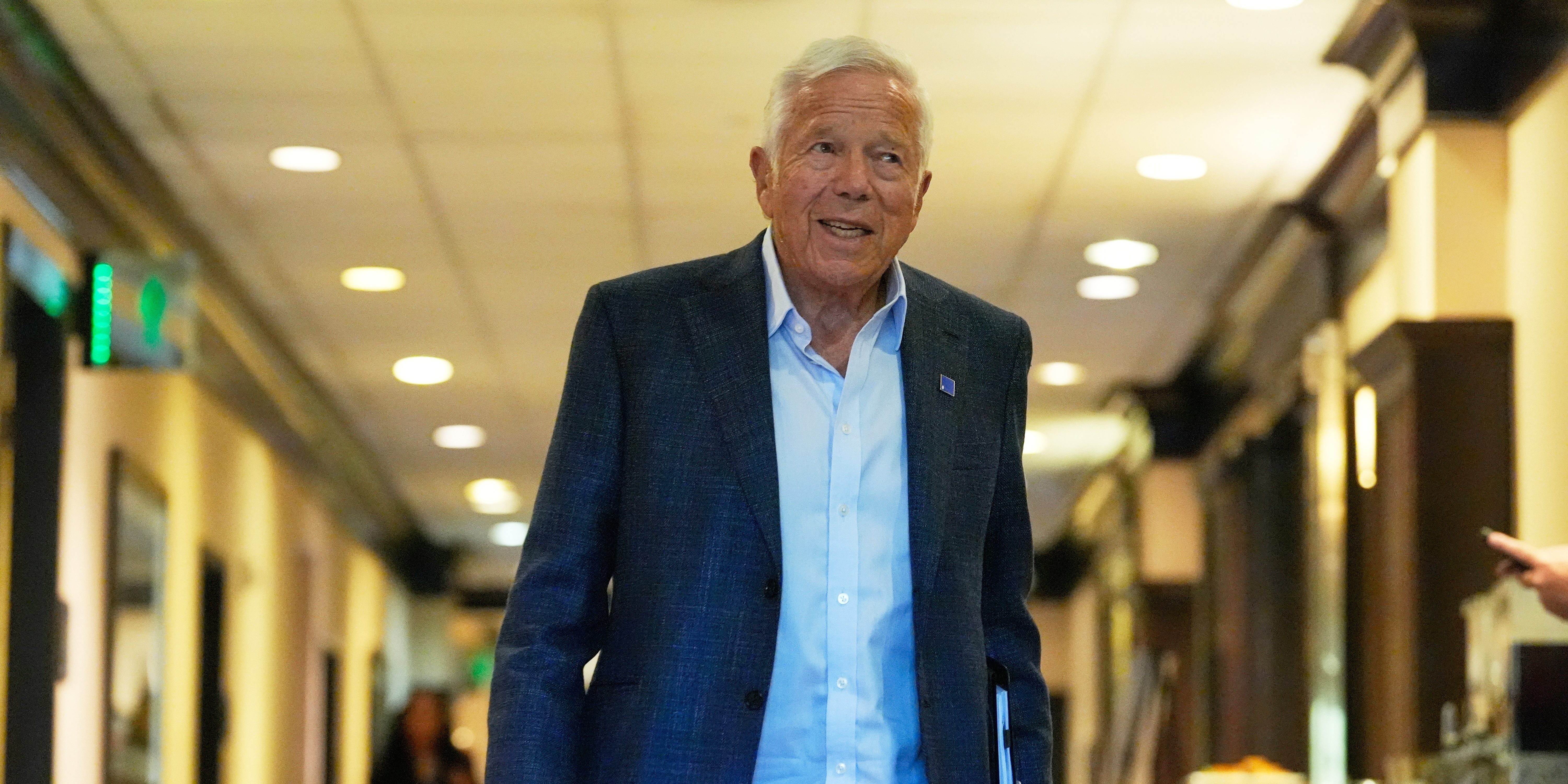
Billionaire New England Patriots owner Robert Kraft wants you to know he has spent “decades” supporting the Palestinian people.
Days after pressuring pop singer Ed Sheeran to drop rapper Macklemore from his tour over the latter’s “Free Palestine” remarks, Kraft claimed in a statement posted to social media that “for decades” he has “supported efforts that create opportunity for Palestinians,” such as initiatives to “to build businesses, create jobs, and forge relationships” between Israelis and Palestinians. The claims were made as a part of Kraft’s pledge to give $2 million to “aid in the region.”
Kraft did not disclose which organizations would receive his money.
Nor did he mention his long history of donating to Friends of the Israel Defense Forces, an organization that collects money on behalf of Israeli soldiers, and the United Democracy Project, the super PAC of the American Israel Public Affairs Committee, which lobbies to tilt American politics in favor of Israel. Kraft has also given money to a host of pro-Israel advocacy groups that attack critics of Israel, spread content that critics warn is Islamophobic, and have steadfastly defended Israel against mounting evidence of its ongoing genocide of Palestinians in Gaza.
The Intercept’s analysis of tax forms since 2006 show that Kraft’s charity group, the Kraft Family Foundation, has donated $196,000 to the Friends of the IDF and an additional $123,000 to other organizations — Brothers for Life and Friends of Israel Disabled Veterans — that directly benefit Israeli military soldiers. In his seven separate donations to the Friends of the IDF, Kraft earmarked the money to “Promote education for young Jewish soldiers.”
Since 2020, Friends of the IDF has poured more than $20 million into its lone soldier program, which supports young Jewish Americans, and Israelis who have no familial support, to serve in the Israeli military’s reserve soldier program, according to an investigation by The Intercept. The program has continued throughout Israel’s genocide in Gaza.
Kraft has organized trips to Israel for former and current NFL players, including a 2017 trip in which he led a delegation of former players on a visit to an Israeli Air Force base, organized by the Friends of the IDF.
In 2019, Kraft gave $20 million to found a new organization, the Foundation to Combat Antisemitism, now known as the Blue Square Alliance Against Hate. Upon its founding, Kraft pledged the organization would oppose the Palestinian-led Boycott, Divestment and Sanctions movement, claiming the Palestinian rights movement “and other efforts to delegitimize and undermine the State of Israel are the most disconcerting times for the country I love so much.” Israeli Prime Minister Benjamin Netanyahu reciprocated the love when Kraft announced the new group while accepting an award for his Israel advocacy, declaring, “Israel does not have a more loyal friend than Robert Kraft.”
Over the years, Kraft’s foundation has also given $63,500 to the right-wing media watchdog group Committee for Accuracy in Middle East Reporting and Analysis, or CAMERA, which has run pressure campaigns against news outlets, journalists, students, and scholars it deems anti-Israel and has routinely denied Israel’s genocide in Gaza, dismissing such evidence as “the Gaza GenoLie.” When Kraft gave $36,000 to CAMERA in 2018, the donation included a memo, “fighting antisemitism.”
In 2011 and 2012, Kraft’s foundation donated $50,000 to boost the Investigative Project on Terrorism, which the Council on American-Islamic Relations considers a core part of what it refers to as the “U.S. Islamophobia Network.” As Kraft gave to the think tank, it launched campaigns targeting U.S.-based groups decrying Israel’s human rights violations against Palestinians, such as attacking human rights groups Students for Justice in Palestine and American Muslims for Palestine as having ties to “extremist groups” and claiming they were a part of a “web of Hamas support.” The group has more recently dismissed protests against Israel’s genocide as Hamas propaganda.
In addition, Kraft’s foundation donated $150,000 from 2008 to 2018 to the pro-Israel organization, Middle East Media Research Institute, co-founded by a former Israeli intelligence officer and counterrorism adviser to several Israeli presidents. The group’s website says it exists to “bridge the language gap between the West and the Middle East and South Asia” by translating Arab language media into English. However, journalists and experts have noted selective translations of Arab articles and statements to misrepresent policies of Arab governments as extremist or violent.
Aside from his donations to nonprofit groups, Kraft has been an active donor to AIPAC’s super PAC, the United Democracy Project. Through his limited liability company, the Kraft Group, Kraft has given $3 million to the super PAC since its founding in 2022, including $1 million in donations this midterm cycle. During this midterm election cycle, AIPAC has flooded races to oppose candidates who criticize Israel’s genocide in Gaza and U.S. military support for Israel, helping make several primaries among the most expensive on record.
It’s not clear whether these entities were the ones Kraft claims have created jobs and spurred dialogues between Palestinians and Israelis. Kraft, however, is also a regular donor to local Jewish groups in Massachusetts, such as Combined Jewish Philanthropies of Greater Boston; Temple Emanuel in Newton; and Jewish Family & Children’s Services in Waltham.
Kraft and the groups mentioned in this story did not respond to The Intercept’s request for comment.
Marc Rowan has a vision for Gaza. “The potential here is tremendous,” he said at a February gathering of President Donald Trump’s so-called Board of Peace, where Rowan described land devastated by Israeli bombing with a developer’s zeal. “This is not a problem of money or collateral. This is a problem with peace.”
In the U.S., Rowan is simultaneously helping ensure a pro-Israel political project has no problem with money. Since the start of this year, according to Federal Election Commission filings, the billionaire CEO of Apollo Global Management has donated $1.5 million to the United Democracy Project, a super PAC for the American Israel Public Affairs Committee, spending a fraction of his vast wealth to preserve a foreign policy defined by support for Israel’s genocide and the flow of U.S. weapons to Israel.
“Palestinians did not choose him, and neither did American voters.”
Rowan — who is worth more than $8 billion and reportedly consulted on his business with convicted sex offender and disgraced financier Jeffrey Epstein — is an executive member of Trump’s “Board of Peace,” a United Nations-approved body tasked with carrying out Trump’s stalled plan for Gaza.Hemade his first donation to UDP of the year in early March, giving $1 million, filings show, just as the group began spending aggressively against the now-ousted Rep. Thomas Massie, R-Ky., a loud critic of U.S. support for Israel.
A second donation for $500,000 arrived on July 23. The same day, the AIPAC super PAC shelled out nearly $50,000 in campaign mailers in Michigan to attack the progressive pro-Palestine candidate for U.S. Senate, Abdul El-Sayed. In Missouri, it dropped another $100,000 for phone banking services against former Democratic Rep. Cori Bush in her race against pro-Israel incumbent Rep. Wesley Bell.
It’s not clear which specific UDP efforts have been backed by Rowan’s largesse, and neither Rowan nor UDP responded to requests for comment. But Raed Jarrar, advocacy director with Democracy for the Arab World Now, connected Rowan’s position on Trump’s Gaza board and his major part as a donor to AIPAC’s super PAC as a matter of transparency.
“Now he sits on a board that will decide Gaza’s future,” Jarrar told The Intercept. “Palestinians did not choose him, and neither did American voters. Americans and Palestinians alike deserve to know whose interests are actually being served.”
Rowan, a major donor to Trump’s failed 2020 presidential campaign, has long made his animus toward critics of Israel known. In recent years, he has been a fierce advocate against student protesters calling for an end to the genocide in Gaza, broadly mischaracterizing their anti-genocide calls as “antisemitic,” and played a key role in ousting leadersat his alma mater, the University of Pennsylvania, over their handling of the protests. In 2025, he served as a consultant to the White House in its recent attacks on higher education. He donated an initial $250,000 to UDP in 2022, the year the AIPAC super PAC was founded, and more than quadrupled his giving by 2024. Trump appointed him to the Board of Peace this past January.
“Marc Rowan has used his position to try to silence Palestinians and smear students protesting Israel’s genocide,” said Margaret DeReus, executive director of Peace, Accountability, and Leadership PAC, which launched this cycle as a pro-Palestine counterweight to the pro-Israel lobby. PAL PAC backed both El-Sayed and Bush, who have committed to cutting military aid to Israel. (El-Sayed prevailed in his Democratic Senate primary against Michigan Rep. Haley Stevens, while both Bush and Massie lost their races.)
Rowan “gives millions to fund the now-fringe idea that billions of our tax dollars should fund the Israeli military and targets candidates who are calling to stop sending U.S. tax dollars to Israel’s genocide,” DeReus said. She added that his presence on “Trump’s corrupt board” lays bare the actual goal of the governing body: “the continued genocide and ethnic cleansing of the Palestinians living in Gaza.”
As support for Israel among the American people has plummeted, and more leftist candidates run on promises to enact an arms embargo on Israel, AIPAC has broken its own spending records and set new ones, helping make El-Sayed and Massie’s primaries among the most expensive ever. In Congress, the lobbying giant has also worked to consolidate power among its pro-Israel base. In July, AIPAC lobbied members for the passage of a Pentagon program that further enmeshes military technological sharing between the U.S. and Israeli militaries. Last week, Democratic leadership appointed three hawkish, pro-Israel, and AIPAC-backed Democrats to the House Foreign Affairs Committee.
In addition to his AIPAC super PAC spending, Rowan has also directly given to a host of pro-Israel candidates this cycle, including New Jersey Democrats Rep. Josh Gottheimer and Sen. Cory Booker, as well as Minnesota Rep. Angie Craig in her failed Senate bid.
The majority of Rowan’s spending, however, has been in favor of Republicans, including Mike Rogers, who is facing off against El-Sayed; Florida Sen. Ashley Moody, a vocal opponent of the Boycott, Divestment, Sanctions movement; and Rep. Brian Mast, R-Fla., chair of the House Foreign Affairs Committee and former Israeli Defense Forces volunteer who famously wore his IDF uniform to Congress.
AIPAC has long championed Trump’s plan for Gaza, which has included overt calls to displace Palestinians, and supports Israel’s hard line in its negotiations with Hamas leaders. Israel, which occupies nearly 70 percent of Gaza, has refused to withdraw its military from the Strip. Israel blames Hamas for refusing to disarm, though the Palestinian militant and political group has said it would only surrender its weapons in exchange for a full Israeli withdrawal and the establishment of a Palestinian state — conditions the Israeli government has refused.
AIPAC also regularly celebrates the ongoing bombardment of the Strip, where more than 1,000 Palestinians have been killed in Israeli strikes since the so-called ceasefire was brokered, including this week when bombing killed two children.
In Rowan’s view, there’s money to be made from the carnage. At the meeting in Washington, D.C., this past February — when Trump also pledged $10 billion in public funds to the board — Rowan fired off property value estimates in Gaza, more than 80 percent of which lies in ruins. He cited a coastline valued at $50 billion; a housing stock, if rebuilt, worth $30 billion; and infrastructure projects worth another $30 billion. Rowan spoke next to generic renderings of glistening high-rise apartments, palm tree-laden highways, solar power plants, and coastal oil depots. Consolidating all of these assets under the supervision of Trump’s Board of Peace, Rowan said, would allow for “conflict-free management of the resources to benefit the Gazans.”
“One hundred fifteen billion of value,” he promised. “It just needs to be unlocked and financed.”
When police in Kent, United Kingdom, arrested American peace activist Max Geller in 2021 for chaining himself to a van parked in front of an Israeli-owned weapons factory, he knew he might be jailed and face charges for his protest.
What he didn’t realize was that he could be hit with U.S. sanctions five years later for his past ties to a so-called terrorist organization.
The Trump administration on Wednesday announced sanctions against the U.K.-based anti-genocide protest group Palestine Action, which organized the 2021 demonstration and dozens of subsequent actions at U.K. factories owned by Israel’s largest weapons manufacturer, Elbit Systems. The goal, in the U.S. government’s words, is to “protect Americans from the risks posed by far-left terrorism.”
“A major threshold has been crossed,” said Geller, who was previously Palestine Action’s spokesperson but left the group in 2025, when the British government made membership punishable by 14 years in prison. “They’re now treating regular Americans who want to effectively oppose genocide as terrorists.”
The specific parameters of the U.S. sanctions are not yet clear, but Treasury Secretary Scott Bessent pledged the government would “continue to cut the financial lifelines of these groups until they are eliminated.” Sanctioned groups and individuals cannot receive funds, goods, or services from American people or business — meaning they’re cut off from both the U.S. banking system and from any donations from Americans who might want to support them. They can have an isolating global effect: Financial institutions outside the U.S. that do business with American companies are often hesitant to affiliate with sanctioned individuals.
As a result, the sanctions could severely curtail their organizing abilities — and restrict their ability to try to stop the flow of weapons that Israel is using to carry out its ongoing genocide in Gaza.
“We are facing unprecedented attacks on dissent by the same powers that are committing genocide in Gaza,” said Huda Ammori, co-founder of Palestine Action, in an interview with The Intercept. “We are at a point in history where it’s extremely crucial to continue to resist and grow in our movement, rather than back down and to adapt and become less reliant on institutions which are essentially controlled by the powers we’re fighting against.”
While the new U.S. sanctions are a part of a long history of post-9/11 policies in its so-called war on terror, the U.K. government has made itself notorious for its specific draconian crackdown on pro-Palestine dissent. Last year, as Palestine Action members began to face terror charges in court for their demonstrations, the U.K. government proscribed the group as a terrorist organization. The organization in the U.K. immediately ceased operations after the terror proscription. Dozens of members in the U.K. are facing criminal trials for their actions at Elbit weapons factories, and more than 1,200 people have been arrested and charged under the U.K.’s Terror Act for attending rallies merely supporting the group.
Reporting from The Telegraph, which first reported the sanctions, suggested Ammori and fellow co-founder Richard Barnard would face lifetime bans from traveling to the U.S., and that British citizens who continue to support the group would be met with harsh visa restrictions.
Geller, who lives in London, wondered if his bank accounts would be frozen, along with his Venmo and PayPal accounts. He said he normally travels back and forth between the U.S. and U.K. to visit his elderly parents — and the thought of doing so now “suddenly has become scary.”
“They want people scared to even think about supporting or engaging in this kind of work,” Geller said. “This is about materially hurting Palestine.”
The new sanctions against Palestine Action, which were announced alongside sanctions against Autistici/Inventati and Masar Badil, were the latest attack in President Donald Trump’s ongoing campaign to suppress advocacy for Palestinian rights and opposition to Israel’s genocide in Gaza. Last year, Trump issued sanctions against the International Criminal Court after the court ordered war crime arrest warrants for Israel’s leaders. Those sanctions targeted people and organizations that work with the court, such as U.N. Special Rapporteur on the Occupied Palestinian Territories Francesca Albanese, who has been outspoken about the crippling effects of the sanctions. The administration has also sanctioned long-standing Palestinian human rights organizations for their work with the ICC.
“The Trump administration is once again weaponizing counterterrorism authorities to criminalize Palestinian political organizing and solidarity,” said Raed Jarrar, advocacy director with Democracy for the Arab World Now, which last month sued to reverse the Trump sanctions on the ICC. “Sanctions are supposed to target genuine threats to national security, not serve as a political weapon against movements challenging Israel’s treatment of Palestinians.”
The vagueness of the new sanctions is meant to strike fear in anyone who is considering support for the sanctioned group, civil liberties advocates told The Intercept. Does a social media post expressing support violate sanctions? How about hosting a talk with an individual in the group?
“Treasury hasn’t been clear on where the line is, and that’s part of the chilling effect,” said Xiangnong (George) Wang, a staff attorney at the Knight First Amendment Institute who specializes in U.S. sanctions. “In sanctioning Palestine Action, I think their target is more broadly a community of people and groups, including Americans who engage with Palestine Action.”
The Treasury Department did not respond to The Intercept’s request for comment.
The sanctions also follow the government’s case against pro-Palestine organizer Fergie Chambers, a past supporter of Palestine Action who was detained for extradition in Spain last month on alleged charges of funding terror groups. The humanitarian aid group Sameer Project, which provided meals and services to Palestinians in Gaza, previously received financial support from Chambers and this month announced it had paused operations in Gaza due to lack of funds.
The repression, said Ammori, has “expanded much more overtly to be used to crush any type of dissent.”
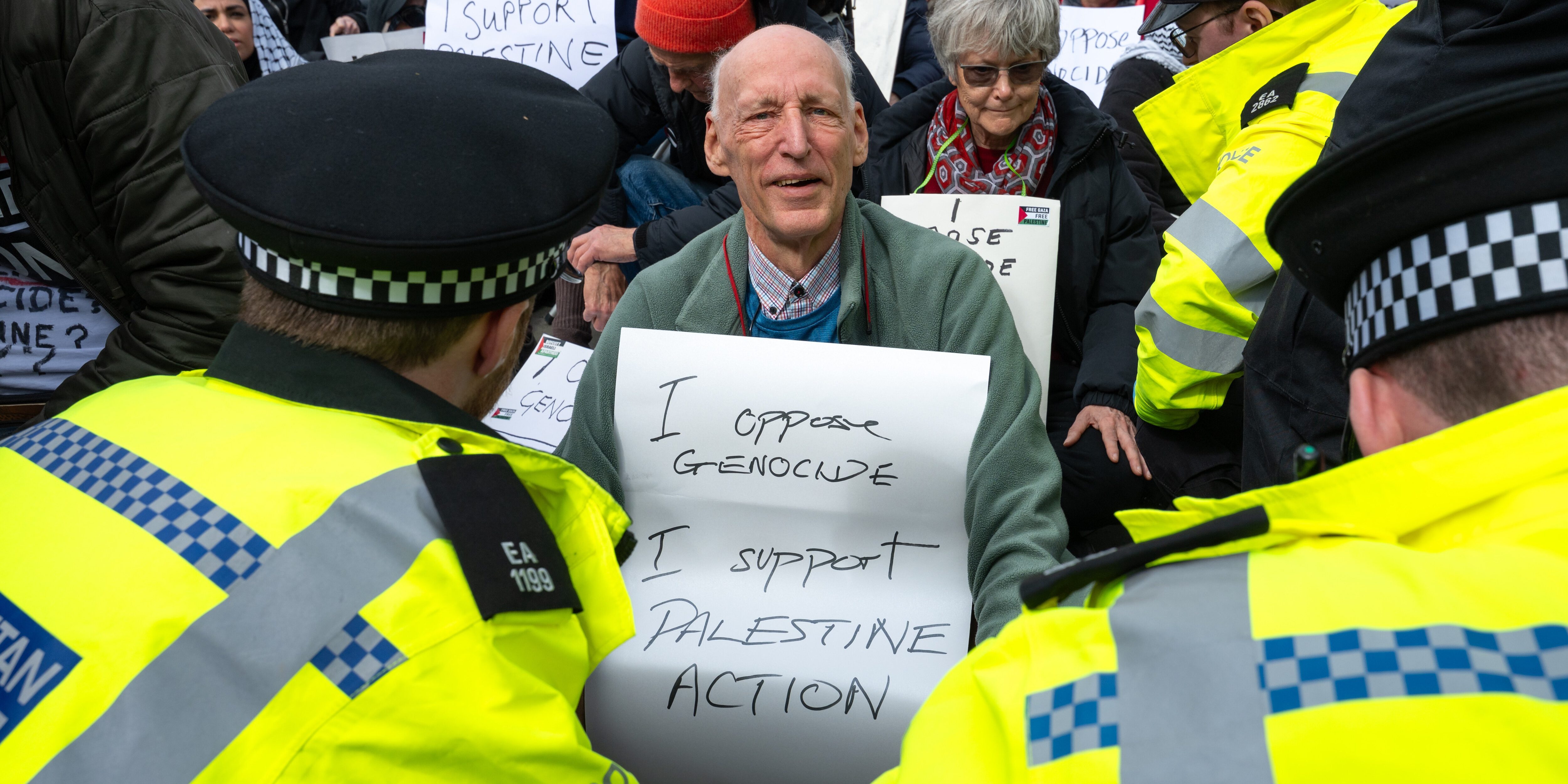
Despite the U.K.’s crackdown on Palestine Action, support for the group and Palestine remains energetic. Rallies in solidarity with Palestine Action and Palestinian rights continue to sprout up across the country even as the government has arrested at least 3,000 people for simple actions such as holding signs that read “I support Palestine Action.” And last year, Elbit closed its facility in Bristol after being targeted by Palestine Action, days before the government outlawed the group.
In the U.S., the group formerly known as Palestine Action U.S., now called Unity Fields as of August 2024, no longer has ties to the U.K.-based group. Though Palestine Action in the U.K. is dormant, secretive cells of Palestine Action are based throughout the U.S. and are continuing to carry out actions. Other Palestine Action cells are targeting the Israeli weapons supply chain in other countries such as Spain, Germany, Ireland, and Poland.
“We have a responsibility to create a huge dent in the Israeli war machine,” Ammori said. “They need to be profitable to operate, and if they’re operating, they’re killing Palestinians — it’s really as simple as that.”
Cornell University is reneging on its pledge to help two graduate students avoid immigration detention by threatening to cut their funding if they don’t return to the United States, where the Trump administration has targeted them for possible deportation over their participation in a pro-Palestine protest.
The Ivy League university had previously told Momodou Taal and Amandla Thomas-Johnson that they could finish their degrees with funding abroad, according to both Taal and Cornell’s graduate student union. After the Trump administration began to pursue both students in March 2025, Taal and Thomas-Johnson fled to Cairo and planned to complete their studies there. Taal’s attorney said the students are not sure if there’s a deportation order against them, but Homeland Security Investigations, the Immigrations and Customs Enforcement intelligence division, has launched inquiries concerning both of them, and Taal was ordered to appear at an ICE office last year. The students believe they would likely be detained by immigration authorities upon return to the U.S.
Now, the school says the two students must teach on campus in Ithaca, New York, this fall or lose their funding.
“Either they knew I can’t come back, which is probably most likely, or they actually want me to come back and get arrested on arrival,” Taal told The Intercept in an interview. “Because of my Palestine activism, I’ve been treated even differently than people who are in similar circumstances.”
The school has previously worked with other students experiencing visa issues to continue their studies abroad with funding, noted Taal and Ewa Nizalowska, president of the Cornell graduate student union.
Cornell declined to comment on Taal and Thomas-Johnson’s cases, but in a written statement to The Intercept, a spokesperson called the idea that the university was targeting students for protest activity “untrue and unfounded.” The spokesperson added that “Cornell University remains deeply committed to helping international students continue making academic progress when they encounter visa or travel-related challenges.”
The Cornell funding is the sole source of financial support for Taal and Thomas-Johnson, they told The Intercept. Losing it would hurt their ability to pay for housing, food, healthcare, and other living expenses.
“I have no money. … I’m where I am because the cost of living is cheaper,” Thomas-Johnson said. “I go through day-to-day anxiety — how can I be expected to finish a Ph.D.?”
“If I don’t get funding, I’m going to be homeless,” Taal said. “I’m not going to be able to make rent.”
The Cornell spokesperson added that the students outside the U.S. can apply for fellowships for funding, but those opportunities for the coming semester were closed months ago, Taal said.
“If I don’t get funding, I’m going to be homeless.”
“Cornell knows full well that Momodou would be immediately detained and sent to one of the places where more people are dying than ever before, facing all sorts of abuse, simply for his speech,” said Eric Lee, a civil rights attorney representing Taal. “For the university to claim that they’re offering something fair is a level of cynicism which can only be deliberate by an institution with the experience of Cornell.”
In March 2025, Taal, a British and Gambian dual citizen, and Thomas-Johnson, also a British citizen, fled the country amid a rash of deportation cases in which the Trump administration was targeting international student activists who had been involved in campus protests against Israel’s genocide and apartheid of Palestinians. They were trying to avoid the treatment given to high-profile figures like Columbia University students Mahmoud Khalil and Mohsen Madhawi.
Taal and Thomas-Johsnon had taken part in a September 2024 protest that shut down a Cornell job fair where weapons manufacturers Boeing and L3Harris, which supply weapons to Israel, had booths. The pair of students were suspended for the incident and banned from campus with threat of possible expulsion, which would have exposed them to deportation.
After Trump took office in early 2025, Taal sued the administration over its executive order targeting pro-Palestine international students, arguing it denied activists’ First Amendment rights. Days later, Immigration and Customs Enforcement ordered Taal to surrender to authorities, and agents appeared at his student housing apartment. After a federal judge declined to block Taal’s deportation, Taal decided to leave the U.S. on his own to avoid ICE detention facilities known for their brutal living conditions. Thomas-Johnson followed suit, fleeing to Canada, then Switzerland, Senegal, and Ghana, before eventually joining Taal in Cairo.
The Intercept’s reporting later revealed that leading up to their departures from the U.S., Google had secretly handed ICE agents the students’ Gmail account information and complied with a federal subpoena demanding their bank and credit card numbers.
“Given Cornell’s very positive relationship with the Trump administration, and its willingness to make all sorts of concessions to the attack on educational institutions, the question should be posed to them, whether such an agreement has been made about Momodou,” Lee said, referring to Taal’s funding options.
Last November, Cornell inked a deal with the administration to give the government $60 million and capitulate to the government’s inquiries into diversity initiatives and antisemitism in exchange for restoration of federal funding to the school.
More recently, the Cornell chapter of a pro-Israel alumni group called Alums for Campus Fairness began circulating a mailer praising university President Michael Kotlikoff for taking “action to support Jewish students” and “meaningful action to address campus disruptions.” The mailer, reviewed by The Intercept, did not name Taal or Thomas-Johnson, but indirectly applauded “banning a leading agitator from returning to campus.” The Intercept found last year that a similar pro-Israel alumni group at Columbia had coordinated to arrest and deport pro-Palestine student protesters.
On June 10, Cornell’s graduate school administration sent Taal a letter about his funding options for the upcoming school year. According to the letter, reviewed by The Intercept, Taal could either return to campus and accept a teaching assistant position, apply to be in absentia and seek external funding like a fellowship, forfeit funding and pay tuition on his own, or take a leave of absence.
“Our department funding sources are limited to teaching assistantships,” the letter reads. “This requires you to be on campus in Ithaca, NY to assist with classes. The College of Arts and Sciences restricts classes to being taught in person and on campus. Online courses are not permitted.”
Taal said he was planning to finish his dissertation by spring 2027. He received his most recent stipend from the school in May, and under normal funding circumstances, he would have gotten another stipend this month.
Taal’s 2022 acceptance letter to Cornell, reviewed by The Intercept, shows annual funding of $67,000 would be guaranteed for the first five years of his program. Taal is in the fifth year of his program in the Africana Studies department. Emails with his department from March, also reviewed by The Intercept, showed discussions about committing to “future funding.”
Cornell extended a similar offer to Thomas-Johnson, who is in his sixth year of the program: He could continue to receive funding by teaching several courses in his department of Literatures in English, also on campus. He said he had previously taught a freshman writing seminar via Zoom earlier during his program due to unrelated visa issues, and both students questioned why the university could not accommodate the same. Even after he further explained his immigration situation and danger of returning to the U.S., he said the university doubled down on the in-person requirement.
Thomas-Johnson and Taal both said their departments and faculty have been accommodating and supportive about their situations and suggested the funding decision likely came from the university administration.
The graduate student union filed grievances alleging the offers breach their collective bargaining agreement with the university. At a meeting, Cornell administrators told the union the university did not have the obligation to fund international students who are facing visa issues, Nizalowska said.
The policy was a “clear reversal,” Nizalowska told The Intercept. Last year, she said a Cornell administrator told the union that individual arrangements were being made to ensure that graduate students with visa issues or difficulty returning to the U.S. could complete their degrees remotely with continued funding from the school.
“We know that it’s no coincidence that Momodou and Amandla are the first two grads to be impacted by this policy change, as two grads who dared to speak out against Cornell’s complicity in the genocide in Palestine, as further exemplified by Cornell’s deal with Trump,” she said. “But we know that many more grads will be impacted by Cornell’s refusal to fund grads who are stuck abroad, whether or not they have been involved in protests against the genocide in Palestine.”
The Cornell spokesperson denied that it was in violation of any policy or had engaged in political targeting. “Cornell’s approach to graduate student funding is longstanding, and there has been no change in, or deviation from, university policy,” the spokesperson wrote. “Graduate funding decisions are unrelated to [protest] activity or to the November 2025 agreement between Cornell and the federal government.”
Taal has considered returning to Gambia, where he has family, but he said unstable internet and electricity access would make his research difficult. He and Thomas-Johnson have their reservations about relocating to Britain, where both have relatives, because of that government’s similar targeting of pro-Palestine activists.
Earlier this year, Taal reported being detained by British authorities for six hours upon landing at London’s Heathrow airport. While he was in custody, officers confiscated his phone and laptop, took his DNA, and questioned him about “the mosque I attended growing up, the Islamic teachers I followed,” and about whether he had read Karl Marx.
The detention came days after United Nations Special Rapporteurs appointed by the UN’s Human Rights Council wrote a letter to Cornell President Kotlikoff, warning him of “serious concern over the reported human rights violations against Mr. Taal and Mr. Thomas-Johnson” over the school’s handling of their disciplinary cases related to the 2024 protest.
“They’re trying to continue making an example out of me and Momodou for our political choices,” Thomas-Johnson said. “It’s easy for them to sideline us for what we stand for and who we are.”
Correction: August 14, 2026, 11:17 a.m. ET This story has been updated to clarify which student taught a Zoom class from abroad due to previous visa issues; it was Thomas-Johnson, not Taal.
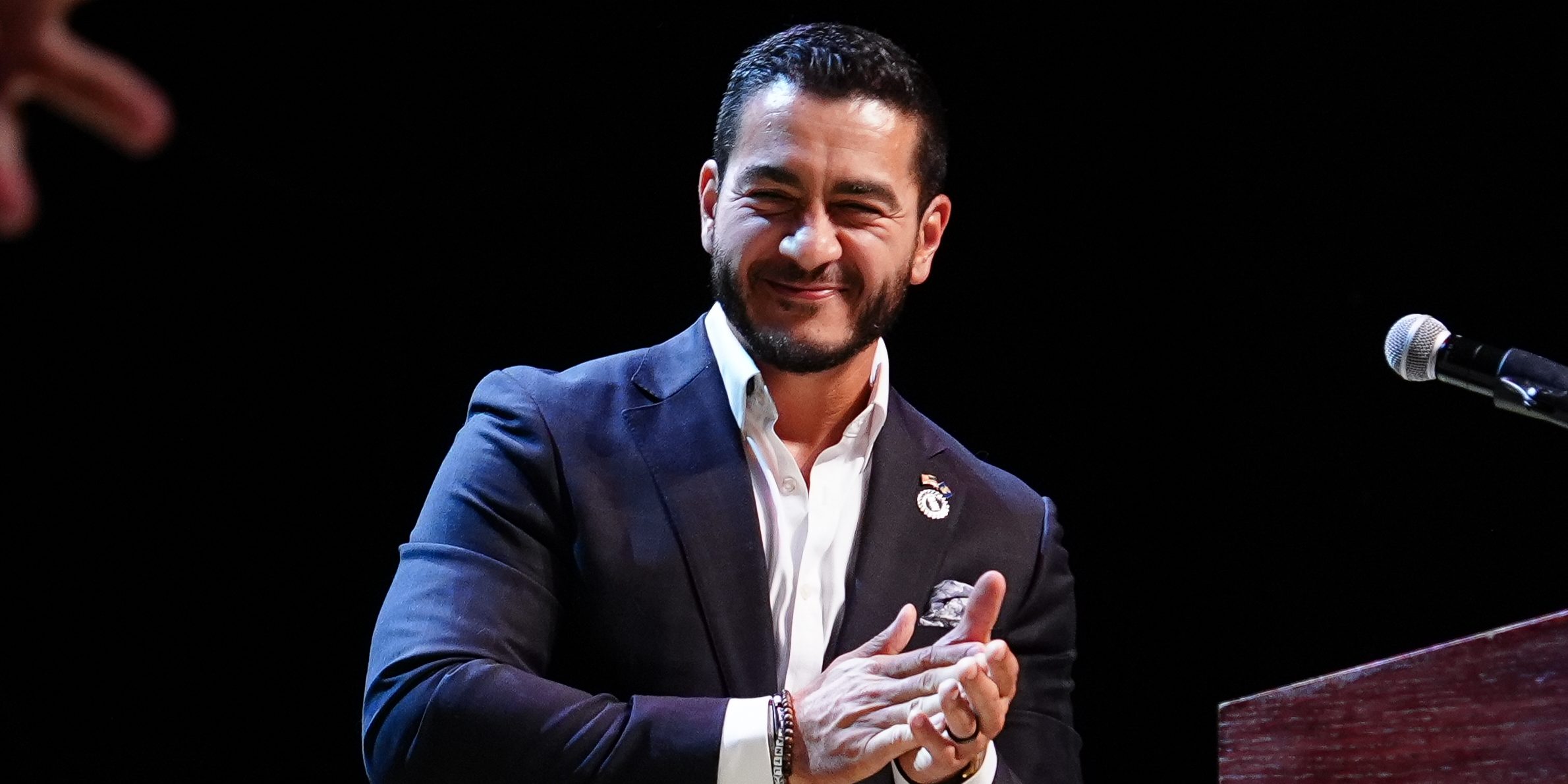
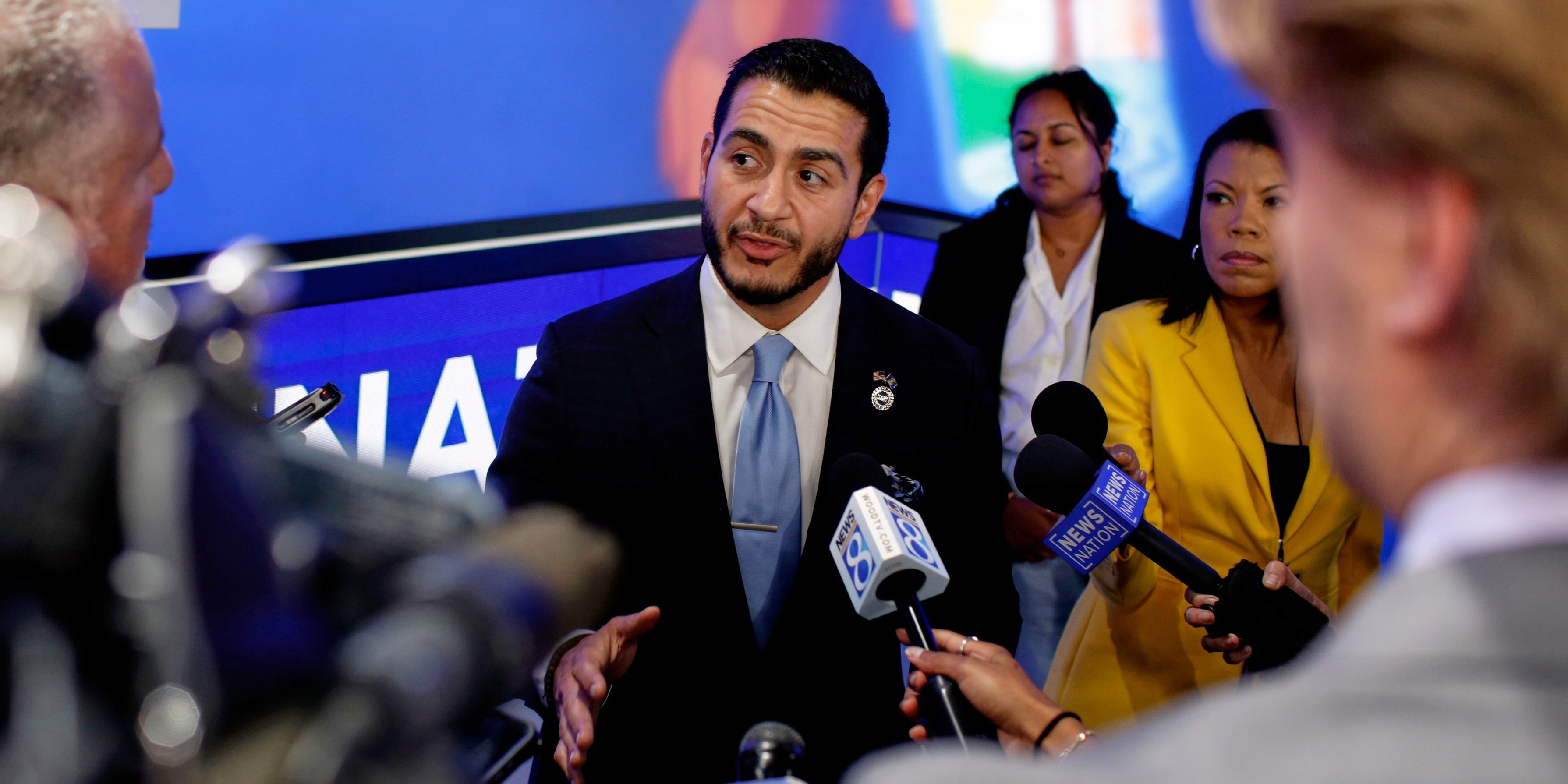
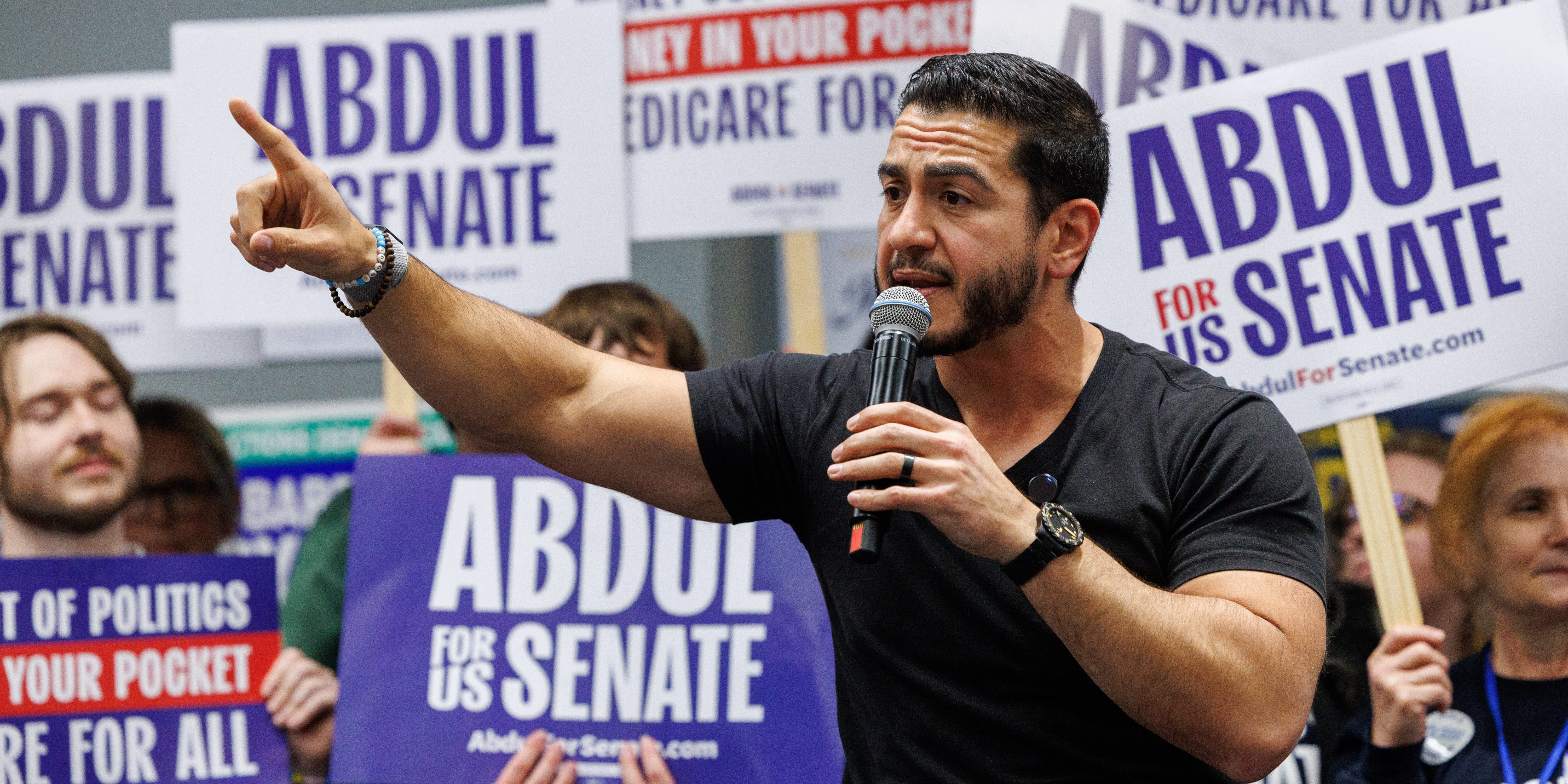
Despite record amounts of outside spending and attacks from the Democratic establishment, Abdul El-Sayed prevailed in a bitter primary race for the U.S. Senate seat in Michigan.
Voters in the key swing state chose El-Sayed over the establishment’s choice of Rep. Haley Stevens, whose campaign received about $60 million in support from pro-corporate and pro-Israel super PACs, making the race the most expensive Democratic primary ever. El-Sayed won by a margin of around 1 percentage point, according to The Associated Press, which called the race in his favor Wednesday morning.
The victory of El-Sayed, a former public health official endorsed by Sen. Bernie Sanders and Rep. Alexandria Ocasio-Cortez, is the latest sign of the growing influence of the Democratic left. And it’s the most staggering illustration yet of the party establishment’s waning grip on power and the unpopularity of the pro-Israel lobby giant, the American Israel Public Affairs Committee, amid shifting American sentiment on Israel and Palestine.
Through its super PAC, the United Democracy Project, AIPAC broke its own single-race spending record by funding $30 million in attack ads against El-Sayed. Ads that dominated airwaves, flooded streaming services, and stuffed mailboxes in the final month of the race misrepresented El-Sayed’s previous comments about Michelle Obama and Michigan Gov. Gretchen Whitmer to allege misogyny, and attempted to paint El-Sayed as a terrorist sympathizer.
El-Sayed’s platform, boosted by an army of 12,000 door-knocking volunteers, centered on policies such as Medicare for All policy, addressing cost of living issues in the state, and removing corporate spending from politics. But it was the two candidates’ stances on Israel and Palestine that came to define the race. El-Sayed condemned Israel’s genocide of Palestinians in Gaza and committed to ending U.S. military aid to Israel. His criticism of Israel also extended to its joint U.S. war on Iran, which he decried as military glut that could be spent instead on healthcare and education in his state.
Stevens opposed any conditioning of military aid to Israel. She has consistently voted in favor of weapons transfers since first assuming office in 2019, including last month when she sided with Republicans against an amendment in a Pentagon budget bill that would have cut military spending for Israel. When AIPAC began pouring money into the Stevens campaign, El-Sayed effectively turned those millions of dollars into a key campaign issue, pointing to Stevens as an illustration of the danger of lobby spending and corporate money in politics.
It’s not the first race in Michigan shaped by AIPAC money. Former Rep. Andy Levin — who was considered the most progressive Jewish member of the House because of his support for Palestinian statehood — lost his seat after redistricting forced a showdown with Stevens in 2022. In that race, Levin was also dramatically outspent by outside money, with AIPAC buying $4 million in ads to attack him and boost Stevens.
El-Sayed’s success, however, shows a major shift in politics since the start of Israel’s most recent war on Gaza. Cutting off military support to Israel has become a mainstream position among Democrats. And AIPAC has since become a politically toxic entity — “a four letter word in Democratic politics,” Levin told The Intercept.
“The kind of truth-telling about Israel and Palestine is tied into the truth-telling about the economy, and people wanting real solutions.”
“Most people still don’t vote on Israel and Palestine, they vote on their pocketbooks,” said Levin, who endorsed El-Sayed. “But if you’re not willing to say that Israel perpetrated a genocide in Gaza, Democratic primary voters are like, ‘OK, you’re bought and paid.’ The kind of truth-telling about Israel and Palestine is tied into the truth-telling about the economy, and people wanting real solutions.”
Leftists have claimed victories against establishment picks throughout this year’s midterm primaries, running on similar platforms addressing affordability and support for Palestine. But those wins have so far been in House races, mostly in metropolitan areas where leftist progressive politics have gained a foothold in recent years, such as New York, Pennsylvania, Colorado, New Jersey, and California. In House races in Michigan, leftists also found success with wins for Donavan McKinney, a state representative who defeated the AIPAC-backed incumbent Democratic Rep. Shri Thanedar, and Will Lawrence, a progressive climate activist who beat a pair of moderate Democratic opponents.
Both McKinney and Lawrence, a co-founder of the youth-led Sunrise Movement, had an endorsement from Sanders and a mutual endorsement from El-Sayed. And both ran on a similar platform of lowering the cost of living and opposing war — including Israel’s genocide in Gaza — and for Lawrence, opposing AI data centers. While McKinney is expected to win the general election in a solid blue district, Lawrence now faces a Republican incumbent, Rep. Tom Barrett, in a purple district that had previously been held by Democratic Sen. Elissa Slotkin.
El-Sayed’s win is the first leftist victory in a Senate race this election cycle.
Unlike other leftist wins so far in the midterms outside of Michigan, El-Sayed faces a difficult challenge in the general election from a formidable Trump-endorsed opponent. Polls have shown El-Sayed neck-and-neck with Republican Mike Rogers, a former congressman and FBI agent who ran unopposed in Tuesday’s primary. In 2024, Rogers ran for Senate and lost to Slotkin by less than 20,000 votes. In Michigan, where voters swung for Trump by about 1 percentage point over Kamala Harris in 2024, the November election is expected to be the most significant midterm test for the left. An El-Sayed win in November is essential to the Democratic effort to regain control of the Senate.
Electability has been among the largest criticisms from Stevens and her supporters against El-Sayed. Conventional establishment thinking maintains that progressive policy is not popular among most Americans. To beat Republicans, the centrists say, Democrats need to run a more moderate candidate who can appeal to more conservative voters. Late last month, the Stevens campaign circulated a quote from Rogers, who called El-Sayed “radical” and claimed “I don’t think he likes America.” Stevens suggested Rogers would prefer to face El-Sayed because of his leftist platform.
Last week, Rep. Hillary Scholten, D-Mich., a Stevens surrogate, said El-Sayed was so polarizing that she could not back him against Rogers in the general election. “I will not stand beside someone who has allowed distinctly anti-American sentiment to enter our public dialogue,” she said, a reference to his campaign events in April where political streamer and commentator Hasan Piker stumped with El-Sayed at university campuses. Despite efforts by the Stevens campaign, AIPAC, and corporate media outlets to play up Piker’s comments faulting U.S. foreign policy for 9/11, there’s little evidence that criticism has resonated with voters.
The National Republican Senatorial Committee released its first attack ad against the “radical” El-Sayed on Wednesday, referring to him by his full name and referring to Piker’s 9/11 comments, a preview of the continued anti-Muslim and anti-Arab tactics that are expected to ratchet up in the general.
The progressive left has long argued that its platform will perform better in front of a broader electorate hungry for political and economic change. Michiganders have paved the way for El-Sayed to try and prove just that. His fate in the general election might reverberate into the 2028 campaign cycle, as the Democratic Party looks to decide what type of candidate to nominate for president.
Soon after NBC News made its call, state Sen. Mallory McMorrow — who dropped out of the U.S. Senate race in July — offered her endorsement to El-Sayed. On Wednesday, Stevens — along with Democratic minority leader Sen. Chuck Schumer and Democratic Senatorial Campaign Committee Chair Kirsten Gillibrand — endorsed El-Sayed. Stevens said she had spoken with El-Sayed and was “proud to offer my support as he takes on Mike Rogers in the general election.”
“We’re gonna build a movement that reaches out to everybody — I know not everybody’s gonna agree with me on everything, that’s not how this works. But I know they agree with me on the need to beat Mike Rogers and the need to hold Donald Trump accountable, and the need to provide people healthcare, and the need to address the affordability crisis,” El-Sayed said at the Wednesday press conference, flanked by McMorrow and Michigan Democratic Party Chair Curtis Hertel Jr. “I’m looking forward to unifying together,”
El-Sayed argues the same anti-corporate messaging that has appealed to his progressive base translates to all voters, transcending partisan political framing. A week before Tuesday’s primary, El-Sayed told The Intercept’s Akela Lacy, “Most people don’t walk around asking, ‘Where do I sit on the left–right spectrum?’ Most people are walking around asking, ‘What the hell’s going to happen if I get sick? What’s going to happen if I lose my home or I lose my job?’ … I think those are the things that unite most Michiganders … I’m looking to build a movement that pushes back on the bipartisan consensus that we ought to build a politics that is paid for by corporations.”
Levin said that voters want a candidate who is “authentic,” “brave,” and “speaks truth to power.” He pointed to Michigan’s historic embrace of progressive Democratic politics, such as the nominations of Jesse Jackson’s presidential candidacy in 1988 and Sanders’s in 2016.
It was in Michigan where Democrats in 2024 started the Uncommitted Movement as a protest against the Biden administration’s support of Israel during its genocidal war in Gaza. El-Sayed voted “uncommitted” in that primary. Stevens and her surrogates have attacked his “uncommitted” vote to try and show El-Sayed’s lack of loyalty to the party, despite his immediate endorsement of Harris one day after Biden dropped out of the running.
“People act like it means we all must run to the mushy middle. But that’s not what a swing is at all.”
Levin describes Michigan as the “ultimate swing state,” but cautioned that many political pundits misunderstand what that says about the state’s electorate.
“People act like it means we all must run to the mushy middle. But that’s not what a swing is at all. If a swing just sat in the middle, you would never get on it. It’d be boring. That’s not what it’s about,” Levin said. “We have to realize that ‘swing’ means that people go back and forth. And people in both parties right now — this is national — they are so sick of politics. They are so sick of the money in politics. They are so sick of the rich people and the corporations and the special interests [that] basically do whatever they want in American politics.”
Update: August 5, 2026, 1:22 p.m.ET This article was updated to include news of Donavan McKinney’s victory, a National Republican Senatorial Committee attack ad, Haley Stevens’s endorsement of Abdul El-Sayed, and remarks from El-Sayed’s victory speech.
In a July 19 interview with a leading Democratic Senate candidate in the swing state of Michigan, CNN host Jake Tapper homed in on the U.S.–Israeli war on Iran — but he didn’t ask the candidate’s thoughts on the hundreds of Iranian and Lebanese civilians killed, nor the possibility of U.S. war crimes, and not even 18 dead U.S. soldiers. Instead, Tapper posed: “Why were you worried about offending people who support the ayatollah?”
Tapper was pressing Abdul El-Sayed, a former public health official who could become the first Muslim U.S. senator, on a right-wing outlet’s story exposing that he had expressed a desire to tread carefully because of potential differences of opinion among his would-be constituents. On a leaked campaign call, El-Sayed had said after Ali Khamenei’s February assassination that “there are a lot of people in Dearborn who are sad today,” referring to the southeast Michigan city that is home to one of the largest Muslim communities in the country. Given the ayatollah’s brutality, Tapper’s question implied, how dare El-Sayed consider that possibility?
As Michigan’s August 4 Senate primary between El-Sayed and Democratic Rep. Haley Stevens draws near, he has faced a barrage of Islamophobic attacks ranging from thinly veiled policy critiques to outright racist caricatures. The two Senate hopefuls seem to embody the forked path facing the Democratic Party ahead of the 2028 presidential cycle, with 43-year-old Stevens representing the old guard thanks to her backing by the party establishment and the pro-Israel lobby, and 41-year-old El-Sayed representing an insurgent movement skeptical of long-standing U.S. foreign policy interests and corporate capture of American politics. With the latter vision comes a form of fearmongering that’s been endemic to American politics for decades.
Nancy Khalil, an anthropologist who researches Muslims in America at the University of Michigan, called Tapper’s interview “sloppy and offensive” and pointed out that the anchor’s questions implied an assumption that because El-Sayed is Muslim and Arab, “he needs to have an opinion on this, and the opinion needs to align with whatever the media wants it to be.” That assumption is “completely racist,” Khalil said.
It was only one example in a deluge of attacks El-Sayed has faced in recent weeks that peddle in Islamophobic tropes. The pro-Israel doxxing account StopAntisemitism shared a post in June claiming that a hijabi woman arrested by the Trump administration for allegedly making pro-Palestine graffiti was a former staffer of El-Sayed’s, prompting right-wing agitator Laura Loomer to reply: “BAN Muslims from holding office in the United States.” Replies to El-Sayed’s campaign account often call him a “terrorist,” “radical,” or “jihadist,” and deploy racistmemes, including one, likely AI-generated, showing El-Sayed and Rep. Ilhan Omar, D-Minn., wearing vests strapped with explosives and green headbands to signify Hamas. The Michigan GOP has called El-Sayed “a terrorist sympathizer,” emphasizing his full name, Abdulrahman Mohamed El-Sayed.
The attacks aren’t limited to right-wing reactionaries and obsessives on the internet. Many are issued by one of the leading groups backing El-Sayed’s Democratic opponent, Stevens: the American Israel Public Affairs Committee, which has poured nearly $30 million into the race via its super PAC, the United Democracy Project. One UDP commercial alleges baselessly that El-Sayed “expressed sympathy for a terrorist,” and a mailer shared with The Intercept parrots the same. Others mention his decision to stump with political commentator and streamer Hasan Piker.
Scholars of Islamophobia and Muslim American communities told The Intercept that both parties and their allies were resorting to Islamophobic and anti-Arab tropes in a race where Israel and Palestine has remained an animating force. El-Sayed has committed to ending military aid to Israel, drawing a stark contrast to Stevens, who famously said: “Israel comes to me in my dreams.”
The attacks against El-Sayed reminded Hatem Bazian, a leading scholar of Islamophobia at the University of California, Berkeley, of a critical moment in 2008, when Hillary Clinton’s presidential campaign was accused of leaking a photo showing Barack Obama wearing garb of a Somalian elder during a visit to Kenya, fueling conspiracies that Obama — who is Christian — was hiding his Islamic faith. Whenever an actual Muslim candidate is involved, especially if they oppose the Israeli government’s policies, Bazian said, their opponents try to associate them with terrorism.
“In the election in Michigan, we’re seeing the same type of playbook being played out,” Bazian said. “And what you’re also seeing is that much of the Islamophobia gets to be expressed in the corners of the web.”
Yet some prejudice has also been expressed in real life.
At a meet-and-greet in Detroit with Stevens and Rep. Jim Clyburn, D-S.C., a school board member said she supports Stevens because she “represents all of us, not just one race.” When pressed by local reporter Sam Robinson, who recorded the viral remarks, the Farmington school board member elaborated: “The other candidate [El-Sayed] doesn’t work a room. … Don’t come out speaking only Arabic, don’t come out with your Arabic music on.”
The Stevens campaign has tried to distance itself from the most egregious attacks. When asked about the Smith remarks, a spokesperson for the campaign referred to a statement given to The Detroit News in which Stevens said she did not share Smith’s views and called her campaign “a diverse and multicultural best of Michigan coalition” She further claimed to have “repeatedly stood up for and defended our vibrant Muslim American community.”
Yet Stevens’s campaign has also capitalized on bigoted rhetoric used by Mike Rogers, the Republican likely to face whichever Democrat wins next month. The campaign drew from a private call between Rogers and supporters during which he said of El-Sayed, “I don’t think he likes America, candidly.” The Stevens campaign sent out a parody of a news release designed to look like it was from El-Sayed campaign, claiming that Rogers had endorsed El-Sayed and reproducing the Republican’s quote: “I think he’s so radical. I think he’s going to lose big parts of the west part of the state. We think we can do well in part of the southeast part of the state. I think we’ll do well if he in fact is the nominee.”
In a statement to The Intercept, a spokesperson for CNN defended Tapper’s question on El-Sayed and Khamenei’s killing, which Tapper asked regardless of “background or ideology.”
“In this case, he asked Dr. El-Sayed about his comments regarding Iran’s leader Ali Khamenei’s death because he believed they warranted explanation as part of the public debate,” the spokesperson wrote. “Providing interview subjects the opportunity to address and clarify their views is a fundamental part of responsible journalism, and we reject the implication that there was any malicious intent or bias behind the question.”
The El-Sayed campaign declined to comment on this story, but told The Intercept in April: “I am not running to be ‘the Muslim’ anything.”
“I am not running to be ‘the Muslim’ anything.”
“I’m running to be able to serve people in my role as a U.S. senator,” El-Sayed said at the time. “I want people to have healthcare. I want them to be able to work a dignified job that pays a living wage. I want them to have childcare and senior care. I want them to be able to know that the things that they need in their lives are affordable. So, at the end of the day it’s not about me. It’s not about my faith.”
Race and religion aren’t the only identity-related fault lines at play in the Michigan Senate race.
El-Sayed has “a long history of disrespecting women,” asserts another AIPAC-backed ad launched in early July. According to the Detroit Free Press, a mainstream local paper that fact-checked each of the ad’s claims, the TV spot misrepresented El-Sayed’s comments on figures like Michigan Gov. Gretchen Whitmer, whom he ran against in 2018, by framing his critiques of Whitmer’s ties to the healthcare giant Blue Cross Blue Shield as inherently misogynistic. Whitmer, who is serving her second governor term, endorsed Stevens’s Senate run on Friday with a little more than a week from the election.
Moms Demand Action founder Shannon Watts, a Stevens supporter known for going after critics of Israel online, called El-Sayed’s criticisms of Stevens and former opponent state Sen. Mallory McMorrow “sexist” with little evidence beyond their respective genders — a comment that has since appeared in another UDP ad. (Watts has said she didn’t give the super PAC permission to quote her public social media comments.)
The new ad began its run within days of Graham Platner suspending his U.S. Senate campaign in Maine after he was accused of sexual assault. Centrist and pro-Stevens operatives have also tried to link El-Sayed with the Platner campaign, implying a guilt-by-association with left politics. Rep. Hillary Scholten, D-Mich. recently told Semafor that “Abdul has a problematic record with women” without providing any evidence, then repeated the claim on Tapper’s show on Wednesday, parroting the Whitmer example from the AIPAC-funded commercial and saying his rhetoric carries “a uniquely sexist bent.” Scholten also claimed that El-Sayed and Platner campaigned and fundraised together, though the two never held a joint event and sent a total of two split-raise fundraising emails.
Khalil, the University of Michigan anthropologist, situated the ads as part of a long history of prejudiced tropes that paint Arab and Muslim men as controlling of women, and likewise stereotype Arab and Muslim women as subservient and docile.
“We’re seeing it come from within his own party,” she said, “reproducing tropes that have just been around for centuries.”
Earlier this month, El-Sayed called on his supporters to stop making “fun of my opponent for things that have nothing to do with her policies or politics,” likely a reference to superficial mockeries of Stevens’s voice, calling the comments “unkind and unhelpful.” Some journalists and advocates for Palestine observing the race wondered why El-Sayed made the request when Stevens had not done the same amid the wave of Islamophobia.
“Muslims are always labeled as terrorists, we’re always stereotyped, and our patriotism is always called into account,” said Adam Hamawy, a former Army surgeon who volunteered in Gaza and recently won the Democratic primary in New Jersey’s 12th Congressional District. Speaking to The Intercept, he recalled an episode while treating patients from the World Trade Center attacks on September 11 when one of his colleagues at the hospital blamed Hamawy for the attacks. When Hamawy ran for Congress this year, one of his Democratic opponents called him a “radical extremist” because he gave a brief testimony at the 1995 trial of Omar Abdel-Rahman, who was convicted of planning terror attacks. A series of articles in mainstream and conservative outlets also played up the connection.
Because El-Sayed, like Hamawy, is Muslim, his opponents are pushing the notion “that he’s radical — they’re questioning his loyalty, they are not talking about issues,” Hamawy told The Intercept. “And that was the same thing here as well: They didn’t attack me on issues, they attacked me for who I was.”
“They didn’t attack me on issues, they attacked me for who I was.”
In addition to their criticisms of the Israeli state, El-Sayed and Hamawy have both run on progressive agendas that vow to lower the cost of living and fight for Medicare for All, which both have cited as key priorities owing to their experience as medical professionals. The agenda has proven popular this midterm cycle — with insurgent candidates on the left toppling incumbents and establishment favorites in state after state.
In some ways, Islamophobic attacks can be seen as “a marker of success,” said Moustafa Bayoumi, an author whose books trace the experiences of Muslim and Arab Americans after September 11 amid the war on terror. “The more successful Muslim candidates become in American politics, the greater the degree of Islamophobia that we’re going to witness in attacks, trying to take them down.”
Bayoumi, who teaches English at Brooklyn College, City University of New York, also compared the attacks on El-Sayed to those against New York City Mayor Zohran Mamdani. Despite — or perhaps because of — his popularity, Mamdani has been called a “terrorist lover” by one of his colleagues in City Council, while another local lawmaker compared his rise to the office as “Islamic conquest.”
“It’s not just an identity thing. It’s because those Arab Muslim candidates are representing the progressive ticket, and it does put some fear in a certain type of the establishment in this country, whether it’s Republican or Democratic,” Bayoumi said. “They tend to fall back on Islamomophobia and Islamophobic tropes.”
The fearmongering is amplified when it comes to Israeli policy. As Israel’s favorability has cratered globally and among U.S. voters since the start of its genocidal campaign in Gaza, the public relations battle has only intensified. The Israeli government this year approved a public relations budget of $730 million, nearly five times the budget compared to the previous year. A Drop Site News report shared polling in Europe and the U.S. commissioned by the Israeli Ministry of Foreign Affairs that concluded that highlighting “Radical Islam” and “Jihadism” are most effective in reversing unfavorability toward Israel.
“The reality of it is that you can’t divorce anti-Palestinian racism from Islamophobia,” said Khalil. “The anti-Palestinian industry is what fueled the emergence of the Islamophobia industry. They’re funded by the same sources.”
Stevens, meanwhile, has used El-Sayed’s proximity to Michigan’s Arab and Muslim community to question his loyalty to the Democratic Party. In 2024, El-Sayed supported the Uncommitted Movement, which started in Michigan and coordinated hundreds of thousands of protest votes in that year’s presidential primary to send a message to the Biden administration over its continued support for Israel and its genocide against Palestinians in Gaza.
“Make no mistake, Trump is an existential threat,” El-Sayed wrote at the time. “And that’s why we have to send a clear message to this administration that it is the height of folly to try to force people into choosing between innocent lives in G@za or our democracy here at home in November.”
He went on to endorse Harris one day after Biden dropped out of the race.
Discounting the Muslim and Arab voting population bears the risk of backfiring. Michigan, which swung for Trump in the last presidential election, was decided by just 1 percentage point. For the first time in two decades, a plurality of voters in Dearborn voted Republican.
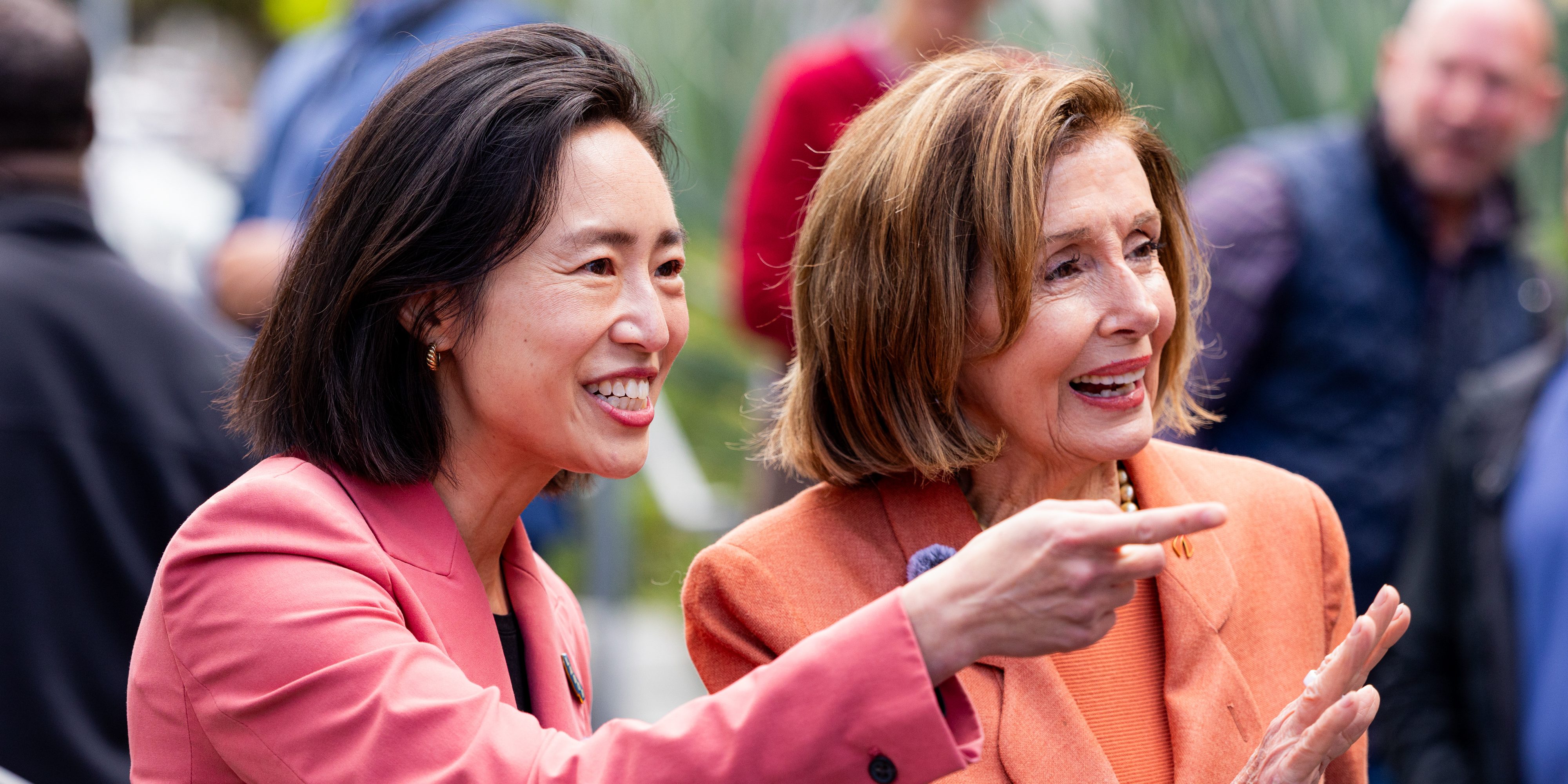
Former House Speaker Nancy Pelosi’s preferred successor for her San Francisco congressional seat has gained the endorsement of the political arm of the pro-Palestine and anti-genocide advocacy group TrackAIPAC after pledging to back an arms embargo on Israel if elected to Congress.
Connie Chan, a progressive member of the San Francisco County Board of Supervisors, already has the backing of establishment Democratic figures such as Pelosi and Sen. Adam Schiff, D-Calif., along with influential local labor groups. But the endorsement from Citizens Against AIPAC Corruption, the political advocacy offshoot of TrackAIPAC, is a notable move to further differentiate Chan from her opponent, state Sen. Scott Wiener. Wiener came out 11 percentage points ahead of Chan in California’s June primary election, sending the two to a general election runoff that excluded Saikat Chakrabarti, then TrackAIPAC’s preferred candidate.
“In Congress, we will oppose any aid to Israel and do everything in our power to stop their government’s genocidal actions against the Palestinian people,” Chan said in a statement to The Intercept. “We are proud to stand with groups like End Citizens United and Citizens Against AIPAC Corruption to fight to fix our democracy.”
Israel and Palestine have featured heavily in the race to replace Pelosi, who is retiring at the end of the current congressional term. Days after Chakrabarti’s defeat, he dedicated his remaining campaign funds to form a PAC to support Chan, citing her position on sending U.S. weapons to Israel and her vow to “vote to end all military aid to Israel – offensive and defensive.”
“We will oppose any aid to Israel and do everything in our power to stop their government’s genocidal actions against the Palestinian people.”
To earn TrackAIPAC’s endorsement, Chan filled out the group’s questionnaire, in which politicians seeking the group’s backing swear off money from pro-Israel lobby groups like the American Israel Political Affairs Committee, agree that Israel’s war in Gaza amounts to a genocide, and promise to oppose all U.S. weapons transfers to Israel, consistent with positions Chan had taken earlier in the race.
Last week, the majority of House Democrats voted in favor of cutting military aid to Israel from the National Defense Authorization Act legislation, which sets the budget for Pentagon spending. The measure failed, but the vote marked a dramatic shift in a Congress that has long granted military aid to Israel with scant opposition. With the recent endorsement and arms embargo pledge, Chan signaled her position among the changing tides in the party. She also is against U.S. involvement in Israel’s invasion of Lebanon and said on her website that she would have voted in favor of the failed House resolution calling for the withdrawal of U.S. support for the war.
“We heard from many of Connie’s constituents in San Francisco, as well as supporters around the country, who wanted a clear statement of her positions on Gaza, Lebanon, and America’s role in both,” a TrackAIPAC spokesperson told The Intercept in a statement. “We were proud and pleased to offer her that opportunity through our endorsement questionnaire, an opportunity her opponent, state Sen. Scott Wiener, has not taken.”
For his part, Wiener makes a distinction between offensive and so-called defensive weapons to Israel. He says that he would vote in favor of the Block the Bombs Act in the House, which seeks to halt arms transfers of certain munitions to Israel, but that he backs providing U.S. support for Israel’s missile interceptor systems Iron Dome and David’s Sling. Earlier in the race, Chan had taken a similar position, telling Mission Local in January that offensive weapons should be banned while U.S. support for defensive weapons should be paired with humanitarian aid to Gaza. In recent months, she has shifted toward an arms embargo on all U.S. weapons to Israel.
Positions Wiener held earlier in his political career, such as opposing local resolutions calling for a ceasefire in Gaza and supporting state legislation that free speech advocates have said censors pro-Palestine expression in schools, continued to follow him on the campaign trail. Wiener has remained an opponent of the Palestinian-led Boycott, Divestment, and Sanctions movement, while Chan’s platform calls for sanctions on Israel over the genocide in Gaza and its expansion of West Bank settlements and asserts the free speech right to boycott. The TrackAIPAC endorsement pledge also opposes efforts to pass laws that punish people who participate in the BDS movement.
Last month, Wiener was chased out of the San Francisco Trans March by attendees who called out his record on Palestine, with one attendee yelling, “I think your policy on genocide in Gaza is terrible — you do not belong here anymore.” Days earlier, another person filmed his confrontation with Wiener at a bar during a World Cup match, calling him out on his support for Israel and his housing policy.
Wiener decried the incidents as harassment, a line that both Chan and Pelosi also held, condemning both confrontations. Chan said she understood the role of public disagreements, but added, “As someone who has been a target of hate and threats of violence I stand firm and threats of violence and hate speech.”
Chan also came under fire just days from the primary election for supposed connections with the pro-Israel lobby. Reporting from Drop Site News revealed that Chan had received support from Pro-Choice Majority Action, a PAC with funding ties to AIPAC’s super PAC and Democratic Majority for Israel, formed as an alternative to AIPAC amid Democratic disillusionment with the flagship pro-Israel group. At the time, Chakrabarti used the revelation to claim that AIPAC had attempted to keep him out of the general election because of his support for Palestinian human rights. Chan rejected the claims and said she encouraged any groups supporting her to reject funds tied to AIPAC.
Now, with support from both Chakrabarti and TrackAIPAC, which made a name for itself by running fierce social media campaigns against lawmakers who received money from the pro-Israel lobby, Chan is trying to put allegations of coordination with the pro-Israel giant to rest.
“Big corporations, billionaires and special interest groups are using their money to try and buy our elections,” Chan said. “But we know San Francisco is not for sale. We have never taken money from AIPAC or their affiliates, because we serve San Francisco and no one else.”
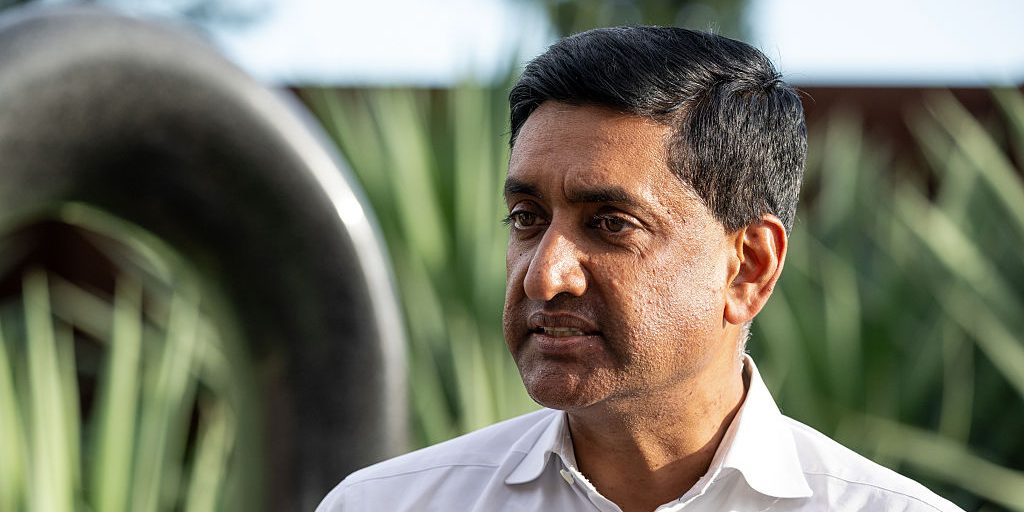
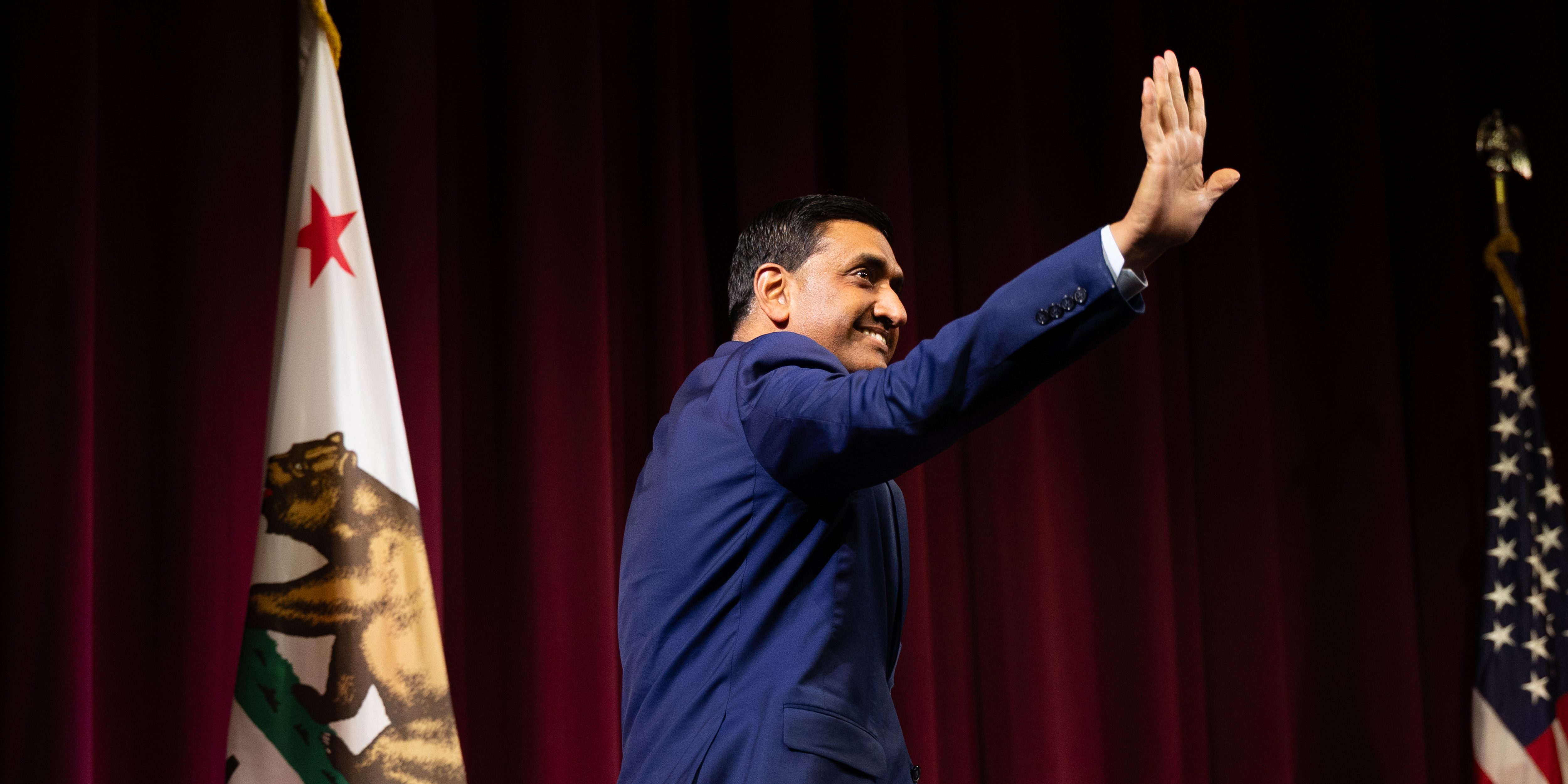
On a hot Wednesday afternoon in the Palestinian village of Zanuta, California Rep. Ro Khanna walked through the ruins of a Palestinian school demolished by Israeli settlers several years earlier.
While standing amid the rubble, one of Khanna’s staffers spotted an Israeli settler wearing a large smile on his face with an assault rifle draped around his shoulder, peering at the group through a broken window.
Khanna and his small delegation of his staffer Cameron Kasky, their driver, and a security guard hurried back into their van, Khanna and Kasky, a Parkland school shooting survivor and former congressional candidate, said in interviews with The Intercept.
Settlers had parked their car directly in front of them, blocking their exit along a narrow dirt road that juts from Highway 60 with rocky slopes and dry grass on both sides.
Over the next 75 to 90 minutes, Israeli settlers, who carried what appeared to be M4 assault rifles, intimidated and harassed Khanna and his group, who felt their fear rising from inside the van. The settlers proceeded to menace the Americans: They prevented the group from leaving the village, brandished their rifles, laughed and yelled taunts at the group, kicked the van’s tires, and wiped down the windows with their hands to gawk inside, recording the group and snapping photos. Khanna and Kasky said their security aide identified the men as members of the Hilltop Youth, an extremist settler group with a history of violent raids, which prompted more concern among the delegation.
A video provided by Cameron Kasky appears to show members of the Israeli military talking with the settlers who had blocked the road to stop Khanna’s delegation from leaving.
“It’s the most powerless I have felt,” Khanna told The Intercept. “They paraded around the van, laughing, smiling, brandishing the M4s. I have not been treated that way in any other country I’ve traveled to, including China. In any place that I have traveled, it’s the most arrogant and humiliating treatment of American citizens I have endured — I was quite shocked.”
“It’s the most powerless I have felt.”
Two white pickup trucks later pulled up and out stepped more armed settlers, according to video and footage reviewed by The Intercept. Later, another vehicle arrived carrying a group of four men and women dressed in green military uniforms, which their security aide identified as Israeli military, Khanna and Kasky recalled. Rather than attempting to resolve the situation, the soldiers joined the group, laughing and talking with the settlers, and at one point, smoking cigarettes together, they said.
Even after the security aide identified the group as an American delegation with a member of Congress, the settlers and soldiers did not budge. “The security person said this is the most concerned he’s ever been, and he’s done tours for decades,” Khanna recalled.
In this image provided by Kasky, the Khanna staffer who was part of the delegation, show a person they said was among the armed settlers who detained them on the road.Photo: Courtesy of Cameron Kasky
In response to a request for comment by The Intercept, the Israeli military acknowledged that “a report was received regarding Israeli civilians who were unlawfully blocking the vehicles of foreign nationals and members of the media.” The statement directly contradicted Khanna’s and Kasky’s account, with the military claiming soldiers had helped clear the group of settlers.
“Upon receiving the report, IDF troops were dispatched to the scene, quickly dispersed the Israeli civilians, and reopened the blocked road. The IDF soldiers operating in the area did not take part in blocking the road,” the military said, adding, “The identity of the armed individual is currently under review.”
“I’m a Jewish school shooting survivor, and I’m sitting here looking at Jewish kids who have the eyes of a school shooter.”
Kasky, who joined Khanna’s office in January following his own visit to the West Bank and has been working with Khanna on his Israel and Palestine policy, said he was afraid the incident would turn more violent, recalling accounts of settler attacks.
“I was sitting there like, ‘Are the Hilltop Youth about to blow a bunch of holes in our vehicle?’” Kasky remembered saying to himself. “I’m a Jewish school shooting survivor, and I’m sitting here looking at Jewish kids who have the eyes of a school shooter. So it was a very surreal experience for me.”
This photo provided by Kasky appears to show the settlers interacting with a member of the Israeli military. Khanna and Kasky said when they military arrived, they did not help clear their path, instead laughing, talking, and smoking with the settlers.Photo: Courtesy of Cameron Kasky
Harassment of foreign delegations in the West Bank is more rare. In September 2023, European Union diplomats reported harassment by Israeli settlers during a visit. In May 2025, Israeli soldiers fired warning shots toward a delegation of diplomats visiting Jenin, which included officials from the United Kingdom, France, Canada, and Ireland. The last reported instance of harassment toward an American delegation was in 2015, when settlers hurled rocks at diplomats investigating reports of settler attacks in the area.
Members of Congress have visited the West Bank in the past, but Khanna’s run-in with settlers is the first known instance of direct harassment by Israeli settlers toward a sitting U.S. lawmaker.
“Imagine what life is like for ordinary Palestinians who do not have a national platform.”
During the incident, Khanna said he phoned an official in the U.S. Embassy, which urged the group not to escalate the situation. After more than an hour, the group of settlers and soldiers suddenly drove off. Shortly after, Israeli police arrived and instructed the group not to return under threat of arrest.
“I thought to myself, if they can do this to an American member of Congress and to American citizens, imagine what life is like for ordinary Palestinians who do not have a national platform, who can’t just pick up the phone and call the American embassy,” Khanna said.
The recent trip wasn’t Khanna’s first visit to the West Bank. In 2022, Khanna joined a delegation of lawmakers, led by Rep. Nancy Pelosi, D-Calif., and visited with leaders in Israel and Palestinian leaders in Ramallah. Khanna’s remarks praising Israel’s tech industry drew criticism from pro-Palestine advocates, who at the time accused the lawmaker of using the visit as a “photo op” to “whitewash Israeli apartheid.”
Khanna had long branded himself as an anti-war figure. In 2004, he ran an unsuccessful bid for Congress centered around his opposition to the Iraq War. And after being elected to Congress in 2016, Khanna would help spearhead an effort to halt U.S. military support to Saudi-led military intervention in Yemen’s civil war.
Israel, however, remained a blindspot. But since the October 7 Hamas attacks and the start of Israel’s genocide in Gaza, Khanna has evolved from a pro-Israel Democrat who regularly voted to send military aid to Israel into one of its staunchest opponents, especially as he gears up for a potential 2028 presidential run.
Khanna is a co-sponsor to the Block the Bombs bill and in April said he opposes the transfer of all U.S. arms — both offensive and so-called defensive weapons — to Israel. Last month, he attempted to strike a portion of the National Defense Authorization Act that seeks to codify Israel’s joint development of weapons with the U.S. and said he would also urge senators to oppose the pro-Israel proposal. Khanna is also a co-sponsor on the West Bank Violence Prevention Act, which seeks to codify sanctions on Israeli settlers, and in January, introduced a resolution opposing the expansion of settlements. In his war powers resolution against the Iran war, he said in June 2025, “U.S. involvement in Israel’s war with Iran is a red line.”
After the run-in with Israeli settlers, the congressman put a finer point on the need to stop arming Israel.
“We’re supplying them the M4s that they’re using to detain American citizens,” he said. “We’re supplying them the weapons that they’re using to kill Palestinian Americans. We’re supplying them the weapons that they’re using to commit terror on the Palestinian population in the West Bank. It is simply inhumane, and the United States needs to not just sanction these extremist settlers — we need to demand that the IDF start to demolish the outposts in the West Bank.”
“We’re supplying them the weapons that they’re using to kill Palestinian Americans.”
Khanna said he still differentiates between settler outposts and larger, long-standing Israeli settlement communities that function as suburban neighborhoods. While he believes outposts should be dismantled, he said the larger settlements should be subject to a land swap with Palestinians as part of a broader political deal to grant Palestinians sovereignty. Yet he still opposed the expansion of the larger settlements and said U.S. funds should not be used to construct such developments.
As Congress took its summer recess, Khanna took the three-day visit to the West Bank this week at Kasky’s urging. The American journalist Jasper Nathaniel, who extensively covers the West Bank and facilitated Kasky’s previous visit, had invited Khanna to visit and connected the group with local Palestinian residents, businesses, activists, and leaders.
When Khanna and Kasky landed in Tel Aviv on Tuesday, Kasky said Israeli airport security took him to a back office where officers questioned him for 40 minutes while showing him a printed screenshot of his Twitter profile where he had previously written in his bio “Stop funding genocide” and a separate printout of a tweet by a pro-Israel user who had spotted Kasky at Tel Aviv’s Ben Gurion Airport in December 2025. The officials continued to hold Kasky despite Khanna identifying him as a part of his office.
After his release, Kasky said he received notification that the Israeli government had revoked his travel visa.
“I’m probably never going to get into the country again,” he said.
During the wide-ranging trip, the delegation spoke with Palestinian shopkeepers in Hebron, who reported harassment from neighboring Israelis who from the upper floors hurled rotten vegetables and acid, and urinated on their stores below. Mayors of Bethlehem, Beit Sahour, and Beit Jala told Khanna of water shortages and the Israeli military-imposed restrictions on Palestinians from drilling new wells, while Israeli settlers enjoy unfettered access to water. Khanna met with the relatives of Amer Mohammad Saada Rabee, the 14-year-old Palestinian American from New Jersey who was shot and killed by Israeli soldiers in April. Other Palestinian residents, including American citizens, spoke of settlers destroying their cars and raiding their homes. The brother of Awdah Hathaleen, who was shot dead by the Israeli settler Yinon Levi in July 2025, told Khanna how he still sees Levi roam free as Israeli prosecutors mull whether to charge him.
On Wednesday, the same day of the incident with Israeli settlers, Khanna’s group had been held up for more than an hour by Israeli officials in Masafer Yatta, where the Israeli government constructed a large metal gate on the only road in and out of the area. Khanna, who is Hindu and of Indian descent, said he has never been more acutely aware of his identity as when he was in Palestine, with Israeli guards constantly asking about his race and religion.
Khanna — who is a ranking member of the House Armed Services subcommittee on Cybersecurity, Innovation Technology, and Information Systems — urged other members of Congress, especially other ranking members in foreign policy committees, to also visit the West Bank in Palestinian-led visits.
He said he would raise the issue of the settler incident with the State Department and his colleagues in Congress.
“I am convinced that the most pro-Israel candidate — who may dispute my characterization of genocide by legal means, who may disagree with me in my belief of a Palestinian state, who may argue with me about Israel taking preventive measures, in their view, to minimize civilian casualties — even such a person, if they spent one day in the West Bank,” Khanna said, “if they visited the Palestinians side of Hebron, if they visited Um al-Khair, if they visited Palestinian towns and villages in Areas A and B, if they saw the settler’s outpost, they would conclude that it is apartheid, that it is unjust, that it is a perversion of Judaism in any form of civilized human existence.”
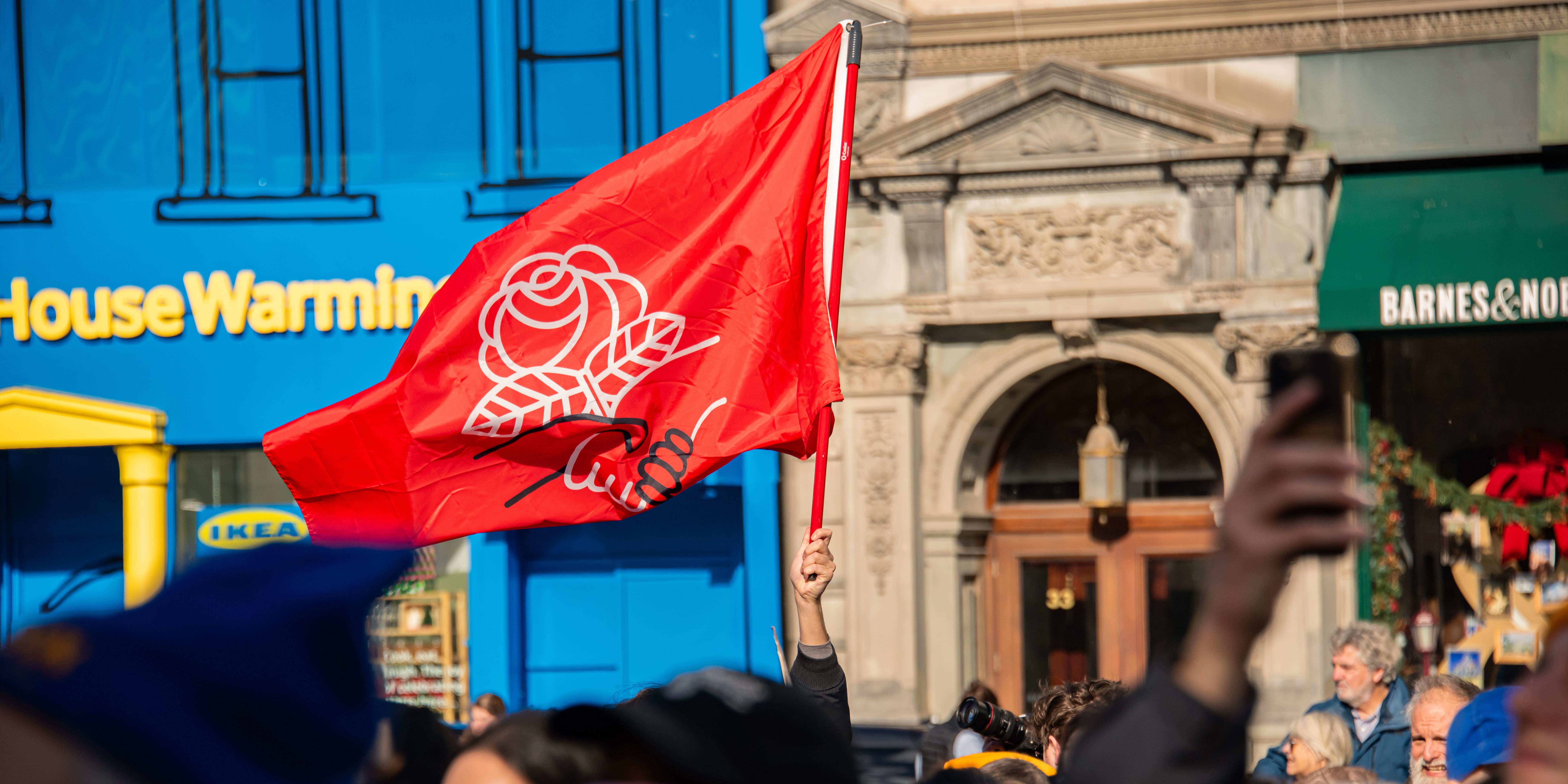
As democratic socialists toppled establishment favorites this midterm cycle, the old guard of the Democratic Party picked up a preferred cudgel against insurgents: These people were propped up by white, urban, coastal, educated electorates — not the ones the Democrats were trying to reach, and certainly not the working class.
It’s true that the four victorious socialists running for Congress — Chris Rabb in Philadelphia, Darializa Avila Chevalier and Claire Valdez in New York City, and Melat Kiros in Denver — won in major cities where progressive politics are more likely to be popular than in the country’s many more rural, poorer, and less educated districts. But before this cycle’s big surge, the Democratic Socialists of America had spent the past decade backing and recruiting candidates in down-ballot races across the U.S., multiplying the number of people in office by a figure of eight and electing mayors, city councilors, state lawmakers, and other local officials in 39 states.
“Everybody is feeling the crunch. Everybody is deeply concerned for their families, for their security,” said Becky Cooper, campaign manager to Francesca Hong, a Wisconsin state representative and formidable DSA candidate for governor. “That transcends political party, transcends ages, and it transcends geography. This is not just a coastal elites thing.”
Despite the narrative that the socialist model only works among electorates dominated by young, white, coastal elites, the DSA, the largest socialist organization in the U.S., is decentralized and operates chapters in a majority of states. Its members currently hold office in states like Ohio, North Carolina, Texas, and Tennessee. Many of those candidates have been elected to local offices even as far-right campaigns to take over bodies like school boards have dominated in recent years. Since 2018, 305 DSA-backed lawmakers have won their races. Democratic socialists won state legislative primaries this season in Georgia and Kentucky, and they’re on the ballot in upcoming primary races in Florida, Michigan, Minnesota, and Wisconsin, where Hong has polled first or second in recent months in a tight gubernatorial primary.
In order to win, they’ve built what some might call a machine, joining forces with more mainstreamprogressive organizations to marshal resources against a well-financed political establishment that buried candidates on the left in 2024.
Their success has sent the Democratic establishment into a frenzy. Dismissing the wins in his backyard, House Minority Leader Hakeem Jeffries said the socialist victories in New York were concentrated in “higher-income districts” with an “outsized focus on issues connected to the Middle East.”
But while Valdez and Avila Chevalier won a majority of voters in areas dominated by the young, wealthy, and college-educated, Avila Chevalier beat longtime incumbent Rep. Adriano Espaillat among Black voters, while Valdez dominated over Brooklyn Borough President Antonio Reynoso among majority-Hispanic precincts — suggesting the socialism-curious share of the electorate is more complex than its critics might make it seem.
It’s “a very reductionist identity politics from pundits and critics who don’t have anything meaningful to offer working-class voters.”
“People are going to keep trying to move the goalposts to pretend like this isn’t a movement sweeping the nation,” said democratic socialist New York state Sen. Jabari Brisport, pointing to another DSA member who won a primary upstate in Buffalo. “It’s an attack line that will keep coming again and again, a very reductionist identity politics from pundits and critics who don’t have anything meaningful to offer working-class voters.”
According to Cooper, Democratic leaders hold responsibility for the surging popularity of the socialist brand.
“The socialist label is more popular than the Democratic label because people are recognizing that they’ve been fed a bill of lies through capitalism,” she said.
Democratic socialists looking to take over the governor’s mansion in Wisconsin say their message isn’t contingent on geography, race, or class.
“You’ve had throughout history political leaders use socialist policies without actually calling it socialism,” said Wisconsin state Rep. Darrin Madison, the first Black socialist elected in the state. He pointed to policies like the New Deal, the eight-hour workday, and Social Security. “Building systems of mutual aid, that’s a form of socialism,” Madison said.
Wisconsin’s long history of socialist politics has enjoyed a revival in recent years. Milwaukee sent the first socialist to the House in 1910 and elected three socialist mayors over the next half century, but the state’s socialist caucus died out in the early 1930s — after passing close to 300 bills in the preceding decade. Frank Zeidler, elected Milwaukee mayor in 1948, was the last socialist elected in the city until 2020, when voters elected Ryan Clancy to the County Board of Supervisors. Two years later, Madison and Clancy won election to the state Assembly; the first thing the pair did after taking their oaths of office was to found the Socialist Caucus, which had died out in the 1930s. The caucus doubled in size last year to four members, adding Hong and state Rep. Christian Phelps.
Socialists resuscitated their Wisconsin roots at a time when Democrats had earned a reputation for shirking their responsibilities at every level of Wisconsin’s government. After Bernie Sanders beat Hillary Clinton in the state’s 2016 Democratic primary, its general election voters swung toward Donald Trump — clinching his first presidency. Until current Democratic Wisconsin Gov. Tony Evers was elected in 2018, the state was under full Republican control.
“The last time that Wisconsin had a [Democratic] trifecta was 16 years ago now,” Clancy told The Intercept. After Democratic Gov. Jim Doyle did not seek reelection, the Democratic candidate lost the 2011 governor’s race to Republican Scott Walker, and the GOP flipped both state legislative chambers. “The Democrats at the time squandered that opportunity, and they really failed to deliver for the state.”
Those failures, Clancy said, included not codifying abortion rights ahead of the Supreme Court decision to overturn Roe v. Wade, and not raising the minimum wage, which is still $7.25 an hour, when they had the votes to do so. “They didn’t even bring it up for a vote because they feared what that would mean for their large-dollar donors,” Clancy said.
Cooper said Hong’s campaign is hearing from voters who are increasingly blaming the capitalist system for the problems they see around them. In response, the campaign is talking about what it says is the true definition of socialism, Cooper said: “Taking care of our neighbors, taking care of people’s economic needs.”
“They’re waking up to the fact that it is capitalism at the heart of these issues. It is people profiting off of our neighbors being sick, or not being able to afford groceries or not being able to afford their credit card bills, when we see that people are becoming billionaires while we’re suffering and literally just trying to feed our families,” she said.
Hong’s performance in recent polling shows that socialist policies are resonating with voters, Madison said.
“When folks say this is a reflection of the elites and folks from academia and young folks in college, that does a disservice to community members and their abilities to understand the circumstances that they are in and the ways in which parties have exploited their pain,” he said.
“It doesn’t speak to the reality that folks are facing.”
Nearly 2,000 miles southwest of Wisconsin’s capitol, the city of Los Angeles has all the markers of a coastal haven for democratic socialist politics to thrive: a large working class, high racial diversity, a significant immigrant population with a rich history of progressive organizing, all existing alongside pockets of wealthier, whiter, college educated residents who lean left. The city has its own storied history of socialism and nearly elected a socialist mayor in the early 1900s, riding a wave of labor and working-class support and drawing on the socialist model of Milwaukee.
Since 2020, the LA DSA chapter has gained a foothold in City Council with challenges to the Democratic establishment. When Nithya Raman unseated an incumbent that year with the backing of DSA LA, the victory sent shockwaves throughout an LA establishment — then the DSA repeated the feat three times in subsequent cycles.
Now, Raman has a chance to unseat incumbent Democratic mayor Karen Bass in November, tempting comparisons that suggest the city is on the cusp of its own wave of governmental transformation akin to New York under democratic socialist Mayor Zohran Mamdani. Yet DSA LA has struggled to break out of its main stronghold of the city’s east and northeast sides, into some of the city’s power centers, such as South LA, which has majority Black, Latino, and working-class precincts.
“If we’re serious about building power in the areas where we want to build power, then the process has to begin much earlier than a candidate coming to DSA” for an endorsement, said DSA LA co-chair Leslie Chang. She acknowledged the need to break out of LA’s own “commie corridor,” where many DSA members live.
Like in New York, DSA LA has had to battle accusations that its candidates only draw support from white, college-educated voters, despite winning in multiple districts with majority-Latino residents. This reality played out in two city council races on LA’s west and south sides, where one DSA candidate lost outright and the other made it to the runoff — but trailing the establishment pick by 13 percentage points.
Chang, who spent a week in New York knocking on doors and phone-banking for that socialist slate, said the LA chapter needs to follow New York’s lead to train and identify “homegrown” candidates within the organization.
“We need multi-year power building plans for a lot of the things that we want to achieve,” Chang said. “We have to commit to working on projects, like non-electoral campaigns in districts, to become better embedded in that community that we want to represent.”
While DSA found success in its first citywide race when its endorsed city attorney candidate, Marissa Roy, locked out the incumbent from the top two and made it to a November runoff, its members were split over whether to back Raman for mayor or long-shot candidate Rae Huang. Its city council members endorsed Bass. Now, DSA LA’s larger membership has to weigh whether to endorse Raman in November’s runoff as she faces lingering mistrust among the organization and LA’s left after she diverged from her DSA colleagues on key housing issues and on Palestine and Israel. If she does want to unlock the group’s army of canvassing volunteers, Raman would need to collect at least 50 signatures from DSA members, sit for an interview with its electoral politics committee, and fill out a questionnaire that would likely include policy commitments important to the group.
Still, recent socialist victories have had a reverberating effect on the nation’s second largest city. The LA chapter saw bumps in membership after Mamdani’s election last year and another after New York’s congressional primaries, adding 70 new members to its total of 5,000. Chang said the wins in New York have also energized the chapter to begin building toward electing members to the California State Legislature, where only one current DSA member from the Silicon Valley is serving. Elsewhere in California, Mai Vang, endorsed by the Sacramento DSA chapter, is headed to a runoff after leading longtime Democratic incumbent Rep. Doris Matsui; the previous person who held the seat was Matsui’s husband Bob.
“When New York wins, LA wins,” said Sean Wakasa, a DSA LA co-chair with Chang, also mentioning the wins in Philadelphia and Denver. “We’re building politics that working-class people can see themselves in, and it’s built around addressing universal issues around affordability around the ability for people to work.”
DSA might bristle at the suggestion that it’s becoming a political machine. The group prides itself on getting buy-in from its members before taking a position on policy issues and having a painstakingly democratic structure — not the top-down politics they say has led to the downfall of the Democratic Party.
But DSA is playing the game. It’s one group in a coalition of lefty organizations whose chapters have beefed up their coordination this cycle to power socialist and progressive candidates.
In all four of its congressional primary wins so far this cycle, DSA chapters have teamed up with Justice Democrats, the left insurgent group that rose to prominence in 2018 when it helped get the first two DSA members of Congress elected — Reps. Alexandria Ocasio-Cortez, D-N.Y., and Rashida Tlaib, D-Mich. — but suffered last cycle when two of its newer incumbents, Reps. Jamaal Bowman of New York and Cori Bush of Missouri, were ousted by AIPAC-backed challengers. Now, joining forces with DSA chapters and Sunrise Movement, the youth-led climate group that has expanded its ambit to oppose war and authoritarianism, Justice Democrats is receiving mea culpas for previous death knells — as JD spokesperson Usamah Andrabi told The Intercept when Kiros won: “We’re just having an amazing fucking cycle.”
Groups on the left have also massively increased their spending in this year’s primaries after losing candidates last cycle who faced tens of millions of dollars in attacks from deep-pocketed super PACs and dark-money groups. Several pro-Palestine PACs are working or spending on primaries for the first time this cycle. The super PAC American Priorities, funded by Mamdani donors, has spent more than $4 million so far. Those investments have helped shift the dynamics in congressional races even in the face of similar outside spending against the left.
“Justice Democrats has the expertise to run federal challenger primaries — embedding in campaigns as staff and advisers, managing budgets, recruiting and training candidates, coordinating donors and leading independent expenditure programs,” Andrabi told The Intercept. “Combining that expertise with local DSA’s immense field and organizing power, which is unmatched in cities like NYC, delivers these monumental victories.
The national groups that helped power Kiros, Valdez, Avila Chevalier, and Rabb’s congressional campaigns don’t work on state-level races. But the DSA’s local Wisconsin chapters and another three campus chapters of the Young Democratic Socialists of America have endorsed Hong and are helping to boost her campaign by canvassing, fundraising, holding events, and calling voters. A new DSA chapter for Central Wisconsin formed last week and is also expected to endorse her.
Still, Hong’s campaign expects to face a surge in outside spending against her. “We know that super PAC money is going to come in, especially with Fran’s stance on data centers. We know AI money is going to come in,” said Cooper, Hong’s campaign manager. She also said she expects to face money from the pro-Israel lobby, though its flagship national group does not spend on state races.
“We know that we are never going to raise the most money.”
“That doesn’t change our message or our work. We know that we are never going to raise the most money. We know that we’re not going to have a ton of independent expenditures coming in to rescue us. We have 6,000 volunteers on the ground,” she said. The weekend after the New York primaries, the campaign knocked 10,000 doors in a day and a half. “That is how we will offset paid media and the spending and all those kinds of things, is getting people out to have real conversations.”
In addition to outside spending, Cooper said the current pearl-clutching around the rise of democratic socialist candidates was to be expected.
“Any time within the larger pendulum swings, there’s smaller ones as well.”
The political action arm of a Jewish anti-Zionist group best known for staging sit-ins to protest genocide in the halls of power is endorsing its first-ever candidate for U.S. Senate: Abdul El-Sayed in Michigan.
Jewish Voice for Peace Action is building off of the momentum from a string of victories for the insurgent left in Democratic primaries, where voters have repeatedly chosen outspoken pro-Palestine candidates to represent their party in the November midterms. The nominations signal a sea change in the Democratic Party and its electorate — adding a new class of members to Congress willing to question the United States’ unconditional support for Israel and putting heat on an entrenched political establishment.
“Abdul has been a stalwart and unapologetic defender of Palestinian rights and freedom, and his campaign has demonstrated a moral consistency that centers justice and equality for all people,” said Beth Miller, JVP Action’s political director. “This campaign is a historic opportunity to bring a leader into office who will fight for our communities here at home, and to reimagine a US foreign policy that supports freedom and justice, not genocide and apartheid.”
Ahead of the August 4 primary, El-Sayed is locked in a contentious three-way race with Rep. Haley Stevens, D-Mich., a centrist lawmaker with the backing of the Democratic establishment and the pro-Israel lobby, including its flagship warhawk lobby group, American Israel Public Affairs Committee; and state Sen. Mallory McMorrow, a self-styled progressive who has drawn endorsements from figures like Sen. Elizabeth Warren, D-Mass., and the liberal pro-Israel group J Street.
El-Sayed, who has the endorsements of Sens. Bernie Sanders, I-Vt., and Chris Van Hollen, D-Md., as well as progressive Squad members in Congress like Democratic Reps. Rashida Tlaib of Michigan and Summer Lee of Pennsylvania, has positioned himself to the left of both his opponents and has been a vocal critic of Israel’s genocide of Palestinians in Gaza since long before he launched his campaign. While many voters cite affordability and economic pressure as their top electoral concerns — especially amid rising prices spurred by the U.S. and Israel’s unpopular war on Iran — Israel’s genocide and apartheid conditions for Palestinian people have continued to animate political organizing across several congressional races this cycle.
That’s at least in part thanks to Jewish Voice for Peace, which has been instrumental in drawing public attention to the genocide in Gaza by organizing a wave of anti-genocide demonstrations across the U.S. – from college campuses to Wall Street and the Capitol. Its political advocacy and lobbying arm is a main backer of the Block the Bombs bill in the House, which has become a litmus test for progressive candidates in congressional races.
“There is a marked shift in the way that movements, organizations and voters are showing up to send a very clear message: that Palestine cannot be removed from a broader progressive agenda,” Miller said.
It’s considered harder to elevate a more radical candidate to the Senate, where a politician has to win statewide election, than it might be in a deep-blue congressional district with a progressive electorate. But Miller said El-Sayed was a standout — in the seven years since its 2019 establishment, Jewish Voice for Peace Action had never seen a Senate candidate that seemed worth its endorsement. JVP Action also backed candidates in the recent House races where the left won in New York,Pennsylvania, and New Jersey, though its preferred candidate lost in San Francisco. In Colorado’s primary election on Tuesday, JVP Action is also supporting Melat Kiros, an anti-war House candidate who was fired from her job as an attorney for refusing to take down her post on the genocide in Palestine.
The bulk of El-Sayed’s platform focuses on affordability, championing Medicare for All, a tax on billionaires, and labor protections against the AI industry replacing jobs. Yet his position on Israel has drawn perhaps the most scrutiny from his opponents.
Moderate Democrats condemned El-Sayed’s decision to invite influential streamer and political commentator Hasan Piker to a pair of campaign rallies at Michigan universities in the spring, claiming that appearing with the vocal anti-Zionist streamer was insensitive to the Jewish community in the wake of a horrific March shooting at a Michigan synagogue. McMorrow, whose husband and daughter are Jewish, compared Piker to the far-right, neo-Nazi podcaster Nick Fuentes in an interview with Jewish Insider, and she repeated that it was insensitive for El-Sayed to stump with Piker after the synagogue attack on CNN last week.
“I believe in freedom of speech,” she told CNN, “but we have a very diverse population here in Michigan — we have the largest Arab American population in the country, alongside a very significant Jewish population. We need to keep everyone together, not just to win, but to govern and represent this state appropriately.”
El-Sayed has repeatedly condemned the synagogue attack and decried the use of actual antisemitic violence as a cudgel to deflect criticism of Israel’s violence against Palestinians. “He knows our community intimately and cares for it,” said Miller of JVP Action, pointing out that El-Sayed grew up in close proximity to the Jewish community in Michigan, attending bar and bat mitzvahs and Seders and spending time at shul.
“Many candidates, many in the establishment of both parties, treat Palestinian safety, treat Jewish safety like political footballs that they can use to divide our communities in order to score political points,” Miller said. “What I have seen from Dr. El-Sayed, he is not going to play into bad faith smears and attacks.”
El-Sayed had not only weathered the political storm but may have benefited from the added attention. In polls over the past several months, he has consistently led Stevens and McMorrow, though margins remain slim in the tight three-way race. One recent poll by Zenith Research showed El-Sayed outperforming his Democratic opponents in a November general against the likely Republican nominee, Mike Rogers, largely due to El-Sayed’s popularity among progressive and younger voters.
The June poll also found that a plurality of Michigan voters — 46 percent — showed support for ending all U.S. weapons shipments to Israel, in accordance with El-Sayed’s campaign position. McMorrow says she supports blocking offensive weapons shipments, leaving room for so-called “defensive” systems like the Iron Dome, and Stevens supports continuing the unconditional flow of arms to Israel.
“At a time when too many have tried to pit communities against one another,” El-Sayed said in a statement, “JVP Action has shown that standing against antisemitism and standing up for the lives and dignity of Palestinians are rooted in the same commitment to our shared humanity. I’m deeply humbled and energized by their support and the movement they’ve built.”
After a resounding primary victory and ahead of a potential presidential run in 2028, progressive California lawmaker Rep. Ro Khanna has received the endorsement of the influential advocacy and watchdog group TrackAIPAC, known for posting red cards of lawmakers and candidates who receive money from the pro-Israel lobby.
Khanna, a Democrat representing parts of San Francisco’s Bay Area, is the first member of Congress to go from a target of TrackAIPAC’s online fury to the winner of its endorsement. Though Khanna never took money from the pro-Israel lobby giant, the American Israel Public Affairs Committee, he received a red anti-endorsement card from TrackAIPAC in 2024 largely due to his legislative record. Khanna has taken money from the liberal Zionist group, J Street, which opposed Gaza ceasefire attempts in 2023 but has since pushed for conditions on military aid to Israel.
“Rejecting AIPAC money isn’t enough — every member of Congress must be clear on these issues.”
Khanna’s TrackAIPAC endorsement, first reported by The Intercept, came after the lawmaker on June 10 became the initial signatory of a new pledge from TrackAIPAC called PEACE, the pledge to enforce American law, counter foreign influence and end war crimes. Among other commitments, candidates who sign the pledge swear off money from AIPAC and aligned groups, acknowledge Israel’s genocide in Gaza, oppose military aid to any country that commits human rights violations, and agree to stand against efforts in Congress to emmesh the U.S. and Israeli militaries.
“I’m proud to be the first member of Congress to sign the PEACE Pledge to reject campaign contributions and political support from AIPAC, DMFI, and other groups that promote unconditional support for Israel,” Khanna told The Intercept in a statement. “The pledge also affirms my opposition to the genocide in Gaza and my commitment to voting against future military assistance to any country whose security forces are committing human rights violations. Rejecting AIPAC money isn’t enough — every member of Congress must be clear on these issues.”
With the endorsement and the new pledge, TrackAIPAC is flexing its growing influence on the Capitol. Its viral social media posts have played a large role in making AIPAC into a politically toxic entity, helping drive underground much of its campaign giving in the midterms. Those posts have also compelled lawmakers, including Khanna, to seek meetings with the group in hopes of removing their red cards. With its political arm, Citizens Against AIPAC Corruption, TrackAIPAC has also been endorsing and funding candidates.
TrackAIPAC’s founders said they want to offer a good-faith offramp for members of congress looking to evolve on Israel and Palestine. Beyond tracking the pro-Israel lobby’s political spending, the group also serves as an advocacy organization pushing for Palestinian rights in the Capitol. It has claimed major midterm primary victories in races it has endorsed a candidate, such as in New Jersey with the victory Adam Hamawy, a former Army surgeon who volunteered in Gaza during the war, Chris Rabb in Pennsylvania and Mai Vang in California.
“We’ve been really effective at building a megaphone and bringing accountability to folks who are on the wrong side,” TrackAIPAC co-founder Casey Kennedy, told The Intercept. “But with that success we’ve had, now we have a responsibility to offer a bridge to folks to chart a new path forward.”
The group has attracted controversy over its methodology, which examines campaign financing as well as lawmakers’ legislative record on policies relating to Israel and Palestine. TrackAIPAC has at times assigned its red card to lawmakers who do not take AIPAC money, which critics have called unnecessarily confusing or misleading.
Last June, Khanna became the first lawmaker to meet with TrackAIPAC, according to the group, and asked why TrackAIPAC had initially assigned him a red card. By the time they met, the group had removed the red card but did not grant him its green seal of approval. Instead, it appended a label that remains on his page today stating: “We encourage this representative to continue improving their legislative record on Israel-Palestine issues.”
In contrast, Squad member Rep. Alexandria Ocasio-Cortez, D-N.Y. has a green card and a positive label stating: “This candidate rejects Israel lobby contributions. This representative has a strong legislative record on Israel-Palestine issues.”
Khanna had previously appealed to TrackAIPAC on social media, doubling down on his rejection of AIPAC support. The posts drew the ire of AIPAC, which relentlessly attacked him on social media, at times using TrackAIPAC’s own red card graphic.
Khanna’s stances on Israel and Palestine have shifted in recent years. In the immediate weeks after October 7, 2023, Khanna voted in favor of a string of pro-Israel House resolutions, including reaffirming Israel’s “right to self-defense” on October 25. A week later, he signed a resolution that condemned antisemitism and “the support of Hamas, Hezbollah, and other terrorist organizations” in colleges and universities. Khanna was also notably absent on early resolutions calling for a ceasefire.
Khanna has since become a loud critic of Israel and has voted against a bill that sought to codify the International Holocaust Remembrance Alliance definition of antisemitism, which has been used to silence criticism of Israel. In the summer of 2025, he cosponsored the Block the Bombs bill and signed on to a pair of resolutions by Rep. Rashida Tlaib, D-Mich., acknowledging Israel’s offensive in Gaza as a genocide and recognizing the Nakba. Earlier this month, Khanna attempted to strike a portion of the National Defense Authorization Act that would codify Israel’s joint development of weapons with the U.S.
It was also this month when Khanna’s office reached out again to TrackAIPAC to revisit the possibility of gaining the group’s endorsement, the group said. His office had been receiving inquiries about his “continue improving” label on TrackAIPAC’s presidential candidate list. At the time, TrackAIPAC had already been developing its pledge and offered it to Khanna’s office.
“Groups like AIPAC are pouring money into our elections and are influencing policies that undermine human rights,” Khanna told The Intercept in a statement. “When Track AIPAC offered, I was proud to sign the pledge.”
While Khanna has not formally announced a run for president, he is positioning himself to the left of the Democratic establishment on Israel. In April, he announced he supports the halt of both offensive and so-called defensive weapons to the country due to its human rights abuses.
Adam Carlson, a political consultant and pollster behind Zenith Research, who has been critical of TrackAIPAC’s methodology in the past, has said he expects other congressional and presidential candidates courting the left to sign on to the new TrackAIPAC pledge. But he doesn’t expect a shift from the kinds of establishment Democrats often in the crosshairs of TrackAIPAC over their support for Israel.
“It’s a flex – the more people they get to sign this pledge, the stronger they are,” Carlson said of TrackAIPAC, “But it won’t change the dynamic broadly.”
He cautioned of potential pitfalls, such as how the group will hold legislators who sign the pledge accountable and warned of the risk of purity tests on the left that could hurt certain candidates’ election chances in swing districts.
TrackAIPAC said anyone who abandons the pledge would again receive a red graphic and be targeted in the group’s intense social media campaigns. Cori Archibald, TrackAIPAC co-founder, also resisted the premise of a purity test. “If you’re gonna have a litmus test,” Archibald said, “I think genocide is certainly a good one.”

 Login
Login