“The safety of young people in the digital environment cannot be assessed without also considering the safety of young people in offline environments. For millions of young people around the world, the digital environment is their safe place, their haven from an unsafe physical environment, community, or family situation. The digital environment may be the best, perhaps only, place for them to find critical safety information and community, to explore ideas that are controversial in their families and larger physical environments, and to otherwise nourish their personal autonomy.
“For these young people, regulatory efforts that limit their access to online services or to certain features they find valuable, make their lives, in total, less safe, even if there has been some marginal safety benefit to their digital environment.
“The OHCHR must thus consider the whole of young persons' lives in any recommendations that come out of this process and not treat ‘safety, physical or mental health, and rights in the digital environment’ as disconnected from safety, physical or mental health, and rights elsewhere.”
So begins EFF’s submission to the global Call for Inputs on Child Rights and Safety in the Digital Environment conducted by the United Nations Office of the High Commissioner on Human Rights. The OHCHR is preparing a report on the issue to be presented to the UN Human Rights Council at its 64th session in the first quarter of 2027. The Human Rights Council requested the OHCHR to solicit input from a wide range of stakeholders, including child and youth perspectives, and convene five regional consultations to assess the risks to the safety of the child in the digital environment and best practices to address these risks in different geographical areas, bearing in mind current and emerging business models.
The OHCHR acknowledges that young people today navigate a digital environment with both “unprecedented opportunities” and “serious and evolving risks,” and sets out a rights-based framing whereby “Children's 'safety' is therefore addressed through the full framework of their rights — with freedom from violence (Art. 19) and protection from exploitation and abuse (Arts. 34–36) as clearly defined obligations, situated alongside privacy (Art. 16), access to information (Arts. 13 and 17), expression (Art. 13), participation (Art. 12), and development (Art. 6). Protection and the full range of children's rights are understood as reinforcing rather than competing imperatives, and measures taken in the name of safety must not be used to restrict the enjoyment of other rights, such as the right to privacy and the right to participate.”
In light of this, EFF’s submission focused on the current general disregard for young people's speech and privacy rights by regulators around the world, all of whom seem far more interested in empowering parents rather than young people themselves, or meaningfully involving young people in the regulatory process. We emphasized the human rights-centered uses young people make of social media that were not specifically set out in the concept note. We also explained that too often, policy proposals aiming to remedy the issues of online safety for young people introduce limitations on access to online services and content rather than tackling the specific problems that people experience.
More specifically, our submission looks at:
the most significant risks to young people’s safety in the digital environment
how digital product design and business models drive risks to children's rights online, including in AI-mediated services
the inclusion of young people’s views in the design, governance, and regulation of digital environments
how equality and non-discrimination in access and protection can be ensured
the promotion of digital literacy, skills, and empowerment for young people
the impact of legislative and regulatory measures from the United States to Indonesia and Australia
importance of broader, more systemic interventions that can address address online harms
how global instruments and processes can protect young people online.
The internet is where young people learn, find community, explore their identities, access important information, and express themselves. Curtailing these opportunities doesn't make them safer. And requiring everyone to hand over sensitive personal information just to access online spaces creates privacy risks for all users.
As the OHCHR has acknowledged, the solution to the issue of online safety should not require a choice between protecting young people from danger or protecting their rights. Instead of restricting access, governments should focus on the systems that create these risks in the first place; tech companies must be accountable for their design choices, data practices, and surveillance-driven business models; and young people need to be included in the decisions that affect them.
News reports that next year’s U.S. military budget will top out at $1.5 trillion if President Donald Trump gets his way are misleading at best. The true total, if Trump’s proposal passes, could be at least $1 trillion higher.
Long before Trump took office, U.S. taxpayers have spent far more on the Pentagon — and its wars — than most know. For decades, Congress, the White House, and the Pentagon have hidden the military’s true cost through little-known bureaucratic practices and budgeting tricks. Journalists, academics, and think tank experts have, with rare exceptions, perpetuated the problem by repeating “official” numbers that don’t come close to telling the full story.
Data shows that the budget was already between $1.5 trillion and $1.8 trillion in the last full fiscal year, 2025, as detailed by a recent Project on Government Oversight, or POGO, report I co-authored. Trump’s requests would add another $781 billion, bringing the potential total to at least $2.581 trillion in 2027.
The troubling revelation that the government is misleading the public and effectively hiding hundreds of billions in military spending reflects the out-of-control nature of the Pentagon budget. It’s also the only sector of government spending that seems largely insulated from public scrutiny: Imagine the outrage if news broke that the government was hiding hundreds of billions in spending for public housing, Medicaid, or hunger prevention programs.
If Congress passes Trump’s full budget proposal, military spending will eat up around 75 percent of the discretionary budget Congress controls.
People have a right to know how much tax money goes to military spending. This is critical to debating the proper size of the military budget both on its own and compared to other spending priorities, particularly any program related to education or the social safety net. Understanding the military’s true cost means understanding where and how the government has been hiding the money.
Spending Hidden in Other Budgets
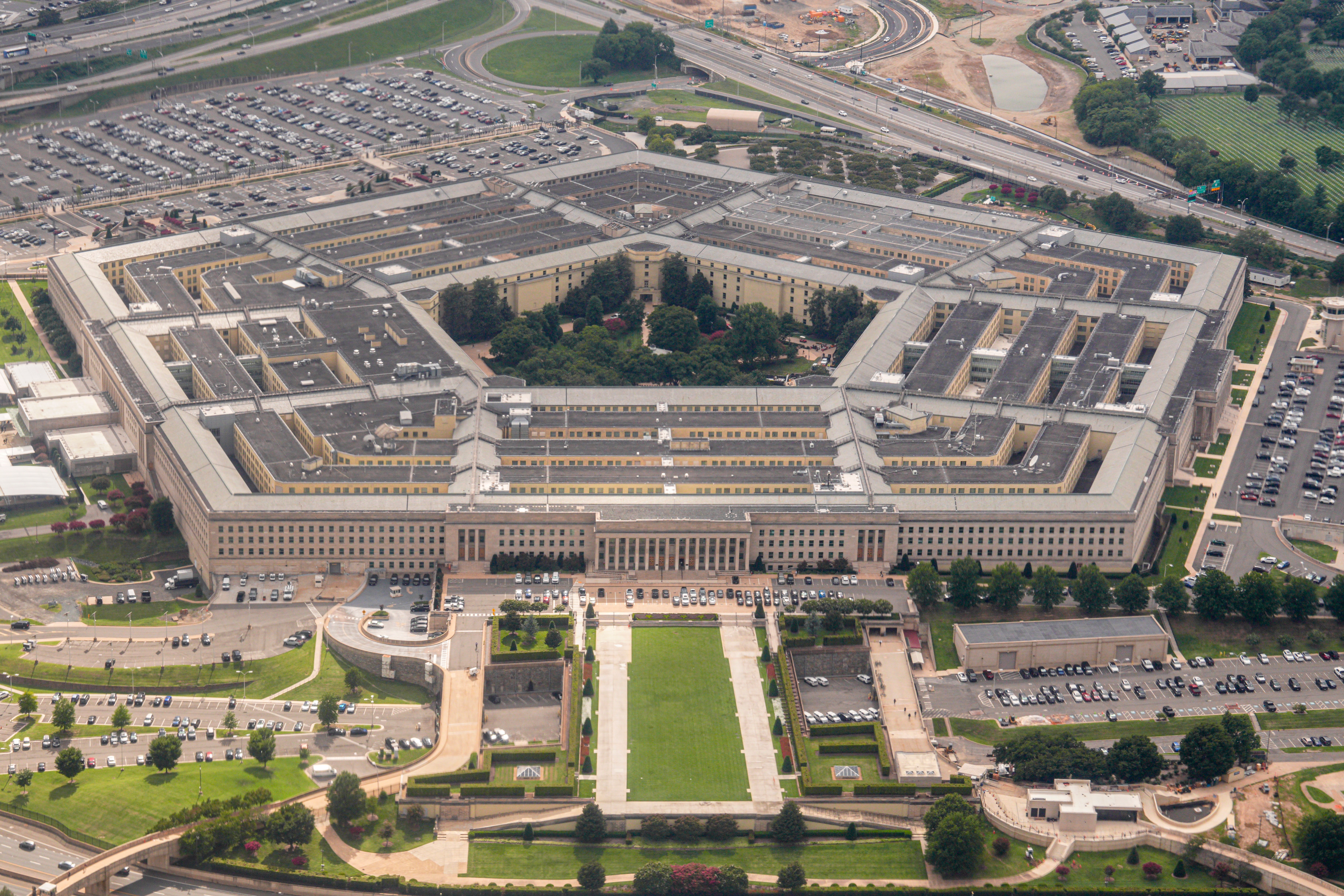
It’s difficult to untangle how much the country actually spends on the military in part because Congress pays for the armed forces and wars from many budgets rather than one. Beyond the agency controlling the military branches that Trump calls the “Department of War” (the official name is still the Department of Defense), hundreds of billions of dollars are effectively hidden in the budgets of at least 17 other government agencies and entities. In total, each of these additional sums are larger than what Congress appropriates for every non-military agency.
For years, TomDispatch and a small but mostly ignored group of budget expertshave warned that totalmilitary spending is far higher than reported. Our new POGO report consolidates this prior work and five different methodologies for calculating the true military budget. The report shows a consensus that military spending was at least $1.5 trillion, with three of five methods reaching similar estimates of $1.7 trillion to $1.8 trillion.
The newest of the five methodologies provides the easiest way for anyone to see the hidden spending. The methodology uses data from a government website, USAspending.gov, the product of a 2006 law requiring the government “to give the American public access to information on how their tax dollars are being spent.” The site includes the closest thing to actual spending receipts, making it easier to identify military spending beyond the Department of War’s budget.
Let’s take a look at where the money’s hiding.
Hidden Nuclear Weapons Costs: $33.8 Billion
The most obvious place where Congress and the executive branch hide military spending is in the Department of Energy’s budget. That’s where taxpayers can find the bill for the U.S. nuclear weapons arsenal, which cost around $33.5 billion in 2025.
The Department of War controls and deploys these weapons, and their costs should properly be part of its budget, not rolled into the Department of Energy. While the Energy Department plays a role in overseeing the U.S. nuclear weapons stockpile, putting nuclear weapons spending in the DOE’s budget is like a city putting the costs of its police department’s bullets in its transportation department budget rather than in the police budget.
Another $300 million in nuclear weapons spending hides in the budgets of the Defense Nuclear Facilities Safety Board and the Army Corps of Engineers, bringing the total to nearly $34 billion.
Hidden Military Personnel (Veterans) Costs: $393.3 Billion
Taxpayers spend huge sums on the military in the Department of Veterans Affairs and related budgets. The existence of a separate veterans’ agency is a sleight of hand that leads the public to believe this is not military spending. It is. The only difference is the appropriation of money to still another agency.
To recruit and maintain armed forces, any government needs to pay its troops and offer sufficient long-term benefits (such as pensions, medical care in retirement, and survivor benefits) to encourage people to join and stay in a dangerous job that involves the risk of killing and being killed. These forms of long-term compensation are personnel costs, just as much as basic pay, and they should be counted as military spending. If a military fails to spend money to support vets, it’s unlikely to function for long. The Bureau of Pensions for veterans was originally part of the War Department (which was the name until 1947, long before Trump’s rebranding) and its budget until 1849 when Congress transferred the bureau to the Department of the Interior.
Funding for the Department of Veterans Affairs adds another $389.8 billion to the USAspending.gov methodology total. Almost $4 billion more in long-term spending on personnel hides in the budgets of the departments of Labor, Justice, and several others. All told, these sums reach a staggering $393.3 billion.
Coast Guard and Other “Homeland Security” Costs: $16.8 billion
Spending for an entire branch of the military, the Coast Guard, is concealed in the budget of the Department of Homeland Security rather than the Department of War. While DHS controls the Coast Guard during peacetime and the branch plays some non-military functions, the Coast Guard is one of the armed forces and is controlled by the Pentagon in wartime.
Excluding non-military activities (such as improving boat safety and cleaning up oil spills), Coast Guard spending adds nearly $14 billion to the total military budget. Additional DHS expenses for programs to counter weapons of mass destruction, radiological preparedness, cybersecurity, and other military spending add just under $3 billion, bringing this total to $16.8 billion.
The True Cost of the Department of War: $1.3 Trillion
The bulk of military expenditures still appear in the Department of War’s budget, which pays for the armed forces and the rest of the Pentagon’s sprawling bureaucracy, including all the weapons, salaries, some benefits, military construction, fuel, maintenance, operational expenses, and much more. USAspending.gov receipts show the Department of War alone spent $1.273 trillion in 2025. The Pentagon controlled another $480 million in spending that hid in the budgets of the State Department, the U.S. Agency for International Development, and the Department of Transportation.
Combined with the $444.8 billion tallied previously, total military spending hits $1.718 trillion. That’s more than double the military budget usually reported for 2025: the $850 billion Congress appropriated to the Department of War.
Total Military Spending by Agency (FY2025)
Agency Name
Net Outlays ($)
Department of Defense
1,273,158,423,924
Department of Veterans Affairs
389,755,646,022
Department of Energy
33,538,322,898
Department of Homeland Security
16,798,958,047
Department of Labor
3,277,521,935
Department of State
461,862,025
Department of Justice
385,060,843
Army Corps of Engineers
260,017,630
Armed Forces Retirement Home
137,519,390
American Battle Monuments Commission
103,483,062
U.S. Court of Appeals for Veterans Claims
49,662,873
Defense Nuclear Facilities Safety Board
43,703,554
Agency for International Development
15,504,280
Department of Transportation
2,604,283
U.S. Chemical Safety Board
958,374
Social Security Administration
260,504
Department of Agriculture
0*
Executive Office of the President
0*
TOTAL
1,717,989,509,643
*No FY2025 spending. However, there was a $1 billion budget appropriation to the ExecutiveOffice of the President for “Submarine Security Activities, National Security Council.” The government also funded account line items in the Department of Agriculture budget to support the Air Force and Army.
Still Other Costs
The $1.7 trillion estimate for last year is conservative and still may be too low. While the War Department budget contains classified funding for the CIA, National Security Agency, and other intelligence agencies, the government mayhide more intelligence spending elsewhere. NASA space research involves considerable military work, which could add another $10.5 billion, according to USAspending.gov data. Some would also count $1.9 billion in FBI salaries and expenses found in the Department of Justice budget.
Other experts consider much larger expenditures in the DHS budget to be military spending, given that department’s role in protecting the “homeland” and the increasingly militarized nature of Immigration and Customs Enforcement as well as Border Patrol. This would add at least $216.9 billion after excluding DHS’s Federal Emergency Management Agency spending. Alternate methodologies also include $211.9 billion in interest payments on the more than $40 trillion in national debt stemming from past military spending and wars.
You can add and subtract forms of spending that you think belong or don’t belong in the true total, thanks to the transparency of the POGO report’s methodologies. In total, these excluded sums could add another $441.2 billion to the USAspending.gov method’s prior total of $1.718 trillion for 2025.
Growing Opposition to Unchecked Pentagon Spending
POGO report’s conservative estimates of the FY2025 budget being $1.5 trillion to $1.8 trillion reveal that the true military budget for 2027 could hit $2.6 trillion if Congress gives Trump what he wants. This includes requested increases totaling $781 billion for just the Department of War ($500 billion), the Iran war ($70 billion), veterans ($144.9 billion), nuclear weapons ($53.9 billion), and the Coast Guard ($12.5 billion), let alone other smaller forms of hidden Pentagon spending.
When mind-numbing numbers like these reach the trillions, it can be tempting to think, What does it matter if it’s $1 trillion or $1.5 trillion or $2.6 trillion?
It helps me to remember that every single dollar spent on the Pentagon is a dollar not spent on our children, on healthcare, on affordable housing, on efforts to slow catastrophic climate change, and much more.
If Congress passes Trump’s full budget proposal, military spending will eat up around 75 percent of the discretionary budget Congress controls. Every dollar spent on the Pentagon is also a dollar more for Trump to continue waging his illegal, disastrous war on Iran and the funds to make good on his threats to attack Cuba and other countries.
Advocates for increased military spending will likely insist that more money is always needed, no matter today’s true total. That these Pentagon boosters have cited incorrect figures and helped mislead the public for decades raises serious questions about their credibility and the basis for their seemingly endless demands for more money.
Thankfully, there’s growing resistance to Trump’s proposals. Nearly 6 in 10 people nationwide believe even the official $1.5 trillion request is “too high,” according to a recent poll conducted by ReThink Media and the Costs of War Project at Brown University, a nonpartisan research group (where I’m a contributor). And Democrats appear to be listening: They’ve voted against Trump’s budget in unprecedented numbers as it winds through Congress. Some Republicans have also expressed concerns about supporting Trump’s proposal given fears about the rising national debt.
There are growingcalls to cut the Pentagon budget by hundredsofbillions of dollars without touching salaries and benefits for troops and veterans. This would still leave the country with the world’s largest military budget by far and allow Congress to reallocate the savings to programs that improve the lives of everyday Americans.
The public needs a full, accurate accounting of the military. Congress could provide an annual True Total Military Budget that tallies all of the Pentagon’s spending in one place and stop hiding funding in other agencies’ budgets. Until this happens, journalists and analysts can help by explaining the full scale of spending and no longer repeating incomplete totals.
As Trump asks for the highest military budget in the history of the world and people continue to suffer the effects of his war with Iran — which has killed and injured thousands, increased the price of gas and groceries, and risks even greater catastrophic harm globally — it’s time to have an informed debate about how much the country really needs to spend on its military.
We start the day moored just opposite The Queens Head, after a quick poo walk and some breakfast, we started the last day of our trip. It feels odd that we may be back in the Marina tonight. While we are at Stoke Prior Lock No 24, we have some unusual spectators on the bridge, they seem to take it in turns to look over the bridge. Obi takes a while but in the end he sees them.
Today we are doing the Tardebigge Lock Flight! It is the longest flight of locks in the UK, comprising 30 narrow locks on a two-and-a-quarter-mile (3.6 km) stretch of the Worcester and Birmingham Canal. But before that Obi has his poo walk, and we have bacon in part bake rolls and a mug of tea. Yesterday the Tardebigge Lock Flight had been closed for ½ a day for repairs, and Sonia checked the…
Overnight this was a noisy mooring, it is very close to the main road and the railway line. We also had some people step on the boat after midnight, but Obi barking soon sent them away. In the morning he had his normal poo walk and the on the way back, I walked over to join them and we stopped at McD for breakfast and some mini hash browns…. When we retuned to the boat…
EFF legal intern Simar Kaur also contributed to this article.
Americans’ First Amendment right to equal access to official government statements is violated by the Trump administration’s use of Truth Social’s preferential treatment scheme, which blocks people who won’t pay Trump’s company up to $100,000 a month for early access to government news, EFF told a federal court.
The First Amendment guarantees that members of the public have equal access to public officials’ public comments, we reminded the court.
EFF filed an amicus brief in support of a motion for a preliminary injunction in the lawsuit filed by The Intercept Media and the Freedom of the Press Foundation against President Trump and other administration officials. The lawsuit challenges their use of Truth Social as their primary social media method of making official announcements when that platform provides people who pay a fee for early access to such posts.
Trump uses his Truth Social account as his primary means of communicating with the public, including to announce military operations and ceasefires, foreign and domestic policy, and the removal and appointment of heads of federal agencies. Earlier in the year, Trump Media, which owns Truth Social, announced “Truth API,”a service that provides investors early access to “market-moving” messages from the president and other high-ranking officials for a fee of up to $100,000 per month.
The plaintiffs, the Freedom of the Press Foundation and The Intercept, contend that the president and other officials’ preferred use of Truth Social with this service violates the First and Fifth Amendments of the Constitution. The plaintiffs are asking the court to immediately prevent the president from posting on Truth Social in a manner that allows him to profit from selling early access to government information.
EFF’s amicus makes two main points.
First, the brief establishes that social media is pervasively used by government officials and agencies as a medium for official communication with the public, including to disseminate critical public safety information and make official announcements.
Second, the brief explains that the challenged practice violates the First Amendment, which guarantees a right to access public officials’ public comments on equal terms with other members of the press and public. Giving some people preferential access must at a minimum be reasonably justified to satisfy First Amendment scrutiny, a test the administration does not meet.
Lining the president and his company's pockets is not a legitimate government interest for restricting timely access to the government's statements. Further, the fact that the public could ultimately access the information from other, less direct channels does not eliminate the need for First Amendment scrutiny; mere delays in timely access still trigger First Amendment scrutiny.
EFF has been advancing the First Amendment right of equal access to government’s public social media posts since at least 2018. We’ve argued that the right of equal access, which is well established in offline contexts, must apply to official government social media posts as well. This case presents an excellent opportunity for a court to directly adopt that position.
After a bit of restless night, Obi did not seem to be feeling very well, we spent a bit of time talking to Vets, but in the end we could do nothing for him until the morning. Once the morning came and he has been a little sick on a towel he was now feeling and acting like a normal Obi. Sonia took him for his poo walk and everything seem to be back to normal, but we will be keeping an eye…
Today started with Obi’s poo walk along the canal. Then we turned the boat around and headed back to the pump-out point at Black Country Living Museum. This time when we arrived there was only one boat moored and the pump-out was clear. We followed the instruction on the pump-out machine, we primed the pump by filling the pump-out hose with water, connected it to the boat and then waved…
Very slow start today, Obi had his poo walk along the canal to the junction with the BCN New Main Line and back past the RCTA Tipton Floating Market as it started getting ready for customers. Antony and Ellie, having a car, slipped off to McD to collect some breakfast and coffee, by the time we had eaten that and chatted for a while it was nearing 12am, so time to walk down to the RCTA…
The day started with Obi’s poo walk, then after his breakfast, we set off to visit the RCTA Tipton Floating Market. This is our second RCTA event this trip, we also came across one being held at Nantwich on Day 17 of our 2026 adventure. At todays one we had a target to find Lola the Cafe Boat and try the pizza, you can see more about that by clicking here. After returning back to…
Over the past few months we have been traveling on our canal boat, and 3 times we have seen Lola the Cafe Boat moored up, unfortunately one once was the boat trading, else I would be even larger than I am now. Today we went to the RCTA Tipton Floating Market, which is a small affair along side the canal just after The Fountain Inn on the Old Main Line Canal in Birmingham. At the end of the…
Today starts as normal with Obi’s poo walk along the canal, then he has his breakfast, while we walked to The Black Country Cafe for ours. This is a cheap cafe, the largest full English breakfast is £12 including Tea/Coffee, It comes on a very large plate with a mountain of food and the 3 slices of buttered toast on another plate. Unusually for me I could not finish it all.
We are moored just outside the Black Country Living Museum, and after Obi’s poo walk and breakfast today bacon and mushroom roll with a mug of tea, we are going to wander about looking at any new stuff etc. Today I have mostly been using the 360 panoramic images, with a short video, but before we could start we had a coffee in the The Workers’ Institute and then I got a message from…
After Obi’s poo walk, it was time for Sonia to get the weed hatch open, while I edited the videos from yesterday and finished writing yesterday’s blog post. After a while, Sonia called out for me to see our new carpet she had hauled out from around the propeller, not surprising that we had struggled the last bit of our journey yesterday. We had about a mile to go before the…
The day started with the traditional Obi poo walk along the canal, then we collected some shopping bags and walked to the local Tesco Superstore, where we had breakfast and stocked up on food for the next 3 days. Back at the boat we put everything away, untied and headed off towards the Black Country Living Museum, we do not expect to make it in one day, but we will be close.
Today we did not get up until after 9am, Obi then went with Sonia for a poo walk while I started the engine to warm the water and then had a shower, at last I can hear you saying, when they returned it was Sonia turn in the shower while Obi had his breakfast. We then decided to take a walk to see if we could find a place that served breakfast, that was on a plate, a rarity around here.
Early start for Sonia and our visitors today as Sonia eldest two children Nick and Jason are both running in the Stratford-On-Avon ½ marathon and 10K respectfully. Sonia went along to provide moral support for them and help with the children (that is her superpower). For me, I went back to bed, or to be truthful just turned over and tried to sleep while they got ready, then after it was…
Today, we are anticipating the arrival of Nick, Sarah and their two children for an overnight stay. Unfortunately, Mary will be departing us and we will see her in October when we return home to Weymouth. The day started as expected with Mary and Sonia taking Obi for his poo walk, with a little ball-throwing in a local park. After I tidied up and got dressed, we walked over to the local Nero…
By now you will be used to the start of the day process, Obi has his poo walk, then we got coffee from Nero and I cooked some bacon for Bacon rolls. This was also the first day of having my new DJI OSMO 360 camera, so expect some 360 videos and stills. Well after that, we needed to fill up with water – you can tell when we run out of water as the water pump does not stop making a running…

 Login