Reading view

There are new articles available, click to refresh the page.

Red Stone rebrands Explorer Scouts for a generation worn out by expectation
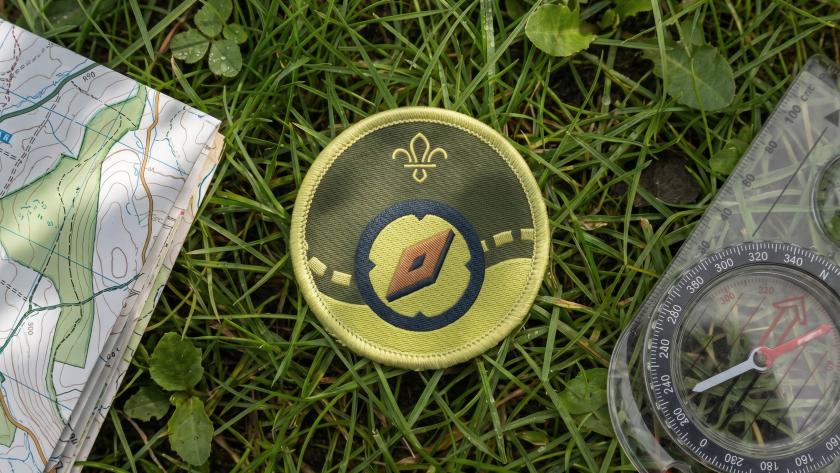
The London agency has repositioned the Scouts programme for 14–18-year-olds around a blunt new proposition: 'Grow up', with a compass-led marque, bold supergraphics, and 40 fresh badges.

When Explorer Scouts launched in 2002, most families shared a single home computer, if they had one at all, and social media didn't even exist. More than two decades on, the world has changed, and the brand built for teenagers was starting to show its age.

So Scouts brought in London agency Red Stone to reposition Explorer Scouts, the programme for 14–18-year-olds, and to build it a new identity: one that feels more relevant, inclusive, and authentic to a generation of brand-savvy digital natives who can spot a sales pitch a mile off.

It comes as new research suggests many young people feel less prepared for adult life, with teachers flagging worries about confidence, communication, and readiness for work. Alongside the rebrand, Scouts has refreshed the Explorers programme itself, co-designed with young people, to combine practical skills with creativity, leadership, and adventure.


This isn't school

At the heart of the work is a deliberately un-slick proposition: 'Grow up'. It's built on the insight that teenagers are exhausted by the constant pressure of expectation, at school and in life, leaving little room for curiosity or growth.

Rather than overpromising, the new positioning frames Explorers as a place where the journey matters as much as the destination – somewhere anyone can belong, but nobody has to fit the mould. A straight-talking brand personality, "Real curious", carries it through.

The identity puts young people front and centre. A new marque inspired by the compass gives Explorers a strong visual shorthand built around the idea of the journey, and a set of bold supergraphics extends out from it, subtly nodding to the iconic Explorer necker. Photography keeps things real rather than staged, capturing the friendship, energy, and randomness of being part of a club.

Room for the individual

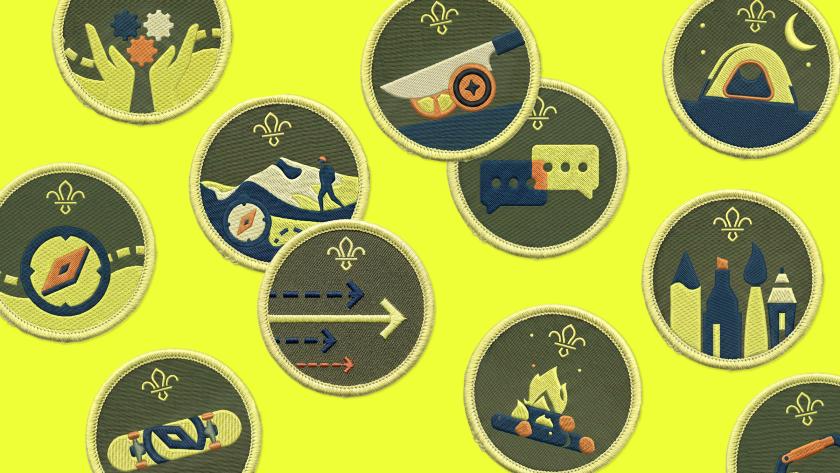
Although consistency mattered, Red Stone also built the brand so every unit and every Explorer can make it their own: a simple logo system and templated comms let each club create personalised materials that still feel on-brand, while a series of "logo expressions" loosens things up for merch. The agency also illustrated 40 badges to match the revamped programme – bold, accessible, and designed to add a pop of colour to every uniform.

"Red Stone has helped set a new direction for Explorers Scouts to meet the needs of Generation Alpha, balancing real-world skills and adventure with a powerful sense of belonging," says Chris James, brand and content lead at Scouts. "The brand feels fresh, equally at home on screen and in print. It's inspired by the outdoors, shaped by young people and truly captures the fun, friendship and freedom, pointing to brighter futures."
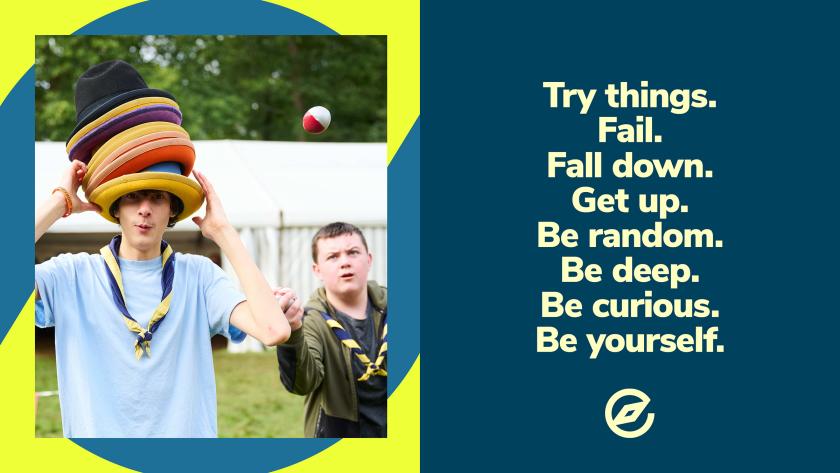

For Red Stone, the brief was about challenging assumptions. "Positioning Explorers as an antidote to the intense, always-on nature of life for teenagers today, we wanted to build a brand that embraced individuality, curiosity and most importantly, fun," says Rich Corr, associate creative strategy director at Red Stone. "From the strategy through to the graphic assets, the brand is welcoming, eclectic, and just a little bit irreverent."

The new look rolls out as Explorers gears up to relaunch and reach more young people than ever across the UK.

30-Year Sentence for Transporting Zines Is a Five-Alarm Fire for Free Speech

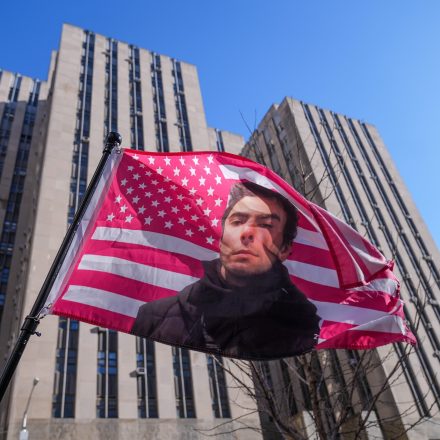
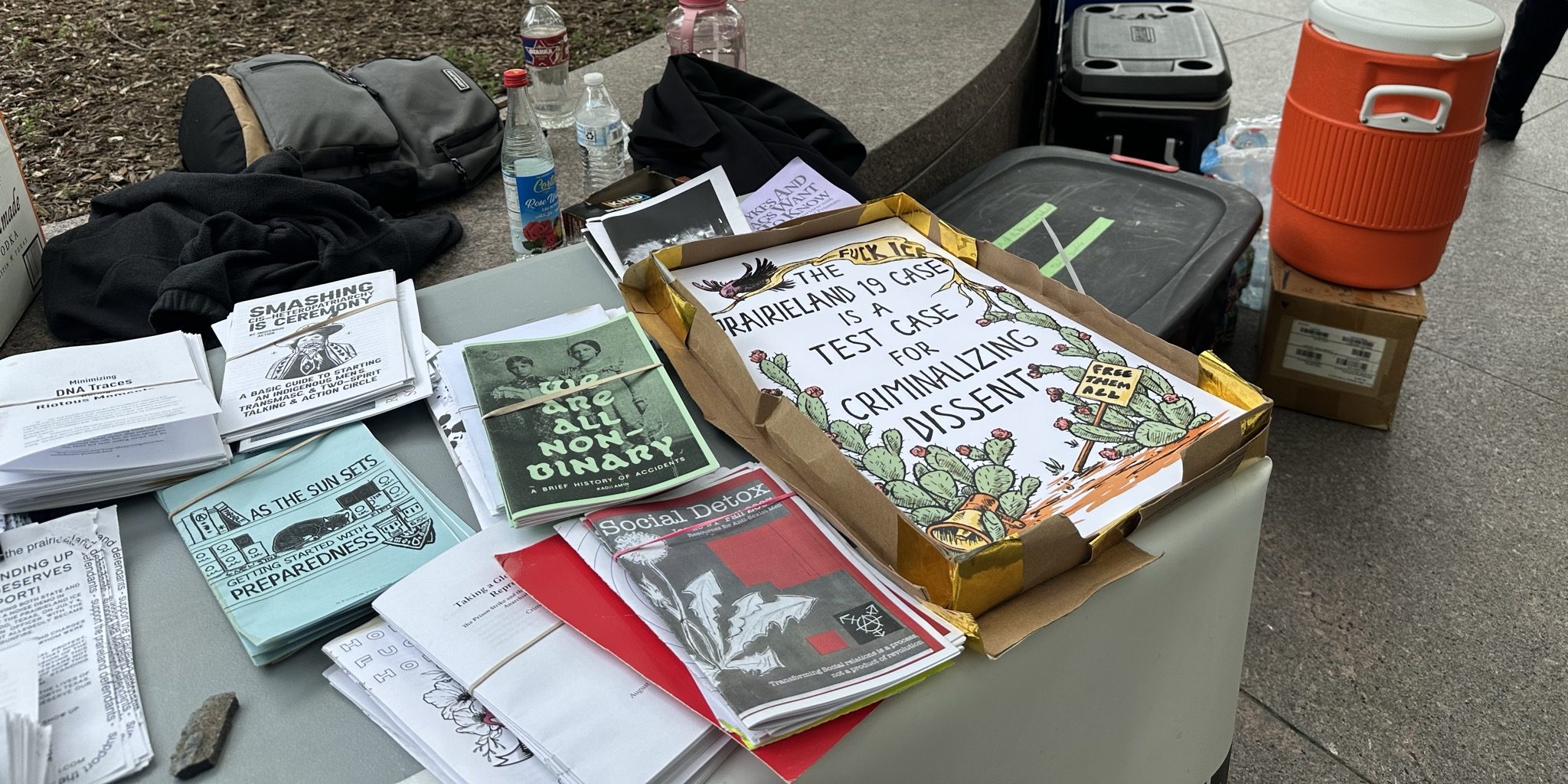
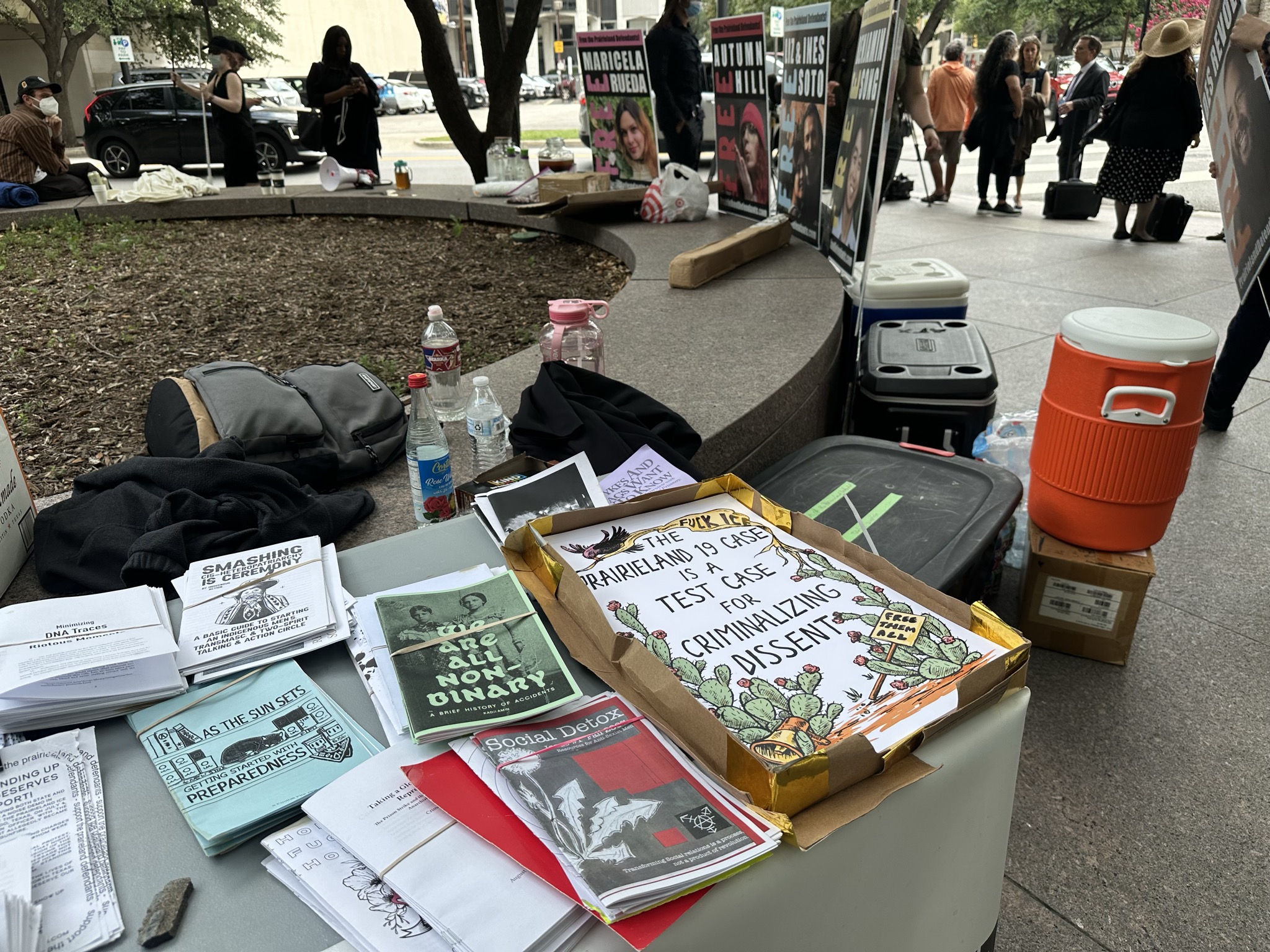
Supporters of the Prairieland defendants display pamphlets and artwork after their sentencing outside a Fort Worth, Texas, courthouse on June 23, 2026. Photo: Matt Sledge/The Intercept

The Trump administration attacking the right to publish or report information is a given at this point. The president has threatened journalists for everything from questioning the wisdom of his failed war with Iran to touching the peeled lining of his renovated reflecting pool

Tantrums like those may now feel routine, but this week marked a new front in Trump’s war on information: Daniel “Des” Sanchez Estrada was sentenced to 30 years in federal prison for transporting a box of zines he didn’t even write. He’s one of eight defendants sentenced on Tuesday to a combined 450 years — the first prison sentences against so-called “antifa” handed down under the framework of NSPM-7, President Donald Trump’s sweeping “counterterrorism” memorandum to clamp down on dissent from the left.

The prosecution’s theory was that Sanchez moved the zines, which discussed anarchism and other anti-government ideas, to conceal evidence in the case against his wife, Maricela Rueda. Rueda attended a July 4, 2025, protest at the Prairieland immigration jail in Texas where a police officer was shot. (She was not accused of shooting him or having anything to do with the shooting but was herself sentenced to 70 years.)

But that nuance is cold comfort: It assumes that simply possessing years-old political pamphlets that said nothing about the protest or shooting could somehow constitute evidence of a crime. Sharing the political ideology of the shooter, the government contended, meant Rueda and her co-defendants were culpable for the shooter’s actions — and by allegedly attempting to prevent officers from finding out about Rueda’s ideology, Sanchez shared in the blame as well.

We’ve reached the point in the erosion of the First Amendment where the government considers possession of anarchist zines and membership in a terrorist cell to be more or less the same thing. Once the box of zines was discovered, there was no need to prove Rueda planned or had any idea that anyone would be shot at the protest. 

What’s worse is that this will likely only ramp up the administration’s efforts to criminalize being in possession of information. Whatever you may think of former CNN host Don Lemon, he’s no anarchist or extremist, and the content of his broadcasts bears little resemblance to the zines Sanchez was convicted of transporting. And yet, after indicting him and independent journalist Georgia Fort on frivolous charges relating to their livestreaming of a protest at a Minnesota church, the government sought a warrant to obtain the identities of subscribers to their YouTube channels.

This will likely only ramp up the administration’s efforts to criminalize being in possession of information.

Fortunately, a judge rejected that warrant. But it’s a chilling revelation of the administration’s modus operandi. Lemon and Fort’s YouTube subscribers would, of course, have no knowledge of what happened at the church protest beyond what was publicly broadcast. Their identities are as irrelevant to whether Lemon and Fort committed a crime as the box of zines was to Rueda’s case. The only conceivable reason the government might want a list of YouTube subscribers is to keep an eye on people who watch disfavored shows. 

And let’s say someone who’d watched Lemon and Fort’s livestreams and then heard about their arrests had cleared their browser history because they (rightly) feared the administration might target them. Could they then be prosecuted for concealing evidence under the same logic applied to Sanchez? If they’d downloaded the video, could they be accused of possessing contraband? Would forwarding a link equate to trafficking? 

It all sounds preposterous, but virtually nothing is too absurd for this Department of Justice. In fact, it’s already argued that documents investigative reporters receive from whistleblower sources can constitute contraband. (It’s worth pointing out that Joe Biden’s DOJ used this same logic when it pursued its own ridiculous “transporting” of information case against Project Veritas for moving Ashley Biden’s diary across state lines). 

These frivolous actions create a catch-22 for all Americans. The more people are investigated for engaging with ideas the administration deems dangerously anti-government, the more likely others are to conceal evidence of their own controversial beliefs — not because they are evidence of any real crime but because prosecutors are out of control. But if they do so, they risk incriminating themselves. 

NSPM-7, which was issued last September, tasks federal agencies with dismantling networks of “anti-fascist” actors, a purposely overly broad term since expanded to include those with “extreme viewpoints on immigration, radical gender ideology, and anti-American sentiment.” 

Given that antifa, as a singular, cohesive organization, is a figment of the right’s imagination, agents cannot accomplish that task by uncovering a membership registry. They can only do so by identifying people with viewpoints they consider “extreme,” like anti-ICE protesters officers have told they’re being added to watchlists, or pro-Palestine opinion writers they’ve sought to deport. 

In Chicago and other cities ICE invaded, activists and organizers packaged whistles and zines to distribute to residents. Under the logic of NSPM-7 and Sanchez Estrada’s conviction, that is a network of actors engaged in organized political violence. If you read one of their zines, you could be deemed a member of an illicit enterprise, and if you hide one, you’re covering for criminals.

The government argued that the Prairieland defendants are different. One prosecutor said: “People with that kind of extremist beliefs need extra time in prison. They believe violence is justified.” U.S. District Judge Reed O’Connor, in handing down the sentences, reportedly said he wanted to “send a message to anyone who shares a similar ideology.” But lots of people believe political violence is sometimes justified. If someone who believes punching Nazis is justified attends an anti-Nazi protest where someone else punches a Nazi, are they at risk of being convicted of assault alongside the actual assailant, particularly if they have some anti-Nazi literature on their bookshelf? The answer is far less obvious than it used to be.

The administration has vowed the Prairieland case “will not be the last” of its kind. We must take it at its word. The next one might also involve protesters from the political fringes rather than ordinary Americans reading, say, The Intercept, or watching Don Lemon on YouTube. But what about the one after that? We’re not as far away as you might think. Stephen Miller has called the whole Democratic Party a “domestic extremist organization” — clearly invoking the language of NSPM-7. Trump has labeled his political opponents “the enemy within” and the press “the enemy of the people.” 

Whoever said slippery slopes are a fallacy never met Donald Trump. If Sanchez Estrada indeed moved the zines because he foresaw their being used to tie his wife to a nonexistent terrorist network and a shooting, he should be commended for his prescience. Maybe more of us should think like Sanchez Estrada.

Or would that be a crime?

The post 30-Year Sentence for Transporting Zines Is a Five-Alarm Fire for Free Speech appeared first on The Intercept.

💾

Safety, Stat!

When should Safety intervene on site when it’s not our business? Should we just support our teams by sticking to fixing hazards and unsafe behaviors? Here’s what I mean… 

Not long ago, a director lamented, “I want that lead-man to take the foreman position so that he’ll be in line to manage shops, but he says he’s happy where he is.” 

It’s no secret here that I’m an active busybody; I owned and ran two businesses and was a reliable rock for my partner and our employees. When I got my Certified Health and Safety Technician certificate from BCSP fourteen years ago, I pledged to honor public safety. When I see unsafe practices anywhere, I get involved and try to stop them. (That’s a Tik Tok if you ever saw one.) So, why wouldn’t I help our teams? You know, for them to excel.

If you’re still reading this then you know how many sides exist in Safety. At the core, it’s about nurturing and engaging workers in our message, building trust like an owner would, if you were one.  And like an owner, we are out here to affect better working conditions.

Bosses look for born leaders, employees who know their job and do it well. It doesn’t mean every leader wants to move up, though. They may not see their future like you do. Here’s what they might see in your company’s leadership instead, so take heed.

  • Managers work overtime unpaid. They might be asked to give up holidays, family events, and their kids’ games. The reality is, today’s foremen are “time poor.” 
  • Sure, foremen get paid more money, but Lead men and women make their own overtime. When extra money is needed a lead can choose when to work it.  
  • Good leads are hard to come by. A good lead has job security. They don’t get fired.
  • To some people a foreman is low on the management rung. It seems that every day, someone blames them for some new issue, no matter what.  
  • What is inexcusable is that most foremen get blamed for every injury affecting their crew. It’s lazy stuff – the quickest resolution for ‘time poor’ managers to make. 
  • Foremen, managers and directors regularly get fired, sometimes for the smallest offense. To a lead man, when they see it, foreman is a weak position to aspire to. 

What is honestly happening here? The answer is there is no unity between the field and management. There should be one team – one purpose — and there are two. In fact, you might say being a foreman is thankless and prone to being dumped on. Why would any sane person take it?   

In previous articles I have talked about advancing a business structure called, ‘the trinity business.’  A trinity business has three equal parts that fit well in large, medium, and small construction, manufacturing, and Utility companies. It ends workplace dysfunctions. 

Think of the ‘trinity’ as a thick rubber coupling between metal pipes carrying a very precious liquid. Bury these pipes, add frost and heat that expand and contract them; then some heavy vibrations and loads roll over them, even toss in a few low earthquakes.  The trinity business still holds, never spilling a precious drop. 

There are many reasons why a trinity business succeeds; mainly because the trinity is built on three equal parts: Production, Quality Control, and Safety.  Secondly, it is run with respect to each of the three. And finally, it is based on common sense; the kind of common sense and respect for people that can come out of the field. 

A trinity business doesn’t cost anything to begin and run, and yet it makes money and keeps your talent from moving on.  

The trinity is a field/management system sharing control of the three most crucial drivers, but the glue that binds these together is Psychological Safety. This growing trend is a perfect fit for any business built on mutual respect and common sense.  Go to psychsafety.com. Located in Nottingham, UK, Jade and Tom run a very busy shop, full of great purpose. The purpose is how expertly they cut the grizzle and fluff, teaching you what counts in business. They are sensible people; they know that growth, safety or otherwise, comes from well-developed skills like patience and common sense.  Based in respect, here is their abbreviated mission statement:

  • To make the world of work a safer, higher performing, more inclusive and equitable place.
  • Empower people across the world to foster psychologically safe environments in their organizations and teams.
  • We’re building a global community of folks who want to create and maintain psychological safety.
  • A core goal is to amplify the voices of those who are less represented in this field. This includes (but is not limited to) voices of people of color, neurodiverse people, LGBTQ+ people, women in leadership and tech, and more.
  • We believe knowledge is worthless unless it’s accessible. A key principle of this (Friday) newsletter is to only share content that everyone can access.

Honestly, there is no gimmicky product here for sale. 

By now, we all know that our own universal safety missions are a ‘moveable feast’.  Safety methods come and go; some with gadgets, some without and all are designed to make us safer. Unfortunately, we deal with sentient human beings.  Well-worn ideas top imperfect content, while promised patented products crush careers every season.  With all those unpredictable, unsafe choices we humans make every day, success is made in baby steps.

This is why Psych Safety is so attractive to me — it focuses on how we think and function, our physiology, the role of dopamine, hormones, and other natural chemicals, and how our archaic brains reward us when we choose unsafe actions.  Those one second calculations we make to bring home the bacon are totally unpredictable. Psych Safety practiced in a trinity structured company may very well be the incoming wave to choose. 

Jade and Tom know that it takes ‘a village to raise safe people.’  That’s why they share what they learn with others via their platforms, their training, on LinkedIn, and by mouth.  I’ll tell you what a colleague told me recently. He said that in a few years AI will figure us all out finally and chart a course that will make us safe…  Is this what you’re waiting for too?

Robert Slocomb CHST, Safety Specialist and book author, works for the water wastewater industry in metropolitan Washington, DC.   

The post Safety, Stat! appeared first on Psych Safety.

AI drone finds lost hikers

Two hikers who veered off a walking track in Kosciuszko national park have been found within five hours using a drone powered by artificial intelligence, a first-of-its-kind mission, Fire and Rescue NSW (FRNSW) has said.https://www.theguardian.com/au...The two men, aged in their 20s, were reported missing at 7pm on Tuesday evening after they failed to return to a rendezvous point on time.FRNSW’s remote air piloted system was put into the air, and was able to use thermal imaging to find the hikers who had been walking the Dead Horse Gap track, about 35km south-west of Jindabyne.At the same time, the hikers used a red light on a mobile phone to attract the drone in the dark.

Comparing the production of AI to the production of fire

In this episode of the serialised novel "Realm of the Cephalopods" (about a dystopian future marred by global heating and cephalopods), Toby muses about how the pursuit of AGI mimics the development of fire in early civilisation, what is says about people in general and the destruction that it caused. People have the capacity to achieve and produce great things however that same ability, unfortunately, also tends to lead to great destruction. Why is that so? And is there ever any way to avoid it?

Max Planck Slapped With Paper Retractions by Suspected Rogue Algorithm

Being a titan in the history of physics, the 1918 Nobel Laureate in Physics, having the smallest rational physical measurement (the Planck Length) named after you, and being deceased for 79 years is all apparently still not enough to prevent your work from being threshed and hit with retractions by an algorithm. Science.org has a succinct article that explains it: "In early May, Yves Gingras, a historian of physics at the University of Quebec (UQ) at Montreal, was browsing Retraction Watch, a website that catalogs fraud, data manipulation, and other scientific sins. He noticed a link that read, “Retractions by Nobel Prize winners.” Were there really Nobel laureates whose papers had been withdrawn from the scientific literature? After clicking, Gingras froze. “That’s impossible,” he recalls thinking. The fourth name on the list, with two retracted papers, was Max Planck—a legendary pioneer of quantum mechanics and the 1918 Nobel laureate in physics. Gingras had never heard a whiff of scandal about Planck, who was almost as widely revered for his character as his physics. In 1933, for example, he bravely confronted Adolf Hitler over Nazi Germany’s discriminatory laws against Jews." The Springer Nature, the current-day owner of the journal Naturwissenschaften in which the papers were published 86 years ago, appears to have set an algorithm loose on their library, hunting for plagiarism and other reasons to retract papers... and failed to tell it to leave historic cornerstone works and authors alone. "The retraction of the second Planck paper, published in 1940, left Gingras and Khelfaoui even more baffled. It also cited copyright violation—yet the piece had never appeared elsewhere. Then Khelfaoui noticed something that added to suspicions that an algorithm was at work. [...] In November 1940, philosopher Aloys Müller criticized Planck’s views in a Naturwissenschaften piece titled “Naturwissenschaft und reale Außenwelt” (“Natural Science and the Real External World”). A month later, Planck responded in print—and used the exact same title. This, Gingras and Khelfaoui suspect, caused Springer Nature’s copyright bot to retract the paper as plagiarism decades later, even though the contents of the two essays differ markedly." However, apparently feeling like they had to retract the paper was not enough to fully dissuade Springer Nature from still selling it, in its retracted form: "Gingras was especially incensed that Springer Nature deviated from the normal practice of merely slapping the word RETRACTED across the digital version of the paper while still allowing scholars to read the text. Instead, the publisher posted a blank white page with the cryptic phrase, “This article has been withdrawn due to article violation.” Springer Nature is nevertheless still selling the empty PDF for $39.95."

Non-invasive stimulation of the brain ends Opioid addiction, cigarette craving

'Doctors at the Rambam Health Care Campus in Haifa have successfully treated their first Israeli opioid addiction patient using an experimental noninvasive brain technology, easing him through withdrawal in just 20 minutes.'H., a 40-year-old family man from northern Israel, was injured in his neck several years ago. Because of the injury, he relied on painkillers and eventually became addicted to them....'The patient himself reported a craving score of zero out of 10 for using the drug, and even another side effect, a drastic drop in the desire for cigarettes, from three packs a day to just a few cigarettes, and with no urge to use alcohol. In other words, in a treatment that lasted about 20 minutes net, our patient was completely freed from an extreme dependence that had accompanied him every day for years. This is nothing less than a medical and therapeutic revolution.”'

France's heat this week was worse than a dire scenario imagined for 2050

The heat on Wednesday alone, when the temperature soared as high as 112.3 degrees Fahrenheit (44.3 degrees Celsius), exceeded the 2050 projections in 19 out of 34 locations across mainland France — far sooner than some may have expected.Some places surpassed those hypothetical future temperatures by more than 20 degrees Fahrenheit.It’s part of a dramatic shift in heat wave frequency across the country. Half of the heat waves observed since 1947 have occurred since 2010.

Volkswagen to cut up to 100,000 jobs globally

Volkswagen (VW) plans to cut up to 100,000 jobs around the world in the next few years as part of a dramatic overhaul.The German car giant plans to axe a sixth of its global workforce as part of a restructuring designed to save €11bn (£9.5bn) by 2030, according to local media.Oliver Blume, the chief executive, is also considering carving up the business and spinning off the namesake VW brand under the proposals, which will lead to the closure of four plants in Germany.It marks a dramatic escalation from the 50,000 job losses set out in a letter to shareholders by Mr Blume in March, which was itself higher than previous plans for 35,000 cuts. The company employs around 657,000 people worldwide.The restructuring comes as VW faces intense competition from China, which has flooded the European market with cheap electric vehicles (EVs). VW sales have remained static at around nine million vehicles a year as it grapples with the competition.

Ubuntu 26.10 Snapshot 2 is out (with a ‘breaking change’)

Ubuntu logo behind stingray in the ocean.Ubuntu 26.10 Snapshot 2 is available to download, the second of four snapshots planned for the ‘Stonking Stingray’ development cycle ahead of a stable release in October. As with the first snapshot, there’s not a lot “new” stuff to see or test out, so unless you’re a developer or an avid bug hunter there’s little reason to rush off and try it. Canonical’s Utkarsh Gupta, announcing the release on Ubuntu’s developer mailing list, warns of a “breaking change” – don’t panic: it’s not in the image itself, but the URL it’s accessed from. Over the past few weeks the Ubuntu […]


You're reading Ubuntu 26.10 Snapshot 2 is out (with a ‘breaking change’), a blog post from OMG! Ubuntu. Do not reproduce elsewhere without permission.

South Korea plans to train entire military as "drone warriors"

South Korea plans to train every single member of its nearly half-million-strong military to operate drones as easily as they handle personal firearms. That ambitious goal was announced as the South Korean military seeks to maintain a technological edge in its 70-year border standoff with the larger military of a hostile North Korea.

The goal is to make drones a “universal combat tool” for all troops by training them to use drones like a “second personal weapon,” said Ahn Gyu-back, South Korea’s Minister of National Defense, in a June 26 briefing reported by Reuters and other media outlets. The announcement coincides with broader plans to equip individual military units with more cheap and expendable drones for surveillance and strike missions, along with deploying more counter-drone lasers and microwave weapons.

Meanwhile, South Korea’s former drone operations command headquarters that used to have direct command authority over combat units will be reorganized to focus on collaborating with South Korean industry on developing and procuring commercial drone technology, according to The Korea Times. The South Korean defense minister specifically cited the conflicts in Ukraine and the Middle East as inspiring such military reforms with a focus on drone technologies.

Read full article

Comments

© Jung Yeon-je / AFP via Getty Images

Doctors suspected man had brain cancer. He actually had worms.

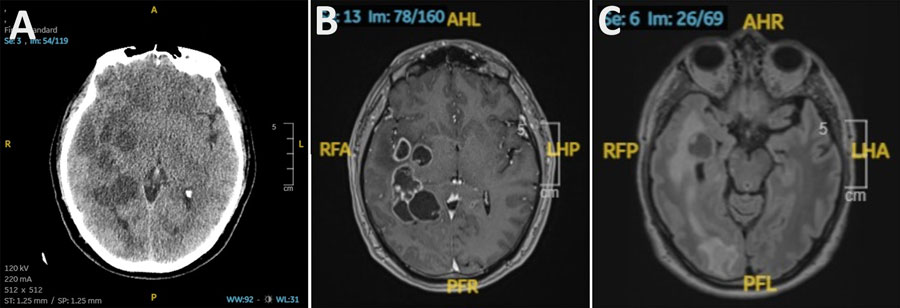
A  60-year-old man in Spain went to the doctor complaining of a headache that he couldn't shake. It had started two weeks prior and was only getting worse. He also said he had noticed subtle changes in his behavior.

In a neurological exam, doctors found he had a mild delay in his movements, but no other deficits. His blood work was generally normal except for elevated IgE, a signal of immune responses linked to allergies, autoimmune disease, and parasitic infections. The doctors did a computed tomography (CT) scan of his head and saw much more obvious evidence of a problem: There were multiple lesions distributed throughout his brain accompanied by swelling.

In a case report in Emerging Infectious Diseases, the doctors reported working through the possible conditions that could explain all the findings. They noted that the man was not immunocompromised and had never traveled internationally. Their top suspicion was metastatic cancer.

Read full article

Comments

© Emerging Infectious Diseases

Streaming services’ obnoxiously loud ads become illegal on July 1 in California

On July 1, it will be illegal for streaming platforms to play ads louder than the content being watched in California.

As The Hollywood Reporter highlighted this week, California Governor Gavin Newsom signed a bill (SB 576) in October 2025 that prohibits any video streaming service from transmitting the “audio of commercial advertisements louder than the video content the advertisements accompany” in the state.

The law brings some parity between streaming services and broadcast, cable, and satellite TV providers, which, under The Commercial Advertisement Loudness Mitigation (CALM) Act, can only play commercials at “the same average volume as the programs they accompany,” the FCC says.

Read full article

Comments

© Getty

Russian citizens told "switch to Android" after Apple blocks key Russian apps

According to Apple's 2025 App Store Transparency Report, Russia is the runaway world leader in one category: Demanding that Apple remove apps from its App Store.

In 2025, Russia asked that Apple remove 1,213 apps—many of these VPN apps designed to thwart the country's draconian Internet censorship. (Vietnam was number two, requesting that 335 apps be blocked.)

Russia is essentially trying to build a closed, spy-friendly, domestic version of the Internet. While the Russian government loves demanding app bans from Apple, it only wants bad, degenerate apps banned. It does not want good, strong Russian apps banned, such as VKontakte (a Russian version of Facebook) or the Max messaging app (state-mandated communications software so creepy that one exile publication described it with the insanely long headline, "You already know Russia’s Max messenger spies on users. You probably don’t know just how many surveillance tools it hides, including even a neural network for eavesdropping.")

Read full article

Comments

© Getty Images

NYT slams Microsoft for building copyright-infringing supercomputer for OpenAI

In a heavily redacted court filing Thursday, The New York Times proposed to amend its copyright complaint against OpenAI and Microsoft to clarify a claim and allege that Microsoft actively encouraged OpenAI to steal NYT works by building a bespoke supercomputing system ranked among the most powerful in the world.

NYT's motion comes after the Supreme Court sided with Cox Communications in a case where Sony tried and failed to claim that Cox was contributing to music piracy as an Internet service provider, which set a new standard for contributory infringement. Moving forward, plaintiffs will have to prove that parties intentionally acted to induce illegal conduct. Recognizing that the legal precedent has changed, the NYT now wants to amend its complaint to align its contributory infringement claim against Microsoft with that new standard.

“Today, we asked the court for permission to file an amended complaint that further strengthens our case, clarifying our claim of contributory infringement against Microsoft based on new law and new evidence uncovered during discovery,” Graham James, an NYT spokesperson, said in a statement provided to Ars.

Read full article

Comments

© Bloomberg / Contributor | Bloomberg

FCC accused of hiding Chairman Carr's messages with DOGE and Musk

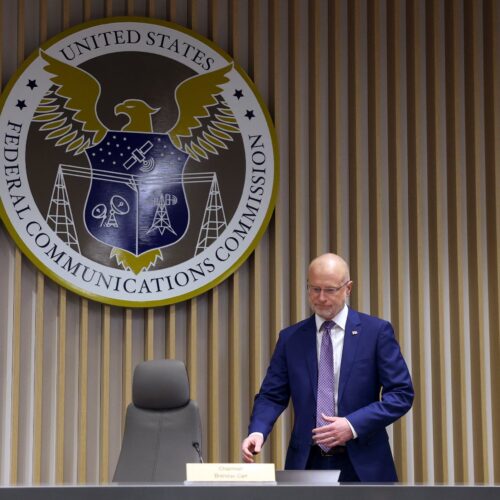
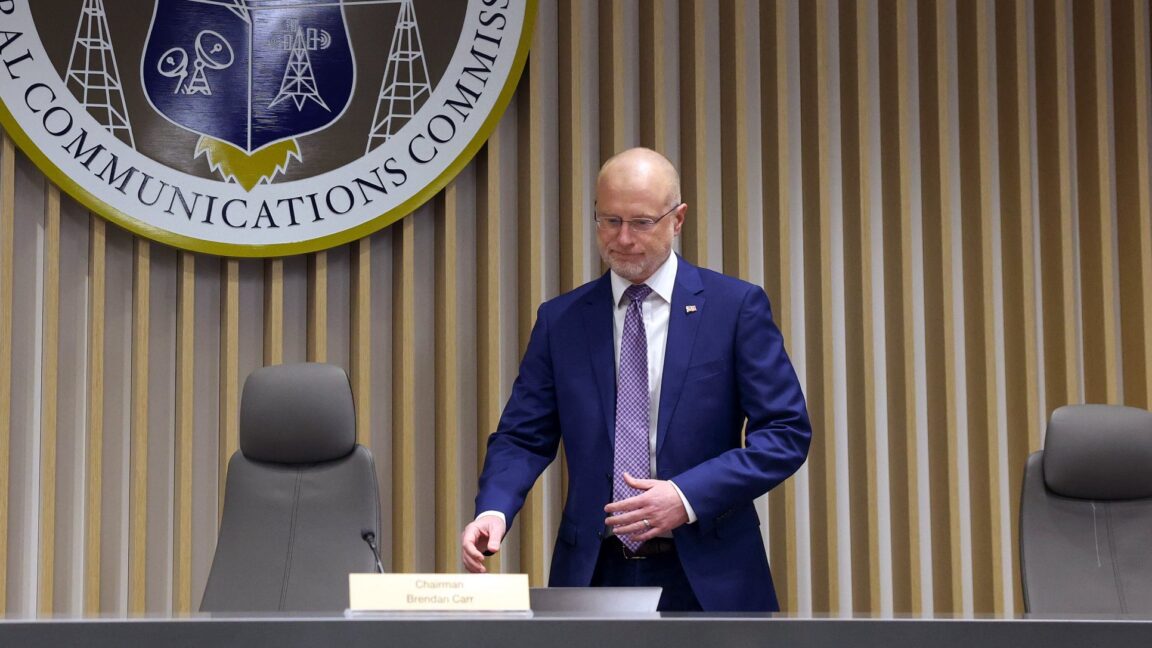
An advocacy group trying to investigate DOGE's influence on the Federal Communications Commission accused the FCC of failing to comply with a public records request and of concealing Chairman Brendan Carr's use of the Signal messaging service.

"The evidence clearly demonstrates that the FCC has acted in bad faith by withholding documents responsive to Plaintiffs’ FOIA [Freedom of Information Act] request," journalist Nina Burleigh and advocacy group Frequency Forward said in a filing yesterday in US District Court for the District of Columbia. "The FCC acted in bad faith when it redefined the search criteria without notice to Plaintiffs or this Court. Further, the FCC acted in bad faith by concealing the fact that the Chairman Carr has a Signal account on a phone he uses to conduct government business."

Burleigh and Frequency Forward sued the FCC last year, alleging that it violated the Freedom of Information Act by wrongfully withholding agency records. In August 2025, a federal judge ordered the FCC to produce documents and criticized it for a “vague and uninformative” response to the lawsuit.

Read full article

Comments

© Getty Images | Kevin Dietsch

Netflix now requires every user profile to be tied to unique email address

Recently, my father called me in a panic.

There were just a few minutes until Netflix would start streaming a live MMA event, and he couldn’t get into my account. For a while, he had accessed Netflix as an add-on member with his own profile through my household’s account. That day, however, he was logged out and couldn’t use my login credentials to watch Netflix. Instead, he saw a prompt asking him to “add an email address to your profile” to continue.

Netflix pop-up notification A Reddit user shared this image of the notification that affected profile owners are seeing. Credit: Scotti_Dev/Reddit/Netflix

After some frantic phone troubleshooting and a couple of password resets, we realized that my father had to create his own login to continue using the extra profile I paid for. Although I was able to get him set up in time (for some disappointing bouts), the situation was confusing and inconvenient.

Read full article

Comments

© YouTube/Netflix

❌