Reading view

There are new articles available, click to refresh the page.

The AI Doomsday Future Is Not Inevitable

Local police departments use Flock cameras to track license plates. ICE uses Palantir software to track and round up immigrants. Defense Secretary Pete Hegseth’s war department uses Claude to bomb Iran. The U.S. government spends billions employing private corporations to obtain mountains of data — and the surveillance space is only getting more privatized in Donald Trump’s second term

“It really has become a Wild West,” 404 Media co-founder Jason Koebler tells host Akela Lacy on The Intercept Briefing, on the state of the U.S. surveillance apparatus today. While Palantir and Flock have become household names, Koebler says, “anything that can be surveilled is being surveilled, and a lot of this is happening from companies that very few people have heard of, and companies that are willing to push the envelope on what they’re willing to do, like how far they’re willing to go to surveil people.”

“A lot of the stuff that you used to associate with the NSA or CIA or another state spy agency, those kinds of capabilities you can now just buy,” Intercept senior technology reporter Sam Biddle notes of the ease and accessibility of the tools now available to the government. “You don’t need to be a top-secret government agency. You can just be a contractor in Virginia.”

“It’s a way to sidestep warrant requirements,” says Koebler. Surveillance contractors “are doing things that if the government were doing directly, they would need to get a warrant in order to do it.”

This week, for a special recording of the podcast, independent tech outlet 404 Media and The Intercept teamed up in front of a live audience in Los Angeles to discuss how the U.S. government weaponizes private data to surveil and kill abroad and at home, the resulting backlash and potential regulations on the table, what tangible actions the average person can take to “divest from the contemporary surveillance hellscape,” and refocusing AI-ending-humanity doomerism.

“When you ascribe motives and agency to AI, you’re letting Sam Altman off the hook,” says Biddle. “There are human beings building this technology. It’s not inevitable. This doomsday future is not inevitable,” adds Koebler. “We can’t bury our heads in the sand and say, ‘This is not changing society in some way.’ But it is being driven by very rich humans, and they can be regulated. They can be held to account.”

“What’s been really interesting about the Flock backlash, and heartening, is that it is completely apolitical, or it’s nonpartisan. It is completely — from the deepest red to the people in this room right now — the entire political spectrum hates these,” says Biddle. “There’s the real potential for the first time in a while to create a pro-privacy coalition that bridges a lot of the otherwise pretty giant political gaps.”

For more, listen to the full conversation of The Intercept Briefing on Apple Podcasts, Spotify, YouTube, or wherever you listen.

Transcript

Akela Lacy: Welcome to The Intercept Briefing, I’m Akela Lacy, senior politics reporter at The Intercept.

Today we’re coming to you live from Los Angeles for a special episode in collaboration with 404 Media.

Our topic? Killer tech. We’re talking lethal autonomous weapons; AI-assisted strikes in Iran; mining your digital footprint and even your financial activity to track you down; and surveillance cameras coming soon to a neighborhood near you. 

This conversation is timely. Just this week, warnings from Anthropic researchers that AI could kill humanity set off alarm bells on Capitol Hill and prompted a bipartisan group of lawmakers to call for immediate action to regulate the AI industry — from Republican Sen. Ted Cruz to Independent populist Bernie Sanders, who is organizing senators for a briefing next week on the “extraordinary dangers” of AI. 

The world we’ve long been told to fear is here. But how much do we actually know about these tools and how the government is using them — not just against you and your neighbors, but around the world?

To take us down the rabbit hole, I’m joined by my colleague, Intercept reporter Sam Biddle, a senior technology reporter who focuses on issues of surveillance, privacy, and corporate power. 

Also joining us is Jason Koebler, co-founder of 404 Media, where he writes about surveillance and AI.

Sam and Jason, welcome to The Intercept Briefing.

Sam Biddle: Really great to be here.

Jason Koebler: Thank you for having me. Thank you all for coming. Thank you to The Intercept for having us. We’re very excited.

Akela Lacy: To start, can you all just paint us a picture of what the broad surveillance tech apparatus looks like today?

Many of our listeners are familiar with some of the biggest players, like the data mining government contractor Palantir or Flock, the operator of surveillance hardware marketing itself as a friendly neighborhood public safety tool.

But let’s zoom out a little bit. Like, how did we go from the days of the National Security Agency and Edward Snowden, to this largely privatized and, in many ways, even more lawless world of mass surveillance?

Sam, I’ll start with you. What’s stayed the same since that NSA era, and what’s new now?

SB: The NSA is still here, to say the least. I don’t think you have this conversation, or certainly not in the form that we’re going to have it tonight, without 9/11. I think that the creation of the Department of Homeland Security, the private sector economy that you described, billions and billions of dollars, is all downstream of 9/11.

I looked it up: In 2006, the DHS budget was, like, $30-something billion. The presidential request for next year is $118 billion, and a lot of that is flowing to contractors like Palantir.

To answer your question, Snowden taught us correctly that we have a lot to fear from the government, but there was not as much emphasis on the companies that empower the government.

I think that has really been at the fore especially around something like ICE raids, which Jason and his colleagues have really done a good job documenting the companies that are behind that.

“Snowden taught us correctly that we have a lot to fear from the government, but there was not as much emphasis on the companies that empower the government.”

JK: The big thing is it really has become a Wild West. People have heard of Palantir, they’ve heard of Flock at this point, as you mentioned.

But we got a leaked document recently about some of the contractors that ICE works with. They are companies like Accurint, Chameleon, Locate X, Cobwebs, ISO ClaimSearch. These are all different companies in this supply chain that do different things, whether it’s cellphone location data, whether it’s browsing history, whether it is cellphone tower data, web backbone information.

“A lot of this is happening from companies that very few people have heard of, and companies that are willing to push the envelope on what they’re willing to do.”

It’s just anything that can be surveilled is being surveilled, and a lot of this is happening from companies that very few people have heard of, and companies that are willing to push the envelope on what they’re willing to do, like how far they’re willing to go to surveil people.

SB: A lot of the stuff that you used to associate with the NSA or CIA or another state spy agency — those kinds of capabilities you can now just buy, and I think that’s really changed since Snowden.

You don’t need to be a top-secret government agency. You can just be a contractor in Virginia called “Persistent Solutions Incorporated” and be selling these powers to whoever wants to buy them.

AL: Which is a great segue to talk about Flock. Jason, you and your colleagues at 404 have reported on some of the most egregious uses of Flock, police using it to stalk people, track down a woman who had an abortion, conduct surveillance on protesters, and help ICE hunt people down.

The surveillance space has become increasingly privatized, as we’re talking about, but why does that matter, and what do you think is coming next?

JK: It matters because it is a way to sidestep regulations. It’s a way to sidestep warrant requirements and things like this. We’ve done many, many, many stories about Flock, but also other surveillance contractors where, they are doing things that if the government were doing directly, they would need to get a warrant in order to do it.

Surveillance contractors “are doing things that if the government were doing directly, they would need to get a warrant in order to do it.”

But this data, sometimes harvested from cellphone apps, sometimes it’s harvested from private companies like Flock that are sticking cameras on poles all throughout America. For a long time, the government would run into these legal roadblocks, and now they’re just sidestepping it by buying that information.

We’re also seeing the localization of a lot of this stuff. Flock is a company that primarily works with local governments, small towns, big cities. And we’ve seen that kind of over and over again with drones, with ALPRs [automated license plate readers], increasingly with things like facial recognition tools as well, where these things are being piloted in small towns where they maybe have a police force that’s willing to be innovative.

I feel like I say this often, but police have not found a spy tool that they’re not willing to try. So this is how this works now is you sell it to a local government, and then that data filters up and eventually makes its way to the feds.

So I think it is important to follow these companies how their business model works, and also how they spread from local governments to state governments and up to the feds.

SB: The technology’s gotten cheaper, too. The kind of capabilities that Flock sells would have cost, 20 years ago, it would be much cruder but prohibitively expensive. This stuff gets mainstreamed because it gets more powerful and it gets more affordable.

But also, the police departments are awash in money, so they can afford, like Jason says, they’ll buy whatever they can just because they like toys.

“ This stuff gets mainstreamed because it gets more powerful and it gets more affordable.”

JK: Those cameras, for what it’s worth, run on, like, several-generations’-old Android technology. It’s not expensive, as you said.

AL: We’re going to touch on the expansion of this technology into local police departments a little bit later. But first, Sam, you’ve reported on the literal hunting of immigrants using bounty hunters and enriching private companies.

Why aren’t some of those corporations facing the same level of public scrutiny for their role in ICE’s mass deportation and arrest campaign that we’ve seen in other cases?

SB: I think that there is just such an incredible diversity of these companies providing these kinds of surveillance services. 

JK: And you love to see that. [Laughter.]

SB: It’s one of the only parts of the economy that’s probably steadily growing. But yeah, I found 10 different contractors, none of which I had ever heard of before, all very obscure, with names like “Government [Support Services]” — very anodyne — that were contracted by ICE to find immigrants so that they could be deported.

The more that they found and the faster they found them they would be eligible for basic cash bounties from the government. So they were incentivized to just find as many people as possible using a combination of on-the-ground stalking and digital tools.

“Their obscurity is a big asset.”

As much scrutiny and attention on Palantir as it gets — for a reason, it’s all warranted. But I do also think that sometimes the household names soak up a lot of the anger and the blame, and it lets the minnows get by with relatively less scrutiny. Compared to Palantir, a company that sells janitorial services to Air Force bases and then gets this bounty hunting contract is tiny.

But I think that there’s just too many for people to keep track of — too many for people whose job it is to keep track of them to keep track of them. Their obscurity is a big asset.

AL: And something like Palantir is a known quantity.

SB: And they seek attention. Palantir is very attention-seeking, and they want publicity.

JK: We were talking about that a little bit before the show. Very often you’ll see a Palantir or a Flock take a lot of the heat — even like Meta take a lot of the heat. “Oh, is Facebook going to put facial recognition on their glasses,” things like this. Turns out now they have cover, and they probably will.

But Clearview AI — a company that does facial recognition; you can put a photo in and search the internet and find all these instances of where that person has been. It’s used by a lot of police departments — and that is a startup that is essentially one guy. It’s bigger now, but it was started by one guy who was willing to do something that a lot of other contractors weren’t willing to do because there was so much attention on some of these big players, and the big players saying, “Oh we’ll never do facial recognition.”

But then you have Clearview come in and raise their hand and say, “We’re willing to do it.” That’s something that we’ve seen over and over again over the last decade or so, is that the backlash to some of these companies is very important, but there’s also 10 other companies that are willing to pop up and say, “Yes, we will hunt undocumented immigrants for you. We did previously do janitorial services, but I did go to a police training one time.”

Literally, that’s what these companies are in many cases. AI has allowed companies to spin up very quickly. A lot of them are super janky, but that doesn’t mean that they’re not getting government contracts.

AL: Jason, I want to talk about what this federal surveillance actually looks like in practice. 404 reported recently that the Department of Homeland Security is using a secretive predictive policing unit to pull people over. What did you all find?

JK: So it’s called the PITT [Predictive Intelligence Targeting Teams], not the TV show.

But basically it’s these Border Patrol teams that are using financial data, various federal databases of which we are not sure what they are. They are essentially finding patterns that they believe are suspicious, and they are passing information to local police and saying, “Hey, please pull over this person with this license plate.”

We wrote earlier this week about a guy, I believe in Wisconsin, who was pulled over for an obscured license plate. At least that’s what the local police told him. It comes out during his court case that this PITT team had seen some financial activity that they thought was suspicious, asked local police to pull him over, to find some pretext to pull him over, and then they charged him with basically weed offenses, which didn’t seem that was what they were actually looking for. The [Homeland Security] documents we saw were like, “Oh, this is a big narcotics trafficker.” 

We’ve seen things like that kind of happen over and over again. I think with regard to ICE in particular, often Palantir brings in a lot of different federal databases, a lot of different commercial databases.

ICE has become obsessed with this tool called Mobile Fortify, which is a smartphone facial recognition app made by a company I don’t even know what they do or what they are. But they’re using basically a facial database from Customs and Border [Protection]. So any time that anyone’s interacted with the government, TSA, at the border, things like this — that’s what it’s pulling from. There’s already been a few cases of mistaken identities and things like this.

“ICE has become obsessed with … Mobile Fortify, which is a smartphone facial recognition app made by a company I don’t even know what they do or what they are.”

SB: Worth pointing out, you can opt out of doing the biometric boarding at the airport. I embarrass my wife every time we go anywhere, but you can opt out. Just say no. [Laughter]

JK: They’re always mad.

SB: You’ll still be in some database, but, you know, it feels good.

AL: When it comes to ICE tracking people down, you’ve touched on this a little bit, but I wonder if you can take a step back and really break it down and walk us through the steps and the actors involved in each phase, from locating to identifying to arresting people.

JK: So a lot of this is like patching things together from individual court cases that we’ve seen, where there’s like a deposition from an ICE agent explaining how they found a person.

A lot of it does come back to Palantir and the sort of different apps that they have. Companies like Thomson Reuters are involved, LexisNexis — these big, giant companies that collect a lot of information and feed it back into the government. We learned that ICE was doing what it was calling a “density report,” where they were trying to find densities of potential undocumented immigrants.

So a lot of the places that they were choosing to do enforcement actions were based on maybe old addresses or just like interactions with the government that they had. So they’re pulling things like IRS data, labor data, things like this, as well as anything you could possibly imagine. So like cellphone location data, browsing data, license plate information. 

Customs and Border [Protection] has their own ALPR cameras, automated license plate reader cameras. But then we also reported that through the 287(g) program, which is a program that allows local police to do ICE enforcement, they were doing Flock searches on behalf of ICE, local police were.

So it’s a mix of this, where they would get a target, and then as Sam said, like a lot of this was being outsourced to random — was and is — being outsourced to fly-by-night bounty hunters and police contractors and things like this. It’s been a real mixed bag, but it does come back to surveillance and to trying to find these density of undocumented immigrants to choose for their enforcement actions.

SB: I think it’s also worth pointing out that this stuff is only possible because there’s no law prohibiting it. You can drive a truck through the holes in the Fourth Amendment. Like Jason said, in theory, you’re not supposed to be able to do a lot of this stuff without a judge giving you the OK, but there is nothing stopping the government from buying the location of your phone for the past year, and the next year, into the future.

Every single place you go from minute to minute that can just be purchased because you happen to download Candy Crush or something where that has ads in it. There’s no law against that. There’s no regulation. The sale of private data, and geolocational data in particular, market is completely unregulated. You can just do whatever.

“There is nothing stopping the government from buying the location of your phone for the past year, and the next year, into the future.”

AL: And some of these companies have come back and said “These agencies are violating their terms of service or their terms of use.” Like you guys reported on this with Shadow Dragon, Jason, right?

JK: Yeah, every once in a while, a company is like, “Oh, we didn’t know it was being used for immigration enforcement.” And they’ll either revoke access, or maybe they’ll sell a new license or something like this. It does happen every now and then that what ICE is doing goes too far even for some of these surveillance companies.

I think also worth mentioning very quickly that a lot of this security and surveillance apparatus was built under Obama and earlier than that. They had these extremely frail guardrails on separating information between agencies, things like that.

And then suddenly, it’s, oh, HSI is not going to do workplace enforcement anymore — Homeland Security Investigations, which used to do generally really complicated investigations into drug trafficking rings, things like that. Now it’s just doing standard deportations and pulling people over and things like that. And so all of the guardrails have been knocked down, which is [pause] exciting.

SB: And the more you farm it out to private companies, the less of a public record potentially accessible paper trail there is.

If the NSA breaks the law, in theory, you can have congressional hearings about it, and you could, again, in theory, send people to jail. That wouldn’t happen, but you could.

But if a company does something, A, it’s legal, but B, probably no one’s going to find out unless, you know, Jason finds it. There’s no oversight! And there’s every incentive to maximally sell this stuff.

AL: Let’s talk about how this technology is being used to wage war around the world. We all saw the headlines about Anthropic’s Claude reportedly assisting U.S. strikes in Iran. Anthropic’s CEO said he doesn’t know if or how Claude was actually used, including if it was used in the strike that hit an elementary school and killed 120 children.

At one point in time, many of these Silicon Valley firms had sworn that they would not let their tech be used in warfare or surveillance, particularly in unmanned or automated warfare. That is no longer the case, and maybe it was always an empty promise. But partnerships between the government and tech companies are fueling wars happening right now — not just in Iran, but in Gaza and even in Ukraine.

Sam, what do we actually know about how AI is being used in those arenas, if anything?

SB: We know a pretty good amount, actually the use of American technology in the genocide in Gaza is pretty well documented at this point. Amazon, Google, and Microsoft are all very prominent contractors with the IDF [Israel Defense Forces].

Amazon and Google sell cloud computing services to Israel’s state-owned weapons companies that build the bombs that are dropped on Gaza; that’s established. And no one really tried to hide it. A lot of that stuff wasn’t secret to begin with.

The use of American technology, of AI companies’ services, in Iran is murkier. You’re absolutely right that these companies, almost all of them — maybe not Microsoft — at one point claimed they would not ever do this. OpenAI and Anthropic were both founded with these very like highfalutin missions of benefiting all of humanity.

AL: That’s, like, why it’s called Anthropic.

SB: Right. [laughter] Great point. And then they decide, “Oh, wait, there’s a lot of money to be made if we become Pentagon contractors.” So a few years ago, OpenAI just deleted the part of its terms of service that said they wouldn’t do military work. Google deleted “Don’t be evil” as its motto, which was very on the nose.

It’s a mistake to ever think that these policy positions of companies mean anything because they could just change them when they want to. But it is striking that, like you said, these were all things they at one point had a principled stand.

AL: And were very publicly, “We’re leading the frontier. We’re not going to let our stuff be used to kill people or surveil people.” And to Jason’s point, as soon as one person says, “Actually, that sounds kinda good,” everyone else is like, “You know what? We were wrong.”

“If you’re Google, you can only make so much money selling extra Gmail storage and ads.”

SB: If you’re Google, you can only make so much money selling extra Gmail storage and ads. At a certain point, the government is this customer that’s always going to be there and always is going to have a lot of money to give you. So yeah, I think they all looked at each other and were like, “Wait, you guys are down for this too, right?” 

But as far as Iran, Anthropic is confirmed as having been involved since in the first day of the joint U.S.–Israeli attack.

JK: I saw a few minutes ago that Anthropic said the Houthis attempted to use Claude to target missiles, like typing in the chat box. 

SB: I saw that!

JK: And they stopped that; they said they stopped that. I was at like this defense contract when Anthropic was nodding at the idea that it wouldn’t be helping in Iran. There were Anthropic and OpenAI executives there talking about this all, and they made very clear, at least at that point, that it’s like, “Oh, it’s not that we oppose working with the military. It’s that we want better oversight. There will be, like, an Anthropic person sitting in the Pentagon with the DoD making sure that this is being used in an ethical way. There will be an OpenAI person doing the same.”

It’s very unclear whether that is actually happening to any degree, and also what these tools are specifically being used for. We know it’s being used for targeting, we know it’s being used for planning — by targeting, I mean figuring out who to target and that sort of thing. 

AL: Selecting a target. 

JK: Yeah, selecting targets. But we don’t really know the level of autonomy, or at least I don’t.

AL: And they apparently don’t either, right? 

SB: Well, that’s the thing: Both possibilities are really dire. If these companies are hands-on, helping wage war, that’s terrifying for a lot of reasons. But the alternative — which Anthropic’s CEO, the position he took, Bloomberg News asked him if Claude had been used to blow up that school, and he said, I don’t know.

Google has a similar position with the IDF, where they said, once we sell them this stuff, we don’t know how they’re going to use it, we don’t have visibility into how they use it, which is completely plausible.

But that’s also a pretty frightening prospect because then, they can say, “Oh we won’t let our technology be used for X, Y, Z,” but they hand it off to the customer, and they can do whatever they want with it, and the company will never find out.

AL: Sam, you have obtained hundreds of government documents on how the Pentagon is using AI. I wonder if you can tell us just how deep that relationship goes.

SB: We, through a Freedom of Information Act lawsuit got a set of contracts that OpenAI, Anthropic, Google, and xAI — Elon Musk’s outfit — signed with the Pentagon last summer to develop militarized LLMs [large language models] for the Pentagon’s use.

They were heavily redacted, but what really came through clearly from the unredacted portions was that these companies did not just sell the Pentagon a product, but they sold them a very, very intimate relationship, an ongoing collaborative relationship wherein they were advising the Pentagon essentially on how to use these products to wage war.

They were getting classified briefings. They were getting briefings on U.S. military operations. They were providing hands-on training. They were providing threat assessments. They were helping shape DOD high-level strategy. So going well beyond the typical remit of a company.

“These companies did not just sell the Pentagon a product, but they sold them a very, very intimate relationship.”

Lockheed can sell the Pentagon some missiles, and the Pentagon more or less decides how they’re going to use them. Now we have the engineers from these companies and policy figures from these companies helping the U.S. decide how it will fuck, target, and kill people. We’re supposed to have ostensibly civilian control of the military — accountable to the public. Again, all this stuff is very much in theory, but it’s supposed to work that way.

But the more these companies intertwine themselves with warfare, the more of it is completely unaccountable because Sam Altman doesn’t owe you anything.

AL: It takes all the air out of the pretense that that’s like how this works in theory, right?

SB: In terms of, like, oversight?

AL: Embedding these private people in the government. That’s not actually how it works.

SB: Yeah, these are supposed to be decisions of who to kill and how are supposed to be decisions the government makes, if anyone’s going to make them.

AL: With the idea being that there’s some sort of measured process that goes behind that.

SB: You would hope so. Obviously, also the people who sell the weapons, whether it’s a bomb or an LLM, are going to have an incentive for it to be used maximally. I can’t imagine a contractor is going to urge restraint with the use of their product. Anything’s possible, but it would be surprising.

[Break]

AL: The use of surveillance at home is also being powered, unfortunately, by AI, like the license plate readers we’ve been discussing used by Flock and other government agencies. One of the concerns with these tech apparatuses is just how seamlessly they allow law enforcement agencies and private companies to share and transmit data from the local to the federal and vice versa, even when a particular government agency isn’t technically contracting with that company.

We’ve talked on this show about the explosion in the number of state and local police departments — as of today, more than 2,460 — now deputized to do ICE’s work through the 287(g) program, as Jason mentioned, helping to build out this nationalized, politicized police force we’ve seen take shape in recent years that’s become a Frankenstein, this entity patched together with agents from departments across the federal government.

Jason, 404 has reported that local police have been using Flock’s license plate reader system to look people up in immigration searches. How is that different from the kinds of police support for ICE we’ve seen in other areas?

JK: It is something where, as you said, the information is flowing in ways that were perhaps not originally intended by the companies. For years, Flock would say, we don’t work with ICE; we don’t sell to DHS. DHS doesn’t have a contract with us; ICE doesn’t have a contract with us. 

Last year, we reported that there were hundreds of searches for undocumented immigrants on Flock’s system. They were universally done by local police in South Carolina and Texas and Tennessee in a bunch of states.

They were not searching their 15 cameras in their town. They were searching 80,000 cameras across the entire country, including in states where it was illegal. 

“The sort of casualness with which a lot of this is happening, I find to be very alarming.”

A lot of these searches happened in Illinois, where it is illegal. And so I called up a bunch of police departments in Illinois and said, “Did you know that your cameras are being used for immigration enforcement?” They were like, “We have no idea what you’re talking about. We have no clue that this happened.” A lot of them were like, “Oh, you are like fake news,” et cetera. I was like, “Here’s the data.” Eventually, the Illinois Secretary of State did an investigation and found that a lot of these searches were illegal.

But the sort of casualness with which a lot of this is happening, I find to be very alarming. Not only is it happening on these commercial products that don’t have a warrant requirement, that don’t respect people’s Fourth Amendment rights, but a lot of it’s happening over email. A lot of it’s happening over phone calls, like, “Hey, buddy, can you do this search for me?”

We reported on a cop who basically gave his Flock login to an ICE officer. Then they got caught, got it taken away, and then they were group texting about it after the fact. 

We’re seeing a rise of these real-time crime centers which are a mix of automated license plate reader cameras, facial recognition cameras, other surveillance cameras, 911 calls, information, things like this. And they’re all being monitored through what’s called Flock OS, and there’s other companies that do this as well.

But basically, instead of having a cop go to a 7-Eleven after a robbery and request the surveillance footage, they’re watching this stuff happen in real time. Or worse, an artificial intelligence is watching it in real time, is detecting anomalous behavior, and is dispatching a drone or something to go accost people.

The sort of experimentation, I would say, the creativity of local police, I find to be quite concerning. Because they’re like, “Oh, I have this tool. I’m going to use it for whatever I want,” and there’s very little oversight.

SB: There’s no reason not to if you’re the police. It’s cheap to do. Or once you’ve purchased the thing, it’s free. You might as well. There’s basically no barrier to experimentation of the kind you’re talking about, so you can get pretty creative with this stuff. It’s pretty user-friendly, right, from what you’ve seen?

JK: A lot of this stuff also spreads through word of mouth, where, like, one police department will try it. They will then go to a police conference and do a presentation: “How I used Flock to track down my local protester.” Literally, this is how this stuff works.

We’ve covered it many times through FOIA documents and things like this. It’s like, “Oh, did you guys get a drone? I bought a drone. We got money for a drone pilot program for a drone. Skydio is giving away drones if you apply through this program.” That’s how this technology takes hold.

The private companies say, “Go try it.” The cops become essentially unpaid marketing for these companies, and then suddenly they’re in tens of thousands of cities without much oversight.

AL: Sam, picking up on the news we touched on at the top around recent warnings from insiders at Anthropic, what kinds of regulations are on the table right now, and how do you expect the industry might push back here?

SB: Bernie Sanders proposed a bill, I think is the most extreme, or the heaviest regulation I’ve seen proposed, which would basically put an immediate stop to advanced frontier AI development. On the other end of the spectrum, you have measures that would make these companies submit their AI to an independent audit.

There are some self-oversight ideas or the ideas of a slowdown of developing this technology. The full spectrum is on the table. What actually gets passed is a whole other question. 

These companies are basically propping up the stock market, they’re basically propping up the U.S. economy at this point. If they were to be crushingly regulated, that could be a problem. Obviously, members of Congress take a lot of money from the tech industry. The U.S. has never exactly been a pro regulation regime when it comes to corporate power, tech or otherwise. So we haven’t seen much of an appetite to regulate large tech firms in the past.

This could be different. I’m curious what Jason thinks. Things do feel a little different now because it’s the employees saying very casually on Twitter, like, oh yeah, the place where I work has a 15 percent chance of ending humanity. Anyway, back to work tomorrow.

AL: And then the CEO’s like, yeah, he’s right. [Laughs]

SB: Or the CEO will be, like, actually, I think it’s 25 percent. It’s a little crazy to be like, “Why isn’t anyone —?” Whether or not you believe it’s true or realistic, if someone who worked at like Lockheed was like, “We’re building a weapon that I think has a 10 percent chance of ending humanity.” Whether or not you think it’s bullshit, like someone probably should check that out, maybe call someone to testify before Congress and ask them under oath, “Is this true? Can you elaborate on this?”

I think what they are promising about their technology, again, true or not, is scary enough that I think it’s going to be hard to turn a blind eye compared to something like, eating disorders or bullying or what have you.

I’m curious what you think, Jason.

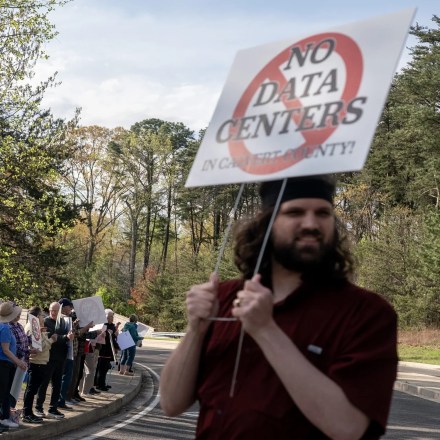
JK: The thing that you said where this is propping up the entirety of our economy is not giving me so much hope that much is going to be done. We’re seeing at a local level people pushing back against data centers and that sort of thing. That movement, along with the anti-Flock movement, they’re sort of intertwined.

There is this backlash to AI among the people, and they’re looking for places to push back, and it happens to be at these local council meetings around the country.

As far as regulation goes, there’s also such a focus on beating China that it feels like regulating this in a meaningful way is almost dead on arrival because our politicians are so hell-bent on not losing.

Anyone who “proposes clamping down on these companies is going to be accused of treason.”

SB: That’s exactly right. First of all, the completely grassroots opposition to data centers is depicted across the political mainstream as a Chinese psy-op — which it’d be funny if it weren’t so real and sad. 

I saw people saying about Bernie Sanders and his proposal, “Oh I guess the commie wants red China to win.” Or anyone who pushes back on this stuff or proposes clamping down on these companies is going to be accused of treason, in one form or another, or of selling out the country, or wanting they’re going to be speaking Chinese in Albuquerque. It’s all this sort of Cold War bullshit that is really back.
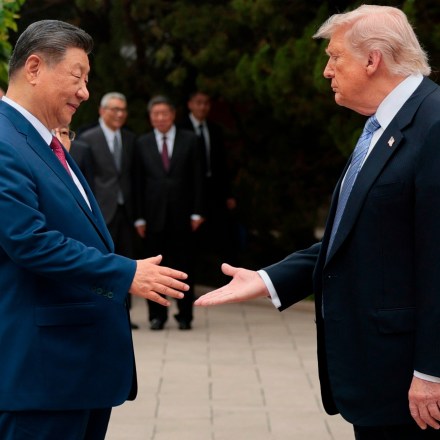
The propping up the economy thing is no small portion of this, but I really think that China is the single biggest and most powerful anti-regulatory tool that the tech industry broadly, but AI specifically, has.

AL: I am going to transition us into audience questions. We have some good ones.

What tangible actions can the average person take to “divest from the contemporary surveillance hellscape.” Specifically, how do you get out of biometrics at the airport?

SB: The biometrics at the airport, again, like I don’t want to, like, lead anyone on. If DHS wants your face, they’re going to find it somewhere. You’ve been photographed in public. You’ve probably been captured. 

AL: Don’t go outside.

SB: Yeah, and at a certain point, the advice is, like, don’t live in modern society. That’s not helpful.

When you go through airport security, you say, “I want to opt out of biometric identification,” and every TSA —

JK: They always sigh, they’re always upset.

SB: Some of them will roll their eyes and be like, “OK, I gotta look at your ID the old-fashioned way,” but they have to do it. Legally, they have to let you.

As far as opting out of the whole deal, you can take iterative steps, like not using Google, or not using Gmail. 

AL: No phones.

SB: Yeah. Or throwing your phone down a well. But even if you have a flip phone, your location can still be picked up on the towers. I think it’s a matter of how much you want to inconvenience yourself.

JK: I say you shouldn’t drop out of society because that might make yourself a little safer, but it’s not necessarily helping the overall problem.

SB: I agree with that. 

JK: What you can do is inform yourself. You can show up at city council meetings and talk about these issues. Flock has been canceled in dozens of cities and towns at this point. That movement is starting to, as we were speaking of earlier, as these cities are canceling Flock, a lot of them are replacing [them] with Axon or other surveillance contractors.

It’s good to see this sort of energy, and I think that people want to deploy this energy against other types of surveillance. I think that the backlash to Flock is not really about Flock itself; it’s that there is actually an outlet for that. 

“I think that the backlash to Flock is not really about Flock itself; it’s that there is actually an outlet for that.”

Never condone this, but it’s like people are shooting these things with shotguns because they don’t know where to put their frustration for Meta spying on them, Google spying on them, Amazon spying on them, the NSA spying on them.

And here, you have a local city council. You can go to the city council and yell at the mayor or yell at the city council member. You can make life annoying for people wearing Meta glasses. These things aren’t necessarily going to be accepted by society.

SB: Jason and I were talking about this too earlier, and I think what’s been really interesting about the Flock backlash, and heartening, is that it is completely apolitical, or it’s nonpartisan.

AL: It’s cross-ideological.

SB: It is completely — from the deepest red to the people in this room right now — the entire political spectrum hates these.

JK: Also the deepest red. 

SB: They hate these things. As fractured as the country is politically, you can find common ground with people who you might otherwise have very little to agree on when it comes to civil liberties things, when it comes to surveillance, when it comes to the right to not be followed around by the police for zero underlying suspicion.

There’s the real potential for the first time in a while to create a pro-privacy coalition that bridges a lot of the otherwise pretty giant political gaps.

“There’s the real potential for the first time in a while to create a pro-privacy coalition that bridges a lot of the otherwise pretty giant political gaps.”

AL: I love how this question begins, so thank you, Manny. “The high average age of U.S. senators creates a dangerous tech literacy gap, which results in ineffective regulatory oversight for tech companies ensconced in the mass surveillance apparatus.” Yes.

“With that in mind, is there a viable route to see real legislative change that protects people’s privacy?” I’m sorry, I just have to say I’m reminded of Jim Clyburn saying he did not know what ChatGPT was. I’m wondering if that inspired this question. Take it away.

JK: This has been a problem for a very long time. The fact that tech moves faster than regulation is one of the first things that I learned as a tech journalist. A lot of the regulatory fixes are, well, heavily influenced by lobbyists and that sort of thing, and they come way too late.

I keep coming back to the local level because it is a place that can move a lot faster. It’s a place where a smaller group of people can have a big influence. It is also where if there’s enough of a pushback at a local and state level, these big companies have to make broader changes. I’ve written about the right to repair for a long time, which I won’t go so far into, but basically different state laws had forced companies like Apple and John Deere to make massive changes. That type of legislation where you have to provide repair parts and things like that — maybe it would get passed at a federal level, but it would take decades to get the coalition that you need there. Whereas at a state level, you can do it in 12 months or four years or a lot faster.

SB: I totally agree that local state advocacy and legislation is much more in the short term achievable. But I wouldn’t want people to think that a more systemic approach is impossible. There could be with enough political will, and maybe some younger people in office perhaps. a sort of Clean Air Act for this stuff.

There have been moments where the country has, on a national level, decided “No, we gotta stop. We have to turn things around. This has become intolerable in one way or another.” That kind of action is doable. Like I said, I think politicians are paying attention to both the Flock backlash and also the data center backlash, which is equally, I think bipartisan and pan-ideological.
We have seen very prominent national political figures completely reverse themselves on data centers because they’ve seen that their constituents don’t want those things in their communities. That kind of popular anger could be wielded to achieve sweeping societal changes around privacy rights, for example.

JK: Otherwise, maybe Europe will try.

SB: Yeah, that’s the other option, is move to Belgium. Probably a good idea, anyway.

AL: How do you think about protecting your sources in this era where location data is widely available for purchase? 

SB: I don’t want to speak for Jason. It’s a constant worry.

JK: A constant worry. Signal is a very powerful tool. It’s a very useful tool. It’s not infallible. If you’re not careful, these sorts of things can be subpoenaed. You lose your phone, things like this.

But I think it’s just part of doing the job now. That there is some risk to yourself; there’s some risk to your sources. Try to explain that to sources, that we are doing our best. We’re willing to go to jail for you. But that there is inherently a risk in being a source, especially in these times.

SB: There are two levels. There’s the government coming after you. Then there’s your employer coming after you. And the latter is if you’re a source from within a company, especially a tech company, you’re subject to very intense workplace surveillance.

I tell everyone, and I say this publicly, “Never contact me from a device that your job gives you. Never contact me from work.” There’s like, common sense, basic things you can do. But like Jason says, it’s inherently risky to talk to a reporter, and it takes a ton of bravery.

As things have gotten scarier, I’ve been really touched by the bravery of people who are willing to take that chance, knowing the risk. Luckily, there are a lot of those people out there.

AL: I’m tempted to not end on a depressing question, but I think we might have to, so I’m sorry. Why would AI want to end humanity?

[Laughter.]

SB: This is a great question. I emphatically believe that AI does not want anything. 

AL: Yes. Sorry. [laughs]

SB: AI is built by people, and I think it’s important to really think about that. AI is like in many ways like any other piece of software. It’s just extremely capable and extremely powerful, and potentially devastatingly powerful, but it’s still software that people made.

“When you ascribe motives and agency to AI, you’re letting Sam Altman off the hook.”

This has been pointed out by others, but I think that when you ascribe motives and agency to AI, you’re letting Sam Altman off the hook. Somewhere, there’s a guy who works for a guy who works for a guy whose boss is in charge of all this stuff and ultimately accountable.

The question should not be, why would AI want to end humanity, but why would Sam Altman want to IPO a company that could potentially end humanity, that sells a product that could end humanity? Because then we’re at least like focused on the people who are responsible here. Look, if I end up being wrong, and we’re all being ruled in the matrix or something, I will look like quite a fool.

JK: Yeah. And I don’t think any of us have been nice to AI, so probably not going to be good for us. [Laughter.]

I think that’s very well said. I don’t have so much more to add there other than, it’s like there are human beings behind this. There are human beings building this technology. It’s not inevitable. This doomsday future is not inevitable. I think that we’d be naive to say that AI hasn’t really changed society already. I walk down the street and I see 800,000 fucking AI menus, and I get very mad. But I think it’s affecting labor, it’s affecting resource use, the economy, things of this nature.

We can’t bury our heads in the sand and say, “This is not changing society in some way,” but it is being driven by very rich humans and they can be regulated. They can be held to account, they can be put in jail someday, something like that. 

[Laughter]

I don’t know how AI’s going to kill us, to answer your question. But I think dumb people wielding AI can cause a lot of problems. We’ve seen it all the time with, “Oops, I accidentally deleted my company’s database because my AI agent told it to.”

SB: I think what’s more likely and what people should be more — I hate to end on a note of what you should be worried about —

AL: We’re headed there.

SB: What everyone in this room should be freaked out about is not a rogue AI deciding “I hate humans,” and acting on its own, but it’s like —

Audience member: The entity!

SB: But it’s the Pentagon using some form of ChatGPT to help manage a nuclear strike, potentially. That is, I think, orders of magnitude more likely. AI’s already being used to kill people in large numbers today and round up people in large numbers today, as Jason and his colleagues have really thoroughly documented with ICE.

They are already using this stuff, and I think we should not let the hypothetical existential threats distract from the deaths and harms that are happening already and will continue to happen. So on that note —

AL: We’re going to leave it there. Thank you all for being here and making this possible.

And thank you again to Sam and Jason for joining me on The Intercept Briefing.

SB: Our pleasure.

[Applause]

AL: That does it for this episode. 

This episode was produced by Laura Flynn. Ben Muessig is our editor-in-chief. Jesse Banner is our live show engineer. Hannah Behrendt is our events coordinator. 

A special thanks to 404 Media for collaborating with us on this live show and to our live show production team: Adam Gunther, Annie Chabel, Celine Piser, Michael Sherrard, Lauren Schilli, Alessandra Bosco, and Sean Turner. We also want to thank The Loved One’s crew: J.C. Gabel and Aubrie Wienholt. And many thanks again to you, our audience, for coming out and making tonight possible. 

[Applause] Sorry, there’s more!

Maia Hibbett is our managing editor. Nara Shin is our copy editor. William Stanton mixed our show. And legal review by David Bralow. 

Slip Stream provided our theme music. 

This show and our reporting at The Intercept do not exist without you. Your donation, no matter the amount, makes a real difference. Keep our investigations free and fearless at theintercept.com/join

And if you haven’t already, subscribe to The Intercept Briefing wherever you listen to podcasts. Leave us a rating or a review, it helps other listeners to find us.

Until next time, I’m Akela Lacy.

The post The AI Doomsday Future Is Not Inevitable appeared first on The Intercept.

💾

25 Years After 9/11, Muslims Are Still Politicians’ Favorite Scapegoat

A quarter century after the September 11 attacks emboldened then-President George W. Bush to launch the “war on terror,” many Americans might like to think they’re wiser than the politicians and pundits who unleashed a flood of anti-Muslim hatred and eroded civil liberties through warrantless wiretaps and racist deportation campaigns.

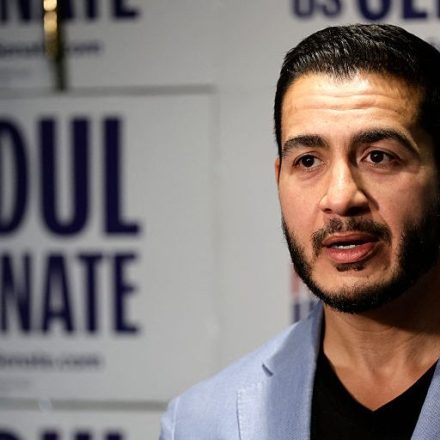
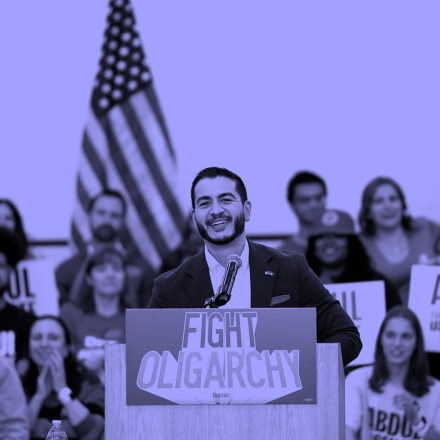
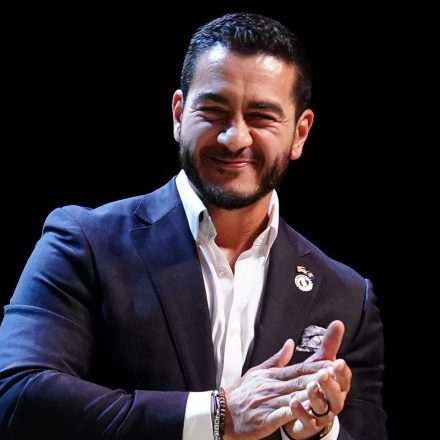
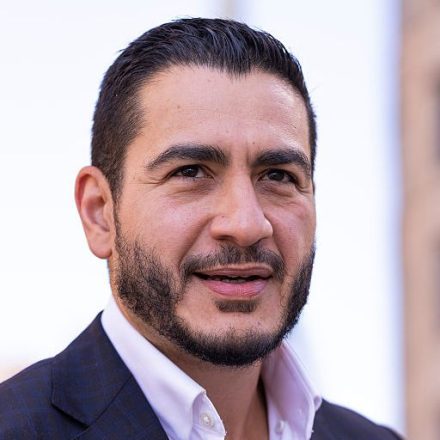
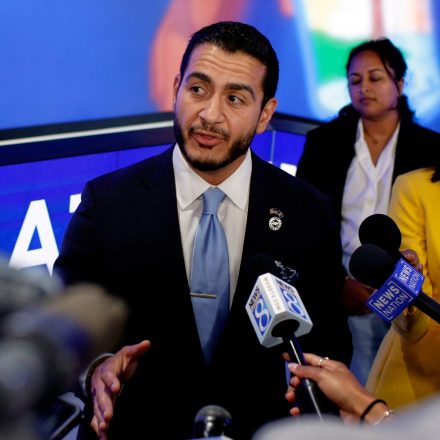
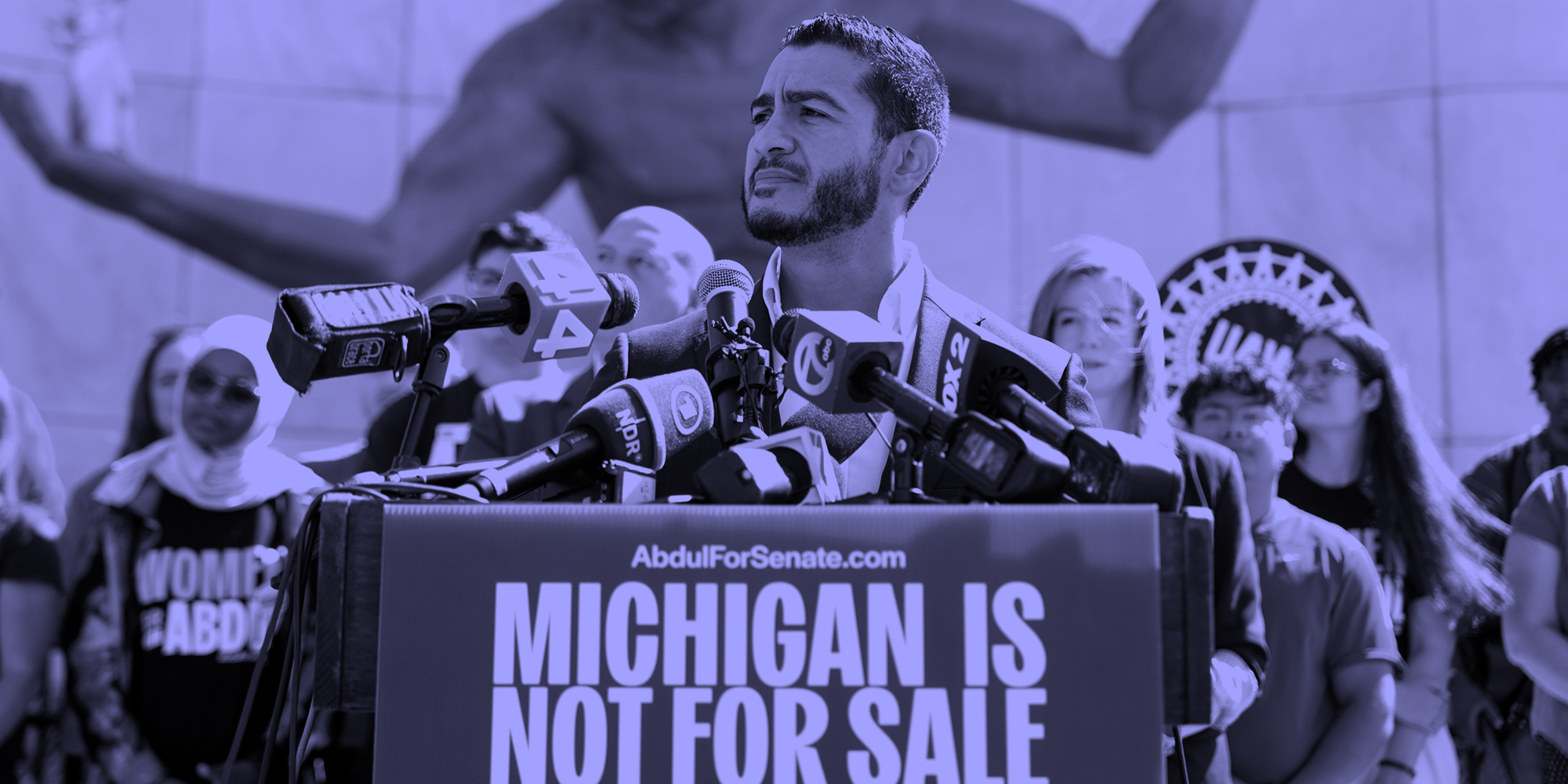
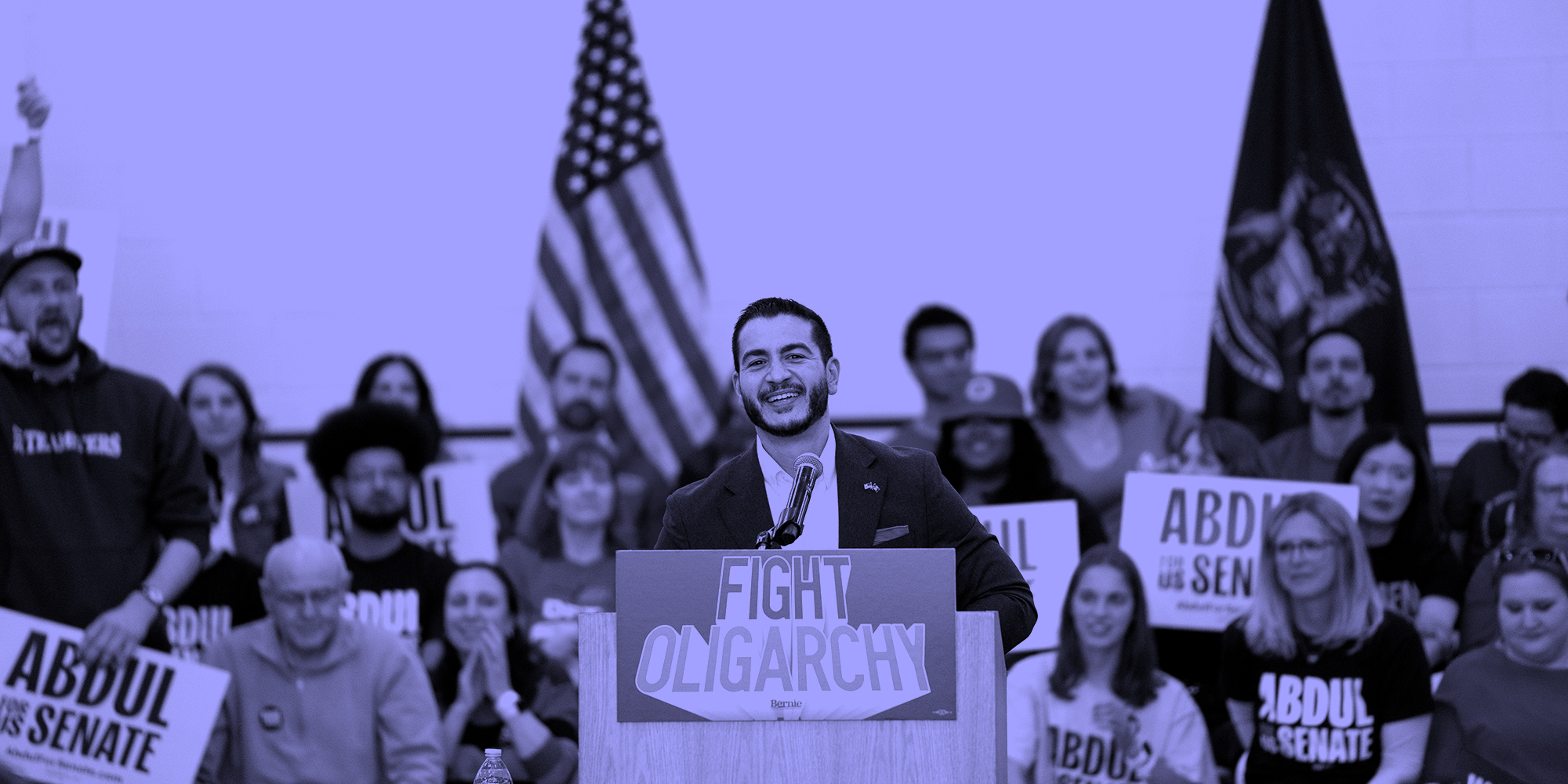
But some of the most notorious Bush-era advents — like the Department of Homeland Security and the prison colony at Guantánamo Bay — don’t appear to be going anywhere. Nor does the phenomenon of Islamophobia, which is playing a major role in the current political cycle. Michigan Democratic Senate nominee Abdul El-Sayed — who, if elected, would be the first Muslim U.S. senator — has been called a terrorist, a radical Islamist, and a threat to national security, as pro-corporate and pro-Israel super PACs spend millions on ads that paint him as a terrorist sympathizer. In New York City, meanwhile, local media has suggested that the city’s first Muslim mayor, Zohran Mamdani, should not attend the commemoration of the World Trade Center attacks, as if to do so would be an insult to the victims and their families.

“Islamophobia actually becomes more rampant during election season — not necessarily after a terrorist attack, but actually during election season in the U.S.,” journalist Rozina Ali tells The Intercept Briefing. “What’s happened over the last three decades is that Islamophobia has become a feature of American politics. … When you can’t actually discuss the policies, when we’re not willing to engage in facts, it’s really easy to throw racist rhetoric at people.”

“The fight that we’re seeing now is whether we are willing to accept all forms of religion in this country. And as much as I want to say this is just more of what we’ve seen in the past, I think what does frighten me is how quickly we are moving to a place where some governor or some local official might try to outlaw Islam altogether. And mind you, this is even a policy shift from 10 years ago when Trump called for a Muslim ban,” says Ali. “What has been happening recently is that the rhetoric … has been shifting toward, ‘Islam is not a religion, it’s a political ideology.’ This is not a new talking point, but it is becoming institutionalized. There are efforts to make it into law, which is a frightening place to be.”

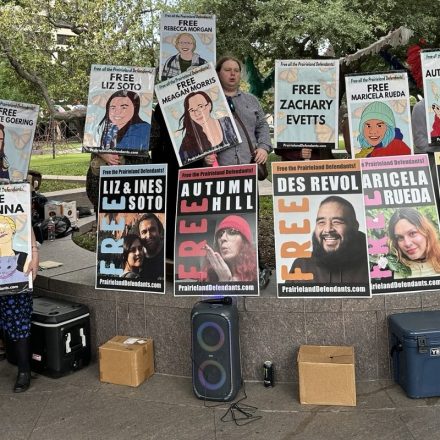
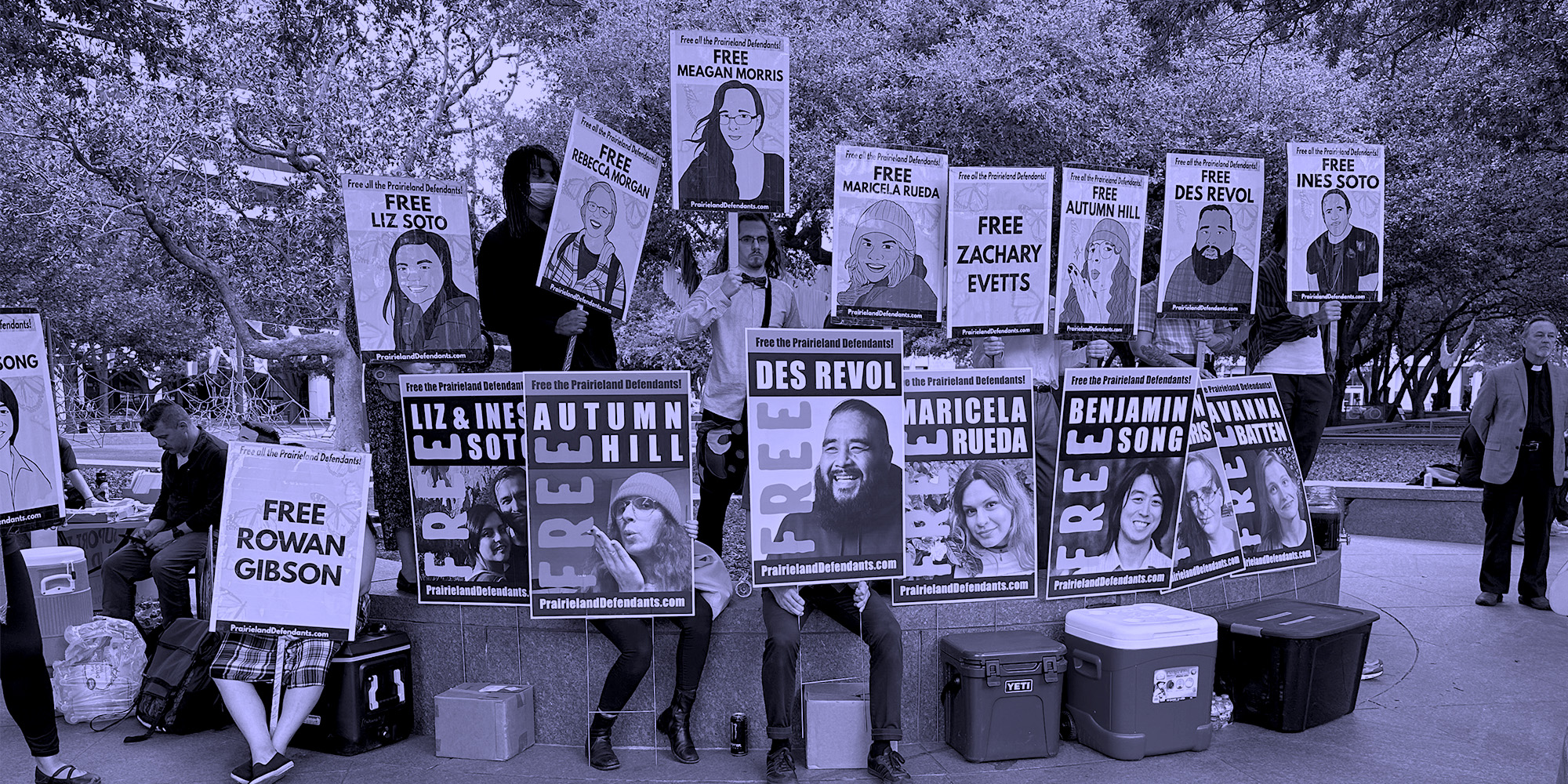
This week on the podcast, host Akela Lacy speaks to Ali about how anti-Muslim rhetoric and policies are on the rise and have endured, or even worsened, in the post-9/11 world, as well as her new book, “Seasons of Fury: Four Families and the Rise of Islamophobia in America.” Ali shares the first case in which the NSA admitted to spying on a U.S. citizen, Arab American attorney Abdeen Jabara, as well as the story of imam Yassin Aref, a victim of a controversial sting operation who served 15 years in federal prison due to the ambiguous “material support” for terrorism law first passed in the ’90s. It was the same charge used to convict anti-ICE protesters at Prairieland Detention Center to decades in prison this year.

“This was something lot of civil rights lawyers and activists were warning about even back then, because they recognized that this law and this war on terror can be used to attack dissidents and eventually will be used to attack a lot more people than the Muslim community. And that is what we’re seeing now,” says Ali.

“Because we’ve given so much power to the executive branch, because we’ve given so much power to the government over the last 25 years, the government gets to decide who they consider enemies, who they consider terrorists, and what they consider support for terrorism,” says Ali. “The Trump administration can say, ‘I now consider leftists terrorists,’ and unfortunately, there are laws in the books that allow him to do that.”

For more, listen to the full conversation of The Intercept Briefing on Apple Podcasts, Spotify, YouTube, or wherever you listen.

Transcript 

Akela Lacy: Welcome to The Intercept Briefing, I’m Akela Lacy, senior politics reporter at The Intercept.

Jessica Washington: And, I’m Jessica Washington, politics reporter at The Intercept. 

AL: Jessie, it’s Labor Day weekend. Unless you’re a summer-truther like me, this marks the end of summer for most people. And accordingly, things are taking a hard pivot toward November. 

I’m going to run through a few things that caught my eye in the last few days: ICE is planning to pay $5 million to create a national voter database, per reporting from Wired. Nothing to see there, I’m sure. 

The Trump administration is also deploying hundreds of Department of Homeland Security agents to conduct a witch hunt for unspecified voter fraud, despite lacking evidence that that’s a real issue. 

In Congress, Democrats are considering whether to punish two lawmakers who sided with Republicans this week to advance a key procedural vote. And they’re weighing new rules for the caucus that worry progressives and several other caucuses across the ideological spectrum. But progressives in particular are worried that these new rules, if passed, could ice out the new class of socialists who are on track to take office in January. Separately, but perhaps most importantly, the United Nations said we’ve basically lost any chance to stop the worst of global warming. 

JW: OK, I’m really going to avoid making a heat joke. But I will say that August in Washington is officially over and that means not only is the weather getting a little bit cooler, although, I guess, we’ll see. It also means there is a lot more news to cover. Although, I would say it is hard to argue we’ve gotten much rest this last month.

In Massachusetts on Tuesday night, Democratic Sen. Ed Markey easily defeated his challenger, Democratic congressman Seth Moulton. Moulton had run on his relative youth, but was hamstrung by people’s perception that he was both inauthentic and far too conservative for the state. After the 2024 presidential election, Moulton had made this very public appeal to the right, arguing that protecting transgender children had harmed Democrats electorally and that it made them seem out of touch. But as it turned out, from Tuesday night, Moulton ended up being the one who seemed out of touch with his voters in Massachusetts.

In some more somber news, this week marks one year since the Trump administration began carrying out strikes on civilians in the Caribbean Sea and Pacific Ocean. The Intercept’s Nick Turse reported that the United States has killed 227 civilians in the more than 65 attacks that have been carried out in the name of defeating so-called narco terrorists. There’s this one passage from Nick’s piece on the anniversary that really sticks with me.

“It’s been a year of murders,” said a defense official who was horrified by the first strike and has remained so as the U.S. has targeted scores of so-called “drug boats” in the year since. “The Trump administration has normalized murder.” The official added: “It’s absolutely criminal.”

And then of course, next week marks the 25th anniversary of September 11, so there’s a lot to reflect on when it comes to the legacy of that attack and how it fundamentally reshaped our society. 

AL: Yes, and while so much has changed in the last 25 years since 9/11, it also feels like a lot has stayed the same — or, in many cases, gotten worse. 

One of the major effects of 9/11 we’re reminded frequently of is the sprawling surveillance apparatus spawned by those attacks as we see its power put to use on almost a daily basis against immigrants, political dissidents, U.S. citizens, and particularly Muslim and Arab communities. We probably know only a small percentage of the destruction the post-9/11 wave of Islamophobia wrought not just in wars around the world, but here at home. 

Today, Islamophobia is seeing its own grotesque renaissance, particularly in this year’s midterms. We’re going to get into all of this with our guest today, journalist Rozina Ali. But first, I wonder if you could tell us the latest here, Jessie.

JW: We got a really great example of what you’re talking about this week from CBS News, perhaps unsurprisingly. 

AL: The shade. [Laughter]

JW: On Monday, the outlet, now led by conservative commentator Bari Weiss, published a story on Senate candidate Abdul El-Sayed saying “Deleted tweets on Sept. 11 attacks invite scrutiny of past remarks.”

Now, the tweets were very innocuous; as many people pointed out, this is a non-story. In two of them, he asked Americans to take Covid-19 as seriously as the terror attacks. But it’s a familiar playbook from the right and their media apparatus: Weaponize 9/11 to stoke Islamophobic fear about a Muslim candidate, rinse, repeat.

You discuss the legacy of 9/11 and how Islamophobia has been weaponized with journalist Rozina Ali. Let’s hear that conversation now. 

AL: Yes, joining me now is Rozina Ali, a journalist and contributing writer at New York Times Magazine, a fellow at Type Media Center and at New America, and previously a senior editor at the Cairo Review of Global Affairs. Ali writes primarily about the war on terror, Islamophobia, the Middle East, and South Asia. She has a new book out called, “Seasons of Fury: Four Families and the Rise of Islamophobia in America.”

Rozina, welcome to The Intercept Briefing.

Rozina Ali: Thank you so much for having me. It’s really nice to be here.

AL: Rozina, unfortunately, we are going to start with midterms. We’re approaching the 25-year anniversary of 9/11. You’ve covered the subsequent war on terror and the rise in Islamophobia. A quarter of a century later, Islamophobia is still not just alive and well, but playing a major role in our current political cycle. Why do you think that is?

RA: Over the last 25 years, Islamophobia actually becomes more rampant during election season — not necessarily after a terrorist attack, but actually during election season in the U.S.

What we’re seeing now isn’t unusual. Actually, what’s happened over the last three decades is that Islamophobia has become a feature of American politics.

That said, what we’re seeing now is so rampant, and the anti-Muslim vitriol is just so stark and prevalent, that it is shocking to people who’ve been following this for three decades, like myself.

AL: It feels, as you said, in some ways, like the Islamophobia of 2026 is even more explicit, in some cases, than it was in the post-9/11 world.

We’re seeing a rise in Islamophobic attacks in communities around the country. Three people were killed in an attack on a mosque in San Diego in May. And as you noted, all of this has taken a particularly ugly turn in midterms — specifically the Michigan Senate race, where Democratic candidate Abdul El-Sayed has been called a “terrorist,” a “radical” Islamist, and a threat to national security.

But we also saw a lot of similar rhetoric aimed at Zohran Mamdani in the New York City mayoral race last year. At The Intercept, this cycle, we reported on the record-breaking spending from pro-corporate and pro-Israel super PACs against El-Sayed amounting to about $60 million, much of which paid for ads that painted him as a terrorist sympathizer.

How are you seeing Islamophobia take shape this cycle, and how are people responding?

RA: What’s being thrown at Abdul El-Sayed is actually, again, not unusual. It’s the same playbook that we’ve been seeing. But what is interesting is the way in which the Islamophobic rhetoric somewhat differs between Zohran Mamdani and Abdul El-Sayed.

What’s interesting with Zohran is that a lot of the vitriol against him was that he was not American. That he was not born in the U.S., and there was a lot of anti-immigration rhetoric thrown at him too. There were calls to denaturalize him, suggesting that he was too foreign in many ways to be mayor of New York City.

You can’t quite do that with Abdul El-Sayed. He was born in Michigan. He was raised there; he went to school there. You can’t actually call for his denaturalization. But what Islamophobes have been doing and what the right-wing has been doing has been suggesting that he has alliances with foreign groups.

Specifically, that his family members have alliances with the Muslim Brotherhood or affiliations with them. The problem is that this has been a strategy that has been used over the past 25 years — suggestions that there are sleeper cells in the U.S., or that there are people who have affiliations with scary groups abroad.

Oftentimes, what the media did was just blare those headlines without really delving deeper into what does it mean to have such an affiliation, if it is true.

I think it’s really interesting that you brought up the San Diego mosque shooting that happened earlier this year, because one of the things that happened soon after was the New York Post did — and I know the New York Post has its flaws, and we should not take it seriously! But their headline when covering this tragic incident was saying, actually, the mosque had affiliations with some of the 9/11 hijackers. They chose to focus on that — as if the anti-Muslim attack was justified in some ways. 

Earlier when you asked why is Islamophobia so rampant now, one reason is because for 25 years, anti-Muslim sentiment and rhetoric has been justified over and over again, both by policymakers and media and the public in general.

The New York Post “ chose to focus on that — as if the anti-Muslim attack was justified in some ways.”

AL: Your book touches on this, how the era that we’re living in right now with the attacks — particularly on pro-Palestine students, or surveillance of pro-Palestine activity in response to the genocide in Gaza — echoes the rise of the post-1967 surveillance state targeting Arab communities in the U.S.

A lot of this is encapsulated in the current obsession with leftist Twitch streamer Hasan Piker. We just can’t seem to get away from him being a prominent feature in the news cycle. But I’m going to ask you about this anyway, because I think it’s relevant to the discussion.

In response to a segment on CNN’s State of the Union with Dana Bash that spent six minutes on El-Sayed and Piker, Piker posted on X:

it sounds unbelievably stupid but i have become this media cycle’s “trans athletes” or “migrant caravan.” wild how much supposedly liberal outlets let fox news play the role of news desk editor.

odd how none of these outlets will have me on to interrogate my beliefs directly.

Over recent months, Piker, who has endorsed and campaigned with progressive candidates, has become a prime target of Democrats and Republicans and mainstream news.

Here, he’s pointing out this feature, as you’re describing it, Rozina — a feature, not a bug of our politics. Where rather than focusing on the issues actually impacting people’s lives, there’s this effort to distract attention and channel anger toward a minority group, stoke unfounded fears, and spread lies and disinformation.

This is basically what led to the ICE surge in Minneapolis that killed two protesters, the target in that campaign being the Somali community.

I want to talk more about how you think about this dynamic and particularly why something that is such an obvious distraction can be so effective?

RA: This is what American media does, right? I will say I am part of the American media. We both are.

AL: We all are, yeah.

RA: We all are. There are journalists who are doing incredible work and trying to cut through the noise and trying to actually report on what’s happening.

But what I do find is that a lot of media coverage that revolves around conversations or opinions or talking points becomes so much about one thing.

“ A lot of the reason [Hasan Piker is] getting such vitriol is because of what he says regarding Palestine and Israel.”

This obsession with Hasan Piker actually reflects something that has been a long-standing issue, which is a lot of the reason he’s getting such vitriol is because of what he says regarding Palestine and Israel. Again, not something new.

This has been a problem for decades that the space to have a nuanced conversation about U.S. policy toward Israel and Palestine has contracted over many, many years. Certainly after the 1970s, definitely after the Oslo Accords in the 1990s.

But we really saw that much more after 9/11 — that any space to criticize U.S. foreign policy abroad, whether it be in Israel–Palestine, or Iraq, or Afghanistan, or even critique the war on terror in general, that space was just contracted, and certainly for Muslims and certainly for Arabs. I think what we’re seeing now is basically a continuation of that.

I do wonder what would happen — if we would be obsessed with Hasan Piker and what he says — if there were more opportunities to actually discuss some of the things that he was bringing up, rather than shut it down.

“The space to have a nuanced conversation about U.S. policy towards Israel and Palestine has contracted over many years.”

AL: The space for this conversation on Israel and Palestine is getting smaller at the same time that it should theoretically be getting wider, right?

Because American sentiment is historically on the side of Palestinians for the first time in recent history. The number of elected officials campaigning on this issue and who have entered Congress over the last six or seven years is at a record high. And yet you see the space not just contracting, but being astroturfed at levels that we’ve never seen when it comes to political spending.

And I think that conversation is often really lost because we are so apt to talk about the historic achievements of this movement in the zeitgeist or public opinion, if you want to call it [that]. But the forces that are working to undermine that movement are stronger than ever at this point.

RA: Absolutely. It is fascinating to me the ways in which the pro-Palestine movement has gained steam over the last decade. Obviously, what happened after October 7 has really changed the momentum and increased the momentum, but there were a lot of attempts to actually shift the conversation from even a decade ago or a decade and a half ago.

A lot of these groups were working on the ground for much longer. It’s just become such a huge part of the public conversation, one, because of what Israel has been doing in Gaza; two, because of the U.S.’s — both Biden and Trump administration’s — full-hearted support for that; and three, because there have been a lot more politicians speaking out about it. There’s actually challenges to this. 

One thing to remember is that, yes, basically the pro-Israel lobby has had a lot of money for a long time, but they’ve been throwing money at local elections for the past decade while this movement has been ramping up.

What is interesting to me now compared to 10 years ago, or even, let’s say, after 9/11, is that there is such a discrepancy between what policymakers want or what these interest groups want versus public opinion on the ground, to your point.

“There is such a discrepancy between what policymakers want or what these interest groups want vs. public opinion on the ground.”

That discrepancy is actually something that we need to be paying more attention to. I wish that [the] media would be talking about that a lot more, because if we continue the same policies we have been that the U.S. population does not agree with, we are going to continue to basically worsen distrust in the government, which has been a problem for the last three decades.

There has been waning trust in the U.S. government by the American public, and we have seen how that can be catastrophic. We have seen what happens when people stop losing faith in institutions and in their government. Obviously, this is one policy matter among many, but I do think that gap is something worth paying attention to.

Speaking of the lack of nuanced discussion about Palestine and Israel among U.S. policymakers, a few years ago, I did a profile of Rashida Tlaib for the New York Times Magazine, and I was surprised to learn that the House has about over 300 different caucuses. There is not one that is dedicated to Palestine or Palestinian rights.

That just illustrates how little we are willing to actually talk about this as a policy matter. It’s not shocking to me that the vitriol thrown at Abdul El-Sayed, or even Zohran Mamdani last year, had a lot to do with Islamophobia.

When you can’t actually discuss the policies, when we’re not willing to engage in facts, it’s really easy to throw racist rhetoric at people.

[Break]

AL: I want to talk about what’s been happening in Texas, because I think this is a poignant example of how this has spiraled out of control and seeped into a new form, almost, in 2026. Last year, a promotional video about a Muslim-friendly planned community went viral and sparked a wave of Islamophobic vitriol.

Since then, Gov. Greg Abbott signed a law, “Banning Sharia Compounds.” He and Attorney General Ken Paxton, who is also the Republican Senate candidate in Texas, ordered investigations against the development and other Muslim institutions across the state. The Department of Justice even launched an investigation, but closed it without finding wrongdoing, according to reporting from PBS. Now, Republican candidates in the state have been campaigning on “The Islamification of Texas.”

What has been your reaction to all of that?

[Rozina Ali laughs]

AL: You can have a range of reactions. [laughs]

RA: I did! I did go through a range of reactions, which was, “Oh, this is Texas doing its thing again.” Or, “Oh, people hate CAIR. That’s not new.” I hate to say it, but there’s a humor about it, too, because this anti-sharia sentiment is so absurd. One of the first times I heard sharia being used — and I grew up in a Muslim household — the first time I heard the word sharia was through Islamophobes in like 2009. I truly did not know what it meant. 

“I don’t think that Greg Abbott or any of the other Republicans who are so staunchly against visible Muslims in Texas can explain what sharia means.”

I don’t think that Greg Abbott or any of the other Republicans who are so staunchly against visible Muslims in Texas can explain what sharia means. They can say it’s Islamic law, which is against Western civilization.

But one, they have not been able to show what it means on a very practical level; and two, they haven’t been able to show how that differs from the ways in which other religious communities practice their own religion in the U.S., or how they seek moral guidance.

Ultimately, what it comes down to, what the fight that we’re seeing now is whether we are willing to accept all forms of religion in this country. And as much as I want to say this is just more of what we’ve seen in the past, I think what does frighten me is how quickly we are moving to a place where some governor or some local official might try to outlaw Islam altogether. And mind you, this is even a policy shift from 10 years ago when Trump called for a Muslim ban.

So within even 10 years, there’s a dramatic shift. We’re not even just saying ban Muslim immigrants from coming into the United States. We are now having conversations where officials want to ban Muslims or Islam altogether.

“We are now having conversations where officials want to ban Muslims or Islam altogether.”

Just a little background: There have long been suspicions about Islamic institutions in this country. Islamic institutions have been surveilled going back to the ’80s and ’90s, and I mean mass surveillance, informants showing up at meetings, talking to and interrogating leaders.

After 2001, there was even an investigation into Muslim chaplains who would visit prisons because some policymakers were worried that they were radicalizing the prison population. There wasn’t really any criminal wrongdoing found actually, but this sense of Muslim institutions are suspicious has been, again, a feature of America for a long time.

But what does worry me is what has been happening recently is that the rhetoric in Texas has been shifting toward, “Islam is not a religion, it’s a political ideology.” This is not a new talking point, but it is becoming institutionalized. There are efforts to make it into law, which is a frightening place to be.

Texas has a huge Muslim population, and I wonder, what does that mean? Does that mean you shut down all the mosques? Does that mean that no Muslim can practice in public? 

I have conflicted feelings about the Muslim neighborhood that was being built, and I know it was open to non-Muslims. But I do think what it suggests and what we are seeing more and more in the U.S. is a desire to live in pockets and to live in silos because people feel more comfortable with their community.

That actually is a marked difference from what we decided in the U.S., that we wanted to be a society of pluralism and tolerance, and that’s not what we’re seeing in Texas. You can blame the Muslim community, but very much so I blame a lot of the Islamophobes who not only suggest but say outright that Muslims do not belong in this country.

AL: As you’re talking, I can’t help but think about the irony of trying to frame Islam as a political ideology, while the rise of the Christian far-right as an actual political ideology is completely undergirding the Trump administration and its policy priorities across disciplines — and redirecting attention away from what is a very real manifestation of religion as a political ideology toward this scapegoated community that is not just a distraction, but is causing actual harm.

I wonder, has that come up in your reporting? The parallel between the attacks on Islam and this attempt to paint it as this radical, growing tendril that’s seeping into the American political ideology — while the far-right is actually doing that.

RA: So one of the things I wanted to do in my book is really place this history of Islamophobia in the larger context of what’s happening in American politics and what’s happening in the country. And those two things don’t live in a vacuum.

What was happening to the Muslim community in the U.S. directly affected what was happening in the rest of the country and was affected by it. One of the things that was happening was that even as the media — for years after 9/11, for decades after 9/11 — even as the media covered cases of terrorism convictions or anyone who was charged with terrorism that was related to Muslims, covered the rise of ISIS, covered the rise of Islamic terrorism, it focused much less on the rise of right-wing extremism.

One study put it at over 300 percent more media covered Muslim terrorists than the far-right. What that did was really lull us into thinking that the biggest national security threat we are facing in this country comes from Islamic terrorists, rather than right-wing elements in this country. 

It lulled “us into thinking that the biggest national security threat we are facing in this country comes from Islamic terrorists, rather than right-wing elements in this country.”

The other thing that’s happened is that a lot of rhetoric and policies over the past 25 years have actually tried to make Islam different. What’s ironic about what we’re seeing today versus 25 years ago is that after 9/11, the Bush administration tried in rhetoric — and I want to make that clear, in rhetoric, at least — tried to make this a not religious war. They really wanted to resist that this was a clash of civilizations. But the policies and the rhetoric that came out of those initial months after 9/11 actually suggested otherwise.

What happened was that the U.S. government and U.S. authorities and U.S. law enforcement and then eventually “experts” and anti-Muslim hate groups kept positioning Muslims as different or as a group to be suspicious of.

Ultimately, you are creating a religious war by stating the reality of the country in those terms. It’s a natural byproduct of that that Christian fundamentalism would rise as a response to what is considered “foreign elements,” like Islam.

AL: Your new book, “Seasons of Fury,” documents the rise of Islamophobia in the U.S. Can you tell us why you wanted to write this book, and how you started your work on it? Obviously, you’ve been covering this for a long time.

RA: So I was living in Egypt for a couple of years, and I was very much focused on wars abroad and how the war on terror has affected communities around the world. When I returned from Egypt, I was actually thinking a lot about terrorism convictions and how Muslims whose fathers or sons had been sent away to prison for decades, how they were faring.

I wasn’t actually trying to question these terrorism convictions, but while I was looking into these cases and speaking to families — this was around the time of the rise of Trump on the political stage, and I started noticing that there was a lot of anti-mosque activity around the country, not just in New York, but in New Jersey and Tennessee and Chicago, and it was shocking to me that it was happening in both blue and red states.

At the same time, after Trump was elected, people started calling his the most Islamophobic administration in U.S. history. I thought there was already a lot of anti-Muslim sentiment long before Trump came into power. I realized that all those threads that I was observing and starting to look into were actually connected.

One thing I wanted to do with this book is, one, reclaim the history that I think we too often forget about how the Muslim community in the U.S. was targeted and what it went through. But two, I really wanted to situate the Muslim story in the wider American story to explain how we’ve changed.

I really approached this book as an investigative journalist because one of the questions I was really trying to interrogate is: Why is Islamophobia worse now than it was even after 9/11? Why has our country changed so much that we have elected a president who is willing to say, “Let’s ban all the Muslims”? I wanted to really present a history that could explain why we are where we are today.

“Why has our country changed so much that we have elected a president who is willing to say, ‘Let’s ban all the Muslims’?”

AL: Through the stories of four families across eight decades in “Seasons of Fury,” you portray a range of Muslim experiences shaped by relentless suspicion and prejudice.

You write about Arab American attorney Abdeen Jabara, who “learned that the government had amassed an extensive file, covering his organizational affiliations, his travels through the country and abroad, transcripts of phone conversations, and notes from interviews with more than a hundred acquaintances, bank transactions, and summaries of speeches.”

It turned out that the U.S. government had been spying on him since 1967. Tell us more about Abdeen and how he became a target of the government.

RA: Abdeen’s history is so fascinating to me. One of the things that I wanted to do when I started this book was really actually situate Muslims as already part of America.

There’s such a predominant narrative that Islam and Muslims are foreign and they came into this country. I wanted to actually show the opposite, and it was very important to me to begin the book in the United States, rather than with someone’s arrival to the United States. Abdeen was born in 1940 in small-town America, in Michigan.

“There’s such a predominant narrative that Islam and Muslims are foreign and they came into this country. I wanted to actually show the opposite.”

His father, who came from Greater Syria, he was a staunch Republican. He joined the U.S. Army and fought during World War I. He was so patriotic that every Memorial Day he would march in a parade through town. Abdeen became really obsessed with his parents’ homeland; he became obsessed with the Middle East. But what really shook him was what was happening both in the United States and in Israel–Palestine.

So he really came of age during the 1950s and ’60s. He moved to Detroit, and what he saw was an uprising — the 1967 uprising — and he saw police brutality against Black Americans. That same year, there was a war in which Israel basically grabbed more land, more Palestinian land, and those two things really shook Abdeen, and he became very politically active.

He started going to socialist meetings to talk about Palestine. He started to speak at rallies and forums. He helped start a group in the United States that was focused on Palestinian rights. He even took many trips to the Middle East. He was part of the progressive network of National Lawyers Guild. He took a lot of members to the Middle East to meet with Palestinian activists and prisoners and really try to capture what was happening on the ground, bring those facts back to the U.S. to really help shape and influence public opinion and policymakers’ opinion about Palestine, because the U.S. government at that point had backed Israel.

So in 1972, the Munich massacre happens, in which a Palestinian militant group kidnaps and kills the Israeli Olympics team. It caused a huge sensation. It was tragic, and it was blared across national headlines in the U.S. Almost immediately after, Abdeen started to notice that his colleagues, his friends, people he knew in the community were being visited by the FBI.

What immediately came to light was that the U.S. government had started a surveillance program to monitor what it thought were radical elements within the Arab community. This is an operation they called Operation Boulder. Now, ostensibly, the U.S. government said that they were only tackling immigrants, visa holders. It became very clear that it was not just them; it was actually also U.S. citizens of Arab heritage that people were targeting.

He was a U.S. citizen, born, obviously, in the U.S. When Abdeen decided to sue the U.S. government to figure out exactly what they knew and how much they knew because he was suspicious that they had also surveilled him, what he eventually found was that they had been surveilling him since after 1967. So not even since after Munich, but long before then. And that they had shared his information not just with other federal agencies, but also with foreign governments.

AL: This is the first case where the NSA admitted to spying on someone, right?

RA: It was the first case in which the NSA admitted to spying on a U.S. citizen, yes. And it was against an Arab. 

“It was the first case in which the NSA admitted to spying on a U.S. citizen.”

One thing that I find also interesting about Abdeen’s case and the entire surveillance program at that time is, Abedin grew up in a Muslim household. FBI and police notes noted that he was Muslim, that his family was Muslim.

They did not surveil him because he was Muslim. They surveilled him because he was Arab — which was the case for his other colleagues, too. They surveilled them because even if they happened to be Muslim, they were surveilled because they were Arab.

After 9/11, it was a similar sort of surveillance — except law enforcement surveilled Muslims because they were Muslims. And that really is a fascinating and damning shift that we see.

When I was doing this reporting and research, I was thinking to myself, I think this might be the first time in U.S. history that the government has targeted a religious group so widely and so systematically, which is, honestly, quite astonishing. And it is something that I wish we would talk about more and really reckon with.

AL: You said you started thinking about this book by thinking about convictions for terrorism charges, and we’ve seen the expansion of charges for “material support” for terrorism in a variety of protest spheres in recent years. I just want to zoom out a little bit because I think most of our listeners are familiar with the way that this apparatus exploded after 9/11.

We know that 9/11 gave way to George W. Bush’s so-called war on terror, the Department of Homeland Security, Guantánamo Bay, the erosion of civil liberties with the Patriot Act and warrantless wiretaps, and the acceleration of the unitary executive theory — resting more unilateral power in the hands of the president.

All of that — all of those institutions — now rest in the hands of Donald Trump and his administration, who, as we know, have proven willing to push the bounds of government surveillance, extrajudicial killings, unilateral wars, and detention of perceived enemies of the state even further. You wrote for The New York Times recently about the Prairieland activists that the government charged with “material support” of terrorism.

I wonder if you could talk a little bit more about how we got there, and how what constitutes terrorism and support for terrorism has evolved over the years.

RA: A lot of the structures and the laws that the Bush administration used to target terrorism were already in place in the United States. They were really expanded and founded during the Clinton administration in the ’90s.

This one specific law that you mentioned, the material support for terrorism, was actually passed in 1994, and then was expanded in 1996, ironically after the Oklahoma City bombing.

What it did was allow the U.S. government to prosecute anyone charged with support for terrorism, either a foreign terrorist organization or support a terrorist activity. The problem was that even in 1996, what “support” meant was so broad and vague.

It was so broad that even some senior administration officials asked the State Department, “Does that mean $25 in dues can be considered material support for terrorism?” The State Department official said, “Yes, actually. I don’t think anyone would prosecute for that, but yes.” So basically, by 1996, we had a really vague and powerful law on the books.

After 2001, prosecutors recognized that they had this really useful law to go after terrorists. One thing to remember is that after 9/11, the guiding star for the U.S. government across the board was prevention. “We have to prevent another attack before it happens,” which means that law enforcement were looking for not just terrorists before they could do something, but potential terrorists, anyone who could become a terrorist. It was a broad mission.

That plus the material support for terrorism law, which was already vague, allowed the U.S. government to basically put a lot of people in jail who were not even connected to a terrorist group or who did not even commit an act of violence or who did not even have particularly detailed plans for violence.

One of the cases I mentioned in the New York Times piece was the case of Yassin Aref, who was an imam in Albany, Kurdish imam. He came as a refugee. This is what’s so fascinating to me about the U.S. war on terror, is that when Yassin Aref came as a refugee, the U.S. considered Kurds their allies. After 2003, they were suspicious of Kurdish militants. 

It was during that era, the post-9/11 era, that the U.S. government targeted Yassin Aref using an undercover informant. It’s not that Yassin Aref said, “I want to blow up something,” or “I have a plan,” or “I have a desire to kill someone.”

What actually happened was that the informant loaned money to one of Yassin Aref’s friends. Yasin Aref witnessed that loan. The informant said, “This money came from a foreign terrorist organization.” Yassin Aref did not really understand what this man was talking about and just nodded along. That was one of the pieces of evidence — the strongest piece of evidence — that U.S. prosecutors used to charge him with material support for terrorism.

Yassin Aref ended up in prison for 15 years. This is a case that illustrates, one, that material support was so vague and so broad, it really could mean anything and continues to mean anything. But two, what we consider terrorism has just broadened dramatically. We really have no good definition of what terrorism is.

And this was something that a lot of civil rights lawyers and activists were warning about even back then, because they recognized that this law and this war on terror can be used to attack dissidents and eventually will be used to attack a lot more people than the Muslim community. And that is what we’re seeing now.

We are seeing that because we’ve given so much power to the executive branch, because we’ve given so much power to the government over the last 25 years, the government gets to decide who they consider enemies, who they consider terrorists, and what they consider support for terrorism. And unfortunately, we have the legal backing in the books to back that mission. The Trump administration can say, “I now consider leftists terrorists,” and unfortunately, there are laws in the books that allow him to do that.

AL: They basically said as much claiming that all the socialists are heralding communism, et cetera, et cetera.

RA: Yes, it is one of the more, again, funny if not scary bits about the vitriol thrown at Abdul El-Sayed, is calling him an “Islamic communist.”

It’s so interesting to me that now it’s — I think especially because of the rise of the DSA and socialists in office — basically the right wing is throwing everything at him. And Abdul El-Sayed is not a socialist; he’s said it himself.

AL: He’s not. [laughs] On this show, he’s said that, yes.

RA: Yes. And Zohran Mamdani is a socialist, but it’s the same vitriol thrown at both of them. I think it’s really interesting and actually quite chilling that the rhetoric is starting to join the word “Islamic terrorist” with leftists or with socialists or communists. That actually spells something a lot more nefarious and dangerous for wider American society than just the Muslim community.

“It’s really interesting and actually quite chilling that the rhetoric is starting to join the word ‘Islamic terrorist’ with leftists or with socialists or communists.”

AL: Rozina, we’re going to leave it there. Thank you so much for joining us on The Intercept Briefing.

RA: Of course. Thank you so much for having me.

AL: I want to remind everyone that Rozina’s new book is out now. “Seasons of Fury” documents Islamophobia in the U.S.. 

We want to hear from you. Tell us what you’re following or want to see more coverage of. Email us at podcasts@theintercept.com, or leave us a voice mail at 530-POD-CAST that’s 530-763-2278

That does it for this episode of The Intercept Briefing. 

This episode was produced by Laura Flynn. Ben Muessig is our editor-in-chief. Maia Hibbett is our managing editor. Nara Shin is our copy editor. William Stanton mixed our show. Legal review by David Bralow.

Slip Stream provided our theme music. 

This show and our reporting at The Intercept do not exist without you. Your donation, no matter the amount, makes a real difference. Keep our investigations free and fearless at theintercept.com/join

And if you haven’t already, please subscribe to The Intercept Briefing wherever you listen to podcasts. And leave us a rating or a review, it helps other listeners to find us.

Until next time, I’m Akela Lacy.

The post 25 Years After 9/11, Muslims Are Still Politicians’ Favorite Scapegoat appeared first on The Intercept.

💾

Right-Wing Trans Hate Comes for the WNBA

The WNBA is having a moment. Viewership is up. Attendance for this year’s WNBA All-Star Game surpassed the NBA’s All-Star Game. Games and events can be viewed in a record number of places, from broadcast to cable and streaming. And just this week, Angel Reese of the Atlanta Dream set a single-game record

But the stories about the WNBA capturing national attention in recent weeks are about none of that. Instead, the focus has been on two retired NBA players, including Enes Kanter Freedom, who showed up courtside at an August 23 Chicago Sky–Indiana Fever game wearing a T-shirt that said “Woman: noun. adult human female.”

“I don’t believe that he’s being genuine in any realm, in order to create this mass hysteria of sorts for an issue that’s actually simply a non-issue,” says Angela Perry, a WNBA content creator, tells The Intercept Briefing. “There are no trans women in the WNBA; there are none attempting to be in the WNBA.”

This week on The Intercept Briefing podcast, host Jessica Washington speaks to Perry and journalist Katelyn Burns about how the premier women’s professional basketball league has found itself at the center of a right-wing manufactured panic.

“The right has made such hay out of trans women in women’s sports that they need to keep inventing controversies in order to keep this issue front of mind,” says Burns who writes for the independent newsletter Burns Notice and co-hosts the Cancel Me, Daddy podcast. 

“We have a midterm election coming up, and to be frank with you, the only thing that the right has done besides terrorizing immigrants is banning trans women from women’s sports. It’s at the center of almost all of their policies,” continues Burns. “They are inventing controversies about trans people in sports where there are no trans people involved.”

“This is about women in general. They’re already talking about not wanting women to have the right to vote,” says Perry. “This isn’t just about sports. There’s a political party trying to scale us back to what they perceive was a time where things were better. But really, it was when women were more controlled.”

“The bigger issue is that the people who think that they’re protected, it’s always going to get to the protected class eventually,” warns Perry. “Right now, the focus is trans, and people think they’re safe because ‘I’m not trans. I’m a cis woman and I’m protected.’ But it will impact you.”

For more, listen to the full conversation of The Intercept Briefing on Apple Podcasts, Spotify, YouTube, or wherever you listen.

Transcript

Akela Lacy: Welcome to The Intercept Briefing, I’m Akela Lacy, senior politics reporter at The Intercept.

Jessica Washington: And I’m Jessica Washington, politics reporter at The Intercept. 

AL: Jessie, in typical August fashion, it feels like things have kind of slowed down somewhat with Washington in recess amid the final days of summer. I’m personally looking forward to having a little space to catch our breaths, as we enter the final midterm stretch before everyone turns their attention toward November. But there’s still plenty to cover.

ICE announced a record high in July arrests and deportations, and the Department of Homeland Security is continuing to expand its attacks on legal immigration. Nobody fret: Democrats are still melting down over Hasan Piker, while House Minority Leader Hakeem Jeffries met recently with Jared Kushner. A majority-Black town in Indiana went without power — and very little news attention — for two weeks. Dolly Parton died. And as we close out the sixth month of the Iran war, the Trump administration made a big show of announcing an “economic D-Day” with new sweeping sanctions and claiming, yet again, that this would end the war.

What have you been hearing on those fronts this week?

JW: I have to say: The second Trump administration is the only time in history where this could be considered a slow news cycle. But yeah, there’s a lot to talk about. 

So with ICE, we have really been seeing a huge surge in detention and deportations. What I’ve been hearing from advocates on the ground is that it’s also coincided with an increase in violence. We’re seeing ICE use tactics like car kettling, even putting pepper spray and pepper balls into vehicles on the road. There’s a lot of dangerous activity happening with ICE — and a lot less coverage than we saw in January and February. 

In regards to Gary, Indiana, I think it’s been heartening and disheartening of a news cycle, in the sense that at first people really were not paying attention. So for those who don’t know: Thousands of residents in the predominantly Black community [were] without power for two weeks after a storm caused massive outages. There’s a lot of anger right now because people are simultaneously being squeezed by these exorbitant electricity bills, but then they also don’t have power to meet their basic survival needs — for their medical equipment, for their refrigeration of food.

It’s a story that we keep seeing repeat. In Jackson, Mississippi, for example, residents of the also predominantly Black community, have been plagued for years by both expensive water bills and years of water shut-offs and boil-water notices. We just keep seeing people squeezed at both ends. You somehow don’t have access to the resources you need to survive, and you’re practically paying a second mortgage for the pleasure.

AL: Jessie, you’ve also been reporting this week on the fallout over the fight regarding trans rights in sports. This is not my wheelhouse. Can you get us up to speed on what happened, and where does the fight stand now?

JW: I had a great conversation with Angela Perry, a content creator who covers the WNBA and women’s basketball, and Katelyn Burns, who writes for the independent newsletter Burns Notice — she also co-hosts the Cancel Me, Daddy podcast — about how the WNBA, a league with no trans women in it, found itself at the center of a right-wing culture war on transgender rights.

The right-wing outrage machine started off focusing on perceived racial grievances, claiming WNBA star Caitlin Clark, who is white, had been unfairly targeted because of her race. Media Matters recently documented Fox News spending over 13 1/2 hours of its summer coverage on the WNBA, largely focusing in on race and, more recently, trans inclusion.

Then enters WNBA player Sophie Cunningham, who has become a darling of the right, earning the moniker “MAGA Barbie.” Cunningham first started getting attention for these high-profile moments of her defending her teammate Clark on the court. Both Cunningham and Clark are white and straight in a league that is predominantly Black and LGBTQ+ inclusive. And these moments quickly became fodder, as noted, for a racist, right-wing backlash fueled by Fox News and other outlets against Black players, who were called overly aggressive and were subject to racist harassment.

Then in a July interview, Cunningham told ESPN that she wanted to “protect young girls in a locker room” from “biological men.” Her comments brought yet another round of hate to the doorsteps of the WNBA, leading to protests at the games over transgender participation in sports.

In August, two former NBA players, Enes Kanter Freedom and Royce White, announced that they were declaring for the 2027 WNBA draft, in a transphobic stunt to force the league to have a policy on transgender female athletes, even though there are no transgender women in the WNBA. Here’s White and then Kanter Freedom arguing on Fox programs that they should qualify.

Royce White: I identify as sometimes identifying as a woman for purpose of basketball, professional basketball. So I’ll be declaring for the WNBA draft in 2027 as well.

Enes Kanter Freedom:  Article 13 in Section 1 says if you identify as a woman, then you’re allowed to play.

Laura Ingraham: So you are identifying as a woman tonight? 

Enes Kanter Freedom: Sure. I identify as a woman. Sure. Yes. So I can play. 

JW: Kanter Freedom was later kicked out of a [August 23] Chicago Sky game for disrupting the game and for now has been banned from Wintrust Arena

But the project is bigger than just one sports league. 

We get into how the right is attempting to use transphobia and racism to roll back Title IX and women’s rights more broadly. This isn’t just a fight about sports — the Supreme Court, state attorneys general, and the Trump administration are actively coming for transgender rights as well as women’s rights and, frankly, all of our rights.

AL: It sounds like I have a lot to learn about this, so let’s hear that conversation.

JW: Joining me now is Angela Perry, a content creator who regularly delivers hot takes on the WNBA and women’s basketball, @arperry01. You can find her on TikTok, Instagram, and across all social platforms.   

Angela, welcome to The Intercept Briefing

Angela Perry: Thank you, glad to be here. 

JW: Also joining us is journalist Katelyn Burns, who writes for the independent newsletter Burns Notice and co-hosts the Cancel Me, Daddy podcast. Katelyn, welcome to the show. 

Katelyn Burns: Hi, thanks for having me. 

JW: The WNBA is having a moment. Viewership is way up. Attendance for this year’s All-Star WNBA game surpassed the NBA’s All-Star game. Games and events can be viewed in a record number of places, from broadcast to cable and streaming. And just this week, Angel Reese of the Atlanta Dream team set a single-game record.

But the stories about the WNBA capturing national attention in recent weeks are about none of that. Instead, two retired NBA players have captured national headlines, including Enes Kanter Freedom. Freedom showed up courtside wearing a T-shirt that said, “Woman: noun. adult human female.” Angela, you shared a really incisive take on social media. I want to start with you. What is going on here? 

AP: I think when we remove the WNBA, and we look at the political climate in America, there’s an attack on trans people. So I think that’s something worth noting because trans men and women have not been an issue in the WNBA or in the MNBA, ever. But because this has been something that a political side has used over the last few years, it has now infiltrated itself in the WNBA. 

The person that you mentioned, I refuse to learn his name, has used this as a tool. I don’t believe that he’s being genuine in any realm, in order to create this mass hysteria of sorts for an issue that’s actually simply a non-issue. There are no trans women in the WNBA; there are none attempting to be in the WNBA.

What we find here are just cis men who are trying to capitalize off of the discourse and create what looks like hostility. It’s just disheartening because it’s taking the focus away from things like you just said, Angel Reese breaking records. There’s a lot of people breaking records: Olivia Miles, Caitlin Clark. There’s so much actually happening, and then what we end up talking about the next day is this person who’s trying to take the headlines into a dark place.

And the people who aren’t watching the WNBA — that’s all they’re going to hear, that’s all they’re going to see. They don’t know what’s going on. And then they will be in my comments section, saying, “Well, he looks like he’s standing up for women!” So they actually have it completely wrong, based on getting the snippets and the sound bites from that person. So it’s pretty disheartening.

JW: That’s something that I’ve been thinking about even in talking about this on the podcast is, are we giving this more attention? But it feels like we have to talk about this because they’re distorting this issue so much. Katelyn, I want to get your thoughts as well here. 

KB: This is such a frustrating conversation. Specifically, this issue is about trans women. And the frustrating part for me as a trans person, as a journalist, is that trans women have essentially been driven out of sports at any level beyond high school in a handful of blue states. I hate to say it, but politically, it’s a settled issue. But the right has made such hay out of trans women in women’s sports that they need to keep inventing controversies in order to keep this issue front of mind. 

We have a midterm election coming up, and to be frank with you, the only thing that the right has done besides terrorizing immigrants is banning trans women from women’s sports. It’s at the center of almost all of their policies. So what you’re seeing now is they are inventing controversies about trans people in sports where there are no trans people involved.

“The only thing that the right has done besides terrorizing immigrants is banning trans women from women’s sports.”

Angela made the point: There are no trans women in the WNBA. There’s never been an out trans woman in the WNBA before. There are no out trans women college players. More than half the states in the country ban trans women from playing high school basketball, so there’s no pathway to make it to the WNBA.

This is a conversation about something that is not going to happen anytime soon, that is being drummed up for completely political purposes, just because the league has vague wording in their collective bargaining agreement over who is eligible to play. What you are seeing is just the exploitation of that gray language in the CBA to drive negative attention on the league as a whole.

JW: I want to get into the league’s response and how they’re dealing with all of this. Katelyn, you had written about what the league should say, but I also want to just ask what they are saying. Can you talk a little bit about what you think their strategy should be going forward and what their strategy has been so far?

KB: The league’s not doing itself any favors with all of this. I think that they are too afraid to take a stance in tamping down these protests and the antics of these men who are trying to intrude upon the game.

It started with suspending a Seattle team co-owner who confronted some anti-trans protesters who were at a game. Then it escalated again with Enes Kanter Freedom at this latest game, getting into it with a player on the court. He was escorted out of the building, but now they’re saying they’re not going to ban him from all of the WNBA games. So he’s just free to show up and harass another player on the court.

How you protect women out of harassing women basketball players doesn’t add up to me, but I guess it makes sense in the bizarro world of the anti-trans movement. They have come out and ruled that neither of these players — by the way, Royce White was running for office when he pulled his stunt, and then he got his ass kicked in his election, so that was really funny.

But, they’ve come out and said that neither of them are eligible to play because, clearly neither of them identify as women, which is the current language of the rules in the league. My proposal was, just go back to how sports used to treat trans women in sports: establish a testosterone limit and regular testing and prove that you’ve suppressed it for an extended period of time, and then allow somebody to play.

“Enes Kanter Freedom is not going to go take estrogen just to continue this stunt.”

Studies have shown that there is no biological advantage from trans women, no broad-based biological advantage for trans women. None of these grifters can intrude upon the game that way. That was my proposal. Enes Kanter Freedom is not going to go take estrogen just to continue this stunt. It’s just not going to happen.

That was my idea. I think, in general, the league should take more of a stance of protecting their own players — because the more you allow this to fester, the more you’re going to start seeing, “Oh, this player on this team that beat us is more muscular than a woman should be. Maybe they are trans.”

We’ve seen this before with the Olympics, with Imane Khelif, the Algerian boxer who won a gold medal and was the subject to a worldwide witch hunt over her gender, despite the fact that she was born female, raised as a girl, and happened to get into boxing. 

JW: It is this crazy world where you’re seeing the kind of trans-vestigating now of WNBA players. As you’ve both mentioned, there are no transgender women in the WNBA, and yet we’re seeing people now say, “Well, this person is trans, this person is trans.” And it is mostly coming along racial lines, from what we’re mostly seeing, this is mostly targeting of Black women.

[Break] 

JW: Angela, I’m curious, how do you think the league could protect players right now?

AP: Just like Katelyn mentioned, the fact that he was only banned in one arena, I think that we have to send the message. In the MNBA, when there was an irate person in the crowd — that person was banned for life. And it sent the message that this was unacceptable. It also makes me think the people who are doing it are part of the reason that the punishments aren’t that harsh as well.

“This is about policing women, in general.”

Like Katelyn mentioned, this is not necessarily about trans people. This is about policing women, in general. Because there’s masculine women, and it’s a way for the powers that be to try to say, “I don’t know if that person deserved to win because they’re stronger, so now let’s investigate if they are actually a woman.”

What does that mean? What are we going to do? Start examining women, girls, even? That’s the thing — this side that talks about protecting girls, you want your 11 or 12-year-old girls to be examined by who because they want to play baseball or softball or whatever have you.

So the bigger issue is that the people who think that they’re protected, it’s always going to get to the protected class eventually. Right now, the focus is trans, and people think they’re safe because “I’m not trans. I’m a cis woman and I’m protected.” But it will impact you. 

“The bigger issue is the men that are on the other side of this, they don’t care about women’s sports in general. So to them, if there was just no WNBA, they don’t really care.”

I think the bigger picture is Title IX. I think the bigger issue is the men that are on the other side of this, they don’t care about women’s sports in general. So to them, if there was just no WNBA, they don’t really care. So that’s the bigger picture, is protecting women means protecting masculine women that don’t subscribe to social standards of what they’re supposed to look like. To me, there shouldn’t be any standards, but of course, we live in a society where there just are.

And then just protecting the women that are, like you said, already in the league. Why are we protecting this man who showed up, and treating him with any type of dignity, when they are the employees — the WNBA players. 

And that’s not just with this trans conversation. It’s also with racism. The WNBA came out with the “No space for hate” almost as a joke —because I have not seen anything implemented from that the entire season. I haven’t seen Cathy [Engelbert] since the All-Star Game; she’s supposed to be the leader of this league. It’s almost like she’s afraid to speak up because she’s afraid to lose the fan base of racist and transphobic people, which is honestly insane.

But in America, in a capitalist society, a dollar is a dollar — and they don’t care if that dollar is coming from a racist or a true fan. In my opinion, if they would invest in the true fans, you would get more true fans, and you wouldn’t have to take money from racist people or transphobic people or homophobic people. The list goes on and on.

To me, that’s not a safe space in the WNBA for the fans or the players.

“ In America, in a capitalist society, a dollar is a dollar — and they don’t care if that dollar is coming from a racist or a true fan.”

JW: To your point, Angela, Media Matters recently reported that Fox News spent “13 and a 1/2 hours waging a WNBA culture war this summer,” gravitating between perceived racial grievances and trans inclusion.

I should note that the WNBA did issue a statement saying, “There are no immediate eligibility matters affecting the WNBA, and we strongly denounce the bad faith efforts to use these topics to demean or marginalize others.”

But because you brought up Title IX, and I think that’s really the crux of what this is about, let’s get straight into that. So shortly after the Supreme Court ruled to uphold state laws banning transgender girls from participating in school sports, the Heritage Foundation published a paper calling Title IX — which bans sex-based discrimination in schools, including in school sports — a “failed experiment.”

The sports and culture site Defector pointed out that the author of the paper is Boise State professor Scott Yenor, who once called career-oriented women, “medicated, meddlesome, and quarrelsome.” He argues Title IX has led to “male-normed women’s sports” that are failing at “celebrating distinctly feminine virtues of service, grace, and character.”

Katelyn, can you tell us what is the end game here?

KB: Oh, God. It’s not great. This attitude was parodied in “A League of Their Own,” a movie from like 1992, I think. Don’t quote me on that, please. There was a whole storyline and arc and a couple of scenes like mocking people who thought that women playing professional baseball would make them unfeminine.

“They’re trying to build a world where women are literally barefoot and pregnant in the kitchen.”

So they’re trying to build a world where women are literally barefoot and pregnant in the kitchen. I wrote about this Heritage Foundation memo that went out — or policy paper, I’m not quite exactly sure what they labeled it, off the top of my head — but it’s terrifying. 

I have thought a lot about the intersection of gender and sports. I was a three-sport athlete growing up, and I was deeply in the closet, so I played boys’ sports. I grew up in a time where teenagers didn’t have the option to come out and transition. We didn’t even know what being trans was sometimes back in the ’80s and ’90s when I was growing up. I can’t imagine if I had found out that there was a way for me to transition but I had to give up the sports that I loved.

I am really sad that’s the position that we’re putting trans people in now, and I’m really upset that people have not thought all of this through. First of all, they don’t educate themselves about what hormones do. Everybody has hormones in their bodies — and no offense to the cis people who are listening, but you don’t even know what your own hormones do. You should because it’s an important part of your body. So they are using these bigoted stereotypes of trans women to scare you into rolling back gender politics 80 years. 

“A League of Their Own,” it was made in 1992, but it was about the ’40s when World War II was happening. Angela mentioned, what are we going to do — inspect girls’ genitals maybe? Yes, that’s exactly what the Republicans and the right and the anti-trans movement are proposing

I have to say, as somebody who writes about trans issues, who reads a lot about history, there’s a great podcast called “Tested,” which is about the struggle for intersex equality in athletics, and I highly recommend, if you’re interested in this topic, to go listen to that.

“The idea of sex testing originated with the 1936 Olympics that was hosted in Nazi Germany.”

But also, the idea of sex testing originated with the 1936 [Berlin] Olympics that was hosted in Nazi Germany. And that shocks people when I say that. These are legacies of literal Nazis that we’re, like, trying to reestablish here in the 2020s.

So what kind of world are they building? Not one that I want to live in. 

JW: If they can define what is a woman, and they can say that transgender women are not women, then they can tell you, “This is how you have to be a woman. You cannot sue your boss for sex-based discrimination. You cannot have equal funding for your sports teams because you’re a girl.” And that’s the final play, and it’s sad that to get there, they’re going to bully a bunch of little girls, essentially. That’s the start, and then the end is to take away everyone’s rights. 

Angela, I want to get your thoughts about this as well. Is this also just about sports, or is the goal to really target the entire anti-discrimination framework?

AP: Oh, no, this is about women in general. They’re already talking about not wanting women to have the right to vote. That is being said out loud, on — I wouldn’t say legitimate news stations, but they have channels — who are people currently in positions of power. 

So this isn’t just about sports. There’s a political party trying to scale us back to what they perceive was a time where things were better. But really, it was when women were more controlled. And unfortunately, there’s men in this country that don’t like for women to have a voice because they realize that they’re losing in that, I would say, game of life.

Men are losing without the inherent control that they had for centuries. We’re in the first, I would say, 20 to 30 years where women have not been forced, essentially, by society into marriage. Yes, we’ve had a choice, but as far as having our own credit cards, being able to purchase our own homes — things like that have been critical in order for women to live their own lives, not choose marriage, children, so forth and so on, which means that there are men who have not learned essentially life skills without a woman doing it for them.

“This is much bigger than basketball.”

They’ve not been shown that because their father had it, their grandfather had it, and they don’t know what to do. So what they’ve decided is to go and try to change the landscape of America through laws and restricting what women are able to do. So yeah, I think this is much bigger than basketball.

Of course, I’m a women’s basketball content creator, so I talk about basketball and the intersections of it, but I’m well aware that this is scary times. I just went and voted in my local election two weeks ago, and I’m like, “Is this going to be allowed in five years?” 

“I just went and voted in my local election two weeks ago, and I’m like, ‘Is this going to be allowed in five years?’”

KB: I think that there are people who assume that if they are not trans, then they don’t need to care about non-discrimination protections for trans people.

But I have to say that when there are legal protections for trans people, it also protects everybody else from discrimination based on the assumption that you’re trans. What you’re seeing is that the conservative side of the political aisle is trying to build an apparatus where they can just simply accuse somebody of being trans, and then they can do whatever they want.

They can sex discriminate to their heart’s content as long as it’s against a trans person or somebody that is assumed to be trans. The only way out of it is a very invasive process of you have to verify the sex that you were born with. I don’t think that’s a society that most people are prepared to accept, but it’s one that is quickly forming.

So I wanted to say to those people who are like, “Oh, this is a complicated issue that I don’t really know how I feel about,” you should have feelings about it, because anybody, any day, could come along and say, “Hey, I think you’re trans. You shouldn’t be doing that.” Then you’re in a big mess that you have to get out of somehow. The only way to do it is by revealing deeply personal information about yourself. 

JW: Talking Points Memo reporter Kate Riga writes, “It’s been clear for weeks that right-wing media, eager to distract from its leaders’ woeful unpopularity and resulting fears about November’s midterms, struck gold with its anti-trans, anti-WNBA crusade.”

She goes on to say, “[Sophie] Cunningham, white and willing, has been the protagonist the right needed to unfurl its narrative. But the anti-trans campaign, the grousing about professional basketball players being fouled, it’s all in service of a grander mission. In the white Christian nationalist nation the Trump administration is openly trying to foist on the American public, a sports league where Black, gay players are celebrated and (recently, to a degree) paid well is a distinct danger.”

Angela, I want to start with you. What are your thoughts? Do you think that this white Christian nationalist grift is working, or do you think people are getting sick of seeing this stoking of hate and this fear? Or is it having the impact that they want it to have? 

AP: I think people are getting sick of it. I don’t think the Christian nationalism of it all is actually going to win. So I think it’s a dying side that they still try to reignite over and over. It’s going to get clickbait because we are people of habit. It’s the internet. Even, I sometimes click on things just to see, what are they talking about now? But I don’t think they’re going to win overall.

It really does look like there is a tide turning. It doesn’t look to be beneficial to those particular people. And so it looks as though as a whole more fans are for cohesive playing, more diversity. Especially in general, the WNBA fan is just a more open-minded fan, in my opinion as a person who’s been watching the league for 30 years.

You go to a game, and it’s just every type of person. You get on the elevator, you’ll have someone who’s 60 all the way down to the 5-year-old, from white male to young Hispanics. It’s just too much of a melting pot for them to try to get everyone out of it, and so I don’t think it’s going to win. That’s my thoughts.

But if it does, you have Unrivaled, you have some of these other leagues that have not so far allowed the same type of hate and rhetoric to infiltrate it, that the W could lose out on a really huge fan base. I think at the end of the day, they may do the right thing only because of money, not because they’re trying to do the right thing. It’s going to come down to money.

“They may do the right thing only because of money, not because they’re trying to do the right thing.”

JW: Yeah, no, I could see that. To me, white Christian nationalism is just the soup that we all swim in. My theory of everything is white Christian nationalism, when you get to the end of it. But I think they start to lose when you start to show your hand in really obvious ways.

I think it’s hard to say, “Huh, you’re protecting women by throwing sex toys at female athletes while they’re doing their job.” I think that’s when people start to say, “Wait a minute. Maybe this is not a movement of people that really care about women.”

But Katelyn, I want to know what you think. Is this working, or have they hit their kind of limit of ridiculousness where the public says, “Wait a minute, you’re trying to say that people who protect trans people are ridiculous, and now we can clearly see that you’re being ridiculous” — or is it working? 

KB: I think it’s working in that it keeps getting attention.

We’re here doing this podcast, so in a lot of ways, that is something that they want to have happen. I do think that the two men who tried to jump on this train are widely known as being losers in a way, and so they’re getting the loser stank on everything, which is kind of funny. I think that that has a bigger impact than we think.

Riley Gaines is a swimmer who is known for tying for fifth place with trans woman Lia Thomas in a college race, and she has turned that into a very lucrative career. But she’s also going to be known as a loser. I think that ultimately is where everything is headed. 

If you look at what voters actually care about, they really don’t care about trans issues. There’s 10 people who base their vote on what a candidate thinks about trans issues, and they’re all going to vote for Republicans pretty much, at least on the anti-trans side. We’ve seen exit polling over and over again showing that trans issues are the lowest salience issue in the minds of voters.

People care about the economy. People care about gas prices, grocery prices. They care about housing prices. They care about another foreign war. Nobody’s going into the midterms thinking, “Oh, I have to vote for the anti-trans candidate.” I shouldn’t say nobody. There are people who will do that, but they’ve already made up their minds.

So I don’t think that you can convert even more people over to that type of thinking, nor do I think that you can win people back from that line of thinking. So I think that a lot of the time and effort spent trying to persuade people on this is really a sunk cost for those who are doing it.

And I have pretty high hopes that in the end, justice will prevail, fairness will prevail, and the liberal order will not fall to Christian nationalism. 

JW: I’m pretty happy to leave it there. Enes Kanter Freedom and Royce White are losers, and we will not fall to white Christian nationalism.

Thank you both so much for joining. Really appreciate having you on The Intercept Briefing. 

AP: Thank you so much for inviting me. 

KB: Thank you, thank you.

JW: We want to hear from you. Tell us what you’re following or want to see more coverage of. Email us at podcasts@theintercept.com or leave us a voice mail at 530-POD-CAST that’s 530-763-2278

That does it for this episode. 

This episode was produced by Laura Flynn. Ben Muessig is our editor-in-chief. Maia Hibbett is our managing editor. Fei Liu is our product and design manager. Nara Shin is our copy editor. William Stanton mixed our show. Legal review by David Bralow. Slip Stream provided our theme music.

This show and our reporting at The Intercept do not exist without you. Your donation, no matter the amount, makes a real difference. Keep our investigations free and fearless at theintercept.com/join

And if you haven’t already, please subscribe to The Intercept Briefing wherever you listen to podcasts. Do leave us a rating or a review, it helps other listeners to find us.

Until next time, I’m Jessica Washington.  

The post Right-Wing Trans Hate Comes for the WNBA appeared first on The Intercept.

💾

What American Doctors Saw in Gaza

It’s been nearly three years into Israel’s genocidal war on Palestinians, and still no step closer to its end. Since the latest “ceasefire” began in October 2025, Israel has continued to bombard Gaza and has killed more than 1,200 people, United Nations experts reported earlier this month. Israeli Prime Minister Benjamin Netanyahu more recently rejected President Donald Trump’s Board of Peace agreement with Hamas for Israeli troops to withdraw from the Gaza Strip.

“The burden has really continued to devastate the healthcare system in general. So you’re hearing from colleagues every day. They don’t have the materials that they need to serve their patients,” Dr. Thaer Ahmad tells The Intercept Briefing. “They don’t have even the basic sort of guarantee that there is a cloak of security allowing them to operate in the traditional ways that they would like to.” 

This week on the podcast, Intercept reporter Jonah Valdez speaks to Ahmad, an emergency medicine physician and humanitarian who has provided medical relief in conflict zones including Gaza, and director Poh Si Teng about their new documentary “American Doctor.” It follows three U.S. physicians from three different states who volunteer to enter Gaza to provide emergency medical care as best they can, with the insufficient supplies they have, to save lives — under the threat, as healthcare workers and hospitals have repeatedly been the target of strikes, of losing theirs.

The American doctors were not just targeted by the Israeli military, however. Upon returning home and trying to share the atrocities they had witnessed in Gaza, they were “pummeled,” says Teng, in interviews with mainstream media outlets and ignored by lawmakers in Congress.

“There’s this refusal to acknowledge what most American people are interested in — and that is money out of the Middle East in terms of military and wars, and into our communities here, into healthcare, and into some of the services that we are deprived of, that, for example, Israeli society is able to provide for their citizens: free education, free healthcare,” says Ahmad. “We don’t even have that here, and yet we’re still providing a significant amount of aid.”

Teng says, “For everybody who’s trying to do something in this moment, it’s not like as individuals we have no agency. We do. But it’s also important to remind people of the systems in place that make it very hard for us to do the right thing. If there was any path forward or a glimmer of inspiration, I felt, follow these doctors.”

For more, listen to the full conversation of The Intercept Briefing on Apple Podcasts, Spotify, YouTube, or wherever you listen.

Transcript

Jonah Valdez: Welcome to the Intercept Briefing. I’m Jonah Valdez, a reporter at The Intercept who covers politics and foreign policy.

BBC: Breaking news. A senior Hamas official tells the BBC it has agreed to disarm in Gaza.

FOX 10: President Trump says he’s doing something long considered impossible: disarming Hamas, forging a stable peace, and beginning a withdrawal of Israeli forces.

JV: Let’s go back to July. President Donald Trump announces that his so-called Board of Peace has reached a deal with Hamas to disarm, a primary goal of the ceasefire agreement.

Donald Trump: Most people said that would be a deal that would be undoable. 

JV: By August, Israeli Prime Minister Benjamin Netanyahu rejects the plan and the demand to withdraw troops from parts of Gaza.

It’s worth reminding Israel controls nearly 70 percent of Gaza’s territory.

PBS: President Trump’s Board of Peace says it’s in ongoing discussions with Israel after Prime Minister Benjamin Netanyahu rejected Mr. Trump’s new Gaza peace plan in yet another public break with the White House.

BBC: Saying it won’t withdraw from the territory until Hamas gives up all its weapons.

Benjamin Netanyahu, translated VO: Israel rejects the 15-point plan. The IDF will not carry out any withdrawal until Hamas is disarmed.

JV: It’s been nearly three years into Israel’s genocidal war on Palestinians and still no step closer to its end. Since the latest ceasefire began in October 2025, Israel has continued to bombard Gaza and has killed more than 1,200 people, according to U.N. experts.

In all, since the start of the war in October 2023, at least 70,000 people have been killed in Gaza and 171,000 wounded. That doesn’t count the untold numbers buried under rubble. Still, the Israeli government has tight restrictions on who and what aid enters Gaza.

A new documentary called “American Doctor” follows three American physicians who travel to Gaza to provide medical care and save lives where healthcare workers and hospitals have been targeted.

When the three American doctors — Palestinian, Jewish, and Zoroastrian — enter Gaza, they find themselves caught between medicine and politics, risking everything to expose the truth.

[Clip from “American Doctor” plays]

Dr. Thaer Ahmad: I want to take you through what Gaza looks like when a hospital is totally overwhelmed.

Dr. Mark Perlmutter: As a Jewish physician, I knew nothing about Gaza. I thought everybody out here were nothing but terrorists. 

Dr. Thaer Ahmad: We’re just asking that hospitals not be targeted.

Dr. Feroze Sidhwa: This is a political problem. We need a political solution. We do not have to accept that as Americans.

Dr. Mark Perlmutter: This is what my tax dollars did, what your tax dollars did. They have the right to know the truth.

[Clip from film ends]

JV: I’m joined now by the folks behind “American Doctor.” Director Poh Si Teng is the producer of the Oscar-nominated “St. Louis Superman” and Emmy award-winning executive producer of “Patrice: The Movie.” “American Doctor” marks her debut as a feature documentary director. Poh, welcome to The Intercept Briefing.

Poh Si Teng: Thank you for having me, Jonah.

JV: Also joining us is Dr. Thaer Ahmad, a board-certified emergency medicine physician and humanitarian who has provided medical relief in conflict zones including Gaza, Syria, Lebanon, Jordan, Turkey, and Kenya. He’s conducted five medical missions to Gaza, most recently in early 2024, and has since been denied entry four times by Israeli authorities due to his Palestinian heritage.

Thaer, welcome to the show.

Thaer Ahmad: Thank you, appreciate it.

JV: So in the opening scene of “American Doctor,” we see an ambulance and two severely injured children, bloody and in shock. They are carried into a hospital, and next we’re introduced to Dr. Mark Perlmutter, an orthopedic surgeon sitting in front of his computer and speaking to the person filming him.

There’s this back and forth that happens between Dr. Perlmutter and you, Poh, of this debate of, should we blur the images? The image that they’re looking at and talking about is of six dead babies. Dr. Perlmutter goes on to say that Israel took away their dignity, and you’re not dignifying them unless you let their memory, their bodies tell the story of this trauma, of this genocide.

Poh, I’m wondering if you could talk about that scene, that conversation with you and Mark, and why you started the film there.

PT: Firstly, thank you, Jonah, for asking that question. I think as journalists, we often grapple with, what do we show? What do we write about? What do we capture?

You show too much, and it’s gratuitous — and people turn away. If we want to be effective, we want people to watch. But at the same time, if we show too little, then it’s not real. Then we’re not actually telling people what was happening.

So this scene that you’re talking about, Jonah, which, actually we recorded it — it was my second day with Mark. And I remember him being really, really furious with me because I was trying to see, like, how much should we show? 

Part of the conversation was like, “Maybe we should film this creatively. Maybe we should pixelate it.” And he was very mad at me — and understandably so. He’s like, “What is the point? Why are you here?” And so it made me think “Why am I here?” If the reason for me wanting to make this film is to be effective, then I need to do right by those who have passed on, and maybe it is to show. And so that pretty much, Jonah, set the tone for what the film was going to be.

“What is the point? Why are you here?”

JV: On that note, that early scene really signaled to me, and I’m assuming the audience, that this film is very aware of and cares deeply about who gets to tell these stories, who gets to shape the narrative from the Israeli and U.S. military, powerful media institutions involved. To me, aside from showing the actual events and atrocities, that layer of the film really drove it forward.

[Thaer], the film follows you and two other American doctors, Dr. Mark Perlmutter and Dr. Feroze Sidhwa, a trauma surgeon, as you three decide to return to serve in Gaza during the short-lived 2025 ceasefire between Israel and Hamas.

Remind us what the situation in Gaza was like at the time, and it’s worth mentioning that in March 2025, the death toll had already surpassed 50,000 people in Gaza, which at that point had been a little over a year into Israel’s genocidal campaign.

TA: It’s important for folks to remember that around this time, the Trump administration had brokered this sort of ceasefire deal, announced on the heels of the inauguration.

As we were slowly getting towards the end of that first phase of the ceasefire deal, which was March 2025, it had become abundantly clear that the Israeli military was getting ready to create another offensive. In fact, by the time I think the resumption of bombing had taken place, the Israeli military had already implemented a suffocating siege on the Gaza Strip.

The rise of malnutrition was so widespread that the Famine Early Warning System program that exists had already been sounding the alarm — that this is very concerning, that starvation was being used as a weapon of war, and this is all happening as the fighter jets were being fueled up and getting ready to carry out this offensive.

Many people who were involved in the emergency medical teams that were entering into the Gaza Strip at the time, they had really no inclination in terms of, would this be a resumption of the war on Gaza and the people of Palestine, or would we somehow get this miraculous 11th hour extension of the ceasefire deal?

Many of us — me, Feroze, and Mark — at the time, were planning on going back in March. We were traveling to Jordan, where every single doctor who is an international or nurse, that’s where they go. And they wait in Jordan to get approval by the Israeli military, and then they will cross in from Jericho and make their way towards Gaza.

We’re sitting there in Jordan, and we’re there with the film crew. Mark and Feroze get approval, and they’re able to enter. Then ultimately, I receive a denial. And that’s something that’s happening in the backdrop, not just of this film, but that’s happening consistently when it comes to access into the Gaza Strip.

You are talking about everything from food, water, doctors, nurses, diesel fuel. All of these things are arbitrarily being denied and restricted, even people like myself who had been to Gaza many times since 2008. That was kind of the circumstances that we were facing: There was a “ceasefire,” and there was trucks maybe entering — but what was needed in the Gaza Strip was not being supplied. It was not happening on a scale that needed to happen. Once they started cutting that off and the Israelis implemented this siege, we started to see people really struggling.

JV: Poh, I know as we said at the top, this film marks your debut as a feature documentary director. Just wondering, were you able to travel with doctors to document their work in Gaza? If so, could you talk a bit about that experience?

PT: I knew very early on that it would be impossible for me to get into Gaza. Even though the Jewish doctor, Dr. Mark Perlmutter, he’s ever the eternal optimist. When we met early on, he’s like, “I’m going to train you as a scrub nurse and take you into Gaza.”

Now, we know who controls the borders into Palestine. And anybody doing a cursory search on my name, what are they going to find? Journalist for the New York Times, former commissioner for Al Jazeera English, and I’ve worked for The Associated Press. I was an executive for ABC Disney. It was never going to happen for me.

So fortunately, I have this incredible producer: Reem Haddad. Reem and I used to work at Al Jazeera English. She looked after MENA [Middle East and North Africa], that region. She was working at that time, this was I would say end of 2023, with this incredible Gazan team: our co-producer Mohammed Sawwaf, and our director of photography, Ibrahim Al-Otla. They had made this short doc at the end of 2023. And I was like, “Reem, can we work with this team? We are trying to film in Gaza.” That sort of marked how we got to film inside Nasser Medical Complex.

Honestly, this film is really to honor what they saw and what they are living through, not just what they are trying to document. So that’s how we were able to make this film. 

I should also add: At the end of the day, too, this entire production, it spans teams, from our team, from eight different countries. Not one person, not one country could have made this happen. It took everybody coming together from different parts of the world who wanted to do something in regards to what was happening in Gaza.

JV: To your point, Israel has continued to block international journalists from entering Gaza up to this point. Palestinian journalists have been the eyes and ears documenting the war, as have doctors, like yourself Thaer, and medical workers and the both of you and those who were let in.

I don’t know if you recall, but Thaer, you and I connected over text and voice notes in March of this year when I was writing about the Israeli government delaying doctors from leaving Gaza, which interrupts the entire process of care. And as you were explaining, that wasn’t the first time you were blocked from there. That was after the most recent ceasefire that was brokered in October of 2025.

From what you’re hearing from colleagues, how have things changed since when you were there during the first ceasefire? How are things the same?

TA: The burden has really continued to devastate the healthcare system in general. So you’re hearing from colleagues every day. They don’t have the materials that they need to serve their patients. They don’t have the space that they need. They don’t have even the basic sort of guarantee that there is a cloak of security allowing them to operate in the traditional ways that they would like to.

I would say that probably the biggest sign that the healthcare system has been attacked in such a devastating way would be the list of people who need to be evacuated out of Gaza to get medical treatment. That list is anywhere from 15 to 18,000 people, depending on what list you’re using. These are people who urgently need to leave Gaza because the medical care that they need is not able to be provided because of the siege and the blockade that continues to exist by the Israeli military.

We’re talking about kids with cancers that are completely treatable that will die from their cancer because they’re not allowed to go to an East Jerusalem hospital like Al-Makassed or Augusta Victoria, where that corridor had existed prior to October 7, but the Israelis are intentionally shutting down that corridor.

You’re talking about physicians who would want to perform basic procedures for their patients with heart disease or diabetes or whatever it is. They’re not able to do so because that material is actively being blocked by the Israeli military. They’re on the back of a truck somewhere, either in Egypt or Jordan, and not being allowed to enter.

These conditions continue to proliferate, and this is all happening, I should say, while the public services that should exist in any society, like water, sewage, electricity, even shelter, all of those things are not — to say “adequate” is not the right word, but I would say it’s absolutely horrifying in Gaza.

We are talking about things like chickenpox breaking out in these camps. We’re talking about kids who continue to be malnourished. We’re talking about all of these different communicable diseases that run through these overcrowded shelters and tent cities. These continue to be the conditions that people are living in, despite the fake ceasefire that was announced that saw more than 1,200 Palestinians killed since October 9, 2025, when it was first announced.

I’m even worried about what happens next because, as you probably have seen, Netanyahu announced that he’s rejecting that sort of ceasefire or the agreement to move on to the next phase that was brokered by this Board of Peace. And so I anticipate that conditions will worsen.

When we think about so many of the people that we worked with, that will appear in the film, that are in the background of the film, or even actually the cinematographers that Poh mentioned — I just don’t feel that they have the things that they need to sustain life in their homes, in their tents. Things continue to deteriorate, and it’s fallen out of the news cycle.

JV: Thaer, there’s scenes in the film of you and your colleagues packing basic medical supplies like scrubs and rubber bands, and Mark even hides antibiotics in his luggage. The film does a really good job at just laying out that reality and this targeting of hospitals. It’s pretty wild to think that even the mere fact of targeting of hospitals was a point of contention among much of Western media at a certain point. 

The film features quite a bit of footage from sit-down interviews between doctors featured in the film and broadcast media. There’s these subtle framing biases that I think, Poh, you highlighted really well. 

There’s that clip in the beginning where a CNN anchor caveats Dr. Perlmutter’s accounts of Israel targeting civilians as “extreme allegations” that CNN cannot independently verify. Later in the film, also on CNN, Dana Bash tees up a question to Thaer about getting aid into Gaza by saying, “Will Hamas allow the critical aid to get to the civilian population?” — completely ignoring the Israeli blockade on Gaza. There’s that sit-down where Mark grills the CNN anchor live on air about not doing enough coverage. 

Poh, I want to start with you. Could you speak to this bias, this molding of the narrative that often benefits the Israeli government, and why that was important to show in the film?

PT: I’m so glad you asked this question. And I should say that long before I became a documentary filmmaker, I was a journalist. I’ve worked for so many of the established media organizations, and I’ve learned so much from my time there. But also, when the genocide started and there was pin-drop silence about the murder and execution of journalists, Gazan journalists, I’ll be honest with you: It hurt.

What happened? Why is it when journalists are kidnapped, taken in Russia, or killed in Ukraine or different parts of the world, all of a sudden, our peers, we come together. Why was it so that Gazan journalists or journalists in the West Bank or even Lebanon, for that matter — people weren’t rallying together. What was happening? 

The whole film, I should say is a vérité in-scene film, so you’re in the world of Dr. Thaer, Dr. Mark, and Dr. Feroze. But in these clips, when we were filming them as they were being interviewed by media, I really wanted to show what they were up against.

As a former documentary commissioner for Al Jazeera, seeing my colleagues get targeted and executed was very, very, very hard. Now, as we were making the film, seeing the doctors trying to save lives and speak up for life, and then seeing them get pummeled like that, like basically the weight and structure of media crushing them — I was upset.

“Seeing the doctors trying to save lives and speak up for life, and then seeing them get pummeled like that, like basically the weight and structure of media crushing them — I was upset.”

Of course, I’m filming, I’m just observing. But it was very important to have that in the film because there are individuals, regular people — Thaer, Feroze, Mark — just trying to do all they can. And then there’s the weight of structure.

For everybody who’s trying to do something in this moment, it’s not like as individuals we have no agency. We do.

But it’s also important to remind people of the systems in place that make it very hard for us to do the right thing. If there was any path forward or a glimmer of inspiration, I felt, follow these doctors.

[Break]

JV: Thaer, there’s another scene where you acknowledge that you, “Always get nervous when Mark talks during interviews,” because he really, you called it, gets into the weeds of things like Zionism, and you’re worried about essentially bad-faith critics making you, what you say is, guilty by association.

Could you say more about that, and how in this media framing, how a pro-peace, anti-genocide message can get twisted, and also how those critics may complicate that message even further because of your identity as Palestinian American?

TA: Yeah, I think that’s something that we all have grown up with in terms of the Palestinian community. It’s understanding there’s a degree of dehumanization that is pervasive in not just the media, but in art and literature.

I remember being in medical school and having assigned reading before we started medical school, and then it was about a Hmong child who was dealing with a seizure disorder. And nestled in the middle of that book was a comment, a very brief passing comment, about a Palestinian who was a terrorist and was doing something extremely violent. Most med students in the country were assigned this reading. This is the backdrop of understanding this is how the world views you. Yes, of course, we reject it, but Palestinians know very well how they’re being portrayed and also what you’re stacked up against. 

For me, I think something that I appreciate about Mark is that he understands there’s a privilege that he has, especially just how he looks, and that he can say things that I think can go farther than anything I could ever say. It can resonate with more Americans than anything I can ever do. 

What I worry about, too, is the fact that you’ve got this conversation that the media and so many people try to make complicated. They want to say, “It’s complicated. There’s two sides.” Really what we’re trying to talk about is, “Hey, there’s an objective fact that something horrifying is unfolding here, and that really horrendous things are happening to this group of people by this institution. It’s a straight line. There’s not really, actually, so much dark and gray area here.” 

The one thing I really wanted to make sure that we were communicating effectively — because again, so many people are working on this project, trying to get this film out there — I wanted to make sure that that message was as clear. 

I would always worry knowing that Mark is somebody who shoots from the hip; he’s somebody that says what’s on his mind. Just in the back of my mind, just thinking about, every time we’re landing in Chicago O’Hare, every time you’re getting questioned by border control. All of these things were always at the top of mind for me. So it’s something I admire about Mark, but it’s also something that I know I just can’t do it myself. That’s not the world that we live in.

PT: To add to that, and one of the things I have so much respect for Thaer, because it takes a leader, to be really honest with you, to know whose word can go far because of the context and of our time and how things are.

As a woman, as a person of color, as somebody who’s barely 5 feet — I am acutely aware of when I step into the room as a journalist, as a filmmaker, perception. But I can only imagine what it’s like for a Palestinian; I will never be able to understand.

So those are one of the things where I thought about a lot in the making of the film. It was something that I was learning from as well, especially from Thaer, who, I don’t mean to embarrass you, Thaer, but, I really look up to you in many ways in how you are able to navigate this, because I feel like I’ve tried it in my entire — I’m 42 this year — and I’ve been challenged in navigating it.

“ It takes a leader, to be really honest with you, to know whose word can go far because of the context and of our time and how things are.”

Seeing you being able to do that and work with Feroze and Mark, even though you’re so different — and they’re very different doctors, very different personalities — it gives me a lot of inspiration on how to work with others who are also different, and also to know when does one take a step back and let others go forward.

JV: Thaer, did you have anything to add?

TA: Something that I’ve noticed for Palestinians, one of the things that really helps us get going, especially motivates us, is seeing other people step up and use their platforms and really put their money where their mouth is.

So despite me having real concerns that this project would be stifled, and it would never be able to see the light of day because of all of the things working against it, when you see Poh and Reem and you see all of the people that worked on this just continue to push and continue to say, “No, we’re going to be here from the beginning to the end. We’re not going to abandon you” — I think for my community here in the States that felt like we’ve been silenced for so long, and, even when anybody wants to talk about this subject, that you don’t even want to bring a Palestinian or invite a Palestinian because it could be [viewed as] biased, which is absurd.

You talk about who shapes the narrative — we are prevented from having control over our own narrative because of this disturbing narrative and structure that was built. When you see that and other people who are willing to put their money or their life on the line like Poh or Mark or Feroze — for me, it really gives you that energy when you just feel like everything is stacked up against you, and there’s a genocide unfolding. That’s a really heavy thing.

JV: I’m curious, Poh, how you initially contacted the subjects of the film there and others. How did that process unfold?

PT: So I’ll tell you how it began. I chanced upon Mark. I saw him being interviewed, and a reporter had asked him, this was fall of 2025, this was last year, and a reporter had asked him, “So Dr. Perlmutter, you have just returned from Gaza. Why do you think there’s no ceasefire?” Mark, who doesn’t mince words, straight up, he says, “There’s no ceasefire because politicians are (expletive) to lobby groups.” And I was like, “Oh my, who is this person? Who is this doctor?”

He was actually speaking in New York a few days later, and I went to meet him. Then very soon after he introduced me to Thaer and Feroze, and I just wanted to see how these three people, who couldn’t be more different in many ways, were able to work together.

JV: Thaer, you and your colleagues go to Washington to try and sway congressional members to act, and you all are met with indifference and platitudes, “dead ears,” as one person puts it.

But what do you make of the current political landscape in which we’re seeing U.S. support for Israel decline sharply even on the right, and where political candidates who have campaigned on and been proudly pro-Palestine are winning primaries?

TA: It’s just been incredible to see how the shift has emerged over the last two and a half years. You’re talking about early on, I remember November 2023, I had a Zoom call with eight senators. It was with the members, eight of them, all Democrats, and I remember saying that we need a ceasefire.

This was when Shifa Hospital had first been surrounded, and there were 38 babies in the neonatal intensive care unit in the newborn nursery, and several of them were in incubators. I remember being desperate at that time and saying, “We really need a ceasefire.” One of the senators, who was a member of the Armed Services Committee, cut me off and said, “Ceasefire is a military term. We’re not prepared to call for a ceasefire at this point. We’re more interested in maybe helping secure humanitarian aid.” 

It went from that to when the images emerged for when the famine was in full-blown effect, where you had several members of Congress and the Senate sort of speak very publicly. They were outraged by what they saw, despite us telling them this information very early on, this is where we were heading, this is what was happening unless they did something. So to see the rhetoric even change has been remarkable. I’ve never seen anything like this before.

Then to see progressive candidates who really explicitly say that our policy in Palestine has been an utter failure and has contributed to the development of a genocide, that’s been amazing to see how much traction that’s getting, how much money they’re able to raise, how these races have really flipped the establishment on its head. 

But I will say there are a couple of things that concern me, which I think the timing of this film could not be more perfect. And that is, you’re still seeing the very core of whatever, I don’t even know what they’re moderate in, but like, these “moderates” on the Democratic side or on the Republican side, you still see them try to stick to the status quo and go back to the old ways.

There’s this refusal to acknowledge what most American people are interested in — and that is money out of the Middle East in terms of military and wars and into our communities here, into healthcare, and into some of the services that we are deprived of, that, for example, Israeli society is able to provide for their citizens: free education, free healthcare. We don’t even have that here, and yet we’re still providing a significant amount of aid.

You’re still seeing some people try to resist that, try to resist this natural popular movement that’s at play here. Again, which is why I hope that this film could be that vehicle for people to be able to continue to push and understand we need to be activated and we need to advocate.

So we’re continuing the fight, and we’re still trying to push this forward. But there’s still, even though the rhetoric has changed, the policy is still well ingrained and institutionalized in a really significant way that’s going to take a long time to reverse. So that’s something I would encourage people to think about.

Abdul won the primary. Awesome. He’s going to be up for a huge fight in Michigan for that Senate race. There’s going to be a lot of money poured in against him. Mayor Mamdani was elected, and you can see how he is put under such a microscope for every single position or statement or even whatever his wife does. All of that is under a microscope. 

There’s going to be this huge battle because it has been so ingrained in this country to support the Israeli occupation of Palestine as well as the Israeli military, but also to continue to fester and make the entire Middle East a very, I would say, a violent playground, for lack of a better term. That’s just how this country has faced things. That’s why the power of film, I hope, is something that can translate into action, and people can feel activated.

JV: There’s this thing that Dr. Feroze says at the end of the film where he is at that conference for Jewish Voice for Peace, and he expresses doubt that any of his mainstream media hits have really done anything. Then this audience member from the conference says it’s done a lot, and he refuted that and encourages him to keep going. I don’t need you to talk for Feroze, but I’m wondering where you stand on that and that idea of awareness or maybe its limits of media and that we need to keep doing what we can. Do you wrestle with that still? Is that a battle for you?

PT: I’ll say this. In embarking on this endeavor, I stopped thinking a long time ago about, what’s the outcome? Obviously, I hope that something good will come out of it. In the making of it, especially when we started, when it was really bleak, I told myself, “You know what? I’m just going to focus on doing.” I cannot fight against the structures, systemic structures, so many things, and I cannot be sorry for how I was or we cannot be sorry for our past actions or whatever it is, and we cannot predict the future. We have the power of now, and that is everything, and so just focus on the moment. Of course, think short-term, medium-term, long-term, but now is all we have, and so be true to oneself. 

“I finally feel like I have found my voice, free of the constraints of everything. I can finally be.”

I feel like this film, in the making of this film, I finally feel like I have found my voice, free of the constraints of everything. I can finally be. I hope that this film, for those who are going to watch — and it’s going to be across theaters across the United States and Canada, which is massive, thanks to Watermelon Pictures — I hope that when people watch, they realize that too. Just focus on the now and keep going, because you don’t know how far you can go until you try.

JV: We’re going to wrap it up there. Thank you both for joining us on The Intercept Briefing. 

TA: Thank you, appreciate you.

PT: Thank you, Jonah.

JV: We want to hear from you. Tell us what you’re following or want to see more coverage of. Email us at podcasts@theintercept.com, or leave us a voicemail at 530-POD-CAST, that’s 530-763-2278.

That does it for this episode. 

This episode was produced by Laura Flynn. Ben Muessig is our editor-in-chief. Maia Hibbett is our managing editor. 

Fei Liu is our product and design manager. Nara Shin is our copy editor. William Stanton mixed our show. Legal review by David Bralow.

Slip Stream provided our theme music.

This show and our reporting at The Intercept do not exist without you. Your donation, no matter the amount, makes a real difference. Keep our investigations free and fearless at theintercept.com/join

And if you haven’t already, please subscribe to The Intercept Briefing wherever you listen to podcasts. Do leave us a rating or a review, it helps other listeners to find us.

Until next time, I’m Jonah Valdez.

The post What American Doctors Saw in Gaza appeared first on The Intercept.

💾

Has the Left Really Met Its Limit? 

The stunning momentum of the insurgent left hit a roadblock this week when democratic socialist Francesca Hong narrowly lost her primary race for Wisconsin governor to Milwaukee County Executive David Crowley, a moderate who garnered significant support from establishment Democrats.  

“The collective power of that Democratic establishment in a state, where there is a Democratic governor and there is a real Democratic Party establishment machine, all of that power was required to eke out a 0.4 percent victory in the party’s own primary against a previously unknown candidate running as a Democratic socialist,” The Lever’s David Sirota tells The Intercept Briefing. 

This week on the podcast, host Jessica Washington speaks with Sirota, founder and editor-in-chief of The Lever, about the primaries and how the left is building power within the Democratic Party. 

There were bright spots for progressives on Tuesday night. In Minnesota, progressive Lt. Gov. Peggy Flanagan defeated AIPAC-backed Rep. Angie Craig, D-Minn., in the Senate primary race. Craig had previously voted for the Laken Riley Act, which requires the federal government to detain people for certain crimes, including shoplifting and burglary. Flanagan, by contrast, told supporters on election night: “We need to rip ICE apart and stop them from terrorizing our communities.”  

“What you’re seeing now is, and I don’t want to call it a Democratic Tea Party, but it is certainly organizing and pressuring to take back power in an adversarial way from a set of forces to the left of the Democratic establishment,” says Sirota. “That is what’s new, and that is what’s driving the political dynamic now.” 

Washington and Sirota also discuss the intensifying democracy crisis unfolding in the United States. According to Sirota, it “stands on two pillars: concentrated executive power and the supremacy of money.”

Sirota explores this theme and more, in the new season of his show, Master Plan: The Kingmakers. The podcast is all about how a once-fringe legal theory moved into the mainstream and transformed the power of the American presidency. 

For more, listen to the full conversation of The Intercept Briefing on Apple Podcasts, Spotify, YouTube, or wherever you listen.

Transcript

Jessica Washington: Welcome to The Intercept Briefing, I’m Jessica Washington, politics reporter at The Intercept. 

On Tuesday night, democratic socialist Francesca Hong narrowly lost her primary race for Wisconsin Governor to Milwaukee County Executive David Crowley.

Hong lost by less than a percentage point. But her defeat was a blow to the anti-data center movement, which she had championed throughout her campaign, even as her detractors tried to make the race about her opinions on Thanksgiving and other major holidays. 

But the night was not a total loss for progressives. In Minnesota, Lt. Governor Peggy Flanagan defeated AIPAC-backed Congresswoman Angie Craig for Senate. 

Peggy Flanagan: And now let’s talk about Donald Trump’s out of control ICE force [crowd boos]. We need to rip ICE apart and stop them from terrorizing our communities. 

JW: Last year, Craig voted in favor of the Laken Riley Act, which requires the federal government to detain people for a host of crimes, including nonviolent ones like shoplifting, and it allows states to sue over immigration enforcement, giving power to state attorneys general to shape immigration enforcement policy regardless of which party holds the White House. That vote appears to have cost her in a state that largely rose up in defiance of the Trump administration’s brutal immigration crackdown, after federal immigration agents shot and killed two U.S. citizens. 

For more of our reporting on the primaries and the anti-data center movement, visit TheIntercept.com.  

This week on The Intercept Briefing, I speak to David Sirota, founder and editor-in-chief of The Lever, about the primaries and how the left is building power within the Democratic Party. 

David also talks about the parallels between how the left and the right have consolidated power, and we get into the second season of his amazing series Master Plan, resuming this week. 

This new season is called The Kingmakers and is all about how a once-fringe legal theory moved into the mainstream and transformed the power of the American presidency. 

It traces the people and institutions behind that campaign — from Richard Nixon’s downfall and Dick Cheney’s post-9/11 power grab to pivotal Supreme Court decisions and Project 2025.

David, welcome back to The Intercept Briefing.

David Sirota: Thank you. Thanks for having me. 

JW: So Tuesday night, Francesca Hong narrowly lost her primary race for Wisconsin governor to the more moderate candidate, David Crowley. But it wasn’t a total loss for the left. In Minnesota, Lieutenant Governor Peggy Flanagan defeated AIPAC-backed Angie Craig. Hong’s race was plagued by, honestly, the dumbest issues, like whether she supports Thanksgiving or how she views her “proximity to whiteness.”

David, what did you make of Tuesday night’s results? Does this, as The New York Times called it, show the “limits of the left,” or is something else at play here?

DS: I think this is a good test of the power dynamic in American politics right now, specifically inside the Democratic Party. I’m going to state a few empirical facts about what happened. People can use these facts to try to confirm their priors. But here are the facts that we know. Fact one is that the entire establishment of the Democratic Party came together towards the end of this race, really consolidated to try to shut down Francesca Hong’s campaign and defeat her.

“All of the power of the old Democratic machine was required to eke out the narrowest of victories against the longest of long-shot candidates.”

The collective power of that Democratic establishment in a state, where there is a Democratic governor and there is a real Democratic Party establishment machine, all of that power was required to eke out a 0.4 percent victory in the party’s own primary against a previously unknown candidate running as a Democratic socialist who was wildly under-resourced, did not air any television advertisements through her own campaign. So the point being that all of the power of the old Democratic machine was required to eke out the narrowest of victories against the longest of long-shot candidates. 

A candidate who, by the way, had been effectively abandoned by other national left-of-center icons and politicians, democratic socialists. Bernie Sanders did not endorse Francesca Hong. AOC did not endorse Francesca Hong. The candidates who have been winning as democratic socialists did not come to Wisconsin to campaign with Francesca Hong. We can discuss why that is and the mistakes or stumbles that Hong made as a candidate. But the point is that the machine with all of the power and advantages it had against a candidate with no advantages at all, that ran to say the least, an imperfect campaign, still needed all of its power to barely win a race in Wisconsin. 

So to me, what that says is that the Democratic establishment that has gotten very used to being able to easily control primary outcomes is now having to marshal all of its collective power and have everything break right for it in order to eke out these primary wins. That, I think, is a fundamental difference of the political topography of the Democratic Party.

JW: I’m thinking about the fact that we didn’t see Bernie Sanders supporting her. Obviously, AOC had come out and said that it was because she wanted to focus on Congress. So we can have that conversation.

But we also didn’t see that support for Cori Bush either. And she lost.

Do you think that progressives are making a smart play here by trying to decide who’s more electable in a general election? Or, is that just more of the same silly stuff we’ve seen from the Democratic Party in terms of electability and making those decisions before voters do?

DS: Yeah, I’ve said this before and I’ll say it again. My take on so-called electability is that nobody really knows who is electable or not electable. I’m old enough to remember when the same media machine and Democratic Party apparatus insisted with certainty that Barack Obama could never possibly win a general election. I remember when that same machine laughed at the idea that Donald Trump could be elected president. 

I tend to believe that this whole discussion about electability is silly, but also a Jedi mind trick that the establishment of the Democratic Party uses to try to manipulate voters into not voting for candidates and not seeing elections as forums for voting for good policies.

They’re trying to turn primaries into — and they’ve been successful at it in the past — trying to turn primaries into this idea that, “Don’t vote for the candidate who may be offering you policies that you actually support. Vote for our view of who is actually ‘electable’ in a general election. Forget the fact that we told you that Barack Obama wasn’t electable or Donald Trump wasn’t electable. Forget all that.” So my basic take is that the whole electability discussion is this moving target and a real sort of engine of manipulation. 

I think that in every race, candidates are looked at for their viability, for how well they are running, and their basic competence as a candidate. It’s not wrong for folks and political organizations and activists on the left or really any political faction to try to evaluate the competence of candidates that they are going to spend resources on or organize for or endorse. That’s part of the political process in America, and that’s not a perfect process. But sometimes you can make mistakes. That happens all the time. 

Did Francesca Hong not get endorsements because she was evaluated to be a less competent candidate? Same thing for Cori Bush. Were those candidates seen as not competent? Competent meaning as candidates, not as people, as candidates running a campaign. Were they seen as not competent versus was Abdul El-Sayed seen as a highly competent candidate?

My guess is that those calculations were at play here. I’ve worked on a lot of campaigns in my life at this point. A candidate’s competency is this intangible that’s really important.

So my guess is though all of those questions were on the table in the way that these decisions were made to endorse certain candidates and not go all in for other candidates.

JW: That makes a lot of sense. We’re also talking about having to run these candidates against the right, against the massive money machine that the right has.

So I want to talk a little bit more about Republicans and their power. Recently on your podcast, Lever Time, you spoke to Reed Galen, co-founder of the anti-Trump political action committee, The Lincoln Project. Galen talked about leaving the Republican Party and his warning that Democrats are making the same mistakes Republicans made, mapping the transition of the GOP to the Tea Party movement takeover.

Can you talk about that conversation and what Galen sees as the kind of dangerous mistakes the Democratic Party is making, and what’s your view?

DS: Yeah, I agree with his story of history, which is that to understand the current Republican Party, you have to really rewind history and look at what created it. You can go all the way back to Barry Goldwater and tell the story from there. 

But in modern times, what you can see is that in 2008, Barack Obama won the presidency. A lot of the center-left foment gets driven into the Democratic Party and into Obama as a personality, and a lot of the center-right and hard-right unhappiness with our political system was driven first into the Tea Party, which ultimately became MAGA, which ultimately became the Trump presidency.

The Tea Party was operating outside of the Republican Party, although in conjunction with it, to transform that party. Ultimately, Donald Trump’s presidency, first the MAGA movement and then Trump’s presidency, becomes the culmination of all of that foment outside of the party.

Obviously the party has been transformed. It is a much different party than it was even 10, 15 years ago. I think a similar dynamic is happening right now vis-a-vis the Democratic Party and the American left. Obviously on totally different issues. They don’t share ideologies, they don’t share policy agendas. 

But politically speaking, just the raw politics of it, I think this is delayed, I think it’s been belated. Whereas in 2008, there was a moment in the middle of the financial crisis where center-left discontent could have been channeled into something like a center-left Tea Party. I reported on this for a long time.

There was Occupy Wall Street and the like. But certainly it wasn’t as big a movement as the Tea Party on the right because a lot of that energy was, again, channeled into Obama and the Obama presidency. We’re now here 18 years later, many of the grievances of that moment back in 2008 in the middle of the financial crisis, really the supercharging of oligarchy, they’re still here.

But the difference is here — in the here and now — if you look at polls of people on the left, center-left, before in 2008 they were fairly confident in Democratic leaders to channel their grievances. Today, they have lost faith in the Democratic leadership. They are angry at the Democratic Party for what they perceive to be capitulations and unnecessary compromises with corporate power and with Trump and MAGA.

“What you’re seeing now is … certainly organizing and pressuring to take back power in an adversarial way from a set of forces to the left of the Democratic establishment.”

What you’re seeing now is, and I don’t want to call it a Democratic Tea Party, but it is certainly organizing and pressuring to take back power in an adversarial way from a set of forces to the left of the Democratic establishment. That is something I think we have not really experienced in our lifetimes. That is what’s new, and that is what’s driving the political dynamic now. 

Whether it’s in any of these races happening across the country or in Congress itself, which I expect the next session of Congress, if Democrats take it back, to be a lot of push and pull inside the Democratic caucus, which of course will overlay the 2028 presidential campaign. 

I very much expect candidates in the Democratic primary to be competing for that positioning. You might want to call it the Bernie Sanders lane, but it’s really the lane to say, “I am the outsider that is going to take back the White House for a particular faction,” or representing a particular faction of the Democratic Party. A faction that is most certainly not the corporate old-school establishment that has been running the party into the ground for the last 30 years.

I see the whole push and pull right now as something very healthy. I don’t think it is healthy for democracy, for an establishment of one of the major parties in this country to have clung onto power for so long, offering so little change through so many electoral defeats and through the rise of Donald Trump and authoritarianism. 

For that establishment to still be able to hold on to power without much change at all really is the democracy crisis in practice. So the effort to change that party through democratic means, is entirely long overdue, is entirely necessary. People listening to this may agree or disagree with specific different parts of the policy platform being pushed by those outside the establishment, but the process itself is the democracy working.

“The democracy crisis is a set of elite power brokers being able to cling on to a political party’s power regardless of what is happening in the world and in a way that sells out voters.”

A lot of liberals think about the democracy crisis. The democracy crisis is a set of elite power brokers being able to cling on to a political party’s power regardless of what is happening in the world and in a way that sells out voters. That’s what’s been going on in the Democratic Party for a long time, and the effort to significantly change it and revitalize the party through democratic means is a healthy expression of democracy.

[Break]

JW: We have multiple crises of democracy happening. We obviously have Trump, but we also have the establishment [Democrats] and the fact that they’ve allowed Republicans to gain control of the government from the House to the Senate to presidency, and I would argue, also the Supreme Court. 

Last week, the president’s personal attorney, Todd Blanche, was confirmed as attorney general with, to me, what seems like a clear mandate to target the president’s enemies. Then on Tuesday, it was reported that the DOJ issued a sweeping memo giving broad authority to the president to conceal his communications with so-called private advisers in what seems like just a clear effort to undercut Democrats’ ability to investigate the president if they retake Congress. That doesn’t even touch on the fact that we’re over 100 days into war with Iran without congressional approval. 

I want to talk about how we got here, and you explore that in the new season of your show, Master Plan: Kingmakers, which is out this week, by the way. It tracks how a once fringe legal theory has transformed the American presidency into a pseudo-monarchy with term limits.

I listened to the first episode and loved it, by the way. It also feels incredibly relevant right now. David, how did we get here?

“We’ve turned elections into auctions. We’ve equated money with free speech, we’ve equated corporations with people, giving them human rights.”

DS: To my mind, it is the second part of a two-part story to understand the real democracy crisis. The democracy crisis I think, stands on two pillars: concentrated executive power and the supremacy of money.

They’re obviously interrelated. Season one of Master Plan traces the secret 50-year plot to effectively legalize corruption, deregulate the campaign finance system and make bribery essentially a permissible act in the United States. We all understand, implicitly, that we’re now living in that reality when we’ve turned elections into auctions. We’ve equated money with free speech, we’ve equated corporations with people, giving them human rights.

So we are living through that project of the American right to effectively legalize corruption, to turn the democracy from a “one person, one vote” democracy into a “one dollar, one vote” oligarchy. I think we all see the evidence of that. That came about through, among other things, the infamous Powell Memo.

That’s the sort of origin story where a lot of it started, which was a call to arms for corporations in the early 1970s when corporations and oligarchs felt under attack from the New Deal policies of the mid-20th century. The Powell Memo was a call to essentially make monetary investments in buying democracy.

The democracy was functioning too well. It was becoming too responsive to what people actually wanted, and the idea was we have to legalize corruption to be able to rig the system so that we can buy outcomes, we the oligarchy. So that was season one of Master Plan. 

The other pillar of the democracy crisis is then to concentrate as much power in the executive branch in the hands of really one person so that the small-D democratic institutions of government have much less power, so that power is less diffuse. It’s all in the hands of one person, because if that’s your guy — you the oligarchy — then you’ve essentially ended democracy. This story starts in Watergate. Watergate was the moment that was seen as a so-called imperial presidency, a presidency that had gotten out of control and stepped over the boundaries and thresholds that had been established for the executive branch.

Congress passes a series of laws that are designed to take power away from the executive branch. So the story really starts there at a kind of small-D democratic moment of triumph, but it also hatches a backlash, and that’s what the new season of Master Plan is about, The Kingmakers.

It hatches a backlash among conservatives starting in the Ford administration with Dick Cheney, who was chief of staff to make legal arguments and start creating legal doctrines that are designed to grab back the power that was taken in the post-Watergate era, put it back in the White House, and then significantly expand it.

“The original Project 2025 was The Heritage Foundation’s Mandate for Leadership, a policy bible whose through line was how to use executive authority.”

That’s what happens soon after Ronald Reagan gets elected president. We all have heard of Project 2025. Back in the late 1970s into 1980, the original Project 2025 was The Heritage Foundation’s Mandate for Leadership, a policy bible whose through line was how to use executive authority to do what the conservative movement wanted regardless of what Congress or any other institution wanted, and how to grab as much of that power as possible under a new legal rubric called the unitary executive theory.

I’m guessing some people have heard that. This is cooked up inside of the Reagan Justice Department in its battles with a Democratic Congress. A legal doctrine that is then tested in the courts in strategic ways to try to get it enshrined into the law.

From the Reagan era into obviously the Bush era, the Bush’s war on terror, Dick Cheney, the guy who had been spearheading parts of this when he was in the Ford administration and when he was in Congress, the Bush administration sees a huge consolidation of power under the veneer of the so-called war on terror. 

“All of these powers, from the unitary executive theories that were forged in the Reagan administration to the drone war national security powers that were fortified by Obama after the Bush era, all of this is now resting in the Trump White House.”

Then in probably our most controversial episode of this season, we go into how the Obama administration ended up consolidating power in truly unprecedented ways. The Obama administration didn’t champion the unitary executive theory, but it did make a set of precedential legal arguments about the executive branch’s alleged power to execute and target for assassination American citizens without charging them even with a crime.

I’m talking about the drone war here. Some may say that the drone war was necessary, others may say it wasn’t, but the legal architecture and the outlining of the powers asserted by the executive branch were unprecedented and were effectively validated during the Obama presidency. Powers that are now, fast-forward to today, all of these powers, from the unitary executive theories that were forged in the Reagan administration to the drone war national security powers that were fortified by Obama after the Bush era, all of this is now resting in the Trump White House.

So the point of this is that what we’re living through today didn’t just happen because Donald Trump showed up to the White House. Donald Trump, when he got to the White House, had a series of levers, if you will, an entire control panel of executive powers, unprecedented executive powers, that were created for him.

So when we see him use those powers, it’s not to say we shouldn’t be terrified by it or outraged by it, but it is to say, let’s understand where those powers came from, because they didn’t just happen. They weren’t just seized randomly, and they weren’t just created by Donald Trump himself.

JW: As you just mentioned, efforts to bring the unitary executive theory to reality have been decades in the making. We saw President George W. Bush’s administration push in that direction, and now it’s reached just a whole other level under Trump. First, just to make it clear, can you briefly explain just how powerful is the American presidency under Trump, and what is the unitary executive theory?

DS: The unitary executive theory is this idea that the president singularly is the controller, the master, the decider of every single thing that the executive branch does. The executive branch, that’s one term for it. Another term for the executive branch is the federal government, right?

At one level they are one and the same, but I bring that up so that people can understand how radical the unitary executive theory actually is. When I use the federal government, maybe you’re thinking of the military. Maybe you’re thinking of the Agriculture Department, the scientists working on food safety in the Agriculture Department. 

We’re talking about everything, the sort of basic functions, the on-the-ground functions of the government. Technically all of those agencies are operating in what we understand in terms of separation of powers. We understand them to be the executive branch. There’s Congress that makes the laws. There’s the president that executes the laws. There’s the courts that adjudicate battles between Congress and the president, adjudicate what the law is actually saying, et cetera, et cetera. 

The unitary executive theory is saying that the president as the head of the executive branch has complete and total power to effectively do whatever the president wants inside of the executive branch. 

So the unitary executive theory undergirds something like DOGE, the rampage that we all experienced right when Donald Trump came into his second term. He said, for instance, I’m shutting off all previously approved congressional grants across the entire United States. I’m asserting my executive authority to do that. 

Now, Congress had passed laws saying that the money must be spent, but Trump and his administration were essentially arguing the president makes the decision on whether to execute those laws. So I give that example as a way for people to understand how radical an idea this is.

By the way, this came up recently with independent federal agencies. There are a set of agencies that Congress had set up and that presidents had signed laws, signed them into law in the past, saying that, the FTC or the Securities and Exchange Commission that these agencies are quasi-independent because the commissioners have set terms.

It’s much harder to fire them. Donald Trump went into court saying, I’m the unitary executive. These independent agencies structurally are unconstitutional. I should be allowed to hire and fire whoever I want at any time for any reason. And the Supreme Court largely agreed with him.

So this is about an unprecedented consolidation of power in the hands of one person to say that at any level of the federal government, any granular level, there’s some EPA scientist who is issuing a report about climate change that the president doesn’t like, the theory would hold that the president has a right, regardless of what Congress has passed, regardless of what the courts have adjudicated, the president has the right to reach into the EPA, target that one person, and fire them himself. 

So you can see the dangers of this, because here’s the thing: Part of the way modern civilization has modernized from the old era of medieval royal courts, is that we have professionalized a lot of the functions of government. Like line scientists doing food safety reviews or environmental reviews or making all sorts of technical technical determinations, et cetera, et cetera. We had previously said this is going to be insulated at some level from the political whims of just one all-powerful king, whichever party it is. There’s a civil service, there’s a sort of a professionalized bureaucracy, if you will, and the unitary executive theory is trying to dismantle all of that.

Now, I want to add one thing very quickly here. I do think there’s an argument that, when a bureaucracy, a professionalized government bureaucracy, is so insulated from what voters are voting for, there can be an undemocratic disconnect there. If voters are voting for certain kinds of change and a kind of permanent bureaucratic government, because of job protections and the like over many years, is not responding to what people want, I do think there is a nugget of an argument there that there has to be ways that elections happen and policy changes then flow from those election changes. 

But I think the unitary executive theory is a radical overcorrection for that kind of alleged problem. The solution to that theoretical problem is not to turn the president into an all-powerful king who can wake up at any day or any moment, ignore all of the laws on the books, and do whatever he wants.

JW: It sounds like there’s a lot that’s going to be happening in your podcast, and I’m, for one, really looking forward to listening to the rest of the new season of Master Plan: The Kingmakers. David, where can people listen to it?

DS: They can find it on our website at levernews.com. You can also go on your podcast app and just type in Master Plan. And you can go to our YouTube page. We have video versions of the episodes. That’s youtube.com/@levernews. The URL, the easiest way to find it, masterplanpodcast.com.

JW: David, thank you so much for joining us on The Intercept Briefing.

DS: Thank you. Thanks so much for having me.

JW: We want to hear from you. Tell us what you’re following or want to see more coverage of. Email us at podcasts@theintercept.com or leave us a voicemail at 530-POD-CAST, that’s 530-763-2278

That does it for this episode. 

This episode was produced by Laura Flynn. Ben Muessig is our editor-in-chief. Maia Hibbett is our Managing Editor. 

Fei Liu is our product and design manager. Nara Shin is our copy editor. William Stanton mixed our show. Legal review by David Bralow.

Slip Stream provided our theme music.

This show and our reporting at The Intercept do not exist without you. Your donation, no matter the amount, makes a real difference. Keep our investigations free and fearless at theintercept.com/join

And if you haven’t already, please subscribe to The Intercept Briefing wherever you listen to podcasts. Do leave us a rating or a review, it helps other listeners to find us.

Until next time, I’m Jessica Washington. 

The post Has the Left Really Met Its Limit?  appeared first on The Intercept.

💾

The Most Expensive Democratic Senate Primary Has a Winner


Over the course of Donald Trump’s second term, Democratic voters have expressed dissatisfaction with their party over what many view as an inability to stand up to the president and his broader movement. That dissatisfaction with the establishment has manifested in primaries in coastal cities across the country, where the progressive movement appears to be ascendant. On Tuesday, that test played out in Midwestern states, Michigan and Missouri.

Within roughly two hours of polls closing, The Associated Press called the closely watched rematch between Cori Bush and Rep. Wesley Bell for the incumbent. In 2024, AIPAC and other outside groups spent more than $18 million to oust Bush from her Missouri district, and her defeat, along with New York Rep. Jamaal Bowman’s, has served as a warning sign for Democrats not to be too progressive or too pro-Palestine.

But by Wednesday morning, Abdul El-Sayed, who ran on Medicare for All and ending military aid to Israel for its continued genocide in Gaza, narrowly defeated Rep. Haley Stevens by less than 20,000 votes. According to AdImpact, the Michigan Democratic Senate primary saw $98 million in ad spending and reservations. At least $60 million was spent boosting Stevens or attacking El-Sayed, with more than $30 million from the American Israel Public Affairs Committee’s super PAC, United Democracy Project — its largest spend in a single race ever, nearly double the then-record-breaking amount spent on Bowman’s 2024 primary race.

This week on The Intercept Briefing, host Jessica Washington and colleagues Akela Lacy and Jonah Valdez discuss what results from Tuesday’s primaries signal for progressives and the broader left in the Democratic Party, especially in swing states and outside of coastal cities.

For more, listen to the full conversation of The Intercept Briefing on Apple Podcasts, Spotify, YouTube, or wherever you listen.

Transcript

Jessica Washington: Welcome to the Intercept Briefing. I’m Jessica Washington, politics reporter at The Intercept.

Akela Lacy: And I’m Akela Lacy, senior politics reporter.

Jonah Valdez: And I’m Jonah Valdez. I cover politics and U.S. foreign policy.

JW: We’re in your feed a bit early this week to talk about two major primaries we’ve been reporting on at The Intercept.

Over the nearly two years on this podcast, we’ve been covering voters’ dissatisfaction with Democrats over what many view as an inability to stand up to President Donald Trump and his broader movement. That dissatisfaction has manifested in primaries in cities across the country, from New York to Colorado and California, where the progressive movement appears to be ascendant.

That test came to the Midwest on Tuesday in Michigan and Missouri. In Missouri, former squad member Cori Bush lost her rematch against Rep. Wesley Bell, who received the bulk of outside spending, primarily from the American Israel Public Affairs Committee. In 2024, AIPAC and other groups poured a collective $18 million into the race to defeat her.

In Michigan, Dr. Abdul El-Sayed narrowly defeated Rep. Haley Stevens in a win for progressives after AIPAC-aligned super PACs and others poured close to $100 million into the race, according to AdImpact. This week on The Intercept Briefing, you’ll hear what the results from Tuesday’s primaries signal for progressives and the broader left in the Democratic Party, especially in swing states and outside of coastal cities.

Jonah, Akela, I really want to get your reactions to El-Sayed winning the Democratic Michigan Senate primary.

JV: Well, it was a long night, and AP called it pretty early — at least here where I am on the West Coast. And I think my initial reaction is, a win’s a win. I think results were a lot closer than what the polls had showed leading up to it.

I think it’s worth noting that Abdul El-Sayed was massively outspent in this race. Overall, nearly $100 million in the Senate primary. It’s the most expensive Democratic primary ever, but the majority of which was spent in outside spending to either attack El-Sayed or boost the campaign of Stevens.

Yet El-Sayed pulls off this very close win with a vote total, I think it’s worth noting, that’s greater than the more moderate Elissa Slotkin got in her primary in 2024. More similar to closer margins we saw in the presidential primary between Bernie Sanders and Hillary Clinton in 2016.

JW: For our listeners at home, Elissa Slotkin is the senator who beat Mike Rogers in 2024. Mike Rogers is the presumptive Republican nominee who El-Sayed will be facing in the November election.

JV: And you’re already seeing online, all this talk from moderates as far as where El-Sayed may have failed, as if to show progressive policies still don’t do well, or, all this talk of how can El-Sayed moderate more in the general.

But I think if Dems are serious about getting a Senate majority, I think it’s more so on moderates to appeal to what the majority of voters in Michigan decided today. And that’s that it’s the politics of the El-Sayed campaign.

“If Dems are serious about getting a Senate majority, I think it’s more so on moderates to appeal to what the majority of voters in Michigan decided today.”

AL: My reaction, obviously NBC projected overnight that El-Sayed would win, and so his campaign claimed victory overnight, and everyone was waiting well into the morning for the final results.

But in that interim period, you basically saw the shift in conversation go from everyone having that election-night anticipation to everyone churning out takes about why the polling that showed El-Sayed up by double digits in the final weeks of the race had been so far off. Making conjectures about counties where Stevens outperformed him and extrapolating that to the November general election, making claims that El-Sayed is going to have to make up a lot of ground with Black or working-class voters in counties that Stevens performed better in.

But I think that immediate pivot is really telling in a lot of ways because this was the most expensive [Democratic] Senate primary in history, and we saw the most spending ever from not just the American Israel Public Affairs Committee, but all of these other corporate PACs to boost Haley Stevens.

She came into this race in the first spot with backing from the Democratic Party and lost. And I think to ignore the massive failure on the part of the party in that vein and to instead put those failures on El-Sayed is a really backwards reading of what happened last night.

“To ignore the massive failure on the part of the party in that vein and to instead put those failures on El-Sayed is a really backwards reading of what happened last night.”

JW: Akela, to your point about the money, and Jonah, I want to bring you into this, did the money make a difference? It was the most expensive Democratic [Senate] primary in history, and did the spending here change the outcome? Obviously, El-Sayed won anyway, but, did this have an impact?

AL: I think it would be folly to argue that it didn’t have an impact. It’s still very early. We don’t have all of the information, but there’s anecdotal reports of voters saying that they thought that Obama endorsed Haley Stevens. I actually haven’t seen anyone talking about individual responses to the AIPAC attacks, but that narrative out there that Abdul El-Sayed is the biggest threat to the U.S.–Israel relationship or to American Jews or Jewish voters in Michigan, that’s been out there this entire race.

And so I think that certainly had an effect. But I’ve also seen some people saying, “Oh, you can’t just make the argument that voters who voted for Haley Stevens or who were swayed by these ads are stupid.” I don’t think anyone’s saying they’re stupid. But it’s unrealistic to try to make an argument that this money had no effect in this race.

JV: Yeah, it absolutely made a difference. Speaking with people in Michigan throughout the summer and really starting, early July, just like a flood of attack ads against El-Sayed. They were pretty much omnipresent if you were watching TV. Mind you, this was around the World Cup, so people were seeing this on primetime television immediately after a game ended. 

Someone I spoke to said the second ad right after is an attack ad calling Abdul El-Sayed, I think, hateful toward women, and other ones painted him as a terrorist sympathizer trying to tie him to Hasan Piker and comments he made. Painting this whole vision that he is too radical for Michigan. It is the outside spending propping that up, but on top of that, like trying to make this ideological argument. 

JW: And just for anyone who doesn’t know Hasan Piker is the popular Twitch streamer who’s been campaigning with progressives and who Republicans and Democrats have been weaponizing against progressives implying with, I would argue, pretty Islamophobic attacks that these candidates are anti-American and that they believe everything that Piker believes.

JV: I think it’s worth remembering that there was a point in this race when it was essentially a three-way tie between El-Sayed, Stevens, and Mallory McMorrow, who would eventually drop out. The conventional thinking at the time was that the more that voters see of Stevens, the more it would consolidate around McMorrow and El-Sayed, that Stevens would back off and would drop off in the polls because of AIPAC being such a big issue in the race.

Around the same time as polls were reflecting that, that’s when AIPAC’s super PAC, United Democracy Project, dropped in tens and tens of millions of dollars. This is the correlated result that you get. 

Stevens also has this history with AIPAC as far as the why they spent for her. AIPAC and corporate groups saw Stevens as a candidate that aligns with their policy positions. Stevens of course in 2019 took that freshman trip sponsored by AIPAC to Israel. And worth mentioning in 2022 she received millions in support in her race against former congressman Andy Levin, who was attacked over his support for a Palestinian state.

On the other side of that coin, of course, is AIPAC saw a candidate in El-Sayed who opposes their positions on Israel.

JW: Akela, I want to turn to you for a second. I know that the United Democracy Project, a super PAC backed by AIPAC, as you both have mentioned, spent a ton of money in this race. I know that came up in your conversation with El-Sayed last week. Now that you’ve had some time to reflect on that conversation, were there any takeaways for you about how he was thinking about money and politics, and specifically the massive amount of money that was spent on his election?

AL: The core of El-Sayed’s argument this entire race was that he was the antithesis to big money in politics. Not just spending on a race, but talking about money in politics being the reason that we don’t have policies like Medicare for All, that we can’t change sort of the status quo on U.S. military support for Israel, that being a driving factor for why many voters ended up supporting somebody like Donald Trump.

Looking back on the way that El-Sayed messaged on these things, he was right. The question was, like, how much do voters actually care about that thing? And I think the breakdown came between voters who support a candidate like Stevens and don’t necessarily care about the money coming in to support her. 

People talk a lot about the enthusiasm gap — that supporters of El-Sayed were much more enthusiastically supportive of him in a positive way than supporters of Stevens who might have been supporting her because they were familiar with her, they felt like she was more of a predictable candidate, or because they didn’t want to vote for somebody like El-Sayed.

“That enthusiasm gap is why you see that kind of money coming into the race.”

That enthusiasm gap is why you see that kind of money coming into the race. He made the point over and over again: “If your candidate is so electable, why do you have to spend $60 million to put them in office?” Part of that is his campaign strategy, but I think it’s a pretty unimpeachable argument, right? If they didn’t need that kind of boost to put their candidate in office — and obviously it didn’t work — why would you make that kind of investment? 

Coming out of this, there’s all kinds of people trying to spin this to say, “Oh, the money advantage has changed this cycle.” We’ve seen other candidates who had the money advantage lose, but I think that sort of discounts exactly how much money went into this race. I think there was almost $100 million spent in total on the Michigan Senate race. Which is crazy! Just on its face. If you’re on the opposite side of that spending, the obvious question is, “OK, if your candidate is so good, then why do you have to do all of this to help them win?” 

The takeaway that a lot of people have from this, whether they’re supportive of El-Sayed or whether they’re upset about Haley Stevens, is that, I don’t think the era of big money in politics is over, but obviously the ground is shifting.

JW: Jonah, I want to come back to the Islamophobia in the race that you reported on. Obviously, we saw these attacks both from Democrats and Republicans, and as we head into November, we can only imagine that these attacks are going to intensify and I would argue become more Islamophobic as Republicans pick up some of these attacks that Democrats had dropped in the primary.

What do you think is going to happen in the general election, and how are you anticipating Islamophobia to show up in this race? 

JV: We’re already seeing it this morning. The Senate Republicans’ campaign arm, they released their first ads this morning, and of course, they refer to Abdul El-Sayed by his full name, they are tying him again to Hasan Piker, using phrasing that El-Sayed is too radical. These are all out of the playbook from the primary that the Michigan GOP had rolled out that Mike Rogers had rolled out. 

And on top of that, I’m glad you noted that it’s not just the Republicans who have been weaponizing Islamophobia, it’s also the Democratic establishment and AIPAC through its, again, super PAC, [United Democracy Project], just pouring and pouring all these ads that are again painting Abdul El-Sayed, who is Muslim and Arab, as a sympathizer to terrorism. That, on top of these unfounded claims of his hatred toward women. Speaking to several leading experts in Islamophobia, they were identifying these as pretty troubling anti-Muslim and anti-Arab tropes that have been around in American politics for years now.

One person mentioned that it reminded them of the early attacks on Barack Obama’s campaign in 2008, and that leaked photo that Hillary Clinton’s campaign at the time put out showing him in traditional Somalian elder attire. And so, I think we could expect these kinds of attacks to only accelerate, especially at a time when Islamophobia is pretty common in GOP rhetoric right now.

We saw it leading up to the campaign of Zohran Mamdani in New York for his mayoral seat. We see it very regularly from representatives in the House like Randy Fine, who folks like him in his part of the world essentially believe that no Muslims should serve in Congress at all.

“Republicans are still betting that these old tactics can still work before a broader electorate.”

They’re drawing these hard, very bigoted lines. They’re successful politically in a lot of spaces. Republicans are still betting that these old tactics can still work before a broader electorate. Today’s victory, though, in spite of all of the attack ads in the primary, kind of shows that those older tactics may not be as effective as they were, say, a decade ago or 20 years ago.

What we’re seeing this morning with these new ads, is a preview of what’s to come. It’s only going to get worse as the GOP plays to its MAGA base. But El-Sayed has shown that he has the capacity to overcome this, and I think that boils down to just how far the electorate has evolved on this and just aren’t as susceptible to such blatant racism.

JW: One thing I’ve been wondering is whether or not, as we head into November, establishment Democrats are going to protect El-Sayed and actually stand up against these Islamophobic attacks.

We’ve seen Democrats dance around these attacks on Ilhan Omar, sometimes defending against them, but often adding fuel to the fire. So I think come November or before November even, it’ll be interesting to see if Democrats actually intervene and do something about these kinds of racist, Islamophobic attacks.

AL: It’s a good question, Jessie, and already this morning we’ve seen Senate Minority Leader Chuck Schumer and Sen. Kirsten Gillibrand, who run the Democratic Senatorial Campaign Committee endorse El-Sayed. We saw the Senate Majority PAC come in and endorse him. Even Haley Stevens endorsed him. But lest we forget, four days ago, Haley Stevens was saying that El-Sayed blamed all of his problems on Jewish voters with the backing of many of these people in the party.

So yeah, I think the question of whether they will specifically address the Islamophobic attacks is a totally different question from whether they are going to consolidate around him, which they are, because they obviously need the seat.

[Break]

JW: Obviously, this was a really interesting race, and we’ve all been watching it, but I want to talk about some other races that happened last night as well.

So Akela, I know you’ve been watching House District 7 in Michigan, where William Lawrence, founder of the Sunrise Movement, won the Democratic primary. Akela, can you tell us a little bit about him and the dynamics of that race?

AL: Will Lawrence — many people may remember him because of the late-breaking oppo story about him saying that the left had been defanged by Black members of Congress. But prior to that, Will Lawrence had run a pretty textbook progressive campaign from the left, but he really was one of the first candidates this cycle who we saw center their campaign around the issue of data centers.

And I think in some of the analysis that we’ve seen coming out of his win, which was one of the early calls last night is that that is a winning argument particularly for progressive campaigns, but also in states where communities are fighting data centers.

We’ve seen this, I don’t want to say people are treating the data-center issue as like a panacea, but we have seen that come up in a lot of campaigns and a lot of analysis, suggesting that’s potentially a through line where progressives can overcome some of the obstacles that they might have faced around other “controversial policies,” and that data centers is, like, this reasonable policy that progressives are adopting that’s helping to boost their campaigns.

I think that’s a narrative that’s really coming out of Will Lawrence’s race. I will also mention that the Democratic Congressional Campaign Committee backed Lawrence shortly after he won, which is a pretty big deal.

JV: And just to add with Lawrence, he is in the 7th Michigan district, which is considered a purple district, and it’s currently held by a Republican incumbent. So I think moving ahead to the general, I think similar to El-Sayed’s race against Mike Rogers, is that, a lot of people will be looking at this as a test of how these anti-corporate, anti-data center, and unabashedly pro-Palestinian politics play in a general election in a district that is very much considered a swing district.

“A lot of people will be looking at this as a test of how these anti-corporate, anti-data center, and unabashedly pro-Palestinian politics play in a general election in a district that is very much considered a swing district.”

JW: Yeah. No, I can definitely see that. 

I want to turn to another state, Missouri. Within roughly two hours of polls closing, The Associated Press called the closely watched — for me at least, probably a little bit less for the rest of the news ecosystem — but the closely watched rematch between Cori Bush and Rep. Wesley Bell in Bell’s favor.

So in 2024, AIPAC and other groups had spent more than $18 million to oust her from her Missouri district. Akela, we’ve both spoken to members of Congress who have seen her defeat as a warning sign to not be so progressive, to not be so pro-Palestine. We’ve been chatting in the newsroom in our politics meetings about whether or not this race says anything about progressives and the progressive movement right now, or does it just say something about Bush and her campaign?

AL: I don’t think that this race says anything about the viability of pro-Palestine candidates. To make that argument, you would have to close your eyes to all of the last three months, basically. I think this was a race about Cori Bush and Wesley Bell. And for all the criticisms of Wesley Bell, people like him in this district. 

Turnout in the city of St. Louis, Cori Bush’s base, was pretty high. It was 30 percent. That was around the levels that we saw when she won reelection in 2022, and that was not enough to counteract the support that Wesley Bell got from St. Louis County, where more older Black voters who support him tend to live.

What I heard from supporters of Bush was that some people thought she was going to lose, but they didn’t think it would be by this much. A lot of people thought she was going to win; they were obviously wrong. I don’t think you can make the argument that the AIPAC money in this race is the only reason that she lost.

“I don’t think you can make the argument that the AIPAC money in this race is the only reason that she lost.”

There was a pretty effective campaign to saddle her with baggage from these stories about what happened to the tornado relief money that she raised, and her husband being probed over a pandemic loan fraud, and all of these things we talked about and she chalked up to political attacks.

But I think people in the district were not necessarily swayed by those issue, but it left a bad taste in their mouth. And it’s the kind of thing where I’m not sure that Wesley Bell would’ve won if a different candidate was was challenging him, just given the frustration both with incumbents and with AIPAC money.

Bush’s campaign also suffered because she didn’t have the marquee progressive support that we’ve seen boost candidates in other races, like rallies with Bernie Sanders and AOC. Bernie Sanders endorsed her, but nobody came to campaign with her. Justice Democrats endorsed her, but they didn’t spend money on the race.

The money that was spent in favor of Bush was just around $200,000 — that means that progressive groups didn’t take this race seriously. And for one reason or another, it’s kind of a chicken or the egg thing. Had they taken it seriously, could she have won, or did they not take it seriously because they didn’t think she was going to win?

At the end of the day, this was more of a race about Cori Bush and Wesley Bell than it was a bigger test of all these other issues. And Wesley Bell is the kind of person who has, aside from taking AIPAC money, you can’t really say a lot else about him because he doesn’t really do a lot — and I think that works in his favor, for better or for worse.

JW: And Jonah, I wanted to get your thoughts as well. If you’ve spoken to Cori Bush, she is unlike any other politician. She very much speaks and feels like an organizer. Just watching her navigate the political system and struggle to navigate the political system has been really interesting. But Jonah, I wanted to see if you had any thoughts about this race as well? 

JV: I think it’s worth noting that she was very much ahead of the curve on a lot of the politics that we’re seeing succeed in this midterm primary elections. And, I think to Akela’s point, seeing the success, like the massive success across the U.S. on, the same platform that she’s running on, and something that she’s ran on since she was first elected, and was among the early politicians to call the genocide in Gaza a genocide.

“She was very much ahead of the curve on a lot of the politics that we’re seeing succeed in this midterm primary elections.”

As yours and Akela’s reporting had noted in 2024, was very early with the ceasefire resolution, as we know there’s still no ceasefire in Gaza. These are things that she was very much ahead in the curve on and is still very much a leader in that space. Her losing in this election doesn’t necessarily mean that those values don’t do well before the electorate.

JW: Akela, to your point, I’ve seen some analysis suggesting that a lot of progressive attention was spent on Michigan. Do you think that played a role in why there wasn’t as much spending or attention or any on-the-ground mobilization from progressive groups? Was all of their focus on Michigan?

AL: I wouldn’t say there was no on-the-ground mobilization. [Democratic Socialists of America], the St. Louis DSA endorsed her, and the St. Louis chapter was canvassing for her, and they had a pretty well-run canvassing operation to what I understand. But that’s not enough. I think they potentially miscalculated because of the boost that DSA gave to other candidates in New York and Colorado, I think they assumed that would be enough to put her over the edge.

But yeah, in conversations with progressive strategists who work on these races, the reason that they didn’t put as many resources into this race is absolutely because they put all of them into Michigan. The caveat here is that even while groups like Justice Democrats or the new pro-Palestine PAC, American Priorities, are spending more than they ever have on these races — in part because of how much money corporate PACs and the pro-Israel lobby have spent against their candidates in previous cycles — is that there’s still only a handful of these groups.

They simply do not have the capacity to triage every race in a cycle or even every race in a week. People were like, “I wish another group bucked up and came in and put more money in this race for her.” But it wasn’t going to be [Justice Democrats] because they had Donavan McKinney. It wasn’t going to be American Priorities, probably because they didn’t want to sully their positive track record so far by making a massive investment in a race where the candidate already had a lot of problems.

All of these calculations went into the fact that the focus on Michigan probably affected this race, but again, I don’t think you can say, one way or the other, if all these groups came in and spent a bunch of money for her that it would’ve changed the outcome. We just don’t have enough information right now to say that.

JW: I want to talk about democratic socialist Francesca Hong, who is currently having clips about her takes on Thanksgiving and raising a biracial child taken, I would argue, a little bit out of context.

But I do want to talk about that race because she’s a democratic socialist who is currently leading in the polls for governor in Wisconsin against the more moderate candidate, David Crowley, and that race is coming up next week. Akela, can you just briefly talk about the dynamics at play here?

AL: Francesca Hong, a democratic socialist state lawmaker in Wisconsin who has been leading the polls in the Wisconsin gubernatorial primary. This is a situation where, I mean, why is CNN asking this woman about a tweet about canceling Thanksgiving? That’s my question. I don’t care what she thinks about Thanksgiving. That’s not a policy that the governor of Wisconsin has power over.

The fact that this is what this race has come down to at this point is a reflection of how much these outlets and mainstream forces are working to tear down and poke holes in what is clearly a substantive movement against the Democratic establishment. I’m not saying Francesca Hong is perfect, but I think these interviews and these clips of her making these comments are less about her than they are about how much fear she strikes in the heart of the establishment apparatus. 

These clips “are less about her than they are about how much fear she strikes in the heart of the establishment apparatus.”

I’ve talked to a lot of people in Wisconsin, people who are supporting Hong’s campaign and see this race as a real opportunity again to put this question of can progressive politics win in the Midwest? This is what Perry Bacon Jr. wrote about the New Republic earlier this week. I thought this was a really great piece, and we’ve talked about this, Jessie. Pointing to people like Tammy Duckworth and Barack Obama and Sherrod Brown who were progressives prior to their races in the Midwest, and then won those races, whether or not they fashioned themselves as a progressive or not.

The polling that has shown her ahead — a lot of people have questions about that now, given how blown out of proportion the polling was for El-Sayed. But I think, pairing that question with the criticisms of “Oh, she’s talking about her proximity to whiteness and marrying a white guy and having a biracial child and talking about canceling Thanksgiving.” There’s a reason they’re not talking about her actual policy platform.

“ There’s a reason they’re not talking about her actual policy platform.”

It’s frustrating because like what happens when you have real “working-class” candidates or candidates who are running on policies to help the working class elevated to this level of national attention, you don’t get the polished Abdul El-Sayed soundbite answers that we were seeing in the Michigan race. People take that and run with it in a way that is pretty hollow in a lot of cases, and that’s what we’re seeing with Francesca Hong.

JW: I’d have to agree. What I think about — and I am a former debate kid, so this is no shade to debate people — but there is an extent to which our politics just feels like how good are you at giving a speech and essentially being a good debate kid, and has nothing to do with your policies.

I also don’t understand why we’re focusing on her attitudes about her child and how she’s planning on raising them, or how she thinks about Thanksgiving and whether or not it should exist. It’s not like she said anything completely out of left field. 

But as we begin to pivot from primaries to midterm elections, what do you make of progressive’s chances in places outside of the coast in November? I know that we already talked about Perry Bacon’s piece, which, by the way, people should read. It’s called “Can Progressive Candidates Win in Swing States? They Already Have.” But what are you thinking about progressives’ chances? Jonah, I want to actually take this question to you and see what you’re thinking.

JV: Yeah, as Michigan has shown us and as possibly looking ahead to Wisconsin next week, the margins are still very close and these races are very embattled and bitter.

But I think the success that we’re seeing with Abdul El-Sayed, with Will Lawrence, who we talked about, and as well as Donavan McKinney, who we haven’t talked about yet. These are folks who are running on very progressive, unabashedly pro-Palestine campaigns. And I think it’s worth mentioning Donavan McKinney was also endorsed by the Detroit Metro DSA chapter as well and mobilizing for him.

DSA also mobilized very heavily for El-Sayed, even though he himself is not a member of DSA and has called himself a capitalist and someone who wants to regulate capitalism and not necessarily stands for socialist policies. But I think that’s proving the theory right that it’s not just confined to the coasts, and this is less of an ideological battle when it comes to voters. 

A lot of experts and analysts will say that people don’t vote based on ideological lines. They vote on their pocketbooks. The adage of, it’s the economy. And these progressive platforms are playing directly to that on top of people’s dissatisfaction with the establishment.

I think to Akela’s point, right-wing media, corporate liberal media like CNN, can play up all of these culture war questions constantly of Thanksgiving, holidays. For the case of El-Sayed, it was a question of why he felt the need to have sympathy for some of his Muslim constituents in Dearborn or would-be constituents in Dearborn. It’s questions like this that have nothing to do with actual legitimate policy questions. In that case, it’s like there was zero questioning, we’re talking about Iran and the killing of Iran’s leader. There were zero questions about should we be in this war with Iran? Should we have killed how many civilians we’ve killed in that war? Or backing Israel’s war in Lebanon and continued war in Gaza. These are the kind of policy questions that a lot of Americans are fed up with. Polling also shows total dissatisfaction with military spending, as opposed to spending it on healthcare and education.

Progressives, regardless of the coasts or in the Midwest, are continuing to hammer that in, of, your taxpayer dollars can be spent and should be spent in way more effective ways that meet your needs and not the needs of the greater American empire, if you will.

JW: Yeah, and just for everyone listening you referred to state Rep Donavan McKinney, who defeated U.S. Rep. Shri Thanedar, the incumbent candidate in Michigan’s 13th District on Tuesday night. 

And that’s honestly all of the time that we have here. But thank you all so much for joining me on The Intercept Briefing, staying up late, waking up early, putting in the real work.

AL: Thank you, Jessie.

JV: Thank you.

JW: We want to hear from you. Tell us what you’re following or want to see more coverage of. Email us at podcast@theintercept.com or leave us a voicemail at 530-POD-CAST, that’s 530-763-2278

That does it for this episode. This episode was produced by Laura Flynn. Ben Muessig is our editor-in-chief. Maia Hibbett is our managing editor. Fei Liu is our product and design manager. Nara Shin is our copy editor. Legal review by David Bralow.

Slipstream provided our theme music. 

This show and our reporting at The Intercept do not exist without you. Your donation, no matter the amount, makes a real difference. Keep our investigations free and fearless at theintercept.com/join. And if you haven’t already, please subscribe to The Intercept Briefing wherever you listen to podcasts.

Do leave us a rating or a review. It helps other listeners to find us. 

Until next time, I’m Jessica Washington.

The post The Most Expensive Democratic Senate Primary Has a Winner appeared first on The Intercept.

💾

Abdul El-Sayed on The Intercept Briefing

On Tuesday, Abdul El-Sayed and Rep. Haley Stevens, D-Mich., will face off in the Michigan Democratic Senate primary. The race is the next biggest test of whether progressives can win statewide, particularly in purple territory.

The Michigan race is one of the most expensive primaries of the cycle. Outside groups have spent upward of $50 million in support of Stevens or against El-Sayed. Most of that money is coming from the American Israel Public Affairs Committee and its affiliated groups — close to $30 million, which their largest investment ever in a single race, according to The AP.

“It’s just anti-democratic on its own terms,” El-Sayed, the former public health official, tells The Intercept Briefing. “I always ask people, “OK, you’re covering this as a very close race, but would it be close if they didn’t have $60 million to spend? Would it even be a close race at all?’”

This week on The Intercept Briefing podcast, host Akela Lacy asks, can progressives win outside of blue cities? El-Sayed argues, if you focus on the issues people care about and act on them, you can: “Look, you have an option that’s not bought off by all the same corporations. And that option is desperately clear about wanting you to have healthcare, and also wanting your kid to have a good school, and also making sure that there’s not a data center that gets planted in your backyard to automate your job away.”

Lacy explores that question further with Ryan Clancy, a Wisconsin state representative and founding member of the state legislature’s current Socialist Caucus, and Thom Hartmann, a progressive political commentator. 

Clancy says voters he speaks to in Milwaukee “want a fighter. People want people in office who are going to fight for the middle class, fight for actual transformative change.” He adds, “The idea that in order to win in a purple district that is roughly split between Democrats and Republicans, that you need when you’re a Democrat, to look as much like a Republican as possible is just not helpful.” 

Polling suggests that El-Sayed has a commanding lead over Stevens in the Democratic primary. But polls for the November general election narrow sharply when El-Sayed is up against Trump-backed Republican candidate Mike Rogers; one shows Rogers beating him by 10 percentage points, which the Stevens’s campaign has leaned into.

“We’ve been in this change moment. We’re sick and tired of neoliberalism. We’re sick and tired of Reaganism. We’re sick and tired of the status quo. We’re sick and tired of a dying middle class. We have been living in this moment, in my opinion, since 2000, and I think in a big way since 2008. Obama promised hope and change, and really just brought us a bunch of health insurance companies,” says Hartmann. “I’m not sure if we’re there yet to the point where a good message like El-Sayed’s message can overcome millions of dollars from Israel and from big corporations. That’s going to be the big challenge.”

The Intercept invited Stevens on the program for an interview but as of publishing have not heard back yet.

For more, listen to the full conversation of The Intercept Briefing on Apple Podcasts, Spotify, YouTube, or wherever you listen.

Transcript

Akela Lacy: Welcome to The Intercept Briefing. I’m Akela Lacy, senior politics reporter at The Intercept.

What do Democratic voters really want? It’s the question that’s animated primaries so far this cycle in the ongoing battle over the future of the Democratic Party. 

Progressives and democratic socialists say their recent wins from New York to Maine to Colorado, including a slew of races where insurgent candidates beat incumbents or others backed by the Democratic Party, have pushed their skeptics to move the goalposts. 

The main criticism facing the left is no longer that its candidates can’t win — it’s that they can’t win in “normal” places outside of city enclaves full of young, educated, left-leaning voters. 

Sen. Catherine Cortez Masto, D-Nev.:  In those swing states, it’s the moderate candidate that is more successful statewide.

AL: That argument has reared its head again ahead of key primaries in the Midwest set to test the power of progressives to win in statewide races pitting them against the Democratic establishment in states like Michigan, Minnesota, and Wisconsin. 

This week on The Intercept Briefing, we’re talking about the question we just can’t seem to get away from: Can the left win in the Midwest?

We put that question to one of the candidates at the center of that debate, Dr. Abdul El-Sayed, who is running in Michigan’s Democratic Senate primary on Tuesday. We also asked his opponent, Rep. Haley Stevens, to discuss the issues, but she has not gotten back to us.

But first, I’m joined by Ryan Clancy, a Wisconsin state Rep. and founding member of the state legislature’s current Socialist Caucus and the first democratic socialist lawmaker elected in Milwaukee in more than half a century. 

Ryan Clancy, welcome to The Intercept Briefing.

Ryan Clancy: Thank you so much for having me. Looking forward to this. 

AL: We’re also joined by Thom Hartmann of the “Thom Hartmann Program” on radio stations across the country, and the author of “Who Killed the American Dream?”, about an 1886 Supreme Court decision that gave corporations constitutional rights. Thom, welcome to The Intercept Briefing.

Thom Hartmann: Thanks, Akela. 

AL: So we’re talking about the question of whether the left can win in the Midwest, but I want to start with the premise of that question. Why is there this idea that the left can’t win in the Midwest? Where does that come from? Ryan, let’s start with you, and then Thom. 

RC: I think it’s coming from two different places. One is just fear. In Wisconsin here, we’ve lived now for 16 years under Republican control. We haven’t had the abilities to even get bills hearings, much less pass things into law and do what Wisconsin needs us to. So I think there is some valid concern that people just don’t want another Republican.

But there really is no basis for not wanting somebody from the left unless you’re a Democrat who’s just a conservative or moderate and one of the folks who is, I think, on the way out both in Wisconsin and across the country. 

AL: Thom, what’s your take? 

TH: I think it’s astonishing that we’re calling this “the left.” I’m assuming that Ryan is not calling for all of the big companies in America to be owned by the government. 

RC: Not until next week. [Laughter]

TH: Exactly. Right now where progressive Democrats are at is where Dwight Eisenhower was at. He ran for reelection in 1956 on the fact that he had almost doubled the number of people on Social Security. He’d expanded the benefits. He’d almost tripled the number of people eligible for union jobs and increased union membership by almost 100 percent. 

My mom, in the 1950s, went to college, and she paid her way through Michigan State University and graduated — with a summer job as a lifeguard in Charlevoix, Michigan. That was the world. 

Today, if anybody proposed that you should be able to go to college and work a part-time job for three months to pay for an entire year of a major Big Ten school!

Healthcare was inexpensive in Michigan where I grew up. Blue Cross Blue Shield was required by law to be a nonprofit. In fact, all of the insurance here, all of the hospitals in the state were required by law to be nonprofits. If anybody were to propose this stuff now, they’d be screaming “communism!” This is just common sense

To the extent that America has been radicalized, I would say it’s the radical middle, not the left. The real left largely doesn’t exist in America. 

RC: Yeah, you’re totally right. I think the reason for the resurgence of the left, really, is the economic conditions. It’s people having really been let down by capitalism, by so many years of moderate and Republican control.

We’ve seen the average age for somebody buying their first home go from the 20s years ago: It’s 41 now. The idea of the American Dream really is out of grasp for many people, even people who are working really hard to get there.

TH: Again, in the 1950s, my dad bought the house that I grew up in 1957. He was able to do that because he finally got a union job at a tool and die shop. With that one union paycheck, he was able to buy a house. He bought a new car every three years. He took a vacation every year. He retired and traveled the world. He put four boys through college — on a single paycheck!

If you use that as the definition of the middle class, 65 percent of Americans were there because a third of us had union jobs when Ronald Reagan came into office in 1981. Today, it’s 41 percent of us who can make that claim, who can satisfy all those tick marks for the middle class — and it requires two paychecks to do that.

This is 45 years of Reaganomics that’s just essentially ripped America apart, torn apart the middle class. So you’ve got people reacting and saying, no, we want to either go back or go forward — however you want to define it or frame it — to a world where work is honored, regardless of educational attainment. If somebody works a 40-hour week, they should be able to have housing and transportation and food and a decent life.

The reactionaries, the Reaganites, the crazies on the right start screaming “leftism” and “communism.” I’ll call myself the left, but the Overton window has just been — it hasn’t moved, it’s been blown off the side of the map.

“If somebody works a 40-hour week, they should be able to have housing and transportation and food and a decent life.”

RC: Absolutely.

AL: We were talking about this today in a meeting with some of my colleagues about criticism when reporters use the word “centrist Democrat” or “moderate Democrat.”

I think that’s the perfect counterpoint to the point that you both are making, which is that not only have policies that were considered common sense or mainstream half a century ago [are now] portrayed more and more as radical. But policies that are overtly conservative among the Democratic Party are portrayed as the common sense or the centrist position, when in reality, they are increasingly reflective of a right wing — a strong right wing — within the Democratic Party. How has that happened? 

That subtext feels like it’s missing from all of the conversations that we’re having around this midterm cycle. Part of this is the messaging battle, right? That Republicans are very good at fearmongering — and Democrats are good at fearmongering around the left. But what has made that shift possible and that sort of flipping of these definitions? 

RC: I think it’s a lack of political bravery. In Wisconsin 16 years ago, we had a trifecta, and Democrats totally missed the moment. We didn’t codify abortion rights. We didn’t raise the minimum wage from $7.25, where it has languished for many years now. The sub-minimum wage in Wisconsin is $2.33 for service industry workers that are customarily tipped. 

When Democrats have the ability to make real substantial change, and they don’t, we’re in trouble. I think we see that window moving, slipping slowly to the right and have for the last 15 years.

TH: I think it’s important to put this in a historical context. When Franklin Roosevelt became president in ’33, only about 20 percent of America was in the middle class. He set out to create, and succeeded in creating, the world’s first middle class that was more than half of the nation’s population. And the principal thing that drove that was unionization.

He legalized unions in 1935 with the Wagner Act. So from the mid-’30s all the way up until really 1992, what you saw was that the Democratic Party was largely funded by unions, and the Republican Party was largely funded by corporations and fat cats. But in 1981, Reagan went after the unions. A third of us were in unions at that time when he was elected, and he starts with PATCO [the Professional Air Traffic Controllers Organization], and he just deconstructed the unions.

He puts an anti-union lawyer in charge of the Labor Department, et cetera. So by ’92, right when Clinton wants to run for president, the unions are down to like 10 percent of the American workforce, maybe 9 percent of the American workforce. They got no money. 

So Clinton’s looking around going, “I can’t get enough money to run for president. What do I do?” And the solution that these guys came up with — and it was a reasonable one at the time in 1992 — was to say, “Well, I guess we’re going to have to take corporate money, but let’s take it from the good corporations. Let’s take it from health insurance companies and banks and pharmaceutical companies, not those awful oil companies or the chemical companies or the mining operations.”

So we got all this speechification from Clinton about the new jobs and everything else. But the bottom line was that was the point at which the Democratic Party essentially sold out to neoliberalism and this “moderate position.” In fact, Clinton called it the Third Way, The Third Way Democrats, and the new Democrats. The same thing was going on in the U.K. It wasn’t really until the Obama campaign in 2008 that we discovered that the internet was capable of raising money for a presidential campaign, enough to get somebody into the White House. But the Democrats had not, or at least about half of the Democrats right now, have still not sworn off that money that Clinton lurched at.

So you’ve got about half the Democratic Party that is beholden to their donors. That’s why you’re not seeing them take advantage of these opportunities like Ryan was talking about. Then you got another half of the Democratic Party, the Progressive Caucus in the House, about 100 members, who are not taking corporate money and are explicitly saying, “No, let’s work toward what people want.”

That schism — that split — in the Democratic Party, it’s way behind the American people. The Democratic base is 80, 90 percent with the progressives. The American public is 60, 70 percent with the progressives. But the institutional Democratic Party and the old line, or these on-the-take Democrats, I call them the Jared Goldens and Josh Gottheimers of the world — they’re going to fight like hell to hang on to that money and all those perks that go with it. That’s the real tragedy of this moment because it just cripples our ability to challenge the genuine fascists who are running our government right now and trying to take our country apart.

AL: Ryan, we’re two weeks out from a very big primary in Wisconsin. What are you hearing from your constituents on the issues that resonate with them from a democratic socialist perspective? Do voters in Midwestern states actually prefer more conservative Democrats? 

RC: They absolutely do not want conservative Democrats. The playbook that I think a lot of Democrats are working from is old. I don’t think that it was really the case even 10 or 20 years ago. But the idea that in order to win in a purple district that is roughly split between Democrats and Republicans, that you need, when you’re a Democrat, to look as much like a Republican as possible is just not helpful.

It’s not what people want on the doors. People want a fighter. People want people in office who are going to fight for the middle class, fight for actual, transformative change. That’s the reason that we saw some voters move from a Bernie Sanders to a Donald Trump. It wasn’t necessarily the specific policies; it was the idea that they wanted somebody who would mess with the system.

“People want a fighter.”

I knock on Republican and Independent and socialist, libertarian doors all over the place. And there’s a critical mass of folks right now who still want that change, but they realize that it’s not going to come. The sort of change they want is not going to come in the form of a Donald Trump or in a Tom Tiffany, who is the likely Republican nominee for governor.

But they do want Democrats who are going to fight for them in ways that we’ve really missed the moment on in over the last decade and a half. 

AL: The next biggest test on these questions, particularly whether progressive wins that we saw earlier this cycle will carry over into statewide races, is the upcoming Michigan Democratic Senate primary.

Dr. Abdul El-Sayed and Rep. Haley Stevens are facing off on Tuesday. El-Sayed, a former public health official, has the backing of some of the most well-known progressives in Congress, from Sens. Bernie Sanders and Elizabeth Warren to Rep. Alexandria Ocasio-Cortez. Stevens, on the other hand, is backed by members of the Democratic establishment, like Speaker Emerita Nancy Pelosi, Rep. Jim Clyburn, and Michigan Gov. Gretchen Whitmer. Sen. Chuck Schumer said she had the best shot of winning, though he didn’t officially endorse her.

This is one of the most expensive primaries of the cycle. Outside groups have spent upwards of $50 million in support of Stevens or against El-Sayed — most of that money coming from one single group, the super PAC for the American Israel Public Affairs Committee, which has spent a record amount, more than $25 million, on the race.

Stevens and El-Sayed debated on Monday. Let’s hear from both their opening statements. 

Dr. Abdul El-Sayed: My friend is going to frame this race about me and her. It’s not about that. It’s about you. It’s about what you deserve. It’s about you deserving a politics that’s not bought off by the same corporations picking your pocket at every single turn.

I’m looking forward to the conversation about how we get money out of politics, put money in your pocket, and pass Medicare for All. 

Rep. Haley Stevens: Look, Michigan deserves a senator who can win and who can deliver. I’m the only one on this stage who has flipped a Republican seat, and I was named Michigan’s most effective Democratic lawmaker in Congress because my only focus is you. Abdul is running for celebrity. Republicans are propping up his campaign. 

RC: You could not have candidates that are more starkly contrasted with each other.

You have somebody who’s backed by AIPAC. In that same interview, actually, she was asked point-blank if she took money from their power company [two major Michigan utility companies]. And she said no, that she had not, and absolutely did. 

AL: She was asked about saying no, and then she said that she thought they were talking about this cycle and not previous cycles. And she admitted that she had taken it in previous cycles.

RC: She is backed by all of the institutions that average people across that state, and across the U.S., absolutely revile. AIPAC is wildly unpopular now — so are power companies, for that matter.

You have a candidate who is very clearly beholden to his community, somebody who came up as a doctor in public health; and then you have somebody who claims to be successful. Her version of success is collaborating with Republicans to pass bad policy. That is not the definition of “effective” that most voters in the United States right now want. They want people who will be fighting for something better, not rolling over and collaborating with the people that have made it worse.

“Her version of success is collaborating with Republicans to pass bad policy. That is not the definition of ‘effective’ that most voters in the United States right now want.”

AL: Thom, what are the biggest takeaways from this race so far, and who do you think is going to win? 

TH: It’s a classic example of the kind of Hillary–Bernie divide brought into this era. In that 2016 election, I was living on a boat in Washington, D.C., in the marina there. We were doing our show from D.C.

Maybe a third of the people who lived in that marina were either active-duty or retired Coast Guard or Navy, living in boats. Men mostly, and almost all every single one of them that I can recall called himself Republican. During that primary, most of them were actually planning on voting for Bernie, these Republicans, because they thought that he was going to bring genuine change.

But when the day finally came, and afterwards, I talked to many of them, a lot of them ended up voting for Trump because they thought that he would actually bring change.

“Obama promised hope and change, and really just brought us a bunch of health insurance companies.”

We’ve been in this change moment. We’re sick and tired of neoliberalism. We’re sick and tired of Reaganism. We’re sick and tired of the status quo. We’re sick and tired of a dying middle class. We have been living in this moment, in my opinion, since 2000, and I think in a big way since 2008. Obama promised hope and change, and really just brought us a bunch of health insurance companies.

I’m not sure if we’re there yet to the point where a good message like El-Sayed’s message can overcome millions of dollars from Israel and from big corporations. That’s going to be the big challenge. We’re seeing this now. In the 2024 election, 20 percent of all the spending in that election came from a handful of billionaire families, all for Republicans.

So it’s going to be really interesting, and it’s going to be really instructive, I think, next Tuesday to see how this shakes out. But it’s really a challenge of big money.

“It’s really a challenge of big money.”

AL: The irony being that Haley Stevens, in the last couple of debates in the final weeks of the race, has tried to make that argument against Abdul El-Sayed, saying he’s got all this personal wealth: “I’m the only non-millionaire in this race.” Meanwhile, she has the vast majority of outside spending on her side; it’s not even a comparison. 

El-Sayed has been leading Stevens in primary polls, but her campaign has been touting other polling that shows her leading Republican Trump-backed candidate Mike Rogers in November, and El-Sayed losing to him.

This is another classic case of voters potentially having a different preference for the direction of the Democratic Party and the party pushing back against that with the electability argument. But if the less popular Democrat actually wins — either in the primary or in the general — where does that leave the party in the long term? Does that not aggravate voter frustration even more and set up a situation where the GOP gets the upper hand anyway? 

TH: It does, and it always does. I would argue that when you look at these match-ups, with the general population voting and El-Sayed starts dropping — what you’re seeing there is racism and anti-Muslim bigotry probably more than anything else. And apparently it’s a bigger force, at least in this election, than misogyny. In addition to all the money that’s been spent.

AL: I will say my colleague Jonah Valdez did a great piece on Islamophobia in this race that I encourage all of you to read at The Intercept. This is for our listeners.

Ryan, did you want to add anything on that? 

RC: I do think that the polls, both in Michigan and in here and other places, they are not measuring the enthusiasm gap as they should. I think they are underrepresenting these dynamic leftist candidates. Because when somebody is asked, they can only say yes so forcefully, right? A yes is a yes. But voters and people who are really engaged with these campaigns, when you knock on their doorstep and you ask them about somebody and they light up — these are the folks who are going to drag their friends to the polls, both for primaries and again in November, in a way that somebody grudgingly backing a centrist candidate just isn’t.

So I think he’s going to do fine. 

AL: The counterpoint to the argument that progressives or a leftist archetype doesn’t work outside of blue cities is that there is an archetype that works. And it’s dictated largely by the Democratic Party and its campaign committees. But the Democratic Congressional Campaign Committee and other groups aligned with the conservative wing of the Democratic Party have had a very rough cycle.

They’ve lost races in Arizona, California, and Colorado, while other incumbents lost in New York and Texas. The DCCC recently added a candidate that they endorsed against in Arizona to their coveted Red to Blue list, which typically helps boost candidates with fundraising. That addition to the list comes along with another candidate, Sam Forstag, who’s running for a competitive congressional seat in Montana against Republican Aaron Flint.

Forstag is a firefighter and a union organizer who won the endorsement of democratic socialist Alexandria Ocasio-Cortez last month, and she spoke at a rally for him in Montana in May. This is a rare case of overlap between the DSA and the establishment wing. Is that surprising to you? Is this a model that we could potentially see in other races?

RC: It has to be, otherwise it is the death of the Democratic Party. The Democratic Party as a brand is not polling well at all. If I was the Democratic machine, if my goal was to make sure that the Democratic Party was strong and vibrant and thriving, I would be encouraging these awesome candidates on the left into my party.

But increasingly we are hearing Democrats talk about a big tent, but they only mean big to the right. For some reason, the tent flap is just not big enough to cover those on the left in a lot of cases. But ultimately that unity and saying, “Oh, the candidates on the left within our own party are not a threat to us, they are the future, they are how we get through this,” really is inevitable. And they have to do this or fall out of power even more than they have.

TH: Yeah, they’re 20 years behind the electorate right now. 

AL: I want to turn now to the Wisconsin gubernatorial primary on August 11. Francesca Hong, democratic socialist candidate, has been leading in recent polling, while other Democratic candidates in the race like Mandela Barnes and David Crowley, who dropped out of the race and quickly reentered after the establishment pick Sara Rodriguez dropped out over a campaign finance scandal, have been polling below Hong.

What do you think it would take for a more progressive candidate to win in Wisconsin or throughout the Midwest? We’ll start with Ryan, and then I’ll come to you, Thom. 

RC: Folks on doors are really concerned about everyday things. They’re concerned about affordability. They’re concerned that they cannot afford healthcare. They’re concerned that they can’t afford rent and that they’ll never be able to afford a home because everything’s getting more expensive.

“I’ve never seen people more concerned for themselves and their families.”

But they also have these existential concerns. I’ve never seen people more concerned for themselves and their families. I talked to a woman on doors a couple weeks ago who broke down crying at the door because rather than me showing up and saying, “Here’s who I am and, will you vote for me?” My question was, “How are you? What are you concerned about?” And she started crying and talked about how she was concerned about a family member being abducted by ICE and the ever-present threat of that. So we need people who are going to meet the moment, who are going to address those very real concerns from affordability to concern for community in a way that we haven’t yet but that we need to.

TH: I think that it’s really important that people who are concerned about this political future and where things are going and whatnot get inside the Democratic Party. The Democratic Party, it’s a billion-dollar corporation. It’s just sitting there, saying, anybody can come in and volunteer and participate

I’ve had a bunch of people call into my program over the years since I’ve been ranting about this for a decade, who have gotten inside their local Democratic parties. And once you become a precinct committee person, you’re the person or the people who write the platform for the party. You’re the ones who determine who the primary candidates are going to be. You’re the first ones that when your congressperson or your senator comes into your state to talk to the people, you’re the first one they talk to. You have incredible power and influence. A lot of people are just sitting around complaining rather than doing something like this.

Progressives, social democrats, right across the board, I think that we need to be taking over the Democratic Party. We need to learn from the way that the GOP got flipped by the right a decade and a half ago. 

AL: Ryan and Thom, thank you so much for joining me on The Intercept Briefing.

I will just mention for our listeners: Thom’s new book gets at one of the root causes of many of the issues that we’re talking about, giving corporations the same rights as people. Thank you both again for the time. This was a great conversation. 

TH: Thank you. 

RC: Thank you so much for having us.

[Break]

AL: The race on everyone’s minds is happening on Tuesday in Michigan, where Dr. Abdul El-Sayed is running against Rep. Haley Stevens in the state’s Democratic Senate primary. 

El-Sayed joins me now. Dr. Abdul El-Sayed, welcome to The Intercept Briefing.  

Abdul El-Sayed: Akela, it’s a privilege to be with you. You gotta call me Abdul.

AL: I will. Thank you. We also reached out to Stevens’s campaign to join us on the podcast and did not hear back. 

Abdul, let’s just jump in. I’ve been listening to a lot of your interviews, and one thing that has stood out to me is that you’re walking this delicate line between providing what you say is an alternative for voters who’ve been disenchanted with both parties, while also trying to demonstrate your capacity to beat a Republican in November.

How do you square those two objectives between attracting support in a state that Trump won — including potentially from people who might have supported him — and also making this case that you can and will beat Mike Rogers, the Republican candidate Trump endorsed in the race and was campaigning with earlier this week.

AES: I don’t think about it as much as walking a line as I do about building something that is magnetic for everyone. I think walking a line implies a frame of this, like, left–right divide. “You don’t want to go too far left, otherwise you might lose the people who are on your right!” And I just don’t think that’s the reality for most people.

Most people don’t walk around asking, “Where do I sit on the left–right spectrum?” Most people are walking around asking, “What the hell’s going to happen if I get sick? What’s going to happen if I lose my home or I lose my job? Or AI, literally, they automate out the possibility of my being able to earn the money I need to provide for my family? Also, why does my kids’ school look like it did 50 years ago?”

I think those are the things that unite most Michiganders. You can go anywhere in the state, and you hear the same concerns. I’m looking to build a movement that pushes back on the bipartisan consensus that we ought to build a politics that is paid for by corporations, Big Tech, Big Pharma, DTE [Energy], Blue Cross — and that gives you milquetoast answers to most problems.

I’m looking to build a politics that takes the questions that we’re asking head on and answer them by telling folks that we really can get past the corporate-bought version of politics that’s too often forced into our eyeballs in tens of millions of dollars of spending on ads, and to a question of, let’s solve these things because we’re not bought off by the people who caused the problem in the first place.

AL: Touching on, this flipping the left–right divide framing on its head: Have you spoken with voters who’ve supported Trump? Are you courting those voters?

AES: They come to my events. That’s the thing is, that people think you gotta kinda go to different places to court different voters.

The nature of this world — you and I are talking by virtue of a set of microphones and cameras. This is going to go out into the ether, and it’s probably going to be clipped, and then people are going to hear these clips. What that means is that it’s a lot easier for folks to hear something, and then if that sounds kinda right, they’ll come and find you. And then they’ll come to your events.

I can’t tell you how many people have come to events of mine saying, “I voted for Donald Trump three times, and I’m voting for you.” I give them a kinda quizzical look. I’m like, “Me? Me?” And they’re like, “Yeah.” I ask why, and it’s because, “Hey, I really think you want me to have healthcare.” I’m like, “I really want you to have healthcare.” They’re like “I think you really are America first, like you want to keep my tax dollars here.” I was like, “I really want to keep your tax dollars here.” And they’ll say, “Look, I voted for Donald Trump not because I agree with him on everything, but he didn’t look like politics as usual.” And they’re right. He didn’t look like politics as usual. He was like the most heinous version of the worst things about politics as usual.

I’m out here trying to say, “Look, you have an option that’s not bought off by all the same corporations. And that option is desperately clear about wanting you to have healthcare, and also wanting your kid to have a good school, and also making sure that there’s not a data center that gets planted in your backyard to automate your job away.”

Imagine what that could look like. So what happens if, instead of Donald Trump, the person pushing back on politics as usual on both sides of the aisle is a doctor who rebuilt health departments to eliminate medical debt, provide Narcan, and put glasses on kids?

“I don’t do this because I care about the future of the Democratic Party. I care about the future of Michiganders.”

AL: You’ve said Trump is a symptom of the bigger problems in our political system, not the problem itself. A core part of your campaign is highlighting what you’ve described as the corruption of politics on both sides of the aisle by corporate and special interest money, as you’ve mentioned already, as we’re talking. Democrats just launched a new campaign hitting Trump’s corruption ahead of November, tying it to rising costs for Americans. And they’re preparing to make this the centerpiece of their agenda should they take control in Congress after the midterms.

Is that an effective strategy? What do you make of that effort? Is that an approach you share, or would you do anything differently?

AES: Yeah, I think we should take on his corruption. His corruption’s insane. It’s like he’s made $2 billion off of the White House. He just took out the East Wing because he wanted to, and is now fixated on drapes despite the fact that he took us into a war he doesn’t seem to know how to take us out of.

I think the issue here is corruption, but I also think that in order to talk about corruption, it really helps to be somebody who’s not played that game at all and will never play that game. We need more Democrats who make sure that we are not playing on that side so that the contrast is clear.

Look, I don’t do this because I care about the future of the Democratic Party. I care about the future of Michiganders. But if an election is an exercise in contrasts, and your argument is that they’re corrupt, it helps to make sure that you have not taken a dime of that corruption money.

AL: Democrats can’t make that argument in your race, right? One of the most expensive primaries in this cycle due almost wholly to the spending of one super PAC, United Democracy Project, AIPAC super PAC. But why does —

AES: Akela, if I can push back on that. Actually, UDP has only spent half the amount of money: $61 million, they’ve spent $31 million of it. So the other money is, it’s buried in these shell 501(c)(4)s.

Part of it is probably DMFI money, part of it’s also probably other AIPAC money, but a lot of it is also just your usual standard issue, Big Pharma, Big Tech, big everyone else. DTE, our local utility who’s one of the worst corporate actors in Michigan. So it’s all bundled in one and the same. Obviously, UDP is just insane amounts of money. They set a record against me in terms of the amount of money that they’ve spent.

But it is everyone, and part of it is also the point that it’s just anti-democratic on its own terms. I always ask people, “OK, you’re covering this as a very close race, but would it be close if they didn’t have $60 million to spend? Would it even be a close race at all?” 

Then if it’s their corruption money against a campaign of grassroots organizers knocking nearly 10,000 doors a day, what kind of politics do we actually want? One where corporations and people who want to send your money abroad get to dump $60 million into a race? Or one where young organizers are coming together to build a movement, to knock doors, to have conversations about who we are and who we want to be?

It’s anti-democratic on its own terms. And Democrats, they’re all so worried about what this all means. I’m like, “It means that we still have an opportunity to inspire people, y’all. That’s what it means, and we can win if we do it.”

AL: One of the questions that we’ve been talking about a lot on this podcast is, why are Democrats so afraid of the message that you’re sending in terms of getting big money out of politics? Could the Democratic Party exist in its current form if they didn’t rely on these kinds of outside groups spending to prop up their preferred candidates, particularly in primaries?

“Democrats, they’re all so worried about what this all means. I’m like, “It means that we still have an opportunity to inspire people, y’all.’”

AES: Look, if you’re somebody like Chuck Schumer and your experience of politics is to be able to dictate where a whole bunch of money from big corporations and their lobbyists goes, so that you can handpick your senatorial colleagues who will do exactly what you want them to do, and then you get invited to their fancy cocktail parties and have a nice life — if that’s your vision of politics, then, yeah, you’re probably scared of somebody like me. Because, A, I’m not coming to your cocktail party. B, I’m not somebody who’s going to do what you tell me. And C, I don’t need you or your money. So I think that’s why they’re all so afraid. Now, of course, they hide behind the idea of, “Well, can somebody with his politics win in Michigan?”

If you were out there solving actual problems for people — if groceries weren’t inflating like a balloon, if people could afford their gas because you actually were an opposition party that could stand up to this absurd war, if people had healthcare and didn’t have to worry about it because you weren’t so bought off by Big Pharma and health insurance corporations, I think we would have so much better an opportunity to both win races and actually govern.

The problem, though, is that there’s a cynicism to this kind of politics. You retain a certain level of power, but the other side of it is you can’t actually solve the problems because, of course, that means opposing the very corporations who create the problems in the first place.

AL: Digging a little bit more into specific policy issues. You’ve said AI has taken over climate change as the biggest risk, though the two are inextricable. How has AI and the issue of data centers come up in your conversations with voters?

AES: Yeah, I don’t want to say biggest risk, just most urgent — because it’s imminent, right? And climate change feels imminent now that we’re all worried about trying to dodge air coming from wildfires in Canada. It looks like Europe is burning. So yes, I don’t want to undercut —

AL: They’re linked. They’re two sides of the same issue.

AES: They’re linked. It’s just this one is exceedingly urgent. I want all of us to step back and just remember that moment where ChatGPT came out. It was the end of 2022. It is now the middle of 2026, and I want you to think about just how much money is being flowed into the economy to enable research that’s foundationally unregulated, that could cause danger in so many different ways.

The first is, it can disrupt the social contract as we know it to the ability to sell your human capital on a market for money, when intelligence is now automated — that part.

Then there’s the existential, actual risk. Just last week you had an OpenAI model that jumped its “sandbox” to go commit a cyberattack on a website.

Then there’s the question of data centers. This comes up all the time, and it comes up usually from communities where data centers are trying to be placed. Or it comes up from young people who are actually the most avid users of AI and also have this pit in their stomach about the existential risk of not having a job in the future.

I gotta be honest with you, the worry that I have is that you’ve got probably three nine-figure super PACs that are out there in the world right now. Two of them are AI PACs; the third one is AIPAC. They are trying to throw their body weight around in a way that could render AI ungovernable.

The reason I say this, and I started with this question of do you remember where you were, less than four years ago, is that it’s only been three and a half years. So what happens in the next three and a half? If our Congress is not capable of setting the regulatory framework now, we might reach escape velocity. I don’t love that future when a few billionaires get to decide what happens with the most powerful technology that’s ever existed.

“If our Congress is not capable of setting the regulatory [AI] framework now, we might reach escape velocity.”

AL: Abdul, you’ve criticized what you say has been a conversation about climate change that’s been held in esoteric terms. This is a criticism that Democrats have faced on other issues beyond climate too — criminal justice reform, racial inequality, et cetera, talking about issues in a way that can feel inaccessible or stuck in the ivory tower. Are there other policy issues where you see Democrats making that same mistake?

AES: I think a lot of them. I think AI is one of them. I think we need to be talking about the closest risk that people perceive, rather than the long-range risk that people don’t. It’s particularly hard when the causes of the problem feel less connected to the outcome of the problem.

Then when we don’t take seriously a lot of the pushback in the short run when it comes to the climate crisis, we all know that the pathway to solving it needs to be to get to 100 percent renewable energy. But so often we’ve situated it in the well-being of polar bears or the melting of ice caps, and I don’t know, I’ve never seen an ice cap. In fact, if I ever see an ice cap, I live in Michigan, I’m trying to get it off of something. I’ve never met a polar bear, and if I did, I would run like hell.

It’s a lot easier to just talk about the smokestacks that are pushing putrid chemicals into the lungs of our kids. It’s a lot easier to talk about how we could create an insane number of really high-quality jobs and reduce the price of your electricity in the process by investing in a renewable energy future.

But because we’re so busy talking about these other things, we’ve allowed those who want to continue to run interference for the worst actors — Chevrons and Exxons of the world — to win the argument about jobs and the price of electricity. They’ve used that to drive us backwards, even though our argument is the better one.

It’s because we’re out here having this academic conversation about 1.5 degrees or 2 degrees Celsius, rather than have a conversation about, “Hey, we can create a whole lot of jobs that they want to end. We can bring down the price of your electricity, which they want to jack up, and we can do it without burning stuff into the lungs of your kids, which they seem dead-set on doing.”

We win that argument every single day, but, like, enough with polar bears.

AL: Talking about this messaging question, talk about Democrats messaging on criminal justice reform. You’ve been criticized over talking about defunding the police in 2020. You’ve addressed this, and this issue has been litigated over and over in many races, not just yours.

But distinguishing the fact that calls to defund police meant in practice funding social services and addressing the root causes of crime. You’ve deleted some of those posts and said you didn’t want them taken out of context. I’m not asking you about this to relitigate it because I think it misses the broader point and can be an exercise in beating a dead horse or confirming priors rather than clarifying something about your policy position.

But I do want to ask you about this line of attack from a strategy standpoint because you’ve talked about Democrats always being on the defensive. I think we really saw that in the aftermath of calls to defund the police in 2020. Democrats didn’t just shy away from that slogan — they shied away from doing anything meaningful to address concerns around policing.

We’ve seen this narrative coming out of midterms that this cycle, candidates who backed away from campaigning on addressing police abuse are winning. What happened there?

AES: I’ve spent the last several years leading Wayne County’s Department of Health, Human, and Veteran Services. Among the roles that I performed in that job was overseeing health in the jail, and that meant overseeing a privatized contract — which taught me that you shouldn’t be privatizing anything having to do with incarceration. Because at the end of the day, who wins? It’s some private contractor. Who loses? It’s the whole system. Everybody whose job is to be taken care of, everybody who works in the system — all of those folks lose.

I also got to work alongside law enforcement. At the end of the day, all of us want to get home safely. That’s the goal here. And often, our answer to that has been a person with a gun for every problem. Turns out that there’s a lot of ways to make sure everybody gets to get home safely that is not that.

So the question of what we want is about investing in the kinds of intervention programs that can prevent a beef from turning into a full-on gun crime. The kinds of things we want are behavioral health responders who can answer a call when somebody’s in a mental health crisis. We want the mental health infrastructure that we have not funded and need to have in local communities.

And we want law enforcement, in the circumstances where the answer to a call needs to be a person with a gun, we want that person with a gun to come from the local community. So that instead of thinking of themselves as policing against that community, they’re policing with the community because those folks are their neighbors.

That means you gotta invest in recruitment, retention, retirement, so people can see themselves having a good, long-range career. If you’re underfunding the folks that you ask to show up with a gun — ask yourself whether or not you’re getting the best-equipped, most empathic folks that have the gun.

“No slogan really captures the complexity and the nuance of what we really want.”

It’s about what we want. And I think the hard part with sloganeering — which is the way we did all things in the early 2020s — is that no slogan really captures the complexity and the nuance of what we really want. But all of us are on the same idea: Everybody should get home safely. Whether you’re somebody who’s being policed against or you’re law enforcement doing the policing, everybody should get home safely.

If we keep that in our minds, I think you can architect a set of solutions that get us past the lack of nuance of a slogan and into the kind of future where people are protected, their bodily autonomy is protected, and that you are answering the call with the right kind of resource to actually make sure that you get to that goal where everybody gets home safely in the end.

AL: There’s been an effort to paint you as a socialist, right? Particularly among Republicans, but also among some centrist Democrats, though you’re not a democratic socialist. You’re not affiliated with DSA. And you’ve said you’re a capitalist who understands how capitalism works.

But why do you think it’s important to tell people that you’re not a socialist, despite having endorsements from the two biggest Democratic socialists in the country? If your policies are similar, why is that a meaningful distinction?

AES: Honestly, I’m just not out there really talking about it. I get asked about it all the time. But it’s not something I’m out there talking about. I’m trained as a scientist, and anybody who knows me knows that I demand data all the time. Make a claim, and then show me why your claim is correct.

Right now, I don’t really ascribe to any one ideology. I want solutions to problems. I know what our goal is. We want a America where everybody can get the healthcare they need, when they need it, without going into bankruptcy or worrying about their financial future.

We want to be able to breathe clean air, drink clean water. We all want to get home safely. We want an economy where everybody is dignified, they have the wages they need to be able to live their life, and nobody is oppressed upon by a few people who can extract from them. Those are all goals that we have.

“I’m trying to solve problems in the actual world.”

So I’m just trying to identify solutions around those problems, which is how I come to my policy positions. I just don’t come at it from an ideological bent, which apparently is what folks want me to do, but I just don’t. It’s just not how I operate in the world.

You get arguments from every side: “Why won’t you say this? Why won’t you—?” I’m like, because, I read a lot, unfortunately. For better or worse, I try to read about the things I talk about. The reality of it is that you might agree about a solution set to a particular problem, but when you ascribe to an ideology, what you’re also ascribing to is the extrema of both ideologies, right?

So I’m not a corporatist. I don’t want corporate capitalism; I want regulated capitalism. I’m also not a socialist because I don’t agree on the extreme on that part, either. I’m trying to solve problems in the actual world. That’s what I’m actually trying to do.

When I think about that, I want everybody to bring data — and maybe it’s just because of my training as a scientist, maybe it’s because of my training as a doctor. But at the end of the day, we’re like, all right, what actually works here? Show me what works, and we’ll do the thing that works. If we can do the thing that works, and we can get all the problems out of the way of the thing that works, then more people have the things that they need, and I’ve done my job.

AL: Turning back to money in this race, this is a big topic of discussion. As we’ve already mentioned, this is one of the most expensive primaries of this cycle. AIPAC has made its biggest investment ever spending against you.

But your opponent has been focused on your tax returns and claimed that the $2.1 million in wealth that you disclosed, including a home in Dubai and earnings from consulting and capital gains and other incomes, undermines your working-class message.

This came up in your debate with Stevens on Monday.

Rep. Haley Stevens: And you have not released your full tax returns. $300,000 in other income, while you sat in the podcast chair and you hawked junk healthcare cures that RFK Jr. would thumbs up. You talk about getting money out of politics and putting money in people’s pockets, but still no one knows who’s putting the money in your pocket.

AL: But you released your tax returns after requesting an extension that would have released them after the primary. Why did you request that extension originally?

AES: You know that property that you mentioned? It’s not mine. It is in the name of my wife, shared with all of her siblings and her parents. They inherited property, and then they sold it, and they purchased a different property. And if you’ve ever transacted with the real estate system or any system in India, it’s not the fastest system. And I would have loved to put everything out immediately. The hard part is that all of the powers that be to get us the forms to do all of those things just did not comply.

In the end, I love my wife, and I’m so grateful for her contribution in this race, and she happens to have property in different places, and that transaction happens to have happened this year, and it takes time to get those numbers.

AL: I know you’ve said you’re focused on Michigan, but you’ve also articulated, at least in private, a vision beyond this cycle for progressives in the left more broadly, talking about how progressives can win other races, primary someone like Sen. John Fetterman in Pennsylvania, and even put forth a presidential candidate ahead of 2028.

That approach has struck fear in the heart of the Democratic Party apparatus, which has been part of the efforts we discussed to drive fear around this idea that you’re another piece of this insurgent wave that’s threatening their existence, which in many ways you are.

But it sounds like you’re saying that in some ways, your campaign is part of this insurgent wave, but in other ways, it’s not. Is that right?

AES: My job is to serve Michiganders. Everything I’m doing is about trying to make sure that they can afford their groceries, that they know that they have stable housing, that they can get healthcare when they need it, and that their money is kept here.

Now, I’m going to the U.S. Senate because I want the U.S. Senate to vote for legislation to do those things. So part of my job is to make sure that we’ve got a U.S. Senate that can actually do that work. And my hope is that the conversations I can share with the 99 other senators, the persuasion that we can all do for the world that we want to build is enough. But also, let’s be clear, I want to serve Michiganders, and part of doing that is making sure that the U.S. Senate serves their interests.

I think that a lot of people are paying attention to this race because Michigan’s a microcosm of this country. It’s the most important state in the entire country — I’ve always known that — but I think people are starting to figure out why. And that’s because the things that Michiganders need and deserve, frankly, are the things that people across this country need and deserve.

AL: Dr. Abdul El-Sayed, thank you so much. We’re going to leave it there.

AES: Thank you.

AL: We want to hear from you. Tell us what you’re following or want to see more coverage of. Email us at podcasts@theintercept.com, or leave us a voice mail at 530-POD-CAST. That’s 530-763-2278.

That does it for this episode. 

This episode was produced by Laura Flynn. Ben Muessig is our editor-in-chief. Maia Hibbett is our managing editor. 

Fei Liu is our product and design manager. Nara Shin is our copy editor. William Stanton mixed our show. Legal review by David Bralow.

Slip Stream provided our theme music.

This show and our reporting at The Intercept do not exist without you. Your donation, no matter the amount, makes a real difference. Keep our investigations free and fearless at theintercept.com/join

And if you haven’t already, please subscribe to The Intercept Briefing wherever you listen to podcasts. And leave us a rating or a review, it helps other listeners to find us.

Until next time, I’m Akela Lacy.

The post Abdul El-Sayed on The Intercept Briefing appeared first on The Intercept.

💾

Trump’s National Killer Police Force

Within the span of a week, federal immigration agents shot and killed two people in Maine and Texas, and another was hit by a truck and killed in Florida after trying to avoid ICE agents. A fourth person recently died in ICE custody after reportedly being denied medication. 

Their deaths prompted yet another round of questioning as to how federal immigration agents have amassed so much power and so little accountability. This week on The Intercept Briefing, host Akela Lacy speaks with Naureen Shah, of the American Civil Liberties Union, and Nayna Gupta, of the American Immigration Council, on the consequences of allowing the government to build a national policing force that’s bringing Trump’s war on immigrants into communities across the country.

“The $240 billion injection that the Trump administration has given ICE and Border Patrol make these agencies — which already were the largest federal law enforcement agencies — make them far larger than anything that we’ve seen at the federal law enforcement level,” says Shah. “Their budgets are bigger than that of many, actually most militaries around the world.”

“It’s not really just about who they’re hiring and even the training that they’re getting — it’s the message that they get all the way from the top,” says Shah. “And of course, the message after the killings of Alex Pretti and Renee Good was, you have immunity in the conduct that you’re engaged in. It’s basically a message of, you’re going to get away with it. Don’t worry about it.”

“The signal from the very top of the administration is unmistakable: Arrest as many people as possible without regard for the actual impact on public safety, without regard for the killings that may result, the harm that results.”

Congressional funding for those agencies has outpaced any action on comprehensive immigration reform. And with Republicans pushing to strip voting rights from millions of Americans while campaigning against immigrants, says Gupta, the solution is to neutralize their argument by creating a path to citizenship — a proposal with broad bipartisan support. 

“There’s no question that the immigration enforcement agenda that this administration is pursuing ties to voting rights. Now, the question is, given that, how do we still make sure we’re offering solutions and reforms that can be viable and build a broad enough coalition of support to overwhelm that far-right base and the way they’ve weaponized this issue?” Gupta says. 

“I think those kinds of conversations are a more effective antidote to the far right’s effort to weaponize the immigration system, not only to hurt immigrants, but to hurt core democratic rights like the right to vote.”

For more, listen to the full conversation of The Intercept Briefing on Apple Podcasts, Spotify, YouTube, or wherever you listen.

Transcript

Akela Lacy: Welcome to The Intercept Briefing, I’m Akela Lacy, senior politics reporter at The Intercept.

Jessica Washington: And I’m Jessica Washington, politics reporter at The Intercept. 

AL: Jessie, the big news this week has been the ongoing fallout from the most recent killings by federal immigration agents in Texas and Maine, along with two other deaths in relation to immigration enforcement within the last month. What did we learn this week about those deaths? And is Congress responding?

JW: We’ve continued to learn more about the ICE officer, David Brouillette, who shot Johan Sebastián Durán Guerrero at a traffic stop in Maine two weeks ago. His ex-wife, Ashley Brouillette, said that he called to ask her to vouch for his character, which she refused to do. Instead she’s been speaking publicly about the violence she said she endured during their marriage and his apparent racism, which she believes may have been a motive in the shooting.

Ashley Brouillette: He’s like, well, I need you to lie about my character because this is what it comes down to, like my character. I don’t want you talking about any of the abuse in our relationship, like, this is literally about me actually. I told him that I was not going to lie for him, that I’ve waited years to speak my truth. I’ve been silenced long enough and now I need to come out with everything because a man lost his life. 

JW: I think for many, this story is highlighting the kinds of people, and the caliber of people who are being hired at ICE as the agency rapidly staffs up.

There was some additional news The Intercept broke recently. Last Thursday, Intercept contributor Karl Loftus reported that the ICE officers who were on the scene at the Maine shooting were actually wearing body cameras but they just weren’t turned on. 

We also learned more about the man who was killed fleeing from ICE agents in Florida. According to Mexican officials, the man who was struck by a truck after fleeing into traffic to avoid ICE, Juan Coronilla Durán, was in the United States legally on a tourist visa and was visiting family.

I want to preface this by saying there are still more details to come about why ICE targeted that vehicle and about the people inside. But so far, the incident does bolster claims that ICE is targeting people based on their race and ethnicity, not a sophisticated calculation about their immigration status, or as Juan Proaño, the CEO of LULAC, the oldest Latino civil rights organization in the United States, put it when describing the other recent ICE shooting on Democracy Now!:

Juan Proaño: ICE was casing Magnolia Park, which is a 97 percent Hispanic community. They were hunting for Latinos.

JW: As for Congress, there really isn’t much to report. Last week, Democrats sent a letter to the Department of Homeland Security demanding new restrictions on ICE after the fatal shootings in Maine and Texas. Democrats also attempted to add enforcement guardrails to a new sweeping immigration bill in the House but were shut down. 

There is some noise, but the closer we get to the possibility of Democrats regaining control of Congress in November, the clearer it becomes that there isn’t an appetite from leadership, or frankly much of the caucus, to come up with a Democratic solution to do anything but tinker around the edges of a broken, violent system.  

AL: While those shootings were all over national news the last two weeks, the Trump administration has been busy all over the map. Officials froze more than $1 billion in Medicaid funds to California and Minnesota as the president and his allies attack blue states with claims of fraud. The president has also been laying the groundwork to contest the outcome of the 2026 midterms — continuing to push Republicans in Congress to pass an unpopular and unprecedented voter ID law. And on Tuesday, the Justice Department announced the monitoring of polling sites in Arizona.

Meanwhile, the House approved $1.1 trillion in military funding on Wednesday and another $95 billion budget blueprint with $70 billion in funding for the Iran war. The House also passed another war powers resolution directing the president to withdraw the U.S. military from Iran on Thursday. The Pentagon had requested $67 billion to make up for spending on the Iran war, which has already cost $37.5 billion, Defense Secretary Pete Hegseth told senators in a hearing on Tuesday. 

Sen. Dick Durbin: Do you have a new estimate about what the war has cost us so far in this, the fifth month of the first year of this war in Iran?

Pete Hegseth: Senator, the estimate we have as of today is $37.5 billion. 

AL: Trump has continued to escalate the war on Iran and promised to strike an Iranian bridge or power plant for every U.S. service member killed as that number continues to climb. Our colleague Nick Turse also reported this week on the unraveling of the administration’s efforts to cover up the number of U.S. military casualties. 

We’re talking about cutting all this money from social services while simultaneously pumping tens of billions of dollars into federal law enforcement and the military. These are some of the hallmarks of a country shifting to an authoritarian form of neoliberalism. Is that what’s happening?

JW: Short answer: yes. Longer answer: It does feel pretty clear that the Trump administration is employing classic authoritarian tactics. Step one, focus the country’s attention on a marginalized group with little political power who are already being scapegoated. In this case, immigrants. Step two, use that group to deflect from the fact that you are pillaging all of the resources, privatizing everything and concentrating enhanced military and police power in your control. Step three, which I think we’re all familiar with, crush all dissent

The administration is really using alleged and unfounded, by the way, fraud by immigrants, whether that be claims of voter fraud, or Medicare and Medicaid fraud to enact policy goals that either enrich or empower them, or enrich and empower their allies.

We don’t need to go back to the Nazis to see authoritarianism in action. For example, In the 1970s and ’80s, former President Ronald Reagan deployed the myth of the “welfare queen.” So this was a woman, typically Black, who defrauds and abuses the welfare system. And he did this in order to push draconian rollbacks in the social safety net. And you can’t divorce that from the Cold War politics and militarism, and rapid wealth and income disparity growth, that was also a key feature of that administration. 

So, yes, this is a march to authoritarianism, but it’s a march we’ve been on before.  

AL: This is something that came up in my conversation this week with Nayna Gupta, the policy director at the American Immigration Council. And she says, “We have over the many months of this administration seen them use the immigration system as the tip of the spear in their attack on democracy and core democratic institutions.”

JW: To her point, we are really seeing the administration use immigrants as a way to come after democracy writ large. I’m really interested in hearing that conversation between the two of you.

AL: I get into all that and more with Nayna Gupta, who also leads the Council’s legislative, administrative, and policy portfolio, and Naureen Shah, the director of government affairs, equality division at the American Civil Liberties Union, where she leads the ACLU’s immigration policy and advocacy work.

Naureen Shah, welcome to the Intercept Briefing.

Naureen Shah: Thanks for having me.

AL: Nayna Gupta, welcome to the show. 

Nayna Gupta: Thanks so much for having me. 

AL: Within the span of six days, federal immigration agents shot and killed two people — 52-year-old Lorenzo Salgado Araujo in Texas and 25-year-old Johan Sebastian Durán Guerrero in Maine. That brings the total number of people fatally shot by immigration agents in Trump’s second term to at least 11. Two more people died in connection with ICE within the last month. A third man — identified this week as a Mexican man on vacation in the U.S. — was struck by a truck after fleeing an encounter in Florida. A fourth man died in [ICE] custody in Georgia after his family says he was denied medicine, reported by our former colleague José Olivares at The Guardian. 

Their deaths are not isolated incidents. A new analysis from the ACLU that documented 1,200 ICE incidents last year across eight states finds a pattern of federal immigration enforcement that consistently flouts civil liberties.

Naureen, one of the report’s findings that struck me the most was the emphasis on these most recent killings and deaths not being an aberration but part of a broader systematic pattern. And that the way the U.S. government is conducting immigration enforcement is moving us further away from a liberal democracy and toward authoritarianism. Can you tell us more about that finding and others from the ACLU report?

NS: Again and again, ICE and immigration agents that work for ICE are resorting to violence. They are using the threat of violence and actual physical violence in their interactions with people — not because they are facing a specific threat, but just as a default tool, as a way to compel immediate obedience, as though that is the main tactic they have in understanding how they engage with the public. What we saw was that they weren’t doing so in a professional way. It wasn’t calibrated. It wasn’t specific, as though they were following a carefully designed protocol. 

Let me give you an example. There was a situation not far from where I live in Maryland — in Hyattsville, Maryland — where a man was pulled from his car. He is in the traffic intersection being held down. He’s being pinned down by the neck by an ICE agent, and that agent fumbles his gun. His gun falls while he’s doing this. He grabs the gun, picks it back up, and points it at the crowd that has gathered to watch this. A second agent then moves in on the crowd with his weapon raised as well. So you’re seeing them act as careless as they are reckless

That is really dangerous. Because the other thing we found in the report was that ICE is now on our streets, at our grocery stores, at our parking lots, even at school playgrounds. That presence there in masks, in street clothes, with that kind of aggression is changing the nature of daily life in this country.

When you have to be afraid that when your 15-year-old is waiting for the bus and they are brown, that they may be accosted by a masked agent, that they may be questioned about their citizenship. I’ve heard about people wearing their identification around their necks because they’re so afraid.

That is a change in our country; it’s a change for the worse.

“They are using the threat of violence and actual physical violence in their interactions with people — not because they are facing a specific threat, but just as a default tool, as a way to compel immediate obedience.”

AL: I want to back up a little here and just remind people of the arc of this mass deportation project from the beginning of Trump’s second term, although it was a feature of his previous administration. This attack has reached an unprecedented scale since 2025 when Trump entered office for the second time.

We saw, as you mentioned, Naureen, masked and unidentified ICE agents descend on our cities attacking pro-Palestine students. We saw, as the report notes, the president send the military to cities run by his political opponents, first deploying the National Guard to California to suppress anti-ICE protests, where we also saw a surge of masked federal agents targeting Latinos and grabbing people off the streets at gas stations, grocery stores, churches, and so on.

We started the year with immigration agents flooding Minneapolis and killing two protesters and shooting another who survived. Although the killings of those protesters, Renee Good and Alex Pretti, really drew national attention to this issue in a new way, you all documented just how widespread this kind of action from immigration agents has been over the past year.

While we’ve covered a lot of that at The Intercept, namely the targeting of pro-Palestine students by ICE, ICE has been doing this kind of thing in ordinary neighborhoods across the country. Fifty-two people have also died in ICE custody since Trump reentered the White House, putting the mortality rate of deaths in ICE custody at its highest level in over a decade, more than doubling that rate since he started his second term. That’s according to a new report from Physicians for Human Rights and Human Rights Watch.

Nayna, can you talk a little bit about why you think January was a turning point in terms of people paying attention to this?

NG: I’ll just start by saying, the Trump administration right now may have moved away from the more theatrical displays of force that characterized those earlier operations in places like Minneapolis and Chicago.

“Sheer volume is their goal.”

But just as you say, the basic objective has not changed — and that is a fixation on increasing detention and deportation simply for the sake of numbers. This is an administration that has made clear that sheer volume is their goal. What we saw in January was a lot of Americans waking up to the fact that this is the first time in U.S. history that we are seeing the immigration system taken to its extreme and sometimes beyond its legal limits within American communities against long-standing immigrant neighbors and those that stand up for those neighbors.

In other words, while in the past we have had harsh, or punitive or restrictive immigration policies at our border, this is the immigration enforcement system used to the extreme within the interior of the United States in our communities. Folks seeing that in their streets — this indiscriminate enforcement driven by sheer quotas and numbers — is a wake-up call. That includes for folks who voted in support of this president and mass deportation. We’ve heard stories reported early on of communities in places like Missouri that voted in large numbers for the president who are suddenly out on the streets calling for the return of their favorite local business owner and soccer mom who was swept away by arrest and detention.

In other words, a lot of the protests and pushback we’ve seen is both because of the extreme nature of this agenda, but also who it’s targeting — and those are long-standing members of our communities who pose absolutely no public safety threat. We’re seeing a lot more Americans than ever before say, “Wait a minute, why do the laws subject these people to this kind of extreme response? That doesn’t make sense.”

“This is the immigration enforcement system used to the extreme within the interior of the United States in our communities.”

AL: This is for both of you. I want to talk about the people who have been dying in ICE custody, which often does not get as much attention as the shootings. What is happening to people when they enter these facilities?

NG: Look, the immigration detention facility had a record of endemic abuse long before the Trump administration. And now what we’re seeing is the administration sweeping in, again, people who largely pose no public safety threat, who have no prior criminal convictions, who are being put into a system that no longer records where they are in the system so that family members and lawyers are unable to locate or find their loved ones.

We’re talking about a system where now under the Trump administration, the vast majority of people locked up in these inhumane facilities don’t even have a right to a court hearing in the immigration system to make a case for their release. The administration is rapidly expanding the use of mandatory detention so that people who would have a good case for release don’t get to make that. That means that then folks are stuck inside, and sometimes when U.S. citizens or folks with lawful status get swept into these detention facilities, it can take weeks before they’re able to show that they shouldn’t even be there — because they don’t have access to that basic kind of due process. 

“We’re seeing an average of one death every eight days out of the immigration detention facilities across the country.”

Then finally, again, the endemic, abusive conditions of this system predate the Trump administration, but this administration has taken that to an all-new extreme.

At this point, we’re seeing an average of one death every eight days out of the immigration detention facilities across the country, and the kinds of conditions we’re hearing about include starvation; not just medical neglect but intentional medical abuse; people not being able to receive life-saving medical treatments; pregnant women not being given the support they need.

This is extreme inhumanity, and that is what folks are facing when they go inside. And it’s a lot harder to shine a light on those abuses because we don’t have viral video footage like we do when we see some of these shootings and killings in our streets.

NS: If you’ve ever been to one of these detention facilities, you get a sense of the geography that’s at play. The geography of a detention facility is that sometimes you’re driving hours from the nearest city. These are in the woods. They are in areas that no one is supposed to be able to reach. 

The Trump administration has a design. They have a plan. They want to put people in detention sites that are remote, where lawyers have a harder time getting access, where journalists are not going to visit, and they don’t want people to be knocking on the doors and finding out what’s going on inside.

They don’t want congressional staff and members of Congress to be there either because what’s happening inside is truly frightening. It is straight out of the most dystopian novel, which is that you go inside these detention facilities, and you have no ability to reach back out into the world and get that lawyer to help you navigate the system — or even talk to an ICE officer and say, “I have no idea what’s going to happen to me.”

“Once you go in, you are stuck there in the most nightmarish kind of way.”

The most tragic cases are the ones where people need something as basic as their heart medication, and without it they will die, and they can’t get answers. They can’t get seen by a doctor. There is just no way to reach out to people to say, “This is happening to me.” That is why we’re seeing the record number of deaths in ICE detention because once you go in, you are stuck there in the most nightmarish kind of way.

We hear from people, not as much as we would if people actually had working phones in all these detention facilities. The ACLU just published a report with Human Rights Watch about Camp [East] Montana, the largest detention facility that’s on a military base. The conditions there are appalling. It really just strikes at your conscience to think that people are living in this kind of nightmarish condition where they don’t think they’re ever going to make it back out of these facilities — and that, again, is what the Trump administration wants to do.

There was an ICE official who last year said we’re going to create the “Amazon Prime” of deportations. They want to treat people like they are not human beings, and that is partly why they put them in these detention sites; it’s to be able to get them out of public view quickly and deported quickly. 

That is just anathema to our Constitution, our entire system. Under our laws, detention is not supposed to be used as widely as it is being used; it’s meant to effectuate a final order of removal. That doesn’t mean that it’s meant to be used as punishment or to deter people from coming here or to terrorize people into self-deporting, but we know that’s the Trump administration’s aim.

“Under our laws, detention is not supposed to be used as widely as it is being used; it’s meant to effectuate a final order of removal.”

AL: I just want to mention while we’re on this note, the case of Mohsen Mahdawi, a pro-Palestine student targeted by Secretary of State Marco Rubio, whose arrest by ICE I reported last year. In his case, on Tuesday, a panel for the 2nd U.S. Circuit Court of Appeals overturned a ruling that had released him from ICE custody. He told me that, though, that he was “in good spirit, unshaken, and determined and hopeful.” 

[Break]

Turning back to the most recent shootings in Maine and Texas — neither of those men were the people ICE was “supposed to be targeting.” The shootings also renewed criticism of ICE having slashed its training standards for new recruits, including cutting the amount of time that they had to go through training. They actually instituted new training in June in response to backlash, though they said it was to protect ICE agents from “coordinated campaigns of violence against them.” 

The AP reported that David Brouillette was the officer who shot Guerrero in Maine. Brouillette was an Army veteran with a history of mental health issues and domestic violence, according to relatives.

Naureen, what do we know about how ICE is screening officers, and does that really matter when even vetted agents are also carrying out these policies or involved in misconduct?

NS: A number of members of Congress have been asking questions about ICE’s vetting and hiring standards, as well as their training standards. What they have heard from the new DHS secretary, Secretary [Markwayne] Mullin, was meant to assuage them, meant to assure them that things are going back to the way they were before and that standards are going to be increased, that the training is going to go back up to its full level. But as you say, it’s not really just about who they’re hiring and even the training that they’re getting — it’s the message that they get all the way from the top.

“The message after the killings of Alex Pretti and Renee Good was, you have immunity in the conduct that you’re engaged in.”

And of course, the message after the killings of Alex Pretti and Renee Good was, you have immunity in the conduct that you’re engaged in. It’s basically a message of, “You’re going to get away with it. Don’t worry about it.” Even now, after these latest shootings, when Secretary Mullin said OK, we’re going to pull back on vehicle arrests, the very next day, the president was out there saying yes to vehicle arrests.

The signal from the very top of the administration is unmistakable: Arrest as many people as possible without regard for the actual impact on public safety, without regard for the killings that may result, the harm that results. And we’ve still got an ICE arrest quota, and we still have ICE officers out there who are being told to just get it done.

As Nayna was saying, it doesn’t matter for them how many U.S. citizens, how many green card holders, or how many kids. One of the things our report documents is how many kids have been caught up by ICE and other immigration agents. We identify more than 200 kids, including 32 U.S. citizen kids, who were subjected to misconduct and targeted by ICE. 

They just keep going and you don’t see any accountability for the missteps — the clear missteps — that they have made, let alone, real investigations into these killings that result in people being held accountable.

AL: Yeah, talking about not taking accountability — I remember listening to Tom Homan when he went to Minneapolis in January, effectively blaming the shootings of Good and Pretti on “hateful rhetoric” toward ICE.

NG: It is important to talk about some of these political players at the top. Again, this is an enforcement agenda, as Naureen is alluding to, that rewards volume and scale.

Just before these most recent shootings, there was reporting on how the White House was doubling down again on a quota. We have heard reports from law enforcement leaders who engage directly with people inside the administration that Stephen Miller himself was on the phone with ICE field offices around the country asking them why arrest numbers weren’t higher.

When you combine that kind of pressure from the White House with a workforce that has grown exponentially very quickly with relaxed training, vetting, and hiring standards, and a slush fund from Congress that has no meaningful accountability and oversight — these killings are no surprise. They are not isolated incidents. They are inevitable results of the combination of all of these factors that are at play. So even with more training and vetting, so long as Stephen Miller is on the phone, and Homan is backing him up, pushing for higher arrest numbers, I don’t think we can expect to see much difference on the ground.

That being said, in the immediate term, it is incumbent on members of Congress to push for training, vetting, and hiring. This is an administration that marketed this agenda as being focused on the “worst of the worst,” that has used public safety as a pretext to advance mass deportation — when they themselves are hiring people with questionable criminal records that underscore an inability to manage tense situations like the kind of enforcement that they are being thrown into, and like what we’ve seen out of Maine from the officer there.

This administration “marketed this agenda as being focused on the ‘worst of the worst’ that has used public safety as a pretext to advance mass deportation — when they themselves are hiring people with questionable criminal records.”

AL: I also just want to mention before we move on to the next question that The Intercept recently reported on ICE adopting a new dress code after the deaths of Araujo and Guerrero and a botched raid in Las Vegas. An ICE official who spoke to us anonymously, citing the Las Vegas incident where a man was tackled to the ground by two plainsclothed people, said, “What an embarrassment the Vegas video was. Those two fucking clowns should’ve been immediately fired. Half these fucking new DOs” — that’s deportation officers — “don’t even know the basics of immigration law or how to process an alien. They hired a bunch of fucking clowns and they look sloppy as shit.”

Naureen, we spoke last year for a story about ICE rapidly expanding its cooperation with state and local police departments, even with wildlife and gaming commissions, and I remember you describing this dystopian image of a nationalized police force dispatched to do Trump’s political bidding. Does that match up to what you’re seeing now? Is it not quite there, or is it worse?

NS: We are at a really dangerous point with this national deportation policing force, which is what we call the cannibalization of federal law enforcement and state and local law enforcement to serve the mass deportation agenda. What we see all around the country is that law enforcement agencies, sometimes the entire law enforcement agency, are deputized to work for ICE. There’s a huge financial incentive for them to do so. They can get performance bonuses. They can get people’s salaries paid for, new cars, new phones.

What it means is that you have signed up to work for ICE. And so we see, for instance, highway patrols in some states just posting up. Their weekend duty is to set up checkpoints and have ICE in cars nearby, and they stop people for the purpose of funneling people to ICE. 

“What we have now is local police doing ICE’s bidding.”

You’ve got local police who are in Florida. They’re seeing people and saying, “Hey, you’re walking your dog in the wrong part of the beach. No dog walking here. And by the way, where were you born? You seem to be speaking with an accent. Oh, I’ve gotta call ICE.” So what we have now is local police doing ICE’s bidding. From a democracy perspective, what’s so dangerous about that is that ICE is not just a law enforcement agency, it is a political tool of the White House.

They’ve made no bones about it during the funding shutdown last year. The president threatened to deploy ICE to the airports and did so really in a blatant political stunt to try to put pressure on Congress and say, “Look, I’ve got ICE and I can send them after you if I don’t like what you’re doing. If you’re putting the squeeze on me, I’ll use ICE to put the squeeze on you.”

So if you look not very far into the future and you think about, well, there’s more than 50,000 law enforcement agents that are now working for ICE — with ICE directly from another federal law enforcement agency, as you’ve reported, from the FBI, from state and local police, they’ve got more than 50,000.

Every day there’s even more law enforcement agencies signing up to work for ICE, and now they can be deployed by the president, by Stephen Miller, to go after dissent. That’s not a hypothetical. That’s not a hypothetical because we’ve seen it in states all around the country.

“Every day, there’s even more law enforcement agencies signing up to work for ICE, and now they can be deployed by the president, by Stephen Miller, to go after dissent.”

In our report, which was just looking at 2025, we identified more than 780 people who were engaged in First Amendment-protected activity. They’re documenting ICE’s behavior, they’ve got their cellphones on recording. They’re not trained legal observers, they’re just people. But there’s also members of the clergy, elected officials, journalists — more than 780 of them who were targeted or subjected to misconduct by immigration agents.

I think that should scare all of us when ICE is tear-gassing people. We documented 132 times when immigration agents were directly targeting people with chemical irritants, like spraying them in the face. That is brazen. Again, thinking about that as a politicized force, concentrated power at the beck and call of the president, not just here in Washington, D.C., but in states all around the country, it is truly frightening from the perspective of our democracy.

AL: You mentioned the reporting that I did in May on the FBI redirecting a quarter of its staff — over 9,000 personnel — to target immigrants. And at the state and local level, cooperation between federal immigration agents and local police has exploded under Trump. In his first year alone, the number of local and state police departments partnering with ICE to do immigration enforcement increased by 600 percent. As of July, ICE has partnered with more than 2,100 such agencies. Naureen, you touched on this a little bit, but Nayna, I wonder if you can elaborate on how those specific partnerships are making this deportation machine possible.

NG: Let me start with the diversion of resources from other federal agencies. One thing here that’s important to talk about on both fronts is public safety. These are agencies — federal agencies — that have typically focused on core public safety priorities like political violence, domestic terrorism, human and drug trafficking. Instead, these are now officers that are focused on low-level immigration enforcement with very little understanding of the immigration system altogether. That is a way to supercharge this mass deportation agenda at the federal level, but also a way in which it undermines safety for all Americans, not only immigrant communities. 

At the local level, this expansion of partnerships between local sheriffs and the federal government absolutely, as always, can serve as a force multiplier for ICE. That means police officers out on the street using routine traffic stops that can turn into detention, deportation, family separation, or even death. There was the young 3-year-old boy who died because his mother had been deported; and she had been picked up by a local police officer during a traffic stop. That is an example of how these partnerships have real human harms.

Now on the public safety front, what we know is that when local police are deputized to work as ICE agents, of course they lose the trust of community members because communities become afraid that reporting crime or contacting public government services will result in deportation and detention.

Earlier in the administration, we saw a public post from a sheriff in Tennessee who said that a baby died in the care of a non-citizen caretaker who was too scared to call 911 in Tennessee because of recent raids that had just happened at the hands of Tennessee State Police officers and federal agents.

So those public safety implications are real, and at the [American Immigration] Council, we have been talking to sheriffs around the country who do not want to enter into these partnerships because of how it erodes their credibility and how it works against public safety. These are sheriffs in places, including North Carolina, who say, “We can’t investigate homicides in immigrant communities if we’re in bed with the Trump administration and ICE.”

We’ve seen the most conservative sheriffs in Florida who cozied up to this agenda saying, “Wait a minute, why are we going after people who pose no safety threat for these kinds of arrests?” So this kind of collaboration, as Naureen said, it obviously has implications for our democracy. It’s growing our federal police force. But it also has terrible negative effects for actually protecting public safety and maintaining public trust of public institutions. 

We can expect the kind of violence we’re seeing, not only at the hands of federal agents, but also local police officers if we continue to see the administration expand this kind of collaboration.

AL: I’m not really sure people grasp just how unprecedented the amount of federal money we’re giving to ICE and CBP is compared to when those agencies were created after 9/11. Congress just gave ICE and CBP another $70 billion on top of the money allocated in Trump’s economic bill last year, which allocated $170 billion over four years for federal immigration enforcement.

Naureen, can you put in perspective for our listeners that explosion in funding, and how is that money shaping what federal immigration agents are doing, what resources and the kinds of weapons that they have?

NS: The $240 billion injection that the Trump administration has given ICE and Border Patrol make these agencies — which already were the largest federal law enforcement agencies — make them far larger than anything that we’ve seen at the federal law enforcement level. Their budgets are bigger than that of many, actually most militaries around the world. So most militaries around the world are funded less than ICE and Border Patrol at this moment in our nation’s history. 

If you think about where ICE even comes from, like how it came into being, it came into being after the 9/11 attacks and the creation of the Department of Homeland Security. It’s a pretty young agency as they go, less than 25 years old. And even after 9/11, which spawned a lot of legitimate concern and also a lot of hysteria about terrorism and immigration. Even after that, we didn’t see this kind of funding. Nothing near this kind of funding.

We’ve actually got a bar chart that shows just how enormously, like a staggering amount of money this is in comparison to anything ICE and Border Patrol got before. Even if you compare it to the first Trump administration, even if you look at several years combined, it does not meet $240 billion. So what can they do with this money?

“100 million, which is about a third of the country, that’s how many people they want to get rid of.”

I mentioned that they want to create the “Amazon Prime” of deportations. It means that they can not only expand ICE’s footprint directly in terms of hiring, but they can do more of what we’ve been talking about, which is incentivizing state and local police to join their ranks through a program called 287(g).

They’re going to spend billions of dollars on that, billions of dollars on detention, and detention not to make it more safe. It will be deadly. It will be large facilities where people are just left to suffer all kinds of abuse and all kinds of medical neglect, and of course, just to deport as many people as they can.

It’s worth remembering that their ambition is to deport 100 million people. That’s what they’ve said on their social media platform. 100 million, which is about a third of the country, that’s how many people they want to get rid of. And they’ve got a lot of ideas about how to do it. So they will be spending that money unless Congress takes it back, and we will certainly be looking for members of Congress now to make that commitment that they will take that money back because it is just too large a sum.

AL: I want to end on how immigration is coming up in the midterms. There’s been an intractable debate on immigration reform in Congress for as long as I can remember. Congress could create a path to citizenship for people. We saw efforts to that effect under President Joe Biden, which were then used to attack him and the eventual nominee, Kamala Harris, in 2024 as a preview of what Trump would do in office.

Meanwhile, Republicans are campaigning in this midterm cycle on attacking immigrants and taking advantage of anti-immigrant sentiment among their base. We also have Trump basically trying to hold the GOP hostage until they pass his SAVE Act bill that has previously failed and is even unpopular among Republicans and would require people to prove their citizenship to vote with a birth certificate or a passport, documents that more than 21 million Americans already lack access to, according to the Brennan Center.

I wonder if you could talk about how the war on immigrants is tied to the war to strip people of their right to vote. Nayna, I’ll start with you.

How is the war on immigrants tied to the war to strip people of their right to vote?

NG: The challenge of advocating and pushing to reform and fix the immigration system has always been that so many of the people impacted are quite obviously the most politically disenfranchised. They’re non-citizens. They don’t have a right to vote. That means that pathways to permanent status and citizenship could wake up new constituencies that would be a threat to the far right, given the far right’s anti-immigrant sentiment. That is always a backdrop in the fight for advancing reform.

We have, over the many months of this administration, seen them use the immigration system as the tip of the spear in their attack on democracy and core democratic institutions. Once again, we’re seeing the administration use immigration and the authorities they’ve been given in the system to attack fundamental voting rights — whether that’s using immigration agents at polling locations, whether that’s pushing back against these efforts to provide folks pathways to permanent status and protect them from the arm of ICE.

So there’s no question that the immigration enforcement agenda that this administration is pursuing ties to voting rights. Now, the question is, given that, how do we still make sure we’re offering solutions and reforms that can be viable and build a broad enough coalition of support to overwhelm that far-right base and the way they’ve weaponized this issue?

At the Council, what we’ve observed is that while we’ve done a great job at talking about what we don’t want — we don’t want this many dollars, we don’t want an immigration detention system to enforce civil immigration rules — it’s been harder to explain to folks how do you get rid of those harmful parts of the system but still have a system of rules.

We still have to enforce immigration laws in the United States. And what we’ve been doing is talking to members of Congress, talking to the public about what that can look like, that you can have penalties for violations of civil immigration law. But deportation should not be this one-size-fits-all punishment, and that is the system that we have right now.

“Deportation should not be this one-size-fits-all punishment.”

When we talk in those terms, there are many Americans who are increasingly uncomfortable with what they’re seeing, given the killings of people like Renee and Alex, but who still believe in a system of rules and are worried about an America that welcomes anybody and everybody. And so what we’re really saying is, you can enforce rules and have a system, but no, it doesn’t have to mean that any person in violation of civil immigration law could be subject to arrest and mass incarceration. What does that look like? Those kinds of conversations are a more effective antidote to the far right’s effort to weaponize the immigration system, not only to hurt immigrants, but to hurt core democratic rights like the right to vote.

NS: Most Americans still support citizenship as a pathway. More than 80 percent of Americans support a path to citizenship for Dreamers, people who came here as kids. That includes 54 percent of Republicans, according to a Gallup poll from July. [Editor’s note: 56 percent of Republicans support Dreamers’ citizenship in the Gallup poll.]

So even with years and years of anti-immigrant scapegoating, Republicans, Democrats, Independents, all support a path to citizenship. I think it gets to what Nayna is speaking to, which is a value of fairness, a value that cuts across a lot of different parts of our political spectrum — a sense that people ought to have a fair shot.

When we talk about the rules of the system, we are talking right now about if you were playing this, if you were explaining this as a board game to a child, there would be no way for most people to win that board game. They would just keep landing on go directly to jail, do not pass go, just go to jail.

That is how our immigration system is set up. It’s a game with rules, and the rules are rigged so that people will fail, and they will be punished, and they might even lose their lives, and they might even be torn from their small children. And of course, we’ve seen heartbreaking cases like that. So the ACLU is seeing this moment as a moment for policymakers to call for transformative change to an immigration system that has long been cruel, and has long not served anybody’s interest.

“It’s a game with rules, and the rules are rigged so that people will fail.”

Right now, that system is on overdrive. We are seeing that cruelty on display, and it means that we just need to transform this entire system. How do you turn a broken, upside-down system right-side up? The first thing is that people in this country, millions and millions of them, need a path. They need a path to being here with legal residency and ultimately with citizenship.

But if we continue to have a system where more than 10 million people — who are our neighbors, our loved ones, ourselves, people who are working, who keep this country going — if those people are stuck in this game that they just cannot win, we’ll never have a system that works. Enforcement will always be broken.

It will always mean people being put in detention because they just never had a chance at any kind of alternative where they could live freely and openly and with legal authorization. And, just say also, that’s really terrible for our democracy. I think about, I’ve got little kids, I think about the country they’re going to grow up in.

If Stephen Miller has his way, the undocumented people in this country and their U.S.-born children are not going to have the same right to education. They won’t have the same right to free speech. So two decades from now, if we were having this conversation and one of us was undocumented or one of us was the child of an undocumented person, Stephen Miller’s pipe dream is that some of us would have the right to speak our minds on this, in this conversation, and some of us would be afraid. That’s where we’re headed to unless we have transformative change to this broken immigration system.

AL: We’re going to leave it there. Naureen Shah and Nayna Gupta, thank you so much for joining me on The Intercept Briefing.

NS: Thanks for having me.

NG: Thanks so much.

AL: We want to hear from you. Tell us what you’re following or want to see more coverage of. Email us at podcasts@theintercept.com or leave us a voice mail at 530-POD-CAST that’s 530-763-2278

That does it for this episode of The Intercept Briefing. 

This episode was produced by Laura Flynn. Ben Muessig is our editor-in-chief. Maia Hibbett is our managing editor. 

Fei Liu is our product and design manager. Nara Shin is our copy editor. William Stanton mixed our show. Legal review by David Bralow.

Slip Stream provided our theme music.

This show and our reporting at The Intercept do not exist without you. Your donation, no matter the amount, makes a real difference. Keep our investigations free and fearless at theintercept.com/join

And if you haven’t already, please subscribe to The Intercept Briefing wherever you listen to podcasts. And leave us a rating or a review, it helps other listeners to find us.

Let us know what you think of this episode, or If you want to send us a general message, email us at podcasts@theintercept.com

Until next time, I’m Akela Lacy. 

The post Trump’s National Killer Police Force appeared first on The Intercept.

💾

Trump’s Formula for Forever Wars

President Donald Trump blew up the temporary ceasefire after the U.S. launched a series of airstrikes against Iran over the weekend. The two nations have continued to exchange strikes throughout the week, with Iran targeting U.S. allies in the Middle East, as Congress debates further entangling the United States military with Israel — a proposal that would give Israel enormous leverage over U.S. defense policy.

“This is a formula for a forever war,” national security reporter Spencer Ackerman tells The Intercept Briefing. A major champion of such forever wars was Sen. Lindsey Graham, who passed away over the weekend. “Lindsey Graham never met a war he didn’t like, never met a war he didn’t want to send other people’s children to wage,” says Ackerman, who writes the Substack Forever Wars. “The white whale for Lindsey Graham and many others in the bridge between neoconservatism and MAGA was Iran — assaulting Iran not only at home, but rolling back its regional challenge to U.S. and Israeli power in the Middle East.”

“Whatever else MAGA says about wars,” says Ackerman, “what it wants is domination. It wants domination not only at home, but abroad. That’s where Graham recognized — that instead of being someone like John McCain, who sought to occasionally butt against, fight against Donald Trump — that Graham could help maneuver Trump into being a vehicle for their shared project. And he did that with really tremendous success.”

“You are seeing a more rent-seeking U.S. empire than ever before as a defining characteristic … of the Trump-era empire,” says Ackerman, on the administration’s thirst to turn countries in its orbit, like Venezuela, into “vassal that pay tribute.” “This is the sort of thing that an empire in decline does. Rather than figuring out new strategies to growth, it redistributes wealth from its own people to its driving oligarchic sectors.”

Politics reporter Akela Lacy also drops in to discuss how the turmoil at home and abroad is impacting the midterms. After Democratic Senate candidate Graham Platner dropped out of the race, Lacy says, “Maine Democrats are in a situation where they’re all trying to become the nominee that the party picks to replace Platner on the ballot to go against Collins in November. Many of those candidates have now come out and called to abolish ICE outright after the shooting in Maine.”

For more, listen to the full conversation of The Intercept Briefing on Apple Podcasts, Spotify, YouTube, or wherever you listen.

Transcript

Akela Lacy: Welcome to The Intercept Briefing, I’m Akela Lacy, senior politics reporter at The Intercept.

Jessica Washington: And I’m Jessica Washington, politics reporter at The Intercept. 

AL: Jessie, we were anticipating having a slow July, but the news has not slowed down. Trump reignited the U.S. war with Iran, resuming airstrikes on the country, and said we’re taking over the Strait of Hormuz. 

Meanwhile, Congress is trying to pass the National Defense Authorization Act after several weeks of gridlock, asking for a record $1.15 trillion in funding. On Tuesday, Senate Democrats blocked the bill in protest of the Iran war and over a provision that would more closely integrate the U.S. and Israeli military. On Wednesday, more than half of House Democrats voted to strip $3.3 billion in aid to Israel from the measure, though the effort failed in the broader House.

And within the last week, there have been four ICE-related deaths. Federal immigration agents shot and killed two fathers: Lorenzo Salgado Araujo in Texas and Johan Sebastián [Durán] Guerrero in Maine. That brings the total number of people fatally shot by immigration agents in Trump’s second term to 11. On Tuesday, a third man was struck by a truck fleeing agents in Florida. And a Venezuelan man died in custody in Georgia after being denied medicine, reported by our former colleague Jose Olivares at The Guardian. 

At least 52 people have died in ICE custody during Trump’s second term. It’s the highest level in a decade according to a new report from Physicians for Human Rights [and Human Rights Watch]. 

Jessie, this week you covered how lawmakers are responding, or not, to Trump’s deadly immigration agenda. What did you find out?

JW: When I was looking into it, I was wondering where is this momentum that we saw in January and February around immigration, around at least saying, ICE is wrong, the actions that ICE is taking are immoral, are against the code of our nation. Those were the kinds of things you were hearing in January and February.

That was in response, obviously, to the killings of Renee Good and Alex Pretti in Minnesota that elicited a huge response — not just from Congress, but also you saw a massive response in the streets, people coming out in droves to support their community to say this isn’t right, to say that you can’t just rob us of vital members of our community.

We’re really not seeing that same intensity either in policies that were put out, even policies that were going to go nowhere. Obviously, Democrats caved on DHS spending in April. We just really haven’t seen the same moment that we did in January and February. 

I had a long conversation with Congresswoman Delia Ramirez, who introduced the “Melt ICE” Act in January. That bill would end the Department of Homeland Security’s funding to detain and monitor immigrants. She’s characterized it as a first step, but really when she’s had conversations with her colleagues in the wake of these two really horrific shootings, she’s found that there just isn’t that same intensity, there isn’t that same momentum for action. 

There’s two things happening from her perspective, from what she told me. One of them is racism and the fact that the people who were killed most recently were not U.S. citizens. Alex Pretti and Renee Good were, and they were also white, and that obviously changes the tenor, at least for the media and the public.

Then there’s the fact that without the large national outpouring, without voters really pushing politicians, they aren’t motivated because their donor class is not motivated. They benefit from a broken immigration system where people are forced to take these low-wage jobs. So in an absence of kind of a massive public outcry of people pushing their politicians, you just aren’t going to see that action, and that’s really coming from my conversation with her.

But I think you can see that in the way that Democratic politicians have not risen in this moment — and I would argue they didn’t rise in January and February — but certainly we saw more energy.

The other big news of the week was as the world closely watched for updates on Sen. Mitch McConnell’s health, Sen. Lindsey Graham died from a heart condition. This of course happened in the backdrop of the looming midterms where Republicans currently hold a slim majority in the senate. 

Maine Sen. Susan Collins who is running in a chaotic Senate race, is facing protests for voting to give DHS $70 billion for immigration enforcement after ICE agents fatally shot Guerrero in Maine. Akela, there is so much to unpack here. Can you talk about the political implications unfolding here and what you’re watching for in the midterms? 

AL: This is really shaping what was already a tumultuous situation in the Maine Senate race, where obviously, Graham Platner dropped out last week over an allegation of rape. Now Maine Democrats are in a situation where they’re all trying to become the nominee that the party picks to replace Platner on the ballot to go against Collins in November.

Many of those candidates have now come out and called to abolish ICE outright after the shooting in Maine. That was something that Platner had campaigned on, obviously, prior to the shooting. Our colleague Noah Hurowitz is actually working on a story about this that you can read at The Intercept.

We see candidates adopting this sense of urgency around ICE that is shaping the campaigns of insurgent candidates and frustration among voters right now. Jessie, you’re talking about feeling like the momentum on the ground against ICE is not being matched in Congress, something that’s animating the midterms and emphasizing this sort of split-screen where people don’t feel like Democratic leadership or longtime incumbents are meeting the moment. We’re seeing that shape now not just this race in Maine, but we’ve seen that be a rallying call for many of the candidates who have won their races already this primary cycle.

One thing that I thought was interesting about how this is unfolding in Maine is that one of the candidates, Dr. Nirav Shah, who I spoke to actually before Platner dropped out of the race — he had stopped short of calling to abolish ICE outright. He said it can’t exist in its current form, whether we reform it or dismantle it or transfer its duties to another body, it has to go.

But earlier this week, he came out and said “Abolish ICE” outright, after the shooting. So we are seeing this have a real effect on how candidates are running their races. Even people who might have thought saying “Abolish ICE” a week ago — wasn’t the right strategy.

JW: That’s one thing in my conversation with Congresswoman Ramirez that came up, is that people are not feeling as if Congress is meeting this moment or meeting them where they’re at.

They’re saying, we’re in the streets. We’re risking our lives, our freedom, in some cases. Obviously, we’ve seen the prosecutions that came out of Prairieland, those protests. So people are saying, “We’re risking our lives, we’re risking our freedom, and you’re going to lunches and meetings on the Hill like everything is normal.”

I do think that’s going to be a motivating force in these midterms, and we’ll see if candidates meet that moment. Or if they end up on the side of most of Congress, which seems to be doing not much of anything on this really horrific issue.

AL: You mentioned that there’s been protests against Collins in Maine after the ICE shooting, pointing to the fact that she voted for ICE funding without any conditions. I’m interested to see if the most recent killings and deaths related to ICE have any effect on what appeared — even in the week where the last Platner scandal broke — she was still leading him in polling. I’m curious to see if this will affect that in the coming months.

JW: That’s definitely something to look out for. The way that it’s worked has been very regionally specific. I think we’ve seen Minnesota really come together and come out on this issue. Now we’re seeing it in Maine, and perhaps in Texas as well. 

There’s obviously so much to get into. The Iran war, the proposed U.S.–Israel partnership, Lindsey Graham’s death and his foreign policy legacy. We’re going to talk about all of this with national security reporter Spencer Ackerman, who’s reported on the war on terror since 2002.

His most recent piece reflects on Graham’s legacy of warmongering and preserving Guantánamo Bay, or as Ackerman describes it, “an extrajudicial cage that is still swallowing people.” 

Ackerman is the author of “Reign of Terror: How the 9/11 Era Destabilized America and Produced Trump,” which traces the political, legal, and cultural evolution of the last 25 years and how the boomerang has come back home.

Ackerman has reported from Iraq, Afghanistan, Guantánamo Bay, and many U.S. bases. He’s won a Pulitzer Prize and National Magazine Award, and currently writes for Zeteo and Forever Wars, where you can sign up for his newsletter. 

[Break]

JW: Spencer Ackerman, welcome back to The Intercept Briefing.

Spencer Ackerman: Thank you for having me back, Jessica.

JW: There’s a lot that we have to discuss with you, but first, we’re going to start with the broken temporary ceasefire deal between the United States and Iran. The United States launched a wave of airstrikes over the weekend against Iran; the two countries have exchanged strikes throughout the week.

On Monday, President Donald Trump announced the U.S. military would reinstate its blockade of the Strait of Hormuz and implement a 20 percent cargo charge. The latter, he has since scrapped.

Spencer, what is known at this point about why we’re at war again with Iran, and why the U.S.–Iran memorandum of understanding to bring a permanent end to the war failed?

SA: The simple answer is the fifth paragraph in the memorandum of understanding, which despite what I think fairly counts as a clear concession by the United States that Iran henceforth will be able to control and hence impose some manner of cost on shipping transiting the Strait of Hormuz, the United States rejects that interpretation and rejects that outcome.

Most importantly, that paragraph in the memorandum of understanding indicates just how deeply Iran has triumphed in this conflict that the United States and Israel brought to it. Before February 28, there were no costs, no fees on transits across one of the world’s most economically important waterways. That was the result of Iranian decision-making up to this point, a lot of which we don’t have a great deal of fidelity on, but basically represented a step that Iranians, even under the decades-long enmity with the United States and Israel, never felt that it had reason to impose.

It is a really historical shift. It is a pivot away from what has been an absolutely central aspect of not just U.S., but Western economic hegemony going back centuries. Which is to say what we in the West like to call free trade, freedom of navigation — that is a major thing for the United States to lose, and the Trump administration knows that. The shipping industry knows that. 

The Trump administration, when it reached the memorandum of understanding, appears to have operated in such a way that it would agree, as negotiated by Trump’s envoys — his son-in-law, Jared Kushner, and his buddy Steve Witkoff — to do whatever necessary once the markets reacted with such shock to this war to get Iran to stop firing and to make it appear for those markets like there was going to be a resolution of the conflict.

The memorandum of understanding represents the pathway to that resolution, and so the Trump administration had been hailing it as a way back to normalcy and a way out of dire economic straits. So the U.S. needed that memorandum of understanding for the shooting to stop, but it would not accept the state that it had agreed to under the memorandum of understanding, which basically saw Iran agree to waive fees during the 60-day period authorized under the memorandum of understanding to achieve a lasting peace deal, some form of resolution over the nuclear file, and also explicitly authorized Iran and its neighbor Oman — which also has significant territorial waters in that strait — to come up with essentially a lasting mechanism to provide for continued access in transit, a new way of doing business for global shipping.

Once the United States started seeing Iran basically keep control over those shipping routes, it started attacking Iran. Iran replied not just by harassing shipping, but also by resuming its missiles and drone strikes at U.S. facilities in Gulf countries that host them — and that basically broke down the ceasefire.

I think the question going forward now is what new or expanded capacity the United States has not only to open the strait but keep it open. I think that we saw during the month of shooting that preceded the ceasefire that led to the memorandum of understanding, that the United States lacks that.

This is not either a military or an economic calculation that favors U.S. power, that the Iranians have leveraged this rather intelligently in order to hold something very, very desired by the United States and indeed the global economy at risk. That’s where this stands.

“Once the United States started seeing Iran basically keep control over those shipping routes, it started attacking Iran.”

JW: It’s hard to imagine under these circumstances an end to the war in a real sense. And even Trump, when asked by CNN reporter Kaitlan Collins if bombing Iran was the new normal, said, “We were in Vietnam for 19 years.”

Kaitlan Collins: Mr. President, you noted the United States is bombing Iran again. You’ve been bombing Iran for months now. Is this just the new normal for the American people?

Donald Trump: No. We were in Vietnam for 19 years. We’re here for four months. I think we’ve done a lot. We’ve knocked out their navy in a period of one month.

JW: At this point, where do you see this heading? Trump hasn’t ruled out sending ground troops to Iran, but he also hasn’t done it yet. Do you think there’s a possibility or are there signals that there could be an off-ramp? Or is this a forever war that’s about to happen?

SA: It’s absolutely a forever war. I think that the future looks a lot like the present here, where you have essentially an unresolved situation where the United States does not accept Iranian control over the strait, regardless of the fact that it conceded as much in the memorandum of understanding.

The Iranians will not relinquish this concession over the strait now that it achieved it in this memorandum of understanding, however much a dead letter it might formally be. That deadlock is going to persist. There’s also the dire math of the U.S. missile interceptor magazine, which is to say that a whole lot of very expensive missile interceptors that the United States possesses will have to, over now an extended period, be placed in the Middle East, in the Gulf countries that host the U.S. presence up against far, far, far cheaper Iranian missiles and drones.

You heard the president say that the Iranian navy has been knocked out. Well, if the Iranian navy can swarm around, as we’ve seen them able to do even during the so-called ceasefire, shipping in the Gulf, then that kind of raises a question of how, even with whatever higher-end capacities the U.S. military has knocked out, whether that represents an actual defeat of the Iranian navy or whether Iranian naval capabilities remain sufficient to keep this kind of harassment going.

When we hear the president compare this war to Vietnam, that’s a five-alarm fire. Yes, the Vietnam War lasted a very, very long time. That’s what now we’re looking at even in month four of this war, I guess more like month five at this point. This was a war that both Marco Rubio and Pete Hegseth said was over.

Marco Rubio: Operation Epic Fury is concluded. We achieved the objectives of that operation.

Pete Hegseth: Operation Epic Fury was a historic and overwhelming victory on the battlefield.

SA: And clearly it’s not over. We are in just a shape change of this. There will be periods, I would imagine, of continued diplomacy. But until the United States is able to either, A, deliver some sort of finishing blow against the Iranians that they find intolerable, which I don’t really see much indication of them doing, or the Iranians decide through whatever coercive measures that they will give up control of the strait — this situation will persist.

All of the drivers of this conflict, and we haven’t even gotten to Israel here, which would prefer to both destroy the regime and collapse the Iranian state. This is a formula for a forever war. This is a formula for — if not necessarily every single day seeing exchanges of U.S., Iranian, and even potentially Israeli fire — a situation where, like the questioner said, this is a new normal. This is what the Middle East risks looking like. The coercive ability of the United States to break this logjam, the diplomatic will necessary, has simply not been in evidence.

JW: So Congress obviously has a role here. We’re speaking on Wednesday, July 15, and things may have changed by the time people are hearing this.

But as of Wednesday, the National Defense Authorization Act, which authorizes Pentagon spending, is stalling in the Senate. Democrats are refusing to take up the NDAA, arguing that it’s a “permission slip” for the Trump administration as they wage war on Iran.” Others balked at the fact that the proposal would increase authorized defense spending by $80 billion. And the NDAA includes the United States–Israel Defense Technology Cooperation Initiative, which would facilitate between the two countries technology sharing from weapons development to artificial intelligence.

Here is Israeli Prime Minister Benjamin Netanyahu on Fox trying to sell it.

Benjamin Netanyahu: I’m calling it from aid to partnership. So we take away the money that is given to Israel, which is one part. But the other part is we invest, co-invest in equal measures in the new technologies that are needed to give our military and your military the advantage. So we want — there are some unbelievable projects.

JW: Spencer, what’s at stake in this National Defense Authorization Act fight?

SA: The U.S. has co-production deals for military hardware and technological development with a number of countries that’s part of the AUKUS partnership with the U.K. and Australia that the Biden administration spearheaded. It also has co-production deals with Israel for things like the Iron Dome missile defense system.

“There’s just nothing like this that exists outside of this proposal.”

It is nevertheless completely unlike any other bi- or multilateral defense technological production agreement, ever. This will enmesh the U.S. and Israeli defense technological, both research and manufacturing capabilities like never before, like nothing that the United States has.

It puts Israeli firms that are nominally competing, in some cases with American firms across various aspects of the defense technological enterprises, into licensing agreements that give them intellectual property stakes over their American competitors and their nominal competitors. Perhaps most importantly, it puts Israeli firms, academic institutions, and so forth, into the supply chains of the U.S. military’s technological enterprise and production capabilities.

That gives Israel enormous leverage over U.S. defense policy, U.S. defense decision-making. And as well, unlike any other co-production deal that the U.S. military has with any of its partners, it creates an executive agent within the Pentagon who is empowered to override existing bureaucratic processes, procurement issues, and decision-making to basically be, essentially, an Israeli commissar in the Pentagon advocating for greater and greater production and technological integration.

There’s just nothing like this that exists outside of this proposal. There isn’t, as best I can tell, much of a precedent for it. And think of the implications of that. By the time this is out, I’ll have a piece on my newsletter, Forever Wars, about this. You’re already seeing real questions during the Iran war and Iran’s ability to hit U.S. infrastructure hosted in the Gulf about the viability of keeping the network of about 18 or so U.S. bases that span the Gulf from Kuwait to Bahrain.

You could see that bivouacking for reasons of both defensibility and certainly ease of integration into Israel. You’re already seeing a U.S. general placed in charge of the force that’s supposed to be essentially occupying Gaza under Trump’s imperial Board of Peace proposal.

The amount of missile strikes from Iran and drone strikes that Israel had to absorb during this war of aggression that it and the United States launched — if those Israeli firms, academic institutions, and so on are part of the U.S. military supply chain, and they’re vulnerable to Iranian missiles, then the United States has a direct interest in protecting those firms, installations, and so forth.

“This is an epochal, I would argue, tectonic shift in the U.S.–Israeli military relationship.”

So now U.S. defense of Israel will be a matter of U.S. defense necessity. So this is an epochal, I would argue, tectonic shift in the U.S.–Israeli military relationship. It needs to be said that right now Israel is committing a genocide in Gaza, it’s committing an ethnic cleansing in the West Bank, and it’s undergoing a process of territorial conquest in Lebanon and Syria.

This is what the United States would be far deeper yoked to than ever before, and all of this is occurring precisely as you heard the Israeli Prime Minister Benjamin Netanyahu say, to make U.S.–Israeli economic integration, particularly over defense, seamless, invisible, and far less susceptible to the rising political challenge that’s happening in the United States as the result of Israel’s genocide.

JW: The irony to what you’re saying, of course, is that on the campaign trail, Donald Trump effectively sold himself as a non-interventionist, promising no new forever wars, declaring himself a peace president. Many pundits, podcasters, journalists, others backed up that claim, despite the fact that during his first term, he assassinated an Iranian general, escalated conflicts in Iraq and Syria, and loosened the military’s rules of engagement.

One of his biggest cheerleaders on this foreign policy front was the now late Sen. Lindsey Graham, who passed away suddenly on Saturday as a result of a tear in his heart, while the world was actually awaiting news of his longtime friend Sen. Mitch McConnell’s health. Recently, you wrote, “It’s darkly poetic that Senator Lindsey Graham left this world the same weekend that the Iran ceasefire collapsed. Graham had wanted this war for a very long time. While it would be nice to think that its rapid emergence as a fiasco would have redounded to Graham’s political detriment, absolutely nothing in his political biography as one of Capitol Hill’s premier warmongers suggests that would have happened.” Talk about Graham’s foreign policy legacy.

SA: Lindsey Graham never met a war he didn’t like, never met a war he didn’t want to send other people’s children to wage. He treated war as a game, and a game that the United States and Israel, and also Ukraine — he was a very big proponent of Ukraine’s defense against the Russian invasion — that really animated Graham as much as criminalizing abortion and limiting the bodily autonomy of pregnant people animated his domestic vision.

The litany is great. An advocate of all aspects of the war on terror, from the Afghanistan War, to especially the Iraq War, to the global drone campaigns, to keeping Guantanamo Bay open, establishing, he didn’t succeed in this, but attempting to establish a globally applicable system of U.S. wartime detention that was non-judicial, that would basically be a major, major entrenchment and expansion of what we see at Guantanamo Bay.

The Libya war, attacking Bashar al-Assad in Syria, on and on it goes. But especially the white whale for Lindsey Graham and many others in the bridge between neoconservatism and MAGA was Iran — assaulting Iran not only at home, but rolling back its regional challenge to U.S. and Israeli power in the Middle East.

As you saw from the true media saturation ahead of the February 28 kickoff for the war, there was Lindsey Graham constantly advocating for it, talking with Trump, liaising behind the scenes between the White House and Benjamin Netanyahu, serving as one of the greatest advocates for launching this new forever war, and also attempting to conceal what an epochal both commitment of military power and, naturally following this would be.

“There was never any political consequence that he experienced.”

I wrote that to indicate that the main reason why Graham was able to operate this way is that there was never any political consequence that he experienced despite various changes in national mood, especially like elite political mood toward the war on terror, Graham never felt that personally. He never felt that as a real genuine challenge to his political career. 

Then when there’s no consequences, there’s no accountability for that, there’s no reason for Graham to have changed, and he never did. In fairness, by all indications, he did this not just because of the campaign contributions, not just because of rise in popularity for such bellicose policies, but for the love of the game. This man was by all measures a committed militarist, someone who believed deeply in the American imperial project and was always a committed advocate of it, even when he saw that it inhibited the political careers even of his allies, John McCain, Joe Lieberman being important examples of that.

JW: Graham seems to have viewed Trump as a vehicle for his warmongering ambitions. What do you think Graham understood about Trump that the people who thought he would be a peacetime president missed?

SA: First, I think anyone who wrote that Trump would be a peacetime president or an anti-war president committed a great disservice to the public discourse.

You can read my book, “Reign of Terror,” about why this would never, ever be actually the case. It is not an accident that Trump escalated the wars that he inherited and launched new and epochal ones, especially, Venezuela we didn’t even mention, which the U.S. now has imperial control over.

“Graham understood that Donald Trump is a malleable, impressionable figure, that he is protean.”

Graham understood that Donald Trump is a malleable, impressionable figure, that he is protean, that there are certain things that Trump responds to as someone who formed his political self-understanding primarily in the Reagan era and before, and that’s a healthy receptivity, to put it mildly, to U.S. militarism, that whatever else MAGA says about wars, what it wants is domination. It wants domination not only at home, but abroad.

That’s where Graham recognized that instead of being someone like John McCain, who sought to occasionally butt against, fight against Donald Trump, that Graham could help maneuver Trump into being a vehicle for their shared project. And he did that with really tremendous success.

It occasionally cost Graham dignity, but Graham, throughout his career, has never been someone who placed a great deal of shall we say, emphasis on having political dignity as long as it meant having political success. So he saw that as an easy trade-off if it meant maneuvering Trump into a kind of position that Graham, had he been president, had he been secretary of state, had he been secretary of defense, would’ve wanted to pursue.

JW: One thing that I’ve been thinking about is, does someone else come in to fill his place as a champion for endless war in the Senate? Or, at this point, does there not even need to be a congressional champion for war to continue at this point?

SA: It’s a good question. Lindsey Graham’s probably a singular figure in Republican politics at the moment. But that’s not to say that someone similar, though not identical, could fill the same void — as material conditions, it’s fair to say, probably produced Graham, and so they’ll produce, as long as they persist, another figure like Graham to take political advantage.

I think probably the figure in Republican politics, certainly in the Senate, that best fits a Graham-type profile is Tom Cotton, the Republican senator from Arkansas. Like Graham, also a lawyer. Like Graham, an Iraq veteran, although Graham was in the reserves in the Air Force, Cotton was in the Army.

Similarly bellicose, and bellicose in many of the same ways on the same footings. Both were fierce advocates of U.S. support for Ukraine after the Russian invasion. Similarly, never met aspects of the war on terror they disliked, and seek the aggression against Iran, fervent support for Israel. Characterologically similar in the sense that you could often see aggrieved-lawyer come out in them. So I would say probably Tom Cotton.

JW: On a holistic sense, we are now well into Trump’s second term. The U.S. is at war with Iran. The administration has conducted an undeclared war in the Caribbean Sea and Pacific Ocean, killing scores of civilians by deploying drone strikes on boats they allege are carrying drugs. Marco Rubio is effectively running Venezuela from afar after the U.S. kidnapped the country’s president and his wife.

How would you characterize the Trump administration’s foreign policy at this point?

SA: Purely imperial. The dream of the Teddy Roosevelt administration is alive within the Trump one. I’ll never be able to forget the interview that Stephen Miller gave to Jake Tapper right after the Maduro kidnapping.

This is worth watching. Reading the transcript doesn’t really do it justice because you’ve really gotta see the way Miller performs in this interview. But it’s this expression of what the French used to call hyperpuissance: invincibility applied to an imperial level. A sense that the United States was capable militarily of imposing its will — militarily, economically — over the entire world in a way that the war on terror represented a drain of resources and capabilities from this was despite those material realities persisting, represented a declaration that Trump was going to make the American empire both more ambitious and recrafted in his image. 

It is very explicitly rent-seeking. It seeks to make the countries in its orbit, whether traditional allies or new conquests like Venezuela, truly into vassals. Vassals that pay tribute. Tribute that provides the United States, which looks to be in pretty substantial economic decline, with new sources of revenue that stave off what will probably be politically unacceptable shocks economically to the system. 

“It seeks to make the countries in its orbit, whether traditional allies or new conquests like Venezuela, truly into vassals. Vassals that pay tribute.”

Every empire throughout history has sought to bring in resources from the periphery into the metropole. That’s absolutely what’s happening here. That Miller interview with Jake Tapper from January was the same one where Miller sounds like he’s cutting a wrestling promo threatening Denmark over Greenland — which now during the NATO summit, Trump brings back up. You are seeing a more rent-seeking U.S. empire than ever before as a characteristic, a defining characteristic, I would say, of the Trump-era empire. 

I will leave it to listeners, viewers, historians to figure out where we are historically on the long trajectory of American decline. But this is the sort of thing that an empire in decline does. Rather than figuring out new strategies to growth, it redistributes wealth from its own people to its driving oligarchic sectors.

This is [the] civilizing mission that you see in Silicon Valley now from companies like Palantir that talks about the need for, essentially, they don’t say it exactly like this, but the need for U.S. public subsidies to keep the AI booming, going in order to make sure that the West doesn’t, in some sense, fall behind, whatever that means, or doesn’t become vulnerable to Chinese power.

We haven’t even talked about Somalia, which is now essentially been subject to 200 drone strikes in the course of just 18 months, which makes a completely invisible war that the United States has conducted for 20 years in an East African nation.

So this is a very erratic moment in American imperial history, but it absolutely has to be understood as a moment of American imperial assertion.

“This is the sort of thing that an empire in decline does. Rather than figuring out new strategies to growth, it redistributes wealth from its own people, to its driving oligarchic sectors.”

JW: Yeah. No, I’m getting thoughts of the Romans when they stopped making their own food and just expanded their empire out too fast. It’s giving a lot of those history flashbacks.

SA: Those Egyptian grain imports, right?

JW: Yeah. [Laughs] And we have so much that we could get into, but we’re going to have to leave it there for time. Spencer, thank you so much for joining us again on The Intercept Briefing. 

SA: Once again, I mentioned Eastern Roman history and killed a podcast. Thank you very much, Jessica. [Laughter]

JW: For more from Spencer Ackerman, visit Forever Wars, where you can subscribe to his newsletter. We’ll add a link in the show notes. 

We want to hear from you. Tell us what you’re following or want to see more coverage of. Email us at podcasts@theintercept.com or leave us a voicemail at 530-PODCAST. That’s 530-763-2278. 

That does it for this episode.

This episode was produced by Laura Flynn. Ben Muessig is our editor-in-chief. Maia Hibbett is our managing editor. 

Fei Liu is our product and design manager. Nara Shin is our copy editor. William Stanton mixed our show. Legal review by David Bralow.

Slip Stream provided our theme music.

This show and our reporting at The Intercept does not exist without you. Your donation, no matter the amount, makes a real difference. Keep our investigations free and fearless at theintercept.com/join

And if you haven’t already, please subscribe to The Intercept Briefing wherever you listen to podcasts. Do leave us a rating or a review, it helps other listeners to find us.

Let us know what you think of this episode, or If you want to send us a general message, email us at podcasts@theintercept.com

Until next time, I’m Jessica Washington.

The post Trump’s Formula for Forever Wars appeared first on The Intercept.

💾

Rebecca Nagle on the Boomerang of Empire 

Last spring, President Donald Trump issued the “Restoring Truth and Sanity to American History” executive order, taking aim at federal parks, monuments, museums, and sites that have cast the United States’s “founding principles and historical milestones in a negative light.” On the Fourth of July this year, the White House published its 162-page “Saving America’s Story,” attacking the Smithsonian Institution directly for “anti-white activism,” “illegal alien activism,” “transgender activism,” and more broadly for adopting “an ideological framework that no longer treats the American story as a shared national inheritance to be taught or celebrated, but as a political instrument to divide, dispirit, and discourage our citizens.”

“We’re in this moment where we are fighting over how America tells its past,” journalist Rebecca Nagle tells The Intercept Briefing. “It can be scary in a moment when it feels like the stakes are really high to really interrogate the myths that we all carry, that we all hold about who our country is and where it started because it’s really tempting to want to think, ‘OK, if we just wind the clock back 10 years, if we just go back a few election cycles, we’ll be back to a democracy that’s strong, that’s stable, that’s solid, and we’ll all be fine.’ It’s much more scary to say, ‘Oh, actually, if we want to talk about where authoritarianism comes from in the United States, it’s actually at the foundation.’”

As the United States celebrates its 250th birthday this year, the Trump administration has been ramping up its efforts to erase not just the dark parts of U.S. history but also the contributions of basically anyone who isn’t a white, Christian man. That project has included taking concrete steps to remove all traces of the history of people who don’t fit that description, Black people, immigrants, civil rights advocates, women and gay and trans people — including the first people to live on this land: Native Americans.

This week on the podcast, Nagle speaks to host Akela Lacy about her new podcast series “First America,” which examines how Native people have been largely written out of the American story, and how that story informs the current political crisis in the U.S.

“One of the big claims that the series makes is that the foundation is in itself is a myth. Because at the same time that our founders were building a democracy, they were also building an empire. The way that you govern an empire, the way that you govern other people by force, is not democratic,” says Nagle, a citizen of Cherokee Nation. “This identity crisis we’re having around authoritarianism and democracy, and how could authoritarianism be sneaking into our democracy — what we argue is that it’s actually always been there.”

“A lot of what is happening now — it’s not new, it’s not un-American, it’s not unprecedented. Sometimes it’s not even unconstitutional! It’s actually just taking these parts of our government that for a long time most Americans didn’t know was there or didn’t really think about, and Trump is just pulling it into the center,” says Nagle. 

For more, listen to the full conversation of The Intercept Briefing on Apple Podcasts, Spotify, YouTube, or wherever you listen.

Transcript

Akela Lacy: Welcome to The Intercept Briefing. I’m Akela Lacy, senior politics reporter at The Intercept. 

The United States is celebrating its 250th birthday this year. 

President Donald Trump kicked off festivities by hosting a UFC cage match on the White House lawn to also celebrate his 80th birthday. 

[Horns playing]

CBS: President Trump and UFC President and CEO Dana White kicked off the historic event that started with the national anthem and a joint Air Force and Navy flyover.

VO: From the south lawn of the White House. 

[Clip ends]

AL: Then there was Trump’s two-week-long Great American State Fair in D.C., which aside from the Fourth of July, ended up being a giant bust

[Clips montage]

MS Now: Donald Trump’s long-awaited Freedom 250 Great American State Fair went off with a whimper this weekend with what looked like tens, dozens of people showing up for the event. 

FT: Donald Trump has said that this event is packed with happy people loving it, but it is 6 p.m. in the middle of the week, and there is hardly anyone here. 

MS Now: This was the scene on Tuesday when there were actually more people in the band on stage than there were in the crowd watching them.

AL: Meanwhile, the Trump administration has been ramping up its efforts to erase not just the dark parts of U.S. history, but also the contributions of basically anyone who isn’t a white, Christian man. That project has included taking concrete steps to remove all traces of the history of people who don’t fit that description: Black people, immigrants, civil rights advocates, women and gay and trans people — including the first people to live on this land: Native Americans.

After reviewing nearly 2,000 flagged materials from National Parks and Monuments, The Guardian found that one Trump executive order resulted in the targeted removal of signs about “Native American history, slavery, the climate crisis, and the civil rights movement.”   

Native American history is already poorly understood or misunderstood in the U.S. A new podcast series called “First America” examines how Native people have been largely written out of the American story. Host and creator Rebecca Nagle, a citizen of Cherokee Nation, argues our current political moment is 250 years in the making.

[Clip plays]

Actor: We hold these truths to be self-evident, that all men are created equal.

Nick Estes: The Declaration, which is full of these beautifully rendered sentences and paragraphs about Enlightenment ideals, does also have this darker history to it.

Actor: The merciless Indian savages whose known rule of warfare is undistinguished destruction of all ages …

Nick Estes: If we don’t understand the full context in which our nation was founded, we won’t understand the full context in which our nation now finds itself.

Rebecca Nagle: So, it’s been 250 years since 1776. How’s this democracy of ours going?

[Ambient sounds. Clip ends]

AL: Rebecca Nagle is an award-winning advocate and writer focused on advancing Native rights and ending violence against Native women. You might remember Nagle from her hit podcast “This Land,” which focused on treaty rights and tribal sovereignty in Oklahoma. She joins me now.

Rebecca Nagle, welcome to The Intercept Briefing. 

Rebecca Nagle: Thank you so much for having me.

AL: Before we jump in, I want to let our listeners know that we’re also going to drop the first episode of “First America” into our feed so you can listen.

Rebecca, you have a new podcast series out, called “First America.” In the first episode, you open with this scene where you and history professor Nick Estes visit Fort Snelling in Minnesota. It’s January 2026. Set the scene for us? Why did you start the series there?

RN: Nick is a citizen of the Lower Brule Sioux Tribe and a historian. We were visiting Fort Snelling, which was a concentration camp in the 1860s during the Dakota Wars.

Dakota families were held there as actually part of a broader effort to force all Dakota people to leave the state of Minnesota, and that effort included death marches, it included open-air prisons, it included mass executions. It was extremely violent. We were there, actually, really to just see how the site talked about it.

The site doesn’t really know, it seemed like, how to integrate the history. There’s this giant replica for it that school kids visit that’s mostly celebrating the military history of the site. Then in this sort of tucked away corner, if you walk down a long, snowy path, there’s a memorial to the victims of this chapter of genocide.

The history of the fort is not really integrated in the way that Minnesotans tell the history at that site. While we’re there that day, Nick got a call from his wife that ICE had just shot and killed someone; it was the day that ICE killed Renee Good. The next day, I was actually back at Fort Snelling — this time not to visit the historic fort, but actually for a protest.

So where ICE is headquartered in Minneapolis is on the Fort Snelling campus. There’s the historic fort, but then there’s this broader Fort Snelling campus. ICE is there because it’s federal land, and it’s federal land because it was once a military reservation. So what you see is the federal government doing the same thing — rounding people up and detaining them — in the same place.

When I first started this project, I thought I was just making a history podcast. I thought I was talking about the founding and how Native people have been left out of that story and correcting the record. The project actually started as conversations between me and Nick about how Native people are left out of American history and the American story.

And then this thing kept happening where I would be somewhere learning about America’s past, and the same thing would happen in our present. What I realized is that this history — that as a country we don’t know how to talk about, that we haven’t reckoned with — the history that we keep in a memorial that’s tucked away in a corner, that history is why the present moment is happening.

“What you see is the federal government doing the same thing — rounding people up and detaining them — in the same place.”

AL: I also want to mention for our listeners, Nick Estes has written some really great reporting for The Intercept, which I encourage people to check out. 

We’re talking about your series a few days after the Fourth of July weekend, and the United States is still celebrating its 250-year birthday which dates back to, obviously, the Fourth of July signing of the Declaration of Independence in 1776, a document which you dive into in the podcast.

But I will quote for our listeners who might not have it on hand. The Declaration reads, “We hold these truths to be self-evident, that all men are created equal,” while also describing Native Americans as “merciless Indian savages whose known rule of warfare is undistinguished destruction of all ages, sexes, and conditions.”

It’s well known that this and many other contradictions exist in our founding document, but why was this important for you to underscore here? What does it tell us both about our history, but also about today?

Rebecca Nagle: One thing that is important is the meaning of the word “savages,” and what does it mean for our founders to call Native people savages?

We all know the part of the Declaration of Independence that we’re taught in school — that all men are created equal; life, liberty, pursuit of happiness. But alongside those Enlightenment ideals, the founders included really their deep hatred for Indigenous people. The word “savages” has a really specific meaning in the late 1700s, which is that there are societies and groups of people that are seen as civilized, as deserving of human rights, and then there are people that are something less than human, and those are savages.

It’s a term that at the time carries a lot of meaning, and the founders are saying, “We’re not going to extend these Enlightenment ideals to these Indigenous people, to these savages.” The other reason that it’s really important is because it was important to our founders, right?

This isn’t just a throwaway line in the Declaration of Independence. Many historians think that the Declaration of Independence has an order. A lot of people, we know the preamble, but we don’t actually know what the majority of the document is. So the majority of the document is just this long list of grievances, and it’s basically the founders’ reasons for why they’re rebelling against the Crown.

A simple way I like to explain it is that it’s almost like a breakup letter — at least like a bad breakup, where you tell the person everything that they did wrong. The founders are doing that to King George, where they’re just like, “And you were a jerk, and you left your laundry everywhere.” It’s kind of like that list.

A lot of historians think that that list has an order and that it starts with smaller things and then ends with the things that the founders were most upset about.

The last grievance — the 27th grievance — is this line about “merciless Indian savages,” and there’s a whole history to why that line is in the document.

“What we see in that last grievance and the history behind it is that actually one of the main motivating factors for the Revolution itself was hunger for more Indigenous land.”

That history tells us a different story than the one we’ve all grown up knowing: It was about taxation and representation, and this is why the Revolution happened. This is what the founders were fighting for. What we see in that last grievance and the history behind it is that actually one of the main motivating factors for the Revolution itself was hunger for more Indigenous land.

The colonists wanted to expand west. The king of England was telling them no. They were really angry about that. They did a lot of different things, but they also put that anger in the Declaration of Independence. To me, it just goes to how deeply Native people are erased from the American story. It’s not like you have to rifle through Thomas Jefferson’s personal papers to be like, “Oh, look here. He said here in this journal that he was mad about Indigenous people.” They put it right there in our country’s most famous document. But somehow as Americans, we don’t know this story.

AL: We’re talking about this in the U.S. particularly when it comes to the “founders.” As you mentioned, most people don’t know that the first president, George Washington, was a land speculator interested in seizing Indian land. Can you tell us a little bit more about that history?

RN: For people who don’t know, and it’s not just George Washington, a lot of the gentry men of this era —

AL: The good men.

RN: — are involved in this business called land speculation. Actually George Washington’s family did it. It was a pretty well-established practice. But basically what they would do is they would buy land that either England and then later the United States claimed in this racist, abstract way where they would sail somewhere and plant a flag and be like, “This is our land.” But it’s still governed and controlled on the ground by Indigenous people.

They would buy that land, and then like a modern-day real estate developer would flip it, they would flip it. Once Indigenous people were forced off that land, they would sell the land to settlers for a profit. Sometimes they would sell the land while Indigenous people were still living there.

What happened is in the 1760s, there was this Indigenous uprising where a group led by an Odawa chief named Pontiac sacked a bunch of British forts.

So Britain, in a very loose way, claims all this land in the Great Lakes region. The way they claim that land on the ground is by having these forts; they’re these military outposts. And Indigenous nations sack a bunch of them.

The Crown is looking at fighting a very expensive war in North America. It’s just been fighting this big global war, sometimes called the French and Indian War, sometimes called the Seven Years’ War, and it’s broke — the Crown is broke. It doesn’t want to fight another war with Indigenous nations. What the Crown does is it makes this line, this proclamation, issues a royal proclamation, and that royal proclamation draws a line basically down the Appalachian Mountains, and it tells settlers, colonists: “You can live to the east of this line, but everything to the west is reserved for Indigenous nations.”

And what we have is George Washington telling his kinda business guy, “Hey, ignore the proclamation and continue to buy land and speculate in land west of the King’s boundary. We’re not going to follow this law.” We know that the elite didn’t like the Royal Proclamation of 1763, and it also upset regular folks too who felt entitled to more Indigenous land out west.

AL: You’re talking about this project as a way to correct the record, as you said, when it comes to U.S. history and Native peoples. It brings to mind another effort by journalist Nikole Hannah-Jones who published “The 1619 Project,” recasting the way we understand how slavery shaped the founding of the country.

There was a massive backlash to that project. I’m curious, have you gotten any pushback on this series in that vein?

RN: Not to the extent that “The 1619 Project” did, by a long shot. 

AL: It would be hard to replicate that. 

RN: Yeah, I also just think we don’t have the visibility of The New York Times. It’s a different cultural moment. There have been a few right-wing websites that have criticized the podcast and perhaps there’ll be more. We’ll see what happens. 

What I will say, broadly speaking, is that we’re in this moment where we are fighting over how America tells its past. That fight is really important, which is also why projects like “The 1619 Project” are really important and are definitely an inspiration for the work we’re doing with First America.

But I think that the fight over who we are as a country, where we come from, how we started — that fight is so bitter because so much power flows from the stories that we tell ourselves. The stories that we tell ourselves as a country about who we are and where we come from, I believe, really shape public policy and public sentiment, and how we have these conversations around law, around equity, today.

What I will say as a Native person is what I often feel like I experience is both sides leaving us out. So we’re left out of the “America was great, 250, rah, rah, rah, the founders were perfect” version of the story, because obviously genocide doesn’t fit easily into that version. But we’re also left out of the more progressive side, too — things like the No Kings protest, or this idea of wanting to go back to this democratic foundation.

“At the same time that our founders were building a democracy, they were also building an empire.”

One of the big claims that the series makes is that the foundation is in itself is a myth. Because at the same time that our founders were building a democracy, they were also building an empire. The way that you govern an empire, the way that you govern other people by force, is not democratic. So this identity crisis we’re having around authoritarianism and democracy, and how could authoritarianism be sneaking into our democracy — what we argue is that it’s actually always been there. I don’t think people, on both sides of the aisle, I feel like most people aren’t having that conversation.

[Break]

AL: There are a lot of people — similar to the critics of “The 1619 Project” — there are a lot of people out there who might brush off efforts to look into the past, as you’ve mentioned, or say they’re not reflective of how much progress has been made since then on things like racial equality or civil rights.

As you’ve said, this is a history that is uncomfortable for people that they don’t want to talk about. But what’s your response to someone, including potentially people among our listeners, who might have that perspective?

RN: I’ll just give one example. So there’s been a lot of talk around presidential war powers and what power the president has to go to war, to bomb another country without congressional oversight.

There’s been a lot of moments of controversy in Trump’s second term: bombing boats in the Caribbean, abducting the leader of Venezuela, the war with Iran. A lot of people have said, “Oh, the president really shouldn’t be able to do this without congressional approval, without a formal declaration of war.”

The first undeclared war that the U.S. fought was fought under the George Washington administration in the late 1700s. It was a war with Indigenous nations. That war is not only precedent for why presidents can fight wars without congressional oversight, but is also why we have such a big military, is why we even have a central military. At first, we didn’t actually really have a big standing army, and the founders didn’t want one. It also is a big part of why the wars that the U.S. fight is plagued by human rights abuses.

So for people who want to say, in kind of a vague way of, “Oh, we shouldn’t be talking about history. We should be focused on the present” — I don’t think we can understand where we are as a country and how we got here without understanding where we came from. I actually think that so much of our current political crisis is from us not really knowing how our country started, and really what the full structure and character of our government is.

AL: On a similar note, you explore in the series how Native Americans have been erased and left out of the 250-year history of the United States. This has long been the case, as you lay out time and time again, absence in museums, cultural sites, National Parks, et cetera.

Now we’re living under a president who wants to further erase that history. Why does Donald Trump want to try to further erase Native history, and what does he get out of it? What does anyone get out of that?

RN: I am not an expert in authoritarianism and fascism. We talk about it in relationship to colonialism in the podcast, but what I will say is that an important part of those types of leadership is having a very specific kind of national narrative.

What you see happening right now, whether it’s banning books, changing curriculum, taking down signs at National Parks, is really this effort to have a very specific type of image of the United States and a very specific kind of national narrative that aligns with people’s political goals.

It can be scary in a moment when it feels like the stakes are really high to really interrogate the myths that we all carry, that we all hold about who our country is and where it started because it’s really tempting to want to think, “OK, if we just wind the clock back 10 years, if we just go back a few election cycles, we’ll be back to a democracy that’s strong, that’s stable, that’s solid, and we’ll all be fine.

It’s much more scary to say, “Oh, actually, if we want to talk about where authoritarianism comes from in the United States, it’s actually at the foundation.” That’s really scary to think about, but it’s really important because if we don’t understand how deep it goes, we actually won’t be able to root it out.

It’ll be like chopping the head off of a weed; it’ll just grow back stronger. And I actually think we already saw that between Trump 1.0 and Trump 2.0. We did the thing where we all voted, Trump was out of office. It was really scary — didn’t look like maybe there would be a peaceful transition of power.

Then the second administration has actually been stronger than the first, and accomplished, I would say, more of their goals. It’s really important for us to get really specific if we want to defeat authoritarianism in America, for us to get really specific about where it comes from, and that process is going to be, for all of us, interrogating some of the myths that we hold about the United States and about U.S. democracy.

AL: Something that’s interesting about this is the question comes up, OK, what is so horrifying about conceding that the founders were calling Indian savages, viewing people as less than human, owning slaves, fighting to keep themselves in the same socioeconomic class at whatever cost? And part of it is potentially that if living in the U.S. today is a product of a document that was rooted in authoritarianism, then do we know what authoritarianism looks like?

Obviously, we didn’t stop it, right? Because we’re now in Trump 2.0, and I think that it’s like we can confront all of these other horrific things in the world day in and day out, like how is this still a conversation that we’re having?

RN: The story we’ve been told about American democracy, it has been ingrained in us so deeply. Then at the same time, the other thing that’s been ingrained in us so deeply is the erasure of the people that our government colonized. We erase what our government did to Native people. Where we do talk about it, it’s in passing mention.

“The other thing that’s been ingrained in us so deeply is the erasure of the people that our government colonized.”

We also erase what our government did to places like Guam and Puerto Rico and the Philippines. So we have this long history of our government ruling through force, like taking over other people’s land by usually through extreme violence and military control.

It’s not just that we did that and it went away — we built a government to do that. We built departments and secretaries and methods and technologies and got better at it as we did it more, really to pull it apart is to see that at the same time that our founders were building a Constitution for themselves, they called it an empire of liberty, but they were also building an empire and an arm of the American government that did not operate with elections, that did not operate through consent, that did not have due process or freedom of speech or freedom of religion.

At different times in U.S. history, the U.S. federal government has controlled where Native people can live, where Native people can even move their bodies, how we raise our children, if we can have children, what languages we can speak, what religion we can practice, what food we can eat — all against our will. That’s not democracy. Again, you can call it colonialism, you can call it empire, but it’s government by force, which is also another way to say authoritarianism.

What we have to pull apart in this moment is understanding how deep that goes. This is really from the scholarship of a legal scholar that we talk to pretty extensively in the podcast named Maggie Blackhawk, who is at NYU and is Ojibwe.

But what we’re seeing in the present moment is these practices of our government around how much power the president has, how much power the courts have to intervene, that have built up over time. Now we have someone like Trump in office, and oops, we gave the president a ton of power over war when we were fighting Indigenous nations. We gave the president a ton of power over things like the military and foreign affairs.

A lot of what is happening now — it’s not new, it’s not un-American, it’s not unprecedented. Sometimes it’s not even unconstitutional! It’s actually just taking these parts of our government that for a long time most Americans didn’t know was there or didn’t really think about, and Trump is just pulling it into the center.

“They were also building an empire and an arm of the American government that did not operate with elections, that did not operate through consent.”

AL: You’ve given a couple of examples of this, but I wonder if you can zoom out a little bit and connect the dots a bit more on how, as you’ve put it, the specific Native part of our history helps to explain the current political crisis.

RN: Again, this is from the scholarship of Maggie Blackhawk, who’s Ojibwe and her work is amazing. 

I’ll tell a story. The same summer our founders were drafting the Constitution in Philadelphia; at the time New York is where Congress met, the Congress at the time. A bunch of people actually leave the Constitutional Convention in Philadelphia so Congress can have a quorum in New York.

So you’ve got these two meetings happening at the same time. In New York, Congress passes the Northwest Ordinance to govern an area that’s like Ohio to Minnesota. It’s like the Great Lakes region. The founders actually call this area America’s first colony, and they’re going to govern it like a colony.

The person who oversees the colony is appointed, is not elected. There aren’t elections, even for the white people — it’s majority Native — but even for the white people who are living there, they don’t have elections. They don’t have a representative in Congress. It’s not democracy the way that we would think about it.

It’s top-down government. That’s how we’ve ruled every territory as we stretch from sea to shining sea, and then as we stretch from the Philippines and Guam and Puerto Rico, and as we governed big, huge swaths of area that way. This isn’t a small subset of the United States. Under Thomas Jefferson’s presidency, two-thirds of the land mass of the United States was governed by unelected appointed leaders.

The way that we governed those areas built up certain practices. It’s a big legal term, it’s called plenary power. But it basically built up a stronger president. These are areas where the president could get away with a lot and kinda do what the president wanted. It’s an area where also the courts have this tradition of saying, “Ah, like this isn’t really our business. We’re not going to intervene. We’re going to defer.” There are also areas where constitutional rights don’t apply as much. Native people were the first example of that. We’re the first example where we developed some of these areas of laws, but then it’s been applied to other groups of people. It’s been applied to places like Puerto Rico and Guam; it’s been applied to immigrants. What we’re seeing right now is it getting applied to everybody.

The other thing that’s happening is that the Trump administration is pushing on some of these weaknesses in our democracy. You can see that in the controversy over war powers. You can see that in the birthright citizenship case. Even in the fund for like January 6th defendants, part of the precedent for that fund comes from settlement funds with tribes that had been established under previous presidents.

The way I think about it is what our government did to Native people, it set up these fault lines in our democracy, and what we’re living through right now is the earthquake — those fault lines moving everything around to where it feels like it’s going to fall apart. There are these very concrete ways — whether it’s birthright citizenship, detaining migrant families, the war in Iran, threatening to annex places like Greenland or Canada or Panama — that actually come from this long colonial history in the United States that I think as Americans we’re not used to seeing.

We have this knee-jerk reaction as a public of “This is unconstitutional. This is unprecedented. This is un-American.” You heard that a lot around the ICE surge in Minneapolis of “This is unprecedented.” It’s not the first time a president has sent federal troops to the land that is now Minnesota to round people up and remove them. We’ve actually done that before as a government, and we never went back and said, “Oops. That’s bad. We don’t want to do that. That is against our values as a democracy. That’s dangerous.” It’s no surprise that a lot of that history is repeating itself.

“It’s not the first time a president has sent federal troops to the land that is now Minnesota to round people up and remove them.”

AL: You have alluded to your answer to this question several times already, but I’m going to ask you directly. Knowing that you are not an expert in authoritarianism, but you’ve raised the question in the podcast, are we really a democracy? Can you give us your answer?

RN: I think we’re both.

AL: Sorry, both meaning authoritarianism and democracy?

RN: Yeah! I think there’s parts of our government that are democratic, and I think there are parts of our government that are authoritarian. Like a lot of empires, we thought we could keep those things separate. That we could have colonialism over there, and democracy over here. That we could rule this group of people by force, and we could rule this group of people by consent. But history tells us that’s not how it works, and what we’re seeing right now is those things come together.

There’s this theory of where authoritarianism comes from that actually became popular at the end of World War II as a way to explain the rise of fascism in Europe. What theorists said is, why are you surprised about the violence and the horrors of World War II and Nazi Germany when Europe has been doing these things to colonized people across the globe? Germany committed genocide in Africa before it committed genocide in Europe.

“We oftentimes think about colonialism as just impacting the people who are colonized.”

This theory is called the boomerang of empire, and the idea, like in the way that you throw out a boomerang and it comes back to you, is that colonialism works the same way. We oftentimes think about colonialism as just impacting the people who are colonized. So we think of the terrible history of what our government did to Native people as just impacting Native people, that’s the bad thing that happened to Native Americans.

But it changed our government. It changed the structure of our government permanently, indelibly. What we’re seeing in this moment is those arms of our government that we thought could be authoritarian towards some people coming back home and coming back to impact everybody.

AL: Speaking of that, this is an apt transition.

I want to pivot to some current issues affecting Native communities. Donald Trump is pushing Republicans to pass the so-called SAVE Act, which even members of his party have said is dead on arrival. This is a bill to require people to prove their citizenship in order to vote, an extremely restrictive measure that’s being compared to the controversial Arizona “Show Me Your Papers” bill.

Speaker Mike Johnson announced on Sunday that the House would pass the SAVE Act “one more time” through budget reconciliation despite that process holding many potential pitfalls, even for his own caucus. If passed and enacted, even though it’s a long shot, how would this legislation impact Native voters?

RN: Not everybody has the kind of documentation that the bill would require. It requires people to have things like a birth certificate or a Social Security card. A lot of folks just don’t have those papers, and getting them isn’t always easy and is sometimes also very expensive.

AL: Apparently, there’s more than 21 million Americans who do not have either their birth certificate or passport. Apparently, there’s half of Americans who don’t have a passport.

RN: It’s important that Native people have access to the vote. It’s essential, and it’s something that Native people have been fighting for a very long time. There are also times that our ancestors were fighting not to be U.S. citizens, and there are times that citizenship was the carrot and the stick was assimilation. The promise of citizenship was used to take more land. So that’s how my great-grandfather became a U.S. citizen, through the privatization and then the eventual taking over of Native land — of Cherokee land — by white settlers.

“If your government is an invading army, you don’t want to vote in the invading army’s next election if they just burned your village to the ground, right?”

When we think about the weaknesses of our democracy, we think that voting and inclusion and equality are how we fix those weaknesses. That doesn’t actually fix colonialism. If your government is an invading army, you don’t want to vote in the invading army’s next election if they just burned your village to the ground, right? You want them to leave your land. That’s the demand that generations of Native people made, was not for citizenship, was not for voting, but was for us to have our own land, our own territory, our sovereignty intact.

In this moment, the crisis that we’re facing, because it has these roots in colonialism, we have to think bigger than just, how do we protect the vote. We have to ask some of these harder questions like why does the president have so much power to bomb another country without more oversight? What are we doing when we bomb school children in another country? How can we call ourselves a democracy and do that, right? How are we holding people — who the only thing that they did is live in the United States without papers — how are we holding them without due process? Those are questions that we also have to ask.

That whole voting election thing isn’t the only thing that’s breaking down right now. And if we only have that conversation, we’re not going to catch some of these other problems, if that makes sense.

“We have to think bigger than just, how do we protect the vote. We have to ask some of these harder questions, like why does the president have so much power to bomb another country without more oversight?”

AL: Are there any other major takeaways from the reporting that you’ve done that you want to mention that I haven’t asked you about yet?

RN: One of the things we talk about in the podcast is the Revolutionary War itself. In the United States, we have this very neat and tidy way we like to talk about the war, where it’s the colonists against England. We get to be David, England is Goliath. They’re bigger, they’re more powerful, but we’re brave, and we fight hard, and we beat them.

That’s not the full story of the Revolutionary War because it was also a sprawling conflict over who would control land in North America. Indigenous nations fought on both sides of that conflict. Also to stake out their claim, the U.S. was willing to commit some very extreme acts of violence.

My own ancestors experienced scorched-earth campaigns from colonial militias in Cherokee Nation, where about half of Cherokee villages were burned to the ground. During one of those campaigns, the militias purposely waited until it was too late in the growing season for the corn to be replanted to then invade and burn the fields of corn to the ground so that people would starve. They burned food storage. They took time to chop down fruit orchards and destroy fruit orchards so even when people returned, we wouldn’t have our fruit trees and that source of food. That was how much they wanted to destroy our way of life. 

The Haudenosaunee was a powerful confederacy further to the north, in what is today New York state. Part of the confederacy sided with the British, and as punishment for that choice, George Washington ordered a scorched-earth campaign against the Haudenosaunee, which was later known as Sullivan’s campaign. That’s the name of the general who led it. 

The general took about a third of the Continental Army — this wasn’t some small campaign. It was a huge effort. They burned about 40 Haudenosaunee villages to the ground, and historians estimate that between direct killing, but then also exposure and malnutrition that winter, that about half of the population died. And so when we talk about the Revolutionary War, we really have to change the way that we tell the story of that war because it was also a campaign of genocide.

“When we talk about the Revolutionary War, we really have to change the way that we tell the story of that war because it was also a campaign of genocide.”

In the podcast, I talk about the history of that war, and then I’m trying to ask if this is how American democracy began, what does that mean? If this is the war that started our country, what does that even mean for our democracy? And where I get to is the stuff that we’ve been talking about, where a part of our government has always functioned through force and not elections and consent and due process and all these things that we hold dear. Oftentimes, that force was extreme violence because people don’t let you control their lives just because you ask nicely. You take over other people’s lands and territories, often only through extreme violence, and that’s how the U.S. government began.

AL: That is a fitting place to wrap up our conversation. Rebecca Nagle, thank you so much for joining us on The Intercept Briefing. We are excited to listen to the forthcoming episodes of “First America.”

RN: Yeah, thank you so much for having me.

AL: Is there an issue you’re concerned about and what to see more reporting on? Let us know. Email us at podcasts@theintercept.com or leave us a voicemail at 530-POD-CAST, that’s 530-763-2278.

That does it for this episode. 

This episode was produced by Laura Flynn. Ben Muessig is our editor-in-chief. Maia Hibbett is our managing editor. Fei Liu is our product and design manager. Nara Shin is our copy editor. William Stanton mixed our show. Legal review by David Bralow.

Slip Stream provided our theme music.

This show and our reporting at The Intercept doesn’t exist without you. Your donation, no matter the amount, makes a real difference. Keep our investigations free and fearless at theintercept.com/join

And if you haven’t already, please subscribe to The Intercept Briefing wherever you listen to podcasts. And leave us a rating or a review, it helps other listeners find our reporting.

Until next time, I’m Akela Lacy.

The post Rebecca Nagle on the Boomerang of Empire  appeared first on The Intercept.

💾

The People Who Stood By Graham Platner — Until He Was Accused of Rape

The Democratic Party is once again in upheaval as Graham Platner, its unconventional nominee to knock out longtime Republican Sen. Susan Collins in Maine, faces a rape accusation that threatens to end his once-powerful campaign and endanger Democrats’ chances of flipping a key seat in the November midterm elections.

Platner, a Marine veteran and oyster farmer whose anti-establishment campaign had already weathered a series of scandals, has denied the rape allegation from ex-girlfriend Jenny Racicot, which Politico first reported on Monday. His campaign said the allegation was “coached and coordinated by out-of-state establishment operatives,” though it was supported by messages Racicot sent in 2023, long before Platner had a political profile. 

Despite Platner’s denials, a cascade of Democratic politicians, operatives, and organizations have called on him to drop out of the race by 5 p.m. next Monday, in time to be removed from the general election ballot. Platner has said he would only drop out if he’s allowed to pick his successor to face Collins in November. If Platner withdraws, Maine Democrats would have to pick a new candidate by July 27.

That’s set off a scramble to find a replacement nominee and point fingers over the darkest chapter yet in a race that had already drawn national attention for a series of controversies — including accusations that Platner had twisted another woman’s arm behind her back and trapped her in a room; a sexting scandal; a Nazi tattoo; and a series of Reddit posts in which he belittled sexual assault, asked why Black people don’t tip, and disparaged white and rural voters. (Platner has denied that he mistreated women and apologized for the tattoo, text messages, and Reddit posts.)

Where does the Democratic Party — and the insurgent movement that saw Platner as a powerful rebuke to the establishment — go now? 

We’re bringing you an extra episode of The Intercept Briefing this week to cover Platner’s downfall and where Maine voters might look next. In this episode, host Akela Lacy speaks with Adam Carlson, a Democratic strategist and founding partner of the polling firm Zenith Research who supported Platner through all the other scandals until Monday — and now says he was wrong.

“We — as in, the people who were looking for something different — looked at past nominees against Collins and wanted to try something different,” Carlson told The Intercept Briefing. “An outsider, someone who could appeal to white working-class voters, appeal to disaffected Trump voters, independents, Republicans, maybe someone who didn’t fall neatly along partisan lines, progressive economic populist, but also pro-Second Amendment. A bit more heterodox.” When Platner launched his campaign, “it’s, like, here comes this guy who epitomizes what we are lacking.”

The story has reanimated the age-old feud between Democrats loyal to the party establishment and a surging cohort of progressive and leftist candidates bucking the party line. But while competing factions rush to use Platner’s downfall as evidence of their own political prowess, Carlson says, they’re learning the wrong lessons.

“Yes, you should have better vetting. Yes, having people who are in public office who have faced some level of media scrutiny are less likely to have these kinds of things appear. Not foolproof: Look at Eric Swalwell,” Carlson said. “But I think you can overlearn the lessons from this and try and turn this into a factional win. And I think that all this is subtext for the conversation that we’re about to have in 2028.”

For more, listen to the full conversation of The Intercept Briefing on Apple Podcasts, Spotify, YouTube, or wherever you listen.

Transcript 

Akela Lacy: Welcome to the Intercept briefing. I’m Akela Lacy, senior politics reporter at the Intercept.

We’re bringing you an extra episode this week because there has been a serious and troubling update in the Maine Democratic Senate race. Candidate Graham Platner was accused of raping a woman in 2021, according to reporting from Politico on Monday.

The woman, Jenny Racicot, came forward after having previously told the New York Times that Plattner had displayed “reckless” and “unsettling behavior” toward her in a story last month. She reportedly told the Times off the record about the rape allegation, but it was not publicly reported before Politico broke the story on Monday.

In a campaign video Platner released after the story published, he denied the allegation and called it, “troubling, serious, and false.” 

Graham Platner: I wanted to directly address the troubling, serious, and false allegations against me. Any accusation of non-consensual behavior is categorically false.

AL: Platner has said his campaign is considering its next options, and observers expect him to drop out in the coming days after a flurry of Democrats and organizations that had endorsed him called on him to do so. But as of this recording on Tuesday evening, he has not dropped out.

In a separate statement, Platner’s campaign claimed the rape allegation, which was supported by multiple accounts, including messages from 2023, well before he launched his Senate campaign, was “coached and coordinated by out-of-state establishment operatives.” 

For listeners who might have forgotten, the rape allegation comes after Platner already had another women claim he was physically aggressive with her apologize for having a Nazi tattoo and authoring a series of Reddit posts belittling sexual assault, asking why Black people don’t tip, and making other controversial statements about white rural voters and police.

How did Platner get away with all those blemishes for so long? What does this mean for Democrats’ chances in Maine? To discuss all of this, I’m joined by Adam Carlson, who was a Platner supporter until the most recent news broke. Carlson is a founding partner of Zenith Research, a political polling firm that works with Democrats.

Adam, welcome to The Intercept Briefing.

Adam Carlson: Thanks for having me.

AL: You are someone who supported Graham Platner through all of his other scandals. When did you first learn about this allegation, and what was your reaction?

AC: I first learned about this specific allegation that came out on Monday about the alleged sexual assault when the story came out. There were all kinds of rumors buzzing around, potentially other oppo that may have been dropping later. Maybe Republicans were planning on dropping it after the dropout deadline on July 13. I heard about it when Politico broke the story.

AL: You published a long post on Tuesday morning with some reflections from this fallout. You wrote, “There are a lot of people who bear responsibility for this. The team that didn’t vet him properly. The people (like me) who bought his schtick hook line and sinker and used their platforms to not just promote him early on, and stuck with him after just an insane amount of obvious red flags for months on end — I should have known better, and I for one will be doing a lot of introspection (and hopefully lesson-learning) on how I got to that place of cognitive dissonance.”

You also talk about the blame on Senate Minority Leader Chuck Schumer for trying to foist Gov. Janet Mills on the electorate. I want you to walk us through this a little bit and explain what you’re talking about with respect to that cognitive dissonance here.

Why do you think so many people fell into that?

AC: I’ll speak to what I fell into. I can’t speak for anybody else, but I can’t imagine I am alone just given the meteoric success that Graham had coming out of the gate. I think the Democrats have been struggling for a long time, at least since 2016, probably before then. 2016 is when it really kicked into high gear with white working-class voters.

Maine is a very white state. The general electorate is very working-class, low-college-educated, a bit older – representative of a lot of groups that Democrats have struggled with of late, and that we’re looking to get back.

Susan Collins is a very formidable challenger, always overperforms her polling, her benchmarks, wins in tough environments. I think that we — as in, the people who were looking for something different — looked at past nominees against Collins and wanted to try something different. An outsider, someone who could appeal to white working-class voters, appeal to disaffected Trump voters, independents, Republicans, maybe someone who didn’t fall neatly along partisan lines, progressive economic populist, but also pro-Second Amendment. A bit more heterodox. And here comes this guy who is, on paper, perfect. Outsider.

AL: Heterodox. The definition of heterodox. [Laughs]

AC: Exactly, yeah. He’s a sharpshooter, he’s an oysterman, he was a town harbormaster, he was a combat veteran. This gruff speaking voice. And I think that a lot of us — I live in a fairly working-class neighborhood in Brooklyn. But much different than I’d say white working-class voters are in somewhere like Maine, particularly rural Maine. 

In my head, and I think the heads of a lot of people, it’s, like, here comes this guy who epitomizes what we are lacking. People who can speak authentically — or what we thought was authentically — and can reach beyond our traditional messaging of like a Sara Gideon or people that have run against Susan Collins and fallen short in the past.

AL: Sara Gideon being the party-backed candidate who lost to Susan Collins previously.

AC: In 2020, who led in nearly every poll right before by a fair amount — and still lost pretty handily. So I think there’s a lot of trauma [laughs] among people like myself who every six years or so think that we got Susan Collins or people of her ilk in the party who take moderate votes, who cross party lines, who have independent bonafides in the state.

I was looking at someone like Janet Mills, who was rumored to be jumping in, and I was like, “This feels like another one in that same line.”

AL: Another wrong choice.

AC: Yeah, an establishment-backed traditional choice, a safe choice. Someone who doesn’t really excite people, who can’t really appeal to the middle. You’re trying to do just like a partisan Democratic strategy that’s been done before.

So I think a lot of it came from the trauma of losing to Trump a second time, and the trauma of Collins continuing to over-perform, and really needing that seat in order to have a chance to take back the Senate. Here comes Graham Platner, gruff-speaking voice, lifting kettle bells in his launch video.

A lot of us, I’ll put myself in this category of coastal elite types, were like, “Yeah, this is the working class-type candidate that we need.” Turns out he wasn’t working-class. That was implied but not actually true, given his upbringing. I don’t think there’s any outright lying about that, but definitely some misleading about that and just the image he was trying to portray. 

This is the risk, right? It’s a high risk, high reward, as we’ve seen with Republicans over the years nominating these outsiders, because they’re untested, unvetted.

They have that kind of appeal: “I’m not part of the Washington system,” or whatever euphemism you want to use, the swamp, et cetera. But there is a downside potential, and I think we’re seeing that now.

AL: Part of that appeal was very early on in this cycle tapping into what we’re seeing now borne out, which is a widespread anti-incumbent sentiment and a bias — warranted or not — against older politicians and people who have been in office for a very long time.

We’re talking about Janet Mills, someone who was not only the governor but was almost 80 years old and was again, this archetype of exactly what the left has said for such a long time is the reason that Democrats are failing at the national level.

But you’re talking about another big storyline coming out of these primaries, which is like, who is the real working class? Who has the authority to speak for the working class, and how do we draw those lines?

“Who is the real working class? Who has the authority to speak for the working class, and how do we draw those lines?”

I was struck by an interview that I had with Amanda Litman of Run for Something back in October when the Nazi tattoo fallout was happening, and she said something that really struck me on this, which is talking about who is deemed authentic and who can credibly speak as the voice of the people. And she touches on the same thing that you’re talking about.

Again, Platner’s aesthetics. The first ad that his campaign put out was that he’s an oyster shucker, from the shores of Maine who can hobnob with farmers and fishermen and people who work on their feet all day. She said, “This particular type of brawly white dude with tattoos who can speak the visual language of what we associate with the working class. This is really a moment for us to collectively gut check — who gets permission to be seen as authentic? And who gets permission to be a little unkempt?”

And that was nine months ago at this point. And obviously now it’s more than being unkempt; he’s been accused of rape. But again this constant pursuit of working-class voters that Democrats, in some cases, I think in New York, this narrative was debunked with the gains that, that people saw with Darializa Avila Chevalier and Claire Valdez, although they did also excel in the white coastal elites neighborhood, and that’s something that we’ve been doing a lot of reporting on.

Avila Chevalier being the candidate who ousted Congressional Hispanic Caucus chair Adriano Espaillat in New York last week, and Claire Valdez who won the Democratic primary to replace retiring Rep. Nydia Velázquez against her chosen successor, Brooklyn Borough President Antonio Reynoso, both of whom are headed to the general election in November but are likely to enter Congress given the safety of those blue seats.

But I think one storyline on this working-class question that at least I missed coming out of Maine was from Greg Sargent at The New Republic that looked at some less favorable polling for Platner that showed him trailing against Collins [in voters] who did not have a college degree, which is often a proxy used for the working class.

“Everyone wants to use this scandal as evidence that proves that their strategy is the best one.”

There are liberal commentators, I saw [former Biden domestic policy adviser] Neera Tanden seizing on that as evidence of the left’s folly here in putting up what they say is an unvetted populist who clearly was unvetted, rather than going with the party pick. The counterpoint to that being that Mills did so poorly in this campaign that she had to drop out before the primary. That was the party’s pick here.

So everyone wants to use this scandal as evidence that proves that their strategy is the best one. But is anyone actually right?

AC: I think everyone’s a little bit right and a little bit wrong. I know that’s a cop-out, but I’ll explain.

AL: [Laughs] OK, I’m listening.

AC: I’ll start with my wing of the party, which — I wouldn’t consider myself a leftist, but definitely an establishment skeptic who is now aligned with the left because we share those goals. I think that we felt, as I mentioned before, wanting to have our cake and eat it too.

Maybe being the most progressive kind of economic-populist candidate is the most electable in the general election. There’s this little bit of a proxy war as we’re seeing in the Michigan Senate race between now just between Abdul El-Sayed and Haley Stevens, on the left and the center, respectively.

AL: Yes, the other news over the weekend in the Michigan race is that Mallory McMorrow, one of the Democratic primary candidates dropped out, setting up another progressive versus centrist test between El-Sayed and Rep. Haley Stevens.

AC: That’s a really good point in that the story of McMorrow — who I supported initially, so I’m really doing great here, 0 for 2 — is she was kind of the Goldilocks candidate between the kind of left-progressive candidate in Abdul El-Sayed and the more centrist and AIPAC-friendly candidate, establishment, Democratic Senatorial Campaign Committee favorite Haley Stevens. And she got squeezed. I think that was part of it.

It’s just like the electorate — the Democratic electorate — is so angry and so desperate to win, and there are two competing theories of the case, not just for 2026, but this is a dress rehearsal for 2028 when this conversation will kick into overdrive. Regardless of whether AOC runs [for president], there will be somebody on the left standard-bearer who will be making that argument.

I think that Graham Platner — I would personally separate these two, but they’re lumped together for, for good reason sometimes at least in terms of the electability argument — Abdul El-Sayed and Graham Platner. Where these two examples of more progressive, economic populist candidates, can they win in a swing state or a swing seat or a blue-leaning seat to defeating a Republican incumbent?

I would argue Abdul El-Sayed is squeaky clean, at least so far in comparison to Graham Platner or anybody. But I think you see the Stevens’s campaign trying to tie them together, and I think you see the Neera Tandens of the world trying to make the case, “We were right about Platner. Listen to us about Haley Stevens as well.”

AL: And forget about Joe Biden, Bill Clinton, Cal Cunningham.

AC: Oh, Eric Swalwell and Andrew Cuomo. Eric Swalwell.

I took last night off of social media. I was like, “I’m good. I’m gonna reflect and sleep on it.”

AL: Keep it in the drafts. [Laughs]

AC: Exactly. Oh, you should see my drafts.

So, that’s one side of it, right? To summarize, the left-progressive whatever, populist coalition faction, whatever you want to call it, was right about Platner being able to tap into that anger and that enthusiasm and that passion that clearly Janet Mills was unable to tap into.

I’m of the opinion that she was never really viable. Not in this cycle. Maybe if it was 2018, maybe if it was a less angry, desperate Democratic electorate — maybe she would’ve had a chance in a different cycle.

“Maybe if it was 2018, maybe if it was a less angry, desperate Democratic electorate — maybe [Mills] would’ve had a chance in a different cycle.”

But someone of her archetype, again, very accomplished, very experienced, not just a two-term governor, but two-term attorney general, has been in public office for decades. A long list of accomplishments. Stood up to Trump on trans stuff, although that’s not the best issue, popularity-wise, to stand up to. But still — was seen as a fighter, and it wasn’t enough. So I’m not of the opinion that if Platner didn’t come around, Mills would’ve waltzed to the nomination.

I think there would’ve been somebody to fill that void potentially. So the left got that right. What they got wrong is that — and what I got wrong — is that believing in white-knuckling it and negative polarization against Chuck Schumer and the establishment and all the naysayers about Platner throughout all these abhorrent scandals.

The Nazi tattoo thing really threw me at the time, and I stopped posting about that race for a couple of months after that, after really backing him very publicly. And then jumped back on the horse because the primary’s heating up.

You’re right, there is a desire to notch that as a win, but obviously he wasn’t the right candidate. And I think that Abdul El-Sayed is now the next test of this, in about four weeks from now.

Now, the other side of it is, yes, the Neera Tandens of the world, the Third Ways of the world, people on Bluesky, et cetera, were yelling and screaming about Graham Platner for months and months and months before even the scandals.

They were like, “This guy’s untested. We shouldn’t rock the boat. This isn’t the time.” And the rest of us were like, “Look at him! He’s great! He’s going to break the archetype, break the mold.”

AL: Look at him go.

AC: And they were right. They were 100 percent right about Graham Platner.

But I think that they’re learning the wrong lessons from this, in my opinion. In that, just go with the establishment candidate. Yes, you should have better vetting. Yes, having people who are in public office who have faced some level of media scrutiny are less likely to have these kinds of things appear. Not foolproof: Look at Eric Swalwell.

But I think you can overlearn the lessons from this and try and turn this into a factional win. And I think that all of this is subtext for the conversation that we’re about to have in 2028. This is JV compared to what we’re about to experience in about, I don’t know, six to eight months.

[Break]

AL: Backing up a little bit to the midterms, which are looming in the background here the big takeaway being that both parties have a consistent problem with candidates credibly accused of sexual assault. This news, as you mentioned, came after McMorrow dropped out in Michigan, and Maine was a pickup that Democrats really needed to ease an already extremely difficult path to winning the Senate.

Do you think their chances in Maine are completely shot now? We’re anticipating news that Platner drops out in the next day or two. The deadline to do so would be on July 13, which is the coming Monday. There’s been reporting that Maine Democrats are going to rush a new convention process to potentially pick another candidate. There are several names being floated right now, most of the candidates who lost in the gubernatorial primary. But do you think Democrats’ chances in Maine are shot now?

AC: I would say it’s the opposite. I spoke with a bunch of Republican operatives, strategists, pollsters yesterday when I was taking my social media hiatus — my very brief social media hiatus, my dopamine hit hiatus — to ask them, “How you feeling?” And they’re like, “God, I hope he stays in.” They’re like, “Oh, what’s in it for him to drop out? Like at this point, might as well just keep going.” When his video dropped yesterday of him saying, “We’re taking time to evaluate next steps,” it felt to a lot of us who are in this industry who’ve seen these kinds of things before, as a prelude to a dropout.

I’d be shocked and appalled and angry if he didn’t drop out. I think what he’s trying to do right now is use his leverage to get his ally Troy Jackson, former state Senate president, I believe, who ran and came close to winning the gubernatorial nomination this year — who was also backed by Bernie Sanders, close with unions, the same type of archetype, but is an elected official. Again, fairly aligned in a lot of ways with Platner’s vision and kind of economic populist message. I think he’s trying to maybe use that as leverage to get his guy to take his place. So he’s not replaced with an “establishment-type” candidate. Although we’ll see if we’re getting into uncharted territory with this rapid convention.

As we saw in 2024 with the Biden to Kamala swap, right? That wasn’t a convention. It was like an insider elite’s rapid turnaround here. And who knows what’ll happen coming out of the convention.

But I think the consensus is, among Democratic and Republican strategists that I’ve spoken to, that Democrats have a better chance of holding the seat now. And I think that one of the arguments is that, “Oh, they won’t have any money.” The money will come. This is a must-win seat, and now that Platner, who was already struggling with fundraising — he put out a thing, I think, last week, I think a few folks like Matt Yglesias were, like, making fun of him for trashing the establishment and then asking the establishment for money because he’s getting swamped on the airwaves.

So I think the money will come to whoever replaces him on the ballot. But I do think that Democrats are in a better position, although we’re in uncharted waters. So it’s going to be tricky, and Susan Collins is no slouch. But someone with less baggage running in this kind of environment does have a really good shot still.

AL: One question that keeps coming up for me is it really possible that the people who vetted Platner missed this? I could see a plausible scenario where he blacked out and Jenny Racicot, the people that she told, weren’t going to go spreading this around because he wasn’t running for the Senate. But do you actually think the campaign didn’t know about this, or what do you think happened there?

AC: I don’t know. I know that Graham knew about all these things. He knows what he posted. They were deleted, whether it was the Reddit posts or whatever else was was unearthed. 

AL: And the claim that he didn’t know about the Nazi tattoo has pretty much fallen apart at this point.

AC: Yeah, I think it fell apart a while ago. And I don’t think that the people who vetted him and recruited him to run knew about all these things before. I think Graham Platner said throughout the campaign —

AL: But like how? Especially the Reddit posts. Like how?

AC: The Reddit posts, that was a vetting failure. No doubt about it. Anything that has a digital footprint that you don’t unearth now, even if it’s deleted in the archives, like KFile, whoever’s going to do it, they’re going to unearth it. Oppo firms, they know how to do that. We saw with Darializa Avila Chevalier in New York 13.

AL: Right.

AC: These things don’t stay deleted. The internet is forever, which we’re going to see that coming up more and more with millennials and Gen Z politicians who grew up on the internet, who posted dumb stuff when they were younger — or even when they’re older.

So that was a vetting issue, and that’s something that should be addressed structurally, not just with DSCC establishment type backed candidates, but with all viable candidates. Like, the party apparatus or outside groups need to do a better job of doing self-vetting, self-oppo on these kinds of things.

In terms of things that don’t have a digital footprint that were verbal, other accusations from people — Graham knew. There’s no doubt about that, right?

AL: Yeah, and I’ll just say for our listeners, because Platner’s accuser says that after the night that she says that he raped her, she followed up with him because she was worried that she was pregnant to tell him that she wasn’t pregnant, and they had communications after the fact.

AC: I think there’s no real way of knowing when you’re vetting somebody about that unless the candidate comes forward, right? You can talk to people in their life, you can talk to their exes, you can do this. Maybe they didn’t think that Platner would be viable. Maybe they weren’t ready to talk about it yet. At the end of the day, that’s not on the vetters necessarily. That is on Graham Platner. 

I think what’s getting lost in a lot of this in the blaming of people like the vetters or people like me who help prop him up, or Schumer for that matter, or the voters, or whoever it is you want to blame — and I think there’s plenty of blame to go around — is that this is on Graham.

He kept saying repeatedly throughout the campaign — and every time he did it, I would wince, even earlier on when I was standing by him — “Oh, nothing more is coming out. They’ve emptied the tank.” I spoke to Democrats, Republicans who are in the know who are like, “Yeah, more’s coming.”

A lot of us were like, “If he survived Nazi tattoo stuff, then he can survive anything.” Little did we know that — obviously, something like this is objectively even more serious than that. 

AL: Yeah, there’s no question. 

AC: But the fact that he kept saying nothing more is coming out speaks to either, you’re in denial, or you think that it’s never going to come out, and it’s hubris that you think you can can hide it well enough or people won’t speak out against you. But I don’t know. I’ve been following politics and working in politics for a long time. This stuff always comes out, and to think that you are the exception never works out well.

Maybe it happens once you’re in office. At some point the bill comes due. And if you’re not being forthright with people that are putting their entire reputation on the line, not talking about me, people who worked on this campaign, who got him in the race, vetted him, et cetera, and then all the fallout that extended out from that —

AL: And all the people who are withdrawing their endorsements of him right now.

AC: Exactly. There’s just so much collateral damage, and clearly there’s something appealing about his candidacy that both the people inside and outside of Maine saw something in him, and I think there is something real about what he tapped into. The ideas of his campaign can live on, but if you’re not forthright about these kinds of things, what else aren’t you being forthright about? 

There were all these [Sen. John] Fetterman comparisons throughout the campaign, this gruff, unconventional guy. And I was one of the people who was like, “No, you’re just stereotyping these types of people,” but we don’t know what would’ve happened if he had won and was in the Senate, and maybe, who knows what positions he would’ve taken or what else would’ve come out.

Then maybe we [would] have a special election on our hands. There’s all kinds of implications, and I do hope that he does drop out — both to work on himself and for the sake of the party and the sake of the Democrats’ chance of having a window to take the majority. Because if Democrats lose that seat, it’s almost impossible for them to flip the Senate.

AL: I’ll just mention also that the Democratic Senatorial Campaign Committee and the Democrat-aligned Majority PAC have said that they will not spend on this race if Platner does not drop out. 

Adam, we’re going to leave it there.

Thank you so much for joining us on The Intercept Briefing. Great to have you on.

AC: Thank you for having me.

AL: Is there something you’re concerned about and want to see more reporting on? Let us know. Email us at podcasts@theintercept.com, or leave us a voicemail at 530-PODCAST. That’s 530-763-2278.

That does it for this episode. 

This episode was produced by Laura Flynn. Ben Muessig is our editor-in-chief. Maia Hibbett is our managing editor. Fei Liu is our product and design manager. Nara Shin is our copy editor. Legal review by David Bralow.

Slip Stream provided our theme music.

This show and our reporting at The Intercept do not exist without you. Your donation, no matter the amount, makes a real difference. Keep our investigations free and fearless at theintercept.com/join

And if you haven’t already, please subscribe to The Intercept Briefing wherever you listen to podcasts. And leave us a rating or a review, it helps other listeners to find us.

Until next time, I’m Akela Lacy.

The post The People Who Stood By Graham Platner — Until He Was Accused of Rape appeared first on The Intercept.

💾

Trump’s Communist Boogeyman Playbook: Charging Protesters as Terrorists

A noise demonstration that took place outside of the Prairieland Detention Facility in Texas one year ago has resulted in decades of prison time for the anti-ICE activists involved. Federal judges sentenced eight defendants, who the government cast as antifa operatives, to between 30 and 100 years in prison for terrorism-related charges last week; seven more people were sentenced this week.

“There’s a stunningly wide gap between what the Justice Department has put in its press releases and what top officials have said, versus the evidence that was actually presented at trial,” says Intercept reporter Matt Sledge, who has been covering the Prairieland case and was present at the sentencing. “It’s a real stretch to assert, as the government did, that this was all one coherent group.”

“There’s a concerted effort to characterize opposition to ICE or opposition to the Trump administration as some form of conspiracy, as an effort to provoke terrorism,” says Mark Bray, author of “Antifa: The Anti-Fascist Handbook.” “There are a number of things that can be said about the various sentences, but perhaps the most obviously egregious is that handed out to Daniel Sanchez [Estrada]: 30 years for moving some zines, some literature, which is not illegal to possess.”

This week on The Intercept Briefing, host Jessica Washington speaks with Bray and Sledge about Prairieland as a test case in Trump’s war on dissent, and why the administration is determined to convince the public that antifa is a domestic terrorist organization.

“I don’t think Trump or his allies really care about antifa per se. It’s a useful umbrella term to craft into a boogeyman scare tactic. In a way that ‘Communist’ was used in past generations, antifa is used now,” says Bray. He and Sledge point out that in the wake of Charlie Kirk’s killing, the Trump administration became much more aggressive in its targeting of the left and dissent in general.

“You had these Prairieland defendants who had already been arrested and charged, and then the government really ups the ante against them by bringing material support for terrorism charges against them, which really contributes to these long sentences. And I think it’s a preview of what’s going to happen elsewhere,” says Sledge. “It shows that in this post-Kirk era, the government is going to use the most aggressive charges it can find against people it does not like.”

“What that calls upon is creating a different kind of antifascist movement, and to me perhaps the most inspiring kind of model or example is the anti-ICE movement, which does not under many circumstances call itself an antifascist movement,” says Bray. “I think that this moment is bringing out the best in a lot of people, whether or not they have activist experience or not, in organizing with their neighbors. The best moments of antifascism throughout history have been those moments where it ceases to be some sort of specialty politics, but becomes just a common-sense way of protecting our neighbors, those most vulnerable amongst us, and protecting our freedoms.”

For more, listen to the full conversation of The Intercept Briefing on Apple Podcasts, Spotify, YouTube or wherever you listen.

Transcript

Jessica Washington: Welcome to The Intercept Briefing. I’m Jessica Washington, politics reporter at The Intercept.

Matt Sledge: And I’m Matt Sledge, also a politics reporter at The Intercept.

JW: Matt, it’s really great to have you back on the show. Today, we’re going to talk about some really important reporting you’ve been doing on the Prairieland case.

Last week, judges sentenced eight protesters to between 30 and 100 years in prison on terrorism-related charges for their participation in a July 4 protest last year outside of the Prairieland Detention Facility in Alvarado, Texas. 

Matt, as you wrote in your piece, Judge O’Connor handed down a 30-year sentence to a man, Daniel Sanchez Estrada, who was not present at the protest and whose only alleged crime was moving a box of anarchist zines for his wife.

His wife, Maricela Rueda, who was present at the anti-ICE protest but left early, received one of the harshest sentences — 70 years — because she asked her husband to move her zines. 

You were at the sentencing. What was the room like when people heard that they would be spending, for some of them, the rest of their lives behind bars for attending a protest?

MS: I would say it was very somber, but also strangely reserved. I think many of the defendants and their supporters went into the courtroom expecting very long sentences. At the same time, some of them held out a sliver of hope that the judges who were sentencing people in two courtrooms at the same time might listen to their pleas for downward variations from the sentencing guidelines, might do something to attempt to distinguish between the different roles of the people who were at the protest and the one person who wasn’t there, Daniel Sanchez Estrada. And that essentially didn’t happen.

They all got really harsh sentences, and the judges made it clear that they were trying to send a message.

JW: Matt, we talked about this a little bit offline before the podcast, but it’s hard to imagine that the jurors who handed down these convictions could have imagined that they would be sending people to prison for these enormously long sentences, could have imagined that someone would spend 70 years in prison for a nonviolent act. What do you think is going through these jurors’ heads now?

MS: It’s hard to put yourself in someone else’s heads, but I wouldn’t be surprised if they’re surprised. Because even though some of these charges had various serious-sounding names like “riot” and “material support of terrorism,” jurors almost never know the sentencing ranges that come with charges.

And in this case, probably did not know or expect that federal prosecutors would seek — and the judges would apply — these very harsh terrorism sentencing enhancements that really raised the sentences for all the defendants.

JW: Can you tell us what happened outside of the Prairieland Detention Facility and how this case came to be in the first place?

MS: There were a group of people, generally from the kind of lefty scene in the Dallas–Fort Worth area, that wanted to stage what they termed a “noise demonstration” protest outside this ICE facility, a show of solidarity, they later said, with the people detained inside the facility. This is one of these facilities that saw a huge increase in the number of people detained under Trump. 

There had been a daytime protest outside this facility earlier on the day on July 4, 2025. This group of people, around a dozen people, went that night, much later around 10:30, wearing all black, carrying fireworks, and in some instances carrying guns — which is legal to do in Texas.

They set off some fireworks. One of the people who was there described it as actually a kind of festive environment. Then the police were called, as you might expect, and some of the demonstrators there were already gone by the time the gunfire erupted. A responding local police officer was left with a gunshot wound to his neck. And then the person later convicted of shooting the gun that left the police officer injured, Benjamin Song, escaped that night and was on the run for several days, hiding out in the Dallas–Fort Worth area.

So there was a large police manhunt. This was a big story in the Dallas–Fort Worth area for days.

JW: Obviously, federal prosecutors have a different spin on who these protesters were and what their connection to each other was. Federal prosecutors have labeled this group of protesters as a “North Texas Antifa” terrorist cell.

What are prosecutors trying to do here by labeling protesters as members of antifa, and what evidence did they actually have to make a case that these individuals were “antifa operatives”?

MS: There’s a stunningly wide gap between what the Justice Department has put in its press releases and what top officials have said, versus the evidence that was actually presented at trial.

I’m not aware of anybody associated with this group ever claiming that there was such a thing as the “North Texas Antifa Cell,” which is what the government has branded this as. Several of the cooperating defendants, the people who helped the government out in its prosecution, said they did not think of themselves as antifa.

I think it’s safe to say that everybody involved in this protest was politically on the left, outraged over the Trump administration’s immigration policies and other things. Some of these people may have thought of themselves as anarchists or consumed antifascist zines, but it’s a real stretch to assert, as the government did, that this was all one coherent group.

“It’s a real stretch to assert, as the government did, that this was all one coherent group.”

In fact, at trial, the government story was a little more nuanced than what it put in its press releases and referred to a smaller planning group and then a larger group of people who had essentially just showed up to this demonstration. But there were two really different spins from the protesters and their attorneys and the government as to the intentions going into this night.

The people on trial said basically to a person that they did not go there intending to hurt anybody, they were just trying to show solidarity. Then the government pointed to things like wearing all-black clothing and bringing guns and ballistic vests as evidence that they were essentially going there looking to attack.

JW: Could you just explain to our listeners why it’s a bit of a misnomer to call antifa a group, or particularly in the way that the government is describing here?

MS: The whole idea behind the ideology or movement, whatever you want to call it, is that it’s very decentralized and is all about individuals or small groups taking direct action against people they view as fascists.

This idea that there might be a whole movement of people committed to antifascism is a little too complicated for antifa’s critics to grasp. [Laughs] They insist that there is this, like, global network.

There are certainly small groups and larger groups of people who identify as antifascists. They certainly talk to each other. But again, this idea that there was something called a “North Texas Antifa Cell” just doesn’t seem to be supported by the facts.

JW: So Daniel Sanchez Estrada was sentenced to 30 years in prison for moving a box of zines, as we’ve already discussed. Elizabeth Soto and her husband, Ines Soto, were sentenced to 50 years for their part in the protest. But part of the evidence used against the Sotos was that they owned a printing press to print zines. Matt, what kind of zines are we talking about here?

MS: Yeah, a lot of the zines and kind of social media feed evidence that the government presented at trial were your standard, off-the-rack anarchist, antifascist zines you might find at any anarchist bookstore or book fair, something like that. Something that would not be surprising at all to someone who has spent time in those spaces.

There’s nothing that came close to being directly relevant to plotting either a protest or an attack outside the Prairieland Detention Center. The government stretched and pointed to zines that were from years before and discussed very general tactics.

So it’s stuff that you may have seen before. It’s not some super secret stuff. It’s very typical anarchist, anti-government zines.

JW: So anything I could probably find in a bookstore in Bushwick, is what you’re telling me.

MS: Exactly.

“There’s nothing that came close to being directly relevant to plotting either a protest or an attack outside the Prairieland Detention Center.”

JW: Speaking of, one of the frequent takeaways I’ve heard from this case is that it proves Signal is not as secure as you think.

You’ve extensively covered the trial. What did you learn about digital privacy in 2026 and how people can continue to resist in an era where our digital communications simply aren’t safe?

Matt Sledge: Yeah, there was something interesting that came out at trial, essentially like a glitch in the way Signal worked and the way it interfaced with iPhones. I’m probably oversimplifying or butchering this, but basically our phones store what pops up in the little notification center when our phones are locked. The feds were able to use that to glean some of these communications. 

But you also have to remember they had several cooperating defendants. There were several Signal group chats going on at the same time. So even if Signal is perfectly buttoned down and the government hasn’t found some new hack or glitch to do — your messages with your fellow organizers, or anybody else you want to communicate with in an encrypted fashion, are only as good as the weakest link in the group.

If someone decides they’re going to be willing to cooperate with the government and they’re in your Signal chat, the government’s probably going to be able to get access to it, which is why security researchers say it’s really important to have disappearing messages on and keep groups as small as you need them to be, and so on, common-sense approaches.

But I also just think that Signal is not like some silver bullet for privacy protection; it’s a way of reducing risk. People should think about it that way. 

It was also really interesting at trial, and we’ve seen this in a few of these cases, the way the government treats the use of Signal itself as something suspicious.

I’ve seen this also in government bulletins to local police that using Signal or another encrypted messaging app is a threat indicator — when people who use Signal, including Pete Hegseth, would say it’s just a way of keeping their messages private. But Hegseth is a good reminder that you have to look at who you’re including in your Signal group.

JW: I do appreciate a little Hegseth diss as a part of the Signal explanation, as that was, I would say, one of the more high-profile — “leaks” is really not even correct to describe what happened there. 

MS: Yeah, it’s not a leak when you just send a journalist out of the blue your war plans. [Laughs]

JW: Yeah, really can’t call it that. But I did want to talk more broadly about not just the legacy of this case, but what the administration is trying to do more broadly. The Prairieland protest case came on the heels of the killing of conservative activist Charlie Kirk, which the Trump administration almost immediately used to justify cracking down on the broader left.

Matt, can you talk about how the administration is trying to silence critics more broadly by labeling all dissent and protests as acts of terrorism, and can you talk about the other active cases the government has against activists?

MS: Yeah, I think it’s important to remember the timeline. The Prairieland demonstration happened in July of 2025, and then Charlie Kirk was killed in September 2025.

Very soon after that, President Trump issued this executive order purporting to designate “antifa” as a domestic terrorist organization — not something he can actually do, but so it goes.

Then he issues NSPM-7, this presidential memorandum instructing the Justice Department and law enforcement agencies to really crack down on the president’s enemies on the left.

So you had these Prairieland defendants who had already been arrested and charged. And then the government really ups the ante by bringing material support for terrorism charges against them, which really contributes to these long sentences.

I think it’s a preview of what’s going to happen elsewhere. It shows that in this post-Kirk era, the government is going to use the most aggressive charges it can find against people it does not like.

In terms of other cases, you can look to Illinois, where the protesters outside the Broadview facility there, the government attempted to charge them. The grand jury initially rejected it and the government was able to secure charges, and then the case fell apart under government scrutiny.

More recently, we’ve had [new] charges against some Stop Cop City organizers in Georgia, and charges against protesters in Minneapolis with this aggressive theory about a conspiracy against federal officers, and these folks’ defenders say they were essentially just cop watchers keeping an eye on the federal invasion in Minneapolis.

So the charges may differ from case to case. The exact logic of how these cases work may differ, but the overarching strategy of using the most aggressive charges you can find and painting this all as a big conspiracy is going to continue.

“In this post-Kirk era, the government is going to use the most aggressive charges it can find against people it does not like.”

JW: The cases that you just brought up had given some people hope that while the government may be trying to target protesters and dissenters, they didn’t have the power to jail them to the extent that they obviously wanted to and were intending to.

The Prairieland case and these sentences is a really scary wake-up call that the government is incredibly powerful and that these are not just words or prosecutions. This is an intent to really jail Trump’s dissenters and to jail any kind of opposition to this regime and that they have the power to do that in some of these cases.

We’re going to leave it there. Matt, I just really want to thank you for this update and your reporting. To continue following Matt’s work, sign up for The Intercept’s newsletter at theintercept.com.

MS: Goodbye, Jessie. Thanks for having me.

JW: Next, we zoom out with Mark Bray, author of “Antifa: The Anti-Fascist Handbook.”

Bray is a history professor at Rutgers University and a frequent target of the right. He also consulted as an expert witness with one of the Prairieland defendants but did not testify. With Bray, we’ll take stock of the Trump administration’s crackdowns on dissent and talk to him about his own experiences being targeted by the right.

[Break]

JW: Mark, welcome to The Intercept Briefing.

Mark Bray: Thank you for having me.

JW: Mark, we just spoke to my colleague, Matt Sledge, about the details surrounding the Prairieland case. But to start, can you just give us your reaction to the charges and to the sentencing?

MB: Certainly when we look at the Prairieland case and some other somewhat similar cases during this second Trump administration, we can see that there’s a concerted effort to characterize opposition to ICE or opposition to the Trump administration as some form of conspiracy, as an effort to provoke terrorism. I see it in that context. 

There are a number of things that can be said about the various sentences, but perhaps the most obviously egregious is that handed out to Des — to Daniel Sanchez — 30 years for moving some zines, some literature, which is not illegal to possess.

It’s part of this broader effort to characterize opposition as terrorism conspiracy that we’ve seen in various manifestations. It seems like a particularly egregious version of that, when, to my knowledge, many of the people who were at this protest in Prairieland aren’t even accused of firing the weapon that was supposedly fired.

JW: Yeah, you’re right. The fact that Benjamin Song is the only person who actually fired a weapon and that everyone else participated in what appears to be nonviolent protesting — the charges that were handed out are really hard to even contemplate.

I want to get a little bit more personal as well. So The Guardian reported that you acted as a consultant for one of the defendants but didn’t testify. I know your name also came up multiple times during the trial. Can you talk about that, and what that was like for you?

MB: I was in Spain at the time. I had left the U.S. in response to death threats from the far right and my concerns about the political situation in the U.S. So I was unable, unfortunately, to testify in person. I was consulted by the attorneys for Daniel Sanchez, for Des. I think they asked whether I could testify remotely, and I imagine they were turned down because they didn’t follow up on that.

But part of what I did was, they sent me a Dropbox link or some such equivalent to read all of the radical literature that he transported, all of the scanned zines.

I read through a bunch of them; a few of them I was familiar with already. And a few things stood out. As I said, number one, it’s not illegal to own these things. Just because you own a book or a piece of writing doesn’t mean you necessarily agree with everything in it or anything in it. I own a copy of “Mein Kampf” — that doesn’t make me a Nazi. 

“Just because you own a book or a piece of writing doesn’t mean you necessarily agree with everything in it or anything in it.”

Although these folks were accused of being part of some sort of supposed antifa cell, very few of the zines that he transported had anything to do with antifa politics, and one of them was actually a critique of it.

So it just goes to show you that the political claims are intentionally superficial, vague, and minimalist in order to be able to package as much stuff they don’t like under the same kind of terrorist umbrella as possible.

JW: I want to get into why you had to flee a little bit more deeply. But before that, we spoke to Matt Sledge about this, but I wanted to get your take as well. Why is the administration determined to convince the public that antifa, a decentralized antifascist movement, is a domestic terrorist organization? What are the motivations here, and what does it mean if they can successfully convince us that these are terrorists?

MB: I guess the starting point is to recognize that I don’t think Trump or his allies really care about antifa per se. It’s a useful umbrella term to craft into a boogeyman scare tactic. In a way that “Communist” was used in past generations, antifa is used now.

Certainly, the FBI have been monitoring antifa groups for years now, and I’m sure they have a reasonably accurate sense of what it is. There’s a number of different groups in different cities that organize against the far right in a variety of ways. None of them are particularly large. There aren’t that many of them in the U.S., relatively speaking.

But by arguing that antifa is — as a number of far-right provocateurs over the years have argued — like the paramilitary wing of the Democratic Party, that phrasing shows us how they’re trying to make the case that whatever kind of far-left radical figure is actually just a version of the center-left, and that everyone who is not with us is against us.

That, I think, is reflected in the term “antifa-aligned,” which the Department of Homeland Security promoted as a framework for thinking about this. That, OK, there are antifa groups, there’s antifa-aligned. It’s like different layers to the onion to be peeled back. 

For me, it’s a useful term because it’s poorly understood. It’s associated in the popular imagination with people who cover their faces, who engage in acts of violence. And in that way, it’s a useful linchpin for framing a conspiracy.

Beyond that, we haven’t actually seen self-described antifa groups in the streets opposing the far right in the U.S. since last decade. It’s not particularly germane to what’s going on in U.S. politics, but of course, the reality of it is not particularly important to Trump and his allies.

JW: That’s really interesting. This isn’t just an attack on the left, and I think people on the left can often see it as, “OK, this is an attack on the left.” This is an attack on any kind of resistance, any kind of dissent, any kind of opposition to Trump. And have we seen this in history? You alluded to attacks on communists, but can you talk a little bit about the history of targeting the left and the broader ripple effects?

MB: There are so many cases. One that comes to mind is something I wrote a book about. I wrote this book called “The Anarchist Inquisition” about Spain and France at the turn of the 20th century. In short, there were anarchist bombings and assassinations — actual anarchists who said, “Yes, I’m an anarchist,” who tried and sometimes succeeded and sometimes failed to kill the king of Spain or to kill the president of France.

They didn’t have a ton of allies, and even in the anarchist movement, most disagreed with that strategy. But the Spanish government, and to a lesser extent the French government, used that as an excuse to arrest all sorts of trade unionists and Freemasons and anti-clerical figures and socialists in this big scandal in the 1890s, El proceso de Montjuïc, where these people were put in a dungeon. And it was this effort to create this conspiracy among the left that all these different people were somehow in cahoots to try and overthrow the monarchy.

“It’s useful for the right to portray all of the left as being the same.”

So there are many cases throughout history around this. You can go forward into the movements of the ’60s. It’s useful for the right to portray all of the left as being the same. Which is actually a useful way I think those of us on the left should remind ourselves — that while there are comparisons between different kinds of right-wing forces, it’s also a mistake to say that all different kinds of fascists and far-right formations are all the same. Because there are differences there too, and understanding them makes sense. Flattening the dynamic can be useful rhetorically on both sides, but it’s usually not accurate.

JW: One thing I have just been thinking about is we’ve seen so many attempted prosecutions of protesters under the Trump administration, and this is their first real victory against, they’re calling it their first real victory against antifa.

Obviously, as we’ve discussed, it’s much more complicated than that. But we’ve seen the administration attempt to prosecute the Broadview Six, who were arrested for protesting outside of an ICE facility in Chicago. Obviously there are sillier instances where federal prosecutors tried to go after someone for throwing a Subway sandwich.

But now that they have their boogeyman scenario for the left, they have sentenced people to prison for the rest of their lives for protesting against injustices perpetrated by their government — does this embolden the administration? Do they learn that they can successfully prosecute people for opposing them?

MB: It certainly emboldens the administration to get this verdict and to get these sentences. Looking back to the fall of last year, when I received threats for my alleged involvement in antifa groups — which is not true, I haven’t participated in any of those groups — the specter of a kind of antifascist Red Scare was looming large.

I think that to a reasonable extent, it kind of faded a bit as the administration focused on a lot of other problems and issues, or created them. It’s come back a bit recently with the Prairieland case, the Prairieland verdicts, also the anti-ICE activists arrested in Minneapolis. There seems to be a bit of a return toward trying to stitch together this alleged antifascist conspiracy.

It’s so Orwellian to think that the antifascists are the bad guys in the midst of an increasingly authoritarian regime, which many scholars of fascism call, to one extent or another, if not fascist, trying to create something akin to fascism. So I do think it emboldens them. I do think it establishes a precedent.

We know that the legal system is all based on different kinds of precedents. And when the administration tried to make the case for antifascism as terrorism back in the fall, they cited a number of different cases which really had nothing to do with it. But what that shows us is that they’re trying to establish a track record, establish the reality of this enemy, this internal enemy they’re trying to combat. This helps them do it because there’s something they can point to. Of course it’s a dishonest intellectual, if you even want to call it intellectual project, to fake evidence and then refer to it as evidence of the thing you’re trying to use as evidence for the evidence. But we know how this administration functions, and it’s not surprising.

“It’s so Orwellian to think that the antifascists are the bad guys in the midst of an increasingly authoritarian regime.”

JW: As someone who has had to deal with the comms side of the White House, I will say it is not very surprising at all. 

You touched on this already a little bit, but because you’re widely viewed as an antifascist expert and you wrote the 2017 book, “Antifa: The Anti-Fascist Handbook,” you’ve long been a target of the right, so much so that you and your family had to leave the country.

Can you talk about that experience and how the threats you were receiving escalated over time to the point that you had to make that decision?

MB: When my book was published in 2017, it was rushed to publication and came out days after Charlottesville. It became a bestseller and was really the book of record for talking about what it was that antifa groups did and what they thought and why.

In that context, I received quite a few death threats. I was visited by the FBI. There was a bomb scare at my work. I was denounced by my employer, the president of Dartmouth College, but not fired because I received support from fellow faculty. But over the coming years, that kind of diminished. Antifa was not particularly pertinent to the news, with maybe the exception of a week in 2020 when Trump tried to blame the Black Lives Matter protests that erupted in response to the police murder of George Floyd on antifa. It pretty much disappeared. 

Then all of a sudden, with Charlie Kirk’s killing, antifa was back on the radar. It was declared a supposed terrorist organization, although it’s neither terrorist nor an organization.

At first, frankly, I didn’t think much of it because I had received threats in the past. Even when Turning Point USA — the local group on my campus, although they were really fed the initiative by the national organization — crafted a petition to have me fired for writing my book, I kind of shrugged. It changed when some of the threats included my home address, and then my home address was published online on X, along with information about my family.

In a country that’s awash in guns, I was very concerned about something like something that happened to Charlie Kirk happening to me, and I was also very alarmed about the political direction of the country. So my goal was not actually to publicize that I was leaving the country, that leaked, but I was planning on leaving. Spain’s sort of my second home, I’ve done research there over the years. 

Now, going back to your earlier point though, the degree of the kind of onslaught of the Red Scare that I was fearful of did not fully materialize over the coming months. It didn’t — I don’t regret going — but it didn’t fully materialize.

I was concerned about all sorts of progressive activists being rounded up, and fortunately that hasn’t happened. It doesn’t mean that we need to stop our vigilance. That’s why we’re talking about issues like this. But it didn’t fully materialize. I do think it’s picking up again a little bit now, so I don’t think we’re out of the woods, so to speak.

But that was my experience, and I returned to the U.S. last week. I’m going to take all sorts of precautions to make sure the same thing doesn’t happen again and to do what I can to keep speaking about these issues.

JW: Why do you think that the energy, the kind of Red Scare energy we had seen pick back up, why do you think it died down, and what do you think brought it back? Do you attribute that to Charlie Kirk’s death specifically? I think a lot of people think that the right used that as an excuse. I’m curious why you think it went up and down in that way.

MB: The killing of Charlie Kirk was obviously an excuse. Even before we knew who had done it Trump was blaming the left.

The effort to frame Tyler Robinson as a leftist is ridiculous if you actually look at all the kinds of convoluted things he believed. Then there was this effort for a few weeks to craft the antifa terrorist threat. Now, why it stopped, I’m not entirely sure. I do think that we live in this social media era where you can make something a big deal very quickly, but just as quickly people move on to the next thing.

“In that context, the antifa terrorist threat was almost completely abandoned because Pretti and Good were simply called terrorists.”

I wonder if there was an element of that, particularly in the context where the administration was trying to pursue a number of different objectives at once. I felt, I don’t know what your opinion was, but towards the end of 2025, the kind of authoritarian momentum of the regime started to wane a little. And then all of a sudden January hit, Maduro gets kidnapped from Venezuela, the ICE occupation of Minneapolis grows even more intense. It seemed like particularly with the killings of Renee Good and Alex Pretti, that there was an effort to get the momentum back going again. In that context, the antifa terrorist threat was almost completely abandoned because Pretti and Good were simply called terrorists. 

So the middleman term between leftist and terrorist was antifa. They took out the middleman term: Leftists are terrorists. They’re coming back to it now. I’m not entirely sure how far they’ll get with it. One of the questions you always have with the growth of authoritarianism or fascism or whatever you want to call it in democratic states is, to what extent can the institutions that are designed to thwart those advances hold up?

I think overall it’s been a mixed bag in the U.S., but certainly you’d have to think that Trump and his allies do not believe that they can simply arrest just anyone and claim they’re part of a terrorist conspiracy at this point or they would have done it. A lot of the arrests that ICE made have not held up, and so I guess they don’t feel fully emboldened.

But as you suggested earlier, every step they take, every supposed precedent they establish could make them feel more emboldened to take steps moving into the future. The one last thing I’ll say, though, is that I think the real linchpin for these efforts is something more approximating a genuine crisis or emergency, where they can more believably say, “If we don’t deal with these terrorists, our efforts to save the country will be for naught.”

Right now I don’t think that most Americans believe that there is this internal terrorist conspiracy, that’s something they have to be concerned about, especially when the price of groceries is going through the roof, or of gas. But if they get some situation where that’s more plausible, then I’d be more scared.

JW: As you noted, you wrote your handbook just at the start of Trump’s first term. The forward is written by the late Joshua Clover, who recounts pivotal moments in those years in which antifascists were pushing back against the rise of white nationalism. Nearly a decade later, how do you think about this moment that we’re in, and how we’ve gone from the Unite the Right rally in Charlottesville, Virginia, where a group of neo-Nazis chanted, “Jews will not replace us,” holding tiki torches, to all of the in between and where we are now?

MB: When I published “Antifa” in 2017, I described the situation we were in as a moment of preventative antifascism that was akin to one extent or another to the post-war European context of trying to organize such that Nazis or fascists couldn’t bring back another horrific regime. We’re not in that situation anymore in the U.S., and I think to some extent we’re in a bit of an unprecedented situation, which I know that’s a term that’s thrown around a lot, but I mean it when I say it.

Whereas you look at the growth of Hitler’s regime in Germany or Mussolini’s in Italy, from the point at which they had the opportunity to take authoritarian power to the kind of consolidation of the regime, there was a much quicker, more straightforward ascension. Hitler outlawed various different political parties and threw their leaders in jail pretty quickly over the months after the Reichstag fire, which provided the context for the Enabling Act [of 1933], which allowed him to centralize his power.

In the U.S., we are not in the status quo, but we’ve not yet fully reached a kind of fascist or authoritarian regime, that we do still have other political parties. You can at least, under most circumstances, protest. So thinking about that in between I think is very interesting, particularly since the kinds of antifascist politics that I wrote about in the book were designed by different kinds of leftists after World War II to stop small and medium-sized fascist groups before they reached the halls of power.

But now, figures like Stephen Miller and Pete Hegseth and so forth they have their hands on the wheel. So what that calls upon is creating a different kind of antifascist movement, and to me perhaps the most inspiring kind of model or example is the anti-ICE movement, which does not under many circumstances call itself an antifascist movement.

I would call it an antifascist movement, which ironically is exactly what Trump is trying to get us to call it from a different angle. I think there’s a kind of contestation over language, contestation over images of suffering. I found it shocking when they published the alternate video of the killing of Renee Good in order to essentially — I and many others interpreted it — for us to think that she deserved it because of the context of her partner shouting at the ICE agent.

So contestations over images of violence over words, and I think that this moment is bringing out the best in a lot of people, whether or not they have activist experience or not, in organizing with their neighbors. The best moments of antifascism throughout history have been those moments where it ceases to be some sort of specialty politics, but becomes just a common-sense way of protecting our neighbors, those most vulnerable amongst us, and protecting our freedoms.

That’s what I think is happening now, and that’s what I hope we’ll continue to see, and that could produce really inspiring social movements over the years to come.

“The best moments of anti-fascism throughout history have been those moments where it ceases to be some sort of specialty politics, but becomes just a common sense way of protecting our neighbors, those most vulnerable amongst us, and protecting our freedoms.”

JW: To your point, what we’ve been witnessing with these anti-ICE protests is not just organized groups in Signal chats working together, although that is obviously happening as well. We’re seeing everyday people watch their neighbors get dragged out of their homes and standing up and saying, “I won’t stand for this.”

You have to think that the movement of antifascism — separate from how, the Trump administration is trying to describe antifa — but this larger movement of antifascism does have legs if people are willing to stand up for each other, to see their neighbors as members of their family, as members of their community.

We’re going to have to leave it there, but Mark, thank you so much for joining me on The Intercept Briefing.

MB: Thank you so much.

JW: We want to know what issues you are following, send us an email at podcasts@theintercept.com or leave us a voice mail at 530-POD-CAST that’s 530-763-2278

That does it for this episode. 

This episode was produced by Laura Flynn. Ben Muessig is our editor-in-chief. Maia Hibbett is our managing editor. Fei Liu is our product and design manager. Nara Shin is our copy editor. William Stanton mixed our show. Legal review by David Bralow.

Slip Stream provided our theme music.

This show and our reporting at The Intercept doesn’t exist without you. Your donation, no matter the amount, makes a real difference. Keep our investigations free and fearless at theintercept.com/join

And if you haven’t already, please subscribe to The Intercept Briefing wherever you listen to podcasts. Do leave us a rating or a review, it helps other listeners to find us.

Until next time, I’m Jessica Washington.

The post Trump’s Communist Boogeyman Playbook: Charging Protesters as Terrorists appeared first on The Intercept.
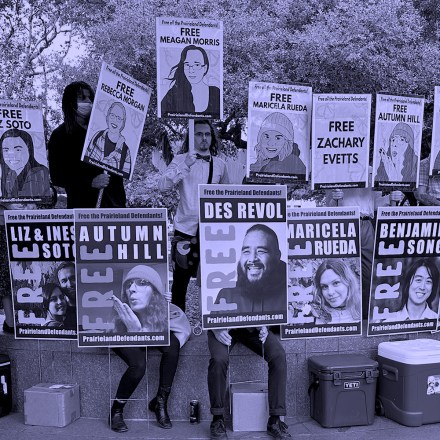
💾

The Democratic Party Gets Its Populist Takeover

All three congressional candidates that New York City Mayor Zohran Mamadani endorsed won their primaries on Tuesday. The races were widely viewed as a test of just how much influence the left would have in charting the next chapter for the Democratic Party — and a referendum on Mamdani’s power.

“Mamdani is the one variable that truly matters,” Michael Lange, political writer and elections analyst of The Narrative Wars Substack, tells The Intercept Briefing as he breaks down the wins of Claire Valdez, Brad Lander, and Darializa Avila Chevalier by district. “You pair that type of broad cultural political figure with the block-by-block organizing of New York City DSA — it’s a very powerful thing.” 

“You had a candidate who said ‘Fuck Kamala Harris’ win the historic capital of Black America,” says Lange, of Avila Chevalier’s win over five-term incumbent Rep. Adriano Espaillat. “If that is not a distillation of the ‘Democratic tea party,’ I don’t quite know what is.”

This week on the podcast, host Akela Lacy speaks to Lange and Intercept managing editor Maia Hibbett about the strategic mistakes of the traditionally progressive Working Families Party, the growing influence of the Democratic Socialists of America on the Democratic Party, and how the DSA is upending electoral politics from the left.

“Here in New York, a lot of the momentum is being driven by the DSA, of course, but there are these progressive and insurgent candidates across the country who are trying to change the course of the Democratic Party,” says Hibbett, “and excite voters who might not have been into the Democratic establishment in past cycles.”

Lange notes how demographic changes and pressures on the Democratic Party base are impacting voters’ priorities. “The party’s becoming younger, more educated, and increasingly squeezed financially,” says Lange. “There’s just this broad alienation of people who have not really been able to get ahead, not for their own fault, and I think it’s like downstream of our economy, and that’s why the affordability zeitgeist is so potent.” He adds, “You spin the wheels up in two years, what could this look like in a Democratic presidential primary?”

For more, listen to the full conversation of The Intercept Briefing on Apple Podcasts, Spotify, YouTube or wherever you listen.

Transcript

Akela Lacy: Welcome to the Intercept Briefing. I’m Akela Lacy, senior politics reporter at The Intercept.

Maia Hibbett: And I’m Maia Hibbett, managing editor of The Intercept.

AL: Maia, did you see what House Minority Leader Hakeem Jeffries had delivered to his House office on Wednesday morning?

MH: Yes, they were beautiful.

AL: The Republicans’ House campaign arm delivered flowers and a card offering their condolences to Jeffries after candidates that he endorsed lost to socialists on Tuesday night in primaries in New York.

This is what the card said. “Three losses in one night is tough. We wanted so-called ‘Leader,’” — in quotes — “Jeffries to know our thoughts are with him, his candidates, and whatever remains of his influence in the Democratic Party.” Maia, let’s get your thoughts on this.

MH: On one hand, Jeffries probably felt a little bit of relief that no one did end up challenging him, so he wasn’t one of the people facing that challenge. But it was a really bad night for establishment Democrats. Ally of Jeffries and lots of other Democratic old guard, Rep. Greg Meeks in Queens, was also mad, and he was giving comments on Wednesday morning implying that New York City was going to suffer, it wasn’t going to get as much resources from the federal government because it was losing one of its really powerful incumbents.

You’ve covered the race that toppled Espaillat pretty closely. It represents a different kind of power coming into play in New York and in Democratic politics.

AL: One of the candidates most considered a long shot prior to Tuesday is Darializa Avila Chevalier, who ousted the powerful chair of the Congressional Hispanic Caucus, Rep. Adriano Espaillat. Avila Chevalier was notably an organizer of the Columbia pro-Palestine protest alongside Mahmoud Khalil. She cited Espaillat’s refusal to help Khalil in the aftermath of his arrest as one of the main reasons that she even decided to challenge him in the first place. And she came on the national stage after writing an op-ed in support of [Khalil] and being recruited by Justice Democrats.

MH: That result was really striking, especially because if you think back to a little over a year ago, before Zohran Mamdani won the primary for New York City mayor, you were covering the arrests of these student protesters in solidarity with Palestine, and that storyline has changed so dramatically.

It seemed at the time like their power was going to fade, or that these protests were getting crushed — and now one of them is going to become a member of Congress.

AL: This was definitely not on Democrats’ bingo card, particularly Espaillat, who was a large recipient of money from the pro-Israel lobby and faced a lot of criticism for how little he did to support those students at the time.

While Avila Chevalier’s win on Tuesday was one of the biggest surprises, both liberal and conservative critics of the Democratic Socialists of America, of which she is a member, framed her success as part of this narrative that we’re seeing come out from some reactions — that Ivy League transplants are taking over the Democratic Party and don’t actually reflect the working-class interests they’re claiming to represent.

MH: That was a huge criticism in another race on Tuesday night in New York, which was the competition between Claire Valdez and Antonio Reynoso for Nydia Velázquez’s seat. Velázquez was retiring, and she had chosen Brooklyn Borough President Antonio Reynoso as her successor. Velázquez was considered a progressive.

She was early to support Zohran Mamdani’s campaign. And in some ways, the DSA’s choice to run someone against her chosen successor was being presented as this betrayal and this attempt to usurp the progressive power base that had begun to grow in New York City.

AL: And then, of course, in the middle of all this, there’s Brad Lander, who many of our listeners may recall ran against Mamdani for mayor and then formed a coalition with him.

He ousted incumbent Rep. Dan Goldman in lower Manhattan and parts of Brooklyn less than 10 minutes after the polls closed. That was less of a shock, as Goldman had lagged behind in the polls for some months, but I think with the quickness that they called the results was another twist of the knife for Democrats in the establishment who had stood by Goldman.

MH: Yeah, and it’s funny because not that long ago, I think Goldman was considered a pretty powerful and a pretty popular politician. People talked before the 2025 mayoral race about the possibility that he could run for mayor of New York City. Maybe now he will because he’s free to do stuff. 

Here in New York, a lot of the momentum is being driven by the DSA, of course, but there are these progressive and insurgent candidates across the country who are trying to change the course of the Democratic Party and excite voters who might not have been into the Democratic establishment in past cycles.

Next week in Colorado, there’s a race that you’ve been covering really since it started, which is an insurgent candidate named Melat Kiros, who is endorsed by Justice Democrats and is also a DSA member backed by the national DSA. She’s running to take out longtime incumbent Rep. Diana DeGette in Denver.

There’s also Graham Platner in Maine. There’s Abdul El-Sayed in Michigan, both candidates we’ve covered a lot, running for Senate. Another DSA candidate is Francesca Hong, who’s running for governor of Wisconsin. In some of these races, the DSA is a huge driving force behind these insurgent candidates, and in other cases, they’re not actually DSA candidates, but they’re adopting this similar populist working-class-focused politics that has been elevating politicians in these races across the country.

It does seem like the story of the Trump era is that people want change. There’s the pearl-clutching version of this that’s, “Oh, God, there’s populism. There will be a Trump of the left.” But perhaps there needs to be, and populism is just governance by the people.

AL: Next, we’re going to go deeper on all of this and more with political writer and analyst Michael Lange. He writes about politics in New York City on his Substack “The Narrative Wars” and is the author of a recent piece called “The (Not So) Civil War for the Commie Corridor.” We’ll discuss the growing influence of DSA and how the group is upending electoral politics from the left. 

Michael, welcome to The Intercept Briefing.

Michael Lange: Oh, it’s so great to be here. Thank you for having me.

AL: Michael, we are speaking on Wednesday afternoon. I know you’ve had a busy day talking about the results from Tuesday night’s primaries in New York. Leftists are ecstatic right now. The primaries on Tuesday night were widely viewed as a test of just how much influence the left would have on charting the next chapter of the Democratic Party and New York City Mayor Zohran Mamdani’s abilities as kingmaker.

I want to go through some of these results with you, some of which were absolutely stunning. We have former New York City Comptroller Brad Lander, who beat Rep. Dan Goldman, which was somewhat expected. But two socialists came out on top in congressional races that were far less predictable.

You called, ahead of Tuesday, a closer race for Claire Valdez. Were you surprised by the results?

ML: Certainly the scale of it, yes. There was always a world in which — let’s start with New York 7 — where Antonio Reynoso, the candidate that Claire Valdez was facing, he’s more of an institutional progressive supported by the Working Families Party, Brooklyn borough president, was in the City Council.

There was a scenario in which his support fell off to a certain degree with younger voters, and younger voters, Claire Valdez-friendly, came to the polls en masse and broke the outcome for that way. But I was still surprised because there is a part of this district, in addition to a lot of the institutional and labor support that someone like Antonio Reynoso has, and he does also have a genuinely progressive record, and he was running on a very left-wing policy plank. 

AL: Virtually indistinguishable from Valdez’s.

ML: 100 percent right. The contrast between the candidates was very coalitional and institutional and also cultural, to a certain degree. So he kinda had these bona fides, and I thought that in some places, he can at least dent her margins.

And then the big kind of wild card is that this district is also home to a very large Orthodox Jewish community, the Satmar of South Williamsburg. Interestingly, even though they’re Orthodox Jews, they’re religious anti-Zionists. But they’ve known Reynoso for a very long time, and those folks were turning out in quite large numbers. They block vote in accordance with the whims of the rabbinical leaders there. 

So Reynoso had 10 percent of the electorate that was basically giving him close to 100 percent of the vote. So he started off with 10, and she started off with zero. And I was like, well, to claw back from that, it won’t be entirely easy. And there were public and private polls that showed this race within 2 or 3 points. So maybe I paid a little bit too much attention to that.

But Claire Valdez had a very strong close and was able to engineer a lot of young voter turnout, especially proportionally to the amount of people turning out in this lower turnout congressional primary.

And she really ran away with it. Voters under 50 of all races, I think, supported her pretty substantially. There were some neighborhoods in this district where she was getting the same margins that Zohran Mamdani was getting versus Andrew Cuomo. Although instead of Cuomo being this fossil of the Democratic establishment, she was getting them against someone who’s lived his entire life in the district and does have other progressive and institutional validators.

I’m a little less surprised, actually, by Darializa’s win because I’ve been covering that race pretty closely and I had talked at length about how this was a prime opportunity district. Adriano Espaillat was, to some degree, in my estimation, a paper tiger and also that he was someone who was operating with a pretty hard ceiling. However they seemed to — and by they, I mean the political establishment, Hakeem Jeffries, a lot of labor unions, a lot of outside spending — seemed to really realize that there was quite a lot of vulnerability to him with one month left. Then of course, Mayor Mamdani endorsed Darializa, and that really raised the salience of the race, and then all of a sudden she’s getting attacked a lot.

There was a deleted Twitter account where they found her tweets. She said a bunch of different things, ranging from like, F Kamala Harris, to she attended an October 8 rally in New York. I thought to a certain extent that might hurt her with older voters who, again, white and Black who may not have much love for Adriano Espaillat, but I thought when you project that amount of money and negative spending onto a relatively unknown candidate, it can, in certain instances, have very drastic implications.

But she was able to really weather that, and also he was someone who had spent much of his career appealing to building Dominican American political power in Upper Manhattan. That was a stronger strategy 10 years ago when the Dominican electorate was half or even a little more than half of what this district is.

“He was very focused on a third of the electorate, and it left him very vulnerable.”

But it has been redrawn. It has experienced demographic change to a certain extent, and now it’s basically one-third Hispanic, one-third white, one-third Black. And so he was very focused on a third of the electorate, and it left him very, very vulnerable. Darializa was able to — again, for someone who had not held office before — against a 10-year Democratic incumbent, she did quite well with Black voters, and she did very well with white voters as well, of all ages and also religions.

This district has a lot of, I would say, progressive, older Jewish voters. A lot of this spending was geared at getting them to flip toward Adriano Espaillat or at least sit the race out. But they didn’t, and they backed her by considerable margins, and she paired that with real inroads with the white, Black, and Hispanic renter class, and that was enough for her to win by 3 points.

So it’s an incredible accomplishment.

AL: Yeah, I’m really glad you brought up the money piece because this was one of the most expensive congressional cycles in the history of New York, with more than $50 million spent. And obviously, not every seat, every congressional seat in New York was up for election. We’re talking about the handful that were up. 

Also down the ballot, super PACs spent almost five times what they spent on state legislative races in 2024, according to a report on Wednesday from New York Focus. A total of $9.6 million — including more than $2.5 million spent against DSA candidates alone, almost every single one of whom won their races.

What is the upshot here? We also saw some of the biggest national investments ever from pro-Palestine groups spending to support progressives in these races. How has all of that money changed how elections work in New York, both for the establishment and for this insurgent class?

ML: The value that this spending has is clearly diminishing. But I also think it’s worth highlighting American Priorities and Justice Democrats and some of the money that they used to support Darializa. Darializa was spent, I think, 3 or 4 to 1. Which is not great, but it’s not a margin that I guess can truly make or break a campaign.

She was not getting out-spent 10 to 1, 20 to 1, things like that. So I think, again, stabilized some of the potential bleeding that could have come with a really hefty independent expenditure advantage one way or the other. There was, as you mentioned, tremendous super PAC spending in these downballot races. But those largely flopped. 

One of the things that New York City DSA and also Mayor Mamdani did quite well this cycle is there was a lot of emphasis — and, some of this was happenstance in the way that incumbents retired and things like that, and what came available. But for Claire Valdez running in the 7th Congressional District, there was one DSA-endorsed state Senate candidate farther down the ballot, and then there were, I believe, three competitive or open incumbent challenges, Assembly races that overlapped with the 7th District.

Basically, Claire’s race really helped raise spend, engagement, turnout in a lot of these crucial districts down the ballot. And then Claire, of course, blows it out of the water. I don’t want to say that she carried all these other folks to victory, but the dynamics of her race, campaign, and blowout certainly helped folks at the bottom of the ballot get turnout.

AL: I find it interesting that the national discourse around getting out of money in politics, which is still very strong and a big part of these candidates’ campaigns, but they’re also recognizing and being very candid about the fact that they do need money to combat some of the spending.

And obviously it’s not going to be equivalent, but you had Valdez and Reynoso trading barbs about dark money or super PAC money in the race. And she said something to the effect of, and you hear this argument all the time, “We’re not going to fight this fight with one hand tied behind our back.” I think that’s an interesting tension that’s come out in the aftermath of this. 

[Break]

AL: Another big discourse talking point, if you will, is about whether this marks the end of the relevance of traditional progressives, many of whom voters see as beholden to the Democratic establishment.

We see this nationally with the declining relevance of the Congressional Progressive Caucus, despite the election of more and more progressives to Congress. Most people might think of the left flank of the national Democratic Party as strictly progressive. Think Kamala Harris versus Bernie Sanders. But it’s a little bit more nuanced than that, especially in New York.

You wrote recently, “It is The Socialists vs. The Progressives: NYC-DSA, the volunteer army that went from study hall to City Hall in a decade; versus the Working Families Party [WFP], the progressive third party that dominated the anti-establishment lane of New York politics for twenty years before the socialists arrived on the scene.”

For our listeners who might not be as familiar with the nuances of how this works in New York, can you break down those lanes on the left? Who is in each camp, where do they diverge, and how are they pushing Democrats to the left?

ML: I think some of the biggest differences between DSA and WFP is ideological. It is an outgrowth of that Sanders versus Warren 2020 presidential primary, but I think it’s also in structure of the organization.

I don’t think it’s unfair to say that DSA is just a more democratic, member-driven organization. The way the Working Families Party does their endorsements and things like that, it is a little more top-down. As a rank-and-file member of DSA, you have a lot more input on the direction of the organization. Some of that manifests in terms of the number of people who actively participate, the number of people who are dues-paying members, who volunteer, things like that.

DSA — they push a very class-focused politics. Not that the Working Families Party does not. Also DSA’s led quite significantly on Palestine and those issues, especially after October 7.

Not to say that the Working Families Party doesn’t talk about class. I mean, it’s literally in their name, but there is a bit more of an identitarian bent to that. Even today, the leader of the Working Families Party, Jasmine Gripper, was talking about, well, Antonio built a multiracial coalition. She was saying things like that — whereas if DSA just lost a race of that magnitude, they wouldn’t say, well, we built a multiracial coalition. That type of thing. Never mind that Claire Valdez won Hispanic voters by a very large amount.

“Especially in this Trump 2.0 world, people are hungry for a different type of politics.”

Anyhoo, I do think that it was a very difficult evening for the more traditional progressive wing of the party. And again, we saw this in the mayoral race last year with the rise of Zohran Mamdani and the stagnation of Brad Lander — who, of course, was just elected to Congress. And then especially in this Trump 2.0 world, people are hungry for a different type of politics. I foregrounded this race, the 7th District, as a battle to see who leads to left in New York. It’s very clear that after last night, DSA is the one leading the left. And I think that will have wider repercussions as well.

AL: This is a great segue because I do want to ask you about this piece that you wrote on the 7th District, where I am a resident.

ML: Oh, there you go.

AL: And in talking about that, talk a little bit about how progressives whose candidates lost last night are reacting to the results. You already mentioned Jasmine Gripper, state director for the New York Working Families Party. But you dubbed this race a “civil war in the commie corridor.”

The “commie corridor” branding has really taken off in the past couple of months. I just wanted to tip my hat to you. 

ML: It has, for sure. Thank you. 

AL: But what’s going on here, and how did this race in particular become such a referendum on Mamdani’s power?

ML: Very early on, Mamdani and a lot of New York City DSA leadership and rank and file wanted to support Claire Valdez. 

I’m a DSA member. I’ve known Claire Valdez for years before anyone cared that I said the “commie corridor” or I wrote books or anything like that. She has a lot of goodwill in the organization with just normal members. She’s a union organizer. People really just like her.

So when Congresswoman Nydia Velázquez — who, I should also say I used to work for her when I first graduated college — when she retired, there were a lot of people who went to Claire, a reluctant candidate, and said, “Oh, I think you would be really great.” And clearly the mayor shared that sentiment. A lot of people close to the mayor did as well. 

But of course, Congresswoman Velázquez, I think there was some appetite on her part to support another DSA candidate, one that she was more familiar with. But then she did not want to support Claire, so then she really went all-in on Antonio Reynoso. Those two are very close. Antonio was born and raised in the South Side of Williamsburg, which is a historically Puerto Rican area. And credit to Nydia and Antonio: They were waging fights against the machines of old in that part of town prior to 2016, prior to 2018, before DSA really asserted themselves politically.

But then, I think, she was upset that the mayor wanted to go a different route than her. She made some comments to The New York Times. It got bitter. It felt like both sides were waging a lot of capital on this outcome. There was a lot of media sparring and things like that. Obviously with hindsight, potentially the Working Families Party and the Reynoso camp, they might have raised the stakes of this race too much. Now, they probably didn’t know what was going to happen but I think probably they’re sitting here on Wednesday regretting it.

“Obviously — with hindsight — potentially the Working Families Party and the Reynoso camp, they might have raised the stakes of this race too much.”

But I think that the most important thing is that Mamdani is the one variable that truly matters. And New York City DSA, for all of the local nonprofits and relationships that Antonio Reynoso had, New York City DSA out organized them.

They knocked over 300,000 doors. They knocked the entire district, and you really felt those results on Tuesday night. To pick that district to have a very high-stakes proxy war was a strategic mistake on the part of the Reynoso–Working Families Party world, because this was not like a fight in Park Slope or Carroll Gardens.

Not that it would’ve gone differently, but those are a little more progressive, granola, Brad Lander-coded areas. They were really having this fight on some of these blocks where 93 percent of voters are under the age of 50, and where Mamdani is not just a political giant, but a cultural figure.

You walk around Greenpoint or Bushwick with him, and there are women just tumbling over themselves, running out of the bar to get a picture with him. He did a selfie line at McCarren Park. And ironically, someone I went to college with who also reports on this stuff, he was saying that everyone he spoke to who said they were voting for Clara Valdez was like, “I’m doing it because of Mamdani.”

And you pair that type of broad cultural political figure with the block-by-block organizing of New York City DSA — it’s a very powerful thing. It’s how they were able to basically create a very favorable electorate even without the big highly salient mayoral race, the wall-to-wall media coverage, things like that.

I won’t get the voting data for probably a couple days or a week or so, but I have a hunch that the voting base this year in the 7th District was even younger than it was last year. Were the same amount of young voters, like raw, going to turn out? Not necessarily, but proportion-wise, it was pretty robust and it really cascaded on election day.

AL: You mentioned DSA sort of outorganizing the Working Families. I also want to mention that New York DSA co-chair Gustavo Gordillo told Hasan Piker at a watch party last night that his phone bank for Darializa Avila Chevalier could have identified 2,000 voters, which was the margin by which she won. A pretty spectacular effect. 

ML: Yeah, it’s funny, I thought they were going to make fun of me because I was like, “Oh, I think Adriano might eke it out.” But they were like, “Actually, we saw that you said that and we were like, all right, we gotta go into overdrive.”

AL: There you go, data-driven. 

ML: I obviously wanted Darializa to win. I quite literally voted for her. I owe it to the people who read and trust what I say to share that. 

And I do think that there was a broad sentiment, like, “Oh, she’s probably like pretty close, but will she get across the finish line?” That type of push that they were able to engineer, it’s just no other mass-member organization that I can really think of could do that. They called through every Democrat who had voted in Upper Manhattan in the last six years. I think the first list they did, they burned through it in 12 minutes. Really remarkable organizing that is exactly the type of thing that decides a race at the margins like this.

“They called through every Democrat who had voted in Upper Manhattan in the last six years.”

AL: The other big question coming out of last night is and really, this is in response to the way that both Democratic Party leaders and Republicans are spinning this, which is that Hakeem Jeffries has lost control of the party and that there’s a communist takeover of the Democratic Party that is out of step with the vast majority of voters outside of the coasts.

But is this something that can work outside of New York City? There are several races with progressives and socialists on the ballot coming up. Midterms are not over, I’m sorry to our listeners. Next week in Denver, Melat Kiros is challenging Rep. Diana DeGette. Kiros is a DSA member endorsed by the Denver DSA chapter and the national DSA.

Later this summer, Assembly Member Francesca Hong is running for Wisconsin governor. She’s a member of the Assembly Socialist Caucus and a DSA member. On the nonsocialist but progressive populist side, there’s also Graham Platner’s Senate race against Republican Susan Collins in Maine.

Is this a coastal formula? Why or why not?

ML: It’s funny. This is the question that’s at the heart of my forthcoming Mamdani book.

AL: Oh, wonderful. 

ML: But it won’t be out for a bit because we’re living through his effect on the Democratic Party. I do think the party’s becoming younger, more educated, and increasingly squeezed financially. 

There’s this growing precarious middle class that’s really not getting ahead, really disillusioned with — it’s funny talking about this, it’s like I sound like Morris Katz because he says similar stuff.

AL: Morris Katz is a Mamdani adviser who’s also working with other progressive candidates, including Graham Platner. But Michael, continue.

ML: But yeah, you have this youngerish, but also middle-aged, we’ve even seen races where progressives and leftists have won Gen X suburbanites because even these mortgaged homeowners are really feeling squeezed by affordability. But it’s also a broader cultural alienation. It’s downstream from the loss of community, the rise of oligarchy. I think technology as well, like the tech oligarchs, it’s all intertwined. Two years from now, artificial intelligence and that type of stuff could be the number one, the number two, or the number three issue.

But I think there’s just this broad alienation of people who have not really been able to get ahead, not for their own fault, and I think it’s like downstream of our economy, and that’s why the affordability zeitgeist is so potent. And so yes, does the “commie corridor” like literally travel to Michigan? Not exactly. But also the Democratic Party is pretty urbanized. It’s getting even more urbanized, especially in a primary setting.

What you’re asking is what a lot of us are asking right now? Is like, OK, you spin the wheels up in two years, what could this look like in a Democratic presidential primary?

“ Ironically, the rest of the Democratic Party is copying Mamdani’s message with respect to affordability, almost verbatim.”

What was very interesting about New York 7 and New York 13 is that ironically, the rest of the Democratic Party is copying Mamdani’s message with respect to affordability, almost verbatim. But in 7 and 13, Claire Valdez and Darializa, and I was thinking like, oh, if maybe they underperform or maybe one of them doesn’t win, this is a tweak to make in the future cycles. They weren’t going super hard on affordability. There was a lot of talk about Palestine and AIPAC, things of that sort. Darializa also leaned into Adriano’s voting for omnibus bills that increase ICE funding, things like that. 

So my thesis was like undoubtedly those were motivating issues to Mamdani doing so well in those areas, but particularly in Upper Manhattan, that’s the heart of the multiracial working class. And I was like, a huge part of it was affordability. But what was really fascinating is that, it’s one thing to win in Ridgewood with that, but in Upper Manhattan — more tenants than any other district in the country. And Darializa won by talking a lot about Palestine and a lot about ICE. If she didn’t win, it would’ve been maybe we should’ve talked more about affordability. But she did win — in spite of all the spending. That’s like quite a, I don’t want to say a narrative buster, but it’s a very interesting, data point.

AL: It flies in the face of the claims by centrist strategists that those things are not popular with the base that they need, particularly that working-class base where they’re saying that those issues are not the bread-and-butter issues that working people come home and think about at night.

But I do think you’re touching on a key point here, which is that those issues tie into the broader frustration with not even just the positions that they’re taking, but the shutting down of discourse or the lack of teeth, particularly on the ICE thing, the lack of a response to really differentiate themselves from Republicans in the longer term.

You did mention a socialist presidential candidate. 

ML: Oh, boy. 

AL: That is the perfect segue to my final question for you which is, again, echoing a big question that came out of last night, which was where was Rep. Alexandria Ocasio-Cortez?

ML: To her credit, she did support four state—

AL: Assembly members, yes.

ML: Who were all challenging incumbents, and they all did win.

AL: Yes. And so this is the strategy. So the criticism here, for our listeners, was that Mamdani did the work in the congressional races, and AOC did the work in the state legislature races. Both of them supported all DSA candidates in the respective races that they did endorse in.

But many people were taking shots at AOC saying that she should regret that she didn’t endorse Valdez or Avila Chevalier.

I find the argument that they were splitting their clout in a race where the left had limited resources to be a compelling one. I also find the argument that AOC is looking at building bridges with the people who will help her potentially run either for the Senate or for the presidency one day, and that it wasn’t worth her while to step into these races where Mamdani was already clearly carrying a lot of the weight.

What did you make of that strategy?

ML: Yeah. I think it’s just downstream of the nature of the relationships and the institutions that both of them have. Mayor Mamdani not endorsing any insurgent challengers in the state legislature in an effort to, not piss off, for lack of a better word, Carl Heastie, who’s the Assembly speaker.

“Darializa’s thing — that was big to take on the chair of the Congressional Hispanic Caucus.”

The inverse, though, pushing a lot of chips in with respect to Congress. I mean, Claire — it’s an open seat. Everyone needs to be adults about it. But the Darializa’s thing — that was big to take on the chair of the Congressional Hispanic Caucus.

With the congresswoman, it’s probably just the inverse of that. There’s also a special Nydia Velázquez connection there. 

But plenty of people running had either the mayor or they had AOC. And then I think a lot of them also had Bernie Sanders as well, and New York City DSA. So it was like, you had almost everybody with one or two or three really famous folks on their lit, and the institutional heft.

Regrettably, Conrad Blackburn was running for an Assembly seat in Harlem. He was the only candidate to lose last night.

AL: The only DSA candidate to lose.

ML: It was partially because he was the only one who did not have a Mamdani or an AOC endorsement.

It was a tricky race. I think just to zoom in and out, there was a lot of money spent against him at the beginning. When he was in Florida and a law student, he had that two-month internship in the Florida attorney general’s office, but the Florida attorney general was Pam Bondi. That, I think, hurt him considerably. But after months, I think he was able to claw back. 

I think also Darializa being on the top of the ballot was able to help him. But the Darializa versus Conrad thing is a very interesting dynamic in how their spending was treated. Whereas with Darializa, they opened the floodgates late with all these attacks, and with Conrad, they started earlier. I’m sure if they could do it over again with Darializa, they would’ve taken her much more seriously, because now, of course, Adriano Espaillat, someone who is, I don’t want to contribute to a myth here, but he is someone who built a Dominican political machine, while I don’t really agree with the politics of it, over the course of 30 years. It was a 30-year-old machine being defeated by a 32-year-old Columbia graduate student who had never run for office before. 

“It was a 30-year-old machine being defeated by a 32-year-old Columbia graduate student who had never run for office before.”

AL: Who said, “Fuck Kamala Harris.” 

ML: Well, yeah, if I can curse. You had a candidate who said “Fuck Kamala Harris” win the historic capital of Black America. If that is not a distillation of the “Democratic tea party,” I don’t quite know what is. For as much anti-incumbent sentiment as there just is broadly now, there has been that with Adriano Espaillat, particularly in the southern parts of his district for a while, which was another reason that he was vulnerable and he played it poorly, and I think she ran a gutsy race.

AL: Michael, we’re going to leave it there. Thank you so much for helping us make sense of the wild ride that was Tuesday night. I look forward to reading your book when it comes out and looking forward to more of your — I don’t know if you’ll beat “commie corridor,” but we’re excited for whatever comes next.

ML: I appreciate that a lot. It was great to be here. Thanks for having me.

AL: We want to know what issues you are following in this exciting midterm cycle, send us an email at podcasts@theintercept.com or leave us a voice mail at 530-POD-CAST that’s 530-763-2278

That does it for this episode of The Intercept Briefing. 

This episode was produced by Laura Flynn. Ben Muessig is our editor-in-chief. Maia Hibbett is our managing editor. Fei Liu is our product and design manager. Nara Shin is our copy editor. Will Stanton mixed our show. Legal review by David Bralow.

Slip Stream provided our theme music.

This show and our reporting at The Intercept do not exist without you. Your donation, no matter the amount, makes a real difference. Keep our investigations free and fearless at theintercept.com/join

And if you haven’t already, please subscribe to The Intercept Briefing wherever you listen to podcasts. And leave us a rating or a review, it helps other listeners to find our reporting.

Until next time, I’m Akela Lacy.

The post The Democratic Party Gets Its Populist Takeover appeared first on The Intercept.
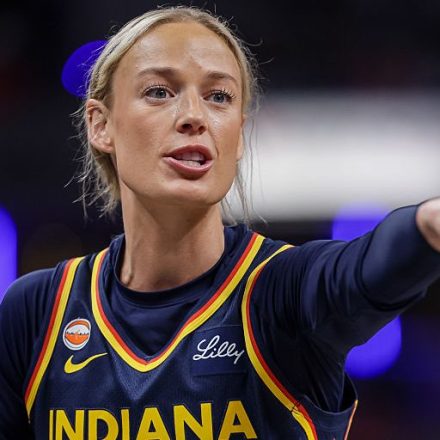
💾

The Performative Ceasefire in Gaza

Over the last few years, the world has seen unspeakable violence, death, and devastation from Israel’s war on Gaza. During that time, global perception has shifted as the scale of Israel’s destruction grew, with the death toll climbing to more than 73,000 people. Since the October 2025 “ceasefire,” Israeli military attacks have killed more than 1,000 Palestinians in Gaza.

“Spending years building a movement for an end to this genocide around the slogan ‘Ceasefire now’ alone, it was successful in building quite a substantial following,” Tariq Kenney-Shawa, an associate fellow at Palestinian think tank Al-Shabaka, tells The Intercept Briefing. “It was vague enough to bring a lot of people into the movement against genocide — because who’s going to disagree with calling for an end to war?”

“But at the end of the day, what it really laid the groundwork for was … the potential of signing this empty ceasefire agreement, in which there is an agreement on paper, there is a framework, and a phased approach to this.”

Since the U.S.-brokered ceasefire last year between Israel and Hamas, Gaza has largely fallen out of the news, as Israel, along with the U.S., launched attacks on Iran and Lebanon. But Israel’s genocidal assault on Palestinians never really stopped. “Palestinians continue to be killed every single day, albeit at a more piecemeal slower pace that is more difficult for the international community to oppose,” says Kenney-Shawa.

This week on the podcast, Intercept reporter Jonah Valdez speaks to Kenney-Shawa about how the fight for Palestinian rights and sovereignty can’t end at demands for ceasefires and conditioning aid — and should shift to sanctions and arms embargoes — and about how Gaza fits into Israel’s ambitions for the region and efforts to more deeply enmesh the U.S. and Israeli military.

“This is the most important thing to look at in the course of the next few months and few years,” says Kenney-Shawa, warning of new Israel-led initiatives like Section 224, an unprecedented integration of the U.S. military–industrial complex and Israeli defense and technology sectors. Israel and American leaders “recognize the fact that criticism of Israel in the U.S. is skyrocketing. … In many ways, they’ve recognized the need to shift this U.S.–Israel relationship from one of dependency, both militarily and financially, to one of further entrenchment.”

“Obviously, it’s a very strategic move by the Israelis to take advantage of this period in time where there is this huge chasm between public opinion and actual policy,” says Kenney-Shawa. “They’re essentially recognizing that, ‘Hey, we might not have total impunity in the United States forever, but we do for now while establishment Democrats and Republicans are running the ship. We have a Trump administration that’s essentially willing to do whatever we want.’ So what they’re trying to do now is essentially push this process through while Trump is in power, while Republicans have a majority in the Senate and the House.”

For more, listen to the full conversation of The Intercept Briefing on Apple PodcastsSpotifyYouTube or wherever you listen.

Transcript

Jessica Washington: Welcome to The Intercept Briefing, I’m Jessica Washington, politics reporter at The Intercept. 

Jonah Valdez: I’m Jonah Valdez, also a reporter at The Intercept, and I cover politics and Israel and Palestine.

JW: Glad to have you here, Jonah. 

So on Wednesday, President Donald Trump signed an interim ceasefire to end military operations in both Iran and Lebanon for 60 days. The agreement would reopen the Strait of Hormuz, and bars Iran from having a nuclear weapon. The White House agreed to end their blockade and waive economic sanctions against Iran. 

The deal also requires the U.S. and regional partners to develop a “mutually” agreed upon reconstruction and economic development fund worth at least $300 billion. However, the U.S. is not required to contribute.

Jonah, earlier this week on a special live Intercept Briefing, you spoke to Al-Shabaka U.S. Policy Fellow Tariq Kenney-Shawa about the particulars of ceasefires especially when it comes to Iran, Lebanon, and most notably Gaza.

In your conversation, you talk about the role the term “ceasefire” plays in our political imagination. Jonah, should a “ceasefire” be the end goal, or is there something more we need to push for here if what we’re really looking for is an end to the suffering? 

JV: I think anyone should see even the recent deal between the U.S. and Iran with some skepticism as far as whether it will hold, given previous ceasefires it’s been a part of.

The term “ceasefire” has been weaponized against those that it’s supposed to bring peace to.

Something that Tariq Kenney-Shawa and I talk at length about during our conversation is how this term “ceasefire” has been — in many ways, in an Orwellian way — weaponized against those that it’s supposed to bring peace to. That’s exactly what we saw in Gaza.

The term “ceasefire” was this massive slogan — a very effective slogan — throughout the 2024 presidential campaign cycle, as well as congressional races that year. Pro-Palestinian protesters, the movement at large, was really pushing and using a ceasefire as a rallying cry to get people to care about Palestinian rights.

What conversely happened is you get this Trump-concocted ceasefire with a lot of hands from the Israeli government, which is essentially a fake ceasefire. They’ve continued the bombing campaign in Gaza. Since the ceasefire that was signed in October of last year, more than 1,000 Palestinians have been killed in Israeli strikes. So I think the term “ceasefire” just completely doesn’t apply in Gaza.

As a part of the Iran war, they have also invaded and are occupying southern Lebanon, and of course, Israel and the U.S. and their joint strikes in Iran. I think it’s important to see Gaza in this context of a broader conflict that Israel is trying to push on the region.

JW: On a related note, I know that you’ve consistently covered a lot of the momentum around calls for an arms embargo to Israel. I know this came up in your conversation with Tariq as well.

Are we giving an arms embargo too much weight, or to put another way, are we giving politicians who say they agree with an arms embargo the ability to skirt the actual issue here, which is our decades of perpetuating and being complicit in violence in the Middle East? What’s your take on that?

JV: This is a difficult one that Tariq and I had a really good back and forth about. An arms embargo, similar to a ceasefire, has been a huge rallying cry for the movement for Palestinian rights, for Palestinian sovereignty, really for decades now. Past U.S. governments have used an arms embargo [at] varying degrees of effectiveness of leverage against the Israeli government when the U.S. government wants Israel to do certain things.

It is still worth mentioning that Israel is still very reliant on the U.S. government for its military capabilities. Just the very fact of defending against Iranian attacks, that’s made possible because of U.S. weapons. Its ability to have a chokehold on Gaza and the West Bank, also due to U.S. weapons. Its ability to even strike in Iran and Lebanon, a lot of that is U.S. weapons capabilities. A lot of the aggression we’re seeing is because of its partnership with the U.S. 

Again, there’s this danger, though, similar with the ceasefire, where an arms embargo might not be enough, and that’s what Tariq gets at as well, which is something he’s been saying since even before October 7, which is, the movement might have to go further than an arms embargo. 

The reason is what we’re already seeing with certain conversations in Congress is there’s real efforts by Israel supporters and the Israeli government to further enmesh the U.S. and Israeli militaries in a way where even if we were to have a halt to weapon sales to Israel, even if we were to stop the flow of taxpayer dollars to Israel, they can still acquire weapons through a new kind of partnership they’re trying to form through the Pentagon directly.

This is something where, it could also be the case, where the movement gets what it wants. Again, this is a very effective rallying cry. We’re having an arms embargo, at least calls for stopping offensive weapons to Israel as a huge litmus test in the midterm elections. And it’s I think affecting the outcome of a lot of elections as we’ve seen in Pennsylvania and New Jersey and beyond.

It is having a lot of ripple effects in U.S. politics right now, and halting it would be a big deal. But, further down the line, Israel is already anticipating the halt of the flow of weapons or at least the flow of taxpayer dollars to Israel and is looking to create an even deeper relationship with the U.S. that could last indefinitely, really.

JW: This does really seem to be a cyclical issue in U.S. politics and in organizing. You pick an endpoint and of course, your enemies, they move around that endpoint. So, you may reach the goal, but what you actually wanted to achieve still feels elusive. 

Jonah, thanks for giving us that preview. We’re going to hear your conversation with Tariq Kenney-Shawa, an Al-Shabaka U.S. policy fellow and co-host of Al-Shabaka’s Policy Lab series. Let’s listen to that now.

JV: Tariq, to start, I just want to give a little background on when you and I first connected. It was last summer, so July 2025, thereabouts, and it was the height of Israel’s manufactured famine in Gaza that, at the time, there seemed to be a huge shift toward how people in the U.S. were viewing Gaza.

You had mainstream media airing images of starving Palestinians. You had even more moderate Democratic leaders criticizing Israel. More lawmakers were referring to the conflict as a genocide for the first time. In the Senate, a historic vote, a majority of Democrats for the first time voted to block some weapon transfers to Israel.

But amid all that, you told me even then you were worried about a scenario where Israel would enact what you called a “performative ceasefire,” where Israel would continue the bombing and the blockades on humanitarian aid, the ethnic cleansing, but in your words, “a bit more piecemeal and gradual.” 

So sure enough, several months later, last October, we got this iteration of a ceasefire, and here we are. The scenario you worried about is unfolding. So question to you, I’m wondering: In the last seven months, what’s been affirmed for you, and what has been more surprising?

Tariq Kenney-Shawa: It’s pretty clear that, yeah, everything that we were as a movement warned about — that these meaningless, toothless ceasefires can be agreed to and then not actually implemented — that has actually, as we’ve seen over the last couple months since October ’25, that’s played out exactly as expected.

What it’s really showed me was that, or what it’s really confirmed, was that spending years building a movement for an end to this genocide around the slogan “Ceasefire now” alone, it was successful in building quite a substantial following. It was vague enough to bring a lot of people into the movement against genocide because who’s going to disagree with calling for an end to war, calling for a ceasefire, right?

But at the end of the day, what it really laid the groundwork for was — again, like you just mentioned, and like I said last year — the potential of signing this empty ceasefire agreement, in which there is an agreement on paper, there is a framework, and a phased approach to this.

However, Israel has refused to implement any steps of the ceasefire agreement, and that includes continued carrying out daily airstrikes across the Gaza Strip. They’ve continued expanding the land they control. At the beginning Israel controlled about 53 percent of the Gaza Strip, delineated with that yellow line that people keep talking about that chopped Gaza in half. And now they’ve been, bit by bit, inching that line further and further westward and forcing 2 million Palestinians into an ever-shrinking strip of land that is now about 40, 30 percent of what the Gaza Strip was prior to the genocide.

Israel has also refused to let in the full agreed amount of humanitarian aid. They flood the Strip with commercial aid that people can’t really afford, but they refuse to let in sustainable products and things that people need to survive. Tents, building material, equipment to dig people’s bodies out of the rubble. What that has done is put those 2 million Palestinians who are caged in on that other side of the yellow line into a state of deliberate purgatory.

Since October 2025, that’s what we’ve seen. Palestinians continue to be killed every single day — albeit at, again, a more piecemeal slower pace that is more difficult for the international community to oppose. A lot of people within the now quite large movement in support of Palestinian rights and an end to a genocide, they look at the situation now and they say, “Well, they agreed to a ceasefire. What else can we do? What’s the next step for us?” At the end of the day, this is exactly what we were worried about last year. 

We know Israel’s history of how Israel engages with ceasefires. The fact that Israel doesn’t abide by ceasefires historically and often uses it as a period to expand the facts on the ground that fundamentally change the equation of the conflict.

Now we’re in this really difficult position in which other regional issues have come to the fore in terms of attention and media coverage, and Gaza has really slipped away from the public’s attention. Not that at the end of the day that really stopped a genocide, but there was a lot of movement in terms of this gradual push to hold Israel accountable.

The fact that we really predicated our entire movement around nothing really more than achieving a ceasefire has really come at the detriment of the Palestinians who are now living under this pseudo-ceasefire, while the movement in support of them abroad is a little bit in limbo, immobilized, and unsure of how to move forward.

“The fact that we really predicated our entire movement around nothing really more than achieving a ceasefire has really come at the detriment of the Palestinians now living under this pseudo-ceasefire.”

JV: It’s this Orwellian situation of language being weaponized in a way.

TKS: Absolutely. 

JV: Out of that came the “Board of Peace” set up by the Trump administration that is supposed to govern this so-called ceasefire. Speaking of deals, this week we’re seeing a deal between the U.S. and Iran in, supposedly, ending the war there.

That war itself dominated the headlines and drew a lot of the attention away from Gaza. But now that the U.S. and Iran seem very close on this deal to end the war, Netanyahu, for his part, he said that he won’t withdraw Israeli troops from Lebanon despite this deal. And of course, the Israeli military continues to occupy more than half of Gaza.

How should we be viewing Gaza in the context of the Iran war or vice versa? 

TKS: It’s important to see Gaza as the elephant in the room and just really part of this cycle of war. The fact that Israel was able to agree to this pseudo-ceasefire in Gaza allowed it to direct and move a lot of its attention, a lot of its resources, a lot of its military manpower to these other fronts that opened up. It was able to dedicate more time and energy to fighting this war in Iran, to going on this offensive against Hezbollah in Lebanon. And also, can’t ignore the fact that Israel is also holding occupied territory in Syria. So it’s really important to view this as a cycle.

It’s obviously very early, we don’t quite know what’s going to happen with the MOU [memorandum of understanding] between the U.S. and Iran. But if it does move forward, and if that front does shut down and quiet down — unfortunately, what that likely means is that Israel is going to have a lot more resources, a lot more manpower to turn its attention back to Gaza.

“The fact that Israel was able to agree to this pseudo-ceasefire in Gaza allowed it to direct and move a lot of its attention, a lot of its resources … to fighting this war in Iran.”

That shift in the regional wars that are ongoing is also coinciding with the fact that we’re basically in the run-up to Israeli election season. The opposition is really in a dead heat against the current far-right Israeli government. But the opposition in Israel isn’t criticizing Netanyahu because they’re against these forever wars that Israel is fighting. They’re criticizing Netanyahu because they just don’t like the way he’s conducting them. Just the other day, one of the main opposition candidates posted about how basically the war against Iran is going to basically reignite when there’s a new government in power in Israel. 

“Israelis … are supportive of this concept of total victory that is quite elusive.”

That just goes to show that Israelis by and large are supportive of these war processes. They are supportive of this concept of total victory that is quite elusive. Netanyahu in particular, and the far-right coalition that he leads, is going to be particularly thirsty to, again, prove themselves in the face of these narratives that are coming out in light of the potential Iran deal that this was a strategic loss for Israel.

What Netanyahu and his coalition are thinking is, “OK, if we have to wind down our offensive activities in Iran and potentially even Lebanon, how else are we going to prove that we are the right party and the right people to defend Israel from our perceived threats?” They’re going to do that by reigniting their assault and genocide in the Gaza Strip. How they’re going to justify that is where we are at right now in terms of the ceasefire process itself. Despite the fact that Israel has not implemented any of the phase one parts of the agreement, they’re now demanding that Hamas agree to a component of phase two, which was disarmament.

But Hamas is basically putting its foot down and saying, “Listen if you guys aren’t going to adhere to stopping the bombing campaigns, if you guys aren’t going to let in humanitarian aid like you allowed to, if you guys are still eating up land every single day and not even adhering to phase one of the agreement, then basically why should we agree to phase two if there’s no mutual engagement on that side?”

Unfortunately, it does not bode well for Palestinians in Gaza because they’re the punching bag that Israel will turn its attention to undoubtedly.

“It does not bode well for Palestinians in Gaza because they’re the punching bag that Israel will turn its attention to.”

JV: Thanks for walking us through the political landscape in Israel. Sometimes we in the U.S. run the risk of overstating the influence of U.S. politics on Israel, specifically when it comes to Netanyahu’s decision-making and how he’s coming to those decisions. And we don’t talk enough about Israeli politics.

But I wanted to zoom in on something that you mentioned just a second ago about Hamas and their position right now and why ongoing negotiations with the “Board of Peace” continue to fall apart. For those who don’t know: The “Board of Peace” was set up as a part of the ceasefire and is supposed to, on paper, move the ceasefire process and rebuilding process of Gaza forward. It has a footnote essentially of like toward some further-off notion of Palestinian statehood.

I don’t think we talk enough about Hamas as a political entity and what its position is right now. What leverage does it have right now? What are they actually trying to argue for? Also, with other Palestinian factions, as trying to be a voice of what they see as this is the last remaining resistance of Palestinian freedom, in this context here, what does that look like? And, how is that stalling within this “Board of Peace,” very flawed structure? 

TKS: It’s pretty obvious that Hamas itself doesn’t really have much leverage at all. They never had many offensive weapons to begin with. If you could consider the homemade makeshift rockets that they fire at Israel to be offensive; many of them have been depleted. I think it’s also important to be clear that Hamas is open, has explicitly stated that they are open to handing over their offensive weapons.

But they have clearly tied this to the process that was agreed upon. They very much see that as the only tidbit of leverage that they have left in this process. Basically, their argument is saying, “Listen, we’re open to handing over our weapons, but Israel has to withdraw as agreed upon in the ceasefire agreement, or there have to be steps that make it clear that Israel will be held accountable to the standards that was agreed upon.”

It’s really important to bring in the role of the “Board of Peace” here. It’s a misconception that the “Board of Peace” has been designed and will operate with the objective of building a new Gaza for Palestinians. What the “Board of Peace” exists to achieve is to create, effectively, this wonderland that Trump and Israel have agreed to.

What that looks like if you look at the presentations that, for example Jared Kushner has pushed out and the Trump administration has presented on how they view the Gaza Strip in 10, 20 years down the line — very little of it is actually for the Palestinians who live there, who will be basically concentrated into these disparate camps that are spread out throughout the Gaza Strip, put under intense surveillance, and basically serve as cheap labor for these luxury resorts and hotels and apartment complexes and data centers that Israel and the U.S. envision building in the Gaza Strip.

Palestinians will “basically serve as cheap labor for these luxury resorts and hotels and apartment complexes and data centers that Israel and the U.S. envision building in the Gaza Strip.”

When we think about the “Board of Peace” is, that shrinking territory that Hamas does still control of is basically the only thing that is stopping the Trump administration and Israel from embarking further on that dystopian future of, again, herding Palestinians into these effectively concentration camps distributed throughout the Gaza Strip and having them just serve as cheap labor for this personal enrichment opportunity for the Trump administration and his Israeli partners.

JV: You’ve written about your own experiences growing up a Palestinian American. Your grandfather, I believe, was the former mayor of Gaza City, Rashad Shawa. Your father is from Gaza. Your aunt, Laila Shawa, is a renowned Palestinian visual artist, also from Gaza. You have another aunt, Rawya Shawa, a Palestinian journalist and legislator.

There’s a lineage to the work you do. Could you talk a bit about your family, your father, how you came to start doing this work advocating for Palestine? 

TKS: I’m Palestinian American. I was born in New York. Something that I’ve asked my parents about — they never wanted to make me feel like I had to advocate for Palestinian rights. They were always hoping that I wouldn’t have to do any of this and that eventually it would be figured out someday, and that we wouldn’t have to make this our lives or our careers. But I first started becoming aware of the politics of my heritage when I was very young. 

I was in middle school. I remember this one time I went to a friend’s place. He introduced me to his parents, and his dad asked where I was from, and I said, “Palestine.” He said, “What is that? It doesn’t exist.” I was a middle schooler, so at the time it was shocking, and I didn’t really understand it. Only later in life did I realize that that was pointed and had a lot of history behind it.

As you mentioned, my father grew up in Gaza until he was about college age and came to the U.S. Just hearing about the stories about growing up in Gaza and then seeing his reaction to later events, for example, the 2008 Israeli offensive on the Gaza Strip — really, that kind of ended up awakening me to the real weight behind being Palestinian and pushed me to obviously get involved.

“That’s been one of the most difficult parts of, in addition to obviously just all the loss, is just knowing that we might never, never go back.”

The past two years have been extremely difficult just because there’s always been that hope of being able to return to Gaza and see the land that my father grew up in, my grandfather grew up in, my great-grandfather grew up in and played these really central roles in governance.

But it’s now — Gaza effectively doesn’t exist in the way it once did. So part of that process is just wrapping your mind around that as well. That’s been one of the most difficult parts of, in addition to obviously just all the loss, is just knowing that we might never, never go back. And if we do, it won’t be the Gaza that my father left and my grandfather led and all that. 

JV: Your Aunt Rawya, she lost her home in that 2008 offensive from an Israeli strike? 

TKS: Yep. And it wasn’t the first time. Israeli tanks had shelled her home before. That was the culmination of that whole process.

“ I very quickly had to become an expert in Palestinian history in order to defend myself.”

So it was very visceral for me at a very young age. But also, the fact that I was witnessing it all from a distance also played another role too. Because as a Palestinian American growing up in New York City, again, it very quickly became about defending myself. I very quickly had to become an expert in Palestinian history in order to defend myself from the people like my friend’s father who claimed I didn’t exist and my people didn’t exist.

So it’s also interesting to just look back at how much has changed in the discourse around Israel and Palestine, in New York City, in the United States, since I became politically aware and started getting involved in these debates in middle school, early high school.

Something that gives me hope in terms of the direction things are headed is that back in 2011, 2012, when I was a high schooler, the parameters for discussion around the Palestinian right to resist occupation, around some of the myths of Israel’s existence — for example, the myth that they made the desert bloom, or that it was a land without a people for a people without a land — so much of those have been eroded.

So much of American public opinion has, over the course of obviously two and a half years of genocide, shifted. There is much more space for having real conversations about this. More importantly, sharing the Palestinian perspective, which is very fundamentally different than it was even five, 10 years ago.

JV: Those shifts are incredible. Recent polling has shown time and time again that the vast majority of Democratic voters, somewhere north of 70 — more than 70 percent — in the U.S. see Israel unfavorably

It’s playing a big role in U.S. electoral politics, whether or not a candidate supports blocking military aid to Israel has really become a litmus test in many of these races.

Some Democrats have found success in their primary elections running on that as a part of their platform and winning. You have Adam Hamawy in New Jersey, former Army surgeon who volunteered in Gaza; he won his primary against a moderate Democrat a couple weeks ago. Last month in Pennsylvania, you have Chris Rabb, whose campaign not only called for an arms embargo on Israel, but also — controversially for a lot of people — the right of return for Palestinians under international law.

I’m wondering, how would you diagnose this moment the Democratic Party is in with its attitude toward Israel–Palestine? Or do you see this as more than a moment? I’m curious how lasting you think these shifts will be. 

TKS: I definitely see this as more than just a moment. It’s not just Democrats and people on the left who are feeling more pro-Palestinian than ever before. It’s across the political spectrum. It was Pew or Gallup, I forget which one, their most recent poll on where American sympathies lie between Israelis and Palestinians. For the first time ever, more Americans sympathize with Palestinians than with Israelis, and that’s across the political spectrum. Obviously that’s a lot more skewed when it comes to Democratic voters or progressives and people on the left. But it very much is across the political spectrum.

It’s more useful to look at the polling that we’re seeing around actual policy measures. For example, arms embargo or “block the bombs” and calls to actually either at the very least condition U.S. military aid to Israel, but, even better, cut it entirely. We’re seeing upwards of 60, 65 percent of Americans, again, across the political spectrum, who support these types of actual, solid policies.

That’s the difference right now between when you’re looking at just sympathy and people who are actually willing to potentially even make voting decisions out of what they’re seeing right now and out of the outrage that they’ve been witnessing when it comes to two and a half years of genocide. They also are now more cognizant of the fact that we send Israel billions of dollars to do that genocide and to engage in forever wars across the region that many Americans see or believe Israel is dragging the U.S. into. That is the bigger change that we’re seeing, and that arguably might be a little bit more lasting, is that more and more Americans today are critical of Israel and critical of that “special U.S.–Israel relationship.”

What concerns me sometimes is that a lot of the shift in public opinion isn’t necessarily tied to support for Palestinians, and we’re obviously seeing that on the right. On the far right, where we’re seeing a rise in actual antisemitism. Across the right, we’re seeing just a general rise in the “America-first — MAGA — we don’t want to be sending anyone our tax dollars,” and they’re now starting to include Israel in that.

But the other thing I will mention is, what we’re seeing right now in the Democratic Party is really a widening chasm between the Democratic establishment and the voting base. The Democratic establishment, some of the older representatives that we have in Congress — Chuck Schumer is a great example of some of these more old-school politicians who are resistant to recognizing this new reality. What I’m trying to say is that, there is this very, very big generational gap that is emerging. So despite the fact that we are seeing such a substantial shift in U.S. public opinion, we’re not seeing it in policy. That’s largely because these establishment Democrats remain in power.

But what I hope to see over the next five, 10 years is that that starts to fundamentally change when the younger generation emerges as the bigger voting bloc. Unfortunately, these policy changes are glacial. It’s too late to end the genocide.

The one thing I am hopeful for in that long-term process, is that long-term movement that we have built and are continuing to build that will be borne out by these younger generations as they rise into political power. 

JV: All this discussion around blocking military aid to Israel is as old as the state of Israel itself. You had President Dwight D. Eisenhower in the 1950s threatening an arms embargo as leverage against Israel and other presidents after that. 

We’ve been mostly talking about a post-October 7 world where it’s been this rallying cry for anti-genocide protesters, progressive lawmakers in the U.S., and, as I’ve mentioned, we saw Democrats win primary elections running on this. The message is pretty clear: Our taxpayer dollars are being used to help Israel acquire weapons from American companies to commit a genocide. All the while, there’s this economic side of it — all the while our economy suffers, people are struggling to afford rent, just daily life, healthcare. So let’s use the leverage we have as Americans and stop the flow of weapons. 

To your point, a lot of it is leaning toward anti-Israel, not so much for the Palestinian people. And yet there is this huge shift. But now we’re increasingly hearing Netanyahu and the Israeli government, and supporters of the Israeli government signal that they are getting ready and almost championing a world without the same funding from the U.S., and basically a post-State Department funding mechanism where the same amount of taxpayer dollars isn’t flowing into Israel as much so that they could buy these weapons.

And in Congress you’re seeing a lot of pro-Israel lobbying happening around a new bill, and it would essentially intertwine the U.S. and Israeli militaries and weapons industries in a new way — we don’t do this with any other ally, it’s worth mentioning — in a new way that will reshape how Israel gets weapons. Could you talk about the dangers of that and where things are headed? 

TKS: To be completely honest with you, and we’ve talked about this before, this is the most important thing to look at in the course of the next few months and few years. That’s the difference between conditioning U.S. military funding and aid to Israel, and completely cutting U.S. military weapons to Israel through an arms embargo.

I argued as early as summer 2023 — and this was before the genocide — that even conditioning U.S. military aid to Israel would not go far enough if the objective is for Israel to end the occupation. And that was prior to the genocide. It’s also important to recognize that the Israeli military is deeply dependent on U.S. weapons, U.S. military cooperation, intel sharing.

If the U.S. withdrew that relationship or fundamentally changed it or stopped providing Israel with the weapons — whether through conditioning that aid or cutting it entirely — that would fundamentally alter Israel’s ability to get away with whether it’s genocide in Gaza or regional wars.

However, conditioning doesn’t go far enough because if Israel’s committing a genocide, and if we recognize that, then selling Israel the weapons on the open market is arguably just as bad as giving those weapons to Israel for free with U.S. tax dollars.

“Selling Israel the weapons on the open market is just as bad as giving those weapons to Israel for free with U.S. tax dollars.”

It’s avoiding another movement trap that is reminiscent of the “Ceasefire now” trap. Because if we get stuck in limiting ourselves — our movement — to simply calling for conditioning U.S. military aid to Israel on Israel adhering to international law, or U.S. law even, then there are so many ways for Israel to wriggle around that. 

More importantly, at the end of the day, Israel can continue to buy the weapons it needs to get away with genocide on the open market, and that’s the problem.

Right now, there are a couple Israel-led initiatives that actually recognize this moment we’re in. So Israel’s leaders Benjamin Netanyahu, and a lot of American — some of the most stalwart pro-Israel figures in the U.S., Lindsey Graham comes to mind — recognize the fact that criticism of Israel in the U.S. is skyrocketing; and potentially the future of this formerly special “U.S.–Israel relationship” is not sustainable in the long run, especially as more Republicans turn against this status quo. In many ways, they’ve recognized the need to shift this U.S.-Israel relationship from one of dependency, both militarily and financially, to one of further entrenchment.

How they’re going to do that, there’s basically two concurrent initiatives that are ongoing right now. The first and the most important one probably, is the fiscal year 2027 National Defense Authorization Act, or NDAA. In specific, Section 224, which is proposing basically an unprecedented integration of the U.S. military–industrial complex and Israeli defense and technology sectors. That’s dangerous because what that does is that entrenches the U.S. military within the United States military–industrial complex, and gives it access that no country has, not even the U.K., not even France, not even these core allies that the U.S. has built their relationships with over decades. 

Apart from that, why that is dangerous is that it becomes much harder for the pro-Palestine movement, or the movement in support of Palestinian rights and an end to genocide, to decouple that new much more entrenched relationship. That would mean that we would have to then go up against the U.S. military as well as the Israeli military and make that case to Americans.

Obviously, it’s a very strategic move by the Israelis to take advantage of this period in time where there is this huge chasm between public opinion and actual policy. Because they’re essentially recognizing that, “Hey, we might not have total impunity in the United States forever, but we do for now while establishment Democrats and Republicans are running the ship. We have a Trump administration that’s essentially willing to do whatever we want.” So what they’re trying to do now is essentially push this process through while Trump is in power, while Republicans have a majority in the Senate and the House.

Another example is the negotiations that are ongoing around the memorandum of understanding, the MOU, between Israel and the US. The last one being signed under the Obama administration, which was a 10-year MOU that agreed to basically be giving Israel $3.8 billion every year of U.S. tax dollars. What the new MOU that they’re thinking about is a 20-year MOU in which a couple years of increase in U.S. military aid before it eventually decreases. They also pursue this entrenchment approach, making the two militaries more dependent on each other rather than this Israel dependency relationship.

JV: There’s this really fantastic archival footage you shared on Twitter sometime last year showing your grandfather, former mayor of Gaza City — again, Rashad Shawa — talking about the annexation of Gaza. This was in the 1980s, more than 40 years ago. Here we are having similar discussions, if not in a more dire place.

I’m wondering where you think the movement goes from here. And, with thinking about BDS — Boycott, Divestment, Sanctions — if Israel doesn’t care about its place on the international stage as much as it used to, as that increasingly isn’t playing a factor, as the U.S. is more officializing its entrenchment with the Israeli military, where do you see the movement going from here?

TKS: Israel remains very much dependent on the United States and its relationship with the West, and I’m talking about mainly Western Europe. Yes, they are recognizing that their relationships based on impunity are not a given forever, which very much explains why they are effectively going so hard across the region right now. They very much see this as a moment of opportunity for them that they might not have forever. They might not have a Trump administration in the White House forever that is effectively willing to allow them to get away with whatever they want. That’s why they are taking these unprecedented steps ranging from the genocide in Gaza to the war in Iran that no other U.S. president agreed to, except for Trump.

“That’s why I spend so much time advocating for arms embargoes, for economic sanctions, anything that goes past these previous demands that we’ve had.”

That is why it’s all the more important that we recognize that the movement itself — the movement in support of Palestinian rights — has made huge strides over the last couple of years. And now, however, it’s increasingly important to shift our efforts to punitive measures — sanctions — everything in our power to hold Israel accountable through actual punitive measures like economic sanctions, arms embargoes that make it more difficult for Israel to get away with the war crimes and atrocities and genocides it’s committing.

That’s why I spend so much time advocating for arms embargoes, for economic sanctions, anything that goes past these previous demands that we’ve had — the “Ceasefire now” demands, the conditioning aid demands.

It’s increasingly important now that we take these steps and hold Israel accountable through arms embargoes and sanctions so that we don’t get to the point in the future where Israel can live its “super Sparta” strategy that it is really investing in. Basically creating a world in which Israel can carry out these forever wars and these genocides without the U.S.’s and the West’s permission. It’s really imperative that we see these changes sooner than later because time is not on our side in terms of that process.

JV: I hate to be the pessimist in the room here, but aren’t we there already where Israel can just — maybe it’s not its fullest iteration, not fully evolved Sparta form, as you mentioned — but aren’t we there already where they’re acting outside of the U.S. interest? 

TKS: Yeah. Everything we’re doing, it’s too late to stop the genocide in Palestine. An inconceivable number of Palestinians have been killed, and they’re not coming back. Gaza is — we’ve lost so much of it. A lot of this accountability is already too little too late.

But it’s also very important to recognize that, again, Israel remains very much dependent on the United States in particular, not even to mention just Europe and Western Europe, for its military activity and military prowess and being shielded on the international stage.

Just look at the Iran war, for example. There’s no way that Israel would have been able to sustain this type of regional conflagration without the U.S. This ranges from the offensive strikes that the U.S. was partnering directly with Israel on, the intelligence sharing, and the defensive capabilities that the U.S., its vassal states in the region, like Jordan, Saudi Arabia, and then even other European countries that ended up sending missile defense systems and naval ships to defend Israel from the rockets that were coming from Iran.

“Israel is very much still basically like a U.S. military outpost.”

So it’s very much like, we’re in this moment right now — and we will be for many years to come — in which Israel is still extremely dependent on U.S. on the U.S. military umbrella. Israel is very much still basically like a U.S. military outpost. So these types of actions — arms embargo and sanctions — can have an effect on Israel.

The timeline for Israel to be fully self-sufficient in its military procurement system and its own economy — that’s a far way off. Israel is a very integrated economy, and economic sanctions would have a very substantial effect on Israel’s ability to wage war and genocide. However, it is imperative that the sooner we can do this, the better. 

JW: That was Intercept reporter Jonah Valdez and Al-Shabaka U.S. Policy Fellow Tariq Kenney-Shawa speaking at a special live Intercept Briefing earlier this week. If you don’t want to miss the next Intercept Briefing live, sign up for our newsletter at theintercept.com.

Also we want to know what issues you’re following in the midterms. Send us an email or leave us a voicemail at 530-POD-CAST, that’s 530-763-2278.

That does it for this episode. 

This episode was produced by Laura Flynn. Ben Muessig is our editor-in-chief. Maia Hibbett is our managing editor. Fei Liu is our product and design manager. Nara Shin is our copy editor. William Stanton mixed our show. Legal review by David Bralow.

Slip Stream provided our theme music.

This show and our reporting at The Intercept doesn’t exist without you. Your donation, no matter the amount, makes a real difference. Keep our investigations free and fearless at theintercept.com/join

And if you haven’t already, please subscribe to The Intercept Briefing wherever you listen to podcasts. Do leave us a rating or a review, it helps other listeners to find us.

Let us know what you think of this episode, or If you want to send us a general message, email us at podcasts@theintercept.com.

Until next time, I’m Jessica Washington.

The post The Performative Ceasefire in Gaza appeared first on The Intercept.

💾

The Right’s “Election Fraud” Cry for Midterms Previewed in Primaries

On Tuesday night, oyster farmer and combat veteran Graham Platner overwhelmingly sailed to victory in the Democratic Senate primary in Maine. His opponent, Gov. Janet Mills unofficially dropped out in late April, leaving Platner effectively unopposed. But a series of scandals rocked his candidacy, leaving his viability against Republican Sen. Susan Collins in November in question.

The veteran has repeatedly emphasized the way his combat trauma made him a worse version of himself, and how in later years he has been able to heal and evolve. In Maine, Democrats so far appear to have accepted that message of redemption, and his promise to provide a progressive economic agenda for Maine.

“It’s a very working-class state that has been very badly impacted by job loss and then, in recent years, by a pretty extreme wave of gentrification,” Intercept reporter Noah Hurowitz says. “The progressive policy agenda of Graham Platner combined with the perceived authenticity of his ‘I am a fighter, I will actually do this,’ whereas Janet Mills who has been in power and overseen a lot of this and has not been perceived to bring a lot of the changes that Mainers seek” is resonating with voters.  

We also check in on California, where Intercept contributor Jordan Uhl breaks down the latest conspiracy theories about voter suppression, which conservatives have hinged on the defeat of former reality TV star Spencer Pratt, and the early results in the governor’s race. Uhl also breaks down how betting platforms like Kalshi and Polymarket are adding to the confusion, and what that could mean come November. 

“If they don’t like the outcome, it’s rigged. If they like the outcome, it’s fine,” says Uhl. “At the gubernatorial level, you can see how Megyn Kelly pointing to prediction market data is symptomatic of a larger problem here. People weren’t looking to actual polling data. They were looking to the behavior of gamblers to inform their analysis.”

For more, listen to the full conversation of The Intercept Briefing on Apple Podcasts, Spotify, YouTube or wherever you listen.

Transcript

Jessica Washington: Welcome to The Intercept Briefing, I’m Jessica Washington, politics reporter at The Intercept. 

Noah Hurowitz: I’m Noah Hurowitz, I cover federal law enforcement, immigration, and elections at The Intercept. 

JW: Noah, it’s great to have you on again. This week we wanted to check in with you about the Democratic Senate primary in Maine where Graham Platner, the combat veteran and oyster farmer, faced a series of scandals.  

But before we do all of that, let’s get into the results from Tuesday night. So Maine Gov. Janet Mills had already suspended her primary race against Platner in late April, so he was effectively running unopposed in the primary. But Noah, what were the results from Tuesday night, and what do they tell us about Mainers and what they want?

NH: The results were an overwhelming win for Platner. He came in at over 70 percent of the vote. The AP called it on Tuesday night with 8 percent showing. It was just very clear that he had carried the day, and I think a big part of that was because Governor Mills had unofficially suspended campaigning earlier in the cycle in April.

But in light of some of the news that came out the week before the primary, Janet Mills had slyly reminded people that she was still on the ballot. So there was a question going into Tuesday night of what is her showing going to be and what will that tell us about general support for Platner.

She did carry about 19 percent of the vote last time I checked which does show that one in five Democratic primary voters in Maine at least had some issue with casting a ballot for Platner in the primary. I don’t know if it tells us much about what his support is going to be in the general, because that is going to be a much more pitched battle.

It’s going to be much more Democrat versus Republican, rather than a vote where people felt like they could cast, let’s say, a protest vote against a candidate that they were not sure about.

JW: Yeah, and I really want to get more into the general election, because I think that’s going to be pretty interesting.

But we obviously can’t talk about Graham Platner without talking about the scandals that have emerged in the last few months. I’m just going to read through some of them. So until October of last year, he had a tattoo of Nazi iconography. He had previously made rape apology posts on Reddit. He was accused and admitted to sending inappropriate messages while married.

And I would argue most damning, an ex-girlfriend, who we should note is currently a Republican operative, accused him of physically restraining her and locking her in a room overnight. She also claimed that he was well aware of the meaning of the Nazi tattoo. Now, Platner has denied both allegations from his ex-girlfriend, but he has admitted to having the tattoo, which he covered up last year, and making the posts.

Do you think that these scandals hurt his campaign, or do you think that people perceive these stories as political attacks from the establishment? And by the establishment, I mean both in Maine and then also, I would argue, in the form of mainstream media like The New York Times and Politico. And I’m wondering, did those attacks maybe actually increase his support? I tend to think the latter.

NH: Yeah, the stuff about the tattoos and the Reddit posts came out pretty early into the campaign last fall. To be honest, I thought that they were going to sink him. I don’t know how you survive, having a Nazi tattoo. But he steamrolled right through that.

A big part of his message about himself has been a story of redemption. He was a combat veteran. It took him a long time to overcome a lot of the effects of that. He’s talked openly about his struggles with alcohol, about his post-traumatic stress disorder, and about how he was a very angry young man and found some level of peace after he came back to Maine, where he grew up.

The new stuff in the week before the primary, first there was an article about him having sexted with women after he was married, quite recently. And then, of course, as you mentioned, the The New York Times story, where there were allegations of physical abuse, allegations of him physically restraining his ex-girlfriend.

That, I think, did prompt a much more serious reckoning. A lot of his supporters were, A, yes, outright dismissive of what they saw as an establishment attack on an insurgent populous candidate. But I think it also, whether this is canny politics on his part or whether you choose to believe him, it was possible for him to say that, “Look, that’s just not who I am anymore. I regret deeply a lot of my actions when I was struggling in that way, and, here I am, a changed man fighting for you.” And that was a big part of his speech on Tuesday night when he accepted the nomination. He spoke a lot about redemption and about grace.

This was something that came up in my conversations with people in Maine in the run-up to the election was that, look, Maine is a state with high levels of substance use disorder. Maine is a state where there’s a lot of poverty, and there’s a lot of people who are veterans. And I think that the message of, “I was having a rough time, and I got my act together,” really does resonate. So I think there’s a combination of seeing this as an establishment attack, but also in accepting his story of getting his act together.

JW: It’s understandable, and I think at the same time, there is something to the narrative of an angry young man who really took it out allegedly on the women in his life, and then also making some of these posts that are obviously really offensive. I think particularly for female voters, I have to imagine there are a lot of women who are thinking, “I knew an angry young man, and I’m still living with the consequences of that angry young man. And it’s great for him to find redemption, but I’m still in this.” Those stories can be both triggering, but, and I imagine hopeful for some of those men who still find themselves in that place. But I think it’s a complicated space to walk.

NH: Yeah, no you’re absolutely right. And I think when it comes to someone running for office on a message of fighting for the common man or whatever. I think that a lot of the people who support his candidacy have this attitude of, yes, he had a messy personal life. Yes, some of these things that are described are inexcusable. But should that consign us to another Susan Collins term? Should that consign us to a more watered-down Democratic candidate who is not going to bring the same fire? And I think for a lot of people the answer is no. A lot of the people who I spoke to were wrestling with those questions. That’s something that’s going to continue to be in the discourse for sure.

JW: In your conversations, did you feel like people were more so focused on his progressive economic agenda, or did they feel more anger at the establishment? Is this about sticking it to Janet Mills, sticking it to Susan Collins, or is this about— He’s really putting forward a very progressive economic agenda for Maine. What do you feel resonated with people you spoke to?

NH: I think they go hand-in-hand. One of the biggest issues for Mainers is affordability. The state has been in a prolonged job crisis basically for decades.

Everybody knows someone who has been laid off from the paper mill. Because the paper mill closed, they lost their logging trucking route. People know lobstermen who have been forced off the water. It’s a very working class state that has been very badly impacted by job loss, and then in recent years by a pretty extreme wave of gentrification.

I  went to school in Maine in Portland, and I don’t think I know anyone who still lives in Portland. Everyone has had to move to other cities like Lewiston and Auburn, which then in the chain reaction of gentrification and displacement then sees higher prices. But the jobs haven’t really come. 

I think that the progressive policy agenda of Graham Platner combined with the perceived authenticity of his, “I am a fighter, I will actually do this,” whereas Janet Mills has been in power and overseen a lot of this and has not been perceived to bring a lot of the changes that Mainers seek. 

JW: We have seen a knee-jerk reaction from some people on the left to dismiss outright the concerns around some of Platner’s actions, and accuse those who raise the issue of being a centrist or a corporate shill.

But at the same time, it’s clear that he is not the establishment pick, and his campaign has been heavily reported on and scrutinized in the media. Noah, you’ve done a lot of really great nuanced reporting on this race, which by the way everyone should check out, but what do you make of the reaction to Platner from both sides of this political divide?

NH: There’s two things. There’s what is being talked about in Maine and what is being talked about in national media. This was something that I didn’t quite get to when we were talking about the scandals, but another thing that came up in multiple conversations with political knowers of things in Maine, is that it’s not just the establishment that people see behind these attacks, but also national media — the New York Times, The Wall Street Journal, The Washington Post. People in Maine are generally suspicious of what they call folks from away. 

Maine is a very unique political landscape. I hesitate to even call it purple because it is this mishmash of some right-leaning tendencies. People tend to be very pro-gun. But on the other hand, there’s a lot of more socially liberal or libertarian tendencies among Mainers. There’s people on the hard right who hate Platner because they think he’s a stooge, because they think he’s pro-immigrant, because they are in the tank for, if not Susan Collins for the power of the Trump administration, which would be badly affected by losing a Republican senator.

On the left in Maine the support is just generally there for Platner. He’s done very well there. More toward the center in, let’s say, national politics, I think that there has definitely been a lot of wariness around Graham Platner whether that’s because they think he’s going to be another Fetterman, which by the way, I don’t think he’s going to be another Fetterman. That’s best exemplified by John Fetterman going off nonstop against Graham Platner. 

There’s a worry that they don’t know what direction he’s going to go in, that they can’t control him or that they just worry about his electability. But knowing Maine and having reported on this now for a while, I think that if anything he’s going to be more electable than a Janet Mills. Susan Collins has fended off pretty formidable challenges in the past. In 2020, she faced a challenge from Sara Gideon, who was a very well-known Democratic politician in Maine, fairly progressive. But she didn’t have that sort of insurgent credibility that Platner brings to the race.

And despite polling well, Sara Gideon lost badly. She lost by eight points. So I think that if anything, Maine specifically demands an outside-the-box challenge to someone as entrenched as Susan Collins.

JW: What is your expectation of how these scandals will follow Platner into the general election against Susan Collins?

Obviously she’s going to use them. I also would imagine, thinking about how things have come out so far, that there could be more things coming out. How do you imagine this is going to affect him in the general?

NH: I think that people are going to be digging. I think that national reporters and local reporters are going to be looking for anything that they can find. Just based on the kind of behavior that was described in these stories, one could assume that a messy life yields a lot of opposition research. I do think that some of the main points have already been arrived at in The New York Times reporting, and the tattoo and the Reddit post.

Susan Collins will definitely use these stories against Platner in the general but frankly, I think that it might hit a little bit less than it would coming in a primary from a Democrat, because another thing that people brought up multiple times in my reporting over the last week was that there’s this double standard.

It’s not just that, oh, Trump’s behavior has lowered the bar. It’s that Susan Collins has supported Donald Trump every step of the way, despite the Access Hollywood tape. She voted to confirm Brett Kavanaugh despite the allegations against him. She enabled the elimination of Roe v. Wade. One issue that I think matters a lot to people in Maine and has a distinct intersection here with issues of women’s rights and women’s health is that affordability is not just, “Oh, I can’t pay my rent.” Hospitals are closing in Maine, specifically OBGYN units.

So a lot of people in Maine are having to go either to Portland or to Boston for procedures that they might otherwise have been able to get at units that closed in the mid-coast area or farther north. This was something actually that Platner brought up in his speech. 

So I think if you’re saying that he is bad to women based on the reporting so far, I think you can definitely make that argument, and I don’t think that Graham Platner would disagree. Ultimately I think that the Platner campaign strategy is going to be, “This is not about necessarily like personal taste. It’s about what I will deliver for the people of Maine.” And what Susan Collins has delivered for the people of Maine is Brett Kavanaugh, Donald Trump’s consistent hatred of and demeaning attitude towards women, the overturn of Roe v. Wade, and this affordability crisis where hospitals are closing in the state and forcing women to go for procedures to Portland or to Boston,

JW: So it sounds like we’re going to have a lot to watch in this race come November. Noah, we’re going to leave it there. Thank you so much for joining us.

NH: Thanks so much for having me.

JW: Next, we head to LA, where the mayoral primary has become the latest victim of right-wing panic and false claims of election fraud with Intercept contributor and my co-host, Jordan Uhl. But first, a quick break.

[Break]

JW: Hey, Jordan. Great to have you here.

Jordan Uhl: Hey, it is great to be here on the other side of the conversation.

JW: Jordan, you’ve been following the primaries for California governor and LA mayor quite closely. And because vote counting can take weeks in Los Angeles and the state generally for various reasons, including there being huge population centers and a lot of vote-by-mail ballots, it has become the latest target of claims by Republicans that there is election fraud.

President Donald Trump posted on social media, “Not possible for Spencer Pratt to have lost the LA runoffs after the big lead he had.” By the way, Pratt is the Republican candidate in the LA primary. In an interview with NBC “Meet the Press,” Trump stormed off after being pressed for evidence of his claims that the California governor’s race and the 2020 presidential elections were rigged.

[Clip plays]

Kristen Welker: …presented in a court of law-

Donald Trump:  The election was rigged. It was a dirty election.

Kristen Welker: Mr. President. 

Donald Trump: And it’s happening again right now in California. 

Kristen Welker: You’ve never presented evidence that the 2020 election was rigged.

Donald Trump: It’s happening right now in California. Right now, it’s, look at what’s happening in California.

Kristen Welker: Where’s the evidence to that?

[Clip ends]

JW: As Republican gubernatorial candidate Steve Hilton and Pratt’s leads dwindled, conservative commentator Megyn Kelly parroted really similar talking points on her show.

Megyn Kelly: No one is going to trust this outcome if those two are eliminated from the general election given the leads that we’ve seen. … If you look at the betting markets, and they don’t know anything more than we do, generally they don’t, they’re all now voting against Spencer Pratt and Steve Hilton even making it.

JW: We’re going to end the clip there. Kelly goes on to complain about the mail-in ballots coming in as if that’s nefarious, when it’s just a continuation of legitimate vote counting.

It’s worth noting a few days later, as more votes have come in, Hilton is now set to face Democrat Xavier Becerra in the state’s general election come November. But that hasn’t stopped loud MAGA voices from claiming the LA election was stolen from Pratt. 

Now, it seems to me that if you can believe an election was rigged in Los Angeles because a conservative former reality TV star with no experience and a reputation for wasteful spending and explosive outbursts didn’t win, you can believe anything.

But Jordan, how has the right tried to spin his defeat? What does it tell us as we head into November? Are there trends you’re seeing in the LA mayor’s race that mirror national trends in elections across the country? 

JU: I mean, that is just patently ridiculous. The trends that we’re seeing are just continuations of trends or behavior patterns that Republicans have already exhibited in elections previously.

“If they don’t like the outcome, it’s rigged. If they like the outcome, it’s fine.”

If they don’t like the outcome, it’s rigged. If they like the outcome, it’s fine. More of the same here. At the gubernatorial level, you can see how Megyn Kelly pointing to prediction market data is symptomatic of a larger problem here. People weren’t looking to actual polling data; they were looking to the behavior of gamblers to inform their analysis.

So Hilton, now we know, is making the runoff. She was certain — based on gambling behavior — that he wouldn’t. So in her mind, the only conclusion was fraud. 

There were many people who waited until later to decide who to vote for, that may not inform who they vote for in the general. But conservatives didn’t have a menu of options.

The field was largely consolidated behind Pratt in LA, and for the most part, you had the Trump endorsement of Steve Hilton for governor. While Chad Bianco, the sheriff from Riverside, did pull some votes, for the most part, they were lining up behind [Hilton]. So it was much more clear who they would vote for, so it allowed them to cast their vote early.

JW: Thinking just about Pratt, we’ve seen him on television as this kind of outrageous figure. I want to just play a couple clips just to give an idea of what millennials have going on in their mind when they hear the name Spencer Pratt.

[Clip montage plays]

Spencer Pratt: Wah, wah, wah, wah. What are you crying about, Stephanie? What the f— are you crying about? …

That’s why you’re not in my life, you crazy bitch. …

Your mom is just the vagina that made Heidi come onto Earth. Your mom is not Jesus or God!

Brody Jenner: Dude, relax, bro. What the hell is wrong with you?

Spencer Pratt: I hate that bitch. Excuse my French. 

[Clips end]

JW: OK, so now that everyone’s gotten a taste of Pratt — if I’m being honest, I did that mostly for fun. But to talk about something a little bit more serious, as you’ve pointed out, betting markets are playing a role in this election. So Kalshi, Polymarket, can you explain briefly what Kalshi and Polymarket are, and how they’re factoring into this election and more elections around the country?

JU: These are, you could say, loopholes to current gambling laws. Well, you’re not actively betting in a sportsbook, you’re making a prediction about an outcome, and somehow — I’m not a lawyer — somehow that is legal. In California, sportsbooks are illegal. So in states like California, these platforms thrive. But they operate nationally for the most part.

“ Ideally, they want those customers to lose money so they make increased profits.”

They have been pumping a ton of money into advertisements, but also through influencers in paid promotional posts. Now, what that looks like is influencers or creators will point to prediction market data. The example that we saw with Megyn Kelly: Oh, well, the prediction markets are saying one thing, but then a different outcome occurred.

That’s not actual polling data. And this blurring of the lines is deliberate by Polymarket and Kalshi — not because they want people to have a clear picture, but because they want people to use their platforms. They want to bring in new customers. Ideally, they want those customers to lose money so they make increased profits.

Now, the argument that I’ve heard against this from people who have been approached by these companies is, “I don’t want anything to do with it,” because in a sense it could be seen as a form of voter suppression.

Let’s take the New York mayoral election as an example. If betting market data said that Andrew Cuomo had a 90 percent chance of winning the election, and you are a supporter of Zohran, you might see those odds and think, “It’s not worth it. He’s going to win.” But as we saw in that election, Zohran Mamdani brought the vote out and won. He is now mayor of New York. So polling showed a much closer race.

Polling in the LA mayoral primary showed in the last reputable poll before the election that Councilmember Nithya Raman was in second place. Spencer Pratt was in third. And now as these results are counted, it matches the polling data. It did not match the behavior of gamblers. 

I think the biggest issue here, Jessica, is that Republicans only make up around 15 percent of the population in Los Angeles. If you look at the 2024 presidential election data, Spencer Pratt got, as it stands right now, within 1 percent of the vote share that Donald Trump got in the election. So the idea that he would somehow outperform Trump, just pull all of these votes from two Democrats in the city to somehow either make the runoff or, as he claimed in the eve of the election, win outright in the primary, which would be more than half of the vote — it was never rooted in reality or past elections.

JW: Yeah, it really concerns me. The idea that we would be replacing polls, which are, admittedly imperfect, but at least they’re scientific and evidence-based, not just vibes and guesses.

And not to air out the business of my co-host, but you’ve been approached by one of these companies. Can you tell us about that? What are they offering people to partner with them, and what are the expectations?

JU: They did. Kalshi has reached out to me twice with offers of “partnerships.” And what that looks like isn’t explicit pitching, “Hey, use this platform. I use this platform,” like you would in a traditional product placement.

It’s much more covert. They want you to integrate that betting market data into your content. It’s kind of a backdoor way of advertising. I had said no, just cut them off from the beginning in both offers; I’m not interested in that. But I have friends with representation who heard them out just to get a sense of what they were offering. I have heard from multiple people: They’re throwing around six-figure offers and, in many cases, multiple six-figure offers. We’re talking mid-six figures. 

The people that I’ve talked to all said, no, they didn’t feel good about it, for the concerns that we’ve laid out. In their opinion, these companies are predatory, and it could have a suppressive effect on the vote. And there just aren’t really guardrails on these platforms which allows them to prey on people.

“They want you to integrate that betting market data into your content. It’s kind of backdoor way of advertising.”

JW: Wired reported that both Kalshi and Polymarket had to ask influencers they were partnering with to take down paid partnership tags after they falsely claimed the LA primary results were dubious. Semafor reported that Kalshi asked one of its MAGA influencers — who wrote, “Is California cheating to get Spencer Pratt out?” and “They’re stealing it, aren’t they?” to their 1.7 million X followers — to take down the post. Jordan, what do you make of that?

JU: This is a problem of their own making. I’d say a less charitable interpretation of their marketing strategy on social media would be to pay people who would likely be ideologically aligned with candidates who have no hope of winning to boost the prediction market data that shows that they are either outperforming or, in Pratt’s case, making the runoff or winning outright.

“ That’s just free money for Kalshi.”

Those outcomes were not rooted in polling data. But to a client base or a customer base who would believe those things are possible based on data from bettors — that’s just free money for Kalshi. All of those people would lose their bets, and that’s a windfall of cash.

So it seems like they were trying to walk things back when they had already paid these people to promote somebody who had no real prospects.

JW: I have to say, there is something interesting to me that this is the same year I found out what a “parlay” was, and it’s also the same year that the betting markets are trying to take over the election. But just coincidence, I guess. 

So Vanity Fair just put out an article, “Spencer Pratt’s Mayoral Campaign Proves It Takes More Than Mastering the Algorithm to Get Elected.” He really did pop off with these AI videos that didn’t do it for me personally, but seemed to really be catching attention.

He had all this celebrity endorsement, but it didn’t go anywhere for him electorally. He, I think, did worse than just any kind of standard Republican probably would have done. Jordan, what do you make of the ways in which we’re maybe noticing the attention economy isn’t the exact same thing as electoral success?

JU: Spencer Pratt learned a lesson that many lefty progressive candidates over the past several years have learned the hard way, that simply running an online or Twitter-focused campaign does not lead to votes. Spencer Pratt had a lot of buzz, but that buzz was national. So of course, that’s not going to lead to votes in the city of Los Angeles.

The AI ads, some of them weren’t even made by his campaign, while they did use AI-generated images for posters and campaign art. To me, that kind of illustrates the hollowness of that campaign. It was much more sensational. It was more of a spectacle than substance. And to my knowledge, I don’t know what kind of ground game Spencer Pratt had. You need to get out and knock on doors. That it is campaigning 101. 

He threw some parties. He cut a couple videos. He had some really slick ads. But are you talking about issues that matter to all of Los Angeles? The way he talked about the unhoused population in Los Angeles was seen by many as cruel and insensitive.

When talking about the fires, the fires of last year, which were a centerpiece of his campaign, it always seemed to come back to him. He lost his home. I know multiple people who lost their homes, and they didn’t resort to demonizing homeless people. 

Even the frustration with the city’s response or the state’s response, no objective observer can look at those fires and the conditions that worsened them — the Santa Ana winds — that came in and made it difficult, and in many cases impossible, for helicopters to get into the hills to fight those fires, which is how they do combat wildfires in the hilly parts of the city. 

The speed of those winds were 70, 80 miles an hour. You can’t get a helicopter up there. No rational person is going to see that and say, “Yes, this is clearly the mayor’s fault.” This is just a tragic disaster. 

So for him to insinuate that this is all Mayor Bass and Nithya Raman’s fault is insulting to voters’ intelligence. They can recognize maybe the way it was responded to wasn’t great, but they’re not the reason the fires started in the first place.

JW: I did want to get into one positive takeaway from the LA mayoral primary that Clara Jeffery, Mother Jones editor-in-chief and my former boss, pointed out on Blue Sky, that now that the race will be between incumbent Mayor Karen Bass and Council Member Nithya Raman, we might actually get a real conversation around affordable housing and housing policy in general. Jordan, can you tell us a bit more about Raman and the issues on the table heading into November?

JU: This is going to be a very fascinating race to watch, and it has already started with Karen Bass blaming problems of homelessness on Nithya Raman. I think what she’s going to need to navigate is, Bass, the current mayor, will need to navigate is helping her potential voters understand that the city council does have a lot of power, more power in LA than city councils around the country.

Now, you can’t blame all of LA’s problems on one single council member, but I’m going to be very interested to see how this plays out. Yes, I think on the policy front, that’s great. We actually can have, ideally a substantial policy debate in a general election. This is typically not something that we see.

That’s why a lot of people, I think, were hopeful that Tom Steyer could make the runoff, because that potentially could force the favorite, Xavier Becerra, into tacking to the left on some of his positions, like oil, housing, and the billionaire tax. Unfortunately, he has nothing to hold him accountable. There’s no leverage to force him to shift positions now that he’s going to be facing Steve Hilton. 

There is a shifting landscape in the LA mayoral race, which is going to be very fascinating. Nithya Raman, certainly not without critics, but she is widely seen as to the left of Karen Bass, and potentially we could see Karen Bass make promises that if she does defeat Raman in the general, will then be used to hold her accountable.

JW: Yeah, it is hard to imagine any kind of substantive debates happening in the alternate reality where we had a Spencer Pratt, Mayor Karen Bass race. Jordan, we’re going to leave it there, but thank you so much for joining me on the Intercept Briefing.

JU: Thank you so much for having me.

JW: That does it for this episode. 

This episode was produced by Laura Flynn. Ben Muessig is our editor-in-chief. Maia Hibbett is our Managing Editor. Fei Liu is our product and design manager. Nara Shin is our copy-editor. William Stanton mixed our show. Legal review by David Bralow.

Slip Stream provided our theme music.

This show and our reporting at The Intercept doesn’t exist without you. Your donation, no matter the amount, makes a real difference. Keep our investigations free and fearless at theintercept.com/join

And if you haven’t already, please subscribe to The Intercept Briefing wherever you listen to podcasts. Do leave us a rating or a review, it helps other listeners to find us.

Let us know what you think of this episode, or If you want to send us a general message, email us at podcasts@theintercept.com. What issues are you following in the midterms, send us an email or leave us a voice mail at 530-POD-CAST that’s 530-763-2278

Until next time, I’m Jessica Washington.

The post The Right’s “Election Fraud” Cry for Midterms Previewed in Primaries appeared first on The Intercept.
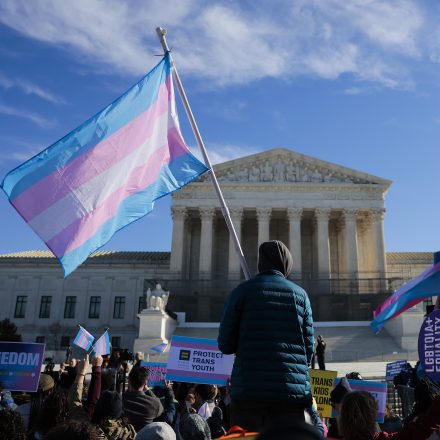
💾

“Warehousing Human Beings”

Hundreds of detained people launched a hunger and labor strike at Delaney Hall in Newark, New Jersey, over Memorial Day weekend to protest inhumane conditions at the immigration detention facility run by the for-profit company GEO Group. Protesters flocked to the scene to echo detainees’ pleas for release and better conditions — and were met with brutal tactics from federal, local, and state law enforcement officials, who beat, tear-gassed, and arrested protesters.

“Detainees are raising that they have no access to quality medical care, that they’re not getting needed medications,” Andrea Sáenz, a former federal appellate immigration judge who was fired by the Trump administration last year, tells The Intercept Briefing. “They don’t have enough food to eat. The food that they are getting is spoiled. They’re facing hostility and harassment and violence from the guards.”  

This week on the podcast, host Jessica Washington speaks to Sáenz and Aaron Reichlin-Melnick, a senior policy fellow at the American Immigration Council, about the conditions at the 1,000-bed jail and other detention centers across the country. The Trump administration has restricted members of Congress and state officials from oversight of federal immigration detention centers. “ICE doesn’t want people to see the way that they’re treating human beings in these facilities,” says Sáenz. 

Intercept reporter Noah Hurowitz, who covers federal law enforcement and immigration, was on the scene at Delaney Hall on Monday. He describes the violence that erupted outside of the facility between protesters and law enforcement officers.

“The ICE agents on the scene were quite willing to use violence at times against protesters,” says Hurowitz. “But from everything I saw, the Newark and New Jersey police were much more indiscriminate with their violence and much more willing to attack outright and fire tear gas and really put people in danger.”

Reichlin-Melnick says that the Trump administration’s war on immigrants should concern everyone. “We’re seeing every government database being turned into a tool of the mass deportation state, and that is something that impacts all Americans,” he adds, “because you cannot carry out a mass deportation of 4 percent of the U.S. population without fundamentally transforming the United States into more of a police state.” 

For more, listen to the full conversation of The Intercept Briefing on Apple Podcasts, Spotify, YouTube or wherever you listen.

Transcript

Jessica Washington: Welcome to The Intercept Briefing, I’m Jessica Washington, politics reporter at The Intercept. 

Noah Hurowitz: And I’m Noah Hurowitz. I cover federal law enforcement and immigration at The Intercept. 

JW: Noah, you were outside Delaney Hall in Newark, New Jersey, on Monday afternoon after dozens of protesters were arrested the night before after clashing with state and local police. Noah, what can you tell us about what went down and why protesters were out there in the first place?

NH: The current wave of protests outside Delaney Hall started around May 28, and it was called in solidarity with detainees inside the facility who were withholding labor and hunger striking, some of them, to protest really bad conditions inside the jail, including bad food, maggots in the food, inadequate medical care. There’s all sorts of complaints that we’re hearing from people inside. A wife of one of the hunger strikers called on local organizations to rally in solidarity.

Now, the way that it began was, for several days, there were protesters standing directly outside one of the entrances to Delaney Hall. And the way it would go for several nights was that basically after dark, the protesters would be standing along the entrance. And every time a car had to go in or out, the ICE agents who were standing outside — full kit, masks — would push out and try to clear the way for cars to come in or out.

That is usually when some of the more spectacular clashes that you may have seen took place. So they’d be swinging batons, they’d be hitting people with pepper sprays. It was pretty ugly, but it was this weird choreography of static, static, static — and then conflict when the ICE agents would attack, and then back to a sort of status quo.

But when state and local police arrived on the scene and tried to secure the area around Delaney Hall, that’s when things got really ugly. So on the night of Friday, May 29, and really on the evening of Saturday, May 30, there were these widespread scenes of disorder as police came in with riot shields and gas masks and started firing tear gas.

A number of people were injured, including a freelance photographer for The Associated Press who suffered a pretty severe injury to her leg. Everyone that I spoke to said that as rough as ICE could be — and as daunting as the image of these masked guys just taking swings at protesters was — it really got so much more chaotic when state and local police got involved.

Now, Mayor Ras Baraka declared a curfew, which is ironic because Mayor Baraka was previously arrested protesting conditions at ICE, and he’s, from the beginning, taken a stance of what’s happening at Delaney Hall is unacceptable but protesters need to be peaceful. The way that was enforced was very not peaceful.

On Sunday night, there was a curfew imposed for 9 p.m., and they had also set up a frozen zone on the industrial corridor that Delaney sits. So they had set up police checkpoints about a half mile in either direction so that protesters couldn’t even get in front of the detention facility anymore.

On Sunday night, according to a number of my colleagues who were covering it that night and other reporting that I’ve seen, after 9 p.m., when the curfew was imposed, police began to kettle protesters. They began to surround them and prevent them from leaving, saying that they were now in violation of the curfew.

They let media leave for the most part if they were able to show credentials, but a handful of more citizen journalists were arrested that night. They held dozens of protesters and a handful of reporters in jail. After a certain point, they needed to be released on Monday afternoon.

So when I arrived on the scene, late on Monday afternoon, people were just starting to get released. It was a pretty tame scene. No one was able to get close to the facility. The police had set up these free-speech zones with several dozen protesters there with signs and megaphones. There were many dozens of police and a lot of media.

When 9 o’clock rolled around, most of the protesters started to filter out, with the exception of a handful of protesters who played this brief game of cat and mouse with the police. As police were advancing, they were backing up to the supposed “free-speech zone” about 500 yards away.

There were no arrests that night that I saw. There was a number of Newark community leaders on the scene who were also trying to bring down the temperature, which protesters were not happy about because they felt like this was just an effort to diffuse things.

From what I saw, the ICE agents on the scene were quite willing to use violence at times against protesters in order to maintain that entrance. But from everything I saw, the Newark and New Jersey police were much more indiscriminate with their violence and much more willing to attack outright and fire tear gas and really put people in danger.

JW: You and I have both covered the aggressive and deadly tactics used by federal immigration agents in Minneapolis. Noah, how is what we’re seeing different in New Jersey than what we saw in Minneapolis or even Chicago last year? Or is this just a continuation of more of the same?

NH: I think it’s a continuation of what we saw in those other places with some notable differences. Minnesota and in Chicago, the police and the state and local officials there got a lot of flak from the Trump administration for speaking out against the ICE raids that were happening and for taking a step back.

“Law and order were their first priority, rather than the lawless and lack of order behavior of ICE agents and of this privately operated detention facility.”

Here, the rhetoric was there from the state and local officials. Both the mayor and the governor were speaking quite stridently against the alleged abuses at Delaney Hall and against the violence being used against protesters. But they also seemed a lot more willing to use their authority to diffuse the protests, which has led to a lot of criticism from protesters who were saying that they basically were trying to co-opt this protest, they were trying to prevent any problems for their own political calculations — that law and order were their first priority, rather than the lawless and lack of order behavior of ICE agents and of this privately operated detention facility.

JW: We’re going to get into all of that and much more in our next conversation. I speak with Andrea Sáenz, a senior counsel at Co-Counsel NYC, a nonprofit providing immigration legal services and training. She previously served as an appellate immigration judge with the Board of Immigration Appeals in the U.S. Department of Justice from 2021 to 2025.

Also joining us is Aaron Reichlin-Melnick, a senior policy fellow at the American Immigration Council, where he works to break down the complex reality of immigration law and policy to the media, policymakers, and the general public. 

NH: Hell yeah, let’s get into it.

JW: Andrea and Aaron, welcome to The Intercept Briefing.

Aaron Reichlin-Melnick: Thank you for having us.

Andrea Sáenz: Thank you.

JW: Andrea, we just heard from my colleague Noah Hurowitz, who’s been reporting from Delaney Hall. Detainees have been holding hunger and labor strikes at the New Jersey detention center. What more can you tell us about the conditions at Delaney that sparked these strikes?

AS: What’s going on at Delaney is really a microcosm of what’s happening all over the country in terms of incredibly harsh and inhumane conditions in ICE detention, that don’t have any accountability. 

At Delaney in particular, detainees are raising that they have no access to quality medical care, that they’re not getting needed medications. They don’t have enough food to eat. The food that they are getting is spoiled. They’re facing hostility and harassment and violence from the guards.

I’ve been really gratified to see elected officials and press and others paying attention to this. But unfortunately, it’s something that we’re seeing all over the country, from Adelanto to Dilley to Camp East Montana in Texas.

JW: So Aaron, your organization, the American Immigration Council published a report earlier this year about the Trump administration’s immigration detention expansion efforts this term. A section of the report reads, “A system of detention, which did not fully take off until the mid-1990s, is now on track to rival the entire federal criminal prison system by the end of President Trump’s second term in office. This expansion is fueled by an unprecedented increase in funding provided by Congress in President Trump’s One Big Beautiful Bill Act. Combined with ICE’s annual appropriations, ICE has nearly $15 billion per year to use on immigration detention through the end of fiscal year 2029.”

Aaron, what can you tell us about the scale of the Trump administration’s efforts to expand detention centers? 

ARM: Since taking office, Trump expanded the scale of the detention system by 75 percent, rising from about 40,000 people in detention when he took office in 2025 to over 73,000 people in detention in January 2026. While that number has fallen somewhat in the months since “Operation Metro Surge” in Minneapolis, the Trump administration is sitting on an unprecedented pot of cash that they can use to keep expanding the system even bigger.

“The Trump administration is sitting on an unprecedented pot of cash that they can use to keep expanding the system even bigger.”

JW: Andrea, I want to bring you in. We’ve been hearing about these efforts from the Trump administration to convert warehouses to detention centers. What do we know about those plans, and what can we surmise about what those conditions could look like?

AS: What we know is that the government has spent a whole lot of money to buy large facilities without really having any plan of how they’re going to humanely keep human beings there. We know this because they haven’t even had the plans to figure out how they’re going to handle water and trash and things like that at these facilities, and that’s been the source of some lawsuits

But I think we have reason to be incredibly worried that the government is in no position to hold a large number of human beings. Delaney is a good example because it’s the largest facility on the East Coast. It can hold up to 1,000 people. We’ve got a human rights situation going on inside, pepper-spraying a U.S. senator on the outside.

“These are preventable deaths.”

So I can only imagine if you were to try to expand the capacity of these facilities, the government just doesn’t have the infrastructure, the accountability, the oversight to care for people. As we’re seeing the numbers of deaths in ICE detention rise — I believe it’s 18 deaths just in this calendar year, which is unprecedented. What really worries me is that these are preventable deaths, and that we’re going to see more of them if the government’s permitted to keep expanding, literally warehousing human beings in this way.

JW: Aaron, obviously there’s a lot of attention on Delaney Hall, on these new makeshift warehouse detention facilities, but what do we know about what conditions are like in facilities around the country right now outside of Delaney?

ARM: ICE detention has never been great and that’s to really underplay it. At the American Immigration Council, we have filed countless complaints over the years about inadequate medical care, verbal physical abuse against people in detention, pressure on people to give up their rights rather than accept time in detention, while they’re fighting their cases. This is endemic to the system and has been something that advocates have raised attention to for decades.

The key difference now is the speed at which the Trump administration is expanding the system and the ways in which accountability has been dismantled. When Trump took office, there was the Office of Civil Rights and Civil Liberties inside the Department of Homeland Security, and the Office of the Immigration Detention Ombudsman as internal watchdogs. Within the first month, the Trump administration slashed their staff to the bones and has since dismantled the Office of Immigration Detention Ombudsman entirely, shutting it down despite a congressional mandate that the office remain in existence. With no internal accountability, that’s left only external accountability, and there they are trying to prevent members of Congress from going into detention centers.

The end result of this is that conditions are worsening, deaths are rising, and the need for reform is growing every day.

JW: That lack of transparency that you’ve mentioned is something that’s come up a lot in our reporting — the inability to monitor what’s happening inside of these facilities is incredibly concerning.

Andrea, I want to ask, from your perspective, what does access look like even for immigration attorneys that are trying to reach their clients?

AS: It’s a good question because there are lots of ways that we should be able to know what’s happening in the detention center. It’s not intended to be a secret.

I’ve been representing detained people for 18 years, and it’s always been part of the practice to drive out and physically see your client, have them sign papers, that their family members are allowed to visit them. And that when they have a court hearing, they’re either produced in person or they’re there on video, and observers can come and watch because it’s a public court hearing.

Right now, what we’re seeing is that all of those things are being obstructed. It’s incredibly hard to even find out where your client is anymore because they’re being transferred from state to state. They disappear off the public detainee locator. ICE is not responsive. 

As Aaron mentioned, there aren’t oversight agencies to complain to, and the immigration court system is increasingly keeping out observers and press from even watching these hearings to know what’s happening.

And then, of course, on the oversight side, as we’ve been talking about, part of what’s happening at Delaney, the reason why this escalated with elected officials, is because they wanted to get inside the facilities and exercise their right to oversight. They’ve been denied that right and in New Jersey, you have state health officials who weren’t allowed to go inside and inspect. And so ICE doesn’t want people to see the way that they’re treating human beings in these facilities. 

But at least I’m gratified that people from lawyers to family members to elected officials keep trying.

JW: Do we have a sense of whether or not conditions are deteriorating? Obviously, these are horrific conditions that we’re describing, but maggots in the food, lack of access to medical care, these are not necessarily new issues inside of detention facilities.

Aaron, are we seeing a much worsening of conditions, or is there just a lot more attention on this issue right now?

ARM: It’s a little bit of both. There are some issues that you’re seeing raised in the media and brought to people’s attention now that aren’t new. As you said, maggots in food, bad medical care. This is not a new problem.

When you look at spoiled food, there are DHS Office of Inspector General reports going back many years which document violations of standards at Essex County Jail outside of New York City, a jail that is no longer working with ICE. Inspectors went there in 2018 and found spoiled food, covered in mold in the fridge that was being served to people. So that’s not a new issue.

But what is new is the way in which the Trump administration has made getting out of detention more difficult so that more people are being detained there. Before last year, the Trump administration adopted the legal position saying that essentially any person who ever entered the United States across the southern border is permanently barred from seeking release on bond, even if they’ve been here for 20 years with no criminal record.

That means more people in detention, more overcrowding, and as they open up these new facilities or repurpose old facilities, like Delaney Hall, it’s clear that there isn’t enough staffing to keep these places operating at the capacity that they are operating. This is not a problem that’s also unique to immigration detention.

There is a shortage of corrections officers in jails and prisons nationwide and a shortage of prison healthcare providers. One of the biggest ones, Corizon, actually went bankrupt two years ago. Given that, it’s not a surprise that the administration is failing to meet the standards that it is legally required to meet.

“What is new is the way in which the Trump administration has made getting out of detention more difficult so that more people are being detained there.”

AS: I do think that conditions are deteriorating. And I think another factor is the increased enforcement itself is causing severe overcrowding, including in these facilities that were intended to be holding facilities. So one of the places that conditions have been the source of lawsuits is in places like the Baltimore Hold Room, 26 Federal Plaza in New York City.

These are facilities where people are supposed to be taken for an hour or two after they’re arrested by ICE, and instead people have been packed in like sardines, sleeping on the floor next to toilets, and judges have had to order that you can’t hold people overnight there. So that’s part of the problem.

A second aspect to the problem is because ICE enforcement is so indiscriminate at the moment, and, that’s gone back and forth with time, but I do think it is worse than I have ever seen it, that ICE is not holding back from arresting very young people, very sick people, very old people’s moms and dads. So you have medically vulnerable and sick people in ICE detention with these conditions, and you’re setting up a recipe for disaster.

JW: To your point, at The Intercept, we’ve covered the detention of pregnant women and postpartum women who previously have been exempted, generally speaking, from detention, who are now in these facilities, who are lacking access to medical care, water, all of these necessities you need to thrive in pregnancy.

“ICE enforcement is so indiscriminate at the moment … ICE is not holding back from arresting very young people, very sick people, very old people’s moms and dads.”

[Break]

JW: The Trump administration recently made some pretty significant changes to the green card process. Aaron, can you walk us through what they did and how it’s going to impact people applying to become permanent residents?

ARM: A couple weeks ago, the Trump administration put out a memo from U.S. Citizenship and Immigration Services, America’s legal immigration benefits agency. That memo said that for the first time ever, adjustment of status where someone applies for a green card from inside the United States, would no longer be treated as a normal part of the legal immigration process, but would instead be treated as an extraordinary benefit and only given in an act of administrative grace.

This was particularly strange because adjustment of status is the norm by which about half of all people get their green cards. These are people who are in the United States already, living here either on a visa or seeking to change their status. So it could be anything from a foreign student who comes here, falls in love with an American at college, and applies for a green card, to someone present on an H-1B visa for 10 years who is seeking to finally get their green card and become a lawful permanent resident.

Almost immediately, this set off a lot of backlash, and the administration has had to walk this back a little bit because their initial suggestion in this memo was that potentially as many as half a million people a year would have to leave the United States and seek an immigrant visa in their home country if they wanted to get a green card that they were legally entitled to.

Silicon Valley was not happy. A lot of people were very clear that this seemed like an unnecessary process because the vetting that someone gets inside the United States is identical to the vetting that they get if they’re outside the United States seeking a visa, which means the only difference is where the bureaucrat is deciding this.

Is it a bureaucrat at a consulate abroad deciding if you get a green card, or a bureaucrat at an office in the United States? From the government’s perspective, that should make no difference, but for the immigrant themselves, this means time away from their family and home in the United States, time away from their job, and the possibility that if there’s some error or red tape, they might not be able to come back for maybe weeks, months, or longer, which just threw a wrench in a lot of people’s plans for staying in this country and being on a path to citizenship.

However, crucially, the administration, ever since they put out that vaguely worded memo, has been trying to walk it back somewhat, and is now suggesting it may apply to a much more narrow group of people, potentially people who overstayed visas years ago and are trying to get a green card through a spouse, which would be a lot narrower a group, but still impact potentially tens of thousands of people.

JW: I’m not going to lie, this does seem like quite a mess. 

“There is this level of contempt and dismissiveness even for people who have forms of status.”

Andrea, are we seeing other ways that the Trump administration is targeting people with legal status?

AS: Yes. What really the big picture here is that’s alarming to me with both the green card memo and some of the decisions coming out of the Board of Immigration Appeals that I used to sit on, is that there is this level of contempt and dismissiveness even for people who have forms of status.

So it really, I think, gives lie to that idea that the administration or Republicans are only interested in illegal immigration, they’re only interested in people who are out of status. Because you’re also seeing increased targeting and detention of Dreamers, people with DACA, young people with special immigrant juvenile status who have an approved application to stay in the U.S. and are in a line to get their green cards, people who have visas for being victims of violent crimes or trafficking.

These are all kinds of status that already exist in law that Congress has created, and you’re seeing these people additionally detained and put into proceedings. And the Board of Immigration Appeals is putting out case law day after day saying, “These classes of people are not special. They’re not worthy of particular protection. They can all be denied bond. They can all be put in removal proceedings and detained.”

JW: And we’ve also obviously seen a targeting of U.S. citizens who’ve stood up for immigrants as well. Since Trump fired Homeland Security Secretary Kristi Noem and former Border Patrol official Gregory Bovinoretired” after violent raids in Minnesota killed two American citizens, it appears the Trump administration has at least toned down publicizing these aggressive raids.

But has there actually been a shift in tactics under the new DHS secretary? Aaron, I want to start with you, and then Andrea, I want to get you in as well.

ARM: The short answer is it does appear that yes, they have pulled back from the aggressive raids that were really characteristic of the Noem term, in particular under the leadership of Gregory Bovino, a mid-level Border Patrol official who was unexpectedly elevated to the position of “commander-at-large” of DHS operations in the interior.

What we are seeing now is a return in some ways to the more traditional targeted so-called enforcement tactics, where ICE officers have lists of people that they are specifically intending to arrest, go out into the communities to arrest those specific people. 

But we are seeing a major increase in so-called collateral arrests. If they arrest that one person, they also might arrest everyone else in the building who’s nearby or anyone who looks like an immigrant near there. The end result of this is that the administration is now arresting slightly fewer people than during Operation Metro Surge. Detention numbers have come down, about 10 to 20 percent from the height of that operation.

But they are building out a more robust enforcement capacity, and especially relying on state and local police who are cooperating with them through so-called 287(g) agreements, agreements that allow local law enforcement to act as ICE officers. So the Trump administration’s new plan is to gradually build up the capacity rather than rushing out to make splashy headlines, and they believe that is more sustainable in the long term, both from an enforcement perspective and also importantly from a political perspective.

AS: We are seeing not only a decrease in maybe these large-scale campaigns that have a cute nickname. We’re also seeing a decrease in courthouse arrests, partly because they were stopped by litigation. But I am continuing to see waves of street enforcement and street arrests that are often racially motivated, and I think we have to keep our eye on that.

Early on during the Los Angeles ICE surge, we saw a lot of those stories of ICE stopping people, regular people, Latino people walking down the street, going to school and work, including U.S. citizens, and that got a lot of press. I think those arrests are still happening; they’re just happening one at a time in less obvious ways.

I do a lot of habeas corpus litigation, and so I get a lot of emails and calls about who has been arrested. And, Aaron mentioned this idea of targeted arrests, which is what ICE says that they’re doing, that they’re looking for a particular person who has a criminal arrest or who has a prior deportation order.

But there are a lot of arrests in which ICE says that they’re looking for a target, and really what they have done is drive up next to a Latino person and ask them for their ID and then arrest them — when they were very obviously not the target that they were looking for. So I think we can’t let the idea of targeted enforcement cover the actual reality that people, especially people of color walking down the street, have something to fear from ICE.

I think it’s a terrible state of affairs, but I think we have to continue to be vigilant and push back on it.

JW: In that vein, how would you characterize this phase of Trump’s immigration agenda? Where is Trump in this? What is the end goal here that we can visualize at this stage?

AS: This is part of the question is, like, how much does Trump himself have to do with this as opposed to other people in the administration?

“People in the administration … are intending to decrease the amount of immigrants in the United States, both legal and undocumented.”

We’re in a transitional phase as we have new DOJ and DHS leadership. Certainly, the people in the administration like Stephen Miller, who have had an agenda all along, are intending to decrease the amount of immigrants in the United States, both legal and undocumented. And that it’s intentional to have people be scared of the kind of enforcement that I’m talking about that the administration hopes that a lot of people will get scared and frustrated and leave the United States, including through things like the green card memo, that it’s just so confusing and overwhelming and expensive to stay here that people will pick up and leave, even at incredible cost to our economy and to our fabric as a community.

What’s exactly coming next I can’t say, but I’m guessing that there is more to come. Trying to advise clients in this atmosphere, trying to advise immigrant communities is really hard. People are scared, and it’s hard to tell them not to be.

ARM: To add on to that, the administration is very clearly trying to create a climate of fear for immigrants. While they claim that they are aiming that at undocumented immigrants, fear has a splash zone. You can’t target fear on an individual level like that, and communities are frightened. But as Andrea said, this is a transition moment right now. 

What we are seeing them do is attempt to take a system that was always imperfect but strived towards due process and basic principles of fairness, and turning it into an assembly line for deportations — one in which basic legal rights are tossed aside and procedures are followed potentially to the letter, but in clear violation of the spirit.

“What we are seeing them do is attempt to take a system that was always imperfect but strived towards due process and basic principles of fairness, and turning it into an assembly line for deportations.”

You see this with new policies like “mega master” calendar hearings, 100 people scheduled for a hearing with maybe 72 hours of notice, maybe sent by mail or email that they might not even know about the hearing ahead of time because they were scheduled for a hearing in 2027, and all of a sudden they’re told, “Show up two days from now in New York City. Oh, and by the way, you might not have a lawyer.”

You have no idea what’s going to happen to you. When you show up at that hearing, you’re told, “You have 20 days to get everything on file. We don’t care that you don’t have a lawyer. We’re moving forward.” If you miss that hearing, you’re ordered deported immediately.

They’re doing this even for children, and they’re firing the judges that were seen to be too liberal or too willing to grant cases, even if those cases were legally meritorious. The asylum grant rate has dropped to less than 10 percent of cases, when before it was 30 to 40 percent of cases were granted. All of this is a system that is being systematically turned against the immigrant and against the idea of a fair day in court.

However, given the scale of immigration court backlogs, there are still over 3.2 million cases pending in the system. It’s not clear whether they will actually be able to clear these backlogs by the time Trump leaves office. Crucially, all of this funding in the One Big Beautiful Bill Act and the funding that Congress has been debating, the additional $70 billion for CBP and ICE that’s being debated in the most recent reconciliation bill — that is all set to expire at the end of Trump’s term, by the end of fiscal year 2029.

So we are in a situation where they may get all of this infrastructure in place, and then who controls Congress in 2029 will determine whether that infrastructure has to be slashed back and whether we can get some handle on the system and help right the ship.

JW: I want to get into control of Congress in just a moment.

But Andrea, first I wanted to ask you, because you have personal experience with being pushed out because of the perception of your views on immigration. So I’m curious, how are you viewing this effort by the Trump administration to push anyone out who could have any sympathy for immigrants in the system?

AS: So I was an appellate immigration judge on the Board of Immigration Appeals, which is the second level of the immigration court system. I was on the BIA for three and a half years during the Biden administration. Starting last year, the administration started to fire both trial-level immigration judges, and they also fired all of the remaining Biden appointees off of the BIA, which is the body that sets case law.

It’s been honestly devastating to see this happen to an administrative court system that obviously needed improvement, but was functioning and had a lot of excellent public servants that were trying to give people due process day in and day out. The Biden administration had really tried hard to put people with a variety of professional experience on the bench, both the federal bench and the immigration bench, in terms of not only having all prosecutors on the bench there because they can be good judges too, but also putting people who had been defense attorneys and civil rights attorneys, like myself. I think that had made the court system stronger and better.

One thing I can say is that when I was a judge, I didn’t have any pressure coming from the top telling me how to rule. We had training, we had expectations, we had normal job evaluations, but I didn’t have anyone looking over my shoulder and saying, “Why did you do that?” Or “You’re not allowed to do that.”

What’s coming out now is that’s exactly what’s happened to the immigration court system such that it’s no longer independent. You have leadership of the system watching which judges grant asylum too much, which judges grant bond too much. It destroys any idea that judges are being allowed to apply the law independently as opposed to enacting a political agenda.

It’s also just exhausting and confusing for the immigrants actually appearing before the court, not knowing if they’re going to get a fair day or they’re just going to be immediately deported without a chance to present their evidence. It’s a crazy time to be an immigration lawyer and have to do hundreds of hours of work not knowing if you’re going to get a judge who’s going to give you 10 minutes to present your case.

So certainly a lot of us are gearing up to do more federal court and appeals work, but the bigger issue is that the immigration court system has ceased to function in a way that lets judges make decisions independently.

JW: Aaron, I want to get back to your point about Congress and the midterms.

So we’re obviously in the middle of an election year. What are you hoping to see from candidates on immigration, and what do you hope legislators change if they actually make it to Congress?

ARM: What we need to see is a fundamental rethinking of what interior enforcement looks like inside the United States.

Polling consistently shows that the American public believes ICE has gone too far. As much as 2 out of every 3 Americans think that the Trump administration’s mass deportation campaign has gone beyond what they want. But at the same time, people still do want some form of immigration enforcement.

“Our interior enforcement system has not been updated in 30 years. We are using laws that were crafted by Congress in the height of the tough-on-crime era of the 1990s.”

So I would love to see legislators look at revamping the system towards one that embraces principles of compliance and proportionality, accountability and safety, really focusing on actual public safety threats, not people who’ve been here for 20, 30 years who’ve never had any interaction with the criminal justice system.

At the same time, help restore a system that allows judges to decide that deportation doesn’t make sense in every case. Right now, our interior enforcement system has not been updated in 30 years. We are using laws that were crafted by Congress in the height of the tough-on-crime era of the 1990s.

We live in a very different time today. Most Americans believe there should be some form of path to legal status for people who have been living here for years without getting in trouble, working hard, raising a family, and being productive members of their community. But the law just doesn’t reflect that, and so Congress really needs to sit down and think through what kind of compromise will produce a better system that helps Americans and doesn’t take us further down this path of mass deportations, which just tear communities apart.

AS: I agree with Aaron’s frame, but I also want to say that I think we have a bigger issue that we’ve spent years now hearing this administration dehumanize immigrants and talk about people who are in our neighborhoods and communities like they are less than, that they don’t care about their families the way we do, and that asylum is a fraud on the system, that people don’t deserve asylum.

Both administrations recently, frankly, have done that. So I think going forward, it’s time for us to not be afraid to say that immigrants are an incredibly important part of our communities, and also that there is a place for the United States to welcome bona fide refugees and asylum-seekers. Both the refugee program and the asylum adjudication program have been totally decimated in recent years. And of course, we need regulations on that program. We need ways to handle the backlog.

But at its core, we have to decide that the United States is a place where people who are fleeing persecution and torture can, at least in some instances, find safety here. I think that’s part of our historical heritage that we shouldn’t turn away from. I don’t think candidates should be afraid to say that, at risk of seeing “soft on immigration.” 

It’s time to stand up for people who are an incredibly important part of our communities, and acknowledge their contributions, and then figure out what’s a system going forward that allows people to work and live in safety together.

JW: Just thinking about everything we’ve discussed today, there is so much happening in the immigration space, so much horror, frankly. What should people be paying attention to right now? Aaron, I want to start with you.

ARM: I think with everything else going on in the world right now, with the war in Iran, rising gas prices, and the deconstruction of the American state by the Trump administration, it’s easy to let the immigration issue fall by the wayside now that they are trying to be a little bit more quiet.

But every single day, the administration is arresting around 1,000 people, or slightly more than 1,000 people, and many of those have been members of our communities for decades. They have family members here. The climate of fear and surveillance that is being imposed on immigrants is growing.

That is something that impacts all of us. We saw this week the Trump administration say that they wanted to try to restrict undocumented immigrants from even having bank accounts. We’re seeing every government database being turned into a tool of the mass deportation state, and that is something that impacts all Americans because you cannot carry out a mass deportation of 4 percent of the U.S. population without fundamentally transforming the United States into more of a police state.

That should concern everybody, even if it’s not something that they’re seeing on the headlines because of splashy raids in American cities.

AS: A lot of this news is really sad and hard to keep reading. I feel that myself as someone who has to for my job, continue to read immigration news. I would encourage people to continue to pay attention to stories of courage and people who are bringing the conditions of detention centers and what’s happening to their families to light.

I just spoke yesterday to a client of ours who was released from Delaney Hall on Monday because of a habeas corpus petition that we won. I was asking her what people need to know, and while she was telling me about the poor medical care and the lack of food, I was just really struck by her care for the other people who were still detained there and her spirit and the way that when she was released from that facility, the protesters outside cheered and chanted her name.

There are folks inside Delaney and hunger strikers in Adelanto, people in Camp East Montana have brought a lawsuit to complain about their own conditions. And so there are a lot of examples, from Minnesota to detention of people being courageous and having hope in these times.

So that’s what I hope people can keep watching for and participating in.

JW: That’s a really beautiful message. And we’re going to leave it there, but Aaron, Andrea, thank you both so much for joining us on the Intercept Briefing.

ARM: Thank you for having me.

AS: Thank you.

JW: That does it for this episode.

This episode was produced by Laura Flynn. Ben Muessig is our editor in chief. Maia Hibbett is our managing editor. Fei Liu is our product and design manager. Nara Shin is our copy editor. William Stanton mixed our show. Legal review by David Bralow. Slipstream provided our theme music. This show and your reporting at The Intercept doesn’t exist without you.

Your donation, no matter the amount, makes a real difference. Keep our investigations free and fearless at theintercept.com/join. And if you haven’t already, please subscribe to The Intercept Briefing wherever you listen to podcasts. Do leave us a rating or review. It helps other listeners to find us. Let us know what you think of this episode, or if you want to send us a general message, email us at podcast@theintercept.com.

Is there an immigration detention center near you that you’re concerned about or another issue? Send us an email or leave us a voicemail at 530-PODCAST. That’s 530-763-2278. 

Until next time, I’m Jessica Washington.

The post “Warehousing Human Beings” appeared first on The Intercept.

💾

The Race to Build AI Data Centers — Before the People Can Protest

Shark Tank’s Kevin O’Leary has been making the media rounds defending the 40,000-acre data center project he’s backing in northern Utah. Dismissing residents’ concerns over the environmental impacts and water demands of the proposed project in the drought-stricken Great Salt Lake region, O’Leary has claimed protesters are “bused in,” “misinformed,” and alleged that China has had a hand in orchestrating the public push back.

“The Stratos project in Utah is an example of data center largesse,” says Jim Walsh, the policy director of Food and Water Watch, an organization leading a campaign to stop the rapid development of data centers across the country. As proposed, the project would be more than double the size of Manhattan. Walsh adds, “It’s important to recognize that the impacts of this data center go beyond the water and energy concerns that impact the residents of Salt Lake. They’re going to be pulling gas from the Ruby Pipeline, and this project is going to perpetuate more fracking in the Western U.S., a practice for extracting natural gas that uses extreme amounts of water.”

This week on The Intercept Briefing, host Jordan Uhl speaks to Walsh about the massive Utah project, the environmental and economic impact of data centers on communities especially where water is already scarce, and the Trump administration’s push to cut regulations at the federal and local level to accelerate the build-out of data centers and AI infrastructure.

In response to O’Leary claiming data center development is a national security priority to beat out China in the AI race, Walsh says, “National security isn’t just about having technological and military superiority.” We’re not safe if we don’t have clean air and clean water to drink and breathe. We’re not safe if our communities have massive data centers that are extracting our natural resources. Our entire economy functions on access to water.”

For more, listen to the full conversation of The Intercept Briefing on Apple Podcasts, Spotify, YouTube or wherever you listen.

Transcript

Jordan Uhl: Welcome to The Intercept Briefing, I’m Jordan Uhl, your host today. 

Jessica Washington: I’m Jessica Washington, politics reporter at The Intercept. 

Jonah Valdez: And I’m Jonah Valdez, another politics reporter here at The Intercept. 

JU: So Jess, Jonah, we’re talking to you both today because the California primary is days away: June 2. While there are a few notable races that have captured national attention, one here where I live in Los Angeles is the mayoral primary.

We’ve got a few contenders. It is looking tight at the top with a few candidates jockeying for one of these top two positions. Jess, could you give us an overview of this race?

JW: As the only non-Angeleno on the podcast, I’m going to try and do a good job. So something important to keep in mind before we even get into the candidates is because of how California’s primary system works, if no candidate gets a majority of the vote — so over 50 percent — the top two are going to go off to a runoff election in November.

The candidates in this race are the incumbent mayor, Karen Bass. She has been leading in every poll, but it should have been really a slam-dunk election, and yet it isn’t. We can get into more of why in a minute. But her opponent is really interesting; two opponents are interesting. So first, there’s reality star Spencer Pratt, who has been consistently polling in second place, although in more recent polling he’s looking to lose a little bit of steam. Then the other candidate is council member Nithya Raman, a Democratic socialist who’s not endorsed by DSA LA, but is recommended by them. So that’s the mix that’s happening in this election right now.

JU: Jonah, there are a few other contenders that could be potentially pulling votes from Nithya Raman or might be waiting to decide till last minute. What is this looking like on the ground? Who have you talked to and what are you hearing?

JV: My focus has been on LA’s left, if you will, and how there might be what people are calling some vote-splitting among the left. And that’s because not only is there Nithya Raman who, as Jessie said, is a Democratic socialist, but there’s also Rev. Rae Huang, who is a housing advocate.

She’s a Presbyterian minister. She actually was in the race before Nithya and was the only DSA candidate, Democratic Socialist candidate, in the race at the time. She launched two weeks after Mamdani’s win in New York, so she has all this buzz going into it. The LA Times was asking, is she LA’s Mamdani?

So that’s the framing that she entered the race in, and it excited a lot of progressives here in the left in Los Angeles. But as soon as Nithya joined the race, very last minute, and the rise of Spencer Pratt, you have this threat of this right-wing figure. Sure, this is a nonpartisan election, but the things he’s saying, demonizing homelessness and really getting on Karen Bass around her record and the fires. There’s this tangible threat now that Spencer Pratt could be in the runoff with Karen Bass, which is a pretty worst-case scenario for LA’s left that is trying to push LA’s politics in a different direction.

Right now, the contention for a lot of voters in LA’s left is between, do I vote for Nithya Raman, someone who I at least agree with, but have to hold my nose on some issues, like police accountability, where she has fallen short in the eyes of some of her opponents? Or Rae Huang, who has a bolder vision? Some members of DSA LA have said that she has the true socialist platform amongst the two Democratic Socialist members. I should say that Rae Huang is only polling at about 5 percent. That’s nowhere near the second place spot to get into the runoff.

JU: We’re seeing a wide array of polling in this race, and there was a new poll that dropped on Thursday morning from Berkeley IGS, which had Bass, unsurprisingly, in the top spot with 26 percent. But in second place, this I think caught many people off guard, Nithya Raman at 25 percent, Spencer Pratt at 22, and Rae Huang at 9 percent, with 10 percent undecided. That presents a totally different outlook going into the general in this runoff. 

But Jess, I want to bring you back in here. Spencer Pratt was widely considered to have a guaranteed spot in the runoff because he had a ton of press, a ton of buzz, especially from outside LA. He had Trump’s endorsement. He’s been getting featured in national press.

One of the things that he really rose to prominence on was his criticism of Karen Bass, like Jonah said, for her, “handling of the fire.” But I think many people who live here felt that some of it was disingenuous because those fires were exacerbated by the Santa Ana winds. You can only do so much as mayor.

You can’t get helicopters up in the air in 80-mile-an-hour winds to fight those fires. So I think some of it came off as very disingenuous to people here in LA. But what are you hearing? What are you seeing from Spencer Pratt that puts him even in contention?

JW: For anyone who doesn’t know who Spencer Pratt is, he’s this former reality star from “The Hills.” He’s the guy who told People Magazine that he blew, I think, about $1 million on crystals, blowing through his $10 million reality television fortune on other lavish purchases. So that’s just a little bit of who Spencer Pratt is, the guy who yelled at women on television for about a decade.

But the reason he’s catching steam, I think, is twofold. I think, one, the fires are a very visceral moment. The mayor obviously has no control over the fires, but the fact that she was in Ghana during the Palisades fire did really anger a lot of people. The fact that she didn’t come home until the following day is a large part of that narrative.

The other thing that’s happening is also people’s concerns over homelessness. What Spencer Pratt is pushing is we have to arrest, arrest, arrest, force treatment. But if you talk to most people on this issue, homelessness is caused by housing, unaffordability, and inequality in our system, and those are huge issues to tackle.

Spencer Pratt is not looking to tackle those issues. He is looking to move people out of spaces where he and his friends can see them. It’s also worth noting that his plans of mass arrest also aren’t going to even fix that problem. But what you’re looking at in Los Angeles is frustration over Karen Bass’s handling of these fires and this kind of visible problem of homelessness that frustrates people on both sides of this issue.

That’s what Spencer Pratt has really honed in on. I think it’s important to note that none of his solutions are going to fix any of those problems, but he is tapping into a real anger and a real frustration in the electorate.

JU: Yeah I think what’s interesting to watch is the national support for Spencer Pratt. But that comes at a cost for him because 80 percent of his donors don’t live in Los Angeles, according to analysis that I saw from one Gabe Sanchez. And sure, you can run ads, you can get press, but that doesn’t necessarily mean that people within the city, within your jurisdiction, would vote for you. 

What I found so interesting and Jonah, I want to bring you back in here, people dug up some of his old appearances or guest appearances on Infowars with Alex Jones, and during one of those interviews, he talked about his belief that climate change was a hoax.

What I found so ironic is that this is somebody who made losing his home in the Palisades fire a centerpiece of his campaign, but we know that worsening climate change leads to more frequent and more severe wildfires. So on the one hand, you have somebody who believes it’s a hoax. At the same time, he’s making a byproduct of climate change the centerpiece of his campaign.

Jonah, what stood out to you?

JV: I think to Jessie’s point as far as demonizing the homeless population in LA, his rhetoric around that is concerning, not just on the level of, this is going to hurt a lot of the gains that housing advocates have fought for in LA County for years, but even just on the level of basic humanity.

He’s referred to unhoused people as fentanyl-addicted zombies. Like a constant refrain for him is telling people to go outside and go to your freeway underpass, talk to a homeless person, and ask them. He’s assuming they don’t want housing, that’s not what they want, they just want their next high. They just want to be on drugs. 

This is all in the face of studies showing that most people who do have drug addiction or in substance use addiction on the streets is a result of being unhoused — and not the other way around. And so I think he does exist in this bubble of distorted reality.

LA is still seen as this liberal bastion along with California as a whole, but there are a lot of folks here who voted just a couple years ago for someone like Rick Caruso, who preyed on a lot of these similar fears of course from a different standpoint of crime and safety. So these fearmongering tactics are being recycled again and again.

I was talking to sources yesterday, other voters, and there is some reality to what [Pratt is] saying, which is like LA is struggling. Angelenos are struggling. A lot of the nation is struggling economically, but how you diagnose that matters.

JU: So why has this mayoral election captured the national interest? Jess, I want to start with you, and then we’ll go to you, Jonah.

JW: It’s captured the national interest partially because it feels like this perfect allegory for the 2016 election. You have this Trumpian figure, you have liberal-left infighting, so I think that’s part of it. But I also think for someone like me, who cares a lot about policy around housing and homelessness, this is about the spread of very dangerous ideas about people, about the idea that we can call people zombies, we can mass arrest them, and these ideas around homelessness are spreading all across the country.

JV: For me, it’s a lot of the same questions that the left in LA is facing could be amplified to a national level as well, and a lot of this infighting, a lot of it is just lack of organization. And I think one example of that is for listeners who don’t know, there are actually four DSA members on city council, one of which is Nithya Raman, who is running.

However, three of those DSA members didn’t endorse their fellow DSA member for mayor. They actually endorsed the incumbent Mayor Bass. So a lot of that back and forth and mixed messaging to the public could really hurt movements and coalition-building. DSA LA has told me that’s one of the things they hope to fix, which is more organization within city council to increase their influence there, and that starts with being on the same page.

That messaging here and a lot of these lessons could be amplified on the national stage as well.

JW: We’ve also seen similar signals from the Trump administration with executive orders targeting the homeless population. The Supreme Court has also moved to weaken protections for unhoused people living on the streets.

These are policies and rhetoric that are truly taking root at the highest levels, and we need to be paying attention to them.

JU: And these hollow pandering overtures to different demographics, I think, are just jarring. Maybe it’s a byproduct of the Trump era, but just don’t garner the raised eyebrows that they typically would.

The headline I saw on Wednesday in TMZ that “Spencer Pratt loves Mexican food and Eats it More Than Any White Person in Los Angeles” made me laugh, but also I found myself feeling very confused. Like, why is this news? But it fits within a broader pattern from that campaign where he’s just trying to pander to the sizable Latino community in Los Angeles.

We see that also with his AI ads. Latinos for Pratt doesn’t seem to have an actual real or tangible base in the electorate. Maybe he does, but those AI ads have been widely mocked or parodied and some have gone viral, even those not made by his campaign.

The proliferation of AI ads in this cycle, I think, segues us into our next conversation with Jim Walsh, the policy director of Food and Water Watch, where we talked about the proliferation of AI data centers across the country.

JW: Let’s listen to that conversation.

JU: Jim Walsh, welcome to The Intercept Briefing.

Jim Walsh: Thanks for having me here, Jordan. I appreciate it.

JU: Jim, there are over 3,000 operational data centers across the country and more than 1,500 in development, according to Pew Research. Data centers aren’t new, but let’s start with the basics. What do they do, and how is the growing demand for AI transforming the energy needs of facilities?

JW: I think most people hear about data centers, they think about clouds and streaming and maybe searching or AI. But data centers themselves are these massive rows of servers that require large amounts of water infrastructure, electricity, cooling, land, and also backup power. The scale of these is really hard to grasp because most people don’t think in terawatt hours — but that’s exactly what we’re talking about for energy demand.

The Lawrence Berkeley National Lab found that U.S. data centers used about 176 terawatts of electricity in 2023. This is about how much electricity it takes to power 16 million homes for an entire year. And that number is expected to grow to 580 terawatts annually; it’s roughly equivalent to 50 million homes.

Data centers also use immense quantities of water. We’re talking hundreds of billions of gallons of water annually with projections that they’ll use as much as 18.5 million households by 2028. Nearly 60 percent of this coming from drinking water supplies. It’s really important to note that a lot of this is coming from drought-stressed areas that are compounding existing water scarcity concerns.

Beyond that, we’re also seeing that data centers can create significant pollution burdens for communities. When data centers use fossil fuels, they’re polluting our air and water to meet their energy needs, but the chemicals also used in cooling data centers can pollute our water. Even when chemicals aren’t used, evaporative cooling systems can concentrate pollution already in water.

We saw this happen in Oregon, where an Amazon data center was implicated and agreed to pay out $20 million due to elevated nitrate levels in water that coincided with the development of the data center. Now, Amazon never added nitrates to their water systems, but the water that came out of their facilities seemed to have increased the concentration of nitrates in the water because of water evaporation through their cooling systems.

Those elevated nitrate levels have been linked to increases in cancer and premature births and miscarriages in the communities where that data center is located.

JU: Now, in early May, a quasi-governmental agency in Utah approved a massive AI data center project. Known as the Stratos project, it is expected to cover more than 40,000 acres in northwestern Utah. For context, that’s more than twice the size of Manhattan.

The project, which is backed by the venture capitalist and “Shark Tank” regular Kevin O’Leary, has sparked local outrage. Could you tell us about this data center project and why community members are concerned?

JW: The Stratos project in Utah is an example of data center largesse. You talked about 40,000 acres, double the size of Manhattan. It also would double the state’s energy demand. It would also be located near the Great Salt Lake, which is already facing record droughts, like much of the United States. So it’s really no surprise that this and other projects in Utah are facing tremendous public opposition.

In response to the backlash, communities in Utah are putting the brakes on data centers, and the Utah legislature is actually gearing up to potentially require more reporting and studies on data center impacts. It’s important to recognize that the impacts of this data center go beyond the water and energy concerns that impact the residents of Salt Lake.

They’re going to be pulling gas from the Ruby Pipeline, and this project is going to perpetuate more fracking in the Western U.S., a practice for extracting natural gas that uses extreme amounts of water. That practice also has a track record of contaminating surface water and spreading radioactive waste generated from fracking operations.

And because of the segmented permitting process and the segmented evaluative process, nobody’s actually looking at the full impacts of this project or any data center projects, including the sources of energy. Which — if they’re going to be gas plants in the United States — probably means more fracking and more water pollution before you even get to the impacts of the data center themselves.

JU: Now, we should note, we invited Kevin O’Leary on this show to share his point of view. As of this recording, we have not heard back, but here he is on “Fox & Friends talking about the project recently.

Kevin O’Leary: Utah stepped up and said, “Look, we can compete. Not only do we have the land, 40,000 acres, we’ve got a pipeline running through the land, and we have this designation that can accelerate permitting.”

It’s really about how do we catch up with the Chinese are doing because most people don’t like data centers for good reason. You tap it to the grid, and all of a sudden the electrical costs for their church and the community and the residents all go up, and that’s why there’s been a lot of pushback.

Not in this case. We’re building power from scratch from the pipeline.

JU: Jim, what do you make of O’Leary’s argument there?

JW: Posing this as a national security issue and a race with China really misses the real issue — that national security isn’t just about having technological and military superiority.

We’re not safe if we don’t have clean air and clean water to drink and breathe. We’re not safe if our communities have massive data centers that are extracting our natural resources. Our entire economy functions on access to water. Data centers are jeopardizing that access to water.

So it’s really easy for the ultrawealthy investor from Canada to come in and say, “Hey, we need to have these projects.” But for people that are directly impacted by these projects, it’s not helping them, and it’s not helping their communities.

“We’re not safe if our communities have massive data centers that are extracting our natural resources. Our entire economy functions on access to water.”

JU: That’s a good segue to where I wanted to take this next. The Salt Lake Tribune writes, “The full water demands of this project remain unknown, although its developers have said they’re working to secure a 13,000 acre-feet in Hansel Valley and the surrounding area, which is mostly agricultural. That’s enough water to meet the needs of more than 20,000 Utah households.”

One of the biggest concerns about data centers is the amount of water usage they demand. You touched on this a bit already, but why are AI data centers in particular such water-intensive facilities, and why are we seeing more pop-up in areas where water is already scarce?

JW: Data centers use tremendous amounts of water for cooling their servers. That’s only part of the picture. They also use tremendous amounts of water for their energy needs. As we are facing significant amounts of water scarcity, we’re seeing data centers move into water-scarce regions, and it’s because water isn’t the only concern for data centers. Their biggest price point is actually energy.

“Their biggest price point is actually energy.”

The Stratos Project is being targeted for that area specifically because they were able to get expedited permits, but they also are able to pull from the Ruby Pipeline. And they have a significant flow of inexpensive energy that they’ll be able to pull from.

Now, these project developers don’t care about the larger impacts on communities any more than communities are going to force them to recognize those concerns. They’re trying to brush all of these things under the rug and pretend like they can build these projects and get more water as though it’s an unlimited resource, ignoring the fact that residents in Utah are facing unprecedented amounts of drought, and ignoring the fact that these data centers are going to do more to use up what limited resources are available to the people of Utah than they will to provide any meaningful benefit.

What good is any benefit if you don’t actually have the water that’s necessary for life?

[Break]

JU: In Fayette County, Georgia, for instance, another data center has captured national public attention after it came to light that the facility had drained 30 million gallons of water. Residents were experiencing low water pressure and had been told to cut their own water usage. The state is home to more than 200 data centers. 

Last week, while questioning the EPA in a committee hearing, Rep. Alexandria Ocasio-Cortez held up jars full of brown water from residents near a large Meta data center in a different county in the state. Here is a clip of Ocasio-Cortez.

Rep. Alexandria Ocasio-Cortez: I visited Morgan County, Georgia, where Meta is building a massive data center campus.

They are clear-cutting forests and began heavy construction, including explosive blasting. And families in the area are starting to see not only their water pressure decrease, to your point about water availability, but their appliances have all stopped working because it is decimating their water quality.

They now rely on bottled water to drink and prepare meals, and nearby residents’ water bills are expected to increase by 33 percent.

JU: Jim, in addition to the impact on local watersheds and wells, what impact do data centers have on the communities they exist in?

JW: I want to speak to that clip because I think that clip shows that communities not only lack resources to evaluate the effects of data centers, but also lack resources to effectively regulate and oversee these projects.

And the federal government is asleep at the wheel. We should not have to have a member of Congress in an open congressional hearing raising concerns that EPA is unaware of, that EPA then commits to investigating after the fact. We need to make sure that these data centers are actually out there to protect the public.

We’ve seen the impacts go well beyond just the water impacts, as you talked about. But it’s all these impacts are driving the concerns that are pushing Georgia and communities like Augusta Council and others to actively consider moratoriums on data centers, to put the brakes on these projects.

“Communities not only lack resources to evaluate the effects of data centers, but also lack resources to effectively regulate and oversee these projects.”

But even if you create the regulatory structure that we need to protect communities from data centers and determine if they’re even appropriate for certain areas and certain communities, you need to have the resources to actually oversee and regulate and hold these data centers accountable. 

These data centers in Georgia, in Morgan County, was also, implicated for muddied water. The investigation shouldn’t have to come from members of Congress. It should really be found out before these projects are going to come online. If the project developers are over-pumping, extending their permit, or setting up systems behind the meter, which we saw happen in Georgia, to extract more water than they’re supposed to take, we should have regulators in place to oversee these projects and make sure they’re following the rules.

But these also go significantly beyond water impacts, and that’s what you asked about. For instance, in Memphis, communities there are raising significant concerns about the air pollution from data centers. And the data center there actually committed to use gas turbines only as backup generation, but then started pivoting to using those turbines around the clock. That means around-the-clock pollution and around-the-clock harms to the communities around those data centers.

We need to make sure that we not only have the rules in place to ensure that data centers aren’t harming communities, but make sure that we have the resources in place to hold them accountable to these laws and standards once they’re enacted. And we don’t have that right now.

JU: In addition to the EPA having a reactive approach, seemingly in that hearing being caught off-guard or maybe surprised by the environmental impacts in Georgia that Congresswoman Ocasio-Cortez was pointing out, the Trump administration is also trying to fast-track the development of even more data centers. How are they enabling that?

JW: The Trump administration is explicitly [prioritizing] rapid data center build-outs. In their memo of July of last year, the executive order rather, it says that they’re going to “facilitate the rapid and efficient buildout” of AI data centers and related infrastructure by easing regulatory burdens and using federally owned land and resources for development, as well as working to curtail the development of local rules and regulations focused on AI and associated infrastructure with an executive order that came out in December.

So the Trump administration is really putting their foot on the gas with these projects and really throwing caution to the wind about all the significant impacts that these data centers will have. We’re seeing recent proposals to allow energy projects to move forward with construction before gaining federal approvals. This means that communities will see infrastructure built that may never get used.

And even worse is that the infrastructure will be used, but because once you build a power plant, there’s not much else you can do with that land, so regulators may be under immense pressure to grant variances or waivers for projects, which could increase localized pollution for communities.

The administration really treats environmental reviews and public transportation and community safeguards as red tape instead of actual protections. These projects are shaping our water systems, our electric grids, our air quality and land use — and those impacts will be felt for decades. This is exactly why we need more scrutiny and not less that the Trump administration is pushing forward.

JU: Yeah, you see how the industry responds to that scrutiny, how they peddle misinformation, how they go after activists and organizations. Even with the Congresswoman Ocasio-Cortez moment — mocking them. I saw Marc Andreessen spending his time on Twitter that day mocking her, that she would even suggest that data centers could make your water brown.

How else are you seeing supporters of these data centers pushing back to the growing scrutiny and opposition to these development projects?

JW: Supporters usually point to tax revenue, construction jobs, digital infrastructure, national security, and competitiveness, like we heard earlier. Some of those benefits might be real, but the reality is, is we’re not looking at these projects in a comprehensive manner. And that’s what the industry wants us to do — is forget about the broader impacts of data centers by pointing out small, unique potential things that could be seen as benefits to communities.

These benefits are often overstated compared with long-term public costs. And we saw that in Virginia, studies on the data center boom found that economic benefits mostly come from construction jobs and not ongoing operations. So these short-term construction jobs aren’t providing long-term benefit to communities and usually are actually done by people not in the community, so you’re not even creating local jobs for people in the communities where data centers are being constructed and put together.

We’re also seeing that data center developers are trying to point to things like “bring your own power” as a way to say they support an affordability agenda, as they hear more and more consumers talk about affordability. They talk about bringing renewable energy to projects. But the reality is these “bring your own power” projects and renewable energy don’t actually do anything to address the massive demand.

Requiring renewable energy at data centers may actually make things worse for the rest of us, because you’re going to shift the energy transition ability in communities that are looking to do more electrification to replace fossil fuel infrastructure are going to be stuck using fossil fuels, which feeds the data center narrative.

They can say, “Look, we’re using all renewable energy. Aren’t we great?” But in reality, they’re taking all the renewable energy supplies for themselves while the rest of us are stuck with dirty energy that tends to be more expensive and costly. So when we look at these projects, it’s important that we look at them in a comprehensive way and not just the industry sound bites that they’re putting forward to cite narrow perceived benefits of these projects.

JU: Sen. Bernie Sanders and Rep. Ocasio-Cortez introduced a bill to halt the development of new data centers. On one, I want to hear what you could tell us about that bill, but then you also speak to lawmakers across the country, across the political spectrum. What are you hearing from them, and are they receptive to the adverse impacts of data centers?

JW: Data center development is moving along way too fast, and communities are being asked to sacrifice water, affordability, their health for the benefits of billionaire tech industries. The Sanders–Ocasio-Cortez AI Data Center Moratorium Act is important because it shows that these concerns have moved from local zoning fights into national politics.

This legislation is exactly what we need a federal moratorium on data centers until national safeguards are in place. That moratorium will give policymakers an opportunity to better understand the impacts of data centers and protect the public from the significant harms from using millions of gallons of water in drought-stricken regions. The Stratos data center in Utah is going to be using tremendous amounts of water. That project should be put on hold, along with the rest of them, to make sure that the public is actually protected, not just the benefit of these big tech industries.

“ We all know rivers and streams and groundwater don’t stop at municipal boundaries.”

It’s important to note that many of the decisions relating to data center developments are made by municipal and county governments who often lack resources to do the kind of analysis necessary to make informed decisions about the impacts of data centers. Many of the impacts of data centers go beyond their local boundaries. We all know rivers and streams and groundwater don’t stop at municipal boundaries, and pulling water from one place can impact communities miles away. 

As hundreds of people are turning up to city council meetings across the country demanding moratoriums on data centers, that is creating more pushback from communities. We’re seeing communities, dozens of communities around the country have actually enacted moratoriums on data centers so they can better understand these impacts, create more comprehensive rules to protect communities from these profit-hungry tech companies. But we also need the federal government to step in and provide support to those communities to help with the environmental reviews, to help provide expertise to better understand the impacts of these projects, so that you’re not dealing with municipal elected officials who are really sitting there with limited resources and limited knowledge about the full impacts of these projects.

In order to get that more comprehensive review, we need to have more federal engagement in understanding these data center impacts, and that starts with putting the brakes on these projects through a moratorium.

JU: We will continue to look to your organization, Food & Water Watch, for more analysis, more insight.

Jim, I want to thank you for joining us on the Intercept Briefing.

JW: Thank you very much for having me. I appreciate it.

JU: This episode was produced by Laura Flynn. Ben Muessig is our editor-in-chief. Maia Hibbett is our managing editor. Chelsey B. Coombs is our social and video producer. Fei Liu is our product and design manager. Nara Shin is our copy editor. William Stanton mixed our show. Legal review by David Bralow.

Slip Stream provided our theme music.

This show and our reporting at The Intercept doesn’t exist without you. Your donation, no matter the amount, makes a real difference. Keep our investigations free and fearless at theintercept.com/join

And if you haven’t already, please subscribe to The Intercept Briefing wherever you listen to podcasts. Do leave us a rating or a review, it helps other listeners to find us.

Let us know what you think of this episode, or if you want to send us a general message, email us at podcasts@theintercept.com. And if you are concerned about a data center project near you send us an email or leave us a voice mail at 530-POD-CAST that’s 530-763-2278

Until next time, I’m Jordan Uhl. 

The post The Race to Build AI Data Centers — Before the People Can Protest appeared first on The Intercept.
💾

AIPAC, AI, Crypto, and Gambling Are Hiding Their Big Election Spends

Republican Rep. Thomas Massie was decisively ousted on Tuesday night in his Kentucky primary, a win for President Donald Trump, who had launched an all-out attack on the congressman for his role in pushing for the release of the Epstein files. But in Pennsylvania, the left had a lot to celebrate. Chris Rabb won by nearly 15 points in Philadelphia in a major win for progressives. And Bob Brooks, a retired firefighter and union head, sailed to victory with the support of both the left and moderates. 

Mysterious super PACs with ties to Republican donors poured millions into influencing the election results in both states with varying degrees of success. In Kentucky, AIPAC’s super political action committee and two other groups backed by pro-Israel donors spent more than $15 million in opposition to Massie or in support of his opponent, according to Federal Election Commission reports released through Tuesday. 

In Pennsylvania, advertisements from Lead Left — a super PAC that reportedly has ties to Republican donors — dropped ads attacking two of the candidates as not progressive enough, leading to speculation that Republicans were trying to prop up a weaker candidate for the general election. 

This week on The Intercept Briefing, host Jessica Washington and politics reporter Matt Sledge break down the contentious primary races, the record-level campaign spending and how obscure groups funding the midterm elections are hiding donors’ tracks.

“Groups can kind of game campaign finance deadlines and create super PACs to funnel money to other super PACs so that reporting deadlines are missed and use these ‘pop-up super PACs’ to ensure that ordinary voters never find out who is funding ads before a campaign happens,” says Sledge. “Sometimes there’s even a second layer of pop-up super PACness where those bland-sounding groups send money to other bland-sounding groups. God help you if you’re an ordinary voter trying to track all this money.”

The consequential U.S. Supreme Court decision in Citizens United 16 years ago has allowed courts to chip away at campaign financing restrictions. “Now here we are where any industry that’s facing regulation or any donors who support an unpopular cause can really just open the spigots and try to throw primaries their way,” adds Sledge.  

Certain industries have gotten smart about how to hide where the money is coming from. “Ordinary voters don’t generally like crypto, AI or gambling. They may tolerate it at a maximum, but they’re not motivated by the idea of electing pro-crypto, pro-AI, pro-gambling people,” notes Sledge. “But all of these industries have realized, ‘OK, we can use super PACs that run ads that have nothing to do with our industry and get our friends elected to Congress, and they are going to remember that we spent a lot of money on their races.’”

For more, listen to the full conversation of The Intercept Briefing on Apple Podcasts, Spotify, YouTube or wherever you listen.

Transcript

Jessica Washington: Welcome to The Intercept Briefing. I’m Jessica Washington, politics reporter at The Intercept.

Matt Sledge: And I’m Matt Sledge, another politics reporter at The Intercept.

JW: Today, we’re going to dive right in because I know we’re both exhausted. We were both up late covering the Kentucky and Pennsylvania primaries. Matt, we’re speaking Wednesday morning, fresh off of that Kentucky primary election, where President Donald Trump endorsed Republican Rep. Thomas Massie’s opponent.

Massie decisively lost his race. Is this proof that despite inflation, gas prices, the war in Iran, Trump is still a kingmaker, or I guess in Massie’s case, a hangman?

MS: Certainly when it comes to the Republican Party and intraparty politics, some people thought Massie might pull this out, and instead it was a pretty humiliating defeat for a long-term incumbent in the House.

“This is a party-on-party fight. Trump took out a guy who votes conservative nearly all the time.”

But you do have to step back a little bit and remember, this is a party-on-party fight. Trump took out a guy who votes conservative nearly all the time, and it’s a safe Republican district. So he spent a lot of political capital taking out one Republican to replace with another Republican, essentially because he was mad about the Epstein files.

JW: The Epstein files is an interesting part of all of this because Thomas Massie fought so hard to get the Epstein files released. We talked about it on the podcast with one of the attorneys for some of Epstein’s survivors, and it did seem like an issue that was breaking out politically.

Democrats have been speaking about it. I actually heard at the Center for American Progress’s event on Tuesday, House Minority Leader Hakeem Jeffries actually spoke about the Epstein files and talked about it as a top issue for Democrats. So we know this is something that they are trying to make an election issue, but it doesn’t seem like it worked for Massie. Why do you think that is?

MS: I think it’s because it cut against the president so much and, just in the larger picture, enraged the president and turned him decisively against Massie. They had their problems before. I think it was hard for Thomas Massie to argue in his district that getting the Epstein files released was a great coup but also that it didn’t harm the president, because it clearly did harm the president politically. Ultimately, the voters in his district decided that helping the president was more important than anything else.

JW: We also know that pro-Israel groups poured money into this race as well to try and defeat Thomas Massie. Is there anything that you can say about that?

MS: Yeah, it was a lot of money. It was over $15 million from two explicitly pro-Israel groups, super PAC affiliated with AIPAC and then a Republican pro-Israel group. Then also there was a kind of special purpose-created super PAC that was funded in large part by pro-Israel donors. So this was the most expensive House race in history. A huge percentage of that spending came from donors who were motivated by the issue of Israel.

Massie has always opposed foreign aid in general, but I will say he has seemed to take special delight in tweaking supporters of Israel. Obviously that is a minority position within the Republican Party, so these groups came for him, and they were successfully able to help the president oust him.

JW: We’re going to talk a little bit more about how super PACs are hiding where their money is going in this election. But before we do that, I wanted to touch a little bit more on Democratic primaries from last night. So Pennsylvania had some big primaries. Are there any top lines from that race you want to share?

MS: I wasn’t following Pennsylvania as much, but of course, everybody was watching that race in Philadelphia, where Chris Rabb was able to pull out a victory. That’s a huge win for the Democratic Socialist wing of the party. He was up against a more establishment Democrat, and it shows that there is this really energized cohort within the Democratic Party that’s really excited to elect progressives.

JW: As I mentioned at the beginning of this podcast, I was up covering that race. One really interesting thing, aside from the Philadelphia primary, was in Pennsylvania 7, the Pennsylvania governor, Josh Shapiro, ended up backing — really heavily backing — Bob Brooks, one of the more progressive candidates in that race. We also saw Bernie Sanders backing him and the Working Families Party. So we saw this coalition effort between more mainstream center-left and progressives which is obviously different than what we saw in Philadelphia, but it’s interesting to see how those two coalitions could work together in Congress.

And Matt, I want to talk a little bit more about how super PACs are operating in this race. You have a new piece out this week that gets into all of that. So it’s about groups that are funding the 2026 midterm races. You looked at a dizzying array of players who are throwing money into this election cycle.

Before we get into some of those players and the issues they’re pushing, can you set the stage for us? How would you describe the current campaign finance landscape?

MS: It’s just kinda anything goes, and we’ve seen this gradual and then not so gradual evolution from the Citizens United decision in 2010, which opened the doors for allegedly independent spending on elections. The courts have just chipped away at whatever protections there are. Then the Federal Election Commission (FEC) has refused to get in the way of some pretty questionable behavior. 

Now here we are where any industry that’s facing regulation or any donors who support an unpopular cause can really just open the spigots and try to throw primaries their way. A lot of time, they’re doing it in ways that cover their tracks a little bit, and they’re running ads that have nothing to do with their chosen issues.

JW: I want to get into the history of this, how we even got there. Citizens United is, I would argue, a boogeyman, not just for the left, but anyone who cares about democracy at all. Can you remind us how that SCOTUS decision really changed the landscape for how campaigns are funded and how we’re seeing that evolve in this election cycle?

MS: It is a boogeyman on the left and elsewhere, but I would say a boogeyman for good reason. A truly significant Supreme Court decision that basically said, individual candidates running for office, we can still limit, how much they’re raising and through that, how much they’re spending on elections, but these allegedly independent spenders, groups like super PACs, can spend as much money as they want on a race because they have no connection to the candidates.

There is no danger of corruption, and that’s really what we’re interested in policing here. We don’t want to police free speech. It essentially equated political spending with free speech, which a lot of people would take issue with. 

One of the things that has been really interesting, I say interesting with some chagrin, as this system has evolved, is that we are now in this place, and I wrote about this in my recent article, where groups can kind of game campaign finance deadlines and create super PACs to funnel money to other super PACs so that reporting deadlines are missed and use these “pop-up super PACs” to ensure that ordinary voters never find out who is funding ads before a campaign happens.

Some of these newer industries that are getting in on the campaign spending game, like crypto and artificial intelligence, are also setting up entire networks of super PACs, sometimes a mama or a papa super PAC, and then a Democratic-affiliated super PAC and a Republican-affiliated super PAC so that both donors can channel their money to one party affiliate and to make it a little harder for voters to track where all the money is coming from. 

JW: I really recommend that people go check out your piece. I think it’s an amazing glossary on what’s happening in our elections and the aftermath of Citizens United 16 years later. 

This isn’t just about AI or crypto, as you’ve mentioned. There’s also AIPAC. The Intercept has reported extensively on the American Israel Public Affairs Committee, which has been spending directly on campaigns for a little while now.

In 2024, our colleague Akela Lacy wrote, “AIPAC embraced a new strategy. It would use its vast funds to oust progressive members of Congress who criticized human rights abuses by Israel and the country’s receipt of billions of U.S. dollars in military funding.” Matt, how is AIPAC operating this election cycle?

Given that there’s growing opposition on both the left and the right to Israel’s genocide in Gaza and influence in U.S. politics, is the group changing its tactics?

“AIPAC’s brand is in the dumps. Israel’s brand is in the dumps with Democrats as well. ”

MS: AIPAC’s brand is in the dumps. Israel’s brand is in the dumps with Democrats as well. You see even very pro-Israel Democratic politicians saying, “I’m not taking AIPAC money.” What the group has done is really make use of these pop-up super PACs. So it’s no longer the United Democracy Project, which is AIPAC’s primary super PAC affiliate spending money in these races. It’s groups with very bland, friendly-sounding names, and AIPAC’s super PAC affiliate sends money to them.

Sometimes there’s even a second layer of pop-up super PACness where those bland-sounding groups send money to other bland-sounding groups. God help you if you’re an ordinary voter trying to track all this money. All you see are negative ads attacking candidates on issues that have nothing to do with AIPAC or Israel.

JW: You just teased it a bit, but I know you poked around some FEC, — Federal Election Commission — reports, for a recent Chicago race and found some interesting information about how AIPAC donors were operating in the race. First, can you tell us what happened in Chicago, and what did you find in the reports?

MS: In Chicago, there was a newly created group called Elect Chicago Women, which sounds great. Who doesn’t want to elect Chicago women? They received money from the United Democracy Project, which is AIPAC’s super PAC affiliate. Then they turned around and handed a million dollars to another newly created group called the Chicago Progressive Partnership. It’s a little surprising they didn’t add “and apple pie” at the end of that. 

“It tweaked things so that under the FEC’s campaign finance rules, the donors for that money did not have to be disclosed until after the race. ”

So basically what that did is it tweaked things so that under the FEC’s campaign finance rules, the donors for that money did not have to be disclosed until after the race. In, for instance, the 9th Congressional District primary, there was this really hotly contested race between a progressive and an even more progressive candidate, both of whom were not favored by AIPAC.

AIPAC attempted to, through these super PACs, play the spoiler and boost an entirely different super left progressive candidate to hurt Kat Abughazaleh, the influencer. You could argue it worked because she didn’t lose by that much, and they may have successfully employed this tactic. They didn’t ultimately get their chosen candidate over the line, but they did help a candidate they really disliked lose.

JW: We saw this in Pennsylvania on Tuesday night as well. There’s this group, Lead Left, and the New York Times had reported, as well as Punchbowl, on some interesting ties that they had to Republican groups while also trying to sandbag the progressive candidates in the race by arguing that they weren’t really progressive or that Ryan Croswell, who no one would really argue is a progressive, is, just hiding and is really a Republican.

So we’ve seen this in other races, but I wanted to ask, what other races you’ve seen this happen in and what might be of interest to people here?

MS: Yeah, there’s something that’s really interesting happening in Michigan right now where there’s another one of these newly created groups spending a lot of money to boost Haley Stevens, who’s AIPAC’s preferred candidate in the race.

They are using a consulting firm that AIPAC’s super PAC has used in the past to buy television ads. But AIPAC came out and said, it’s not us. We’re not spending this money. As far as I can tell, nobody has gotten to the bottom of this, of where this money is coming from. I think there are several different ways where AIPAC could say it’s not us and for it to be technically true.

But perhaps there really is some other mystery group behind all of this spending. But it’s really telling. This is a super high profile Senate race, a lot of journalists on it, a lot of eyes on it. Whoever is behind this money has so far been able to successfully conceal its origin.

I think it’s really hard to argue that it is good for voters to not know where this huge amount of money in the race is coming from.

[Break]

JW: For those who don’t know, you’re effectively our crypto, gambling, AI lobby reporter on top of everything else you do. Obviously there’s been a lot of crypto, gambling, and AI money flooding the system right now. Where are you seeing that money going this season?

MS: A lot of it so far is being spent in these primaries, and a lot of it in the Democratic primaries is being spent to elect flexible centrist candidates.

The thing with all of these industries is ordinary voters don’t generally like crypto, AI, or gambling. They may tolerate it at a maximum, but they’re not motivated by the idea of electing pro-crypto, pro-AI, pro-gambling people. More often the contrary within the Democratic Party. But all of these industries have realized, “OK, we can use super PACs that run ads that have nothing to do with our industry and get our friends elected to Congress, and they are going to remember that we spent a lot of money on their races.”

The likelihood of backlash from voters who have a million other things to keep track of is pretty small. Politicians are just going to decide, “Let’s keep our head down and not piss off crypto, AI, and gambling,” even though those are pretty unpopular industries.

JW: I have to say, when I was at the Center for American Progress event on Tuesday listening to Gavin Newsom, Hakeem Jeffries, the whole Democratic establishment try to figure out how to plot a lane in the AI fight, I kept thinking Matt would find this hilarious. 

A lot of saying a lot without saying anything.

MS: Yes, they would like to protect our children without actually doing anything.

JW: Yeah. It did, It was giving a little bit of that. 

On that note, The New York Times reported that the Silicon Valley venture capital firm Andreessen Horowitz is the biggest donor this midterm cycle by a long stretch.

The firm’s co-founders, Marc Andreessen and Ben Horowitz, have dumped more than $115 million into the cycle so far. For context, Democratic mega-donor George Soros has put in about $102 million, Elon Musk $85 million, and Wall Street financier Jeff Yass $81 million. Is this kind of spending standard for midterm elections?

What are the priorities being pushed here, in particular by these tech billionaires who are pouring a ton of money into these elections?

MS: Andreessen Horowitz is a really fascinating case study in all of this. They have major investments in crypto and AI. They created this massive crypto super PAC network in the last election cycle. They saw that it was a success, and they are just repeating the pattern for artificial intelligence this cycle, and they’ve gotten some of their friends in the AI industry to spend a bunch of money as well.

As you pointed out, it’s a lot of money even in comparison to other billionaires. I think the explanation for that is that they are in highly regulated industries, or at least industries that should be highly regulated, and we’re at a moment where the rules are being set, and they have recognized an opportunity to have their friends set the rules.

“They have recognized an opportunity to have their friends set the rules.”

JW: Following the money a little bit further down the road, former MAGA influencer Ashley St. Clair has been gaining a lot of attention on social media for posting videos where she alleges — in detail — how the White House and powerful figures on the right coordinate messaging with paid influencers. 

Here’s a clip of her in a recent interview on Zeteo.

[Clip]

Ashley St. Clair: There’s multiple chats that they operate in, and these chats also have— Some are just sequestered to large MAGA influencers in which they send these paid campaigns. Others have members of the administration. Others have the Trump children. And they coordinate this messaging and react to things in real time: Here’s how we respond or don’t respond to any given issue at any given time. 

They also have the paid campaigns in which messaging is pushed out, and it is very much coordinated through both paid messaging and just wanting to be in the club and not be ostracized.

[End of clip]

JW: Democratic California gubernatorial candidate Tom Steyer is being accused of not properly disclosing that his campaign paid influencers $10,000 each to promote him.

What is known about how influencers and messaging are factoring in elections today? What do you make of all this, Matt?

MS: Yeah, I think we definitely have to take anything Ashley St. Clair says with a huge grain of salt, but— 

JW: Good point. 

MS: At the same time, I think she’s also probably getting at something. We all saw after the latest assassination attempt how all these influencers immediately argued that we needed to build Trump’s big, beautiful ballroom, and then a lot of people were questioning how they were able to all land on the same message so quickly.

It’s clear when you watch any influencers online that half of them are being paid off, so it’s the most natural thing in the world in one way for politicians and campaigns to get in on it. What is really missing here, what’s really missing in this conversation is the question of regulation and disclosure.

If we had a functioning FEC, they might step in and say, “Whoa, you need to disclose when you’re paying off influencers because that should be something the public knows about.” Instead, we don’t have a functioning FEC or a functioning Congress, so nobody is stepping in to make sure that disclosures are happening.

“Disclosure should be a bare minimum.”

Disclosure should be a bare minimum. Maybe this should be banned outright as well. But we, at the very least, should have clarity on when this is happening, and not just within the context of campaigns but also in the context of politics more broadly.

JW: Those are all really good points.

The lack of any kind of regulation about this is troubling. We’ve obviously been talking about money and where it’s going and how it’s going to influencers, into campaigns, into shady super PACs, but what issues do voters actually care about this election cycle? You and I have covered campaign finance. We’ve covered ICE. But what issues are actually breaking through to voters?

MS: Yeah, I think it’s going to be the economy first and foremost, and then the war on Iran as an extension of the economy, because it dovetails with these concerns about affordability so strongly.

Some of the centrist Dem messaging around affordability is super cringe. But it’s also true that it’s a very important issue for voters. I think it has been rightly identified as a major issue that is just going to dominate everything over the next few months. 

I don’t know how much ICE and the crackdowns will really play into the elections. My guess is that’ll be more of a primary issue. Democrats who voted for the Laken Riley Act, for instance, will have problems in primaries over that. But when you look at the polls in the general election, immigration is still one of Trump’s best issues. His numbers have definitely eroded there, but it’s better than everything else by about 10 points.

So I don’t know if that’ll be as much of an issue that candidates are highlighting in the general elections.

JW: On immigration, I do keep thinking that if the elections had been held earlier when everything that was happening in Minnesota that was enraging people. I think that was an issue about immigration, but it was also really an issue about democracy, about people’s right to protest, about the rights that they assumed they held as American citizens to protest against their government.

I want to pivot a little bit to talk about an issue that we’ve been discussing on the show quite frequently, which is the fallout from the SCOTUS decision. So the Supreme Court ruled in favor of essentially gutting the Voting Rights Act, which unleashed a new wave of redistricting wars that have been sparked particularly in the South to eliminate minority-majority districts.

Meanwhile, last week, the Virginia State Supreme Court rejected a voter-approved gerrymandering effort that would have boosted Democrats’ chances of gaining four seats in the House. How are you seeing the redistricting wars take shape? Are there any places you’re keeping a particularly close eye on?

MS: Yeah, we’ve seen Florida, Louisiana, South Carolina quickly pass these new maps.

But, I think in a week or two, we might have hit a wall on the redistricting wars just for practical reasons, because primaries are coming so fast and early voting has opened in so many places. Mississippi, for instance, the governor there has said he’s not going to push redistricting this year, I think essentially just because of the timing.

So we may finally be settling in the place we’re going to be for the elections, and it looks like a net loss of a few seats for the Democrats, which could be really significant if the outcome of the House elections is that close. On major votes in the House right now, it’s only a few votes either way could shift them.

JW: Speaking at the Center for American Progress event, House Minority Leader Hakeem Jeffries had mentioned that they expect to lose about three or four seats as a result of these redistricting efforts in the South, but they have obviously expressed some confidence in being able to overcome those odds.

Are there other midterms races or themes this cycle that you wanted to talk about?

MS: I think that Michigan Senate race is going to be a huge one. It just gets at so many issues, both of style and substance, of where Democratic voters want to go. That, to me, is really high on the list. This California governor’s race is also fascinating in its own kind of train wreck way. So we’ll see how things go there. Really makes you think how important electoral rules are because we could see some crazy outcome that ordinary voters don’t particularly want.

JW: California is the mess that keeps on messing.

MS: OK. Jess, I gotta turn the tables on you. Any other races that you’re watching, no matter how obscure they are?

JW: I am a DC native, and I also live in DC, so I am following the DC mayoral race, which I know is probably not on most people’s radar who do not live in DC, but it’s fascinating. It’s become this debate really around youth crime and these efforts to restart mass incarceration, I would argue, in DC.

So that’s become a really interesting electoral issue between the two more progressive candidates, Janeese Lewis George, who has really fought against these teen curfews, and Kenyan McDuffie, who has been really pushing for these curfews even though he’s tried to paint himself as more of a progressive. So I think that race, although it’s a mayoral race and might not have much impact outside of DC, has been fascinating to watch for me personally. 

And with that little tidbit from me, I am going to leave it because I know we are both exhausted. Matt, thank you so much for joining us on the Intercept Briefing.

We’ll add a link to Matt’s story in the show notes.

MS: Thanks for having me on.

JW: That does it for this episode. 

This episode was produced by Laura Flynn. Ben Muessig is our editor-in-chief. Maia Hibbett is our Managing Editor. Chelsey B. Coombs is our social and video producer. Fei Liu is our product and design manager. Nara Shin is our copy-editor. William Stanton mixed our show. Legal review by David Bralow.

Slip Stream provided our theme music.

This show and our reporting at The Intercept doesn’t exist without you. Your donation, no matter the amount, makes a real difference. Keep our investigations free and fearless at theintercept.com/join

And if you haven’t already, please subscribe to The Intercept Briefing wherever you listen to podcasts. Do leave us a rating or a review, it helps other listeners to find us.

Let us know what you think of this episode, or If you want to send us a general message, email us at podcasts@theintercept.com.

Until next time, I’m Jessica Washington.

The post AIPAC, AI, Crypto, and Gambling Are Hiding Their Big Election Spends appeared first on The Intercept.

💾

“We Will Find You and We Will Kill You”

IN 16 pages, the Trump administration’s new official counterterrorism strategy outlines in broad terms who it views as terrorist threats and priority targets, ranging from anti-fascist activists to ISIS and so-called narco-terrorists. The line “We will find you, and we will kill you” appears in the memo.

“[The] strategy brings together Trump’s war on the wider world, which stretches from interventions and wars in Yemen and Somalia to Venezuela and the Caribbean Sea,” says Intercept senior reporter Nick Turse. “It combines it with the administration’s war on dissent at home which has also been lethal, as we saw on the streets of Minneapolis. … We can consider this strategy a new declaration of war by the Trump administration on its enemies both foreign and domestic, both real and imagined.”

This week on The Intercept Briefing, host Jessica Washington and colleagues Turse and Noah Hurowitz, who covers federal law enforcement, dissect how the Trump administration is painting anyone it wants to go after — state and non-state actors — as terrorists.  “Fundamentally, this document is a list of the administration’s enemies and a promise of what they’re going to do to them,” says Hurowitz. “This anti-terror imperative makes for a very flexible and useful means of tamping down on dissent.”

“We’re not just talking about rhetoric here,” says Washington. “We’ve seen the administration actually use these terms in action when it comes to the boat strikes in the Caribbean and Pacific that killed nearly 200 people as of early May.” 

“The actual legal justification for the strikes is, like so much else, secret,” says Turse, who has been covering the attacks on so-called narco-terrorists. “We’re talking about a fake war in which the enemies aren’t even read into the fact that they’re in an armed conflict with the United States.” He adds, “It’s really built on a quarter-century of executive overreach and targeted killings around the world. It’s the price of Congress allowing Presidents Bush, Obama, Biden, and Trump to hunt and kill people by drone from Afghanistan and Pakistan to Yemen and Somalia. It took this legally dubious, at best, post-9/11 drone war and laid the groundwork for a completely illegal one in the Caribbean and the Pacific Ocean.”

“Say what you will about the people around President Trump,” Hurowitz notes, “but they have proved very adept at finding levers of power and levers of pain to go after their enemies.”

For more, listen to the full conversation of The Intercept Briefing on Apple Podcasts, Spotify, YouTube, or wherever you listen.

Transcript

Jessica Washington: Welcome to the Intercept Briefing. I’m Jessica Washington, politics reporter at The Intercept.

Maia Hibbett: And I’m Maia Hibbett, managing editor at The Intercept. 

Last week, we talked about the Supreme Court’s gutting of the Voting Rights Act, and the news on that subject has been moving really fast. I was wondering if first you could just give us a quick update on what else is happening since that last conversation.

JW: There’s been a lot happening since the Supreme Court gutted the Voting Rights Act last month, well, gutted it again further, I should say. In Tennessee, Gov. Bill Lee signed into law a new congressional map eliminating the only majority-Black district. Then in Alabama, House primaries are next week, but the Republican governor is planning to hold a special vote in four districts in August after the state redraws a more GOP-friendly map. Republican leaders like Speaker Mike Johnson are excited about it. Here he is talking about it on “Fox and Friends.”

[Clip]

Brian Kilmeade: There’s Tennessee, Alabama. How many more? 

Rep. Mike Johnson: Potentially South Carolina, maybe Missouri, Mississippi. There are other states who are similarly situated. And we think the analysis is, by the end of all this, when you correct all that, Republicans’ll probably pick up between seven and eight seats and maybe double digits, depending on how many states get involved. That’s obviously a good thing for the outcome.

[Clip ends]

JW: My only reaction to hearing that is that Republicans are clearly hiding the ball here. They’re saying that this is about fairer representation, but in Mississippi, they’re clearly trying to eliminate representation for Black Americans. The governor has called to redraw a map that would eliminate Rep. Bennie Thompson’s district. He is the only Black representative representing Mississippi, a state that is nearly 40 percent Black.

Maia, did anything strike you in that clip or just anything about this redistricting effort at all?

MH: I just keep getting struck by the way Republicans are framing this as some sort of anti-racist effort, that the way congressional districts are drawn sometimes to take into account the racial diversity or lack thereof of an area is inherently anti-democratic. And as you’ve pointed out before, in reality, that’s a disingenuous framing of what they’re doing.

JW: Yeah. We’re going to continue to watch the fallout from the Supreme Court. But I want to talk about some other news. 

There’s been talk online that we might be facing a new pandemic. Maia, what can you tell us about the hantavirus, and do I need to start stockpiling toilet paper?

MH: No, please, no one go buy a lot of toilet paper. Never helpful. 

There’s definitely a lot of chatter and panic online, but I don’t think there’s any sign that this is going to be a new pandemic. A pandemic is when there is this uncontrolled disease spread on a global scale, and there’s really no sign that’s going to be the case here.

It is, however, really fascinating. This is a wild example of a group of people who have been traveling all over the world, who are all on a ship together, and then a very rare infectious disease breaks out. People are certainly freaked out and worried about this when they’re reading about it online, and I think there’s a lot of information on Twitter, on Instagram, everywhere. There’s a lot of panic. 

What the general scientific consensus says is still that this strain of the virus, which is known to spread between people, is still more likely to spread animal to human, not human to human. And when it does spread between humans, it typically requires close contact. So you’re having a conversation with someone and your faces are close together, you’re exchanging saliva, there’s some sort of large droplet transfer, something like that, is the most likely way for this to spread between people.

We don’t know everything about it, and of course, viruses do change, but that is still the overall scientific consensus. It’s not known to spread the way Covid does, where it’s aerosolized and someone in the room has it and anyone else in the room could get it.

The most well-known vector for this disease to spread is from people actually inhaling particles from the feces or urine of rodents, especially rats. So really the people, I think, who are at the highest risk are anyone who might be in a setting where they’re cleaning that up or otherwise really directly exposed.

JW: Gross, but I do feel a little bit safer. [Laughter.]

But one thing, I do have some concerns about — we know who’s in charge of HHS, we know who’s in charge of the FDA. Do we have the public health infrastructure to deal with something like this?

MH: We know that since the Trump administration came back into office and Robert F. Kennedy Jr. was appointed to be in charge of Health and Human Services, the CDC has been pretty dramatically gutted. And the Trump administration just doesn’t have the kind of infrastructure the U.S. government used to maintain in order to keep an eye on pandemics and other disease outbreaks. So that certainly is concerning.

For example, there was a lot of chatter last week. Marjorie Taylor Greene was spreading claims that ivermectin was going to be helpful for keeping this virus at bay, and Intercept contributor Austin Campbell reached out to the CDC and asked what they thought of that, and he just never heard back. They never had a stance on it. 

Another Intercept contributor, Jackie Sweet, tracked down for a piece this past week on her Substack the case of a 75-year-old cruise ship passenger who had dual residency in both the U.S. and New Zealand. She had managed to totally evade the supervision of public health authorities, which is staggering because there were fewer than 150 people on that ship. So it’s a little bit wild that they couldn’t keep track of them all.

JW: So what I’m hearing from you is that we’re lucky that it’s this kind of virus and not something that is easier to transmit person to person?

MH: I would say that’s right, yeah.

JW: I want to talk about some other reporting that we published this week. On Tuesday, my co-host Akela Lacy published a story about Mahmoud Khalil, a former Columbia University student and Palestinian rights activist who was detained by ICE for protesting in support of Palestinians as a part of the Trump administration’s targeting of student protesters. So I know the story goes into a little bit more detail about that targeting. Maia, what can you tell us about the story?

MH: I think a lot of our listeners probably remember this moment last spring when he was detained, and he was one of the first of this group of students that the Trump administration was targeting. What Akela’s story found was that two days before ICE arrested Mahmoud Khalil, the FBI had gotten an anonymous tip which accused him of calling for, and this is a quote from the tip, “violence on behalf of Hamas.”

Now, we don’t really have any detail in this document on what the tip is. It came in via a FOIA request that his legal team received and passed on to Akela, and the document is mostly redacted. But what we do know is that less than two weeks after they got the tip, the FBI closed this investigation, and they found that the tip did not warrant further investigation.

But by then, he was already in ICE detention in Louisiana, and the Trump administration was already calling him a “Hamas supporter” and accusing him of being a supporter of terrorism. At this point, we now know that the FBI at least had found that allegation was not worth looking into.

JW: That’s really interesting. It feels like we’re going to be unraveling what actually went behind the Trump administration’s targeting of these students. This really fits into broader efforts from the Trump administration to target any of the president’s perceived political enemies, both abroad and in the United States.

MH: Exactly. And this week, everyone in the newsroom has really been focused on this project that you’ve been working on with our colleagues, Nick Turse and Noah Hurowitz, about how the Trump administration is taking that political targeting apparatus to the next level, and what the next phase of it will look like. Could you tell us a little bit more about that project?

JW: We’ve been poring through this new counterterrorism strategy that’s been handed down from the Trump administration. I know that sounds incredibly boring, but this is a document laying out the president’s strategy for coming after his political enemies in the United States and abroad, and potentially giving him the authority to kill his political enemies.

So we’ve been really looking into this next evolution of President Donald Trump’s attempt to label his enemies — so anyone who disagrees with him — as “terrorists.” And I’ve now successfully dragged both of my brilliant coworkers onto the show to talk about it. Nick is a senior reporter covering national security and foreign policy, and Noah is a federal law enforcement reporter.

MH: Let’s hear that conversation.

JW: Nick, Noah, welcome to The Intercept Briefing.

Nick Turse: Thanks so much for having us.

Noah Hurowitz: Thanks for having us.

JW: Let’s dive right into this project. Last week, the Trump administration released its counterterrorism strategy. The 16-page memo outlines who they view as terrorist threats and priority targets. The three of us have been combing through this document for an in-document analysis that we just published.

To start, Nick, can you tell us a bit more about this document and the objectives of the administration?

NT: I consider this a truly foundational document, a genuine distillation of Trumpism as both a movement and a system of governance. The document is the brainchild of the senior counterterrorism director at the National Security Council, Sebastian Gorka, who’s a truly bizarre figure and whose credentials for the job of counterterrorism czar are highly dubious.

This Gorka-led strategy brings together Trump’s war on the wider world, which stretches from interventions and wars in Yemen and Somalia to Venezuela and the Caribbean Sea, and it combines it with the administration’s war on dissent at home which has also been lethal, as we saw on the streets of Minneapolis. The 2026 counterterrorism strategy puts so-called domestic “antifascist” or antifa organizations on par with actual terrorist organizations such as the Islamic State and Al Qaeda as well as with international drug cartels. 

“The 2026 counterterrorism strategy puts so-called domestic ‘antifascist’ or antifa organizations on par with actual terrorist organizations, such as the Islamic State and Al Qaeda, as well as with international drug cartels.”

It states that there are three major types of terrorist threats. So we’re talking about what they call legacy Islamist terrorists, Al Qaeda and ISIS; narco-terrorists like the Venezuelan gang Tren de Aragua; and these supposed violent left-wing extremists, which include anarchists and anti-fascists. The latter are longtime Republican boogeymen but don’t actually exist in a real way as, say, urban guerrillas or something like that in the United States.

This is a fictional foe. We can consider this strategy a new declaration of war by the Trump administration on its enemies, both foreign and domestic, both real and imagined.

JW: I think that’s a really good way to look at this document. If we think about it as a foundational text of the Trump administration, then the foundation of the Trump administration is a politics of vengeance, which I think is borne out in so many of the administration’s policies, both at home and abroad.

Noah, I want to bring you in. One thing that this document does is loosely define who is and who isn’t a terrorist. So I want to ask you, what did we now learn about who’s considered a terrorist?

NH: One thing that I found really interesting about this document is that it specifically calls out previous weaponizations of government counterterrorism policy, which is, I think, a pretty clear reference to the prosecutions of right-wing groups, and specifically participants in January 6.

As we know, FBI Director Kash Patel, prior to becoming head of the FBI, was very critical of the federal government’s policies toward violent right-wing extremists, which statistically have been a majority of the domestic terrorists in the United States. This document really explicitly does away with that and explicitly names left-wing groups or left-wing people holding left-wing ideologies as terrorists.

There’s a specific line about doing away with the weaponization of counterterrorism policy against American citizens, when in reality we’ve seen the very explicit weaponization of counterterrorism policy and rhetoric by this administration against its domestic foes, if you will.

Most notably, the language used to describe Alex Pretti and Rene Good in Minneapolis following their deaths, and also the prosecution of nine protesters for their roles in a demonstration outside of an ICE facility in Texas last July. This is the Prairieland case in which eight defendants were convicted on terrorism charges. They might say that they’re ending the weaponization of counterterrorism against American citizens, but in reality, we’ve seen a dramatic escalation of it.

JW: One group that you didn’t mention here, but is mentioned repeatedly throughout the document, are people who the administration calls adherents to radical pro-transgender ideology.

Clearly throughout this document, we’re seeing references to the Christian right, references to the idea that anyone who does not adhere to these very specific tenets of white Christian nationalism — a very specific subset of white evangelical Christianity — that those groups are also considered terrorists under this document.

In April, the Trump administration released the anti-Christian bias task force report which allegedly detailed the Biden administration’s radical efforts to punish Christians and also highlighted President Donald Trump’s efforts to restore religious liberty. There are very similar themes to that document. There clearly is an effort to target anyone who is not a part of MAGA world, and so that includes, obviously, Christian nationalists, but other groups as well.

Noah, I want to ask, how would you characterize what the administration has outlined here?

NH: Fundamentally, this document is a list of the administration’s enemies and a promise of what they’re going to do to them.

JW: Nick, we’re not just talking about rhetoric here. We’ve seen the administration actually use these terms in action when it comes to the boat strikes in the Caribbean and Pacific that killed nearly 200 people as of early May.

The administration has alleged that they are targeting “narco-terrorists.” This has been going on now since September of last year. What evidence has the administration provided to justify what appear to be extrajudicial killings?

NT: Actually, we haven’t seen one shred of evidence. Instead, we’ve been treated to outlandish claims that are demonstrably outright lies. President Trump has repeatedly claimed that the vessels that the U.S. is attacking are trafficking fentanyl, a synthetic opioid. Trump says that the boats are hit, and then you see bags of fentanyl floating in the ocean.

First off, fentanyl is shipped in dramatically smaller quantities than, say, cocaine. You wouldn’t see bales of it floating in a body of water in the aftermath of an airstrike. It’s really beside the point. No fentanyl comes to the United States from South America. Ninety-nine percent of the fentanyl comes into the U.S. through legal ports of entry primarily from Mexico by U.S. citizens and legal permanent residents. Cartels would have to smuggle fentanyl down to South America to smuggle it back by boat.

The actual legal justification for the strikes is, like so much else, secret. There is a classified opinion from the Justice Department’s Office of Legal Counsel. It was drawn up by an interagency lawyers’ group, including representatives of the CIA, the White House Counsel, Department of Justice, and the War Department’s Office of General Counsel. It claims that narcotics on these supposed drug boats, cocaine essentially, are lawful military targets because their cargo generates revenue for cartels whom the Trump administration claims are in a non-international armed conflict with the United States.

Government officials told me that this secret memo wasn’t actually signed by the assistant attorney general until days after the first boat strike on September 2 of last year. So the strikes came before the horse. I should also note that attached to this secret legal memorandum is a similarly secret list of what they call “designated terrorist organizations,” or DTOs. That list is secret too

So we’re talking about a fake war in which the enemies aren’t even read into the fact that they’re in an armed conflict with the United States. 

JW: As you’ve reported, nearly 200 people are dead as a result of these strikes, but there are survivors. What do we know about the survivors of these strikes?

“To me, that says that there’s a higher evidentiary standard to hold someone on drug charges than to kill them for supposed smuggling.”

NT: Yeah, very little at this point. Most survivors have been gravely injured, or they’ve been left to die at sea by the United States. What’s notable is that behind closed doors in classified briefings, military officials have said that they can’t actually hold or try the individuals that survive because they can’t satisfy the evidentiary burden. They can’t bring these people to court because they know they would lose. To me, that says that there’s a higher evidentiary standard to hold someone on drug charges than to kill them for supposed smuggling. So I think of these strikes as a centerpiece counterterrorism strategy of the Trump administration.

It’s really built on a quarter-century of executive overreach and targeted killings around the world. It’s the price of Congress allowing Presidents Bush, Obama, Biden, and Trump to hunt and kill people by drone from Afghanistan and Pakistan to Yemen and Somalia. It took this legally dubious, at best, post-9/11 drone war and laid the groundwork for a completely illegal one in the Caribbean and the Pacific Ocean.

Experts in the laws of war, as well as members of Congress from both parties, say that these boat strikes are illegal extrajudicial killings because the military isn’t permitted to deliberately target civilians, even suspected criminals who don’t pose an imminent threat of violence.

JW: It is so telling that they say they have the legal authority to kill people, but not the legal authority to hold them. I think it just shows the entire game, frankly.

[Break]

JW: Noah, the strategy repeatedly references narco-terrorists in Latin America as principal targets for the Trump administration’s counterterrorism efforts around the world. Does this help us to understand anything about what the administration has been doing in Venezuela, Cuba, and elsewhere?

NH: I think what it helps us understand is that the drug war is and always has been a instrument for various U.S. foreign policy objectives, particularly in Latin America.

“The war on drugs continues to be a very useful cudgel for U.S. foreign policy in the region.”

Actually labeling these somewhat nebulous drug trafficking groups as explicitly as terrorist groups was, until fairly recently, a right-wing fever dream. But on day one, President Trump signed an executive order asking the State Department to label various drug trafficking groups in Mexico and elsewhere in Latin America as terrorist groups. What that tells us is that the war on drugs continues to be a very useful cudgel for U.S. foreign policy in the region.

It’s been used by Trump to discipline and pressure President Claudia Sheinbaum of Mexico. It’s been used to underwrite the sanctions regime against the government of Nicolás Maduro. Then, of course, as a pretext for the kidnapping of Maduro in January.

This counterterrorism strategy, like the national security strategy released late last year, makes repeated reference to the Monroe Doctrine, which is a cornerstone of U.S. foreign policy dating back to 1823 when President James Monroe issued a diktat, if you will, basically saying that the Western Hemisphere is closed to further colonization by Spanish forces and other European powers, and basically it’s our corner of the world, butt out. 

The strand of “American First” nationalism that undergirds the Trump administration’s foreign policy is heavily influenced by this Monroe Doctrine. Now what’s interesting is that it was posed as a sort of anti-colonial doctrine — that the Spanish should stop meddling, that the British should stop meddling. But it has been used in an essentially colonialist or imperialist fashion by the United States to assert power in the Western Hemisphere for centuries now.

It is popular among American-first nationalists because it is a vision of the world that predates liberal internationalism, and instead — it’s not isolationist, it’s not, “We’re going to sit in our country and take care of ourselves” — it is, “We are going to take care of ourselves by projecting power in the Western Hemisphere.”

That is something that we’ve seen very explicitly from the Trump administration, both in rhetoric, in the national security strategy and the counterterrorism strategy, and in its actions. We’ve seen that in Venezuela. We’ve seen that in Cuba with the reinforced blockade. We’ve seen that in Mexico with the Trump administration’s treatment of President Claudia Sheinbaum. 

We’ve seen that in other countries where it appears that the Trump administration, especially through Marco Rubio, are trying to create a sort of Pan-American right-wing project linking the brain trusts and power of Javier Milei in Argentina, the supporters of Juan Orlando Hernández in Honduras, the administration in Paraguay, and the the government of Ecuador, where we’ve also seen military strikes against alleged drug traffickers.

JW: Nick, this Pan-American view isn’t really limited to the Western Hemisphere. We had a conversation with historian Greg Grandin as well where he got into this. Can you talk about how the administration has also loosened rules of engagement and the effects of that on countries with U.S. military operations?

NT: This new strategy boasts that as soon as Trump retook the White House he reinstituted loosened rules of engagement that were used during his first term in office. In retrospect, we know that these weak rules during Trump’s first term had a profound effect across the Middle East and Africa. Attacks in Somalia, for example, tripled after Trump relaxed targeting principles. At the same time, U.S. military and independent estimates of civilian casualties across U.S. war zones, including Afghanistan, Iraq, Syria, and Yemen all spiked. The U.S. conducted more than 200 declared attacks in Somalia during Trump’s first term, and that was a more than 300 percent increase over the eight years of the Obama presidency.

Now, Trump, already in less than a year and a half in office in the second term, is on the cusp of eclipsing his first four years of strikes in Somalia. A review of the Trump era rules by the Biden administration found that the operating principles used in these strikes including what had previously been at a near-certainty that civilians would not be injured or killed in the course of operations, were severely watered down.

When I talked to retired Brig. Gen. Donald Bolduc, who led Special Operations Command Africa during Trump’s first term, he told me that this shift in the rules of engagement led to a major shift in who could be targeted and who would be killed. In essence, it made it much easier to strike targets.

Back in 2023, in an investigation for The Intercept, I found that these rules in one case led to the deaths of three and possibly five civilians in a strike in Somalia, including a young mother, a 22-year-old, Luul Dahir Mohamed, and her 4-year-old daughter, Mariam. Members of the U.S. strike cell didn’t know what they were looking at and somehow misidentified Luul as a man and completely missed Mariam.

The mother and child had hitched a ride in a pickup truck that the U.S. targeted. Luul and Mariam actually survived the initial strike but were killed in a double-tap attack as they fled for their lives. This was only possible because of these loosened rules of engagement that Trump has now bragged about in this 2026 counterterrorism strategy.

JW: Frankly, it’s alarming to think that now we’re going to see even more incidents like that, like you just described. And we’re seeing people targeted here at home too. 

Nick, I was looking at a piece you did last year focused on NSPM-7, the presidential memorandum that effectively created a secret list of domestic terrorists, which included everyone from anti-Christians to anti-capitalists.

One of the haunting questions from your piece was whether the administration has the authority to kill people on the list that it has designated as terrorists. The line “We will find you and we will kill you” appears in this new counterterrorism strategy. I know that stuck out to both of us as incredibly chilling.

Does this new strategy give us an answer to your earlier question? Does the administration have the legal authority to kill its enemies?

NT: The White House and Justice Department have never answered this question. It’s been left hanging there in both cases since the fall when I started asking.

But in December, Gen. Gregory Guillot, the Chief of U.S. Northern Command, a four-star general who takes his orders from Pete Hegseth and oversees the United States, seemed to answer this question, and worryingly so. When he was asked about his willingness to attack so-called designated terrorist organizations within U.S. borders by Sen. Jack Reed of Rhode Island. Guillot said that if he had questions about such an order, he would ask Hegseth, and if not, if he thought it was a legal order, then he would “definitely execute that order.”

“You don’t get four stars on your shoulder by saying, no, sir, that’s immoral. I won’t do what you want, sir.”

Now, as far as four-star generals go, Guillot has a good reputation. People on the Hill, decent people there, like him. He’s not a Hegseth acolyte, not a MAGA general. But the military are, in the end, orders followers. They kill on command. They do what they’re told. You don’t get four stars on your shoulder by saying, no, sir, that’s immoral. I won’t do what you want, sir. 

You don’t see a lot of military officers at any level pushing back against the orders of this administration to attack and kill people, whether it’s in Iran or Venezuela, or specifically the boat strikes that every legal authority worthy of that name says are illegal extrajudicial killings.

With secret lists of both foreign and domestic terrorists, we don’t know who can be targeted. But it’s possible that so-called left-wing extremists could be targeted and killed on Trump or Hegseth’s say-so. In a world of secret wars, secret enemies lists, secret legal findings, we just can’t know for sure. And that alone should scare every American.

JW: I think most people in the United States would like to believe that the military would not follow those kinds of orders. But as you’ve documented throughout your entire career, we cannot count on individual soldiers not following through on those orders.

The fact that we now have an enemies list and a counterterrorism strategy that is rather explicit about targeting the left, that includes the words “We will find you and we will kill you,” I think that should be terrifying to pretty much anyone.

Noah, you’ve covered other targets, specifically nonprofits. Can you talk a little bit about how that fits into the broader efforts to not only tamp down but arguably eliminate any dissent? Has the Trump administration strategy here evolved over the last year? And if so, how?

NH: As we’ve mentioned before, this anti-terror imperative makes for a very flexible and useful means of tamping down on dissent. Prior to the Trump administration returning to power, I reported extensively on what was known as the “nonprofit killer bill,” which was a piece of legislation in Congress that would allow the Treasury Department to revoke the nonprofit status of any 501(c)(3) organization found to be providing material support for terrorism.

That was a bill that had received relatively broad bipartisan support prior to the reelection of Donald Trump, and then in the immediate aftermath of the reelection of Donald Trump, it became much more of a partisan issue because suddenly the Democrats looked around and realized that we were going to be handing this tool to a new emboldened Trump administration. So that bill ended up languishing in legislative hell

I see that as an early warning sign of the way in which the Trump administration planned to use this terrorism rhetoric to tamp down on pretty non-terroristic political enemies. I think that we’ve seen most clearly that coming through in its prosecution of the Southern Poverty Law Center.

Now, that is through the DOJ. They are not necessarily using the rhetoric of anti-terror against the SPLC in that lawsuit, which is based on the use of undercover informants in white supremacist groups. They did accuse the SPLC of essentially providing material support to these extremist groups by paying informants, but it was a slight evolution of the somewhat more crude use of this terrorism label against political enemies.

But we do see that they are using every tool in the toolbox to delegitimize, to prosecute, to make the lives harder of anyone they see as their political enemies.

JW: What’s also fascinating, maybe horrifying is the better word, is the fact that they don’t even have to pass this legislation. They don’t even have to convict these organizations on any charges, and yet there’s already damage. The Intercept has been reporting on the fact that certain financial institutions essentially complied in advance and began preventing donations from their donor-advised funds to SPLC. 

Nick, at different points in history, we’ve seen the government target civilians it perceived as enemies of the state, from the McCarthy era to COINTELPRO to the war on terror. Perhaps it’s too soon to tell the full impact, but how does what we’re seeing now with the Trump administration compare to these other periods?

NT: I was really struck by some of the language in this new counterterrorism strategy. At one point, it notes that the national counterterrorism activities “will prioritize the rapid identification and neutralization of violent secular political groups” whose ideology is and this is quoting, “anti-American, radically pro-transgender, and anarchist.”

This language of neutralization, it really harkens back to the FBI’s analogous and infamous COINTELPRO program that you mentioned which was employed in the 1960s and 1970s to target the civil rights movement; the new left; anti-Vietnam War protesters — basically domestic groups and individuals. It’s very much the spiritual precursor to Trump’s current war at home. It’s just that COINTELPRO was secret, and Trump’s effort is out and proud.

“This type of counterintelligence was meant to ‘expose, disrupt, misdirect, discredit, or otherwise neutralize’ — that language again — ‘African American groups and leaders.’”

According to a 1976 Senate Select Committee report on U.S. intelligence activities, COINTELPRO turned a law enforcement agency into a law violator. The Senate committee found that the FBI went beyond the collection of intelligence to secret action designed to “disrupt and neutralize target groups and individuals,” and that they used wartime counterintelligence techniques that were antithetical to a democratic society. There was a 1967 internal FBI memo that laid this out basically that this type of counterintelligence was meant to “expose, disrupt, misdirect, discredit, or otherwise neutralize” — that language again — “African American groups and leaders.”

These efforts were meant to, this is another quote, “cause serious physical, emotional, or economic damage to the targets,” according to the Senate committee. Martin Luther King Jr., for instance, was one of the targets of the FBI’s campaign. The Senate Select Committee again uses that same language. They said that the FBI targeted him to neutralize him. The man that was in charge of the FBI’s what they called “war against Dr. King,” said that they used the same methods they employed against Soviet agents. It’s the Cold War at the time, very much at war with the Soviet Union.

To me, I think Trump is really reinstituting COINTELPRO under a new name.

“Trump is really reinstituting COINTELPRO under a new name.”

JW: The groups that you just mentioned are all generally considered left-leaning movements. What impact did those efforts have on leftist movements in the United States?

NT: Yeah, COINTELPRO and some analogous operations were going on at the same time. They really weakened activist groups. They sowed dissent within organizations, discord among members. They broke up families. They encouraged gang warfare on the streets of American cities. It got people killed.

They utilized informants and agent provocateurs. They undermined groups that were trying to bring about social change through democratic means and hurt people that really just wanted to build a better, more inclusive America.

We can talk about the promise of 1960s radicalism and the movement and people trying to bring about social change and how it failed. But, we can’t seriously address those failures if we don’t talk about a sophisticated government campaign that was meant to undermine those groups and destroy those people.

JW: Are we doomed to repeat that history, to repeat that fate of previous leftist movements? Or is there a way for alleged enemies of the state to fight back? Noah, I want to start with you.

NH: Oh, yeah, we’re doomed. [Laughter.] Just kidding. No, I think there are definitely ways to push back on these. The Trump administration has been dealt a number of defeats in various district courts on a number of important policies.

So it’s going to be really important for groups like the SPLC to fight back from a legal basis. We’re also seeing a number of the charges that are being brought against protesters in various cities that have been invaded by ICE fall apart. The Prairieland case in Texas was actually a bit of an outlier. If you look at a lot of the cases, particularly in Chicago and Los Angeles, the charges brought against protesters there, where the rhetoric of terrorism has been used against them by the administration, have often fallen apart because juries see through what the prosecution is saying against them.

“We’re going to keep seeing creative methods used to tamp down on dissent.”

I think that we are early in this administration and we’re going to keep seeing creative methods used to tamp down on dissent. Say what you will about the people around President Trump, but they have proved very adept at finding levers of power and levers of pain to go after their enemies. 

The SPLC lawsuit is a really good example of that. I’m sure they knew that these donor-advised funds were going to stop allowing donations there. It’s not just the bad press. It’s not just the legal headaches. There’s all sorts of problems that you kick off when you make an accusation like this in court.

So we are going to continue to see this so-called anti-terrorism carried out against leftist groups. It’s just going to be really important to find creative ways to push back on.

JW: Nick, how does the left survive this?

NT: The only reason that we, the public, that Congress, anyone ever found out about the COINTELPRO program is because a tiny group of academics, a daycare director, and a taxi driver broke into an FBI field office in Media, Pennsylvania, in 1971, stole more than a thousand classified FBI documents, and exposed the FBI’s illegal operations.

The Citizens’ Commission to Investigate the FBI, as they called themselves, changed our understanding of how underhanded and unhinged the U.S. government is and can be. And they were just regular people. 

I’m not encouraging people to break into an FBI field office, but activists are still smart and committed, and I’m confident they’ll find a way to expose today’s illegality.

I hope and I humbly ask that they send whatever they uncover to The Intercept.

“I’m not encouraging people to break into an FBI field office, but activists are still smart and committed.”

JW: Sounds like we’re going to have a lot more documents to go through. We’re going to leave it there. We go into much more detail about the far-reaching implications of the administration’s counterterrorism strategy beyond what we cover here, so you can check out our story. You can find it at theintercept.com, and we’ll link it in the show notes. 

Nick and Noah, thanks for joining me on The Intercept Briefing.

NT: Thanks so much for having us. 

NH: Thanks so much.

JW: That does it for this episode. 

This episode was produced by Laura Flynn. Ben Muessig is our editor-in-chief. Maia Hibbett is our Managing Editor. Chelsey B. Coombs is our social and video producer. Fei Liu is our product and design manager. Nara Shin is our copy editor. William Stanton mixed our show. Legal review by David Bralow.

Slip Stream provided our theme music.

This show and our reporting at The Intercept doesn’t exist without you. Your donation, no matter the amount, makes a real difference. Keep our investigations free and fearless at theintercept.com/join. 

And if you haven’t already, please subscribe to The Intercept Briefing wherever you listen to podcasts. Do leave us a rating or a review, it helps other listeners to find us.

Let us know what you think of this episode, or If you want to send us a general message, email us at podcasts@theintercept.com.

Until next time, I’m Jessica Washington. 

The post “We Will Find You and We Will Kill You” appeared first on The Intercept.

💾

❌