❌

Reading view

There are new articles available, click to refresh the page.

Three small failures combined to take down Microsoft 365

A hidden defect in Microsoft's cloud gateway, dormant since July, was to blame for one of the largest outages in the company's history last week. A preliminary Post-Incident Report (PIR) released by the company outlines how the latent bug, changes in traffic, and reduced server capacity combined to knock much of Microsoft 365 and Exchange infrastructure offline at the end of last week. Microsoft's report lists the incident's final status as "a technical issue not related to cyber or AI/agents."

Microsoft's preliminary report places the outage between November 12 at 16:20 UTC and November 13 at 16:10 UTC, just under 24 hours total, and additional monitoring remained in place for any affected systems through November 14.

The outage started on November 12 and quickly rippled through businesses and public offices that depend on Microsoft's cloud and email exchange infrastructure. The outage is covered in Microsoft's incident IDs EX1550543 and MO1550821. You need Microsoft 365 admin credentials to see the full report on the company's status pages, but Office Watch has reproduced the preliminary report, and the University of Pennsylvania maintains an archive of Microsoft's service-health updates.


Read full article

Comments

Β© Getty Images

Windows 0-day dropped by disgruntled researcher hands hackers System rights

Nightmare Eclipse, the pseudonym of a researcher with an ongoing, very public beef with Microsoft, has dropped yet another Windows zero-day.

On Tuesday, Nightmare Eclipse disclosed SignDrop, a vulnerability that gives local users full System rights on some versions of Windows. The vulnerability resides in the Common Log File System, which Microsoft describes as a β€œgeneral-purpose logging service used by software clients running in user-mode or kernel-mode.” By forcing a privileged process such as Windows Defender to open a crafted CLFS container, an attacker with ordinary user rights can abuse the privileged file creation to elevate privileges to System.

Turning a Windows defense against itself

The attack exploits the interaction of CLFS, Windows Defender, and Windows file permissions. The exploit uses Windows Defender to open a log file created by a standard user by calling ServerMpUpdateEngineSignature, a legitimate Defender function for processing antivirus signature updates.

Read full article

Comments

Β© Photo Illustration by Igor Golovniov/SOPA Images/LightRocket via Getty Images

UEFI bootkit infected fully patched Windows machines. Is Microsoft to blame?

In 2023, malware tracked as BlackLotus became the first publicly documented in-the-wild UEFI bootkit capable of bypassing Secure Boot on fully updated Windows 11 systems. With the industry-wide chain-of-trust mechanism subverted, the malware was able to run malicious code before Windows was fully loaded and many security defenses were operational.

Microsoft had already patched the vulnerability that BlackLotus exploited in 2022. In 2023 and 2024, Microsoft issued additional updates. The first added a new certificate that no longer trusted the vulnerable boot managers. The second provided the means to revoke trust in the digital certificate used to sign older vulnerable Windows boot managers. The organizations infected by the new bootkit, which is tracked under the name BlackX, had installed all of these patches. So how did they fall victim?

UEFI bootkit refresher

Before discussing the incident further, a brief review of BlackLotus and UEFI malware is in order. Short for Unified Extensible Firmware Interface, UEFI is firmware that runs immediately after a computer is turned on. One of its main jobs is to load system configuration settings, identify and initialize hardware components, and prepare the computer to start its OS.

Read full article

Comments

Β© Getty Images

Microsoft event debuts new AI-friendly hardware and Windows changes

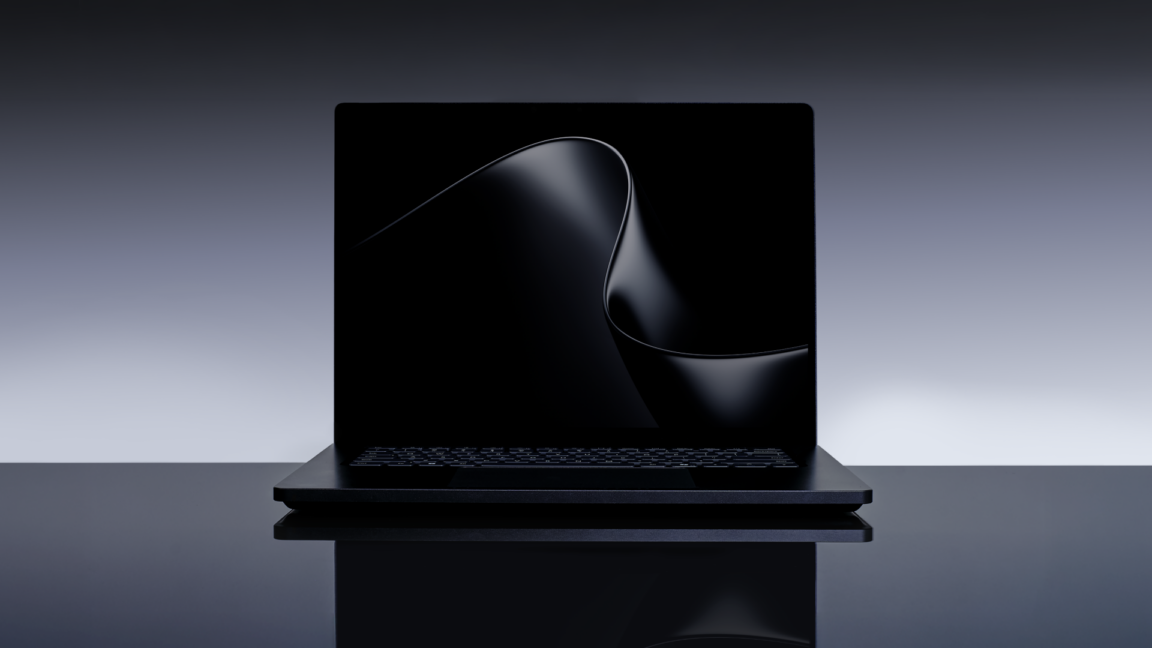
In its first live event in two years, Microsoft today announced its newest Surface laptop, outlined a host of changes coming to Windows 11, and shared a vision of how local-AI and agentic workflows could reshape personal computing for those in the dev community as well as home enthusiasts.

Surface Laptop Ultra

Originally teased in May 2026, the new Surface Laptop Ultra will be Microsoft's first offering to take advantage of the new Nvidia RTX Spark SoC (system on a chip). The device has a starting price of $2,599 and comes in various SoC and memory configurations, with either a 5120-core or 6144-core Blackwell GPU and up to 128GB of LPDDR5x unified memory. It will begin shipping on October 16 and is available for preorder now.

While the new Ultra is clearly focused on the developer crowd, graphical performance was highlighted during the presentation to show off just how capable the laptop can be. By leaning on unified memory allocation rather than the physical VRAM limits of a traditional GPU, the laptop can assign its resources to handle modern gaming tasks as well as local AI development and deployment. The new Gears of War: E-Day was shown running on the system, meaning that even without a traditional gaming GPU, AAA titles are on the table.

Read full article

Comments

Β© Microsoft

Windows 11’s Weather app uses ~1GB RAM, Linux apps a fraction

I was flummoxed to read a report on how much memory Microsoft’s Weather app uses on Windows 11 – more than 1GB just to render what is, ostensibly, a fancy table of stats. Less surprising is that the GNOME Weather app does the same job for under a fifth of the reported Windows figure, while Mousam, my go-to weather app, uses around a third of Microsoft’s effort (and with a nicer design, too). Not everyone on Windows 11 is seeing memory usage as high as the 1.1GB figure given in Windows Latest viral post. But when I check on my […]

You're reading Windows 11’s Weather app uses ~1GB RAM, Linux apps a fraction, a blog post from OMG! Ubuntu. Do not reproduce elsewhere without permission.

❌