❌

Reading view

There are new articles available, click to refresh the page.

Robo-soldier startup backed by Eric Trump misses payroll, may collapse

A humanoid robotics company backed and advised by President Donald Trump’s son, Eric Trump, has reportedly missed payroll and may be on the brink of collapse after a funding shortfall. The Silicon Valley startup, Foundation Future Industries, claims it is developing and testing robots for military roles on battlefields from Ukraine to Gaza.

Foundation failed to pay employees for the payroll period ending on October 30, anonymous sources told CNBC. The startup’s staff is especially angry because Foundation’s co-founder and CEO, Sankaet Pathak, supposedly borrowed $4.6 million in company funds to buy a luxury home overlooking San Francisco Bay about a year ago.

This comes as Pathak and Foundation’s leadership are still looking to raise funding to support a $3 billion valuation, based on their promise to develop a humanoid robot ready for combat duty and capable of wielding various weapons.

Read full article

Comments

© Foundation Future Industries

US moves to cut China’s remote access to AI chips

On the heels of the Nvidia scandal, the Trump administration is preparing to crack down on foreign data centers that are fueling China’s advancements in artificial intelligence by allowing remote access to otherwise restricted high-end chips necessary for AI training.

In a summary of the rule change, the Commerce Department said it was closing a loophole that previously allowed foreign rivals like China, Russia, and Iran to bypass export curbs on certain advanced computer chips by instead renting access to those chips from data centers in Indonesia, Malaysia, Singapore, Thailand, and Brazil.

US rivals could possibly use that access to train and run advanced AI models “capable of supporting military- and intelligence-related activities that could threaten US national security or foreign policy interests,” the Commerce Department said. Among threats, the US fears rivals could use advanced AI to develop "more effective weapons of mass destruction and advanced conventional weapons, coordinated cyber-espionage and targeted cyber-disruption, algorithmic theft, and weaponized disinformation.”

Read full article

Comments

© ANDARU / Contributor | AFP

Ars Live: What do drone strikes on data centers mean for the future? Talk at 1 pm EST today

Drone and missile strikes have inflicted unprecedented damage on data centers in Eastern Europe and the Middle East this year, disrupting cloud services for millions of people and permanently deleting some Amazon Web Services customer data. This trend represents a new concern for Big Tech companies—but also for governments and everyone else who depends on common digital services in modern life.

To explore what this all means for modern society’s reliance on cloud resilience, I will be hosting a live conversation titled "Drone attacks and data centers: New Risks for Big Tech" on Tuesday, November 17 at 1 pm ET with Joseph Jarnecki, a senior research fellow at the Royal United Services Institute (RUSI), a UK defense and security think tank. He leads RUSI’s work on how cloud services factor into national security and defense, along with tech sovereignty efforts.

Jarnecki has done extensive research on how Ukraine strengthened its cloud resilience with Western partners despite facing both cyberattacks and kinetic attacks at the start of the full-scale Russian invasion, and explored what that means for NATO and European governments’ cloud adoption plans.

Read full article

Comments

© Kostiantyn Liberov/Libkos/Getty Images

Ukraine’s fiber-optic drones get squeezed by AI data center demand

Impervious to battlefield jamming, drones physically connected to human operators by miles of fiber-optic cables have become such a common weapon of war in Ukraine that trees and fields are strewn with tangled cables thinner than fishing lines. But importing such fiber-optic material from China has become more costly as drone warfare’s needs compete with global demand from AI data centers for the same limited supply—and so Ukrainian drone makers have been adapting.

Since the full-scale Russian invasion of Ukraine began in February 2022, the Ukrainians have been forced out of necessity to continually develop battlefield innovations involving first-person view (FPV) quadcopter drones and other heavier types of drones. But it was the Russian military that first deployed unjammable fiber-optic drones to repel Ukrainian forces’ cross-border incursion into the Kursk Oblast in 2024. The Ukrainians quickly followed suit in developing their own fiber-optic drones, given the drones’ capability to shrug off electronic warfare jamming that could neutralize radio-controlled drones.

Russia and Ukraine have relied on Chinese suppliers for some off-the-shelf drones and a wide array of drone components, including bulk orders of fiber wound around very large spools or sometimes small finished spools ready for installation on drones. The finished spools can hold enough fiber-optic cable for drones to regularly operate at ranges of dozens of miles, and sometimes up to 62 miles (100 kilometers) in extreme cases, as reported by the independent Russian publication The Insider.

Read full article

Comments

© Scott Peterson/Getty Images

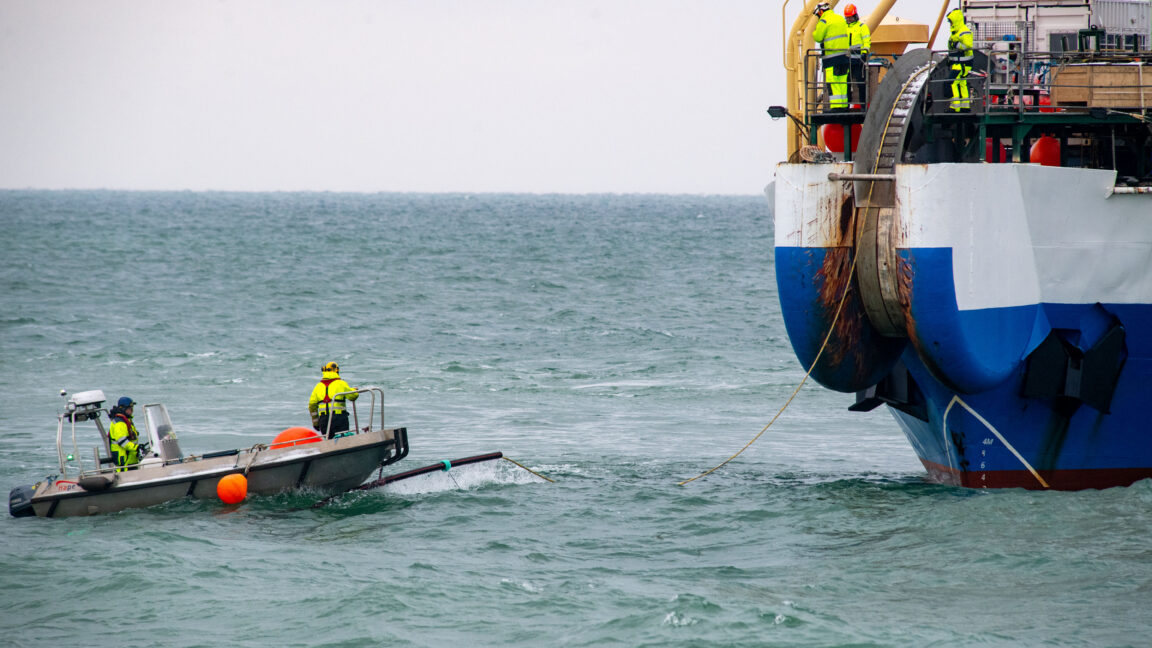
Ships loiter near subsea cables amid Iran's warnings to Trump

Several tanker ships linked to Iran have been loitering over subsea Internet cables in the Gulf of Oman near the Strait of Hormuz—a possible indication that the Iranian government is preparing to attack such undersea infrastructure in response to any renewed US and Israeli strikes.

The movements of three sanctioned tankers and an Iranian fishing boat have been tracked near major undersea cables by the maritime intelligence firm Windward in October, according to the Financial Times. Six active cables currently cross through the contested Strait of Hormuz, linking the Middle East to Europe, Africa, and Asia, with two more cables having segments under construction in the region.

Four countries, including Iraq, Kuwait, Bahrain, and Qatar, depend entirely upon such subsea telecommunications connections running through the Strait of Hormuz chokepoint to link with the outside world. But other countries also depend heavily on the region's undersea cable network—one-third of India’s westbound Internet traffic goes through the Persian Gulf and Strait of Hormuz.

Read full article

Comments

© Anton Petrus

Ukraine’s drone strikes spur hasty Russian plans for underground data centers

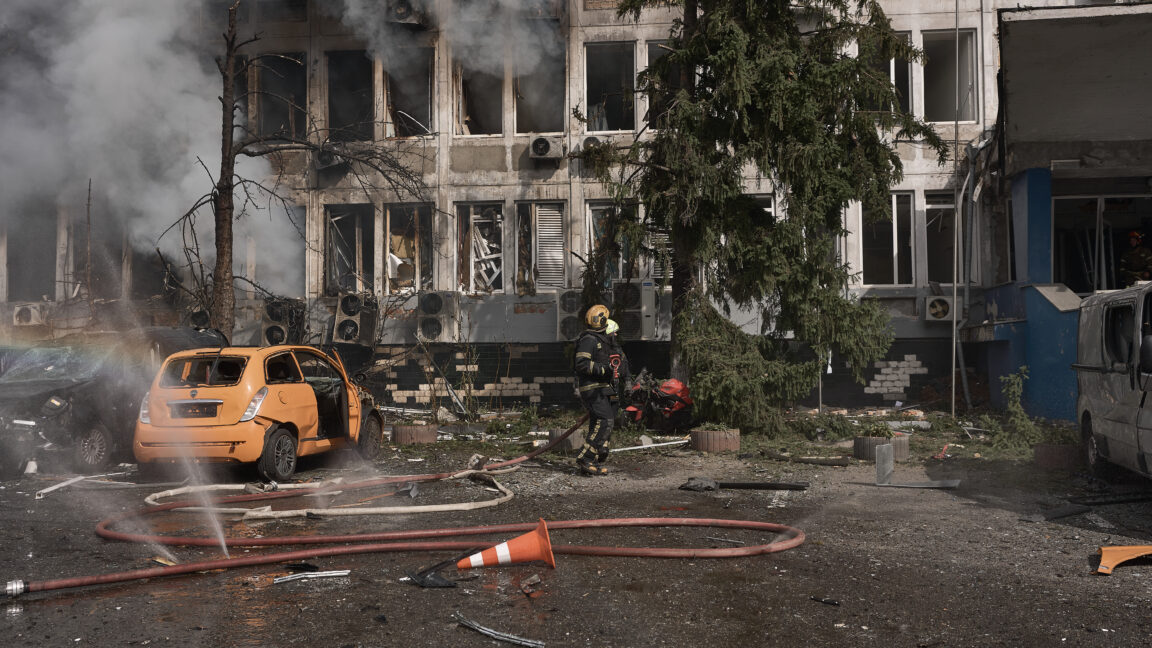
Russian tech companies are scrambling to harden and hide their data centers underground after Ukrainian drone strikes damaged facilities housing AI supercomputers and disrupted cloud services for millions of Russian users. Meanwhile, the Kremlin is requiring data center owners to reserve computing capacity for emergency state needs and has even authorized possible use of foreign data centers.

These consequences of Russia's war against Ukraine come as the Russian military has bombarded Ukrainian cities with drones and missiles nearly night and day in recent months, along with specifically targeting Ukrainian data centers since late September. But Ukraine has retaliated with its own drone strikes on military and infrastructure targets across Russia, degrading or knocking out data centers operated by Russian tech giant Yandex, the state-owned bank Sberbank, social media site VKontakte, and the Russian Ministry of Finance.

Now, state-owned telecommunications company Rostelcom has raised the possibility of moving some Russian data centers underground in talks with the nickel and palladium mining company Norilsk, according to Russian newspaper Vedomosti. The industry publication Data Center Dynamics also pointed to a recent proposal by a Russian regional governor to build data centers within open-pit coal mines while planting green public parks above as camouflage.

Read full article

Comments

© Alexander Manzyuk/Anadolu Agency via Getty Images

Trump ignored intel on China’s Nvidia spy to protect company’s stock, report says

Donald Trump apparently is so aligned with Nvidia CEO Jensen Huang—who has become the president’s key advisor on AI—that he ignored intelligence indicating that Huang was the target of a “Chinese spy plot,” and did so partly to protect Nvidia’s stock.

The New York Times spoke with people briefed on US intelligence agencies’ surveillance and granted them anonymity to discuss findings drawn from “classified intelligence.” According to sources, about a year ago, Trump was briefed that “Beijing was getting reports from someone with direct access” to Huang. That “someone” was Alice Huang, or Huang Le, a Chinese citizen and former top executive at a Singapore cloud company called Megaspeed.

According to sources, the US had already suspected that Alice Huang—who is not related to Jensen Huang—was helping China evade export controls to gain access to high-end Nvidia chips through Megaspeed. But it alarmed investigators to discover that she may have used her role at Megaspeed to gain direct access to Jensen Huang. It’s now believed she may have leveraged that closeness to feed China intel not only on one of America’s leading AI companies, but also to influence Trump’s thinking on AI. As Treasury Secretary Scott Bessent noted last month ahead of Trump’s AI talks with China President Xi Jinping, “the president is completely aligned with Jensen Huang, the CEO of Nvidia.”

Read full article

Comments

© KENT NISHIMURA / Contributor | AFP

Ukraine learns to fight without Starlink as Musk plays politics with satellites

Elon Musk’s Starlink satellite service has played a pivotal role in supporting Ukraine’s successful resistance to Russia’s full-scale invasion for years. But with Starlink having become increasingly unreliable due to Musk’s political inclinations and the latest surprise disruptions to service in Ukraine, the Ukrainians and Europe as a whole are now facing urgent questions about how to move forward without it.

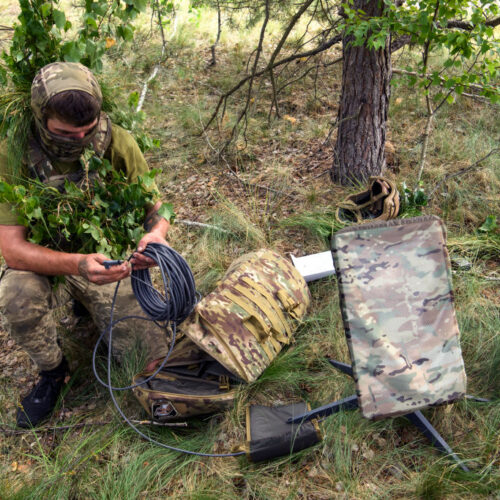
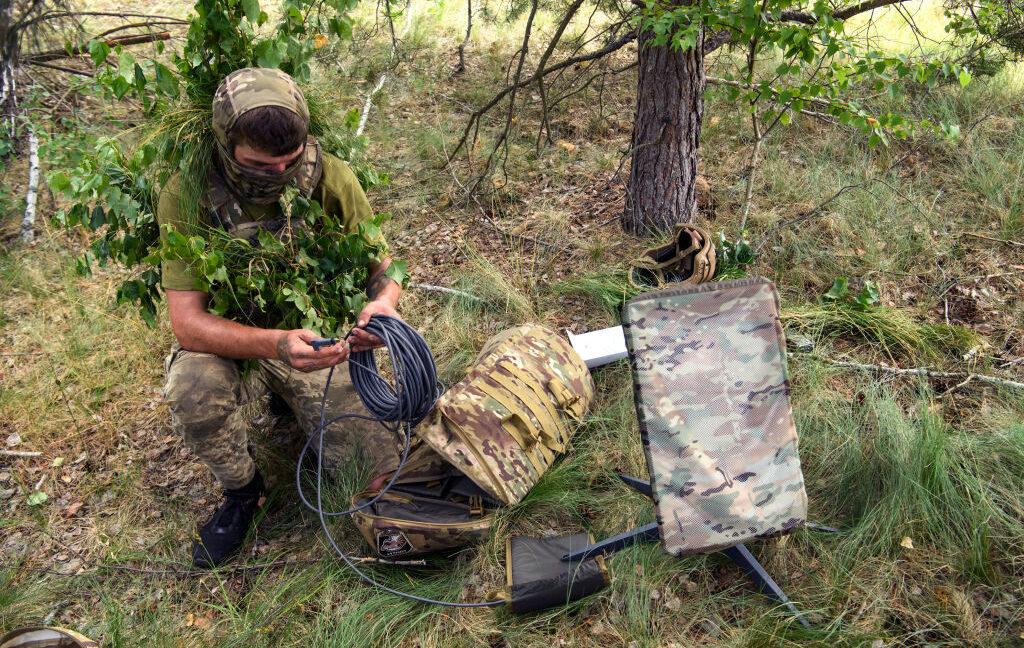
As the world’s largest communications satellite network, Starlink can typically support high-speed Internet and data streams for any user or vehicle equipped with a relatively compact Starlink terminal. This has enabled Ukraine to maintain vital communications for both civilian purposes and military operations—and has also expanded the Ukrainian military’s capability to remotely control or provide guidance to drones used in both air defense against Russian attacks and for striking back at Russian targets.

“Starlink currently offers some of the best satellite coverage available, with virtually no competitors when you consider the combination of cost, availability, and ease of use,” according to the head of hardware R&D at the Ukrainian defense company BlueBird Tech, who provided comments to Ars anonymously for security reasons. “In practical terms, the main limitation is the need to position the antenna so it can receive signals from the satellites.”

Read full article

Comments

© Dmytro Smolienko/Ukrinform/NurPhoto via Getty Images

Ukraine’s drone rescue of wounded soldier puts much touted idea into practice

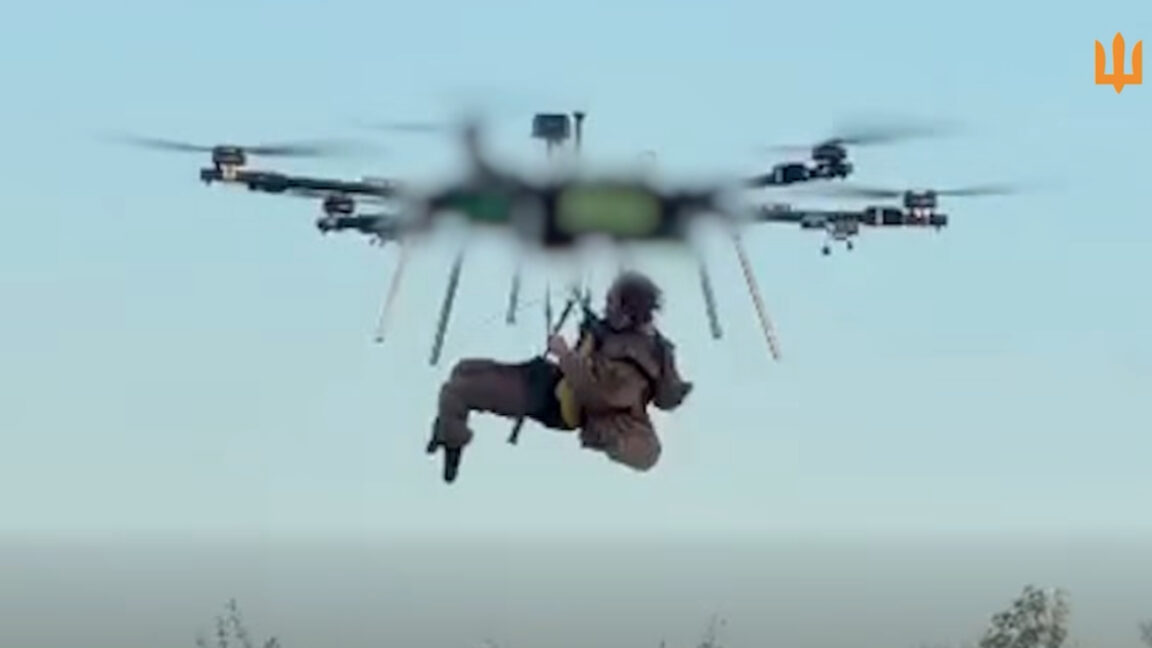
Ukraine’s unprecedented drone rescue of a wounded soldier from the battlefield has shown once again how battlefield necessity can spur innovation. The operation was revealed just days after separate Ukrainian drones designed for casualty evacuation were deployed for frontline testing—taking a step beyond the US military’s decades of experimentation with similar concepts.

The drone evacuation of the injured soldier took place at an undisclosed time and place on the frontline where the presence of Russian drones and landmines made it impractical to send in a wheeled ground robot, according to The Kyiv Independent. On October 19, Ukraine’s Army shared a video of the drone evacuation, showing the wounded soldier securing himself in a harness suspended beneath a heavy hexacopter drone with six rotors before being flown to safety.

“This is a historic event, the next stage of evacuating the wounded, which we will all come to,” said Napalm, a programmer of the 92nd separate assault brigade's unmanned ground systems company, who went by his callsign per Ukrainian military practice, in a statement. “Now the serious systematic work begins, so that such missions are carried out constantly.”

Read full article

Comments

© 92nd Separate Assault Brigade of the Ukrainian Ground Forces

Woke-Bashing of the Week: Trump’s war on ‘woke’ art escalates

The Trump administration’s campaign against ‘woke’ art has taken another turn, with the US State Department reportedly seeking to sell a painting by Kehinde Wiley, the celebrated artist behind Barack Obama’s official presidential portrait.

Wiley is known for his large-scale paintings celebrating Black identity, often placing Black subjects in compositions inspired by traditional European portraiture. His portrait of Obama was unveiled in 2018 and now hangs in the Smithsonian’s National Portrait Gallery.

But the artist’s work has become a target of the Trump administration’s cultural purge. In August, a painting Wiley created for the US State Department in 2013 was removed from the US Embassy in Santo Domingo, Dominican Republic, on ideological grounds.

Young Artists After Siamesas 1960 depicts four Dominican models against an elaborate floral backdrop. Before its removal, the painting was hidden behind a tarp emblazoned with an image of the American flag.

Announcing the move on social media, US ambassador to the Dominican Republic Leah Campos said: “In the Trump Administration and under my leadership we are turning away from globalist and woke ideologies and instead embracing American patriotism and the beauty of our great country!”

Yet neither Campos nor Erin Scavino, director of the State Department’s Art in Embassies programme, has clearly explained what makes Wiley’s painting objectionable. As the New York Times has reported, the criticism has instead focused on the artist himself and his association with Obama.

Scavino took over the programme at the beginning of Trump’s second term. She has emphasised acquiring and displaying art featuring patriotic imagery. Her previous experience includes working as an attorney and appearing as a contestant on Trump’s reality television show the Apprentice. She is also married to White House deputy chief of staff Dan Scavino.

This summer, she organised an exhibition in Washington titled Passport to Patriotism: 250 Years of Diplomacy, featuring 56 works incorporating 68 representations of the American flag.

Established in 1963, Art in Embassies was designed to advance cross-cultural dialogue and strengthen international relationships through art. Wiley’s painting formed part of the embassy’s permanent collection, and in 2015 the state department awarded him its Medal of Arts in recognition of his contributions to the programme.

Now, according to the New York Times, the department wants to sell the very work it commissioned.

Virginia Shore, who commissioned the painting and served as the programme’s director of acquisitions and chief curator between 2000 and 2017, said the work was nonpartisan. She also noted that there was no precedent for selling embassy artworks.

“Calling this woke is difficult for me to understand,” she said. “This is a program validated and financially backed under Bush.

“There is a science of building trust and empathy across borders.”

Her comments highlight what is at stake. A programme intended to build relationships between the US and the wider world risks being repurposed to promote a narrow, politically approved vision of American identity.

Wiley has previously attracted criticism from conservative commentators over his 2012 painting Judith and Holofernes, which depicts a Black woman holding the severed head of a white woman. Wiley described the work as a play on the “kill whitey thing”.

He also faced scrutiny in 2024 over allegations of sexual assault, which he denies.

In an executive order issued in March, Trump directed the Smithsonian to remove what he called “improper ideology” and “divisive narratives,” while placing greater emphasis on what he described as American greatness. That same month, his administration reduced the federal workforce responsible for preserving a collection of 26,000 publicly owned artworks.

Ultimately, this brand of patriotism looks less like celebrating American greatness and more like deciding whose art, identities and stories deserve to represent the country.

The post Woke-Bashing of the Week: Trump’s war on ‘woke’ art escalates appeared first on Left Foot Forward: Leading the UK's progressive debate.

Black Sea drone attacks enter NATO country's territorial waters for first time

Russian drones are suspected of sinking a cargo ship and leaving chemical tankers ablaze near the Black Sea coasts of Bulgaria and Romania, respectively. The latest attacks mean that at least seven ships have been attacked in the exclusive economic zones of NATO member countries—and even within Romania's territorial waters if Russian involvement is confirmed in the case of the chemical tankers.

Such attacks have spurred requests for NATO to redeploy counter-drone systems to provide more protection. In a social media post on October 15, NATO Secretary General Mark Rutte stated that NATO had increased "counter-drone capabilities" along the alliance's eastern flank after meeting with the leaders of Bulgaria and Romania.

The latest attacks this week occurred within 24 hours between October 14 and October 15, when the two chemical tankers were set afire after Russian drones were detected in Romanian airspace, according to Deutsche Welle. Both ships were sitting at anchor near the mouth of the Sulina canal that connects the Black Sea to the Danube River, which has become a crucial shipping export route for Ukraine, Reuters reported.

Read full article

Comments

© Hristo Rusev/Getty Images

NATO may redeploy anti-drone defenses as attacks sink more Black Sea shipping

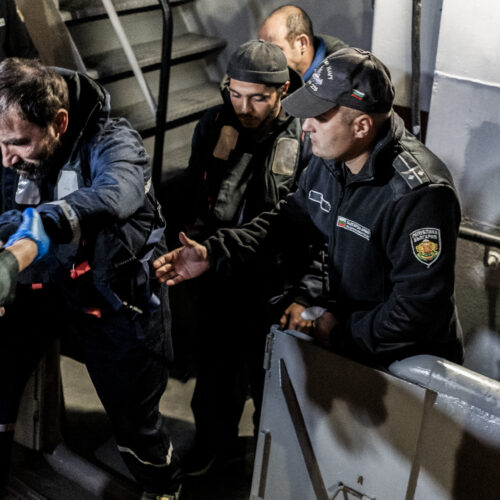
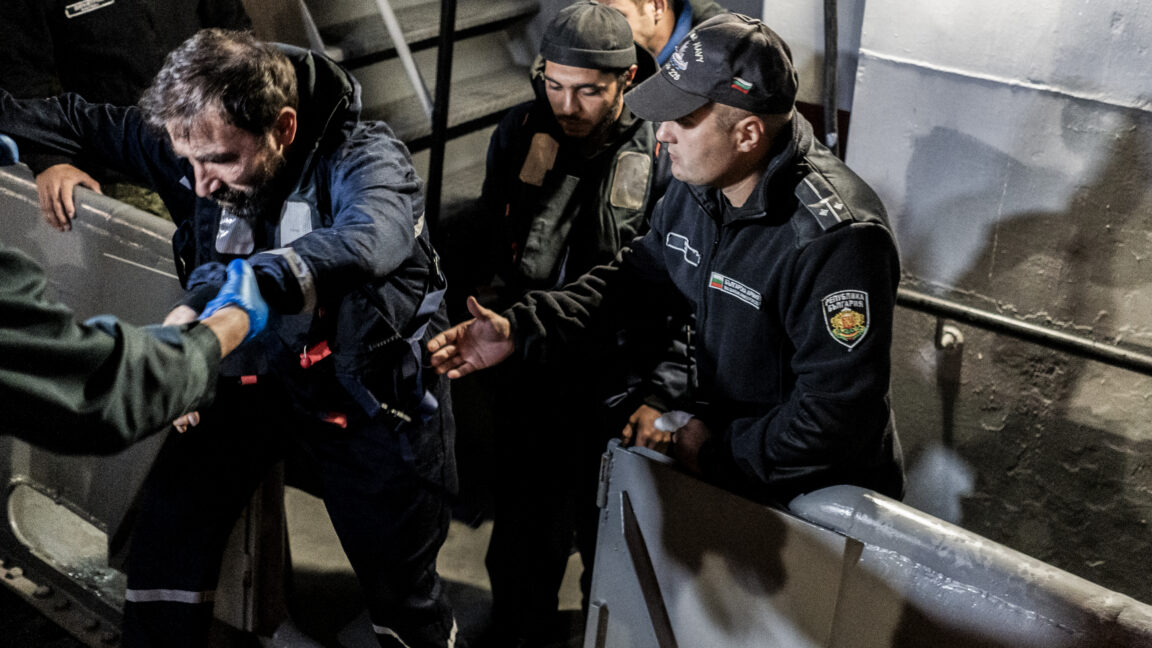
Suspected Russian drone attacks sank a cargo ship and forced the evacuation of another vessel within two dozen miles of the coast of Bulgaria in the Black Sea on October 13. The latest attacks mean that five ships have been attacked in the exclusive economic zones of NATO member countries—spurring requests for NATO to redeploy counter-drone systems to provide more protection.

Although there is no hard proof that the drone attacks originated from Russia, one of the ships that came under attack was the Ukrainian-operated coastal freighter Chelsea 3, registered under the flag of Malta. Bulgarian Prime Minister Rumen Radev told the Russian ambassador in Sofia that “it makes no sense for Ukraine to destroy its own ships in the Black Sea, and the results of these strikes favor Russia’s interests,” according to the Associated Press.

All 15 members of the Ukrainian-owned Chelsea 3 were safely evacuated by Bulgarian rescue operations after the ship was reportedly struck by three aerial drones.

Read full article

Comments

© Hristo Rusev/Getty Images

Ukraine blindsided by Starlink throttling restrictions and intelligence gaps

Ukrainian troops have been caught off guard by restrictions on Elon Musk’s Starlink satellite Internet systems that disrupted frontline operations, while Kyiv received no warning from its partners of a Russian missile attack on its energy facilities for the second day running, according to Ukrainian officials.

Starlink terminals used by Ukrainian drone units began experiencing signal failures at speeds above 160 km/h, disrupting several missions early on Wednesday morning, according to military personnel and senior Ukrainian officials.

“Logistics at the frontline and middle strikes are badly limited,” one senior official familiar with the situation on the front told the FT. Ukraine’s middle strikes target Russian military supply lines and logistics. The limitations came with “no warning, just in the middle of the night,” the official said.

Read full article

Comments

© NurPhoto / Contributor

The Internet’s undersea backbone is slipping into the danger zone

Despite the expansion of Starlink and other communications satellite services, most of the world’s Internet traffic still travels through subsea cables crisscrossing the ocean floors. Those fiber-optic cables coexist with a network of oil and gas pipelines and submarine power cables—and all these crucial links connecting countries and continents now face growing sabotage risks as gray-zone warfare and open conflicts have become widespread.

The rising risks to the world’s invisible infrastructure beneath the waves are the main subject of a new book by Elisabeth Braw, a senior fellow at the Atlantic Council who leads the Threats to the Global Maritime Order Initiative. Her book, titled Undersea War, explores the modern rise in suspicious incidents in which ships dragging their anchors for unusually long periods have cut or damaged undersea cables and pipelines, from the Baltic Sea to the Pacific Ocean.

Braw acknowledges that about 60 percent of undersea cable damage is primarily due to human error during fishing and shipping activities, when weighted nets or anchors drag across the seabed. Natural hazards like storms and undersea landslides also account for a smaller proportion of such incidents. In total, between 150 and 200 cables are damaged each year and usually repaired quickly.

Read full article

Comments

© Stefan Sauer/picture alliance via Getty Images

Russia was not ready for the data center war it started with Ukraine

When Russia began attacking Ukrainian data centers and telecommunication infrastructure, it apparently failed to prepare for possible retaliation. Now Russia’s digital services are facing widespread outages after Ukrainian drone strikes knocked out three of the largest data centers owned by Russian tech giant Yandex within several days.

Pro-Kremlin bloggers are warning that Russia’s centralized digital economy could collapse because the country is not prepared for the “data center war” it started, according to posts translated by the pseudonymous independent researcher ChrisO_wiki. The Russian commentators also suggested that Ukraine’s decentralized digital services could prove more resilient than Russia’s system if the countries continue trading such blows.

Russia initially launched a drone strike campaign targeting Ukrainian data centers and mobile phone networks in late September. The attacks temporarily disrupted Internet and cell phone service for up to 100,000 households in the Ukrainian capital of Kyiv and came as part of a broader long-range strike campaign that has involved Russian missiles and jet-powered drones hitting Ukraine’s power grid infrastructure, transportation hubs, and even residential apartment building blocks.

Read full article

Comments

© Igor IVANKO / AFP via Getty Images

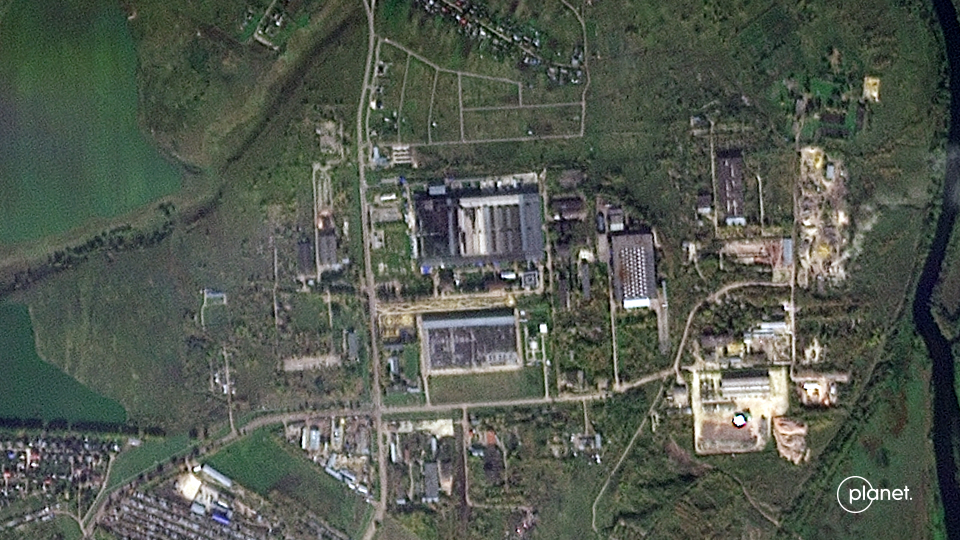
Ukraine’s drones knock out AI data center belonging to "Russia’s Google"

Ukrainian drone strikes have knocked out two of five data centers belonging to the Russian tech giant Yandex. The damage has left Yandex, known as “Russia’s Google” because it operates the country’s most popular search engine, struggling to maintain its AI chatbot and other online services.

The Ukrainian drones struck Yandex data centers in the Sasovo and Kaluga regions of Russia on October 8 and October 9, according to Reuters. Those actions came as a direct response to a Russian drone strike campaign targeting Ukraine’s data centers, which has disrupted mobile phone and Internet services for thousands of Ukrainians since late September.

“We continue to respond to Russia’s attacks on Ukraine, and we’re doing so with high precision,” said Ukrainian President Volodymyr Zelenskyy in a post on X. “Another data center was hit as well—our symmetrical response.”

Read full article

Comments

© Planet Labs PBC

The Hormuz ‘dry run’: life without oil and petrochemicals

Reposted from Northwest Bylines Mark H Burton With transport through the Strait of Hormuz at a virtual standstill, we get a picture of how oil and petrochemicals are part of our life The supply chain problems arising from the unprovoked USA/Israeli attack on Iran are becoming clear. They are multiple, affecting not just oil and… Continue reading The Hormuz ‘dry run’: life without oil and petrochemicals
❌