❌

Reading view

There are new articles available, click to refresh the page.

SpaceX's Starshield troubles in Ukraine could threaten its broader military business

The representative in the US House expected to chair the House Intelligence Committee in January, Jim Himes (D-Conn.), has threatened to withhold support for funding government-owned systems from SpaceX amid the ongoing inquiry into the use of Starshield in Ukraine.

"SpaceX's potentially unilateral modification of a U.S. Government contract, combined with its lack of responsiveness to congressional oversight, calls into question every contract the U.S. Government has with SpaceX," Himes wrote in a letter to SpaceX founder Elon Musk on Friday.

CNN first reported the letter's existence. The network also reported that Himes sent a classified communication to Director of National Intelligence Jay Clayton with a similar message that it would be difficult for Congress to authorize funding for systems with SpaceX as the primary vendor.


Read full article

Comments

© Andrew Harnik/Getty Images
Ukraine blew up Putin’s bridge using relay drones to bypass Starlink limits

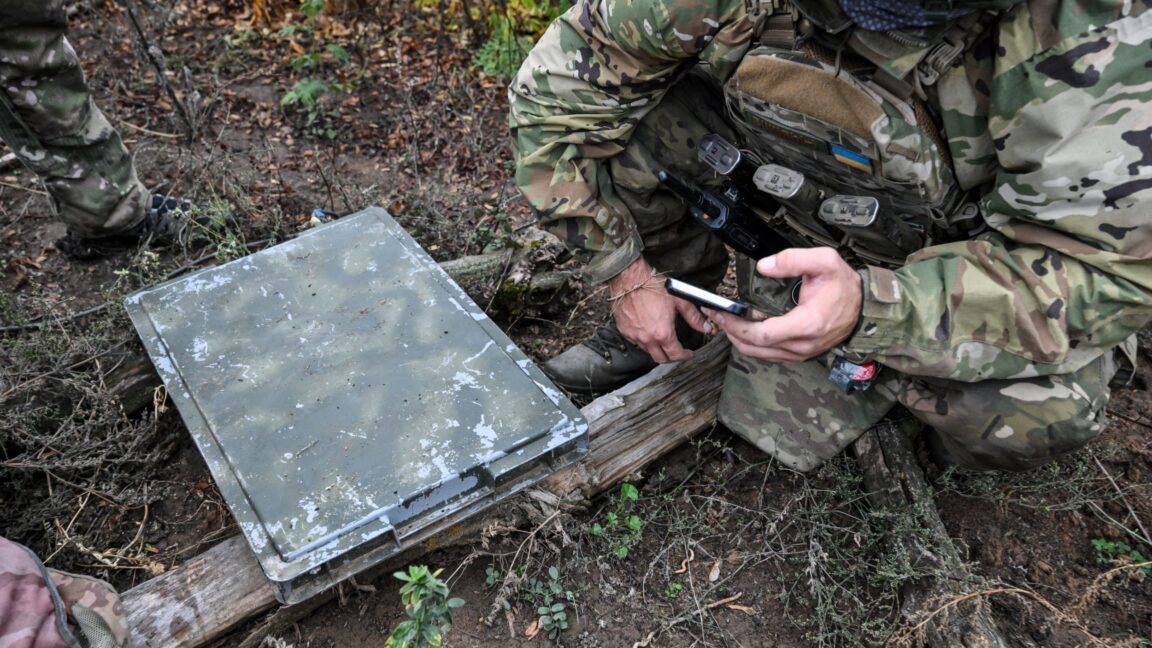
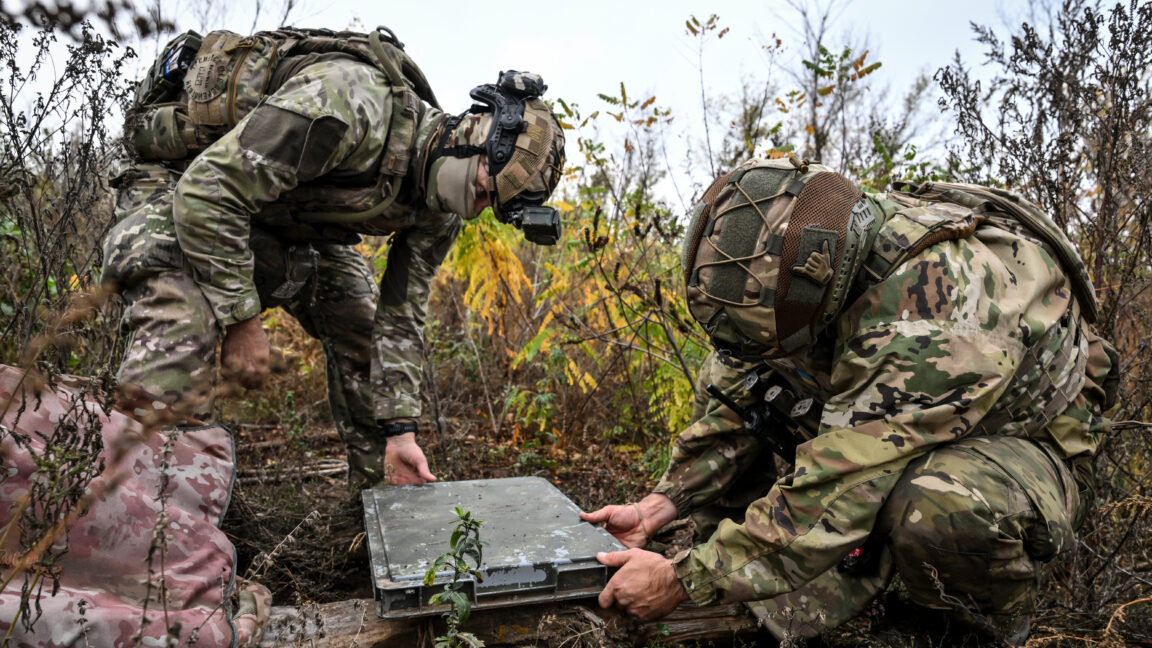
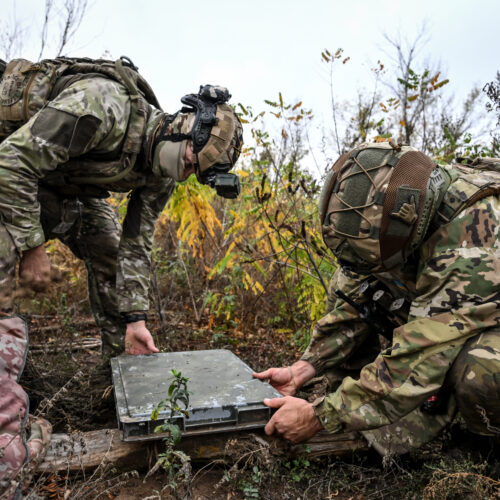
A Ukrainian barrage of missiles and drones collapsed a crucial segment of Russian President Vladimir Putin’s prized Kerch Strait Bridge—and Ukraine’s military pulled off the strike deep within Russian-occupied territory without relying on the military-grade version of Elon Musk’s Starlink satellite communications to guide the missiles in.

On the nights of November 15 and November 16, coordinated waves of Ukrainian drones and missiles caused enough damage to collapse one of two steel arches supporting the Kerch bridge’s roadway for automobile traffic, according to an Institute for the Study of War update. Russian sources claimed several hundred Ukrainian drones first overwhelmed Russian air defenses to pave the way for remote-controlled missile strikes focused on the bridge, with the latter prominently including Ukraine’s homegrown Flamingo cruise missile.

The Ukrainian operation adapted a Russian battlefield innovation by using drones equipped with mesh radios to create an airborne communications network, according to the Financial Times. Each networked drone acts as a relay node to extend the communication link between human operators and remotely piloted missiles and strike drones. Russia began using the technique to support long-range drone and missile strikes on Ukrainian cities.

Read full article

Comments

© Vantor

Ukraine says it can’t stop Russian strikes because Starshield is limited again

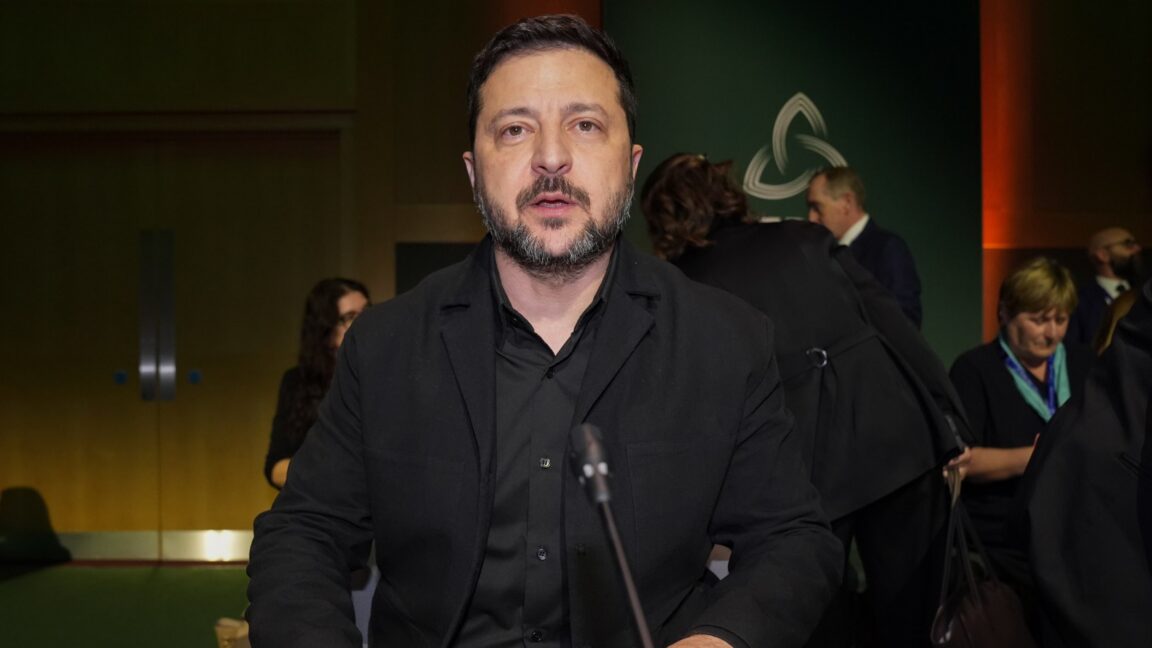
Ukraine President Volodymyr Zelenskyy said today that Starshield has again been disabled on fast-moving drones in Ukrainian territory occupied by Russian forces, and that the US has provided "very little" information about the return of the restriction.

"We have detected speed restrictions on Starshield on our Ukrainian territory again, in the temporarily occupied parts of Ukraine," Zelenskyy said in a speech at the 9th European Political Community Summit in Ireland. "The speed limit is back at 161 kilometers per hour—that’s 100 miles per hour."

Zelenskyy's allegation is that Starshield—the military variant of SpaceX's Starlink satellite service—stops working on Ukrainian military drones when they travel above 161 kilometers per hour.

Read full article

Comments

© Getty Images | Brian Lawless/PA Images

Pentagon IG refuses to investigate Starlink/Starshield slowdown in Ukraine

The Pentagon inspector general's office declined a request from US senators to investigate restrictions recently imposed on the Ukraine military's use of SpaceX's satellite network.

Ukraine, which uses SpaceX's Starlink service and the military version known as Starshield, said earlier this month that military drones lost satellite connectivity when traveling above 161 kilometers per hour (100 miles per hour). The limit was removed after about 10 days.

Five Democratic and four Republican senators sent an October 15 letter to Department of Defense Inspector General Platte Moring, asking for a probe into the reported disruptions of Starlink and Starshield. The letter asked, among other things, "whether any restrictions on Starlink or Starshield services were directed, authorized, or implemented by SpaceX, the Department of Defense, or other US government entities; whether such restrictions were consistent with applicable US government contracts, and what actions, if any, the Department of Defense took in response."

Read full article

Comments

© Getty Images | Bloomberg

Musk accuses Ukraine of violating Starlink terms with deadly drone strikes

Elon Musk accused Ukraine of violating Starlink terms of service by using it for lethal drone strikes.

Musk said Ukraine used the Starlink commercial service for offensive drone strikes. Musk's comment on Saturday came after SpaceX imposed a restriction preventing Ukraine from using the satellite technology on drones flying above certain speeds.

One current and one former Ukraine official denied Musk's accusation and said previous limits imposed by SpaceX already prevented Ukraine's military from using Starlink in the way Musk described. Ukraine officials have accused Musk of throttling their use of Starshield, the military variant of Starlink that Ukraine has access to through a deal with the US government.

Read full article

Comments

© Dmytro Smolienko/Ukrinform/Future Publishing via Getty Images

Ukraine learns to fight without Starlink as Musk plays politics with satellites

Elon Musk’s Starlink satellite service has played a pivotal role in supporting Ukraine’s successful resistance to Russia’s full-scale invasion for years. But with Starlink having become increasingly unreliable due to Musk’s political inclinations and the latest surprise disruptions to service in Ukraine, the Ukrainians and Europe as a whole are now facing urgent questions about how to move forward without it.

As the world’s largest communications satellite network, Starlink can typically support high-speed Internet and data streams for any user or vehicle equipped with a relatively compact Starlink terminal. This has enabled Ukraine to maintain vital communications for both civilian purposes and military operations—and has also expanded the Ukrainian military’s capability to remotely control or provide guidance to drones used in both air defense against Russian attacks and for striking back at Russian targets.

“Starlink currently offers some of the best satellite coverage available, with virtually no competitors when you consider the combination of cost, availability, and ease of use,” according to the head of hardware R&D at the Ukrainian defense company BlueBird Tech, who provided comments to Ars anonymously for security reasons. “In practical terms, the main limitation is the need to position the antenna so it can receive signals from the satellites.”

Read full article

Comments

© Dmytro Smolienko/Ukrinform/NurPhoto via Getty Images

Report: Musk ordered Starlink slowdown in Ukraine, then blamed it on Trump

A Wall Street Journal report said SpaceX CEO Elon Musk ordered the Starlink throttling that blindsided Ukraine's air assault forces last week, despite Musk's claim that all decisions on the military version of Starlink are made by the US military and President Trump.

Trump denied ordering the restrictions. While Musk may have spoken to Trump and administration officials before the decision, The Wall Street Journal reported yesterday that Musk made the final call. The decision came after both Musk and Trump criticized Ukraine for attacking Russian diesel refineries.

"Elon Musk ordered the slowdown of a military-grade version of Starlink relied on by Ukraine, a decision that sparked panic in Kyiv and confusion inside the Trump administration," the WSJ wrote, citing unnamed US officials and people familiar with the matter. The report said that "Musk capped the speeds at which Ukrainian hardware could stay connected to the satellite-based network... rendering some offensive drones and interceptor drones virtually useless."

Read full article

Comments

© Getty Images | Bloomberg

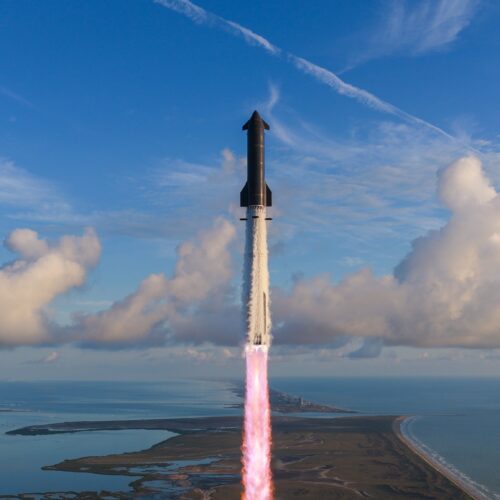
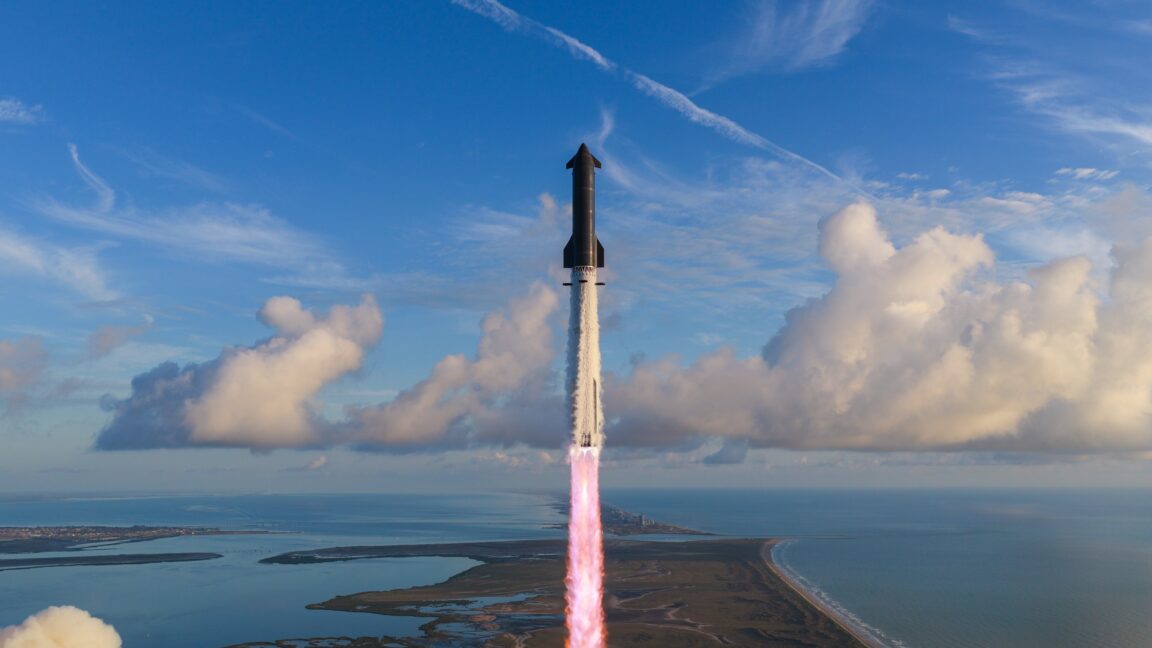
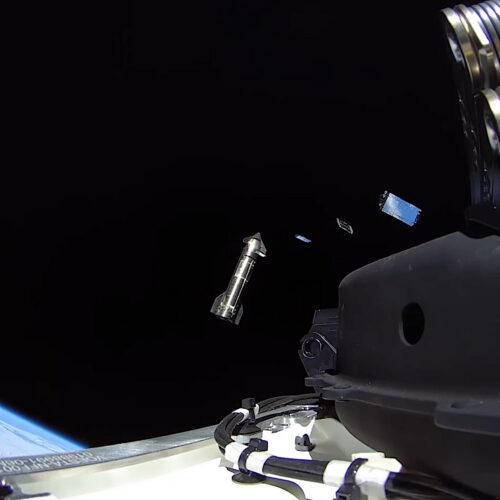
SpaceX to attempt Starship catch on next flight, with eye on rapid cadence increase

In its current iteration, SpaceX is largely a data company seeking to provide enormous amounts of compute for artificial intelligence. During an earnings call on Tuesday afternoon, company officials spent much of their time discussing ambitious plans to roll out up to 10 GW of compute in 2027—on the ground.

Gone are the days of aspirational talk about sending humans to Mars and settling the red planet. Now it is almost all about artificial intelligence and the data needed to support its expansion. However, the company's long-term ambitions to provide data services from space, initially with the Starlink Internet constellation and eventually through the "Starmind" data center constellation, still rely on an actual rocket.

That would be the Starship vehicle, and during the earnings call, SpaceX founder Elon Musk and the company's president and chief operating officer, Gwynne Shotwell, provided new performance targets for the vehicle.

Read full article

Comments

© SpaceX

Ukraine blindsided by Starlink throttling restrictions and intelligence gaps

Ukrainian troops have been caught off guard by restrictions on Elon Musk’s Starlink satellite Internet systems that disrupted frontline operations, while Kyiv received no warning from its partners of a Russian missile attack on its energy facilities for the second day running, according to Ukrainian officials.

Starlink terminals used by Ukrainian drone units began experiencing signal failures at speeds above 160 km/h, disrupting several missions early on Wednesday morning, according to military personnel and senior Ukrainian officials.

“Logistics at the frontline and middle strikes are badly limited,” one senior official familiar with the situation on the front told the FT. Ukraine’s middle strikes target Russian military supply lines and logistics. The limitations came with “no warning, just in the middle of the night,” the official said.

Read full article

Comments

© NurPhoto / Contributor

Starlink spectrum deal boosts Musk plan to beat AT&T, T-Mobile, and Verizon

SpaceX has a deal to purchase nationwide low-band spectrum licenses for a planned terrestrial mobile network that would complement the space-based Starlink cellular service.

SpaceX will buy up to 14 megahertz of spectrum in the 800 MHz band from investment firm Grain Management, which bought the spectrum rights from T-Mobile earlier this year. T-Mobile had obtained the spectrum when it bought Sprint in 2020 and was required to sell the licenses under a merger condition imposed by the US government.

"This prime low-band spectrum addresses one of the key remaining technical gaps that will pave the way for Starlink Mobile to become a major mobile carrier in the US," SpaceX said yesterday. SpaceX this week also received US approval to launch 15,000 satellites for an upgraded version of its mobile service that it says will be far more powerful than the current offering.

Read full article

Comments

© Aurich Lawson | Getty Images

SpaceX calls for better coordination in orbit after near-misses with Starlink

Space has plenty of room for more megaconstellations, but only if all operators are willing to share information about where their satellites are and where they're going, a top executive at SpaceX and its AI subsidiary said this week.

Michael Nicolls, SpaceX's vice president for Starlink and president of Elon Musk's artificial intelligence company, xAI, used a presentation Tuesday at the International Astronautical Congress in Turkey as a clarion call for improved data-sharing among satellite operators.

SpaceX's Starlink constellation now has more than 11,000 satellites, about two-thirds of all active spacecraft in low-Earth orbit. Radars and telescopes routinely track thousands more pieces of space junk.

Read full article

Comments

© SpaceX

Amazon builds 1,000th satellite, will launch space internet service by end of year

The world's largest retailer wants to sell you something else—Internet from space.

Amazon has been developing a constellation of satellites to deliver broadband Internet from low-Earth orbit for the better part of a decade, and the company is just about ready to pull back the curtain. It is entering a market that SpaceX, with its Starlink Internet, has dominated for the last half-decade. Amazon's debut into satellite Internet is being closely watched, not just by some consumers, but by businesses ranging from airlines to shipping companies to governments. Broadband Internet from orbit has proven broadly useful for a lot of purposes, from video games to commerce to warfighting.

But until now, most people had to buy it from Elon Musk and SpaceX. OneWeb has only offered limited services, leaving Amazon as the only real competitor to deliver high-speed Internet globally. Moreover, at the head of the company's broadband efforts is Rajeev Badyal, who led Starlink during its early years, but whom Musk fired eight years ago for moving too cautiously on Starlink.

Read full article

Comments

© Amazon Leo

❌