❌

Reading view

There are new articles available, click to refresh the page.

IBM to offer access to a dual-processor quantum system in 2027

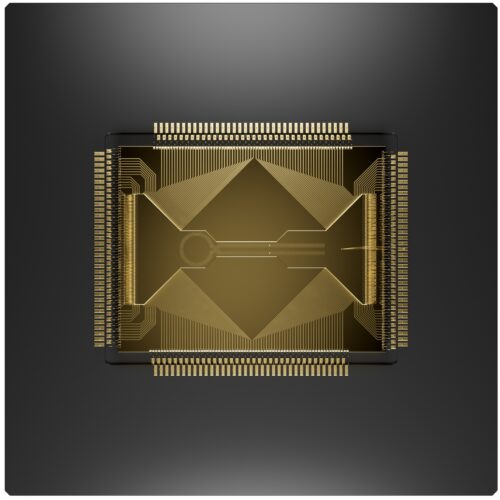
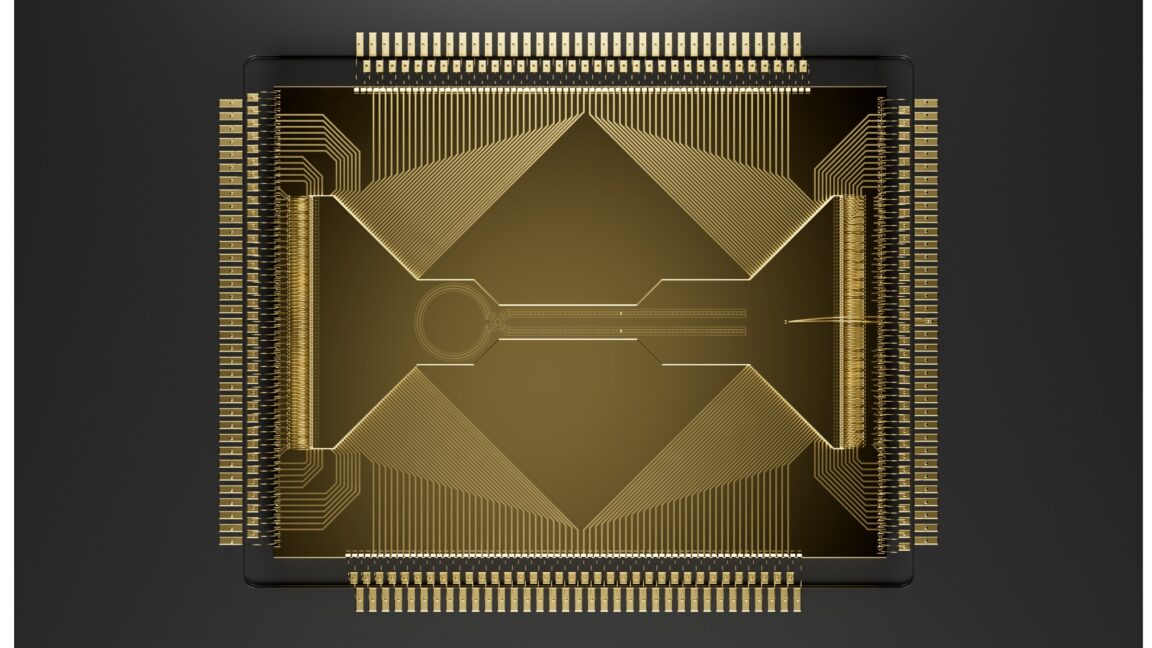
IBM's Quantum Developer's Conference is being held this week, and the company is using the gathering to provide an update to its roadmap: It is aiming to make error-corrected quantum computers before the decade is out.

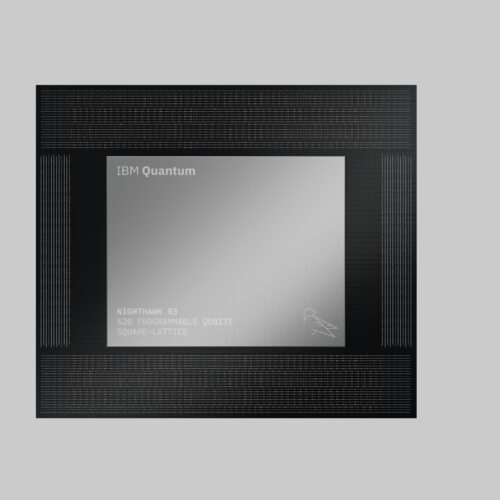
The changes greatly expand the scope of its next-generation Nighthawk general-use processors by adding a version with over 500 programmable qubits. At the same time, it's stepping back a bit on its plan to link multiple Nighthawk processors together, dropping the intended number of linked systems from nine to two.

The total number of qubits planned for next year will remain the same; how the company is getting there, however, will be different.

Read full article

Comments

© IBM

Physicists listened to electrical noise to crack a superconductor mystery

Superconductors carry electricity without resistance, but most only work a few degrees above absolute zero. In the late 1980s, copper-based materials called cuprates were found to superconduct at higher temperatures—reachable with affordable liquid nitrogen. Yet nearly 40 years later, physicists still don't agree on why.

In a recent Science study, a team of physicists led by Milan Allan of Ludwig Maximilian University of Munich and Ingmar Swart of Utrecht University in the Netherlands has found some answers by listening to the faint electrical crackle of current flowing into a cuprate.

The missing electrons

Central to the mystery of cuprates’ high-temperature superconductivity is a strange state called the pseudogap. “The pseudogap is a phenomenon of missing electrons,” Allan said. Above the temperature at which cuprates become superconducting, some of their electrons seem to vanish—measurements find far fewer of them at the energies where they should be. “Everybody knows that from different probes, you see that there's these vanishing electrons, but nobody knows why,” Allan said.

Read full article

Comments

© Science & Society Picture Library

Quantum error correction goes well beyond breakeven

Running complicated algorithms on quantum computing hardware is going to require the use of logical qubits, where collections of hardware qubits are linked together in ways that allow errors to be detected and corrected. In general, the more hardware qubits you dedicate to each logical qubit, the better the chances are of identifying errors. But, given that the hardware qubits are prone to errors, adding more of them also increases the probability that errors will occur. If the hardware error rate is too high, then growing the logical qubit will only make matters worse.

Fortunately, several companies have demonstrated hardware where the error rate is not too high. Several demonstrations show logical qubits are beyond the breakeven point, where adding more qubits improves performance. The problem is that the improvement isn't very dramatic. To lower error rates to levels we'll need to run complex algorithms, we'd have to add a completely impractical number of qubits to each logical qubit.

On Monday, Quantinuum announced that its current generation of hardware is capable of scaling well beyond the breakeven point. Each step up in the size of logical qubits improved some measures of their performance by a factor of over 10.

Read full article

Comments

© Quantinuum

An experimental tour-de-force: Entanglement between glass bead and light

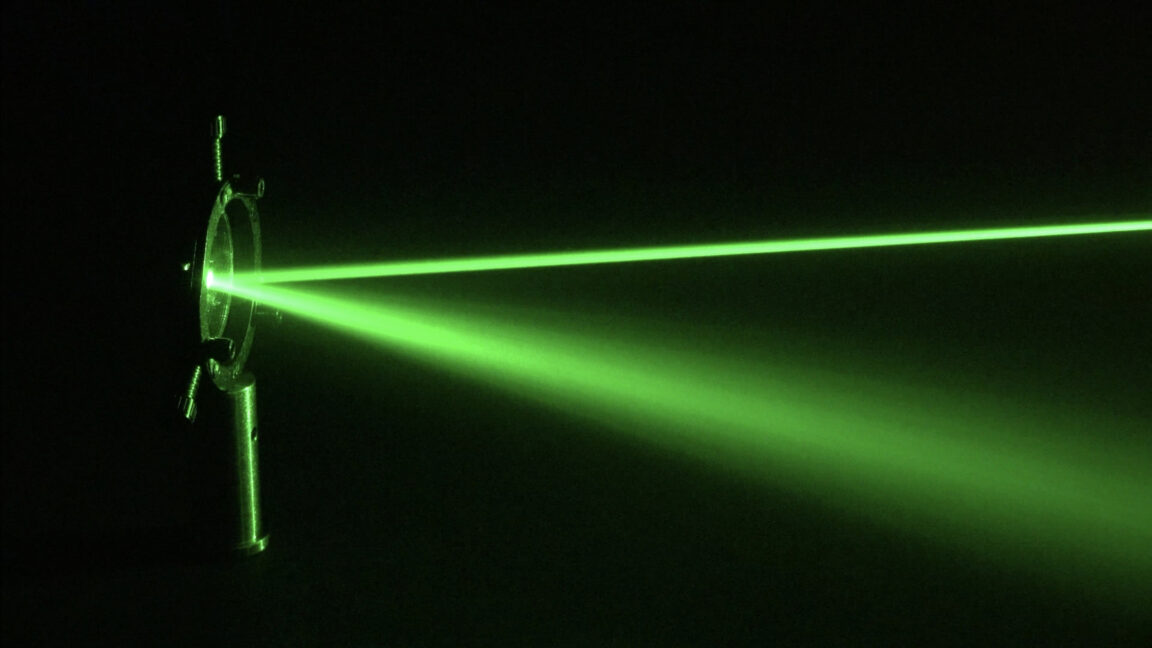
Writing about quantum entanglement is always a challenge. There are so many clichés to avoid: It’s mysterious, ghostly, spooky, and weird. Entanglement is none of those things, and yet it is also all of those things—a superposition of clichés, you might say. So, having gotten all of my clichés out of the way in the second sentence, let’s take a look at how a group of researchers managed to entangle a light beam with a glass bead, which is, frankly, quite an achievement.

Cliché-free entanglement

Quantum entanglement is nothing more or less than the idea that if two objects are linked, then their behavior will, in some ways, be correlated. To take a terrible example: My upper and lower arm are very strongly correlated in terms of relative position because they are connected at the elbow. No one is surprised by this because we can see that they are actually a single object called an arm.

Two photons can be, in a sense, joined together, meaning that they have correlations, too. In this case, we are (naively) surprised for three reasons. First, we think of photons as separate objects that cannot be joined—this is a mistake of understanding. Second, when we connect two photons, we only connect them in limited ways: The two photons may be wholly uncorrelated in terms of polarization, but strongly correlated in terms of energy.

Read full article

Comments

© twilightproductions

❌