❌

Reading view

There are new articles available, click to refresh the page.

White House drastically shortens deadline for dropping quantum-vulnerable crypto

The White House is drastically shortening the deadline for government agencies and organizations to adopt new quantum-resistant encryption systems that will withstand attacks that use quantum computers, as the federal government seeks to protect decades’ worth of secrets belonging to militaries, banks, governments, and most individuals on Earth.

The executive order, titled Securing the Nation against Advanced Cryptographic Attacks, requires computing systems for β€œhigh-value assets” and β€œhigh-impact systems” to transition to post-quantum cryptographic key establishment schemes by December 31, 2030, and to quantum-safe digital signature schemes by December 31, 2031.

Heading off a significant threat

The new deadline, which for many organizations is about five years sooner than the previous one, comes on the heels of recent research showing that the resources and cost for building a cryptographically relevant quantum computer are far less than previous consensus estimates. In response, Google, Cloudflare, and other companies recently tightened their timelines for moving off vulnerable systems to 2029.


Read full article

Comments

Β© vital

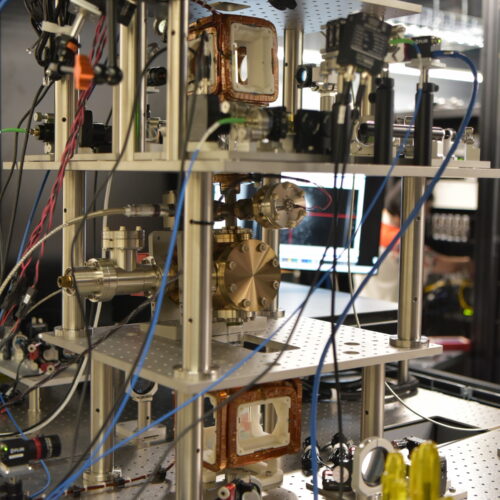
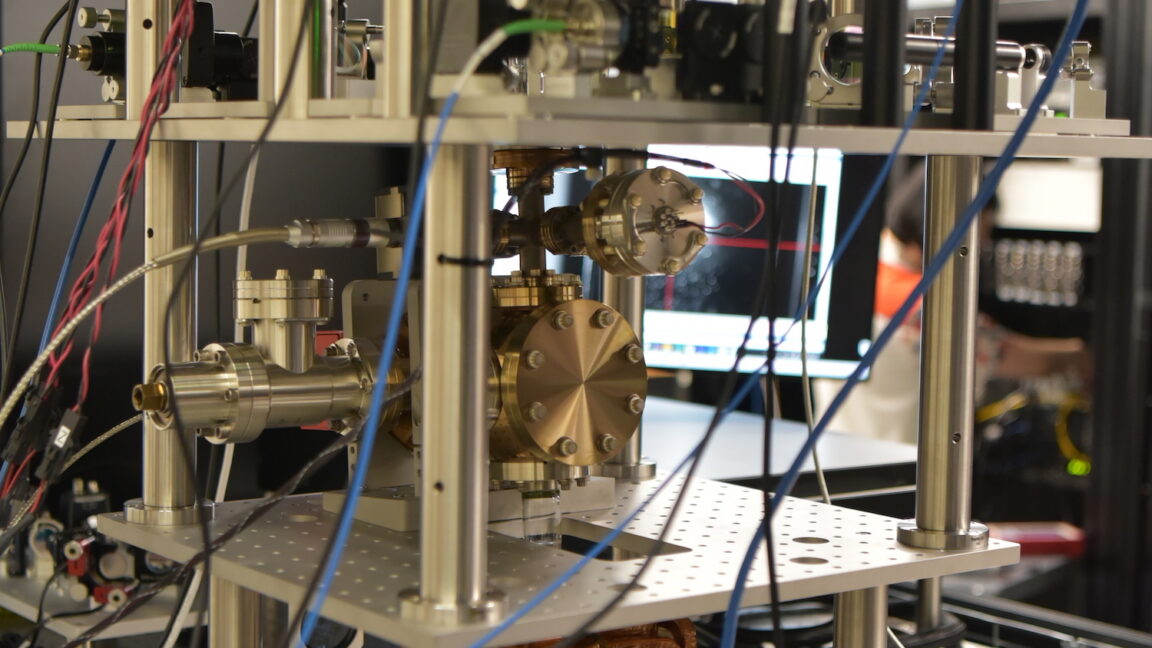
Sooner than expected? Useful quantum error correction promised for 2028.

Quantum computing news usually picks up near the end of the year, as companies try to provide evidence that they are hitting benchmarks on time. However, there have been interesting announcements as the summer starts this year, from incremental progress to attention-grabbing promises. As we did earlier this month, Ars has a rundown of some of the most significant announcements.

These include a promise of useful, error-corrected quantum computing as soon as 2028, details on an updated trapped ion processor, and a case in which claims of quantum supremacy have been cut back a bit thanks to advances in more traditional algorithms.

2028 is remarkably soon

Many people in the field expect that useful quantum computers are still about five to 10 years away. While there may be a few useful algorithms that can be run on existing error-prone hardware, almost all of the interesting problems that quantum computing can be applied to will require some form of error correction enabled by linking a small collection of hardware qubits together into what's called a logical qubit. Logical qubits include the redundant storage of information along with neighboring qubits that can be measured to determine when errors occur and how to fix them.

Read full article

Comments

Β© QuEra

Microsoft, Atom Computing update their quantum computing progress

With dozens of companies, from small startups to tech giants, pursuing quantum computing, there's a steady flow of results as they try to find a path to utility. We typically focus on new technologies and major landmarks, which can obscure the fact that any big success will inevitably have been built on a lot of incremental progress.

The past few weeks have seen two companies release progress reports on how they're trying to get the technologies closer to general use. None of these represents a major breakthrough, but all are absolutely necessary for the technology to advance. The idea here is to convey the hard work required to move us closer to something useful.

Microsoft does material science

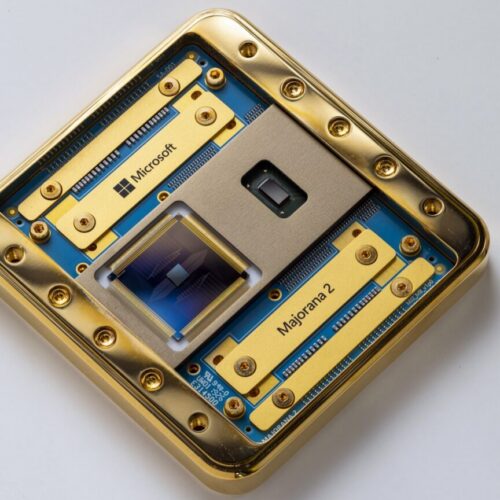
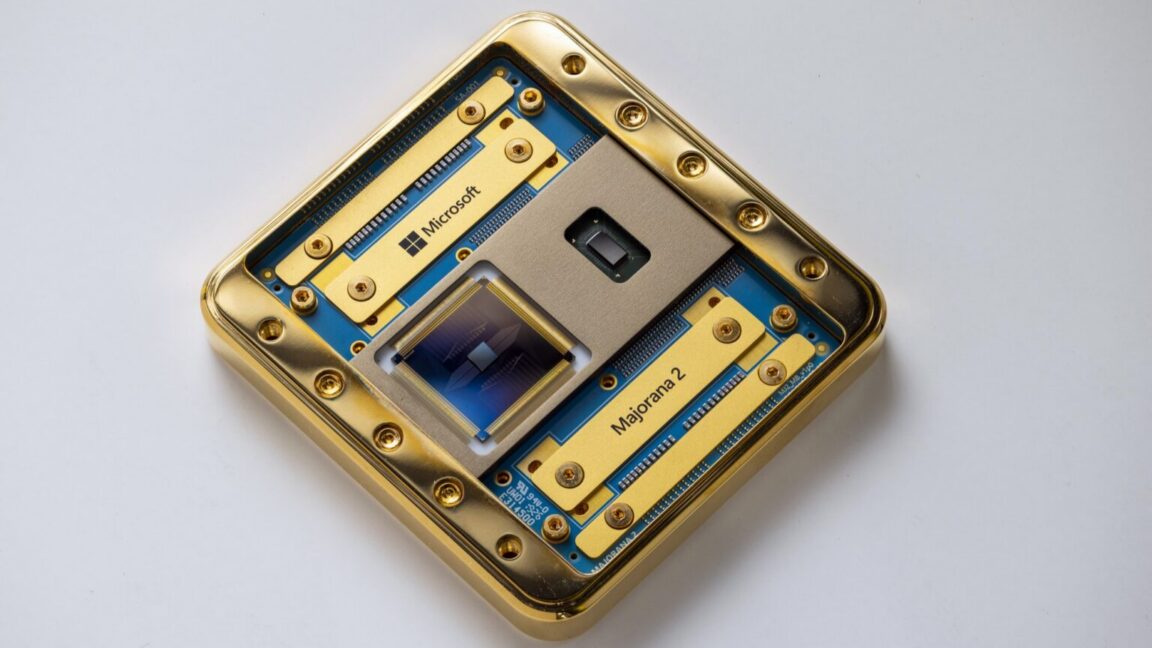
Microsoft is one of the few companies working on topological qubits, based on the distinct physics that occurs when particles are confined. Microsoft's system relies on a thin superconducting wire placed on top of a semiconductor. In superconductors, groups of two electrons form Cooper pairs. But if the wire contains an odd number of conducting electronsβ€”meaning there's a single unpaired electronβ€”it will end up delocalized to both ends of the wire. (Because quantum mechanics is weird.)

Read full article

Comments

Β© John Brecher for Microsoft

Manufacturing qubits that can move

To get quantum computing to work, we will ultimately need lots of high-quality qubits, which we can tie together into groups of error-corrected logical qubits. Companies are taking distinct approaches to get there, but you can think of them as falling into two broad categories. Some companies are focused on hosting the qubits in electronics that we can manufacture, guaranteeing that we can get lots of devices. Others are using atoms or photons as qubits, which give more consistent behavior but require lots of complicated hardware to manage.

One advantage of systems that use atoms or ions is that we can move them around. This allows us to entangle any qubit with any other, which provides a great deal of flexibility for error correction. Systems based on electronic devices, by contrast, are locked into whatever configuration they're wired into during manufacturing.

But this week, a new paper examined research that seems to provide the best of both worlds. It works with quantum dots, which can be manufactured in bulk and host a qubit as a single electron's spin. The work showed that it's possible to move these spin qubits from one quantum dot to another without losing quantum information. The ability to move them around could potentially enable the sort of any-to-any connectivity we see with atoms and ions.

Read full article

Comments

Β© atdigit

❌