❌

Reading view

There are new articles available, click to refresh the page.

US boosts drone surveillance as flesh-eating screwworms spread in Texas

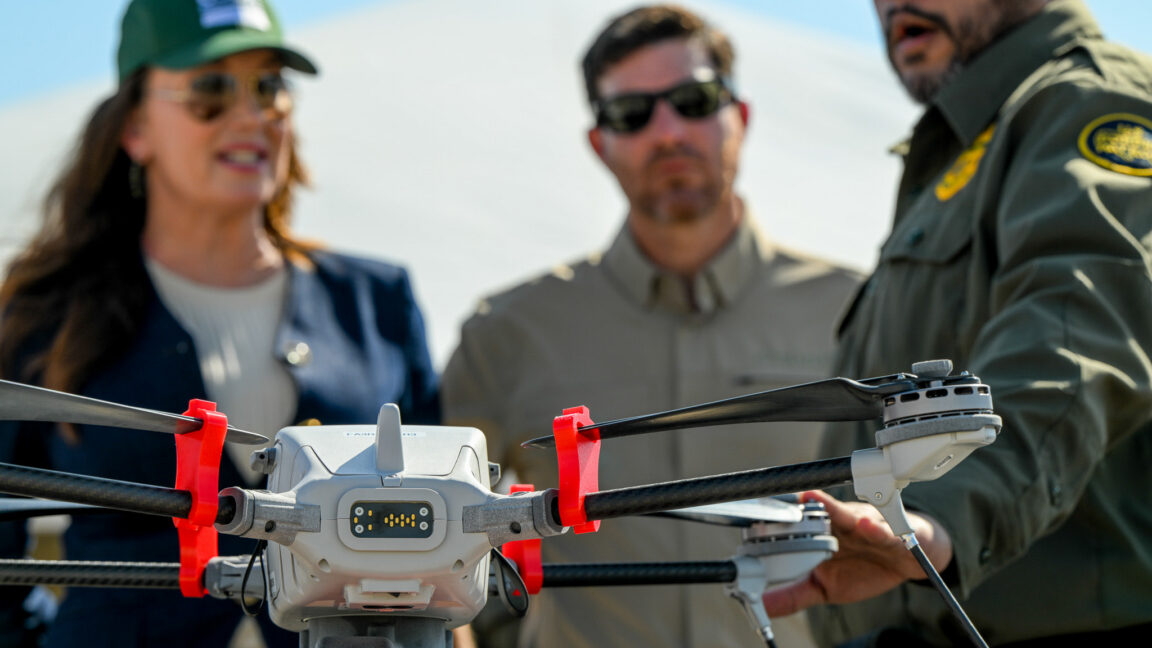
Hundreds of US government drones have switched from border surveillance to a different surveillance mission this summerβ€”looking for signs of screwworm infestations in wild animals and livestock herds.

The flesh-eating New World Screwworm is the parasitic larva that emerges from eggs laid by flies in the open wounds or body openings of warm-blooded animals and humans, with untreated cases potentially leading to severe injury or death. Since the first screwworm cases were detected in South Texas in June, the US Department of Agriculture and US Customs and Border Protection have been conducting β€œone of the most extensive animal-health surveillance operations in the country,” the USDA said on August 10 in social media posts on platforms like X and Facebook.

The effort involves at least 200 drones owned by the Department of Homeland Security, which includes the Customs and Border Protection (CBP) agency. But the actual number in use "varies depending on availability and need," a USDA spokesperson told Ars.
Read full article

Comments

Β© US Department of Agriculture

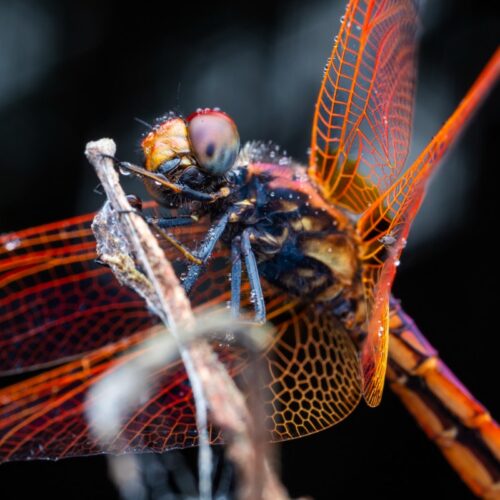
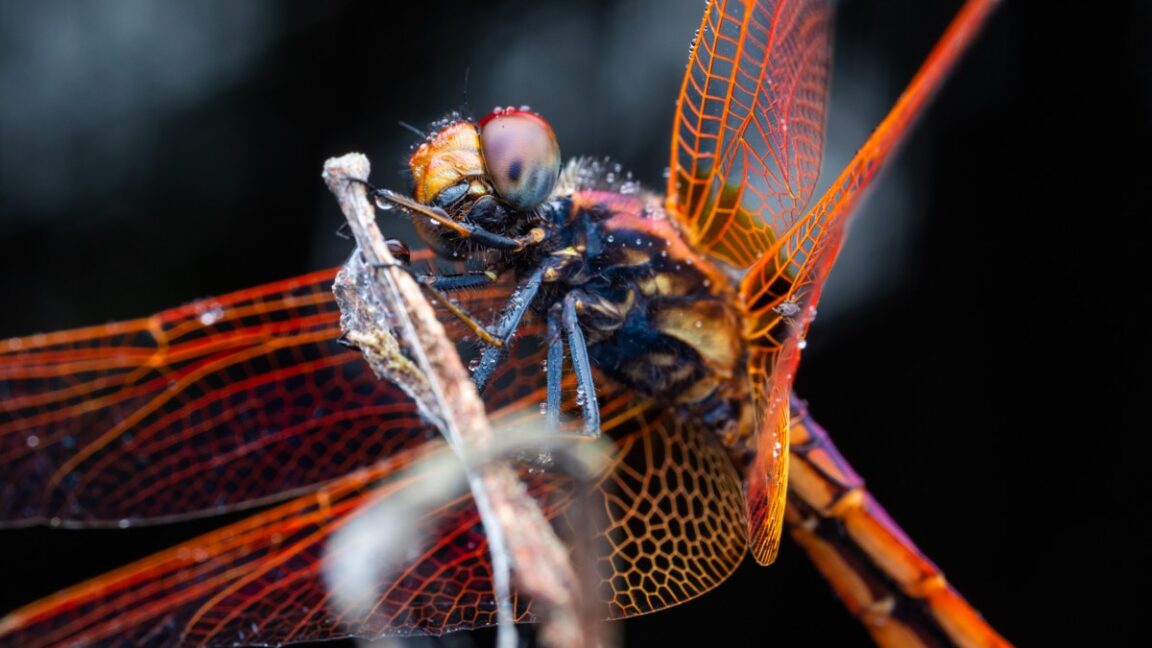
Dragonflies maneuver like fighter pilots

Credit: Samuel T. Fabian et al., 2026

Male dragonflies are known to engage in mid-air "dogfights" to defend their breeding territory, using different maneuvers than those they employ when hunting prey. A new paper published in the Journal of the Royal Society Interface concluded that relatively simple rules drive that behavior, namely that male dragonflies are trying to maintain a tactical position. This mirrors the tactics of human fighter pilots. The research could lead to the development of smarter drones capable of navigating with simple, vision-based guidance rather than complex computation.

Classic pursuits involving prey or mating rituals are asymmetric: there is a chaser and an evader, with each role requiring different maneuvers. In the case of male-on-male interactions, however, it is more of a mutual pursuit, per the authors, who thought that studying flight trajectories of insects or raptors could yield useful insights into the guidance laws that underlie the behavior. They chose the Trithemis Aurora species of dragonfly for study because the males are "fiercely territorial," and there are usually multiple males around a given pond, intent on defending their chosen perches. The dragonflies are also crimson-colored, making them easier to track.

Much of the prior research on dragonfly interactions relied on visual observations or single-camera recordings. For this study, the authors set up a portable stereovideographic rig with two shutter-synchronized cameras to record dragonfly interactions in both color and monochrome, and then reconstructed 102 paired male-on-male flight trajectories to capture the 3D kinematics. They also reconstructed nine trajectories for dragonflies intercepting prey for comparative purposes. This enabled the authors to develop a model for the rules governing the flight behavior.

Read full article

Comments

Β© Samuel Fabian et al., 2026

❌