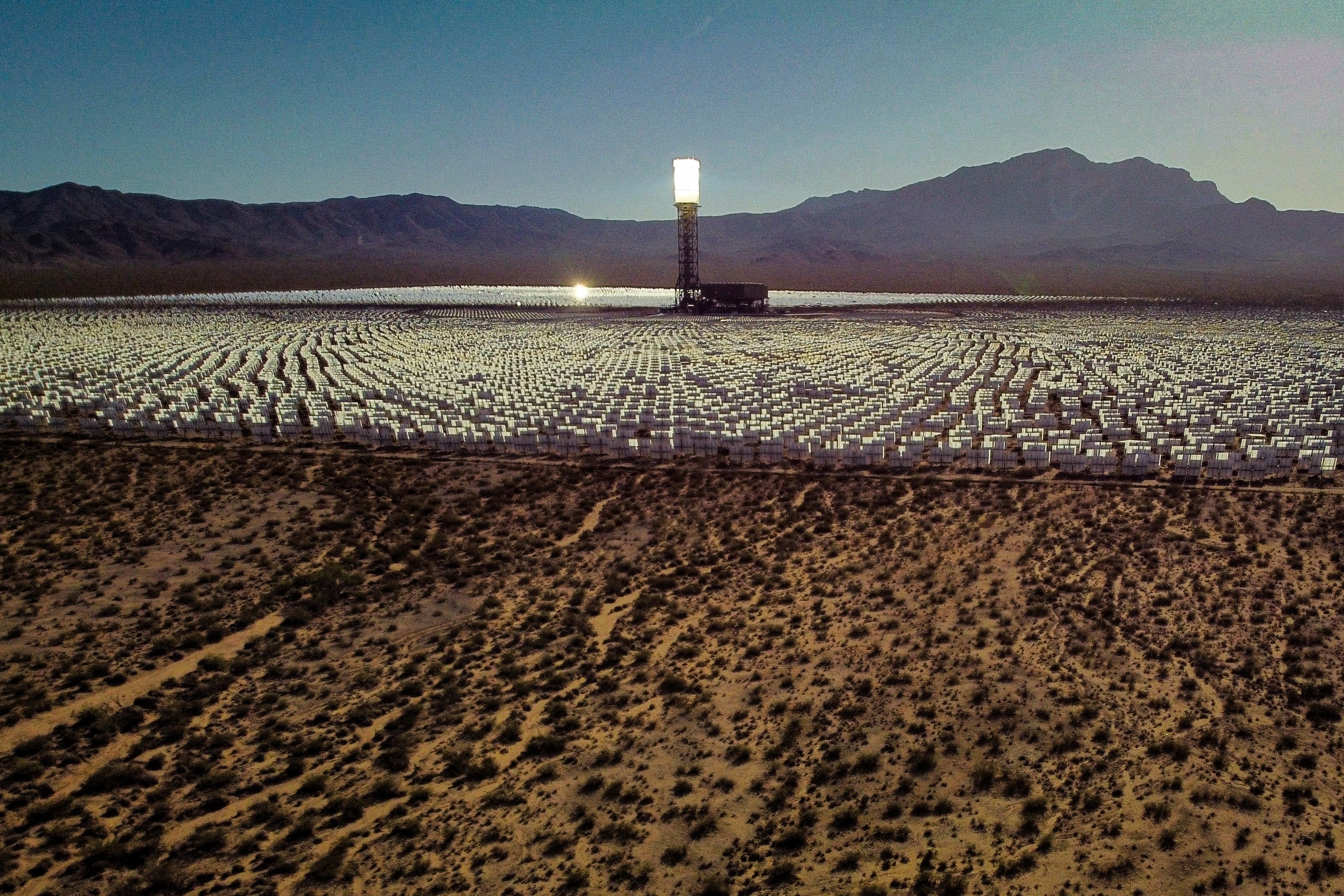
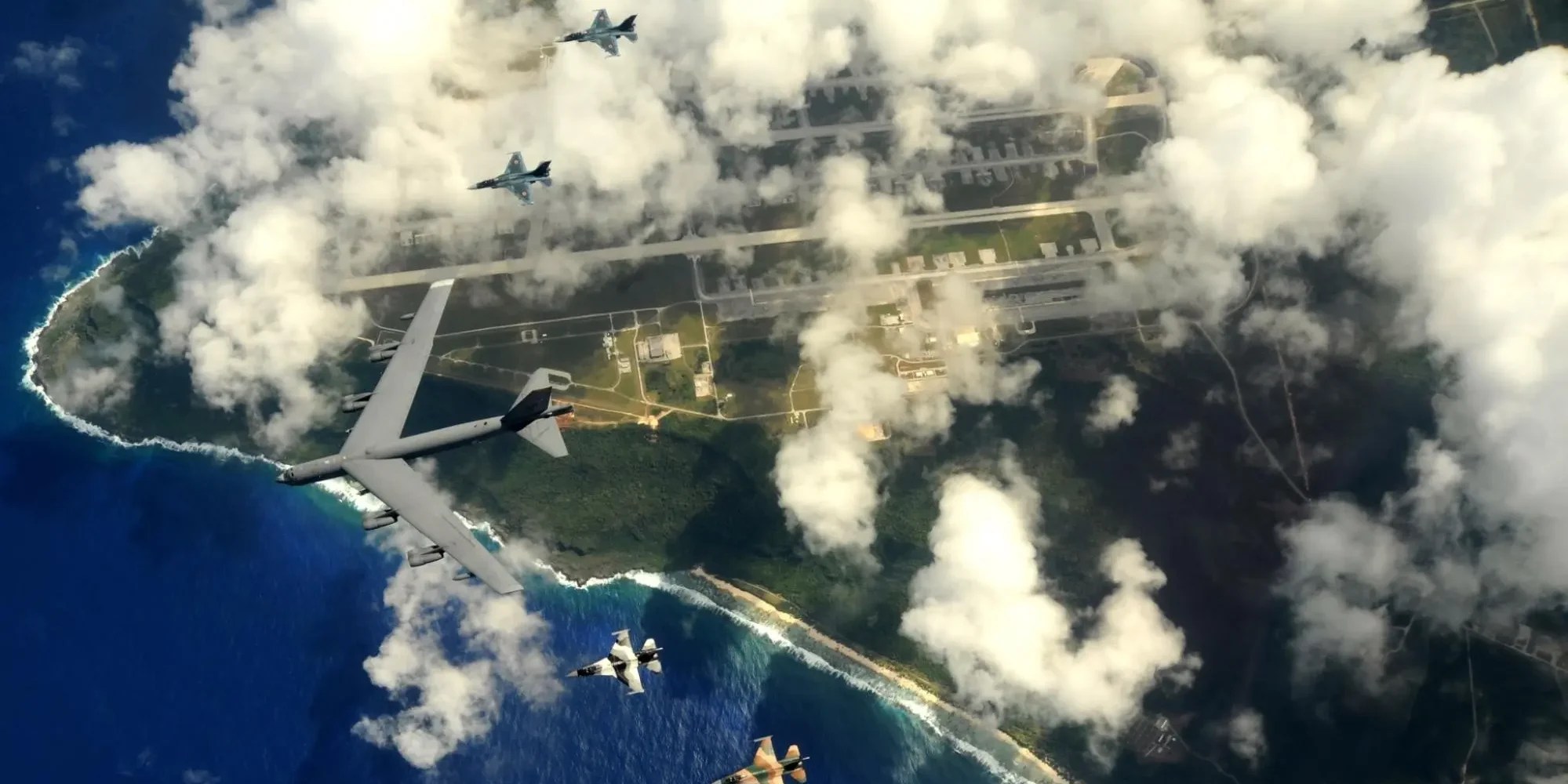
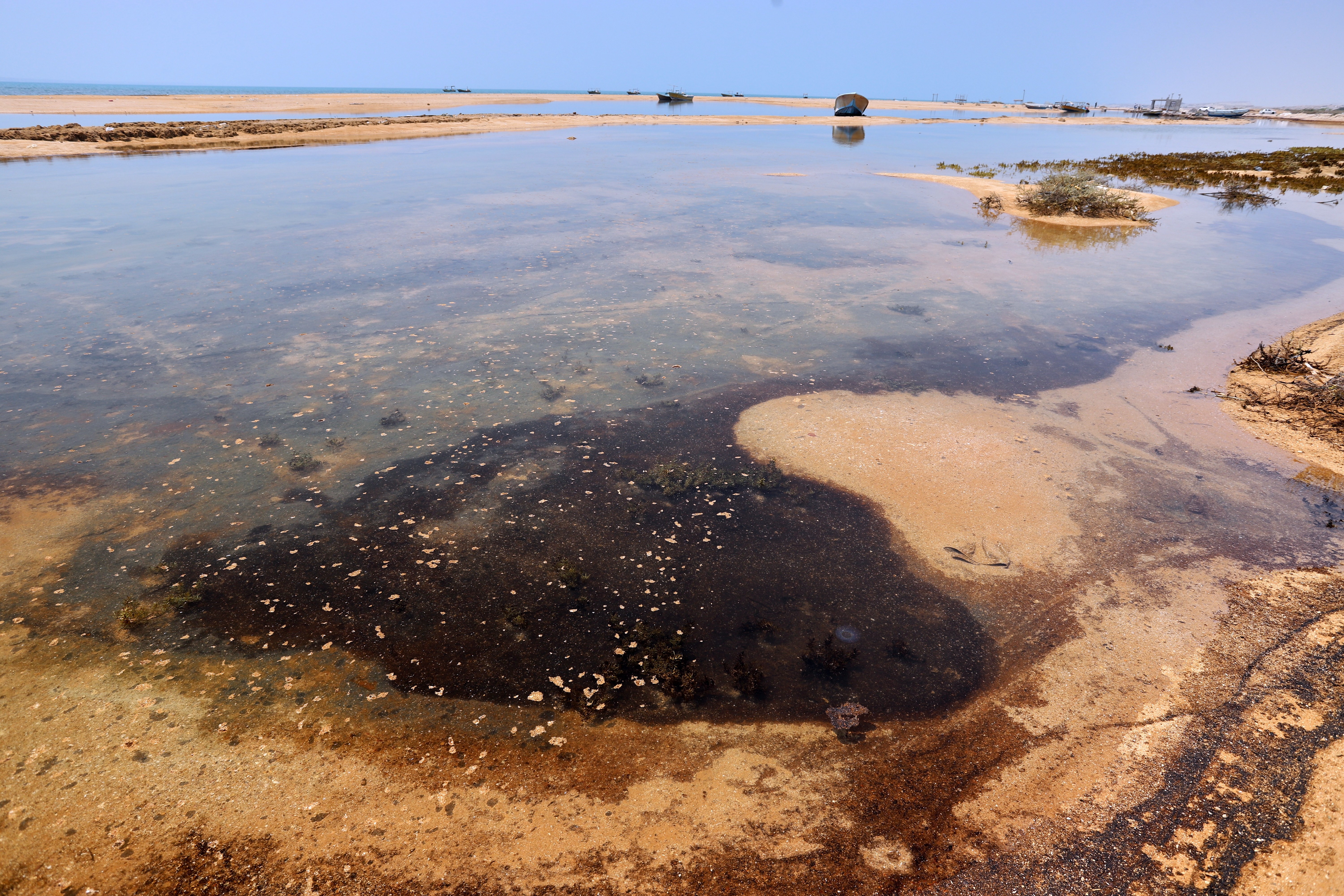
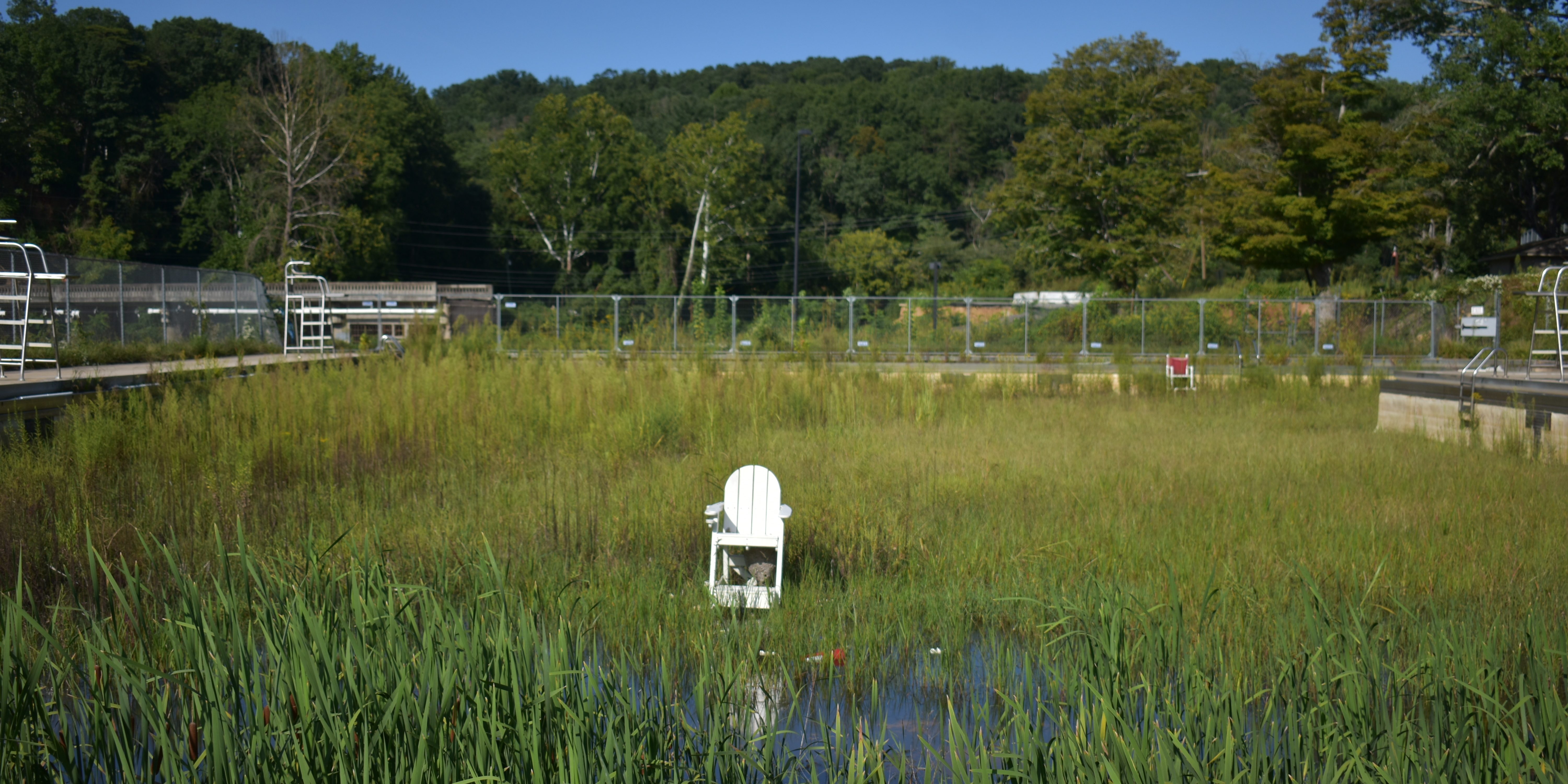
The Green Party has accused Labour of being “charmed by corporate lobbyists” over AI data centres.
This comes after a Spotlight on Corruption report found that businesses have had unequal access to ministers when it comes to consultations about AI growth zones.
The report revealed that 84% of ministerial stakeholder meetings on data centres were with businesses or private-sector trade associations.
By comparison, ministers met just two community groups – and both after the government had already decided to designate their areas as AI Growth Zones.
Ministers, permanent secretaries, and directors general met no environmental NGOs or community groups.
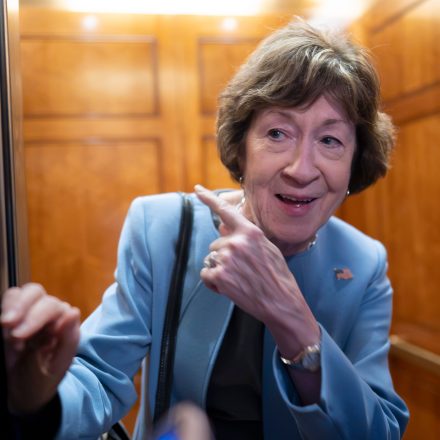
Kamila Kingstone, Senior Policy and Campaign Lead, Defending Democracy Programme at Spotlight on Corruption, said: “Given that the environmental harm caused by data centres is well known, it is extraordinary that the Department for Science, Innovation, and Technology failed at the most senior level to speak to environmental NGOs or community groups when developing its AI Growth Zone policy.
“It suggests a solid in-built bias towards the interests of corporations and away from those who will be most impacted by the policy and who might say things it doesn’t want to hear.”
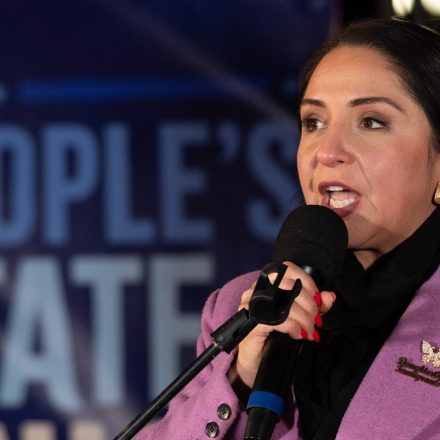
Rachel Millward, Green Party Deputy Leader said: “Labour is diving headfirst into AI without a roadmap, charmed by corporate lobbyists while community and green voices are shut out. We need to slam the brakes on new data centres before they drain our water supplies and wreck the UK’s carbon budget.
“When policy is written by corporations, decisions benefit shareholder profits rather than the public good. It’s a dangerous lack of oversight, proven by a recent FOI showing the government doesn’t even know what current data centres are being used for.”
The Cabinet Office, which has taken over AI policy from the now disbanded Department for Science, Innovation, and Technology, has been approached for comment.
Brazilians will head to the polls on Sunday in one of the most consequential presidential elections of the last decade. The run-off election will determine the future of the largest democracy in Latin America and the fate of the Amazon rainforest.
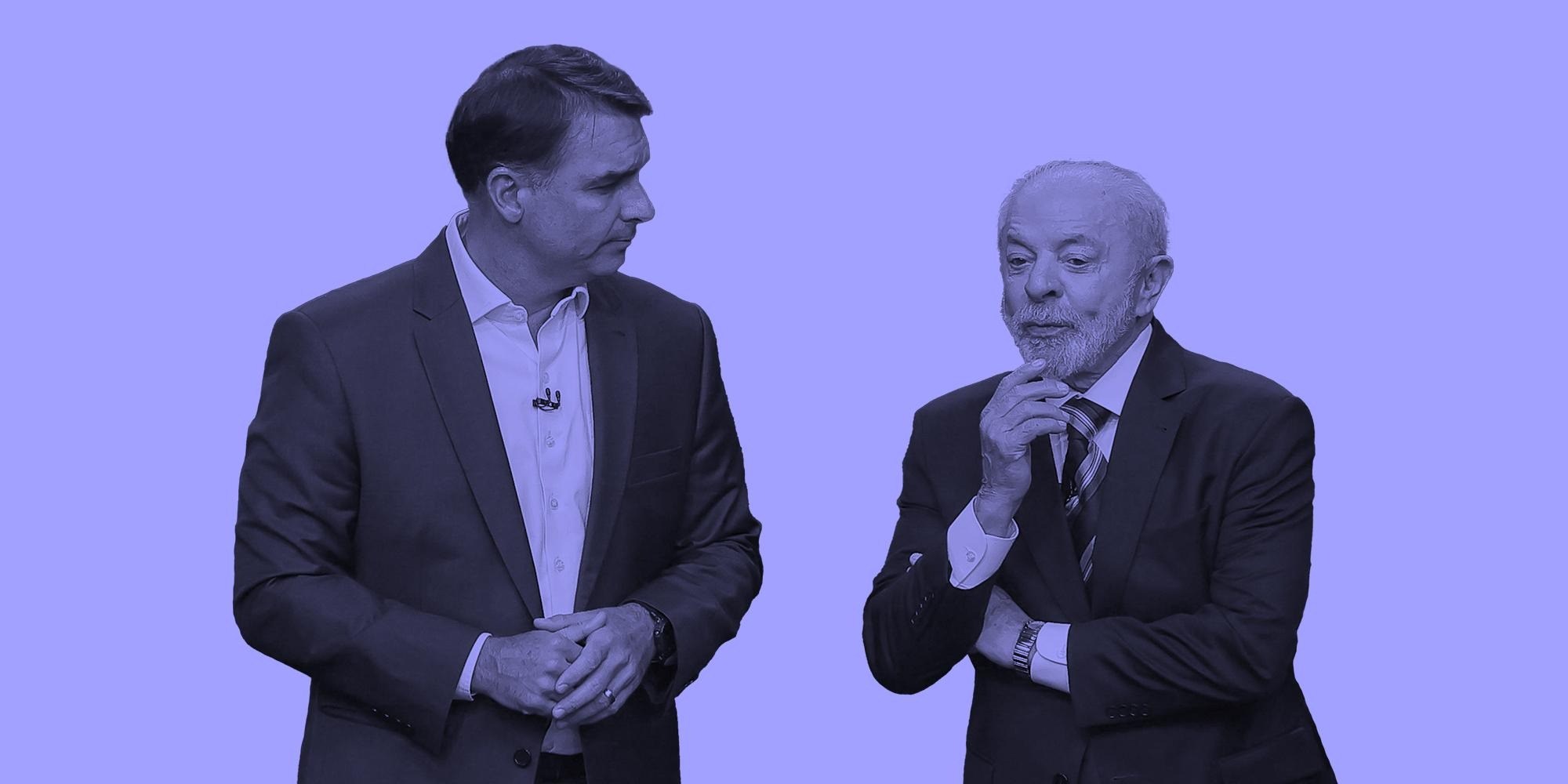
Incumbent President Luiz Inácio Lula da Silva is facing off against Flávio Bolsonaro, the son of former President Jair Bolsonaro. The elder Bolsonaro is currently on house arrest for his role in a failed 2023 military coup that intended to assassinate Lula, his vice president, and a Supreme Court justice. Despite his father’s attempted coup, Flavio Bolsonaro is currently the frontrunner, after coming out slightly ahead in the first round of voting.
“If they don’t win this election, then not only is Jair going to stay in jail, most likely, but Eduardo, Flávio’s brother and Jair’s son, who is in self-exile in the U.S., he has a multiyear prison sentence for his actions in the U.S. lobbying against Brazil’s foreign interests. He’s not going to be able to go home if they lose this election,” says Andrew Fishman, a Rio de Janeiro-based investigative journalist. “So they’re really just willing to do whatever they can to make sure that they win because this is their only get-out-of-jail-free card.”
Sound familiar? This week on The Intercept Briefing, host Jessica Washington speaks with Fishman, president and co-founder of The Intercept Brasil, about what’s at stake for Brazil and the planet in Sunday’s election.
“It’s a global election. The voters in Brazil will be deciding the future of humanity,” Fishman tells The Intercept. Jair Bolsonaro oversaw significant deforestation of the Amazon rainforest, leaving the ecological and climate linchpin in danger of becoming a “savanna.” Now, he argues, his son can finish the job. “You’re going to have an international migration crisis,” says Fishman. “It’s really self-defeating because the cattle ranchers are his base. They are the ones that are wanting to do the things that will end their future profitability — the future existence of their business.”
President Donald Trump has taken a particular interest in the race, as he seeks to expand U.S. influence and control across the Western Hemisphere. “Brazil — as the biggest economy, the biggest country, the most powerful entity in the hemisphere besides the United States — if Brazil falls, then the rest falls in line,” says Fishman. “But if Brazil remains as this big island of resistance in the middle of the continent, it really messes up [the Trump administration’s] plans, doesn’t it?”
Big Tech is also looming large over the race. “There’s all these pieces of circumstantial evidence that suggest that Meta is interfering in this election, and they have every incentive to do so. They will have a much better regulatory environment if Flávio wins because of Flávio’s submissiveness to U.S. interests and his willingness to play ball with whatever Trump tells him to,” adds Fishman.
In a request for comment, Meta said, “Meta applies the same rules to every candidate, every party and every political viewpoint in Brazil, as we do in elections around the world. We do not suppress content to disadvantage one side, and we do not give preferential treatment to any side. Each of the incidents cited by Lula’s campaign has a straightforward, documented explanation. … Brazilian voters deserve facts, not a political narrative built by combining unrelated technical issues. Meta will continue to enforce its rules, comply with Brazilian electoral law, fix mistakes when they occur and provide a level playing field for everyone who uses our services.”
As U.S. leaders attempt to mold Brazil into a satellite state, Fishman argues the United States is slowly becoming more and more like its southern neighbor.
“It’s not that Brazil is becoming more like the United States, it’s that the United States is becoming more like Brazil,” says Fishman. “You have just shrinking spheres of democracy while oligarchs have increasing power and control and are able to do what they want and insist on decisions for the country that are bad for all of the society and the people, but good for their individual interests.”
For more, listen to the full conversation of The Intercept Briefing on Apple Podcasts, Spotify, YouTube, or wherever you listen to podcasts.
Transcript
Jessica Washington: Welcome to The Intercept Briefing, I’m Jessica Washington, politics reporter at The Intercept.
Akela Lacy: I’m Akela Lacy, senior politics reporter at The Intercept. Jessie, what do our listeners need to know about this week?
JW: I’ve been following a pretty disturbing story that’s actually centered on a campaign ad. Ohio gubernatorial candidate Vivek Ramaswamy released what I would argue is the ugliest campaign ad of a dark season. That is, of course, a season of campaign ads filled with Islamophobic, transphobic, sexist rhetoric, and racist rhetoric as well. But in the ad, the mother of Democratic candidate Amy Acton accuses her daughter of being a liar, claiming “she’s lied her whole life.”
Now, what makes this really dark is that Acton was removed from her mother’s care at 12 years old, after she alleges she was raped by her mother’s then-40-year-old husband.
AL: That’s horrible. Has Acton responded?
JW: Acton responded to the attack ad saying, “My brother Phil and I endured abuse, hunger, and neglect. We were often kept in a dark basement, were frequent-fliers with child protective services, and lived in fear of our birth mother’s violent and erratic temper. I’ve always known that she was deeply sick and unwell, and it’s sad to see Vivek Ramaswamy exploit her all for his own political gain.”
This is one, as I’ve said, of the darkest campaign ads in a really horrifying season of campaign ads.
Akela, I know you’ve been tracking another big election story this week on a beat you’ve covered for a really long time, and that’s [American Israel Public Affairs Committee].
AL: So we have been covering extensively the way that AIPAC’s strategy has changed over the last few election cycles since they started spending directly on campaigns.
If you’ve been following our reporting, you know that we’ve written a lot about both their super PAC, United Democracy Project, and this shell PAC strategy where there were a number of different groups that popped up throughout the midterm season, took money from AIPAC, spent against candidates that AIPAC didn’t like, and then — per filings that came out this week — shut down and gave all their money back to AIPAC.
So the idea being that, they had been trying to shield what was an increasingly toxic reputation amid the ongoing genocide in Gaza from creating backlash against their activity in these races.
Jewish Insider scooped on Wednesday that AIPAC announced that it will no longer endorse candidates or give PAC contributions through its AIPAC PAC. Now, this doesn’t mean that they will stop spending on elections. Their super PAC, United Democracy Project, will continue to spend, as it has been pouring record amounts of money into various races. But this is getting a lot of attention, both from the left and I would say from the center.
The left, Justice Democrats in particular, and candidates who are no longer in Congress, but I saw Jamaal Bowman talking about this, saying that this is the culmination of the fight that the left has been putting up against AIPAC in elections. I don’t know that I would categorize this as a win necessarily, considering that the super PAC seems like it’s going to continue to spend a lot of money. But that was the big news in my campaign finance world this week.
JW: You’ve done a lot of really interesting coverage of how AIPAC is moving their money around through these different PACs and trying to get around the fact that people really dislike AIPAC, and that it has really tarnished the reputation of candidates who take this money. Obviously, this is a maneuver to get rid of the reputational harm of AIPAC money while still giving people AIPAC money.
I’ve actually been tracking a story completely off our election cycle, and that’s what’s going on in France. I know we touched on that a couple weeks ago but, really, these protests have taken on another life.
For those who don’t know, in France, there were these protests that were initially launched by students primarily in the suburbs concerned about educational inequality. This meant staffing shortages and poor facilities. But it has exploded into a nationwide uprising about the cost of living and broader economic inequality.
Now, perhaps unsurprisingly, and not to bring it too quickly back to the U.S., but President Donald Trump has used this as an opportunity to rail against immigrants. So despite the fact that there is zero indication any of the violence has been spurred on by immigrants. At a campaign rally on Monday, he told the crowd, “If Europe doesn’t close its borders and bring the criminals out, like the people that are protesting, Europe is finished.”
So yeah, that’s just one other example of how Donald Trump has inserted himself into international politics.
AL: Trump has also inserted himself into politics in a different region in the world. We have the Brazilian elections for president heading to a runoff this week. I know you spoke, Jessie, to Andrew Fishman, an investigative reporter and president and co-founder of The Intercept Brasil, about those elections.
JW: It’s a really interesting election with a ton of parallels to the political situation in the United States, as well as, as you’ve pointed out, a ton of influence from the United States. On Sunday, Brazil will have a run-off presidential election that will determine the future of not only Latin America’s largest democracy, but also — and this is really important — the fate of the Amazon rainforest, and one could argue, the planet.
This is the first presidential election since former Brazilian President Jair Bolsonaro was imprisoned on house arrest in an attempted military coup, a sentence that his son, the current frontrunner, Flávio Bolsonaro has promised to overturn.
I talked to Andrew about the media landscape, the history of military leadership, and the outside influences that have made this a tight race, despite the fact that the perceived frontrunner is running on freeing the man who attempted a coup years prior.
President Luiz Inácio Lula de Silva is running for reelection. He’s accused both President Donald Trump and Meta of attempting to sway the election in favor of Flávio Bolsonaro.
The Intercept reached out to Meta for comment, and Meta denied interfering in the election process, saying they do not suppress content to disadvantage one side or give preferential treatment to the other.
But this is a really interesting conversation with Andrew, and I’m excited for people to get to hear it.
AL: As am I. Let’s hear it.
JW: Andrew, welcome to The Intercept Briefing.
Andrew Fishman: Hi, thanks for having me.
JW: On Sunday, Brazilians will head to the polls in a runoff presidential election between right-wing senator Flávio Bolsonaro, son of former President Jair Bolsonaro, and incumbent left-wing President Luiz Inácio Lula da Silva to determine the leadership of Latin America’s largest democracy and biggest economy.
Now, this is the first presidential election since former President Jair Bolsonaro’s supporters stormed the Capitol in 2023 and attempted to overturn the election results. Now, Flávio Bolsonaro, his son and ally, is widely considered to be the frontrunner after coming out slightly ahead in the first round of voting.
But as of Tuesday, his lead in the polls has been narrowing. Andrew, big picture, what are the major issues at play in this election on Sunday?
AF: If you want to be really direct about it, it’s the future of humanity.
You have one candidate who’s been responsible for record reductions of deforestation in the Amazon; and you have another one who’s saying, let’s chop it all down, and farmers should be able to do whatever they want on their land.
And under his father’s leadership, deforestation in the Amazon soared, as in the other regions in the area. Scientists think that there’s a major tipping point that we could be on the cusp of, that if we were to reach that, the Amazon will turn into a savanna. There would be no going back from that.
If that were to happen, all of the rain in South America comes from the Amazon, basically. [That would affect] the cattle ranching that’s doing the deforestation, no more of the soy that’s doing the deforestation — people would have trouble feeding themselves. São Paulo would probably run out of water, which it has done in the past.
It’s very precarious. So you would be having mass refugee influxes, migrations. I really do think that this election is on that scale; it’s a global election. The voters in Brazil will be deciding the future of humanity, very possibly.
JW: To your point, his father, former President Jair Bolsonaro’s administration oversaw significant deforestation of the rainforest, which houses 10 percent of all [known] species on Earth, and his son appears to be moving in that same direction.
Flávio told reporters in August that he did not believe in climate change and that “the best way to address environmental issues is what we did during the Bolsonaro administration,” referring, of course, to the senior Bolsonaro’s administration.
What is at stake for climate change when we’re talking about this massive deforestation that could potentially be happening if Flávio wins?
AF: Every ecosystem in South America is interconnected and in the world. If the Amazon collapses and turns into savanna and the rainfall stops, and you have this massive drying out of the continent — which is one of the major exporters of food in the world — you’re going to have all of those issues locally, and that’s going to impact local markets and everything. You’re going to have an international migration crisis.
But on top of that, we have no idea what the ecological knock-on effects of that could be. With that, we could be having a more rapid increase in polar ice cap melting. With the temperatures increasing, it could be exacerbating the death of the Atlantic Meridional Overturning Current, which is the thing that would put Europe back into an ice age. It’s very possible that’s already happening right now.
We’re at this really tenuous moment for the climate, for the Earth, for humanity. And you have a candidate that says very proudly [he] doesn’t believe in any of that and wants to slash all mechanisms that are used to have more responsible management of land and prevent this massive catastrophe in just this proudly Luddite sort of way.
It’s really self-defeating because the cattle ranchers are his base. They are the ones that are wanting to do the things that will end their future profitability — the future existence of their business. It’s really self-defeating in this way for the Brazilians, and these very short-term benefits for massive long-term costs.
There’s estimates that the impact that the Amazon has for the global economy is in the hundreds of billions of dollars a year, and that benefit is far larger than the profits that they get out of these extractive industries that they do with farming and mining. It’s really hard to overstate the potential impacts that this could have.
JW: Is that urgency resonating with voters?
AF: Absolutely not. That is not what people are voting about, unfortunately. It’s what the people living in the heavy agricultural regions — where their local economy depends on that — they’re voting for Flávio for that reason. But the people who are voting against him, yes, there’s many people that care about the Amazon and want to preserve it, but it’s not the issue that’s being discussed day to day on TV, in the news, on the streets.
People are talking more about more human issues of corruption and who has better communication, security, economics. They’re not talking about the Amazon, unfortunately.
JW: That’s hardly surprising in the U.S. context, which I’m a little bit more acquainted with. Certainly climate, the environment, have never been top issues for voters, even if they’ve resonated more so with young people.
I did want to talk about another issue in the election, and that is the fate of Jair Bolsonaro. His son, Flávio Bolsonaro, has promised to free him. Jair Bolsonaro has been imprisoned on house arrest since 2025 for plotting a military coup. How is that particular campaign promise landing with the electorate in Brazil, and are you at all surprised by the public’s response?
AF: It’s very clear that for the Bolsonaros, this is an all-or-nothing for them. If they don’t win this election, then not only is Jair going to stay in jail, most likely, but Eduardo, Flávio’s brother and Jair’s son, who is in self-exile in the U.S., he has a multiyear prison sentence for his actions in the U.S. lobbying against Brazil’s foreign interests. He’s not going to be able to go home if they lose this election.
For them, it’s been very clear, and they’ve even said it in moments, that’s what this is about for them: their ability to get their father out of prison and to get themselves off the hook. Also, if you’re elected president, the investigations on things you did before you got elected, they go away.
“They’re really just willing to do whatever they can to make sure that they win, because this is their only get-out-of-jail-free card.”
So then Flávio’s off the hook, and he’s so wrapped up in so many different schemes and accusations and active investigations, some of which that we have revealed, including U.S. and abroad and offshore bank accounts and money laundering and potential connections to organized crime and militias. So they’re really just willing to do whatever they can to make sure that they win because this is their only get-out-of-jail-free card. To do that, they’re going to completely change the structure of the Supreme Court, and they’ll be able to put in a majority even without impeachment. They already have the Senate and the lower house of Congress.
They would control all of the executive branch. They have the majority of governorships that are in their coalition, and they run the local police. And the executive has control over the federal police and all the investigative and regulatory agencies. So they would have just absolute lockstep control over every branch of government federally and most of local government as well.
It would be a democratically elected coup.
JW: And voters, do they care about that? Do they care about the preservation of democracy? Is this ranking as a top election issue?
AF: It’s always double speak, right? Both sides say that they’re preserving democracy. The Bolsonaristas say that Lula and the Supreme Court are running a judicial dictatorship right now because they were getting censored and put in jail for actively plotting a coup, which included active planning to assassinate Lula after he was elected, his vice president after he was elected, and a member of the Supreme Court. So that’s what they’re [Jair Bolsonaro and military officials] in jail for. That’s why they were getting pushback, and they’re saying that having the pushback against that is a dictatorship.
In the meantime, you have the Lulistas who are saying that what the Bolsonaros want to do is a coup because they actively have said year after year, over and over again, “We want a coup. We love the military dictatorship. The military dictatorship was great! When we were torturing everybody, that was good.” Jair said, “When I’m elected, we’re going to take a machine gun and shoot down all of the leftists, the petistas, the Workers’ Party [Partido dos Trabalhadores] supporters.”
Remember that the military government was going alive and strong into the ’80s. It happened in ’64, and it went through the ’80s. So it’s very recent.
The people that are in his orbit, they were actually part of the military coup government until very recently. And I think that Lula supporters are very, very concerned about this. They really do care.
The Bolsonarista supporters, which are about 30 percent lockstep — same as it is in the U.S. with Trump — they’re just in their own information ecosystem, and they want Bolsonaro to win. It doesn’t matter, and anything that he does is good because it’s him.
“They’re just in their own information ecosystem, and they want Bolsonaro to win.”
It’s not, there are people that support the Workers’ Party, and there are people that support Bolsonaro. The Bolsonaro movement is essentially anti Workers’ Party, anti-petismo. The Bolsonaros have been seen as the greatest vehicle for getting rid of the Workers’ Party, which has been so hard to do because they’ve been so popular because of all the policies they’ve put into place over the years.
But you’ve had the media saying for 30 years now, just drilling it in, that the PT [Partido dos Trabalhadores] equals corruption, the PT invented corruption. The PT is everything that is bad in Brazil, and anything that is not the PT is everything that is good in Brazil. You’ve had a generation of this narrative being repeated over and over in all these different instances that it’s really hard to shake.
JW: Could you talk more about that legacy of military leadership in Brazil, and for Brazilians, how they feel about it on the day to day? I recognize that it’s a very large country, as we’ve mentioned multiple times. I assume not everyone feels the same way, but I am curious about that legacy and how people respond to it.
AF: Brazil has been a country of negotiated solutions. So when they were the last in the Western Hemisphere to abolish slavery in 1888, it was not some sort of civil war or uprising. It was a negotiation: “OK, I think it’s time that we do this, but let’s just make sure that everyone that did own slaves is in the best possible situation, and let’s make sure that we have some sort of semi-slavery going on afterwards.”
It was really the same thing with the dictatorship. It was a moment where the economy was going into the can. It was very unpopular. It wasn’t having the economic glory years of before, and so they said, “All right, we’ll step back. We’ll let you run some elections, but we’re going to make sure that we’re never held accountable, that we’re able to continue exercising power in the way we want.”
As part of that, they were able to help control the narrative. So during the military dictatorship, there was an impression — and it continues today — that there wasn’t corruption. The reason why they had that impression, it was actually very corrupt, very corrupt. But the impression exists because there was censorship of the media, so the corruption that existed just wasn’t exposed.
When the Lula government came into power the first time in the early 2000s, they started making the federal police stronger. They made the judiciary stronger and more independent. They increased the ability of the federal government to investigate and uphold the rule of law. As a result of that, many corruption schemes started coming out of the woodwork that were legacy of the military leadership.
“It was the business elite together with the military that did the coup and ran everything.”
It was called a civil military dictatorship, technically, in Brazil, because it was the business elite together with the military that did the coup and ran everything.
So that business elite didn’t change. It’s still the same families. They were running the same corruption schemes back then. They were running it through re-democratization. Whether it’s a right-wing government or a left-wing government in power, they’re making sure that their interests are being served. That corruption is just this constant throughline. People don’t really see that because that’s not how it’s presented in the media and in the day-to-day in communications.
I know for a fact that there’s lots of people that really want us to go back to the dictatorship. There are people that really want us to go back to the monarchy because they see it as a better, simpler time when things were the way that they should be. Everyone was in the right place and things were safer and everything was just better, this idealized past, “Make Brazil Great Again” sort of thing. How far back do you want to go?
Then there are the people that, like Dilma Rousseff, who was the successor to Lula after a second term — who fought against the dictatorship — that are currently active in politics, that are still around, and they were tortured. Their friends were murdered. They know exactly what a dictatorship means and what it means for people like them, anyone that stands against those entrenched powers of the old elites that go back for centuries.
That’s why you have a lot of older voters tend to vote PT [Workers’ Party] because they came up with the workers’ struggle with re-democratization. They understand what that means. It’s this interesting dynamic now where you have more younger people that are starting to tip more to the right because they don’t have this memory.
They don’t remember what it was like in the ’80s in the northeast when there was water shortages and food shortages, and the standard of living was so much lower. You have this new narrative being rewritten in real time online.
“You have more younger people that are starting to tip more to the right because they don’t have this memory.”
JW: The parallels to the United States and Brazil are just incredibly striking in what you’re saying. This kind of the “Make America Great Again” movement and the Make Brazil Great Again, even if they’re not using those exact same phrases. There are just so many points of similarity, especially with what we’ve seen with youth even in the United States, some of whom have taken a rightward tilt.
I want to get into the relationship between Brazil and the U.S. because that’s obviously been such a big issue in this election. In a Lula ad earlier this month, his campaign called Flávio Bolsonaro Trump’s candidate, arguing that, “What Trump wants is to colonize Brazil, take our riches, steal our future, and leave us in the dust.”
Now, this comes after President Lula confirmed that Brazil denied visas to two U.S. officials over election interference concerns. The State Department has denied any claims of election meddling, telling reporters, “Any insinuation of a ‘ploy’ to undermine a democratic nation’s election is a baseless lie.”
Andrew, is there any evidence that the Trump administration is attempting to sway this election? Does it veer into election interference as we generally understand it?
AF: The answer is oh God, yes. So much so it’s overwhelming. Overwhelming evidence, and it’s the same thing they’ve been doing across the region, which is why there’s been this rightward swing in elections across Latin America.
That’s why they’re so interested in Brazil right now because Brazil — as the biggest economy, the biggest country, the most powerful entity in the hemisphere besides the United States — if Brazil falls, then the rest falls in line.
But if Brazil remains as this big island of resistance in the middle of the continent, it really messes up their plans, doesn’t it? The interference has been done on many levels. The reality is that we don’t know the full extent of it, and we won’t know the full extent of it for years. We’re still learning about things that happened in 1964 with the U.S. role in the coup.
There’s dirty tricks happening that’s being run through intelligence agencies. That’s absolutely positive. There’s very, very strong signs that they’re using U.S. companies, Big Techs like Meta, who’s been getting a lot of attention — a lot of flak — lately because of clear signs that its algorithm is favoring Bolsonaro and suppressing Lula.
Multiple instances that they even admit happens, “Oh, but no, but it was just a mistake. It was just a mistake.” Meta and the Big Techs in the U.S., they’re really concerned about what a Lula government could do for their profits. Maybe Lula wants to have more sovereignty and control over what they’re doing.
The Brazilian government doesn’t even know how much money they make in Brazil, the Big Techs. They just know how much money they send out through the tax bills that they pay and the money they send out of the country. The Big Techs in the U.S. are really concerned about getting their access on rare earths and on lithium reserves, which Brazil has the largest deposits of rare earths after China. This whole trade war with China, Brazil becomes much more important. It’s a huge market.
So you have one candidate that is just completely submissive — like painfully, embarrassingly submissive — to U.S. interests. So much so that one of his former closest allies, a general, Santos Cruz, who’s a very famous well-known general, he came out recently and said, “I’m a conservative. I’m right-wing. This is not conservatism. This is not right wing. This is just ‘voluntary submissiveness.’”
“You have one candidate that is just completely submissive — like painfully, embarrassingly submissive — to U.S. interests.”
They’re just absolutely scamming Brazilians with this level of supplicancy that we’ve never seen before, that the military dictatorship even didn’t do, which was hand in glove with the U.S. interests. This is completely next level, and it’s something that obviously the left is very concerned about.
But people like Santos Cruz, Brazilians that actually believe in Brazilian sovereignty, and that it’s important for Brazil to be able to pursue its own interests rather than the interests of foreign powers — they’re very concerned about that, which is, some segments of the elite.
Whenever you have a submissive local government in an imperialist relationship, there are people that benefit. There are local people that will get special contracts, that will get special treatment. They’ll be able to crush their enemies through these relationships. And that’s what they’re doing in Bolivia and in Peru and in Ecuador right now.
“Whenever you have a submissive local government in an imperialist relationship, there are people that benefit.”
What they did in Venezuela, where they just came in and took all of the oil and said, “All right. We’re going to take 90 percent of the oil profits, and we’ll give you a couple billion a year.” People are seeing this in Brazil. They see what Trump has done. And they’re still saying, “Well, we like Bolsonaro, so we’re going with Bolsonaro. I’m sure it’ll be fine.”
It’s a massive issue, and I really, I don’t think we know how bad it will be and how submissive they’ll be this time around. Because it always is the case that, with right-wing authoritarian governments, it’s the second term where they really take off whatever mask was left and decide, “We have a mandate and we can do whatever we want.”
You saw it in the U.S. with Trump. They saw it in Turkey with Erdoğan. They saw it in Hungary with Orbán. They saw it in India with Modi. This is what always happens. It’s the second term where they say, “OK. We showed them who we are, and everyone said it’s fine.” They’re able to smoke out all of their rivals in the first term. They map them out, and so when the second time comes around, it’s just bang, bang, bang. Let’s get rid of them. Let’s maximize our power and do whatever we want.
“With right-wing authoritarian governments, it’s the second term where they really take off whatever mask was left. … It’s the second term where they say, ‘OK. We showed them who we are, and everyone said it’s fine.’”
The result’s not going to be positive for Brazil. That’s the thing: If I were a Brazilian billionaire — which I am not — it would be in my personal interest for Brazil to follow the economic path that the Lula government is following, much more than what Bolsonaro is proposing.
Lula’s not some left-wing radical. He’s center-right. He was left, then he became center-left, and he’s moving ever more to the right. This last election, his vice presidential candidate was his former presidential rival, the center-right guy. They’re very much doing what the big banks want. They’re helping the big agro get what they want. They give tons of subsidies to major industries. But the thing that they do, they take a little bit of that money, and they spread it around to the poorest people with public services with access to education, with some cash transfers. We’re talking about 60 bucks or 80 bucks a month to families, and that is what is making the economy grow. Because if you don’t have consumers in your economy, and you have domestic industries you’re trying to build, then no one’s going to buy the things. Your employees can’t buy the things.
That’s intolerable to some people in Brazil, and they can’t see that it benefits their own economic interests.
You’re in this kind of crazy situation where it doesn’t really make sense what they’re doing. And they saw it happen with Bolsonaro, with Jair! They all supported him, and then he crashed the economy. Then they all went back to Lula begrudgingly and said, “OK, we’re going to support you in ’22 because things aren’t going very well.”
Then Lula turned it around immediately, and now they’re forgetting again and going back to Bolsonaro. Logically, it doesn’t make sense. It’s more psychological. Freud has to explain what’s going on.
“Lula’s not some left-wing radical. He’s center-right. He was left, then he became center-left, and he’s moving ever more to the right.”
JW: Again, the parallels between the United States and Brazil are very apparent in terms of some of those economic choices. You’ve already gone over what the U.S. wants to gain from involvement in this election. But there’s another foreign power that’s also interested in the election. Flávio Bolsonaro has been cozying up to Israeli Prime Minister Benjamin Netanyahu, obviously in stark contrast to President Lula, who’s been an ardent supporter of the Palestinians. What would a Flávio Bolsonaro presidency look like for Brazil’s stance towards Israel?
AF: You can’t say that Lula has been the heroic savior, but he has made statements saying, “This is a genocide. This is very bad. This shouldn’t happen.”
At the same time, he’s allowed Petrobras to ship petroleum products to the Israeli government that are being used in the genocide. He’s allowed one of the major steel manufacturers to ship steel and ore to the Israeli weapons companies that are using it to build rifles and bombs to use in Gaza.
It’s not like you’re dealing with the leader of BDS [Boycott, Divestment and Sanctions movement] versus Netanyahu’s best friend. It’s a run-of-the-mill European-style center-left social democrat leader that’s kinda disappointing on this issue, versus someone that just wants to be absolutely submissive to everything that Israel wants and does and just completely supports it.
Again, you said, there’s so many parallels to the U.S. The parallels in Brazil, why does this make sense? Why would they care about supporting Israel? Why would this be something that they would want to put their name on, like these horrible scenes that people have been seeing for years online?
Everyone’s seeing it. Why would they want to support it? They kind of want to do the same thing in Brazil. One of the things that Jair always complains about is that he’s jealous of the U.S. because their cavalry was more effective at exterminating the Indigenous population than the Brazilian cavalry was. They’re upset that they have these relatively small numbers of Indigenous people that have claims to these massive swaths of land, much of which in the Amazon, that they want to get their hands on so they can cut down the trees and throw cows in and do mining. So a colonial–settler project that involves extermination of the Indigenous population to benefit their economy.
“They’re upset that they have these relatively small numbers of Indigenous people that have claims to these massive swaths of land, much of which in the Amazon, that they want to get their hands on.”
That’s what Israel’s doing, and that’s what they want to do in Brazil: “Why don’t you give me all the fun, fancy tools of espionage and surveillance and war and suppression that you guys have developed and honed in Israel for the last decades, and let me get my hands on them too so I can do the same thing back here.”
I think that’s one of the main reasons ideologically. Plus the whole political, evangelical right-wing movement, which was a concerted project by the CIA to implant in Latin America, bringing in prosperity gospel to get rid of the Catholic Church and all their support of left and workers movements.
This is all very well documented, that they brought it in because it’s more individualist ideology, and that individualist ideology also includes the idea that all the Jews need to go to Israel for the reckoning.
There are a ton of parallels between Brazil and the U.S., and that’s because almost all of the worst ideas in the United States have been intentionally exported to Brazil as a way to make Brazil a worse country that’s more in line with U.S. interests.
That includes healthcare companies. The U.S. model of healthcare. They have free, independent public healthcare in Brazil called SUS [Sistema Único de Saúde]. It’s an incredible system that’s very popular. They want to privatize it. They want to get rid of it to create more profit. Prosperity gospel with all this right-wing ideological movements, they love it.
“Almost all of the worst ideas in the United States have been intentionally exported to Brazil as a way to make Brazil a worse country that’s more in line with U.S. interests.”
The NRA sent lobbyists down in 2002 to Brazil to work with the right-wing movements to say, “This is the game plan for how you create a gun movement in Brazil.” And what happened? It manifests itself in the Jair Bolsonaro administration, where they just opened up the floodgates for access to guns, increasing the number of guns you have, the type of guns that you could have, the number of bullets you could have, and getting rid of anything that could help prevent organized crime from getting massive amounts of assault rifles and unmarked bullets they can use in crimes. Under Bolsonaro, that’s one of the things that spread more than ever.
There’s all these little levers that they’re really just doing copy and paste, and we’ve seen these alliances with JD Vance and the Rockbridge [Network], which is a group that he created before he was vice president with a bunch of Peter Thiel and other billionaires in the U.S. They’ve created a subsidiary in Korea and now one in Brazil that they were using to do the same sort of alignment with the local elites that they did before, in the lead-up to the ’64 coup. I can go on for hours about all the different connections and ties.
JW: To your point, you’ve talked about how this is much bigger than just Brazil.
To me, the “Donroe Doctrine” is hanging over all of this. Last November, President Donald Trump released what he described as a corollary to the 1823 Monroe Doctrine, the “Donroe Doctrine,” which effectively calls for the U.S. to take an aggressive interventionist stance in Latin America under the guise of protecting the United States’ national security and economic interests in the region.
Andrew, from your perspective, what more should we understand about what the United States is doing in Brazil and kind of the wider context of the Trump administration’s actions in Latin America over the last two years?
AF: It’s pretty simple. They are fighting the Cold War against China in Latin America, just like they used to do against the Soviets. As part of that war, they are aligning with far-right upstart leaders that are seen as anti-establishment, even though they’re usually tied to billionaires or even billionaires themselves, like in Ecuador.
There’s this weird coincidence with all of them that they almost all have connections to organized drug trafficking. They’re almost all known drug smugglers or connected to them or have some sort of financial relations. While they’re doing that, they’re arguing that “We are working together with these local governments in South and Latin America to fight drug trafficking,” which is obviously a farce.
That’s what they did in Ecuador. The president of Ecuador, Noboa, he’s the son of a banana dynasty that does a lot of exporting bananas, and in those crates of bananas, they’ve also been known to export a lot of kilos of cocaine. Their allies in Colombia have always been this way, and the things that they’re doing in Bolivia, it’s the exact same thing. The [Bolivian] attorney general who was trying to push back against the corruption of this right-wing government that has allied with Trump, well Trump and Rubio came in and said listen, you need to go after this attorney general and get rid of him. So he was arrested because he was going after their allies.
They don’t care about drug trafficking, obviously. The U.S. government never cared about drugs. It’s always been a weapon or a tool for them. So they’re aligning with these people to create this lockstep union that they’re calling the “Shield of the Americas.” It’s this new alliance that they’re using instead of the existing, the U.N. or other mechanisms. They’re creating all their own, just like they did with the “Board of Peace.” They’re working to make sure that those economies just stay in their sphere of influence just a little bit longer.
They know that China’s winning. China is the main trade partner with all of these countries now. They’re Brazil’s biggest trade partner. The United States cannot absorb all of the exports that Brazil produces that goes to China. They’re not going to get Brazil to stop trading with China or stop having relations with China. They compete on corn and ethanol and soy exports. They can’t absorb what China’s buying.
“They’re really just trying to buy a little bit more time as their empire is slowly waning, but at the cost of what?”
They’re really just trying to buy a little bit more time as their empire is slowly waning, but at the cost of what? At the cost of tens of thousands, hundreds of thousands, millions of lives? It’s not clear what the indirect results of this will be. At the cost of destroying the democratic institutions in these countries that are already, many of them struggling and teetering, and potentially at the cost of massive ecological devastation, as would be the case in the collapse of the Amazon under a Bolsonaro government?
It’s uplifting, right?
JW: Very uplifting. That is my first word that comes to mind. You’ve pointed out everything that Donald Trump is doing, but we also know that tech oligarchs are involved as well. Tech tycoons like Elon Musk and Peter Thiel have taken a massive interest in Latin American politics.
What impact do you think that is having on the rightward shift we’re seeing throughout the Americas?
AF: Oh, big time. Big time. I think the biggest tycoon that’s most in the news lately is Mark Zuckerberg. He’s the guy who runs Meta. Something like 99 percent of people in Brazil use WhatsApp as their primary form of communication.
The idea of sending a text message in Brazil is like, “What are you, some sort of barbarian? What decade is this?” People only use WhatsApp. And for a lot of people, you get a cheap phone, and you get a prepaid phone plan because they didn’t have net neutrality like it was passed in the U.S. It’ll come with free credits for WhatsApp and Facebook, and it’ll come preinstalled on the phone even, and it’s part of the plan.
So for a lot of people, Facebook for many years and WhatsApp were the internet. Now Instagram as well. Instagram is really the main tool of political communication at this point. As we know, [it is] highly censored. You guys saw recently at the No Kings protests what Meta can do if it just decides to suddenly have a technical error that they fail to fix for eight hours.
That’s what they’ve been doing in Brazil for months now. So you have a young right-wing member of Congress named Nikolas Ferreira. He comes from a right-wing evangelical church, and he’s very charismatic, and he’s really good on social media, and he’s got something like 22 million followers or something. Brazil has 214 million people.
When Lula was having this dispute a year or two ago with foreign tech interests, including Meta’s interests, Nikolas Ferreira planted this fake news that Lula was trying to tax the main financial instrument that people use called Pix. It’s this free instant cash transfers that you can do that’s created by the central bank, and everyone loves it. Trump hates it because it competes against Mastercard and Visa.
So [Ferreira] created this fake news that what Lula was trying to do was tax all transactions and so therefore you were just going to get taxed even more, and you, the poor working man, was going to get screwed. In reality, there was no tax involved, and it was an anti-money laundering initiative that any transactions over 1,000 reais [Editor’s note: 5,000 Brazilian reais] would be immediately reported so they can trace questions of money laundering, which is a huge problem in Brazil.
That video was seen, the last time I checked, over 300 million times in a country that has 214 million people, and not all of them are on Instagram. That’s just Instagram — not including the other social networks. And in the last few weeks of the election, Nikolas Ferreira’s account has had greater engagement and views than every global celebrity you can name. I don’t know the exact numbers off the top of my head, but three times more than Beyoncé. Just think of the most famous person that you can think of in the world and their account, and Nikolas Ferreira — who you hadn’t heard of until I said his name just now — is crushing them.
“Just think of the most famous person that you can think of in the world and their account, and Nikolas Ferreira — who you hadn’t heard of until I said his name just now — is crushing them.”
That’s being seen as probable algorithmic manipulation by Meta in favor of the right-wing movement. OK, that’s one example, we don’t have access to the algorithm, we can’t be sure about that. Well. if you go onto the Meta’s AI in WhatsApp, and you say, “Create me a political poster for Flávio, vote Flávio,” it’ll do vote Flávio, and they’ll use his election number, 22.
And you say, “Vote for a capybara, vote for a flamingo,” They’ll say, “Vote 22.” They’ll use Flávio’s number. And then if you say, “Do another poster, but say vote Lula,” it’ll say, “We can’t do that. That’s an election interference, and we’re not allowed to do that.” And say you just did it for Flávio,” and then the AI will be like, “Oh, you’re right. That’s a mistake.” But then it keeps happening, and it’s been happening for weeks now. People have been pointing it out for weeks.
They blocked Lula’s Meta account from being able to run paid ads like 10 days before the first round of the elections. They said, oh, that was a mistake. It was my bad. Lots of left-wing accounts have seen these weird number shifts.
So they’ll have, let’s say, 20,000 comments, but it’ll say zero shares, or the views will go down to zero, or people have been talking about, “My engagement just has been completely in the tank since this election has started.” Not everybody, but some people.
There’s all these pieces of circumstantial evidence that suggest that Meta is interfering in this election, and they have every incentive to do so. They will have a much better regulatory environment if Flávio wins because of Flávio’s submissiveness to U.S. interests and his willingness to play ball with whatever Trump tells him to.
So that’s just one case. That’s just Mark Zuckerberg.
JW: Cutting in here, from the future. After our conversation with Andrew. We requested comment from Meta who sent a lengthy response, but in summary, they said, “Each of the incidents cited by Lula’s campaign has a straightforward, documented explanation. … None reflects political targeting. None reflects manipulated distribution. None reflects an effort to influence the election.”
Meta said Lula’s campaign ad account was disabled for one hour by mistake, not for political reasons. The company also claimed that issues with ad creation and video view count were global errors, and not politically motivated.
On Monday, a Brazilian court gave Meta 24 hours to prove that it was not favoring Flávio Bolsonaro over President Lula in its feeds, or it would face an escalating fine. This comes after that same judge ruled that while he could not find evidence of deliberate interference, the company had 24 hours to prove that the issues affecting the Lula campaign were solved and would not reoccur.
OK, now back to Andrew.
AF:Elon’s coming down here. Peter Thiel was just down in Argentina to hang out with Javier Milei, who’s the president who’s been destroying the economy and businesses are shuttering, unemployment’s up, costs of living have gone through the roof, but he’s this anarcho-capitalist, hyper-libertarian that’s just been cutting everything with a literal chainsaw. He came on stage with a chainsaw saying, just like Elon Musk did, I’m going to cut through all the regulations and the red tape.
That’s what they want, and Flávio Bolsonaro said, I’m going to do that. I want to follow the Milei model. In the last debate that they had, the first debate, which was just the other night, Lula asked Flávio about this: Are you going to be Milei?
He was just sort of refusing to answer the question. Eventually OK, what model are you going to follow? [Lula] said, I’m going to follow the Lula model, the one that I’ve been doing that’s been working. What are you going to do? Answer the question. But, outside of that debate, [Flávio] had been saying that he loves Milei.
Milei gave him an official endorsement, just like Benjamin Netanyahu did an official endorsement for Flávio, which is something that doesn’t happen in international relations. Foreign leaders just as a matter of course don’t endorse a candidate in a foreign election. So they’re being very overt in this, and they’re all working together with their billionaire buddies who have controls over huge levers of power in Brazil because of how Big Techs work in the world.
That’s one of the main issues for leftist voters in Brazil right now. They want sovereignty for their country. They want Brazil to be able to govern Brazil under Brazilian law and have control over Brazil to serve Brazilian interests.
Flávio Bolsonaro does not care about that. Trump and Musk and Zuckerberg do not want that because it would be a limitation on their ability to exert power in Brazil and in the world. They don’t want it to be a model for the rest of the world.
“That’s one of the main issues for leftist voters in Brazil right now. They want sovereignty for their country.”
JW: Listening to everything you’re saying, obviously, we’re not going to fix the issue of tech oligarchs meddling in foreign elections by Sunday. But are there any final thoughts that you have just about this election?
AF: I would say that this election is so important and relevant for the United States and for the world. For many years, there’s been this concept called the Brazilification of the United States.
Brazil wants to become, or, people that vote for Flávio at least, they want Brazil to become the United States. They see the U.S. as the country where everything works, where everything is perfect and goes well, and they don’t see all the bad stuff that listeners and readers of The Intercept know all about far too well.
But in reality, it’s not that Brazil is becoming more like the United States, it’s that the United States is becoming more like Brazil.
The middle class is getting squeezed and disappearing. In Brazil, 90 percent of the country makes $1,200 or less a month. The middle class would be considered extremely poor by U.S. standards, and what it does exist of a U.S.-style middle class is just teeny-tiny. You have just shrinking spheres of democracy, while oligarchs have increasing power and control and are able to do what they want and insist on decisions for the country that are bad for the society, bad for all of the society and the people, but good for their individual interests.
It’s just this more polarized, divided, K-shape economies, what you guys call it in the U.S. That’s where things are going. So you should really pay attention to this Brazilian election because the things that are happening here and the things that are going to happen in the next few days are very likely to be happening in the United States in the near future, if they’re not already happening.
JW: The Brazilification of the United States is a really good way to put it. I think so often people in the U.S., and, I can include myself, we think about the impact that the United States has on other countries, but we rarely think about the mutual shared relationships and larger shared ideas that people have between countries, between continents. So I think that’s a really good point.
We’re going to have to leave it there, but Andrew, thank you so much for joining me on The Intercept Briefing. You can find more of Andrew Fishman’s reporting at The Intercept Brasil.
AF: Thank you. Keep up the good work.
JW: That does it for this episode.
We want to hear from you. Tell us what you’re following or want to see more coverage of. Email us at podcasts@theintercept.com or leave us a voice mail at 530-POD-CAST that’s 530-763-2278
This episode was produced by Laura Flynn. Jordan Uhl is our social media producer. Ben Muessig is our editor-in-chief. Maia Hibbett is our managing editor.
Nara Shin is our copy editor. William Stanton mixed our show. Legal review by David Bralow.
This show and our reporting at The Intercept do not exist without you. Your donation, no matter the amount, makes a real difference. Keep our investigations free and fearless at theintercept.com/join.
And if you haven’t already, please subscribe to The Intercept Briefing wherever you listen to podcasts. Do leave us a rating or a review, it helps other listeners find our reporting.
In August of 2023, a series of wildfires broke out across Maui, killing more than 100 people, destroying thousands of homes, and causing billions in damage. Noelani Ahia, who is Kanaka Maoli and co-founder of Maui Medic Healers Hui, helped mobilize nearly 600 volunteers in Lāhainā, including doctors, nurses, and therapists.
Three years later, the housing and health crises remain acute. Maui Medic Healers Hui runs a free clinic, but Ahia wishes it had 10 more to address the community’s needs. “The fire may be out, but the catastrophe is not over by any stretch of the imagination,” she said.
The devastation extended well beyond the lives lost and buildings destroyed. Research published last year by researchers with the University of Hawaiʻi at Mānoa’s Maui Wildfire Exposure Study, or MauiWES, found that more than 1 in 5 residents had reduced lung function.
Now, new research from the same project has found elevated levels of toxic metals in the island’s residents months after the fires, with higher exposure associated with impaired lung function. The findings offer further evidence that the health consequences of catastrophic wildfires can persist long after the flames are extinguished and the smoke clears.
“What we consider and sometimes look at as a one-time event isn’t really one-time anymore,” Alika Maunakea, who is Kanaka Maoli and co-director of MauiWES, told Grist.
Researchers don’t yet know how much of the contamination came from the fires and how much was already present in the environment. That distinction matters as wildfires increasingly race through towns like Lāhainā and cities like Los Angeles, where burning homes, cars and infrastructure can leave contaminants that people encounter for months or years afterward.
“We have traditionally thought about wildfire exposure primarily through the lens of smoke,” Maunakea said in a press release. “But when an entire community burns, we are dealing with a much more complicated exposure environment.” Researchers must also understand what contaminants were already present, what the fire may have released, and what entered residents’ bodies, he said.
The research, which studied 1,400 adults across Maui six to 18 months after the fires, measured 24 metals in urine samples. It found that participants had higher concentrations of several metals than people in a nationwide health survey conducted before the fires. That included 2.2 times as much arsenic, 2.3 times as much barium, and 3.8 times as much manganese. Antimony, which is used in flame-retardant materials and has been previously linked to lung irritation, stomach pain, and other symptoms, was found at levels nearly 40 times higher.
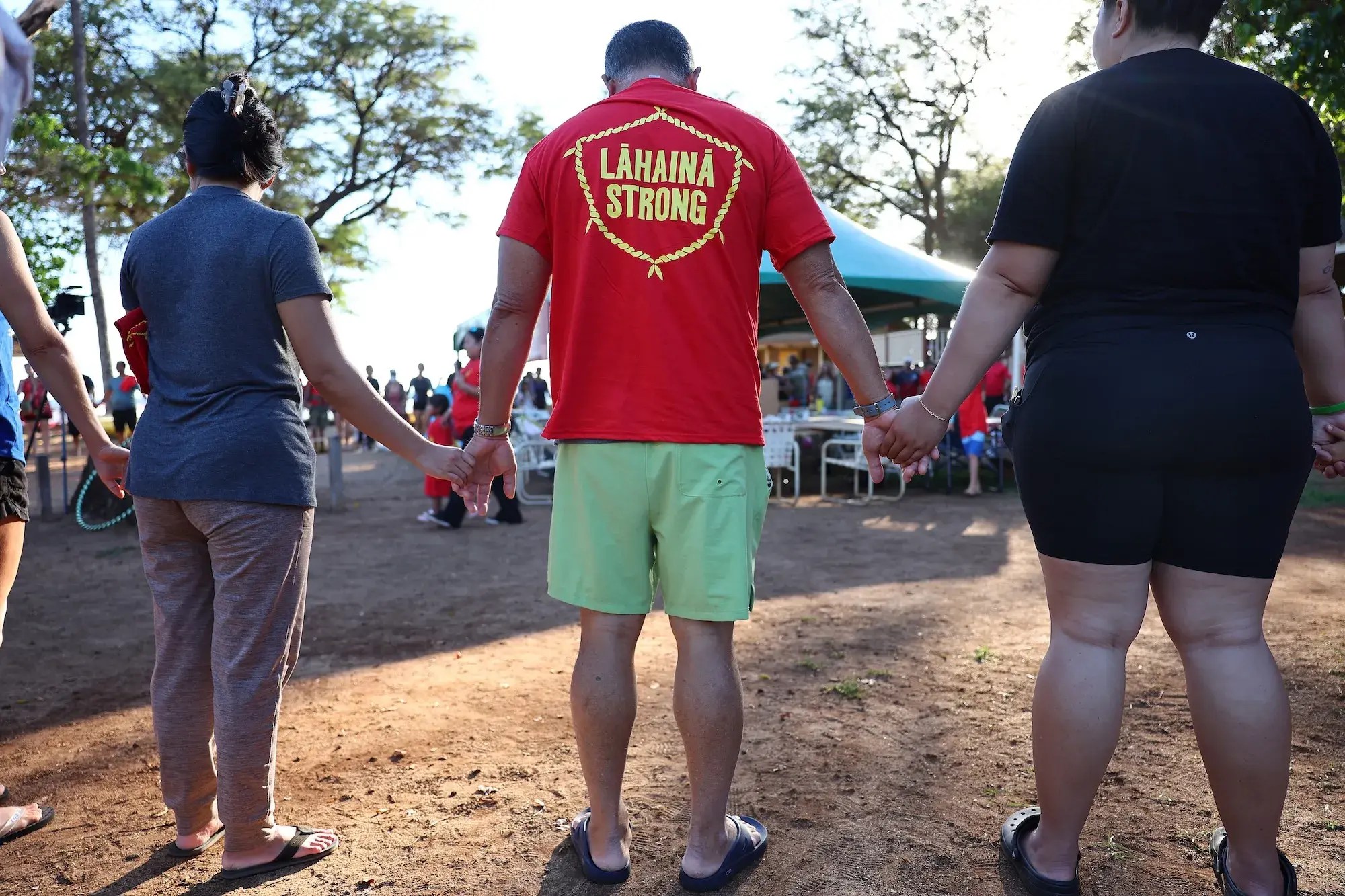
Community members hold hands in a prayer circle at a ‘Lahaina Strong’ gathering on Oct. 6, 2023 in Lahaina, Hawaii. Photo: Mario Tama/Getty Images via Grist
Because the researchers lack comparable data from before the fires, they could not determine how much of the metal exposure resulted from the disaster. Maunakea told Grist answering that question is the next step for the project, which has received a $3.6 million grant from the National Institute of Environmental Health Sciences. That work will include investigating whether and to what degree past agricultural and industrial activity contributed to the contamination.
“It’s important to realize that these are all part of settler colonialism,” Ahia said. “So what we’re looking at is confounding factors that are to the detriment of the health of our local people.”
Decades of plantation agriculture altered water systems, introduced herbicides, and displaced native plants, leaving a legacy on the islands that is still felt today. Disasters like fires and storms can compound those ongoing environmental problems.
“If we begin the story when the fire starts, we miss the decisions that shaped the landscape and the community’s ability to respond,” said Katie Kamelamela, who is Kanaka Maoli and an assistant professor at Arizona State University based in Hawaiʻi. “Micro climate change acts on places already shaped by histories of land ownership, water diversion, development, and unequal access to resources.”
Kamelamela said true recovery must look beyond the fire. “I want recovery to be measured by whether people can remain in their communities, care for ʻāina, and pass on their knowledge and practices in place,” she said, using the Hawaiian word for land, which carries deeper meaning and relationship than property or mere place. “Rebuilding should not recreate the same conditions that left people at risk. Caring for ʻāina and caring for people need to be funded and planned together.”
Maunakea said the multitude of intersecting pressures is one reason why he wanted to pursue this research. As climate change continues to accelerate, long-standing issues facing Native Hawaiians like housing, the harms of tourism, and the legacy of plantations can amplify problems. “We worry that disasters like this that we experience on Maui, as well as the floods and other storms that we’re experiencing now, is just going to continue widening the gaps in health disparities that already exist in those populations,” he said.
Moving forward, the project will not just identify health risks but also help residents respond to them. Study participants receive their results, discuss them, and meet with health professionals. “People now know that there’s these types of potential hazards, and what to do about them is a big concern,” Maunakea said. “We still don’t have all the answers for sure, but we are taking the next steps to get a better picture and inform our community around it.”
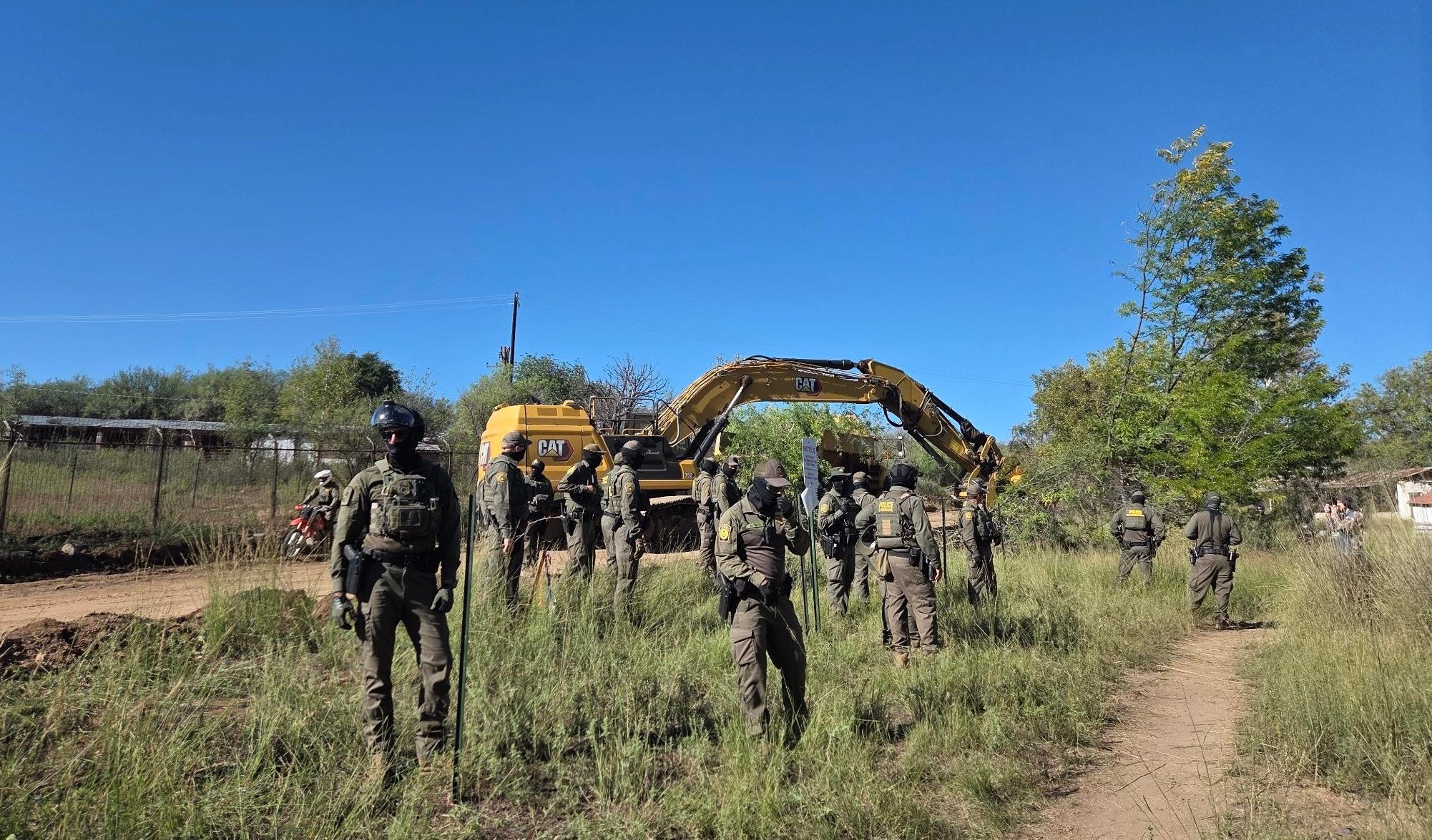
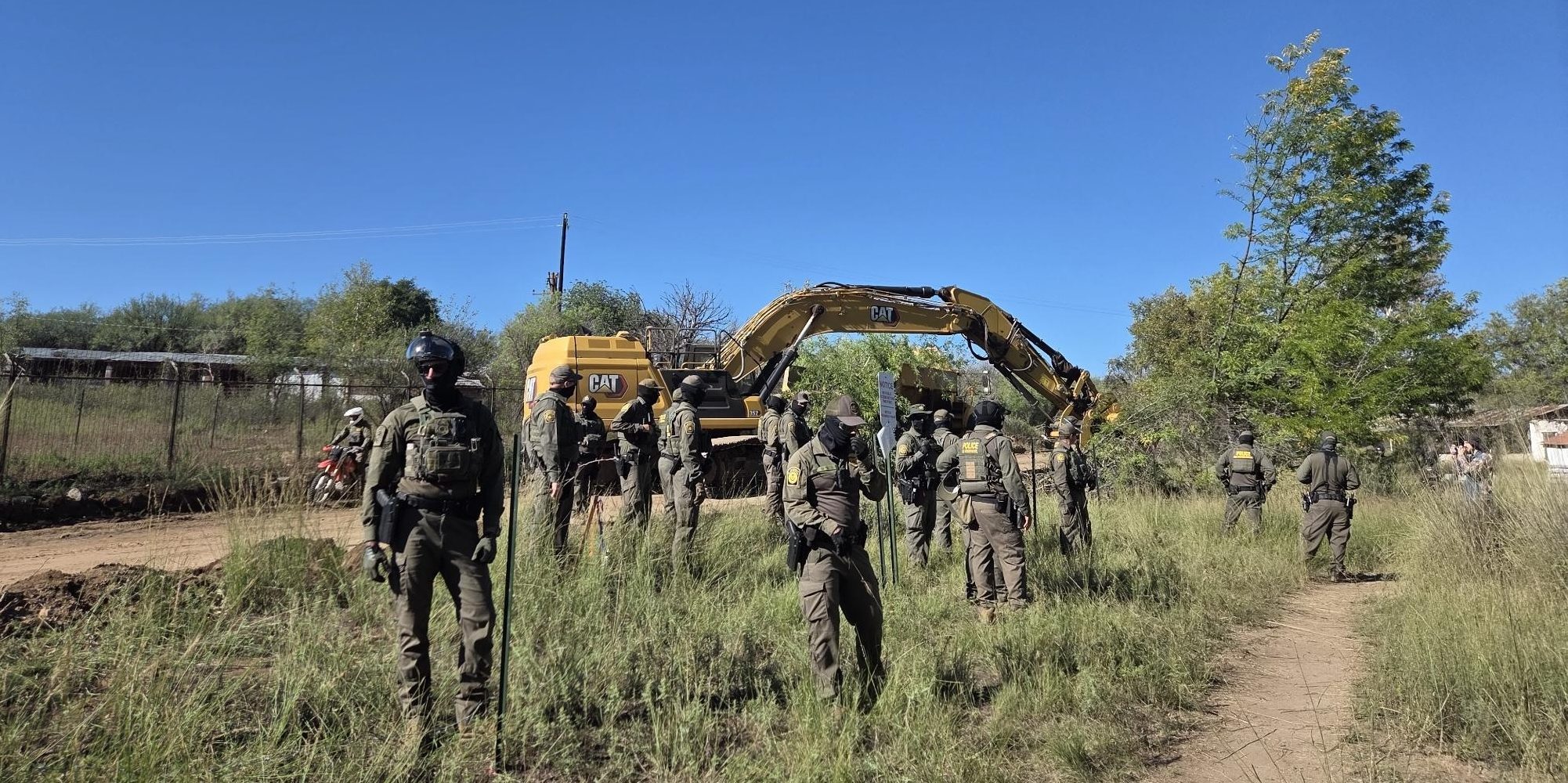
Armed, masked agents stand in front of a bulldozer near the U.S. border with Mexico on Oct. 5, 2026. A 200-year-old tree, which had for weeks been occupied by activists, was bulldozed to make way for Trump’s border wall.Photo: Sierra Club Borderlands
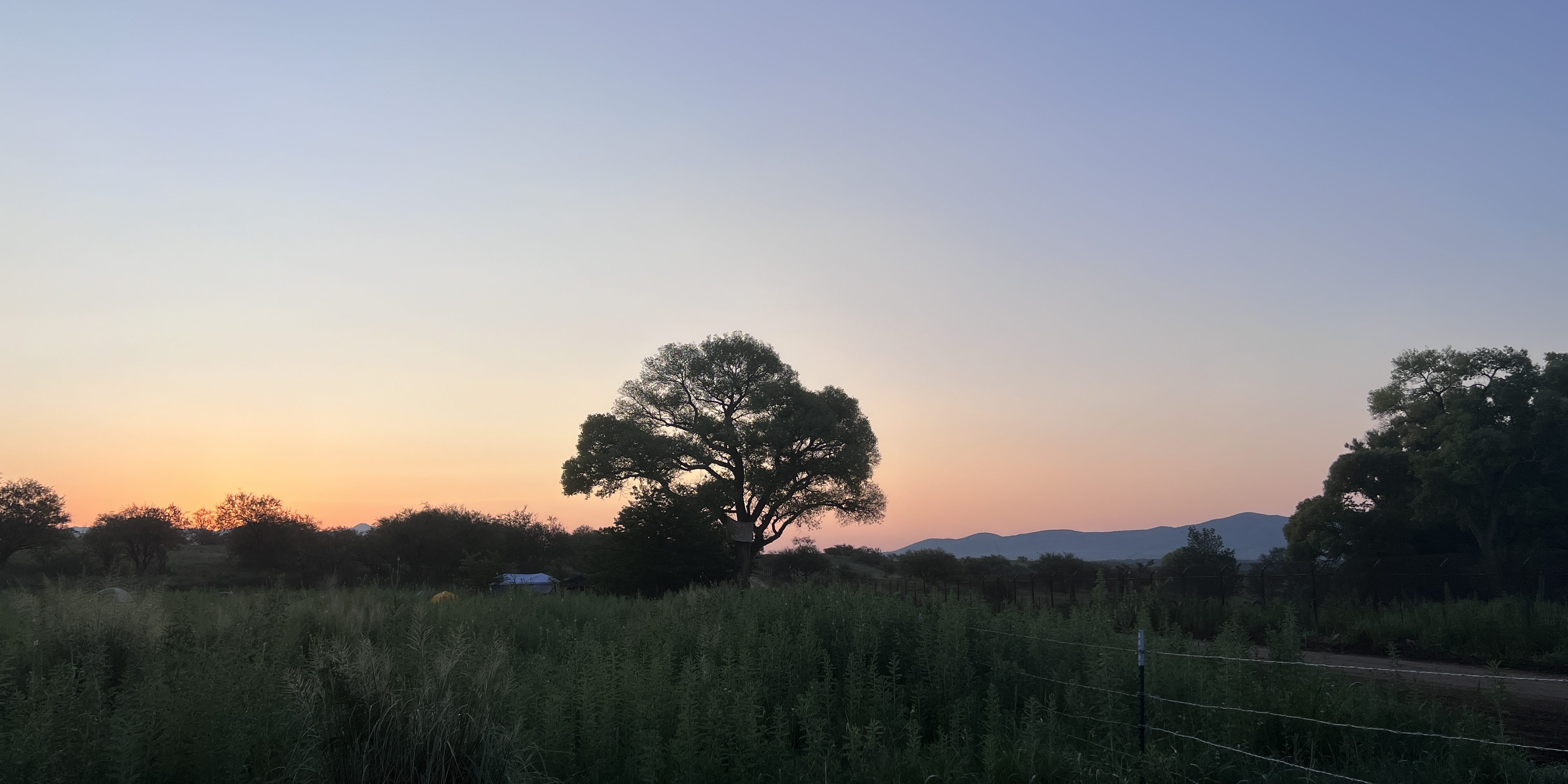
For more than 70 days, dozens of activists and an ancient cottonwood tree on the Arizona–Mexico border have successfully disrupted the construction of President Donald Trump’s ruinous $50 billion border wall.
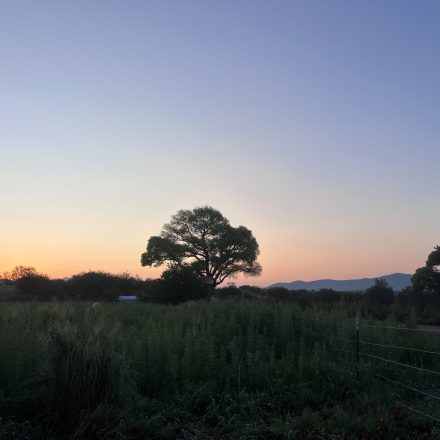
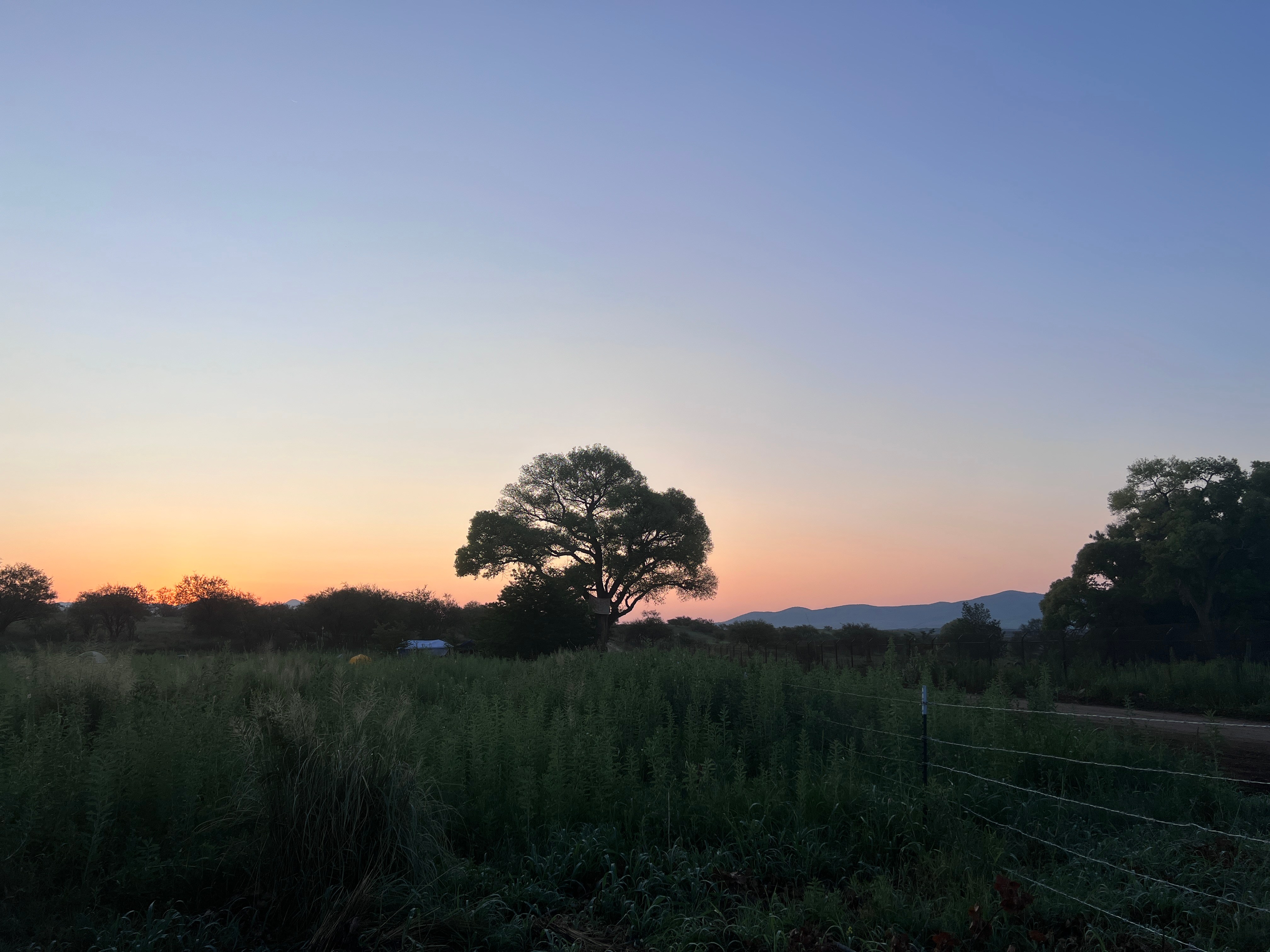
Since July, one protester at a time has occupied the cottonwood, or the grandmother tree, as it is locally known. After three other cottonwoods in the area were torn down by government contractors, the remaining grandmother on the U.S. side of the border became the site of a growing protest camp in the remote town of Lochiel, Arizona, and neighboring Sonora, Mexico, where organizers gathered for more than a year to oppose the border wall’s construction.
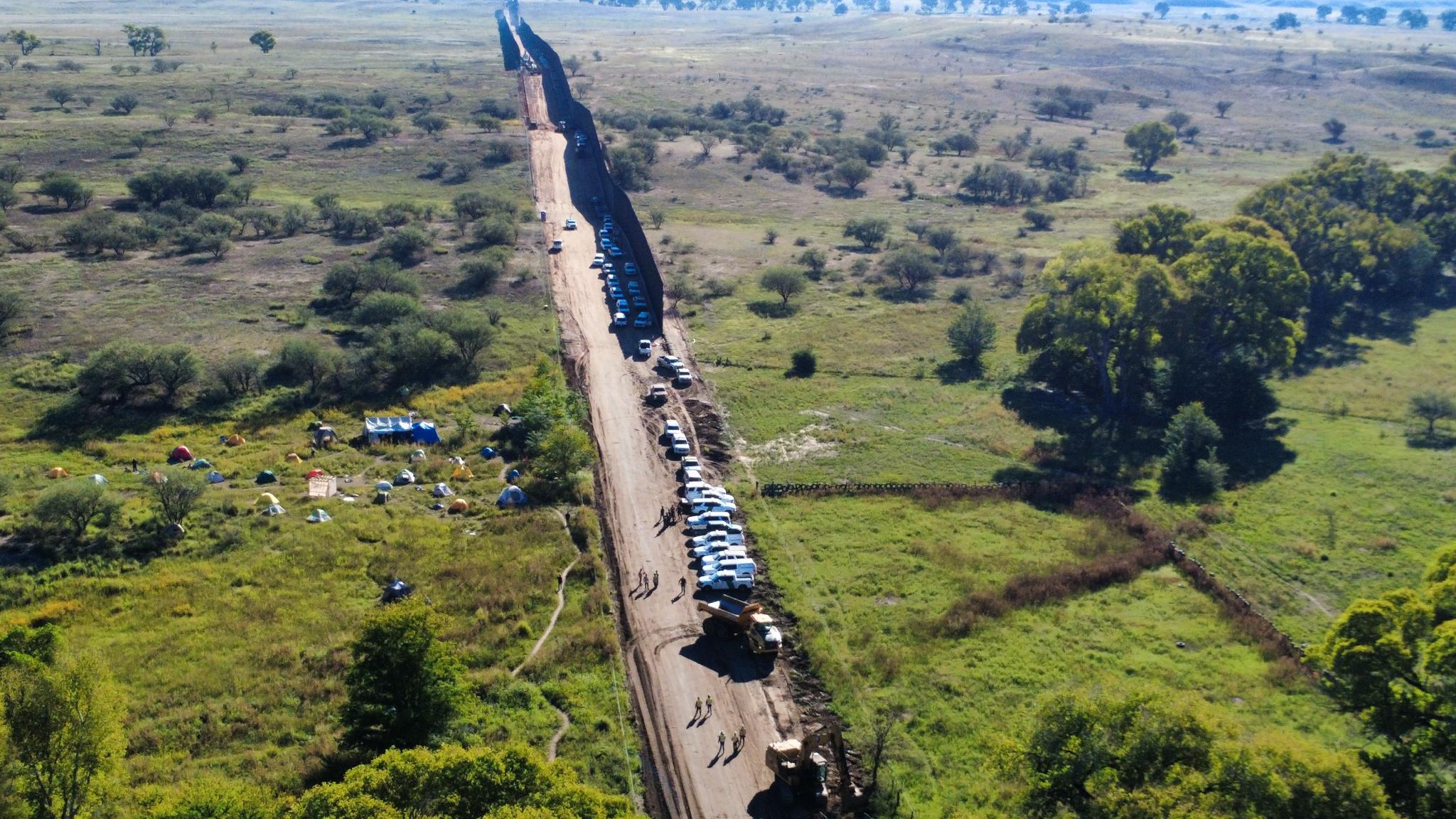
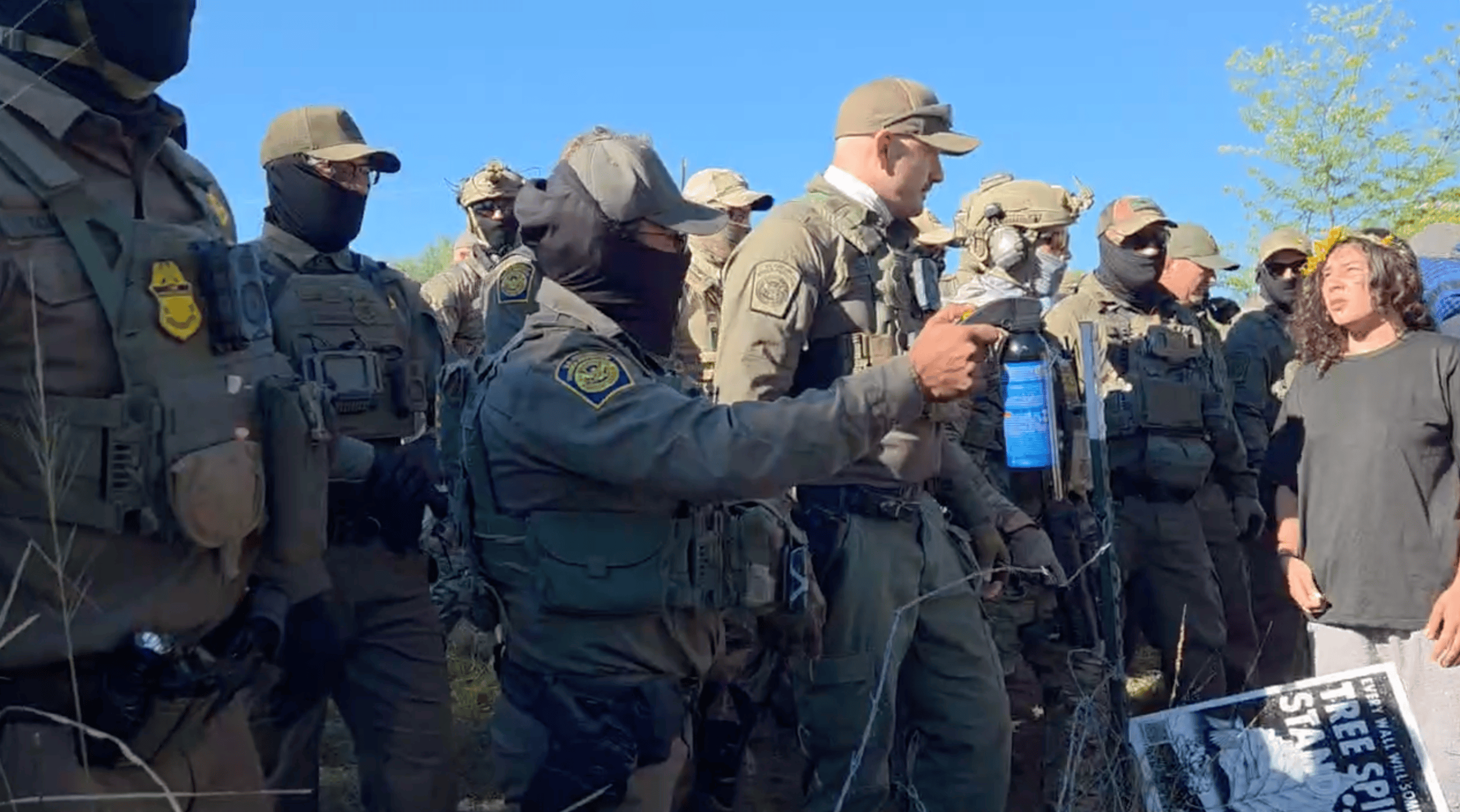
On Monday, heavily armed federal agents moved in with force. Activists on the ground estimate that 150 Border Patrol officers — many of whom masked their faces — raided the encampment during the protesters’ morning prayer ceremony. At least 10 demonstrators were arrested, and the 200-year-old cottonwood was bulldozed.
As Arizona-based journalist John Washington reported, “agents began cutting the tree while a person was still sitting in its branches. Agents removed that person with a cherry picker and then felled the tree. Screams could be heard as ‘grandmother’ fell around 8:30 a.m.”
In the 48 hours since the early morning raid, land defenders have refused to leave and remain in an ongoing standoff with federal agents. Numerous participants told The Intercept that around 50 people are holding the line against further construction, with dozens more en route following urgent calls to support the encampment and defend the imperiled borderland ecology.
On Tuesday, another tree sitter climbed the last remaining cottonwood standing in the path of the border wall construction, this one on the Mexico side. The tree was briefly occupied by demonstrators in mid-August and, according to a press release from the land defenders, “is once again halting construction.”
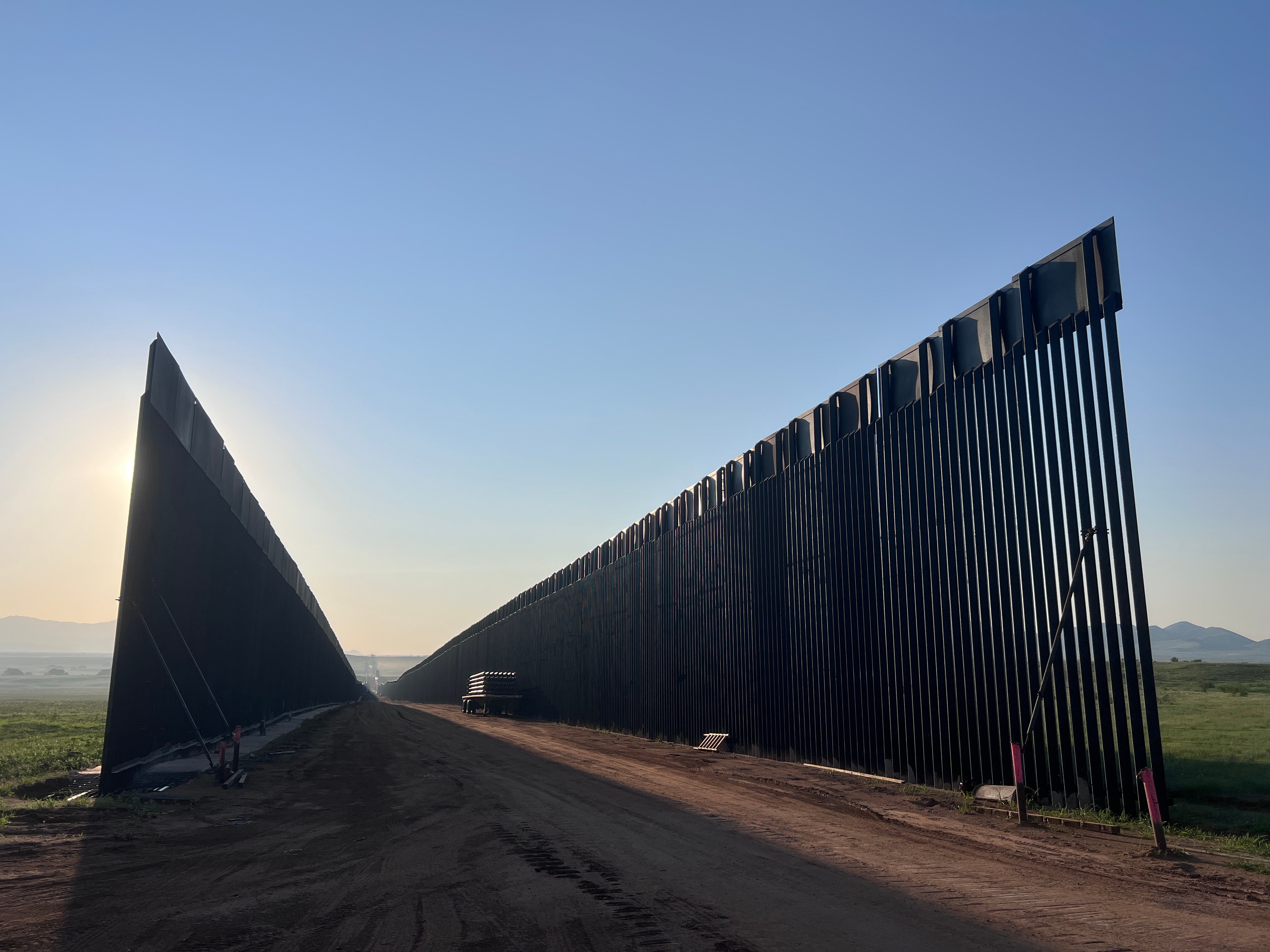
The protesters’ aim to stop the construction of two parallel, 30-foot-high border walls ripping through the remote San Rafael Valley. Miles of the double wall structure have already been built in the area. The region is sparsely populated and hardly ever used as a border-crossing site by humans but is renowned as a unique wildlife migration corridor. The cottonwood felled on Monday was the last of four ancient grandmother trees on the Arizona side of the border, which stood in the path of planned wall construction.
“The feeling is that they’re pushing through the construction process as quickly as possible, and they’ll deal with the consequences of the law later.”
Until this week, federal forces had left the encampment and tree sit in relative peace, largely, activists said, because the camp is located on private land. That fact had not changed on Monday.
“Border Patrol has been coming onto private property since yesterday morning. No warrants are shown,” Rachel, a land defender who withheld her last night out of concern for being targeted by law enforcement, said on a call with reporters on Tuesday. “There’s no legal ground for them to come onto private property. And the feeling is that they’re pushing through the construction process as quickly as possible, and they’ll deal with the consequences of the law later. They just want to push the wall through, regardless of the harm they have to cause to us and to the land in the process.”
According to Rachel and other activists on the ground who spoke to The Intercept, construction workers have moved quickly since the raid, digging a deep trench that threatens the roots of the newly occupied cottonwood on the Mexico side.
An aerial view of the raid by federal agents on the protesters’ encampment on Oct. 5, 2025. Photo: Sierra Club Borderlands
A statement on Monday from Belicia Lynch, a member of the De La Ossa family who owns one of the tracts of private property along the border, confirmed the protesters were welcome on her property. “I just want to thank you guys for being out there to not only protect the grandmother tree, but the land itself that many animals and bugs inhabit,” Lynch told the land defenders in the statement.
Border Patrol and the Department of Homeland Security have not yet responded to questions from The Intercept.
The federal attacks on the Lochiel encampment came on the heels of a legal victory for anti-border activists in Big Bend, Texas. On Friday, a U.S. district judge granted an injunction to stop all border wall construction in the Big Bend area, including in national and state parks, while the court hears a lawsuit brought by local environmental and community groups. In the order, the judge wrote that the plaintiffs are likely to succeed on at least one of their claims’ merits.
The standoff between armed federal agents, many of whom are masked to conceal their identities, and border wall protesters on Oct. 5, 2026.Photo: Sierra Club Borderlands
But with practically unlimited funding for his border regime, Trump’s administration can continue fueling money into his violent and destructive border wall. What activists in Lochiel, Sonora, Big Bend, and beyond make clear, however, is that the government’s victory cannot be assumed. Disruptions and interventions are not just possible but also an absolute necessity, and pressure can be applied in an array of directions.
As one Arizona-based Mexican American tree sit participant told The Intercept in August, “The border is everywhere, which means that there are subcontractors and there are power players maybe in your backyard, maybe in your city, maybe an hour drive from where you’re living.”
Rachel, the land defender, made the stakes of the fight clear.
“We have to stop this wall here because the trajectory they’re going on, there is no safety in the U.S. for anyone,” she said on Monday. The call was cut short as news spread through the encampment that federal agents would attempt to remove the tree sitter on the Mexico side. At the time of writing, the grandmother tree in Sonora remains occupied; the fight against Trump’s border wall, and all it represents, has not been lost.
In a social media post on Wednesday, encampment participants announced a “call to presence” to celebrate the life of the felled cottonwood and continue the anti-border struggle. “If you have been waiting to come to Lochiel, this is the time,” they said. “Let your heavy heart lead you to action!”
Only ghosts and ruins remain in this dusty old town. Tucked under scenic hills of volcanic rock are the remnants of a bank, a railroad depot, and what looks to be a school, along with a handful of other deteriorating structures that are hard to make out. This is Rhyolite, Nevada, whose heyday was fierce but short-lived, something of a one-hit wonder. In 1904, after gold was discovered in the nearby Bullfrog Hills, prospectors descended upon this dry corner of the Mojave Desert with hopes of striking it rich.
Of the several mining camps that quickly sprang up in this part of the Great Basin, Rhyolite was one of the liveliest. By 1908, the town’s population had surpassed 5,000, and at its peak, there were 50 saloons, 35 gambling dens, brothels, a bathhouse, a newspaper, and over a dozen restaurants.
Rhyolite’s flame would burn out fast: The Wall Street panic of 1907 scared off would-be investors, and by 1910, just a few years after the mine opened, most of the gold had been extracted. With no mining jobs left, the town was soon abandoned. All three banks eventually shuttered, and by 1914, the last train departed the Rhyolite station, never to return. Entire buildings, including the old Union Hall, were relocated to a neighboring town, where they still reside. The leftover Rhyolite town site, now a tourist stop, is managed by the Department of the Interior’s Bureau of Land Management and has been a not-so-popular location for a string of low-budget Hollywood films you’ve never heard of, like “Six-String Samurai” and “The Island.”
“Deserts, believe it or not, actually have a high level of carbon sequestration.”
The Southern Paiute (Nuwuvi) and the Western Shoshone (Newe) inhabited this arid region between the northern Great Basin and the southern Mojave. This ancient land holds many tales. In the 1980s, archaeologists discovered what appear to be aboriginal campsites dating back at least 10,000 years, to the end of the last ice age. West of Rhyolite is Beatty, a town with a certain rural desert charm. It could be the wild burros roaming the streets or the raggedy Sourdough Saloon with hundreds of dollar bills tagged to the walls. Whatever it is, I understand the appeal for those uninterested in city life. The residents I spoke with told me it was the quiet landscape that drew them there.
I find myself in Rhyolite — just seven miles east of the broiling Death Valley National Park — to meet up with two activists who’ve dedicated their lives to protecting the surrounding Mojave Desert. Kevin Emmerich and Laura Cunningham, founders of the Beatty-based Basin and Range Watch, are concerned that two major solar projects on nearby BLM-managed lands will destroy the desert ecology and provide little benefit to the local community.
“This type of desert out there actually sequesters carbon in the roots of the creosote,” explained Cunningham, a wildlife biologist and desert tortoise researcher who has lived in the area for over 20 years. “There’s biological soil crust [with a] deep network under the soil that sequesters carbon, literally sucks it out of the atmosphere and turns it into oxygen. And deserts, believe it or not, actually have a high level of carbon sequestration. But when you scrape it up and drive on it, you crush the lichens, shrubs, and flowers, and release carbon. Building on these habitats is actually [contributing to] climate change.”
Deserts like the Mojave, Cunningham said, play an outsized role in absorbing climate-warming carbon. Of the world’s carbon sinks — the places that soak up carbon from our fossil fuel emissions — deserts account for up to 28 percent of land-based uptake. It’s one reason why a patchwork of solar farms out here is a troubling prospect.
“If we do use renewable energy, we want to put it in the built environment where it doesn’t have much of an impact.”
Cunningham’s partner, Kevin Emmerich, is what you’d call a desert rat. He’s tall, grizzled, and soft-spoken. He strikes me as a man who has spent a lot of time in remote places, and I say that with admiration. A former park ranger in Death Valley, he nods in agreement with Cunningham while pointing to a valley across the highway where two solar projects, if completed, would blanket over 8,000 acres of open space. He’s frustrated that the people who usually oppose wrecking biodiversity aren’t warier of the large-scale energy projects proposed for public lands.
“Other environmental groups are really conflicted about ‘green’ energy,” Emmerich said. “We just had a little spat with one group. They want some of this public land development. … If we do use renewable energy, we want to put it in the built environment where it doesn’t have much of an impact.”
A Battle for What Remains
While some environmentalists may be on the fence, others, like the small outfit Basin and Range Watch, are working tirelessly to halt the development of these solar farms. In 2010, in coalition with community groups and the Quechan and Cocopah tribes, it blocked the Imperial Valley Solar Project in California, which would have destroyed nine square miles of habitat and decimated more than 400 Quechan cultural sites. Basin and Range also supported the “Save Our Mesa” campaign, which succeeded in stopping the controversial Battle Born solar project near Moapa Valley, Nevada. Battle Born was proposed as an installation of solar panels covering 14 square miles of public lands. The grassroots pressure was so strong that the developer, California-based Arevia Power, told BLM they wouldn’t move forward.
When it comes to impacts, at least on paper, solar energy may have the fewest downsides (although they certainly exist). The technology requires less mining and is inexpensive and easy to deploy. But as Basin and Range Watch argues, it’s not enough to simply let these vast, open spaces be blanketed with fields of solar panels. There are better locations for solar that will yield better results for people and the environment. Many of our popular ideas about places like the Mojave — such as the idea that they’re lonesome, empty wastelands, devoid of life — sustain the myth that desert solar farms have fewer drawbacks and are essential in the fight against climate change. Not many assumptions could be more untrue.
Many of our popular ideas about places like the Mojave — such as the idea that they’re lonesome, empty wastelands, devoid of life — sustain the myth that desert solar farms have fewer drawbacks and are essential in the fight against climate change.
BLM has considerable sway in the West and has, for decades, had the power to radically shape the region, from its fragile ecology to its resource-dependent economies. It manages 245 million acres of land and 700 million acres of subsurface mineral rights in the United States. In all, BLM oversees one-tenth of the country. It divvies up rights to mine, drill, and graze. What the bureau say goes, and even under the antagonistic Trump administration, which is no fan of renewables, it is still overseeing massive green energy developments.
While Trump and his allies in Congress have drastically reduced subsidies for renewable energy projects, those incentives aren’t set to expire until December 2027. As a result, companies are hurrying to build out solar farms, wind turbines, and commercial battery storage. While Trump’s actions have hampered long-term growth projections for the renewables industry, it’s booming, for now.
“The energy transition is still underway, but the whiplash has very serious implications for our economy and for the investment culture of America,” explains Sanya Carley, the Mark Alan Hughes Faculty Director of the Kleinman Center for Energy Policy at the University of Pennsylvania. “Solar has still been on a phenomenal growth trajectory, especially across the entire world. … [It’s still] the leading source of growth in the energy industry in the United States.” Trump’s rancor has turned out to be more of a speed bump than a roadblock.
Whose Land Is It?
In Nevada, BLM has parceled around 12 million acres for large utility-scale solar project construction. In 2024, the agency announced its Western Solar Plan, which would reserve 22 million acres of public land for future solar development. As of early 2024, seven major projects were proposed or in the works, covering 140 square miles of land. The Western Solar Plan would locate high-solar-producing areas on public lands across the dry flatlands of Arizona, California, Colorado, Nevada, and New Mexico, and on millions of acres of federal land in Idaho, Montana, Oregon, Washington, and Wyoming.
Patrick Donnelly, the Great Basin director for the Center for Biological Diversity, believes this massive, swift expansion of industrial-scale solar could destroy many of the region’s “crown jewels.” He’s worried solar arrays could surround Nevada’s Great Basin National Park and the Malheur National Wildlife Refuge in Oregon — ditto for the Great Salt Lake in Utah.
“It’s insane,” Donnelly, who isn’t shy about his frustrations, said. “BLM is going to make lanes available for solar at the foot of the Sierra Nevada,” which he calls “possibly the most beautiful place in the country.”
It’s hard to argue with Donnelly about the stakes. I spend weeks each year wandering the Mojave, decompressing from urban life. The desert is a refuge. As a teenager growing up in Montana, I used to believe wilderness only included trout streams, mountains, grizzly bears, and wolves. I was youthfully naive, and I now realize that wilderness includes saguaro, rattlesnakes, desert tortoise, and bighorn sheep. We shouldn’t exploit these places for our energy needs, whether for fossil fuels or solar power. These desert lands are crucial not only for the animals that inhabit them but also for their roles they play, such as carbon sequestration, in helping mitigate the climate crisis.
These lands are significant to Native Americans, who have inhabited this land long before Europeans showed up. For years, members of the Western Shoshone and Goshute tribes in Nevada have worked to designate a 25,000-acre monument called Bahsahwahbee near Great Basin National Park. The Western Solar Plan will carve out 7,000 of those pristine acres for development.
“Our ancestors were massacred at Bahsahwahbee. It is unconscionable that the site would be considered by the federal government as a development zone instead of a place to be preserved and commemorated,” Ely Shoshone Tribal Elders Delaine and Rick Spilsbury wrote for the Great Basin Water Network. “The federal government doesn’t propose developments in other cemeteries or seek to bulldoze other peoples’ churches. In fact, graves and churches are generally protected under federal and state laws. But for the resting place of our ancestors, we have to wonder why it’s OK?”
These large solar projects are sure to raze more Native lands to power hundreds of thousands of homes across the West, often in cities far from where the energy was first produced. Once the solar installations are built, few jobs are likely to remain in those regions, which contradicts the central arguments local governments make in support of the projects.
When it comes to the Western Solar Plan, most of the major environmental groups have either stayed silent or, like the Wilderness Society, uncritically supported it as a positive step to help California shift its grid to 100 percent clean energy by 2035.
“I feel like we are working out here on the marginalized fringe, and we’re sort of pushed more to work with grassroots groups, local communities, scientists, and people who aren’t beholden to their big climate donors [like other environmental groups],” Cunningham of Basin and Range Watch said. “[Energy developers] call this a wasteland, like there’s no biodiversity, and we push back against that. We support photovoltaic solar panels, first on rooftops, parking lot canopies, or on really disturbed ground. But this desert has life. The very, very bottom of the list [for solar development] should be public lands. Ecosystems built on utility-scale solar projects are the last thing we should support in the fight against climate change.”
Cunningham’s argument is convincing, and it’s hard not to think that much of this has to do with people’s perception of the desert as a wasteland, as she puts it. Even the late David Brower, the first executive director of the Sierra Club who was forced out for his radicalism, once remarked that he’d be willing to sacrifice the Mojave under the guise of diplomacy and compromise if it meant protecting scenic wilderness elsewhere. He later retracted the sentiment, but this reasoning still permeates much of the mainstream environmental movement, which is focused on slowing climate change at almost all costs — even if it means harming wild places in the process.
“I feel like we are working out here on the marginalized fringe. … This desert has life.”
Perhaps it will take an expert like Laura Cunningham and a desert-lover like Kevin Emmerich, who have a deep admiration for and understanding of desert ecology, to alter people’s perceptions. At least I hope so. It’s easy to imagine the public outcry that would ensue, for instance, if giant redwoods were on the chopping block to make room for a gargantuan solar field in the Sierra Nevadas. But, strangely enough, Joshua trees and desert tortoises don’t seem to hold the same intrinsic value.
Leevin Camacho was brushing his teeth one day last fall when his mother called. The water is contaminated, she said. Moments later, she texted him a photo of a flyer issued by the local water authority. “Cancer risk,” it warned. “Increased likelihood of adverse impacts on the liver.” And in bold capital letters, “DO NOT DRINK.”
Camacho stared at the message. Water flowed from the faucets as his children, who were 10 and 12, gulped and spit, their faces reflected in the mirrors above the two bathroom sinks.
Thumbing at his phone, Camacho looked up dieldrin. The search results included words like “organochlorine” and “insecticide” and “persistent environmental pollutant”; the United States had banned it in 1987. Worse, high levels had been detected in his community’s water since at least 2008. “Our kids have been drinking the water,” he realized. “They’ve been cooking with the water for almost their entire lives at this point.”
Camacho lives in Yigo, a northern village on the island of Guam. In time, he would learn that the U.S. Air Force base next to the well serving his house had reported “very high levels” of the pesticide, which it had listed as a “chemical of concern” since at least 1993. The Pentagon’s investigation, led by officials at Joint Region Marianas, is in its early stages. Local officials caution that although they suspect the base is a source of the pollution, there may be others because dieldrin was once widely used.
For Camacho, the news felt like the unfolding of a familiar story — one both predictable and infuriating.
Camacho had grown up as an Army brat, raised to think of the United States as Guam’s liberator from Japan during World War II. But over the past two decades, his understanding of that legacy has changed.
“There are certain actions that the military takes that are contrary to the interests of the people who are from Guam and who live in Guam,” said Camacho, whose measured tone rarely changes, even when discussing something as emotional as what his children have been drinking.
To Camacho, dieldrin is the latest reminder that the people of Guam continue to bear the costs of militarization. Unexploded ordnance litters jungles and lagoons. PCBs contaminate the fish. Pollutants taint the groundwater. The island and its people, who are U.S. citizens, have been inalterably changed by more than a century of American military presence.
Rear Adm. Brett Mietus, the head of Joint Region Marianas, the U.S. Navy’s regional command for Guam and neighboring islands, said he can’t speak to past pollution but the command is committed to protecting the environment and the people of Guam.
“We spend a lot of time and we spend a lot of money making sure that we meet every U.S. regulation when it comes to anything that we’re going to do here,” he said. “We’re meeting every letter of every law for environmental regulations and rules, and we’re doing that while we’re spending a ton of money to defend this island from the most advanced missiles in the world.”
Today, Guam sits at the center of an ongoing military buildup, one that is reshaping the island even as it spreads across the Pacific. On nearby Yap, more than 1,000 graves could be disturbed to make way for an American seaport and airfield. Indigenous leaders on Palau are suing to protect their lands.
Less visible but just as impactful are the climate impacts of this expansion. The Pentagon is already the world’s largest institutional emitter of greenhouse gases, and its buildup will do more than contribute to the destruction of the region’s reefs, forests, and Indigenous sacred sites. It will accelerate the climate crisis that threatens the survival of Pacific islands.
The Pentagon often cites growing geopolitical tensions to justify the buildup. “The security environment in the Indo-Pacific is becoming more dangerous and defined by an increasing risk of confrontation and crisis,” Navy Adm. Sam Paparo, commander of U.S. Pacific Command, told Congress in April while seeking $122 billion for new weaponry to counter China, including offensive missiles on Guam. Three months later, a ballistic missile launched from a Chinese submarine flew near Guam, underscoring why many on the island see America’s military presence as both a source of vulnerability and protection.
Sometimes it can be too much to think about. “I need to compartmentalize these things,” Camacho said. “That’s sometimes the only way that you can do this, because otherwise you will just be overwhelmed by the sheer amount of things that are out there, the amount of injustice that is out there.”
Those injustices collide in Yigo. Neighbors lost their homes earlier this year to typhoons fueled by warming seas. The Army Corps of Engineers will soon begin clearing bombs from a nearby dump site created in 1945. A new machine-gun range just opened alongside a federal wildlife refuge to support the arrival of 5,000 U.S. Marines from Okinawa, Japan.
Then there’s the dieldrin contamination. “At some point,” Camacho said, “someone has to force them to do what’s right.”
II.
Years before he became one of Guam’s leading critics of the military buildup sweeping over the island, Leevin Camacho was a young lawyer who liked to run before work. As his sneakers hit the pavement, the sun rose over Yigo. Roosters crowed and streaks of pink lightened the sky. The road, little used and lined with jungle brush, was one of the few places he could run without encountering stray dogs or morning traffic. He always ran at first light, before oppressive heat would reflect off the asphalt and the concrete buildings. It was the perfect start to what was often a day spent listening to depositions and wading through case law.
It was 2009. Camacho had returned to Guam after law school and was making more money than he ever had as a school teacher. “You dream of going to law school to provide services and to fight for people who don’t have the ability to fight, right? I’ll be honest with you, I lost my way,” Camacho said. “I had a bunch of student debt, and I was satisfied just kind of going by day to day and just focusing on myself and my family.”
Leevin Camacho stands before the well serving his home in Yigo, Guam, which was found to have been contaminated with high levels of dieldrin.Photo: Anita Hofschneider/Grist
The U.S. military was the backdrop to Camacho’s life but not something he worried about. He didn’t think much about the invasive tangan-tangan trees lining his running route, or the fact that they had spread across Guam after the U.S. scattered their seeds to reforest the island following the war. On his morning runs, he was more likely to hear a military jet overhead than a native birdsong.
It hadn’t always been that way. Guam was among the first Pacific islands settled by seafarers, from what is now the Philippines, who navigated by the stars and waves an estimated 3,500 years ago. The CHamoru people built a thriving island society known for its towering latte stones and swift outrigger sailing canoes.
That changed when Magellan landed on Guam in 1521. Spain claimed the island and the rest of the archipelago, beginning more than 500 years of ongoing colonization. The Spanish forced the Indigenous people to embrace Catholicism and banned their canoes. The United States took over the island from Spain in 1898 and imposed military rule. Naval governors burned CHamoru language books and blocked Indigenous efforts to gain U.S. citizenship.
Then came Japan. Its invasion in 1941, on the same day it attacked Pearl Harbor, wasn’t unexpected. The U.S. Navy evacuated sailors’ dependents but left 20,000 CHamorus to endure nearly three years of forced marches and labor, malnutrition, and sexual servitude. More than 1,000 would die. When American forces retook Guam in 1944, they were welcomed as liberators. The island still celebrates Liberation Day every July. “I can’t remember a single discouraging remark that my maternal grandmother would have made about the U.S.,” Camacho said. But he does remember her saying of the Americans, “‘They saved us.’”
In this August 1944 photo, people of Guam pour out of the hills into the Agana refugee camp. Nearly 18,000 CHamoru were relocated to Manenggon and other concentration camps before the Battle of Guam.Photo: Joe Rosenthal/AP Photo
That was the narrative that Camacho grew up with. Even the military taking his family’s land — part of a massive military land grab after World War II — was accepted by his grandparents as the price of freedom from Japanese oppression. It wasn’t until Camacho learned that the Pentagon’s expansion plans would close his running route that he began to question what it meant for Guam to be an American military outpost. He pored over the buildup’s planning documents and was struck by the disconnect between how the military described its plans and the reality as he knew it. “They paid consultants a bunch of money. The comment was, ‘We drove by and we didn’t see any cars, so there’s no impact,’” he said of the running route. “And that was it.”
As Camacho read thousands of pages of documents, he saw the same pattern again and again. Proposals for bombing and machine-gun ranges, expanded undersea explosives, and projects that threatened forests and ancient latte stones were accompanied by detailed assessments that minimized what they would mean for the islands.
“They paid consultants a bunch of money. The comment was, ‘We drove by and we didn’t see any cars, so there’s no impact.’”
On a flight home from Honolulu, Camacho was reviewing the environmental analysis of the buildup on his laptop when one passage stopped him. The proposed influx of 80,000 people would leave too little water for fire suppression, particularly in Yigo. The solution, according to the document, was to send surplus water from Andersen Air Force Base to civilian communities. “That was the first time I just kind of lost it, just how stark it was,” he said. “The aquifer is our aquifer, right? Like, you’re taking our water for your people and then we don’t have enough and they’re going to divert whatever you’re taking from us that is extra.”
Camacho and other concerned residents started We Are Guåhan, a community group focused on raising awareness about what was happening. (Guåhan is the CHamoru word for Guam.) He sued to stop a machine-gun range from being built at Pågat, an ancestral village that’s home to millennia-old latte stones. Their campaign protected the site and helped persuade the Navy not to expand its landholdings on Guam. The Department of Defense also reduced the planned transfer of Marines from Okinawa from 9,000 to 5,000.
But it didn’t stop the buildup. The Pentagon activated Marine Corps Base Camp Blaz six years ago and opened a new machine-gun range alongside a federal wildlife refuge just north of Yigo. “It’s so heartbreaking,” said Lola Leon Guerrero, another member of We Are Guåhan. “All of that effort, and it still happened.”
Construction on Marine Corps Base Camp Blaz, located in the village of Dededo in northwest Guam and activated in 2020, proceeds in May 2026. Photo: Anita Hofschneider/Grist
III.
The yellow excavator scraped away at the pale rock that lies beneath Camp Blaz under the hot May sun. A limestone forest had already been bulldozed to make way for a new machine-gun training range. A sign next to the fence read “Guam National Wildlife Refuge” with an arrow pointing to the left and a picture of a turtle.
“Wow,” said Moneaka Flores, one of Camacho’s clients in the lawsuit he filed against the Navy to protect the island’s endangered species. She stopped at the side of the road to watch the digger work. It had been months since she’d been here, and they’d cleared so much more forest than she realized.
Busy construction vehicles are the most obvious sign of the Pentagon’s buildup. Beyond the new Marine Corps base, the Department of Defense is upgrading the island’s port and strengthening its infrastructure to support docked nuclear submarines. The agency is also pouring $8 billion into 16 new missile defense sites. After World War II, the Navy took two-thirds of the island. “Whatever made most sense for the military, the island was theirs for the taking,” said Michael Clement, a historian at the University of Guam. “Everyone was in refugee camps. They had the bulldozers. They built where they wanted to build. And then a year or two later, they started saying, ‘OK, where are we going to put the natives?’”
“That’s why Guam is kind of weird to drive around. … It was redesigned for military purposes.”
The military later relinquished some land but still owns at least a quarter of the island. “If you look at where the villages were set out in 1946 and ’47, it’s the land the military didn’t need. So that’s why Guam is kind of weird to drive around, right?” Clement said. “To go across from Tumon to Mangilao, you’ve got to go around Tiyan and the airport. It wasn’t redesigned for civilians. It was redesigned for military purposes.”
Even the island’s main highway, the six-lane Marine Corps Drive, was designed for the military, not the people. It connects Andersen in the north and Naval Base Guam in the south.
Gov. Lou Leon Guerrero (no relation to Lola Leon Guerreo) is among the many who welcome the financial boost that comes with the military’s investments. “They’re spending billions on their readiness plan,” she said.
One in 9 Guam residents joins the armed forces. Last year, a local economist told the Legislature that every dollar the Pentagon spends adds 75 cents to the island’s GDP and called the buildup an “unprecedented economic opportunity.” The funding infusions have helped Guam become far more commercialized than other Pacific islands, with multiple shopping malls, numerous high-rise hotels, and a growing real estate sector.
Leon Guerrero thinks activists should pursue political self-determination instead of resisting the buildup. “These guys can yell and scream all they can,” the governor said. “They’re going to do the military buildup regardless, right? So why don’t we work with them and see how we can benefit?” She wants the Defense Department to help harden local power lines and fund a hospital. “Our hospital cannot absorb mass casualties,” she said.
There are about 20,600 military personnel on Guam, a figure that’s expected to reach 29,400 by 2037. While the military is investing in additional housing both on and off base, the population influx will almost certainly continue pushing up construction and housing costs. The median home price on Guam was $216,100 in 2010, when Camacho sued the military to protect Pågat. Today it is approaching half a million dollars.
Fear of another war also fuels support for the buildup. “We’ve always been a target regardless, because of where we are geographically located,” Leon Guerrero said. Guam is the largest island in the Micronesian region of the Pacific. It’s just north of the equator, a three-hour flight from Tokyo, and has a deep-water harbor that supports naval submarines. “We were a target for Spain. We were a target for the U.S. We were a target for Japan.” She worries about China, which has a ballistic missile nicknamed the “Guam Killer.” “If I’m going to have a choice, I’d rather be under the U.S. than China.”
To Flores, more military presence on Guam heightens the risk of war. In March, President Donald Trump’s decision to bomb Iran prompted military bases on the island to raise their threat level. She feels that, as in World War II, the Indigenous people of Guam are expendable in a broader contest between empires. “What are they really here to protect if there’s so much harm taking place? Are we just collateral damage?” she said. “Because just looking at our history of being occupied by war, being used for weapons testing, it feels like the message is that we don’t matter. Our future doesn’t matter. Our survival doesn’t matter.”
Rear Adm. Brett Mietus, at Joint Region Marianas, said he understands such skepticism. “If I was born and raised on Guam, I would have similar concerns,” he said. But he believes the military’s investment proves the opposite of what Flores fears. “Choice A is not to defend Guam against ballistic and hypersonic missiles,” he said. “Or the other choice, which is the one that we’ve made, is to spend billions of dollars to defend Guam from hypersonic and ballistic missiles. And so from my perspective, that shows a commitment not just to the military things that are on Guam, but also to the people of Guam.”
Yet Flores is far from the only Guam resident who feels expendable. When Pedro Blas, the vice-mayor of Yigo, first learned about the dieldrin in his village’s water, his first thought was of his autistic sister. “All of us growing up, all our lives, our water bottles, we fill it up with the tap water, put it in the fridge: That’s our cold water,” he said. “Because we were instilled in our heads our whole lives: Tap water is OK.”
Pedro Blas, the vice-mayor of Yigo, Guam, has been hearing from many constituents who are concerned that long-term exposure to dieldrin could have caused cancer in their families. Photo: Anita Hofschneider/Grist
So far, Camacho’s firm has helped file more than 700 claims, worth $360 million, against local authorities on behalf of village residents. He hopes that pressures the island to seek compensation from the Defense Department. “I’m so glad [Camacho] got involved,” Blas said. “We’re not letting it get swept up under the rug.” Mietus noted that Joint Region Marianas has not found high levels of dieldrin in military wells, and the Pentagon is working with local officials to determine the source of Yigo’s pollution.
“They look at Guam as real estate.”
Still, Blas wonders why the investigations at Andersen Air Force Base are occurring quietly behind the fence, while he hasn’t seen anyone in uniform hand out water to his constituents. “It’s beautiful to be a U.S. citizen, don’t get me wrong,” he said. “But if you really take a step back and look at exactly the impacts that [the military] brought to us over the years, we should have a say in whether or not these practices are going to happen to our island. Even just being called the ‘tip of the spear’ — we’re susceptible to any war that they’re going fight, and we just have to be OK with it.”
“This contamination they bring to our island, it kind of just shows how much they really care about our people,” Blas continued. “And frankly, I think they look at Guam as real estate rather than ‘Those are our U.S. citizens. Those are our people. Those are Americans.’”
IV.
The men and women gathered in the p’ebay, the traditional open-air Yapese meeting house with a triangular tin roof, and settled quietly on the tiled floor along each wall to listen to Camacho speak. A projector, perched above a cardboard box stacked on top of a red cooler, cast his PowerPoint presentation onto a screen. Slide after slide described the American military’s plans. A cool breeze fluttered the fronds on the palm trees surrounding the p’ebay.
It was April in the village of Tamil on Yap, one of four states in the Federated States of Micronesia. Camacho’s dieldrin work was far from over, but he’d put that aside when the island state’s government asked him to help dissect a Navy proposal to expand the seaport and airport. Tamil was one of several villages he visited to explain the plan.
Over the past decade, Camacho has become one of Guam’s leading environmental lawyers. “The one thing about Leevin is he shows up. Again and again,” said Julian Aguon, a human rights lawyer on the island. “And he brings with him not only deep competence but a deep sense of responsibility to the people and places he serves.”
“Regulatory agencies will bend over backwards to not pick a fight with the military because of the mission and the protection and all of that,” Camacho said. “And ultimately, it’s people who aren’t lawyers who end up paying the price.”
He was elected attorney general in 2018 for one term and led a historic lawsuit to force the Navy to clean up a hazardous landfill it had abandoned in the 1940s. A lower court dismissed the suit, but the U.S. Supreme Court unanimously ruled in 2021 that it could proceed — a decision that eventually prompted the federal government to pay Guam $48.9 million.
He has sued the Navy to protect endangered species harmed by the construction of Camp Blaz. “For too long, our island has been treated as a sacrifice zone,” he said.
The risk of Guam falling into enemy hands, as it did in World War II, is so tangible that America’s Pacific military strategy involves spending billions of dollars to spread airfields, seaports, and training ranges across the region to remain competitive in case Guam is once again occupied by enemy forces. The U.S. is invoking decades-old agreements with the peoples of the Republic of Palau, the Northern Mariana Islands, and the Federated States of Micronesia to expand its presence on those islands and upgrade World War II-era seaports and airfields. Under President Joe Biden, the U.S. even signed a new agreement with Papua New Guinea to use its seaports.
On Yap, the U.S. military wants to dredge the lagoon, including two-thirds of an acre in a marine protected area, to create a seaport. The plan would remove enough sediment to fill 334 40-foot shipping containers and impact sea life, Indigenous fishers, and divers. “Plume spreads up to 800 m from disposal sites,” Camacho’s presentation noted. “Long-term reef decline and impact on reef species (fish, clams, sharks, turtles) not assessed.”
The Navy also plans to expand the airfield to facilitate two military exercises, each two weeks long and involving up to 200 personnel, per year. The project could disturb more than 1,000 graves, including the 19th-century tombs of Chief Orothin and Chief Yaloth. Camacho noted that the military’s draft plan acknowledges a “significant adverse impact” to these cultural sites and doesn’t commit to rebury the dead or preserve ancestral sites.
Yap has a population of just about 11,500, compared to Guam’s 170,000. Although Yap is less than a 90-minute flight from Guam, it has none of the military bases, six-lane highways, or big-box stores that define the American territory. “In some ways, this will be more transformative for Yap State than the buildup was for Guam because there’s no military presence there today,” Camacho said. On Guam, he said, “It’s normal to hear a fighter jet flying over. It’s normal to see a bomber or C130. They don’t have any of that there. So this would be such a radical change.”
One month after Camacho visited Yap, dignitaries from across the Pacific gathered in an air-conditioned conference room at the Hyatt Regency Hotel in Guam. The hotel sits on a long stretch of white sand beach and looks out over Tumon Bay, where high levels of dieldrin have also been found in fish samples.
Political leaders from across the Pacific listen to presentations on the growing military presence in their region at a conference in Tumon, Guam. Photo: Anita Hofschneider/Grist
Once everyone had taken a seat, the lights dimmed and the glow of a projector filled the room. A screen showed a map of military activity across the western Pacific: not just bases, but training exercises and the routes of research vessels searching the sea floor for the critical minerals essential to many military technologies.
“We’re faced with the reality that we’re part of a larger strategic vision,” conference organizer and former Guam congressman Robert Underwood said. “All of you are in someone’s strategic plans whether you know it or not, whether you like it or not. All of us are in someone’s strategic plan.”
In Palau, Indigenous people are fighting the Pentagon’s expansion in local courts and international forums. Leaders of Angaur, one of 16 states there, filed a lawsuit accusing the U.S. of violating environmental rules and its treaty with the island nation when it cleared land for a radar facility. Indigenous chiefs from Peleliu are suing to prevent a land transfer that would support American goals. Indigenous Palauan youth filed a complaint at the United Nations alleging the U.S. military violated their right to free, prior, and informed consent to what happens on their land.
In the Northern Mariana Islands and the Marshall Islands, the U.S. military presence that started with World War II is ramping up. On Tinian, the Marine Corps is building an airfield and two live-fire training ranges, one of them for explosives. The Navy is extending its undersea sonar and explosives training across half a million square nautical miles, along with bombing practice on the neighboring island of Farallon de Medinilla.
Some hope the military’s regional expansion will enable other island nations and territories to experience the economic growth seen on Guam. But others worry about the pollution and cultural loss, and other risks that come with being a U.S. military stronghold.
In public comments written in response to the Navy’s proposal, Jennifer Dugwen Chieng noted that Camacho’s fight to have the Navy address hazardous waste at Ordot Dump went all the way to the Supreme Court. “Additionally, there are sacred private lands and culturally significant ecosystems that no amount of money can ever replace,” she wrote. “The desecration of graves violates the general principles of respect for burial sites and human remains upheld in Yap’s traditional custom.”
She’s also worried about becoming a target in the next war. Like Palau, Yap was held by the Japanese during World War II and experienced heavy bombardment by the United States. Since then, the Pentagon hasn’t paid much attention to the island state — until now.
“With rising tensions in the region between the U.S. and China, what does the DoD envision combat to look like?” Chieng wrote. “Will it be based on a WWII tactic of island hopping? What is the likelihood of the island becoming a battlefield if tensions were to escalate into war? Yap will be caught in the crossfire. Does the DoD intend to protect and defend the people of Yap, and if so, how does the DoD intend to do that?”
Mietus, the Joint Region Marianas commander, said there’s always a level of risk in being allied with the U.S. during a conflict.
“Sometimes people believe it’s a plan to evacuate U.S. service members or family members if a war starts — there is not,” he said. “I’m in this, living in the same risk as every other person here.” He’s pushed back against Guam lawmakers’ calls for the Defense Department to fund bomb shelters for civilians, contending that the existing military projects like strengthening Guam’s harbor are a better investment. “Oftentimes people see this Department of War as kind of having an infinite amount of money, and we don’t.”
V.
Unlike Guam, Palau and the Federated States of Micronesia are independent countries that have achieved the political self-determination that Indigenous CHamoru on Guam have been denied for centuries.
Camacho wants a plebiscite to determine Guam’s political status. He believes the island’s status as a U.S. territory — without a vote for president or voting representation in Congress — isn’t working. But while some of his colleagues in We Are Guåhan have focused on independence, Camacho sees his own role as making the government answer for its actions.
Leevin Camacho gestures at photos of his family in his home in Yigo, Guam. His grandparents lived through the brutal Japanese occupation of Guam and rarely talked about it. Photo: Anita Hofschneider/Grist
“Unless someone’s forcing the issue,” he said, “the Department of War isn’t going to voluntarily agree to be held accountable and agree to do all the things that it’s supposed to do.”
That’s why he feels compelled to seek reparations for the dieldrin contamination. So often, toxic pollution lingers on Guam and no one takes responsibility. “As a lawyer, I don’t want to fall into this situation where we’re like [the village of] Malesso, and they show up every year and say you still can’t eat the fish. That’s just not satisfactory,” he said.
One question that drives him is what Guam will be like when his kids are grown. Will they be able to afford living there? Will they want to, given how much the island is changing? It’s a constant effort to find the right balance between working toward their future and being there for them day to day.
“I’m going to try to do the best that I can to protect my island and to have a safe place for my kids to want to live on Guam,” Camacho said. “But also be there for them and help them get better dribbling with their left hand and be good human beings.” Even though Camacho moved a lot growing up, his family never considers leaving. “That is not a choice,” he said. “Guam is home — there is nowhere else we are going to be.”
Esmaeil Baqaei, the spokesperson for Iran’s Foreign Ministry, recently warned of the increasing environmental damage caused by the U.S. war, drawing attention to oil contamination in the Persian Gulf that has begun washing up on Iranian shores. “This incident is only one visible example of the extensive pollution — both overt and concealed — that has degraded the waters of the Persian Gulf and the Sea of Oman,” he wrote on X. “Who bears responsibility for compensating these damages? Is it the nations that consume the inexpensive energy exported from our region, the shipping insurers, or the aggressors and their partners who have transformed the Persian Gulf and the Sea of Oman into a theater for military operations and the testing of highly destructive weaponry?”
Alongside death and destruction that has killed or wounded tens of thousands of Iranians, the U.S.–Israeli war has caused massive environmental devastation. By March, attacks had already resulted in more than 300 incidents of potential environmental harm, documented across 12 countries in the region, according to a report by the Conflict and Environment Observatory. These toxic exposures threaten not only today’s war victims, but also future generations who will grapple with the knock-on effects.
The ongoing satellite blackout has hindered the work of those tracking the environmental devastation.
Major commercial satellite companies have restricted or delayed the publication of their Middle East data at the behest of the U.S. government. Likely intended to obscure the true extent of damage inflicted on U.S. military facilities across the region, the ongoing satellite blackout has also hindered the work of those tracking the environmental devastation that has accompanied the conflict since it began in February. Even with the limited data, the Conflict and Environment Observatory has concluded that “[a]ll parties to the conflict” have appeared to target “environmentally risky facilities,” including oil infrastructure and water desalination plants.
According to research by the Climate and Community Institute, U.S. and Israeli attacks on Iran in the first 14 days of the war emitted roughly 5 million metric cubic tons of greenhouse gases. Put another way: In two weeks, coalition strikes produced roughly the same amount of carbon emissions as the country of Iceland does over the course of a year. And as the war dragged on, missile facilities, weapons depots, oil infrastructure, nuclear facilities, dual-use and civilian infrastructure including power stations and desalination plants were also increasingly struck.
The environmental threats these targets pose is enormous. Damaged desalination plants jeopardize the civilian water supply and flood nearby land and marine environments with harmful chemicals like sulfuric acid. Bombed infrastructure fills urban streets with asbestos-contaminated rubble and dust, heightening the risk of respiratory illness and cancer among exposed populations. Damaged weapons facilities pollute surrounding areas with explosives, highly toxic liquid propellants, and heavy metals. And the targeting of nuclear facilities risks radiation exposure or worse, an uncontrolled nuclear disaster, like a meltdown.
Fossil fuel infrastructure has also remained a key military objective for all belligerents. Israeli strikes on more than two dozen Iranian oil depots in early March engulfed the capital city of Tehran in a cloud of toxic smoke that rained black carbon and sulfuric acid on the city’s 9 million residents. Attacks on oil tankers and other commercial vessels have leached oil and spilled fuel into myriad waterways from the Egyptian port of Damietta, where Iran struck two liquefied natural gas vessels, to the coast of Sri Lanka, where the U.S. sank an Iranian frigate. And such environmental damage is likely to increase as the conflict continues to sporadically flare up.
The U.S. has a long history of starting wars that leave deep environmental scars. And for decades, U.S. troops have paid for it with exposures to toxic substances, including defoliants like Agent Orange, an herbicide the U.S. sprayed across Southeast Asia in the 1960s and 1970s; smoke from oil depot fires that dotted the landscape in and around Iraq during the 1991 Gulf War; and the military base burn pits of the post-9/11 forever wars. The PACT Act of 2022 extended healthcare access to millions of veterans who served from the last half of the 20th century to today and now suffer from a wide range of conditions related to such wartime exposures, including cancer, chronic obstructive pulmonary disease, and reproductive issues likely caused or exacerbated by their military service.
Health problems among U.S. veterans often mirror those of local communities in war zones as they are exposed to the same toxic substances. Just as American troops returned home from Iraq with higher rates of diseases like urinary and blood cancers, doctors in the Iraqi city of Fallujah, for example, reported higher birth abnormalities and miscarriages among the local population.
Fallujah offers a glimpse of the environmental fallout that the people of neighboring Iran may face in the years to come. More than half of Fallujah was leveled in a U.S. Marine-led siege of the city in 2004. Hospitals, water systems and electrical grids were destroyed. A similar wave of destruction accompanied the ISIS takeover of the city in 2014. Fallujah was then besieged and heavily bombed in 2016 during the U.S.–Iraqi military operation that retook the city. Iraqis in Fallujah fled en masse in both 2004 and 2014. Those who returned were greeted by demolished homes, bomb craters, chemical spills, and houses with ash covered walls littered with bullet holes.
“The Trillion Dollar War Machine,” by William D. Hartung and Ben Freeman Available at Bookshop.org.
Since 2004, Fallujah has seen a 12-fold increase in childhood cancer rates and similar spikes in early onset cancer and respiratory diseases, according to a study co-authored by local physicians. Elevated rates of miscarriages and lethal birth defects that followed the initial U.S. invasion have never diminished. Reports on these poor health outcomes by doctors at Fallujah Women and Children’s Hospital led to the creation of a multidisciplinary study steered by researchers from Purdue University in the U.S. and Britain’s Newcastle University which tracked the intergenerational health effects of heavy metal exposure.
Depleted uranium munitions — which shatter and ignite on impact, allowing them to penetrate heavy armor plating — have been used by the U.S. in combat since the Gulf War. Spent rounds then release particles of radioactive uranium and other heavy metals, like titanium, into the surrounding earth, water, and air. Heavily bombarded areas in Fallujah were left with a greater percentage of heavy metals in their soil as a result.
Those who returned to the city after the battles, rebuilt their homes, reseeded contaminated farmlands, and drank and bathed in local waters now carry higher levels of radiation and heavy metals in their bodies. Indeed, uranium was found in the bones of one-third of study participants, all of whom were children during the 2004 siege — at levels roughly 300 times higher than their generational peers in America.
While highly toxic on its own, uranium levels are also often a marker for exposure to heavy metals including lead, arsenic, and mercury, which have been known to harm virtually every organ in the human body. Today, elevated rates of miscarriages and lethal congenital anomalies plague families in Fallujah.
“War itself is always about combustion,” explained Kali Rubaii, a cultural anthropologist and Purdue University assistant professor who led the study on Fallujah. “The combustion of generally toxic materials redistributes these toxicants into people’s air, water and food. Every time someone breathes in everything in the air, they are inheriting the pollutants of war.”
Post-war surges in birth defects, respiratory diseases, and cancers in Fallujah have now been directly linked with exposure to the weapons of war. As the pollutants of war are largely universal, the study’s implications lie far beyond Fallujah. Recommendations for those returning to bombarded areas are included in the study’s appendix in both Ukrainian and Arabic. When I spoke to Rubaii in March — two days after Tehran was drenched in black rain — she hoped the study’s finding, and its recommendations for returnees, could be of help to those living near the Persian Gulf.
The U.S–Israeli war on Iran has only exacerbated ongoing environmental crises in the Middle East, including a five-year-long drought, brought on by years of insufficient rainfall linked to human-induced climate change, that poses a severe threat to Tehran’s water supply. The Persian Gulf’s fragile coral reefs and mangrove forests have also, for years, suffered under rising water temperatures, intensive vessel activity, and growing industrial pollution.
“The most effective way to limit heavy metal toxicity from war is by not bombing cities.”
The Persian Gulf’s ecosystems still bear the scars of oil spills from the U.S. battles with Iraq during the 1991 Gulf War. Now, according to a recent study from the University of South Florida’s College of Marine Science, oil spills in the Gulf have increased dramatically since the beginning of the war to cover roughly four times the area in March 2026 as they did one year earlier. Though it is still too soon to calculate the full extent of the environmental harm imposed by the ongoing conflict, the toxic airborne pollutants, land contaminated with heavy metals, and oil-soaked waterways will pose a threat to life for decades to come.
As Rubaii’s study concludes, “the most effective way to limit heavy metal toxicity from war is by not bombing cities.” While we live in an age where threats to civilian infrastructure are espoused and ordered by prime ministers and presidents alike, the illegality of these attacks — and their grave ecological consequences — cannot be ignored. The targeting of a country’s energy infrastructure, waterways, bridges, and homes makes it more likely that the attacked nation will respond with attacks on similar targets, placing civilians at risk in the present and, due to environmental contamination, for following generations.
People can’t be healthy if they live on sick lands.
The International Committee of the Red Cross — which works to uphold the laws of war — has repeatedly affirmed that the environment itself is a civilian object and must be protected. Under the 1998 Rome Statute, which established the International Criminal Court, to inflict disproportionate widespread and severe environmental damage is a war crime.
The Iran war has already sparked a global fuel crisis, threatened future harvests, and placed tens of millions of people at risk of hunger, imperiling this generation and the next. It has also subjected civilians to toxic smoke, black carbon rain, and other public health hazards. People can’t be healthy if they live on sick lands. Even after the final bomb of the Iran war has dropped, the ecological devastation and health hazards will haunt U.S. service members and local residents alike. Fallujah has shown that even long after the guns fall silent, war victims continue to suffer with the fallout of conflicts that have, quite literally, seeped into their bones.
After Hurricane Helene, a group called Latinos Aventureros covered more than 4,300 miles crisscrossing Western North Carolina, spending 650 volunteer hours delivering food, water, medicine, and other supplies to an estimated 1,700 people.
It was a departure from the group’s typical mandate: helping Latino families get outside in natural areas like Wilson Creek, a popular summer recreation site in the forest stretching north of the mountain-flanked city of Asheville, where President Donald Trump will welcome G20 leaders on Saturday. Since the devastating 2024 hurricane — the deadliest to hit the mainland U.S. since Katrina — North Carolina has received just a fraction of the disaster aid it’s sought from the federal government. Short on federal dollars, local volunteers like Latinos Aventureros tried to fill in the gaps. “We didn’t wait for permission. We didn’t wait for funding,” said Vivianette Ortiz, one of the group’s leaders. “We just showed up.”
The Trump administration has pointed to Asheville’s recovery as a marker of success, and its selection to host the international economic summit “reflects the Trump Administration’s commitment to the revitalization and resilience of western North Carolina,” in the words of Treasury Secretary Scott Bessent. But the view from the ground tells a different story. Damaged roads and infrastructure remain; some residents are still living in trailers; and empty lots mark where homes and businesses stood before Helene. And instead of receiving still-needed federal assistance, earlier this summer, Western North Carolina got Immigration and Customs Enforcement.
ICE agents, U.S. Forest Service personnel, and Caldwell County sheriff’s deputies arrested 13 people at Wilson Creek on July 26. Among them was a father there with his partner and their 4- and 10-year-old children, who had to watch their dad be taken into custody. ICE claimed some of those arrested had criminal records, but it hasn’t said who or how many.
To Ortiz, there was “a real sense of betrayal.” Volunteers with Latinos Aventureros had helped clean the recreation area, where the organization encouraged families to swim, hike, fish, and picnic on public lands. Families have since said they are afraid to use outdoor spaces because they fear encountering immigration enforcement.
“A huge part of our work has always been telling Latino families: These public lands belong to you, too,” Ortiz said. “If people are afraid to walk through that gate, then meaningful access has already been damaged.”
Left: Storm debris is piled against a damaged business in Swannanoa, N.C., on Oct. 4, 2024, days after Hurricane Helene devastated the community. Right: Nearly two years later, the building remains unrepaired and overgrown on Aug. 24, 2026. Trump visited Swannanoa shortly after the storm and promised a swift federal response and recovery.Photo: Austin Campbell/The Intercept
It takes just an hour by car to reach a different reality, where finance ministers and central bank governors representing the world’s largest economies are rolling into town for a meeting of the G20, the international economic forum whose members account for roughly 85 percent of global economic output and two-thirds of the world’s population.
They’re meeting up at the Grove Park Inn and Spa, a luxury resort overlooking Asheville and largely removed from the destruction Hurricane Helene left along the region’s rivers and valleys. Federal contracting records show the Treasury Department awarded Omni Hotels Corporation, the hotel’s owner, a $1.03 million contract to use the space. A separate Treasury planning document names Grove Park as the event’s “primary place of performance” and calls for gifts representing Western North Carolina and cultural programming highlighting the region’s “history, culture, and character.”
The city awaiting G20 delegates offers only a partial picture of recovery, said Jaime Byrd, a local resident and art gallery owner.
“They will get that beautiful experience of being at the Grove Park Inn, most likely, and maybe a couple of them might make it downtown, which looks completely normal,” Byrd said. “It’s unfortunate.”
Beyond Asheville’s tourist corridors, Helene remains written into the landscape. Debris left along rivers and roads has disappeared beneath nearly two years of vegetation, while damaged infrastructure remains. Elsewhere, recovery resembles absence: Buildings swept away by the storm have left empty ground where homes and businesses once stood.
Byrd’s gallery, located in Asheville’s River Arts District, took roughly six feet of water during Helene, destroying much of her artwork and causing at least $80,000 to $100,000 in losses, she estimates. Across town, roads near her home washed out, largely cutting off the neighborhood. Without electricity to power their wells, residents collected drinking water from an open spring on a neighbor’s property. They laid rocks and large pieces of metal across damaged roads to make them passable. Helicopters eventually arrived with “meals ready to eat” and evacuated residents who needed medical care.
“Most of this help came from self-help and community efforts,” Byrd said.
Jaime Byrd, left, salvages a painting from her flooded gallery in Asheville’s River Arts District on Oct. 3, 2024, days after Hurricane Helene.Photo: Austin Campbell/The Intercept
Federal assistance covered about 20 percent of the repairs needed at her home, Byrd estimates, but she received no Federal Emergency Management Agency help for her gallery. She launched a GoFundMe, spent her own money, and salvaged what artwork she could. Her collectors bought every recovered piece, which helped her keep the business alive.
Two years later, she said one of her neighbors still lives without water, while others remain in trailers.
In East Asheville, Linda Tetens said flooding and fallen trees effectively turned her neighborhood into an island, while residents cleared roads and helped one another through days without power or reliable access to food and water. Tetens relies on a CPAP machine to breathe while sleeping and said that after about 10 days without electricity, the effects of going without it forced her to leave Asheville for a motel in Greensboro.
“It was like a full-time job, trying to negotiate with FEMA.”
FEMA initially approved the hotel stay, Tetens said, but later denied her reimbursement. She spent nearly a year repeatedly submitting documents before receiving roughly $1,400.
“It was like a full-time job, trying to negotiate with FEMA,” Tetens said. “I understand why people gave up.”
Tetens points to damaged roads and residents still awaiting government buyouts as evidence of how much work remains.
“We’re not even close to being back,” she said.
Nearly two years after Helene, billions of dollars sought for North Carolina’s recovery remain outstanding. The state had received $7.8 billion in federal disaster aid as of March 31, according to state recovery data cited by the local newsroom Asheville Watchdog, compared with $25.6 billion requested after the storm. In June, Gov. Josh Stein traveled to Washington seeking more than $10 billion in additional federal funding for housing, infrastructure, and small businesses; on Thursday, FEMA announced an additional $137 million for North Carolina disaster recovery.
The fear of immigration enforcement could bring additional anxiety to a region struggling to recover, Asheville officials warned in 2025. “Our community is still recovering from Hurricane Helene,” Mayor Esther Manheimer and other local officials said at the time. “We do not need additional stress and fear.”
Asked whether those concerns extended to recent immigration enforcement in Western North Carolina, a city spokesperson told The Intercept she would not engage with questions characterizing federal immigration operations as harassment.
Left: A power box in East Asheville on Oct. 4, 2024, bears graffiti reading “THE STATE WILL NOT SAVE US,” reflecting some residents’ frustration with the state’s emergency relief efforts after Hurricane Helene. Right: Nearly two years later, the graffiti has been removed from the same box, while storm damage remains nearby.Photo: Austin Campbell/The Intercept
In response to questions from The Intercept, a Department of Homeland Security spokesperson called the response part of “the long list of FEMA failures under Biden.” (Joe Biden was in office when Helene hit in September 2024, but recovery efforts have continued into the second Trump administration.)
“Under the Trump Administration, FEMA is mission focused and dedicated to disaster response,” wrote spokesperson Micah Bock, who previously worked for former Rep. Madison Cawthorn, R-N.C.
For Ortiz, the administration’s decision to showcase Western North Carolina’s recovery to the G20 makes the contrast particularly difficult to ignore. Latino and immigrant families, she said, were among the people who helped the region recover, but their right to belong should not depend on what they contributed after the storm.
“Our community shouldn’t have to say, ‘Look at everything we did after Helene, therefore we deserve to be here,’” Ortiz said. “We deserve to live here, raise our families here, enjoy our public lands, and move through our communities without persecution regardless of whether we drove a relief truck after a hurricane.”
Correction: August 29, 2026, 12:38 p.m. ET This story has been updated to correct a misspelling of Jaime Byrd’s first name inserted due to an editing error.
A view of the sunrise over a cottonwood tree where locals are protesting Trump’s border wall in Lochiel, Ariz., on Aug. 10, 2026.Photo: John Washington
Of the more than $170 billion that President Donald Trump secured for his border regime in the “One Big Beautiful Bill,” nearly $50 billion is allocated to border wall construction. Even with these enormous resources, however, the administration continues to face challenges constructing its monument to violent exclusion along the southern border through tribal, private, and state lands.
For nearly a month, the key force standing in the way of Trump’s border wall project in southeast Arizona has been a person sitting in a 200-year-old tree.
More precisely, at every moment since late July, one person — although not always the same person — has been on a platform in the branches of a giant cottonwood tree in Lochiel, Arizona, with an expanding encampment of primarily local activists 50 feet below.
The protesters’ aim is to stop the ongoing construction of two parallel, 30-foot-high border walls ripping through the remote San Rafael Valley.
Miles of the double wall structure have already been built in the area. This part of the valley is sparsely populated and hardly ever used as a border-crossing site by humans, but is renowned as a unique wildlife migration corridor. According to the Sierra Club’s borderlands coordinator, Erick Meza, the region is “a biodiversity hotspot and the most important jaguar corridor that we have left in the U.S.”
Residents from Lochiel and the surrounding area, including from Sonora, Mexico, had been coming together regularly for over a year for binational gatherings to organize against wall construction. They shared music, art, food, and ceremonies across the border, which is demarcated there by only a rancher’s wire fence.
“People got together that night and decided to go down and set up a tree sit in that final tree on the U.S. side.”
The planned double wall structure, with a 60-foot no man’s land in between, would not only devastate the land and its ecosystems — it would also sever the binational life worlds of the area.
The “happenings,” as organizers called the gatherings, escalated into a continuous protest and tree sit when construction workers with government contractors Fisher Sand & Gravel crushed three giant cottonwood trees, known locally as “grandmother” trees, in one day on July 27.
Local activists moved in swiftly to save the last cottonwood standing on the U.S. side of the border, and the tree sit began.
“Momentum had been growing locally in the region to try to make more of an intervention,” said an Arizona-based participant in the tree sit, who asked for anonymity out of concern for government repression. “People got together that night and decided to go down and set up a tree sit in that final tree on the U.S. side, which was planned to be cleared.”
Ever since, a tree sitter has been in the cottonwood at all times, numerous participants told The Intercept.
“U.S. Customs and Border Protection identified four cottonwood trees on federal land in Lochiel, Arizona, that needed removal for planned border wall construction,” said a spokesperson from CBP. “Preconstruction surveys found no active migratory bird nests, and environmental monitors were present at the start of clearing activities to ensure work was limited to the identified trees. Three trees have been removed, and the remaining tree is scheduled for removal.”
Meza, of the Sierra Club, told The Intercept that the government’s environmental survey was out of date and that the day before the cottonwoods were felled, he had taken video of an active nest in one of the trees.
“The next day, they had sent the contractors to take down the trees,” he said. “Their environmental monitor was not present.” Meza added that “when people saw what happened, the community in general got outraged.”
For participants in the Lochiel encampment, protecting the remaining “grandmother” is an anchoring point for the protest, but stopping the border wall and all it represents is the organizing principle.
“Some people are tree sitting and supporting the tree sit. Some people are more focused on getting into the roads, and intervening in construction work that’s happening,” the tree-sit participant said. “Now there’s a whole zone of a few miles where they’re having trouble building. And as camp grows, the ability to affect construction also grows.”
The remaining cottonwood itself is on federal land, but the encampment, just feet away, is technically on private land. It’s a unique setup, organizers told The Intercept, in which local ranchers and authorities oppose the border wall construction, and construction workers cannot risk forging forward in the path of the tree as a person remains perched in its branches. The small standoff is becoming a growing site of border resistance, and the construction of Trump’s wall in the area has been disrupted for a month.
“Living Things on the Land”
At a time when jack-booted agents with U.S. Immigration and Customs Enforcement are terrorizing communities nationwide and over 73,000 people are held in ICE detention, the defense of a remote stretch of borderlands may seem a minor struggle.
The binational protest around the cottonwood, however, exemplifies what it looks like to take strategic action to disrupt the infrastructure of the border regime.
“Something happens along these borderlands,” said another participant in the tree sit and encampment, Uni Yuchi Trejo, a first-generation Mexican American. “You still feel the way the land moves here, how the living things on the land migrate and move with it.”
Compared to other struggles against border enforcement, the Lochiel encampment has seen remarkably little law enforcement repression, despite creating disruptions to a major border infrastructure project.
One protester was arrested in late July by local sheriffs for blocking construction workers on a roadway but was released the same day without charge; the sheriff himself is on the record as opposing the border wall construction. And with the encampment on private property, it remains relatively protected from federal law enforcement sweeps.
According to activists on the ground, a second tree sit on the Mexico side of the border was initiated last week but ended after a few days, following reported interventions from Mexican law enforcement and U.S. Customs and Border Protection agents.
The relative peace the Arizona-based activists have enjoyed stands in stark contrast to the brutal persecution others opposing border regime enforcement have faced in places like Prairieland Detention Center in Alvarado, Texas; Spokane, Washington; and Minneapolis. The Arizona demonstration also sits in the legacy of site-based struggles not tied directly to the border, like Stop Copy City in Atlanta, or the Dakota Access Pipeline protests at Standing Rock — movements that have also faced ruthless repression.
This might speak to the place of the border wall in the Trump administration’s current priorities. Even for an anti-immigrant fascist like Stephen Miller, swift border wall construction in the San Rafael Valley is not an urgent matter, owing to the minuscule number of border-crossing attempts there. Those that do attempt to cross are already facing long odds against a system designed to push them into death’s grips.
Though the environmental destruction of border wall construction is well established, a spokesperson from Customs and Border Protection absurdly pointed to people who might attempt to cross as the real environmental threat.
A view of Trump’s double wall on a stretch of the U.S.–Mexico border running through Lochiel, Ariz., on Aug. 10, 2026.Photo: John Washington
“While concerns exist about impacts to sensitive areas, it is important to note that illegal immigration itself poses significant environmental challenges,” the spokesperson said. “High volumes of unauthorized crossings often result in substantial amounts of trash, pollution, and damage to natural resources, including sensitive habitats and agriculture.”
Suffice it to say, the people crossing borders do not tear down ancient trees, plow over tribal burial grounds, or cut off wildlife corridors. Not to mention that no “high volumes” of crossings occur in the San Rafael Valley.
As Arizona-based reporter and author of “How to Close a Camp,” John Washington, told Democracy Now!, “People, I think, are right to point out that this very much smells of a boondoggle — that no one is crossing here, and yet they are spending maybe a half a billion dollars on just this about 27-mile segment of wall to devastate the local ecosystem.”
“The Border Is Everywhere”
“We’re taking the proactive stance of: ‘No, we don’t want the wall and we’re going to make sure you’re not doing it through Lochiel,’” said Kate Scott, a local resident and co-founder of the Madrean Archipelago Wildlife Center, who was among the original organizers against border construction in the region. “And we will hopefully have inspired people all across the world, wherever their horrible border walls are, and to question them in a way that’s most defiant.”
Activists on the ground are aware that reaching remote Lochiel is no easy task, so organizers are encouraging action wherever people can undertake it.
One target of activists’ campaigns is Fisher Sand & Gravel, the contractor working on the wall, which has received around $1.5 billion in government contracts in Arizona alone. (Fisher Sand & Gravel and its parent company, Fisher Industries, did not respond to requests for comment.)
Subcontractors working on the project are falling under scrutiny, too.
“The border is everywhere,” said Trejo, the Mexican-American land defender, “which means that there are subcontractors and there are power players maybe in your backyard, maybe in your city, maybe an hour drive from where you’re living.”
“Right now we’re at a really crucial point, where those of us that have been holding space and ground are seizing more of it each day. And so imagine if the 30, 40 holding that space becomes a 1,000 or becomes 5,000. What kind of opening will that then create?”
Correction: August 27, 2026, 2:30 p.m. ET This story has been updated to correct an errant spelling of Kate Scott’s name.

 Login