❌

Reading view

There are new articles available, click to refresh the page.

Why large dogs age faster than small ones, and other October research highlights

It’s a regrettable reality that there is never enough time to cover all the interesting scientific stories we come across. So every month, we highlight a handful of the best stories that nearly slipped through the cracks. October’s list includes an epigenetic mechanism for why large dogs age faster than smaller ones; physicists who trapped a single particle of antimatter for months; and invisible tattoo inks that only show up under UV light.

Why large dogs age faster

In many mammalian species, larger creatures tend to have longer lifespans. Mice, for instance, live an average of just two years, while some whales can last for as long as 200 years. Dogs, however, buck this pattern; larger dogs tend to age faster and die younger than smaller ones, which makes canines an ideal model for biologists to study to learn more about aging in general. Arizona State University scientists report that these lifespan differences seem to be due to so-called "jumping genes," according to a paper published in the journal Science.

The authors used data from 864 dogs collected in the Dog Aging Project to map patterns of DNA methylation (which influences how much certain genes are turned on or off) across the entire genome. It's part of the epigenome, whose markers can change over time in response to stress and other environmental factors. Genetic sequences, by contrast, are largely fixed. So DNA methylation is a good chemical indicator of aging and DNA regulation.


Read full article

Comments

Β© Charlie Leight, Arizona State University

Vibe genes? Natural(ish) language comes to protein, genome design software

Protein design tools may be getting increasingly sophisticated, but you still need a sophisticated understanding of protein structure for them to work. This can include knowing enzyme mechanisms down to the positions of specific amino acids, as well as the water molecules that also occupy the area where catalysis takes place. Once you specify these, the tools can build the rest of a protein around this target.

A large collaboration of researchers based in China, however, decided to bring protein design to the masses, making a tool that can take natural language prompts and use them to produce proteins with the function you specify. If your measure for success is a working protein, then the success rate may not be great. But they still manage to get the job done. And, in a separate announcement, Hugging Face shared that it's now hosting a tool that does similar things on the DNA level.

The equivalent of vibe coding may have come to protein designβ€”at least if you have access to a lab where you can sort the good designs from the dozens of failed ones.

Read full article

Comments

Β© Historical / Contributor

Chemistry Nobel goes to reactions like those that gave life a hand

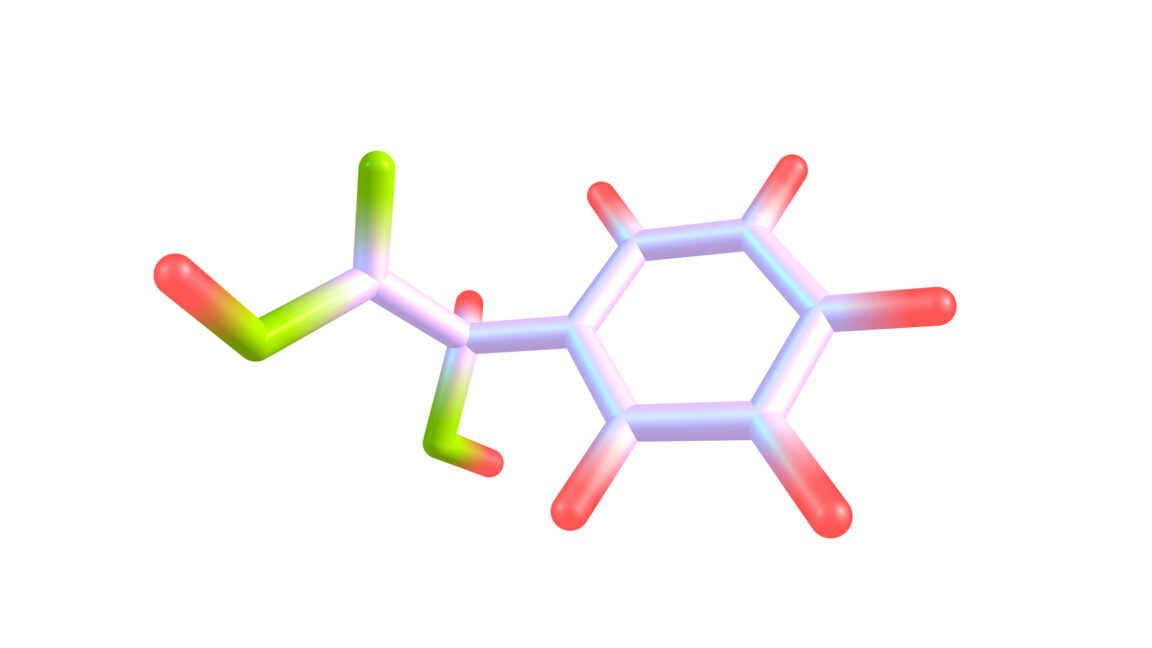
Life is remarkably selective. Life relies on many molecules with what is termed "handedness"β€”they're chemically identical but are mirror images of each other. Most chemical reactions will make a 50-50 mix of the left- and right-handed forms of a chemical, but life uses only one of them. In fact, because of the differences between left- and right-handed chemicals, most of the key enzymes used by organisms will fail to work if they're presented with chemicals that have the wrong handedness.

That poses a bit of a challenge for origin-of-life research, as we're forced to explain how a world that may have started with an even mix of left- and right-handed chemicals produced organisms that only used one of them.

Today's Nobel Prize in Chemistry goes to two individuals, Henri Kagan and Kenso Soai, who discovered chemical reactions could be biased, producing large excesses of one of the two forms of a chemical.

Read full article

Comments

Β© ollaweila

❌