❌

Reading view

There are new articles available, click to refresh the page.

ICE plan to buy robot dogs spurs protest from hundreds of Boston Dynamics employees

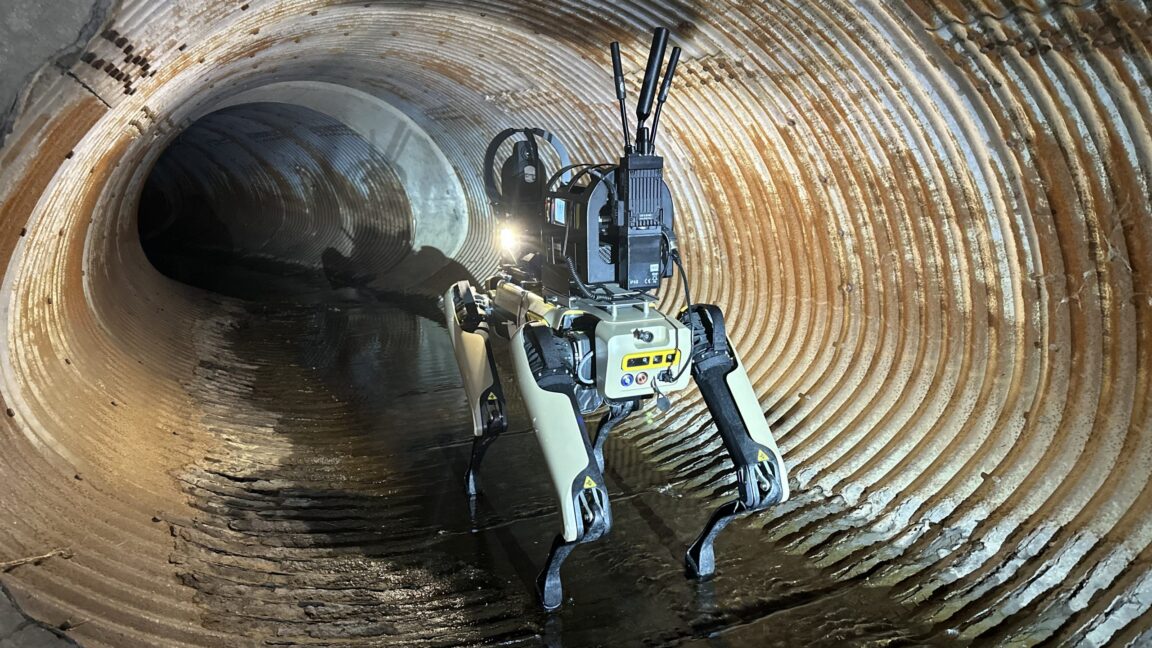
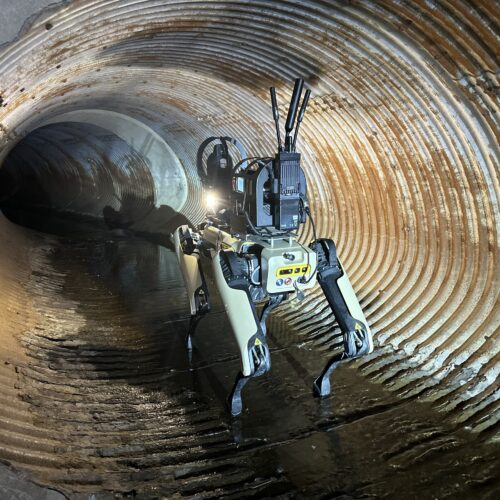
Hundreds of employees at the US robotics firm Boston Dynamics signed a petition calling for executives to halt a sale of the company’s robot dogs to US Immigration and Customs Enforcementβ€”but executives stood by the deal, while saying the robots would not be weaponized.

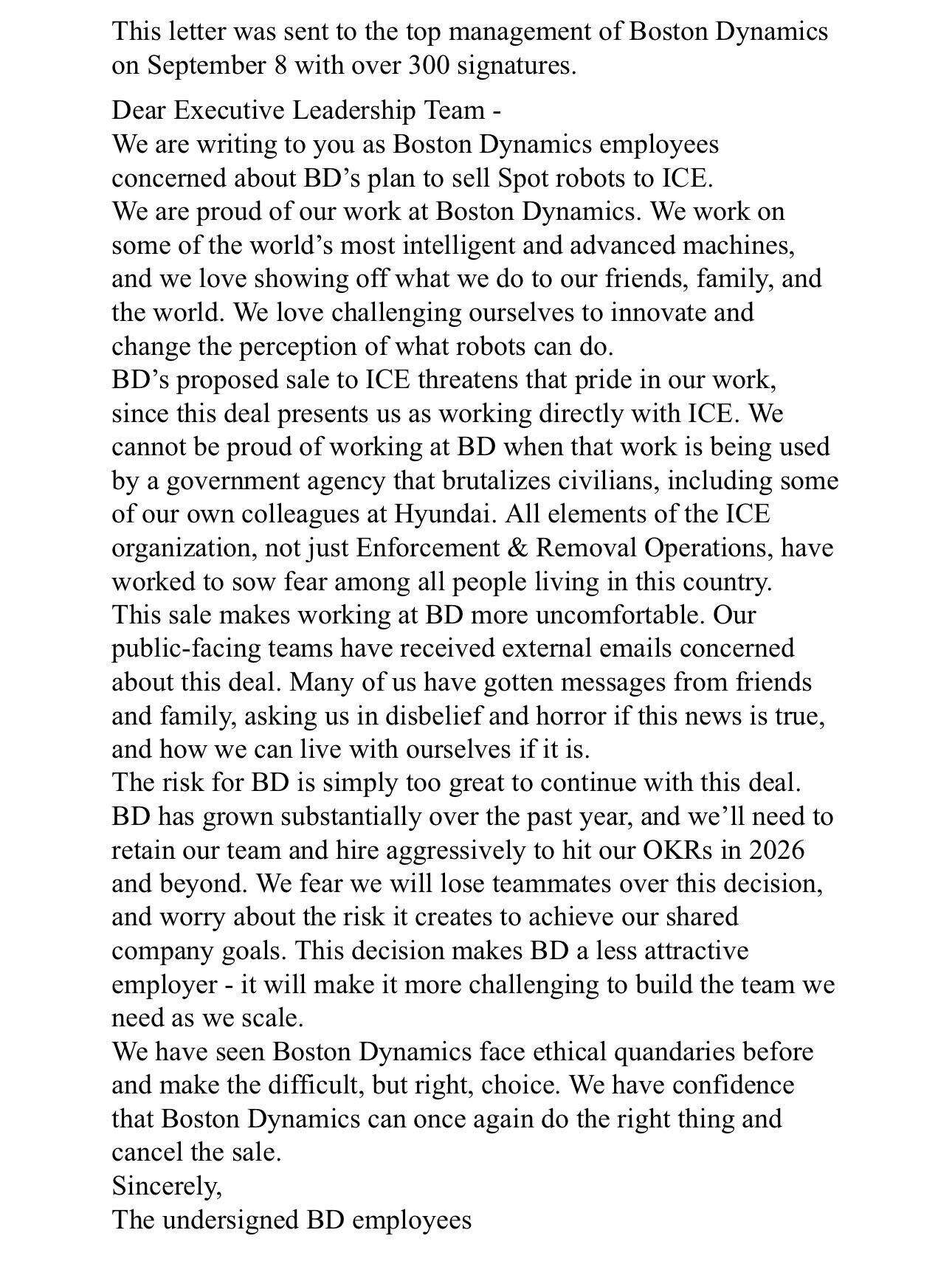
On September 25, the Department of Homeland Security contract awarded $1.3 million to a Connecticut company called Radeco to provide ICE with modified versions of Boston Dynamics’ quadruped robots. But Boston Dynamics workers sent the petition letter with more than 300 signaturesβ€”half of them anonymousβ€”to the company’s executives in early September and shared copies with The Boston Globe and WBUR public radio station.

β€œMany of us have gotten messages from friends and family, asking us in disbelief and horror if this news is true, and how we can live with ourselves if it is,” according to the petition. β€œThe risk for Boston Dynamics is simply too great to continue with this deal.”
Read full article

Comments

Β© Radeco

Nvidia's big bet on physical AI aims for safer robotaxis, humanoid robots

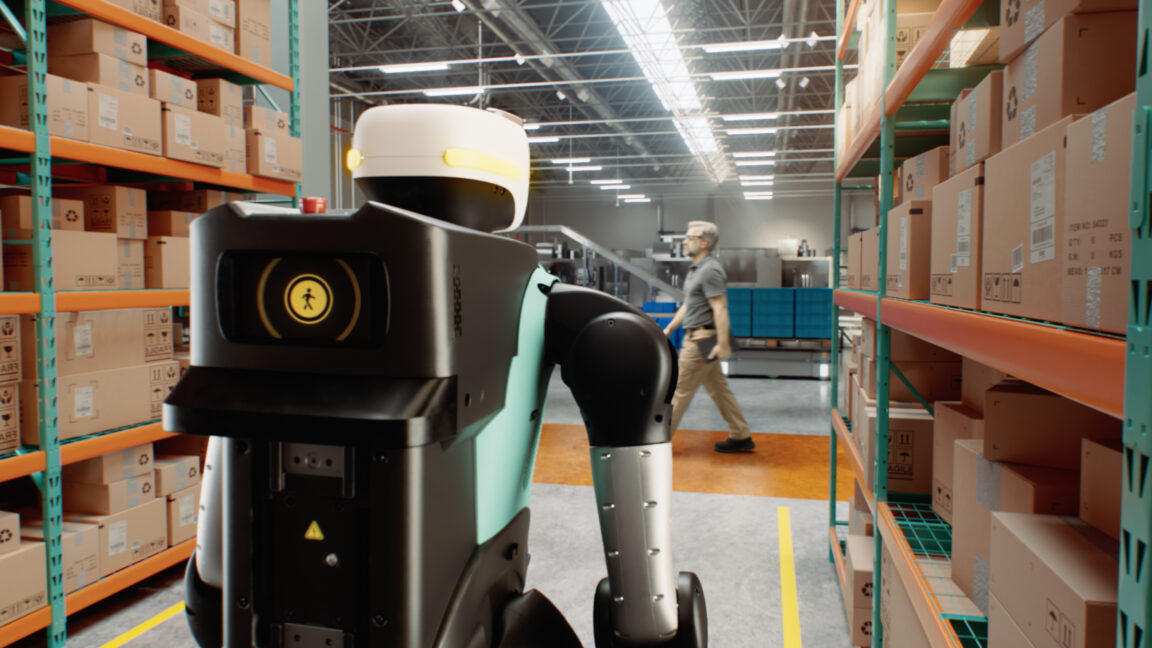
Investors bullish on AI data centers may be fueling Nvidia’s multitrillion-dollar market capitalization, but the AI chipmaker has also bet billions of dollars on physical AI technologies such as robotics and self-driving cars. Part of that gambit has involved developing a full-stack safety system that companies can build upon to reduce the risk of their machines harming nearby people.

Nvidia's Halos system launched in 2025 with hardware and software tools to help developers implement guardrails in self-driving cars and other autonomous vehicles. Then the company expanded its safety architecture to more physical AI technologies by announcing Nvidia Halos for Robotics in June 2026β€”with the goal of enabling safe deployments of autonomous mobile robots in warehouses, humanoid robots walking around inside a factory, or even surgical robots.

β€œNow the AI models are getting capable, the robot hardware is getting capable, and a thing we thought is going to be the next bottleneck is safety,” Amit Goel, head of robotics ecosystem and edge computing at Nvidia, told Ars. β€œSo that's why we launched our Halos for Robotics to unlock the capability of these systems.”

Read full article

Comments

Β© Agility Robotics

❌