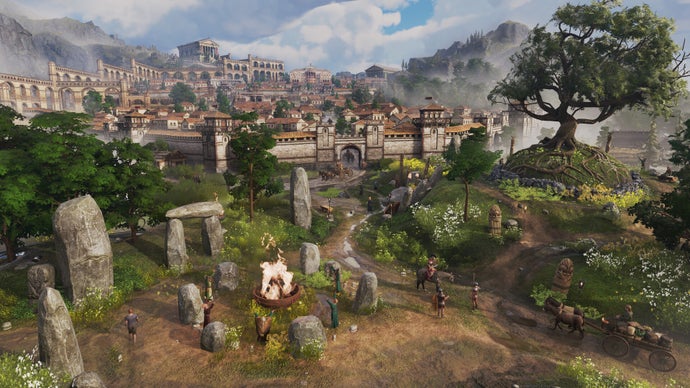
There can be such a wonderful charm that comes from fan games because the people that make them really are just in it for the love of the (literal) game. They ain't gonna make any money from this thing! So I'm quite tickled by OpenZ, a 3D remake of the 1996 RTS game Z from The Bitmap Brothers that's completely open source (and, thankfully, hand made).
Welcome to Edition 9.20 of the Rocket Report! Last weekend was a picture of the US launch business in miniature, and emblematic of the opposing trajectories of two of the nation's most experienced rocket makers. First, on Saturday, SpaceX completed a perfect midair catch of its Starship upper stage at its launch pad in Texas after spending nearly a day in orbit. The Super Heavy booster was lost at sea, but SpaceX proved it can recover that piece of the rocket on previous flights. While SpaceX showed it is well on the way to fielding a fully reusable rocket, United Launch Alliance suffered its first-ever total launch failure with the Vulcan rocket. That is terrible news for not only ULA, but also the US Space Force and Amazon, which have booked some 70 launches on Vulcan over the next few years. Your faithful correspondents will take a break from the Rocket Report next week for the Thanksgiving holiday, so we'll see you again the first week of December.
As always, we welcome reader submissions, and if you don't want to miss an issue, please subscribe using the box below (the form will not appear on AMP-enabled versions of the site). Each report will include information on small-, medium-, and heavy-lift rockets as well as a quick look ahead at the next three launches on the calendar.
Europe's leading satellite startup eyes Italian rocket maker. Finnish satellite developer ICEYE announced Tuesday that it is seeking to buy Italian rocket-maker Avio for more than $2.2 billion in a transaction aimed at creating Europe’s first true vertically integrated end-to-end space company, Ars reports. Avio builds the Vega C rocket, a solid-fueled launcher designed to carry up to 3.3 metric tons (7,300 pounds) of payload to low-Earth orbit. ICEYE is, by far, the most successful space startup in Europe, with a valuation of more than $12 billion after the company's most recent fundraising round in June.
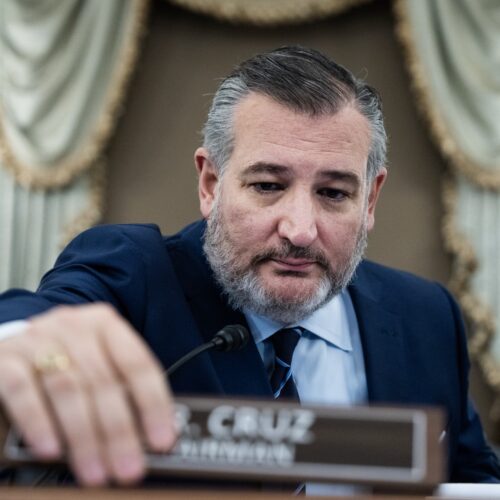
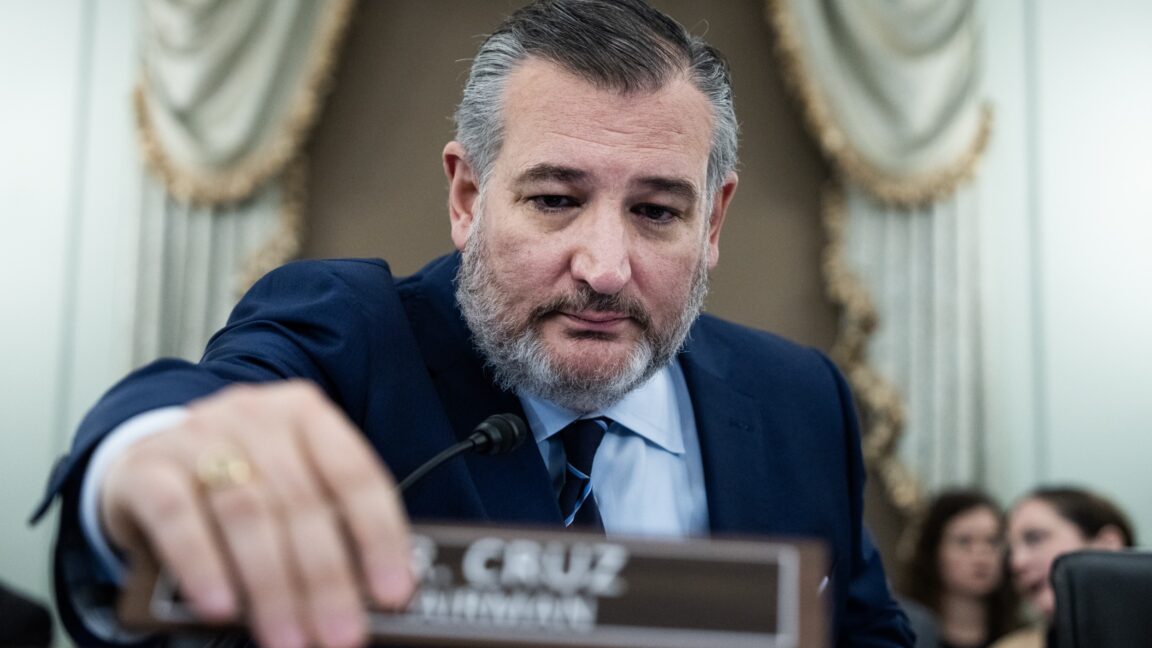
A Senate committee chaired by Ted Cruz (R-Texas) voted today to approve a Federal Communications Commission nominee, despite accusations that the nominee gave false testimony about her work as a legal advisor for FCC Chairman Brendan Carr. Democrats attempted to prevent a quorum by not showing up, but Cruz proceeded with a Republican-only vote.
All 15 Republicans on the Senate Commerce Committee voted to approve Trump nominee Danielle Thumann, while the committee's 13 Democrats were absent. "We're going to be doing our job today, even if the Democrats refuse to show up to do theirs," Cruz said at today's hearing.
Nominees are vetted in committees first, and then require majority approval from the Senate. Republicans are hoping to get Thumann confirmed before Democrats take Senate control in January.
SAN FRANCISCO—When Ars first drove the new Mercedes-Benz CLA last year, the automaker also gave us a sneak preview of its next driver assist. Called Drive Assist Pro, it’s for collaborative partially assisted driving, and from the passenger seat at the time, the demo was impressive. Now the automaker is getting ready to start rolling out Drive Assist Pro to customers with cars running the new MB.OS operating system here in the US and in Germany, and it let us have some time behind the wheel.
While most automakers want a reputation for safety, Mercedes has long used passive and active technology to do so in its products. It was one of the first OEMs to introduce airbags, and a decade later started adding active safety systems like anti-lock brakes, electronic stability control, and adaptive cruise control. And so, by giving the car’s electronics the ability to control the brakes and throttle, we arrive at the first level of assisted driving—called “level 1” in automotive engineer-speak.
“Level 2” assisted driving, where the car also controls the steering as well as the acceleration and braking, got famous with Tesla Autopilot. But the first lane-keeping assists predate it by almost a decade in passenger cars, when Toyota introduced a system in 2004. The human driver behind the wheel is still in charge, responsible for situational awareness (and anything that arises from a lack thereof), with the idea that long drives become less tiring and a little more effortless when the car does the boring job of keeping a constant speed or a constant distance to the car ahead and between the white lines.
April saw Hungary’s long-serving prime minister Viktor Orbán and his far-right Fidesz party lose power after 16 years. In October, a grassroots student-led opposition movement in Serbia unseated long-serving leader Aleksandar Vučić and his right-wing populist Serbian Progressive Party after 14 years.
Meanwhile, Brazil’s president Lula defeated far-right challenger Flávio Bolsonaro, prompting celebrations among progressive politicians who regard the result as important not only for Brazil but for the wider struggle over progressive politics. In Israel, Benjamin Netanyahu’s Likud Party failed to secure a majority, with record turnout among Arab citizens helping to strengthen the opposition.
Then came the US midterm elections, in which the Democrats took control of both chambers of Congress and made gains in traditionally Republican territory, including Texas, Kansas and by a whisker, Mississippi.
“The US results should give confidence to progressives everywhere,” said former shadow chancellor John McDonnell.
There is certainly plenty to celebrate. But progressive victories are never guaranteed to last and Europe is approaching a particularly consequential electoral cycle.
“The far right has been a problem for Europe for more than a decade,” says Charles Grant, director of the Centre for European Reform. “But the problem is getting worse. It is going to be harder to find a way to work around, as the EU did with Viktor Orbán. It is going to be more systematic and serious.”
With elections approaching in Spain, France, Poland, Italy, Finland, Estonia, Greece and Slovakia, 2027 could reshape Europe’s political landscape.
The concern isn’t just that nationalist and far-right parties could make further gains. Centre-right parties are increasingly willing to share power with them, while centre-left parties are moving rightwards on issues such as immigration in an attempt to win back voters.
The question is whether Europe is heading for a political earthquake, with far-right parties entering government or strengthening their grip on power in some of its most influential countries.
Pedro Sánchez’s political survival test
Spain is first into the electoral firing line, with a snap election scheduled for November 29. Prime Minister Pedro Sánchez called it after the conservative People’s Party (PP), far-right Vox and Catalan pro-independence party Junts blocked his major housing reform package in parliament in September.
Despite Sánchez’s reputation for political survival, the latest polling suggests he faces a difficult contest. His career has been defined by repeated comebacks, including his forced resignation as PSOE leader in 2016, his extraordinary return to the party leadership in 2017 and his subsequent ability to forge unlikely parliamentary alliances to remain in power. But even his formidable political resilience may not be enough this time.
The PP is polling ahead of Sánchez but require support from Vox to secure a parliamentary majority. Meanwhile, the left’s prospects have been weakened by the failure of far-left parties to agree on a common electoral list. The resulting fragmentation risks splitting the progressive vote and weakening mobilisation around housing, social justice and opposition to the far right.
A right-wing victory would have consequences well beyond a change of government. It could reverse some of Spain’s progressive policies, bringing tougher immigration measures, tighter border controls and restrictions on irregular migration.
That would threaten one of Spain’s most distinctive departures from Europe’s increasingly anti-immigration politics. Its relatively open migration policies have helped address labour shortages and support economic growth by enabling migrants to contribute to the workforce and wider society. Indeed, the Economist named Spain the world’s best-performing economy in 2024.
Climate policy could also take a hit. Under Sánchez, Spain has become a leading advocate of the green transition, backed by substantial EU funding and regulatory reforms. Vox, meanwhile, has called for elements of the European Green Deal to be dismantled. A change of government could therefore undermine Spain’s climate ambitions and its influence over European environmental policy.
Foreign policy could shift, too. Sánchez’s criticism of Israel over the war in Gaza has distinguished Spain from other European governments. A right-wing coalition could move towards a more traditionally pro-Israel position and closer ties with international conservative and nationalist movements.
Yet Sánchez’s predicament offers a wider lesson for progressives.
As Paolo Gerbaudo, senior researcher at the faculty of political science and sociology at Complutense University in Madrid, observes: “A thriving economy, a model green transition, social advances – Spain’s PM shouldn’t be in trouble. Yet he is, and it’s a lesson for progressives everywhere.”
Policy achievements alone don’t guarantee political support. Economic growth and social reform matter, but voters also need to see and feel the difference in their everyday lives, especially on housing costs which are becoming the defining issue beyond Spain.
If Sánchez’s latest gamble fails, it could mark a turning point in Europe’s political direction.
France’s political centre in danger of collapse
France is equally worrying. Recent polling suggests that far-right leader Marine Le Pen and hard-left rival Jean-Luc Mélenchon are consolidating their positions ahead of next year’s presidential election.
As Reuters has observed, Emmanuel Macron’s second and final presidential term is drawing to a close, leaving behind an unpopular presidency, a weakened political centre and a fragile economy. That creates fertile ground for political extremes to exploit public discontent.
A far-right breakthrough in one of the EU’s most powerful founding members would have enormous implications for the bloc, particularly if accompanied by nationalist advances elsewhere.
The nationalist challenge grows in Italy and Poland
Italy’s Giorgia Meloni may also face pressure from further to the right. Recent polling suggests the nationalist prime minister could be forced to consider an alliance with the newly formed hard-right National Future, led by pro-Russian former army general Roberto Vannacci, who was suspended from active military service after publishing a book containing anti-immigrant, anti-feminist and homophobic remarks.
“Meloni faces pact with devil to stay in power,” splashed the Telegraph earlier this year.
Poland, meanwhile, is also experiencing a far-right surge ahead of its next election. The gains threaten to undermine the liberal-left coalition led by Donald Tusk’s Civic Coalition, which ended eight years of Law and Justice (PiS) rule in 2023.
Disillusionment with PiS’s compromises with the EU has pushed some right-wing voters towards more radical alternatives. Konfederacja (Confederation), a libertarian-leaning hard-right coalition, has attracted support, particularly among younger voters and men, with its anti-establishment, tax-cutting messaging and opposition to EU regulations.
Even further to the right, the Confederation of the Polish Crown (KKP), led by extremist MEP Grzegorz Braun, openly advocates Poland’s withdrawal from the European Union, a Polexit, and promotes an even more radical nationalist agenda.
Recent polling puts the combined support of four right-wing parties at 47%, potentially placing them in a position to challenge the current governing coalition.
The consequences would extend well beyond Poland. A government committed to confronting the EU, or even leaving it, would pose a serious challenge to European unity at a time of mounting economic, geopolitical and security pressures.
And the shift is not confined to countries governed by the right. Centre-left governments in Denmark, Sweden and the UK have also adopted tougher positions on immigration and integration, showing how far the political centre ground has moved.
This wider shift presents a challenge for advocates of closer UK-EU relations. Andy Burnham has been opening the door to a more ambitious relationship with Europe, but he could find himself making that case at an awkward moment.
While Britain increasingly recognises the economic costs of Brexit, nationalist and Eurosceptic movements elsewhere are questioning the EU’s authority and, in some cases, advocating withdrawal altogether. Poland’s Polexit movement is one example, while France’s increasingly polarised politics could further destabilise the bloc. A defining year for Europe
The flurry of elections in 2027 could affect the EU even before the votes are counted. Governments preoccupied with domestic campaigns may become less willing to compromise on contentious European issues, including the EU budget, for fear of being accused of sacrificing national interests.
“It is pretty extraordinary that these elections are happening at the same time, but also because there are very, very similar dynamics taking place,” Mark Leonard, director of the European Council on Foreign Relations, told the Financial Times.
The stakes could hardly be higher. If nationalist parties were to dominate governments in Spain, France, Poland and Italy simultaneously, the consequences for European integration would be profound.
“I don’t think it’s hyperbolic to say it’s the end of the European Union as we’ve known it,” warned Nathalie Tocci, professor at the European campus of Johns Hopkins School of Advanced International Studies in Bologna.
It’s a sobering prospect. But victories in Hungary, Serbia, Brazil and the United States demonstrate that the far right is not invincible. Voters can mobilise and seemingly unstoppable populist movements can be defeated. But what happens next when progressive politicians gain power matters hugely if they are to retain that power long enough for people to experience a beneficial impact on their lives. Today’s volatile politics and fractured lines of communication between people and government make that challenge all the greater.
Gabrielle Pickard-Whitehead is author of Right-Wing Watch
Senator Ted Cruz (R-Texas) is aiming to widen the Republican majority on the Federal Communications Commission before Democrats take over control of the Senate in January 2027.
Just before the Republicans' midterm loss, Cruz yesterday announced a November 10 nomination hearing for Trump's FCC nominee, Danielle Thumann Severs. In his final two months as chairman of the Senate Commerce Committee, Cruz seems set on moving the Thumann Severs nomination to a full vote of the Senate.
Confirming Thumann Severs would give Republicans an unusual 3-1 advantage on the FCC. That could become a 3-0 advantage at the end of 2027 because FCC Democrat Anna Gomez would have to leave the commission at that time if Trump does not agree to renominate her.
Do screens in cars represent luxury? Judging by the latest car interiors, the answer would seem to be an emphatic “yes.” Screens aren't just getting larger; they are multiplying across the dashboard and morphing into different forms and concepts. Indeed, an interior’s screens are a pretty good indicator of what brand made the car—or at least how much the owner paid for it.
But is this actually what customers want? Are more screens really better? And even if they are, luxury car features inevitably trickle down to cheaper, more mainstream offerings, and screens can only get so big. That leaves luxury automakers with another question to answer: “What’s next?”
Mercedes-Benz is working on a new display alternative that could provide an answer. For now, it's known as the holographic display. Forget the images from Star Trek and Star Wars that just popped into your head, though. It's effectively a more advanced form of heads-up display, or HUD.
Saturday's are for having your mind read. Or, at least, this Saturday is because I'm seeing Derren Brown's new show. I'm a little self-conscious about it, not because I'm worried the mentalist will hypnotise me and make me profess a false love for consoles over PC games but because my partner and her family have never seen me at a magic (or magic adjacent show).
Reader, I am an awful audience member for conjurors, illusionists, and psychics.
Ubisoft have initiated talks over voluntary redundancies at three German studios under their banner, reportedly seeking to cut around 100 workers via the move. Ubisoft Dusseldorf, Ubisoft Berlin and Ubisoft Mainz are the studios set to be affected, with talks over the plans between Ubisoft and a works council representing staff having been initiated by the publishers last week.
Spain is heading for a snap general election on November 29, and the right-wing press has wasted no time celebrating what it clearly projects to be the beginning of the end for Pedro Sánchez’s Socialist government.
Sánchez announced the early election after his minority government suffered a parliamentary defeat over emergency measures designed to tackle Spain’s housing crisis, following intense public outrage after a high-profile eviction of an 87-year-old woman in Madrid. The proposals, which included stronger protections against evictions and measures aimed at increasing access to affordable housing, were voted down after the conservative People’s Party (PP), the far-right Vox and the Catalan pro-independence party Junts opposed them.
The PP is currently ahead of Sánchez’s Spanish Socialist Workers’ Party (PSOE) in the polls, while support for Vox has also been rising. If those numbers translate into parliamentary seats, the PP could need Vox’s support to form a government, potentially bringing the far-right party into national government for the first time since the end of Franco’s dictatorship.
For the right-wing media, however, the result is apparently already written.
‘European Left on verge of collapse’
No sooner had the election been announced than the knives were out.
Its article presents Sánchez as an increasingly isolated figure on the European Left, highlighting his criticism of Israel’s war in Gaza, his migration policies and his confrontations with Donald Trump over the war in Iran and Nato defence spending.
It also notes Sánchez’s emergence as a prominent figure on the European Left, including how Andy Burnham sought him out at the UN General Assembly in New York, where the two leaders strolled through Central Park.
The piece points to Sánchez’s political survival after previous electoral setbacks, but argues that, this time, the stakes are higher.
“If Mr Sanchez’s gamble backfires this time,” it writes, “the already small number of centre-Left leaders in Europe will be reduced to Mr Burnham, Denmark’s Mette Frederiksen and Malta’s Robert Abela.”
And should the PP and Vox prevail, the Telegraph predicts it would “build momentum behind Europe’s insurgent populist parties”.
The piece looks ahead to elections in France, Italy and Poland, arguing that victories for Marine Le Pen, Giorgia Meloni and Poland’s Law and Justice party would see the EU “swing further to the Right and the Left further diminished”.
The Spectator declares victory before the votes are counted
The right-wing magazine argues Spain now faces the prospect of a “markedly more right-wing government, dependent on Vox’s support”.
It highlights Vox’s calls for “national priority” in access to social housing and benefits, deportation of people living in Spain illegally, and the deportation of legal immigrants who commit crimes.
The article concludes that Sánchez is relying on voters’ fear of bringing a party he describes as “far right” into government overcoming dissatisfaction with his own record.
“On present evidence,” it says, “that looks a forlorn hope.”
There are, of course, serious reasons why Sánchez faces a difficult election.
His minority government has struggled to pass legislation, and his administration has been hit by political and corruption controversies. Social and housing tensions are high following the Ceuta incident with 80,000 migrants from Morocco and rising rents and evictions fuelling large demonstrations across the country.
But there is an important detail that rather gets lost amid the right-wing media’s celebrations.
The election has not happened yet.
Sánchez is undoubtedly taking a political gamble. But the immediate trigger for the election was a housing crisis that has generated huge public anger, and which the right-wing parties themselves helped prevent his government from addressing through the proposed emergency measures.
Sánchez has explicitly framed the election as a choice about whether Spain can continue pursuing progressive policies and secure a broader parliamentary majority capable of delivering reforms on inequality, public services and housing.
The Telegraph and Spectator may have already written Sánchez’s political obituary but on November 29, Spanish voters, not the right-wing press, will decide whether it was premature.
Before TikTok turned every moment into content, people uploaded shaky, pointless little iPhone videos to YouTube and forgot about them. This strange website found five million of them—dogs, holidays, car rides, bad concerts—and lets you fall into a random stranger’s 2010 afternoon.
Reposted from Northwest Bylines Mark H Burton With transport through the Strait of Hormuz at a virtual standstill, we get a picture of how oil and petrochemicals are part of our life The supply chain problems arising from the unprovoked USA/Israeli attack on Iran are becoming clear. They are multiple, affecting not just oil and… Continue reading The Hormuz ‘dry run’: life without oil and petrochemicals

 Login