❌

Reading view

There are new articles available, click to refresh the page.

Inside the Trump Administration’s War on the International Criminal Court

A New World Order

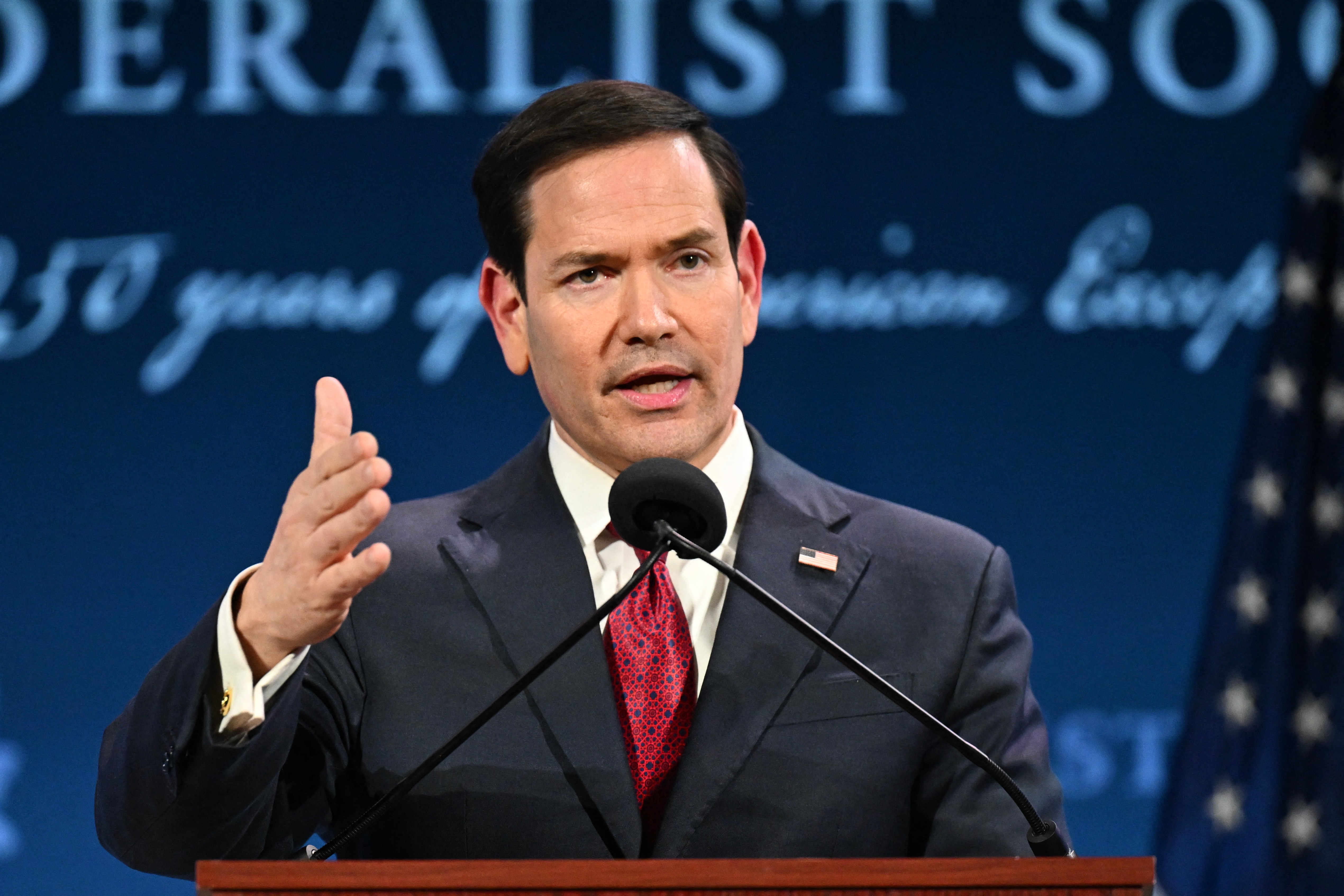
Secretary of State Marco Rubio has once again attacked the global system of laws, norms, and principles instituted to place limits on international armed violence. Advocating for a return to might-makes-right barbarism during a keynote speech on Friday, Rubio threatened to use military force against the International Criminal Court, which prosecutes individuals accused of the gravest atrocities. Warning that if the ICC was “foolish enough to try to enforce their paper decrees on Americans, our answer will probably be the same as the Roman general Pompey when he said to those who were trying to invoke their city’s charters against his legions. … ‘Stop quoting laws to men with swords.’”

Rubio’s effort to undermine the principles and rules that regulate the means and methods of warfare and the humanitarian protection of civilian populations, sick and wounded combatants, and prisoners of war is part of the Trump administration’s wide-ranging effort to upend the rules-based international order that the U.S. has championed — but often failed to abide by — since World War II.

Speaking before the conservative Federalist Society at the National Lawyers Convention in Washington, D.C., Rubio disparaged the ICC as a “fake court” and “an unelected world tribunal, which claims to supersede the laws and constitutions of sovereign states, even those who never signed up for it.”

Rubio’s tirade was the latest salvo in a long-running campaign against the ICC by President Donald Trump’s administration, which has vowed to cripple the court. In October, after former ICC judge Navanethem “Navi” Pillay was awarded the Nobel Peace Prize, Trump — who has relentlessly campaigned for the award — was enraged and derided the South African jurist as “a liberal person who works at the United Nations, who nobody has ever heard of.”

Hours after the award was announced, the U.S. imposed sanctions on the ICC. These latest sanctions are intended to turn the judicial organ into an economic pariah. They prohibited the court from conducting dollar-denominated transactions, froze its U.S.-based assets, and barred the judicial body from using the U.S. banking system or working with American institutions — effectively blacklisting the court.

The ongoing campaign to dismantle the ICC is just one piece of a larger effort by the Trump administration to ensure the U.S. military can act with impunity.

The ICC was created by the international community to investigate and prosecute war crimes, crimes against humanity, genocide, and the crime of aggression — when one country uses armed force against another without legal justification. The Hague, Netherlands-based court is unique as a permanent judicial organ capable of prosecuting anyone, infantry soldiers and sitting heads of state alike, for humanity’s gravest crimes if they are committed in the territories of its 125 member states. The ICC is critically a court of last resort that will only intervene when domestic jurisdictions either fail to hold their own service members and political leaders accountable, or when state parties to the court call for an investigation.

While the Trump administration’s timing in sanctioning the ICC was notable, this latest strike against the court is just one facet of the Trump administration’s yearslong campaign to — in the words of Rubio’s State Department — “dismantle” it. The effort dates back to 2020, when the first Trump administration imposed sanctions on ICC officials after the court opened an investigation into alleged U.S. war crimes and crimes against humanity committed in Afghanistan.

Overturned by the Biden administration in 2021, the first round of U.S. sanctions against the court were replaced last February by a new series targeting the court’s chief prosecutor, its two deputy prosecutors, and six of its judges. All of these judges had either investigated the actions of U.S. nationals in Afghanistan or were part of the ICC’s decision to issue arrest warrants for Israeli Prime Minister Benjamin Netanyahu and his former Defense Minister Yoav Gallant for their co-perpetration of “the war crime of starvation” and crimes against humanity in Gaza.

Though the litany of prior U.S. sanctions against the court impacted the lives of those nine individuals and their families — cutting them off from their bank accounts, emails, and blocking their travel — the actions were piecemeal and did not fully upend the work of the court.

Now, all of the ICC’s U.S.-based partner organizations have six months to completely cut ties with the court or face legal retribution. What’s more, since the current global economic system is built upon the U.S. dollar, international — particularly European — organizations often preemptively abide by U.S. sanctions even if their workings fall completely outside of America’s jurisdiction. For example, when the French company Axa terminated its life and health insurance contracts with the ICC on October 1, the insurer reportedly cited the escalating campaign by the U.S. against the court.

Absent the implementation of effective countermeasures — like amending and enforcing the EU Blocking Statute, which can shield EU individuals and businesses from “unlawful” third-country sanctions — this latest move by the U.S. may not kill the ICC, but it will cut off the judicial organ’s blood supply.

Victors’ Justice?

For over 80 years, the U.S. has enjoyed the privilege of proscribing — and not necessarily abiding by — international law. American representatives served as the chief arbiters of the post-World War II Nuremberg and Tokyo military tribunals that prosecuted Nazi and Japanese war criminals, which are seen by many in the field as the birthplaces of modern international criminal law. American arbiters, notably U.S. Supreme Court Justice Robert H. Jackson, led the victors of the Second World War as they tried and prosecuted their former adversaries for novel notions of wrongdoing, including crimes against peace and crimes against humanity. These newly defined criminal acts form the bedrock of the ICC’s jurisdiction.

At the International Military Tribunal for the Far East, all 25 major Japanese leaders were convicted, with seven receiving death sentences. Judge Radhabinod Pal of India argued for the acquittal of all 25. In his dissent, he complained that the tribunal dispensed victors’ justice. He said that America’s atomic strikes on Hiroshima and Nagasaki were among the most criminal acts of the conflict, yet immune from prosecution.

Indeed, the international criminal justice system was never intended to hold the U.S. or its allies accountable. And in the decades since, consecutive U.S. administrations have wielded the nation’s political and military strength to avoid any semblance of international legal oversight.

Although relations with the court have oscillated over the course of Democratic and Republican administrations, the U.S. has always been wary of the court’s potential jurisdiction over American nationals. From the court’s conception, in which the U.S. played a role, the global hegemon has continuously shown its disdain for the court’s territorial jurisdiction. While the ICC cannot prosecute any American nationals for their actions in the U.S., it does have jurisdiction over acts undertaken, by U.S. nationals or otherwise, within the territories of its member nations including Afghanistan, Libya, and Palestine.

The international criminal justice system was never intended to hold the U.S. or its allies accountable.

Under the Clinton administration in the 1990s, the U.S. was one of only seven drafting nations to initially veto the Rome Statute — the international treaty that created the ICC — due to its concerns over the court’s territorial jurisdiction. Later, in 2002, the same year the ICC was established, the George W. Bush administration signed the Hague Invasion Act into law. The act, which is still in effect, grants the president the legal backing to use military force against the court in order to free any U.S. or allied person held or imprisoned by the ICC. The Bush administration subsequently pressured dozens of countries to agree to never transfer U.S. nationals to the ICC, and threatened to cut military assistance, cease counterterrorism operations, or cut humanitarian aid if these states did not comply. Though relations with the ICC thawed somewhat under the Obama administration in the 2010s, the U.S. has never shown a substantial interest in joining the court and has worked for years to restrict its jurisdiction.

The Trump administration’s courtwide sanctions on the ICC are, however, a far leap beyond the pressure campaigns against the court and its member states by prior U.S. administrations. While the Trump administration cares little for the thin veneer of justice that prior U.S. administrations sought to maintain, the ongoing campaign to “dismantle” the ICC is just one piece of a larger effort by the current administration to ensure the U.S. military can act with impunity.

Soon after taking office, Trump and Defense Secretary Pete Hegseth ordered a mass purge of senior judge advocates general. Among their many functions, JAGs historically educated military leaders on the laws that prohibit the use of the U.S. military in domestic law enforcement and ensured commanders were aptly informed of the international legal obligations to protect civilians and prisoners of war. When asked about the mass layoffs in February 2025, Hegseth explained that the action was taken to remove potential “roadblocks to orders that are given by a commander in chief.”

In a concerted effort to further “maximum lethality,” Trump and Hegseth additionally gutted the Pentagon’s Civilian Protection Center of Excellence and the broader Civilian Harm Mitigation and Response program in the early months of 2025. The budding program, which the majority of U.S combatant commanders urged Hegseth to maintain, was established in 2022 to prevent, reduce, and respond to civilian casualty incidents. Stark cuts to the program’s manpower and funding coincided with a rise in civilian casualties reported in U.S. military operations in Iran, Yemen, Somalia, and in the Pacific Ocean and Caribbean Sea.

When taken together, the administration’s cuts to internal legal mechanisms and policy programs intended to maintain law and protect civilians, as well as its ongoing attempts to dismantle the ICC, can be seen as two aspects of a larger campaign to eradicate all avenues of military oversight.

The Fight for Justice Will Continue

The sweeping courtwide sanctions against the ICC are formidable for the same reasons they are survivable: They aim to isolate the court from its broad system of support. The international criminal justice system depends on evidence. This evidence is not found in The Hague; it is brought to it by an array of local, national, and international investigators, researchers, watchdogs, and atrocity survivors.

The evidence needed to confirm the genocide in Palestine; the U.S. bombing of the elementary school in Minab, Iran; and the extrajudicial killings of fisherman in the Caribbean would not exist without the networks of dedicated researchers, local journalists, and courageous survivors. And the work of these people, while critical to the court’s functions, will continue, even if the court is dismantled brick by brick.
“The Trillion Dollar War Machine,” by William D. Hartung and Ben Freeman. Available on Bookshop.org.

The ICC has strongly condemned the U.S. sanctions. ICC President Tomoko Akane has said that the court will “continue to fully discharge its mandate, with independence and impartiality, acting only on the basis of the law and the evidence, for the sake of the countless victims of grave crimes.” Pillay has also used the publicity stemming from her Nobel Peace Prize to showcase the court’s work. She further dedicated her award to “all the survivors of international crimes” as well as the international jurists “whose compassion and courage continue to ensure that impunity will not be allowed to reign.”

In his speech on Friday, Rubio took aim at those very jurists, declaring that the U.S. would never submit to the “sterile vision of radical judges or soulless global bureaucrats.” He claimed that this “global elite” was using international law as “an instrument to advance their interests under the pretense of universal principles.” This was, in fact, a stark about-face for Rubio, who was an advocate for international law during his 14 years as a U.S. senator. He even co-sponsored a resolution encouraging other nations to support the ICC’s investigations of Russian war crimes in Ukraine.

Rubio claimed that those who advocate for the restraint of law over all nations are anti-American. “For these people — the fundamental purpose of the law, American law and international law alike, is to weaken the United States,” he claimed. “It is to hinder the American government’s ability to defend American interests at home and abroad.” He continued, “There is nothing — there is nothing — in our history or the history of any other great nation that requires us to recognize the authority or legitimacy of any of these ridiculous ideas.”

Prior to Rubio’s speech, however, Pillay offered up a differing vision of America. In her estimation, Americans are not the singularly self-interested, lawless, reprobates envisioned by Rubio but a people who eschew limitless violence and value humanitarian principles. “I know,” she said, “that Americans support the principle of ending impunity for these serious crimes and that they support justice and accountability.”

The post Inside the Trump Administration’s War on the International Criminal Court appeared first on The Intercept.
💾

What would Rockstar have done if GTA hadn't taken off? Former tech director Obbe Vermeij on Scottish zombies, James Bond and the "curse" of success

It's bizarre today to think of Rockstar working on games that aren't Grand Theft Auto. Frankly, it's bizarre to think of Rockstar working on games that aren't GTA 6, which rolls onto console hard drives this week. A decade in the making, with a development team of thousands scattered across an international network of studios, GTA 6 aims to be the Maximum Game. It's both a dense, lively open world and a monument to the exhausting impersonality of "triple-A" game productions. It contains multitudes: birdlife! Realistic cloud formation! Fuel mechanics! Romance! Soda visibly sloshing around in bottles! It's an imperial production shadowed by labour disputes, that appears to have given Rockstar's various teams little time or space to think about anything else.

It wasn't ever thus. Once upon a time, Rockstar weren't just known for GTA and to a considerably lesser extent, Red Dead Redemption. Once upon a time, they had a reputation for slightly dodgy experiments. I recently interviewed former Rockstar North tech director Obbe Vermeij about a few of them, including Agent, the unofficial James Bond game Rockstar toyed with before putting all chips on Grand Theft Auto 5.

Read more

I'm not saying Sleeping Dogs is the world's best life of crime sim, but no other game has replicated the importance of pork buns to whole manhood as deftly

For absolutely no reason whatsoever, I’ve recently fired Sleeping Dogs up again. The United Front Games-developed, Square Enix-published open-world crime romp is still as good as it’s always been, and still occupies its own corner in the dingy bar where the GTAs and GTA-likes hang out. Back in 2015, RPS co-founderman Alec Meer (RPS in peace) referred to it as “the halfway house between GTA's sneering arrogance and Saints Row's chaotic nonchalance”. Fair enough, I’ve never been that big a Saints Row guy, but I see slumbering canines a bit differently.

Read more

"We've finally reached this milestone": Cyberpunk 2077 multiplayer mod CyberMP kicks off open beta after around six years preparing for cybermayhem

After a couple of years of regular testing behind closed doors, Cyberpunk 2077 multiplayer mod CyberMP is now out in open beta, giving anyone who fancies a bit of multi-merc action a chance to give it a go. Though, if you do, be prepared for bugs and crashes, as work on the mod is far from over with the release of this "true beta".

Read more

The Ceaseless Ceasefire

A Twilight Zone Between War and Peace

Abdullah Abu Zubaida’s family spent the first anniversary of the Gaza ceasefire last month in a shelter they built from the debris of their own home. Ne’man Abu Jarad and his five daughters spent it in tents, still displaced and with no clear way back. These families and millions of other Palestinians find themselves in a twilight state between war and peace: a zombie conflict in which a ceasefire has been announced while Israeli military control and attacks continue. The agreement risks making that condition permanent by leaving Palestinian governance and Israeli withdrawal dependent on decisions made largely by outside powers.

For these families, whose circumstances were reported by the Associated Press, and others in their position, the ceasefire that was supposed to end the war has brought little control over what happens next. Whether they can return home, rebuild, or resume anything resembling ordinary life remains subject to decisions made by outside authorities, whose hold on Gaza’s future may be further entrenched by the agreement itself.

While violations of the ceasefire warrant the attention they receive (and more), the agreement’s own terms demand scrutiny too, since arrangements negotiated to end wars also decide who holds power once the fighting stops. Christine Bell, a legal scholar specializing in peace accords, has shown how such agreements can perform constitutional functions. They determine who governs, over what territory, and subject to whose approval.

In Gaza, the conditions for Israeli withdrawal and Palestinian self-government give outside actors considerable power to determine when, and whether, the transition ends. The framework therefore threatens to turn the temporary administration of a devastated territory into a durable system of external control with no enforceable end, legitimized by the very agreement meant to bring peace.

A Long History of Outside Control

Gaza’s current predicament has a long history of displacement and outside control. In 1947, the United Nations General Assembly adopted a plan to partition Palestine (then under British rule) into Arab and Jewish states. While Jewish leadership accepted the plan, Arab leadership rejected it. During the war surrounding Israel’s establishment in 1948, approximately 750,000 Palestinians fled or were expelled from their homes. Many sought refuge in Gaza. The mass displacement and dispossession of the Nakba — Arabic for “catastrophe” — never ended.

Israel occupied Gaza and the West Bank, including East Jerusalem, in 1967. In 2005, it removed its settlements and withdrew its army from inside Gaza while retaining control over its airspace and maritime access and substantial authority over its borders and the movement of people and goods. In 2024, the International Court of Justice concluded that because Israel continued to exercise authority over Gaza’s borders and the movement of people and goods, the withdrawal had not entirely released it from its obligations under the law of occupation.

The current institution of Palestinian self-governance also began as a temporary arrangement intended to last no more than five years. The Oslo process of the 1990s provided for an interim Palestinian government in Gaza and the West Bank until a permanent settlement could be reached. That institution, the Palestinian Authority, remains central to proposals for Gaza’s future.

Hamas won the 2006 Palestinian legislative elections and took control of Gaza in 2007 after armed conflict with Fatah, the rival Palestinian faction. Israel, citing security concerns, tightened its border restrictions into a blockade by land, sea, and air, restricting the movement of people into and out of Gaza and the entry of food, construction materials, and other necessities. Egypt restricted passage through its own border crossing. Years before the current war, the U.N.’s humanitarian office documented the effects: restrictions on movement and trade had undermined Gaza’s economy, increased its dependence on aid, and obstructed access to healthcare and education.

On Oct. 7, 2023, Hamas-led groups attacked Israel, deliberately killing civilians and taking hostages; Human Rights Watch has documented these acts as crimes against humanity and war crimes. Israel’s subsequent military response devastated Gaza. By Oct. 21 of this year, Gaza’s Health Ministry reported 74,494 Palestinians killed and 175,604 injured. In an October 2026 report, the U.N. Independent International Commission of Inquiry concluded that Israeli authorities and forces continued committing genocidal acts against Palestinians in Gaza after the ceasefire, with the intent to destroy the group in whole or in part. By September of this year, Israeli military control had expanded beyond the approximately 53 percent of Gaza envisioned under the ceasefire agreement to at least 60 percent.

By the ceasefire’s first anniversary, nearly two-thirds of housing units had been destroyed, many of the remaining buildings were unsafe, and large-scale reconstruction had yet to begin. With winter approaching, displaced families need immediate decisions about shelter. The Israeli authorities who control access to their homes and to building materials can postpone those decisions. Such delays favor whoever controls access, and waiting itself becomes a source of political leverage.

From Resolution 2735 to Resolution 2803

In June 2024, the U.N. Security Council endorsed a three-phase framework in Resolution 2735. An initial ceasefire and exchanges of hostages and prisoners were to lead, upon agreement, to a permanent end to hostilities and full Israeli withdrawal, followed by major reconstruction. The initial ceasefire was to continue for as long as negotiations over the second phase went on.

In November 2025, the Security Council adopted Resolution 2803, endorsing U.S. President Donald Trump’s plan to end the Gaza conflict and authorizing international arrangements for its implementation. The framework retains the language of transition while placing Gaza’s administration and redevelopment under the oversight of a Board of Peace chaired by Trump. Palestinian Authority control would depend on completing a reform program and demonstrating the capacity to govern securely and effectively. The resolution refers to earlier proposals, including a Saudi and French initiative calling for reforms to governance, transparency, public finances, and service provision. Israeli withdrawal is tied to demilitarization milestones to be agreed among the Israeli military, an International Stabilization Force, the guarantor states, and the United States. The force’s mandate includes demilitarization and civilian protection. An Israeli military presence along Gaza’s perimeter could remain until the territory is judged secure against a renewed terrorist threat.

The plan endorsed by the resolution states that Israel will not occupy or annex Gaza, that no one will be forced to leave, and that full humanitarian aid will enter immediately. Continued attacks and restrictions on assistance must therefore be assessed against those obligations, but compliance with these provisions would still not resolve the deeper problem. The framework grants outside institutions concrete powers over Gaza while making the restoration of Palestinian political authority dependent on future conditions. It establishes who governs during the transition far more clearly than it establishes how the transition ends.

The resolution authorizes the international arrangements until Dec. 31, 2027, subject to further Security Council action, but it sets no deadline for full Israeli military withdrawal or the transfer of political authority to Palestinians.

Who Decides When Gaza Is Secure?

Israeli withdrawal depends on milestones agreed with Israel and other actors, but the criteria for determining when those milestones have been satisfied, and the consequences of disagreement, remain ill defined. Whoever can set the benchmarks, withhold agreement, or dispute compliance has considerable power over how long Gaza remains under outside supervision. This effectively means that the decision will be made in large part by Israel and institutions overseeing the transition, including Trump’s Board of Peace, which counts Israeli Prime Minister Benjamin Netanyahu as a member.

No security arrangement can eliminate every future threat; clear benchmarks and a truly independent arbiter are essential if the ceasefire is to ever become a lasting peace.

The demand for protection against another attack is understandable. Hamas’s weapons, and its coercive power over Palestinians, are serious problems. But if the security conditions for withdrawal can be revised indefinitely, Palestinians cannot know when the promised transfer of authority will occur. The obligations of one armed faction should not determine whether an entire population has a political future.

Israel Policy Forum, a U.S. policy organization supporting a two-state solution, analyzed and supported the basic approach of the July 2026 road map. The proposal linked phased Hamas disarmament to incremental Israeli withdrawal and the creation of a new Palestinian civilian administration. The organization’s analysis described Israel’s refusal to accept that bargain, conflicting explanations of when withdrawal could proceed, and unresolved definitions and verification arrangements.

No security arrangement can eliminate every future threat; clear benchmarks and a truly independent arbiter are essential if the ceasefire is to ever become a lasting peace. Otherwise, the conditions for withdrawal could be extended indefinitely. If Hamas disarms and the promised withdrawal never comes, the disarmament stands while Israel’s commitment remains open to renegotiation. A single attack by a faction opposed to the agreement could then be invoked to suspend the political future of an entire population, allowing armed spoilers to trigger further delays in Palestinian self-government and giving Israel and the United States grounds to prolong those delays.

Palestinians have seen an interim arrangement outlast its deadline before. The 1993 Oslo agreement between Israel and the Palestine Liberation Organization established a framework for interim Palestinian self-government and negotiations toward a permanent settlement. It envisioned a transitional period of no more than five years, with negotiations on permanent status to address the sovereignty and governance of Jerusalem, the fate of Palestinian refugees since 1948, Israeli settlements, and state borders. More than three decades later, there is still no comprehensive settlement. The new plan follows the same design: concrete authority now, political rights later.

The Cost of Delay

In an Oct. 2 report, the UN’s humanitarian office identified 217 displacement sites at medium to high risk of flooding, hosting approximately 235,000 people. Nearly 44,000 people were sheltering in unsafe buildings that required full or partial demolition, the report said. Restrictions on land access and on the entry of supplies continued to hamper preparations for winter.

No later breakthrough can give back a lost winter, a child’s interrupted schooling, or a patient’s postponed treatment. The longer a household has to survive elsewhere, the harder it may become to rebuild the life it was forced to leave, and an agreement can keep promising recovery while the conditions for recovery disappear.

“The Trillion Dollar War Machine” by William D. Hartung and Ben Freeman. Available on Bookshop.org

Palestinians are also asked to prove they can govern before they are allowed to do so, and governing requires revenue. In the October report, the U.N. described how Israel’s withholding of approximately $6 billion in tax revenues it collected on the Palestinian Authority’s behalf was undermining that government body’s ability to provide services and pay salaries. The crisis extends beyond Gaza and exposes a circular test of readiness. An administration deprived of its own revenue struggles to deliver services, and those failures can then be invoked to justify continued outside supervision.

Blame works the same way: If a Palestinian administration is responsible for public services while other actors control access, security, and funding, residents may blame its officials for failures it could not prevent. The resulting loss of public trust would make representative government harder to build, and that weakness could in turn be cited as a reason for continued outside supervision.

Nathan J. Brown, a scholar of Palestinian politics, has argued that Gaza diplomacy is separating administrative functions from national political representation. A committee of technocrats can run clinics and restore water service, but deciding the political future of the people it serves requires authority grounded in their consent. An administration accountable primarily to a foreign board chaired by Trump lacks that democratic mandate.

The Role of Outside Powers

The United States helped broker the Gaza ceasefire, holds a central position in the system meant to implement it, and underwrites Israeli military power. According to the Congressional Research Service, the 2016 memorandum covering fiscal years 2019 through 2028 pledged $38 billion in military assistance, subject to congressional appropriation. Without credible American consequences for obstructing withdrawal, the material advantages of continued control may outweigh any incentive to implement the agreement.

Donors providing humanitarian aid may end up paying to keep civilians alive while decisive political control remains elsewhere. Each emergency would then produce another funding appeal, while the authority to lift the restrictions causing the emergency would remain in place. Humanitarian funding could consequently help sustain that arrangement. The proposed International Stabilization Force, tasked with demilitarization and civilian protection, would need the authority and backing to restrain abuses by all parties, including Israel.

Ceasefires Without Endings

Lebanon offers a warning. After the April truce in the Iran war, Pakistan’s prime minister said the ceasefire included Lebanon. U.S. Vice President JD Vance said Washington had agreed to no such thing. Israeli attacks in Lebanon continued while the parties disputed what the agreement covered. Lebanese civilians were exposed to violence while governments argued over whether their country was protected at all. Whoever defines a ceasefire’s scope decides whose security it guarantees.

Gaza already displays the features of a zombie conflict, with an announced ceasefire, recurring military operations, and unresolved struggles over territory and power. The danger is that this condition becomes entrenched. Diplomats go on describing a transition, while people live under a system of control that survives one round of negotiations after another.

These conditions, though, are sustained by identifiable governments and institutions, through decisions they could make differently.

In a July 2024 advisory opinion, the International Court of Justice stated that the Palestinian people’s right to self-determination could not be made conditional by the occupying power, and it concluded that Israel must end its unlawful presence in the occupied Palestinian territory as rapidly as possible. The Security Council’s Resolution 2803 places Palestinian statehood after reform and redevelopment, saying that the conditions for a credible pathway “may finally be in place” at that time. The political framework thus makes progress toward exercising an existing right dependent on conditions assessed by outside actors, while establishing their immediate authority much more clearly.

Every grant of outside authority under the ceasefire needs an expiration date: thresholds that can actually be met, independent assessors to judge them, and consequences for any party that blocks the next step. Without them, Israeli withdrawal and Palestinian self-government in Gaza will remain promises that outside actors renew indefinitely and never keep. For the families still displaced, another anniversary will mean another year in a tent or a ruined home, waiting for decisions they cannot make. Their ability to return, rebuild, and determine their own future remains subject to a political framework in which authority rests largely elsewhere. The Gaza ceasefire risks giving the structures of control that preceded the war a new institutional form, backed by the U.N. Security Council and administered indefinitely in the name of peace.

The post The Ceaseless Ceasefire appeared first on The Intercept.

💾

Forage and fight for ingredients in a magical 1960s Italy and whip up some tasty meals Cooking Mama style in The Snackbar at the End of the World

If a game is about cooking, at minimum I'll have to give it a quick testspin. Outside of this whole writing about video games thing, my other lot in life is soul bound to food, so I'm always curious to see how the two can be mixed together. And earlier this week, The Snackbar at the End of the World was revealed, a wonderfully cartoonish action-adventure game set in a magical, slightly post-apocalyptic version of 1960s Italy where you go out and forage for ingredients while fending off monstrous crops before turning them into tasty meals back in your struggling restaurant.

Read more

Congratulations to people who feel mean shooting random NPCs, because GTA 6 tries "to provide mechanisms that encourage" empathy

When you think about GTA as a series, the first thing that probably comes to mind is driving through crowds of people, gunning down whoever you like, just generally doing crime without any care in the world. I wouldn't exactly call it an empathy game, not to say that other games are any better at such a thing anyway. But with GTA 6 out, crikey, next bloody week, a new interview has gone up with co-studio head Rob Nelson where he shared that you have a bit more space to be empathetic compared to previous entries.

Read more

Missed something on your first go around The Blood of Dawnwalker? I've got good news, as next week's update adds in new game plus

A big part of the point of The Blood of Dawnwalker is that you're on a fixed time limit. You've got 30 in-game days and nights to try and save your family, and if you don't manage to see everything the game has to offer, well, the game's director is fine with that. But that doesn't matter as much now, as The Blood of Dawnwalker is getting its 1.2 update next week that adds in a new game plus mode.

Read more

Congress Might Sneakily Use Lame Duck to Deeply Intertwine the U.S. and Israeli Militaries

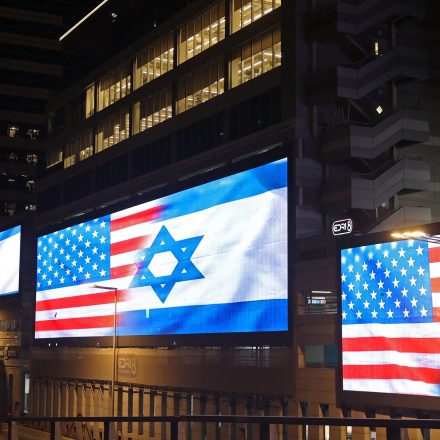
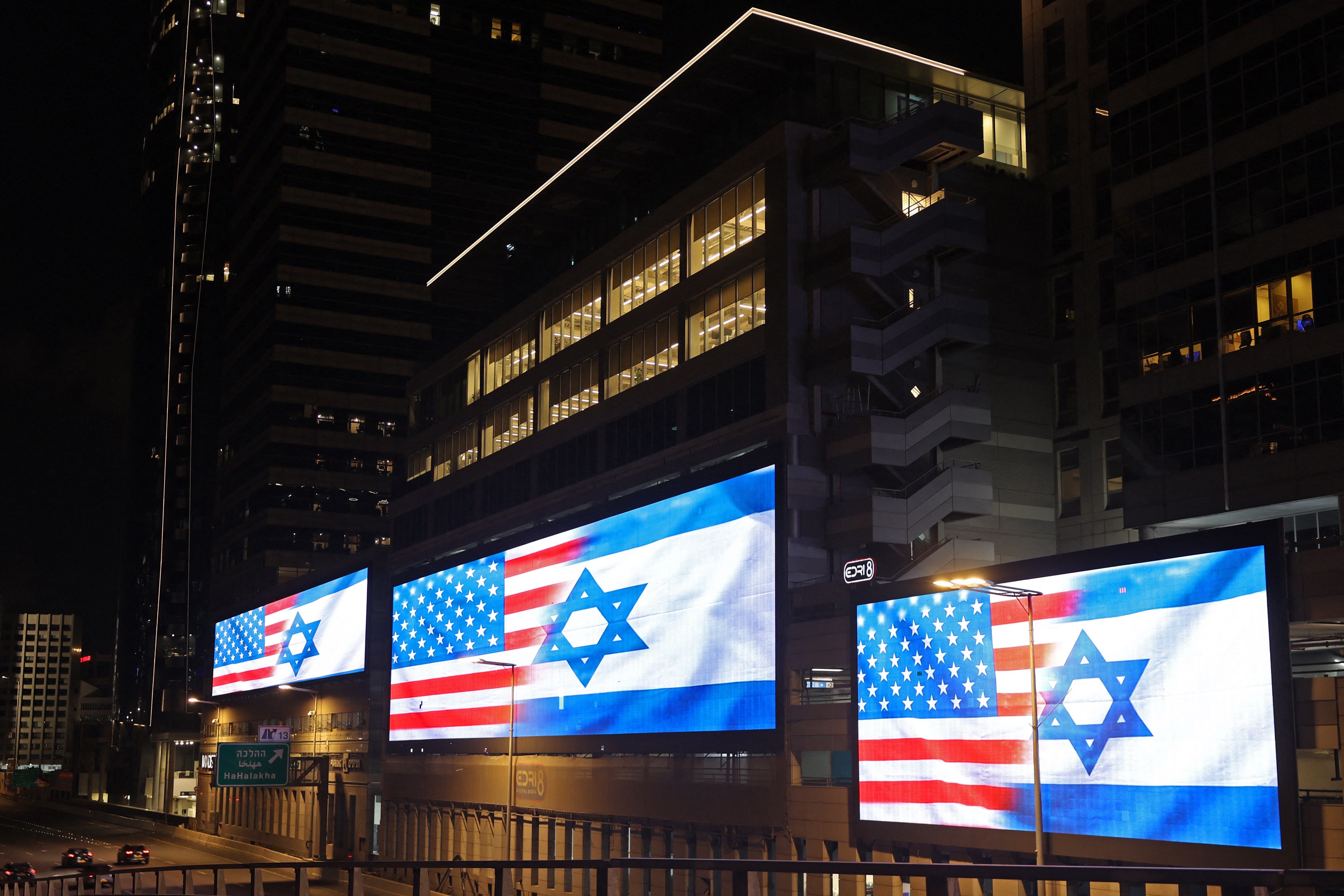
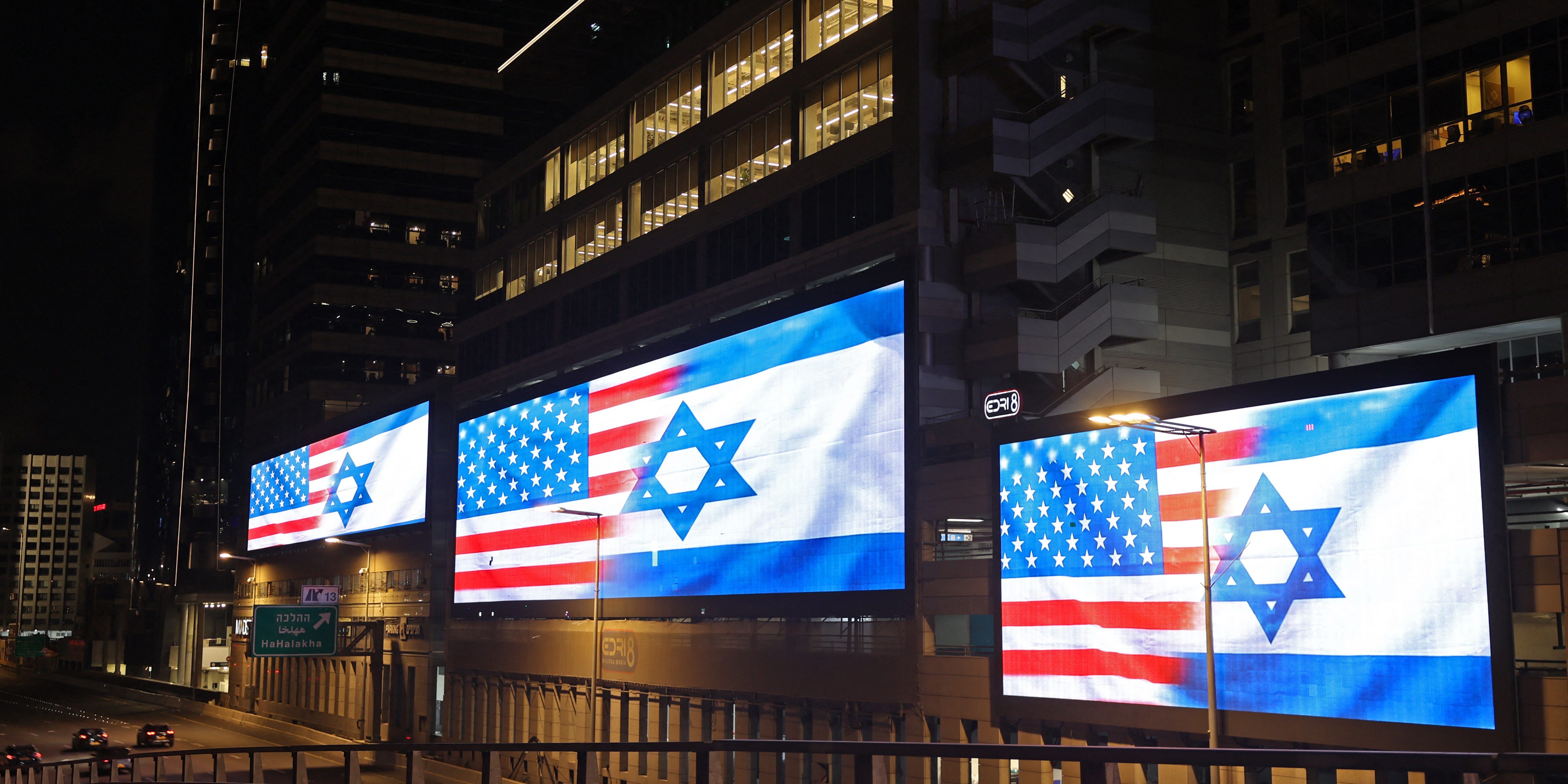
Giant screens installed along the highway display the national flags of US and Israel, in Tel Aviv on March 4, 2026. The Israeli military said it detected multiple missile barrages from Iran on March 4, as well as launches from Lebanon, triggering air raid sirens across the country. (Photo by Jack GUEZ / AFP via Getty Images)
Giant screens along a highway in Tel Aviv, Israel, display a combination of the United States and Israeli national flags on March 4, 2026. Photo: Jack Guez/AFP via Getty Images

After President Biden’s unrelenting support for Israel’s genocide in Gaza helped pave the way for President Trump’s reelection in 2024, Trump’s own foolish decision to launch an Israel-backed war against Iran played a large role in putting Democrats back in control of both chambers of Congress — a fact Vice President JD Vance diagnosed in no uncertain terms.

Now Democrats and Republicans alike have the opportunity to demonstrate they’ve finally learned the lesson voters have tried to deliver to both parties over the last three years: The American people do not want to be entangled and complicit in Israel’s aggression and atrocities. Their first opportunity to heed that call is arriving sooner than one might expect.

Right now, the House Armed Services Committee and Senate Armed Services Committee are engaged in an informal but highly consequential conference to finalize the text of the National Defense Authorization Act (NDAA), which sets policy for the Pentagon. A disturbing provision in current versions of the texts passed by the House and Senate committees would integrate Israeli weapons companies into the Pentagon procurement process at an unprecedented level — opening a back door to almost untraceably send billions of taxpayer dollars to Israeli weapons makers without congressional oversight. The House bill would create a new “executive agent” position within the Pentagon to steer this integration—a level of amalgamation that exceeds collaboration with nations in NATO.

Members of Congress on both sides of the aisle are opposing this provision. On Tuesday, Sen. Chris Van Hollen and nine other Democratic senators, plus independent Bernie Sanders, demanded it be removed. In the House, Democrat Ro Khanna and Republican Thomas Massie have made clear they will also try to strip the NDAA of this measure. In doing so, they are representing what the vast majority of Americans want—and their colleagues should take note.

In our August polling with Data for Progress, 75 percent of Democratic voters oppose this provision, as do 58 percent of independents and 42 percent of Republicans. In addition, polling shows a majority of Americans now want to see taxpayer funding to Israel reduced or ended. Passing the NDAA with this measure would mean that even if Congress zeroed out annual weapons funding to Israel, currently at $3.3 billion per year, in the State Department budget — earlier this year, 103 Democratic representatives joined Massie in a move to do just that — there could still be a major increase in actual dollars flowing to Israeli companies that the American people never hear about.

The negative repercussions extend beyond funding Israeli weapons makers (some of which are government-owned) with our tax dollars. This sort of integration could allow for Israeli weapons and surveillance technology that have been tested on Palestinians to be used in the U.S. to advance the Trump administration’s cruel mass deportation program. Israeli weapons maker Elbit Systems’s U.S. subsidiary is expected to install more than 300 surveillance towers along the U.S.-Mexico border, developed from its technology deployed along portions of Israel’s apartheid wall in the West Bank.

Melding Israel into our government procurement process should also set off alarm bells in the U.S. national security world. The Washington Post reported earlier this year that Israeli Prime Minister Benjamin Netanyahu vetoed Biden’s decision to send U.S.-Israeli co-produced missile systems to Ukraine three years ago for Ukraine’s war against Russia, even though the missiles were paid for by American taxpayers. The integration measure proposed in the NDAA would massively expand the scope of weapons over which the Israeli government could exercise a unilateral veto.

Congress should be unwinding intelligence cooperation with Israel, not only on the moral grounds that no part of the U.S. national security apparatus should assist in genocide, but also because Pentagon officials raised the threat of Israeli spying to its highest possible level earlier this year. But instead of diminishing our intelligence sharing with Israel, the Senate Select Committee on Intelligence’s FY27 Intelligence Authorization Act, which is typically incorporated into the final NDAA version, includes a provision (Sec. 618) actually mandating the president engage in even more intelligence cooperation.

This should give us pause because of the faulty nature of Israeli intelligence and the way Israel used this intelligence to build a case for dragging the United States into war. It was reportedly Israeli intelligence that claimed the Iranian government could be overthrown within weeks, if not days, of Trump launching the war. Instead, Trump and Netanyahu are now stuck in a quagmire, and the war has imposed a terrible cost on the American people, U.S. servicemembers, and people across Iran and the region. Energy prices around the world have skyrocketed, the cost of the war has already exceeded $2,000 per U.S. household on average, and the U.S. is running low on interceptor missiles that will take years to replenish.

None of this seems to concern the main backers of U.S.-Israel military and intelligence integration, like Foundation for Defense of Democracies President Mark Dubowitz. In a column published in Israel Hayom, the right-wing newspaper owned by the Israeli-American GOP megadonor Miriam Adelson, Dubowitz said: “Israel and the United States should deepen their military, technological, intelligence, and economic integration to such an extent that inflicting financial harm on Israel would also carry a significant cost for Washington.”

In an interview, Dubowitz added that the U.S. and Israel should be so intertwined that any accountability measure against Israel, such as sanctions being enacted by American allies in Europe, would “impose costs on the U.S. itself.” In no uncertain terms, advocates for the integration envisioned in the NDAA want to try to make it impossible for the U.S. to disentangle itself from a regime that is increasingly perceived by many as a rogue actor. 

The NDAA is usually considered a “must pass” bill in Congress — in fact, Congress has passed annual defense authorizations for 65 consecutive years. But Congress is under no statutory obligation to pass it this year, and doing so without stripping these provisions to become even more entrenched with supporting Israel would be an immediate betrayal of the will of voters. At a time when even Republicans are openly admitting the midterm election was a referendum on U.S. support for Israel, it would be an unforgivable choice for Congress to pass an NDAA with these integration provisions. If Republicans use their committee majorities to force their inclusion in the bill’s final text, Democrats have every bit of leverage to filibuster and block the bill’s passage in the Senate, which requires 60 votes.

Saying no to bringing the U.S. into a closer relationship with Israel in just about the most expensive, opaque, and dangerous way imaginable should be the easiest political decision Congress makes during its current lame-duck session.

The post Congress Might Sneakily Use Lame Duck to Deeply Intertwine the U.S. and Israeli Militaries appeared first on The Intercept.

💾

Israel Used a U.S.-Made Missile to Kill Six at Gaza’s Nasser Hospital

Throughout Israel’s war on Palestine, doctors Thaer Ahmad and Feroze Sidhwa spent months at Nasser Hospital in the southern Gaza city of Khan Younis, where they provided care as volunteers and survived a raid and an airstrike on the complex. On Wednesday evening, they were in an Uber in New York headed to a screening of their film about their time in Gaza when they realized Nasser was the target of another Israeli airstrike. 

“They just hit Nasser again,” Ahmad said, turning from the front seat toward Sidhwa. “I think Rizk is dead.” 

He was referring to Dr. Rizk Abu Shaaira, an experienced surgeon and fixture of the Palestinian medical community whom both had worked alongside at the hospital and who appears in their film “American Doctor.” When Israel attacked Nasser Hospital on Wednesday — for at least the seventh time since the genocide escalated in 2023 — Abu Shaaira was one of the six people killed.

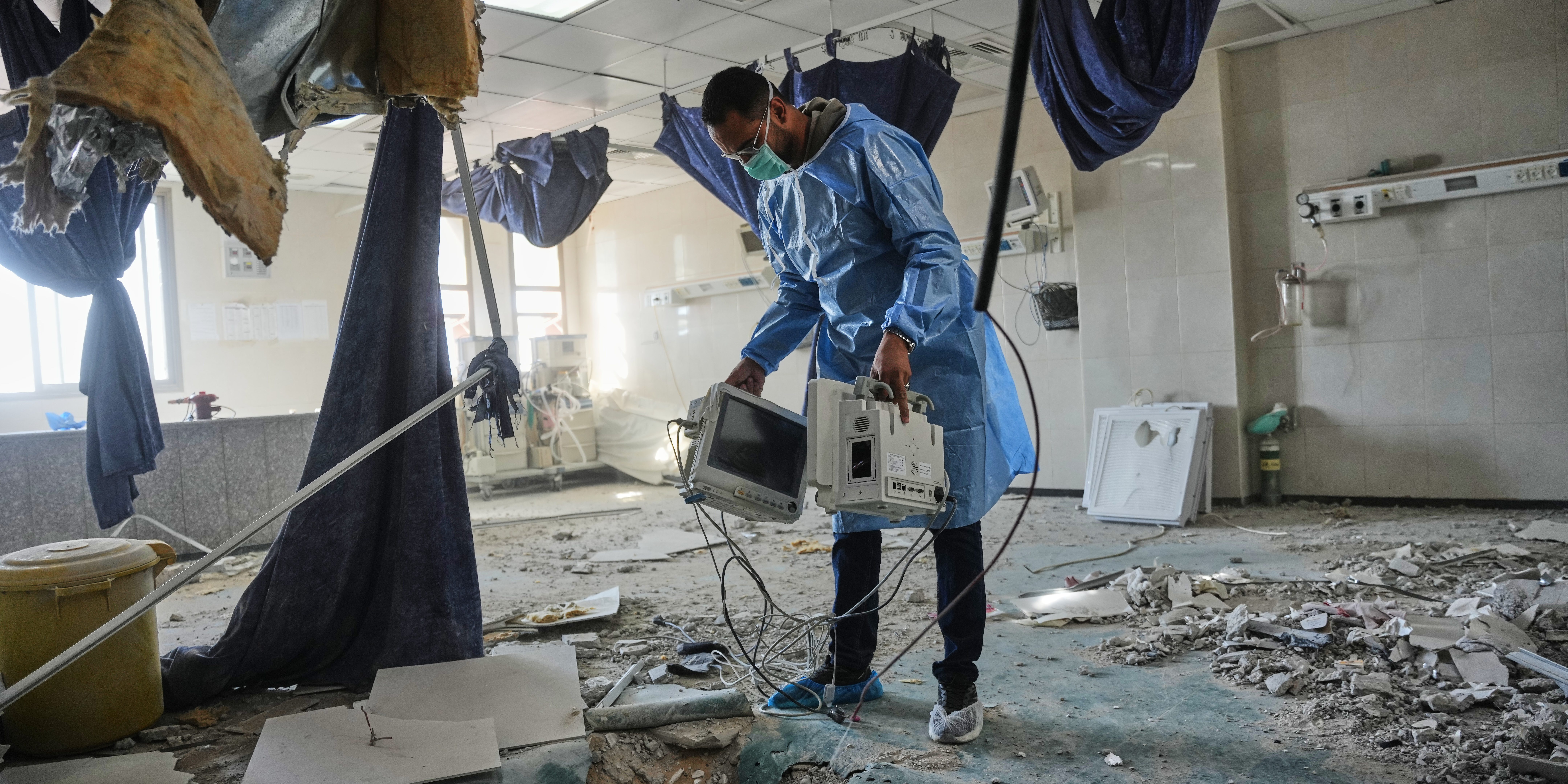
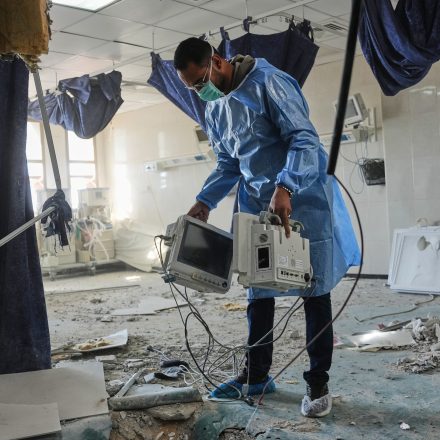
As the doctors arrived at a theater in Westchester for their screening, they received a flood of messages, photos, and video from their colleagues at Nasser, showing smoke-filled departments and wrecked operating rooms. The attack forced the closure of the hospital’s emergency, surgery, radiology and laboratory departments, hospital officials said.  

Six people were killed in the airstrike, according to Gaza health officials, and 52 others were wounded, said Médecins Sans Frontières/Doctors Without Borders. Israel said it had used a precision-guided missile to target a Hamas commander.    

One video showed a body bag holding Abu Shaaira, who had been working a night shift in the surgical ward, one of several floors severely damaged in the airstrike. Sidhwa, who worked directly with Abu Shaaira during his time volunteering at Nasser, described the 52-year-old father as a colleague who was “enthusiastic about everything” and “loved surgery.” 

Another image showed unexploded ordnance launched at the hospital that medical workers had placed atop a stretcher, bearing the label “GBU-39/B” – a model of guided missiles manufactured by U.S. company Boeing. Israel purchases this precise missile model using funds from the U.S. State Department. 

“That’s not complicity,” said Feroze when asked about the U.S.-made missiles used in the attack. “That’s active participation in the murder of physicians and other healthcare workers.”

Wednesday’s attack on Nasser Hospital, which serves a population of about 1.3 million people, is the fourth Israeli strike on a hospital since the so-called ceasefire agreement in October 2025. It is the seventh on the Nasser complex, including a double-tap strike in August 2025 when Israeli warplanes struck the hospital twice within minutes, killing first responders and journalists. Sidhwa had been volunteering at Nasser during an earlier airstrike on the complex in March 2025 violating an earlier ceasefire. That strike killed multiple people, including a 16-year-old boy. 

“Under international humanitarian law, hospitals must be respected and protected.”

When Ahmad volunteered at Nasser in early 2024, a part of the hospital’s pediatric ward was still damaged from an Israeli tank shell that flew through a window, killing Donia Abu Mohsen, 12, while she received care from a previous airstrike that killed her family. During his stint, Israeli soldiers raided the complex and detained several doctors with whom he worked; they remain imprisoned without charge. Ahmad said his colleagues at Nasser told him that upon hearing the first booms on Wednesday, they knew immediately, due to familiarity, that they had been hit by an Israeli attack. 

“Something that has troubled us so much is how normalized the targeting of these hospitals has become for Palestinians serving their communities,” Ahmad said. “They knew what was going on right away.” 

People look at remnants of an Israeli projectile after an overnight airstrike hit Nasser Hospital in Khan Younis, Gaza Strip, Thursday, Nov. 12, 2026. (AP Photo/Abdel Kareem Hana)
People look at remnants of an Israeli projectile after an overnight airstrike hit Nasser Hospital in Khan Younis, Gaza Strip, on Thursday, Nov. 12, 2026.  Photo: Abdel Kareem Hana/AP

Since returning from their time treating patients in Gaza, both Ahmad and Sidhwa have lobbied members of Congress to support the Block the Bombs Act, a House bill that seeks to prohibit the sale of certain arms to Israel that are tied to violations of U.S. and international human rights law. Among the weapons subject to the ban is Boeing’s 250-pound GBU-39. With a new Congress soon to be controlled by Democrats, many of whom ran campaigns touting support for the bill, both Ahmad and Sidhwa called on lawmakers to act. 

“If our Congress upheld international humanitarian law, as well as U.S. domestic law, Dr. Rizik would still be alive,” Ahmad said, “and there wouldn’t be a surgeon who lost both of his legs in this bombing.”  

The Israeli military claimed in a series of statements posted to social media that it had targeted a senior Hamas commander and other Hamas members who were “hiding” in the hospital and that the strike was meant to “eliminate the threat they posed.” The military did not specify the actual threat nor address the killing of Rizk, patients, and other civilians by “precision-guided missiles” it claims to have deployed to mitigate civilian harm. Israel alleged Hamas was operating out of the hospital’s second floor, but provided no evidence beyond a computer-rendered video. At least six Israelis have been killed in Gaza since the start of the so-called ceasefire, the Israeli military has said. Israel has killed more than 1,400 Palestinians in that time, according to Gaza health officials. The United Nations said that among those reported dead are at least 340 children.

In a statement to The Intercept, the Israeli military repeated its claim that Wednesday’s strike was targeting a Hamas commander, but it declined to confirm whether the alleged target of their strike was killed or comment on the civilians killed in the attack.

President Donald Trump’s Board of Peace, tasked with rebuilding Gaza, called Wednesday’s attack a “tragic loss of life” but went on to repeat the Israeli allegation that Hamas carries out “continued exploitation of hospitals and other critical civilian infrastructure for military purposes.”  

Sidhwa called the Board of Peace statement on Hamas’ alleged embedding in hospitals “bullshit,” adding that he has seen no evidence of Hamas embedding its fighters within any hospital in Gaza, a recurring observation by international doctors who volunteer in the strip.  

“Show me one example,” Sidhwa said. “I would love to see a single photo, a single video, a single testimony from a Palestinian. Literally anything. It’s just completely absurd.”

Médecins Sans Frontières/Doctors Without Borders said in a statement that it was “appalled and outraged” by Israel’s attack, adding that its doctors had to operate on two of their colleagues and another patient injured in the strike. The group referred to its earlier decision in January to temporarily halt its teams’ operations at Nasser, citing reports of “armed men in different areas of the large compound of the hospital,” and said similar incidents have taken place more recently. Even so, the group said, this does not justify Israel’s attack. 

“Under international humanitarian law, hospitals must be respected and protected,” the group said. “In no conceivable circumstances can attacks on functioning hospitals in Gaza be treated as normal or acceptable.”

The strike came days after the board issued a rare condemnation of the Israeli government for its blockade of humanitarian aid from entering Gaza in the aftermath of a storm that wiped out thousands of tents, killing four people. Israeli Prime Minister Benjamin Netanyahu rebuffed the criticism and blamed Hamas for not disarming. Israel, meanwhile, continues to occupy about 70% of the Gaza strip, extending beyond the yellow line, a border drawn in the ceasefire agreement that is meant to mark where Israel can operate its military, and launches attacks on the strip on a weekly basis, all violations of the agreement.

“The same military who’s blocking the necessary supplies, as a middle finger to you, decides that they’re going to bomb a hospital,” Ahmad said. “I’m sure behind closed doors everybody is fuming and reeling, but unless people are ready to actually hold the Israelis accountable, actually use their leverage, nothing is going to change.”

The post Israel Used a U.S.-Made Missile to Kill Six at Gaza’s Nasser Hospital appeared first on The Intercept.

💾

OpenAI Fooled by Russian Pranksters Into Thinking They Were Speaking to Ukrainian Official

A Russian internet comedy duo tricked three of OpenAI’s highest ranking military and national security staff into a candid conversation about arming Ukraine. The online pranksters posed as officials from Ukraine’s government, according to a recording of the meeting posted online.

The Russian comedy duo known as Vovan and Lexus have pulled off a long string of prank telephone calls to famous figures since 2011, with victims ranging from Elton John to John McCain. The group, whose pranks have often aligned with Russian foreign policy priorities, have been accused of working in league with its government, a charge they deny.

The latest to fall for their routine were Sasha Baker, who runs national security policy at OpenAI; the company’s lead for strategic initiatives, Caroline Zier; and Ben Crampton, who leads the country’s forays into European national security matters. All three have extensive government experience, with Baker and Zier taking high-level postings in the Department of Defense, and Crampton working in the European Union and United Nations.

“Weeks ago, we launched a thorough investigation into the call’s authenticity,” OpenAI spokesperson Nate Evans said in a statement to The Intercept. “We acted internally and with the relevant authorities to conclude that it was a prank conducted by individuals with a history of targeting officials and other companies. We took action to prevent similar situations from happening in the future.” (The Ukrainian Embassy in Washington did not immediately respond to a request for comment.)

The Russian prank duo said they arranged a high-level meeting with OpenAI by pretending to be Rustem Umerov, head of Ukraine’s Foreign Intelligence Service. During their 17-minute video conversation, a recording of which the Russian group uploaded to Rumble, the participants discussed OpenAI’s military support to Ukraine to aid its ongoing defense against Russia, including the possibility of providing offensive capabilities.

“There’s no question, I think, from our perspective that we want to have as deep a relationship as we possibly can with Ukraine,” Crampton said when asked about selling such offensive military AI services to the country. “But it may not be possible to get to where we want to be straight away.”

“There’s a general reluctance on the part of many people who are senior in the company to get too involved in offensive uses of our technology in a military context,” Crampton continued. “Part of our job is to explain that offense and defense are not necessarily distinguishable from each other under certain circumstances.”

“I’m afraid we probably can’t help you with Elon Musk.”

OpenAI’s ongoing $200 million contract with the U.S. Department of War says it provides artificial intelligence applications aimed at “warfighters” that will “improve military advantage, military utility, or enhance military decision making,” according to contract documents obtained by The Intercept.

In the conversation with the Russian pranksters, Baker added that the company has been in contact with the Pentagon about aiding Ukraine.

OpenAI officials also mentioned ongoing work with the Ukrainian government based around the company’s Daybreak Blue AI model, a system for fixing computer vulnerabilities, as well as a nascent “partnership” with the Ukrainian Ministry of Defense.

“There has been some contact with the Ministry of Defense,” Crampton said. “It’s primarily through a colleague of ours based in Washington as well, who previously had worked with the Delta team in your Ministry of Defense. I think in this field we are interested to partner in as many ways as we can.”

During the video call, both Baker and Zier commented that they had met Umerov previously and were pleased to be speaking to him again. The faux-Umerov appears to have kept his camera turned off for the duration of the meeting.

Vladimir Kuznetsov, the member of the Russian comedy duo known as Vovan, told The Intercept the prank was simple to arrange.

“We initially contacted a senior Ukrainian official in San Francisco, posing as Mr. Umerov,” Kuznetsov said. “It turned out that he had been working to establish connections with OpenAI through the Ukrainian diaspora in California. He was already in touch with Sasha Baker, especially since she had maintained close ties with Ukraine during her time at the U.S. Department of Defense. Believing he was speaking with Umerov, the official offered to arrange a meeting with OpenAI.”

The conversation touched on other topics, including whether OpenAI could help protect against the influence of Elon Musk, and President Donald Trump’s sentiments on the war.

“I’m afraid we probably can’t help you with Elon Musk,” said Baker. “He’s not a fan of our CEO either, if it helps you at all. So, we’re in the same boat.”

Of Trump’s increasingly icy stance on Ukrainian President Volodymyr Zelenskyy, Baker said, “It’s unfortunate. Of course, we’ve been reading in the news the back and forth and the comments from the U.S. president. But I do want to reassure you that I think the majority of the U.S. government, the U.S. people certainly, and our researchers are very supportive of Ukraine.”

The post OpenAI Fooled by Russian Pranksters Into Thinking They Were Speaking to Ukrainian Official appeared first on The Intercept.

💾

Ahead of GTA 6 and as concerns over genAI PC ports grow, Take-Two's CEO says they're revving up their "technical defences" and "legal activites" over piracy

It's a bit of a time for AI and games at the moment, 'ey? A bad time, obviously, as it's infecting everything from game development, to the modding community, to native PC ports of a remake of a very popular game that I won't link to for fear of a certain company finding out where I live and ending me there and then. And of course, the latter may be a concern for one Rockstar Games and the impending release of GTA 6. But according to Take-Two CEO Strauss Zelnick, game's publisher, they are currently technically and legally preparing themselves.

Read more

In a reveal that might worry eventual PC players glancing at their GPUs, GTA 6 will target 30fps on all consoles

In a press release coinciding with Grand Theft Auto VI becoming available for pre-load ahead of its November 19th release date, Rockstar has confirmed that the game "has been fully developed from the ground up to provide the best possible experience for the current generation of consoles, targeting 30 frames per second while pushing both platforms to their absolute limits." Read between the lines, and you can kind of make out the words "...so hope your PCs are up to spec, computer nerds."

Read more

"A fight for all workers": SAG-AFTRA throw weight behind emerging Rockstar union ahead of its GTA 6 release week vote

In what has come to feel like the dawn of the final day before Grand Theft Auto VI's release, one thing that Rockstar really don't want people to be aware of is the ongoing legal dispute between the Rockstar Games Workers Union and the studio itself following Rockstar's alleged union busting in firing 31 union members last year. Starting on the 12th through to the 26th, recognition of the union will be voted upon by staff to ensure that workers would be given a say over "topics including pay and bonuses, overtime, redundancies, flexible working arrangements, and generative AI policies."

If it passes, the vote would also make the union the largest recognised union in the UK games industry, partly thanks to its partnership with the Independent Workers Union of Great Britain. Now, the global labor union SAG-AFTRA have chimed in to endorse the Workers Union, offering solidarity to the members involved and granting important leverage from a global force.

Read more

Tons of “Bunker-Buster” Bomb Parts for Israel Go Through JFK Airport

An Israeli airline shipped thousands of pounds worth of parts for controversial “bunker-buster” bombs through John F. Kennedy International Airport in New York during the height of the Israeli–U.S. war against Iran, according to a new investigation by a left-wing research group.

Challenge Airlines, a cargo hauler based in Israel, made three flights this spring carrying the bomb casings for BLU-109s — a 2,000-pound munition that has been tied to numerous mass-casualty attacks on civilian neighborhoods in the Gaza Strip, Lebanon, and Iran in recent years — according to open-source data obtained by the Movement Research Unit and reviewed by The Intercept.

The airline also made more than 100 shipments of guidance kits known as joint direct attack munitions, or JDAMs — which are used to convert so-called “dumb bombs” into GPS-guided munitions capable of striking a specific target — according to data shared with The Intercept. Many of the guidance kits were marked for use on the MK-84, another 2,000-pound bomb Israel used in its campaign to level Gaza, where fragments of JDAMs have repeatedly been found at the site of airstrikes.

The 2,000-pound bombs present a serious risk of civilian casualties, according to Josh Paul, a former State Department official who resigned at the outset of the war in Gaza to protest the Biden administration’s sale of weapons to Israel.

“If you look at historic U.S. use of 2,000-pound bombs, in the entire counter-ISIS campaign, there were just two that were dropped in the vicinity of the city of Mosul precisely because there is no way to use a 2,000-pound bomb discriminately in an urban environment,” Paul said, referring to an American air war during the final years of the Obama administration to end the Islamic State’s control of the Iraqi city of Mosul.

Israel hasn’t shared the United States’s reservations. The country made extensive use of the weapons to attack targets in Gaza and Lebanon, including a deadly strike on Gaza’s Jabaliya refugee camp that killed dozens of civilians, according to an analysis by the New York Times.

“If you look at a picture of Gaza right now, I would say Israel’s use of these weapons is functionally indistinguishable from indiscriminate bombing,” Paul said.

“There is no way to use a 2,000-pound bomb discriminately in an urban environment.”

Challenge Airlines, and the Israeli military did not respond to request for comment.

“We work closely with all airport partners to ensure the safety of public, neighboring communities, and airport personnel,” said a spokesperson for the Port Authority of New York and New Jersey, which operates JFK Airport. “The federal government and commercial airlines have primary responsibility as to what is allowed to be shipped on aircraft. We are pre-empted under federal law from interfering with these activities.”

While the shipments of JDAMs and bomb bodies for BLU-109s did not include active munitions, previous shipments of weapons through JFK have included explosives, including 14 tons of nitrocellulose bound for Israel in May 2025.

The Intercept verified the data showing all three shipments of bunker-buster bomb bodies, and verified a portion of the data showing shipments of JDAM kits. Movement Research Unit, an investigative outlet whose prior work has uncovered shipments of drone tech to Israel and the transport of fighter jet parts by United Airlines onboard civilian passenger flights, shared the data on the condition that some specifics of its methods be withheld to prevent a crackdown on the availability of such data.

In response to the flow of weapons and materiel through JFK, the New York City chapter of the Democratic Socialists of America has been organizing a campaign to stop the flow of weapons to Israel through the airport.

“This is another example of a growing body of reporting that shows how civilian infrastructure is used for the genocide in Gaza,” said a DSA member named Henry, who asked to be identified without his last name in order prevent retaliation from his employer. “Civilian air travel should prioritize passengers, travelers, and the international community — not weapons — and no worker should be forced to serve the militarized supply chain.”

Tons of Pressure

Challenge Airlines shipped the bunker-buster bomb bodies on flights leaving JFK for Tel Aviv on March 12, April 30, and May 6, according to the data shared with The Intercept.

They shipped the guidance kits far more frequently, with 109 shipments leaving JFK for Tel Aviv between December 22, 2024, and June 7, 2026. Cargo documents indicate that most of the shipments were of JDAM kits designed for 2,000-pound MK-84 bombs but also included at least one shipment of kits for bunker-buster bombs.

In total, the airline shipped 175,884 pounds of BLU-109 casings and more than 5 million pounds of JDAM kits between December 22, 2024, and June 7, 2026, according to the data obtained by Movement Research Unit.

JFK Airport is the main export hub for such munitions flying by air to Israel, according to federal data: More than half of all Israel-bound air shipments of weapons that fit the government export category for bombs and missiles was sent abroad from JFK.

It was not immediately clear where the bunker buster and JDAM shipments originated, but sales of military hardware to Israel typically either come from deals between the Israeli and U.S. governments or direct commercial purchases under a special export license made by the Israeli military from private companies.

In the first two years of Israel’s war on Gaza, the U.S. spent $21.7 billion on military aid to Israel, according to a study by analyst William Hartung. That has included multiple shipments of 2,000-pound bombs like the BLU-109 and the MK-84, as well as JDAM kits to equip the weapons with GPS guidance.

The Biden administration in May 2024 halted the shipment of MK-84 2,000-pound bombs to Israel, citing the potential harm to civilians, but President Donald Trump resumed shipments of the heavy munitions within weeks of retaking the White House.

News of the shipments comes just over a month after the Associated Press revealed plans in the works for the U.S. to ink a vast $2.8 billion arms sale to Israel that would include thousands of 2,000-pound bombs.

The ongoing sale of such heavy weapons to Israel underscores the need for a federal solution, according to Rep. Delia Ramirez, D-Ill., who sponsored last year legislation dubbed the “Block the Bombs Act,” that would bar the U.S. from selling BLU-109s, JDAMs, and other munitions central to Israel’s war effort.

“It’s good that people are putting pressure locally, but ultimately it is Congress’s responsibility to make that happen.”

“It’s the only bill that prohibits these weapons transfers from happening, and the only bill that creates a comprehensive process of oversight,” Ramirez told The Intercept. “There’s been a big push, particularly in New York and around JFK, to block these transfers and it’s good that people are putting pressure locally, but ultimately it is Congress’s responsibility to make that happen.”

First introduced in May 2025, the bill has gathered more than 80 co-sponsors but has thus far languished in legislative limbo. With the House of Representatives soon to be under Democratic control, Ramirez said she plans to bring the bill to the floor next session.

The post Tons of “Bunker-Buster” Bomb Parts for Israel Go Through JFK Airport appeared first on The Intercept.

💾

Rockstar were "definitely" thinking about giving a Japanese studio the keys to GTA, says former tech director - "I have a name, but I'm not gonna say it"

Since time immemorial, North American and European publishers have racked their brains over ways to make their games sell in Japan, ancient heartland of mythical beings like Mario, Sonic, and Polaroid Pete. In the late noughties, Microsoft launched a big push to give Japanese youth the Xbox virus with such targeted console exclusives as Blue Dragon and Lost Odyssey. And Rockstar once dreamed of making a Grand Theft Auto game set in Tokyo.

Speaking to me last week, Rockstar North's former technical director Obbe Vermeij shared a little about the abandoned project. Emphasis on the "little" – it doesn't appear to have gotten very far, despite recently unearthed allusions to "Tokyo PS2" in GTA 5's source code.

Read more

Defeating Zionism to Free Palestine

The World at a Crossroads

Three years on from the onset of Israel’s genocide in Gaza, we are at a crucial hinge point. The world today, when it comes to Palestine, stands at the crossroads: meaningful support for liberation and decolonization, or the normalization of colonial expansion and erasure.

Since the 2021 “Manifesto of Dignity and Hope” and the unified call of Palestinians to confront Zionism, the Israeli political sphere has only continued to sustain and entrench its fascist trajectory and its racist laws. After 2023, Israeli settler colonialism and domination escalated into all-out destruction and elimination. Palestinians who had been enduring suffocating apartheid and siege for far too long were now subjected to genocidal assault. Though the context on the ground shifted, the urgent need for a better understanding and challenge to Zionism on political, legal, structural, and ideological grounds remained.

It was a new generation of Palestinian activists who produced the Manifesto of Dignity and Hope, but their text was shaped by the legacy and spirit of Palestinian revolutionaries and anti-colonial thinkers from earlier periods. Common language echoes through the generations. A quarter-century ago, Palestinian intellectual Edward Said wrote the core of the issue of Palestine “is intellectual truth and the need to combat any sort of apartheid. We should concentrate our resistance on … fully confronting the apartheid provisions inherent in Zionism.” And as diplomat Fayez Sayegh captured it in 1965: Racism is not an acquired or incidental or passing feature of the Israeli state; it is “inherent in the very ideology of Zionism.” Today, we can draw inspiration from these intergenerational reverberations across Palestinian theory and activism, in their consonant commitments to confronting Zionism.

Part of our own task as anti-colonial legal scholars is to expand our analysis of the limitations of narrow liberal legal readings of apartheid and inequality, and to highlight how a radical critique of Israeli apartheid is essential to dismantling Israel’s apartheid regime. This requires scrutiny not only of Zionism and Israeli settler colonialism, but also of the concept of apartheid itself. Apartheid was previously understood in the context of the African anti-apartheid struggle, in a formulation originally coined by the South African Communist Party, as “colonialism of a special type.” By the late 1990s, however, apartheid had been stripped in mainstream understandings of its global character and colonial essence, and effectively reframed as “racial discrimination of a special type.”

One factor in this analytical shift was the domestication of racism in international law, which has obscured its relationship to global capitalism and transformed racism into a problem for individual countries to resolve through juridical reform or diversity, equity, and inclusion programs. Racism is not merely abhorrent because people’s feelings are hurt or one feels unseen, however, but because it is entangled with power and economic structures, and because materially, the continuum of racist violence culminates in genocide, which is squarely understood as a global phenomenon. Martin Luther King Jr. pointed to this in 1967 when he said: “In the final analysis, racism is evil because its ultimate logic is genocide. … If one says that I am not good enough to eat at a lunch counter, or to have a good, decent job, or to go to school with him merely because of my race, he is saying consciously or unconsciously that I do not deserve to exist.”

International law attempts to capture this continuum. Three of the specific acts conducted to maintain apartheid are identical to the acts conducted to commit genocide under their respective legal definitions. In the former, they are done with the intent to dominate; in the latter, with the intent to destroy. These are not mutually exclusive, but rather interact with each other: Colonialism, apartheid, and genocide combine under the Zionist project in Palestine to produce a system of oppression based on conquest, structural racism, dispossession, and elimination.

Palestinian opposition to Zionism and the imperatives of decolonization — for political emancipation, material survival, and cultural flourishing — are the central thrust of our work. The colonial origins and early legal mechanics of Zionist settler colonialism and Israel’s apartheid regime reveal how Zionism functioned both as a colonial initiative and a racializing project. This manifested in colonial institutions even before the state was established in 1948, after which they were enshrined in racist legal regimes. A broad structural analysis of the institutional and economic processes of land and capital accumulation that have occurred under settler colonialism in Palestine is necessary to understand the machinery of conquest and dispossession — and the role that racism has played in driving it forward. Drawing on the anti-colonial Palestinian intellectual tradition, we can see that an antiracist analysis has been organic to the Palestinian liberation struggle and is precisely what shaped U.N. initiatives in the 1960s and 1970s that condemned Zionism as a form of racism and racial discrimination alongside apartheid and colonialism.

Despite all the analysis of Israeli state racism and colonial violence since 1948 and all of the mass popular mobilizations and legal advocacy against Israeli apartheid, nothing substantive was done at an international, political, or institutional level to address or redress it. This inaction and the impunity afforded to Israel inevitably culminated in the situation that the world found itself in after October 2023: unsanctioned apartheid accelerating into unadulterated genocide — and given the green light by those who had the power to stop it. There was a decade of increasingly flagged warning signs leading up to this. But Palestinian scholars and international lawyers who had warned of a “prelude to genocide” or “slow-motion” genocide over the years were largely ignored, and in some cases castigated. The consequences have been catastrophic. The United States actively funded, armed, and cheer-led the butchery in Gaza. European Union leaders chose to “stand with Israel” as it announced its starvation policy and war of annihilation.

“Confronting Zionism,” by Noura Erakat and John Reynolds. Available on Bookshop.org

We would not have ended up in this present moment if the critiques of Zionism as colonialism and racism and the reality of Israel as an apartheid regime had been taken seriously. In 1975, the U.N., led by a Third World majority, declared “international co-operation and peace require the achievement of national liberation and independence, the elimination of colonialism and neocolonialism, foreign occupation, zionism, apartheid and racial discrimination in all its forms, as well as the recognition of the dignity of peoples and their right to self-determination.” Against this, the Western world, led by the United States, has worked to normalize Israeli apartheid.

We see part of our task now as one of continuing to build on the recent “mainstreaming” of condemnations of Israeli apartheid and genocide, but in a way that decisively resists the drift toward narrower, liberal articulations and insists on the importance of radical, anti-colonial, and anti-imperial analysis and praxis. In our work as critical legal scholars, we situate apartheid and the shape it has taken as a category in international law, and we explore the limits and potential of legal tactics, arguments, and institutions to dismantle Israeli apartheid and end the genocide in Gaza. We argue that while legal actions should be pursued in the service of political and social movements, legal logic is insufficient in itself — and can risk narrowing or distorting the horizon of Palestinian liberation. In our view, the proliferating condemnations of Israel by major human rights organizations and mainstream figures in recent years have belatedly reflected the popular consensus and a political reality that Palestinian activism had made undeniable. They also fit, to varying degrees, within a wider pattern of containment.

As one example, take the case of European officials and states finally beginning to acknowledge the heinousness of Israel’s obliteration of Gaza in mid-2025, but doing so primarily in the form of calling for a Palestinian state. They did so only after almost two full years of enabling untold destruction, and refusing to impose any serious sanctions to stem the genocide. Their moves to recognize Palestinian statehood were not about any genuine support for Palestinian self-determination, but rather a way to stabilize the apartheid status quo and try to slow down the Israeli–U.S. drive to continue the erasure of Gaza and full annexation of the West Bank.

With all of that in mind, it is important to situate the political moment we are in — the increasing focus on Israeli apartheid in recent years and subsequently on the genocide in Gaza — alongside the urgency of thinking about Palestine’s future and our collective responsibilities. In doing so, we have several core aims: to offer a deeper understanding of the nature and extent of Israel’s colonial rule over Palestinian lands and lives; to think through the relationship between the practices of Israeli settler colonialism, apartheid, and genocide on the one hand, and the institutions and ideology of Zionism on the other; to situate Palestinian liberation and its global solidarity alliances as an antiracist struggle and an anti-colonial movement; and to insist on the need for systemic anti-imperial understandings and critiques of Zionism. To properly confront Zionism and avoid the pitfalls of neo-apartheid, we must be attentive to the necessities and practicalities of decolonization.

The decolonization of Palestine today continues a legacy of other liberation struggles — against European colonization globally, against domestic regimes of fascism, against apartheid in southern Africa, and against white supremacy in the United States and elsewhere. These are political orders that Third World, antiracist, partisan, and socialist movements have fought against throughout the past century and more. We must continue that tradition in the service of decolonization by fleshing out the political, legal, historical, and moral reasoning of anti-colonial and anti-Zionist thinking and movements. In our own writing, we feel we are merely providing footnotes to the political education and organizing that has fanned out from Palestine around the world, and that has shaped what millions of activists and people of conscience have viscerally felt: that Zionist colonial rule should and can be dismantled, and that Palestinians must be supported in their struggle to do so.

The stakes of confronting Zionist settler colonialism are high for the entire world: first and foremost for Palestinians’ own liberation, but also because their struggle is at the epicenter of wider global struggles against structures of domination and exploitation. Zionism is a colonial project in Palestine, but also a vehicle of imperialism in the region — agitating for U.S. war and intervention, acting as an antagonist of imperial aggression against Lebanon, Syria, Iran, Yemen and beyond, and actively collaborating with reactionary geopolitical forces globally. Zionism has been further mobilized by ethnonationalists and imperial projects as a proposition on how to organize a society on a basis of racial hierarchy that leaves its excluded groups to perish. Palestinian revolutionary intellectual Ghassan Kanafani always insisted on the importance of understanding the Palestinian struggle in the context of “the alliance between Zionism and imperialism.” And in positioning Kanafani’s analysis in the context of global movements against imperialism today, educator and organizer Layan Sima Fuleihan reiterates the Palestinian cause is “a banner for all of humanity.”

Naji al-Ali, the Palestinian political cartoonist famous for his iconic Hanzala (or “Handala”) character who symbolizes Palestinian resolve and future return, was himself displaced from northern Palestine as a boy during the Nakba and grew up in refugee camps in Lebanon. Kanafani came across Al-Ali and his artwork in Ein al-Hilweh camp and began to publish his drawings in the early 1960s. Al-Ali went on to produce tens of thousands of cartoons over the next 25 years, and through his art was renowned as a voice of Palestinian and Arab political consciousness. In 1984, just a couple of years before he would be assassinated, Al-Ali reflected on what Hanzala and Palestine represented:

I feel that I can recall and sense every bush, every stone, every house and every tree I passed when I was a child in Palestine. The character of Hanzala was a sort of icon that protected my soul from falling whenever I felt sluggish or I was ignoring my duty. That child was like a splash of fresh water on my forehead, bringing me to attention and keeping me from error and loss. He was the arrow of the compass, pointing steadily towards Palestine. Not just Palestine in geographical terms, but Palestine in its humanitarian sense — the symbol of a just cause, whether it is located in Egypt, Vietnam or South Africa.

In the decades since then, the idea of Palestine as the compass has resonated in struggles for justice around the world. Most recently, in 2025, the Palestinian Youth Movement and a coalition of solidarity groups brought thousands of activists together for the People’s Conference for Palestine, under the banner “Gaza is the compass.”

A wide array of voices, from community activists to trade union organizers to political representatives, emphasized how central Palestine is to all of the social struggles they are engaged in.

Palestinian doctor Mohammad Mustafa articulated the perspective of the many involved in movements for justice across the globe: “Gaza is the measure of our humanity. It is the litmus test that reveals who we are; as individuals, as a nation, as a world. … The compass points in one direction no matter who you are or where you are. In this way it provides a mandate and direction towards freedom for everyone.”

Lawyer and organizer Huwaida Arraf echoed these ideas: “Gaza is our compass because it points us to the truth. … When we’re fighting for Gaza, we’re fighting for a world where no people live in cages or under siege, under the boot of militarism or of fascism.”

Monadel Herzallah from Gaza, who lost five family members in the genocide, insisted the same: “To fight for a free Palestine is to fight for a free Haiti, a free Congo, a free Sudan — a free and just world which will be molded by all of us.”

Palestine is the compass because of what it represents as a banner for all humanity, and because of the horizons it opens up everywhere in imagining and building a new world.

Excerpt adapted from “Confronting Zionism: Decolonizing Palestine and Building the World Anew,” coming from Haymarket Books on November 10, 2026.

The post Defeating Zionism to Free Palestine appeared first on The Intercept.

💾

"It's a brave new world": GTA 6's PC port will release sooner than you think to avoid losing money to AI rip-offs, says former Rockstar tech director

GTA 6's PC release may come sooner than anticipated, according to former Rockstar North technical director Obbe Vermeij, because Rockstar and publishers Take-Two will be concerned about losing money to unofficial generative AI clones of the PS5 version, once it launches on 19th November. In general, Vermeij thinks that how to avoid having your games duplicated by chatbot herders is "the big question" right now for devs and publishers, particularly those who don't have the means to enforce their intellectual property dominions as vehemently as Take-Two do for Grand Theft Auto.

Speaking to me during a wide-ranging chatathon, Vermeij reflected on the early days of Grand Theft Auto development at Rockstar North in the 90s, and how the Noel-and-Liam-Gallagher-esque relationship between PC and console gaming has evolved. He shared a sweary anecdote about the company's difficulties getting the original GTA 1 to look the business on Sony's PlayStation.

Read more

❌