❌

Reading view

There are new articles available, click to refresh the page.

Writing Tips: Just Write!

I add a new post to my old Writing Tips series of posts. This one focuses on simple tools to get the job done.

When I sat down to write this post this morning, I thought I was starting a new series. But then I looked at my list of about 3,100 blog posts here and realized I already had a series it could fit into: Writing Tips. So with a little bit of editing, I wrangled what I’d written today to fit that series. I do, however, want to start with a new introduction.

About Me and This Series

I’ve been a writer since I was 13. I was always driven to write, to tell stories. I wrote them in spiral bound notebooks with the Bic fine point pen I preferred. I filled notebooks with my writing and I still have many of them. This was before the days of computers and word-processing, mind you. The two choices available for writers was longhand or typing. (It wasn’t until much later that I’d get my first typewriter.)

I’ve been a published — yes, by a real publisher — author since 1987 when I was about 26. (You can do the math; it won’t bother me.) That was an article for a professional newsletter. No money, but my first published clip. (There’s a chance I still have it around somewhere; I should hunt it down.) My first paid writing gig came in 1991 as a ghost writer on a John Dvorak book. I wrote 4 chapters and was paid $500 per chapter. My writing career took off from there — I’m sure I’ve covered its trajectory somewhere.

(Hmm. I just did a quick search of blog posts and can’t find one with the full story. I guess I’ll have to write it. In the meantime, here’s a list of all of the books I’ve written and all of the non-blog articles I’ve written.)

The point is that I’m a real writer. I’m driven to write, I have written books and articles that have been published, and I have even made a good living as a writer. Although I’m mostly retired now, I still write; my most recent article for Passagemaker Magazine was published this past week.

I’m telling you all of this because I want you to know who this series is by and for. You know about me; how about you? This series is for people who want to write. It’s not for people who are being forced to write by a boss or job requirements or even a teacher. It’s not going to cover things like grammar and spelling and style. It assumes you already know enough about all that to actually write.

This series is for the folks who, for some reason, want to write but are having trouble doing it. If that’s you, read on.

The Simplest Writing Tool and System
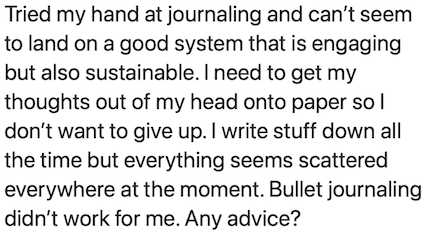

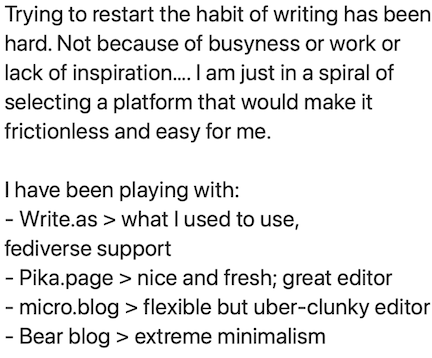
Mastodon Post


Mastodon Post


Two Mastodon posts by writers who can’t seem to understand that the simplest solution is right in front of them.

I’ve been thinking a lot about writing lately, looking at ways to get more motivated about doing it and seeing all kinds of weird (to me) posts on my social media platform of choice (Mastodon) from people writing or struggling to write. Two of them just came up in my feed today. I’m including screen grabs of them here for reference and have purposely omitted anything that identifies the poster. (I don’t want to embarrass anyone. If this is your post and you want to be identified as its author, let me know and I’ll modify it for you here.) These posts motivated me to sit down and answer the questions they posed, which I also answered online in replies to them.

In both examples, the author is talking about writing tools or systems to help them write. One mentions bullet journaling, the other lists software platforms. Neither seems ready to acknowledge the simplest tool/system available to them. I’ll give you a hint: it’s the same tool I used when I was 13 years old.

A pen and a notebook.

The Writing Tool/System Trap

Let me start by saying that I was also caught up in the writing tool/system trap that these folks are in. In today’s world, there is always an established and promoted solution for a problem. If someone can cash in on potentially solving a common problem, they will.

That’s what I think of bullet journaling, anyway. It seems that the guy who “invented” it is writing books and creating videos and selling notebooks with dots (instead of lines or grids). You can’t look up “bullet journal” without seeing him pushing his products.

As for software tools, it seems like a race to give writers the perfect app or platform to get their thoughts out there. Even Apple got into the game with its disappointing Journal app. (Why disappointing? Am I the only one who doesn’t want to lock my writing into a cloud-based app?) I even went so far as to spend good money on the app that every writer seems to use and rave about. And then not use it for writing. (I did find another use for it.)

Julia Cameron and The Artist’s Way

A few months ago, still searching for something to help motivate me to sit down and write, I began reading The Artist’s Way by Julia Cameron. This book has been around for 30+ years and still sells well. Every professional writer I know — including me — would love to have written and published a book like this.

Not only did I begin reading it, but I also listened to the audiobook version at the same time — a process some people refer to as “immersive reading” — and took notes. I wanted to squeeze everything I could out of this volume.

I didn’t last long. You see, Julia’s philosophy leans heavy on “spirituality,” her poorly disguised religious beliefs. In her world, a person’s success as an artist (including writers) relies on support from a Great Creator. Although she denies throughout the book that she’s talking about God, you’d have to be an idiot to believe her.

I’m a firm believer that we are each ultimately responsible for our own successes and failures so her Great Creator did not sit well with me. I stopped reading after the Week 2 chapter where her list of 10 “Rules of the Road” included three affirmations that rubbed me the wrong way:

In order to be an artist, I must:

…
6. Be alert, always, for the presence of the Great Creator leading and helping my artist.
…
8. Remember that the Great Creator loves creativity.
…
10. Place this sign in my workplace: Great Creator, I will take care of the quantity. You take care of the quality.

I found #10 especially offensive. (Here’s a newsflash for anyone waiting for a Great Creator to edit their writing: He’s already busy not stopping wars, famine, and injustice. What makes you think your writing is more important to Him than all of those other things that He apparently ignores anyway?) And since it became clear to me by then that a certain amount of religious belief (which I lack) would be necessary to get the most out of the book, I decided not to waste any more time with it.

Anyway, religion aside — I’m certainly not willing to discuss it here so keep your comments about it to yourself, please — I did come away from the book with one thing of great value: Morning Pages.

Morning Pages

The Artist’s Way program requires writers to write Morning Pages every day.

Morning Pages are three full pages, handwritten, about anything you want to write. It could be what you’re thinking or doing or seeing. It could be stream of consciousness. It could be notes for a book you want to write or are already working on. Anything. Words on paper, handwritten.

Since this requirement is stated early on at the beginning of the book (before I decided the book wasn’t for me), I started writing Morning Pages every morning. I had a spiral bound, college ruled notebook — the 8-1/2 x 11 inch kind, not the smaller ones they make to save money on paper. I was already using it for occasional notes, including (ironically) the notes I was taking while reading The Artist’s Way.

I did my Morning Pages every morning during my coffee in bed time with my pups. I’m an early riser, often up before 5 AM. I get up, make coffee, and bring it back to bed. I had been using that time to do some puzzles, catch up on Mastodon, and write a quick journal entry in a blank book I had for that purpose. But instead, I started doing Morning Pages and following that up with the journal entry.

It was easy. I can’t begin to tell you just how easy it was. If I can keep myself distraction-free, I can knock it out in 30 to 45 minutes. That might sound like a long time, but we’re talking about three densely packed pages of writing, roughly 1,000 words. With distractions, the time stretched. But in the 71 days I’ve been doing it — I number the entries — I only missed two days and did a short entry one day — all due to scheduling-related time constraints.

One of the reasons I think it’s so easy is because it doesn’t matter what you write. I usually write about the previous day and what I got done. I write about things I thought about, people I communicated with, and things I want or need to do. I write about the weather and the air quality — it’s smoke season here, after all. I write about my health. I write about ideas for blog posts and articles. I scold myself for not doing things I should be doing.

Seriously: I write about anything that comes to mind. It’s rapid-fire stuff with no formatting or editing. Heck, I don’t even create paragraphs. In one sentence I might wish for rain and in the next I might start writing about a new decorative paper process I’d like to try in my studio.

What is this doing for me? Well, it’s a brain dump, to be sure. Isn’t that what both of the Mastodon post examples I shared above seem to be looking for? It helps me organize my thoughts and create threads that often lead to new thoughts or solutions or even action plans. (I’ve actually begun writing my Morning Pages with my To Do list for the day nearby so I can add items to it.) It has also replaced my journal, which I had been keeping quite faithfully for nearly 2 1/2 years. I was a bit sad to see it go, but I realized that there was a lot of repetition. The additional space I have in that spiral notebook makes it possible to go into detail I could not fit in the old journal page format.

And it’s easy enough to make into a habit. Isn’t that specifically what one of those Mastodon posters wanted to do? Set a time of day to do it, make sure you’ve blocked out enough time, and just get it done.

It also reminded me of how I wrote way back when I was 13. Those notebooks! Those pages of neat printed writing in ink! I was able to be creative back then, to write longhand without editing.

Oh, how I rejoiced years later when word processors made typewriters obsolete! But did they really help me? Or hinder me? Morning Pages makes me wonder.

How Writing Tools/Systems Stifle Us

I mentioned earlier that I was once stuck in the mindset that I needed to use a special tool or system to be productive as a writer. Like the folks I quoted above seem to be. And I tried (and set aside) many software-based tools over the years.

Why? Well I found that once I had decided to use a specific tool to do all my writing, I could not write unless that tool was handy.

For example, when I write on a computer, I want to use a keyboard. A regular keyboard that I can touch-type on. I’m a pretty quick typist when I have the right keyboard, a normal sized one that fits my fingers. I can type nearly as quickly as I can compose in my brain. But needing a keyboard means I have to have a desktop or laptop computer with me to write. I cannot write on a phone or tablet. Unfortunately, it’s not possible to have a laptop or desktop with me all the time. So without that tool, I don’t write.

My blogging solution

My blog lives online, but I don’t need to be online to write posts for it. I’ve been using an offline post editor for the past 20+ years. My current tool is called MarsEdit and it rocks. I could not imagine blogging without it (or something like it). Yes, it requires a desktop or laptop to use, but it does not require an Internet connection until I’m ready to upload my post.

That’s the most basic problem. The problem is worse when you have a cloud-based tool such as the sites listed in the second Mastodon post I shared above. They require you to be connected to the Internet to use them. Another hurdle. While many folks can’t imagine not being connected to the Internet, I can assure everyone that there are times and places where it simply is not possible to connect. What do you do then?

Using a specific writing app locks you up the same way. When you don’t have access to the app, do you find other ways to write? Or do you not write at all?

That pen and notebook are looking better all the time, no? Pretty easy to slip into a purse, messenger bag, backpack, or tote bag, no? (It doesn’t have to be letter-sized, you know. Try a steno pad.) Easy to pull out when you’re waiting for a friend to meet you for lunch or while killing time at the local DMV or even when heading out to the park for an hour of people watching or mindfulness exercises. I’ve begun taking a tote bag with me when I leave home to do my errands. Guess what’s in the bag? That same Morning Pages notebook; I can write anything in it.

If it’s always there with you, ready to receive what you want to give it, there’s no excuse not to use it to write.

Just Write

Any pen you like will do.

A side note here. I read something recently that also pushed the notion of writing every day, longhand, on paper. The author of that piece, however, demanded that you use a fountain pen. Can you believe that? What a freaking snob!

(Ditto for the idiot who said you need to write in cursive. Why? I’m 65 years old and have been printing my entire life.)

Although I loved the Bic Accountant Fine Point pen when I was a kid, these days I prefer a uniball Micro Deluxe roller ball pen. It makes a nice, fine line and feels good on the paper. But that’s my preference. If you do any writing on paper already, I’m sure you have your own preference. Go with it. Writing should be friction-free and there’s nothing that adds more friction than a crappy writing instrument.

Even if you don’t like the idea of Morning Pages, there’s something you can take from them: the idea of writing longhand to get what you want to remember out of your brain and onto paper.

Isn’t that the goal of writing? To write?

Don’t worry about having your writing in a format that isn’t “usable.” You can make it usable later. Consider what you write a draft. Then, when you need to create a final work based on it, you can edit it as you type it into your word processor (or blogging platform or whatever) of choice to create your second draft.

Oh, and I need to clarify one more thing. If you’re already diligently working in a writing tool — like maybe a word processor? — to write a book, story, or article, the advice here might not apply to you for that project. If you’ve already established a writing routine that works for you to create specific pieces, keep using it! The advice I’m offering here is mostly for brain dumps, journaling, and getting the random thoughts floating around your head out on paper where you can consult them later.

Is Writing Important to You?

If it is, stop making excuses that revolve around finding the perfect tool or system. Buy yourself a note book and a good writing instrument and just sit down and write.


But wait! There’s more!

This is not the only thing I’ve written about writing. I’ve been writing about writing since the very beginning of this blog. If you want to do a deep dive, I recommend checking out posts in The Writing Life category or posts tagged writing. Remember, all posts are listed in reverse chronological order with the most recent ones first.
My Anthropic Copyright Claim

I file my claim in the Anthropic copyright case — and sit back to wait for the results.

I wrote about the Anthropic copyright case in three blog posts here, so I’m not going to go into the details again. If you want to get up to speed on my thoughts, read these:

My Claim

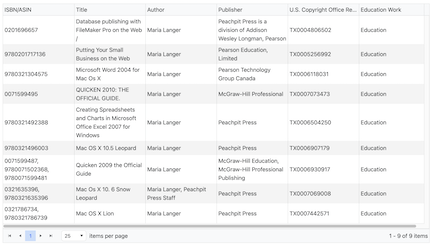
My infringed work
This is the official list of my work that Anthropic illegally accessed, violating copyright law.

The case went back and forth and it seemed for a while that the $3,000 per title settlement was not going to be accepted. But then it was and recently the legal team handling the claims for copyright holders including authors like me published the definitive list of infringed works. I used the lookup feature and found nine of my books.

Of the nine, two were registered under the name of the publisher, McGraw-Hill. The rest were registered under my name.

I clicked the link to file a claim, which is required if I expect any compensation for their theft of my work. The form was time consuming to complete — it took me nearly an hour to add all nine titles. And yes, I added all nine because maybe there is a chance that I’ll get some of the proceeds for titles not registered with me as the actual copyright holder.

Theoretically, I should be entitled to $21K to $27K of compensation. I’m not sure if the lawyers’ fees come out before or after this payment. For all I know, I might only get $100/title. But I also know that I won’t get anything if I don’t submit a claim.

I’ve done my part; now I have to wait and see.

Further Thoughts

My thoughts on this matter are pretty straightforward. No person or organization should be allowed to access and use copyrighted work without going through legal channels to do so. Anthropic committed piracy; that’s accepted and is the reason they’re paying up. But did they get permission to use the works to train an AI system? Clearly, they did not. That’s the real reason they should be paying.

I’m in a weird situation. In my mind, these books were dead. They cover topics that are no longer current and have very little (if any) value. I never expected to see another dime in compensation for writing them. So this is all icing on a cake I’ve already eaten. I’ll take it!

But what of the people whose work still has legitimate current value? Or of future books I might write that don’t go out of print in 2 years? How often will our work be used without our permission to train systems designed to replace us?

I’ve got a real problem with that — and you should, too.

Copyright Basics

The correct answers to your questions are pretty easy to find if you just look.

Making Trouble on Mastodon
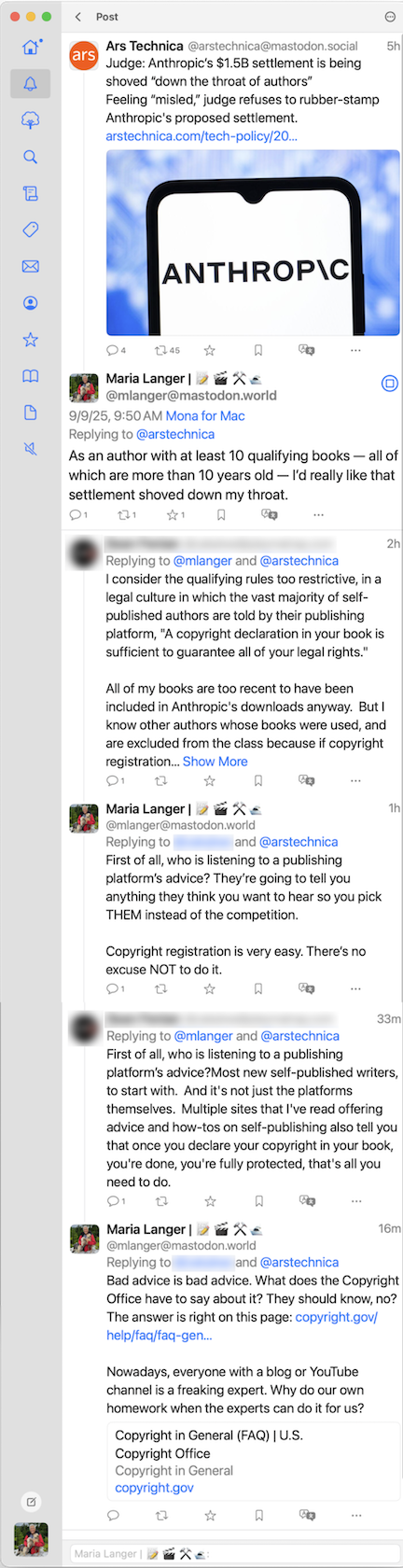
Here’s my exchange with an angry self-published author. I’m not surprised that he’s blaming someone else for his problem; that seems to be a big trend these days.

Yesterday, I wrote an update to my August blog post about the Anthropic copyright case. In it, I mentioned that in order for a title to be included, it must be listed in the database of books Anthropic illegally obtained and used to train their AI and have its copyright registered with the US Copyright Office.

Apparently, it’s this second qualification that has a lot of authors freaking out — especially self-published authors. This came to light when I replied to an Ars Technica post on Mastodon — the same one I linked to in yesterday’s post. Yes, I was being flip, but I was also being honest. As someone who has books that qualify, I’ll definitely settle for $3,000 per qualifying title.

Apparently a lot of self-published authors have books that were illegally used by Anthropic but because they never bothered to register copyright of their work, they’re not eligible to receive compensation under this settlement. And they’re pissed.

As this angry self-published author stated:

I consider the qualifying rules too restrictive, in a legal culture in which the vast majority of self-published authors are told by their publishing platform, “A copyright declaration in your book is sufficient to guarantee all of your legal rights.”

(And, by the way, I’ve blurred his identity here because I don’t want to embarrass him. If he wants to take credit for his words here, he should let me know and I’ll share an unblurred image. He should understand that anything we write on social media can be excerpted for fair use.)

So basically, he (and others) are told by their “publishing platform” — Amazon and others I’m not familiar with because I don’t self publish that way — that they don’t need to register their work with the US Copyright Office to be protected. I’m not sure how true that is, but he sure seems to believe it.

But the facts about this are easy to find on the most obvious resource of copyright information: the US Copyright Office website. It took me less than 2 minutes to find this page, which clearly states how a work is copyrighted and the benefits of copyright registration (emphasis added):

When is my work protected?
Your work is under copyright protection the moment it is created and fixed in a tangible form that it is perceptible either directly or with the aid of a machine or device.

Do I have to register with your office to be protected?
No. In general, registration is voluntary. Copyright exists from the moment the work is created. (You will have to register, however, if you wish to bring a lawsuit for infringement of a U.S. work. See Circular 1, Copyright Basics, section “Copyright Registration.”

Why should I register my work if copyright protection is automatic?
Registration is recommended for a number of reasons. Many choose to register their works because they wish to have the facts of their copyright on the public record and have a certificate of registration. Registered works may be eligible for statutory damages and attorney’s fees in successful litigation. Finally, if registration occurs within five years of publication, it is considered prima facie evidence in a court of law. See Circular 1, Copyright Basics, section “Copyright Registration” and Circular 38b, Highlights of Copyright Amendments Contained in the Uruguay Round Agreements Act (URAA), on non-U.S. works.

So I ask you this: who would you believe when you ask whether copyright registration is required? The company eager to make money off of your hard work or the government organization that provides official information about copyright law and helps to enforce that law?

I’m fortunate. My publishers registered copyright in my work for me, although not all of them registered my work in my name. (I’m not sure if they’ll get the money for those books or I will, but I’m not being greedy here; what’s a few thousand more when I’m looking at a $30K payday I never expected?) I’ve self-published a handful of books and did not register them. They are not listed among the stolen works.

But I have learned a valuable lesson here and will register copyright for all of my books in the future. I suspect we’ll have more of these cases and I want to be protected on a go-forward basis.

If you’re a writer who plans to publish your work, I highly recommend you register copyright for it.

Is Any Book Really Dead These Days?

Good news and bad news about that copyright lawsuit I’m part of.

Since writing a post last month about my participation in the huge copyright lawsuit against Anthropic, there have been a few developments.

The Good News

First, a settlement was reached between the plaintiffs and Anthropic. A big settlement: $1.5 billion to be paid to affected authors. This came out to $3,000 per infringed work. Whoa.

Partial Copyright List
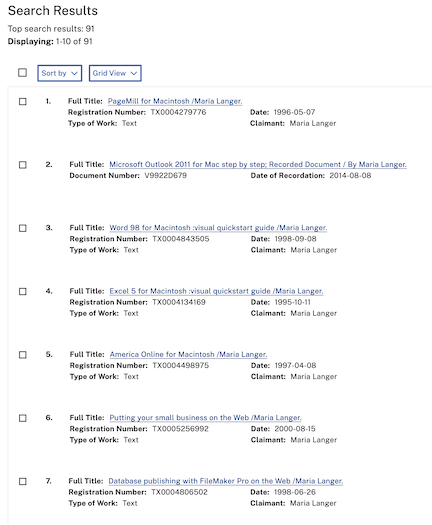
Here’s part of the first page of my copyright registrations.

To qualify, the work needed to not only be on the list I mentioned and searched for that post, but registered with the Copyright Office. If you recall, I had 16 titles on the list. I hurried over to the US Copyright Public Records System and did a search for my name. I came up with a list of 91 records, more than half of which were for my books. I was very pleased to see that Peachpit Press registered my titles in my name, although McGraw-Hill, Sybex, and O’Reilly did not. Still, at least 10 of the titles on the first list were registered in my name. (I did not bother to cross-reference the two lists, although I might do so later.)

So it looked to me as if I might be able to pull in at least $30,000 on this case.

Holy crap.

I’ve been part of class actions before and I think the most I’ve ever gotten was about $130, which was for an Apple keyboard issue I barely remembered. But this — well, this was real money.

The Bad News

Just when I was starting to think of how I would spend this little windfall, the bad news broke: The judge overseeing the Anthropic case rejected the settlement.

Alsup [the judge] expressed grave concerns that lawyers rushed the deal, which he said now risks being shoved “down the throat of authors,” Bloomberg Law reported.

Well, this is something I don’t mind being shoved down my throat.

Look at it from my point of view: I wrote how-to books about using computers. The vast majority of them had a “shelf life” of less than a year. That means royalty income for each title lasted about a year — if the book even earned out. I had to keep writing them to keep earning a living. That’s why I wrote more than 80 of them between 1991 and 2012.

To me — and probably everyone other than a greedy and mindless AI consumer — these books were dead. No one was buying them — heck, I assume all inventories were destroyed. I could not expect any more income from them. In most cases, I couldn’t even use part of them as the basis for an updated book about the same topic. Some of the software I wrote about doesn’t even exist anymore.

The thought of earning $3,000 per title on these dead books is pretty appealing. Knowing that Anthropic isn’t the only AI copyright infringer out there and that its settlement could be the first of many that benefit me is even more appealing.

But the judge put the brakes on the deal and threw everything back to the parties.

As you can imagine, I’ll try to stay involved in this process to make sure I’m on any list out there. I just hope it doesn’t drag on too long.

And a lesson to writers…

Intellectual property is a real thing that deserves protection. It is the fruit of your labor. Whether your book sells three copies or a million, it has real value. And who knows? It could end up on a list that earns you $3,000 (or more) when AI companies are brought to court.

Register your copyrights. Go to the Registration Portal on the US Copyright website and follow the links and instructions to register all of your work. Yes, it’s copyrighted without registration, but it’s only really protected when it’s registered.

Fighting Against AI Copyright Theft

I join the class action suit against Anthropic for the use of text in 16 of my books to train their AI without permission or compensation.

I didn’t expect to spend part of my morning filling in a form on a lawyer’s website to provide information about myself and the books Anthropic apparently used to train their AI. After all, I haven’t written much in the past 10 years and all of what I’d written before then was about using computers. Surely all of those books were so sorely out of date that even an AI wouldn’t be interested in them.

But here I am.

I’d heard about the lawsuit:

Bartz v. Anthropic PBC is a class action lawsuit under the Copyright Act brought by authors on behalf of copyright holders against Anthropic PBC, an AI company. The Class of copyright holders — consisting of authors and publishers – claims that Anthropic took books from pirate websites Library Genesis (“LibGen”) and Pirate Library Mirror (“PiLiMi”) without authorization.

The Court recently certified a LibGen & PiLiMi Pirated Books Class made up of all legal or beneficial owners of the exclusive right to reproduce any ISBN- or ASIN-bearing book that Anthropic copied from the two pirate sites. The Class’s claims are scheduled for trial on December 1, 2025.

The latest update to that is that the parties have apparently settled and money will be paid out to the 7 million authors affected by the theft. You can read about that in an article on Ars Technica.

Toot about Books that Trained AI
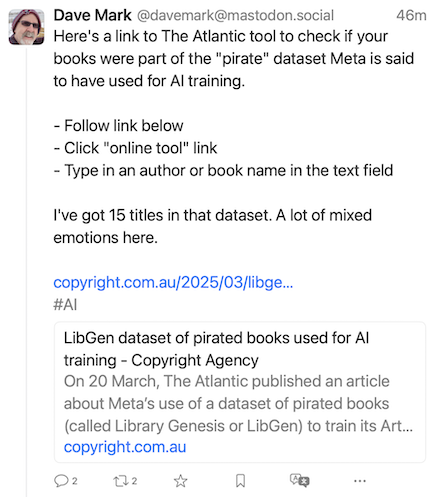
This toot jump started this morning’s efforts to get myself on the list of authors affected by Anthropic’s theft of my copyrighted work.

I knew that the lawyers were looking for affected authors but didn’t do anything about it because I didn’t think I was an affected author. (See above.) But then Dave Mark on Mastodon posted a toot with a link to an Australian Website that had a link to an Atlantic website page with a tool for searching which books were used to train the AI. And yes, 16 of my books (plus some repetitions) were on it.

So I tracked down the article about it on the Author’s Guild website and clicked the big button to provide my contact information. That put me on the lawyers’ website where I could provide my contact info and list all 16 titles.

I’m done now and can get on with my day. I don’t expect to get much from this, but I do think it’s important that authors stand up for their rights — especially when money- and resource-hogging for-profit organizations are stealing our work to build systems to replace us.

If you’ve written any books in the past 20 years, I urge you to see if you’re on the list and take action if you are. Theft of our work has to stop. Let’s work together to protect our work and our livelihoods.

Getting Back to Writing

I ease back into writing for hire.

One of the things I’ve been working on part-time for past few years is getting back into writing articles for publication.

Waterway Guide

Although I thought I had a working relationship with Waterway Guide, that fizzled out pretty quickly. The publisher was initially excited about working with me and made some suggestions about how much money I might earn writing for them. I did my part to help build content on their site with a never-ending stream of marina and anchorage reviews. (I still get the occasional compliment for my reviews.)

But after months on the Loop, I just got one article assignment — and I never got paid for it. I was very interested in helping to update the Skipper Bob books — especially the one for the Erie Canal — but was told other people were doing it. No other work was forthcoming. So I stopped writing reviews. I’m a professional writer, after all, and I’m not going to go out of my way to build content for a for-profit publication without getting compensation for my work.

Dockwa

Dockwa App Icon
Most folks use Dockwa with its app.

I started writing for Dockwa last spring. Dockwa is a company that helps boaters arrange for marina reservations through the use of its easy-to-use app. Some marinas only use Dockwa so it’s a good app to have.

I used it to place a reservation for 10 days in Oriental NC back in 2023 when I had to take a class for my Captain’s license. The reservation was supposed to be refundable, but when I cancelled a month in advance, the marina refused to issue a full refund. Dockwa took care of it for me and I got all of my money back. They also accept payment via Apple Pay, so I’m able to get more cash back with every reservation than if I’d paid with a credit card. So I’m pretty sold on Dockwa.

Dockwa has a blog and some email newsletters of interest to boaters. I was first approached by them because they wanted to link to one of the posts in My Great Loop Adventure blog. Sure, I said. And when the newsletter came out, I got more than 1,000 hits in two days. They’ve since linked to other content there and have really helped me get exposure for the blog.

Then, in September, they asked if I’d write quarterly exclusive content for them to use in their blog. I’d get a byline and link to my blog. That seemed pretty good to me because I’d started writing a book about my Great Loop trip and the blog was going to be my primary promotional tool. The more eyes on it, the better off I’d be. Since then, I’ve written three quarterly articles for them (one of which went long and appeared in two parts) and have just sent in my fourth:

Although I’m not getting paid cash money for any of these, I did get a perk: I’m now a member of Dockwa +, a subscription service that supposedly gets me discounts and access to special offers at marinas. I’ll find out more about it the next time I’m on my boat.

Passagemaker

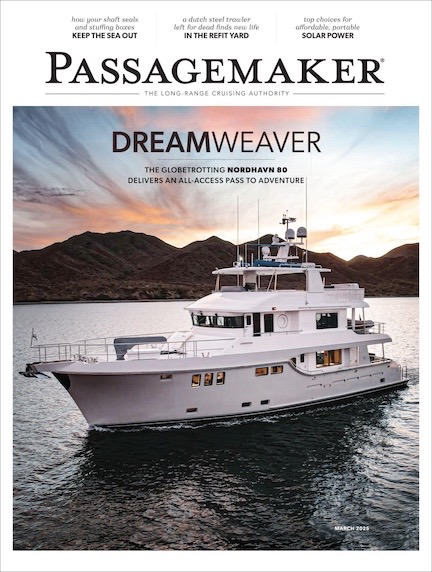
Passagemaker Cover
I’m really pleased that I got a chance to write for such a great publication. If you don’t know Passagemaker and you are interested in boats, check it out!

The biggest news is recent. I got into an email discussion with the editor of Passagemaker magazine, which I consider the premiere private boat cruising magazine. It’s a beautiful publication that comes out every two months and features cruising articles and boat reviews, along with informative how-to articles of interest to boat owners. I read it every month via the Libby app, courtesy of my library.

My email discussion with Jeff was about folks who finish the Great Loop but never get on a list of people who’ve finished because they don’t belong to the for-profit organization that keeps the list. Passagemaker published the list and (unsurprisingly) I was not on it, despite having “crossed my wake” in August 2024. That turned to a discussion of solo cruising on the Loop. I was asked if I wanted to write an article about the challenges I faced as a solo Looper and I said yes. I asked about compensation and was offered a very reasonable (if not generous these days) amount of money.

(Looking back at my list of published articles, I realize that the last time I was actually paid for writing an article was back in 2018, when I wrote for Vertical magazine. That was before I cut ties with them after one of their editors went into a jealous rage when she discovered that I’d been asked to co-pilot a Chinook on a fire contract. That’s a long story not worth going into here. Of course, I didn’t write anything for publication between 2018 and 2023, which is when I wrote that unpaid piece for Waterway Guide.)

I wrote the piece and Jeff was pleased. I assume it’ll come out in either the next issue or the one after that. I can’t wait to see it.

Jeff also invited me to be a guest on the Trawler Talk podcast. Passagemaker publishes the podcast and new episodes come out every month or so. We had a great conversation the other day, touching not only on my boating history, but some of my other careers including writing and flying helicopters. I expect the episode to come out in August unless he’s got one queued up before that.

It should go without saying that I’m pretty excited about working with the Passagemaker folks. I’m hoping it leads to more work in the future.

If I know it, I’ll write about it

Looking at my list of published articles, which appear in reverse chronological order, it’s interesting to see how the topics I wrote about changed over the years.

My very first published article, way back in 1987, was about auditing construction project budgets. At the time, I was working as an auditor for K. Hovnanian, a position I hated within a week of sitting down at my desk. (It took me just four months to escape to another job; I don’t even mention the time I spent there in any resume or work history.)

After that, I wrote about computers for auditing and then computers in general. Then computer applications and software reviews. Motorcycling was in there, too. How-to pieces. Aviation and flying helicopters. There’s lots of overlap — most of what I wrote in articles was computer related for most of my writing career. It was nice to move into aviation writing and now it’s great to be writing about boating topics.

I guess it all comes down to this: I’ll write about anything I know something about.

I like to write and I do need to apologize for neglecting this blog as I have for much of this year. I hope to do more of it soon — especially if I can write for quality publications and get a check when I’m done.

Getting Sucked In to the Traveler’s Notebook Craze, Part 3

Four months on, I’m using my notebooks regularly and have made them part of my life.


Note: This is part 3 of my Traveler’s Notebook saga. You can find Part 1 here and Part 2 here. – Maria


Time has gone by. I haven’t written much in this blog, mostly because April, May, June, and most of July have been crazy hectic for me. I finally got my boat into San Juan Yachting’s charter program, I made jewelry inventory for and attended four art shows, and I even managed to spend just over two weeks on the boat with a good friend of mine. Along the way, I planted my garden, maintained my vehicles, cared for my home and pups, and socialized with friends.

In other words, I lived a busy life.

I wouldn’t have it any other way.

What I’ve Learned

I learned a few things about my Traveler’s Notebook solution along the way:

  • No one uses Traveler’s Notebooks anymore. It was a craze that faded at least 6 years ago. Although the inserts are still available to purchase here and there online, they can’t be found in stores.
  • New Planner Pages
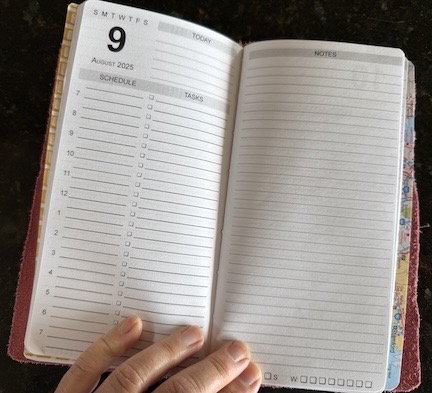
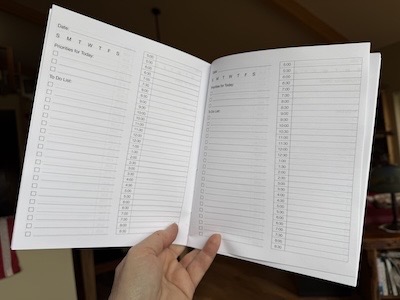
    My design for daily planner spreads is similar to Ray’s but starts the day earlier, ends the day later, and includes spaces to record exercise and water consumption. (I don’t drink enough water.)

    The Daily Dashboard solutions I’d downloaded from Ray Blake’s website weren’t quite what I needed to plan my day. Because Ray is a Brit, his week starts on Monday so the month-at-a-glance calendars were difficult for me to use. And I didn’t like his labeling. So I made my own version, which I printed and turned into books. August is the first month I’ll use.

  • I like making the little books that I insert into the leather folder. I really like sewing paper. It’s so relaxing. I’ve been using paste paper I made months ago as covers.
  • I’m not 100% happy with the leather folder. It does the job, but I wish it was stiffer. I’ve been thinking a lot about using newly acquired bookbinding skills to fine-tune it, possibly to glue the leather onto book board with a hard spine. I’m not ready to possibly ruin the leather yet, so I haven’t done anything.

The Notebook in My Life

I’ve incorporated the notebook into my daily routine.

I start my day with a cup of coffee and my iPad, which I use to do a series of word puzzles and sudoku that I share with friends. (Lately, I’ve been doing it out on my deck in the cool morning air, often just before dawn.) Then I pull out my notebook and my journal. I journalize the previous day’s highlights and my thoughts about them while adding the things I need to do that day to the day’s to-do list.

The binder has inserts for the current month and next month. This makes it possible to add events and tasks for dates in both months.

Once that’s all done, I get dressed and get ready to start doing things on the day’s list.

I don’t journalize in the notebook. I have a separate journal book for that. The only thing I use the lined day page for is taking notes during phone calls or just writing down things I need to remember.

I leave the notebook open on my kitchen counter so I can consult it and stay focused throughout the day. This is exactly what I did with my old looseleaf planner pages, but now the pages are portable.

Speaking of portability, I take the book with me when I travel. I travel an awful lot. Sometimes I use it when I’m traveling but most times I need to admit that I don’t. My morning routine is difficult to keep when I’m on the boat or in my camper or staying with friends or in hotels. I don’t know why. I need to work on that.

The Bottom Line

The Traveler’s Notebook style of notebook meets my needs for organizing and note taking. Although I don’t use it as much as I could/should, I’m definitely sticking with it for day planning. When it’s part of my routine, it helps me keep focused and be more productive. It also helps me track how I spend my time.

Will I blog about this again? No, not unless I find some new and exciting way to use it. How likely is that?

Battling Irrational Beliefs

Some comments related to an excellent blog post about the ABC model of Rational-Emotive Therapy and being a writer.

One of the blogs I’ve included in my RSS feed reader is called Writer Unboxed. It presents anywhere from 5 to 10 blog posts related to writing each week. Some are extremely specific, such as a recent post about including blurbs with published books. Others are more general, such as the one I’m touching upon today, which discusses psychology.

If you’re serious about writing, whether for yourself or for publication and (hopefully) profit, this is a great blog to follow. I won’t say that I read every post in detail, because I don’t. But I find that many of the ones I do read give me lots of food for thought. I usually share my thoughts in a comment on the blog post — that’s why I really like blogs that allow commenting — but sometimes those comments will trigger a blog post here. That’s what happened today.

The Post

The post that triggered these thoughts and this post is called “The Rational-Irrational Writer” by Therese Walsh. It discusses something called Rational-Emotive Therapy (RET):

…developed by psychologist Albert Ellis. At the heart of RET is a simple but powerful framework that explains how rational and irrational beliefs shape distinct emotional responses: the “ABC model.”

I don’t want to copy and paste Ms Walsh’s post into my blog. I want you to go and read her post, or at least the section titled “An Overabundance of ‘B’,” which explains the ABC(DE) model. It’s short and easy to read and understand. It’ll just take you a second. I’ll wait here.

[calming music plays]

Back? Great!

The post then goes on to explain exactly how the ABC(DE) model applies to writers and our deep-seated fears about calling ourselves writers and being good enough and having all kinds of preconceived beliefs that just aren’t true.

Not Just for Writers!

Everything she’s written is completely valid for writers. But it’s also valid for other people in other endeavors, as I commented on that blog post:

First, this is a great piece that can easily be applied to any endeavor where we have self-doubts.

I’ll elaborate on that here, since I didn’t think it was appropriate on her blog post which is, after all, for writers. I’ll use one of my endeavors as an example: silversmithing.

A stands for activating event. Suppose I apply to a juried art show. (That’s an art show where a panel of judges decide, based on photos of your work, whether your work is appropriate for the show. It usually comes down to quality, originality, etc., but it might also deal with appropriateness for a show’s theme.) I get the jury response and discover that I’m not invited to the show. Being turned down is the activating event.

B stands for belief. On getting turned down, I naturally come to believe that my work is just not good enough.

C stands for consequence. As a consequence of this belief, I start doubting my skills, capabilities, and creativity. I start wondering why I bother to make jewelry and debate whether it’s worth continuing.

D stands for disputation. This is where I (hopefully) start gathering evidence to prove that the belief is wrong. Maybe I applied for six new shows last year and was invited to all of them. Maybe my work sells well at the shows I do attend. Maybe I visit a new wholesale client and she buys half my inventory because she loves it so much. Maybe I discover that the reason I did not get invited to this show was because they limit the number of jewelry artists and all of last year’s artists are returning. (It’s pretty common to give preference to artists who attend each year.)

E stands for effective (and rational) beliefs. I consider all the evidence that my initial belief is wrong and self-defeating and cast it aside to replace it with a more realistic belief that keeps me motivated, working, and improving my skills, allowing me to move forward.

Think about this for a minute and I’m sure you can apply it to anything you do that you might have doubts about.

Imposter Syndrome?

I think Rational-Emotive Therapy can help folks with imposter syndrome. Per Wikipedia:

Impostor syndrome, also known as impostor phenomenon or impostorism, is a psychological experience in which a person suffers from feelings of intellectual and/or professional fraudulence. One source defines it as “the subjective experience of perceived self-doubt in one’s abilities and accomplishments compared with others, despite evidence to suggest the contrary.”

Those who suffer from impostor syndrome often doubt their skills, talents, or accomplishments. They may have a persistent internalized fear of being exposed as frauds. Despite external evidence of their competence, those experiencing this phenomenon do not believe they deserve their success or luck. They may think that they are deceiving others because they feel as if they are not as intelligent as they outwardly portray themselves to be.

Clearly, believing that you are an “imposter” is irrational. After all, you got where you are somehow. Thinking about the situation rationally and disputing those self-defeating beliefs is the first step to getting past imposter syndrome.

‘Nuff said.

One More Word about Writers

I thought I’d share one more thing related to the original post. This is part of the comment I left on that post and it has everything to do with writing or being a writer.

Before I share it, however, I want to remind readers who don’t know me very well that I earned a very good living as writer from around 1990 to 2015. I wrote books about how to use computers at a time when writers couldn’t produce them fast enough to meet the demand from readers, many of whom were just getting started using computers. Things are different now and I doubt many people could make a good living doing this kind of work. But I enjoyed it while it lasted and had a backup career waiting for me (as a helicopter pilot, of all things) when the demand for my kind of books died off.

Here’s what I shared:

I think there are two kinds of writers, with plenty of overlap.

One kind is the writer that I believe that all of us here are: the kind of person who is driven to write, to get words out of our heads and into a format we can share with others. Whether we share it or not is irrelevant. Whether it’s published or not is irrelevant. As you said, writers write. I believe that deep down in my heart. I have been a writer since I was 13.

The other kind of writer is the professional writer: someone who literally writes for some kind of pay. Hopefully, the pay is money, since it’s so much more useful than “exposure,” which too many of us seem to accept. I felt comfortable during my 25 year writing career telling people that I was a writer because that’s how I earned my living. Nowadays, I still write — after all, I’m still that first kind of writer — and I do get paid for some of it, but it’s not how I earn my living. So when people ask now what I do, I don’t tell them I’m a writer.

There’s nothing wrong with being that first kind of writer.

Getting Sucked In to the Traveler’s Notebook Craze, Part 2

I make my own Traveler’s Notebook and fillers — with limited success and lessons learned.


Note: This is part 2 of my Traveler’s Notebook saga. You can find Part 1 here. – Maria


About two weeks ago, I blogged about my attraction to and doubts about the Traveler’s Notebook system. If you didn’t read that post and don’t want to, the very short story is this:

  • Traveler’s Notebooks — originally by Midori, a Japanese company — combine a leather folder-like cover with inserts held in by elastic cords. They are highly flexible, allowing you to build a notebook with the components you need.
  • Traveler’s Notebooks were wildly popular about 10 years ago and still have an almost cult-like following among people who journal or take notes on the go.
  • Traveler’s Notebooks are relatively expensive to set up, but YouTube has dozens of DYI videos to teach you how to make your own.
  • I decided to make my own, following the very detailed instructions in a specific video.

And that’s where I left off. I’ve since made the notebook and started using it. Here’s what I’ve learned.

Making the Notebook Binder

I decided to stick to the standard sized Traveler’s Notebook, with the thought that I could accessorize, if desired, with manufactured components. To that end, I followed the instructions in Ray Blake’s excellent video. He’s very specific about measurements and I think that may have been my first problem. Well, actually, my first problem was using leather that was too soft.

I had some nice leather pieces I’d gotten as scraps for bookbinding projects. One piece was a gorgeous red leather that I suspected might be too thin to use for the job. But I used it anyway, since it was the best option I had. And let’s get real here: it’s not as if I can run out to the leather store and find something better. There is no leather store around here.

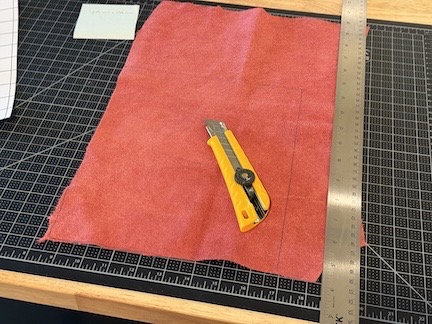
CutThe Leather
I started by cutting the leather.

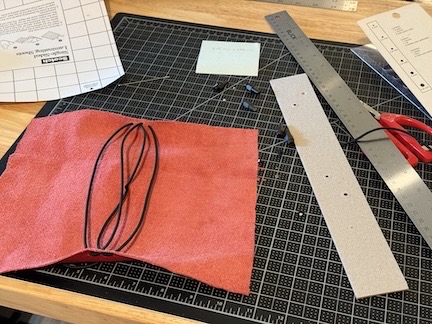
I followed Ray’s instructions and cut it exactly to size. Then I used a leather punch to punch holes where the spine would be. I did not follow Ray’s instructions for this. I followed instructions I’d seen on another video that had a much better way to secure multiple fillers inside a Traveler’s Notebook. I then pulled out the elastic cord I’d purchased online and strung it through the holes in such a way that I ended up with three loops inside the binder and the ends sticking out a hole in the middle of the book. Tying off those loose ends gave me the secure closure I’d need when I closed up the book.

Bungee Cords
The leather was too thin and the bungees were too thick (and strong).

And this was my biggest problem. I’d gone with some thick bungee-style elastic cord. It was simply too thick and heavy for the book. No matter how I strung it, the book wanted to fold up.

Well, I thought, maybe it’ll be better when I put the filler books in. So I spent about an hour making three filler books, exactly the right size. And that’s when I realized that the holes were too far in. When I inserted the fillers, the elastic cord bent the books. It was a mess.

This didn’t make sense. I followed Ray’s instructions. I took each filler to my guillotine cutter and trimmed it down so it would fit between the holes that hold the elastic and keep the books in place. It was still a mess.

Discouraged and more than a little pissed off, I set the whole project aside. Clearly, I needed a way to stiffen the leather and I needed thinner elastic cord.

The Fix

Drydock Campsite
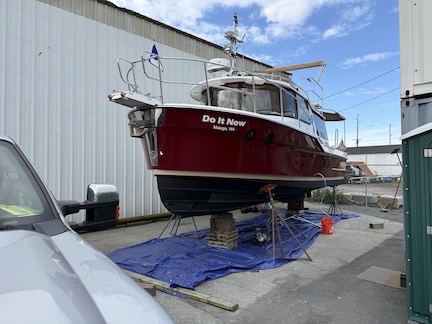
My “campsite” at the boatyard for the first week in April. I needed a 6-foot aluminum ladder — yet another for my ladder collection — to climb in and out of it.

Life went on. I’m working hard this month to prep my boat for a season in the charter fleet for San Juan Yachting in Bellingham. I spent a week on the boat, mostly on the hard, to coordinate the work done by detailers and a maintenance crew.

The nice thing about being on that side of the mountains is that they have a lot more options for shopping and buying things. Although I didn’t try to find a different piece of leather, I did focus on finding better elastic string for the job. I found it in — of all places — Walmart.

(And yes, we have a Walmart about 14 miles from my house in Wenatchee. I just really hate shopping in there. The only reason I was in there in Bellingham was to buy four gallons of Rotella for my boat’s oil change. It’s $15/gallon in Walmart and $25/gallon or more at just about any marine store. It’s the same stuff and it meets Volvo’s specifications for engine oil. When you’re buying four gallons at a time, it’s nice to save $10/gallon. And Volvo can pound sand if they think I’m putting Volvo oil in there, which I’ve paid as much as $50/gallon for.)

I got home on Thursday. Yesterday afternoon, I brought my Traveler’s Notebook mess back to the workbench, took out the thick elastic, and replaced it with the thinner elastic. I then stuck my trimmed down fillers into the leather binder. It got bunched up at the bottom of the spine, but did not bend the books. The problem is that the books are now too short so they don’t hold the spine properly.

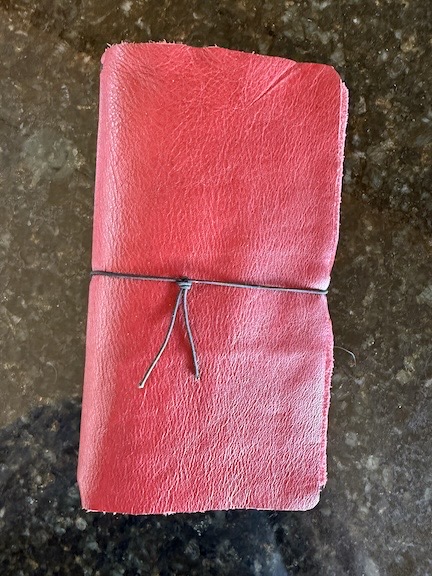
My Homemade Traveler's Notebook
My homemade Traveler’s Notebook. Not bad for v1.5.

I printed out the May 2025 Daily Dashboard pages — similar to the journal pages I always use — punched them with a cover, sewed the pages together, and trimmed them to the size the books are supposed to be. I stuck that in as my middle book, figuring I could use it now to start planning for May. It pulls the soft leather binder up nicely.

The other thing I did was use some of my beeswax paste on the outside of the leather (before restringing the binding elastics). I’d read online (on a leather site) that you can stiffen leather by painting it with melted beeswax. I already had the beeswax paste I made and thought it might be a good (and a lot less messy) shortcut. I think it stiffened the cover to a certain extent. I know it darkened the color. It’s probably waterproof now, too.

Using the Notebook

Am I using the notebook? Yes and no.

Open Notebook
I use the planning pages daily to keep my day on track. But I don’t need the whole leather package to use it.

I started using the Daily Dashboard insert for April on April 1. I just brought it with me when I traveled to the boat. I didn’t bring the leather binder since it wasn’t set up properly. I use the Dashboard insert to plan each day on an almost micro level, keeping track of how I spend my time and checking things off a daily to-do list. It really helps keep me focused and prevents me from forgetting to do important things. I have a shit-ton on my mind these days — I’m managing three companies now, prepping my boat for the charter season, making inventory for my jewelry business and upcoming art shows, and trying to finish a book. And get my garden started. And keep my house clean. And get rid of the wasps that have taken over my eaves.

(The to-do lists never end. It’s part of the “joy” of home ownership.)

Now I’ve got everything set up inside the binder: two months of Daily Dashboards and a lined journal for taking notes. When I head back to the boat next week, I’ll take the binder with me.

The big problem I have using the Notebook regularly is that you have to carry it with you to use it. While I’ll definitely take it when I travel, I doubt I’ll take it with me when I run errands or do other things out and about in town. The problem is, unlike most women, I don’t usually carry a purse. The little binder isn’t large, but it’s too big for a jacket or pants pocket.

(Years and years ago — I think I might have been in a college job at the time — a coworker told me that she doesn’t carry a purse because it’s like having a kid with you. You have to keep tabs on where it is all the time. 40+ years later, I still remember this wisdom.)

And that’s the problem with any notebook or journal a person wants to use: you can’t use it if it isn’t with you.

So that’s where I am now. I’ll try to update you in about a month. Stay tuned.

Getting Sucked In to the Traveler’s Notebook Craze, Part 1

I catch the Traveler’s Notebook bug and make plans to dive in — with a homemade notebook and fillers.

And yes, I know I watch a lot of YouTube

I have a YouTube premium subscription and it is worth every freaking penny to get rid of the ads and actually enjoy what I’m watching. There is a ton of documentaries about all kinds of things and plenty of how-to videos that really teach. And all the late night comedians and SNL! Yes, I know theres also a lot of crap, but no one is forcing you to watch it. If you don’t like a channel, you can tell YouTube to stop recommending it and it does. The algorithm does a decent job of showing you content that might interest you. I use it nightly as a sleep aid on my iPad; I set it up next to my head and put on the most boring video that comes up. (Egyptology and art history really knock me out.) Don’t knock it until you’ve tried it.

A few weeks ago, I stumbled upon a YouTube video about something called the Midori Traveler’s Notebook. Originally made in Japan, it consists of a leather folder with elastic straps on the folded edge that you can stick accessories into. As you can imagine, there are lots of accessories, including all kinds of little notebooks — either blank or printed with lines, dots, grids, calendar days, etc. — folders, zippered pouches, credit/business card holders, etc., etc.

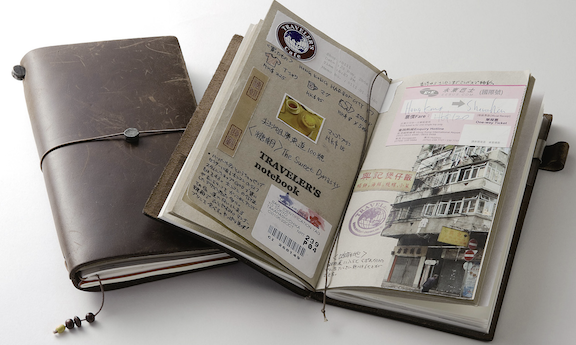
Traveler's Notebook
Here’s one of the marketing photos from the Traveler’s Company website.

If you want to fall down into a rat hole of information, just go to YouTube and search for Traveler’s Notebook. You’ll see hundreds of videos from people reviewing them, using them, blinging them out, and making them. The one I think is best if you know nothing about them and want to learn is this one on the SuffandThings channel. (Don’t let the intro music turn you off; it eventually goes away.)

I should add here that Traveler’s Notebooks, which are now sold by the Traveler’s Company (with accessories sold in many places on the Internet), have a bit of a cult-like following. So if you do any Internet or YouTube searching, you’ll find a lot of sometimes crazy content about it. The guy in that video refers to this and he’s dead-on right.

My Thoughts — Before Trying it

What I liked about the Traveler’s Notebook is the ability to have multiple notebooks in one binder. These are notebooks that I choose — not ones chosen by someone who thinks they know how everyone will use it. Total customization.

So, for example, I can have a dot printed notebook — is that the same thing as a bullet journal or something different? — for notes and drawings, a lined notebook for a commonplace book, and my daily planner pages. I grab the book on my way out and I’ve got it all with me. Or I lay it out on my desk or countertop as I work or do chores and can consult it or make notes throughout the day. Sounds like a great analog solution to a problem I was tackling with a handful of apps.

There were three things holding me back from embracing the Traveler’s Notebook craze:

  • The notebooks are not cheap. The regular sized leather folder with elastic straps is $55. It comes with just one insert. Inserts run from $5.50 to $13 each, with other accessories costing even more. I was looking at nearly $100 to get started, and that would not include my custom daily planner pages.
  • I wasn’t sure if I’d stick with using the notebooks. If you’re like me, you’ve started using multiple journaling or note-taking or organizational tools throughout the year, only to abandon them. It’s one thing to abandon a daily planner you bought at Walmart for $5 on January 15, but another to abandon a system that cost $100 to set up.
  • Daily Planner Book
    One of the great thing about knowing how to bind books is to be able to create custom books to meet your needs.

    I wasn’t sure I needed this solution. After all, I use Scrivener for commonplace book style note-taking, I have a hard-bound daily journal I’ve been writing in regularly since January 1, 2024, I use Apple’s Calendar app and the 2Do app, synchronized on all of my devices, to keep track of appointments and things I need to get done, and, on a daily (micro) level, I have my daily planner pages, which I’d just bound into month-at-a time books. Was I trying to solve a problem that I didn’t have?

I went through this thought exercise a few weeks ago. And then I got busy with other things and forgot about it.

New Skills Lead to Rethinking

Recently, I’ve been taking baby steps on my bookbinding skills. I’ve got the “pamphlet” style book nailed and have made numerous little books over the past few weeks. I really enjoy the sewing part of each project. It’s so relaxing and meditative.

But now I’m thinking of hardbound books with multiple signatures and leather trim or all leather bindings. In preparation to tackle future projects, I bought some scrap leather pieces, some of which are quite large. Large enough, perhaps, to make a Traveler’s Notebook of my own. Instead of costing me $55, I could probably whip one up for about $10. And I already had the bookbinding skills to make the inserts, including ones customized for all of my needs. They’d cost me about $1 to $2 each.

Of course, if I’m making everything myself, I don’t need to make it the same size as the Traveler’s “regular” sized notebook. I could make it any size I wanted to. But then I wouldn’t be able to buy any of the special accessories that might interest me, like the zipper pouch or card file. It made more sense to just make it exactly the same as the Traveler’s Notebook people buy.

Fortunately, there are many, many, many videos on YouTube that explain how to make them. Personally, I can’t watch videos by (mostly) women with high-pitched or uptalking voices. If I start a narrated video and the person doing the video has a voice I can’t stand, wastes too much time blabbering about things that don’t matter, is making something downright juvenile or ugly, or is taking shortcuts to save money on materials or tools to create a low-quality product, I turn it off. There’s a lot of content on YouTube. Watching crap wastes time.

The one I watched and liked best was on Ray Blake’s channel: “Making Your own Midori-style Leather Traveler’s Notebook.” Clear, easy-to-follow instructions without a lot — or any, actually — time-wasting bullshit. This video is 11 years old and although he hasn’t done any videos about these notebooks within the past 2+ years, he still provides PDF files on his blog for printing out calendar and planner books. His Daily Dashboard is remarkably similar to my own Daily Planner pages.

And that’s what sold me on making my own Traveler’s Notebook.

The Plan

And that’s where I stand today, as I type this. Once I get my work and chores done and have some time to play, I’ll go down into my studio, pull out those leather scraps, fire up Ray’s how-to video on my iPad, and follow the instructions (with some modifications I saw elsewhere) to make my own leather folder in the Traveler’s Notebook style. I’ve already printed out the pages I need to make a dot journal, a lined journal, and a two-month Daily Planner book (thanks, Ray!).

Tomorrow (or maybe Saturday), I’ll report back with photos of what I’ve managed to do. Wish me luck!

Note: Want more of this story? Part 2 is online now right here.

❌