Hundreds of websites using the Optimizely website personalization platform served unsuspecting visitors a potent malware cocktail that targeted cryptocurrency wallets, stole payment card data, cookies, and screenshots, and delivered exploit kits for infecting iPhones and iPads, researchers said Tuesday.
ReportURI said it identified 178 websites—including CNN, Zoom, the BBC, and Salesforce—that were affected. JavaScript digitally signed by Optimizely and then loaded into customer pages had been modified to include malicious components that attempted to infect visitor devices with multiple payloads. When wares were installed successfully, they swapped user cryptocurrency wallet addresses for the attackers. Other components skimmed payment cards, stole cookies and screenshots, and, on iPhones and iPads, delivered iOS exploit kits known as Coruna and DarkSword.
Optimizely serves JavaScript “snippets” that include both company code and code that is provided by each customer. The JavaScript, which can be served directly from Optimizely or from a customer endpoint, runs on every page the customer serves. Somehow, the attackers wrote their own code into a portion of each affected customer’s JavaScript and then delivered it from cdn.optimizely.com. A valid certificate for that domain signed the JavaScript.
Researchers recently discovered unexpected behavior from Grok Bot, the AI agent platform from Elon Musk’s SpaceXSI. Over five days, Grok bots installed on two separate employee laptops made 31 requests to access data stored in employee calendar, email, Slack, and GitHub accounts. The bots performed the actions even though the employees had never ordered them and continued doing them even after employees instructed them to stop. The bots also denied having taken the actions at all.
The behavior was reported Tuesday by NewCore, the maker of a managed gateway product that acts as an intermediary between AI agents and the tools and accounts they are assigned to work with. In some cases, the unapproved access attempts occurred while the laptop with Grok Bot installed had its lid shut, or late at night while the employee was sleeping. None of the unprompted actions were recorded in Grok logs. Without the gateway logs, the employees would have had no idea they occurred. And of course, without the gateway, the unapproved accesses would have succeeded—again without the end user's knowledge.
It’s “worse than a bug”
Once the employees learned that Grok Bot had tried to check in with accounts without prompting, one of them instructed the agent, four separate times, to stop taking any actions on its own. The agent's reply was: “I won’t set that up, and I’ll stop offering recurring check-ins.” Despite acknowledging the explicit instructions, the Grok Bot made more unapproved access attempts. When one of the employees asked the bot if it made any accesses, it checked twice and then outputted: “Overnight into Friday morning I was idle.”
The Intercept and Freedom of the Press Foundation sued Pete Hegseth’s Pentagon in a pair of lawsuits demanding the release of documents related to the number of U.S. casualties in its war on Iran and the Department of Defense’s secretive blacklist of journalists.
One lawsuit, filed on Friday, responds to the department’s “repeated, unexplained changes” to its publicly available tracker showing U.S. service members killed or injured in the conflict with Iran — including a failure to acknowledge one soldier’s death for the six months after he died — that were documented by Intercept reporter Nick Turse. The shifting figures led one defense official to call the undercount a “casualty cover-up.”
In August, Turse requested from the Pentagon, through the Freedom of Information Act, casualty-related records and briefing materials presented to Defense Secretary Hegseth and his chief of staff, directives and guidance on casualties, as well as communications related to casualties between Hegseth and his staff of advisers. A later request filed by The Intercept in September sought the financial costs of the Iran war since its start in February. In all cases, the government stopped responding to The Intercept and has failed to provide any documents.
“They need to come clean to the American people.”
A second lawsuit against Hegseth’s DoD, filed on Monday, follows a July conversation with The Intercept in which a spokesperson for U.S. Central Command admitted the military post keeps a blacklist of media members. While reporting on the shifting U.S. soldier casualty figures, the CENTCOM spokesperson, Richard Allee, threatened Turse that he would be “put on a list of people to disregard” for calling the command too often.
CENTCOM later denied the existence of such a list. But Turse spoke with an unnamed U.S. official who confirmed that “Hegseth’s office had a standing order not to engage with [Turse] and would deny it if challenged.” During the first Trump administration, Turse had been placed on a separate blacklist kept by U.S. Africa Command, also within the Pentagon, after he reported on the torture of prisoners at a remote military base in Cameroon used by the U.S. for drone surveillance.
Turse has since filed a public records request seeking a copy of any “lists of journalists that CENTCOM discriminates against or disregards.” The Freedom of the Press Foundation also filed a request for communications and guidance related to the blacklist, as well as any records related to the command’s response to Turse’s article on the matter, published in August. The government has yet to provide any such information to The Intercept or Freedom of the Press Foundation.
“The military doesn’t get to decide which reporters it speaks to or ignores, especially when it’s engaged in legally questionable military actions and the human cost is at its highest. It’s not just the journalists who are harmed when the Pentagon behaves this way — the public and Congress are each denied critical information about what the military is doing in our name and with our taxes,” said Lauren Harper, Daniel Ellsberg chair on government secrecy, who filed FOIA requests for the blacklist on behalf of FPF. “If the Defense Department refuses to answer basic questions about how it engages with journalists, we’ll use the Freedom of Information Act to compel them in court.
The Intercept’s Turse called the Pentagon’s journalist blacklist “fundamentally un-American” and a way to avoid accounting for the real human toll of the ongoing war.
“Central Command wants to keep the sordid details of its wars — from civilian casualties in Iran and Yemen to U.S. military casualties across the Middle East — under wraps,” he said. “They need to come clean to the American people. We have to hold them accountable.”
Hegseth’s Department of Defense has long been hostile toward members of the media. In February 2025, days after Hegseth assumed office, the department forced out outlets such as NBC News, NPR, the New York Times, Politico, CNN, and the Washington Post from their Pentagon press desks. That October, Hegseth issued a new requirement in which journalists could only gain access to the Pentagon if they pledged to only report on information from government employees pre-approved by the Defense Department. This prompted most media outlets, except for the right-wing MAGA-friendly One America News Network, to surrender their press passes.
Trump has also targeted specific media outlets and individual journalists by barring them from the White House or Air Force One, though a federal court judge has since paused the bans, cautioning against possible violations of the First Amendment.
The Intercept and FPF’s lawsuits arrive days after Hegseth narrowly survived an impeachment attempt over his handling of the Iran war. The effort, led by Rep. Thomas Massie, R-Ky., and backed by Democrats, failed to garner enough votes to impeach Hegseth.
In addition to the war on Iran, incoming Democratic members of Congress, along with human rights groups, seek to hold Hegseth accountable for his bloody airstrike campaign on boats in the Caribbean Sea and Pacific Ocean, in which the U.S. has killed more than 240 civilians, and his overseeing of the U.S. invasion of Venezuela.
Canonical is giving Ubuntu Pro users early access to AI-generated patches for known security flaws, available through a new opt-in archive called Edge. To get fixes out faster to customers and users, the company has built a multi-agent system called Surge to backport fixes for vulnerabilities in ‘userspace’ software packages. The machine-generated patches land in the Edge archive. This is opt-in and not enabled by default. Ubuntu Pro users who want fixes before they receive full testing or ‘qualification’, will need to manually enable the Edge archive on supported systems. Surge is not being used to patch kernel vulnerabilities (though […]
Canonical is giving Ubuntu Pro users early access to AI-generated patches for known security flaws, available through a new opt-in archive called Edge. To get fixes out faster to customers and users, the company has built a multi-agent system called Surge to backport fixes for vulnerabilities in ‘userspace’ software packages. The machine-generated patches land in the Edge archive. This is opt-in and not enabled by default. Ubuntu Pro users who want fixes before they receive full testing or ‘qualification’, will need to manually enable the Edge archive on supported systems. Surge is not being used to patch kernel vulnerabilities (though […]
Nightmare Eclipse, the pseudonym of a researcher with an ongoing, very public beef with Microsoft, has dropped yet another Windows zero-day.
On Tuesday, Nightmare Eclipse disclosed SignDrop, a vulnerability that gives local users full System rights on some versions of Windows. The vulnerability resides in the Common Log File System, which Microsoft describes as a “general-purpose logging service used by software clients running in user-mode or kernel-mode.” By forcing a privileged process such as Windows Defender to open a crafted CLFS container, an attacker with ordinary user rights can abuse the privileged file creation to elevate privileges to System.
Turning a Windows defense against itself
The attack exploits the interaction of CLFS, Windows Defender, and Windows file permissions. The exploit uses Windows Defender to open a log file created by a standard user by calling ServerMpUpdateEngineSignature, a legitimate Defender function for processing antivirus signature updates.
With Pentagon chief Pete Hegseth temporarily safe from impeachment, a dozen humanitarian groups are calling on Congress to investigate one of the eight shelved charges lodged against him: his role in the deaths of hundreds of people during the “unauthorized war in Yemen.”
“We urge members of Congress to conduct robust oversight into Operation Rough Rider and the resulting human toll,” reads a new letter shared exclusively with The Intercept, using the Pentagon’s term for its war against Yemen’s Houthi government. The 12 groups — including Airwars, Amnesty International USA, the Center for Civilians in Conflict, and Mwatana for Human Rights — seize on civilian harm prevention efforts that Hegseth’s War Department slashed, demanding “more information about how and why civilian harm incidents occurred, what lessons the Department learned from these operations, and the status of ongoing civilian harm assessments and investigations.”
The push for accountability follows last week’s electoral rout of the GOP and immediate calls by top Democrats for scrutiny of war powers abuses by the Trump administration. But with Democrats taking the gavel in both chambers next year, a defense official told The Intercept that the Trump administration’s failed 2025 conflict in Yemen risks becoming a “forgotten war” amid a push for accountability focused on higher profile conflicts.
Rep. Adam Smith, D-Wash., the House Armed Services Committee’s incoming chair, announced last week that the committee’s “top priority will be to conduct vigorous oversight of the Department of Defense and the Trump Administration,” specifically singling out “the illegal war against Iran” and “unauthorized military strikes in the Caribbean and Latin America.” Smith did not mention Yemen, and his office did not respond to repeated queries about whether Yemen would also be a priority. The office of Sen. Jack Reed, D-R.I., who is slated to head the Senate Armed Services Committee, also did not immediately respond to questions about whether oversight of Rough Rider would be a focus.
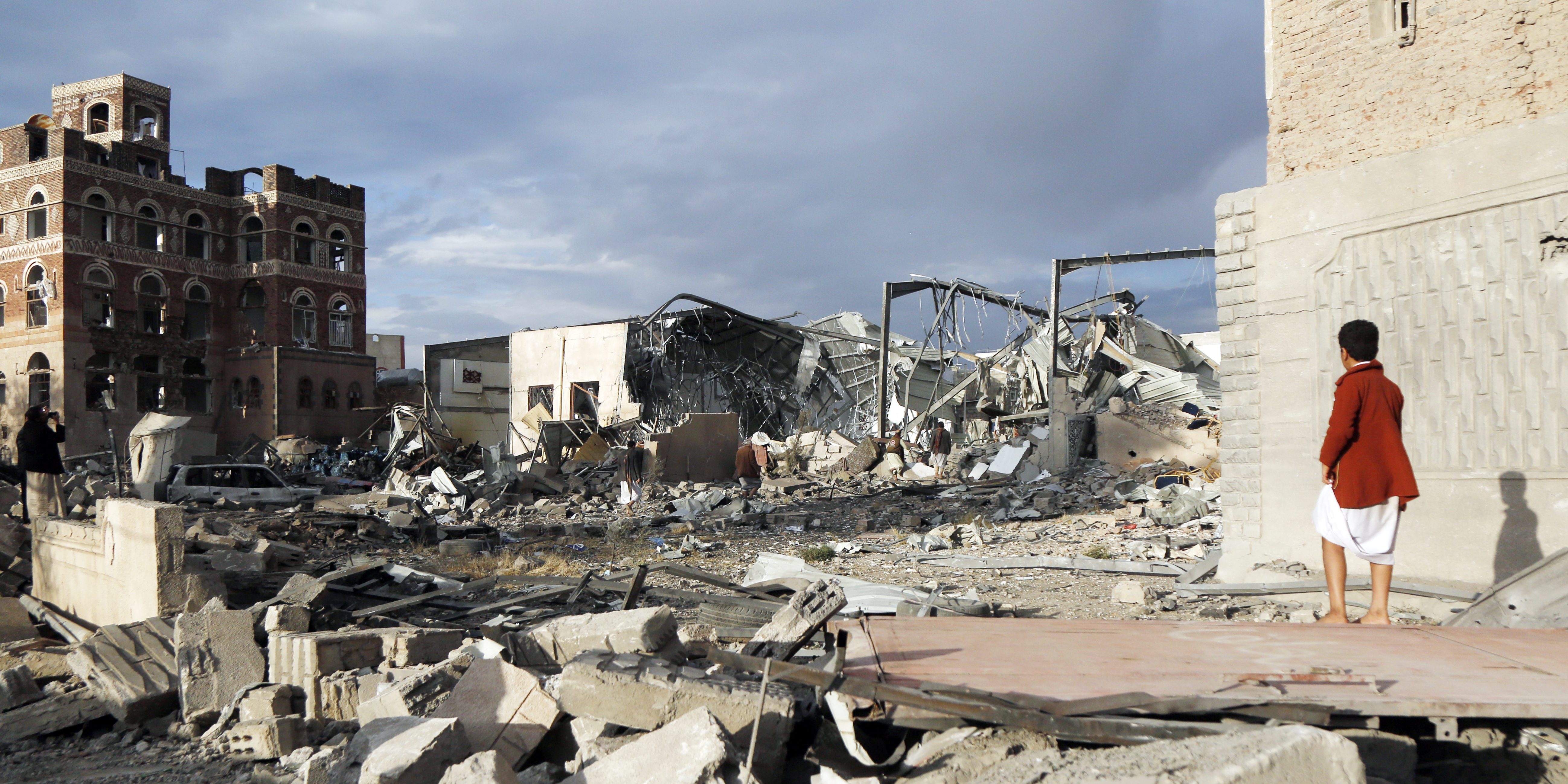
Over just 52 days, from March to May 2025, Rough Rider caused “extraordinarily high numbers of civilian casualties,” the groups noted. As The Intercept first reported in August, the Pentagon’s annual report to Congress on civilian harm acknowledged almost 400 civilian casualties — 153 deaths and 243 injuries — from just three attacks in Yemen: a strike in Sanaa on April 6, a strike on the Ras Isa Port on April 17, and a strike on a migrant detention center in Saada on April 28.
Amnesty, one of the signatories, spoke with five survivors of the strike in Saada who cannot work because of their injuries. “If I don’t take a painkiller, I feel hopeless and wish to die,” said a 22-year-old Ethiopian man who sustained a serious arm injury in the U.S. attack. “I think about how at such a young age I can’t even support myself and still rely on help from others. The metal rod inside me is very painful and uncomfortable. It drives you insane.”
A U.S. official called the Pentagon’s civilian casualty count “lowball numbers.” According to the Yemen Data Project, the estimated toll was higher: at least 238 civilians killed and 467 injured.
“It’s striking that the Department acknowledged nearly 400 civilian casualties from just three incidents — a staggeringly high rate — without any explanation whatsoever about what happened and why, how they’ll respond to victims and their families, and how they’ll prevent it from happening again,” Annie Shiel, the U.S. director of Center for Civilians in Conflict, told The Intercept.
“How will they get through hundreds of cases for Iran if their one civilian harm person still hasn’t finished Yemen?”
More than a year after Operation Rough Rider ended, 15 additional attacks were still under assessment, according to the civilian harm report. One official told The Intercept in August that the backlog would likely carry over several years. Under Hegseth, the 10-person civilian harm mitigation team at Central Command, or CENTCOM, has been reduced to just one individual.
This lack of attention doesn’t bode well for understanding civilian harm in Hegseth’s longer-running and even more destructive war efforts, officials said.
“How will they get through hundreds of cases for Iran if their one civilian harm person still hasn’t finished Yemen?” a U.S. official asked in August.
At present, CENTCOM claims that the U.S. attack on the Shajarah Tayyebeh elementary school in Minab, Iran – that killed more than 150 people, most of them children — is the lone civilian harm incident of that burgeoning forever war. For months, CENTCOM has failed to answer questions about that attack and additional Iranian civilian casualties, including eight members of a family — the youngest, a 20-day-old infant — killed in a strike documented in an investigation by The Intercept.
Shiel highlighted the connections between the civilian casualties during Rough Rider and those in Iran.
“There is a through-line here from Yemen. We’ll never know if the devastation of Minab would have been prevented through a fully staffed civilian protection program and a more robust inquiry into what happened in Yemen, but it’s clear that important reckoning didn’t happen,” she said. “This is part of a broader trend of focusing on ‘lethality’ over civilian lives, ignoring hard-learned lessons in the process.”
A group of Democratic lawmakers told Hegseth in a July letter that his “gutting” of Civilian Harm Mitigation and Response efforts has left the Pentagon unable to “comply with the law and its congressionally-mandated CHMR responsibilities.” Sent by Sen. Elizabeth Warren, D-Mass., and nine other lawmakers, the letter echoed concerns raised by a War Department inspector general report that described civilian protection efforts as largely “inactive.” The May missive by the Pentagon’s top watchdog says cuts to civilian harm mitigation and response efforts have been so severe under Hegseth that the United States cannot adequately protect civilians in conflict zones or track harm when it occurs.
These criticisms were echoed in an another report, first revealed by The Intercept in July, that found Hegseth’s Pentagon gutted its premier center devoted to preventing civilian casualties in war zones. The War Department’s Civilian Protection Center of Excellence slashed its staff from 40 personnel in January 2025 to just nine by the end of the year, according to the report.
Last week, The Intercept published an exposé quoting six current and former defense officials under Hegseth who called for his ouster, including a former senior adviser at that center. “He is conducting state terrorism. He is 100 percent a war criminal. He needs to be prosecuted,” said Wes J. Bryant, who was pushed out of his job for blowing the whistle on Hegseth’s efforts to undermine protections for civilians.
The 12 humanitarian groups called on Congress to “fully restore” the Pentagon’s civilian harm mitigation program, “including by mandating minimum staffing levels and earmarking funding in annual appropriations and maintaining robust oversight over DoD implementation of congressionally-mandated policies.” The groups also specifically requested the release of the Civilian Protection Center’s lessons-learned study on Operation Rough Rider, which has been bottled up for months.
During a rare Pentagon press conference on Tuesday, ahead of the impeachment vote, Hegseth celebrated Rough Rider, claiming the Houthis “cried uncle.” But a post-mortem of the operation in the CTC Sentinel — published by the Combating Terrorism Center at the U.S. Military Academy at West Point — said that because of Rough Rider, the Houthi leadership “will have the confidence that, like the Taliban in Afghanistan, it can simply outlast the United States.”
The U.S. has, to date, failed to come to the aid of its staunch ally Saudi Arabia as the Houthis have battered that country’s airports and energy infrastructure for weeks. On Monday, an attack on the financial district in the Saudi capital, Riyadh, damaged an office of Aramco, the state oil giant.
The White House failed to respond to questions about the Yemen war from The Intercept. CENTCOM did not reply to a request for information on the status of civilian harm assessments or formal investigations stemming from Rough Rider.
Shiel was emphatic about the necessity of accountability, telling The Intercept, “Congress needs to step in and force that reckoning through oversight over civilian harm incidents and by mandating and funding the restoration of the civilian harm mitigation program.”
In their letter, the 12 humanitarian organizations urged the U.S. to make amends to survivors and the families of victims.
“The Department’s 2025 report also stated that ex gratia or condolence payments to victims and survivors were ‘determined to not be appropriate’ in the three Yemen incidents. This decision is premature and seemingly arbitrary,” they wrote. “Rather than dismissing amends out of hand, the Department should undertake a good-faith effort to understand families’ needs and preferences for responses.”
As a lawyer on President Donald Trump’s 2024 reelection bid, Gary Lawkowski filed a complaint against the Washington Post for supposedly making an in-kind contribution to the Kamala Harris campaign by buying social media advertising for its articles.
In the White House, he played a pivotal role in the pardons process that rewarded Trump cronies and donors.
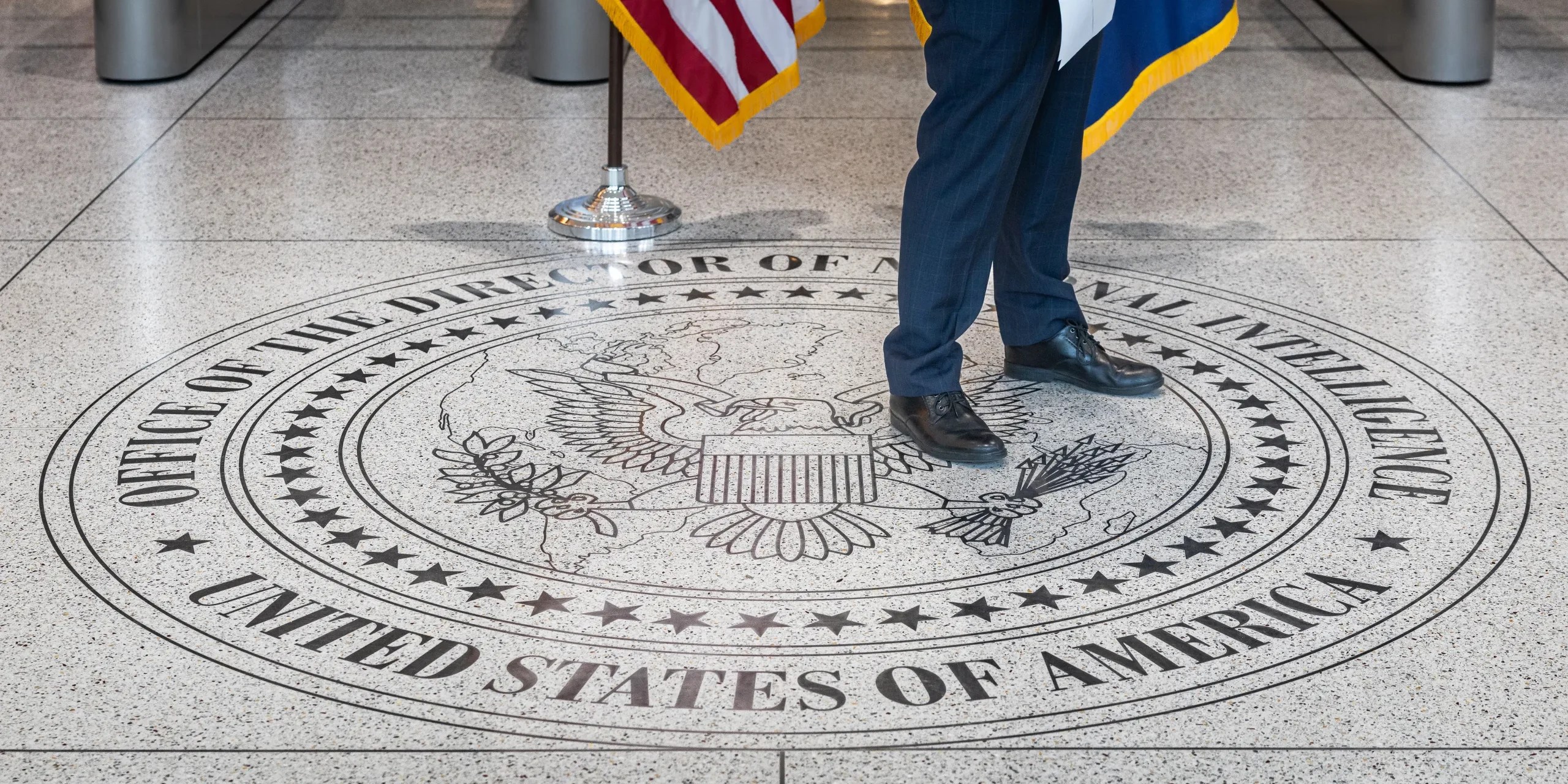
Now, Lawkowski could serve in an obscure but crucial role within the nation’s top intelligence agency, the Office of the Director of National Intelligence. On Monday, Trump nominated Lawkowski to serve as general counsel of ODNI.
It is unclear when Lawkowski will appear before a confirmation hearing or whether Democrats will look favorably upon him when they take control of the Senate in January. His nomination is already drawing pushback, however, from a progressive group that says it represents another attempt to politicize the ODNI after Trump’s bid to install loyalist Bill Pulte as its director fizzled.
“Lawkowski has been a key player in Trump’s corrupt pardon scheme and his nomination tells us that the administration is trying to stack the intelligence community with cronies so they can further weaponize it against their perceived political opponents and innocent Americans,” Hajar Hammado, senior policy adviser at Demand Progress, said in a statement. “Senators must oppose his nomination.”
The ODNI is a relatively small agency, and it doesn’t hoover up its own raw data. As the only intelligence body operating at the Cabinet level, however, it is tasked with coordinating and overseeing intelligence collection and analysis at other spy agencies like the CIA and National Security Agency.
The general counsel plays an important role in interpreting spying law — meaning that Lawkowski could either facilitate or block intelligence community abuses.
In recent months, Trump has displayed an unusual interest in the ODNI, installing housing czar Pulte to replace Gabbard before bipartisan pushback forced him to tap former prosecutor Jay Clayton as a permanent replacement.
In his current role at the White House, Lawkowski serves as deputy assistant and deputy counsel to the president, according to his most recent ethics disclosure, and it is unclear whether he has relevant national security experience.
There is ample evidence that he is a loyalist to Trump. As a lawyer on the Trump campaign, he blasted off a complaint to the Federal Election Commission claiming that the Washington Post’s online advertisements about stories on Trump represented an in-kind contribution to Harris’s campaign. Campaign finance law experts said the claim was baseless. Lawkowski also represented Trump in litigation over the January 6, 2021, attack on the Capitol.
In the White House, he has helped decide who does and does not receive pardons, according to reporting last year in the New York Times. Under Trump, the White House has asserted authority over a pardons process that traditionally flowed through the Department of Justice.
Trump’s blanket clemency for January 6, 2021, insurrectionists preceded a parade of pardons for people who donated to his campaign or causes, or Republican officials who had been convicted of corruption, drawing widespread criticism.
One of the many who received a Trump pardon was former Tennessee state senator Brian Kelsey, who had been represented by Lawkowski before the lawyer went to the White House. Lawkowski did not respond to a request for comment on whether he recused himself from that pardon.
It is unclear whether Senate Select Committee on Intelligence Chair Tom Cotton, R-Ark., will push to have Lawkowski confirmed before the next Senate is sworn in on January 3. The Senate is dealing with a cramped calendar before the end of the year. (Cotton’s office declined to comment.)
The likely incoming intelligence chair, Sen. Mark Warner, D-Va., was harshly critical of Trump’s temporary appointment of Pulte at the ODNI. He ultimately voted against Clayton’s nomination after touting him as a more acceptable alternative to Pulte. (Warner’s office did not respond to a request for comment.)
Lawkowski was tapped to replace John “Jack” Dever, who was confirmed by the Senate to serve as general counsel a little over a year ago. Dever joined the government-backed mortgage finance company Freddie Mac as its executive counsel and vice president in September, according to its website. (Dever left the ODNI with Director Jay Clayton’s blessing and remains well-respected at the agency, an ODNI spokesperson said.)
Dever’s resume included extensive work in the national security realm as a Korean linguist for the U.S. Army, an assistance general counsel at the FBI, and a counter-terror prosecutor in Illinois.
For years, CAPTCHAs made us prove we weren’t robots by clicking traffic lights and crosswalks. Now AI is getting so good at those same tests that the robots may finally kill the CAPTCHA themselves.
Google DeepMind researchers used agentic AI to mathematically prove, or “formally verify,” a number of the Signal protocol’s key cryptographic guarantees—a landmark development for the widely used cryptography and AI itself.
Conducted as a sort of proof-of-concept project in just four weeks, the work is significant in two ways. It serves as further independent validation of the cryptography that protects massive quantities of the world's communications on platforms like the Signal app, Google Messages, and WhatsApp. And it demonstrates Google DeepMind's formal verification capabilities using a new AI framework called AlphaProof Code.
More broadly, AI-aided formal verification is having a moment, but it is unclear how practical it will be for widespread use and how effective it can be at securing large amounts of code. Proponents of formal verification have long referred to it as a sort of holy grail in software security, because it uses math to check and validate that software is functioning as intended—in other words, that it doesn't have critical vulnerabilities.
A Russian internet comedy duo tricked three of OpenAI’s highest ranking military and national security staff into a candid conversation about arming Ukraine. The online pranksters posed as officials from Ukraine’s government, according to a recording of the meeting posted online.
The Russian comedy duo known as Vovan and Lexus have pulled off a long string of prank telephone calls to famous figures since 2011, with victims ranging from Elton John to John McCain. The group, whose pranks have often aligned with Russian foreign policy priorities, have been accused of working in league with its government, a charge they deny.
The latest to fall for their routine were Sasha Baker, who runs national security policy at OpenAI; the company’s lead for strategic initiatives, Caroline Zier; and Ben Crampton, who leads the country’s forays into European national security matters. All three have extensive government experience, with Baker and Zier taking high-level postings in the Department of Defense, and Crampton working in the European Union and United Nations.
“Weeks ago, we launched a thorough investigation into the call’s authenticity,” OpenAI spokesperson Nate Evans said in a statement to The Intercept. “We acted internally and with the relevant authorities to conclude that it was a prank conducted by individuals with a history of targeting officials and other companies. We took action to prevent similar situations from happening in the future.” (The Ukrainian Embassy in Washington did not immediately respond to a request for comment.)
The Russian prank duo said they arranged a high-level meeting with OpenAI by pretending to be Rustem Umerov, head of Ukraine’s Foreign Intelligence Service. During their 17-minute video conversation, a recording of which the Russian group uploaded to Rumble, the participants discussed OpenAI’s military support to Ukraine to aid its ongoing defense against Russia, including the possibility of providing offensive capabilities.
“There’s no question, I think, from our perspective that we want to have as deep a relationship as we possibly can with Ukraine,” Crampton said when asked about selling such offensive military AI services to the country. “But it may not be possible to get to where we want to be straight away.”
“There’s a general reluctance on the part of many people who are senior in the company to get too involved in offensive uses of our technology in a military context,” Crampton continued. “Part of our job is to explain that offense and defense are not necessarily distinguishable from each other under certain circumstances.”
“I’m afraid we probably can’t help you with Elon Musk.”
OpenAI’s ongoing $200 million contract with the U.S. Department of War says it provides artificial intelligence applications aimed at “warfighters” that will “improve military advantage, military utility, or enhance military decision making,” according to contract documents obtained by The Intercept.
In the conversation with the Russian pranksters, Baker added that the company has been in contact with the Pentagon about aiding Ukraine.
OpenAI officials also mentioned ongoing work with the Ukrainian government based around the company’s Daybreak Blue AI model, a system for fixing computer vulnerabilities, as well as a nascent “partnership” with the Ukrainian Ministry of Defense.
“There has been some contact with the Ministry of Defense,” Crampton said. “It’s primarily through a colleague of ours based in Washington as well, who previously had worked with the Delta team in your Ministry of Defense. I think in this field we are interested to partner in as many ways as we can.”
During the video call, both Baker and Zier commented that they had met Umerov previously and were pleased to be speaking to him again. The faux-Umerov appears to have kept his camera turned off for the duration of the meeting.
Vladimir Kuznetsov, the member of the Russian comedy duo known as Vovan, told The Intercept the prank was simple to arrange.
“We initially contacted a senior Ukrainian official in San Francisco, posing as Mr. Umerov,” Kuznetsov said. “It turned out that he had been working to establish connections with OpenAI through the Ukrainian diaspora in California. He was already in touch with Sasha Baker, especially since she had maintained close ties with Ukraine during her time at the U.S. Department of Defense. Believing he was speaking with Umerov, the official offered to arrange a meeting with OpenAI.”
The conversation touched on other topics, including whether OpenAI could help protect against the influence of Elon Musk, and President Donald Trump’s sentiments on the war.
“I’m afraid we probably can’t help you with Elon Musk,” said Baker. “He’s not a fan of our CEO either, if it helps you at all. So, we’re in the same boat.”
Of Trump’s increasingly icy stance on Ukrainian President Volodymyr Zelenskyy, Baker said, “It’s unfortunate. Of course, we’ve been reading in the news the back and forth and the comments from the U.S. president. But I do want to reassure you that I think the majority of the U.S. government, the U.S. people certainly, and our researchers are very supportive of Ukraine.”
Forty years ago, on the evening of October 5, 1986, I sat conferring with members of my local Nicaragua solidarity organization. We were trying to understand the implications of the day’s events in San Carlos, a small town in southern Nicaragua. A young Sandinista soldier had fired a shoulder-launched missile, bringing down a plane in a wreck survived by one Eugene H. Hasenfus. The plane contained U.S.-supplied weapons destined for the Contras, the counter-revolutionary force illegally supported by the CIA to overthrow the Nicaraguan government.
Hasenfus was captured, tried, and convicted of terrorism, and then, in a clever PR move by the Sandinista government, pardoned and released in time to spend Christmas at home with his family in Wisconsin.
Hasenfus’s capture — along with his planeload of AK-47s, 50,000 rifle cartridges, some shoulder-mounted missiles, and grenades — provided concrete evidence of something we’d known for a while: The Reagan administration was actively defying Congress by illegally funding and supplying the Contras. In those years, the Boland amendments (addenda to laws funding U.S. intelligence agencies) prohibited the CIA from using appropriated monies to support the Contras. Hasenfus’s capture not only demonstrated that those amendments were being violated, but also eventually led to the unraveling of a much bigger plot, known today as the Iran–Contra affair.
Oliver North, Iran, and “The Enterprise”
The trail from Hasenfus led to a military aide at the National Security Council, Oliver North, who was running a project to fund the Contras — with money from congressionally outlawed missile sales to Iran. Iran needed the military hardware for a brutal war of attrition with neighboring Iraq. The Reagan administration wanted to free U.S. hostages held in Iran and by Iran’s ally Hezbollah in southern Lebanon. So the arms-for-hostages deal was cooked up. Ollie North saw a way to use that one illegal deal to enable a second one. He would funnel unappropriated funds for the Contras by charging Iran a steep markup on the weapons and stashing the difference in Swiss bank accounts, outside U.S. government control.
At the suggestion of CIA Director William Casey, North had recruited Richard V. Secord, a retired Air Force major general, to establish what they called “the Enterprise.” North would later describe the Enterprise as an “off-the-shelf, self-sustaining, stand-alone entity that could perform certain activities,” i.e., covert overseas operations. The congressional committee that eventually investigated the Iran–Contra affair reported:
The Enterprise, functioning largely at North’s direction, had its own airplanes, pilots, airfield, operatives, ship, secure communications devices, and secret Swiss bank accounts. For 16 months, it served as the secret arm of the N.S.C. staff, carrying out with private and non-appropriated money, and without the accountability or restrictions imposed by law on the CIA, a covert Contra aid program that Congress thought it had prohibited.
North became something of a comic figure in U.S. history, especially after the escapade in which he choked a government office shredder during a late-night document “shredding party.” He and the coterie of implicated officials both above and below him all received pardons from incoming President George H. W. Bush, who’d served as Reagan’s vice president.
There is no way of knowing just how large North’s Enterprise might have grown had Hasenfus’s plane not been shot down, or what other sorts of dirty money-making businesses it might have spawned. Perhaps today we’d be living in a country with a largely self-funding, and therefore (even more) unaccountable, national security apparatus.
Big, “Dirty” Business in Venezuela
I thought about the Iran–Contra affair and North’s Enterprise for the first time in years when I read that Pete Hegseth’s Defense Department is getting into the oil business in Venezuela. Under the new arrangement, the Department of Defense would receive “penny warrants” for an ownership stake in at least one company developing Venezuelan oil fields. These warrants, according to the New York Times, “would give the Pentagon the option to take up to a 35 percent stake in the parent company” of North American Blue Energy Partners.
The company, which is legally registered in Barbados, is run by Alejandro Betancourt López, a Nicolás Maduro crony, around whom corruption rumors have swirled for at least a decade. The deal would also provide the Defense Department with the right to purchase up to 20 percent of the company’s oil output “at production cost” and first refusal on the remaining 80 percent, presumably at market rates.
There are a number of issues to consider here: The U.S. invasion’s legality, the logistical difficulties of extracting and using Venezuela’s “dirty” crude, and, of course, the human folly of pouring even more oil on the climate fire. But what especially caught my attention in the Times story is that the Pentagon taking an equity stake in a private oil company looks a lot like a new edition of North’s off-the-shelf operation from the 1980s.
The Pentagon isn’t alone among federal agencies acquiring ownership stakes in a variety of companies. Perhaps most notable is the Commerce Department’s purchase of an almost 10 percent interest in the chip manufacturer Intel for $8.9 billion, a stake that’s now reportedly worth $42 billion. As the Center for Strategic and International Studies reported in February, “the Trump administration is acquiring a strategic portfolio of investments in companies directly related to national security, spanning minerals, nuclear energy, and semiconductors, among other sectors.”
The CSIS report lists several smaller — though still enormous — Defense Department equity investments, among them:
Vulcan Elements, a manufacturer of rare earth magnets: warrants to purchase equity at an undisclosed fixed price; $620 million loan against a $50 million equity stake
MP Materials, a rare earth magnet manufacturer: 15 percent stake for $400 million
Korea Zinc, a joint venture with Commerce and private investors in a Tennessee smelting installation; Defense Department to take 40 percent ownership, total cost $1.9 billion
ReElement Technologies, a rare earth magnet recycler: warrants for future stock purchase; $80 million from Defense “matched by private capital”
Trilogy Metals, a Canada-based company with Alaskan mining rights: 10 percent stake purchased for $35.6 million, with warrants to purchase another 7.5 percent
Since that report was published, DoD has continued to expand its portfolio with other equity purchases, which seem to be aimed at least in part on restocking American weapons reserves depleted by the Iran war:
“American Nuremberg,” by Rebecca Gordon. Available on Bookshop.org.
Hertha Metals: an apparent $65 million investment — for an undisclosed number of shares — in a steel manufacturer. The libertarian Cato Institute, which generally opposes federal ownership stakes in corporations, called the investment with Hertha an “apparent” deal, as only the company, not the DoD, has announced it publicly.
Beyond taking direct ownership shares in corporations, DoD continues to diversify its loan portfolio beyond traditional military materials. For example, President Donald Trump recently promised a $100 million Pentagon investment to rebuild a pharmaceutical factory in Winchester, Kentucky — but only if Republicans won the midterms in that state.
How Does Government Ownership of Corporations Work?
The federal government has taken temporary partial ownership of U.S. corporations before Trump’s current string of acquisitions. What makes this round of purchases different is that it seems the Pentagon intends to make them permanent. In the past, when the federal government acquired warrants or corporate shares, the move was part of a program to shore up failing institutions in the midst of a more general financial disaster.
This was the case with the Troubled Assets Relief Program, which formed part of the Obama administration’s response to the 2008 fiscal crisis, and more recently when airlines faced bankruptcy during the 2020-21 Covid pandemic. In neither case did the government retain permanent ownership of the entities it bailed out.
The evidence is that this time around, the Trump administration envisions permanent ownership stakes in companies it deems essential to military preparedness and national security. In the case of the Pentagon, two related offices are responsible for overseeing DoD’s equity investments.
The Office of Strategic Capital was established in 2022 during Joe Biden’s administration and funded under the National Defense Authorization Act for fiscal year 2024. The OSC’s initial purpose was to facilitate Pentagon loans to industries it deems crucial to national security. Other parts of DoD use grants or purchases to get money to defense industries. Only OSC can lend those corporations money. Still, neither the NDAA for 2024 nor subsequent NDAAs permits the OSC to buy shares in companies.
The OSC received a huge funding boost under Trump’s 2025 One Big Beautiful Bill Act. While simultaneously meting out drastic cuts to programs that support Americans’ actual everyday security — such as Medicaid, nutritional assistance, housing, and student loans — the One Big Beautiful Bill Act awarded OSC $1.5 billion in additional funds.
The other entity tasked with overseeing Defense equity investments is the Economic Defense Unit. Established this year through an internal DoD memo, the EDU offers a hint that the Pentagon isn’t ready to give up on capital. Like the Office of Strategic Capital, the EDU is overseen by Defense Department Undersecretary Stephen Feinberg, a billionaire, major Trump donor, and co-founder of the private equity firm Cerberus Capital Management.
EDU’s ostensible purpose is to coordinate U.S. economic competition with adversaries such as China, Iran, Russia, and North Korea. But reporting suggests another reason Feinberg established the unit. Quoting a knowledgeable inside source, The American Prospect says that the EDU “operates as a ‘venture capital firm-type entity that looks at deals, what the government’s going to do and evaluates them,’” determining what the government’s ownership stake should be.
Available information points to an investment apparatus being created within the Pentagon, staffed by financiers connected to the same private-equity world that stands to benefit from it.
It sounds like another attempt by the administration to construct a pseudo-sovereign wealth fund controlled by the executive branch.
In other words, the Economic Defense Unit looks like the beginning of a Defense Department investment bank.
As of today, no law explicitly permits the Pentagon to own pieces of corporations or to develop its own pseudo-investment bank, but the 2027 NDAA may change that.
In the meantime, what happens to any revenue derived from DoD’s investments? Such income could include interest on loans, share dividends, or proceeds from the sale of equities. Legally, any such income should be deposited to the U.S. Treasury within three days, according to the U.S. legal code section § 3302(b), perhaps in the Pentagon’s Industrial Base Fund at Treasury.
History tells us North sent the Iran–Contra money to Swiss banks, not the U.S. Treasury. Can we trust Hegseth — who just this week survived an impeachment vote — and his boss not to do something similar with the Pentagon’s earnings today? How would we even know if that trust were violated?
Just Like Egypt and Iran?
The prospect of a metastasizing U.S. Defense Department may seem far-fetched, but it’s already happened in a number of other countries. In Egypt, popular demonstrations brought down President Hosni Mubarak, the country’s effective dictator, during the 2011 Arab Spring. After a brief period under an increasingly unpopular elected president, the Egyptian military staged a coup and has ruled the country directly ever since.
But Egypt’s army is more than a military force. It’s the most powerful economic entity in the country as well. As the Carnegie Middle East Center describes the situation, the Egyptian military has its tentacles in every aspect of Egypt’s economy. Members of the military:
… deliver massive infrastructure projects, produce consumer goods ranging from food to household appliances, manufacture industrial chemicals and transport equipment, and import basic commodities for civilian markets. They have expanded into new sectors as diverse as steel production, pharmaceuticals, gold prospecting, and managing religious endowments and pilgrimage.
At the same time, “thousands of retired senior officers have benefited from the powerful political influence of the military to occupy senior positions throughout the state’s civilian apparatus and public sector companies, securing extra postretirement incomes for themselves while complementing the formal military economy in return.”
(This sounds a lot like the egregious post-service opportunities promised to the investment bankers being recruited to work in the Pentagon’s EDU. After serving on the Pentagon’s new 30-person investment team, where they would have “unmatched access to top-level government officials and privileged information flow,” the recruitment pitch goes, “if you ever want to raise your own fund, you will gain access to fund-raising channels that include royal families and foreign sovereign contacts,” according to the New York Times.)
The Islamic Revolutionary Guard Corps, which has emerged as Iran’s most powerful economic force, plays a similar role, according to CSIS:
The IRGC now owns businesses in the oil and gas sectors, as well as land, marine, and air transportation. The IRGC-owned company, Khatam al-Anbiya, established as the IRGC’s arm in the construction sector, currently controls 812 officially registered Iranian companies which have a total of some 1,700 governmental contracts. Another IRGC-owned company has also recently bought a 51 percent stake in the Iranian Telecommunications company that was privatized at a value of $5 billion.
Can It Happen Here?
Could the Pentagon really emerge as an economic power in its own right, one that operates in tandem with, but parallel to, the federal government? Not tomorrow, certainly, but now is the time to step on the brakes to prevent that scenario.
The prospect of an economically independent U.S. military would be frightening under any circumstances. But it becomes both more frightening and more likely with a Pentagon that Hegseth is reshaping in his own white Christian nationalist and misogynist image. He’s already removed many of the potential human guardrails by purging long-serving top military leadership. As long as DoD doesn’t threaten any of the enterprises of the Trump family and friends — including those of Don Jr. and Eric Trump, Jared Kushner, and Steve Witkoff — we can expect little resistance from the demented relic in the White House.
Fortunately, Hegseth is not the sharpest bayonet in the armory. As with many aspects of this nightmare administration, we may yet be saved from a metastasizing Pentagon by the ineptitude of its leader. Let us work to make it so.
Self-styled Secretary of War Pete Hegseth narrowly avoided impeachment Tuesday night, as solidarity from House Republicans blocked a bill introduced by Rep. Thomas Massie, R-Ky., charging Hegseth with “high crimes and misdemeanors.”
Though Democrats overwhelmingly joined Massie’s effort following their midterm election landslide, the House voted 211 to 204 to refer the charges to a committee, allowing Republicans to slow the process. With 11 Democrats absent, they lacked the numbers. Massie, however, dismissed the impact of Democratic absences to The Intercept. “No, there were enough Republicans to rally to get here,” he said.
The procedural vote spared Republicans a more difficult vote on whether to impeach Hegseth on Massie’s eight charges, including waging wars without congressional authorization and undercutting measures to prevent civilian casualties. It followed a week of increasingly desperate efforts by the Pentagon chief to shore up congressional and White House support, including a campaign-style video intended to influence Trump, a social media campaign by underlings, and a rare appearance by Hegseth himself before the Pentagon press corps.
For half an hour on Tuesday morning’s news conference, Hegseth wove a web of lies designed to refute or obfuscate Massie’s eight charges. He claimed that the effort to impeach him was a stunt by just “one disgruntled congressman.” That, too, turned out to be false as 203 members of Congress voted with Massie.
On Tuesday, a coalition of more than 40 civil society organizations — including Oxfam America, Citizens for Responsibility and Ethics in Washington (CREW), Common Defense, Demand Progress, MoveOn, and the Quincy Institute for Responsible Statecraft — sent a letter calling on all House members to vote for every article of impeachment filed against Hegseth.
“Pete Hegseth’s time at the Pentagon has done grievous harm to the nation and to the Constitution,” said Demand Progress senior policy adviser Cavan Kharrazian. “This is a man who ignored the will of Congress to execute an illegal war in Iran, kidnapped a foreign leader for oil, restarted war on Yemen, sent missiles to kill suspected drug traffickers and weaponized the Pentagon against a political enemy.”
The House has only impeached two Cabinet secretaries: William Belknap, the secretary of war, in 1876; and Alejandro Mayorkas, the secretary of homeland security, in 2024. In neither case did the Senate vote to convict.
“They diagnosed why they lost the election. But tonight they were paralyzed to do anything about it.”
After the vote, Massie called out the display of inaction from his Republican colleagues.
“They diagnosed why they lost the election,” Massie said of fellow Republicans, following the vote on Tuesday night. “But tonight they were paralyzed to do anything about it. And that’s the story of Congress.”
Absent from the vote were Democratic Reps. Julia Brownley, Lou Correa and Nancy Pelosi, of California; Laura Gillen of New York; Steven Horsford of Nevada; Jonathan Jackson of Illinois; Brittany Pettersen of Colorado; Melanie Stansbury of New Mexico; Haley Stevens of Michigan; Marilyn Strickland of Washington; and Frederica Wilson of Florida. The absent Republicans were Reps. Monica De La Cruz of Texas; Neal Dunn of Florida; Russell Fry of South Carolina; Julia Letlow of Louisiana; Tom Tiffany and Derrick Van Orden of Wisconsin; and Rudy Yakym of Indiana.
A senior congressional staffer predicted that Hegseth would face a very rough road if he survived impeachment. “Oversight is going to come crashing down on his head,” that staffer said. “Will Hegseth continue to obstruct? Yes. But wait until the subpoenas start.”
Congressional committees have broad investigative powers, including the authority to subpoena administration officials to testify under oath and compel them to turn over documents. Rep. Adam Smith, D-Wash., who will head the House Armed Services Committee in the next Congress, said Hegseth and Deputy Secretary of Defense Steve Feinberg would be first on the list to testify.
Rep. Yassamin Ansari, D-Ariz., one of the leading voices for Hegseth’s impeachment, told The Intercept there were “many ways” for Democrats to hold him accountable in the next session, specifically compelling him to testify before the American people. “I would be surprised to see him last the next two years in this administration,” she told The Intercept. “I think that he is not only one of the most incompetent members of the administration, but also the most unpopular — and it’s on a bipartisan basis. So the pressure will continue to grow for there to be some change at the Pentagon.”
“I want Pete Hegseth not just impeached, I want him prosecuted.”
Rep.-elect Richard Ojeda, D-N.C., told The Intercept that the incoming Democrats have Hegseth in their sights. “I want Pete Hegseth not just impeached, I want him prosecuted. They murdered people in the Caribbean. And we killed 163 little girls in Iran,” he said. “Everybody in my class is ready for him to go. We tried it. It didn’t work. We’ll do it again.”
In a Truth Social post, President Donald Trump celebrated the outcome while expressing confusion over the vote. Trump called it the “Democrats’ attempt to impeach” Hegseth, despite the fact the effort was introduced by Massie, a Republican, who he called “a major LOSER.” He claimed it was an “EXONERATION” of Hegseth and added: “The Democrats continue to weaponize and abuse the United States of America. They must be stopped!”
Grok Build, the vibe-coding agent from SpaceXSI, is leaking data—some of it proprietary business information and other sensitive secrets—from thousands of its users, including the very same Elon Musk-owned company that offers the platform, new research shows.
The information is revealed through links allowing Grok Build users to share their apps with others. Grok takes steps to randomize the URLs so only people who know the exact URL can access the data stored there. A design decision by developers of the platform, however, completely torpedoes that objective and makes it possible for anyone to enumerate thousands of live Grok Build projects. Except in rare cases, clicking those links opens the app and reveals all data associated with it.
You had one job
Research from security firm Claroc shows that the exposed data includes things like internal business plans, ad proposals, medical exam results, galley checklists from a celebrity cruise line, and employee names and ID numbers. Ironically, some of the sensitive data comes from two-dozen apps built by SpaceXSI (the name of the now-merged SpaceX and xAI) itself. A small sampling of the documents revealed in the SpaceXSI apps—Claroc found 24 of them—include an onboarding plan, marked confidential, for a new member of SpaceXSI’s enterprise sales team, a sales territory map of 594 accounts, internal system addresses for sales team tools, and advertising proposals.
Calls for self-styled War Secretary Pete Hegseth’s ouster have grown louder on Capitol Hill as a possible impeachment vote looms this week. At the same time, Hegseth has shored up support at the White House and among MAGA faithful, according to dismayed Pentagon officials.
Rep. Thomas Massie, R-Ky., introduced articles of impeachment on the House floor Monday afternoon, charging Hegseth with “high crimes and misdemeanors.” Top Democrats have indicated a desire to join Massie’s effort since their midterm election landslide. “I am a hard yes on the Hegseth resolution,” Rep. Hakeem Jeffries of New York, who is poised to be the next House speaker, told ABC’s “This Week” on Sunday. Rep. James Comer, R-Ky., the current House Oversight Committee chair, told Newsmax on Friday it is “very possible” the votes exist to impeach Hegseth.
Rep. Yassamin Ansari, D-Ariz., one of the leading voices for Hegseth’s impeachment, agreed. “I think there’s a high chance that it will be successful,” she told The Intercept of Massie’s effort. In April, Ansari filed six articles of impeachment against Hegseth, including violations of the law of armed conflict and targeting of civilians, abuse of power, and obstructing congressional oversight. She called for a floor vote on his ouster this week.
“Hegseth has demonstrated that he is wholly incompetent. He’s committed what I believe to be war crimes in Iran and the Caribbean and he is ill-equipped for the job,” said Ansari. “My reason for introducing the articles of impeachment back in April had a lot to do with his conduct and the war crimes in Iran, including the bombing of the children’s school. But it’s refreshing to see that since then, more and more Republicans are also recognizing that his leadership has failed and that he’s putting all of us in danger.”
In the wake of a devastating election rout of the GOP that handed Democrats firm control of the House and the Senate, Congress begins a five-week lame-duck session on Monday. With dozens of Republican lawmakers ending their tenure in the House, it’s unclear how many will even show up for votes. Such absences, as well as outright defections in the GOP ranks, make it increasingly likely that Massie’s measure will pass, staffers on Capitol Hill told The Intercept.
On Sunday, GOP Rep. French Hill of Arkansas left open the possibility of backing the measure. “I want to hear the debate on it to see if it merits impeachment versus some other disciplinary action or action by the president,” he said on CBS News’s “Face the Nation.” Outgoing House speaker Mike Johnson, R-La., did not answer when asked by Politico if GOP leaders would whip the Hegseth impeachment vote. House leaders must take up the matter within two legislative days; opponents could table the resolution or refer it to committee instead of voting directly on impeachment.
After narrowly being confirmed by the Senate, which required Vice President JD Vance to break a 50-50 tie, Hegseth’s tenure has been marked by fiascos and failures beginning with Signal-gate, the sharing of secret war plans in a chat group with a journalist. In that case, according to the Pentagon’s own inspector general, “Hegseth violated security protocols and endangered U.S. troops and objectives.” Since then, Hegseth has been under perpetual fire for the unsuccessful Iran war in 2026, specifically a strike on an elementary school in Minab, Iran, that killed more than 150 civilians, most of them children. He faces pressure over his campaign of extrajudicial killings in attacks on so-called drug boats in the waters off Latin America. And questions continue to mount about his purge of top military leaders — many of them women and minorities.
“The fact that many career officials from the department have left citing his leadership, I think, is very telling,” said Ansari. Last week, The Intercept published an exposé quoting six current and former defense officials who currently serve or served under Hegseth and called for his ouster. “He is conducting state terrorism. He is 100 percent a war criminal. He needs to be prosecuted,” said Wes J. Bryant, one of those officials and, until last year, a senior targeting adviser and policy analyst at the Pentagon who was pushed out of his job for blowing the whistle on Hegseth’s efforts to undermine protections for civilians.
As calls for his ouster have grown louder, Hegseth launched a desperate bid to whip up support at the White House, including a nakedly obsequious video seeking Trump’s support that he posted on X. It was accompanied by a coordinated campaign of social media posts by Pentagon underlings tying Hegseth’s fortunes to the president with the text “STAND. FIGHT. DEFEND THE REPUBLIC.”
Hegseth’s hand was strengthened on Friday when Trump’s chief of staff Susie Wiles stepped down and was replaced by his hard-line domestic policy adviser, raging xenophobe, and illegal boat strike proponent Stephen Miller, according to two Pentagon officials. The embattled war chief was quick to offer “Huge CONGRATS” to Miller on X, and posted a photo of himself alongside Trump’s new consigliere. The same coterie of Hegseth devotees at the Pentagon followed with similar posts featuring Miller.
Wiles had reportedly soured on Hegseth, blaming his woeful management of the Iran war for flagging Republican fortunes. A senior Trump administration official also told MS Now that Miller and Hegseth “have been extremely close since the beginning of the administration.”
If the House impeaches Hegseth, removing him from office would require a two-thirds vote in the Senate — a high bar, even when Democrats take control of the chamber in January. Neither of the two Cabinet secretaries impeached by the House — William Belknap, the secretary of war, in 1876; and Alejandro Mayorkas, the secretary of homeland security, in 2024 — were convicted by the Senate.
An Armed Services Committee staffer who spoke with The Intercept was skeptical that Senate Majority Leader John Thune, R-S.D., would bring the measure to a vote. Ansari held out hope. “Thune is very much aligned in terms of his view that Hegseth is not fit for the job,” she said, adding, “I do think that the resounding victories on Tuesday night will impact the way Republicans operate moving forward.”
Sen. Thom Tillis, R-N.C., who is retiring at the end of the year, has said for months that he regrets his vote to confirm Hegseth and rebuked the war chief for his desperate video address aimed at Trump. “[C]abinet secretaries shouldn’t be wasting taxpayer dollars on campaign style videos. Kristi Noem learned that the hard way,” he wrote on X on Friday, also laying into Hegseth for “the incompetence you’ve displayed, the bad advice you’ve given to president, and your shameful and embarrassing episodes from firing our top generals to texting war plans to reporters.” Tillis had also previously said Hegseth “needs to go.”
Massie suggested his impeachment resolution is the legislative equivalent of a mercy killing, calling it “a much gentler version” of what Democrats will do when they take control of Congress in January. Congressional committees have broad investigative powers, and Ansari said that if Hegseth survives this year’s impeachment push, there were “many ways” for Democrats to hold him accountable in the next session, specifically compelling him to testify before the American people. “I would be surprised to see him last the next two years in this administration,” she told The Intercept. “I think that he is not only one of the most incompetent members of the administration, but also the most unpopular — and it’s on a bipartisan basis. So the pressure will continue to grow for there to be some change at the Pentagon.”
Trump expressed mild “confidence” in Hegseth in a “60 Minutes” interview taped on Friday, touting the U.S. victory over Venezuela, but stopped short of praising his Pentagon chief for it. Asked if he credited Hegseth for what he considers a major victory, Trump replied: “No, but he was a part of it.” On Saturday, Trump wrote on Truth Social that calls for impeachment of administration officials amounted to “extortion at the highest level” and ordered the Justice Department to investigate those making the push.
Attorney General Todd Blanche, himself a potential target of impeachment, said on Sunday that the Justice Department would represent Hegseth during any impeachment proceedings. He added that he “would be very worried” if he were a Democrat threatening to investigate administration officials. Asked if he considered those threats to be a crime, Blanche said, “It depends on what’s said. So yes, there could be.”
The White House did not respond to questions about Trump’s support for Hegseth.
Update: November 9, 2026, 2:50 p.m. ET The article has been updated to note that Rep. Thomas Massie, R-Ky., introduced articles of impeachment against War Secretary Pete Hegseth on Monday afternoon.
An Israeli airline shipped thousands of pounds worth of parts for controversial “bunker-buster” bombs through John F. Kennedy International Airport in New York during the height of the Israeli–U.S. war against Iran, according to a new investigation by a left-wing research group.
Challenge Airlines, a cargo hauler based in Israel, made three flights this spring carrying the bomb casings for BLU-109s — a 2,000-pound munition that has been tied to numerous mass-casualty attacks on civilian neighborhoods in the Gaza Strip, Lebanon, and Iran in recent years — according to open-source data obtained by the Movement Research Unit and reviewed by The Intercept.
The airline also made more than 100 shipments of guidance kits known as joint direct attack munitions, or JDAMs — which are used to convert so-called “dumb bombs” into GPS-guided munitions capable of striking a specific target — according to data shared with The Intercept. Many of the guidance kits were marked for use on the MK-84, another 2,000-pound bomb Israel used in its campaign to level Gaza, where fragments of JDAMs have repeatedly been found at the site of airstrikes.
The 2,000-pound bombs present a serious risk of civilian casualties, according to Josh Paul, a former State Department official who resigned at the outset of the war in Gaza to protest the Biden administration’s sale of weapons to Israel.
“If you look at historic U.S. use of 2,000-pound bombs, in the entire counter-ISIS campaign, there were just two that were dropped in the vicinity of the city of Mosul precisely because there is no way to use a 2,000-pound bomb discriminately in an urban environment,” Paul said, referring to an American air war during the final years of the Obama administration to end the Islamic State’s control of the Iraqi city of Mosul.
Israel hasn’t shared the United States’s reservations. The country made extensive use of the weapons to attack targets in Gaza and Lebanon, including a deadly strike on Gaza’s Jabaliya refugee camp that killed dozens of civilians, according to an analysis by the New York Times.
“If you look at a picture of Gaza right now, I would say Israel’s use of these weapons is functionally indistinguishable from indiscriminate bombing,” Paul said.
“There is no way to use a 2,000-pound bomb discriminately in an urban environment.”
Challenge Airlines, and the Israeli military did not respond to request for comment.
“We work closely with all airport partners to ensure the safety of public, neighboring communities, and airport personnel,” said a spokesperson for the Port Authority of New York and New Jersey, which operates JFK Airport. “The federal government and commercial airlines have primary responsibility as to what is allowed to be shipped on aircraft. We are pre-empted under federal law from interfering with these activities.”
While the shipments of JDAMs and bomb bodies for BLU-109s did not include active munitions, previous shipments of weapons through JFK have included explosives, including 14 tons of nitrocellulose bound for Israel in May 2025.
The Intercept verified the data showing all three shipments of bunker-buster bomb bodies, and verified a portion of the data showing shipments of JDAM kits. Movement Research Unit, an investigative outlet whose prior work has uncovered shipments of drone tech to Israel and the transport of fighter jet parts by United Airlines onboard civilian passenger flights, shared the data on the condition that some specifics of its methods be withheld to prevent a crackdown on the availability of such data.
In response to the flow of weapons and materiel through JFK, the New York City chapter of the Democratic Socialists of America has been organizing a campaign to stop the flow of weapons to Israel through the airport.
“This is another example of a growing body of reporting that shows how civilian infrastructure is used for the genocide in Gaza,” said a DSA member named Henry, who asked to be identified without his last name in order prevent retaliation from his employer. “Civilian air travel should prioritize passengers, travelers, and the international community — not weapons — and no worker should be forced to serve the militarized supply chain.”
Tons of Pressure
Challenge Airlines shipped the bunker-buster bomb bodies on flights leaving JFK for Tel Aviv on March 12, April 30, and May 6, according to the data shared with The Intercept.
They shipped the guidance kits far more frequently, with 109 shipments leaving JFK for Tel Aviv between December 22, 2024, and June 7, 2026. Cargo documents indicate that most of the shipments were of JDAM kits designed for 2,000-pound MK-84 bombs but also included at least one shipment of kits for bunker-buster bombs.
In total, the airline shipped 175,884 pounds of BLU-109 casings and more than 5 million pounds of JDAM kits between December 22, 2024, and June 7, 2026, according to the data obtained by Movement Research Unit.
JFK Airport is the main export hub for such munitions flying by air to Israel, according to federal data: More than half of all Israel-bound air shipments of weapons that fit the government export category for bombs and missiles was sent abroad from JFK.
It was not immediately clear where the bunker buster and JDAM shipments originated, but sales of military hardware to Israel typically either come from deals between the Israeli and U.S. governments or direct commercial purchases under a special export license made by the Israeli military from private companies.
In the first two years of Israel’s war on Gaza, the U.S. spent $21.7 billion on military aid to Israel, according to a study by analyst William Hartung. That has included multiple shipments of 2,000-pound bombs like the BLU-109 and the MK-84, as well as JDAM kits to equip the weapons with GPS guidance.
The Biden administration in May 2024 halted the shipment of MK-84 2,000-pound bombs to Israel, citing the potential harm to civilians, but President Donald Trump resumed shipments of the heavy munitions within weeks of retaking the White House.
News of the shipments comes just over a month after the Associated Press revealed plans in the works for the U.S. to ink a vast $2.8billion arms sale to Israel that would include thousands of 2,000-pound bombs.
The ongoing sale of such heavy weapons to Israel underscores the need for a federal solution, according to Rep. Delia Ramirez, D-Ill., who sponsored last year legislation dubbed the “Block the Bombs Act,” that would bar the U.S. from selling BLU-109s, JDAMs, and other munitions central to Israel’s war effort.
“It’s good that people are putting pressure locally, but ultimately it is Congress’s responsibility to make that happen.”
“It’s the only bill that prohibits these weapons transfers from happening, and the only bill that creates a comprehensive process of oversight,” Ramirez told The Intercept. “There’s been a big push, particularly in New York and around JFK, to block these transfers and it’s good that people are putting pressure locally, but ultimately it is Congress’s responsibility to make that happen.”
First introduced in May 2025, the bill has gathered more than 80 co-sponsors but has thus far languished in legislative limbo. With the House of Representatives soon to be under Democratic control, Ramirez said she plans to bring the bill to the floor next session.
Hackers are actively exploiting a recently discovered critical vulnerability that allows them to log in to privileged accounts on many Linux systems, multiple researchers are reporting.
The vulnerability, tracked under the name *sshole, arises from the interaction between OpenSSH and a code library known as musl. Linux systems that use both of these packages and meet certain other requirements can be hacked to give unauthenticated access to high-privilege accounts in a matter of seconds. *sshole became publicly known last Thursday and quickly stoked concerns it could lead to widespread compromise of Linux machines. Four days later, the prediction shows signs of becoming real.
Attackers conducting "mature intrusions"
Security firm Greynoise said Monday that honeypots it maintains in Southeast Asia have come under attack by a group it’s tracking as GT10. The group conducted “mature intrusions" into the systems, which Greynoise uses to detect attempted or successful attacks in real time. Greynoise subsequently gained access to a GT10 server that revealed potential other victims and some of the tools used in the campaign. A backdoor the group is using in the attacks contains Chinese language comments and appears to be generated with the use of AI.
Claude Code is leaking sensitive information on public GitHub instances thanks to a partial oversight in the way its settings files are handled. That's the finding of AI security researchers at Apiiro, who discovered thousands of secrets, including database passwords, API tokens, and root logins, amid Claude Code settings files embedded in GitHub repositories.
The leak stems from the way Claude Code handles user approval for automated shell commands. When a user chooses the "Yes, and don't ask again" option to approve running a command, that choice gets stored as part of a rule in the local ".claude/settings.local.json" file on the user's computer. That rule is sometimes coded as a pattern, but the command itself is often written to that settings file as is, including any sensitive information that may be embedded within it.
This isn't really a significant security issue if the settings file stays on the user's local machine (assuming that machine doesn't become compromised itself, of course). And Anthropic notes in its Claude Code documentation that this particular settings file gets added to the developer's global .gitignore list, which usually prevents it from being shared publicly.
An Estonian newspaper recently revealed that a British soldier disobeyed a direct order to remove the SIM card from his cellphone before being deployed to a part of Estonia, approximately 90 miles west of the Russian border.
As a result of his refusal to engage in this element of operational security (opsec), the soldier, Daniel Barton-Kennedy, had his phone hacked, and nude photos of himself were stolen and used as blackmail against him.
Eventually, Barton-Kennedy was court-martialed for disobeying a lawful command, pled guilty, was reduced in rank, and ordered to serve 10 months in detention.

 Login







 Canonical is giving Ubuntu Pro users early access to AI-generated patches for known security flaws, available through a new opt-in archive called Edge. To get fixes out faster to customers and users, the company has built a multi-agent system called Surge to backport fixes for vulnerabilities in ‘userspace’ software packages. The machine-generated patches land in the Edge archive. This is opt-in and not enabled by default. Ubuntu Pro users who want fixes before they receive full testing or ‘qualification’, will need to manually enable the Edge archive on supported systems. Surge is not being used to patch kernel vulnerabilities (though […]