❌

Reading view

There are new articles available, click to refresh the page.

Hyperscale data centers use 2% of US electricity

One flashpoint for the tech industry’s all-in push on large language models has been the sudden rush to turn investment money into hyperscale data centers. The rush hasn’t allowed anyone to plan how to supply the required electricity cleanly or with minimal impact on ratepayers. Instead, it has been difficult to even collect information on what’s being built.

A new study has tallied energy use and estimated emissions for hyperscalers operating in the United States between May 2024 and April 2025. They weren’t able to differentiate between AI compute and more traditional data services, but it provides a clear point of reference to track moving forward.

Finding the centers

The team started with a list of 675 facilities from a commercial database based on news reports, company statements, and satellite imagery. They dropped any that didn’t have a reported electrical capacity or that they couldn’t verify was a suitably large building with the expected cooling and electrical connection equipment. That reduced the list to 403 data centers with an average electrical capacity of about 40 megawatts.


Read full article

Comments

© Cavan Images / Peter Essick
Supreme Court keeps injunction against DEI grant defunding in place

On Monday, the Supreme Court announced it would not hear an appeal of a lower court decision that blocked the government from canceling the grants of a handful of researchers whose funding had been revoked during the Trump administration's purge of DEI-related work. While the decision applies to only seven researchers in California, the lower court had ruled that the government's actions violated the First Amendment and so may have broad implications.

The Supreme Court provided no discussion of its rejection, and no justices filed a dissent regarding the decision.

The suit was initially filed by a large group of researchers at the University of California, Berkeley and UC San Francisco, contesting grants originally issued by many federal agencies, from the National Institutes of Health to the Department of Transportation. At issue were grants that had been terminated because the agencies decided they violated a Trump executive order blocking the use of DEI. This occurred despite the fact that the government hadn't bothered to define DEI, and targeted grants were often identified by little more than a keyword search.

Read full article

Comments

© Kevin Carter

Vulcan rocket fails during launch, dealing major blow to SpaceX competitors

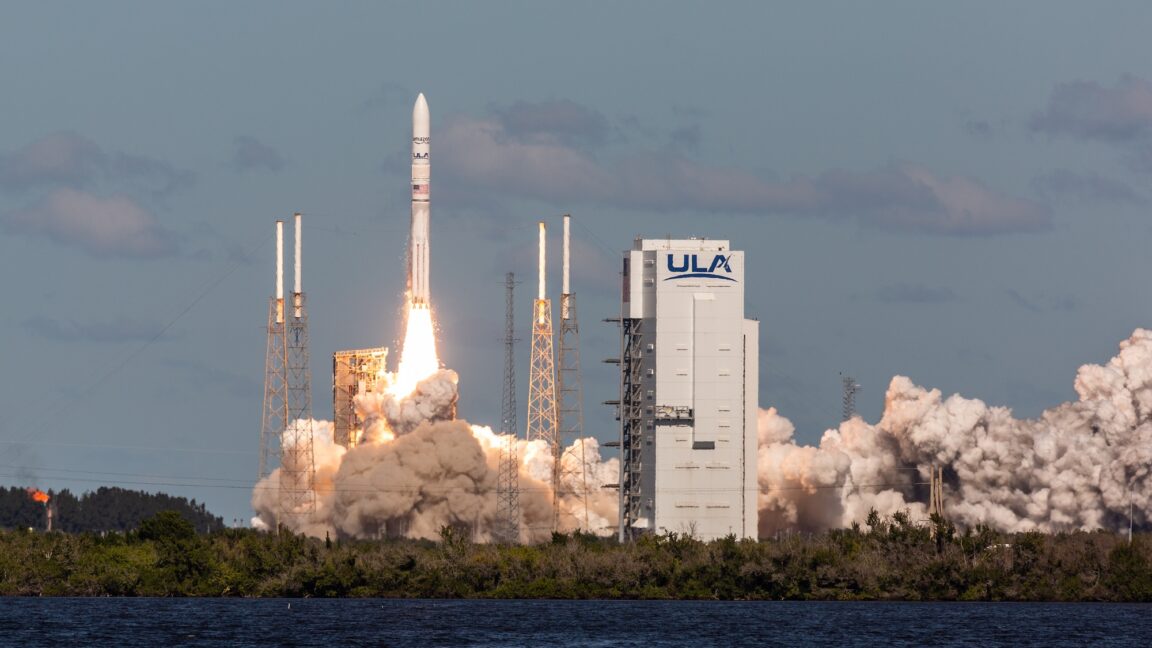
United Launch Alliance's Vulcan rocket and 40 Amazon Leo broadband satellites fell back to Earth minutes after liftoff Sunday, a crushing setback that will ripple across all sectors of the US space industry.

The Vulcan rocket is on contract to launch roughly half of the US military's national security space missions in the next few years, and Sunday's mission was the first of 38 Vulcan launches booked by Amazon to build out its network of broadband Internet satellites aimed at competing with SpaceX's Starlink. Sunday's failure is expected to ground the rocket for an indefinite period of time.

Vulcan is no stranger to close calls, having overcome failures with its strap-on solid rocket boosters on two of its four previous flights. In each case, the rocket corrected for those problems and continued into orbit to deploy its payloads. The incidents triggered monthslong reviews and investigations before ULA could resume Vulcan flights.

Read full article

Comments

© Manuel Mazzanti/NurPhoto via Getty Images

How the world’s fires changed while humanity hit pause

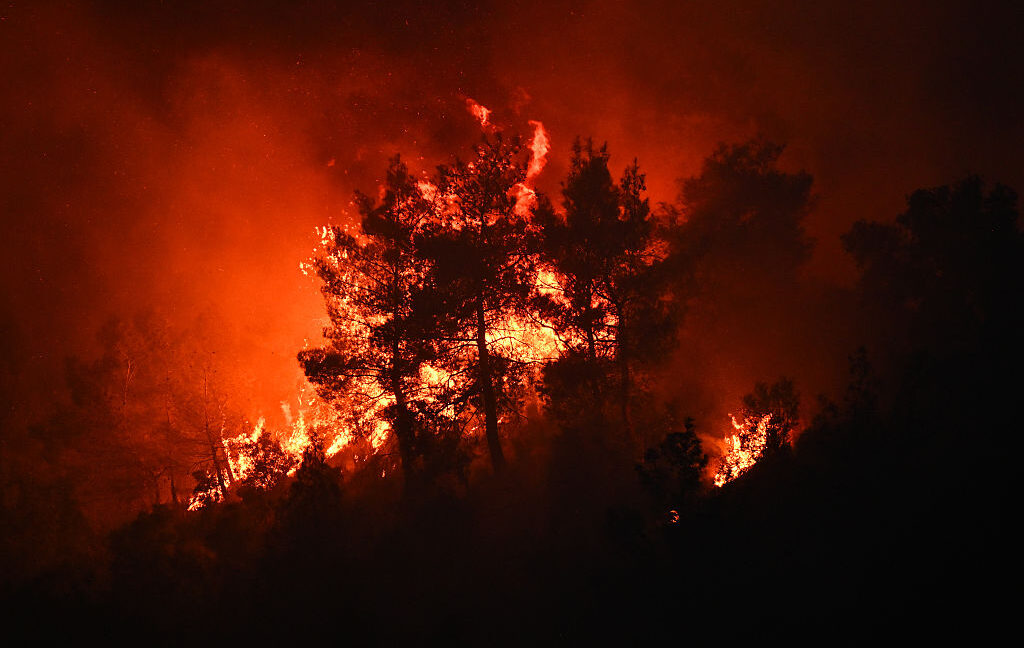
Wildfires occur worldwide, and they can sometimes become serious threats to people's lives. A series of massive bushfires from 2019 to 2020 swept across southeastern Australia and destroyed thousands of homes. Recently, the 2025 Los Angeles wildfires spread widely across the city, resulting in massive damage to local communities.

Many things can cause wildfires, but humans are the only factor that can also make preventative efforts. Measuring people's impact on fire is difficult because of the mix of human and natural influences.

A team led by Jianghao Wang, a professor at the Chinese Academy of Sciences, recently published a study in Cell Reports Sustainability comparing the COVID-19 era with other years. Data from the 2020 lockdowns suggest that lower human activity at this time had the net effect of lowering average fire activity.

Read full article

Comments

© Anadolu

James Webb telescope finds ice older than the star it orbits

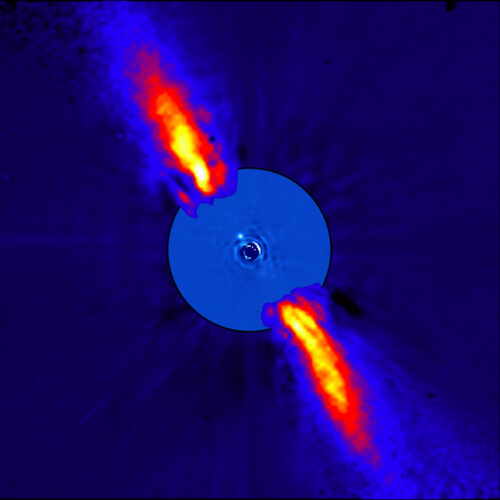
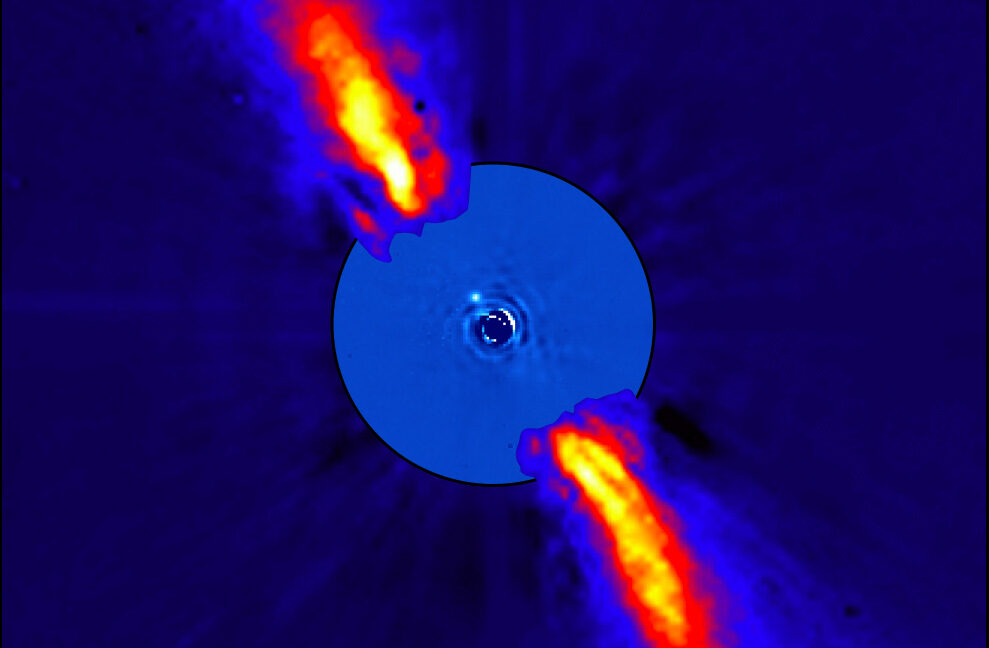
Beta Pictoris is a young star, roughly 20 million years old, and located about 64 light-years away from Earth. It is surrounded by a vast disk of dust and rubble where planets are still forming—astronomers have already found three. In a new Science study, a team led by Sarah Betti, an astronomer at the Space Telescope Science Institute in Baltimore, used the James Webb Space Telescope to look for ice in this disk. Researchers found both water and carbon dioxide ice.

The water ice is glassy rather than crystalline, and it is mixed with carbon dioxide in roughly the same proportions we see in comets of our own Solar System. This suggests ingredients necessary to form water-rich worlds might be common around young stars.

The missing ice

Beta Pictoris is one of the best studied stars in the sky. Its disk was among the first ever imaged, back in 1984, and we see it almost exactly edge-on, which makes it a natural laboratory for studying how planetary systems grow. It's what astronomers call a debris disk, where the dust is constantly replenished by collisions among comets and planetesimals, small bodies that are the building blocks of planets.

Read full article

Comments

© ESO/A.-M. Lagrange Et Al.

Winemakers are learning that conservation can be good for business

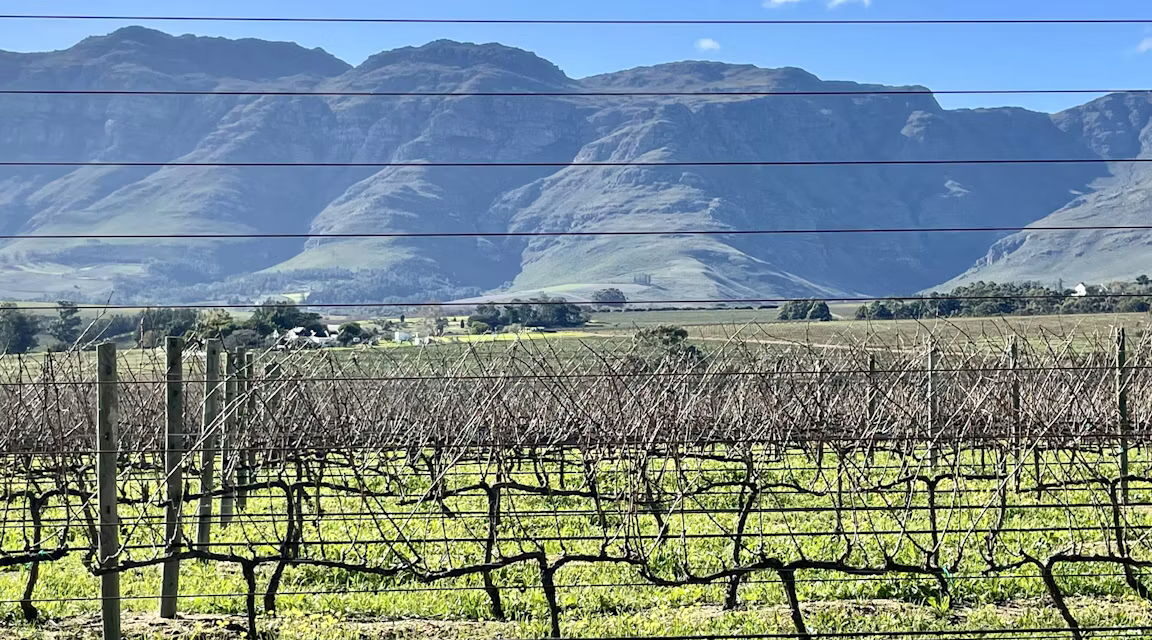
More than 500 vineyards are scattered across the slopes and valleys of South Africa’s Western Cape, one of the world’s most biologically diverse landscapes. The region produces about 90 percent of South Africa’s wine, but winemakers there are increasingly struggling with drought, excessive heat and erratic rainfall.

Temperatures in the region have risen 1.5 to 2 times faster than the global average over the past five decades. And extreme storms have become more intense as climate variability increases. The late 2010s brought a significant challenge for winemakers, as three years of severe drought placed vineyards under intense stress and reduced grape production.

As climate variability places increasing pressure on grape production, many wine producers are building on sustainability measures that have long been part of vineyard management.

Read full article

Comments

© Hannah Herrero

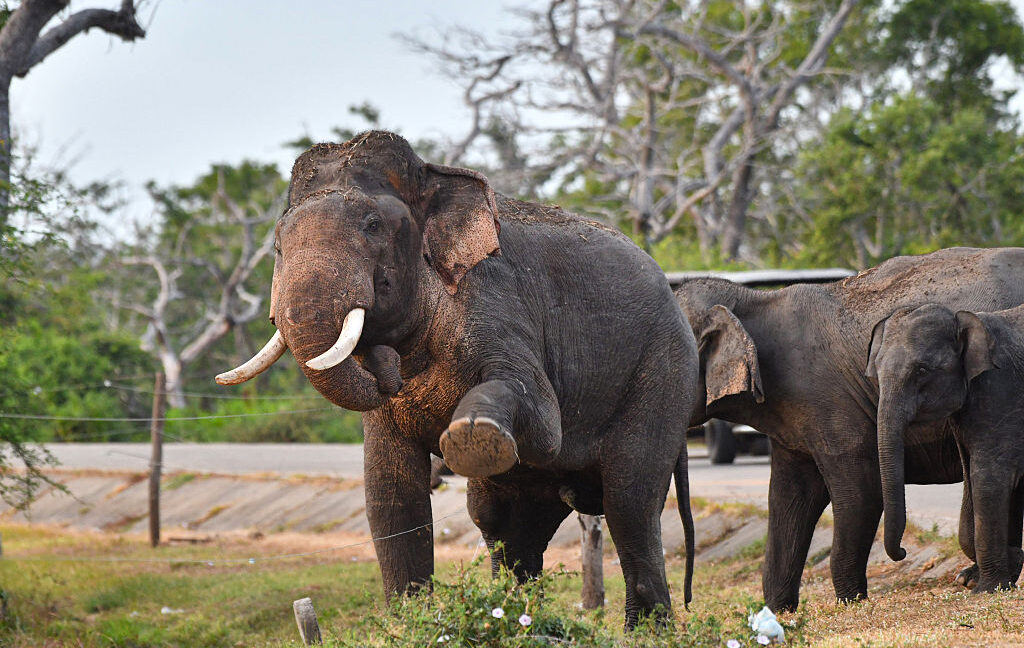
In elephants, the resilience of communities has its limits

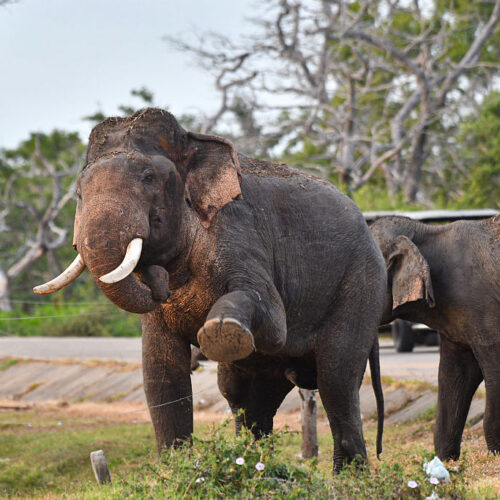
Elephants live in some of the most complex and resilient societies in the animal kingdom. Individuals die or move away, calves grow up, and newcomers join, but the local communities as a whole usually hold together. Long-term studies of African savanna elephants have shown that, even after poaching or other spikes in deaths, survivors tend to rebuild their lost connections over time. But a new study suggests that resilience may not keep the community intact when steady losses accumulate over time.

Anastasia Madsen, a behavioral ecologist at the University of California, San Diego, and her colleagues analyzed 12 years of observations of wild Asian elephants in Sri Lanka. They found that, once losses began to outpace newcomers, the elephants’ society didn’t just get smaller. It fractured.

Accidental savanna

Udawalawe National Park in southern Sri Lanka was created in the 1970s around a reservoir on one of the country's four major rivers. “Before that, it was basically a tropical deciduous forest,” said Shermin de Silva, an ecologist at UC San Diego and senior author of the study (de Silva started the Udawalawe Elephant Research Project in 2006).

Read full article

Comments

© NurPhoto

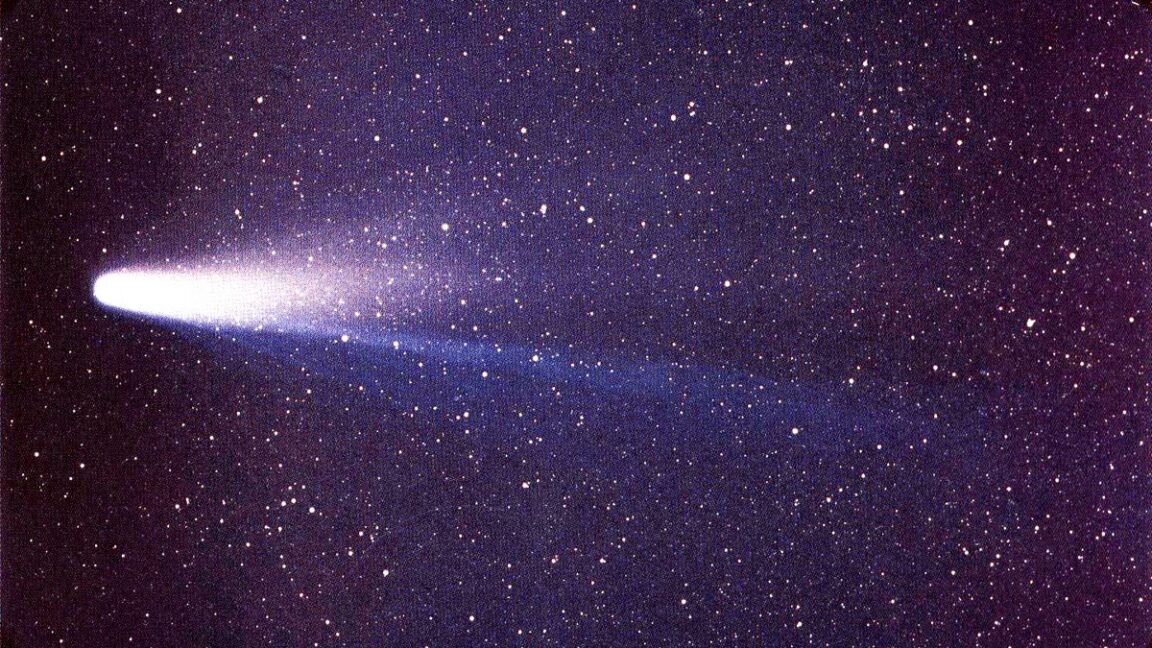
It's the end of the world as we know it, per a physicist's 1960 prediction

As of this morning, Microsoft is still scrambling to restore service following yesterday's global outage, with millions of users unable to access Outlook and other vital tools. It's not the end of the world, but it does seem fitting that this should happen on the day a physicist predicted would be the end of humanity: November 13, 2026. And it falls on a Friday, too. The physicist in question is Heinz von Foerster, who published a 1960 paper in the journal Science predicting that by today, overpopulation would reach the breaking point.

It's not a new fear. English economist Thomas Malthus—one of the early pioneers in modeling population dynamics—made a similar prediction in 1798, claiming that a rapidly growing population would eventually exhaust the available food supply, and humanity would starve to death. His model rested on the assumption of exponential growth, but the equation is only applicable under specific conditions, such as scientists growing bacteria in a lab in a perfectly controlled environment. Even then, while growth occurs exponentially for a time, it does not continue forever.

Population dynamics are notoriously tricky to calculate because there are so many variables to consider and so much unpredictability in the system. In his 1960 analysis, Von Foerster accurately measured past trends in population growth, but like Malthus, he assumed those trends would carry into the future largely unchanged. So he projected that human population growth would march inexorably toward infinity. We wouldn't starve to death; von Foerster thought we would be ingenious enough to solve the food supply problem. Instead, "they will be squeezed to death," he wrote.

Read full article

Comments

© NASA/W. Liller/Public domain

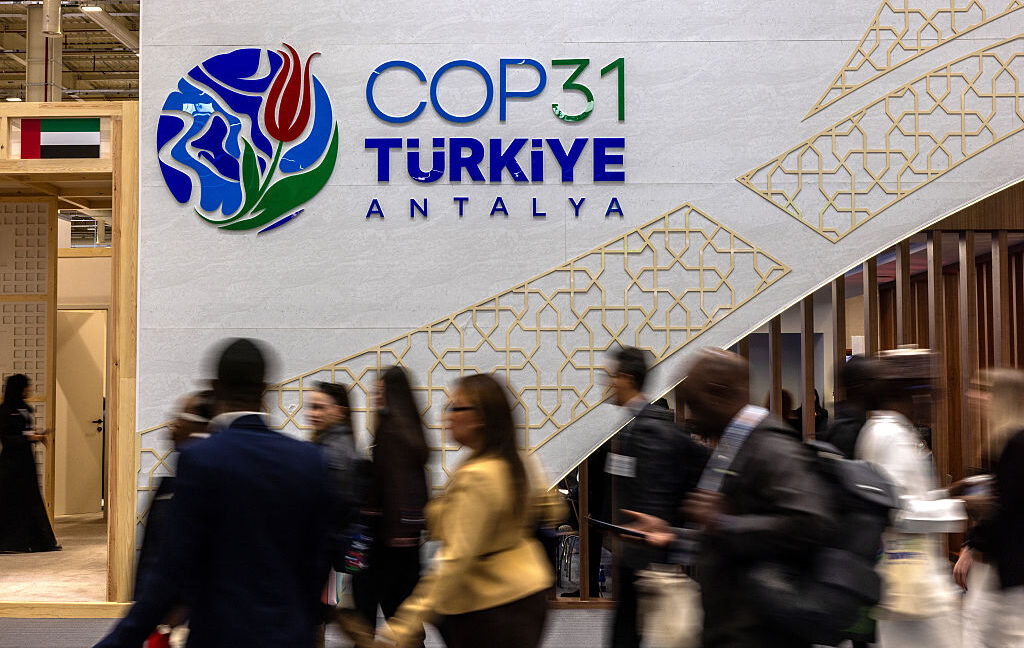
Scientists warn 1.5°C climate change threshold could arrive by 2029

ANTALYA, Turkey—Amid upbeat green-tech pep talks and notices for happy hours at the annual United Nations COP31 climate change conference on Thursday, two new reports offered a stark reminder of how far the world remains from containing global warming.

Climate Action Tracker, a nonprofit group that analyzes climate policies, found that the planet is still on track to warm nearly 5° Fahrenheit by 2100, a rise that would devastate coral reefs, disrupt agriculture and forests and melt most of the world’s ice. In a separate bulletin, the European Union’s Copernicus climate change service reported that global warming has accelerated significantly since the 2015 Paris climate agreement.

When the Paris agreement was adopted, the average global temperature was projected to surpass the pact’s long-term threshold of 2.7° Fahrenheit above the preindustrial average around 2045. After another decade of global climate summits, warming is now projected to cross that benchmark as soon as 2029, according to Copernicus.

Read full article

Comments

© Burak Kara/Getty

The amazing disappearing exoplanet

One nice thing about discovering exoplanets is that, once you work out how long their orbits take, they continue to show up like clockwork. The timing is so regular, in fact, that we can use variations to detect the gravitational influence of additional planets in the same exosolar system. And the precise timing is useful in that we can rely on it to point telescopes at the system when we know some of the light we detect has passed through the planet's atmosphere.

Except when we can't.

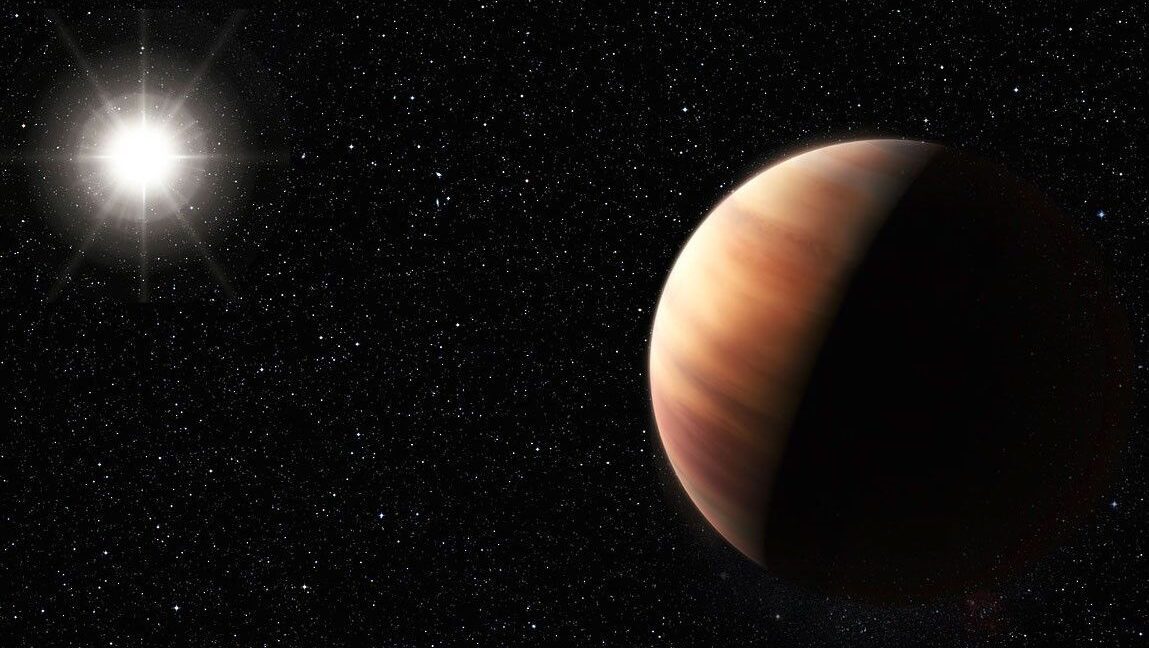
On Monday, researchers reported on an exoplanet that simply stopped showing up. TOI-2535b is a hot Jupiter-sized planet we've been observing as it transits between its host star, TOI-2535, and Earth for about seven years now. But it recently stopped showing up, and researchers suspect that's due to an unseen companion orbiting in a different plane.

Read full article

Comments

© ESO/M. Kornmesser

Anduril says its first satellite can see adversaries maneuver in orbital night

Anduril Industries has announced the successful demonstration of a new satellite-based sensor designed to track other spacecraft that may be hiding their maneuvers in Earth's shadow.

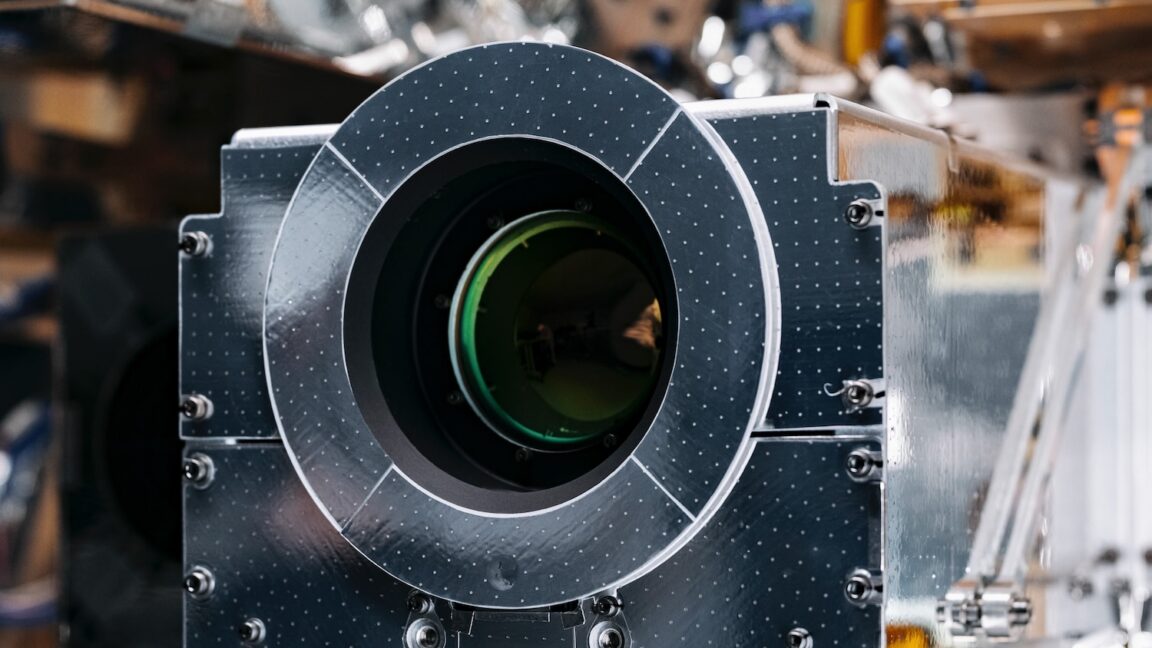
Funded with Anduril's internal capital, the company's oven-sized satellite launched on a SpaceX rideshare mission in July with a package of tech demo payloads: an edge-compute processor, a power-management system adaptable to different mission types, and a long-wave infrared space sensor capable of detecting other objects in orbit.

Anduril reported on the success of the tech demo mission Tuesday. The company's satellite, named Anduril-216, flies about 590 km (366 mi) above Earth, spending about one-third of each orbit in darkness. Anduril-216's night passes allow its infrared imager to shine.

Read full article

Comments

© Anduril Industries

IBM to offer access to a dual-processor quantum system in 2027

IBM's Quantum Developer's Conference is being held this week, and the company is using the gathering to provide an update to its roadmap: It is aiming to make error-corrected quantum computers before the decade is out.

The changes greatly expand the scope of its next-generation Nighthawk general-use processors by adding a version with over 500 programmable qubits. At the same time, it's stepping back a bit on its plan to link multiple Nighthawk processors together, dropping the intended number of linked systems from nine to two.

The total number of qubits planned for next year will remain the same; how the company is getting there, however, will be different.

Read full article

Comments

© IBM

What happens to mathematics when AI becomes an oracle?

Our modern world runs on math, from social media algorithms, package delivery, and weather prediction to medical imaging and machine learning. The rise of computers helped fuel its dominance, enabling us to work with increasingly large numbers that would otherwise be beyond the capacity of our finite human brains. But with the rise of large language models, AI chatbots, and, soon, quantum computing, so-called "big math" is beginning to outstrip its creators entirely. What that means, and how we might adapt, is the focus of a new book, Big Math: The Hidden Codes That Run Our World, by applied mathematicians Steven Strogatz and Alex Townsend.

Strogatz is perhaps best known in his field for his co-authorship of a seminal 1998 paper with Duncan Watts on the collective dynamics of small-world networks. He has also studied chaos theory as applied to physics, the geometry of supercoiled DNA, and the biological collective oscillators, such as swarms of synchronously flashing fireflies and crickets that chirp in unison. In 2005, Strogatz extended his study of synchronicity to the crowds that caused the wobbling of London's Millennium Bridge.

An award-winning communicator, Strogatz wrote three series of columns on mathematics for The New York Times in 2010, 2012, and 2025 and hosted a podcast for Quanta magazine from 2020–2021. He has written four popular books: Sync (2003), The Calculus of Friendship (2009), The Joy of X (2012), and the New York Times bestseller Infinite Powers (2019).

Read full article

Comments

© Kenishirotie via iStock / Getty Images

High oil prices have led to a dip in global carbon emissions

Evaluating the annual global temperatures each year requires context. There is a fair amount of natural variability from one year to the next, so it’s important to focus on the trend over time. Famously, global warming did not end in 1998, as some claimed a couple of decades ago—we just had a run of La-Niña-dominated years after a very strong El Niño.

Annual greenhouse gas emissions are much less variable, having increased fairly steadily, but many complicating factors can still muddy the picture. Sometimes those factors conspire to throw a year off the trend. It looks like 2026 will be one of those years.

A new analysis led by Corinne Le Quéré at the University of East Anglia estimates that fossil fuel emissions have fallen about 0.4 percent from last year. This probably isn’t a peak that symbolizes heartening progress on climate change, though; the researchers think it’s a short-term dip driven by the war in Iran and its effect on oil prices.

Read full article

Comments

© FREDERIC J. BROWN

Pentagon mulls placing fleet of military satellites around the Moon

The US military has published a Request for Information on a federal procurement website signaling interest in deploying a "proliferated cislunar constellation" consisting of an unspecified number of satellites performing an undisclosed mission in the vicinity of the Moon.

The announcement follows statements in recent months from the Space Force's acquisitions chief for advanced programs, Maj. Gen. Stephen Purdy, that the military was getting serious about extending its reach to the Moon. The Space Force's most distant satellites today are in geostationary orbit, some 22,000 miles (36,000 kilometers) over the equator, collecting routine surveillance and missile warning data.

Most recently, Purdy spoke of a shift in Pentagon leadership's thinking about the Moon following an executive order signed by President Donald Trump last December. The order set out the Trump administration's space policy. One section of the order deals with the US government's ability to detect, characterize, and counter threats to US space interests from low-Earth orbit to cislunar space, the term of art for the region of space around the Moon.

Read full article

Comments

© NASA

New Democratic Congress will likely strip the gilding from Trump's Golden Dome

Two of the top lawmakers backing the Pentagon's Golden Dome missile defense shield are among the wave of Republicans leaving Congress in the coming Democratic takeover, raising questions about the future of President Donald Trump's signature second-term defense initiative.

The shakeup on Capitol Hill comes after military officials signaled in recent months that they might backpedal from one element Trump asked for in Golden Dome: the capability to shoot down missiles in their initial boost phase shortly after launch.

The Golden Dome has escaped serious congressional scrutiny since Trump announced the program in January 2025, one week into his second term in the White House. That lack of scrutiny will change as Democrats take responsibility for writing the Pentagon's budget, introduce limits on funding, and put forth bills to strip out Golden Dome's most controversial component and give the program a new name.

Read full article

Comments

© Menahem Kahana/AFP via Getty Images

Physicists listened to electrical noise to crack a superconductor mystery

Superconductors carry electricity without resistance, but most only work a few degrees above absolute zero. In the late 1980s, copper-based materials called cuprates were found to superconduct at higher temperatures—reachable with affordable liquid nitrogen. Yet nearly 40 years later, physicists still don't agree on why.

In a recent Science study, a team of physicists led by Milan Allan of Ludwig Maximilian University of Munich and Ingmar Swart of Utrecht University in the Netherlands has found some answers by listening to the faint electrical crackle of current flowing into a cuprate.

The missing electrons

Central to the mystery of cuprates’ high-temperature superconductivity is a strange state called the pseudogap. “The pseudogap is a phenomenon of missing electrons,” Allan said. Above the temperature at which cuprates become superconducting, some of their electrons seem to vanish—measurements find far fewer of them at the energies where they should be. “Everybody knows that from different probes, you see that there's these vanishing electrons, but nobody knows why,” Allan said.

Read full article

Comments

© Science & Society Picture Library

The Bantu expansion changed Africa. Scientists are still tracing how.

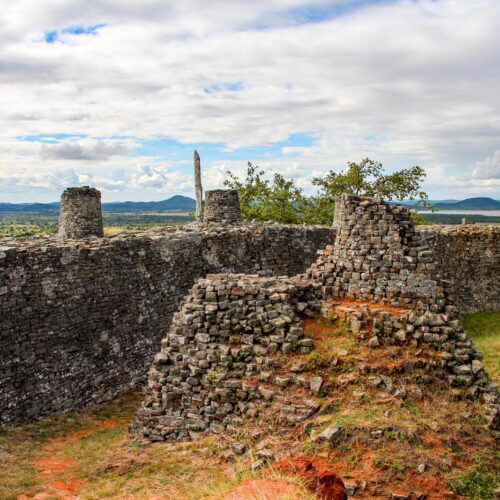
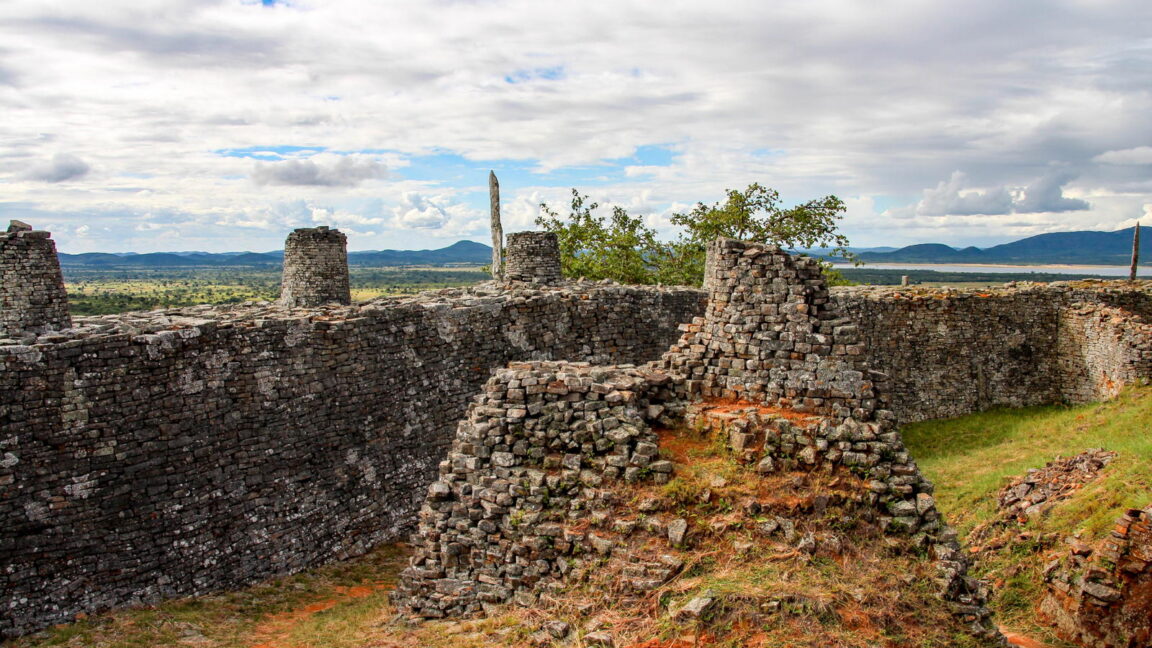
It’s not easy to extract iron from its ore. But the peoples of the ancient city of Great Zimbabwe—the capital of a thriving kingdom in southern Africa between 1000 to 1700 AD—were masters.

At sites near the city’s stone ruins, clusters of iron-smelting furnaces survive today as mounds of rubble. At Mashava, a village 25 miles northwest, fragments bear fingermarks of those who long ago smoothed the structures’ clay interiors.

Some of the furnaces were nearly an adult’s arm span in width, with walls thick and strong to contain the heat of more than 2,100° Fahrenheit needed to smelt iron. Unlike other furnaces that required workers to force air into them with bellows, these were designed to suck air in, then out through a chimney, no human labor required. This would have made it significantly easier to produce the iron, which was fashioned into hoes, axes, and arrowheads.

Read full article

Comments

© evanfh/Getty

Earth's churning mantle may have created the Great Unconformity

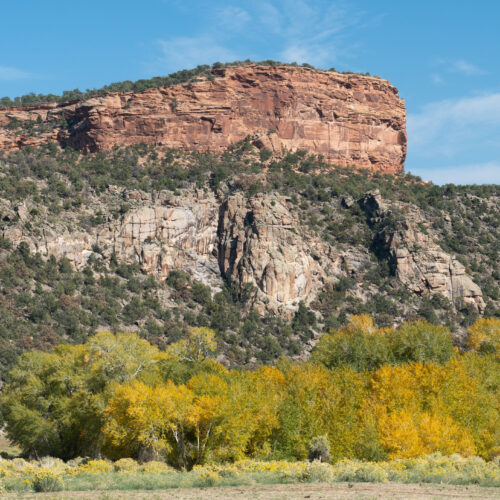
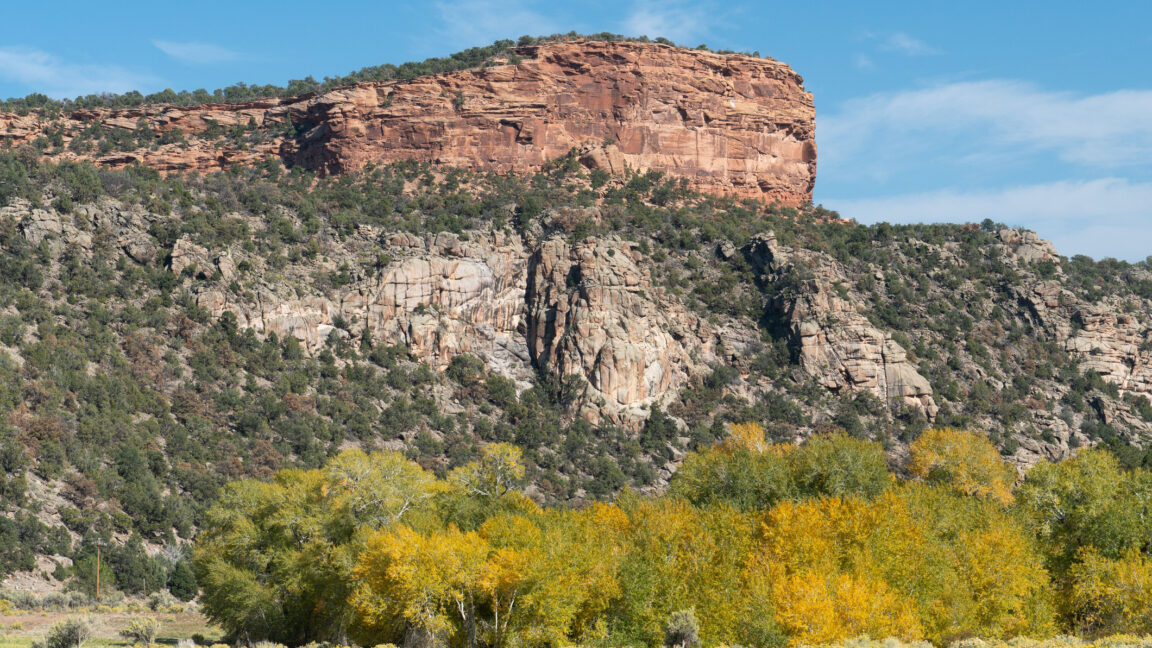
In the Grand Canyon, there is a line in the rock where time seems to have gone missing. Ancient crystalline rocks mark its bottom, while sandstones laid down as life started to diversify during the Cambrian explosion mark the top. “It’s called the Great Unconformity, and it’s a gap in the geologic record,” says Nicolas Flament, a geoscientist at the University of Wollongong, Australia. "This gap can be anywhere between 200 million years, which is not that impressive, to more than a billion years.”

In a recent Nature study, Flament and his colleague Santosh Dhungana argue that this gap was carved with help from deep within the planet. According to their models, slow currents of hot rock in Earth's mantle pushed entire continents up for hundreds of millions of years, letting glaciers grind them down and then let them sink, allowing fresh sediments to bury the scar. The largest hole in the rock record might be a fingerprint of processes happening deep in the planet's interior.

Ice and sea

The oldest sediments resting on the Great Unconformity in North America are between 635 and 482 million years old. Geologists have traced it across most of North America and parts of northern Europe and northern China. “Something seems to have happened, in particular in North America,” Flament says.

Read full article

Comments

© Marli Miller

❌