❌

Reading view

There are new articles available, click to refresh the page.

IBM to offer access to a dual-processor quantum system in 2027

IBM's Quantum Developer's Conference is being held this week, and the company is using the gathering to provide an update to its roadmap: It is aiming to make error-corrected quantum computers before the decade is out.

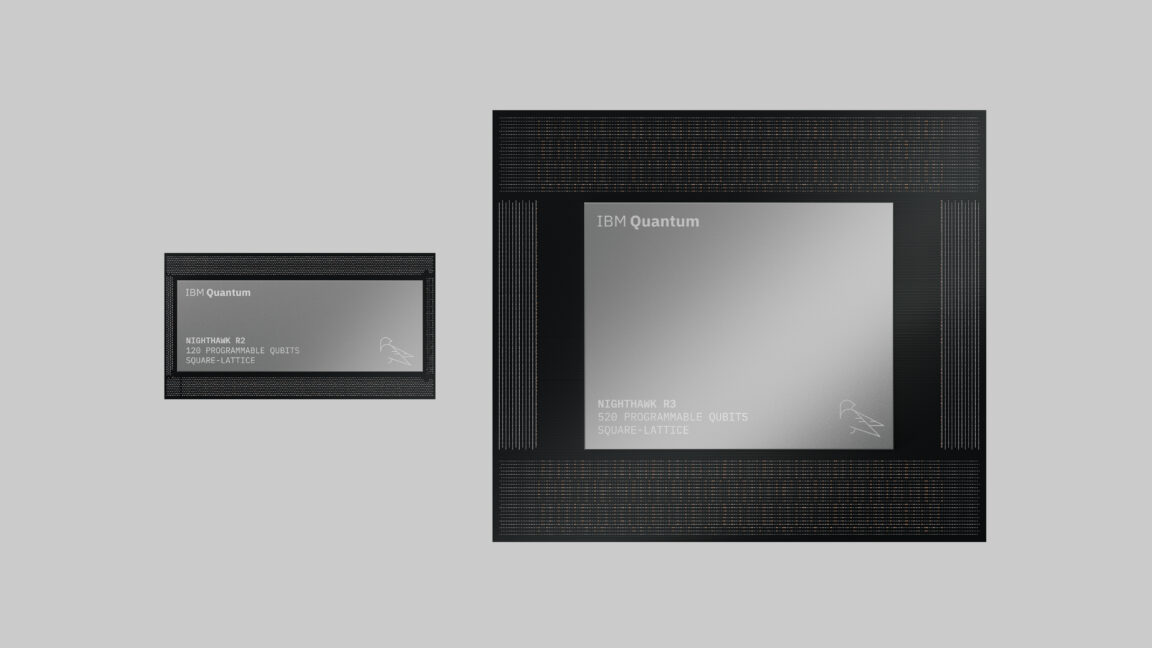
The changes greatly expand the scope of its next-generation Nighthawk general-use processors by adding a version with over 500 programmable qubits. At the same time, it's stepping back a bit on its plan to link multiple Nighthawk processors together, dropping the intended number of linked systems from nine to two.

The total number of qubits planned for next year will remain the same; how the company is getting there, however, will be different.
Read full article

Comments

© IBM

Uranium cubes reveal why the German nuclear project failed

During World War II, physicists on the Manhattan Project worried that the Nazi German nuclear program might achieve the first nuclear bomb before the US and its allies. That's not what transpired, but historians have debated just how close the Germans came to achieving criticality in their last attempt at building a reactor: the B8 pile. Werner Heisenberg, who led that effort, claimed that they were close and had only needed a little more uranium. But according to a paper published in the Proceedings of the National Academy of Sciences Nexus, that was not the case: The project simply didn't have sufficient uranium and heavy water to build a working bomb, given the design they were using.

This particular research started in 2013, when University of Maryland physicist Timothy Koeth—a co-author on the new paper—received the gift of a mysterious heavy metal cube from a friend. He instantly recognized it as one of the uranium cubes used by German scientists in their unsuccessful attempt to build a working nuclear reactor. Only 14 such cubes are known to exist today.

In 2019, we reported on Koeth’s quest to track down the cube’s origins, as well as several other similar cubes that had somehow found their way across the Atlantic. At the time, Koeth and his partner in the quest, then-graduate student Miriam “Mimi” Hiebert, had tracked down 10 such cubes around the US. For instance, the Smithsonian Institute had a German uranium cube in storage. They tracked a third cube to Harvard University, where it was regularly passed around to students in introductory physics classes as a curiosity.

Read full article

Comments

© ohn T. Consoli, University of Maryland College Park

Why large dogs age faster than small ones, and other October research highlights

It’s a regrettable reality that there is never enough time to cover all the interesting scientific stories we come across. So every month, we highlight a handful of the best stories that nearly slipped through the cracks. October’s list includes an epigenetic mechanism for why large dogs age faster than smaller ones; physicists who trapped a single particle of antimatter for months; and invisible tattoo inks that only show up under UV light.

Why large dogs age faster

In many mammalian species, larger creatures tend to have longer lifespans. Mice, for instance, live an average of just two years, while some whales can last for as long as 200 years. Dogs, however, buck this pattern; larger dogs tend to age faster and die younger than smaller ones, which makes canines an ideal model for biologists to study to learn more about aging in general. Arizona State University scientists report that these lifespan differences seem to be due to so-called "jumping genes," according to a paper published in the journal Science.

The authors used data from 864 dogs collected in the Dog Aging Project to map patterns of DNA methylation (which influences how much certain genes are turned on or off) across the entire genome. It's part of the epigenome, whose markers can change over time in response to stress and other environmental factors. Genetic sequences, by contrast, are largely fixed. So DNA methylation is a good chemical indicator of aging and DNA regulation.

Read full article

Comments

© Charlie Leight, Arizona State University

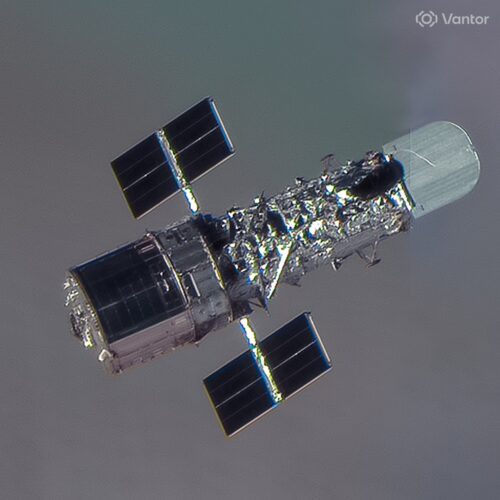
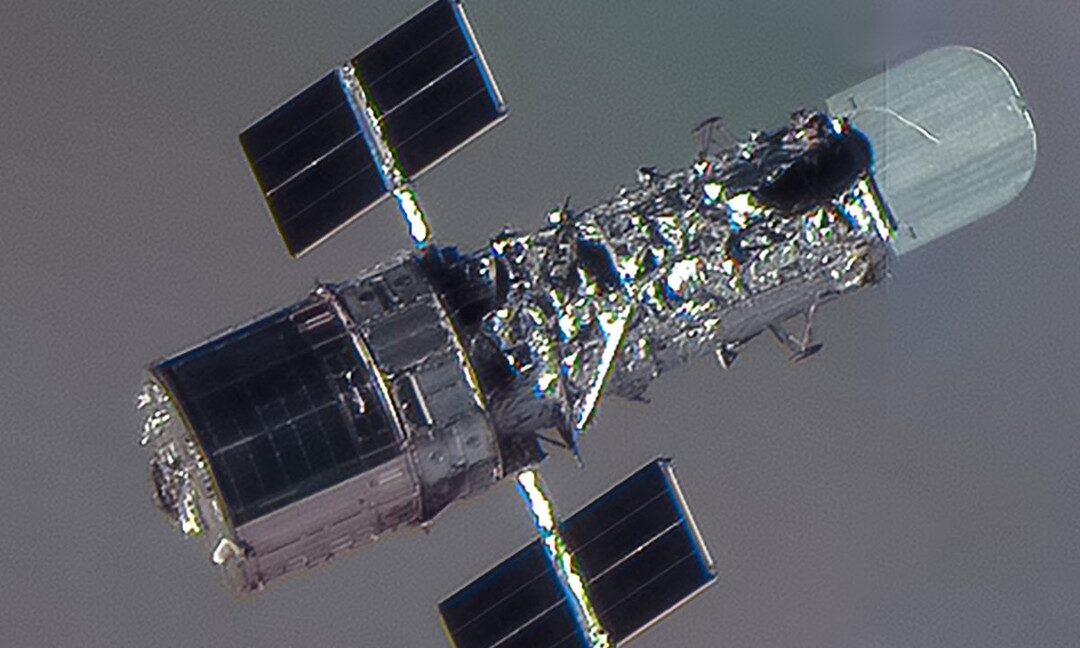
Once again, NASA is asking for ideas to rescue Hubble from certain death

The Hubble Space Telescope still shines in the eyes of astronomers after 36 years in orbit, but it is not as nimble as it once was. Left alone, the observatory will plunge back into the atmosphere in the early-to-mid-2030s, closing the book on one of the most famous scientific instruments of the century.

NASA last raised the orbit of Hubble in 2002, when the Space Shuttle Columbia visited the observatory for a servicing mission. The final shuttle servicing flight in 2009 did not reboost the telescope's orbit, and with the retirement of the shuttle fleet two years later, Hubble has steadily lost altitude with no way to stave off eventual destruction.

The space agency released a Request For Information (RFI) on Thursday asking commercial companies for ideas on how to reboost, service, or conduct a controlled disposal of Hubble. Responses are due November 30. Specifically, NASA is looking for information about companies' current and near-term capabilities for capturing Hubble and boosting it to an altitude of at least 373 miles (600 km), enhancing the telescope's performance, or guiding Hubble to a controlled reentry.

Read full article

Comments

© Vantor

Quantum error correction goes well beyond breakeven

Running complicated algorithms on quantum computing hardware is going to require the use of logical qubits, where collections of hardware qubits are linked together in ways that allow errors to be detected and corrected. In general, the more hardware qubits you dedicate to each logical qubit, the better the chances are of identifying errors. But, given that the hardware qubits are prone to errors, adding more of them also increases the probability that errors will occur. If the hardware error rate is too high, then growing the logical qubit will only make matters worse.

Fortunately, several companies have demonstrated hardware where the error rate is not too high. Several demonstrations show logical qubits are beyond the breakeven point, where adding more qubits improves performance. The problem is that the improvement isn't very dramatic. To lower error rates to levels we'll need to run complex algorithms, we'd have to add a completely impractical number of qubits to each logical qubit.

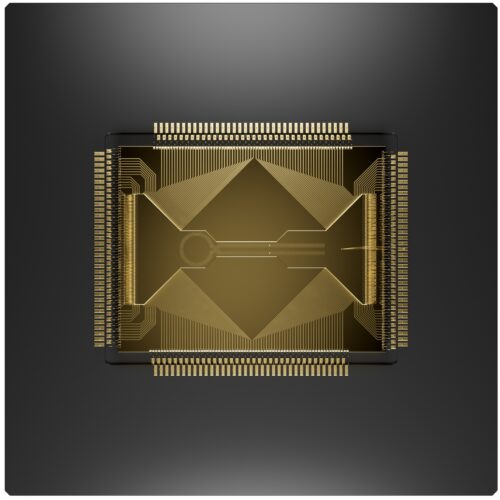
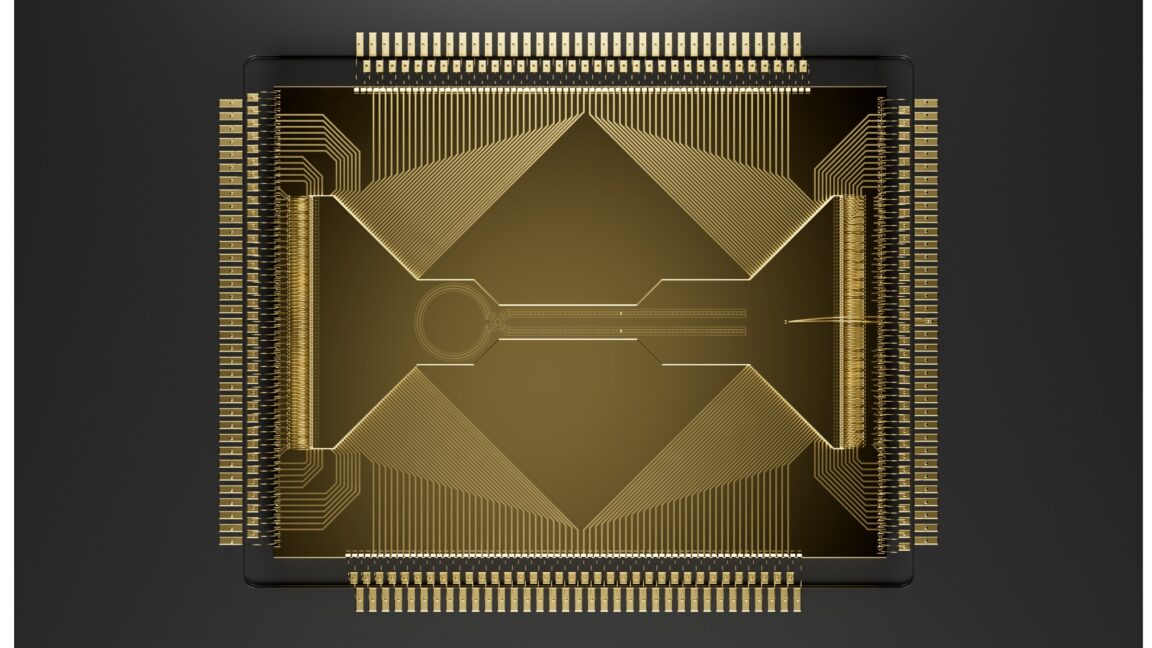
On Monday, Quantinuum announced that its current generation of hardware is capable of scaling well beyond the breakeven point. Each step up in the size of logical qubits improved some measures of their performance by a factor of over 10.

Read full article

Comments

© Quantinuum

What did the Liberty Bell sound like? Science is on the case.

The Liberty Bell, with its famous crack, hasn't been rung in 180 years, but that hasn't stopped scientists from pondering what the bell might have sounded like when tolling. In honor of the nation's 250th anniversary, researchers at Penn State University have modeled its acoustic properties, drawing on data collected from one of the bell's replicas. The work was first presented at a meeting of the Acoustical Society of America in Philadelphia earlier this year, followed by an article in Physics Today.

Historians aren't sure exactly when the Liberty Bell acquired its distinctive crack, just that it occurred sometime between 1817 and 1846. An 1846 account in the Public Ledger described the ringing of the bell on February 23 that year and mentioned that the bell had developed a crack, which someone had attempted to fix by filing the sides down. But it didn't work: The February 23 ringing extended the crack even more, so much so that "the old Independence Bell ... now hangs in the great steeple irreparably cracked and forever dumb." Nobody has heard it ring since.

This wasn't the first time the bell had cracked; the rim cracked shortly after it arrived in Philadelphia in 1752, the first time the clapper struck while testing the sound. It was recast by two local foundry workers, John Pass and John Stow, not once but twice, because the first recast produced a sound that one bystander likened to coal scuttles banging together.

Read full article

Comments

© William Zhang/CC BY 2.0

An experimental tour-de-force: Entanglement between glass bead and light

Writing about quantum entanglement is always a challenge. There are so many clichés to avoid: It’s mysterious, ghostly, spooky, and weird. Entanglement is none of those things, and yet it is also all of those things—a superposition of clichés, you might say. So, having gotten all of my clichés out of the way in the second sentence, let’s take a look at how a group of researchers managed to entangle a light beam with a glass bead, which is, frankly, quite an achievement.

Cliché-free entanglement

Quantum entanglement is nothing more or less than the idea that if two objects are linked, then their behavior will, in some ways, be correlated. To take a terrible example: My upper and lower arm are very strongly correlated in terms of relative position because they are connected at the elbow. No one is surprised by this because we can see that they are actually a single object called an arm.

Two photons can be, in a sense, joined together, meaning that they have correlations, too. In this case, we are (naively) surprised for three reasons. First, we think of photons as separate objects that cannot be joined—this is a mistake of understanding. Second, when we connect two photons, we only connect them in limited ways: The two photons may be wholly uncorrelated in terms of polarization, but strongly correlated in terms of energy.

Read full article

Comments

© twilightproductions

❌