As Texas Republicans pursued their crusade against the Council on American-Islamic Relations, they ran into an unexpected obstacle: voters.
Republicans Gov. Greg Abbott and Attorney General Ken Paxton had carried out their crackdown on the largest Muslim civil rights group in the U.S., hoping to ban CAIR’s operations in the state and label it a terrorist organization. That agenda suffered a crippling blow in the midterm elections, when Democratic candidates beat Abbott and Paxton in stunning upsets — with both their current offices set to be led by Democrats.
Gov.-elect Gina Hinojosa promised to reverse Abbott’s designation of CAIR as a foreign terrorist organization. She told the Washington Post last week, “We have to use public safety measures for public safety” — decrying Abbott’s designation as “nonsense.” Paxton, who lost a bid for an open U.S. Senate seat, dropped a lawsuit, filed in February, that would have banned CAIR from operating in Texas.
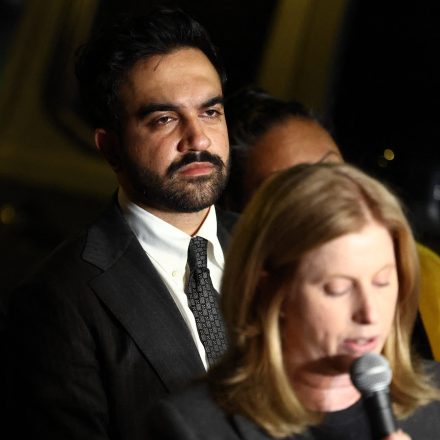
“Don’t underestimate the power of the vote to create the administration that creates and enforces these laws,” said Chelsea Glover, a lawyer with the Muslim Legal Fund of America, who is representing CAIR Texas in litigation challenging Abbott’s designation. “Lots of times we don’t think it’s possible but, as Texas has shown, anything is possible.”
The Muslim Legal Fund of America said the lawsuit is ongoing and will be until Abbott’s terror designation is formally withdrawn by Hinojosa.
CAIR’s suit was necessary, said Glover, but acknowledged that the ballot box can be a faster way to shut down bigotry than drawn out court cases.
The proclamation classified CAIR and its Texas chapter, as well as the Muslim Brotherhood, as foreign terrorist groups; it also banned designated groups from buying or acquiring land in the state.
“When you get the right person in power, who is going to follow the Constitution, it’s like — poof, the designation is gone almost overnight,” said Imran Ghani, director of digital communications for CAIR Texas and operations director for the Houston branch.
Ghani said CAIR Texas noticed a chilling effect after Abbott’s proclamation last November. Some donors stopped giving money, and a few mosques became hesitant to platform CAIR. He said the organization quickly rebuilt trust and also won over new supporters who were invigorated by the state’s targeting of CAIR and wanted to help.
“I tend to look at it rather positively,” Ghani said. “The designation gave CAIR more publicity than we have ever received.”
CAIR Texas officials pointed out that Republican candidates leaned heavily into fabricated fears about Muslims taking over Texas and enforcing sharia law.
“We had to send a strong message,” said Shaimaa Zayan, Austin director for CAIR Texas. “If we allow them to say all of that and stay home that would be a green light for them to continue harassing our community.”
CAIR Texas says the organization scaled up its engagement around the elections this year by showing up weekly to dozens of mosques in Houston, Austin, and Dallas, from August until early October, during Friday prayers, to encourage voter registration.
CAIR Action, the group’s political wing, reported historic turnout for Texas Muslims voting early in a general election—marking a 78.6 percent increase since 2018.
State-Level Bigotry
Republican candidates’ anti-Muslim rhetoric came alongside the state education board approving an anti-Islamic rewrite of Texas social studies lessons and exclusions on a voucher program for K-12 Islamic schools.
Islamophobia has also led to violence against Texas’s Muslim population in recent years. In 2024, the Justice Department sentenced a Dallas man to 37 years in prison after he killed one person and tried to kill four others during a mass shooting at a Muslim-owned business; the FBI said he intentionally targeted Muslims.
While designating terrorist organizations is normally a power reserved for the federal government, Texas and Florida have taken unprecedented actions to allow state officials to apply those labels.
CAIR and its Florida chapter suspended operations in Florida earlier this month after Gov. Ron DeSantis and four state officials designated the groups as domestic terror organizations under a new, unprecedented administrative process approved by the legislature this summer.
The American Civil Liberties Union and CAIR sued DeSantis, alleging free speech and due process violations. The civil rights groups also argued that the debilitating penalties associated with the designations effectively force targeted groups to shut down.
On Monday, DeSantis commented on X about news of Hinojosa’s promised reversal and said, “This would be a huge contrast with Florida, where CAIR has disbanded.”
“Elections have consequences,” said Shirin Sinnar, a law professor at Stanford University.
She pointed out that the different outcomes in Florida and Texas “show the power of electoral consequences on the same issue.”
“A Loaded Gun”
Sinnar cautioned that the federal government may have plans of its own to crack down on nonprofits.
The Wall Street Journal reported on November 6 that the Trump administration is considering an executive order that would list some nonprofits as being tied to terrorists, effectively shutting down their operations.
Sinnar said that while Texas may be backing off from the executive order and lawsuit against CAIR, there’s more work to be done at the state level.
“It’s a good moment for civil rights advocates and communities to push the legislature to repeal the laws that enabled these designations,” she said. “Otherwise, they’re a loaded gun available to be used in the future against CAIR or another disfavored target.”
Those laws include measures that created the category of Texas foreign terrorist organizations and authorized state and local officials, as well as private residents, the ability to bring civil suits against them without having to prove any personal injury.
Youssef Chouhoud, a research scientist for the Texas-based nonprofit Yaqeen Institute for Islamic Research, which focuses on issues related to Muslims, said Republicans in the state will likely continue engaging in Islamophobic rhetoric and policies. Attacking the Muslim community was “very much a winning strategy” in the Republican primaries, he said.
Though 95percent of Republican primary voters said they supported a ballot proposition asking if “Texas should prohibit sharia law,” critics pointed out that the state’s anti-Muslim hysteria has led to an overblown focus on Muslim religious law.
“It’s a badge of honor to be targeted by extremists in the government.”
Ghani, in Houston, had left a corporate job for more meaningful work and joined CAIR only about two months before Abbott’s terror designation. He took solace in his five daily prayers and hoped the past would become precedent.
“History has shown this is the path of many civil rights groups,” Ghani said of the persecution — and perseverance — of other civil rights groups like the NAACP in the 1950s and 60s, and the ACLU itself during the McCarthy era.
“It’s a badge of honor,” Ghani said, “to be targeted by extremists in the government.”
Jose Rosito Roca Estrada and his friends were on their way to work in a van on June 27, when a car in front of them slammed on its brakes, forcing them to crash into it and ricochet backward on the busy highway.
Three more cars surrounded theirs, and an estimated 10 to 12 officers poured out. The agents screamed at the men to get out of the vehicle despite traffic whipping by, Roca Estrada and fellow passenger Elvis Manuel Mejia told The Intercept. The stalemate ended with the sound of shattering glass and an asphyxiating cloud of chemicals flooding the car.
According to a new federal lawsuit and photos from the scene shared with The Intercept, federal agents smashed the car’s back windows and “sprayed the occupants with pepper spray through the lowered side windows.”
Officers then dragged a scared and temporarily blinded Roca Estrada from the car. “I was afraid they might be robbing me,” 24-year-old Roca Estrada told The Intercept through a translator. “They did not identify themselves. I was worried they were kidnapping me because they were asking very personal questions.”
“They did not identify themselves. I was worried they were kidnapping me.”
The June attack is one of six stories described in a lawsuit brought by several groups — including the American Civil Liberties Union of Virginia, the Washington Lawyers Committee for Civil Rights and Urban Affairs, the Legal Aid Justice Center, and multiple law firms — alleging widespread “unlawful and dangerous” warrantless arrests by immigration officials in Virginia.
On behalf of Roca Estrada and other plaintiffs, the groups are suing the Department of Homeland Security, DHS Secretary Markwayne Mullin, Immigration and Customs Enforcement, Acting Director of ICE David Venturella, and ICE D.C. Field Office Director Robert Guadian. They’re asking the court in the Eastern District of Virginia to force DHS to comply with congressional limits on warrantless immigration arrests and prohibit the agency from making immigration arrests without legally required individual assessments.
“They have a mandate from the Trump administration … to get creative and make arrests, however they see fit,” said Sophia Gregg, an immigrants’ rights attorney at the ACLU of Virginia. “The agents are ill-trained, and even when they do violate the law, there are no consequences.”
Roca Estrada said that the officers demanded to search his pockets, and when he declined, an agent threw him to the ground headfirst and dug his knees into his upper back. He remembered screaming as pain began to radiate through his collarbone. An X-ray reviewed by The Intercept would later confirm it was broken.
According to Roca Estrada and the lawsuit, officers began to punch and hit him in the back, eventually twisting his arm to place him in handcuffs and into the vehicle. Roca Estrada said that nurses who examined him after the alleged assault told him that blood had filled his lungs, and the lawsuit notes he was diagnosed with a broken clavicle and a lung injury. At no point, the lawsuit alleges, did officers ask the necessary questions to determine whether Roca Estrada was deportable or whether he was a flight risk.
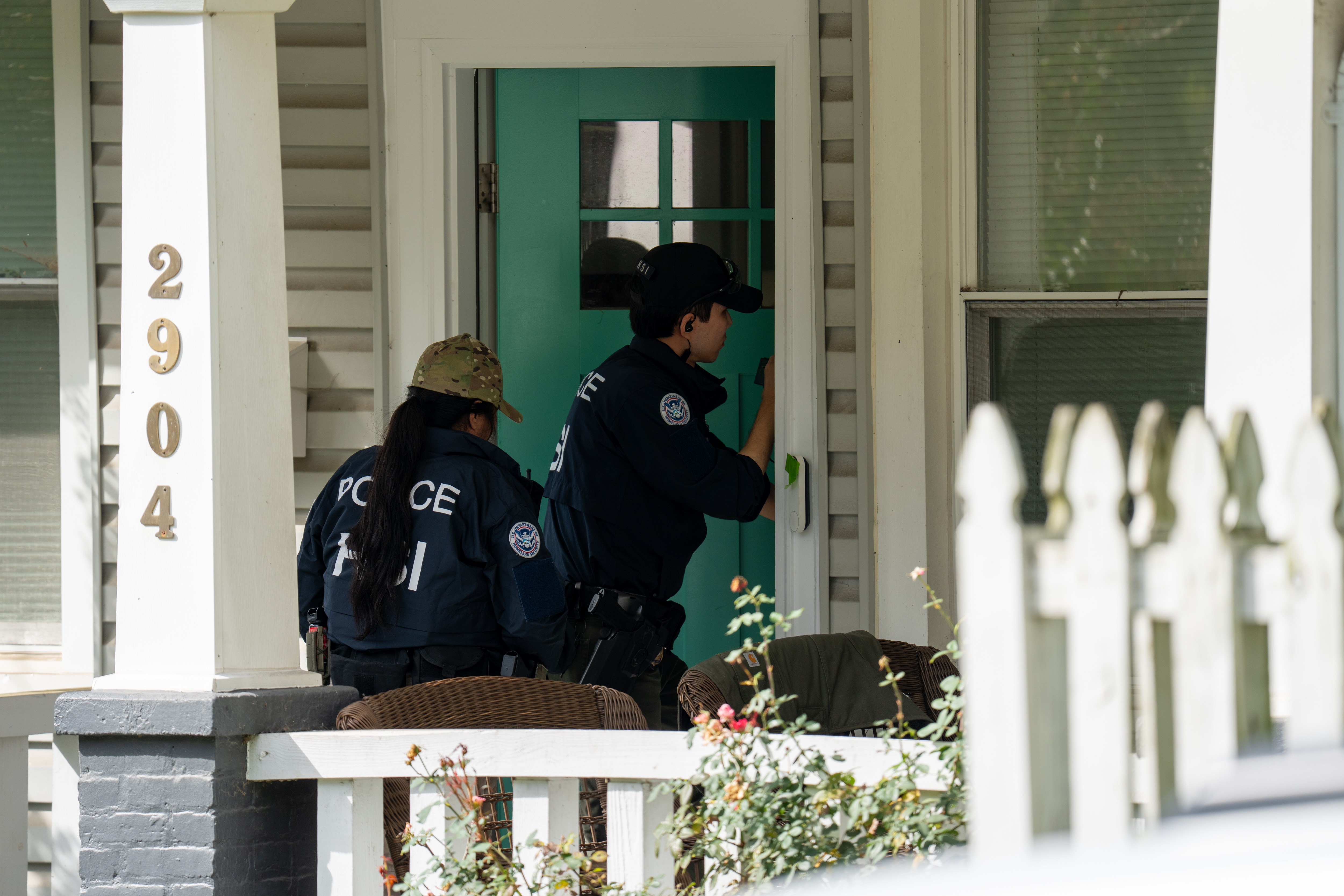
Immigration officers are only supposed to make warrantless immigration arrests if they have determined “probable cause” to believe a person is unlawfully present likely to escape before a warrant can be obtained. But in an effort to meet the Trump administration’s nationwide quota of 3,000 immigration arrests per day, the lawsuit alleges, the Department of Homeland Security has chosen to pursue an unlawful policy and practice of “arrest-first, investigate-later” — leaving a trail of traumatized victims who should have never been arrested in the first place.
In the first year of the Trump administration, immigration arrests drastically increased in Virginia. According to the lawsuit, in 2025, ICE made “970 arrests each month in Virginia and Washington, D.C. — nearly five times the average monthly arrest volume in 2024.”
Reached by The Intercept, a DHS spokesperson said that agency had “arrested Jose Rosito Roca Estrada, an illegal alien from Guatemala,” using Roca Estrada’s full name even though The Intercept had not provided it, but denied that its officers “fractured a detainee’s collarbone.” The spokesperson did not deny that officials had deployed chemical weapons, saying, “staff relied on their training to gain compliance.”
“Claims that agents did not properly identify themselves are FALSE. When our heroic law enforcement officers conduct operations, they clearly identify themselves as law enforcement,” wrote the spokesperson. “At NO time were any of the detainees thrown to the ground during the arrest. Allegations that our officers fractured a detainee’s collarbone during the arrest are FALSE.”
Six weeks after Roca Estrada’s arrest, 18-year-old Britney Ramirez Corona was home caring for her 4-year-old sister in Norfolk, Virginia, when she found out ICE had detained her fiancé, his brother, and his brother-in-law.
It was another traffic stop, and Ramirez Corona, a U.S. citizen and recent high school graduate, had to go pick up their abandoned car. There, according to the lawsuit, an ICE officer demanded her identification, refused to let her get her wallet, and accused her of lying about who owned the vehicle. They handcuffed and pinned her, the lawsuit alleges — leaving her little sister to cry and wander into a busy road.
Eventually, ICE allowed another sister, 15, to come pick up the 4-year-old, then took Ramirez Corona into custody. She sat in “handcuffs, ankle shackles and a waist chain” for hours, according to the lawsuit, until her 15-year-old sister was able to bring her birth certificate — showing she was a natural-born U.S. citizen.
The lawsuit argues that Ramirez Corona’s arrest exemplifies an out-of-control trend of warrantless and often nonsensical arrests. Stephen Miller, then homeland security adviser and now the White House chief of staff, directed agents to “just go out there and arrest,” and the department seems to have complied.
“More than half of all the people ICE arrested in July 2026 did not have a criminal record,” the plaintiffs note. “And more than 500 people detained by ICE since January 2025 are U.S. citizens — another likely undercount — like Ms. Ramirez Corona.”
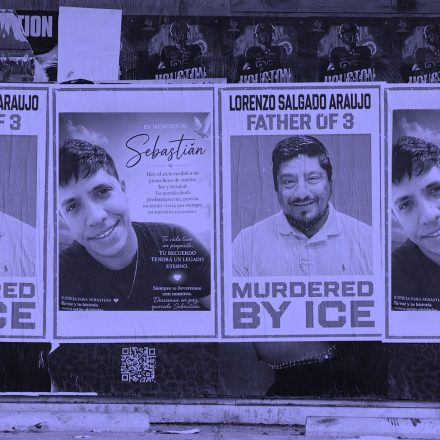
The same month that Roca Estrada says that federal agents temporarily blinded him, broke his collarbone, and beat him until his lungs filled with blood, Congress approved another $72 billion in funding for Immigration and Customs Enforcement. Immigrant advocacy groups warned ahead of the funding vote that additional money for ICE and President Donald Trump’s brutal immigration crackdown would mean more people would suffer a fate like Roca Estrada’s — or worse. The next month, ICE agents fatally shot Lorenzo Salgado Araujo in Texas and Joan Sebastián Durán Guerrero in Maine, both in their cars.
Physicians for Human Rights and the UC Berkeley Human Rights Center documented over 412 incidents of misuse of force by law enforcement agents at immigration protests from June 2025 to May 2026, including the use of chemical irritants like pepper balls and pepper spray — the same family of weapons Roca Estrada and Mejia suspect was set off in their car.
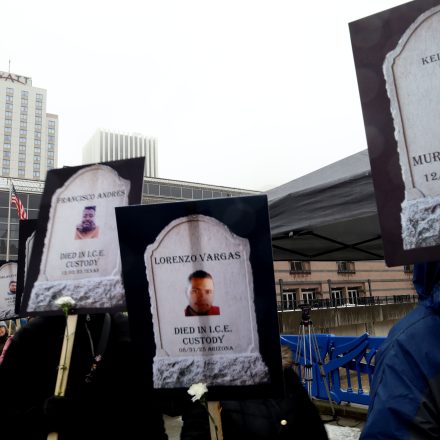
In ICE custody, 52 people have died during the first 500 days of the second Trump administration, according to Human Rights Watch, while use-of-force by guards remains largely unknown.
“We have received many more reports of violent use of force against people,” said Jeff Migliozzi, the communications director for Freedom for Immigrants, which runs the National Immigration Detention Hotline, referencing hotline numbers from June and July. “The overwhelming forces of intimidation and fear and retaliation, the M.O. of ICE has not changed. But certainly, as more people are detained, there’s more incidents [of violence].”
The DHS spokesperson claimed that Roca Estrada and everyone arrested along with him were offered medical care but declined, adding that “one of the detainees indicated that he had a prior shoulder injury.”
Roca Estrada tells a very different story.
He says he spent the next month tossed between detention centers in Virginia and West Virginia. Because he was not given a sling, Roca Estrada fashioned one for his broken collarbone out of bedsheets. He said he largely went without medical care despite agonizing pain that prevented him from laying down at night.
Roca Estrada said it got so bad he nearly fainted, at which point he was taken to a hospital.
“After medical personnel offered to document his injuries and consult a forensic physician, officers abruptly removed him from the hospital and returned him to detention,” the lawsuit alleges. “For weeks thereafter, Defendants failed to provide the promised follow-up care.”
According to the lawsuit, none of this should have happened because Roca Estrada never should have been detained in the first place.
The suit alleges that immigration officers never asked the 24-year-old “about his immigration history, whether he possessed lawful status, where he worked, how long he had lived in Virginia, whom he lived with, whether he had family or community ties in the United States, or similar questions to assess whether he was likely to escape before a warrant could be obtained.”
Other stories in the lawsuit follow a similar pattern. Catarina Rebeca Us Lopez, a 24-year-old woman from Guatemala, was detained in Centreville, Virginia, during a traffic stop around 6:00 a.m. with her husband. She alleges that masked officers blocked her car at a traffic light and forced her and her husband from the vehicle.
The officers falsely claimed that her husband had a deportation order, according to the lawsuit. But when her husband asked questions about the stop, Us Lopez alleges an agent pepper-sprayed him in the face and threatened to draw their weapons.
According to Us Lopez, officers did not “inquire about her immigration status, ask where she lived, inquire about her family, ask about her ties to the community, or otherwise conduct any individualized investigation concerning whether she was lawfully present in the United States or likely to escape before a warrant could be obtained.”
Instead, she claims that officers ignored her as she explained that she had work authorization and did not have a deportation order in place, and allegedly mocked her requests for answers and legal assistance.
For Roca Estrada, his physical injuries and trauma left him unable to work for a month. While he was detained, he also lost his apartment and had his personal belongings sent back to Guatemala without his consent, according to the lawsuit.
“The way that I was arrested … and the immense pain that I had to go through during this whole experience,” said Roca Estrada. “What happened to me was not just.”
A proposed “buffer zone” around religious facilities across the country — touted as protecting the right to worship — is alarming free-speech advocates who say the Trump administration could use it to crack down on protests.
The new bill, a national version of a controversial law passed in smaller jurisdictions, could hamper demonstrations against illegal sales of land in the West Bank to Jewish settlers that occur inside U.S. synagogues, the advocates say.
The bipartisan legislation could face another layer of opposition from a surprise corner, however, in the form of reproductive rights groups worried it would undermine an existing law that protects abortion clinics.
“Protecting religious freedom must not come at the expense of other Constitutional rights.”
Called the Right to Worship Act, the bill cosponsored by Sens. Ted Cruz, R-Texas, and Elissa Slotkin, D-Mich., will be the subject of a Tuesday hearing in the Senate Judiciary Committee.
The bill has drawn backing from Christian, Jewish, and minority religious leaders who say it could be used to prevent hate crimes. Major Muslim groups, however, have been notably absent from supporter lists.
That isn’t just because Cruz regularly demonizes Muslims. Muslim leaders also worry that while in theory the law would be used to promote religious freedom, in practice it would be used to punish non-violent, pro-Palestine protesters, said Dahlia Taha, the director of the First Amendment Center at the Muslim Public Affairs Council.
“Protecting religious freedom must not come at the expense of other Constitutional rights,” she said. “We believe that this can have very detrimental and long-term impacts. And under this administration, specifically, we’re concerned about those long-term implications.”
Slotkin and Cruz’s offices did not respond to requests for comment.
Land Sales as “Religious Services”?
Under the bill, the Department of Justice could seek civil fines or injunctions against anyone who engages in a “course of conduct” that disrupts religious services, or disrupts access to them, within 100 feet of a church, mosque, synagogue, or other religious facility. Worshippers and state attorneys general could also file lawsuits.
Numerous states have already passed similar legislation creating “buffer zones” around religious buildings. In New York City, Mayor Zohran Mamdani vetoed a buffer zone for protests near schools and colleges, while allowing another one for religious institutions to pass.
Supporters of the federal bill argue that it is needed to protect worshippers from harassment or worse.
“Attacks on synagogues, mosques, churches, and other houses of worship are unfortunately on the rise in Michigan, and across the country,” Slotkin said in an August press release. “No one should ever fear going to their house of worship. Period.”
The law’s authors tout it as a narrowly tailored guardrail, but critics say that the “course of conduct” subject to fines and lawsuits is so ill-defined that the Trump administration could use it to target peaceful protesters.
“There is no relationship between this legislation and the prevention of violent acts at synagogues, mosques, or churches.”
One of critics’ top fears is the “religious services” protected by the law could be defined to include real-estate pitches for land illegally seized from Palestinian people in the West Bank. In a press release, the Anti-Defamation League cited two West bank land-sale protests in New York City as examples of the need for the legislation, along with the March ramming attack on Temple Israel in West Bloomfield, Michigan.
When it comes to violent attacks, argued Eli Williams-Szenes, the director of advocacy and political affairs at the progressive Jewish group Bend the Arc, synagogues are better protected by an existing federal law called the Freedom of Access to Clinic Entrances Act. The FACE Act makes a federal crime out of force, threats, or physical obstruction near both religious institutions and abortion clinics.
“There is no relationship between this legislation and the prevention of violent acts at synagogues, mosques, or churches,” Williams-Szenes said of the new bill. “The idea that telling someone that if they wave a pamphlet 97 feet from the entrance to a synagogue, they’ll get a $10,000 fine would be the reason that someone didn’t try to drive a car into Temple Israel is crazy.”
Abortion Rights Angle
The Right to Worship Act faces long odds in the final weeks of the Republican-controlled Congress. Still, Williams-Szenes said he is concerned that even a hearing could set the stage for eventual passage.
Abortion rights groups are also worried. They fear that if the Right to Worship Act passes, Republicans will be inclined to repeal or weaken the FACE Act because of its protections for abortion clinics.
One of President Donald Trump’s first actions upon taking office last year was to pardon anti-abortion rights protesters convicted of blockading a clinic under the FACE Act.
“The Right to Worship Act is a wolf in sheep’s clothing,” Kelsey Ryland, a policy counsel at the National Abortion Federation, said in a statement. “The impact of this policy could become a backdoor FACE Act repeal, weakening enforcement against violent disruptors at abortion clinics.”
The Trump administration quietly broadened its crackdown on campus pro-Palestine protests over the summer, moving to ensnare one of the largest unions in the country in a case revolving around alleged incidents of vandalism.
The subpoena against the AFT, which has not been previously reported and was obtained by The Intercept, shows the administration casting a wider net in its investigation into student protesters than was previously known.
“They’re using this language around conspiracy and trying to draw in all of these different organizations.”
The Graduate Employees’ Organization, or GEO, an AFT local at the university, also received a notice to provide information and testimony to a grand jury around the same time, according to a copy of the previously unreported subpoena obtained by The Intercept.
The effort to draw a powerful, liberal union into a case that revolves around spray-painting charges represents a dramatic escalation in Donald Trump’s war on the left.
“They’re using this language around conspiracy and trying to draw in all of these different organizations that are taking stances against fascism, against the government, and anything that’s counter to their ideology,” said Natalie Chen, who serves as GEO’s communications director. “This is perhaps another ‘in’ for them to broaden their attack
on labor.”
Subpoenas to Crush Dissent
As pro-Palestine protests swept campuses across the country in 2024 and widespread demonstration broke out against U.S. Immigration and Customs Enforcement this year, the Trump administration has sought to paint left-of-center protest, nonprofit work, and labor organizing as a nefarious far-left conspiracy, even labeling some activists and groups as terrorists.
Critics of the administration’s crackdown on Palestine solidarity and protests against ICE see moves like the ones against AFT and GEO as part of an effort to silence dissent.
“Historically, federal grand jury subpoenas have been used against social movements and political dissent to gather information, to isolate individuals, and of course to try and prosecute people,” said Xavier de Janon, executive director of the National Lawyers Guild. “What is different in politicized cases is the extent of people and places that get subpoenaed, which many people see clearly goes way beyond what they’re supposedly trying to prosecute.”
Activists at the University of Michigan said the effort to extract information about students from the union was an attempt to further target pro-Palestine protesters and their relationships with labor organizers.
“What is different in politicized cases is the extent of people and places that get subpoenaed.”
The grand jury subpoenas came as part of a case that has seen a dozen protesters become caught up in serious federal charges against the students, dubbed “the Michigan 12.” They allege that protesters committed illegal acts like vandalism as part of a pressure campaign seeking to push university officials to divest school holdings tied to the Israeli genocide in Palestine.
The subpoenas against the GEO and AFT were requested by federal prosecutor Margaret Smith with assistance from FBI agent Kara Phipps — two federal officials deeply enmeshed in the investigation into the Michigan 12. (The Department of Justice declined to comment for this story.)
GEO Under Fire
The subpoenas were issued as the GEO was already reeling after its president, Hiab Teshome, was charged with felony embezzlement by local prosecutors working in conjunction with the University of Michigan Police Department.
Authorities alleged that Teshome, who was a bargaining team member in the middle of intense contract negotiations between the union and the school, misused organizational funds to purchase laptops for a campus club.
In a statement, the GEO called the charges meritless and characterized them as an attempt to limit protected union activity. Teshome was later cleared of any wrongdoing by the university’s student government, and the charges against her were thrown out by a judge.
Federal prosecutors issued the subpoenas the same day the charges against Teshome were dismissed, leaving activists little time to regroup.
Although GEO is not mentioned in the federal indictment against protesters, the AFT chapter is a prominent member of the Tahrir coalition, a pro-Palestine student collective that is referenced repeatedly in federal filings and characterized by prosecutors as having ties with defendants.
Broad in Scope
The scope of the information requested of the unions by the federal government is broad. GEO and AFT are being compelled, according to the subpoenas, to surrender information including complete membership rolls, payroll records on officers, reimbursement policies, audit reports, and all transcribed minutes on membership and executive board meetings of the University of Michigan local since January 2023.
The American Federation of Teachers has more than 1.7 million members and more than 3,000 local chapters.
After receiving the subpoena, GEO immediately obtained attorneys and filed a motion to quash the order. The national office of the AFT, however, has not publicly acknowledged receiving the directive or stated whether it intends to comply. (AFT did not respond to requests for comment about the subpoenas, including whether the union would be complying.)
Teshome, the GEO president, believes that the subpoena against the AFT may be an attempt by the federal government to circumvent the local union and force the national organization to comply.
“GEO has taken the stance that we will do everything in our power to protect the data and the information of our membership,” Teshome said. “I think that this is a strategy that the federal government is using in order to try to actually receive the information that they are trying to get by usurping us as a local union and going instead to AFT national.”
Additionally, Teshome likened the GEO’s case to similar surveillance activities conducted by federal agents against trade unionists in Minnesota as part of the Trump White House’s National Security Presidential Memorandum-7, a presidential directive that attempts to criminalize leftist political organizations.
“All of the repression we are seeing across the country is the federal government’s attack on anyone who has political thought,” Teshome said. “Michigan is no different than all of these other cases in that we are one of the testing grounds for NSPM-7 and how much oppression can be applied through the federal government in order to demobilize and disorganize.”
Less than a month before he was scheduled to stand trial a third time, accused of a murder he has always sworn he did not commit, Richard Glossip on Thursday agreed to plead guilty to a lesser charge, a final step toward bringing his three-decade legal saga to an end.
Glossip, 63, was twice convicted and sentenced to death for the 1997 murder of his boss Barry Van Treese inside Room 102 of the rundown motel the Van Treese family owned on the outskirts of Oklahoma City. A 19-year-old maintenance man named Justin Sneed admitted to killing Van Treese, but he insisted Glossip put him up to it. Sneed, who is currently serving a life sentence, escaped the death penalty by becoming the star witness against Glossip.
During a brief hearing that was originally scheduled to address pretrial matters, Oklahoma County Court Judge Natalie Mai instead accepted a plea from Glossip to accessory after the fact and dismissed the murder charge against him. With members of Van Treese’s family looking on from their seats in the jury box, Glossip stood to answer a series of routine questions to confirm that his plea was voluntary. Mai did not ask any specific questions about the crime itself.
Under Oklahoma law in place at the time of the killing, the maximum punishment for accessory after the fact was 45 years. Taking into consideration the decades Glossip spent on death row and credits earned for good behavior, Glossip’s attorneys say he would have been eligible for full release in 2016 and should serve no more time behind bars. But defense lawyers did not reach an agreement with the state as to a proposed sentence. In a statement released after the hearing, Oklahoma Attorney General Gentner Drummond, who once expressed deep concerns about the state’s case against Glossip, made clear that his office will be seeking additional prison time.
Ultimately it will be up to Mai to decide if Glossip should be sentenced to time served or if any additional punishment is warranted.
The contours of Glossip’s plea are remarkably similar to a behind-the-scenes agreement made in 2023 between Drummond and Glossip’s lead attorney Don Knight. At the time, Drummond told Knight that if a court were to overturn Glossip’s conviction, he would resolve the case by accepting a plea to accessory after the fact in exchange for time served – and a promise that Glossip would not sue Oklahoma for anything related to his arrest and incarceration.
“We believe Rich has more than paid his debt to society.”
But after the U.S. Supreme Court overturned Glossip’s conviction in 2025, finding that it was rooted in false testimony and prosecutorial misconduct, Drummond, who by then was running for governor, did an abrupt about-face, announcing he would once again prosecute Glossip for first degree murder.
In the year and a half since then, it has become glaringly apparent that prosecutors from Drummond’s office are grossly ill-equipped to take Glossip’s case to trial. Since his original trial in 1998, the state has lost or destroyed evidence, numerous witnesses have died, and prosecutors have conceded that their own star witness — who has sought to recant his testimony multiple times — can’t actually be expected to remember what happened the night of the killing.
“For 30 years, Richard Glossip has maintained his innocence,” Knight said in a statement after the hearing. “After nearly executing him 9 times, the State of Oklahoma has now dismissed the murder charge against him. This morning, to finally put this matter to rest, Rich pleaded guilty to being an accessory after the fact. We believe Rich has more than paid his debt to society.”
Glossip had originally been charged as an accessory after the fact for initially failing to give police information about the killing. The night Van Treese was killed, Glossip said, Sneed woke him up around 4 a.m. by knocking on the wall of his apartment, which was adjacent to the motel’s office. Standing outside with a black eye, Sneed told Glossip he had chased off some drunks who had broken a window in one of the motel rooms. According to Glossip, he asked Sneed about his black eye, and Sneed flippantly replied, “I killed Barry.”
According to Glossip, it wasn’t until the next morning, when Van Treese was missing, that he realized Sneed might have been serious. Still, Glossip didn’t tell the cops right away; he said his girlfriend suggested waiting until they figured out what was going on.
But Sneed told police Glossip was the mastermind behind the plot to kill Van Treese, and, with no other evidence tying Glossip to the crime, Sneed’s statement became the basis of the state’s case. At Glossip’s 1998 trial, prosecutors said that he had taken advantage of the younger, more vulnerable Sneed, offering him money to kill their boss so that Glossip could take over the motel. “Glossip encouraged, aided and abetted and sent Mr. Sneed off to do his dirty work,” then-prosecutor Fern Smith told the jury.
But this story began falling apart not long after Glossip arrived on death row. A video of Sneed’s police interrogation cast serious doubt on the state’s version of events, revealing coercive questioning by Oklahoma City detectives who pressured Sneed into implicating Glossip.
Glossip’s defense failed to present the tape to the jury, which led an Oklahoma court to overturn Glossip’s first conviction based on ineffective assistance of counsel. Although a second jury convicted him and sent him to die in 2004, doubts over Glossip’s guilt continued to grow.
Glossip subsequently came close to execution many times and may well have been executed if Drummond hadn’t intervened upon taking office in 2023. He ordered an independent investigation into the case, which concluded that rampant prosecutorial misconduct had infected Glossip’s conviction. Drummond asked the Oklahoma Court of Criminal Appeals to overturn the case. When that failed, joined Glossip in asking the Supreme Court to intervene, arguing that Sneed – whom the state has described as its “indispensable witness” – had lied on the witness stand.
Drummond’s concessions about the flaws in the state’s case and his unprecedented advocacy on Glossip’s behalf made his announcement in June 2025 that he would seek to retry Glossip for murder all the more shocking. According to Glossip’s lawyers, the decision also betrayed the long-standing agreement with Drummond to resolve the case and set Glossip free.
After that, Drummond essentially washed his hands of the case to focus on his ultimately failed attempt to become Oklahoma’s next governor, handing off prosecutorial duties to other lawyers in his office. Prosecutors declared that they intended to use the same discredited evidence to try Glossip a third time and spent months fighting to keep him in jail. Despite those efforts, Mai ordered Glossip’s release.
With a December 2026 trial date looming, tensions between the two sides have ratcheted up. Glossip’s lawyers have complained about prosecutors failing to turn over evidence as required under the law. Prosecutors have tried to limit what the defense can present to jurors at trial regarding the history of the case – including asking Mai to bar any mention of Drummond’s previous advocacy on Glossip’s behalf.
Glossip’s sentencing hearing is scheduled for December 17.
Since his release, Glossip has “been living a peaceful and law-abiding life,” Knight said in his statement. “We look forward to an opportunity to show why returning him to custody would not serve the interests of justice, and to ending this nightmare for Rich and all concerned.”
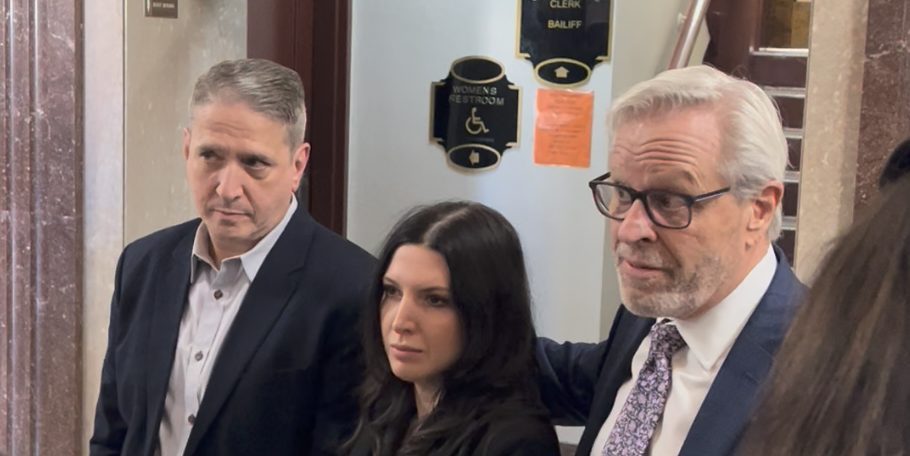
After the hearing, Glossip and his wife, Lea, stood with Knight to address reporters. Glossip thanked Knight and Lea for their support. “It was a hard day,” Lea told The Intercept, “but Richard and I are both people of faith.” She expressed that “today marks a meaningful step toward finally bringing this case to an end. We are both deeply grateful for the tireless efforts of his legal team.”
The Trump administration is preparing to kick nearly 80,000 people, about half of them children, off federal housing assistance over their family’s immigration status, threatening to drive thousands into homelessness.
On Thursday, the Department of Housing and Urban Development published a final rule that’s on track to effectively bar families of mixed immigration status from receiving most federal housing assistance, which allow people to receive housing vouchers to reside in privately owned rental homes or in government-owned or -assisted public housing units.
As it stands, undocumented immigrants and temporary non-residents in the United States already are barred from personally receiving most forms of federal housing assistance. But if some members of the family are eligible, the eligible members can receive prorated assistance to help cover their housing, and the non-eligible family member can live with them.
The new rule, which goes into effect in mid-December, would disqualify an entire family if one member is ineligible after a temporary grace period, forcing them to choose between separation and eviction.
Families are “going to be faced with the impossible choice of deciding whether they want to split up so that some people can stay housed, or to stay together and risk homelessness and eviction,” said Marie Claire Tran-Leung, Evictions Initiative Project director at the National Housing Law Project.
Children will bear a disproportionate burden, Tran-Leung said. Of the nearly 80,000 people who could be affected, according to estimates from Center on Budget and Policy Priorities, nearly 37,000 are children.
Of the nearly 80,000 people who could be affected, nearly 37,000 are children.
Many families have one parent who doesn’t qualify, one parent who’s a citizen or otherwise eligible immigrant — i.e. a permanent resident — and kids who hold U.S. citizenship. According to Tran-Leung, the typical mixed-status family in HUD housing is a family of four that fits that profile.
This rule is “going to tear families apart and take adults away from their children,” said Deborah Thrope, chief program officer at the National Housing Law Project.
Beyond potentially leaving tens of thousands of families and children homeless or separated, the change could cost the already beleaguered federal housing agency hundreds of millions of dollars, housing experts told The Intercept. This would likely worsen conditions across the board for the roughly 9 million people in federal housing, who would now be subject to onerous documentation requirements.
“The impacts are not just limited to mixed-status families,” said Renee Williams, senior advisor for public policy at the National Low Income Housing Coalition.
This rule is “going to tear families apart and take adults away from their children.”
Currently, both U.S. citizens and non-citizens are required to submit a declaration under penalty of perjury attesting that their citizenship or immigration status makes them eligible for housing assistance. Non-citizens under age 62 must submit a document that proves their immigration status. And additional documentation can be requested by local housing agencies or landlords.
The rule change would upend the current system. U.S. citizens would have to go through the Systematic Alien Verification for Entitlements program, also known as SAVE, to verify their eligibility status.
“It’s a system that hasn’t been used to verify citizenship before but now is because of the work that DHS and DOGE did together on a very expedited timeline at the beginning of the Trump administration,” said Tran-Leung. “This causes a lot of concern for us about the very significant risks of residents who are citizens being caught up in verification issues and potentially losing their housing.”
If SAVE cannot verify someone’s eligibility, the new rule requires the person to provide documentation proving their status. The rule would give families 30 days to obtain evidence of immigration status, in addition to the initial 30-day grace period where families can receive pro-rated assistance before having to go through verification.
Tran-Leung and other experts worry that the new documentation requirements could make it harder for low-income tenants — particularly older immigrants over the age of 62, who were previously exempted from verification requirements — to access the program.
Older people, low-income people, and people who’ve experienced homelessness are far more likely to lack access to proof of citizenship such as a passport, valid photo ID, or birth certificate. That means an untold number of the millions of eligible people in federal housing programs could lose assistance just for lack of documentation.
“For folks who may not have easy documentation accessible, who may not have access to a birth certificate, who may not have access to a passport, we’re really worried,” said Williams.
The changes would also burden housing agencies financially by requiring their staff to review documents that were previously not required by federal law.
It is unclear just how expensive these additional administrative costs will be for HUD. But an analysis from HUD itself found that because mixed-status families receive assistance prorated, it would cost the federal government $300 million in additional funds to serve the same number of families as it does now.
For example, a family of four with one ineligible member currently receives 75% of a full household subsidy. A family of four that is not mixed status receives 100% of the subsidy, making it more expensive for the agency to house the non-mixed-status family even though the two families have the same number of people.
“At the same time, HUD is requesting fewer funds from Congress to end homelessness,” said Kayla Blackwell, senior housing policy analyst at the National Low Income Housing Coalition. President Donald Trump recently proposed cutting $3.8 billion from the agency’s affordable housing, homelessness, and community development programs.
HUD Secretary Scott Turner has justified the rule by claiming that mixed-status families are “pushing aside hardworking U.S. citizens” for housing. But experts said the changes will make the system worse for everyone.
“This is scapegoating immigrant families, and HUD is doing less,” said Blackwell.
For the families who either are forced out of the program or leave willingly due to fears around their status, the road ahead is difficult. The majority of mixed-status families live in California, Texas, and New York, where the cost of living can be incredibly high.
“It’s going to be really difficult, I think, for families to be able to stay in their communities and not be displaced if they lose their access to HUD assistance,” said Blackwell.
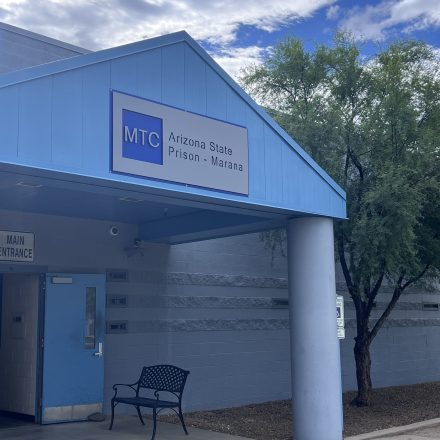
An official from Marana, Arizona, is seeking clarification from the private prison giant Management and Training Corporation about its handling of sexual abuse allegations at the former state prison in the town, following an investigation from LOOKOUT and The Intercept.
In an October 28 letter, reviewed by LOOKOUT and The Intercept, Marana Finance Director and License Inspector Yiannis Kalaitzidis asked MTC Senior Vice President Mary Calvin for a written explanation of what the town official called an “apparent inconsistency” between state records and the facility’s 2023 Prison Rape Elimination Act, or PREA, audit, a report required by the federal law.
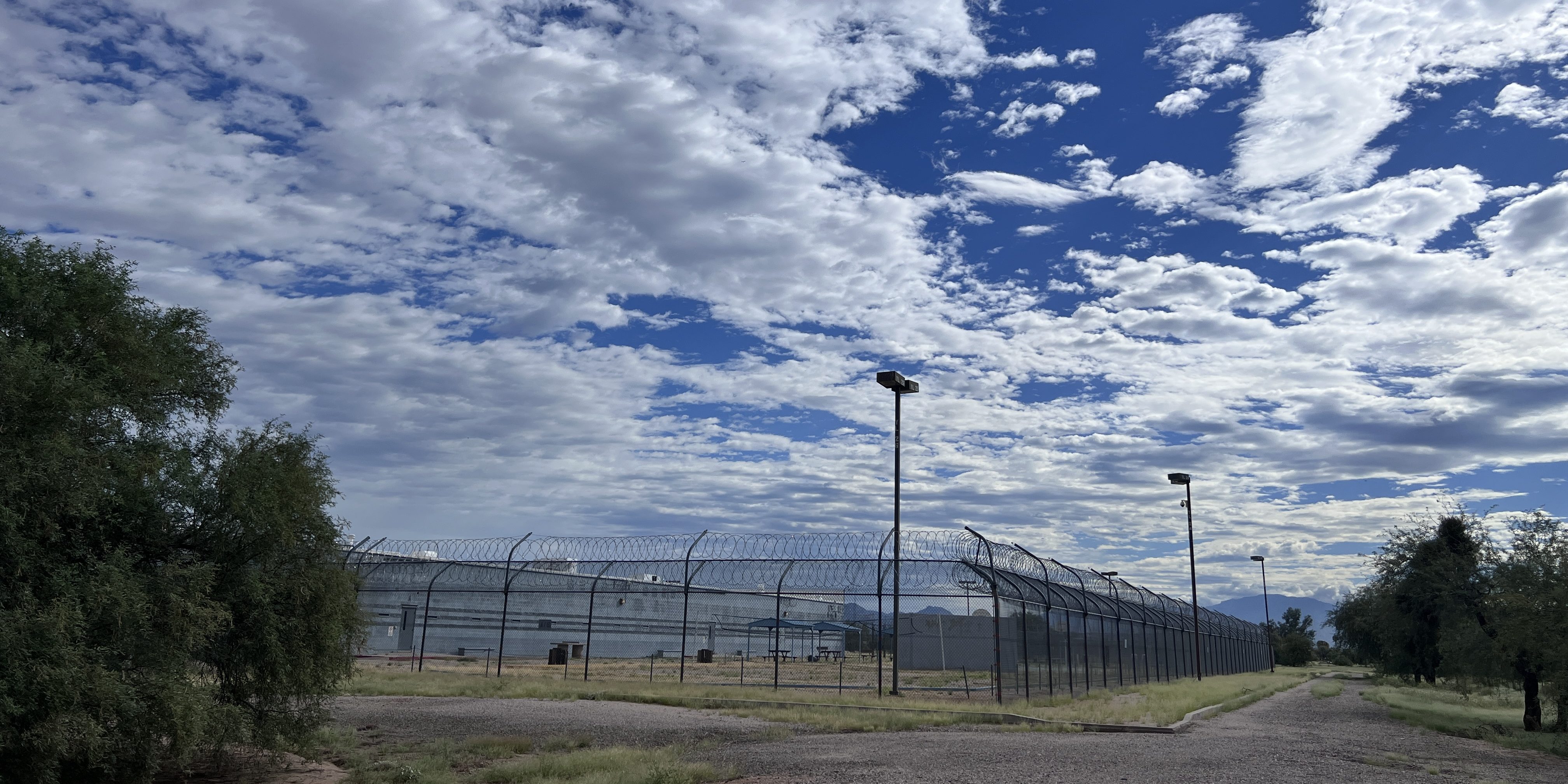
MTC ran a former state prison in Marana, Arizona, and plans to reopen it as an ICE detention camp.
The request is part of the town’s review of MTC’s October 1 application for a business license to “Operate Marana Detention Facility.” The company ran a former Arizona state prison in Marana and plans to reopen it imminently as a U.S. Immigration and Customs Enforcement detention camp.
The letter cites a September 29 LOOKOUT and Intercept investigation about how state records reference three allegations of sexual misconduct at the prison in 2022 and 2023.
PREA audits — which are required for jails, prisons, and detention centers at least once every three years — must record all allegations of sexual misconduct at detention facilities, whether they are substantiated or not. Certified in December 2023, MTC’s report for the Marana prison, however, recorded none.
Kalaitzidis noted in his letter that the audit says the finding of zero incidents was verified by the warden, chief of security, PREA compliance manager, and internal investigator. He also wrote that, despite the apparent reviews by several company officials, the report “does not appear to be certified or signed by any MTC personnel.”
The letter says the town of Marana is requesting the explanation as part of an investigation into whether MTC “made a material false statement in conducting the business” of the state prison facility, which would be grounds for denial of a business license according to the town’s code.
“The Town of Marana is currently reviewing MTC’s business license application,” said Andrea De La Cruz, the assistant town manager, told LOOKOUT and The Intercept by email. “As part of our review process and due diligence, the Town has contacted MTC to request additional information. The application remains under review, and no final determination has been made at this time.”
MTC did not respond to multiple requests for comment.
Changing Political Context
Local residents and officials say the state, the federal government, and MTC left them out of meaningful discussions about reopening the prison as an ICE camp, LOOKOUT and The Intercept previously reported.
For now, a town business license is among the few levers local officials have.
In an October 2 letter from the local group Pima Resists ICE, or PRICE, to a Marana official who specialized in licensure, organizers cited not only the discrepancies between state investigations into sexual abuse and the PREA audit, but also alleged violations involving an escape from an MTC prison in Kingman, Arizona, in 2010, as well as abuses in a New Mexico immigration camp run by MTC as revealed in a 2017 DHS Office of Inspector General report.
The inquiry comes as Arizona’s political landscape is shifting. The midterm election gave Democrats control of both chambers of the state legislature as well as the governor’s office — a historic change in state power. Republicans will be in the minority at the state Capitol for the first time in 60 years.
That has Democratic lawmakers talking about taking on one of the most contentious laws in recent Arizona history. Following protests across the state, Democrats took up the cause of repealing a controversial 2010 anti-immigrant law known as Senate Bill 1070. In 2012, the U.S. Supreme Court struck down three of its provisions, leaving a requirement that police check the immigration status of people they stop under certain circumstances.
“I would absolutely love to see a repeal of SB1070,” state Sen. Analise Ortiz, a Democrat from Glendale, told LOOKOUT and The Intercept. “There are still parts of that law on the books that are enabling cities to collaborate with ICE to rip families apart, and that needs to stop.”
State Rep. Betty Villegas, D-Tucson, echoed Ortiz: “We already have bills aligned to focus on what other states have done to control ICE from coming into private property.”
Following the lead of neighboring New Mexico’s prohibition on local jurisdictions entering into contracts with ICE for immigrant detention camps, Villegas said Democrats in Arizona see an appetite for doing something similar in their own state.
“We do not want the Democrats to wait until things get bad to investigate conditions.”
Ortiz agreed, saying there is “likely an appetite” for something similar in Arizona, and that the Latino Caucus would address the issue.
Local nonprofits said lawmakers should also conduct a review of no-bid contracts like the one inked between the Department of Homeland Security, ICE’s parent agency, and MTC.
“This was literally handed to them with no review and no public input,” said Caroline Isaacs, the executive director of Just Communities Arizona, a nonprofit working on criminal justice reform. “We do not want the Democrats to wait until things get bad to investigate conditions.”
“We want them to do this now, before people get hurt.”
As Miguel Parra Hernandez, a Mexican national, was fleeing from U.S. Immigrations and Customs Enforcement on foot last month, he turned into a parking lot. An unmarked government vehicle came screaming into the lot after him and struck him.
When a grand jury in Harris County, Texas, charged the U.S. Immigrations and Customs Enforcement officer behind the wheel last week, the indictment pointed to a broader pattern in the Trump administration’s crackdown on immigrants and activists. The charge was assault with a deadly weapon; the weapon was the vehicle.
The Department of Homeland Security, ICE’s parent agency, claimed Parra Hernandez ran in front of the government vehicle; surveillance footage of the incident shows him running away from the car moments before he is hit. (An attorney for the ICE officer accused of assault against Parra Hernandez told The Associated Press his client had not committed any crime.)
In the same month, an unmarked ICE vehicle speeding the wrong way down a one-way street in Long Beach, California, struck a bicycle ridden by Ricardo Gonzalez, whose daughter later said he was a U.S. citizen. An agent immediately drew their gun on Gonzalez, who was later hospitalized for his injuries. The government said the man was not struck, but video released by the New York Times showed the ICE vehicle swerving into the bicycle.
Three days later after the collision in Long Beach, Antonio Moreida stood in the street in Woodland, California, outside Sacramento, documenting an unmarked ICE vehicle when the black Chevy Tahoe accelerated toward him. When the SUV hit him, Moreida told a meeting at Woodland City Hall last week, he was knocked to the ground — and the driver of the Tahoe did not stop to check on him.
The Department of Homeland Security said Moreida jumped onto the hood of the unmarked car, but when video of the incident showed him standing in place, local police and the mayor publicly disputed ICE’s account.
Weaponized Vehicles
In the national conversation about ICE’s heavy-handed crackdown on immigrants across the country, much has been made of the Department of Homeland Security’s claims that immigrants and activists “weaponized” their vehicles against federal agents. After immigration officers shot and killed Lorenzo Salgado Araujo, who was targeted by ICE, and community defender Renée Good in separate incidents, the government said the civilians had used their cars to attack agents — allegations that have not been borne out in criminal charges, or were called into question by witness accounts and video analysis.
What happened to Parra Hernandez, Gonzalez, and Moreida, however, was the opposite of what the government said about Good and Salgado Araujo: It was ICE agents who weaponized their vehicles against civilians.
As the Trump administration ramped up deportations over the last year, federal agents have effectively turned their cars into massive, deadly blunt objects. Common tactics, known collectively as “offensive driving techniques,” include ramming the cars of immigrant targets and activists; “brake-checking” volunteers trying to observe ICE activity; and, in some cases, outright driving into civilians. The Intercept reviewed two dozen cases of ICE using vehicles against civilians in these ways, including multiple incidents where victims were hospitalized or even died from their injuries.
“Vehicles are another tool ICE agents are using with unchecked force, just like their guns, Tasers, and pepper spray.”
“Vehicles are another tool ICE agents are using with unchecked force, just like their guns, Tasers, and pepper spray,” said Hannah Stauss, co-director of Hands Off NYC, a group that opposes ICE’s presence in New York City. “ICE’s deranged use of vehicles effectively weaponizes them against our immigrant neighbors and rapid responders, and will continue to kill people. We are witnessing in real time the results of a federal agency being allowed to operate with impunity, in secrecy, and with unfettered violence.”
In a statement to The Intercept that compiled past responses to the incidents in this article, a spokesperson for the Department of Homeland Security said, “ICE is instituting additional training including, crowd control measures, additional training for high-risk vehicle stops, a live-fire cover course for officer safety, and medical training.”
The spokesperson did not respond specifically to allegations about the incident involved Parra Hernandez; said Gonzalez was not struck by an ICE car; and blamed Moreida for the accident because he was in the roadway.
“Offensive Driving Techniques”
In federal policies and memos, the maneuvers used in the incidents reviewed by The Intercept, along with testimony from rapid responders, are referred to by federal agents as “offensive driving techniques.” They are part of a wider patten of aggressive driving by law enforcement officers across the country, but especially by federal agents with little accountability and nearly blanket backing from the Trump administration.
Last October, Leo Martinez was monitoring immigrations agents’ activity as a volunteer with VC Defensa, a community defense group in Ventura County, California, when an unmarked ICE car rammed his pickup truck. ICE agents arrested Martinez and later released him without charge.
In March, they did it again: Three unmarked government vehicles rammed Martinez’s car as he sought to reverse away from them. The federal agents broke his window and dragged him out. Martinez, who was hospitalized from his injuries, was again released without charge. (The Department of Homeland Security spokesperson did not respond specifically to questions about the incidents involving Martinez.)
“They run stop signs, red lights, they’ll cut off complete intersections, and they rarely turn on their lights,” Martinez told The Intercept. “They’ll slam on their brakes in the middle of the freeway, in the middle of the street. Sometimes they’ll do sudden U-turns in the middle of nowhere and cut off traffic in both directions.”
When activists are monitoring federal agents, one of the most common ways for ICE to leverage their vehicles as physical threats is the “brake check,” a move where a car suddenly breaks to cause the car behind it to slow down — or slam into its rear bumper.
“Brake-checking” doesn’t appear in official guidelines as an “offensive driving technique” with good reason: It is considered to be illegal in all 50 states, covered by various statutes like reckless driving or other anti-road-rage laws. Yet VC Defensa volunteers, who like Martinez monitor ICE activity, said that when they follow ICE vehicles to alert the community with horn-honking, they keep a distance of two to three car lengths because federal agents so frequently brake-check volunteers.
Federal agents use “offensive driving techniques” so often in Ventura County that VC Defensa volunteers sometimes identify the unmarked cars by the body damage that characterizes them.
Customs and Border Protection, another agency that, like ICE, is under the umbrella of the Department of Homeland Security, expanded its agents’ discretion and ability to use these techniques during abduction operations after President Donald Trump took office for a second term.
A previous 2023 Customs and Border Protection pursuit policy largely prohibited officers from boxing in vehicles or making vehicle contact with another vehicle in motion. A partially redacted 2025 CBP directive gives officers broader discretion to use offensive driving techniques and ignore traffic laws.
“Most federal agencies are not well trained in police-citizen interactions, traffic stops, and pursuits.”
“Most federal agencies are not well trained in police-citizen interactions, traffic stops, and pursuits,” said Geoffrey Alpert, a criminology and criminal justice professor at the University of South Carolina who helped Customs and Border Protection rewrite their car-chase policy under the Biden and Obama administrations.
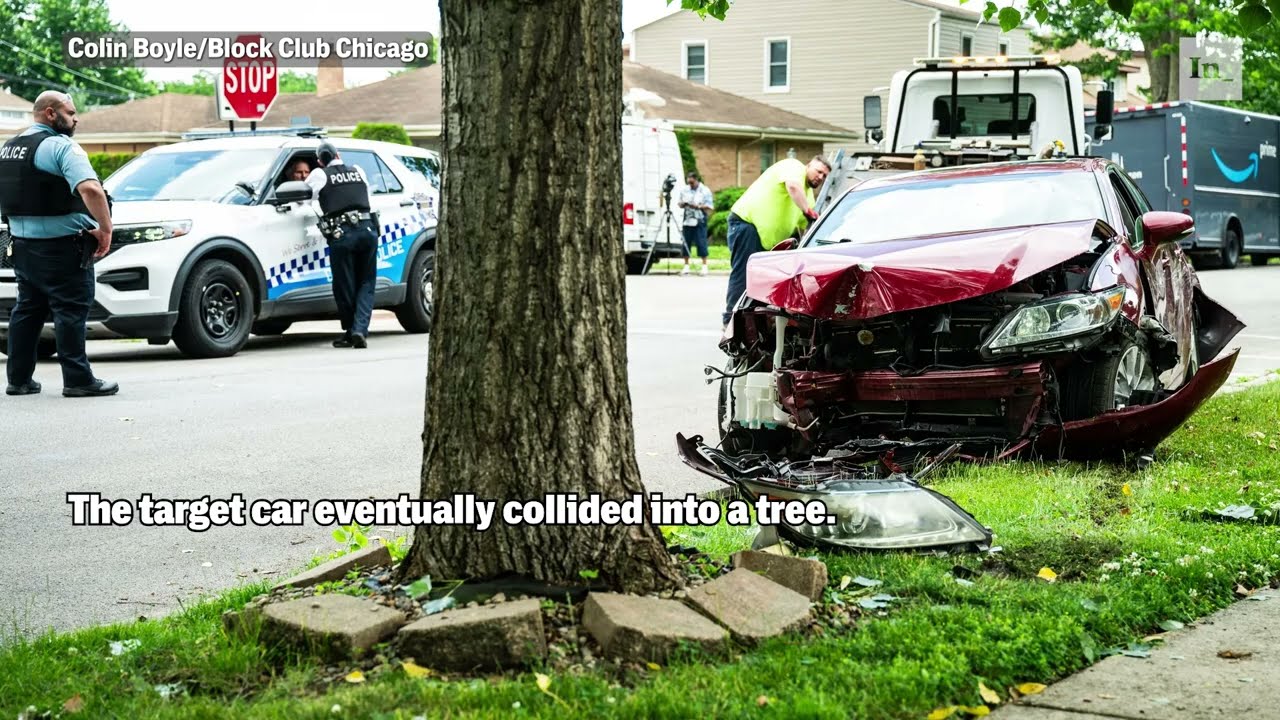
In December, ICE agents in Elgin, Illinois, chased a Venezuelan man until his car and the ICE vehicles crashed. State investigators found the ICE agents likely conducted an “unskilled precious immobilization technique (‘PIT maneuver’) and lost control of the vehicle.” (The Department of Homeland Security spokesperson said the target of the raid rammed an ICE vehicle into a tree.)
In January, Christian Molina, a U.S. citizen, was preparing to pull over for an ICE traffic stop in Minneapolis when the agents rammed the back of his car, injuring his back. The agents said they would pay for the damage, but left without providing contact information. (The Department of Homeland Security spokesperson did not respond specifically to questions about the incident involving Molina.)
In June, agents conducted a high-speed chase through a residential neighborhood of Chicago, blowing through intersections until finally ramming their target’s car. (The Department of Homeland Security spokesperson blamed the target of the immigration enforcement action for the accident because he fled from ICE.)
“It’s disheartening to see some sort of federal agents or law enforcement driving so aggressively in a residential area,” one neighbor told Block Club Chicago. “I have a kid who’s two and we go out for walks all the time. We could have been crossing the street when they came through the intersection.”
The day the directive was issued, ICE chased a group of roofers in Texas, blowing through a stop sign and over a speed bump without sirens. A mother driving her son to the theater was forced to swerve into a ditch to avoid a collision.
“They speeded right next to me,” the mother told the Texas Observer. “They hit the speed bump so bad that, when they got in front of me at high speed, I had to go to the right.”
If she had not swerved, she said, “they would have hit me.”
Some of these car chases have turned deadly in the very places where local police are restricted from chasing suspects because of the attendant dangers.
In February, agents undertook a high-speed chase in pursuit of Oscar Vasquez Lopez outside of Savannah, Georgia. Vasquez Lopez’s car struck a teacher, killing her.
The Savannah Police Department only allows pursuits when the suspect has committed or is attempting to commit a forcible felony, and the risk of not capturing someone outweighs the risk of the chase. Vasquez Lopez had no criminal record, only a civil deportation order from 2024.
Two immigration car chases in New Jersey, where police face similar restrictions at the statewide level, resulted in hospitalizations. (In the Texas case, the Georgia case, and the New Jersey case, the Department of Homeland Security spokesperson blamed the target of the immigration actions for causing unsafe conditions by fleeing.)
“They are not required to follow local agency policies (the same as other agencies), but they must be held responsible for their actions under state and federal law,” Alpert, the criminology professor, said. “The failure to evaluate these behaviors in a full, complete and transparent manner leaves us all in the dark.”
Earlier this month, the AP reported on an internal memo to ICE’s Enforcement and Removal Operations division that banned agents from conducting high-speed car chases. The directive still allows trained agents to make traffic stops and undertake offensive driving maneuvers.
Ramming Pedestrians
ICE agents’ vehicles are not just recklessly pursuing and ramming vehicles driven by who they thought were targets for immigration enforcement. In multiple filmed interactions, agents have driven into pedestrian rapid responders and protesters.
In Woodland, California, ICE agents crashed into Moreida as he sought to collect their license plate information. After a major workplace raid in Los Angeles in June 2025, a news helicopter filmed the moment a protester walked in front of several ICE vehicles. One slowly sped up until it knocked him to the ground.
“It’s a disproportionate use of force. An individual is not going to win a fight with a vehicle,” Alpert, the criminology professor, said. “I’ve never seen any state or local law enforcement ever use a vehicle properly to hit or to run into a civilian.”
In other incidents, federal agents have weaponized their vehicles against crowds of activists. (Asked about the protests incidents mentioned in this article, the Department of Homeland Security spokesperson blamed “anti-ICE agitators.”)
In the aftermath of an ICE shooting this month in the New York City neighborhood of Marble Hill, immigration agents were seeking to move a man with a gunshot wound — whose car, with his 5-year-old son in the back, smashed into a concrete barrier during the incident — from a hospital to a detention facility. As government vehicles left the hospital in a speeding caravan, a bicycle was nearly hit by an federal agent in a black vehicle, which honked its horn, according to video of the incident. In another social media post, an ICE agent in an unmarked vehicle continued driving even with six protesters walking in front of it.
In July 2025, in San Francisco, after ICE clashed with protesters while moving detainees from the immigration courthouse to unmarked vehicles, several protesters clung to the hood of the car until they were physically thrown off when the vehicle sharply accelerated.
“It is honestly only a matter of time until an ICE agent seriously injuries or kills a cyclist or pedestrian in New York City.”
“I absolutely worry about ICE agents hurting people or killing people with these aggressive driving maneuvers,” said a New York rapid responder. “In order to avoid having their movements in vehicles documented, ICE agents will dramatically accelerate far beyond safe speeds for a dense urban environment like New York City.”
The organizer, who requested anonymity to avoid retaliation from the government, reported that agents drive at high speeds into oncoming traffic, run red lights, and abruptly turn without signaling. They rarely use emergency lights or sirens. These tactics align with the pattern of behavior described by Martinez in California — but in a city where rapid responders and neighbors are more often on foot or riding bicycles, not in their own vehicles.
When ICE agents brought a detainee to a Brooklyn hospital after a violent arrest in May, hundreds protested outside the hospital. One TikTok video from the night captured the moment an unmarked ICE vehicle drove into several gathered people, accelerating sharply until they leapt out of the way.
“Given the frequency with which these agents are engaging in aggressive maneuvers to try and lose rapid responders or prevent documentation of their movements,” the organizer said, “it is honestly only a matter of time until an ICE agent seriously injuries or kills a cyclist or pedestrian in New York City.”
The Trump administration’s extradition case against millionaire left-wing donor James “Fergie” Chambers, detained in Spain since July, ran into an apparent hurdle when two witnesses called before a federal grand jury announced their intention last week to refuse to testify.
Several observers familiar with the case said the grand jury is likely related to the extradition effort.
The refusal of the grand jury witnesses to testify takes on added importance because the U.S. is pursuing Chambers’s extradition based on a criminal complaint, not an indictment, according to his Spanish lawyers. The criminal affidavit, signed by a single FBI agent, includes three charges related to his support for pro-Palestine causes.
The distinction, critics of the extradition case say, highlights how the case is hung on one agent’s complaint, which remains under seal, rather than a grand jury investigation to determine if the state had sufficient evidence to indict Chambers.
“The complaint is not only vague and weak, it’s not normal,” said Aitor Martínez, one of Chambers’s Spain-based lawyers. “In 20 years of practice, I’ve never seen a U.S. extradition request based on a criminal complaint.”
Martínez pointed to a statement from a summary of the complaint contained in an international arrest order reviewed by The Intercept and directed at Spanish authorities that says, “If Chambers’ extradition to the US is granted, another charging document called an indictment will be sought from a federal grand jury.”
“In 20 years of practice, I’ve never seen a U.S. extradition request based on a criminal complaint.”
Xavier de Janon, the executive director of the U.S.-based National Lawyers Guild and who is not working directly on the Chambers case, said, “Seeking an extradition without there being an indictment puts the cart before the horse.”
“If he is extradited under a criminal complaint,” said de Janon, “he can’t even fully challenge the charges, because he hasn’t been indicted.”
The State Department referred questions to the Department of Justice, which declined to comment.
Two of the three charges underpinning the extradition request against Chambers — riot and incitement to riot — are related to allegations that he helped fund a late-2023 protest in Merrimack, New Hampshire, against an Israeli weapons manufacturer, according to the summary of the complaint contained in the arrest order. The summary says Chambers provided funds for demonstrators used to purchase materials such as smoke bombs and to help cover protesters’ legal fees.
The third charge is international money laundering related to more than $7 million he transferred to bank accounts in Tunisia, where he was living in 2024. The Trump administration, according to the international arrest order, says the money was used to fund Hamas, which is a proscribed terror group in the U.S. The order does not say he is charged with material support for terrorism.
Chambers’s family and supporters and multiple representatives of Club Africain, a Tunisian soccer club, have said the money was used to pay the club’s debts and related expenditures such as training grounds. The club’s fan base has long supported Palestinians.
Grand Jury Refusal
Two women who participated in the 2023 protest against a factory operated by the Israeli weapons manufacturer Elbit Systems recently announced their intentions not to cooperate with a November 4 grand jury hearing where they have been summoned as witnesses.
“If they are being summoned now, this suggests that the grand jury seems to be linked to Chambers’s case,” said Martínez, his lawyer. “It seems like a fishing expedition against him.”
Kira Kelley, an attorney for the two women, said, “Context clues suggest this is about Fergie.”
If the pair don’t answer questions from a federal prosector before the New Hampshire federal grand jury, they could risk a possible jail sentence for contempt.
Nonetheless, the two women — Bridget Shergalis and Sophie Ross — shared a statement with The Grayzone Thursday announcing their intention to refuse to testify. In an interview on the same day with The Intercept, the women recounted being under investigation for a year over the protest and being threatened with felony charges that carried potential sentences of decades in prison.
Shergalis and Ross said they turned down several deals for their cooperation. By the end of the ordeal, they were found guilty of misdemeanor offenses and received 60-day jail sentences.
Following that experience, said Ross, the pair decided to reject the subpoena to testify before a grand jury.
“It was an easy decision for both of us,” Ross said.
Shergalis and Ross are slated to testify on Wednesday, at which time they plan to assert their Fifth Amendment rights and decline to answer any questions from the federal prosecutor.
At that point, a hearing before a judge may be scheduled, to determine whether to hold Shergalis and Ross in civil contempt, which could result in up to 18 months of prison, according to Kelley.
Martínez, who also worked on WikiLeaks founder Julian Assange’s defense team, said the decision by Shergalis and Ross recalled that of Chelsea Manning, who twice refused to testify against Assange before a grand jury, serving time in prison in both instances.
“It’s like Chelsea Manning, years later,” he said.
Shergalis and Ross decided to go public with their plans after speaking with organizers behind the recently-launched NSPM-7 Defendants Union, a nationwide project for protesters targeted by the Trump administration’s efforts to criminalize dissent as laid out in last year’s National Security Presidential Memorandum-7. The document, part of a broader effort to paint left-wing activism as terrorism, directs the FBI to go after “violent and terroristic activities” associated with “anti-fascism.”
The NSPM-7 Defendants Union is centered around signing a pledge to follow practices such as not cooperating with law enforcement, adopting collective legal strategy when possible, and publicly announcing those strategies — a goal that runs against the secrecy surrounding federal indictments.
While secrecy benefits prosecutors before a grand jury, said Shergalis, “It’s good for all of us to be as transparent as possible.”
“We’re seeing NSPM-7 result in unprecedented levels of prosecution against protesters.”
Shergalis, Ross, and Chambers have each signed the pledge, and the grand jury decision appears to be the first public test case of the union’s ideas.
“We should celebrate people across the country deciding to assert their legal rights boldly against the federal government and its NSPM-7 policy,” said de Janon, of the National Lawyers Guild. “We’re seeing NSPM-7 result in unprecedented levels of prosecution against protesters.”
“This Is Bad Faith”
Meanwhile, Chambers remains imprisoned in Madrid, as the Spanish courts decide whether to grant the U.S. extradition request or not.
Chambers has applied for asylum in Spain and, if his application is granted, he would be released and the U.S. extradition request would be denied. He cannot be extradited until the asylum case runs its course.
A self-described communist and anti-imperialist, Chambers is heir of the Cox family, owners of Atlanta-based telecom giant Cox Enterprises. As part of a settlement in which his family severed ties with him at the time, he sold stock back to them in mid-2023 worth about $250 million.
Since then, he has been funding an estimated 100 humanitarian and left-wing projects in 20 countries, according to his partner, actress and activist Stella Schnabel, including aid projects in the Occupied Gaza Strip.
“I believe this is part of the persecution against pro-Palestine protest.”
As for the Trump administration’s case, Martínez, the Spanish attorney, underscored how the criminal complaint against Chambers raises charges related to the protest against the New Hampshire factory for Elbit Systems, Israel’s largest arms manufacturer, but leaves out how federal prosecution efforts ended up with minor convictions for Shergalis, Ross, and other activists.
“The people who carried out the acts received a minor sentence,” he said. “They leave this out. This is bad faith.”
“Why don’t they tell this to Spain?” he said. “It’s likely that Spain won’t turn someone over based on actions that got 60-day sentences.”
Martínez said Chambers’s opposition to the Israeli genocide in Gaza is the real reason behind the case. “I believe this is part of the persecution against pro-Palestine protest. The U.S. has even sanctioned the International Criminal Court because of this.”
Of Chambers’s case, Martínez said, “This is one more attack.”
With voters set to cast ballots in two critical races that could help determine control of both chambers of the U.S. Congress, fears of potential voter suppression are running high in Maine.
Officials in the state have prepared for months against the possibility of election interference from federal officials, and the state remains on high alert in the run-up to the general election on November 3.
Training materials were updated this year to include references to federal statutes barring armed federal agents from polling sites.
Training materials for law enforcement officials in the state, obtained by The Intercept through a public records request, were updated this year for the elections to include explicit references to federal statutes barring armed federal agents from polling sites.
In an interview with the New York Times this week, Maine Secretary of State Shenna Bellows said the inclusion of such references was a direct defense in response to the fearmongering around election integrity from President Donald Trump and his administration.
“This is the first time ever that we have had to engage in scenario planning to safeguard against potential federal interference in elections,” Bellows said. “It seems like the federal government is now adversarial to the states.”
Bellows’s office offered up the training slideshow, which cites a U.S. law that bars armed civil or military officers from posting at voting sites, to law enforcement personnel in the run-up to Maine’s primary election in June and again in the lead-up to the general election on November 5.
Nationwide, Democratic officials have expressed fears that the Trump Administration might weaponize U.S. Immigration and Customs Enforcement or other federal agencies to undermine the rights of voters. In New York, state Attorney General Letitia James issued a reminder to voters that federal officials may not “police the polls,” and the Arkansas chapter of the NAACP called out the assignment of federal election monitors to two counties in the state as potential intimidation.
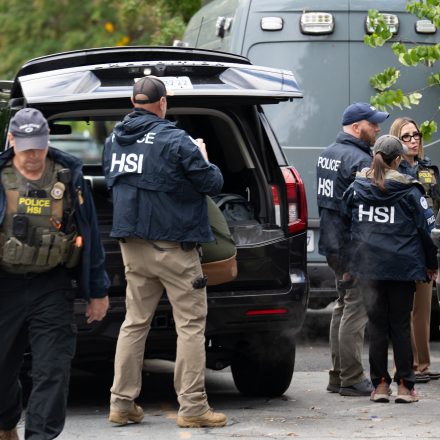
The Trump administration, meanwhile, has sounded the alarm about the alleged scourge of non-citizens on the voter rolls, sending agents from the FBI and ICE’s Homeland Security Investigations division to probe alleged fraud. A handful of people in California, New York, and North Carolina have been indicted for allegedly voting as non-citizens, but a review of similar cases by the Washington Post found that such cases were often the result of honest mistakes.
In Maine, worries about federal interventions at polling places flared when — following a slew of social media videos from Trump allies suggesting that fraud is already taking place among the state’s Somali American community — a local outlet reported that the Department of Justice would be sending election monitors to the state.
Jon Fetherston, a journalist with the far-right Maine Wire, which is funded by conservative megadonor Leonard Leo, was seen following people in and around an early voting site at Lewiston City Hall and aggressively questioning them. (The Maine Wire did not immediately respond to a request for comment.)
Critics said the moves were tantamount to voter harassment, but Maine Wire editor-in-chief Steve Robinson later defended them as an act of election transparency. Robinson, who has led a crusade against what he alleges to be a network of fraud in the state’s Somali American community, questioned the role of interpreters tasked with helping “jobless Somali bums” cast their ballots.
In the wake of the Maine Wire controversy in Lewiston, Bellows confirmed to the Maine Morning Star that a wave of federal election monitors would be headed to polling sites in Lewiston and Portland.
The Department of Justice on Tuesday confirmed to The Intercept that it intends to send election monitors to Maine for Election Day, but did not elaborate or respond to specific questions about where the monitors were to be sent.
“We will have around 1,000 monitors in counties throughout the United States, but we will not share the full list until Election Day,” a Justice Department spokesperson told The Intercept in an email Tuesday. “All monitors must meet the same legal and ethical requirements, including that they not interfere with the voting process. Every monitor has the same role: observe for potential violations of federal law and report concerns to the Department, which the Department will review after Election Day and act where appropriate.”
Robinson did not immediately respond to a request for comment.
Collins Takes Right-Wing Bait
With Maine a key battleground state for control of Congress — Democratic challenger Troy Jackson is seeking to topple long-serving GOP Sen. Susan Collins, and the Democratic House candidate Matt Dunlap is seeking to best former Gov. Paul LePage in Maine’s 2nd Congressional District — temperatures are running high in the state.
Progressives in Maine worry that even without a robust federal presence at voting places — whether monitors are armed or not — activist campaigns like the one undertaken by the Maine Wire journalists could pose a potential threat to voters’ rights.
“Basically, if you were walking into City Hall and you were Black, you could expect to have this guy come up to you with his phone and ask you all sorts of rude and obviously racist questions,” said Ben Chin, co-director of the progressive Maine People’s Alliance. “We’re trying to encourage everyone to come out to vote, but it makes sense why that might give people pause. You hear a guy like that is outside a polling location, it’s reasonable to wonder, ‘Should I go down there right now?’”
“We have received complaints about the intrusive filming, photography, and harassment of voters in the City of Lewiston by political operatives.”
In a statement to The Intercept, Bellows said the state and the city of Lewiston were taking steps to ensure that voters could cast a ballot free of harassment.
“We have received complaints about the intrusive filming, photography, and harassment of voters in the City of Lewiston by political operatives,” Bellows told The Intercept in a statement. “All voters should be able to exercise their right to vote without feeling watched, questioned, or harassed, and we take these allegations seriously, particularly when it appears that voters were targeted for no other reason than their race or ethnicity. We understand the City of Lewiston has taken steps to address the problem, and we will continue to monitor the situation.”
Collins, meanwhile, took the Maine Wire’s reporting seriously after Fetherston asked the senator at a campaign event about the role of interpreters, which he and the Maine Wire cast as “electioneering.”
“I’m unaware of those allegations, but certainly only Americans should be voting in American elections,” Collins said. “And it is troubling to me if people are being accompanied into voting booths and handling ballots in a way that is not sanctioned by law.”
Alabama attorney Larry Grissett was checking Facebook in late September when he saw a news story about a man he represented in a murder trial more than 40 years ago. According to the article, a federal judge had just vacated the conviction of that client, Charles McCrory.
Grissett was stunned. He later summed up his reaction: “Vindication.”
McCrory was 26 years old when he was accused of brutally killing his wife in the small town of Andalusia. He insisted he was innocent — and Grissett believed him. There was no evidence connecting McCrory to the crime; prosecutors seized on a supposed bite mark found on his wife’s body, which a state expert claimed to match to McCrory’s teeth.
Grissett was never convinced by the so-called bite mark. At McCrory’s 1985 trial, he said, Grissett’s own dentist sat through the expert testimony and found it preposterous. “He says, ‘There’s no way that guy can say that,’ Grissett recalled. “I mean, anybody with common sense would know that.”
In a September 21 ruling describing the case against McCrory as “thin,” Trump-appointed Judge R. Austin Huffaker Jr., zeroed in on this junk forensic science. Not only would the alleged bite mark not be allowed into evidence today, Huffaker wrote, bite-mark analysis itself “is grossly unreliable and unsupported by relevant scientific bodies. It amounts to nothing more than rank speculation.”
Unless the state moves to retry him within the next six months, Huffaker concluded, McCrory must be released from prison.
The ruling was not only momentous for McCrory, who has insisted on his innocence for more than four decades, but it also marked a new victory in the long legal battle against junk forensics — and the discredited discipline of bite-mark analysis specifically.
“Everybody sees this was junk science. You don’t have to be a scientist to understand that.”
Yet more than a month after the decision, McCrory remains behind bars with no sense of when he might walk out. Although his lawyers asked the court to free him on bond pending the state’s decision to release or retry him, the Alabama attorney general’s office filed a motion last week asking Huffaker to reconsider his order overturning the conviction. The state’s appeals will likely drag out McCrory’s ordeal through the holidays and into next year.
In a statement, McCrory’s current legal team praised Huffaker’s “explicit acknowledgment that criminal convictions based on discredited bitemark evidence cannot stand.” Mark Loudon-Brown, senior attorney at the Southern Center for Human Rights, and Chris Fabricant, director of strategic litigation for the Innocence Project, said they are “grateful for the decision and look forward to continuing our fight to bring Mr. McCrory home.”
In 2022, The Intercept published a lengthy investigation into McCrory’s case, detailing the flaws in the state’s conviction. The case attracted additional media coverage, highlighting the problem of junk forensic science. Despite the glaring problems with the evidence against McCrory, Alabama courts have routinely rejected his appeals and in 2023, the state’s parole board denied McCrory release.
Julie Bond McCrory’s body was found inside her home in Andalusia on May 31, 1985. Her head was bashed in, and she’d been repeatedly stabbed in the chest. The couple’s son Chad, then 3 years old, was found unharmed in his bed. Police quickly pointed to McCrory as their only suspect: He and Julie were separated, and McCrory had been having an affair. At trial, the theory seemed to be that he’d savagely murdered Julie to be free from her.
The police investigation was cursory at best. Detectives found no physical evidence to connect McCrory to the bloody crime. Meanwhile, they ignored some evidence altogether, including two windows in Julie’s bedroom that were found open, but which investigators failed to dust for fingerprints. Police also failed to consider an alternate suspect, a man who worked at an excavating company bordering the McCrorys’ backyard and who, just weeks after Julie’s murder, committed a home invasion rape of another local woman. He was convicted and sent to prison for that crime.
Ultimately, the state latched onto a single piece of physical evidence against McCrory: a pair of small indentations on the back of Julie’s right arm, which prosecutors concluded was a bite mark made by McCrory’s teeth.
To sell this theory, the state employed famed forensic dentist Richard Souviron, a star prosecution witness in the recent and sensational trial of serial killer Ted Bundy. Although Souviron initially said he couldn’t definitively link the two marks on Julie’s arm to McCrory’s teeth, at trial he was unequivocal that they matched.
Skin, with its malleability, is a terrible medium for accurately recording any injury.
Bite-mark analysis is based on a two-pronged foundation. First, that the shape and arrangement of our teeth are unique, like DNA, and second, that skin is a suitable substrate for recording this uniqueness. As it turns out, there’s no science backing either assertion. In fact, research into the discipline has routinely found the opposite — that human dentition is not unique and that skin, with its malleability, is a terrible medium for accurately recording any injury. This makes bite-mark analysis a random and entirely speculative practice.
Still, after taking center stage at the Bundy trial, bite-mark analysis took off in the 1980s and ’90s and, despite not having any basis in actual science, made its way into courtrooms around the country, turning forensic dentists like Souviron into newsmaking, swashbuckling crime fighters.
In the years that followed, however, bite-mark analysis was increasingly called into question and ultimately exposed as junk science, a subjective pattern-matching practice that has led to dozens of wrongful convictions. At least four of those, including McCrory’s, are cases in which Souviron served as the prosecution’s expert.
In 2019, Souviron recanted his testimony in McCrory’s case, providing an affidavit to Fabricant and Loudon-Brown, who presented it at a 2021 evidentiary hearing in Andalusia. “As a forensic odontologist I no longer believe the individualized teeth marks comparison testimony I offered in his case was reliable or proper,” Souviron wrote. “I no longer believe, as I did at the time of trial, that there is a valid scientific basis for concluding that the injury found on the skin of the victim in this case, assuming that the injury is in fact teeth marks, could be ‘matched’ or otherwise connected to a specific individual, such as Mr. McCrory.”
Despite the fact that their key witness had disavowed the evidence they used to send McCrory to prison for life, prosecutors fought to preserve their conviction. At the 2021 hearing, they insisted that McCrory was guilty, based on the same evidence they presented at trial. They recast the supposed bite mark as “teeth marks,” implying that, while bite-mark analysis may be discredited, the study of “teeth marks” is a separate and valid discipline. Even if Souviron had not testified for the state, they argued, jurors could have looked at photos of the marks on Julie’s body and the dental molds taken from McCrory and decided for themselves that McCrory inflicted the wounds.
Covington County Circuit Court Judge Lex Short, who presided over the hearing, agreed with the prosecutor. So did the Alabama Court of Criminal Appeals, which upheld his ruling in favor of the state. But Huffaker did not.
Huffaker took exception to the notion that analyzing “teeth marks” is somehow separate from bite-mark analysis. It is clear, he wrote, “that bitemark identification is based on analysis of individual teeth markings.”
But “most importantly, the state court unreasonably determined that, even without Dr. Souviron’s expert testimony, a reasonable jury could compare the bitemark evidence with McCrory’s dentition themselves and find that it belonged to McCrory,” Huffaker wrote. “This finding blinks reality in light of the evidence presented by McCrory at the postconviction evidentiary hearing.” In a footnote, he added that “if an expert could not testify about bitemark identification because it is junk science, a jury should not have been allowed to consider it either.”
McCrory is not the only person who is still fighting for his freedom decades after being convicted based on discredited junk science. Last year, Chris Duncan was declared innocent nearly 30 years after being sent to Louisiana’s death row based on bogus bite-mark evidence. He was released one day before Thanksgiving. In his case, a video showed the state’s supposed bite-mark expert manufacturing the evidence that was used to convict Duncan.
As in McCrory’s case, Louisiana prosecutors have nevertheless continued to insist their case against Duncan is solid. And as in McCrory’s case, this has not gone over well with some judges. Earlier this year, Louisiana Supreme Court Chief Judge John Weimer wrote that bite-mark evidence “should be discarded and no longer have a place in the realm of forensic science.”
“Long ago, some who were thought to have the best and brightest minds of that time endorsed ‘trial by water’ as a means of determining a person’s guilt or innocence. We now look back at those practices as asinine and absurd, since those who fell victim to those practices often did not survive, regardless of whether they were found guilty or innocent,” Weimer wrote. “Thankfully, as scientific knowledge evolved, there was a realization that these practices had no basis whatsoever in logic, reason, or the search for truth, and the practices were discarded.”
As the holidays approach, McCrory’s family remains hopeful that he will soon walk out of prison. His son Chad, who is now in his 40s, has attended a dozen parole hearings with the hope of one day seeing his father released.
Grissett, McCrory’s former lawyer, reached out to Chad to share his hope that McCrory will finally come home. While memories have faded in the tight-knit community of Andalusia, many people remember McCrory’s case, he said.
“Everybody sees this was junk science,” Grissett said. “You don’t have to be a scientist to understand that.”
It’s “sad that it’s taken this long,” Grissett said. It haunts him that “somebody’s still out there who murdered this lady. And I’m afraid that they’re not gonna look into that.”
Angelina Resendiz’s voice on the phone was frantic. She was calling a friend from the barracks room of Jermiah Copeland, a fellow sailor at Naval Station Norfolk in Virginia. They had spent the evening together, kissing and drinking, and now Resendiz, 21, needed to leave.
It was the last time anyone would hear from her. When Resendiz’s friend arrived at the barracks 15 minutes later, the pair was nowhere to be found.
“The Navy failed her,” Resendiz’s mother, Esmerelda Castle, told The Intercept. After her daughter’s disappearance, friends and family spent a week scrambling to find Resendiz. Castle found the Navy’s reports in that time unclear, delayed, or downright false.
A first-of-its-kind Intercept investigation has found critical shortcomings in the U.S. military’s procedures for documenting and preserving records of homicides that result from domestic abuse, including intimate partner violence. The Pentagon’s mandated reports to Congress appear to substantially undercount these killings, omitting nearly half of cases.
In the six years before Copeland’s murder of Resendiz, the Pentagon recorded 41 domestic abuse-related homicides committed by service members. The Intercept identified nearly twice as many: at least 73 potential cases involving 79 victims — almost all of them women — during the same period. Reports for fiscal year 2025, when Resendiz was murdered, are due in November.
The Intercept examined publicly available news articles, obituaries, court records, memorials, and other data to investigate the specifics behind the Defense Department’s numbers. Reporters also used data obtained through a Freedom of Information Act request on Army noncombat fatalities to match names, because some news coverage did not mention the victims’ and alleged perpetrators’ military service.
A killing qualified for the dataset if it occurred in fiscal years 2019 to 2024; if the perpetrator was a member of the military at the time of the crime; and if the case involved a homicide. The database only includes cases where a victim of the violence had dated or was in a romantic relationship with the suspected perpetrator, and it includes multiple women living abroad who were foreign citizens dating American troops.
In the fiscal years since the second Trump administration took power, The Intercept found at least 10 service women or women working for the Defense Department have died from intimate partner and domestic violence, six of them killed by male co-workers. An additional 10 civilian women have been killed by male military personnel in intimate partner violence-related homicides during the same period.
A Pentagon spokesperson acknowledged The Intercept’s queries about the discrepancy in homicide rates but did not respond to detailed questions before publication.
“At this moment in our country’s history, I am afraid these numbers are going to increase even further,” said Jacquelyn Campbell, a professor at Johns Hopkins University’s School of Nursing who has been studying domestic violence in the military for decades. “We need primary prevention for everyone in the military and their partners.”
The findings come in the wake of President Donald Trump’s August announcement of a Military Spouse Commission, led by Jennifer Hegseth, the wife of Defense Secretary Pete Hegseth, and other high-level military leaders. The commission’s mandate is to guide policy around issues affecting military families. Though intimate partner violence and spousal abuse have concerned military family advocates for decades and thousands of new cases are reported each year, the commission does not mention the issue as one of its areas of focus.
The Navy and DoD have said in public statements and communication with members of Congress and Castle that while “proper procedures were followed” following the death of Resendiz, they have identified several processes that require further review.
“What Are the Statistics?”
Copeland killed Resendiz on May 29, 2025. In the days after Resendiz’s disappearance, her friends filed missing person reports and called Castle in Texas, who in turn called the Navy. None of them knew that Resendiz was dead.
The Navy’s official timeline of events says it did not start investigating her disappearance as a crime until a missing person’s report was filed on the 31st, and that Castle did not reach out until that day. Phone records she shared with The Intercept and members of Congress show she started calling on the 29th.
“I was told she was found, and that the original missing person’s report was exaggerated,” Castle recalled. “I didn’t think for a second that the Navy would lie to me.
“I was told she was found, and that the original missing person’s report was exaggerated.”
Technically, Resendiz had been found — a Navy chief searching for her had seen Resendiz’s body packed under the covers in Copeland’s bed around 10 a.m. on the day of her disappearance. They assumed she was asleep, according to evidence later revealed during trial. But as Castle tells it — including in a congressional inquiry she wrote requesting a deeper investigation— a Navy chief claimed on the phone to have spoken to her daughter in Copeland’s room.
She had been dead for hours.
“He had Angie wrapped up in a blanket on his bed,” said Castle. “It was against policy for her to be in the barracks. And they just turned their backs and left.”
Intimate partner violence in the military has long been a problem with unclear signs of progress. Killings in the 1990s on bases such as Fort Campbell made national headlines, leading Congress to establish the Defense Task Force on Domestic Violence in 2000.
Campbell, the nursing professor, was part of the effort, which issued over 200 suggestions for improvement by 2003. “Most of the recommendations we made a long time ago were never implemented,” she said. For one, she’d repeatedly requested better recordkeeping.
“One of the things I kept asking was, ‘What are the statistics on intimate partner homicide in the military?’ We could never get them,” Campbell said. “And in the military’s suicide reports, you cannot determine how many suicides were part of homicide–suicides, where a service member killed a civilian wife or partner before killing himself.”
This lack of clarity sounded familiar to Priscilla Rodriguez, who spent 10 years in the Marine Corps before working in strategic communications for the Navy.
“The command chose not to pursue military legal action.”
Rodriguez experienced domestic violence that met the Defense Department’s criteria from her husband, an active-duty Marine at the time, according to documents reviewed by The Intercept. Her husband pleaded guilty to misdemeanor child abuse in civilian courts, and military legal authorities recommended domestic violence charges. “The command chose not to pursue military legal action,” Rodriguez said.
The Intercept’s analysis of the rates of domestic abuse reported in Pentagon data found intimate partner violence among married military couples was at least four times higher than the civilian rate. The Pentagon does not report the rate of abuse involving unmarried intimate partners, like Resendiz and Copeland.
Gaps like these make it difficult to have a thorough reckoning of the problem’s scale. “When accountability is inconsistent,” Rodriguez said, “it sends a message that abuse can and will remain hidden.”
Defense Secretary Pete Hegseth serves Thanksgiving meals to service members in Washington, D.C., on Nov. 28, 2025. He was joined by his wife, Jennifer Hegseth.Photo: Master Sgt. William Blankenship/U.S. Air Force photo Joint Task Force DC
“I Knew My Kid Was Not Coming Back”
Copeland kept Resendiz’s corpse hidden in his barracks room for four days, until June 2, 2025, when he put her body into a duffel bag and dumped it in a wooded area behind a nearby elementary school.
By then, he was being questioned by the Naval Criminal Investigative Service on her whereabouts, and Castle was still wondering about her daughter’s safety. She’d asked naval authorities to have her daughter give her a call, and when it never came, she contacted the base again.
A Navy official suggested her daughter may have gone AWOL.
“I didn’t believe that,” Castle said. “My kid is scared to miss work. She won’t take off.”
Castle flew to Virginia herself.
Resendiz had been dead for a week. Castle felt she wasn’t getting the information she needed after the Navy and local authorities had put out a statewide missing person’s alert. She requested that she be let into her daughter’s barracks room.
“I didn’t want anyone else touching her stuff,” Castle said. “It was how she left it. There was still paint out; she had started painting again. Her yoga mat was still out. She had planned on returning. I knew my kid was not coming back.”
She spent two more days in Virginia searching for her daughter, talking to local news, and asking naval authorities to give more updates.
“They didn’t declare her AWOL or dead,” Castle said. “They said she was duty status unknown. I was worried they were going to wash their hands of her.”
On June 7, Castle flew back to Texas. Police found Resendiz’s body in the duffel bag two days later.
A History of Violence
Jermiah Copeland was convicted of Resendiz’s murder on June 8, 2026. According to evidence entered into court records in his murder trial, he had also been accused of two instances of domestic violence, three sexual assaults, indecent recordings, and other crimes from during and before his Navy service.
“He had a history of violence against women starting in high school,” Castle said. “And was still allowed to join with the charges against him. Then he was accused of raping another service member, and he was transferred. There were no safeguards in place at the new command.”
The absence of safeguards against intimate partner violence in the military is part of a broader set of structural and cultural failings, experts told The Intercept.
“There are many disincentives for a couple, particularly when one or both partners are on active duty, to seek help,” Campbell said. “Active-duty women who were being abused told us: ‘If my commanding officer knew, I would never get the next promotion.’ There is considerable stigma, even for the victim. That makes the violence much more likely to escalate and makes it more likely that we eventually end up with homicides.”
A previous Intercept investigation found active-duty Army women were more likely to be killed by fellow service members than by enemy combatants and had a higher per capita risk of homicide than their fellow male soldiers between the years 2011 and 2025.
More than 70 percent of the victims had an intimate relationship with the perpetrator at some point. Army women faced an intimate partner homicide rate at least three times higher than women nationally; controlling for those killed by service men and male veterans alone, it was double.
The military’s systems for identifying and responding to abuse, meanwhile, have come under repeated scrutiny. A 2021 Government Accountability Office report found the department “has not collected and reported accurate data for all domestic abuse allegations received,” leaving it unable to assess the scope of alleged abuse.
The same can be said for homicides.
Almost a third of the 79 victims The Intercept found were killed in murder–suicides. Firearms were used in over two-thirds of the fatalities. Twenty-five of the victims were service members. Multiple homicides involved corollary victims who were not partners, including children, who research shows make up a sizable amount of intimate partner violence-related deaths.
In response to The Intercept’s questions, the Department of Defense stated that data in its domestic abuse reports does not constitute estimates, as it is only using aggregated data from the Family Advocacy Program Central Registry, a database run by the DoD. It further stated it did not have any more information to share on the matter.
“Right now, unless an incident is reported to the Family Advocacy Program,” said Campbell, “nobody knows about it. Those reports are only the tip of the iceberg.”
Data tracking failures have had deadly consequences. The Air Force failed to submit the criminal history of a former service member convicted of assaulting his wife and stepson to a federal database that could have prevented him from purchasing firearms. In 2017, he killed 26 people in Sutherland Springs, Texas.
When Rodriguez reported her own abuse to the DoD, she felt that they didn’t consider the previous information they had available. Installation-level committees review reported allegations and determine whether they meet criteria to be input into the central registry. But the process is plagued with issues, experts who spoke to the Intercept revealed, from investigation procedures to data tracking.
“I was terrified to disclose the full extent of the abuse I was experiencing,” Rodriguez said. “What stands out to me now is that the Family Advocacy Program already had access to my husband’s history. Given that history, I believe the conversation should have been much broader than simply asking whether I wanted to report anything. I left that initial interaction without understanding what support existed or how I could safely leave.”
While navigating her own case, Rodriguez was also watching the same problem surface through her communications work for the Navy.
“It felt completely disconnected from the reality my family and so many others were living.”
“Headlines I monitored involved active duty and Marine veterans accused of intimate partner homicide,” Rodriguez said. “At the same time, I reviewed serious incident reports that were elevated to senior leadership. … The narrative often indicated that intimate partner violence or domestic violence was a contributing or co-occurring factor.”
Navy criminal investigative data showed domestic violence-related deathsincreasing as Rodriguez was trying to raise the issue in 2022. She tried to compile domestic violence awareness resources, but she recalled being told the need wasn’t there.
“I was told there was ‘no demand signal,’” Rodriguez said. “It felt completely disconnected from the reality my family and so many others were living.”
Castle feels that the knowledge of Copeland’s history of abuse could have saved her daughter’s life.
“No one knew anything about him,” Castle said. “The leadership created an environment that allowed him to harm women.”
Winnable Cases
Since her daughter’s murder, Castle has been at work pushing the Navy and Defense Department to strengthen their responses to intimate partner violence. Her work led to the Navy changing its policies in July on how it transfers sailors with allegations of sexual violence.
Her wins, including potential plans by the Navy to change how it classifies missing sailors, are the latest in a long string of limited efforts toward progress.
“Records are important,” said Castle. “With my daughter, they didn’t want to classify her case properly at first. For the military, if something isn’t in a database, it doesn’t exist.”
Following the high-profile 2020 murder of Army Spc. Vanessa Guillén at Fort Hood — and two years after domestic violence became classified as a crime under the Uniform Code of Military Justice — Congress gave independent military prosecutors the power to decide which cases to bring to trial.
And while domestic violence prosecutions increased, military prosecutions of sexual assault — often related to intimate partner violence — fell by almost 60 percent in the past five years, based on data from its annual sexual assault prevention reports. A 20 percent drop occurred from 2024–2025 alone, and The Intercept’s analysis of military court data shows the trend is continuing into 2026.
“In the Pete Hegseth era, sexual assault prosecutions have dropped significantly. Domestic violence is essentially filling that gap,” said Paul Newell, an Army veteran and activist who tracks military suicide, sexual assault, and domestic violence while engaging with members of Congress on the issue.
“In the Pete Hegseth era, sexual assault prosecutions have dropped significantly.”
Newell thinks the trial counsel’s office is “going for what they feel are stronger, more winnable cases,” he said. “They’ll tell you that their conviction rates at trial are still high, which shows that really, they’re just getting rid of the bad cases,” he said. “But we’re not down 60 percent in sexual assaults happening.”
The Pentagon stated in response to The Intercept’s questions that it does not have any additional information to share on why prosecution rates for certain crimes are dropping.
The Intercept also discovered preferential treatment in trial outcomes: Analyzing over 650 military court cases with guilty verdicts from 2021 on, reporters found less senior Navy, Marine, and Army service members had higher chances of losing their benefits and received more jail time after being convicted for domestic violence. Senior ranks closest to retirement received the best conviction outcomes, even compared to those of the same rank as them who had fewer years in service.
Newell feels that these discrepancies give perpetrators increased power over their victims. “The justice system should not take time in service into consideration since that’s prioritizing the perpetrator. If the punishment for domestic violence is a discharge where you lose benefits, it should be applied equally.”
In April, Hegseth directed installation commanders to allow service members to request permission to carry privately owned firearms on bases while off duty. He framed the change as a way to protect service members from attacks on military installations.
Campbell disagrees.
“I have reviewed far too many domestic violence homicide records,” Campbell said. “It is clear to me that, in many cases, there might have been a fight, and somebody might have been hit, but nobody would have died if there had not been a gun right there.”
Rodriguez, who is now studying public health, is calling for recurring anonymous surveys using specific questions to measure the prevalence of intimate partner violence, standardized tracking, independent evaluation, and public reporting.
Castle is still mourning her daughter and still pushing the Navy to reveal the full details about the investigation into her death. To add to the insult, she remembered the shock she felt late last June, when the Navy sent Resendiz home to Texas in a casket. Naval officials had told Castle that everything was taken care of, she recalled, including cleaning the body.
The Navy acknowledges that it failed to clearly inform Castle of her daughter’s true state. She was returned to Texas in decay, her body crawling with maggots.
“There’s nothing that can be done for her,” said Castle. “That’s injustice, and that’s what drives me. None of these women volunteered to be violated in this way.”
How we analyzed the data
Reporters searched through multiple databases to identify the number of potential victims of intimate partner violence, using definitions provided byhealthandpolicy researchalongsidegovernment organizations, comparing it to the last six years of available DoD reporting from 2019 through 2024.The case of a U.S. Air Force airman whokidnapped and murdered a Mennonite womanin 2020 didn’t meet criteria because evidence revealed no previous or current relationship. The case of a soldierwho was convicted a year laterof the murder of a woman in Texas did,as evidence indicated they had a relationship before the woman’s death.
Cases were broken down by the year of the offense, gender of the alleged perpetrator and victim, and branch of the perpetrator and victim, if applicable.
To analyze court data, reporters from The Intercept pulled all court cases pertaining to domestic violence from the years 2021 to 2026 from the websitesof the Air Force,Navy/Marines, andU.S. Army. Navy/Marine data was only available starting in 2021.
Data included the offense type, rank of the accused, and whether the cases ended in acquittal, dismissal, or conviction. For those convicted, the analysis included the amount of jail time given and whether offenders received a punitive discharge, which costs them military retirement and other benefits.
Retirement eligibilitywascalculatedbased on pay information provided in court documents, which in the militaryis based on years served. Air Force data could not be used for this analysis due to a lack of documentation and apparent discrepancies between thenumber of cases reported to Congressand those available on the Air Force portal.
To obtain the number of cases the DoD is prosecuting for sexual assault, reportersutilized Annex Bof the DoD’s Annual Report on Sexual Assault in the Military to calculate the number of unrestricted reports made to military authorities and the amount sent to the military justice system to begin the judicial process.
The 988 Suicide & Crisis Lifeline offers 24-hour support for those experiencing suicidal thoughts or for those close to them, by chat, text, or telephone. Service members can dial 988 and press 1 to reach the Military and Veterans Crisis Line. Support is free and confidential.
After the Mississippi attorney general cleared a white cop for firing into a car and killing a Black toddler in a Walmart parking lot, video footage released by the Mississippi Department of Public Safety has revealed the fullest picture to date of what happened.
The videos, provided to The Intercept in response to a public records request, come on the heels of leaked footage that exposed how a needlessly aggressive and reckless police confrontation of two suspected shoplifters led to 1-year-old Kohen Wiley’s violent death in his mother’s arms.
While the newly released videos include redacted versions of the previously leaked footage — including body camera footage for some of the officers, as well as Walmart surveillance video — the new footage reveals for the first time the body camera video belonging to the Senatobia police officer who fired the shots that killed Kohen Wiley: Sgt. Hunter Foster.
While the state concluded that the shooting was “justified” based on a probe by the Mississippi Bureau of Investigation, the videos show how police escalated a non-life-threatening situation — one that could have ended with a mere shoplifting charge — by pursuing Kohen’s mother, Vel’lesiya Wiley, and the driver, Latoya Ferrell, after they ran from the store and tried to drive away.
Foster’s body camera footage makes clear that he positioned himself in front of the vehicle, aimed his gun at the car, and fired the fatal shot into the passenger side window after the car was moving past him and posed no threat.
This is consistent with the conclusions of Dr. Roger Mitchell, a forensic pathologist hired by Kohen Wiley’s family, who determined in June that the fatal bullet was most likely fired into the side window, entering his small body on his right side and exiting his left.
The report’s narrative is misleading: Its only description of the shooting is that one officer “discharged his firearm” after the car “sped toward the officers.” The report does not discuss the fact that the firing officer was beside the car when he first fired, which is clear in Foster’s body camera footage. The report also redacts Kohen Wiley’s cause of death.
An excerpt of the report on the police shooting of Kohen Wiley from the Mississippi Bureau of Investigation released on Oct. 22, 2026, through a public records request.Screenshot: The Intercept
Foster resigned from the Senatobia police department on Wednesday. Afterward, Foster’s lawyer told CNN, “The driver of the vehicle was attempting to kill those 5 officers, and Hunter Foster had no choice but to discharge his weapon.” (Neither Foster nor his lawyer responded to The Intercept’s requests for comment.)
Residents of Senatobia had called for months for the body camera footage and Walmart surveillance videos to be released. After the state attorney general announced that the police had been cleared, a spokesperson for the Mississippi Department of Public Safety, which houses the state’s Bureau of Investigations, told The Intercept that the videos would be released after the family had a chance to watch them.
Instead, as with the attorney general’s announcement, the family first saw the leaked videos on social media. By the time Kohen Wiley’s parents and grandparents met with state officials to view the videos on Thursday morning, most of the footage had been circulated online. At a press conference on Thursday afternoon, Kohen’s maternal grandmother, Veronica Roberson, called it “a slap in the face.”
Roberson said she’d been haunted by the word “justified” all week, slamming the idea that Foster fired the lethal shots because he feared for his life.
“You shot my grandbaby from the side of the car,” she said. “How are you in danger?”
“Get the Car!”
The incident began with what appeared to be a routine occurrence in retail outlets all over the country: a shoplifting allegation.
The earliest footage is from a Walmart security camera. An apparent Walmart employee dressed in a black hoodie is stationed by the store entrance when Wiley and Ferrell approach, carrying a child and a box of diapers. They pause at the door and appear to have a brief exchange with the Walmart employee before breaking into a run toward the parking lot.
In body camera footage, which begins moments later, the staffer in the hoodie appears in the doorway of a small security room, where other Walmart employees, three Senatobia police officers, and two Tate County sheriff’s deputies are gathered around a pair of computer monitors. According to the MBI report, the officers had been called to the store in response to a complaint that a man was sexually harassing customers.
The employee in the hoodie tells the cops and Walmart staffers that two people are running and gestures toward the store entrance.
Moments later, the five officers dash from the room and out into the parking lot, running toward a gray sedan. A sheriff’s deputy reaches the driver’s side door and puts his hand on the hood of the car while someone yells “stop.” The car backs up and starts to turn, but hits a parked SUV. Someone yells, “Stop the car!”
As the officers continue to run toward the car, it begins to move forward. At one point, two officers are directly in front of the vehicle, including Foster, the police sergeant identified as the shooter, who aims his gun at the front windshield.
The car starts to turn left, away from the three officers on the vehicle’s right side, and either narrowly misses or grazes Foster, who stumbles to the passenger side and aims his gun at the window. He then appears to fire three shots in rapid succession.
As the car pulls away, the officers continue their pursuit.
“Get the car! Get the car! Get the car!” one of them yells.
The gray sedan pauses briefly before taking off again.
The records released by state officials do not include any footage of what happened after the officers return to their vehicles. But the leaked footage, which was compiled into a nearly 7-minute long video, shows Foster pacing next to a police vehicle outside the nearby Highland Hills Medical Center an hour and 20 minutes after the shooting.
“I didn’t even see a fucking baby in her lap,” Foster says.
His colleague responds that nobody else did either: “All I saw was two females in the car.”
Reckless and Aggressive
As the leaked video began to circulate on social media on Tuesday, much of the attention focused on the moment the car moved toward Foster.
The Senatobia Police Department claimed from the start that the car drove toward officers and nearly hit one, suggesting the shots were fired in self-defense. Darkhorse Press, the independent Mississippi outlet that first published the leaked footage, even stated in a headline that the car “actually hit at least two officers.”
Among those who have repeated a version of this story is Republican Gov. Tate Reeves, who said the driver tried to “run over the policeman,” despite admitting that he had not actually watched the footage.
What the videos show is that the police officers themselves needlessly escalated a shoplifting incident into the scenario that they claim put them at risk. Almost immediately after being informed that two people were “running,” the five armed officers sprinted out to the parking lot, surrounded the car, and, at various points in the confrontation, drew their guns. They also positioned themselves in a way that cut off any escape route for the driver.
These are reckless, aggressive tactics in response to a minor shoplifting charge. They also violate best practices in policing.
Most departments today prohibit officers from standing in front of the possible escape route of a car when someone inside is suspected of only minor offenses. Many also require officers to get out of the way of a vehicle if it drives toward them. While most departments authorize a police officer to use deadly force if they “reasonably” believe it’s necessary to protect their or others’ lives, this generally does not excuse using lethal force if the “reasonable” fear arose from a cop’s own violation of department policy.
The police officers themselves needlessly escalated a shoplifting incident into the scenario that they claim put them at risk.
Policies and best practices, however, don’t establish the bounds of legal liability; they are related but separate. Under the landmark Supreme Court case Tennessee v. Garner, a police officer can use deadly force if he “has a good-faith belief that the suspect poses a significant threat of death or serious physical injury to the officer or others.” The law is less clear about criminal liability when an officer’s own illegal or ill-advised actions caused the circumstances that led him to fear for his safety.
Other examples of self-defense law hold people criminally liable if their own actions put them in harm’s way. In general, those cases indicate that a person can’t argue self-defense after killing someone if they instigated the altercation that led to the killing — even if it was reasonable to deploy lethal force when they did.
By that standard, if an officer puts themselves in the path of a moving vehicle, they shouldn’t be able to justify lethal force by claiming to fear for their life because the vehicle was about to hit them. The law, however, isn’t crystal clear on this, and there’s at least some indication that the current Supreme Court may adopt a more lenient standard for police officers.
Moving Vehicle
Most police departments prohibit officers from shooting into moving vehicles unless someone inside poses a direct threat to the safety of others unrelated to use of the vehicle itself — for instance, if the person is armed and shooting at people. The reason is simple: Killing the driver of a moving car does not stop the car and can therefore exacerbate threats to public safety.
Like many other departments, the Senatobia police department’s policy contains vague language warning officers that firing into moving vehicles is dangerous to bystanders and unlikely to stop a car; it reads more like guidance than prohibition. One portion of the policy, however, is much clearer: Officers “will not” discharge firearms into a fleeing vehicle — with “will not” underlined for emphasis.
It seems clear from the leaked footage that Ferrell, the driver, maneuvered the car in what appeared to be an attempt to flee rather than to kill or injure officers. The video shows her at first trying to reverse away from police. After striking the SUV, however, she then appears to try to drive around and then between the officers. She then strikes another car while trying to drive away.
The videos depict a driver showing far more awareness for the officers’ safety from behind the wheel than Foster showed for the occupants of the car — or the surrounding bystanders.
Foster’s actions aren’t consistent with any reasonable concept of self-defense. Footage shows that he fired at least three shots into the passenger side of the car. This was already apparent in the leaked body camera footage. It’s even clearer in the newly released video from Foster’s camera. By the time he fires the first of the three shots, he is clearly beside — not in front of — the car. By the time he fires the last shot, the car has passed him.
Even if Foster wanted to claim that he fired to disable the driver — and, again, his own department firmly prohibits shooting at a fleeing car — he fired through the passenger side window. He did so despite being told that there were two people inside, which means that whatever the driver was doing, he was also putting the other person at risk.
Ultimately, the videos depict a driver showing far more awareness for the officers’ safety from behind the wheel than Foster showed for the occupants of the car — or the surrounding bystanders.
Police policies should reflect how people behave in the real world, and people accused of stealing tend to flee. For armed officers to quickly escalate a shoplifting allegation puts everyone nearby at risk. Amid the frenzied response from the cops, Ferrell struck two other cars while attempting to escape. Anyone in or near those cars could have been injured or killed. Foster also fired his gun in a crowded parking lot. That, too, could have resulted in additional death or injury.
The police had other options. They could easily have written down the car’s license plate or obtained the plate number from the numerous surveillance tools at their disposal: their body camera footage, Walmart security footage, or one of the many Flock cameras nearby.
If they had to arrest the women, they could have done so later, at home and under less duress. They may not have caught Wiley or Ferrell red-handed with the alleged stolen goods, theoretically making a shoplifting prosecution more difficult. Creating an obstacle to prosecuting a shoplifting case, however, should be an easy tradeoff for not putting lives at risk.
Walmart’s Role
Finally, the leaked video footage raises important questions about Walmart’s role in Kohen Wiley’s death. The company has yet to publicly comment about the incident — and has not responded to repeated inquiries from The Intercept.
When the Walmart employee in the hoodie entered the room where officers were viewing security monitors, he told them that two people were fleeing the store. He did not say that one of them had a baby in her arms, even though surveillance footage showed Wiley carrying Kohen as she passed him. This would prove consequential, as Foster said in video footage that he had no idea there was a baby in the car.
Does Walmart policy require staff to tell police when a suspected shoplifter is accompanied by children? And how often does Walmart call on police for such minor crimes?
This isn’t the first time aggressive policing of shoplifting at a Walmart has resulted in the death of an unarmed person. Earlier this year, deputies shot suspected shoplifters in two separate incidents at Walmarts in Florida. When police tackled a fleeing shoplifter in Anchorage, Alaska, recently, he pulled a gun and shot two officers before they returned fire, killing him.
Even the best policing policies are useless if they aren’t enforced when officers violate them.
Walmart seems to have wavered over the years between aggressive crackdowns on suspected shoplifters and more lenient policies that factor in whether the suspect has been accused before, the necessity of the items they’re accused of stealing, and the value of the stolen goods.
Like many national retailers, the company’s policy when it comes to its own employees is to avoid confrontations with suspected shoplifters. A previous lawsuit revealed that the company’s stated policy as of 2010 was “PUT PEOPLE FIRST” (all caps in original) and prioritized “the physical well-being of suspects, customers and Walmart associates.”
That policy means little if the store simply outsources enforcement to police who take a far more aggressive approach. Walmart itself has also been criticized by police groups, who claim that cost-saving reductions in staff have made the store a more attractive target for shoplifting, which then leads to more calls to police.
And in Senatobia, the last high-profile incident of police violence before Kohen Wiley was killed took place in 2025 — at the same Walmart parking lot.
Even the best policing policies are useless if they aren’t enforced. And officers are rarely prosecuted, period. Foster’s resignation is at least some form of accountability, but the insistence from state officials that police did nothing wrong means there will be little to stop similar killings from happening again.
This week, residents of Senatobia returned to the Walmart for a vigil in honor of Kohen Wiley, in the same place where a makeshift shrine once stood. A community gathering has also been scheduled next weekend to mark what would have been his second birthday.
At the press conference Thursday, family and activists vowed to keep fighting for justice. As with so much police violence, however, the most pressing question isn’t whether Foster himself is punished. It’s whether we’re willing to tolerate more deaths like that of Kohen Wiley — whether Senatobia, Walmart, and the state of Mississippi will do anything to make clear that a 1-year-old’s life is more important than a pack of diapers.
For months, the residents of Senatobia, Mississippi, have waited with a mix of dread and anticipation for state authorities to decide what, if anything, they plan to do about the killing of Kohen Wiley. Ever since the 1-year-old child was shot by a white police officer outside a local Walmart in June, organizers have held protests and press conferences outside the town’s city hall to call for accountability — or even a simple acknowledgment — for the loss of the Black toddler.
On Monday, Senatobia residents got their answer: Officials plan to do nothing. “In this incident, the Attorney General’s Office found the use of force was justified,” Republican Mississippi AG Lynn Fitch announced in a three-sentence news release posted on her official website.
The announcement was met with anguish and outrage from people inside and outside the state. The Mississippi Legislative Black Caucus demanded more information. “Kohen Wiley was a baby,” said state Rep. Kabir Karriem, who chairs the MLBC. “He posed no threat. He deserved protection, and he deserved a future. His family is owed more than a conclusion. … Announcing that a review is complete does not fulfill the responsibility to explain how a police encounter ended with a baby dead.”
The attorney general’s decision followed a probe into the case by the Mississippi Bureau of Investigation, which was “responsible for conducting a thorough and impartial investigation,” as Mississippi Department of Public Safety Press Secretary Alex Gibert wrote to The Intercept on Tuesday. The email said that the probe “remains open and active.” But in a subsequent phone call, Gibert said that the investigation “involving the officer is closed.”
Gibert reiterated what the agency has previously said: that body camera footage and other investigative materials will be made available through public records requests. But she added that nothing will be released until after officials meet with Wiley’s family. “We are meeting with the family later this week,” she said.
As recently as Monday, however, the family maintained they had received no communication from the state. Kohen’s grandmother, Veronica Roberson, told Mississippi Today that she found out about the attorney general’s decision on Facebook and that no one had reached out. The outlet also reported last month that, although the investigation was complete and on the attorney general’s desk as of mid-September, no one had interviewed Kohen’s mother, Vel’lesiya Wiley, who was holding her child in her lap when he was shot dead by police. This called into question whether the investigation is as “thorough” as authorities have claimed. Asked by The Intercept whether the MBI investigation sought to interview Wiley, Gibert said she could not comment.
The man who killed Baby Kohen, as the child is now known, was identified by the press as Senatobia Police Sgt. Hunter Foster, who fired his gun into the car where Wiley was riding in the passenger’s seat on June 14. The exact circumstances that led to the shooting remain murky. Police said that officers responded to a shoplifting call at the Walmart; a two-page incident log released to The Intercept via a public records request contained no information about the shooting but noted that the items allegedly stolen were baby clothes and a pack of Pampers.
In a video posted on social media shortly after her child was killed, Wiley said she got into the passenger’s seat of the Ford Fusion after the driver, Latoya Ferrell, was stopped on her way out of the store. Police accused the women of trying to flee; according to Wiley, when she saw officers approach with guns drawn, she said, “I raised my baby up” to warn that he was in the car. Then the police shot him. Ferrell was also struck and was hospitalized, but survived.
The Senatobia Police Department immediately claimed that the car drove toward police, almost hitting them — an account swiftly echoed by the Mississippi Bureau of Investigation. But to date, officials have released no evidence to support this account. Civil rights attorney Ben Crump, who took the family’s case, hired an outside pathologist to do an external examination of the child and to review visual evidence. In July, the medical examiner concluded, based on the appearance of the injuries and path of the fatal bullet, that the officer shot the baby from the side of the car, undermining the police’s version of events.
The announcement by the attorney general has renewed long-standing calls for video to be released. In a press conference held earlier this month, local activist Patrick Lumumba of the Senatobia Committee for Accountability and Transparency accused the state of tailoring its investigation to support a lie — that Wiley and Ferrell deliberately sought to strike Foster with the car.
“If video footage would prove that, they would have released it the next day,” he said.
Mississippi racial justice activist Patrick Lumumba, founder of the Senatobia Committee for Accountability and Transparency, addresses the police killing of 1-year-old Kohen Wiley at a board of aldermen meeting in Senatobia, Miss., on July 7, 2026.Photo: Liliana Segura/The Intercept
The killing of Kohen Wiley drew national attention to Senatobia, a small city just south of Memphis, Tennessee. City leaders mostly refused to address the killing, save for a brief, scripted video released by Senatobia Mayor Greg Graves a few days after the shooting. By the time Kohen’s family laid him to rest in late June, the police narrative had prompted many inside and outside Senatobia to blame Kohen’s mother for his death, with rumors suggesting that, rather than charge the police officer, authorities would charge the mother and driver.
The child’s death followed years of warnings by Black residents over the police’s treatment of adults and children alike. Among the string of high-profile incidents was the jailing of a 10-year-old boy for public urination, as well as the violent arrest of two sisters, 13 and 14, outside a public housing complex. According to the girls and their mother, then-police chief Richard Chandler personally ordered one of the girls to “get your Black ass out of the road” before forcing her to the ground. And on Mother’s Day 2025 — in the same Walmart parking lot where Kohen Wiley would be shot dead — a female officer forced a woman out of her car in front of her young children for sitting in a handicapped parking space.
In the summer of 2025, the Senatobia Board of Aldermen dismissed Chandler, replacing him with interim police chief Harold Vanderford, a move aimed at restoring trust, as one alderman put it. But the killing of Kohen Wiley revealed that, in reality, nothing had changed.
Residents of Senatobia, including one former law enforcement officer, told The Intercept that the institutional culture brought by Chandler remained entrenched, with Senatobia officers showing disdain and disregard for the community. City records also showed that the chief had pushed the city to adopt new ordinances that would bring in revenue for the police department, while expanding punishments for misdemeanors like loitering.
At several board of alderman meetings over the summer, Lumumba and other activists reminded city leaders that they’d warned officials about the danger posed to Black residents by Senatobia police. At the same time, Mississippi Today revealed evidence that Foster had a history of racist remarks. Just days before he shot Kohen Wiley, Foster was accused of making racist comments to a Black colleague, who later left the police department. Foster is still on the force, on paid leave.
Then, in late August, Mississippi Today exposed racist text messages sent by Vanderford himself. The text messages dated back to the summer of 2025 and contained more than a dozen uses of the N-word. City leadership initially tried to sweep the scandal under the rug: Vanderford claimed that the messages were created by AI and, after a closed-door meeting, the mayor and members of Senatobia’s board of aldermen announced that Vanderford would stay on. But individual aldermen pushed back publicly. On September 1, Vanderford tried to resign, only for the board to announce that they had voted to fire him. Vanderford was replaced by a Black woman, Senatobia Police Lieutenant Angelica Maze.
In a statement accepting the appointment as interim chief on September 5, Maze did what the police department had previously failed to do: express “heartfelt condolences to Kohen Wiley’s family and to everyone in the community who has been affected by this tragic loss.”
In another statement on Monday, after the attorney general announced the use of force was justified, Maze acknowledged that the community “may have questions, concerns, and strong emotions, and we respect everyone’s right to express their views peacefully.”
With the body camera footage likely to be released within the next several days, a new round of waiting begins in Senatobia. In the meantime, the Senatobia Committee for Accountability and Transparency released a statement on social media.
“This was never just a news story for us. It was personal – many of us are residents of Senatobia and parents of vulnerable children. … We are also human beings who need time to grieve, reflect, and process everything that has transpired.”
Earlier this month, Acting Secretary of the Army Adam R. Telle signed an order scheduling the execution of Nidal Hasan, a former Army major who was convicted of killing 13 people in a 2009 shooting at Fort Hood, Texas. Two days later, self-styled War Secretary Pete Hegseth made a startling announcement. “We’ll make sure that people are able to watch it, that it’s public,” Hegseth told the conservative Real America’s Voice News network, as the interviewer raised his eyebrows. The Department of War’s official “Rapid Response” Twitter account promptly promoted the clip.
Hegseth’s plan apparently won’t come to fruition. Amid outcry about the barbarity and optics of streaming the planned execution by firing squad — scheduled for December 3 at Fort Hood — President Donald Trump on Thursday called off the broadcast. “I think streaming the execution for all to see might have been a strong deterrent for the World to witness how America deals with Terrorists and SCUM like Hasan but, many very good and well meaning people would rather not watch him die, through streaming, or through any other visual device,” Trump posted on his social media website.
Some news outlets, such as The New York Times, framed the planned killing as an aberration, claiming that “such a broadcast has little precedent, and releasing video of executions is most often associated with extremist militant groups like the Islamic State.” This narrative, however, overlooks a forgotten American cultural history in which filmed executions turned government killings into spectacle.
The practice of filming executions in America is effectively as old as cinema itself.
In 1897, a few years after the first motion pictures began to be exhibited in the United States, a Missouri farmhand named William Carr was convicted of murdering his daughter and sentenced to death by hanging. Filmmaker Frederick Guth, of the American Phonographic Company, who had previously recorded an interview with Carr in prison, opted to film the execution as well — marking a grim milestone as history’s first filmed execution. The resulting motion picture, “The Hanging of William Carr” (1897), was first exhibited in Kansas City and St. Louis, then screened around the country.
The following year saw the nationwide premiere of “An Execution by Hanging,” otherwise known as “Execution of Negro at County Jail, Jacksonville, Fla” (1898). It showed the hanging of Edward Heinson, who was convicted and sentenced to death for criminal assault of a 14-year-old white girl. Illustrating racist views that have long shaped the American criminal legal system and the death penalty, the catalog of the film’s production company, American Mutoscope and Biograph, teased the film as depicting “a very ghastly, but very interesting subject.”
As these early films were distributed across the nation, they were met with interest and outcry. The journal Phonoscope at the time described the filming of Carr’s execution as “revolting,” while the Cleveland Leader cautioned that the film may have “brutalizing effects” on viewers. Some newspapers even claimed that during the hanging of Carr, Guth had hired people to storm the gallows to create added pandemonium.
Soon, the burgeoning cinema industry came to adopt a different practice for the growing number of films about executions. Filmmakers started blending reality with fiction, by combining clips recorded at actual execution locations with fictionalized reenactments of the killings themselves.
For instance, after Thomas Edison’s Edison Studios failed to gain permission from the authorities to film the actual execution by electrocution of President William McKinley’s assassin, filmmakers combined exterior location shots on the day of the killing with footage of a mannequin to depict the actual death in “Execution of Czolgosz with Panorama of Auburn Prison” (1901).
Edison was no stranger to the format: He had previously produced numerous historical execution reenactments like “The Execution of Mary, Queen of Scots” (1895) and “The Execution of Joan of Arc” (1895). His studio also dabbled in zoosadistic entertainment, with films showcasing actual animal deaths, such as “Electrocuting an Elephant” (1903), which presented an elephant named Topsy being put to death for killing a spectator who had burnt her trunk with a cigar.
In 1905, American Mutoscope reused the title of its earlier film, “An Execution by Hanging,” this time depicting a reenactment of the hanging of Mary Rogers, who was convicted of killing her husband (alternate title “Execution of a Murderess”). Along with what were apparently genuine location shots, American Mutoscope incorporated reenactments of the moment of death. The film was released as part of a trilogy, including “Reading the Death Sentence” and “Reprieve from the Scaffold,” with the third installment presenting an alternate fictional ending in which Rogers was not killed.
Other films around the turn of the century used a similar technique to conflate reality and fiction, with film catalogs accentuating the lurid nature of these pictures. The description of “Beheading a Chinese Prisoner” (1900) in the Lubin production company catalog reads: “The executioner displays the head to the spectators to serve as a warning for evil doers. Very exciting.” Lubin had also earlier produced another execution reenactment, “Execution of the Spanish Spy” (1898).
Many films focused on executions carried out by mobs rather than the government. There was “Edison’s Lynching Scene,” also known as “Lynching of a Horse-Thief” and more coyly as “A Frontier Scene” (1898), as well as “Lynching Scene: A Genuine Lynching Scene,” also known as “Lynching Scene at Paris, Texas” (1897) from the International Film Company, and “A Lynching at Cripple Creek,” otherwise known as “Tracked by Bloodhounds” (1904).
The motion picture camera, of course, wasn’t the only new technology at that time shifting the public’s perception of execution. When William Kemmler was killed in the first electric chair execution in New York in 1890, the American media heralded a “new era in capital punishment.” Witnessing the new death technology, even in reenactment form, would prove to be a fascination for filmgoers over the years.
“Death in the Electric Chair at Sing Sing” (1902), the final installment in American Mutoscope’s five-part “A Career of Crime” series, is described in the company’s 1902 catalog as “an accurate and thrilling representation of an electric execution at Sing Sing.”
As the novelty of new execution methods wore off, their cinematic popularity likewise began to taper, though film promoters occasionally used the electric chair as a prop outside the cinema to attract moviegoers in the 1930s. At the same time, as the practice of public hangings faded in the U.S. and executions moved indoors, authorities began restricting access to death chambers to select groups of family members, victims’ relations, official personnel, and chosen media. It’s a practice that continues to this day, preventing actual recordings of executions from reaching the public.
With the advent of grindhouse exploitation cinema in the 1970s and the home video boom of the 1980s, however, the American entertainment industry once again found a way to court audiences by depicting executions.
Taking up the mantle of films that blended real footage and reenacted execution scenes were movies like “The Electric Chair” (1976), whose theatrical promotional materials prominently featured the titular chair and touted that “scenes in this picture were filmed in an actual death house. What you will see is real.” The infamous shockumentary “Faces of Death” (1978), whose marketing material similarly emphasized its staged electrocution scene, enticed viewers to “experience the graphic reality of DEATH, close-up.”
In the bloody wake of “Faces of Death” came a seemingly endless parade of straight-to-video death compilations, spanning from the late 1970s to the mid-2010s, which made death something to be consumed in private in the home, versus as theatrical spectacle. The films, which spliced together clips of executions with other atrocities, have titles such as “Dying: Last Seconds of Life” (1988) and “Executions 2001” (2001).
“Death Watch,” a typical entry in the genre released on VHS in the late ’90s or early ’00s, adequately summed up its genre: “unedited first-hand footage of death, vivisection, autopsy, cremations, suicides, tortures, decapitations, state and governmental executions, animal ingestion of humans, as well as human limb extraction.” Its cover featured an electric chair, echoing the posters promoting films such as “The Electric Chair” (1976) and “Death in the Electric Chair at Sing Sing” (1902).
When Saddam Hussein was executed by hanging on December 30, 2006, a security guard used his cellphone to record the execution. The phone video was promptly released on DVD in the U.S. under the title “Sad Damn! Who’s Sane?” Though still listed on online retailers like Amazon, the DVD is now long out of print, much like turn-of-the-century execution films.
The proposal to livestream Hasan’s firing squad execution would have, in some ways, marked a significant change in course. The killing would have been the first known execution to be recorded and disseminated by the government itself, rather than a film studio. Critics lambasted Hegseth’s plan as violent propaganda that could invite similar brutality against American prisoners abroad. Trump himself reportedly expressed hesitation about the imagery, fearing footage of the U.S. military killing Hasan, who uses a wheelchair after injuries during the Fort Hood shooting, might result in him being celebrated as a martyr.
This story was reported and produced by Injustice Watch, a nonprofit newsroom in Chicago that investigates issues of equity and justice in the court system. Sign up here to get their weekly newsletter.
After being detained for five days in an airport hotel, a mother filed suit against a longtime Immigration and Customs Enforcement contractor on behalf of herself and her now 23-month-old son, alleging false imprisonment among other counts.
The lawsuit was filed on September 29, more than a year after an investigation by Injustice Watch and The Intercept revealed MVM Inc. had confined Valentina Galvis, an asylum-seeker from Colombia, and her then seven-month-old infant, a U.S. citizen, in a room at the Sonesta Chicago O’Hare Airport Rosemont last summer. In that reporting, Galvis had described her captivity in stark terms, detailing how she and her son were locked in a room with no way to communicate with the outside world and no idea when, if ever, they would be set free.
Galvis is seeking monetary damages for the alleged harm and injury she and her child suffered as a result of the detention following their arrest by ICE at a Chicago immigration court in June 2025. Galvis named the Sonesta International Hotels Corporation and affiliated companies that own and operate the hotel as defendants in the complaint.
The lawsuit also named five Sonesta and two MVM executives and employees. It identifies JoAnna Granado as the MVM employee who transported Galvis and her son from the hotel to a federal office in Chicago on the day they were released, drawing on the original reporting in which Granado confirmed she was involved in the family’s detention.
Granado and other individuals named in the suit couldn’t be reached for comment. MVM didn’t respond to questions about the lawsuit. During the original investigation, Sonesta said that it “does not condone illegal behavior of any kind” at its hotels. The company declined to comment on the lawsuit.
The suit accused both the ICE contractor and the hotel of detaining Galvis and her child for profit, and alleged the companies engaged in a civil conspiracy by working together to use the hotel room as a detention cell.
“MVM, a federal contractor, physically seized, transported, and confined Ms. Galvis and her infant son,” the suit claimed. “Sonesta knowingly provided and maintained the hotel room used as a makeshift detention cell, profiting from the arrangement while a mother and her infant were locked inside.”
The suit seeks more than $50,000 in compensatory damages, plus punitive damages, and demands a jury trial.
In the complaint, Galvis alleged that her detention at MVM’s hands caused her and her baby a range of physical, emotional, and caregiving harm. Her son had just recently started transitioning to solid foods before the pair were seized by ICE; the suit alleged the infant was provided only scraps of food that were nutritionally inadequate for his age. Meanwhile, confinement-induced stress caused Galvis to decrease her breastmilk production at a time when her son needed it most.
Her baby suffered sleep disturbance and a worsening skin condition, the lawsuit claimed. While MVM had given Galvis an adequate change of clothing, the garments provided for her baby didn’t fit him. Because no laundry service was available, Galvis “washed [the infant’s] clothing in the bathroom sink multiple times,” she stated in an affidavit filed with the court, hanging “the wet clothes near the bed where the air conditioning would dry them quickly.” The infant wore only diapers while his clothes were being washed, and left the hotel on a Tuesday wearing the same outfit he’d worn since he and Galvis were detained by ICE the previous Thursday, according to the affidavit.
In court documents, Galvis alleged MVM confined her and her infant to a room near O’Hare International Airport. Galvis said she was sometimes told she would be taken to a Texas detention center and, on one occasion, that she would be deported to Colombia. She was released by MVM after a federal judge ordered that Galvis and her baby couldn’t be removed from Illinois.
The Sonesta Chicago O’Hare Airport Rosemont where Galvis and her son were detained for five days in 2025. Photo: Sebastián Hidalgo for Injustice Watch
The practice of using hotel rooms as makeshift detention sites has drawn little media attention; far more scrutiny has centered on conditions inside the growing network of ICE detention centers around the country. An inspector general’s report published last month found that ICE had failed to manage its detention space contracts. When asked about it at a September 30 press conference, Homeland Security Secretary Markwayne Mullin defended facility conditions, saying detention centers meet and often exceed federal standards — and that comfort isn’t the department’s priority.
While ICE agents don’t generally place people in hotels, the agency contracts with MVM to transport immigrant children and families; the contractor sometimes places them in hotel rooms across the U.S. Since fiscal year 2020, MVM has received more than $1.3 billion in ICE contracts, much of it for transporting families.
The lawsuit doesn’t name the federal government as a defendant.
William G. McLean III, who represents Galvis and her baby, underscored the companies’ role in their confinement. “The corporate defendants in this case unlawfully imprisoned and permanently traumatized my clients,” he said, “over five terrifying days after the Department of Homeland Security illegally arrested them.”
Galvis remains at risk of deportation — a final decision on her asylum claim is still pending in immigration court. She’s currently in therapy after an evaluation determined she’s experiencing post-traumatic stress disorder resulting from the detention.
“I isolate myself to avoid anything that reminds me of what happened. I stay home and I do not go outside unless I really need to,” she said in an affidavit.
“Even now, when I go out, I get very nervous, and I feel terror.”
ICE agents raid the home of Rep. Ilhan Omar, D-Minn., on Oct. 12, 2026, in Washington, D.C.Photo: Andrew Leyden/Getty Images
In the mode of historic fascist regimes, President Donald Trump’s administration sent federal agents with U.S. Immigration and Customs Enforcement to raid the home of a political opponent, singled out for her race and religion, in a transparent effort to strip her of her citizenship.
On Monday, agents with Homeland Security Investigations, ICE’s investigative wing, conducted a search of the Washington, D.C., home of Rep. Ilhan Omar, D-Minn., with federal officials describing the incursion as part of “an ongoing federal criminal investigation.”
HSI was previously known for targeting human traffickers, drug smugglers, and war criminals. But under the second Trump administration, the unit has been increasingly focused on investigating protesters and immigration fraud.
That latter category is exactly what Trump administration officials have been prejudiciously applying to Omar for months. In March, Vice President JD Vance said, “We actually think that Ilhan Omar definitely committed immigration fraud against the United States of America.”
And, last month, Homeland Security Secretary Markwayne Mullin said that “something is going to happen” on the Omar case, with immigration czar Tom Homan confirming an investigation.
The ICE raid against Omar, however, is an extremist escalation in Trump’s long-running threats to denaturalize the member of Congress, who was born in Somalia but came to the U.S. as a refugee when she was a young child. Omar, who has denied the repeated allegations of immigration fraud, is on the ballot for reelection in November.
Not only does the raid send a chill to all naturalized citizens who, like Omar, oppose the Trump regime, it is also one of the most ominous signs to date of how dangerous Trump and his acolytes can get in the next two years.
With his popularity tanking and his grip on power growing tenuous, Trump is becoming a flailing tyrant. Meanwhile, he has been granted extraordinary executive power by a loyalist Supreme Court and has purged the federal government of practically all checks and balances. It’s a recipe for immense harm.
A Nakedly Fascist Move
Debates about whether the Trump regime qualifies as fascist are old, tired, and not worth retreading here.
There can be little doubt, though, that targeting a racialized political opponent for deportation three weeks before an election is a nakedly fascist move — especially in the context of the far right’s evermore vitriolic attacks on Somali communities nationwide.
“Minnesota is being taken over by Somali Immigrants,” Trump wrote in a Truth Social post last week. “The Somalians should not be allowed to get away with what they are doing. They view you as weak and stupid people. Fight back Minnesota, fight back!”
It was nothing short of an exhortation to a race war.
As his popular support continues to wane, we can be sure that the president and his white supremacist Cabinet will marshal the force of the federal government in even more fascistic ways.
Many means of stopping Trump have been defanged, as the raid itself makes clear.
We cannot rely on the courts. The warrant to search Omar’s home, for instance, was signed by a judge.
The judicial system, indeed, has permitted vast swaths of Trump’s anti-immigrant excesses. Courts have also sent activists to prison for decades for attending protests against the federal government. And, while some federal judges and even the Supreme Court have pushed back on some of Trump’s agenda, it is also the courts that have covered the president with impunity. We know, too, that this administration routinely disregards court orders in the knowledge that it will not face consequences.
There is little more optimism to be had on the congressional front. Even if Democrats take back Congress in November, they must reckon with an embattled authoritarian executive with a fully funded standing militia — namely, ICE.
Democrats should unite to stop Trump’s efforts to lawlessly deport a colleague based on a racist political witch hunt, but we can expect little congressional action beyond condemnatory statements. Indeed, all too many centrist Democrats have been happy to throw left-wing colleagues, particularly Muslims like Omar and Rep. Rashida Tlaib, D-Mich., to the wolves.
Elected leaders, from the national to municipal level, should be strategizing about how to protect their constituents from Trump’s worst extremes in the knowledge that he and his allies will escalate further. Impeachment should be a priority, yes, but so too should passing laws to dismantle and defund ICE, among other measures — just the sorts of things mainstream Democrats have refused to countenance.
If not the courts or elected leaders, what then? The answer is clear: Trump’s desperate authoritarianism must also be met by mass popular and militant opposition.
It is not enough to vote in November, then cross our fingers for two more years.
It is not enough to vote in November, then cross our fingers for two more years. Organizers on the front lines defending immigrant neighbors against ICE are exhausted and need numbers and support.
Activists facing trial or already sentenced to decades in prison for resisting Trump’s regime need ongoing legal support and funding. Readiness is all.
This is not to suggest that we must live in a state of paralyzing fear of an evermore delusional tyrant. The point, rather, is to recognize the danger and go on.
Resistance to Trump, to the border regime, and to racist state violence already exists; it must be supported, expanded, and the subject of an escalation of our own.
As the Trump administration unveiled an indictment earlier this year against 15 anti-ICE activists, many of whom identify as radicals, for purportedly tormenting federal agents last winter, a top U.S. Immigration and Customs Enforcement official took the podium.
There were two types of protests, said Homeland Security Investigations special agent in charge Michael McCarthy, who oversaw the ICE agents in a St. Paul, Minnesota, field office who conducted the investigation.
“Peaceful protest is a protected right, and a cornerstone of our democracy,” said McCarthy. “When protest turns into rioting, violence or criminal activity, it becomes unlawful and it will not be tolerated.”
McCarthy’s comments stood in stark contrast with ICE’s record in Minneapolis, where a federal judge had been forced to issue an injunction to stop federal agents from pepper-spraying and arresting peaceful protesters during their enforcement blitz, dubbed Operation Metro Surge.
Legal experts, too, had criticisms of the indictment: The Justice Department, one pointed out, had concocted a federal conspiracy out of what would normally be misdemeanor charges.
In the months since, criticisms of the case have only grown louder. Court filings revealed that McCarthy’s agents secretly infiltrated groups that preach nonviolence, including labor unions and nonprofits. They also wielded subpoenas in a fruitless hunt for financiers of “domestic terrorism,” taking a cue from President Donald Trump’s National Security Presidential Memorandum-7 labeling swaths of the far left as terrorists.
The Trump administration has won some success in going after left-wing protesters under NSPM-7, but the Minneapolis case is proving to be more challenging.
In other prosecutions targeting activists, like the Prairieland case in Texas, mainstream groups have shied away from supporting the defendants. In Minnesota, though, groups once wary of being associated with the 15 defendants, many of whom are self-described anarchists, have rallied to their side.
Powerful labor unions that make up the backbone of the state’s progressive movement have raised funds on behalf of the defendants, incensed at the infiltration from federal undercover agents. Rather than dividing and conquering the left, the case has united it.
“They’re trying to split the movement and absolutely failing.”
Supporters of the defendants, who have collectively come to be known as the Minneapolis 15, recently packed a bowling alley for a fundraiser. On October 3, hundreds of labor union members marched through downtown Minneapolis, demanding that the charges against the activists be dropped.
Meanwhile, the defendants themselves have so far mounted a unified, joint defense; none of them have taken a plea deal.
“They’re trying to split the movement and absolutely failing,” said Emmett James Doyle, a defendant in the case. “There’s been just complete solidarity behind us from basically every sector of Twin Cities life.”
“Can’t Indict 100,000 People”
Doyle’s ruddy face and wild beard would have been at home in Big Bill Haywood’s Industrial Workers of the World a century ago. By day he’s a union carpenter, by night he plucks a banjo and sings songs about America’s radical past.
Federal prosecutors allege that he brought those songs to life on the streets of Minneapolis.
In a 94-page indictment, prosecutors claim that Doyle and the other 14 defendants were members or associates of a group called Direct Action Minnesota that “infiltrated and exploited lawful protests” to target ICE.
Prosecutors painted a dark picture of DAMN. Their tactics allegedly included blocking access to a federal building used by ICE with disabled cars or trailers, bringing shields and gas masks to protests, and, in one instance, following an ICE agent across state lines to his home in Wisconsin.
Government attorneys also leaned heavily on the defendants’ comments to each other in private messages about their frustration with more mainstream protesters and the need for “militant” action.
Despite the prosecutors’ claims about rioting and violence at the June press conference, however, the top federal prosecutor in Minnesota, U.S. Attorney Daniel Rosen, was unable to identify injuries to federal officers when reporters pressed him.
There are committed anarchists among the defendants charged in the indictment, several defendants told The Intercept, but there was little difference between what they did and what thousands of Minneapolis residents did during the federal immigration crackdown.
Ordinary Minnesotans walked frigid streets with whistles dangling from their necks to alert their neighbors about ICE raids. They sent license plate numbers of federal vehicles to Signal group chats. Members of rapid-response networks trailed suspected agents in their cars.
The indictment is replete with examples of protesters trailing agents in vehicles, a tactic known as “commuting.” Yet that was a tactic so widely employed by rapid-response groups in Minneapolis that it was even adopted by a congressional candidate in a suburban district who recently won his Democratic primary.
“I think there are people in the government who really do believe that there is like a small cabal of people who are fomenting all the dissent, and if you get rid of them, that everyone will be quiet,” Doyle said. “And that’s fundamentally wrong.”
Doyle, like the four other defendants interviewed by The Intercept, declined to discuss the specific allegations in the indictment, citing advice from his attorney.
“They’re just trying to find people to make examples of.”
Still, another defendant, Treasure Thoreson, was adamant that none of the defendants ever used violence. Thoreson is a special education teacher whose elementary school’s lanyard was still dangling from her neck during a recent interview. She believes the group was targeted because of its radical views.
“They clearly had people that they had identified as problematic in some way and have been trying to tie these people to leading the resistance,” Thoreson said. “They can’t indict 100,000 people, so really, they’re just trying to find people to make examples of.”
“Attack on the Movement’
Thoreson said she has received steady support from her teachers union since the indictment.
She and many other defendants believe the charges against them are a way of attacking Minnesota’s powerful labor movement. By the count of defendants who spoke to The Intercept, at least 11 of the 15 have been involved in union organizing.
The internal Homeland Security Investigations files unearthed by the defense team lend credibility to this theory. Undercover agents attended an organizing meeting at the United Labor Centre, a building that houses multiple unions. HSI, the investigative wing of ICE, also subpoenaed the financial records of the SEIU and the Communications Workers of America as part of an overlapping probe into “domestic terror financing.”
Several defendants interviewed by The Intercept were amused at the idea that they were receiving funding from mainstream organizations. They have long lobbed critiques at the labor movement’s institutional core from its fringes.
After some initial hesitance, unions and nonprofit groups responded in force to the case. Days after the indictment, some labor groups signed onto a joint statement denouncing the charges. After a court filing from the defendants revealed the subpoenas of the unions’ financing, more labor organizations raised their voices.
“Generally speaking, the labor movement is awfully conservative — too conservative — on issues like this, and can sometimes be scared out of solidarity with people who are fighting back,” said Kieran Knutson, the president of CWA Local 7250 in Minneapolis.
More unions rallied, Knutson said, as it became clear that prosecutors could not point to examples of physical harm, as union locals pressured statewide organizations, and as the defendants themselves articulated why the case was important.
“These are active people in the labor movement, and I think in many ways people see them as an expression of the movement as a whole,” Knutson said. “And these charges were an attack on the movement as a whole.”
Knutson said he knows the value of solidarity: In 1993, he was charged with assaulting a man wearing neo-Nazi patches during an antiracist demonstration on the University of Minnesota campus, according to news reports from the time. He was acquitted with the help of attorney Keith Ellison, who later went on to win election as the state’s attorney general.
“I know what it’s like to have the weight of the charges just hanging over you,” Knutson said.
The leading candidate in the Hennepin County Attorney race, state Rep. Cedrick Frazier, who also works as a lawyer for labor union Education Minnesota, told The Intercept in a recent interview that the charges should be dismissed.
“I think they’re trying to, for lack of a better word, ‘Trump’ up some charges to continue his pursuit of retribution against Minnesota,” said Frazier. “I mean, look, they don’t like labor groups.”
A broad coalition of labor groups including the state AFL-CIO endorsed an October 3 rally and march in support of the defendants, another sign that skepticism of the case has gone mainstream.
Hundreds of janitors, teachers, public employees, and hospitality workers joined the march, said Isaac Sant, a defendant and longtime labor organizer. He said seeing them on the streets was “humbling.”
Sant recently joined defendants from other cases with political overtones, including Prairieland, to form what they are dubbing the NSPM-7 Defendants Union.
“I can only speak for myself, but I don’t have any problem linking my case to the Prairieland cases. I think what happened to them was a travesty and a miscarriage of justice,” Sant said. “I think it’s very important that we stand in solidarity with people who are in that position, and especially with people who are getting railroaded even worse than we are.”
New York City Mayor Zohran Mamdani is facing a firestorm over how his administration handles policing and responds to federal immigration raids after an Immigration and Customs Enforcement officer shot 28-year-old father Oscar Belgal in front of his 5-year-old child in Manhattan on Thursday.
Outraged New Yorkers poured into the streets Thursday night and soon clashed with the New York City Police Department, inflaming a perennial point of tension for the city’s socialist mayor. Mamdani has faced criticism from his left for neglecting to pursue aggressive reforms of the NYPD and distrust from his right for having vowed to rein in the department. Now, as residents recover from the latest in a string of violent episodes in President Donald Trump’s war on immigrants, Mamdani is tasked with shielding his city from ICE and controlling his local police.
“We know that ICE is rotten to its core,” Mamdani said Thursday night, standing side-by-side with NYPD Commissioner Jessica Tisch, a holdover from the Adams administration known for pushing to expand the department’s sweeping surveillance apparatus. While Mamdani has made his disdain for ICE clear, his detractors argue the mayor must do more than deliver harsh words.
Mamdani’s rhetoric marks “a great first step,” said Murad Awawdeh, executive director of the New York Immigration Coalition. “But what is the city going to do other than deliver that? What are the actionable ideas that they’re planning? That’s the piece that we need to be pushing more on hearing about, because we’re gonna keep being in the same situation.”
Legally, there isn’t much Mamdani can do to keep federal immigration agents out of the city. Despite the steps he’s taken to curtail their access to city property or stop the federal government from illegally accessing New Yorkers’ private data, Trump and the federal agencies sending ICE to New York are the only ones who could actually stop them from coming.
But Mamdani’s administration could make it harder for ICE to operate in New York by exerting more control over the NYPD, immigration advocates argue. The department later showed up at the protests on Thursday night, and rapid response activists at the scene alleged its officers were speaking with agents from Homeland Security Investigations, which they viewed as evidence of coordination.
Pete Gizas, director of the White House National Security Council and Homeland Security Investigations New York Acting Special Agent in Charge, was at the scene liaising directly with NYPD personnel, according to two rapid responders who asked to remain anonymous to avoid retaliation from law enforcement agencies.
One rapid responder said Gizas was there for hours, “speaking directly to both NYPD and federal personnel. He had HSI officers in his immediate area going door to door, getting into apartment buildings.” Another witness confirmed that they’d seen Gizas interacting with the police.
“Why is a crime scene, a shooting scene, being presided over by Homeland Security Investigations?”
“If NYPD is in fact an agency that is controlled by the mayor of New York and by the people of New York, then why is a crime scene, a shooting scene, being presided over by Homeland Security Investigations?” said the first rapid responder, who added that they’d seen members of the ICE investigative unit going in and out of the local NYPD precinct.
The NYPD doesn’t have an official partnership with ICE, which would be prohibited by sanctuary city laws and a state law passed in August. But the department has been notified of ICE activity in the city and shares information like fingerprints with federal agencies, which in turn shares that information with ICE.
Awawdeh said even if the police aren’t helping ICE detain people, they’re still helping them move freely around the city and carry out their operations.
“They’ll not cooperate or work with ICE on immigration enforcement, but then when they do crowd control, it does end up becoming collusion because then you’re still helping them do the thing you’re not supposed to be doing,” he said.
ICE directed questions about Gizas being at the scene to the Department of Homeland Security, which did not immediately respond to a request for comment. In a statement, an NYPD spokesperson said, “The NYPD does not conduct civil immigration enforcement.”
Mamdani has already faced a barrage of criticism for his abandonment of several police reform promises he made on the campaign trail. Advocates want him to get rid of Tisch, who is widely associated with the “tough-on-crime” tenure of former Mayor Eric Adams, and disband a controversial unit often deployed to protests known as the Strategic Response Group. (Mamdani has said he still wants to disband the unit but has not provided a plan or a timeline to do so. His office and an NYPD spokesperson told The Intercept that the unit was not deployed on Thursday.)
According to eyewitness accounts and footage of the protests shared on social media, NYPD officers pushed demonstrators, including knocking down Democratic congressional nominee Darializa Avila Chevalier. But there don’t appear to have been mass arrests. In a statement to The Intercept, an NYPD spokesperson said the agency arrested five people at the protests and issued them tickets to appear at the precinct.
“We’re seeing both the shock of ICE’s violence, but we’re also seeing this aggressive treatment of the protesters and of the response to people who are speaking out,” said Yasmine Farhang, executive director of the Immigrant Defense Project.
In a statement to The Intercept, a spokesperson for Mamdani’s office called the ICE shooting “heinous” and said it “underscores the dangers that ICE operations create in our communities.”
“The Mayor and the NYPD will review all of the events of the last 24 hours,” the spokesperson said, “including ICE’s shooting; the Police Department’s response to that incident and the ensuing protest; the staging of ICE operations in privately-owned parking lots; and every action the City can take to protect New Yorkers from ICE’s terror.”
The Socialist Stance
Mamdani’s strongest political base of support has directed its ire at Tisch, not the mayor. In a statement from the NYC chapter of the Democratic Socialists of America, whose organizing operation helped one of its own get elected mayor, the group called for Tisch’s firing and condemned the NYPD without mentioning Mamdani by name.
Asked why Mamdani didn’t just direct the NYPD not to respond to protests, NYC-DSA co-chair Gustavo Gordillo said the group hadn’t yet been in touch with City Hall but that the police response fell on Tisch, who read out Belgal’s criminal record at her appearance with Mamdani Thursday night. Gordillo also said it was time for the mayor to move forward on campaign promises like disbanding the Strategic Response Group, although the unit wasn’t at Thursday’s protests.
“The mayor and we all agree that ICE is not making New Yorkers safer. Democratic socialists have to defeat Trump if we want to abolish ICE,” Gordillo said, pointing to the seven DSA members likely heading to Congress next session, including Avila Chevalier. “The mayor helped us elect several of those people. That’s really the top priority. Because until the federal government changes, the tools that we have in New York City are pretty limited.”
In an interview about Mamdani’s policing policies earlier this month, Gordillo’s co-chair, Grace Mausser, said the group was being careful about how it was approaching pushing Mamdani to do more on police reform while balancing the political risks. In light of the shooting, Gordillo said, there may be an opportunity to up the pressure.
“There’s an opening among the public right now that means we can harness public anger and public support to make changes for the better in the NYPD in a way that maybe felt harder a few weeks ago,” Gordillo said.
Farhang said she welcomed Mamdani’s pledge to demand that Trump end all ICE enforcement operations in New York City, but there are other, less obvious ways to end local collaboration with ICE.
“People justifiably are focused on the role of the NYPD at the site of a protest, and those are important conversations,” Farhang said. “But every single day, we know that the Department of Corrections, the Department of Probation, and also yes, the NYPD, they are continuing to communicate and collaborate with ICE.”
City Council officials recently reintroduced two bills that would limit that sort of cooperation. They’d been sitting “for years,” Farhang said. Now, she added, with so many people “unequivocally saying that ICE is an agency whose mission is squarely to terrorize communities, and that there’s no bounds to their violence, we ask people to take that next step and say, if that’s the case, there is no justification for collaboration at all.”
ICE has surged operations in cities around the country, particularly targeting blue cities with so-called sanctuary city laws that strengthen protections for immigrants.
“This surge that’s happening in New York City is happening all across the country. In California, in Illinois, in anti-sanctuary states as well,” said Naureen Shah, who leads immigration policy and advocacy at the American Civil Liberties Union. “So for any community that’s bracing for or experiencing a law enforcement surge, it is really vital that police departments are not providing cooperation to the street arrests, either formally or informally.”
Cities and states can’t stop ICE from doing federal law enforcement, Shah added. But, she said, “they can hold officials accountable for the abuses they commit.”

 Login