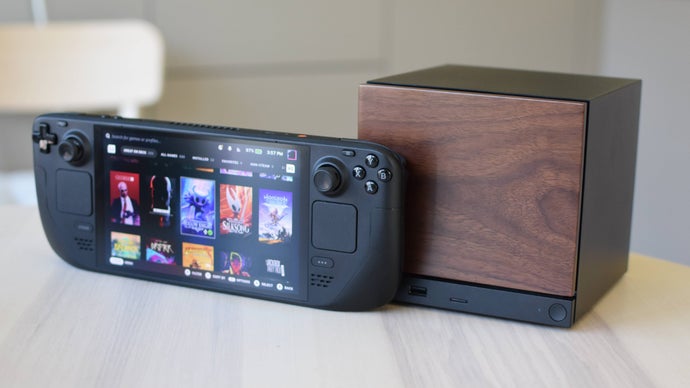
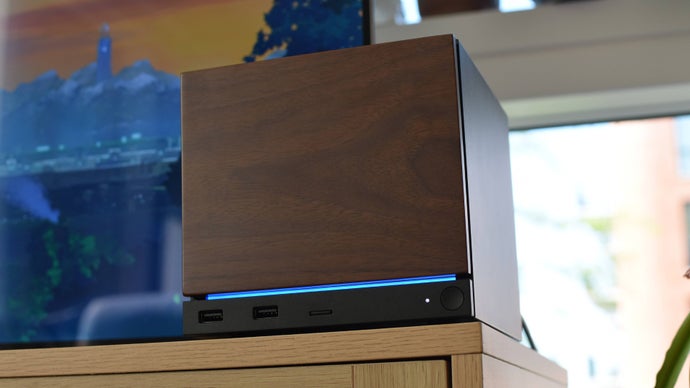
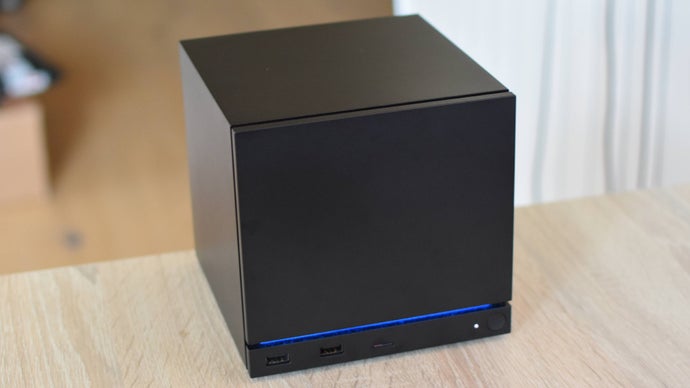
The Steam Machine will get a comparable level of post-launch software support and feature updates to what the Steam Deck has enjoyed, according to a Valve hardware designer. In an RPS interview last week, just prior to the Machine’s launch and price confirmation, Lawrence Yang told me that Valve already have a wishlist of extra tricks and tools to add to their boxy lil' PC, including some which weren’t quite ready in time for release.
Asked what future Steam Machine support will look like, Yang says that it's "Pretty similar to what almost all of our hardware looks like. Whenever we ship something, we're never like, 'Okay, we're moving on.' We always continue shipping updates and improvements, especially in the first month or so."
A few weeks back, I invited Brian from the iodé, a de-googled Android project, to have a quick discussion on the project, its achievements and the futuree challenges. I was meant to be in video/audio format but part of discussion suffered from poor audio quality and hence I switch it to nour usual text format.
I hope you enjoy this conversation.
It's FOSS: iodé sits at an interesting crossroads of privacy and sustainability. For those who haven't come across the project before, what is it and what is it trying to accomplish?
Brian: iodé is a project that is interested in making sure that there's a privacy-based Android distribution that is also very easy to use. Very easy for normal users to feel they can use it conveniently.
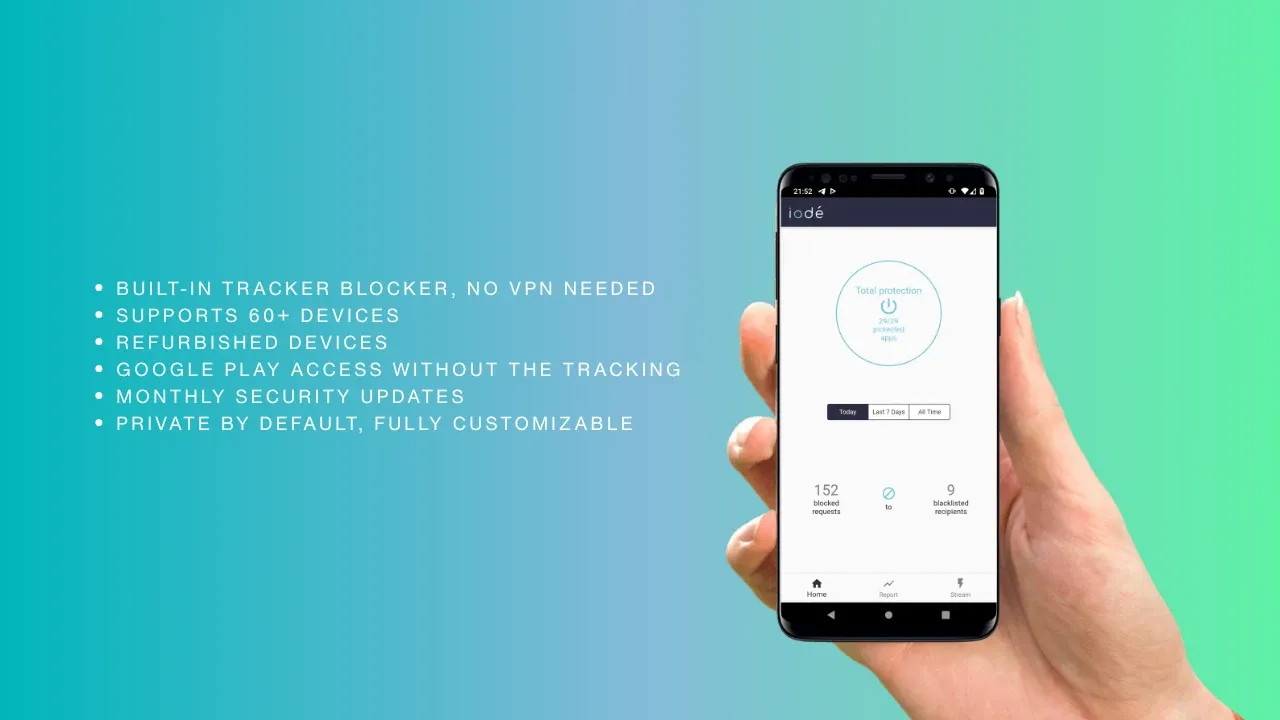
We also feature a tool which is a tracker blocker, so both your apps and your browser when you're browsing the internet have a sort of firewall that allows you to know exactly which connections your device is making, which connections the apps are making, the browser is making when you're visiting websites, and it prevents ads and trackers from following you around the internet.
That's the main goal and while it's not a Linux device in the classic sense of a Linux mobile device, it's an Android device, it gives you all the usability of an Android device.
It's FOSS: App compatibility is usually the first thing that worries someone considering a de-Googled phone, especially banking apps and anything they'd normally get from the Play Store. Since iodé doesn't ship with Google Play, how do you handle that?
Brian: We have two app stores. We have F-Droid, which is a free software app store that comes by default. And we also have Aurora Store, which is basically a front end for the Google Play Store.
So you can install any app that's on Google Play without Google knowing which apps you're installing it doesn't track you the same way Google Play does, but still gives you all the usability of Google Play.
And the difference is you can also spoof different devices. So if something is not available for your device, you don't have to go to some random APK store and risk downloading something that maybe is a dangerous file. You can just simply change the device settings and spoof another device and download that.
So it gives you all the usability of Google Play, maybe even more so. And like all of our pre-installed apps, you can uninstall any of them and install another app store if you want. You can even install the official Google Play if you want.
It's FOSS: If a non-technical person, someone who just wants their phone to work, switched to iodé tomorrow, what would their day-to-day experience actually look like?
Brian: There may be issues with some banking apps because Google has this integrity API, it's more about monopoly than it is about security.
So there are a few issues users may find with some apps not playing well with Play Integrity API. What we have is called MicroG. It's a Google Play Services emulator, and that usually works for almost any app. All the common apps that you would expect,Instagram, TikTok, all these things, they still work on iodé as you would expect.
So for the average user, unless you have problems with a banking app, and that's not that common, most banking apps continue to work. The only occasional thing I've seen is some apps that are from OEMs, like Samsung Watches, may not work. But in general, most users won't notice a big difference moving over from Android.
The difference you will notice is you don't get a lot of notifications and advertisements and just junk you get in a standard Android distribution, there's an incredible amount of bloatware and ads, especially if you're on something like Xiaomi or OPPO.
It's FOSS: Sustainability is something that sets iodé apart from a lot of other privacy-focused Android projects. You offer refurbished devices alongside new ones. Can you walk us through your thinking on that?
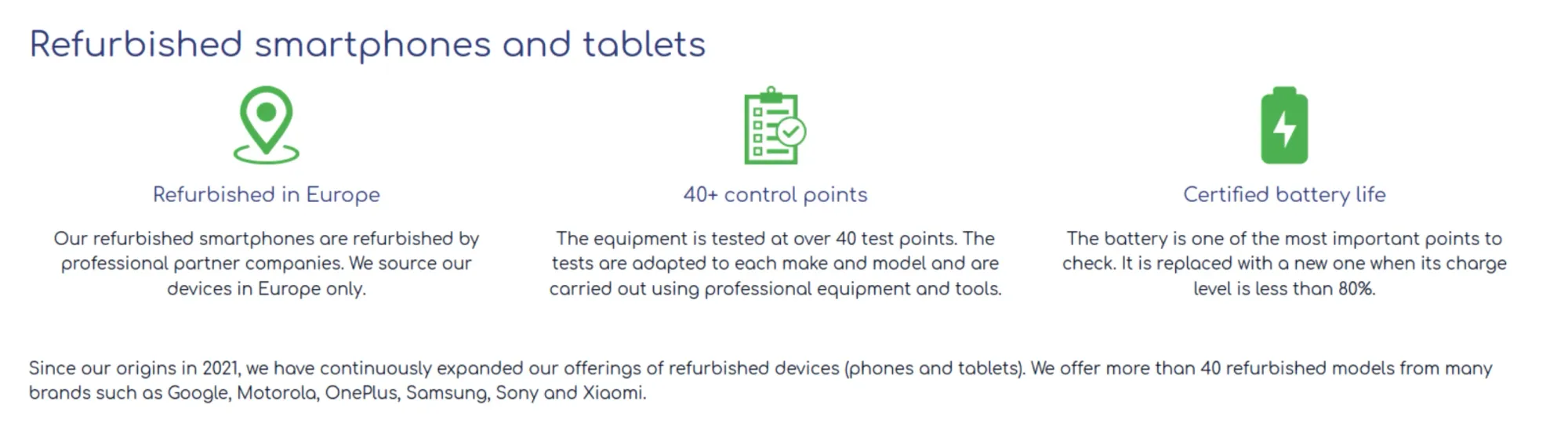
Brian: We're very interested in sustainability and so we encourage people to use refurbished devices when possible. Even some of the Fairphones we offer are refurbished. When you're using a very minimalistic image like iodé, it doesn't have a lot of the bloat and unnecessary software, things that you can't uninstall on a regular stock Android device, which is just running in the background and using up your CPU and using up your RAM.
The system itself is much bigger on stock because of Google Play Services and any other add-ons that OPPO or Xiaomi or any other manufacturer puts in. Because iodé is more minimal, it can run on older hardware, on hardware with lower specifications. So that's why we encourage people to use refurbished devices.
But people are asking, saying, "hey, we want new devices as well." So we have begun to add more new devices to our shop. Initially, we only wanted to work with Shift and Fairphone because they're sort of ethical manufacturers. They look at the entire supply chain, the conflict minerals that are involved in building the phones, and make sure that workers get paid well and that the materials are fairly sourced, and try to make a more sustainable model. Because obviously the best device you can always use is a device that's already been built, in terms of sustainability and ecology. So this is why we focused on refurbished.
It's FOSS: The privacy Android space isn't exactly crowded, but there are notable players like /e/OS, LineageOS, GrapheneOS. Do you see them as part of the same broader community, or more as competitors?
Brian: Honestly, I think anything that's good for any of these projects is going to help the other projects. Of all the Android hardware that's out there, there are very few devices to choose from, probably less than 1% of all Android devices can be de-Googled. There was more interest in custom ROMs back in the day when Android wasn't as useful and when people wanted to customize it. With Play Integrity and the Google Play APIs coming out that made it more difficult to use banking apps and things like that, there was a loss of interest. And also people began to see it as a security problem with unlocked bootloaders.
Now, we try to respect the locked bootloader, which makes us different from other projects like Lineage. Whenever we can relock the bootloader, we do. We have relocked bootloaders on four or five manufacturers. The rest of the manufacturers simply don't allow it. We're trying to work with these other operating systems. We have an agreement through the unified attestation to try to come up with an alternative to Google Play Integrity.
I think there's a big market for these devices. A lot of people just don't know that they can get a device that isn't spying on them, that isn't constantly sending data back to Google or to Apple. And just the fact that these devices exist and work out of the box, many people don't even know or realize this, or they think that it's going to be a huge amount of work to install it. That's why we have a shop, that's why we sell our devices. And if we can help these other projects, I think that's great.
I'd like to see more collaboration, and it would be really good if these groups didn't see each other as competitors. I think the same thing is true of Linux distributions. It would be very absurd for Fedora to be attacking SUSE Linux or Linux Mint. People often distro-hop, and I think the same will be true of privacy-based Android distributions.
It's FOSS: GrapheneOS has at times been quite critical of other projects in this space, including iodé, particularly on security grounds. How do you view that?
Brian: Graphene has been very vocal about saying that we've been attacking them. Actually, I don't think we have. This is probably the first time we'll ever say anything about Graphene. And I think the only thing I will say is that they have a great project, and that it's only available on Pixels. There are some people who want other devices. It is important to have a locked bootloader, but not all hardware manufacturers permit it. While we do lock bootloaders when possible on every system that allows bootloader re-locking, we also want to offer other hardware. And that can lead to security issues on those people's devices.
As for whether we also support end-of-life devices — we do. There's a billion people in the world who are running end-of-life devices, and those devices are vulnerable to attacks that have been found in the code base and aren't getting fixed by manufacturers. We continue to support those devices. I think people should know that if they are worried about security, they shouldn't be running end-of-life devices. But we also don't want people to throw them in the bin. They may have other uses for the device and they may not want that device to be constantly sending data back to Google. So there's a balance here.
There's also the question of the firmware. The firmware is updated by the manufacturer and a lot of those device drivers are actually closed source. We don't have access to be able to change it even if we wanted to. This is kind of one of the problems with the Android ecosystem. It's the same problem that the Linux mobile space is also facing.
We do want to support 60 devices; we don't just want to support Google Pixels. All power to them. I hope that Graphene can also make an agreement with Motorola to allow re-locking bootloaders on their devices. We've already begun to support Motorola devices. We do provide monthly security updates, and we're much more up to date than some of the other custom Android distributions out there. All of these projects are working with very limited resources, and it would be wise if we didn't do any sort of infighting. There's no custom ROM developer that has 30 developers. We're all working with very limited resources.
It's FOSS: Without tracking your users, getting a real picture of adoption must be tricky. What do you actually know about how many people are running iodé?
Brian: We do not really get any information on our user base. We don't keep any information. We just know what happens on the forum. We do know that in the last two years there's been a quarter of a million downloads. There's probably well over 10,000 people running iodé as a daily driver. It's almost doubled in the last year, we think, because there's been a great increase of users, including in the United States. We don't actually sell our devices in the US, so this is a bit of a surprise.
Basically the only thing we can see is the IP of the person downloading the file, and we log this in the sense that we just keep some statistics on which countries are downloading. We have people in the United States, in Germany, and France. And we wipe out these IPs. We just know which country it's coming from.
It's FOSS: To close, if someone is weighing iodé against other privacy-focused Android options, what's your pitch? What makes it worth choosing?
Brian: Aside from monthly security updates and the fact that you can install it on many different devices, we have over 60 devices supported now. I think one of the big things that's really going to interest people, like why to choose iodé over something like Lineage, is that you get an iodé blocker. So you get an integrated tracker blocker, and it's also not going to fill up your VPN slot. On most operating systems, if you install a DNS blocker or an ad blocker, those will usually take up your VPN slot and the VPN slot is also useful for your privacy. So you get kind of the best of both worlds.
One of the things we also focus on is we want there to be a complete suite of apps that's pre-installed, and we want all of those apps to be uninstallable. If you don't like our music player, you just uninstall it. If you don't like the default map app, we use Comaps as a default map app, you can install Google Maps if you want, you can have them both. And you still get all of the privacy advantages of Lineage, because our base is Lineage, with some more improvements. The standard Firefox browser doesn't have any connections back to Google, for instance. But if you wanted to use a different web view, you can also do that.
So you have a lot of choice. But for the average user who doesn't know anything about configuring a device besides "I want to install these four apps," it will still give you much better privacy than a standard stock Android, privacy by default, and the choice to do whatever you want to do with the phone.
I would like to thank Brian for sharing interesting insights about the iodé project. I strongly recommending checking it out, who knows perhaps your next smartphone is powered by iodé.
Empulse developers 1047 Games are known first for their Splitgate series of Portal-inspired arena shooters, and perhaps known second for a daft red hat. At last year’s Summer Game Fest, CEO and co-founder Ian Proulx took to the stage to pitch Splitgate 2 in an awkwardly tone-deaf 'Make FPS Great Again' cap, the sartorial power and reactionary tubthumping of which proved ineffective upon the game’s fortunes, even after Proulx’s apology.
Empulse, which launches into early access today (following an introductory Steam Next Fest demo), thus has a fair amount riding on it. It carries both the need of 1047 to brush off Splitgate 2, baggage included, and the weight of comparison – partly self-invited – with the outstanding parkour FPS/mech combat melding of Titanfall. Yet after a few hours with that demo, it does at least feel like Empulse is starting in the right place: less publicity stuntage, more snappy movement-shootering.
The new Steam Machine is pretty neat, but it’s walked a long and painful road to reach yesterday’s launch. A secret work-in-progress at Valve since at least 2023, it would be late 2025 before an initial public showing, and subsequent delays – blamed on industry-wide components shortages and the resultant price gouging – meant it that it when it did open for orders, it would be months later and at considerably greater expense than planned.
The volatility and unpredictability of the pricing situation may have conjured up images of a hopeful Valve crew, sat with crossed fingers atop a hoard of finished Steam Machines, ready to launch but holding back until production costs settle back down – allowing for a more enticing street price in turn. This, however, was never the case, as Steam Machine designer Lawrence Yang and engineer Yazan Aldehayyat told me over a video call last week.
To paraphrase my Steam Machine review stance on those prices: they’re pretty chuffing high, even if the Machine itself is a nicely designed (and unusually specialised) piece of lower-end kit. As for what Valve themselves think, I asked designer Lawrence Yang and engineer Yazan Aldehayyat ahead of today’s sort-of-launch, both of them pointing to the ongoing component pricing/availability hellscape that is RAMnarök.
GB News has been mocked after claiming it was “surprised and concerned” by Ofcom’s decision to investigate its rebroadcast of Donald Trump’s interview, with critics pointing out that the bigger scandal is the regulator taking six months to act at all.
This week, Ofcom confirmed it will investigate whether GB News breached broadcasting rules when it aired a second showing of Trump’s interview on the Weekend, after previously deciding not to pursue complaints over the original broadcast on the channel’s US-focused programme Late Show Live.
The interview drew criticism after Trump was allowed to make a series of false and inflammatory claims about Islam, immigration and climate change with little or no meaningful challenge from presenter Bev Turner.
Among the unchecked claims were that human-induced climate change is a “hoax,” that parts of London are beyond police control, and that areas of the capital operate under sharia law.
Despite the controversy surrounding the broadcast, GB News responded to Ofcom’s announcement by saying it was “surprised and concerned” by the regulator’s “delayed decision,” insisting the channel “stands firmly by its journalism and editorial standards.”
The response prompted ridicule, with critics arguing GB News was attempting to portray itself as the victim after airing the same interview twice.
Campaign group Stop Funding Hate reposted a series of clips from the interview of Turner heaping nauseating praising Trump. “GB News is ‘surprised and concerned’ that Ofcom is investigating and says it ‘stands firmly by its journalism and editorial standards.”
Viewers piled on underneath.
“This is an AI parody, isn’t it?” one person asked.
Another replied: “It’s real, it happened, and it aired twice.”
Others mocked GB News’s apparent shock that broadcasting unchallenged misinformation could eventually attract regulatory scrutiny.
The Good Law Project also criticised Ofcom’s delay, writing: “Ofcom’s finally investigating GB News over its failings to challenge Donald Trump’s false claims about climate change, Islam and immigration in an interview last year. But if regulation takes this long to come, is it really regulation?”
Meanwhile, campaign organisation 38 Degrees said the investigation was “just the start,” warning that if Ofcom failed to act decisively, many people would see the regulator itself as “broken.”
Criticism has also focused on Ofcom’s inconsistency. The regulator has yet to explain why it declined to investigate the original broadcast but decided to pursue the rebroadcast instead. Nor has it explained why the process has taken half a year while clips from the interview amassed hundreds of thousands of engagements online.
Richard Wilson, director of the Reliable Media campaign group and one of the complainants, accused Ofcom of presiding over “regulatory failure.”
“Today’s announcement is welcome, but it is a direct result of sustained pressure from the public, from MPs and from civil society,” he said.
“The new Ofcom chair has inherited a dysfunctional regulator, and parliament must ensure he is held to account for fixing it.”
For many, the affair has become an example of failure on two fronts: GB News airing highly controversial claims with little challenge, and Ofcom responding so slowly that any eventual intervention risks looking largely symbolic.
As several viewers pointed out online, this was not a live broadcasting mistake or an isolated slip-up. GB News aired the interview once, faced backlash, and then chose to air it again anyway.
Welcome to the debut issue of Font Faces: the people behind the type. We ask type designers from around the globe the same five core questions (plus some potential follow-up or topical questions) and thus gain some insights into their working practices, their personalities and what makes them tick. Nick […]
The climate crisis is changing the way nations think about food, energy, resources, war and peace. Melting ice caps are opening up new trade routes fought over by the world's great powers, conflicts are waged over food and mineral resources, shifting climates are fuelling migration – and Donald Trump says it's all just a scam.
Join Arthur Snell as he discusses his new book Elemental: the new geography of climate change and how we survive it. Spanning conflict in the Sahel, Russia's war in Ukraine, the US coveting Greenland, NEOM in Saudi Arabia, and China's energy push, Snell explores how the climate crisis is now in every part of our politics. But while there is much to concern us here, there's hope too. The world faces various futures, and it can adapt and respond to the realities of a changing climate.
Buy Elemental: The New Geography of Climate Change and How We Survive it
At a time when activists and campaigners are being asked to prove impact in ever more measurable ways, we wanted to ask a different question: what actually counts as a ‘win’? And what does it take to keep going when everything feels stacked against you?
As part of a new series on rights movements and what makes change possible, we spoke to Harsh Mander, a long-time human rights activist in India whose work spans areas from the right to food and shelter to his Caravan of Love campaign against hate violence and lynching.
Mander famously resigned from his position as a senior civil servant in the wake of the 2002 Gujarat riots, choosing instead to dedicate his life to justice work on behalf of marginalised communities. Since then, he has led landmark Supreme Court interventions on the right to food, homelessness and social protection. For many, he remains a deeply respected moral voice.
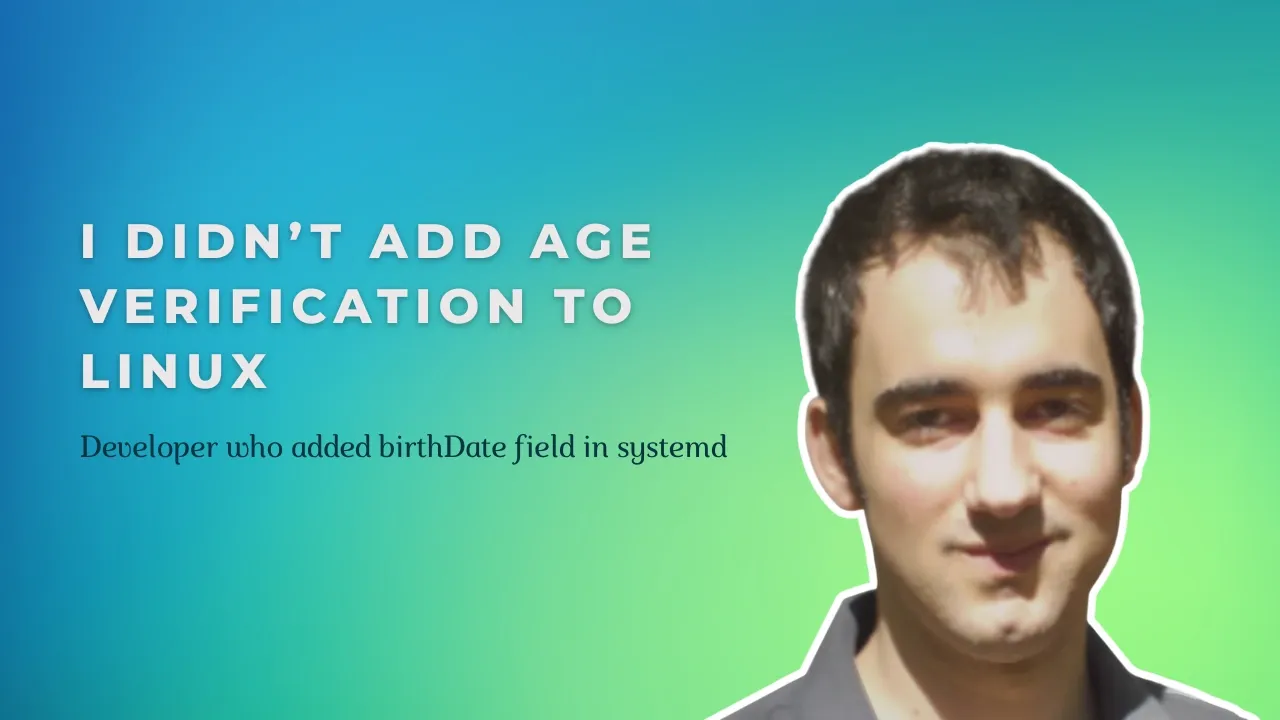
Dylan M. Taylor is not a household name in the Linux world. At least, he wasn’t until recently.
The software engineer and longtime open source contributor has quietly built a respectable track record over the years: writing Python code for the Arch Linux installer, maintaining packages for NixOS, and contributing CI/CD pipelines to various FOSS projects.
At the center of the controversy is a seemingly simple addition Dylan made: an optional birthDate field in systemd’s user database.
The change, intended to give Linux distributions a lightweight, optional mechanism to comply with emerging US state laws on age verification, was immediately met with fierce resistance from parts of the Linux community. Critics saw it not merely as a technical addition, but as a symbolic capitulation to government overreach. A crack in the philosophical foundation of freedom that Linux is built on.
What followed went far beyond civil disagreement. Dylan revealed that he faced harassment, doxxing, death threats, and a flood of hate mail. He was forced to disable issues and pull request tabs across his GitHub repositories.
A common misconception about this change is that it introduces "age verification" to Linux. It doesn't. None of the PRs I submitted involve ID checks, facial recognition, or third-party verification services. You can enter any value, including January 1st, 1900.
So, we interacted with Dylan over email to ask him about the controversy, the code change, and the personal toll it has taken.
Q: A lot of backlash isn't about the code change, but about what it represents. Do you (also) think this is the first step toward OS-level surveillance, even if unintended?
A: Moving towards OS-level surveillance is definitely not the intention. This field is almost completely inconsequential for surveillance because the signal reported in most cases will be “yes, this user is 18+”. One interesting thought I’ve had is actually that if we strip this signal to websites/apps and do not report an age range at all, but the vast majority of users DO, that actually gives us a more unique and trackable browser fingerprint. Privacy-wise, it’d be wise to “blend in” and always report the most common value. Tor browser thinks this way to make users less fingerprintable. Also, most users have something much more trackable and sensitive on their computer stored in a way that is usually unencrypted: their browser cookies.
Q. You say this is "just attestation, not verification" but we know that infrastructure always gets repurposed later. This is where the legit fear lies. Today it's birthDate. Tomorrow could it be location, identity, or verification tokens? I understand that you are providing a workaround but where should we draw the line between compliance and resistance?
A. Funny you mention that, location is already a field in userdb. Like birthDate, this field is also trivially nullable, stored locally, and can be set to anything. As long as we are talking about a user self-attesting a date - especially with the ability to enter any value we want - we aren't in the realm of identity tracking. I draw the line at when a third party internet-connected service is doing validation of ID. Let’s be honest though, I strongly believe such a thing isn’t possible on a FOSS operating system environment unless they could control what was bootable on the device at a firmware level, enforce signatures to ensure that you couldn’t boot something unrestricted, remove the ability to be root, and block LD_PRELOAD so signals couldn’t be faked. There’s probably more ways to circumvent that. What I’m trying to say is real ID verification on Linux would be awfully hard to implement, and I guarantee you, nobody would put up with it. They’d fork to a version that doesn’t have it immediately as a protest. Right now, we’re considering implementing something akin to the date pickers that were ubiquitous when signing up for internet services in the early 2000s where it’s just an honor system. Things like actual ID checks and/or facial scanning + age estimation would be just too incompatible with Linux where we have the freedom to change whatever we want to.
Q. Let's be direct. Should FOSS projects adapt to laws they fundamentally disagree with? Because these kinds of laws are certainly in conflict with what a lot of Linux users believe in.
A. Unfortunately, in a lot of cases, the answer is yes – at least for any distribution with corporate backing. The small independent distributions are much more flexible to refuse as a protest. If we ignore regulations entirely, we risk Linux being something that companies are not willing to contribute to, and Linux may be shipped on less hardware. I’m talking about things like Valve and System76 (despite them very vocally hating these laws). That does not help us; it just lowers the quality of software contributions due to less investment in the platform and makes Linux less accessible to the average person. We need Linux and other free operating systems to remain a viable alternative to closed systems.
Q. Do you think regulations like these will reshape desktop Linux in the next 5-10 years where we might have "compliant Linux" and "Freedom-first Linux"?
A. Unfortunately, yes, to some degree this is likely. I imagine the split will be mostly along the lines of independent distributions and those with corporate backing. We’re already seeing it as far as which distributions plan on implementing some sort of age verification and which ones are not, and that sucks. I’d rather nobody have to deal with this mess at all, but this is the reality of things now. As I said in the previous response, the corporate-backed distributions really have no choice in the matter. Companies are notoriously risk-adverse, but something like Artix or Devuan? Those are small and independent enough where the individual maintainers may be willing to take on more risk. I was actually thinking about what this would look like if we added it to Calamares and chatting about that with the maintainers before that thread got brigaded by bad actors posting personal information and throwing around insults. I completely support the freedom for the distro maintainers to choose their risk tolerance. If the distribution is based out of Ireland or something (like Linux Mint) without these silly laws in the jurisdiction the developer operates in, I think that we should leave it up to them to make a choice here. If we add a date picker to the installer (and I think we should), it has to be built in a way that at build time there is a flag to enable or disable the feature. We can even default it to off, and corporate distributions using Calamares or those not willing to take the risk could flip it on if they need to. That way if maintainers of the distributions do not wish to collect the birth date, they won’t have to, and no forking is required to patch it out. I do strongly feel we need to enable the user to modify their own system as they see fit.
Q. Were you surprised by the intensity of the backlash? Did the criticism make you rethink your decision?
A. I understood that the change was not going to be popular, but I was expecting civil discourse and a level-headed response. Things like death threats and harassment are not okay, especially when it negatively impacts unrelated third parties. However, the doxxing (and I am NOT just talking about my name, email and resume – that stuff is on my website, and is reasonably public. I don’t commit with a pseudonym and I think it’s reasonable to critique my contributions), hate mail, racism, homophobia, anti-semetism, editing of my photo, turning my profile picture into memes and making fun of my appearance, etc. made me lose a bit of faith in the FOSS community. I’m really disappointed at the reaction. We should do better than this. There are plenty of people I strongly disagree with. Reacting in this manner is childish and uncalled for. If you’re trying to convince someone they are wrong, being aggressive about it and trolling is not exactly compelling. It will make them feel even more justified in some cases.
Q. How are you personally dealing with being at the center of a controversy like this?
A. Honestly, not super well. The death threats are extremely unwelcome and trying to get my social security number, phone number, and address taken down from pastebins and anonymous imageboards is not exactly how I planned to spend my time, to put it lightly. I am just trying to filter out the noise and focus on addressing the constructive feedback, but people have been posting my information and harassing me on basically any repo I have on GitHub, in the issues/PR tabs. I’ve had to disable those. I find it disgusting that people are willing to place takeout orders with my information which makes businesses waste food, and it really wasn’t funny sending Mormon missionaries to my house. They pay for their own gas, and that nonsense isn’t fair to them. It’s not fun to see the nasty side of humanity, and people were saying some pretty unhinged stuff to me and about me. Nobody appreciates that. On a positive note, I know a good bit of other maintainers and developers in the Linux community and all of them were super supportive and reached out to see if I was doing okay. I appreciate that. Shoutouts to those of you from the Arch Linux project and Universal Blue/Bazzite who made sure I was doing well. Thank you for that.
Q. Would this backlash demotivate you from continuing your contribution to Linux and open source in the future?
A. I still love Linux and free and open source software, and would like to stay involved. Whenever I find something that is personally useful to me and I identify a way I can improve it or add functionality, I love to contribute back to the original authors and the community. It’s great to be able to be involved, and I still plan on doing so. It’s very obvious that those harassing me are a very small but vocal part of the FOSS community and I try to see the better side of people. I would really appreciate if the personal attacks stopped though. It’s childish and unconstructive.
Closing Thoughts
Wherever you stand on age verification laws or Dylan's code change, the response he received is unwarranted. Harassment, doxxing, and death threats have no place in any community, let alone one that prides itself on openness and collaboration. There are more civilized ways to disagree.
Dylan's answers reveal the real dilemma: how does an open source ecosystem, built on the principals of freedom and decentralization, respond to legal pressure from the real world? His position is that corporate-backed distributions may have no practical choice. That is rational, even if it is uncomfortable for many to hear.

 Login
Login