❌

Reading view

There are new articles available, click to refresh the page.

Voyager 1 at one light-day: Historian revisits Golden Record's forgotten details

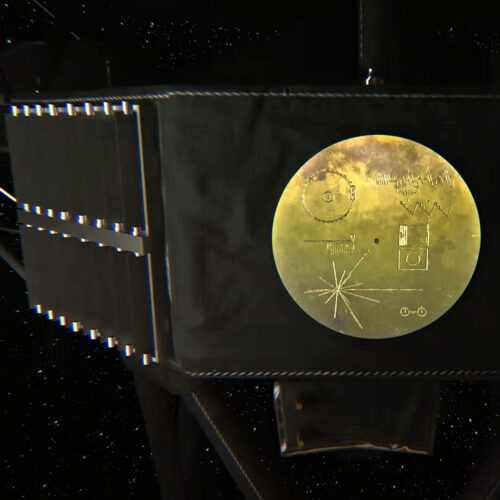
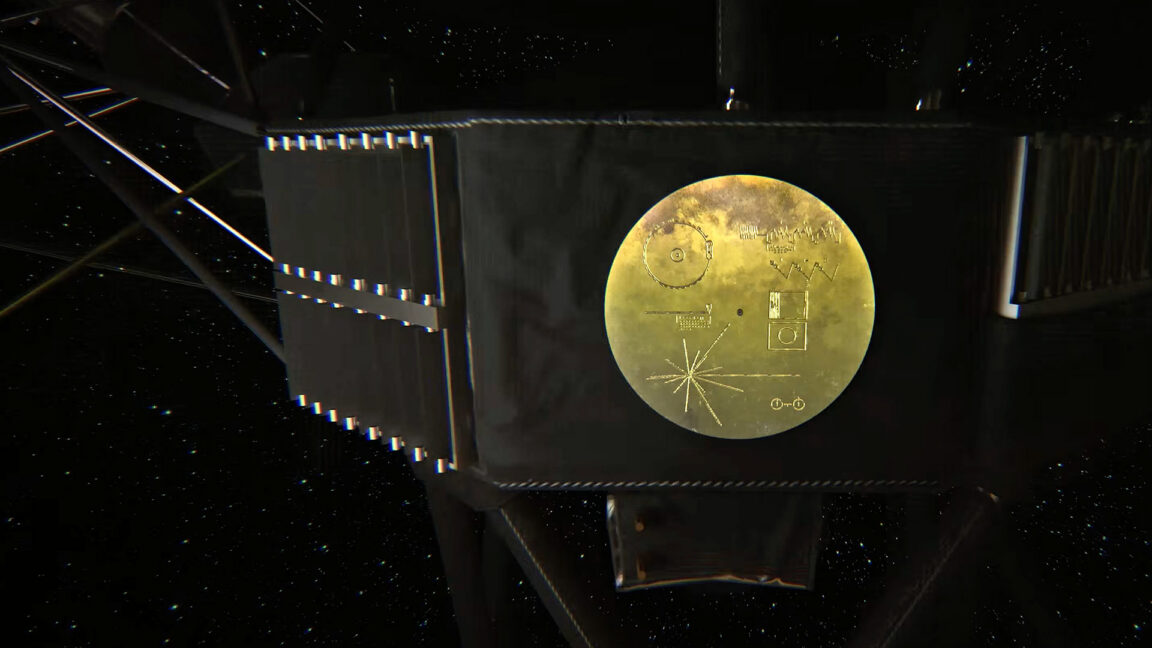
In the one light-day that humanity's most distant object has now traveled from Earth, there has been enough time for details about its creation—and what it left behind—to be discovered again.

Voyager 1, which left Earth in 1977 on an initial mission to fly by Jupiter and Saturn (as well as the latter's moon Titan), crossed into interstellar space in 2012. Like its twin (Voyager 2), Voyager 1 carries a "commemorative phonograph record," in part as a nod to the 100th anniversary of the recording medium and as a message from humanity to whoever (or whatever) encounters the spacecraft on its journey through outer space.

About those forgotten bits, ask Glen Swanson. While researching the history of the Golden Record, he uncovered the discs' overlooked second set of operating directions and located the duplicates that were made and distributed almost five decades ago.
Read full article

Comments

© NASA

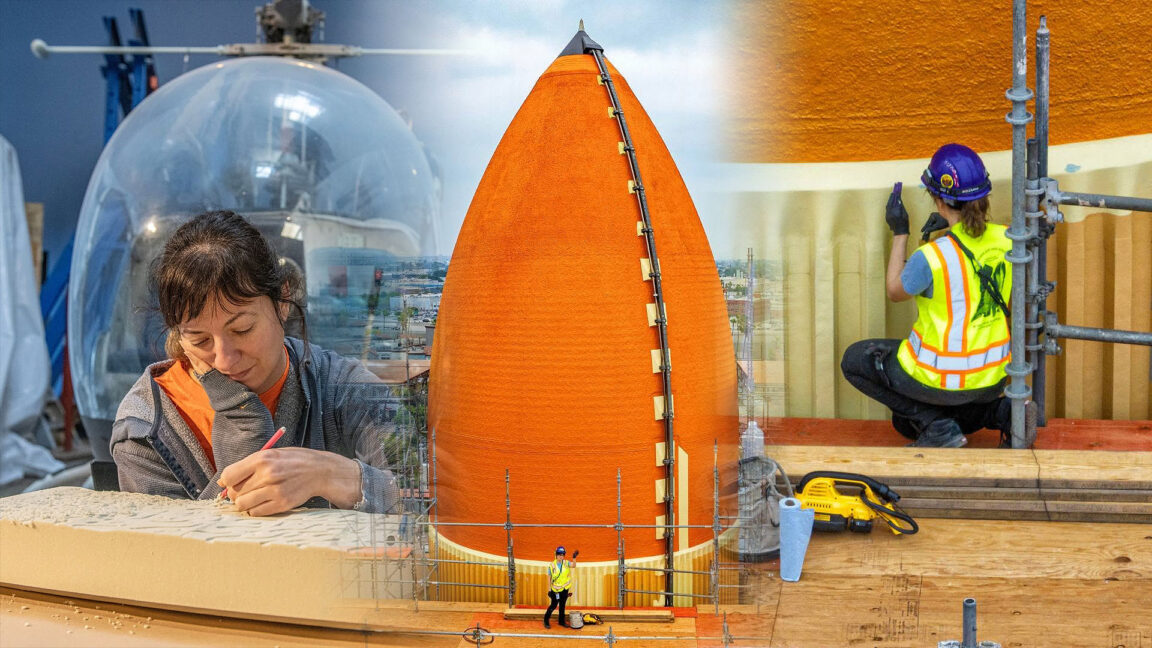
Artist brings old Space Shuttle tank back to life

Natalie Rosen is not the type of specialist you immediately associate with being one of the key people behind the new exhibit of the space shuttle Endeavour.

She is not a former NASA technician or engineer, as many of her colleagues have been for the past several years, nor is she a curator or conservator. Before this job, she had no experience working on any aircraft or spacecraft, as the new Samuel Oschin Air and Space Center, an extension of the California Science Center, opened in Los Angeles on November 13.

Without her expertise and artistry, however, the largest component of Endeavour's "stack" would look nothing like it did when the shuttle was flying.

Read full article

Comments

© California Science Center/collectSPACE.com

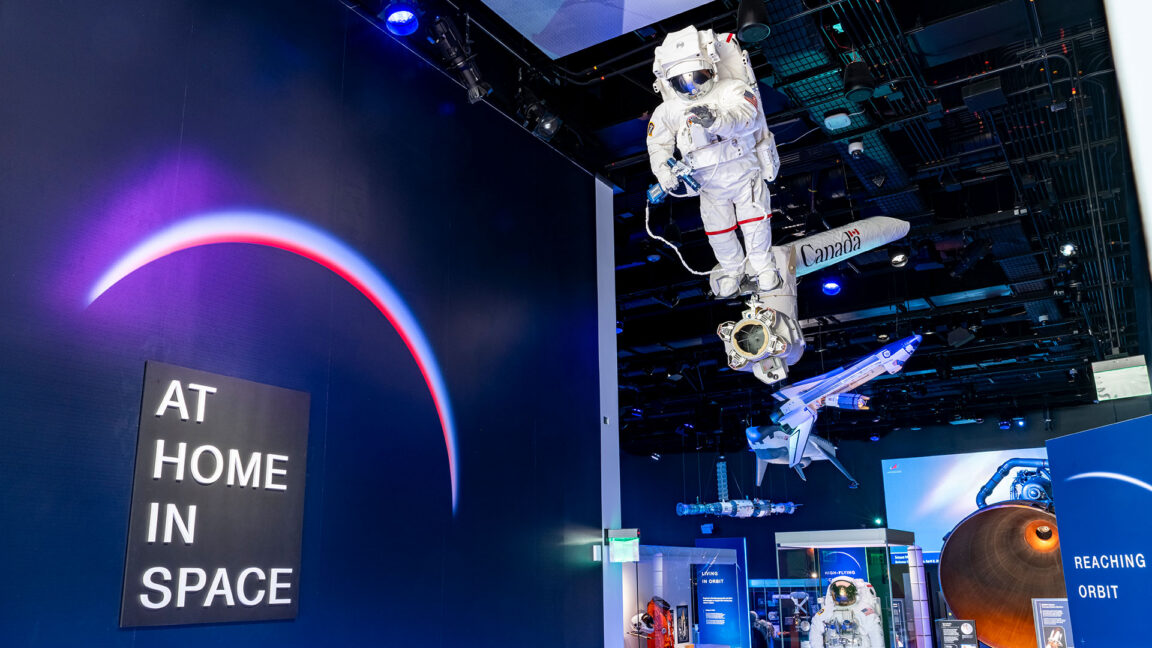
"At Home in Space" opens, caps Air and Space Museum renovation

After seven years of work and nearly $1 billion, the Smithsonian has completed the renovation of the National Air and Space Museum's flagship building in Washington, DC.

On October 30, the museum debuted its last-to-open spaceflight exhibition, returning "home" with a gallery devoted to establishing a spacefaring civilization.

"Welcome to 'At Home in Space'!" said curator Jennifer Levasseur, who guided us through a virtual tour of the gallery. "This is the story of long-duration spaceflight in the last few decades. We generally call it 'reaching orbit.'"

Read full article

Comments

© Smithsonian National Air and Space Museum

Why large dogs age faster than small ones, and other October research highlights

It’s a regrettable reality that there is never enough time to cover all the interesting scientific stories we come across. So every month, we highlight a handful of the best stories that nearly slipped through the cracks. October’s list includes an epigenetic mechanism for why large dogs age faster than smaller ones; physicists who trapped a single particle of antimatter for months; and invisible tattoo inks that only show up under UV light.

Why large dogs age faster

In many mammalian species, larger creatures tend to have longer lifespans. Mice, for instance, live an average of just two years, while some whales can last for as long as 200 years. Dogs, however, buck this pattern; larger dogs tend to age faster and die younger than smaller ones, which makes canines an ideal model for biologists to study to learn more about aging in general. Arizona State University scientists report that these lifespan differences seem to be due to so-called "jumping genes," according to a paper published in the journal Science.

The authors used data from 864 dogs collected in the Dog Aging Project to map patterns of DNA methylation (which influences how much certain genes are turned on or off) across the entire genome. It's part of the epigenome, whose markers can change over time in response to stress and other environmental factors. Genetic sequences, by contrast, are largely fixed. So DNA methylation is a good chemical indicator of aging and DNA regulation.

Read full article

Comments

© Charlie Leight, Arizona State University

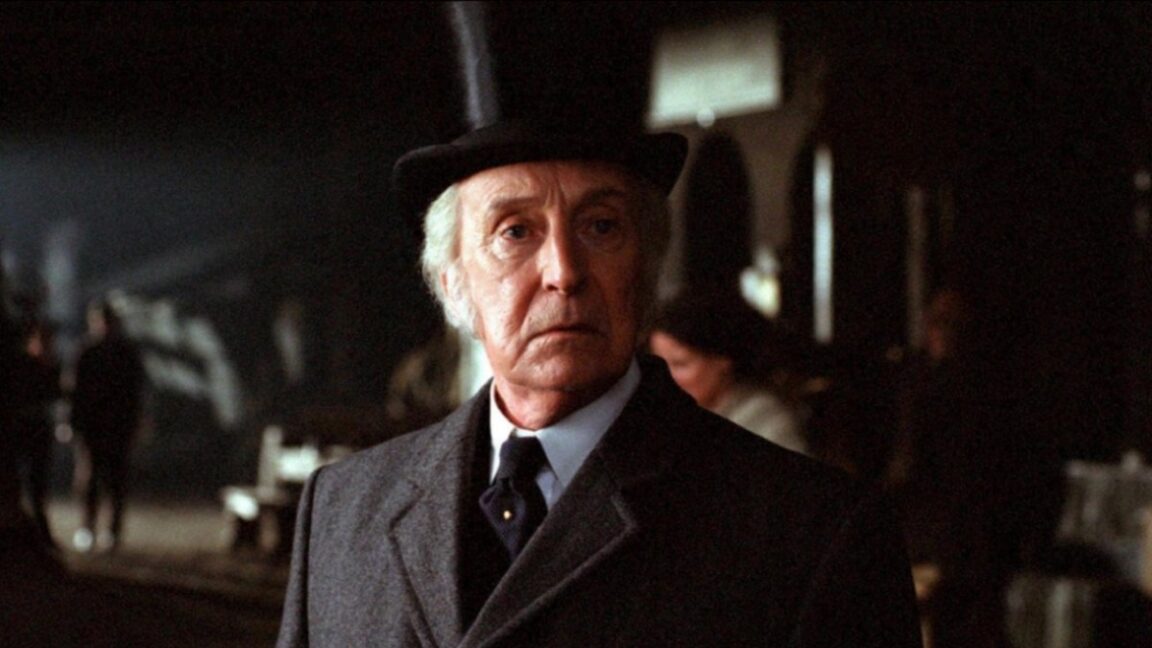
Meet the real-life Scottish surgeon who inspired Sherlock Holmes

Sir Arthur Conan Doyle created one of the most beloved fictional detectives of all time in Sherlock Holmes, spawning countless novels, films, TV series, and so forth featuring the sleuth. Far fewer people know about the real-life inspiration for Holmes: a renowned surgeon at Scotland's University of Edinburgh named Joseph Bell, who taught Doyle when the author was still a young medical student. Bell is the subject of a new, eminently readable biography, Sleuth-Hound: The Case of the Real Sherlock Holmes, by medical historian Lindsey Fitzharris.

A noted science communicator with a fondness for the medically macabre, Fitzharris published a biography of Scottish surgical pioneer Joseph Lister, The Butchering Art, in 2017—a great, if occasionally grisly, read. She followed up with 2022’s  The Facemaker: A Visionary Surgeon’s Battle to Mend the Disfigured Soldiers of World War I, about a WWI surgeon named Harold Gillies who rebuilt the faces of injured soldiers.

In 2020, Fitzharris hosted a documentary for the Smithsonian Channel, The Curious Life and Death Of…, exploring famous deaths, ranging from drug lord Pablo Escobar to magician Harry Houdini. Fitzharris performed virtual autopsies, experimented with blood samples, interviewed witnesses, and conducted real-time demonstrations in hopes of gleaning fresh insights. And last year she and her husband, caricaturist Adrian Teal, collaborated on an illustrated children's book, Dead Ends! Flukes, Flops, and Failures that Sparked Medical Marvels.

Read full article

Comments

© BBC

She Taught the Macintosh to Smile

The Macintosh didn’t always smile. Susan Kare gave it one — and with a handful of black pixels, helped transform the computer from an intimidating machine into something that felt human. More than 40 years later, we’re still speaking the visual language she helped create.

The Evolution of the “Buy” Button: 1995–2026

From a clunky grey box on a 1995 dial-up screen to the invisible, AI-driven "zero-click" purchases of 2026, the "Buy" button has evolved into a seamless biometric handshake. We’ve spent three decades systematically deleting the "friction of thought," turning the entire physical world into a clickable, autonomous storefront.

A Brief History of the Dust Jacket

Read the book, Typographic Firsts

Slip cover, dust cover, or dust jacket — whatever you call it, and whether you’re the type to trash or treasure them — have you ever wondered what purpose they serve and when they were invented? In Europe, the first printed books were typically sold without covers! Printers were not also […]

The post A Brief History <em>of</em> the Dust Jacket appeared first on I Love Typography Ltd.

Heart-shaped Books

Read the book, Typographic Firsts

When ancient Egyptians embalmed their dead, organs were removed from the body. The brain, considered useless, was disposed of, while the stomach, liver, intestines, and lungs were preserved separately in boxes or canopic jars. However, the heart, considered the seat of intelligence, was thought to be essential in the afterlife […]

The post Heart-shaped Books appeared first on I Love Typography Ltd.

Dumb Ways to Die: Printed Ephemera

Read the book, Typographic Firsts

Dumb Ways to Die began as an Australian rail safety campaign back in 2012. I heard the viral jingle recently, and it got me to thinking about a particular kind of printed ephemera. From about 1530, London began to publish Bills of Mortality. By the close of the same century, these lists […]

The post Dumb Ways to Die: Printed Ephemera appeared first on I Love Typography Ltd.

❌