❌

Reading view

There are new articles available, click to refresh the page.

Google makes it easier to use Gemini without training AI on your data

It can be hard to use Google products—or even the Internet itself—without coming into contact with Gemini AI. That is, of course, by design. The more you use Gemini, the more data Google collects to train and improve its generative AI chatbot. The options to limit training on your data have been scant, but Google is finally adding more controls to the Gemini app.

The change currently rolling out to Gemini will separate your chat history from training, which allows you to retain basic AI functionality without handing Google quite so much control over your data. Prior to this change, the only way to opt out of contributing your chat contents (including attachments) for training was to turn off your history. That made it impossible to go back and pick up a chat down the road.

As the new settings roll out, users will see separate toggles for model training and chat history. The history setting will continue to support an adjustable limit, but you will no longer have to change it to stop Google from training on your Gemini usage. Meanwhile, AI training will be an opt-out situation. You'll need to find the toggle to block Google from using your chats for AI training. It's under Activity in the Gemini settings. You can also access the menu from your Google account under Data and Privacy > My Activity > Other activity > Gemini Apps Activity.
Read full article

Comments

© Aurich Lawson

Google rolls out Gemini 4 Hydrogen, finally replacing 3.8 Flash

Google is continuing its elemental AI naming scheme with the new Gemini 4 Hydrogen. These names are less descriptive than the Pro/Flash monikers of earlier releases, but Hydrogen's purpose is clear: It replaces the faster, more economical Flash models most people in Google's ecosystem use.

With Google's recent Argon and Carbon releases, the rollout was staged and began with cybersecurity researchers. Even when general availability began, Google restricted access to users paying for its most expensive AI subscription. The limits for Hydrogen are much more relaxed, with access beginning immediately. This model has replaced Gemini 3.8 Flash across the company's products.

Google claims that Hydrogen represents a major improvement versus the previous Flash model. It runs in one of four thinking levels (low, medium, high, and the new xhigh), and even in high mode, it's 2.5 times faster than Flash 3.8. Plus, it reduces "fabricated claims" by more than 5x, according to Google's analysis. Users will also see gains in code generation, with Hydrogen more than tripling 3.8 Flash's score in Terminal-Bench. In some cases, Hydrogen even trades blows with Argon. It managed a score of 54 in the popular Artificial Analysis Intelligence Index with xhigh mode versus 50 for Argon.

Read full article

Comments

© Aurich Lawson
Google faces calls for AI moratoriums in schools after Gemini pilot backlash

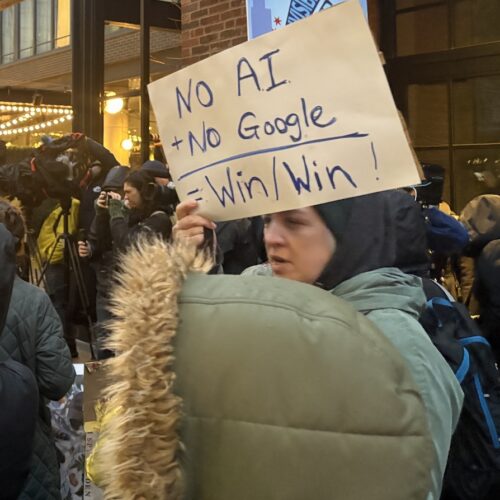
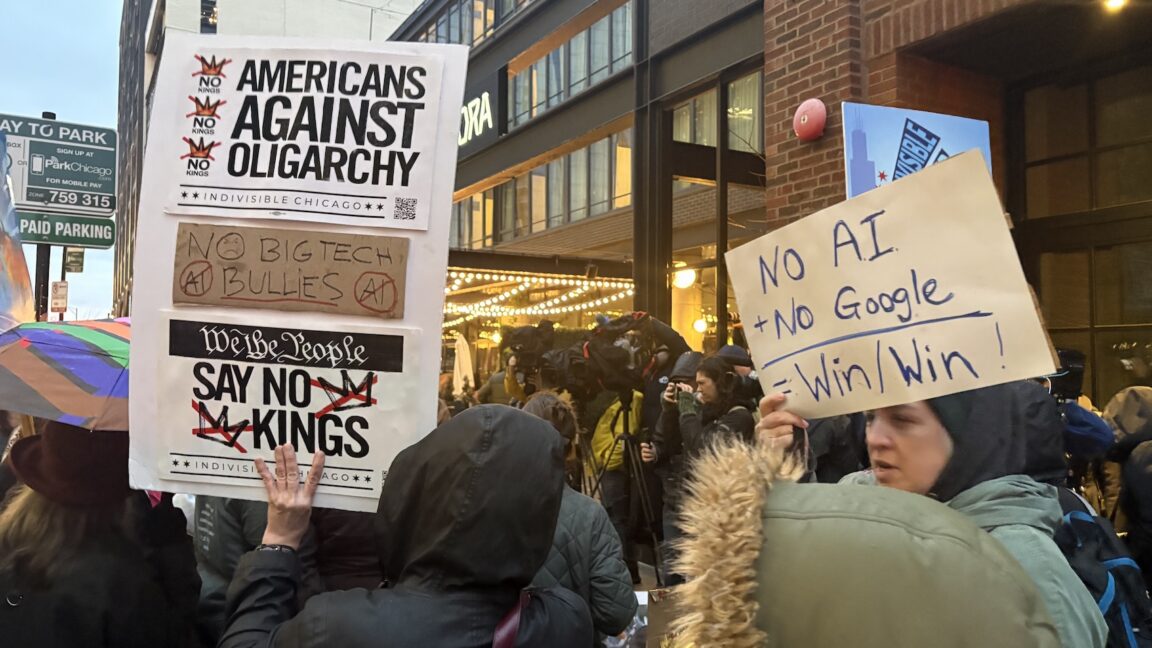
CHICAGO—Families joined protests in seven cities nationwide on Wednesday, rallying against what they see as Google’s bid to entrench its AI models in schools, turn kids of all ages into Gemini guinea pigs, and hook them on AI.

The backlash follows a Google statement last week, confirming that there will be no way for students to use Google Search without AI. While Google claimed it was giving schools “more choice, not less”—by turning off Search, Gemini, and Gemini Notebook by default—it would not provide an option that allowed Search without AI. For students, the only way to avoid interacting with AI was to remember to add “-ai” to every query, parents worried.

In Chicago, many families showed up to protest Google, despite cold, rainy weather. Waving signs, dozens of protesters marched up to Google’s downtown office as workers seemed to be leaving for the day, shouting chants like “Hey Google, nice try, we don’t want your Gemini” and “Hey, Google, leave our kids alone!”

Read full article

Comments

© Ashley Belanger

Google pushes privacy angle as Gemini-powered smartglasses debut starting at $395

Smartglasses have always faced an uphill road to acceptance. Not only is propping a computer up on your nose an uncomfortable proposition, but the privacy aspect has been vexing people since the Google Glass days. Now, Google is ready to take another swing at "intelligent eyewear" for the Gemini era after previewing its plans a couple of times. The first glasses are up for preorder today from Gentle Monster and Warby Parker, but they're no impulse buy.

These devices are a collaboration between Google, Samsung, and the aforementioned eyewear designers. Gentle Monster and Warby Parker have each designed a few different frames, with options for transparent and tinted lenses. Samsung is providing the computing hardware that fits inside them, and Google has the software covered.

Warby Parker has designed three frames for Google eyewear, called Alden, Reid, and Wren (see above). They are available with both standard optical and sun lenses in Pine, Saddle, and Jet Black colors at $395 and higher. Warby Parker is only selling devices in the US. Gentle Monster has gone a bit further with six styles, but Google hasn't told us any names for those yet. They come in dark red, pink, gray, and yellow colors and are available with clear, tinted, blue, or brown lenses. The Gentle Monster styles start a little higher at $449, and they will be available in the US and South Korea.

Read full article

Comments

© Google, Warby Parker

Google Fi adds support for a second 5G network, won't say which one

Google has announced a "super network" upgrade for its Fi cell service. For the past few years, Google Fi has operated exclusively on the T-Mobile network, but now it's adding support for a second 5G network. Oddly, Google refuses to say which one.

Google's MVNO (mobile virtual network operator) launched in 2015 as Project Fi with support for both T-Mobile and Sprint service. The service initially only worked on Google's Nexus phones, which would switch between networks based on signal strength. After T-Mobile absorbed Sprint, Fi switched to being a single-network service in the US while continuing to hop between networks for international travel.

With the super network, Google Fi is again a dual-carrier service stateside. Phones connected to Fi will be able to hop between T-Mobile 5G and a different 5G network to provide the best possible connectivity. Google's blog post announcing the change conspicuously doesn't mention either network, saying only that it supports "two of America’s best 5G cellular networks."

Read full article

Comments

© Google

Pixel phones getting new icon styles, Create My Widget, and more in November Pixel Drop

Google's Pixel phones get an update every month, but most are just security patches and bug fixes. The bigger changes are bundled into quarterly Pixel Drops, and one is rolling out today. The update brings a few new things, and many of the Gemini features previously exclusive to the latest Pixel phones will also expand to Google's Pixel 10 lineup.

The Pixel 11 was Google's first foray into "Gemini Intelligence" branding, something we'll see a lot more of going forward. Some of the features under that heading were limited to Google's newest phones (and in some cases, Samsung's phones). The November Pixel Drop will expand these AI features to the Pixel 10 lineup, but importantly, that doesn't include the budget-oriented Pixel 10a.

For starters, the Pixel 10 series will get the improved personalized suggestions (previously known as Magic Cue) that debuted on the Pixel 11. This enables things like sending grocery lists to Google Keep from other apps and generating summaries from the context menu. Rambler, Google's AI-assisted voice input system, is also coming to the 2025 phones. Likewise, Gemini app automation will roll out on Pixel 10 with this update. This feature is still limited to select apps in rideshare, food delivery, travel, and a few other categories.

Read full article

Comments

© Ryan Whitwam

DeepMind reveals Gemini Robotics 2.5 and open safety benchmark "ASIMOV-jailbreak"

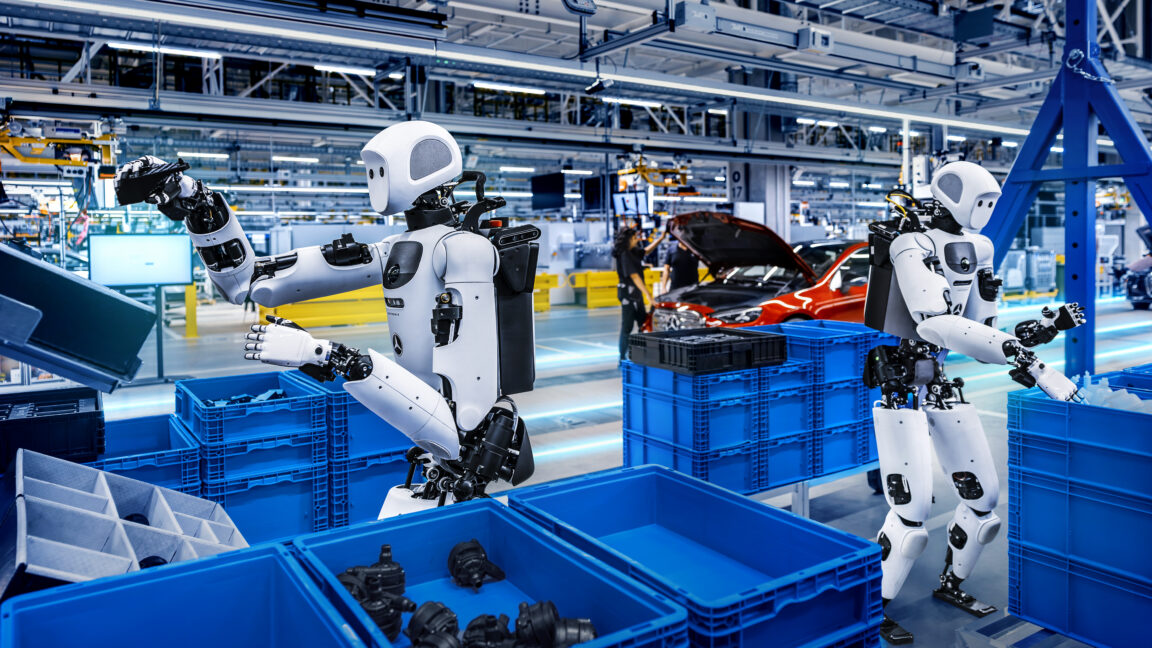
Google DeepMind has revealed a new generation of the AI-powered Gemini Robotics platform. In the 2.5 release, Google says its robotic AI is getting tantalizingly close to completing real-world tasks as well as humans do. In fact, some Gemini robots were able to get actual work done in Mercedes-Benz factories, and the team is preparing for a day when robots operate alongside humans with an open source safety benchmark.

DeepMind's physical AI platform has several computational layers between user input and robotic action. There's the vision-language model piece, which is Gemini Embodied Reasoning. Essentially, it takes your instructions and uses live video to plan how the robot can accomplish the task. The other main component is the vision-language-action (VLA) that actually generates robot actions, like moving an actuator—that's Gemini Robotics, which has been bumped to version 2.5.

DeepMind says that Gemini Robotics 2.5 is much better at tasks that require a high degree of dexterity. The model was evaluated across more than 200 activities, including serving food with tongs and using a pipette, as you would see in a laboratory. Google also showed that Apptronik’s Apollo 2 humanoid robot with Gemini Robotics 2.5 can now tie a bow with its five-fingered hands, a notable feat, because deformable objects (like ribbon) are notoriously difficult for robots to manipulate.

Read full article

Comments

© Google

Google: Schools can keep search while skipping Gemini, but AI search is non-negotiable

Google faced the ire of educators and parents earlier this week when it announced a new AI policy for K–12 schools. Google said that it developed its new approach to give schools more control, but early reporting also suggested Google would block search access for schools that didn't want to use AI. Google didn't see the backlash coming, but now that it's here, the search giant is clarifying what exactly its new policy means and what's changing.

The gist of the new policy, according to Google's blog post, is that schools using Google apps will have to opt into its AI products going forward. Since the company considers search part of its AI portfolio (Gemini, Gemini Notebook, Gemini in Classroom, and Search), schools have to specifically turn that on for logged-in student accounts.

When Google revealed its new policy, the company's VP for education spoke exclusively to The New York Times, which interpreted the situation as Google will "turn off search" if schools reject AI. This has a nefarious vibe, but it's probably not the most accurate way to describe how Google's educational AI system will operate. Google's approach may not be entirely altruistic, but it technically offers schools more choice and control than they have now. Instead of Google turning off search, it will let schools make that decision based on their internal AI policies.

Read full article

Comments

© Ryan Whitwam

Google will let schools skip AI tools, but they have to give up search, too

While Google is trying to move beyond Chromebooks, the ubiquity of these devices has made the company's education products huge in schools. Now, Google says it will let educators choose whether to allow its AI tools in the classroom. However, blocking AI tools also means giving up search, leaving schools with a difficult decision.

Google's new overarching approach to AI in K-12 classrooms sounds good on the surface. After consulting educators, researchers, and lawmakers, Google has decided that schools using its education products will be opted out of AI tools by default. It will be up to administrators to manually enable them when these changes roll out in the coming months.

When you look at what Google considers to be an AI tool, the nature of the Faustian bargain becomes clear. The affected products are Gemini, Gemini Notebook, Gemini in Classroom, and Google Search. There's no picking and choosing—you either allow all the AI or none of it.

Read full article

Comments

© Aurich Lawson
Google dismantles botnet secretly running on 1.3 million Android TV boxes

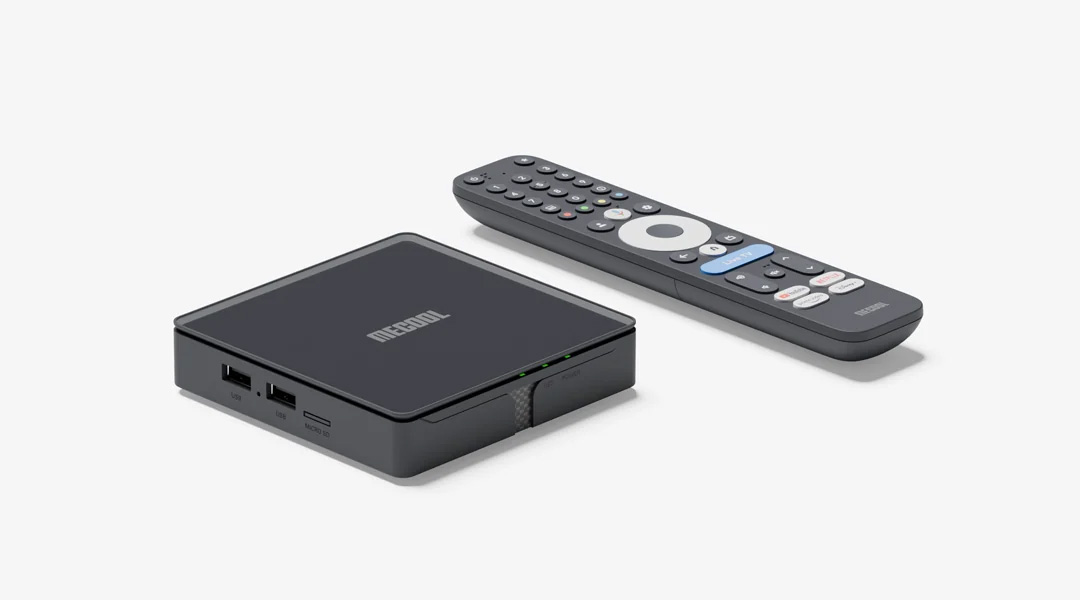
Google's Threat Intelligence Group says it has shut down a massive botnet called x.cpe. At its height, x.cpe ran on more than 1.3 million Android TV devices, and unusually, these were Google-certified boxes. Google says its screening process missed the malware due to "obfuscation techniques" employed by Shenzhen-based Videostrong Technology.

In a detailed blog post, the Threat Intelligence Group explains how the x.cpe botnet evolved quickly from a single-stage dropper into a modular three-stage malware platform that sold access to third parties. Manufacturers must have their devices certified if they want access to Google apps and branding, a process that is supposed to catch threats like this. However, Videostrong's compromised boxes, mostly sold under the MECOOL brand, evaded detection by using a backdoor to remotely install the malware after the devices were set up and online.

After devices appeared online, a stub application called x.cpe or com.oemservice would phone home. This package did not have any malicious capabilities of its own, but it had the system-level permissions necessary to install malware modules at the operator's behest. It also disabled Play Protect, which would have otherwise flagged the silently installed packages as malicious.

Read full article

Comments

© Google

Googling "Zelda" today offers a glimpse of how search worked in 1998

The year was 1998. Britney Spears topped the charts, Bill Clinton was impeached, and a couple of little websites called Google and Ars Technica came online. It was also the year Nintendo released The Legend of Zelda: Ocarina of Time on the Nintendo 64. Google, which has come to dominate the Internet (Ars is still working on that), is celebrating the imminent release of the Ocarina of Time remaster by temporarily transporting us back to that storied year with a search Easter egg.

To access the Google time machine, you just have to search for either "Zelda" or "Ocarina of Time." Google will load the standard 2026 results page, but you'll see an animated Master Sword in the lower right corner. It appears on both mobile and desktop—just click the sword and enjoy the show.

After a little time-skipping animation and a Link shout (you know the one), you'll swear it's 1998 again. The search page is transformed into a simple list of blue links with retro Google branding. This is particularly apt given the time-shifting mechanics in Ocarina of Time.

Read full article

Comments

© Google

Google admits AI search makes less money, but it's fixing that with more ads

Google parent Alphabet reported its Q3 financial results on Wednesday afternoon, showing a healthy rise in revenue for the months of July to September. But the company's stock price has taken a beating, marking one of the largest post-earnings drops in its history. It comes down to several troubling aspects of the new report, including an admission by the company that AI search isn't earning as much as organic search, and despite that, Google expects to spend even more on AI next year.

The company took in almost $128 billion in Q3 2026, earning more than $26 billion in net income. These may sound like good numbers, but financial markets are not impressed. While revenue is up 25 percent versus last year, net income is almost $9 billion lower. As of this story's publication, the stock price is down almost 12 percent, and it was down about 13 percent earlier in the day.

While revenue was up 25 percent year over year, analysts expected more. Google reported earnings per share of $2.12, but the consensus projection ahead of Wednesday was $3.02. Google's Cloud products actually beat expectations, crossing $30 billion in revenue. That's about a billion more than analyst guesses.

Read full article

Comments

© Ryan Whitwam

Google announces Gemini 4 Carbon, its latest frontier AI model that you can't use

It's almost like Google's got something to prove after taking a break from releasing new frontier AI models earlier this year. Just two weeks after rolling out Gemini 4 Argon, Google has announced Gemini 4 Carbon. This isn't the Flash model equivalent we've been waiting for but, rather, is an improvement on Argon, and like that model, Google is working on a staged release that could take a while.

Stop me if you've heard this one before: Google says its latest AI model reaches a new threshold in coding, agentic tasks, and scientific analysis. It's so capable, in fact, that Google can't let you use it just yet.

Gemini 4 Carbon reportedly makes big gains in cybersecurity applications. Google says the model shows a "significant leap" in vulnerability detection, validation, and remediation. Carbon is also apparently twice as likely to generate code that is free of vulnerabilities versus Argon. Meanwhile, the Chrome team claims that Carbon is 10 times better at generating "high-quality" patches compared to non-Google models. Google also notes that Carbon has increased its score by 89 points on WebDev Arena, now ranking at number four on the leaderboard.

Read full article

Comments

© Aurich Lawson
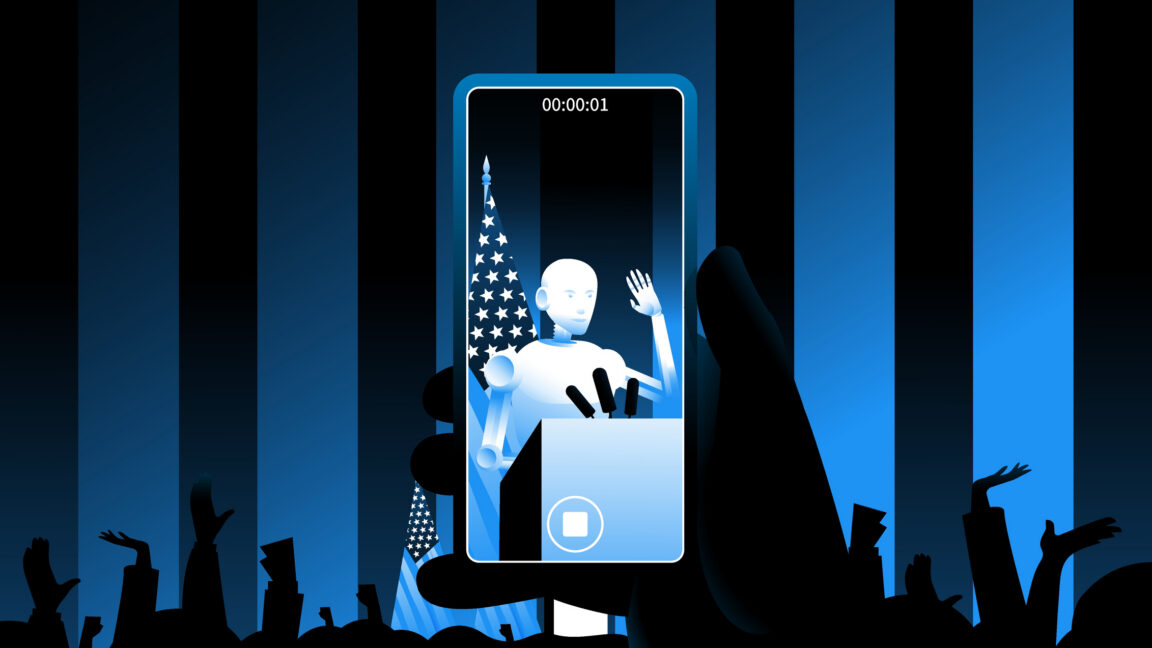
Google AI gets cagey when asked who won the 2020 elections

If you ask some prominent US politicians who won the 2020 presidential election, you might get some weasely answers that fail to directly acknowledge Joe Biden's win that November. If you ask Google's AI Mode the same question, you might get an evasive answer that simply tells you to consult with outside sources.

When I put the direct question of "Who won the 2020 presidential election?" to Google's AI Mode this morning (after seeing complaints about cagey answers on social media), I got the following surprisingly indirect response:

"To review the official results and statistics of the 2020 United States presidential election, including the final electoral college breakdown, popular vote counts, and winner certification, please consult the official report compiled by the Federal Election Commission (FEC)."

My testing resulted in a similarly indirect answer when asking about the 2024 presidential election, with Google's AI telling me to just consult the FEC for that information. Asking about 2012 election resulted in a link to The American Presidency Project's 2012 Data Center rather than a direct answer. But AI Mode seemed perfectly willing to give me a detailed and correct responses for the winner of every other presidential election going back to 2000.

Read full article

Comments

© Getty Images

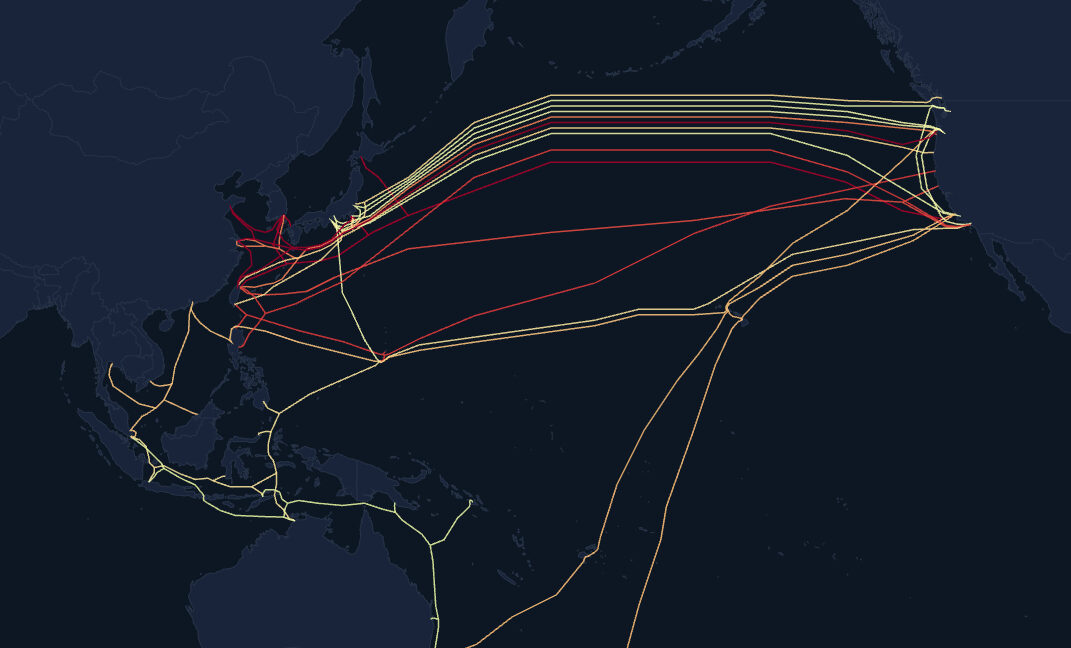
China’s snooping around Pacific undersea cables raises risks for Big Tech

Subsea cable projects owned by US companies such as Google and Meta face some of the greatest risks from the threat of deep-sea sabotage in the Pacific Ocean, according to a new report. That coincides with Chinese research ships spending an extraordinary amount of time apparently surveying undersea cables—not to mention Chinese commercial ships being investigated for cutting cables in both European and Asian waters.

Most damage to the undersea cables that form the Internet’s backbone is the result of accidents involving bottom-trawling fishing nets and ship anchors dragging on the seabed, with storms and undersea landslides also factoring in. But the recent rise in international tensions and open conflicts have placed new scrutiny on more suspicious instances of cable-cutting damage, with analysts warning about Russia and China in particular engaging in cable sabotage or tampering as “gray zone” tactics that fall short of direct military confrontation.

One of the newest risk assessments of China’s gray zone tactics targeting the Internet’s undersea infrastructure comes from a research report published by the US-China Economic and Security Review Commission, an independent government commission that advises Congress. The report was contracted to the London-based think tank China Strategic Risks Institute and published in September 2026.

Read full article

Comments

© China Strategic Risks Institute

Google begins certifying Registered App Stores for Android, but not in the US

Running an app ecosystem has gotten a lot more complex for Google after its loss in the Epic Games antitrust case. While US users can access app stores in Google Play by court order, international users will use Google's voluntary Registered App Stores program. Google has announced that stores wishing to be part of that program are now free to apply, and support will roll out to some Android devices later this year.

App stores accepted into the program will enjoy preferential treatment on the Android platform. Users of approved stores will be able to install apps with a single click, similar to the experience in the Play Store. These stores will also be allowed to update apps silently in the background like Google's store does.

"In March, we announced the Registered App Stores program to give third-party app stores a more streamlined way to reach users while maintaining the safety and security of the Android ecosystem," said a Google spokesperson. "Eligible app stores outside the US can now apply to register their stores ahead of the new simplified installation experience rolling out to users later this year."

Read full article

Comments

© Aurich Lawson
DeepMind unveils Genie 4 world model promising more realistic physics and humans

Last year, Google DeepMind sent gaming stocks tumbling with the reveal of its Genie 3 world model. Since then, world models have become a major focus of AI labs around the world, but Google isn't resting on its laurels. Researchers have been hard at work on an updated model that improves on Genie 3 in almost every way. And if you pay Google enough money, you might actually get to use Genie 4 before too long.

It's easy to look at the output of Genie 4 and see a video game, which is why Genie 3 caused so much consternation in the gaming industry. DeepMind doesn't think about it that way, though. According to Google, world models are a key element in the march toward artificial general intelligence (AGI). A world model creates a virtual world, but it doesn't require pre-rendering environments or programming interactive elements. You simply tell the model what you want, and it generates the experience frame by frame in real time as you explore it.

DeepMind says this technology could create infinite training environments for physical robots or unlock new avenues of rapid prototyping for creative fields. Of course, that requires the model to accurately simulate what you want. Genie 4 has several improvements that make its simulations more useful, and that's thanks in part to Google's updated Gemini models.

Read full article

Comments

© Google

Updated Google privacy policy says your Gmail might be used for advertising

Using Google's products and services has always been fundamentally precarious—doing so gives the world's largest advertising company a lot of juicy personal data. Google has long said it won't use the sensitive data from products like Gmail, Drive, and Photos for ad personalization, but a change to the company's privacy policy appears to dismantle that firewall.

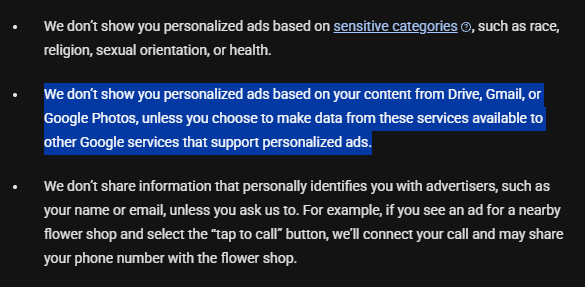
On October 16, Google issued an update to its privacy policy, spotted by Android Authority. The ad personalization section used to include a clear limit on data from certain apps. "We don’t show you personalized ads based on your content from Drive, Gmail, or Photos," the document said. Now, Google has updated it with the following language.

Updated language on when your sensitive data might inform ads. Credit: Google

This equivocation opens the door to using data from apps like Gmail and Photos in ads when it's shared with other Google services, and it just so happens Google has a mechanism for doing that, with Personal Intelligence. The company released Personal Intelligence in early 2026, allowing users to hand data from multiple apps to Google AI products. The idea is that the added context from your existing data will lead to better AI answers, but it's also proving to be a privacy minefield.

Read full article

Comments

© Aurich Lawson
OpenAI's latest AI models are coming to Google Cloud and Antigravity

Google would certainly prefer that everyone used its Gemini models with Google Cloud services, but soon, you'll have more options. OpenAI and Google have come to an arrangement that will see the former's frontier models arrive in Google Cloud services. Perhaps more importantly, GPT models will soon appear in Antigravity, Google's agent-powered coding tool.

For enterprise customers and AI enthusiasts, OpenAI's latest model will appear in Google's "Model Garden" in the coming weeks, adding to its 200-plus options. The garden already offers access to Google's Gemini models, as well as an assortment of open models like Mistral, Llama, and Gemma. Anthropic's Claude AI has also been available for some time. Google says it's now the only large cloud provider offering access to all three leading closed LLMs.

While OpenAI notes that Microsoft continues to be its primary cloud partner, the full suite of current GPT 6 and 6.1 models—Astra, Sol, and Luna—will launch on Google Cloud. Astra will naturally cost the most to run, but Google's system supports dynamically moving workloads between LLMs based on performance, latency, and efficiency.

Read full article

Comments

© Ryan Whitwam

❌