Finnish satellite developer ICEYE announced Tuesday that it is seeking to buy Italian rocket-maker Avio for more than $2.2 billion in a transaction aimed at creating Europe's first true vertically integrated end-to-end space company.
The announcement came as an all-cash voluntary tender offer from an Italian subsidiary of ICEYE to Avio's shareholders, led by the Italian defense conglomerate Leonardo. Avio said its board of directors "has taken note of the notice" from ICEYE and is considering the purchase offer.
Avio builds the Vega C rocket, a solid-fueled launcher designed to carry up to 3.3 metric tons (7,300 pounds) of payload to low-Earth orbit. The Vega C has flown successfully seven times in eight attempts since 2022. It is a follow-on to an earlier version of the Vega rocket that amassed a 20-for-22 record since debuting in 2012.
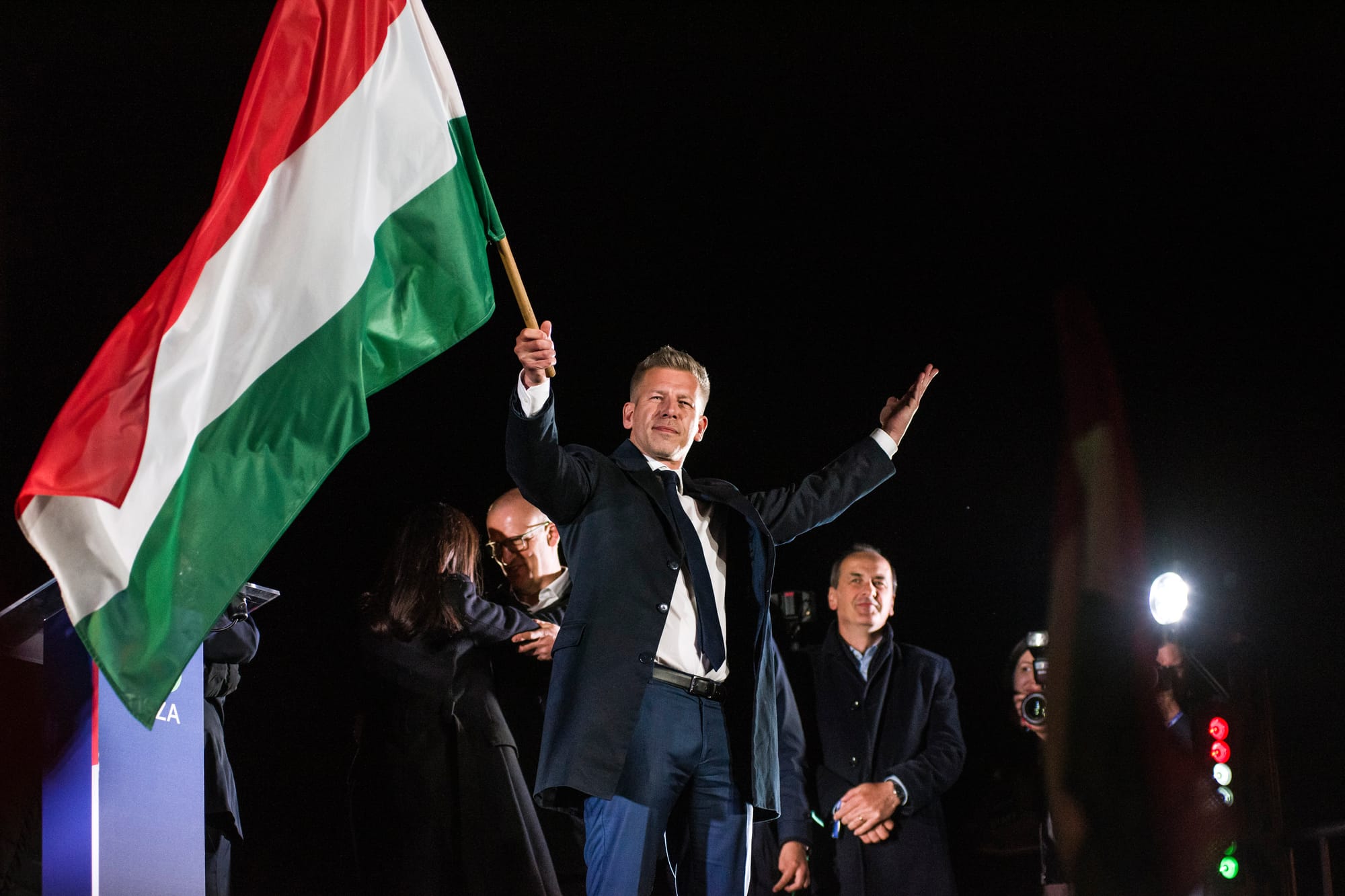
April saw Hungary’s long-serving prime minister Viktor Orbán and his far-right Fidesz party lose power after 16 years. In October, a grassroots student-led opposition movement in Serbia unseated long-serving leader Aleksandar Vučić and his right-wing populist Serbian Progressive Party after 14 years.
Meanwhile, Brazil’s president Lula defeated far-right challenger Flávio Bolsonaro, prompting celebrations among progressive politicians who regard the result as important not only for Brazil but for the wider struggle over progressive politics. In Israel, Benjamin Netanyahu’s Likud Party failed to secure a majority, with record turnout among Arab citizens helping to strengthen the opposition.
Then came the US midterm elections, in which the Democrats took control of both chambers of Congress and made gains in traditionally Republican territory, including Texas, Kansas and by a whisker, Mississippi.
“The US results should give confidence to progressives everywhere,” said former shadow chancellor John McDonnell.
There is certainly plenty to celebrate. But progressive victories are never guaranteed to last and Europe is approaching a particularly consequential electoral cycle.
“The far right has been a problem for Europe for more than a decade,” says Charles Grant, director of the Centre for European Reform. “But the problem is getting worse. It is going to be harder to find a way to work around, as the EU did with Viktor Orbán. It is going to be more systematic and serious.”
With elections approaching in Spain, France, Poland, Italy, Finland, Estonia, Greece and Slovakia, 2027 could reshape Europe’s political landscape.
The concern isn’t just that nationalist and far-right parties could make further gains. Centre-right parties are increasingly willing to share power with them, while centre-left parties are moving rightwards on issues such as immigration in an attempt to win back voters.
The question is whether Europe is heading for a political earthquake, with far-right parties entering government or strengthening their grip on power in some of its most influential countries.
Pedro Sánchez’s political survival test
Spain is first into the electoral firing line, with a snap election scheduled for November 29. Prime Minister Pedro Sánchez called it after the conservative People’s Party (PP), far-right Vox and Catalan pro-independence party Junts blocked his major housing reform package in parliament in September.
Despite Sánchez’s reputation for political survival, the latest polling suggests he faces a difficult contest. His career has been defined by repeated comebacks, including his forced resignation as PSOE leader in 2016, his extraordinary return to the party leadership in 2017 and his subsequent ability to forge unlikely parliamentary alliances to remain in power. But even his formidable political resilience may not be enough this time.
The PP is polling ahead of Sánchez but require support from Vox to secure a parliamentary majority. Meanwhile, the left’s prospects have been weakened by the failure of far-left parties to agree on a common electoral list. The resulting fragmentation risks splitting the progressive vote and weakening mobilisation around housing, social justice and opposition to the far right.
A right-wing victory would have consequences well beyond a change of government. It could reverse some of Spain’s progressive policies, bringing tougher immigration measures, tighter border controls and restrictions on irregular migration.
That would threaten one of Spain’s most distinctive departures from Europe’s increasingly anti-immigration politics. Its relatively open migration policies have helped address labour shortages and support economic growth by enabling migrants to contribute to the workforce and wider society. Indeed, the Economist named Spain the world’s best-performing economy in 2024.
Climate policy could also take a hit. Under Sánchez, Spain has become a leading advocate of the green transition, backed by substantial EU funding and regulatory reforms. Vox, meanwhile, has called for elements of the European Green Deal to be dismantled. A change of government could therefore undermine Spain’s climate ambitions and its influence over European environmental policy.
Foreign policy could shift, too. Sánchez’s criticism of Israel over the war in Gaza has distinguished Spain from other European governments. A right-wing coalition could move towards a more traditionally pro-Israel position and closer ties with international conservative and nationalist movements.
Yet Sánchez’s predicament offers a wider lesson for progressives.
As Paolo Gerbaudo, senior researcher at the faculty of political science and sociology at Complutense University in Madrid, observes: “A thriving economy, a model green transition, social advances – Spain’s PM shouldn’t be in trouble. Yet he is, and it’s a lesson for progressives everywhere.”
Policy achievements alone don’t guarantee political support. Economic growth and social reform matter, but voters also need to see and feel the difference in their everyday lives, especially on housing costs which are becoming the defining issue beyond Spain.
If Sánchez’s latest gamble fails, it could mark a turning point in Europe’s political direction.
France’s political centre in danger of collapse
France is equally worrying. Recent polling suggests that far-right leader Marine Le Pen and hard-left rival Jean-Luc Mélenchon are consolidating their positions ahead of next year’s presidential election.
As Reuters has observed, Emmanuel Macron’s second and final presidential term is drawing to a close, leaving behind an unpopular presidency, a weakened political centre and a fragile economy. That creates fertile ground for political extremes to exploit public discontent.
A far-right breakthrough in one of the EU’s most powerful founding members would have enormous implications for the bloc, particularly if accompanied by nationalist advances elsewhere.
The nationalist challenge grows in Italy and Poland
Italy’s Giorgia Meloni may also face pressure from further to the right. Recent polling suggests the nationalist prime minister could be forced to consider an alliance with the newly formed hard-right National Future, led by pro-Russian former army general Roberto Vannacci, who was suspended from active military service after publishing a book containing anti-immigrant, anti-feminist and homophobic remarks.
“Meloni faces pact with devil to stay in power,” splashed the Telegraph earlier this year.
Poland, meanwhile, is also experiencing a far-right surge ahead of its next election. The gains threaten to undermine the liberal-left coalition led by Donald Tusk’s Civic Coalition, which ended eight years of Law and Justice (PiS) rule in 2023.
Disillusionment with PiS’s compromises with the EU has pushed some right-wing voters towards more radical alternatives. Konfederacja (Confederation), a libertarian-leaning hard-right coalition, has attracted support, particularly among younger voters and men, with its anti-establishment, tax-cutting messaging and opposition to EU regulations.
Even further to the right, the Confederation of the Polish Crown (KKP), led by extremist MEP Grzegorz Braun, openly advocates Poland’s withdrawal from the European Union, a Polexit, and promotes an even more radical nationalist agenda.
Recent polling puts the combined support of four right-wing parties at 47%, potentially placing them in a position to challenge the current governing coalition.
The consequences would extend well beyond Poland. A government committed to confronting the EU, or even leaving it, would pose a serious challenge to European unity at a time of mounting economic, geopolitical and security pressures.
And the shift is not confined to countries governed by the right. Centre-left governments in Denmark, Sweden and the UK have also adopted tougher positions on immigration and integration, showing how far the political centre ground has moved.
This wider shift presents a challenge for advocates of closer UK-EU relations. Andy Burnham has been opening the door to a more ambitious relationship with Europe, but he could find himself making that case at an awkward moment.
While Britain increasingly recognises the economic costs of Brexit, nationalist and Eurosceptic movements elsewhere are questioning the EU’s authority and, in some cases, advocating withdrawal altogether. Poland’s Polexit movement is one example, while France’s increasingly polarised politics could further destabilise the bloc. A defining year for Europe
The flurry of elections in 2027 could affect the EU even before the votes are counted. Governments preoccupied with domestic campaigns may become less willing to compromise on contentious European issues, including the EU budget, for fear of being accused of sacrificing national interests.
“It is pretty extraordinary that these elections are happening at the same time, but also because there are very, very similar dynamics taking place,” Mark Leonard, director of the European Council on Foreign Relations, told the Financial Times.
The stakes could hardly be higher. If nationalist parties were to dominate governments in Spain, France, Poland and Italy simultaneously, the consequences for European integration would be profound.
“I don’t think it’s hyperbolic to say it’s the end of the European Union as we’ve known it,” warned Nathalie Tocci, professor at the European campus of Johns Hopkins School of Advanced International Studies in Bologna.
It’s a sobering prospect. But victories in Hungary, Serbia, Brazil and the United States demonstrate that the far right is not invincible. Voters can mobilise and seemingly unstoppable populist movements can be defeated. But what happens next when progressive politicians gain power matters hugely if they are to retain that power long enough for people to experience a beneficial impact on their lives. Today’s volatile politics and fractured lines of communication between people and government make that challenge all the greater.
Gabrielle Pickard-Whitehead is author of Right-Wing Watch
As the dust settles on last week’s Hungarian election, which saw Viktor Orbán and his Fidesz party wiped out in a landslide win by centre-right candidate Péter Magyar, some onlookers are left puzzled.
What changed? Hungarians, including many Fidesz voters, have long known of the Orbán regime’s corruption and anti-democratic measures, which were backed by both Donald Trump in the US and Vladimir Putin in Russia. Was Magyar just in the right place at the right time, or is there something deeper at play? And what can progressive forces around the world learn from him?
We know that it was not primarily – or not only – propaganda that kept millions wedded to Fidesz for so long. This is clear from a recent interview given to an independent media outlet (Partizán) in which a Fidesz politician explains that she had been scandalised by the enrichment of Orbán’s close circle and the cases of abuse within child protection services that had come to light – she just did not believe these were intrinsic to the workings of Fidesz. So if Fidesz politicians and voters alike were often aware of these issues, what kept them supporting the party for so long?
It’s 2017 in Hungary’s capital city of Budapest, and the World Congress of Families has landed in town.
Organised by US anti-abortion, anti-LGBTQ personality Brian Brown, the annual gathering of Christian nationalist campaigners, political figures, think tanks and academics pulled off its biggest coup yet: welcoming Hungarian prime minister Viktor Orbán to the stage as a keynote speaker.
Orbán used his speech to describe Europe’s future as “under attack”, with the region “losing out in the population competition between great civilisations”. He claimed that the EU wanted to solve the problems posed by an ageing population and low birth rates with immigration.
A few weeks ago, I wrote a text about the actual situation. It’s been hard not to be flabbergasted… But, is it so new, so surprising? And what to do? I was asked by several readers to translate into English… Enjoy below:
It’s been hard not to be flabbergasted by Donald Trump’s return to the White House. And yet, all we are witnessing is, no more and no less, the most caricatured but assumed, unfiltered form of the dominant model of society that we have been living in for several centuries. We, are the educated, polite Westerners who have always been on the right side of history. The shock, if there is one, is far less brutal for other parts of our societies, our world, for whom the suffering will only continue. Nothing surprises me anymore*…
This system has a name: capitalism, colonial and extractivist, masculinist and brutal, oligarchic and individualistic. Donald Trump’s rise to power only highlights and accelerates the self-destructive and brutal reality of our civilization. This is not a rupture, but a continuity that is as caricatural as it is coherent. The destruction of living things, the explosion of inequalities, the unlimited exploitation and monopolization of territories and finite resources, the techno-scientific headlong rush did not wait for Trump or Musk to exist. Attempts to establish the rule of law in order to regulate or even moralize capitalism are an illusory hope, a cover-up that has put us all to sleep. From now on, things seem clear, at least the debate needs to open up the need for a profound rethink, or even a radical departure from this system.
Obviously, even if it is part of a continuity, it represents a disturbing tragedy that we cannot rejoice in. This tragedy will affect the weakest first and foremost, as well as future generations. It is the result of an imbalance of power that defends the interests of a minority and immediate profit against the general interest and the future. It flies in the face of science and common sense, and risks frightening systemic ecological collapse. It is the result of manipulation, carried out by a mediacentric political system and social networks in the hands of an oligarchy as corrupted as it is cynical, which prefers chaos rather than see its hegemony challenged.
It demonstrates the impasse of liberal democracy, where for several decades now, at the ballot box, it has not been ideas that have won, but the most economically powerful forces. This is confirmation that we are in a plutocracy. The time has come to explore other, more direct and deliberative, forms of democracy, which are more demanding, inclusive and empowering.
In this sense, the current episode is perhaps an opportunity. It clarifies things. It forces all those, who are truly sincere in their progressive and emancipatory aspirations, and in their understanding of ecological reality, to stop kidding themselves. Science has been warning us for decades that there is no such thing as green or sustainable growth, any more than deregulated markets can be moralized. Karl Polanyi was already warning us in the last century of the dangers of such a sham, which had led Europe to the abyss**. Everything has been skilfully ignored and evaded for decades. All alternatives have been eliminated – alterglobalism has been buried. The end of history has fooled us, leaving the way clear for new monsters, infantile, childish and individualistic. Inequality has never reached such levels. At the cost of ecological self-destruction, the consequences of which are already beginning to be felt and are sure to intensify. We know that we’re coming to the end of a civilizational model based on the illusion of infinite growth, hubris and limitlessness.
Eternal growth is incompatible with the most elementary laws of physics. It is to the detriment of living things. We are flirting with thresholds of irreversibility threatening the continuation of the adventure of our living species, homo-sapiens, on the only livable planet we know, Earth.
Drill, baby, drill. Unfortunately, ecological collapse is happening before the resources to fuel it run out. There is still far too much fossil fuel left to continue this self-destructive headlong rush. Biden, Obama, Van der Leyen and Macron, to take just a few examples, had neither the capacity nor the intention to stop the hemorrhage, so much so that our civilizational model still depends on fossil fuel. In all likelihood, with or without Trump, it will only stop under physical duress. When the party’s over. But the end of growth is inevitable, and pressing the extractivist gas pedal will only speed things up. One cannot negotiate with reality, even less with always more delirious slogans or fake news.
Nor will growth solve deep-seated structural problems, whether economic (debt, inequality), social or democratic. Growth, which is increasingly difficult to achieve, has not created more well-being in wealthy societies for several decades. On the contrary, the price being paid is appalling, not to mention that it comes at the expense of the Global South, still exploited in the name of so-called development. This headlong rush is not going to abate.
On the contrary to what ballot box results might suggest, the basic cultural hegemony is not Trumpism. Majorities seem to aspire to break with this dominant system based on the always-more mania and a techno-solutionism that convinces only a minority of believers. Unfortunately, this is not enough to reverse an unequal balance of power, or counterbalance a democratic system that is weak, obsolete and even toxic in relation to the challenges we face. Citizens are ready for change, but only on two conditions: social justice and democracy. The first, beyond strong and necessary redistribution, relies on the wealthiest to set an example. The second is based on real, direct democracy, citizens’ deliberations, so that they can play an active role in political change, far removed from the appalling spectacle of beauty contests and electioneering.***.
As always, what is expected is security, tranquility, and the freedom to be and to think. Today these, historically left-wing and progressive values, have been snatched up by so-called strongmen who understand the plebs. Through incompetence and inconsistency, they have also appropriated historically progressive notions such as peace, and hijacked them to impose their brutality.
I’m writing this from Budapest, Hungary, where I have been living for the past twenty years. This country, and more precisely the regime that has been in place for the past 15 years and of which I am a privileged witness, is a laboratory that inspired Trump 2025. It shows that the collapse is above all moral, so great is the gap between rhetoric and reality. The rule of law and truth are in retreat, and legislative and social brutality are taking over. The result is demoralization and withdrawal. It’s the cult of the arbitrary and the law of the strongest. The collapse is also the collapse of living together. In spite of everything, life goes on and everyday life is far more complex and often more beautiful, in good times and bad, than the speeches and the nauseating atmosphere that has been created…
The current worrying, staggering, exhausting and demoralizing period can and must be an opportunity to finally ask ourselves the right questions. It’s a concern of clearly defining the real political cleavages. The choice is between degrowth or barbarism. Barbarism is here, the barbarism of self-destructive limitlessness, imposed and at the service of a minority. Degrowth means accepting that we are coming to the end of a civilizational model that is as unsustainable as it is undesirable. This system has a name: capitalism and its neo-liberal, even illiberal and libertarian excesses, accompanied by productivism, extractivism, post-colonialism and techno-scientism. It’s time to break free.
In this asymmetrical war, where the balance of power is so unequal, the challenge is first and foremost to survive, individually and collectively, but also psychologically, in the face of the flood of nonsense imposed on us. It’s a question of maintaining and protecting ethics, values, culture and principles, but also of living together in spirit and in practice.
To achieve this, we must not fall into the traps set by the current political agenda or their themes. We must resist, without exposing ourselves, head-on. We must do so with subtlety and ingenuity, to protect the spaces, breathing territories, of what’s left of the rule of law. We need to create and re-create mutual aid and solidarity, informal and decentralized but connected, rooted in reality and open to the world…
Finally, we need to prepare for the aftermath, which may come too soon or too late. Their madness has an end, so let’s think about it and start building the new, sustainable and convivial worlds that the majority of us aspire to see emerge.
To achieve this, we need to relaunch a large, multi-diverse, decentralized movement. We need to flee social networks and mainstream media to write the true story of everyday life. Tomorrow’s worlds are built on reality. We need to tell a counter-narrative of the good life, of common decency, of hope, with creativity, solidarity, audacity… and joy. Which is what we need now more than ever!
Vincent Liegey
Vincent Liegey is an engineer, interdisciplinary researcher, writes and lectures on degrowth, and is a coordinator of international degrowth conferences and of Cargonomia, a practical degrowth centre in Budapest.
*** Vincent Liegey, Décroissance ou Barbarie, Revue Esprit, 2024
Illustration: DegrowthUK snail superimposed on map of Europe – part of globe Image by librarianlady from Pixabay
Vincent Liegey Co-auteur de Sobriété (La Vraie) : Mode d’Emploi et de Décroissance, Fake or Not (Tana Editions, 2023 et 2021).
Ingénieur, chercheur interdisciplinaire, essayiste et conférencier autour de la Décroissance – Co-coordinateur de la coopérative sociale Cargonomia.
Co-author of Exploring Degrowth (Pluto Press, 2020). Interdisciplinary researcher, lecturer and freelance writer on Degrowth, coordinator of Cargonomia, Degrowth research and experimentation center.
Readers might be interested to hear this interview with Vincent – alert: it’s on Spotify and requires DRM to be allowed in browser.

 Login