Reading view

There are new articles available, click to refresh the page.

Epstein had huge cache of child sex pics; victims sue to find out who's in them

On Tuesday, two survivors of child sex abuse accused the Justice Department of failing to notify dozens of victims found in Jeffrey Epstein’s massive collection of child sex images.

In a proposed class action, survivors explained that Epstein apparently started collecting child sex images in the 1990s, many of which the DOJ recovered after his arrest. In 2025, the FBI started reviewing “tens of thousands of videos” containing illegal child sexual abuse material (CSAM) and issued a memo confirming that “a large volume of images” seized depicted likely minors.

Some of these victims may have had contact with Epstein, as the disgraced financier kept a "modelbook" of nude photos of young girls roped into his ring. However, the FBI also identified hundreds of CSAM images in cache, which include approximately 15–20 images of known CSAM dating back to the 1990s. And so far, the DOJ has largely ignored those victims, who likely never met Epstein and have no way of knowing if he possessed, transported, or traded their images, survivors alleged.

Read full article

Comments

Online hate researcher keeps hammering X despite deportation threat

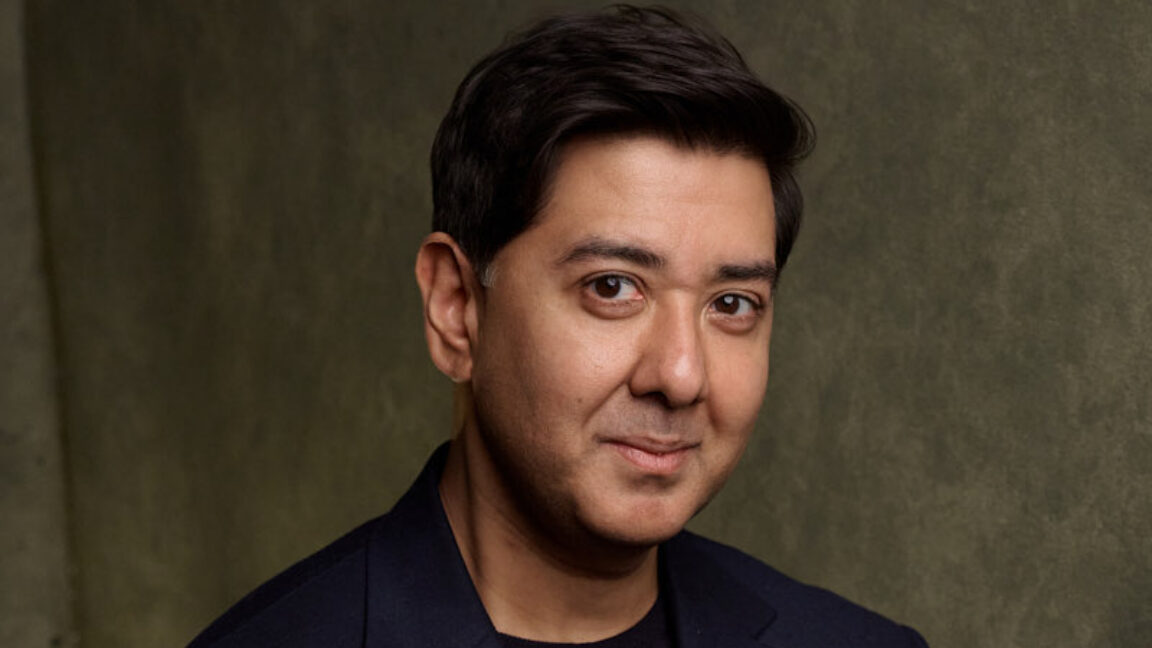
The US is not backing down from its fight to deport noncitizen technology researchers who monitor safety risks on the biggest online platforms.

In July, a judge blocked as unconstitutional an immigration policy that the US relied on to weigh whether to detain and deport people who flag illegal or harmful online content as national security risks. In his announcement of the policy, Secretary of State Marco Rubio explained that by targeting a list of researchers—which he stood “ready and willing” to expand—the policy supposedly served to prevent foreign nationals from manipulating digital town squares and censoring Americans.

However, in his order siding with the Coalition for Independent Technology Research (CITR) and staying the policy, US District Judge James Boasberg said the US showed no evidence linking any targeted researchers to a foreign power that might be attempting to censor Americans or manipulate US public debate. Deemed too broad, the policy could sweep in seemingly any noncitizen working in content moderation, the judge said.

Read full article

Comments

© via CCDH

Six Chinese AI firms accused of aggressively copying US frontier models

The United States has now named six Chinese AI firms accused of waging industrial-scale attacks distilling US frontier AI model capabilities and perhaps sparing billions in Chinese development costs.

In a joint release Tuesday, the National Security Agency (NSA), Cybersecurity and Infrastructure Security Agency (CISA), and Federal Bureau of Investigation (FBI) alleged that DeepSeek, Moonshot AI, Alibaba, MiniMax, StepFun, and Z.AI have been attacking US models since at least late 2024. The firms “likely” acted with “Chinese government awareness” when extracting capabilities from US models, including variants of Claude, GPT, Gemini, and Grok, agencies said.

“China-based AI companies that conduct industrial-scale distillation against US AI models see significantly shorter AI development timelines and reduced financial expenditures in training a frontier model,” agencies said.

Read full article

Comments

© Bloomberg / Contributor | Bloomberg

Trump may be forced to reveal secret rules feds use for AI safety testing

Four federal agencies have been sued amid calls to release information about the secret framework that the Trump administration uses to conduct safety reviews of frontier AI models prior to release.

In a Wednesday press release announcing the lawsuit, a nonpartisan nonprofit called Protect Democracy alleged that “almost no details” have been released to the public or Congress. To everyone except a few vague “trusted partners,” it remains unclear what the government’s review process looks like, which companies are involved in constructing the framework, or what legal authority Trump officials have to conduct the reviews.

“Neither the identities of those entities nor the criteria by which they were selected have been made public,” Protect Democracy said.

Read full article

Comments

© Bloomberg / Contributor | Bloomberg

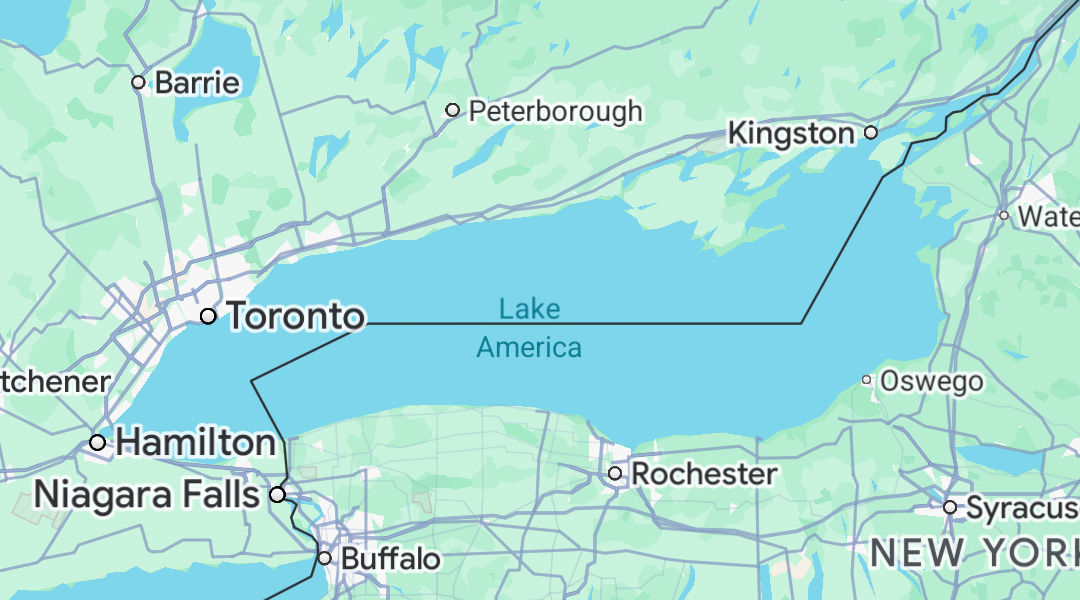
Google Maps renames "Lake Ontario" to "Lake America" even faster than US government

Trade talks between the US and Canada broke down last week, leading to a wave of tariffs and retaliatory tariffs. US President Donald Trump also fell back on an old favorite to needle his opponents, signing an executive order on Thursday to rename Lake Ontario to "Lake America."

The body of water, which straddles the US-Canada border, gave its name to the Canadian province rather than the other way around. Regardless, the US government now refers to this great lake as Lake America—or it will soon. Official US government maps have yet to be updated, but Google wasted no time adopting the new, Trumpian name.

Google began rolling out this change for US users on Saturday. The company posted a brief update on its Google Maps blog, noting that it follows the US Geographic Names Information System (GNIS) for its maps, so the company implies it had no choice but to rename Lake Ontario in Google Maps, which is the most popular mapping platform in the US by a wide margin.

Read full article

Comments

© Google

AI industry says Trump plans to tax chips in the “single dumbest way imaginable”

Donald Trump may be preparing to announce sweeping new semiconductor tariffs at the absolute worst time, the tech industry fears.

On Thursday, Politico reported that a wide range of new semiconductor tariffs, which the tech industry expects will “doom” artificial intelligence innovation in the US, could be imposed in the coming “weeks or months.”

About eight people familiar with the Trump administration’s plans were granted anonymity to discuss how the tariffs might work. They suggested that the framework for tariffs may change as it becomes finalized, but one approach under consideration could “dramatically expand the number of tech products subject to the duties, hitting not just chips but potentially many of the goods made with them, such as gaming consoles or the servers that fill data centers.”

Read full article

Comments

© LUDOVIC MARIN / Contributor | AFP

How masculism is taking over western culture

We are being propelled towards a new world order. A good place to start by way of explanation is with Pastor Doug Wilson’s raging misogyny. He rants that “life-style feminism”, unleashed by women’s suffrage, violates woman’s purpose as “a weaker vessel created by God to conceive”. To live according to her true nature, she should submit herself, her voting rights, and earnings, to the male family head.

Women who reject these roles are “meddlesome and quarrelsome” (Scott Jener), “miserable cat ladies” (JD Vance), and  “sterile” ‘spinsters’, incapable of succeeding in professional life. Simultaneously, they are “evil“, traitors, and sex toys.

Alarmingly, this unvarnished hatred is being actively mainstreamed and is exerting an ever-expanding cultural pull across Western society.

Misogyny is an ancient mindset that isn’t exclusive to Western Judeo-Christian culture. But this culture is my focus here because it’s where misogyny was supposed to diminish but has instead been shockingly re-vitalised.

It’s now embedded in a wider extreme right mindset according to which the great, white Judeo-Christian male is inherently superior, and rightfully presides over all other religious creeds, genders, and races. For brevity I’ll call this mindset ‘masculism’.

Masculist pushback

Masculism is currently pushing back. Pushback is a group’s desire to assert its dominance over other groups to protect its identity and efficacy against a perceived shift in norms and values. This process plays out across history, from Irish Protestantism vs Catholicism, the Crusades and 19th US nativism vs ‘papism’ to modern-day assaults on positive action policies.  

Masculist pushback is, I’d argue, best understood as an emotional response. Pathological fear of weakness triggers visceral hatred of, and an urge to control, objects which are perceived as potential sources of debilitation. These emotions drive pushback across diverse parts of the masculist agenda, from race, religion and gender to theories of the natural order, aesthetics, tech, governance, and modernity.

As the framework for a comprehensive extreme-right ideology, funded by a behemoth of super-wealthy global investors, masculism is an exceptionally powerful and ubiquitous instance of cultural pushback.

Why now? Arguably, Western endorsement of liberal values on human rights grew in the 1990s and early 2000s to a critical ‘unacceptable threat’ level, a crisis snapping point for a subset of ‘the right’. Enter powerful actors like Trump, Theil, Musk, Miller and co. who seized their moment. A co-ordinated major fightback project unfolded, using governmental powers, tech, social media, global blackmail, propaganda, and financial networking to subdue the threat.

Displacement in a zero-sum world

Pushback is a zero-sum perception – ‘your gain is my loss’. One group’s opportunities, improved rights and life chances are felt to detract from those of another group on the same pitch. Masculist anxiety about these losses is primarily psychosocial and focussed, not on material scarcity, but on “cultural displacement”,  loss of status, competence, and hegemonic power.

We see zero-sum pushback permeating incel thinking – they perceive women, and the positive discrimination they are perceived to enjoy, as the cause of their feeling diminished and displaced. In their heads, they’ve become oppressed second-class citizens whose efficacy and meaningfulness as males has been usurped.

In line with the Christo-misogynists quoted above, and Andrew Tate’s manosphere, the incel solution to this ‘corrosive weakening of maleness’ is to disempower the ‘hateful offenders’ by re-inventing them as traditional objects for subordination and exploitation.

Replacement horror

Masculist fear of weakness is equally evident when anxieties about positive discrimination and racial ‘replacement’ combine. Charles Q Brown held a distinguished military position as a US Airforce Chief of Staff. But he was fired by Trump in 2025 on the presumption that, since he was black, he must have obtained the post illegitimately via the DEI programme.

This is one instance in a constant flow of masculist fortifications of white identity – a ‘2-in-1’ pushback seeking to control non-whites and policies which advantage them. Musk speaks the masculist angst aloud when he argues that white dominance is necessary for self-protection since, if non-whites get the upper hand, they’ll use it to ‘destroy us’.

Masculism also fuels seething contempt for LGBTQ communities precisely because they threaten the prized purity of ‘maleness’. The US and UK extreme right, assisted by their media, fought against this perceived threat by transforming LGBTQ rights from a low public interest issue into a crisis. This shift worked because LGBTQ rights are such strong masculist fear-hate triggers.

The transphobic, racial, misogynistic hatred above is captured in Trump’s call to straight white men to get compensation for discrimination. Written all over this call is the zero-sum threat to white males, victimhood, and angry paranoia.

Mainstreamers and killers

Masculist narratives are formulated within organisations like the Heritage FoundationARC, CPAC, MEF, then pumped (via WSITufton Street, IEAAdvance UK, etc) through Europe’s and the UK’s online arteries. The tech broligarchy’s shouty social media and AI pundits are mainstreaming inequalitarian narratives. Data analysis indicates that misogynistic objectification and sexual harassment of women on TikTok, for example, recently jumped from 13% to 56%.

Alex Karp, CEO of Palantir, “the world’s scariest company”, argues for tech and state power mergers and fast-track AI expansion. Advantages, he claims, include our ability to build killer robots before our enemies do, and a significant reduction in the power of women. This echoes Yenner’s view of women as dangerous “backbones” of the ‘left world view’ needing restraint. Again, paranoid fear of being weakened is all over these narratives.

Within the masculist agenda there’s considerable cross-fertilisation. Tommy Robinson’s improbable foray into Christianity isn’t because he ‘got religion’ but because, like others, he spotted its value as a weapon in the masculist armoury, serving as a handy ‘sanctimony shield’ and a further tool for oppressing groups against which he’s pushing back. The Judeo-Christian arm of masculism can attack Islam and the ‘outrage’ of women’s desired bodily autonomy in one convenient hit.

Longing for super-strength

Meanwhile, Charles Cornish-Dale laments that the alienation and emptiness of contemporary life thwarts masculinity by hollowing out virility, risk, and vitality. Modernity replaces these ‘virtues’ with nanny statism, over-regulation, conformity, and anti-individualism. Masculists look to an alternative world of male inviolability and perfection through dominance, efficacy, and mental and physical prowess.

This masculist longing travels in two directions: backwards as far as a ‘Bronze Age’ when men were potent, and simultaneously forwards to a tech world where the weakness of feminised flesh is replaced by the digital muscularity of super-intelligent robots.

Musk and co retreat to, and preside over, this virtually post-human world as transcendent half-machine superheroes. Naomi Klein views this slide into ‘dark MAGA’ as a derangement caused by extreme wealth. I see it as a fight against the horror of frailty.

Perfection and nature

Either way, this two-directional hankering offers ‘barricades’ against the forces of disintegration.  So, too, does the masculist ideal of perfection driving the current male fetish for extreme body aesthetics: enter the looks maxxers and protein bodybuilders. These aspirations inoculate against weakness whilst providing online highways to the manosphere and extreme right politics.

Inevitably, masculists also revile disability as a key symbol of weakness, antithetical to physical perfection. Disabled people, like women, belong in the subhuman’, ‘loser’ domain as carriers of intolerable mental and physical infirmity. Trump’s alleged refusal to have disabled vets in his military parade epitomizes this abhorrence as does the cancellation in June 26 of the ceremony commemorating female vets.

Eugenics, another masculist preoccupation, seeks to overcome weakness by creating a master race where vulnerable groups (society’s ‘weakness carriers’) are strictly controlled. Trump’s obsessive admiration for handsome pilots and Hegseth’s super-fit, weight-controlled, testosterone-primed military aren’t just adolescent fixations, but masculist gestures towards eugenic control of the pernicious spread of deadly enfeeblement.

Testosterone Ubermensch

Male aesthetic perfection, as “the pinnacle of nature”, also links to masculist views of nature as inherently unequal. This imbalance provides a biological justification for patriarchal dominance, for equality as illegitimate, and for empathy as harmful where it weakens civil society by reifying the useless underdog.

True civilisational progress, then, requires a return to command and obedience models of gender and the re-emergence of the unfettered Nietzschean ‘Übermensch’. Here masculism offers a kind of extreme libertarian, testosterone ‘Christianity’, releasing white males from religion’s traditional ‘soft’ responsibilities and virtues.

Democracy for girls

As a system of governance based around pluralism, tolerance, compromise, and protective regulation, democracy is reviled by masculists as a ‘feminised’ poison within western society. Pushback is crystal clear in the US mission to save us from ‘civilizational erasure’.  After Vance’s Munich 2025 presentation, it gained momentum with Musk and co stepping in to boost support for the UK’s extreme right fraternity, including Restore Britain.

The US now parades the UK as a disgraced exemplar of the fate of systems that reject masculist governance. Apparently, we are a culturally crippled hellhole, enfeebled by woke policies on immigration, abortion, and DEI, infested with wandering ethnic grooming gangs and knife-wielders, and just too dangerous to visit.

Lashing out

Masculist pushback against weakness is a unifying principle in that it explains the great white Judeo-Christian male’s paranoid response to feeling encircled by usurpers (women, non-whites, LGBTQ, disabled people, Muslims, modernity, democracy, etc) all positioned to subvert his power and destroy him.

And he is lashing out, in all directions, all at once, with an overarching regressive, sometimes violent, agenda to restore his historic sovereign inviolability and dominance. Managing this fear is, for him, a dynamic process, requiring constant re-iteration of the narrative.

Masculism is ultimately pathetic – a grotesque case of pre-adult arrested development. Yet it’s gaining control of much of the planet’s key infrastructure. To respond effectively, turning off its financial taps won’t be sufficient. We must also tackle the emotional drivers that make it so compelling and so lethal.

Claire Jones writes and edits for West England Bylines and is co-ordinator for the Oxfordshire branch of the progressive campaign group, Compass.

The post How masculism is taking over western culture appeared first on Left Foot Forward: Leading the UK's progressive debate.

Data centers’ energy demand threatens Trump’s “Made in America” plan

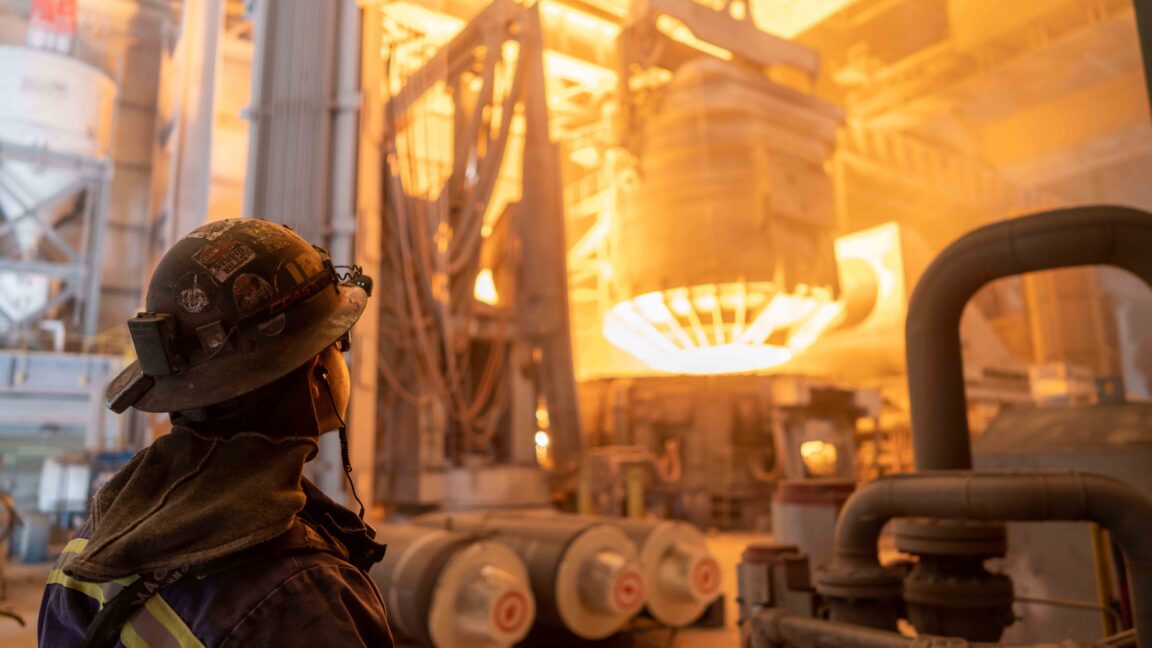
US manufacturers in many Rust Belt cities and towns are paying significantly higher electricity costs as growing energy demand from data centers strains the largest power grid operator in the United States. The resulting squeeze on profit margins for steelmakers and brick factories could further undermine President Donald Trump’s “Made in America” plan to revive US manufacturing, and it comes as Trump has simultaneously championed the tech companies behind the AI data center boom.

Factory electricity bills are generally rising faster than those for other business customers or residential customers, according to a Reuters analysis. It highlighted the example of the Belden Brick Company, a 141-year-old brick manufacturer in Ohio, whose electricity bills have soared from $1,600 to $12,000 per month due to a higher monthly capacity charge in the 13-state region served by the grid operator PJM Interconnection.

Meanwhile, the Steel Manufacturers Association warned that US steel companies concentrated in the Rust Belt region served by PJM Interconnection are paying tens of millions of dollars in higher power costs per year. Electricity accounts for 20 to 40 percent of the total production costs of making steel.

Read full article

Comments

Trump gets OpenAI to offer US 5% stake, far lower than Sanders’ target

OpenAI CEO Sam Altman is reportedly in active talks with the Trump administration about the US potentially acquiring a 5 percent stake in the leading AI firm.

Insider sources told the Financial Times that these talks are in “early stages,” but Altman “has argued that giving the public a financial stake in the company is the best way to share the upside of AI.”

Donald Trump favors the idea, and his administration has reportedly been talking to several AI firms about the possibility. According to FT’s sources, other companies approached to share similar stakes include Google and Meta.

Read full article

Comments

© NurPhoto / Contributor | NurPhoto

After spooking Trump into safety testing, Anthropic AI models get global release

The US has lifted export curbs on Anthropic’s newest Claude models, Fable 5 and Mythos 5, about three weeks after the Trump administration flagged the models as national security risks.

As of today, Anthropic confirmed in a blog post, Fable 5 will be available globally, and US organizations have had access restored to Mythos 5 since June 26. Anthropic said it is now working with the government to expand Mythos access to a “broader set of domestic and international partners in the Glasswing program.” That program allows cybersecurity researchers at trusted companies to access Mythos for defensive purposes.

In a letter to Anthropic viewed by Reuters and The New York Times, Commerce Secretary Howard Lutnick said Anthropic would “no longer need a license for exports or in-country transfers of its Claude Mythos and Claude Fable AI models.” The letter acknowledged that Anthropic had “taken steps in close coordination with the US government to address the risks” posed by the models.

Read full article

Comments

© NurPhoto / Contributor | NurPhoto

Trump's plan to redesign every .gov website leads to AI-designed horrors

President Donald Trump’s plan to “fill the digital potholes” and use AI to quickly redesign every government website isn’t going very well.

Last August, Trump created the National Design Studio, or NDS, by executive order. A temporary DOGE-like entity that answers only to the president, NDS was tasked with creating new standards to update the US Web Design System (USWDS) and overhaul 27,000 dot-gov websites in just three years. At the end of this so-called “America by Design” initiative, the government’s “design language” would supposedly be more usable and beautiful, Trump expected.

However, that monumental task—assigned to a small team under a short timeframe—was seemingly made harder by DOGE's deep cuts to agencies previously responsible for improving government websites, including dismantling the 18F technology unit and restructuring the US Digital Service into DOGE.

Read full article

Comments

© Aurich Lawson | Getty Images

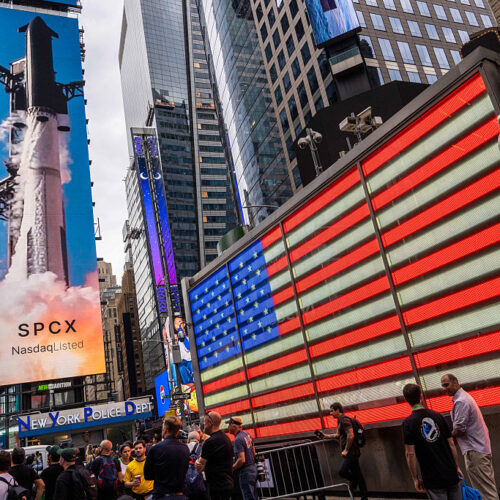
Trump asked Musk for SpaceX stock to seed US kids’ savings accounts, report says

One way Donald Trump plans to celebrate July 4th is by rolling out children’s savings accounts, known as Trump Accounts, and apparently, he’s been angling to get a big donation from SpaceX as part of that push.

A person familiar with talks involving the Trump administration told Semafor that SpaceX has spoken with US officials about donating stock to Trump Accounts. At this stage, however, it remains unclear if a donation will be made or what impact a SpaceX donation might have on the value of the accounts, which Trump hopes will be a defining part of his legacy.

So far, 6 million children have been signed up for Trump Accounts, which officially launch next week on Independence Day. Trump accounts are a new type of individual retirement account available to any child under 18 with a Social Security number, and parents can sign up their kids through a Trump Accounts app that's already available for download. As an extra perk, any child born between 2025 and 2028 can receive a one-time $1,000 contribution from the government.

Read full article

Comments

© Bloomberg / Contributor | Bloomberg

❌