❌

Reading view

There are new articles available, click to refresh the page.

The Case for Less Eye Contact

The Case for Less Eye Contact

We’ve made the case before that the mainstream advice about eye contact and psychological safety is highly western-centric and neurotypical, and lacks context and nuance. Not only does it get causation backwards, but in reality, advising people to make more eye contact in order to foster greater psychological safety is potentially harmful and exclusionary. 

So here, I thought it’d be interesting to explore a completely different angle on eye contact. What if we could foster greater psychological safety by intentionally reducing eye contact?

Three shapes of conversation

Most conversations at work take one of three physical shapes, each a different geometry of interaction. We can (1) face each other; we can (2) sit or walk side by side, oriented in the same direction; or (3) we can triangulate, all facing a third thing (a whiteboard, a screen, the thing we’re working on). Most psychological safety advice assumes the first is the ideal and the other two are somewhat lesser, degraded forms: that a “real” conversation only happens facing each other, maintaining eye contact, with full and intense focus on the person we are in conversation with. A lot of evidence suggests the truth could be the opposite, especially for difficult or intimate conversations.

Eye contact theory

First some theoretical background, because surely all the research is in favour of lots of eye contact? Not exactly. In 1965 Argyle & Dean proposed in Sociometry that intimacy is jointly regulated across gaze, physical proximity, and topic intimacy: i.e. we only have a limited capacity bucket that needs to hold all these things. So by reducing gaze, we can provide more space for topic intimacy. When we intentionally reduce eye contact, it means we can have more intimate, potentially more challenging, conversations. It’s a 60-year-old theory that mainstream eye-contact evangelism has essentially forgotten.

We can also explore this through the lens of cognitive load. Kajimura and Nomura (2016) found evidence that eye contact shares domain-general cognitive resources with speech production. Specifically, maintaining direct gaze slowed people down when words were harder to find. Reducing eye contact appears to free up cognitive resources to think about how we want to articulate something important. Glenberg, Schroeder and Robertson (1998) showed that gaze aversion facilitates remembering, and Doherty-Sneddon’s research programme showed that both adults and children avert gaze especially when questions are difficult, and that aversion increases with question difficulty. Phelps, Doherty-Sneddon and Warnock even found that teaching children to look away while thinking improved their answers. Eye contact uses up some of our brain beans that might be better spent on actually working stuff out and saying the thing.

There’s psychophysiological and neurological evidence too. Hietanen’s (2018) review of affective eye contact shows how direct gaze reliably raises physiological arousal (in the psychophysiologist’s sense of heart rate, skin conductance and a sense of vigilance, not anything romantic): which is useful in some contexts, but arousal is not necessarily safety, and for many people it’s the opposite. Hadjikhani and colleagues (2017) found that constraining autistic participants in conversations to look at the eye region produced abnormally elevated activation in subcortical threat-processing systems. A number of studies, including Trevisan and colleagues (2017) have gathered first-hand accounts describing eye contact as intrusive, draining and aversive. 

We’ve heard from the psychologists and the neuroscientists; we should hear from the sociologists too. Erving Goffman described face-to-face interaction as a performance, and “face” for Goffman wasn’t just the area on the front of our head: it’s the social value we claim in an interaction, the image of ourselves as competent, reasonable, and worth listening to. “Face-work” is the continuous, mutual effort we all make to protect that image; our own and each other’s. And much of that work is conducted through our actual face, which is where threats to ourselves land and where we watch our words land on other people. With difficult conversations, the hard things worth saying are almost always threats to someone’s face: ours, theirs, or both. Facing each other, we watch the exact moment our words reach the other person and the ripples they make in their facial topography; a flinch or a fleeting frown. Reduce the facing, and we reduce the price of speaking for everyone involved.

Forced eye contact therefore, as we described in our last article on it, is for many people a stressor rather than a connector. So that being the case, as well as throwing out a lot of popular leadership advice, what can we do?

Side-by-side conversations

I have a good friend, Glen, who’s a walking therapist, and there’s a great deal of literature on the effectiveness of “side-by-side” conversations and disclosure, in part by reducing any perceived hierarchy, but in larger part by the necessary reduction in eye contact; it’s hard to maintain eye contact while we’re walking with someone, at least for any more than a few seconds before we walk into a tree or lamppost. As Glen describes, there are many benefits from walking therapy, including the calming effects of movement, being in the natural world, and walking itself can help free us from any sensations of feeling “stuck”. Therapists practising walk-and-talk formats consistently report that walking side by side, with minimal eye contact, helps clients open up (McKinney, 2011; Cooley, Jones, Kurtz and Robertson, 2020). And walking tends to occur in public, and connects to Goffman’s “civil inattention” concept; the implicit social permission for our eyes to wander and for our attention to be momentarily or slightly elsewhere.

And of course Freud’s infamous couch was itself an eye contact reduction strategy — he stated openly that he couldn’t bear being stared at all day, but the design also freed the patient to be more candid. He positioned himself out of sight so the patient’s associations and discourse wouldn’t be shaped by his facial reactions; a continuous stream of micro-verdicts that steer or suppress the conversation. 

Sigmund Freud’s Couch: The Freud Museum

“I cannot put up with being stared at by other people for eight hours a day (or more). Since, while I am listening to the patient, I, too, give myself over to the current of my unconscious thoughts, I do not wish my expressions of face to give the patient material for interpretations or to influence him in what he tells me.”
– Freud. “On Beginning the Treatment” (1913) pp123-144

The Men’s Sheds movement even made it a slogan: “men don’t talk face to face, they talk shoulder to shoulder“. Polly Wiessner’s PNAS study of Ju/’hoansi firelight talk is a delightful study of deep and meaningful conversation: daytime talk among the Ju/’hoan (!Kung) Bushmen of southern Africa was largely economic and practical, whilst fireside talk (with everyone facing the flames rather than each other) was where stories were shared and social imagination happened. Triangulating our most intimate conversations around a third point of focus is likely primeval.

On walking and creativity, Oppezzo and Schwartz (2014) found creative ideation was consistently higher while walking than sitting, indoors or out, and persisted after sitting back down. So if our conversations are intended to surface new ideas, maybe going for a walk is better than collectively standing in front of a whiteboard.

Designed for disclosure

None of this is new. We’ve been designing eye contact out of some of our most difficult conversations for centuries; occasionally on purpose. The confessional booth is a 450-year-old piece of psychological safety architecture: after the Council of Trent, Carlo Borromeo’s design specifications introduced the grille precisely to engineer better disclosure. Samaritans and other crisis lines are maybe a telephonic descendant, whilst barbers’ and hairdressers’ chairs (with eye contact softened via a mirror), and conversations in the car, are where many powerful conversations are able to be had that might not be otherwise. It’s a well-known parent hack: driver and passenger both face the road, so that sustained eye contact is impossible and mildly dangerous, and there’s no social obligation to fill any silence. It may take a long drive, but the important stuff will likely come out, probably somewhere around junction 8 of the M4.

I do a similar thing with my daughter, who’s four years old. I have an extra seat for her on my mountain bike, with her own little handlebars, which means she can come on rides with me, facing forward, sitting in front of me between my arms. We have some great conversations like this, as well as some long periods of contemplative silence, and songs from “Frozen”. 

What all of these share is that the reduction in eye contact is a property of the setting and the context, not a request or accommodation we have to make. Nobody in a walking meeting has to explain why they’re not looking at you. Nobody in the car has to disclose that they’re neurodivergent and struggle with eye contact, or that direct eye contact is interpreted as disrespect in the culture they grew up in. The accommodation is a side effect of the context (even though it may be intentional). Asking people to disclose their needs beforehand may be requiring them to do something that does not yet feel safe to do. 

Interestingly, the traditional police interview room, a space that is architected to produce pressure, is centred around forced facing. With its plain furniture, chairs facing each other, and nothing else to look at but the interviewer’s face, the design of the space is part of the “Reid Interrogation Technique”. So the arrangement that many LinkedIn posts prescribe for psychological safety is the one interrogators choose for pressure.  

The converse effect of low eye contact

It isn’t all good news for the power of reducing eye contact. There’s a converse effect too: Lapidot-Lefler & Barak found that absence of eye contact was the single factor with a major effect on inducing ‘flaming’ and aggressive behaviour online. Their 2015 follow-up also found that anonymity, invisibility and lack of eye contact significantly increased self-disclosure. The point is that reduced eye contact lowers the cost of candour and of cruelty. 

The difference lies in what goes alongside the reduced eye contact. The walk and the car pair it with being physically together, moving in the same direction, experiencing the same thing (the sun, rain, car radio, etc). The anonymous forum pairs it with near-invisibility and possibly a disposable online identity. So it isn’t simply “remove eye contact”; it’s “rethink the visual context while keeping people together”.

I’ll caveat this too. As someone with a stutter, telephone calls terrify me. Because the only means of communication in a telephone conversation is verbal, that’s the entire focus of the other person’s attention. The phone strips out eye contact, but it also strips out visual co-presence with it. The other person’s attention is entirely on the thing that I’m anxious about (voice), and they can’t see that I’m still there, thinking about what to say, how to say it, or getting over a short block. They might think the call has been disconnected, or they might simply get frustrated with me. So personally, I prefer video calls over phone calls – whilst appreciating that for others, it may be the other way around. 

Choice over prescription

So we can actually foster psychological safety through reducing eye contact, whether that’s side by side walking together, going for a drive, or using a confessional booth (would be unorthodox – let me know if you try it). Or maybe it’s triangulation, talking whilst focusing on another thing, whether it’s studying a whiteboard or roasting potatoes in a campfire. Some things are easier said to a potato than a face. 

But as always, it’s more complex than that. Lipreaders and people with hearing difficulties often need to see faces, walking conversations may exclude some people, cars are private and the person who’s driving has a degree of power-over, and some conversations might not be suitable for outdoors where other people might overhear. And some people, in some moments, genuinely want, or need, to be looked at. 

The effects of eye contact are different across people and contexts, so I believe that the way forward is towards optionality: choice, consent, and multiple formats. The prescription to maintain eye contact fails because it’s a prescription; and replacing it with a prescription to avoid eye contact would be flawed in exactly the same way. What we can do is to create environments, platforms and practices in which people, including us, can regulate their own eye contact without penalty, and without explanation. 

Further reading

References

Argyle, M. and Dean, J. (1965) Eye-contact, distance and affiliation. Sociometry, 28(3), pp. 289–304. doi:10.2307/2786027

Cooley, S.J., Jones, C.R., Kurtz, A. and Robertson, N. (2020) ‘Into the Wild’: A meta-synthesis of talking therapy in natural outdoor spaces. Clinical Psychology Review, 77, 101841. doi:10.1016/j.cpr.2020.101841

Doherty-Sneddon, G. and Phelps, F.G. (2005) Gaze aversion: A response to cognitive or social difficulty? Memory & Cognition, 33(4), pp. 727–733. doi:10.3758/BF03195338

Doherty-Sneddon, G., Bruce, V., Bonner, L., Longbotham, S. and Doyle, C. (2002) Development of gaze aversion as disengagement from visual information. Developmental Psychology, 38(3), pp. 438–445. 

Freud, S. (1913) On Beginning the Treatment. In: The Standard Edition of the Complete Psychological Works of Sigmund Freud, Vol. XII. London: Hogarth Press, pp. 121–144.

Glenberg, A.M., Schroeder, J.L. and Robertson, D.A. (1998) Averting the gaze disengages the environment and facilitates remembering. Memory & Cognition, 26(4), pp. 651–658.

Goffman, E. (1955) On Face-Work: An Analysis of Ritual Elements in Social Interaction. Psychiatry, 18(3), pp. 213–231. Reprinted in Interaction Ritual: Essays on Face-to-Face Behavior (1967). New York: Anchor Books.

Goffman, E. (1959) The Presentation of Self in Everyday Life. New York: Anchor Books. 

Goffman, E. (1963) Behavior in Public Places: Notes on the Social Organization of Gatherings. New York: Free Press. 

Golding, B. (ed.) (2021) Shoulder to Shoulder: Broadening the Men’s Shed Movement. Champaign, IL: Common Ground Research Networks. 

Hadjikhani, N., Åsberg Johnels, J., Zürcher, N.R., et al. (2017) Look me in the eyes: constraining gaze in the eye-region provokes abnormally high subcortical activation in autism. Scientific Reports, 7, 3163. doi:10.1038/s41598-017-03378-5

Hietanen, J.K. (2018) Affective Eye Contact: An Integrative Review. Frontiers in Psychology, 9, 1587. doi:10.3389/fpsyg.2018.01587

Inbau, F.E., Reid, J.E., Buckley, J.P. and Jayne, B.C. (2013) Criminal Interrogation and Confessions. 5th edn. Burlington, MA: Jones & Bartlett Learning. 

John E. Reid and Associates (2010) Designing an Interview/Interrogation Room. Investigator Tips. Available at: https://reid.com/resources/investigator-tips/designing-an-interview-interrogation-room

Kajimura, S. and Nomura, M. (2016) When we cannot speak: Eye contact disrupts resources available to cognitive control processes during verb generation. Cognition, 157, pp. 352–357. doi:10.1016/j.cognition.2016.10.002

Lapidot-Lefler, N. and Barak, A. (2012) Effects of anonymity, invisibility, and lack of eye-contact on toxic online disinhibition. Computers in Human Behavior, 28(2), pp. 434–443. doi:10.1016/j.chb.2011.10.014

Lapidot-Lefler, N. and Barak, A. (2015) The benign online disinhibition effect: Could situational factors induce self-disclosure and prosocial behaviors? Cyberpsychology: Journal of Psychosocial Research on Cyberspace, 9(2), article 3. doi:10.5817/CP2015-2-3

McKinney, B.L. (2011) Therapists’ perceptions of walk and talk therapy: A grounded theory study. Doctoral dissertation, University of New Orleans.

Oppezzo, M. and Schwartz, D.L. (2014) Give your ideas some legs: The positive effect of walking on creative thinking. Journal of Experimental Psychology: Learning, Memory, and Cognition, 40(4), pp. 1142–1152. doi:10.1037/a0036577

Phelps, F.G., Doherty-Sneddon, G. and Warnock, H. (2006) Helping children think: Gaze aversion and teaching. British Journal of Developmental Psychology, 24(3), pp. 577-588.

Trevisan, D.A., Roberts, N., Lin, C. and Birmingham, E. (2017) How do adults and teens with self-declared Autism Spectrum Disorder experience eye contact? A qualitative analysis of first-hand accounts. PLOS ONE, 12(11), e0188446. doi:10.1371/journal.pone.0188446

Wiessner, P.W. (2014) Embers of society: Firelight talk among the Ju/’hoansi Bushmen. Proceedings of the National Academy of Sciences, 111(39), pp. 14027–14035. doi:10.1073/pnas.1404212111

‌

The post The Case for Less Eye Contact appeared first on Psych Safety.

Body Language and Non-Verbal Communication

Body Language and Non-Verbal Communication

There’s a whole industry, and a lot of terrible advice, built on the promise that we can read people’s minds through their “body language”. Common tropes include things like averted eyes or a lack of eye contact meaning that someone is trying to deceive us, expansive open postures revealing confidence and warmth, closed postures signalling defensiveness or annoyance, and fidgety body movement indicating boredom or a lack of attention. Leadership courses teach it, hiring managers apply it, and a disturbing amount of psychological safety advice echoes the usual “maintain eye contact”, “mirror their body language”, and other awful suggestions to build trust.

“There’s no art to find the mind’s construction in the face.”

Shakespeare, Macbeth, I.iv

Non-verbal communication is real – we convey meaning with our bodies in intentional and unintentional ways, but calling it “communication” is part of the problem. It’s more like signals, and some of those signals may be significant, some less so, and some mean something completely different to how we interpret them. Non-verbal communication is context-dependent, strongly cultural, very different for neurodivergent people, and far less useful as a diagnostic tool than popular books or LinkedIn articles would claim. And there’s a bigger problem: it’s not just that the evidence to support a lot of this body language advice is weak, it’s that the popular advice functions as a normative tool – it teaches people to confirm and perform a narrow set of usually Western, neurotypical norms, and it licenses the hiring manager or the leader to judge people who can’t or won’t adhere to those norms. Joseph Pelrine says we should downgrade our confidence in it, but I’d go further – the standard body language advice isn’t just unhelpful, it’s actively harmful.

Woman giving thumbs down
Photo by Vitaly Gariev: https://www.pexels.com/photo/young-woman-showing-thumbs-down-gesture-36763589/

The non-verbal communication myths that won’t die

Most of us have heard some version of the claim that 93% of communication is non-verbal. It’s on slides in a thousand leadership courses and all over LinkedIn. But where does it come from, and is there anything in it? In 1967, Albert Mehrabian conducted laboratory studies in which participants judged how much a speaker liked them when a single word, tone of voice and facial expression sent “contradictory” signals. The word was “maybe”, chosen because it was considered most neutral. Three speakers (all women) recorded it in three tones (positive, neutral, negative), which were paired with black-and-white photographs of three different women expressing liking, neutral and disliking expressions (Mehrabian & Ferris 1967). So the stimuli were: one word, spoken by strangers, paired with still photographs of different strangers’ faces. What they found was that when the channels (spoken and visual) conflicted, facial cues outweighed vocal cues by roughly three to two in judging whether the speaker liked the listener. That ratio is where the 55% and 38% come from. 

But it wasn’t a conversation, it wasn’t even the same person’s face and voice. The studies measured nothing about normal conversation, and Mehrabian since spent decades pointing out that his equations (7% [literal meaning] +38% [tone] +55% [facial expression]) apply only to communications of feelings and attitudes, and only when the channels conflict.

The formula isn’t even a single finding. The 7% for words comes from a separate experiment, with different stimuli and different participants (Mehrabian & Wiener 1967), and the three numbers were arithmetically bolted together afterwards into one equation. Attempts to reproduce the ratios since have produced very different numbers.

So the popular evidence for “93% of communication is non-verbal” isn’t actually evidence for that claim at all. 

The Power Posing Problem

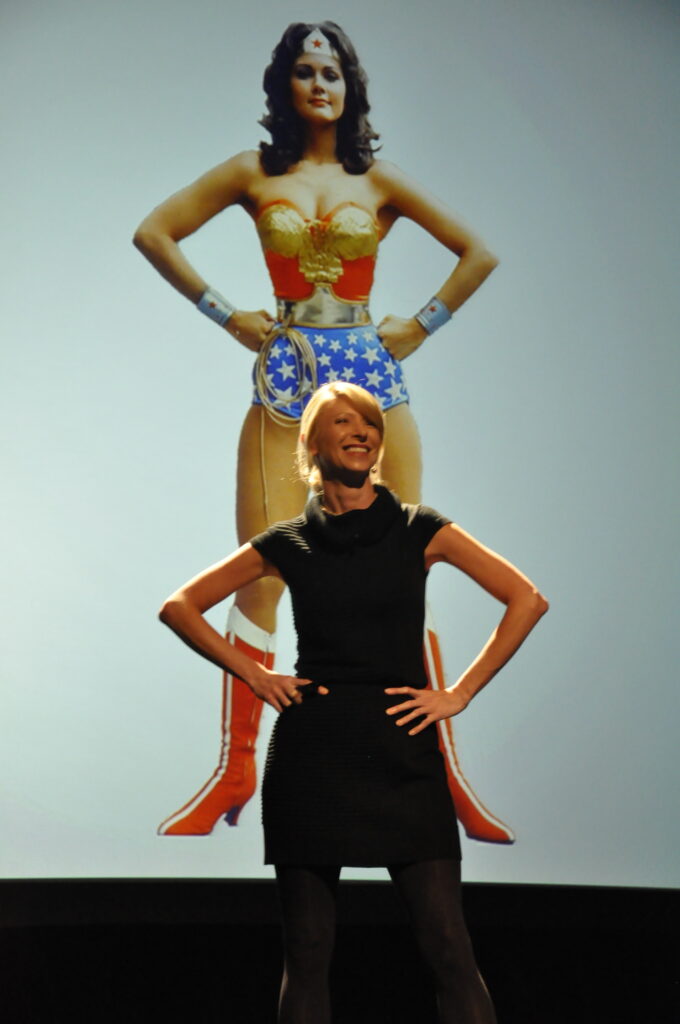
That was the myth about reading other people’s bodies. The next one is about how we’re supposed to hold our own. In a now infamous 2010 study, Carney, Cuddy and Yap randomly assigned 42 participants to briefly adopt either expansive, “powerful” postures, or contractive “powerless” ones. The results showed that the power posers subsequently sought higher risk, and showed higher testosterone and lower cortisol, based upon a $2 gamble plus a self-report of how “powerful” they felt (Carney, Cuddy & Yap 2010). The claim was that a simple one-minute power pose boosted your power and influence. Cuddy’s 2012 TED talk became one of the most watched in history, and currently stands at over 60 million views.

amy cuddy power pose
By Erik (HASH) Hersman from Orlando – Power pose by Amy Cuddy at PopTech 2011, CC BY 2.0, https://commons.wikimedia.org/w/index.php?curid=63505316

Then came the takedown. Ranehill et al. ran a much larger replication in 2015 and found no effect on hormone levels and no effect on risk taking. The only thing that survived was how powerful participants said they felt, which is the single thread the theory’s defenders have pulled on ever since (Ranehill et al. 2015). After the p-curve analysis found no evidential value, Carney walked back the claims, stating publicly “I do not believe that ‘power pose’ effects are real.” and “the evidence against the existence of power poses is undeniable.” She also alluded to what is now called “p-hacking” – selecting the results that provide the lowest p-values, to imply greater statistical significance than the whole sample would suggest.

The more damning aspect is that these poses were often pushed hardest to the people with the least power, as a substitute for having any. If the powerless can simply stand differently to gain power, then structural inequity becomes reframed as a personal failure of posture.

There’s also an echo here with that HBS eye contact paper, which concluded that leaders should use sustained eye gaze as a strategy for building psychological safety. That conclusion came from a small sample, at an elite university, in a lab, which was turned into headline generalisation followed by an enthusiastic uptake by the advice industry before any replication had a chance to refute it.

“A lie can run around the world before the truth has got its boots on.”
Terry Pratchett, “The Truth”

Detecting Deception

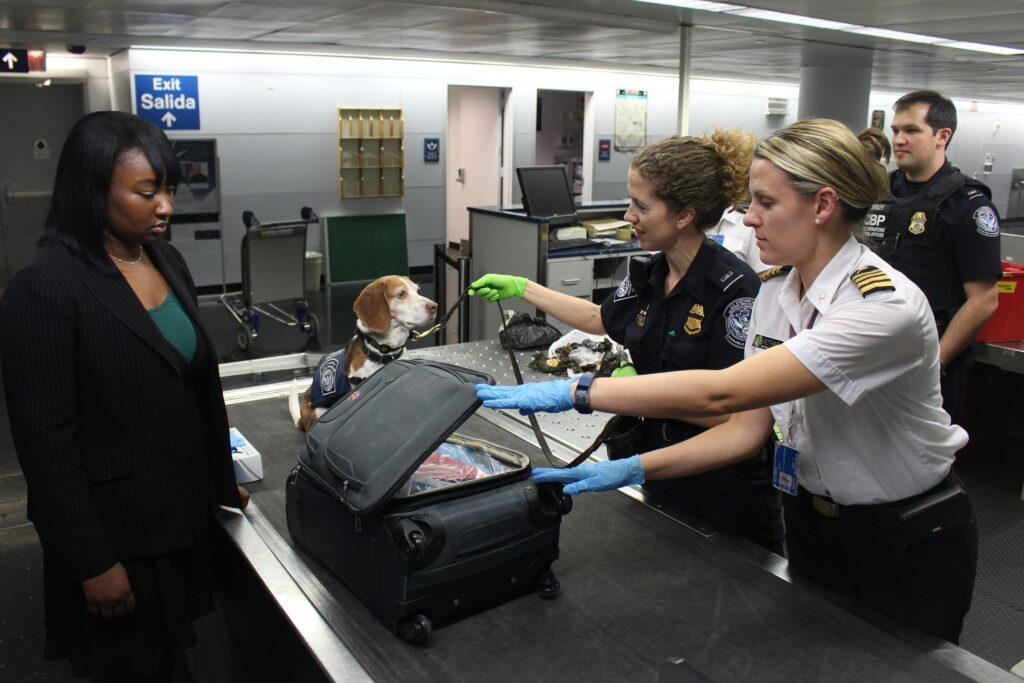
In 2007, SPOT (Screening of Passengers by Observation Techniques) was introduced in the US, a post-9/11 initiative loosely modelled on Israeli airport questioning techniques and developed with input from Paul Ekman of “microexpressions” infamy. Roughly $1bn was spent on the programme, with 3,000 Behaviour Detection Officers (BDOs) trained to spot “indicators” of deception and allocate their interviewee points according to the number of signs they spotted. These “signs of deception” (consider this is after an often long flight) included covering one’s mouth, blinking a lot, fidgeting, yawning, whistling, sweaty palms, which incurred one point each. “Arrogance”, a “cold penetrating stare” or “rigid posture” incurred two points each, and if an individual accumulated more than six points they would get interrogated. Points were deducted for demographics, with married couples over 55 getting two points back and women over 55 one point back. Profiling was literally built into it (Winter & Currier 2015, The Intercept), and reports suggest that 80% of those who were pulled from security lines under SPOT were minorities.

airport security check
Photo by CDC on Unsplash

In 2013, the GAO (Government Accountability Office, the audit office of the US Congress) reviewed four meta-analyses covering over 400 studies across 60 years and found that the human ability to identify deception from behavioural indicators is the same as or slightly better than chance. TSA revised its list of indicators in response, but when the GAO audited the revised list four years later, it found no valid scientific evidence for 28 of the 36 behavioural indicators, with only 3 of 178 cited sources holding up at all. A BDO manager put it bluntly: “The SPOT program is bullshit… Complete bullshit.” This is body language ideology at state scale, and the impact of it is greatest on people whose baseline demeanour differs from Western, neurotypical expectations. Those from cultures with different norms around gaze, proximity and expressiveness, and those for whom being scrutinised by uniformed authority is already, understandably, stressful. Body language advice then is more than just corporate training room nonsense and has become an instrument of state power, whilst in organisations the same machinery operates at smaller scale in interviews where candidates are marked down for “poor eye contact” and performance reviews that record “closed body language”.

No “universal” non-verbal signals

The LinkedIn version of body language advice rests on the idea that certain expressions and postures carry the same meaning everywhere: that there is a universal human non-verbal code. It was, to be fair, the dominant scientific view for a long time. It is coming apart though. Studies comparing Western and East Asian observers show they use different strategies to decode the same faces, confusing expressions that the universal model says should be unmistakable (Jack et al. 2009, Jack et al. 2012). Research with the Himba in Namibia, the Hadza in Tanzania and Trobriand Islanders found that, without Western emotion concepts supplied by the experimenters, participants rarely produced the “universal” labels at all (Gendron, Crivelli & Barrett 2018). Behavioural ecologists instead argue that facial displays are tools for social influence, acts performed for an audience, shaped by culture, context and relationship – social tools rather than emotion readouts (Crivelli & Fridlund, 2018). I like this interpretation, because it mirrors actual ecosystems – a signal only has meaning within context – if we treat a raised eyebrow as “contempt”, we’re ignoring everything else that gives the signal its meaning.

Body language and neurodiversity

In 2017, Sasson and colleagues showed observers ten-second clips of autistic and non-autistic people. Participants’ first impressions of the autistic participants were formed quickly, were markedly less favourable across nearly every trait judged, and didn’t improve with longer exposure. But when observers were given only the conversational content, with no audio-visual cues, the bias disappeared entirely (Sasson et al. 2017). It was the neurotypical reading of body language and facial expression that catalysed the exclusion.

This is connected to what Damian Milton calls the autistic “double empathy” problem: communication misunderstanding runs in both directions, not a deficit of the autistic person. Neither autistic nor non-autistic people lack empathy, it just looks different to each (Milton 2012). Catherine Crompton demonstrated it well in her 2020 research: information passed along a chain of autistic people survived just as well as it did along a chain of non-autistic people, and only information passing along the mixed chains degraded (Crompton et al. 2020). The difficulty is at the allistic/autistic interface, not in the individual.

So when body language advice tells neurodivergent people to fix their side of the interface (make eye contact, keep your hands still, control your expression), it’s assigning the whole burden of a mutual endeavour to one (already disadvantaged) side. And that burden is high: masking and camouflaging are consistently associated with anxiety, depression, exhaustion, burnout, and elevated suicide risk in autistic adults (Cook et al. 2021). Bad advice about body language and non-verbal communication isn’t just ineffective, it’s actively harmful.

Psychological safety and body language

The mainstream literature on psychological safety and body language has absorbed the body language advice uncritically in two ways. One is that we’re encouraged to read certain gestures as signals that someone feels unsafe, such as crossed arms (but maybe they’re just cold), lack of eye contact (but maybe they’re neurodivergent or it feels culturally inappropriate for them), fidgeting (but maybe that’s how they regulate, or they’ve just had a strong coffee). This leads to misinterpretation of signals as well as a sense that we’re being surveilled rather than supported.

The other way is the converse: we’re told to adopt certain non-verbal behaviours, adopt open postures, shake hands firmly, maintain eye contact, sit still, etc. This asks those already spending the most effort to conform (neurodivergent people, people from non-dominant cultures, people without access to particular social norms) to these Western, neurotypical norms. And it’s a nasty feedback loop, because the more that people conform, the more it looks like these norms are universal when they’re not. When we tell people that psychological safety looks like sustained eye contact and an open posture, many people will oblige, because the cost of not doing so is read as different or difficult. We then observe a great deal of eye contact and open posture, which works as confirmation that this is what psychological safety looks like. We conflate compliance with inclusion.

Meanwhile, those who cannot or will not comply are deemed exceptions rather than evidence against the norm. It gets filed as a personal shortcoming rather than as a signal that the norm didn’t actually fit. And if the expected behaviours happen to be our native ones, the room will look welcoming, cooperative and entirely natural, largely because other people are working quite hard to make it look that way for us. 

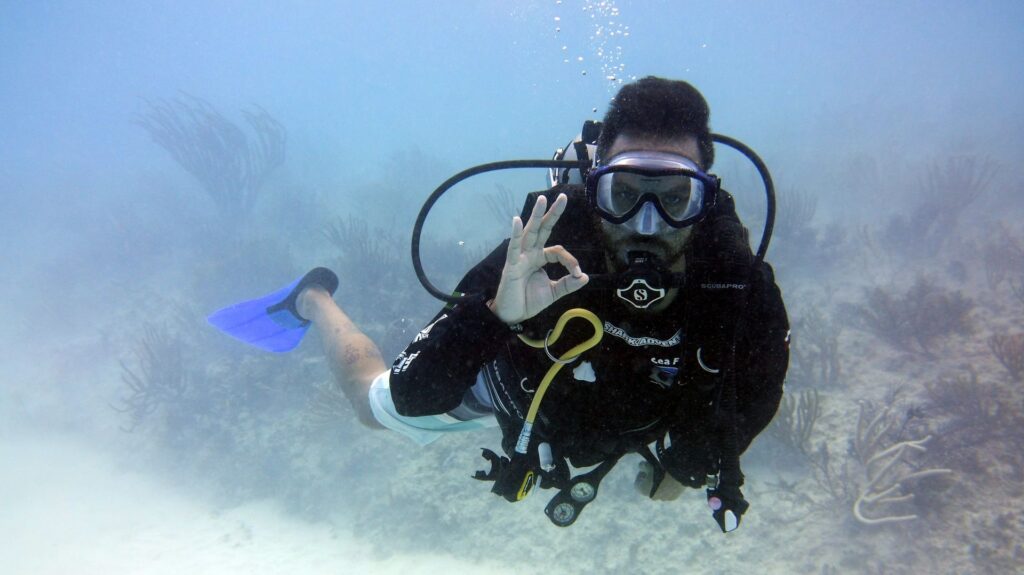
diver giving ok sign - not a thumbs up!
Photo by Diego Sandoval : https://www.pexels.com/photo/a-man-scuba-diving-4765931/

What to do

We all convey things, sometimes very important things, non-verbally. It might be intentional, with a thumbs-up or a wink (both of which mean very different things in different cultures and contexts – don’t give a thumbs-up when you’re diving unless you mean to return to the surface) or unintentional, such as yawning (Morris et al. 1979).

The point is that tone, timing, movement, eye contact, posture, and facial expression do carry information, but that information is non-deterministic, local rather than universal, culturally influenced, and very dependent upon knowing the person and the context. Just like indicator species: we must read the context before the signal.

The lesson is almost embarrassingly basic: pay more attention to what people say, and less on how they say it. Treat non-verbal “communication” as weak signals: opportunities for humble inquiry rather than judgement. Agree on team norms, and make our own needs and preferences explicit, and encourage others to do the same, so we can reduce the need to “read the air”.

The magic universal non-verbal Babel fish was never real. What’s real is the often frustratingly slow process of actually getting to know people and understand them, in their own contexts, and give them space to be themselves. A monoculture is not evidence of what the land can grow.

References

Mehrabian, A., & Ferris, S. R. (1967). Inference of attitudes from nonverbal communication in two channels. Journal of Consulting Psychology, 31(3), 248-252. https://doi.org/10.1037/h0024648

Mehrabian, A., & Wiener, M. (1967). Decoding of inconsistent communications. Journal of Personality and Social Psychology, 6(1), 109-114. https://doi.org/10.1037/h0024532

Carney, D. R., Cuddy, A. J. C., & Yap, A. J. (2010). Power posing: Brief nonverbal displays affect neuroendocrine levels and risk tolerance. Psychological Science, 21(10), 1363-1368. https://doi.org/10.1177/0956797610383437

Ranehill, E., Dreber, A., Johannesson, M., Leiberg, S., Sul, S., & Weber, R. A. (2015). Assessing the robustness of power posing: No effect on hormones and risk tolerance in a large sample of men and women. Psychological Science, 26(5), 653-656. https://doi.org/10.1177/0956797614553946

Simmons, J. P., & Simonsohn, U. (2017). Power posing: P-curving the evidence. Psychological Science, 28(5), 687-693. https://doi.org/10.1177/0956797616658563

Carney, D. R. (2016). My position on “power poses”. https://faculty.haas.berkeley.edu/dana_carney/

Cesario, J., Jonas, K. J., & Carney, D. R. (2017). CRSP special issue on power poses: What was the point and what did we learn? Comprehensive Results in Social Psychology, 2(1), 1-5. https://doi.org/10.1080/23743603.2017.1309876

US Government Accountability Office (2013). Aviation security: TSA should limit future funding for behavior detection activities (GAO-14-159). https://www.gao.gov/products/gao-14-159

US Government Accountability Office (2017). Aviation security: TSA does not have valid evidence supporting most of the revised behavioral indicators used in its behavior detection activities (GAO-17-608R). https://www.gao.gov/products/gao-17-608r

Winter, J., & Currier, C. (2015). Exclusive: TSA’s secret behavior checklist to spot terrorists. The Intercept. https://theintercept.com/2015/03/27/revealed-tsas-closely-held-behavior-checklist-spot-terrorists/

Jack, R. E., Blais, C., Scheepers, C., Schyns, P. G., & Caldara, R. (2009). Cultural confusions show that facial expressions are not universal. Current Biology, 19(18), 1543-1548. https://doi.org/10.1016/j.cub.2009.07.051

Jack, R. E., Garrod, O. G. B., Yu, H., Caldara, R., & Schyns, P. G. (2012). Facial expressions of emotion are not culturally universal. PNAS, 109(19), 7241-7244. https://doi.org/10.1073/pnas.1200155109

Gendron, M., Crivelli, C., & Barrett, L. F. (2018). Universality reconsidered: Diversity in making meaning of facial expressions. Current Directions in Psychological Science, 27(4), 211-219. https://doi.org/10.1177/0963721417746794

Crivelli, C., & Fridlund, A. J. (2018). Facial displays are tools for social influence. Trends in Cognitive Sciences, 22(5), 388-399. https://doi.org/10.1016/j.tics.2018.02.006

Sasson, N. J., Faso, D. J., Nugent, J., Lovell, S., Kennedy, D. P., & Grossman, R. B. (2017). Neurotypical peers are less willing to interact with those with autism based on thin slice judgments. Scientific Reports, 7, 40700. https://doi.org/10.1038/srep40700

Milton, D. E. M. (2012). On the ontological status of autism: The “double empathy problem”. Disability & Society, 27(6), 883-887. https://doi.org/10.1080/09687599.2012.710008

Crompton, C. J., Ropar, D., Evans-Williams, C. V., Flynn, E. G., & Fletcher-Watson, S. (2020). Autistic peer-to-peer information transfer is highly effective. Autism, 24(7), 1704-1712. https://doi.org/10.1177/1362361320919286

Cook, J., Hull, L., Crane, L., & Mandy, W. (2021). Camouflaging in autism: A systematic review. Clinical Psychology Review, 89, 102080. https://doi.org/10.1016/j.cpr.2021.102080

Vrij, A., Hartwig, M., & Granhag, P. A. (2019). Reading lies: Nonverbal communication and deception. Annual Review of Psychology, 70, 295-317. https://doi.org/10.1146/annurev-psych-010418-103135

Morris, D., Collett, P., Marsh, P., & O’Shaughnessy, M. (1979). Gestures: Their origins and distribution. Jonathan Cape.

Pelrine, J. 2026. #102 – Body Language: https://ckarchive.com/b/4zuvhehpd0kn3a6ovveola69zn9l9a5hl386z 

The post Body Language and Non-Verbal Communication appeared first on Psych Safety.

❌