❌

Reading view

There are new articles available, click to refresh the page.

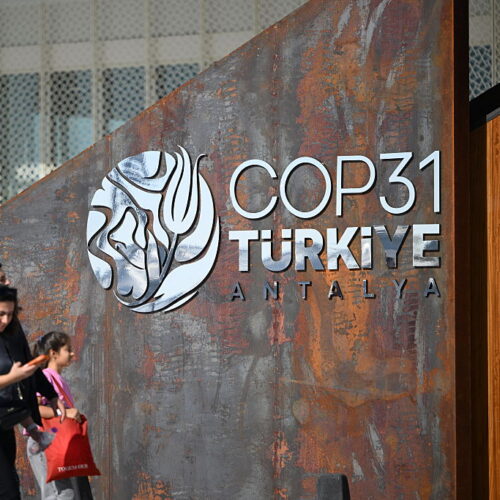
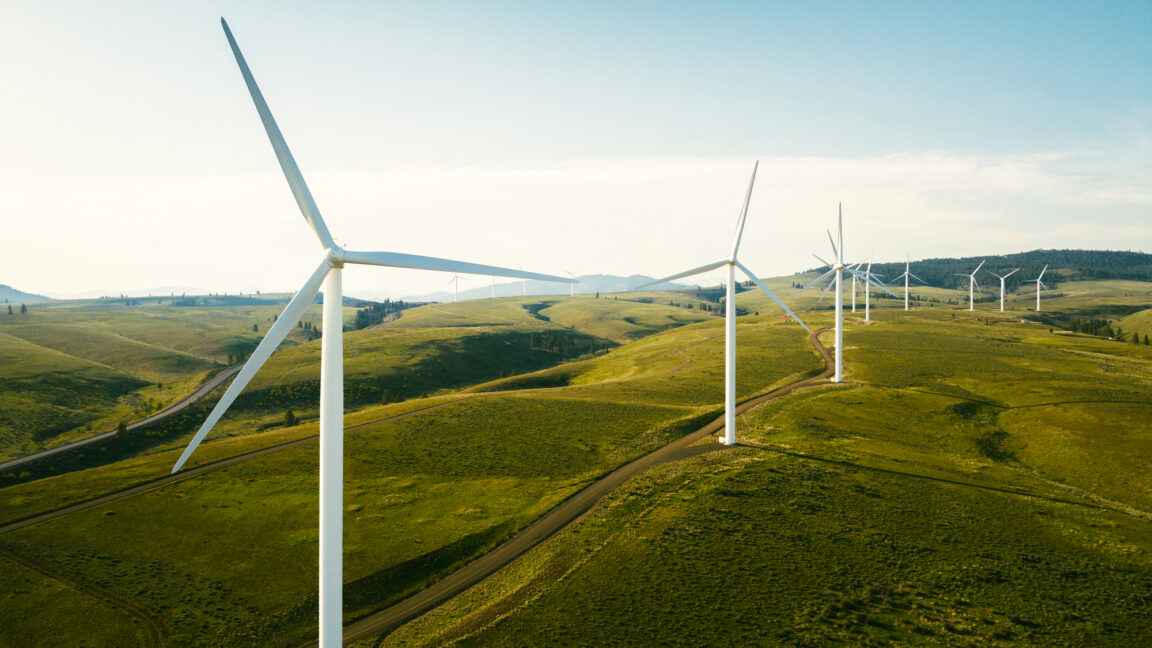
House Democrats promise a US return to global climate talks

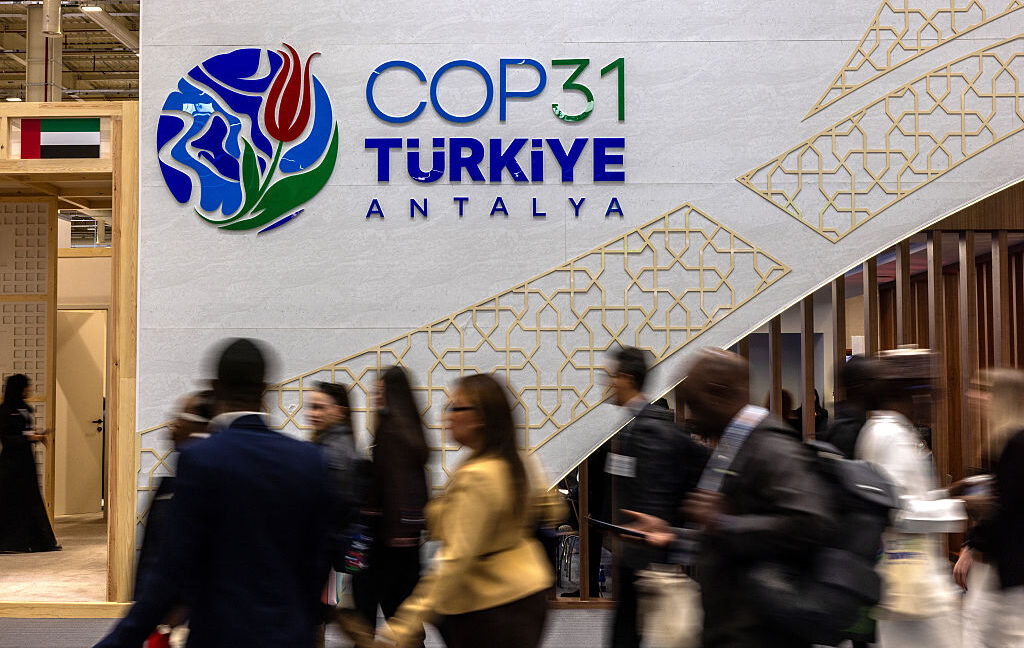
ANTALYA, Turkey—After their big gains in the 2026 midterm elections, a delegation of Democratic US House members appeared at the United Nations COP31 climate change conference Monday, pledging to rejoin the international fight against global warming.

Rep. Jared Huffman (D-Calif.), ranking member of the House Natural Resources Committee, said it is a “pivotal time” for US climate and energy policy.

“The wrecking ball of Donald Trump and this out-of-touch administration, and the temporarily empty chair of the United States at this COP31, does not represent what the Americans want or need,” Huffman said.

Read full article

Comments

© anadolu/Getty

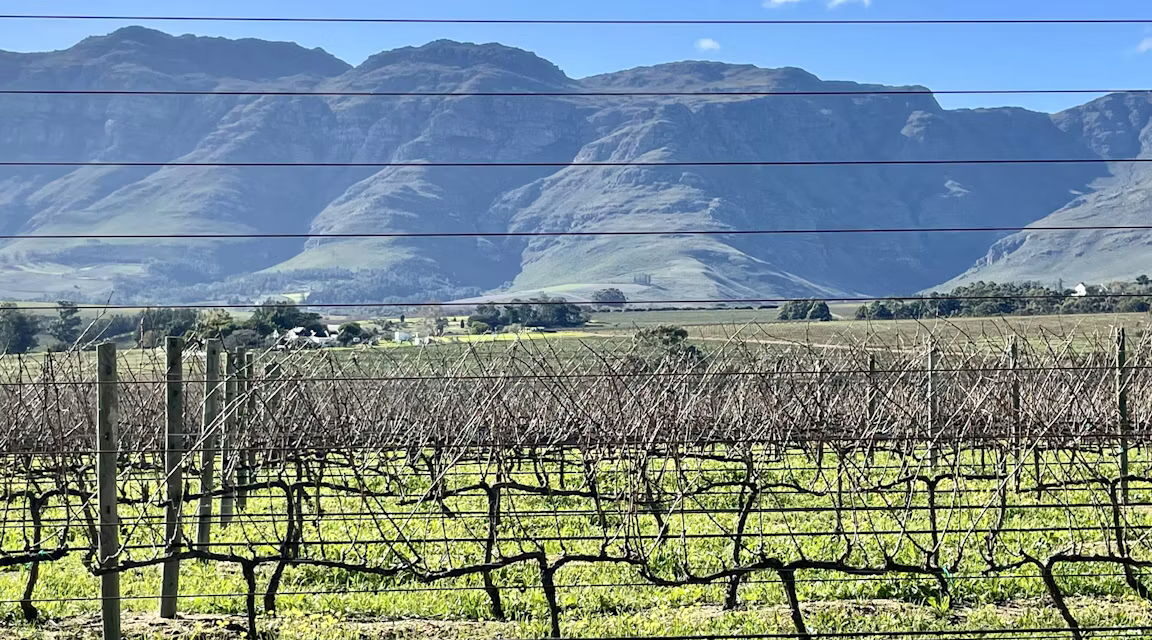
Winemakers are learning that conservation can be good for business

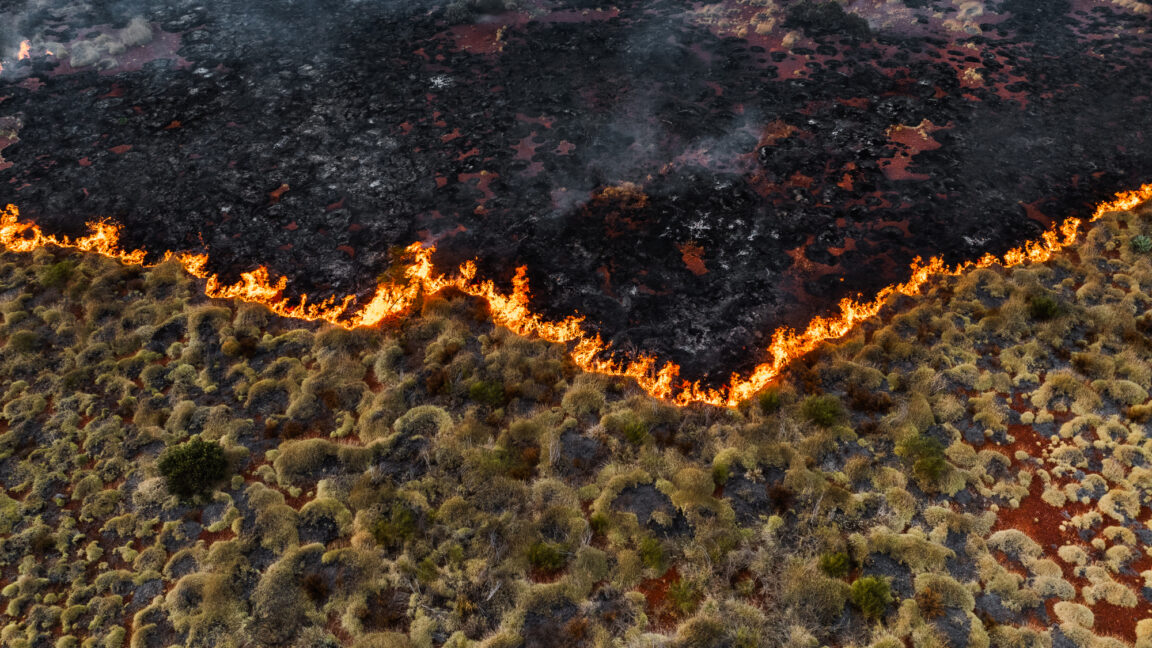
More than 500 vineyards are scattered across the slopes and valleys of South Africa’s Western Cape, one of the world’s most biologically diverse landscapes. The region produces about 90 percent of South Africa’s wine, but winemakers there are increasingly struggling with drought, excessive heat and erratic rainfall.

Temperatures in the region have risen 1.5 to 2 times faster than the global average over the past five decades. And extreme storms have become more intense as climate variability increases. The late 2010s brought a significant challenge for winemakers, as three years of severe drought placed vineyards under intense stress and reduced grape production.

As climate variability places increasing pressure on grape production, many wine producers are building on sustainability measures that have long been part of vineyard management.

Read full article

Comments

© Hannah Herrero

Scientists warn 1.5°C climate change threshold could arrive by 2029

ANTALYA, Turkey—Amid upbeat green-tech pep talks and notices for happy hours at the annual United Nations COP31 climate change conference on Thursday, two new reports offered a stark reminder of how far the world remains from containing global warming.

Climate Action Tracker, a nonprofit group that analyzes climate policies, found that the planet is still on track to warm nearly 5° Fahrenheit by 2100, a rise that would devastate coral reefs, disrupt agriculture and forests and melt most of the world’s ice. In a separate bulletin, the European Union’s Copernicus climate change service reported that global warming has accelerated significantly since the 2015 Paris climate agreement.

When the Paris agreement was adopted, the average global temperature was projected to surpass the pact’s long-term threshold of 2.7° Fahrenheit above the preindustrial average around 2045. After another decade of global climate summits, warming is now projected to cross that benchmark as soon as 2029, according to Copernicus.

Read full article

Comments

© Burak Kara/Getty

Reform council leader Linden Kemkaran denies man-made climate change

The Reform leader of Kent County Council, Linden Kemkaran, has come under fire for refusing to say that human behaviour is the main cause of climate change.

Speaking to LBC’s Iain Dale about the possibility of the government approving Rosebank oil field, Kemkaran said “the climate always has changed” and refused to say that global warming is primarily man-made.

Kemkaran said: “The climate is always changing, it always has changed, it always will change. Trying to stop it, that is an act of folly.”

Fellow guest on the show, Guardian journalist Polly Toynbee, challenged the Reform politician, stating: “That is denial.”

Kemkaran responded: “No I’m not denying anything, the climate is changing. What is denial about that?”

The Guardian columnist said: “You’re implying that this is in a sort of normal pattern of change”, to which Kemkaran replied: “Well of course it’s in a normal pattern of change.”

“No it’s not a normal pattern of change,” Toynbee said. 

Kemkaran then made an astonishing admission, stating: “We have to be honest, the planet will be fine, the planet will look after itself. We are talking about the survival of the human race.”

The Reform council leader said that Labour MPs’ opposition to drilling for more oil and approving Rosebank oil field is “schizophrenic”, adding that “it’s an absolute folly and it’s making us very poor”.

Dale then came in and asked Kemkaran: “Do you believe global warming is at least in part due to man?”. 

Kemkaran deflected, stating: “I think it’s due to lots of things and I think it’s always changing. I think it heats up and it cools down.”

Toynbee said that Rosebank should not be approved, as though it would generate “a little bit of tax” for the treasury, “for this we sacrifice our right to speak out I think and say look ‘we’ve passed 1.5 degrees, we are heading for 2.5 degrees’, at which point the world is boiling”.

Kemkaran dismissed her point, stating “The world is not boiling Polly”.

“Well we know Reform are amongst the deniers,” Toynbee said.

Toynbee called Kemkaran’s stance “preposterous”, adding: “You’re not someone who believes in facts or experts”.

The Reform politician said she believed in “lots of facts”, stating “I’m a former journalist, don’t insult me”.

“You plainly don’t believe that we are in an exceptional era of global warming which is really frightening and you think it’s within a normal pattern of change,” Toynbee countered.

Kemkaran claimed “we’re coming out of a mini ice age, that’s what’s happening”. There is no evidence to suggest that the world is currently coming out of a mini ice age. 

After a summer of six heatwaves and a record 1,100 wildfires in England and Wales, Kemkaran said: “Is there any such thing as a normal British summer, can anyone tell me?”. 

Dale then interjected again, telling Kemkaran: “You haven’t answered my question, do you believe that global warming is at least in part, if not wholly down to humankind?”.

“Well it’s down to lots of things,” Kemkaran said, “so that must include humankind”. 

The Reform politician ended by saying, “But I think the focus on that is completely out of proportion”.

This is despite over 99.9% of peer-reviewed scientific papers citing human activities as the primary driver of modern climate change.

Olivia Barber is a reporter at Left Foot Forward

The post Reform council leader Linden Kemkaran denies man-made climate change appeared first on Left Foot Forward: Leading the UK's progressive debate.

Climate crisis threatens national security of all countries, Ed Miliband tells COP31

Foreign Secretary Ed Miliband has told world leaders at the COP31 UN climate summit that the national security of every country is at risk from the climate crisis, as global temperatures continue to rise and extreme weather events wreak havoc across the globe.

He told the climate summit in Turkey that the climate crisis would affect the security and defence of every country because the rapid rise in global temperatures, which has already caused extreme weather events such as flooding and wildfires in a number of countries, will bring food shortages, economic disruption, migration and conflict.

“National security is the next frontier of the fight for climate action; the scenarios once of science fiction are now regular occurrences in the daily news,” he told the Guardian before his speech.

He went on to add: “We should be clear that climate breakdown is one of the greatest national security threats we face. Food security, threats to infrastructure, and population movements [are resulting from the climate crisis].”

Miliband also told those gathered that the limits world governments had set at the 2015 Paris Agreement, to keep temperatures below 1.5C is now likely to be exceeded, given how much temperatures have risen in recent years.

He also took aim at those who oppose climate action. The likes of Nigel Farage have consistently criticised climate change policies and described net zero targets as ‘complete and utter madness’.

Miliband said: “Those who seek to stick their heads in the sand on climate are putting our national security at risk.”

The Foreign Secretary also highlighted the risks of relying on fossil fuels amid volatile energy prices, caused by the war in Iran.

He said: “A new era of global insecurity means fossil fuel shocks are now the norm, the fossil fuel rollercoaster is here to stay.”

Miliband reiterated his call to cut greenhouse gas emissions and to invest in clean energy.

The post Climate crisis threatens national security of all countries, Ed Miliband tells COP31 appeared first on Left Foot Forward: Leading the UK's progressive debate.

High oil prices have led to a dip in global carbon emissions

Evaluating the annual global temperatures each year requires context. There is a fair amount of natural variability from one year to the next, so it’s important to focus on the trend over time. Famously, global warming did not end in 1998, as some claimed a couple of decades ago—we just had a run of La-Niña-dominated years after a very strong El Niño.

Annual greenhouse gas emissions are much less variable, having increased fairly steadily, but many complicating factors can still muddy the picture. Sometimes those factors conspire to throw a year off the trend. It looks like 2026 will be one of those years.

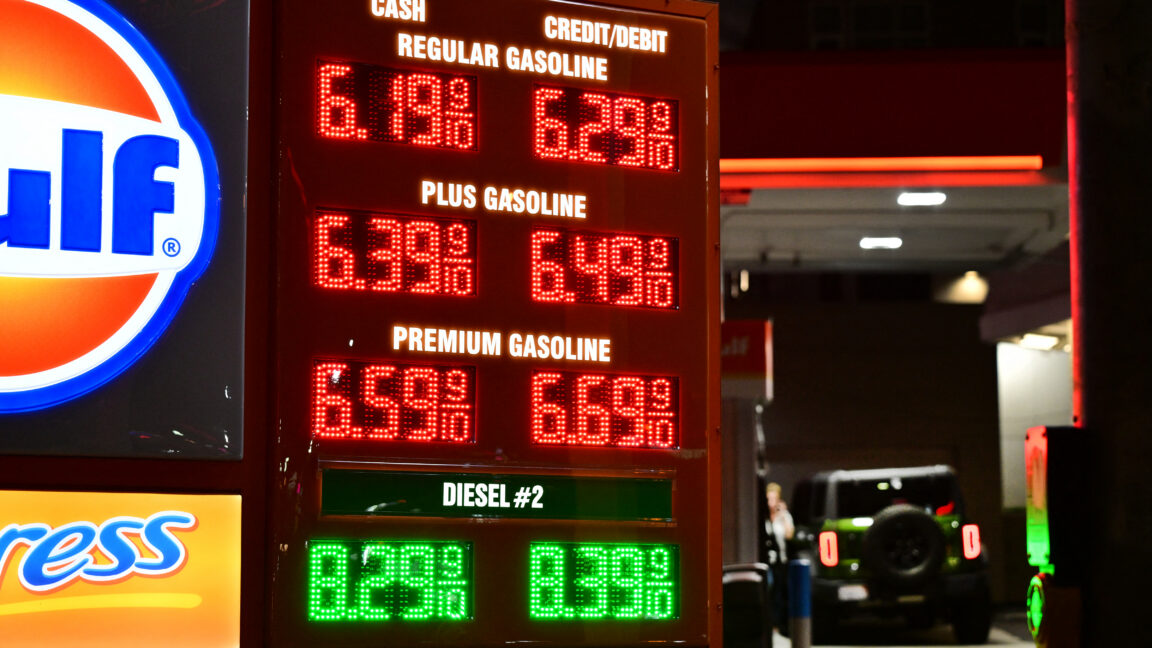
A new analysis led by Corinne Le Quéré at the University of East Anglia estimates that fossil fuel emissions have fallen about 0.4 percent from last year. This probably isn’t a peak that symbolizes heartening progress on climate change, though; the researchers think it’s a short-term dip driven by the war in Iran and its effect on oil prices.

Read full article

Comments

© FREDERIC J. BROWN

Statehouse wins give Democrats new power to push clean energy

Before Tuesday’s election, Republicans held more governorships and state legislative seats than Democrats, along with an advantage in state trifectas—unified control of the governor’s office and both chambers of the legislature.

That advantage has disappeared, clearing the path for more climate and clean energy legislation, according to analysts and advocates.

Democrats swept the vast majority of competitive races at the state level, flipping control of governors’ offices from Republicans in Georgia, Iowa, Ohio, Nevada, and Texas.

Read full article

Comments

© Ryan J Lane

Ice sheet expansion may have started 2,000 years ago, but we canceled that

Barnes Ice Cap sits on the central plateau of Baffin Island, in the Canadian Arctic. It is the last surviving fragment of the Laurentide Ice Sheet, the largest of the Pleistocene ice sheets, which at its peak buried most of Canada under two miles of ice and locked away around 80 meters of sea level. That remnant has now yielded direct physical evidence that ice sheets might have reversed their retreat and started to grow again thousands of years ago.

In a recent Science study, researchers show that the Laurentide reached its smallest size about 3,600 years ago, then started re-expanding roughly 2,000 years ago, which the team interprets as the opening move of the next glaciation. Apparently, this brand-new ice age was on its way until about 1960, when human-caused climate warming reversed it.

Frozen to the bed

“Barnes is the last remaining piece of one of the domes of the Laurentide Ice Sheet,” says Nicolás Young, a geologist at Columbia University's Lamont-Doherty Earth Observatory and lead author of the study. As that enormous dome thinned through the Holocene, its margin withdrew up onto Baffin Island, and what's left today is the deflated core of something that was once two miles thick. The reason Barnes can testify about its own history, Young explains, comes down to the temperature at its base.

Read full article

Comments

© Posnov

‘Tone-deaf’ Tice mocked again over juvenile climate change jibe

In one of those posts that demands a second reading, if only to check that a senior politician really did write it, the Reform UK deputy leader Richard Tice offered this reminder:

“A reminder that only Reform will scrap Net Stupid Zero.”

Bemused readers hit back, accusing Tice of substituting childish name-calling for serious debate about one of the most consequential policy challenges facing the country.

“An excellent reminder to vote for ANYBODY ELSE,” one user replied.

Another warned of the potential consequences for workers and businesses: “And in the stroke of a pen hundreds of thousands of people employed directly or indirectly in the industry are placed on benefits!! Great work Richard!”

A third wrote: “A reminder that ‘Net Stupid Zero’ has to be one of the weakest stupid nicknames in political use at present.”

The ridicule points to a wider problem for Reform. Scrapping net zero may be a central plank of the party’s platform, but reducing a complex debate about energy security, industrial investment and climate risk to a schoolyard insult does little to demonstrate how the party would address the challenges Britain faces.

Reform UK is, indeed, the only major party explicitly committed to scrapping the UK’s legally binding target of reaching net-zero greenhouse gas emissions by 2050. The party has pledged to repeal the target and interim carbon budgets, arguing that the transition is unaffordable and threatens British industry.

Its proposed alternatives include removing green levies and renewable energy subsidies from energy bills, with the party claiming this could save households between £200 and £500 a year. Reform also advocates accelerating North Sea oil and gas licensing, exploring shale gas through fracking, pursuing coal exploration and expanding nuclear power.

Environmental campaigners have long argued Reform’s position reflects the influence of fossil fuel interests and a broader resistance to climate action. Greenpeace, pointing to the party’s financial backers and its support for expanded fossil fuel production, has argued that its hostility towards climate and nature policies should come as little surprise.

The organisation has also criticised arguments contained in an earlier draft of Reform’s Contract with You, describing them as a collection of “bogus arguments lifted straight from the climate denial playbook.”

Those arguments included the claims that human activity cannot stop climate change because the climate has always changed, that Britain should adapt to warming rather than attempt to limit it, and that the UK produces too little carbon dioxide to make meaningful action worthwhile when compared with China and India.

The draft also cited the fact that carbon dioxide is essential for plant growth, historical periods when Britain was warmer than it is today and claims about the relative number of deaths caused by cold and heat.

This is not the first time Richard Tice has attracted criticism for his comments on global warming.

During the summer’s record-breaking heatwave, he was widely mocked for arguing people should “celebrate” the changing climate and repeating the claim that ten times more people die from cold than from heat.

The remarks drew condemnation from medical groups, environmental campaigners and political opponents, who argued that they downplayed the dangers posed by extreme heat at a time when wildfires, drought and pressure on water supplies were raising serious concerns.

Bridget Phillipson, Labour’s party chair, said: “Richard Tice’s comments are tone-deaf. With wildfires raging across the UK and drought threatening water supplies and food security, comments like these don’t just raise serious questions about his judgment – they also expose where his interests really lie.”

Tice may believe that “Net Stupid Zero” is a memorable political slogan. But the reaction suggests that many people see it instead as a cheap shot that avoids the substance of the argument.

The post ‘Tone-deaf’ Tice mocked again over juvenile climate change jibe appeared first on Left Foot Forward: Leading the UK's progressive debate.

UN says we're going to blow past 1.5º warming, offers a "now what?" answer

In 2015, all but two countries agreed to make an effort to keep global temperatures from reaching 1.5° C above pre-industrial readings. Since then, most of the world has largely treated what they signed on to as aspirational, and one of the largest emitters (the US) has alternately withdrawn and recommitted to the agreement. Meanwhile, the planet has responded as expected to steadily rising carbon emissions and appears to be practically at the 1.5° limit.

On Wednesday, for the first time, the United Nations Environmental Programme (UNEP) acknowledged that reality and conceded that the goal of keeping warming below 1.5° was no longer a viable one. Instead, its new goalposts focus on keeping both how long we exceed that limit and how much we exceed it by, at a minimum. Doing that will require both dramatic emissions cuts now and the removal of hundreds of gigatonnes of carbon dioxide from the atmosphere before the century is out.

Bowing to the inevitable

Depending on which baseline you use to establish pre-industrial temperatures, as well as which reconstruction of global temperatures you rely on, the world has either gotten very close to, or already exceeded, the 1.5° milestone. The current El Niño event, which appears exceptionally strong, will almost certainly mean that we've gone over it no matter which records you choose.

Read full article

Comments

© Abstract Aerial Art

Rewilding could help vulnerable islands keep pace with rising seas

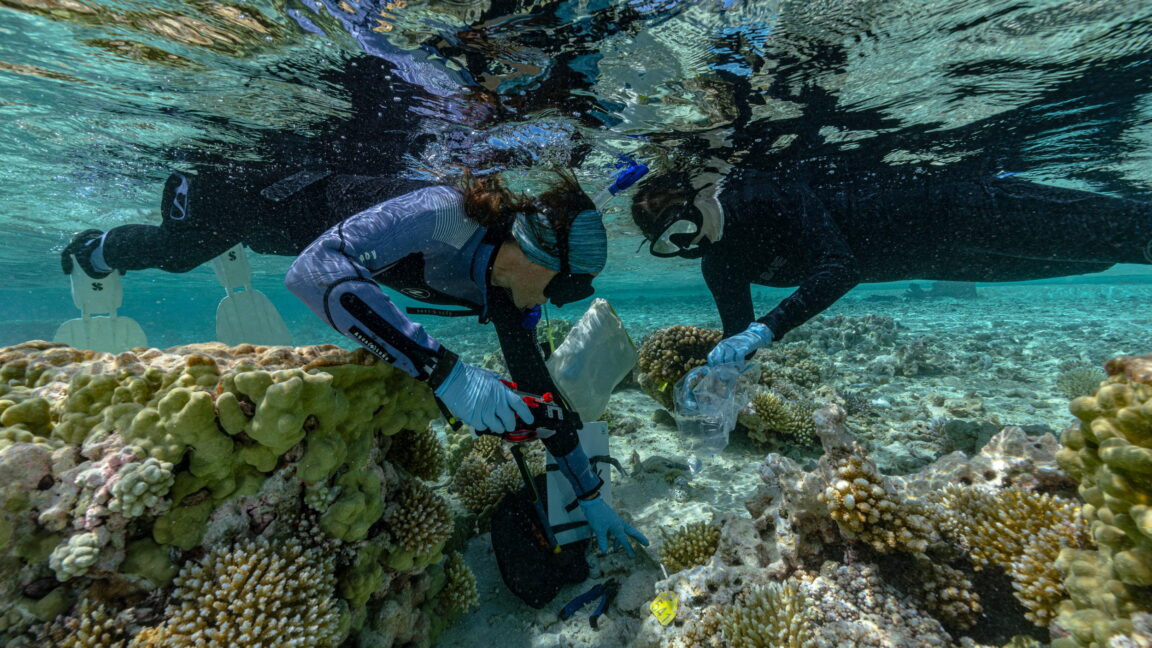
Coral-fringed tropical atolls are among the landforms most threatened by global warming, but many have a potential superpower: Healthy ecosystems may help them keep pace with rising seas.

Atoll islands with native vegetation and thriving seabird populations are “naturally active systems that can change and adapt to their environmental conditions if they are allowed to do so,” said Nick Graham, a marine ecologist at Lancaster University in the United Kingdom, who led an international team of scientists that studied island resilience across 28 atoll islands in the Pacific and Indian oceans.

Their paper, published Wednesday in Science Advances, shows that restoring atoll ecosystems reinforces their growth. Seabirds ferry nutrients from the open ocean and deposit them on the atolls as guano that nurtures land plants, marine life and coral growth. This provides more material for reef building, as parrotfish and other reef feeders turn dead coral into sand to maintain beaches, while native plants with extensive root networks stabilize sediments.

Read full article

Comments

© Alexis Rosenfeld/Getty Images

Internal files add to evidence of an ExxonMobil climate deception campaign

If there was a year the world began waking up to climate change, it might have been 1988. That June, the NASA climatologist James Hansen testified to Congress that the climate was warming and would continue to do so as long as humans pumped fossil fuel pollution into the atmosphere. Months later, the United Nations established the Intergovernmental Panel on Climate Change.

And, just weeks before the UN vote, Frank Sprow of Exxon’s corporate research department warned his colleagues in an internal memo, “If a worldwide consensus emerges that action is needed to mitigate against Greenhouse gas effects, substantial negative impacts on Exxon could occur.”

Sprow’s memo is part of a batch of previously undisclosed documents released earlier this year without fanfare as part of an ongoing lawsuit Massachusetts filed against ExxonMobil in 2019. While the memo was quoted in a 2023 article by The Wall Street Journal, it has not been published in full. Several other documents included in the filings are being reported on here for the first time, including more recent statements from Exxon scientists challenging the company’s climate-solution claims about its work on biofuels and carbon capture and storage.

Read full article

Comments

© Jason Fochtman/Houston Chronicle via Getty

Green Party backs policy to cut amount of animal farming in half

Green Party members have backed a policy on climate change and agriculture which would see the amount of animal farming in the UK reduced by 50 per cent.

Members voted for a motion which included this policy at the party’s autumn conference.

The motion opened amended the party’s existing policy on climate and agriculture by removing text which read: “We will promote a move to a diet with significantly less meat consumption that will require fewer farm animals. This will reduce emissions from ruminant digestion and release land for crops, forestry and wildlife”.

In its place, the conference agreed to replace it with the much more specific commitment to reducing the amount of animal farming by 50 per cent.

The new text reads: “We will promote a move to a diet with significantly less meat and dairy consumption that will require at least a 50% reduction in the scale of animal agriculture and that will require fewer farm animals.”

In addition to this, the motion went yet further, stating that: “The level of animal farming and the number of animals farmed will continue to decrease after this. The reduction of animal farming will start with reducing the level of factory farming with a block on new developments that can be classed as factory farms”.

The motion says that the party would seek to use taxation, and a ban on meat advertising as a means of delivering this reduction. It does not specify by what date the Greens would seek to reduce animal agriculture by 50 per cent.

Green Party members have the power to set the policy of the party. This does not, however, automatically mean that everything adopted by a party conference ends up in a general election manifesto. Instead, it forms part of the party’s long-term vision for how it would seek to transform society.

Chris Jarvis is head of strategy and development at Left Foot Forward

Image credit: Jon Craig – Creative Commons

The post Green Party backs policy to cut amount of animal farming in half appeared first on Left Foot Forward: Leading the UK's progressive debate.

From Green Growth to Ecological Ungovernability: Why Degrowth Is No Longer Optional

Jacobo Rivas Sanmartín* In the series, Degrowth and Ecosocialism: the global picture. 1. Disaster, Transition, and the Political Vacuum When the DANA weather system brought heavy rain and catastrophic floods to Valencia, the event was seen as a ‘natural disaster’, something out of the ordinary. That, however, is misleading: such events are not something that… Continue reading From Green Growth to Ecological Ungovernability: Why Degrowth Is No Longer Optional
❌