
 Login
Ladybird browser reaches alpha after four years of development
 Building a new web browser around a rendering engine written from scratch is no mean feat, but after four years of effort, Ladybird has finally reached alpha, with Linux and macOS builds available for testing. The Ladybird alpha is billed as a ‘modest, but functional’ testing release. The team say some websites won’t work, others may crash and they ‘make no promises about security’. Given the formative nature, no-one should rely on it as a full-time daily driver. Ladybird’s browser engine is entirely independent, being neither fork nor derivative of the dominant web engine Blink (Chrome, Edge, Vivaldi, Brave, etc). […]
You're reading Ladybird browser reaches alpha after four years of development, a blog post from OMG! Ubuntu. Do not reproduce elsewhere without permission.
 A new beta of Blanc, the AI-built web browser, is available for testing – and this one is built directly on Chromium. Current versions of Blanc use castLabs’ Electron fork, which includes Widevine so sites like Netflix work. But Electron only includes enough Chromium to display web pages, and not so many of the pieces that make a browser a browser. Blanc 2.0 rebases on Chromium proper, allowing it to reuse code for tabs, history and other features instead of custom code. The downside is that the developer (and his token spend) will need to keep pace with Chromium’s faster […]
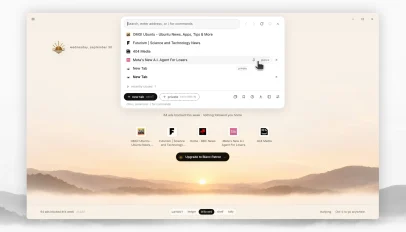 Blanc is a new open-source web browser that swaps a traditional, always-visible tab strip and address toolbar for a minimal floating ‘island’. A dynamic pill sits top the of the browser’s window (not over the web page, which feels a missed trick) so that the site address and site security info is visible, and provide quick buttons to open new tab, navigate back/forward and favouriting sites. It’ll expand as-needed, from where you can open, manage and switch between tabs, type web addresses, run searches or sift through your browsing history and bookmarks. Click the island to open it or press […]
