
 Login
Canonical dev mocks up an Ubuntu launcher that uses AI
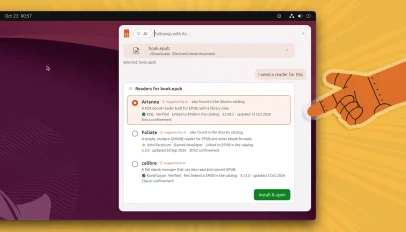 What would deeper AI integration on the Ubuntu desktop look like? Well, you don’t need to think too hard to find out. A Canonical engineer has published a prototype launcher that simulates how on-device AI could be used to enhance and aid users of the Ubuntu desktop. But the warty-prototype snap by Didier Roche-Tolomelli (aka didrocks) is not a real launcher. It’s a semi-interactive, automated mockup. It simulates things a user could do, and that includes interacting with a (theoretical) on-device AI model to complete tasks. The Snap Store listing refers to it as a ‘design-discussion prototype of the next Ubuntu […]
You're reading Canonical dev mocks up an Ubuntu launcher that uses AI, a blog post from OMG! Ubuntu. Do not reproduce elsewhere without permission.
 Alongside the main edition, Ubuntu 26.10 brought new releases of community flavours, including Kubuntu, Xubuntu and a welcome return of Ubuntu MATE. All of Ubuntu’s official flavours share the same foundations as the main release, with the Linux 7.3 kernel, Mesa 26.2 graphics drivers, updated tooling and support for installing snap packages from the Snap Store. Read on for an overview of the key changes in some of the most popular Ubuntu flavours, and downloads links to grab an ISO if you feel like sampling one them first-hand. Ubuntu 26.10 Flavour Recap Xubuntu 26.10 Xubuntu 26.10 ships with Xfce 4.20, […]
 Canonical reports a 'sustained distributed denial of service attack' on its websites, leading to outages. It says its teams are working to get them back online.
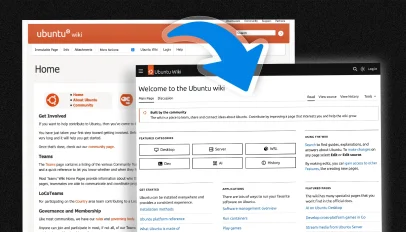 An all-new Ubuntu Wiki has gone live, giving the information hub its first substantive overhaul since 2010. The updated wiki now runs on MediaWiki, which adds a slate of modern backend and frontend features readers and editors alike will appreciate, e.g., search auto-suggest, mobile-friendly adaptations, light/dark mode, a WYSIWYG editor and more. Security was also a motivation, since the sites – there were actually two wikis – ran on an old stack tied Python 2, leaving it exposed to vulnerabilities. Ubuntu’s new wiki will serve a different role to the old one. In years past, the Ubuntu Wiki was used to […]
