❌

Reading view

There are new articles available, click to refresh the page.

Why accessibility is fundamental in 2026

At WP:26, Human Made’s virtual event exploring the future of WordPress, much of the conversation focused on what’s changing across the web. AI is accelerating workflows, enterprise platforms are becoming more complex, and expectations around digital experiences continue to rise.

But in the middle of all that change, one session brought the conversation back to something more fundamental.

In a conversation with Rian Rietveld, we explored accessibility not as a compliance exercise or a checklist, but as a core part of how we design and build for the web. It quickly became clear that while the tools and technologies around us are evolving rapidly, the question of who we are building for remains just as important as ever.

Throwing off the shackles of compliance checklists, Rian delivered a clear and focused take on how accessible design fundamentally impacts your audience reach and revenue. Across an insight-packed 30-minutes, she guided us through the current state of WordPress accessibility, the awesome WP Accessibility Knowledge Base project she’s been working on, andβ€”cruciallyβ€”the highest-return investment teams can make today.

Read on to get the key moments and insights from Rian’s session.

From compliance to commercial reality

One of the most striking themes from the session was how quickly the conversation around accessibility is shifting. What was once framed as a compliance requirement is increasingly being recognised as a commercial imperative.

Excluding users with disabilities doesn’t just create a poorer experience, it actively limits your audience. As Rian pointed out, that audience is far from marginal. In fact, the cost of getting accessibility wrong is measurable, with billions in lost revenue each year in markets like the UK alone.

For teams building on the web, this reframes the challenge. Accessibility is no longer about meeting minimum standards or ticking regulatory boxes. It is about ensuring your product is usable by as many people as possible, not only because it is the right thing to do, but because it directly impacts reach, engagement, and ultimately, revenue.

Accessibility, AI, and search are converging

One of the most interesting parts of the discussion was how accessibility is increasingly intersecting with other concerns that teams are already prioritising, particularly around AI and search.

As highlighted throughout WP:26, machines are playing a growing role in how content is discovered, interpreted, and acted upon. Whether it is search engines, assistive technologies, or AI agents, all of these systems depend on the same underlying signals to make sense of the web.

Those signals are not new. They include things like semantic HTML, clear heading structures, meaningful labels, and predictable interactions. In other words, the same practices that have always underpinned accessible design.

What is changing is the level of importance. Accessibility is no longer a separate consideration running alongside SEO or AI readiness. It is becoming part of the same foundation. If content is not structured in a way that machines can understand, it becomes harder to find, harder to interpret, and ultimately less useful.

That convergence raises the stakes. Getting accessibility right is no longer just about supporting specific users. It is about ensuring content works in an increasingly machine-mediated web.

Actionable strategy: The highest-return on investment

If advising a digital leader, Rian shared the single highest-return investment in 2026:Β 

  1. Training people: Train your designers, content creators, and developers on how to build accessible products. Most accessibility is β€œjust decent code, decent HTML.”
  2. Prioritise keyboard navigation: A website and all its functionality must be able to work with the keyboard only. This is the essence of accessibility and should be a non-negotiable testing priority.
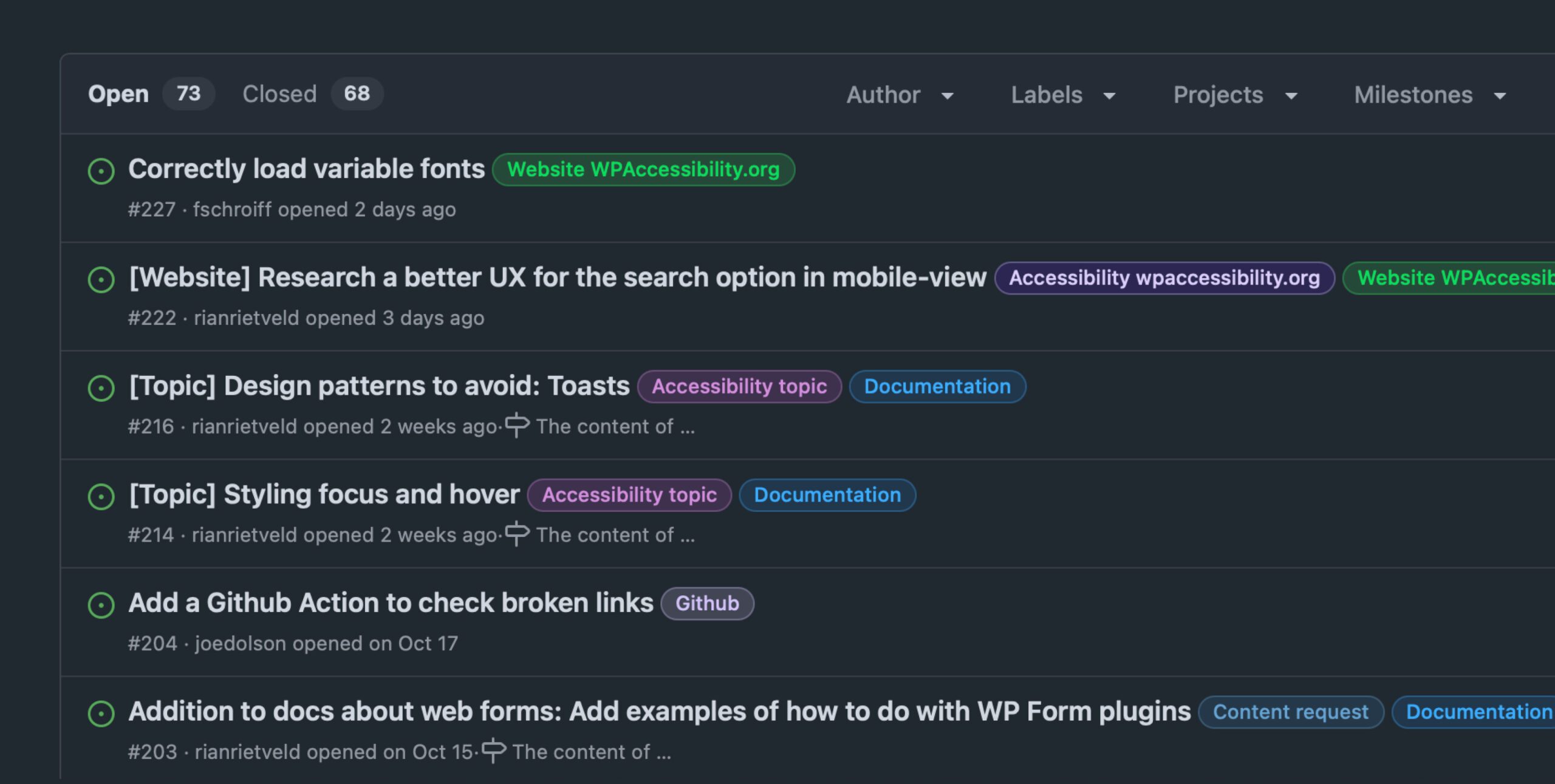
  3. Contribute to the Knowledge Base: Rian encouraged the community to get involved with the WP Accessibility Knowledge Base to create one central source of truth for all WordPress accessibility documentation.

β€œIf you create only for perfect people, people who have perfect eyesight, are clear of mind, can move their hands, are web savvy. Well, then you say, okay, only those people are allowed in my web shop and the rest of the people I don’t give access to and the rest of the people are quite a lot of people. So you have to take into account that you build for everyone, not only for perfect people.” – Rian Rietveld, Web Accessibility Specialist.

Ready to explore all the insights and research from WP:26? Access the full WP:26 Event Replay page here and download our supporting market analysis report, β€˜WordPress in 2026: The dawn of the intelligent CMS’.

The post Why accessibility is fundamental in 2026 appeared first on Human Made.
Why Accessibility is a Business Advantage

Accessibility often enters the conversation through the lens of compliance. Laws like the ADA or the European Accessibility Act make it non-negotiable. But compliance is only the beginning. Teams that treat accessibility as a strategic investment discover benefits that reach far beyond legal risk.

Accessibility drives performance, efficiency, and growth: the same outcomes every digital leader is trying to achieve.

Here’s how accessibility can unlock business advantage.

1. Accessibility improves conversion and retention

When a site is accessible, it reduces friction for every visitor. Accessible design is simply good design: faster, clearer, and easier to act on.

Consider these examples:

  • Forms that work with keyboard navigation also convert better on mobile.
  • Descriptive link text improves comprehension, which in turn supports SEO and click-through.
  • Readable contrast ratios reduce bounce rates by making content easier to scan in all lighting conditions.

A study by the UK’s Click-Away Pound project found that inaccessible sites cost British retailers Β£17 billion each year in lost revenue. The logic is simple: when people can use your site, they stay, buy, and return.

Takeaway: Every accessibility improvement increases usability, which directly impacts conversions and customer loyalty.

2. Accessibility lowers technical debt

Accessibility often feels expensive because teams try to add it after launch. Retrofitting fixes into an existing product is the real cost driver.

When accessibility is built in from the start β€” during design systems, component creation, and content workflows β€” it prevents common issues that later require developer rework.

Accessibility standards like semantic HTML, ARIA roles, and clear focus states also make code cleaner and easier to maintain. Teams gain long-term efficiency by removing ambiguity and duplication.

Takeaway: Accessibility built early saves both time and money later. It’s a form of quality assurance that protects future budgets.

3. Accessibility strengthens your brand and customer trust

Accessibility sends a clear signal about your organisation’s values. It tells people that inclusion is part of your culture, not a campaign.

Customers increasingly choose brands that reflect their ethics. Inclusive design and accessible experiences demonstrate respect for diverse audiences and reinforce trust β€” particularly important for sectors where credibility is key, like finance, healthcare, and higher education.

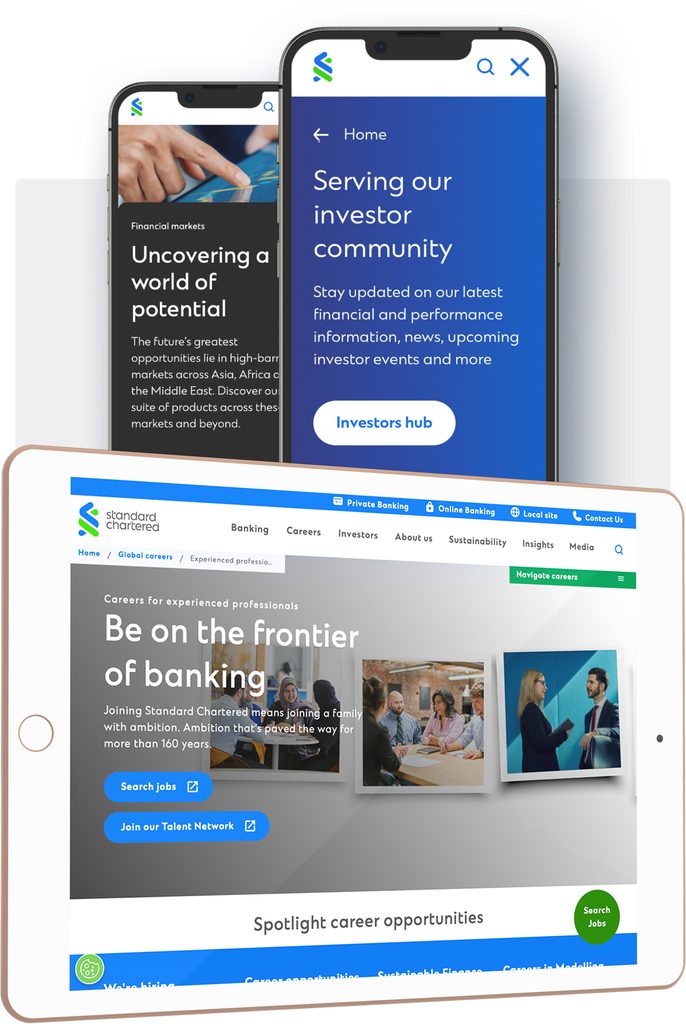
Human Made’s work with Standard Chartered is a strong example. Accessibility was treated as a global design principle across multiple markets and languages. The outcome was not only compliance but a more consistent user experience for every customer.

Takeaway: Accessibility builds trust at scale. It’s an investment in brand equity as much as technical capability.

4. Accessibility helps teams scale responsibly

Enterprise WordPress environments can span hundreds of sites, each with different editors, themes, and plugins. Without a shared accessibility standard, quality becomes inconsistent.

Embedding accessibility into design systems and governance models brings control and predictability. Reusable, accessible components make it easier for distributed teams to deliver consistent results without starting from scratch each time.

This also supports compliance across regions with differing regulations β€” a growing challenge for global organisations.

Takeaway: Accessibility governance creates efficiency and consistency across complex ecosystems.

5. Accessibility fuels innovation

Constraints are often where creativity begins. Designing for accessibility encourages teams to think differently about interaction, language, and structure.

Voice interfaces, dark-mode design, and responsive layouts all originated from accessibility thinking. Today, AI-driven captioning, pattern recognition, and alt-text generation are continuing that trend.

Teams that treat accessibility as a driver of innovation discover better solutions for all users β€” not just those with specific needs.

Takeaway: Accessibility challenges assumptions and leads to better digital products.

Building a culture of accessibility

At Human Made, we believe accessibility is a marker of maturity. It reflects how a company approaches design, development, and content creation as a unified practice.

That’s why we’re sponsoring accessibility specialist Rian Rietveld to create the WordPress Accessibility Knowledge Base, a central resource that will make accessibility knowledge easier to find and apply across the ecosystem.

Accessible design is not a compliance task. It’s an operational advantage β€” one that makes digital experiences faster, cleaner, more consistent, and more inclusive.

Take action:
Start by auditing one site, one workflow, or one component library. Identify the quick wins β€” like colour contrast, form labels, or keyboard navigation β€” and build from there.

Every improvement you make strengthens your platform. Why wait to unlock the business advantage accessibility can bring?

See where your site stands on accessibility.

The post Why Accessibility is a Business Advantage appeared first on Human Made.

❌