Reading view

There are new articles available, click to refresh the page.

They Trained to Protect Immigrants From ICE. Now They’re Prepping to Defend the Midterm Elections.

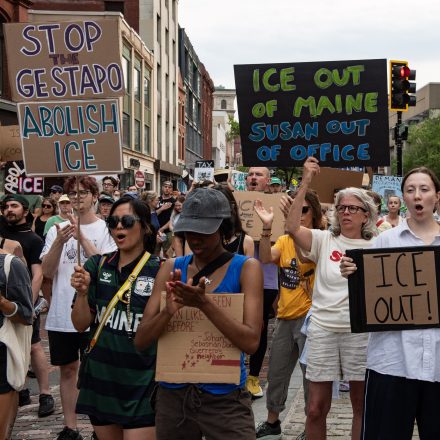
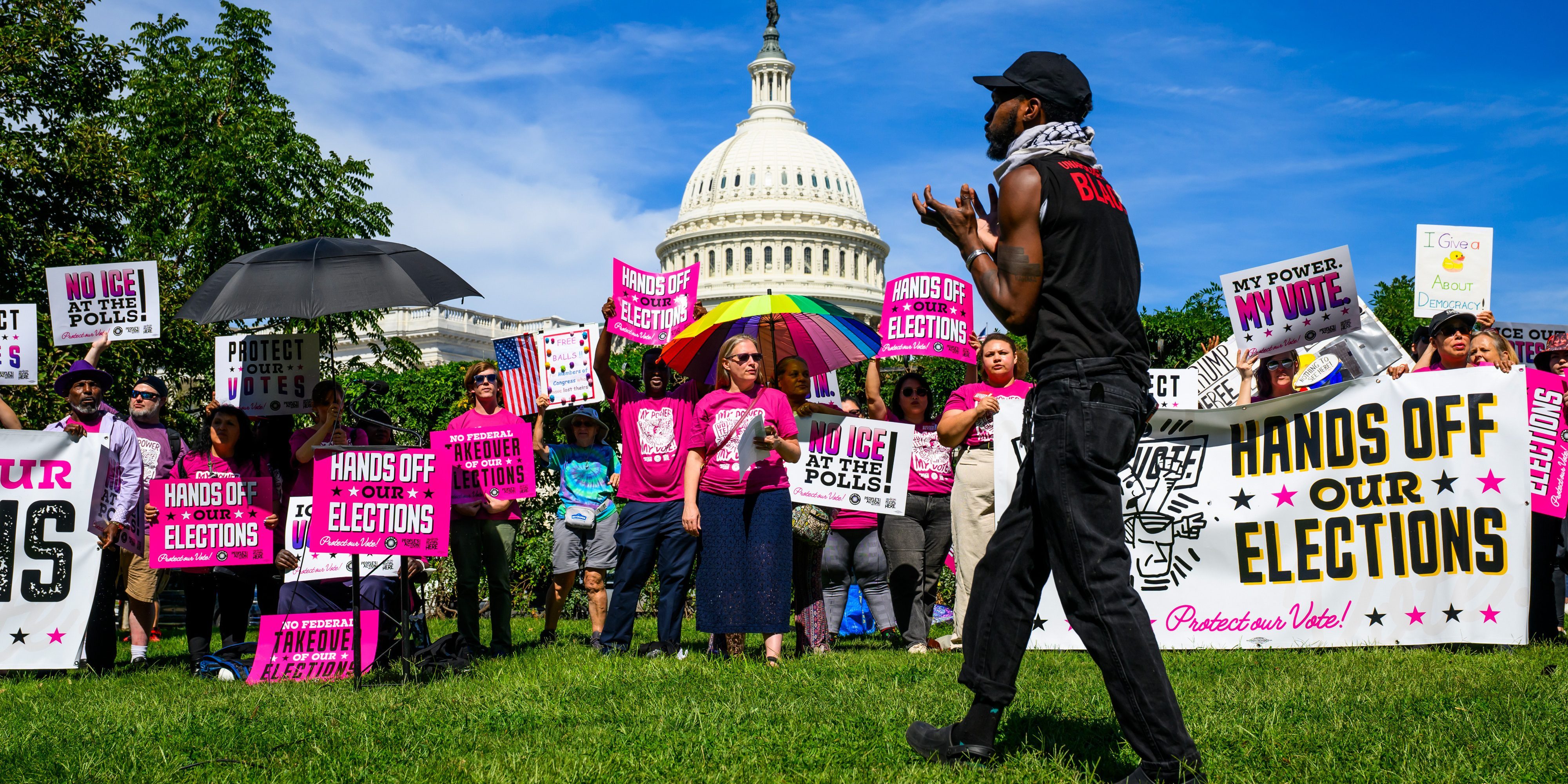
ICE watchers across the country who watched federal agents shoot people in the streets and fought to drive ICE from their cities are turning their new skills against the next authoritarian threat from the Trump administration: election interference.

Volunteers who showed up a few months ago asking, “Where do I buy a whistle?” are now trained and committed members of an “ICE Watch” movement, said Zach Mueller, whose anti-authoritarian group States at the Core started hosting trainings earlier this year. “They’re not in the normal cast of characters that have been showing up to rallies over the last several decades,” said Mueller. Now, they’re planning to fan out to their local polling places and defend their neighbors’ rights to vote.

The ICE-watchers-turned-poll-watchers are preparing for the worst despite a temporary win the voting rights movement secured last week, when the Supreme Court upheld a decision to block a Trump administration rule that would have let the U.S. Postal Service refuse to deliver ballots from states that don’t share their voter rolls with the federal government, among other new constraints, which advocates warned would lead to chaos and uncounted votes. While that plan was foiled for the midterms, other electoral threats abound.

“There are 100 different scenarios that you can run through,” said Ezra Levin, co-founder of Indivisible. “Could be ICE at the polls, could be Trump getting every Republican to swear to sabotage the results … Could be something after the fact, seizing ballot boxes or refusing to acknowledge the results. Who knows?”

What is clear, Levin said, is, “If you think that some Democratic politician is going to have some neat trick in the back pocket that they going to pull when it happens, you’ve got another thing coming.”

Federal interference at the polls is illegal. Despite lawsuits seeking to block federal immigration officers from poll sites, administration officials have continued to threaten their presence anyway. Earlier this month, Department of Homeland Security Secretary Markwayne Mullin said that immigration agents could be deployed at polling places if there is a “threat” or if they’re serving a warrant. And President Donald Trump has previously said that federal agents and the National Guard could be sent to polling locations.

Levin’s organization, which co-sponsors the No Kings protests, has launched “election protection” training programs to help people prepare to mobilize for different election sabotage scenarios, including federal immigration agents at the polls, and Mueller’s group has expanded its trainings to include election protection trainings known as “Beyond ICE Watch.”

“Ultimately this is going to come down to: Do you have a sufficient number of people organized and prepared to push back when shit hits the fan, or don’t you?” said Levin.

“The only thing that has changed anything over the last 22 months has been normal, everyday people deciding they weren’t going to put up with this shit.”

In the past two years, Levin said, an elite class composed of “media and business and law firms and universities” and parts of the Democratic establishment, including Senate Majority Leader Chuck Schumer, D-N.Y., have capitulated to the authoritarian whims of the Trump administration.

“The only thing that has changed anything over the last 22 months has been normal, everyday people deciding they weren’t going to put up with this shit,” said Levin. “They organized, they reached out, they formed communities, and they pushed back.”

Last year, the Save America Movement, a nonprofit political and pro-democracy organization that rose up in opposition to Trump, launched “liberty vans” in Los Angeles.

The vehicles are staffed with organizers trained in documenting and deescalating violence from federal law enforcement agents. “Our perspective was that if everybody in America knew what it felt like to be in Los Angeles during that summer, nobody would be OK with this,” said Mary Corcoran, who serves as the group’s executive director.

The project later expanded to other cities including Chicago, Charlotte, and Minneapolis.

“ICE is a new X factor in this election.”

Now, Corcoran plans to deploy a similar strategy in battleground states. The group is working with major civil and labor rights figures like Rev. Al Sharpton and American Federation of Teachers President Randi Weingarten to send volunteers — including trusted community leaders like clergy members — trained in deescalation, documentation, and local voting laws to precincts with large Black, Latino, and Asian populations in North Carolina, Georgia, Ohio, and Michigan.
Corcoran said the precincts they chose are all electoral power centers with large minority and immigrant populations. “If they were successful in intimidating even 10 percent of those voters from coming back this midterm cycle, it could easily swing the outcome statewide,” she said.

Corcoran is hopeful that people knowing they will not be alone at the polls will help them feel safer, but she acknowledges that this election cycle will be a new test. “Voter intimidation has always been around,” she said. “But ICE is a new X factor in this election.”

For the NAACP, voter intimidation is a familiar threat, even if the players have changed, explained Dominik Whitehead, the group’s head of membership. “Much of this we’ve seen before,” said Whitehead. In Georgia and other battleground states in 2024, there were at least 227 bomb threats targeting polling locations and election-related offices, many of them in Black precincts.

The NAACP is “going to defend democracy and ensure voters have access to the ballot box, as we have done for the last 117 years,” said Whitehead. But like Corcoran, he acknowledges that these are “different times.”

ICE has “no jurisdiction” to prevent anyone from voting, something the NAACP has been including in their messaging to voters, he said. However, Whitehead said that they’re still anticipating the agency’s presence. He said the NAACP is “working closely with immigrant organizations” and focusing their election monitoring efforts in places like Michigan, Florida, and Texas, where they expect threats against Muslim, Latino, and Black Caribbean immigrant communities.
Voting by mail has already begun in several key states, including Alabama, North Carolina, and Wisconsin. For Mueller and States at the Core, the real test will come after Election Day.

“There is a real question mark in my mind about what is the reaction from the authoritarian movement to this election,” said Mueller. “And it’s worth thinking more about how folks are planning, not just for the lead-up version to this, but what happens on November 4th and afterwards.” 

The Trump administration’s attacks on mail-in voting, for example, will likely become an issue again. Concurring with the Supreme Court’s decision to stop the new rule, Justice Brett Kavanaugh suggested that his issue with the new rule was its timing.

The post They Trained to Protect Immigrants From ICE. Now They’re Prepping to Defend the Midterm Elections. appeared first on The Intercept.

💾

Fired After the Charlie Kirk Revenge Purge, They’re Still Unemployed

The grief Emily Taylor had been holding at bay finally washed over her in January. It had been four months since a lone gunman shot Charlie Kirk in the throat at Utah Valley University, killing the conservative commentator in minutes. That winter “was the first time in my entire life that I didn’t go back to school,” said the former English professor, holding back tears.

Taylor had resigned from her tenured position in December to save her tiny college in South Carolina from a political witch hunt in which lawmakers threatened to pull her school’s funding because she’d written a brief essay acknowledging that before his violent death, Kirk had employed violent rhetoric.

“I was a first-generation college student, and I worked my entire life to be an English professor,” said Taylor, who has spent most of the last year scrolling bare job boards since leaving Presbyterian College. “The chances that I ever have tenure-track employment again doesn’t seem likely.”

She’s one of the more than 600 people who had their lives upended in the wake of Kirk’s assassination, when a free-speech crackdown led by the Trump administration sought revenge on anyone critical of the deceased far-right podcaster. 

“I don’t think any other era has had the tools to do the sort of purging that is available now.”

A year after Kirk’s killing, The Intercept spoke with five people who lost their jobs in the wake of the Kirk firings and four attorneys representing seven more clients, most of whom are still not back at work after finding themselves ensnared in one of the biggest mass censorship campaigns in modern history.

Their stories represent a chilling sea change that has become a hallmark of the second Trump administration: an inversion of the assumption that, for the most part, Americans are protected by their right to free speech. They illustrate what happens when an overzealous online army propped up by some of the most powerful people in the country are given free rein to terrorize their perceived political enemies.

“One of the things that was really interesting and very destructive about the post-Charlie Kirk purge was how coordinated and manufactured the outrage was,” said Allen Chaney, who serves as legal director of the ACLU of South Carolina and represents both Taylor and fired Clemson University professor Joshua Bregy, who was reinstated in January.

While the U.S. has suffered speech crackdowns before — like in the McCarthy and post-9/11 eras — the saturation of online life seems made to supercharge a backlash. “I don’t think any other era has had the tools to do the sort of purging that is available now,” said Chaney.

Taylor was waiting for her children to finish their piano lessons on September 10, 2025, when she heard the news that Kirk was shot while answering a question about a conspiracy theory he perpetuated suggesting there is an epidemic of transgender mass shooters. “Counting or not counting gang violence?” were his final words.

Soon there were murals and memorials. President Donald Trump called Kirk “our greatest evangelist for American liberty” to a packed crowd at his memorial service. And Vice President JD Vance said anyone perceived to be “celebrating” Kirk’s murder should be targeted. “When you see someone celebrating Charlie’s murder, call them out,” Vance said on his podcast. “And hell, call their employer.”

Online troll accounts and politicians alike took up the cause to begin targeting anyone even mildly critical of Kirk. Lists circulated naming people accused of “celebrating” Kirk’s death, making it easy to harass people en masse. Less sophisticated users could simply search the name “Charlie Kirk” on X and harass anyone who made a negative post. Big accounts like Libs of TikTok doxed critics and amplified hate to their millions of followers.

Jimmy Kimmel’s show was temporarily pulled off the air by ABC, after the host quipped in a monologue that MAGA was weaponizing Kirk’s death. Washington Post opinion columnist Karen Attiah was fired for pointing out Kirk’s deep anti-Blackness.

Kimmel is back on, and Attiah was recently reinstated by an arbitrator. But most of the people who were targeted, doxed, fired, and harassed were not public figures.

“My clients really were not high-income earners; we’re talking about support staff,” said Melody Fowler-Green, an attorney who represents several people fired in the wake of the Kirk killing. “A lot of the people who lost their jobs, they are people who are not in positions of power.”

“A lot of the people who lost their jobs, they are people who are not in positions of power.”

Kimberly Hunt, then a 31-year-old HR professional from Scottsdale Arizona, made a short video questioning the assertion that Kirk “didn’t deserve” his fate.

“He said a few deaths a year are worth it if it meant preserving our God-given right to bear arms. He actively fought against women’s rights. He’s openly Islamophobic, and he spreads anti-trans rhetoric,” Hunt said into the camera, accurately capturing Kirk’s rhetoric. “How many hate crimes happened because of him? Spare me the empathy because he didn’t believe in it either.” She said she had sympathy for his children but not his wife, Erika, who is now the CEO of his organization Turning Point USA.

Hunt said she never listed her job on her social media, but internet sleuths found where she worked, and the phones began to ring off the hook. When her boss asked her to meet, she knew the writing was on the wall. “He explained that I had put him in a tough position because there were so many phone calls coming into our business that it was disrupting their operations,” she recalled, “And that he had to let me go.”

The harassment didn’t stop. Hunt said at one point she received a call from her local sheriff that she was said to be on a “hit list.” Officers surveilled her home for two weeks.

None of the employers of the people who were fired or placed on leave in this story responded to The Intercept’s requests for comment.

Taylor had no way of knowing what was to come when she sat down to draft a response to the shooting the morning after, on September 11, 2025. “My initial reaction to it was just so angry that the students on campus were subject to another school shooting,” said Taylor. “I was also sad that he died because I don’t believe in violence, and I don’t think anybody should be murdered.”

In her essay, “Dying to Be Men: American Masculinity as Death Cult,” Taylor argues that the type of “violent discourse espoused by Charlie Kirk, and many and others” ultimately led to his tragic shooting in front of thousands of traumatized students.

“I’m sorry for Charlie Kirk and all the other men like him that have been raised in this America and with these ideals of masculinity,” she wrote. “I’m sorry that he decided to adopt this hateful ideology and to profit from it. And as the mother to a boy and a girl, my heart breaks for the America these children are growing up in. Here’s hoping we can save ourselves.”

She sent the piece to an editor at Ms. Magazine, the publication founded by recently deceased feminist leader Gloria Steinem, and within hours it was online. The hate began to roll in.

“One of the things that was really interesting and very destructive about the post-Charlie Kirk purge was how coordinated and manufactured the outrage was.”

Republican state Rep. Thomas Beach targeted Taylor on social media, and Republican Lt. Gov. Pamela Evette called for Taylor to lose her tenure. People began to dox her online.

Presbyterian College had to hire an outside firm to manage crisis communication and student safety. “They were telling me I needed to get personal security for my home,” said Taylor, “which you’ll be surprised to hear I couldn’t afford on a professor salary.”

Taylor said she bought security cameras, and after she received a death threat, the local police began to regularly check house. She called the principal of her children’s school to talk about what to do in case someone tried to harm her kids.

On September 18, 29-year-old Republican state Rep. Luke Rankin, who did not respond to The Intercept’s request for comment, called for the state to pull its funding from the small private Christian college. His colleagues co-signed a letter to formalize their threat.

Presbyterian College only has about 1,000 undergraduates. It would be devastated by that kind of hit, said Taylor, who walked away from a job that could support her family and offer future tuition benefits for her children. “I also support my mom. So, walking away was really hard,” she said. “But I also couldn’t have lived with myself if they had taken away money from students.”

For Dave Handler, the message from HR came as he was getting ready to teach a class on the First Amendment to his students at Minnesota Connections Academy, an online high school where he was a teacher until Kirk was killed.

“I post basically 10 words and an article, and I lost my career.”

On Facebook, Handler had written that he was not going to mourn a “Nazi” in a since-deleted post. He shared an article listing some of the offensive things Kirk had said over the years, then deactivated his account.

By that point, it was too late. According to Handler, he was told that someone had emailed the corporation who owned his school to complain, and soon he was out of a job.

Handler said his girlfriend, also a teacher, has been able to help support them both, and he has been able to find some part-time work, but his firing still stings. “I post basically 10 words and an article, and I lost my career,” he said. He doesn’t have the money to hire a lawyer.

Some who did manage to get attorneys have gotten their jobs back — like Phillip Michael Hook, a tenured art professor at the University of South Dakota who was placed on leave after calling Kirk “a hate spreading Nazi” on Facebook.

“I’m sorry for his family that he was a hate spreading Nazi and got killed. I’m sure they deserved better. Maybe good people could now enter their lives,” Hook wrote. “But geez, where was all this concern when the politicians in Minnesota were shot? And the school shootings? And Capitol Police?”

Hook was “really lucky,” said his attorney, Jim Leach, because they were able to get into court before he was officially fired.

“You contrast him to all these other people who did lose their jobs, and now are in this really long legal process,” said Leach, “maybe they have some relief, or maybe they don’t, but they’ll never have what they had, which is the ability to do their work and teach. Which for most teachers, I think it’s what they always wanted to do with their lives and what they love doing.”

Karen Leader, a tenured art history professor at Florida Atlantic University, said she first became familiar with Kirk for a relevant project of his: the “Professor Watchlist,” a list that he started in 2016 of purported left-leaning professors on college campuses. Despite the activist’s purported insistence on free-speech, the list drew harassment toward left-leaning professors for their views.

“Seeing this kind of whitewashing narrative made me mad, and I wasn’t going to have it,” said Leader. She said she began quote-tweeting people’s posts sharing racists, sexist, and transphobic things said by Kirk, with the caption “This is Charlie Kirk.”

Leader said she probably reposted roughly 48 posts about Kirk. On the Friday after his death, former Ron DeSantis staffer Jordan Chamberlain screenshotted her posts and tagged Florida Atlantic University, asking, “do these statements represent the views of your university?” She was placed on leave by 5 p.m. Saturday. Libs of TikTok shared a post of Leader’s headshot with the caption, “Another one bites the dust!” By Sunday morning, Leader’s home address was shared, and she was inundated by death threats.

Leader has been reinstated, but she says she is a long way from being made “whole.”

“I always, for the rest of my life, will be looking over my shoulder.”

“I always, for the rest of my life, will be looking over my shoulder in case one person is still stewing over this who has my address,” Leader said. “It’s a year now Thursday, a year since this all started, and I’m not 100% back.”

“I think everyone was eager for an excuse to punish people for making them uncomfortable,” said Gretchen Felker-Martin, a horror author who lost a contract with DC Comics after her posts calling Kirk a “Nazi bitch” had gone viral. “When something like Kirk’s assassination happens, you see a really regressive crackdowns from authority figures who just don’t want to think about this shit anymore.” 

Shortly after she lost her work, Felker-Martin said her personal phone number was leaked, and she began to receive phone calls from people threatening to come kill her.

But like most of the people who spoke to The Intercept for this story, Felker-Martin said she didn’t regret what she’d posted, despite the consequences.

“I think it’s unconscionable to throw your artists to the Nazis to appease these people,” Felker-Martin said.

Leader agreed. “I used my privilege, which is a lot of privilege to be forthcoming and honest about what was really going on,” she said. “He did enormous harm, and his organization continues to do enormous harm.”

“He did enormous harm, and his organization continues to do enormous harm.”

In March, Taylor filed a lawsuit with the ACLU of South Carolina against the four state lawmakers who threatened to deny funding to her college. The lawsuit asks the court to declare the lawmakers’ actions as unconstitutional, force them to rescind the letter and threats, and provide compensation for back pay, lost benefits, and compensatory and punitive damages. In response, Rankin and the other lawmakers denied having an impact “on her quote employment status,” arguing that she chose to resign.

Lawsuits like these have already resulted in big payouts — at least $2 million in disclosed settlements for employees fired or penalized in the wake of Kirk’s death so far. And in June, Rankin, Taylor’s lead antagonist, lost his primary reelection by roughly 20 percentage points.

“That’s the only thing our justice system can offer, right?” said Fowler-Green, whose client is still fighting for restitution — which, if it arrives, will come from public dollars. “Paying money can influence people’s behavior. One concern I have, though, is that the people who are making the decision are not paying the money. It’s not their money; it’s my money.”

“I don’t think dying absolved him of the stochastic terrorism that he inflicted on people.”

Hunt, who said she hasn’t been able to find a full-time job since September “would have done it again,” she told The Intercept.

“I don’t think dying absolved him of the stochastic terrorism that he inflicted on people,” Hunt said. And in her view, the backlash was clarifying, too. “I think it painted a bigger picture of the right and the mob mentality.”

The post Fired After the Charlie Kirk Revenge Purge, They’re Still Unemployed appeared first on The Intercept.

💾

Francesca Hong’s Loss in Wisconsin is a Win for AI Data Centers — for Now

Democratic Socialist Francesca Hong’s narrow defeat in Wisconsin’s Democratic gubernatorial primary on Tuesday night wasn’t just a stinging blow to the left — it marks a political loss for a nonpartisan anti-data center movement that has been picking up significant steam across the country. 

Milwaukee County Executive David Crowley beat the odds to eke out a victory by less than a percentage point on election night, a surprise upset after Crowley, who would be Wisconsin’s first Black governor if he wins in November, dropped out of the race and then re-entered with the support of outgoing Democratic Wisconsin Gov. Tony Evers. 

The race became dominated in the final days by inane issues like whether Hong believed that Thanksgiving should exist, based on old tweets criticizing the holiday, echoing and accelerating the annual Fox News “War on Christmas” panic. The sudden fury over old tweets was a distraction from a concrete issue that Hong had made a key focus of her public talking points and likely drove her surge in popularity: data centers.

Hong’s campaign repeatedly emphasized that she was the only candidate in the race to support a data center moratorium, which would pause construction of any new data centers, giving the state time to create regulations and study their environmental and energy impact. The moratorium would not extend to data center projects already underway in the state.   

“It’s time to press control+alt+delete to put a stop to this AI data center crisis, a full moratorium until we have the new regulations we need to protect our energy costs, our economy, our environment,” Hong said in a campaign video.

By all indications, it’s a popular position: A Gallup poll in May found that seven in 10 Americans oppose the construction of data centers in their area, and politicians from Maine to Texas have had to grapple with the public’s calls to bar the resource-hungry projects from their backyards.  

Hong’s narrow defeat is a loss for the data center moratorium movement, particularly in Wisconsin, which already has dozens of centers littering the state. Crowley, now the Democratic nominee, has called for more regulation of data centers, but has explicitly denounced a data center moratorium, calling it a “short-term” solution. “I don’t think he’s going to make [data centers] a front and center issue,” said Michael Ceraso, a democratic strategist and founder and director of Winning Margins. “It might pop up peripherally.” 

But Hong’s loss is far from a death knell for the anti-data center movement. While most voters would be hard-pressed to tell you what a data center was a few years ago, it has slowly become a major political issue that has helped to fuel the rise of insurgent progressives across the country. In this year’s midterm primaries, anti-data center candidates from Colorado to Kansas have been running and winning on the issue. 

The data center issue has distilled multiple grievances with establishment politicians into a simple message: The people who represent you are selling you and your community out to the highest bidder.

“It turns out that if you’re not taking money from Silicon Valley, you can fight hard for a federal moratorium on data centers,” said William Lawrence, co-founder of the Sunrise Movement, in a victory speech last week after he won his House primary race in Michigan’s 7th District. 

In his Michigan Senate race, Abdul El-Sayed won after vehemently opposing the construction of new data centers. At a rally in front of a massive new OpenAI and Oracle data center campus in Saline Township, Michigan, El-Sayed denounced the proliferation of data centers. “I stand with local and state elected officials saying that we cannot approve any more of these until we have federal-level guardrails,” El-Sayed told the crowd.

In Kansas, Democratic state Sen. Cindy Holscher won her Democratic gubernatorial race after calling for a moratorium on data centers. Holscher had previously voted for a bill that would have expanded the centers. And in Colorado, Melat Kiros unseated a 15-term incumbent, Rep. Diana Degette, D-Colo., while running on a data center moratorium platform. 

Amanda Litman, co-founder and president of the political recruitment group Run for Something, told The Intercept that Hong’s formidable campaign underscored how motivating data center opposition is for voters.

“Francesca Hong went from unknown state legislator to within a half point of winning the Democratic nomination in large part because she clearly spoke to the frustration and fear people have about what’s happening in the economy, especially around data centers,” Litman said.

The Sunrise Movement, which has backed anti-data center candidates, including El-Sayed, Lawrence, Kiros, and Tennessee state Rep. Justin J. Pearson, who won his House race last week, said that Democrats need to be at the forefront of this issue. 

“The fight against unchecked data center expansion is quickly becoming a defining political issue,” said Denae Ávila-Dickson, a spokesperson for the Sunrise Movement. “Democrats must be the party that stands up for people over the corporations profiting from data center expansion in our backyards, and progressive candidates are leading the way in that fight.”

The post Francesca Hong’s Loss in Wisconsin is a Win for AI Data Centers — for Now appeared first on The Intercept.

💾

BLM Protester Transferred Thousands of Miles Away After They Organized Against Their Solitary Confinement

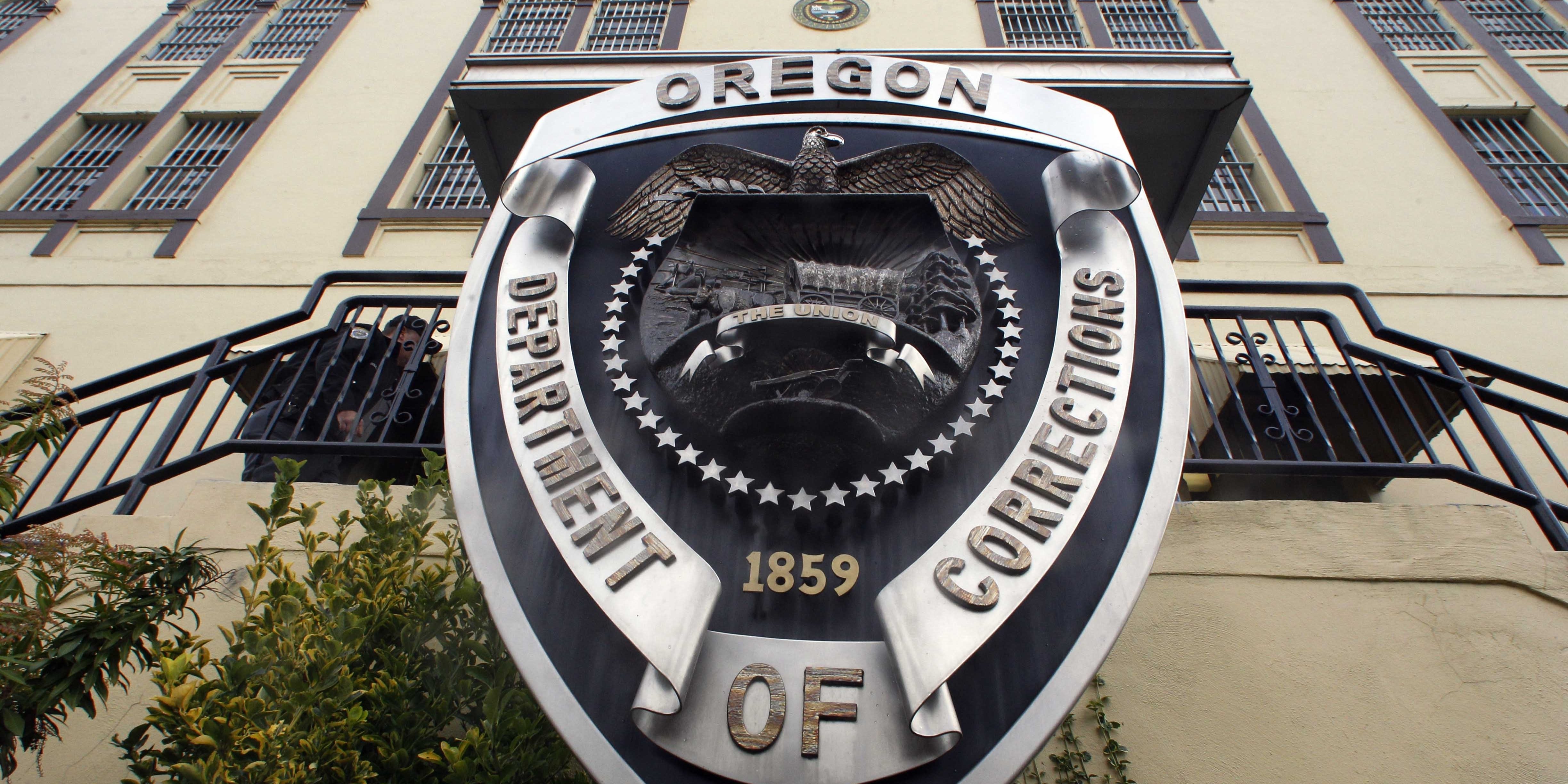
A political activist serving the longest federal prison sentence of any 2020 Black Lives Matter protester was transferred without warning to a detention facility thousands of miles away from their supporters and attorney.

Malik Muhammad’s transfer from the custody of the Oregon Department of Corrections came almost immediately on the heels of a misconduct report about organizing protest activity about their conditions from prison.

The report — which was obtained by The Intercept and flags conversations that are critical of Israel, the U.S., and the Oregon prison system — and subsequent transfer raise serious concerns about the state of censorship and free speech within the state’s carceral system. 

In March, Muhammad vanished from every inmate tracking system without a trace, after missing a scheduled call with their lawyer. Days went by with no word. Inquiries from their attorney were met with vague runarounds from officials.

Muhammad, a veteran diagnosed with post-traumatic stress disorder, spent much of their time in Oregon in and out of solitary confinement. As a result, trouble communicating with Muhammad was not altogether unusual. As the days of silence became weeks, however, fear set in among Muhammad’s loved ones. 

In April, Muhammad’s partner received a letter saying that Muhammad was alive — but thousands of miles away at Kirkland Correctional Institution in South Carolina.

“They want it to be another state’s problem, so they don’t face the same scrutiny.”

The Oregon Department of Corrections, in response to questions from The Intercept in May, denied that Muhammad, an avowed anarchist and father of one, had been transferred as retaliation for their activism inside the Eastern Oregon Correctional Institution. Prison system officials said instead that there were “extensive background reasons” for Muhammad’s transfer.

A misconduct report issued in March suggests that Muhammad’s public-facing and internal activism — particularly on their blog, “Malik Speaks!” — was a major thorn in the side of the Oregon prison system. Other prison write-ups of Muhammad’s activities behind bars described to The Intercept by their attorney took a similar line, focusing on Muhammad’s organizing on their blog and communications with other incarcerated people.

The misconduct report from March details posts from Muhammad’s blog urging their supporters to undertake a coordinated phone and messaging campaign; Muhammad wanted them to write to the prison and to public officials to call for better conditions inside and an end to Muhammad’s solitary confinement.

Oregon corrections officials are “punishing Malik for their political beliefs, for things that would normally be First Amendment protected and not within the normal scope of exceptions,” said Lauren Regan, director of litigation and advocacy at the Civil Liberties Defense Center and Muhammad’s attorney. Prison systems, she said, “hate anarchism and anti-fascism.”

The March misconduct report, which accuses Muhammad of “formulating an impact on the safety and security while promotion of security threat activity,” came only six days before the transfer to South Carolina. (The Oregon Department of Corrections declined to comment on “disciplinary matters,” citing department policy.)

To Christopher Kuttruff, a friend of Muhammad’s, it all seems like Oregon’s transfer was a ploy to make the publicity around Muhammad’s case into someone else’s issue.

“They want it to be another state’s problem,” Kuttruff said, “so they don’t face the same scrutiny.”

In the Hole

As they clutched the wrinkled pages of the misconduct report, Muhammad knew something big was about to happen.

In early March, officials flagged messages where the activist said they “have always been anti-Israel my whole life.” In another message, Muhammad says, “I’m begging for them to do it” — allegedly in reference to someone bombing the U.S. The messages prompted a further review, according to the misconduct report obtained by The Intercept.

The review turned up a message in which Muhammad called a guard a pig and said they wanted to “breakkk” their face. Muhammad maintains that the messages were spliced out of context and that the face comment was not a threat, but an insult tossed out in frustration.

Muhammad was thrown back into a disciplinary housing unit.

Weeks after their time in the “hole,” Muhammad received another misconduct report. This one, however, felt different.

“I knew that was what they were constructing to get me sent out,” they said. “I sent like a hundred letters as soon as I got the DR” — referring to the disciplinary report.

The three-page report accused Muhammad of engaging in “racketeering,” “unauthorized transfer” of digital currency, “unauthorized organization,” and “unauthorized use of info systems.” All the allegations were related to Muhammad’s blog, which they maintain with the help of their supporters and use to organize advocacy around their case and raise funds for their commissary account.

“I knew that was what they were constructing to get me sent out.”

“Evidence supports that AIC Muhammad utilizes his visitor [redacted] to actively maintain a blog on his behalf while he is incarcerated,” a prison official wrote, referring to Muhammad, who uses they/them pronouns, as an “Adult in Custody.”

“His blog website,” the misconduct report says, “focuses on an organized grouping of individuals that support AIC Muhammad in his beliefs, using visual, written, and recorded readings from AIC Muhammad. These items contain his propaganda messages and are dispersed in a social seeding manner through his visitor(s) through his blog.”

The report says Muhammad had broken Oregon administrative rules on “unauthorized use of info systems” by allowing a recording from a prison call system to be transcribed and uploaded to their blog.

Another conclusion was more consequential: Citing writings on Muhammad’s blog, officials claimed that the protest organizing and political activity was having “an impact on the safety and security” of the facility. The report cited Muhammad’s encouragement of the phone campaigns and other activities related to the blog, such as purchasing left-leaning reading materials for other incarcerated people.

Conor Fitzpatrick, an attorney who has litigated prison free-speech cases and is today with the Foundation for Individual Rights and Expression, said that speaking out on conditions inside of prison is generally First Amendment-protected speech. Officials can’t curtail speech to the outside by exempting complaints from inside about prisoners’ incarceration.

“If an inmate,” said Fitzpatrick, “is sending a letter or posting online peacefully making their views known about, ‘Hey, here’s what’s going on inside the facility. If you think this is wrong, I suggest writing your congressman or writing the facility, and asking that something be done to fix this’ — to me, that strikes me as something that ought to be protected by the First Amendment.” 

Behind bars, though, it’s not always that simple. A chasm lies between what should fall under First Amendment protections in prison and what does in practice.

The Supreme Court has ruled that constitutional rights apply in prison, but courts have upheld all types of restrictions on free speech, from bans on fantasy games like “Dungeons & Dragons” to medical texts like the “Physicians’ Desk Reference.” The barriers to even getting before a court to vindicate your rights are steep. 

“The on-the-ground regime of what censorship looks like [inside prisons] is pretty ridiculous, and basically stands the First Amendment on its head,” said David Shapiro, the executive director of the MacArthur Justice Center, a nonprofit focused on the criminal legal system. “It is close to an anything goes censorship regime.”

Muhammad’s Blog

Few people understand this better than Muhammad, who in March was racing against the clock to get help before officials could act. After receiving the report, they began furiously sending letters.

Days after receiving the misconduct report, guards ferried Muhammad, chains hanging around their belly under their jacket, onto a plane. It wasn’t until they landed in Utah that someone bothered to tell them they were headed to South Carolina, where guards at Kirkland Correctional Institution forcibly restrained Muhammad and shaved their head.

(“It is our policy to cut inmates’ hair upon arrival,” said Chrysti Shain, a spokesperson for the South Carolina Department of Corrections, though she said she couldn’t speak directly to Muhammad’s case.)

Only one of the dozens of letters they’d sent made it through, they said, and it only arrived at its recipient after they had already been transferred.

It would be days before Muhammad was able to get a letter out to their partner, alerting their loved ones that they were, in fact, alive — just 3,000 miles away. 

Muhammad is widely liked, with a wit and intellect that obscures their relative youth, a trait that has been rewarded in prison with more than a few bumps and bruises from guards or angry fellow incarcerated people. 

At 25, Muhammad was sentenced to 10 years in prison for throwing Molotov cocktails at protests in September and October 2020. As with many of the later prosecutions in the aftermath of the George Floyd uprisings, federal prosecutors initially left the case to state prosecutors before eventually charging Muhammad federally.

Muhammad wrote on their blog that they first got involved in activism as a high schooler, after the killing of Trayvon Martin. The calling would eventually lead Muhammad to travel the country and participate in the George Floyd protests against police violence and impunity.

The blog touches on a range of topics from their life story to their treatment in prison to poems about resistance. An allegedly unauthorized audio recording cited in the misconduct report is a poem about how oppressed people are robbed of their humanity. 

“Under oppressive conditions, love is resistance as joyousness is not permitted. Like Palestinian hostages being released, but their families told not to celebrate or be joyful; like blacks showing unity, working out in solidarity, or sharing things in prison – food, or hygiene, or shoes,” said Muhammad. “Even emphasized in the visiting room, as one of my partners came to see me, their grin bright and gleamy.”

Where Muhammad sees an outlet, however, Oregon sees a threat — “an impact on the safety and security.” The actual activities at hand seem much more innocuous.

“Watching Malik’s Back”

The report accuses Muhammad of engendering a so-called “zap” phone campaign. In zap campaigns, a common protest tactic to bring public pressure to bear, organizers encourage large numbers of supporters to call or write en masse.

In this case, the declared recipients would be the detention facilities or Oregon Department of Corrections officials. The idea with the campaigns is to demonstrate wide support for a cause by overwhelming the targeted people or institutions with communications.

Oregon officials said the calls and other activities on the blog constituted the security threat.

In one post referenced by the misconduct report, the blog encourages supporters to contact the Eastern Oregon Correctional Institution to get Muhammad released from solitary confinement. In 2024, according to previous reporting from The Intercept, Muhammad had effectively been held in solitary confinement for over 250 days. Oregon is supposed to limit time in so-called special housing to 90 days. 

The report does not elaborate on how receiving calls about solitary confinement placed anyone in jeopardy.

The report does not elaborate on how receiving calls about solitary confinement placed anyone in jeopardy.

“Outsiders watching Malik’s back,” said Regan, their lawyer, “knowing what’s going on, calling the warden and saying, ‘Hey, I know that you’ve put Malik in the hole for 300 days and that Malik is on a hunger strike. What are you going to do about it?’ Those are all what little mechanisms Malik has to ensure their survival while in prison.”

Muhammad said there is nothing “untoward or illegal” about people calling to advocate on their behalf.

“A lot of the times, it’s the only way to get any traction or get anything done because they try to isolate people,” they said. “If people don’t have any knowledge of stuff that’s going on, then these people who run this as their little fiefdom, they’re able to do what they want.” 

Having a loyal community online has landed them in hot water. Officials argue that Muhammad used the recordings, as well as solicitations for donations, to “support and promote an organization,” in violation of their rules on “unauthorized organization,” “racketeering,” and “unauthorized transfer” of digital currency — a charge related to the donation solicitations.

The report accuses Muhammad of fraud for soliciting donations under a hyperlink titled “Free Malik Now!!” It implies the money is going toward an appeal, the report says — despite also acknowledging the website explains that the funds go toward their commissary account and legal needs, as well as toward supplying books and reading materials to other incarcerated people.

The report also casts the online group of supporters that manage and visit Muhammad’s blog as “an organized grouping of individuals that support AIC Muhammad in his beliefs.”

The language about an organized group is consistent with other disciplinary matters, including transfers, behind bars. Prisons sometimes justify prison transfers by saying they are severing contact between gang members, in theory to reduce violence. Calling readers of a blog who occasionally make phone calls and donate to Muhammad’s commissary account an “organization” is a novel interpretation. 

Muhammad wants the censorship they faced to serve as a lesson.

“In this country, free speech has never been allotted to anyone, and certainly not in prison, and certainly not in this climate,” Muhammad said, “not in this steady march to fascism that we’re on.”

The post BLM Protester Transferred Thousands of Miles Away After They Organized Against Their Solitary Confinement appeared first on The Intercept.

💾

Corporations, Not Immigrants, Are Responsible for Vast Majority of Healthcare Fraud, OIG Report Shows

For more than a year, the Trump administration has sought to blame immigrants for widespread health care fraud. Immigrant communities, the Trump administration’s bunk theory goes, are draining resources and raising costs by defrauding the federal government.

The spurious allegations played a key role in Donald Trump’s massive — and deadly — immigration crackdown in Minnesota over the winter.

A semiannual report from the Department of Health and Human Services’ Office of Inspector General to Congress, however, highlights a different narrative.

The report, which covers enforcement actions over a six-month period, highlights the obvious: Corporations — not small immigrant-oriented healthcare providers, or undocumented immigrants illegally taking benefits — are responsible for the vast majority of alleged fraud in the American health care system.

Released earlier this month, the report highlights billions of dollars’ worth of healthcare fraud from corporate executives.

One CEO ran a scheme to target Medicare beneficiaries with medically unnecessary medical devices. An insurance broker and marketing executive orchestrated an Affordable Care Act enrollment scam that preyed on vulnerable people experiencing homelessness and substance abuse.

While C-suite fraudsters are the stars of the congressional report and most credible research on the topic, immigrants are at the cynosure of the administration’s public fraud campaign.

Freeing Actual Fraudsters

Experts on immigrant rights and healthcare say the administration is using immigrants as a scapegoat for systemic fraud in the healthcare system that can be attributed to corporate greed, while shielding actual bad actors who profit from a broken system.

“There isn’t really clear evidence of any systemic issues implicating immigrants,” said Sarah Krieger, senior policy counsel at the National Immigration Law Center. “The administration’s public messaging is focusing on immigrants and immigrant workers, but that’s constructing a narrative with the intent of hurting immigrants, not with actually rooting out any problems.”

Krieger pointed to examples of the Trump administration using clemency and pardons to get corporate healthcare fraudsters off the hook.

In May, President Donald Trump granted clemency to Lawrence Duran, the owner of a mental health company, American Therapeutic, who was sentenced to 50 years for “orchestrating a $205 million Medicare fraud scheme.”

An analysis by the California governor’s office found that Trump’s pardons had wiped nearly $2 billion in victim repayment and taxpayer recovery for Medicare and tax fraud, as well as other types of fraud.

Trump Focus on Immigrants

Though immigrants aren’t mentioned once in the report itself, they have been the relentless focus of the Trump administration.

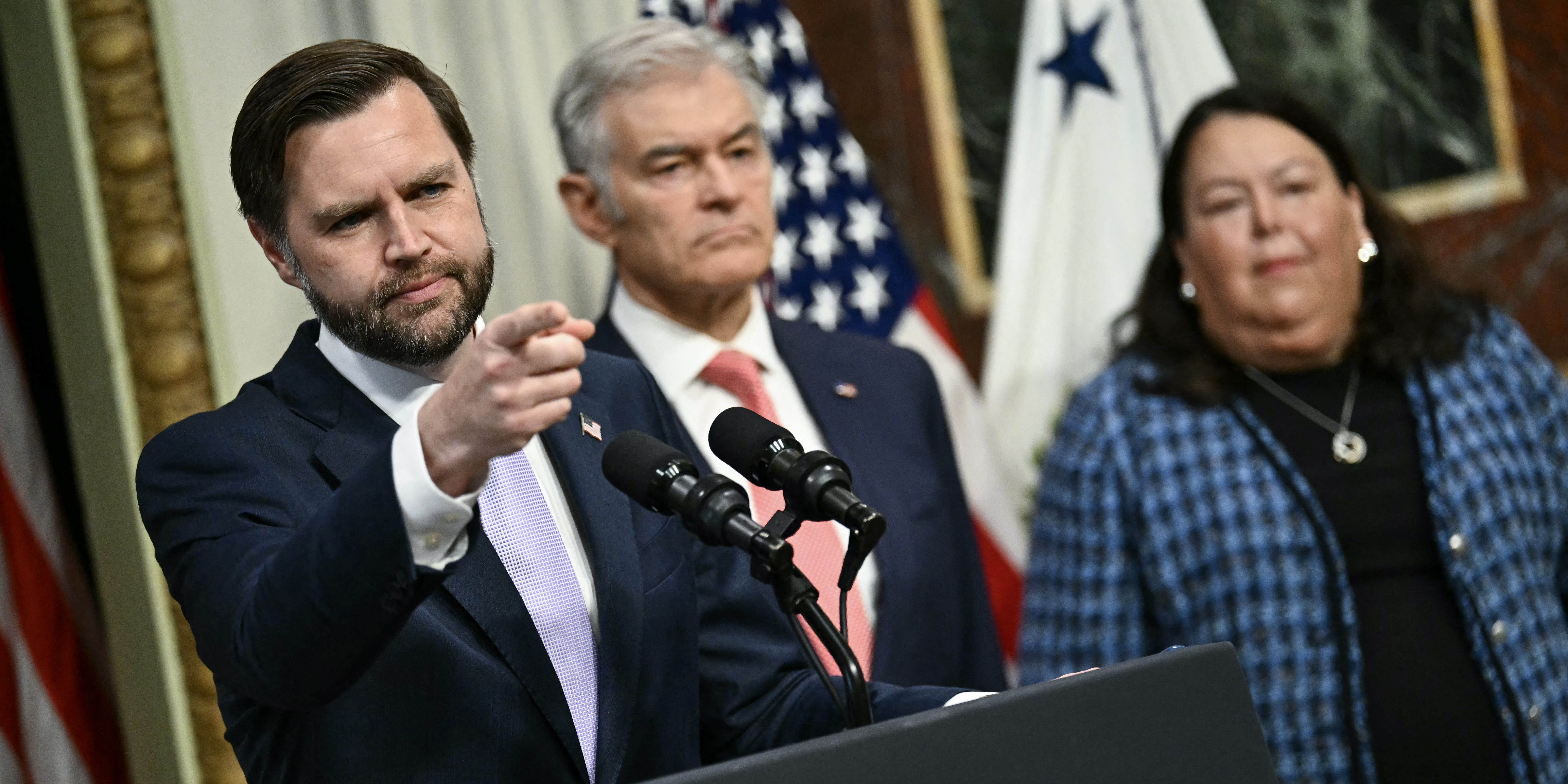
In May, Vice President JD Vance and Mehmet Oz, a television doctor who is now head of the Centers for Medicaid and Medicare Services, hosted an anti-fraud press conference.

At the event, Vance erroneously warned that “there could be tens of billions of fraudulent payments in the California system” going toward “illegal aliens, going to fraudulent businesses.” Oz — best known for promoting diet pills — similarly claimed that hundreds of millions of dollars of “questionable expenditures” were linked to “immigration-related costs,” and that “folks who are undocumented” were fraudulently getting access to Medicaid funds in California.

The language is par for the course from administration officials. Later that month, deputy White House chief of staff Stephen Miller went so far as to blame the national debt on immigrants committing benefit fraud.

“We could balance the federal budget if the only dollars that went out of the Treasury went to individuals who were properly lawfully correctly eligible to receive them,” Miller said at a press conference.

The public rhetoric from Trump officials would lead one to false conclusions about who commits large-scale healthcare fraud — and who benefits.

“We are seeing a trend around the administration scapegoating immigrants and not pointing to the actual bad actors: corporations,” said Isha Weerasinghe, director of the public benefits justice team at the Center for Law and Social Policy, a Washington-based nonprofit that advocates for people with low incomes.

$300 Billion a Year

The National Health Care Anti-Fraud Association estimates that the cost of healthcare fraud could be as high as $300 billion a year.

Most of that fraud is from providers scamming patients and insurance by billing patients for services not rendered or performing medically unnecessary services for the purpose of generating insurance payments.

The administration does not want to highlight that type of fraud in their public rhetoric because they’re enabling it, said Krieger, of the National Immigration Law Center.

“They’re not actually interested in solving the problem.”

“The administration has cut funding for all sorts of internal enforcement mechanisms. They have provided clemency to people convicted of government fraud in the past. They’ve fired inspector generals for overseeing accountability,” she said. “They’re not actually interested in solving the problem.”

Data suggests that noncitizens are less likely to commit welfare fraud than citizens.

Weerasinghe said that the administration is using a well-worn tactic of blaming marginalized groups to take away benefits from the population more broadly. 

“All of us know about the ‘welfare queen’ narrative, and that worked,” said Weerasinghe, referencing a racist trope popularized by Ronald Reagan to characterize Black people on benefits as greedy fraudsters. “It created a lot of hatred toward public benefits, and also this willingness for the public to be OK with this kind of crackdown that was absolutely unnecessary.”

Weerasinghe said the administration is using “the immigrant narrative in order to make their case to defer to defer funds.” Trump, for instance, recently froze more than $1 billion in Medicaid payments to California and Minnesota.

“They’re not interested in tackling any systemic issues that may exist,” said Krieger. “They’ve kind of constructed a problem in search of a solution, and the solution always is to blame immigrants.”

The post Corporations, Not Immigrants, Are Responsible for Vast Majority of Healthcare Fraud, OIG Report Shows appeared first on The Intercept.

💾

In the Wake of Fatal ICE Shootings, Democrats Drag Their Feet

Democrats in Congress have remained largely silent and inactive in the wake of ICE agents’ fatal shootings of two immigrant men in Maine and Texas, displaying lackluster energy compared to the party’s response to the killings of two white U.S. citizens earlier this year. 

By early March, after federal immigration agents shot and killed Renee Good and Alex Pretti in Minneapolis, 32 Democratic members of Congress had called to either abolish or dismantle Immigration and Customs Enforcement, including three members who had previously voted to “express gratitude to ICE.” Democrats rapidly introduced legislation to restrict, defund, or abolish the federal immigration agency. And for months, Democrats in the House successfully blocked funding of the Department of Homeland Security with the unrealized goal of obtaining minor restrictions on immigration agents. 

Although protesters took to the streets in Maine and Texas in the ides of summer to object to ICE’s killing of 25-year-old Johan Sebastián Durán Guerrero in Biddeford and 52-year-old Lorenzo Salgado Araujo in Houston, that glimmer of enthusiasm for action appears to have died down in the halls of Congress.

“I’ll be honest. I’m not seeing [anger] to the extent I saw when Alex and Renee were executed by ICE in Minnesota. … I’ve seen some statements come up, and some conversations, but it has not been elevated to the extent that I would expect from a number of my colleagues,” said Rep. Delia Ramirez, D-Ill. “It feels like we’re normalizing it.”

Democrats caved on DHS funding in April, and with some exceptions, most of the caucus has been silent on the existing bills to restrict the agency. Progressives have criticized their colleagues for not continuing to fight against funding the Department of Homeland Security, and for only acting in a moment of heightened political attention. 

In January, Ramirez and Rep. Yvette Clarke, D-N.Y., introduced the Melt ICE Act, a bill that would end DHS funding to detain or monitor immigrants. The legislation, which Ramirez says is “not all things” but represents a meaningful step toward dismantling the entire agency, currently has 12 co-sponsors, including members of the progressive Squad and two retiring members who will leave Congress at the end of the current term.

Ramirez said she had hoped to pick up additional backing in the wake of Durán Guerrero and Salgado Araujo’s killings, but she has yet to hear from any additional co-sponsors — even from colleagues who were calling to “Abolish ICE” in February and sharing press releases with the words “Melt ICE” in them.

The Chicago congresswoman said she worried that the lack of action had to do in part with the fact that Pretti and Good were white U.S. citizens, and Durán Guerrero and Salgado Araujo were noncitizens from Colombia and Mexico, respectively. She noted that one of the first fatal ICE shootings under the second Trump administration — of undocumented Mexican immigrant Silverio Villegas González last September in Chicago — rarely gets mentioned.

“Why is it that for some, when the person seems to be lighter-skinned, a U.S. citizen, the uproar seems to be deeper?” Ramirez said. “And why was it that his name seems to be a name that many people don’t know?”

While political energy remains low, the Department of Homeland Security continues to be a lethal force. On Tuesday morning, a man in Florida running from immigration officers was struck by a semi-truck, marking the third time a person had been killed during an encounter with immigration agents within a week.

Violence has surged within detention centers as well. Within the first 500 days of Trump’s second term, 52 people have died in ICE custody, the highest mortality rate in over a decade, according to a recent report from Human Rights Watch and Physicians for Human Rights. On Monday, Jesús Manuel Arenas-Silva, a 45-year-old Venezuelan man died in a private prison used for ICE detention in Georgia in an apparent case of medical neglect. 

Meanwhile, ICE has punished protesters who object to its brutality with more violence. Physicians for Human Rights and the UC Berkeley Law School’s Human Rights Center documented 412 incidents between June 2025 and May 2026 where law enforcement agents used excessive force or chemical weapons on ICE protesters, children, journalists, legal observers, and bystanders.

Dr. Rohini Haar, an adjunct professor of epidemiology at UC Berkley’s School of Public Health and lead author of the use-of-force study, said lawmakers should not allow these attacks to be met with “impunity” just because there is less impending political pressure.

“Do not ignore this just because it’s less newsworthy,” said Haahr, who is also a medical adviser for Physicians for Human Rights. “You’re going to keep getting [violence] when no one is held accountable.” 

Progressives, including Ramirez, have criticized their colleagues for not anticipating that the violence would continue once DHS funding was fully restored. In April, House Democrats agreed to fund the Department of Homeland Security under a two-track model that would immediately fund most of the Department and push ICE and Border Patrol funding through a separate process that would not require any Democratic support. In June, Republicans voted to fund ICE and Border Patrol to the tune of $70 billion.

“I said this a couple of weeks ago, that I would not be surprised if, when ICE funding started up again, we would start to see more civilian deaths at the hands of ICE,” Rep. Alexandria Ocasio-Cortez, D-N.Y., who did not co-sponsor Melt ICE, told reporters on Monday. “And that’s exactly what has happened.”

The Intercept asked whether the congresswoman planned to co-sponsor Ramirez’s legislation and was directed to her public statements on the DHS funding measure. The Intercept also reached out to Progressive Caucus Chair Greg Casar, D-Texas., who is also not a co-sponsor of the legislation, to ask if he planned to co-sponsor the bill in the wake of the Texas shooting, but did not receive a response.

Although anger has bubbled up again in protests across the country, the public’s attention does appear to have waned since its peak in January after federal immigration agents fatally shot Good and Pretti. 

Manisha Sinha, an American history professor at the University of Connecticut, said there are several potential reasons for lowered attention on Salgado Araujo and Durán Guerrero’s deaths. The Trump administration has changed its tactics to deemphasize cities where protesters and local leaders could jointly resist immigration enforcement, as they did in Minnesota. And, undoubtedly, the fact that “Alex Pretti and Renee Good were citizens” added to the public outrage over their killings, said Sinha. 

Without the same intensity of pressure from voters as there was in winter and spring, Ramirez said many of her colleagues are not motivated to take principled positions on immigration that might anger their deep-pocketed donors. But she said she understands that people may also be wary of risking their lives while members of Congress go about their business as usual. 

“People in the street don’t feel like the members on the inside really have the pulse of what’s happening to them, and that frankly they’re fucking tired,” Ramirez said. “And I hate that I have to ask them to keep showing up. But knowing this body, I know that this body only moves from pressure.”

The post In the Wake of Fatal ICE Shootings, Democrats Drag Their Feet appeared first on The Intercept.

💾

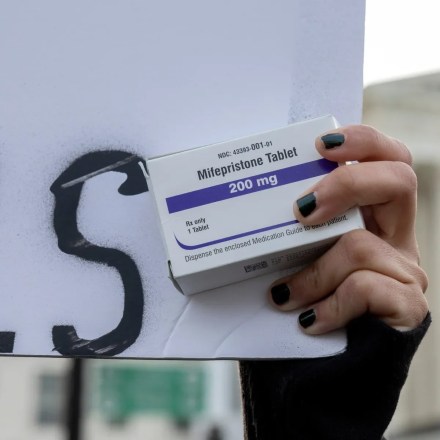
The Trump Administration Is Overhauling Birth Control Access for the Pronatalist Movement

The Trump administration is quietly turning a federal program designed to help lower-income Americans access birth control and other reproductive health services into an engine for pronationalism, a far-right movement with roots in eugenics that pushes people to have more babies.

On Thursday, the Department of Health and Human Services’ Office of Population Affairs published an updated “notice of funding opportunity,” first announced in April, for service providers to apply for grants through Title X, a federal program that provides low and no-cost birth control and other sexual and reproductive health services to roughly 2.8 million people every year.

For months, the federal program had been plagued with uncertainty. Donald Trump eliminated Title X from his 2027 annual budget — and last year suddenly froze a large percentage of funds going to Title X recipients before eventually restoring the funding.

But when providers opened the funding notice in April, instead of being met with relief, many were horrified to discover that Health and Human Services had a new mission in mind for the only federal program dedicated to providing contraceptives: getting women to have more babies.

Grants funded through the program will help “build body literacy, address infertility, plan and space pregnancies and navigate reproductive health conditions such as endometriosis” and other conditions that affect infertility, the notice said. Contraceptives are hardly mentioned, except in a section on “overmedicalization,” which appears to commend the fact that “reports have shown a decrease in females’ current use of any contraception.”

The notice is a part of a quiet, but significant, push to retool the Department of Health and Human Services into a weapon for a pronatalist movement seeped in the racist history of eugenics — which insists on the supposed biological superiority of white, straight, able-bodied people — and in the denial of women’s bodily autonomy and right to exist outside of motherhood.

Providers fighting back against the new requirements in court argue that this will further cede power over vulnerable communities’ health to far-right actors inside of the administration, like Assistant Secretary for Health Brian Christine, a former penile implant surgeon and anti-abortion crusader who is in charge of administering the Title X program. 

“I would characterize it as really a shift toward this Project 2025 MAHA vision of prioritizing having babies over reproductive autonomy,” said Amy Friedrich-Karnik, director of federal policy at the Guttmacher Institute, a sexual and reproductive health research organization, “and really undermining the program from top to bottom.”

The notice had previously included a pre-merits alignment review that would require all grantees to undergo an ideological audit by political appointees based on their commitment to the administration’s priorities, including ending diversity, equity, and inclusion efforts and gender-affirming care — even though the statute explicitly requires grantees to promote health equity and provide care to transgender recipients. However, it was later updated to remove the alignment review.

Friedrich-Karnik and other sexual and reproductive health experts argue that under Secretary Robert F. Kennedy Jr., HHS is seeking to warp a public sexual health program to advance the goals of the administration’s allies in the pronatalist movement ahead of the November midterms. Pronatalists harbor close ties and, in some cases, overlap with white Christian nationalists who want not only for there to be more babies, but also more white babies. 

The Department of Health and Human Services did not respond to The Intercept’s requests for comment.

The pronatalist movement in the United States is largely, but not exclusively, divided between two categories: traditional conservatives and tech eugenicists.

Tech pronatalists like Elon Musk, a former administration official who is arguably the most prominent member of the movement, advocate for having as many children as possible to create an “elite” human race with more “high-IQ” people. Unlike traditional pronatalist conservatives, best exemplified by Vice President JD Vance, whose focus rests more on the nuclear family and defending “traditional” gender roles, tech pronatalists emphasize the use of technology such as in vitro fertilization to have as many children as possible. 

While pronatalists are often not as explicit as avowed white nationalists about their desire for more white children, they often talk about “declining genetic quality” in “the West” and generally oppose immigration, even as they decry the falling birth rate and nearing population decline.

Trump, Vance, and Kennedy have all been closely aligned with the pronatalist movement. Kennedy has repeatedly opined about declining birth rates and teenage boys’ declining “sperm count”; Trump has anointed himself the “fertilization president,” despite the fact that his administration gutted the Centers for Disease Control and Prevention’s IVF team; and in his first address as vice president, Vance declared: “I want more babies in the United States of America.” 

This month, “Trump Accounts” went into effect, providing children born between January 2025 and December 2028 with $1,000 in an effort to boost the population. The president also floated the idea of providing mothers who have six or more children with medals. (After several people noted that the Nazis had done the same thing, that idea seems to be dead in the water.)

But behind the push to have more kids, there is an anti-autonomy agenda at play, said Taylor St. Germain, interim co-executive director of Reproductive Equity Now. 

“This is a part of the MAHA movement that is really a veneer for an anti-abortion agenda and an anti-bodily-autonomy agenda,” said St. Germain.

“This is a part of the MAHA movement that is really a veneer for an anti-abortion agenda and an anti-bodily-autonomy agenda.”

In June, the National Family Planning and Reproductive Health Association, which represents the majority of Title X providers, and others, sued to challenge the notice, arguing that the Trump administration was willfully violating the statute and attempting to rewrite the law through a grant notice.

“We believe that this is truly an attempt by the administration to hijack the program,” said Clare Coleman, president of the NFPRHA. 

Although the administration has removed the pre-merits review that would have given additional authority to political appointees to reject providers based on politics before even assessing their ability to provide quality care, there are still concerns about the types of providers who will be brought in to the program with Christine at the helm of the Office of Population Affairs.

Christine has a long history of staunch anti-abortion advocacy, including his support for the expansion of so-called crisis pregnancy centers, deceptively advertised clinics that aim to manipulate people out of receiving abortions. Christine has called the clinics “a model for a post-Roe world.”

The problem with having crisis pregnancy centers fill the gaps of service providers is that they are “not real medical clinics,” said Friedrich-Karnik. 

“They do not have the expertise to provide reproductive health care. They often oppose hormonal birth control methods, which is directly contrary to making sure that folks in Title X have access to the full range of contraceptive methods,” she said. 

The fact that contraceptives are rarely mentioned in the notice is “a sign that they are decentering the statutory intent of the program,” said Coleman. 

“Congress intended this program to help equalize access to contraception,” said Coleman. “The only mention of contraception is that mention in the pejorative, and talking about overmedicalization and side effects, so we just see this as a real throwaway of what the program historically has been focused on and what Congress still intends the program to be focused on.” 

The funding announcement stands in stark contrast to how the Office of Population Affairs described the program less than two years ago. 

A 2024 OPA handbook reads that the family planning services delivered by the program include “contraceptive products and natural family planning methods for clients who want to prevent pregnancy and space births; pregnancy testing and counseling; assistance to achieve pregnancy; basic infertility services; sexually transmitted infection (STI) services; and other preconception health services.” 

While fertility is mentioned, the handbook is filled with references to contraceptives and other reproductive and sexual health services that have nothing to do with increasing the birth rate. 

“RFK Jr. is really using this to push an extremist agenda that prioritizes increasing births over ensuring people have the information and health care they need to make their own reproductive care decisions,” said St. Germain. 

The attempts to rewrite the mandate at HHS to focus on pronatalism are not exclusively tied to Title X. In June, the administration announced a notice of funding opportunity for an existing program called the Embryo Adoption Awareness and Services program, which was created to help raise awareness of programs that allow people to receive other people’s unused embryos. In the notice, the agency described an embryo as “a child already in existence.”

“They have defined, for the first time, embryos as children who already exist and are in need of a family,” said Coleman, “advancing this argument for fetal personhood with a certain religious belief that sperm meets egg equals life.”

Coleman said what we are witnessing now is a ratcheting up of the pronatalist agenda, using methods like funding notices that are unlikely to draw much attention outside of conservative circles. 

“It’s sneaky,” she said, adding, “It’s quite unusual in my 17 years in this job to do a lot of calls with reporters about funding announcements.” 

The post The Trump Administration Is Overhauling Birth Control Access for the Pronatalist Movement appeared first on The Intercept.

💾

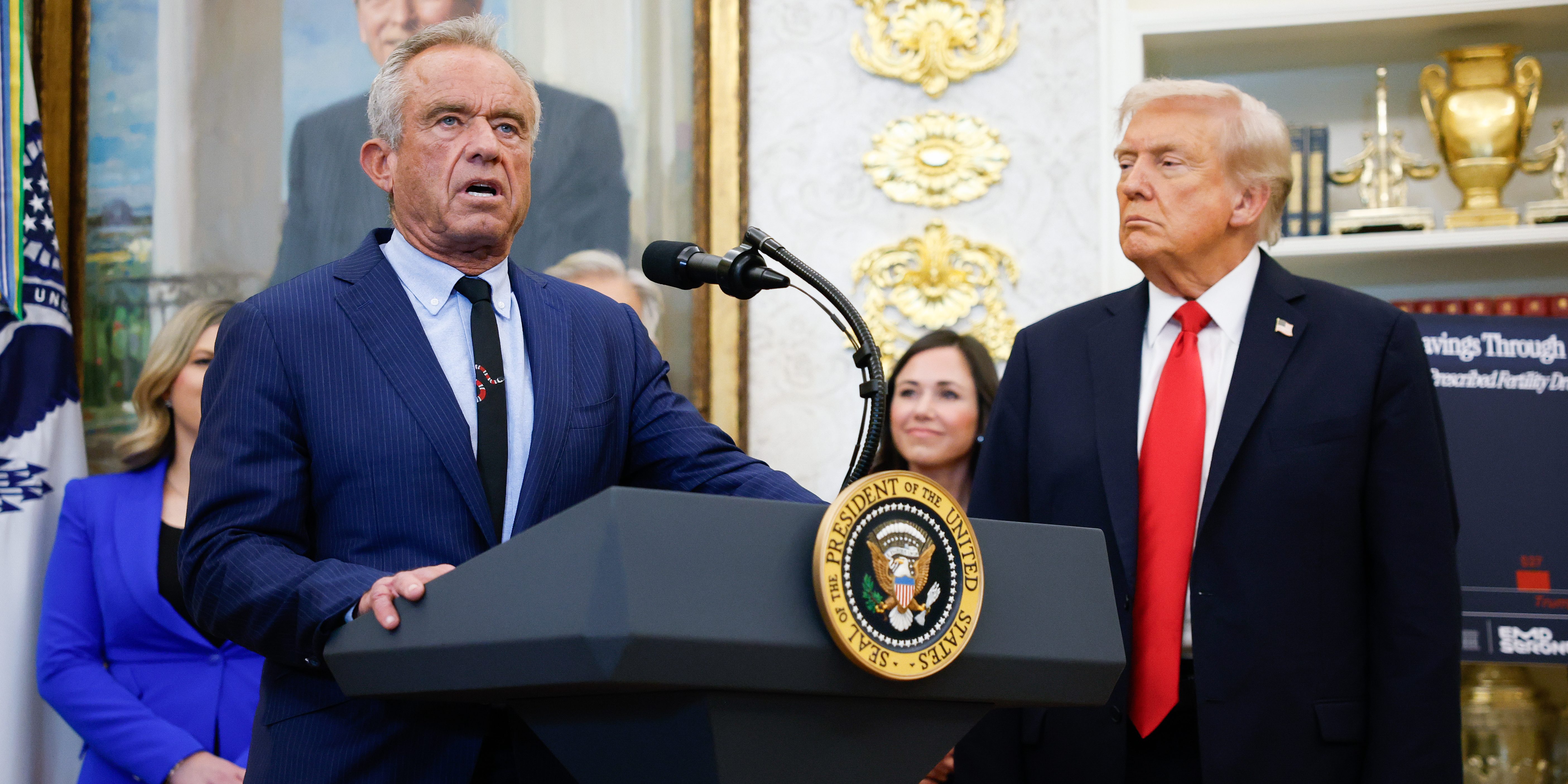
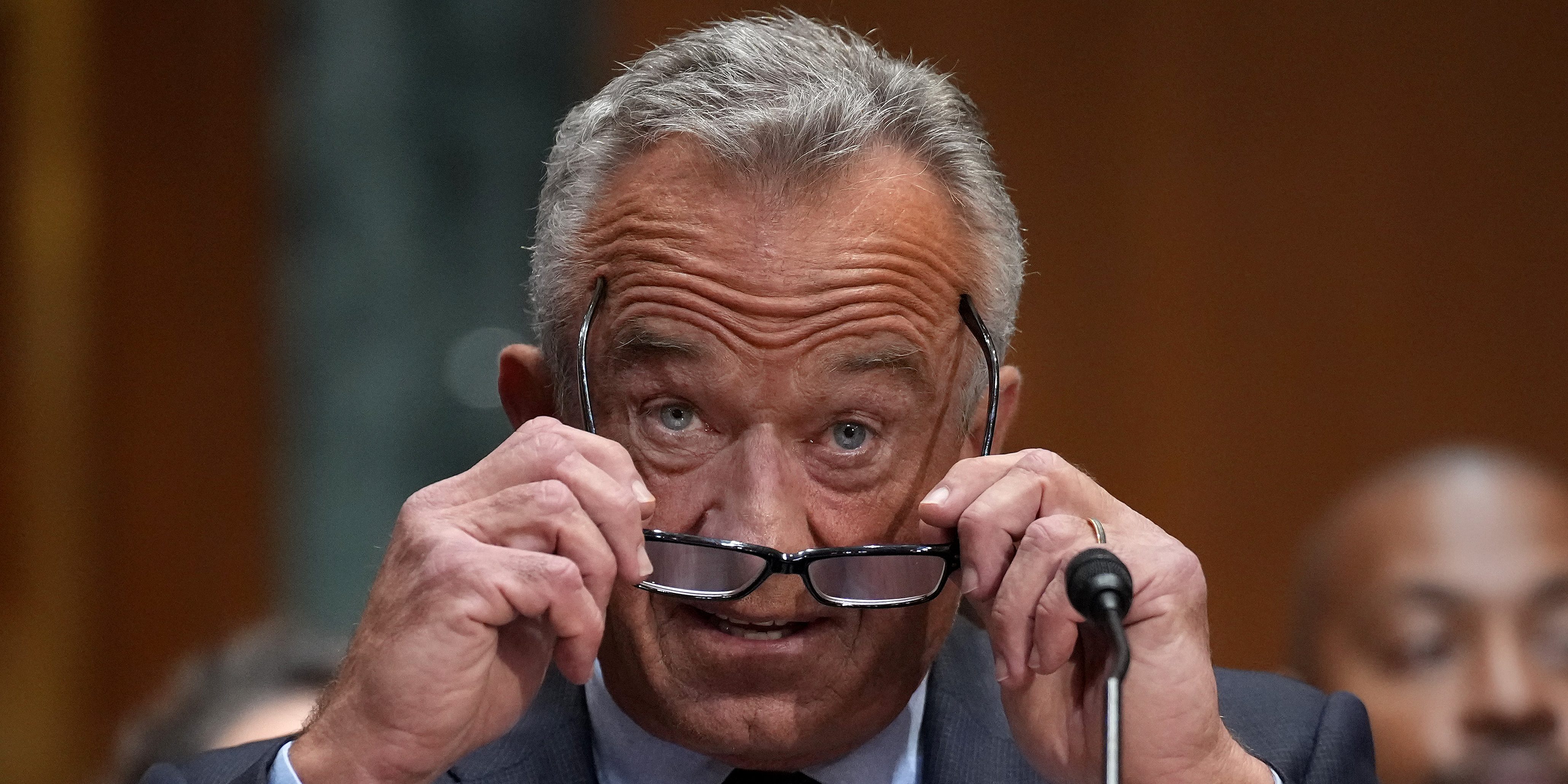
RFK Jr. Claims He’s Investigating Terrorism Now, Too

Health and Human Services Secretary Robert F. Kennedy Jr. is taking a beat from his busy day job ending the scourge of vaccines and modern medicine to take up a right-wing push attempting to link the largest Muslim civil rights organization in the United States to terrorism. 

The MAHA enthusiast announced last month that HHS was demanding federal action on allegations that the Council on American-Islamic Relations, also known as CAIR, and its California and Washington affiliates had misused federal grant funds. “If there is evidence of fraud, abuse, or ties to designated terrorist organizations, we will act,” he wrote on X. 

The post came as a shock at CAIR’s national headquarters in Washington, D.C., because the organization had never received nor solicited federal funding from Health and Human Services.

“Not even a penny,” said Edward Ahmed Mitchell, national deputy director of CAIR. “[Kennedy] would know that if he had spent any amount of time doing research before he decided to publicly attack us in this way.”

Kennedy’s mystifying crusade appears to be an attempt to satisfy the demands of a group of Republican members of Congress led by Rep. Chip Roy of Texas, as an emboldened right wing chomping at the bit to target Muslim Americans dictates the decisions of the executive branch. After Roy and his colleagues argued without evidence that CAIR and its affiliates were connected to international terrorist organizations and had misused federal funds intended to help settle Afghan refugees, Kennedy’s fumbling attempt to address their concerns set off a bizarre chapter in the Trump administration’s efforts to crack down on dissent that left the intended targets wondering whether they were under a real investigation or had become pawns in a challenging midterm cycle.

“During election cycles we see the ramping-up of this type of anti-Muslim rhetoric,” said Saher Selod, director of research at the Institute for Social Policy and Understanding. “Saying we need to investigate CAIR national is following a playbook of trying to motivate a base to come out and vote, and Muslims have become the bait in this moment.”

CAIR, which advocates for the civil rights of Muslims in the United States, has been a thorn in President Donald Trump’s side since his first administration, when the group sued to block his infamous “Muslim ban.” In Trump’s second term, CAIR national and its local chapters have continued to push back against the administration’s anti-immigrant and anti-Muslim agenda through the courts and in public statements.

“Saying we need to investigate CAIR national is following a playbook of trying to motivate a base to come out and vote, and Muslims have become the bait in this moment.”

While CAIR national has never received HHS funding, CAIR California and CAIR Washington, which operate separately from the national branch and are overseen by their own boards of directors, have received federal health dollars to provide legal services to Afghan refugees fleeing after the Taliban took power in 2021.

Both chapters vehemently denied any wrongdoing and emphasized the extensive vetting process required by both their respective states and the federal government to use the funds under contention. 

“They won’t get anything out” of an investigation, said Hussam Ayloush, executive director of CAIR California. “It is merely an attempt to create smear and destruction, to silence … the most important American Muslim voices in the country when it comes to issues dealing with Israeli abuses and the U.S. funding of those abuses.”

The allegations levied against CAIR and its local affiliates come amid a larger wave of anti-Muslim attacks as Republicans fight to hold onto power in a midterm cycle where they’re likely to lose seats. In Florida, Gov. Ron DeSantis joined Texas Gov. Greg Abbott in December in designating CAIR as a “foreign terrorist organization.” In Tennessee, Republican Rep. Andy Ogles posted on X that “Muslims don’t belong in American society.”

Democrats have hardly been immune from spreading Islamophobic rhetoric. During last year’s New York City mayoral election, Sen. Kirsten Gillibrand had to apologize for comments characterizing now-Mayor Zohran Mamdani, who is Muslim, as supportive of a “global jihad.” Before winning New Jersey’s June primary, Dr. Adam Hamawy faced attacks from some of his Democratic opponents over a brief 1995 trial testimony he gave for a religious leader convicted of plotting terror attacks, in what Hamawy’s campaign described as well-worn Islamophobic tropes.

Roy, who has been leading the charge against CAIR in Congress, was running his own campaign for Texas attorney general when he sent a letter to Kennedy urging HHS to investigate and suspend CAIR and CAIR California, accusing the organization of having long-standing ties to Hamas and documented “misuse of federal grant funds.” 

In response, CAIR California sent a letter to Kennedy refuting Roy’s claims as “lies, smears and defamatory statements.” The group noted that it was selected and vetted by the state of California to provide these services, and argued that its “use of public funds are fully accounted for, transparent and compliant with its legal obligations.” 

Over a month later, CAIR California received what Ayloush, its executive director, described as an “amicable” and “reassuring” response from HHS. In the letter, obtained by The Intercept, the director of the HHS Office for Civil Rights, Paula M. Stannard, said she was directed by Kennedy to respond to CAIR California on his behalf.

“OCR plays a critical part in the effort to ensure that people are able to lead healthy lives free of discriminatory barriers,” Stannard wrote. “OCR’s policy and enforcement efforts continue to protect all Americans from unlawful discrimination; ensure equal access to health and human services and respect the inherent worth and dignity of every person.” 

The letter did not commit to anything, but Ayloush said that he did not get the sense that the secretary would be joining in on what he described as the “bashing of Muslim organizations.” 

So it came as a surprise when only a few days later, the secretary posted about an investigation not only into CAIR California, but also CAIR national and CAIR Washington. 

“There’s an interesting divergence between what he said privately to CAIR California in writing, and then what he said on social media,” Mitchell, the national deputy director, said. 

“No subpoenas, no nothing at all, just this shot across the bow in the court of public opinion.” 

So far, all three organizations told The Intercept that they have not received any correspondence from HHS. “To this point, we have not received any communication from him indicating that he’s looking into anything,” said Mitchell. “No subpoenas, no nothing at all, just this shot across the bow in the court of public opinion.” 

Roy, who founded the Islamophobic “Sharia-Free America Caucus,” thanked Kennedy in June for “investigating CAIR’s alleged ties to the groups such as Hamas and the Muslim Brotherhood.” 

Imraan Siddiqi, executive director of CAIR Washington, said that accusing Muslim Americans of fraud had become a convenient line of attack politically. He pointed to attacks in Washington state on predominantly Somali Muslim childcare workers after conspiracy theories that Somalis were committing child care grant fraud spread in Minnesota.

“They’ve found a line of attack that some people are responding to or resonates with them,” he said, particularly in an era where social media can easily amplify misinformation for an audience eager to confirm their own biases. 

Hatem Baizan, an Ethnic Studies lecturer at the University of California, Berkeley, said the administration does not need to prove these claims to smear CAIR and its affiliates.

“Facts are immaterial for this current administration,” he said. “The aim is to throw as much dirt as possible, use as many investigative tools as possible with the hope that you have enough delegitimization, enough doubt, to actually get people to distance themselves from CAIR.” 

The post RFK Jr. Claims He’s Investigating Terrorism Now, Too appeared first on The Intercept.

💾

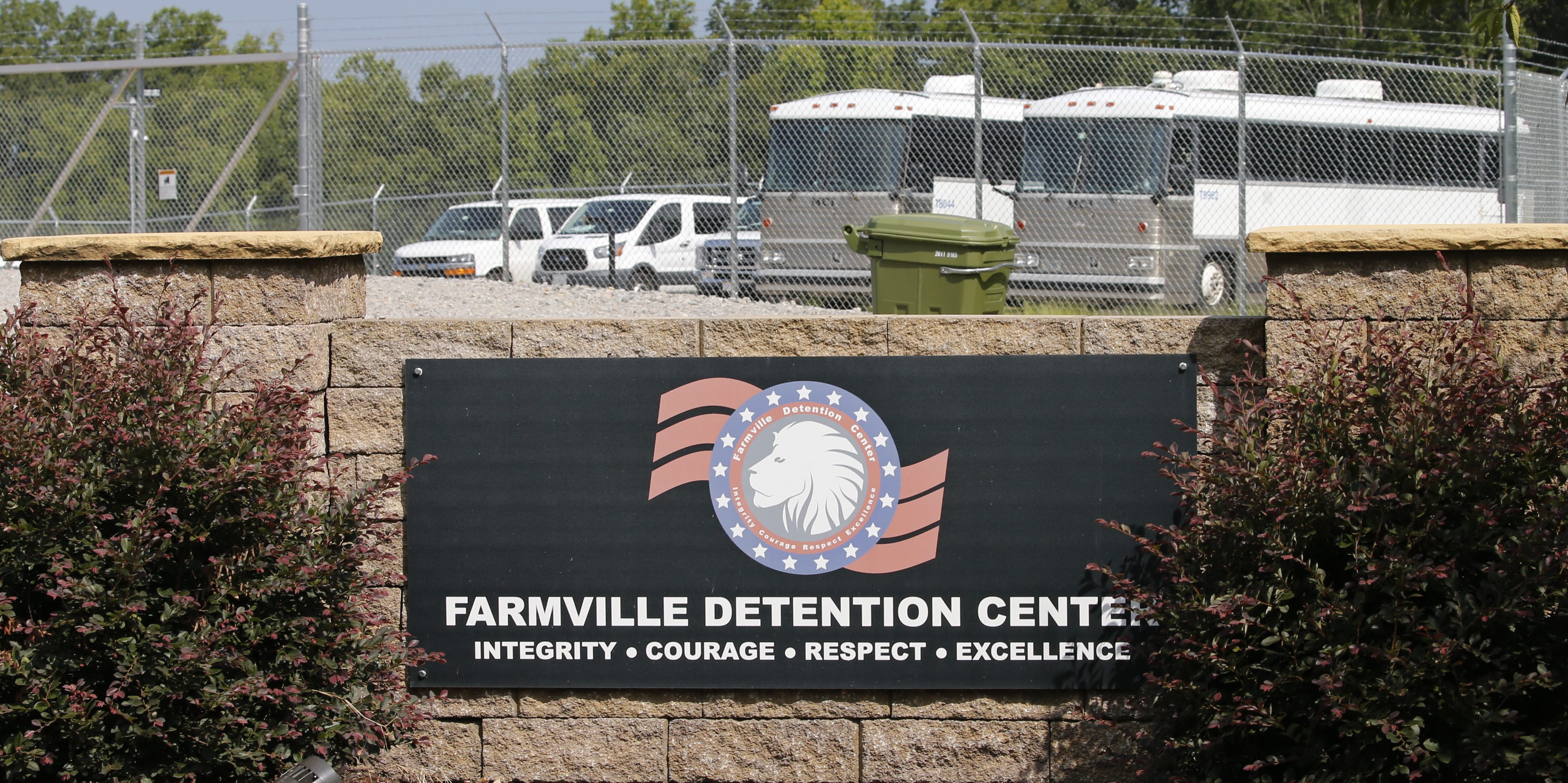
ICE Tried to Deport an Asylum-Seeker. Now He’s Being Denied Care for a Growing Tumor in a Private Prison.

In his dreams, Aliaksei Shcharbachenia is on a plane with an immigration agent’s hands wrapped around his neck. When he wakes up, he’s freed from the memory of his traumatic and botched deportation attempt last month — but then he’s stuck languishing in Farmville, Virginia. 

The 35-year-old asylum-seeker from Belarus has spent nearly a year at Farmville Detention Center. There, he says, he’s experiencing medical neglect as a tumor grows on his arm. 

“It hurts when you touch it,” Shcharbachenia told The Intercept, holding his arm up on a video call to show a growth the size of an egg. He said he’d lost feeling in the fingers on his right hand, and though he requested to see a specialist in December, as of last week he hadn’t seen one nor received a diagnosis. Instead, as Shcharbachenia attested in an internal oversight complaint to the Department of Homeland Security, the U.S. government illegally tried to deport him back to Belarus, where he fled political persecution in 2021.

Shcharbachenia is one of thousands of immigrants being held in detention facilities where the federal government or private contractors control their access to food and medical care. Soon tens of thousands more could be joining him, as the Trump administration and Congress move to rapidly expand the deportation and detention machine. And advocates warn that Farmville, purchased last year by private prison contractor CoreCivic for $67 million, has long been dogged by allegations of neglectful and unsanitary conditions.

“Dogs” live better than detainees there, Shcharbachenia told The Intercept. “I want people to know what really happens inside here.” 

The Intercept spoke to Shcharbachenia via a Russian translator arranged by an abolitionist organization, Free Them All VA, and reviewed several complaints he submitted to the DHS Office of Inspector General about the lack of medical attention for the enlarged mass on his arm and his treatment on the attempted deportation flight. When The Intercept called the inspector general’s office to discuss Shcharbachenia’s case, the number was no longer in service.

Earlier this month, Congress approved roughly $70 billion for immigration enforcement efforts. Last year, the One Big, Beautiful Bill Act allocated more than $170 billion over the next four years for immigration enforcement. And the Trump administration has been rapidly purchasing detention centers with a plan to have the capacity to detain 100,000 immigrants at once.

“They’re using detention as a form of punishment as a way to get people to relinquish their rights to remain in this country.”

“What we expect is that the mass infusion of cash will only put online more detention facilities that are going to be run as private businesses, and offer the bare minimum at the cost of human life and human suffering,” said Sophia Gregg, senior immigrants’ rights attorney at the American Civil Liberties Union of Virginia.

Gregg said that there’s no indication that the administration will manage these new facilities, many of which are converted warehouses and “temporary shelters,” any better than the current ones in operation.

“They’re using detention as a form of punishment as a way to get people to relinquish their rights to remain in this country and creating conditions that ultimately create suffering in order to induce people to elect to be removed,” she said. “And so with that being the goal of the administration to deport people as quickly as possible, they have no incentive in creating conditions that are humane.”

“They have no incentive in creating conditions that are humane.”

In fact, Shcharbachenia believes he was targeted for just that reason. In May, he was caught sharing “know your rights” information with new detainees, and guards soon placed him in solitary confinement. He was there for two weeks, Shcharbachenia recalled, and only let out of his cell with his legs and arms bound by chains.

In a statement to The Intercept, CoreCivic spokesperson Brian Todd said the contractor does not use solitary confinement and instead opts for “restrictive housing,” a term that describes confining a detained person in isolation from other people. He denied allegations of retaliatory treatment.

ICE did not respond to The Intercept’s requests for comment.

When Farmville Detention Center opened in 2010, its initial owners, Immigration Centers of America, argued that private management would be more humane than what the government could provide. They sold it to the community as “almost a summer camp environment,” said a spokesperson for Free Them All VA, which has been monitoring the facility for years.

Instead, advocates argue they created a hellscape for immigrants. 

In 2015, a guard pepper-sprayed a detainee while he was in full restraints and confined to a medical isolation cell, according to U.S. Immigration and Customs Enforcement records released under the Freedom of Information Act. In another instance from the same records, a detainee was restrained to a bed and chair for over four days. The “vendor” at the time, Immigration Centers of America, did not deny the incident but said that the action was justified. ICE responded that they would not sanction the facility for the use of force. 

The facility did receive a “one-time deduction” of its monthly invoice after detainees found “white worms” in their food, but only because Immigration Centers of America had posted a memorandum threatening anyone who “attempted to degrade the reputation of” the facility, which the government interpreted as threatening complainants.

In 2020, detainees initiated a hunger strike to demand their release as Covid swept through the facility. In August of that year, 72-year-old Canadian man James Hill died after contracting the disease inside. Instead of responding to the growing concerns about the spread of the coronavirus, guards reportedly used pepper spray against detainees on hunger strike. 

Then CoreCivic bought the facility in 2025.

“Things since [the facility] moved to CoreCivic have only gotten worse,” said Gregg. “Medical services are difficult to get for individuals, if not impossible.”

Shcharbachenia, who was picked up by immigration agents at a truck stop in Virginia in August 2025, agreed with Gregg’s assessment of the care. He said the facility’s ventilation system is dirty, and it’s often freezing inside. The water is “undrinkable,” he said, and the food is disgusting and “artificial.”

Shcharbachenia, who primarily speaks Russian, said CoreCivic staff have denied access to a translator or any assistance in filing his asylum claim. He said he had received documents related to his claims while in detention, but without a translator, he was unable to do anything about it.

In February, two months after he requested urgent medical attention, Shcharbachenia said he was finally seen by an onsite doctor about his arm, but he claims that she only measured the growth on his arm and did not provide any treatment, and that he still has not seen a specialist. He said he also had a telehealth appointment, but it was for mental health care. In a letter from Shcharbachenia to the DHS Office of Inspector General in March, he detailed his medical condition and repeated requests to receive outside “specialist evaluation and imaging.”

Todd, the CoreCivic spokesperson, told The Intercept that he was unable to comment on whether Shcharbachenia had seen a specialist or received a diagnosis but said he was seen multiple times by onsite medical staff. 

“The safety, health and well-being of the individuals entrusted to our care is our top priority, and we take seriously our responsibility to adhere to all applicable federal detention standards at our Farmville Detention Center (FDC),” Todd wrote in a statement to The Intercept. He denied Shcharbachenia’s claims about his lack of access to a translator as well as the state of the drinking water and ventilation system, arguing that it’s the same “clean drinking water” that supplies the local community, and that the staff drink the same water and use the same ventilation systems.

On May 20, after his two weeks in isolation, ICE moved Shcharbachenia to a facility in Chantilly, Virginia, according to a separate complaint filed with the DHS Joint Intake Center. He recalled an agent asking him if he was ready to fly to Belarus.

ICE flew him to Turkey, where he begged not to be returned to Belarus as best he could in English. He said he showed officers documents he’d printed out on human rights abuses in his home country and warned that if he returned, he would likely be murdered, leaving his two daughters fatherless.

But it was to no avail. He was flown from Turkey to Azerbaijan, where was able to speak with immigration officers who understood his native Russian. He refused to board the next plane to Belarus.

Shcharbachenia said that agents from the United States and Azerbaijan began to argue, but because he did not have his passport, he was unable to leave the airport. ICE eventually escorted him back to Turkey, where he was placed in a cell in the airport.

What happened next still haunts his dreams.

“They took out of their backpacks some white plastic collars, like dog collars,” he said, referring to U.S. immigration agents. As they entered the cell, Shcharbachenia said he begged a Turkish police officer who was present for asylum. He said a U.S. immigration agent approached him from behind and hit him across the head, causing him to lose consciousness.

Shcharbachenia said he woke up on the floor with another officer “choking him so hard he couldn’t breathe.” Shcharbachenia passed out again and awoke with the plastic collars around his legs and arms, Shcharbachenia told The Intercept and wrote in three complaints filed with internal DHS oversight agencies. 

Shcharbachenia was eventually transferred back to Farmville, where he said he received no medical treatment for the injury he sustained from being hit on the back of the head. Todd, the CoreCivic spokesperson, said that the assault and head injury were not reflected in Shcharbachenia’s medical records.

As for the growing mass on his arm, Shcharbachenia said he has made multiple grievance requests for treatment. He said staff at first promised to get him an appointment within the month, but eventually, Farmville Detention Center stopped responding. 

Update: June 23, 2026, 10:53 a.m. ET
This story has been updated with an additional statement from CoreCivic spokesperson Brian Todd sent after publication.

The post ICE Tried to Deport an Asylum-Seeker. Now He’s Being Denied Care for a Growing Tumor in a Private Prison. appeared first on The Intercept.

💾

❌