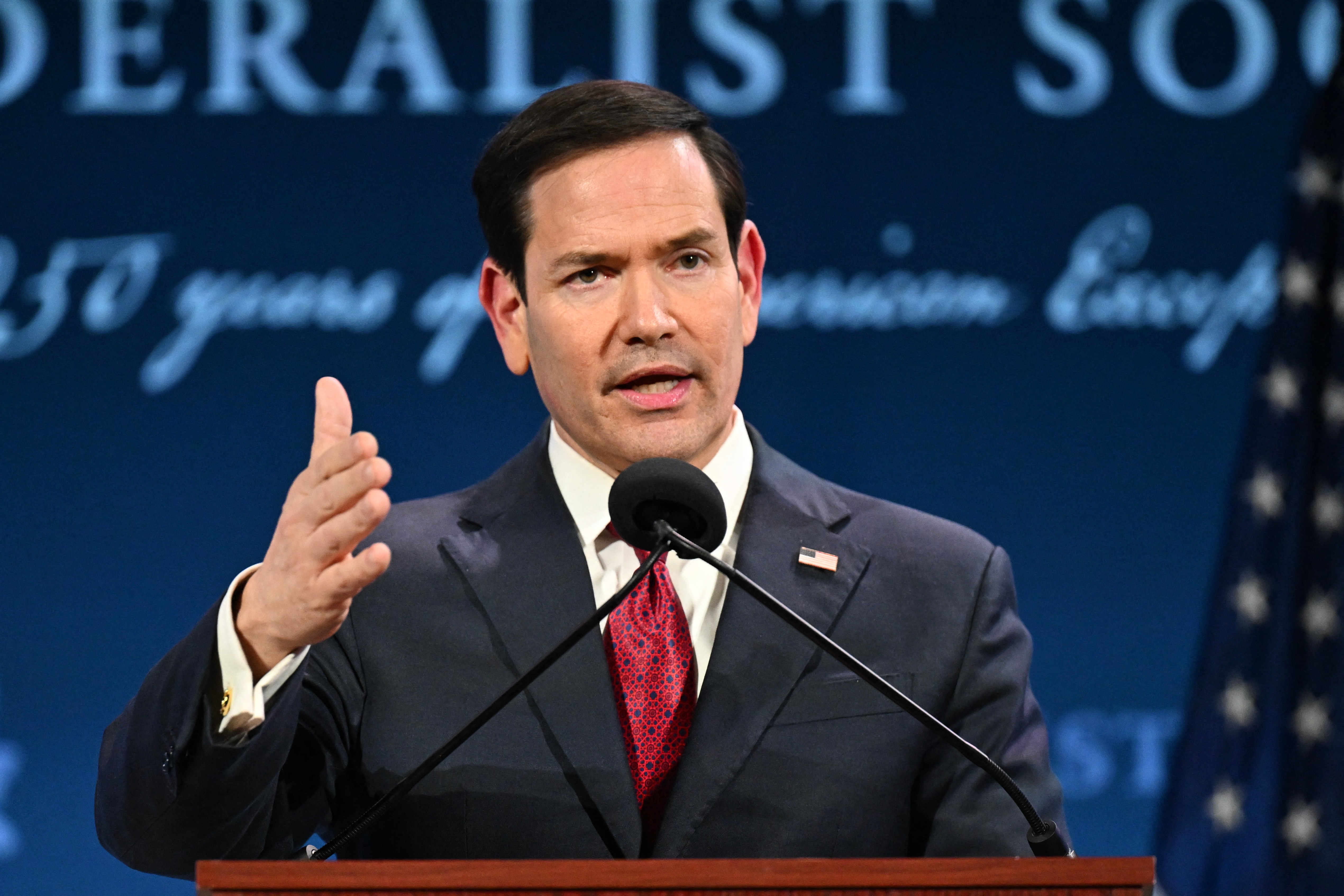
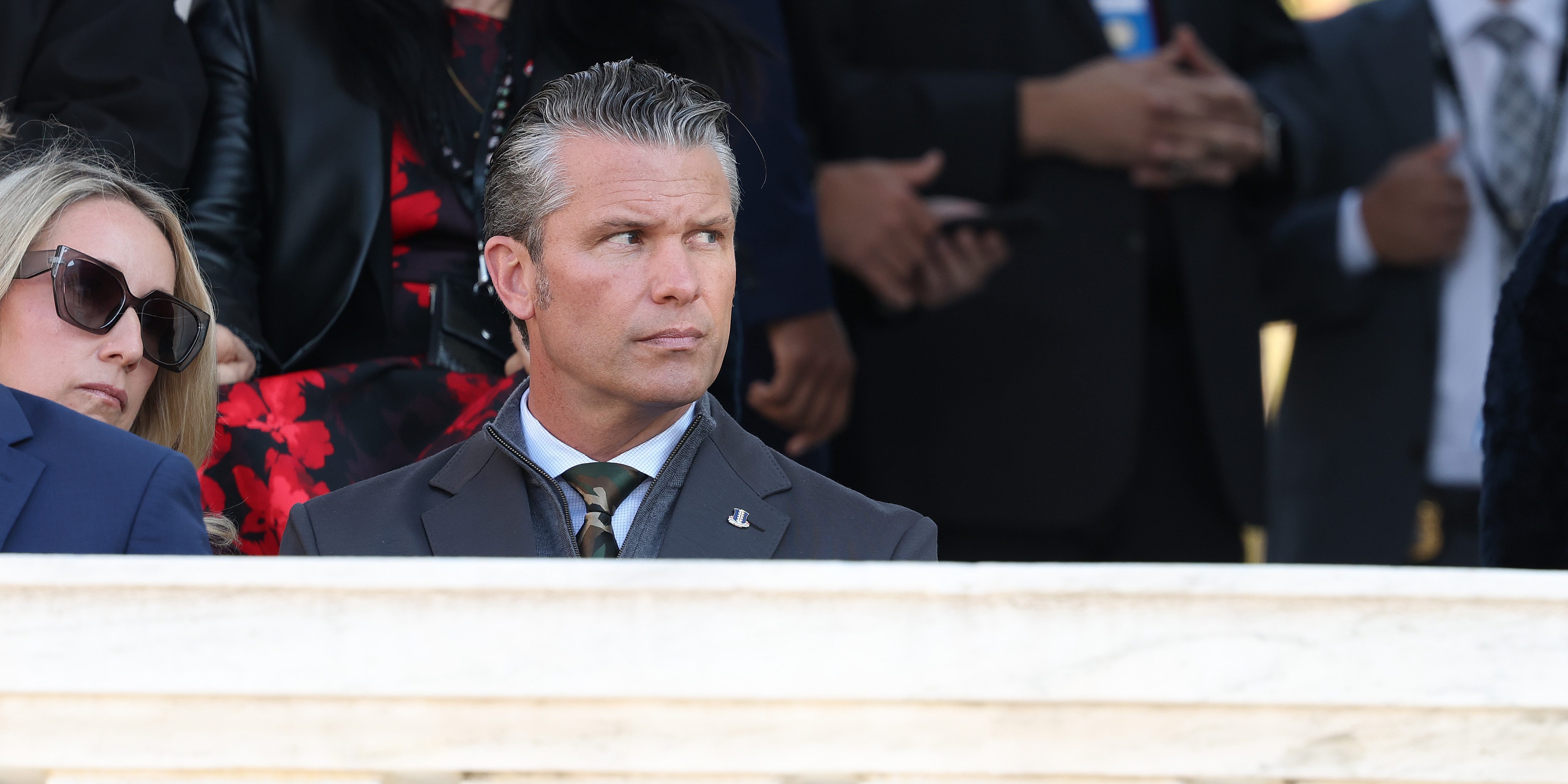
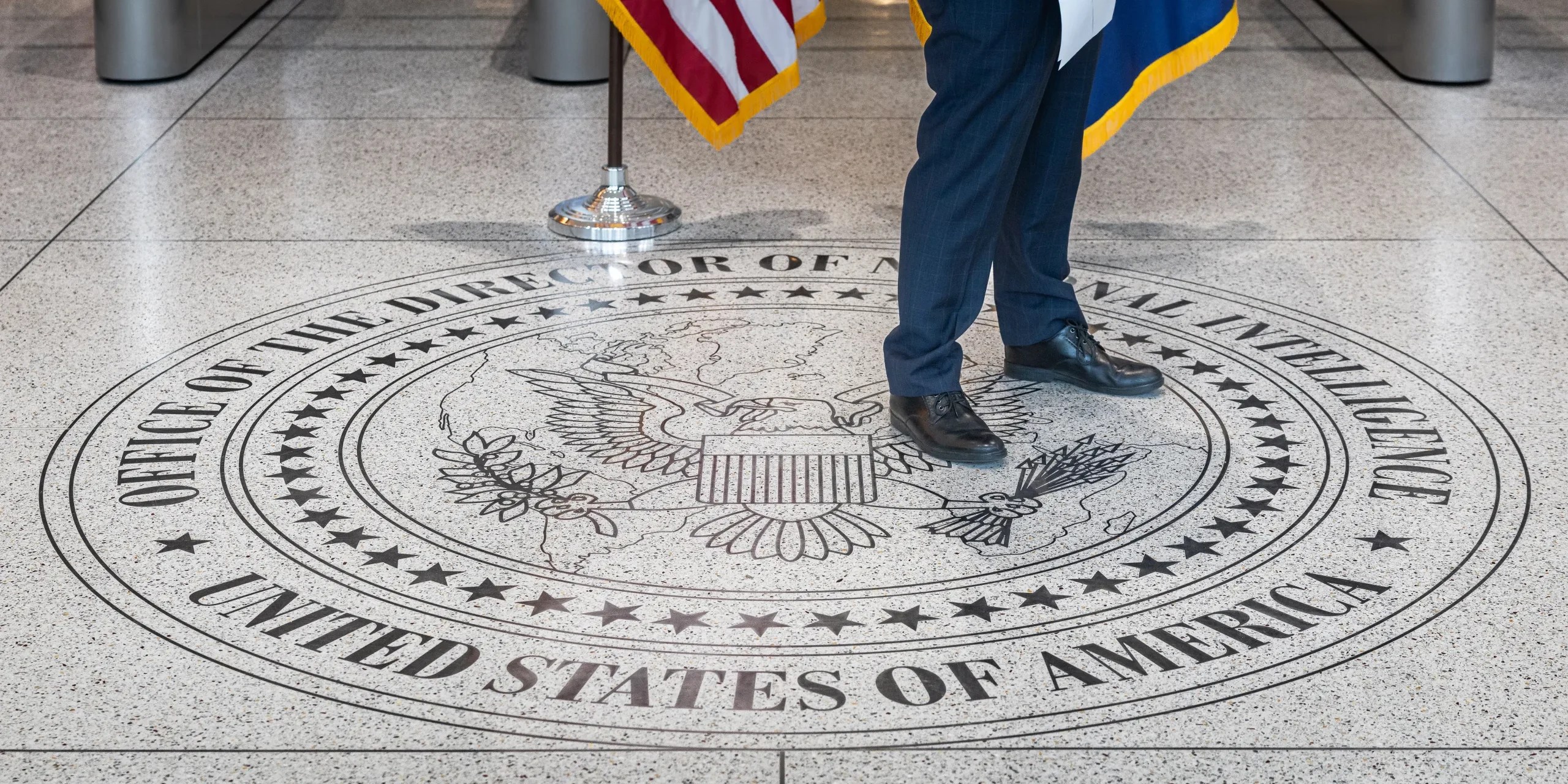
Secretary of State Marco Rubio has once again attacked the global system of laws, norms, and principles instituted to place limits on international armed violence. Advocating for a return to might-makes-right barbarism during a keynote speech on Friday, Rubio threatened to use military force against the International Criminal Court, which prosecutes individuals accused of the gravest atrocities. Warning that if the ICC was “foolish enough to try to enforce their paper decrees on Americans, our answer will probably be the same as the Roman general Pompey when he said to those who were trying to invoke their city’s charters against his legions. … ‘Stop quoting laws to men with swords.’”
Rubio’s effort to undermine the principles and rules that regulate the means and methods of warfare and the humanitarian protection of civilian populations, sick and wounded combatants, and prisoners of war is part of the Trump administration’s wide-ranging effort to upend the rules-based international order that the U.S. has championed — but often failed to abide by — since World War II.
Speaking before the conservative Federalist Society at the National Lawyers Convention in Washington, D.C., Rubio disparaged the ICC as a “fake court” and “an unelected world tribunal, which claims to supersede the laws and constitutions of sovereign states, even those who never signed up for it.”
Rubio’s tirade was the latest salvo in a long-running campaign against the ICC by President Donald Trump’s administration, which has vowed to cripple the court. In October, after former ICC judge Navanethem “Navi” Pillay was awarded the Nobel Peace Prize, Trump — who has relentlessly campaigned for the award — was enraged and derided the South African jurist as “a liberal person who works at the United Nations, who nobody has ever heard of.”
Hours after the award was announced, the U.S. imposed sanctions on the ICC. These latest sanctions are intended to turn the judicial organ into an economic pariah. They prohibited the court from conducting dollar-denominated transactions, froze its U.S.-based assets, and barred the judicial body from using the U.S. banking system or working with American institutions — effectively blacklisting the court.
The ongoing campaign to dismantle the ICC is just one piece of a larger effort by the Trump administration to ensure the U.S. military can act with impunity.
The ICC was created by the international community to investigate and prosecute war crimes, crimes against humanity, genocide, and the crime of aggression — when one country uses armed force against another without legal justification. The Hague, Netherlands-based court is unique as a permanent judicial organ capable of prosecuting anyone, infantry soldiers and sitting heads of state alike, for humanity’s gravest crimes if they are committed in the territories of its 125 member states. The ICC is critically a court of last resort that will only intervene when domestic jurisdictions either fail to hold their own service members and political leaders accountable, or when state parties to the court call for an investigation.
While the Trump administration’s timing in sanctioning the ICC was notable, this latest strike against the court is just one facet of the Trump administration’s yearslong campaign to — in the words of Rubio’s State Department — “dismantle” it. The effort dates back to 2020, when the first Trump administration imposed sanctions on ICC officials after the court opened an investigation into alleged U.S. war crimes and crimes against humanity committed in Afghanistan.
Overturned by the Biden administration in 2021, the first round of U.S. sanctions against the court were replaced last February by a new series targeting the court’s chief prosecutor, its two deputy prosecutors, and six of its judges. All of these judges had either investigated the actions of U.S. nationals in Afghanistan or were part of the ICC’s decision to issue arrest warrants for Israeli Prime Minister Benjamin Netanyahu and his former Defense Minister Yoav Gallant for their co-perpetration of “the war crime of starvation” and crimes against humanity in Gaza.
Though the litany of prior U.S. sanctions against the court impacted the lives of those nine individuals and their families — cutting them off from their bank accounts, emails, and blocking their travel — the actions were piecemeal and did not fully upend the work of the court.
Now, all of the ICC’s U.S.-based partner organizations have six months to completely cut ties with the court or face legal retribution. What’s more, since the current global economic system is built upon the U.S. dollar, international — particularly European — organizations often preemptively abide by U.S. sanctions even if their workings fall completely outside of America’s jurisdiction. For example, when the French company Axa terminated its life and health insurance contracts with the ICC on October 1, the insurer reportedly cited the escalating campaign by the U.S. against the court.
Absent the implementation of effective countermeasures — like amending and enforcing the EU Blocking Statute, which can shield EU individuals and businesses from “unlawful” third-country sanctions — this latest move by the U.S. may not kill the ICC, but it will cut off the judicial organ’s blood supply.
Victors’ Justice?
For over 80 years, the U.S. has enjoyed the privilege of proscribing — and not necessarily abiding by — international law. American representatives served as the chief arbiters of the post-World War II Nuremberg and Tokyo military tribunals that prosecuted Nazi and Japanese war criminals, which are seen by many in the field as the birthplaces of modern international criminal law. American arbiters, notably U.S. Supreme Court Justice Robert H. Jackson, led the victors of the Second World War as they tried and prosecuted their former adversaries for novel notions of wrongdoing, including crimes against peace and crimes against humanity. These newly defined criminal acts form the bedrock of the ICC’s jurisdiction.
At the International Military Tribunal for the Far East, all 25 major Japanese leaders were convicted, with seven receiving death sentences. Judge Radhabinod Pal of India argued for the acquittal of all 25. In his dissent, he complained that the tribunal dispensed victors’ justice. He said that America’s atomic strikes on Hiroshima and Nagasaki were among the most criminal acts of the conflict, yet immune from prosecution.
Indeed, the international criminal justice system was never intended to hold the U.S. or its allies accountable. And in the decades since, consecutive U.S. administrations have wielded the nation’s political and military strength to avoid any semblance of international legal oversight.
Although relations with the court have oscillated over the course of Democratic and Republican administrations, the U.S. has always been wary of the court’s potential jurisdiction over American nationals. From the court’s conception, in which the U.S. played a role, the global hegemon has continuously shown its disdain for the court’s territorial jurisdiction. While the ICC cannot prosecute any American nationals for their actions in the U.S., it does have jurisdiction over acts undertaken, by U.S. nationals or otherwise, within the territories of its member nations including Afghanistan, Libya, and Palestine.
The international criminal justice system was never intended to hold the U.S. or its allies accountable.
Under the Clinton administration in the 1990s, the U.S. was one of only seven drafting nations to initially veto the Rome Statute — the international treaty that created the ICC — due to its concerns over the court’s territorial jurisdiction. Later, in 2002, the same year the ICC was established, the George W. Bush administration signed the Hague Invasion Act into law. The act, which is still in effect, grants the president the legal backing to use military force against the court in order to free any U.S. or allied person held or imprisoned by the ICC. The Bush administration subsequently pressured dozens of countries to agree to never transfer U.S. nationals to the ICC, and threatened to cut military assistance, cease counterterrorism operations, or cut humanitarian aid if these states did not comply. Though relations with the ICC thawed somewhat under the Obama administration in the 2010s, the U.S. has never shown a substantial interest in joining the court and has worked for years to restrict its jurisdiction.
The Trump administration’s courtwide sanctions on the ICC are, however, a far leap beyond the pressure campaigns against the court and its member states by prior U.S. administrations. While the Trump administration cares little for the thin veneer of justice that prior U.S. administrations sought to maintain, the ongoing campaign to “dismantle” the ICC is just one piece of a larger effort by the current administration to ensure the U.S. military can act with impunity.
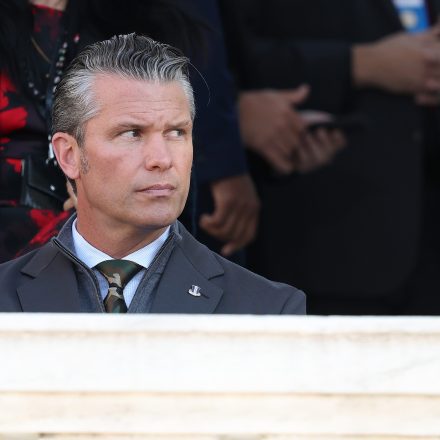
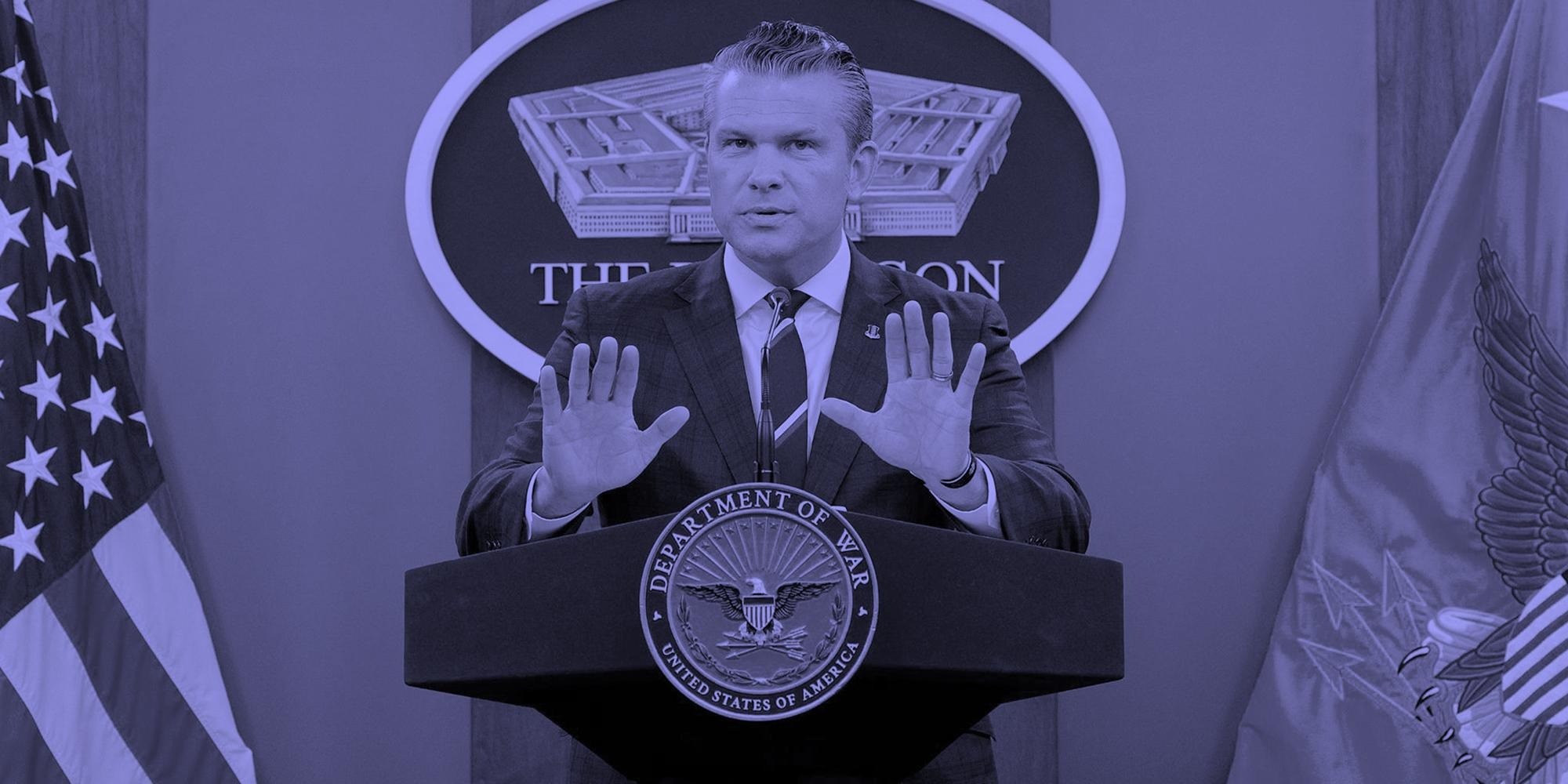
Soon after taking office, Trump and Defense Secretary Pete Hegseth ordered a mass purge of senior judge advocates general. Among their many functions, JAGs historically educated military leaders on the laws that prohibit the use of the U.S. military in domestic law enforcement and ensured commanders were aptly informed of the international legal obligations to protect civilians and prisoners of war. When asked about the mass layoffs in February 2025, Hegseth explained that the action was taken to remove potential “roadblocks to orders that are given by a commander in chief.”
When taken together, the administration’s cuts to internal legal mechanisms and policy programs intended to maintain law and protect civilians, as well as its ongoing attempts to dismantle the ICC, can be seen as two aspects of a larger campaign to eradicate all avenues of military oversight.
The Fight for Justice Will Continue
The sweeping courtwide sanctions against the ICC are formidable for the same reasons they are survivable: They aim to isolate the court from its broad system of support. The international criminal justice system depends on evidence. This evidence is not found in The Hague; it is brought to it by an array of local, national, and international investigators, researchers, watchdogs, and atrocity survivors.
The evidence needed to confirm the genocide in Palestine; the U.S. bombing of the elementary school in Minab, Iran; and the extrajudicial killings of fisherman in the Caribbean would not exist without the networks of dedicated researchers, local journalists, and courageous survivors. And the work of these people, while critical to the court’s functions, will continue, even if the court is dismantled brick by brick.
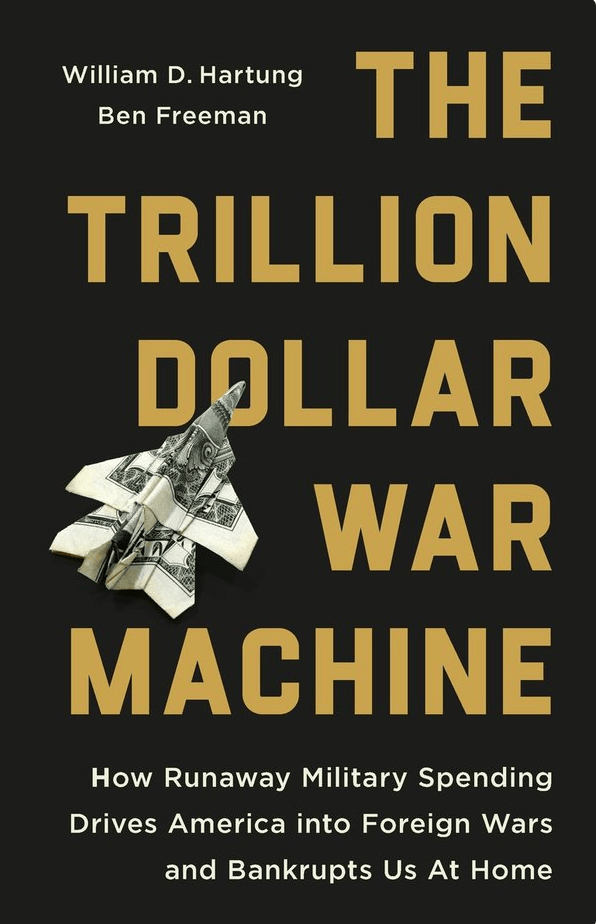
“The Trillion Dollar War Machine,” by William D. Hartung and Ben Freeman. Available on Bookshop.org.
The ICC has strongly condemned the U.S. sanctions. ICC President Tomoko Akane has said that the court will “continue to fully discharge its mandate, with independence and impartiality, acting only on the basis of the law and the evidence, for the sake of the countless victims of grave crimes.” Pillay has also used the publicity stemming from her Nobel Peace Prize to showcase the court’s work. She further dedicated her award to “all the survivors of international crimes” as well as the international jurists “whose compassion and courage continue to ensure that impunity will not be allowed to reign.”
In his speech on Friday, Rubio took aim at those very jurists, declaring that the U.S. would never submit to the “sterile vision of radical judges or soulless global bureaucrats.” He claimed that this “global elite” was using international law as “an instrument to advance their interests under the pretense of universal principles.” This was, in fact, a stark about-face for Rubio, who was an advocate for international law during his 14 years as a U.S. senator. He even co-sponsored a resolution encouraging other nations to support the ICC’s investigations of Russian war crimes in Ukraine.
Rubio claimed that those who advocate for the restraint of law over all nations are anti-American. “For these people — the fundamental purpose of the law, American law and international law alike, is to weaken the United States,” he claimed. “It is to hinder the American government’s ability to defend American interests at home and abroad.” He continued, “There is nothing — there is nothing — in our history or the history of any other great nation that requires us to recognize the authority or legitimacy of any of these ridiculous ideas.”
Prior to Rubio’s speech, however, Pillay offered up a differing vision of America. In her estimation, Americans are not the singularly self-interested, lawless, reprobates envisioned by Rubio but a people who eschew limitless violence and value humanitarian principles. “I know,” she said, “that Americans support the principle of ending impunity for these serious crimes and that they support justice and accountability.”
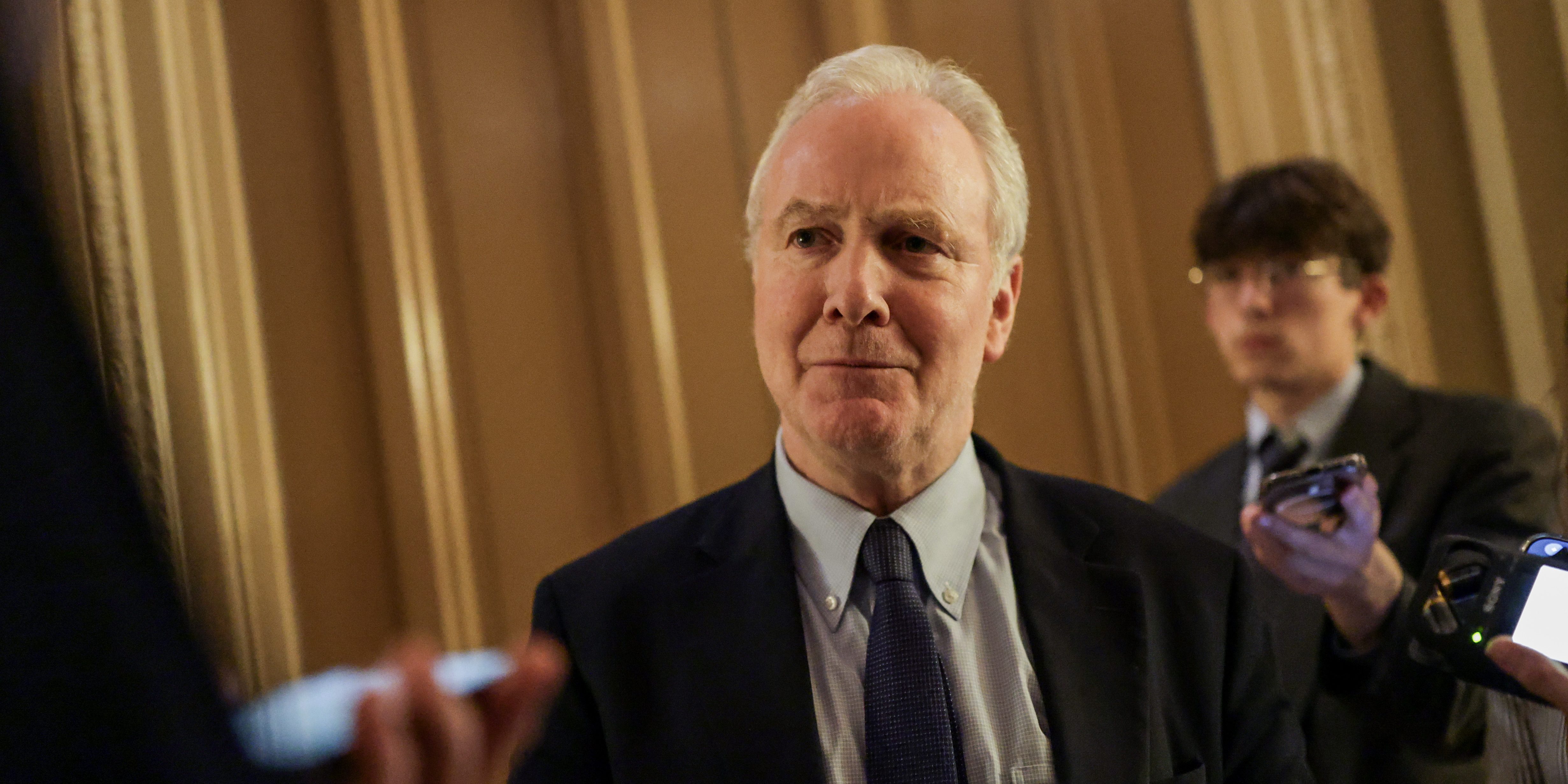
When Chris Van Hollen first ran for Senate in 2016, he was considered the pro-Israel, Democratic establishment pick with the backing of AIPAC-aligned donors. He was a U.S. representative who regularly voted to approve military aid to Israel; his opponent, Rep. Donna Edwards, was an outspoken critic of the Israeli government and the pro-Israel lobby. He outspent her 3 to 1 and won the Maryland Democratic primary by about 130,000 votes.
A decade later, Van Hollen has evolved into one of the harshest critics of Israel in the Senate. He’s staked his criticism of Israel’s genocide in Gaza and apartheid rule of Palestinians as a key argument behind his run against staunch Israel-defending Sen. Chuck Schumer, D-N.Y., for Senate majority leader.
Politicians often update their stances with the times, leaving voters to sort out what’s a genuine change of heart and what’s opportunism. In Van Hollen’s case, advocates for Palestine who seek to end U.S. military support for Israel told The Intercept that his evolution is a sign that he can be pushed by public pressure.
“Before this evolution, Van Hollen had looked a lot more like a mainstream Democrat on Israel,” said Yousef Munayyer, a senior fellow at the Arab Center Washington D.C. and a longtime advocate for Palestinian rights. “Times have changed in a lot of ways, where the Democratic base has changed in a lot of ways, and he has changed along with it — I don’t know that the same can be said for a lot of other folks, like Chuck Schumer.”
Van Hollen was elected to the House in 2002, in the feverish early years of the war on terror, and joined the vast majority of his colleagues from both parties in unconditionally supporting arms transfers to Israel. In 2010 and 2012, he co-sponsored the initial round of funding for U.S. support of Israel’s Iron Dome missile defense systems and called for additional cooperation between Israel and the Pentagon for weapons development, such as enhancing Israel’s F-35 fighter jet program. In 2016, the year he was elected to the Senate, he co-sponsored a House resolution affirming a 10-year memorandum of understanding between the U.S. and Israel to continue providing State Department funds for Israel to buy weapons. The MOU, inked by President Barack Obama, was widely seen by observers as a concession to Israel to alleviate pressure over his Iran nuclear agreement — which Van Hollen supported and Schumer famously opposed.
Van Hollen’s Maryland House district had a large pro-Israel voter base, Munayyer pointed out, and some of his pro-Israel stances may have been the product of being responsive to his constituents. But in the Senate, Van Hollen continued to support Israel, backing a 2018 bill that authorized extending military aid to the country until at least 2028, as well as guarantees to loans and access to U.S. military stockpiles until 2023.
His most notable shift has followed the October 7, 2023, attacks. While that year, Van Hollen supported a resolution that “reaffirms Israel’s right to self-defense” and promised military equipment resupply, he has since co-sponsored resolutions and bills that invoked the use of Biden-era sanctions against Israeli settlers in the West Bank, voted several times to block the sale of some weapons to Israel, and is leading an effort to strip a Pentagon spending bill of its provisions that more closely tie the U.S. and Israeli militaries. He also introduced a resolution demanding a State Department report on Israeli detention of Palestinian children and Israeli military and settler killings of American citizens in the West Bank.
Margaret DeReus, executive director of the pro-Palestine lobbying group Institute for Middle East Understanding Policy Project, which collaborated with Van Hollen on the recent State Department resolution, said she is supporting his run for majority leader, arguing that he would help rein in some of the least popular excesses of the Trump administration.
“Senate Democrats should be led by a Majority Leader who is committed to fighting the Trump Administration on the Iran war, stopping the lawless ICE raids on American cities, and ending US aid to Israel,” she told The Intercept in a statement. “Senator Van Hollen is a leader in the Senate for enforcing US laws around military assistance to countries committing human rights violations, including in Palestine and Sudan, and for ending this illegal war.”
And unlike Schumer, Van Hollen’s past support for Israel was not unequivocal.
During Israel’s war on Lebanon in 2006, he wrote a letter to then-Secretary of State Condoleezza Rice criticizing the Bush administration’s decision not to push for an end to Israel’s bombing of civilians, which drew backlash from supporters of Israel. In 2019, Van Hollen took to the Senate floor to blast then-Sen. Marco Rubio’s bill to crack down on the Boycott, Divestment, and Sanctions movement in the U.S., saying he disagreed with the boycott but wanted to uphold constitutional rights. The following year, he gave a floor speech to oppose Israeli Prime Minister Benjamin Netanyahu’s plan to unilaterally annex parts of the West Bank, and he introduced a 2021 Pentagon-spending amendment that would have prohibited Israel from using U.S. aid for its annexation efforts. After Israeli forces killed Palestinian American journalist Shireen Abu Akleh, he pushed the Biden administration to seek accountability.
This marks a contrast with Schumer, DeReus said. She said the current minority leader has a “long record of paving the way for this disastrous war [on Iran] as the only current Senate Democrat who voted against Obama’s JCPOA,” which placed agreed-upon restraints on Iran’s nuclear development. And he has continued to support military assistance to Israel.
During recent resolutions to block sales of certain weapons to Israel, Schumer was among the minority of Senate Democrats who voted against it.
Schumer and Van Hollen’s offices did not respond to The Intercept’s requests for comment.
On a press tour over the weekend after announcing his run for the leadership position, Van Hollen differentiated himself from Schumer on Israel and Palestine, criticizing Schumer for siding with the pro-Israel lobby against progressive Senate candidates in the Democratic midterm primaries and speaking against “a blank check” to the Israeli government.
“We’re seeing violent settlers push Palestinians off their land with the complicity of the Israeli government,” Van Hollen said Sunday on Fox News. “I don’t think American taxpayer dollars should be going to that purpose.”
While Van Hollen’s strong stand against Israel appears to be, in part, motivated by personal moral conviction and a desire to “look yourself in the mirror at the end of the day,” whether or not he continues to push for Palestinian rights if elected leader will depend on how much Palestine remains a litmus test in the Democratic Party, said Tariq Kenney-Shawa, an associate fellow at Palestinian think tank Al-Shabaka.
“I really think it’ll come down to whether and how [Van Hollen] continues to be pressured by the movement and the Democratic base,” Kenney-Shawa said.
Munayyer also credits the gains made in Congress to a global organizing movement against Israel’s genocide and apartheid rule, which he said has made the issue into something beyond even Palestine and Israel.
“It’s seen as a proxy for authenticity,” he said. “And if you say that you’re going to do something on this issue, then you back away from it, it looks like you just don’t have the integrity to do the things that you need to do.”
The Intercept and Freedom of the Press Foundation sued Pete Hegseth’s Pentagon in a pair of lawsuits demanding the release of documents related to the number of U.S. casualties in its war on Iran and the Department of Defense’s secretive blacklist of journalists.
One lawsuit, filed on Friday, responds to the department’s “repeated, unexplained changes” to its publicly available tracker showing U.S. service members killed or injured in the conflict with Iran — including a failure to acknowledge one soldier’s death for the six months after he died — that were documented by Intercept reporter Nick Turse. The shifting figures led one defense official to call the undercount a “casualty cover-up.”
In August, Turse requested from the Pentagon, through the Freedom of Information Act, casualty-related records and briefing materials presented to Defense Secretary Hegseth and his chief of staff, directives and guidance on casualties, as well as communications related to casualties between Hegseth and his staff of advisers. A later request filed by The Intercept in September sought the financial costs of the Iran war since its start in February. In all cases, the government stopped responding to The Intercept and has failed to provide any documents.
“They need to come clean to the American people.”
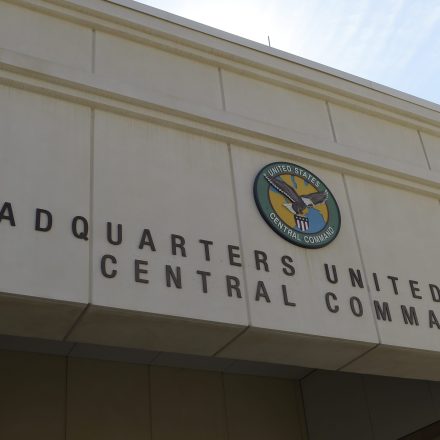
A second lawsuit against Hegseth’s DoD, filed on Monday, follows a July conversation with The Intercept in which a spokesperson for U.S. Central Command admitted the military post keeps a blacklist of media members. While reporting on the shifting U.S. soldier casualty figures, the CENTCOM spokesperson, Richard Allee, threatened Turse that he would be “put on a list of people to disregard” for calling the command too often.
CENTCOM later denied the existence of such a list. But Turse spoke with an unnamed U.S. official who confirmed that “Hegseth’s office had a standing order not to engage with [Turse] and would deny it if challenged.” During the first Trump administration, Turse had been placed on a separate blacklist kept by U.S. Africa Command, also within the Pentagon, after he reported on the torture of prisoners at a remote military base in Cameroon used by the U.S. for drone surveillance.
Turse has since filed a public records request seeking a copy of any “lists of journalists that CENTCOM discriminates against or disregards.” The Freedom of the Press Foundation also filed a request for communications and guidance related to the blacklist, as well as any records related to the command’s response to Turse’s article on the matter, published in August. The government has yet to provide any such information to The Intercept or Freedom of the Press Foundation.
“The military doesn’t get to decide which reporters it speaks to or ignores, especially when it’s engaged in legally questionable military actions and the human cost is at its highest. It’s not just the journalists who are harmed when the Pentagon behaves this way — the public and Congress are each denied critical information about what the military is doing in our name and with our taxes,” said Lauren Harper, Daniel Ellsberg chair on government secrecy, who filed FOIA requests for the blacklist on behalf of FPF. “If the Defense Department refuses to answer basic questions about how it engages with journalists, we’ll use the Freedom of Information Act to compel them in court.
The Intercept’s Turse called the Pentagon’s journalist blacklist “fundamentally un-American” and a way to avoid accounting for the real human toll of the ongoing war.
“Central Command wants to keep the sordid details of its wars — from civilian casualties in Iran and Yemen to U.S. military casualties across the Middle East — under wraps,” he said. “They need to come clean to the American people. We have to hold them accountable.”
Hegseth’s Department of Defense has long been hostile toward members of the media. In February 2025, days after Hegseth assumed office, the department forced out outlets such as NBC News, NPR, the New York Times, Politico, CNN, and the Washington Post from their Pentagon press desks. That October, Hegseth issued a new requirement in which journalists could only gain access to the Pentagon if they pledged to only report on information from government employees pre-approved by the Defense Department. This prompted most media outlets, except for the right-wing MAGA-friendly One America News Network, to surrender their press passes.
Trump has also targeted specific media outlets and individual journalists by barring them from the White House or Air Force One, though a federal court judge has since paused the bans, cautioning against possible violations of the First Amendment.
The Intercept and FPF’s lawsuits arrive days after Hegseth narrowly survived an impeachment attempt over his handling of the Iran war. The effort, led by Rep. Thomas Massie, R-Ky., and backed by Democrats, failed to garner enough votes to impeach Hegseth.
In addition to the war on Iran, incoming Democratic members of Congress, along with human rights groups, seek to hold Hegseth accountable for his bloody airstrike campaign on boats in the Caribbean Sea and Pacific Ocean, in which the U.S. has killed more than 240 civilians, and his overseeing of the U.S. invasion of Venezuela.
Jose Rosito Roca Estrada and his friends were on their way to work in a van on June 27, when a car in front of them slammed on its brakes, forcing them to crash into it and ricochet backward on the busy highway.
Three more cars surrounded theirs, and an estimated 10 to 12 officers poured out. The agents screamed at the men to get out of the vehicle despite traffic whipping by, Roca Estrada and fellow passenger Elvis Manuel Mejia told The Intercept. The stalemate ended with the sound of shattering glass and an asphyxiating cloud of chemicals flooding the car.
According to a new federal lawsuit and photos from the scene shared with The Intercept, federal agents smashed the car’s back windows and “sprayed the occupants with pepper spray through the lowered side windows.”
Officers then dragged a scared and temporarily blinded Roca Estrada from the car. “I was afraid they might be robbing me,” 24-year-old Roca Estrada told The Intercept through a translator. “They did not identify themselves. I was worried they were kidnapping me because they were asking very personal questions.”
“They did not identify themselves. I was worried they were kidnapping me.”
The June attack is one of six stories described in a lawsuit brought by several groups — including the American Civil Liberties Union of Virginia, the Washington Lawyers Committee for Civil Rights and Urban Affairs, the Legal Aid Justice Center, and multiple law firms — alleging widespread “unlawful and dangerous” warrantless arrests by immigration officials in Virginia.
On behalf of Roca Estrada and other plaintiffs, the groups are suing the Department of Homeland Security, DHS Secretary Markwayne Mullin, Immigration and Customs Enforcement, Acting Director of ICE David Venturella, and ICE D.C. Field Office Director Robert Guadian. They’re asking the court in the Eastern District of Virginia to force DHS to comply with congressional limits on warrantless immigration arrests and prohibit the agency from making immigration arrests without legally required individual assessments.
“They have a mandate from the Trump administration … to get creative and make arrests, however they see fit,” said Sophia Gregg, an immigrants’ rights attorney at the ACLU of Virginia. “The agents are ill-trained, and even when they do violate the law, there are no consequences.”
Roca Estrada said that the officers demanded to search his pockets, and when he declined, an agent threw him to the ground headfirst and dug his knees into his upper back. He remembered screaming as pain began to radiate through his collarbone. An X-ray reviewed by The Intercept would later confirm it was broken.
According to Roca Estrada and the lawsuit, officers began to punch and hit him in the back, eventually twisting his arm to place him in handcuffs and into the vehicle. Roca Estrada said that nurses who examined him after the alleged assault told him that blood had filled his lungs, and the lawsuit notes he was diagnosed with a broken clavicle and a lung injury. At no point, the lawsuit alleges, did officers ask the necessary questions to determine whether Roca Estrada was deportable or whether he was a flight risk.
Immigration officers are only supposed to make warrantless immigration arrests if they have determined “probable cause” to believe a person is unlawfully present likely to escape before a warrant can be obtained. But in an effort to meet the Trump administration’s nationwide quota of 3,000 immigration arrests per day, the lawsuit alleges, the Department of Homeland Security has chosen to pursue an unlawful policy and practice of “arrest-first, investigate-later” — leaving a trail of traumatized victims who should have never been arrested in the first place.
In the first year of the Trump administration, immigration arrests drastically increased in Virginia. According to the lawsuit, in 2025, ICE made “970 arrests each month in Virginia and Washington, D.C. — nearly five times the average monthly arrest volume in 2024.”
Reached by The Intercept, a DHS spokesperson said that agency had “arrested Jose Rosito Roca Estrada, an illegal alien from Guatemala,” using Roca Estrada’s full name even though The Intercept had not provided it, but denied that its officers “fractured a detainee’s collarbone.” The spokesperson did not deny that officials had deployed chemical weapons, saying, “staff relied on their training to gain compliance.”
“Claims that agents did not properly identify themselves are FALSE. When our heroic law enforcement officers conduct operations, they clearly identify themselves as law enforcement,” wrote the spokesperson. “At NO time were any of the detainees thrown to the ground during the arrest. Allegations that our officers fractured a detainee’s collarbone during the arrest are FALSE.”
Six weeks after Roca Estrada’s arrest, 18-year-old Britney Ramirez Corona was home caring for her 4-year-old sister in Norfolk, Virginia, when she found out ICE had detained her fiancé, his brother, and his brother-in-law.
It was another traffic stop, and Ramirez Corona, a U.S. citizen and recent high school graduate, had to go pick up their abandoned car. There, according to the lawsuit, an ICE officer demanded her identification, refused to let her get her wallet, and accused her of lying about who owned the vehicle. They handcuffed and pinned her, the lawsuit alleges — leaving her little sister to cry and wander into a busy road.
Eventually, ICE allowed another sister, 15, to come pick up the 4-year-old, then took Ramirez Corona into custody. She sat in “handcuffs, ankle shackles and a waist chain” for hours, according to the lawsuit, until her 15-year-old sister was able to bring her birth certificate — showing she was a natural-born U.S. citizen.
The lawsuit argues that Ramirez Corona’s arrest exemplifies an out-of-control trend of warrantless and often nonsensical arrests. Stephen Miller, then homeland security adviser and now the White House chief of staff, directed agents to “just go out there and arrest,” and the department seems to have complied.
“More than half of all the people ICE arrested in July 2026 did not have a criminal record,” the plaintiffs note. “And more than 500 people detained by ICE since January 2025 are U.S. citizens — another likely undercount — like Ms. Ramirez Corona.”
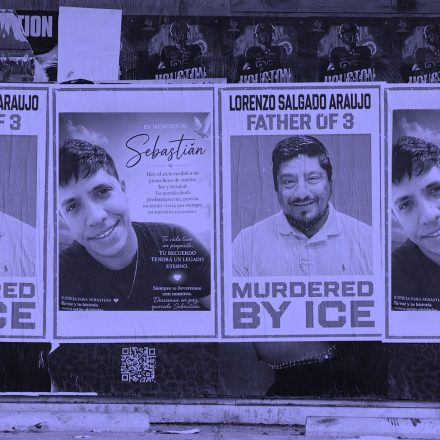
The same month that Roca Estrada says that federal agents temporarily blinded him, broke his collarbone, and beat him until his lungs filled with blood, Congress approved another $72 billion in funding for Immigration and Customs Enforcement. Immigrant advocacy groups warned ahead of the funding vote that additional money for ICE and President Donald Trump’s brutal immigration crackdown would mean more people would suffer a fate like Roca Estrada’s — or worse. The next month, ICE agents fatally shot Lorenzo Salgado Araujo in Texas and Joan Sebastián Durán Guerrero in Maine, both in their cars.
Physicians for Human Rights and the UC Berkeley Human Rights Center documented over 412 incidents of misuse of force by law enforcement agents at immigration protests from June 2025 to May 2026, including the use of chemical irritants like pepper balls and pepper spray — the same family of weapons Roca Estrada and Mejia suspect was set off in their car.
In ICE custody, 52 people have died during the first 500 days of the second Trump administration, according to Human Rights Watch, while use-of-force by guards remains largely unknown.
“We have received many more reports of violent use of force against people,” said Jeff Migliozzi, the communications director for Freedom for Immigrants, which runs the National Immigration Detention Hotline, referencing hotline numbers from June and July. “The overwhelming forces of intimidation and fear and retaliation, the M.O. of ICE has not changed. But certainly, as more people are detained, there’s more incidents [of violence].”
The DHS spokesperson claimed that Roca Estrada and everyone arrested along with him were offered medical care but declined, adding that “one of the detainees indicated that he had a prior shoulder injury.”
Roca Estrada tells a very different story.
He says he spent the next month tossed between detention centers in Virginia and West Virginia. Because he was not given a sling, Roca Estrada fashioned one for his broken collarbone out of bedsheets. He said he largely went without medical care despite agonizing pain that prevented him from laying down at night.
Roca Estrada said it got so bad he nearly fainted, at which point he was taken to a hospital.
“After medical personnel offered to document his injuries and consult a forensic physician, officers abruptly removed him from the hospital and returned him to detention,” the lawsuit alleges. “For weeks thereafter, Defendants failed to provide the promised follow-up care.”
According to the lawsuit, none of this should have happened because Roca Estrada never should have been detained in the first place.
The suit alleges that immigration officers never asked the 24-year-old “about his immigration history, whether he possessed lawful status, where he worked, how long he had lived in Virginia, whom he lived with, whether he had family or community ties in the United States, or similar questions to assess whether he was likely to escape before a warrant could be obtained.”
Other stories in the lawsuit follow a similar pattern. Catarina Rebeca Us Lopez, a 24-year-old woman from Guatemala, was detained in Centreville, Virginia, during a traffic stop around 6:00 a.m. with her husband. She alleges that masked officers blocked her car at a traffic light and forced her and her husband from the vehicle.
The officers falsely claimed that her husband had a deportation order, according to the lawsuit. But when her husband asked questions about the stop, Us Lopez alleges an agent pepper-sprayed him in the face and threatened to draw their weapons.
According to Us Lopez, officers did not “inquire about her immigration status, ask where she lived, inquire about her family, ask about her ties to the community, or otherwise conduct any individualized investigation concerning whether she was lawfully present in the United States or likely to escape before a warrant could be obtained.”
Instead, she claims that officers ignored her as she explained that she had work authorization and did not have a deportation order in place, and allegedly mocked her requests for answers and legal assistance.
For Roca Estrada, his physical injuries and trauma left him unable to work for a month. While he was detained, he also lost his apartment and had his personal belongings sent back to Guatemala without his consent, according to the lawsuit.
“The way that I was arrested … and the immense pain that I had to go through during this whole experience,” said Roca Estrada. “What happened to me was not just.”
The recent midterm election cycle marked by historic levels of pro-Israel spending saw an emerging trend that aimed to counter their influence: a new crop of pro-Palestine PACs.
Led by American Priorities PAC, which formed in January as part of an effort by donors, including supporters of New York City Mayor Zohran Mamdani, who opposed U.S. military support for Israel, a cadre of pro-Palestine organizations spent more than $14.4 million on races this cycle. Almost all of their candidates won.
“In the midst of the genocide, we felt compelled to push every lever and engage in every way possible to push candidates and the [Democratic] party to catch up to its base,” said Margaret DeReus, who leads the Institute for Middle East Understanding Policy Project and the Peace, Accountability, and Leadership political action committee, or PAL PAC. Both groups spent on pro-Palestine ads for the first time this cycle.
As DeReus and other leaders of the emergent pro-Palestine lobby told The Intercept, voters, especially Democratic ones, have become increasingly disillusioned with Israel and frustrated with politicians who support unchecked military aid to the country. “I don’t think there is an issue that I can think of where the party position, the mainstream party position, is so out of step with the base,” DeReus said.
The new pro-Palestine spending is a drop in the bucket compared to the more than $84 million the pro-Israel lobby poured into elections this cycle. AIPAC’s super PAC outspent pro-Palestine groups almost 6 to 1 — and that doesn’t include the more than $50 million AIPAC funneled directly to candidates. The pro-Palestine side may never match their opponents dollar for dollar.
“The point is, nobody has to outspend AIPAC,” said Beth Miller, political director at the advocacy group Jewish Voice for Peace Action. Her group doesn’t spend directly on elections and instead focuses on mobilizing anti-Zionist Jewish voters. “AIPAC is spending this much money because the message they are trying to force down voters’ throats is unpopular.”
“AIPAC is spending this much money because the message they are trying to force down voters’ throats is unpopular.”
The pro-Israel lobby long dominated the discourse on Israel policy before its flagship group, the American Israel Public Affairs Committee, started spending directly on elections for the first time in the 2022 cycle. But as AIPAC and other pro-Israel groups find their brand growing increasingly toxic amid public outcry over U.S. military support for Israel’s genocide in Gaza, pro-Palestine money is shifting the terrain when it comes to election spending.
Simply put, Miller said, “Their message goes further because it’s popular.”
Whether the spending is for or against the pro-Israel lobby, it’s rare to see political ads that directly address U.S. policy toward Israel. For one thing, the topic can be controversial — even if the controversy is manufactured.
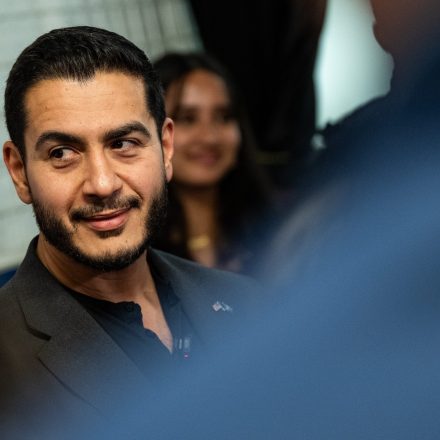
When Rebellion PAC, a committee founded to back the 2020 congressional campaign of left-wing commentator Cenk Uygur, ran an ad supporting Abdul El-Sayed and connecting high grocery prices to U.S. support for Israel, the fallout threatened to upend the Michigan Senate race. Rep. Haley Stevens, D-Mich., called the ad antisemitic and took it as an opportunity to air her grievances with her former primary opponent, eventually switching her endorsement to Republican Mike Rogers. The PAC originally ran a version of the ad during Uygur’s short-lived 2024 presidential bid.
Voters didn’t seem to be swayed by the controversy, and El-Sayed beat Rogers by a comfortable 7 percentage points. “The drama comes from a handful of elected officials and an establishment that, at best, takes an outdated view of how Israel and AIPAC operate,” said Greg Krieg, spokesperson for American Priorities, which was not affiliated with the Rebellion PAC ad but did produce other ad spots that criticized the U.S. relationship with Israel.
“Not every ad we ran was about Israel, obviously, but the topic came up often because it united Democrats across the party’s ideological spectrum,” Krieg said. “This is not a controversial issue at a grassroots level.”
That new, vocally pro-Palestine PACs are backing successful candidates alongside veteran left organizations is a sign of health for a nascent effort, Miller said.
The midterms were “a test case of: Will this message resonate with voters? And the answer overwhelmingly was yes,” Miller said. “This is a sign of the increasing power and mobilization of the Palestinian rights movement in the political and electoral space.”
Groups like American Priorities and PAL PAC often endorsed the same candidates as progressive bench-builders like Justice Democrats and the Working Families Party. In some cases, the Palestine solidarity movement seemed to breathe a much-needed new life into the electoral left.
The pro-Israel lobby doled out bruising defeats last cycle, after making a promise to unleash its full arsenal to oust critics of Israel from Congress. AIPAC’s super PAC spent more than $25 million to unseat then-Reps. Cori Bush, D-Mo., and Jamaal Bowman, D-N.Y. — a quarter of the $100 million it spent on primaries in 2024.
Reeling from those losses, progressive and Democratic strategists went back to the drawing board. Alone, they could never hope to have the same infrastructure or wield the same influence as a group like AIPAC. But together, they could more effectively pool their resources to tap into public opinion shifting further each year in their favor.
One of the new pro-Palestine groups, American Priorities, was born out of a desire to leverage that shifting public opinion against U.S. support for Israel into electoral wins. As the first truly pro-Palestine super PAC, the group spent $8.15 million backing 15 candidates this cycle, 13 of whom won. (The group also considered spending for Angie Nixon, a Florida democratic socialist who narrowly lost her bid for U.S. Senate, but ended up putting the money into another race.)
The growing networks allowed groups like Justice Democrats to get involved in more races. It came back from its losses and had its most successful cycle yet, electing eight of the 15 candidates it endorsed, four of whom unseated Democratic incumbents. The group spent $5.5 million in total this cycle, including $4.6 million on ads across all its races. And it went much further: Last cycle, Justice Democrats spent a combined $3.3 million alone backing Bush and Bowman before they lost.
Together, IMEU Policy Project and PAL PAC spent $2.15 million on ads and bundling for candidates. “We ran on proud anti-genocide and pro-freedom platforms,” DeReus said. “We knew that this was a cycle where that platform could win, and we wanted to be a part of making that happen.”
Meanwhile, AIPAC and other pro-Israel groups saw diminishing returns on election spending this cycle, as they battled waning public opinion and increasingly concealed their spending in races.
“Their names often tell you very little about who’s behind them or what they’re actually trying to do — and their ads almost never mention Israel,” Krieg said. “Everybody is looking at the same polling. We have voters who agree with us, so we’re willing to say plainly what we stand for and put our names on it. When you’re pushing a position that voters don’t support, you’re naturally going to be a lot less transparent about what you’re doing.”
“When you’re pushing a position that voters don’t support, you’re naturally going to be a lot less transparent about what you’re doing.”
The general public had a greater knowledge of AIPAC’s brand and its role in maintaining a pro-Israel U.S. policy this time around, said Justice Democrats spokesperson Usamah Andrabi. This cycle also saw more candidates willing to translate public agitation against U.S. support for Israel into campaigns, he said, pointing to other efforts he said helped voters understand AIPAC’s role in elections from groups like TrackAIPAC.
“Voters’ awareness and opposition to Israel’s genocide and apartheid was raised so much higher due to grassroots movements and groups that organized against it,” Andrabi said. “We were able to — across every single one of our campaigns — talk about AIPAC as AIPAC, and talk about the genocide as something we wanted to end, and connect the dots for people.”
It’s a stark contrast to 2024, when Justice Democrats met with candidates whose top concerns were avoiding AIPAC’s wrath, Andrabi said. “Even then, in 2024, we were telling these campaigns, ‘Look, there’s no going under, around, behind, over AIPAC. The only way to defeat this lobby is to go right through them,” he said. “The political courage amongst a lot of Democratic candidates and a lot of people within the Democratic Party was just not there in 2024.”
As the 2028 presidential race begins to take shape, the same pro-Palestine groups are preparing to push candidates to meet voters where they are on Israel policy.
“Particularly with Abdul’s victory in Michigan, that win capped off a year that has really proved that Palestinian rights is an asset, not just in safe blue districts, but in the most critical of swing states,” DeReus said. Even President Donald Trump knows how much of a liability being pro-Israel has become, she added, pointing to his late-breaking claim on Election Day that the U.S. would end military support to Israel.
Potential Democratic contenders in 2028 would do well to take that lesson to heart, DeReus said, as groups like hers gear up to push candidates to support an arms embargo, sanction Israel, and recognize the genocide. She said the group hopes to see someone like Sen. Chris Van Hollen, D-Md., enter the race, but that it would also support Rep. Alexandria Ocasio-Cortez, D-N.Y., should she decide to run.
In DeReus’s view, “2024 was the last presidential election we will see where Palestinian rights were disregarded.”
Clutching a Shake Shack bag in the Denver airport Saturday, Lis Smith held forth on her “do’s and don’ts” for the Democrats. Do: Focus on cost of living and accountability for the excesses of the Trump administration. Don’t: Prioritize revenge on Trump before hitting your affordability goals.
“The voters who helped us get this majority were voters that said we want you to lower our costs, we want you to listen to us, we want you to root out corruption,” said Smith, a prominent strategist for the centrist wing of the Democratic Party. “We’re living in the middle of a cost-of-living-crisis, and if you’re not talking to voters about that issue, not meeting them where they are in terms of their anger at the system, at both the economic and political system, like, you’re doing it wrong.”
Smith was among the flotsam and jetsam of exhausted Democratic politicos swirling about Denver International Airport in a surreal coda to a gathering she’d helped organize: a two-day conference of moderate and center-left Democrats exploring the future of the party, aptly dubbed “What’s Next.”
It was organized by the self-styled pragmatists of Majority Democrats, a hybrid political action committee and super PAC bankrolled by the hedge fund tycoon Stephen Mandel and his wife, Sue, and to a lesser extent by James and Katherine Murdoch, per FEC data. The conference was co-signed by the Searchlight Institute, a centrist think tank launched by former staffers of John Fetterman who have sought to quash the party’s focus on more left-leaning policy. It was seen as a practice ground for stump speeches from potential 2028 presidential candidates, heavy on party unity and light on ideological debate.
Within the confines of the Mission Ballroom complex in Denver’s River North neighborhood, it was a safe space for hopefuls like former Transportation Secretary Pete Buttigieg, Sen. Elissa Slotkin of Michigan, Sen. Ruben Gallego of Texas, Gov. Josh Shapiro of Pennsylvania, and Sen. Corey Booker of New Jersey to test out their lines for next cycle — before they have to go in front of the public.
But now, it was stuck.
On Friday, the Federal Aviation Administration issued a rare nationwide ground stop order, throwing the nation’s airports into chaos and canceling thousands of flights. As the situation was unfolding, Buttigieg joked onstage that he’d be available to help anyone looking to rebook their flight. On Saturday, 24 hours later, that joke might have been less funny to the likes of Georgia Sen. Raphael Warnock, who told The Intercept he had been unceremoniously deplaned from a flight canceled at the last minute.
Despite the airline chaos, Smith was feeling good. To her, the attendees represent the future in a post-Blue Tsunami landscape — and you better not call them the establishment.
“Majority Democrats does not consider itself a centrist organization,” said Smith, who worked on Buttigieg’s 2020 presidential run, former New York Gov. Andrew Cuomo’s 2018 reelection campaign, and Cuomo’s 2021 response to sexual harassment allegations. “So we want to be an alternative to the stale establishment that puts up candidates like Joe Biden or like Andrew Cuomo for mayor.”
Smith said she welcomed it when “What’s Next” became the scene of early shots in a battle over Democratic leadership in the Senate. On Thursday, the first night of the conference, at about 7 p.m. Mountain time, news broke that Sen. Chris Van Hollen — a Maryland Democrat, conference invitee, and rumored 2028 hopeful — planned to mount a challenge to Sen. Chuck Schumer, D-N.Y., for party leadership.
“I think a little democracy in the United States Senate caucus is a good thing,” he said at his first press conference on the matter on Friday. “I think it’s important that we give Senate Democrats a choice. We gave voters all over the country a choice, and they chose change.”
Van Hollen, who has differentiated himself from Schumer with his critical stance on Israel, told reporters he had decided to abandon a go for the White House in 2028 in favor of shaking up the party’s presence in the Senate.
It was a slight departure from the celebratory mood in Denver, where the words “big tent” were frequently bandied about. At the airport, Smith told The Intercept she and other organizers were as surprised as anyone by Van Hollen’s announcement. “We invited Van Hollen just as we invited anyone who was on the list of potential 2028ers,” she said. “But what better place to do it, I guess!”
Aside from Van Hollen positioning himself as a progressive challenger to Schumer, there was a noted absence of the party’s left flank. The progressives who did make the invite list stayed on message with the “takes all kinds” approach to Democratic victory.
“It’s a really good time to be a Democrat right now,” said Morris Katz, a campaign adviser to New York City Mayor Zohran Mamdani and, later, to Maine Senate candidate Graham Platner. “I think if you look at the historic wins that we had across the country and the way those candidates spoke, they sound a lot more like Bernie Sanders in 2016 than Hillary Clinton in 2016.”
But not everyone was feeling the love. Shelby Green, an organizer for a campaign in Florida to turn the state’s bankrupt Brightline railroad service into a public asset, criticized the conference organizers for having few Black women speakers on the main stage. She spoke bitterly of what she described as the party’s failure to properly support Angie Nixon, a Democratic Socialists of America-backed candidate who narrowly lost her contest for Senate in Florida.
“They waited until just weeks before the election to do a get-out-the-vote push, when they should have been doing voter registration,” Green said. “I think there should have been a space to apologize to Angie Nixon and to apologize to the South and say, ‘I’m sorry we underinvested, what can we do to make sure we don’t miss the ball next time?’”
Perhaps the most heated moments came when the conference attendees were forced to interact with members of the public — particularly those who disagreed with them.
On Friday morning, moments into a sit-down interview on the main stage between Jessica Tarlov, a token Democrat on Fox News, and New York Rep. Hakeem Jeffries, heir apparent to the Democratic leadership in the House, a small group of protesters stood up and started to shout for some of the left-wing policies that had gone largely unmentioned inside the conference.
“When is it time for Medicare for all?” one protester called out, prompting boos and jeers from the crowd. “When is it time for an arms embargo?”
As the protesters were ushered out, Jeffries began to speak of the honor he felt at “the trust placed in us by the American people.”
“Nobody trusts you!” another protester called out.
The conference shielded its attendees from most of the dissent. On the drive into the city on Thursday morning, The Intercept spotted a gaggle of protesters from the group Indivisible hoisting a huge banner on a highway overpass declaring “No Schumer Coronation,” objecting to the New York Democrat’s presumed rise as Senate majority leader. The group reappeared outside the convention center on Friday morning alongside protesters from Sunrise Movement demanding a Green New Deal, while police in riot gear milled around an armored vehicle looking bored and over-equipped. Onboard a shuttle bus ferrying conference-goers from their hotels to the convention center, one battle-hardened Democratic operative derided the protesters as “wacktivists,” expressing a distaste for the so-called “groups” blamed by many in the Democratic establishment for dragging the party left on social issues, to its detriment in 2024.
On the street corner on Friday morning, Tammy Butters, a retired teacher, told The Intercept that she was merely there to encourage those inside to not “chicken out” of holding the Trump administration accountable.
“There’s all this talk of compromise and talking to the other side, and I get that,” Butters said. “But I think we the people are screaming for accountability, and accountability and affordability are not separate issues. We are capable of doing both.”
Update: November 16, 2026, 5:55 p.m. ET This story has been updated to note that James and Katherine Murdoch fund Majority Democrats.
Abdullah Abu Zubaida’s family spent the first anniversary of the Gaza ceasefire last month in a shelter they built from the debris of their own home. Ne’man Abu Jarad and his five daughters spent it in tents, still displaced and with no clear way back. These families and millions of other Palestinians find themselves in a twilight state between war and peace: a zombie conflict in which a ceasefire has been announced while Israeli military control and attacks continue. The agreement risks making that condition permanent by leaving Palestinian governance and Israeli withdrawal dependent on decisions made largely by outside powers.
For these families, whose circumstances were reported by the Associated Press, and others in their position, the ceasefire that was supposed to end the war has brought little control over what happens next. Whether they can return home, rebuild, or resume anything resembling ordinary life remains subject to decisions made by outside authorities, whose hold on Gaza’s future may be further entrenched by the agreement itself.
While violations of the ceasefire warrant the attention they receive (and more), the agreement’s own terms demand scrutiny too, since arrangements negotiated to end wars also decide who holds power once the fighting stops. Christine Bell, a legal scholar specializing in peace accords, has shown how such agreements can perform constitutional functions. They determine who governs, over what territory, and subject to whose approval.
In Gaza, the conditions for Israeli withdrawal and Palestinian self-government give outside actors considerable power to determine when, and whether, the transition ends. The framework therefore threatens to turn the temporary administration of a devastated territory into a durable system of external control with no enforceable end, legitimized by the very agreement meant to bring peace.
A Long History of Outside Control
Gaza’s current predicament has a long history of displacement and outside control. In 1947, the United Nations General Assembly adopted a plan to partition Palestine (then under British rule) into Arab and Jewish states. While Jewish leadership accepted the plan, Arab leadership rejected it. During the war surrounding Israel’s establishment in 1948, approximately 750,000 Palestinians fled or were expelled from their homes. Many sought refuge in Gaza. The mass displacement and dispossession of the Nakba — Arabic for “catastrophe” — never ended.
Israel occupied Gaza and the West Bank, including East Jerusalem, in 1967. In 2005, it removed its settlements and withdrew its army from inside Gaza while retaining control over its airspace and maritime access and substantial authority over its borders and the movement of people and goods. In 2024, the International Court of Justice concluded that because Israel continued to exercise authority over Gaza’s borders and the movement of people and goods, the withdrawal had not entirely released it from its obligations under the law of occupation.
The current institution of Palestinian self-governance also began as a temporary arrangement intended to last no more than five years. The Oslo process of the 1990s provided for an interim Palestinian government in Gaza and the West Bank until a permanent settlement could be reached. That institution, the Palestinian Authority, remains central to proposals for Gaza’s future.
Hamas won the 2006 Palestinian legislative elections and took control of Gaza in 2007 after armed conflict with Fatah, the rival Palestinian faction. Israel, citing security concerns, tightened its border restrictions into a blockade by land, sea, and air, restricting the movement of people into and out of Gaza and the entry of food, construction materials, and other necessities. Egypt restricted passage through its own border crossing. Years before the current war, the U.N.’s humanitarian office documented the effects: restrictions on movement and trade had undermined Gaza’s economy, increased its dependence on aid, and obstructed access to healthcare and education.
On Oct. 7, 2023, Hamas-led groups attacked Israel, deliberately killing civilians and taking hostages; Human Rights Watch has documented these acts as crimes against humanity and war crimes. Israel’s subsequent military response devastated Gaza. By Oct. 21 of this year, Gaza’s Health Ministry reported 74,494 Palestinians killed and 175,604 injured. In an October 2026 report, the U.N. Independent International Commission of Inquiry concluded that Israeli authorities and forces continued committing genocidal acts against Palestinians in Gaza after the ceasefire, with the intent to destroy the group in whole or in part. By September of this year, Israeli military control had expanded beyond the approximately 53 percent of Gaza envisioned under the ceasefire agreement to at least 60 percent.
By the ceasefire’s first anniversary, nearly two-thirds of housing units had been destroyed, many of the remaining buildings were unsafe, and large-scale reconstruction had yet to begin. With winter approaching, displaced families need immediate decisions about shelter. The Israeli authorities who control access to their homes and to building materials can postpone those decisions. Such delays favor whoever controls access, and waiting itself becomes a source of political leverage.
From Resolution 2735 to Resolution 2803
In June 2024, the U.N. Security Council endorsed a three-phase framework in Resolution 2735. An initial ceasefire and exchanges of hostages and prisoners were to lead, upon agreement, to a permanent end to hostilities and full Israeli withdrawal, followed by major reconstruction. The initial ceasefire was to continue for as long as negotiations over the second phase went on.
In November 2025, the Security Council adopted Resolution 2803, endorsing U.S. President Donald Trump’s plan to end the Gaza conflict and authorizing international arrangements for its implementation. The framework retains the language of transition while placing Gaza’s administration and redevelopment under the oversight of a Board of Peace chaired by Trump. Palestinian Authority control would depend on completing a reform program and demonstrating the capacity to govern securely and effectively. The resolution refers to earlier proposals, including a Saudi and French initiative calling for reforms to governance, transparency, public finances, and service provision. Israeli withdrawal is tied to demilitarization milestones to be agreed among the Israeli military, an International Stabilization Force, the guarantor states, and the United States. The force’s mandate includes demilitarization and civilian protection. An Israeli military presence along Gaza’s perimeter could remain until the territory is judged secure against a renewed terrorist threat.
The plan endorsed by the resolution states that Israel will not occupy or annex Gaza, that no one will be forced to leave, and that full humanitarian aid will enter immediately. Continued attacks and restrictions on assistance must therefore be assessed against those obligations, but compliance with these provisions would still not resolve the deeper problem. The framework grants outside institutions concrete powers over Gaza while making the restoration of Palestinian political authority dependent on future conditions. It establishes who governs during the transition far more clearly than it establishes how the transition ends.
The resolution authorizes the international arrangements until Dec. 31, 2027, subject to further Security Council action, but it sets no deadline for full Israeli military withdrawal or the transfer of political authority to Palestinians.
Who Decides When Gaza Is Secure?
Israeli withdrawal depends on milestones agreed with Israel and other actors, but the criteria for determining when those milestones have been satisfied, and the consequences of disagreement, remain ill defined. Whoever can set the benchmarks, withhold agreement, or dispute compliance has considerable power over how long Gaza remains under outside supervision. This effectively means that the decision will be made in large part by Israel and institutions overseeing the transition, including Trump’s Board of Peace, which counts Israeli Prime Minister Benjamin Netanyahu as a member.
No security arrangement can eliminate every future threat; clear benchmarks and a truly independent arbiter are essential if the ceasefire is to ever become a lasting peace.
The demand for protection against another attack is understandable. Hamas’s weapons, and its coercive power over Palestinians, are serious problems. But if the security conditions for withdrawal can be revised indefinitely, Palestinians cannot know when the promised transfer of authority will occur. The obligations of one armed faction should not determine whether an entire population has a political future.
Israel Policy Forum, a U.S. policy organization supporting a two-state solution, analyzed and supported the basic approach of the July 2026 road map. The proposal linked phased Hamas disarmament to incremental Israeli withdrawal and the creation of a new Palestinian civilian administration. The organization’s analysis described Israel’s refusal to accept that bargain, conflicting explanations of when withdrawal could proceed, and unresolved definitions and verification arrangements.
No security arrangement can eliminate every future threat; clear benchmarks and a truly independent arbiter are essential if the ceasefire is to ever become a lasting peace. Otherwise, the conditions for withdrawal could be extended indefinitely. If Hamas disarms and the promised withdrawal never comes, the disarmament stands while Israel’s commitment remains open to renegotiation. A single attack by a faction opposed to the agreement could then be invoked to suspend the political future of an entire population, allowing armed spoilers to trigger further delays in Palestinian self-government and giving Israel and the United States grounds to prolong those delays.
Palestinians have seen an interim arrangement outlast its deadline before. The 1993 Oslo agreement between Israel and the Palestine Liberation Organization established a framework for interim Palestinian self-government and negotiations toward a permanent settlement. It envisioned a transitional period of no more than five years, with negotiations on permanent status to address the sovereignty and governance of Jerusalem, the fate of Palestinian refugees since 1948, Israeli settlements, and state borders. More than three decades later, there is still no comprehensive settlement. The new plan follows the same design: concrete authority now, political rights later.
The Cost of Delay
In an Oct. 2 report, the UN’s humanitarian office identified 217 displacement sites at medium to high risk of flooding, hosting approximately 235,000 people. Nearly 44,000 people were sheltering in unsafe buildings that required full or partial demolition, the report said. Restrictions on land access and on the entry of supplies continued to hamper preparations for winter.
No later breakthrough can give back a lost winter, a child’s interrupted schooling, or a patient’s postponed treatment. The longer a household has to survive elsewhere, the harder it may become to rebuild the life it was forced to leave, and an agreement can keep promising recovery while the conditions for recovery disappear.
“The Trillion Dollar War Machine” by William D. Hartung and Ben Freeman. Available on Bookshop.org
Palestinians are also asked to prove they can govern before they are allowed to do so, and governing requires revenue. In the October report, the U.N. described how Israel’s withholding of approximately $6 billion in tax revenues it collected on the Palestinian Authority’s behalf was undermining that government body’s ability to provide services and pay salaries. The crisis extends beyond Gaza and exposes a circular test of readiness. An administration deprived of its own revenue struggles to deliver services, and those failures can then be invoked to justify continued outside supervision.
Blame works the same way: If a Palestinian administration is responsible for public services while other actors control access, security, and funding, residents may blame its officials for failures it could not prevent. The resulting loss of public trust would make representative government harder to build, and that weakness could in turn be cited as a reason for continued outside supervision.
Nathan J. Brown, a scholar of Palestinian politics, has argued that Gaza diplomacy is separating administrative functions from national political representation. A committee of technocrats can run clinics and restore water service, but deciding the political future of the people it serves requires authority grounded in their consent. An administration accountable primarily to a foreign board chaired by Trump lacks that democratic mandate.
The Role of Outside Powers
The United States helped broker the Gaza ceasefire, holds a central position in the system meant to implement it, and underwrites Israeli military power. According to the Congressional Research Service, the 2016 memorandum covering fiscal years 2019 through 2028 pledged $38 billion in military assistance, subject to congressional appropriation. Without credible American consequences for obstructing withdrawal, the material advantages of continued control may outweigh any incentive to implement the agreement.
Donors providing humanitarian aid may end up paying to keep civilians alive while decisive political control remains elsewhere. Each emergency would then produce another funding appeal, while the authority to lift the restrictions causing the emergency would remain in place. Humanitarian funding could consequently help sustain that arrangement. The proposed International Stabilization Force, tasked with demilitarization and civilian protection, would need the authority and backing to restrain abuses by all parties, including Israel.
Ceasefires Without Endings
Lebanon offers a warning. After the April truce in the Iran war, Pakistan’s prime minister said the ceasefire included Lebanon. U.S. Vice President JD Vance said Washington had agreed to no such thing. Israeli attacks in Lebanon continued while the parties disputed what the agreement covered. Lebanese civilians were exposed to violence while governments argued over whether their country was protected at all. Whoever defines a ceasefire’s scope decides whose security it guarantees.
Gaza already displays the features of a zombie conflict, with an announced ceasefire, recurring military operations, and unresolved struggles over territory and power. The danger is that this condition becomes entrenched. Diplomats go on describing a transition, while people live under a system of control that survives one round of negotiations after another.
These conditions, though, are sustained by identifiable governments and institutions, through decisions they could make differently.
In a July 2024 advisory opinion, the International Court of Justice stated that the Palestinian people’s right to self-determination could not be made conditional by the occupying power, and it concluded that Israel must end its unlawful presence in the occupied Palestinian territory as rapidly as possible. The Security Council’s Resolution 2803 places Palestinian statehood after reform and redevelopment, saying that the conditions for a credible pathway “may finally be in place” at that time. The political framework thus makes progress toward exercising an existing right dependent on conditions assessed by outside actors, while establishing their immediate authority much more clearly.
Every grant of outside authority under the ceasefire needs an expiration date: thresholds that can actually be met, independent assessors to judge them, and consequences for any party that blocks the next step. Without them, Israeli withdrawal and Palestinian self-government in Gaza will remain promises that outside actors renew indefinitely and never keep. For the families still displaced, another anniversary will mean another year in a tent or a ruined home, waiting for decisions they cannot make. Their ability to return, rebuild, and determine their own future remains subject to a political framework in which authority rests largely elsewhere. The Gaza ceasefire risks giving the structures of control that preceded the war a new institutional form, backed by the U.N. Security Council and administered indefinitely in the name of peace.
A proposed “buffer zone” around religious facilities across the country — touted as protecting the right to worship — is alarming free-speech advocates who say the Trump administration could use it to crack down on protests.
The new bill, a national version of a controversial law passed in smaller jurisdictions, could hamper demonstrations against illegal sales of land in the West Bank to Jewish settlers that occur inside U.S. synagogues, the advocates say.
The bipartisan legislation could face another layer of opposition from a surprise corner, however, in the form of reproductive rights groups worried it would undermine an existing law that protects abortion clinics.
“Protecting religious freedom must not come at the expense of other Constitutional rights.”
Called the Right to Worship Act, the bill cosponsored by Sens. Ted Cruz, R-Texas, and Elissa Slotkin, D-Mich., will be the subject of a Tuesday hearing in the Senate Judiciary Committee.
The bill has drawn backing from Christian, Jewish, and minority religious leaders who say it could be used to prevent hate crimes. Major Muslim groups, however, have been notably absent from supporter lists.
That isn’t just because Cruz regularly demonizes Muslims. Muslim leaders also worry that while in theory the law would be used to promote religious freedom, in practice it would be used to punish non-violent, pro-Palestine protesters, said Dahlia Taha, the director of the First Amendment Center at the Muslim Public Affairs Council.
“Protecting religious freedom must not come at the expense of other Constitutional rights,” she said. “We believe that this can have very detrimental and long-term impacts. And under this administration, specifically, we’re concerned about those long-term implications.”
Slotkin and Cruz’s offices did not respond to requests for comment.
Land Sales as “Religious Services”?
Under the bill, the Department of Justice could seek civil fines or injunctions against anyone who engages in a “course of conduct” that disrupts religious services, or disrupts access to them, within 100 feet of a church, mosque, synagogue, or other religious facility. Worshippers and state attorneys general could also file lawsuits.
Numerous states have already passed similar legislation creating “buffer zones” around religious buildings. In New York City, Mayor Zohran Mamdani vetoed a buffer zone for protests near schools and colleges, while allowing another one for religious institutions to pass.
Supporters of the federal bill argue that it is needed to protect worshippers from harassment or worse.
“Attacks on synagogues, mosques, churches, and other houses of worship are unfortunately on the rise in Michigan, and across the country,” Slotkin said in an August press release. “No one should ever fear going to their house of worship. Period.”
The law’s authors tout it as a narrowly tailored guardrail, but critics say that the “course of conduct” subject to fines and lawsuits is so ill-defined that the Trump administration could use it to target peaceful protesters.
“There is no relationship between this legislation and the prevention of violent acts at synagogues, mosques, or churches.”
One of critics’ top fears is the “religious services” protected by the law could be defined to include real-estate pitches for land illegally seized from Palestinian people in the West Bank. In a press release, the Anti-Defamation League cited two West bank land-sale protests in New York City as examples of the need for the legislation, along with the March ramming attack on Temple Israel in West Bloomfield, Michigan.
When it comes to violent attacks, argued Eli Williams-Szenes, the director of advocacy and political affairs at the progressive Jewish group Bend the Arc, synagogues are better protected by an existing federal law called the Freedom of Access to Clinic Entrances Act. The FACE Act makes a federal crime out of force, threats, or physical obstruction near both religious institutions and abortion clinics.
“There is no relationship between this legislation and the prevention of violent acts at synagogues, mosques, or churches,” Williams-Szenes said of the new bill. “The idea that telling someone that if they wave a pamphlet 97 feet from the entrance to a synagogue, they’ll get a $10,000 fine would be the reason that someone didn’t try to drive a car into Temple Israel is crazy.”
Abortion Rights Angle
The Right to Worship Act faces long odds in the final weeks of the Republican-controlled Congress. Still, Williams-Szenes said he is concerned that even a hearing could set the stage for eventual passage.
Abortion rights groups are also worried. They fear that if the Right to Worship Act passes, Republicans will be inclined to repeal or weaken the FACE Act because of its protections for abortion clinics.
One of President Donald Trump’s first actions upon taking office last year was to pardon anti-abortion rights protesters convicted of blockading a clinic under the FACE Act.
“The Right to Worship Act is a wolf in sheep’s clothing,” Kelsey Ryland, a policy counsel at the National Abortion Federation, said in a statement. “The impact of this policy could become a backdoor FACE Act repeal, weakening enforcement against violent disruptors at abortion clinics.”
Giant screens along a highway in Tel Aviv, Israel, display a combination of the United States and Israeli national flags on March 4, 2026.Photo: Jack Guez/AFP via Getty Images
After President Biden’s unrelenting support for Israel’s genocide in Gaza helped pave the way for President Trump’s reelection in 2024, Trump’s own foolish decision to launch an Israel-backed war against Iran played a large role in putting Democrats back in control of both chambers of Congress — a fact Vice President JD Vance diagnosed in no uncertain terms.
Now Democrats and Republicans alike have the opportunity to demonstrate they’ve finally learned the lesson voters have tried to deliver to both parties over the last three years: The American people do not want to be entangled and complicit in Israel’s aggression and atrocities. Their first opportunity to heed that call is arriving sooner than one might expect.
Right now, the House Armed Services Committee and Senate Armed Services Committee are engaged in an informal but highly consequential conference to finalize the text of the National Defense Authorization Act (NDAA), which sets policy for the Pentagon. A disturbing provision in current versions of the texts passed by the House and Senate committees would integrate Israeli weapons companies into the Pentagon procurement process at an unprecedented level — opening a back door to almost untraceably send billions of taxpayer dollars to Israeli weapons makers without congressional oversight. The House bill would create a new “executive agent” position within the Pentagon to steer this integration—a level of amalgamation that exceeds collaboration with nations in NATO.
Members of Congress on both sides of the aisle are opposing this provision. On Tuesday, Sen. Chris Van Hollen and nine other Democratic senators, plus independent Bernie Sanders, demanded it be removed. In the House, Democrat Ro Khanna and Republican Thomas Massie have made clear they will also try to strip the NDAA of this measure. In doing so, they are representing what the vast majority of Americans want—and their colleagues should take note.
In our August polling with Data for Progress, 75 percent of Democratic voters oppose this provision, as do 58 percent of independents and 42 percent of Republicans. In addition, polling shows a majority of Americans now want to see taxpayer funding to Israel reduced or ended. Passing the NDAA with this measure would mean that even if Congress zeroed out annual weapons funding to Israel, currently at $3.3 billion per year, in the State Department budget — earlier this year, 103 Democratic representatives joined Massie in a move to do just that — there could still be a major increase in actual dollars flowing to Israeli companies that the American people never hear about.
The negative repercussions extend beyond funding Israeli weapons makers (some of which are government-owned) with our tax dollars. This sort of integration could allow for Israeli weapons and surveillance technology that have been tested on Palestinians to be used in the U.S. to advance the Trump administration’s cruel mass deportation program. Israeli weapons maker Elbit Systems’s U.S. subsidiary is expected to install more than 300 surveillance towers along the U.S.-Mexico border, developed from its technology deployed along portions of Israel’s apartheid wall in the West Bank.
Melding Israel into our government procurement process should also set off alarm bells in the U.S. national security world. The Washington Post reported earlier this year that Israeli Prime Minister Benjamin Netanyahu vetoed Biden’s decision to send U.S.-Israeli co-produced missile systems to Ukraine three years ago for Ukraine’s war against Russia, even though the missiles were paid for by American taxpayers. The integration measure proposed in the NDAA would massively expand the scope of weapons over which the Israeli government could exercise a unilateral veto.
Congress should be unwinding intelligence cooperation with Israel, not only on the moral grounds that no part of the U.S. national security apparatus should assist in genocide, but also because Pentagon officials raised the threat of Israeli spying to its highest possible level earlier this year. But instead of diminishing our intelligence sharing with Israel, the Senate Select Committee on Intelligence’s FY27 Intelligence Authorization Act, which is typically incorporated into the final NDAA version, includes a provision (Sec. 618) actually mandating the president engage in even more intelligence cooperation.
This should give us pause because of the faulty nature of Israeli intelligence and the way Israel used this intelligence to build a case for dragging the United States into war. It was reportedly Israeli intelligence that claimed the Iranian government could be overthrown within weeks, if not days, of Trump launching the war. Instead, Trump and Netanyahu are now stuck in a quagmire, and the war has imposed a terrible cost on the American people, U.S. servicemembers, and people across Iran and the region. Energy prices around the world have skyrocketed, the cost of the war has already exceeded $2,000 per U.S. household on average, and the U.S. is running low on interceptor missiles that will take years to replenish.
None of this seems to concern the main backers of U.S.-Israel military and intelligence integration, like Foundation for Defense of Democracies President Mark Dubowitz. In a column published in Israel Hayom, the right-wing newspaper owned by the Israeli-American GOP megadonor Miriam Adelson, Dubowitz said: “Israel and the United States should deepen their military, technological, intelligence, and economic integration to such an extent that inflicting financial harm on Israel would also carry a significant cost for Washington.”
In an interview, Dubowitz added that the U.S. and Israel should be so intertwined that any accountability measure against Israel, such as sanctions being enacted by American allies in Europe, would “impose costs on the U.S. itself.” In no uncertain terms, advocates for the integration envisioned in the NDAA want to try to make it impossible for the U.S. to disentangle itself from a regime that is increasingly perceived by many as a rogue actor.
The NDAA is usually considered a “must pass” bill in Congress — in fact, Congress has passed annual defense authorizations for 65 consecutive years. But Congress is under no statutory obligation to pass it this year, and doing so without stripping these provisions to become even more entrenched with supporting Israel would be an immediate betrayal of the will of voters. At a time when even Republicans are openly admitting the midterm election was a referendum on U.S. support for Israel, it would be an unforgivable choice for Congress to pass an NDAA with these integration provisions. If Republicans use their committee majorities to force their inclusion in the bill’s final text, Democrats have every bit of leverage to filibuster and block the bill’s passage in the Senate, which requires 60 votes.
Saying no to bringing the U.S. into a closer relationship with Israel in just about the most expensive, opaque, and dangerous way imaginable should be the easiest political decision Congress makes during its current lame-duck session.
Throughout Israel’s war on Palestine, doctors Thaer Ahmad and Feroze Sidhwa spent months at Nasser Hospital in the southern Gaza city of Khan Younis, where they provided care as volunteers and survived a raid and an airstrike on the complex. On Wednesday evening, they were in an Uber in New York headed to a screening of their film about their time in Gaza when they realized Nasser was the target of another Israeli airstrike.
“They just hit Nasser again,” Ahmad said, turning from the front seat toward Sidhwa. “I think Rizk is dead.”
He was referring to Dr. Rizk Abu Shaaira, an experienced surgeon and fixture of the Palestinian medical community whom both had worked alongside at the hospital and who appears in their film “American Doctor.” When Israel attacked Nasser Hospital on Wednesday — for at least the seventh time since the genocide escalated in 2023 — Abu Shaaira was one of the six people killed.
As the doctors arrived at a theater in Westchester for their screening, they received a flood of messages, photos, and video from their colleagues at Nasser, showing smoke-filled departments and wrecked operating rooms. The attack forced the closure of the hospital’s emergency, surgery, radiology and laboratory departments, hospital officials said.
Six people were killed in the airstrike, according to Gaza health officials, and 52 others were wounded, said Médecins Sans Frontières/Doctors Without Borders. Israel said it had used a precision-guided missile to target a Hamas commander.
One video showed a body bag holding Abu Shaaira, who had been working a night shift in the surgical ward, one of several floors severely damaged in the airstrike. Sidhwa, who worked directly with Abu Shaaira during his time volunteering at Nasser, described the 52-year-old father as a colleague who was “enthusiastic about everything” and “loved surgery.”
Another image showed unexploded ordnance launched at the hospital that medical workers had placed atop a stretcher, bearing the label “GBU-39/B” – a model of guided missiles manufactured by U.S. company Boeing. Israel purchases this precise missile model using funds from the U.S. State Department.
“That’s not complicity,” said Feroze when asked about the U.S.-made missiles used in the attack. “That’s active participation in the murder of physicians and other healthcare workers.”
Wednesday’s attack on Nasser Hospital, which serves a population of about 1.3 million people, is the fourth Israeli strike on a hospital since the so-called ceasefire agreement in October 2025. It is the seventh on the Nasser complex, including a double-tap strike in August 2025 when Israeli warplanes struck the hospital twice within minutes, killing first responders and journalists. Sidhwa had been volunteering at Nasser during an earlier airstrike on the complex in March 2025 violating an earlier ceasefire. That strike killed multiple people, including a 16-year-old boy.
“Under international humanitarian law, hospitals must be respected and protected.”
When Ahmad volunteered at Nasser in early 2024, a part of the hospital’s pediatric ward was still damaged from an Israeli tank shell that flew through a window, killing Donia Abu Mohsen, 12, while she received care from a previous airstrike that killed her family. During his stint, Israeli soldiers raided the complex and detained several doctors with whom he worked; they remain imprisoned without charge. Ahmad said his colleagues at Nasser told him that upon hearing the first booms on Wednesday, they knew immediately, due to familiarity, that they had been hit by an Israeli attack.
“Something that has troubled us so much is how normalized the targeting of these hospitals has become for Palestinians serving their communities,” Ahmad said. “They knew what was going on right away.”
People look at remnants of an Israeli projectile after an overnight airstrike hit Nasser Hospital in Khan Younis, Gaza Strip, on Thursday, Nov. 12, 2026. Photo: Abdel Kareem Hana/AP
Since returning from their time treating patients in Gaza, both Ahmad and Sidhwa have lobbied members of Congress to support the Block the Bombs Act, a House bill that seeks to prohibit the sale of certain arms to Israel that are tied to violations of U.S. and international human rights law. Among the weapons subject to the ban is Boeing’s 250-pound GBU-39. With a new Congress soon to be controlled by Democrats, many of whom ran campaigns touting support for the bill, both Ahmad and Sidhwa called on lawmakers to act.
“If our Congress upheld international humanitarian law, as well as U.S. domestic law, Dr. Rizik would still be alive,” Ahmad said, “and there wouldn’t be a surgeon who lost both of his legs in this bombing.”
The Israeli military claimed in a series of statements posted to social media that it had targeted a senior Hamas commander and other Hamas members who were “hiding” in the hospital and that the strike was meant to “eliminate the threat they posed.” The military did not specify the actual threat nor address the killing of Rizk, patients, and other civilians by “precision-guided missiles” it claims to have deployed to mitigate civilian harm. Israel alleged Hamas was operating out of the hospital’s second floor, but provided no evidence beyond a computer-rendered video. At least six Israelis have been killed in Gaza since the start of the so-called ceasefire, the Israeli military has said. Israel has killed more than 1,400 Palestinians in that time, according to Gaza health officials. The United Nations said that among those reported dead are at least 340 children.
In a statement to The Intercept, the Israeli military repeated its claim that Wednesday’s strike was targeting a Hamas commander, but it declined to confirm whether the alleged target of their strike was killed or comment on the civilians killed in the attack.
President Donald Trump’s Board of Peace, tasked with rebuilding Gaza, called Wednesday’s attack a “tragic loss of life” but went on to repeat the Israeli allegation that Hamas carries out “continued exploitation of hospitals and other critical civilian infrastructure for military purposes.”
Sidhwa called the Board of Peace statement on Hamas’ alleged embedding in hospitals “bullshit,” adding that he has seen no evidence of Hamas embedding its fighters within any hospital in Gaza, a recurring observation by international doctors who volunteer in the strip.
“Show me one example,” Sidhwa said. “I would love to see a single photo, a single video, a single testimony from a Palestinian. Literally anything. It’s just completely absurd.”
Médecins Sans Frontières/Doctors Without Borders said in a statement that it was “appalled and outraged” by Israel’s attack, adding that its doctors had to operate on two of their colleagues and another patient injured in the strike. The group referred to its earlier decision in January to temporarily halt its teams’ operations at Nasser, citing reports of “armed men in different areas of the large compound of the hospital,” and said similar incidents have taken place more recently. Even so, the group said, this does not justify Israel’s attack.
“Under international humanitarian law, hospitals must be respected and protected,” the group said. “In no conceivable circumstances can attacks on functioning hospitals in Gaza be treated as normal or acceptable.”
The strike came days after the board issued a rare condemnation of the Israeli government for its blockade of humanitarian aid from entering Gaza in the aftermath of a storm that wiped out thousands of tents, killing four people. Israeli Prime Minister Benjamin Netanyahu rebuffed the criticism and blamed Hamas for not disarming. Israel, meanwhile, continues to occupy about 70% of the Gaza strip, extending beyond the yellow line, a border drawn in the ceasefire agreement that is meant to mark where Israel can operate its military, and launches attacks on the strip on a weekly basis, all violations of the agreement.
“The same military who’s blocking the necessary supplies, as a middle finger to you, decides that they’re going to bomb a hospital,” Ahmad said. “I’m sure behind closed doors everybody is fuming and reeling, but unless people are ready to actually hold the Israelis accountable, actually use their leverage, nothing is going to change.”
House Minority Leader Hakeem Jeffries, D-N.Y., speaks during a news conference at the Capitol in Washington, D.C., on November 12, 2026.Photo: Jim Watson/AFP via Getty Images
Democrats rolled into Washington this week fresh off a generational sweep election on the promise of affordability for Americans and accountability for the Trump administration.
But on Tuesday night, Democrats in the House failed the first test of their incoming majority. An impeachment resolution introduced Monday by Rep. Thomas Massie, R-Ky., targeting Secretary of War Pete Hegseth, one of the main architects of the U.S.-Israeli war on Iran, provided Republicans with a chance to score an early victory.
House Minority Leader Hakeem Jeffries and the chamber’s Democratic leadership failed to take advantage, as 11 Democrats missed a critical vote that would have kept the resolution alive. The attempt failed by a slim margin, 211 to 204; Massie told The Intercept on Wednesday that even if the missing Democrats showed up he was sure House Speaker Mike Johnson could have rallied his members and made up the difference anyway. Until the new term begins, the chamber is still controlled by the GOP.
Nonetheless, the vote was a chance to send a message to the White House. One was sent: that of a disorganized, dysfunctional caucus. Other Democrats sought to take advantage of the misstep, noting that they were unwilling to miss the vote—Rep. Jasmine Crockett of Texas said she rerouted around traffic, and Rep. Pat Ryan of New York made it the day after back surgery.
“No matter what, I wasn’t going to allow traffic to keep me from that vote,” Crockett told MS NOW. “It was just that important to me.”
When asked about the absences, Rep. Alexandria Ocasio-Cortez, who was present for the vote, offered only “someone may have had a health issue” as an explanation.
House members who missed the vote blamed a number of factors for their absence, including traffic. On Wednesday, all of those same House Democrats save Rep. Haley Stevens (Mich.) began to offer explanations. Rep. Jonathan Jackson (Ill.) told TMZ DC that his “traffic jam”-related absence was “inexcusable.” He wasn’t the only one to blame traffic — Reps. Marilyn Strickland (Wa.) and Laura Gillen (N.Y.) also cited D.C. gridlock as the reason they missed the vote; Rep. Julia Brownley (Calif.) said she was “rushing” to the vote but missed it. Reps. Nancy Pelosi (Calif.), Lou Corea (Calif.), and Frederica Wilson (Fla.) were all out of town.
Momentum lost can’t be regained. If Jeffries doesn’t understand that, he’s not the man for the job.
Rep. Melanie Stansbury (N.M.) offered a front-facing video apology to constituents. Rep. Steven Horsford (Nev.) took “full responsibility” in a floor speech. And Rep. Brittany Pettersen (Colo.) acknowledged that she was at a super PAC event and said there was “no excuse” for missing the vote.
Expressing regret is a good start. It shows these lawmakers are aware that their actions are antithetical to where their voters are at this moment and are adjusting accordingly. It’s not enough.
Leadership was asleep at the wheel. As whip, Rep. Katherine Clark should have kept the caucus in line. (It’s worth noting that Clark officially launched a bid for majority leader last week.) A number of reps who blamed traffic were previously at an event hosted by the group Elect Democratic Women, which receives some of its funding from AIPAC. The event overlapped with the impeachment resolution vote; Clark is a cofounder of the group.
“Republicans just blocked the House from impeaching Pete Hegseth,” Clark posted on X after the vote—failing to take responsibility for her party’s own lack of discipline.
Democrats missing a vote to hold one of the main figures in the war on Iran accountable so they could attend a fundraiser is so tailor-made for progressive complaints over the state of party leadership, it’s hard to believe.
Jeffries tried to spin the vote as only a temporary reprieve for Hegseth, but he didn’t telegraph much willingness about holding his caucus to account.
“I haven’t had a conversation with anyone on the floor team about what may or may not have happened in terms of the Hegseth resolution, but this is not the end of it. It’s just the beginning,” he told Politico. Most critically, he accepted no responsibility for the stunningly bad optics of having members of his caucus no-show, even if it likely wouldn’t have moved the needle.
This never should have happened in the first place. It was the result of a series of decisions by Jeffries and Clark about the vote that made clear it wasn’t important.
Momentum lost can’t be regained. If Jeffries doesn’t understand that, he’s not the man for the job purely on tactical grounds, and he should lay no claim to being a party standard-bearer to steer us through the next two years of Trump’s America.
Jeffries and his party seem doomed to repeat the past. In 2009, when President Barack Obama came into the White House on the back of a change election that gave Democrats huge majorities in Congress, including a filibuster-proof supermajority in the Senate, the party hobbled itself out of the gate by preemptively declining to pursue justice for the many crimes of eight straight years of George W. Bush.
“We need to look forward as opposed to looking backwards,” Obama told ABC News’s George Stephanopoulos in January 2009, effectively ending any hope of accountability for the outgoing administration’s torture program and myriad other misdeeds. The ramifications of that decision arguably led to the war on Iran, a bipartisan immigration-deportation regime, and the end of Roe.
Democratic voters don’t want the party to rest on its laurels, they want blood.
Now, with a Republican president who is hated even more than W—something that would have seemed impossible to imagine almost 18 years ago—the Democratic Party’s establishment wing appears ready to repeat those failures. Taking on Trump and his corrupt, violent administration was one of the main messages that flipped House and Senate seats across the country but the party’s current leaders are allergic to action.
Entrenched Democrats also don’t seem interested in any sort of accountability. Stevens, the Michigan Democrat who broke ranks with her party and endorsed Republican Mike Rogers for Senate rather than back Abdul El-Sayed, was under pressure in the days before and after the election, with even establishment kingmaker Rep. Jim Clyburn signaling openness to expelling her from the caucus. By Tuesday morning, Pelosi — always in touch with party leadership — seemed to throw cold water on the idea: “I’m not supporting kicking her out…. Let’s focus on the very positive.”
This is such a complete misunderstanding of the mood of the electorate, one wonders if it’s intentionally obtuse. Democratic voters don’t want the party to rest on its laurels, they want blood. Anyone who’s been to a liberal rally since the start of the second Trump term can tell you that the signage is calling for, at minimum, accountability, not immediate compromise.
If Democrats rubber-stamp Jeffries as speaker and fail to adopt a more aggressive legislative and investigative approach, frustrations within the caucus and among the base will only continue to mount.
Jeffries is downplaying dissent, but this is more than just a battle between two wings of the Democratic Party. Democrats in New York have been looking to unseat the leader for years, frustrated with his closeness to AIPAC and financial institutions. He’s the kind of Democrat the base is fed up with, and that exasperation is widespread; polling shows just how deeply unpopular he is.
There is an alternative gaining steam: Rep. Ayanna Pressley, the Massachusetts progressive and member of the original “Squad” who were first elected in 2018. Pressley has an uphill battle and has not yet announced that she’s interested in the job. The left is interested.
Voters gave Democrats a clear mandate on Election Day for what they want to see in Washington. Holding this administration accountable should be one of the top priorities. If the party fails to do all it can to advance that goal, it will once again earn its reputation for preferring failure to action. We should all push the next Congress to act as the exception to that rule—and they can start by picking a new speaker to meet the moment.
Secretary of defense Pete Hegseth narrowly avoided impeachment on Tuesday, but his future is anything but secure as an enraged Democratic caucus prepares to take control of both the House and Senate in January.
“Tick, tock! Get ready, asshole, because we’re coming,” Congress member-elect Richard Ojeda, D-N.C., warned Hegseth at a press conference on Wednesday. Ojeda told The Intercept that he planned not only to impeach Hegseth but also to bring criminal charges against him.
On Tuesday, the House declined to move forward with impeachment proceedings introduced by Rep. Thomas Massie, R-Ky., which accused Hegseth of multiple “high crimes and misdemeanors.” Massie accused Hegseth of illegally waging war against both Iran and Yemen and of overseeing extrajudicial killings in the Caribbean Sea and Pacific Ocean.
This week on The Intercept Briefing, co-host Jessica Washington speaks with Nick Turse, Intercept senior national security reporter and editor of Tom Dispatch, about Hegseth’s legacy as “secretary of war.”
“Hegseth can spin it any way he likes,” says Turse. “He can use the troops as a shield, claiming that indictments of him are indictments of them. But in the end, he’s got a lot to answer for on his own, and none of it’s because he’s doing a good job.” Turse adds: “It’s because he’s committing high crimes.”
Co-host Jordan Uhl also sits down with musician and guitarist Tom Morello to talk about his new album “Everyone Gets Everything They Want” and his decades-long fight against forever wars and his resistance to fascism.
“My career has basically been rebellion as self-care,” says Morello. “But in this day and age, every act of art is an act of resistance. Every truth spoken is a light in the gathering darkness. And every song sung has the potential to be a trumpet of a bulwark against the rising tide of authoritarianism to help sound the bell for current and future generations to continue to fight for a more just and peaceful and decent planet.”
For more, listen to the full conversation of The Intercept Briefing on Apple Podcasts, Spotify, YouTube, or wherever you listen to podcasts.
Transcript
Jessica Washington: Welcome to The Intercept Briefing, I’m Jessica Washington, politics reporter for The Intercept.
CNN: Republicans banded together and they killed this effort to impeach Pete Hegseth and largely stayed united. And the final vote here was 211 to 204.
NBC: Republicans uniting to block them from moving forward following Hegseth’s fiery rebuke of the outgoing congressman who introduced them, Thomas Massie.
ABC: The Republicans sticking together have essentially tabled or moved this resolution to the House Judiciary Committee, where it’s expected under Republican control these articles of impeachment will die. Pete Hegseth, for the moment, will not be impeached by the House of Representatives under this effort by Kentucky Republican Congressman Thomas Massie. Not a single Republican colleague joined him. All the Democrats stuck together, but there were not enough.
JW: On Tuesday night U.S. Secretary of Defense Pete Hegseth narrowly avoided impeachment as House Republicans blocked a bill introduced by Republican Congressman Thomas Massie of Kentucky.
Rep. Thomas Massie: We’re not indicting him for being bad at his job. In fact, he was very effective at killing school children in Iran. He was very effective at extrajudicial killings. There’s no argument in these impeachment articles that he’s ineffective. The argument here is that he’s broken laws and he’s violated the Constitution.
JW: That’s Congressman Massie speaking at a press conference about the articles of Impeachment he introduced against the embattled Cabinet Secretary. This is how Hegseth responded:
Pete Hegseth: As for the articles themselves, Iran, the cartels, Maduro, Yemen, every one was a lawful operation ordered by the commander-in-chief, then ordered by myself, notified to congress and executed by American warriors who did their jobs. We destroyed terror regime’s capabilities. We sank the boats carrying poison into our communities. We put a narco dictator into handcuffs. These are not high crimes. This is the job. And it is a job well done.
Joining me now to break it all down is Nick Turse, senior national security and foreign policy reporter for the Intercept and editor of Tom Dispatch.
Nick, welcome back to The Intercept Briefing.
Nick Turse: Thanks for having me on. It’s great to be here.
JW: Before we dive in, I also want to let listeners know we have a special interview with Tom Morello, the musician and original member of Rage Against the Machine.
Tom Morello: My job from day one is to try to make one guitar sound like a riot and to have my music be a contributing factor to social justice movements at home and abroad.
JW: So stay tuned for that conversation
All right, Nick, to start. What’s your reaction to Secretary Hegseth dismissing Massie’s impeachment articles, claiming:
Pete Hegseth: What one disgruntled and defeated congressman is attempting is not oversight, and it’s not accountability. It’s a political spectacle, a personal manifesto driven by ego and resentment.
JW: and that Massie is punishing him for a, “job well done”? What is your response?
NT: To start, it’s laughable. For half an hour at a press conference on the morning of the impeachment vote, Secretary Hegseth wove a web of lies designed to refute or obfuscate Massie’s eight impeachment charges. He repeatedly claimed that the effort to impeach him was just a stunt by one disgruntled congressman.
But, as we came to see, more than 200 members of Congress voted with Massie. So no, this wasn’t one man’s vendetta. When the new Congress is sworn in I think we’re going to find that the number in favor of impeaching him is only going to grow. And consequently, I think the list of high crimes and misdemeanors against him is also going to grow.
There’s almost a limitless list of high crimes that Hegseth can be charged with, and there are crimes within crimes. Waging unlawful wars in Iran and Yemen and Venezuela and specific war crimes within them that Hegseth may also be culpable for.
“Waging unlawful wars in Iran and Yemen and Venezuela and specific war crimes within them that Hegseth may also be culpable for. “
The boat strikes in and of themselves are criminal, and then there is, for example, the double tap strike on the first attack on a so-called drug boat, which is a crime in its own right.
Hegseth can spin it any way he likes. He can use the troops as a shield, claiming that indictments of him are indictments of them. But in the end, he’s got a lot to answer for on his own, and none of it’s because he’s doing a good job. It’s because he’s committing high crimes.
JW: High crimes and misdemeanors to a layperson, even to me, is not exactly indicative of what these actual crimes are. So what were the actual charges that Massie leveled against Hegseth?
NT: There were three charges for illegally waging war against Iran in violation of the War Powers Resolution. There was a charge related to Operation Rough Rider, which is the 2025 war in Yemen, which caused a tremendous number of civilian casualties. It’s become a forgotten conflict at this point.
The boat strike campaign which experts say are extrajudicial killings. There’s also a charge related to Hegseth’s efforts to undermine efforts at minimizing the possibility of civilian casualties. So these are some of the high crimes and misdemeanors of eight charges that Massie put forth.
JW: You just mentioned the drone strikes on so-called “narco terrorist” boats in the Caribbean and the Pacific, which to your estimate have killed more than 240 civilians. Those strikes, from my perspective, have gotten far less media attention than the Iran war, and obviously part of that is that much of what the U.S. is doing and who they’re targeting in open waters is shrouded in secrecy. But, how unprecedented are these strikes, and are these actions considered war crimes?
NT: The boat strikes, as you said, have largely been overtaken by the Iran war. But during his Pentagon press conference, Hegseth made a full-throated defense of his actions that actually drew attention to the unprecedented nature of the boat strike campaign.
Hegseth said that the charges that the American military targets civilians are a lie, and that the only people that target civilians are the terrorists that the U.S. hunts down. That itself is an outright lie. The U.S. boat strike campaign has only targeted civilians. Only. Not some, not inadvertently, not maybe. These are all civilians, period, full stop.
These summary executions of more than 240 people are a significant departure from the standard practice in the long-running U.S. war on drugs, in which law enforcement agencies detained suspected drug smugglers and then brought them to trial on criminal charges.
Experts in the laws of war, Pentagon officials that I’ve spoken with, and members of Congress from both parties say that Hegseth’s boat strikes are illegal, that they’re extrajudicial killings. The military is not permitted to deliberately target civilians, even suspected criminals.
Interdiction in these cases is possible. It’s preferable. It’s legal. We don’t execute suspected criminals in this country, or when the police do, it’s supposed to be a crime. If there was a declared war, these boat strikes might be war crimes, but no war exists, and there is no plausible legal justification for the strikes. And outside of armed conflict, the legal term for premeditated killing is murder. That’s what’s happening. That’s what Hegseth is responsible for, outright murder.
“Outside of armed conflict, the legal term for premeditated killing is murder. “
JW: Massie has not called Hegseth a war criminal or used the term murder like you have, but he did have this to say about Hegseth when discussing the articles of impeachment.
Thomas Massie: You won’t find a reference to war crimes. What I do say, though, is because he’s violated the international norms of war and violated our own conventions of war, he’s put our own soldiers and sailors at risk. When you go back for a second kill on people who are clinging to wreckage, you’re encouraging our adversaries to do the same. That’s why those laws — those international laws — are on the books.
JW: Nick, what did you make of Massie’s response just now?
NT: We were the first outlet to report that double tap strike in September 2025. It caused a firestorm in Congress for the very reason that Massie’s talking about.
He’s right. Double tap strikes on helpless shipwrecked people, they’re in contravention of the U.S. military’s own law of war manual, and they undermine respect for the laws of war and encourage enemies to give Americans no quarter, which is a war crime, and a war crime that Secretary Hegseth has openly called for and advocated.
I’m going to out myself as a lapsed historian here, but to emphasize that this is a longstanding norm in armed conflict I’d mention that a great rallying cry of the Revolutionary War — the American Revolution —was “Remember Paoli.” It’s a town in Pennsylvania where British Redcoats reportedly offered no quarter and massacred American forces.
Back in 1777, this was considered a major breach of the laws of combat. This is what Secretary Hegseth has advocated [that] we are doing in these types of double tap strikes, executing those who are injured those who are surrendering. That’s outright barbarism.
JW: We were just discussing civilian casualties in the boat strike —intentional civilian casualties. I also wanted to talk about what happened in February when the United States conducted an airstrike on an elementary school in Minab, Iran. That strike killed at least 150 people, most of them children.
Now, U.S. officials said the strike was caused by a “targeting error” where the military mistook the elementary school for an Islamic Revolutionary Guard Corps naval base. What did this horrific incident tell us about how the military has been operating under Hegseth when it comes to civilian casualties?
“Hegseth made it inevitable that something like this mass killing of children would happen.”
NT: This horrendous attack — a massacre of children — was the predictable result of Pentagon policies that The Intercept has been spotlighting since the spring of 2025, just after Pete Hegseth came to office. Hegseth made it inevitable that something like this mass killing of children would happen.
We reported that immediately upon taking office, he began dismantling what is known within the military as CHMR, the shorthand for Civilian Harm Mitigation and Response, basically undermining everything he could that restrains the military in favor of his favorite dictum, which is lethality.
A group of Democratic lawmakers told Hegseth in July in a letter directly to him that this gutting of CHMR had left the Pentagon unable to comply with the law and also its congressionally mandated responsibilities to protect civilians. This is precisely what military officials told us would happen months earlier, and it all came to fruition.
These criticisms were echoed in another report that we revealed in July that found that Hegseth had gutted the premier center devoted to preventing civilian casualties in war zones, the Pentagon’s own Civilian Protection Center of Excellence. Its workforce was slashed from 40 personnel in January of 2025 to just nine at the end of last year.
Last week we published an exposé that quoted six current and former defense officials who served under Hegseth, and one of them was the former senior advisor to this Civilian Protection Center of Excellence. This former official Wes Bryant, served eight combat deployments calling in airstrikes on ISIS and other post-9/11 entities.
Then he served under Hegseth until he was pushed out for blowing the whistle on policies that would undermine protections for civilians. Bryant told me that Hegseth is conducting what he called, “state terrorism.” He said Hegseth is “100 percent a war criminal,” and that he needs to be prosecuted.
JW: To that last point, and I really don’t like to play devil’s advocate, but from my understanding, you choose to refer to Hegseth by his self-styled title, Secretary of War, and if I understand you correctly, your argument is that there’s no need to sugarcoat what the U.S. military is doing. The Army is not in the business of defense. It’s in the business of war.
Is there an argument to be made that Hegseth is simply stripping back the facade of the U.S. military as anything other than a war machine, or is he really changing how the U.S. operates in the theater of war and in the world?
NT: I take a lot of heat from from readers on social media and in my email inbox about this, and readers plead with me not to bend to Hegseth’s will and call him the Secretary of War, which is, as you said his preferred title.
But I’ve really jumped at the chance for the reasons that you mentioned. When Hegseth unilaterally renamed the department, it gave me license to do what I’d wanted to do for years to call it as it’s seen, as it’s experienced in the world. For years out in the field, I found it grating whether I was in Vietnam or Cambodia or Libya and Somalia, to talk to victims of U.S. military violence about the so-called Department of Defense. The DoD says this. The DoD spokesman says that. I don’t think these people cared about it, but I absolutely did.
The Defense Department made war on the world, killing, wounding, and displacing millions of people not in the defense of anything. It was an aggressive war-making organization, plain and simple.
I hate using milquetoast euphemisms, but journalistic conventions handcuffed me. I couldn’t go off on my own and start calling it “Department of War.” But when they freed me up to give readers a more accurate assessment of what they do now under Hegseth and what has been done since they changed the name going back to the 1940s, I took the opportunity that I was afforded.
Attacking an elementary school in Iran is an act of war and maybe a war crime. It’s not a defense of the United States or in defense of the United States. That’s the reason why I use that title.
JW: Do you think that Hegseth has changed what the department is? Did it becoming the Department of War change something fundamental about it, or is that what it’s always been? And then is Hegseth changing anything about the actual way it operates?
NT: Hegseth has pulled the veil off of what the department does. I think in a very real sense, he’s undermined protections on civilians that were only just starting to perhaps take hold. The Center of Excellence that I mentioned earlier only just came into existence and was needed because the Pentagon has a long history of attacking civilians whether purposefully or inadvertently as “collateral damage.”
So the Defense Department always did what the Department of War does now, but there were some measures that were perhaps just starting to take hold, and Hegseth has undermined them completely.
JW: I think to your point, yes, Hegseth has lifted the veil off of what this department does. It is a department that makes war on the world. But he’s also made that worse and deadlier for civilians around the world.
And, obviously on Tuesday, Republicans killed the possibility of Hegseth being impeached by the current Congress. But come January, there’s going to be a new Congress dominated by Democrats. Now, before the vote on Massie’s articles of impeachment, Massie had this really interesting argument actually for why Republicans should join him in impeaching Hegseth. Let’s hear that clip.
Thomas Massie: I’m being polite here. What is an impeachment? An impeachment is just firing somebody, really. You don’t go to prison. You don’t go to jail. You don’t pay a fine. OK, when the Democrats get in charge, they are going to be very vicious.
JW: He went on to say.
Thomas Massie: The Democrats are going to bring people in here who have served under him and with him, give them protection. They’ll be able to say what he’s actually done, the things that he has ignored, the things that he did that caused civilian casualties, the way he’s ignored the laws, and then there’ll be a full, robust trial over in the Senate.
JW: Nick, what do you make of Massie’s remarks, the failure of this vote now, and what do you think might be coming in the next Democratic-led House and Senate?
NT: So Hegseth was very fixated on Massie having a grudge against Trump, which he had transferred over to the war secretary. But Massie, as we heard there, throughout the process, was very vocal that he was doing Hegseth a huge favor. Massie suggested that his impeachment resolution was the legislative equivalent of a mercy killing, calling it a much gentler version of what the Democrats would do when they take control of Congress in January.
The Democrats can rain down relentless hellfire on Hegseth. Congressional committees have broad investigative powers including the authority to subpoena administration officials to testify under oath and compel them to turn over documents. They can paper the Pentagon with subpoenas.
Representative Yasmin Ansari, who filed articles of impeachment against Hegseth in the spring, told me that Hegseth surviving Massie’s impeachment only opened him up to a plethora of ways for Democrats to hold him accountable in the next session. Specifically compelling to testify under oath before Congress and before the American people.
She emphasized that he’s “not only one of the most incompetent members of the administration,” her words, “but also one of the most unpopular” on a bipartisan basis. What she believes is going to happen is that Hegseth is going to be hauled up before Congress, and he’s just going to be battered incessantly.
This is probably going to grow so great that he’s going to become toxic to the administration. Representative-elect Richard Ojeda of North Carolina told our colleague Matt Sledge just after the impeachment vote the new Democrats are spoiling for a fight with Hegseth. He said “I want Pete Hegseth not just impeached, I want him prosecuted.”
I personally think that Hegseth might relish this rhetorical combat on Capitol Hill as a prelude to a potential presidential run. But, I think at some point it’s going to become untenable for him to actually preside over the Pentagon.
JW: I was at a press conference where Richard Ojeda was as well, and he had even more colorful language for Hegseth.
Rep.-elect Richard Ojeda: Make no mistake about it, the 120th Congress, he will not be so lucky. Tick, tock! Get ready, asshole, because we’re coming.
JW: They certainly seem to have plans to really target Hegseth and Massie might have been right that he was trying to offer a mercy kill. But we’re going to have to leave it there.
Nick Turse, thank you so much for joining me on the Intercept Briefing.
NT:: Thanks so much for having me.
JW: After the break, my co-host Jordan Uhl speaks to musician and guitarist Tom Morello about his new album “Everyone Gets Everything They Want” and using his platform to fight fascism.
[Break]
Jordan Uhl: “Every act of art is an act of resistance,” says the legendary musician Tom Morello. Fighting for social justice and against fascism has been a staple of his art and career, from his work with The Nightwatchman to Rage Against the Machine to Audioslave.
And he’s at it again with his new album “Everyone Gets Everything They Want.” The track “Adjourn it” denounces the rising tide of racism and anti immigrant bigotry.
The song features Serj Tankian of System of a Down and Morello’s 15 year old son, Roman.
Tom Morello joins me now.
Tom, thanks so much for joining us on The Intercept Briefing.
JU: Tom Morello, it is an honor. Thank you so much for joining us on the Intercept Briefing
Tom Morello: It’s my pleasure. Thank you very much for having me
JU: Tom, you have a long history of activism, infusing that into your music and your art, and creating space for activism-oriented concerts and events like Power to the People. Your new album follows that tradition. It’s called “Everyone Gets Everything They Want.” Can you tell us about this new album, the themes that you explore on it, and if there are plans for future Power to the People festivals as we head into the presidential cycle?
“Every act of art is an act of resistance.”
TM: My career has basically been rebellion as self-care — rock and roll, especially in these troubled times. But in this day and age, every act of art is an act of resistance. Every truth spoken is a light in the gathering darkness. And every song sung has the potential to be a trumpet of a bulwark against the rising tide of authoritarianism to help sound the bell for current and future generations to continue to fight for a more just and peaceful and decent planet.
“Everyone Gets Everything They Want” is the 22nd album of my career. All 22 of those records have been built around a single purpose: that history is not something that happens, history is something that we make. Standing up in your place, in your time, in your place of work, whether it’s in a recording studio, whether it’s at the carpenter’s union, whether you’re a student, whether you’re an unhoused person, whether you’re a politician, is doing what you can with what you’ve got to try to be an advocate and an agent for a more just and peaceful planet.
JU: We are coming off of a massive rout in this election. Voters made it clear how they feel about this growing fascist movement in this country. But coming out of it, while some people are relieved, some people are happy, there are already intra-party debates over the policy priorities and leadership.
Unsurprisingly, we are seeing the pundit class rush to quell people’s enthusiasm, insisting the left does not have a mandate and that the moderate policy is the answer. What is your response to that?
TM: I was the scheduling secretary for United States Senator Alan Cranston for two years, so I got to see how the sausage is made from inside the sausage factory, and it is worse than you could possibly imagine. While it is encouraging that here and in Hungary and in Serbia and in Brazil that the people have resoundingly said no to fascism but the idea is not to have a kinder, gentler oligarchy. The idea is the liberation of humanity. The idea is securing a planet — a healthy planet — for our children and grandchildren, generations to come.
“People have resoundingly said no to fascism but the idea is not to have a kinder, gentler oligarchy. The idea is the liberation of humanity. “
One thing that is encouraging in those other countries and in our most recent election is in addition to the terrible corporate Democrats who are also represented, there’s a new breed of politician. We have a socialist mayor in New York City. We have a socialist mayor in Los Angeles, the two biggest cities in our country.
The young people are once again the hope of the future. Rather than having me, a musician of a certain age saying, “This is what you should do,” I think that the main thing I can do is listen to what they have to say and encourage them in their efforts to build that more just and more peaceful planet.
JU: Do you have any thoughts on who should lead in the House and the Senate? We’re seeing calls for Schumer to step aside. Maybe if it’s new blood, maybe it’s Chris Van Hollen. Do you have any thoughts on who should lead Democrats in the Senate?
TM: My thoughts of people who should lead in the Senate are not elected in politics. And likely your show would be thrown off the air if I were to name them. [Laughter.]
Obviously the Chuck Schumers and Hakeem Jeffries are just awful continuations of the awful policies that got us in this to begin with. You can trace it back to Clinton with the crime bill and with NAFTA, and the abandonment of the working class that got us in this mess to begin with.
“Aim for the world you really want without compromise.”
But again, I also think that it’s important to aim for the world you really want without compromise, without apology, and to not just go, “OK, well this is going to be better than the slippery slope to obvious this 50 percent clown show, 50 percent fascism that is the Trump administration.”
But what is the world you really want, and how do you build that? Not just what is a glazed-over version of what we’ve had, a reheated version of the terrible policies of both parties that got us in this situation of nearly environmental collapse and right-wing white Christian nationalism.
One thing I will say is that, there has been some reckoning that needs to be pushed even further of dealing with America’s original sin. The paradox of this country, which is demanding liberty while embracing white supremacy. That is the story of our country from day one in that some people’s lives just matter a lot more than other people’s lives, both at home and abroad. And a full rejection of that we’ve seen in some other countries, we’ve seen in part of the electorate here, and in some of the elected officials.
In my view, Election Day is harm reduction. I always vote. I vote my conscience, unless it is a contested election, and then I vote for the absolute most harm reduction.
“What’s the world you really want, and how do we fight for it?” That doesn’t just happen on Election Day. That happens the day after Election Day, and the day after that. ”
To go beyond that and be like, “What’s the world you really want, and how do we fight for it?” That doesn’t just happen on Election Day. That happens the day after Election Day, and the day after that.
Since I was 17 years old, I have been in the trenches of grassroots organizing via rock and roll to try to do what I can in my small way with a Marshall half stack to liberate humanity. And that work has only just begun.
JU: I want to touch on that. I live in Los Angeles, and we just watched California voters reject a billionaire tax. This was a fight you were directly involved in. You performed at a rally here in Los Angeles in the spring. How do you make sense of that? You’re talking about these socialist gains, and we’re seeing this—
TM: It’s easy to make sense of it. It’s money in politics. I’m a fan of sports. Every World Series game, every football game had 72 ads paid for by tech billionaires and featuring the heroes of the California Democratic Party saying, “Please don’t tax the billionaires, whatever you do.”
This is a firsthand account. I was the scheduling secretary for a U.S. senator. Let me tell you what I scheduled. I scheduled phone calls for him to ask rich dudes for money. That’s what the schedule was.
We would go to a hotel, and there were like 10 payphones in a row. I would commandeer them, and I would call up the first guy and say, “Can you hold for the senator?” He’d get on the phone and ask that rich dude for money. Nine more calls in a row, Republicans, Democrats, corporate people, whatever.
Then they would start again, and we would spend the whole day doing that. Those guys are bought, sold, and totally beholden to the oligarchs that have their hands on the lever of power. So the reason why that tax failed was because how much money did they spend? If they had put as much money into healthcare for Californians as they did in trying to reject the billionaire tax, we’d be a lot better off.
JU: Over $300 million by a handful of billionaires. It’s absolutely staggering.
I want to look ahead. You and through your music, you’ve always been ahead of the curve waiting for folks to catch up. So what are the emerging fights that you see now that people need to get plugged in on? Is there something that stands out?
TM: I would say one thing is to not sink into a complacency when there’s a euphoria in the aftermath of a in my view somewhat surprising rejection of to the level that we’ve seen of Trumpism. But that’s just the beginning. We’ve already seen, as you mentioned, the right-wing of the Democratic Party asserting their hold on, like, “Hold on now. Hold on now.”
What people need to realize is the world isn’t going to change itself. That is up to you. That is up to me. While that may sound like a daunting sentence and a daunting task, the good news is whenever the world has changed in progressive, radical, or even revolutionary ways, it has been changed by people who didn’t have any more money, courage, power, intelligence, influence than anyone listening or watching this right now. The world is changed by average, everyday, ordinary people standing up in their time, not just at the ballot box, but in all that intervening time. Change comes from below. When change is real, it comes from below. It comes from you and me. That’s what I’ve been singing about and screaming about in my songs for an entire career. But I think that just that realization that we are agents of history, not just on election day, but beyond.
JU: The song “Unconquered” on your album features Kneecap, the Irish rap trio who have been very vocal at their shows for the liberation of Palestine, and they faced backlash, losing gigs, revocation of visas. Macklemore, same thing, speaking out about Palestine. We are in a moment right now where artists are using their platform for a critical human rights issue, a moral issue, and they are being punished.
What do you make of this backlash from the industry, from venue owners, from the billionaire class?
TM: First of all, welcome to my life. There’s nothing new about that. From Rage Against the Machine to my own political organizing, the pushback is real when you threaten centers of power and established orthodoxy in that regard.
The one thing that artists should remember is that you don’t put down your First Amendment rights when you pick up a microphone or a guitar. A lot of people are like, “Just shut up and dribble in sports,” or, “Just shut up and play music.” I would encourage all artists, don’t leave behind who you are and what you do.
But not just artists. As journalists, whatever your job is, don’t leave behind your convictions in your vocation. Those artists, Kneecap and Macklemore, have done it, and they’ve paid a price. Well, thank God. If you are making music that everyone can like hold hands to and skip around, you’re probably making pretty shitty music.
But those artists have stood up at a critical juncture. They are the Rage Against the Machine of now, fearlessly standing up for an oppressed people in a time where the world pushes back, and they don’t give a fuck. That should not just be Irish rappers and Pacific Northwestern rappers, but everybody should be emboldened by that and realize that they’re on the right side of history.
JU: Tom, before we let you go, we know you’re pressed for time. Any final thoughts?
TM: Thank you for your service, and The Intercept’s service in doing what you do. I think that you guys are upholding a long tradition of confrontational journalism, which the world needs now more than ever.
“My job from day one is to try to make one guitar sound like a riot and to have my music be a contributing factor to social justice movements at home and abroad.”
And also I’ve just started. I had hoped maybe around this time in my career we’d be living in the anarcho-syndicalist utopia that perhaps we imagined in the pre-choruses of some Rage Against the Machine songs long ago. That not being the case, though, I’m in it to win it. And I’ve only just started. My job from day one is to try to make one guitar sound like a riot and to have my music be a contributing factor to social justice movements at home and abroad.
JU: Tom, thank you so much for joining me on the Intercept Briefing
TM: Thank you very much.
JW: That’s Intercept Briefing co-host and contributor Jordan Uhl and musician and guitarist Tom Morello.
And that does it for this episode.
We want to hear from you. Tell us what you’re following or want to see more coverage of. Email us at podcasts@theintercept.com or leave us a voice mail at 530-POD-CAST that’s 530-763-2278.
This episode was produced by Laura Flynn. Chelsey B. Coombs is our social media producer. Ben Muessig is our editor-in-chief. Maia Hibbett is our Managing Editor. William Stanton mixed our show. Legal review by David Bralow.
Slip Stream provided our theme music.
This show and our reporting at The Intercept do not exist without you. Your donation, no matter the amount, makes a real difference. Keep our investigations free and fearless at theintercept.com/join.
And if you haven’t already, please subscribe to The Intercept Briefing wherever you listen to podcasts. Do leave us a rating or a review, it helps other listeners find our reporting.
“When change is real, it comes from below. It comes from you and me,” says Rage Against the Machine's Morello. “That’s what I've been singing about and screaming about in my songs for an entire career.”
Secretary of War Pete Hegseth attends a ceremony at Arlington National Cemetery in Arlington, Virginia, to mark Veterans Day on November 11, 2026.Photo: Kevin Dietsch/Getty Images
Before the effort to impeach him failed Tuesday, Pentagon chief Pete Hegseth lashed out at a group he despises even more than “beardos” and “weirdos”: the press. His security team threatened to physically remove journalists from a news briefing, Hegseth’s first in several months, if they didn’t maintain decorum.
It’s nothing new for Hegseth. He may want to pump soldiers up with testosterone, but he’s spent the last couple years trying to neuter the Fourth Estate. It’s unfortunate that his unconstitutional attacks on journalists were not part of the official case for removing him. Next time, they should be. And Congress should not stop with Hegseth.
The impeachment resolution Rep. Thomas Massie, R-Ky., brought against Hegseth included eight articles, alleging that the so-called Secretary of War acted illegally in military campaigns in Iran, Venezuela, and the Caribbean, among other things. The resolution touched on free speech violations – Article VI is about Hegseth’s retaliation campaign against Sen. Mark Kelly, D-Ariz., for reminding troops of their right to refuse illegal orders – but it didn’t mention the press.
A recap is in order: In February of 2025, Hegseth’s Pentagon evicted the New York Times, NBC, Politico, and NPR from their dedicated workspaces in the building, replacing them largely with sycophantic right-wing outlets like Breitbart and One America News Network. Some elements of the fawning right-wing press were on full display during his Tuesday press conference: “How does it make you feel,” asked a reporter from an outlet called Real America’s Voice, “when our own politicians don’t support taking out the narco-traffickers that kill their own constituents?”
Months later, Hegseth concocted a requirement that journalists who wish to access the Pentagon pledge not to solicit unauthorized information from the government, under threat of losing their credentials. Dozens of reporters from outlets across the political spectrum turned in their access badges rather than comply. They were replaced, once again, by loyalists who could be counted on to treat Hegseth and his fragile ego with kid gloves.
A judge soon struck down the pledge policy as an unconstitutional effort to force out disfavored journalists. The Pentagon immediately issued new restrictions on unauthorized disclosures that were, in some ways, even worse than the originals. The judge rejected that policy too. Hegseth also imposed a requirement for reporters to be escorted around the Pentagon, which is still working its way through the courts.
Hegseth’s Pentagon cracked down on the military’s newspaper, Stars and Stripes, barring it from briefings and demanding it stop publishing “woke” content. After all, it used to run columns from that well-known leftist Ann Coulter. His Pentagon then fired key personnel and otherwise did everything it could think of to try to turn Stars and Stripes into a propaganda organ unrecognizable to its readership – mostly troops, veterans, and their families.
It gets even pettier: Hegseth’s staff barred press photographers from briefings after they published pictures of him that he found unflattering.
Hegseth’s illegal war on transparency has extended not just to reporters but also to their sources. He forced staff to take unreliable polygraph tests to identify leakers until the White House itself halted the effort after a Trump loyalist complained about being targeted. He’s formed a joint task force with the Justice Department to push for prosecution of leakers and adopted President Donald Trump’s alarming habit of equating national security reporting to “treason.”
There will almost certainly be another effort to impeach Hegseth in the next Congress, if not sooner. Censorship may not be the lede — alleged international war crimes understandably tend to take the spotlight over other infractions — but it also shouldn’t be an afterthought.
While Congress is at it, remove Brendan Carr too
And while they’re impeaching wartime censors, Congress shouldn’t forget about FCC Chair Brendan Carr. He has defied federal law, the First Amendment, and the FCC’s own rules and guidelines in his incessant efforts to turn the agency into Trump’s journalism police. And critical reporting on the Iran war – which the Republican party now apparently agrees deserved criticism all along – has been one of Carr’s most frequent targets.
At the beginning of the war, after Trump fumed at accurate coverage he disliked, Carr – who wears Trump’s gilded face as a lapel pin and sips from a mug depicting himself as Trump’s pit bull – promptly reposted the president’s attack. He warned that broadcasters airing “hoaxes and news distortions” should “correct course before their license renewals come up.”
An emboldened Trump responded the same night, posting that outlets spreading “fake news” about the war should “be brought up on Charges for TREASON,” adding that he was “thrilled” Carr was investigating the licenses of media outlets across the country.
Then, after April’s purported ceasefire, CNN reported a statement from Iran’s Supreme National Security Council claiming victory. Trump took to Truth Social to announce a purported investigation into whether CNN committed some unspecified crime by publishing the quote. Carr piled on, accusing CNN, which the FCC does not regulate, of pushing a “hoax headline” that “requires accountability,” implying that licensees who aired similar reporting would face his wrath. But the statement was real. Trump just would’ve preferred CNN air a different one.
Of course, Carr’s censorship campaigns are myriad and many have little to do with the war. But his arguably most egregious (and impeachable) offense did, albeit indirectly.
Last year, Carr inexplicably stalled the FCC’s consideration of then-CBS News parent Paramount’s merger with David Ellison’s Skydance until Paramount paid $16 million to settle Trump’s frivolous lawsuit over “60 Minutes’” editing of an interview with Kamala Harris. He approved the merger two days after Trump said he’d received his dirty money. Essentially, he aided Trump in laundering a bribe through the courts.
Carr – who knows better, having once written that editorial judgment “should be beyond the reach of any government official” – also used his leverage over the merger to give himself and his delegates a seat at CBS’s editors desk, extracting unconstitutional editorialconcessions from Ellison’s team. CBS has since been widely criticized for softening its coverage of Trump’s agenda, including (among other things) echoing administration narratives on the U.S. military operations like the war in Iran and the abduction of Venezuelan President Nicolás Maduro.
Facilitating likely bribery is the epitome of an impeachable offense. Republicans might not vote for impeachment, but after all the backlash Carr has received from the right, they also can’t credibly accuse Democrats of some kind of partisan witch hunt. Congress should not let the opportunity to hold Carr accountable pass them by.
Lawmakers need to acknowledge that the reporters the administration called traitors got it right all along, and that those who attempted to censor wartime journalism did a disservice to the Constitution and the American people. Hegseth and Carr should both be impeached, with the press they tried to muzzle freely reporting on every minute of the proceedings.
The Trump administration quietly broadened its crackdown on campus pro-Palestine protests over the summer, moving to ensnare one of the largest unions in the country in a case revolving around alleged incidents of vandalism.
The subpoena against the AFT, which has not been previously reported and was obtained by The Intercept, shows the administration casting a wider net in its investigation into student protesters than was previously known.
“They’re using this language around conspiracy and trying to draw in all of these different organizations.”
The Graduate Employees’ Organization, or GEO, an AFT local at the university, also received a notice to provide information and testimony to a grand jury around the same time, according to a copy of the previously unreported subpoena obtained by The Intercept.
The effort to draw a powerful, liberal union into a case that revolves around spray-painting charges represents a dramatic escalation in Donald Trump’s war on the left.
“They’re using this language around conspiracy and trying to draw in all of these different organizations that are taking stances against fascism, against the government, and anything that’s counter to their ideology,” said Natalie Chen, who serves as GEO’s communications director. “This is perhaps another ‘in’ for them to broaden their attack
on labor.”
Subpoenas to Crush Dissent
As pro-Palestine protests swept campuses across the country in 2024 and widespread demonstration broke out against U.S. Immigration and Customs Enforcement this year, the Trump administration has sought to paint left-of-center protest, nonprofit work, and labor organizing as a nefarious far-left conspiracy, even labeling some activists and groups as terrorists.
Critics of the administration’s crackdown on Palestine solidarity and protests against ICE see moves like the ones against AFT and GEO as part of an effort to silence dissent.
“Historically, federal grand jury subpoenas have been used against social movements and political dissent to gather information, to isolate individuals, and of course to try and prosecute people,” said Xavier de Janon, executive director of the National Lawyers Guild. “What is different in politicized cases is the extent of people and places that get subpoenaed, which many people see clearly goes way beyond what they’re supposedly trying to prosecute.”
Activists at the University of Michigan said the effort to extract information about students from the union was an attempt to further target pro-Palestine protesters and their relationships with labor organizers.
“What is different in politicized cases is the extent of people and places that get subpoenaed.”
The grand jury subpoenas came as part of a case that has seen a dozen protesters become caught up in serious federal charges against the students, dubbed “the Michigan 12.” They allege that protesters committed illegal acts like vandalism as part of a pressure campaign seeking to push university officials to divest school holdings tied to the Israeli genocide in Palestine.
The subpoenas against the GEO and AFT were requested by federal prosecutor Margaret Smith with assistance from FBI agent Kara Phipps — two federal officials deeply enmeshed in the investigation into the Michigan 12. (The Department of Justice declined to comment for this story.)
GEO Under Fire
The subpoenas were issued as the GEO was already reeling after its president, Hiab Teshome, was charged with felony embezzlement by local prosecutors working in conjunction with the University of Michigan Police Department.
Authorities alleged that Teshome, who was a bargaining team member in the middle of intense contract negotiations between the union and the school, misused organizational funds to purchase laptops for a campus club.
In a statement, the GEO called the charges meritless and characterized them as an attempt to limit protected union activity. Teshome was later cleared of any wrongdoing by the university’s student government, and the charges against her were thrown out by a judge.
Federal prosecutors issued the subpoenas the same day the charges against Teshome were dismissed, leaving activists little time to regroup.
Although GEO is not mentioned in the federal indictment against protesters, the AFT chapter is a prominent member of the Tahrir coalition, a pro-Palestine student collective that is referenced repeatedly in federal filings and characterized by prosecutors as having ties with defendants.
Broad in Scope
The scope of the information requested of the unions by the federal government is broad. GEO and AFT are being compelled, according to the subpoenas, to surrender information including complete membership rolls, payroll records on officers, reimbursement policies, audit reports, and all transcribed minutes on membership and executive board meetings of the University of Michigan local since January 2023.
The American Federation of Teachers has more than 1.7 million members and more than 3,000 local chapters.
After receiving the subpoena, GEO immediately obtained attorneys and filed a motion to quash the order. The national office of the AFT, however, has not publicly acknowledged receiving the directive or stated whether it intends to comply. (AFT did not respond to requests for comment about the subpoenas, including whether the union would be complying.)
Teshome, the GEO president, believes that the subpoena against the AFT may be an attempt by the federal government to circumvent the local union and force the national organization to comply.
“GEO has taken the stance that we will do everything in our power to protect the data and the information of our membership,” Teshome said. “I think that this is a strategy that the federal government is using in order to try to actually receive the information that they are trying to get by usurping us as a local union and going instead to AFT national.”
Additionally, Teshome likened the GEO’s case to similar surveillance activities conducted by federal agents against trade unionists in Minnesota as part of the Trump White House’s National Security Presidential Memorandum-7, a presidential directive that attempts to criminalize leftist political organizations.
“All of the repression we are seeing across the country is the federal government’s attack on anyone who has political thought,” Teshome said. “Michigan is no different than all of these other cases in that we are one of the testing grounds for NSPM-7 and how much oppression can be applied through the federal government in order to demobilize and disorganize.”
Less than a month before he was scheduled to stand trial a third time, accused of a murder he has always sworn he did not commit, Richard Glossip on Thursday agreed to plead guilty to a lesser charge, a final step toward bringing his three-decade legal saga to an end.
Glossip, 63, was twice convicted and sentenced to death for the 1997 murder of his boss Barry Van Treese inside Room 102 of the rundown motel the Van Treese family owned on the outskirts of Oklahoma City. A 19-year-old maintenance man named Justin Sneed admitted to killing Van Treese, but he insisted Glossip put him up to it. Sneed, who is currently serving a life sentence, escaped the death penalty by becoming the star witness against Glossip.
During a brief hearing that was originally scheduled to address pretrial matters, Oklahoma County Court Judge Natalie Mai instead accepted a plea from Glossip to accessory after the fact and dismissed the murder charge against him. With members of Van Treese’s family looking on from their seats in the jury box, Glossip stood to answer a series of routine questions to confirm that his plea was voluntary. Mai did not ask any specific questions about the crime itself.
Under Oklahoma law in place at the time of the killing, the maximum punishment for accessory after the fact was 45 years. Taking into consideration the decades Glossip spent on death row and credits earned for good behavior, Glossip’s attorneys say he would have been eligible for full release in 2016 and should serve no more time behind bars. But defense lawyers did not reach an agreement with the state as to a proposed sentence. In a statement released after the hearing, Oklahoma Attorney General Gentner Drummond, who once expressed deep concerns about the state’s case against Glossip, made clear that his office will be seeking additional prison time.
Ultimately it will be up to Mai to decide if Glossip should be sentenced to time served or if any additional punishment is warranted.
The contours of Glossip’s plea are remarkably similar to a behind-the-scenes agreement made in 2023 between Drummond and Glossip’s lead attorney Don Knight. At the time, Drummond told Knight that if a court were to overturn Glossip’s conviction, he would resolve the case by accepting a plea to accessory after the fact in exchange for time served – and a promise that Glossip would not sue Oklahoma for anything related to his arrest and incarceration.
“We believe Rich has more than paid his debt to society.”
But after the U.S. Supreme Court overturned Glossip’s conviction in 2025, finding that it was rooted in false testimony and prosecutorial misconduct, Drummond, who by then was running for governor, did an abrupt about-face, announcing he would once again prosecute Glossip for first degree murder.
In the year and a half since then, it has become glaringly apparent that prosecutors from Drummond’s office are grossly ill-equipped to take Glossip’s case to trial. Since his original trial in 1998, the state has lost or destroyed evidence, numerous witnesses have died, and prosecutors have conceded that their own star witness — who has sought to recant his testimony multiple times — can’t actually be expected to remember what happened the night of the killing.
“For 30 years, Richard Glossip has maintained his innocence,” Knight said in a statement after the hearing. “After nearly executing him 9 times, the State of Oklahoma has now dismissed the murder charge against him. This morning, to finally put this matter to rest, Rich pleaded guilty to being an accessory after the fact. We believe Rich has more than paid his debt to society.”
Glossip had originally been charged as an accessory after the fact for initially failing to give police information about the killing. The night Van Treese was killed, Glossip said, Sneed woke him up around 4 a.m. by knocking on the wall of his apartment, which was adjacent to the motel’s office. Standing outside with a black eye, Sneed told Glossip he had chased off some drunks who had broken a window in one of the motel rooms. According to Glossip, he asked Sneed about his black eye, and Sneed flippantly replied, “I killed Barry.”
According to Glossip, it wasn’t until the next morning, when Van Treese was missing, that he realized Sneed might have been serious. Still, Glossip didn’t tell the cops right away; he said his girlfriend suggested waiting until they figured out what was going on.
But Sneed told police Glossip was the mastermind behind the plot to kill Van Treese, and, with no other evidence tying Glossip to the crime, Sneed’s statement became the basis of the state’s case. At Glossip’s 1998 trial, prosecutors said that he had taken advantage of the younger, more vulnerable Sneed, offering him money to kill their boss so that Glossip could take over the motel. “Glossip encouraged, aided and abetted and sent Mr. Sneed off to do his dirty work,” then-prosecutor Fern Smith told the jury.
But this story began falling apart not long after Glossip arrived on death row. A video of Sneed’s police interrogation cast serious doubt on the state’s version of events, revealing coercive questioning by Oklahoma City detectives who pressured Sneed into implicating Glossip.
Glossip’s defense failed to present the tape to the jury, which led an Oklahoma court to overturn Glossip’s first conviction based on ineffective assistance of counsel. Although a second jury convicted him and sent him to die in 2004, doubts over Glossip’s guilt continued to grow.
Glossip subsequently came close to execution many times and may well have been executed if Drummond hadn’t intervened upon taking office in 2023. He ordered an independent investigation into the case, which concluded that rampant prosecutorial misconduct had infected Glossip’s conviction. Drummond asked the Oklahoma Court of Criminal Appeals to overturn the case. When that failed, joined Glossip in asking the Supreme Court to intervene, arguing that Sneed – whom the state has described as its “indispensable witness” – had lied on the witness stand.
Drummond’s concessions about the flaws in the state’s case and his unprecedented advocacy on Glossip’s behalf made his announcement in June 2025 that he would seek to retry Glossip for murder all the more shocking. According to Glossip’s lawyers, the decision also betrayed the long-standing agreement with Drummond to resolve the case and set Glossip free.
After that, Drummond essentially washed his hands of the case to focus on his ultimately failed attempt to become Oklahoma’s next governor, handing off prosecutorial duties to other lawyers in his office. Prosecutors declared that they intended to use the same discredited evidence to try Glossip a third time and spent months fighting to keep him in jail. Despite those efforts, Mai ordered Glossip’s release.
With a December 2026 trial date looming, tensions between the two sides have ratcheted up. Glossip’s lawyers have complained about prosecutors failing to turn over evidence as required under the law. Prosecutors have tried to limit what the defense can present to jurors at trial regarding the history of the case – including asking Mai to bar any mention of Drummond’s previous advocacy on Glossip’s behalf.
Glossip’s sentencing hearing is scheduled for December 17.
Since his release, Glossip has “been living a peaceful and law-abiding life,” Knight said in his statement. “We look forward to an opportunity to show why returning him to custody would not serve the interests of justice, and to ending this nightmare for Rich and all concerned.”
After the hearing, Glossip and his wife, Lea, stood with Knight to address reporters. Glossip thanked Knight and Lea for their support. “It was a hard day,” Lea told The Intercept, “but Richard and I are both people of faith.” She expressed that “today marks a meaningful step toward finally bringing this case to an end. We are both deeply grateful for the tireless efforts of his legal team.”
The Trump administration is preparing to kick nearly 80,000 people, about half of them children, off federal housing assistance over their family’s immigration status, threatening to drive thousands into homelessness.
On Thursday, the Department of Housing and Urban Development published a final rule that’s on track to effectively bar families of mixed immigration status from receiving most federal housing assistance, which allow people to receive housing vouchers to reside in privately owned rental homes or in government-owned or -assisted public housing units.
As it stands, undocumented immigrants and temporary non-residents in the United States already are barred from personally receiving most forms of federal housing assistance. But if some members of the family are eligible, the eligible members can receive prorated assistance to help cover their housing, and the non-eligible family member can live with them.
The new rule, which goes into effect in mid-December, would disqualify an entire family if one member is ineligible after a temporary grace period, forcing them to choose between separation and eviction.
Families are “going to be faced with the impossible choice of deciding whether they want to split up so that some people can stay housed, or to stay together and risk homelessness and eviction,” said Marie Claire Tran-Leung, Evictions Initiative Project director at the National Housing Law Project.
Children will bear a disproportionate burden, Tran-Leung said. Of the nearly 80,000 people who could be affected, according to estimates from Center on Budget and Policy Priorities, nearly 37,000 are children.
Of the nearly 80,000 people who could be affected, nearly 37,000 are children.
Many families have one parent who doesn’t qualify, one parent who’s a citizen or otherwise eligible immigrant — i.e. a permanent resident — and kids who hold U.S. citizenship. According to Tran-Leung, the typical mixed-status family in HUD housing is a family of four that fits that profile.
This rule is “going to tear families apart and take adults away from their children,” said Deborah Thrope, chief program officer at the National Housing Law Project.
Beyond potentially leaving tens of thousands of families and children homeless or separated, the change could cost the already beleaguered federal housing agency hundreds of millions of dollars, housing experts told The Intercept. This would likely worsen conditions across the board for the roughly 9 million people in federal housing, who would now be subject to onerous documentation requirements.
“The impacts are not just limited to mixed-status families,” said Renee Williams, senior advisor for public policy at the National Low Income Housing Coalition.
This rule is “going to tear families apart and take adults away from their children.”
Currently, both U.S. citizens and non-citizens are required to submit a declaration under penalty of perjury attesting that their citizenship or immigration status makes them eligible for housing assistance. Non-citizens under age 62 must submit a document that proves their immigration status. And additional documentation can be requested by local housing agencies or landlords.
The rule change would upend the current system. U.S. citizens would have to go through the Systematic Alien Verification for Entitlements program, also known as SAVE, to verify their eligibility status.
“It’s a system that hasn’t been used to verify citizenship before but now is because of the work that DHS and DOGE did together on a very expedited timeline at the beginning of the Trump administration,” said Tran-Leung. “This causes a lot of concern for us about the very significant risks of residents who are citizens being caught up in verification issues and potentially losing their housing.”
If SAVE cannot verify someone’s eligibility, the new rule requires the person to provide documentation proving their status. The rule would give families 30 days to obtain evidence of immigration status, in addition to the initial 30-day grace period where families can receive pro-rated assistance before having to go through verification.
Tran-Leung and other experts worry that the new documentation requirements could make it harder for low-income tenants — particularly older immigrants over the age of 62, who were previously exempted from verification requirements — to access the program.
Older people, low-income people, and people who’ve experienced homelessness are far more likely to lack access to proof of citizenship such as a passport, valid photo ID, or birth certificate. That means an untold number of the millions of eligible people in federal housing programs could lose assistance just for lack of documentation.
“For folks who may not have easy documentation accessible, who may not have access to a birth certificate, who may not have access to a passport, we’re really worried,” said Williams.
The changes would also burden housing agencies financially by requiring their staff to review documents that were previously not required by federal law.
It is unclear just how expensive these additional administrative costs will be for HUD. But an analysis from HUD itself found that because mixed-status families receive assistance prorated, it would cost the federal government $300 million in additional funds to serve the same number of families as it does now.
For example, a family of four with one ineligible member currently receives 75% of a full household subsidy. A family of four that is not mixed status receives 100% of the subsidy, making it more expensive for the agency to house the non-mixed-status family even though the two families have the same number of people.
“At the same time, HUD is requesting fewer funds from Congress to end homelessness,” said Kayla Blackwell, senior housing policy analyst at the National Low Income Housing Coalition. President Donald Trump recently proposed cutting $3.8 billion from the agency’s affordable housing, homelessness, and community development programs.
HUD Secretary Scott Turner has justified the rule by claiming that mixed-status families are “pushing aside hardworking U.S. citizens” for housing. But experts said the changes will make the system worse for everyone.
“This is scapegoating immigrant families, and HUD is doing less,” said Blackwell.
For the families who either are forced out of the program or leave willingly due to fears around their status, the road ahead is difficult. The majority of mixed-status families live in California, Texas, and New York, where the cost of living can be incredibly high.
“It’s going to be really difficult, I think, for families to be able to stay in their communities and not be displaced if they lose their access to HUD assistance,” said Blackwell.
With Pentagon chief Pete Hegseth temporarily safe from impeachment, a dozen humanitarian groups are calling on Congress to investigate one of the eight shelved charges lodged against him: his role in the deaths of hundreds of people during the “unauthorized war in Yemen.”
“We urge members of Congress to conduct robust oversight into Operation Rough Rider and the resulting human toll,” reads a new letter shared exclusively with The Intercept, using the Pentagon’s term for its war against Yemen’s Houthi government. The 12 groups — including Airwars, Amnesty International USA, the Center for Civilians in Conflict, and Mwatana for Human Rights — seize on civilian harm prevention efforts that Hegseth’s War Department slashed, demanding “more information about how and why civilian harm incidents occurred, what lessons the Department learned from these operations, and the status of ongoing civilian harm assessments and investigations.”
The push for accountability follows last week’s electoral rout of the GOP and immediate calls by top Democrats for scrutiny of war powers abuses by the Trump administration. But with Democrats taking the gavel in both chambers next year, a defense official told The Intercept that the Trump administration’s failed 2025 conflict in Yemen risks becoming a “forgotten war” amid a push for accountability focused on higher profile conflicts.
Rep. Adam Smith, D-Wash., the House Armed Services Committee’s incoming chair, announced last week that the committee’s “top priority will be to conduct vigorous oversight of the Department of Defense and the Trump Administration,” specifically singling out “the illegal war against Iran” and “unauthorized military strikes in the Caribbean and Latin America.” Smith did not mention Yemen, and his office did not respond to repeated queries about whether Yemen would also be a priority. The office of Sen. Jack Reed, D-R.I., who is slated to head the Senate Armed Services Committee, also did not immediately respond to questions about whether oversight of Rough Rider would be a focus.
Over just 52 days, from March to May 2025, Rough Rider caused “extraordinarily high numbers of civilian casualties,” the groups noted. As The Intercept first reported in August, the Pentagon’s annual report to Congress on civilian harm acknowledged almost 400 civilian casualties — 153 deaths and 243 injuries — from just three attacks in Yemen: a strike in Sanaa on April 6, a strike on the Ras Isa Port on April 17, and a strike on a migrant detention center in Saada on April 28.
Amnesty, one of the signatories, spoke with five survivors of the strike in Saada who cannot work because of their injuries. “If I don’t take a painkiller, I feel hopeless and wish to die,” said a 22-year-old Ethiopian man who sustained a serious arm injury in the U.S. attack. “I think about how at such a young age I can’t even support myself and still rely on help from others. The metal rod inside me is very painful and uncomfortable. It drives you insane.”
A U.S. official called the Pentagon’s civilian casualty count “lowball numbers.” According to the Yemen Data Project, the estimated toll was higher: at least 238 civilians killed and 467 injured.
“It’s striking that the Department acknowledged nearly 400 civilian casualties from just three incidents — a staggeringly high rate — without any explanation whatsoever about what happened and why, how they’ll respond to victims and their families, and how they’ll prevent it from happening again,” Annie Shiel, the U.S. director of Center for Civilians in Conflict, told The Intercept.
“How will they get through hundreds of cases for Iran if their one civilian harm person still hasn’t finished Yemen?”
More than a year after Operation Rough Rider ended, 15 additional attacks were still under assessment, according to the civilian harm report. One official told The Intercept in August that the backlog would likely carry over several years. Under Hegseth, the 10-person civilian harm mitigation team at Central Command, or CENTCOM, has been reduced to just one individual.
This lack of attention doesn’t bode well for understanding civilian harm in Hegseth’s longer-running and even more destructive war efforts, officials said.
“How will they get through hundreds of cases for Iran if their one civilian harm person still hasn’t finished Yemen?” a U.S. official asked in August.
At present, CENTCOM claims that the U.S. attack on the Shajarah Tayyebeh elementary school in Minab, Iran – that killed more than 150 people, most of them children — is the lone civilian harm incident of that burgeoning forever war. For months, CENTCOM has failed to answer questions about that attack and additional Iranian civilian casualties, including eight members of a family — the youngest, a 20-day-old infant — killed in a strike documented in an investigation by The Intercept.
Shiel highlighted the connections between the civilian casualties during Rough Rider and those in Iran.
“There is a through-line here from Yemen. We’ll never know if the devastation of Minab would have been prevented through a fully staffed civilian protection program and a more robust inquiry into what happened in Yemen, but it’s clear that important reckoning didn’t happen,” she said. “This is part of a broader trend of focusing on ‘lethality’ over civilian lives, ignoring hard-learned lessons in the process.”
A group of Democratic lawmakers told Hegseth in a July letter that his “gutting” of Civilian Harm Mitigation and Response efforts has left the Pentagon unable to “comply with the law and its congressionally-mandated CHMR responsibilities.” Sent by Sen. Elizabeth Warren, D-Mass., and nine other lawmakers, the letter echoed concerns raised by a War Department inspector general report that described civilian protection efforts as largely “inactive.” The May missive by the Pentagon’s top watchdog says cuts to civilian harm mitigation and response efforts have been so severe under Hegseth that the United States cannot adequately protect civilians in conflict zones or track harm when it occurs.
These criticisms were echoed in an another report, first revealed by The Intercept in July, that found Hegseth’s Pentagon gutted its premier center devoted to preventing civilian casualties in war zones. The War Department’s Civilian Protection Center of Excellence slashed its staff from 40 personnel in January 2025 to just nine by the end of the year, according to the report.
Last week, The Intercept published an exposé quoting six current and former defense officials under Hegseth who called for his ouster, including a former senior adviser at that center. “He is conducting state terrorism. He is 100 percent a war criminal. He needs to be prosecuted,” said Wes J. Bryant, who was pushed out of his job for blowing the whistle on Hegseth’s efforts to undermine protections for civilians.
The 12 humanitarian groups called on Congress to “fully restore” the Pentagon’s civilian harm mitigation program, “including by mandating minimum staffing levels and earmarking funding in annual appropriations and maintaining robust oversight over DoD implementation of congressionally-mandated policies.” The groups also specifically requested the release of the Civilian Protection Center’s lessons-learned study on Operation Rough Rider, which has been bottled up for months.
During a rare Pentagon press conference on Tuesday, ahead of the impeachment vote, Hegseth celebrated Rough Rider, claiming the Houthis “cried uncle.” But a post-mortem of the operation in the CTC Sentinel — published by the Combating Terrorism Center at the U.S. Military Academy at West Point — said that because of Rough Rider, the Houthi leadership “will have the confidence that, like the Taliban in Afghanistan, it can simply outlast the United States.”
The U.S. has, to date, failed to come to the aid of its staunch ally Saudi Arabia as the Houthis have battered that country’s airports and energy infrastructure for weeks. On Monday, an attack on the financial district in the Saudi capital, Riyadh, damaged an office of Aramco, the state oil giant.
The White House failed to respond to questions about the Yemen war from The Intercept. CENTCOM did not reply to a request for information on the status of civilian harm assessments or formal investigations stemming from Rough Rider.
Shiel was emphatic about the necessity of accountability, telling The Intercept, “Congress needs to step in and force that reckoning through oversight over civilian harm incidents and by mandating and funding the restoration of the civilian harm mitigation program.”
In their letter, the 12 humanitarian organizations urged the U.S. to make amends to survivors and the families of victims.
“The Department’s 2025 report also stated that ex gratia or condolence payments to victims and survivors were ‘determined to not be appropriate’ in the three Yemen incidents. This decision is premature and seemingly arbitrary,” they wrote. “Rather than dismissing amends out of hand, the Department should undertake a good-faith effort to understand families’ needs and preferences for responses.”
As a lawyer on President Donald Trump’s 2024 reelection bid, Gary Lawkowski filed a complaint against the Washington Post for supposedly making an in-kind contribution to the Kamala Harris campaign by buying social media advertising for its articles.
In the White House, he played a pivotal role in the pardons process that rewarded Trump cronies and donors.
Now, Lawkowski could serve in an obscure but crucial role within the nation’s top intelligence agency, the Office of the Director of National Intelligence. On Monday, Trump nominated Lawkowski to serve as general counsel of ODNI.
It is unclear when Lawkowski will appear before a confirmation hearing or whether Democrats will look favorably upon him when they take control of the Senate in January. His nomination is already drawing pushback, however, from a progressive group that says it represents another attempt to politicize the ODNI after Trump’s bid to install loyalist Bill Pulte as its director fizzled.
“Lawkowski has been a key player in Trump’s corrupt pardon scheme and his nomination tells us that the administration is trying to stack the intelligence community with cronies so they can further weaponize it against their perceived political opponents and innocent Americans,” Hajar Hammado, senior policy adviser at Demand Progress, said in a statement. “Senators must oppose his nomination.”
The ODNI is a relatively small agency, and it doesn’t hoover up its own raw data. As the only intelligence body operating at the Cabinet level, however, it is tasked with coordinating and overseeing intelligence collection and analysis at other spy agencies like the CIA and National Security Agency.
The general counsel plays an important role in interpreting spying law — meaning that Lawkowski could either facilitate or block intelligence community abuses.
In recent months, Trump has displayed an unusual interest in the ODNI, installing housing czar Pulte to replace Gabbard before bipartisan pushback forced him to tap former prosecutor Jay Clayton as a permanent replacement.
In his current role at the White House, Lawkowski serves as deputy assistant and deputy counsel to the president, according to his most recent ethics disclosure, and it is unclear whether he has relevant national security experience.
There is ample evidence that he is a loyalist to Trump. As a lawyer on the Trump campaign, he blasted off a complaint to the Federal Election Commission claiming that the Washington Post’s online advertisements about stories on Trump represented an in-kind contribution to Harris’s campaign. Campaign finance law experts said the claim was baseless. Lawkowski also represented Trump in litigation over the January 6, 2021, attack on the Capitol.
In the White House, he has helped decide who does and does not receive pardons, according to reporting last year in the New York Times. Under Trump, the White House has asserted authority over a pardons process that traditionally flowed through the Department of Justice.
Trump’s blanket clemency for January 6, 2021, insurrectionists preceded a parade of pardons for people who donated to his campaign or causes, or Republican officials who had been convicted of corruption, drawing widespread criticism.
One of the many who received a Trump pardon was former Tennessee state senator Brian Kelsey, who had been represented by Lawkowski before the lawyer went to the White House. Lawkowski did not respond to a request for comment on whether he recused himself from that pardon.
It is unclear whether Senate Select Committee on Intelligence Chair Tom Cotton, R-Ark., will push to have Lawkowski confirmed before the next Senate is sworn in on January 3. The Senate is dealing with a cramped calendar before the end of the year. (Cotton’s office declined to comment.)
The likely incoming intelligence chair, Sen. Mark Warner, D-Va., was harshly critical of Trump’s temporary appointment of Pulte at the ODNI. He ultimately voted against Clayton’s nomination after touting him as a more acceptable alternative to Pulte. (Warner’s office did not respond to a request for comment.)
Lawkowski was tapped to replace John “Jack” Dever, who was confirmed by the Senate to serve as general counsel a little over a year ago. Dever joined the government-backed mortgage finance company Freddie Mac as its executive counsel and vice president in September, according to its website. (Dever left the ODNI with Director Jay Clayton’s blessing and remains well-respected at the agency, an ODNI spokesperson said.)
Dever’s resume included extensive work in the national security realm as a Korean linguist for the U.S. Army, an assistance general counsel at the FBI, and a counter-terror prosecutor in Illinois.
A Russian internet comedy duo tricked three of OpenAI’s highest ranking military and national security staff into a candid conversation about arming Ukraine. The online pranksters posed as officials from Ukraine’s government, according to a recording of the meeting posted online.
The Russian comedy duo known as Vovan and Lexus have pulled off a long string of prank telephone calls to famous figures since 2011, with victims ranging from Elton John to John McCain. The group, whose pranks have often aligned with Russian foreign policy priorities, have been accused of working in league with its government, a charge they deny.
The latest to fall for their routine were Sasha Baker, who runs national security policy at OpenAI; the company’s lead for strategic initiatives, Caroline Zier; and Ben Crampton, who leads the country’s forays into European national security matters. All three have extensive government experience, with Baker and Zier taking high-level postings in the Department of Defense, and Crampton working in the European Union and United Nations.
“Weeks ago, we launched a thorough investigation into the call’s authenticity,” OpenAI spokesperson Nate Evans said in a statement to The Intercept. “We acted internally and with the relevant authorities to conclude that it was a prank conducted by individuals with a history of targeting officials and other companies. We took action to prevent similar situations from happening in the future.” (The Ukrainian Embassy in Washington did not immediately respond to a request for comment.)
The Russian prank duo said they arranged a high-level meeting with OpenAI by pretending to be Rustem Umerov, head of Ukraine’s Foreign Intelligence Service. During their 17-minute video conversation, a recording of which the Russian group uploaded to Rumble, the participants discussed OpenAI’s military support to Ukraine to aid its ongoing defense against Russia, including the possibility of providing offensive capabilities.
“There’s no question, I think, from our perspective that we want to have as deep a relationship as we possibly can with Ukraine,” Crampton said when asked about selling such offensive military AI services to the country. “But it may not be possible to get to where we want to be straight away.”
“There’s a general reluctance on the part of many people who are senior in the company to get too involved in offensive uses of our technology in a military context,” Crampton continued. “Part of our job is to explain that offense and defense are not necessarily distinguishable from each other under certain circumstances.”
“I’m afraid we probably can’t help you with Elon Musk.”
OpenAI’s ongoing $200 million contract with the U.S. Department of War says it provides artificial intelligence applications aimed at “warfighters” that will “improve military advantage, military utility, or enhance military decision making,” according to contract documents obtained by The Intercept.
In the conversation with the Russian pranksters, Baker added that the company has been in contact with the Pentagon about aiding Ukraine.
OpenAI officials also mentioned ongoing work with the Ukrainian government based around the company’s Daybreak Blue AI model, a system for fixing computer vulnerabilities, as well as a nascent “partnership” with the Ukrainian Ministry of Defense.
“There has been some contact with the Ministry of Defense,” Crampton said. “It’s primarily through a colleague of ours based in Washington as well, who previously had worked with the Delta team in your Ministry of Defense. I think in this field we are interested to partner in as many ways as we can.”
During the video call, both Baker and Zier commented that they had met Umerov previously and were pleased to be speaking to him again. The faux-Umerov appears to have kept his camera turned off for the duration of the meeting.
Vladimir Kuznetsov, the member of the Russian comedy duo known as Vovan, told The Intercept the prank was simple to arrange.
“We initially contacted a senior Ukrainian official in San Francisco, posing as Mr. Umerov,” Kuznetsov said. “It turned out that he had been working to establish connections with OpenAI through the Ukrainian diaspora in California. He was already in touch with Sasha Baker, especially since she had maintained close ties with Ukraine during her time at the U.S. Department of Defense. Believing he was speaking with Umerov, the official offered to arrange a meeting with OpenAI.”
The conversation touched on other topics, including whether OpenAI could help protect against the influence of Elon Musk, and President Donald Trump’s sentiments on the war.
“I’m afraid we probably can’t help you with Elon Musk,” said Baker. “He’s not a fan of our CEO either, if it helps you at all. So, we’re in the same boat.”
Of Trump’s increasingly icy stance on Ukrainian President Volodymyr Zelenskyy, Baker said, “It’s unfortunate. Of course, we’ve been reading in the news the back and forth and the comments from the U.S. president. But I do want to reassure you that I think the majority of the U.S. government, the U.S. people certainly, and our researchers are very supportive of Ukraine.”

 Login