❌

Reading view

There are new articles available, click to refresh the page.

Homo erectus lived in the rainforest alongside Denisovans

Homo erectus was walking around mainland Asia at least 60,000 years more recently than archaeologists thought. A handful of teeth from two caves in southern China's Guangxi Province just filled in a significant gap in the fossil record of a region that's vital to the story of how our genus, Homo, took over the world.

The chemical makeup of the teeth's enamel suggests that, over the course of their lives, these Homo erectus moved across surprisingly large distances and made their living in dense tropical rainforestsβ€”an environment we'd previously assumed that only our species had ever gained a real foothold in. And one of the teeth offers a strong clue that Homo erectus probably shared this vast landscape with the Denisovans.

A handful of teeth with a lot to say

Baxian and Naxian are a pair of limestone caves that lie 15 kilometers apart along a karst valley corridor in southern China. University of Copenhagen paleoanthropologist Frido Welker and his colleagues unearthed a total of nine hominin teeth from among the more than 18,000 bones and fragments from non-hominin animals found there. Macquarie University paleoanthropologist Kira Westaway and her colleagues analyzed proteins and chemical isotopes from the enamel of five of these teeth.


Read full article

Comments

Β© Garciart/Joannes-Boyau

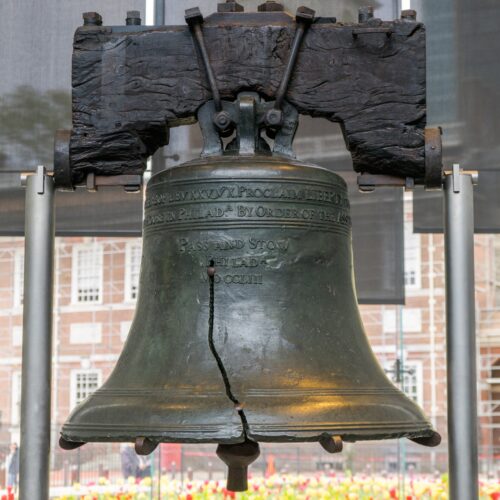
What did the Liberty Bell sound like? Science is on the case.

The Liberty Bell, with its famous crack, hasn't been rung in 180 years, but that hasn't stopped scientists from pondering what the bell might have sounded like when tolling. In honor of the nation's 250th anniversary, researchers at Penn State University have modeled its acoustic properties, drawing on data collected from one of the bell's replicas. The work was first presented at a meeting of the Acoustical Society of America in Philadelphia earlier this year, followed by an article in Physics Today.

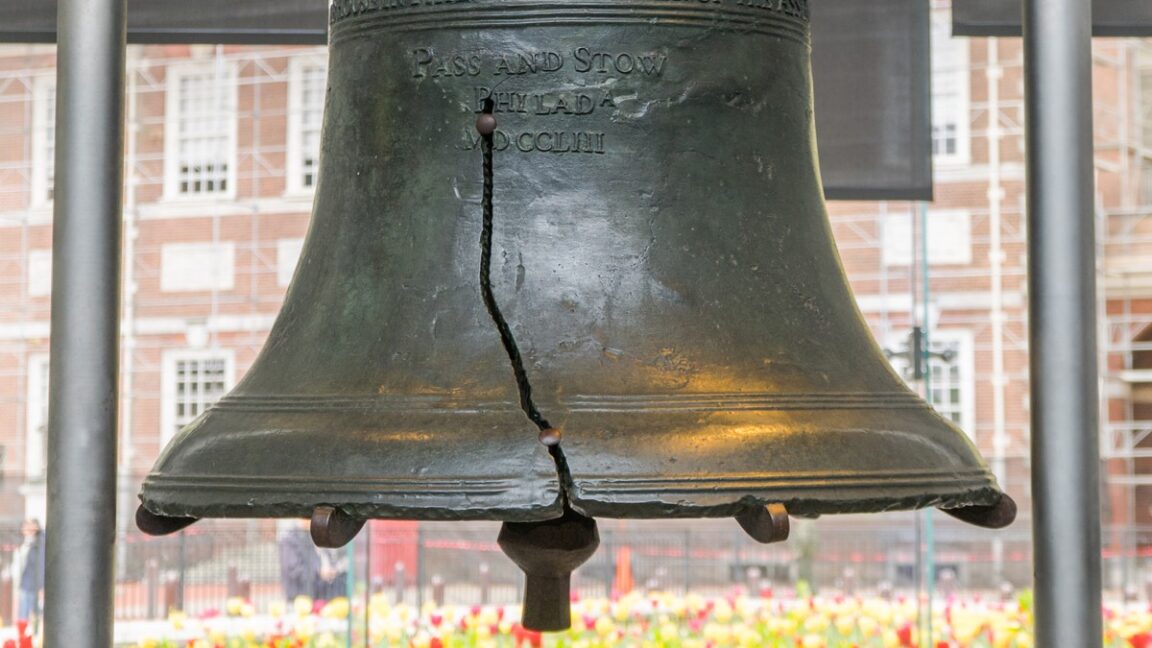
Historians aren't sure exactly when the Liberty Bell acquired its distinctive crack, just that it occurred sometime between 1817 and 1846. An 1846 account in the Public Ledger described the ringing of the bell on February 23 that year and mentioned that the bell had developed a crack, which someone had attempted to fix by filing the sides down. But it didn't work: The February 23 ringing extended the crack even more, so much so that "the old Independence Bell ... now hangs in the great steeple irreparably cracked and forever dumb." Nobody has heard it ring since.

This wasn't the first time the bell had cracked; the rim cracked shortly after it arrived in Philadelphia in 1752, the first time the clapper struck while testing the sound. It was recast by two local foundry workers, John Pass and John Stow, not once but twice, because the first recast produced a sound that one bystander likened to coal scuttles banging together.

Read full article

Comments

Β© William Zhang/CC BY 2.0

❌