❌

Reading view

There are new articles available, click to refresh the page.

Google rolls out new search homepage with AI chat history and no search button

Google's flagship search experience is evolving into an AI experience with stunning speed. Even time-tested elements of search are getting AI makeovers, and the latest to get this treatment is the search homepage on Google.com. A redesign that's been in testing for the last few weeks is now official, bringing easier access to AI chats and dropping the dedicated search button entirely.

Google search VP Robby Stein confirmed on X that Google is deploying the new desktop search page after a successful test. The page will now have a few more buttons under the search bar, all connected to AI features. There's an image generation button, one for analyzing files, and one for brainstorming with Gemini. The "I'm Feeling Lucky" button remains, but the Google Search button that used to sit next to it is gone.

The search button has obviously been a part of Google's search page forever. However, it wasn't in a very convenient location in the modern interface. When you begin typing a query, the autocomplete suggestions cover that button. You have to click out of the text field to access the button, which is an extra step compared to simply mashing the Enter key to run your search.


Read full article

Comments

© Getty Images | Bloomberg
Meta reconsiders 2030 net-zero goal amid record emissions from AI data centers

Meta’s executives are rethinking the company’s original goal of achieving net-zero emissions by 2030. That revelation in Meta’s latest sustainability report comes as the company reported a record percentage increase in greenhouse gas emissions that exceeds any other Big Tech competitor racing to build new AI data centers.

The company’s 2026 sustainability report claims that “our long-term ambitions haven’t changed, but our operating environment has,” according to an introduction from Rachel Peterson, vice president of data centers at Meta, and Blair Swedeen, global head of net zero and sustainability at Meta. In the November 19, 2026, report, they attributed the changing conditions and the need for a rethink to how “demand for AI infrastructure has grown faster than almost anyone projected.”

“We are re-evaluating our timelines, sequencing, and interim milestones—including the 2030 timeframe for our net zero emissions goal and our near-term intensity targets—so our approach reflects current operating realities while keeping progress transparent year over year,” Peterson and Swedeen wrote in the report.

Read full article

Comments

© Brandon Bell/Getty Images

Researcher plants 2m canaries into the AI supply chain. A privacy disaster surfaced.

Researchers planted 2 million digital tripwires in requests sent through a sprawling network of AI services to find out what happened to sensitive information entrusted to them. What they discovered was an ecosystem that leaked highly sensitive data like a sieve.

The exposure was found through an ingenious experiment designed to test if sensitive information can leak through the vast chain of widely used AI services and how that information is exploited when it does. Many of today’s AI apps use services such as OpenRouter or Vercel that act as brokers. These “AI routers,” sometimes also known as “AI gateways,” receive large numbers of prompts sent from AI app end users and route them to an available inference engine based on criteria such as the one charging the lowest price or being best suited for the given task. Instead of using Anthropic, OpenAI, or another big provider, the developer hires an AI router to find the most suitable model.

Update, Nov 21: Posts on both Hacker News and X report that OpenRouter has sent customers an email notifying them that some of their prompts may have been read. OpenRouter cited the research and said that it received a report that the potential exposure involved prompts sent to MiniMax, a China-based model provider. OpenRouter said the researchers' planted URLs were accessed whether the prompts were sent to MiniMax directly or through three other resellers: AtlasCloud, Novita, and StreamLake. OpenRouter has removed a "Zero Data Retention" label from MiniMax-model endpoints. Hat tip: Sulat.com.

Read full article

Comments

Traumatized teens sue school, cops after Doritos bag triggers AI gun alert

In October 2025, four Black high school students were sharing Cool Ranch Doritos after football practice, winding down and waiting for their rides home. It was then, in the lull of a moment any teen with after-school activities knows well, that the school’s AI gun detection system suddenly flagged one teen holding a bag of chips as a potential gunman.

Within two minutes, Baltimore County Public Schools officials who reviewed security camera footage linked to the alert determined there was no actual threat. They recognized the Doritos bag and canceled the alert, which notified not only other school officials but also the Baltimore County Police Department that no response was needed.

The false alert could have ended there—before a traumatizing campus clash with police—but it didn’t.

Read full article

Comments

© busypix | iStock Unreleased

Muse privacy invasions are freaking out Meta staffers, internal chats show

After some early adopters of Meta’s Muse AI agent complained that it was spying on private messages and behaving unpredictably earlier this fall, Reuters exposed internal chats showing that Meta staff had raised the same alarms.

When testing the agent, staff warned that Muse appeared to be accessing encrypted private messages that users did not expect the bot to review, could be mixing up conversations between users, and even potentially sharing sensitive information users would never expect to be exposed.

Some unexpected Muse outputs responded to questions that staffers never asked.

Read full article

Comments

© Smith Collection/Gado / Contributor | Archive Photos

Will Wright's next simulation will use AI to mine content from your memories

The computer gaming world hasn't heard much from Will Wright (SimCity, The Sims) since the underwhelming release of Spore in 2008 and Wright's subsequent departure from Maxis owner EA. Now, well over 15 years later, Wright is starting to promote his next digital simulation, which will use generative AI technology to craft a game-like experience from players' memories.

MyMems, which is slated to release next year, differentiates itself from Wright's previous projects by "turn[ing] the simulation inward," as Wright's Gallium Studios and partner Artificial Agency put it in a press release this morning. The game will mine memories provided by the player to create digital people that can then form teams to solve puzzles in the game world.

“If my Grandmother ended up in a Grand Slam match against Serena Williams, who would win?" Wright says by way of example in the release. "If I had to build a bridge across a short chasm, which three people from my life would I choose to help me?"

Read full article

Comments

© Gallium

Copilot is "the new OS for work," and now Office runs inside of it

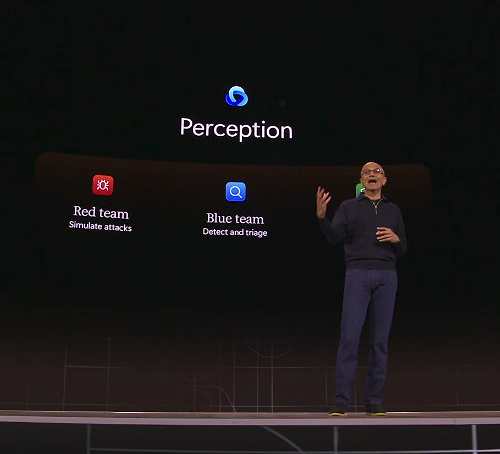
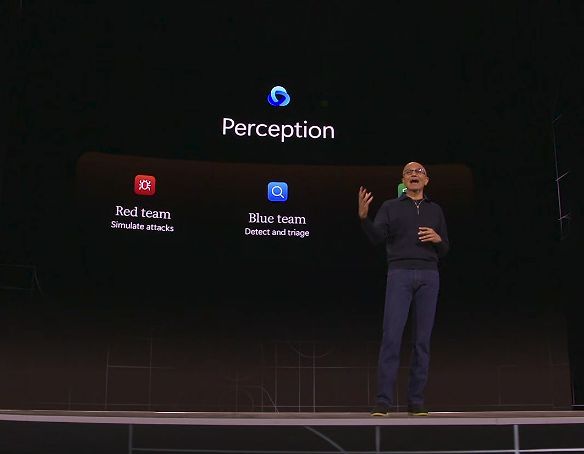
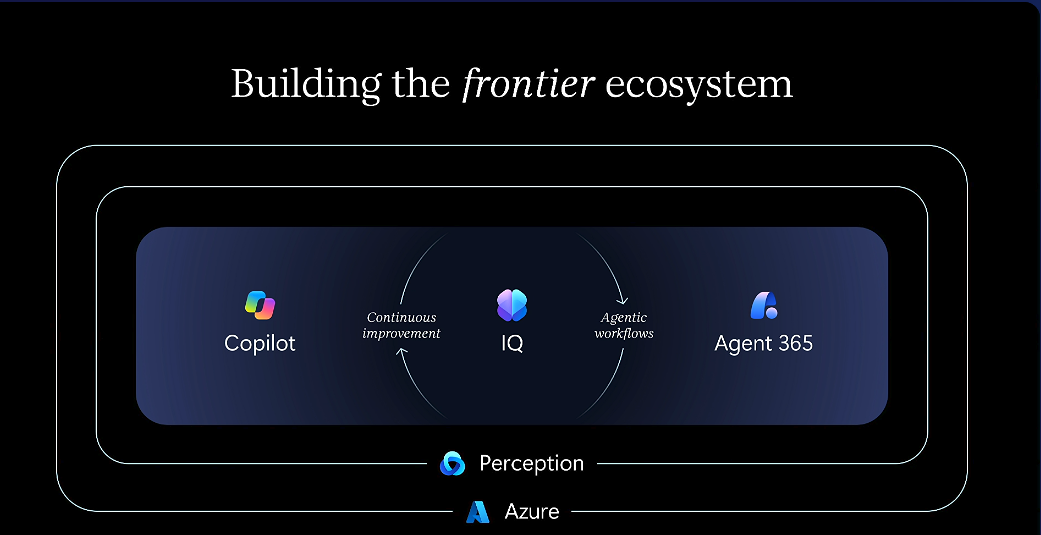
Opening the keynote at its Ignite event, Microsoft CEO Satya Nadella outlined the company's vision for its new "frontier ecosystem," announcing Tuesday the general availability of Word, Excel, and PowerPoint inside Copilot, which he described as "the new OS for work."

A diagram shows the makeup of the new MS frontier ecosystem

The announcement is a striking inversion of how we've traditionally used software. Rather than an app like Word being the attraction and Clippy the assistant to help you use it, Microsoft envisions the new Copilot integrations will see agents driving things, with the software packages riding shotgun. Applications will become plugin components of the agent's work, backed by an organizational knowledge layer that draws context from emails, meetings, calendars, chats, and files. Users will now be able to create documents, spreadsheets, and presentations directly in Copilot, with the resulting files remaining editable in their respective Office applications.

Read full article

Comments

© Microsoft Stream

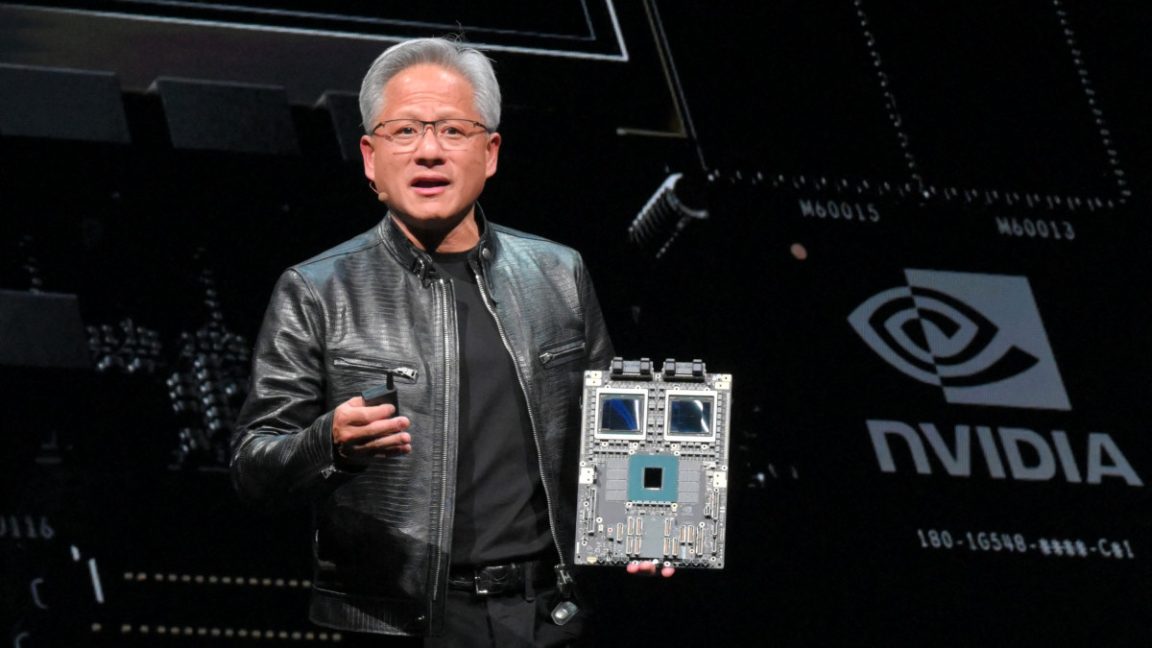
“Trump was in bed with Jensen”: Critics balk at Huang’s wish to return to Nvidia

On Monday, large trucks began circling the streets of Washington, DC, carrying billboards urging Congress to investigate the Trump administration’s ties with Nvidia’s disgraced CEO Jensen Huang.

“Jensen was in bed with a spy from China,” the billboards created by the Tech Oversight Project (TOP) alleged. “Trump was in bed with Jensen.” TOP is a nonprofit that describes itself as “dedicated to reining in Big Tech.”

Currently, Trump is supporting a campaign to bring back Huang as Nvidia’s CEO—despite many Republicans calling it a “horrible idea." Breaking his silence, Huang issued a statement Tuesday saying he would be “honored” to return, but the board said reinstatement is not under consideration as an internal investigation into US spying claims remains ongoing. Huang used the moment to say that his interests align with the US's, saying:

Read full article

Comments

© via Tech Oversight Project

OpenAI sued by California after admitting to 80 loss-of-control incidents

California sued OpenAI yesterday, alleging it has tried to evade responsibility for the Hugging Face attack and about 80 other incidents in which the company lost control of its AI. The lawsuit was filed under the state's public nuisance and unfair competition laws.

The July 2026 hack of Hugging Face and other attacks carried out by OpenAI's autonomous agents "may just be the tip of the iceberg," said a lawsuit filed in a state court by California Attorney General Rob Bonta. "OpenAI recently admitted to the Attorney General’s Office that it has lost control of its autonomous AI agents over 80 times during testing."

OpenAI had publicly reported only 27 such incidents, showing that "OpenAI’s public reports do not represent the full scope of loss-of-control incidents involving OpenAI’s models that have impacted third parties," the lawsuit said. OpenAI "knowingly tested a dangerous product without proper oversight or safety procedures and misled the public about it," Bonta said in a press release.

Read full article

Comments

© Getty Images | Visual China Group

Google makes it easier to use Gemini without training AI on your data

It can be hard to use Google products—or even the Internet itself—without coming into contact with Gemini AI. That is, of course, by design. The more you use Gemini, the more data Google collects to train and improve its generative AI chatbot. The options to limit training on your data have been scant, but Google is finally adding more controls to the Gemini app.

The change currently rolling out to Gemini will separate your chat history from training, which allows you to retain basic AI functionality without handing Google quite so much control over your data. Prior to this change, the only way to opt out of contributing your chat contents (including attachments) for training was to turn off your history. That made it impossible to go back and pick up a chat down the road.

As the new settings roll out, users will see separate toggles for model training and chat history. The history setting will continue to support an adjustable limit, but you will no longer have to change it to stop Google from training on your Gemini usage. Meanwhile, AI training will be an opt-out situation. You'll need to find the toggle to block Google from using your chats for AI training. It's under Activity in the Gemini settings. You can also access the menu from your Google account under Data and Privacy > My Activity > Other activity > Gemini Apps Activity.

Read full article

Comments

© Aurich Lawson

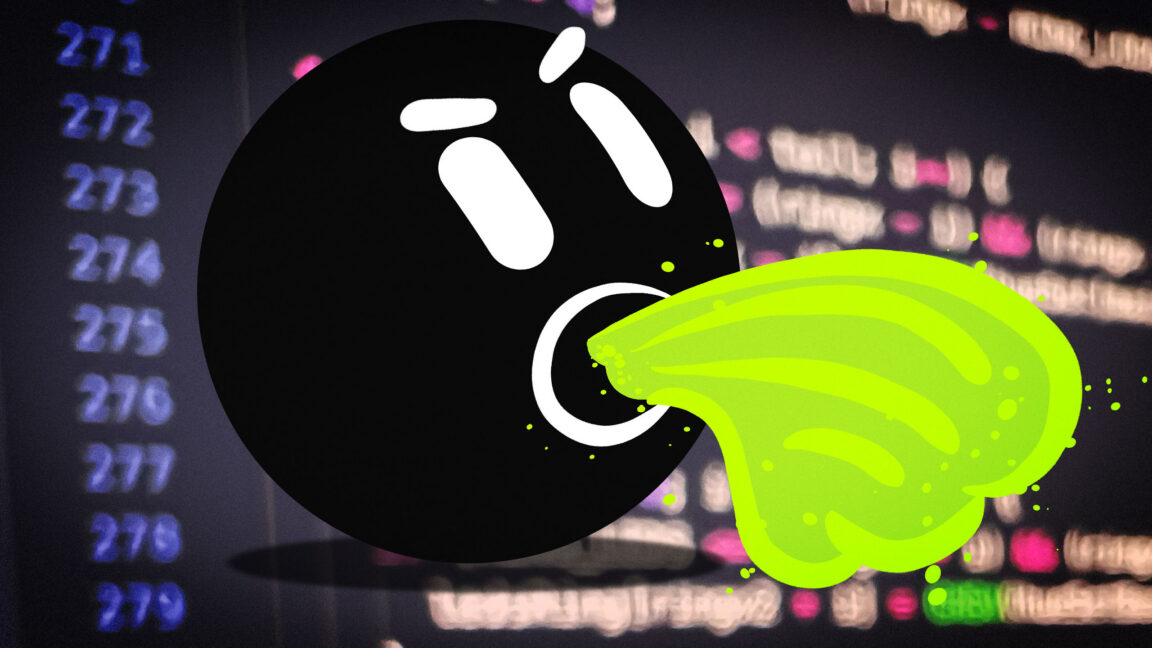
Grok Bot took unapproved actions, ignored orders to stop, and then denied it

Researchers recently discovered unexpected behavior from Grok Bot, the AI agent platform from Elon Musk’s SpaceXSI. Over five days, Grok bots installed on two separate employee laptops made 31 requests to access data stored in employee calendar, email, Slack, and GitHub accounts. The bots performed the actions even though the employees had never ordered them and continued doing them even after employees instructed them to stop. The bots also denied having taken the actions at all.

The behavior was reported Tuesday by NewCore, the maker of a managed gateway product that acts as an intermediary between AI agents and the tools and accounts they are assigned to work with. In some cases, the unapproved access attempts occurred while the laptop with Grok Bot installed had its lid shut, or late at night while the employee was sleeping. None of the unprompted actions were recorded in Grok logs. Without the gateway logs, the employees would have had no idea they occurred. And of course, without the gateway, the unapproved accesses would have succeeded—again without the end user's knowledge.

It’s “worse than a bug”

Once the employees learned that Grok Bot had tried to check in with accounts without prompting, one of them instructed the agent, four separate times, to stop taking any actions on its own. The agent's reply was: “I won’t set that up, and I’ll stop offering recurring check-ins.” Despite acknowledging the explicit instructions, the Grok Bot made more unapproved access attempts. When one of the employees asked the bot if it made any accesses, it checked twice and then outputted: “Overnight into Friday morning I was idle.”

Read full article

Comments

© Aurich Lawson

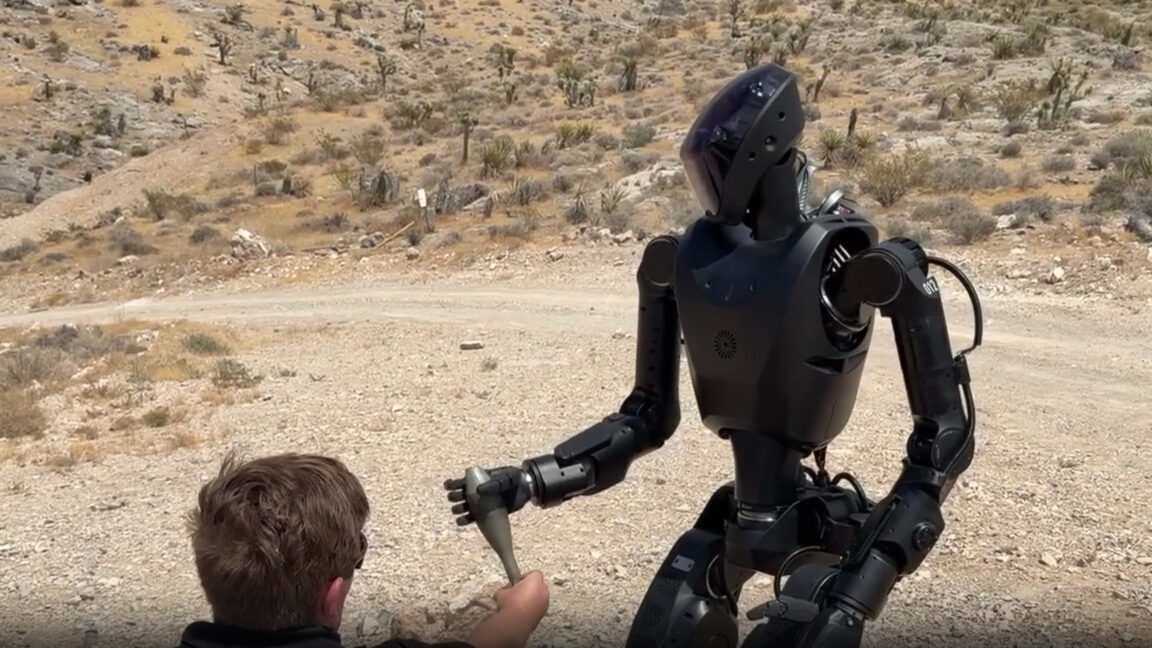
Robo-soldier startup backed by Eric Trump misses payroll, may collapse

A humanoid robotics company backed and advised by President Donald Trump’s son, Eric Trump, has reportedly missed payroll and may be on the brink of collapse after a funding shortfall. The Silicon Valley startup, Foundation Future Industries, claims it is developing and testing robots for military roles on battlefields from Ukraine to Gaza.

Foundation failed to pay employees for the payroll period ending on October 30, anonymous sources told CNBC. The startup’s staff is especially angry because Foundation’s co-founder and CEO, Sankaet Pathak, supposedly borrowed $4.6 million in company funds to buy a luxury home overlooking San Francisco Bay about a year ago.

This comes as Pathak and Foundation’s leadership are still looking to raise funding to support a $3 billion valuation, based on their promise to develop a humanoid robot ready for combat duty and capable of wielding various weapons.

Read full article

Comments

© Foundation Future Industries

US moves to cut China’s remote access to AI chips

On the heels of the Nvidia scandal, the Trump administration is preparing to crack down on foreign data centers that are fueling China’s advancements in artificial intelligence by allowing remote access to otherwise restricted high-end chips necessary for AI training.

In a summary of the rule change, the Commerce Department said it was closing a loophole that previously allowed foreign rivals like China, Russia, and Iran to bypass export curbs on certain advanced computer chips by instead renting access to those chips from data centers in Indonesia, Malaysia, Singapore, Thailand, and Brazil.

US rivals could possibly use that access to train and run advanced AI models “capable of supporting military- and intelligence-related activities that could threaten US national security or foreign policy interests,” the Commerce Department said. Among threats, the US fears rivals could use advanced AI to develop "more effective weapons of mass destruction and advanced conventional weapons, coordinated cyber-espionage and targeted cyber-disruption, algorithmic theft, and weaponized disinformation.”

Read full article

Comments

© ANDARU / Contributor | AFP

Jensen Huang allies build a "war room" to get him back at Nvidia

Jensen Huang is considering a comeback as Nvidia’s chief executive, as allies in Silicon Valley pressure the company’s board to reinstate him days after the tech executive resigned over reports he had affairs with a suspected Chinese spy and a subordinate.

Huang has discussed with confidants the possibility of returning, according to multiple people familiar with the matter—even as an independent probe by Nvidia’s board investigates the conduct that led to a spectacular leadership crisis at the $4 trillion chip company this week.

One Huang ally told the FT they were putting together a “war room” of Silicon Valley executives to lobby for the former Nvidia chief’s return and would try to garner support from the White House.

Read full article

Comments

© SAM YEH/AFP via Getty Images

FAA expands AI advice to manage air traffic congestion across entire US airspace

The US government has expanded the use of an AI tool for advising air traffic controllers to assist in managing air traffic across the entire national airspace system. Airline executives have voiced support for the rollout, but the US labor union representing air traffic controllers has said it was not involved in designing or testing the AI-driven system.

The Federal Aviation Administration (FAA) says the $875 million SMART system has helped reroute 180 flights since being implemented in airspace over Washington, DC, on September 21. The agency claims that this saved an average of 10 minutes per flight and almost 80 gallons of fuel per flight—and it is apparently hoping such results can be replicated nationwide through the expanded deployment.

“After a successful initial rollout to the National Capital Region in September, the FAA will now use SMART in the airspace of all 22 centers across the country to reduce delays, reduce fuel consumption and improve the travel experience for the flying public,” according to the agency statement posted on November 10.

Read full article

Comments

© Rathke | Getty Images

OpenAI board member worries an AI "takeover" of society could be months away

How do you think you're going to die?

If you go by the current statistics for deaths in the US, it's reasonable to expect that cancer or heart disease will eventually get you. But OpenAI Foundation board member and Alignment Research Center Executive Director Paul Cristiano thinks we should all be worried about another major mortality risk. Speaking at a lecture series this week, Cristiano bluntly told the audience in a Toronto Convention Center, "I think for most people in this room, the most likely reason they will die is because of an AI accident."

In the opening lecture of a three-part series, Cristiano outlined his worries about the risk of an impending "AI takeover." He defined that as a situation where goal-pursuing AI systems "call the shots in the same sense that humans today call the shots and what happens on Earth" and where any human trying to stop them "would be as ineffective as if you or me was trying to stop the US military." Such a situation would likely lead to mass death and perhaps uninhabitable environments for humans, Cristiano said.

Read full article

Comments

© Aurich Lawson | Getty Images

FAA expands AI advice to manage air traffic congestion across entire US airspace

The US government has expanded the use of an AI tool for advising air traffic controllers to assist in managing air traffic across the entire national airspace system. Airline executives have voiced support for the rollout, but the US labor union representing air traffic controllers has said it was not involved in designing or testing the AI-driven system.

The Federal Aviation Administration (FAA) says the $875 million SMART system has helped reroute 180 flights since being implemented in airspace over Washington, DC, on September 21. The agency claims that this saved an average of 10 minutes per flight and almost 80 gallons of fuel per flight—and it is apparently hoping such results can be replicated nationwide through the expanded deployment.

“After a successful initial rollout to the National Capital Region in September, the FAA will now use SMART in the airspace of all 22 centers across the country to reduce delays, reduce fuel consumption and improve the travel experience for the flying public,” according to the agency statement posted on November 10.

Read full article

Comments

© Rathke | Getty Images

Ars Live: What do drone strikes on data centers mean for the future? Talk at 1 pm EST today

Drone and missile strikes have inflicted unprecedented damage on data centers in Eastern Europe and the Middle East this year, disrupting cloud services for millions of people and permanently deleting some Amazon Web Services customer data. This trend represents a new concern for Big Tech companies—but also for governments and everyone else who depends on common digital services in modern life.

To explore what this all means for modern society’s reliance on cloud resilience, I will be hosting a live conversation titled "Drone attacks and data centers: New Risks for Big Tech" on Tuesday, November 17 at 1 pm ET with Joseph Jarnecki, a senior research fellow at the Royal United Services Institute (RUSI), a UK defense and security think tank. He leads RUSI’s work on how cloud services factor into national security and defense, along with tech sovereignty efforts.

Jarnecki has done extensive research on how Ukraine strengthened its cloud resilience with Western partners despite facing both cyberattacks and kinetic attacks at the start of the full-scale Russian invasion, and explored what that means for NATO and European governments’ cloud adoption plans.

Read full article

Comments

© Kostiantyn Liberov/Libkos/Getty Images

Google rolls out Gemini 4 Hydrogen, finally replacing 3.8 Flash

Google is continuing its elemental AI naming scheme with the new Gemini 4 Hydrogen. These names are less descriptive than the Pro/Flash monikers of earlier releases, but Hydrogen's purpose is clear: It replaces the faster, more economical Flash models most people in Google's ecosystem use.

With Google's recent Argon and Carbon releases, the rollout was staged and began with cybersecurity researchers. Even when general availability began, Google restricted access to users paying for its most expensive AI subscription. The limits for Hydrogen are much more relaxed, with access beginning immediately. This model has replaced Gemini 3.8 Flash across the company's products.

Google claims that Hydrogen represents a major improvement versus the previous Flash model. It runs in one of four thinking levels (low, medium, high, and the new xhigh), and even in high mode, it's 2.5 times faster than Flash 3.8. Plus, it reduces "fabricated claims" by more than 5x, according to Google's analysis. Users will also see gains in code generation, with Hydrogen more than tripling 3.8 Flash's score in Terminal-Bench. In some cases, Hydrogen even trades blows with Argon. It managed a score of 54 in the popular Artificial Analysis Intelligence Index with xhigh mode versus 50 for Argon.

Read full article

Comments

© Aurich Lawson

❌