❌

Reading view

There are new articles available, click to refresh the page.

Ukraine blew up Putin’s bridge using relay drones to bypass Starlink limits

A Ukrainian barrage of missiles and drones collapsed a crucial segment of Russian President Vladimir Putin’s prized Kerch Strait Bridge—and Ukraine’s military pulled off the strike deep within Russian-occupied territory without relying on the military-grade version of Elon Musk’s Starlink satellite communications to guide the missiles in.

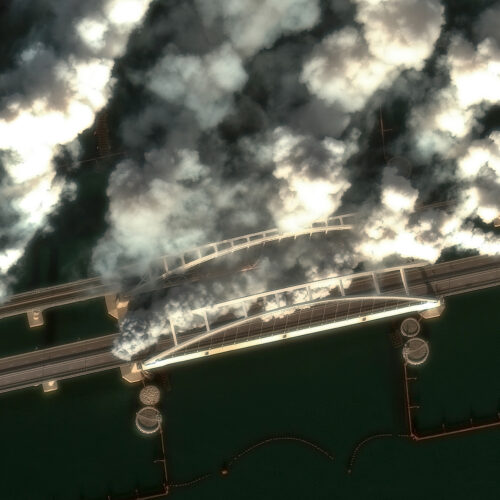
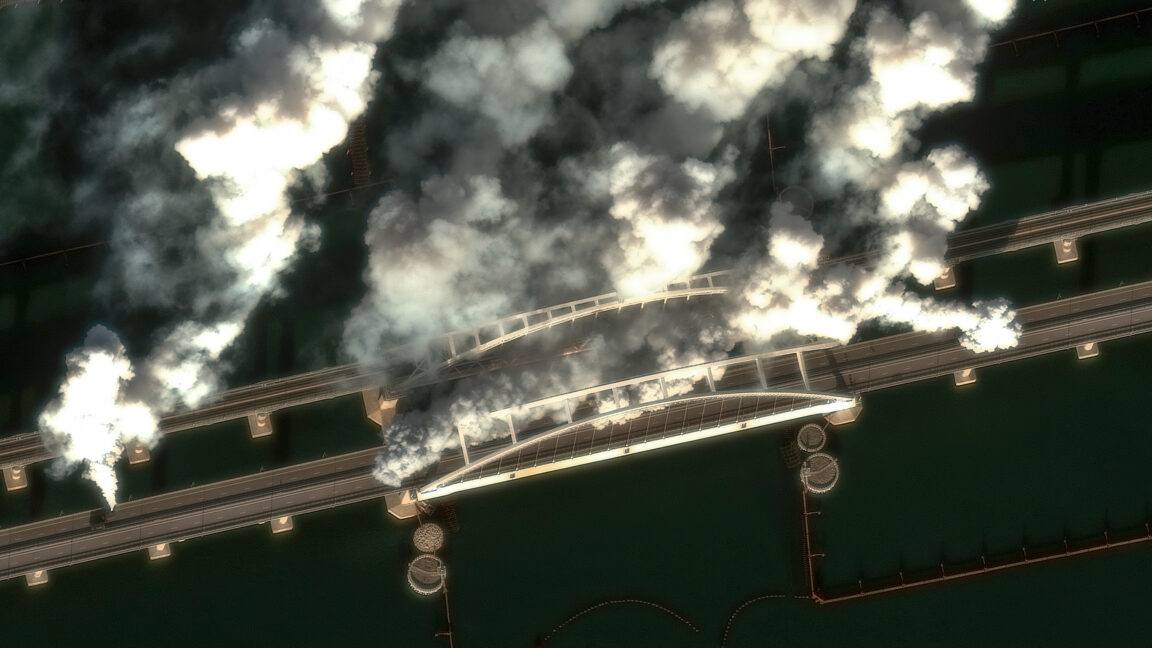
On the nights of November 15 and November 16, coordinated waves of Ukrainian drones and missiles caused enough damage to collapse one of two steel arches supporting the Kerch bridge’s roadway for automobile traffic, according to an Institute for the Study of War update. Russian sources claimed several hundred Ukrainian drones first overwhelmed Russian air defenses to pave the way for remote-controlled missile strikes focused on the bridge, with the latter prominently including Ukraine’s homegrown Flamingo cruise missile.

The Ukrainian operation adapted a Russian battlefield innovation by using drones equipped with mesh radios to create an airborne communications network, according to the Financial Times. Each networked drone acts as a relay node to extend the communication link between human operators and remotely piloted missiles and strike drones. Russia began using the technique to support long-range drone and missile strikes on Ukrainian cities.
Read full article

Comments

© Vantor

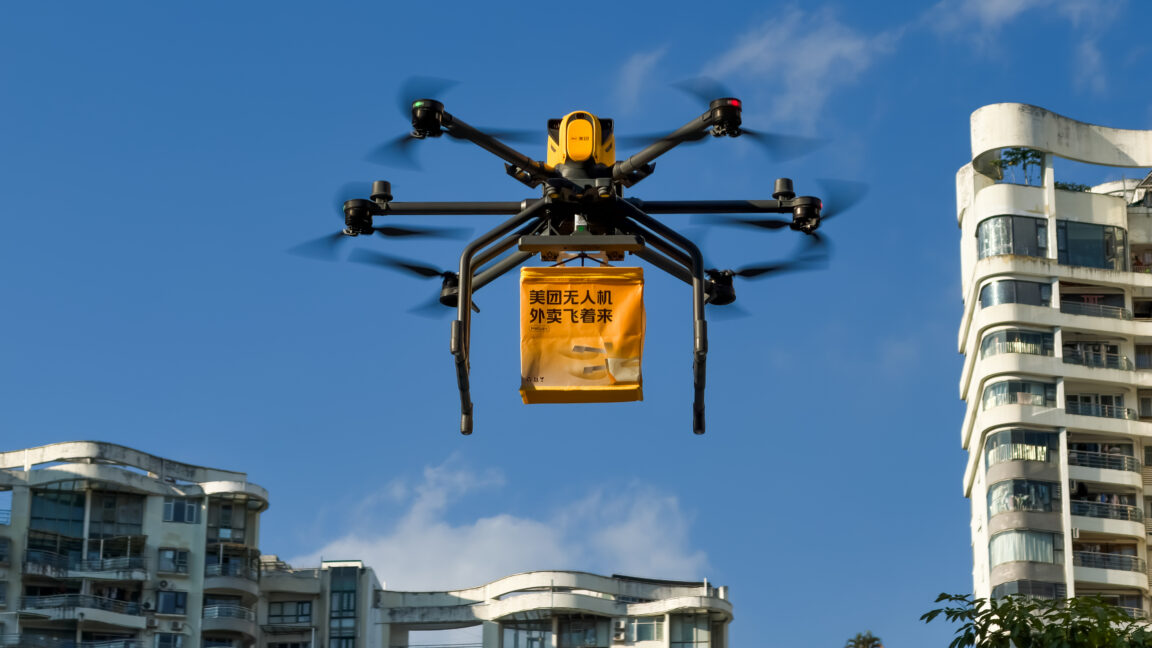
Delivery drones are coming. For some with PTSD, that's a terrifying prospect.

In August, Amazon announced plans to expand its Prime Air delivery drone program to “nearly 500 cities and towns by the end of 2026." Combined with similar uncrewed aerial delivery programs from DoorDash and Zipline (in partnership with Uber and Walmart), the expansion suggests that flying robots dropping their payloads onto suburban lawns will soon be commonplace.

For many people, delivery drones will be little more than a novelty, occasionally good for a laugh when one does something ridiculous. For others, though, their growing use could be a nightmare. As the instant delivery industry clears the last FAA hurdles to rapid deliveries beyond an operator's line of sight, an increasing number of people worldwide are living with post-traumatic stress disorder or other anxiety-related disorders triggered by drones.

The use of all manner of weaponized drones in the ongoing war in Ukraine and in Israeli attacks on Lebanon and Gaza has already produced an epidemic of what some mental health professionals have dubbed “dronophobia.” And while relatively few US troops have been targeted by drones flown by Iran, ISIS, and Iran-backed militias throughout the Middle East, even those who have not directly been attacked may experience anxiety simply because of the ample video footage of attacks circulating in news and social media.

Read full article

Comments

Ring cameras go mobile as Amazon debuts AI-powered security drone and robot

Amazon is betting that many Ring customers will also want an AI-powered security drone and robot patrolling their homes or offices. But the company’s upcoming Ring Robotic products are also certain to intensify privacy concerns previously raised around a prior Amazon attempt to popularize a flying security camera.

The Ring Rover Cam and Ring Drone Cam are expected to reach customers starting at the end of 2026 and in early 2027, respectively, according to an Amazon announcement posted on November 10. Amazon describes the devices as relying on an AI Pilot system that uses each device’s cameras along with “specialized vision models, on-device sensors and cloud processing” to plan patrol routes while autonomously navigating around obstacles such as furniture.

Both devices also use that AI Pilot system to digitally map the floor plan of the customer’s home or business. This setup process occurs after the customer carries the Ring drone through their indoor spaces or allows the Ring Rover to do some autonomous exploration.

Read full article

Comments

© Amazon

Ukraine’s fiber-optic drones get squeezed by AI data center demand

Impervious to battlefield jamming, drones physically connected to human operators by miles of fiber-optic cables have become such a common weapon of war in Ukraine that trees and fields are strewn with tangled cables thinner than fishing lines. But importing such fiber-optic material from China has become more costly as drone warfare’s needs compete with global demand from AI data centers for the same limited supply—and so Ukrainian drone makers have been adapting.

Since the full-scale Russian invasion of Ukraine began in February 2022, the Ukrainians have been forced out of necessity to continually develop battlefield innovations involving first-person view (FPV) quadcopter drones and other heavier types of drones. But it was the Russian military that first deployed unjammable fiber-optic drones to repel Ukrainian forces’ cross-border incursion into the Kursk Oblast in 2024. The Ukrainians quickly followed suit in developing their own fiber-optic drones, given the drones’ capability to shrug off electronic warfare jamming that could neutralize radio-controlled drones.

Russia and Ukraine have relied on Chinese suppliers for some off-the-shelf drones and a wide array of drone components, including bulk orders of fiber wound around very large spools or sometimes small finished spools ready for installation on drones. The finished spools can hold enough fiber-optic cable for drones to regularly operate at ranges of dozens of miles, and sometimes up to 62 miles (100 kilometers) in extreme cases, as reported by the independent Russian publication The Insider.

Read full article

Comments

© Scott Peterson/Getty Images

Ukraine learns to fight without Starlink as Musk plays politics with satellites

Elon Musk’s Starlink satellite service has played a pivotal role in supporting Ukraine’s successful resistance to Russia’s full-scale invasion for years. But with Starlink having become increasingly unreliable due to Musk’s political inclinations and the latest surprise disruptions to service in Ukraine, the Ukrainians and Europe as a whole are now facing urgent questions about how to move forward without it.

As the world’s largest communications satellite network, Starlink can typically support high-speed Internet and data streams for any user or vehicle equipped with a relatively compact Starlink terminal. This has enabled Ukraine to maintain vital communications for both civilian purposes and military operations—and has also expanded the Ukrainian military’s capability to remotely control or provide guidance to drones used in both air defense against Russian attacks and for striking back at Russian targets.

“Starlink currently offers some of the best satellite coverage available, with virtually no competitors when you consider the combination of cost, availability, and ease of use,” according to the head of hardware R&D at the Ukrainian defense company BlueBird Tech, who provided comments to Ars anonymously for security reasons. “In practical terms, the main limitation is the need to position the antenna so it can receive signals from the satellites.”

Read full article

Comments

© Dmytro Smolienko/Ukrinform/NurPhoto via Getty Images

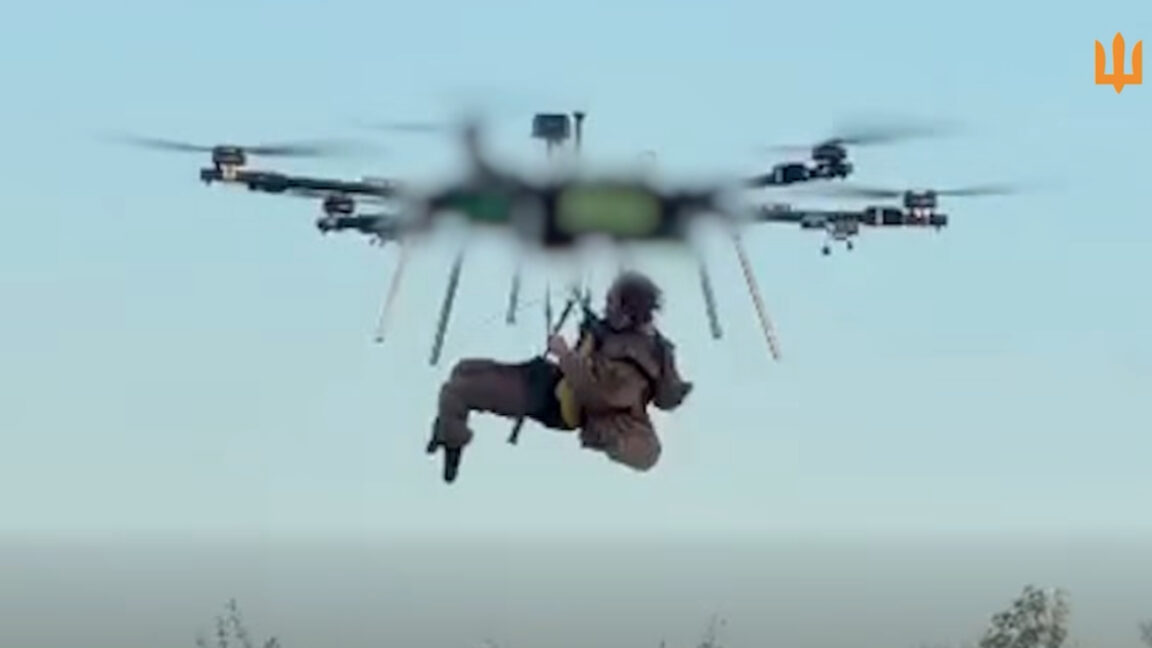
Ukraine’s drone rescue of wounded soldier puts much touted idea into practice

Ukraine’s unprecedented drone rescue of a wounded soldier from the battlefield has shown once again how battlefield necessity can spur innovation. The operation was revealed just days after separate Ukrainian drones designed for casualty evacuation were deployed for frontline testing—taking a step beyond the US military’s decades of experimentation with similar concepts.

The drone evacuation of the injured soldier took place at an undisclosed time and place on the frontline where the presence of Russian drones and landmines made it impractical to send in a wheeled ground robot, according to The Kyiv Independent. On October 19, Ukraine’s Army shared a video of the drone evacuation, showing the wounded soldier securing himself in a harness suspended beneath a heavy hexacopter drone with six rotors before being flown to safety.

“This is a historic event, the next stage of evacuating the wounded, which we will all come to,” said Napalm, a programmer of the 92nd separate assault brigade's unmanned ground systems company, who went by his callsign per Ukrainian military practice, in a statement. “Now the serious systematic work begins, so that such missions are carried out constantly.”

Read full article

Comments

© 92nd Separate Assault Brigade of the Ukrainian Ground Forces

Black Sea drone attacks enter NATO country's territorial waters for first time

Russian drones are suspected of sinking a cargo ship and leaving chemical tankers ablaze near the Black Sea coasts of Bulgaria and Romania, respectively. The latest attacks mean that at least seven ships have been attacked in the exclusive economic zones of NATO member countries—and even within Romania's territorial waters if Russian involvement is confirmed in the case of the chemical tankers.

Such attacks have spurred requests for NATO to redeploy counter-drone systems to provide more protection. In a social media post on October 15, NATO Secretary General Mark Rutte stated that NATO had increased "counter-drone capabilities" along the alliance's eastern flank after meeting with the leaders of Bulgaria and Romania.

The latest attacks this week occurred within 24 hours between October 14 and October 15, when the two chemical tankers were set afire after Russian drones were detected in Romanian airspace, according to Deutsche Welle. Both ships were sitting at anchor near the mouth of the Sulina canal that connects the Black Sea to the Danube River, which has become a crucial shipping export route for Ukraine, Reuters reported.

Read full article

Comments

© Hristo Rusev/Getty Images

NATO may redeploy anti-drone defenses as attacks sink more Black Sea shipping

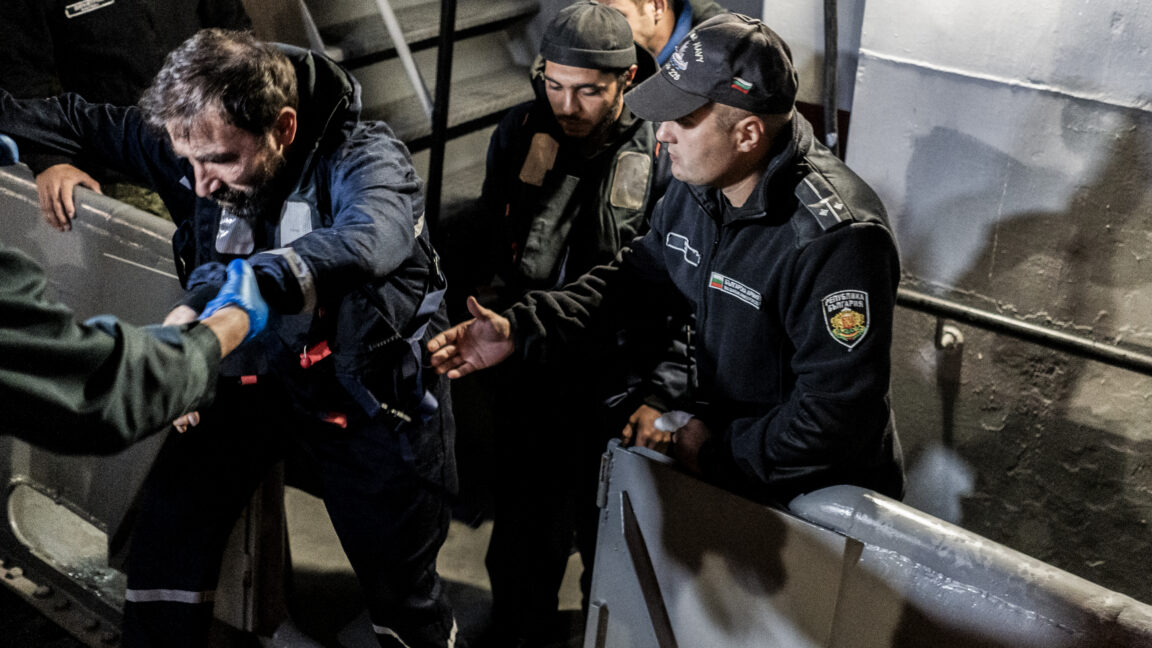
Suspected Russian drone attacks sank a cargo ship and forced the evacuation of another vessel within two dozen miles of the coast of Bulgaria in the Black Sea on October 13. The latest attacks mean that five ships have been attacked in the exclusive economic zones of NATO member countries—spurring requests for NATO to redeploy counter-drone systems to provide more protection.

Although there is no hard proof that the drone attacks originated from Russia, one of the ships that came under attack was the Ukrainian-operated coastal freighter Chelsea 3, registered under the flag of Malta. Bulgarian Prime Minister Rumen Radev told the Russian ambassador in Sofia that “it makes no sense for Ukraine to destroy its own ships in the Black Sea, and the results of these strikes favor Russia’s interests,” according to the Associated Press.

All 15 members of the Ukrainian-owned Chelsea 3 were safely evacuated by Bulgarian rescue operations after the ship was reportedly struck by three aerial drones.

Read full article

Comments

© Hristo Rusev/Getty Images

Russia was not ready for the data center war it started with Ukraine

When Russia began attacking Ukrainian data centers and telecommunication infrastructure, it apparently failed to prepare for possible retaliation. Now Russia’s digital services are facing widespread outages after Ukrainian drone strikes knocked out three of the largest data centers owned by Russian tech giant Yandex within several days.

Pro-Kremlin bloggers are warning that Russia’s centralized digital economy could collapse because the country is not prepared for the “data center war” it started, according to posts translated by the pseudonymous independent researcher ChrisO_wiki. The Russian commentators also suggested that Ukraine’s decentralized digital services could prove more resilient than Russia’s system if the countries continue trading such blows.

Russia initially launched a drone strike campaign targeting Ukrainian data centers and mobile phone networks in late September. The attacks temporarily disrupted Internet and cell phone service for up to 100,000 households in the Ukrainian capital of Kyiv and came as part of a broader long-range strike campaign that has involved Russian missiles and jet-powered drones hitting Ukraine’s power grid infrastructure, transportation hubs, and even residential apartment building blocks.

Read full article

Comments

© Igor IVANKO / AFP via Getty Images

Ukraine’s drones knock out AI data center belonging to "Russia’s Google"

Ukrainian drone strikes have knocked out two of five data centers belonging to the Russian tech giant Yandex. The damage has left Yandex, known as “Russia’s Google” because it operates the country’s most popular search engine, struggling to maintain its AI chatbot and other online services.

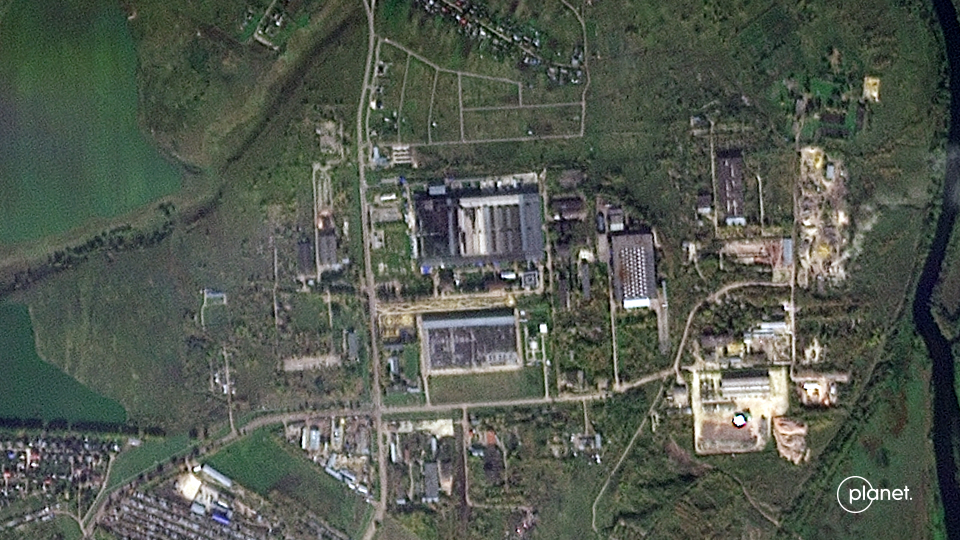
The Ukrainian drones struck Yandex data centers in the Sasovo and Kaluga regions of Russia on October 8 and October 9, according to Reuters. Those actions came as a direct response to a Russian drone strike campaign targeting Ukraine’s data centers, which has disrupted mobile phone and Internet services for thousands of Ukrainians since late September.

“We continue to respond to Russia’s attacks on Ukraine, and we’re doing so with high precision,” said Ukrainian President Volodymyr Zelenskyy in a post on X. “Another data center was hit as well—our symmetrical response.”

Read full article

Comments

© Planet Labs PBC

❌