❌

Reading view

There are new articles available, click to refresh the page.

Nintendo's biggest ROM chip supplier is bowing out of the business

For years, the AI industry's insatiable demand for memory and storage has had plenty of knock-on effects on the price and availability of PC components like RAM, SSDs, and GPUs. Now those shortages are also squeezing the supply of ROM chips that power physical Nintendo Switch and Switch 2 game cartridges.

Chip manufacturer Macronix announced in its third-quarter earnings report that the company's production of ROM chips "has reached its end" and that it will begin "gradually decoupling from the game industry," as reported by Taiwanese news site BigGo Finance. That could be an issue for Nintendo, which, analyst David Gibson notes, uses Macronix as its "main memory chip maker" for physical game cartridges.

That ROM production—which has shrunk 39 percent in the last year and now represents just 5 percent of Macronix's business—is being crowded out by production of more lucrative in-demand chips like NOR- and NAND-based memory and eMMCs, the company said. With Macronix's production capacity stuck at 25,000 12-inch wafers a month—and $1.2 billion in planned new capacity taking a year or more to spin up—less profitable ROM chips are taking up wafer space that can earn more through other types of chips.


Read full article

Comments

© Kyle Orland

California fights "preposterous" Trump admin demand to scrap state broadband laws

California is accepting $1.42 billion in broadband grant funding from the Trump administration, but the state is not accepting the Trump administration's demand that it stop enforcing a net neutrality law and other telecom regulations.

California's stand against the Trump administration could result in multiple legal battles involving the state, federal government, and Internet providers seeking government funds. Although California told the federal government it would accept the money, it is reserving the right to challenge the condition imposed by the US. The state could delay or cancel plans to distribute broadband grants depending on how the process unfolds.

The National Telecommunications and Information Administration (NTIA) decided last year that states must agree not to enforce any rate regulation or net neutrality rule on ISPs that receive money from the $42 billion Broadband Equity, Access, and Deployment (BEAD) program. California had to decide whether to accept its share of the fund despite that restriction. California is slated to spend $1.42 billion to deploy broadband to 270,571 locations and may ultimately receive up to $1.86 billion from BEAD for a mix of deployment and non-deployment projects.

Read full article

Comments

© Getty Images | Yuichiro Chino

US official: Russia's stalker satellite sure looks like an orbital weapon

Four years ago, a senior official in Russia's foreign ministry painted a bullseye on commercial satellite networks that assist Ukraine in its fight against invading Russian military forces.

On Wednesday, several days after a Russian military spacecraft moved within striking distance of one of those commercial satellites, the same Russian diplomat assured the world there's no reason to worry.

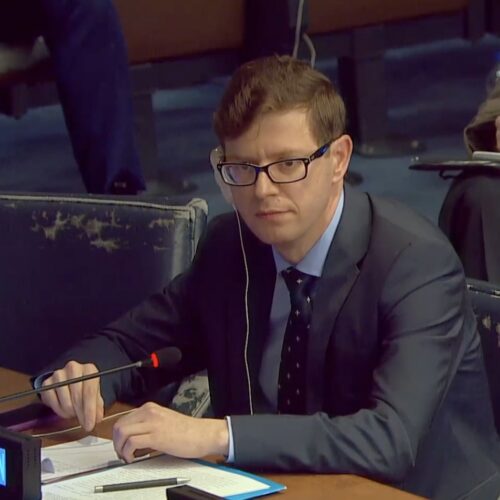
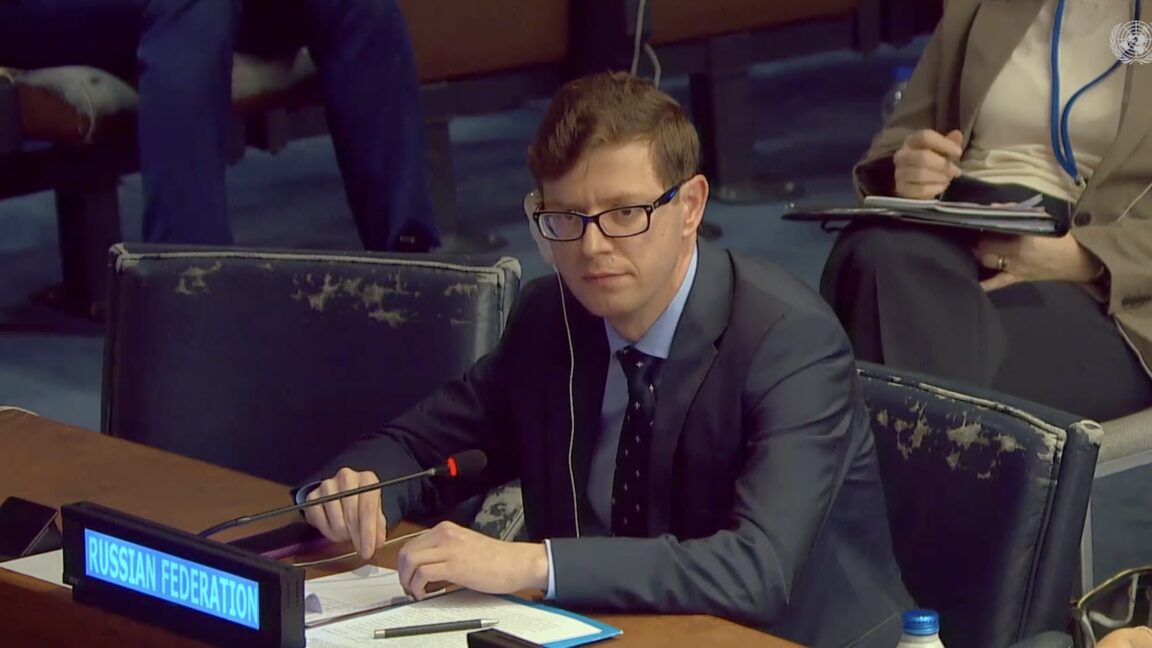
There's a sharp incongruity in those statements from Konstantin Vorontsov, deputy head of Russia's delegation to the United Nations. Vorontsov's comments Wednesday in the UN General Assembly's First Committee came moments after a US official called attention to recent maneuvers by Kosmos 2612, a Russian military craft that approached a US-registered commercial satellite some 340 miles (550 kilometers) above Earth.

Read full article

Comments

© UN General Assembly

Meta drops the word "train" from its commercial TOS after AI backlash

Hoping to quell criticism, Meta has dropped the word “train” from its “streamlined” commercial terms of service that kick in on October 30.

Last week, Meta faced backlash after legal experts warned that the tech giant’s sweeping new commercial terms of service seemed to give Meta permission to endlessly scrape websites linked on business pages. Talking to Nieman Lab, experts suggested that Meta could possibly use the policy to avoid millions in licensing fees from news organizations by requiring all business users to share a wealth of AI training data simply for running a business page.

A Meta spokesperson confirmed that Meta did not alert users to the changed language following backlash. This potentially only adds to confusion ahead of the policy rollout. In response to backlash, Meta's spokesperson provided a statement to Ars, acknowledging Nieman Lab's initial report but not its follow-up report reiterating experts' concerns:

Read full article

Comments

© filo | DigitalVision Vectors

Meta may use sweeping new commercial TOS to avoid millions in AI licensing fees

Legal experts are sounding alarms that Meta will soon update its commercial terms to require business accounts to allow Meta to train AI on their linked website content, not just their social media posts.

Kicking in on October 30, the TOS update won’t allow businesses to opt out, instead suggesting that businesses stop using Meta services if they won’t agree to let Meta bots freely crawl their linked content.

As Nieman Lab reported Thursday, this will affect all business accounts but is particularly shocking for news publishers who could perhaps charge Meta millions in licensing fees to continually access their articles for AI training. Currently news organizations are fighting a battle with OpenAI over whether such training without licensing is fair use, and Meta's terms seemingly risk granting it sweeping permissions, no matter which way the court leans.

Read full article

Comments

© SOPA Images / Contributor | LightRocket

Super Scam Me documentary shows what it takes to catch a romance scammer

If you got a DM from an unverified Jon Bon Jovi account after commenting on one of his official Instagram posts, what would it take to make you believe it was really the rock star hoping to connect? And at what point when he starts asking you to send money—like lose-your-house kind of money—would you snap out of the fantasy and stop draining your bank account?

In a documentary premiering Saturday—Super Scam Me—investigative journalist Mariana van Zeller goes deep into this toxic love-bombing terrain. In a clip that Ars is exclusively debuting below, you can see how van Zeller worked with an ethical hacker, Arman the Cyber, to use a fake bitcoin receipt and bait the fake Bon Jovi, giving the victim some much-needed closure.

Sneak peek at National Geographic's Super Scam Me.

Scamming a romance scammer

Broadcasting on National Geographic at 9 pm ET and available to stream on Disney+ and Hulu, the documentary takes viewers on an empathetic quest to understand how the line between “lover” and “fraud victim” gets blurred in romance scams that the Federal Trade Commission says cost Americans nearly $1.5 billion in losses each year.

Read full article

Comments

© National Geographic

❌