❌

Reading view

There are new articles available, click to refresh the page.

Signal Moves to Block AI Agents

Signal announced an update to its mobile apps on iOS and Android that seeks to curb issues with AI agents accessing private chats. This is a useful new barrier against a problem we’ve been highlighting this year in our Encrypt It Already campaign. And good news, it’s enabled by default so you don’t need to do anything except update the app.

Over the last year, both Google and Apple* have released AI features in their operating systems that can read the contents of apps. One of the ways it can do this is through screen analysis. Google calls this feature “Intelligent Screen Context,” while Apple refers to it as either “Onscreen Awareness” or “Visual Intelligence.”

Apple now provides a way to block Siri AI’s access to apps, but by default every app is available to Siri AI, so it’s up to the user to go in and put these guardrails up. Signal requests that protection on your behalf. Google doesn’t currently offer any sort of similar option. So Signal on Android does the best it can, by turning off screenshots when it detects an AI assistant attempting to access the screen. Signal’s solution helps ensure that, unless you go in and change the setting yourself, it defaults to the most private option.

While this is a clever solution to the current issues facing Signal (and potentially useful for any other app that does its best to promise privacy), we need all operating systems to provide stronger methods and clear documentation to developers so they can safeguard their users without needing to jump through hoops. Both developers and users should have the tools they need to safeguard their own data from AI agents and other AI tools.

*Apple is an EFF donor. EFF donors do not influence our agenda or our positions.

Privacy's Defenders Podcast: Snowden Exposes NSA’s Lies

By 2013, EFF had spent seven years arguing in court that the National Security Agency was sweeping up ordinary Americans’ communications, including through the secret room that whistleblower Mark Klein had exposed. The government would neither confirm nor deny it, and outside the courtroom the public seemed to have moved on.  

Then, in early June, documentary filmmaker Laura Poitras and journalist Glenn Greenwald mysteriously missed a Freedom of the Press Foundation board meeting at EFF’s offices. It turned out they were in Hong Kong, meeting an NSA contractor who had been secretly writing to Laura for months. His name was Edward Snowden, he had thousands of secret documents proving the government had in fact been spying on millions of Americans. When he subsequently revealed himself, a photo of him sitting behind his laptop – emblazoned with a big red EFF sticker – went worldwide. 

Welcome to the fourth episode of “Privacy’s Defenders,” a podcast about the people – lawyers, journalists, hackers, and others – who’ve fought to secure your digital liberties since before most people even knew what the internet was.

play
Privacy info. This embed will serve content from simplecast.com

 Listen on Spotify Podcasts Badge Listen on Apple Podcasts Badge  Subscribe via RSS badge

(You can also find this episode on the Internet Archive and on YouTube.)

In this episode, former EFF Executive Director Cindy Cohn talks with Laura Poitras about how she got to that historic moment, including her years of expertise in communicating via encrypted channels. Freedom of the Press Foundation Executive Director Trevor Timm – a former EFF activist – shares his recollection of the day the first Snowden story broke. For EFF and its clients in Jewel v. NSA, Snowden’s documents were proof of what the government had spent years refusing to confirm. As Cindy puts it, “We were struggling along in the mud, and we felt like somebody gave us wings.” 

It's the story of the lawyers who fought for your privacy, the government that lied about spying on you, and the whistleblower who blew it all wide open. 

The “Privacy’s Defenders” podcast is a follow-up to Cindy’s book, “Privacy’s Defender: My Thirty-Year Fight Against Digital Surveillance,” bringing to life pivotal moments in the voices of those who fought for your rights. Sales of “Privacy’s Defender” benefit EFF, so pick up your copy today!  

Joanne Elgart Jennings co-produced and created this podcast.   

Jarrod Sport co-produced, mixed, and mastered it.   

Corinne Ruff is our story editor. 

We had additional help from Rachel Estabrook and Alison Broverman. 

The original music was composed and performed by Nat Keefe of Hot Buttered Rum with Ben Andrews on the fiddle. 


Tech Companies Are Trying to Shift the Entire Concept of Privacy (Again)

Privacy, which companies were once happy to claim was all about personal choice, is now primed to affect everyone around you even more than it already did.

Meta and Google’s smart glasses can record anything the owner is looking at or use artificial intelligence to describe it. Apple’s* Audio Intelligence feature turns every Apple Watch into a transcription machine that records or summarizes your day. Amazon’s Bee devices take that a step further and can record and transcribe everything. Dozens of other companies are introducing pendants, rings, and other products designed to record, transcribe, or summarize everything we say and do all day long.

Privacy has always been a team sport. The actions you take with communication apps, collaborative software, or your cloud backup solutions, have long impacted everyone else you’re interacting with. But moving those choices deeper into the physical world where strangers, colleagues, family, and friends are all now a part of your privacy choices is drastically changing the game.

Tech companies want us to accept a reality where one person’s privacy choices (or lack thereof) mean you suddenly need to be an expert in consumer tech who understands the capabilities of many devices on the market, how they work, how and if they signal when they’re recording, and what platforms they do or do not connect to. They believe these ambient surveillance devices that work in the background and are designed to look as normal as possible are the future, while they also expect the owners of these devices to use them responsibly and to notify those around them of their capabilities to act within whatever laws their states may have. 

This is not reasonable, nor how consent works in any practical sense.

Let’s break this down by looking at some of the biggest players currently in the game: Apple and Amazon, who have two different takes on transcribing audio throughout the day, as well as Meta and Google, who both have slapped AI and cameras onto eyeglasses. 

How to Think About the Technical Promises Companies Make

Ask Apple about privacy concerns and they’ll point to a white paper that explains all the technical barriers between them as a company and the data generated by the watch. Ask Meta and they’ll talk about all the ways you can customize the privacy controls or how certain details, like faces, may be blurred out when you interact with Meta AI through the glasses (but not during standard recording). Google does this too. Amazon will also talk about how you’re always in control, and no audio is stored (though it’ll also let you enable Amazon store integration, so your conversations can directly result in ads for products). And so on across all the companies making these products.

Some of these solutions do a better job than others at cutting out potential law enforcement or company access to this data. There will be a time to dive into these details more deeply, but the technical privacy promises these companies focus on only cover the consumer and user of the device. They ignore every bystander you interact with and their inability to actually opt out. There is no technical protection for you as a non-user of these devices, the person who finds yourself captured by them. 

Still, we hope to look deeper into the technical differences between this category of devices soon.

There Must Be Some Laws to Consider, Right?

With something like Apple’s Audio Intelligence and Amazon’s Bee devices, it may be best to treat them similar to an always-recording microphone, even if companies try to claim there’s “technically” no audio recording. These tools still often use a microphone to capture raw audio from conversations and convert it into summaries or transcripts before discarding the audio. Google's blog post notes that it has a whole responsible use part of their Terms of Service where users have to agree not to record others without permission or in sensitive places. 

But it’s not just the question of the legality from the point of view of the user. Law enforcement will eventually try to compel access to the data that these products create (either real-time audio or the summaries and transcripts they create). And while some products, like Apple’s Audio Intelligence, are engineered to make that difficult, not every product will be. We know from history that when data exists, governments will do everything they can to access it. There’s no reason to think something would change today.

No Tech and Legal Solutions Will Reduce Social Issues

There is a problem humming along in the background that is impossible to address with technical or legal solutions. If secretly documenting conversations becomes the norm, it makes every private conversation less spontaneous and open. It breaks a longstanding social norm that you will not record and document every conversation with friends, family, colleagues, or strangers. 

The companies that make these sorts of products like to claim they’re no different from tools we already have. You can easily record everything right now with a phone or a camera. Heck, you can do so with a camcorder or cassette recorder if you want. And you can transcribe conversations with pen and paper, too. But those are actionable steps we take that both require effort from the user, and are clear to others around us. This new wave of passive surveillance tech is designed to encourage continuous monitoring and hide its use. 

Even taken at face value, none of these products can understand the complex social context we all navigate every day. We intrinsically know there are different social agreements we all make when we’re standing on a street corner, at a protest, in a bathroom, at a doctor’s office, at the gym, or in a restaurant. Taking notes in a meeting at work is completely normal. Getting a summary of a conversation with your best friend about their divorce is not. Always-on monitoring of our conversations is an unacceptable burden on our conversational privacy. 

Google seems to all but admit this problem in a conversation with CNN when it described the company’s experiments with a notification system that would alert people’s phones when someone was recording nearby: 

“And just alerting bystanders doesn’t do much to help, [Juston Payne, senior director of product management at Google] said. “It can actually be weirdly disempowering to you in that you’re like, ‘What am I meant to do now?’” he said.”

What We Can Do About It

It’s easy to buy into the tech company line that these products are inevitable, but we’ve seen so many vaporware products over the years that we should take those claims of success with a grain of salt. We’ve seen entire product categories come and go within just a few years, and if the public doesn’t want this stuff, the tech companies will have to throw in the towel. 

Of course, that doesn’t mean we all just have to sit around and hope that’s what happens. For its part, Apple launched its Audio Intelligence features in beta specifically to get feedback, and we think it’s worth taking the time to fill out their feedback forms (or in the Feedback Assistant app if you’re in the beta) and let them know what you think.

Products from the likes of Meta, Google, Amazon, and others might be harder to push back on, but politely and clearly engaging with those who use them in ways that make you uncomfortable is a good place to start. And if you see abusive videos on social networks where these sorts of products are used, report them. If you find these products useful for yourself, make it clear to those around you when you’re using them, and only do so with consent and in social moments where it makes sense to do so.

*Apple is an EFF donor. EFF donors do not influence our agenda or our positions.

Presenting 'Desire Lines: Encoding Queer Digital Futures'

What does the digital future look like? Who gets to imagine it, shape it, and make it real?

Building a freer, more inclusive digital age requires not only challenging systems of surveillance and control, but also making space for creativity, community, and radical imagination. 

That's why earlier this year with the queer arts collective, we put out a call for submissions inviting people to explore the intersections of technology, identity, and digital liberation—whether that involved pointing the lens towards an underrepresented issue in digital justice efforts; sharing personal accounts of joy, pleasure, or sorrow under surveillance; or painting wide imaginations for our communities using technology for good instead of carcerality and doom.

And we’re excited to share that the project is now live! Desire Lines: Encoding Queer Digital Futures explores a digital world that dreams wilder and exists louder. Seven artists share their visions of digital liberation, spanning from early internet-coded yearning to escapist steamy chat rooms and seed-laced battle suits for revolution. 

These essays and stories remind us that digital rights aren't just about the existence of technology and its deployment as existing in a vacuum, but instead about how tech tools are a way for people to express themselves freely, find communities, explore identities, and build spaces to exist and seek joy without fear. Too often, conversations about technology focus on innovation, efficiency, and the next big thing while overlooking the people and communities most affected by the systems being built. This project was an effort to break containment and make space for something different: a chance to imagine digital futures rooted in queer creativity, resistance, and possibility.

Together with the queer arts collective, we were excited to launch the magazine and celebrate the artists and ideas that brought it to life through our session at Mozilla Festival last week, ‘Privacy x Queer Desire,’ where we started out by co-curating a community privacy plan grounded in digital fairness before launching the magazine. 

If the stories in Encoding Queer Digital Futures teach us one thing, it’s that we don't have to accept the digital future handed to us by oppressive governments and tech companies. We already have pre-Big Tech internet experiences encoded in our fondest memories that can inform our dreams for something better, and together we can build a new reality.

Read Desire Lines: Encoding Queer Digital Futures here.

EFF Submission to OHCHR Consultation on Child Rights and Safety in the Digital Environment

“The safety of young people in the digital environment cannot be assessed without also considering the safety of young people in offline environments. For millions of young people around the world, the digital environment is their safe place, their haven from an unsafe physical environment, community, or family situation. The digital environment may be the best, perhaps only, place for them to find critical safety information and community, to explore ideas that are controversial in their families and larger physical environments, and to otherwise nourish their personal autonomy.

“For these young people, regulatory efforts that limit their access to online services or to certain features they find valuable, make their lives, in total, less safe, even if there has been some marginal safety benefit to their digital environment.

“The OHCHR must thus consider the whole of young persons' lives in any recommendations that come out of this process and not treat ‘safety, physical or mental health, and rights in the digital environment’ as disconnected from safety, physical or mental health, and rights elsewhere.”

So begins EFF’s submission to the global Call for Inputs on Child Rights and Safety in the Digital Environment conducted by the United Nations Office of the High Commissioner on Human Rights. The OHCHR is preparing a report on the issue to be presented to the UN Human Rights Council at its 64th session in the first quarter of 2027. The Human Rights Council requested the OHCHR to solicit input from a wide range of stakeholders, including child and youth perspectives, and convene five regional consultations to assess the risks to the safety of the child in the digital environment and best practices to address these risks in different geographical areas, bearing in mind current and emerging business models. 

The OHCHR acknowledges that young people today navigate a digital environment with both “unprecedented opportunities” and “serious and evolving risks,” and sets out a rights-based framing whereby “Children's 'safety' is therefore addressed through the full framework of their rights — with freedom from violence (Art. 19) and protection from exploitation and abuse (Arts. 34–36) as clearly defined obligations, situated alongside privacy (Art. 16), access to information (Arts. 13 and 17), expression (Art. 13), participation (Art. 12), and development (Art. 6). Protection and the full range of children's rights are understood as reinforcing rather than competing imperatives, and measures taken in the name of safety must not be used to restrict the enjoyment of other rights, such as the right to privacy and the right to participate.”

In light of this, EFF’s submission focused on the current general disregard for young people's speech and privacy rights by regulators around the world, all of whom seem far more interested in empowering parents rather than young people themselves, or meaningfully involving young people in the regulatory process. We emphasized the human rights-centered uses young people make of social media that were not specifically set out in the concept note. We also explained that too often, policy proposals aiming to remedy the issues of online safety for young people introduce limitations on access to online services and content rather than tackling the specific problems that people experience. 

More specifically, our submission looks at:

  1. the most significant risks to young people’s safety in the digital environment
  2. how digital product design and business models drive risks to children's rights online, including in AI-mediated services
  3. the inclusion of young people’s views in the design, governance, and regulation of digital environments 
  4. how equality and non-discrimination in access and protection can be ensured
  5. the promotion of digital literacy, skills, and empowerment for young people 
  6. the impact of legislative and regulatory measures from the United States to Indonesia and Australia 
  7. importance of broader, more systemic interventions that can address address online harms
  8. how global instruments and processes can protect young people online. 

The internet is where young people learn, find community, explore their identities, access important information, and express themselves. Curtailing these opportunities doesn't make them safer. And requiring everyone to hand over sensitive personal information just to access online spaces creates privacy risks for all users.

As the OHCHR has acknowledged, the solution to the issue of online safety should not require a choice between protecting young people from danger or protecting their rights. Instead of restricting access, governments should focus on the systems that create these risks in the first place; tech companies must be accountable for their design choices, data practices, and surveillance-driven business models; and young people need to be included in the decisions that affect them. 

Read our full submission here. 

We’re Asking the Ninth Circuit to Hold Reverse Location Warrants Categorically Unconstitutional

Yesterday, along with the ACLU, EFF filed an amicus brief in the Ninth Circuit court of appeals in United States v. Spurlock, a case involving a “tower dump” warrant. These overbroad warrants require cellular providers to turn over location data about every phone in a given area at a given time. This is the first such case to be heard by a federal appeals court since the US Supreme Court ruled this summer that highly similar “geofence” warrants are searches under the meaning of the Fourth Amendment.

Spurlock involves an investigation into two murder victims discovered on the side of a rural California highway. Police also found a car belonging to one of the victims several miles away on the same highway. They quickly sought a tower dump warrant for an area covering this stretch of road, which eventually revealed location data on nearly 1,700 unique phones. Faced with a motion to suppress, the district court relied on a Fifth Circuit court of appeals decision about geofence warrants to hold that tower dumps are similarly categorically unconstitutional “general warrants” that violate the Fourth Amendment. However, the court refused to suppress evidence on the basis of the “good faith doctrine.”

Our amicus brief on appeal makes several key arguments.

First, we point out that the Supreme Court’s decision in the geofence case Chatrie v. United States this summer only strengthens the arguments that tower dumps are unconstitutional general warrants. Tower dumps are a somewhat older technique than geofence warrants, but they are both “reverse location searches,” in which police “tap into an all-encompassing database, allowing them to undertake nearly perfect, retrospective surveillance of countless persons and places.” This is the sort of untargeted “general warrant” the framers of the Fourth Amendment wanted to prevent. As we write in the brief, “Searching all people in an area without probable cause to believe they were all involved in the criminal activity under investigation reproduces the evils of general warrants and is not constitutionally permitted.” It’s this rule of law that prevents police from searching the houses of a hundred, or even a thousand people in the vicinity of a crime.

Second, we note that even if high courts continue to allow tower dump and geofence warrants in any cases, core Fourth Amendment law requires strict limits to protect the privacy of innocent bystanders, including limits on the scope and duration of the warrants, as well notice to affected individuals and after-the-fact deletion and minimization of irrelevant data.

Finally, we argue that the Fourth Amendment requires the court to set aside the good faith doctrine in cases like these and actually decide the constitutional issue. Too often courts pass the buck in cases involving novel surveillance techniques, leading to situations where police can continue using the technique for years or even decades without a definitive ruling.

Privacy's Defenders Podcast: The Secret Room

The government’s surveillance powers grew rapidly after Sept. 11, 2001, some in public view and some in secret. EFF suspected but couldn’t prove that the National Security Agency was spying on Americans' communications. The New York Times sat on a story about it for over a year, finally publishing it in December 2005. Then, in January 2006, a retired AT&T technician named Mark Klein walked into EFF's office with a manila folder of documents that blew the story wide open. 

Welcome to the third episode of “Privacy’s Defenders,” a podcast about the people – lawyers, journalists, hackers, and others – who’ve fought to secure your digital liberties since before most people even knew what the internet was.

play
Privacy info. This embed will serve content from simplecast.com

Listen on Spotify Podcasts Badge Listen on Apple Podcasts Badge  Subscribe via RSS badge

(You can also find this episode on the Internet Archive and on YouTube.)

In this episode, former EFF Executive Director Cindy Cohn talks with former EFF lawyer Kevin Bankston, who was at his desk drafting a lawsuit against AT&T when Klein showed up. Less than two weeks later, EFF sued the phone company on behalf of its own customers in Hepting v. AT&T. Cindy speaks again with now-retired Justice Department lawyer Tony Coppolino, who asked for the opportunity to defend the case. He called EFF with a warning after Klein’s documents were filed in court: If they were classified, EFF would be in big trouble. You’ll also hear from Klein himself, and from Carolyn Jewel, a romance novelist and AT&T customer who became the lead plaintiff in EFF's related case against the NSA. 

It's the story of a secret room in a San Francisco phone company building, a heroic whistleblower, and the people who refused to let mass surveillance stay hidden. 

The “Privacy’s Defenders” podcast is a follow-up to Cindy’s book, “Privacy’s Defender: My Thirty-Year Fight Against Digital Surveillance,” bringing to life pivotal moments in the voices of those who fought for your rights. Sales of “Privacy’s Defender” benefit EFF, so pick up your copy today!  

Joanne Elgart Jennings co-produced and created this podcast.   

Jarrod Sport co-produced, mixed, and mastered it.   

Corinne Ruff is our story editor. 

We had additional help from Rachel Estabrook and Alison Broverman. 

The original music was composed and performed by Nat Keefe of Hot Buttered Rum with Ben Andrews on the fiddle. 

Why VPNs Are Worth Defending

Developers of virtual private network (VPN) apps are reporting that their products are again being pulled from Apple’s App Store in Russia. This is an unacceptable crackdown on a vital tool to protect privacy and speech online.

Why? VPNs give people a way to control their own online activities. When you visit a website through a VPN, that website only sees the VPN server's location (well, IP address) rather than your actual location. It's like sending a letter through a P.O. box so the recipient doesn't know where you really live. It can also disguise where you’re accessing information from, which can make it possible to access information banned by your government.

This is an unacceptable crackdown on a vital tool to protect privacy and speech online.

Going after tools that give people the space to communicate and access information freely is a common tactic from the totalitarian playbook. This latest demand comes after several steps the Russian government’s taken to surveil speech specifically on Apple products. In 2024, the Moscow Times reported that Russia’s state media watchdog, Roskomnadzor, went after VPN apps on the Apple App Store, after banning access to Western social media platforms and blacklisting opposition media sites. Russia then blocked Apple’s FaceTime software in 2025, according to Apple Insider.

Bloomberg also recently reported that the Russian government has added Apple and Microsoft to its state surveillance registry. This gives Roskomnadzor access to local users’ correspondence, Apple Insider reported, and puts both companies in a position to turn over customer information to the country’s security services as required.

With government control encroaching on their devices and less access to tools that give them alternate methods, people in Russia are left with shrinking options to communicate online or find information that isn’t state-sanctioned.

While Russia’s actions offer a more extreme vision of what happens when the government tries to enforce speech rules by attacking vital privacy tools, it is far from the only government doing so. Several states in the U.S., bent on making it difficult to circumvent invasive age-gating laws, have suggested banning VPNs—either to access certain content or in some cases to simply ban them outright. EFF has publicly (and loudly) criticized these proposals, because going after VPNs is a dangerous step down the road of censorship.

Attacks on speech and privacy online are deeply troubling, no matter where they happen. What those in power may see as a “loophole” in their invasive laws is actually an expression of user control. We’ll continue to speak out when we see governments going after them to take that control away.

Tech Tips for Parents this Digital Parenting Week

In today’s digital world, the internet is an essential resource for young people to access information, explore community, and find themselves. But we know that this often comes alongside fears of experiencing online harms like doxxing, grooming, or bullying.

Trying to protect your family from everything all the time is impractical and exhausting, but some thoughtful planning can help families devise a workable plan that meets their needs and addresses their concerns.

That’s why this Digital Parent Week, we’re sharing easy tips on how parents and their children can work together to co-curate a digital safety plan that helps all members of the family enjoy the benefits of technology while protecting their online privacy and safety. 

Start with Open Conversations

Online safety begins with communication, not just restrictions. Talk with a young person about how they use the internet: their favourite apps, games, and social media platforms for example. Creating a supportive environment helps young people feel comfortable asking for help if something goes wrong online.

Together, you can think about:

  1. What do we want to protect? e.g., I want to protect a young person’s privacy and mental health when they’re playing Roblox. They love Roblox and use it to communicate and hang out with their best friend, so we’d like to find a way to make it as safe as possible.
  2. Who do we want to protect it from? e.g., messages from strangers, staying up too late playing, wasting money on pointless digital junk in games.
  3. How bad are the consequences if we fail? e.g, losing some money on a scam or having creepy conversations with strangers that could escalate into something more nefarious or dangerous.
  4. How likely is it that we will need to protect it? e.g., I don’t know the likelihood of a stranger messaging you on Roblox because I’m not sure how communication works on the platform, but I’ve heard from their friends that strangers message them all the time in some games.
  5. How much trouble are we willing to go through to try to prevent potential consequences? e.g., I’m willing to learn from my child how the game works, play the game with my child, and learn how to work the parental controls. 
  6. Who are our allies? e.g., my partner, our parents, as well as a young person’s best friends and their parents.

It's easy to think of a young person's experience on the internet as being totally disconnected and different from your own. But now is a great time to also interrogate your own internet habits, like the sorts of sites you engage with, tools you use, and privacy settings you've set. These questions are as valuable to help you as a parent as they are just an internet user.

Sometimes even just figuring out what conversations are worth having can take some effort, we've put together some ideas to get you started in our guide.

Make Privacy a Family Priority

Digital security training can feel overwhelming but this is why a community-oriented approach helps. In speaking with your family and friends, you can build out digital security practices that work for you. This makes it more likely that your privacy practices will become second nature to you and your loved ones.

Use secure messaging services for every communication: Choosing a secure service ensures that your privacy is protected from government and corporate surveillance. If you can convince your family to get on board, options like Signal provide the most extensive privacy protections out of the box through its use of end-to-end encryption and limited data collection. But we understand that sometimes it's easier to stick with whatever the family already uses for a group chat, like WhatsApp, Apple's iMessage, or Google Messages, so take the time to familiarize yourself with the limits of WhatsApp and RCS encryption.

Consider the content posted online: It's easy to accidentally share personal information through photos, messages, and other content. Children and adults may unknowingly share personal information through photos, messages, location settings and app permissions. Take time together to review privacy settings, check which apps can access the camera or location, and discuss why personal details should be shared carefully. Make sure you have family agreement about when and where to post photos of each other or your home.

Create incident response plans: Developing a plan for if or when something bad happens is a good practice for anyone, but especially with younger people. It’s important to strategize with your family around what to do in the event of such things happening, and doing so before an incident occurs is much easier than when you’re presently facing a crisis.

Alongside this, simple steps like using strong and unique passwords on all devices, including those that are shared in the family, can make a real difference. Regardless of age, there’s no time like the present to get started on good security hygiene, and for many that starts with a password manager and two-factor authentication.

How to Think About Parental Controls

Many sites permit parents to control features such as personalization, algorithmic feed, autoplay, endless scroll, reactions, notifications, and time limits. Talk as a family about which features are important and useful and which are problematic. The conversations above around boundaries and digital literacy are a more effective way to prepare youth for accessing the internet. To develop true autonomy, young people need the privacy to discover the world for themselves without their parents monitoring the contents of every conversation they have.

Explore new apps together and revisit family rules as they grow. These decision points where you’re exploring with a young person what you’re both comfortable with can be good moments to “find your way to a yes” for whatever feature or tool or game they’re asking about. The questions they ask, along with your responses, provide a road map for what to look for in privacy controls that can get you to a place where everyone is comfortable engaging with that technology. 

Small Steps = Big Difference

There is no one size fits all to the tech questions and concerns a parent will face, and keeping young people safe online is not about removing every risk and monitoring every click. This Digital Parenting Week, you can start to focus on what’s important for your family and how to best achieve those goals. 

If you're still not sure where to start, installing EFF’s Privacy Badger on every computer in your household is a great starting point to protecting everyone's privacy.

For more detailed information on all these tips and more, visit EFF’s Online Privacy Guide for Parents and Youth.

French Court’s Site-Blocking Orders Drive Quad9 Out Of France

A nonprofit service that protects internet users’ privacy is leaving France. Quad9, a free DNS resolver, has said it will reluctantly stop serving users in France on November 24. This follows a French court order that Quad9 must block access to websites that are accused of infringing the copyrights of a sports broadcaster. Forcing a responsible privacy service out of an important market is a predictable result of trying to force infrastructure providers to be copyright police.

When you visit a website, a DNS resolver reads the domain name you type in—like eff.org— and translates it into a numerical IP address that’s used to direct data across the internet. A DNS resolver can see the names of websites you connect to, so its privacy policies are important. Quad9 is an NGO that’s incorporated in Switzerland, in part to protect its users from data demands. The company also helps protect users from malware and phishing by blocking domains that are known to be malicious. Services like Quad9 offer an alternative to the DNS resolvers of local internet service providers and wireless carriers, which are vulnerable to demands from law enforcement, censorship, and commercial surveillance.

In a blog post explaining its decision, Quad9 explains that the French court’s order forces it to make a decision that, either way, is bad for users. It could either “extend French law to the whole world (blocking globally)” or try to identify and block users only in France—something that it can’t do reliably, and a move that could leave the company facing massive fines if it fails to block websites perfectly within France. Quad9 says it is facing about 20 other lawsuits in France seeking similar blocking orders. 

Rather than accept these demands, Quad9 has decided to withdraw its service from France. That is a real loss for French users who rely on the service to protect their privacy and security. It is also the right thing to do, when faced with the alternative: making promises it can’t keep, or abandoning users’ rights worldwide. 

Quad9’s decision will not remove any allegedly infringing material from the internet. The organization doesn’t host websites. Users looking for particular websites can  easily switch to another DNS resolver. So the material targeted by copyright holders will remain online and accessible, even while they drive a privacy-protecting service out of France. 

These events matter beyond the borders of France, and U.S. lawmakers should pay attention. Congress is considering multiple site-blocking proposals, which would require ISPs and other intermediaries, including DNS resolvers, to block access to websites in the name of protecting copyright. These bills threaten speech and our ability to access information online, and they are invitations to abuse. The Quad9 withdrawal shows another cost: if internet services get forced into being copyright cops, users can lose services that they rely on for privacy and security. 

Worse still, if neutral services like Quad9 are forced to build site-blocking systems for the benefit of copyright holders, it becomes far easier for other powerful interests, including repressive governments, to demand the same systems be used to censor speech they dislike, globally. 

Congress should reject site-blocking bills. They’re a threat to the open internet, and don’t help creators or creativity. 

Two States Can Now Restrict Social Media Access—Here’s What To Do Next 

Last week, two federal appeals courts issued opinions that will allow Florida and Georgia to start enforcing laws that will age-gate and block young people from accessing social media. The laws do not adequately respect minors’ rights to play, speak, and learn online. More fundamentally, these laws don’t help young people stay safe online—a goal that lawmakers should pursue.

Age-Gated? Email EFF at agegates@eff.org. 

Because of the new laws, some young people will lose their ability to access lawful information, find their online communities, and even engage with school board members. Others will need parental permission to stay online. And adults will face increased demands to prove their age, which will put their privacy at increased risk simply to continue to use the services they already use. 

We opposed these laws because they threaten the free expression and privacy of both minors and adults.  Even though these lawsuits are not over, the injunctions that paused enforcement have been lifted, and the states of Florida and Georgia will now be able to enforce broad restrictions on social media use. 

The restrictions that these states will start enforcing are a setback for the rights of all internet users, but they are not written in stone. That’s why EFF is encouraging internet users - and particularly young people – to start keeping a record of how they are affected. If you are a teenager who loses access to an online discussion, can’t participate in a political campaign, or stop seeking information because you don’t want to upload personal information, document what happened. The same is true for adults who may be mistakenly blocked by age checks, and parents who may encounter obstacles to authorizing their children's use of online services. These experiences matter. They can help us show courts, policymakers, and the public what government restrictions on online expression actually cost the people who live under them. 

Hopefully, with enough proof of the expressive harms these laws cause, we can push lawmakers to rescind them. That’s why we’re encouraging folks to reach out to EFF once they’ve documented these harms. You can write to us about this issue at the email address agegates@eff.org. 

The Decisions

These two opinions, issued by the same panel from the U.S. Court of Appeals for the 11th Circuit, allow Florida and Georgia to enforce restrictions on social media accounts for people under 16 years old. The requirements differ by state. 

In Florida, the judges allowed that state’s H.B. 3 to move forward, which requires covered platforms to ban anyone under 14 from opening or keeping accounts—even with parental permission. Teenagers who are 14 or 15 can have accounts only with parental consent. To be covered, a platform has to use algorithms, allow content uploads or the viewing of other peoples’ content, and have at least one feature on a list of features the state considers bad, including livestreaming, engagement metrics, autoplay, infinite scrolling, or push notifications. These requirements effectively apply to every major social media service that young people use.

To the extent there is a silver lining in the ruling on Florida’s law, it’s that the panel recognized that H.B. 3 targets expression protected by the First Amendment. The problem is that the ruling uncritically accepts the idea that a social media service is addictive in a clinical sense, even if just 10% of users under 16 are using the platform for two or more hours per day (the standard set in H.B. 3). The court simply accepts that time spent online is a proxy for harm. The bill doesn’t distinguish doomscrolling or compulsive use from organizing a campaign, making art, or talking with friends. 

In Georgia, S.B. 351 can now be enforced. That law requires parental consent for anyone under 16 to hold an account on social media platforms. It also requires platforms to make “commercially reasonable efforts” to check users’ ages, which creates a hurdle for adults as well as under-16s. 

The ruling acknowledges that S.B. 351 “overwhelmingly applies to platforms that overwhelmingly host protected speech.” But the ruling faults the plaintiffs for not being able to show that “invalid applications substantially outweigh the valid ones.” That asks the groups challenging the law to meet a virtually impossible standard—to make their case, they would have to measure and evaluate the content hosted by all online services affected by the law. 

Both of these cases may be further appealed, and are likely to continue in the lower courts. But people in Georgia and Florida can no longer count on court injunctions to protect their access to the web. What the effects will be going forward depends on how platforms implement these new restrictions, including how they check ages and parental consent, as well as state officials’ views on these efforts. 

If you hit an age-gate while online, check out our blog post about how you might want to proceed, and our age-gating resource hub. If you want to speak out about your experience, you can talk to us at agegates@eff.org.

What is Lost

Some youth who lose their social media accounts will lose contact with friends. Others will lose access to a support group, the ability to speak out on current issues, or an audience for their artwork. More young people will be shut out of discussions about what’s going on in their school and their community. U.S. law has long recognized that people under 18 have their own rights to speak and receive information. These new laws interfere with those rights. 

The Florida opinion suggests that young people can browse the internet without an account, or use a parent’s account. But that doesn’t help those who might participate in a private group, send a personal message, or speak to an audience they have built up. Nor does it recognize the reality that in many households, young people may not have the ability to use a parent’s device, or even have healthy relationships with their parents. For parents of children under 14, the Florida law also overrides parental autonomy—even if parents wanted to allow their child on these services, they cannot do so by law. 

These laws won’t just harm younger kids. Adults and older teens will bear the cost of the new rules. In order to figure out who is young enough to not be able to join, or who needs parental consent to join, services will have to check users’ ages. That likely means asking people to submit ID or other sensitive information. Some people will be mis-classified as too young; others will decide that they’d simply rather stop participating instead of handing over even more personal data. 

Keep A Record

Between the recent Meta settlement and these 11th Circuit decisions, despite widespread opposition, age-gating is becoming a reality for the American internet. As these laws are enforced, we need to understand what they mean for the people who have to deal with them. And we need to create a record of their effects on everyone’s speech so we can push to repeal them.

If you encounter a restriction due to these laws that affects you, keep a record, ideally while the details are still fresh in your mind. Screenshots, along with notes about the date and time, the service involved, and the task you were trying to accomplish, will all be helpful. 

Did you lose an account or can’t participate? Describe what you lost. Were you using a group to organize a club, volunteer in your community, or keep in touch with friends? Did losing your account cut you off from people you wouldn’t otherwise be able to be in touch with? Even if you just used the account to access local news or follow your favorite content creator, that’s still a significant loss of your right to access information online.

Record problems with age checks and parental consent. What information did the service request from you? Were you able to provide it? Did it reject your age proof, or classify you incorrectly? If you’re a parent, were you able to give permission, and what did you have to provide? What promises did the service make about what it did with the data it collected from you? Save explanations given by the platforms or any services they employ to age gate, including any law they cite. If you are to appeal a result and choose to, keep track of those attempts as well. 

You can also document choosing to drop out. If you abandon an account or service because you’re unwilling to provide ID or other personal data, write down what you gave up, and why. You don’t need to submit sensitive information to show that you are burdened by new rules. 

You Can E-Mail agegates@eff.org

If these restrictions affect you, we encourage you to reach out to EFF by emailing agegated@eff.org and telling us more about what happened. 

EFF will continue to oppose laws that prevent adults and minors from expressing themselves online, or that push people to give up their privacy to participate in the digital world. These recent court decisions are setbacks, but they don’t settle the debate. By keeping track of people who lose access, age-check failures, and the online conversations that can no longer happen, we’ll be in a better position to challenge the worst of these restrictions, in both legislatures and courts. 

And in the meantime, EFF will keep fighting for laws that actually make us safer online—like stopping social media companies’  harmful surveillance of all internet users. We’ll continue to push for laws that empower parents, children, and all internet users to have meaningful choice and control over their online services. Those goals can make everyone safer online, while preserving our ability to speak and access information. 

Further Action 

Further Reading

Canadians Are Running Out Of Time To Oppose The Dangerous C-22 Surveillance Bill

Canada’s Parliament is debating a massive expansion of surveillance powers that will threaten the privacy and security of millions of people. Bill C-22, also called the Lawful Access Act, has already passed the House of Commons, and is now before the Canadian Senate. 

Canadians still have an opportunity to speak out and stop this dangerous legislation. The Canadian Civil Liberties Association (CCLA) is urging all Canadians to sign its petition opposing the bill. (The petition on CCLA’s website is governed by CCLA’s privacy policy.) 

Take action

Tell the canadian senate to stop C-22

As we wrote earlier this year, Bill C-22 gives the government new powers to force digital services—including telecom companies, messaging apps, and more—to help with government surveillance. Worse, it allows Canada’s Minister of Public Safety to order companies to create a backdoor to their services for law enforcement, as long as it doesn’t lead to a “systemic vulnerability.” That’s a clear recipe for weakening the encryption we all rely on. 

It also requires services to retain metadata for up to a year, which reveals who people communicate with, where they go, and what services they use, even when they are not suspected of any crime. 

Researchers at CCLA and Citizen Lab published a detailed analysis of C-22 and its serious constitutional and cybersecurity problems. The analysis points out that the bill needs more than cosmetic changes—it calls for entirely withdrawing Part 2 of Bill C-22, the section that establishes the surveillance and data retention regime. 

Bill C-22 could also expand the sharing of Canadians’ personal data with foreign law enforcement, including the United States. Canada has been negotiating a cross-border data-sharing agreement with the U.S. that would allow American police to get information about Canadian internet users with limited safeguards and oversight. 

Some Canadian senators have already expressed concerns about the bill, and rightly suggested, as CCLA and Citizen Lab have, that it may not be compatible with privacy protections in the Canadian constitution. 

If you’re in Canada, read and sign CCLA’s petition opposing Bill C-22 today. Don’t let the Senate allow this dangerous expansion of government surveillance to become Canada’s new reality. 

Take action

Canadians: defend your privacy and security

EFF to Brazil’s ANPD: Data Privacy and Free Expression Must Underpin Platform Regulations

The Brazilian National Data Protection Agency (ANPD) plays a pivotal role in the regulation of digital platforms according to new legislation approved in Brazil. Throughout this year, EFF has presented comments, filed submissions, and met with the agency to emphasize crucial guardrails that the enforcement of new regulations should ensure. 

ANPD is responsible for detailing and applying obligations set in Law n. 15.211/2025, which established rules for the protection of children and adolescents in the digital space. While some provisions establish important privacy safeguards, like prohibiting advertising based on profiling of underage users, the law created mandatory age assurance mechanisms for accessing digital products and services. 

We have raised alarms on the privacy and free expression issues around age-gating the internet. Age verification technology is often inaccurate and privacy-invasive. Examples also show how it’s prone to enforcement overreach, resulting in sites blocked beyond legal requirements. In the UK, providers disproportionately restricted several counseling, support and mental health sites under the Online Safety Act. Current age assurance methods risk wrongly walling off adults with no valid IDs, facial differences, physical disabilities, among others. 

We highlighted these concerns in our comments and submissions underscoring that ANPD should avoid a blanket approach to age assurance obligations. Following the legislation, restrictions should apply only to products and services that are inadequate or prohibited to children and adolescents according to categories already set in regulation, with robust protections against subjective and overbroad interpretations. Guarantees such as access to information, freedom to participate in society and meaningful access to technologies also compound what constitutes the best interests of the child.  

Moreover, we stressed that zero knowledge proofs alone fail to ensure strong user privacy, including safeguards that the law itself sought to secure. Our submission explains why other requirements, such as unlinkability, selective disclosure, batch issuance and processing on device, are crucial for achieving greater levels of protection and mitigating privacy harms. Minimum information being shared to the verifier and no “phoning home” to the issuer of a user’s accepted credentials are conditions that prevent actions like collusion and data sharing about the user. 

We also shared inputs about the scope of the law, asking more clarity on which providers are covered by its obligations and the importance of treating differently non-dominant players like federated networks and free software applications. Without that clarity, this could negatively impact beyond gaming and major platforms that are the main target of these regulations. We elaborated on the agency’s regulation of prevention duties, the relevance of modulating them according to the type and structure of providers, and alerted them that their interpretation should not result in general monitoring obligations. 

On another but related front, we sent comments regarding Brazil’s new internet intermediary rules. Here too, ANPD has a critical regulatory role after a Supreme Court’s decision and presidential decrees changed the liability regime initially set in the law known as “Marco Civil.”  

With the turn to notice and takedown mechanisms and duty of care obligations, we emphasized measures to prevent censorship of protected content. These involve ensuring solid means for appeals of restricted posts, avoiding overreliance on AI-based content moderation, strictly tailoring the application of concepts like duty of care and systemic failure, and not normalizing the blocking of platforms and websites.  

We raised concerns about a trend reflected in the new regulation requiring platforms to proactively report user to authorities with unclear guarantees. Finally, we urged the agency to advance essential transparency and accountability measures for enabling greater public oversight over the application of the new regime. 

As we said before, platform accountability under the new rules ultimately hinges on how accountable its enforcement will be by platforms and state institutions. Rigorous commitment to fundamental rights, including freedom of expression, privacy and data protection, is required so that intended protections don’t instead lead to harms. ANPD must uphold this commitment and make sure that new regulations don’t backfire. 

Require Police to Get a Warrant to Search ALPR Data

This post was co-written by Andi Cao, an EFF legal intern.

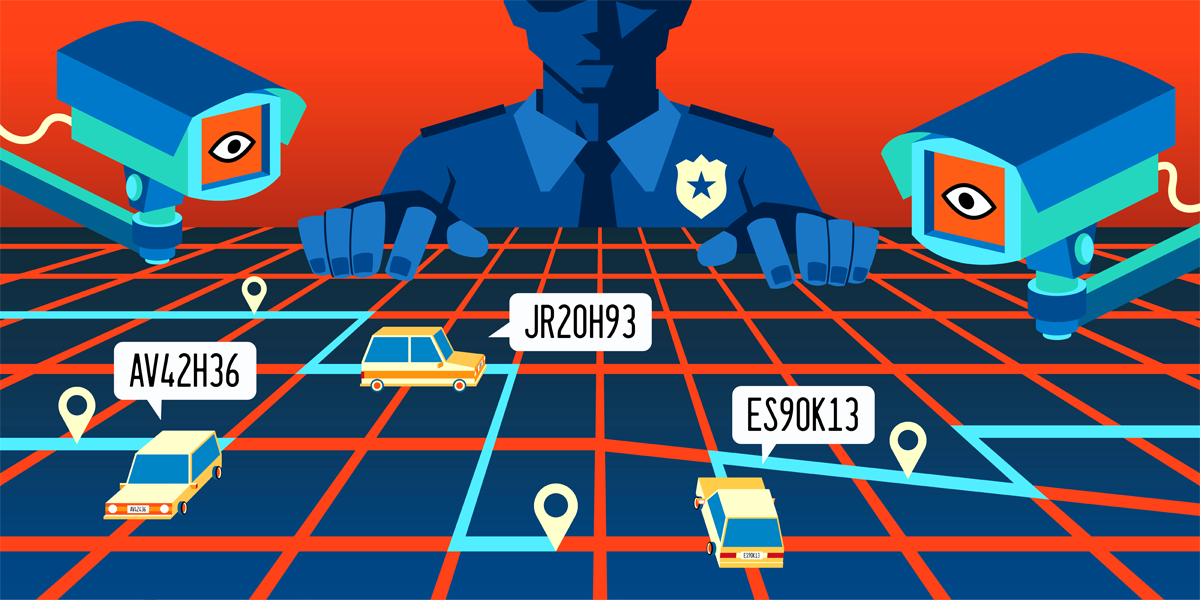
Automated license plate readers (ALPRs) are mass surveillance. They photograph every passing car and log where and when it was captured, building a searchable record of where nearly everyone drives. Cities should not buy them, and cities that already have them should shut them down.

Where these systems still operate, courts and state legislatures must reduce their harms by (among other things) requiring police to get a warrant before searching stored ALPR data. A warrant requirement would not make mass surveillance acceptable, but it would require police to justify a search to a judge before accessing records of people’s movements. Without this independent judicial check on police power, officers have been searching this data for improper reasons (many exposed by EFF) that violate our fundamental rights.

A warrant requires a judge to find probable cause and specificity—many warrantless police searches of ALPR data lack both. Officers have searched this data to profile Romani people, monitor protesters, investigate an abortion, find immigrants for deportation, track a man who complained about a deputy, stalk romantic partners, and even for no stated reason beyond “LMAO.” A warrant requirement would force law enforcement to justify these searches before accessing sensitive location records, not leave the people they target to discover and challenge the abuse after the harm is done.

What a Warrant Requires

Warrants are a check on police power. Before officers can search a person or their property, the Fourth Amendment requires them to convince a neutral judge, under oath, that probable cause exists, meaning a fair probability the search will turn up evidence of a crime. The warrant must also describe with particularity what will be searched, so police cannot go on a fishing expedition. Critically, the officer who wants to search is not the person who decides whether the search is justified.

That is why warrants are required for so many kinds of police surveillance. For example, police generally need a warrant to wiretap phone calls, to search the contents of a cell phone, and to obtain historical cell phone location records.

Stored ALPR data reveals sensitive information about the private details of our lives: where we go, when, and with whom. That’s why we believe police searches of stored ALPR data should also require a warrant. Earlier this month, a federal judge in Oklahoma agreed.

What Goes Wrong Without a Warrant: San Jose, California

San Jose demonstrates the harmful consequences of letting law enforcement search stored ALPR data without a warrant. EFF and the ACLU of Northern California represent SIREN and CAIR-California in a lawsuit challenging this practice.

The first problem is the sheer number of times that SJPD officers search stored ALPR data: 261,711 times between June 5, 2024, and June 17, 2025, about 692 searches a day. That scale is the result of having no warrant requirement, which would greatly reduce this kind of casual police surveillance.

Inevitably, officers abuse this unchecked power. In September, San Jose’s police chief disclosed an example from five months earlier: the department had fired an officer who used its ALPR system to track a woman who had accused his cousin of domestic violence, and then shared her location information with his cousin. The abusive search of stored ALPR data came to light only after the woman told police that her alleged assailant had implied he was tracking her.  A warrant requirement would have prevented this.

Of course, similar problems appear nationwide. For each example below, consider how things could have turned out differently if the officer had to put the reason for the search in a sworn warrant application and handed it to a judge.

Racial profiling of Romani people

More than 80 law enforcement agencies searched the Flock network using terms that unfairly stereotype Romani people, often without mentioning any crime. For example, the Grand Prairie (Texas) Police Department searched for “g*psy” six times using a Flock feature that identifies vehicles traveling together, in effect targeting a whole community without naming a crime.

No judge should sign that warrant. Ethnicity is not evidence of a crime, and a search aimed at an entire ethnic group is the opposite of particular: it targets people for who they are, not evidence that they committed a crime.

Surveillance of protesters

EFF found that more than 50 agencies ran hundreds of protest-related searches of ALPR data in 2025. For example, the Tempe (Arizona) Police Department ran three searches tied to the No Kings protest across 425 networks, with no identified crime.

This lacks probable cause and targets activity that is protected by the First Amendment.

Investigating an abortion

In 2025, a Texas sheriff’s office searched more than 83,000 Flock cameras, including cameras in Washington and Illinois, where abortion is legal, listing the reason as “had an abortion, search for female.” Records later obtained by EFF show deputies had opened a “death investigation” after the woman’s partner, who was later charged in connection with assaulting her, reported her self-managed abortion.

In a state where abortion is legal, a judge would not grant a warrant for a search like this.

Finding immigrants for deportation

San Francisco police let out-of-state agencies search the city’s ALPR data (which itself violates California law), and at least 19 of those searches were marked as related to ICE (though San Francisco is a sanctuary city). This problem is widespread. One investigation found more than 4,000 cases in which police departments around the country searched stored ALPR data on behalf of federal law enforcement, including for immigration investigations. Some agencies even connect their ALPR systems to an “Immigration Violator” hotlist populated by ICE, which includes plates tied to administrative warrants issued by ICE agents without any judge involved.

Here too, a judge in a state where police may not help enforce immigration law would not issue a warrant for these searches.

Retaliation against a critic

In May 2025, Navy veteran Napoleon Jones lawfully recorded a police traffic stop of another person in Sussex, Wisconsin. Jones alleges that a Waukesha County deputy retaliated by stopping and arresting him. He was released five hours later without citations or charges, and the deputy’s supervisor concluded the stop was illegal. Jones filed a complaint against the deputy the next day.

In the weeks that followed, officers reportedly ran more than 100 Flock searches against Jones, including some run by the deputy he had complained about. Deputies testified that a lieutenant ordered the searches in connection with Jones’s complaint.

No judge should authorize tracking a man for criticizing the police.

Stalking romantic partners

The Institute for Justice (IJ) has documented dozens of cases in which officers allegedly used ALPRs to track current, potential, and former romantic partners. For example, a Lufkin, Texas, officer was indicted on 100 felony counts after allegedly searching for his ex-girlfriend and people she knew more than 10,000 times. Likewise, a Milwaukee officer allegedly tracked a woman he was dating and her ex nearly 180 times over two months. IJ found that most of these cases surfaced only after victims reported the officer.

We hope that no officer would write “tracking the location of my ex-girlfriend” on a warrant application, and even if they did so, a judge would not authorize such a search.

Searches for “LMAO”

Sometimes officers do not even provide a real reason to search stored ALPR data. EFF found officers logging search reasons such as “LOL,” “LMAO,” “idk,” and random keyboard mashing. These entries are supposed to document why a search complies with an agency’s own use policies. A Goshen (Indiana) Police Department officer searched 6,474 networks, representing data from 82,413 cameras, with “idk” as the reason.

An officer who asked a judge for a warrant to track someone for “LMAO” would be laughed out of the courtroom.

The Solution

The best way to eliminate these abusive searches is to end ALPR mass surveillance. Where these systems remain, however, courts and state legislatures must require police to get a warrant before searching stored ALPR data. Warrants are the time-tested way to put an independent judicial check on police use of a dangerous surveillance technology. Officers must establish probable cause and specifically describe the proposed search before accessing the data, while existing exceptions for genuine emergencies still apply.

These protections must also cover real-time tracking. An ALPR “hotlist” is a list of license plates that trigger an alert when a camera spots a matching plate. Officers can stalk potential romantic partners by putting them on a hotlist, as a Florida deputy allegedly did with a woman he met on the set of a TV show. Thus, state legislators should require officers to get a warrant before putting a person on an ALPR hotlist (as well as a warrant to search stored ALPR data).

Announcing Privacy Badger for Safari on macOS

Exciting news for Safari users: Privacy Badger is now available on Safari for macOS! You’ll need Safari version 26.5 or higher to use it.

Whether you want to protect yourself from data brokers or just don’t want Big Tech profiting off your browsing data, Privacy Badger is here to help. More than 4 million people already use EFF’s free tracker-blocking extension to take a stand against online surveillance. Safari users can now join them and EFF in the fight for a better web.  

Install Privacy Badger

Support the Fight Against Online Tracking

Safari support has been one of Privacy Badger’s most requested features for years. Thanks to recent improvements in Safari's extension support, we’ve finally made it happen for Safari version 26.5 and higher. Privacy Badger is now available on all major desktop browsers. And before you ask, yes, we will look into supporting Safari for iOS once we've ironed out any issues on macOS.

Why Install Privacy Badger on Safari? 

Most websites contain invisible tracking code that lets companies collect, share, and profit from your personal data. Some of those companies are data brokers that sell your information to anyone willing to pay. Creepy ads are just the tip of the iceberg when it comes to the harms of online tracking: Once your information enters the data broker ecosystem, it’s nearly impossible to know who buys it or what they’re doing with it. Privacy Badger blocks online trackers to prevent your browsing data from being used against you.  

Privacy Badger goes beyond Safari’s built-in privacy features to provide additional protection against online tracking. In its default browsing mode, Safari limits the information that trackers can access but still allows them to load. Privacy Badger blocks trackers from loading in the first place, preventing them from tracking you using techniques that bypass Safari’s protections. 

Privacy Badger works well by itself, and will continue to enhance your privacy when installed along side an ad blocker or with Safari’s Advanced settings to block trackers in all windows. Since Privacy Badger automatically learns to block trackers, Privacy Badger will block trackers that other tools don’t know about or choose not to block. 

For example, Privacy Badger blocks tracking from widgets like embedded tweets, comments sections, and video players. These widgets can share your data even if you never click on them. Privacy Badger prevents these trackers from loading and replaces them with click-to-activate placeholders. 

Beyond tracker blocking, Privacy Badger automatically sends the Global Privacy Control (GPC) signal to tell websites not to sell or share your personal information. The GPC signal is already legally binding in a growing number of states, including California, Colorado, New Jersey, and Connecticut.  

All these features (and more) work together to help keep your browsing activity private on Safari. 

Try It Out and Spread the Word 

If you use Safari on macOS, give Privacy Badger a try. You’ll install Privacy Badger through the App Store on your macOS device. Installing extensions is a little more complicated on Safari than other browsers, so follow Apple’s directions here if you’re having trouble.  

This is our first release of Privacy Badger for Safari, and we will keep improving it based on your feedback. If you run into any problems, let us know by emailing extension-devs@eff.org, or by opening an issue on GitHub. And if blocking harmful trackers causes issues on a website you visit, you can disable Privacy Badger for that specific site while keeping it enabled and protecting you everywhere else. You can also let us know about broken sites by using the “Report broken site” button found next to the “Disable for this site” button in Privacy Badger’s popup window. 

When you use Privacy Badger, you join EFF and millions of other users in the fight for a better web. Help spread the word by telling your friends and family who use Safari that they can use Privacy Badger too!  

Install Privacy Badger 

Support the Fight Against Online Tracking 

Privacy's Defenders Podcast: No Privacy Without Encryption

When we communicate online today – from your personal emails and DMs to secure international commerce – we usually do so with encryption. Encryption converts readable data into unreadable gibberish to protect our privacy and security. This didn’t just happen organically. Three decades ago, the U.S government treated encryption like a weapon, and it took some unlikely heroes to set it free: a grad student, a junior lawyer, and a fledgling digital rights group who sued the federal government. 

The ruling in Bernstein v. Department of Justice held that code is speech and so is protected by the First Amendment – a precedent that underpins the internet as we know it today. This landmark case was led by Cindy Cohn, then a young pro bono lawyer working on behalf of EFF, who went on to become EFF’s legal director and then executive director. 

Welcome to the second episode of “Privacy’s Defenders,” a podcast about the people – lawyers, journalists, hackers, and others – who’ve fought to secure your digital liberties since before most people even knew what the internet was. 

play
Privacy info. This embed will serve content from simplecast.com

Listen on Spotify Podcasts Badge Listen on Apple Podcasts Badge  Subscribe via RSS badge

(You can also find this episode on the Internet Archive and on YouTube.)

In this episode, Cindy – who left EFF in June – speaks with Dan Bernstein, who was a Cal Berkeley grad student when he developed a simple encryption algorithm called “Snuffle.” Because federal law classified encryption as a war munition, publishing Snuffle meant submitting it to the government for review, getting a license as an arms dealer, and being granted a license the government had no intention of granting. Bernstein felt this violated his free-speech rights and in 1995 he sued, represented by Cindy working with EFF. 

Cindy also talks with Tony Coppolino, the Justice Department lawyer she battled in court – who admits she intimidated him from their very first phone call, and who offers a surprising perspective on the case all these years later. 

The “Privacy’s Defenders” podcast is a follow-up to Cindy’s book, “Privacy’s Defender: My Thirty-Year Fight Against Digital Surveillance,” bringing to life pivotal moments in the voices of those who fought for your rights. Sales of “Privacy’s Defender” benefit EFF, so pick up your copy today!

Joanne Elgart Jennings co-produced and created this podcast.   

Jarod Sport co-produced, mixed, and mastered it.   

Corinne Ruff is our story editor. 

We had additional help from Rachel Estabrook and Alison Broverman. 

The original music was composed and performed by Nat Keefe of Hot Buttered Rum with Ben Andrews on the fiddle.

Resisting the Menace of Federal Data Consolidation

In the past two years, the federal government has unlawfully consolidated data exposing our private information. 

This consolidation has been chaotic but generally came in three rolling waves: It started with DOGE, moved to agency-to-agency data sharing with ICE, and then attempted data-driven purges of state voter rolls.

We all deserve to live in a world where the data we use to pay our taxes, receive benefits, and vote is not combined and weaponized against us. The amalgamation of data leads to mistakes, abuses, and a lack of trust in institutions meant to protect us. Overall, it can chill our participation in society. This is particularly true for groups disfavored by this administration—especially immigrants and protesters.

Congress highlighted similar abuses—including the creation of enemies lists and snooping on activists and federal employees—following the McCarthy and Watergate eras. And the increasing use of computers to magnify those harms led Congress to pass a slate of protections like the federal Privacy Act of 1974.

The good news is that many people have stepped forward to resist the federal government’s unprecedented and unlawful data consolidations. Many groups, including EFF, have filed lawsuits to enforce our data privacy laws, and many states have, too. Legislators at the federal and state levels have worked to expose and oppose these surveillance programs. And many people have protested for their right to data privacy.

Existing data privacy protections have been essential in the past two years, but they can be improved. This should include: narrowing loopholes and increasing enforcement in existing laws, limiting the government’s purchase of data on the commercial market, and passing a comprehensive consumer privacy law.

Data Consolidation by DOGE

Starting on January 20, 2025, President Trump created DOGE—essentially renaming an existing agency originally meant to modernize government technology. Rather than engage in modernization, DOGE quickly obtained high-level access to sensitive databases across the government that store millions of people’s personal records—including at the Office of Personnel Management (OPM), the Social Security Administration, and the Treasury Department.

DOGE was staffed with people with little government or cybersecurity knowledge and who often had conflicts of interest. DOGE’s early aim was not always clear, aside from gaining “prompt access to all unclassified agency records” and the “sharing and consolidation” of those records.

The result? The indiscriminate firing of government employees and the decimation of important agencies that focused on consumer protection and foreign aid. It also resulted in clear misuses of data. For example, while working with DOGE at the Social Security Administration, one individual signed an outside agreement with an advocacy group with the aim of using SSA data to find evidence of alleged voter fraud and “overturn election results in certain States.”

DOGE’s data access and consolidation violated the federal Privacy Act, which limits the sharing and consolidation of government databases. Many groups stepped in to sue. For example, EFF and our co-counsel at Lex Lumina LLC and Democracy Defenders Fund, on behalf of two public employee unions (AFGE and AALJ), sued the OPM for unlawfully disclosing federal workers’ information to DOGE. After EFF and others secured early victories, the government sought to end the lawsuits by firing many DOGE agents and removing their access to records. A great deal of damage remains in need of a judicial remedy.

Data Consolidation by the Department of Homeland Security (DHS)

Even as DOGE’s influence diminished, federal agencies have attempted to share, compare, and seize large databases, in order to target immigrants. In some cases, they have succeeded. This happened with tax records at the IRS, Medicaid data from the Department of Health and Human Services (HHS), and public housing data from the Department of Housing and Urban Development. The Department of Agriculture also sought to collect databases regarding Supplemental Nutrition Assistance Programs (SNAP) from states.

Many groups have filed lawsuits to block this anti-immigrant-motivated data consolidation, alleging it violates privacy protection laws. EFF filed amicus briefs in support of two of these lawsuits: Centro de Trabajadores v. Bessent, which concerns IRS data; and California v. HHS, which concerns Medicaid data (and where we teamed up with EPIC and Protect Democracy). Most recently, states have stepped up to challenge the federal government’s attempted seizure, for immigration enforcement purposes, of state commercial driver’s license data held by the American Association of Motor Vehicle Administrators, a non-profit organization.

This data consolidation for immigration enforcement has also included government purchase of commercial products. This includes ICE’s purchase of commercial location data without a warrant, and its interest in “Big Data and Ad Tech providers.” ICE also has contracts with companies like Palantir, which help organize all the datasets the agency collects.

Data Consolidation for Voter Purges

The right to vote is fundamental to every democracy. That’s why EFF has long advocated for cybersecurity in voting systems, to make sure every vote is properly counted.

Voter purges are a longstanding threat to the right to vote. State and local officials regularly delete people from the voter registration rolls, often for bad reasons and without adequate notice. This has a disparate impact against people of color.

Now the federal government is trying to purge voters, too. To do so, it has consolidated our data in three ways. First, it is using an old data system called SAVE for a new purpose: checking voter eligibility. Second, it has seized voter information from states. Third, it has created a federal list of eligible voters.

As a direct result, people with a right to vote will be purged from voter rolls because of erroneous data. Others will be intimidated from voting or registering. And all registered voters suffer a violation of their data privacy rights: information collected for one purpose is being used against them for another purpose.

Expansion of SAVE

Since 1986, the federal government has operated SAVE, which stands for Systematic Alien Verification for Entitlements. It is not a database, but it facilitates easy access to databases. It is used to determine whether immigrants and naturalized citizens are eligible for various government benefits, such as food stamps.

In 2025, the federal government started using SAVE for a new purpose: checking voters’ eligibility. Further, SAVE now provides access to new databases and allows bulk searches. More than 60 million voters have been run through SAVE, and 21,000 were flagged as potential noncitizens who are ineligible to vote. Erroneous flags have caused purges of lawful voters – such as Anthony Nell.

A case called League of Women Voters v. DHS challenges this expansion of SAVE. The plaintiffs are represented by CREW, Democracy Forward, the Fair Elections Center, and EPIC. A federal judge held this program unlawful and set it aside. DHS appealed and asked for a stay of this order, and a federal appellate court denied the stay. Unfortunately, the U.S. Supreme Court granted the stay, exercising its controversial “shadow docket” authority by a six-to-three vote.

Federal employees in DHS’s “Fraud Detection and National Security Unit,” which ordinarily investigates alleged immigration fraud, have been re-assigned to examine voter eligibility. A whistleblower alleges that employees have been directed to go to state election agency websites, enter some of a voter’s personal information, and thereby access more of it. This may violate state laws requiring a person, before accessing a voter’s information, to attest they are that voter or have that voter’s authorization.

Federal Seizure of States’ Voter Information

Since 2025, the federal government has demanded that at least 48 states hand over their voter information. At least 16 states have complied. The federal government is running this information through SAVE, searching for voters to purge.

The federal government has sued 30 states for refusing to comply. So far, courts have dismissed 25 of these suits. There’s also a lawsuit against this data grab, titled Common Cause v. DOJ, brought by CREW, Protect Democracy, and the ACLU.

The New Federal Voter Eligibility List

In March 2026, President Trump issued an executive order requiring DHS to create a list of people who are U.S. citizens, aged 18 or older, and residents of the state. The order also requires DOJ to prosecute anyone, including state and local officials, who provides a ballot to a person who is not eligible to vote in federal elections.

In California v. Trump, 24 states allege that this executive order violates the Constitution’s separation of powers. A federal judge enjoined this program, and an appellate court denied a stay. But the U.S. Supreme Court by a six-to-three vote granted a stay, which allows the program to move forward. (By a seven-to-two vote, the Court denied a stay of an injunction against a different part of the same executive order, which concerned mail-in ballots.) Another legal challenge, titled EPIC v. USCIS, alleges that the new federal voter eligibility list violates the Privacy Act as well as the separation of powers.

Next Steps

It is encouraging to see so many people, groups, and states step forward to protect our data privacy from these unlawful waves of federal data consolidations. Still, more work remains. For example:

  • The Privacy Act of 1974 has proven a critical bulwark. But after a half century, it could use a refresh. For example, Congress should close its loopholes and expand its enforceability.
  • Law enforcement agencies must be prohibited from avoiding the Constitution’s warrant requirement by buying our personal data from brokers. For example, Congress should pass the “Fourth Amendment Is Not For Sale Act.”
  • We need a comprehensive consumer data privacy law, among other reasons to reduce the flood of our personal data that corporations provide to law enforcement agencies. Legislators should check out EFF’s “privacy first” framework.

In the meantime, there’s no time like the present to practice surveillance self-defense, like using strong passwords and disabling your phone’s ad identification.


Turkish Crackdown On LGBTQ+ Organizations Threatens Freedom of Expression and Association

EFF strongly condemns Turkey’s state-led discriminatory, oppressive attacks on feminist and LGBTQ+ organisations, media platforms, student groups, and rights defenders and activists within the country.

Since mid-September, access to the websites and social media accounts of a dozen organizations have been blocked by court order, while over 60 members and activists have been detained, their offices and homes raided, mobile phones, laptops and other digital devices seized, and judicial proceedings launched against them. 

These actions threaten the very existence of the LGBTQ+ organizations targeted, limiting their ability to carry out legitimate human rights work, deterring participation and support, and chilling the free speech rights of not just these groups, but any organization that even reports on LGBTQ+ oppression.

A little over a week ago, an Istanbul court shut down the website and social media accounts of T24, Turkey’s longest running independent digital news organization—which has covered government-backed campaigns against and earlier crackdowns on gay rights groups—alleging it had aired “LGBT propaganda” over the past year. 

It’s all part of Turkey’s efforts to portray LGBTQ+ groups and support networks for those living with HIV as criminal organizations that must be suppressed, purportedly to protect family values. Homosexuality is not illegal in Turkey (unlike Uganda, Nigeria, and Egypt, where it is criminalized), but LGBTQ+ organizations and activists have in recent years faced increased government oppression, including criminal proceedings on allegations related to obscenity and violations of Turkey’s Law on Associations, which regulates the activities of nonprofits.

In its new crackdown, the government is targeting LGBTQ+ groups’ websites and social media channels for alleged obscene posts accessible to children. Kaos GL, Turkey’s oldest gay rights organization, said investigations are being led by the Cyber Crimes Bureau of the Ankara Chief Public Prosecutor’s Office, which took members of its Board of Directors into custody, raided their homes, and searched the organization’s offices, where electronic devices were seized. 

According to Human Rights Watch, prosecutors in Istanbul said those targeted were suspected of “founding, leading, or being a member of a criminal organization,” as well as sex work and drug-related offenses. Publicly available law enforcement and judicial documents about the investigation reportedly don’t say which publications or posts are alleged to be obscene.

The prosecutor’s office launched an investigation of the organization and others under Article 226 of the Turkish Penal Code, which regulates the offense of “obscenity” (without clearly defining it), while the overall operation, dubbed “My Family is Safe” and launched as part of President Recep Tayyip Erdoğan’s “Decade of the Family” program, is being brought under Article 220 of the code. Justifying the crackdown by invoking family values and child safety suggests that the government is trying to enforce a moral code on society based on intolerance of and discrimination against LGBTQ+ people.

New Low for Turkey

Framing the activities of LGBTQ+ rights organizations as violations of organized crime provisions is a new low for Turkey, where free speech and press freedoms have long been under attack. The implication from these raids and investigations is that the organizations’ legitimate civil society work advocating for the rights of queer people—monitoring human rights violations, offering legal aid, running news portals, sponsoring cultural events such as symposiums and film screenings, publishing an online magazine and supporting LGBTQ+ refugees—is suspected of being criminal threatens the basic human rights of the LGBTQ+ community in Turkey.

These actions send a dangerous message to people and organizations exercising freedom of speech and association in support of queer people. Under the penal code, directing a criminal organization is punishable by five to ten years in prison, while merely being a member carries a sentence of two to five years. 

EFF joins hundreds of human, civil, LGBTQ+, and digital rights organizations around the world in calling for the immediate release of all those detained for exercising their rights to freedom of expression, association and legitimate human rights work, and the unblocking of all websites and social media accounts of affected organizations. 

For many LGBTQ+ individuals the world over, the internet can be a safer space for exploring identity, finding community, and seeking support. The anti-LGBTQ+ crackdown in Turkey is not happening in a vacuum—unfortunately we are seeing anti-LGBTQ+ bills restricting free expression and privacy, content moderation decisions that disproportionately impact LGBTQ+ users, and other forms of intolerance around the world. 

We urge international civil society and diplomatic partners to raise awareness of and to speak out against the crackdown, and to publicly show support for the legitimacy of Turkey’s LGBTQ+ organizations and the important work they do to ensure that queer people are safe and free.

When No ID Means No Internet: Age Verification and the Right to Access Information

This post was co-authored by Sheila B. Lalwani, a doctorate student and recent COMPASS Fellow hosted by EFF.

Age verification proposals are often presented as a simple tradeoff: sacrifice a little privacy to better safeguard children online. But that framing overlooks a more fundamental question. What happens to people who cannot verify their age at all? This is particularly a problem when users are required to prove their age with identity documents.

Age-related restrictions are developing quickly around the world. While they differ radically across jurisdictions, in the past year, we’ve witnessed a sharp uptick toward mandatory age assurance for social media access but also for other high-risk digital services.

For example:

  • In late 2025, Australia became the first country to implement a minimum age requirement for prohibiting children under age 16 from creating or holding social media accounts. 
  • India passed the Digital Personal Data Protection (DPDP) Act that includes mandatory verifiable parental consent and has undertaken ongoing discussions for social media restriction.
  • The United Kingdom passed the Online Safety Act requiring age verification across a swath of services hosting content considered harmful to users under 18. More than half the states across the U.S. have enacted age verification laws. 
  • An EU Commission’s expert report recommends a ban on social media access for users under 13. It also recommends mandatory age verification for platforms to ensure that users are ‘age appropriate.’ 

The Access Problem 

Age verification laws that are predicated on the necessity of users possessing a current passport, driver’s license, credit card, or similar documents proving their identity exclude critical sections of populations.  And this problem is global in nature: Millions of people lack government-issued identification or encounter regular challenges to obtaining or updating it. 

Roughly 15 million adult U.S. citizens lack a driver’s license, and a further 2.6 million lack any government photo ID; leaving large groups blocked from online content or services. The UK has a similar predicament: proof-of-age checks are often reliant on passports, driver’s licenses, or other recognized alternatives, which can pose unique challenges to people without these documents.

Much of the advocacy around age verification discusses the privacy harms of age verification. Yet these measures also threaten something more fundamental: equal access to information and the ability to exercise the right to freedom of expression. 

Unfortunately, age verification systems foster unequal access to information and provide an asymmetric solution to find essential information, build community, and weigh in on public discourse. As governments and companies increasingly require users to prove their age before accessing online services, these individuals risk being excluded from large parts of the internet altogether. 

Effects on Global Majority Countries 

Age verification laws reshape who can speak, who can access information, and who gets excluded from the digital public sphere. In other words, age verification is not a neutral safety measure: it presents a structural barrier to disproportionately exclude certain groups—particularly those in the global majority—and alters the architecture of global online expression. Some of these groups are already marginalized offline, and age verification extends that exclusion into digital spaces.

For instance, 850 million people globally do not have ID. Most of these individuals exist in primarily low and middle income countries in Sub-Saharan Africa and South Asia. The World Bank points out that many are members of marginalized groups and more than half of those lacking access to identity documentation also have children whose births have not been registered. Women are particularly vulnerable and are 8% less likely than men to have an ID. Other vulnerable groups, such as adults in low income countries, are less likely to have an ID when they fall below 25 years, as are those with a primary school education or less or those in rural areas. 

A policy paper from EDRi points out that age verification laws provide quick tech solutions but overlook longstanding structural challenges and undermine the universality of the internet. The analysis finds that age verification laws have serious human rights implications and ironically harm the very individuals they deem to protect. Moreover, these laws depend on the collection of harmful mass data that human rights organizations, including EFF, is fighting against—and has for decades. 

For example:

  • In Morocco, a push to restrict children’s access would ban under-13s from creating accounts on gaming platforms. This could potentially create challenges for those with IDs that have incomplete information concerning the year of birth. In addition, this push would also impact those who attempt to leave Morocco.
  • In Egypt, the lack of ID cards has created challenges for minority groups such as the Baha’i.
  • Stateless individuals would also struggle under age verification laws. The Rohingya, the world’s largest population of stateless people, often lack IDs. 
  • Kuwait’s Bidoon population also lacks proper identification materials. According to Amnesty International, this leads many to rely on standard civil identity cards, which can be restrictive.  
  • Nigeria launched a national program to provide ID cards to its population in 2007. Since then, 64.4 million have registered, but that represents just over 30% of the national population.
  • The Kafala system, a practice in several countries across the Middle East, also introduces challenges for age verification laws. Under this legal framework, migrant workers’ legal residency and employment status are bound to a specific employer. This potentially leaves stateless persons or migrant workers vulnerable to forced labor and restricted movements. 

No ID, No Access

Age verification laws are less about confirming the age of a user and more about creating barriers to online participation that many people cannot reliably scale. The net result is reduced access, more data collection, and an increased chance of unequal or mistaken exclusion from accessing information online. 

Nobody doubts the importance of protecting children online. While proponents assert that age verification laws protect minors from harmful material, online harassment, and digital addiction, these laws are not the solution. They subvert fundamental freedom of expression rights and pose significant privacy risks.  

EFF has long warned against age-gating the internet. Age verification technology itself is often inaccurate and privacy-invasive, and as more countries considering implementing ID-based checks, the risks move beyond censorship and surveillance toward excluding some people entirely. That’s why we’re working with groups in the U.S. and around the world to push back against these laws, and why we hope you join our effort.

For more information on how to fight back against dangerous age verification laws, visit our resource hub at eff.org/age

❌