❌

Normal view

There are new articles available, click to refresh the page.
Before yesterdayNews

DHS Was Designed as a Weapon

16 October 2026 at 10:00

A fresh wave of outrage over the Trump administration’s use of Immigration and Customs Enforcement has surged after two high-profile events involving ICE in the span of a week: the shooting of a young father in New York City last Thursday, and the Monday morning Homeland Security Investigations raid on Rep. Ilhan Omar’s home.

Reporting from the Wall Street Journal suggests that the raid was a part of an ongoing effort by the Trump administration to strip the Minnesota Democrat of her U.S. citizenship. Omar arrived in the United States as a child refugee from Somalia and became a naturalized citizen in 2000, long before the start of her political career. The outspoken progressive congresswoman has since become a foe of President Donald Trump; in a statement, her spokesperson condemned the raid on her home as “an unprecedented escalation in the weaponization of federal law enforcement to target political enemies.” 

Omar’s House colleague, Rep. Delia Ramirez, D-Ill., argues this sort of weaponization is an inherent feature of the Department of Homeland Security, which was established in 2003 as part of the George W. Bush administration’s mounting war on terror. This week on The Intercept Briefing, host Jessica Washington speaks with Ramirez about a new bill she introduced on Tuesday to abolish DHS and what the raid on Omar’s home reveals about the department. 

“The Department of Homeland Security cannot be reformed. It should be dismantled,” said Ramirez. “What they did — just three weeks from an election — was to attempt to create such paralysis on everyday people. … If they can do this to one of my colleagues, they can do that to anyone. And it should concern everyone.”

Washington also speaks with Rozina Ali — a journalist covering the war on terror, Islamophobia, the Middle East, South Asia, and literature — and Will Sommer, a senior reporter covering right-wing media and conspiracy theories at The Bulwark. 

Ali and Sommer unpack the role of conspiracy theories and anti-Muslim propaganda in the attacks on Omar, and how DHS has been historically weaponized against Muslims in the United States.

“Over the last 30 years, we have been conditioned to believe that Muslims, and now more broadly immigrants, are not just a threat to national security, but a threat to the American way of life,” said Ali. 

“The right has been really eager to denaturalize Ilhan Omar for really going back a decade almost to the first Trump administration,” said Sommer. He called the investigation into Omar “one of the most striking examples we’ve seen of how the Trump administration is willing to use law enforcement to achieve its political aims and to sort of threaten its enemies.” 

For more, listen to the full conversation of The Intercept Briefing on Apple Podcasts, Spotify, YouTube, or wherever you listen to podcasts.

Transcript

Jessica Washington: Welcome to The Intercept Briefing. I’m Jessica Washington, politics reporter at The Intercept. On Monday, Homeland Security Investigation agents searched the home of Minnesota Congresswoman Ilhan Omar. Reporting from the Washington Post suggests that the probe centers on allegations that Omar’s late father lied on immigration paperwork decades ago when Omar was a teenager.

According to a source familiar with the case who spoke to the paper, the Department of Homeland Security had previously declined to move ahead with an investigation years prior based on similar allegations. There still weren’t many details out as of Wednesday. The Department of Justice has vaguely described a “federal criminal investigation,” but Omar has long been a political foe of President Donald Trump.

In a statement to The Intercept, Omar called the raid “an outrageous abuse of power and an unprecedented escalation in the weaponization of federal law enforcement to target political enemies.” The raid on Omar’s home comes days after an Immigration and Customs Enforcement agent shot 28-year-old Oscar Belgal in the neck in New York City, with his 5-year-old son in the back seat.

The incidents have reignited concerns about the violent weaponization of the Department of Homeland Security by President Donald Trump against immigrants and the administration’s perceived political enemies. 

The group Democracy Defenders Fund filed a complaint over the raid on Tuesday, arguing it violates the Hatch Act, a federal law that restricts political activity by members of the government’s executive branch. With early voting in Minnesota scheduled to start Friday, the group says the raid “appears to be timed to influence voters in the upcoming midterm election.”

Rep. Delia Ramirez, a Democrat from Illinois, introduced a new bill this week to dismantle the Department of Homeland Security and abolish immigrant detention in the United States. I’m speaking to her on Wednesday, October 14. Congresswoman Ramirez, welcome back to The Intercept Briefing. 

Rep. Delia Ramirez: Oh, happy to be on.

JW: First, I wanna get your reaction to the Homeland Security Investigation search of Representative Ilhan Omar’s home on Monday. Were you surprised by the news? And what do you think it tells us about how the Department of Homeland Security is operating under President Donald Trump?

DR: I’m gonna tell you that, unfortunately, I’m not surprised by what happened — but it is still bone-chilling.

You’re talking about a department that was created to have full authority to violate civil rights every single day, now weaponized against a sitting member of Congress — sending, I don’t know, 20 HSI agents into her home at 4:30 in the morning.

Cruelty, complete control, and authoritarianism, and demonstrating their ability to get away with whatever they think they can, was the point of what they just did.

And it is clearly the embodiment of abuse of power. But it also shows us exactly why the Department of Homeland Security cannot be reformed. It should be dismantled. And that what they did — just three weeks from an election — was to attempt to create such paralysis on everyday people to believe that if they can do this to one of my colleagues, that they can do that to anyone. And it should concern everyone.

“Demonstrating their ability to get away with whatever they think they can, was the point of what they just did.”

Anyone that cares deeply about our democracy, about our ability to exercise our freedom of speech, or to be protected from being harmed by the federal government should see what is happening to my colleague Ilhan Omar as a clear indicator that this could also happen to them, if we don’t stop them.

And that justice is not just that she gets her phone back, or they leave her alone. Justice is holding accountable the leadership that made that terrorizing experience for Ilhan happen.

JW: Speaking of stopping them, I want to get into the bill that you introduced on Tuesday, the Reimagining Safety Act, which would abolish the Department of Homeland Security, eliminate all immigrant detention, and repeal “duplicative and overreaching terrorism laws.”

Now, there has been some forward momentum on the movement to abolish Immigration and Customs Enforcement, at least from progressives — but this bill would get rid of all of DHS. Can you talk about how that would work and why, in your opinion, it’s not enough to just abolish ICE? 

DR: I just mentioned to you what’s happening to Congresswoman Omar, and to me, it’s a clear indicator of the greatest threat to our security: It’s not immigrants; it’s the Department of Homeland Security.

And I know that a lot of people say, DHS is “rogue,” we need to address this “rogue” organization. But it’s not rogue. I wanna be clear with people. DHS did not exist my entire lifetime. As a matter of fact, it’s been operating less than 23 years. And it was built exactly to do what it’s doing right now: to violate our rights under pretense of securing our safety, and it’s been, in fact, empowered to act with impunity, which is why people keep saying like, “How can they possibly get away with what they’re doing, and why can’t Congress stop them?”

Because frankly, since its inception, DHS has been utilized by the government to target and persecute people that they consider the public enemy. And we know that fascism always requires a public enemy. Muslim Americans, Latinos, Haitians, protesters. DHS has never kept us safe. And 24 years ago, Americans, Republicans, and Democrats alike, let’s be clear, raised a flag about how DHS would constitute unprecedented consolidation of power, and yet this agency was still formed under the United States Congress.

“The greatest threat to our security is not immigrants; it’s the Department of Homeland Security.”

DHS has been a problem of the administration for its entirety. And administration after administration has demonstrated to us that this agency needs to be completely dismantled piece by piece. And when you have people like Donald Trump with very authoritarian tendencies, you have clearly seen what they’re capable of doing. And frankly, I don’t think we’ve seen the full extent of what they could do.

So this is a moment for us to ask ourselves: What kind of world do we wanna live in? And do we want to continue to live with the fear that this agency can be weaponized against you, to persecute you, to arrest you, to detain you, to denaturalize you, to attempt to question your own citizenship, to kill you?

And at the same time, ask ourselves: If FEMA and TSA and cybersecurity and the Coast Guard and other critical programs are important for us, how can we allow them to be politicized by this agency that constantly keeps taking away the resources that these critical programs need? And so for me, this is the moment that we don’t just abolish ICE or abolish CBP — we take on the institution that was created to allow ICE and CBP to operate in the way that it does. 

“Do we want to continue to live with the fear that this agency can be weaponized against you, to persecute you, to arrest you, to detain you, to denaturalize you, to attempt to question your own citizenship, to kill you?”

JW: To your point, there are all of these other functions of the Department of Homeland Security, from federal disaster relief to TSA screenings to customs enforcement. What happens to all those other functions if DHS is dismantled?

DR: I’m glad you asked me that question ’cause people keep saying, “Do you not care about FEMA?” Actually, because I care about FEMA, I want to dismantle the Department of Homeland Security.

H.R. 10803, the Reimagining Safety Act, it’s a first of its kind bill, and for the very first time, it’s a bill that community stakeholders spent months designing a Cabinet-level department. Because the Reimagining Safety Act would actually establish another department, the Department of Community Safety, that in fact is about protecting our communities.

It would dismantle DHS by preserving the Cybersecurity and Infrastructure Security Agency — we call it CISA, that was created under the Department of Homeland Security; protecting and expanding the Federal Emergency Management Agency; protecting and redirecting the Transportation Security Agency and custom functions into the Department of Transportation; while abolishing ICE and CBP and reinvesting funds in community.

And, certainly, I think the other piece of that is the surveillance: limiting government surveillance and reining in the unlawful abuses of data and curb the militarized enforcement that you’re seeing under DHS while beginning the process of taking what we call USCIS, that’s also under the Department of Homeland Security, and establishing it as its own separate civil immigration system that no longer operates under this agency that could call Renee Good, Alex Pretti, or Silverio Villegas terrorists.

JW: Thinking about your bill — obviously, Republicans currently control every lever of power, and only a handful of Democrats support abolishing ICE, and fewer still have called to abolish the Department of Homeland Security. Why introduce this bill now, knowing that it likely can’t pass this current Congress, much less get signed by President Donald Trump?

DR: Every single issue, whether it’s talking about universal healthcare, Medicare for All, whether it’s talking about raising wages — and now I introduced Living Wage for All — or blocking bombs and ending endless wars, oftentimes the assumption has been it is too early, or Republicans control, or Democrats have not arrived.

The people have arrived to where we are. They believe that this agency is the biggest threat to their well-being. And for me, this is an opportunity to provide a roadmap on how we actually in fact address the problem and then create a solution that centers people’s safety — and not just rhetoric of protecting the homeland under the guise of protecting us from terrorism, so that they can terrorize us.

Jessica, I am clear that this bill is not gonna pass overnight, but I am also clear that our community expects for us to propose something that is tangible, something that is comprehensive, and something that gets to the root of the problem by creating a permanent solution, so that we’re never here again.

“Our community expects for us to propose something that is tangible … that gets to the root of the problem.”

That means that over the next few months, and perhaps over the next year, we are building the support and changing the conversation in such way where in the same way only nine or 10 of my colleagues were willing to, out loud, say “Abolish ICE” two months ago, now we have actually more like 45, 50 of them, that we are in the same place when we’re talking about reimagining safety in this country.

Furthermore, every single poll that you look at ICE, CBP, [ousted former CBP head Greg] Bovino, [ousted former DHS head Kristi] Noem, immigration enforcement, and the fear of surveillance and losing our civil rights is top concern for the American people.

I am providing a bill that begins to respond to what our communities are demanding. I’m hoping that Congress doesn’t continue to be behind the ball of what the people are asking of them. And now I’m giving them something that they could actually in fact use.

I wanna tell you too that, look, in 2002, people expressed concerns about DHS. And 25 years later, those warnings have been validated as we watch what they’re doing. It’s a weapon pointed at anyone that the state considers a public enemy, whether it’s Congresswoman LaMonica McIver, whether it’s Congresswoman Omar, or the millions of people in this precise moment that are living in fear because of the way that this agency was created.

I think this is also an opportunity, Jessica, for us to actually educate the world around the fact that DHS was not created as a Cabinet department from our Founding Fathers — that we were OK before 2003 without DHS, and we can live in a life without it as well. 

“We were OK before 2003 without DHS, and we can live in a life without it as well.”

JW: On the subject of looking to the future, if Democrats take one or both houses of Congress in the upcoming midterms, I’m curious what else you’re thinking about in terms of reining in DHS, and if you have any other priorities for the next session.

DR: Let me just come back to this bill, ’cause I think it’s really important — my own bottom line on it. The Reimagining Safety Act takes apart DHS and creates a new agency, a new agency that responds to what people are asking for — for we the people that they’ve elected to represent them, to keep them safe, to protect the mission of community safety, and to protect the public.

And it means that dismantling DHS is doing the work Congress should have done actually 24 years ago, to actually look at these agencies, all agencies under this department, but also how DOJ has been weaponized against us. How we created a Department of War. Just think about that: We’ve created a department where we want to spend more money on war than we want to actually spend on housing, on healthcare, on wages, and on infrastructure.

So for me, this is a moment for us to actually demonstrate that we’re going to fight like hell for accountability, to take on corruption, to end the terror, while also creating tangible ways to address the issues.

And one of those, and I’m going to be introducing a resolution [Thursday] around what should our positioning be when it comes to immigration. Because this agency is about what is wrong and what needs to stop so that we can actually have safety, but then we also need to talk about how we restore our systems of asylum, how we actually in fact establish legal pathways, and how do we bring 11 million people who are in fear, in the shadows, crying daily, to finally come out of the shadows into a justice status.

I am gonna be working really hard to make that front and center with our leadership, and I’m disappointed that our leadership isn’t centering that as one of the very first things that they wanna work on in the first 100 days. Because unfortunately, that is telling the people that have been under siege by this administration: Being an immigrant or being brown or being a protester isn’t the top priority of people that need to be protected.

When our leadership is talking about first 100 days of many important things, but not a word around immigration, and not a word around real accountability to what has happened under ICE and CBP.

JW: Thank you, Congresswoman. We’re gonna leave it there, but people can read more about your bill, the Reimagining Safety Act, at theintercept.com, where we have a story out about it. And thank you so much for joining The Intercept Briefing. 

DR: Thank you. Appreciate it.

Jessica Washington: Next, I speak with Rozina Ali, a journalist covering the war on terror, Islamophobia, the Middle East, South Asia, and literature; and Will Sommer, a senior reporter covering right-wing media and conspiracy theories at The Bulwark. Will, welcome to the Intercept Briefing, and Rozina, welcome back. 

Will Sommer: Thanks for having me.

Rozina Ali: Thank you so much for having us. 

JW: Rozina, I want to start with you. In your new book, “Seasons of Fury: Four Families and the Rise of Islamophobia in America,” you discuss the history of how immigration enforcement has been weaponized against Muslims in the United States. And while I want to preface by saying that there’s still a lot we don’t know about the raid on Congresswoman Ilhan Omar’s home, we do know that Omar is outspoken, Muslim, Black, and an immigrant. She’s also been a consistent target of Trump and his allies.

How might this relate to the broader history of how the Department of Homeland Security has been weaponized against Muslims in the United States?

RA: Well, I really appreciate this question. There’s a very long history when it comes to using immigration enforcement to target Muslims and the Muslim community in the United States, and I just wanna go back a little bit before 9/11 to the late 1990s.

One thing that was happening was the use of secret evidence against Muslim immigrants, a lot of Arabs and South Asians, and a lot of Muslim immigrants, to, essentially, detain them and deport them. And what that meant was actually using classified evidence that the government brought forward that the defendant could not see.

And it actually kind of reminds me of what’s happening with Ilhan Omar now, is that we don’t actually know what the allegations are. We don’t know what the case is hinged on.

What the DHS did after 9/11 was actually broaden out its use of immigration enforcement to target Muslim communities. One of the things it did was actually institute a registry called the National Security Entry-Exit Registration System. That essentially allowed the U.S. government to detain thousands of Muslim immigrants and eventually deport them — even though they had no criminal charges.

One of the things that protects Ilhan Omar is that she is a U.S. citizen, but one of the things that does chill me is there is this longer, broader history of the government using immigration enforcement in order to deport people and detain people, even if they have not been guilty of any criminal charges.

JW: That makes a lot of sense, the concern, because we know there’s history of this power being used in secretive ways, kind of similar to what’s potentially happening now. And I do, again, want to caution that we do not have all the details on this case at the moment. But Will, I wanted to bring you in to kind of get into the origins at least where some of these conspiracy theories that have been swirling around Congresswoman Omar.

You wrote about this in September, kind of where you found that many in MAGA world were frustrated that after nearly a decade of conspiracy theories — some of which were pushed by Trump about alleged immigration fraud from Omar — she remains not only in the United States, but in Congress.

Will, can you explain some of the conspiracy theories that are fueling this push to deport Omar? Is there any evidence for them? And do we know if they had anything to do with the raid on her home? 

WS: The right has been really eager to denaturalize Ilhan Omar for really going back a decade, almost to the first Trump administration. A lot of it was fueled by this idea that she had married her brother as some kind of immigration scheme, or essentially that this man she was married to was secretly her brother.

Now, I looked into the origins of this at the time. I thought, “Well, is this true? Could it be?” No, it’s not. In fact, it all started on some random kinda Somali Minnesotan message board where someone said, “Yeah, she’s married to her brother.” And then from there, once she became more prominent as a Democratic figure, people on the right kinda dug through that and sort of built this whole conspiracy theory based off of this one post.

Essentially, now that Trump is back in power, there’s this demand on the right because, as with other conspiracy theories, they’ve come to believe this. So they’re saying, you know, “Oh man, when are we finally gonna deport Ilhan Omar?” So Markwayne Mullin, the head of DHS, has been under this pressure, and he gave this interview at the Republican convention to [right-wing YouTuber] Benny Johnson, and he said, “Oh yeah, she married her brother.”

And Benny Johnson said, “Well, OK. Are you gonna deport her?” Now, you kinda can’t deport her anyway, even if she had married her brother. But there’s all this demand. And so what we’re seeing with this latest investigation is it’s not even related to the brother thing, reportedly. It’s — according to the Washington Post and some other outlets — related to this idea that Ilhan Omar’s father, who is dead now, misstated her age on a citizenship application.

Essentially, she was 17, according to the official record. But had she been a year older, 18, it would’ve kind of complicate it because she would’ve been an adult. It would’ve made it harder for her to get citizenship. This is this idea that’s been pushed by her Republican opponents in elections in the past. It’s really thin, and we can kinda get into it in a second. But this is some thin gruel, essentially, that they’re trying to manufacture this whole effort to pull her citizenship. 

JW: I really wanna get more into the conspiracy theory of it and what’s being pushed here. And I think it’s interesting that it’s almost like they’re kind of grasping at any little thing they can get their hands on.

At first, it’s the brother-marriage of it all, which, as you pointed out, has very thin evidence, essentially no evidence. And then it’s pulling at these other threads about her dad, which have all been swirling in the ecosystem for a while.

I want to get a little bit deeper into what conspiracy theories, what role they have here, and I want to talk about what Donald Trump said on Monday night after the raid. He spoke at an Ohio rally pushing more conspiracy theories about Rep. Ilhan Omar and the Somali community in Minnesota in general. Let’s hear that clip now. 

Trump: Just look at what’s happening in the once great state of Minnesota. What a mess they have done. Somalia, wonderful, wonderful. And that Ilhan, somebody was asking me, I don’t know what they’re doing with her, but I can tell you this: She’s a disaster. She comes in from a country without laws, without police, without military, without — all they do is shoot each other. And she comes into our country, and she says, “I have a constitutional right.” She’s got a constitutional right. She’s telling us about the Constitution, and she comes from one of the worst countries anywhere on the planet. Last week, savage Somali gang members shot two people in the high school parking lot in the middle of a football game. Just days later, a few miles away, the FBI arrested a radicalized Somalian who was planning to carry out an ISIS-style terrorist attack at the Mall of America, aiming to kill as many as possible, in his words. This is not what we want in this country.

Crowd: Deport! Deport! Deport! Deport!

Trump: What they have done to Minnesota.

JW: Rozina, this isn’t the first time we’ve seen the administration spread conspiracy theories about Muslims. Ahead of Operation Metro Surge in Minneapolis, for example, we heard similar rhetoric about the Somali community. What role have conspiracy theories played in the targeting of Muslims in the United States?

RA: Oh, where to start? 

JW: Yeah, there’s a lot. 

RA: There is a lot. I think one of the most enduring theories of Muslim communities is that there are radical elements that are living among Muslim neighborhoods, among Muslim communities. And that is a conspiracy theory born out of, obviously, the war on terror framework.

But one of the things that we saw in the aughts, especially under the Obama administration and especially as Trump rose in power, was this notion that Muslims, not just foreign elements, but Muslims living inside the United States are secretly hiding their agenda.

And this is something that we hear with regards to Abdul El-Sayed, that basically any Muslim that you meet is hiding a secret agenda, and what they wanna do is enact Sharia law in the United States. No one has yet to explain what Sharia law means and what that would mean to enact it, but this is one of the things that keeps coming up over and over again.

What is so interesting about this speech that Trump made recently is that he is actually throwing every theory against the wall that he can. That he mentions ISIS — something we haven’t heard for a long time. He mentions radicalization. He mentions fraud. And so all of these things that have been talking points that have been used against Muslim communities, particularly against the Somali community in Minnesota, he is using all at once in this one speech.

“What is so interesting about this speech that Trump made recently is that he is actually throwing every theory against the wall that he can.”

I will say, this is also the talking points — well, fraud is a new one — but when it comes to radicalization and when it comes to the notion of radical elements threatening the security and Western way of life of the United States, these are talking points he was peddling back in 2015 when he eventually called for a Muslim ban.

As we may remember, one of his first executive orders when he became president in January 2017 was to sign an executive order banning immigrants from Muslim-majority countries.

This is actually something that we see Donald Trump doing a lot, which is, he peddles conspiracy theories. He puts them on the main stage. His allies reinforce them and regurgitate them, and he gives them legitimacy, right? He legitimizes them by using a government framework to offer some veneer of truth to them. And unfortunately, as we know, one iteration of the Muslim ban was eventually upheld by the Supreme Court.

JW: As Rozina said, fraud is kind of a newer iteration of these kind of Muslim conspiracy theories. Where did it originate from, and why has it become such a powerful talking point on the right when targeting particularly the Somali community in Minnesota? 

WS: I should say: Minnesota has a very — despite being a Democratic state — it has a very intense Republican activist and kind of like quasi-journalist scene going on. And so a lot of that has been built around, again, building, talking about Ilhan Omar. And now we’ve seen it kinda going after the Somali community in various ways.

But really, this hit a new level in January with this young man named Nick Shirley, who’s like a YouTuber. He went around, he was led around by one of these Minnesota conservative journalist types to various daycares, and they said,”Look at the fraud here.”

Now look, there are some criminal fraud cases that are being prosecuted in Minnesota. But there was this broader sense created by this video of, like the Somali community are parasitic, that they’re up to no good, they’re stealing all this money, what have you.

And then in fact, that helped justify then — at least in the view of the Trump administration — the ICE surge into Minneapolis. And so this has created this idea of constant Somali American fraud, not just in Minnesota, but all over the place. And so obviously it dovetails with the Ilhan Omar idea as well, that she forged her citizenship, she somehow faked that. 

JW: That makes a lot of sense. It is really interesting to see the way the administration targeted Minnesota, both because of the Somali community, which was particularly vulnerable, because as we’ve mentioned this is both a Black, immigrant, and Muslim community, so this trifecta of areas that the Trump administration is targeting. And then also you had Ilhan Omar, who was this image that the administration could attack and go after, and it was really popular to their base to do so.

Rozina, when we’re talking about the stories that kind of stick when it comes to conspiracy theories, what sort of stuff has really stuck and why? I’m curious to understand why in the imagination of so many people in the U.S. these conspiracy theories have really stuck.

RA: I think one of the most enduring theories that keeps coming up over and over again and that really has stuck is this notion that, as I mentioned, that Muslims have nefarious secret agendas, but also that they have ties to foreign organizations and foreign elements.

And one of the things that we hear with regards to Ilhan Omar, too, is that — and I think I’ve heard this from some right-wing talking points in the previous days — is that there might be allegations that she has some financial ties or connections to foreign groups. This is something we have heard about Zohran Mandani. This is something we have heard about Abdul El-Sayed. This is actually something that has been a part of the American narrative about Muslims for decades.

One of the crucial things that was happening in the ’90s was that the U.S. government was looking for financial ties to foreign organizations among the Muslim community. And one of the things that happened immediately after 9/11 was that the United States government shut down the biggest Muslim charity in the United States, called the Holy Land Foundation, because of alleged nefarious ties to militant groups abroad.

Because there has been a government framework for this, I think it is really easy for a lot of conspiracy theorists and for a lot of Islamophobes, frankly, to keep regurgitating this notion that “just look at the financial ties of Muslims.” And one of the lasting shifts that we have seen in the last 25 years is that that scrutiny is not just against Muslim immigrants or visa holders, but also against Muslim Americans and citizens of the United States. And I don’t think we’re actually going to be able to break out of those conspiracy theories so easily if we don’t actually start discussing and reckoning with how we think about what terrorism is.

So for example, with the Holy Land Foundation case, that is a case that keeps coming up over and over again. A lot of those ties, financial ties, it’s a really complicated case, but a lot of those financial ties were related to Hamas, but it’s also relevant to remember that Hamas at the time was a governing body in Gaza that was supplying aid to people.

And essentially, the way we talk about terrorism, the way we talk about countries abroad, has a real impact for how we think about the Muslim community at home. So I just wanna go back to Abdul El-Sayed for just really quickly, is that one of the biggest talking points peddled against him these days is that his mother is connected to the Muslim Brotherhood.

Now, there’s very little understanding of what it had meant to be a supporter of the Muslim Brotherhood in Egypt, right? Because we just see that through the lens of terrorism, it’s completely dismissing all the political dynamics on the ground in those countries abroad. And I think what a lot of conspiracy theorists and Islamophobes have done so effectively is forever tie Muslim communities in the U.S. to what Americans largely think of as nefarious elements in other countries.

JW: I think that’s all really important, recognizing, to your point, that none of these conspiracy theories — I mean, again, they had taken new iterations — but that conspiracy theories against Muslims in the United States is not a new phenomenon. I guess I am curious if we’re moving into a new phase though, of danger, essentially, from the administration.

Will, coming back to your September piece, in it you compare the calls to deport Rep. Ilhan Omar to the Department of Justice’s attempts at convicting the president’s political enemies. And those have, for the most part failed, in terms of getting these convictions, “locking up” his enemies, as he’s said he wants to do.

Does this raid of a sitting congresswoman’s home signal a new, more dangerous era from the White House when it comes to threats against the administration’s perceived political enemies? Are we entering a new, more dangerous phase? 

WS: I think the raid represents sort of the confluence of two alarming trends. One is what we’ve been talking about, which is the growing, second tide of Islamophobia that we’re seeing from this administration, that I think was sort of on the back burner as there was so much promotion on the right about fears about immigration from Latin America. Now, we see in Texas there’s so much anger at Muslim communities in that area in particular.

We’re also seeing though, as you said, the politicization of the Justice Department. I mean, this raid falls within the 60 days. Typically, the DOJ doesn’t raid politicians this close to an election, particularly something that’s about a 30-years-old child immigration case. Clearly, it’s political. It’s an attempt to make Ilhan Omar the face of the Democratic Party, suggest all this fraud.

Look, a lot of those attacks, those political lawfare, what have you, is related to Israel and Palestine, people like Fergie Chambers, Max Blumenthal, have either faced indictments or had their devices seized, in Max Blumenthal’s case. Certainly a lot of it aimed at campus activists as well.

I think the Ilhan Omar thing is really one of the most striking examples we’ve seen of how the Trump administration is willing to use law enforcement to achieve its political aims and to threaten its enemies.

“The Ilhan Omar [raid] is one of the most striking examples we’ve seen of how the Trump administration is willing to use law enforcement to achieve its political aims and threaten its enemies.”

JW: You mentioned that post-Watergate 60-day rule, which is an unwritten policy designating a blackout period effectively before elections during which the Department of Justice is not supposed to conduct activity which could influence voters. There’s also the Hatch Act, which states that government employees cannot use their authority or influence to interfere with or affect an election. There was actually a Hatch Act complaint filed yesterday by a watchdog group over the raid on Ilhan Omar’s house.

At this point, Will, with an administration that has already done so much over the years without consequence, does the Hatch Act and do these other kind of long-standing norms serve any purpose or any protection?

WS: No. At this point, unfortunately, I think the Hatch Act is a dead letter in terms of, no one’s gonna enforce it, at least until Democrats retake some kind of power. Look, the administration is using government money to buy political ads, outright political ads. And so certainly, I think they’re going to unfortunately be able to get away with things like raiding a congresswoman’s house.

I think really it’s just become, the idea that they would use Justice Department or DHS to achieve political aims is just understood now that that’s something Trump is gonna do.

JW: And Rozina, from your perspective, does this raid to you signal a kind of new, more dangerous era, for not just the president’s political enemies, but also disfavored groups? 

RA: Yeah, I want to just go back specifically to the Somali community living in the United States. It is telling that President Trump disparaged the country of Somalia as he also bombs this country with hundreds of airstrikes in the past year alone, displacing more people and causing more people to search for refuge abroad.

We mentioned the ICE Operation Metro Surge in Minnesota last December. Trump was talking about the Somali community in Minnesota, and ostensibly fraud was the reason, one of the reasons, for which he sent ICE agents into the city.

One of the things that the government learned very quickly was that a lot of Somalis living in Minnesota are actually citizens. They are naturalized or that they were born here, and they could not be easily picked up and detained or deported, even though there were some who were. Yet what happened in the months after Operation Metro Surge was that it really chilled the Somali community living in the city. Even though there were so many people who did go out and protest and help each other, there were a lot who basically stayed at home. And I actually spoke with several people who would not leave their house for months.

Now, one of the things that really frightens me about what the DOJ and DHS did with regards to Ilhan Omar is that it is actually expanding the war against Somalis. It’s now seeing ways in which to not just frighten asylum-seekers and refugees and visa holders, but also naturalized citizens.

“What this administration has done so effectively is actually telling everyone that there are some communities who are no longer protected the way they used to be.”

And I think what this administration has done so effectively is actually telling everyone that there are some communities who are no longer protected the way they used to be. And we saw that also in the context of, for example, the arrest of Mahmoud Khalil and pro-Palestine protesters. We are seeing a level in which government is used to target people who before would have protections from the government, and now they are being told that they are actually vulnerable.

And Ilhan Omar, it’s possible that nothing comes of this raid, and things will just go back to normal. But what worries me is the larger chilling effect on the community, including now naturalized citizens. 

JW: Trump aside, the Trump administration aside, Rozina, is this just the logical endpoint of effectively decades of crafting a federal domestic surveillance and police state that is laser-focused on immigrants and Muslim Americans?

RA: Yes, it is, right? One of the things that has happened over the 20, or last 25 years has been one immense power that has been concentrated in the executive branch. This notion that when it comes to national security, the government has a lot of leeway to violate people’s civil rights But the other thing — one of the other enduring legacies of the last 30 years — is precisely what the American public is willing to accept.

“We have been conditioned to believe that Muslims … are not just a threat to national security, but a threat to American way of life.”

And over the last 30 years, we have been conditioned to believe that Muslims, and now more broadly immigrants, are not just a threat to national security, but a threat to American way of life.

And again, Trump is able to throw everything — when it comes to Ilhan Omar and the Somali community — throw everything at them. They’re a threat to national security. They are threatening how we live in this country. They are threatening what it means to be American. They are taking away our money and our dollars, and he is using all of these talking points to help build up public support for this agenda against the Somali community. I don’t think such a blatant targeting and explicit targeting would have been met with such support even in, for example, October or November 2001.

JW: I think those are all very good points. I hate when people say this is the only form of acceptable bigotry, because I can frankly say that there are many forms of acceptable bigotry. But the extent to which Islamophobia is a part of American culture is accepted, I think is not just troubling, it’s decades of conditioning, as you’ve pointed out. It is decades of feeding these conspiracy theories, of repeating them until they feel almost natural to so many of us.

But I want to give you both an opportunity to just share any final thoughts. Will, I want to start with you. Is there anything else that you’d wanna add? 

WS: As this case goes forward, it’ll be interesting to see what it looks like. But the idea that Ilhan Omar lied about her birthday or whatever is all based on, there was this one congressional website that said she was born in 1981 instead of 1982. And so Republicans have seized on this. Look, it’s one website, right? I looked in the court records, all this stuff. Before she became famous, she was listing her birthday as 1982, all this stuff. And so if that’s gonna be the crux of it, that one website had a typo, I don’t think the administration’s gonna have a lot to run on here.

JW: There’s very thin evidence for some of these conspiracy theories, although people will take very thin evidence and run with them. Rozina, any final thoughts from you? 

“What does this mean for denaturalization efforts across the board?”

RA: I agree with Will, I don’t think that the government has that much to go on. It seems to be very thin evidence. But again, it is government resources that are being used to basically go on a, what appears to be for right now, a witch hunt. But again, what worries me is the more lasting effects of this, which is, what does this mean for denaturalization efforts across the board? And there seems to be not just support for it, but also a deliberate desire to run with such an agenda. 

JW: And we’re gonna leave it there. But Will, Rozina, thank you both so much for joining me on The Intercept Briefing.

WS: Thank you. 

RA: Thank you.

JW: That does it for this episode. We wanna hear from you. Tell us what you’re following or want to see more coverage of. Email us at podcasts@theintercept.com, or leave us a voicemail at 530-PODCAST. That’s 530-763-2278. This episode was produced by Andrew Stelzer. Laura Flynn is our supervising producer. Jordan Uhl is our social media producer.

Ben Muessig is our editor in chief. Maia Hibbett is our managing editor. Nara Shin is our copy editor. William Stanton mixed our show. Legal review by David Bralow. Slipstream provided our theme music. This show and our reporting at The Intercept do not exist without you. Your donation, no matter the amount, makes a real difference.

Keep our investigations free and fearless at theintercept.com/join. And if you haven’t already, please subscribe to The Intercept Briefing wherever you listen to podcasts. Do leave us a rating or review. It helps other listeners find our reporting. Until next time.

The post DHS Was Designed as a Weapon appeared first on The Intercept.

💾

Immigration Roulette: Husband Granted Asylum, Wife Locked Up Awaiting Deportation

21 September 2026 at 19:36

An Iranian couple seeking refuge in the U.S. has been separated for nearly two years after separate immigration judges issued sharply diverging rulings on their nearly identical asylum applications.

Mohammadjamal Azizi and Hannaneh Alikaram requested asylum after arriving in the United States in late 2024, for fear of the persecution they would likely face as Christian converts in Iran, where they had twice been arrested due to their faith.

Since arriving in the U.S., they have faced sharply different versions of American justice, the result of a process advocates refer to bitterly as “immigration roulette”: Azizi — who goes by the name Liam — has been free for more than a year, after his asylum claim was granted, while Alikaram has suffered 21 months in detention, more than a year of that coming after her claim was rejected. 

Until recently, it is likely that Alikaram would not have spent nearly as much time in detention as she has. But amid the twin agendas of mass detention and mass deportation, the Trump administration has swept aside years of precedent by locking up people who would previously have been allowed to fight their cases from outside detention, while going after communities formerly protected from deportation due to the likelihood of persecution back home.

Iranians have found themselves the crosshairs. Last year, amid the so-called 12-Day War between the U.S.–Israel and Iran, senior officials with Immigration and Customs Enforcement launched a scheme to begin deportations to Iran, a plan that resulted in three planes full of Iranian deportees being sent back to Iran on charter flights.

Those flights were suspended earlier this year after the U.S. and Israel launched the ongoing war on Iran, but multiple Iranians with final orders of removal have been deported to countries where they have no ties, including Panama and the Central African Republic. With so-called third-country flights leaving every month or so, Azizi and his wife live in constant fear that Alikaram might be put on a plane to a country where she knows no one and from which she has little hope of escaping.

Leaving detention after seven months, Azizi headed to the Iranian American hub of Los Angeles, where he has spent the past year working any job he can find to raise money for legal bills and fighting for his wife’s release. By the logic of the U.S. immigration system, that should be a simple prospect: As the spouse of an asylee, Alikaram is eligible for a status known as derivative asylum, a process intended to ensure family unification and act as a backstop against situations like the one in which Azizi and Alikaram find themselves, according to Carmen Maria Rey Caldas, a former immigration judge fired by the Trump administration last year.

“This is your money and my money that are being wasted in detaining this woman who is unquestionably eligible for asylum.”

“The person gets to have derivative asylum because family unity is a central tenet of our immigration system,” said Rey Caldas. “This is your money and my money that are being wasted in detaining this woman who is unquestionably eligible for asylum as the spouse of an individual that has been granted asylum.”

The couple currently has a petition for derivative asylum before U.S. Citizenship and Immigration Services and have filed a petition for habeas corpus seeking to secure Alikaram’s release on the basis of prolonged detention. Amid the uncertainty, with no end in sight to his wife’s detention, Azizi said their separation — and his feeling of helplessness in the face of bureaucratic cruelty — weighs on him daily.

“Being separated from Hananneh is unbearable,” Azizi wrote in a statement to the court filed earlier this year. “Every night I go to sleep wondering if she is safe in detention. Every day I wake up with anxiety that she might be taken away from me and sent back to a country where she could be imprisoned, tortured, or even killed just because she sought freedom.”

Azizi and Alikaram married in 2018 and lived together in Isfahan, Iran, where both had gone to university. Azizi worked as a software engineer, while Alikaram ran a greenhouse business, cultivating plants and posting playful videos to YouTube in which she coached plant lovers on topics ranging from prepping plants for autumn to guarding against pests. In the videos, which include jokey, spliced-in clips from “Lord of the Rings” and Miyazaki films, Alikaram comes across as a happy young woman enamored with the natural world.

The couple found their way to Christianity first through friends, members of Isfahan’s sizable minority of Armenian Christians. Christians have lived in Iran for more than a millennium, and Iran’s constitution affords protections allowing ethnoreligious communities, most notably Armenians and Assyrians, to practice their faith and organize their families and communities accordingly.

But the situation is very different for converts like Azizi and Alikaram, who are considered by Iran’s theocratic government to be apostates, and are subject to harsh punishments — up to and including execution. As a result, converts must worship in secret, in an underground network of so-called home churches.

It was in these home churches that the couple began exploring Christianity and where, in January 2024, they were baptized into the Anglican church. But it was also in a home church where the two met with their first experience of state terror, Azizi and Alikaram told The Intercept in telephone interviews and related in court documents. On March 5, 2024, they were worshipping with a handful of others in a home church in Isfahan when members of the pro-government Basij militia burst in, having been informed of the gathering by neighbors. Alikaram and Azizi, along with others, were taken into custody. Alikaram was beaten so badly she passed out and had to be hospitalized.

On June 9, 2024, after relocating for their own safety to the capital of Tehran, Alikaram and Azizi were arrested again on charges of practicing a foreign religion and inviting others to practice Christianity. She was held for two days, and he for four. After that ordeal, they decided it was time to leave. They secured a visa to enter Brazil, and left Iran on November 3, 2024. Five days later, a court in Tehran issued warrants for their arrest, according to court documents.

Mohammadjamal Azizi and his wife Hannaneh Alikaram in Shiraz, Iran, in 2024.  Photo: Courtesy of Mohammadjamal “Liam” Azizi

Azizi and Alikaram entered the United States on December 26, 2024, after an arduous trip overland from Brazil that took them through more than half a dozen countries. En route, they traveled through the infamous Darién Gap and spent two days as captives of a criminal group in Tapachula, Mexico, an ordeal that ended only after paying thousands of dollars for their release. 

In Mexico, they registered for CBP One, the mobile app designed by the Biden administration as the only method by which potential asylees could file a claim. Due to the danger in Mexico, including threats from a smuggler, Alikaram and Azizi said smugglers forced them to join a group of migrants from India, Iran, and a number of African countries in crossing the border wall separating Tijuana and San Diego.

“They told us, ‘You have to cross the border, you cannot stay in Mexico,’” Azizi recalled the smugglers saying. “It was out of our hands.”

On the other side, they soon found themselves in the custody of the U.S. Border Patrol, who searched the migrants and separated the men from the women. 

“We told them we are married, we showed them our marriage certificate,” Azizi told The Intercept. “But they didn’t care. They separated us.”

In early January 2025, Alikaram was sent to Richwood Correctional Center in Monroe, Louisiana, while Azizi was sent to another facility in Louisiana before ending up at a detention center in Houston, Texas. 

They have been apart ever since.

Alikaram went before Judge Jennifer A. May for her asylum hearing on July 2, 2025. May, who was appointed in 2018 under the first Trump administration, appears to be in line with the policy objectives of the current administration. Between 2021 and the end of 2025, she denied asylum in 91.8 percent of the cases she heard, according to data from Transactional Records Access Clearinghouse, which collects data on immigration judges.

The hearing took place at a time in which judges were under ever greater pressure to deny claims, according to Rey Caldas, the former immigration judge, who was fired last year amid a purge of the immigration court system by the Trump administration.

“It was evident to me when I was on the bench, and it’s certainly evident to me now that they are exerting massive pressure so that judges deny all applications,” Rey Caldas said. 

“They are exerting massive pressure so that judges deny all applications.”

In the hearing, which was conducted over Webex, May drilled into Alikaram’s claim, asking for details about her baptism, whether or not she had owned a Bible, and her reasons for converting to Christianity. Alikaram, clearly nervous, stumbled over her words at times, and at others gave answers that clashed with evidence provided to court. Some details also appeared to get lost in translation. At one point, a reference by Alikaram to the Basij, the paramilitary arm of the Islamic Revolutionary Guard Corps, was transcribed as “a siege.” 

May did not find Alikaram to be credible. In her decision denying Alikaram’s asylum case, May focused mostly on what she described as inconsistencies in Alikaram’s testimony, including how long she’d been attending home churches and details of her arrest — inconsistencies that Alikaram and Azizi later blamed on her nerves while testifying. But May also tried to downplay the likelihood that Alikaram would face persecution if she returned to Iran.

“I find there is no independent evidence to show that the respondent would likely be tortured in Iran,” May wrote. “[T]his court is aware that Christians have been arrested and sent to jail for some period of time. But looking at the amount of people in Iran, the amount of people who are converts to Christianity, I cannot find that that percentage would be more than likely or not torture or persecution [sic] for this respondent.”

Six days later, Azizi who at the time was being held at a detention facility in Texas, went before Judge Nimmo Bhagat, fully expecting that his claim would be denied as well. To his shock, however, the judge approved his claim for asylum, and just two weeks later he was a free man.

“I was shocked,” Azizi said. “I thought if my wife couldn’t get asylum that I’d have no chance. But they gave me asylum.”

A spokesperson for the Executive Office of Immigration Review, the branch of the Justice Department that oversees immigration courts, declined to comment. Neither ICE nor USCIS responded to requests for comment.

In light of his wife’s asylum denial, Azizi’s successful claim was a godsend for them both. Despite May’s decision, Alikaram should now be eligible for derivative asylum, upon which her own claim and its denial has no bearing.

The couple filed for derivative asylum in December, after the Board of Immigration Appeals denied Alikaram’s appeal of May’s decision. USCIS issued a notice of receipt, and even scheduled an appointment in Jackson, Mississippi, for a biometrics appointment. But ICE failed to produce Alikaram for the appointment, and the derivative asylum process now appears to be languishing in limbo.

In April, Alikaram’s attorney, Emily Trostle, filed a petition for habeas corpus in an attempt to secure Alikaram’s release from detention. That case, too, has stalled, forcing Trostle to file a petition last week to expedite the process.

In detention, meanwhile, Alikaram is suffering from poor nutrition, failing eyesight, and severe anxiety and depression. 

“I can’t bear it anymore,” she told The Intercept in a telephone interview. “I know God has a plan for me, but sometimes now I say, ‘Just kill me so my husband and my family can move on with their lives.’”

The post Immigration Roulette: Husband Granted Asylum, Wife Locked Up Awaiting Deportation appeared first on The Intercept.
💾

Has the Left Really Met Its Limit? 

14 August 2026 at 10:00

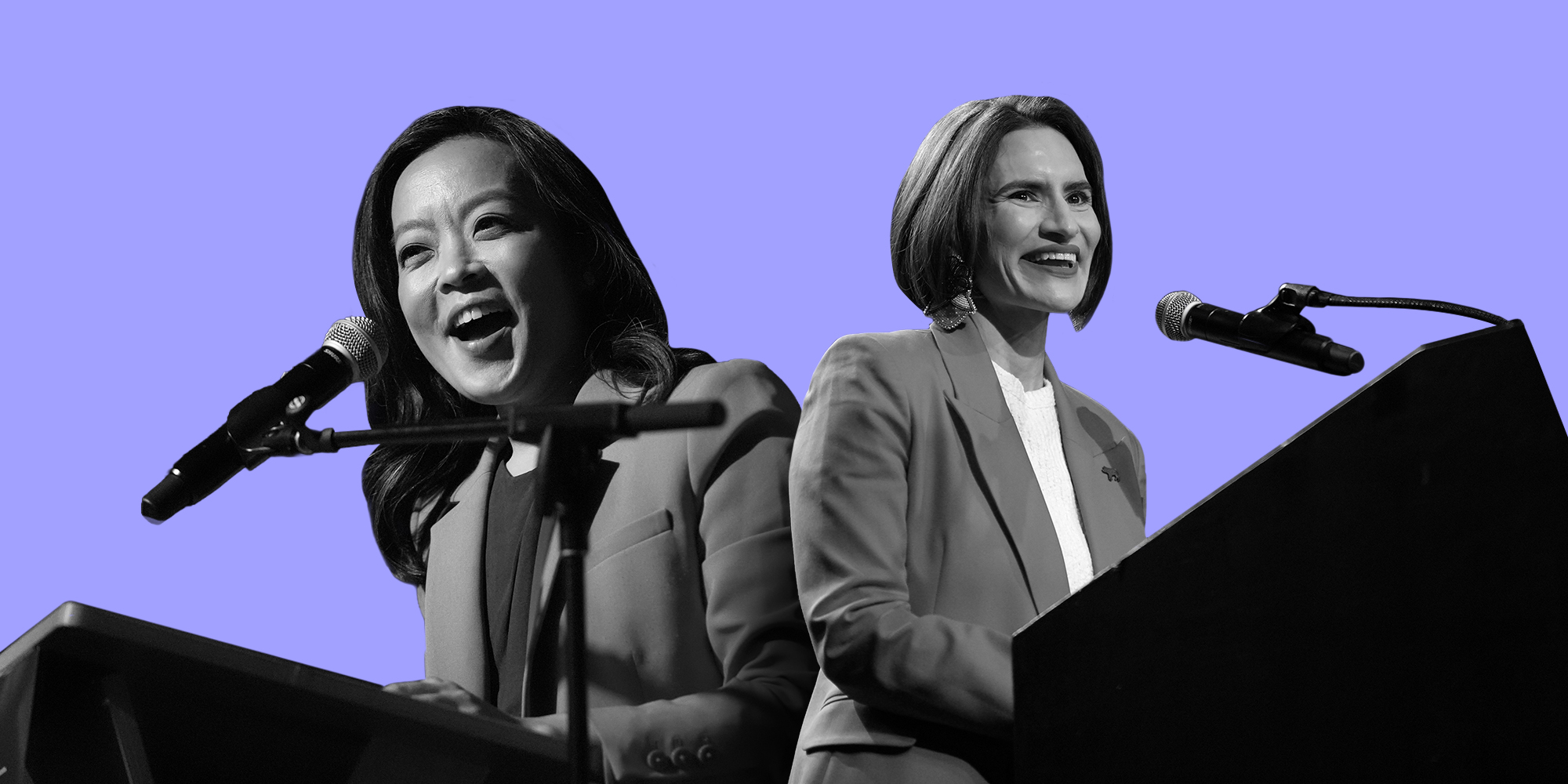
The stunning momentum of the insurgent left hit a roadblock this week when democratic socialist Francesca Hong narrowly lost her primary race for Wisconsin governor to Milwaukee County Executive David Crowley, a moderate who garnered significant support from establishment Democrats.  

“The collective power of that Democratic establishment in a state, where there is a Democratic governor and there is a real Democratic Party establishment machine, all of that power was required to eke out a 0.4 percent victory in the party’s own primary against a previously unknown candidate running as a Democratic socialist,” The Lever’s David Sirota tells The Intercept Briefing. 

This week on the podcast, host Jessica Washington speaks with Sirota, founder and editor-in-chief of The Lever, about the primaries and how the left is building power within the Democratic Party. 

There were bright spots for progressives on Tuesday night. In Minnesota, progressive Lt. Gov. Peggy Flanagan defeated AIPAC-backed Rep. Angie Craig, D-Minn., in the Senate primary race. Craig had previously voted for the Laken Riley Act, which requires the federal government to detain people for certain crimes, including shoplifting and burglary. Flanagan, by contrast, told supporters on election night: “We need to rip ICE apart and stop them from terrorizing our communities.”  

“What you’re seeing now is, and I don’t want to call it a Democratic Tea Party, but it is certainly organizing and pressuring to take back power in an adversarial way from a set of forces to the left of the Democratic establishment,” says Sirota. “That is what’s new, and that is what’s driving the political dynamic now.” 

Washington and Sirota also discuss the intensifying democracy crisis unfolding in the United States. According to Sirota, it “stands on two pillars: concentrated executive power and the supremacy of money.”

Sirota explores this theme and more, in the new season of his show, Master Plan: The Kingmakers. The podcast is all about how a once-fringe legal theory moved into the mainstream and transformed the power of the American presidency. 

For more, listen to the full conversation of The Intercept Briefing on Apple Podcasts, Spotify, YouTube, or wherever you listen.

Transcript

Jessica Washington: Welcome to The Intercept Briefing, I’m Jessica Washington, politics reporter at The Intercept. 

On Tuesday night, democratic socialist Francesca Hong narrowly lost her primary race for Wisconsin Governor to Milwaukee County Executive David Crowley.

Hong lost by less than a percentage point. But her defeat was a blow to the anti-data center movement, which she had championed throughout her campaign, even as her detractors tried to make the race about her opinions on Thanksgiving and other major holidays. 

But the night was not a total loss for progressives. In Minnesota, Lt. Governor Peggy Flanagan defeated AIPAC-backed Congresswoman Angie Craig for Senate. 

Peggy Flanagan: And now let’s talk about Donald Trump’s out of control ICE force [crowd boos]. We need to rip ICE apart and stop them from terrorizing our communities. 

JW: Last year, Craig voted in favor of the Laken Riley Act, which requires the federal government to detain people for a host of crimes, including nonviolent ones like shoplifting, and it allows states to sue over immigration enforcement, giving power to state attorneys general to shape immigration enforcement policy regardless of which party holds the White House. That vote appears to have cost her in a state that largely rose up in defiance of the Trump administration’s brutal immigration crackdown, after federal immigration agents shot and killed two U.S. citizens. 

For more of our reporting on the primaries and the anti-data center movement, visit TheIntercept.com.  

This week on The Intercept Briefing, I speak to David Sirota, founder and editor-in-chief of The Lever, about the primaries and how the left is building power within the Democratic Party. 

David also talks about the parallels between how the left and the right have consolidated power, and we get into the second season of his amazing series Master Plan, resuming this week. 

This new season is called The Kingmakers and is all about how a once-fringe legal theory moved into the mainstream and transformed the power of the American presidency. 

It traces the people and institutions behind that campaign — from Richard Nixon’s downfall and Dick Cheney’s post-9/11 power grab to pivotal Supreme Court decisions and Project 2025.

David, welcome back to The Intercept Briefing.

David Sirota: Thank you. Thanks for having me. 

JW: So Tuesday night, Francesca Hong narrowly lost her primary race for Wisconsin governor to the more moderate candidate, David Crowley. But it wasn’t a total loss for the left. In Minnesota, Lieutenant Governor Peggy Flanagan defeated AIPAC-backed Angie Craig. Hong’s race was plagued by, honestly, the dumbest issues, like whether she supports Thanksgiving or how she views her “proximity to whiteness.”

David, what did you make of Tuesday night’s results? Does this, as The New York Times called it, show the “limits of the left,” or is something else at play here?

DS: I think this is a good test of the power dynamic in American politics right now, specifically inside the Democratic Party. I’m going to state a few empirical facts about what happened. People can use these facts to try to confirm their priors. But here are the facts that we know. Fact one is that the entire establishment of the Democratic Party came together towards the end of this race, really consolidated to try to shut down Francesca Hong’s campaign and defeat her.

“All of the power of the old Democratic machine was required to eke out the narrowest of victories against the longest of long-shot candidates.”

The collective power of that Democratic establishment in a state, where there is a Democratic governor and there is a real Democratic Party establishment machine, all of that power was required to eke out a 0.4 percent victory in the party’s own primary against a previously unknown candidate running as a Democratic socialist who was wildly under-resourced, did not air any television advertisements through her own campaign. So the point being that all of the power of the old Democratic machine was required to eke out the narrowest of victories against the longest of long-shot candidates. 

A candidate who, by the way, had been effectively abandoned by other national left-of-center icons and politicians, democratic socialists. Bernie Sanders did not endorse Francesca Hong. AOC did not endorse Francesca Hong. The candidates who have been winning as democratic socialists did not come to Wisconsin to campaign with Francesca Hong. We can discuss why that is and the mistakes or stumbles that Hong made as a candidate. But the point is that the machine with all of the power and advantages it had against a candidate with no advantages at all, that ran to say the least, an imperfect campaign, still needed all of its power to barely win a race in Wisconsin. 

So to me, what that says is that the Democratic establishment that has gotten very used to being able to easily control primary outcomes is now having to marshal all of its collective power and have everything break right for it in order to eke out these primary wins. That, I think, is a fundamental difference of the political topography of the Democratic Party.

JW: I’m thinking about the fact that we didn’t see Bernie Sanders supporting her. Obviously, AOC had come out and said that it was because she wanted to focus on Congress. So we can have that conversation.

But we also didn’t see that support for Cori Bush either. And she lost.

Do you think that progressives are making a smart play here by trying to decide who’s more electable in a general election? Or, is that just more of the same silly stuff we’ve seen from the Democratic Party in terms of electability and making those decisions before voters do?

DS: Yeah, I’ve said this before and I’ll say it again. My take on so-called electability is that nobody really knows who is electable or not electable. I’m old enough to remember when the same media machine and Democratic Party apparatus insisted with certainty that Barack Obama could never possibly win a general election. I remember when that same machine laughed at the idea that Donald Trump could be elected president. 

I tend to believe that this whole discussion about electability is silly, but also a Jedi mind trick that the establishment of the Democratic Party uses to try to manipulate voters into not voting for candidates and not seeing elections as forums for voting for good policies.

They’re trying to turn primaries into — and they’ve been successful at it in the past — trying to turn primaries into this idea that, “Don’t vote for the candidate who may be offering you policies that you actually support. Vote for our view of who is actually ‘electable’ in a general election. Forget the fact that we told you that Barack Obama wasn’t electable or Donald Trump wasn’t electable. Forget all that.” So my basic take is that the whole electability discussion is this moving target and a real sort of engine of manipulation. 

I think that in every race, candidates are looked at for their viability, for how well they are running, and their basic competence as a candidate. It’s not wrong for folks and political organizations and activists on the left or really any political faction to try to evaluate the competence of candidates that they are going to spend resources on or organize for or endorse. That’s part of the political process in America, and that’s not a perfect process. But sometimes you can make mistakes. That happens all the time. 

Did Francesca Hong not get endorsements because she was evaluated to be a less competent candidate? Same thing for Cori Bush. Were those candidates seen as not competent? Competent meaning as candidates, not as people, as candidates running a campaign. Were they seen as not competent versus was Abdul El-Sayed seen as a highly competent candidate?

My guess is that those calculations were at play here. I’ve worked on a lot of campaigns in my life at this point. A candidate’s competency is this intangible that’s really important.

So my guess is though all of those questions were on the table in the way that these decisions were made to endorse certain candidates and not go all in for other candidates.

JW: That makes a lot of sense. We’re also talking about having to run these candidates against the right, against the massive money machine that the right has.

So I want to talk a little bit more about Republicans and their power. Recently on your podcast, Lever Time, you spoke to Reed Galen, co-founder of the anti-Trump political action committee, The Lincoln Project. Galen talked about leaving the Republican Party and his warning that Democrats are making the same mistakes Republicans made, mapping the transition of the GOP to the Tea Party movement takeover.

Can you talk about that conversation and what Galen sees as the kind of dangerous mistakes the Democratic Party is making, and what’s your view?

DS: Yeah, I agree with his story of history, which is that to understand the current Republican Party, you have to really rewind history and look at what created it. You can go all the way back to Barry Goldwater and tell the story from there. 

But in modern times, what you can see is that in 2008, Barack Obama won the presidency. A lot of the center-left foment gets driven into the Democratic Party and into Obama as a personality, and a lot of the center-right and hard-right unhappiness with our political system was driven first into the Tea Party, which ultimately became MAGA, which ultimately became the Trump presidency.

The Tea Party was operating outside of the Republican Party, although in conjunction with it, to transform that party. Ultimately, Donald Trump’s presidency, first the MAGA movement and then Trump’s presidency, becomes the culmination of all of that foment outside of the party.

Obviously the party has been transformed. It is a much different party than it was even 10, 15 years ago. I think a similar dynamic is happening right now vis-a-vis the Democratic Party and the American left. Obviously on totally different issues. They don’t share ideologies, they don’t share policy agendas. 

But politically speaking, just the raw politics of it, I think this is delayed, I think it’s been belated. Whereas in 2008, there was a moment in the middle of the financial crisis where center-left discontent could have been channeled into something like a center-left Tea Party. I reported on this for a long time.

There was Occupy Wall Street and the like. But certainly it wasn’t as big a movement as the Tea Party on the right because a lot of that energy was, again, channeled into Obama and the Obama presidency. We’re now here 18 years later, many of the grievances of that moment back in 2008 in the middle of the financial crisis, really the supercharging of oligarchy, they’re still here.

But the difference is here — in the here and now — if you look at polls of people on the left, center-left, before in 2008 they were fairly confident in Democratic leaders to channel their grievances. Today, they have lost faith in the Democratic leadership. They are angry at the Democratic Party for what they perceive to be capitulations and unnecessary compromises with corporate power and with Trump and MAGA.

“What you’re seeing now is … certainly organizing and pressuring to take back power in an adversarial way from a set of forces to the left of the Democratic establishment.”

What you’re seeing now is, and I don’t want to call it a Democratic Tea Party, but it is certainly organizing and pressuring to take back power in an adversarial way from a set of forces to the left of the Democratic establishment. That is something I think we have not really experienced in our lifetimes. That is what’s new, and that is what’s driving the political dynamic now. 

Whether it’s in any of these races happening across the country or in Congress itself, which I expect the next session of Congress, if Democrats take it back, to be a lot of push and pull inside the Democratic caucus, which of course will overlay the 2028 presidential campaign. 

I very much expect candidates in the Democratic primary to be competing for that positioning. You might want to call it the Bernie Sanders lane, but it’s really the lane to say, “I am the outsider that is going to take back the White House for a particular faction,” or representing a particular faction of the Democratic Party. A faction that is most certainly not the corporate old-school establishment that has been running the party into the ground for the last 30 years.

I see the whole push and pull right now as something very healthy. I don’t think it is healthy for democracy, for an establishment of one of the major parties in this country to have clung onto power for so long, offering so little change through so many electoral defeats and through the rise of Donald Trump and authoritarianism. 

For that establishment to still be able to hold on to power without much change at all really is the democracy crisis in practice. So the effort to change that party through democratic means, is entirely long overdue, is entirely necessary. People listening to this may agree or disagree with specific different parts of the policy platform being pushed by those outside the establishment, but the process itself is the democracy working.

“The democracy crisis is a set of elite power brokers being able to cling on to a political party’s power regardless of what is happening in the world and in a way that sells out voters.”

A lot of liberals think about the democracy crisis. The democracy crisis is a set of elite power brokers being able to cling on to a political party’s power regardless of what is happening in the world and in a way that sells out voters. That’s what’s been going on in the Democratic Party for a long time, and the effort to significantly change it and revitalize the party through democratic means is a healthy expression of democracy.

[Break]

JW: We have multiple crises of democracy happening. We obviously have Trump, but we also have the establishment [Democrats] and the fact that they’ve allowed Republicans to gain control of the government from the House to the Senate to presidency, and I would argue, also the Supreme Court. 

Last week, the president’s personal attorney, Todd Blanche, was confirmed as attorney general with, to me, what seems like a clear mandate to target the president’s enemies. Then on Tuesday, it was reported that the DOJ issued a sweeping memo giving broad authority to the president to conceal his communications with so-called private advisers in what seems like just a clear effort to undercut Democrats’ ability to investigate the president if they retake Congress. That doesn’t even touch on the fact that we’re over 100 days into war with Iran without congressional approval. 

I want to talk about how we got here, and you explore that in the new season of your show, Master Plan: Kingmakers, which is out this week, by the way. It tracks how a once fringe legal theory has transformed the American presidency into a pseudo-monarchy with term limits.

I listened to the first episode and loved it, by the way. It also feels incredibly relevant right now. David, how did we get here?

“We’ve turned elections into auctions. We’ve equated money with free speech, we’ve equated corporations with people, giving them human rights.”

DS: To my mind, it is the second part of a two-part story to understand the real democracy crisis. The democracy crisis I think, stands on two pillars: concentrated executive power and the supremacy of money.

They’re obviously interrelated. Season one of Master Plan traces the secret 50-year plot to effectively legalize corruption, deregulate the campaign finance system and make bribery essentially a permissible act in the United States. We all understand, implicitly, that we’re now living in that reality when we’ve turned elections into auctions. We’ve equated money with free speech, we’ve equated corporations with people, giving them human rights.

So we are living through that project of the American right to effectively legalize corruption, to turn the democracy from a “one person, one vote” democracy into a “one dollar, one vote” oligarchy. I think we all see the evidence of that. That came about through, among other things, the infamous Powell Memo.

That’s the sort of origin story where a lot of it started, which was a call to arms for corporations in the early 1970s when corporations and oligarchs felt under attack from the New Deal policies of the mid-20th century. The Powell Memo was a call to essentially make monetary investments in buying democracy.

The democracy was functioning too well. It was becoming too responsive to what people actually wanted, and the idea was we have to legalize corruption to be able to rig the system so that we can buy outcomes, we the oligarchy. So that was season one of Master Plan. 

The other pillar of the democracy crisis is then to concentrate as much power in the executive branch in the hands of really one person so that the small-D democratic institutions of government have much less power, so that power is less diffuse. It’s all in the hands of one person, because if that’s your guy — you the oligarchy — then you’ve essentially ended democracy. This story starts in Watergate. Watergate was the moment that was seen as a so-called imperial presidency, a presidency that had gotten out of control and stepped over the boundaries and thresholds that had been established for the executive branch.

Congress passes a series of laws that are designed to take power away from the executive branch. So the story really starts there at a kind of small-D democratic moment of triumph, but it also hatches a backlash, and that’s what the new season of Master Plan is about, The Kingmakers.

It hatches a backlash among conservatives starting in the Ford administration with Dick Cheney, who was chief of staff to make legal arguments and start creating legal doctrines that are designed to grab back the power that was taken in the post-Watergate era, put it back in the White House, and then significantly expand it.

“The original Project 2025 was The Heritage Foundation’s Mandate for Leadership, a policy bible whose through line was how to use executive authority.”

That’s what happens soon after Ronald Reagan gets elected president. We all have heard of Project 2025. Back in the late 1970s into 1980, the original Project 2025 was The Heritage Foundation’s Mandate for Leadership, a policy bible whose through line was how to use executive authority to do what the conservative movement wanted regardless of what Congress or any other institution wanted, and how to grab as much of that power as possible under a new legal rubric called the unitary executive theory.

I’m guessing some people have heard that. This is cooked up inside of the Reagan Justice Department in its battles with a Democratic Congress. A legal doctrine that is then tested in the courts in strategic ways to try to get it enshrined into the law.

From the Reagan era into obviously the Bush era, the Bush’s war on terror, Dick Cheney, the guy who had been spearheading parts of this when he was in the Ford administration and when he was in Congress, the Bush administration sees a huge consolidation of power under the veneer of the so-called war on terror. 

“All of these powers, from the unitary executive theories that were forged in the Reagan administration to the drone war national security powers that were fortified by Obama after the Bush era, all of this is now resting in the Trump White House.”

Then in probably our most controversial episode of this season, we go into how the Obama administration ended up consolidating power in truly unprecedented ways. The Obama administration didn’t champion the unitary executive theory, but it did make a set of precedential legal arguments about the executive branch’s alleged power to execute and target for assassination American citizens without charging them even with a crime.

I’m talking about the drone war here. Some may say that the drone war was necessary, others may say it wasn’t, but the legal architecture and the outlining of the powers asserted by the executive branch were unprecedented and were effectively validated during the Obama presidency. Powers that are now, fast-forward to today, all of these powers, from the unitary executive theories that were forged in the Reagan administration to the drone war national security powers that were fortified by Obama after the Bush era, all of this is now resting in the Trump White House.

So the point of this is that what we’re living through today didn’t just happen because Donald Trump showed up to the White House. Donald Trump, when he got to the White House, had a series of levers, if you will, an entire control panel of executive powers, unprecedented executive powers, that were created for him.

So when we see him use those powers, it’s not to say we shouldn’t be terrified by it or outraged by it, but it is to say, let’s understand where those powers came from, because they didn’t just happen. They weren’t just seized randomly, and they weren’t just created by Donald Trump himself.

JW: As you just mentioned, efforts to bring the unitary executive theory to reality have been decades in the making. We saw President George W. Bush’s administration push in that direction, and now it’s reached just a whole other level under Trump. First, just to make it clear, can you briefly explain just how powerful is the American presidency under Trump, and what is the unitary executive theory?

DS: The unitary executive theory is this idea that the president singularly is the controller, the master, the decider of every single thing that the executive branch does. The executive branch, that’s one term for it. Another term for the executive branch is the federal government, right?

At one level they are one and the same, but I bring that up so that people can understand how radical the unitary executive theory actually is. When I use the federal government, maybe you’re thinking of the military. Maybe you’re thinking of the Agriculture Department, the scientists working on food safety in the Agriculture Department. 

We’re talking about everything, the sort of basic functions, the on-the-ground functions of the government. Technically all of those agencies are operating in what we understand in terms of separation of powers. We understand them to be the executive branch. There’s Congress that makes the laws. There’s the president that executes the laws. There’s the courts that adjudicate battles between Congress and the president, adjudicate what the law is actually saying, et cetera, et cetera. 

The unitary executive theory is saying that the president as the head of the executive branch has complete and total power to effectively do whatever the president wants inside of the executive branch. 

So the unitary executive theory undergirds something like DOGE, the rampage that we all experienced right when Donald Trump came into his second term. He said, for instance, I’m shutting off all previously approved congressional grants across the entire United States. I’m asserting my executive authority to do that. 

Now, Congress had passed laws saying that the money must be spent, but Trump and his administration were essentially arguing the president makes the decision on whether to execute those laws. So I give that example as a way for people to understand how radical an idea this is.

By the way, this came up recently with independent federal agencies. There are a set of agencies that Congress had set up and that presidents had signed laws, signed them into law in the past, saying that, the FTC or the Securities and Exchange Commission that these agencies are quasi-independent because the commissioners have set terms.

It’s much harder to fire them. Donald Trump went into court saying, I’m the unitary executive. These independent agencies structurally are unconstitutional. I should be allowed to hire and fire whoever I want at any time for any reason. And the Supreme Court largely agreed with him.

So this is about an unprecedented consolidation of power in the hands of one person to say that at any level of the federal government, any granular level, there’s some EPA scientist who is issuing a report about climate change that the president doesn’t like, the theory would hold that the president has a right, regardless of what Congress has passed, regardless of what the courts have adjudicated, the president has the right to reach into the EPA, target that one person, and fire them himself. 

So you can see the dangers of this, because here’s the thing: Part of the way modern civilization has modernized from the old era of medieval royal courts, is that we have professionalized a lot of the functions of government. Like line scientists doing food safety reviews or environmental reviews or making all sorts of technical technical determinations, et cetera, et cetera. We had previously said this is going to be insulated at some level from the political whims of just one all-powerful king, whichever party it is. There’s a civil service, there’s a sort of a professionalized bureaucracy, if you will, and the unitary executive theory is trying to dismantle all of that.

Now, I want to add one thing very quickly here. I do think there’s an argument that, when a bureaucracy, a professionalized government bureaucracy, is so insulated from what voters are voting for, there can be an undemocratic disconnect there. If voters are voting for certain kinds of change and a kind of permanent bureaucratic government, because of job protections and the like over many years, is not responding to what people want, I do think there is a nugget of an argument there that there has to be ways that elections happen and policy changes then flow from those election changes. 

But I think the unitary executive theory is a radical overcorrection for that kind of alleged problem. The solution to that theoretical problem is not to turn the president into an all-powerful king who can wake up at any day or any moment, ignore all of the laws on the books, and do whatever he wants.

JW: It sounds like there’s a lot that’s going to be happening in your podcast, and I’m, for one, really looking forward to listening to the rest of the new season of Master Plan: The Kingmakers. David, where can people listen to it?

DS: They can find it on our website at levernews.com. You can also go on your podcast app and just type in Master Plan. And you can go to our YouTube page. We have video versions of the episodes. That’s youtube.com/@levernews. The URL, the easiest way to find it, masterplanpodcast.com.

JW: David, thank you so much for joining us on The Intercept Briefing.

DS: Thank you. Thanks so much for having me.

JW: We want to hear from you. Tell us what you’re following or want to see more coverage of. Email us at podcasts@theintercept.com or leave us a voicemail at 530-POD-CAST, that’s 530-763-2278

That does it for this episode. 

This episode was produced by Laura Flynn. Ben Muessig is our editor-in-chief. Maia Hibbett is our Managing Editor. 

Fei Liu is our product and design manager. Nara Shin is our copy editor. William Stanton mixed our show. Legal review by David Bralow.

Slip Stream provided our theme music.

This show and our reporting at The Intercept do not exist without you. Your donation, no matter the amount, makes a real difference. Keep our investigations free and fearless at theintercept.com/join. 

And if you haven’t already, please subscribe to The Intercept Briefing wherever you listen to podcasts. Do leave us a rating or a review, it helps other listeners to find us.

Until next time, I’m Jessica Washington. 

The post Has the Left Really Met Its Limit?  appeared first on The Intercept.

💾

Nach Abschiebung wegen Anti-Israel-Parole: Bob-Vylan-Frontmann wehrt sich erfolgreich gegen Einreiseverbot

1 August 2026 at 16:07

Read this article in English.

Dem Frontmann der britischen Punk-Rap-Band Bob Vylan wurde aufgrund seiner pro-palästinensischen Aussagen unlängst die Einreise nach Deutschland verweigert. Er wurde am Berliner Flughafen festgehalten und schließlich zurück nach England abgeschoben.

Die Bundespolizei begründete die Einreiseverweigerung des Sängers am 15. Juni mit seinem Auftritt beim Glastonbury Festival im vergangenen Jahr, wo er den Sprechchor „Death, death to the IDF“ („Tod, Tod der IDF“ – der israelischen Armee) angestimmt hatte.

Ende Juli hoben die Behörden das Einreiseverbot gegen den Sänger, der mit bürgerlichem Namen Pascal Robinson-Foster heißt, in einem entsprechenden Schreiben wieder auf, verweigerten jedoch jede Auskunft darüber, warum die Maßnahme aufgehoben wurde; oder wie die Entscheidung über das Einreiseverbot zustande gekommen war.

Die polizeiliche Akte zu Robinson-Foster, die The Intercept vorliegt, wirft ihm vor, antisemitische Narrative und Hamas-Propaganda zu verbreiten, die zur „Radikalisierung einzelner Bevölkerungsgruppen“ beitragen und terroristischen Gruppen oder Einzelpersonen als „ideologische Begründung“ dienen könne.

Zudem heißt es, Robinson-Foster stelle „eine Gefahr für die öffentliche Sicherheit und Ordnung“ in Deutschland dar. Seine Einreise würde dem internationalen Ansehen sowie der Glaubwürdigkeit der Bundesrepublik „erheblichen Schaden“ zufügen; dadurch entstünde der Eindruck, Deutschland unternehme keine Anstrengungen, „den propagierten Antisemitismus und dazugehörige Aufrufe zur Gewalt, insbesondere grenzüberschreitend, zu unterbinden“.

Detaillierte Fragen zu dem inzwischen aufgehobenen Einreiseverbot beantwortete die Bundespolizei nicht. Sie berief sich dabei auf Belange der öffentlichen Sicherheit und Datenschutz. Auf einen Fragenkatalog zum Entscheidungsprozess hinter der Einreiseverweigerung, ihrer Rechtsgrundlage, zu beteiligten Behörden sowie zu den Gründen der Aufhebung der Einreiseverweigerung erklärte Bundespolizei-Sprecher Nikolai Jaletzke gegenüber The Intercept, man äußere sich nicht zu Gefährdungsbewertungen, operativen Maßnahmen oder Abstimmungsprozessen zwischen Behörden.

„Zu behaupten, ich würde eine Gefahr für die nationale Sicherheit Deutschlands darstellen, ist schlicht absurd“, sagte Robinson-Foster The Intercept. „Genauso absurd ist die Behauptung, wir würden Propaganda im Namen irgendeiner verbotenen Organisation verbreiten.“

Bob Vylans Auftritt beim Glastonbury Festival sorgte weltweit für Aufmerksamkeit. Er kam zu einem Zeitpunkt, als immer mehr Kulturschaffende begannen, sich öffentlich gegen die Zerstörung Gazas durch Israel auszusprechen. Der Auftritt – insbesondere der Sprechchor „Death, death to the IDF“ – wurde von Politiker, darunter dem damaligen britischen Premierminister Keir Starmer, sowie von mehreren pro-israelischen jüdischen Organisationen scharf verurteilt. Der Antisemitismusbeauftragte der Bundesregierung Felix Klein bezeichnete den Auftritt als „Hass und Hetze“ und rief Konzert- und Festival-Veranstalter in Deutschland dazu auf, Bob Vylans Konzerte abzusagen.

Kurz nach dem Glastonbury-Auftritt waren Robinson-Foster und seinem Bandkollegen Wade Laurence George Visa für ihre Einreise in die USA entzogen worden. Deutschland ist jedoch das erste Land, das einem Mitglied der Band die Einreise verweigert und ihn abgeschoben hat.

Die The Intercept vorliegenden Dokumente betreffen ausschließlich die Umsetzung des Einreiseverbots – nicht den dahinter liegenden Entscheidungsprozess. „Unsere Position ist simpel“, sagte Alexander Gorski – der deutsche Anwalt, der Robinson-Foster vertritt. „Es gibt ein verfassungsmäßiges Recht darauf, die Akte zu kennen, auf deren Grundlage eine solche Entscheidung getroffen wird.“

Nach Robinson-Fosters Abschiebung stellte Gorski beim Bundespolizeipräsidium Potsdam einen Antrag auf Löschung der Einreisesperre aus dem Nationalregister sowie auf Einsicht in die zugrundeliegenden Akten. Kurze Zeit später hob die Bundespolizei das Einreiseverbot wieder auf – ohne jedoch zu erklären, warum. In dem zweiseitigen Schreiben, das The Intercept ebenfalls vorliegt, heißt es lediglich, dass dem Antrag stattgegeben wird und keine weitergehenden Informationen erteilt werden könnten.

„Natürlich ist es gut, dass das Einreiseverbot aufgehoben wurde“, sagte Gorski The Intercept. „Aus rechtsstaatlicher Sicht ist es jedoch hochproblematisch, wenn jemand wegen einer politischen Äußerung, die keinen Straftatbestand erfüllt, an der Einreise gehindert wird – und ihm anschließend noch der Zugang zu den zugrunde liegenden Akten verweigert wird.“

Gorski legte daraufhin formell Widerspruch ein, um Einsicht in interne Akten zu erhalten, die zur Verhängung des Einreiseverbots führten. Robinson-Foster habe ein Recht darauf zu erfahren, auf welcher rechtlichen Grundlage ihm die Einreise nach Deutschland verweigert wurde. Nicht nur, um die Rechtmäßigkeit des Vorgangs überprüfen zu können – sondern auch, um zu verstehen, welches Verhalten die deutschen Behörden zukünftig als Grundlage für eine Einreiseverweigerung ansehen.

„Wenn ein Künstler sich an das Gesetz halten will, muss er wissen, was die Regeln sind“, so Gorski.

Bislang ist unklar, wie es dazu kam, dass ein britischer Musiker, dem weder in England noch in Deutschland eine Straftat zur Last gelegt wird, von deutschen Behörden als Gefahr für die öffentliche Sicherheit eingestuft wurde. Die britische Polizei hatte entsprechende Ermittlungen zu Bob Vylans Glastonbury-Auftritt Ende letzten Jahres eingestellt und erklärt, es gebe „keine ausreichenden Beweise für eine realistische Aussicht auf eine Verurteilung“.

„Es fehlt nicht an Beweisen, es fehlt an einer Straftat“, sagte Robinson-Foster gegenüber The Intercept. „Die BBC hat den Auftritt übertragen. Man kann ihn sich einfach ansehen.“

Für Gorski steht der Fall paradigmatisch für einen grundlegenden Wandel im Umgang mit deutschem Migrationsrecht gegenüber pro-palästinensischen Stimmen. Letztes Jahr hatte das Land Berlin Abschiebeverfahren gegen vier ausländische Staatsangehörige eingeleitet, die sich an Protesten gegen Israels genozidalen Krieg in Gaza beteiligt hatten.

Gorski argumentiert, die deutschen Behörden würden das Migrationsrecht verstärkt dazu nutzen, um „unerwünschte Stimmen zum Schweigen zu bringen“, indem etwa Kritiker Israels die Einreise verweigern wird – oder indem sie des Landes verweisen werden. Ähnliche Bedenken äußerte zuletzt auch Thomas Oberhäuser, Vorsitzender im Geschäftsführenden Ausschuss der Arbeitsgemeinschaft Migrationsrecht im Deutschen Anwaltverein. Auch Oberhäuser sieht Anzeichen dafür, dass das Migrationsrecht in Deutschland zunehmend für politische Zwecke eingesetzt wird.

Gorski verwies im Gespräch auf frühere Fälle, etwa den Fall des britisch-palästinensischen Chirurgen Ghassan Abu Sitta sowie den Fall des ehemaligen griechischen Finanzministers Yanis Varoufakis. Gorski hat beide in vergleichbaren Verfahren vertreten. In beiden Fällen hatten deutsche Behörden versucht, ihre Einreise zu verhindern, um ihre Teilnahme an pro-palästinensischen Veranstaltungen zu unterbinden.

Robinson-Foster sagte gegenüber The Intercept, er sei im Juni privat nach Deutschland gereist. Er habe vor der Veröffentlichung des neuen Albums der Band Freunde und Musikerkollegen besuchen wollen. Bob Vylan tourte in den letzten Jahren mehrfach auch in Deutschland. Obwohl die deutschen Behörden das Einreiseverbot jetzt aufgehoben haben, habe der Vorfall „eine Büchse der Pandora geöffnet“.

„Es scheint, als hätte die Einreiseverweigerung in Deutschland dazu geführt, dass wir bei der Einreise in andere Länder nun immer wieder Probleme bekommen“, berichtete Robinson-Foster. Seit seiner Abschiebung seien sowohl er als auch sein Bandkollege bei Einreisen in andere EU-Länder mehrfach intensiv befragt worden. In einem Fall hätten belgische Grenzbeamte den Schlagzeuger der Band zu dem Vorfall in Deutschland befragt – obwohl dieser selbst nicht nach Deutschland eingereist sei.

„Wir möchten weiterhin Konzerte in Deutschland spielen“, sagte Robinson-Foster. „Wir sind in den letzten fünf Jahren regelmäßig auf Tour dort gewesen. Es wäre wirklich bitter, wenn wir den Kontakt zu den Menschen verlieren, die uns dort unterstützen.“

The post Nach Abschiebung wegen Anti-Israel-Parole: Bob-Vylan-Frontmann wehrt sich erfolgreich gegen Einreiseverbot appeared first on The Intercept.

💾

❌
❌